Few things are more toxic than a bullpen that has no good answers.
The Phillies are treading perilously close to that boundary line.
Can they actually fix it?
They can try, sure. They have no choice. With two weeks remaining before Major League Baseball’s trade deadline, the Phillies have exactly one reliever whom Don Mattingly would feel comfortable calling upon in a critical postseason moment. They have one who seems to be earning more of his trust but who would profile more as a dependable middle reliever in a legitimate championship bullpen. After Jonathan Bowlan, they have a couple of arms who are basically a coin flip. After Orion Kerkering and Jose Alvarado, Mattingly can do little more but pray for the best while expecting the worst.
Dave Dombrowski was up against it even before he learned that high-priced free agent set-up man Brad Keller would miss the rest of this season and likely the next one with a UCL tear. Keller’s signing is ironic in the sense that the Phillies will be paying him the same money they would have been paying to Jeff Hoffman had they not allowed the righty to leave for Toronto, in part out of fear of the health of his arm. Further irony: Hoffman is one of the names that has been tossed around for teams in need of bullpen health, with the Blue Jays currently out of contention.
Brad Keller is no longer a bullpen option for the Phillies. Yong Kim / Staff Photographer
The most important thing to know about the trade deadline is that it isn’t as important as everyone would like to believe. Rare is the team that manages to fundamentally alter its outlook or identity midseason. In the best of cases, it is like the magic mushroom in a game of Mario Kart: a decisive boost deployed at exactly the right time while also eminently finite. The Phillies saw the best of cases back in 2009 with the acquisition of Cliff Lee. The next year brought Roy Oswalt, the year after that, Hunter Pence. They have yet to recapture the glory of 2008.
The question is not binary, in other words. It is not, “Go for broke or stand pat?” The midseason trade market is, first and foremost, a market. All you can do is take what it gives you.
From a decision-making perspective, the second-most important thing at the trade deadline is to stick to your principles. The first-most important thing is to figure out what those principles are.
The biggest question right now:
How confident are the Phillies that they will make the playoffs with the current roster?
A better way to put it: How sure are the Phillies that the Marlins, Nationals, Cardinals, Pirates, and/or Diamondbacks will ultimately fade?
Sounds crazy to ask, given that the Phillies have been one of the best teams in baseball since the beginning of May. But these are strange times in the National League. Nine teams are at 50+ wins. Two more are within two games of .500. The Phillies may only be two games behind Atlanta, but the Braves are playing on a different tier. Consider them booked for the postseason, along with the Dodgers and Brewers. The Cubs and the Phillies are alone in the next tier at 10+ games above .500. Problem is, that next tier is closer and more populous than usual. The Marlins, Cardinals, Pirates, and Diamondbacks all entered Sunday within four games in the loss column. That’s nine teams for seven postseason spots. A sudden losing streak could dramatically change the Phillies’ outlook.
The bullpen would be an issue even if the circumstances were different. But the Phillies could at least be planning for the postseason. As things stand right now, Dombrowski first must decide if he has enough pitching to get him to October.
Something else to ponder: If Gage Wood and Andrew Painter aren’t immediate solutions, are they potential trade chips?
Andrew Painter posted a 7.06 ERA while with the Phillies.Yong Kim / Staff Photographer
It is a double-edged question. The first edge: Are the Phillies willing to trade their two high-level pitching prospects for short-term help? The second edge: How do other teams value them?
Painter is pretty clearly a lost cause for 2026. His most recent start at triple-A Lehigh Valley: seven runs, one strikeout, four walks, 2 ⅔ innings. In the two starts prior, he allowed just two runs in 10 innings while striking out 10 on three walks. All three outings came on five-plus days rest.
Wood? We’ll see. The numbers look about as good as the Phillies could have hoped when they selected him at No. 26 overall last June. He has 39 strikeouts and nine walks in 28 ⅔ innings since being promoted to double-A Reading. He has also allowed six home runs. The fastball is crispy, but not to the extent that he can get away without locating it in the strike zone. Hard to believe that Dombrowski or anybody else is thinking of him as a potential answer in high-leverage situations.
Gage Wood has posted a 3.51 ERA so far in 2026.David Maialetti / Staff Photographer
Speaking of leverage …
It isn’t in Dombrowski’s favor right now. The idea of buyers and sellers is a false choice. There is a price for everything. The more plausible a team’s denial of having to sell, the higher the price they can sell for. The more teams that could potentially buy at the right price, the higher the price for everyone.
The Phillies enter the trade deadline with a farm system that Baseball America ranked as the 29th best in baseball. Their one no-doubt-about-it, blue-chip prospect has yet to take the field this season. Painter has gone from untouchable to would-anybody-touch-him. Once upon a time, the Phillies traded Spencer Howard for Kyle Gibson and Ian Kennedy.
Are we there yet?
Rather than buyers and sellers, the trade deadline’s real hierarchy is an order of desperation.
How desperate are the Phillies? How desperate should they be?
As we speak, the last of FIFA’s traveling caravan has packed up, ready to move onto its next stop, while leaving American fans looking at the soccer landscape in this country, wondering why, with the wealth of raw athleticism we have here, couldn’t one of those two teams in Sunday’s final have been us?
Good news. Historically speaking, every World Cup spawns change. Bad news? When it comes to soccer, the United States has been historically bad at making the changes needed to make a stir. In 2026, emerging from the group stage shouldn’t be a hope — it should be the norm.
The change needed to push American soccer forward is not an easy fix. OK, well, it is, but it requires a dedicated strategy and a collective belief that development, not greed, needs to be at the forefront.
That investment begins at the grassroots level and comes in two main tiers: Investing heavily in identification and developing raw, untapped talent.
The other? Educating parents that there’s more to the game than striving to make the top club team in your area.
You could add a third — offering greater exposure to the game — but that topic sits on its own almost entirely when you consider the level of gatekeeping that exists, from broadcasting contracts going to cable and streaming services to the outrageous price points of tickets.
Cavan Sullivan (left) is an example of the type of player the U.S. could produce behind a deeper focus on development. Philadelphia Union
It already is in some states, like here, in what the Union is doing with youth development that spawns real American hopefuls (see: Cavan Sullivan). Undoubtedly, that last sentence ruffled a few feathers among the club soccer community.
If that’s the case from where you’re standing, well, therein lies the problem.
Recent history has shown that’s not always going to arrive via a traditional club model where parents are overspending, because at the starting-out level, they honestly don’t know any better. It’s not saying the model is all that ails when it comes to development, just that it can no longer be widely considered as a preeminent pathway for children as young as 5.
U.S. Soccer recognizes this. Just last week, it noted that in the aftermath of the national team’s round of 16 exit, it’s “trying to create a new system that then we’d make highly affordable. It’s a bold strategy that comes with a ton of roadblocks. The current model is not just fully ingrained into how we develop talent, but it makes a lot of people really rich off kids with a dream and parents with deep pockets.
But what would an argument be without a solution? Here are two.
Giving kids an opportunity to ignite a passion for soccer starts with making sure there are ample, unlocked places to play.Allie Ippolito / For The Inquirer
First, foster excitement by putting the game everywhere. Start with a focus on inner cities and rural communities. Loosen the restrictions on accessibility, price, and most importantly, the gates of locked-up ballfields that kids could be playing on.
Second? Put some skin in the game.
Imagine pouring financial resources into underserved neighborhoods. You’ve built the fields, now get kids playing on them. How about a series of cash prize tournaments at multiple age ranges and skill abilities?
Organizers receive winnings under the demand that a substantial amount of the proceeds is used to create more opportunities to foster interest. In turn, U.S. Soccer and the academies of Major League Soccer teams plant scouts at these events to find the raw talent and develop them.
Started in 2018, the Philadelphia Union’s SWAG program offers underserved kids the opportunity to learn the game, and for the ones that show promise, get placed on a developmental path to pro track. STEVEN M. FALK / Staff Photographer
Some of that is already happening. In 2018, the Union created the SWAG program, going into schools, finding kids, developing them from the age of five, and grooming them to be on a professional pathway. It’s the kind of pipeline that city-based organizations like Kensington Soccer Club and Capitolo Soccer AC Fairhill, Street Soccer USA and many more are at the ready to be, and are already finding diamonds in the rough all along the way.
The problem is, as it stands, not enough people in power when it comes to the game care to look.
The parent trap
Listen, at the end of the day, you don’t know what you don’t know.
According to figures from Project Play, a study created by the Aspen Institute, youth sports is a $40 billion a year business, with youth soccer a sizable chunk of that equation.
The reason why there’s so much money to be made? Here’s a big one: uninformed parents.
At a certain level, there is this real fear of missing out from parents when it comes to their kids’ trajectory. The FOMO isn’t in every case, but here’s how it typically works when it comes to soccer in America. It starts innocently, a parent signing a child up for in-house soccer, where you discover, and it’s affirmed by a coach and others, that your kid has real talent.
Parents typically spend hundreds on top of committing multiple days of their family’s time to youth soccer tournaments all over the country. Sandy Huffaker
But instead of offering programs to develop that talent and get that child acclimated to the sport at a young age through actual development at a continued low cost, parents are coerced into believing that their child would fit seamlessly on a travel club team. One that competes year-round, practices 2-3 times a week, and plays games and tournaments on the weekend.
And then there’s the time cost. Traveling back and forth between states, sometimes to play the same team from the next town over from your club in a tournament.
If you’re a soccer parent, undoubtedly, you’re nodding your head as it probably sounds like your trajectory in youth soccer to date.
Suppose the solace comes in that you’re not alone?
For many parents, looking for the best place for their child to play the sport at a top level comes at a high cost. Butch Dill
And then there are the buzzwords. “Select.” “Premier.” “A-Squad.” All of these focus not on developing kids into the talent needed to put the U.S. in the best position to win a World Cup, but instead compile the best kids to help that club win across multiple age groups. They’re also words that make parents salivate, spending money they believe will deliver their child to greatness.
Or at least, that team that everyone is talking about.
At the end of the day, parents want to provide what they believe is the best opportunity for their child. Some don’t know what that looks like in soccer.
Can’t fault that. The real fault is in the subsequent exploitation of this ideology by organizations charging thousands for a child to have said opportunity.
Parents in these same circles have revealed that for kids as young as nine and 10 years old, their club won’t even look at kids who don’t already come in with a certain level of skill. Ask yourself: If the mindset has to be about development, how is that mentality not a perceived problem?
Kids play in Kensington Soccer Club’s Love Street League program at Hissey Playground in Kensington.Allie Ippolito / For The Inquirer
So, of course, that begs the question: “Who pays, then?” Well, there are plenty of youth systems around the world with strategies that give youth soccer in America a fantastic roadmap. Anyone tuning in to Sunday’s final was treated to a great page to start reading if you look at what Spain has been able to do on almost every level over the last 10 years, right up through yesterday.
Two World Cup titles in less than 20 years. A European title. The only nation where both the men’s and women’s teams are defending world champions. If the goal is to crack the code on how to produce players who can go far in a quest to chase a World Cup trophy, maybe start there.
Spain’s Gavi (9) holds up the FIFA World Cup trophy as Spanish players celebrate after winning the World Cup final against Argentina in East Rutherford, N.J., on Sunday.VINCENT ALBAN
As it stands today, club soccer in America serves a purpose. It’s a great conduit for exposure. It offers youth players a firsthand look at the rigors of competition at a very young age. It teaches teamwork and being dedicated to a collective mission.
But it’s not about development. If it were, parents wouldn’t need to consider paying even more for privatized training or skill development camps and clinics. And now, the notion is growing that private equity sees ways in which it can get involved in the gambit. If there isn’t more of a fight to make sure that the status quo doesn’t become the legacy of this World Cup, history looks pretty bound to repeat itself in four years.
One year after the Trump administration announced that dozens of health insurers had signed a six-part pledge promising to reduce barriers to doctor-recommended care, some insurers now say they won’t implement all the promised initiatives.
Meanwhile, patients, their advocates, and clinicians say little has improved.
“It has never been this bad for patients,” said U.S. Rep. Greg Murphy (R., N.C.), a physician who co-chairs the GOP Doctors Caucus.
The overarching intent of the June 2025 pledge was to improve a controversial process called prior authorization, which regularly requires patients or someone on their medical team to seek approval from insurers before proceeding with treatment.
According to AHIP, the health insurance industry trade group, health plans have eliminated 6.5 million prior authorizations for patients — equal to an 11% reduction — since the announcement.
But critics remain skeptical. Sally Nix, a patient advocate who has a chronic disease, described the voluntary pledge as “performative.” And Murphy, who participated in the news conference with Health and Human Services Secretary Robert F. Kennedy Jr. announcing the pledge last year, said it has “no teeth.”
Voluntary insurer pledges rarely make things better for patients, said Sabrina Corlette, a research professor at the Center on Health Insurance Reforms at Georgetown University.
“In the absence of clear rules, policies, standards, and mandates,” she said, insurance companies are “going to do what makes sense for them to do financially.”
The Department of Health and Human Services did not respond to questions for this report. It isn’t clear how, or whether, the Trump administration is holding insurers accountable.
‘Zero faith’
Prior authorization — sometimes called preauthorization or precertification — has been around for decades. The insurance industry has long argued that the practice, which varies by company, helps control costs, reduces waste and fraud, and prevents potential harm to patients. It’s regularly invoked for a huge swath of services, ranging from low-cost urgent care to expensive cancer treatment.
“Prior authorization is a vital patient safeguard,” said Chris Bond, a spokesperson for AHIP.
The 2024 killing of UnitedHealthcare CEO Brian Thompson sparked a national groundswell of anger about insurance denials, with patients and doctors becoming increasingly vocal about the tactics they say insurance companies use to boost profits at the expense of care.
Prior authorization reform is one of the rare healthcare issues Democrats and Republicans tend to agree on. On July 15, the House Ways and Means Committee unanimously advanced a bill that would force Medicare Advantage plans to provide to the federal government a list of all items and services that are subject to prior authorization, and to report data about denials and grievances, among other requirements.
Last year’s industry pledge was organized as a direct response to public anger, Mehmet Oz, administrator of the Centers for Medicare and Medicaid Services, said when it was announced. “There’s violence in the streets over these issues,” he said.
“Americans are upset about it,” Oz said, later adding, “I’m looking forward to seeing the results.”
Mike Gartner, founder of Health Access Innovation, an organization that helps patients overturn insurance denials, said he doubts that insurance companies are changing their policies in meaningful ways. The 11% reduction in prior authorization cited by AHIP “hides a lot of nuance,” Gartner said.
Patients who need the costliest services, such as cancer treatment, are still being disproportionately denied access to doctor-recommended care, he said.
AHIP said its data included reductions in prior authorization for medical services, not prescription medicines. The trade group didn’t provide details explaining which services have been dropped from prior authorization or how those reductions differ across individual insurers.
Last year, Oz said the federal government would be “evaluating progress” toward the pledge and “driving accountability,” and he foreshadowed “public dashboards.” But no such dashboards exist, and federal officials did not respond to questions about how they’re holding companies accountable.
Murphy, the North Carolina congressman, said he has “zero faith” in the industry policing itself.
He didn’t believe insurance companies then, he said, “and I don’t believe them now.”
Shortly after Betsy Adler’s daughter Coco was born with a serious heart defect, she started receiving estimates showing her family could owe thousands of dollars in out-of-network costs.Justin Young
‘At war’ with an insurer
In February, days after Betsy Adler and Justin Young’s daughter Coco was born with a serious heart defect, the Stillwater, Minn., family received paperwork showing they were racking up out-of-network costs.
During Adler’s pregnancy, the family had switched insurers, moving to Medica, which is based in Minnetonka, Minn., and one of many insurers that initially signed the industry pledge. Adler said she’d checked with her employer’s human resources department and on Medica’s website to make sure her maternal-fetal specialists and hospital were in-network before their new health plan went into effect earlier this year.
But then, the insurance company started processing some claims as out-of-network. By mid-March, the family had accrued more than $4,000 in out-of-network charges, on top of more than $3,000 for in-network bills. And the bills kept coming.
When Adler, a psychotherapist, called to figure out what was going on, she said, an insurance company representative said she hadn’t submitted a referral from her primary care provider beforehand. Attempts to fix the problem went nowhere. At one point, Adler said, Medica required her to visit a clinic she’d never been to before to obtain a referral. But she said a Medica representative told her the referral was never received, because the insurer’s fax machine was down.
“I have a critically ill child,” Adler remembered thinking shortly after Coco was discharged from the cardiovascular intensive care unit. “I can either spend my emotional energy at war with Medica, or I can let it go and just enjoy my time with my daughter.”
Medica spokesperson Greg Bury said he wouldn’t discuss the case, citing patient privacy rules. In an emailed statement, he wrote the company is “committed to working with her to ensure she understands what is covered under her benefits and our responsibilities.”
One of six specific promises all insurers made when they signed the pledge was to honor a 90-day grace period when patients switch insurance plans, starting Jan. 1 of this year. Often called “continuity of care,” this grace period allows patients to temporarily continue receiving services and medications that were authorized under a previous insurer.
But that applies only in some circumstances, Georgetown’s Corlette said. The wording of the pledge suggests that insurance companies aren’t obligated to honor another company’s network parameters. When Adler and Young switched insurers, for example, Medica was not obligated to cover the cost of out-of-network providers as if they were in-network, even though they were in-network under the family’s old plan.
Adler and Young switched insurance companies again when Coco was a month old, to avoid accruing more out-of-network costs.
Sally Nix with her service dog, Jon Snow, at home in Statesville, N.C. Nix, a patient advocate, recently had her health insurer process, then later deny, a claim for injections to relieve her chronic nerve pain. She’s skeptical about industry promises to reform the health insurance denial process.Logan Cyrus / For KFF Health News
Denial after approval
The percentages cited by AHIP don’t tell the whole story, said Nix, the patient advocate. Insurers are “not including the data for the loopholes they create,” she said.
For example, nothing in the pledge prevents insurance companies from retroactively denying payment, even when care is preapproved. “Patients are going to see a lot more retroactive denials,” said Nix, who recently had her insurer process, then later deny, a claim for injections to relieve her nerve pain.
Something similar recently happened to Jocelyn Austin, 49, of Amherst, N.Y. Over the course of nearly 20 years, she developed an addiction to sleeping and anxiety pills prescribed to her by a doctor. Last year, she spent weeks at an inpatient treatment center for substance abuse. Her insurer, Independent Health, had approved the admission. Austin said she has been substance-free since her discharge.
But the facility sent her a bill for more than $12,000 in December showing her insurer had not paid for the treatment she received, according to documents Austin shared with KFF Health News. This was in addition to the $10,000 she paid at the beginning of her treatment to satisfy her out-of-network deductible. The approval letters from Independent Health had specified that “authorization is not a guarantee of claim payment.”
Frank Sava, a spokesperson for Independent Health, said a denial was issued and upheld in this case because the services provided “were inconsistent with the care that was authorized” and “the medical record did not sufficiently support what was billed.” He said those findings were reviewed and confirmed by an outside consultant.
An explanation of benefits issued by the insurer last summer indicated the “provider,” not the patient, was responsible for the cost of her treatment. And yet the treatment facility has continued to pressure her for payment, she said.
Austin, who has not paid her outstanding bill, said insurance companies “should be held accountable.”
‘Significant work ahead’
Another one of the six commitments insurers made last year was to adopt new technology that would standardize the electronic submission of prior authorization requests. During the news conference announcing the pledge last summer, Chris Klomp, the director of Medicare and a deputy CMS administrator, said more than 50% of prior authorizations are still paper-based and processed by phone or fax machine.
In April, AHIP released an update related to that technology initiative, explaining that participating insurers would adopt the new standards on a rolling basis. Health insurers agreed to implement the pledge’s various commitments by predetermined deadlines, and this initiative is scheduled to be operational by Jan. 1, 2027. But eight insurers that initially signed the pledge last year didn’t sign the technology update when it was announced in April, AHIP told KFF Health News.
Those insurers are Alignment Health Plan, EmblemHealth, HealthFirst, Independent Health, Medica, MVP Health Care, Point32Health, and SummaCare. Their beneficiaries span the country, from California to New York. None of those eight insurers agreed to interviews for this report, but most sent KFF Health News emailed statements indicating that they remain committed to prior authorization reform.
AHIP’s approach to continuity of care “would have required the transfer of confidential member health information through a non-standardized process involving third-party participation,” wrote Jerry Slowey, a spokesperson for Alignment Health, which offers Medicare Advantage policies in Arizona, California, Nevada, North Carolina, and Texas. “We do not believe that level of data sharing was contemplated in the original commitment.”
Bury, the spokesperson for Medica, which covers beneficiaries in Iowa, Kansas, Minnesota, Missouri, Nebraska, North Dakota, Oklahoma, South Dakota, and Wisconsin, said the company “supports the goal of these standardization efforts.” But the April update “raised a significant technical and operational hurdle that we are not able to commit to at this time,” he said.
Alex Gomez, a spokesperson for EmblemHealth, said in late June the company “will sign onto the commitment” after KFF Health News posed questions about why it had not endorsed the April update.
“We anticipate more plans will be added over the coming months,” said Bond, the AHIP spokesperson. Health plans are “working continuously to implement their commitments to simplify and improve the experience.” He acknowledged that “there is still significant work ahead.”
The original pledge also included a promise that insurance companies would enhance transparency and use “clear, easy-to-understand explanations” when communicating to patients — something they were already supposed to be doing under the Affordable Care Act.
Yet companies still regularly neglect to explain why care has been denied, and their communications often contain “inconsistent and contradictory information,” said Gartner, of Health Access Innovation. He and Murphy also said they suspect insurance companies are increasingly using artificial intelligence to generate denials.
“They craft the pathways to basically deny things immediately with the hope that people will give up,” Murphy said.
The congressman said he wishes President Donald Trump would sign executive orders addressing some of these issues. “The problem is the insurance industry is the strongest lobby in this town.”
Do you have an experience with prior authorization you’d like to share? Click here to tell KFF Health News your story.
KFF Health News is a national newsroom that produces in-depth journalism about health issues and is one of the core operating programs at KFF — the independent source for health policy research, polling, and journalism.
Golf’s future stars are coming to Bethlehem, Pa., this week, competing for a chance to lift the Tiger Woods Trophy.
The 78th U.S. Junior Amateur returns to Saucon Valley Country Club in Lehigh Valley from Monday to Saturday, bringing together 264 of the best junior golfers in the world. The championship has launched careers for some of the game’s biggest names, including Tiger Woods, Jordan Spieth, and Scottie Scheffler.
This year’s field features Woods’ son, Charlie, defending champion Hamilton Coleman, and a pair of locals in Declan Conner, of Swarthmore, and Charlie Barrickman, of Kennett Square.
What is the U.S. Junior Amateur?
The U.S. Junior Amateur is the United States Golf Association’s national championship for male amateur golfers who have not reached their 19th birthday by the end of the championship. Players must also have a Handicap Index not exceeding 2.4 to be eligible.
This year, 3,681 players applied to play in the championship, and 18-hole stroke-play preliminary qualifying rounds were conducted across 42 sites nationwide to determine the field.
The tournament began in 1948 and has produced some historic moments. Tiger Woods won the championship from 1991 to 1993, Spieth won in 2009 and 2011, and Nick Dunlap won in 2021, joining Woods as the only player to win both the U.S. Amateur and U.S. Junior Amateur titles.
How does it work?
The championship begins with 264 players competing in two rounds of stroke play on Monday and Tuesday. One round will be played on Saucon Valley’s Old Course, and the other will take place on the Grace Course.
After 36 holes, the top 64 players will advance to match play on the Old Course. The round of 64 begins on Wednesday, followed by the round of 32 and round of 16 on Thursday. Players who advance to Friday will have to survive both the quarterfinals and semifinals before Saturday’s 36-hole championship match.
The championship features competitors from 30 countries and 39 states.
Local golfers will be competing
Swarthmore’s Conner will represent Delaware County after earning medalist honors at his qualifier, alongside Roger Rice, of Chatham, N.J., and Daniel Kim, of Franklin Lakes, N.J. The 17-year-old rising senior at Ridley High School shot a 2-under 70 at Saucon Valley’s Weyhill Course to qualify for his first USGA championship.
Conner is one of five Pennsylvania golfers in the field, joining Barrickman (Unionville High School), Dane Mohap (Nazareth), Nico Ward (Allegheny County), and Chase Yenser (Berks County).
“Being able to qualify for a national championship in my backyard is truly amazing,” Conner told the Golf Association of Philadelphia after qualifying at Saucon Valley’s Weyhill Course. “In doing so, I will be able to have support from my family and friends. I feel like I can compete, I just need to prepare the right way.”
Charlie Woods is back
Charlie Woods will make his third consecutive U.S. Junior Amateur appearance after qualifying in a playoff at Heathrow Country Club in Florida.
The Florida State pledge has become one of the most recognizable names in amateur golf, and will look to get his name on the trophy named after his father.
USGA Championships at Saucon Valley
This marks the second time Saucon Valley has hosted the U.S. Junior Amateur and its ninth USGA championship overall.
The club hosted the event in 1983 and welcomed championships including the 2009 U.S. Women’s Open and the 2022 U.S. Senior Open.
The Old Course will serve as the primary championship venue, and the Grace Course will cohost the stroke-play portion of the competition.
Renaming of the trophy
The USGA announced in February that the U.S. Junior Amateur trophy would be renamed and redesigned to honor Tiger Woods. The trophy is meant to recognize his competitive career and accomplished resumé in amateur golf.
Woods won three consecutive U.S. Junior Amateur Championships and three consecutive U.S. Amateur Championships, feats that have not been repeated.
How To Watch?
Golf Channel will air Friday’s semifinal match from 4-6 p.m and Saturday’s final from 3-5 p.m.
The last 39 days have brought a spectacle to the United States — and Philadelphia witnessed it firsthand.
Whether you’re a fan of soccer or not, I hope you enjoyed this World Cup. I certainly did. From the Cinderella story of Cape Verde becoming the smallest nation ever to reach the round of 32 to watching the greatest footballers of all-time in Cristiano Ronaldo and Lionel Messi compete in what was likely to be their last appearances on this stage.
It also gave us a glimpse of the future: Norway’s Erling Haaland, England’s Jude Bellingham, and of course, Spain’s Lamine Yamal showed there’s more star power to come in 2030 — and if you’re thinking, “What about us?” Good news. Historically speaking, every World Cup spawns change, writes Kerith Gabriel.
But the U.S., during its 250th anniversary, was the perfect host, and it was the fans from all over the world who played a large part in making the tournament better. Watching Norway’s “row” chant or England singing “Wonderwall” were some of the many memorable moments off the pitch.
And on Sunday, in the Meadowlands, it was Spain that took down defending champion Argentina, 1-0, in overtime in front of a sold-out crowd of 80,663.
The clock read 125:01 when the final whistle blew, sealing Spain as the champion and marking the end of the 2026 FIFA World Cup. What a ride!
Trea Turner reacts after striking out to lead off the bottom of the first inning against the New York Mets on Sunday.David Maialetti / Staff Photographer
Trea Turner is working on addressing his plate discipline, which has been a major issue this season. He first needs to cut down on chasing pitches outside the strike zone — and he actually has shown improvement there.
Back in June, Turner was chasing at a 37.1% clip. In July so far, he has cut that to 29%. He isn’t chasing perfection, he just wants production.
And the Phillies dropped their first series after the All-Star break on Sunday, following Alan Rangel giving up five runs to the Mets before the third inning. It was the latest dud from a No. 5 starter. Now they’ll need to turn the page to the Dodgers.
What we’re…
⚾ Learning: Philadelphia fans helped turn the All-Star week into one of the strongest retail performances in the history of the Midsummer Classic.
👂 Hearing: While making anappearance at Fanatics Fest, LeBron James said he wants to go to a team that “trusts the process.”
🏌️ Watching: On Monday, the U.S. Junior Amateur Championship is returning to Saucon Valley Country Club for the first time since 1983.
🏈 Wondering: After sitting out part of the offseason program due to injury, will Eagles first-round pick Makai Lemon be ready for training camp?
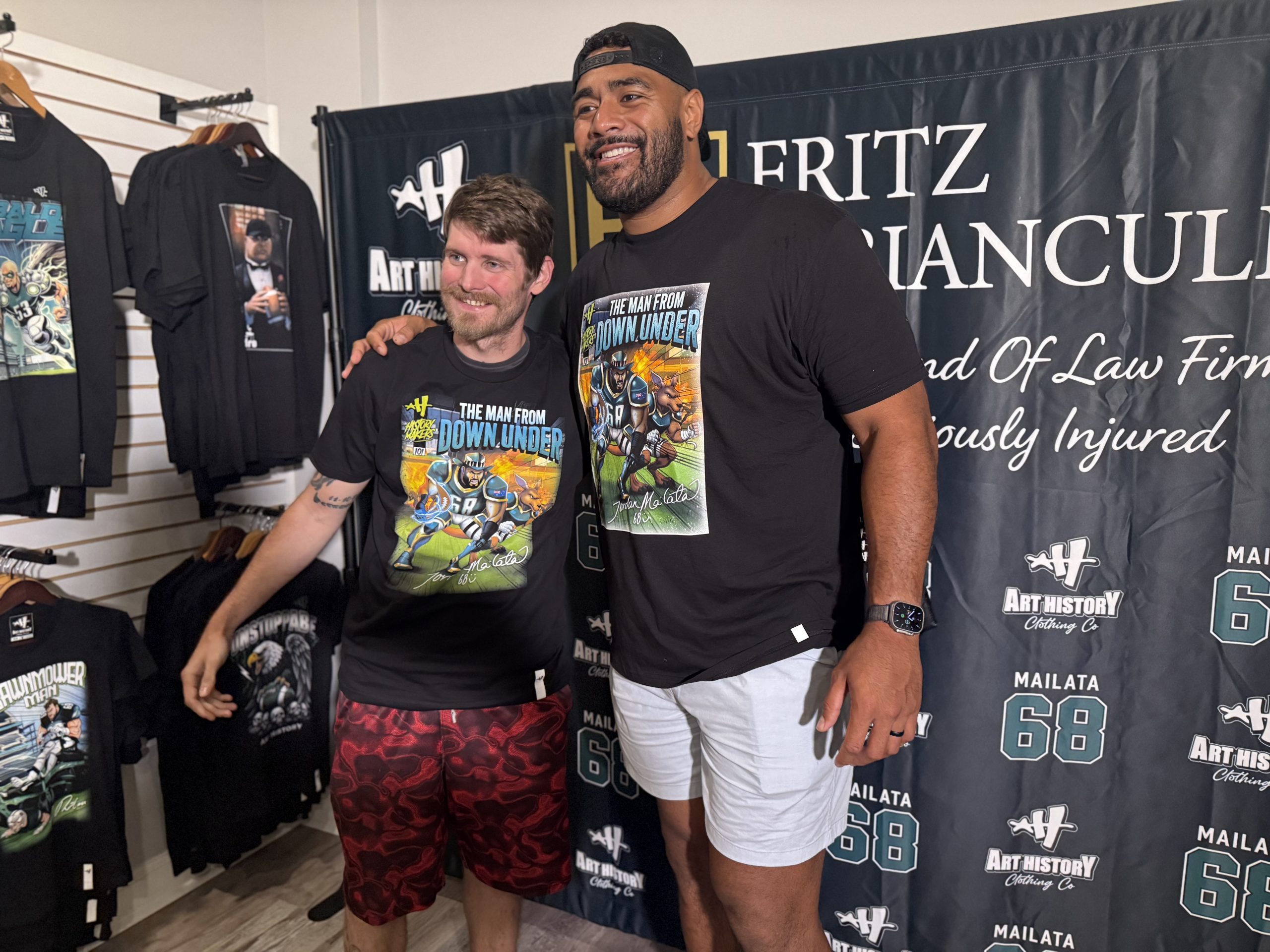
Jordan Mailata shown at Art History 101 Clothing Co.’s event on Saturday in Mayfair.Ryan Novozinsky
Jordan Mailata knows that the Eagles will look very different this season. With training camp just over a week away, the nine-year veteran said he and his teammates are focused on one thing: “Learning the playbook.”
The new playbook in question is the brainchild of offensive coordinator Sean Mannion, who is expected to implement a similar system to those of Sean McVay and Kyle Shanahan. Mailata says he is excited about its potential.
A photo of Mike Gansey (far right) and LeBron James (to the left of Gansey) that originially appeared in the Cleveland Plain Dealer in 2000. Gansey and James both played high school basketball in Ohio.Courtesy of Steve Gansey
Steve Gansey recently posted an old photo that was taken in 2000, and was on the front page of the Cleveland Plain Dealer’s sports section. It featured 10 high school basketball players from Northeast Ohio in their respective jerseys.
What caught folks’ attention was that it showed his older brother, Mike, standing alongside LeBron James. The two never competed against each other but shared a mutual respect.
Photo illustration of someone playing soccer with a map of Philadelphia in the backgroundJulia Duarte / Staff Illustration, Photography by The Inquirer, Courtesy of Getty.
A change to Division I men’s soccer looks to be on the horizon. After years of discussion and debate, the NCAA adopted legislation to shift the sport’s season from the fall to a two-semester schedule.
However, several conferences opposed it. Philadelphia’s six Division I men’s soccer program weighed in on the possible change.
The World Cup parties in Lemon Hill were one of the triumphant scenes of the summer in Philly.Tyger Williams / Staff Photographer
The World Cup, the PGA Championship, and the Major League Baseball All-Star Game, the most daunting events in this Summer of Sports Celebration, are finished here.
Well done, Philadelphia. Think about it. So many things could have gone wrong. Instead, the people in charge and those they represent can breathe sighs of relief after three high-profile events went off without an issue, writes columnist Marcus Hayes.
🧠 Trivia time
Before this year, when was the last time Spain won the World Cup?
A) 2006
B) 1998
C) 2010
D) 1990
We compiled today’s newsletter using reporting from Marcus Hayes, Scott Lauber, Kerith Gabriel, Jonathan Tannenwald, Lochlahn March, Olivia Reiner, Michael Klein, Ryan Novozinsky, Alex Coffey, Olivia Reiner, Lauren Jones, and Conor Smith.
By submitting your written, visual, and/or audio contributions, you agree to The Inquirer’s Terms of Use, including the grant of rights in Section 10.
Thanks for getting your morning started with me. Have a wonderful Monday, and we’ll be back in your inbox tomorrow. — Bella
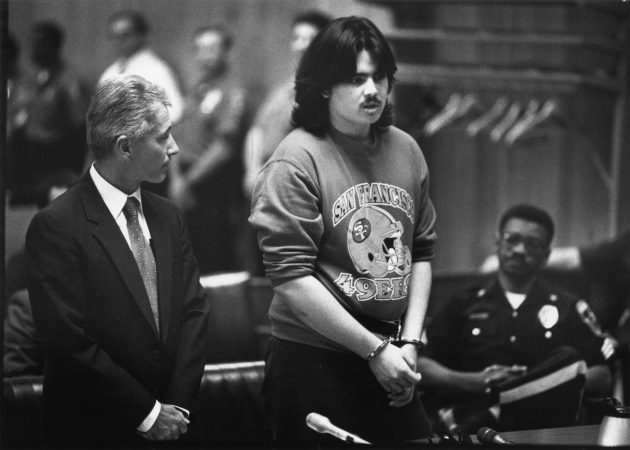
Nearly four decades after a 14-year-old boy killed his 12-year-old neighbor by stabbing her 95 times in one of South Jersey’s most infamous crimes, the killer spoke extensivelyfor the first time about that day, according to a newly released recording.
“I am truly sorry,” Kenneth Houseknecht, now 53, said of the events in April 1988, when he attacked Kim Marie Anderson as she was getting ready for school in her family’s home in Deptford.
“Years ago, when I first got incarcerated, I didn’t take responsibility at all for what had happened. I was going back and forth between no, it didn’t happen, this is a dream. It couldn’t have happened. It wasn’t me. All I can say is that I am sorry, not only to the Andersons, but to my family.”
Houseknecht’s comments came during an unusual May 28 hearing in Gloucester County Superior Court.
After serving 38 years, Houseknecht was seeking a reprieve from a life sentence under a 2022 New Jersey Supreme Court decision that declared mandatory minimum 30-year prison sentences without parole unconstitutional for juvenile offenders.
The ruling allows juveniles serving lengthy prison sentences to seek a review after 20 years of incarceration. Describing it as “the most gruesome homicide of my time,” Superior Court Judge Kevin T. Smith ultimately affirmed the original sentence, stating that Houseknecht continues to be a danger to the community.
No media was present during the nearly two-hour hearing. A succinct news release issued by the Gloucester County Prosecutor’s Office confirmed Smith’s ruling.
However, an audio recording of the proceeding, obtained through an open public records request, offers a compelling window into Houseknecht’s imprisonment since he was a student in junior high school, his family’s pledge of support for his potential release, and the continued anguish and anger of Anderson’s parents, Stephen and Esther.
In 1991, Houseknecht was sentenced to life in prison, meaning he would have to serve a minimum of 30 years before becoming eligible for parole.
If Smith ruled in Houseknecht’s favor, he could be released without relying on the discretion and supervision of a parole board.
Twelve-year-old Kim Anderson, seen in a painting in 2009.John Costello / Staff Photographer
The crime
In the early morning of April 19, 1988, Kim and another girl were expected for breakfast at a friend’s house across the street before all three girls boarded their bus for school. Esther Anderson would normally be home to see Kim and her brother, Stephen Jr., off to school, but because of an issue at the family’s catering business, she was already at work, assisting her husband.
Houseknecht was a friend of Stephen Jr., who left the house before his sister because his bus came earlier. Other than the family’s boxer, Bo, Kim was home alone.
It was supposed to be a simple robbery. Houseknecht owed money to an older friend for pornographic magazines. He didn’t expect anyone to be inside the Anderson home. He had with him a small knife he had stolen from the Ames department store.
Confronted by Kim, Houseknecht, who was 6 feet tall and weighed 200 pounds, attacked the 5-foot-3, 120-pound seventh grader. He stabbed her nearly 100 times. The ferocity of the assault was so intense that the tip of the knife broke twice, leaving pieces in her head. Houseknecht also beat her repeatedly with a French-style telephone.
One of Kim’s friends discovered her battered body lying on the floor just inside her bedroom, next to a blood-soaked Cabbage Patch doll.
Investigators immediately focused on Houseknecht as a suspect. While they were scouring the neighborhood for clues shortly after the murder, he approached them and made a bizarre revelation.
“You know my fingerprints are all over the house, even in Kim’s room,” he told them, according to sworn statements at the time.
Investigators also discovered a note on Houseknecht’s bed to the Andersons featuring sexually explicit drawings.
“This is your daughter’s killer. I hope you know I used gloves. The next one to get it is Mrs. Anderson,” the note read.
When a judge ordered Houseknecht tried as an adult, Houseknecht pounded furiously on the table, shouting, “Kill me, kill me,” and “I didn’t kill that girl purposely.”
A jury convicted him of murder following an emotionally charged trial that was moved from Gloucester County to Salem County because of extensive pretrial publicity.
Over the years, attorneys with the state’s Office of the Public Defender have exhausted most appeals to have his sentence reduced, contending, among other things, that Houseknecht’s lawyers provided ineffective counsel.
The May hearing before Smith appeared to be the best chance for Houseknecht to be released, barring any potential future parole board decision.
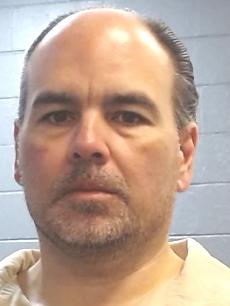
Kenneth HouseknechtState of New Jersey Department of Corrections
Houseknecht’s courtroom appearance
Dressed in an orange prison jumpsuit, Houseknecht stood for most of the 17 minutes he addressed the court, trying to convince the judge that after being in prison since he was a teenager, he was ready to reenter society. At one point, he became emotional and told Smith he would be more comfortable sitting down.
“It was a robbery that turned tragic,” Houseknecht read from notes. “I had forgotten about somebody being there. I hated that. I hate it today. I fully understand the pain that I caused the Andersons, especially Kim. I know their family can’t be whole.”
He said he regretted writing the note threatening Esther Anderson, describing it as a “stupid attempt to avert attention” from what he had done.
He noted that he had since earned his GED certificate, taken college-level courses, and was a model prisoner who helped tutor other inmates.
“I’ll just end it here with this,” Houseknecht said. “What you see, what you read about me, all that I’ve learned is genuine. I do want to give you my word that I will continue to be the same way on the streets.”
Houseknecht’s sister, Katrina Andreen, testified on her brother’s behalf via Zoom. An actress who goes by the name Katrina Law, she appears on the show NCIS.
“It took many years for him and us to figure out why he did what he did, and then even more years to address it properly, which Ken has done,” she read from a statement. At the time of the murder, she was 11 years old and went by the name Joyce Houseknecht.
A former Miss New Jersey Teen USA pageant winner, Andreen said, “Ken does not shy away from taking full responsibility for his past mistakes and actions. Ken has had almost four decades in prison to think about and reflect on what he did as a troubled 14-year-old, and now, as a grown man, he takes full responsibility and is truly sorry.”
She said her family was prepared to help her brother transition to a life beyond prison.
“Our family will be there for Ken every step of the way, offering moral support, encouragement and most importantly, love,” she said. “I look forward to our family being whole again. I ask that we please believe in forgiveness. I ask that we please believe in rehabilitation. I ask that we please believe in second chances, and I ask that we believe in my brother.”
The Andersons respond ‘it’s just not fair’
Stephen and Esther Anderson, in 2009, in their Mount Laurel home as they prepare to move. Portraits of their slain 12-year-old daughter, Kim who was murdered 21 years ago hang on the walls of the dinning room and den.John Costello / Staff Photographer
Over the decades, Stephen Anderson, now 76, has attended numerous court proceedings in support of justice for his daughter. When it was his turn to speak, he chose not to read from a statement. Instead, he spoke extemporaneously about how his family’s life was forever upended on that April morning in 1988.
He described Houseknecht as a monster who is “not even human to do what he did.” He explained that his wife was not with him in court because she remains fearful of Houseknecht because of the threatening note found on his bed after he killed Kim.
He was extremely skeptical of Houseknecht’s profession of remorse, calling it a lie.
“It took him all these years to become remorse, the doctor said he wasn’t, and now all of a sudden he has it because his lawyers are telling him to say it,” Anderson said.
He said not only is his family fearful of Houseknecht’s release, but the community who remembers the crime is also frightened of the possibility.
“It’s just not fair that not just my family has to live in fear,” he said. “There are a lot of people still living in Gloucester County, and they are going to be fearful of what they have to face when he gets out.”
He asked the judge to “see it the right way” and keep Houseknecht behind bars.
“We’re not gun people, but we’re going to apply for gun permits because we’re scared,” he said.
Assistant County Prosecutor Michael Mellon argued that the original sentence remains intact. He cited expert opinions that found Houseknecht had failed to accept the reality of what occurred and his role in it.
He also reminded the court that Kim Anderson never got to experience high school, college, relationships, or a career.
“Regardless of the outcome here today, no one that can hear my voice should forget Kim Anderson,” he said. “No one in this room, no one that reads this transcript, because Kim matters today, she matters tomorrow, and she matters always.”
The judge’s ruling: ‘The deep-down demon that brought about this crime’
Before sharing his opinion, Smith pointed out that while the hearing focused on Houseknecht’s future, Kim would be 51 today if not for that fateful encounter with her neighbor when both were young.
“We don’t know whether she would be the first woman president,” Smith said. “We don’t know whether she would give birth to the next man on the moon. We don’t know what 12-year-old Kim would have to offer, as 20-year-old Kim, 35-year-old Kim, or 50-year-old Kim. We don’t know that, so we can’t lose sight of the absence of this particular person in this equation.”
He acknowledged Houseknecht’s positive experiences while in prison and his efforts to better himself, saying he has not “gotten into the unproductive behavior of many of his fellow inmates of just playing cards all day.”
But he sided with prosecution experts who believe Houseknecht still poses a risk of violence. Smith also noted that an expert had suggested there was a sexual component to the crime, though that was never addressed at trial.
In affirming the original sentence, Smith said to reduce it and allow Houseknecht to be freed with no supervision, would be derelict on his part.
Despite having spent decades in prison and his efforts to improve himself, Houseknecht, Smith said, has never addressed the fundamental issues and “the deep-down demon that brought about this crime.”
Houseknecht remains in custody at the South Woods State Prison in Bridgeton. When he first became eligible for parole in 2018, he refused to cooperate with the hearing process and a hearing was not scheduled.
Nicole Swiderski, a spokesperson for the New Jersey State Parole Board, said in an email that Houseknecht’s status has not changed.
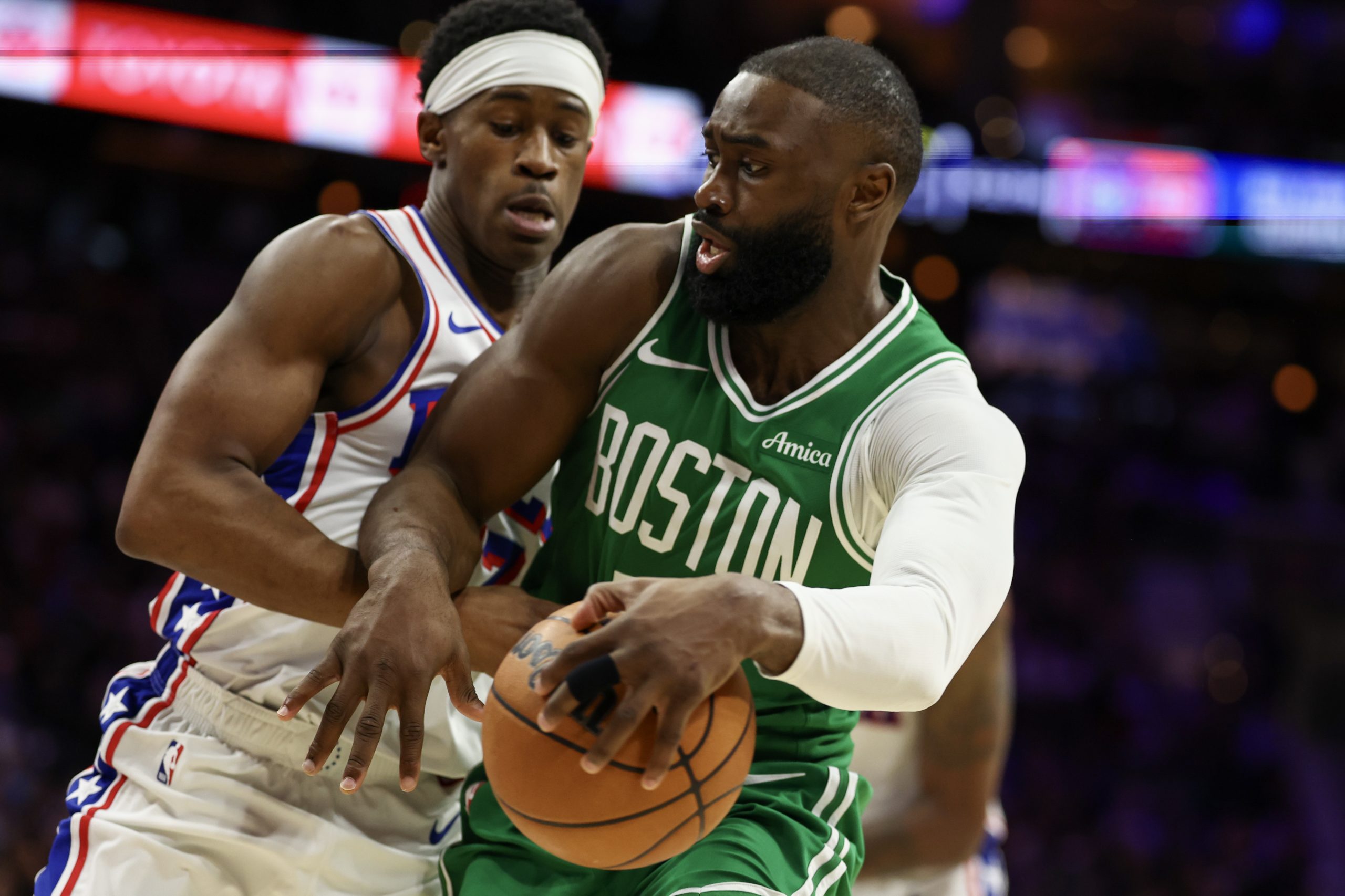
LAS VEGAS — Jaylen Brown has made one brief Sixers appearance, sitting courtside for Saturday’s Summer League game.
Still, the acquisition of the All-NBA wing was one of the more prominent topics throughout his new team’s stay in Las Vegas. There were entertaining stories about how various Sixers found out about the blockbuster trade, illustrating how stunning the move was even to those close to it. And there was excitement for how Brown is expected to enhance a talented roster now with realistic aspirations to contend.
Edgecombe was in his native Bahamas — and at a spa — when he accidentally missed multiple calls from Sixers executive vice president of basketball operations Jameer Nelson.
Then, when he saw a text from Nelson asking to call him as soon as possible, Edgecombe got nervous.
“I was like, ‘Man, it’s free agency, why you calling me so much?’” Edgecombe recalled. “I thought I was gone.”
VJ Edgecombe and Jaylen Brown will be the defensive pillars of the Sixers. Monica Herndon / Staff Photographer
The actual news Nelson wanted to share — that the trade for Brown was about to happen — still “shocked” Edgecombe, calling it “the last thing I expected.” Edgecombe also described it as “bittersweet” because of the quick rapport he developed with the outgoing Paul George, but said he is eager to play with Brown while at the “peak of his career.”
Justin Edwards
This trade was kept so under wraps that even Edwards did not catch wind of it while at the Sixers’ facility on the day it popped.
Edwards had just finished a pool conditioning workout and glanced at the television on a sports program dissecting all the league-wide offseason moves. And did a double-take.
“They were talking about Jaylen Brown and PG, but I didn’t pay attention to it,” Edwards said. “I [saw] it, but I looked away. Then I looked again. I’m like, ‘Oh, snap!’ So I called ’Rese [Tyrese Maxey] and he was like, ‘Yeah, man, I knew since this morning.’ I’m like, ‘That’s crazy.’”
Dean Wade
Wade had already agreed to sign with the Sixers as a free agent the night before the Brown trade. Wade said he was intrigued by a brief “rumor” he heard about the possibility of such a move, but believed it had died out. Then, “all of a sudden, out of nowhere, it just kind of popped back up and it was a done deal.”
As a versatile wing defender who has played his entire career in the Eastern Conference, Wade has plenty of first-hand experience with trying to counter Brown’s offensive prowess and “edge.” He called Brown “definitely one of the toughest people I’ve had to guard. Especially last year, he was just a monster.”
“He gets to his spots [on the court],” Wade said. “It doesn’t really matter if you’re there or not. If you don’t block it, it’s going in, probably. … His size and his athleticism and his skill, they all go hand-in-hand.
“He’s hard to stay in front of. And then he’s also a lot stronger than people think. So he gives you a little bump in the paint [and] it’s kind of hard to recover from that.”
Labaron Philon Jr.
The rookie guard said he was not overly shocked when he heard about the trade because he prides himself on keeping his emotions in check. But he knows Brown is going to be a valuable resource during his first NBA season.
“He has that championship DNA,” Philon said. “I feel like, as a young guy, that’s somebody you want to look up to [and] somebody you want to learn from. Somebody that’s already been in that moment, he can help all the other guys too that haven’t reached that level yet [and] help us get over that hump.
“With him coming in, I feel like it’s going to be special. We’re going to go at it at practice. He’s going to push me. I’m going to try to push him to the next level.”
Anfernee Simons
Simons is joining a new team in the Sixers, but reuniting with a former teammate in Brown. They played together with the Celtics for part of last season, before Simons was traded to the Chicago Bulls at the February deadline.
Simons called Brown “kind of the epitome” of a two-way player.
“He’s going to guard the best [opposing] player and go out there and give you 30 [points],” Simons said during his first media availability as a Sixer. “That’s what makes him special, what makes him different.
“So he’s going to come in and bring that championship mentality from Day 1 and try to instill that in the team.”
Mike Gansey
The Sixers’ new president of basketball operations landed Brown by following advice he learned while working his way up the Cleveland Cavaliers’ front office: Make the call. Gansey then aimed to assuage Brown’s initial shock about being traded to the rival Sixers with this simple message: “I want you on my team.”
“I’ve watched him against Cleveland, and he’s always killed us,” Gansey said. “ … We’re just super lucky to get him, and I know he’s motivated. He’s going to be great for everyone because the young guys want that. He’s been a champion and Finals MVP. I think Joel [Embiid is] in a great space and he’s excited, as well.
Mike Gansey shared a simple message with Jaylen Brown after the blockbuster trade: “I want you on my team.”Tom Gralish / Staff Photographer
“Obviously, we’ve got to see what it looks like. You can’t win a trade in July. … Until we actually have a practice or a game, you just don’t know. You hope it’s going to work out, but it’ll take some time, I’m sure.
“I would have never envisioned this, when I’m sitting there [for my introductory news conference in early June]. … Just opportunities arise. And that’s why, this business, you can plan all you want and prepare, but you just don’t know. Things happen.”
Dalen Terry
Terry was taking a nap — with his cell phone and his baby daughter resting on his chest — when the calls and messages about the trade started pouring in.
“I’m like, ‘Am I still on the team?!’” Terry said once he checked his phone. “ … I’m like, ‘OK, who was it for?’ They said PG [and] I’m like, ‘Dang …’
“I was just thinking about PG the whole time. Then I was like, ‘Wait, we got Jaylen Brown.’”
The Sixers’ coach praised Brown’s versatility on both ends of the floor, along with his competitiveness and winning pedigree.
“You watch him get a lot better from year to year to year,” Nurse said, “and how much harder that became to game plan for him. … He’s sitting in his prime. It’s amazing that he’s going to be a Sixer.”
T.J. DiLeo
When asked about Brown sitting courtside for Saturday’s Summer League game, DiLeo had a confession.
“Can I tell you the truth?” the summer Sixers’ coach said. “I didn’t even see him. I try not to look over there that much, but that is amazing to have him here. … The guys seeing him, obviously, that’s great. That’s what we’re looking for with our team, just the support of one another, the support of the organization. So that’s really cool that he [was] here, man.
“I wish [I’d seen] him now. I probably [would have] looked over and would have shook his hand afterward, or something.”
Like many American suburbs, Abington accidentally spent centuries building a goose paradise. Now, the feds will help the township evict the waterfowl from their ideal habitat.
Abington Township approved a contract with the U.S. Department of Agriculture on July 9 for Canada goose abatement in Alverthorpe Park, where airborne birds are attacking people driving golf carts, digging into sand traps, and dropping slippery, bacteria-laden feces onto walking paths and around the playground, township staff said.
Goose droppings may also be affecting water quality at the park and interfering with fishing, according to the contract.
Each goose can deposit up to a pound of feces per day, a USDA spokesperson said.
“It’s a mess,” said Abington’s assistant parks director, Patricia Platt.
USDA to harass Abington geese 35 times, may kill some to be used as food
Between this month and June 2027, USDA personnel will conduct “waterfowl harassment” at the park, according to the contract, with “visual deterrents, use of lasers, and remote controlled boats, pyrotechnics, etc.”
The service will cost about $15,000 for the yearlong contract.
“Approximately 35 visits of harassment will be conducted throughout the spring and fall seasons,” the contract reads.
The pyrotechnics mentioned in the contract are typically propane-powered noisemakers to scare the birds, a USDA spokesperson said.
“It’s not like fireworks,” spokesperson Tanya Espinosa added.
Lasers can mean green light beams trained on the ground to deter the birds.
USDA workers start with less intensive goose-scaring methods and then escalate as needed, township and USDA staff said.
The feds will also throw away goose eggs and, if the geese start molting, euthanize up to 150 birds for people to eat.
Abington officials have considered other goose abatement tactics in the past. In 2023, the township’s shade tree commission asked whether a planned development across from Alverthorpe could include more shrubs and trees to reduce the goose habitat, but the engineering consultants said the community was adamant about an expansive grass lawn. The town’s 2023 parks plan suggests that closing some of the town’s outdoor ice rinks, which are wet lawns when not frozen, could help reduce goose habitat. The township parks director, Jessica Tholey, did not return calls and emails.
Canada goose damage has been a problem across Pennsylvania for at least three decades. In 2010, USDA Wildlife Services received more than 400 “technical assistance requests” for goose damage in the state.
Falls Township in Bucks County began reducing its resident goose population at a public park in 2015, according to its parks director. Falls spends about $17,000 annually for a private company to chase the geese with border collies.
Honkers plentiful nationwide, Pa. says
Goose populations have exploded across the United States in recent decades, rebounding from a dangerous low in the early 1900s when open hunting threatened migratory populations, according to the Pennsylvania Game Commission.
“There probably are more honkers on the continent today than when the Pilgrims landed,” state officials write.
Canada geese still migrate through the Philadelphia region — a group dubbed the Atlantic population.
But many local geese are part of a nonmigratory population that is relatively new.
Pennsylvania had no year-round populations until 1936, when the state game commission released 30 Canada geese with amputated wing joints at a reservoir near Lake Erie.
The state added to the reservoir population in the 1950s, and by the 1970s, Southeastern Pennsylvania landowners were complaining about geese, according to a 2011 report from a group of government officials and wildlife biologists.
Nuisance geese settled in Abington over 40 years ago
The geese, which prefer open fields with short vegetation near water, thrived on the lawns, golf courses, and fake lakes of the Philadelphia suburbs.
By the 1980s, the geese had reached Alverthorpe Park, where Abington officials considered balloons and plastic swans to deter them.
A Philadelphia Inquirer article from April 1984 by Laura Quinn details the nuisance goose population in Alverthorpe Park.Deng-Jeng Lee
But with tens of thousands of them already settled in the Delaware Valley, The Inquirer reported in 1984, the game commission officer for eastern Montgomery County, William Wasserman, was not optimistic: ”What we’ve got right now with Canada geese is probably going to remain the same to the year 2000 and beyond.”
This suburban content is produced with support from the Leslie Miller and Richard Worley Foundation and The Lenfest Institute for Journalism. Editorial content is created independently of the project donors. Gifts to support The Inquirer’s high-impact journalism can be made at inquirer.com/donate. A list of Lenfest Institute donors can be found at lenfestinstitute.org/supporters.
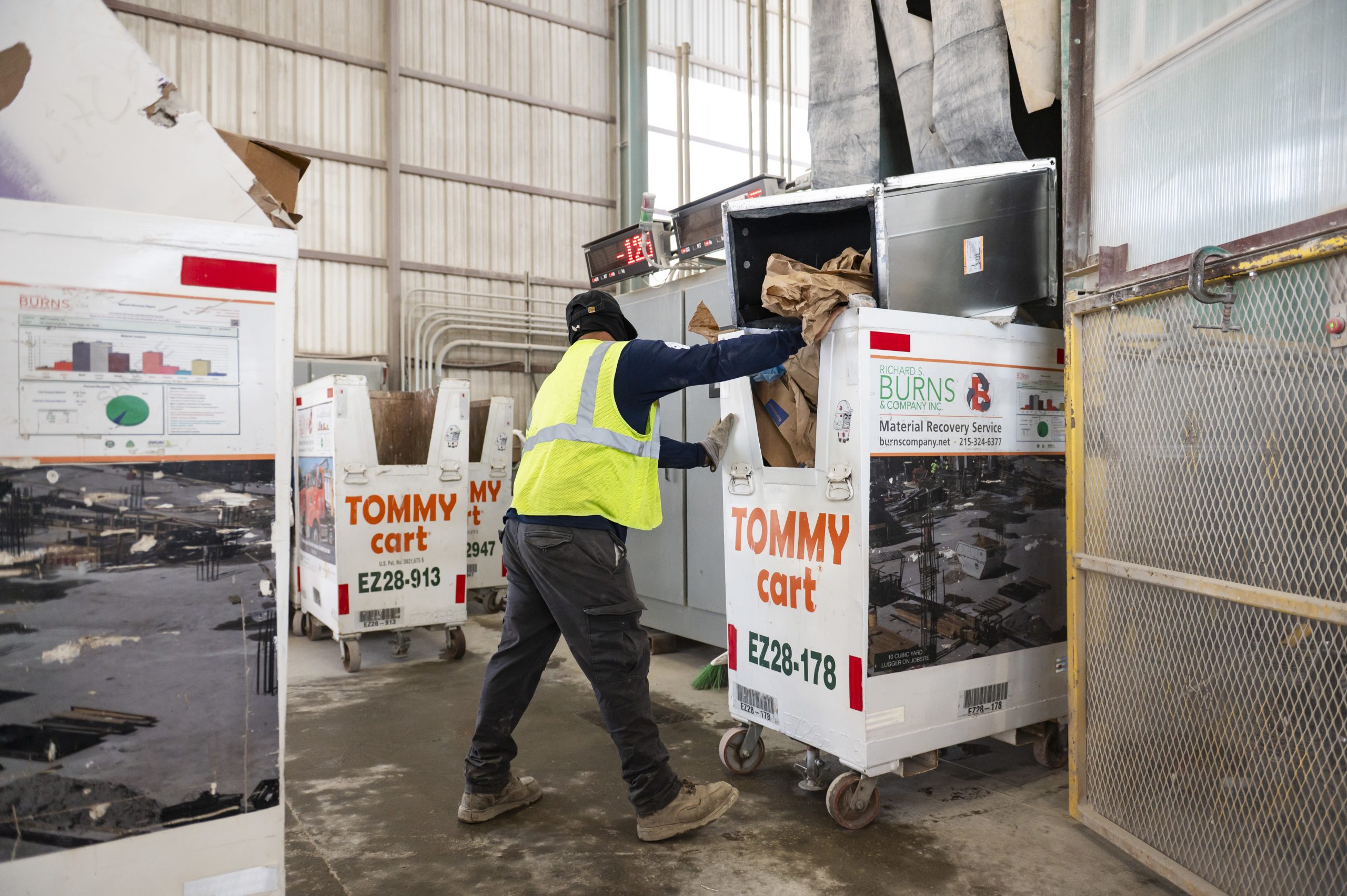
The TommyCart, a durable, bar-coded, welded-steel recycling wagon made in Philadelphia, is popping up at U.S. construction sites from the Wanamaker Building’s apartment conversion in Center City to the Tennessee Titans’ new stadium in Nashville.
The carts, specialized for recycling, were developed by Richard S. Burns & Co. at its 13-acre Hunting Park complex where demolition debris is sorted for resale to steel mills, building-materials makers, plastics plants, and other reusers.
“We were struggling with increasing the quality of recycling material going out the door, and from the increased quantity of material coming in the door,” said Allen T. Burns, who runs the company, now known as Burns Services.
Allen T. Burns (left), owner of Burns Services, and Ryan Fitzpatrick, director of business development, in front of stacks of TommyCarts, developed and patented by the company. Allie Ippolito / For The Inquirer
His father, company founder Richard S. Burns, tried automatic sorters but found they chewed up and wasted more than half the material.
So the family-led team invented and patented a heavy-duty cart, more nimble than the heavy dumpsters used to collect industrial waste. With the carts, they could more easily weigh, measure, and handle materials at crowded building sites. The process was efficient enough to resume hand-sorting and recover far more material to resell.
Burns ships several thousand TommyCarts back and forth from his Hunting Park complex to regional building sites and has leased thousands more to construction recyclers in Washington, D.C., Pittsburgh, Chicago, and Tennessee.
Using the TommyCarts, the company can sell about 80% of the recyclables it collects for reuse.
Burns rolled out its first TommyCarts in 2015. The firm collected a string of patents, began selling the carts to other recyclers in 2023, and won a key industry certification last year. The goal is to produce up to 3,000 TommyCarts in 2027, double this year’s output and triple last year’s.
How the company grew
Burns Services has made an average of 500 carts a year since 2015, mostly for its own use at the company’s 13-acre Hunting Park complex. Truckloads and TommyCart-loads of debris — 500 trailers’ worth on a typical day — arrive at the yard, where the materials are sorted and sold.
“We have six welders, and we can make 15 carts a day. We need to get close to 50 a day to keep up with demand. So we are getting into full robotic welding,” Burns said.
The carts are named for Burns’ business developer, Tommy Garlick, who is listed as co-inventor on some of Burns’ nine patents.
“We have rebuilt our maintenance shop, renovated our welding shop, sandblaster, and paint shop to make room for the automation,” Burns said.
His father, born in an upstate prison, started the company after his Marine Corps service, a semi-pro football career, and a stint at a steel company.
At the time, recycling was a response to the rising cost of landfills.
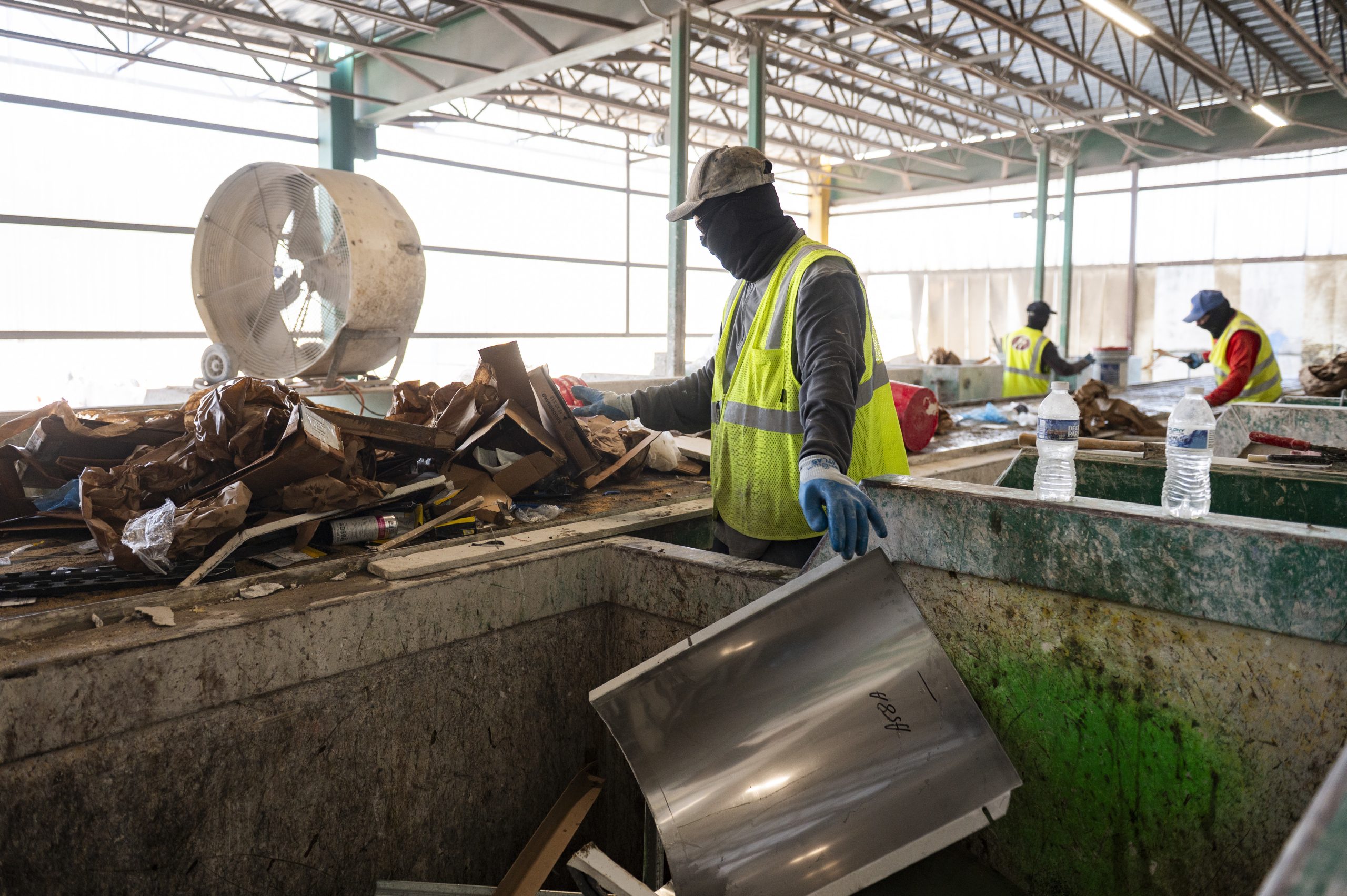
“Dad’s philosophy is that waste is a commodity you haven’t found a market for,” Burns said on a hot June day over the clash of falling debris,sprayed by industrial misters, from the conveyor belt-driven sorting line above two lines of TommyCarts.
A Burns worker sorts through debris emptied from a TommyCart at the Hunting Park plant.Allie Ippolito / For The Inquirer
This is no clean-room factory, as wherepharmaceuticals or computer chips are made. Carts are assembled in the Burns welding shop, with rectangular grips for forklifts, wheel mountings, and a brake attached below.
Outside, sorting-line workers stand wrapped, booted, visibility-vested, and goggled like travelers in a sandstorm — though Burns worked gloveless as he lent a hand, flicking wallboard, steel trim, and plastic liners from truck-fed conveyor belts to the TommyCarts waiting below.
Pre-TommyCart efforts at automated sorting mangled and smeared the loads, so less than a third of the material could be recycled. Next-generation TommyCarts, numbered and coded, are easy to move in confined areas, simple to weigh before and after sorting, and less damaging.
Fire can be a menace in a scrapyard — more so recently, with rapidly growing incidence of hot lithium-ion firesfrom improperly discarded tool and appliance batteries. The EMR scrapyard, Burns’ go-to buyer for iron and steel near Camden’s Beckett Street metal-shipping port terminal, was closed after its latest fire in May, forcing area yards like Burns to find new buyers.
Burns also had firestraced to batteries this summer, noted John Thomas, Hammonton-based president of the Construction & Demolition Recycling Association, which named Burns “Recycler of the Year” for 2025.
Honky-tonk cleanup
In 2023, a Nashville builder gutting a 30,000-square-foot site for country star Morgan Wallen’s new bar had a problem: Trucks couldn’t squeeze onto the site in the city’s crowded Lower Broadway honky-tonk strip and had to be hand-loaded from a distance — at prohibitive cost.
Lincoln Young, a demolition-debris contractor who runs Rockwood Sustainable Solutions in Tennessee, reached out to Burns in Philadelphia. “He has a patented system, a proven process,” for rolling TommyCarts into the building and back to the trucks, Young said, so the material can be easily weighed, sorted, and sold.
Rockwood leased carts for the job and became Burns’ first outside TommyCart user.
“The beautiful thing, these carts would cost me maybe $1,200 to make, but leasing them I have no capital cost. I can scale more or less of them when I need them,” Young said. “General contractors around the country are now calling for TommyCarts in their contract specs. We have hundreds of TommyCarts now at the new Titans stadium.”
A worker pushes a TommyCart to be emptied and sorted at Burns Services in Hunting Park. Allie Ippolito / For The Inquirer
Burns says verifiable measurement is the key to paid recycling. The conveyor system reads the bar codes and records the gross weights to calculate payment.
“This is not the cheapest way of doing it,” Burns said. “We have competitors who charge less per container. But this way you have accountability. You can get industry certifications.”
The carts are welded — 20 feet of weld per cart — joining plates of 3/16-inch steel supplied by distributor Joseph Fazzio in Glassboro from U.S. and foreign mills.
Burns also has tried automated painting systems for the sandblasted metal surfaces, so carts can go a decade without repainting. A $50,000 automated-spraying rig can pay for itself in two years by using less paint, he said.
“Automation itself is not the issue. Like any tool, it is how it is used,” said Anton Ruesing, director of the Finishing Trades Institute for the IUPAT painters’ labor union. “Tools that reduce repetitive motion injury, improve safety, increase productivity, or even lower costs can enhance both the worker’s and the contractor’s experience” — as long as the worker remains in control and helps plan the job.
TommyCarts are used at building and demolition sites to collect recyclable materials and shipped back to Burns Services for sorting and selling.Allie Ippolito / For The Inquirer
The company’s Philadelphia location helps recruit reliable labor, Burns said. He’s hired industry veterans, immigrants, former prisoners, and family members of employees. Some workers have been targeted by Immigration and Customs Enforcement, incurring legal bills even though they are in the U.S. legally, Burns said.
Work in the yard starts at $16.50 an hour plus benefits, rising to $38 an hour. Overtime starts with the federally mandated time-and-a-half over 40 hours a week, rising to 1.8 times base pay after 60 hours. Sorters can earn more than $50,000 a year, plus benefits.
Burns’ sons work there, too. “Me and my brothers, we dropped out of high school and worked for my dad,” he said.
Burns says he learned more in decades of long work, weeks next to his father in the workshops, and from the lawyers, accountants, architects, engineers, and other professionals that help deal with clients and suppliers.
“I worked elbow-to-elbow with my father,” he said.
Burns says automation makes work smarter but doesn’t eliminate the need for people, who come up with in-house solutions to tough problems.
That’s why, as construction companies are experimenting with artificial-intelligence systems, Burns has built a staff of four full-time software programmers.
“Off-the-shelf systems don’t do what we need,” Burns said.
With Eagles training camp drawing nearer, The Inquirer is taking a closer look at the more than three dozen new faces who are expected to report along with the rest of the team on July 28.
Player: Marquise “Hollywood” Brown
Position: Wide receiver
Age: 29
Previous experience: Brown is a seven-year NFL veteran who was the first receiver taken in the 2019 draft (No. 25 overall out of Oklahoma by the Baltimore Ravens). He spent the first three years of his career with the Ravens, including a standout 2021 season in which he racked up a career-high 1,008 yards and six touchdowns on 91 receptions.
Hollywood Brown’s best seasons came as a member of the Baltimore Ravens. Kenneth K. Lam / MCT
The Cardinals picked up his fifth-year option. He played the final two years of his rookie deal in Arizona, ranking second on the team in receiving yards in both seasons (709 in 2022 and 574 in 2023).
Brown signed consecutive one-year deals over the last two seasons with the Kansas City Chiefs. He missed the majority of the 2024 season with a shoulder injury. In 2025, he started six games (16 games total), finishing the year with 587 yards (second-most on the team) and five touchdowns (tied for the team high) on 49 receptions.
Early in his career, Brown established himself as a speedy deep threat. He didn’t run the 40-yard dash at the combine or Oklahoma’s pro day due to a foot injury, but he reportedly ran a 4.3 40 in 2018. While Brown may have lost a step since then, he can still stretch the field vertically.
Path to a roster spot: Brown figures to slot in as the Eagles’ third or fourth receiver behind DeVonta Smith and Makai Lemon. He’ll also vie for targets against Dontayvion Wicks, the 25-year-old receiver whom the Eagles acquired from the Green Bay Packers this offseason.
But Brown could carve out a singular role for himself in the offense as a deep threat, reminiscent of the job that Quez Watkins sought to fulfill early in Nick Sirianni’s tenure. Brown has the potential to open up opportunities for players underneath, so long as defenses respect him downfield.
Fun fact: Before he went to Oklahoma, Brown started his collegiate career at College of the Canyons, a community college in Santa Clarita, Calif. He wasn’t on a scholarship, so Brown made money by working as a ride operator at a nearby Six Flags, according to Sports Illustrated.
Quotable: “I think when you talk about Hollywood, there have been times [in] our offense we’ve had, really, that vertical skill set, but also a guy who can separate at the top of his routes. We had that a little. I always look at our teams in ’17, I thought Nelson [Agholor] did a great job of that, bringing that to the team. I think you look [at] ’22 and Quez did a good job of that. I think the ’24 team was constructed a little bit differently, but I think that really fits the skill set of our quarterback.” — Howie Roseman in March
Player: Zion Wilson
Position: Defensive tackle
Age: 23
Previous experience: Wilson spent the last five years at East Carolina. He joined the team as a walk-on in 2021 as an offensive lineman. He did not see game action until 2023, when he mostly began to serve in a special-teams capacity (11 games, 51 snaps on special teams). That role continued in 2024 — he played in all 13 games (70 snaps) on special teams.
Wilson, 6-foot-3, 316 pounds, also switched to the defensive line in 2024. The following season, he had a breakout performance, finishing with 42 tackles (including 10 for a loss) and seven sacks (which ranked second in the American Conference).
He reportedly spent the spring of 2026 at Virginia, where he planned to play in the fall. But the NCAA denied his sixth-year waiver, forcing him to go pro. Wilson signed a three-year deal with the Eagles as an undrafted free agent in June. His contract includes $225,000 in guaranteed money, according to Over The Cap.
Path to a roster spot: Wilson is an intriguing rookie, but he would have to beat out the likes of Byron Young, Uar Bernard, and Ty Robinson for one of the last couple of active roster spots among the defensive tackle corps. He is most likely a contender for the practice squad in 2026. His special teams experience would make him a valuable, versatile addition, too.
Fun fact: Wilson comes from a football family. His uncles, Willie Smith and C.J. Wilson, both played at East Carolina and had NFL careers. Smith, an offensive tackle, played a total of four seasons (2011-14) for Washington, the Oakland Raiders, and San Diego Chargers. The elder Wilson, a defensive end, played a total of seven years (2010-16) for the Green Bay Packers, the Raiders, the Detroit Lions, and the Chicago Bears.
Quotable: “Dude knows a lot about football. A lot. And just seeing his mind just [transfer] over [from] O-line straight to D-line. Just taking off from there. I kind of look up to him. Dude’s been wanting to do this his entire career here. Now, he’s got to finish it out here at ECU his senior year doing it. That dude is balling out. I could not be more happy and proud of him.” — East Carolina defensive lineman Preston Carr on Wilson in November, via The Holton Ahlers Show on Pirate Radio