Tag: topic-link-auto

  • Shrinking student populations cause spike in public school closures across U.S.

    Shrinking student populations cause spike in public school closures across U.S.

    School closures have spiked 35 percent across the country over the past four years, propelled by a shrinking youth population and the end of covid-19 relief funds that had propped up education funding in some places.

    For the fourth year in a row, the number of school closures rose nationally last year, according to data from the National Center for Education Statistics released last week. Districts closed more than 1,000 schools in 2025-26, compared with 755 in 2021-22. And more closures are planned, including districts in Houston, Philadelphia, Pittsburgh and Broward County in Florida.

    “We call it the big shrink,” said Marguerite Roza, who tracks school funding as director of Georgetown University’s Edunomics Lab. “Enrollment at public schools is declining, partly because there are fewer kids in the U.S.”

    Public school closures temporarily slowed during the pandemic as administrators focused on dealing with the fallout from covid and tapped relief funds to balance their budgets. But now that the funds have run out, experts say administrators often must close schools to deal with reduced enrollment, which in turn reduces the amount of money they receive from states.

    Nationally, federal projections indicate public school enrollment has already started to decline from its peak in 2019 and will continue to do so in coming years. From 2019 to 2031, schools were projected to lose nearly 4 million students. And those estimates were made before the Trump administration made changes to sharply curb immigration, further reducing the number of kids at some schools.

    Some districts are also coping with population shifts, as families move to the suburbs or other parts of the country.

    In addition, Roza noted that families in some parts of the country, such as Florida, have enrolled their children in private schools, taking advantage of taxpayer-funded vouchers and scholarship programs offered in a growing number of states, or charter schools, which are publicly funded but generally operate with some degree of autonomy.

    All that means more closures, sometimes year after year. School administrators acknowledge that the moves can be hard on students, families and neighborhoods.

    “It’s very difficult,” said Philadelphia Superintendent Tony B. Watlington Sr. “Public schools have always been anchors of communities.”

    The Philadelphia district said schools have 70,000 more seats than are needed because of enrollment declines, and many of its aging school buildings need repairs.

    In May, Philadelphia’s school board voted to close 17 schools, rejecting a recommendation to cut even more. Students, teachers and others rallied before the meeting to try to stop the closures.

    To ease the burden on families, Watlington said Philadelphia decided to gradually close campuses over the next decade to give students time to graduate from their current schools. The district also created a transition office to help families affected by the changes.

    “We know how hard and how difficult this is for our families,” he said.

    Watlington said the district hopes to attract more students from other local schools by improving its academic performance and modernizing 169 remaining buildings.

    In Florida, Broward County Public Schools, north of Miami, closed one elementary school last year. The school district voted in January to close six more ahead of the 2026-27 school year and plans to identify additional schools to close or repurpose in the future. In May, the superintendent said he didn’t want to scare the public but thought the district might have to close more than 10 additional schools in 2027-28. The school district said it considered factors including declining enrollment and the operating costs for the buildings when deciding which facilities to shutter.

    The Houston Independent School District’s board of managers decided in February to move forward with a plan to close a dozen schools, despite protests from parents and community members. And Pittsburgh Public Schools voted in May to close 12 schools.

    Researchers said they expect more school closures in coming years because of declining enrollment.

    Sofoklis Goulas, an economist who has studied declining school enrollment and school closures, said it is hard to make precise predictions because of changing immigration patterns and other issues.

    One notable factor, he said, is that some students appear to have disappeared from school data in recent years, perhaps due to increases in home schooling or private microschools that are not fully tracked by the government.

    “The unaccounted-for student is the most worrisome,” said Goulas, a senior researcher at Foundry10, an education research organization based in Seattle. “We know little about them.”

    Meanwhile, many teachers and others have expressed frustration with the closures.

    “There is just an overall lack of funding in our public education system,” said Mary Kusler of the National Education Association, the nation’s largest union, representing 3 million educators.

    Kusler said efforts to cut taxes in many states have reduced the money available for local schools and made it hard to keep up with inflation.

    She also pointed to efforts to expand vouchers and scholarship programs, which help families pay for private schools. Supporters contend those programs create needed competition and provide more options for parents, especially in areas where public schools have struggled. But Kusler argued it also ultimately reduces the pool of money for traditional public schools, which still serve most students.

    “There is only so much money to go around,” she said.

  • US gas prices hit an average of $4 a gallon again as the US and Iran launch attacks

    US gas prices hit an average of $4 a gallon again as the US and Iran launch attacks

    NEW YORK — U.S. gas prices jumped to an average of $4 a gallon again Monday as the U.S. and Iran launched more attacks.

    According to motor club federation AAA, the national average for a gallon of regular gasoline is now back to $4. The average price a year ago was $3.14 a gallon.

    The price is a national average, meaning drivers in some states have been paying well over $4 a gallon for a while now, while others pay less. Prices vary between states due to factors ranging from nearby supply to differing tax rates.

    People around the world are also dealing with high gas prices as a result of the war.

    Gas prices first went over $4 a gallon on average at the end of March. They dipped below that in mid-June and continued to fall as crude oil prices eased when the U.S. and Iran reached an interim deal. Even then, President Donald Trump expressed frustration that gas prices weren’t falling as quickly as oil prices.

    Affordability is likely to be a key issue for voters in the U.S. midterm elections, and higher gas and oil prices can help push up prices for groceries and other goods.

    Oil prices have climbed again in recent days as the U.S. and Iran move closer to resuming an all-out war.

    Brent crude, the international standard, rose 3.2% to $90.95 per barrel Monday and benchmark U.S. crude climbed 2.8% to $84.04 per barrel.

  • U.S. military identifies 2 soldiers killed in Iranian attack on Jordan

    U.S. military identifies 2 soldiers killed in Iranian attack on Jordan

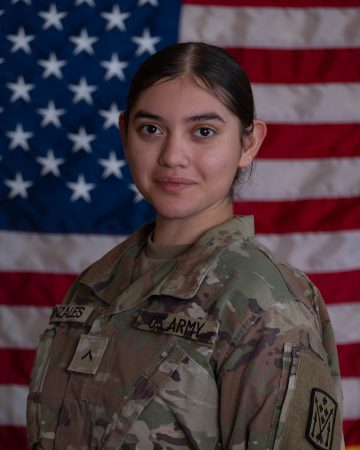
    WASHINGTON — Two U.S. Army soldiers killed in Jordan while defending against Iranian ballistic missile and drone attacks were identified on Monday — the first U.S. troop deaths from direct Iranian fire since the opening days of the war.

    The Defense Department said in a statement that James Feehan, 25, of Ewa Beach, Hawaii, and Isabella Gonzales, 19, of Carrollton, Texas, were killed in Jordan in Friday’s attacks.

    Feehan, a first lieutenant, will be posthumously promoted to the rank of captain and awarded the Bronze Star, Purple Heart, and Combat Action Badge medals. The Army did not provide details about his commendations. He was assigned out of Fort Bragg, North Carolina, to the 32nd Army Air Missile Defense Command.

    Gonzales was a private with the 10th Army Air Missile Defense Command in Ansbach, Germany. She graduated last year from Hebron High School in Carrollton, near Dallas, school officials said.

    “She gave her life in that service, and our district is heartbroken by her loss,” the Lewisville Independent School District said in a statement. “Her decision to serve after graduation speaks volumes of her character.”

    The military said Gonzales died on Friday and Feehan died the following day. It did not provide details.

    A third service member was reported missing in the attacks that killed Feehan and Gonzales. U.S. Central Command said Sunday that “unidentified remains” have been found and were being examined.

    Military says 17 U.S. service members have been killed in the war with Iran

    The deaths reflect the complicated reality that American soldiers don’t need to be on the ground in Iran for there to be lethal risks in a conflict that involves drones, missiles, and airplanes. American forces are arrayed across the Middle East, making other nations targets of Iran and its allies as the fighting has escalated after a breakdown in peace talks.

    U.S. President Donald Trump has said the war is necessary to stop Iran from developing nuclear weapons. Trump, a Republican, now faces political pressure to bring the war to a close and avoid the kind of prolonged Middle East conflict he had campaigned against.

    Drones and missiles claiming lives on both sides

    An American service member was also killed in northern Iraq on Saturday during a “controlled detonation” of unexploded ordnance from a downed Iranian drone, U.S. Central Command said Sunday. A second service member was wounded and was receiving medical treatment for a minor injury.

    The military said it was withholding additional information until 24 hours after families had been notified.

    Iranian authorities said U.S. strikes in just the past three weeks have killed at least 50 people and wounded more than 500 others, including eight killed in a strike on a bridge Friday.

    Both sides have targeted civilian infrastructure relied on by millions of people. Workers on ships, as well as foreign workers and others in Gulf nations, Israel, and Lebanon have also died in the conflict.

    First U.S. military fatalities came soon after the war started

    Shortly after the U.S. and Israel began the war on Feb. 28, an Iranian drone strike at a civilian port in Kuwait killed six American soldiers. The soldiers were part of a supply and logistics unit based in Iowa who were working at a shipping container-style building that had no defenses.

    A seventh soldier died more than a week after being wounded during a March 1 attack by Iran on the Prince Sultan Air Base in Saudi Arabia.

    Later in March, six service members were killed when a KC-135 refueling aircraft supporting U.S. military operations against Iran crashed in Iraq. The aircraft was in “friendly” airspace when an unspecified incident involving another aircraft took place, according to U.S. Central Command.

    Last week, the U.S. military said a Navy pilot died in a helicopter crash in the Arabian Sea. The Navy initially described the July 1 crash as an emergency landing and said there was “no indication the emergency was caused by hostile action.” The remaining three sailors aboard the helicopter were rescued.

  • Nursing homes got more Medicaid money out of Pennsylvania’s new budget

    Nursing homes got more Medicaid money out of Pennsylvania’s new budget

    Pennsylvania’s new budget has two significant changes for nursing homes.

    In a long-sought victory for the nursing-home industry, lawmakers altered how the Medicaid long-term care budget is set, increasing the state’s share of nursing home funding by $162 million next year.

    Lawmakers also amended the formula used to calculate whether nursing homes are complying with a 2022 law that required them to devote 70% of their expenses to resident care. The changes will make it easier to comply.

    Change to 20-year-old Medicaid funding rule

    For two decades, Pennsylvania Medicaid has paid nursing homes less than their audited costs, according to Michael Jacobs, CEO of the Pennsylvania Health Care Association, a trade group for nursing homes and other long-term care providers.

    In 2005, when lawmakers decided they could only afford to pay nursing homes 95% of their costs, the measure was supposed to be temporary. But 20 years later, what was called the “budget adjustment factor” remains in place. The gap between funding and audited costs grew to 20% from 5%, Jacobs said.

    This year, lawmakers agreed to raise the factor from 80% to 86% of costs and guarantee that it won’t drop below that level for two years.

    “It’s a monumental victory for long-term care to get predictability and stability by putting in a floor,” Jacobs said.

    That translates to a $162 million increase in state funding next year. (The change takes effect Jan. 1, because that’s when the fiscal years for Medicaid insurers begins.)

    The floor on the budget adjustment factor “provides much-needed resources and stability to help nursing homes recruit and retain the experienced caregivers residents depend on,” Matt Yarnell, president of SEIU Healthcare Pennsylvania, said in an email.

    “Now it’s critical that nursing home operators put these additional resources where they belong: into the quality of care for residents and into the frontline workforce,” said Yarnell, whose union represents thousands of nursing home workers.

    Including a federal match of more than $200 million, nursing homes are expected to see a roughly $20 to $25 per day increase for residents with Medicaid, Jacobs said. He did not provide a percentage for the total state and federal increase.

    Current minimum daily Medicaid rates range from $236.56 for Burgh Care Center in Pittsburgh to $573.92 for Fox Subacute in South Philadelphia, which specializes in caring for patients who need ventilators to breathe, according to state data.

    A new formula for calculating 70% rule

    In 2022, Pennsylvania became the fourth state to require nursing homes to devote a specific percentage of expenditures to resident care. Pennsylvania’s law set the threshold at 70%, with fines for nursing homes that didn’t comply.

    When the state Department of Human Services began evaluating nursing homes under the new law, the analysis resulted in what the agency described last year as “distorted” penalties that it considered “inconsistent” with the intent of the law, known as Act 54 of 2022.

    The agency found a lack of consistency in how nursing homes were reporting expenses. Some facilities, “mistakenly reported items that would be considered costs for resident care and services as administrative operating costs,” making it seem like they owed big fines, the agency said.

    The original formula for overall costs also included things over which the nursing home operators had no control. Examples are property taxes, a nursing-home assessment, and depreciation. These items elevated total costs, making it harder for nursing homes to comply with the 70% rule.

    The new law excludes those items from total expenses. Rent, which is often paid to related parties and has been found to be inflated in some cases, remains part of total costs.

    One expense — excess administrative costs — was added to the new formula. That figure frequently topped $1 million per nursing home last year, according the cost report data.

    Jacobs welcomed the formula changes, saying the industry was particularly interested in removing nursing home assessments and property taxes from total costs.

    “We’re happy to be held accountable for the dollars that are being paid to the facilities and making sure they go where they need to be,” he said.

  • Germantown’s Colored Girls Museum transforms as vanessa german’s power figures take over

    Germantown’s Colored Girls Museum transforms as vanessa german’s power figures take over

    Vashti DuBois has removed all of the art from the first floor of the Colored Girls Museum. Its forest green and sunshine yellow walls now lay bare.

    The living room couches, settees, dining room set, and bookcases are in storage. Hundreds of books have been boxed up and the ceramic vessels tucked away.

    DuBois, TCGM’s founder and executive director, hired contractors to paint the Germantown museum’s galleries eggshell black and cover the hardwood floors with black carpet. Black curtains hang over the windows.

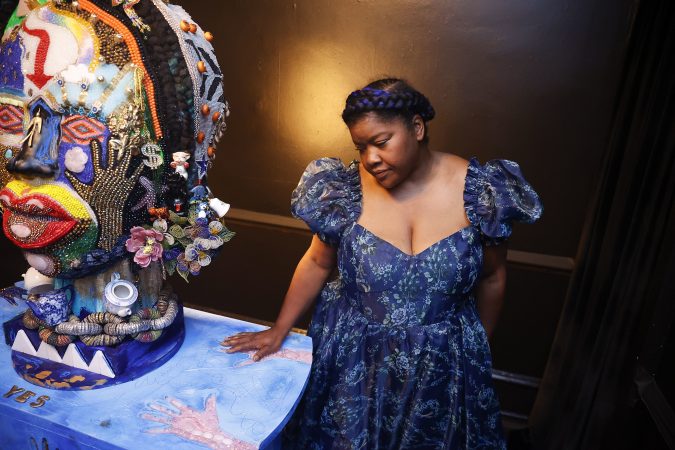
    These changes were all made at the behest of renowned artist vanessa german. Her new show, “The House, The Oracle and the Table,” a sparkling three-piece exhibit and theatrical presentation in honor of the Colored Girls Museum’s 10th birthday, was unveiled June 20.

    It is on view at TCGM and is the second act of the yearlong show “Say it loud, I’m Black and I’m proud.”

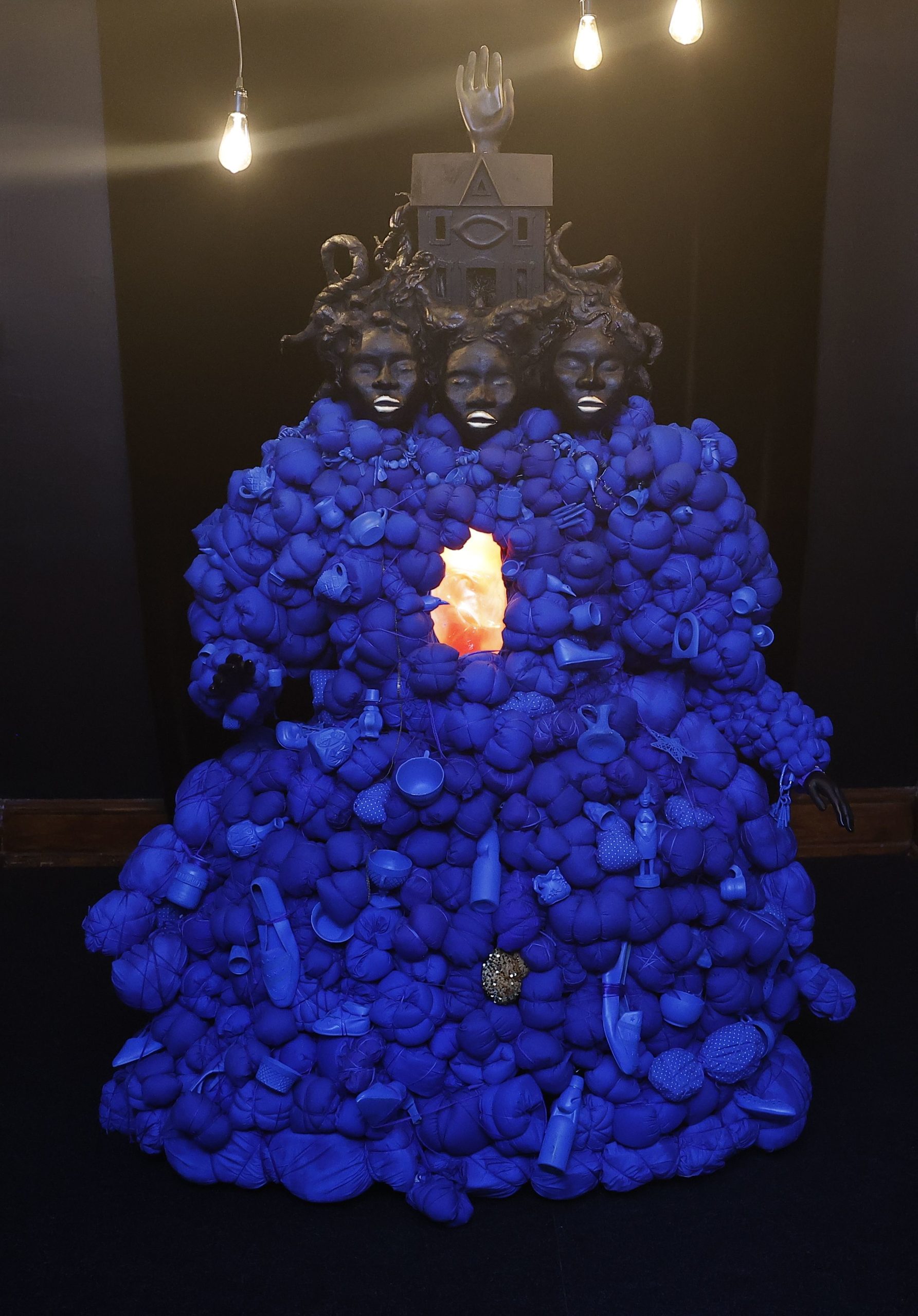
    “The House,” the central character in “The House, The Oracle and The Table” by vanessa german, stands in the Colored Girls Museum’s living room gallery. The show runs through Dec. 30.
    Zamani Feelings

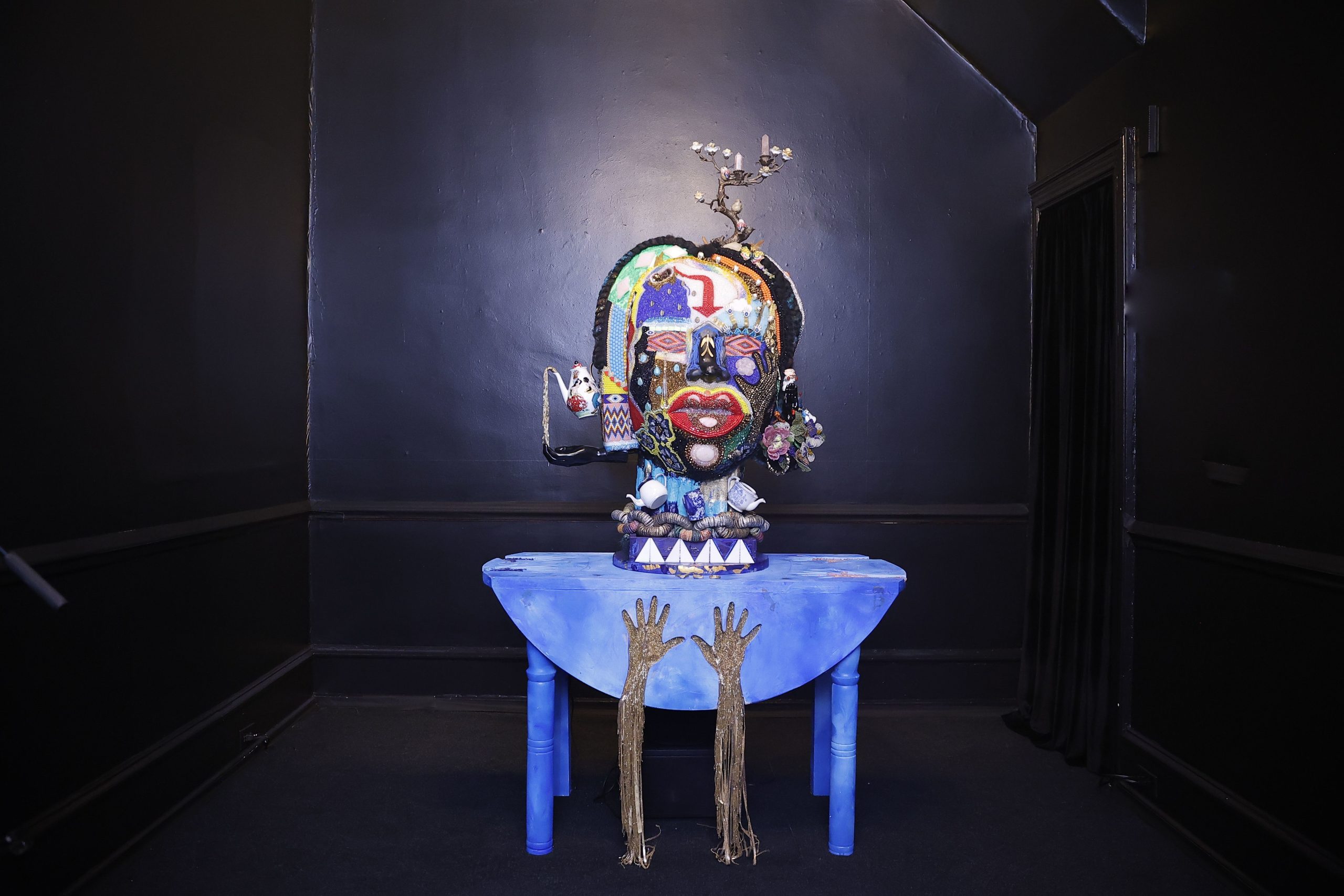
    “The House, The Oracle and The Table” is comprised of three pieces. The House, a 7-foot towering talisman; The Oracle, a gem-studded bust; and The Table, an inviting drop-leaf surface with crystal-filled hand carvings. The show is german’s offering to the museum and DuBois.

    “She’s one of a few artists I’d even dream of stripping the museum bare for,” DuBois said. “I released the old and I have so much more to show for it.”

    ‘Here the work is kinfolk’

    A poet, spoken word artist, and self-taught sculptor, german is among the country’s most important contemporary artists of the moment.

    Her work revels in the dynamism of the Black femme, reminding women that it’s OK to take up space with sequins — and lots of them. She’s best known for her “power figures,“ larger-than-life sculptures of Black women as sparkling, glittering, and magnificent spiritual and magical beings.

    Her power figures and altars are in the permanent collections of the Museum of Contemporary Art Chicago and Pittsburgh’s Carnegie Museum of Art. In 2021, the Pennsylvania Academy of the Fine Arts acquired german’s Declaration of Independence altar. The 17-foot-long piece rejects the idea that Black women — specifically Prissy in Gone With the Wind — should be relegated to subservient roles.

    German’s iconic Miracles and Glory Abound is presently on display at Doylestown’s Michener Art Museum as the centerpiece of its exhibit celebrating America’s 250th, “The Crossing: Picturing the American Revolution.” Miracles is a recreation of Emanuel Leutze’s famous 1851 oil painting Washington Crossing the Delaware. But in german’s sculpture, which features a life-size boat made from found objects, Washington and his soldiers are Black women.

    “The Table” and “The Oracle” are two of the characters in vanessa german’s show, “The House, The Oracle and The Table.”Zamani Feelings

    “Her work allows Black women and Black queer women to take up space in a way we just can’t ignore,” said Laura Igoe, Michener’s Gerry and Marguerite Lenfest chief curator. “She’s creating a different awareness, imagining a new future, and creating a new narrative.”

    It’s rare that an artist of german’s caliber creates a site-specific installation for a small community museum like TCGM, let alone makes the museum’s founder central to the show. This makes “The House, The Oracle and The Table” a big deal in local and national arts circles. TCGM is also of the community that inspires german’s art. Here, german’s work is not a spectacle or a teaching moment. It’s an understood and welcome family member.

    “Here the work is kinfolk,” DuBois said.

    Prayer pouches and healing monuments

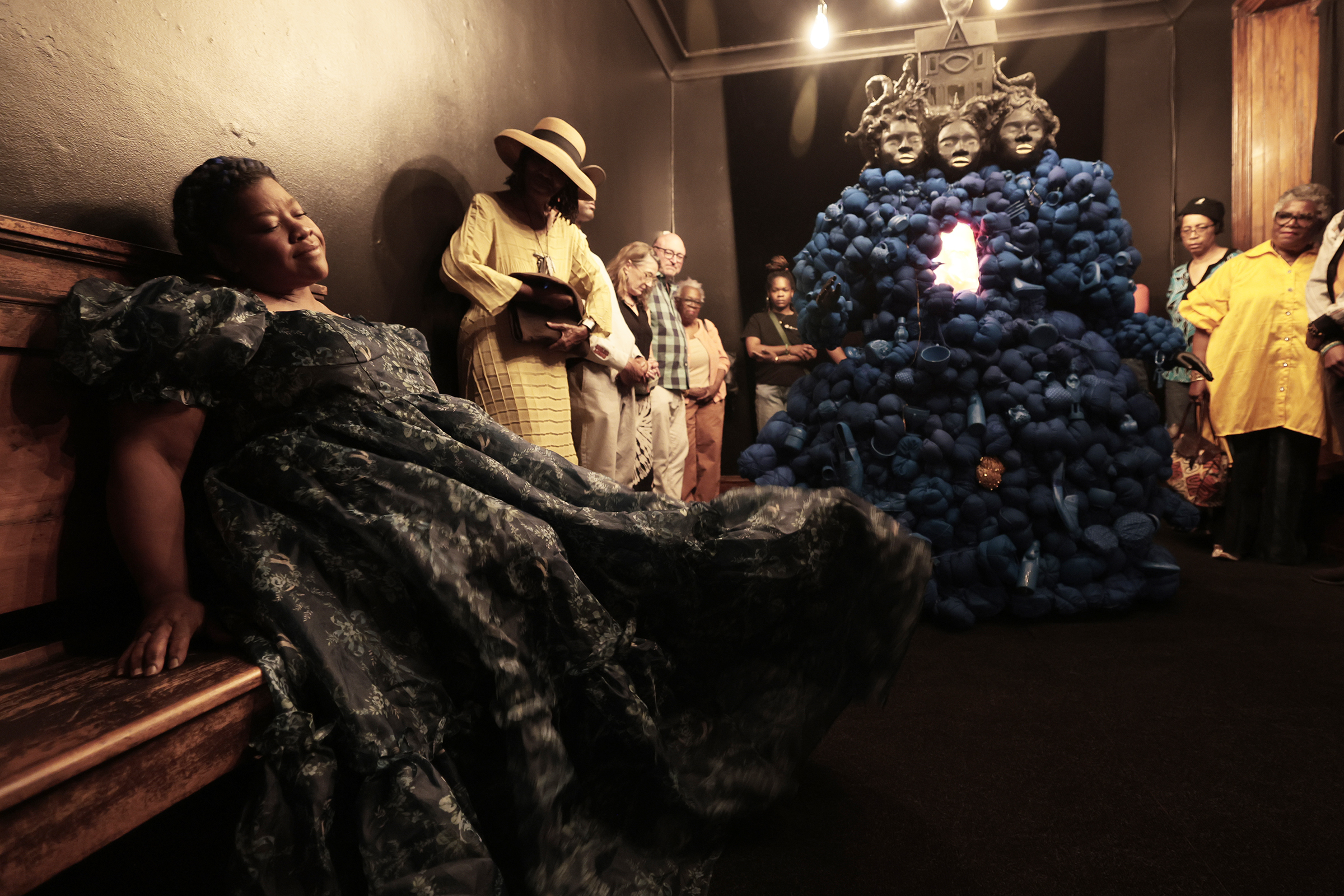
    The House, a 7-foot-tall, three-headed sorceress — the personification of past, present, and future — stands in the center of the living room gallery turned black-box theater, alone under a labyrinth of Edison lights. Each woman has a head of flowing locks and lips of cowrie shells. Each face — carved from plaster, epoxy resin, and wood glue and treated with a metallic finish — is slightly different from the one next to it.

    Artist vanessa german stands next to “The House,” one character in her three-piece show, “The House, The Oracle and The Table.” The three-headed sorceress resembles the Colored Girls Museum’s founder and executive director, Vashti DuBois.Zamani Feelings

    They all resemble DuBois’ face.

    “What’s really tender is that vanessa wasn’t afraid to see me: my past, my present, and my future,” DuBois said. “She didn’t look away. She installed the founder and executive director in this show.”

    The House wears an oceanic blue dress fashioned from found objects like bottles, baby shoes, vases, and carafes. DuBois has a few items nestled in including a tea cup of her own, a carafe, and a 19th-century doll. Eventually The House will move on and when it does, it will have DuBois’ energy embedded in it.

    Hundreds of quilted prayer pouches are sewn into the floor-length frock. German makes these building blocks of her assemblages by hand.

    Making the pouches is monotonous work. She cuts each one out, sews it together, and fills it with beads and intention, before stitching it together. This work she said, redirects her energy from sadness, depression, and suicidal thoughts to purpose, forgiveness, and healing.

    “It kept me from myself,” said german, who was born in Los Angeles, the daughter of the late quilter and fiber artist Sandra German. Her adolescence and early adulthood were filled with creative energy, but also melancholy.

    The prayer pouches helped kick off her art career in the 2000s while she lived in Pittsburgh’s Homewood neighborhood. She began to build structures made of found objects and prayer bags. They grew so big she began leaving them outside, attracting neighborhood children.

    Artist vanessa german, during her theatrical performance.Elizabeth Robertson / Staff Photographer

    ArtHouse, her community art space, was born and german began calling herself a citizen artist.

    “My body went on autopilot,” said german, who now lives in Asheville, N.C. She spent a few days in June at TCGM building The House’s dress and body from pieces she’d already assembled.

    “My hands would just do it and as my body repeated the task,” she said about the pouches, “I was able to make sense of things for myself. I began to heal.”

    Kindred spirits

    In the TCGM dining room are the exhibit’s two other pieces: The Oracle, a roughly 40-pound bust of a seer whose face is entirely made from crystals: clear quartz, turquoise, and rose quartz. Its ear, a found teapot pouring liquid gold.

    Abundance.

    “She is the soul of the house,” german said. “Her cup runs over.”

    The Oracle sits atop The Table, whose dropped leaf features carved hand prints filled with lapis lazuli and rose quartz. The carvings represent women in the TCGM community.

    DuBois has followed german’s work since ArtHouse and struck up a conversation with her on social media. But it was only three years ago that DuBois went to see german’s critically acclaimed exhibit at the Montclair Art Museum, “ … please imagine all the things I cannot say …”

    She decided she wanted german’s work at TCGM.

    Founder and executive director of the Colored Girls Museum, Vashti DuBois, watches as vanessa german blesses “The House, The Oracle and The Table” on opening night.Zamani Feelings

    “In that moment I knew we were kindred spirits,” DuBois said. “I didn’t ask her to do anything new. I would have been happy to have a loan from her.”

    That was out of the question for german, who said she had no intention of “phoning in the project.”

    “I wanted to take my time, I did not want to be frivolous with this gift … this opportunity,” german said.

    ‘This house is holy’

    German took the energy of all the things DuBois couldn’t say and infused it in her work.

    TCGM’s inception followed the unexpected death of DuBois’ husband, Al Stewart, in 2013. She opened TCGM in 2016 to celebrate the lives of ordinary Black women. Along the way, she healed.

    In the last 10 years, DuBois has stewarded the museum through more than a dozen shows and won awards and major grants. A tangle with the city of Philadelphia forced her to move out of her home in order to keep the museum open. So she moved out of the place, where for over 20 years, she raised her children and lived with her late husband.

    “There is exquisite pain and exquisite beauty here,” DuBois said.

    “The House” is the central character in vanessa german’s “The House, The Oracle and The Table.” German curated the show in honor of the Colored Girls Museum’s 10th birthday as an offering to the museum and its founder and executive director, Vashti DuBois.Zamani Feelings

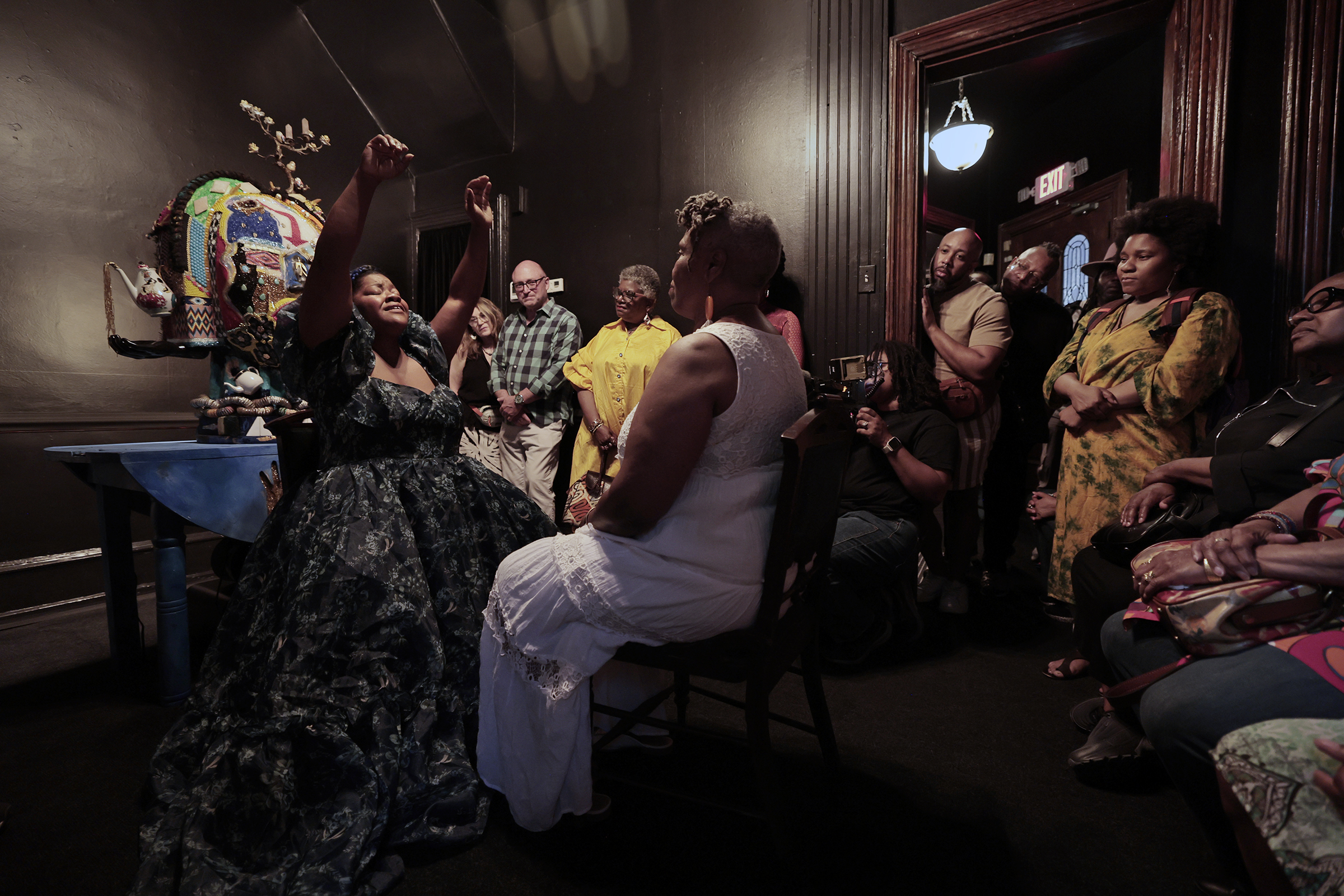
    Hours before the summer solstice on the third Saturday in June, german blessed “The House, The Oracle and The Table” in five separate performances, moving from gallery to gallery like a calm blue wave.

    She prayed. she chanted. She sang. And many watched. Some even cried.

    “This show will awaken something in people,” german said. “They will start to say things out loud they once held inside and know to be true.”

    DuBois can testify to that.

    “I turned myself inside out getting ready for the show,” she said. “I’ve always known that I am holy and this house is holy. Now I can say it.”

    The Colored Girls Museum is located at 4613 Newhall St. “The House, The Oracle and the Table” is on view through Dec. 30.

    Artist vanessa german (left) performs while introducing her exhibit.Elizabeth Robertson / Staff Photographer
  • ‘Geaux Birds!’: Two French creators fell hard for Philly — and its brutally honest charm

    ‘Geaux Birds!’: Two French creators fell hard for Philly — and its brutally honest charm

    Paris natives Alex Durand and Tom Carles met as 12-year-olds in the Parisian suburb of Boulogne-Billancourt, sharing a love for playing soccer. In 2016, as teenagers, they attended soccer camp at Eastern University in Delaware County, marking their first trip to the U.S. together.

    Two years later, they moved back to the U.S. after earning scholarships to play college soccer — Durand at Malone University in Ohio and Carles at Mississippi College. But that dream was put on pause when the COVID-19 pandemic hit in 2020. Unable to travel back to Paris, they moved to South Carolina and started making social media content about their experience of being Parisians living in America.

    They first went viral on TikTok for their series trying to pronounce English words.

    Durand, 25, and Carles, 26, are the creators behind the Instagram account AT Frenchies. With more than 2 million followers, their pandemic pastime has become a hub for learning French.

    Over the years, the pair have traveled to California, Louisiana, South Carolina, and New York.

    Then, they came to Philadelphia. It was unlike any other stop.

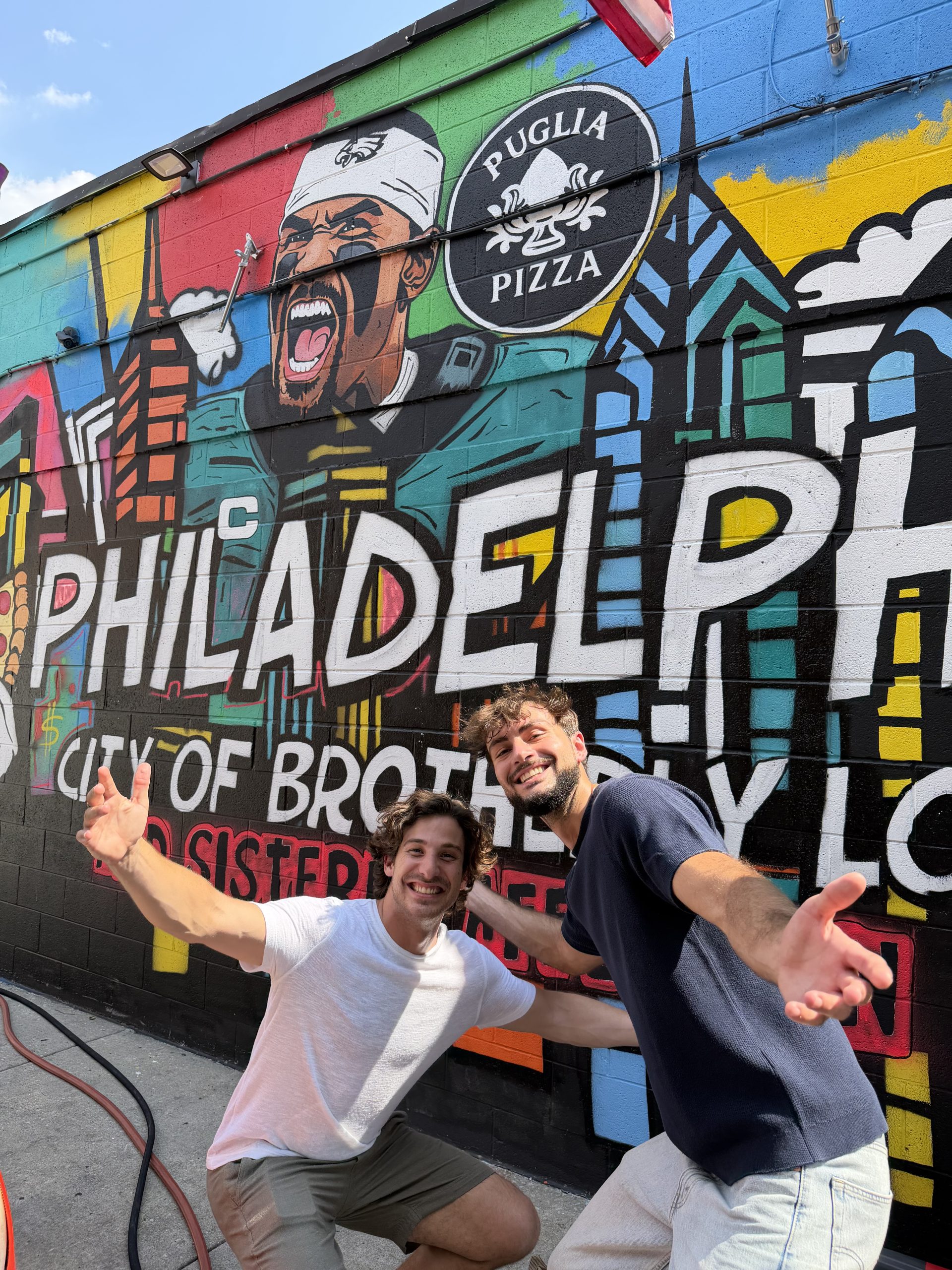
    Alex Durand (left) and Tom Carles pose in front of a Jalen Hurts mural outside of Puglia Pizza on South Street.AT Frenchies

    “We think most people don’t actually know how great Philly is,” said Carles. “When we came, we didn’t know much about Philly. We just had some friends living there saying it’s the best city, but we had no idea because nobody else talks about it.”

    The pair partnered with the French national soccer team this year and has been following them on its World Cup journey. The June 22 France-Iraq match brought the City of Love natives to the City of Brotherly Love, so they could watch some soccer and make their usual content around visiting an American city.

    Then, Philly happened to them: from cheesesteaks to water ice to being unable to stop saying “Go Birds!” or, as they pronounce it, “Gwo Beards!” or, as they write it, “Geaux Birds!”

    The pair posted reels guessing the meaning behind Philly slang and celebrating French wins with the crowds in the city. Their most-viewed reel from their trip is titled “POV: Us after spending 24 hours in Philly,” in which Carles referenced Philly slang like “jawn” and “jeet,” with Durand interjecting with frequent “Go Birds!”

    “I proclaim y’all as official Philly citizens,” a comment reads. “This jawn nails it. Y’all get it. You’re officially locals now,” reads another uncharacteristically positive Philadelphian’s reply.

    The two stayed in Philly for about 10 days, attending France’s games against Iraq and Paraguay on June 22 and July 4, respectively. In that time, they checked out the Rodin Museum, City Hall, Reading Terminal Market, Stateside Live!, Independence Hall, the Rocky statue, and even found their way to Philly’s crown jewel: Wawa.

    “Wawa is the absolute best brunch place on earth. I think we’ve tried every single thing on the menu,” said Durand, whose order is a chicken wrap and an iced latte with caramel drizzle. Carles opts for a mini hoagie with chicken and bacon.

    The pair even admitted to preferring the chain to the French convenience store equivalent, Franprix.

    “[Reading Terminal Market] was a little part of the city that you don’t see that often in other cities,” said Carles, who lives in New Orleans. “You can have any type of food and everybody’s so nice and wants you to try some food here and there. It’s a nice atmosphere, and you have people around that always smile and are super nice, but also if they have a bad day, they don’t hide it. It’s very brutal and honest.”

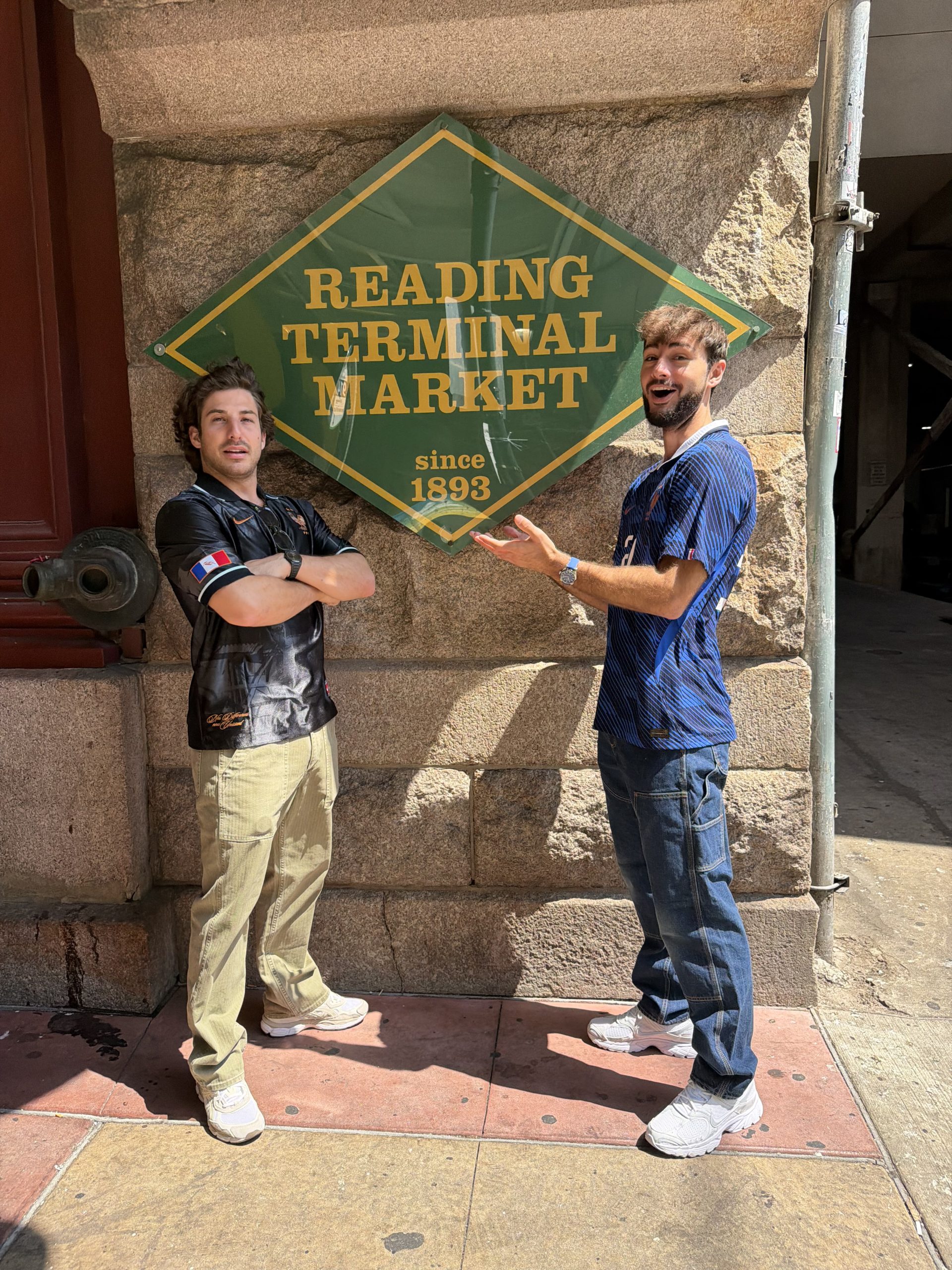
    Alex Durand (left) and Tom Carles stand outside Reading Terminal Market in Center City, Philadelphia.AT Frenchies

    Philadelphia’s unpolished authenticity is what made the pair fall in love with the city, they said.

    “People in Philly didn’t feel like they were trying too hard to impress people,” said Durand. “I live in LA and people care so much about the outside perspective of how they look and behave. But in Philly, it’s the Philly way or no way, and we loved it.”

    After France beat Paraguay 1-0 and the duo headed out of Philadelphia, they posted a heartfelt thank-you message to Philadelphians on their Instagram, something they had never done for any other American city.

    “Every bar we walked into during the games, every person who smiled at us wearing our jersey, every random ‘allez les bleus’ from someone we’d never met, it added up to something we didn’t expect to feel this strongly,” the post read.

    “We felt like we needed to say something because we had such a good time that we wanted to thank the city for having us,” Carles said. “We wanted to show our appreciation for everything that we’ve seen of the city.”

    Comments begged them to come back for an Eagles game. The Sixers official account commented, “we gotta get you back for a basketball game.”

    “Stay the same,” Durand said. “Stay proud of your city. You have every reason to be proud of where you’re from.”

    When they’re not following their national soccer team around and singing praises to hoagies, the two use AT Frenchies, whose social media accounts have more than 6 million followers combined, as an online center to teach French.

    “We do [French classes] three or four times a week, on Zoom and in-person, and we also have teachers with us,” Carles said. The AT Frenchies French club is 3 years old and has 500 members from over 60 countries.

    “It’s something that has made us super happy because we’re able to give back to our followers who want to learn French,” Carles said. “It’s been one of the most rewarding things that we’ve done in our business side of AT Frenchies.”

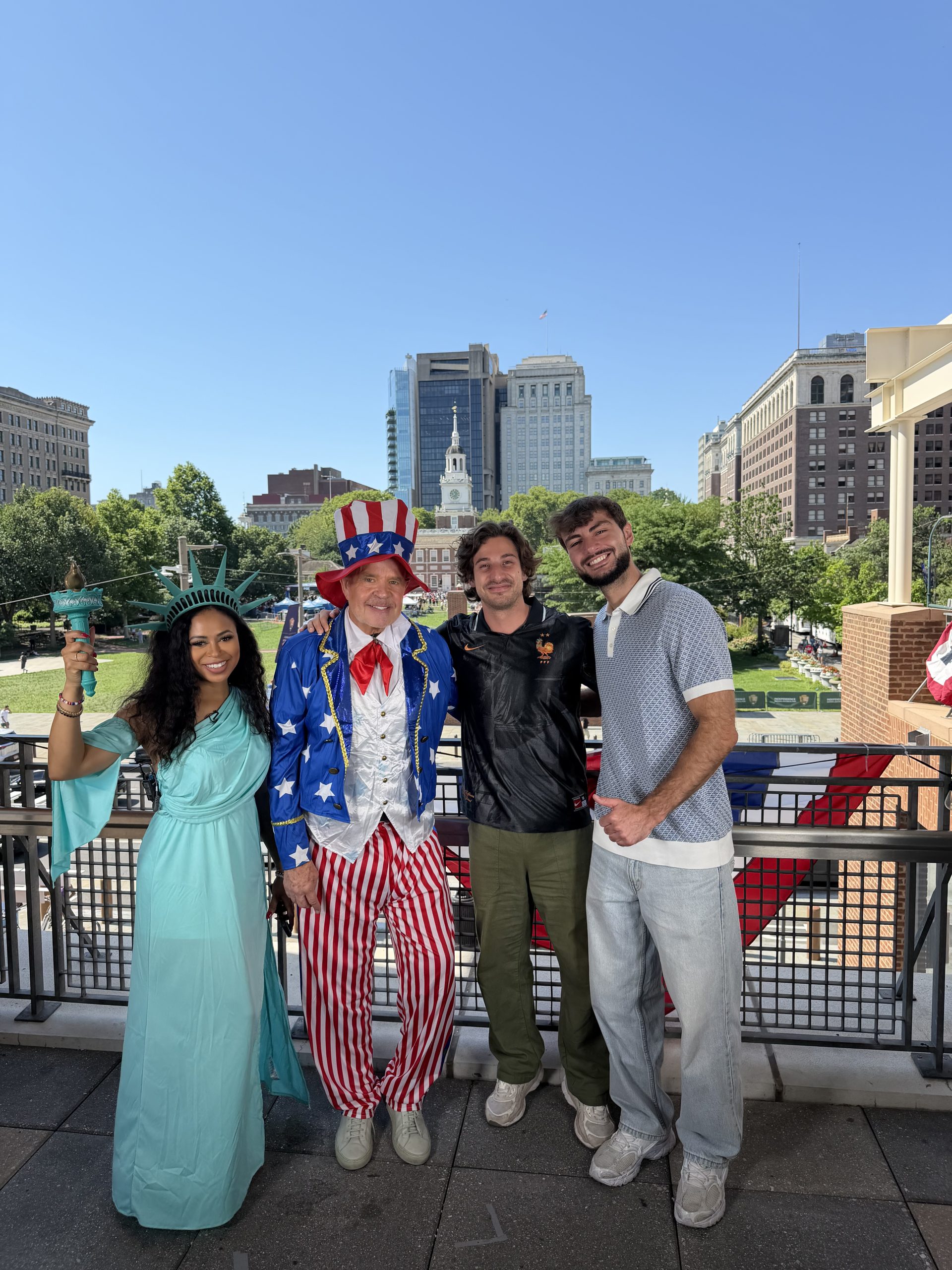
    Alex Durand (center right) and Tom Carles (far right) pose with Alex Holley (far left) and Mike Jerrick, hosts of Fox 29’s “Good Day Philadelphia,” after filming an interview with them.AT Frenchies

    Philadelphia’s World Cup journey is over, but it’s certainly not the last Philly sees of Durand and Carles.

    They plan to return when they tour for their upcoming book Pardon Our French, which releases Sept. 8 from Penguin Life Press. It’s a guide to embracing a minimalist, do-what-you-love Parisian lifestyle — one they think Philadelphians have already mastered.

    “In Philly, you don’t really hear French but it feels French,” said Carles. “[The French mindset] is more about doing whatever makes you happy without thinking about what other people think, and that’s what Philly’s all about.”

    “We were going to do one date in Philly, but now I want to try to do more than one,” Durand said. “We’ve been living in the U.S. since 2018, and no other city has made us feel this way. It’s incredible how much people have impacted our lives in 10 days.”

    Their to-do for when they return? Go to an Eagles game. And a Sixers game … and maybe even a Flyers game if they can find a way to do a three-way collaboration with all the teams.

    “In Paris, when [Paris-Saint Germain FC] plays, everybody’s on the streets. We’re very passionate about our teams. Tom and I have traveled to almost every big city in America, and in every city people are passionate about sports, but here?” Durand said rhetorically with an added gasp for dramatic effect.

    He has even set himself a goal for his next visit: “To make Saquon Barkley pronounce ‘Go Birds!’ in the Frenchest way possible.”

  • Nick Sirianni’s ability to adapt again will be put to the test in year six with the Eagles

    Nick Sirianni’s ability to adapt again will be put to the test in year six with the Eagles

    A mid-March snowstorm dumped more than 26 inches of snow in Green Bay, the second-largest snowfall on record — according to the National Weather Service — in the city that houses a football stadium nicknamed “The Frozen Tundra.”

    Flights were canceled, which meant new Eagles offensive coordinator Sean Mannion, a few weeks into the job and prior to his family making its move east, was facing a delay returning to the office. It was a few days into free agency, and NFL draft prep was in full swing.

    Mannion could have picked up the phone and called his new boss, Nick Sirianni, to tell him his return trip to Philadelphia would be delayed. Instead, he got in the car and started driving the 900-plus mile route to his new home. Sirianni called his new offensive coordinator to check in and was surprised to learn that Mannion was five hours away.

    “This dude loves football and he loves to work,” Sirianni said last month during an extended interview session with Eagles beat reporters. “I’ve really enjoyed being around him.

    “I think we think — about everybody — ‘Man, he’s just got it.’ But it doesn’t happen — whether it’s a player, whether it’s Sean — without this obsession to get better. Sean has this obsession to get better, this obsession with his craft, which is why he’s excelled in this profession and I’m really looking forward to continuing to work with him.”

    Mannion is the fourth Eagles offensive coordinator in four years, and the Eagles hired him to revamp an offense that took a step back in 2025 for a variety of reasons. The team didn’t come close to defending its Super Bowl title in part because its offense wasn’t capable. The offensive line was too banged up. Jalen Hurts was inconsistent at times. Saquon Barkley, behind a battered line, wasn’t the Barkley that dominated in 2024. A.J. Brown wasn’t happy. And Kevin Patullo, the first-year offensive coordinator, appeared not up for the job.

    Mannion, 34, is another first-year coordinator, but he brings a sense of freshness to the Eagles and Sirianni having worked under a different coaching tree that surely will lead to scheme changes with the Eagles in 2026 and beyond.

    Sean Mannion’s new scheme will receive a great deal of attention throughout camp and into the 2026 season. Elizabeth Robertson / Staff Photographer

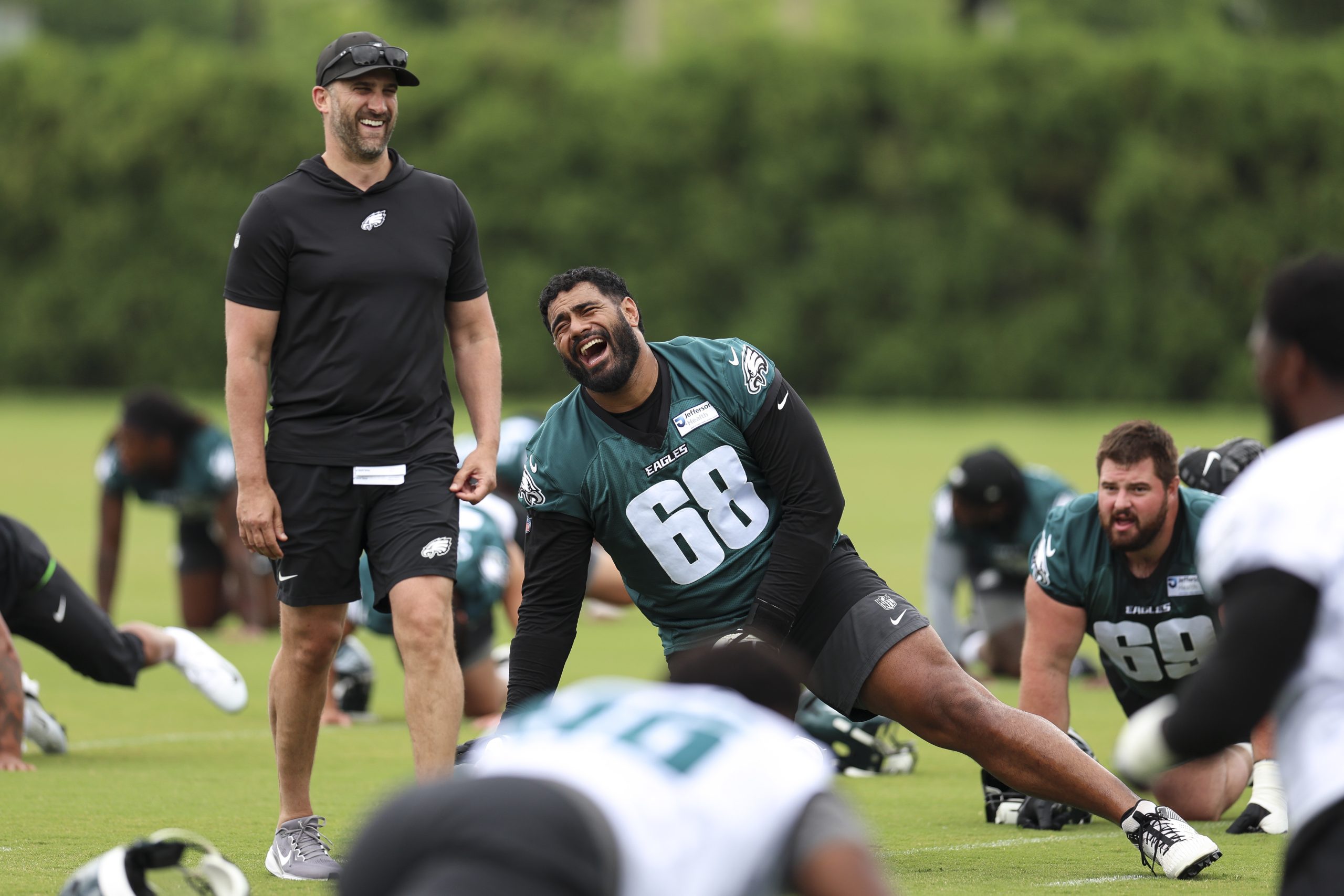
    Sirianni is entering his sixth season with the Eagles. It is the longest stretch of time the 45-year-old head coach has spent in one place since becoming a coach. It is not unfair to say his future in Philadelphia could rest on how Sirianni helps the Eagles adapt to another new voice leading the offense and moves the franchise into its next stage.

    Show and tell

    Just five head coaches remain in the league who have been in their position longer than Sirianni has been with the Eagles. Five years at one place isn’t a long time in the grand scheme of a normal working career. In the NFL, it has become a rarity.

    The Eagles under Sirianni have done a lot of winning. Only the Buffalo Bills, who just fired Sean McDermott this offseason, have a better winning percentage since the start of the 2021 season than the Eagles’ 69.4% win rate with Sirianni in charge.

    A handful of key Eagles have been around for the entire Sirianni experience, which means they’ve had the same voice leading team meetings for quite a while.

    How does Sirianni try to keep it fresh?

    “I think it’s constant growth,” he said. “Show and tell is one thing. I always tell these guys, me showing you what it looks like and telling you what it is in this aspect, that’s the easy part. Being relentless with the monotony of it and consistent every single day, that’s the hard part. You do that through film and you do that through practice and their actions and our habits. But then you also try to find stories that paint your picture out there.”

    Sirianni has done his best to not repeat often. Lately, he has found himself going to ChatGPT for inspiration. One day during the offseason program, Sirianni typed a prompt into the artificial intelligence assistant. He wanted to find a “true” — yes, he knows that AI isn’t perfect yet — sports story that exemplified the three-word motto Lane Johnson and DeVonta Smith probably find themselves reciting in their dreams: Tough. Detailed. Together.

    Arizona State’s Anthony Robles, once the nation’s top-rated 125-pound wrestler, is a source of inspiration for Nick Sirianni.

    The chatbot spit out the story of Arizona State wrestler Anthony Robles, who, despite being born with one leg, went undefeated as a senior and won the 2011 national championship at 125 pounds in Philadelphia. Sirianni did some more research on Robles and had his next story for a team meeting.

    Extended time in one place, though, means he’s been able to personalize some of these stories and connect them to his own roster. Sirianni brought up a story former NFL coach Tony Dungy once told about the Immaculate Reception. Sure, there was some luck involved in Franco Harris catching the deflected pass, but Harris had a habit of being around the ball, being in the right place at the right time.

    “Now I’m thinking about that and I’m like, well, that’s Tank Bigsby,” Sirianni said, mentioning the backup Eagles running back. “He is constantly running to the football. He is constantly doing everything he’s supposed to do. And I was able to hit back the story.

    “I guess what I’m saying is … we’ve created stories. We’ve created things that people are looking up on [ChatGPT].”

    ‘You have to adapt’

    The post-Shane Steichen years have been a roller coaster at the offensive coordinator spot. Brian Johnson, an internal hire, lasted less than one full calendar year in the role after the 2023 Eagles collapsed at the end of the season. Kellen Moore, an external hire, helped the Eagles win the Super Bowl before becoming the head coach of the New Orleans Saints. Then came Patullo, another internal hire and Sirianni’s close friend.

    How things work out with Mannion and the new scheme remain to be seen. He is the Eagles’ third coordinator since 2023 who will be calling NFL plays for the first time.

    Football, Sirianni said, is about adapting.

    “You have to adapt in-game, you have to adapt in-season, you have to adapt to all different styles of how you coach different people,” he said. “What’s great about this world is no two people are perfectly alike. We may have similarities and similar traits but everyone is different.”

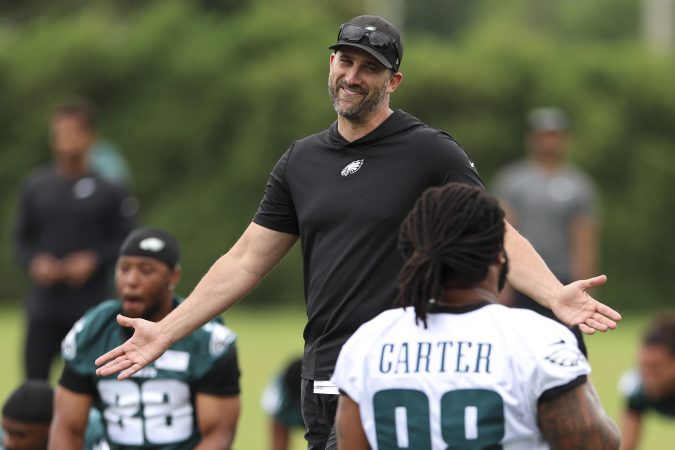
    Nick Sirianni (left) is attempting to guide his team following significant offseason changes. Monica Herndon / Staff Photographer

    Mannion, who Sirianni said tends to beat the head coach to the building, has only been a coach for two seasons. He was on a league roster as recently as 2023. The Eagles have had inexperienced coordinators before, but none quite like Mannion. So Sirianni said he has adapted his approach in some ways. In the past, he might have warned Steichen or Moore about a certain scenario he planned to throw at them in practice. But a third-and-12 from the 3-yard line might be a pop quiz for Mannion this time around.

    “My job is to make sure that I put him in as many scenarios as I possibly can to help him go through that,” Sirianni said.

    That part of Sirianni’s job hasn’t changed, but failures of the past may have informed how he views his role.

    But the more things change, the more they stay the same, as the saying goes.

    Sirianni said he noticed something when watching the NBA and NHL playoffs this year. The Knicks and the Spurs, the Hurricanes and the Golden Knights, they all said the same things, the same messages he’s been repeating her for more than five years.

    “There’s a common denominator of these good teams that they just want to play for each other,” Sirianni said. “We’ve talked a lot about that and tried to live that. That’s tricky and that’s hard. How do you come together as a football team? You come together through shared hardships. You get that through the offseason. You come together through building trust, consistently doing what you’re supposed to do. And you come together through the time that you put in with each other. That time, sometimes it feels like it’s invisible progress.

    “Our best teams since I’ve been here have been the closest teams. We believe in that very much.”

    How close will this team become? How will Mannion bring the offense to the next level? How will Sirianni help the Eagles navigate the changes and reach the high expectations in the building?

    The answers to those key questions won’t be known for a few months. The Eagles begin camp next week, and a key season in Sirianni’s career trajectory is about to get underway.

    “It’s a blessing to be at a place for so long in the NFL,” Sirianni said, “and I look forward to continuing that for years to come.”

  • Chibanos, a Chinese-Cuban sandwich shop built on family recipes, opens in Washington Square West

    Chibanos, a Chinese-Cuban sandwich shop built on family recipes, opens in Washington Square West

    Washington Square West’s latest restaurant brings Chinese flavors to Cuban classics, from pressed sandwiches and fried yuca to flan and croquetas.

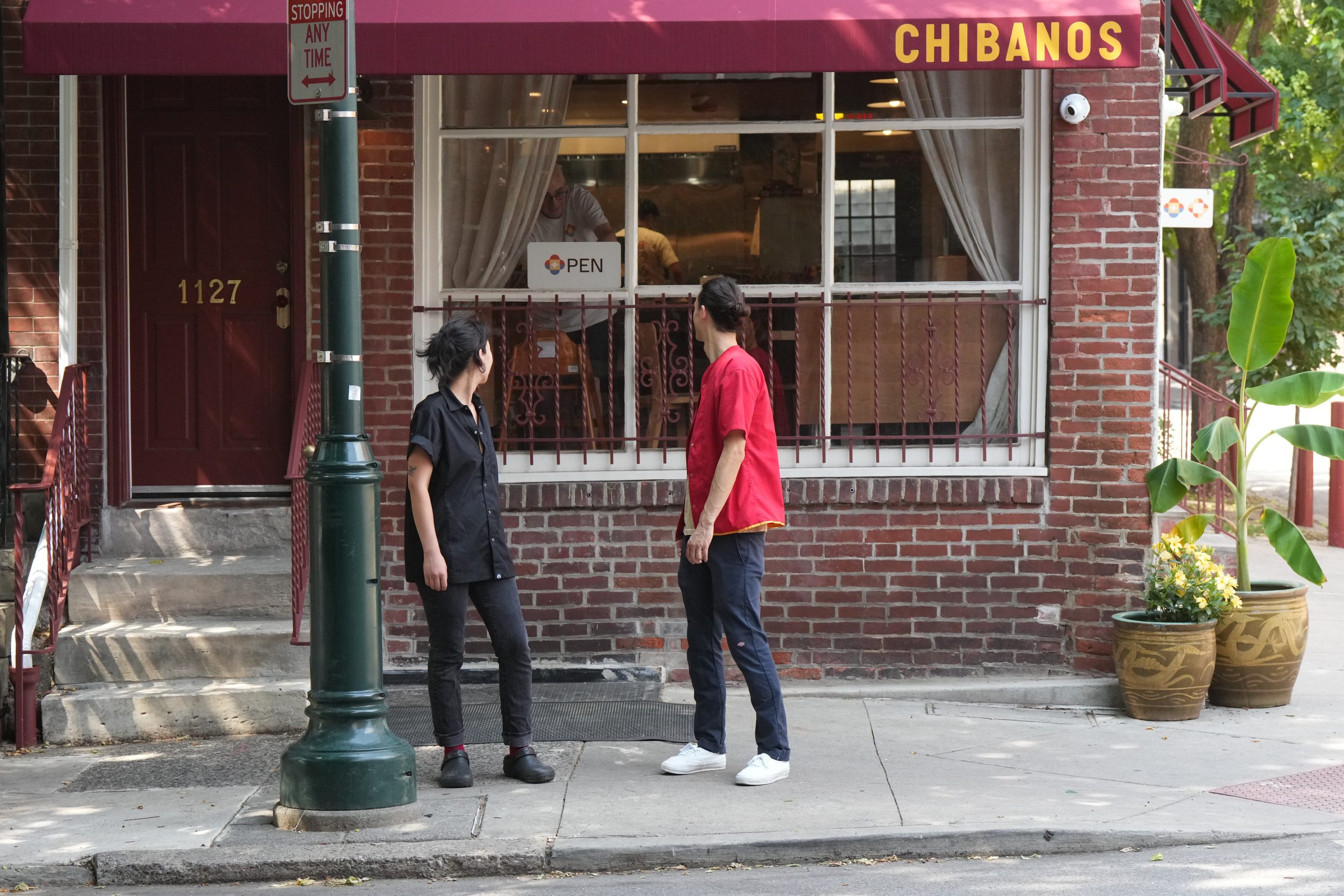
    Chibanos opened July 1 at 1127 Pine St., formerly Effie’s, with a menu that’s an ode to the food owner Evan Fong Jaroff grew up eating as a third-culture kid in the Philly suburbs. The restaurant’s name is shorthand for what Jaroff’s mother’s family were called growing up: “Chino Cubanos,” or Chinese Cubans.

    Jaroff’s mom, Ana, immigrated to the United States from Cuba in the 1960s after the Cuban Revolution. Food helped Jaroff make sense of and learn to appreciate his background as a mixed-race kid, he said.

    At their home in Lansdowne, the Jaroffs used “soy sauce like salt,” he said, and ate traditional Southeast Chinese fish dishes alongside rice and beans, yuca, plantains, and minced beef picadillo. On Nochebuena (aka Christmas Eve), his mom would present a plate of lechón, or slow-roasted pork, coated in a secret marinade. Leftovers would be used for sandwiches.

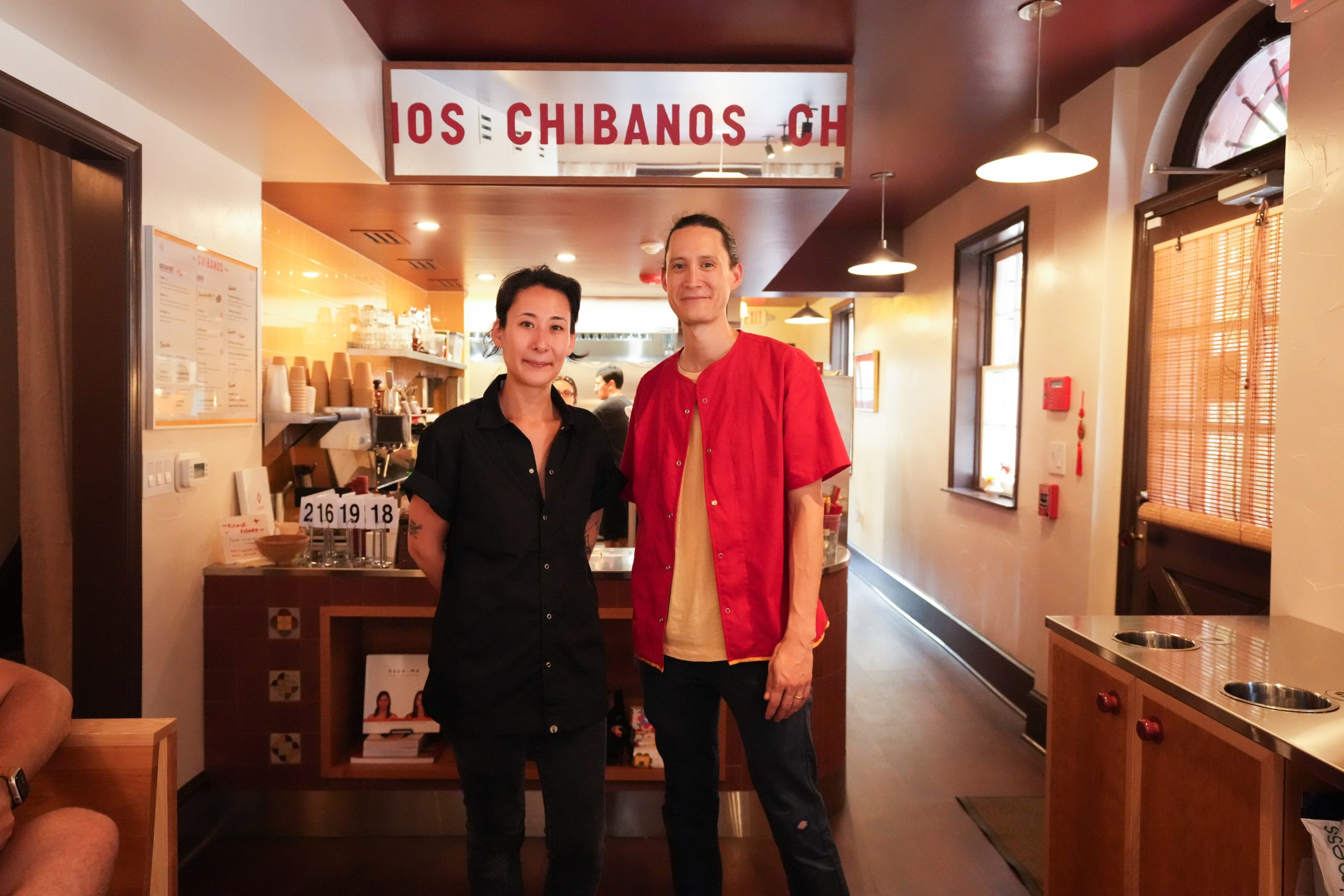
    Aya Iwatani (left) and Evan Jaroff inside Chibanos, their Cuban-Chinese sandwich shop that opened on July 1 at 1127 Pine St.Jessica Griffin / Staff Photographer

    “When you’re mixed race, you’re always compared to one or the other. When I lived on the East Coast, I was just Asian. When I lived on the West Coast, I was just white,” Jaroff, 39, said. “But I’m a whole person.”

    Reckoning with his racial identity was the catalyst for Chibanos, which Jaroff started as a pop-up in 2022 after leaving his finance career in London and moving back to Philly. Lacking culinary experience, he enlisted the help of chef Aya Iwatani, a Honeysuckle Provisions alum, to reinterpret his childhood memories into a set of sandwiches that felt authentically Chinese and Cuban, such as a Cubano stuffed with his mom’s famous pork and salted Chinese mustard greens, or jackfruit and tofu seasoned with a garlicky mojo.

    The eggplant empanizado sandwich on a LeBus Bakery Cuban roll at Chibanos, owner Evan Jaroff’s Chinese-Cuban sandwich shop in Washington Square West.Jessica Griffin / Staff Photographer

    Successful takeovers at Solar Myth, Jiggy Coffee, and Forin were enough for Jaroff to go all-in on a brick and mortar. He purchased the building — once home to Effie’s, the beloved Greek BYOB that closed after 27 years — in August 2024.

    Jaroff said he was drawn to the 200-year-old rowhouse because its history gave it a lived-in feel.

    “I want people to say, ‘Oh, Chibanos? That place looks like it’s been there for 10 years,’” he said.

    Nearly two years after the sale, the 1,725-square-foot restaurant is now a casual sandwich shop-meets-cafe, with a revamped courtyard, communal seating, and a fresh paint job. The patio’s turquoise walls bear the names of Jaroff, his brother, and mom, spelled in Chinese characters.

    The space flows seamlessly from the counter-service storefront to the courtyard and a rear dining area that looks like a minimalistic tea room — all dark wood and conversational seating. Jaroff said the indoor-outdoor vibe is a nod to Cuba and Southern China, which have the same latitude and thus similar climates.

    Owner Evan Jaroff with his wife and son at Chibanos, his Chinese-Cuban sandwich shop. The menu pulls from recipes from Jaroff’s mom, a Chinese woman who was raised in Cuba.Jessica Griffin / Staff Photographer

    Chinese food done the Cuban way

    The centerpiece of Chibanos’ menu is a lineup of six pressed sandwiches on LeBus’ Cuban loaves, which Iwatani — now Chibanos’ head chef — and Jaroff chose for its just-dense-enough texture after auditioning an array of ciabattas and hoagie rolls. The eggplant empanizado — layered with salt-and-pepper eggplant, pickled serrano peppers, and cubanelle scallion slaw — is a standout. So is the chibano, the restaurant’s namesake riff on a Cubano that uses Jaroff’s mom’s pork recipe.

    The chibano, Chibanos’ version of a Cubano sandwich with roast pork, ham, Swiss cheese, mustard greens, and mayo.Jessica Griffin / Staff Photographer

    The key, Iwatani said, is the marinade, which took several tries to get Ana’s stamp of approval. “The first time, she was like, ‘It’s pretty good, but not quite there,’” Iwatani said. “You have to use sherry.”

    The rest of Chibanos’ menu was developed after its pop-up run. Hits include croquetas stuffed with slightly sweet Chinese sausage, fried yuca made for dipping in a sofrito-spiced ranch, and a surprisingly light jasmine tea-infused flan. There’s also the sweet-savory-salty Chino breakfast sandwich: Fluffy eggs and char siu-style sausage are stuffed between a mayo-slicked Dodo Bakery bolo bao. The buns allude to the custard-filled rolls from Chinatown Jaroff grew up eating for breakfast.

    The Chino breakfast sandwich on a Dodo Bakery bolo bao at Chibanos, a Chinese-Cuban sandwich shop at 1127 Pine St.Jessica Griffin / Staff Photographer

    Chibanos joins the dying tradition of Chino Latino cuisine, a genre that dominated New York City from the 1970s to 1990s as Chinese immigrants from Latin America settled in the U.S. to escape political instability. Chinese (lo mein, spare ribs, etc.) and Latin American (ropa vieja, pernil, etc.) staples sit column A-column B style on menus optimized for pairings at iconic restaurants like La Dinastia and the now-closed Caridad 78.

    Cuba historically had a vibrant Chinese culture. One of Latin America’s oldest Chinatowns was established in Havana in the 1920s by Chinese migrants and former indentured servants who opened restaurants that incorporated Caribbean ingredients into traditional Chinese recipes.

    Aya Iwatani (left) and Evan Jaroff outside Chibanos, their Cuban-Chinese sandwich shop that opened on July 1 at 1127 Pine St.Jessica Griffin / Staff Photographer

    Jaroff doesn’t view Chibanos as fusion but rather a tribute to the unique style of cooking he learned from his mom.

    “I don’t think of us as a Cuban restaurant. I don’t think of us as a Chinese restaurant,” he said. “Don’t put us in a box … We’re our own thing.”

    Chibanos, 1127 Pine St., chibanos.com. Hours: 8 a.m. to 3 p.m. Wednesday through Sunday.

  • N.J.-based Holtec plans IPO to boost sales of its mass-produced small nuclear plants

    N.J.-based Holtec plans IPO to boost sales of its mass-produced small nuclear plants

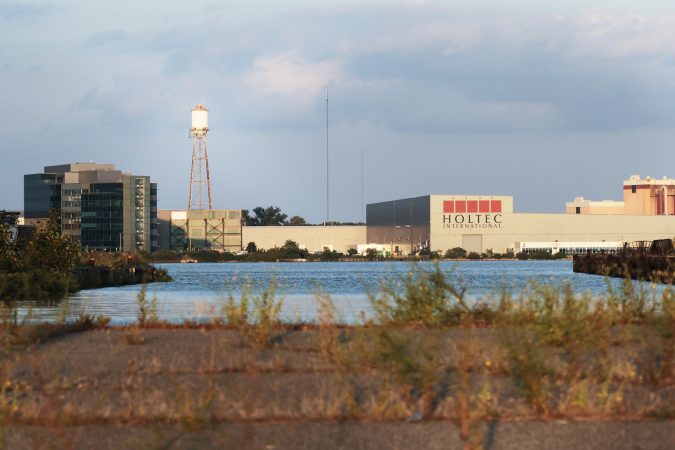
    Holtec Nuclear Corp. plans an initial public stock offering that would transform the 40-year-old Camden company from the industry’s well-paid undertaker that shuts down aging uranium plants into a rapid-growth supplier of next-generation mini-nuclear plants and liquid batteries, the company said in a Securities & Exchange Commission filing earlier this month.

    Holtec hasn’t settled on a date or floated how much money it wants to raise — or what part of IPO proceeds would go into bringing its factory goods to market versus how much would go to company founder Krishna P. Singh.

    Singh and his family would remain the controlling shareholder, even as the IPO potentially boosts Singh’s compensation above last year’s $7.5 million with newly public shares and proceeds.

    The 400-page IPO registration describes a highly profitable nuclear service enterprise preparing to market new power products. Holtec has spent years preparing these products, just as federal government support and industry demand brings nuclear power back into fashion.

    The products include:

    • Uranium-fueled, water-cooled Small Modular Reactors, designed and mass-produced at the company’s factory on the Delaware River waterfront. The reactors could be sold or leased in groups by Holtec, and each unit swapped out so they can be refueled without shutting off all power.
    • The “green boiler,” a liquid solar-energy storage battery Holtec is testing at facilities that Singh owns in India.

    In the statement, Holtec addresses “succession” issues under chief executive Singh, who turns 80 next year. In 2012-13, Singh was a part owner of The Inquirer. Holtec says it has a full management team and succession plans in place. It also requires senior officials to travel separately so an accident won’t put them all out of commission.

    The company president, who was promoted to the post in April after his predecessor departed, is Holtec veteran Rick Springman, 47. He earned a mechanical engineering doctorate at the University of Pennsylvania, as did Singh, donor and namesake of Penn’s nanotechnology labs. Springman joined Holtec in 2009.

    The nuclear industry is attracting renewed interest and investment after decades punctuated by accidents at Three Mile Island (1979), Chernobyl (1986), and Fukushima (2011) when few, if any, new nuclear plants were built.

    Nearly 100 existing plants provide nearly 20% of U.S. electricity, and the U.S. plants compose about a quarter of the global nuclear power industry, according to Holtec data.

    Among fans of expanding nuclear power are President Donald Trump and private-equity investors building electricity-thirsty AI data centers.

    Steel canisters (at left) used to store nuclear waste for decades dwarf a worker at the Holtec manufacturing plant in Camden.

    On sales of $567 million last year, Holtec reported $395 million in net income — which looks at first glance like a very fat 70% profit margin.

    But the statement notes that half the profits were due to gains on the company’s financial investments. Profits from Holtec products and services were still a comfortable $200 million for a margin of 35%. But that’s down sharply from sales of $766 million and profits of $333 million, the year before.

    Most of Holtec’s sales and earnings flowed from an international business in which it is a leading provider: “decommissioning” and shutting down aging uranium-power reactors and building equipment to manage, store and transport spent uranium. Holtec makes that equipment at plants in Turtle Creek, near Pittsburgh; Orrville, Ohio; and Camden.

    Holtec says its 2025 financial performance suffers by comparison to its unusually profitable 2024 results. The earlier year was boosted by extra revenues from shutting down the Indian Point nuclear reactor in New York and other payment-scheduling vagaries.

    But the company expects U.S. decommissioning work will decline in the near-term, as fewer nuclear stations go out of service — a reversal from the 2010s, when power companies like Exelon shut plants like Three Mile Island because natural gas had become a cheaper fuel.

    Since then, fast-growing power demand for investor-backed data centers has boosted interest in nuclear power. Aided by the U.S. Department of Energy taxpayer-subsidized loans, Exelon spinoff Constellation Corp. is reopening a Three Mile Island nuclear reactor, and Holtec plans to help bring others back online.

    Holtec has been rated below NuScale Power, GE Hitachi, and other developers in the competition among U.S. nuclear companies to win Department of Energy (DOE) approval for its modular nuclear plants. But in 2024, the DOE agreed to guarantee a Federal Financing Bank loan of up to $15 billion so Holtec could install its first commercial small reactors — model SMR-300 — at the former Palisades nuclear plant in Michigan, where Holtec was also the decommissioning contractor.

    Holtec is also hoping the DOE will give it up to $400 million to speed the Palisades work.

    Reopening Palisades is “in the final stages with all major upgrades” completed and smaller jobs done this year for reopening in early 2027, according to the registration statement. Holtec said it can install more small reactors through a partnership with Korea-based Hyundai’s engineering division. Holtec expects the small reactors will prove most attractive in countries that don’t already have nuclear power.

    Small reactors could take longer to win regulatory approval, build, and install than expected, Holtec says. And success isn’t guaranteed for the recently developed Holtec Green Boiler and new solar-based Holtec systems, which “could drive significant long-term growth opportunities.”

    Among the litigation Holtec lists in its registration disclosures is a dispute with the company’s former outside accountants over what Holtec alleges was “inaccurate accounting and tax guidance” and a lawsuit by a former chief financial officer who alleged he was fired in a dispute over investor communications. The company denied wrongdoing.

    Despite the recent surge of support for nuclear power, Holtec said, “negative public and political perceptions of nuclear energy” and news of nuclear accidents could still damage the company.

    The statement adds, “Our business is dependent, in part, upon public and political support for nuclear power in the United States and other countries” and on projects that can last beyond a single U.S. presidency.

  • The most important job of a citizen is under threat

    The most important job of a citizen is under threat

    How does democracy and civic life play out, and what is it like to be a citizen?

    This question was posed to former mayoral and gubernatorial candidate Sam Katz by Andrew Ferrett, the director of In Pursuit: Philadelphia and the Making of America. The three of us had been collaborating for years on documentary history films produced by Katz’s company, History Making Productions. But despite his experience as a newsmaker, Katz had categorically refused to be interviewed himself.

    In September 2024, when we finally convinced Katz to move to the other side of the camera, we were in the final editorial phases of In Pursuit. This was going to be a legacy project, we argued, your voice is needed (he had enjoyed a front-row view of Philadelphia civic life since the 1960s).

    Sam Katz at Independence Hall in Philadelphia, Tuesday, Feb. 17, 2026.Jessica Griffin / Staff Photographer

    “I would say that the most important job of a citizen, it’s to vote,” he began. We’d brought our crew up to a Fitzwater Street roof. The wind was blowing Katz’s peach tie; the skyline glinted behind him. “And in the sense of the use of the word democracy, even in its Greek origins, the only place where people could practice democracy was through voting.”

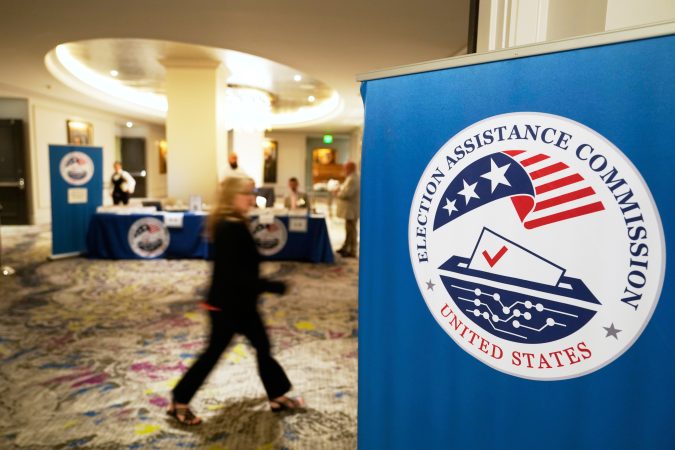
    I recalled Katz’s remarks on democracy when I heard that President Donald Trump, taking another step to try to control November’s midterm elections (as The Inquirer argued recently), had fired the two remaining Democratic members of the federal Election Assistance Commission, and that the last remaining Republican member, Christy McCormick, had resigned.

    The EAC was created in 2002 as a pro-democracy measure after the contested 2000 presidential election. As a bipartisan commission, it has set standards for voting machines, mail-in ballots, and cybersecurity. A U.S. Supreme Court ruling on June 29 overturned over a century of precedent, giving the president power to fire members of federal commissions like the EAC for political reasons and appoint loyalists.

    Vacating the EAC won’t keep the midterms from happening in November, but it’s one more act in what former U.S. Reps. Richard Gephardt and Timothy Wirth call a “rolling coup.”

    The firing of the commissioners was “deeply concerning in light of President Trump’s relentless efforts to try to interfere in elections,” said Michael Waldman, the president and chief executive of the Brennan Center for Justice at the New York University School of Law, the New York Times reported.

    The dangers are real, as much to American democracy as to the spirit and meaning of citizenship, as Katz defines it. In Pursuit, a 10-part series being released throughout 2026, makes the consequences clear.

    And yet, voting as a practice of democracy has almost always been threatened. In 1838, as Episode 4 of the series brings into dramatic focus, a new Pennsylvania Constitution determined that Black men, free men and landowners otherwise, no longer had the right to vote. Were no longer citizens.

    In 1871, a year and a half after the 15th Amendment to the U.S. Constitution gave all Black men the franchise, a revanchist movement led by Philadelphia congressman and Speaker of the House Samuel Randall and his disciple, 4th Ward boss William McMullen, resulted in the murder of Black men trying to vote in the mayoral election, including civil rights leader Octavius V. Catto.

    Episode 6 opens with Susan B. Anthony and a group of organized suffragists seizing the podium during the 100th anniversary reading of the Declaration of Independence, demanding what the 15th Amendment never delivered: women’s right to full citizenship (it would take another 44 years).

    “I believe that I understood what citizenship meant from a very early age,” Katz continued. “My grandmother was legally blind. And so from the time I’m a young person, I took her to the polling place to vote.”

    This familial joy, this right and responsibility, this tiny and also enormous act: it’s what defines our ability to be American. Lily Yeh, the founder of North Philadelphia’s Village of Arts and Humanities and an immigrant from Taiwan, says in Episode 10 of In Pursuit: “It reflects democracy and the essence I feel of America, which is most dear. One person, one vote.”

    This is what’s fundamentally under threat. It’s a strange thing, as a filmmaker, to watch reality imitating all this history.

    Nathaniel Popkin is the writer and producer of “In Pursuit: Philadelphia and the Making of America.” Episode 5, “America (1838 to 1876),” premiered at the Philadelphia Film Society’s Film Center on Thursday. The series streams on YouTube.