Tag: topic-link-auto

  • Spain outlasts Argentina to complete a star-studded World Cup final

    Spain outlasts Argentina to complete a star-studded World Cup final

    EAST RUTHERFORD, N.J. — At the start of this World Cup, Spain was one of the biggest favorites to win it all. And in the end, it was the team that deservedly won the title.

    Spain’s second-half substitute Ferran Torres’ scored in the 106th-minute goal to fuel a 1-0 victory over Argentina. La Roja dethroned the reigning champions with a 20-2 advantage in shots over Lionel Messi’s side.

    It was Spain’s second men’s World Cup title in a brilliant era from 2008 to now, which also includes three European championships and a UEFA Nations League title. The country is also the first to hold the men’s and women’s World Cup crowns at the same time, thanks to the women’s team’s triumph in 2023.

    A sellout crowd of 80,663 was on hand in the Meadowlands — though with quite a few empty seats in the lower deck — and heaven knows what they paid to be there. Projections of $14 billion in revenue from this summer rose to $15 billion, the Guardian reported, with fans paying a lot of the bill.

    FIFA was no doubt also happy with the 11-page list of “VVIPs and Celebrities,” spanning Spain’s reigning King Felipe VI and its prime minister, Pedro Sánchez. Argentina’s president Javier Milei didn’t attend out of superstition, putting his fandom ahead of his friendship with President Donald Trump, who emerged to a chorus of boos during the trophy presentation.

    Madonna, Anna Wintour, Brad Pitt, Tom Cruise, and Mick Jagger alongside halftime show performers Shakira and Justin Bieber were also some of the names in attendance.

    From the sports world? How about soccer legends Ronaldo, Zinedine Zidane (who will soon be France’s manager), and Roberto Baggio; current U.S. women’s stars Rose Lavelle and Alyssa Thompson; the Eagles’ Saquon Barkley and the Chiefs’ Patrick Mahomes; a pile of basketball players led by Victor Wembanyama, Jalen Brunson, and Union part-owner Kevin Durant; Olympians Ilia Malinin and Mikaela Shiffrin; and tennis’ Carlos Alcaraz.

    They might even have watched the game, and if they did, they got to see other stars. Lionel Messi, Julián Álvarez, and Enzo Fernández started for Argentina against Spain’s Lamine Yamal, Dani Olmo, and Rodri, the last of whom captured FIFA’s Golden Ball, given to the player of the tournament.

    Lionel Messi (left) and Lamine Yamal battling for the ball during the first half.Julio Cortez

    But while it was a superbly sunny, surprisingly breezy, and thankfully wildfire-smoke-free afternoon, there wasn’t much action to enjoy early on. Instead, there was the first scoreless half of a men’s World Cup final since 2014. Spain outshot Argentina 3-0, with Yamal forcing a save in the fifth minute and Marc Cucurella firing narrowly wide from 18 yards in the 43rd.

    Perhaps that shouldn’t have been too surprising. Soccer finals are usually cagey, and on top of that Spain likes to win games by controlling them. Argentina, meanwhile, is often content to take its time and strike late. Messi’s renowned playing style exemplifies that: he often spends the first stretch of any game just walking, so he can watch how the opposing defense moves and find gaps in it.

    The other end of the field was a different story. Along with Spain having the better of the play in the first half, Argentina centerback Lisandro Martínez had to leave the game injured in the 44th, not long after picking up the first of his team’s eight yellow cards. Nicolás Otamendi replaced him, and Spain might not have minded seeing the 38-year-old come in.

    After the first halftime show concert in World Cup final history (which enough of the supposed American target audience didn’t like), Albiceleste manager Lionel Scaloni made another swap: Leandro Paredes for Nicolás González at left wing in their 4-4-2 setup.

    There were quite a few empty seats in the stands during the World Cup halftime show.Matt Slocum

    In the 58th, Scaloni made it three subs before his players had taken a shot by withdrawing right back and 2022 World Cup final hero Gonzalo Montiel for Nahuel Molina. Spain was starting to assert control by then, and four minutes later manager Luis de la Fuente upped the ante with a double-sub: Ferran Torres for Mikel Oyarzabal at striker and great playmaker Pedri for Fabián Ruiz in midfield.

    Spain’s big cluster of red-clad fans behind one goal could sense the momentum, even more when Yamal split two defenders and crossed for Torres to head right at Emiliano Martínez.

    Scaloni tried to bolster his side by sending defender Facundo Medina and midfielder Giuliano Simeone on for Cristian Romero and Rodrigo de Paul in the 70th. Those were his last subs in regulation, and Argentina still hadn’t recorded a shot. Meanwhile, a lot of firepower watched from the bench: midfielders Giovani Lo Celso, Nico Paz and Thiago Almada (formerly of Atlanta United), and especially striker Lautaro Martínez.

    De la Fuente, meanwhile, countered in the 75th with two more attacking moves. Nico Williams replaced Álex Baena at left wing, and Mikel Merino replaced Olmo in attacking midfield.

    It took until the 92nd minute for Argentina to finally register an attempt, and it wasn’t even officially scored a shot. But Messi was on the ball for enough of the buildup that the stadium held its breath.

    With everyone just about ready for extra time, the plot took a big twist. Fernández sent Pau Cubarsí flying into the air from a collision, and referee Slavko Vinčić quickly gave Fernández his second yellow card of the day. A red followed right afterward.

    But there were still no goals when regulation ended, making this the fifth men’s World Cup final of the last eight to require bonus sessions. The only one to reach penalty kicks with no goals was the last one in this country, 1994 at the Rose Bowl.

    Williams finally put the ball in the net in the 96th, which Spain fully deserved for its 15-0 lead in shots through 90 minutes. But the goal was ruled out for a foul in the buildup, and that was the right call.
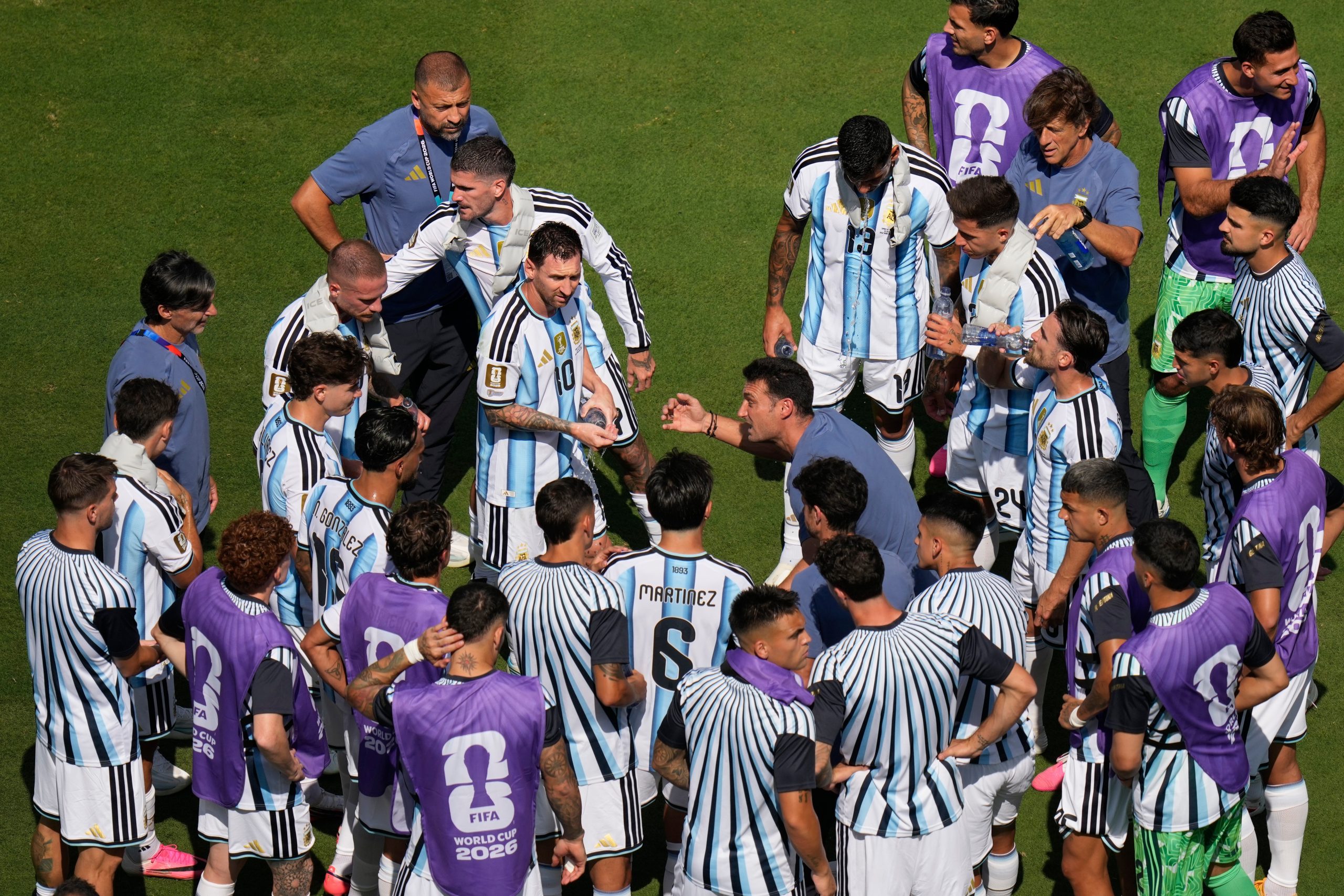
    Argentina manager Lionel Scaloni (center) had lots of words for his players, but he left a lot of attackers on the bench.Seth Wenig

    Extra time grants each side an extra sub. Scaloni chose to use his not just to send in another defender, but to take off a striker: Álvarez for Marcos Senesi.

    The goal finally came in the 106th, and it was perfectly executed. Right back Pedro Porro hit a cross over the crowded 18-yard box, Williams headed it down, and Torres slammed the loose ball in with all his might.

    Everyone knew Spain deserved it, but Argentina wasn’t dead yet. In stoppage time of the extra time, officially the 122nd minute, Cubarsí had to scramble to clear a chance Messi and Simeone created. From the ensuing corner kick, Simeone shot over the bar.

    The clock read 125:01 when the final whistle blew. Most importantly, the scoreboard read 1-0 with Spain as the winner.
  • D.C. probation officers learned from a Philly youth organization about connecting with kids

    Probation officers from Washington traveled to Philadelphia to learn from a Philly youth organization that works with young people impacted by violence.

    The officers met with YEAH Philly, a group that works with Philadelphia youths charged with crimes, in an effort to incorporate some of their community-based practices into their own work.

    The tour, which took place Wednesday and Thursday, brought about 100 officers to Philadelphia’s Family Court and introduced them to public defenders. The trip was part of a larger project from the D.C. court system to learn from other youth programs to adapt their services.

    Probation officers can mimic some things YEAH Philly is doing, said Robert Bacon, D.C.’s assistant deputy director of court social services. What really struck him about the program is how it seemed to be able to connect with kids while making them feel safe.

    “We are trying to find a way to reach kids differently,” he said.

    But as a nongovernmental organization, YEAH Philly is not subject to the same restrictions that probation officers, as law-enforcement officers, are, Bacon noted.

    “They do a lot of the function that probation does without the weight of the court system,” Malcolm Woodland, the director of court social services said about YEAH Philly. Nonetheless, he noted that “the cloth that binds us is that we want to help young people.”

    In a town-hall-like dialogue, probation officers and leadership from YEAH Philly discussed how the organization was able to successfully build relationships with young people. James Aye, the founder of the organization, shared how they were able to help young people avoid violating their probation by providing them with food, arranging for and paying for repairs to their homes, and giving them skills on how to interact with their parole officers.

    A goal of the dialogue with YEAH Philly, Bacon suggested, would be to mimic its role as a community-based organization but in a more official capacity of a law-enforcement agency. YEAH Philly acts as a kind of probation-system model for them.

    In Pennsylvania, a probation office can represent an outsized part of a youth’s time in the justice system. Youths spent an average of 121 days under supervision between the initial charge and final disposition, according to the Pennsylvania Juvenile Court 2024 report. And just over 16% of youths found delinquent in Pennsylvania are put on probation, the report said.

    Some attempts have been made to reform the probation system locally. The Philadelphia’s District Attorney’s Office noted in a 2019 report that 72% of children sent to juvenile placement were there because they were not complying with their probation and not because they had committed another crime. As a result, the office committed to asking children to meet only three conditions as part of their probation. Conditions can range from drug testing, educational requirements, curfew, and regular meetings with probation officers.

    This was the experience of Haafith Collins, who spoke to the D.C. probation officers of his experience. Collins, now 19, had previously been on probation for four years.

    “I was only recharged when I was forced to live in a house that was uninhabitable, and I felt like I had no choice but to run away even though I was on house arrest,” he said.

  • Phillies look ahead to Dodgers after No. 5 starter Alan Rangel struggles in series loss to Mets

    Phillies look ahead to Dodgers after No. 5 starter Alan Rangel struggles in series loss to Mets

    Bring on the Dodgers.

    No, really, bring ’em on. So what if the two-time defending World Series champs are still the best team in baseball? The Phillies would sooner face them for three days than talk about what happened Sunday.

    Oh, all right. A few words about that:

    In the latest noncompetitive dud from a No. 5 starter (more on that later), Alan Rangel gave up five runs before some fans found their seats. The Phillies managed six hits and lost, 6-1, to the Mets to drop the first series after the All-Star break, their warts on display.

    But hey, that’s life when neither Cristopher Sánchez nor Zack Wheeler pitches in a series. That won’t be the case against the Dodgers. Sánchez is scheduled to start the opener Monday night followed by Wheeler in the second game.

    So, bring on the champs, right?

    “Obviously they’re a good team, one of the best,” said Alec Bohm, whose homer accounted for the offense. “I think just the opportunity is to win some games. I don’t think it’s anything crazy. It’s kind of getting down to that time of the year. We’re in the second half now. We just want to come in and take care of business.”

    Say this: It’s a measuring-stick series. The Dodgers are talented and endlessly deep, with the best record in baseball — 63-36, a 103-win pace, through the opener of a doubleheader at Yankee Stadium. Shohei Ohtani won’t pitch this week because of left knee pain, but he went 2-for-5 with a double and drove in two runs Sunday in Game 1 against the Yankees, so hitting won’t be a problem.

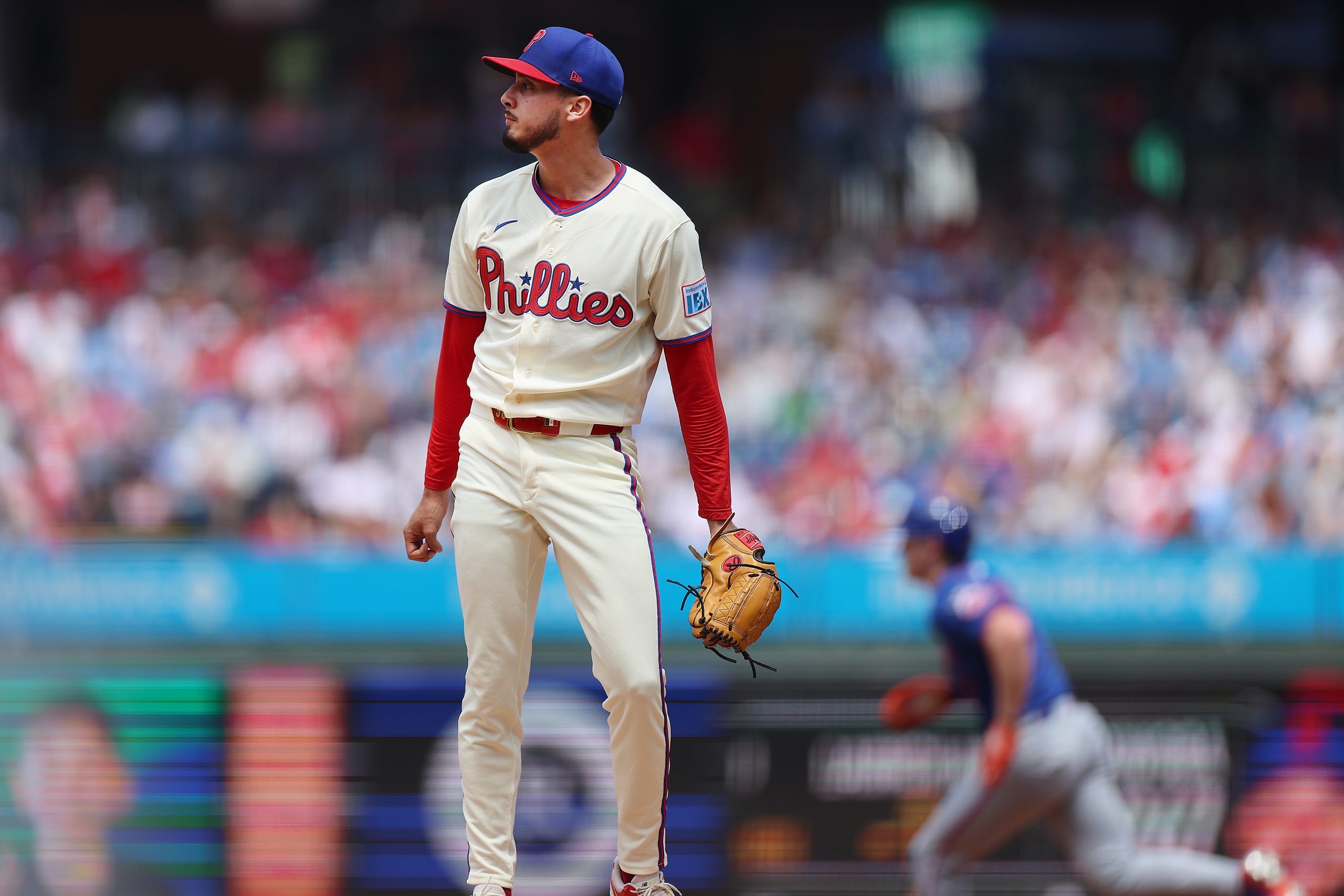
    Phillies starter Alan Rangel gave up two runs in the first inning and three in the second in a loss to the Mets on Sunday.David Maialetti / Staff Photographer

    The Phillies were still ascending from a season-opening 9-19 hole when they visited Dodger Stadium the last weekend in May. They lost two of three, including Wheeler’s only defeat in 15 starts.

    But they went 9-3 against the Dodgers over the last two regular seasons and lost three games by a total of four runs in the divisional round last year. Dodgers officials didn’t want to face the Phillies and were mostly relieved to survive the series.

    They could be headed for an October rematch, in which case the Dodgers’ uneasy feeling won’t likely subside if Sánchez, Wheeler, and Jesús Luzardo are lined up to pitch.

    To get there, though, the Phillies need more from the back of the rotation. They are 41-14 when Sánchez, Wheeler, or Luzardo start; in starts made by anyone else, they are 14-31, including 10 consecutive losses from the No. 5 spot.

    “Obviously,” interim manager Don Mattingly said, “you don’t want to have a day that we never win.”

    The Phillies haven’t won with a No. 5 starter since May 18. Since then, Andrew Painter got demoted to triple A, where the results have been mixed. Rotation depth is an organizational weakness. Rangel is the best (only?) option — and has a 5.75 ERA since replacing Painter.

    Rangel’s next start would be Saturday at home against the Yankees. Will he make it?

    “It’s something to talk about,” Mattingly said. “Now is not a great time to talk about that when you’re 10 minutes after the game. But I’m sure it’s something that everybody’s looking at.”

    With a day off Thursday, the Phillies could skip the No. 5 spot and have Sánchez, Wheeler, and Aaron Nola start on regular (four days’) rest. In that case, they would need a fifth starter only once before the Aug. 3 trade deadline — and not until July 28 in Miami.

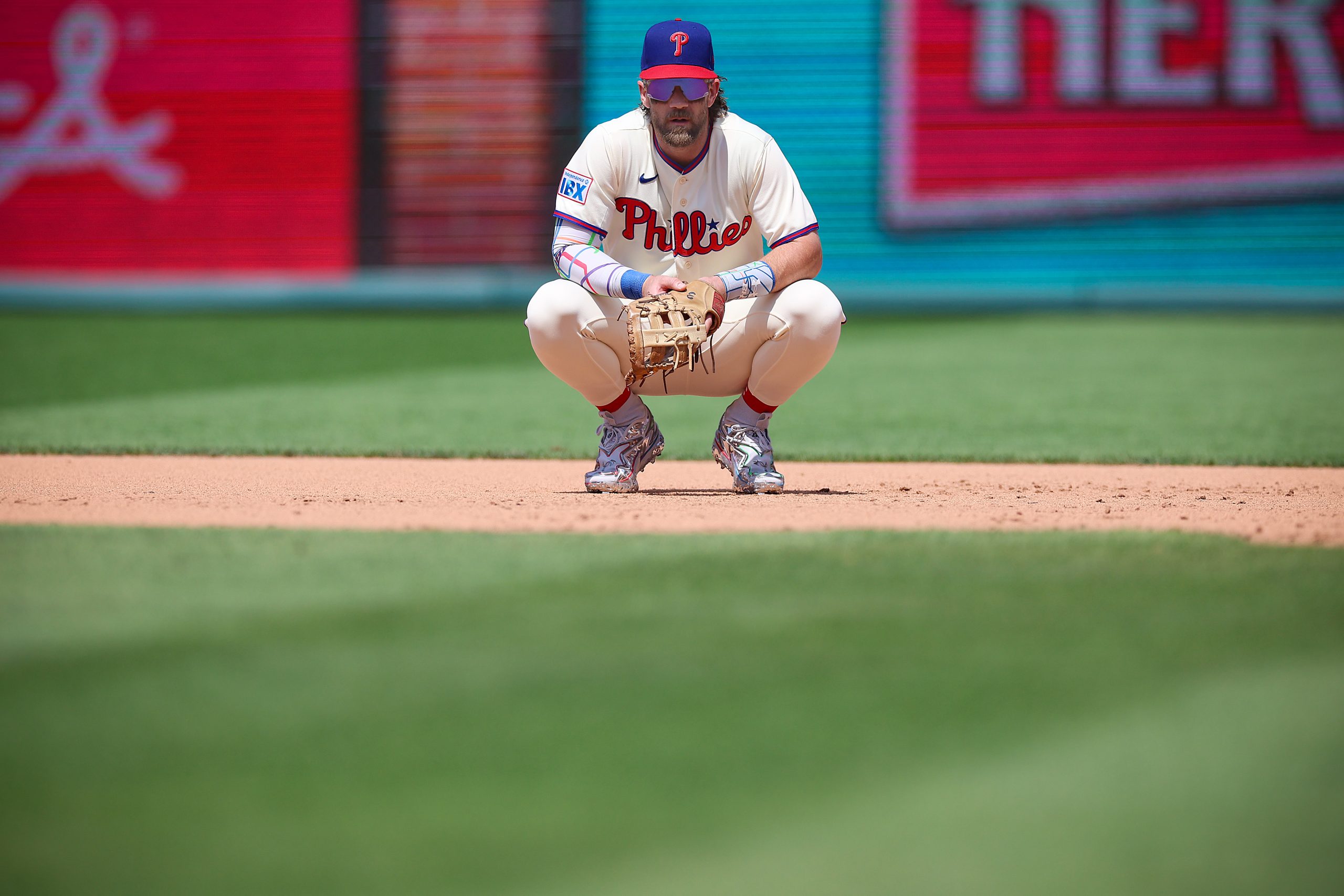
    Bryce Harper pauses during a pitching change in the sixth inning against the Mets on Sunday.David Maialetti / Staff Photographer

    Before sending Rangel to the mound against the Mets, Mattingly wondered how the 28-year-old righty would fare after facing them three weeks earlier in New York.

    It’s safe to say the advantage went to the Mets.

    “My mind wasn’t there,” Rangel said through a team interpreter. “I wasn’t thinking about that. I wasn’t worried about that. I was just trying to make my pitches and just try to do that.”

    Rangel said he sensed some hitters seemed to change their approach “maybe a little.” He relies heavily on his changeup and deceptive over-the-top delivery to get soft contact. This time, the Mets fouled off a lot of pitches against him.

    “I think more than anything he just wasn’t able to put guys away,” Mattingly said. “Second time they’ve seen him. Everybody’s making adjustments.”

    To wit: Bo Bichette fouled off six consecutive pitches and worked an 11-pitch walk with two out in the first inning. Rangel then left a fastball over the plate to Francisco Lindor for a two-run homer into the second deck in right field.

    It got worse for Rangel in the second inning. Brett Baty led off with a single before Luis Torrens lined an RBI double. Juan Soto walked and Bichette singled to load the bases for Lindor, who stroked an RBI single. Carson Benge lifted a sacrifice fly to make it 5-0.

    How’s that for deflating in the rubber game of a series?

    “Well, it can be,” Mattingly said. “You know, getting down five early. With that, the guy on the mound today [Mets ace Nolan McLean], he was good. It puts you in a tough spot. … It feels like kind of all day you’re kind of out of it.”

    The Phillies won’t face the Mets again until September. Before that, New York is expected to be an active seller at the trade deadline, with several pitchers who could help the Phillies, perhaps none more than right-hander Clay Holmes.

    A closer-turned-starter, Holmes is rehabbing from a right leg fracture. If he shows he’s healthy in upcoming minor-league starts, he would fit the Phillies as a No. 5 starter down the stretch who could easily transition to a late-inning relief role in the postseason.

    In the meantime, here come Ohtani and the Dodgers.

    At least the Phillies will have Sánchez and Wheeler waiting for them.

  • After 39 days, Philly’s FIFA Fan Festival comes to an end

    After 39 days, Philly’s FIFA Fan Festival comes to an end

    For the past month-plus, the grounds of East Fairmount Park have been a buzzy constant for local and visiting soccer fans, a carnival-like collection of food, games, live music, and — most notably — the city’s official World Cup watch party.

    No longer.

    Sunday marked the conclusion of the 39-day marathon FIFA Fan Festival at Lemon Hill, as Argentina and Spain faced off in the 3 p.m. World Cup Final at MetLife Stadium in East Rutherford, N.J.

    For the last month and a half, the festival — which was free to attend — was met largely with positive reviews, as fans have flocked to the grounds even after the last World Cup game hosted in Philadelphia came and went.

    An ambitious endeavor years in the making, the event took up one million square feet of space and was billed, at least in part, as an accessible way for soccer fans to enjoy the World Cup, as skyrocketing game ticket costs had made live attendance impossible for many.

    In addition to soccer, the festival played host to a variety of concerts, including Leon Thomas, Bebe Rexha, and the All-American Rejects.

    “Having it at the park has been a great idea,” said Akio Wise, who is originally from North Philly and was in town visiting family from the West Palm Beach, Fla., area. “Everyone seems to be having a good time.”

    Indeed, it wasn’t lost on many how the festival — and the World Cup in general — had brought a sense of bliss to this notoriously curmudgeonly city.

    “People have just been nicer,” said Suzanne Bachman, 66, of Philadelphia, who joined the masses at Lemon Hill. “We needed something positive.”

    Fans began gathering early for Sunday’s final, with thousands of people lining the streets of the neighborhood surrounding the park, waiting for gates to open at 2 p.m.

    Some were old pros, having made multiple trips to the festival over the summer. Others wanted to make sure they got a taste of the event before it was shuttered.

    Cathy and Clyde Maynard, who are originally from Trinidad and Tobago, said they couldn’t let the experience pass without seeing it for themselves.

    Their verdict?

    “They did a nice job,” said Clyde.

    Some, certainly, weren’t ready to see it go.

    Asked whether he’d miss the festival, Oscar Bibian chuckled.

    “Of course,” said the 38-year-old, who lives in the Philly area. “Watching soccer and drinking a beer is great.”

    Not surprisingly, it wasn’t just soccer that brought people to Lemon Hill on the festival’s final day.

    “My wife wanted to get one of the bracelets,” said Wise.

    The ultra-viral — and difficult to procure — charm bracelets have been a social media sensation, and the primary objective of at least some of those in attendance. (As has been common all summer, Sunday’s line for the free bracelets, a Bank of America giveaway, snaked through the festival grounds.)

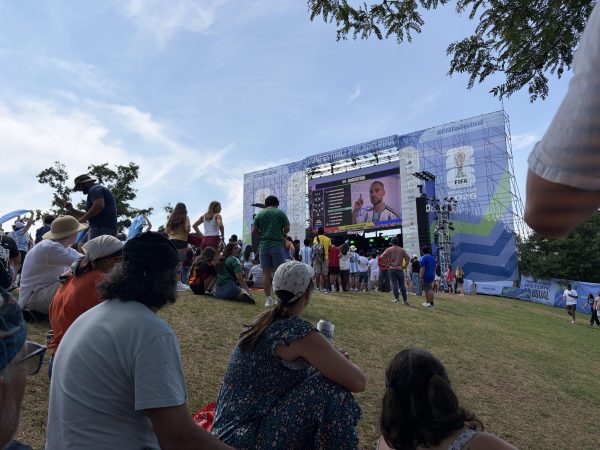
    But by game time, the festival’s main viewing area was packed with fans hoping for a dramatic conclusion to the summer tournament.

    As fans congregated around the main stage viewing area, and Michael Buffer bellowed, “This is the moment you’ve all been waiting for …” from the screen, it felt to some like the unofficial conclusion to a Philly summer that has included no shortage of high-profile events.

    “It’s too bad this is it,” said Bachman. “I don’t know what there is to look forward to the rest of the summer.”

    “But what can you do?” she added. “Just enjoy what you have.”

  • Philly got a break from wildfire smoke Sunday, but will the fresh air last?

    Philly got a break from wildfire smoke Sunday, but will the fresh air last?

    After three days of dealing with smoky, particulate-filled air, many Philadelphians went outside Sunday to enjoy the sunshine, gentle winds, and relatively clear horizons.

    But hundreds of miles northwest in Ontario, wildfires continued to burn, posing a life-threatening emergency to some Canadians and leaving much of the United States susceptible to more rounds of smoke.

    Experts say the ongoing wildfires will threaten air quality in the region, while the longer dry seasons, droughts, and high winds associated with climate change mean that such fires — and the smoke they send downwind — may become more common.

    “I think we are headed into an era where we are likely to see more periods of air pollution from wildfire smoke reaching the East,” said Erica Smithwick, a Penn State geography professor. “We are not immune to these dangers anymore, and we’re going to have to learn to live with them.”

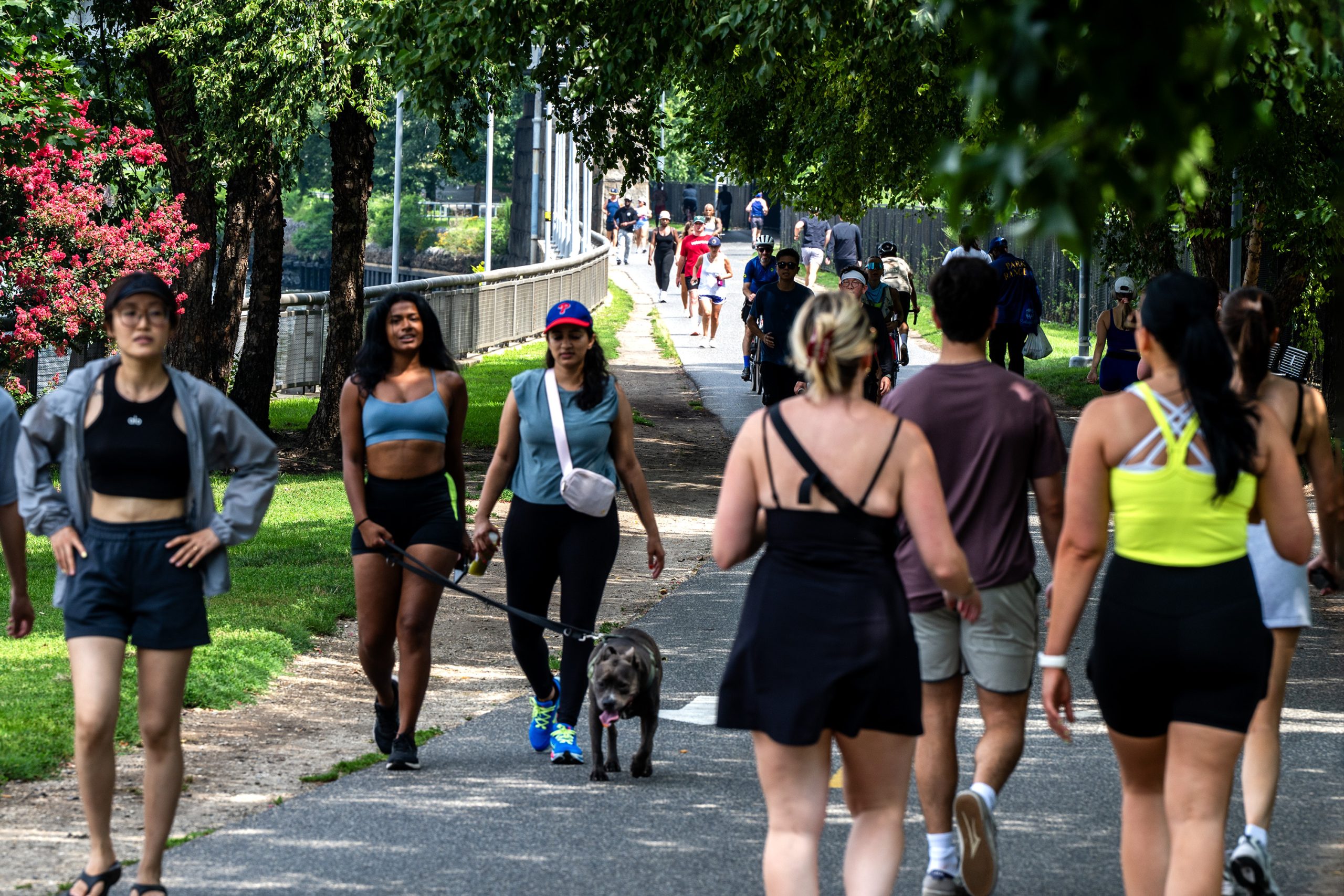
    Outdoor enthusiasts are on the Schuylkill River Trail Sunday, July 19, 2026, taking advantage of sunny, clear skies and moderate air quality after three days of bad air from the Canadian and Great Lakes wildfire smoke.Tom Gralish / Staff Photographer

    Walking along the Schuylkill on Sunday morning, Dion Carmichael was coming to terms with this.

    “You can tell everyone feels excited to be here today,” said Carmichael. The 29-year-old said her Fairmount neighborhood felt a bit “like a ghost town” the past few days as people stayed inside.

    She and her partner had to cancel a camping trip in New York, Carmichael said. She said it’s had her thinking about “the future of our planet.”

    “Global warming is a big factor in this. We should take care of our planet,” Carmichael said.

    Her partner, Canice Okereke, noted that he could still smell faint wood smoke in the air. That didn’t worry him personally. But it remains a threat for some of the people with health issues he helps in his job managing in-home care services for seniors. The past few days, simple tasks like walking to the pharmacy to pick up a prescription became a challenge for those with respiratory issues.

    A biker is on the Schuylkill River Trail Sunday, July 19, 2026, taking advantage of sunny, clear skies and moderate air quality after three days of bad air from the Canadian and Great Lakes wildfire smoke.Tom Gralish / Staff Photographer

    Sean Conway just finished leading a three-mile group run. The 26-year-old personal trainer said he never thought about wildfire smoke or air quality until Thursday, when one of his running partners told him he was better off staying indoors. He begrudgingly took to the treadmill, and then admitted his friend was right.

    “If you’re running for your health, why would you run in smoke? It’s like smoking a cigarette,” Conway said.

    In the short term, the worst of the wildfire smoke has passed, said AccuWeather senior meteorologist Bill Deger. But sensitive groups such as children and those with respiratory issues could still be affected, he said.

    Sunday’s moderately clean air is the result of a cold front from eastern Canada, he said. “Now we will have shifting wind directions over the next couple days. If the wind comes out of the west, we can have more of an uptick in that smoke, though I don’t expect it to be as bad as it was,” Deger said.

    As for weather, temperatures will drop into the 60s in Philly and into the 50s in the suburbs Monday night, giving air conditioners a break, he said. Higher humidity and “heavy, gusty thunderstorms” are forecast for Tuesday and Wednesday.

    “Hazy skies certainly look like a possibility, but as far as that ground-level pollution is concerned, it should not be as bad,” Deger said, adding that it is difficult to predict air quality beyond two or three days out.

    Boaters are on the Schuylkill Sunday, July 19, 2026, taking advantage of sunny, clear skies and moderate air quality after three days of bad air from the Canadian and Great Lakes wildfire smoke.Tom Gralish / Staff Photographer

    Smithwick said broader trends make more fires likely. High winds, droughts, and long dry seasons are all on the rise due to climate change. She noted, in addition to Ontario, wildfires are burning in Minnesota.

    “In the East, you don’t need large periods of drying to have wildfire conditions — two weeks or less. And when it happens upon an extended period of drought, those create the conditions for the wildfires,” Smithwick said.

    Canada and the Midwest have seen extensive fires before, Smithwick said, “but not at the frequency and scale that we’re seeing now.”

    This increase brings both ecological peril and human health risks, she said. These risks are often worse for disadvantaged communities where people may lack things like air conditioners and indoor air purifiers.

    In addition, some of the needed changes must occur on a larger scale, Smithwick said. One example: She said schools should be fitted with air monitors and purifiers.

    Smithwick encouraged people to monitor air quality indoors and outdoors, follow guidelines, stay indoors when needed, and stay cool.

    “Adjusting your behaviors to meet the moment can be difficult, but finding alternative activities can work.”

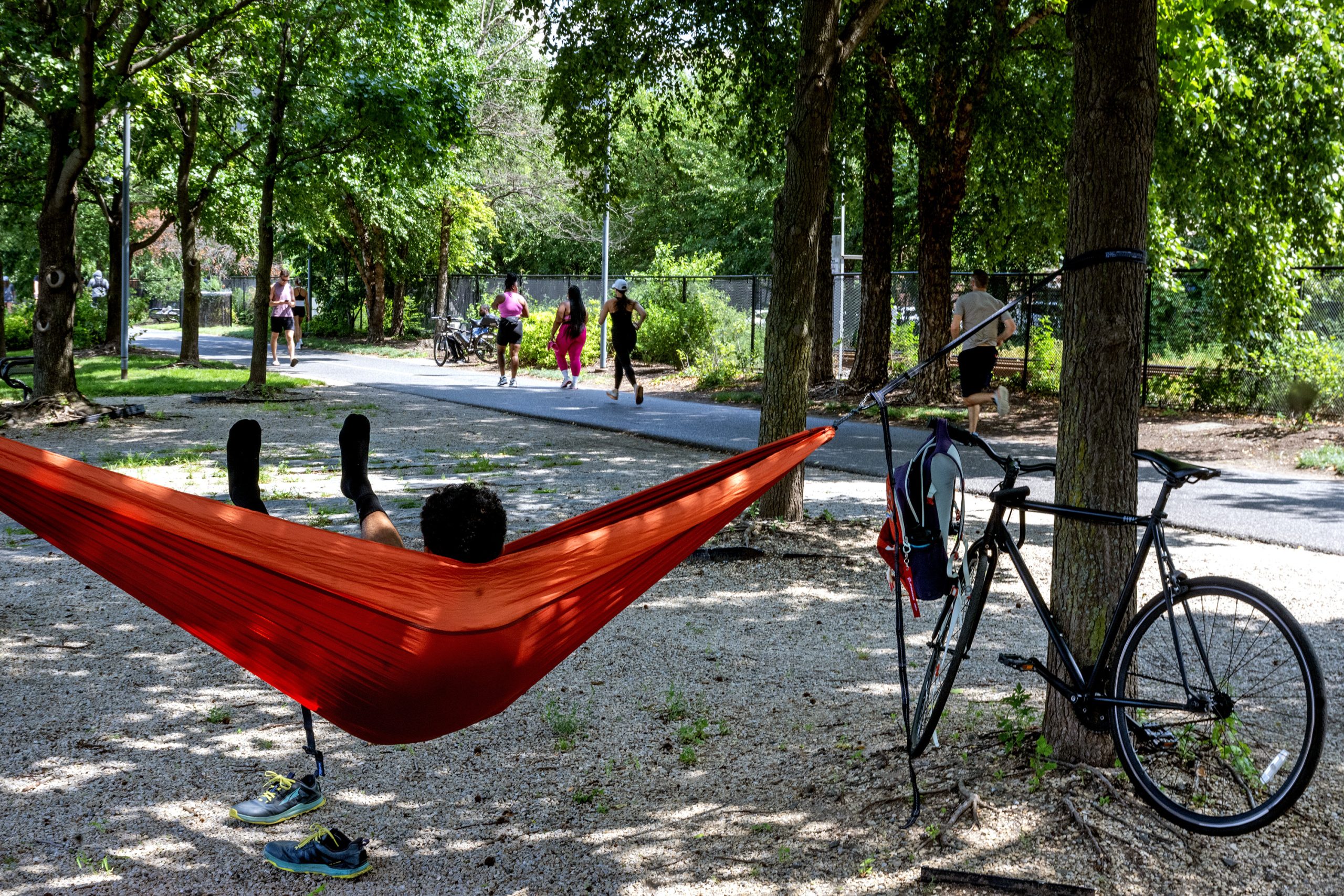
    Mikin Patel, 25, hangs in his hammock joining other outdoor enthusiasts on the Schuylkill River Trail Sunday, July 19, 2026, taking advantage of sunny, clear skies and moderate air quality after three days of bad air from the Canadian and Great Lakes wildfire smoke. Patel, who often bikes from his home in Fairmount to the river “just to chill,” said he hadn’t done so in the past few days. He was just on the phone telling his brother in California how great the weather was. “It finally got nice again,” he told him.Tom Gralish / Staff Photographer
  • The new Nike Air Force 1 shoes bear a striking resemblance to Gritty

    The new Nike Air Force 1 shoes bear a striking resemblance to Gritty

    Nike’s newest Air Force 1 shoes look a lot like … Gritty?

    The footwear giant recently unveiled part of its upcoming “Horse of a Different Color” collection, which reimagines the popular sneakers in shaggy “campfire orange” pony hair, a material eerily similar to the coat of the beloved Philadelphia Flyers mascot.

    The collection is — allegedly — inspired by the Shakespearean idiom, which was also referenced in The Wizard of Oz, according to Hypebeast and Women’s Wear Daily. But internet sleuths were quick to point out the resemblance to Gritty, or the Lorax, or a ‘70s shag carpet, or red-headed singer Ed Sheeran.

    “gritty force 1s” one user on X posted.

    Nike did not immediately respond to a request for comment on whether Gritty served as an inspiration. A spokesperson for the Flyers could not immediately be reached.

    “I will become indebted to Klarna for the [opportunity] to wear these to Flyers games this year,” another X poster wrote, referring to the financial company’s “buy now, pay later” service.

    Another said, “lol these would be great for the Gritty 5K.”

    The sneakers are expected to retail for $140, according to Hypebeast. While an exact release date hasn’t been announced, the shoes are likely to drop this fall.

    Maybe just in time for hockey season.

  • 2 years after a CHOP doctor was killed riding her bike, loved ones commemorated her

    2 years after a CHOP doctor was killed riding her bike, loved ones commemorated her

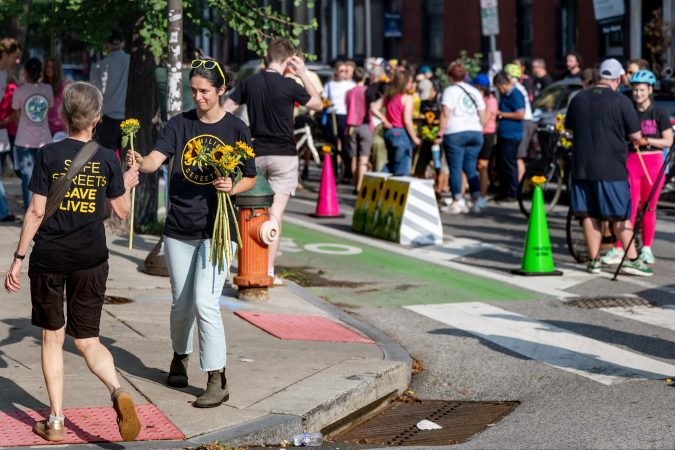
    Dozens of sunflowers bloomed near 18th and Spruce Streets on Sunday morning in memory of Barbara Friedes, as family, friends, and others gathered to remember the CHOP pediatric chief resident. They were marking the second anniversary of when she was struck on her bike and killed by a drunk driver in July 2024.

    The death has reverberated since then.

    Friedes’ death sparked public outrage and protests over traffic safety, with hundreds of cyclists calling for concrete-protected bike lanes, among other traffic safety improvements.

    For Catherine Dietrick, Friedes’ younger sister, there are no words or legislation that can bring her sister back.

    “The last time a crowd gathered right here was two days after my sister was killed. There was no angel bike yet,” she said, referring to a memorial bicycle placed at the site.

    “There were just people, a lot of flowers, notes, and a freshly power-washed street. Across the street, the steps of that house were still crumbled from the impact, and although these steps are fixed now, my sister never can be.”

    She sees the fight for safer roads for cyclists as something her sister would want to do to protect others.

    “I don’t know if a barrier between the bike lane would have saved my sister that day, but I know the lack of one didn’t, and to me, that’s terrifying,” Dietrick said.

    After the crash, in the fall of 2024, city transportation officials recommended $4.8 million in safety upgrades to bike lanes along Pine and Spruce Streets, including concrete barriers.

    A law signed by Mayor Cherelle L. Parker to prevent vehicles from stopping in city-designated bicycle lanes followed in December 2024.

    Separately, the city tried to establish new loading zones on Pine and Spruce Streets to ease pressure on the bike lanes, but neighboring residents sued, and on July 6, a judge upheld a temporary injunction blocking the action until the case is settled or goes to trial.

    Members of Philly Bike Action, an advocacy group, said the injunction delayed safety improvements, despite City Hall’s support.

    “Despite all that progress, our energy, all that public support, Spruce and Pine are still as dangerous today as they were the night that Barbara was killed,” said Jacob Russell, an organizer for Philly Bike Action.

    Although Philly Bike Action leaders said they understood the need to wait for the legal proceedings, they believed the city could move forward with a concrete barrier to keep cyclists safe.

    “We can’t wait another two to five years,” said organizer Jessie Amadio. “The barrier is not much bigger than the curves on the end of the road and will prevent cars from merging into the bike lane and hurting people.”

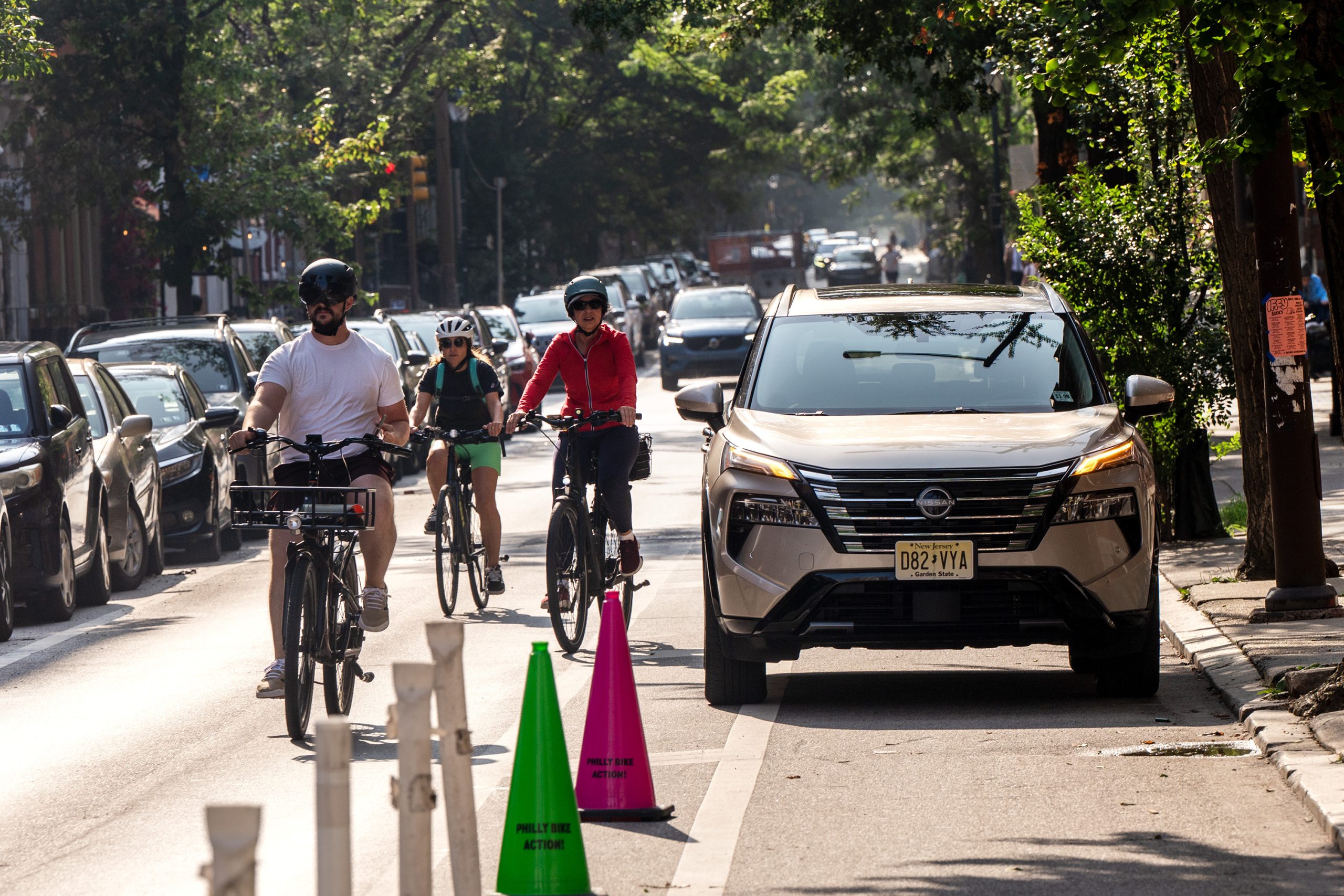
    A car is parked in the bicycle lane in the 1700 block of Spruce Street on Sunday, July 19, 2026, even as family, friends, and Philly Bike Action members gathered near Barbara Friedes’ angel bike at 18th and Spruce Streets for a memorial Sunday, July 19, 2026. Friedes, a 30-year-old Children’s Hospital of Philadelphia doctor, was killed on her bike at the intersection by a drunk driver in July 2024.Tom Gralish / Staff Photographer

    Attending the memorial, City Council President Kenyatta Johnson said preventing traffic violence has the same importance as preventing gun violence.

    “When a person is shot and murdered in the city of Philadelphia, we step up; we show up; we rally and come up with policies, and we also back it up with our budget,” Johnson said. “We have to also continue to make sure we are doing the same thing when it comes to traffic violence here.”

    As the crowd applauded, Johnson pledged he would remain committed to finding ways to protect cyclists in Philadelphia.

    Philly Bike Action members set up a barrier during the memorial with pink and green cones, and a Jersey barrier painted with 12 sunflowers, Friedes’ favorite flower, one for each cyclist who has died in a traffic accident since her death, the group said.

    “To the community members who oppose safer bike lanes, I understand that these changes may feel inconvenient. However, I ask you to consider the lives that you could be saving,” said Mary Dietrick, Friedes’ mother.

    “The decision before us is about more than paint, parking, or traffic patterns; it’s about the kind of city Philadelphia chooses to be.”

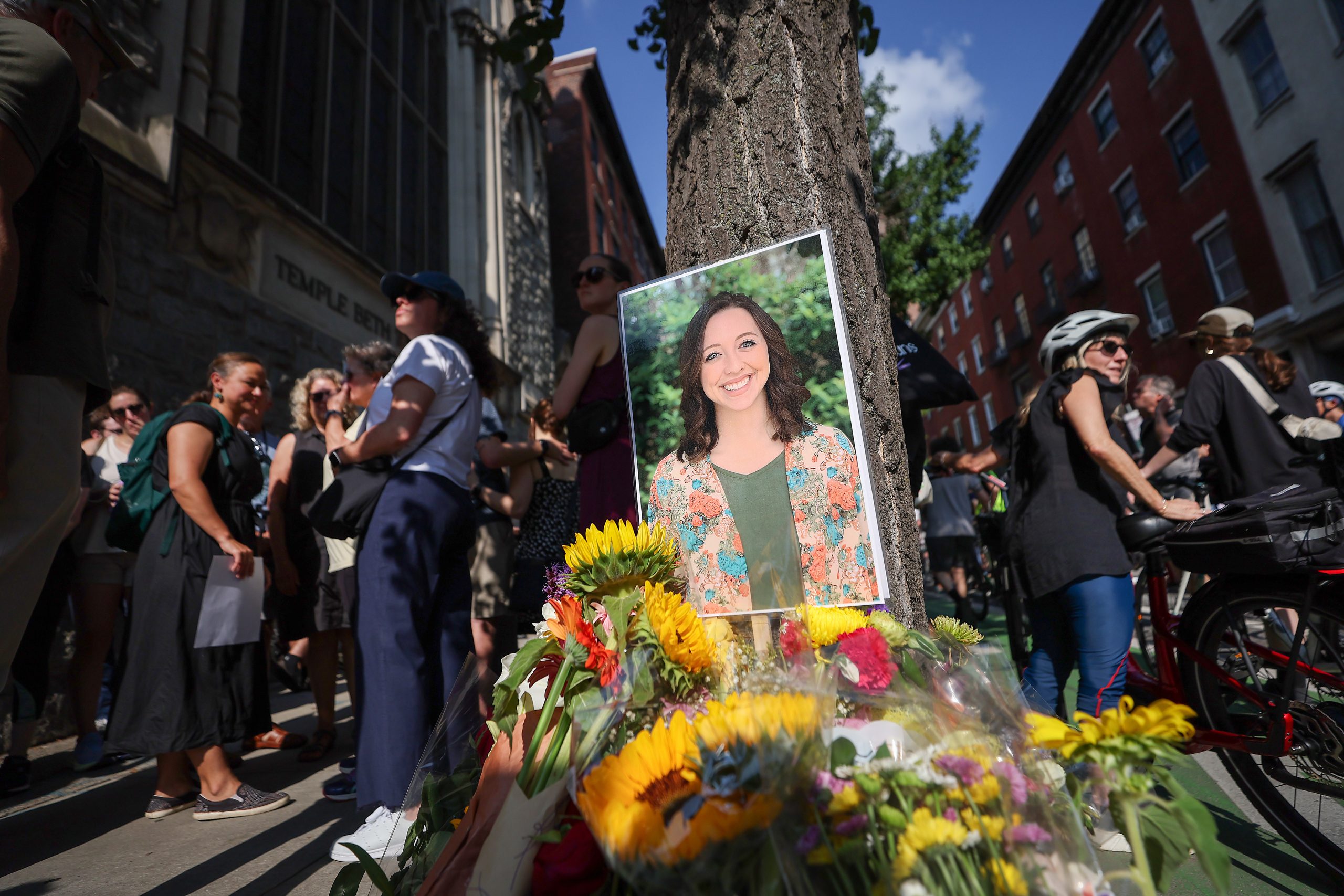
    A photo of Barbara Friedes rests against a tree during a vigil on the 1800 block of Spruce Street in Philadelphia, on Sunday, July 21, 2024. Friedes, a CHOP resident, was killed while biking on Spruce Street earlier that week.David Maialetti / Staff Photographer
  • Trea Turner looks to cut down on chasing — and he’s starting to see the results

    Trea Turner looks to cut down on chasing — and he’s starting to see the results

    In early June, as his struggles at the plate dragged on, Trea Turner had a conversation with Josh Studnitzer, the Phillies’ manager of hitting strategy.

    It was illuminating.

    “Just the way I was getting pitched was unbelievable in the sense that everything was on the edge of the plate, just nothing to hit really, and trying to do a little too much,” Turner said. “And sometimes it felt like I wanted to walk, but I couldn’t walk, because they were strikes.”

    According to StatCast data, 42.9% of the pitches to Turner this year have been on the edge of the strike zone. Out of all major league hitters, that ranks 21st highest.

    But learning that those numbers supported what he was feeling at the plate didn’t help him much. He was still going to have to find a way to turn things around, and get back to what helped him win the National League batting title in 2025.

    “Doesn’t matter, because it’s all about production, right?” Turner said. “I’m not the prettiest player or whatever you want to call it. I don’t do everything perfect, and I just find a way to help the team. … When I try to be perfect, it just sets me backwards. And I just have to be who I am.

    “Everyone likes to tell you all the things, that they even out, or this can’t happen the whole year. But after a while, it gets so old. How do you get better? How do you find more production?”

    Trea Turner was chasing at a 37.1% clip in June. He has cut that to 29% in July.Yong Kim / Staff Photographer

    One of the major keys is cutting down on chasing pitches outside the strike zone, which has been a major issue for Turner this season. Back in June, when he had that conversation with Studnitzer, Turner was chasing at a 37.1% clip. In July so far, he has cut that to 29%.

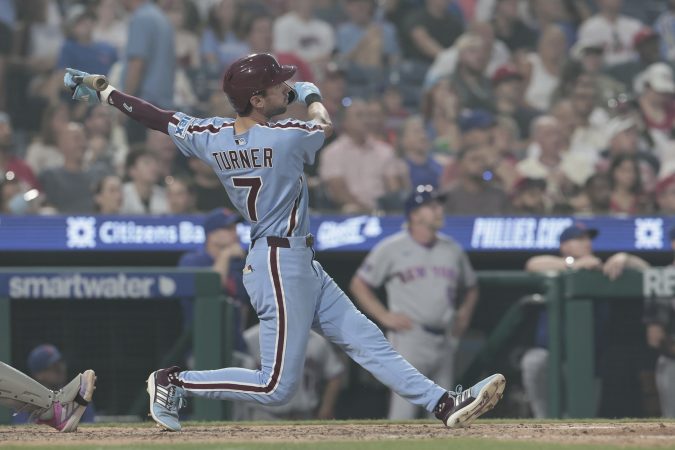
    In turn, that forces pitchers to attack him differently, and makes it more likely he gets pitches to hit, like the fastball he sent 414 feet on Saturday for his second homer in as many games after the All-Star break.

    “You’re definitely going to get pitched differently when you quit chasing. You keep chasing and swinging, they’re going to keep throwing it until you stop,” said interim manager Don Mattingly. “So he’s getting pitched differently. He’s creating the pitches. It’s like we talk about with [Bryce Harper]. He has to protect himself. If they’re not pitching to him, he needs to walk. Things like that. And I think that’s what you see with Trea, is that you’re not chasing as much, you’re getting better pitches.”

    Ahead of the All-Star break, Mattingly gave Turner an extra day off during the Phillies’ road series in Cincinnati because he was a “little banged up in the lower half.” Turner has been in the lineup all three games since the break.

    “I don’t know if we’re 100%, but I think we’re a lot better than we were before the break. Let’s put it that way,” Mattingly said.

    Turner still has the green light on the bases to steal whenever he feels he is able to, Mattingly said. Turner swiped his 17th base of the season on Saturday, which ties Bryson Stott for the team lead.

    Turner said that he doesn’t feel limited physically on defense. Where he feels the room for improvement lies in reading hops better.

    “Physically, there’s nothing to change,” he said. “Just keep doing the things that I’ve been doing the last two years with [infield coach] Bobby [Dickerson] and working on those fundamentals. But just reading the ball a little bit better.”

    Looking ahead to Dodgers series

    When Los Angeles comes to town on Monday, the Phillies will avoid facing Shohei Ohtani — on the mound, at least.

    Dodgers manager Dave Roberts told reporters Sunday that Ohtani will not make his next scheduled pitching start on Wednesday against the Phillies, due to lingering left knee soreness. Ohtani, who has a 1.79 ERA and 0.95 WHIP in 14 starts this year, opted out of the All-Star Game for the same reason. He has never pitched at Citizens Bank Park during the regular season, but was on the mound last year for Game 1 of the 2025 National League Division Series, when he held the Phillies to three hits and three runs over six innings.

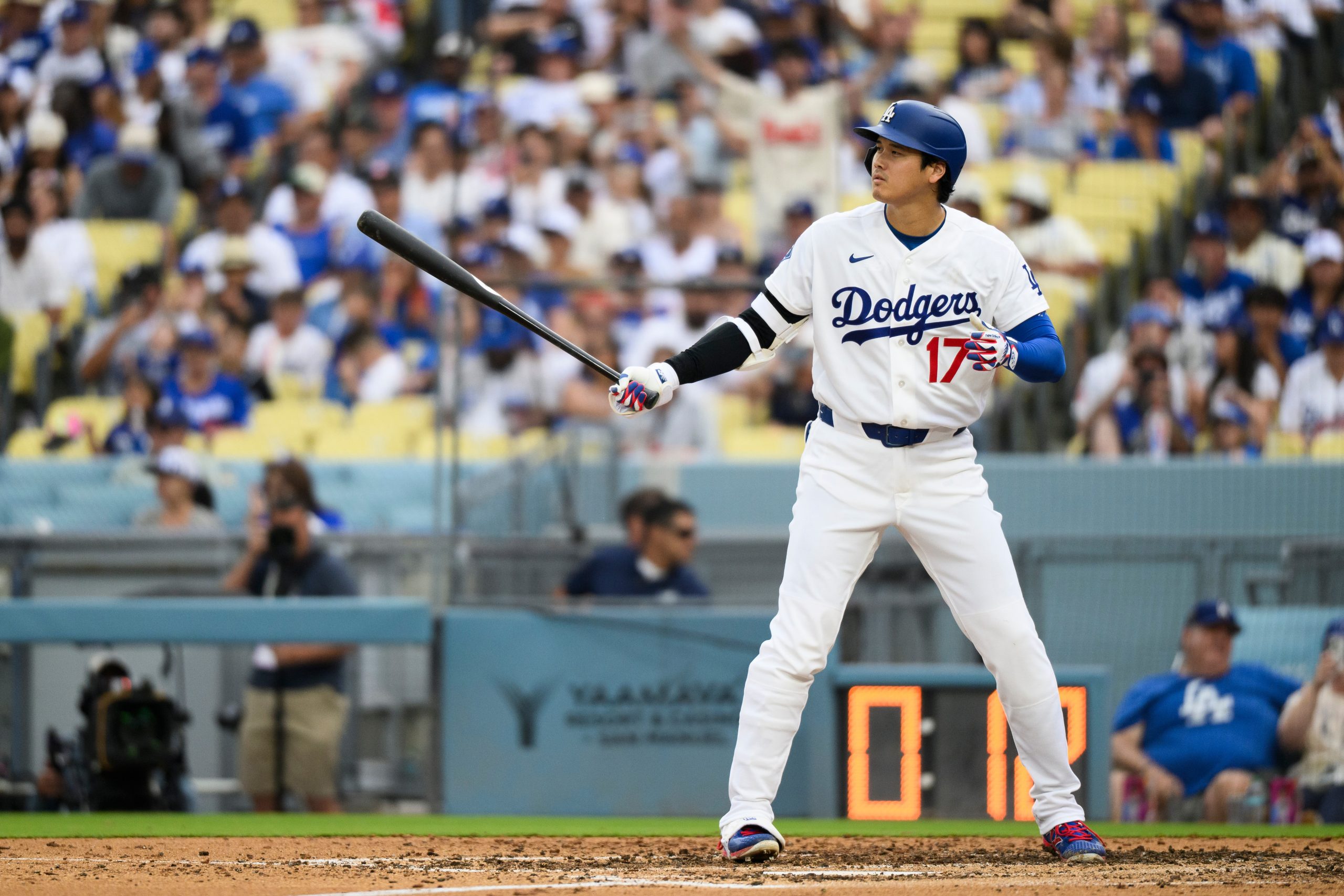
    Shohei Ohtani has a .943 OPS and 22 homers in 93 games.Kyusung Gong

    The two-way star is, however, able to hit as normal, and is expected to be in the lineup as a designated hitter during the upcoming series. In 93 games, Ohtani has a .943 OPS and 22 homers.

    Extra bases

    Cristopher Sánchez (11-4, 2.62 ERA) is scheduled to start opposite Dodgers right-hander Emmet Sheehan (4-6, 4.81) in Monday’s series opener.

  • A couple celebrated a gender reveal with a dazzling light show at Longwood Gardens

    A couple celebrated a gender reveal with a dazzling light show at Longwood Gardens

    Streams of water shot up and danced at Longwood Gardens during the gender reveal for Danielle Alura’s baby.

    The water flashed blue and pink to the tune of Linkin Park’s “What I’ve Done.” On a downbeat, all of the fountains turned one color and fire burst out.

    “Next thing you know, I’m witnessing blue on my favorite fountains in the entire world,” Alura said.

    It’s a boy.

    The water flashed blue and pink before landing on blue.Courtesy of Danielle Alura

    Alura and her husband, Curt Clemens, had planned the gender reveal as a surprise finale to their wedding reception on June 18. Longwood Gardens ordinarily hosts nighttime illuminated fountain performances at the five-acre Main Fountain Garden in Kennett Square. However, this show was custom-made for the reveal.

    The couple, from Kennett Square, found out they were expecting a baby via surrogacy during their engagement, roughly six months before their wedding. Alura said they were anxious to start a family due to their ages, with Alura being 37 and Clemens 44.

    They had both hoped for a boy.

    “We’re just so, so over the moon about it,” she said.

    In a video posted Saturday that captured the moment the gender was revealed, cheers roared from the crowd as Alura jumped up and down.

    The gender wasn’t a surprise to the couple, though it was for many of their wedding guests.

    Griffin, the baby boy being celebrated, had arrived just two weeks before on May 31. He was three months early — born premature, just as Alura and her husband had been.

    Alura is a singer who was crowned Miss Global USA 2023, while Clemens is a woodworker.

    “We were prepared to have a preemie, and we have extra confidence because we’re walking examples ourselves,” she said.

    Danielle Alura is a singer and her husband, Curt Clemens, is a woodworker.Courtesy of Danielle Alura
  • Fellowships shelter exiled writers. The hard part comes after.

    Fellowships shelter exiled writers. The hard part comes after.

    Not long ago, I was a celebrated exiled writer, one of the most visible faces at City of Asylum Pittsburgh — a grassroots organization that helps endangered writers build new homes and new lives in Pittsburgh. Today, I am alone, unable to find a job, without health insurance, and, if I remain in this situation, I may soon be unable to pay my rent and find myself — God forbid — homeless.

    My story begins in Algeria — the country that prompted Salman Rushdie and other writers to first establish the “parliament of writers” internationally in 1993 because of the alarming number of attacks on, and assassinations of, writers in the country in the ’90s during the civil war. This is the same country that had earlier welcomed the international Black Panthers, and many African liberation movements since its independence from France.

    I came here as a threatened writer.

    For years in Algeria, I was persecuted because of my novels, my legal and constitutional struggle as a gay Muslim man, and my defense of women’s rights, LGBTQ+ rights, and freedom of expression.

    In 2015, I was the first Algerian to call for the legalization of same-sex marriage. I started speaking up on taboo topics, crimes against children, for example, and family laws that relegated women to second-class citizens and prioritized men in the family. In 2017, I was interrogated for hours about one of my novels, which highlighted the participation of the LGBTQ community in the war of independence against the French — another taboo topic.

    In 2019, I broke the greatest taboo of all in Algeria, calling for the truth to be told about the 20,000 young men kidnapped during the civil war.

    I was tried and sentenced to pay a fine for using humor to criticize the presidential elections in 2020, and then in 2021 I was interrogated for hours about two articles I had written: one in which I criticized the president, the other, a call to liberate “God” from politics.

    I was already in the U.S. when I was sentenced, in absentia, to a year in prison in Algeria for those same articles.

    The German Bundestag honored me through its “Parliamentarians Protect Parliamentarians” program for human rights advocates, and I was shortlisted for the Index on Censorship Freedom of Expression Awards in 2021. There were other recognitions, but also so much pain, which finally pushed me to escape.

    I say escape because I chose myself, for the first time in my life. I chose to live. In 2017, PEN International contacted me and proposed that I get in touch with the International Cities of Refuge Network, a Norwegian organization that has a network of many cities of asylum around the world. In 2021, I got Artist Protection Fund funding, and through that, I got a fellowship with the City of Asylum Pittsburgh and Carnegie Mellon University.

    City of Asylum welcomed me in Pittsburgh and gave me an important period of safety and opportunity. During this period, I taught Arabic and worked at Carnegie Mellon, where I also studied translation as part of the employee educational benefits while holding a fellowship there. These opportunities changed my life, and I am grateful for them.

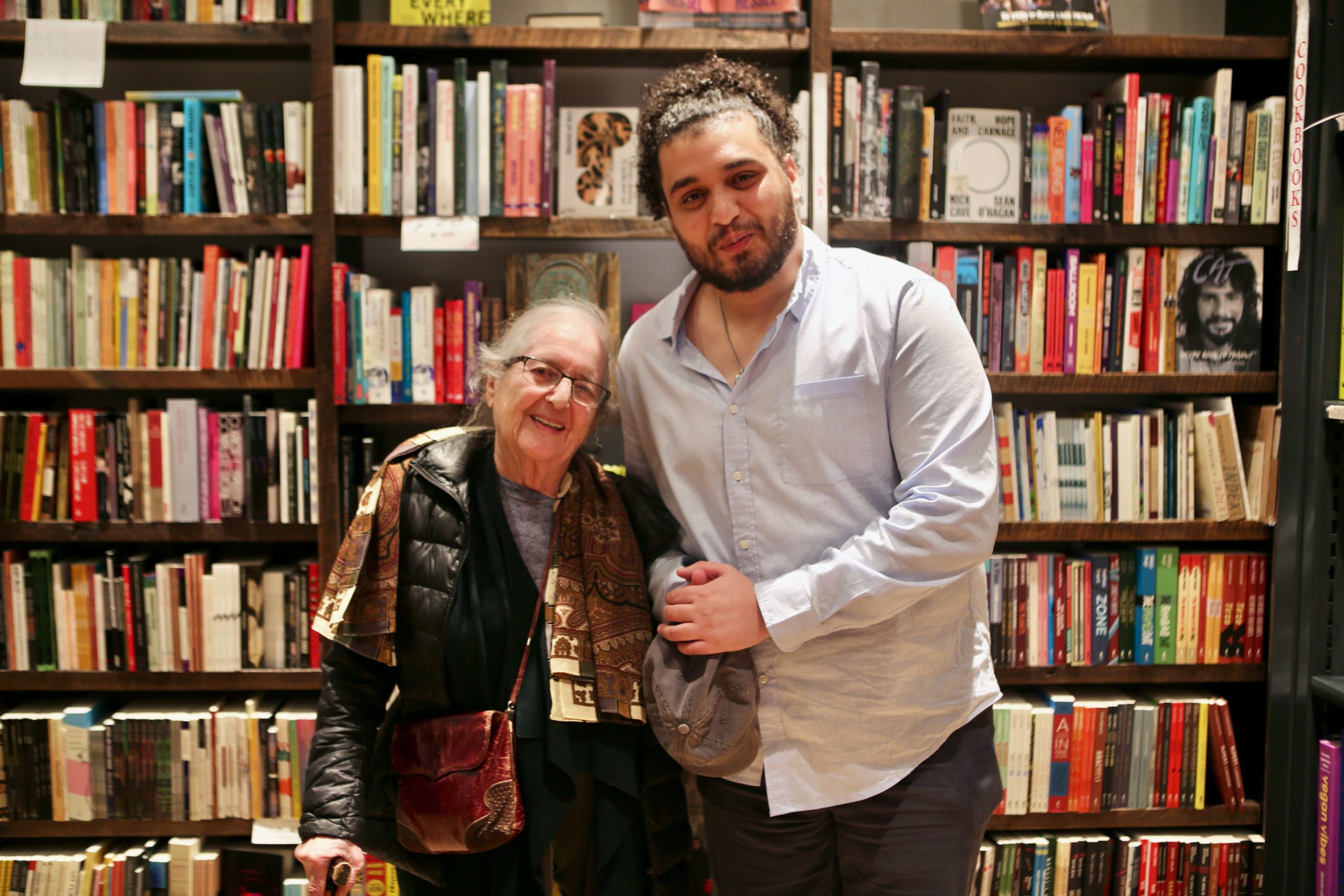
    Elaine Moukhtefi with Anouar Rahmani in Pittsburgh in 2025. Moukhtefi — an American writer, translator, and activist — worked with Frantz Fanon in support of the anti-colonial Algerian National Liberation Front in the 1950s and ’60s. She helped welcome members of African national liberation movements, including Nelson Mandela and the international Black Panther members, to Algeria before she was forced to leave the country in 1974. Rahmani says that meeting her in Pittsburgh “was the most beautiful surprise in my life.”Courtesy of Anouar Rahmani

    But eventually, as happens with fellowships, programs end, and the difficult question of what comes next begins.

    Excitedly, I began applying for jobs related to my degrees and experience. When that didn’t pan out, I applied for translation jobs and positions requiring Arabic or French. I applied for work that matched my résumé, and for work that did not. Being an immigrant, I lowered my expectations and looked for work almost anywhere. To give you the full picture, I applied for cleaning jobs, including one cleaning hotel toilets in Pittsburgh.

    I hoped to find anything that would protect me from the bitter winter cold and the eyes of racists. Above all, I wanted a job that would preserve my dignity and my life. I did not have many conditions. Any legal work would have been enough to begin my life again. But perhaps because of a curse, bad luck, or something beyond my ability to understand or predict, I was not successful.

    Today, I live afraid, on the verge of homelessness, in debt, without health insurance, and without a passport because the Algerian Embassy will not renew mine. I do not know where to turn or what to do. All doors seem closed to me. And all that comes to mind is the applause of audiences at the many events where I was once a guest speaker, on days when I truly believed myself to be an “important” person. Now it seems like a joke.

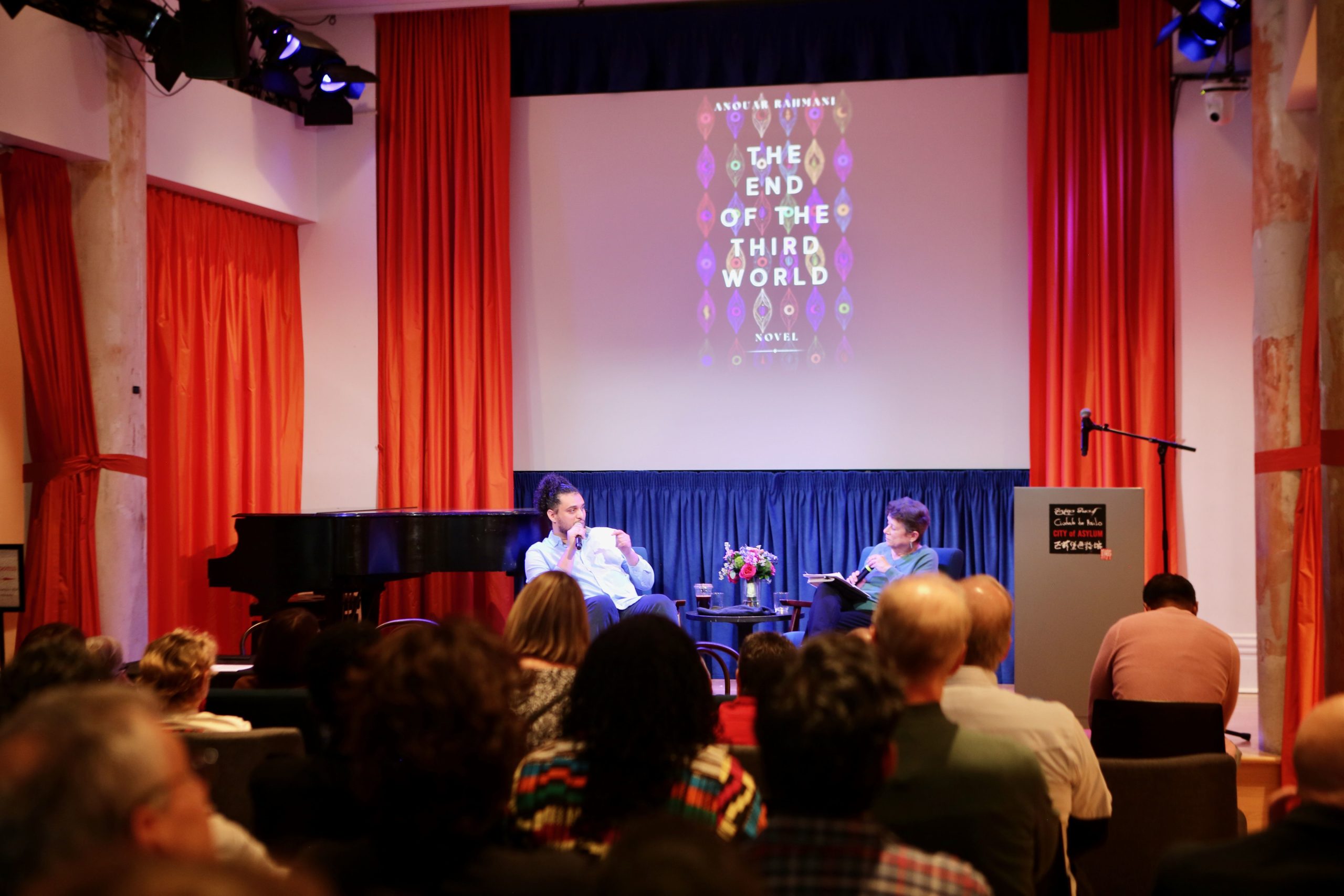
    Anouar Rahmani (left) and Kenya C. Dworkin y Méndez, from Carnegie Mellon University, in a public conversation and preview of Rahmani’s novel, “The End of the Third World,” at a City of Asylum Pittsburgh event in 2025.Courtesy of Anouar Rahmani

    We do not matter much as immigrants. U.S. Immigration and Customs Enforcement hunts immigrants down, and politicians direct hateful rhetoric against us. We are labeled with the ugliest descriptions in the media. I am a queer immigrant from Algeria. I have become almost everything some politicians in this country hate.

    After the Gaza War, many Arab and Muslim scholars and students spoke with me about their fears. When students were arrested during pro-Palestinian protests, many of us became afraid in a country that had promised us we would not need to be afraid again.

    I am afraid. Do I have the right to say this? Or must I live within a diplomatic discourse that allows only gratitude to be expressed after a rescue?

    I need to write about the difficult side of rescue, the “after the rescue” nobody speaks about.

    This photo shows House Poem, a home painted by Huang Xiang, the first exiled writer in the City of Asylum Pittsburgh residency program, in December 2020. City of Asylum Pittsburgh is a nonprofit organization that is part of an international network of support to writers and artists threatened by a lack of freedom of expression in their home countries./ AP

    My story is perhaps personal, but it is bigger than me. It is about exiles brought into this country with hope — who later discover how fragile their survival is. While we are often presented as examples of success, many exiles live in psychological, economic, and legal fragility and under indescribable pressure.

    The danger for an exiled writer, scholar, or artist does not end simply because a fellowship ends. I do not doubt the sincerity of the people and the organization that brought me to America and sheltered me. I am not trying to blame my failures on it or on others. But I want us to reconsider the rescue model on which it is built and to work toward sustainable mechanisms of support.

    Perhaps the end of a fellowship should be announced with the same energy as its beginning. When an exiled writer or artist arrives, organizations often use newsletters, social media, institutional networks, and public events to introduce the new fellow to a city. The arrival becomes news. But the departure, and the professional uncertainty that may accompany it, can happen almost silently. Why not use the same networks to announce that a fellowship is ending and that a writer, scholar, or artist is entering the job market? Visibility should not disappear precisely when it may be most vital to survival.

    Snow welcomed the author when he first arrived in Pittsburgh as a City of Asylum and International Cities of Refuge Network fellow in January 2022.Courtesy of Anouar Rahmani

    Host organizations can make introductions, advocate, and help open doors that are often inaccessible to a newcomer navigating a foreign labor market. Many exiles have advanced degrees, years of professional experience, and strong résumés. What they lack is access: knowledge of the hidden mechanisms of the local job market, professional references, institutional introductions, and networks capable of converting experience into employment.

    Most importantly, the path toward employment after a fellowship should be treated as part of the fellowship. This work should begin even before the fellow arrives. What credentials may need recognition or supplementation in the host country’s labor market? What legal barriers to employment might exist? These questions should be asked from the beginning, revisited throughout the residency, and followed beyond its formal end.

    I want to be clear about what I am saying. City of Asylum Pittsburgh helped me in many ways. I am not dismissing that assistance. The question is not whether individual people tried to help me. The question is whether the fellowship model itself is adequately designed for what happens after the fellowship ends.

    What matters in the idea of rescue is not the moment of rescue itself, but the possibility of survival afterward. We do not want to remain symbols of rescue; we want to survive.

    All of us want to be beings breathing under the sky — but not in fear that it is about to fall on our heads.

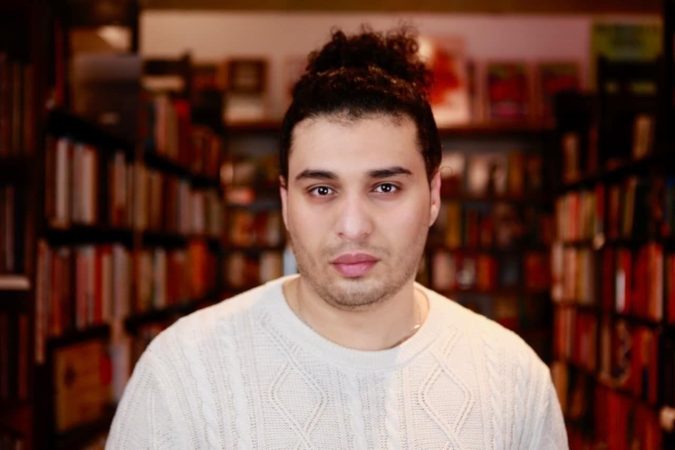
    Anouar Rahmani is an Algerian novelist, writer, journalist, and internationally recognized defender of freedom of expression. Rahmani’s literary and public trajectory has positioned him as one of the most visible contemporary Algerian voices confronting censorship, religious and moral authoritarianism, and the criminalization of imagination.