In the last 16 months,Main Line Health has gone from employing no gastroenterologists to nine, with two or three more expected to start this summer.
The hiring is part of a push by the nonprofit health system to reduce wait times for patients.
“We are down to three weeks” from months of waiting for a GI appointment, Main Line CEO Ed Jimenez said in a June interview. The organization has also hired six GI physician assistants and nurse practitioners to speed up care.
A similar move in urology is planned as the health system in Philadelphia’s western suburbs partially unwinds itstraditional heavy reliance on outside physicians for specialty care, seeking to regain momentum after financial losses during the COVID era.
In another shift, Main Line is replacing contracted Jefferson Health trauma surgeons with its own hires. Main Line is ending its contract with Jefferson at the end of this year.
Overall, Main Line has hired 100 physicians since Jimenez became CEO in June 2025. About a third replace people who retired, but “two-thirds are brand new, accretive, so we’ve been very successful,” he said.
Some of the hiring is related tothe needs of patients coming to Main Line after last year’s bankruptcy collapse of Crozer Health. That includes eight OB-GYNs and one advanced practice provider hired from Crozer.
Starting a urology department
Christopher Hartman joined Main Line from Northwell Health on Long Island in January as medical director of urology. One of his jobs is to build the employed physician group. How big it gets will depend on its success in drawing patients.
By targeting GI and urology, Main Line is putting itself into competition with private practices — U.S. Digestive Health and MidLantic Urology — it has had close ties with for years.
MidLantic’s market president, Michael Hagg, is Main Line’s system chief for urology. Main Line said he oversees urologists who are not Main Line employees.
“We continue to work and serve the communities of Main Line Health as we have for the past several decades as urologists, collaborators, and leaders across all four Main Line Health campuses, working with past and present CEOs and hospital presidents,” Hagg said in an email.
Both MidLantic and U.S. Digestive Health grew substantially with the help of private-equity backing. U.S. Digestive was sold last year to a subsidiary of UnitedHealth Group, SCA Health, which declined to comment on Main Line’s move into gastroenterology.
Bringing trauma surgery in house
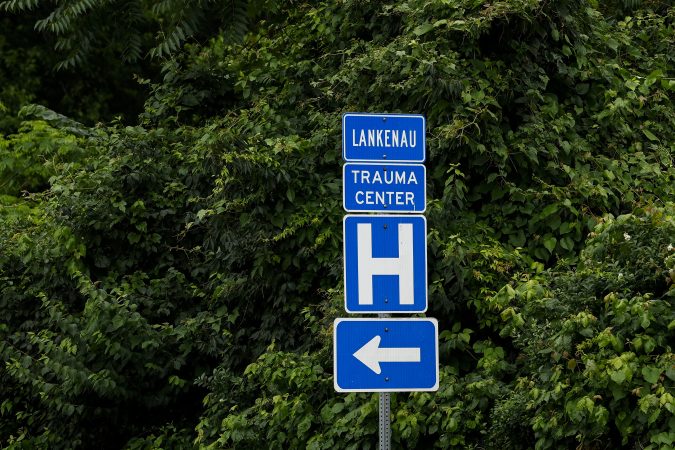
Main Line plans to hire at least a dozen trauma/critical care surgeons to replace the Jefferson Health physicians it has been relying on for those services. Main Line’s emergency departments at Lankenau Medical Center and Paoli Hospital are Level II trauma centers.
“We appreciate the excellent care provided by these trauma surgeons. However, at this point, we believe the time is right to bring the program in house so we can continue to grow and enhance it,” Main Line said in an email.
Main Line declined to say how many surgeons it had already hired. It can’t hire the Jefferson surgeons for contractual reasons, it said.
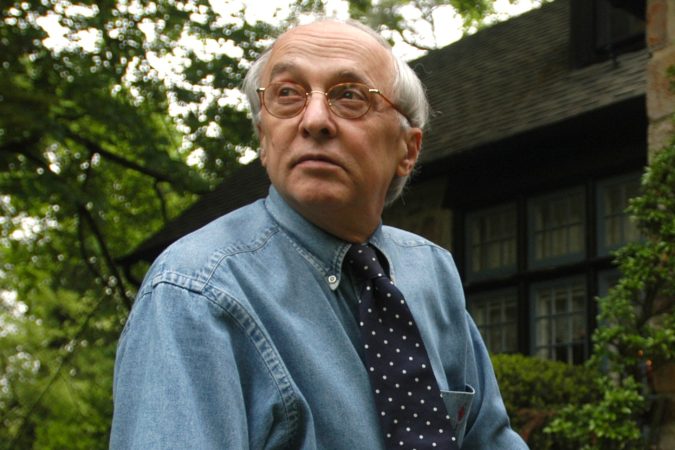
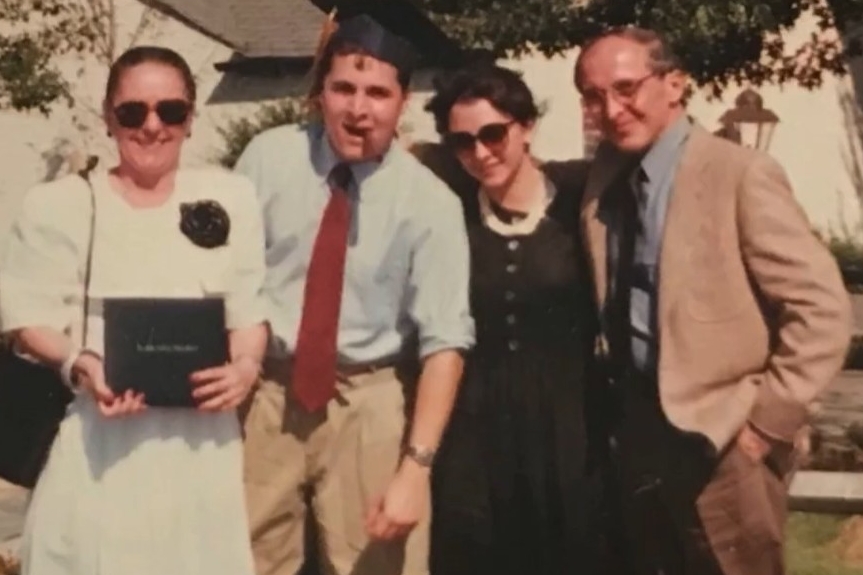
Emil DeJohn, 88, of Ambler, celebrated clothing designer, longtime college department chair and professor of fashion, lecturer, volunteer, and mentor to generations of designers, tailors, dressers, models, and students, died Wednesday, June 24, of a heart attack at his home.
Born in Philadelphia, Professor DeJohn worked for 37 years with Bill Blass and other notable clothing designers on Seventh Avenue in New York, and for 21 years as chair of the fashion department at Moore College of Art and Design, director of fashion career development at Drexel University, and professor of fashion at the now-closed Art Institute of Philadelphia.
He designed clothing of all kinds for men, women, and children for Jones New York, OshKosh B’Gosh, and other international labels from 1960 to 1997. He established his own label, Alex DeJohn by Emil, in the 1980s, and his creations appeared on the covers of Vogue, Harper’s Bazaar, and other magazines.
Several of his gowns were offered to singer Barbra Streisand in the 1960s, and he received design compliments from, among others, film star Elizabeth Taylor and Andre Leon Talley, former editor-at-large at Vogue. In the 1980s, he was chosen by then-first lady Nancy Reagan to design a colorful clothing collection promoting her “Just Say No” antidrug campaign.
In New York, Professor DeJohn showed designs at Bergdorf Goodman, Saks Fifth Avenue, Neiman Marcus, and Macy’s. In Philadelphia, he showed at Bonwit Teller and other top shops.
He also showed in London, Paris, Milan, Hong Kong, and elsewhere around the world. He lectured about fashion at other universities, represented the industry at high school career fairs, and mentored many young designers.
At fashion shows, they always gave him a front-row seat. “It’s an incredible profession,” he told The Inquirer in 2001. “Lots of ups and just as many downs. I wouldn’t trade one day.”
In 1997, looking to engage less with consumers and more with emerging designers, Professor DeJohn left the workshops and showrooms in New York for classrooms in Philadelphia. He spent six years as chair of the fashion design department at Moore, several years as director of fashion career development at Drexel, and finally retired in 2018 as a professor of fashion at the Art Institute.
At Moore, Professor DeJohn recruited Bob Mackie, Betsey Johnson, and other renowned designers to meet his students and provide internships and jobs. At Drexel, he oversaw the Crystal Star Award for design program and taught a class called Aspects of Fashion and Merchandising.
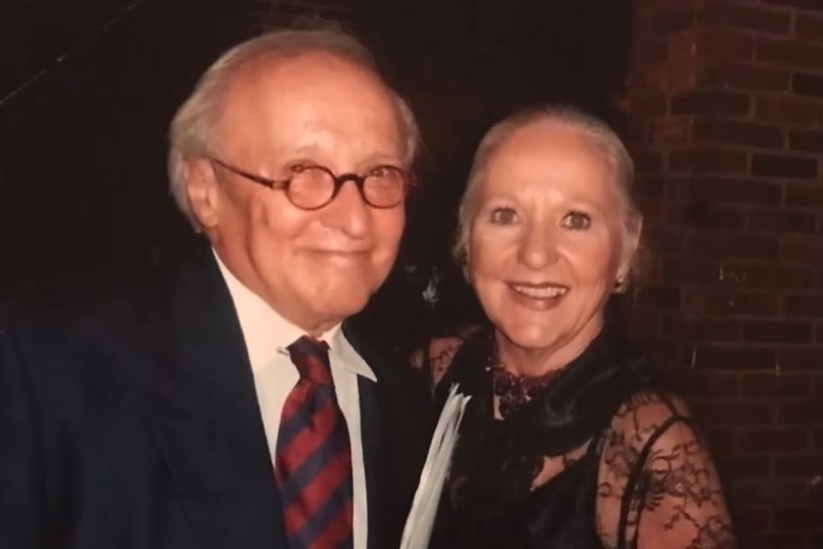
Professor DeJohn (left) attended many galas as director of the Crystal Award for design at Drexel. Emil DeJohn
He hosted a fashion club at the Art Institute and was named the school’s 2017 Teacher of the Year. “He was always happy to answer our questions and tell us about the industry,” a former student said in a tribute. Another said: “He inspired all of us to dream big.”
Professor DeJohn won the city’s Phashion Phest Philadelphia Award for design in 2001 and told The Inquirer: “Teaching the students has been a gift to me. I never envisioned anything I could enjoy more than designing. But this has become an amazing part of my life. I actually love coming to work.”
He earned other awards for design and his volunteer work at the Rowan House, the Ronald McDonald House, and other nonprofits. “He stood as a beacon of hope,” said his granddaughter Alexandra, “always making everyone feel like he believed in them, always bringing out what made them special.”
His granddaughter Isabella said: “His legacy continues to inspire me every day.”
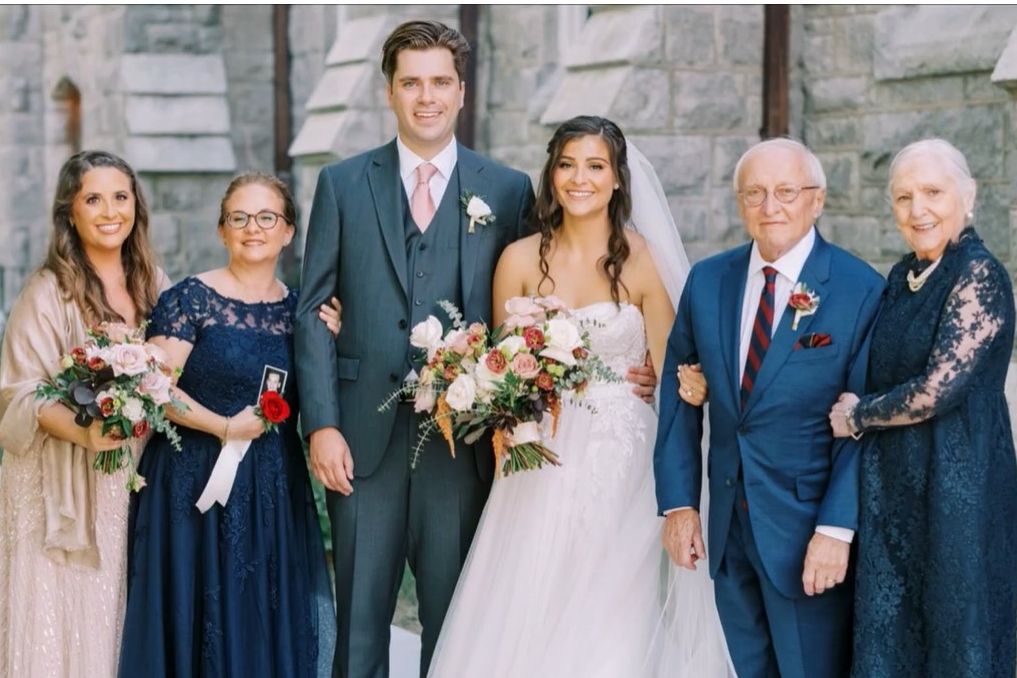
Professor DeJohn met Bette Anne DeChiaro at a dance at the Shore when he was 17, and they married in 1963. Courtesy of the family
Emil Joseph DeJohn was born Dec. 20, 1937, in his mother’s bedroom in South Philadelphia. The youngest of three children, he discovered art in grade school, took art classes at Fleisher Art Memorial, and graduated from John Bartram High School.
He earned a bachelor’s degree in fine arts at the old Pennsylvania Museum and School of Industrial Art in 1959. He won the school’s design citation as a senior and worked at first as an illustrator for the Bulletin’s fashion pages.
He met Bette Anne DeChiaro at a dance at the Shore when he was 17, and they married in 1963. They had a daughter, Leisa, and a son, Christian, and lived in Center City, Wyncote, and Ambler.
Professor DeJohn liked antiques, flowers, and anything blue and white. He supported the old Carmelites monastery in Philadelphia and belonged to St. Luke the Evangelist Church in Glenside.
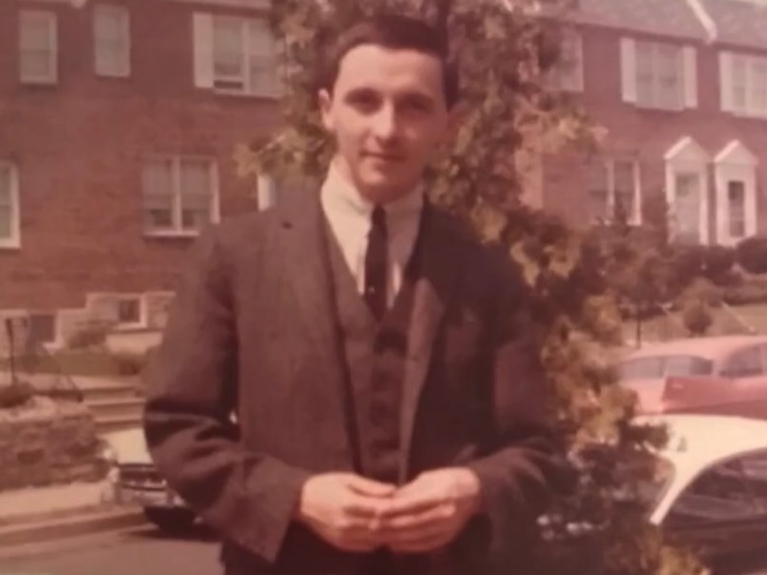
Professor DeJohn first became interested in art and fashion in grade school. Courtesy of the family
He made friends on his daily two-hour train rides to New York and said he never considered leaving Wyncote. “I loved leaving all that and coming home to cut the grass,” he told The Inquirer in 2001. “My neighbors didn’t even know what I did for a living.”
He designed his daughter’s wedding dress, took his granddaughters to mesmerizing fashion events, and made memorable trips to Ocean City, N.J., Longwood Gardens, New Hope, New Mexico, and Florida. He especially enjoyed decorating his home and Christmas tree with ornaments and live flowers.
“He made us all feel seen and special,” his daughter said. “He did that for everyone he met.”
In addition to his wife and children, Professor DeJohn is survived by four grandchildren, one great-granddaughter, and other relatives. A sister, a brother, and a son-in-law died earlier.
Professor DeJohn (right) said he would never leave Wyncote for New York. Courtesy of the family
Services were held earlier.
Donations in his name may be made to the Carmel of Jesus Crucified Monastery, Attn: Mother Pia, Box 308, Muenster, Texas 76252.
Professor DeJohn (second from right) enjoyed time with his family.Courtesy of the family
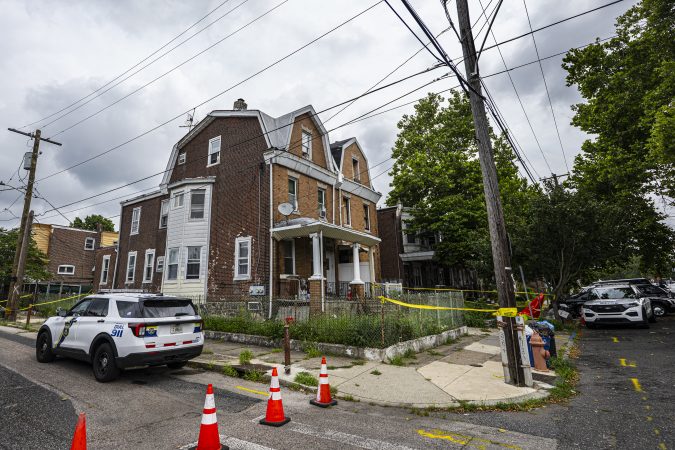
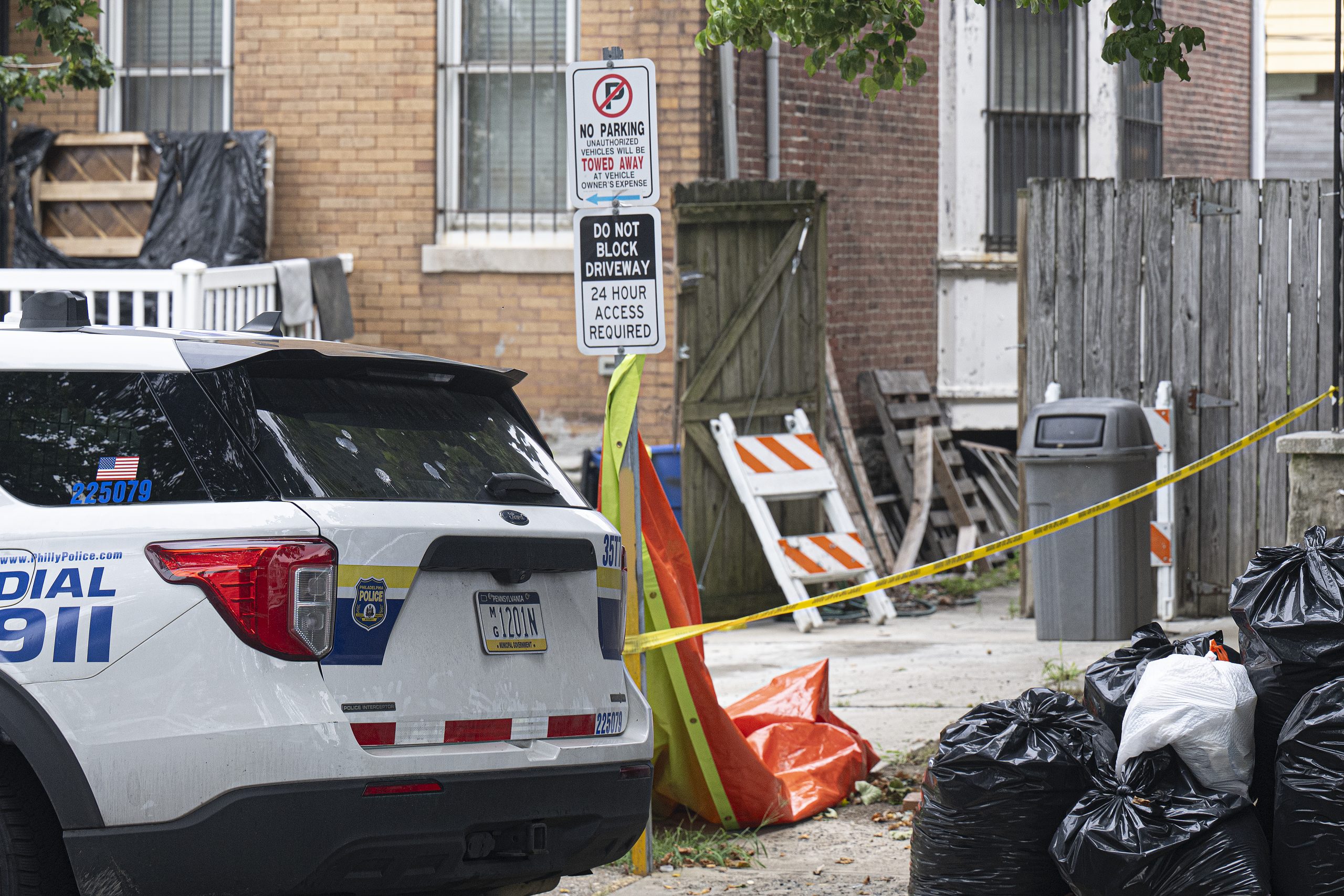
The Philadelphia Police Department and the FBI are to begin excavating part of the Olney house that has been at the center of a monthlong investigation into at least two missing persons, law enforcement officials said Monday.
Sgt. Eric Gripp, a police department spokesperson, confirmed that the Philadelphia Water Department would assist federal and local officials by unearthing a pipe under the property on the 400 block of West Chew Avenue as part of the widening probe.
“The general scope of the dig is to excavate and remove a pipe that will be subsequently examined by FBI and PPD forensics for any evidence that may be present,” said Gripp, who declined to provide a timetable for the work.
The excavation is the latest development in a case that has generated widespread interest since last month, when authorities connected the crumbling twin home to the disappearance of at least two women over the last decade.
Federal prosecutors have charged the owner of the property, Eugene Albert Horsch, 44, with carrying illegal firearms and fake federal law enforcement credentials.
Police apprehended Horsch on June 19 near Independence Mall with drugs, guns, and various other weapons, as well as a phony U.S. Drug Enforcement Administration badge. A woman who was with him at the time was carrying a fake ID in the name of Blair Tonzelli, a woman struggling with drug addiction who was last seen in 2022 at Horsch’s home.
The monthlong search of Horsch’s property has turned up an array of evidence, authorities say: hidden compartments, vats filled with chemicals, a 55-gallon drum with connections to water lines in the basement, and what police sources described as “a significant amount” of blood.
Forensic testing of the evidence found in the home remains ongoing, and police have yet to confirm whether the blood is human. Horsch has not been charged with any violent crimes in the current case.
Investigators also found Tonzelli’s bank card, other fake IDs in her name, and an unsigned, handwritten letter that appeared to describe hurting people and referenced the serial killer Ted Bundy, according to the affidavit of probable cause to search the home that was obtained by The Inquirer.
The probe grew more complicated when investigators learned that Amy McHale, the ex-wife of Horsch’s late father, Raymond Horsch, was also last seen at the Olney property in 2016, according to her family.
And adding to complexity of the circumstances is Raymond Horsch’s unusual career as an erotic filmmaker and writer, whose work fixated on sadomasochist themes, serial killers, and women struggling with drug addiction. He died in August 2025.
Police maintain a presence outside the home of Eugene Albert Horsch on West Chew Avenue in the Olney section of Philadelphia Tuesday, July 21, 2026.Jose F. Moreno / Staff Photographer
It remains unclear if authorities have linked any of the evidence in the house to foul play involving the missing women.
Jerome Brown, a lawyer for the Horsch family, has denied any connection to McHale’s disappearance, saying that she had struggled with addiction and mental health issues. Eugene Horsch was incarcerated at the time of her 2016 disappearance, according to state prison officials.
Eugene Horsch has a lengthy criminal background involving multiple drug convictions, including one linked to the discovery of a marijuana-growing operation after a house fire last year. After the latest search, investigators recovered numerous chemicals also suspected of being used in drug production.
The department did not provide an estimated cost for the dig.
Questions about the investigation have swelled among neighbors in Olney, as the probe continues in its second month. Two police cruisers have been stationed around the property 24-7 to prevent anyone from tampering with the active crime scene.
At a crowded community meeting in the basement of an Olney billiards hall this month, 35th District Police Capt. Walter Burks tried to ease anxieties, refuting erroneous reports on social media that falsely claimed police had discovered multiple dead bodies in the property.
Burks emphasized the house “does not pose a threat to the community” while acknowledging that he could not answer specific questions.
“I know you all see the cars outside,” he said. “You know it’s something serious. It’s an active crime scene we have to protect.”
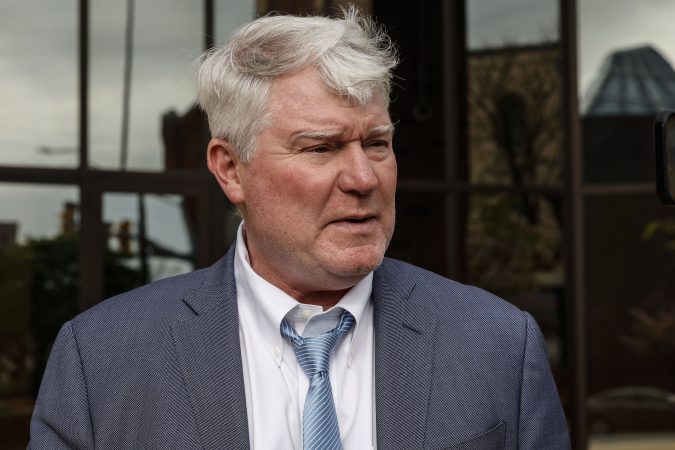
Convicted former Philadelphia labor leader John J. Dougherty has taken a variety of steps to try to cut his six-year prison term short, including by taking the witness stand this spring to tell a federal judge about the unique health challenges faced by his wife.
But one other avenue he pursued last year — an appeal to the White House for mercy — apparently hit a dead end.
President Donald Trump earlier this month denied Dougherty’s request for a commutation, according to the Office of the Pardon Attorney’s website, meaning Trump — at least for now — will not use his broad powers of clemency to clear the way for Dougherty’s early release.
Dougherty — who, nicknamed Johnny Doc, was once a singular power broker in the city’s Democratic Party — was one of about 5,600 people whose commutation applications were denied on July 10, according to the pardon attorney’s site. A commutation keeps a defendant’s conviction intact but ends or reduces their sentence.
Trump, a Republican, also denied about 300 applications for a pardon, a broader form of relief that is added to the record of the case and reverses any restrictions stemming from a conviction, such as limitations on voting or seeking public office. The New York Times first reported on the wave of denials this week.
Presidents have broad authority to issue pardons and commutations in federal cases, and Trump has shown a willingness to grant them to political allies during his second term in office.
One of his first actions after being sworn in again last year was to issue pardons to nearly every person charged with participating in the riot at the U.S. Capitol on Jan. 6, 2021. Trump has also bestowed clemency on political figures convicted of corruption and those he maintains were “persecuted” by the Justice Department under former President Joe Biden.
Dougherty’s attorney, George Bochetto, said Tuesday that he was not involved in the effort to petition for a commutation and did not know about it. It was not immediately clear if Dougherty submitted an application himself or if he had another associate help with its preparation.
The pardon attorney’s website made basic information about Dougherty’s application available through its case search system, showing Dougherty’s name and his Bureau of Prisons register number and saying his application was filed last year.
Bochetto has been overseeing a different relief effort: Dougherty’s attempt to have a judge grant him compassionate release.
In court documents and in testimony before U.S. District Judge Jeffrey L. Schmehl, Dougherty has been saying for months that his wife, Cecilia — who has long suffered from a debilitating brain injury — has seen her condition worsen while he has been imprisoned. Dougherty has asked to serve the rest of his sentence on house arrest in order to oversee her care, saying if he is not allowed to do so, his wife will likely die.
Schmehl denied that request earlier this year, but has been reconsidering after Bochetto appealed.
If the summer of 2026 came with an Official Cliché™, it would have to be “glass half empty, half full.” Things could be better. Things could be worse. It’s people — many of whom are quite wonderful — doing our best in a world run by institutions that are rotten to the core. You’ll find no greater example than the World Cup that wrapped up Sunday with a well-deserved trophy for Spain. Will we remember the gross commercialism and rank corruption perpetuated by FIFA and its political twin, Donald Trump? Or the many remarkable moments on the pitch, and the joyous sense of internationalism in the stands and beyond? How do we get to a place where elite greed is crushed while mere mortals like us thrive?
U.S politics becomes a farcical unreality show. How worried should we be?
Video monitors in the White House briefing room in Washington carry a live feed of President Donald Trump as he addresses the nation on July, 16.DOUG MILLS
If you live inor near a big city and use mass transit to get around, you know this experience. You hop on a subway or a bus, focused only on getting from point A to point B, but there’s a man just a few feet away who demands your attention. He is talking loudly, repeating the same gibberish phrase over and over, seemingly arguing with someone until you realize he’s not even holding a phone. It’s just him. You feel a mix of emotions — sorry for the guy because clearly he’s going through something, yet mainly praying he will just stop yelling and give you some peace.
Trump commandeered 26 minutes of invaluable TV prime time (CBS and MS Now ran all or most of it; NBC, ABC, and even CNN declined) for a speech that arguably may be remembered as one of the most consequential ever delivered from the White House — but only for the Big Lie constructed on a foundation of half-truths.
Despite days of hype, which was sensibly ignored by most folks who know better after a decade of Trump’s political dishonesty, there was zero new evidence that China or any other foreign power consequentially interfered in the 2020 presidential election Trump lost fairly and squarely to Joe Biden. POTUS instead offered gross exaggerations around old reports that would have made the late red-baiter Joe McCarthy blush, with bizarre allegations about the CIA and other intel agencies while he was in charge of them in 2020.
There was a huge problem, however, with the president’s scare tactics: No one was scared. It’s not just that many among the 61% or so of Americans who disapprove of Trump’s job performance had expected the Thursday night monologue would include even worse lies or fabrications, or stronger threats — instead of a leader who was not just incoherent but weak.
But even the Republican politicians and right-wing opinion makers who were a main target of the White House address looked the other way in the immediate aftermath. We were all the mortified passengers on the same subway car, hoping the noise would just end.
Fox News host Sean Hannity, Trump’s longtime friend, was on the air when the speech ended and fairly quickly changed the topic, so eager to avoid the stench. Even worse, the president’s favorite show, Fox & Friends, which aired early the next morning, did not mention the address once in the three hours it was on.
I’ve lived through the 1980 men’s hockey gold medal and Watergate, the Iraq War and the legalization of gay marriage — so I know how it feels to be proud to be an American, and to be furious with our government. But I’ve never felt the sense of utter embarrassment that was the national mood at 9:30 p.m. last Thursday. The president gave a prime-time address that was complete fiction. Who will ever again take the United States seriously on a world stage?
But there was also a dangerous flip side to America’s week of magical thinking. In delivering a speech about election integrity problems that don’t exist, there was also a pack of wild dogs that did not bark Thursday night. For one thing, Trump barely mentioned his unilateral decision to resume and escalate the war in Iran, even as three more U.S. troops would be dead by week’s end, and everyday Americans once again felt the pain of gas prices over $4 a gallon.
But Trump and his GOP allies were determined to ignore, deflect, or flat-out lie about the crisis that was literally right in their faces: the smoke from northern wildfires, mostly in rural, remote Canada, that shrouded huge swaths of the Midwest and Northeast in thick, wood-smelling smoke and led to orders for people to remain indoors.
Wildfires may be as old as the trees, but there’s only one reason why smoke from Canada has caused two major health emergencies in the United States since 2023, and that reason is climate change. Consistently warmer summers — even more extreme in northern Canada than elsewhere — have led to drought conditions that fuel these blazes. “The best way to solve it is to just stop burning fossil fuels,“ Jonathan Overpeck, a climate scientist and dean at the University of Michigan, told the CBC.
But suffocating smoke from the northlands is a jolly big problem, which nobody can deny. And so a president who’s been utterly skewered by South Park decided to rap, “Blame Canada.” The world’s climate-denier-in-chief was shocked, shocked,that “the United States is being unnecessarily invaded by filthy, polluted, and unhealthy air, the quality of which is dangerous, and totally unacceptable!”
Filmmaker Jim Pattiz called this — wait for it — America’s “latest global embarrassment.” He wrote, “The whole planet is watching an American president shake his fist at the sky and order a sovereign country to get its clouds under control.”
There’s two ways to look at all of this. For now, Trump’s lame efforts to frame the looming midterm election as rigged are coming off as sad and pathetic, a lot more Charlie Chaplin in The Great Dictator than an actual führer. He lacks both evidence and judges who will rule in his favor, while his political base is shrinking every day.
For now, Trump will not be ignored, like Glenn Close flipping the lamp switch on and off in Fatal Attraction. Neither the mortification of Thursday’s speech nor the death of three soldiers in his Iran war of choice could keep the president from bullying his way onto the main stage at Sunday’s World Cup final in New Jersey, ignoring the boos to shoehorn his way into Spain’s victory photos as if he had assisted on the winning goal.
Can a world superpower die from embarrassment? We are finding out in real time.
Yo, do this!
Blame — or thank — the Major League Baseball schedulers who seem determined to stop the Phillies from playing on Friday nights, but the baseball blackout forced me to go on Netflix and realize it has added an awesome documentary that came out in 2019 but is needed now more than ever: Raise Hell: The Life and Times of Molly Ivins. The film shows how the outspoken and relentlessly funny Texas journalist rebelled as a student in the 1960s against the hypocrisies of her privileged upbringing and never looked back until she was taken from us, way too young, in 2007. Every up-and-coming young journalist needs to watch this and discover a role model for life.
After that commercial that ran incessantly during the World Cup, the lyrical phrase “What the world needs now …” has been stuck in my head for weeks. Well, what the world needs now, with rising authoritarianism and ruthless capitalism, isn’t only love, sweet love, but also courage. What remarkable timing for Julia Angwin and Ami Fields-Meyer’s new book, On Courage: How to Be a Dissident in an Age of Fear. The authors tell the story of more than 100 dissidents all over the globe, from Hong Kong to Venezuela, to learn how everyday folks can find the gumption to resist oppression. It’s a must-read for Donald Trump’s America, and it is next on my list.
Ask me anything
Question: Why is [Donald Trump] being allowed to randomly declare tariffs on Canada again if the Supreme Court said that it was illegal? Do we have to have the same argument over and over again? — Stephanie King (@stephstephking.bsky.social) via Bluesky
Answer: Apparently we do. Section 338 of the 1930 Trade Act — known, notoriously, to history geeks as the Smoot-Hawley Act that only exacerbated the Great Depression — gives the president fairly broad powers to impose retaliatory tariffs if his administration concludes that a foreign country is discriminating against U.S. products. Thanks to the international trade war that Trump himself initiated, the president is now claiming Canada is punishing American autos, alcohol, and dairy products. It feels like the proposed 50% levy on many Canadian products is less about sound economics and more about a) answering GOP calls to blame Canada for the wildfires that are actually the result of climate change, and b) trying to change the subject from a disastrous week. They don’t take effect for 30 days, plenty of time for the next TACO (Trump Always Chickens Out) Tuesday.
What you’re saying about …
Last week’s question about how to respond to Trump’s Big Lie about election fraud that we all knew was coming in Thursday’s speech was probably, in hindsight, too wonky to generate much response. Those who did write agreed that a heavy burden falls on the news media to do everything to debunk — or, as longtime reader Rosalind Holtzman put it, “pre-bunk” — the president’s many falsehoods. She added: “Americans have the attention span of mayflies and need review and repetition. Revisit the events of the 2020 elections and how Trump’s claims all failed in court.” I couldn’t agree more.
📮 This week’s question: Optimists are already starting to ponder a world where Donald Trump is no longer president. But where would a Democratic successor even start to undo the damage caused by the many destructive policies of the Trump regime? What should be the Day One measures to start rebuilding U.S. democracy? Please email me your answer and put the exact phrase “Dems Day One agenda” in the subject line.
Backstory on Trump’s campaign cash and ‘explosive diarrhea’
Federal health officials have linked a large cyclosporiasis outbreak to shredded lettuce served at Taco Bell. Is lettuce from grocery stores and restaurants OK to eat?NICOLE BENGIVENO
Before last week, most Americans had never heard of Taylor Farms, a California-based produce firm, and, for a company that supplies lettuce to large U.S. restaurant chains, anonymity was arguably good for business. There are no two words in the English language that can raise awareness of a brand — and destroy it — faster than “explosive diarrhea.” That’s the most alarming symptom from a foodborne illness linked to the parasite cyclospora that’s laid low thousands of Americans in multiple states. Since the early days of the outbreak, suspicion has focused on Taylor Farms after Taco Bell stores stopped using the iceberg lettuce it procures from the company. But the Food and Drug Administration (FDA) probe into the cause has so far been a mess — much of that the result of steep cuts to food safety by the Trump regime. But there are also ethical concerns.
Follow the money.
Regular folks might not have heard of Taylor Farms, but the world’s largest salad processor has made itself known in the corridors of the Trump regime since March 2025. That was right around the time the FDA surprised industry observers by postponing its Food Traceability Rule — drafted under the Biden administration to better track and remove contaminated products — for 30 months. Just six days after the industry-friendly move, Trump’s main political action committee, MAGA Inc., received a whopping $1 million donation from Taylor Farms.
What’s more, money buys access in Trump World. The Daily Beast has reported that last Thursday — despite the company’s nationwide lettuce recall — Taylor Farms executives met with White House and FDA officials and complained about the way the government has been investigating the outbreak. That meeting was followed by a bizarre weekend in which the FDA initially announced that testing of Taylor Farms produce from central Mexico had tested positive for cyclospora, then told the company one day later the result had been a “false positive.” The chaos means ongoing confusion about why so many Americans are getting sick, and whether it’s safe to eat lettuce. And that raises troubling questions about whether political cash has compromised food safety.
This was hardly the first time donations to Trump’s massive empire of political wealth — money raised for a man who is constitutionally barred from running for the presidency again — have overlapped with key policy decisions. For example, the New York Times reported this spring that tobacco company Reynolds American donated $5 million to MAGA Inc. just one week before an industry-friendly FDA ruling on e-cigarettes.
MAGA Inc. — just one of several ways billionaires and corporations can funnel money to Trump World, along with projects like his presidential library — had more than $400 million in the bank at the end of June, an astronomical sum. Its donors have included not only a who’s who of American industry, but also crypto dudes — whose industry has been largely deregulated under Trump — and wealthy pardon seekers. Some of those dollars will go to GOP candidates in November’s midterms, but what happens to most of this cash is a mystery. Trump may be leaving office on Jan. 20, 2029, but we’ll still be following the money for years to come.
What I wrote on this date in 2019
Trump’s second term has been so dangerous for democracy that we tend to forget the horrors of his first four years in the White House. On this date seven years ago, I joined a lot of other folks in shock and dismay over the raw racism of the 45th president’s campaign-style rally in South Carolina, where a diatribe against Rep. Ilhan Omar, a Somali refugee who became a U.S. citizen and represents a Minnesota district, sparked a frenzied chant: “Send her back!” I wrote about the tween girl in the crowd directly behind Trump, who looked around and joined the adults. “In front of national TV cameras, with the 45th president of the United States as maestro, we are witnessing the exact moment that the raging rabble of a Donald Trump rally has taught a child how to hate.”
No columns from me this past week as I spent time with family up and down the Eastern Seaboard, but my Inquirer colleagues have been hard at work. It turns out that the Philadelphia metro area has been ground zero for the latest bizarre business scheme that’s hopelessly intertwined with the Trump regime: a pop-up scheme of at least 25 gas stations rebranded as Trump-aligned Freedom Fuel that — at least for a week or two — were selling gasoline at much lower prices than their nearby rivals. The Inquirer has been all over this weird local story with national implications, and with more questions than answers. Where does this cheap gas come from? Who’s really behind the Freedom Fuel stations? On Tuesday, The Inquirer’s Ximena Conde and Rob Tornoe started to unravel the somewhat dubious past (surprise, surprise) of some of the folks connected to the gas stations, and how suddenly prices at Freedom Fuel aren’t as cheap as they used to be. I suspect the final chapters of this saga are going to be a doozy. The only way to stay on top of local news and support the in-depth journalism we do here is to become an Inquirer subscriber. Join us. It’s a gas.
By submitting your written, visual, and/or audio contributions, you agree to The Inquirer’s Terms of Use, including the grant of rights in Section 10.
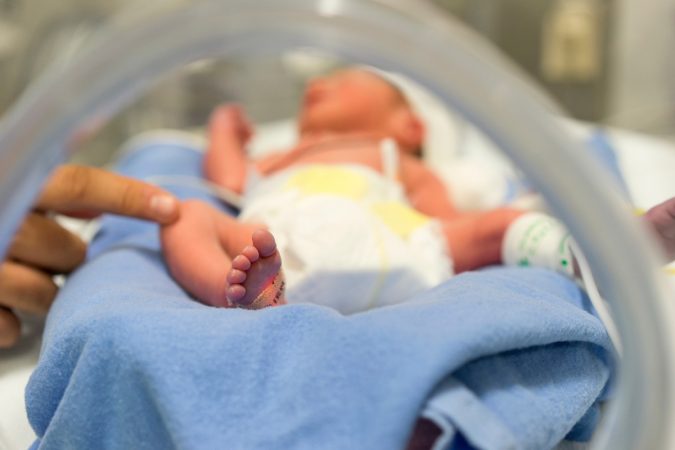
Discharge day in the neonatal intensive care unit, or NICU, should feel like a finish line. After weeks or months of monitors, alarms, oxygen, feeding tubes, blood tests, and waiting, a family can finally take their baby home.
As a neonatologist, I know how much work it takes to get that baby there. Their lungs have grown stronger. Their feeding has improved. Their medications have been adjusted and readjusted. The car seat test has been passed.
But every time we prepare to discharge a preterm infant, I find myself thinking about something that is not listed in the NICU discharge summary: What is the air like in the home and neighborhood where this child lives?
That question has animated my clinical and research life. Before I was a neonatologist, I worked in a toxicology lab studying fine particulate matter, or PM2.5. These are tiny particles produced by sources such as vehicle exhaust, power plants, and industrial emissions. They are small enough to be inhaled deep into the lungs and may enter the bloodstream. In the lab, we studied how early-life exposure to polluted air could affect the developing heart and lungs.
Years later, caring for preterm infants in Philadelphia, I am confronted by the same question. Not in a dish or an animal model, but in the lives of my patients — whose lungs are still developing when they leave the hospital — and their parents.
Preterm infants face double exposure
Before my patients are born, their pregnant parent is already breathing the air in the place they call home, whether that’s in Philadelphia, Delaware County, or beyond. When a pregnant parent breathes polluted air, it may increase the risk of preterm birth, making it more likely I’ll see that baby in the NICU.
But delivery does not end the exposure. The same air pollution may still be there when the infant comes home. The difference is that now, alongside their parent, a preterm infant with developing lungs is breathing it too.
That means some infants may face a double exposure: first before birth, then again after discharge.
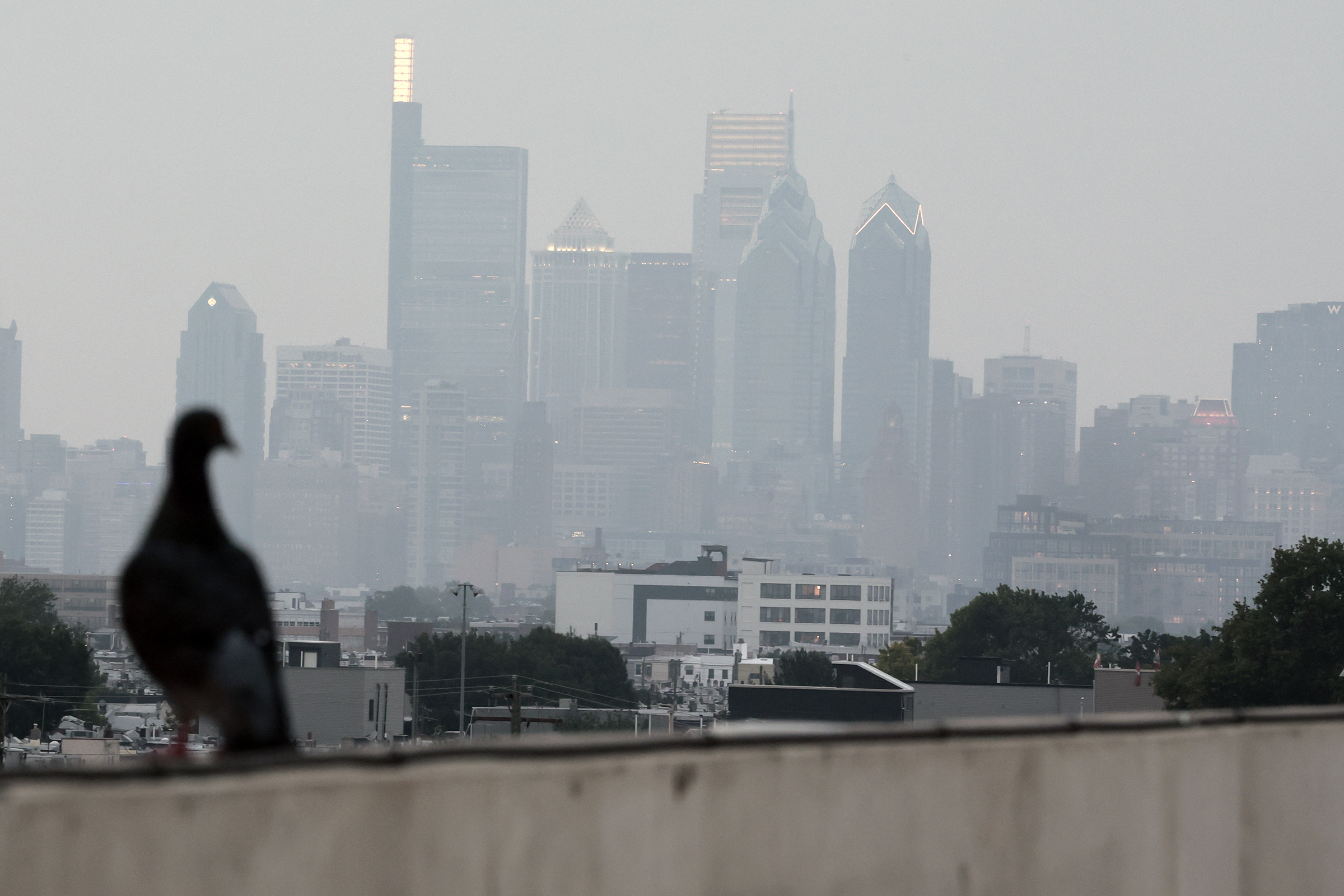
As seen from the Live! Casino parking garage, haze hangs over the Center City skyline on July 15. Smoke from the Canadian wildfires was creating unhealthy air quality.Elizabeth Robertson / Staff Photographer
My own research has focused on infants with bronchopulmonary dysplasia, or BPD. This is a chronic lung disease that affects many babies born very prematurely. These infants often spend weeks or months receiving respiratory support in the NICU. Even after they leave, their lungs remain vulnerable.
In one Philadelphia study of 378 preterm infants with BPD who were cared for in NICUs affiliated with the Children’s Hospital of Philadelphia, we used a state-of-the-art air pollution model to estimate PM2.5 exposure at each infant’s home address and examined the association of PM2.5 exposure with respiratory illness during the first year after discharge.
More recently, we followed this same cohort of children through early childhood. We found that higher PM2.5 exposure in the first year after discharge was associated with a higher risk of asthma by the age of 5, an age when many kids enter kindergarten. In other words, what a baby breathes in the months after going home may be associated with respiratory health years later.
The American Lung Association’s 2026 State of the Air report again shows that poor air quality remains a real problem in the Philadelphia region. Those rankings may sound like background noise. Another annual report. Another set of grades. But for my patients, air quality is meaningful. It is part of the discharge plan, whether we name it or not.
What families and policymakers can do
So what do we do? It is tempting to propose individual solutions. Families can use indoor air purifiers. They can avoid outdoor activity on bad-air days. They can keep windows closed during wildfire smoke events.
The Environmental Protection Agency strengthened the annual PM2.5 standard in 2024, lowering it from 12 to 9 micrograms per cubic meter. In practice, the standard establishes a nationwide, health-based benchmark for outdoor air quality and requires states to develop pollution-reduction plans for areas that fail to meet it. That change matters because a growingbody of evidencesuggests that breathing PM2.5can harm health even at levels once considered acceptable.
My patients are part of that evidence. Their lungs are telling us that small differences in PM2.5 exposure may matter and that exposure to PM2.5 levels once considered low may have substantial implications for health when infants breathe that air day after day over a long period of time.
There are also local interventions worth taking seriously. Cities can reduce traffic-related emissions near homes, schools, and childcare centers. They can electrify municipal vehicle fleets. They can enforce industrial pollution limits. They can invest in high-quality housing. They can also expand tree canopy and green space, which can help capture airborne pollutants and reduce urban heat.
When clinicians discharge a baby from the NICU, we are making a quiet bet that the world outside the hospital will help that child thrive. But decisions made far beyond the bedside shape the quality of the air all children breathe.
Tim Nelin is an instructor of pediatrics at the University of Pennsylvania’s Perelman School of Medicine.
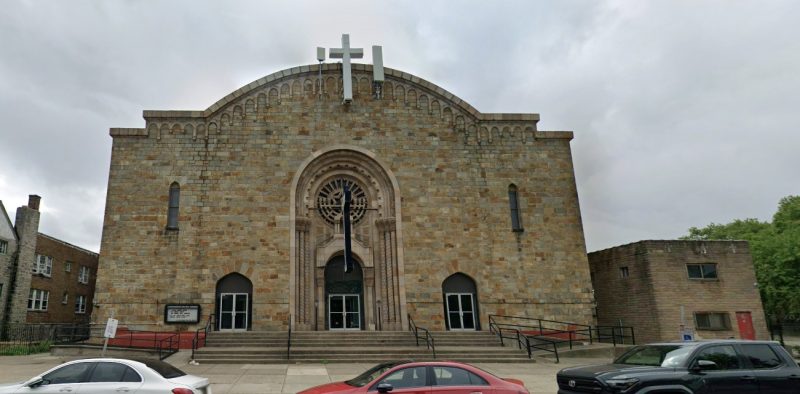
Strawberry Mansion’s Cornerstone Baptist Church is slated for redevelopment as an affordable apartment building with 44 units.
The sprawling church, located at 2117 N. 33rd St. on the edge of Fairmount Park, was sold earlier this year to Philadelphia-based Select Redevelopment for $1.9 million.
Most of the units will be available to those making 75% of area median income, or less than $45,000 a year for a one-person household, with some available for even less to people earning lower incomes.
There will be 29 one-bedroom apartments, 14 two-bedrooms, and one studio. The project is estimated to cost $10 million to develop, with construction estimated to be complete in April 2028.
Travis Seal, a principal with Select Redevelopment, says Strawberry Mansion’s historic building stock, walkability, and park access have long been underappreciated by the real estate industry.
“Obviously [Strawberry Mansion] had some economic disinvestment over the second half of the 20th century, but a lot of people are waking up to the sense that neighborhoods like this are not being made every day anymore,” said Seal.
Seal says the roughly 100-year-old building — originally a synagogue called B’nai Jeshurun — is actually in robust condition, better than many historic religious buildings.
“We’re really trying to work within the existing structure because structurally, it’s [in] pretty good [shape],” said Seal. “It has some pretty fundamentally good bones, as opposed to churches that might be of a slightly older vintage, from the late 19th century.”
The church is not historically protected by local preservation regulations — earlier proposals from other developers would have razed the building for new construction — and Select Redevelopment’s project will also not require any zoning approvals to move forward.
The company has held some neighborhood meetings to gather community feedback, although it was not required to do so.
The church’s closure “was a really big loss to the neighborhood in terms of just us utilizing that space,” said Tonnetta Graham, the executive director of Strawberry Mansion Community Development Corporation.
Graham says that at its height Cornerstone Baptist was a huge presence in the neighborhood.
The congregation allowed its property to be used for a lot of neighborhood needs, including hosting a boxing ring, Boy Scout troops, summer camps, a community kitchen, and for high school graduation ceremonies.
Graham said there are some neighborhood concerns about the project — some would like to see evenmore affordability — and that residents would like the project to include efforts to honor Cornerstone’s history.
A rendering of the developer’s plans for the former Cornerstone Baptist church.Studio Architect LLC
“We’re just happy that it’s not going to be demolished,” said Graham. “That’s the main thing. We won’t lose the actual edifice.”
Redevelopment backed by innovative affordability fund
Like many areas of North Philadelphia, Strawberry Mansion was hit hard by white flight and racist lending policies in the second half of the 20th century, which discouraged investment in the neighborhood and drove away residents.
In 1977, the federal government passed the Community Reinvestment Act (CRA), which compelled banks to make loans in neighborhoods that had experienced redlining and other discriminatory practices.
As part of TD Bank’s federal obligations to historically divested neighborhoods under the CRA, it has formed a $25 million partnership with CEI-Boulos Capital Management and together they are helping fund the redevelopment of Cornerstone Baptist Church.
The $25 million fund with CEI-Boulos is meant to allow TD Bank to invest in affordable projects without the long wait lists for competitive Low Income Housing Tax Credits (LIHTC). Many affordable projects suffer delays as they wait for that federal subsidy, and some are doomed if they don’t get a LIHTC award.
The CEI-Boulos partnership “helps us build a pipeline of CRA eligible deals outside of that pool,” said Scott Mularkey, CRA Investment Officer at TD Bank, which hopes to contribute to eight affordable projects in Philadelphia with the $25 million.
The TD Bank and CEI-Boulos fund will provide over a third of Cornerstone Baptist’s redevelopment costs.
They have previously backed a 49-unit project at 1348 S. 32nd St. in Grays Ferry and another 46-unit project at 2800 W. Diamond St., also in Strawberry Mansion.
Sam Spencer, CEO of CEI-Boulos, also argues that affordable rentalhousing is essential for Strawberry Mansion, where 57% of residents rent (compared to 45% of Philadelphia residents).
He also notes that 36% of residents in the census tract spend more than half their income on housing. He hopes the project will help people stay in their neighborhood.
“Strawberry Mansion has gentrification pressure,” said Spencer. “Our intent as a fund is to invest in projects that are going to serve current residents rather than drive current residents out.”
The burning sensation started near the top of Gregory Maassen’s left arm. It quickly spread to his upper back and chest, and within a month, his whole body was burning — from his ears to his feet.
Maassen, 51 at the time, spent most days in bed but struggled to sleep. He visited doctors who administered tests, including blood draws and an endoscopy, but none could pinpoint his medical condition. One doctor, Maassen said, thought the pain was due to mental illness.
He got sicker and sicker over a few months. He feared he was going to die.
More than a year after his symptoms began, Maassen was losing hope of ever identifying his medical condition when he found Ahmet Hoke, a neurologist in Baltimore.
After a quick look at Maassen’s symptoms, Hoke correctly diagnosed him. The recovery plan Hoke gave Maassen in the following months changed Maassen’s life and unexpectedly led him to a therapy that became his passion: cycling.
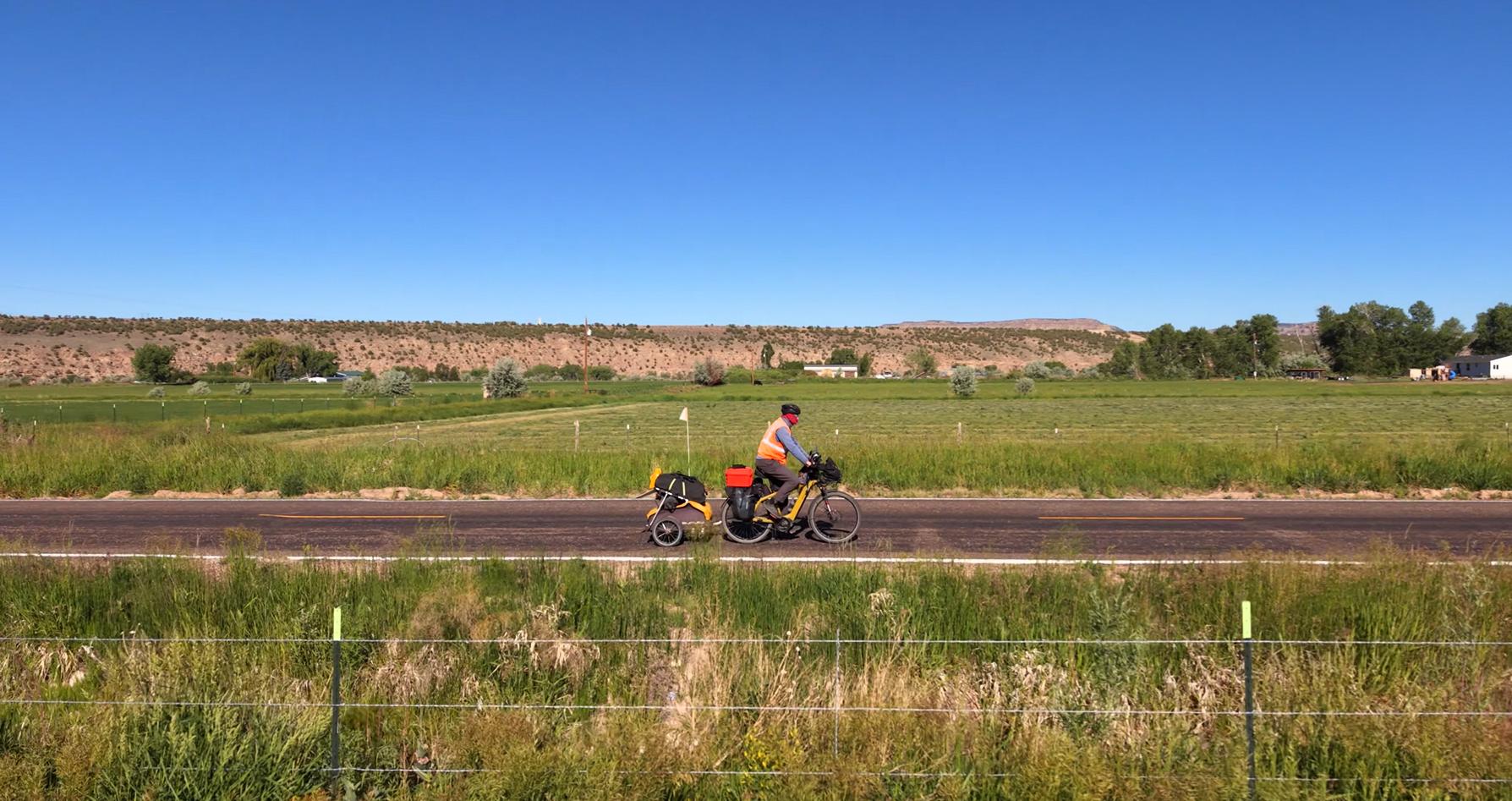
Gregory Maassen biking near Duchesne, Utah, in June.
After considering Maassen’s sudden and severe symptoms, Hoke diagnosed Maassen with small-fiber sensory neuropathy, a rare type of peripheral neuropathy that damages small nerve fibers. Since nerve conduction tests examine large nerve fibers, Hoke said, Maassen’s condition can sometimes go undiagnosed. While the likelihood of neuropathy increases with age, Hoke said about 0.1 percent of neuropathy cases match Maassen’s.
A skin biopsy in April 2019 confirmed Maassen’s condition. Many factors can contribute to neuropathy, including diabetes, chemotherapy, and autoimmune disorders, but Maassen said he believes he developed it from tick bites.
Hoke, who works for Johns Hopkins Medicine, prescribed Maassen medicine to manage his pain, including a gabapentinoid to treat nerve pain and an antidepressant that can also help with nerve pain. Maassen was relieved, but he was skeptical of Hoke’s other treatment plan: exercise.
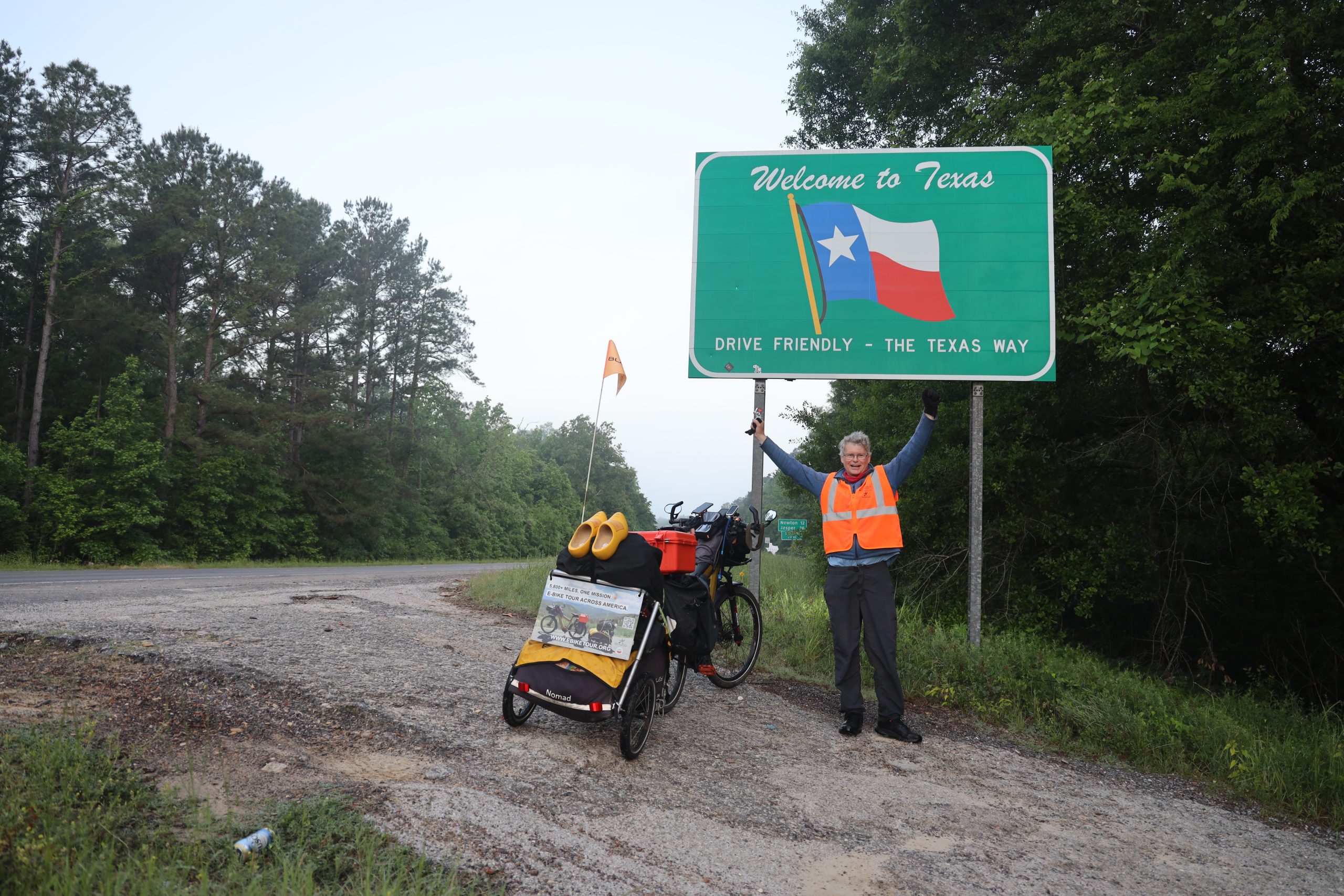
Gregory Maassen rode into Texas in April.
“Are you out of your mind?” Maassen recalled thinking. He was so tired and sore that moving through daily life was difficult. He could hardly imagine exercising.
Exercise can regenerate nerve fibers and improve chronic pain for some neuropathy patients, Hoke said. Maassen, who left his contractor job with the U.S. Agency for International Development because of his illness, said he had no other hope.
He tried swimming and hiking but said the workouts were too demanding. He joined a biking group near his home in Northwest Washington that mostly consisted of 60- and 70-year-olds, thinking their pace would be moderate. But Maassen couldn’t keep up.
Gregory Maassen biked along the Mississippi River on his way to Los Angeles.
Some of the bikers were riding electric bicycles, which Maassen had not seen before. E-bikes come with a battery and a motor that can make cycling less taxing and reduce resistance on hills, but bikers still get exercise by pedaling, balancing, and steering. Maassen thought he found the perfect solution.
Still, after buying an e-bike in September 2019, Maassen felt exhausted on his first few rides around his neighborhood in North Cleveland Park and to-and-from local parks. But he said exercising improved his mood, so he kept returning to his e-bike. After a few weeks, his pain began to subside. His body felt better the more he rode.
“I never had a day that I said, ‘Oh no, I have to do it again,’” Maassen said.
Gregory Maassen biked in South Florida in March.
Maassen started an e-bike group in the D.C. area in December 2019 called E-bike Lovers.
He had cycled thousands of miles and stopped taking his pain medication by the time he had a more ambitious idea in 2021: He would e-bike from D.C. to San Francisco over four months in 2022 by riding along the Lincoln Highway. Meanwhile, he would fundraise money for neuropathy research.
Even Hoke, who typically advises his neuropathy patients to walk, lift light weights or do Pilates, told the Post that he thought Maassen was “nuts.”
Gregory Maassen biking in Baker, Nevada, in June.
Maassen rode his e-bike with a nearly 80-pound trailer attached that included a tent, clothes for camping, an orange safety vest, a drone, a camera, an electric toothbrush, and jars of creamy peanut butter. He biked through snow, pouring rain, and heavy winds. He passed deserts, cornfields, and mountains. Each day, he tracked down outlets to charge his bike.
After traversing about 4,685 miles — about 65 miles per day — he had raised more than $179,000 from people he met along his route, other neuropathy patients, neurologists, family members, and friends, he said.
This year in March, Maassen started another cross-country bike ride traversing about 7,250 miles. He departed from West Palm Beach, Fla., and was expected to finish in Los Angeles on Tuesday morning. He has raised more than $31,500 for Johns Hopkins Medicine’s neuropathy center.
Gregory Maassen biked in Nevada in June.
“I haven’t had a day in 2022, and also this year, that I say, ‘Well, do I really need to do this?’” Maassen said.
With the money Maassen is raising, Hoke said he’s working to develop medicine that will hopefully regenerate nerves as effectively as exercise for neuropathy patients.
Maassen, 59, said this will be his last cross-country bike trip, but he’ll find other ways to support neuropathy research. He promised his wife, Janet, that he would spend more time with her and their cat, Queenie.
“That doesn’t mean that I will stop cycling,” Maassen said.
Shoppers have been advised to avoid the Walmart on Route 38 in Lumberton as police investigate an incident involving a person barricaded inside a motorhome parked in the store’s parking lot.
Lumberton Township Police were on scene Tuesday morning in response to the barricaded individual in the RV.
“Officers are on scene, and precautionary measures have been implemented to ensure the safety and well-being of everyone in the area. We are working in coordination with the Burlington County Prosecutor’s Office and the New Jersey State Police,” the department said in a press release posted to social media Tuesday morning.
“At this time, the incident is isolated to the Walmart parking lot, and there is no known danger to the general public,” the department said.
The barricade began around 11 p.m. Monday, 6abc reported, but it is unclear how the police became aware of the incident.
The department declined to provide any further details or answer any questions about the ongoing situation.
Westtown Township’s board of supervisors voted to remove all six members of its historical commission Monday, rejecting depictionsthat its decision was tied to the fate of the historic Darlington Inn, saying instead that there was a “long history of problems” working with the commission’s members.
The three-member board dismissed that assertion, saying the decision was “unrelated to the Darlington Inn or any position taken by the commission members concerning the future of that property.”
“The board periodically reviews appointments to its advisory boards and commissions and has the authority to appoint and remove members as it determines appropriate,” Jodi Nawrocki, the board chair, said in a statement to a packed audience ahead of the vote.
Nawrocki said that the historical commission would not be dissolved; the supervisors planned to “review the commission’s responsibility” and “determine whether any updates or revisions are appropriate.” After that review, the board will accept letters of interest to serve on the commission, including from former members.
Nawrocki later told attendees that the wholesale dismissal was “something that’s been on our minds.”
“There has been a long history of problems between the board of supervisors and the historical commission, going back a couple years,” said supervisor Tom Foster.
The commission’s removal was “the cleanest way to deal with a lingering problem,” he said.
Commission members said previously that they believed that relations between themselves and the board had grown more contentious, particularly around the Darlington Inn. The property, which was purchased separately with $200,000 in taxpayer funds, was acquired by the township when it bought and preserved Crebilly Farm in 2024.
It had to be purchased separately in order to preserve the building. The supervisors have previously discussed rezoning it to commercial use so they could resell it and recoup the money spent, rather than allowing the building to sit vacant and require more maintenance and funding.
The commission sought to raise awareness of its potential sale, and has wanted to preserve the property, members said previously.
Christine Gunsaullus, who joined the commission just more than a year ago, said she still felt “utterly surprised” at the board’s decision.
“We don’t know what the challenges are. I can’t help but to think that the root cause ties back to the inn,” she said in a phone call Tuesday, adding that there were other challenges, like passing an ordinance that would have helped protect historical buildings, but ultimately would not stop buildings from being changed or demolished.
“We recognize some old buildings aren’t worth saving, and we recognize that it costs a lot of money to maintain history and maintain these old buildings. We don’t want to stop new construction; we just want to preserve what we can when it makes sense,” she said. “That’s our standpoint. But I didn’t feel like there was any discussion, no back-and-forth, ever, with the board in reconciling issues like this.”
Monday’s meeting drew roughly an hour of public comment on the topic, with residents and historians decrying the board’s decision. Speakers chafed at the board’s suggestion that it would remove the commission over difficulties working together.
“Your actions … are causing a threat to every historic commission in Chester County,” said Mark Evans, vice president of Chester County Historic Preservation Network. “If you proceed with this, it’s unprecedented and, at the minimum, extraordinarily rare.”
Evans added: “Flexing power is not a strength.”
“You’re right,” Nawrocki said. “I’m a yoga instructor, and for all the people I teach, this is the year of power. And we are talking about using our power for good. … The historical commission has not been working well with us, as the board of supervisors.”
State Rep. Craig Williams, a Republican who represents portions of the county, including Westtown,said he “couldn’t imagine” reports about the removal of the commission were true, and came to hear the board’s reasoning himself. He said he was “a little astonished” that there had been none, “except for it’s just hard to get along with people.”
“I don’t know what’s actually going on behind the scenes with respect to your historical commission, but I do think you owe us an explanation. All of us,” he said.
The meeting grew charged at moments, with interruptions. People booed when the supervisors took their vote.
“[The members of the historical commission] have done some amazing work. There is also a challenge in dealing with them, and it is wrong to presume that it’s the board’s inability to get along with them,” said former supervisor Carol de Wolf, saying she respected the board for remaining quiet on specifics. “I am really sorry that good members are part of this.”
But many were worried about transparency moving forward.
Resident Megan Bruns said she found the board‘s “not working well” and “cleanest way” reasoning problematic.
“These phrases signal to myself and probably other residents that the board is seeking compliancy, which makes us question the intentions of the board,” she said. “If this decision is truly about improving the commission, we need evidence. If not, many in this community will understandably question whether independent voices are simply being replaced with more agreeable ones.”
This suburban content is produced with support from the Leslie Miller and Richard Worley Foundation and The Lenfest Institute for Journalism. Editorial content is created independently of the project donors. Gifts to support The Inquirer’s high-impact journalism can be made at inquirer.com/donate. A list of Lenfest Institute donors can be found at lenfestinstitute.org/supporters.