In the NBA, it’s when a player loses his burst or first-step. Eventually, the player’s statistics dip, injuries pile up, and the calls for retirement become unavoidable.
Rap superstar J. Cole, whose latest album is called The Fall-Off, loves the sport. His music is coded with basketball references, begging comparisons between an athlete’s dedication on the court to Cole’s in the studio. He, being a basketball player himself, understands how the game can force you to hang up your jersey, even when you feel there’s more to give.
The same rules don’t apply to the rap game, and Cole knows that. At 41, Cole made a brief pro basketball run in China in April, when most athletes his age have either retired or are in the twilight of their careers.
The Grammy-winning rapper J. Cole brought Fayetteville to Philly on his “The Fall-Off World Tour” stop at Xfinity Mobile Arena on July 20, 2026.MIKE JONES
Sure, his new song claims “the fall-off is inevitable,” but unlike an aged NBA star, there’s nothing that points to Cole’s musical decline.
His first of two shows at Xfinity Mobile Arena on Monday night for “The Fall-Off World Tour” was enough proof.
Despite his initial claims that The Fall-Off would be his last studio album, the man isn’t showing signs of retiring. He’s relishing the moment, enjoying the ride he’s taken with his fans since 2007’s The Come Up, and occasionally taking personal detours along the way. And to his fans’ delight, he doesn’t let his foot off the gas.
Cole’s journey to the Xfinity Mobile Arena stage began amid the crowd. Dressed in an unassuming black sweatshirt, he appeared sitting in the stands, in the middle of an arena spotlight. . A video of him appeared on the stage’s LED screen; a title card identified Jermaine Lamarr Cole as the director of the show we were about to witness.
With “39 Intro” blaring in the arena, Cole walked through the crowd shaking hands with everyone in his path.
The battered Honda Civic that Cole has kept from his college days, and later drove across the country to promote The Fall-Off’s release, descended onto the stage.
From then on, Cole was in the driver’s seat.
With a replica of Fayetteville, N.C.’s historic Market House in the background, he transitioned to hard-hitting odes to his hometown.
When he performed “Two Six,” a reference to the 26th county in North Carolina where his city lies, the crowd swung their tour-branded towels in the air like fans at an NBA playoff game.
“We’re only a few songs in, and I can tell this [is] one of them ones,” Cole said less than 10 minutes into his setlist, before breaking into “Safety,” followed by a five-minute monologue about Disc 29, the first half of The Fall-Off.
The Grammy-winning rapper J. Cole brought Fayetteville to Philly on his “The Fall-Off World Tour” stop at Xfinity Mobile Arena on July 20, 2026.MIKE JONES
These moments allowed Cole to delve deep into his creative choices and concepts, but it was at the expense of the show’s momentum. He halted tracks like “Life Sentence” to express how much he wants his fans’ marriages to succeed, all to little effect.
Those lengthy spiels aside, the sequencing of his songs provided a window into Cole’s mind. And with every changing record and shift in the emotional weight, the stage backdrop changed hues — from bright amber on “Two Six” to deep blues and violets on “Poor Thang.”
The smoke intensified as Cole bounced from 2014’s “A Tale of 2 Citiez” and “Fire Squad,” before pausing to ask the crowd for a quick favor. “Philly, I know y’all don’t play about your sports teams … Whether you’re from PA, Philly, or Jersey, can y’all pretend y’all from Fayetteville for this one song? Is that cool?”
It didn’t take much convincing.
He broke into “Old Dog,” and the crowd obliged – erupting as the booming record sprung into rotation.
As a note of thanks, Cole played a medley of one-off singles and collaborative hits, including “MIDDLE CHILD” and “a lot,” his Grammy-winning collab with 21 Savage.
He polled the audience to see which of his fans could spit his verse on Benny the Butcher’s “Johnny P’s Caddy,” and one lucky Altoona, Pa., native was handpicked to join him on stage.
Colethen moved to early mixtape favorites like “Lights Please” and “In the Mourning” before leaping to radio jams like “Work Out” and “Nobody’s Perfect,” all with seamless execution..
The crowd rose to their feet for “Wet Dreamz” and hoisted their phone lights to “Love Yourz.”
Then, after singing “Power Trip” and “Planez,” Cole proceeded to spoil the show’s end.
“I can’t lie, I have two more songs left,” he declared. “The second is a selfish one. It’s for me.”
The first was “No Role Modelz,” a track accompanied with an AI video of Cole dressed as former President George W. Bush misstating a common proverb during his 2002 visit to a Nashville high school.
“Fool me once … shame on you. Fool me — you can’t get fooled again,” Cole rapped, repeated the former president’s words. The obviously doctored video briefly amused the crowd (and Cole).
The Grammy-winning rapper J. Cole brought Fayetteville to Philly on his “The Fall-Off World Tour” stop at Xfinity Mobile Arena on July 20, 2026.MIKE JONES
The final song of Cole’s performance was “Quik Stop.” Another personal detour, but a welcome one, no doubt.
“It’s not a hit record. So, if you want to leave to beat traffic, I get it,” he said. “I got to do this song.”
Fans barely budged as Cole closed the two-hour show with a record that encapsulates how one encounter with a fan reminded him of his musical existence.
That closing record was reflective of Cole’s delivery throughout the show.
He isn’t one for onstage theatrics, synchronized pyrotechnics, or elaborate LED graphics. It’s just him and a microphone, a direct exchange between him and his fans with a few monologues thrown into the mix.
As it stands, Cole hasn’t lost sight of that connection, and he certainly hasn’t lost his musical touch or command on stage.
There’s no “falling off” here, only falling forward. Cole is still commanding the rap game, as a great point guard controls the flow of offense.
And neither he nor his Honda Civic has met its last stop yet.
The new flavor? Shirley Temple. The collabs? With some of the network’s most popular TV shows.
The “Bazinga Blast” — Rita’s Shirley Temple Italian ice topped with edible glitter — is an ode to The Big Bang Theory, for example. “Office Favorite,” with layers of vanilla frozen custard and Shirley Temple Italian ice, pays homage to The Office.
The “Brain Freeze Misto,” a creamy vanilla frozen custard blended with Shirley Temple Italian ice, is a tribute to Impractical Jokers. Friends inspired the “Central Chiller Ice Blender,” a frozen blended drink made with the Shirley Temple Italian ice and edible glitter. The collaborations are available at participating Rita’s locations until Aug. 23.
Rita’s is offering a new Shirley Temple flavor collection through Aug. 23.Rita's Italian Ice & Frozen Custard
“Summer has always been about creating memories with family and friends, and that’s exactly what this partnership is all about,” Carmela Hughley, SVP of marketing insights and innovation at Rita’s Italian Ice & Frozen Custard, said in a news release. “After introducing our new Shirley Temple Ice, we wanted to build an experience that celebrates everything people love about summer — from nostalgic flavors to iconic television moments. Together with TBS, we’re inviting fans everywhere to have A Shirley Good Time.”
There will also be a mobile way to get those new specials thanks to “A Shirley Good Time Treat Truck Tour.” Throughout the summer, Rita’s and TBS will hit the road with frozen treats, giveaways, and interactive experiences in select markets across the country.
The Italian ice chain is also offering a chance to win free Rita’s for a year, plus a TBS x Rita’s swag pack, for three fans.
Customers can enter the TBS and Rita’s Shirley Temple Giveaway by publishing an original photo post or reel on Instagram, Facebook, or TikTok featuring the new Italian ice flavor, tagging Rita’s in the post, and including #AShirleyGoodTime and #RitasItalianIce in the caption.
“TBS has long been home to the comfort comedies fans turn to again and again, making Rita’s the perfect partner for this summer celebration,” Melissa Chambless, EVP of marketing at Warner Bros. Discovery, said in a statement. “The best partnerships create experiences that extend beyond the screen, and A Shirley Good Time does just that, bringing together iconic comedies, nostalgic flavors, and fan-focused experiences designed to spark connection, laughter, and unforgettable summer memories.”
The Philadelphia School District’s negligence proved fatal for a woman who died when a Roxborough High School utility pole fell and crushed her while she was walking at the school’s athletic complex, a new lawsuit alleges.
Paula Budin, a retired teacher, was walking on the Roxborough High track on the morning of Dec. 5, 2024, when a 45-foot wooden pole snapped at its base, striking her.
A passerby found her, bleeding and unresponsive on the ground, and called emergency services, but paramedics could not revive Budin, who died of blunt force trauma injuries from the accident.
Lawyers for Budin’s family accuse the district — and the Parsons Corp., which was hired by the school system to complete a facilities assessment of all its properties — of negligence. Officials failed to flag rotting at the base of the pole or properly maintain or inspect the pole, the suit said.
“The School District of Philadelphia knew or should have known of the dangerous condition of the subject pole as there were visible signs of its decay as far back as 2014,” the suit, filed this week in Philadelphia Common Pleas Court, reads. “Despite this actual and/or constructive knowledge and their appreciation of that risk of catastrophic harm, the district did not take corrective action nor did it warn students or members of the community of the risk of catastrophic harm.”
Budin’s family is seeking financial damages.
The school district does not comment on pending litigation, spokesperson Naima DeBrest said. Parsons spokesperson Bryce McDevitt said the same.
Philadelphia’s underfunded school system has a massive footprint — more than 300 buildings and athletic complexes. It has, in some cases, struggled to adequatelymaintain its facilities.
Budin, who was 73 when she died, had enjoyed an active lifestyle, her family said. She had taught at Germantown Academy and the Community Partnership School in North Philadelphia before her retirement and was close to her family — two sisters, two nephews, and a niece.
On the morning of her accident, Budin was walking near her home on Roxborough’s track on Pechin Street, which is generally open to the public. Four poles typically used to hold lighting or security cameras were positioned around the athletic complex.
Sometime after the accident, the district removed the three remaining poles from the property, the suit said. A subsequent inspection by Budin’s and the district’s lawyers and experts revealed the poles had no inspection tags, indicating they had not been inspectedprior to the accident, the suit says.
Budin’s lawyers say that the pole in question was buried in grass near a storm drain, on a slope near the track. The drain was filled with debris, and because of the condition of the area, no standing water could drain — leading to “lengthy periods of water exposure to the base of the pole at ground level that caused the pole to deteriorate and rot to the point of severe and dangerous decay,” the suit says.
The other poles were not situated near storm drains, and had no water damage or decay, the suit says.
Budin’s estate alleges that Parsons, which was hired by the district in 2015 to complete facilities condition assessments of all of its buildings and athletic complexes, is also culpable.
Parsons inspected the Roxborough fields more than once, issuing multiple reports about the fields, but did not inspect the poles, Budin’s lawyers say.
“The Parsons defendants knew or should have known they should inspect the utility poles located on the Roxborough athletic track and field yet failed to do so,” the suit reads. “At the time of December 2024 incident, the pole at issue had discoloration at the base and other visible signs of rot which must have been present for a significant period of time.”
ESPN went through another round of layoffs Tuesday, this time stemming from its purchase of the NFL Network.
The cuts targeted both on-air talent and behind-the-scenes employees, according to sources not authorized to speak publicly. The layoffs are part of wider cutbacks at Disney previewed in April by CEO Josh D’Amaro and a consolidation of employees at ESPN and the NFL Network.
In a note to staff Tuesday morning, ESPN chair Jimmy Pitaro said the company was forced to “make some difficult decisions about job impacts” stemming from the merger, and that the moves were intended to “best position us for the future.” Employees were being notified Tuesday, Pitaro said.
“While most of the job impacts are tied to the acquisition, we will also notify colleagues in other parts of the company today that their positions have been impacted,” Pitaro added.
ESPN declined to comment.
Longtime ESPN announcer Karl Ravech is among those reportedly being let go. Brett Davis, Brett Davis-Imagn I
Ravech had been with ESPN since 1993, covering baseball for more than three decades in a variety of roles, including as the voice of Sunday Night Baseball for four seasons. He had been slated to call the Little League World Series for ESPN next month.
NFL Network insider Tom Pelissero was also reportedly among the cuts. He’s been with the network since 2017 and is one of the network’s top insiders, along with Ian Rapoport and Philly native Mike Garafolo.
Rapoport signed a multiyear contract with ESPN in April.
ESPN also parted ways with former Carolina Panthers quarterback and NFL MVP Cam Newton, as first reported by Outkick’s Bobby Burack. Newton has been a frequent guest on First Take with Stephen A. Smith during the NFL season.
Longtime NFL Network analyst Charles Davis, best known for calling NFL games on Fox and CBS, was also let go, according to The Athletic. This fall he’ll replace Gary Danielson as CBS’s lead college football analyst on Big Ten games alongside Brad Nessler.
Other ESPN staffers reportedly let go were veteran SportsCenter anchor David Lloyd, sports injury analyst Stephania Bell, and ex-NFL linebacker Bart Scott, who cohosted an ESPN radio show in New York City with one-time 94.1 WIP host Chris Carlin.
Boxing and MMA reporter Andreas Hale and staff writer Dan Hajducky both announced their own layoffs on social media.
“I’ve been here before. Change is constant, but the outcomes are uncertain,” Hale wrote.
Ryan Clark pulled from live show
Ryan Clark was pulled off NFL Live Monday and informed he was being let go. Jay Biggerstaff, Jay Biggerstaff
Layoffs arrived early for Ryan Clark, the former NFL defender turned TV analyst who has been a star at ESPN for the past decade.
As first reported by The Athletic, Clark was taken off the air midway through NFL Live on Monday and informed he was being let go after reporters began inquiring about his status with the network.
In an Instagram post Tuesday morning, Clark described the incident as “madness.”
“My peace is with God, and my humility comes from within,” Clark wrote. “I’ll continue to build myself so the world can never strip me of what’s real.”
Clark joined ESPN in 2015 and has been a prominent personality across the network’s NFL programming and daytime shows, including Monday Night Countdown with former Eagles star Jason Kelce.
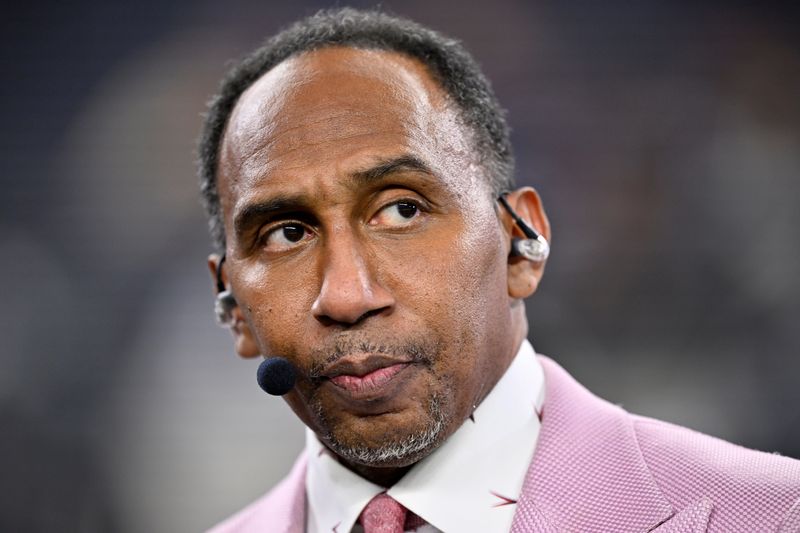
Longtime ESPN host Stephen A. Smith was particular upset by Ryan Clark’s ouster. Jerome Miron/Imagn
Longtime ESPN personality and First Take host Stephen A. Smith called it a “rough day” at the network.
While several regulars from his show were among the cuts, the one-time Inquirer columnist and reporter was particularly irked by Clark’s ouster. Smith described him as “arguably the best NFL analyst in America.”
“The bosses know I’m not happy about this decision. I’ve made that very, very clear,” Smith said Tuesday afternoon on his SiriusXM show Straight Shooter, adding later in the show, “Was I asked what I thought, what my feeling were? Yes, I was. And of course I said we have to keep him.”
Smith also spent time outlining all the cutbacks ESPN has gone through dating back to May 2013. A lot of familiar names were forced out the door in the past decade-plus, including Jeff Van Gundy, Jayson Stark, Todd McShay, Zach Lowe, and Ed Werder.
“This ain’t the days when ESPN could just hire and hire and hire some more without ever having to let go or lay off anybody,” Smith said. “Those days are long gone.”
ESPN purchased NFL Network and NFL Media in February in a deal valued between $2.5 billion and $3 billion. As part of the deal, all NFL Network staffers and personalities became ESPN employees, and the league took a 10% stake in the network.
NFL Network isn’t going anywhere, and will still have original programming, including Good Morning Football, and will broadcast a handful of NFL games.
It’s the second round of layoffs at ESPN in recent months. In the spring, about 30 behind-the-scenes staffers were let go as part of companywide layoffs that reportedly impacted around 1,000 employees.
Gov. Josh Shapiro visited a University City life sciences incubator on Tuesday to celebrate a new $125 million fund aimed at boosting Pennsylvania’s life sciences industry.
The funding — approved in the $50.8 billion state budget deal reached earlier this month — will go toward developing new talent pipelines, help offset the cost of clinical trials, and expand access to venture-capital funding.
While Philadelphia has historically trailed other metropolitan areas, like Boston and San Francisco, in attracting life sciences investments — including in the biotechnology and pharmaceutical fields — lawmakers and industry leaders said they hope the new funding will help close the gap. The money will be available for projects across the state.
“I think you can feel the momentum building all across our commonwealth in the life sciences space,” said Shapiro, who was joined at the B+labs facility by industry leaders and Democratic state lawmakers. “After really not being on the field of competition in the life sciences space for years and years and years, Pennsylvania is not just competing again. Pennsylvania is winning.”
The new funding comes as some of the nation’s largest life sciences companies have announced their plans to invest billions in Pennsylvania, an accomplishment touted by Shapiro’s administration.
Johnson & Johnson announced this spring its plans to build a $1 billion cell therapy plant in Montgomery County. And pharmaceutical giant Lilly is expected to break ground on a $3.5 billion manufacturing facility in the Lehigh Valley, set to be fully operational in 2031.
Chris Molineaux (left) president & CEO of Life Sciences Pennsylvania introduces Gov. Josh Shapiro as he visits B+labs Tuesday, July 21, 2026 to tout a new $125 million program “to expand venture capital access” for Pennsylvania companies investing in life science innovations.Tom Gralish / Staff Photographer
Shapiro on Tuesday noted Pennsylvania’s potential to be a national hub for the life sciences industry, given the state’s robust research universities, adding that more than 100,000 Pennsylvanians work in the sector.
The $125 million investment is the state’s most significant in almost three decades and is a “true differentiator,” said Chris Molineaux, the CEO of Life Sciences Pennsylvania, a trade group. Last year, Shapiro called for Harrisburg to invest $30 million in life sciences funding, but the money was not allocated in the final state budget.
Of the nearly 1,000 businesses in his organization, Molineaux said, more than 400 are small start-ups with fewer than 10 employees, and will benefit from the additional dollars. A vibrant start-up landscape in Pennsylvania, he added, means there is plenty of innovation, but also competition for limited funding.
“Entrepreneurialism is alive and well in Pennsylvania,” Molineaux said. “But it’s also an extremely fragile community that needs the kind of public policy support, the nurturing, and the financial support.”
Madeline Bell (right), CEO of Children’s Hospital of Philadelphia joins Gov. Josh Shapiro as he visits B+labs Tuesday, July 21, 2026 to tout a new $125 million program “to expand venture capital access” for Pennsylvania companies investing in life science innovations.Tom Gralish / Staff Photographer
Children’s Hospital of Philadelphia CEO Madeline Bell told the crowd the story of a baby whose rare metabolic disorder was treated by the hospital’s doctors with a first-of-its-kind custom gene-editing therapy. That type of innovative treatment is made possible through outside funding and support from lawmakers, Bell said, stressing the importance of the state’s new investment.
“It’s going to make our breakthroughs possible. It is going to get them from the bench to the bedside more quickly,” Bell said.
The state will finance the program through the sale of insurance premium tax credits to insurance companies.
Shapiro said the funding is expected to become available in a few weeks and will be disbursed through an application managed by the Pennsylvania Department of Community and Economic Development.
The program is structured to prioritize projects that address needs specific to Pennsylvania, according to literature provided by the state, and will support projects developed by companies founded by people in historically underrepresented groups that have not always had access to funding.
“Part of this funding will go to make sure that folks who historically did not get invested, get invested,” said Democratic State Sen. Vincent Hughes, who represents West Philadelphia. “That communities not too far away from here, blocks away from here, get the opportunity to allow their young people and their genius to be realized.”
Tiny cupcakes offered at B+labs Tuesday, July 21, 2026 as Gov. Josh Shapiro visits to tout a new $125 million program “to expand venture capital access” for Pennsylvania companies investing in life science innovations.Tom Gralish / Staff Photographer
The program — named Innovate in PA 2.0 — builds on the 2013 Innovate in PA initiative signed into law by then-Gov. Tom Corbett, which offered $100 million in seed funding to technology startups.
“Innovators, we believe in you. This state believes in you,” Hughes said. “There is a group of people in this commonwealth of Pennsylvania who believe in you, will continue to invest in you, and want to make sure that your dreams of saving lives turn into reality.”
A Chester man who recruited his friend to carry out the execution of a criminal rival in June 2024, only to have that friend die during the botched ambush, was convicted of first-degree murder by a Delaware County jury.
Jesse Allen Jr., 20, was charged with the murder of Zaheem Sabree, even though he did not fire the shot that killed him, under the legal theory of transferred intent. The person who pulled the trigger, Tyjohn Walker-Jones, 18, was the target of Allen and Sabree, who were out for revenge after Walker-Jones allegedly killed their friend weeks earlier.
Text messages presented during Allen’s three-day trial showed that he had begun plotting Walker-Jones’ death immediately after the murder of Sabrie “Breezy” Pierce.
“Everybody gone pay,” Allen said in the message, displayed in court.
Surveillance footage from a nearby deli recorded Allen and Sabree walking together down 24th Street on the day of the shooting, then hiding nearby — Allen in shrubbery and Sabree behind a concrete wall. Moments later, Walker-Jones is seen on the video walking through the area and then ducking behind a parked car as the gunfire rang out, prosecutors said.
Shell casings found at the scene showed that Walker-Jones and Sabree shot at each other multiple times — Sabree with a .45-caliber pistol and Walker-Jones with a 9mm, prosecutors said. Walker-Jones and Allen then fled in opposite directions.
Sabree was found near that scene, shot in the head. Police took him to Crozer-Chester Medical Center, where he was later pronounced dead.
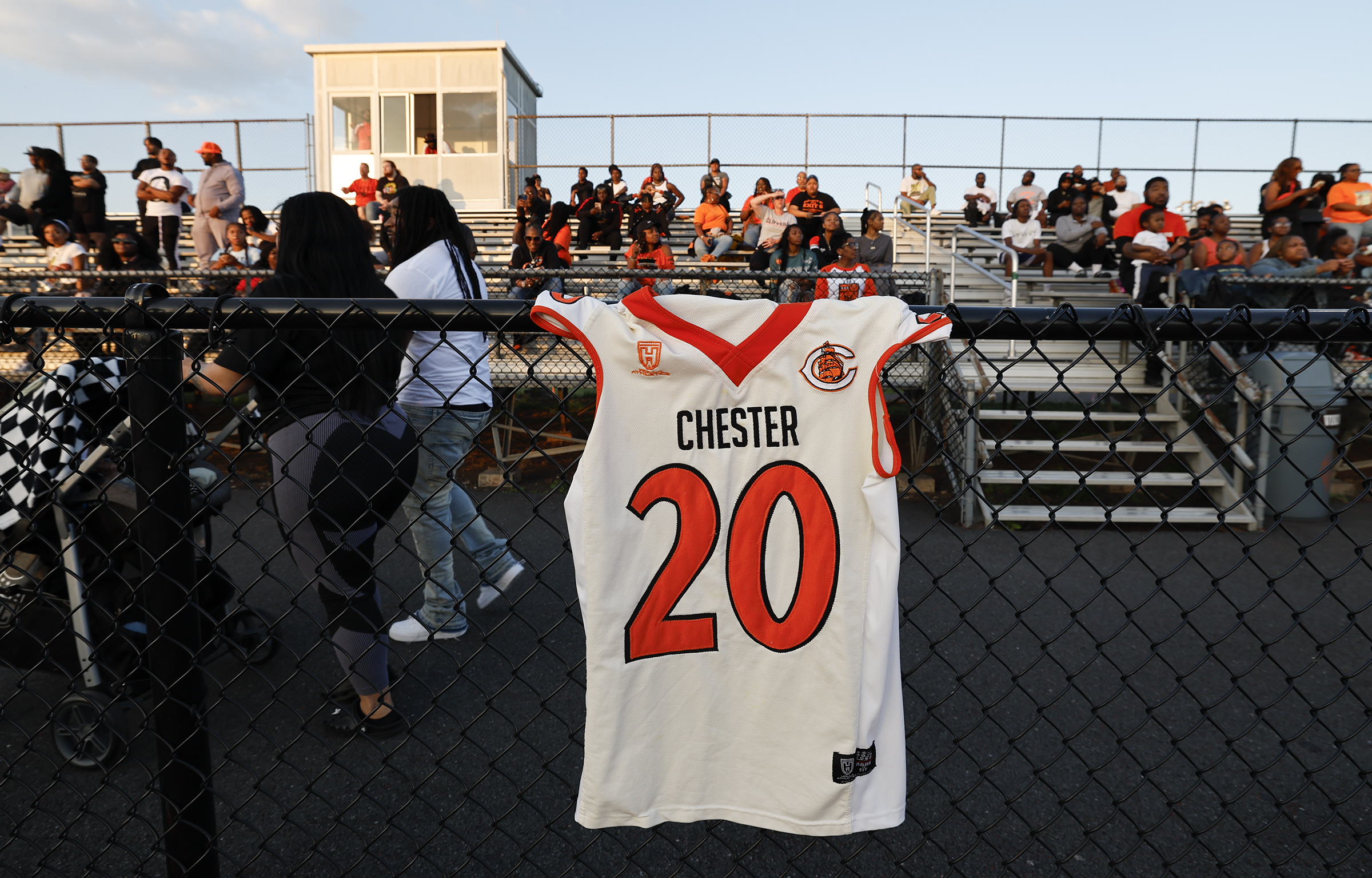
The jersey of Chester High School football player Zaheem Sabree hangs on the fence while the Chester High School before a game in August 2024. Sabree was gunned down in Chester during the botched ambush of another teen.Yong Kim / Staff Photographer
Allen’s attorney, Brian Malloy, urged jurors in his closing arguments to acquit his client. The real killer, he said, was Walker-Jones, who, while awaiting trial in Pierce’s murder, was given a “two-for-one deal” by prosecutors.
During Allen’s trial, Walker-Jones, who was not charged in connection with Sabree’s death, took the stand and admitted to shooting Sabree in the head.
“He knows he has to play along, say what he has to say, but actions speak louder than words,” Malloy said. “We watched videos of him killing two people, and he’s not sitting at this table, and that’s a crazy thing.”
Malloy suggested that Walker-Jones was the aggressor, chasing Allen and Sabree as they walked through Chester.
But Deputy District Attorney Matt Krouse said Allen took deliberate steps to plan the ambush and was directly responsible for Sabree’s death.
Allen directed Sabree, a star football player at Chester High School and an honors student at STEM Academy, to wear all black and meet him at a deli in Walker-Jones’ neighborhood, which was nowhere near his own, Krouse said. He deliberately left his cell phone at a friend’s house, knowing his movement would be tracked.
And after the shooting, Allen, in text messages, bristled at the rumor circulating through Chester that he had left his wounded friend to die, saying he had no choice.
“He knew already on June 30, 2024 that he was guilty of everything he was charged with,” Krouse said. “But just like he ran from his so-called best friend to avoid the consequence of his actions, that’s what he’s trying to do today and this week.”
Allen is to be sentenced in October. Walker-Jones’ trial in the death of Sabrie Pierce is scheduled to be held later this year.
Philadelphians know it’s officially peak summer thanks to a recent announcement: the beginning of BLT season at Middle Child, where the seasonalsandwiches draw lines down the block.
“We become Pat’s and Geno’s but instead of making cheesesteaks all day, we’re making BLTs,” said Matt Cahn, the owner of the Center City sandwich shop Middle Child and Fishtown’s Middle Child Clubhouse. You won’t see fresh tomatoes on the menu at any other time of the year, but come mid-July: “It’s just BLT, BLT, BLT,” said Cahn.
You could say tomato season is Middle Child’s Super Bowl.It is intense but short. BLTs are only made for about four weeks, when tomatoes are at their best. It starts Wednesday, July 22 at 11 a.m. (9 a.m. on ensuing days) until sell-out. Each location makes roughly 200 to 250 sandwiches per day.
While there are other top-tier tomato sandwiches in town — don’t miss the River Twice entry, adorned with gamtae and a quenelle of caviar, for example, or Loretta’s in Headhouse, with herbed aioli and the same vaunted produce as Middle Child’s — none stir up quite as much fervor.
Middle Child’s tomatoes, cut into thick, rainbow-hued slabs, always come from Urban Roots Farm in Newtown Square. Tomatoes arrive at peak ripeness, and they only have a shelf life of about two days.
“These tomatoes are really expensive,” said Cahn. They’re about $38 to $40 per flat or case, which means there’s $2.60 worth of tomatoes on each sandwich. “It costs more than the turkey does on turkey sandwiches.”
Their classic BLT ($16) consists of those tomatoes, five pieces of Leidy’s bacon (“Nothing fancy … because the sandwich is all about the tomatoes,” said Cahn), Duke’s mayonnaise, and locally grown arugula dressed with tomato vinaigrette all sandwiched on slices of rye bread from Merzbacher’s bakery. The sandwich can also be made vegetarian (substituting bacon for avocado), vegan (with avocado and veganaise), and gluten-free.
The famed BLT at Middle Child with local heirloom tomatoes at peak ripeness.Matt Cahn
The BBLT ($21) is served on a LeBus ciabatta, and that second “B” stands for a whole ball of Jersey-made burrata from Lioni Latticini. It also features a chili-tomato jam, made of tomato scraps and usually Calabrian chilis, though Cahn has been experimenting with red chili flakes and gochujang this year.
This year, for the first time, Middle Child Clubhouse will offer a slightly different evening BLT, with thick-cut slab bacon, for $18 — if Clubhouse’s tomato supply lasts till dinner service. Cahn said he expects even more tomatoes in a week or two, meaning more availability for dinner BLTs.
Waste not
This is Middle Child’s ninth tomato season since opening in 2017, and every year, the cult obsession with the sandwiches has grown. Every season, Cahn tweaks the processes of both selling and making thesandwiches.
Diners at Middle Child Clubhouse, 1232 N Front St. in Fishtown in February 2022.MONICA HERNDON / Staff PhotographerTomatoes from Urban Roots Farm in Newtown Square, Pa.Matt Cahn
Tomatoes are particularly delicate. They’re perfectly ripefor only a day or two before they start turning to mush and growing mold. And because they’re cored and sliced to lie flat, they generate a lot of waste. The tomato scraps, along with tomato “seconds” — or tomatoes a little too soft to slice — go into that chili-tomato jam and the tomato vinaigrette that dresses the arugula.
The base for both of those sauces is tomato water, which Middle Child’s team collects every day.
“Every morning we treat the tomatoes like steaks. We season them a couple hours before service with Diamond Crystal kosher salt, then shingle them on a perforated pan and layer the shingles,” said Cahn. Gravity presses down the layers and the tomato water accumulates below. It’s a boon to Middle Child Clubhouse’s bartenders:In past years, they have made tomato agua fresca, tomato water ice, frozen tomato pops, and tomato martinis with the salty tomato water.
Middle Child slices and salts the Urban Roots tomatoes before assembling them into sandwiches.Matt Cahn
What to expect
There are some loosely enforced “rules” during BLT season. First, you should eat the sandwich within 10 minutes of receiving it.
Second, embrace the wait. Middle Child will turn off online orders in the thick of BLT season to prevent customers from jumping the actual line. Cahn encourages customers toenjoy the madness. “Part of the fun is going and [waiting]. People are chatting and getting to know each other and there’s a lot of debate over whether or not it’s worth the hype,” said Cahn.
“The first week is really crazy, but in a couple weeks, once the tomato plethora has really come in,” the lines get more manageable, Cahn said. And they move quickly, thanks to a full week of BLT training, in which the staff practices until they’ve mastered every detail, down to meticulously wrapping the final product.
“The sandwich is a structural game of Jenga,” said Cahn.
Sam Ato Timaloa, a paroled sex offender who also served time for attempted murder, had dementia and an acute intolerance of noise — especially from roommates at Sunrise Post Acute, a nursing home in Banning, Calif. Over four months in 2025, a state investigative report found, Sunrise switched Timaloa’s room eight times, the last into one occupied by Attilio Cecchetto, 92, a retired tile installer whose dementia led him to frequently moan, mumble, and yell.
Overnight, a nurse aide walked into their room and saw blood splattered on the floor, walls, and ceiling, according to a grand jury transcript. Cecchetto’s face “looked twisted and smashed,” the aide testified. A Banning city police officer testified that Timaloa, 77, told him that he had punched Cecchetto twice.
“He just kept saying that Attilio was being too loud: ‘He talks too much,’” the officer said.
Cecchetto died two days later from blunt force facial trauma.
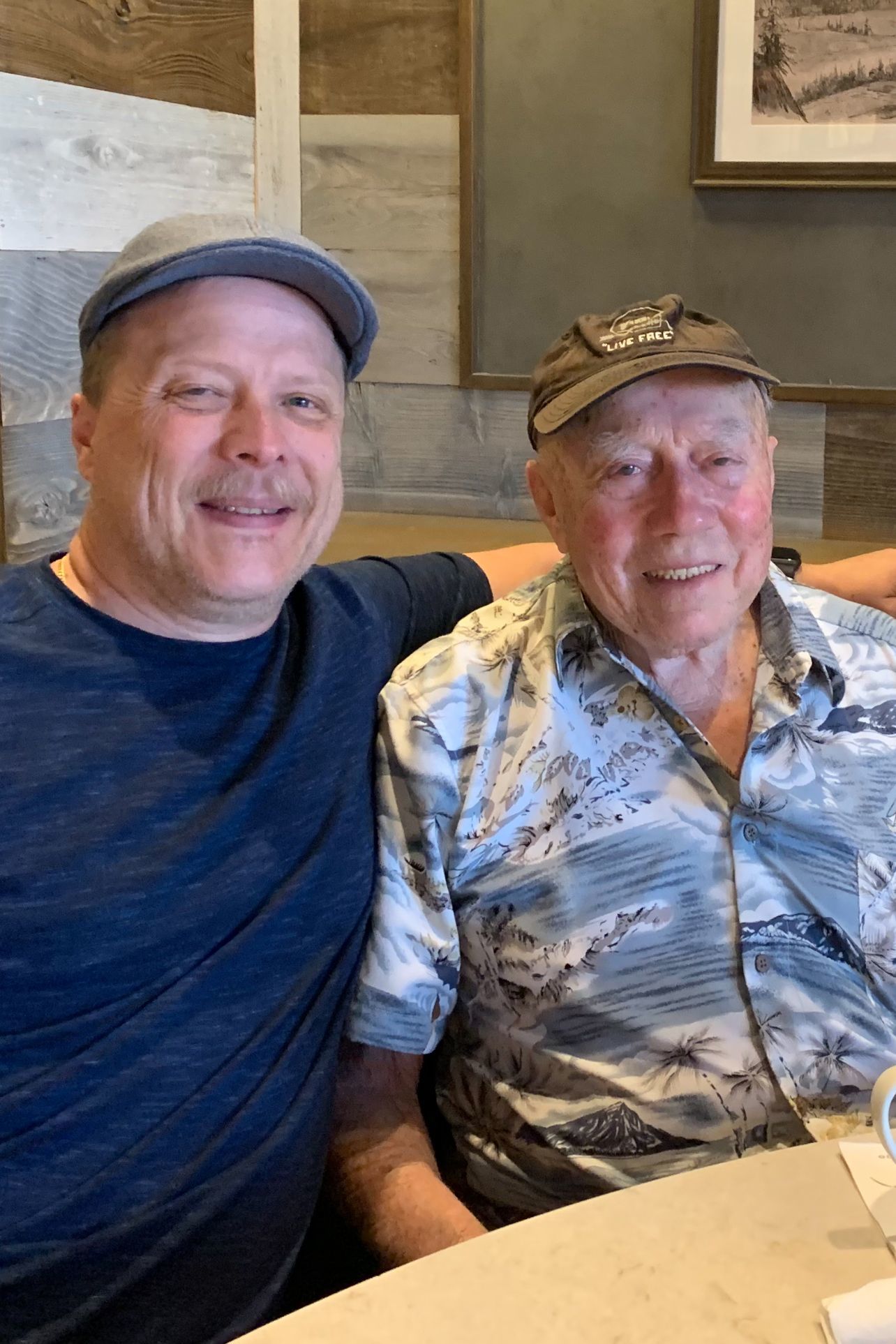
Attilo Cecchetto (right), a retired tile installer pictured with his son Gino, often moaned or yelled, a symptom of his dementia. His California nursing home assigned him a new roommate, a former convict whose dementia made him react strongly to noise, a state report said.Marco Cecchetto
“You get placed in a facility like this to be taken care of, not to be murdered,” one of his sons, Gino Cecchetto, said in an interview. “This was completely preventable at many different points.”
Timaloa pleaded not guilty to assault. The charges were later upgraded to murder, and a judge ordered a mental health evaluation. The judge will rule as early as August on whether Timaloa is competent to stand trial.
PACS Group, the nursing home chain that owns Sunrise, denied negligence. “We strive to provide quality care to everyone we serve, and our hearts continue to go out to the Cecchetto family for their loss,” PACS spokesman Brooks Stevenson said in an email.
In nursing homes primarily occupied by impoverished people as well as posh assisted living facilities that cost upward of $10,000 a month, agitated residents have shoved, punched, bit, and kicked others. They have wielded canes, walkers, pens, a plate, a mop stick, a shoe, a belt buckle, and even the footrests of wheelchairs as weapons, federal inspection reports show.
How often these altercations take place nationwide is unknown, but an in-depth study of 14 assisted living facilities in New York state led by Cornell University researchers estimated 1 in 7 residents experienced aggression within a month, including verbal, physical, or sexual acts. Their separate study of 10 New York state nursing homes estimated 1 in 5 residents experienced an altercation in a month. Researchers have found that these assailants are disproportionately likely to have dementia.
The diseases that cause dementia can impair brain circuits involved in impulse control and threat perception, raising the risk of aggressive behavior. Residents with Alzheimer’s disease and other dementias constitute more than 900,000 of the 2.2 million people living in these settings, many of which include specialized memory care units.
Often, altercations involving a resident with dementia erupt after danger signals are missed or ineffectively addressed, according to a KFF Health News examination of court records, police reports, and state and federal inspection reports.
Since the start of 2024, the federal Centers for Medicare & Medicaid Services has faulted nursing homes at least 700 times for failing to protect residents from physical, sexual, or verbal abuse by other residents, CMS inspection reports show. The federal records do not include assisted living facilities, which are regulated by states.
In the first three months of this year, CMS cited nursing homes more often for resident-to-resident abuse than for any other type of abuse, neglect, or exploitation, including abuse by employees, the reports show.
The long-term care industry says not every clash can be averted. Presbyterian Homes & Services, a nonprofit Christian chain of senior living facilities, said in a statement: “Caring for individuals living with advanced dementia is complex, and behaviors can change in ways that are difficult to fully predict or prevent, even with clinical interventions in place.”
Eilon Caspi, a dementia consultant and researcher who studies resident-on-resident altercations, said that usually there is a specific unmet need that precedes an altercation. “In the vast majority of incidents,” he said, “there are warning signs in the months, weeks, days, hours, and sometimes minutes and seconds prior.”
Fertile battlegrounds
One psychological theory about Alzheimer’s, the most common dementia disease, holds that as the brain’s networks deteriorate, the balance shifts between the prefrontal cortex, which helps govern judgment and self-control, and limbic regions including the amygdala, which helps process fear and threat responses.
As cognition clouds, people lose the ability to understand what is happening around them and to put distress into words, researchers say. Pain, infection, medication side effects, and other physical and emotional distresses may be expressed through shouting, intimidating gestures, kicking, pushing, or punching. Long-term care facilities can be triggering environments, with intimate care often delivered by a changing stream of aides whom residents can’t recognize. Amid noise, close quarters, and rigid routines, interactions become flash points.
“You don’t feel safe, because you don’t know these strangers who are coming in and taking off your clothes,” said Al Power, a geriatrician and an advocate for alternative models of care for people with cognitive issues. “These things will be distressing to anybody.”
The Cornell researchers found verbal altercations were the most common type of aggressive interaction but estimated 4% of assisted living residents and 5% of nursing home residents in their studies experienced physical assaults in a month.
Another Cornell study found that Connecticut police were called to nursing homes for resident-to-resident clashes more often than allegations of staff abuse, theft, and residents wandering away without supervision combined. A national analysis of survey data from the Centers for Disease Control and Prevention calculated nearly 8% of residents in assisted living facilities engaged in physical aggression or abuse toward other residents or staff members.
Many of the physical aggressions KFF Health News identified in CMS inspection reports were perpetrated by residents with diagnoses of dementia, schizophrenia, or other cognitive disorders. In some physical altercations, both residents were aggressors, while other fights were one-sided. Sometimes the residents were roommates.
Laura Mosqueda, a geriatrician at the University of Southern California’s Keck Medicine in Los Angeles and a senior adviser to the National Center on Elder Abuse, said: “What worries me is that we just end up blaming two people who have either cognitive impairment or severe, uncontrolled mental health issues, when they’re supposed to be in an environment where people are safe.”
‘Only a matter of time’
Gladys Lynch, a retired department store accountant, transferred into the memory care unit at Harbor Crossing in White Bear Lake, Minn., in September 2025. Her monthly cost was more than $10,000, according to an invoice provided by the family.
One of Lynch’s daughters, Rebecca Norton, installed web cameras in her room and often saw another resident inside. “Every day I looked at it, this woman would be walking into my mom’s room, harassing her, digging through her things, using her bathroom, yelling at her,” Norton said in an interview. She informed Harbor Crossing’s administration, and the facility said it would start locking her mother’s door.
Norton emailed a Harbor Crossing administrator a list of issues with her mother’s care. “My biggest concern,” she wrote, was that her mother’s door was not consistently locked and the webcam showed the woman had again entered, rummaged through the bathroom, and taken a couple of adult diapers.
A Minnesota investigative report determined Gladys Lynch’s memory care home failed to protect her from another resident known for behaving aggressively. “My mom deserved better than what they gave her,” says her daughter Rebecca Norton, seen here holding a photo of Lynch. The home has asked the state to reconsider its findings.Liam James Doyle / For KFF Health News
Unknown to Norton, Harbor aides had raised concerns about the other resident, who like Lynch was new to Harbor Crossing’s memory unit, according to a Minnesota Department of Health report. Diagnosed with Alzheimer’s, severe dementia with agitation, depression, and anxiety, the woman was confused, had difficulty communicating her needs, and hit aides.
Aides repeatedly reported that the woman had “ongoing aggression, entered other residents’ apartments, invaded others’ personal space, and was difficult to redirect,” the health report said. They said medications had been ineffective and pressed for new ones. The report said one nurse told the woman’s doctor it was “only a matter of time before” she “hurts another resident.”
Captured on camera
On the last day of September, she entered Lynch’s room and resisted leaving, the state report said. The next morning, she reappeared. Video of the incident was described in the police and state reports and reviewed by KFF Health News. It shows Lynch guided the woman out and appeared to attempt to lock the door, but the woman opened it and returned once more.
The woman declared it was her house, went into Lynch’s bathroom, used the toilet, and then returned to the room Lynch was in. Lynch can be seen repeatedly pressing the alert pendant around her neck to signal nurses for help.
The video shows the woman was almost out of her apartment door when she attempted to touch an object near the door. Lynch put her hands up to block her. The woman slapped at her hands and said, “I’m going to kill you if you don’t quit it.” She pushed Lynch, who fell, her head hitting the floor and blood seeping out.
Aides arrived 13 minutes after she had initially pressed her pendant, the state report said. Lynch suffered a brain hemorrhage and fractures to her eye socket and ribs, according to the state report. She died in the hospital five days later at age 96; the medical examiner’s office declared it a homicide.
Norton said her mother was kind and pleasant and never combative. “My mom deserved better than what they gave her,” she said.
Gladys Lynch was a department store accountant who raised three daughters before developing dementia. Here her daughter Rebecca Norton shows a collection of Lynch’s personal letters and photographs at Norton’s home in Hugo, Minn.Liam James Doyle / For KFF Health News
Prosecutors declined to bring charges, according to the police report. The state investigation concluded Harbor Crossing was responsible for neglect because it was aware the woman “exhibited violent and aggressive behaviors” and yet had failed to put in place effective interventions. Harbor Crossing has requested the state reconsider its findings.
In June, Suzanne Scheller, the attorney for Lynch’s family, filed a wrongful-death lawsuit against Presbyterian Homes, which owns Harbor Crossing.
Presbyterian said in a statement: “We are deeply saddened by the loss of Ms. Lynch, and our thoughts remain with her family and all those impacted.” It declined to comment further on the incident or the lawsuit.
Before Gladys Lynch’s death, employees at the memory care unit at Harbor Crossing in White Bear Lake, Minn., struggled to keep the resident who fatally assaulted her from behaving aggressively and wandering into other residents’ rooms, a state report found. Harbor Crossing has asked the state to reconsider its findings of negligence.Liam James Doyle / For KFF Health News
Preventive tactics
Geriatricians, researchers, and resident advocates say long-term care homes should employ strategies to reduce the risk of altercations, including closer supervision of residents at high risk, relocating them closer to nursing stations, separating residents with repeated conflicts, and adjusting roommate assignments or seating in shared spaces.
Each resident should have a care plan, and homes should train staff to be alert to a resident’s triggers and intervene quickly, dementia specialists say. Organized activities are essential to keep residents occupied and engaged. Antipsychotics and other psychotropic medications are often prescribed, but they can increase the risk of falls, strokes, and even death.
An aide can be assigned to watch a particularly challenging resident one-on-one, but many places lack enough staff for protracted, dedicated supervision. Some assisted living facilities will tell a resident’s family they must hire a personal aide, who can cost thousands of dollars extra each month. In extreme situations, facilities might send a resident to an emergency room for evaluation or to a psychiatric hospital, or evict or discharge them.
Camille Russell, who served as Kansas’ long-term care ombudsman until 2024, said she observed nurses and aides were often “woefully undertrained” in basic elements of dementia care.
“We’ve gotten too far away from making decisions that are caring decisions,” Russell said. “There has to be a balance, and the balance has gotten too far to the profit side.”
A debilitating kick
Many physical altercations between residents result in a scratch or a bruise, but nonfatal scraps can leave permanent damage on deeply frail residents.
Linda Twiddy’s first weeks in a Chesapeake, Va., memory care unit in August 2024 were happy, her daughter, Barbara Howerin, said in a May interview. Twiddy, a former church secretary with vascular dementia, sang along with a visiting church choir, decorated pumpkins, and visited a cat café. The facility, The Vero at Chesapeake, charged Twiddy a one-time $6,825 move-in fee and monthly charges of $7,475, according to the lease.
Seven weeks after Twiddy started living there, a nurse called Howerin. She told her that her mother had been kicked in an altercation with another resident and was being sent to the hospital.
When Howerin arrived at the hospital, she was shocked by the extent of the injury. “It was like 10 inches long by 6 inches wide, the whole front of her shin,” she said. “The calf was just like dangling down.”
According to an internal facility incident report the family obtained, an aide heard Twiddy scream for help and raced over to see a male resident with dementia trying to hit Twiddy as she sat on the floor in “a pool of blood.” The report said, “Linda was screaming get him away from me, he pushed and kicked me.”
The man had prior episodes of aggression, according to documents Twiddy’s family obtained in a lawsuit they brought against The Vero in Chesapeake Circuit Court. At his previous facility, a progress note from 2023 stated, he was “becoming very aggressive in tone and actions to residents and staff.” He “grabbed another resident by the wrists and pushed her,” according to the note. He was sent to an emergency room for evaluation of agitation, according to a hospital report. It did not make clear whether he was discharged back to the facility or elsewhere.
Agitation tied to pain
The male resident’s medical records at The Vero said he was diagnosed with late-onset Alzheimer’s disease, agitation, and anxiety, according to his doctor’s deposition. He had chronic pain in his back and trouble sleeping. He could answer simple yes-or-no questions but had trouble providing more extensive answers and couldn’t communicate that he was in pain, she testified. His behavioral changes usually occurred when he had a urinary tract infection, the doctor said.
When he was agitated, aides could sometimes calm him by turning on the television so he could watch his beloved New England Patriots, one aide testified in a deposition. A former aide said she tried to avoid dealing with him altogether. “If you go up to him and he was agitated, he’d reach out to try to grab you,” she testified. “If he had that cane, he would swing that cane or he would punch at you.”
In a court filing, The Vero denied allegations by Twiddy’s family that it should have protected residents from him. The filing said The Vero complied with all standards of care and that any injuries Twiddy sustained “were caused by her own negligence” or acts of others.
In their investigation of the incident, Virginia regulators alleged The Vero had failed to assume responsibility for the health, safety, and well-being of its residents. The inspection report said The Vero pledged to appropriately staff the memory care unit based on the number of residents and to ensure someone completed rounds at least every two hours during sleeping hours.
Twiddy underwent three surgeries at the hospital for her leg, including a skin graft, then spent a month in rehabilitation. “She was never able to walk again,” her son, Doug Twiddy, said in a May interview.
The family moved Linda Twiddy to a different memory care facility where the nursing station had a clear view of all the rooms. She lived there until her death earlier this year.
The lawsuit was settled on confidential terms in early June. Carlton Bennett, the family’s attorney, declined to comment. In an email, Lauren Rogers, a spokesperson for Sinceri Senior Living, which operates The Vero, said the company was pleased the legal case had been resolved but could not comment further, citing confidentiality and patient privacy.
“The Vero at Chesapeake is committed to providing a caring, supportive environment where resident health, safety, and well-being remain our highest priorities,” she said.
A history of violence
After Attilio Cecchetto was fatally bludgeoned at Sunrise Post Acute, his adult children and their attorney, Jody Moore, discovered disturbing details about Sam Ato Timaloa. He had been imprisoned in 1999 after being convicted of raping an underage girl and sentenced in 2008 to 24 years in prison for attempted murder involving domestic violence, according to Riverside County court records. His public defender declined to comment.
Cecchetto’s sons, Moore, and her colleagues at Moore Hutchins Moore also learned more about the home’s owner, PACS Group, a publicly traded company with more than 300 long-term care facilities. Last year, PACS earned $191 million on revenue of $5.3 billion, according to its annual securities filing.
In the lawsuit the Cecchettos and their father’s widow filed against PACS, they accused the company’s founders, Jason Murray and Mark Hancock, of draining resources from their nursing homes to pay for the chain’s expansion and swell their personal wealth.
The two had earned more than $650 million through stock sales since taking the company public and bought two private luxury jets, according to the lawsuit and securities filings. PACS has also purchased corporate sponsorships for Utah sports teams even though it owns no nursing homes in the state, the lawsuit said.
California regulators fined Sunrise $120,000 for failing to protect Cecchetto and for not taking Timaloa’s articulated dislike of noise into account when assigning rooms. Medicare issued its own $62,810 fine.
In legal papers responding to the Cecchettos’ lawsuit, PACS denied negligence for his death and alleged he “failed to exercise ordinary care on his own behalf for his own safety.” It has sued to overturn the $120,000 state fine, saying it was issued too late and that Sunrise “did what might reasonably be expected of a long-term healthcare facility licensee acting under similar circumstances” to comply with state rules.
The Cecchettos’ lawsuit asks for a judge to impose robust procedures PACS homes must follow for admissions, staff training, room changes, and the reporting of altercations between residents. The suit asks for a court-appointed monitor to oversee compliance. In its written statement to KFF Health News, PACS said “important context” would come out during the process and declined further comment.
In an interview, Cecchetto’s three sons, Dino, Gino, and Marco Cecchetto, described their father’s life. He spent his childhood on a farm in Italy, growing up under Benito Mussolini. After World War II he moved to Canada, where he learned to tile and lay marble and terrazzo, a decorative flooring material made of chips of stone, glass, or other materials embedded in cement or resin. He relocated to California in the early 1960s, became naturalized, and worked as a tile journeyman and a contractor for decades.
“We don’t want this to happen to somebody again,” Gino Cecchetto said. “With the life he led, he deserved a quiet, dignified death. Instead, he ended his life in pain and fear.”
Data methodology
KFF Health News’ analysis of federal nursing home inspection reports focused on citations for violations of Medicare and Medicaid regulations stating that each resident has the right to be free of abuse, neglect, and exploitation.
The analysis looked at the most serious levels of citations, those in which inspectors determined that one or more residents had been harmed, or that the facility’s actions caused — or were likely to place residents in immediate jeopardy of — serious injury, harm, impairment, or death. We reviewed the reports since January 2024 and tallied those that explicitly described resident-to-resident altercations.
We conducted a more granular analysis of a subset of the inspection reports from January through March 2026 involving harm or immediate jeopardy. Each report was reviewed and categorized by the type of abuse, neglect, or exploitation.
KFF Health News is a national newsroom that produces in-depth journalism about health issues and is one of the core operating programs at KFF — the independent source for health policy research, polling, and journalism.
Philly travelers will soon be able to take a one-hour flight to the Baltimore area.
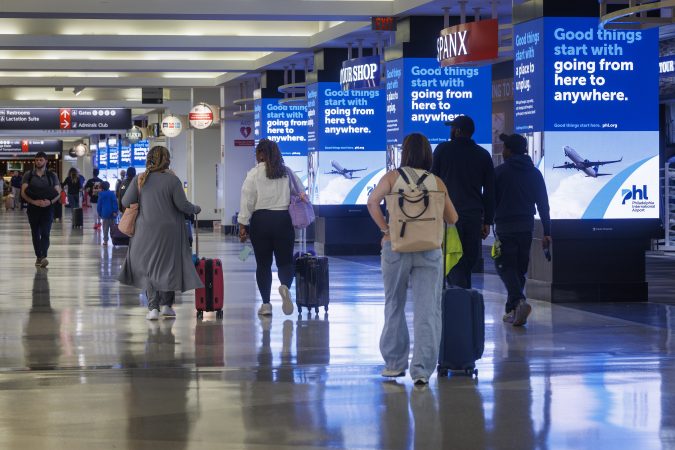
Southwest Airlines’ new route between Philadelphia International Airport (PHL) and the Baltimore/Washington International Thurgood Marshall Airport (BWI) is part of the airline’s recent service expansion, which will also add a flight between Philadelphia and Las Vegas. Both new offerings begin March 11 next year.
The new flight to BWI will allow Philadelphians to unlock “most of the Southwest network with one-stop service,” said airline spokesperson, Chris Perry, via email, who added that Southwest flights are operated on Boeing 737 aircrafts. Southwest operates more than 70% of flights out of the Baltimore-area airport, which makes it the airport’s top airline by market share. At PHL, it is fourth.
American Airlines and Frontier Airlines already have scheduled flights to Harry Reid International Airport in Las Vegas out of PHL, but no airline currently flies between PHL and BWI, airport spokesperson Heather Redfern said via email on Tuesday.
“PHL is thrilled to be part of Southwest’s latest route network expansion,” said Redfern.
The flight to BWI will be offered twice daily, while the route to Las Vegas will operate on Sunday, Monday, Thursday, and Friday.
A United Airlines plane arrives at a gate while a Southwest airplane takes off in the background at Philadelphia International Airpot on Saturday, March 22, 2025.Elizabeth Robertson / Staff Photographer
The route between PHL and Baltimore was previously served by American / U.S. Airways throughout the 2000s and 2010s, but was discontinued in July 2020, said Redfern.
A roundtrip direct flight between BWI and Philadelphia will cost travelers roughly $343, including taxes and fees, for a basic ticket departing Friday, March 12 and returning Sunday, March 14.
A roundtrip flight on those same days between Philadelphia and Las Vegas will cost a traveler roughly $578 for a basic ticket, including taxes and fees.
Southwest carried over 1.3 million passengers through Philadelphia’s airport in 2025. The largest airline operating out of PHL, American Airlines, transported over 20 million passengers through the airport that year.
A worker was sent to the hospital with life-threatening injuries on Saturday, just days after the EMR scrap metal recycling plant reopened in Camden, following a court ruling.
The next day, an employee working on behalf of EMR was sent to the hospital with“life-threatening injuries,” confirmed Dan Keashen, Camden County spokesperson.
He said the Camden County Police Department is investigating the “industrial accident.”
Emergency response units responded to a report of a male with injuries from an accident inside the EMR facility about 11:30 p.m. Saturday, Keashen said.
He said emergency medical services transported the man to Cooper Medical Center and, as of Tuesday, the workerwas in critical but stable condition.
Camden city spokesperson Vincent Basara confirmed that the Camden Fire Department and EMS were called to the EMR facility on Saturday regarding an injury in the workplace and a person was “taken to the hospital with significant injuries.”
Representatives for EMR did not respond to requests for comment on Tuesday.The company also faced an emergency across the river last week when a blaze broke out at an EMR facility in Darby, Delaware County, prompting air quality concerns.