Tag: topic-link-auto

  • The Philadelphia Parallel Parking Association Championship already has 400+ applicants for 20 tight spots

    The Philadelphia Parallel Parking Association Championship already has 400+ applicants for 20 tight spots

    If you curse people who double-park in West Philly when there’s an open space right there; if you can squeeze your ride into a tight spot in Rittenhouse with a bar full of onlookers waiting for you to fail; or if finding a parking space in residential South Philly is something you actually enjoy, then snagging a spot in the 2026 Philadelphia Parallel Parking Association (PPPA) Championship might be right up your narrow alley.

    But prospective parkers beware — the competition is looking as fierce as a Philly granny determined to get the last parking space near church on Sunday. More than 400 people have already applied for just 20 spots in the city’s first-ever parallel parking competition and applications have only been open for a week, according to PPPA Commissioner Adam Wodka.

    “I always had the sense that this is something that Philly would embrace and a sense that Philadelphians have a particular pride for this skill, but absolutely I’ve been overwhelmed by the response,” Wodka said. “It’s been a joy seeing how passionately people feel about this and I’m really excited for the actual event.”

    Despite similarities in their logos, the PPPA is not associated the Philadelphia Parking Authority (PPA). The latter is a government agency that dishes out more tickets than StubHub, puts on more boots than a Dr. Martens store associate, and is so dramatic it once starred in a reality TV show, and the other one was just made up.
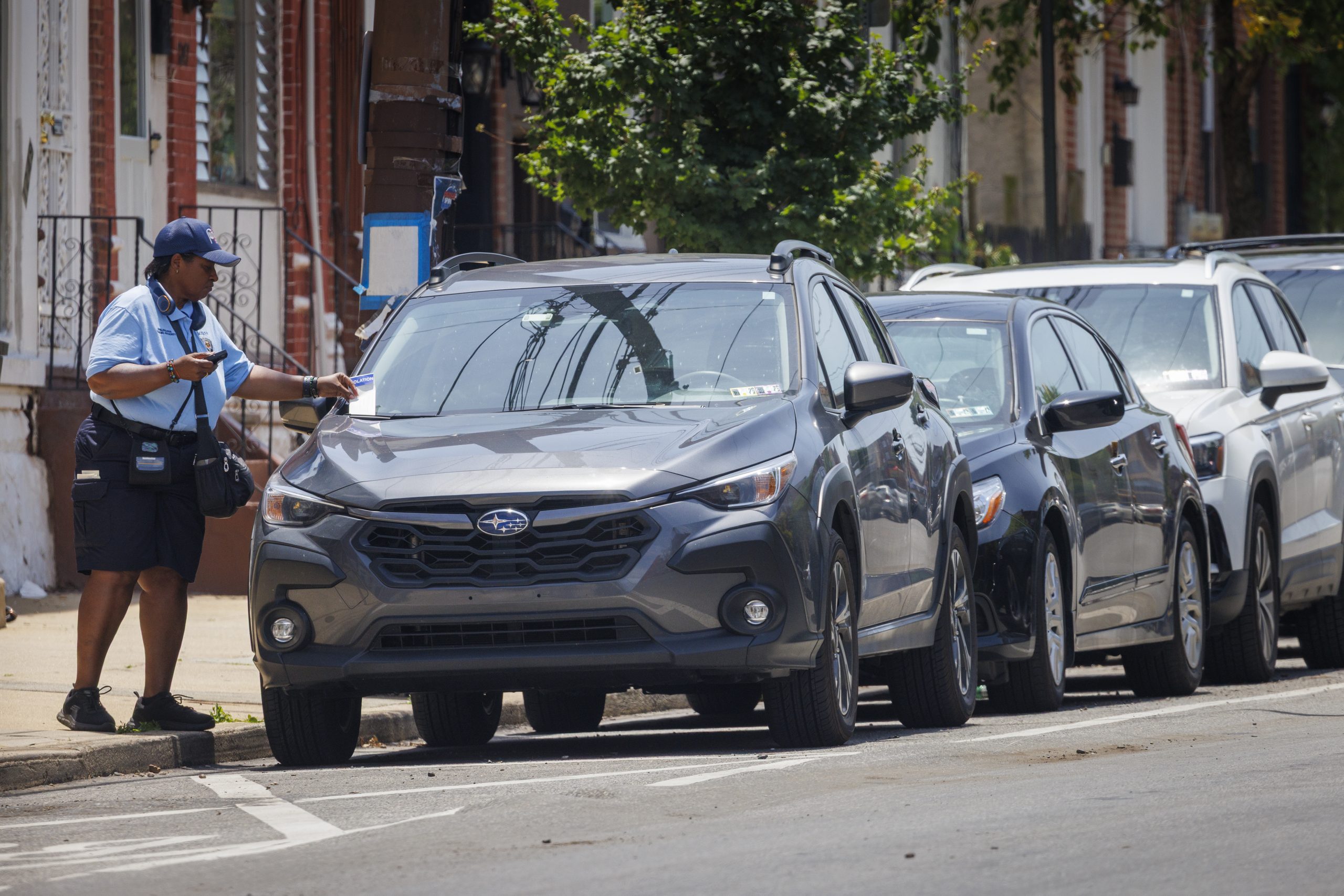
    A Philadelphia Parking Authority officer tickets a car along North 29th Street near Thompson Street in Brewerytown.Alejandro A. Alvarez / Staff Photographer

    Wodka said the idea for the PPPA has percolated in his head for years, beginning with his frustrations over poor parallel parking practices on his own South Philly block that led to a reduced number of spots.

    His desire to get people to park more efficiently inspired talks with a friend about starting a parallel parking competition. When he learned Pittsburgh has held one for the last five years, Wodka knew he had to create one for Philly.
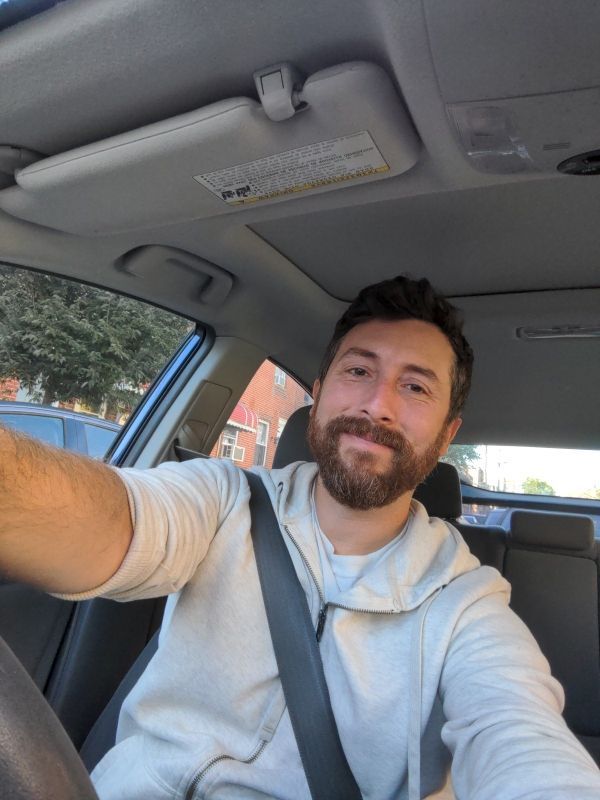
    Philadelphia Parallel Parking Association commissioner Adam Wodka behind the wheel.Courtesy of Adam Wodka

    He began planning in earnest about five months ago, put seven of his friends on the PPPA executive board, and named himself the commissioner. This might be considered corruption in other cities, but it’s pretty low on the scandal scale when it comes to Philadelphia parking agencies.

    The PPPA debuted on Instagram on May 9 with a post that said “Promoting excellence in parallel parking since right now.” Subsequent posts have included an image of a sedan in the style of Leonardo da Vinci’s Vitruvian Man and parallel parking affirmations like, “They’re not honking at me. They’re cheering me on.”

    On its accompanying website, the PPPA describes itself as “an independent organization dedicated to promoting excellence in parallel parking in the country of Philadelphia.”

    The site includes the association’s stance on parallel parking techniques (“Signal before slowing. The turn signal is a declaration, not a formality”) and its official position on things like backup cameras (“Permitted in daily driving. Permitted in competition”).

    The use of backup cameras in the competition has been a particular cause of consternation among online commenters, especially those who learned to drive without them. Wodka said he will take the issue before the PPPA board prior to the competition.

    “To me [the backup camera] has been around for a while and it’s part of driving now, but I totally understand and learned how to drive before that existed,” he said. “I think we’re trying to think of a way that we can honor that as well … We are balancing all these amazing ideas on all the different subtle elements and factors of parallel parking.”
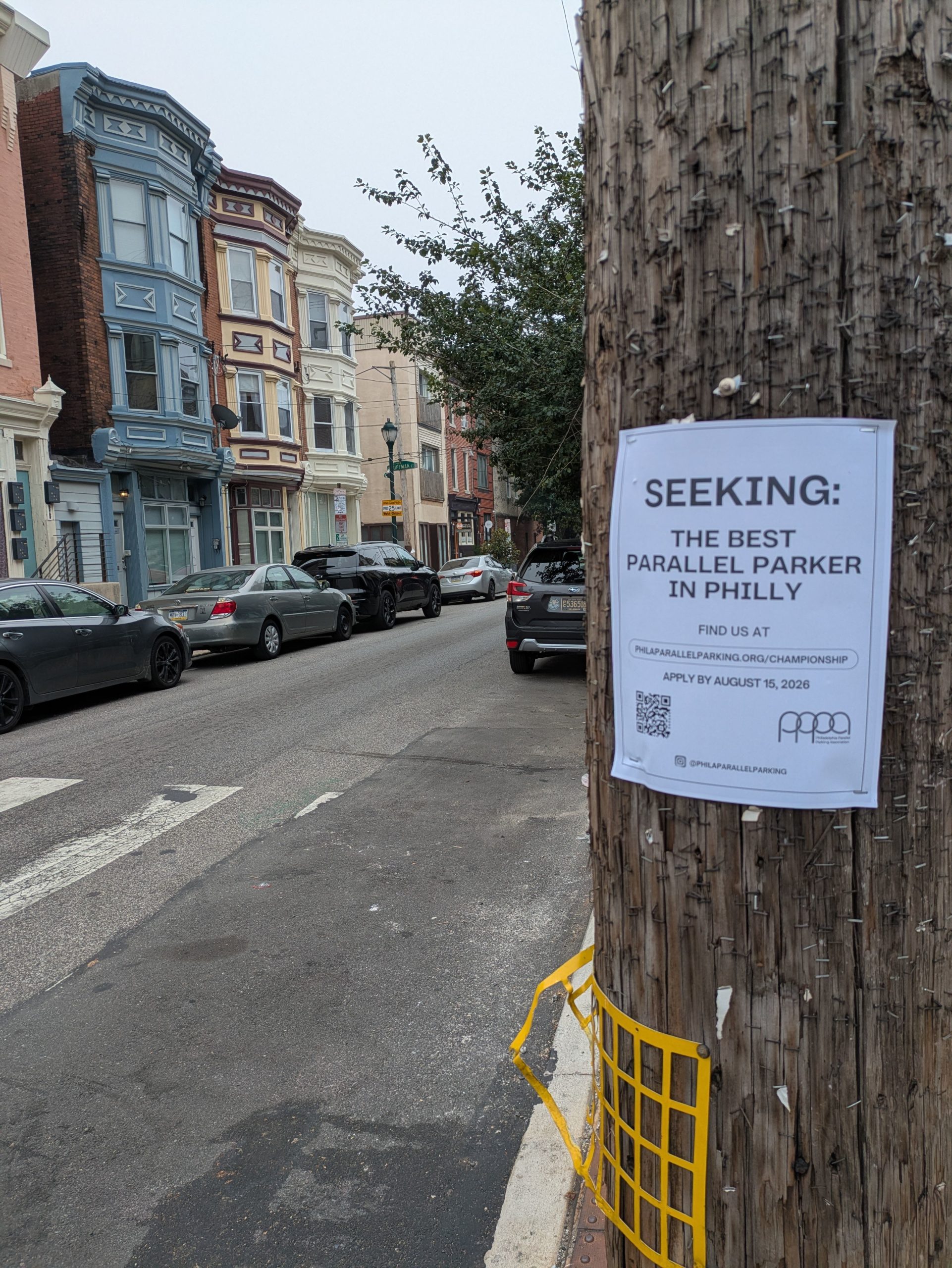
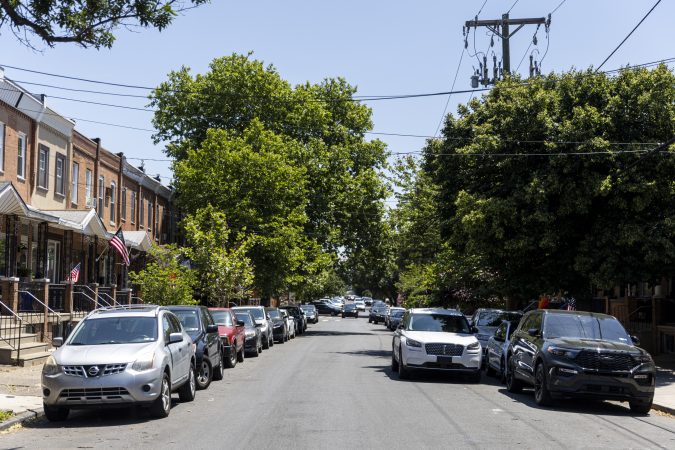
    A sign advertising the 2026 Philadelphia Parallel Parking Association Championship is affixed to a pole across from some fine examples of parallel parking in the city.Courtesy of Adam Wodka

    The PPPA is considering two locations for the contest. The ideal venue will have both a large gathering space, like a parking lot, and it will be closely situated to a Philly street for an authentic parallel parking experience, Wodka said. He declined to name the streets under consideration.

    “I don’t want people going to practice before the competition,” he said

    Once the venue is chosen, the date for the championship — which will be held on a weekend in September or October — will be solidified.

    How it will go down

    Contestants are required to use their own vehicles and they will compete in three categories:

    • One shot: Get closest to the curb in one attempt.
    • Tight squeeze: With 12 inches of clearance, park within six inches of the curb using the least amount of moves (Warning: Wodka is considering shortening the clearance length to 3 or 6 inches).
    • Under duress: Park as fast as you can while faced with distractions and barriers.

    Wodka said the under duress category will force drivers to face the ultimate Philadelphia parking dilemma.
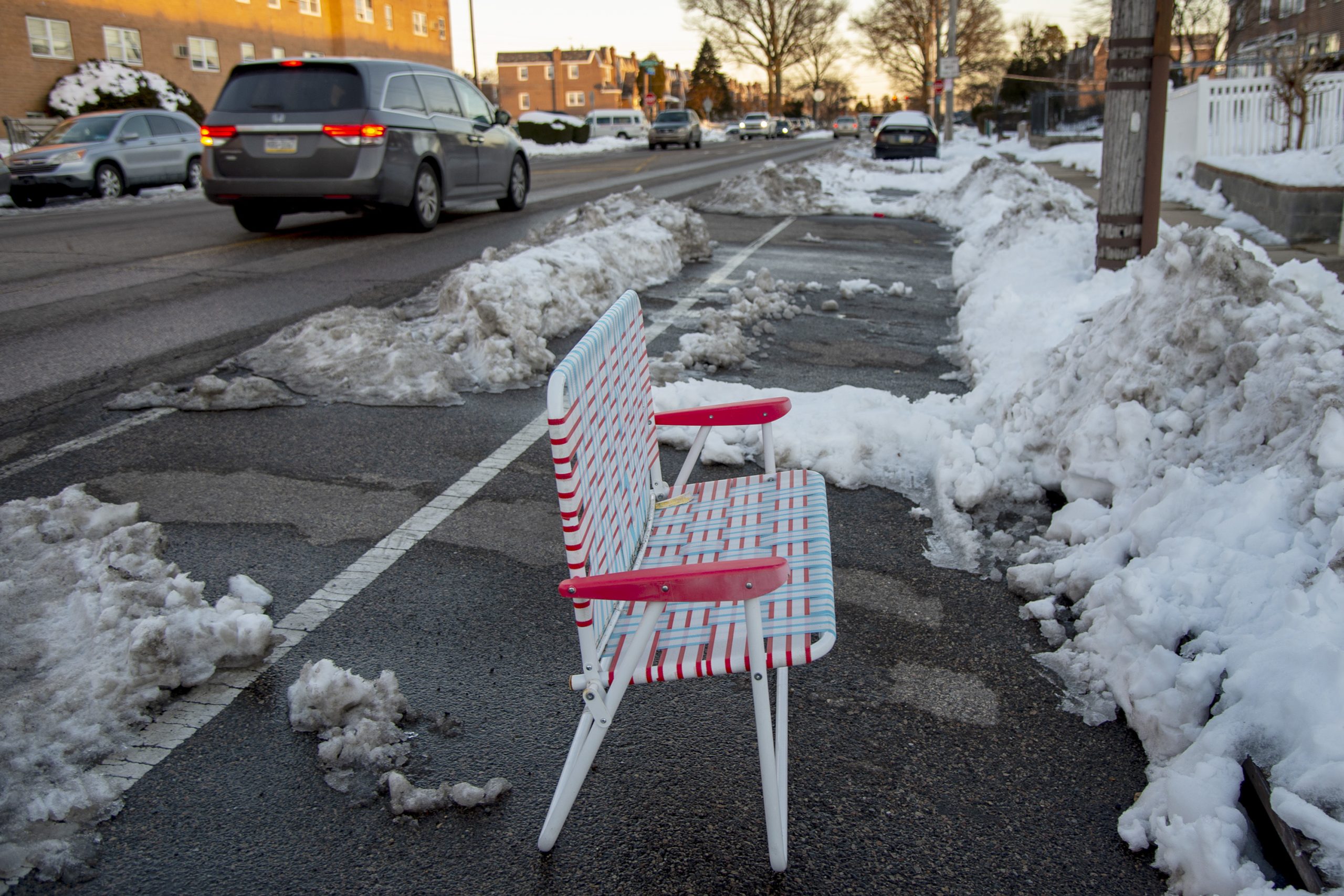
    A parking space marked with a “savesies” chair, as seen here in Northeast Philly, will be one of the challenges contestants in the 2026 Philadelphia Parallel Parking Association Championship must face. TOM GRALISH / Staff Photographer

    “Let’s be honest, it’s one of the most notorious and controversial aspects of parallel parking in Philly — there’s got to be a savesies cone or chair already in the spot and somebody next to it saying, ‘Hey! I’m saving that for my granddaughter don’t move that!’ and there might be a car behind you honking, a truck with sirens nearby, and other special distractions,” he said.

    What won’t be on the test: parallel parking in the Broad Street median.

    “Talk about controversy! That’s a level-two expert category,” Wodka said. “I have never even done Broad Street.”

    Cars parked in the median along South Broad Street.Tyger Williams / Staff Photographer

    Judges will score each contestant on a 10-point scale based on speed, competency, proximity to the curb, and flair. The three drivers with the highest total score will move on to the final round, a “pure show me what you got,” where one will be crowned Best Parallel Parker in Philadelphia 2026, Wodka said.

    Precise parallel parkers primed to participate can apply online on the PPPA’s website. Candidates must live in Philadelphia and are required to provide their years of parallel parking experience and the make, model, and year of their vehicle. Drivers are also encouraged to write about what parallel parking means to them and provide a 60-second video or audio clip detailing how they know they’re a peerless parallel parker.
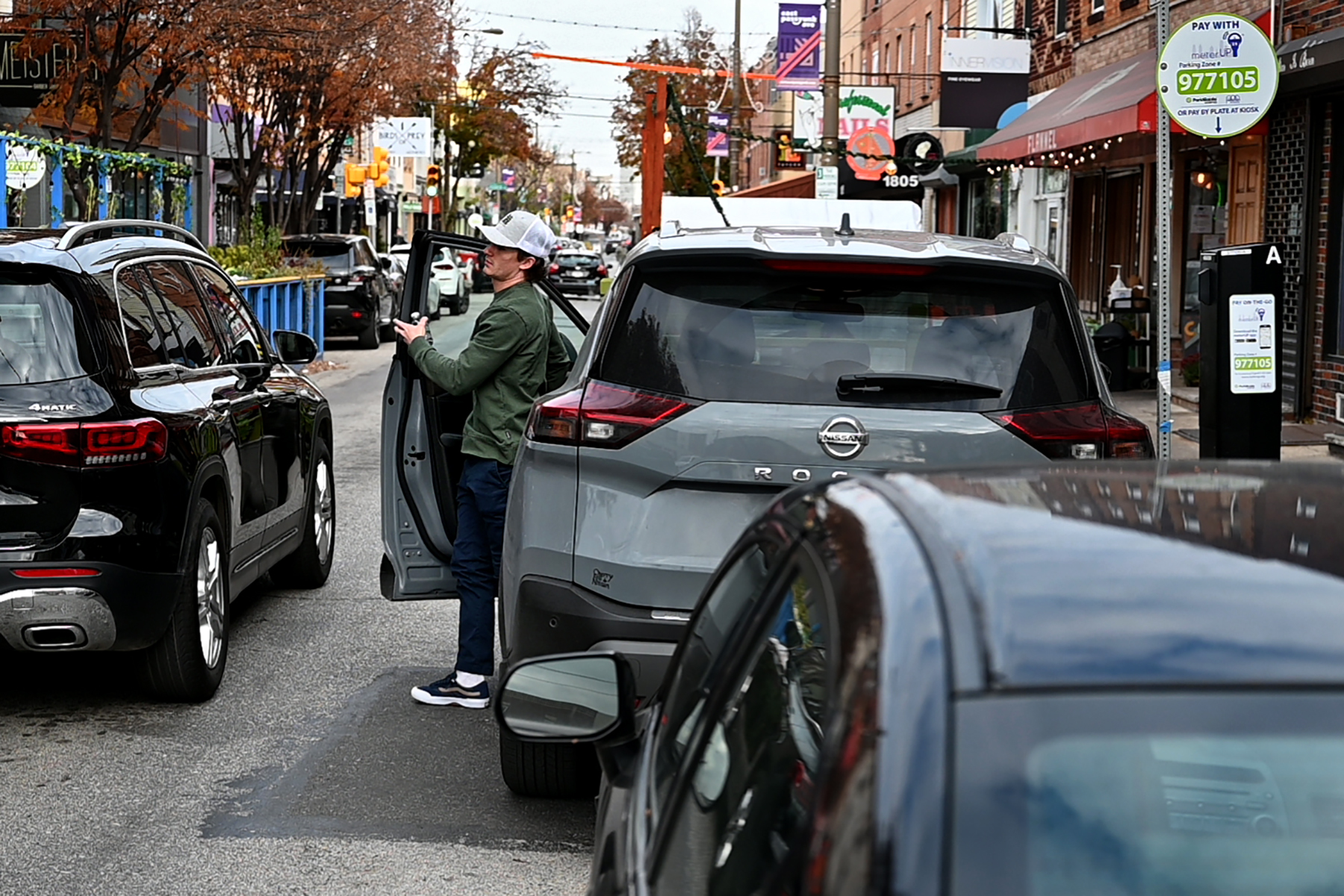
    A motorist exits his car after parking his vehicle along Passyunk Avenue in South Philly in November 2021.TOM GRALISH / Staff Photographer

    According to Wodka, more than 170 people have already submitted video or audio files with their application.

    “Some people are handing their camera off to someone else to video them parking, some people are telling a little story about getting applause or a passenger expressing doubt and then amazement when they’re able to fit inside,” he said.

    The championship will have three judges and Wodka is hoping some Philly-area celebrities with a good sense of humor and appreciation for parallel parking might volunteer.

    While the PPPA hasn’t approached actor Ryan Phillippe yet, it did repost an Instagram video of the actor, who’s a native of New Castle, Del., being impressed by his buddy’s epic Philly parallel parking job in the tightest of spaces this April.

    “He really did that. With relative ease,” Phillippe commented on the PPPA’s post.

    The winner of the 2026 PPPA Championship will receive Best Parallel Parker in Philadelphia bragging rights for a year and a trophy that will include a piece of a curb (what curb is still TBD).

    “As a cash prize we’ll be offering $76, which will essentially cover your next parking ticket,” Wodka said.

    Deadline for applications is Aug. 15.

    “I want Philly people with confidence to apply, that Philly every person who grew up with this as a part of their everyday life and now it’s time to be recognized for it,” Wodka said.


    For more information about the PPPA or to sign up for the championship, visit philaparallelparking.org
  • 5 mosquito-fighting methods that work and 4 that don’t

    Layering on the bug spray might be the first thing that comes to mind when you think about avoiding itchy mosquito bites and the diseases that can come with them. But that’s far from the only tactic that mosquito experts use to minimize bites.

    For starters, Eva Buckner, an assistant professor and state extension specialist at the UF/IFAS Florida Medical Entomology Laboratory, recommends taking a step back and considering the source of the bugs, especially if you live in a home with a yard, deck, or other outdoor areas. Your No. 1 move, she said, is to clear the pockets of water that might be luring the bugs to your space in the first place.

    From there, she recommends a variety of products to repel the biting adults — some of which you might already have at home.

    Remove standing water and set traps

    “Mosquito eggs require water to hatch, and the larval stage is aquatic,” Buckner said. Walking around your home once a week and dumping even the smallest amounts of standing water — for example, in plant pot saucers, dog pools, tarps, or garbage can lids with indentations — can eliminate mosquito larvae and cut down on the habitat necessary for adult mosquitoes to breed, she said. A chat with your neighbors to make sure they’re doing the same can also go a long way toward reducing the number of biting adults that end up in your vicinity.

    If there’s a source of standing water near your home that you can’t or don’t want to remove, such as a bird fountain or pond, Buckner suggests tossing in mosquito bits (granules) or mosquito dunks (doughnut-shaped disks) once a month. These contain Bacillus thuringiensis israelensis, or Bti, a bacteria that can kill developing mosquito larvae without harming other wildlife.

    You can also make a DIY mosquito trap by filling a dark bucket with water and some leaves, and popping in a mosquito dunk. Female mosquitoes will be drawn to the bucket to lay their eggs, but the Bti will ensure they never hatch.

    Use EPA-registered repellent sprays, wipes, gels, and lotions

    The same active ingredients that repel mosquitoes in EPA-registered bug sprays can be found in other topical formats such as lotions, gels, and wipes — and to similar effect, said Buckner.

    “I like using products that contain DEET, which I know may not be everyone’s favorite ingredient because it can be a little oily-feeling and may damage plastics,” Buckner said, such as eyeglass frames, watch faces, and synthetic clothing, but “it is the absolute gold standard for preventing mosquito and tick bites.”

    If you’re looking for another option, she recommends products containing the following EPA-approved ingredients for this purpose: picaridin, a synthetic chemical mimicking compounds in black pepper plants; oil of lemon eucalyptus (OLE); para-menthane-diol, the active compound in OLE that can be synthesized in a lab; or IR3535, a synthetic compound similar to a natural amino acid.

    Among the above choices, the best format is just a matter of personal preference, Buckner said.

    Try permethrin-treated clothing

    Loose-fitting long-sleeve shirts and pants are a great defense against mosquitoes because “they create an effective barrier between you and the mosquito proboscis,” or its tubelike mouthpart, Buckner said. If you’re wearing tighter-fitted clothing, it may pierce right through it.

    To make it less likely that a mosquito approaches you in the first place, you could also wear clothing that’s been treated with permethrin, a synthetic insecticide that mimics a repelling compound naturally found in chrysanthemums, Buckner said. (It can also ward off ticks.)

    You can buy clothing that’s been pretreated with permethrin, or if you want to save some money, you could buy a 0.5% permethrin spray and spritz down a couple articles you own.

    Buckner emphasized following the package instructions when using any at-home permethrin product. It’s important to wait until treated clothing is dry before wearing it and to avoid using permethrin directly on your skin as it can be severely irritating.

    Permethrin is generally safe for dogs but can be highly toxic for cats. However, once a spray has dried onto clothes, it should be fine. Just make sure to use caution.

    Buy spatial and clip-on emanators

    These devices create a bubble of protection by slowly releasing an invisible, odorless vapor containing a mosquito-deterring ingredient. The key is to look for ones that have the chemical actives metofluthrin, transfluthrin or d-allethrin, Buckner said. Thermacell and Off! make several versions, including tabletop and patio lanterns — which can create a protective cloud spanning the surrounding 15- to 20-foot space — as well as smaller battery-powered devices and clip-ons you can take or wear on the go.

    Spatial emanators, also called spatial repellents, are most effective in still, non-windy conditions, Buckner noted, when the chemical cloud is less likely to be dispersed or blown away. Unless you’re holding or wearing a clip-on emanator, it’s also best to stay close to the emanating device, she added. The farther away you move, the less coverage you’ll receive.

    Set up a box or oscillating fan

    If you’ll be staying in one place for a while, for instance having dinner in your backyard or hanging out on the porch, it’s worth setting a big box or oscillating fan nearby, whether on a table or the ground.

    “Mosquitoes aren’t super strong fliers,” Buckner said.

    The breeze created by a fan set on high speed can make it tricky for mosquitoes to fly near you and land, or may even physically push them away from you, she explained. (If you’re already using a spatial emanator, however, it’s best not to involve a fan, too, as the extra airflow could blow away the protective scent cloud.)

    Repellent products to skip

    Combining any number of the above repellents will give you a supercharged dose of protection.

    What won’t help, however, is opting for the below products and tactics, which Buckner said aren’t proven, effective mosquito solutions:

    • Candles, wristbands, clip-ons, and topical repellents using botanical oils like citronella, geranium and peppermint. While these plant oils do have repellent properties, they evaporate rapidly, making them poor substitutes for EPA-registered repellents. (Different from these raw oils, the EPA-registered oil of lemon eucalyptus is an extract that’s been chemically refined to increase the concentration of the bug-repelling compound within it.)
    • Bug zappers, which use light to attract bugs and then electrocute them. “They might kill some mosquitoes, but they’re also going to kill any other insect or arthropod that is attracted to light,” Buckner said, “so they can have a lot of non-target effects.”
    • Mosquito-repelling plants. “For essential oils to have repellent properties, they have to be extracted from the plant and then concentrated by up to 10 or 20 percent,” Buckner said. So a plant that’s still in the ground won’t reliably ward off bugs.
    • A bat box. “Bats want to eat something that offers a high caloric intake, so they’re more likely to go for a big, juicy moth vs. a scrawny mosquito,” Buckner says. “I love bats and want to support their conservation — but they’re just not going to be your solution for mosquito control.”
  • Garrett Brown, who made Rocky’s run up the Philadelphia Museum of Art steps possible, is the subject of a new documentary

    Garrett Brown, who made Rocky’s run up the Philadelphia Museum of Art steps possible, is the subject of a new documentary

    What is common to the Rocky run sequence up the Philadelphia Museum of Art steps, the hedge maze scene in The Shining, aerial shots of football games, and underwater footage of Olympic swimmers?

    They were all made possible thanks to the same Philadelphia-area inventor.

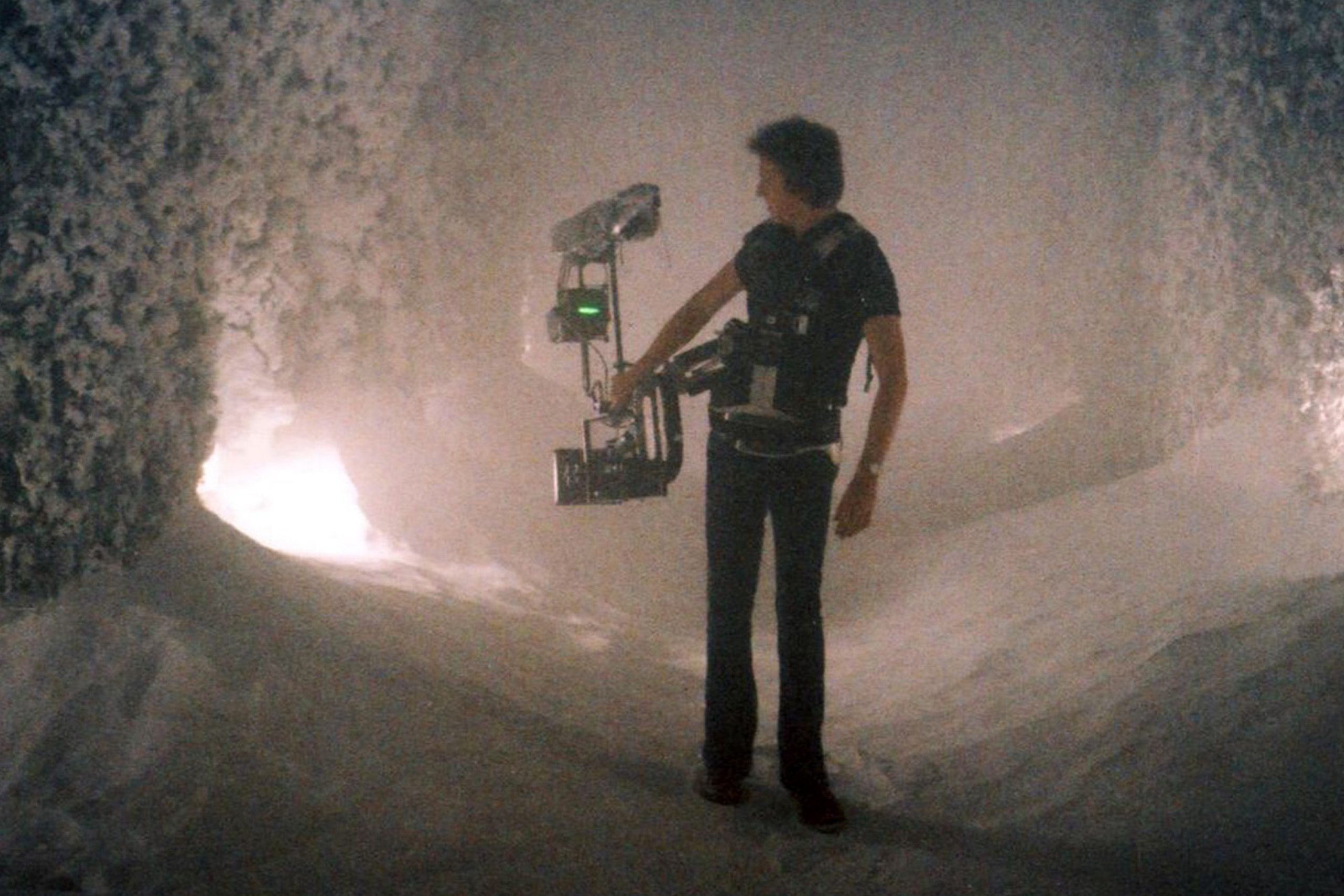
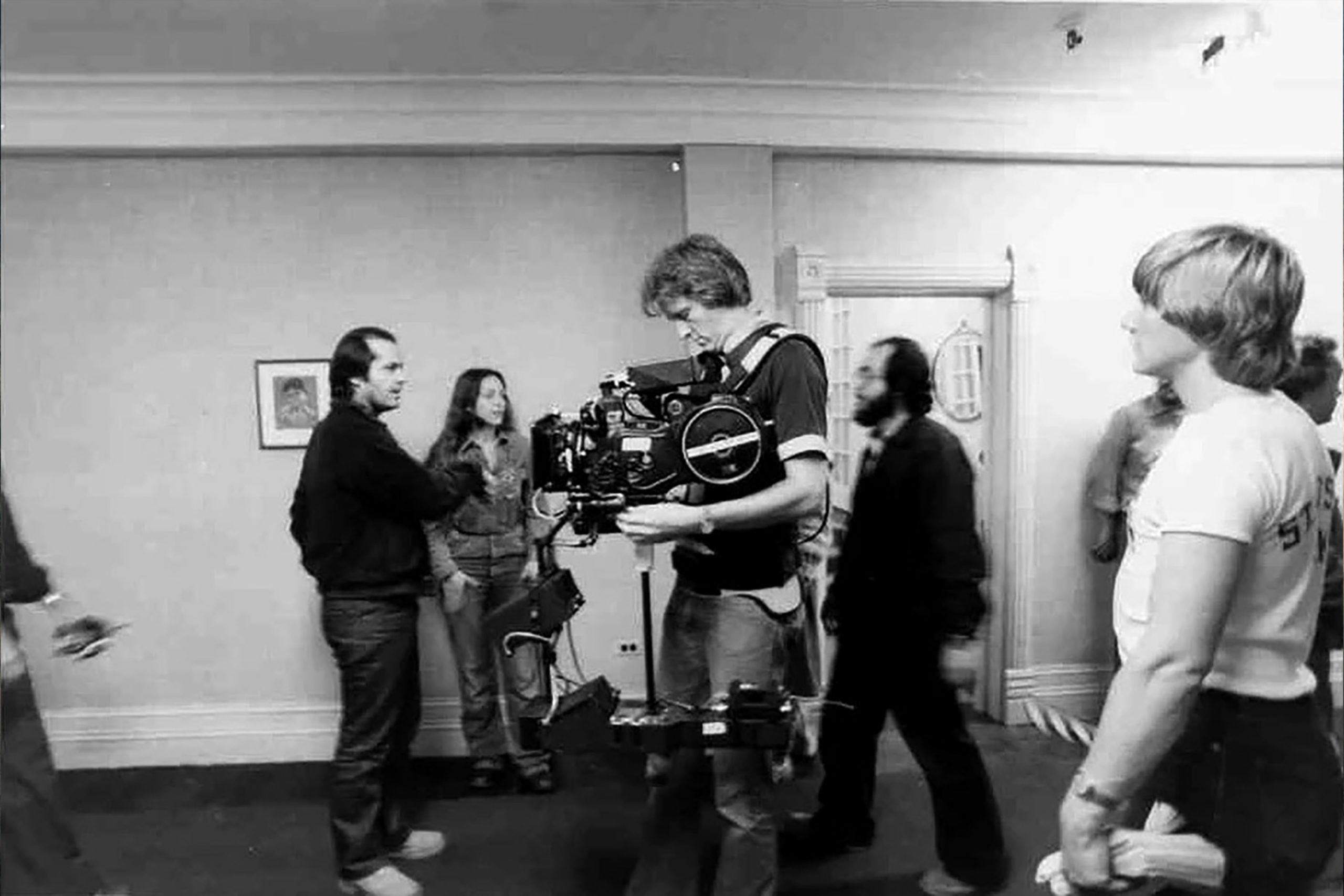
    Oscar-winning cinematographer Garrett Brown invented several camera systems, most notably the Steadicam, a wearable camera rig that allows for stable running shots without any shakiness. That creation, introduced in 1975, revolutionized filmmaking, and now the Philadelphia native’s story is the subject of a documentary Thank You, Mr. Brown.

    “He’s a really smart, wise individual, but also just a very humble down-to-earth guy who is very open about daring things and making sure he’s a part of the community,” said director Andrew Schwartz, a longtime friend of Brown’s.

    Garrett Brown on set of “The Shining” (1980).Courtesy of Garrett Brown

    The two met when Schwartz started teaching at Steadicam workshops around two decades ago in Yellow Springs in Chester County. Brown was always present, he said.

    The documentary, currently being filmed in Philadelphia and produced by EBE Productions, includes interviews with Brown and other filmmakers, actors, sports broadcasters, and camera operators.

    This includes cinematographer Larry McConkey, best known for shooting the three-minute single shot of the Copacabana in Goodfellas. Francis Ford Coppola, who worked with Brown on One From the Heart, serves as an executive producer.

    “[Coppola] doesn’t normally do that for a lot of people and I think it just goes to demonstrate the type of relationship Garrett has fostered in the film industry and with people he worked with,” Schwartz said. “Knowing Francis’ career, this is another guy who’s really paved his own path in his own way and has demonstrated that same daringness and persistence toward his ideas with a somewhat relentless nature.”

    Brown, 84, was born in Long Branch, N.J., grew up in Haverford, and lives in the Philadelphia area. He was a folk singer until a friend gifted him a Bolex camera. Before long, Brown decided he wanted to work in the movie business and create something that had never been made before.

    “He basically locked himself in a motel room trying to figure out how to get a camera to be steady,” said William Forbes, one of the film’s producers. After creating a multitude of prototypes, Brown finally landed on something special.

    And that’s how the Steadicam was born.

    One of the earliest Steadicam shots is a demo reel of Brown’s wife, Ellen Shire, running up and down the steps of the Philadelphia Museum of Art, which convinced Rocky filmmaker, John G. Avildsen, to use Brown’s new contraption. The Shining followed, and Brown’s career got its jump start.

    Garrett Brown filming the hedge maze chase scene in “The Shining” (1980).Courtesy of Garrett Brown

    The Steadicam stabilizes a shot through three main components: the vest, the arm, and the sled. The vest is what the camera operator wears and the arm is what is attached to the vest. It allows the operator to move the camera around. The camera sits atop the pole-like “sled” and all of these come together to absorb the shock as the camera operator runs.

    “Everyone we talk to echoes the same sentiment, which is that there’s a before-Steadicam and an after-Steadicam when it comes to filmmaking and sports broadcasting,” said Forbes. “You can see the imprint of [Brown’s inventions] on all these new technologies that come out, from legacy movies like Avatar or smaller things like the GoPro, and all these little things that people are trying to be able to have new visual language in film.”

    Brown has patented several key camera systems that have been revolutionary in the world of sports broadcasting. The SkyCam, for example, shoots football games from above; the DiveCam tracks divers; and the MobyCam tracks Olympic swimmers underwater as they move across the pool.

    Michael Phelps, Forbes said, wouldn’t have won his gold medals if it weren’t for the MobyCam. The camera tracking “was able to show his fingertips touching just before another guy, which gave him his eight gold medals,” referring to Phelps’ historic sweep at the 2008 Beijing Olympic Games.

    Brown founded the Steadicam Operators Association in 1988, through which he and other camera operators teach workshops on using the machinery, working with new operators, and finding ways to alter the technology.

    More than 50 years after introducing the Steadicam, Brown is still not done tinkering with it.

    Garrett Brown being interviewed for “Thank You, Mr. Brown.”Courtesy of EBE Productions

    “We’ve made incredible movies that we tell each other on screen even through sports that we watch,” said Schwartz. “Garrett very much brought us closer to communicating that way with the tools he made.”

    A lot of Brown’s story, he said, “is one thing to the next and an evolution that was somewhat accidental at times because he was just going on an adventure. I hope people are inspired by his story as much as they are educated by it.”

    A release date for Thank You, Mr. Brown is yet to be announced.

  • As 6abc’s broadcast license is threatened, it is urgent to protect the freedom of the press

    As 6abc’s broadcast license is threatened, it is urgent to protect the freedom of the press

    President Donald Trump and his appointees are obstructing the free press. Calling reporters the enemy of the state; suing newspapers that publish things he doesn’t like; demanding that television stations fire hosts; arresting and serving reporters with subpoenas — the attacks are real and often successful.

    It’s hard to know what to do to protect freedom of the press, but in the Delaware Valley, there is a clear, straightforward action we can take to fight Trump’s censorship.

    The Federal Communications Commission (FCC) is trying to exert control over which news gets on the air by threatening to withdraw the broadcast licenses that are required for stations to transmit their signals over the airwaves. Locally, it is reviewing the license held by WPVI, or 6abc.

    Why ABC stations? Trump has long tried to force the Disney-owned company (which also owns the ABC network) to pull two shows that have been critical of him and his administration: The View and Jimmy Kimmel Live! — which both air on WPVI.

    Unlike other attacks on the media, this one we can stop.

    The FCC must seek “community input” before arriving at any decision about the fate of WPVI’s broadcast license. You can tell the FCC to stop attacking the free press by clicking here and filling out the one-page form. Take time to tell the Trump administration and the FCC that freedom of the press is a foundational principle.

    A free press was so important to our “Founding Fathers” that it was listed in the First Amendment of the Bill of Rights: “Congress shall make no law respecting an establishment of religion, or prohibiting the free exercise thereof; or abridging the freedom of speech, or of the press; or the right of the people peaceably to assemble, and to petition the Government for a redress of grievances.”

    Disney and WPVI are not perfect. There is plenty not to like, but the solution to the problem of corporate-controlled news is to break up the corporate giants, not to replace them with other corporate giants that will support Trump.

    Trump’s threatened control of news media is almost unfathomable.

    One of Trump’s first acts in his second term was to remove FCC commissioners who were loyal to the Constitution, not to him. Then Trump began limiting access to press briefings. In February 2025, Associated Press reporters were indefinitely barred from press events after refusing to use the president’s preferred term “Gulf of America” instead of “Gulf of Mexico.”

    The same year, CNN, NPR, NBC News, the Hill, Politico, the New York Times, and the Washington Post were denied Pentagon office space, and in September, the U.S. Department of Defense, which Trump renamed the Department of War, required reporters to sign a pledge promising not to use material even if it was unclassified. Secretary of Defense Pete Hegseth further barred the Associated Press, Reuters, and Getty Images photographers from attending Iran war briefings.

    The administration has arrested reporters for covering news, deported others for critical coverage, raided reporters’ homes, and threatened reporters with arrest for not revealing sources.

    It’s unbelievable that those conservatives who so often talk about the original intention of the Constitution are silent as Trump destroys the constitutionally mandated freedom of the press.

    It is appalling.

    And too often, we can do nothing to support the free press under attack. This time, we can.

    Lance Haver is the consumer reporter for the Philadelphia Hall Monitor, a worker-owned news service supported by the Lenfest Foundation. Lance@LanceHaver.com

  • South Jersey’s Spencer’s, armed with lava lamps and band tees, plans for a future beyond the mall

    South Jersey’s Spencer’s, armed with lava lamps and band tees, plans for a future beyond the mall

    Pink cheetah-print beer bongs. Fugglers. Studded belts. A fridge full of Red Bull. Band T-shirts and lava lamps galore.

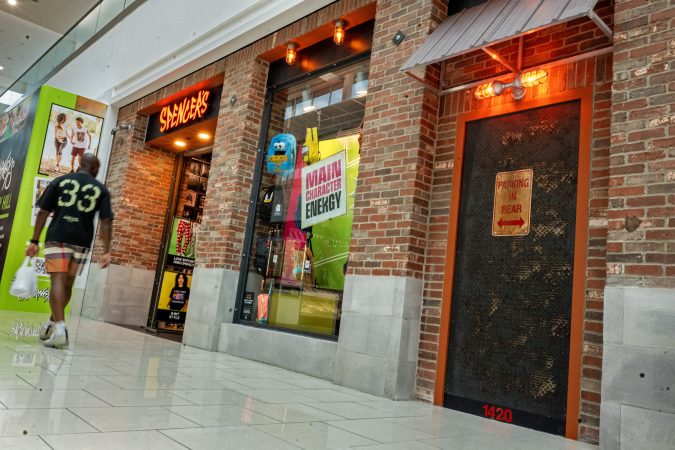
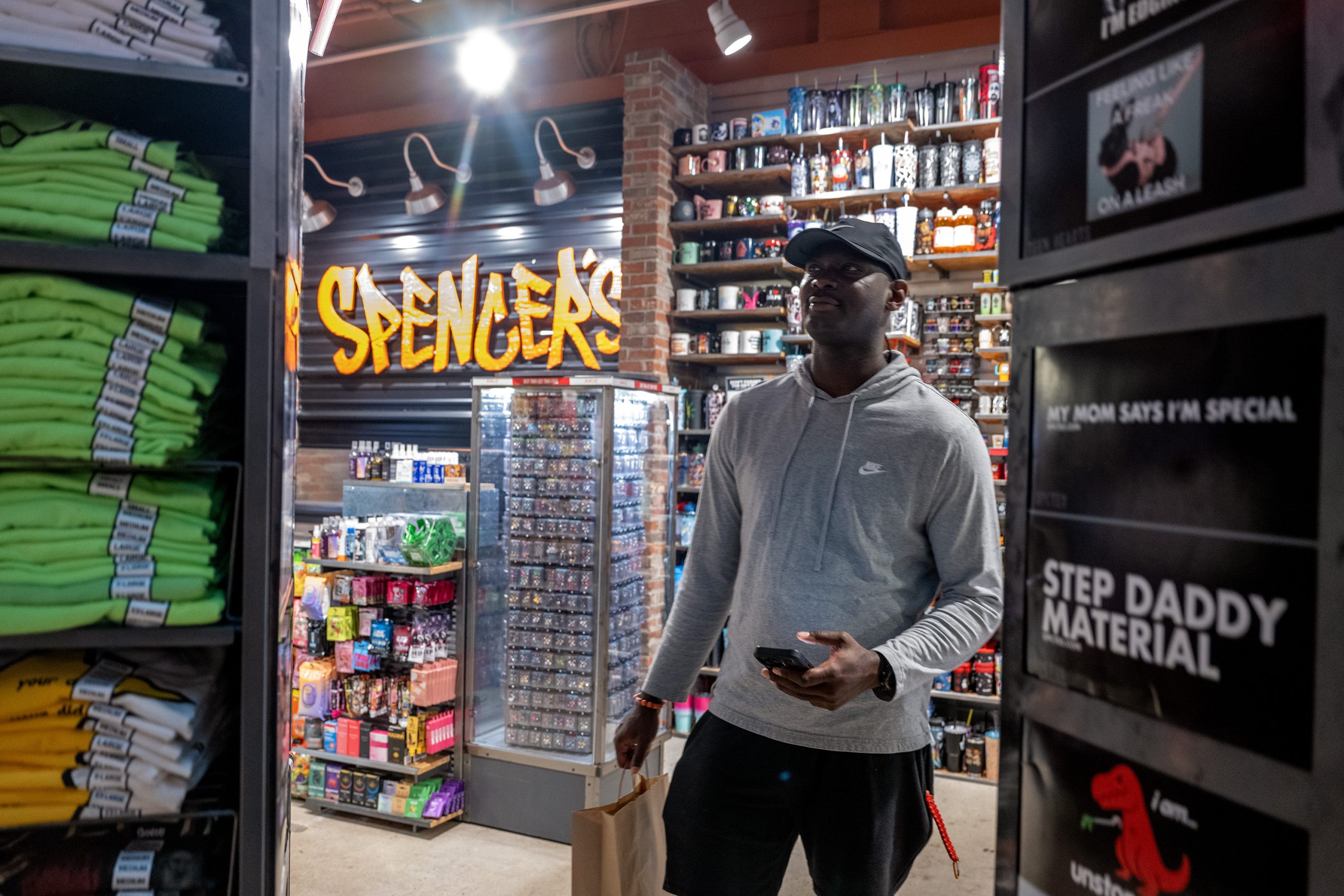
    It’s hard to predict what you’ll spot when you round a corner at Spencer’s, or more specifically, what expletive, hit TV show, or meme will be featured on the next rolling tray. The novelty item retail chain recently moved into a new spot, 1,000 square feet bigger than its last one, in the JCPenney wing of the Cherry Hill Mall.

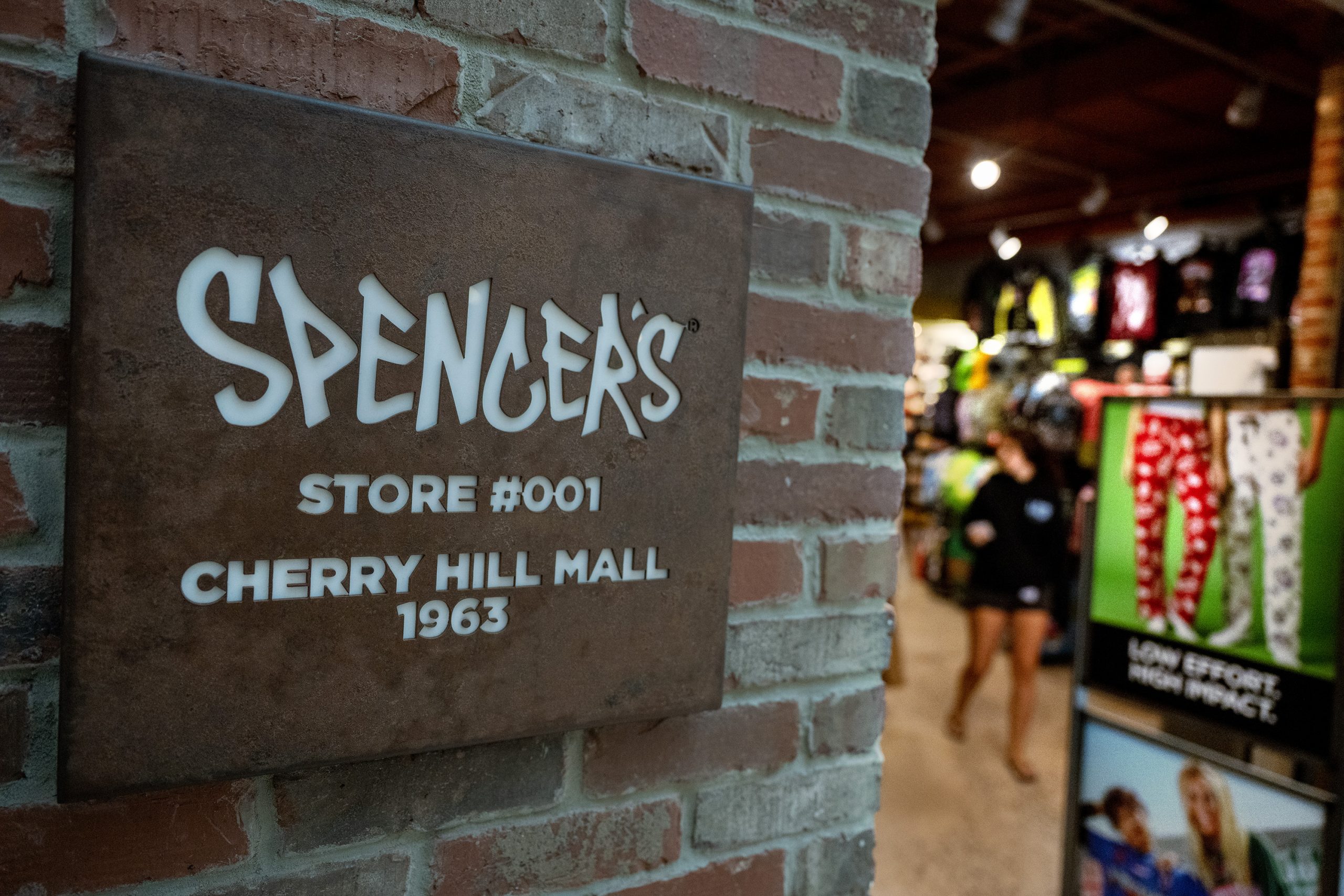
    In 1963, the South Jersey mall gave Spencer’s its first in-person retail store after 16 years as a mail-order catalog.

    Now, Spencer’s is one of Cherry Hill Mall’s last remaining early tenants, and though the gag gifts have changed over the years, the chain remains alive and well, even as mall culture and the ways people shop change across the country.

    The Cherry Hill location is one of hundreds of Spencer’s stores across the U.S. and Canada. While CEO Steven Silverstein declined to share how much Spencer’s made in 2025, he said the company’s revenue has grown 50% since 2019 and benefited from a spike in shopping interest post-pandemic.

    On a rainy Thursday afternoon in July, the store was mostly quiet. Eddie Frazier of North Philadelphia looked for a new T-shirt. One woman bought a lingerie set, and a grandmother stopped in to browse.

    Alex Williams of Mount Laurel said she and her friends have shopped at Spencer’s for years. Since she recently turned 21, Williams said she likes to hunt for novelty shot glasses. Last time she visited, she bought a mini Playboy-themed tumbler.

    “I just like how comfortable everybody is,” Williams said. “They don’t make you feel weird.”

    Alex Williams of Mt. Laurel shops at Spencer’s in the Cherry Hill Mall on July 9. She says she and her friends have shopped at the store for years. Tom Gralish / Staff Photographer

    Silverstein agrees. He has run the parent company of Spencer’s, which also owns Spirit Halloween, since 2003. Spencer’s Spirit Holdings is headquartered in Egg Harbor Township, Atlantic County, a short drive away from the Shore, and has been since the ‘70s. It counts about 700 employees.

    “We’re a South Jersey-based company,” Silverstein said. “I say that with a lot of pride because I think that we belong here.”

    ‘A rite of passage’

    Max Spencer Adler, a U.S. Army Corps bombardier once imprisoned by Germany during World War II, founded Spencer Gifts in Atlantic County in 1947 with “$200 and an idea.”

    That idea, in alignment with the Spencer’s of today, was a bit outrageous. A catalog from 1956 featured “imitation shrunken heads” ($1, or 2 for $1.49 if you were seeking a deal) and a “magic stump remover” ($1.50), a powder that claims to quickly dissolve tree stumps of any size.

    Giant rubber feet and golf tees (spelled “tease”) in the shape of a woman’s body were also available.

    By 1963, the novelty business had bloomed. Adler sent about 14 million copies of the Spencer’s Christmas catalog across the country and opened his first retail store in Cherry Hill, store #001.

    A plaque in the Cherry Hill Mall marks the store as the very first Spencer’s retail shop, #001. Then called Spencer Gifts, it opened in 1963 in the then-brand-new mall. Now Spencer’s has moved to a bigger storefront.Tom Gralish / Staff Photographer

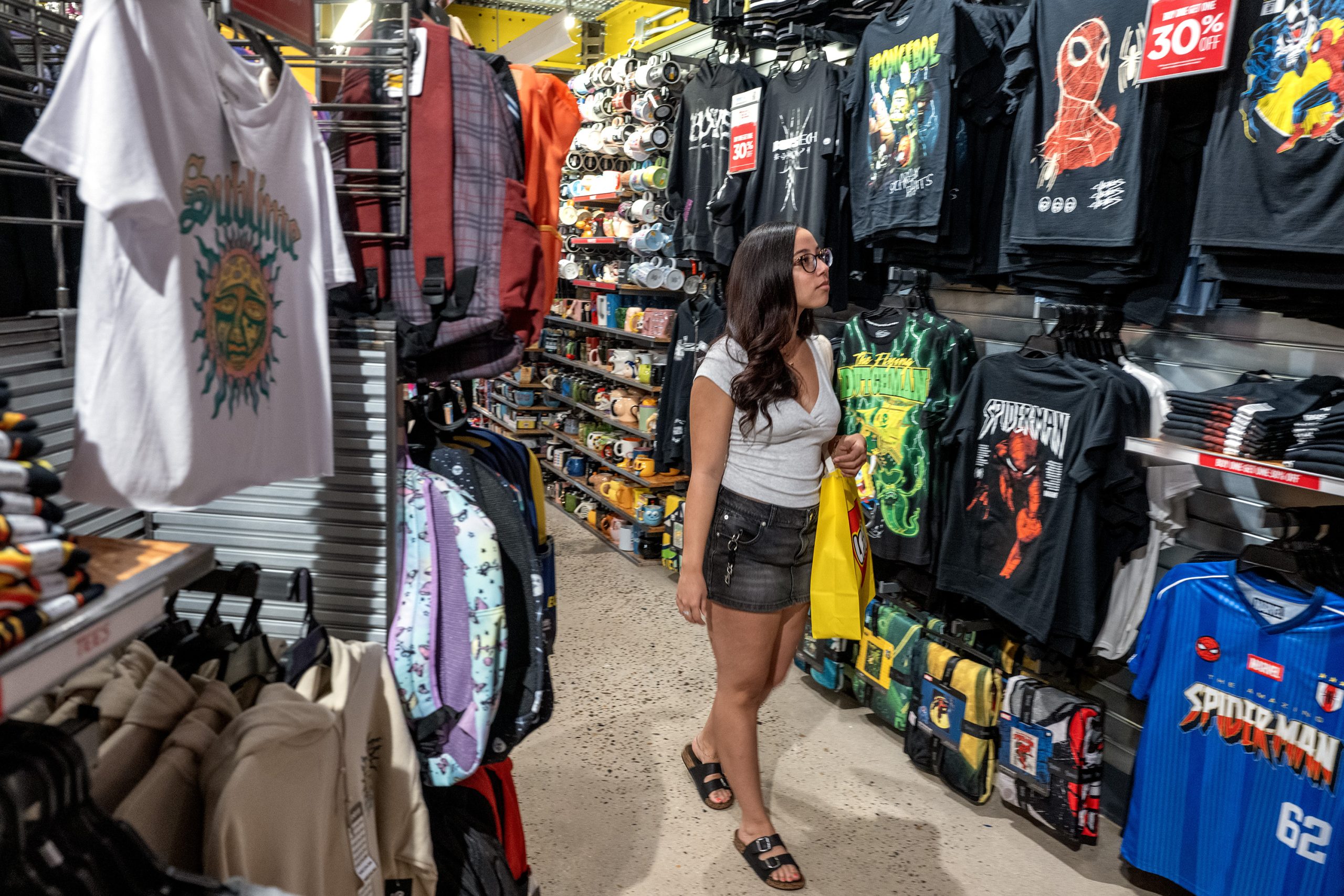
    Since then, Spencer’s physical presence has moved well beyond South Jersey, and teens and young adults have continued to shop for sparkly lava lamps, body jewelry, horror movie dolls, and whatever is trending at the moment. During the July visit, the store featured Dubai chocolate, blind boxes, and plushies from popular TV series.

    “It is a rite of passage,” Silverstein said. “You remember the first time when your mom said, ‘OK, you can go in there, but I’m not going in there with you.’”

    Today the chain has 661 stores across the U.S. and Canada, Silverstein said, a number not dramatically different from previous years. Spencer’s will open 20 stores this year and will likely close the same amount. Its most popular products tend to be its T-shirts, accessories, jewelry, and objects from the sex and wellness section.

    The Cherry Hill location gets about 100 customers on a regular weekday, but more people flood in on weekends and at night, said Danielle Voelkel, the district store manager. Voelkel, who has worked there for 11 years, said sometimes people are hesitant to enter.

    “You don’t always know what you’re coming into the store for, but at the end of the day, there’s something for everyone,” Voelkel said.

    Eddie Frazier of North Philadelphia shops at Spencer’s in the Cherry Hill Mall in early July.Tom Gralish / Staff Photographer

    How Spencer’s survives

    While American mall culture isn’t dead, it has certainly changed, at least in the Philly region. The pandemic turned some malls into ghost towns, and the popularity of online shopping has grown immensely.

    “You could never invent Spencer’s today,” Silverstein said. “It’s just really been that tree that’s been pruned in so many different directions … but somehow works.”

    Spencer’s has found ways to keep moving forward, Silverstein said, by building up in malls that are thriving, such as the Cherry Hill Mall, and reevaluating its place in struggling markets. Spencer’s, like other retailers, has an online store for shoppers who can’t or won’t go in person.

    To stay embedded in the community, employees volunteer at the Community Food Bank of New Jersey, and the chain’s anti-cancer campaign, “Boobies Make Me Smile,” has raised $16.5 million since 2008, Silverstein said. In April, the chain launched a sex education tour to Temple University, Stockton University, and Rowan University. Stockton and Rowan students currently make up half the company’s interns.

    Items for sale at Spencer’s in the Cherry Hill Mall include Chucky dolls and a Stitch plushie from the “Lilo & Stitch” Disney movies. Tom Gralish / Staff Photographer

    Plus, Spencer’s is no longer just for mall rats.

    The chain recently expanded to strip malls and shopping centers, where Spencer’s can’t rely on the fleeting curiosity of mall walkers for revenue.

    “The power of our brand has to be strong enough to be its own destination. … Can we attract an intentional shopper?” Silverstein said.

    Spencer’s has discovered it can, at least right now.

    The chain has opened 50 non-mall locations, Silverstein said, though it’s unclear how they’re performing financially. There are no strip mall spots in Jersey so far, though Spencer’s intends to open a location at Consumer Square in Mays Landing, Silverstein said, about 10 minutes from its Atlantic County headquarters. And some outlets down the Shore already feature Spencer’s, including Jersey Shore Premium Outlets.

    Despite the move beyond malls, Silverstein said the rumors of mall death are greatly exaggerated. Mall culture will keep pushing Spencer’s forward, so long as the chain keeps coming up with original ideas, whether that’s alien-duck shot glasses or Pennywise lava lamps.

    “Retailing is like being a shark,” Silverstein said. “You constantly have to be moving or you die.”

  • South Street’s Tattooed Mom says live music events are on hold indefinitely

    South Street’s Tattooed Mom says live music events are on hold indefinitely

    South Street bar Tattooed Mom is unable to host events with music — ranging from drag shows and burlesque performances to karaoke — indefinitely, following an order from the Department of Licenses & Inspections.

    L&I ordered to bar to cease all events involving music performances in March after a Feb. 17 inspection revealed the bar was operating without a special assembly license, records show.

    Getting one could take months, according to Tattooed Mom owner Robert Perry, and would require the bar to apply for a special zoning exception, a process with a reputation for long delays.

    “I’m not asking for better treatment. I’m not trying to be a victim about this,” Perry told The Inquirer. “But having this process have to grind to a halt or drag out does feel wrong. There should be a better way.”

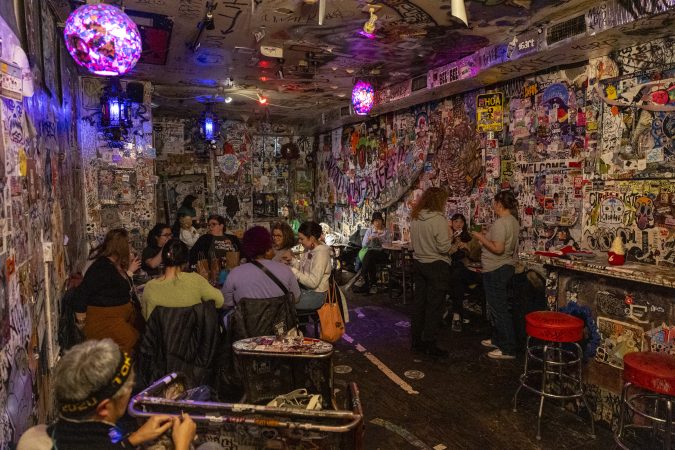
    Perry opened Tattooed Mom in 1997 at 530 South St., where it has developed a reputation among artists — particularly LGBTQ+ performers — as a place to experiment with new work. The bar routinely hosted drag shows, cabarets, and burlesque nights as well as more staid events, such as art markets, craft circles, and stand-up comedy.

    The only hitch: Unbeknownst to Perry, Tattooed Mom hosted many of these events without the correct license.

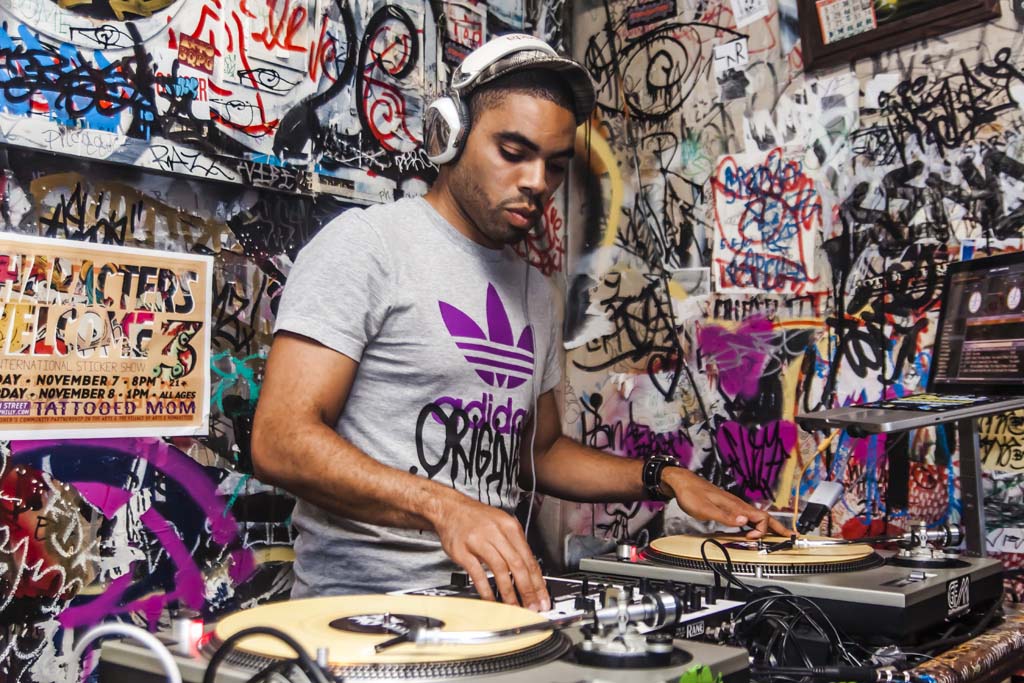
    A DJ spins records during an event at Tattooed Mom in 2014. The South Street will be unable to host DJs, drag performers, or karaoke until it gets a Special Assembly Occupancy License, which could take upwards of six months.

    At least a six-month wait for a solution

    Perry said the issue arose in February, when an L&I inspector visited during the annual Mx. Tattooed Mom pageant, a variety show where drag queens, musicians, and other performers compete. The L&I inspector didn’t ask for a special assembly occupancy license while on site, Perry said. Yet, when he received a copy of the inspection report weeks later, Tattooed Mom was cited for a lack of proper licensure alongside minor fire code violations.

    All Philly establishments that have an occupancy of 50-plus people and offer live or recorded music performances, dancing, or DJs need a special assembly occupancy license. The license costs $253 and is renewed annually, but securing one requires a police recommendation and an entertainment zoning permit, which has a separate and often-lengthy approvals process.

    Perry believed Tattooed Mom was operating lawfully because the bar’s upstairs event space has an occupancy of fewer than 50 people. The violation was a “shocking kind of addition,” he said, “and bigger than what I expected to have to correct.”

    The bar ceased all drag, karaoke, and music events in March, said Perry, canceling upward of 30 performances in order to pass a L&I inspection in April.

    To apply for the license, Tattooed Mom must first secure a zoning exception to host live entertainment since its block’s commercial mixed-use designation (CMX-3) doesn’t automatically allow for it.

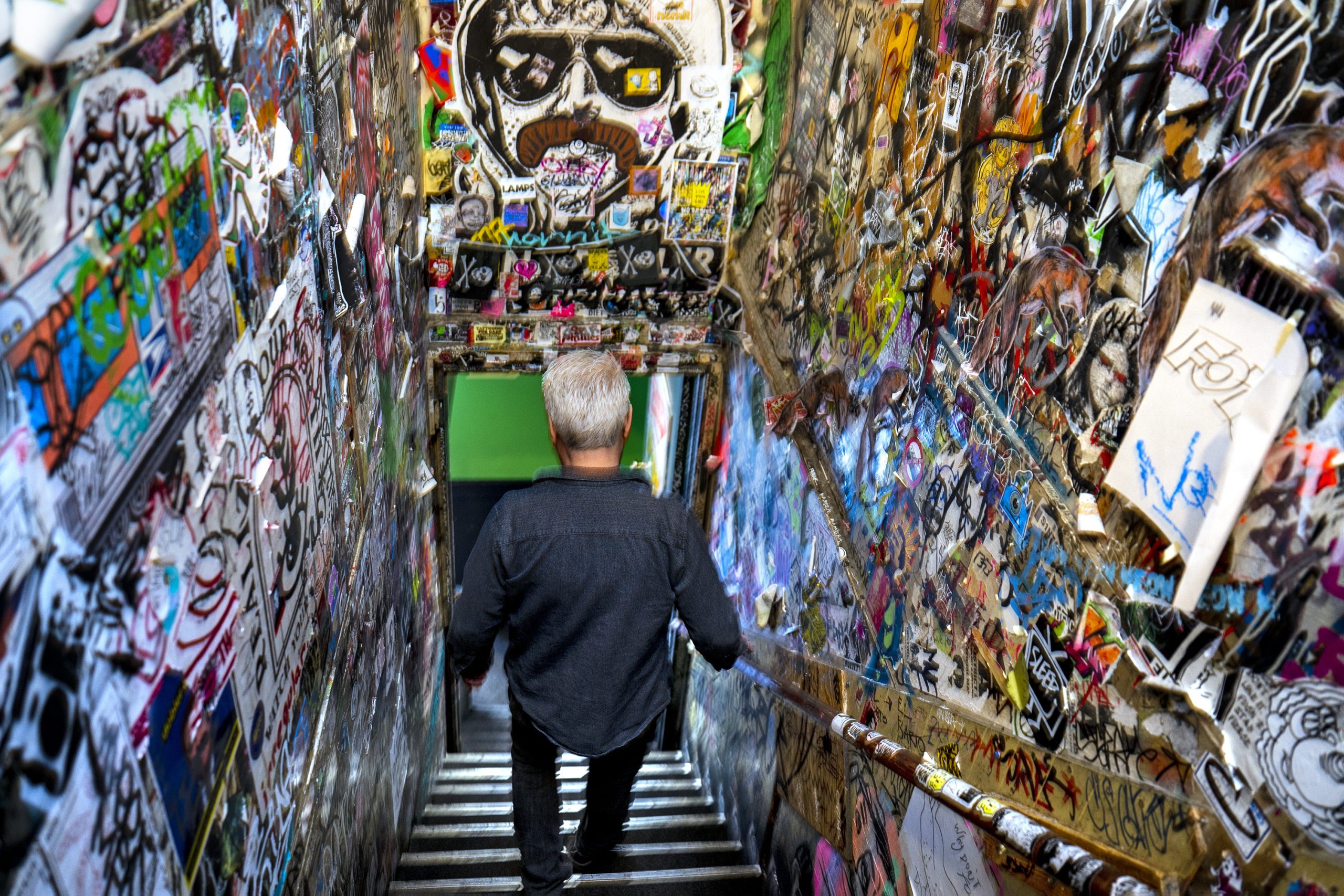
    Owner Robert Perry walks down the stairs at Tattooed Mom. The iconic South Street bar has hosted drag performances, burlesque, karaoke and DJs since it opened in 1997.Tom Gralish / Staff Photographer

    The process requires a public meeting for community feedback followed by a separate hearing with the delay-plagued Zoning Board of Adjustment. As of March 2026, the wait time for a hearing is 180 days — or roughly six months — according to a manual from the City of Philadelphia. (A $750 expediting fee cuts the wait time down to 140 days, or 4.5 months.) Tattooed Mom has yet to apply for the special exception, Perry said.

    Once it became clear there was no short-term solution, the bar announced the change to its events on Instagram in mid-July.

    “Tattooed Mom is still prohibited from hosting live music events of any kind. We’re working with legal, government, and small business support groups to figure out the daunting, complicated, and expensive next steps for zoning, permits, and licenses,” according to the July 11 statement. “We believe the interpretation of some of these rules is unjust to queer communities and creative spaces. There’s no clear timeline yet, but we’ll do our best to keep you in the loop.”

    “We’re not shoot-from-the-hip people. I’m not a reactionary,” Perry said. “We feel like we want to try to move forward. We don’t know if we’ll be able to, but we want to try to.”

    ‘Like if “Footloose” was set in an eviler universe’

    The bar’s Instagram post has been shared more than 1,240 times and received nearly 400 comments. The majority call out the city for allegedly targeting businesses that cater to LGBTQ+ patrons.

    In March, the lesbian-owned women’s sports bar Marsha’s on South Street was raided by a mix of masked and unmasked officers over a bogus underaged drinking tip. And in June, city police fell under scrutiny for getting physical while patrolling Pride celebrations in the Gayborhood.

    “This is outright discrimination,” wrote one commenter.

    “Love that L&I can’t seem to inspect buildings that are literally crumbling but can shut down queer performance spaces,” wrote another. Others called the enforcement “extremely targeted” and “feeling like a Lavender Scare.”

    L&I rebukes that narrative. Tattooed Mom has no current violations, department spokesperson Kandyce Stukes confirmed in an email, and said the bar’s management “seemed to fully understand what they needed to do” for compliance.

    “This is not a targeted effort to stifle a thriving business. It is instead holding all businesses to the same standard, no matter how iconic or popular,” Stukes wrote.

    Others aren’t so sure.

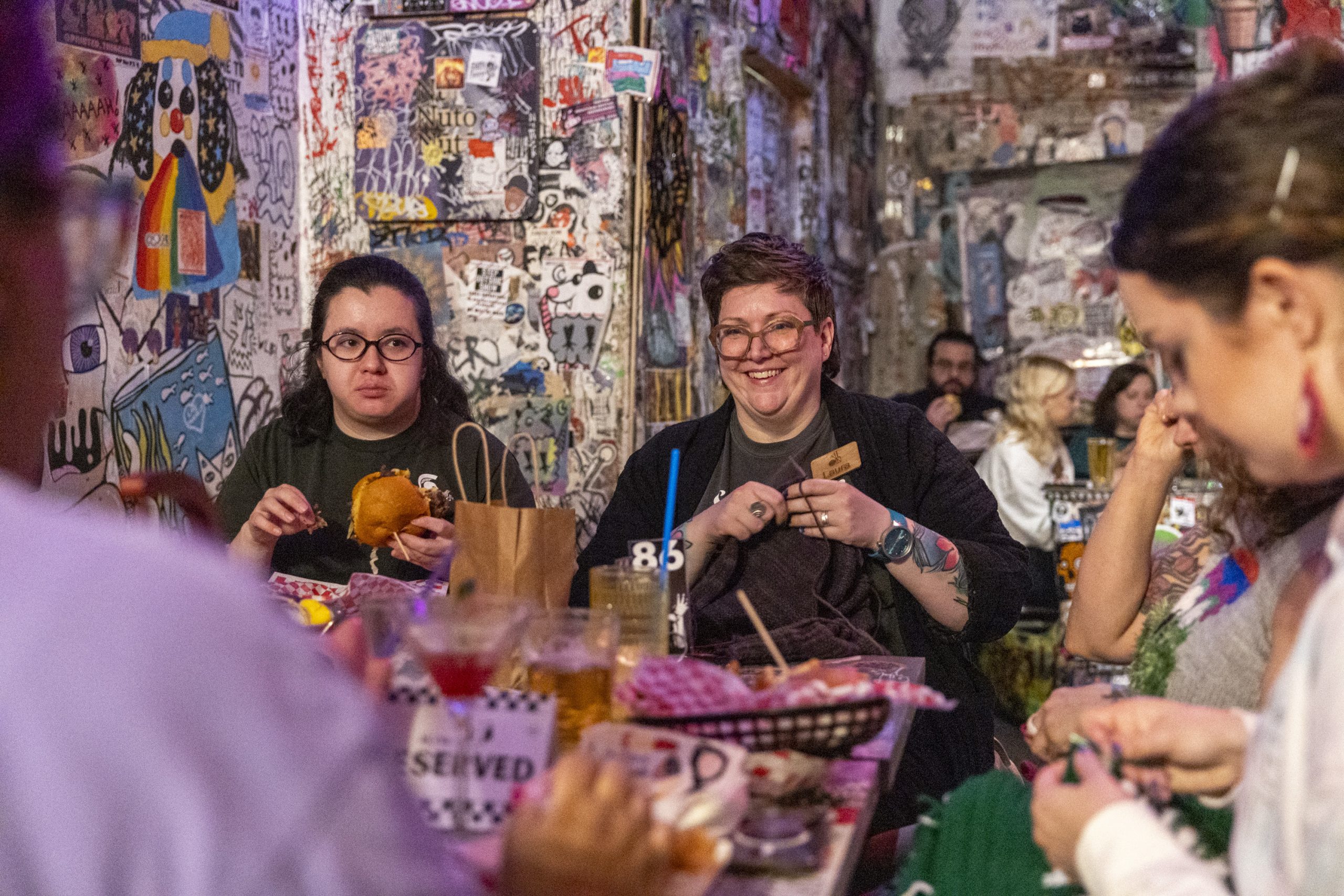
    Crocheters with the Drunken Knitwits work on their craft at Tattooed Mom. The bar is trying to fill the holes in its events calendar with events that don’t involve live music, such as craft nights and comedy.Tyger Williams / Staff Photographer

    “To have a bar that’s not even allowed to do karaoke sounds ridiculous. That’s like if Footloose was set in an eviler universe,” said drag queen Elizabeth New Jersey, who has hosted events and performed at Tattooed Mom at least once a month for nearly two years.

    The bar, they said, has long served as a space for people to try drag since it doesn’t require payment to perform. Producing events at Tattooed Mom helped the drag queen build a portfolio to land a full-time job in the arts. Now, they’re worried a pipeline has been cut off for others to do the same.

    “There’s other performance venues in Philly, but a lot of them are not as receptive to working with newer talent,” Elizabeth New Jersey said. Tattooed Mom “has always been an affirming space for people to be credited, to be paid, and given their flowers for their craft.”

    Jer Nightshade, a musician whose monthly queer variety show the Moment was displaced by Tattooed Mom’s cancellations, only began performing professionally after winning the bar’s 2025 Mx. Tattooed Mom pageant. They said it’s one of the few venues they believe adopts an attitude of “we believe in you” to all performers, regardless of whether they can pull in a crowd.

    The “Accidental Acquaintances” group art show at Tattooed Mom featuring displayed works and live painting by various street artists from around the city on Saturday, July 11, 2015. ( Tim Blackwell / Philly.com )

    Tattooed Mom is working to fill the holes in its calendar with events like comedy shows that can keep drag in the bar without violating city law. On Aug. 16, it will host the Big Gay Bash, its first-ever improv drag show.

    Nightshade is optimistic Tattooed Mom will get the proper license. For now, they’re more concerned about the chilling effect on LGBTQ+ nightlife.

    “Things sometimes feel like they’re regressing,” they said. “In the climate that we’re in now, for any government department to be wasting time shutting down what brings other people joy is frustrating. We’re not hurting anybody. We’re not destroying anything.”


    Staff writer Jason Nark contributed to this article.

  • Soccer’s lingering post-World Cup problem, the new and ugly era of Brady-Belichick, and other thoughts

    Soccer’s lingering post-World Cup problem, the new and ugly era of Brady-Belichick, and other thoughts

    First and final thoughts …

    By the standards of hospitality, enthusiasm, atmosphere, and drama, the 2026 World Cup was a smashing success throughout the United States. Anyone who was at or in the vicinity of Lincoln Financial Field for any of the six matches there picked up on the magnitude of the event for the 48 participating teams, their fans, and the tournament’s other host cities. As meaningful as it is to cheer on a team from your hometown or home state, that power can’t compare to being invested in a club that represents your home country.

    Now, in the aftermath of Spain’s 1-0 extra-time victory Sunday over Argentina in the championship match, come the inevitable questions: Will this World Cup help soccer gain a greater foothold (no pun intended) in the U.S.? Will it inspire the sport’s leaders here to improve the grass-roots training and development of coaches and players? Will it allow soccer to penetrate the bubble of conversation among casual sports fans in the way that the NFL and, to a lesser extent, Major League Baseball, the NBA, and (once every two years) the Olympics have? Will talk-show hosts start ranting about it? Will certain markets become true hotbeds for Major League Soccer? Late June through mid-July is a relative dead zone in the major-sports calendar here; will people tune in when they have other, more traditional options?

    It’s certainly possible that soccer is finally having its moment in the United States and that its popularity, as women’s basketball’s has in the last several years, will soon surge. But there’s a reason to doubt that it will, or at least a reason to think it will struggle to attract and keep fans, and the reason is about as basic as it gets.

    Flopping.

    Yes, criticizing soccer players for embellishing injuries lapsed into cliché long ago. The thing about clichés, though, is that they tend to be true, and the cold reality is that flopping’s place in soccer makes the sport less attractive to those who don’t already love it. For all the cracking down that FIFA has done on flopping, a player who bounces up immediately after being taken down on a slide tackle is less likely to draw a foul than one who writhes on the ground as if his opponent had just gone full Kathy Bates-in-Misery on him. Fouls lead to free kicks and set plays, and free kicks and set plays sometimes lead to goals, so any semblance of contact often leads to the kind of overacting that only Nicolas Cage could appreciate. The potential payoff of flopping incentivizes players to do it.

    “When it is beneficial,” a 2016 study published in Frontiers of Psychology concluded, “soccer players can and do successfully feign injury to stop the game. Consequently it is possible that others might also successfully feign injury, pain or disease when motivated to do so.”

    This aspect of soccer’s culture cuts against one of the strongest attractions people have toward sports: They are witnessing, and want to witness, athletes display physical courage. (It’s worth noting, lest anyone lapse into any insulting gender stereotypes, that female soccer players flop far less often than their male counterparts.) Pelé called soccer “the beautiful game,” and the sport’s experts and aficionados fall back on that phrase often, and it can apply. As evidence, go watch a replay of the gorgeous header pass from Nico Williams that set up Ferran Torres’ World Cup-winning goal. But it’s rare that a soccer team earns praise for its toughness or grit, for the factor that so many fans of football, hockey, and other sports prize in their players.

    The quarterback who hangs in the pocket to deliver a deep downfield strike … the wide receiver who goes over the middle to catch that pass … the Conn Smythe Trophy winner who can’t lift the Stanley Cup because he separated his shoulder three weeks earlier … the guard who slashes into the paint and takes an elbow to his or her face from a center 6 inches taller and 40 pounds heavier … the tired starting pitcher who still wants the ball in the eighth inning … the figure skater who risks tumbling to the ice for the sake of a triple Salchow — competition is more compelling and the athletes more admired for these qualities and circumstances. Look at the backlash around the NBA against the Oklahoma City Thunder’s foul-hunting style of play, consider Carli Lloyd’s criticism of Christian Pulisic, and you understand the collective-action problem that soccer has to overcome before it will be fully embraced here.

    Tom Brady and Bill Belichick have become embarrassing. Charles Krupa

    Grow up, GOATs

    One is fiddling around with pro wrestling publicity stunts. The other has been fiddling around with a romantic partner 49 years his junior. All this time, everyone thought that Tom Brady and Bill Belichick’s greatest achievement was the six Super Bowls they won together. Turns out, their greatest achievement was that each apparently kept the other from falling into a humiliating midlife crisis.

    Domo delivers

    Shoutout to longtime Daily News/Inquirer scribe Paul Domowitch, whose new book, Just Give Me a Chance to Fail: The Life of NFL Hall of Fame Linebacker Sam Mills, hits stores next week. If it’s anything like the rest of Domo’s football journalism, the book will be smart, thorough, and impossible to put down.

  • At Trump-promoted Freedom Fuel gas stations, prices are up and questions linger

    At Trump-promoted Freedom Fuel gas stations, prices are up and questions linger

    Even the Freedom Fuel Network promoted by President Donald Trump isn’t immune to rising gas prices.

    Yet, the Philadelphia-area network of gas stations is expanding anyway, according to the company’s website.

    The enterprise, currently made up of 25 stations spread across the region, garnered national attention earlier this month when it began selling regular gas for $3.47 a gallon — a nod to Trump, and 40 to 50 cents cheaper than other stations.

    Gas station owners suddenly undercut, political observers, and government watchdogs wondered how long the promotion would continue.

    It turns out, not long.

    The Inquirer visited seven Freedom Fuel locations over several days, and while all were still selling gas cheaper than nearby competitors, the deep discounts from earlier were gone.

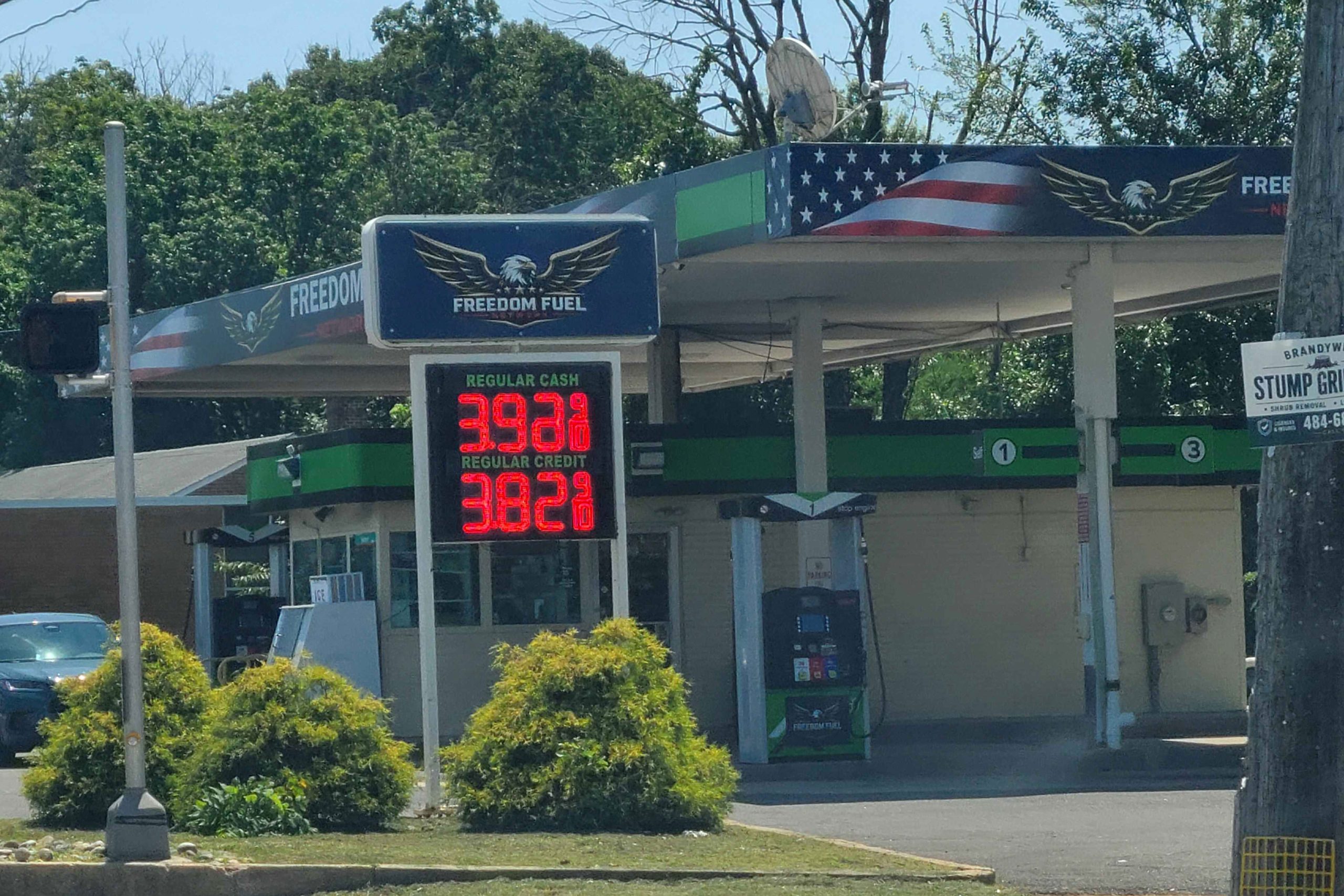
    Gas prices are up everywhere, including the Freedom Fuel Network station on Edgemont Avenue in Brookhaven, Delaware County.Rob Tornoe /

    Three Philadelphia gas stations and two Delaware County locations were among those within the network selling gas at $3.92 a gallon Monday. Near Philadelphia’s Freedom Fuel stations, competitors were charging $3.89 to $4.09 for a gallon of gas. The same was true in South Jersey, where Freedom Fuel stations in Marlton and West Berlin were selling gas around 10 cents a gallon less than their nearby competitors.

    (function(){function e(){window.addEventListener(`message`,function(e){if(e.data[`datawrapper-height`]!==void 0){var t=document.querySelectorAll(`iframe`);for(var n in e.data[`datawrapper-height`])for(var r=0,i;i=t[r];r++)if(i.contentWindow===e.source){var a=e.data[`datawrapper-height`][n]+`px`;i.style.height=a}}})}e()})();

    Selling gasoline is a low-margin business, with owners making just “a few pennies” of profit per gallon sold, according to Eliezer Fich, a finance professor at Drexel University’s LeBow College of Business.

    “They can sustain those losses for a little while, but it becomes unsustainable if you can’t offset that with a convenience store or a car wash,” said Fich.

    Several Freedom Fuel stations visited by Inquirer reporters were small, appeared somewhat rundown, and offered a limited selection of products beyond gas. One location had an inoperable convenience store.

    Fich doesn’t know the specifics of Freedom Fuel. He said independent stations banding together can offer purchasing power with refineries, which can be one route to securing lower fuel costs. But those savings wouldn’t come close to supporting the deep discounts the stations were offering.

    Despite the White House’s involvement in promoting Freedom Fuel, a spokesperson said the company received no government subsidies and did not obtain fuel at a lower cost. The below-market prices would exist “for as long as the company chooses,” the spokesperson said.

    If that’s the case, the business itself was already absorbing dramatic losses before the United States resumed attacks on Iran, leading to a jump in gas prices over the past week.

    The average cost of a gallon of fuel in Philadelphia was $4.17 a gallon Monday, up from $3.95 a gallon last week, according to AAA. Nationally, the average cost of a gallon of gas also jumped back to $4 a gallon, up from $3.14 a gallon compared to last year.

    While questions remain, Freedom Fuel plans to expand

    Little is known about who is taking on the likely losses expected from the promotion.

    Former Evesham Township mayor, Baltimore Ravens assistant coach, and self-proclaimed “proud Trump supporter” Randy Brown, along with former commodities trader Yoni Gontownik, both signed the certificate of formation, first obtained by The Newsground, an investigative news outlet. Neither could be reached for comment.

    Cherry Hill developer Shamikh Kazmi and his brother Syed Kazmi are linked to at least six locations. The brothers, who have been embroiled in at least two lawsuits related to previous gas station ventures, also could not be reached for comment.

    One of Shamikh Kazmi’s businesses was sued as a result of a lengthy trademark dispute with BP America Inc. and BP Products North America Inc. in 2021. That case ended with four deputies with the U.S. Marshals Service seized remaining brand signs in June 2022, according to court documents.

    Also in 2021, the brothers were accused by Petroleum Marketing Group Inc, a fuel distribution company, of stealing thousands of gallons of gas from the company. Petroleum Marketing Group sued the brothers, who were ordered by a federal judge in February to pay $600,000.

    The company has yet to receive payment.

    Still, the people behind Freedom Fuel are looking at expansion.

    “Since launch, drivers have flooded us with one request: bring Freedom Fuel Network to my area,” read the website Monday. “We heard you. Due to overwhelming demand for additional locations, we’re expanding to serve more communities with lower prices at the pump.”

    The website did not give a timeline for when those additional stations could come online and did not respond to a request for comment.

    The Associated Press contributed to this article.

  • Pennsylvania’s state universities will consider offering three-year bachelor’s degrees

    Pennsylvania’s state universities will consider offering three-year bachelor’s degrees

    Pennsylvania’s 10 state universities, facing declining enrollment, will consider offering some three-year bachelor’s degrees as a way to make college more affordable and allow students to get into the workforce more quickly.

    The Pennsylvania State System of Higher Education would join a growing number of colleges nationally launching accelerated bachelor’s degrees that reduce the required credits for graduation from the standard 120 to between 90 and 100.

    The development comes as colleges continue to face criticism over costs and some schools try to stem declining enrollments. PASSHE has lost 30% of its enrollment since 2010, though it recorded an increase last fall for the first time in 15 years.

    For a long time, the four-year bachelor’s degree has been the norm. Some students certainly have completed their degrees more quickly, but only by taking all the required credits at an accelerated rate.

    The new approach, which PASSHE’s board of governors plans to discuss in October, would reduce the number of credits needed.

    “This initiative would provide more options,” said system Chancellor Christopher Fiorentino. “A three-year degree focuses on essential competencies while preserving the liberal arts core. We can reach more students who don’t fit into the traditional path.”

    Three-year degrees emphasize what students should know and be able to do by the time they finish, said Madeleine F. Green, executive director of the College-in-3 Exchange, which is pushing for three-year degrees to become “a widely accepted path” to a bachelor’s.

    “The benefits are reduced cost and time to degree and equal or better learning outcomes than those resulting from a four-year degree,” Green said. “… It is widely accepted in higher education that time does not equate to learning.”

    But the movement already has garnered detractors. The American Association of University Professors and American Federation of Teachers have blasted the idea as more states, including Ohio, Massachusetts, Indiana, and Virginia, explore, plan for — and in some cases even mandate — three-year degrees.

    The three-year degree movement “threatens academic integrity by substituting for a comprehensive education a stripped-down curriculum that prioritizes speed over essential intellectual development,” the two groups said in a joint statement in response to new accelerated degree programs at Suffolk and Merrimack Universities in Massachusetts.

    “Compressing or reducing the curriculum threatens to narrow students’ education at precisely the moment when society needs graduates with stronger critical thinking, communication skills, scientific literacy, and civic understanding,” they said.

    There is no comprehensive inventory of colleges nationally that offer three-year degree programs, Green said. A June study by the Rand Corporation cited 119 programs that had been “publicly announced” as of May 2026, she said. Those programs are in fields such as business, cybersecurity, criminal justice, health administration, public health, and design, the report said.

    The Higher Learning Commission, the nation’s largest college accrediting body, had approved 58 reduced-credit bachelor’s degree programs at 26 institutions, none of them in Pennsylvania or New Jersey, said Laura Janota, a spokesperson for the commission.

    The Middle States Commission on Higher Education, which accredits colleges in the Pennsylvania and New Jersey, does not require special approval for three-year degrees.

    But PASSHE likely would have to get approval from the state. Green, of College-in-3, said both Pennsylvania and New Jersey have regulations that state a bachelor’s degree is 120 credits.

    “We are reviewing all regulatory questions as part of this effort and will share what we learn with the board in October,” said Kevin Hensil, PASSHE spokesperson.

    Robert M. ZemskyCourtesy of the University of Pennsylvania

    ‘Product rejection’

    Robert M. Zemsky, an emeritus professor at the University of Pennsylvania’s Graduate School of Education who co-started College-in-3, said he’s aware of more than 90 colleges planning to or considering offering reduced-credit bachelor’s degrees. The idea attracted quite a bit of attention in 2009 when he first floated the idea — even a cover story in Newsweek — he said, but accrediting bodies were not on board at that time.

    But now, he said, colleges are beginning to realize that their product is being rejected by students who drop out or transfer after their first year or fail to enroll at all.

    “What’s different is the key people in higher education are beginning to figure out that it really is product rejection,” he said, “and they’re going to have to redesign what they do top to bottom.”

    He estimated by 2027 that there would be 200 colleges offering three-year degrees and 500 by December 2028.

    “After you get to 500, it will be everywhere,” he said.

    Christopher Fiorentino, PASSHE chancellor.ED HILLE / MCT

    Fiorentino, the PASSHE chancellor, said he planned in the coming months to propose ways PASSHE could begin to offer a limited number of three-year degrees. PASSHE’s 10 universities are West Chester, Cheyney, Commonwealth, Indiana, Penn West, Shippensburg, Slippery Rock, Kutztown, East Stroudsburg, and Millersville.

    He said adults with some college credits and no degree may be interested, or partnerships in which students attend community college for two years and then finish their bachelor’s in one-year at PASSHE.

    Four-year degrees would remain the norm, he said.

    ‘Less-than degrees’

    Kenneth M. Mash, president of the Association of Pennsylvania State College and University Faculties.Tyger Williams / Staff Photographer

    The move was harshly criticized by faculty union head Kenneth M. Mash, as providing substandard education.

    “Too many students that we are admitting are underprepared for the college experience,” Mash, president of the Association of Pennsylvania State College and University Faculties, said at the board of governors meeting earlier this month. “Well, if they’re underprepared coming in, and we’re telling them you only have to be here for three years, how are they ever going to be ultimately prepared for their future?”

    He said the nation’s elite universities and top research universities aren’t the ones promoting three-year degrees, but rather those that serve large numbers of first-generation students and students of color.

    “I can’t help but wonder why it’s OK to offer these less-than degrees to these students,” he said.

    Federal and state aid programs should be expanded to make college more affordable, according to faculty union groups.

    Cynthia Shapira, chair of the Pennsylvania State System of Higher Education board of governors. Courtesy of the Pennsylvania State System of Higher Education

    But Cynthia Shapira, PASSHE’s board chair, said some states already are home to institutions offering or considering three-year degrees and PASSHE has an obligation to consider doing the same.

    “The idea to not even consider [it] … would be to put our heads in the sand,” she said.

    Eliminate some general education courses and electives

    Fiorentino said the same kind of criticism was leveled at online programs and community colleges when they first started. Pennsylvania was slow to embrace online programs and now lots of Pennsylvania residents are enrolled in programs out of state, he said. He said he doesn’t want PASSHE to be left behind again.

    “We owe it to our students,” he said. “We owe it to the commonwealth, and we owe it to our institutions to at least take a hard look at these three-year degree opportunities.”

    In an interview earlier this year, Fiorentino said that eliminating 30 credits from the four-year degree would be the equivalent of removing 10 courses. Schools would have to explore what to eliminate, he said. They could choose to get rid of some general education courses, general elective courses, and electives in the major, he said.

    The system, he said, will look at “how do you make adjustments to get students out more quickly and still have them prepared to perform effectively in the world.”

    Zemsky, the Penn professor, said general education courses, which have been criticized by some students as a waste of time and money, could be scaled back.

    Eventually, he said he thinks more students will opt for three-year degrees as opposed to four-year degrees.

    How employers will react is uncertain. Three-year degree programs are too new for data on how graduates will fare in the job market or graduate school admissions.

    “We’re looking at 2028, 2029 before there’s going to be any real graduation of three-year degree people,” Zemsky said.

    Green said most colleges pursuing three-year degrees have had conversations with employers.

    “Employers are more interested in students’ skills than in the number of credits they earned in obtaining the degree,” she said.

    Moving to three-year degrees will affect university budgets, and colleges will have to adapt, Zemsky said.

    “Right now, we spend a lot of money on things that the customer doesn’t want,” he said.

  • Eagles newcomers ‘26: Can cornerback Riq Woolen parlay a big season into a rich, long-term contract?

    Eagles newcomers ‘26: Can cornerback Riq Woolen parlay a big season into a rich, long-term contract?

    With Eagles training camp drawing nearer, The Inquirer is taking a closer look at the more than three dozen new faces who are expected to report along with the rest of the team on July 28.

    Player: Riq Woolen

    Position: Cornerback

    Age: 27

    Previous experience: Vic Fangio said in May that he was surprised Woolen didn’t “get a lot of action” for a long-term contract during free agency, which speaks to how highly the straight-shooting Eagles defensive coordinator thinks of his new outside corner.

    Woolen, who is on a one-year contract worth $12 million guaranteed, is an interesting player. He is big for a corner at 6-foot-4. He probably was the best man defender in the NFL last season. But he wasn’t as effective in zone coverage, and he gained a reputation as a taunter. He ceded playing time to Josh Jobe during Seattle’s Super Bowl run.

    Woolen, a fifth-round pick out of Texas-San Antonio, played 78% of Seattle’s defensive snaps last season, down from 90% in 2024 and 98% during his 2022 rookie season. He has been fairly reliable through four NFL seasons. He joins the Eagles having accumulated 12 interceptions so far in his NFL career while allowing a completion rate of 54.2%, according to Pro Football Reference.

    Path to a roster spot: Woolen’s spot on the Eagles is secure. He was one of the biggest standouts during the offseason program. They will be deploying him as the outside corner on the opposite side of Quinyon Mitchell and seem to want him on the field at all times. When the Eagles are in their base defense, Cooper DeJean will slide from nickel to safety instead of bumping Woolen off the field to play outside corner.

    The Eagles have high expectations for Woolen. Fangio deployed man defense at a higher rate than Seattle — 24.5% vs. 15.2%, according to Sharp Analytics — and may want to dial that number up a bit to play more to Woolen’s strengths.

    Fun fact: Woolen was a top-150 wide receiver coming out of Arlington Heights High School in Texas. He had one big-conference scholarship offer, from Matt Rhule at Baylor. The offer came after he committed to UTSA, but Woolen stuck with his original choice. It wasn’t until the final month of his redshirt-sophomore season that the coaching staff there convinced him to switch to corner.

    Quotable: “When you’ve got confidence in yourself and you put in a great body of work, you feel like you deserve some type of fruit for your labor,” Woolen said when asked if he was surprised about his free agency market. “Sometimes things don’t go your way, but there’s always a better plan. God’s plan was to put me here with a great team and give me another chance to win a Super Bowl and be successful here.”

    Erik Ezukanma, pictured here in 2022 with the Miami Dolphins, is a long shot to make the team.David Santiago / AP

    Player: Erik Ezukanma

    Position: Wide receiver

    Age: 26

    Previous experience: Ezukanma, a fourth-round pick by the Miami Dolphins out of Texas Tech in 2022, has played his best football over the last year … in the United Football League. He had just one catch for three yards on four career NFL targets from 2022 to 2024 as he failed to get into the mix in Miami when he was healthy. He also dealt with a lingering neck injury.

    With the DC Defenders, Ezukanma had 15 catches for 227 yards and a touchdown in 10 regular-season games and then four catches for 37 yards in two postseason contests. He was an effective returner, taking 18 kick returns for 459 yards (25.5 per) during the regular season and six for 165 yards (27.5 per) during the playoffs.

    At Texas Tech, Ezukanma had 136 catches for 2,117 yards and 14 touchdowns during his three seasons as a starter.

    Path to a roster spot: The Eagles don’t have a lot of room at wide receiver. There are four locks: DeVonta Smith, Dontayvion Wicks, Makai Lemon, and Hollywood Brown. Then there’s a real competition to fill out the bottom of the depth chart. Ahead of Ezukanma at the start of camp will be Elijah Moore, Darius Cooper, Johnny Wilson, and maybe a few others. The Eagles could keep as few as five and as many as six receivers on the initial 53-man roster. Perhaps Ezukanma flashes as a returner and gives the Eagles something to think about. He was impactful in coverage on special teams in the UFL, too.

    Fun fact: Ezukanma’s best highlight in the UFL this past season might have come on special teams as a tackler. Check out the hit here:

    Quotable: “I feel like my body has been holding up and I’m still young,” Ezukanma said during a podcast appearance earlier this year. “I’m 26 and still have a lot of ball left in me.”