Tag: topic-link-auto

  • Collingswood, ‘a cat community,’ has officially opened its first cat cafe

    Collingswood, ‘a cat community,’ has officially opened its first cat cafe

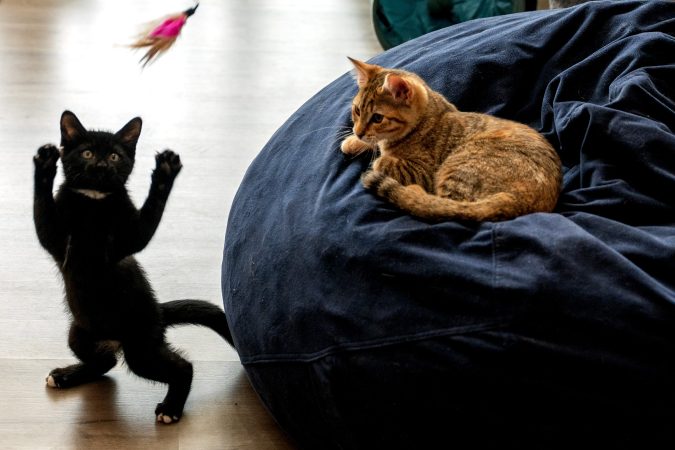
    Two kittens with seemingly endless energy jump around the room in downtown Collingswood chasing their toys, their own tails, and their newest friend, 19-month-old Charlotte Kohlhas-DeMarsh. The toddler babbles excitedly as the kittens, Chicken Nugget and Onion Ring, leap at the feather attached to the wand she’s swinging around.

    The kittens are just two of the adoptable cats at Catmosphere Cafe & Lounge, a new cat cafe that opened at 557 Haddon Ave. on July 10.

    In partnership with Homeward Bound Pet Adoption Center in Blackwood, Catmosphere provides a temporary home for adoptable cats where they can comfortably sleep, play, and potentially meet their forever families.
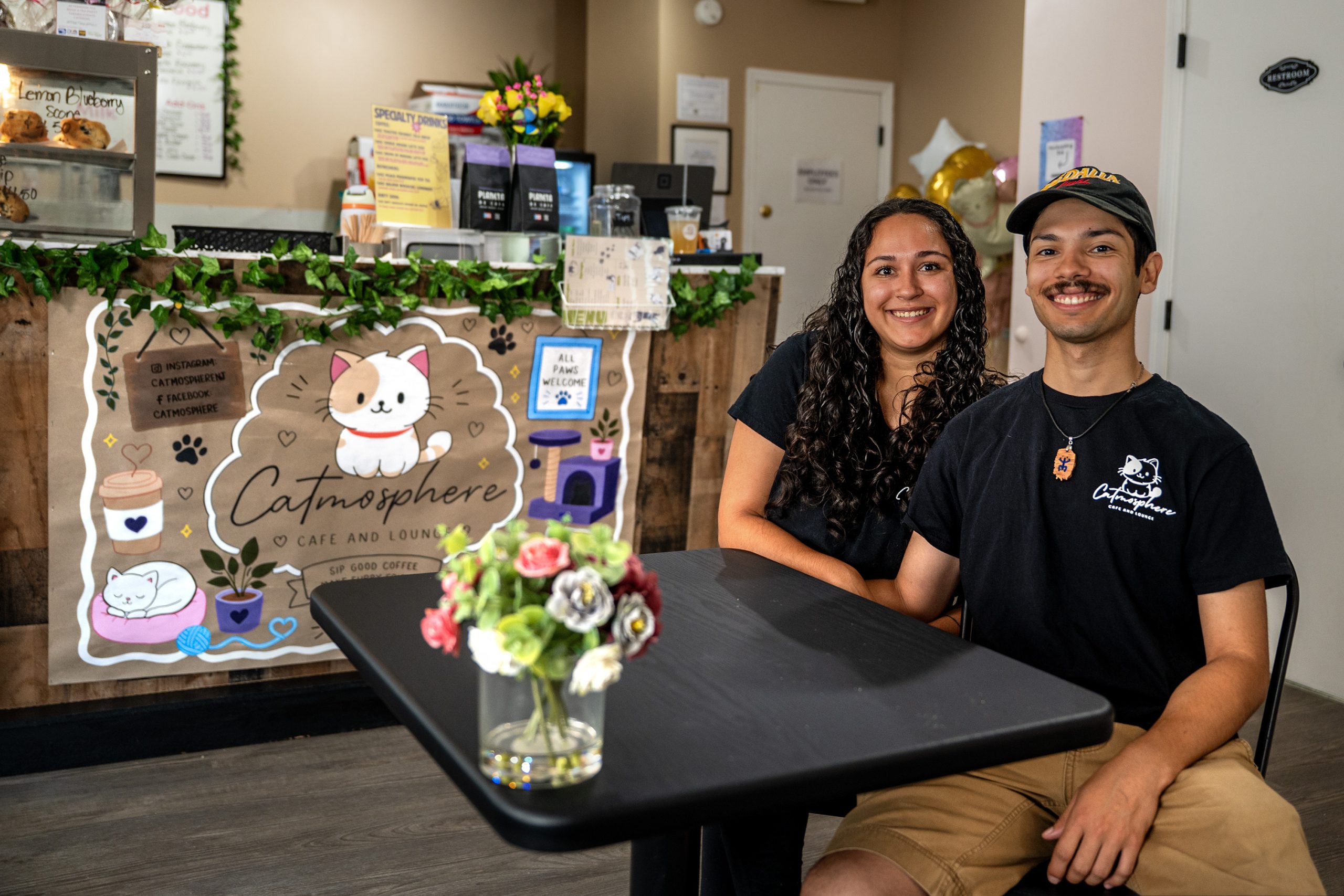
    Owners Sophia Coello and Marcus Tirado at their Catmosphere Cafe & Lounge on Thursday, July 16, 2026. Tom Gralish / Staff Photographer

    Within the first week, the business has already facilitated three adoptions.

    “Every cat has gone to a perfect family,” said Sophia Coello, cofounder of Catmosphere. “It has really been a perfect match with every single cat.”

    The new cat lounge fosters around six to eight cats and kittens at a time, helping to free up space for more intakes at Homeward Bound.

    Equipped with food, water, toys and countless beds, the lounge provides the cats with a less stressful environment than a traditional animal rescue. This gives them a chance to acclimate and eventually feel comfortable showing their real personalities, Coello said, which only increases their chance of being adopted.

    All proceeds collected from adoption fees — $150 for a kitten and $75 for an adult cat — go back to Homeward Bound.

    The idea for Catmosphere was originally inspired by a goat yoga session in December 2024, Coello said. As she was surrounded by the farm animals, Coello, who identifies as a lifelong cat person, couldn’t help but imagine what it would be like to be in a similarly relaxing environment — but accompanied by cats instead.

    “This is my calling,” she said. “I just love watching and understanding cats’ behavior because if you understand a cat’s behavior, you understand how to create a bond with them. I feel like anyone can create a bond with a cat.”

    “And once you form that bond and that trust, it’s actually the most beautiful connection that you could grow with an animal,” she said.
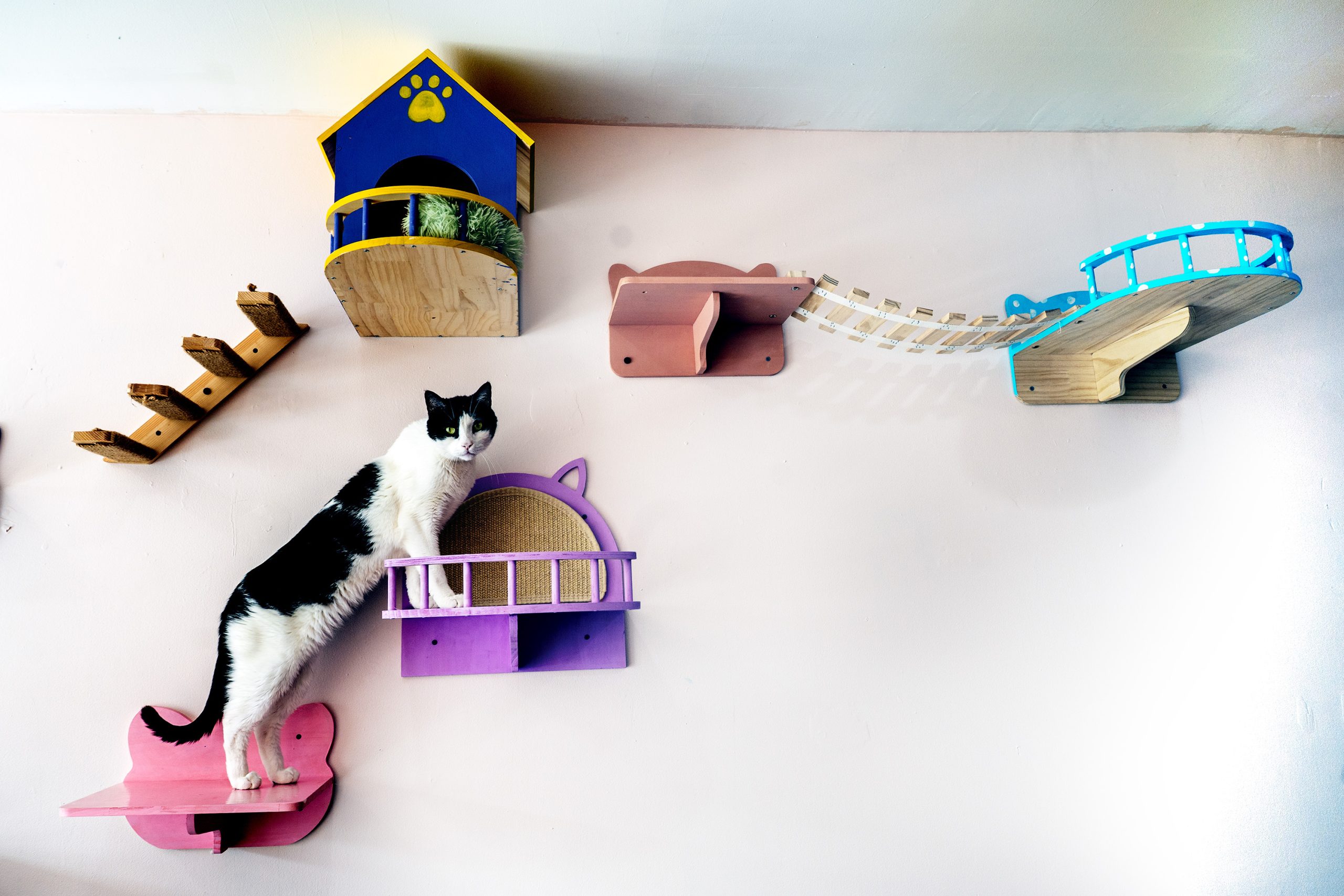
    Cats climb on the wall at the Catmosphere Cafe & Lounge on Thursday, July 16, 2026. Collingswood’s first cat cafe recently opened downtown.Tom Gralish / Staff Photographer

    Alongside her partner, Marcus Tirado, the pair of Rowan University graduates soon began looking for the perfect location to set up their new business — somewhere in an animal-loving community with lots of foot traffic. They eventually settled on Collingswood’s bustling Haddon Avenue, breathing new life into what was once a thrift store.

    “This is a cat community,” Coello said of the borough, where neighborhood cats are common and well taken care of, and residents are quick to come together when locating a lost pet.

    As head of construction, Tirado did the majority of the renovation work himself, leaning on friends and family to help transform the cluttered space into a bright cafe with sleeping kittens dreaming in the front window. The soft-pink walls are adorned with a hand-painted logo as Lego figurines in the likeness of the couple’s two rescue cats overlook the cafe, a reminder of their mission to connect as many cats as possible with loving homes.
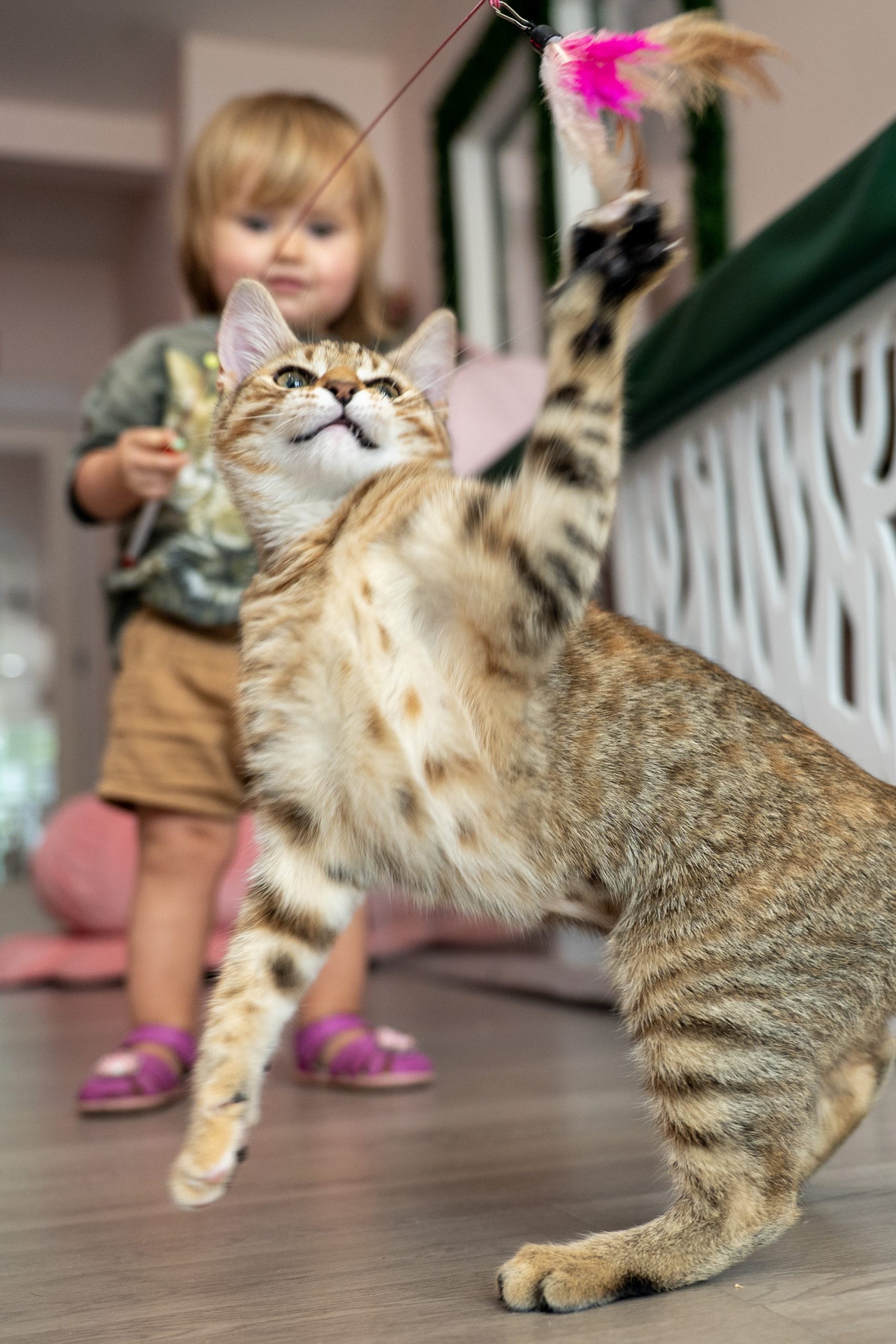
    Charlotte Kohlhas-DeMarsh, 19 months, plays with cats at the Catmosphere Cafe & Lounge Thursday, July 16, 2026. She was visiting with her grandmother, Jenifer Kohlhas, at Collingswood’s first cat cafe recently opened downtown.Tom Gralish / Staff Photographer

    Catmosphere accepts both appointments and walk-ins for the cat lounge which currently costs $20 per hour. During some of the early bookings, Coello said they’ve helped kids remain calm and be gentle during their first interaction with a cat.

    As they get more established, they’re looking forward to expanding their business by hosting workshops, working with local schools, and more, they said.

    And if you’re allergic to cats, don’t worry. Catmosphere still has something for you.

    Entirely separate from the cat lounge, the cafe itself is hypo-allergenic, Coello said.

    Cat toys at the Catmosphere Cafe & Lounge Thursday, July 16, 2026. Collingswood’s first cat cafe recently opened downtown.Tom Gralish / Staff Photographer

    Large windows along the walkway from the front door create a “kitty drive-thru,” she said, where you can get a glimpse inside the cat lounge while remaining protected from any allergens.

    Located on the more residential end of Haddon Avenue, the pair also hope that Catmosphere, alongside neighboring businesses like the barber and ice cream shops across the street, can help strike up more activity in this part of downtown.

    “We would love to bring more events to this side of the community,” Coello said.

    They also hope the lounge can serve as an educational resource for the cat-loving community, helping to answer questions about adoption, common cat behaviors, and best practices.
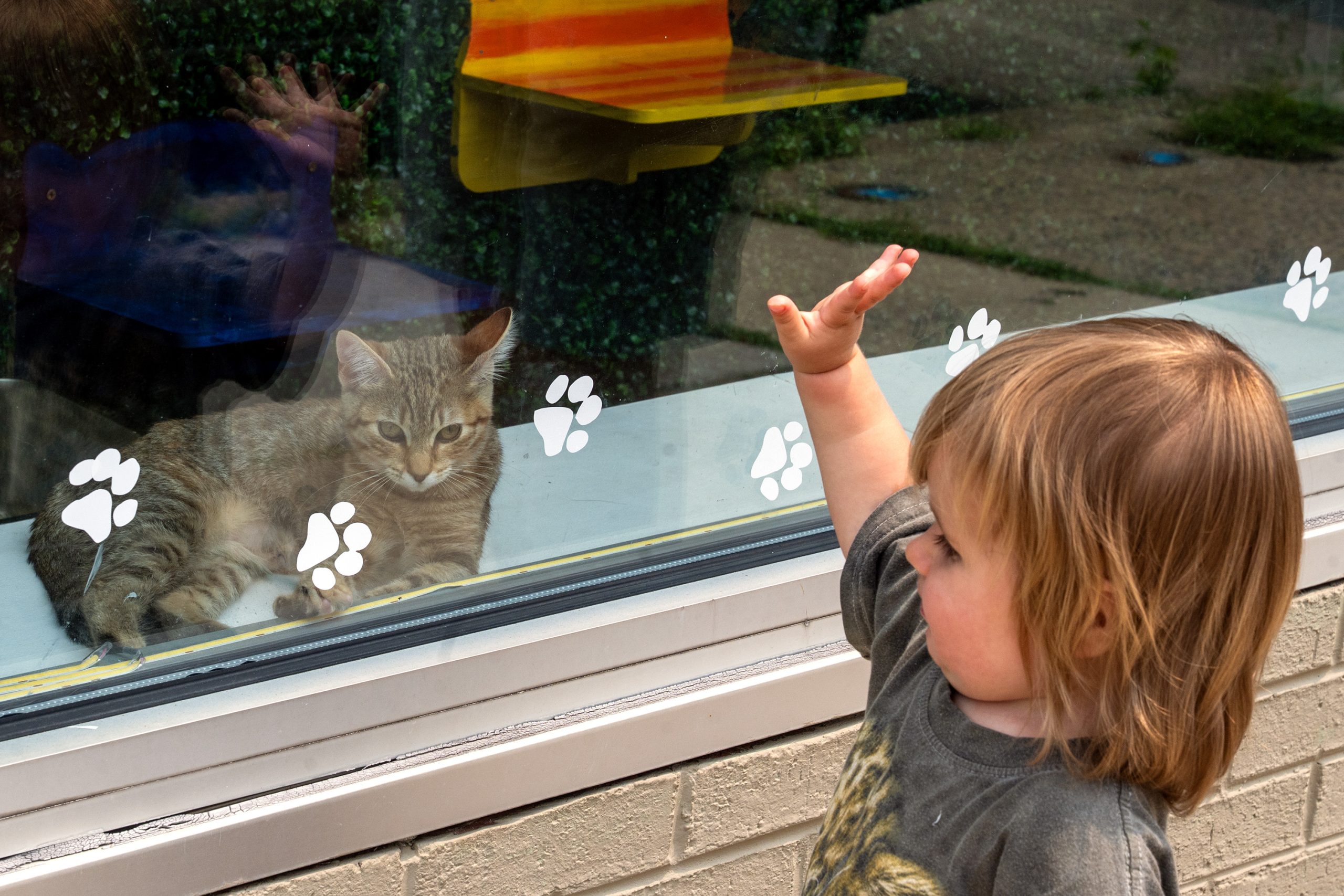
    Charlotte Kohlhas-DeMarsh, 19 months, says goodbye to cats inside the front window as she leaves outside the Catmosphere Cafe & Lounge Thursday, July 16, 2026, She was visiting with her grandmother, Jenifer Kohlhas. Collingswood’s first cat cafe recently opened downtown.Tom Gralish / Staff Photographer

    As Kohlhas-DeMarsh happily followed her furry friends around the room Thursday morning, her grandmother Jenifer Kohlhas looked on, enjoying a drink from the cafe.

    They’ve been looking forward to Catmosphere’s opening and finally stopped in for the first time, in part to avoid last week’s dangerous air quality but also to give Charlotte a chance to interact with friendly cats, Kohlhas said.

    Their family has a formerly feral cat at home who isn’t particularly fond of the toddler, she said.

    “I thought this would be a great opportunity for her to just be with a kitten that actually lets her play with it,” she said, as Charlotte cheerfully waddled around the room. “And she’s having a blast.”
  • People are selling the free World Cup bracelets they waited hours in line for

    People are selling the free World Cup bracelets they waited hours in line for

    Well, that didn’t take long. Days after the World Cup wrapped up, fans are reselling their once highly coveted swag.

    The FIFA World Cup resale market is on fire, and that includes Fan Fest attendees profiting off their freebies, including the viral Bank of America charm bracelets.

    For those uninitiated: Throughout the duration of the World Cup, fans at U.S. host cities lined up in droves to get their hands on free swag, especially these darned bracelets.

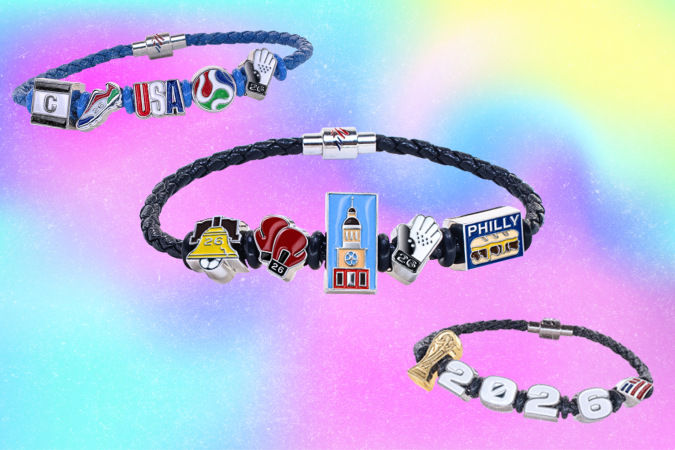
    Mimicking a Pandora bracelet, the “Fan Bands” are composed of a red, blue, or black woven band and an assortment of metal charms laced through. Available charms included numbers, flags, a World Cup trophy, and designs that pair with World Cup host cities. Philly, for instance, had boxing gloves, a cheesesteak, and the LOVE statue.

    It was the World Cup’s hottest free accessory, but it cost interested parties hours of their time. At one point, wait times in Philadelphia were reported to be four to eight hours. Weeks later, Philly’s Fan Fest refashioned the waiting process, citing high demand. Instead of a free-for-all giant line, organizers nationwide pivoted to a ticketed system with set time windows to receive bracelets.

    Bank of America called the demand for the bracelets “unprecedented.”

    Now, they’re a relic of a time that has come and gone — and are selling for anywhere from $10 to $150, no line required.

    Fashion expert and pro-thrifter Virginia Chamlee says this isn’t surprising.

    “The secondary market for the FIFA Fan Fest bracelets is all about scarcity and exclusivity — the second something is ‘free but limited,’ or ‘difficult to obtain,’ it stops being a souvenir, and it becomes a status symbol,” she said. “So people aren’t really buying free beads; they’re buying the two-hour line they didn’t actually wait in.”

    On Facebook Marketplace, dozens of bracelets are listed across Philadelphia. Some sellers said they waited about an hour; one said they volunteered at Fan Fest, which gave them easy access to swag; another said they were selling after snagging the bracelets for their kids, who evidently didn’t like their charm selection.

    In a few listings, bracelet-holders are hoping to trade with others for different charms.

    On eBay, things get more intense. A recent scan, filtering for sold listings, shows bracelets have allegedly sold for as much as $500 in some cases. There was also a listing that sold for $1,000 that included bracelets from nearly every host city. By the knockout rounds of the World Cup, Bank of America unveiled a handful of additional commemorative charms. Bracelets with those charms are in especially high demand.

    As of Tuesday, eBay showed over 1,600 active listings for the Fan Bands. Chamlee says it all boils down to desire, and maybe a little bit of FOMO.

    “To me, this is no different from paying for a resold Taylor Swift Eras tour tee when you didn’t actually go to the concert, or a Trader Joe’s tote that’s been considerably marked up,” Chamlee said. “In these cases, the price isn’t really set by the object itself (i.e. how much it cost to produce) but by how badly someone wants to say they were there.”

    Bank of America says the Fan Bands’ success has exceeded expectations. The company had more than 2 million bracelets and 10 million beads to distribute, it said in a statement at the beginning of the World Cup. Within the first two weeks of the tournament’s nearly six-week run, the company announced it had given away more than 700,000 bracelets across the 11 host cities.

    “For Bank of America, this is a marketing win by almost any metric,” Chamlee said. “A giveaway meant to build brand goodwill has evolved into a resale market. That’s free earned media most brands would pay millions for.”

  • Why Pennsylvanians should celebrate disability pride

    Why Pennsylvanians should celebrate disability pride

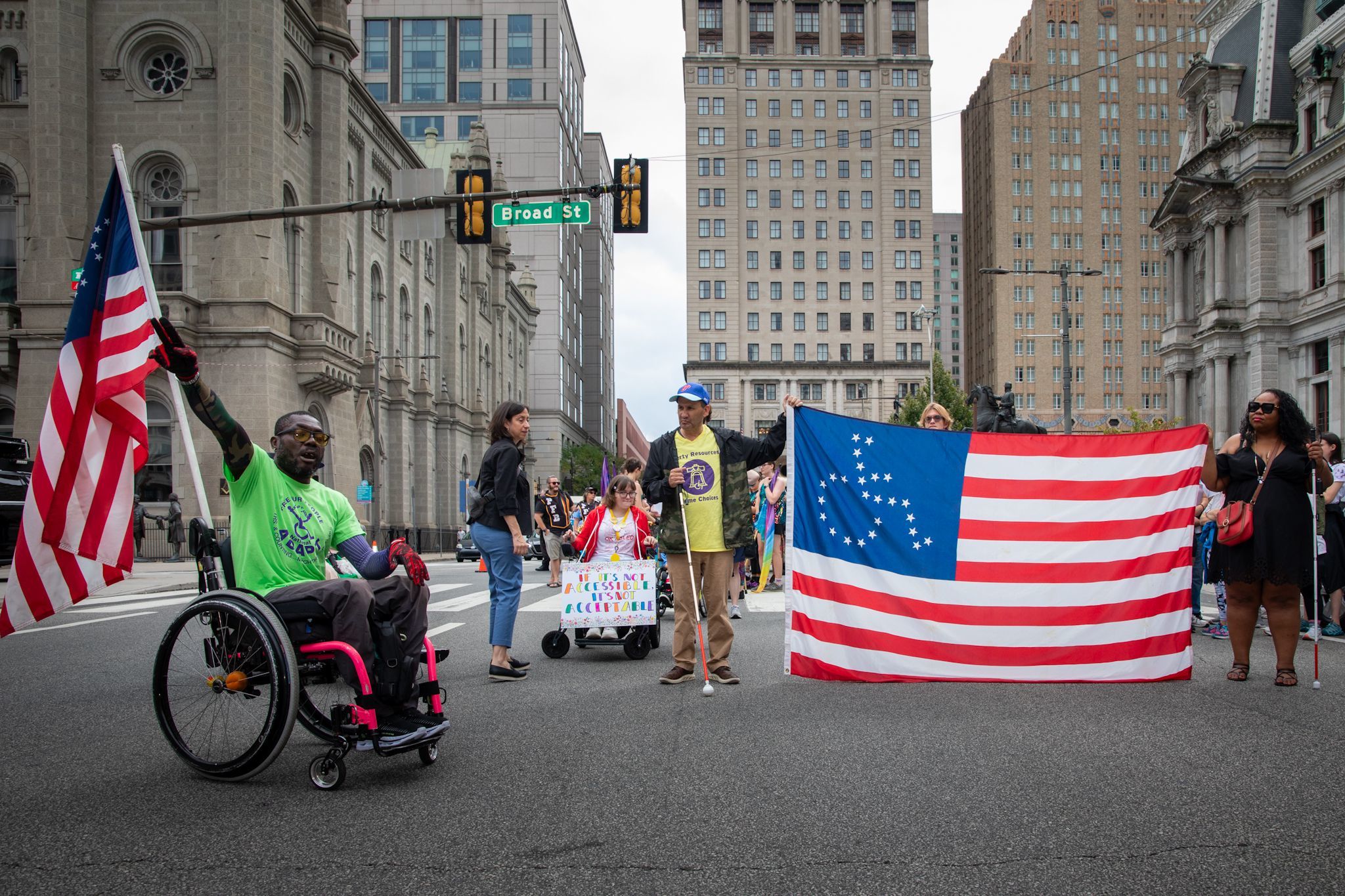
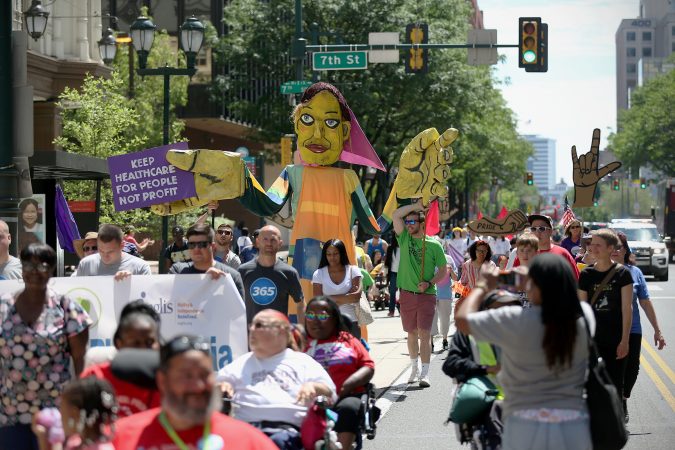
    A few Saturdays ago, I ventured down to the Ben Franklin Parkway to attend and volunteer at Disability Pride Philly. This parade and festival launches more than a month of celebrations: July marks Disability Pride Month, honoring the Americans with Disabilities Act’s passage on July 26, 1990.

    To some, “disability pride” sounds like an oxymoron, or a niche idea that may not touch them. As a person with multiple disabilities, I can tell you that disability pride matters more than you might think.

    Accessible education, technology, rehabilitation, and civil rights protections let me live fully integrated into my workplace, community, and family. I hold a master’s degree and a doctorate. I do research on overlooked and unexamined issues that affect pediatricians and their patients. I live the life I choose, in the home I choose, with the job, hobbies, and community that I choose. These may seem like obvious rights for anyone to have. They are not.

    Disability Pride Philly chose this year’s theme with precision: “We Belong Here and We’re Here to Stay.” This theme could not be more urgent or timely.

    For most of American history, society separated people with disabilities like me from their families, schools, workplaces, and communities and placed them in institutions. Institutionalization confines children and adults with disabilities to restricted residential settings, cut off from family and community.

    Institutions breed lack of oversight, abuse, insufficient care, and the systematic segregation of disabled people from society at large. Decades of evidence now show that people thrive when they receive support in their homes and communities.

    Disability pride rests on one central argument: Whomever you are, regardless of your body, mind, or circumstances, all of us deserve dignity, choice, joy, and freedom. In this photo from 2024, Tony Guyatory Brooks leads the Disability Pride March.Jay Outhier

    Disability pride rests on one central argument: Whomever you are, regardless of your body, mind, or circumstances, all of us deserve dignity, choice, joy, and freedom. The disability rights movement spent generations fighting for laws to guarantee this. Those legal protections now face a coordinated challenge.

    On June 18, the U.S. Department of Justice’s Office of Legal Counsel released a memo that claims the U.S. Supreme Court’s landmark 1999 decision in Olmstead v. L.C. did not require states to provide services in community settings rather than institutions. That interpretation contradicts 27 years of court decisions, federal enforcement, and disability rights advocacy grounded in the principle that unnecessary segregation of disabled people violates federal law.

    The memo did not appear in a vacuum. Six states pursue active litigation in Texas v. Kennedy, a case that seeks to strip federal disability protections.

    Two days before the memo dropped, the U.S. Department of Education announced plans to shift key disability and civil rights offices — including the Office for Civil Rights — out of Education and into other agencies. For Pennsylvania, where young people with disabilities make up a substantial share of the student population, this transfer reaches beyond bureaucratic reshuffling. It will affect families, schools, and students across the commonwealth.

    A common assumption links these actions: home and community-based services cost too much, stretch too thin, or prove too difficult to sustain. When community supports seem unavailable, institutions get framed as the responsible alternative. But this scarcity did not arise on its own; it was manufactured.

    Pennsylvania itself shows a different way.

    Over decades, Pennsylvania moved steadily away from institutional settings and toward community integration.

    When leaders invest in home and community-based services, people thrive. Earlier this year, the Shapiro administration announced that Pennsylvania cut its emergency waiting list for intellectual disability and autism services by 31%, and reached the lowest direct support professional vacancy rate in more than a decade.

    The Pennsylvania Developmental Disabilities Council also supported innovative housing initiatives that help people with disabilities live in their communities rather than institutions. Several Pennsylvania counties expanded access to home and community-based supports, allowing more than 42,000 Pennsylvanians to receive services in their homes and communities; some counties eliminated their emergency waiting lists entirely.

    These successes happened because Pennsylvania chose to fund home and community-based services. They matter nationally because they expose a flaw at the heart of the federal argument. Researchers document what they call the “Olmstead effect”: states that invest in home and community-based services see fewer people confined to institutions or at risk of landing in one.

    Disability stands alone as the one minority group designation that anyone can join at any point in life, so this issue may eventually touch all of us. Aging, illness, and injury make disability part of the human experience. The policies behind community living, accessible education, and civil rights protections reach beyond abstract legal debates. They determine whether you, me, and the people we love can live independently, participate in our communities, and exercise meaningful choice over our own lives.

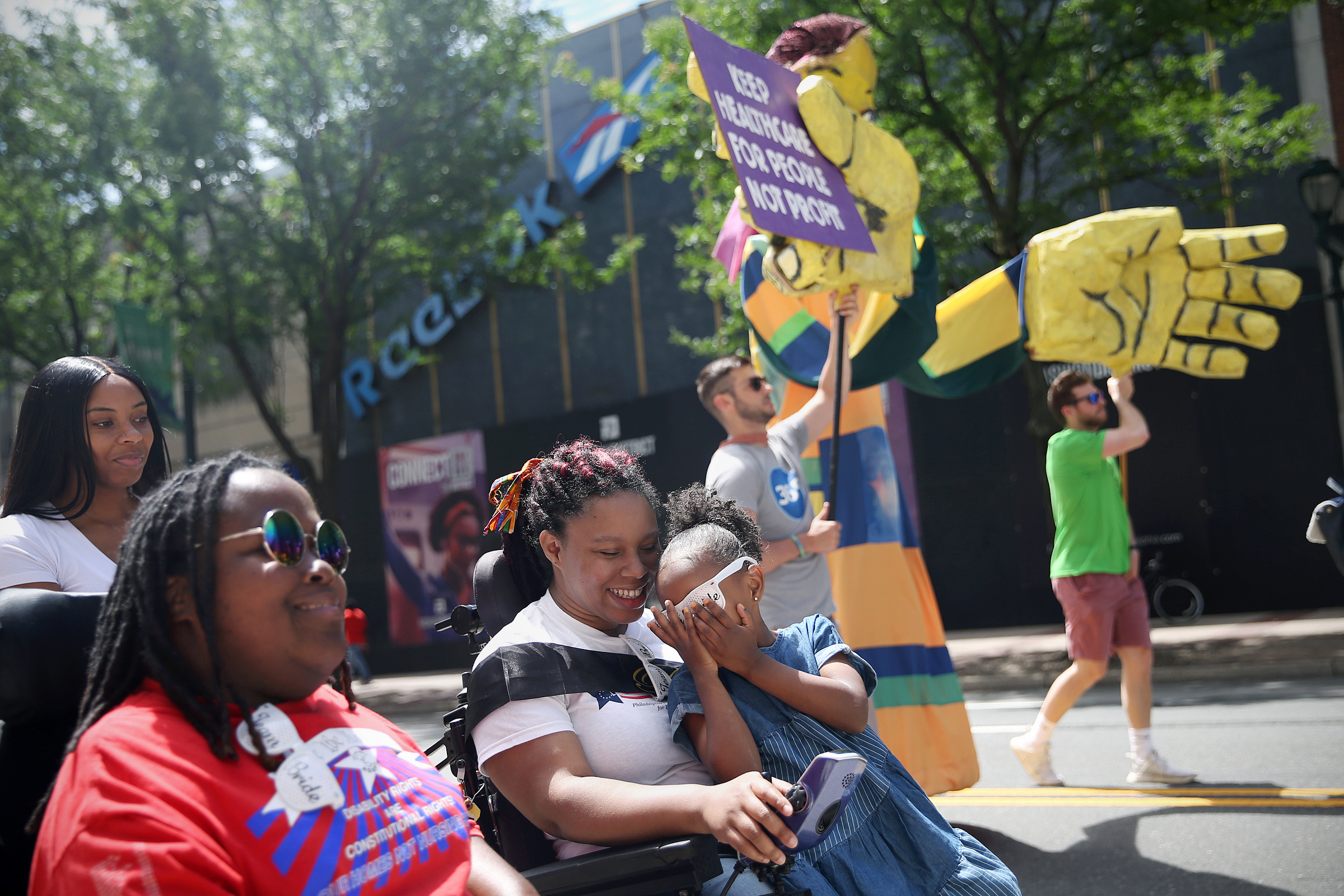
    Domonique Howell (center) and her daughter, Rylee, 5, take part in the annual Disability Pride Parade along Market Street in Center City in, 2019. TIM TAI / Staff Photographer

    This July, Disability Pride Month offers a concrete ask: learn about the disability rights movement and the policies that make community life possible. Speak up when these hard-won rights come under threat. And when policymakers claim that community inclusion costs too much or seems unrealistic, remember Pennsylvania’s example: When we invest, inclusion works.

    Hannah Anderson is a writer and researcher and the founder of Learning Design Collective LLC. She lives with multiple disabilities, including vision and hearing impairment.

  • River Twice is expanding next door, bringing more Mother Rucker burgers, more seating, and a bar

    River Twice is expanding next door, bringing more Mother Rucker burgers, more seating, and a bar

    To everyone who has hankered for a Mother Rucker burger at River Twice on a day other than a Monday, Amanda Rucker and chef Randy Rucker have a solution.

    River Twice will expand this fall into the former Manatawny Still Works space next door, adding a full-service bar to the dining room and chef’s counter at Tasker Street and East Passyunk Avenue.

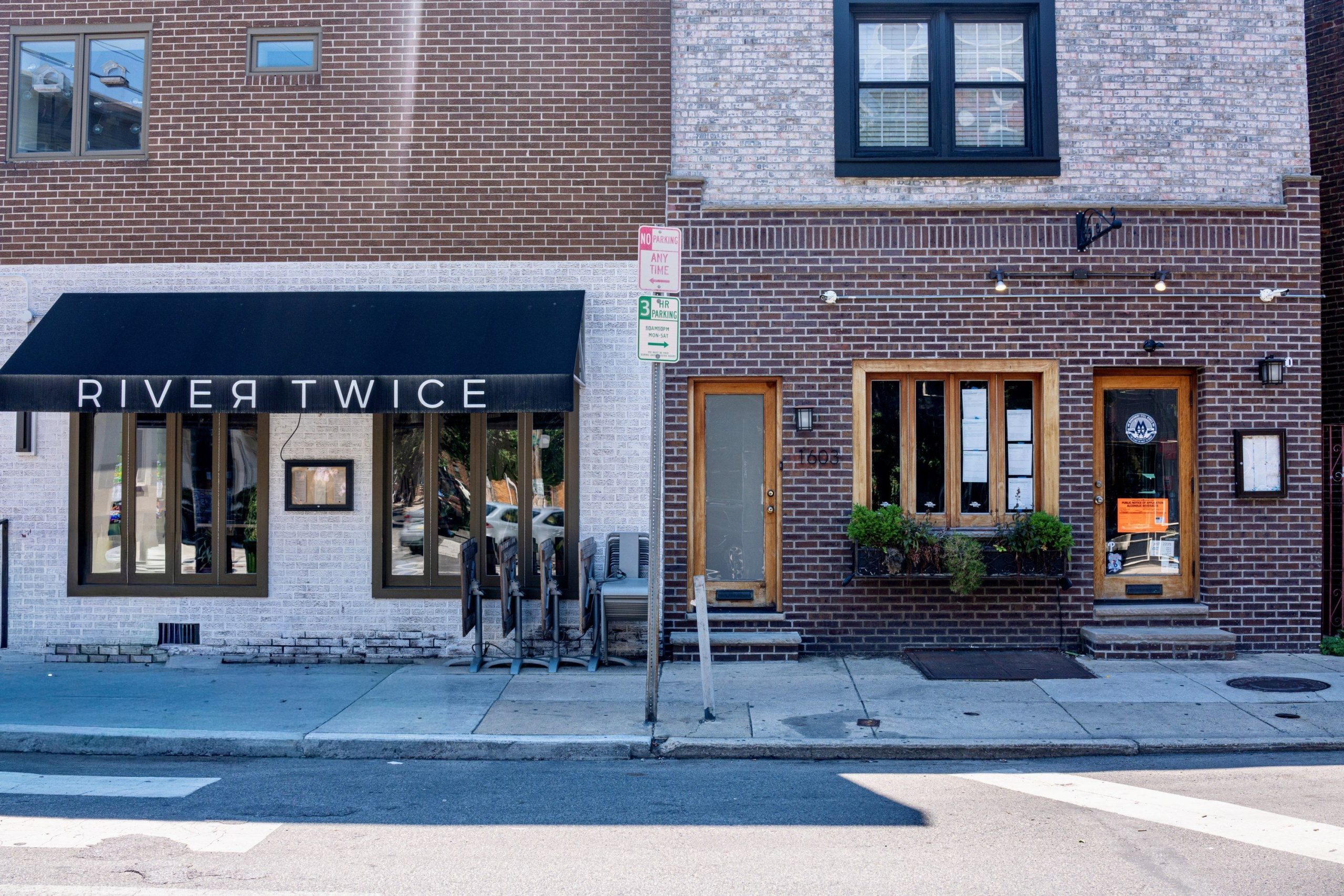
    River Twice is expanding next door into 1603 E. Passyunk Ave., the former Manatawny Still Works.Mike Prince

    The Ruckers are targeting a September debut for the space at 1603 E. Passyunk Ave., which connects to the Michelin-recommended restaurant by a passageway. Though the renovation will eliminate a few seats in the existing dining room, the project will add 24 seats overall, including a 13-seat bar, a standing drink rail, a temperature-controlled wine display, and a second restroom.

    After Manatawny announced last summer that it was closing its tasting rooms, the landlord Passyunk Avenue Revitalization Corp. approached the Ruckers about taking over. “We live in the neighborhood with our kids, and it felt like a chance to plant even deeper roots here,” Amanda Rucker said.

    For Randy Rucker, the biggest attraction was the opportunity to broaden the restaurant’s appeal.

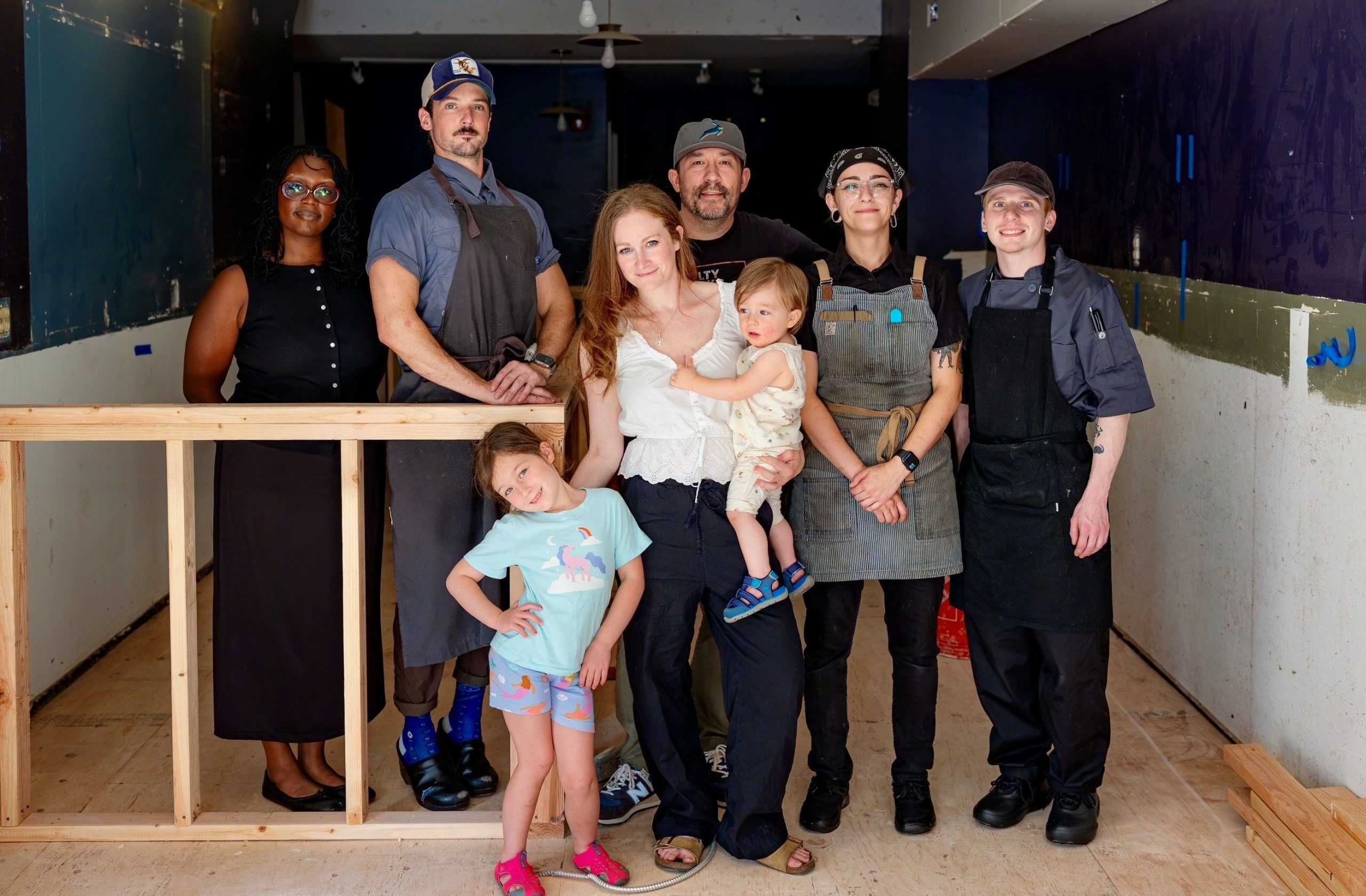
    River Twice owners Randy and Amanda Rucker (center, with children Ruby and Stiles), with Jhazmyn Wallace, Jeff McConnell, Autumn Impalli, and Bret Whartenby.Mike Prince

    “River Twice has always been a commitment,” he said. “People come in for a multicourse dining experience. Having a dedicated bar program lets us serve people who just want to stop in for a drink and a snack without committing to the tasting menu.”

    The addition will remain part of River Twice, not a separate concept. It will have its own cocktail program and an à la carte menu, while guests seated at the bar will also be able to order the tasting menu.

    Besides the Mother Rucker burger — two quarter-pound patties from Allen Bros. with American cheese, everything-spiced mayo, and pickled onions on a seeded Mighty Bread Co. bun, offered now only on Mondays — the bar menu will include shrimp toast with uni, ricotta beignets, nightly oyster crudo, and rotating cheese selections from the Farm at Doe Run. General manager/beverage director Jhazmyn Wallace will oversee the cocktail program.

    River Twice’s tasting menu will also expand from four to five courses, beginning with canapés.

    The project gives Amanda Rucker her largest artistic canvas yet. After designing the interiors of both River Twice and their second restaurant, Rittenhouse’s Little Water, she is painting a mural that will span the entire south wall of the new bar.

    The bar is expected to operate Thursday through Monday beginning at 5 p.m.

  • Penn and CHOP researchers lost millions in federal funding for healthcare research last week, forcing programs to close

    Penn and CHOP researchers lost millions in federal funding for healthcare research last week, forcing programs to close

    Children’s Hospital of Philadelphia researcher Christopher Forrest has spent nearly a decade training early-career scholars on how to design studies that improve care for kids with congenital heart disease, stroke, and influenza.

    That work ended last month, when he had to shut down his PEDSnet Scholars program. The federal funding designated for it stopped coming last fall.

    Forrest received official notice last week that the Agency for Healthcare Research and Quality (AHRQ) had canceled his $5 million grant — originally intended to last through 2028. The letter gave no specific reason, stating only that continuing the grant was not “in the best interest of the Federal Government.”

    PEDSnet Scholars trained researchers to study how healthcare systems can be organized and financed to improve health outcomes. It was one of 16 such programs nationwide funded by AHRQ. Another program site, located at the University of Pennsylvania, received an identical cancellation notice last week from AHRQ.

    “These are not controversial topics,” Forrest said.

    Eighty-two affected grants totaling an estimated $211.6 million as of Tuesday had come to the attention of AcademyHealth, a nonprofit that supports health researchers and has been tracking AHRQ grant cancellations. Those include funding for research projects, career development, training programs, and centers.

    Some researchers received letters saying their work did not align with the agency or federal government’s priorities, followed by a list of the priorities, AcademyHealth president Aaron Carroll said.

    However, many of these projects appear to be directly aligned with priorities, he said.

    One involved a randomized trial of antibiotic stewardship — efforts to encourage careful and responsible use of antibiotics to avoid resistance — across 40 hospitals. Yet in the letter canceling it, antibiotic resistance was listed as a priority.

    “It can’t possibly be that all of these grants that are seeking to improve the quality, safety, and efficiency, and patient-centeredness of healthcare delivery are all incompatible with this or any other administration’s priorities,” said Scott Halpern, a Penn health services researcher whose funding was also canceled.

    Billions in scientific funding have been disrupted under President Donald Trump’s administration over the last year and a half, prompting lawsuits and court reversals in certain cases.

    The Department of Health and Human Services did not respond to requests for an exact count of the grants impacted, saying in a statement that the AHRQ director determines “whether continuation funding is in the best interest of the federal government.”

    “To be clear, these grants were not terminated — they were not awarded continued funding,” the HHS statement said.

    ‘Incredibly demoralizing’

    In late 2025, Halpern had planned to hire a new staff member for the Penn PORTAL program, one of the 16 AHRQ-funded training programs, separately funded from CHOP’s program.

    His team identified a candidate, but — unable to access funding from their $5 million grant since the fall — delayed extending an offer.

    The position was ultimately eliminated. They also rescinded offers to train new scholars in the program.

    Halpern received his official notice last week that his grant, set to continue into 2028, was canceled. He had only spent $1.5 million of it so far.

    Instead of having 10 trainees this month as planned, the Penn program has zero.

    “To not have the resources to support the people who will make a difference in the future is incredibly demoralizing,” Halpern said.

    He drew on philanthropic resources and a roughly $150,000 commitment from Penn Medicine to finish training his first cohort. However, the second cohort of scholars was stopped midway.

    As a result, projects on improving translation services for hospitalized patients and expanding access to hormone therapy for menopausal women were canceled.

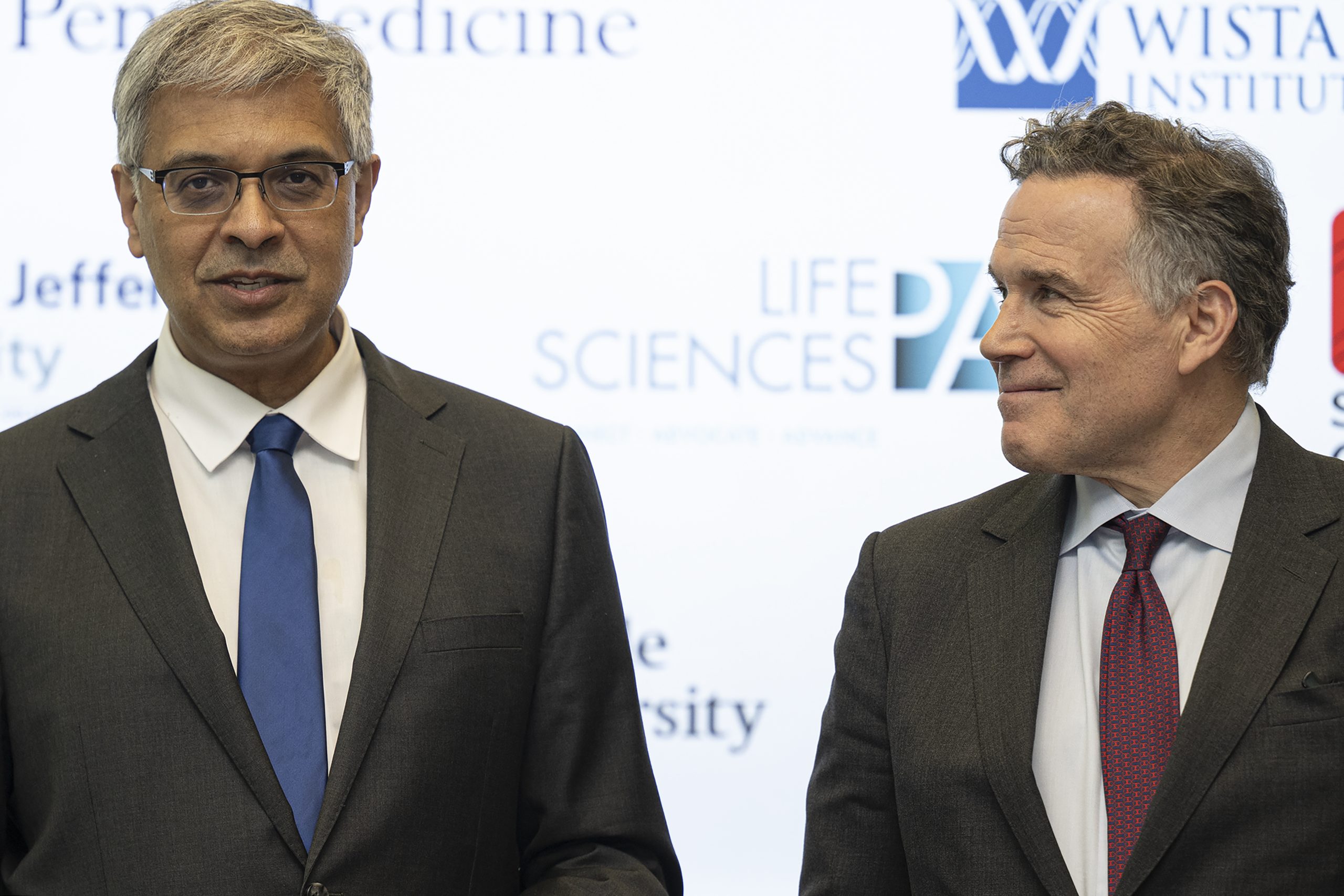
    Jay Bhattacharya (left), director of the National Institutes of Health, and Sen. David McCormick (R., Pa.) speak to the media in March, after touring University of Pennsylvania facilities to highlight NIH-funded research in Philadelphia.Jose F. Moreno / Staff Photographer

    Grant cancellations from AHRQ will have longstanding impacts on advancing healthcare in the United States, a Penn Medicine spokesperson said in a statement, declining to answer more specific questions.

    “Some research projects at Penn Medicine have felt those cuts at their core and impactful work now cannot progress as planned,” the statement said.

    CHOP did not respond to a request for comment.

    In limbo

    Penn researcher Jaya Aysola had not heard as of Tuesday whether her AHRQ grant is canceled, but she assumes the notice is coming.

    She had received a $3.8 million grant to serve as a coordinating center for the 16 training centers starting in 2024. The grant should have been renewed for its second year last November, but that didn’t happen.

    At first, she was told by the agency that it was delayed due to the government shutdown. Then she was told it was held up due to a lawsuit filed by the Society of General Internal Medicine, a physicians group, in August over AHRQ shutting down its grantmaking program.

    Since then, “it’s been radio silence,” she said.

    All but roughly $300,000 of her grant remains unused. Unable to access funds since last fall, she had relied on bridge funding from the university to support staff and research faculty.

    When that funding ended earlier this year, she had to find new jobs and projects for three of her full-time employees, as well as three part-time employees.

    “We already shut down most of the operations,” Aysola said.

    The work she has done since has largely been pro bono with her personal time and limited internal funding.

    Aysola convened a meeting this spring with the 16 AHRQ-funded training centers to discuss how other programs were bridging the gap in funding. Most had paused on accepting new trainees, and have prioritized finishing the current cohort’s work.

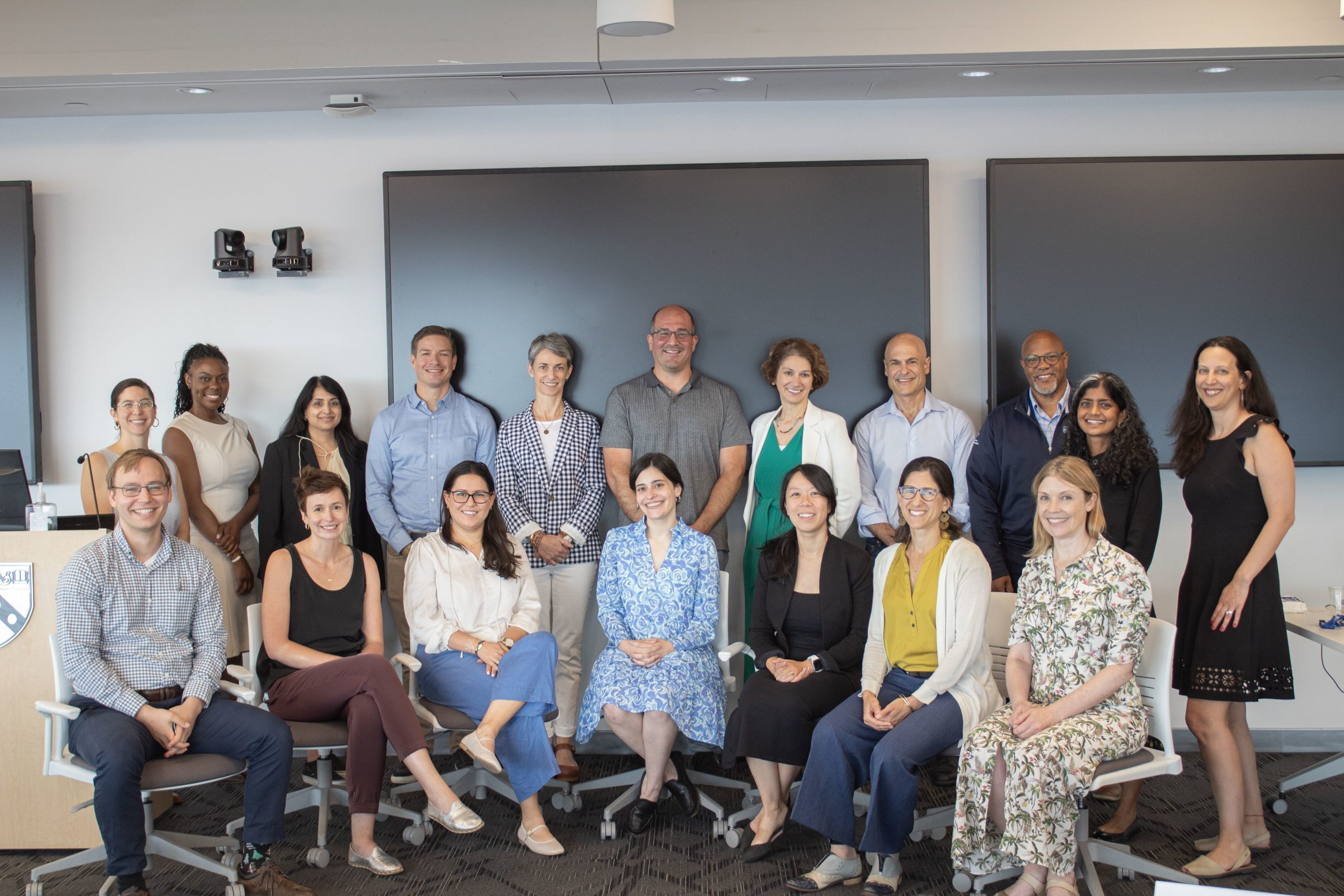
    A July 2025 group photo featuring scholars and faculty leaders in the Penn PORTAL program, which was affected by recent cuts to AHRQ grants.Courtesy of Scott Halpern

    At Halpern’s Penn PORTAL, the first cohort of scholars’ projects have already been implemented. Across the Penn health system, they “are yielding improvements in the patient experience of care,” Halpern said.

    None of the projects led by later cohorts, who would have been trained had the full five years of funding been maintained, are likely to see the light of day, he added.

    He hopes to bring awareness to what he considers an inappropriate cancellation of AHRQ funding. Many organizations are exploring options in terms of advocacy and potentially legal engagement, he added.

    CHOP’s Forrest estimates 30 faculty will never be trained due to PEDSnet Scholars losing its grant funding.

    “It’s very sad because it’s been so instrumental to my career, and I had hoped that it would be instrumental to the career of many of our junior faculty,” Forrest said.

  • Kyle Kendrick feared the worst after his son was hit by a car. Now Kyle Jr. is back on the field and hitting homers.

    Kyle Kendrick feared the worst after his son was hit by a car. Now Kyle Jr. is back on the field and hitting homers.

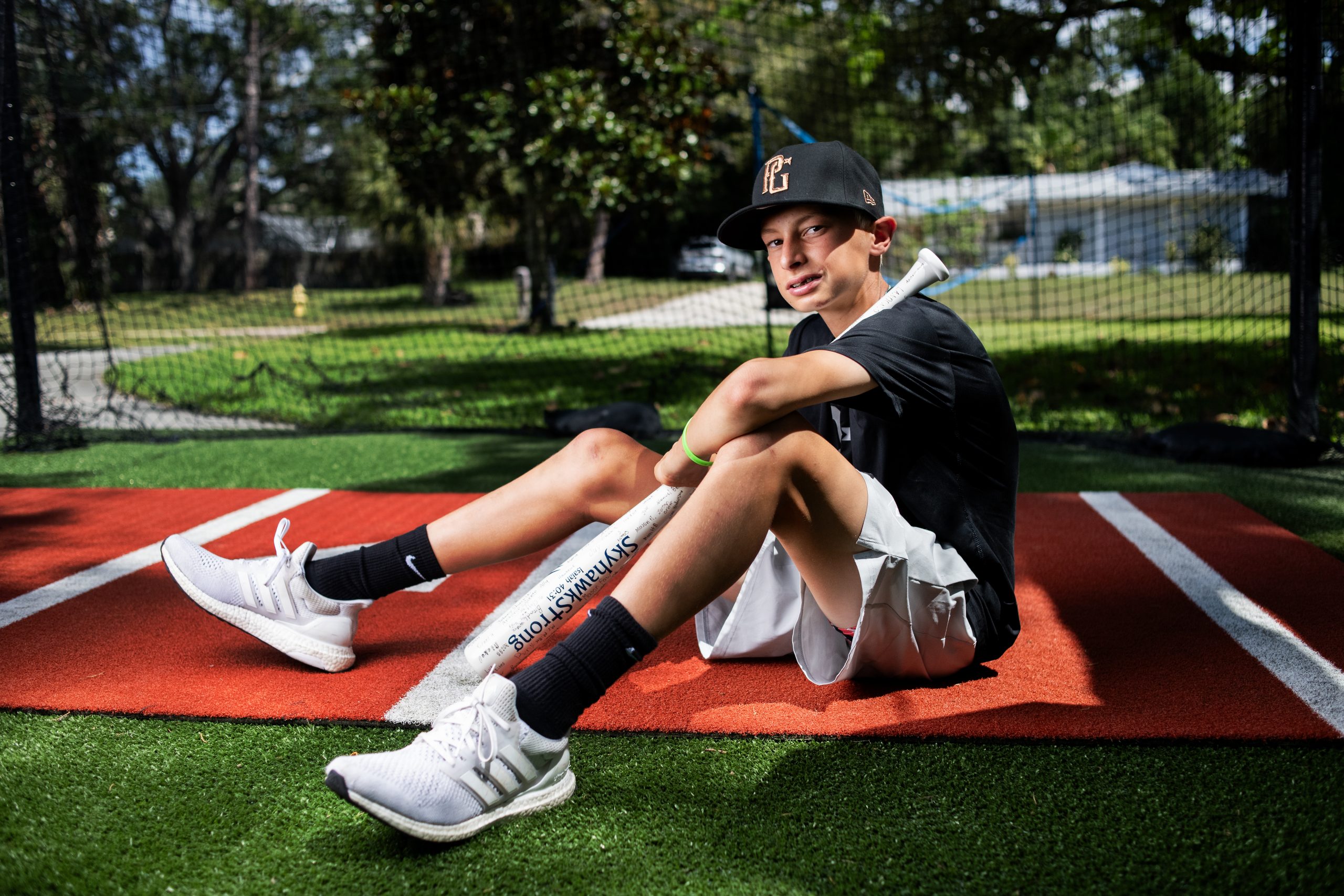
    Kyle Kendrick used to walk into the batting cage he built in his Clearwater, Fla., backyard and just stand in it. He dreamed of having something like this when he was a kid and the former Phillies pitcher was in awe of what he had.

    “I would just look around and say, ‘This is sweet,’” said Kendrick, a member of the Phillies’ starting rotation from 2007-14.

    It was there that he spent hours throwing batting practice to his son, Kyle Jr., as the son fell in love with the dad’s game. Kendrick even installed lights so his boy could keep swinging. The batting cage became their place.

    “They grow up fast,” Kendrick said. “Pretty soon, he’ll be in high school and then college, and he won’t want to go into the cage anymore.”

    For a few weeks last fall, the dad wasn’t sure if his son would ever be able to get back in the cage after the 12-year-old was hit by a car driving nearly 50 mph while he was walking across the street near his home.

    Kyle Jr. broke both femurs, had his mouth wired shut, and spent a week in the hospital after six hours of surgery. The Kendricks first feared their son wouldn’t make it. Next, they wondered if he’d ever play baseball again. And then they watched him leave his wheelchair to get back into the batting cage with his dad.

    The son sat on a bucket in the cage 18 days after the crash while his dad bounced baseballs toward him. He nabbed each hopping grounder with ease and fired throws back to his dad. There was no fear, his mother Stephenie said. Kyle Jr. was back in the cage.

    “I was just so proud,” his mom said. “This kid was just hit by a car and he wasn’t even flinching. It didn’t faze him. He was so driven to get back. He was on that bucket swinging the bat. He was catching and throwing. He was fielding ground balls. I was amazed.”

    ‘Oh my gosh’

    Kyle Kendrick kept calling his son’s phone, wondering where he was after he rode his bike that Sunday to fish in a nearby lake. Finally, a police officer answered. He told Kendrick that his son was in a crash and he had to get there fast.

    “I actually heard the sirens from my house,” Kendrick said. “I was like ‘Oh, my gosh.’”

    Kyle Jr. was riding his bike home when he stopped at an intersection so he could walk his bike across the street. A driver waved him on and the boy started to cross. But another car did not see him. The boy was launched into the air before crashing down onto the car and striking the pavement. The driver was not charged. There were ambulances, firefighters, and a crowd of people there when the dad arrived. It was the worst experience of his life, Kendrick said.

    He called his wife, who was driving home from a meeting for their daughter’s volleyball team.

    “He couldn’t speak,” Stephenie said. “The cop got on the phone and said they had to helicopter him to the hospital. I said, ‘Helicopter him there? Why? Why can’t he take an ambulance? Is he going to survive? How bad is it?”

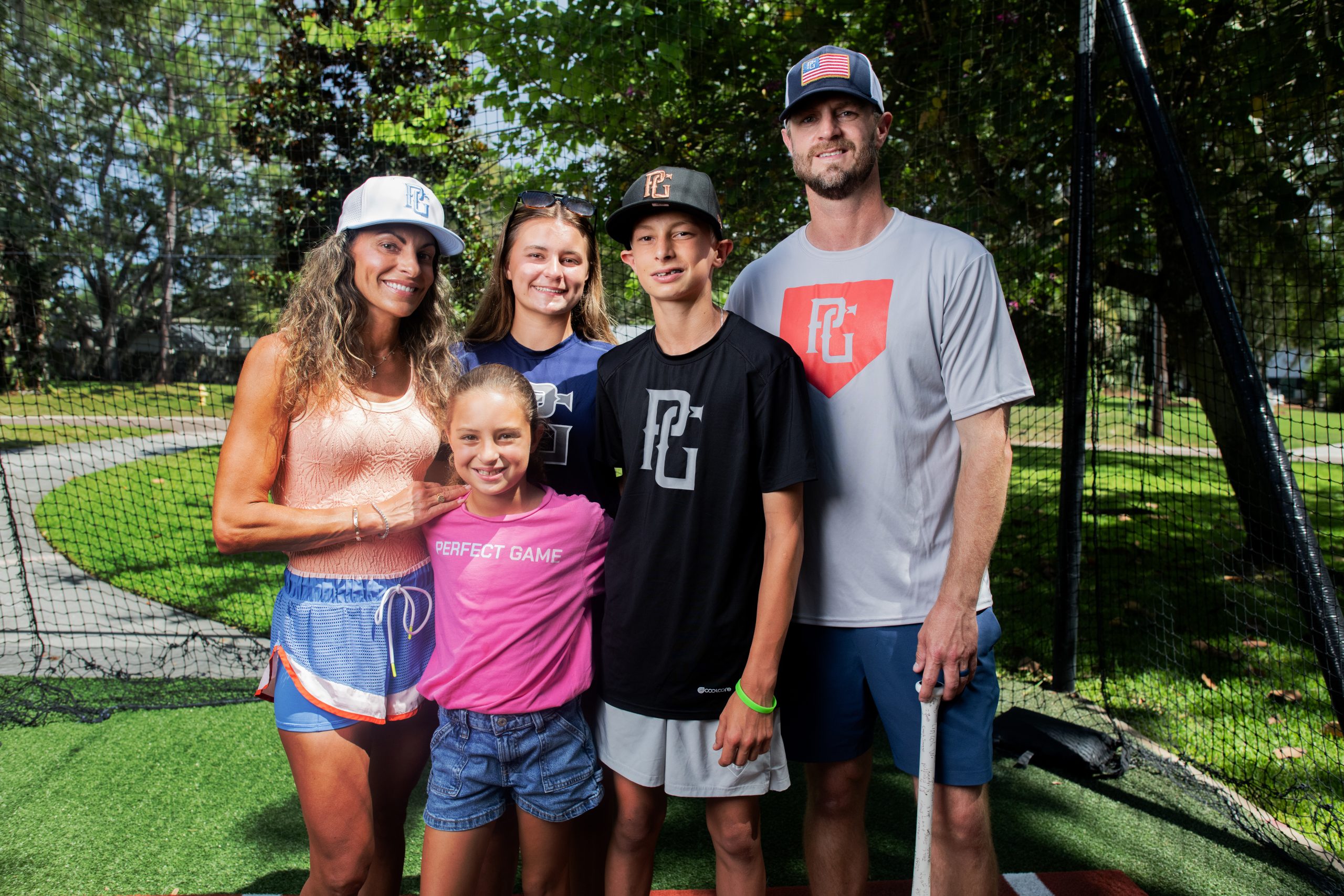
    Former MLB pitcher Kyle Kendrick poses for a portrait with his wife, Stephenie LaGrossa Kendrick, and their children, Sophia, Kyle Jr., and Sloane at their home in Florida. Octavio Jones / For The Inquirer

    The son underwent a bevy of X-rays and MRIs at Johns Hopkins All Children’s Hospital in St. Petersburg, Fla., where doctors learned that he broke both femurs but somehow did not have a spinal or head injury. Even his teeth were mostly intact as the boy lost just one.

    The crash happened three years after Stephenie’s brother Chris died. Kyle Jr. was close to his Uncle Chris, who loved to fish. She asked her late brother on the way to the hospital to pull some strings and limit the damage.

    “I swear he had a hand in it,” Stephenie said. “Every doctor said, ‘He shouldn’t have survived this. This is a miracle.’”

    The boy’s face looked like he had gone 12 rounds when his mom saw him in the hospital. His jaw was broken but he still managed to say, “Hi, mom.” Stephenie told her son to show everyone how tough he was. He did just that.

    He screamed when his legs were pulled into traction but he fought through it. His pain medication was limited overnight to prepare for surgery in the morning and the boy bore the discomfort. He was tough.

    “He really is very tough,” his mom said. “And it’s mentally tough.”

    The parents sat in the hospital cafeteria for 6 hours while their son underwent surgery.

    “That was the longest and most emotional time,” Kendrick said. “It’s six hours of surgery and he’s under for a long time. As a parent, it’s the worst.”

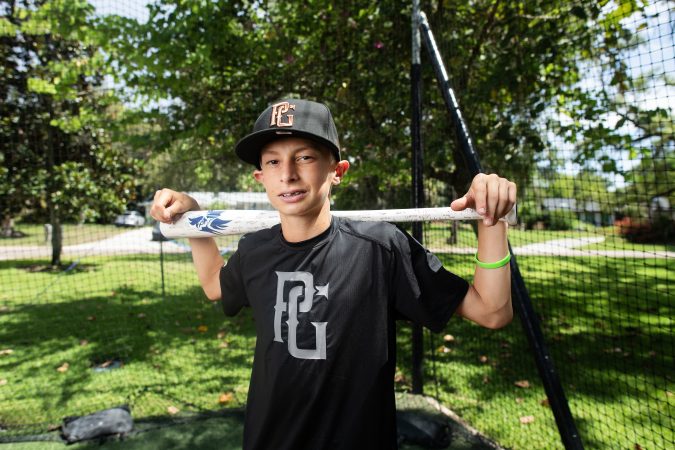
    Former Phillies pitcher Kyle Kendrick thought his son was going to die. Six months later, Kyle Jr. is playing baseball again after being hit by a speeding car.Octavio Jones / For The Inquirer

    The surgeon installed metal rods into Kyle Jr.’s femurs through his hips and was so precise that he left the tiniest scar. The doctor told the parents that their son would heal in six months. That sounded a little optimistic, the dad thought. But they were clean breaks, the doctor said. There were no growth plate issues. The boy would bounce back. He got lucky, the doctor said.

    The boy stayed in the hospital for a week with his mom while dad stayed at home with their daughters, Sophia and Sloane. Everyone at the hospital was great, mom said. Well, everyone except for the people who kept removing and inserting the catheter.

    “I was like, ‘OK. No more students are coming in to try the catheter. We’re going to use your best person who knows how to use a catheter and that’s what we’re going to do,’” said Stephenie, who lives in Florida but still has the accent of the girl from Glenolden who attended Archbishop Prendergast. “I pulled out a whole Delco thing there. You don’t even know. I was real nice until I was like, ‘That’s enough. Now leave the friggin’ catheter in until he can pee on his own.’”

    ‘Back on the horse’

    Kyle Jr. returned to school in early December, less than a month after the crash. His buddies at Skycrest Christian School pushed the sixth grader’s wheelchair around the halls and carried his books. He went snowboarding just three weeks after surgery. The doctor was right.

    Kendrick took his son to fish at the spot where he was headed that Sunday and they went back to the scene of the crash. He bought his son a new bike.

    One of their daughters used to ride horses, and the trainer always put her right back on the horse if she fell off. There’s no guide instructing parents how to deal with a crash like this. So the Kendricks did what they thought was best.

    “We got right back on the horse,” Stephenie said. “He’s a badass. He really is.”

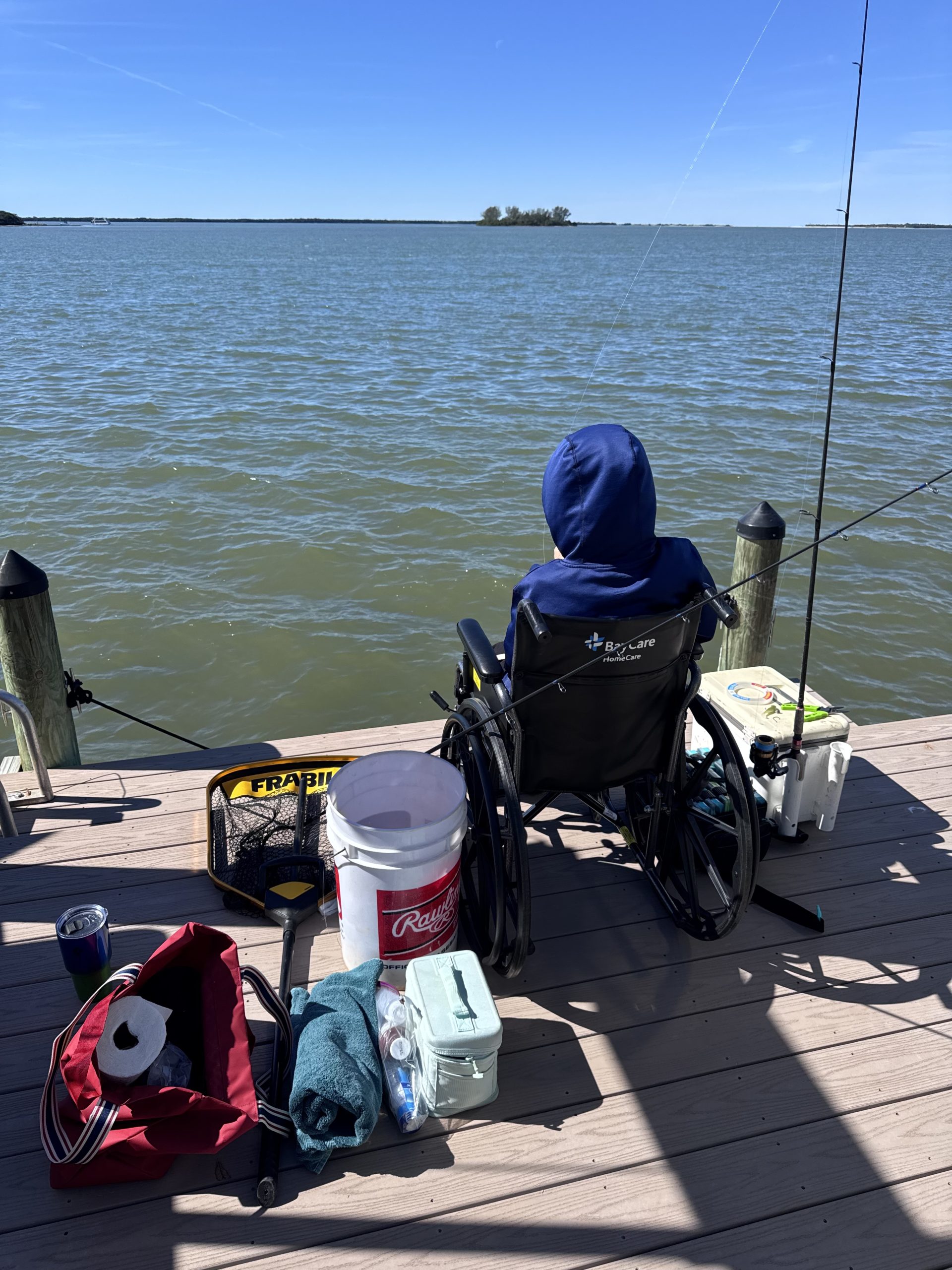
    Kyle Kendrick Jr. fishes from his wheelchair weeks after he was hit by a car while heading home from fishing in the same spot. His dad, former Phillies pitcher Kyle Kendrick, drove him back to the spot.Kyle Kendrick

    And they got the boy in the cage. Kyle Jr.’s travel team — which is coached by his dad — had a trip planned for June to a tournament in Cooperstown, N.Y. The fields are named after big-league parks and nestled in the valley near the Baseball Hall of Fame. This was a trip the father and son had been looking forward to. But Kendrick worried his son wouldn’t be able to make it.

    He played his first game for the Florida Burn in January as his dad used him as a designated hitter to keep him out of the field. His Burn teammates wore his number on their batting helmets and some of the other parents cried. He was back, but the Kendricks noticed their son’s confidence wasn’t where it used to be.

    He had missed weeks of baseball and had trouble timing his swing. They couldn’t fault him if he was tentative still from the crash. The father and son kept working.

    “He’s a good coach,” the son said. “It’s a lot of fun to hit with him and then to have him as my coach. Just working with him and learning what he learned is really cool. It’s special.”

    Kyle Kendrick said his son being “able to play at 100 percent after this is a miracle.”

    “When I got back out there with him, I said, ‘This is so cool,’” the father said. “He could’ve passed. And now to still play? He could’ve been paralyzed. Just to be out there doing baseball stuff is unbelievable.

    “I really didn’t think he’d be able to play again. I didn’t know how he’d move. A lot of thoughts go through your mind. For him to come back, he looks normal if not better. We’re very lucky and grateful. It’s cool to be back with him. To see him on the field was awesome for me.”

    He made it to Cooperstown and the team’s first game was delayed until near midnight. The boys didn’t play that night until way past bedtime. They were a bunch of friends on a baseball trip. They slept in bunks for a week, traded pins, ordered pizza, went to the Hall of Fame, and watched fireworks. Playing late at night was perfect.

    It became even better when young Kyle got hold of a pitch and drove it to center field. His first homer came seven months after a crash that gave his parents the worst scare of their lives.

    “It was freezing cold,” Kyle Jr. said. “I could hardly feel my hands. I got a high pitch and I just swung up at it.”

    He circled the bases and his teammates — the same kids who left a giant banner of support on his lawn when he was in the hospital — rushed toward home plate. Kyle Jr. slowed his jog as he neared the gang of kids and skipped onto home plate as his buddies went wild.

    “That felt so good,” Kyle Jr. said. “Everyone was pumped. Everyone was jumping because it was my first one.”

    A day later, he did it again. It was “oppo taco,” he said of his opposite-field homer.

    The kid who fell in love with baseball in the batting cage his dad built was back doing what he loved.

    “I just love to play,“ he said. ”It’s a lot of fun.”

  • High-protein soft pretzels and soups are on the menu as Philly’s iconic food brands compete for GLP-1 consumers

    High-protein soft pretzels and soups are on the menu as Philly’s iconic food brands compete for GLP-1 consumers

    A soft pretzel from Philly Pretzel Factory currently has about 12 grams of protein.

    But sometime soon, you will be able to buy one with much more.

    The company says it is in the early stages of developing a high-protein pretzel, one of several new products it hopes will attract consumers concerned about weight loss.

    “Obviously, the trend is protein,” said company president Marty Ferrill. “Even people who are on GLP-1s, they’re looking for more protein-rich foods.”

    Philly Pretzel Factory is just one of the area companies changing their products to accommodate consumers who are eating less and “protein-maxxing.” The viral nutrition trend refers to an increasing obsession with eating more protein based on the idea that it builds muscle.

    A recent Gallup survey reported approximately one in eight U.S. adults are taking appetite-suppressing GLP-1 medications.

    GLP-1 drugs such as Ozempic and Wegovy were initially created to treat individuals with type 2 diabetes by regulating blood sugar levels, but their hunger-suppressing effects have spurred wider adoption for weight loss. A JPMorgan report estimates that by 2030, up to 30 million Americans may be using GLP-1 medications, especially as pill formats become available.

    As the medications rise in popularity and appetites shrink, the food industry could face headwinds. A recent study found that within six months of starting a GLP-1 medication, households with at least one GLP-user reduce their annual grocery spending by $390 on average.

    But this isn’t the industry’s first rodeo.

    The low-fat craze of the 1980s and the carb-phobic diets of the 2000s also forced food brands to rethink their products.

    “Until there’s a magic pill where you just don’t have to eat, period, the food industry will respond,” said Ernest Baskin, chair of St. Joseph’s University’s Food, Pharma, and Healthcare Department. “They’re going to change their product to appeal to the next generation of consumers.”

    Making every bite count

    Philly Pretzel Factory’s protein-enriched pretzels are an example of functional foods, which are foods that have been formulated to contain added nutrients and health-enhancing substances.

    Functional foods can be especially important for GLP-1 users, who eat smaller portions but still require their necessary vitamins and minerals.

    “In a world where you’re not eating as much, you want everything to count,” said Baskin.

    Campbell’s, the Camden-based food and snack giant, has ventured into the functional foods market with a recent launch of five protein soups that offer 20 grams of protein per can.

    The Campbell’s Company launched five new protein soups with 20 grams of protein per can.The Campbell's Company

    The company also released a new protein-fortified snack option with Snyder’s of Hanover’s harvest wheat pretzel sticks, which offer 6 grams of protein per serving. (As opposed to 3 grams for a standard pretzel stick serving.)

    The options “give consumers choices that fit their nutritional goals and lifestyles while helping get more out of every bite,” says Dave Chalk, Campbell’s vice president of enterprise insights and analytics.

    The recipes of popular Philly foods are changing too, as consumers prioritize better-for-you ingredients. In addition to the protein pretzel at Philly Pretzel Factory, their regular pretzels are undergoing a “clean label” reformulation.

    Ferrill said the company is ensuring consistent taste while changing some components: using unbleached flour instead of bleached, removing the additive potassium bromate, and replacing whey protein with a plant-based substitute. That means the franchise’s iconic pretzels will become vegan this year.

    “The urgency is [greater] now than it was three years ago,” said Ferrill, noting that the company has been developing the clean-label pretzel for years.

    Greater control over meals and portions

    At Honeygrow, a fast-casual chain that offers salads and stir-fries, customization is another option for GLP-1 users, said Todd Miller, senior vice president of marketing.

    More Honeygrow customers are choosing whole-wheat noodles — which offer 17 grams of fiber and 13 grams of protein — for their stir-fries, or crafting more vegetable-forward meals, said Miller.

    A chicken parm stir-fry at Honeygrow is at the 11th Street location in Philadelphia in 2024.Jessica Griffin / Staff Photographer

    “What is becoming increasingly important is the ability to personalize a meal around the nutrients and portions that matter to each customer,” Miller said.

    Campbell’s is banking on similar personalization preferences. Some research shows GLP-1 users are dining out less to control portion sizes and ingredients. With brands like Pacific Foods, Swanson, and Rao’s under the Campbell’s umbrella, the company’s cooking essentials business is benefiting.

    “The biggest opportunity within Campbell’s portfolio is the confidence consumers have gained with cooking at home,” Chalk said.

    People still want good food

    Despite moving toward healthier choices, many food companies are serious about not compromising flavor.

    For Honeygrow, that means continually introducing limited-time offers and keeping up to date with new ingredients to attract customers. Currently, Honeygrow’s seasonal summer menu includes a ginger scallion stir-fry and a pomegranate acai salad.

    “Even though you’re on a GLP-1, that doesn’t mean that you don’t want delicious food,” said Miller.

    Taste matters. When choosing what to eat, people are looking for enjoyment, comfort, and connection, said Ami Lawson, managing director of food and beverage marketing agency Quench.

    “The brands that will win aren’t the ones chasing the GLP-1 trend, they’re the ones delivering foods that people genuinely feel are worth eating,” said Lawson.

    Nostalgia and memory also play a significant role in food choice. Take soft pretzels, a Philly food staple.

    “If you grew up eating pretzels, you’re probably going to give up other things before you give up your pretzels,” Ferrill, of Philly Pretzel Factory, said.

  • Here’s what $1,500 in rent can get you in Philly, Miami, Boston, and other cities across the country

    Here’s what $1,500 in rent can get you in Philly, Miami, Boston, and other cities across the country

    Apartment renters with $1,500 a month to spend can get the equivalent of one or two bedrooms in Pittsburgh, a studio in Philadelphia, or a dorm room in Manhattan.

    That’s according to an analysis by RentCafe, a national apartment search website, based on average price per square foot for apartments in properties with 50 or more units.

    A monthly rent of $1,500 can get tenants 750 square feet in Pittsburgh, 591 square feet in Philadelphia, and 210 square feet in Manhattan. The national average for this price is 703 square feet — 112 square feet more than in Philadelphia.

    In most cities, $1,500 pays for a bit less space this year than last year. Philadelphia renters lost 6 square feet, and Pittsburgh renters lost 18.

    Whether a renter paying the same amount gets a spacious home or cramped quarters can depend on the type of rental property, but it mostly depends on the location. Varying costs of living, amounts of available space, and levels of apartment demand and construction all factor into home prices and sizes.

    RentCafe’s report, published this month, looks at the 200 largest U.S. cities by population and determines how much apartment space $1,500 in rent pays for in various cities. To calculate the rough number of possible bedrooms, RentCafe looked at each city’s average square footage by bedroom count.

    (function(){function e(){window.addEventListener(`message`,function(e){if(e.data[`datawrapper-height`]!==void 0){var t=document.querySelectorAll(`iframe`);for(var n in e.data[`datawrapper-height`])for(var r=0,i;i=t[r];r++)if(i.contentWindow===e.source){var a=e.data[`datawrapper-height`][n]+`px`;i.style.height=a}}})}e()})();

    In Philadelphia, $1,500 would not even cover a one-bedroom home in an apartment building.

    In places such as Manhattan and Boston, $1,500 a month won’t even pay for a typical studio apartment. That’s the case in 26 cities. Fifteen of them are in high-cost California, including Los Angeles and San Francisco, where $1,500 would get renters 429 square feet and 307 square feet, respectively.

    In 97 of the 200 cities RentCafe analyzed, $1,500 a month could pay for apartments with one to two bedrooms. Renters could get a two- to three-bedroom unit in 31 cities, mostly in mid-sized urban centers.

    Rent money goes furthest in cities with relatively low costs in the South and Midwest. In McAllen, Texas, a renter with $1,500 a month to spend can get a 1,378-square-foot apartment, enough space for three or four bedrooms. In this city, apartment rents average just under $1,000.

  • Eagles newcomers ’26: Can Uar Bernard deliver on hopes for a feel-good story?

    Eagles newcomers ’26: Can Uar Bernard deliver on hopes for a feel-good story?

    With Eagles training camp drawing nearer, The Inquirer is taking a closer look at the more than three dozen new faces who are expected to report along with the rest of the team on July 28.

    Player: Uar Bernard

    Position: Defensive tackle

    Age: 21

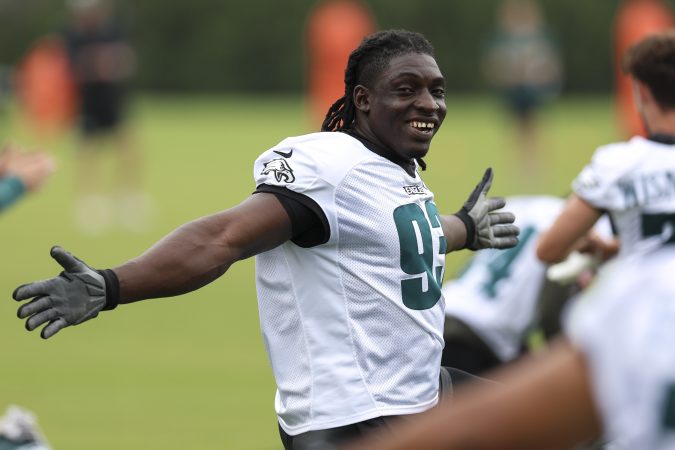
    Previous experience: Bernard doesn’t have any previous experience in football. The Eagles picked him in the seventh round (No. 251 overall) in April’s draft. The native of Nigeria is a product of the NFL’s International Player Pathway program who impressed scouts with his superb athleticism and frame. The 6-foot-4 Bernard boasts just 6% body fat (despite being 306 pounds) and ran the 40-yard dash in 4.63 seconds.

    Path to a roster spot: It’s difficult to predict Bernard’s chances of making the roster, since he’s such a raw prospect. The main factor is whether the Eagles want to risk putting him on the practice squad, which would expose him to being signed by other teams. He’ll need to make enough progress to show that he can occupy a roster spot, and the Eagles will need to come out of camp deep enough along the defensive line to allow it to happen.

    Fun fact: Bernard’s original plan was to go into real estate. His football journey began when a coach noticed him while playing basketball in his village in Nigeria.

    Quotable: “Before the IPP, I was introduced to football by [former NFL player] Osi Umenyiora,” Bernard said on draft night. “So I was back home watching drills about pass rush and walking into the trenches with my coaches back home, learning techniques. … But I can walk into the trenches.”


    Carson Steele appeared in all 20 games with the Chiefs in 2024 (regular season and playoffs), including 11 special teams snaps against the Eagles in the Super Bowl. John Bazemore

    Player: Carson Steele

    Position: Fullback

    Age: 23

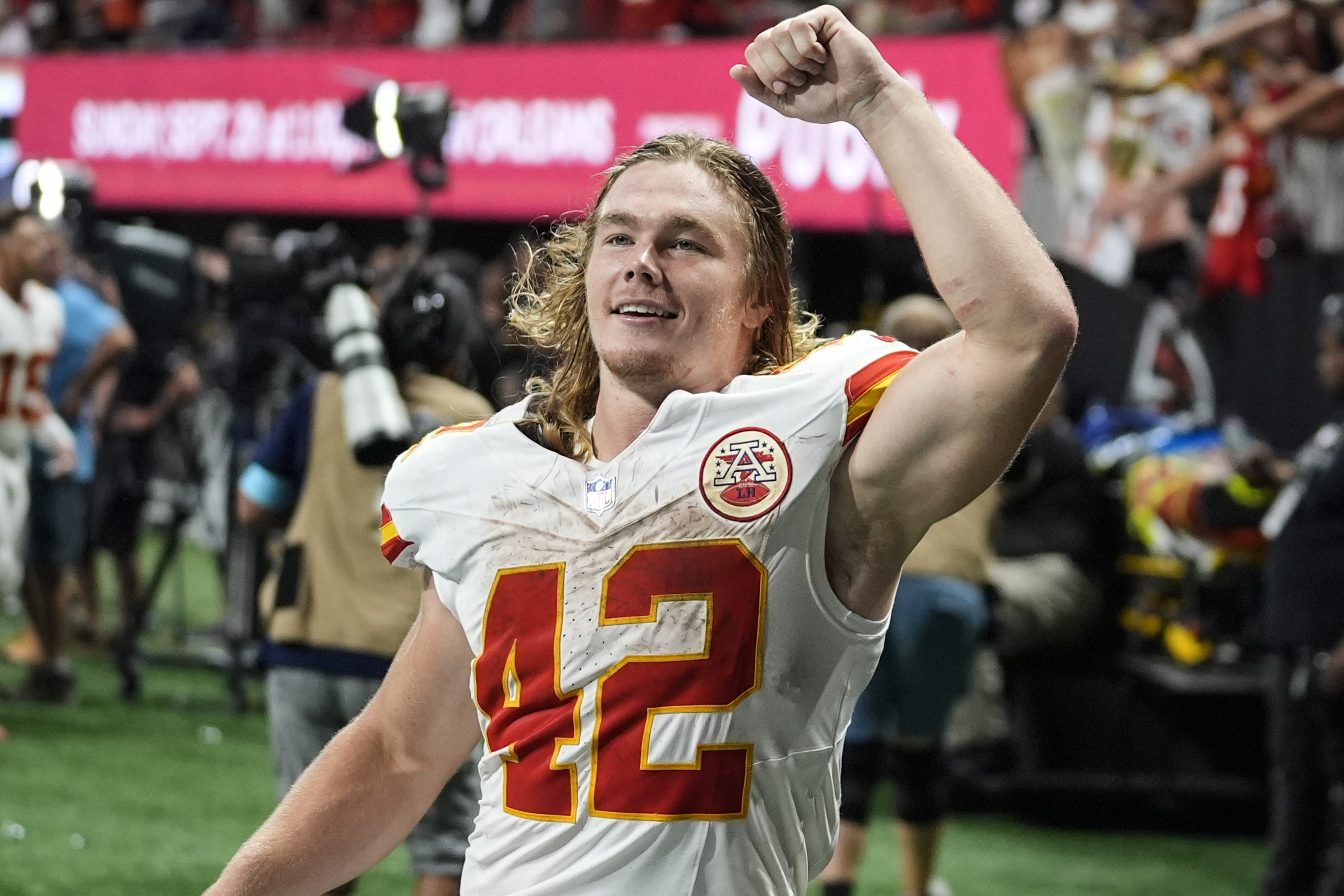
    Previous experience: Steele is entering his third NFL season. He was signed by the Kansas City Chiefs as an undrafted free agent in 2024 after stints at Ball State and UCLA. Steele was waived by the Chiefs last August and spent the season on the practice squad. The Eagles signed him to a reserve/future contract in January.

    Path to a roster spot: It remains to be seen whether the Eagles will keep a fullback. Tight end Cameron Latu transitioned to fullback last season and was a decent blocker. Steele also has special teams value — his last meaningful snaps came there against the Eagles in Super Bowl LIX. Steele making the team over Latu rests on his training-camp output and versatility.

    Fun fact: Steele had an impactful rookie season, was named an alternate for the Pro Bowl following the 2024 season, and finished second behind Baltimore’s Patrick Ricard for AFC fullbacks in the Pro Bowl voting.

    Quotable: “My main goal was to try be like a Swiss Army knife, try to do it all,” Steele told Kansas City reporters in 2024, when describing his play style.

  • Tague Davis is ‘reaping the rewards’ of his baseball journey at Louisville — and now with Team USA

    Tague Davis is ‘reaping the rewards’ of his baseball journey at Louisville — and now with Team USA

    Tague Davis just got the tattoo on his right arm finished.

    The tattoo, which took 13 total hours and two sessions to complete, features the initials of his immediate family members with three clovers — which represents the family’s traditional coat of arms from Ireland. A silhouette of Davis and his father, former major league catcher and Phillies color commentator Ben Davis, playing catch is included at the bottom of the design.

    Also included in the tattoo is a verse from the Bible, Matthew 6:34. The verse reads, “Do not worry about tomorrow, tomorrow has its own worries.”

    In life and in baseball, the West Chester native looks to live by this passage.

    “Once you really break it down, you realize that it’s more of the journey to get to where your next destination is,” Tague Davis said. “That’s where you start reaping the rewards.”

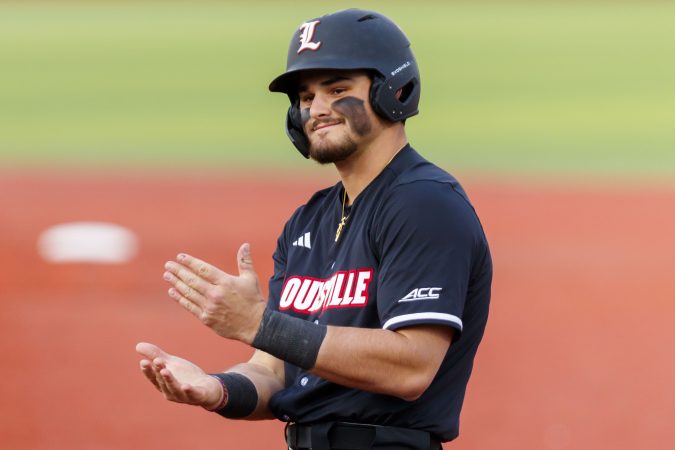
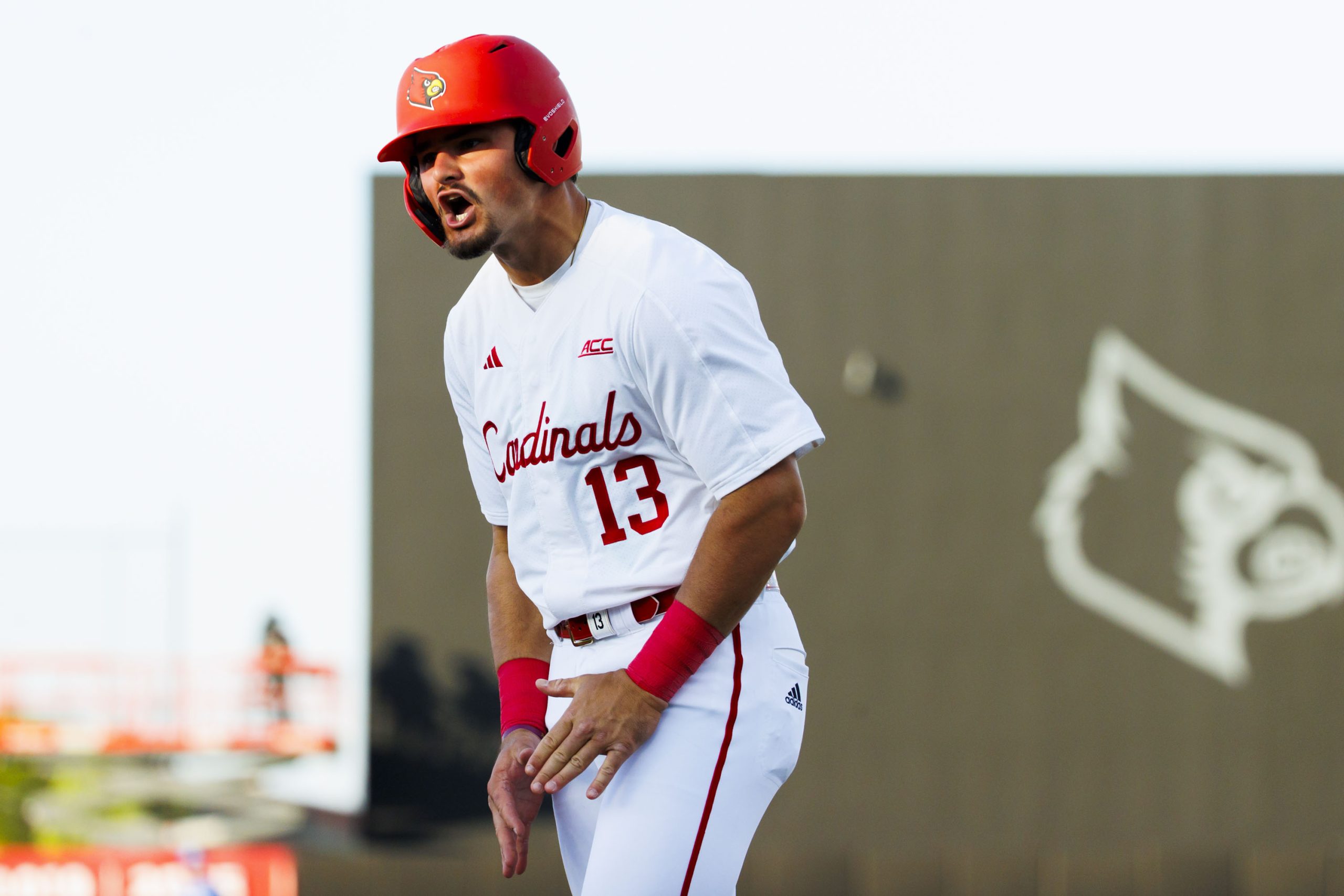
    The Louisville first baseman is coming off a stellar sophomore season. In May, Davis was named the Atlantic Coast Conference Baseball Player of the Year. He led the nation with 34 home runs while driving in 98 runs.

    This summer, Davis starred for the Cotuit Kettleers of the Cape Cod Baseball League before earning a spot on the USA Baseball collegiate national team. For Team USA, the Malvern Prep alumnus shined in the inaugural World Collegiate Baseball Championship in Taiwan. In a 10-0 win over Korea in the tournament’s semifinals, he logged a game-high three RBIs. Team USA fell short of gold after losing 6-3 to Japan in the final.

    Tague Davis competed with USA Baseball’s collegiate national team this summer.Taris Smith / Louisville Athletics

    With all this change, Davis has relied on his support system to keep him grounded.

    “Luckily and thankfully, there’s always been a role model [in my life] to humble me and show me where I’m supposed to be,” Davis said. “Obviously, faith comes into play with it. Right now at college, coach [Dan McDonnell] is a huge part. He preaches to me every day to be where your feet are, you can’t worry about the next day.”

    ‘What makes him great’

    Louisville baseball coach Dan McDonnell attributes Davis’ success to his worry-free attitude and natural ability to find joy in even strenuous situations.

    One story McDonnell loves to tell came during Davis’ freshman campaign. McDonnell opted to pull his pitcher. After he made his way back to the dugout, McDonnell looked back out to the diamond. The infielders were crowded together, discussing how to get out of the inning unscathed. Well, most of them were. Davis was razzing a teammate, flicking the back of his ear.

    “As a coach, your first instinct is, ‘Why is this guy not locked in and intense and focused? This is the most crucial part of the game here,’” McDonnell said. “There’s another part that you just kind of [smiles], and you go, ‘That’s what makes him great. He’s a kid. He’s playing the game the way you’re supposed to play it.’”

    That was not the only time Davis surprised his coach. During a one-on-one meeting, McDonnell ripped into his star player following a poor two-game stretch. Davis took the criticism “like a champ.” After McDonnell dismissed him, the star player quickly shifted topics — showing the heated conversation was already water under the bridge.

    “[Davis] gets off the couch, he gets to my door, and he turns back and smiles,” McDonnell recalled. “He goes, ‘Hey, coach, it’s a great time of the year to go fishing. We need to go fish.’ And he walks out the door.”

    Tague Davis says other programs contacted him during the season to see if he had interest in transferring. He rebuffed the offers.Taris Smith / Louisville Athletics

    ‘Grass ain’t always greener’

    Louisville’s 2026 season ended early after an opening-round loss to Pittsburgh in the ACC postseason tournament.

    Amid the Cardinals’ disappointing 30-27 season, Davis began receiving attention from other programs — weeks before the season even ended.

    “I open my Instagram one day and there was a link,” Davis said. “I clicked on the link and went into my DMs. It was just a list of like four different trucks, like Ford F-350 Lariat — anything you wanted. I’m like, ‘Oh my gosh, what school is this from?’

    “You see different stuff like that and you think to yourself, ‘Do I really want this?’ Or do I want to stay at home, and ‘home’ is the easiest answer. So there was a bit of tampering, but you know they’re just doing their job. It’s a shame that the game has come to this.”

    Although he found the whole ordeal “flattering,” entering the transfer portal was never in the cards for Davis — who noted he “wasn’t raised like that.” He knows, as his tatted arm will remind him, not to worry about what could be.

    “Sometimes the grass ain’t always greener,” Davis said.

    Added McDonnell: “We never felt or thought like Tague was necessarily leaving, and that just again goes to show just how well grounded he is. He’s like, ‘I don’t need this status. I don’t need these people gushing over me. Yeah, that money is nice, but that’s not necessarily what I’m chasing.’ It’s just very refreshing in a challenging time in this athletic world.”