Tag: topic-link-auto

  • Curbside compost is trending in the Philly suburbs. In Delco, many residents’ scraps are ending up at Linvilla.

    Curbside compost is trending in the Philly suburbs. In Delco, many residents’ scraps are ending up at Linvilla.

    Fifteen years ago, Chris Pieretti was just trying to get people to come around on compost.

    Now, the Upper Darby resident and compost aficionado spends his days traversing the region in his truck, collecting a potpourri of food scraps in green buckets, and turning eggshells, banana peels, and coffee grounds into a nutrient-rich, soil-like product.

    Pieretti is behind Kitchen Harvest, which collects compostable materials and processes them on a five-acre site at Linvilla Orchards in Delaware County. Kitchen Harvest is, in Pieretti’s words, part of “a better, more sustainable future of a full-circle food system.”

    It is part of a growing network of providers and composters across the Philadelphia region who are working to reduce waste and improve food system circularity, where scraps of food once grown in the Earth can return to it, fertilizing soil for new crops.

    With Haverford Township debuting its municipal compost program this summer, joining Media and Swarthmore, among other municipalities, compost purveyors say the practice is breaking out of its crunchy origins and becoming a key part of the region’s waste management strategy.

    Chris Pieretti holds a compost bag at Kitchen Harvest in Delaware County. Pieretti is working with local homes and municipalities to compost food scraps and yard waste. Jose F. Moreno / Staff Photographer

    What is composting?

    Composting is the process of recycling organic materials like food scraps and yard waste, breaking them down into a brown, soil-like material called compost, and using that material in farms and gardens to enrich other plants and crops.

    The composting process happens on micro and macro scales — in small home gardens and at multi-acre sites like Kitchen Harvest’s.

    Compost advocates tout both its environmental and agricultural benefits. In the U.S., food is the single most common material sent to landfills, where it is responsible for 58% of methane emissions, a powerful greenhouse gas, according to the Environmental Protection Agency. Adding compost to soil increases its nutrient content, conserves water by helping retain moisture, and reduces reliance on chemical fertilizers, the EPA says.

    “Food is only wasted when we throw it in the trash. It’s our choice to dispose of it in that method, but we don’t have to,” said Gwenn Nolan, founder of Mother Compost, a company that collects compost material throughout the Philly suburbs and brings it to the Kitchen Harvest site at Linvilla.

    Going from ‘crunchy’ to ‘waste management strategy’

    Many compost enthusiasts have a similar story: What started as a backyard experiment grew, through trial and error, into a way of life and, for some, a career.

    Nolan, of Mother Compost, got her start asking 10 friends on the Main Line to try composting so she could test demand for a compost collection service. She bought a small truck, picking up the bins of food scraps early in the morning before heading to her job in financial services. After the pandemic, residential demand ballooned, and Nolan made Mother Compost her full-time job. Now, the company serves around 1,500 homes; schools including Bryn Mawr College and Villanova University; culinary institutions including Reading Terminal Market; and corporate offices.

    Nolan collects compost in her truck and carts it out to Pieretti, whom she calls “the master mixologist,” for processing.

    “It’s really exciting to see the commercial side and the institutional side coming online as well,” Nolan said. “It’s becoming more a piece of the waste management strategy than just this kind of crunchy, environmental practice that I think people thought about it before.”

    Kate Jacoby, who runs Center City vegan restaurant Vedge with her husband, Rich Landau, is one of Nolan’s loyal customers. Jacoby began composting in her small Philadelphia backyard during the pandemic, expanding her home compost operation when the couple moved to Chester County in 2021 and, eventually, bringing composting to the Vedge kitchen.

    “I get such a satisfaction knowing that it’s going to go into the soil and it’s not going to sit in a landfill,” Jacoby said.

    Foods scraps like banana peels, onion skins, and lemons are turned into compost. JESSICA GRIFFIN / Staff Photographer

    An expanding suburban compost network

    As compost accessibility grows, so, too, does the number of municipal governments offering compost services to residents.

    Media became the first municipality to sign on with Kitchen Harvest in 2021, embracing a borough-wide compost program with a catchy “Gotta Getta Bucket” promotional video.

    “The community at-large really supported the idea, and the participation was really high,” Pieretti said of Media.

    Many suburban programs have followed in the footsteps of Bennett Compost, which has been serving the city of Philadelphia since 2009.

    Lower Merion in 2025 debuted both a community drop-off and a curbside pickup pilot program through Mother Compost and Bennett Compost. Swarthmore Borough launched a curbside compost program through EZComposting in January.

    When Haverford Township launched its Kitchen Harvest partnership this summer, Pieretti felt like he had “won the compost championship.”

    In July, Haverford Township collected 162 tons of organic material, an increase of 111 tons from last July, according to township manager Dave Burman, who called the program “pretty successful.” The township also collected 141 fewer tons of trash this July than the year prior.

    Haverford Township’s program is optional, with no additional cost or registration process for residents.

    “We’ve tried to make it as easy as we could for people to participate, and so far, so good,” Burman said.

    Buckets of finished compost at the Kitchen Harvest site at Linvilla Orchards. Jose F. Moreno / Staff Photographer

    At its best, proponents say, compost creates a circular system. Much of Kitchen Harvest’s compost product is used by Linvilla Orchards to feed the crops, and composters can buy back bags of the finished product at a discounted rate.

    Sarah Linvill, team member at Linvilla, said the farm is grateful to work with Kitchen Harvest and to “be hosts for that kind of work.”

    Composting services are “just invaluable to the community,” Linvill said.

    Nolan called Linvilla “a tremendous resource for the region” when it comes to compost.

    Composters like Jacoby, of Vedge, say they now cannot imagine a world where they simply toss an apple core into the trash.

    “If you really, really dig down and want to get kind of philosophical about it,” Jacoby said, “when your soil is healthy and it’s full of nutrients, you’re going to have better-tasting food for yourself to consume.”

    This suburban content is produced with support from the Leslie Miller and Richard Worley Foundation and The Lenfest Institute for Journalism. Editorial content is created independently of the project donors. Gifts to support The Inquirer’s high-impact journalism can be made at inquirer.com/donate. A list of Lenfest Institute donors can be found at lenfestinstitute.org/supporters.

  • Lower Merion’s gas-powered leaf blower ban has led to 437 complaints and put ‘tremendous stress’ on staff, officials say

    Lower Merion’s gas-powered leaf blower ban has led to 437 complaints and put ‘tremendous stress’ on staff, officials say

    A gas-powered leaf blower ban in Lower Merion has put “tremendous stress” on township staff, as hundreds of complaints have piled up since its implementation this summer, officials said at a Sept. 9 meeting.

    Officials from Lower Merion’s department of building and planning told commissioners at a recent budget meeting that enforcement of the ban has strained resources as staff are pulled away from other work to address a growing collection of complaints. The department is asking to promote one part-time staff member to full-time and hire a seasonal code compliance officer to meet the increased demand.

    “There’s a significant amount of administrative time required to enforce the ordinance, and it’s just beyond our existing capabilities to do this,” Chris Leswing, Lower Merion’s director of building and planning, told commissioners.

    Leswing said investigating potential violations has pushed back other projects, requiring the department to pay increased overtime so staff can address their day-to-day responsibilities.

    Lower Merion received 437 complaints of leaf blower violations and issued 49 fines from June 1 to Sept. 9, according to Ernest Pendleton, assistant director of building and planning.

    In that same time frame, the department received 80 reports of all other standard property maintenance violations, including trash, debris, noise, lighting, high weeds, and grass issues.

    The proposed upgrade of the administrative clerk to full-time next year would add $48,000 to next year’s budget, and hiring a seasonal code compliance officer for 22 weeks of the year would add $35,000.

    Lower Merion commissioners passed the ban on gas-powered leaf blowers last fall, a move proponents said would help safeguard the environment and protect residents against harmful air and noise pollution.

    The ordinance phased out gas-powered leaf blowers on a seasonal basis, starting with a ban from June 1 to Oct. 1 this year, with an eventual all-out ban beginning in 2029.

    Enforcement is complaint-based. Residents are encouraged to report violations via Lower Merion’s LM Report-It app, email, or phone. Violators first receive a warning, then a $100 fine for a first offense, $250 for a second offense, and $600 for a third or subsequent offense.

    Enforcing the leaf blower ban presents a specific set of issues for staff, Pendleton said. Only around one-third of leaf blower complaints include enough evidence to be verified, meaning for the majority of infractions, a township staff member must conduct an independent investigation before deciding whether to fine a property owner. Investigations often include reviewing photos and videos and driving to the site of the violation. Complaints are doubly difficult to investigate as the department’s inspectors are often “scheduled out,” meaning no one is available to look into tips as they are being called in, according to Pendleton.

    “We don’t have any inspector sitting inside our building to run out to a site,” Pendleton said.

    Commissioners at the meeting said residents have reported feeling uncomfortable with the complaint-based system.

    “They’re feeling as though they’re being asked to report on one another in the absence of another type of system,” said Commissioner Chris McGuire, who said she is getting reports that “neighbors are quibbling because one has reported the other.”

    Pendleton said hiring a seasonal code compliance officer would help alleviate the fact that “neighbors aren’t liking to have to tell on neighbors,” though he noted that all of Lower Merion’s standard property maintenance complaints, with the exception of building codes, come in through resident reporting.

    “We don’t send anyone out to look for problems,” Pendleton said.

    Both commissioners and staff said they expect leaf blower complaints to drop in the coming years as residents and landscapers continue to transition to electric equipment. Pendleton said adding a seasonal officer would allow the township to have flexibility to shed the position should complaints drop off.

    Some commissioners seemed poised to fulfill the building and planning department’s staffing requests, but no formal votes were taken at the meeting.

    This suburban content is produced with support from the Leslie Miller and Richard Worley Foundation and The Lenfest Institute for Journalism. Editorial content is created independently of the project donors. Gifts to support The Inquirer’s high-impact journalism can be made at inquirer.com/donate. A list of Lenfest Institute donors can be found at lenfestinstitute.org/supporters.

  • What caused this teenager’s weight loss, fatigue, and passing out? | Medical Mystery

    What caused this teenager’s weight loss, fatigue, and passing out? | Medical Mystery

    A previously healthy 17-year-old girl went to the emergency department after she had passed out while trying to walk up the stairs at home.

    Fortunately, she wasn’t seriously injured as her mom caught her. The girl said she had been very tired and had unintentionally lost about 20 pounds over the last few months.

    In the Emergency Department, her blood pressure was a little bit low at 100/60, with normal being closer to 120/80. On examination, she looked tired but was otherwise stable. Blood and urine samples went to the lab, and she was admitted for further workup.

    Unintentional weight loss, fatigue, and syncope (fainting) are often nonspecific symptoms that can be caused by a variety of conditions, including nervous system, blood, and hormone disorders.

    Sometimes, the nervous system does not respond appropriately when a person moves from sitting to standing. The sympathetic nervous system should ramp up and increase heart rate and blood pressure to make sure the brain gets the blood and oxygen it needs.

    This can go awry in patients who are very dehydrated or have less responsive nervous systems. In such cases, the result can be low blood pressure when standing up (called orthostatic hypotension) and passing out.

    This patient did not have any signs of dehydration, and her blood pressure stayed low whether she was sitting, prone, or standing. Sometimes drugs or medications can cause such symptoms, but her urine drug screen was negative, and she did not report taking any medications.

    Blood disorders, such as anemia or cancer, are a more concerning cause of these symptoms. Anemia is when there are not enough red blood cells or hemoglobin to carry oxygen throughout the body, which can cause shortness of breath and fatigue.

    Cancers can cause an increase in metabolism, also resulting in weight loss and fatigue. Thankfully, her exam and blood tests ruled these diagnoses out.

    Another potential culprit might have been type 1 diabetes, in which the immune system mistakenly targets and destroys the pancreas, causing low insulin production. This can lead to high blood sugar, weight loss, and fatigue. However, this patient’s blood sugar level was slightly low in the Emergency Department, rather than elevated.

    High thyroid hormones can cause high heart rate, weight loss, and anxiety; while low thyroid hormones can cause fatigue, weight gain, and depression. The patient’s thyroid levels were normal on her blood tests, so this ruled out thyroid disease as a cause.

    One more possibility could have been her adrenal glands, which release several hormones that regulate metabolism, as well as blood pressure and “fight or flight” responses.

    Decreased adrenal hormones, particularly cortisol, can cause decreased appetite and weight loss, low blood pressure, and low blood sugar — all symptoms that she had. A test of her morning cortisol showed a very low level, and a follow-up test showed that her adrenal glands were not producing any cortisol in response to triggers.

    This finding suggested that adrenal insufficiency was the cause of her symptoms, though the root cause was still unclear.

    The solution

    There are many possible causes of adrenal insufficiency. Some children are born with dysfunctional adrenal glands due to genetic conditions. Injuries during birth, infections, or medications can cause decreased blood flow or direct damage to the adrenal glands and subsequently decreased function.

    Autoimmune disorders, where the immune system accidentally attacks its own organs instead of infections, can cause adrenal damage. More rarely, brain injuries or tumors can cause decreased adrenal hormone production through various mechanisms.

    One final laboratory test found that this patient had antibodies in her blood which were attacking her adrenal glands. This confirmed the diagnosis of adrenal insufficiency, which in this case is called Addison’s disease.

    By the time of this diagnosis, she was feeling better and went home with medications to replace the missing hormones. She will likely be on replacement adrenal hormones for the rest of her life to manage symptoms.

    Our advice

    Vague symptoms can be common in many different conditions, some more serious than others. Children and adolescents with unintentional weight loss and prolonged unexplained symptoms such as fatigue should see their doctor to be screened for potentially dangerous causes. This may include blood work, imaging, or other tests to help determine the underlying diagnosis.

    Rebecca Mirochnik is a third-year pediatric resident and Hayley Goldner is a pediatrician in the adolescent medicine department at Nemours Children’s Hospital, Delaware.

  • We made 10 Shore predictions for 2026. Here’s how we did.

    We made 10 Shore predictions for 2026. Here’s how we did.

    Things not on my 2026 Jersey Shore predictions bingo card: a canceled luau, and a dispute over live outdoor music featuring audio of 911 complaints posted to Facebook.

    But, at the start of the season, I did make 10 predictions on how the Shore summer would go.

    Here’s how I did.

    Full speed ahead for Icona in Wonderland. ✅

    I’m calling this a win (for my predictions score; people have very different views of the hotel). In June, Eustace Mita finally got his dream of a declaration that the old Wonderland Pier site at 600 Boardwalk in Ocean City is “in need of rehabilitation.”

    The Icona developer is now in negotiations with Ocean City about a hotel proposal, which he says will be a scaled-down version of his initial seven-story, 252-room plan that called for saving the Ferris wheel and historic carousel. City council is vowing to be guided by recommendations from a Boardwalk subcommittee. Meanwhile, council hired a lawyer to defend against a lawsuit by citizens’ groups.

    Eustace Mita talks about the construction of this beachfront Achristavest home on 116th Street in Stone Harbor on Tuesday, August 18, 2026.Vernon Ogrodnek / For The Inquirer

    Atlantic City’s Irish Pub will rise again. ❌

    Alas, not even the sale of the Irish Pub in Philadelphia appeared to jump-start any renovations in Atlantic City, where owner Cathy Burke has been in a stalemate with state inspectors over whether the iconic, beloved pub on St. James Place should be considered a high-rise. The pub has been closed since January.

    Will locals have their fish and chips and Guinness on Christmas Eve as per usual? You never know. Burke did not answer a text message seeking an update. Asked about the Irish Pub’s status, Atlantic City spokesperson Andrew Kramer said he had “nothing new from my end on this one.”

    But, in an upset, the city has begun paving Atlantic and Pacific Avenues, in a development Mayor Marty Small Sr. called “massive,” and said would be completed by year’s end.

    Fran Cann (left) helps Debbie Stiles (#9, right) get through the door, since she can’t see as well wearing a “St. Nick” Foles bag over her head, as they celebrates Bag Day at the Irish Pub in Atlantic City Monday, Mar. 18, 2024. The friends, from Berlin, N.J.were attending their first Bag Day. The tradition got started when a late-to-the-party patron showed up to the 24-hour bar a day after St. Patrick’s, then put a bag on their head.Tom Gralish / Staff Photographer

    Shore restaurants will tough it out, but struggle. ✅

    Restaurants were stressed this summer. As is usual in late summer, many lost employees as the season wore on all the way to Sept. 7, and had to cut back seating or hours. Others pleaded with their clientele for patience. Still, there were lines down the block for coffee places, and booked up reservations for favorites like Steve & Cookie’s and Cafe 2825. New places were opening deep into summer, like Culina Mundi in Ventnor and Sabrina’s Kitchen in Atlantic City.

    Bakeria 1010 owner and pizza savant Mike Fitzick posted a mock obituary for himself at summer’s end: “Welp that’s all she wrote folks. … Right from start I knew this season was gonna be rough. All the staff I tried to hire fizzled out and the staff I had last year were mostly gone. This summer was pretty treacherous in every aspect … June was trash, July was ok and we finally hit our stride in August. Better late than never, I guess. Unfortunately I have passed away due to self-inflicted cortisol poisoning. In lieu of flowers please donate to the Bakeria 1010 all winter. Jokes aside we WILL be open for lunch today…”

    Kylie Kelce adds some money to the cash register during the Shore Birds celebrity bartending event in Sea Isle.

    Taylor and Travis will not honeymoon in Sea Isle, but…? ✅ ❌

    No, they did not honeymoon in Sea Isle, choosing instead Big Sky, Mont. (a lovely place), so that’s an easy one in my favor. But my leaving open the possibility that they would make an appearance in Sea Isle seems, on balance, ridiculous. Maybe they’re waiting for Jason and Kylie Kelce to finally make it off the waiting list for the Sea Isle Yacht Club. Maybe a celebrity bartending gig for Taylor at the Eagles Autism extravaganza next summer? Meanwhile, have fun in Ohio!

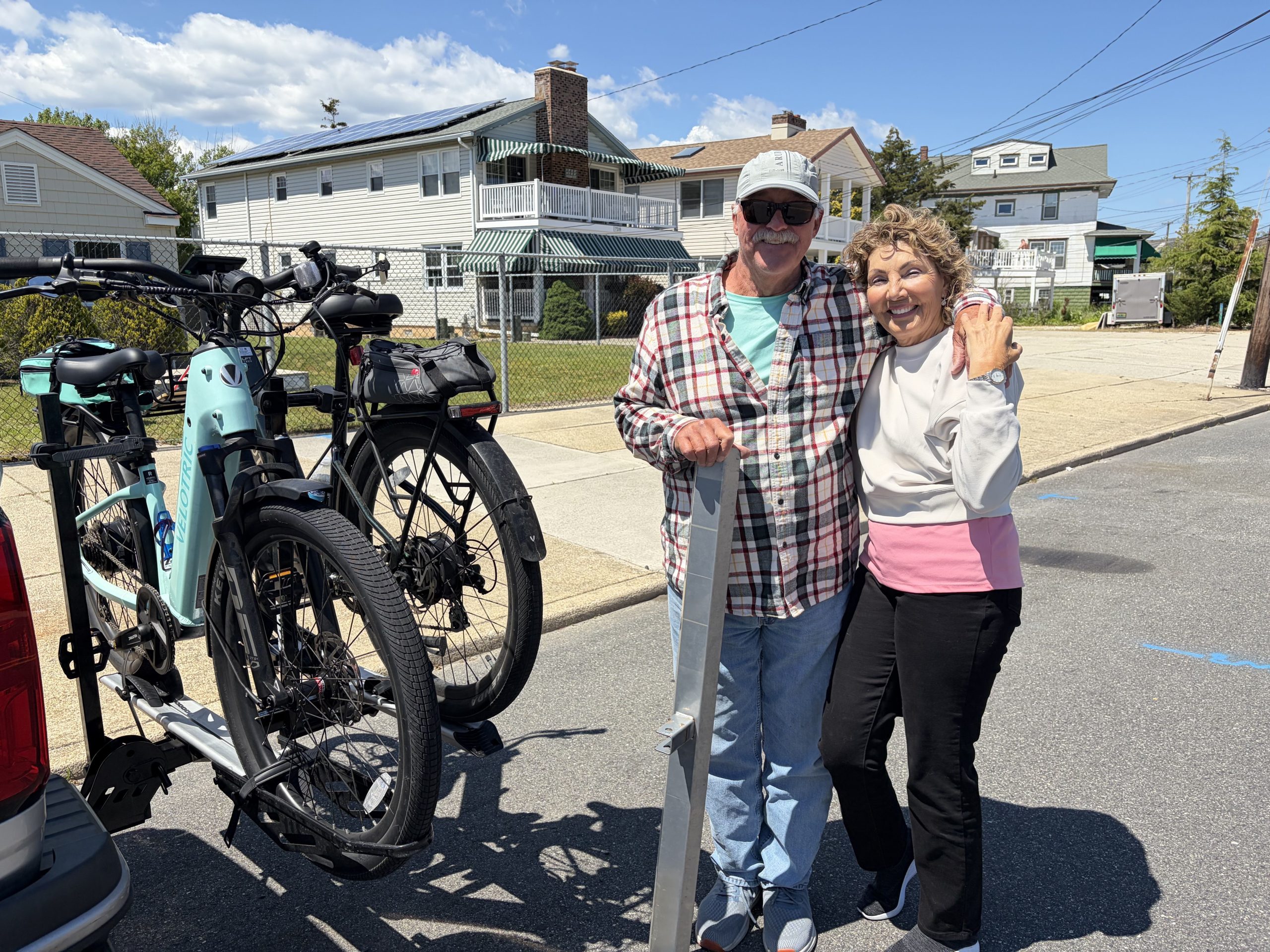
    Mike and Annamarie Carr of Ventnor, owners of Jagielky’s candy shops, with the e-bikes they love to ride. Ventnor won’t allow them on its own Boardwalk. The couple drove to Ocean City on June 2 and started and ended from there.

    E-bikers will be hauled off the boardwalks and fill municipal court Zoom hearings. ❌

    There was a lot of confusion over the new e-bike law in New Jersey.

    First the state Motor Vehicles Commission said Pennsylvania visitors shouldn’t sweat the new registration requirements, then they changed their mind and said visitors should start their week down the Shore with a trip to the DMV. Adding to the confusion, the MVC requirements explainer page that says out-of-staters should comply now also says, “This page is intended for New Jersey Residents.”

    In all, the MVC has issued a total of 13,850 e-bike registrations, according to commission statistics; 365 of those for out-of-state residents.

    But police were generally light-handed on enforcement measures for the new law, with departments focusing on safety issues, like helmets, and age restrictions, rather than registrations.

    Doug Bergen, a spokesperson for Ocean City, said no citations were issued there this summer under the new law.

    In Ventnor, Lt. Bryan Gaviria said between May 1 and Sept. 10, the department issued six curbside warnings to juveniles, 10 e-bikes on the boardwalk warnings, and one ticket for riding on the boardwalk.

    “We’re still in the education phase,” he said.

    Statewide, statistics show 628 total citations under the e-bike and motorized bicycle law for July and August, according to data supplied by the New Jersey Judiciary.

    Of those, just 77 were given for low-speed electric bicycles, 22 citations were for failing to have the registration required by the new law, and two were for drivers being under 15. The rest of the citations issued were for motorized bicycles, the higher speed classification.

    Retiring boomers will continue their takeover of Shore towns. ✅

    Yes, who else can afford to buy?

    Real estate prices remained mostly in rarified air, like this adorable yellow 760-square-foot North Wildwood cottage that sold for $1.7 million in mid-August. It’s a tear down, naturally.

    Or how about this 17,684-square-foot house in the Avalon dunes, built on spec by Eustace Mita (see above), with the distinction of being Avalon’s largest house and an expected price tag in the tens of millions.

    In related news, the home elevator, once considered a luxury, is now considered an essential amenity for new homes in Ocean City, N.J., among other towns.

    Rendering of a 17,684 square foot home being built as a spec house in the dunes in Avalon, at 5745 Dune Drive, by developer Eustace Mita. It will be the largest home in the borough.Courtesy Avalon Borough

    Wildwood boardwalk hours will again be expanded overnight, but all people will talk about are the electric Volvo SUVs driving the tram cars. ✅ ❌

    Wildwood spokesperson Alicia Deluca says the hours remained curtailed, with the boardwalk closing between 1 and 5 a.m.

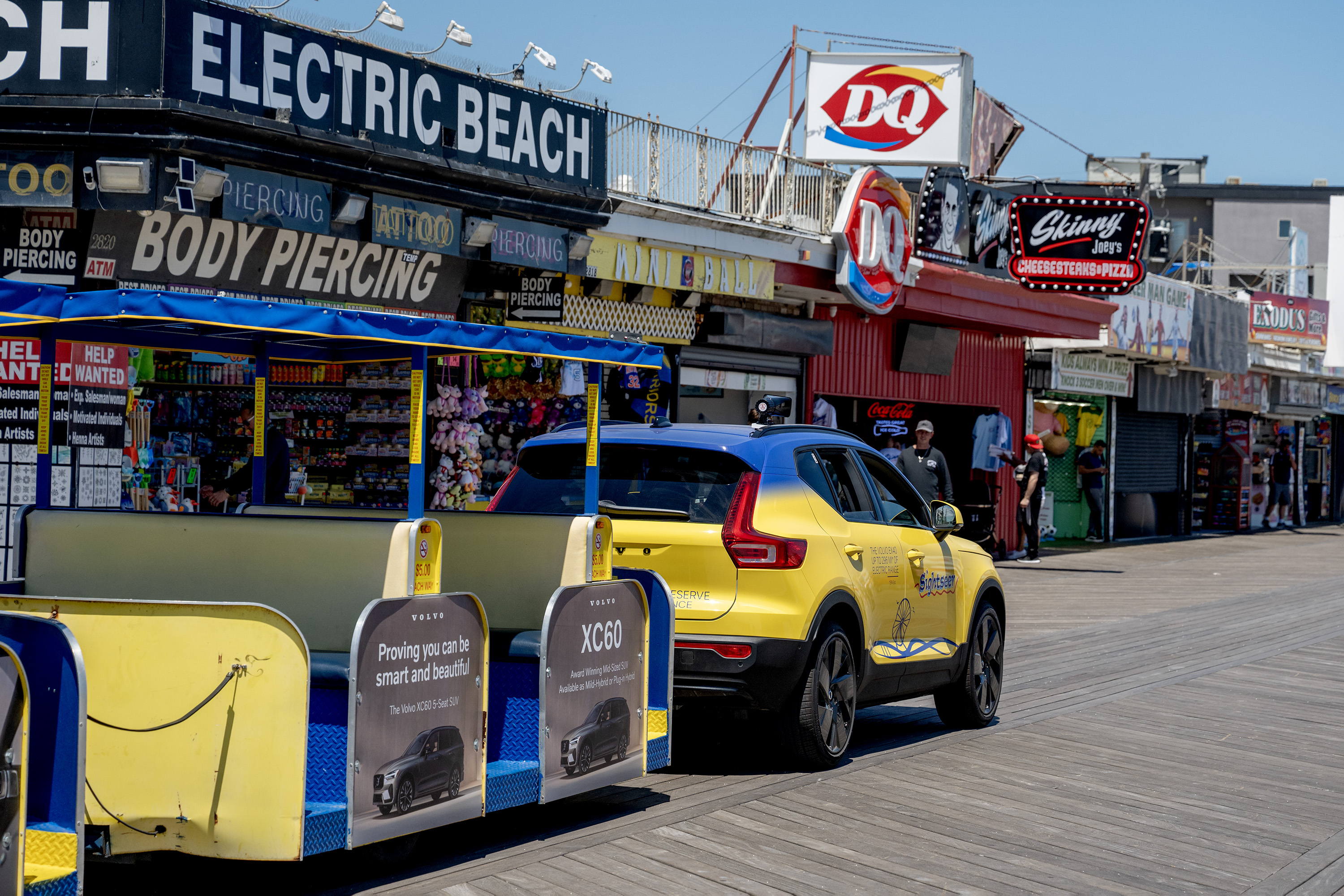
    The grumbling over the new Volvo tram cars continued all summer, though. People do not like change. Meanwhile, though, Wildwood is preparing a 20-year redevelopment plan for its boardwalk that will see mixed-use projects, including hotels, apartments, condominiums, businesses, and centralized parking garages.

    A Sightseer tram car is pulled by a Volvo EX40 electric vehicle on the Boardwalk in Wildwood Tuesday, June 2, 2026. The Wildwoods Boardwalk Special Improvement District struck a deal with Volvo to provide three free electric vehicles in return for ads placed on the individual tram cars. Four of the older engines remain in use for now.Tom Gralish / Staff Photographer

    There will be a lot of complaining about changing parking regulations. ❌

    I didn’t hear much over the din of loud music from Gully’s, and Facebook groups seemed preoccupied with other things: flies, shaming noise complainers, and finding the best chicken Parm.

    The return of the day-tripper. ✅

    This prediction was a good one. Costs continued to rise, making shorter trips and day trips appealing. I predicted Atlantic City would get renewed attention, and it did, with groundbreakings for new housing developments, a container retail park close to opening, and the enduring appeal of a wide, free beach and a relatively inexpensive real estate picture.

    Obvious miss on the predictions front: Atlantic Avenue is finally being paved. The odds were very long on this one.

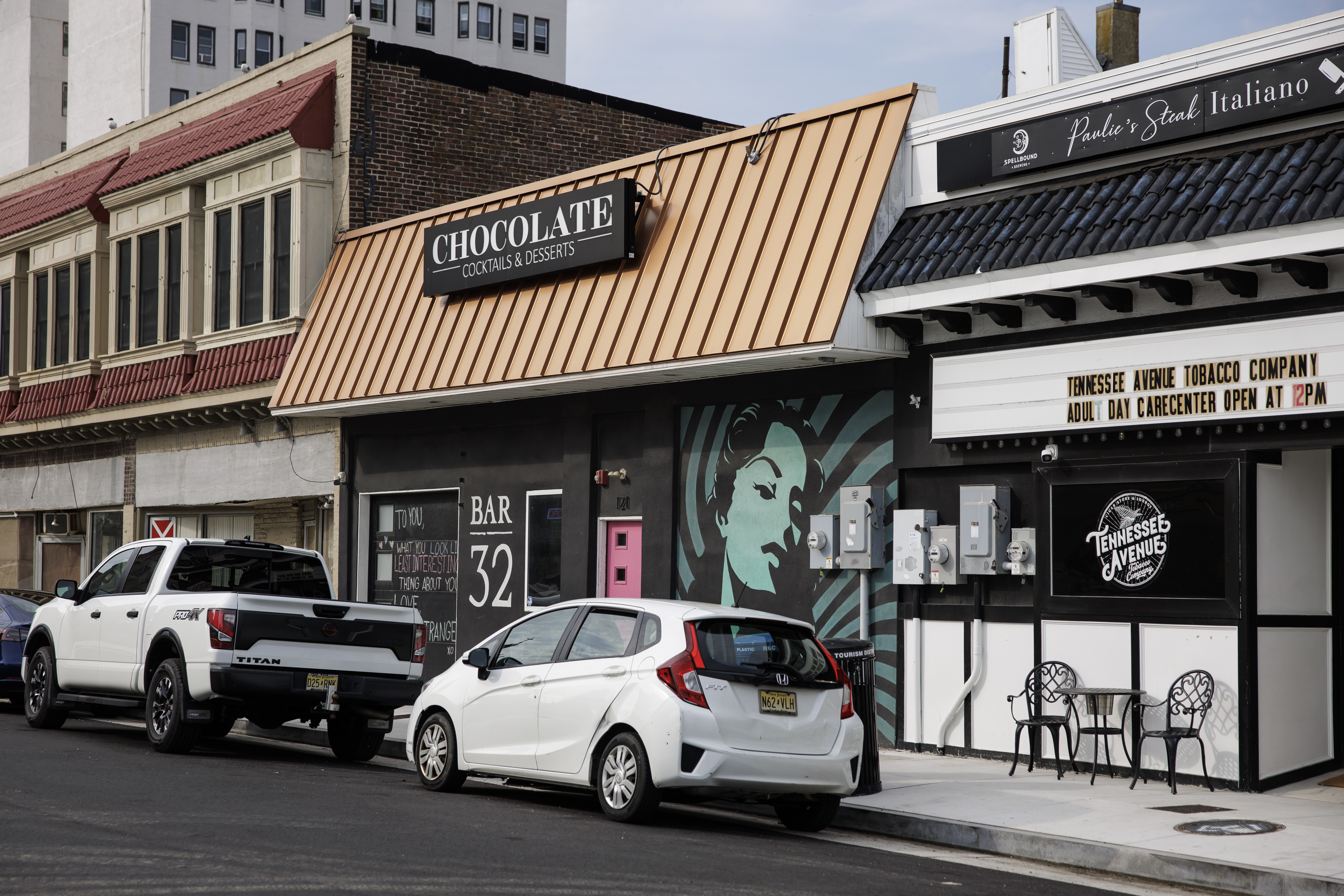
    The exterior of Bar 32 on Thursday, June 11, 2026 in Atlantic City, NJ. Bar 32 offers bean-to-bar chocolate, handmade desserts, and craft cocktails.Monica Herndon / Staff Photographer

    The summer will seem verrrrry long. ✅

    So long. How long? Basically an extra week until the Sept. 7 Labor Day. Which left beach patrols, restaurants, and other business strapped for employees, and rewarded marathon beach lovers with two days of atrocious flies on the beach Sept. 4 and 5, worse than anyone had ever experienced, like, really terrible! See ya next year!

    Total score: 6/10. We’ll get ‘em next summer, hopefully over a plate of lollipop meatballs at the Irish Pub.

  • Bookstores are so back in the Philly area. Booksellers say it’s a backlash to all that doomscrolling.

    Bookstores are so back in the Philly area. Booksellers say it’s a backlash to all that doomscrolling.

    Fishtown Books opened last weekend, the neighborhood’s fifth bookstore. In Manayunk, one couple opened two bookstores on the same street. The August opening of a West Chester fantasy shop wrapped a line around the building, ending early when the shelves were nearly emptied.

    Across Greater Philadelphia, bookstores are back.

    And despite the growing competition, many sellers said sales are up, mirroring national trends: The Association of American Publishers found the number of books sold via physical retail grew almost 34% over the past five years, outpacing online retail.

    “I did not plan for it to be so busy,” said Jackie Botto, 41, of Capricorn Books, which expanded its Jenkintown storefront in July. “We’ve almost doubled our business.”

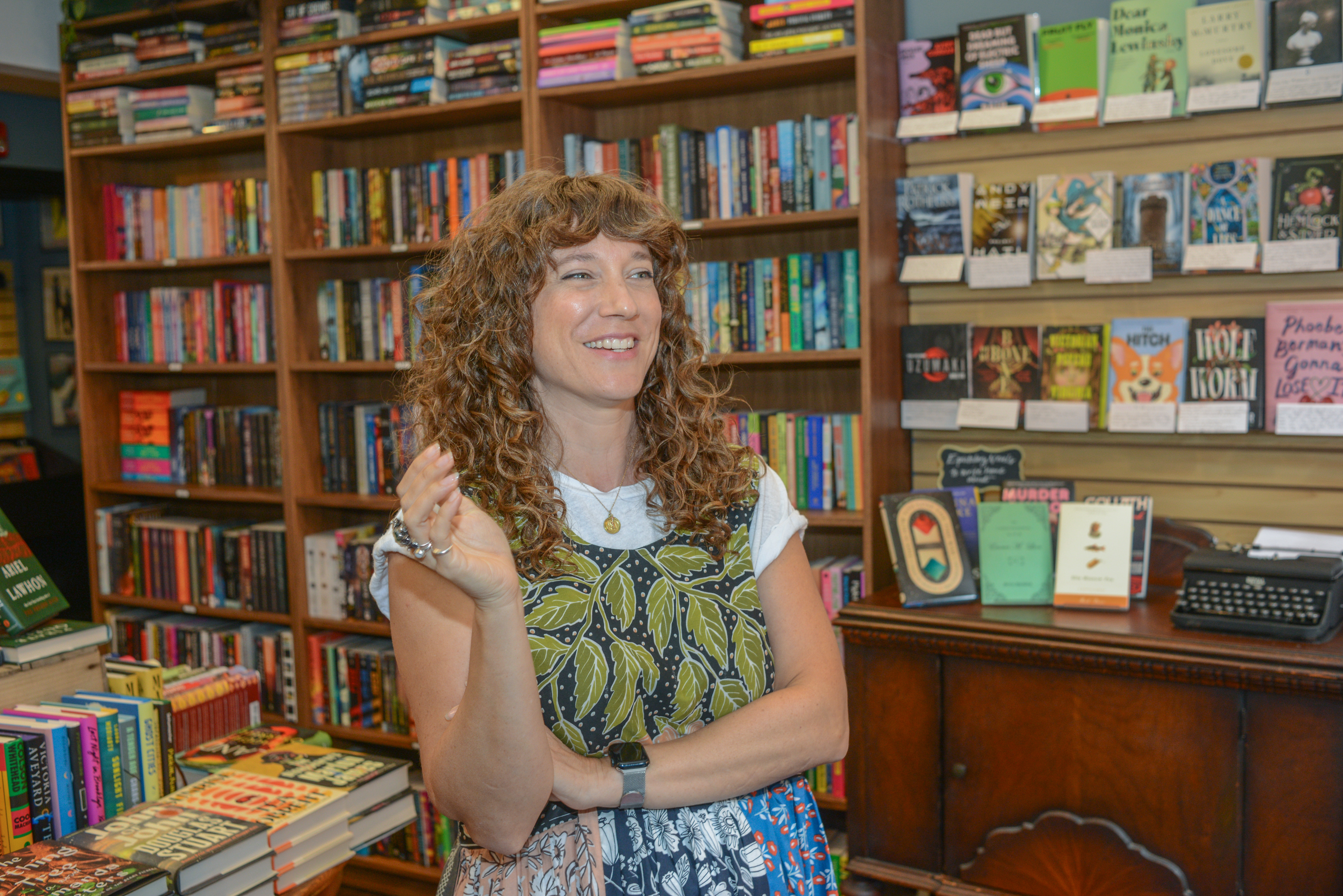
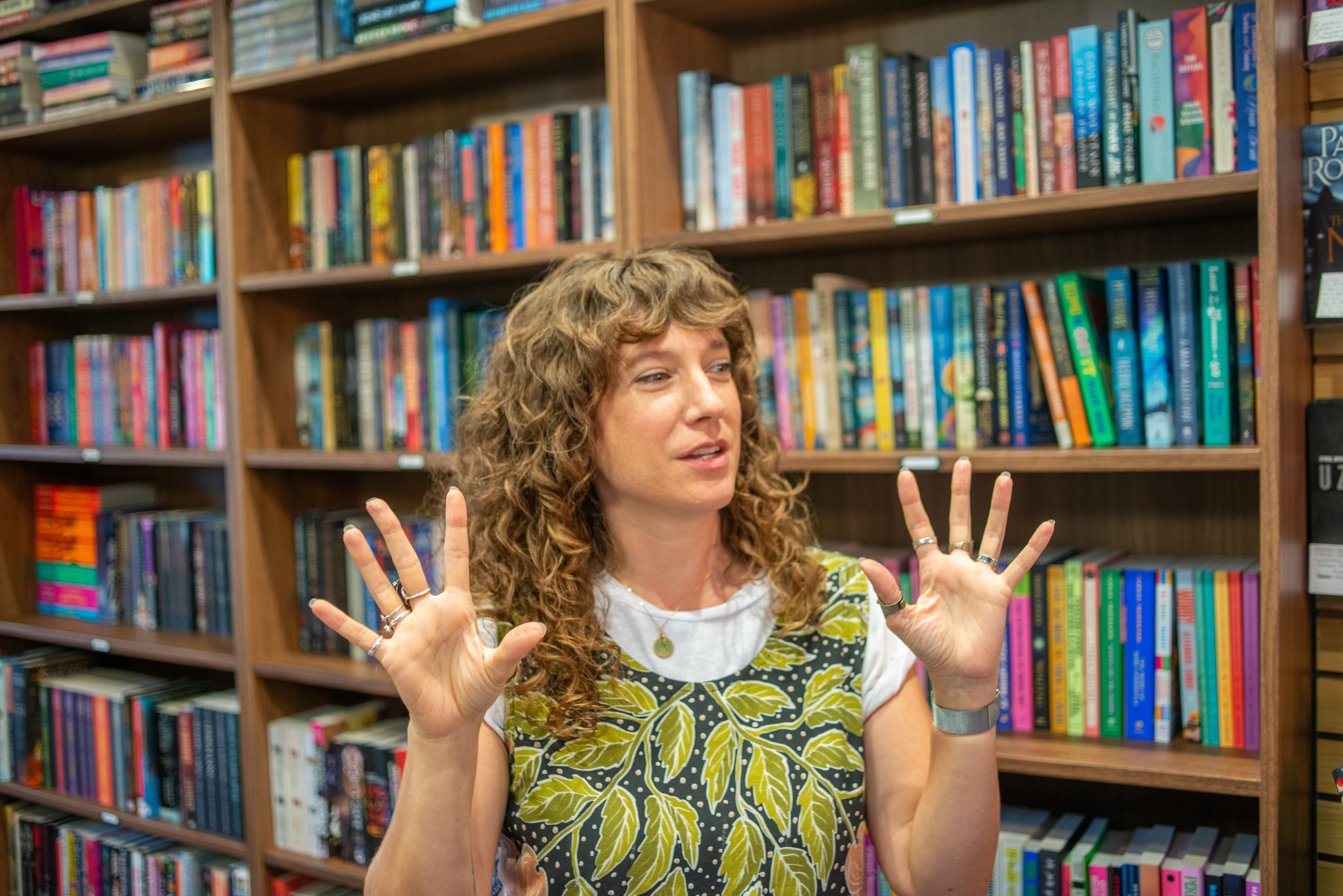
    Capricorn Books owner Jackie Botto chats about the books and customers’ love of reading on Sept. 17 in her Jenkintown bookstore.William Thomas Cain / For The Inquirer

    Screen fatigue, a hunger for community, and a desire to support local businesses are fueling the surge, said sellers — many of whom are investing in niche genres and hosting creative events to meet their customers’ needs.

    Readers are reading, book people say

    The reading boom isn’t limited to stores. At Jenkintown and Abington libraries — which sit along the same corridor as Capricorn and a new Barnes & Noble — patronage is growing, and both libraries are mulling expansion.

    Adult print circulation is up 10% in Abington, and children’s circulation is up 50% since last year. “People are consuming more literature and media in general,” said Abington’s head of circulation, Marcus Palm.

    And parents are prioritizing reading for themselves and their kids, said the Abington library director, Elizabeth Fitzgerald: “There is a bit of backlash to the doomscrolling.”

    At Bookmarks in West Chester, some customers have tried ebooks and are returning to print.

    “They spend all day working on the computer,” owner Lisa Strohl said. “They’re tired of being on the screen.”

    But some apps like TikTok — and its algorithmic niche known as BookTok — are also driving readers to the stacks.

    BookTok and tailored offerings draw young readers

    “The screen is helping them get back into reading,” said Charity Herndon, owner of Austen’s Shelf in Bordentown. “[BookTok] was the only way to reach the younger generation of readers.”

    Charity Herndon, owner of Austen’s Shelf, stands in the entrance of her shop in Bordentown on June 13.

    Sellers like Herndon and Anthony Long — who opened Thrillerdelphia in Manayunk last year after helping his wife open romance-focused Cupid’s down the street — are using both digital and analog strategies to turn new customers into loyal fans by delivering the community hubs they crave.

    In a recent Instagram reel, a Thrillerdelphia staffer played a guitar riff to match each book cover he displayed. In November, the store is hosting the horror punk band Blitzkid, a member of which is also an author.

    “I know my customers,” Long said. “You can get the eyeballs, but you have to build the intrigue and make people want to come in.”

    Active support from local residents is key, many sellers said. Literary agent Eric Smith decided to start the Philadelphia Book Crawl a few years ago. It’s become a kind of Black Friday for bookstores; several said it’s their best day of the year.

    “I’m terribly invested in how things go for our local indie bookstores,” Smith said. “I want to see them thrive.”

    (function(){function e(){window.addEventListener(`message`,function(e){if(e.data[`datawrapper-height`]!==void 0){var t=document.querySelectorAll(`iframe`);for(var n in e.data[`datawrapper-height`])for(var r=0,i;i=t[r];r++)if(i.contentWindow===e.source){var a=e.data[`datawrapper-height`][n]+`px`;i.style.height=a}}})}e()})();

    Barnes & Noble is back

    Some credit TikTok with helping to revive a declining Barnes & Noble, which opened more than 60 stores last year and plans another 60 by the end of 2026 after years of losses and an acquisition.

    “[BookTok] was absolutely a key point, especially during COVID,” said Barnes & Noble vice president Janine Flanigan. “I’ve never seen the conversations around books the way we see them now.”

    The chain has taken notice of successful indies: A news release for the new store in Abington — where a Barnes & Noble had closed more than a decade ago — highlighted plans for local author events and book clubs.

    The Abington store’s stock will be selected more locally, Flanigan said. “The store managers are deciding what to put in front of their customer.”

    The private equity-owned company’s shift to localized control only highlights the value of independent sellers, said Buffy Hastings, a co-owner of Farley’s Bookshop in New Hope.

    “They got beat by us,” he said.

    Botto, who owns Capricorn Books near the new Abington Barnes & Noble and has fond childhood memories of the chain, is optimistic that there’s room for everyone.

    “Looking at our numbers we have no reason to be worried, which is great,” she said.

    People buying books despite affordability crisis

    Richard De Wyngaert, whose Queen Village store Head House Books opened during the online and big-box-bookstore boom of the early aughts, said those initial customers would always compare him to online vendors.

    “Price was all that mattered,” he said. “That two-dollar savings.”

    But a few years ago, he noticed a shift — “a new generation who wasn’t raised to think you had to match Amazon,” De Wyngaert said. “By then, we all knew the horrors.”

    Mila Panchev (center), 9, and her father, Nikolay Panchev, look at the book “The Scroobious Pip” by Edward Lear and illustrated by Charles Santore and Nicholas Santore before a reading by Nicholas Santore at Head House Books in the Queen Village neighborhood on Jan. 25, 2025. Nicholas Santore finished the illustration started by his father, Charles Santore.Yong Kim / Staff Photographer

    Sellers say book prices have shot up in recent months, but the customers keep coming.

    The relative price hike for other consumer luxuries like airfare may be part of the reason: The consumer price index for “recreational books” has yet to return to its 30-year peak in 2009.

    “I have seen this summer someone who’s like, ‘I can’t go on vacation, so I’m going to read about Italy,’” Herndon of Austen’s Shelf said.

    Readers want to ‘escape’, booksellers say

    The genres driving much of the growth in stores with broad selections, sellers said, are romance — especially when mixed with fantasy, a subgenre known as romantasy — and horror.

    There are also the blockbuster books they can’t keep in stock, like the sci-fi fantasy series Dungeon Crawler Carl, and a return to the classics.

    What these books have in common, sellers said, is they’re totally disconnected from everyday life — or, as Hastings put it, “the realities of living in America in 2026.”

    The bestsellers at Austen’s Shelf are “books that allow people to escape,” Herndon said. “People just want to tuck themselves into a different world.”

    When Head House Books opened in 2005, “people thought I was nuts,” De Wyngaert said. “Today you see bookstores … springing up everywhere.”

    It’s “good news,” he added, “for a world that needs some good news.”

    This suburban content is produced with support from the Leslie Miller and Richard Worley Foundation and The Lenfest Institute for Journalism. Editorial content is created independently of the project donors. Gifts to support The Inquirer’s high-impact journalism can be made at inquirer.com/donate. A list of Lenfest Institute donors can be found at lenfestinstitute.org/supporters.

  • The Trump administration will force Pa. to pay more for SNAP. Shapiro’s office says it can’t.

    The Trump administration will force Pa. to pay more for SNAP. Shapiro’s office says it can’t.

    The Trump administration will be overhauling the SNAP program in two major steps, forcing Pennsylvania to pay more for the federal food program and jeopardizing those in need, according to Gov. Josh Shapiro’s office.

    The first phase begins Oct. 1, when states will have to pay for 75% of the expense of administering the Supplemental Nutrition Assistance Program, an end to the 50-50 cost-sharing relationship between the federal government and the states that existed for decades.

    The second and more dramatic change is scheduled to commence a year from now, when the Trump administration demands that states pay for a portion of SNAP benefits — an unprecedented arrangement that could put Pennsylvania on the hook for as much as $400 million of the approximately $4 billion the state receives in SNAP benefits annually.

    That’s a price the state is not ready to pay.

    “Pennsylvania’s state budget cannot make up for huge cuts to federal SNAP funding that will shift these costs onto states,” Shapiro spokesperson Rosie Lapowsky said in a statement. “And those cuts risk leaving hungry Pennsylvanians without food assistance.”

    The Trump administration plan, part of President Donald Trump’s One Big Beautiful Bill Act, is roiling Democrats and SNAP advocates who view it as an effort to weaken the food benefits program by saddling Pennsylvania and other states with the responsibility of paying for something they cannot afford.

    In anticipation of the first new rule going into effect in two weeks, Shapiro earmarked $87 million in the state budget to administer the SNAP program in the state, which includes paying for operating expenses.

    Burdening states with increased financial demands is “catastrophic,” said St. Joseph’s University sociologist Maria Kefalas.

    Kefalas said it will force states to make drastic moves to make up for lost dollars, including making eligibility rules harder and shrinking benefits.

    “The pressure on states to push people off SNAP will be tremendous,” she said. “The Trump act was written to shift blame for cuts to safety-net programs from the federal government to the states. Now, the states will be seen as the bad guys.”

    The original even split for administrative costs had the state and the federal government each paying $250 million in SNAP administrative costs, according to the Pennsylvania Independent Fiscal Office (IFO), a nonpartisan legislative agency that analyzes budgetary issues. But after Sept. 30, the state could be looking at as much as a $125 million increase in payments annually, IFO figures show.

    Shapiro’s $87 million budget infusion covers that increase for a portion of the state fiscal year, said Brandon Cwalina, press secretary for the Pennsylvania Department of Human Services, which oversees SNAP.

    The Trump administration says that by forcing states to put skin in the game, it is incentivizing them to cut waste, fraud, and abuse in the program.

    “President Trump is strengthening SNAP for the Americans who need it by ensuring these programs are sustainable for future generations,” White House spokesperson Anna Kelly said in a statement.

    She added that the One Big Beautiful Bill Act implements “reasonable” cost-sharing measures with states.

    Kelly also said that by signing the bill into law, Trump is “uplifting every American’s financial situation by passing the largest tax cut in history.”

    But concern is growing that by compensating for SNAP shortfalls, states will pull funds from other sources.

    “Does this mean money will be taken from police, courts, and other critical functions to pay for SNAP?” asked State Sen. Art Haywood, the top Democrat on the Health and Human Services Committee, who represents part of Philadelphia and Montgomery County.

    Error rates

    How much the state will have to pay in SNAP benefits in October 2027 depends on its payment error rate, a measure of overpayments and underpayments of benefits.

    Error rates are largely unintentional and are not fraud, according to the Food and Nutrition Administration of the U.S. Department of Agriculture, which runs the SNAP program.

    “It’s like doing your taxes and accidentally switching numbers,” said Ann Sanders, director of public benefits policy and programs for Just Harvest, a Pittsburgh-based anti-hunger nonprofit. “Not a crime, just a mistake.”

    In fiscal 2025, Pennsylvania’s error rate was 9.2%, mostly representing overpayments, said IFO director Matt Knittel.

    Even though it is below the national error rate of 10.6%, if the 9.2% level holds, Pennsylvania could be made to pay as much as $400 million a year when the new rule takes effect, IFO figures show.

    “These are costs Gov. Shapiro has made clear we cannot backfill,” Cwalina said. The Shapiro administration, which has had some success lowering error rates, has introduced new technology that helps flag potential errors before incorrect payments are made.

    The reorganization of SNAP’s functions and financing comes during an ongoing affordability crisis, said George Matysik, executive director of the Share Food Program, which supplies many food pantries in the Philadelphia area.

    “Instead of the federal government helping to solve it, it’s just passing the buck onto the consumer,” he said. “Prices are going up, while Washington punches down on the working class.”

    While the new changes have yet to kick in, Trump’s One Big Beautiful Bill Act has already altered SNAP to help pay for his tax cut.

    The administration has expanded work and documentation requirements for SNAP recipients, resulting in millions of people seeing their benefits lowered or eliminated.

    Nationwide, between July 2025 and May, SNAP rolls have decreased by more than 5 million people, or 12%, according to the Center on Budget and Policy Priorities, a left-leaning Washington-based think tank.

    As of July, the latest Pennsylvania DHS estimates show that 94,200 people have lost benefits since Trump’s law took effect.

    The changing contours of the SNAP program worry legislators accustomed to its normally steady rhythms.

    “There was a 60-year-long partnership between the federal government and the states on SNAP, without problems,” Haywood said.

    “SNAP worked well since it got its start in 1964. But now, unfortunately, the current administration is dramatically changing it.”

  • The best books that local booksellers have read so far this year

    The best books that local booksellers have read so far this year

    Books are back, in Greater Philadelphia and around the country.

    The industry saw modest revenue growth the last four years in a row, an Association of American Publishers report found. Brick-and-mortars saw more than twice the growth of online retail in 2025, and hardcovers outpaced ebooks.

    Jackie Botto looks for a book on the shelves while chatting with a customer at Capricorn Books in Jenkintown.William Thomas Cain / For The Inquirer

    Many Philly-area booksellers said they’re feeling the surge.

    But what are they reading? Sixteen booksellers told us their favorites of 2026 so far.

    • Angel by Elizabeth Taylor and The Princess of 72nd Street by Elaine Kraf — Ariel Censor, Little Yenta Books in South Philly
    • Back for Blood: Never Whistle at Night Part II edited by Shane Hawk and Theodore C. Van Alst Jr. — Alex Schneider, A Novel Idea in East Passyunk
    • Discipline by Larissa Pham — Richard De Wyngaert, Head House Books in Queen Village
    • Exit Party by Emily St. John Mandel — Jackie Botto, Capricorn Books in Jenkintown
    • Message to the Blackman in America by Elijah Muhammad — Shaykh Anwar Muhammad, The Black Reserve Bookstore in Lansdale
    • Most Ardently Yours by Freya Sampson — Charity Herndon, Austen’s Shelf in Bordentown
    • Partita by Barbara Kingsolver — Elizabeth Young, Commonplace Reader in Yardley
    • The Pirate Queen by Ariel Lawhon — Shawn Clark, Glenside Book Garden
    • The Practice of the Presence of God by Brother Lawrence — Ian Stowers, CLC Bookcenter in Wyncote
    • Trad Wife by Saratoga Schaefer — Anthony Long, Thrillerdelphia
    • Steelborn by Taylor J. LaRue and Lady Tremaine by Rachel Hochhauser — Lisa Strohl, Bookmarks in West Chester
    • Tom’s Crossing by Mark Z. Danielewski — Krisy Elisii, Doylestown & Lahaska Bookshops
    • The Unsettling of America by Wendell Berry — Buffy Hastings, Farley’s Bookshop in New Hope
    • The Wedding People by Alison Espach — Janine Flanigan, Barnes & Noble
    • Whidbey by T Kira Madden — Christina Rosso-Schneider, A Novel Idea in East Passyunk
    • Whistler by Ann Patchett — Kathy Morrison, Newtown Bookshop

    This suburban content is produced with support from the Leslie Miller and Richard Worley Foundation and The Lenfest Institute for Journalism. Editorial content is created independently of the project donors. Gifts to support The Inquirer’s high-impact journalism can be made at inquirer.com/donate. A list of Lenfest Institute donors can be found at lenfestinstitute.org/supporters.

  • Letters to the Editor | Sept. 20, 2026

    Letters to the Editor | Sept. 20, 2026

    School parking problem

    Academy at Palumbo’s Home and School Association is disappointed by City Council President Kenyatta Johnson’s inaction regarding the school parking crisis highlighted in Kristen A. Graham’s recent article.

    Johnson’s spokesperson said that “… any discussion of changes to parking policy must consider the impact on the broader community.” For the past three years, we have repeatedly appealed to Johnson’s office for assistance. He has had plenty of time to conduct discussions, assess the impact, and propose a resolution.

    The irony is that Palumbo staff already use parking spots in the surrounding neighborhood during school hours. The immediate impact falls on our teachers and students. Teachers consistently face a choice: either disrupt instructional time to move their car every two hours or incur costly tickets. Academy at Palumbo’s working conditions are our students’ learning conditions. The parking crisis impacts working conditions.

    Businesses and residents can apply for parking permits through the Philadelphia Parking Authority. Why can’t a similar permit system be established for school district staff? It’s time for leadership to stop stalling and come up with a plan to support our educators.

    Julie Kaeli, former president, Academy at Palumbo Home and School Association, and Alex Du, president, Academy at Palumbo Home and School Association, Philadelphia

    Raising leaders

    An African proverb asserts, “The ruin of a nation begins in the homes of its people” — an expression that offers profound commentary on recent events in Center City, in which large groups of teenagers were involved in confrontations with the police. Diverging from a broader national frame, an examination of the Philadelphia community reveals acute challenges regarding youth engagement in destructive behaviors. This reality necessitates a rigorous inquiry into behaviors that border on juvenile delinquency, marked by a lack of structural boundaries, the erosion of respect for authority, and a diminishing moral compass during sporadic social media gatherings. Many of these gatherings lead to vandalism and open acts of aggression toward authority figures.

    It is also important to recognize that these negative behaviors are not indicative of all children, as many youths demonstrate socially healthy and responsible behaviors during meetups with peers. However, because of social media, these events typically lead to generalizations about children, thereby influencing policy.

    Investigating these dynamics requires analyzing content, the extent and efficacy of parental and caregiver involvement, alongside efforts to reconstruct and adopt a newfound lens of social values and expectations within the community. A fundamental question arises concerning the precise level of responsibility borne by parents and primary caregivers. It is imperative that households actively instill prosocial virtues prior to a child’s entry into the public sphere. Ultimately, while fostering individualism and character, in-home adults must maintain accountability for conduct that borders on juvenile delinquency, ensuring youth positively represent both the family and the wider community.

    We realize it is not solely on the family to achieve this aim; it also takes a healthy community. Likewise, city administrators need to think outside the box when investing in and creating educational, recreational, and vocational opportunities that align with children’s interests. This must include a 21st-century approach to devising a solution to this dilemma.

    Darin Toliver, vice president, cofounder, Black Men at Penn Inc.

    Eyes closed

    Recent accounts of Washington’s lukewarm response to the artificial intelligence crisis are chilling. The leaders of tech companies have said AI could end humanity as it grows so powerful it can’t be controlled. So how does the president of our country respond? He calls it a “hoax,” which is what he calls everything he chooses not to believe. His position is that we cannot fall behind China in AI development, so he will just ignore the very real consequences. Unless a change in policy or direction benefits him, he is not interested.

    So will our congressional leaders step up and do the right thing?

    Senate Majority Leader John Thune thinks we should address the AI problem with a “light touch.” Apparently he, too, does not take the opinions of the experts seriously.

    Meanwhile, Speaker of the House Mike Johnson is promoting Donald Trump’s plan to give $5,000 to every American adult if the Republicans hold the House and Senate on Nov. 3. Never mind that this is clearly a bribe that will never be paid.

    Johnson also does not seem to recognize the urgency of the AI situation, or simply does not care.

    The lack of an appropriate response from our Republican leaders is just further evidence they need to be removed from leadership positions — all of them.

    Kathleen Clements, Philadelphia

    City-owned censorship

    The recent decision to forbid the rapper Macklemore from performing at Lincoln Financial Field because of his criticism of the situation in Gaza is an utter embarrassment. While it is becoming unfortunately common for those in power to censor views and voices that are critical of them, this is a particularly egregious example made worse by the stadium operators’ lack of transparency.

    Why can’t they give us an answer about how the owner of the New England Patriots, of all people, was allowed to deliver an ultimatum to Ed Sheeran (whom Macklemore was set to be the opening act for) on behalf of our publicly owned stadium here in Philadelphia? Regardless of your opinions on Macklemore’s comments, everyone should condemn this assault on free expression that utilizes a city-owned asset.

    Tim Schautz, Philadelphia

    . . .

    Perhaps today’s era of oversensitivity that Jonathan Zimmerman describes in his recent column also applies to the situation in Gaza. These days, when you are critical of the Israeli government, you are subject to being called an antisemite. Don’t believe it? Rapper Macklemore was removed as an opening act for Ed Sheeran’s tour because he said two words: “Free Palestine.” He also said: “To all of my Jewish brothers and sisters: Criticism of Israel, criticism of apartheid, being against genocide in no way is criticism of you. My message is for peace, love, and for all human beings to be treated with dignity, respect, and equality.”

    It’s a shame that in America today, criticizing another country’s government can get you canceled. What about our First Amendment rights?

    Roy Lehman, Woolwich Township

    Greenhouse gas limits

    As the Environmental Protection Agency goes rogue, ignoring the growing toll of climate change on humanity and canceling climate pollution limits, states are called on to step up. Pennsylvania, the nation’s second-largest producer of natural gas, has a special obligation to rein in its industry’s emissions of methane, a highly potent climate pollutant and threat to public health. This is all the more critical with the data center stampede let loose here, threatening to add massive new gas-fired power.

    Gov. Josh Shapiro and the state Department of Environmental Protection have announced plans for new state limits on methane emissions. They need to make those rules the strongest possible. Seeking a weaker path palatable to the gas industry would fail Pennsylvanians’ health and welfare.

    Robin Mann, Rosemont

    Join the conversation: Send letters to letters@inquirer.com. Limit length to 150 words and include home address and day and evening phone number. Letters run in The Inquirer six days a week on the editorial pages and online.

  • Dear Abby | Good neighbor learns inclusivity has limits

    Dear Abby | Good neighbor learns inclusivity has limits

    DEAR ABBY: I am a single woman in a friendly neighborhood. Every month, I have the neighbors over for dinner and a movie. I like to be inclusive — bring the kids, bring the dogs! One couple recently had their elderly mom move in, and I installed a ramp so she could join us. Babies cry, dogs bark, women breastfeed, but all are welcome. I put sleeping bags on the floor for the kids to sit on while grownups sit on the couches. Cleanup is a bear, but every squished meatball on the floor reminds me how much I love everyone.

    Recently, a new couple moved in, so of course I invited them and their 6-year-old to join us. They warned me that he has severe autism, but I told them everyone is welcome, that he wouldn’t be expected to be quiet and that the house is thoroughly kid-proofed. When the family showed up to join us, their child was horrible, even by my nonexistent standards for kiddo behavior. He screamed, threw food, bit, spit and hit the other kids and the dogs for an hour. Finally, everyone started to leave before the movie was over. The boy’s parents really did try their best, and I was genuinely sympathetic. They apologized the next day and said that if they were welcome in the future, they would alternate one parent staying home with their son while the other joined us. That sounds reasonable, but I don’t like it. I can’t be inclusive just when it suits me. They have since invited me to their home for dinner, and their son was just as bad there, banishing my thoughts that maybe it was just a strange house he was reacting to. I don’t know what to do with all this. I’m looking for a magic wand. Any suggestions?

    — NEIGHBORLY IN THE EAST

    DEAR NEIGHBORLY: You are a caring, lovely person, but there is no magic wand that will make that child’s severe autism and behavior problems go away. Because you are determined to entertain the entire family, the practical solution would be to invite them and their son over on another evening when other children and pets won’t be at risk of injury. Your movie night will be history if it is disrupted like that again. While I commend you for wanting to befriend the family, I think the parents had the right solution.

    ** ** **

    DEAR ABBY: I’m 70 now, and many of my friends and family spend our time together complaining about their various ailments. I, too, have had some problems but do not make them a part of our visits unless I’m asked about them. How can I rethink how to make these times more positive for everyone involved?

    — POSITIVE IN OREGON

    DEAR POSITIVE: Sometimes, people of a certain age talk about their health problems because they have become less active and can find little else to talk about. To keep the energy flowing in a more positive direction, help your friends find hobbies and other interests to discuss. Even if they have medical issues, most people can manage quiet activities like board games, card games, a book club or a knitting circle. If all else fails, you can always ask them about their families as a change of subject.

  • Horoscopes: Sunday, Sept. 20, 2026

    Horoscopes: Sunday, Sept. 20, 2026

    ARIES (March 21-April 19). In relationships where emotional safety is the norm, you’ll care less about how you’re being perceived and more about a lot of other things, like what you’re giving, how much joy is circulating and the other opportunities that might be present.

    TAURUS (April 20-May 20). How you love busy people! They do, however, require you to make plans in advance, so those whirlwind lives have a chance to meet up at the same place and time. Put it on the books — the anticipation will be sweet.

    GEMINI (May 21-June 21). People who like the usual way of doing things may have opinions about your method. Hear them out if you want to, and expect to be amused and in no way obligated to change. Bottom line: what works, works.

    CANCER (June 22-July 22). Other people may judge by shallow things, like who gets attention or has the fanciest stuff. You use your own ideas instead: Did I enjoy this? Did I do a good job? Was I kind? It’s more fun without watching yourself from the outside.

    LEO (July 23-Aug. 22). They learned some facts, read up, and yet they are stuck in the task because some things make sense only after you do them. That’s where you come in. You’ll share what you’ve learned from experience. You’ll be the hands-on guide.

    VIRGO (Aug. 23-Sept. 22). When something interests you, you often meander through the land of “maybe” before you decide yes or no. But today, you’ll see something that’s an immediate “yes, please,” and it’s nice to just know. This one checks all the boxes.

    LIBRA (Sept. 23-Oct. 23). Just because you’re checking flights doesn’t mean you’re taking off, but the mere idea of adventuring will be a kind of vacation from the usual stressors. So fantasize. “Life is either a daring adventure or nothing at all.” — Helen Keller

    SCORPIO (Oct. 24-Nov. 21). Friendships really blossom when you’re at your best, giving the effort, fun and attention only you can give. Good friendships can also survive the late reply, the long story, the bad mood. You’re here for it all.

    SAGITTARIUS (Nov. 22-Dec. 21). Remember when you gave way more than you wanted to just to get out of any possible confrontation? It made sense then, but things are different now. You’re brave enough to take on unpleasantness in the name of fairness.

    CAPRICORN (Dec. 22-Jan. 19). Unfamiliar activities beckon. When you’re new at something, you don’t pretend you know any more than you do about it, and that’s just the humble stance that will endear you to those who can teach you more.

    AQUARIUS (Jan. 20-Feb. 18). Emotional healing usually means the memory remains, but it stops being the only thing you think about. Your body stops reacting as though it is happening again. You may have feelings about it, but they don’t stop you from choosing what’s next.

    PISCES (Feb. 19-March 20). You’re full of ideas today. Some amuse you for a minute and disappear. But there’s this one that sticks around. It’s tucked in the back of your mind all day and makes its way to the front by night. It could even keep you up.

    TODAY’S BIRTHDAY (Sept. 20). You will play a card nobody expected in this your Year of the Wild Card. A choice that looks odd at first will make more sense as the game goes on. And the best part is, it comes intuitively to you, and you make moves sometimes before even knowing the grace of your own strategy. More highlights: Your charm attracts friends, makes sales and lands you in novel and interesting places. Family additions. Serene personal time. Scorpio and Taurus adore you. Your lucky numbers are: 5, 44, 39, 2 and 6.