Tag: topic-link-auto

  • The Philadelphia Museum of Art is running record deficits. The next few years look rocky.

    The Philadelphia Museum of Art is running record deficits. The next few years look rocky.

    When art world veteran Daniel H. Weiss took over the Philadelphia Museum of Art in December, he quickly recruited a new team, including a chief financial officer and chief fundraiser. That team has begun to assess the museum’s financial condition and what can be done about it.

    The picture that is emerging is not a pretty one.

    Preliminary figures seen by The Inquirer show that the museum ran a deficit of about $10 million on a budget of $76.5 million for the fiscal year that ended June 30.

    That is on top of a deficit of $5.4 million for the year before, and leaders say the outlook does not promise to improve soon. For the fiscal year that has just begun, the museum anticipates the deficit will be comparable to last year’s $10 million, but in planning the budget the museum has outlined the possibility that it could be as high as $15.9 million.

    The shortfalls are the museum’s largest in recent history, leaders say.

    Weiss said the museum’s financial situation is “substantial, but solvable.”

    “I have no doubt that we will have a balanced budget in about three years,” he said, “but we have real work to do to get there.”

    Financial pressures are not threatening the museum’s ability to remain open, but the run of red ink cannot continue. The museum is covering the deficits by drawing on a pool of money that includes cash and reserves — sometimes referred to as quasi-endowment — whose use was not restricted by donors for any specific purpose.

    “The way I would describe it is, we have a savings account for rainy days. We’re spending it,” Weiss said. “We need to stop doing that.”
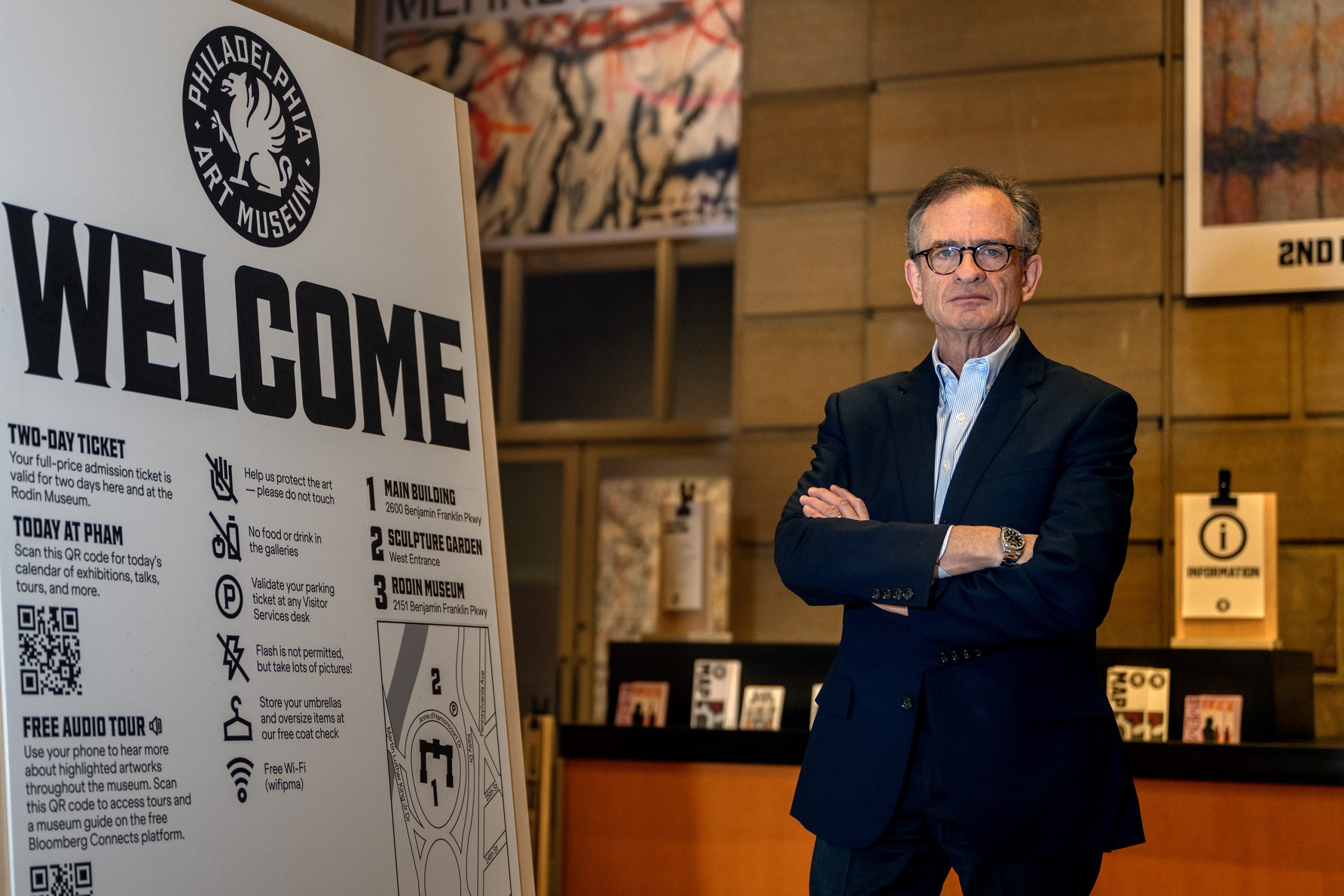
    Daniel H. Weiss, director and CEO of the Philadelphia Museum of Art, at the museum in January.Tom Gralish / Staff Photographer

    The museum’s struggle to right its finances comes as it faces some urgent needs and considers the fate of key projects. Among the unsettled questions is how to pay for deferred maintenance to both the main building and the Perelman building, the annex to the north that was closed to the public during the pandemic and never reopened.

    The combined cost of work on the two buildings has a preliminary price tag of around $300 million.

    As for a much sexier project, the museum’s much-trumpeted expansion envisioned by architect Frank Gehry: That will have to wait. Given the current challenges, the ambitious idea of carving out new spaces beneath the east terrace continues to be on hold; the timeline is uncertain.

    “It is not, at this time, appropriate for us to be evaluating the feasibility of a very substantial new capital project which would be required to implement the Gehry plan,” Weiss said. “We need to determine the priorities and sequencing of capital work that needs to be done. And over the long term, we need to figure out what this institution can afford in a sustainable way.”

    The famed architect died late last year.

    The priority now is ringing the alarm that all is not well at one of the city’s two largest arts groups (the other being the Philadelphia Orchestra and Ensemble Arts) and rallying support around a rescue plan.

    Weiss said:

    “We want to be transparent and we want to be accessible to people, and they have a right to know — it’s their institution. But we don’t want to do it in a way that turns people away. It’s just an institution that needs repair. So how to tell that story is part of what we have to work on.”

    The polychrome high-relief sculpture on the north pediment of the Philadelphia Museum of Art. The high-relief sculpture depicts 13 figures from classical mythology.Aidan T. Gallo / Staff Photographer

    Ambitions despite deficit

    The pool of money is finite, and the museum would like to stop tapping its reserves as quickly as possible. Instead of funding the deficit, it could be helping grow the nest egg.

    Referring to what is being spent this year alone to cover the deficit, Weiss said:

    “That’s $10 million of assets earning at least 5% a year till the end of time we’re foregoing. We’ll never get that back.”

    And yet the museum does not expect to balance its budget this year or next.

    “We anticipate getting within shouting distance of a balanced budget within three years. We don’t have the luxury of taking longer,” Weiss said.

    Even as it struggles, the museum has not shelved ambitious projects. The idea of creating a new learning and engagement center on the north side of the museum is still very much in play, Weiss said. Design development for the facility could begin within a year.

    Blockbuster exhibitions like the 1982 show of Nigerian art seen by 197,000 visitors or the Cézanne retrospective in 1996 that drew 548,741 are hard to come by, but the museum is working on a number of shows that it believes would draw 100,000-plus visitors each.

    “We will have exhibitions that will be of very significant public interest that will draw large numbers that will be exciting and powerful,” said Weiss, who declined to give specifics on the exhibits.
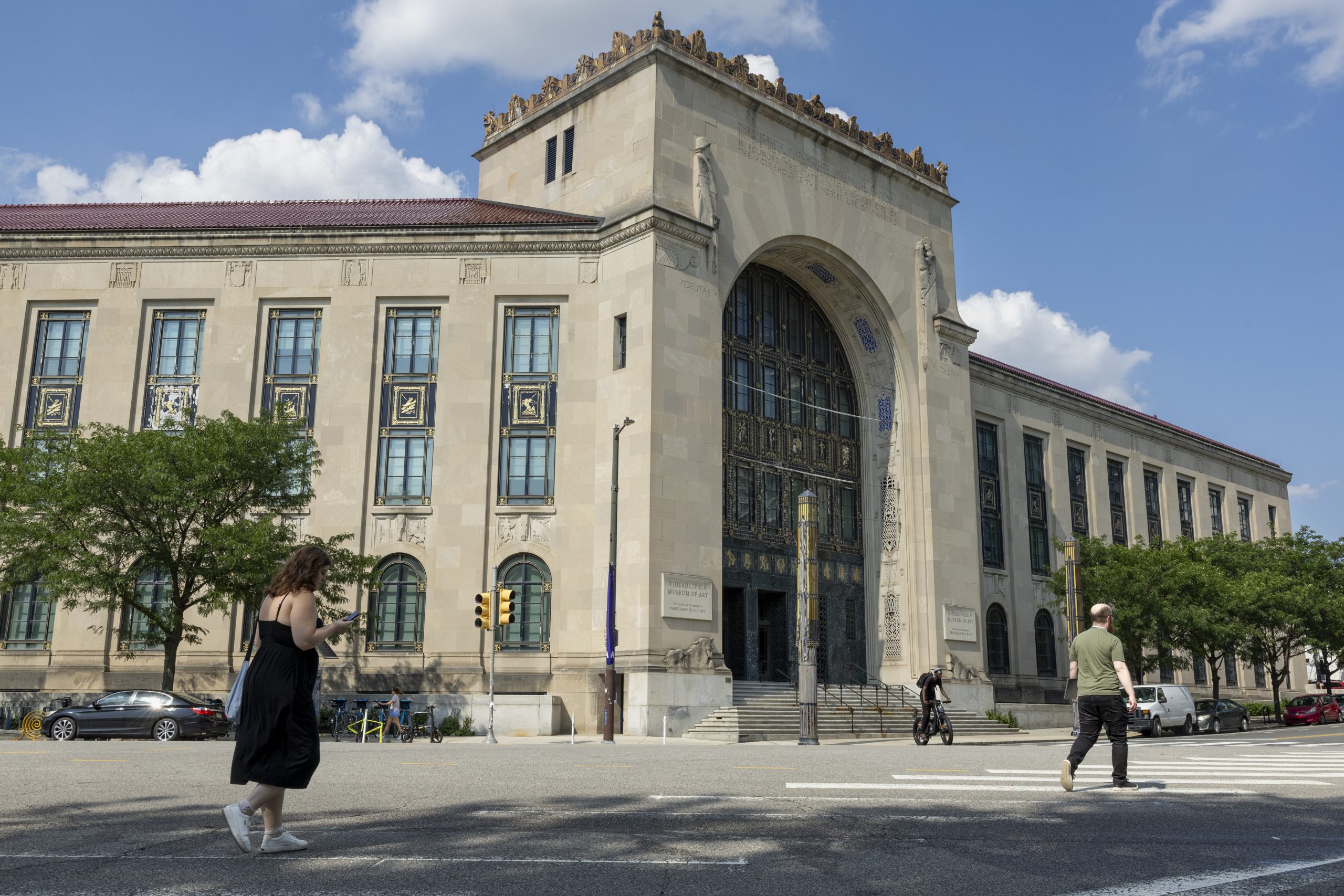
    The Perelman building, an annex to the Philadelphia Museum of Art containing exhibition galleries, offices, conservation labs, and the museum library.Aidan T. Gallo / Staff Photographer

    About the future of the nearby Perelman building, Weiss said the museum is searching for ideas.

    On the one hand, the highly decorated art deco structure contains the library, art conservation studios, and administrative offices for which there is no space in the main building. On the other, the costs of operating and maintaining it are high. It is more building than is needed, and the location across two busy streets limits the number of visitors who will make the trip to reach it.

    A revenue stream that’s been flat

    The museum’s new leadership has analyzed finances from the last 10 to 12 years — a period that includes the pandemic, plus the periods before and after — and determined that the deficit is the result of a revenue stream that has not grown much, while expenses have.

    “Functional revenue — contributions, admissions, membership, and earned revenue — has grown by only 0.3%, effectively flat,” said Mitchell Wein, the museum’s executive vice president and chief financial and operating officer.

    The museum has not fully yet developed a plan for reversing the trend, but is “modeling lots of scenarios and coming up with the best approach on how to do that,” Wein said.

    “Part of this process is evaluating everything. Everything is on the table,” Weiss said.

    Reducing expenses in some areas will be considered, but that cannot be the only answer.

    “We also know we need to focus on revenue generation and supporting the museum for the long term,” Wein said.

    But revenue from where?

    ‘Miners’ Wives’ (right) by Ben Shahn and ‘The End of the War, Starting Home’ by Horace Pippin in the ‘A Nation of Artists’ show at the Philadelphia Museum of Art.Tom Gralish / Staff Photographer

    Six keys to securing solvency

    Ticket sales is one obvious place to look, but a big boost from admission is probably not in the cards. The museum once aspired to attract a million visitors a year, but that goal was floated before the pandemic, and the museum has not yet recovered its pre-COVID numbers.

    This past fiscal year, the forecast called for 731,000 visitors; 672,753 showed up.

    So the goal for next year has been adjusted down to 705,000, which the museum feels is more realistic. Attendance was 773,511 in the last full year before the pandemic.

    The museum’s difficulty in coming back from the pandemic is not unusual. Over half (55%) of U.S. museums of all kinds were reporting lower attendance in 2025 than in 2019, according to a report from the American Alliance of Museums.

    Daniel H. Weiss, director and CEO of the Philadelphia Museum of Art, looking out onto the museum’s east terrace.Tom Gralish / Staff Photographer

    Weiss says the museum needs to focus on six key areas to achieve solvency:

    • Optimizing endowment income.
    • Boosting earned revenue, including income from retail, restaurants, special events and membership, and admissions. “Each of those needs to be examined to determine what’s possible,” he said.
    • Evaluating how much can be brought in through philanthropy.
    • Working toward more city and state government support. “We want to try to make the case to them that a larger investment in these facilities is in everybody’s best interests, and that’s a work in progress.”
    • Reviewing the operating budget. “The operating budget can be improved, but there’s not a ton of opportunity for us, for example, to lay people off. Our staffing levels are already down. We don’t think that’s the answer. But there are certain things we can cut and manage better or maybe outsource or streamline to improve the operating budget.”
    • Assessing programs, such as making better and more economical use of the Perelman building.

    “If you add all of those things up and we do all of those things — even if we don’t also find a private equity guy who falls in love with us who’s going to give us $100 million — we’re going to balance our budget,” Weiss said.

    Hundred million-dollar gifts may or may not be in the future, but the suggestion raises a salient question being pondered by leaders: What is the fundraising capacity of the museum?

    “How much can that be, how much can we raise? I don’t know,” Weiss said. “What is this city set up to do? Most of the people who give money to an institution like this are local. So what is the philanthropic opportunity for one of the leading cultural institutions in this city?”

    What Weiss is sure of is that fundraising depends on resetting the profile of an institution known more recently for organizational turmoil than for success.

    “People who invest in an organization at lower levels as members, at higher levels as donors or major philanthropists, they always invest in winning organizations, and they rarely invest money to remediate problems. And one legacy I would like to leave is that we become an organization that’s known for being really good at what we do.

    “The positive is a world-class institution with a great collection. If we can’t figure this out, then we’re the wrong people. It’s just not that hard.”


  • Dave McCormick, Pa. Republicans aren’t pushing back against Trump’s new election fraud claims as they lobby for the SAVE America Act

    Dave McCormick, Pa. Republicans aren’t pushing back against Trump’s new election fraud claims as they lobby for the SAVE America Act

    In the opening pages of the book he published between losing and then winning a Pennsylvania seat in the U.S. Senate, Dave McCormick painted the picture of an uncomfortable scene at Mar-a-Lago.

    It was early 2022. McCormick, a former hedge fund CEO running in a tough Republican primary against celebrity doctor Mehmet Oz, had made the pilgrimage to meet with then-former President Donald Trump and ask him not to endorse Oz. Trump had maintained a firm grip on the party after leaving office and avoiding conviction for “incitement of insurrection” at his second impeachment trial.

    According to McCormick’s retelling, Trump pulled up a television interview McCormick gave after the Jan. 6, 2021, attack on the U.S. Capitol in which he said the president was partially responsible for political divisiveness.

    “Then the former president looked me in the eyes and warned, ‘You know you can’t win unless you say the election was stolen,’” McCormick wrote. “I made it clear to him that I couldn’t do that. Three days later, Trump endorsed Mehmet Oz.”

    McCormick lost the race but ran again and won with Trump’s support two years later — when they shared a ballot. Now, three years after McCormick penned the book, he has become a prominent cheerleader in the Senate for an election reform proposal — the SAVE America Act — that Trump has advocated for while continuing to falsely say the 2020 election was rigged against him.

    The Pennsylvania Republican has still not echoed the president’s debunked claims of widespread fraud in 2020. He also has not disputed them as he lobbies for the bill, which he and other Trump allies argue will build confidence in elections and which critics say will do the opposite while potentially disenfranchising millions of voters.

    Other Pennsylvania Republicans in Congress — some of whom tried to block the state’s electoral votes hours after the Capitol attack — have similarly stayed quiet as Trump has both resurfaced old allegations and introduced new ones.

    In a prime-time speech earlier this month, Trump claimed that China had secretly obtained U.S. voter information and that a “large-scale voter registration operation” led to fraud in Michigan six years ago. His administration also released a document alleging Pennsylvania was among four states where the Department of Homeland Security had identified more than 250,000 noncitizens registered to vote.

    Pennsylvania Secretary of State Al Schmidt, a Republican appointed by Democratic Gov. Josh Shapiro, has forcefully rejected those claims.

    But adding more fuel to the rhetoric about election integrity, New Jersey officials said last week that about 6,600 people who were not citizens were registered to vote before the 2024 election, and fewer than 400 cast a ballot.

    Still, many of the claims Trump made in his speech have been refuted by election experts and, in many cases, were not new. Meanwhile, none of the 11 Republicans representing Pennsylvania in Congress have commented directly on them, including some who responded to certain questions for this story but did not answer others specifically about the new claims.

    President Donald Trump, left, and Sen. Dave McCormick, R-Pa., attend the finals at the NCAA wrestling championship, Saturday, March 22, 2025, in Philadelphia. (AP Photo/Matt Rourke)Matt Rourke

    McCormick’s spokesperson said only that the senator’s position on 2020 “remains unchanged.”

    A spokesperson for U.S. Rep. Brian Fitzpatrick, a moderate Bucks County Republican who voted to certify President Joe Biden’s 2020 win, said the lawmaker “completely disagrees with the president’s allegations of interference in the 2020 election.” She did not answer a question about the new and specific claims, such as the 250,000 noncitizens registered, but said Fitzpatrick “has full faith and confidence [in] our election officials.”

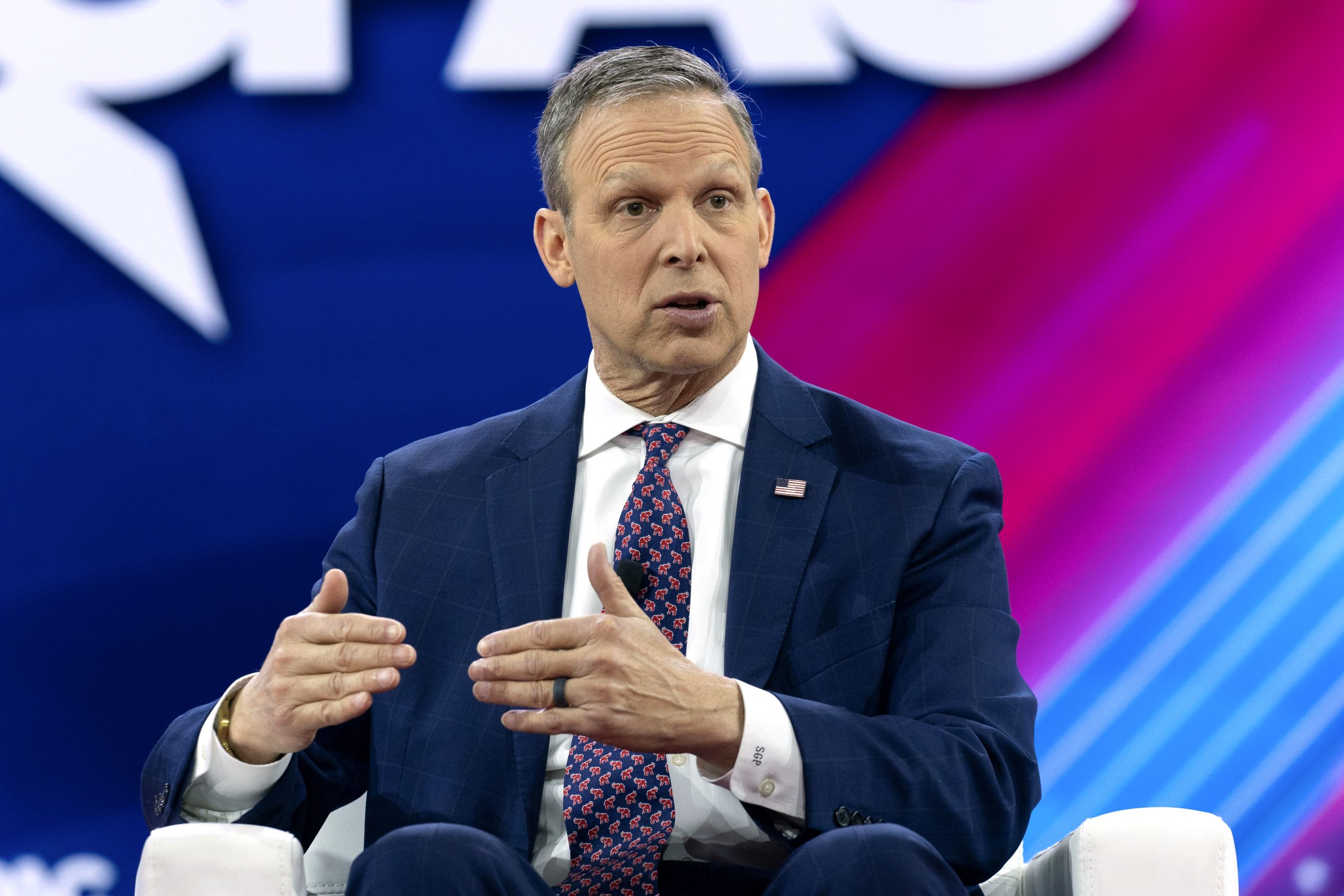
    Rep. Scott Perry, R-Pa., speaks during the Conservative Political Action Conference, CPAC 2024, in Oxon Hill, Md., Feb. 22, 2024. (AP Photo/Jose Luis Magana, File)Jose Luis Magana

    U.S. Rep. Scott Perry, a York County Republican who tried to overturn election results and became a subject of investigations into Jan. 6, reposted comments online that raised alarm about the White House’s claims of noncitizen voters.

    Perry’s office did not respond to a request for comment. He is one of four Republicans in the state facing a competitive reelection this fall — putting Pennsylvania in the national spotlight as Democrats push to gain control of the narrowly divided U.S. House, and potentially at the center of concerns about Trump’s attempts to control the election process.

    Republicans point to N.J. as they call for new voting law

    Every Pennsylvania Republican in Congress, meanwhile, has supported the SAVE America Act. The bill would require voters to provide proof of citizenship when registering to vote and to show photo ID at the polls. It would also scale back mail voting, which has become increasingly popular since the COVID-19 pandemic but has remained a focus of Trump’s false claims of fraud.

    Supporters of the legislation say that voter ID is widely popular and that eliminating even a few noncitizens from the voter rolls is worth ensuring elections are legal and secure. Opponents say that the issues the bill is trying to solve are either nonexistent or statistically irrelevant, and that it would effectively make registering more difficult for about 21 million people who do not have easy access to the paperwork that would be required, like a passport or birth certificate.

    “It would upend voter registration and our democracy and, on its own terms, is an extraordinarily harmful policy that would hurt millions of American citizens,” said Eliza Sweren-Becker, a voting rights expert at the Brennan Center for Justice. “It is being advanced on the backs of lies about our election system that are themselves harmful to our democracy and trust in election administration.”

    Though he has not addressed Trump’s latest claims, McCormick renewed his public push for the SAVE America Act after Trump’s prime-time address — writing, “Let’s act now,” on social media following the speech.

    Last week, he and others also grasped on to both a nearly decade-old voter registration issue in Pennsylvania and the fresh problem in New Jersey to underscore the need for the law.

    “This isn’t a harmless ‘software error,’” McCormick wrote on social media after Gov. Mikie Sherrill said a technical mistake led to noncitizens registering to vote. “This is why we must confirm citizenship before anyone registers. Only U.S. citizens should vote in our elections.”

    McCormick also elevated a statement from the Department of Homeland Security that referred to an issue that Schmidt, then a Philadelphia city commissioner, discovered in 2017. Schmidt found 168 noncitizens were registered in Philadelphia, and likely hundreds more were registered statewide, due to an error by the Pennsylvania Department of Transportation. State Auditor General Tim DeFoor, a Republican, has said fixes to the system were largely successful.

    U.S. Rep. Ryan Mackenzie, a Lehigh County Republican who is running in one of the most competitive districts in the country, also pointed to the Pennsylvania example and the New Jersey developments while justifying his support for the SAVE America Act during a telephone town hall with constituents Wednesday.

    But while trying to remember the details on the call, Mackenzie potentially overstated the problem.

    “I believe it was about 8,000 people here in Pennsylvania made their way onto the voter rolls, who were not supposed to be there and weren’t asked those proper questions. So these things do happen,” Mackenzie said before stressing the need for the SAVE America Act.

    Asked about that number, a spokesperson for Mackenzie pointed to the Pennsylvania Department of State’s additional review in 2018 that found 8,698 voters whose eligibility needed to be determined. Those voters, however, were not necessarily noncitizens or otherwise ineligible to vote, and the state never released a more detailed analysis.

    The spokesperson did not answer questions about whether Mackenzie agrees with Trump’s old or new claims about election fraud in 2020, or whether Pennsylvanians should have confidence in the state’s current system.

    “This case from Pa., and from N.J. more recently, highlight the lack of appropriate checks taking place when people initially register to vote. We should have appropriate checks to verify the citizenship status when someone initially registers, which is what the SAVE Act provides. The absence of these safeguards, as well as the egregious errors that have been seen in states like New Jersey, are key reasons for the bipartisan frustration with our elections.”

    Sweren-Becker said overstated claims of noncitizen voters have contributed to spreading distrust. The Pennsylvania situation, she said, was also not an example of a scheme to defraud the system, and “not the basis for a policy that would block millions of Americans from being able to cast their ballots.” Both that case and the one in New Jersey are instead examples of administrative errors that occasionally happen in a complex election system and represent “an extraordinarily small fraction” of voters, she said.

    The Cato Institute, a libertarian Washington-based think tank, has also thrown cold water on the idea that the SAVE America Act would have prevented the New Jersey error. Legal fellow and former Arizona Republican official Stephen Richer, in a post that referred to McCormick’s advocacy, wrote that the current structure of the bill “likely wouldn’t have prevented” the software error.

    “Be wary of politicians who say, ‘All of these problems will be fixed with my simple legislation,’” Richer wrote. “That’s often not the case.”

    ‘Deeply unhelpful’

    McCormick, in response to questions for this story, did not directly say if the law would have prevented the issue in New Jersey. But he stressed that the paperwork requirement “helps stop noncitizens from getting registered.” It would also require states to set up a program to “continuously check voter rolls to find noncitizens” using different datasets — which he noted some states already have.

    In a telephone town hall with constituents on Wednesday, the senator also acknowledged concerns about the bill when asked about it by voters on both sides of the issue.

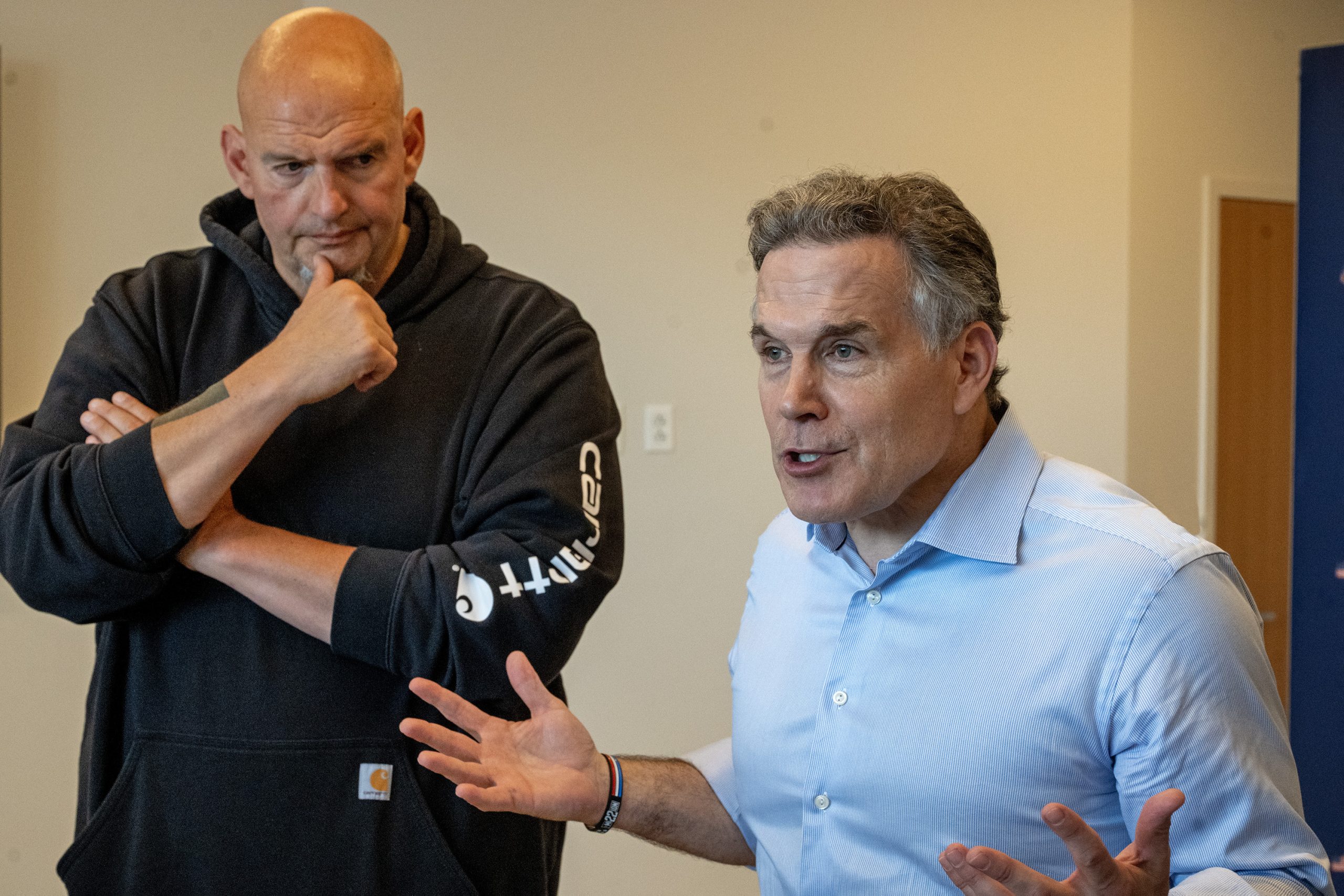
    Pennsylvania’s U.S. Senators John Fetterman (left) and Dave McCormick appear together Monday, June 29, 2026 to promote the savings accounts for kids that were a signature piece of President Trump’s Big Beautiful Bill.Tom Gralish / Staff Photographer

    He said he believed the law would “make it as easy as possible” for people to obtain valid forms of ID if they do not have them. And as someone who lost his first race against Oz by 950 votes and won his second race against Democratic U.S. Sen. Bob Casey by about 15,000 votes, he said even rare cases of noncitizen voting could make a difference in close elections. Eligibility for mail ballots also needs “to tighten up dramatically,” he said, though he did not fully explain his thoughts on the issue or if he believes there has been fraud associated with them.

    As Democrats block the bill in the Senate, he called on them to “defend the indefensible” and said “there should be a political cost in objecting to something that most Americans agree with.”

    One of the Democrats opposing the bill is McCormick’s close friend and ally — U.S. Sen. John Fetterman.

    Though he has frequently broken with his party — and now supports voter ID after previously calling it “insidious and unnecessary” — Fetterman has said the bill’s changes to mail voting are “a nonstarter” for him.” In a CNN interview last week, he also said that the 2020 election in Pennsylvania was fair, that there is “no evidence” of 250,000 noncitizens registered, and that Trump was unnecessarily fixated on the 2020 election.

    “In Pennsylvania, out of 67 counties, the vast, vast, vast majority of them are deep red counties, and they’ve never encountered any kinds of fraud,” Fetterman said. “I don’t know why the president is dragging up all of this stuff. You’re the president. Do something positive. And you are talking about 2020. That’s been settled over six years ago. It’s deeply unhelpful.”

    Other Pennsylvania Democrats have lambasted Trump for dredging up the old claims, and they have blamed GOP “enablers” for supporting him and pushing the bill.

    “The only thing it would ‘save’ is Trump and his Republican enablers from voters holding them accountable,” U.S. Rep. Dwight Evans (D., Philadelphia) said.

    U.S. Rep. Chris Deluzio, an Allegheny County Democrat who worked on election security issues before running for Congress in 2022, said the bill “will do nothing to improve election security” and would instead harm married women — whose birth certificates might not have their current name — and people without passports. He said those who lie about the 2020 election are “cowards” who should not have a place in elected office.

    “The fact that some Republican politicians are so scared of Donald Trump that they lie for him just to keep their jobs is spineless and pathetic,” Deluzio said.

    McCormick, for his part, said during the telephone town hall that the bill is unlikely to pass as Democrats continue to block it from getting the required 60 votes in the Senate, and as Republicans decline to eliminate the filibuster rule to let it move forward with just 50 votes.

    “Where does that leave us? That leaves us in a position where I think we should be constantly talking about this, and I try to do this every single week, multiple times, [saying] why the SAVE America Act is important,” said McCormick, whose staff said he was unavailable for an interview.

  • William Way center’s proposed demolition would erase an important Philly landmark

    William Way center’s proposed demolition would erase an important Philly landmark

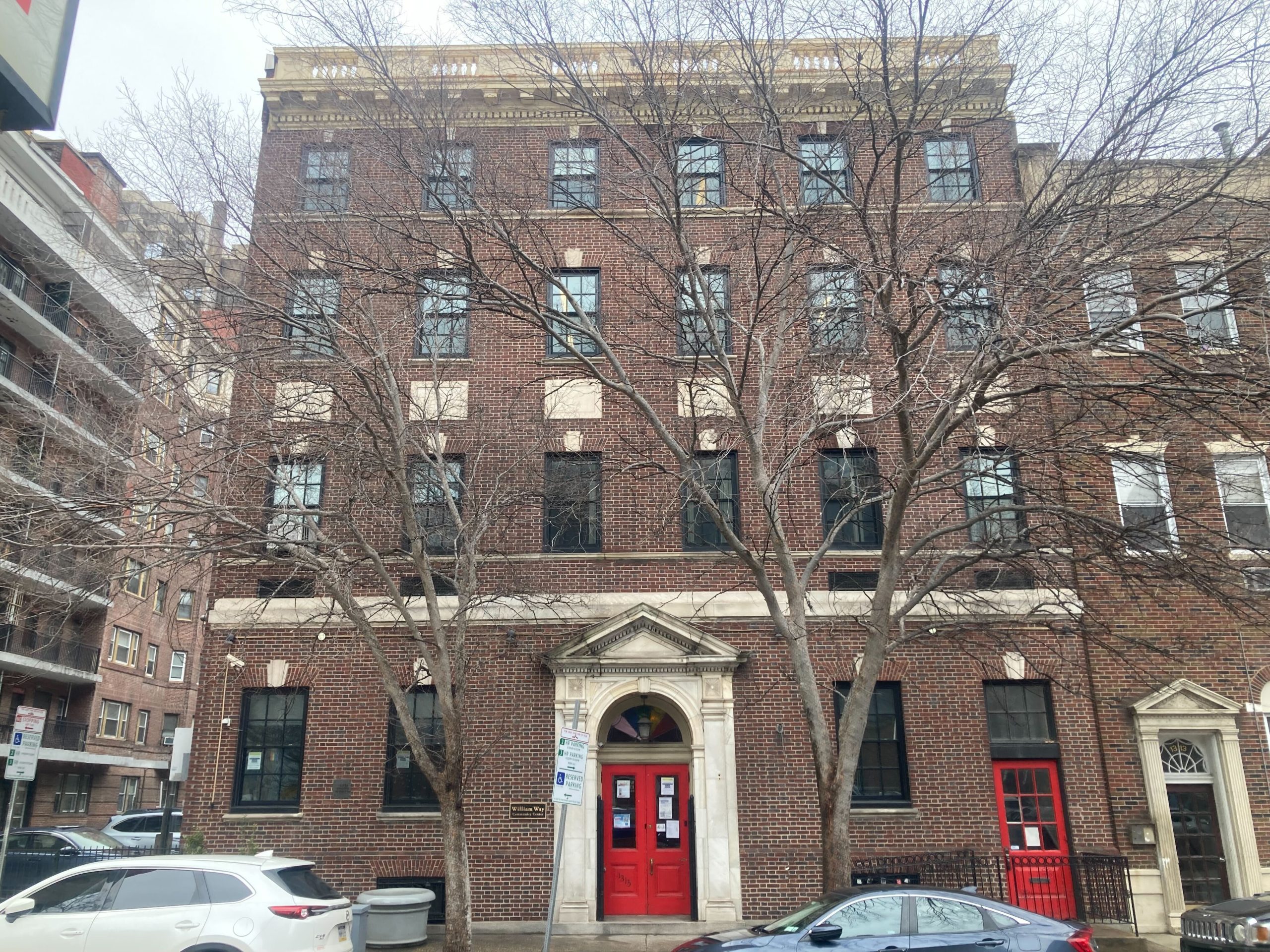
    The first time people openly referred to the pocket of Center City between Jefferson University and Broad Street as the “Gayborhood” was 1995. Within a year, the William Way LGBT Community Center made it official by purchasing a stately, Georgian-style clubhouse at Juniper and Spruce. The building has been a refuge for Philadelphia’s LGBTQ+ community ever since.

    Sadly, that groundbreaking haven is now closed. It was shuttered in December to address maintenance issues, including an outbreak of black mold. At the time, the board said it was gearing up for a major renovation and would temporarily relocate its core services to St. Luke’s church on 13th Street.

    Just three months later, William Way’s board abruptly changed course and revealed the center would be demolished to build subsidized housing aimed at LGBTQ+ seniors.

    The announcement came not from William Way’s board, but from Mark Segal, a longtime activist who founded the Philadelphia Gay News and oversees a nonprofit that has built affordable housing, the dmhFUND. The timing was noteworthy: The plan was made public a few days after a Common Pleas Court judge overturned the neighborhood’s historic district protections.

    Segal’s announcement stunned William Way regulars, including many former board members. Sure, COVID-19 had scrambled the organization’s finances, as it did for many Philadelphia nonprofits. Revenue and donor gifts fell precipitously. The center laid off nearly a third of its staff in 2024, and its longtime director, Chris Bartlett, retired soon after.

    The building was known to be in poor condition. But total demolition? Nothing suggested that the building was unsalvageable, including a major facilities assessment by Metcalfe Architecture & Design in late 2024.

    While there is no doubt that the building requires extensive renovations, demolition is the wrong solution. It would rob all of Philadelphia — not just its LGBTQ+ community — of a major cultural touchstone.

    Philadelphia Orchestra music director Yannick Nézet-Séguin filmed a series called “Our City, Your Orchestra” in the William Way center ballroom in 2021, along with violist Pierre Tourville and other musicians.YONG KIM / Staff Photographer

    A civil rights landmark

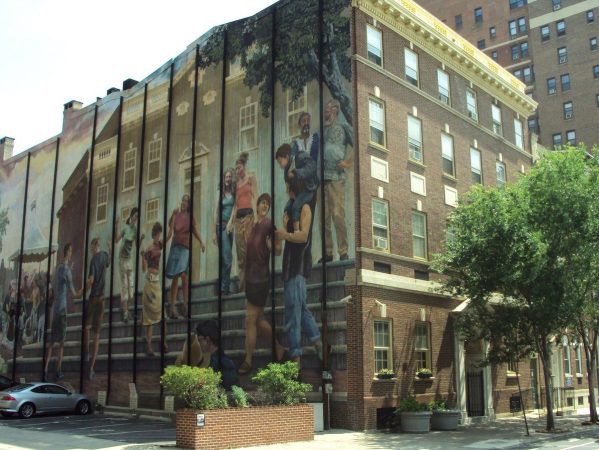
    Although the William Way center has called 1315 Spruce St. home for only three decades, its presence has transformed the 19th-century building — originally a private club for engineers — into a civil rights landmark.

    This is where Philadelphia’s LGBTQ+ community fought to address the AIDS crisis, advance marriage equality, and be accepted into the mainstream of American life. It’s where they attended cabarets in the elegant ballroom and art exhibits in the wood-trimmed parlor. The building’s visibility makes it the architectural equivalent of being out.

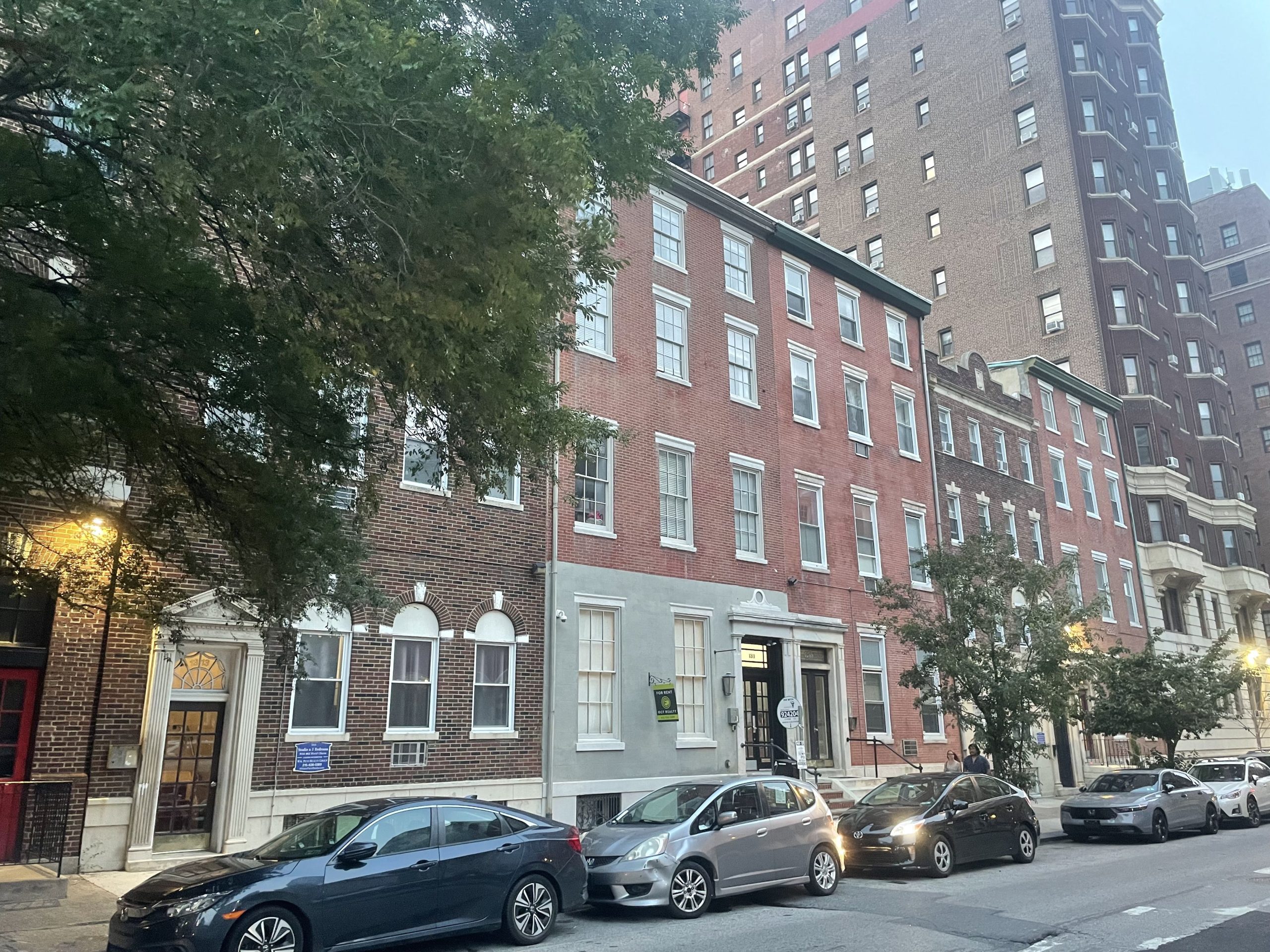
    Beyond losing a place with profound cultural resonance, the demolition would break up the historic 1300 block of Spruce Street, a stretch that is still remarkably intact despite the presence of two unsightly parking lots at the Juniper Street corners.

    Although the block’s large townhouses, which were built for lawyers and doctors in the 1840s, have been divided into apartments, the row retains most of its original architectural features and reads as a single ensemble. The William Way building, which was created in 1929 by fusing two townhouses behind a single facade, was designed to blend in with its neighbors.

    No one would consider demolishing other community anchors, such as Christ Church in Old City, Mother Bethel A.M.E. Church in Center City, Rodeph Shalom synagogue in Spring Garden. So why is this one being written off so casually?

    The 1300 block of Spruce Street, where the William Way Center is located, remains a largely intact architectural ensemble. The townhouses date from the 1840s and were originally private homes occupied by doctors and lawyers.Inga Saffron

    I couldn’t get any of William Way’s board members or employees to answer that question. A communications consultant did provide written responses to several queries, but eventually directed me to Segal.

    He told me that the financially strapped nonprofit had reached out to him because of his development experience, as well as his long association with the center. The second-floor ballroom is named in his honor.

    Segal was also the guiding force behind the John C. Anderson Apartments on 13th Street, the first subsidized housing in the United States marketed to low-income LGBTQ+ seniors. After the building opened to raves in 2014, Segal began searching for another Gayborhood site for a second affordable project. But land prices in the desirable Washington Square West neighborhood were just too high.

    Completed in 2014, the John C. Anderson apartments at 13th and Spruce Streets were the first subsidized housing in the U.S. marketed to low-income LGBTQ+ seniors.

    A new plan for William Way

    William Way’s troubles provided a solution.

    Segal told the board he could replace its 180-year-old clubhouse with a mid-rise building that would include both subsidized apartments and a new home for William Way. The board chairs, Dave Huting and Laura Ryan, readily accepted the deal and signed a letter of intent with the dmhFUND earlier this year. In exchange for providing the land, William Way would be given a condo space large enough to accommodate its programs for a dollar.

    Completing that project won’t be easy, however. To raise money for the apartments, Segal and the dmhFUND will have to cobble together a mix of federal, state, city, and private grants. Most affordable housing projects rely heavily on Low Income Housing Tax Credits from Washington, and there is stiff competition for those funds. Any new construction on the site would also require Philadelphia Historical Commission approval, even though the historic district is currently in limbo.

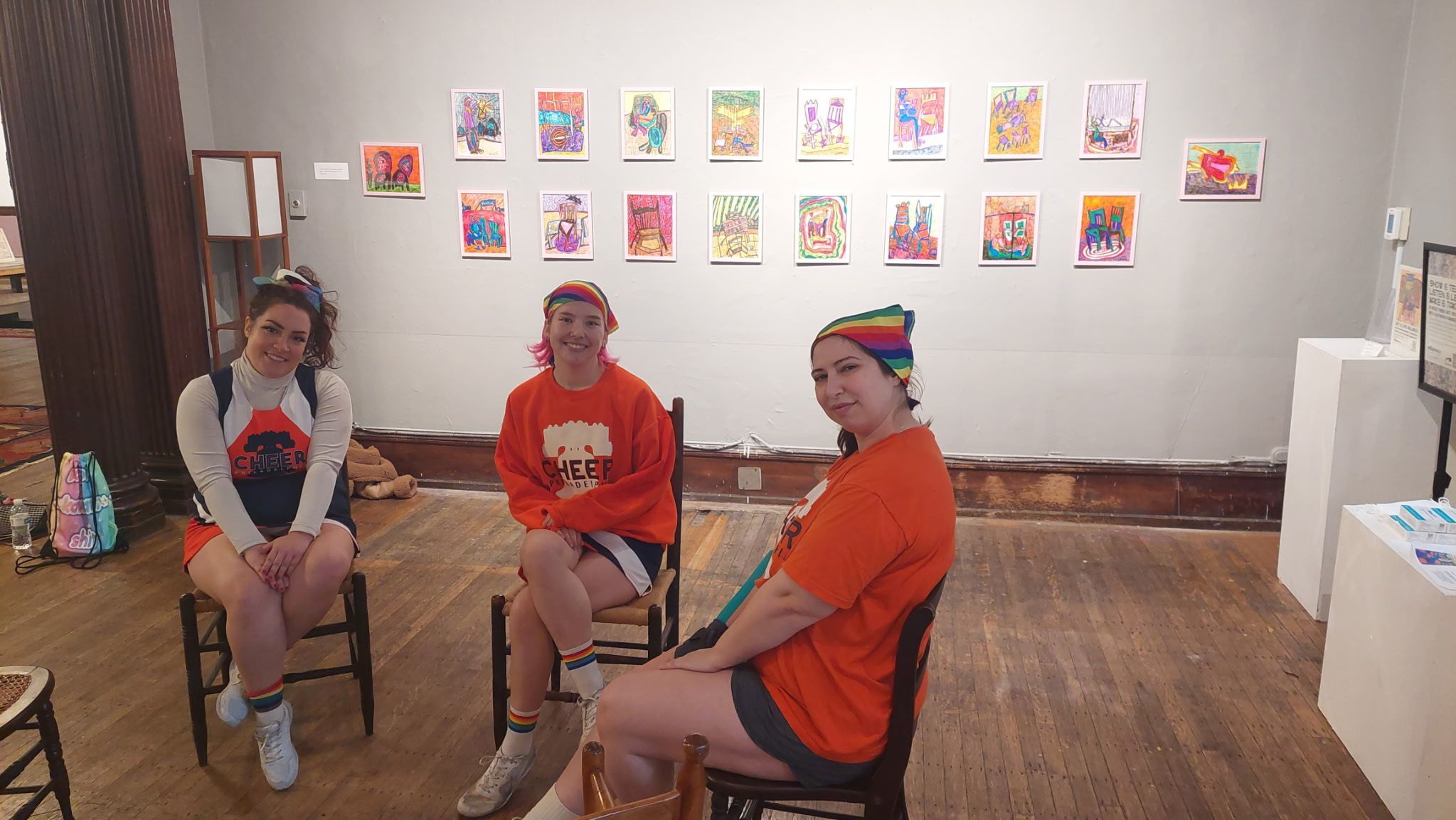
    Artist Kathryn Pennepacker staged one of the last art exhibits in the William Way center’s wood-trimmed reception area. Titled “You are welcome here. I saved a chair for you,” it encouraged visitors to sit, talk and view her artwork.Courtesy of Kathryn Pennepacker

    Because of those hurdles, Segal told me, it could take five to seven years to complete the apartments. During that time, William Way would be without a permanent home. And once it moves back to Spruce Street, it’s unlikely the new space will have the same level of visibility as the existing building.

    Segal says he is undaunted by the challenge. “People told me John C. Anderson was impossible,” he said. “People told me all the things I’ve fought for were impossible.”

    Despite the Metcalfe report’s conclusions and a more upbeat assessment from J&M Preservation Studio, Segal maintains that the building is too far gone to be saved at a reasonable price. In his view, William Way must now choose between saving itself or saving the building.

    Alternatives to demo?

    It’s hard to believe the situation is that binary. Several people who have been involved in the center’s programs told me that the decision to go with Segal’s plan was made by a small circle of board members, without consulting the larger William Way community and its longtime donors.

    Demolition “wasn’t even mentioned” as an option at the organization’s 50th anniversary gala celebrations in February, held just a week before the arrangement with Segal became public, noted Paul Steinke, executive director of the Preservation Alliance for Greater Philadelphia and a former William Way board member.

    In a guest essay published last month in the Philadelphia Gay News, Steinke and a group of activists urged the board to hold a community meeting where the issues could be aired and debated. Segal has responded by forming an advisory board composed of a handpicked group of William Way staff, activists, elected officials, and neighborhood residents.

    In 2022, Gov. Josh Shapiro spoke in the parlor of the William Way center, where he received endorsements from a variety of LGBQT+ leaders. TYGER WILLIAMS / Staff Photographer

    Before COVID interfered, the board had been working on a design to reconfigure the building to address longstanding circulation issues. The plan called for slicing off the back of the structure and inserting a small tower with space for offices or apartments. The arrangement would have preserved the facade and the two most important ceremonial rooms, the ballroom and the large lobby area.

    Why not use that idea to create affordable housing?

    Segal argues that it would be difficult to insert two separate entrances — one for the William Way center, the other for the apartments. But there are plenty of narrow rowhouses in Philadelphia that have separate entrances serving apartments. I know it’s heresy in progressive circles to say this, but how about partnering with a market-rate developer who could finish the overbuild in less than five years?

    An even faster option? Renovate the existing building. It can be done in stages so the center could move back sooner.

    The William Way LGBT Community Center already has two entrances, which could be repurposed to serve an apartment tower inserted behind the front rooms.Jake Blumgart / Staff

    Building affordable housing in Center City, close to transit, is a noble goal, and Segal deserves praise for making it a priority. But there is something seriously wrong when we demolish a building rich in Philadelphia history, while leaving the surface parking lots that flank it in place.

    Since COVID, Philadelphia has lost a series of legacy cultural institutions that shaped the city’s identity. The Painted Bride. The Atwater Kent history museum. And, most painful of all, the University of the Arts.

    William Way worked too hard for visibility to now be erased.

  • Letters to the Editor | July 26, 2026

    Letters to the Editor | July 26, 2026

    Nuclear reality

    Regarding the article about how regulators have ordered a probe into the response to July Fourth power outages, the recently enacted Power New Jersey Act supports building a large nuclear power plant in the state. Gov. Mikie Sherrill described nuclear power as “affordable,” “secure,” “reliable,” and “clean.” But facts indicate otherwise.

    Affordable? The only two new U.S. reactors started in the past 30 years cost $37 billion — way above the original estimate of $14 billion.

    Secure? Nuclear power plants are heavily guarded, especially after the 9/11 attacks (al-Qaeda had considered attacking U.S. nuclear plants on 9/11).

    Reliable? During a recent heat wave, France shut three reactors temporarily and reduced power at eight others. Reactors return billions of gallons of used/heated water to their source daily, making them unreliable when electricity is most needed.

    Clean? Reactors generate more than 100 radioactive chemicals, similar to atomic bomb explosions. This waste is stored at plants for hundreds of years, or escapes into air and water. The cancer death rate in Salem County, N.J., was slightly below the state until the mid-1980s (after three reactors opened), but is now 33% higher.

    New Jersey relies on fracked natural gas and nuclear power for most of its power. Safe, renewable, and affordable sources like wind and solar now generate more than 30% of U.S. electricity; these, not nuclear, should be the focus of our energy future.

    Joseph Mangano, Ocean City, N.J.

    What antifa?

    Marco Rubio is organizing an “antifa summit” to target “left-wing extremists,” which he claims pose a violent threat. Can he cite an example? There is no left-wing equivalent to the Ku Klux Klan, Proud Boys, or Oath Keepers. Right-wing individuals and groups have committed many acts of violence, including mass shootings at churches and synagogues. They held marches displaying racism and antisemitism, and played a prominent role in the violent (and televised) attack on the U.S. Capitol. The administration seeks to quell “violent secular political groups whose ideology is anti-American, radically pro-transgender, and anarchist.” Although no such groups exist, I will address those labels. For anti-American, Rubio should look at the White House. Donald Trump has expressed the desire to “terminate” any portion of the Constitution that stands in the way of his own agenda. When asked on Meet the Press if he needed to uphold the Constitution, he said, “I don’t know,” even though he swore an oath to do so. There is nothing more un-American than violating the Constitution, and Trump has done just that countless times. As for “pro-transgender,” I have read the Constitution, and there is not a word in it prohibiting people from being transgender, or requiring Americans to treat them with animosity. Nor is anarchy a goal of the left wing. On the contrary, the millions of people participating in No Kings rallies are doing so to remind Washington that the supreme law is the Constitution, and it applies to all, including elected officials.

    Jean A. Kozel, West Norriton

    Join the conversation: Send letters to letters@inquirer.com. Limit length to 150 words and include home address and day and evening phone number. Letters run in The Inquirer six days a week on the editorial pages and online.

  • Dear Abby | Sister makes being around her an unpleasant experience

    DEAR ABBY: My unpleasant older sister lives by the creed, “It’s my way or the highway.” As a result, she has no close friends, no husband or partner, no social circle. She was “strongly encouraged” to take early retirement from teaching because she couldn’t get along with her co-workers.

    After retirement, she joined a few clubs but soon quit because they “didn’t do things right,” aka her way. Even though she treats me terribly, I have tried for years to be the better person and invite her to my family gatherings so she doesn’t have to spend holidays alone. Unfortunately, she is also the world’s worst houseguest. Within minutes of arriving, she announces a list of things she just can’t stand (and are therefore prohibited during her stay). These include certain TV shows, music, foods, ingredients, topics of conversation, any family story that includes her, etc. She stays until everyone has gone and then berates me for everything that I did wrong during her visit.

    If I don’t invite her, I feel guilty that she’s alone and has no other options. If I do invite her, I’m so stressed that I don’t get to enjoy having time with my children and grandchildren, which is very precious to me. What do you recommend I do?

    — TORN SISTER IN WASHINGTON

    DEAR SISTER: I think you have suffered enough. If you decide to invite your older sister to visit again, first establish some ground rules. The first should be that when she’s under your roof, you, not she, will decide on what entertainment is appropriate and what foods you will serve. And how they’re prepared. No topic of discussion will be off-limits. If there is something she can’t eat, she can refuse it. If something being talked about is not to her liking, she’s free to leave the room.

    The second ground rule should be that you are not obligated to entertain her 24/7, particularly if you want to spend time with the grandchildren.

    Of course, Sissy is free to reject your kind invitation, but if she accepts your conditions, the holiday will be a far happier one for you.

    ** ** **

    DEAR ABBY: My husband passed away last year. I live by myself in a two-story house with three bedrooms and three bathrooms. My kids want me to sell it. I don’t care for the stairs, but that’s the only thing I don’t like about my house. I’ve lived in this house for more than 30 years, and I don’t want to sell. I’ve always done what everybody else, especially my husband, has told me to do. For once in my life, I want to do what I want to do.

    Can you give me some advice?

    — FINALLY FREE

    DEAR FREE: My advice is to take your own advice. You seem to be happy where you are, so don’t allow your kids to pressure you into selling before you’re ready. I will add, though, that it would be wise to run your kids’ worries by your physician. If there are health concerns that make it unsafe for you to live alone in a big house with stairs, it’s best to listen to your doctor.

  • Horoscopes: Sunday, July 26, 2026

    ARIES (March 21-April 19). People rarely understand the difficulty of a task until they try it themselves. Today, that means letting someone struggle through a task, even if you could do it faster yourself. Experience teaches lessons that explanations couldn’t.

    TAURUS (April 20-May 20). Whatever you pay close attention to becomes more interesting. Other people also notice where your attention goes, and today they will follow along, so your curiosity creates more curiosity.

    GEMINI (May 21-June 21). Whether you’re doing something because you want to, doing it out of duty or acting out of fear of what will happen if you don’t, the point is that you’re in motion. Your work will have a lucky outcome.

    CANCER (June 22-July 22). It’s time to treat yourself like an athlete the day before the race. Sleep, water and nutrition in the proper amounts are the cornerstone of your well-being and the reason you can do your best work.

    LEO (July 23-Aug. 22). Inspiration can strike, but mostly it doesn’t. Often it tickles. Other times it nudges. Sometimes it puts a hand on your shoulder and gently guides you in a direction. That’s the kind that’s happening now for you.

    VIRGO (Aug. 23-Sept. 22). Relationships run on a mix of spoken agreements and unspoken expectations — some obvious, others so deeply ingrained that they go undetected until someone breaks them. Today, you’ll notice assumptions that have been running in the background. That awareness changes everything.

    LIBRA (Sept. 23-Oct. 23). If you followed your every impulse, life would get chaotic and exhausting. So when your options narrow, you may as well consider that a good thing. The path gets easier to follow once there are fewer exits to distract you.

    SCORPIO (Oct. 24-Nov. 21). The person you’re with every moment of every day is you. When that relationship is easy, everything else requires less effort. Today, you’re really not looking to any person, place or thing to complete you. You’re looking, yes — but you’re looking for the sake of discovery, not rescue.

    SAGITTARIUS (Nov. 22-Dec. 21). Just because you love someone very much doesn’t mean the relationship will be without conflict. Love doesn’t guarantee agreement. It simply gives people more reasons to keep trying after they disagree.

    CAPRICORN (Dec. 22-Jan. 19). If you miss a beat, don’t scramble back to try to pick it up. Be like the professional musicians — pick it up next time it comes around. Always be moving forward. The beat goes on.

    AQUARIUS (Jan. 20-Feb. 18). Are you spending too much effort to keep something alive? That’s what happens when the relationship, project or circumstance doesn’t breathe on its own. Maybe it’s time to release what asks more than it gives.

    PISCES (Feb. 19-March 20). However well you love a plant, it will grow according to the sunlight and soil. Today, focus less on trying harder and more on creating the conditions where people, projects and even your own spirit can flourish.

    TODAY’S BIRTHDAY (July 26). It’s your Year of the U-Turn. There’s much going right, but for the areas of your life that just aren’t working? You will turn them around, with or without permission. And after a bit of backtracking, your destination changes. More highlights: A relationship gives you what you’ve longed for. Your shining example will be followed. An income opens up — you’re so good at this! Libra and Scorpio adore you. Your lucky numbers are: 6, 2, 14, 9 and 30.

  • Fans from Philly and beyond gather to watch the WNBA All-Star Game: ‘It’s really come a long way’

    Fans from Philly and beyond gather to watch the WNBA All-Star Game: ‘It’s really come a long way’

    Jessica Shoulders is a WNBA fanatic, and she has maintained her love for the “W” since 1999. Naturally, she is excited that Philadelphia is getting a team in 2030 — just don’t expect her to root for them.

    Before the WNBA All-Star game on Saturday, Shoulders was one of two guests at Marsha’s, a women’s sports bar on South Street, to sink a free throw on a miniature basketball hoop. Her prize? A vintage San Antonio Stars Becky Hammon jersey. Shoulders was excited, but she made sure to quickly clarify to onlookers that she was not a Stars fan or a fan of the Las Vegas Aces — the team Hammon now coaches.

    “I’m loyal to the Lynx,” Shoulders said.

    And that won’t change for a free jersey, or even a new team coming to town.

    “Cheryl Reeve has my heart,” she added, referring to the Minnesota team’s coach and president, who grew up in Gloucester County and graduated from La Salle. “And Olivia Miles — Rookie of the Year — I don’t care what anybody says, she’s been out here balling out. First to be able to get 500 points in 21 games.”

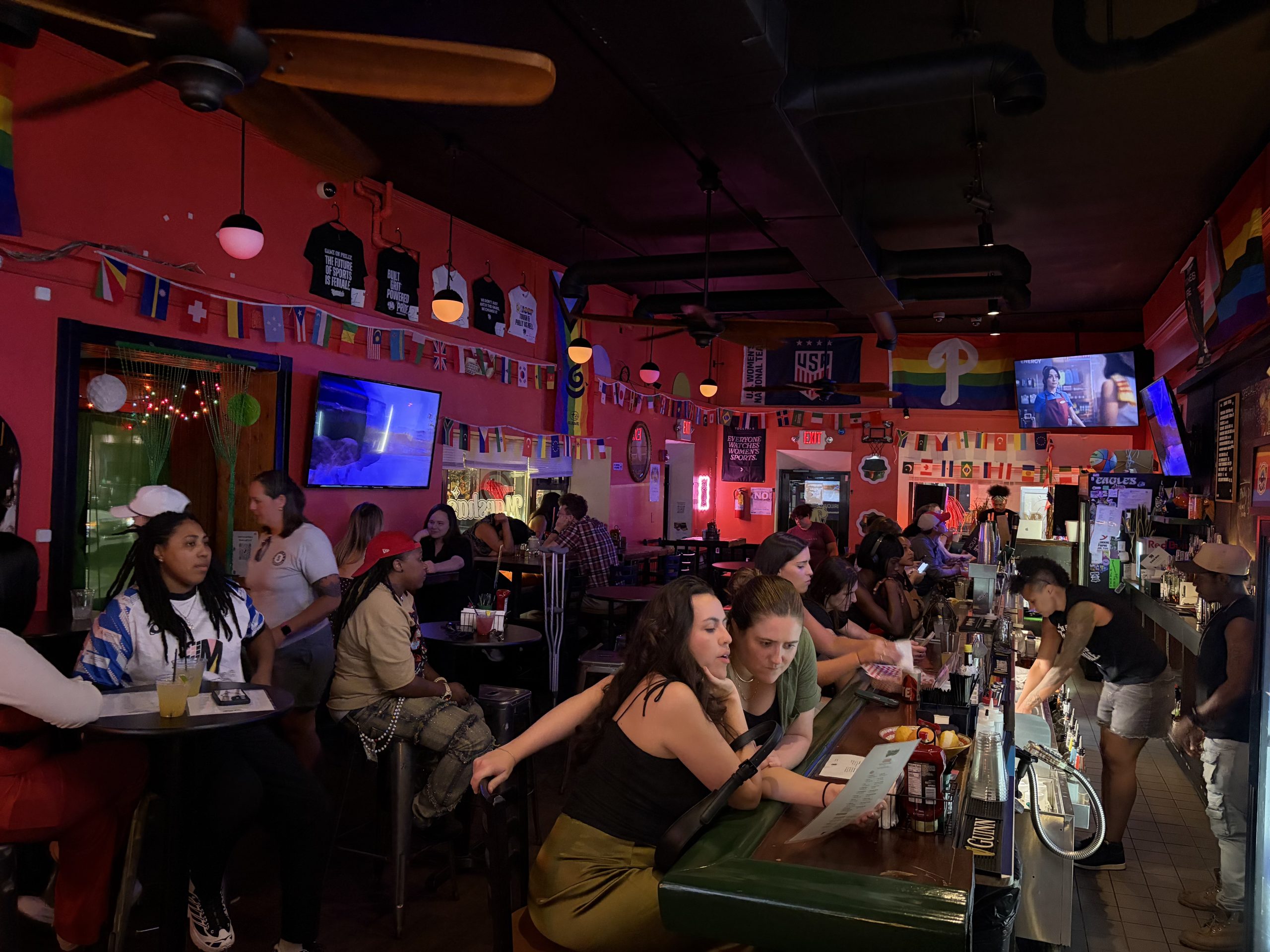
    Fans take in the WNBA All-Star Game at Marsha’s, a women’s sports bar on South Street, on Saturday.Conor Smith

    In Marsha’s, where a crowd gathered to watch Teresa Weatherspoon’s Team Spoon defeat Cynthia Cooper-Dyke’s Team Coop, 129-120, Shoulders was not the only fan planning to stay loyal to their current team come 2030.

    “I could never switch allegiance,” said Em Friedman, a Golden State Valkyries fan who recently moved to Philadelphia. “But I can have a second favorite.”

    In April, the NBA and WNBA Board of Governors formally approved a WNBA expansion team in Philadelphia after it was announced in June 2025. Like the 76ers, the franchise will be owned and operated by Harris Blitzer Sports & Entertainment. The team also will share a new South Philadelphia arena with the Sixers and Flyers that is scheduled to open in 2031.

    One person who will ditch her WNBA squad for the still-unnamed Philly team is Marsha’s owner Chivonn Anderson, who currently claims the New York Liberty.

    “Oh no, they’re done,” Anderson said. “Like, they’re out the door. We got a lot of love to give in a small amount of time, but as soon as we get our own team, I think we will become fierce rivals.”

    ‘Share their story’

    Before opening Marsha’s, Anderson struggled to find a space to watch and celebrate women’s sports. The tipping point for her came in 2019 when she got into an argument with a Philadelphia bartender over putting the women’s soccer World Cup final on one of the bar’s televisions.

    “A couple of years later, I had the opportunity to purchase the building here, the liquor license, and all the business assets to create this space where we highlight professional athletes,” Anderson said. “These women that sacrifice pretty much everything in their lives to get to this ultimate platform. We’re just here to share their story with everybody.”

    The bar’s namesake comes from queer civil rights activist Marsha P. Johnson, who is best known for helping lead the 1969 Stonewall uprising. Since opening, Marsha’s has hosted events ranging from a deadlift competition to tarot card readings. Following the free-throw contest, Saturday drew in a crowd that was locked into the All-Star Game from start to finish — for good reason.

    New York Liberty center Jonquel Jones, playing for Team Spoon, won MVP honors in the tightly contested match. Jones logged 22 points, 13 rebounds, and eight assists in 22 minutes off the bench. Notably, she became the first player in WNBA history to win league MVP, Commissioner’s Cup MVP, Finals MVP, and All-Star MVP.

    “The atmosphere here is amazing,” Marsha’s patron Molly Coulter said. “The All-Star Game is a really exciting moment, and we’re going to be Philly fans when we finally get our team here, but we like seeing the stars. I like seeing the camaraderie on the court, honestly, like everyone having fun together.”

    Not everyone packed in Marsha’s for the game was from the area.

    Kathleen Bennett, a 16U baseball coach, was visiting Philadelphia for the first time for a tournament. The Syracuse, N.Y., native knew the All-Star Game was on, so she went searching for somewhere to watch it with others.

    “I heard that there was a really cool sports bar, a place to go to watch women’s sports,” Bennett said. “I knew that the All-Star Game was tonight, and so I wanted to check it out and be a part of the scene.

    “The WNBA is really the first prominent women’s professional sports league. It really had some staying power, and I can remember when it first started. Watching the [Houston] Comets back then. They were the team to beat. It’s really come a long way.”

  • After two elbow surgeries, Brian Keller’s baseball dreams dimmed. But on Saturday, he made his big league debut.

    After two elbow surgeries, Brian Keller’s baseball dreams dimmed. But on Saturday, he made his big league debut.

    A half-hour after the final out, Brian Keller still hadn’t peeled off the uniform.

    There wasn’t time. Not between taking photos on the field with family and talking with reporters in the middle of the Phillies’ clubhouse. Besides, after 10 years, two countries, and multiple surgeries — one of which he paid for out of pocket — he didn’t know if he’d ever get to wear it.

    And so Keller was still decked out in red pinstripes, No. 48 on his back, when he poked his head into the office where pitching coach Caleb Cotham and assistant Mark Lowy were packing up for the night.

    “I hope I get to do it again,” Keller told them.

    Hey, why not?

    Look, the Phillies didn’t make any guarantees when they called up Keller, age 32, 10 years after he was a 39th-round pick in an MLB draft that has since been curtailed to 20 rounds. But they’ve searched for a No. 5 starter since demoting Andrew Painter to triple A last month and haven’t won a game from the fifth-starter spot in 11 tries since May 18.

    They didn’t win this one, either, not after the Yankees broke a tie in the sixth inning to send the Phillies to a 3-1 loss, their fourth defeat in a row. But Keller did his part, following lefty opener Tim Mayza and delivering three solid innings that were tainted only by a two-out homer from Austin Wells.

    Keller might’ve kept going, too, except interim manager Don Mattingly wanted a lefty to face a left-handed pocket of the Yankees’ lineup in the sixth inning. Kyle Backhus walked the leadoff man, who scored on Cody Bellinger’s two-out single against Seth Johnson.

    But don’t let those details rain on the parade of a righty from Wisconsin, 18 miles northwest of Milwaukee, whose long shot to reach the majors got even longer a few years ago.

    It was 2023, and Keller was pitching in Japan when he blew out his elbow. He had Tommy John surgery and missed two seasons trying to come back. When further issues arose, he paid “12 grand maybe, something like that,” to undergo a nerve transposition.

    “I wasn’t with an organization, and it wasn’t a medically necessary surgery, technically,” Keller said. “It was necessary from the viewpoint of getting back to playing professional baseball, so, hey, you’ve got to do what you’ve got to do, right?

    “Luckily, I made a little bit of money in Japan to basically buy me a little bit of time to be able to go through that rehab process. … Took a little hit, but we’re here. So we’re all right.”

    Keller always pictured what it would be like to reach the majors, but if he’s being honest, the image in his mind had dimmed.

    “Oh yeah, definitely,” said Keller, who signed with the Phillies in May and had a 2.23 ERA in triple A. “During rehab, it was like, I don’t know if you’d call it a setback, but somewhat setback after setback to the point where, yeah, I just didn’t know if it was ever going to happen, pitching again professionally, much less playing in the big leagues.

    “But, yeah, here we are.”

    Indeed, there was Keller, running in from the bullpen to begin the third inning in front of a personal cheering section — “I think 20 people, total,” he said — and striking out Jazz Chisholm Jr. on a slider.

    Keller sidestepped a one-out single by Paul Goldschmidt in the fourth inning and struck out Chisholm again on another slider and José Caballero on a fastball to end the fifth. He threw 39 pitches, 29 strikes.

    “He handled himself fine,” Mattingly said. “Threw strikes. He went after them. He was on the attack. He wasn’t walking people. So, that part of it I like.”

    Enough to get another chance next Friday night in Baltimore?

    “It’s something we’ll talk about as we get there,” Mattingly said. “But he did fine.”

    Just in case, he left on the jersey to make the most of his first night in the majors.

    “Nobody can take that from me, right?” he said. “Proud of that.”

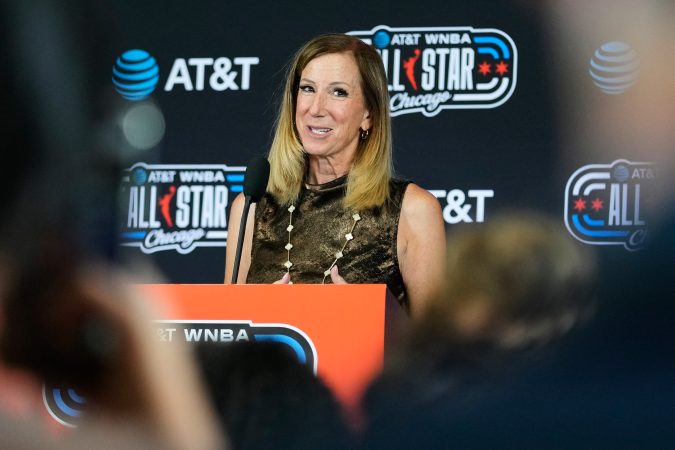
  • WNBA commissioner Cathy Engelbert lauds league’s growth at All-Star Weekend: ‘The future of the W has never been brighter’

    WNBA commissioner Cathy Engelbert lauds league’s growth at All-Star Weekend: ‘The future of the W has never been brighter’

    The last time the WNBA All-Star Weekend was in Chicago, four years ago, commissioner Cathy Engelbert remembered the event being smaller.

    Back in Chicago this weekend for the All-Star festivities, the league is celebrating its 30th season, and Engelbert said the weekend has been the “largest, most immersive, and most accessible,” in its history.

    The rapid growth of the league was among several topics Engelbert discussed in a news conference before Saturday night’s WNBA All-Star Game. Notably, Engelbert announced that in the 2027 season, the WNBA will be launching a full centralized replay center.

    “This is one of the most significant investments we’ve ever made in our basketball operations,” said Engelbert, a Collingswood native. “This investment of tens of millions of dollars will help bring greater consistency, efficiency, and transparency to our officiating process while continuing to improve the quality of the game.”

    While the league is finalizing details, Engelbert said it will leverage some of the NBA’s replay center capabilities while adding its own innovations.

    The WNBA has received a constant stream of backlash for its officiating. Other significant current issues include cybersecurity and player harassment, which Engelbert also addressed on Saturday.

    On Tuesday, Engelbert met with players to address all three of these issues and said she collected feedback and ideas from the players. She emphasized that player safety will always be the league’s top priority, on and off the court.

    “The racism, the misogyny, the homophobia, the harassment, and threats directed to our players has no place in sport or anywhere else,” Engelbert said. “This is their workplace. … The WNBA is built on inclusion and respect, and those values have defined this league for 30 years, and it will continue to define us for the next 30.”

    Player experience was one of the pillars Engelbert mentioned the league investing in. Fan experience was the other.

    The plan, Engelbert said, is to continue to build on the current momentum the league is experiencing.

    “We have big plans, and if the first half of the season has shown us anything, it is that the future of the W has never been brighter,” Engelbert added.

    Engelbert shared that this has already been the most-watched WNBA season — and it’s at its halfway point. There have also been 29 games that have averaged over 1,000,000 viewers, the most ever at this point in the season. Last season had 11 games reach that milestone.

    In addition to the streaming numbers, attendance has increased 16% from this point last year, said Engelbert, with more than 2.2 million fans attending games.

    “When we entered this season, we did so in the strongest position in league history, coming off a historic CBA, starting a new era of media partnerships, record franchise valuations, two new expansion teams coming in this year, and excitement around the league at an all-time high,” Engelbert said. “Those milestones are marking the beginning of the next chapter of WNBA growth. And since opening night, we’ve been building on that momentum on the court.”

    Those new expansion teams are the Toronto Tempo and the Portland Fire, which joined the league this season. In 2028, Cleveland will become the newest expansion team in the league, followed by Detroit in 2029, and Philadelphia in 2030.

    Will Engelbert be around as commissioner to see these plans come to fruition?

    Questions about Engelbert’s future with the league have been raised with her contract expiring at the end of the season. When asked about it Saturday, the commissioner did not offer a direct response.

    “I’m so blessed to be at the helm of this league during this incredible hypergrowth period, so blessed that these players are putting the product on the court they are every night, that they stand for the values that the W has long sought for,” Engelbert said. “So I will just continue to do my job, execute the strategy, because it has been working, make sure we listen to the players, communicate with the players. And so [I] absolutely just love this league and [am] blessed to have had the career I had before and the career I have now.”

  • Neil Pierre earns first start as Union top Seattle Sounders to win second-straight game

    Neil Pierre earns first start as Union top Seattle Sounders to win second-straight game

    A first-half goal from Milan Iloski propelled the Union to a 1-0 win over the Seattle Sounders on Saturday evening at Subaru Park.

    Iloski finished a long feed from Frankie Westfield in the 31st minute, giving the Union (3-10-4, 13 points) an early lead that held for their second win in as many games since returning from the international break for the FIFA World Cup.

    Westfield led Iloski into the 18-yard box with a pass from the right sideline near midfield. The ball bounced once before Iloski finished the chance with a right-footed volley that looped over the head of Andrew Thomas.

    Iloski has scored in each of the Union’s matches since the club’s return to play. He’s scored a team-leading 10 goals in all competitions this season, seven of which have come in his last five matches.

    “It feels nice to do my job,” Iloski said of his goal streak. “I think I should honestly have five or six from the first two games [back]. As much as I’m happy that I scored two goals and scored in back-to-back games and that we won, I try to do more and hold myself to a higher standard.”

    Ryan Richter, managing his second game since taking over as interim head coach in May, repeated his lineup from Wednesday’s win over Red Bull New York against the Sounders (7-6-3, 24 points), with one notable exception.

    Neil Pierre earned his first start for the Union against Seattle, taking Japhet Sery Larsen’s spot at center back. The 18-year-old, who spent the first half of 2026 on loan at Danish side Lyngby, came on as a substitute and scored his first goal in the Union’s 3-1 win over New York on Wednesday.

    Sery Larsen injured his hamstring during Wednesday’s match, but he was healthy and available to come off the Union’s bench for Saturday’s win.

    Richter said his decision to start Pierre was based on his effort in training and the Union’s upcoming crowded schedule. Between the Leagues Cup and MLS play, the Union will play eight matches in August.

    “With the stretch of games that we have coming up, if we lose a key player for that stretch, it gets pretty difficult for us,” Richter said. “[Pierre] deserved to play. By the way he performed in training, by the way he performed in the last game. It just made sense, with the timing of everything, to start [Pierre] tonight, and I think he proved that was the right decision.”

    Pierre looked comfortable in his first MLS start. He was responsible for five recoveries and four clearances, and he started the play that led to Iloski’s goal.

    “[Pierre] did a good job,” Richter said. “He won his duels. He was organized. He was focused. He played a subtle game. It was quiet for him. That’s a good thing for a centerback.”

    Iloski’s goal was the focal point of the first half, but another dramatic moment came when Seattle’s Stuart Hawkins collided with Cavan Sullivan in the 26th minute.

    Union midfielder Cavan Sullivan gets taken down by Seattle Sounders defender Stuart Hawkins during the first half on Saturday.Yong Kim / Staff Photographer

    The two American teenagers collided near midfield as Sullivan tried to control a long throw-in from Kai Wagner, who made his 200th MLS start on Saturday.

    Sullivan hit the pitch before popping back up to exchange words with Hawkins. Both parties walked away from the incident without a caution, and the Union were awarded a free kick that Seattle cleared away.

    Seattle logged two shots in the first half, but Nathan Harriel provided a crucial block on one of them.

    Harriel chased down Osaze De Rosario as he broke away on a Seattle counter-attack in the 18th minute. As De Rosario turned to shoot on Andre Blake’s net, Harriel slid in and blocked De Rosario’s shot out for a corner.

    The Union outshot a shorthanded Seattle team, 16-8. Blake needed one save to secure his third clean sheet of the season.

    It looked like Iloski had scored a second goal in the 64th minute, but he was ruled offside after racing past the Sounders’ defense and pushing the ball across the goal line.

    Richter made his first set of changes shortly after Iloski was caught offside, bringing on Quinn Sullivan and Ezekiel Alladoh for Bruno Damiani and Indiana Vassilev in the 65th minute.

    Another switch came in the 80th minute, with Jesús Bueno replacing Danley Jean Jacques in midfield.

    Richter’s final change of the night came in the 89th minute, with Alejandro Bedoya coming on for Cavan Sullivan to help close out the match’s final moments.

    After spending the international break with the league’s worst record, back-to-back wins under Richter have lifted the Union off the bottom of the Eastern Conference standings.

    The Union now sit nine points behind the playoff cutline with 17 games to go.

    “It’s two wins, but at the same time, we’re still in second-to-last place,” Harriel said. “We’re nowhere near where we want to be at, but sometimes you have to take it one game at a time, which we’re doing. But the momentum is great. The vibes are great. Everyone’s performing on the training ground and then on the weekends here at home, which is important.”

    The win is the Union’s first over Seattle since 2018, and their first home win over the Sounders since 2017.

    Up next

    The Union return to Subaru Park to face last-place Atlanta United next Saturday (7:30 p.m., Apple TV).