Tag: topic-link-auto

  • 5 British nationals arrested over suspected attack at a U.S.-operated air force base released on bail

    5 British nationals arrested over suspected attack at a U.S.-operated air force base released on bail

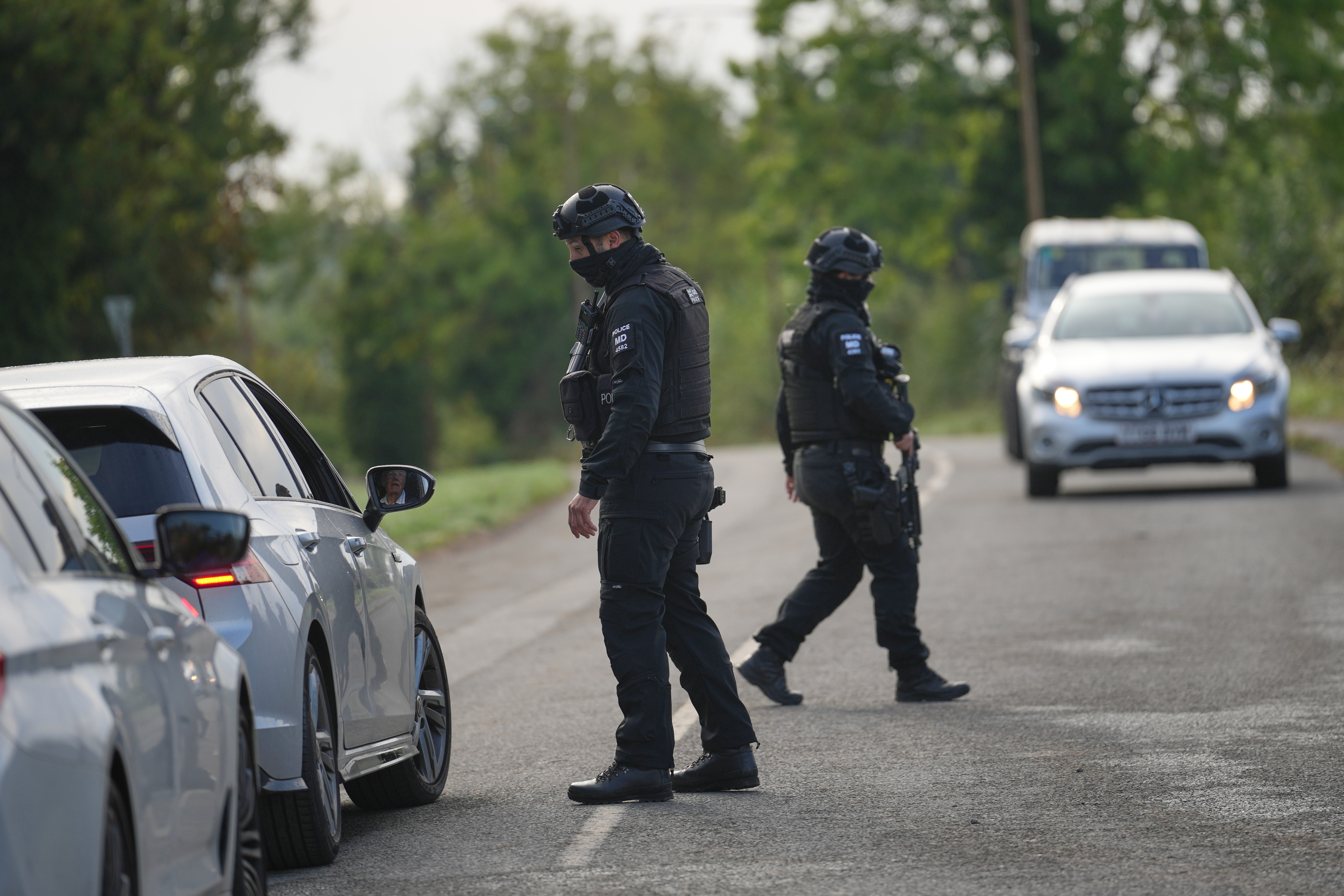
    FAIRFORD, England — Five young British men arrested on explosives and terror charges near a U.S.-operated air force base in England were released on bail Monday, and counterterror detectives said they were investigating “multiple lines of inquiry,” including whether there is a link to Iran.

    The men were detained early Sunday after three vans were spotted in the countryside near RAF Fairford, a U.K.-owned base that has been used by American bombers during decades of conflicts in the Middle East, including this year’s war with Iran.

    Investigators haven’t concluded whether the incident was state-backed. They are investigating a possible link to Iran, Russia, or nonstate militant groups. RAF Fairford has also been the focus of protests by anti-war campaigners.

    The five suspects, who haven’t been named, were initially held over suspected explosives offenses, and later also arrested on suspicion of preparing an act of terrorism. Police said the men are all British nationals from London and in their 20s.

    Britain’s national news agency, PA, reported without citing sources that police had not found viable explosives. Announcing that the suspects had been bailed, the head of U.K. Counter Terrorism Policing, Laurence Taylor, said that the suspects face stringent conditions and “absolutely remain under investigation.”

    Taylor said lines of inquiry include that the suspected offenses were committed by “proxies or individuals, either knowingly or unknowingly, working on behalf of a foreign state.”

    Iran denied involvement. The Iranian Embassy in London said that it “categorically rejects and strongly condemns the recent unfounded and malicious speculations” about the incident.

    Residents were evacuated from 85 homes in the village of Whelford near the base on Sunday, and army bomb-disposal experts used a robot to examine three white vans. The villagers were allowed to return home late Monday afternoon, though a cordon remained around the three vehicles, police said.

    Prime Minister Andy Burnham chaired a meeting of the government’s COBRA emergency committee on Monday “to make sure we have the full picture” of the incident, he said.

    Arrests came after reports of suspicious vehicles

    It was unclear whether the arrested men had been on security services’ radar. Local residents described seeing heightened security around RAF Fairford in recent days, with heavy vehicles parked across entrance gates.

    U.S. President Donald Trump said the suspects had been detained following cooperation between the U.S. and Britain, and had been “under view” for some time. Police, however, said the arrests were triggered by a late-night call about “suspicious vehicles” near the base.

    A local farmer said she called police after seeing three oddly parked vans as she drove home late Saturday night, and that nearby she came across “a large group of men,” some with their faces covered. She said they scattered when they saw her vehicle.

    She declined to be identified to protect her identity because she was describing what she saw as potential security lapses.

    British Defense Secretary Wes Streeting said the farmer “did exactly the right thing” by calling police but only had “a partial view” of the operation.

    The arrests came at a time of heightened tensions around the threat from hostile states, with British intelligence services saying Russia and Iran have both used proxies to commit crimes on U.K. soil. In March, officials said the number of national security cases involving activity by hostile states, including Iran, increased by 50% in the six months to December 2025.

    Iran has been linked to a series of attacks in Europe

    Britain didn’t join the U.S. and Israel in the Iran war, which began on Feb. 28, and initially denied Trump’s request to use bases in the U.K. to strike Iran. But then Prime Minister Keir Starmer agreed in March to let the U.S. use bases in Britain for what he called “defensive” operations against Iran’s missiles and their launch sites following Iranian attacks on U.K. interests and Britain’s allies in the Gulf.

    American B-1 and B-52 bombers have taken off from Fairford, 100 miles west of London, for operations during the Iran conflict.

    Iran has said that it considers any base used to attack its territory a legitimate target.

    British security officials say proxies linked to Iran have been behind a string of arsons and other attacks in the U.K. and other countries, many of them targeting the Jewish community and intended to sow fear. They have previously warned that Tehran could expand its targets in the U.K. if conflicts in the Middle East continue.

    Several people also have been charged with plotting to commit arson in the U.K. on behalf of Russia-linked groups.

    U.K. Foreign Secretary Ed Miliband said Monday that the incident is a “reminder of the threats our country faces.”

    Miliband met Iranian Foreign Minister Abbas Araghchi at the United Nations in New York last week and told him that “Britain will not tolerate intimidation, threats, or hostile activity on U.K. soil,” according to a U.K. readout of the conversation.

    U.S. Air Force says personnel remain vigilant

    The U.S. Air Force said that its personnel on the base “remain vigilant,” but “for operational security reasons we will not discuss specific force protection measures.”

    The U.S. Embassy in London has warned Americans in Britain to be cautious and mindful of their personal security.

    Trump said that authorities had the suspects “under view for a long time and we got them.”

    “It was an amazing job. We had them under investigation. They were looking to do big damage to our fort. And working with the British worked out great,” he told reporters in Chicago on Sunday.
  • Pope Leo leans into statesman role, urging peace in an era of renewed war

    Pope Leo leans into statesman role, urging peace in an era of renewed war

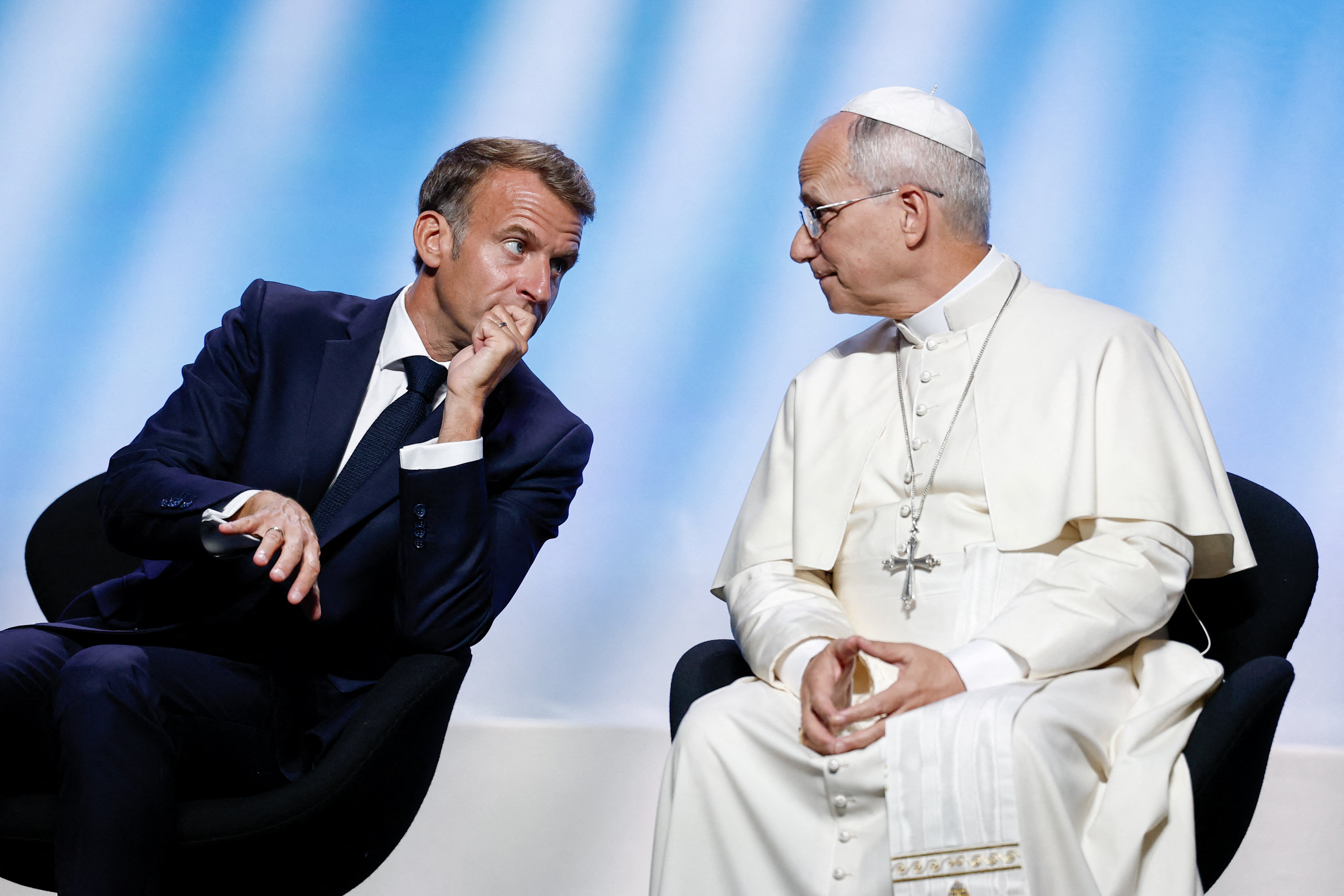
    METZ, France — Pope Leo XIV capped a four-day trip to France in the intellectual birthplace of the European Union, heralding its success at “tearing down walls that were dividing it” and leaning into his role not only as spiritual leader of 1.4 billion Catholics but as an increasingly influential statesman.

    In back-to-back addresses delivered symbolically in a conference center named after Robert Schuman, the late French foreign minister who was a founding father of the European Union — and now a candidate for Catholic sainthood — Leo struck what has become his trademark: a balanced tone on hot-button issues like migration that seem to leave interpretation to the beholder.

    He was less equivocal on religious freedom, the importance of international law and multilateralism, and his deep distaste for invoking God’s name for the purpose of war. Leo spoke in a part of Europe — near the once violently disputed border with Germany — where Schuman championed continental integration as a binder of lasting peace.

    At a time when President Donald Trump has pressed NATO allies into ramping up military spending, Leo acknowledged that “the search for peace in Europe, as throughout the world, must not be confused with a naive form of pacifism.” But he also warned against “the illusion that rearmament is the answer.”

    During tours of Africa and Spain in April and June, Leo — who initially seemed uneasy with fame — emerged as a confident and emotive spiritual leader capable of moving throngs.

    During his trip to secular France, the U.S.-born pope did just that in Paris, Lourdes and Metz, including drawing 800,000 faithful for an outdoor Mass on Saturday, the largest crowd in the capital since France’s World Cup victory in 2018. The night before, Leo, the 71-year old leader of a two-millennia-old faith, managed to easily pack a stadium with 80,000 roaring youth.

    Yet more than on some of his other trips, a different pope was also on display in France: Leo as an emerging elder statesmen.

    “We’re now dealing with a pope I’d describe more as a diplomat,” said Claude Dargent, a Paris-based expert on religion and politics.

    Leo is also being seen by some as the pope that many believe the cardinals who elected him had hoped for — a plain-talking, Chicago-born counterweight in an era of unbridled American power.

    In April, when President Trump openly criticized the pope as “WEAK on Crime, and terrible for Foreign Policy,” Leo appeared unbowed, saying he had “no fear.” But he has since sought to lower the tone and refrained from fanning the flames of a feud with the White House.

    Instead, he has taken to challenging the notion of “might-is-right,” and offering an alternative world where kindness, generosity and, above all, human dignity hold sway.

    He calls it our “common humanity.”

    Days after Trump skewered the United Nations and spoke of victors taking spoils, Leo addressed UNESCO — the UN’s cultural agency in Paris — to rousing applause. He spoke of the horror of war and the glory of peace. He reiterated the risks of artificial intelligence, as he did in his first major Encyclical, raising red flags at a time when Trump has defended its breakneck advancement.

    At a time when Venezuela is under the thumb of Washington, and Moscow is waging war in Ukraine, Leo condemned the quest for “domination” and the rise of modern “neocolonies” of powerful nations. In France, where nationalist Marine Le Pen is polling first in next year’s presidential election, Leo warned of creeping authoritarianism in the free world.

    “A truly free society does not impose uniformity but protects the diversity of consciences, preventing authoritarian tendencies and promoting an ethical dialogue that enriches the social fabric,” Leo said.

    In Metz, he doubled down on a point for which the White House has taken him to task: his claim that “God’s name” can never be used to “justify violence or oppression.” He reiterated his fears over the erosion of international law.

    “International law and multilateralism emphasize the genuine equality of States in their relations and constitute the best antidote to the desire for domination, which lies at the root of every conflict,” Leo said. “Today, relations between individuals and States are becoming increasingly uncivilized. The value of keeping one’s word is dismissed; instead, people boast of lies and deceit.”

    He spoke of a new European transformation through waves of migration. He reiterated earlier backing for legal pathways, and improving conditions in origin countries to inhibit migration. But he also called for integrating newcomers as if they were “part of one’s own family” and offering them opportunities.

    French President Emmanuel Macron, who was at the speech in Metz, had invited leaders from the E.U.’s other 26 member nations, though few appeared to have accepted. The prime minister and grand Duke and Duchess of Luxemburg attended, as did the head of a German state, Anke Rehlinger, minister-president of Saarland, the Élysée Palace said.

    The crowds in France, though perhaps slightly more reserved than those in neighboring Spain, were often young. In Paris, a smattering of nonbelievers joined the faithful in cheering the pope. At a university event in central Paris on Saturday, three young men — none Catholic or even religious — whooped for Leo, fanboying over a pope that one of them described as the American the world “needs.”

    “For us in France, it is important that we have an American saying these things, you know, an American with a wonderful message of peace who speaks so many languages, and who, you know, is speaking this truth when we have the insanity of Trump,” said Robin Pitrat-Demurger, 21, a Paris political science major.

    “I am here because I want to hear him and see him,” Pitrat-Demurger continued. “But also because I am happy to hear an American say these things, and to know that other Americans might listen to him because he is one of them.”

    As is customary in papal trips, there was pageantry, especially when Leo became the first pope to view the restored Notre Dame Cathedral following its devastating 2019 fire. He joined a high procession dressed in gleaming white and gold. As incense swirled and thunderous organ music played, he venerated a relic said to be the crown of thorns at the crucifixion of Jesus.

    In Lourdes, he comforted the sick and elderly who seek miraculous cures in a city where a 19th century miller’s daughter is said to have witnessed apparitions of the Virgin Mary. He said Mass for 150,000 pilgrims, and later met individually and collectively with seven carefully selected victims of abuse by clergy. Several of the victims praised Leo after the exchange.

    At an event at a hospital, rows of disabled people in rickshaw-like wheelchairs hung hopefully on the pope’s words, some of them in tears.

    MAGA influencers have dubbed Leo the “woke pope,” but in France, if anything, he was seen as the opposite, at least on social issues.

    In Paris, he spoke up for conservative Catholic principles not always popular in secular France, taking aim at surrogacy and the country’s recently passed euthanasia law — calling it an industry built around “arranging one’s own death.”

    He did so in a manner that was described by some in the French press as astutely aware of French identity and self-perception. Perhaps it was genetic. Leo spoke fondly of his familial roots in Normandy and Béarn.

    “He said some things that he doesn’t like in France and I feel like it’s important, because a pope can’t always have a speech everyone agrees with, but he does it in a gentle way,” Zoe le Barzic, a history major at the Catholic University of Paris who came to hear Leo. “There is so much division right now. I don’t think he wants to add to it. He is being very diplomatic.”

    Yet Leo has not shied away from all comments on American politics, albeit treading lightly and seemingly going there only when pressed by the media.

    Asked on the papal flight to Paris about Trump’s decision to ban CNN and other news outlets from the White House, Leo told reporters: “I’m very happy that here, you are all welcome. And good ​coverage. I ⁠think it’s very important that we have it all ​the way around for everyone.”

  • Tom Kean Jr. backs Trump on Iran and tariffs, if not local issues

    Tom Kean Jr. backs Trump on Iran and tariffs, if not local issues

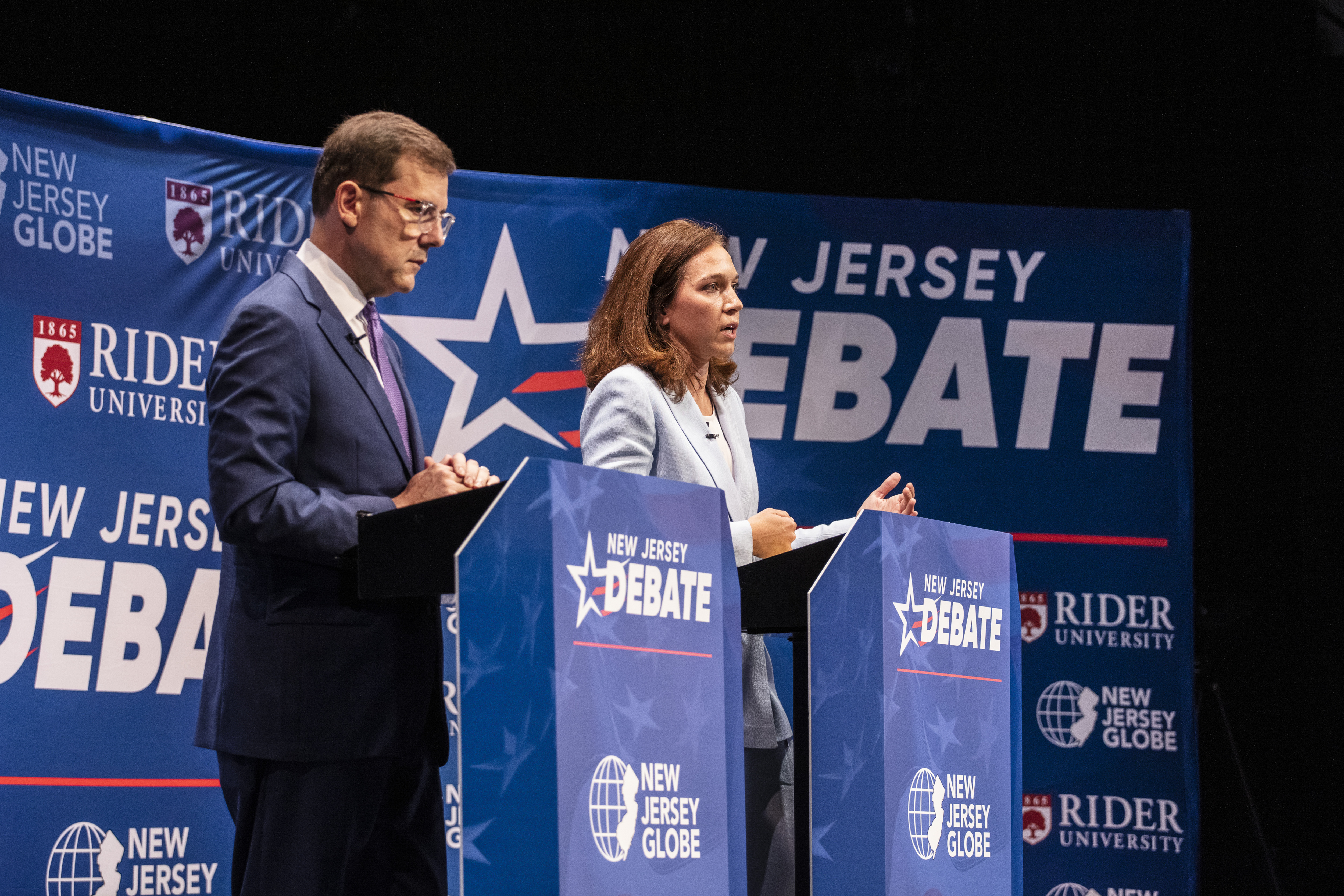
    Rep. Thomas Kean Jr., a New Jersey Republican in a tight reelection battle, sought to distance himself slightly from President Donald Trump on Sunday as his Democratic opponent, Rebecca Bennett, pelted him with reminders of his years of loyalty to the unpopular president.

    Kean began his opening comments during a debate in Rahway, New Jersey, by stating that he was willing to stand up to Trump’s efforts to strip funding from a critical Hudson River rail tunnel. “I will make sure that I counter anybody who gets in my way, including this president,” he said.

    And for the first time, Kean clearly stated his opposition to the Trump administration’s plan to convert a warehouse in Roxbury, New Jersey, into an Immigration and Customs Enforcement detention center.

    He also said he opposed Trump’s decision to change the name of Lake Ontario to “Lake America.” On key issues such as the war in Iran and the president’s tariffs, however, he maintained strong support for Trump’s policies.

    “The president is justifiably using that to reduce costs for consumers,” Kean said of the tariffs.

    His seat in New Jersey’s 7th Congressional District, which has seesawed between the two parties three times since 2018, is considered a prime pickup opportunity for Democrats as they try to retake control of Congress in November.

    On Friday, in a sign of the volatility of the contest, The Cook Political Report shifted the race from “toss-up” to “leans” Democratic, despite the Republican Party’s 16,600-voter registration edge. An independent poll taken this month showed Kean trailing Bennett, a former Navy helicopter pilot.

    Groups aligned with the Republican Party are pumping millions of dollars into the race. Kean and his Republican allies have booked $17.4 million in advertising, far outpacing Democrats’ $4.9 million, according to AdImpact, an ad analytics firms.

    Sunday’s debate was the first time that Kean, 58, had subjected himself to extensive public questioning since being absent from Congress for nearly four months while being treated for what he has said was depression. The first question Kean was asked dealt with the lack of information he shared while hospitalized and missing from Congress from March through June.

    “Nobody can plan a medical emergency,” he said. “And that was a medical emergency.”

    Neither the debate’s moderators nor Bennett pressed him for additional details about his treatment or his fitness to continue to hold office for a third term.

    “I’m glad that you got access to the care that you need,” Bennett said, “and I wish you a continued speedy recovery.”

    Kean — the son and namesake of a former New Jersey governor — has never been known as a graceful speaker, even after 25 years as a politician. But he appeared confident Sunday as he parried for 90 minutes with Bennett. His wife, father and twin brother sat in the front row behind the moderators.

    He stressed his experience and his unconditional support for Israel, noting that he would support sending U.S. troops to defend the country, if needed. He also tried to depict Bennett, a first-time candidate, as a puppet of the Democratic Party.

    “You have not heard my opponent once tonight differ from the average Democratic member of Congress, who always votes the party line,” he said.

    Bennett, 39, focused on Kean’s support for Trump’s policies, including his vote to slash Medicaid funding, as she worked to present him as out of touch with his constituents’ concerns.

    She repeatedly mentioned his active stock portfolio and the trades he signed off on while absent from Congress, as well as the fact that he had not put his assets in a blind trust when he entered Congress, as he had promised to do. (Kean’s lawyer has said that doing so would preclude him from also taking “principled and pragmatic stands” against investing with foreign adversaries and selling American stocks short.) Bennett said she had sold all of her individual stocks before the race — although she refused, when pressed, to disclose the value of those sales or her net worth.

    Bennett also spoke forcefully about the need to end the war in Iran.

    “Any time we are going to put American service members in harm’s way, there needs to be a clear motivation, a clear objective and a clear exit strategy,” she said. “And we have not seen any of that from this administration.”

    She repeatedly linked the war to the high price of gas as she stressed her goal of bringing down costs if elected. “The reason that we are seeing this increase in our gas prices,” she said, “is because of this unnecessary war.”

    The two did share a moment of bipartisan agreement when asked about pineapple on pizza.

    “I find that perfectly acceptable,” Kean said.

    “I’ll eat it,” Bennett said. “But I wouldn’t put it on there myself.”

    After the debate, the challenger lingered to take questions from reporters. Bennett said that if Kean opposes Trump’s efforts to block funding for the Hudson River tunnel, which is known as Gateway, he hasn’t been effective.

    “Donald Trump has tried to hold up the funding for the Gateway tunnel,” she said, “and Tom Kean Jr. has been unable to do anything to make sure we’re actually going to get the funding back.”

    Minutes after the debate ended, Kean quickly exited through a side back door, flanked by family members and aides.

    He ignored a question about his differences with Trump as he climbed into a silver sport utility vehicle that was waiting for him near the exit.

    This article originally appeared in The New York Times.

  • A political scientist studied the rise of grassroots activism in local government. Philly was his case study.

    A political scientist studied the rise of grassroots activism in local government. Philly was his case study.

    In the five years he spent researching his book Mobilization Politics, Haverford College political scientist Stephen J. McGovern interviewed former Mayor Jim Kenney and other Philadelphia elected officials, political activists, campaign consultants, labor leaders, and protesters.

    The book, which covers events from the 2010s through Mayor Cherelle L. Parker’s victory in the 2023 election, uses Philly as a case study to examine the national rise of grassroots progressive politics over the last two decades. McGovern details how local activists employed bottom-up tactics to win major policy victories in areas like criminal justice reform, helping to decrease the jail population, and immigration, leading to Philly becoming a so-called sanctuary city.

    The activists often used an inside/outside strategy, McGovern wrote, of leaning on officials they helped elect, like District Attorney Larry Krasner, and publicly pressuring more moderate ones, like Kenney.

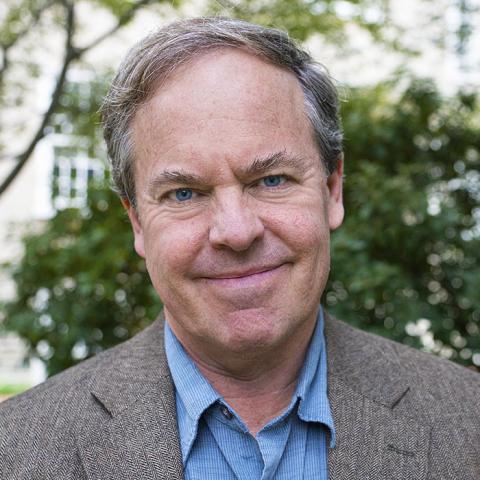
    Haverford College political scientist Stephen J. McGovern authored the 2025 book “Mobilization Politics,” on grassroots activism in Philadelphia.Sean Walsh

    McGovern also explores areas where progressives have fallen short of their goals, and the problems associated with a brand of politics driven by groups that tend to be more affluent and white than the city as a whole. Much of the new type of political organization has been driven by millennials born outside the city, McGovern found, leading to tensions over gentrification.

    McGovern recently spoke with The Inquirer about his 2025 book, the rise of the local progressive movement, and what it all means during Parker’s administration. The interview has been lightly edited and condensed for clarity.

    Your book describes how grassroots activists are really driving the agenda in Philadelphia City Hall, and, as you say, across the nation in local government. Is that an accurate summation of your thesis statement?

    I think that’s fair, and what I want to call attention to is how significant that change is. There may be a lot of people today who assume, “Well, hasn’t that always been the case in city politics?” But no, for much of the mid- to late 20th century, city politics operated in a very different way. It was much more of a top-down phenomenon, and the shift towards more bottom-up politics has been a relatively recent one. And increasingly it’s pretty widespread throughout the United States. So as a scholar of urban politics, I was interested in trying to explain how and why that happened.

    In the book, you describe various political science theories that have sought to explain urban politics in the past. Can you explain how your thesis is different from those previous schools of thought, such as “regime theory”?

    Many scholars have argued that downtown-led regimes wielded a great deal of power over urban policymaking. Regimes were led by business leaders and their allies — law firms, accounting firms, mass media relations firms, and interest groups that had an interest in promoting growth, especially pro-growth labor unions, and, of course, public officials. Basically from 1970 on, every Philadelphia mayor headed a downtown-led regime in a relatively top-down fashion, in terms of governing style. So that’s the backdrop. My book is all about how that pattern began to change around the turn of the century, and then picked up in the 2010s with a burst of social movement activity. Occupy Wall Street really started things off, but then it picked up, especially with Black Lives Matter, the immigrant rights movement, and all of that social movement protest had a catalytic effect on grassroots organizing in cities with respect to a whole host of public policy issues.

    As your book points out, much of the activism has been driven by millennial transplants who have moved into the city. Is it fair to say that trend is the main driver of this change, or one of several factors?

    That is one of the main factors in explaining why there is this big shift. But there are also some underlying changes in the local political environment, what social movement scholars sometimes call the “political opportunity structure.” One of those changes is a decline in the organizing capacity of the downtown business community, which had been so dominant. It started to create a vacuum. Into that vacuum steps young people. Populations had been steadily declining in virtually all big American cities. They started to stabilize around 2000, and you see an influx of young people who are relatively well educated, more likely to be professional, more likely to be progressive, more likely to get involved in local politics. Some people call it the “back to the cities” movement.

    What’s different about these newcomers compared with other left-leaning groups that have sought to impact city politics in the past?

    In the past, a lot of young people tended to get involved in protest politics. People on the left were very wary about engaging in electoral politics. The folks who are moving into Philadelphia after 2000 increasingly are participating in more conventional politics, including electoral politics, and that’s a big change. That escalates when Bernie Sanders runs for president in 2016. One of the lessons learned for lots of people who volunteered for him is: This is something we can do at the local level.

    As you note, the groups driving this style of politics tend to be more affluent, more educated, and more white than Philadelphia as a whole. That’s created a lot of friction. There’s a debate over whether this is a phenomenon that will be limited to gentrified areas, or whether it will grow into a cross-racial or cross-class coalition. Is it fair to say that’s the central question going forward?

    Absolutely. So much of this is turf-oriented. The millennials and Gen Zers moving into Philadelphia tended to congregate in neighborhoods that attract a lot of white, middle-class people who were relatively well educated, and so those became significant bases of progressive politics. The challenge then becomes organizing in other neighborhoods. Some of the grassroots groups made impressive inroads. I’m thinking about campaigns for Larry Krasner, in particular, in lower-income, predominantly Black and brown neighborhoods, where a group like Reclaim Philadelphia or the 215 People’s Alliance were pretty effective. But in many cases, it was fairly difficult for a group like Reclaim Philadelphia to venture into neighborhoods beyond their comfort zones, if you will. They were mindful of some of the skepticism that residents of those neighborhoods felt towards the millennials and Gen Zers flocking into the city and contributing to gentrification. Somebody from Reclaim Philadelphia might be knocking on the door talking about the affordable housing crisis, and people answering the door might look at them and say, “You’re actually a big part of the problem here.” This tension between so-called new Philadelphians and old Philadelphians became more pronounced, and navigating those tensions becomes a real challenge.

    Your book finishes with the 2023 mayor’s race, when Cherelle L. Parker defeated more progressive candidates and won the election with a “law and order” platform. So perhaps that was a surprising twist on your thesis at the end of your research.

    She’s obviously fascinating. She’s a shrewd operator. In the primary election, two progressives split the vote. And being the only prominent Black candidate worked to her advantage. But since she’s been elected, she’s been very skillful about maneuvering in ways that have brought back a return of the traditional kind of urban politics — a top-down governing coalition led by a somewhat resurgent business community and pro-growth unions, the building trades unions, and a somewhat resurgent establishment-oriented Democratic Party, all of which is led by Parker. This is very reminiscent of standard politics of the mid- to late 20th century. So in some ways, Philadelphia is a bit of an aberration in that it’s moved backwards, if you will, recently. But I still see lots of evidence that bottom-up grassroots activism remains a force, and will become much more impactful in the next four years.

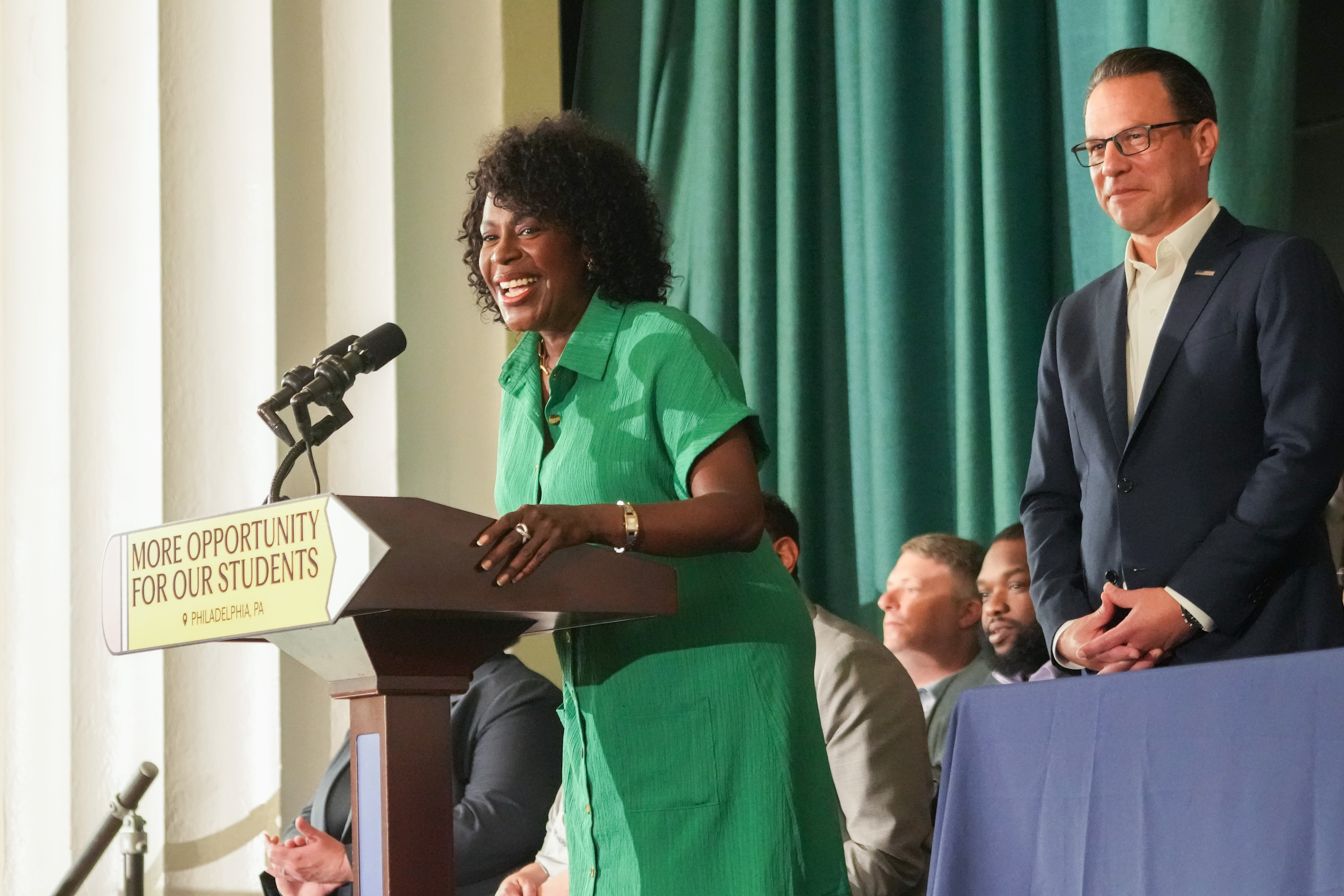
    Mayor Cherelle L. Parker speaks at Vare-Washington Elementary School to highlight the historic education investments included in the 2026-27 state budget, in Philadelphia, July 14, 2026.Jessica Griffin / Staff Photographer
    For what it’s worth, Parker herself seems to be mindful that grassroots politics are still relevant. We reported last year that she ordered a bunch of copies of a book called Performative Outrage: How Manufactured Fury Undermines Local Government and Public Service, and was handing it out to people. So I think it’s safe to say she isn’t a fan of the trends you described. You alluded to Parker returning to a “regime theory” style of politics. What’s an example of that?

    The 76ers’ arena, for example. She was siding with the Sixers and other downtown-oriented interests that wanted to see the arena in Center City on East Market Street, and discounting the views of community groups, most prominently Chinatown. There’s a general mode of governance style associated with Parker that’s very uncomfortable with dealing with grassroots-oriented groups. That’s just not her style. She’s much more comfortable dealing with downtown business elites and people in the building trades unions. Her whole mindset is much more comfortable with the old ways of governing cities.

    Parker won in 2023, when Joe Biden was president. Progressives in Philly and elsewhere seem to do better when Trump is in office. This spring Democrats just elected Chris Rabb, a progressive firebrand, in a high-profile primary for a Philly congressional seat.

    Politics is cyclical. Donald Trump has had that effect of reinvigorating lots of activists. So there was a lull in progressive activism in the city for a while, but it’s on the rise again. But it takes time to regroup, especially on the activist side. Some groups last for a long time, but the norm is for groups to be quite ephemeral. New groups have to pop up, often involving activists who had been involved in the old groups. The transition costs are pretty steep. Somebody like Chris Rabb winning doesn’t surprise me at all. There will probably be more successes in the next two or three years. That said, progressive activists have lots of challenges. They’re in a holding pattern right now.

    Thanks for your time. That’s all I’ve got. Is there anything I didn’t touch on that you want to include?

    I’m an urban politics specialist. I wrote this book. I devoted five years of my life to it. But in the last year or two, I’ve been so fixated on what’s going on in national politics and Donald Trump and the threat that he and his administration pose to democracy. With that in mind, I just want to say that urban politics in general offers some hope for people who are increasingly demoralized. At the local government level, partisan polarization isn’t nearly as intense. We’ve got divisions between progressives and moderates, but that’s nothing like what we’re seeing in national politics. There’s real hope for city governments to address big problems and offer real solutions. There’s a path forward. One can make a case that right now, democracy in American cities is actually thriving.

  • An office-to-apartment conversion is underway in Logan Square. Here’s why it works.

    An office-to-apartment conversion is underway in Logan Square. Here’s why it works.

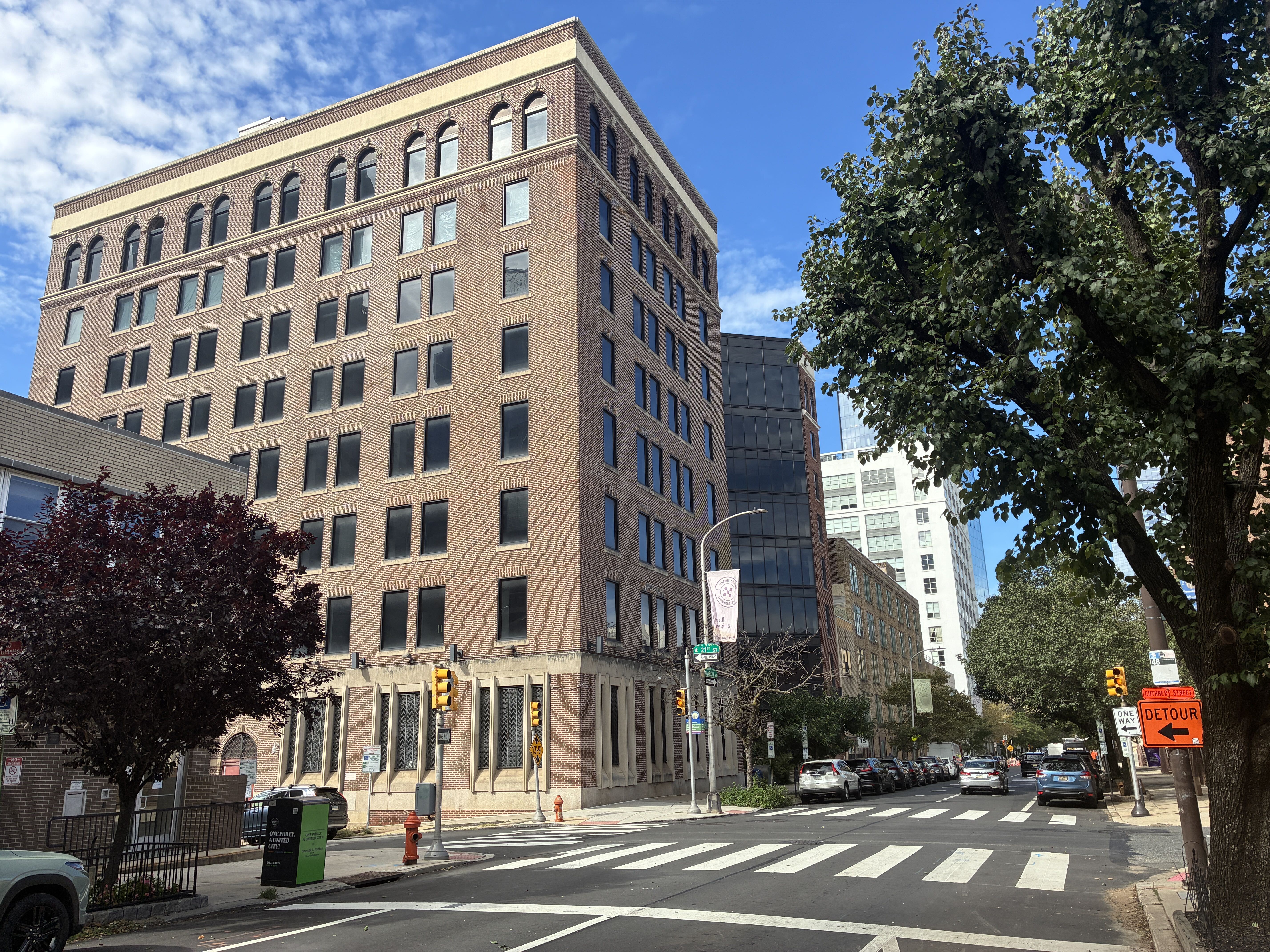
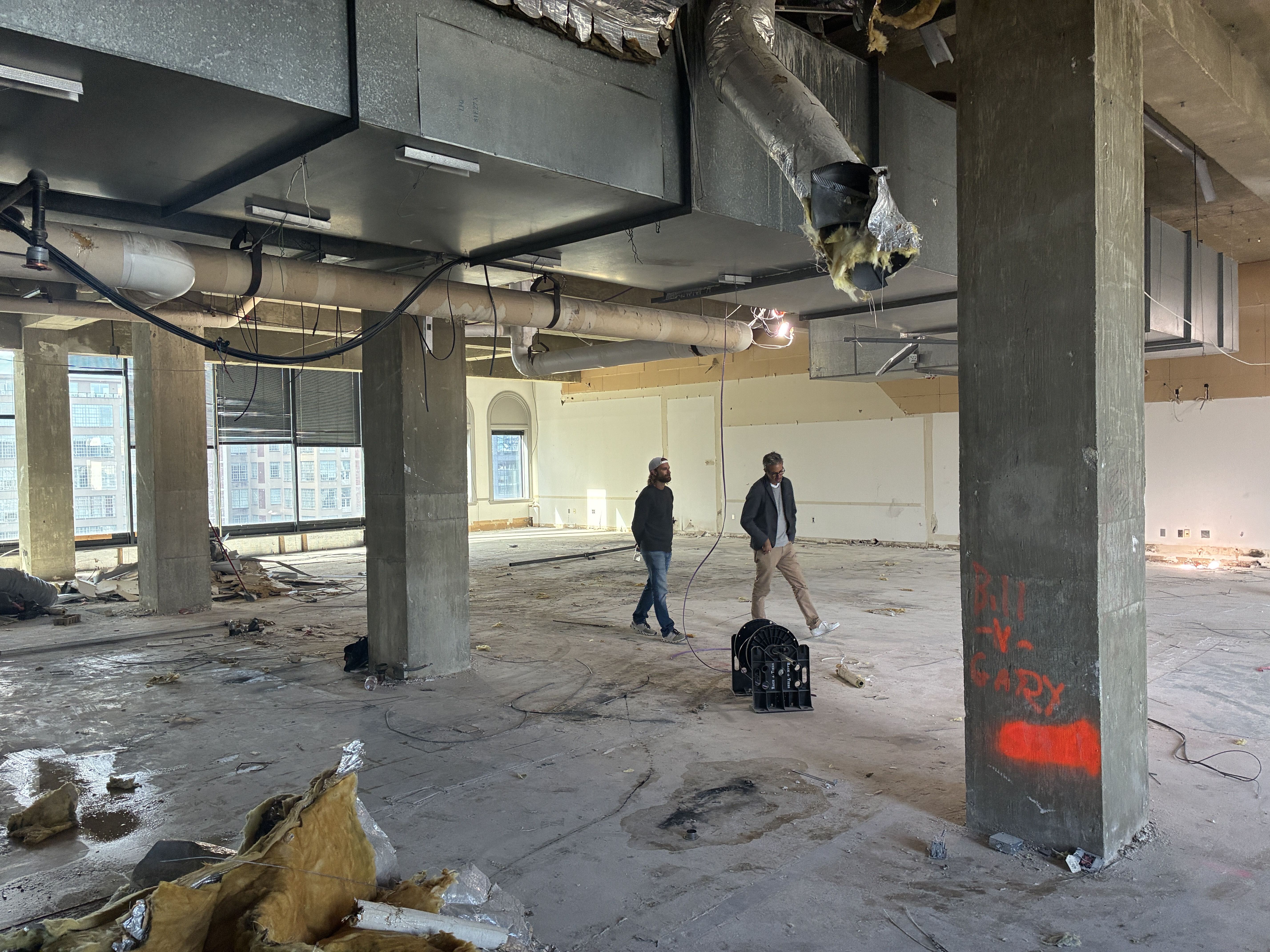
    The residential conversion of the former office building at 2100 Arch St. is underway, with completion expected in late 2027 or early 2028.

    Philadelphia-based MM Partners paid $12 million for the eight-story building in March 2023, with plans for 116 apartments in the Logan Square neighborhood.

    It was formerly the Jewish Community Services Building.

    But the site was quiet for a few years and the project delayed by skittish lenders who were concerned about financing more apartments in a market they saw being flooded with new supply. Construction finally began in July.

    “It wasn’t easy, but we just stuck with it and figured out a way to get it under construction,” said David Waxman, founder and managing partner with MM Partners.

    “The good part of [the delay] is we’ll now be delivering into a market with very little new supply, particularly in this part of the city,” he said.

    The project will be composed of studios, with the smallest in the 500-square-foot range, up to two-bedrooms that will be up to 1,400 square feet. There will be 36 studio apartments, 64 one-bedrooms, and 16 two-bedrooms.

    Aaron Smith and David Waxman in the midst of 2100 Arch’s conversion.Jake Blumgart

    MM Partners is planning 3,000 feet in commercial space on the ground floor of the original 113-year-old building and is considering a roof deck as well.

    In the basement, tenant amenities such as a gym and lounge are planned, and MM Partners is considering providing 1,200 square feet of rehearsal space for Philadelphia theater companies.

    “There’s a lot of local theater companies that are looking for efficient and affordable space,” said Aaron Smith, partner and founding member with MM Partners.

    In many ways, 2100 Arch St. is an ideal office building for residential conversion.

    It is relatively small at 121,500 square feet and has none of the cavernous, sunless interior space that makes more recent skyscraper office buildings so hard to convert.

    That means tenants will have access to windows without carving light wells through the center of 2100 Arch. The number of apartments is more modest than would be the case in the large towers on West Market and, therefore, easier to fill.

    “It’s not too big and not too small,” Waxman said. With a lot of large office buildings, “you have to buy it so cheap to be able to afford to just have dead space in the middle.”

    MM is working with King of Prussia-based Axis Construction Management on the 2100 Arch conversion. It is their eighth adaptive reuse project together.

    For the $26 million project, MM Partners was able to secure $6.1 million in federal historic tax credits and $500,000 from Pennsylvania’s Historic Preservation Tax Credit.

    While the original building is over a century old, half of it dates to the 1980s when it was home to BIOSIS, a life sciences database publisher.

    The room where BIOSIS, a company that catalogued life sciences research, used to keep their mainframe computers.Jake Blumgart

    The eastern section of the building was constructed in 1913, and then acquired by BIOSIS in 1966. The company grew throughout the later half of the 20th century and doubled the size of the structure to the west in 1982.

    Like other conversion projects in Philadelphia, 2100 Arch will get a 10-year property tax abatement.

    The developer acquired the building from the Jewish Federation of Greater Philadelphia, which had purchased it from BIOSIS in 1999, after the building had been vacant a short time due to the COVID-19 pandemic.

    “They had done a really nice job keeping it up,” Waxman said. “If there had been an office market for B- and C-class buildings, this could have been easily leased as office. But there isn’t. Everyone only wants to be in the nicest buildings now.”

    In sharp contrast MM Partners has adapted long-derelict buildings to new uses in other parts of the city, such as the F.A. Poth Brewing Co. in Brewerytown, which MM converted to 133 loft apartments.

    Some of those buildings had severe structural problems as a result of their long abandonment, whereas 2100 Arch was in perfectly good shape.

    “It’s a joy to work in,” Waxman said. “You have working elevators. You have a non-leaky roof. You have electricity coming in. You have sprinklers. You have all the things that these other buildings that we’ve done in the past didn’t have.”

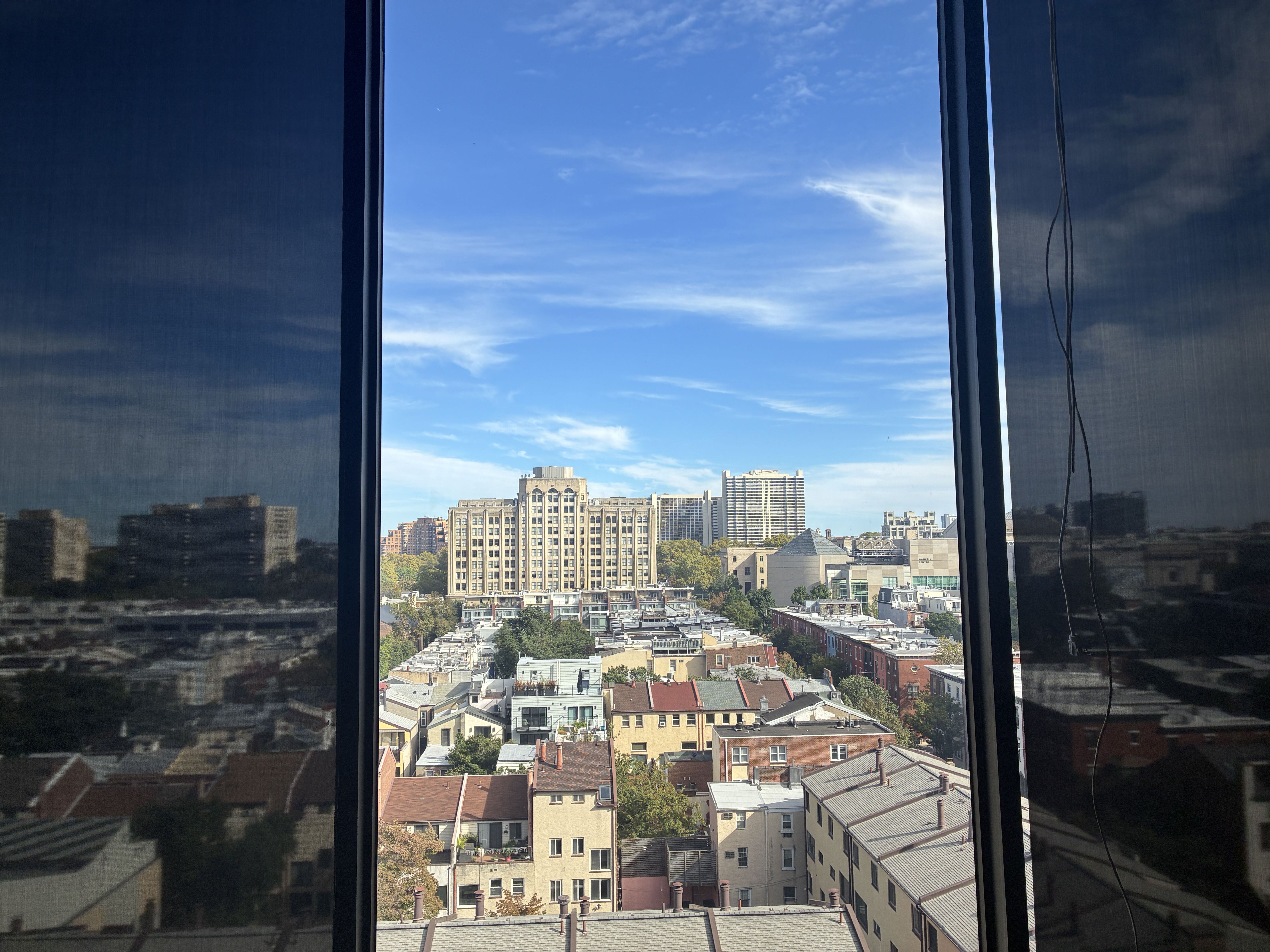
    The view from the eighth floor of 2100 Arch, looking over the Logan Square neighborhood.Jake Blumgart

    Meanwhile, the nearby west side of Center City has become the heart of Philadelphia’s commercial life.

    West Market Street, visible from 2100 Arch’s south-facing windows, is the most successful corner of the city’s office market.

    Insurance giant Chubb’s new office building just opened next door. Burlington recently announced plans to move its headquarters into the Schuylkill Yards development near 30th Street Station.

    At 2100 Arch, “you’re close to everything, but you have a little oasis [in the Logan Square neighborhood] right next to the hustle and bustle of Market Street,” Waxman said.

  • The Flyers and their fans have craved a star in the mold of the Tkachuk bros. They look to have one in Porter Martone.

    The Flyers and their fans have craved a star in the mold of the Tkachuk bros. They look to have one in Porter Martone.

    The tweets have come and gone for years.

    Former Philly radio host John Kincade posted on X in February 2025: “I say @flyers offer a slew of those draft picks and we get Brady Tkachuk back to the states. 🇺🇸“

    This past February, Crossing Broad posted: “the Flyers need a Tkachuk, either one will do.”

    And in April, when there was an uptick in trade rumors after it became apparent the then-Ottawa Senators captain wanted out, FlyersJohnny wrote, “Brady Tkachuk would be a perfect Philadelphia Flyers player.”

    It’s not a surprise.

    Brady Tkachuk — and Matthew, his brother and new linemate on the Florida Panthers after June’s trade — has the blend of skill and grit that has long been a hallmark of the Flyers. The two sons of longtime NHL power forward Keith Tkachuk, who will be inducted into the Hockey Hall of Fame in November, can rack up points — especially on the power play — and equally get under opponents’ skin.

    The younger Tkachuk brother, Brady, has put up big point and penalty minute totals throughout his eight-year career. He’s averaged 31 goals, 66 points, and 118 penalty minutes per 82 games, including posting 35 goals, a career-high 83 points, and 126 PIMs in 2022-23.

    Matthew, who is 21 months older, has been even more impactful — and as much of a nuisance — with 82-game career averages of 31 goals, 82 points, and 90 penalty minutes. The pair’s exploits have earned them a whopping 1,559 career penalty minutes — with Brady (second) and Matthew (seventh) each ranking in the top 10 in penalty minutes per game since the former entered the league in 2018-19.

    “Always the bridesmaid, eh, Leon? Always the bridesmaid, never the bride,” Matthew Tkachuk was famously heard saying via a hot mic to Edmonton Oilers star Leon Draisaitl during February’s Olympics.

    Flyers fans have long dreamed of landing Matthew or Brady Tkachuk. They might have the next best thing in Porter Martone.Charles Krupa

    Google “Brady Tkachuk chirping” and you’ll find plenty, none suitable for print.

    Matthew has won two Stanley Cups with Florida, and the brothers — who famously dropped the gloves on the opening shift with J.T. Miller against Canada at the 2025 4 Nations Face-Off — just helped Team USA win gold at the Olympics for the first time since 1980.

    It’s why every NHL general manager seems hungry to add a true power forward of Brady and Matthew’s agitating ilk to their lineup. The Flyers are no different. Skill. Grit. Getting under opponents’ skin. Those attributes fit with the franchise’s archetype of hard-nosed, blue-collar players dating back to the Broad Street Bullies. There was Gary Dornhoefer in the 1970s, Tim Kerr and Rick Tocchet in the ’80s, Eric Lindros and John LeClair in the ’90s, and Keith Primeau and Wayne Simmonds since the turn of the millennium.

    Next up: Porter Martone?

    ‘A star in the making’

    Martone came out like gangbusters.

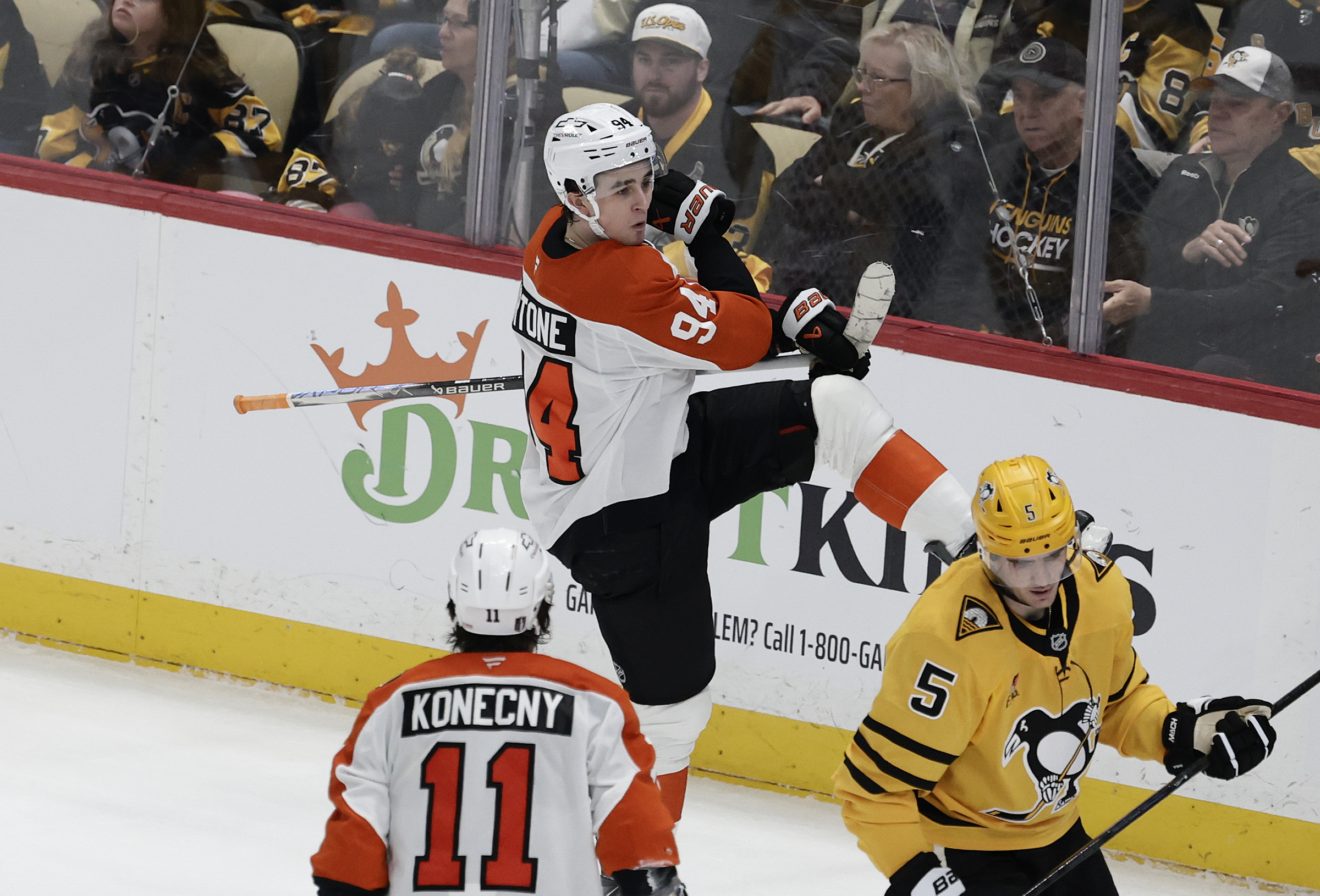
    In nine games with the Flyers last spring, after wrapping up a dominant freshman season at Michigan State, the teenager notched four goals and 10 points. The sixth overall pick in the 2025 NHL draft’s first career goal was a monster one: an overtime winner against the Boston Bruins that kept the Orange and Black’s playoff dreams alive. He met the moment of the postseason, too, adding two goals and five points in 10 playoff contests.

    “He has just that ‘it factor,’ and you know he’s going to be a good hockey player for a really long time. So maybe how quickly he did [it] I was a little surprised. But you know he was going to get to it eventually,” forward Noah Cates told The Inquirer on Thursday about Martone’s fast start.

    “ … He’s a star in the making.”

    Cates and his teammates are excited to see what the 19-year-old can bring in his first full pro season. And expectations are high. The Canadian is the betting favorite to win the Calder Trophy as the NHL’s top rookie.

    That’s the key word: rookie.

    Although he has Hockey Canada pedigree, serving as captain at multiple age groups, Martone was drafted only 15 months ago. Given his impressive run in last year’s playoffs and 6-foot-3, 214-pound frame, it’s easy to forget he’s still a teenager.

    Flyers right wing Porter Martone did not look fazed by the pressure of the NHL playoffs, despite being just 19 years old.

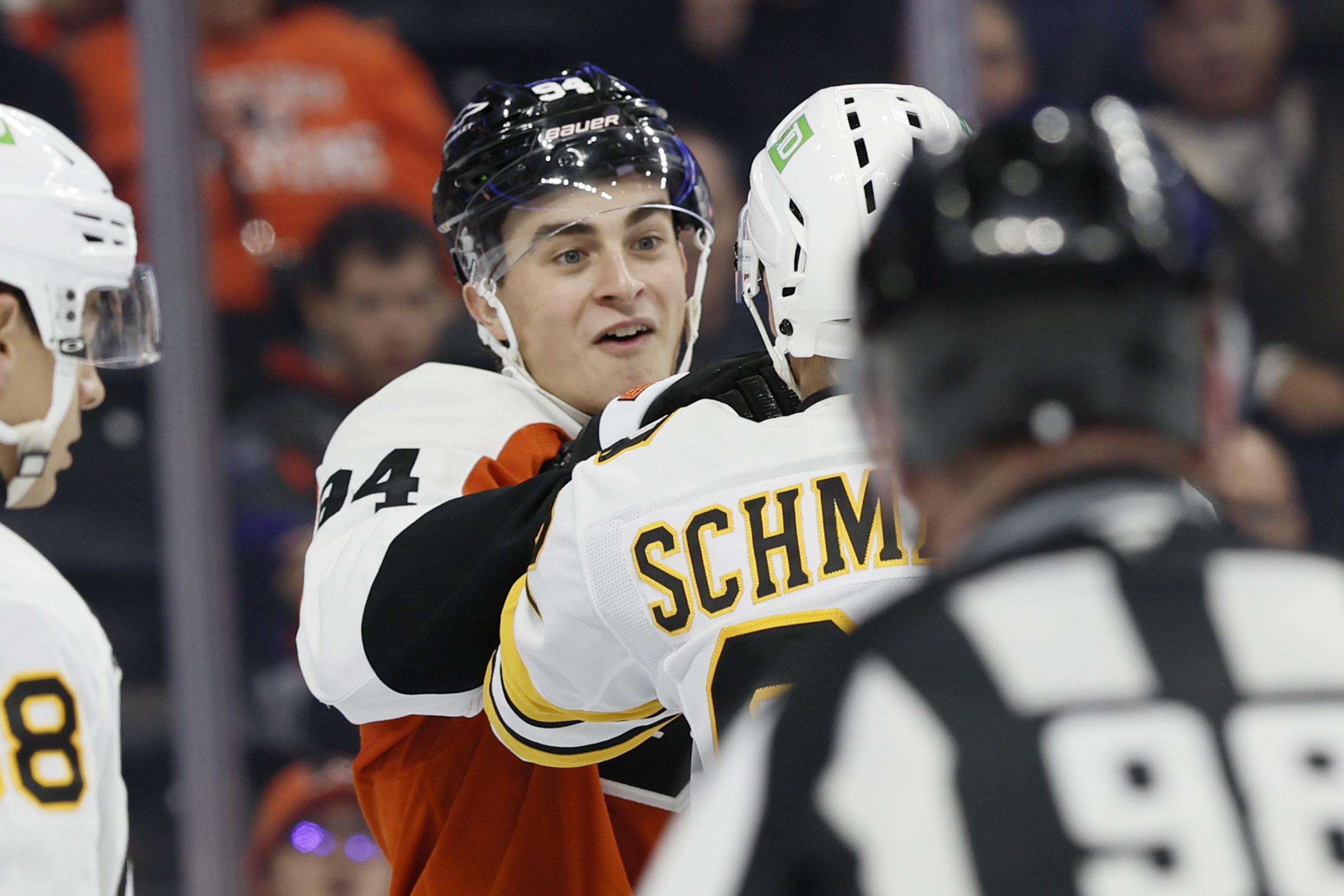
    But Martone, who, in addition to the Tkachuk brothers, grew up modeling his game after “The Worm,” Corey Perry, does not play like a wide-eyed kid. He has the skill and confidence to fill the net and the size, snarl, and tongue to crawl under his opponents’ skin.

    In 19 games, including playoffs, he racked up six penalties — and drew six more.

    “I think it’s great to have a little bit of size up front, have some physicality. The last few years, that’s one area we wanted to get a little bigger, be a little tougher to play against, and you add a guy like him doing that. … He has the size, the physicality, and then the under-your-skin kind of approach,” Flyers general manager Danny Brière told The Inquirer recently.

    “I think it’s exciting. Our fans have had the chance to see him down the stretch in the playoffs last year, but they’re going to get to appreciate him even more as he gets more and more comfortable. It’s not easy for a young guy to come in this league and to play that way right away. It takes a little bit of time, which we understand, and we’re going to give him the time that he needs for that.”

    ‘He wants the puck’

    Brière doesn’t think it’s fair to compare Martone to the Tkachuks just yet, as the brothers have been doing it for years. But Martone is building his own reputation as an agitator, notably stirring the pot at World Juniors against Czechia and frequenting the middle of scrums against the Pittsburgh Penguins in the playoffs. The Flyers GM wants him to “find his own style,” but acknowledged the youngster’s game is “definitely a combination of abrasiveness and skill at the same time.”

    Martone will get his first extended opportunity to showcase that in-your-face brand of hockey in the NHL this season.

    Based on preseason line combinations, it looks like he is penciled in to play on a line with creative center Trevor Zegras and high-flying winger Owen Tippett. The plan is also to deploy Martone in the bumper on the first power-play unit with forwards like Zegras, Matvei Michkov, Tyson Foerster — a guy Cates says Martone is similar to in stature, release, and reach — and defenseman Jamie Drysdale.

    Porter Martone might say he tries to stay out of things, but his actions tell a different story.Elizabeth Robertson / Staff Photographer

    Tocchet, a beloved Flyers power forward himself and now the team’s head coach, sees the comparison to the Tkachuk brothers, particularly with the man advantage.

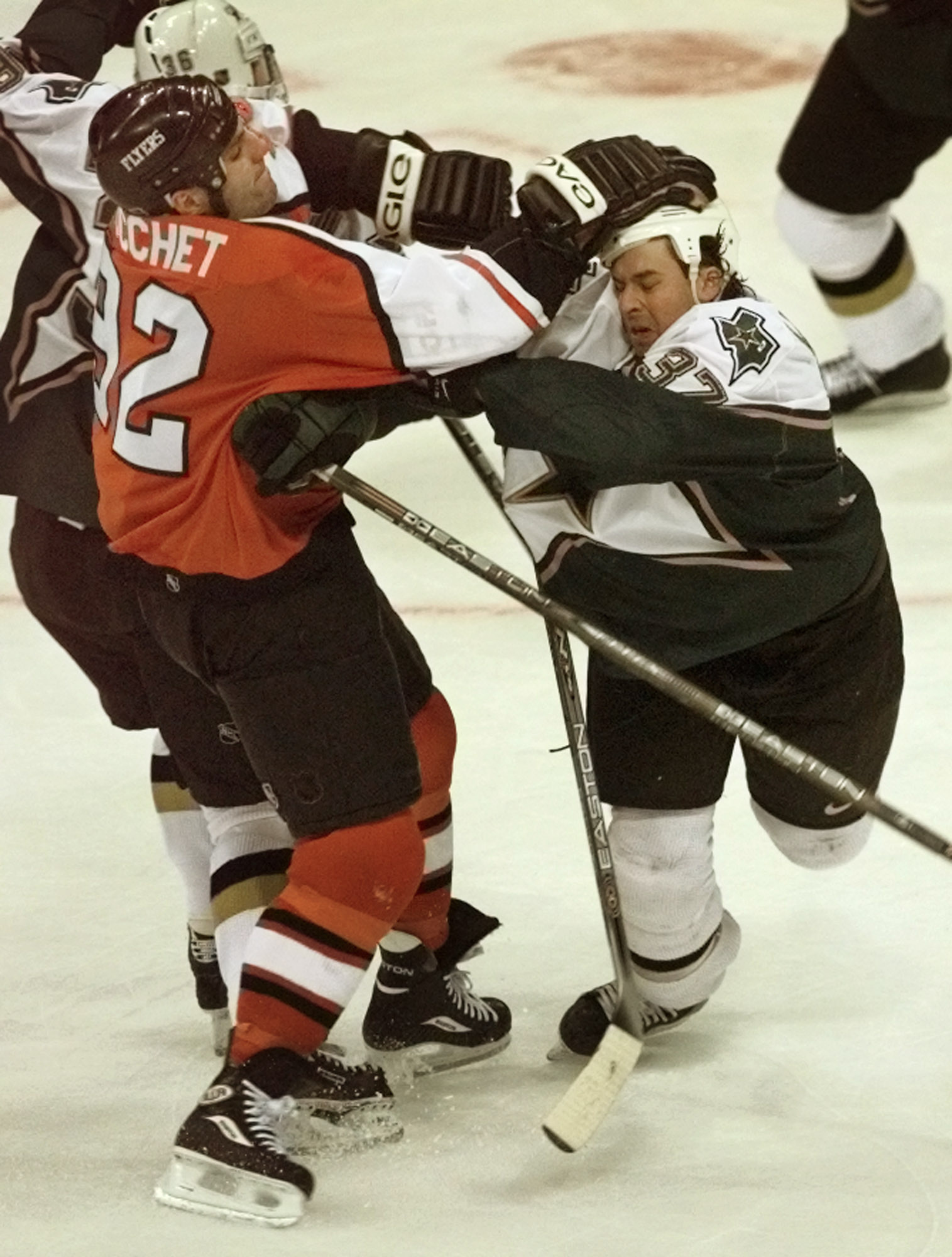
    “Well, I think part of his talent is the Matthew Tkachuk, Brady, inside game,” said Tocchet, who had four 30-goal seasons with the Flyers and is the franchise’s all-time leader in penalty minutes (1,815).

    “I don’t want to compare, but I remember Tim Kerr; people could be all over him [and] he could still score,” Tocchet said of his old teammate.

    Kerr notched 650 points in 601 games as a Flyer before injuries took a toll, and he remains the franchise’s all-time leader in power-play goals (144).

    “Porter’s got that — we talked the other day — like he wants the puck, even though he’s covered, especially on the power play,” Tocchet said. “Like he’s got that; he can somehow protect it and get that shot off. A lot of guys don’t have that in the tool bag. I was talking to [Michkov] and Zegras: If you see him around the net with people on him with another guy, throw it there.

    “ … So hopefully, we’ll start to throw pucks in Porter’s way, where he can kind of redirect or outmuscle a guy in front to get those goals. Those are the [things] that I think that he can be really elite at as his career goes on.”

    Rich Tocchet knows all about Philadelphia’s appreciation for power forwards who can score goals and also mix it up.Bill Janscha / AP

    Face of the franchise

    It will be interesting to see how things progress as Martone’s career rolls on. He quickly drew acclaim with his play last season, even catching the eye of Matthew Tkachuk before they ever met on the ice. “Martone, he looks unreal,” he said in April on his show, Wingmen with Matthew and Brady Tkachuk, before adding, “That Martone, he’s solid.”

    The ceiling is high for Martone, and the accolades and accomplishments should continue to flow for a kid who, at 18, was skating alongside Sidney Crosby, Travis Konecny, Foerster, and Travis Sanheim at the 2025 World Championships.

    Philly has been clamoring for the next Flyers superstar since Claude Giroux left. And now it may have two. Michkov’s game appears to be back on track, and the fan base, with many already donning Martone jerseys, looks ready to embrace a player who not only grew up a Flyers fan but embodies the spirit of the city.

    And it makes sense that the Tkachuk brothers are also fans of Martone’s game. Brady, during his time at Boston University, said his favorite player was none other than former Flyer Wayne Simmonds, someone renowned for his skill, snarl, and willingness to battle in front of the net. Those traits are all present with Martone, too.

    Back on his 2018 draft night, Brady Tkachuk had “Trust the Process” silk-screened on the inside of his suit. He scored his first two NHL goals and three points against the Flyers on Oct. 10, 2018.

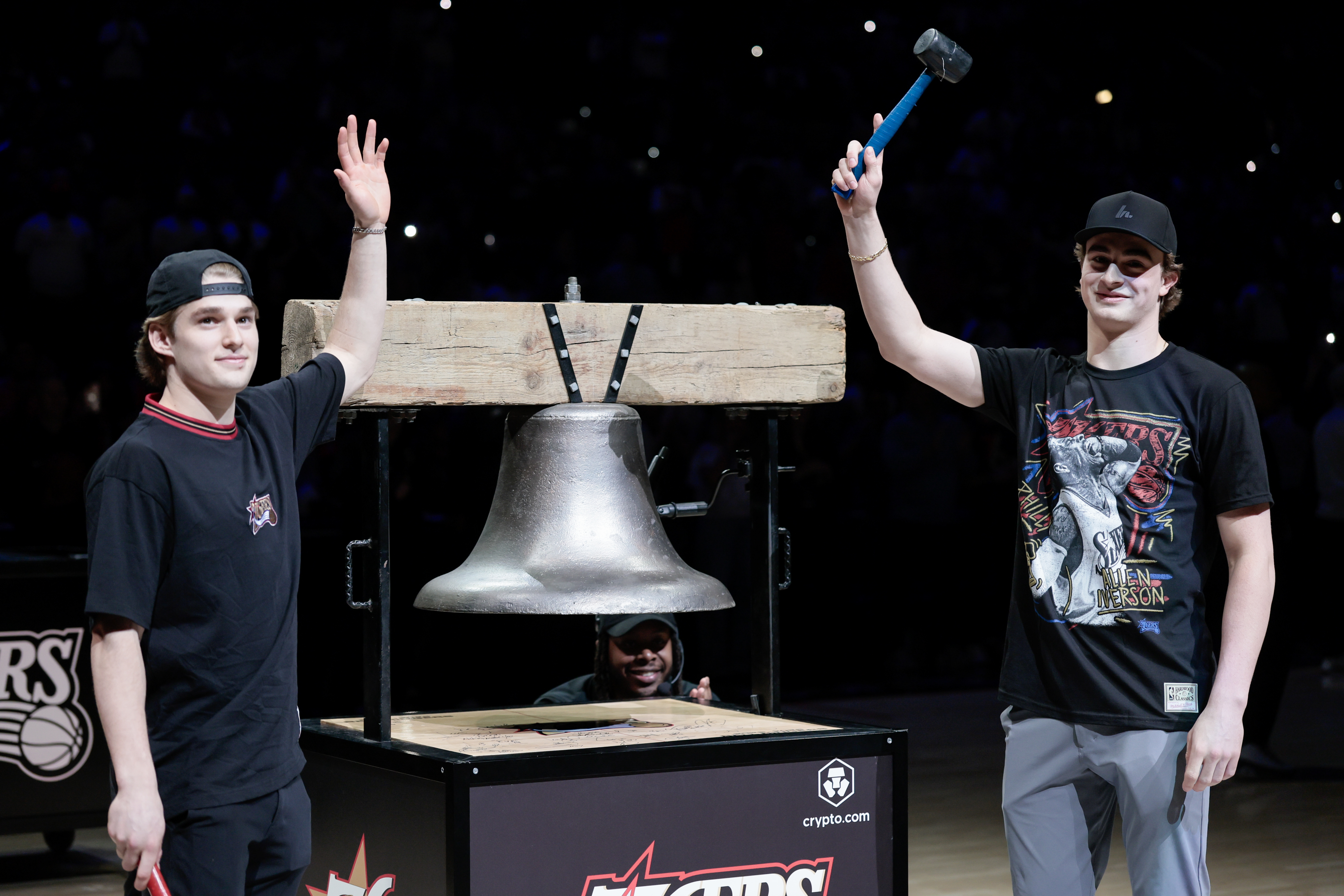
    Flyers players Denver Barkey, (left) and Porter Martone ring the bell at a Sixers game last season. Martone, 19, has already become a fan favorite in the city.Elizabeth Robertson / Staff Photographer

    Maybe it was a message to the Flyers. Maybe it was a message that they should have moved up to get him. Maybe the Flyers at long last have that type of player in Martone.

    When asked Thursday about his style and how he balances having so much skill and playing with an edge, the 19-year-old Martone showed his maturity.

    “Yeah, I think honestly, just get in the forecheck hard, try to cause turnovers, and get in front of the net. I think that’s where I’m at my best. You know, I think I can make those plays when I need to.

    “So just try to, honestly, not get too much into the kind of out-of-play stuff and chirping because that’s when I get off my game. But just kind of continue to keep on playing with the skill and [be a] hard-nosed player.”

    It all begins on Wednesday night.

  • ‘That’s why they gave us these contracts’: Wheeler, Harper, other Phillies millionaires (finally) produce

    ‘That’s why they gave us these contracts’: Wheeler, Harper, other Phillies millionaires (finally) produce

    Before Sunday, the last time the Phillies won a baseball game, Zack Wheeler started. He dominated early and they beat the first-place Brewers.

    The Phillies didn’t win again until Sunday, a game the Phillies had to win to ensure a fifth straight postseason berth. Wheeler started again. He dominated through his six innings.

    Wheeler’s legend grew.

    He helped avert the greatest collapse in Philadelphia sports history, and carried the rest of the franchise-record $330 million payroll with him. Most of that money pays Wheeler and four cornerstones of the lineup: two-time MVP Bryce Harper, three-time home run champion Kyle Scwharber, two-time batting champion Trea Turner, and two-time Silver Slugger catcher J.T. Realmuto.

    Sunday, after a four-game slide recalled the horrors of the 1964 Phillies, all of the big names finally earned their money.

    “We know who we are. You know who’s got to step up in big moments,” Wheeler said. “I mean, that’s why they gave us the contracts that they did. We got to play like it.”

    After three straight years of dead bats in the playoffs, can they do this postseason what they did Sunday? We don’t know about the hitters.

    We know about Wheeler.

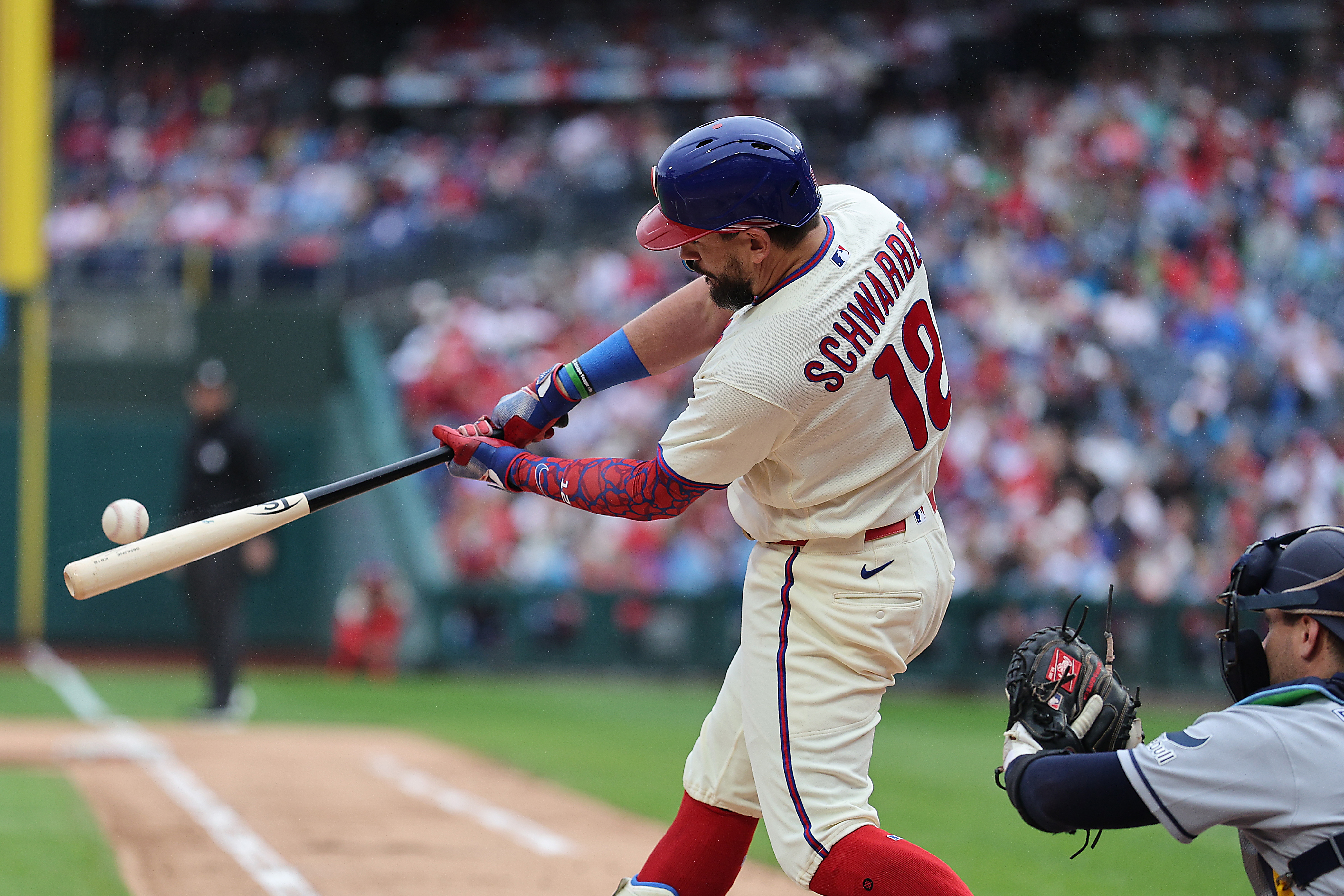
    Kyle Schwarber led the National League with 45 home runs and tied Pete Crow-Armstrong for the major league lead.David Maialetti / Staff Photographer

    It was Wheeler, more than anyone else, who earned the Phillies the third wild-card slot with a 7-3 win in the season finale over the visiting Rays. Surprise cleanup hitter Bryson Stott went 3-for-3 with a walk, but Wheels dealt six innings of one-run, five-hit, five-strikeout ball in the biggest game of the season.

    “You see a game that he has like or today — he goes out there, he knows what the task is at hand, and he was able to rise to that,” Schwarber said.

    The win earned the Phillies the No. 6 seed, lowest in the playoffs, which means a three-game, first-round series, all at No. 3 Atlanta. That begins Tuesday, with the winner headed to idle No. 2 seed Los Angeles over the weekend.

    The Phillies have lost 11 of their last 17 games against playoff-caliber teams. That’s the main reason why, after holding a five-game lead for the final wild-card spot with eight games to go, they needed a win in Game No. 162 to guarantee a playoff spot.

    Is there any real hope they make it to L.A.?

    “We got a chip and a chair,” said Realmuto, a poker enthusiast.

    Interim manager Don Mattingly was both more succinct and more vulgar:

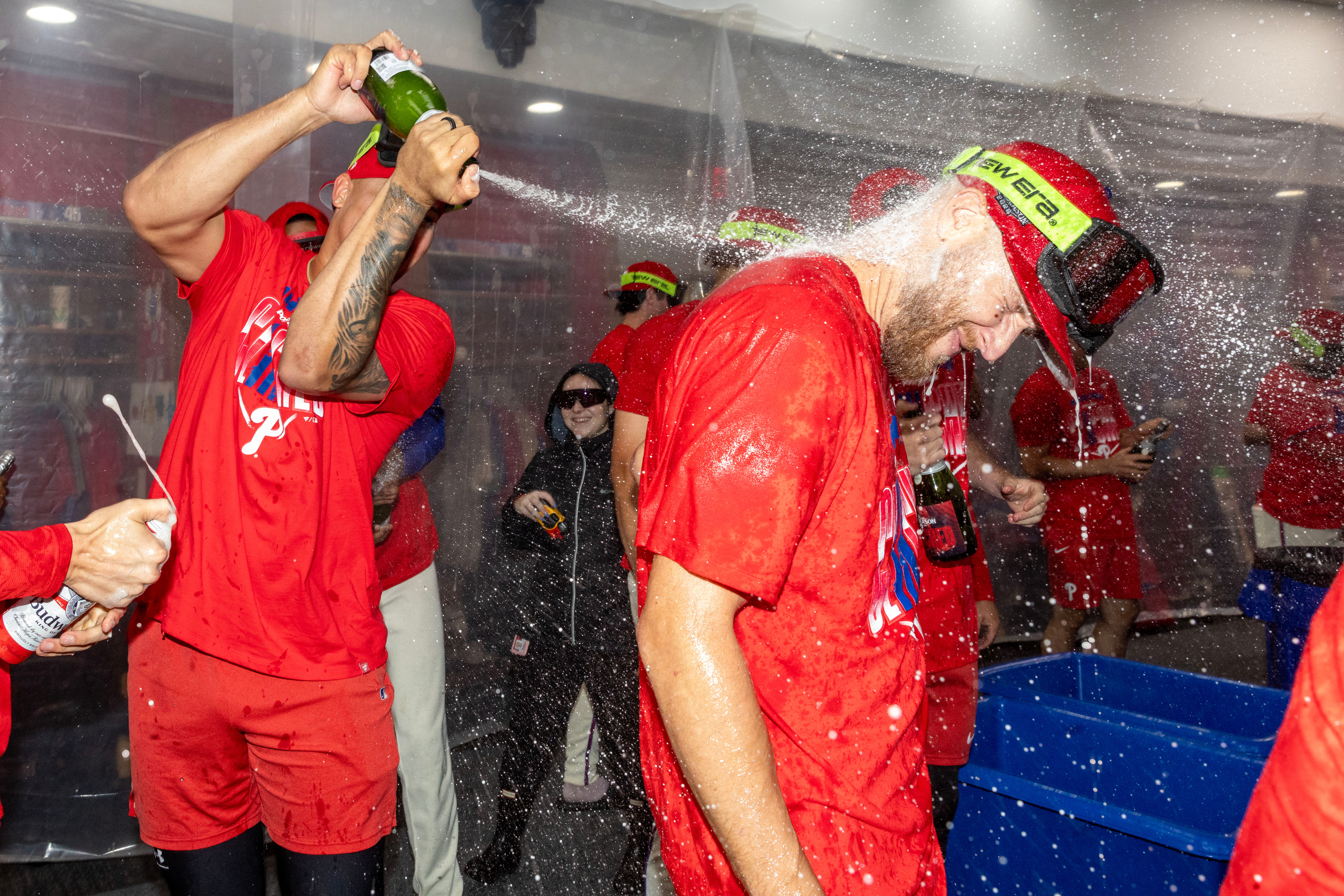
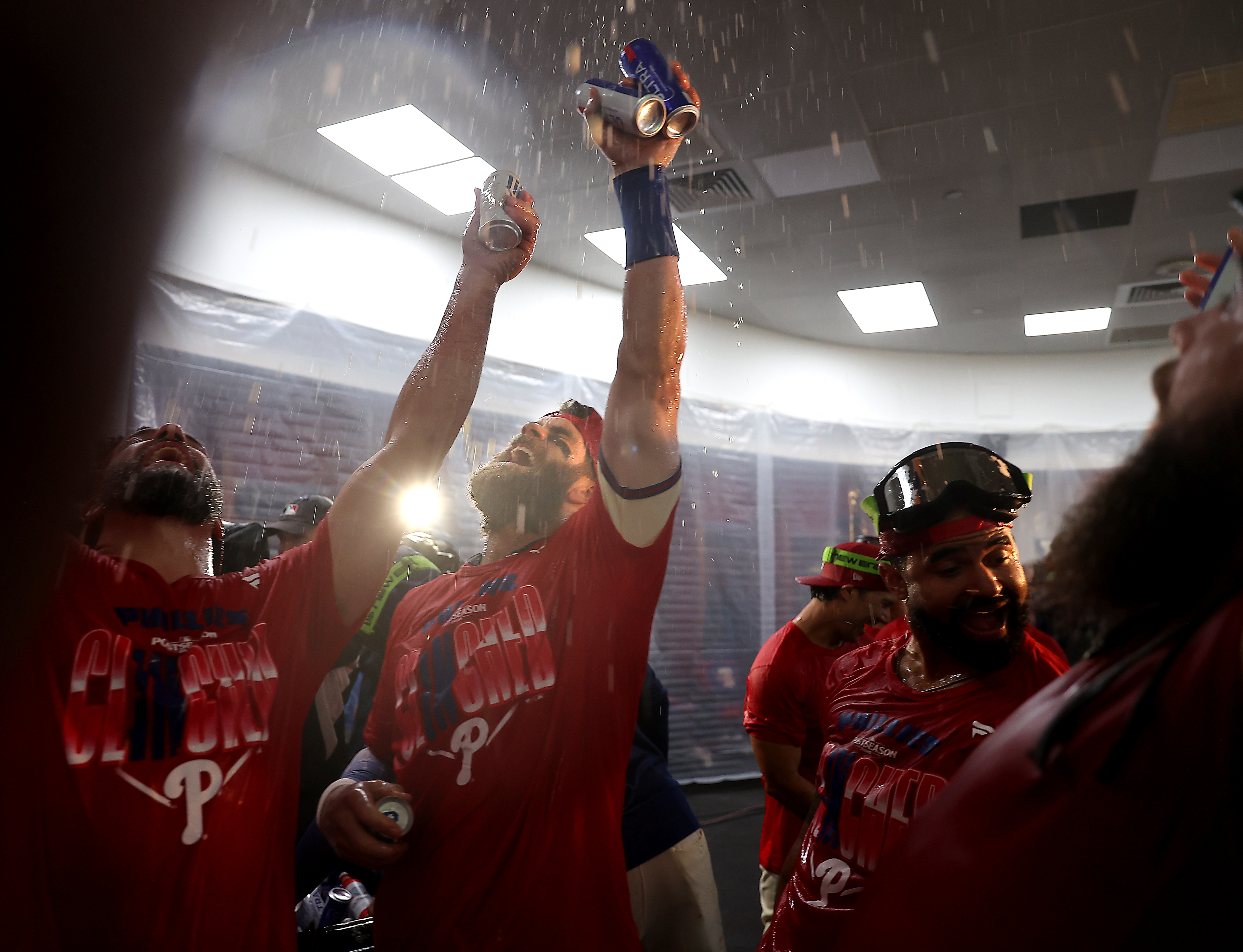
    “It doesn’t matter how you get in. You just gotta get in,” he told his team during their long-delayed, champagne-drenched clubhouse celebration. “And we’re [bleeping] in!”

    There’s recent reason for optimism. With largely the same roster, the Phillies were the No. 6 seed in 2022, when they beat Atlanta in the playoffs and won the National League pennant. Wheeler was magnificent during that run.

    He was just as magnificent Sunday.

    Wheeler long ago locked up Comeback Player of the Year after missing the end of last season and the beginning of this season recovering from thoracic outlet syndrome. Sunday was his final argument, ending a season in which he allowed two runs or fewer in 20 of his 28 starts.

    Wheeler is the highest-paid player in Phillies history, at $42 million per season. He earned his money Sunday, and has done so pretty much all season, especially down the stretch. Wheeler is 4-0 with a 1.67 ERA in his last six starts.

    He has played to his pay grade.

    His well-heeled teammates?

    Not so much.

    In the four straight losses that made Sunday so excruciating, Harper, Schwarber, Turner, and Realmuto were 10-for-59 with no home runs and two RBIs. None was great but Realmuto was brutal: 0-for-12 in those four games, part of an 0-for-33 stretch in his last 10 games.

    On Sunday, that quartet went 6-for-18 with a home run, two doubles, and four RBIs.

    Harper’s $330 million contract is the richest in franchise history. His homer Sunday, the 29th of his borderline elite season, stretched the lead to 5-1. Turner’s $300 million deal is No. 2. He batted leadoff and got two hits. Schwarber’s $30 million salary is second-highest in team history, and he singled, scored, and drove in two more runs with a double. Realmuto doubled and scored.

    Bryce Harper hit his 29th home run of the season in the fifth inning on Sunday.David Maialetti / Staff Photographer

    In the biggest of moments, this is what the top end of a $330 million payroll is supposed to do, said the man who signs the paychecks.

    “I think the best competitors, the best players, are great competitors. If you’re a great competitor, you have the ability to rise to the occasion,” Phillies owner John Middleton said. “You have the confidence, but you know you’ve done it before, so you know you can do it again.”

    Phillies celebrate clinching a fifth-consecutive postseason berth
    Video: Phillies celebrate clinching a fifth-consecutive postseason berth

    Middleton is right. For all of the failure that has marred the Phillies’ last three playoff runs, many of the current principals have produced in big moments, most recently Game 3 of the NLDS last year against the Dodgers.

    They did it again Sunday, and so now, for at least three more days and for two more games, the Phillies’ season will continue.

    Harper doesn’t much care.

    Simply making the playoffs has never been his goal. No, Harper wants to win a World Series. It is the only achievement lacking in his Hall of Fame career. It is the only accomplishment for this group that justifies the $1.4 billion Middleton has spent in the past five seasons.

    “Obviously, the job’s not finished, right?” Harper said. “We’ve never been able to win that big one. I think this group — we need to do that.”

  • ⚾ Phils punch their ticket | Sports Daily Newsletter

    ⚾ Phils punch their ticket | Sports Daily Newsletter

    It took until the final game of the regular season, but the Phillies officially clinched the final NL wild-card spot on Sunday with a 7-3 win over the Rays.

    As the nor’easter came howling through the Philadelphia region, Zack Wheeler threw six strong innings, and the big bats woke to lead the Phillies to their fifth straight postseason berth.

    Now what? Game 1 of the best-of-three wild card series begins at 2 p.m. Tuesday in Atlanta. The Phillies essentially have a clean slate, though there’s still a pitching toll to pay for the late-season swoon.

    But anything can happen in the playoffs. Think back only to 2022, when they didn’t get in until the third-to-last game of the season and went on a run to the World Series.

    However, after four days being filled with boos, the Phillies merely postponed a disaster.

    That’s a good thing — much better than the alternative, writes columnist David Murphy, but in the end, they need to win two more games in order to fully erase the disaster they’ve been over the last week-plus.

    — Isabella DiAmore, @phillysport, sports.daily@inquirer.com.

    If someone forwarded you this email, sign up for free here.

    ❓How far do you think the Phillies can go in the playoffs? Email us back for a chance to be featured in the newsletter.

    Keys to Eagles vs. Bears

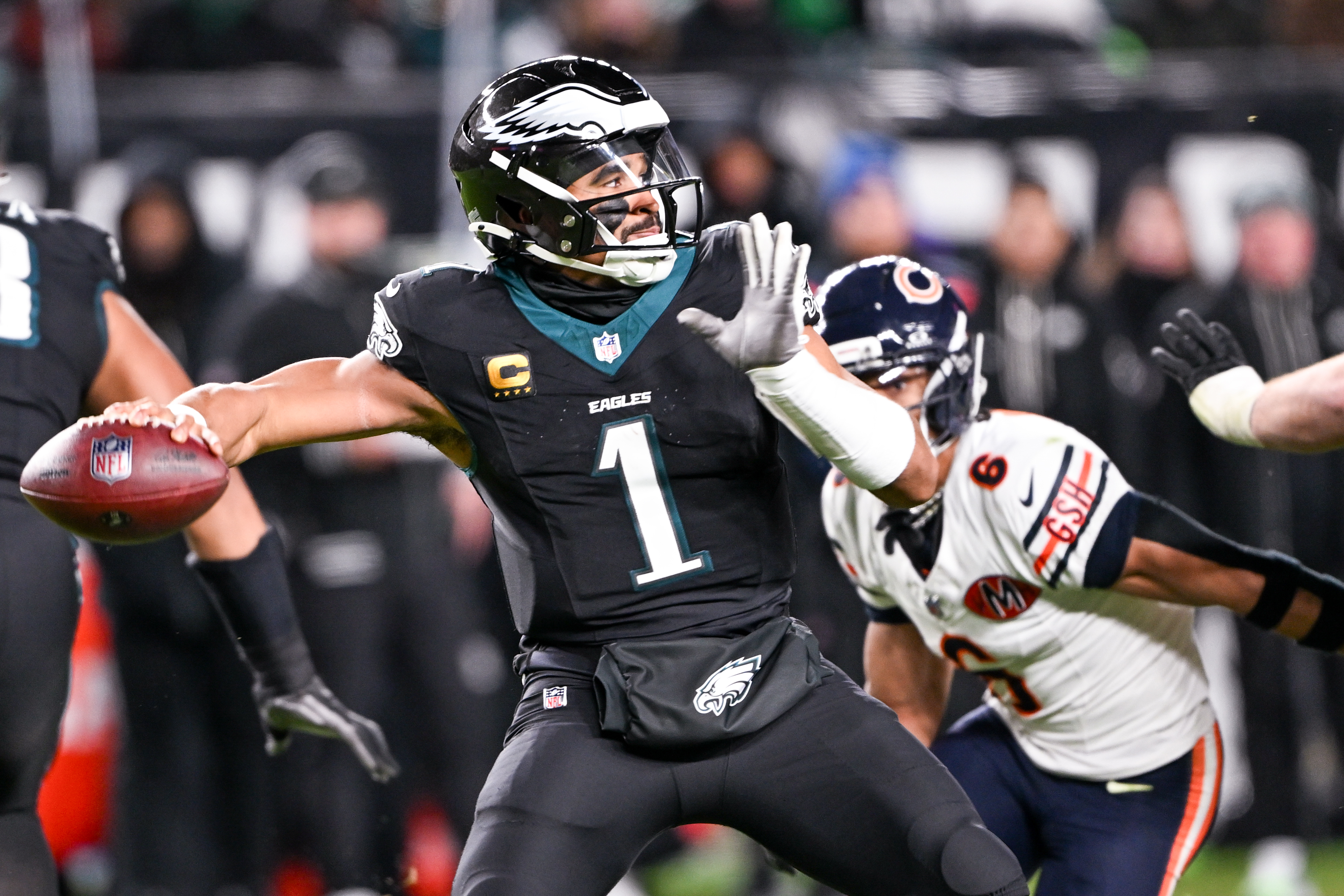
    Jalen Hurts should have a chance to build on winning performances in the first two weeks against a Bears defense with some holes.Jose F. Moreno / Staff Photographer

    The 2-0 Eagles still are in search of an identity, but the Bears are something of a mystery because of injuries at quarterback. Caleb Williams was officially ruled out, and the Bears are expected to start veteran Case Keenum, the third-string QB.

    As for the Eagles, DeVonta Smith and Saquon Barkley were full participants in Saturday’s practice and will play on Monday. Jonathan Greenard was listed as questionable.

    Jeff McLane tells us what we need to know — on both sides of the ball — about Monday night’s matchup.

    What we’re…

    🤔 Wondering: How the national media is predicting the Eagles vs. Bears game. Can the Birds improve to 3-0?

    📖 Reading: Our writers are leaning in favor of a Birds win — and maybe even in blowout fashion.

    👂Hearing: How a phone call with Tyrese Maxey helped LeBron James’ decision to choose the Sixers.

    👏 Applauding: Cavan Sullivan making his USMNT debut and Mauricio Pochettino praising Sullivan’s game.

    Updates from Briére

    Flyers general manager Danny Brière says goalie Dan Vladař “should be ready for Game 1.”Jose F. Moreno / Staff Photographer

    The puck drops on the Flyers season on Wednesday, and general manager Danny Brière offered some insight, starting with injuries: Goalie Dan Vladař should be good to go for the season opener. He was a full participant at practice on Sunday.

    Brière also shared his thoughts on Matvei Michkov, who came to camp slimmer and spent the summer working on his skating, among other thoughts about the rising youngsters.

    ‘One more play’

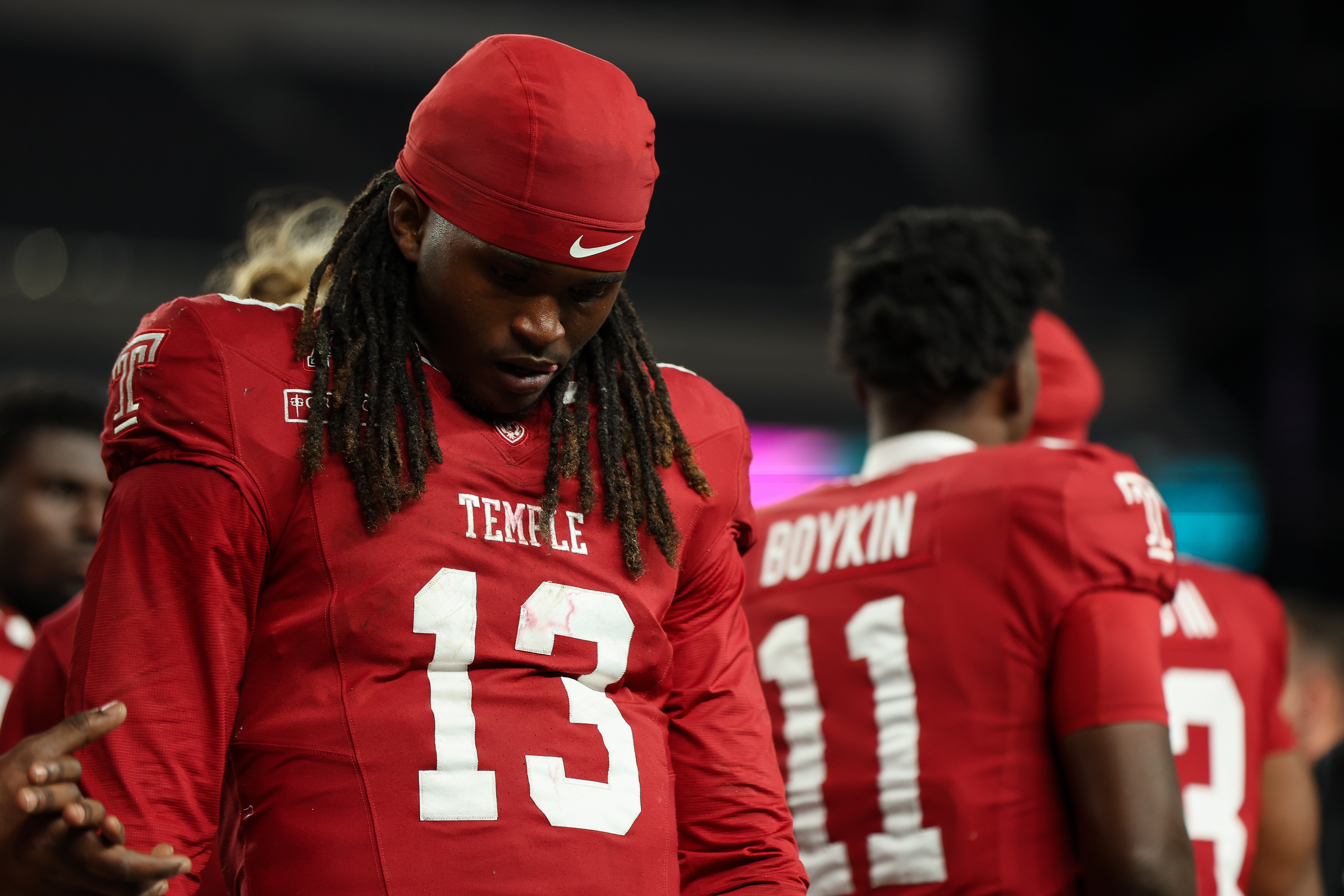
    Quarterback Ajani Sheppard after Temple’s 21-17 loss to Army on Friday.Isaiah Vazquez / For The Inquirer

    It was a bleak weekend for college football.

    Penn State gave up a 10-point second-half lead to lose to Wisconsin, which moved the Nittany Lions out of the AP Top 25 rankings after being ranked No. 13.

    Villanova and Penn both fell to Patriot League teams, as the Wildcats made costly mistakes and the Quakers went quiet in the first half.

    And during a Friday matchup with Army at the Linc, Temple “needed to make one more play” to came out on top, but couldn’t get the job done. However, there could be some clarity at quarterback.

    Broadway to golf course

    Mary Kate Morrissey went from performing on Broadway as Elphaba in “Wicked” to the fairway.Joan Marcus Photography, Andrew Hertherington / The Photo Caddie.

    Downingtown’s Mary Kate Morrissey spent most of her life trying to excel at one thing: musical theater. She eventually ended up on Broadway and played Elphaba in Wicked.

    Morrissey was always expected “to be the very best of the best” on stage, which led her wanting to learn something that she could just be bad at. And that’s how golf entered her life.

    We compiled today’s newsletter using reporting from Lochlahn March, Scott Lauber, David Murphy, Jeff McLane, Jeff Neiburg, Ryan Novozinsky, Jackie Spiegel, Olivia Reiner, Jonathan Tannenwald, Lauren Jones, Lexie Linderman, Mike Livingston, and Hannah Chang.

    By submitting your written, visual, and/or audio contributions, you agree to The Inquirer’s Terms of Use, including the grant of rights in Section 10.

    Thanks for getting your morning started with me. Hope you were able to stay dry this weekend. I’ll be back in your inbox with tomorrow’s newsletter. — Bella

  • Neil Pierre and Frankie Westfield’s USMNT debuts vs. Peru weren’t forgotten amid Cavan Sullivan’s hype

    Neil Pierre and Frankie Westfield’s USMNT debuts vs. Peru weren’t forgotten amid Cavan Sullivan’s hype

    ORLANDO — Everyone knew who the man of the hour was Saturday night, especially the two guys who know him best.

    And if it wasn’t enough that Frankie Westfield and Neil Pierre are Cavan Sullivan’s Union teammates, they walked right by him in the postgame interview area as a pack of reporters stood by the 16-year-old.

    Of course Sullivan was the big story, having started and played well in his senior U.S. men’s soccer team debut. (And for the record, he might not be a 16-year-old anymore by the time you read this. His 17th birthday is Monday.)

    He wasn’t the only story, though. Westfield and Pierre also made their debuts, part of a total of 11 players who earned their first caps in the 4-1 win over Peru. Both entered as late-game substitutes.

    Neil Pierre (center) and Frankie Westfield (right) got to celebrate on the field with Cavan Sullivan after the game.Alex Menendez

    They all deserve a share of the spotlight, and U.S. Soccer made sure they got them. Each received a commemorative game ball in the locker room.

    “This is a moment we’ve both been working for, for our whole lives,” said Westfield, a 20-year-old right back from Morrell Park in Northeast Philadelphia. “Truly an honor and a blessing to go out there and support the team, and help the team in any way possible. And I’m very thankful that we got the win today — just made it even better.”

    Pierre, an 18-year-old centerback from Blue Bell and originally Harrisburg, was equally thrilled.

    “You dream of this as a kid,” he said. “Coming out to the field and then also finishing the game off and winning it, obviously it was a great feeling, and a great moment for us and the team.”

    Frankie Westfield at work during a U.S. practice last week.Jonathan Tannenwald

    Pierre said he had some family in the stands. Westfield didn’t have any, but they are expected at later games in this window.

    The duo didn’t get to play with Sullivan in the game, since he exited just after the hour mark and they entered later: Westfield in the 77th minute and Pierre in the 88th. But they enjoyed what they saw from the bench.

    “I was happy for him to be able to start and make a great performance, and [he was] just living it up in the moment and enjoying it,” Pierre said.

    While the players spoke, the Union were in the midst of their 4-2 win over Orlando City back at Subaru Park — up 2-0 right then, late in the first half. MLS played a round of league games during the FIFA window because of the summer World Cup break, going back to an old bad habit. This could be the last time, with the big calendar flip coming next year.

    “We were checking” in the locker room, Westfield said. “Five starters [missing], the whole right side being gone, that says a lot about the fight in the team, and the hunger. … Hopefully they can hold [the lead], and I know they will hold it.”

    As the U.S. team headed off into the night, bound for a flight back to the national training center, his hunch was proven true.

  • Collingswood could privatize ambulance services to help overworked firefighters

    Collingswood could privatize ambulance services to help overworked firefighters

    At least one Collingswood commissioner is eager to move forward with privatizing the borough’s ambulance services after a $40,000 study said it would help its understaffed fire department.

    Amy Henderson Riley, a member of Collingswood’s three-person board of commissioners, said the borough should follow through on its plan to outsource ambulance transports that started, and abruptly ended, last year after fellow Commissioner Jim Maley sued the borough over alleged ethics violations.

    “What I aim to do, at least in the short-term, is privatization,” Henderson Riley said last week. “That’s not to say it’s a long-term solution. We’re not looking to sell out to the hospital system. We’re looking to cut costs for residents pulled in every direction.”

    In December, Henderson Riley and Mayor Daniela Solano-Ward, also a commissioner, voted to approve a one-year contract with Virtua Health to use the hospital system’s ambulance services.

    The deal, at no direct cost to the borough, would have allowed Virtua to bill patients who ride an ambulance. Collingswood made about $407,000 from ambulance billing last year, according to its 2026 budget, and it is unclear exactly how much they spent to keep the EMS program running.

    EMS is currently handled by Collingswood’s 19-person fire team, which also manages fire emergencies across the 14,000-resident borough and parts of Haddon Township.

    The Virtua contract was voided when Maley, who voted against the agreement, sued, alleging that Solano-Ward’s vote was a conflict of interest because her husband works for Virtua. The borough settled the lawsuit and agreed that Solano-Ward should recuse herself from future EMS matters.

    If Collingswood tries to outsource ambulance transport again, it would not be the first local municipality to successfully privatize EMS, according to Collingswood Fire Chief Geoffrey Joyce. For instance, Camden uses Cooper Health ambulances, Gloucester Township and Pine Hill each use Inspira Health, and Gloucester City uses Virtua.

    The commissioners have not moved toward privatizing again since the borough settled Maley’s lawsuit in January. Henderson Riley said it would take time to put together a request to send out to bid, which would need to be reviewed by lawyers first.

    With Maley still not sold on privatizing and Solano-Ward’s vote out of the running, the path toward privatization might be difficult. Commissioners do not reconvene until Oct. 5, and Henderson Riley said Thursday she was not sure how a vote would work for EMS without the mayor able to pitch in.

    Plus, key officials think there is a better option for Collingswood’s firefighters that could take years to develop.

    An overworked fire department

    Collingswood contracted Manitou, a private public safety consulting firm, in June to conduct a four-month study examining whether the borough should privatize ambulance services or hire more firefighters to give the department some relief.

    Borough officials have expressed concern that the fire department, which has lost all its part-timers in recent years and responds to about 4,000 annual calls, lacks the capacity to respond with a safe, and mentally well, team of firefighters.

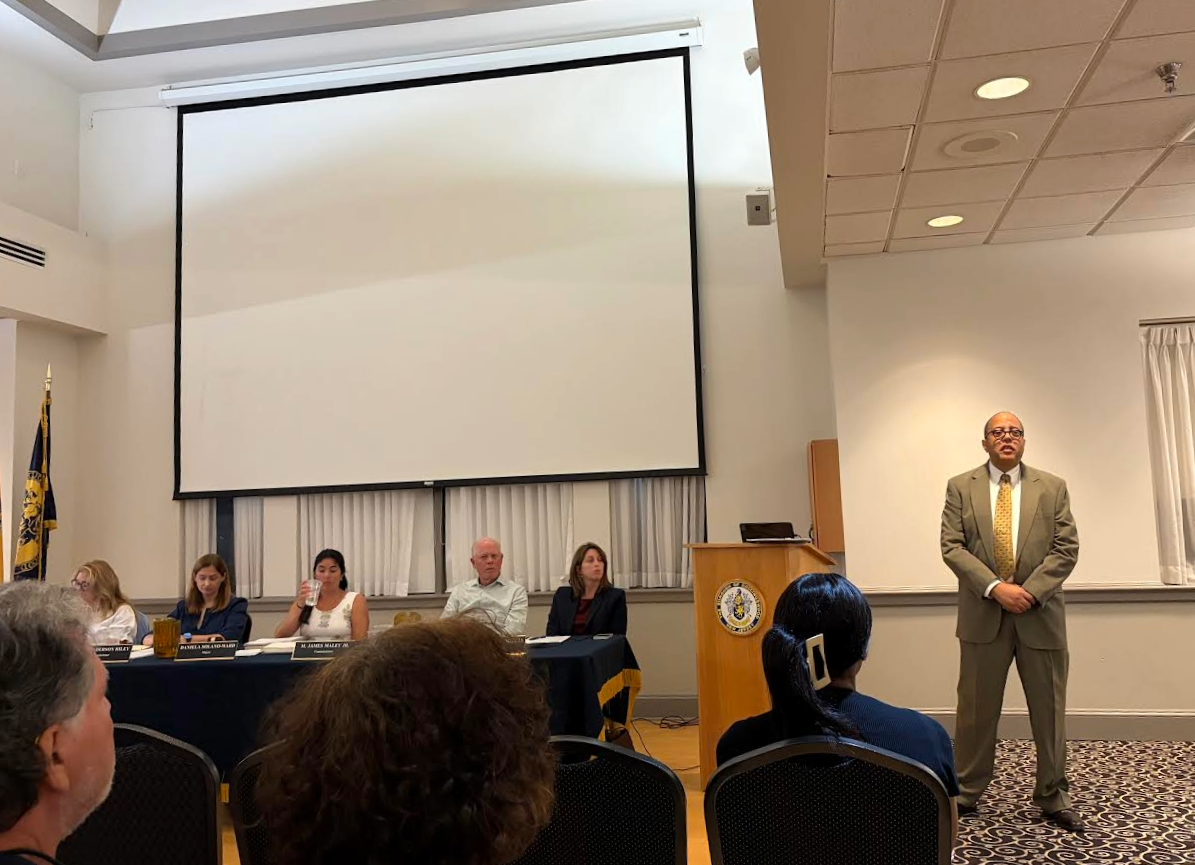
    The study, presented at a public meeting on Sept. 8, was a condition of settling Maley’s lawsuit. The combined cost of legal fees and the study was about $70,000 in taxpayer funds, according to Henderson Riley.

    Charles Jennings, a principal at Manitou, said at the meeting that having no part-time staff has led to an increase in hours for firefighters, and 80% of surveyed staff said they are working too much overtime. Firefighters also reported that the “trajectory of [the] job is getting worse.” Nearly half of current employees said they are considering leaving the Collingswood Fire Department.

    Jennings said privatizing would bring the borough improvements, including cutting costs, more training time for firefighters, and a more competitive workplace. He said outsourcing would make it less likely that firefighters end up with too few staff on an engine to safely respond to emergencies.

    The alternative option — hiring three more firefighters — would cost Collingswood $350,000 and would not fix the understaffing issue when personnel call out, Jennings said.

    Joyce, the fire chief, said he has seen the department change significantly over his 24-year career. His hiring in 2002 was part of Collingswood’s effort to take over EMS from a private contractor. The borough had privatized after struggling to respond to emergencies on its own.

    Growing responsibilities for firefighters have left the community in need of help again, he noted.

    “If at the start of my career you told me I would one day have to receive training on weapons of mass destruction, active shooter threat response, and all of the other facets of emergency response that this career now demands aside from response to fires, I would have never believed you,” Joyce said in an email.

    ‘The most equitable solution’

    With a long list of fire departments across Camden County’s 37 municipalities, Jennings said, the area is “ripe” for consolidation.

    That, too, is Joyce’s ideal outcome. He calls regionalization, which would bring nearby fire departments under one, larger roof, “the most equitable solution.”

    “My dream is that irrespective of whatever zip code you live in, or the wealth or lack thereof in your community, as a resident you should know that when you call 911 that the emergency services are going to arrive quickly and fix whatever your problem is efficiently without delay,” Joyce said.

    Other departments in the Philly area have made moves to regionalize their fire and ambulance services in recent months, including in Kennett Square and Delaware County.

    Solano-Ward, who became a commissioner in May 2025 alongside Henderson Riley, said that strategy would reduce expenses, but it would take a lot of time.

    It took Haddon Heights 20 years to regionalize among three municipalities, she said. Plus, there is no guarantee that Collingswood would not get the short end of the stick.

    “Everyone loves the idea as long as our staff remain, [and] our house is the main house. But guess what?” Solano-Ward said. “We can’t all have that.”

    Henderson Riley, though, said regionalization could happen sooner than people think. She said she is in early talks with officials from three other nearby municipalities, which she declined to name, with interest in consolidation. As healthcare and other affiliated costs rise, she said, Collingswood has to move outside the box.

    “If you’re interested in joining us, talk to us,” she said. “Let’s have everybody at the table together.”

    ‘I don’t think it’s a good idea’

    Maley, who voted with his fellow commissioners to authorize a request for private ambulance proposals last September, said he wants the borough to keep control of its EMS services and has spoken out against privatization.

    Earlier this month, he voiced concerns about losing the revenue that the medical services bring in annually.

    “I don’t think it’s a good idea that a company that’s very interested in the bottom line would run our EMS,” Maley said at the public meeting.

    Henderson Riley said Thursday that the financial impact is more complicated. By privatizing, Collingswood would not have to pay more than $150,000 in overtime wages for its firefighters, or pay a third-party provider more than $30,000 to handle ambulance billing, as it does now. The borough could also sell some of its EMS equipment, Henderson Riley said, and preserve the mental health of overworked employees along the way.

    “These men and their mental health are critical,” she said.

    Maley also said the study’s results should have been delayed due to “an internal investigation” into a fire incident in Collingswood this year.

    Maley, Henderson Riley, and Joyce declined to give details on the investigation, but the borough approved Andrea Wyatt, a municipal lawyer based in Toms River, as special counsel to investigate back in June.

    The Retrospect news organization reported that the incident in question occurred in April, when the department did not have enough staff to transport a 63-year-old injured resident to the hospital and handle a house fire at the same time.

    Henderson Riley said last week that the investigation has “nothing to do” with Jennings’ work, and she doesn’t know why Maley would delay the results based on the investigation.

    Maley declined to explain his thought process until the investigation concludes.

    Some attendees spoke out against the delay in privatizing at the public meeting. Donna Helmes, a Collingswood resident, said it is disappointing that taxpayers paid for an outside source to tell officials to do the same thing they had already voted for with Virtua.

    “I am not wealthy. I don’t want to raise my taxes any more, but I feel like these people will run into my house when it’s on fire to save me and my family, so I want them to be as well-resourced as possible,” Helmes said. “And I think we could have done this last year. It’s very upsetting that we’re still arguing this.”