Tag: topic-link-auto

  • A Black Philadelphia preacher made Shaker history. Her legacy is fueling a new generation of artists.

    A Black Philadelphia preacher made Shaker history. Her legacy is fueling a new generation of artists.

    Rebecca Cox Jackson was often told no. As a free Black woman in Philadelphia at the start of the 1800s, she wasn’t allowed to learn to read. No, she couldn’t leave her husband. No, she couldn’t become a preacher like her brother at Mother Bethel African Methodist Episcopal Church.

    Undeterred, Jackson accomplished everything she set out to do — and more.

    A pivotal pioneer who founded the only Black-led Shaker community, Jackson became a spiritual leader whose legacy has far outlasted her wildest dreams. Today, some 150 years after her death, the Shaker preacher still draws passionate followers: artists, filmmakers, and dancers who have created work inspired by her trailblazing life and archived writings.

    This summer that work took center stage at “A World in the Making: The Shakers,” on view at the Institute of Contemporary Art in West Philly. Running through Aug. 9, the show features several works reflecting specifically on Jackson’s life story as well as highlights of Shaker inventions and creations, like seed packets and minimalist wooden furniture.

    (Shaker furniture is still widely sought, fetching exorbitant prices at auction, like one cabinet that sold for $262,500 in 2024).

    Finnegan Shannon’s “I Want to Believe” (blue banners) is on view at “A World in the Making: The Shakers,” at the Institute of Contemporary Art in West Philadelphia. The show ends Aug. 9.Constance Mensch

    Shakers have lately seen renewed pop culture interest, with contemporary artists reflecting on the small but impactful Christian sect founded in the 18th century (now only three active members remain). An offshoot of Quakers — initially called “Shaking Quakers” because dance and movement is central to their ecstatic worship — Shakers practice simple communal living, pacifism, celibacy, and gender and racial equality.

    “Shakers are kind of everywhere — and we’re hardly the first institution to do a Shaker show — but I think this is a different show because we’ve inverted the emphasis to be on the contemporary contextualization of the Shakers,” said Johanna Burton, the director of ICA.

    “All of these artists have independently talked about why it’s so important to them to revisit this material, because it’s about utopia … it’s a kind of flawed model of rethinking society that ultimately has its own conditions that have complications, and nothing’s perfect, but it’s inspirational to watch people do it.”

    Revolutionary beliefs

    The most prominent Shaker was Ann Lee, one of the founding leaders of the movement that began in mid-1700s England, about 50 years before Jackson was born. An early feminist, Lee believed in a dual nature of divinity that was both male and female, and later was convinced that she was a prophet representing the second coming of Christ, returning to Earth as a woman.

    Lee was memorialized in the 2025 film, The Testament of Ann Lee, in which Allentown native Amanda Seyfried stars as the charismatic leader (she received a Golden Globe nomination for her riveting performance). It follows Lee’s spiritual awakening and her journey to Watervliet, N.Y., where her congregation built homes, furniture, and a following.

    The idea that a woman could serve as a trusted link to divinity and hold the power of a preacher was revolutionary at the time; even more groundbreaking was the conviction that forsaking marriage for a life of celibacy was a means to get closer to God. At a time when women were only ever considered useful as a wife and mother, the belief that they should have control over their bodies was strikingly liberating.

    This image released by Searchlight Pictures shows Amanda Seyfried in a scene from “The Testament of Ann Lee.” (Searchlight Pictures via AP)Uncredited

    For Jackson, that journey began with a fateful thunderstorm one night in 1830 when she was 35 years old.

    “The cloud bursted, the heavens was clear and the mountains was gone,” Jackson wrote in her diary, according to Gifts of Power: The Writings of Rebecca Jackson, Black Visionary, Shaker Eldress. “My spirit was light, my heart was filled with love for God and all mankind, and the lightning which was a moment ago the messenger of death, was now the messenger of peace, joy and consolation. And I rose from my knees, ran down the stairs, opened the door to let the lighting in the house, for it was like sheets of glory to my soul.”

    Motivated by her visions — like Lee — Jackson began preaching, going beyond the confines of Mother Bethel AME Church to lead private prayer groups and causing conflict in her neighborhood, modern-day Bella Vista. She left her husband in 1836 and a year later met Rebecca Perot, the woman who would become her life companion and devoted disciple.

    After the church accused Jackson of heresy, she and Perot left Philadelphia to preach across Pennsylvania and New York, where they encountered a Shaker service that left them invigorated and inspired. Following years on the road, they eventually moved to the Shaker village in Watervliet, where Jackson felt deeply aligned with the group and soon adopted the title Mother Rebecca Cox Jackson.

    Amie Cunat’s “2nd Meetinghouse,” on view at “A World in the Making: The Shakers,” at the Institute of Contemporary Art in West Philadelphia. The show ends Aug. 9.Constance Mensch

    By the mid-1800s, Shakers peaked at some 6,000 members in about 20 communities from Maine to Kentucky. But the primarily white village in New York remained rather isolated from the political chaos in other parts of the country as the Civil War neared. Jackson ultimately felt that they were not doing enough to reach Black followers so she and Perot returned to Philadelphia in the 1850s to create their own community.

    The two were so close that fellow Shakers called them “the two Rebeccas.” Today, their relationship has been considered queer, even earning a place on the Philadelphia LGBT Mapping Project.

    The pair founded a modest and mighty community of mostly working-class Black women Shakers, including seamstresses, housekeepers, laundresses, who lived and worshipped together at 724 S. Warnock St. (then known as 724 Erie St.).

    When Jackson died in 1871, it was Perot who took up the title of Mother Rebecca so that she could continue their important work for decades to come.

    Remembering a foremother

    In The Testament of Ann Lee, the film hints at the Shaker belief in racial equality. In one instance Lee sees enslaved people on an auction block and shouts, “Shame! Shame! Shame!” Later, some Black women appear in the congregation, though their presence is largely unexplored.

    There are no blockbuster movies about Jackson and Perot in development, but Black artists today are ensuring that contemporary conversations about the Shakers do not erase their impact.

    As revolutionary as Lee was, Jackson, too, was a foremother for increasingly progressive ideas that still hold urgency hundreds of years later. She fostered a society of Black women in Philadelphia who exercised autonomy over their bodies while slavery remained legal and the Fugitive Slave Act was enforced nationwide.

    Kameelah Janan Rasheed’s “Under it, and spread about one yard around…It was all I seen,” inspired by Rebecca Cox Jackson’s writings, appears in “A World in the Making: The Shakers,” running through Aug. 9 at the Institute of Contemporary Art in West Philadelphia.Constance Mensch

    What did their worship look like? How did Jackson’s style of body movement differ from the Shakers in Watervliet? What African influences appeared in their ecstatic dance practices? Those are questions that dancer and choreographer Reggie Wilson has investigated with his Brooklyn-based company, Fist and Heel Performance Group, in recent years. A recording of their dance work POWER, which came to Philadelphia as part of the 2024 Fringe Festival, is on view at ICA.

    “I never interpreted the Shakers as running away from their bodies. I felt like they were considering their bodies as sacred. To dance and to move, to go through as much work that they did to have dancing spaces … that’s kind of phenomenal, especially with the legacy of the West of degrading women [and] degrading the body,” said Wilson, who calls himself a “kinesthetic anthropologist.”

    In developing the choreography for POWER, Wilson pulled from preserved records of Shaker movements and African traditions of call-and-response, where repetition and rhythm can provide a spiritual experience and lead some into a trance.

    “When we started learning the dances and moving together rhythmically in choreographic architecture and patterns and time and space, it just felt good,” said Wilson. “Just the feeling of breathing and moving in unity with other bodies is profound. It’s deeply, deeply profound, sometimes to the point of tears for some members.”

    Reaching that profound experience sounds remarkably similar to what Shakers sought to achieve.

    “A World in the Making: The Shakers” ends Aug. 9 at the Institute of Contemporary Art, 118 S. 36th St., Phila., 215-898-5911 or icaphila.org.


  • Judge dismisses Jan. 6 seditious conspiracy charges against Oath Keepers

    Judge dismisses Jan. 6 seditious conspiracy charges against Oath Keepers

    A federal judge on Tuesday agreed to dismiss the seditious-conspiracy case against the leader of the Oath Keepers, Stewart Rhodes, and seven other members of the extremist group who planned to storm the U.S. Capitol on Jan. 6, 2021.

    The ruling by U.S. District Judge Amit P. Mehta is the last step in the legal process to wipe out penalties from the Jan. 6 riot, cementing President Donald Trump’s bid to unravel the largest federal investigation in U.S. history.

    Mehta had sentenced Rhodes to 18 years in prison and imposed lesser prison terms on other top Oath Keepers who were convicted at jury trials. Trump commuted those prison sentences on his first day in office last year, and he pardoned more than 1,500 rioters.

    In a written ruling Tuesday, Mehta said he was dismissing the Oath Keepers’ charges reluctantly at the request of the Justice Department. He criticized prosecutors for claiming in a court filing that wiping out the most serious convictions from the Jan. 6 riot was in the public interest.

    “The government does not say that the charges were legally deficient or that the evidence presented is insufficient to sustain Defendants’ convictions,” Mehta wrote. “It confesses to no prosecutorial misconduct, nor does it assert any denial or compromise of a defendant’s rights.”

    The Justice Department, Mehta said, was simply bestowing the ringleaders behind the riot “unearned grace by wiping their records clean” after juries found them guilty of committing “crimes against the United States itself.”

    The riot, during a joint session of Congress that was being held to certify Joe Biden’s victory over Trump in the 2020 presidential election, left more than 140 police officers injured and caused an estimated $3 million in damage.

    Rioters marched on the Capitol after a rally in which Trump repeated his false claims that he had won the election. Lawmakers were forced to evacuate, delaying Biden’s certification as the winner.

    In his ruling, Mehta recounted how the Oath Keepers stocked firearms at a hotel outside D.C. and exchanged encrypted messages about using violence to thwart the congressional proceedings. The Oath Keeper with the guns, Edward Vallejo, was not called into action, Mehta added.

    When the rioters breached the Capitol, about 10 members of the Oath Keepers wearing military gear entered the building. One half of that group ended up in then-House Speaker Nancy Pelosi’s office. The other half headed to the Senate chamber, where they tried with other rioters to “storm past a line of police officers,” wrote Mehta, who was nominated to the bench by President Barack Obama.

    A second contingent of Oath Keepers later entered the Capitol and clashed with police trying to clear the building, according to the trial evidence Mehta cited in his ruling.

    In addition to Rhodes and Vallejo, the other Oath Keepers whose charges were dismissed are Kelly Meggs, Kenneth Harrelson, Jessica Watkins, Roberto Minuta, Joseph Hackett, and David Moerschel. Harrelson and Watkins were acquitted of seditious conspiracy but convicted of other riot-related offenses.

    An attorney for Rhodes, James Lee Bright, said in a post on X that Mehta’s ruling to dismiss the Oath Keepers’ case “personalizes his reasoning.”

    Rhodes, he said, was convicted of a “thought crime” that “should never have been charged.”

    “This chapter is now over,” the attorney wrote. “Congrats to the remaining defendants.”

    In a court filing Tuesday, attorneys for Vallejo maintained that he was not guilty of a crime. “The Court correctly granted the motion to dismiss with prejudice based on the government’s exercise of discretion but incorrectly injected advisory opinions that are contrary to the presumption of innocence and unfair to an innocent man,” the attorneys wrote.

    Trump pardoned nearly all the rioters — more than 1,500 — who were charged by the Justice Department in the wake of Jan. 6. But that blanket pardon, issued on the president’s first day in office last year, did not extend to about a dozen leaders and prominent members of two extremist groups behind the violence, the Proud Boys and the Oath Keepers.

    Those defendants were convicted of carrying out a seditious conspiracy against the United States or related offenses. Trump initially commuted their prison terms, stopping short of a full pardon. But this year, while those cases were being appealed, Justice Department officials filed legal papers to vacate the convictions altogether.

    The D.C. Circuit federal appeals court granted that request in May. U.S. Attorney Jeanine Pirro, a Trump ally who serves as the top federal prosecutor in D.C., then filed motions to dismiss the underlying charges in U.S. district court.

    Judge Timothy J. Kelly similarly ruled last month to dismiss seditious conspiracy charges against the Proud Boys. Like Mehta, Kelly said judges are constrained to dismiss charges once prosecutors ask to drop them.

    Under Supreme Court precedent, prosecutors have “exclusive authority and absolute discretion to decide whether to prosecute a case,” and they may drop charges “in the interests of justice” even after defendants have been convicted.

    Trump’s efforts to reframe the riot have continued. Even in recent days, he has asserted that those charged in the case “were treated so badly.”

    “This is the last of the prosecutions seeking to hold accountable those responsible for the events of January 6,” Mehta wrote in his 15-page order dismissing the charges Tuesday.

    “That book is now closed. Today’s epilogue diminishes the gravity of that day, denigrates the work of the prosecutors and law enforcement officers who secured these convictions, and excuses criminal acts that caused a centuries-long pillar of our democracy — the peaceful transfer of presidential power — to buckle.”

    He added, “The court cannot write a different ending.”

  • In Nolan’s ‘Odyssey,’ food and feasting are vehicles for disgust. What a shame.

    In Nolan’s ‘Odyssey,’ food and feasting are vehicles for disgust. What a shame.

    It is immensely exciting to me that right now, everyone is talking about The Odyssey. It’s also a little weird.

    I studied classics in graduate school and before I became a chef and then food writer, I taught Ancient Greek language and Greek and Roman epic poetry both in their original languages and in translation. I traced how Odysseus became Ulysses and how his story was retold through the ages, particularly in other forms of epic poetry. In my everyday life and at The Inquirer, nobody in the last decade has asked me about epic poetry, except for college students wanting help with their homework.

    But I’ll tell you how I felt about Nolan’s version of the poem.

    I felt hungry.

    In Christopher Nolan’s blockbuster movie, Odysseus’ men slurp up what look like tapeworms as the witch Circe, played by Samantha Morton, forcibly manipulates their faces, pulling their mouths into the form of pig snouts. She molds their faces and bodies like clay until the men are transformed into pigs, the animals that best represent their brutish, stupid behavior.

    It’s brilliant, stomach-churning, and wild, an extraordinarily visceral adaptation of the original Homeric text. It’s one of the rare scenes in Nolan’s adaptation of The Odyssey where one sees actual food, despite the food being wholly unappetizing.

    This image released by Universal Pictures shows Matt Damon as Odysseus in a scene from “The Odyssey.” (Melinda Sue Gordon/Universal Pictures via AP)Melinda Sue Gordon

    Reading The Odyssey, though, makes me crave cheese and cakes that have been drizzled with honey, wine to wash down roasted meats like lechon or porchetta, sharing in the heady scent with friends, dining companions, and the gods, for whom the savor (or the aroma) is an offering.

    Watching Nolan’s movie also makes me long for those things, but due to their general absence. None of the food portrayed is conducive to conjuring up the pleasurable excess that is the very drumbeat of the Homeric text.

    In Nolan’s Odyssey, food and feasting are vehicles for disgust.

    The film is undoubtedly a cinematic masterpiece. It is the latest iteration — and I would even venture, translation — of Homer’s Odyssey.

    Back in eighth- or ninth-century BC, the bard, poet, or perhaps multiple bards, created what would be the longest-running superhero franchises of all time, matched only by the authors of the Old Testament. (And the two texts have a lot in common in how they were assembled, with language cobbled together from different eras).

    This image released by Universal Pictures shows, (from left) Mia Goth as Melantho and Anne Hathaway as Penelope, in a scene from “The Odyssey.” (Melinda Sue Gordon/Universal Pictures via AP)Melinda Sue Gordon

    In both translation theory and storytelling, we can accept variances. In superhero movies and movie franchises, we welcome them.

    We can accept different actors playing the same roles. We eagerly anticipate actors’ interpretations of classic characters — just think of how we hunger for news of who will play the next James Bond or Batman.

    Translation theory generally dictates translations need to be updated every generation or so, to match the language of the times. The French philosopher Jacques Derrida saw translation as a never-ending process. It is a task that is necessary and impossible at the same time, he wrote in “Des tours de Babel” in 1985, as language has no fixed, stable meaning.

    This image released by Universal Pictures shows a scene from “The Odyssey.” (Melinda Sue Gordon/Universal Pictures via AP)Melinda Sue Gordon

    Did I expect Nolan’s Odyssey to hew to the text? I did not. But what I did long for was emotion and catharsis (Aristotle’s theory of which was developed four centuries after The Odyssey was composed), and food. I also hoped for a narrator, or bard tying the story together, conveying it to us, an audience at a feast.

    The lack of a narrator shows how much we have changed in nearly 3,000 years. Nolan’s Odyssey is episodic; he doesn’t tell us a story, he shows us one. We no longer gather at dinner and listen to stories performed. We gather for The Odyssey at movie theaters, silent. We gather at our phones. Our community is in the ether.

    Perhaps in the age of TikTok and ever-shortening attention spans, Nolan’s episodic, somewhat disjointed retold narrative is perfect. It is our generation’s translation. The one we deserve.

    Just as sex has been expunged from Nolan’s Odyssey, so have the food and Homer’s lengthy descriptions of feasting. Food is central to the original text. In the movie, I recall a suitor gnawing on one drumstick. There is no free-flowing wine, just drunkenness — effects of the invisible wine.

    I dare you to pick up Emily Wilson’s translation of The Odyssey (which helped inspire Nolan) and not smell the smoke of roasting pigs; not want to lick your fingers of dribbles of floral, fragrant honey; not ache for a creamy, salty cheese like ricotta salata, which was probably what is hanging in the Cyclops’ cave. These aren’t a translator’s embellishments. They are threaded throughout the original Greek, so much so that you may feel rather beaten over the head with how often people are feasting in The Odyssey.

    This image released by Universal Pictures shows Matt Damon as Odysseus, left, and Zendaya as Athen, in a scene from “The Odyssey.” (Melinda Sue Gordon/Universal Pictures via AP)Melinda Sue Gordon

    In Homer, wine is everywhere; the sea itself is like wine. In Nolan, we never see it.

    The code of xenia, a guest-host relationship (often translated as “hospitality”), which Nolan calls “Zeus’ law” in the movie, dictates that you host guests, offer them food, and feast with them. Xenia was the backbone of society and decency in Homeric Greece.

    Watching The Odyssey made me hungry, and given that it’s three hours long, it’ll probably make you hungry, too. Despite AMC Dine-In’s rather vast menu, its high sodium warnings gave me pause. I could not feast in the presence of watching The Odyssey (something its original listeners surely would have done), and could not bring myself to eat the chicken wings. So after you skip the AMC wings, go forth and dine like a Homeric hero.

    Compensate for the lack of feasting in Nolan’s Odyssey.

    This image released by Universal Pictures shows a scene from “The Odyssey.” (Melinda Sue Gordon/Universal Pictures via AP)Melinda Sue Gordon

    Go to Perla and grasp your lechon like Odysseus did when he landed on Ithaca’s shores and went to the cottage of Eumaeus, the swineherd, before he continued on home. Seek after North by Texas, the roving barbecue pop-up, just as Odysseus’ men held out until they could no longer and barbecued one of Apollo’s herd. Order a porchetta from Esposito’s or Porco’s Porchetteria and have all your friends over. Look for Le Virtù’s whole roasted goat, inhale the remnants of smoke, dig in with your hands. Grab yourself a cheesecake, imagine it to be Circe’s “kukion,” drizzle it with honey, and wash it down with wine.

    When I go to restaurants as part of my job, I always, at the end of each meal, ask my dining companions two questions that cut straight to the point: Would you come back? And would you recommend it to others?

    The answers to these are generally the same, both yes or both no. To hold Nolan’s Odyssey to the same parameters as a meal, I would not watch it again, but I would recommend it to others.

    Just please, go get a nice dinner afterward.

  • Trump’s immigration crackdown has detained more than 50 military spouses and parents

    Trump’s immigration crackdown has detained more than 50 military spouses and parents

    President Donald Trump’s administration has detained dozens of parents and spouses of active-duty U.S. troops as it rolls back immigration protections for military families to pursue its mass deportation agenda, an Associated Press investigation found.

    More than 50 parents and spouses of active-duty service members have been detained since Trump took office for a second term, and at least six have been deported, the AP found in the first accounting of such detentions, which the government does not track. At least eight immediate family members of U.S. service members remain in federal immigration custody.

    Parents and spouses of people in the military have generally been shielded from deportation under bipartisan consensus for decades. But the AP found they’re now routinely being detained for months as they try to adjust their legal status through the policies available to service members’ close relatives and even as the military continues to recruit by advertising immigration benefits for enlistees’ families. Experts warn that the reversal could undermine military preparedness even as the U.S. is at war in Iran. It’s left military members without emotional support and caretakers for their children, delayed deployments, and forced some to take leave.

    “How can I even focus on my military career because I have to worry about how my wife is doing?” said Army Sgt. Hedar Leonel Turcios Juarez, who was stationed in Fort Bliss, Texas, when his wife was detained outside a Walmart in front of their 6-year-old daughter in July.

    A handful of detentions of service members’ spouses have prompted public backlash and led to intervention by Homeland Security Secretary Markwayne Mullin to secure their release.

    The Department of Homeland Security has said it does not compile data on these cases. The AP obtained information by analyzing thousands of federal court records compiled by Habeas Dockets, a project run by the Immigration Justice Transparency Initiative; by reviewing existing media coverage; and by verifying information with family members and attorneys. The actual number is likely much higher than the 51 cases AP found.

    The AP asked for comment from DHS on each case, including the individuals’ immigration and criminal history. The agency did not provide specific information about the majority of cases but noted that at least seven people had been removed from the U.S. before, at least eight had removal orders, and at least two had drunken driving or drug-related convictions.

    “DHS and ICE value the contributions of all those who have served in the U.S. military,” DHS said in a statement. “U.S. military service alone does not automatically grant lawful immigration status, or exempt aliens from the consequences of violating U.S. immigration laws.”

    The Pentagon declined to comment on the AP’s findings.

    Service members are losing their safety net

    Air Force Tech. Sgt. Wendy Gbeve, 30, said she hasn’t had a good night’s sleep since her father, Luis Alberto Ramirez Zavala, was detained by immigration officials last month. Gbeve was there when he was arrested at a routine interview with U.S. Citizenship and Immigration Services in Missouri about his pending application for legal status.

    She spent hours refreshing the USCIS page to track where the government was taking her father: from a county jail in Missouri to an Immigration and Customs Enforcement detention facility in Texas. Finally, roughly two weeks after he was detained, she found out he had been deported to his native Mexico.

    “It’s the most frustrating, helpless feeling,” Gbeve said.

    Gbeve said ICE still hasn’t informed her family why her father was removed so quickly. Ramirez Zavala spent most of his life in the U.S. working as a ranch hand in rural Illinois.

    Ramirez Zavala’s wife of 30 years, a legal permanent resident, is considering returning to Mexico to be with her husband. For Gbeve, whose husband is also in the Air Force, that would leave no one to watch their children, ages 2 and 4, if both were deployed.

    “That would be our entire safety net,” she said.

    Military members have had to take leave or delay a deployment

    Some service members have been left caring for children alone.

    Army Staff Sgt. Alexis Jaramillo, an aviation operations specialist who has served for more than a decade, said he would normally be involved in training soldiers at Fort Polk, La. Instead, he is on administrative leave, caring for his 5-year-old stepson, Noah, after his Brazilian wife, Maisa Lopes Eliaser, was detained in early July.

    It happened during what the family thought was a routine appointment at a USCIS office in Alabama. Eliaser arrived in the U.S. on a tourist visa in 2019, and the couple was trying to change her status.

    Immigration officials asked Jaramillo and his stepson to leave the room. Minutes later, they were told that Eliaser had been detained. The next time they saw her was inside a detention facility.

    “It is really overwhelming because I need to take care of my kid by myself. No one is here to help me out,” Jaramillo said.

    At least one active-duty soldier halted her imminent deployment after her husband was detained by immigration officers, leaving no one to care for their then-5-year-old son, court records show. A judge eventually ordered the husband released.

    Trump’s policy is a reversal even from his first administration

    A new policy, implemented in April 2025, states that “military service alone does not exempt aliens from the consequences of violating U.S. immigration laws.”

    Experts in military immigration law said this marks a stark shift from previous administrations across the political spectrum, including Trump’s first administration.

    Dan Gividen, who served as ICE’s deputy chief counsel from 2016 to 2019 under Trump, represents a soldier’s father who has been in ICE custody for more than eight months. He said that during his time as an ICE prosecutor, immigration authorities rarely detained service members’ immediate family members unless they had committed violent crimes.

    “We would not place them into removal proceedings, period. That’s insane,” Gividen said. “The fact that they’re doing it now is just outrageous.”

    ICE previously generally canceled past removal orders and allowed parents or spouses of troops to adjust their legal status, said Margaret Stock, an immigration attorney and retired lieutenant colonel in the Army Reserve. She said that’s because the government wanted to ensure troops focused on their duties.

    “It’s the same thing that happens if you don’t provide healthcare to the troops, or you don’t provide housing to the troops,” she said. If soldiers are preoccupied with detained or deported family, “they’re not concentrating on their job anymore.”

    Even some congressional Republicans who are otherwise largely supportive of Trump’s aggressive immigration crackdown have pushed for the release of service members’ relatives.

    “The immigration system is failing the honorable and good Americans,” Florida Republican Rep. Maria Elvira Salazar said at a news conference in July advocating for the release of the wife of retired Staff Sgt. Wilmer Trujillo, who served in Iraq and Afghanistan. DHS said she illegally reentered the U.S. after being deported in 2005.

    Although DHS said it does not have data on active-duty troops, it has released figures for former service members, who also qualify for immigration benefits along with their immediate families. From Jan. 20, 2025, through Jan. 26, 2026, immigration authorities detained 125 military veterans — placing 34 into removal proceedings — and arrested more than 150 immediate family members, DHS said in a letter to several Democratic senators.

    Anh Dung Cong Tran, known as “Tony,” had both a father and son who served in the military. Tran came to the U.S. in 1990 through a program for children of American military personnel born in Vietnam. Tran, 56, was deported in July, having lived in the U.S. for decades with regular check-ins with immigration authorities after an assault conviction soon after his arrival.

    His son Antonio Tran said his father persuaded him to enlist in the military in 2022. “He has a totally different view on America now,” said Tran, who was discharged as an Army specialist in March after a serious injury.

    Benefits for service members include what’s known as parole-in-place

    Military recruiters tout immigration benefits for troops’ families as a selling point to enlist.

    One of the military’s most highly advertised immigration benefits is “military parole-in-place,” which allows the spouses, children, and parents of active-duty service members and veterans to obtain legal immigration status from within the country. Not everyone qualifies: Those who overstayed visas or who already applied for legal status at the border, for example.

    The policy was implemented under Republican President George W. Bush during the U.S. war with Iraq in 2007 and codified under Democratic President Barack Obama. DHS agencies can grant it on a case-by-case basis.

    Under Trump, the average time it takes to receive military parole-in-place has more than doubled to 12 months, according to USCIS data. That leaves military families more vulnerable to being placed in ICE custody.

    Recruiters are still promoting immigration benefits

    The AP found that troops’ immediate family members have repeatedly been detained by ICE while applying for parole-in-place or seeking to adjust their status, including during immigration appointments.

    Marine Cpl. Jose Manuel Vilchis-Valle’s mother, Ursula Borja Valle, was detained at an appointment in August 2025 and deported to Mexico within a week. She had lived in the U.S. since the 1990s without a known criminal record. Her son was attempting to help her clear up a decades-old removal order through the immigration benefits that military recruiters had used to help convince him to enlist.

    “They basically told me that if you serve, and if you served honorably, you can help your parents,” said Vilchis-Valle, 23, who was honorably discharged shortly after his mother was deported. “In a perfect world, I wished, because of my service, they could have pardoned her.”

    In other cases, ICE has detained people who had already been granted protection, with the agency later arguing in court filings that their parole status had been revoked.

    In June 2025, the Marine Corps officially stopped advertising enlistment as a way to protect immigrant family members, in response to inquiries from the AP. But recruiters for the Army and the National Guard still promote it.

    “For some service members, enlisting isn’t just about serving their country,” read an Instagram post published in late July by an official Army recruiter based in California. “It’s also about doing everything they can to help protect their parents who sacrificed everything for them.”

    Recruiters are expected to highlight the benefits of service to attract applicants and military parole-in-place remains in effect, Army spokesperson Christopher Surridge said.

    The National Guard said it does not track detentions of its troops’ relatives or which recruiters advertise immigration benefits and referred additional comment to DHS.

    Soldier who helped patrol the border grapples with his father’s detention

    For U.S. Army Specialist Romero Ralios, his father’s detention has left him remorseful about his deployment last year to the Joint Task Force Southern Border, where he spent nine months supporting U.S. Customs and Border Patrol.

    His father, Sebastian Ralios Tino, a Guatemalan landscaper with no known criminal record, was detained this summer. He lived in the U.S. for nearly two decades without legal status.

    Ralios’ commanding officer, Capt. Mohamed Elmaola, told the AP he wanted to speak up because Ralios is a “phenomenal soldier” whose father should receive due process.

    “It’s very hard to communicate and to have credibility as a leader when your own subordinates are unable to get support,” Elmaola said. “Considering he enlisted his time and his life into supporting and defending the United States Constitution, it is the right thing to do to support soldiers and their families.”

    Romero Ralios now struggles to sleep at night due to the stress and wishes he had not been involved in immigration enforcement, even though he was just following orders.

    “It was karma. I should’ve known,” Ralios told the AP. “All those families I broke. I have regrets.”

  • Iran and U.S. say a Strait of Hormuz deal is close, but one or both would have to back down

    Iran and U.S. say a Strait of Hormuz deal is close, but one or both would have to back down

    CAIRO — Iran said Wednesday it is in the “final stage” of drafting an agreement with Oman over the Strait of Hormuz, and U.S. President Donald Trump has said a deal could be announced this week. That could potentially reopen the critical waterway, ease pressure on the world economy, and help bring an end to the war.

    But the agreement is likely to be contingent on the U.S. lifting its blockade on Iran’s ports. The Trump administration has previously ruled out any deal that would cement Iran’s grip over the strait, which would amount to a major loss for the U.S. and a break with global norms.

    Iran has insisted on some measure of control over the strait, saying it will not go back to being an open international waterway, as it was before the war.

    The U.S., along with Israel, launched the war on Feb. 28, citing various goals including toppling Tehran’s government and ending its nuclear program. Those have not been achieved, and the conflict has devolved into a fight over the strait as Iran’s assertion of control and attacks on shipping have ground traffic to a near-halt.

    Closure of the strait, through which a fifth of the world’s traded oil and natural gas once passed, has driven up the price of fuel and basic goods, roiling the global economy. Trump is also under mounting pressure to end an unpopular war ahead of U.S. congressional elections.

    Iran’s Foreign Ministry spokesperson, Esmail Baghaei, said that the agreement with Oman is in the “final stage” of drafting, and that a joint statement will be issued “if certain parties do not obstruct this process,” apparently referring to the U.S.

    Regional officials say negotiators have finalized a draft

    Iranian and Omani negotiators have finalized the draft deal to reopen the strait and await final approval from Iran’s Supreme Leader Ayatollah Mojtaba Khamenei, two regional officials told the Associated Press on Wednesday. Khamenei is believed to have been wounded in the war’s opening strikes and has not been seen in public since then.

    The officials, who were briefed on the negotiations, portrayed the potential deal as a temporary solution to the dispute over the strait. They said it is tied to an agreement reached between the U.S. and Iran in June that aimed at ending the fighting and reopening the waterway but ultimately collapsed.

    The officials, who spoke on condition of anonymity to discuss the private talks, said the potential deal will pave the way for the U.S. and Iran to resume negotiations on Tehran’s nuclear program.

    Earlier, they had said the potential agreement would have ships enter the Persian Gulf through an Iranian-controlled route and exit through a route controlled by Oman. Service fees would be charged for providing security and preserving the maritime environment, the officials said.

    The U.S. has said it is strongly opposed to any arrangement that would see Iran charge fees.

    Trump said a deal to reopen the strait is close

    Trump was asked on Tuesday evening by reporters about a report on the Axios news site that an announcement on the strait could be made on Wednesday.

    “It could happen. Tomorrow or the next day,” Trump said. “A lot of progress has been made.”

    Oil prices initially eased but later inched up. Brent crude, the international standard, was around $80 per barrel on Wednesday — still well below the levels it hit at the height of the conflict.

    In recent days, Trump has alternately threatened massive strikes and voiced support for diplomatic efforts.

    Attacks on regional shipping continue

    The Iranian-backed Houthi rebels in Yemen claimed Wednesday they had fired ballistic missiles toward a Saudi oil tanker on the Red Sea off the Saudi port of Yanbu, without providing evidence. There was no immediate comment from Saudi Arabia.

    A vessel sailing in the Gulf of Aden off Yemen reported a loud explosion that happened in close proximity, the British military’s United Kingdom Maritime Trade Operations center said Wednesday, adding that the crew was safe. The Houthis claimed to have fired a ballistic missile at another Saudi oil tanker.

    A recent escalation between the rebels and Saudi Arabia threatens to reignite Yemen’s civil war, which pitted the Houthis against a Saudi-led coalition supporting the country’s government.

    In July, the Houthis announced they were closing the Bab el-Mandeb Strait that leads to the Red Sea for Saudi-linked shipping. That puts additional pressure on international shipping since the Red Sea became a key alternative route for Saudi oil exports during the war.

    Israel and Hezbollah’s ceasefire increasingly shaky

    The shaky ceasefire between Israel and the Iran-backed militant group Hezbollah grew more volatile Wednesday, as the Israeli military issued an evacuation warning to residents of the southern Lebanese village of Mansouri — the first such warning in weeks.

    Later, the Israeli military said it had begun conducting “precise strikes” in southern Lebanon in response to what it described as “a blatant violation of the ceasefire” that had largely held since June 20.

    The escalation came as Lebanese and Israeli negotiators met in Rome for a second day to discuss implementation of a deal under which Israeli forces are supposed to withdraw from areas they are occupying in southern Lebanon in exchange for Hezbollah’s disarmament.

    A State Department official said the talks in Rome ended early “due to events on the ground” but could continue on Thursday. The official, who spoke on condition of anonymity due to the sensitivity of the diplomacy, said the discussions “were extremely productive.”

  • Your first look at Ellen Yin’s Italian hangout | Let’s Eat

    Your first look at Ellen Yin’s Italian hangout | Let’s Eat

    Ellen Yin is about to open a chichi all-day bar in Rittenhouse, and we take you inside.

    Also in this edition:

    — Mike Klein

    If someone forwarded you this email, sign up for free here.

    Your first look at Ellen Yin’s Italian hangout

    High Street Hospitality founder and James Beard Award winner Ellen Yin is just about ready to hit Rittenhouse with Bar Cicci, an all-day drop-in for espresso and pastries by morning, sandwiches by day, and spritzes, cicchetti, and small plates by night. Join Beatrice Forman on Sansom Street for your first look.

    The crop of Shore farmers markets

    Shore season isn’t done yet, and neither are farmers markets, which have seen an uptick in business locally in the midst of a cyclospora outbreak. Hira Qureshi maps out where you can buy local produce, baked goods, and more at markets down the Shore.

    New restaurants for August

    Besides Bar Cicci, a half-dozen new restaurants are on tap this month, including Recipe Philly in Center City, Cecilia in Bridgeport, and Mixteca in East Kensington, where the red, white, and green of la bandera figures into the signature cocktail.

    One town has cornered the market on ‘little treats’

    Lancaster Avenue in Ardmore, one of the Main Line’s busiest commercial strips, is now home to two new dessert shops. Denali Sagner explains that one specializes in tea, cakes, and buns, while the other celebrates the mango.

    A teeny-tiny bar is coming to Fishtown

    Canned-cocktail brand Top Dog is setting up listening rooms in Kennett Square and Fishtown, embracing the Japanese jazz kissa model — a music cafe or bar that’s focused on listening to vinyl records. Brooke Schultz chatted up Top Dog’s Ken Smukler, who aims to deliver an “analog feel in a digital world.” The Fishtown location is tiny. It used to be an ATM.

    The best thing Kiki Aranita ate last week

    The handmade tarts from Market Day Canelé layer summer tomatoes over a corn custard with cremini and button mushrooms, herb-roasted cotto ham, eggs, and Gruyère in a flaky crust. Kiki Aranita says you have to act fast to snap one up.

    Scoops

    Two chefs have made big professional strides from their roots in Roxborough, and now they’re coming home to Manayunk to take over the Winnie’s space with a “punk French” eatery.

    Aldar Bistro in Bala Cynwyd is giving way after 34 years to a white-tablecloth Southern Italian restaurant called Bruzi.

    Does a spate of restaurant-closing announcements — such as Hiroki, Federal Donuts & Chicken, and the Lodge by Two Robbers — portend industry doom? No, and I’ll explain why not.

    Restaurant report

    Gabriella’s Vietnam in South Philadelphia is counting down to closing in mid-December as the new owner of her building is planning a restaurant of their own. Chef-owner Thanh Nguyen told Kiki Aranita that she is looking for a new spot.

    Side Eye, the Queen Village bistro, gets a bit of side eye from critic Craig LaBan, who likes the vibe and pricing but thinks the execution could be sharper.

    New drive-thru coffee option: The syndicated 7 Brew has opened at 4000 Woodhaven Rd. in Northeast Philadelphia’s Knights Road Shopping Center.

    More bagels are coming round: Central Florida-based Jeff’s Bagel Run — schmeared with private-equity investment — has cinched a franchisee for 10 stores from the Harrisburg area east through Reading and the Lehigh Valley to suburban Philadelphia. No leases have been signed, the company announced in a press release.

    Briefly noted

    Cantina la Martina’s fourth annual Cemita Festival returns from 11 a.m.-4 p.m. Sunday at the Garden Center across from Mural City Cellars (1825 Frankford Ave). Six restaurants will each serve interpretations of Puebla’s iconic cemita sandwich for $16: Cantina la Martina, Gilda, Bolo, Vientiane Bistro, Cinteotl Tamalli, and Los Cuatro Soles Restaurant. Also: beverages from Mural City Cellars, DJ Cali Rumba, dance performances by Danza Tonantzin Cultura, face painting, and artisan vendors. It’s pay-as-you-go. Some cemita vendors are cash only.

    Post Haste in East Kensington will become Philadelphia’s only participant in the inaugural Global Pay What You Can Day on Aug. 26, joining restaurants from Mexico City to Mumbai in a one-day effort to make dining more accessible. Guests can order whatever they’d like and pay what they can (excluding alcohol), building on chef Ari Miller’s weekly pay-what-you-can program launched earlier this year. (Miller is married to Inquirer staff writer Kiki Aranita.)

    The Fishtown Pickle Project is taking its annual pickle-themed dinner outside of Fishtown for the first time. The Aug. 27 edition will have founders Niki Toscani and Mike Sicinski in Rittenhouse to collaborate with Uchi on a nine-course, pickle-centric tasting menu (e.g. oysters with giardiniera, yellowtail with pickled peach, salmon with pickled enoki, and a dessert featuring pickle jam). Seatings: 6 and 8:30 p.m. Tickets: $125 per person, plus tax and gratuity.

    Chef Chaz Brown, in partnership with Forman Arts Initiative, will present the third annual Oxtail Collective from 1-5 p.m. Aug. 30 at the Substation in Kensington. Titled “The Hercules Posey Celebration” — after George Washington’s enslaved chef — the event will bring together Black chefs, historians, artists, and entrepreneurs to explore the intersections of food, culture, business, and history while serving as an early public introduction to Forman’s future 100,000-square-foot arts campus. Participating chefs include Chad Williams of Friday Saturday Sunday, Omar Tate and Cybille St. Aude-Tate of Honeysuckle, and Shola Olunloyo of Studiokitchen. PBS NewsHour’s Geoff Bennett will moderate panels, and the program also includes tastings from 15 chefs, cooking demos, and a marketplace featuring Black-owned businesses. Tickets ($92.55, including fees) are on sale.

    Delicious City Philly Podcast’s second annual Hoagie Throwdown has a date: Sept. 27, from noon-4 p.m., at Other Half Brewing in Fishtown, drawing 20 chefs, restaurants, delis, and sandwich makers to compete. There will be unlimited hoagie samples, beer/soft drinks, and pro wrestlers grappling. (Last year’s outing was a scene: The Inquirer’s Craig LaBan, in a Zorro mask and big hat, went through hoagie-making boot camp.) The podcast has made 500 tickets available and early pricing starts at $55.

    ❓Pop quiz

    Which Pennsylvania farm crop is in the crosshairs of the U.S. Department of Commerce?

    A) mushrooms

    B) hay/alfalfa

    C) corn

    D) apples

    Find out if you know the answer.

    Ask Mike anything

    What is going on at 117 Chestnut St.? The restaurant 117 is closed already and it just opened. — Chris D.

    Old City restaurant 117, which opened only last November, posted a note on Instragram last week that it had closed “due to circumstances beyond our control.” According to Philadelphia court records, the restaurant was evicted over back rent.

    The space’s previous occupant, the Avery, also had a very short run last year. Previous occupants had better luck: 2nd Story Brewing Co. closed in 2024 after a decade and was the last to use the brewing equipment installed by Triumph Brewing Co. for its own run from 2007 to 2014.

    Adding intrigue now is the liquor license application that was filed at 117 Chestnut St. last week in the name “Finish Your Champagne LLC.” Finish Your Champagne is the name of the long-in-the-works Columbus Boulevard cocktail bar project from Kevin Dolce, owner of Center City’s Taste Cheesesteak Bar and Savù. Dolce declined comment.

    📮 Have a question about food in Philly? Email your questions to me at mklein@inquirer.com for a chance to be featured in my newsletter.

    By submitting your written, visual, and/or audio contributions, you agree to The Inquirer’s Terms of Use, including the grant of rights in Section 10.

  • Philadelphia should use the Waymo testing period to get this right, not rush it

    Philadelphia should use the Waymo testing period to get this right, not rush it

    Waymo’s driverless cars have been rolling through Center City for almost a year now. Still with a trained specialist behind the wheel, still without a commercial launch date.

    Some of our local elected officials have expressed concerns about driverless vehicles on Philadelphia streets. Based on what has happened in other cities, their concerns are not unfounded. When it comes to deploying robotaxis, Philadelphia should slow down, not speed up.

    The pattern that has emerged across the country is that problems that should have been caught during testing are instead being confronted when the autonomous vehicles have already been deployed and are carrying passengers.

    Start with what happened in Austin, Texas, this spring. When a gunman opened fire outside a bar on Sixth Street, killing three people and wounding more than a dozen, several Waymo vehicles ended up blocking the emergency response. One sat sideways in the road as an ambulance tried to get through, with bystanders shouting at it to move, while a police officer worked the car’s speaker system trying to get a human being on the line.

    The safety of Waymo robotaxis has repeatedly been questioned. In December of last year, Waymo had to replace software that allowed the autonomous vehicles to pass stopped school buses in Austin, Texas, and Atlanta. And earlier this year in Austin, writes Amy Witherite, the robotaxis blocked emergency responders’ access to the site of a shooting with mass casualties.Austin Independent School Distri

    In San Francisco, fire crews and other first responders have had to physically take control of stalled Waymos to move them out of the way during emergencies. These aren’t isolated glitches.

    Federal regulators counted at least six incidents nationally in which first responders had to take control of a Waymo vehicle during an emergency. In July, the National Highway Traffic Safety Administration told the industry that emergency scenes are not rare or extreme “edge cases,” and that an automated vehicle unable to interact safely with first responders is a danger to the public.

    That’s the backdrop against which Philadelphia is being asked to move forward.

    Councilmember Nina Ahmad gave voice to concerns after a City Council hearing in May. “Progress for the sake of progress isn’t enough. We need to look at the impact of that progress,” she said during a news conference. She wasn’t the only Council member who expressed reservations, or whose questions for Waymo went unanswered at the hearing.

    Under state law, PennDot holds the authority to certify these vehicles for full commercial service. City officials have said Philadelphia is preempted from regulating this technology at all.

    After Waymo vehicles became immobilized and helped bring San Francisco traffic to a standstill during the city’s July Fourth celebration, Mayor Daniel Lurie called for stronger statewide standards that verify that the autonomous vehicles’ systems can handle major events and emergencies before they are allowed to operate. His message was simple: “Prove it before you deploy it.”

    Here is the question I’d ask before this moves one step further in Philadelphia: Have the police officers, firefighters, and paramedics who will be on the street been trained, specifically and verifiably, to handle a car that will not pull over for a siren, will not respond to a hand signal or a flare, and has no driver to negotiate with?

    A first responder trained to deal with a human behind the wheel is not automatically equipped to deal with an empty vehicle that only takes instructions from a call center hundreds or thousands of miles away. Austin’s ambulance crews and San Francisco’s fire companies found out about that gap in real time, during emergencies — Philadelphia doesn’t have to.

    The company cites a substantial reduction in serious-injury collisions compared with human drivers, and that’s worth weighing. But a strong overall safety record and a specific, unresolved gap around emergency scenes are not the same question, and cities where Waymo has already launched are the ones now writing the incident reports.

    Philadelphia has something Austin and San Francisco didn’t have when they signed up for driverless service at scale: time.

    This is the moment to apply Mayor Lurie’s standard: Prove it before you deploy it.

    Amy Witherite is a traffic safety advocate and founder of the Witherite Law Group, which has offices in Philadelphia.

  • The best Jersey Shore farmers markets

    The best Jersey Shore farmers markets

    Farmers markets are more than just an alternative to grocery stores — they offer a direct line to local farmers, bakers, and artisans. Instead of buying a mass-market bag of greens, you can chat with the person who planted the seed and ask them questions about how they raise their vegetables. And what better way to experience the abundance of South Jersey produce and products than a beach-adjacent market?

    Here are seven weekly Shore markets worth a trip, from Wildwood to Ocean City.

    Margate Community Farmers Market

    Every Thursday morning from mid-June to early September, tables filled with fresh produce — cherries, peach cider, corn, potatoes, tomatoes, carrots, and more — populate the corner of Monroe and Amherst. There’s fun on offer, too: This year, the market hosted a peach pie contest and dog show.

    Thursdays, 8:30 to 11:30 a.m.; Parking lot at corner of Monroe & Amherst Ave, Margate City

    West Cape May Farmers Market

    Located at the West Cape May’s Backyard Park, the borough’s late afternoon-to-evening farmers market runs June 23 until Aug. 25, rain or shine. While there are a plethora of fresh produce and local food vendors, the market also offers open mic from 3 to 5 p.m., followed by live music performances after 5 p.m.

    Tuesdays, 3 to 7:30 p.m.; 732 Broadway, West Cape May

    Sea Isle City Farmers Market

    From June to September, vendors descend on Sea Isle’s Excursion Park on Tuesday mornings.. Shop tomatoes, peaches, snap peas, and other seasonal finds from Al’s Produce. Pick up a monstera, peace lily, or an alocasia from Petals and Plants. Or grab a treat from Duck Donuts as you walk around. Other sellers at this year’s market include Telford, Pa. ‘s Nutty Novelties, art-kit expert the Crayon Lady, and Petersburg, N.J.’s Salt and Clover Sheep Farm.

    Tuesdays, 8 a.m. to noon; Excursion Park, Pleasure Avenue & JFK Boulevard, Sea Isle City

    Wildwood Farmers Market

    It’s the 13th season of the Wildwood Farmers Market, and this summer there are over 100 vendors attending, including artists and clothing retailers, plus weekly entertainment for the kids in attendance. There’s plenty of produce to choose from and baked goods to try, including gluten-free options. Grab an iced coffee or cold-pressed juice from one of the vendors and get lost among the booths selling hot sauces, jerkies, spice mixes, wines, sea glass art, and more. This market runs Saturdays till Labor Day, so get there while you can.

    Saturdays, 8 a.m. to 12:30 p.m.; 3400 Pacific Ave., Wildwood

    Brigantine Farmers Market

    Rain or shine, the Brigantine Community School parking lot plays host to the Brigantine Farmers Market every summer Saturday, until Sept. 5 this year. Munch on Kismet bagels and Duke’s Dogs hot dogs.Get Pickled pickles, and Maui Joe’s shaved ice as you shop from farm vendors like Nectar Flow Farm with mushrooms and berries, Recklesstown Farm Distillery’s craft spirits, and Sam Mento Farms with Hammonton blueberries.

    Saturdays, 8 a.m. to noon; 205 Sheridan Pl., Brigantine

    Ventnor City Farmers Market

    Farmers market season in Ventnor runs from May 22 to Sept. 4. The market, which celebrated its 10th anniversary this year, takes place in the parking lot at St. James Church. With more than 80 farmers, food vendors, and crafters, this market is a great place for stocking up on fresh-cut flowers from Far & Away Flowers; grass-fed, free-range meats products from Giordano’s Family Farm; smoked salmon and pastrami from South Jersey Smoke House; and fruits and veggies from Peplowski Fruit Farms.

    Fridays, 8:30 a.m. to noon; 6421 Atlantic Ave., Ventnor

    Stone Harbor Farmers Market

    Every Sunday morning from Memorial Day until Sept. 20, vendors set up shop at Stone Harbor’s Water Tower Plaza. Fill up a tote with tomatoes, sunflowers, cherries, peaches, and other produce from vendors like The Potato Homestead, Springhouse Farms, and Brookeberry Farms; coffee bean bags from Harry & Beans Coffee and fresh squeezed lemonade from Twisted Lemonade Beverage Co.; and specialty foods like Pickle Girl Pickles, RSK Doughnuts, and Carlo’s Empanadas.

    Sundays, 8 a.m. to 12:30 p.m.; 95th St. and 2nd. Ave., Stone Harbor

    Ocean City Farmers Market

    Wednesdays in Ocean City mean a stop at the farmers market. In the summer, local farmers and vendors sell cherries, peaches, cucumbers, and corn at the Tabernacle Grounds. There are also stalls offering tomato pies. Head to Sixth Street and Asbury Avenue for other items — think baby onesies and framed art. This market runs through mid-September.

    Wednesdays, 8 a.m. to noon; 550 Wesley Ave., Ocean City

  • China announces countermeasures against Washington, including controls on drone exports to the US

    China announces countermeasures against Washington, including controls on drone exports to the US

    BANGKOK — China announced a series of economic measures Wednesday against the United States, including controls on exports of drones to the U.S. and a ban on dealings with six American entities, in response to recent restrictions imposed by Washington.

    Tensions are simmering between the world’s two biggest economies ahead of an expected visit by Chinese President Xi Jinping to the U.S. in September, despite signs of warming ties during his meetings with U.S. President Donald Trump in Beijing in May.

    The Commerce Ministry said the sanctions are in response to recent moves from the U.S., including a ban by the U.S. Federal Communications Commission on imports of Chinese drones, and the Department of Homeland Security’s decision to add 43 Chinese companies to the Uyghur Forced Labor Prevention Act entity list to prevent imports of goods made with forced labor.

    The “measures seriously violate the important consensus reached by the two heads of state and severely damage China’s legitimate rights and interests. China has no choice but to take necessary countermeasures in response,” the ministry said in a statement.

    It emphasized that China was acting with restraint and urged the U.S. to scrap its measures against Beijing and cease its “erroneous practices.” It also warned of further sanctions if the U.S. rolls out new restrictive measures against China.

    Beijing is requiring reviews on a case-by-case basis of exports of unmanned aerial vehicles, their key components and related technologies that are on a list of export-controlled dual-use items that can serve both civilian and military purposes.

    Six U.S. entities, including Applied DNA Sciences, Inc. and the non-governmental group Human Rights in China, were banned from engaging in trade or other activities with entities in China.

    China also banned a company called Compliance Testing LLC from engaging in business in China because it had worked with the FCC in “harming China’s sovereignty and security,” according to a separate statement from the Commerce Ministry.

    The ministry also said it was investigating the possible impact on national security of imported printing software and office equipment, but it did not name affected companies.

    The State Administration for Market Regulation announced that companies in the U.S. that conduct follow-up factory inspections on behalf of Chinese entities for CCC certification can no longer provide these certifications.

    CCC certifications are meant to ensure electronic products meet a basic safety standard. The new rule will oblige U.S. makers of certified electronics to hire auditors based outside of the U.S. or to rely on other non-U. S. designated bodies for such certifications.

    In December, the U.S. FCC banned the import of new Chinese drones, though it later revised that ban to allow for some models.

    Last week, it also announced bans on imports of new foreign-made humanoid robots and power inverters, citing national security risks, in a move that in effect targets China.

  • Fauci’s decision to invoke the Fifth Amendment tees up a legal debate and a contempt vote

    Fauci’s decision to invoke the Fifth Amendment tees up a legal debate and a contempt vote

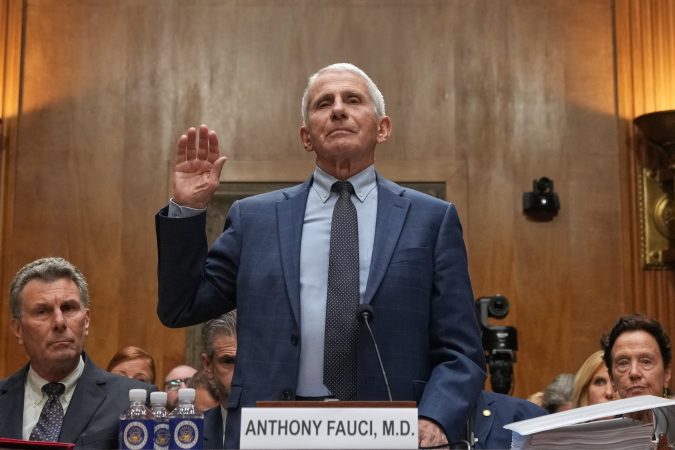
    WASHINGTON — Anthony Fauci’s decision to invoke the Fifth Amendment before Congress will be put to the test this week as a Republican-led committee prepares to vote to hold him in contempt and refer the matter to the Justice Department.

    A contempt finding could open the door to an investigation into whether Fauci had a valid constitutional right against self-incrimination when he refused to answer dozens of questions from lawmakers at a committee hearing last week focused on his handling of the COVID-19 pandemic.

    Republican senators including Rand Paul of Kentucky, who subpoenaed Fauci and has called a contempt vote for Thursday, insist that a pardon the doctor received early last year from Democratic President Joe Biden left him ineligible for Fifth Amendment protections. A Senate resolution released Tuesday asserts that Paul found Fauci’s privilege claims “unsupported.”

    But some legal experts say Fauci had reasons to invoke the Fifth Amendment, given the threat of potential state prosecutions and questions from President Donald Trump’s administration about the validity of Biden’s pardons. Any testimony from Fauci could have also prompted false-statement investigations like the ones the current Justice Department has repeatedly initiated against the Republican president’s perceived adversaries.

    No matter what happens, the episode raises fresh and complicated questions about Congress’ ability to compel testimony from previously pardoned witnesses — and the outcome could resonate beyond Fauci.

    “This is an important case because I think a lot of people anticipate that President Trump is going to issue similar pardons to many people in his administration who will end up being called before Congress, and the precedent here is important,” said Mark Osler, a St. Thomas University law professor and pardon power expert.

    Paul’s committee is moving to transmit the contempt referral from his Republican-led committee directly to the Justice Department. Whether the Justice Department would act on the referral is unclear.

    Fauci’s pardon protects him for past, not future, acts

    Fauci, a longtime National Institutes of Health scientist and the nation’s top infectious-disease expert, left the federal government in 2022 after more than five decades. He was among a group of perceived adversaries of Trump to be pardoned by Biden in one of the Democrat’s final acts in office. The clemency covered acts from 2014 to the date in January 2025 when the pardon was issued.

    Republicans on the Senate Homeland Security and Governmental Affairs Committee say the pardon lifted the specter of criminal prosecution and left Fauci without a valid basis to invoke the Fifth Amendment — a bedrock constitutional protection found in the Bill of Rights but one typically available only to those who have a reasonable basis to believe they risk being charged over their testimony.

    While a blanket pardon theoretically removes a threat of prosecution, Fauci made clear he thought he had a good-faith basis to fear criminal charges. He invoked his Fifth Amendment rights more than 100 times.

    Before the hearing. Fauci said that Paul, the committee chairperson, had an “obvious obsession with calling for my prosecution.” The purpose of his forced appearance “is to get me to say something, anything, that could vindicate his repeated public pledges that I end up, in his words, quote, behind bars, unquote,” Fauci said.

    In the run-up to the hearing, Paul made dozens of Fauci-related posts on X, including ones teasing that he was going to confront the doctor for having earlier given false testimony — something Fauci has denied.

    “I think his invoking the Fifth makes sense because he was invited into a situation where everyone in the country understood that Rand Paul was trying to set him up for a criminal prosecution,” said Michael Gerhardt, a University of North Carolina law professor. “In that circumstance, one of the smartest things to do would be to make yourself a very small target and say as little as possible, and that’s obviously what he did.”

    In announcing the contempt vote, Paul noted on X that “Fauci refused to answer a single question, even though he knew he couldn’t be charged for crimes” during the decade covered by his pardon. Fauci’s deflections encompassed even seemingly harmless questions, such as the color of the tie he was wearing — a reflection of an apparent belief that it was safer to refuse any testimony.

    There are factors that could tilt in favor of Fauci’s strategy, including the fact that his pardon would not protect him from potential state prosecutions or from a federal prosecution related to any testimony that investigators deemed false. That may not be an idle concern given the number of false-statement investigations prosecutors have opened against Trump’s political opponents.

    Trump’s administration also has repeatedly called into question the validity of the Biden pardons, given Biden’s frequent use of an autopen for official business. Legal experts say the pardons are valid.

    “The question is do you have a reasonable fear of prosecution, and Fauci’s argument would be — yes, I received a pardon, yes, I believe that pardon covers and prevents prosecution but there have been statements from lots of people including Trump and other administration officials … raising questions about the validity of that pardon,” said Ross Garber, a lawyer and expert in political investigations who has represented multiple clients who have invoked the Fifth Amendment.

    “That,” he added, “is potentially a very viable argument.”

    Paul has discussed trying to fast-track a contempt referral

    Paul said in an interview with Fox News Channel last week that he did not think “there’s any rule” requiring that a contempt referral from a committee go through the entire Senate. His committee is instead working to send the referral straight to the Justice Department.

    The contempt resolution states that the president of the Senate, Vice President JD Vance, “shall certify” the committee’s referral and the accompanying report to the U.S. attorney for the District of Columbia.

    That fast-tracking of the process avoids the need for a vote in the full 100-member Senate, where Republicans likely lack the 60 votes required to move a contempt referral to passage.