Bananas are both tropical and ubiquitous — an ingredient that couldn’t be less local to our region, but found in every grocery store. They’re mundane yet polarizing, especially when ripened and rendered into syrup. They’re summery, due to their cultivation in hot climates, and soul-warming.
The fruit has long been taken for granted, until now. Its popularity is suddenly booming: It’s a featured ingredient in protein bars, gummy bears, coffee creamer, lip balms, and body washes. Even Wendy’s launched a Minions-themed Banana Frosty Swirl last month.
But bananas’ recent prevalence in Philadelphia’s bars and cafes has little to do with the little yellow cartoon characters. Banana beverages have been a long time coming, hot on the heels of other wildly popular, vibrantly colored, Asian-inflected flavors like matcha and ube.
(Unlike matcha and ube, we’re probably not going to see a shortage of banana. But you never know. The bananas we buy at most grocery stores are of the Cavendish variety, but artificial banana flavoring was engineered with the Gros Michel variety in mind. And sometime in the 1950s, after a devastating fungal blight or “bananapocalpyse” called Panama disease, Gros Michel bananas mostly disappeared.)
“Little treat” cafes are utterly enamored with the banana, as evidenced by banana milk, a classic Korean beverage that has made it onto several cafe menus lately. The cafe crush doesn’t stop there: At the just-opened Sweet Mousse on South Street in Graduate Hospital, you can get a tiny trompe l’œil banana mousse cake ($6) with a dark chocolate center.
The dark chocolate banana mousse cake from Sweet Mousse in Graduate Hospital.Kiki Aranita / Staff /
But bananas are not the easiest ingredient to work with.
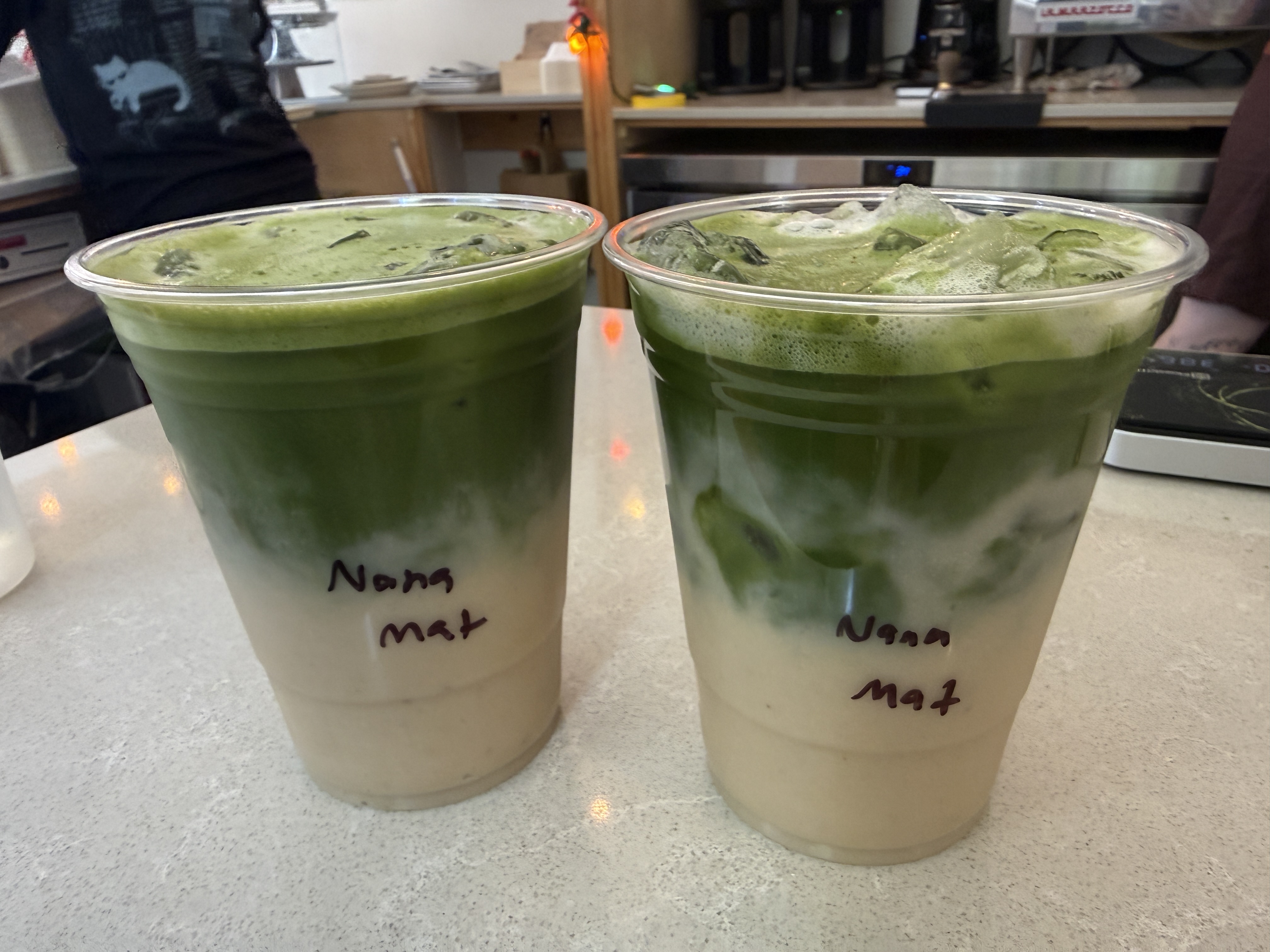
At Seaforest Bakeshop, also in Grad Hospital, cafe manager Mackenzie Quick makes banana milk from scratch, blending oat milk, maple syrup, vanilla extract, and bananas. It’s layered into the cafe’s best-selling beverage: their iced banana milk matcha. And it can only be served iced. “It’s not good at all hot. When you steam it, it turns into porridge,” said Quick.
Bartenders are reaching for all types of banana liquor, including Giffard’s Banane du Brésil, which goes into the banana cocktails at Friday Saturday Sunday and Sao, and Crème de Banane from Tempus Fugit Spirits, which is shaken into the banana Negroni ($13) at Cormorant Corner Bar and a banana-y Old Fashioned riff called the Triple Header ($16) at Bar ILU.
Philly cocktail bars are also coming up with unique ways to use the banana in its entirety, including its peel.
“We take the leftover peels after infusing bananas into dark rum and cut them down into half-inch slices,” said Josh Grejdus, the beverage manager at Bluebird Distilling. “Then we use equal parts by weight of sugar and macerate the skins. Let it sit overnight and then strain it” to create a banana oleo-saccharum (or aromatic syrup). A similar elixir is made at both Static! and Next of Kin, said co-owner Kyle Darrow, where brûléed banana goes into liquors like rum and scotch.
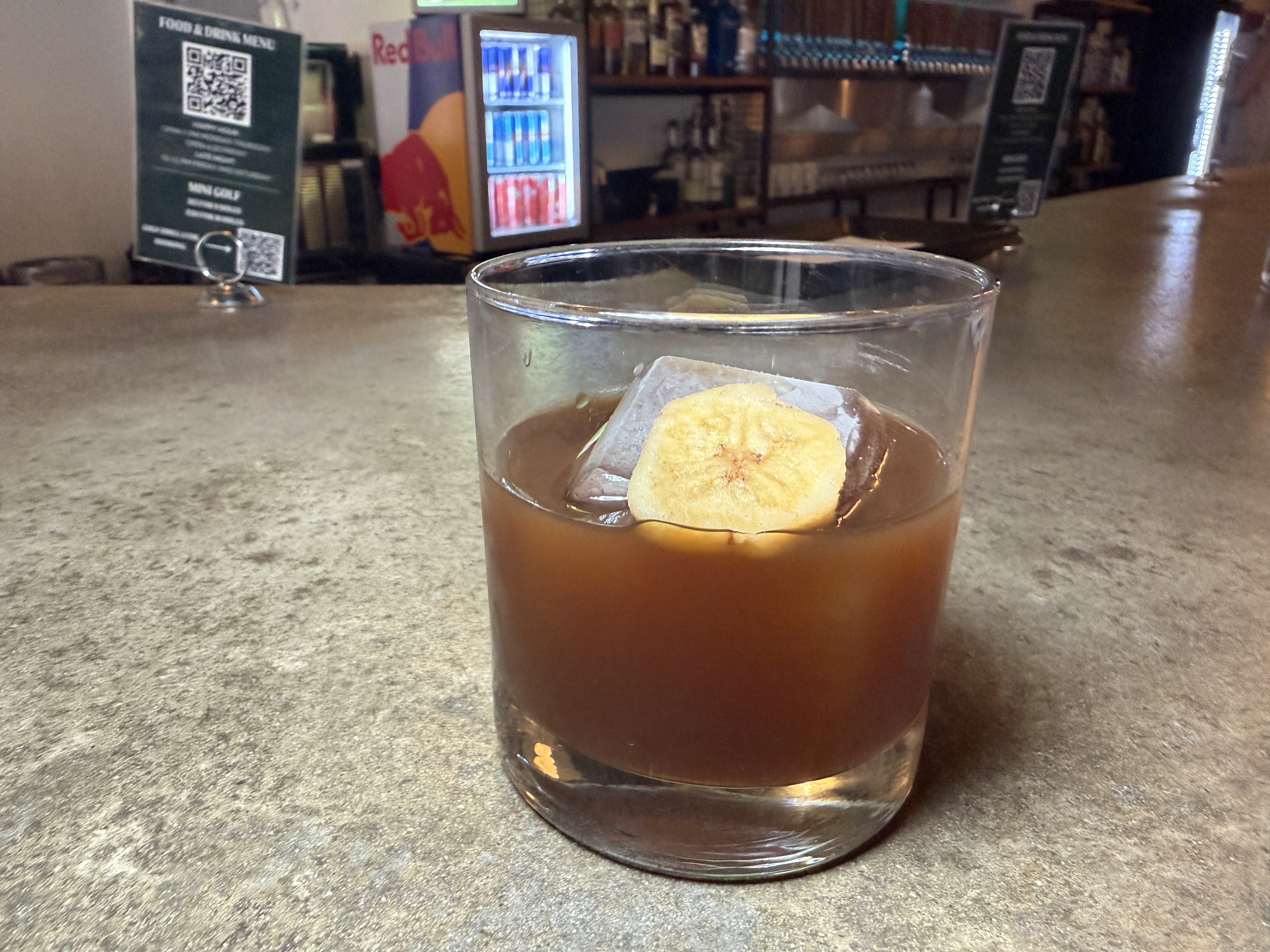
Libertee Grounds, the bar with indoor mini golf in Fairmount, takes an approach akin to Seaforest Bakeshop’s. “I make a banana puree, then incorporate it into a simple syrup using a mixture of sugar, maple syrup, cinnamon, nutmeg, and vanilla to lean into the banana bread feel,” said beverage manager Ellie Bley. “I batch this about once a week or more depending on demand.”
And demand for bananas sees no signs of waning.
Where to fuel up with banana cafe drinks
The iced banana milk matcha from Forin Cafe.Mike Prince
Forin Cafe
Forin makes a banana milk that consists of a simple syrup base with a banana emulsion and vanilla paste, which you can add to coffee and matcha drinks. Most popularly, it’s combined with ube and matcha.
The iced banana milk matcha latte from Seaforest Bakeshop uses house-made banana milk.Kiki Aranita / Staff /
Seaforest Bakeshop
Seaforest’s iced banana milk matcha uses Junbi matcha with their house-made banana-oat-maple syrup milk. The matcha is vigorously whisked for a drink that is creamy, fresh, grassy, and thick. It’s lightly sweet and has the texture of a loose smoothie.
This pink-tiled Chinatown cafe serves a banana latte ($7.75) made with strong Vietnamese phin-brewed coffee, poured over ice and layered with milk and foam spiked with DaVinci brand banana syrup.
Matcha Cafe Maiko in Chinatown is serving a banana pudding matcha latte, in which banana extract is mixed into whipped cream, the sweetness of which is balanced by a very robust matcha base. The whipped cream tastes like a cross between Runts and sunscreen (which some people love).
Static! has a banana cocktail called Split Decision made of brûléed banana scotch, banana skin, absinthe, bitters, and is washed with brown butter. Sister bar Next of Kin uses a similar process for their banana cocktail, Crocodile Tears.Kiki Aranita / Staff /
Next of Kin
While Static’s bestselling banana cocktail is rotating off their menu soon, the process for making it continues at sister bar Next of Kin, where banana is brûléed, infused into liquor for a day, then strained. Next of Kin’s banana daiquiri, one of the cocktails that uses rum infused with banana, is also one of the bar’s top sellers.
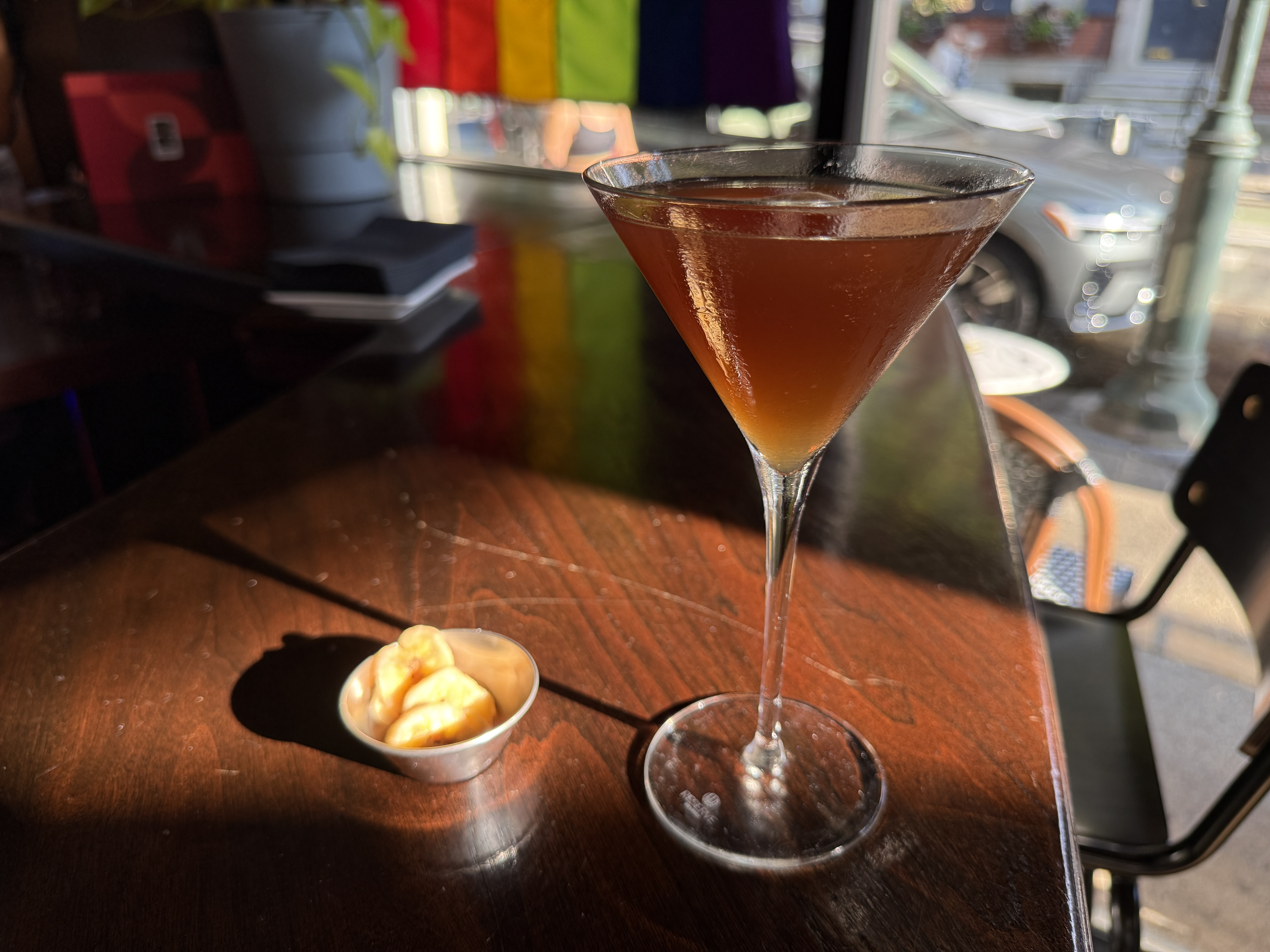
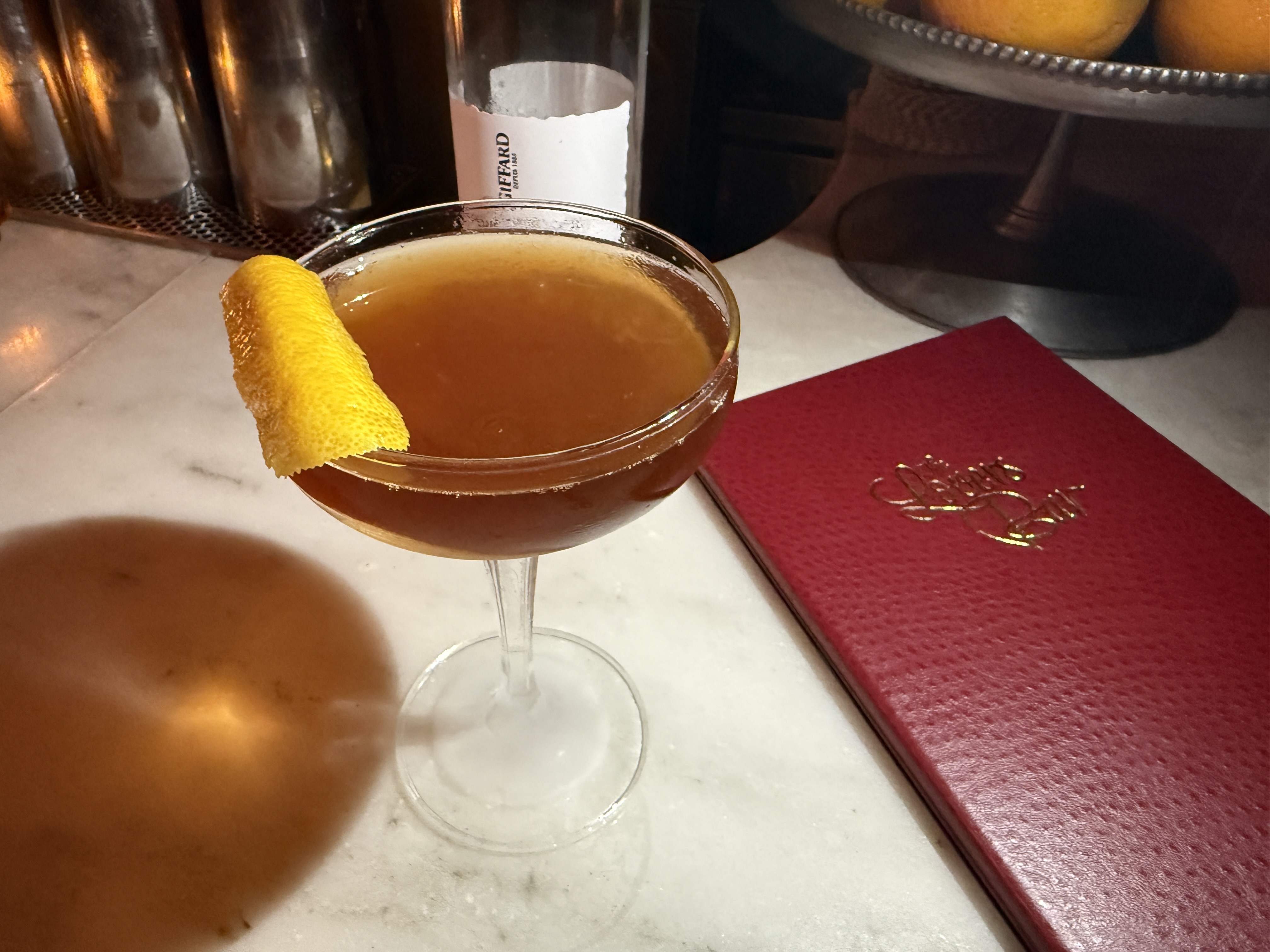
The cocktail Saul’s Revenge at the Lovers Bar at Friday Saturday Sunday consists of quinquina, pineapple distillate, Malört, coffee and banana liqueurKiki Aranita / Staff /
The Lovers Bar at Friday Saturday Sunday
Bartender Eric Martinez created the extremely complex cocktail Saul’s Revenge ($20) for the Lovers Bar using six ingredients: Quinquina, a French bittersweet aperitif, a pineapple distillate akin to mezcal), the divisive and herbaceous Malört, coffee, and Giffard banana liqueur, which is made from overripe Brazilian bananas. The result is smoky, nuanced, and gets a bitter edge from the Malört.
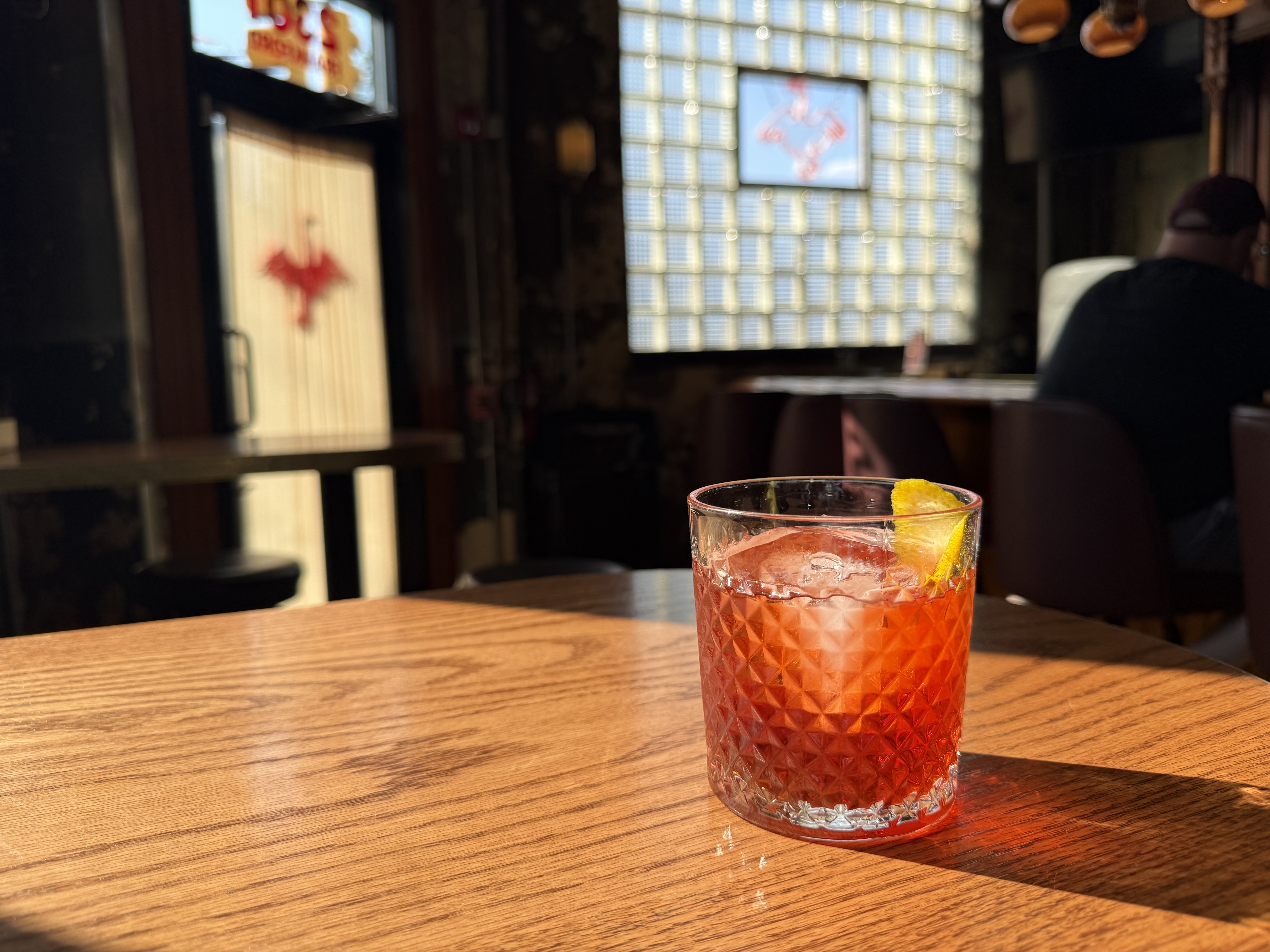
The banana negroni from Cormorant Corner Bar uses Crème de Banane.Kiki Aranita / Staff /
Cormorant Corner Bar
A fairly straightforward Negroni (with gin, Campari, and sweet vermouth) is transformed with a slug of Crème de Banane liqueur. Crème de Banane lends a silky viscosity to the classic cocktail and balances out its herbal notes.
Cormorant Corner Bar, 2301 Frankford Ave., 215-575-5112, cormorantphl.com
The Drunken BBL cocktail at Libertee Grounds consists of vanilla vodka, Borghetti espresso liqueur, Cynar, La Colombe cold brew, and banana.Kiki Aranita / Staff /
Libertee Grounds
Take a break from mini golf to try Libertee Grounds’ clarified cocktail, the Drunken BBL ($14) which combines vanilla vodka with Borghetti espresso liqueur, Cynar, La Colombe cold brew, and a house-made banana milk that consists of banana puree mixed with wintry spices.
Libertee Grounds, 1600 W. Girard Ave., Ste. C5, 267-324-3487, liberteegrounds.com
For the first time since 1996, a new leader will be taking the helm of Mural Arts Philadelphia.
Emily Mello, a longtime arts educator and curator, will assume the role of the arts organization’s executive director on Sept. 1.
She succeeds Mural Arts founder Jane Golden, who has been a part of the organization since its inception in 1984, when it was known as the Philadelphia Anti-Graffiti Network. Golden announced her decision to step down as executive director in August 2025.
Mello’s appointment follows a national search led by the board of directors of Philadelphia Mural Arts Advocates, the nonprofit organization that raises funds for and supports Mural Arts Philadelphia.
Arts educator and curator Emily Mello, who has led arts institutions in New York, Chicago, and Miami, is Mural Arts’ new executive director.Courtesy of Ray Bailey
Board chair Hope Comisky said Mural Arts is “thrilled” to land Mello, adding that she boasts the blend of arts education, civic participation, and collaboration integral to the organization’s future.
“She’s worked with diverse groups and cultures. She’s had meaningful partnerships and understands the importance of artists and communities in the work that she does, and she has a collaborative work ethic,” Comisky said.
Mello brings more than two decades of arts leadership, with extensive experience in strategic planning, fundraising, community partnerships, and restorative justice. Most recently, she served as the Museum of Contemporary Art Chicago’s senior director of education, learning, and public programs.
In Philly, Mello said, she has found a city with a “strong arts community” and a level of civic pride she has not encountered in other places.
“I have worked in a lot of cities, and not every city has that amount of pride, and that’s a great place to be working from,” she said. “It tells me that people are really invested in what public space looks like, how it’s used, who has a stake in it, and who it’s reflecting. Those are all things that you see immediately upon entering Philly, and Mural Arts is such a huge part of that.”
Mural Arts is a nonprofit arts organization that transforms public spaces through community partnerships and artist collaborations. The organization has produced more than 4,300 public artworks across Philadelphia since its founding in 1984.
It was established as the Philadelphia Anti-Graffiti Network by Mayor Wilson Goode’s administration. At the time, Tim Spencer was the group’s executive director, and Golden was brought on to develop the program’s art component — addressing the city’s graffiti problem by working directly with young people drawn to it as a form of self-expression.
In 1996, with the support of then-Mayor Ed Rendell, the Anti-Graffiti Network became the Mural Arts Program, and Golden took on the role of executive director.
“I have loved every part of running Mural Arts, and there is a part of me that feels sad. And a part of me that feels excited for Mural Arts and its future,” Golden said. “I think [Mello] was a really strong candidate, and I have the confidence she will be able to lead Mural Arts in the years to come.”
Arts educator and curator Emily Mello, who has led arts institutions in New York, Chicago, and Miami, is Mural Arts’ new executive director.Courtesy of Anjali Pinto
Before proposing any new programs, Mello said, she plans to continue building on Mural Arts’ existing education and restorative justice programs, and other core initiatives focused on “using art as a tool for healing.”
“Those are things that have really resonated for me in the arts, and I recognize it in Philly,” she said. In this city, she says, there are “people who see art as an essential infrastructure for a city.”
The immediate task at hand, Mello said, is to connect people from different neighborhoods and sectors to ensure that art — and the stories they tell — remains a central part of life in Philadelphia. “I think that has been established in Philly, but it’s something that we can’t take for granted,” she said.
Mello, 47, was born and raised in Providence, R.I., and earned an undergraduate degree in art history from Mount Holyoke College. She has a graduate degree from the Harvard Graduate School of Education and a certificate from the Aspen Institute Seminar for Artist-Endowed Foundation Leaders.
She has also been the senior associate director of education at the New Museum of Contemporary Art in New York and deputy director for education and public programs at Pérez Art Museum Miami. Mello also worked with artist Simone Leigh as her director of foundations planning and special projects.
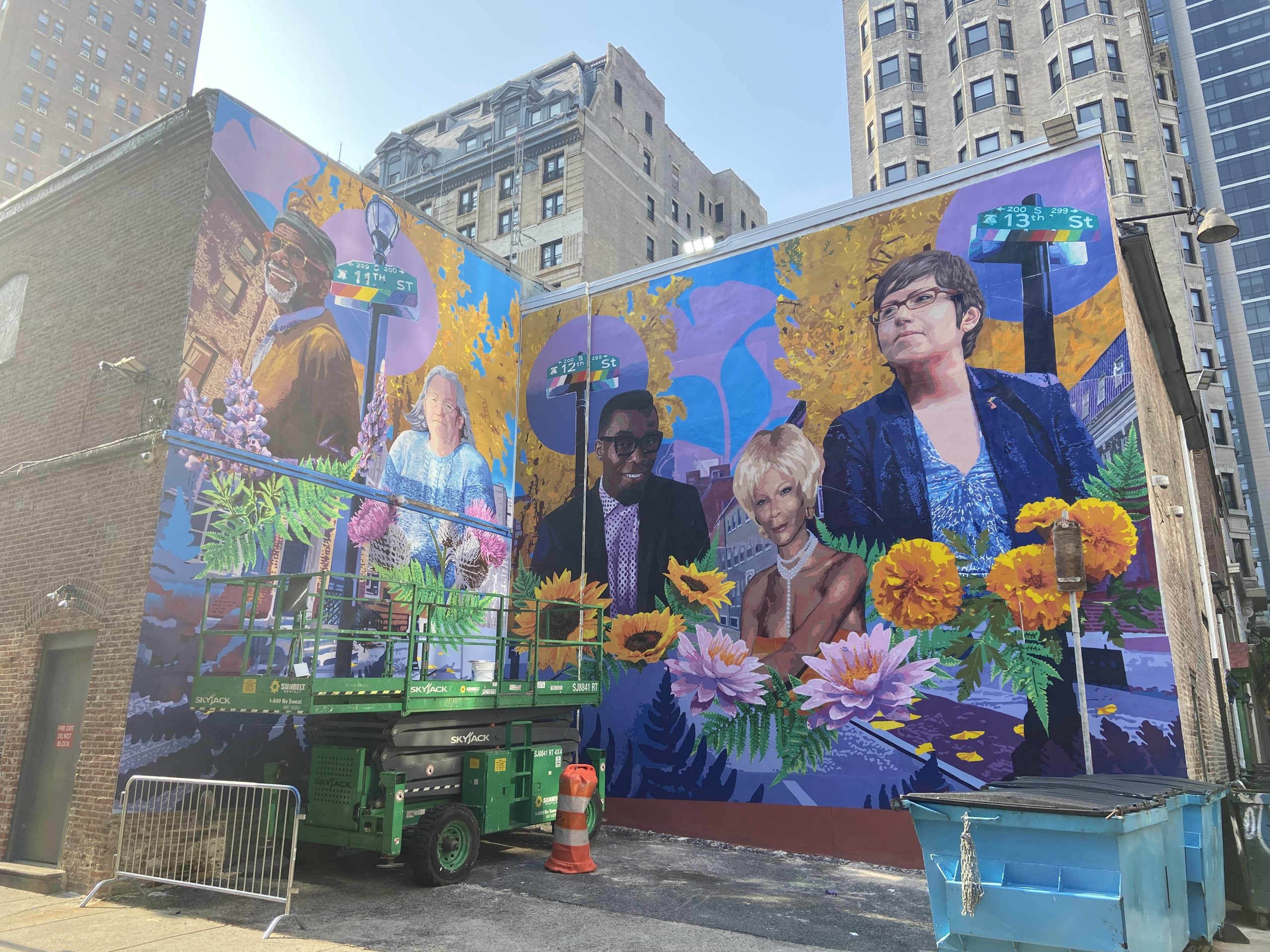
The mural “In Pride, In Power, In Memory” is located outside of Voyeur Nightclub in Philadelphia’s Gayborhood.Morgan Ritter
On Monday, Mello visited the 1,200-square-foot In Pride, In Power, In Memory mural that was unveiled on the exterior of Voyeur Nightclub at 1221 St. James St. on June 26.
The mural, created by artist Santiago Galeas, was a work in progress through Mello’s interview process and has taken on a special meaning for her.
“I love that it memorializes figures that are important to Philadelphia’s history, but also history more broadly,” she said. “To see it at that scale, and transforming the cityscape, is a powerful tool to teach people about those who came before them and fought for them.”
Golden will serve in an advisory role through the end of the year to assist with the transition.
Jane Golden, Mural Arts Philadelphia founder and executive director, speaks at the Bells Across PA event in celebration of America’s 250th Birthday in Philadelphia, Pa., on Friday, Jan. 16, 2026.Tyger Williams / Staff Photographer
“We obviously want to honor [Golden’s] legacy because she transformed Philadelphia, and she certainly inspired cities nationally, if not internationally,” said board chair Comisky.
“But we also want to look toward the future, and we think with the background [Mello] has, we’re going to be able to do just that.”
Philadelphia is the latest locale for vigilante Jack Reacher's shadowy dealings in season four of Reacher, streaming now on Amazon Prime. The show, which stars actor Alan Ritchson as the hulking retired Army investigator, was spotted filming around town last year.
Based on Lee Child's 2009 novel Gone Tomorrow, this season has Reacher facing off against the CIA, federal agents, and international mercenaries following a woman's suicide. And while much of the on-screen action appears to have been filmed elsewhere — namely Toronto, which looks a lot like Philly, but with space — the City of Brotherly Love does show up quite a bit.
Here, we'll be rounding up all the Philly spots we can identify this season. Check out the map below for where Reacher and his cohorts took them in the city.
story continues after advertisement
Loading…
Philadelphia
City Hall
Michael Bryant / Staff P
Reacher's fourth season immediately sets the scene with a shot of the William Penn statue atop City Hall as a nightscape of Center City shines in the background.
Philadelphia
Uptown Beer Garden
Erin Blewett / For The Inquirer
We catch our first glimpse of our hero, Jack Reacher (Alan Ritchson), as he exits Uptown Beer Garden, who walks out of the establishment silently with a beer in hand.
Philadelphia
LOVE Park
MICHAEL BRYANT / Staff Photographer
Reacher speaks for the first time this season, ordering a "wiz wit" from a nondescript food truck in Love Park.
Philadelphia
Avenue of the Arts
JESSICA GRIFFIN / Staff Photographer
Here, Reacher strolls down the sidewalk on the west side of Broad Street, chomping on his cheesesteak. Canonically, it is just after 2 a.m., and the street is deserted as he descends into the Walnut-Locust entrance B line, which runs along Broad Street.
Philadelphia
Walnut-Locust Station
Alejandro A. Alvarez / Staff Photographer
As he enjoys his cheesesteak, Jack Reacher (Alan Ritchson) heads down into the Broad Street Line at this Center City station. Several interior shots of the station are shown, including one in which a rat munches on a hot dog.
Philadelphia
Benjamin Franklin Bridge
Thomas Hengge / Staff Photographer
Philly is again shown off in all its nocturnal glory with a low-light shot of Center City from the Ben Franklin Bridge.
Philadelphia
Benjamin Franklin Parkway
For the first time in the season's first episode, the sun rises on Philadelphia. And it does so in this stunning aerial shot showcasing many of the Ben Franklin Parkway's gems — Logan Circle, the Philadelphia Museum of Art, the works.
Philadelphia
Parkway Central Library
Tom Gralish / Staff Photographer
We get a great glimpse of the exterior of the Parkway Central Library before heading inside, where Jack Reacher (Alan Ritchson) and Jacob Merrick (Christopher Rodriguez-Marquette) do research on Congressman John Sampson (Marc Blucas), a North Carolina representative who is launching a presidential bid.
Philadelphia
Parc
Courtesy of HughE Dillon
Parc briefly plays host to Reacher, Lila Hoth (Agnez Mo), and Jacob Merrick (Christopher Rodriguez-Marquette) as the trio settles in at an outdoor table to evade police.
Philadelphia
Walt Whitman Bridge
Tom Gralish / Staff Photographer
Reacher and his cohorts travel back into Philly via this bridge after escaping Washington, D.C. In the background, the old Southwark Generating Station is clearly visible.
Philadelphia
Schuylkill Expressway
Tom Gralish / Staff Photographer
As Reacher and his crew traverse Philly at night, the action leads to a shot of the west end of Center City near 30th Street Station from the Schuylkill Expressway.
Philadelphia
Schuylkill Expressway
Monica Herndon / Staff Photographer
Here, we get another nightscape shot of Philly's skyline, again from I-76 near 30th Street Station looking east. In the foreground, Locust on the Park is lit up green and is featured prominently.
story continues after advertisement
That was every location we could spot in the opening three episodes. Explore the map of all locations featured. Tap onHover overa pin to learn more.
Staff Contributors
Design and Development: Garland Fordice and Sam Morris
The nearly $600 million in tax-free bond issue meant to finance the sale of South Jersey’s Advantage Behavioral Health failed to attract enough investors last week, leading investment bankers to put the transaction on hold, Bond Buyer reported.
Despite the extremely high investment yield as high as 8.25%, portfolio managers were troubled by the heavy debt load that would have been placed on a company with a short track record and few hard assets backing it up, according to the trade publication.
Representatives of the private equity firm, Connecticut-based Clearview Capital, and QCF Advantage, whose parent company is based in Houston, did not respond to requests for comment Tuesday. Officials at Marlton-based Advantage could not be reached for comment.
Clearview took control of Advantage in April 2025, which means a successful sale would be a quick turnover by private equity standards.
The proposed sale was notable not just because it would have increased Advantage’s debt by 12 times, according to Bloomberg Law, but also because of the structure that would have left Clearview and current executives as owners of a for-profit entity that would manage Advantage.
The proposed sale price was about $520 million, according preliminary bond documents. That price included $80 million being held back to see if Advantage hits profit targets after the sale. The company had $141.6 million in revenue in the 12 months that ended May 31.
Founded in 2017 in Camden County, Advantage also operates in Pennsylvania and six additional states. It offers intensive outpatient therapy through a business called Victory Bay and telehealth services through Harmony Bay. It also operates 17 sober-living houses under its Dignity Hall brand in Blackwood, Laurel Springs, Sicklerville, and several other South Jersey towns.
Ryan Richter knew the odds when he stepped onto the podium at Subaru Park on Sunday night.
Though the Union still have a mathematical chance to advance to the Leagues Cup quarterfinals, it would take a blowout win over Santos Laguna on Thursday in Chester (7 p.m., Apple TV) and so many results by other teams that it’s barely worth thinking about.
“It will be a little different, that’s the reality,” he said after Sunday’s win over Necaxa.
But while the chance for a trophy has sailed down the Delaware River — the least important of the trophies the Union can win, as the low attendances have once again proved — that doesn’t mean the team has failed here. In fact, something quite important has happened.
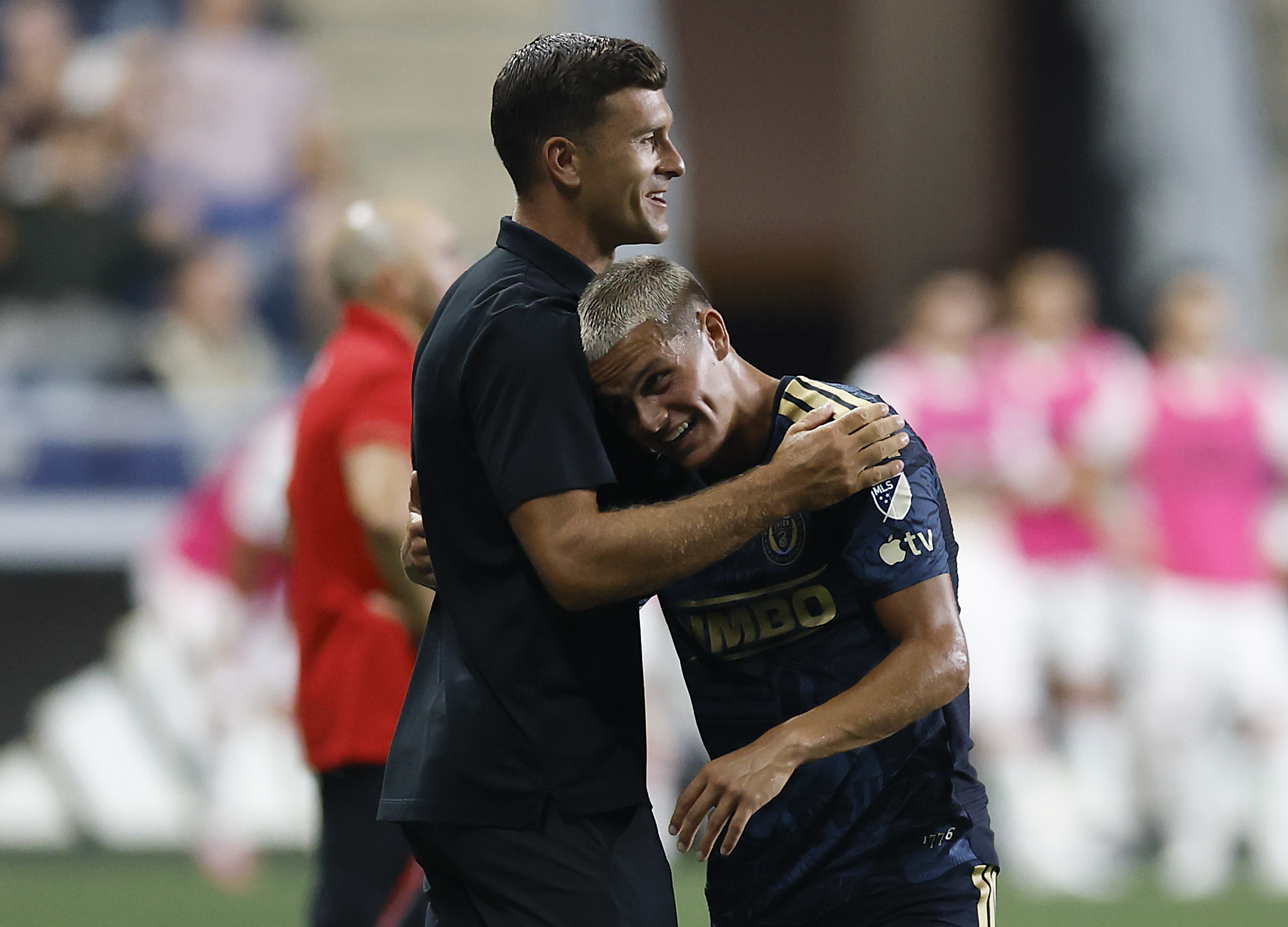
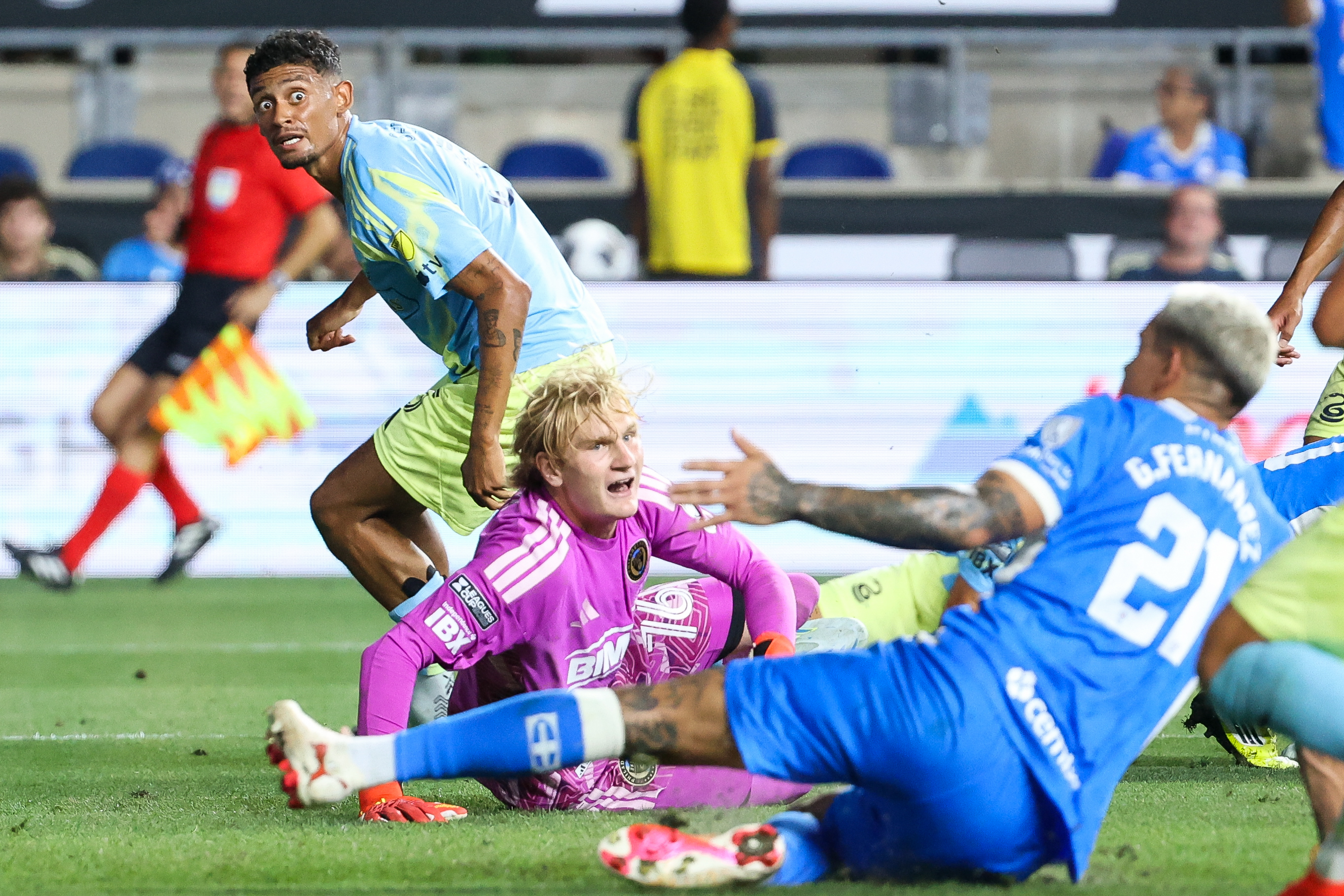
Ryan Richter (left) embraces Cavan Sullivan after subbing Sullivan out of the Nexaca game, where the 16-year-old had a goal and an assist.Yong Kim / Staff Photographer
For a young American player with dreams of representing the country on soccer’s biggest stages, there’s no experience like facing teams from other Concacaf nations early in your career. No amount of teaching in the Union academy’s classrooms can match learning by doing, and a slew of Union players have done it this summer.
“You see the physicality, and almost the cleverness,” Richter said. “The way that they are able to use their bodies, the way they’re able to position themselves. The physicality is just a little bit different, I would say, and the style of player.”
As an example, he cited “the way the striker, [when] the ball comes in [to] him, you’re getting the elbow early in your stomach to make the 2 yards of space for himself. It’s a very savvy way of playing.”
It’s also the sort of thing that makes new soccer fans recoil — until, of course, their own player does the same thing and benefits from it.
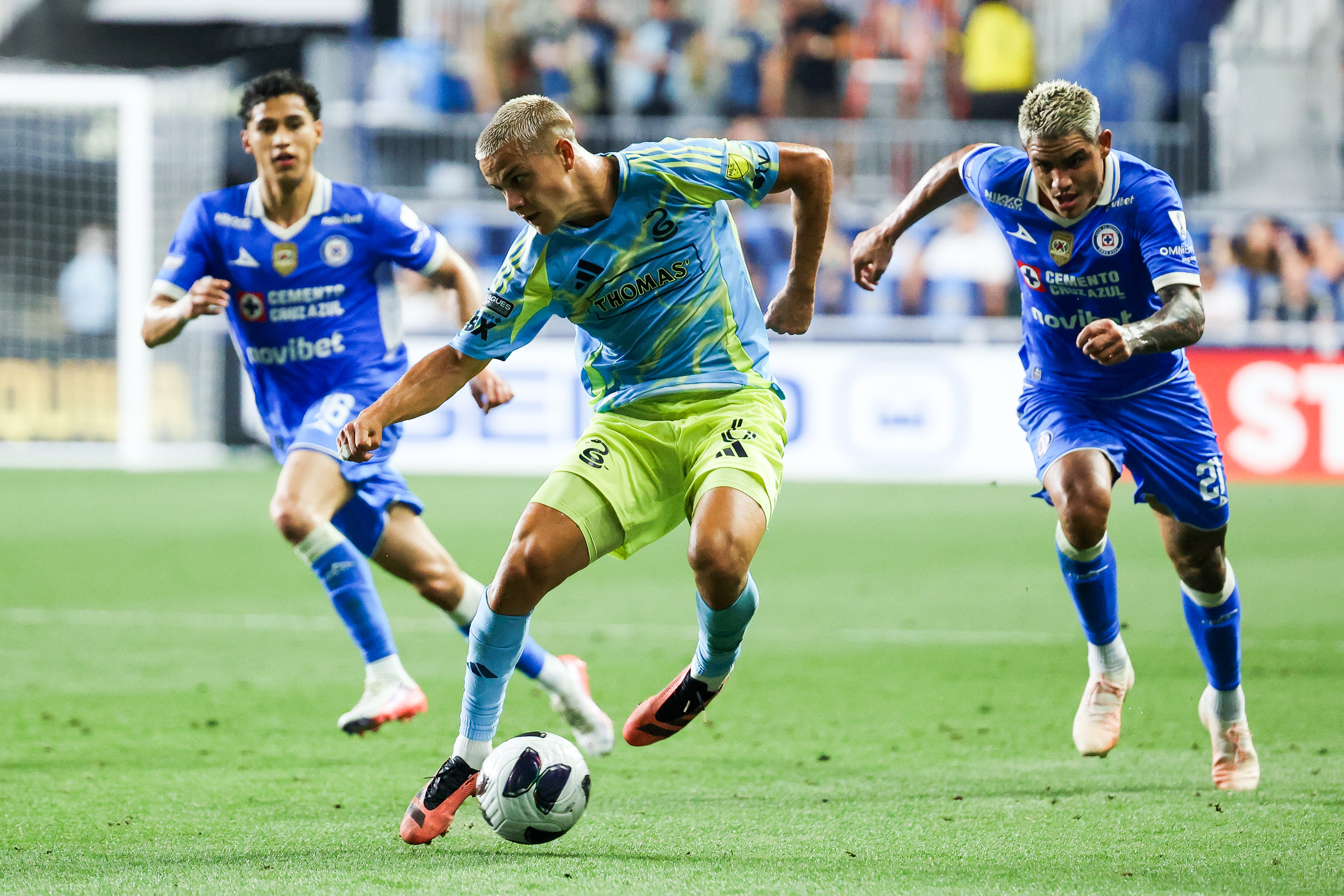
Frankie Westfield (right) going up for a header against Cruz Azul.Isaiah Vazquez / For The Inquirer
‘That Concacaf feel’
Which Union players have gained the most from these two games? Cavan Sullivan tops the list. He was a force in both, and he knew exactly what he was getting into.
“It’s a different element than MLS, so it’s great experience,” said Sullivan, who was a U.S. stalwart at last year’s under-17 World Cup. “More of that Concacaf feel: that gritty, aggressive battle, games that are just battles. So I think it’s great for us, great for young guys.”
Quinn Sullivan has fit right back in during his first games back from the long injury absence. Obviously he has needed time to ramp up to full fitness, but he’s now showing he’s close.
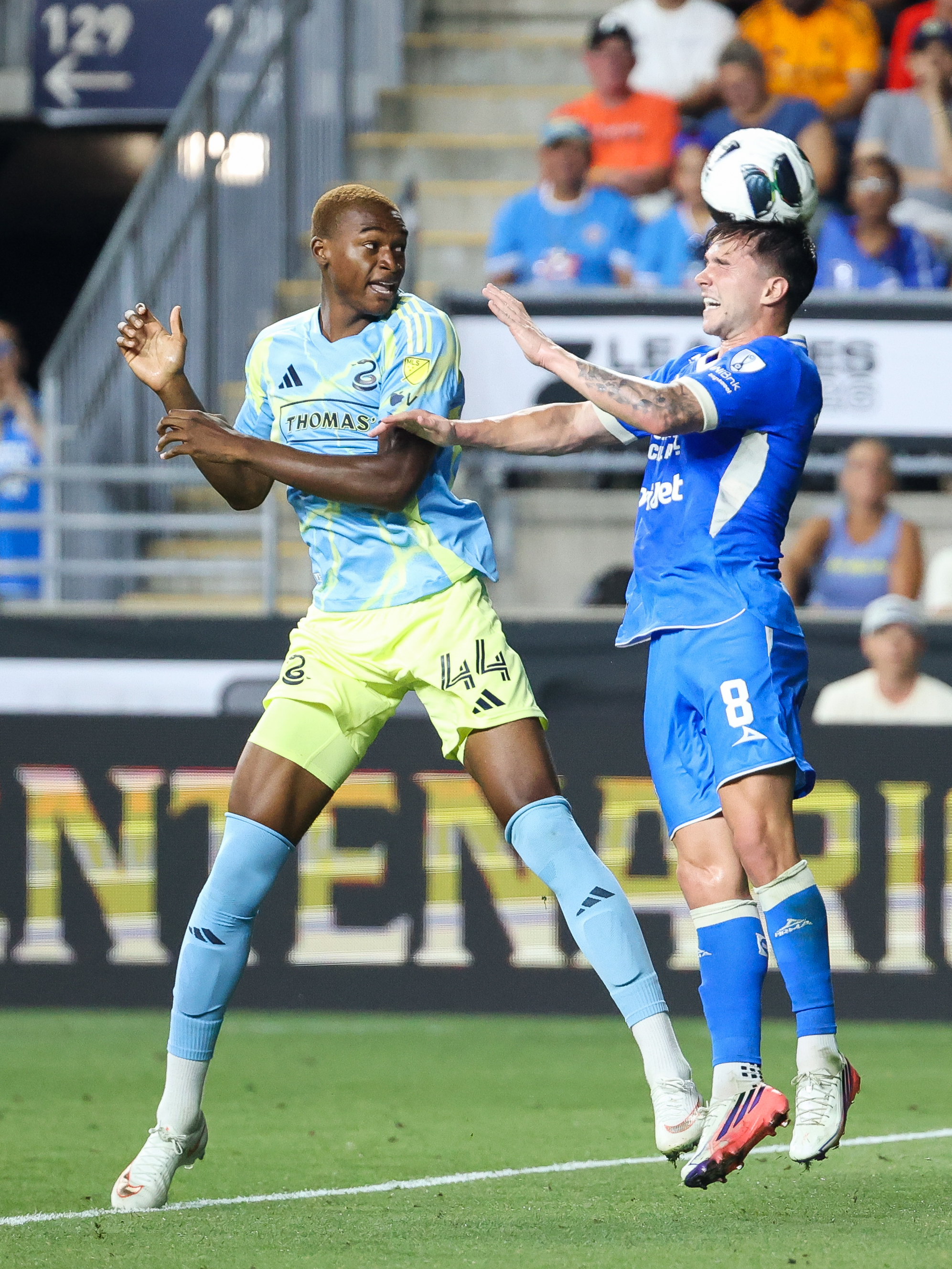
Neil Pierre has continued a breakthrough summer at centerback that has left scouts across the sport raving. Spanish superpower Barcelona was reportedly already monitoring him before he returned to Chester from his loan to Denmark’s Lyngby, and you can be sure the line of suitors will keep growing.
Neil Pierre (left) battling Cruz Azul’s Agustín Palavecino.Isaiah Vazquez / For The Inquirer
Andrew Rick has built upon his priceless experience with the U.S. World Cup team, starting in net for both Leagues Cup games and playing especially well against Necaxa. (It wasn’t his fault that a breakdown in front of him left Japhet Sery Larsen having to mark two attackers at once, leading to the visitors’ goal.)
Last, but a long way from least, Frankie Westfield has continued his impressive rise at left back, despite making the error that led to Cruz Azul’s goal in the Leagues Cup opener.
Perhaps this all seems strange to be saying about a team that not only won’t win the Leagues Cup, but might now call just making the playoffs a successful season after years of higher aspirations.
But a broader look could explain it.
We were just getting settled! 🤯⚽ Nathan Harriel came down the wing and opened the scoring with a great shot for @PhilaUnion!
The continuing afterglow of the World Cup includes Mauricio Pochettino’s renewal with the U.S. men’s national team. He has pledged to look at new players for the 2030 cycle, and his first opportunity to do that will come in the four friendlies that start late next month.
Since the two FIFA windows after that (in November and next March) are reserved for the serious business of the Concacaf Nations League, there’s ample reason for Pochettino to leave some veteran stars home for the friendlies and give newcomers a chance.
Cavan Sullivan is on the list of candidates. Quinn Sullivan might be, too, since Pochettino knows him from last summer and respects his game.
“Obviously that’s a goal,” Quinn said, though he was quick to add, “Right now I’m really focused on building my fitness back.”
Quinn Sullivan on the ball in the Necaxa game.Yong Kim / Staff Photographer
It’s also worth remembering the manager’s praise for Nathan Harriel last fall, though other defenders are higher up the priority list right now. The 25-year-old has a lot of experience under his belt now, not just the tactical kind but the streetwise kind.
“All these opportunities you get to play against these Mexican teams are good learning moments for sure,” Harriel said. “Those games you get up for [them]. And it’s difficult, it’s hard, there’s tough moments, but you learn and you can grow from it.”
Is Pierre on the list, still a raw talent at age 18 but in that impossible-to-miss 6-foot-7 frame? The senior national team might be a step too far at the moment. But there’s also the 2028 Olympic team to consider, an under-age-23 squad. He could definitely be of interest to that group’s head coach, Steve Cherundolo, now and over the next two years.
The same goes for Rick, as Cherundolo and Pochettino ponder what to do with a crop of young goalkeepers that is interesting but has no standout yet.
Andrew Rick (center) in action against Cruz Azul.Isaiah Vazquez / For The Inquirer
Obviously, Rick has to contend with being Andre Blake’s backup, and the limited playing time that results. But he has amply proved his abilities to the Union, and likely to the U.S. staff, too.
Westfield has perhaps the most potential for the Olympic team. Outside backs are always hard to come by, and the 20-year-old from Morrell Park in Northeast Philadelphia can play either flank. If he keeps playing this well, his stock should be quite high.
“Everyone’s going to be shooting for the Olympics and World Cup, and we have big dreams,” Quinn Sullivan said. “These smaller versions of the big thing are always helpful.”
And as Harriel said of his journey: “Anything’s possible — I thought I had no shot, and I ended up being there.”
The Leagues Cup has helped show why these players do have a shot.
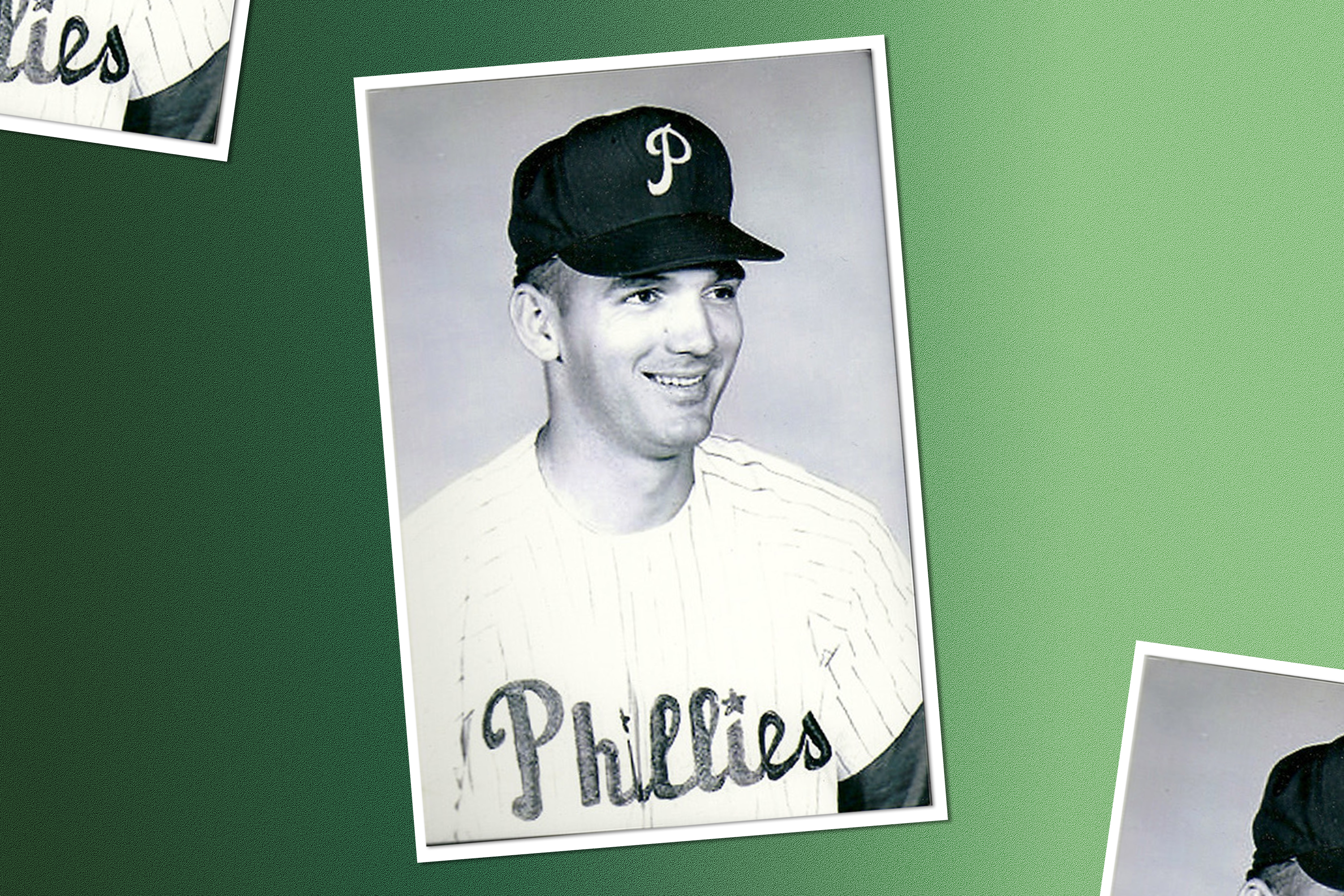
Mickey Harrington played with major leaguers, played against major leaguers, played for major leaguers, and even roomed with major leaguers. But him? Harrington was stuck in the minor leagues in 1963 after signing six years earlier with the Phillies.
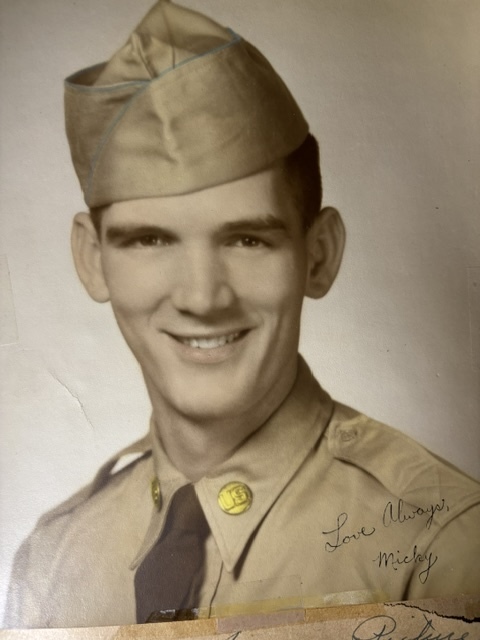
Harrington served two years in the Army and could have played professional basketball after being drafted by the New York Knicks. He picked baseball, believing it was his best chance at a career. And then Harrington watched every season as his teammates left the minors for the majors while he stayed behind.
Finally, he got his chance. The Phillies called up Harrington in July of 1963, flying him from Hawaii where he was playing for a triple-A team. The 28-year-old was a big-leaguer.
Harrington sat on the bench for eight games before manager Gene Mauch used him as a pinch runner on July 10, 1963. Roy Sievers singled to start the eighth inning against the San Francisco Giants at Connie Mack Stadium and Harrington stepped onto the grass at 21st and Lehigh.
The inning ended two batters later when Clay Dalrymple grounded into a double play. Harrington had reached second on a single by Don Hoak before Don Demeter hit a grounder to first. A newspaper account blamed Harrington for “reckless baserunning” as he was tagged after making a wide turn around third base.
Mauch, the fiery manager they called the “Little General,” immediately lifted Harrington from the game and replaced him with Frank Torre. Two days later, the Phillies dropped Harrington back to the minor leagues.
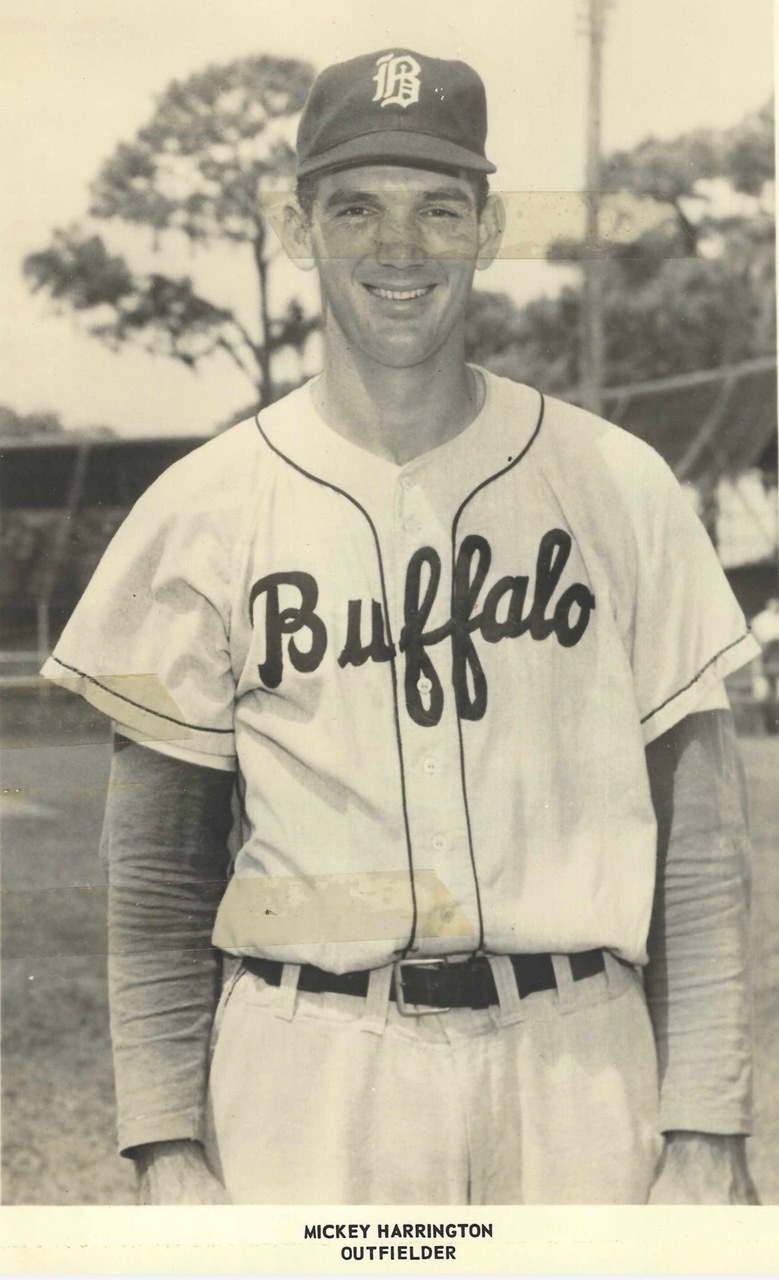
Mickey Harrington as a minor leaguer in Buffalo.Harrington family
He was a professional ballplayer for 10 seasons but his only experience in Major League Baseball was being used once as a pinch runner. He didn’t play the field, score a run, or step into the batter’s box. Harrington, who died in 2017, finally became a big-league player. But his career only lasted a few minutes.
“Deep down, I could read between the lines even though he didn’t say much about it,” said son-in-law Ken Knopp. “I know it hurt him. He felt at some point that he was beating his head against the wall. I know it hurt his feelings. But he never really said that much about it. It was frustrating for him. He couldn’t break in.”
Field of Dreams
The Phillies will play Thursday against the Minnesota Twins in Dyersville, Iowa, the setting for Field of Dreams, the 1989 Hollywood film where a cast of legendary players appear as ghosts on a baseball diamond built by a farmer in the middle of a cornfield.
A thread of the movie was focused on Moonlight Graham, a longtime minor-league player who played one inning in the majors as a defensive substitute in 1905 but never had a chance to hit.
“It was like coming this close to your dreams, and then having them brush past you like strangers in the crowd,” the older Graham character, played by Burt Lancaster, says in the film. “At the time, you don’t think much of it. We just don’t recognize life’s most significant moments while they’re happening. Back then I thought, ‘Well, there’ll be other days.’ I didn’t realize that that was the only day.”
The Iowa diamond brought the ghosts of “Shoeless” Joe Jackson, Mel Ott, Gil Hodges, and other deceased greats out of the cornfield and gave their careers a second life. Graham — wearing an old New York Giants jersey — finally got his chance to bat and hit a sacrifice fly. Jackson asked the farmer if the field was heaven. No, it was Iowa.
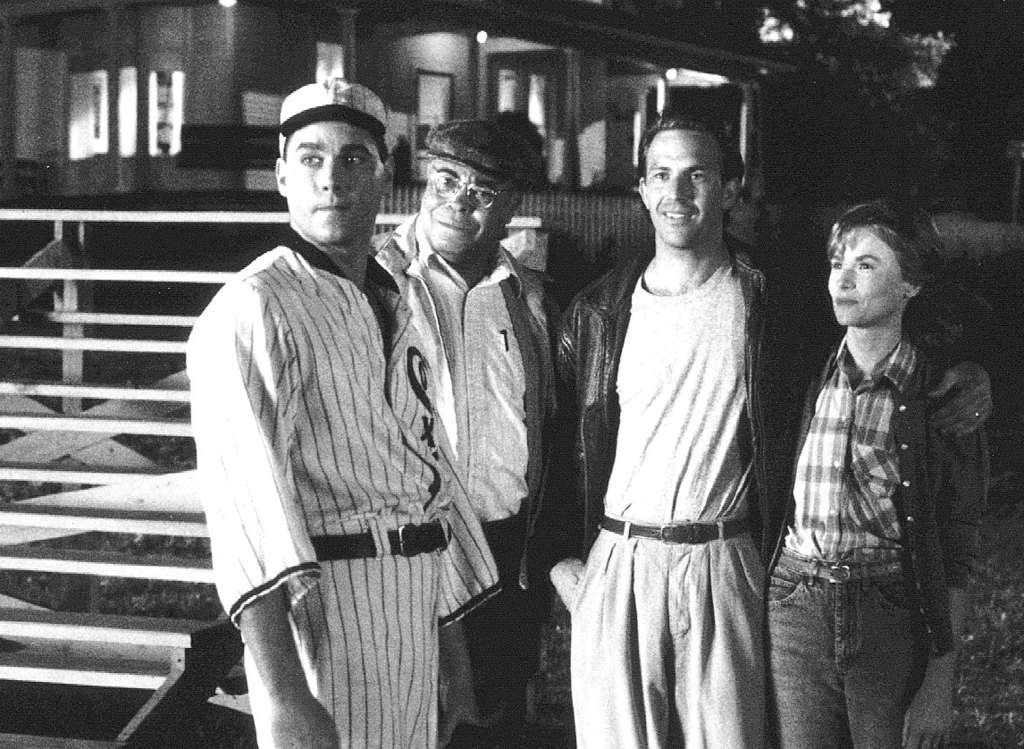
In 1989’s “Field of Dreams,” James Earl Jones (second from left) starred with (from left) Ray Liotta, Kevin Costner, and Amy Madigan.
It was magic and the film, which is routinely ranked among the top sports movies ever made, was nominated for Best Picture at the 1990 Academy Awards.
Harrington’s big-league career was a flash just like Moonlight Graham’s. But the man who grew up in Hattiesburg, Miss., never got to hit on a field of dreams.
“It was a thrill to get there,” Harrington told the Clarion-Ledger of Jackson, Miss., in 2003. “But it was a letdown not getting to bat. It would have been nice to bat one time.”
Playing with legends
Harrington hoped to return to Hawaii after being dropped back to the minors but was instead sent to Little Rock, Ark., where Dick Allen was playing as the team’s first Black player. For Harrington, it was another encounter with the type of players who played on that cornfield.
He roomed with Chuck Tanner, hit against Tommy Lasorda, and played against Sparky Anderson, all future managers. Willie Mays, Willie McCovey, and Orlando Cepeda were on the Giants when Harrington passed through as a pinch runner.
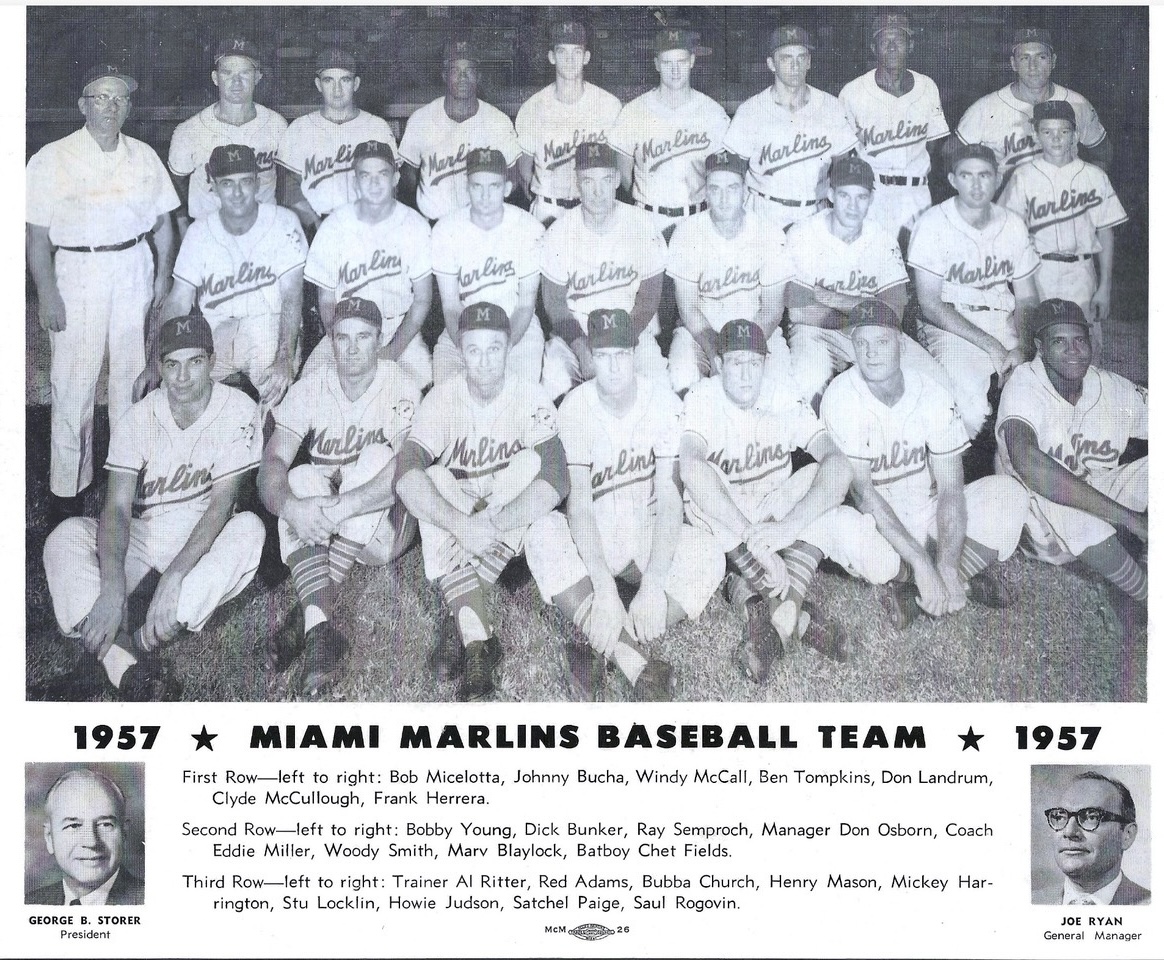
Harrington spent most of his first season in 1957 with Miami, where the Phillies had a triple-A club. He was being teased in the clubhouse for being from Mississippi when an older pitcher asked him where he was from. Hattiesburg, Harrington said. The pitcher grew up 90 minutes away in Mobile, Ala. It was 50-year-old Satchel Paige, another legend for Harrington to cross paths with.
“Satchel Paige stood up,” Knopp said. “‘Hey, y’all leave him alone. He’s my neighbor.’ They became good friends. Satchel Paige took up for him. That’s a pretty good way to be introduced to Satchel Paige.”
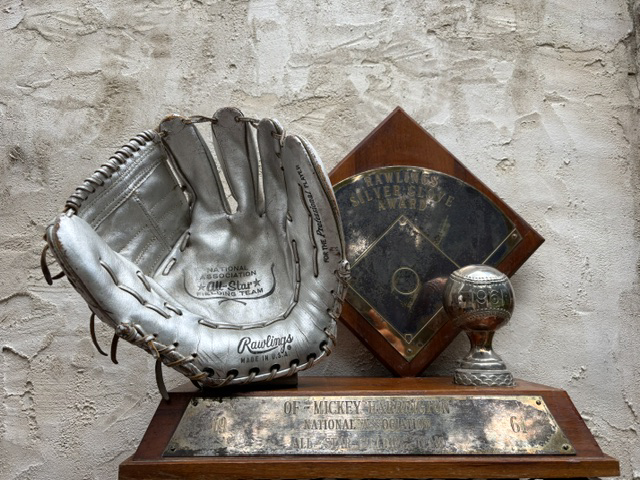
Harrington was hitting .298 with the Hawaii Islanders in 1963 when the Phillies called him to the majors. He batted .305 over the previous four triple-A seasons and won a Silver Glove Award — the minor-league version of the Gold Glove given to the best fielders — in 1961 for his work in the outfield.
A team photo of the 1957 Miami Marlins, a Phillies triple-A team that included legendary pitcher Satchel Paige.Harrington family
Harrington performed in the minors like a prospect, but his only chance at the majors was that Wednesday night at Connie Mack Stadium.
Maybe Harrington’s modesty, Knopp said, caused him to be overlooked. Or maybe those two years in the Army delayed his career enough to keep him stuck in baseball purgatory. Or perhaps he should’ve played basketball.
“In baseball vernacular, they call it a cup of coffee,” Knopp said. “I never understood it. He was a great ballplayer.”
Harrington retired after the 1966 season, returned to Hattiesburg, and worked at his father’s sporting goods store. His first daughter, Heather, was born when he was playing and his second daughter, Hope, was born just after he retired. Harrington filed a patent in 1973 for a batting tee and built a home on a plot of land owned by his father-in-law. He was always using his hands. Harrington turned a shack into a three-bedroom home with two fireplaces and a big living room.
“It’s all cypress wood on the outside,” Knopp said. “He did all the woodwork, carpentry work all by himself. It’s a beautiful house. It’s an amazing house.”
He was soon hired as an assistant coach on the basketball and baseball staffs at Southern Mississippi University, where he played before being drafted by the Army.
Harrington was an all-American basketball player in high school and was a four-year starter in college. He had chances to play at bigger schools but his dad, Smokie, urged him to stay home at Southern Miss. He lived a few minutes from campus after his playing career and became a fabric of the university.
The school president tabbed him in the 1980s to build a 220-acre equestrian center with bleachers for 2,500 people. He had a barn moved to the facility and rallied a group of college students to build the center using supplies that Harrington received through donations.
Mickey Harrington’s Silver Glove Award from 1961, which is the minor-league version of the Gold Glove.Harrington family
The farmer in Iowa built a baseball diamond that brought ghosts of the past. Harrington built a rodeo ring that led to his daughter meeting her husband.
“They were literally screwing down the seats on the bleachers an hour before the first performance started,” Knopp said.
His major league career was just a few minutes but there were always reminders of a guy who spent a decade as a professional athlete. He biked 20 miles a day, even when his knees were shot and he could hardly walk. He competed in the Senior Olympics and was back on his bike just months after a truck hit him in his 70s and broke his neck, shoulder, and ribs. And his hands — the ones big enough to palm a basketball — were a marvel.
“He would have handshake competitions,” his daughter Heather said. “If he didn’t see his nephews in a while, he would put out his hands and his hand would just swallow their hands. They would try not to flinch, but he would tighten down on them. Finally, they’d go ‘OK, Uncle Mike. I give, I give.’ He was a cool human being.”
Mickey Harrington’s Army photo.Harrington family
‘He would’ve got a hit’
Harrington didn’t talk much about his career but Knopp could often find an opening as the two sipped hot chocolate in the winter and ate Klondike bars while watching football in Harrington’s living room.
There was the time he was playing on the baseball team at his Army base and had to tell the general he couldn’t make the trip for that weekend’s game. His captain said Harrington — who was an excellent typist and worked as a clerk — had to finish inputting reports. The base’s general managed the baseball team and said he would handle it.
“Mickey was sitting at his desk, typing away, and he heard the phone ring in the captain’s office,” Knopp said. “He just heard, ‘Yes, sir. Yes, sir. Yes, sir.’ He hung the phone up, went over to Mickey, and said, ‘Mickey, it’s OK. You can go.’”
He told his son-in-law how fans booed him during the Civil Rights Movement whenever the ballpark’s public address announcer said he was from Mississippi. Harrington told them to stop telling the fans where he was from. And there was that time his teammate in the minors blockaded the umpires in their dressing room before the game started.
“The national anthem is over and there are no umpires,” Knopp said. “Finally, someone heard the umpires banging on the door. They moved everything out of the way and they got out. The umpire knew who did it and didn’t say a word. He walked over to Mickey’s dugout, pointed to this guy, and said, ‘You’re out of the game.’”
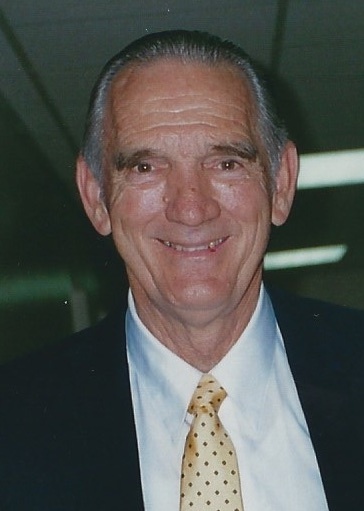
Mickey Harrington later in life. He died in 2017.Harrington family
Harrington told a reporter in 2003 how he never understood why the Phillies used him as a pinch runner since he was a “6-foot-4 and 205 pounds.”
“Maybe that’s why the Phillies never won any ballgames back then,” he cracked. (They actually went 87-75 in 1963.)
But Heather said she always sensed her dad was at peace with how things went. He never seemed bitter or longed for a chance. At his funeral in 2017, Harrington’s nephew Larry said in a eulogy that Uncle Mike stayed positive. He always moved forward and simply believed “it didn’t happen so it didn’t happen.”
Heather agreed. That was her dad. He spent just a few minutes on a field of dreams at 21st and Lehigh. And he was OK with it.
“From the time I was very young I heard how talented he was. But never from him. He never said a word about it,” she said. “He was an incredible person. He made you want to do better. He made you want to live better. He made you want to push harder.”
But what would have happened if Harrington got the chance to hit like Moonlight Graham did that night on that cornfield in Iowa?
“He would’ve got a hit,” Heather said. “Absolutely. Oh, for sure.”
A couple of numbers that have jumped out at me during the number-crunching portion of my annual Eagles/NFL cram sessions …
When Jalen Carter was on the field, the Eagles were a top–five run defense. When he was off the field, they were a bottom–five run defense.
What makes a defensive tackle worth $40 million per year? Well, have a look at the Eagles’ first-and-10 rushing splits with and without Carter.
In 107 snaps without him, opponents averaged 5.1 rushing yards per attempt. Only the Dolphins and Bengals allowed more yards per carry on first-and-10 plays.
On 130 snaps with Carter on the field, opponents averaged just 4.08 yards per carry. Only six teams in the NFL allowed a lower average on first-and-10 plays.
Carter’s impact goes deeper than the yards an offense fails to gain. There are also the yards an offense doesn’t even try to gain. Last season, opponents ran the ball on nearly 60% of the snaps for which Carter was on the sideline. When he was on the field, they ran the ball on 52% of their snaps (on first-and-10).
Keep in mind, 2025 was a season when Carter was less than 100% for a stretch.
One of the underrated storylines of last season was the overall struggle of the Eagles’ run defense. I use that term relatively. In 2024, Fangio’s unit was top-10 in both total yards and yards per carry. In 2025, they ranked 22nd and 20th, respectively.
Quantifying run defense is an imperfect science, of course. Both total yardage and yards per carry are heavily influenced by game situation. Which is why I chose first-and-10 as a sample rather than overall numbers for the Carter on/off splits. That being said, there was nothing situational about the Bears’ 281 rushing yards on Black Friday, after which Carter decided to undergo surgical treatment on his shoulders. The Chargers ran for 169 yards the following week.
Jalen Carter (center) will be key in the Eagles’ run defense in 2026.Yong Kim / Staff Photographer
Carter aside, the Eagles clearly suffered from the loss of Milton Williams last season. Their on/off splits with and without Carter were far less drastic the two seasons prior. There are two big reasons to hope that the Eagles have a better run D this season. One, Carter will be healthier and more available. Two, Jonathan Greenard will be here for the whole season. Jaelan Phillips was excellent against the run, but he was only here post-trade deadline. The flip side is this: The Eagles were at their best with Phillips, and they will also be attempting to replace a starting safety in Reed Blankenship and a starting linebacker in Nakobe Dean. One way or another, it will be a big subplot to this season. Carter, as always, will play the biggest and most important role.
DeVonta Smith led the Eagles with 19 first–down catches on third down. He led the NFL in yards per catch on those conversions.
Here’s a list of the wide receivers who have finished a season averaging 20 yards per reception on at least 40 third-down targets over the last three seasons.
Those first three players had stretches where they have been on the short list for best receivers in the game. Smith has a fine reputation. The NFL is well aware of how good he is. But you’ll rarely hear him mentioned among that small group of WR1s who create their own receptions and dictate opponents’ game plans.
The deeper you look under the hood, though, the more favorably Smith’s numbers compare to the best of the best.
Eagles wide receiver DeVonta Smith led the team in third down catches with 19 last season.Yong Kim / Staff Photographer
Last year, he ranked 11th in the NFL in Tough Catch Percentage, a metric that I totally ham-and-egged using the nflfastR data package. It measures a receiver’s share of contested catches and receptions created (as determined by For the Numbers Fantasy) and catches in traffic (as determined by me, using YAC and tackling data, among other variables). Here are the other players who rank ahead and just behind Smith: Courtland Sutton, Jaxon Smith-Njigba, A.J. Brown, Nacua, Amon-Ra St. Brown, Trey McBride, Collins, Justin Jefferson, George Pickens, Chris Olave, and Ja’Marr Chase. Whatever the metric signifies in abstract, those players are pretty good company to keep.
The presence of Brown on that list is significant, of course. Few players in the NFL have performed better in true 50-50 (or worse) situations than Brown has since joining the Eagles. Therein lies the real question about the Eagles’ receiving corps. It isn’t whether Smith can replace Brown as Jalen Hurts’ WR1. The question is whether the guys behind Smith can be anything close to the player he was as WR2. It’s not coincidence that the Eagles traded up for a receiver in Makai Lemon whose most impressive tape is his physicality and consistency in traffic. Hurts needs him on the field, sooner rather than later.
Tori Bauver was sitting at home on July 11 when the sky outside of the Wyndon Apartments in Wynnewood began to darken. Bauver watched the clouds roll in, then the rain come, blowing “literally sideways” outside her window. She remembers leaning in to see the darkening landscape and noticing that rain had begun to penetrate her windows. Then the “outside went stark white” and water started pooling on her windowsills.
“I was like, ‘Oh, my God. This is gonna flood. This apartment’s gonna flood,’” she said.
The light fixture above Bauver’s bed filled with water, then poured over the edges. The ceilings began to leak, then one by one, they collapsed. The building’s roof ripped off, and Bauver had a clear, and unsettling, view of the sky from her living room.
Bauver, now a resident of West Chester, where she and her partner moved after breaking the lease on her Wynnewood apartment, had been living in the Wyndon Apartments for two years when the July microburst storm tore through Lower Merion, destroying her home and more than $5,000 of her and her partner’s belongings. She was one of dozens of suburbanresidents who emerged from the storm with damaged property and a devastated home.
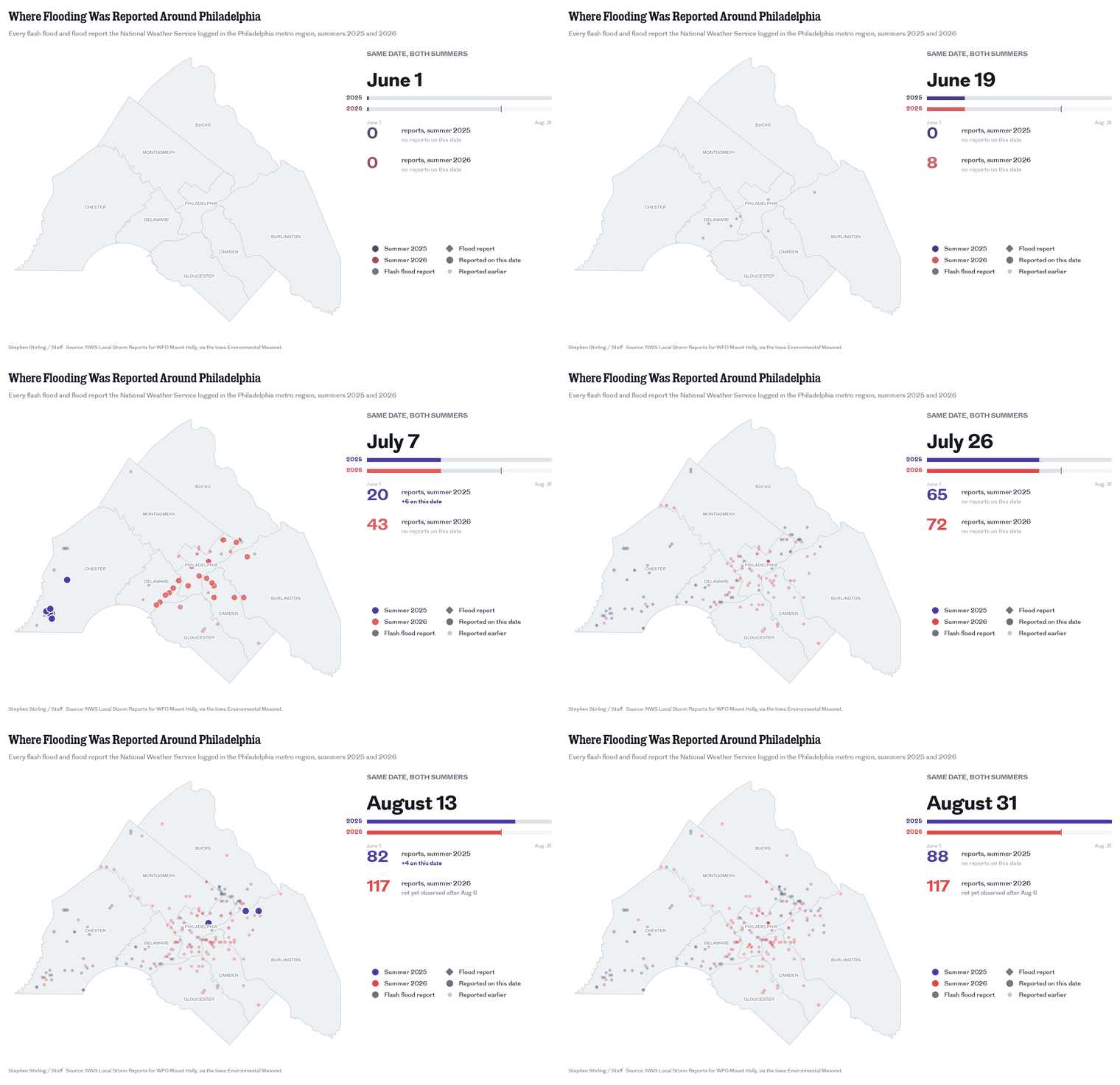
As the Philadelphia region sees hotter and more humid summers, flash flooding, extreme precipitation, and life-threateningstorms have become a more common feature of daily life.Weather eventsmarked by downed trees, dangerous flash floods, waterlogged roadways, and eroded bridges are, more and more,forcing suburban residents and cash-strapped local governments to pour millions into repair and resilience projects, all while large swathsof the region’s infrastructure are built to withstand weather patterns of a bygone era, one in which storms like July’s microbursthappened once in a decade, rather than multiple times a summer.
As the region’s weather patterns intensify, officials and climate experts say the municipal mosaic of Philadelphia’s suburbs faces unique challenges when it comes to planning for a future marked by climate change.
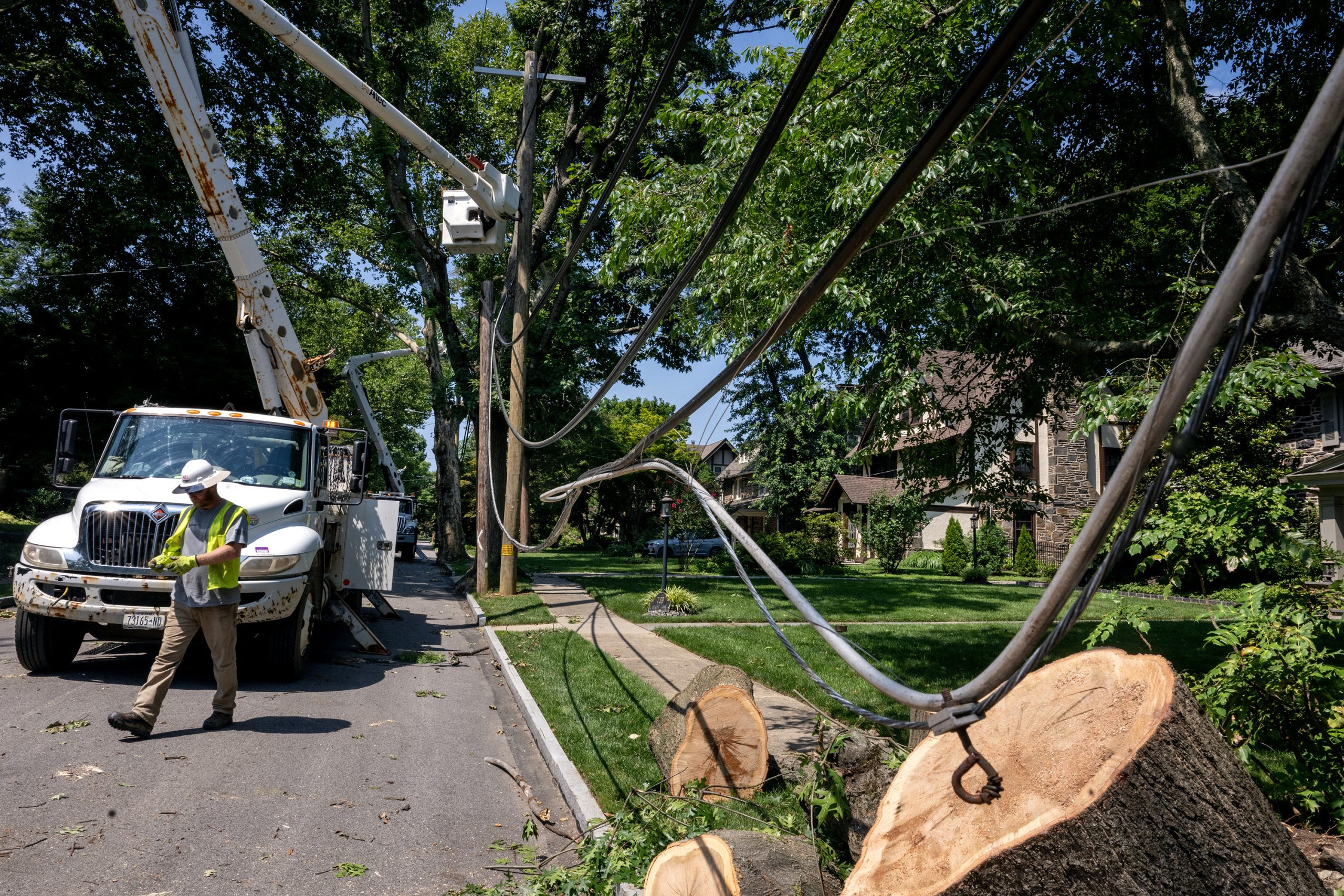
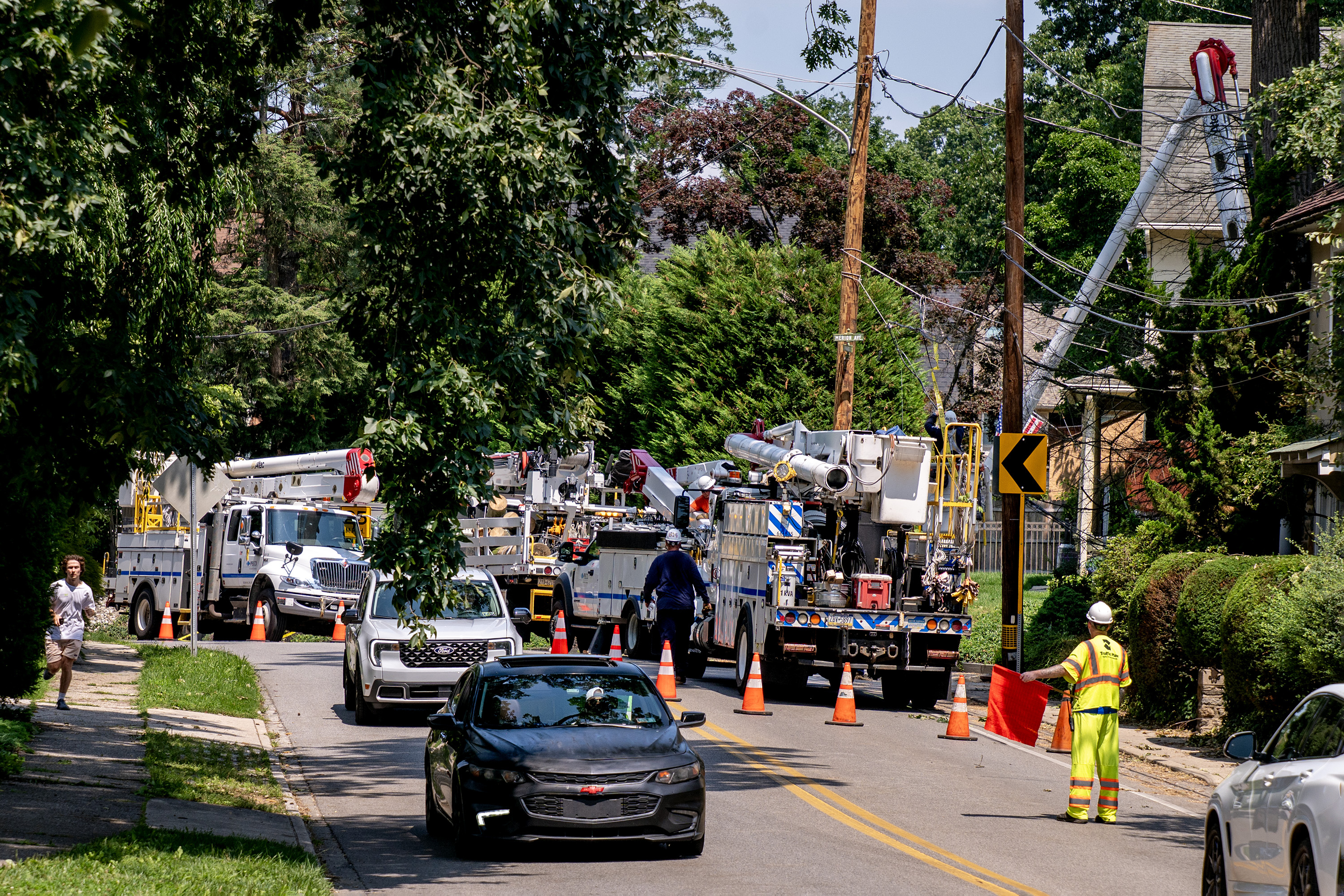
Utility workers restore power in Merion Station on July 13 after a microburst storm ripped through parts of Philadelphia and Montgomery County.Tom Gralish / Staff Photographer
The Philadelphia region’s changing weather
The average July temperature in Philadelphia has risen 4.4 degrees since 1940. In the 1900s, Philadelphia averaged four days per year with temperatures above 95 degrees, according to a 2024 EPA report. This summer, Philly has seen six days with high temperatures above 95 degrees, according to the National Weather Service. By the end of the 21st century, that number could climb to more than 50 days per year.
Hotter weather means more precipitation, and more frequent and intense rain events. For every 1.8 degrees the air temperature increases, the amount of water the atmosphere can hold increases by 7%.
“The infrastructure we have now is not always built to a standard to accommodate the extreme weather we’re seeing now,” said Chris Linn, manager of the Office of Resilience and Environment at the Delaware Valley Regional Planning Commission.
AsRay Courtney, a Lower Merion commissioner and chair of the township’s sustainability committee, said, “We get a 100-year storm every year.”
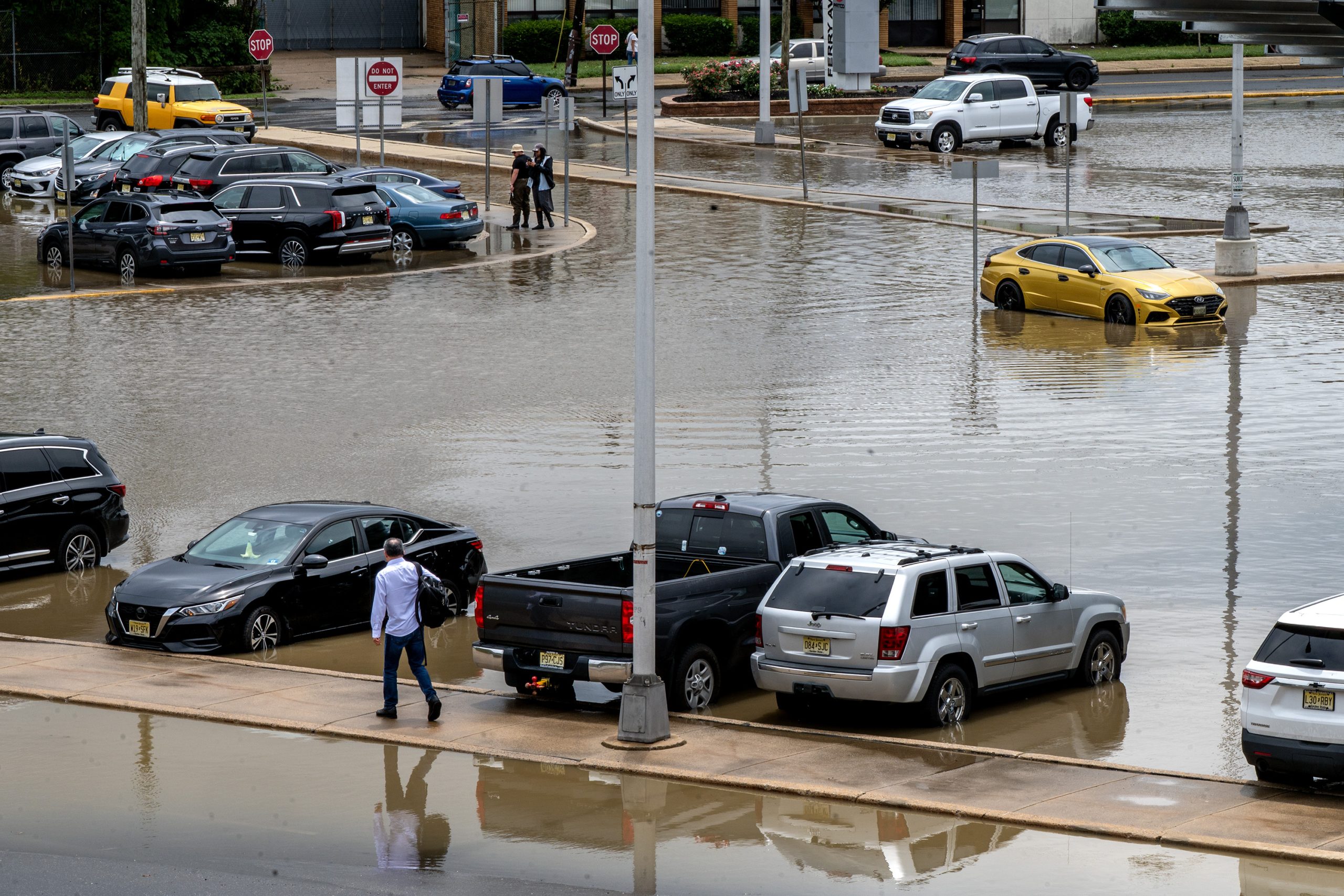
Cars in a flooded parking lot at the Ferry Avenue PATCO station in Camden on July 6. Philadelphia and its suburbs have been hit with numerous flash floods this summer, as an increasingly hot and humid atmosphere gives way to more extreme weather.Tom Gralish / Staff Photographer
Flooding as ‘the biggest and most common hazard’
The impacts of intense storms are multitudinous and cascading, and the topography of Philadelphia’s suburbs can make it particularly difficult to find effectivesolutions.
Linn said flooding is “the biggest and most common hazard that communities face,” and it presents the most “consistent and pervasive” issues for municipal leaders.
Intense precipitation and flash floods, which have been a constant this summer, can disrupt transit, turn roads into rivers, and endanger residents’ lives. High winds and saturated soil frequently bring down trees, damaging homes and cars and knocking out overhead power lines. Disruptions to power can be particularly dangerous when residents are left without fans or air-conditioning during hot summers.
Flooding has been reported more than 200 times in the Philadelphia region over the last two summers.Stephen Stirling
“I see roads flooding consistently, trees coming down, power going out, and then our local government spending resources every time one of these storms happens. It’s overtime costs and tree costs, and then also all the private citizens having to spend costs cleaning up trees and other debris,” Courtney said.
“These unlikely, freak events are really the ones that break us,” said Matthijs Bouw, architect and professor at the University of Pennsylvania’s Stuart Weitzman School of Design.
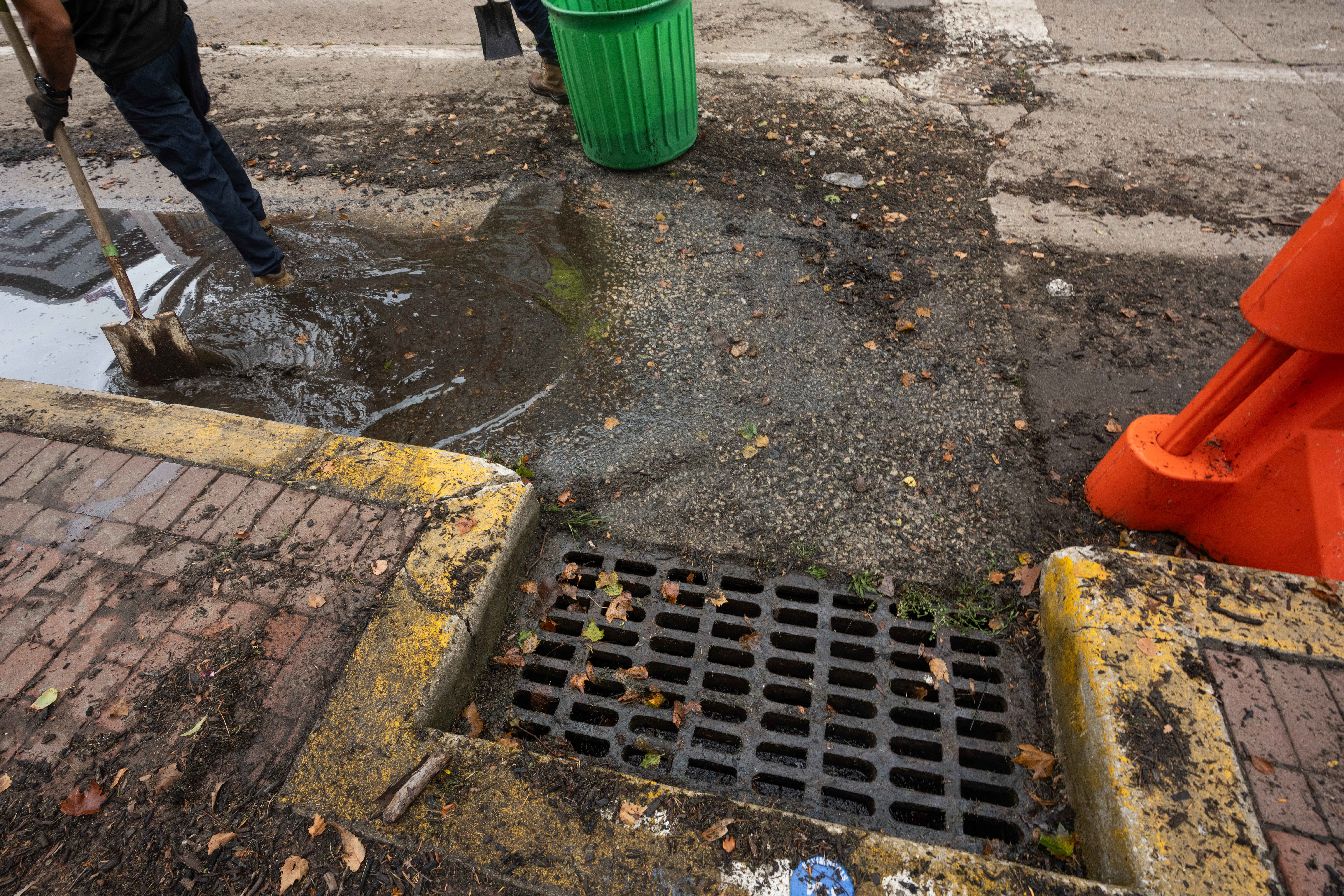
A key tool for managing extreme weatheris stormwater systems, or the collection of drains, basins, ditches, and pipes that collect rainwater and snowmelt and move it from developed areas into local waterways. Stormwater systems are critical in moving water off impervious, or impenetrable, surfaces, like the parking lots, paved roads, and shopping centers often found in the suburbs.
The more developed a suburb is, the more runoff a storm will produce, increasing flooding risks, said Franco Montalto, professor of civil, architectural, and environmental engineering at Drexel University.
Yet many municipalities are contending with aging stormwater systems that require costly repairs. Lower Merion’s 2018 Comprehensive Stormwater Management Plan listed aging pipes, undersized infrastructure, operational costs, and increasing flooding as challenges for the township. Many of Philadelphia’s suburban communities are composed of buildings that predate a 1978 state law requiring counties and local governments to plan with stormwater management in mind.
Some communities are more vulnerable to climate impacts than others, with density, land cover, wealth, and the state of repair of existing infrastructure as factors. A 2021 climate change vulnerability analysis by Montgomery County found denser, water-proximate communities like Norristown and Pottstown to have some of the highest risk of increased stresses due to climate change. Greener, more rural parts of the county like New Hanover and Marlborough Townships presented lower risks.
The aftermath and clean up of flooding in Camden on July 6. Stormwater systems are a critical tool for local governments to manage flooding. Jessica Griffin / Staff Photographer
How can communities mitigate impacts?
Experts described a range of interventions for managing climate impacts, from constructing rain gardens to rewriting zoning ordinances.
Maintaining a healthy tree canopy and building rain gardens can help rainwater permeate into the ground. Larger infrastructure efforts like stream restoration projects and floodplain maintenance can help stabilize the built environment.
However, Linn said, these interventions “don’t necessarily address more severe or catastrophic flooding in terms of mitigating those impacts.”
Long-term climate resilience, experts said, relies on making land-use and zoning decisions that preserve floodplains and natural drainage patterns and ensure stormwater systems can manage our new, rainy reality.
Montalto is interested communities that have become “safe to flood,” or that have created parks, parking lots, road medians, and other open spaces that trap water during floods, then properly drain it, keeping it away from buildings and roads. A basketball court built below a park, for example, can fill with water during a storm and slowly drain, mitigating runoff (one was recently installed in New York City). Copenhagen’s Cloudburst Management Plan, adopted in 2012 after a major storm, is a blueprint of sorts in Montalto’s mind.
However, bringing “safe to flood” infrastructure to Philly’s suburbs may be a far-out goal.
In the vast suburbs, the collection of boroughs, townships, and county lines makes unified action difficult, and forces officials to think along municipal, not watershed, lines. On the Main Line alone, rainfall and snowmelt drain into a collection of dozens of creeks and streams that do not start or stop where a municipal boundary is drawn, making it difficult to take coordinated and effective action when it comes to flood mitigation along certain waterways.
Finding the funding to repair and replace stormwater infrastructure, too, can be taxing, as local governments stare down costly projects, even with the availability of state and federal grants.Political will factors in, with municipalities differing in their desire and ability to use taxpayer dollars to tackle climate issues.
Philly’s suburbs, like the city, are also often old, dense, and built out, making it hard to retrofit them to be more climate-sensitive.
“So many of our communities are built out and have been built out for a long time, so the vulnerabilities and the challenges are built in to the community,” Linn said.
Utility workers restore power along Wynnewood Avenue in Merion Station on July 13.Tom Gralish / Staff Photographer
Solving ‘complex issues’ in Montgomery County
Despite the challenges, progress is being made, said Montgomery County Commissioner Jamila Winder.
Montgomery County in 2025 led a flood mitigation planning study for the 362-square-mile Perkiomen Creek Watershed, which stretches across Montgomery, Bucks, Berks, and Lehigh Counties. The study identified flood-prone areas, evaluated mitigation tactics, and worked to build a framework for long-term resilience. The county is currently in the process of carrying out a floodplain restoration project along the Wissahickon Creek in Whitemarsh Township. Both projects came to fruition after Hurricane Ida tore through the region, bringing record floods and killing multiple people.
The county has repaired 30 structurally deficient bridges since 2017 and has repaved dozens of miles of road. County workers also removed 200 dangerous trees earlier this year, resulting in a significant drop in emergency phone calls about tree damage, Winder said.
Lower Merion in 2021 hired its first full-time sustainability manager and in 2023 completed its first sustainability plan. Radnor Township has adopted a comprehensive climate plan, and Haverford Township has set out to achieve 100% zero-carbon renewable power by 2035.
The Pennsylvania Department of Environmental Protection in January announced more than $17 million in funding for environmental projects across the state, including stream restoration and stormwater management.
Winder said, “We’re seeing that when we work across federal, state, county, and local leadership, that we can come together to solve some of these complex issues.”
This suburban content is produced with support from the Leslie Miller and Richard Worley Foundation and The Lenfest Institute for Journalism. Editorial content is created independently of the project donors. Gifts to support The Inquirer’s high-impact journalism can be made at inquirer.com/donate. A list of Lenfest Institute donors can be found at lenfestinstitute.org/supporters.
Affordable artist apartments will be coming to South Broad Street next year after the John S. and James L. Knight Foundation awarded a $2.5 million grant to the development company that promises to turn former University of the Arts dorms into low-priced housing.
Lindsey Scannapieco’s company Scout acquired Hamilton Hall, facing Broad Street, and the accompanying Frank Furness-designed former dormitory that front on 15th Street in early 2025 after the surprise bankruptcy and closure of the University of the Arts.
Scout has renamed the combined complex as the Village of Industry & Art. The company is most known for its redevelopment of a former South Philly public school into a warren of artist studios, small businesses, and eateries, now known as the Bok Building.
Scannapieco has long promised 45 affordable artist apartments for the former dormitory space, and the Knight Foundation grant provided the final funding to move forward.
“We have the rest of the funding in place, so this was really about bridging the gap that was required to make this happen,” Scannapieco said.
She also noted that the project’s affordability would be deed-restricted, locking it in place for the long term.
“We have a deep commitment now that regardless of what happens to me or my team, this will be affordable housing for artists and cultural workers,” Scannapieco said.
Scout plans for 35 of the units to be long-term rentals for artists who make between 60% and 80% of area median income, or between $50,000 and almost $67,000 for a one-person household.
Ten of the units will be furnished and are slated for visiting artists conducting short-term residencies in Philadelphia.
The apartments range in size from the smallest at a little over 500 square feet to the largest at 726 square feet, with the majority around the 600 square-foot range.
Those sizes are comparable with the Philadelphia apartment market. In 2023, a study showed that the average size of a new one-bedroom apartment built in Philadelphia over the previous decade had been 764 square feet, while the average studio was 445 square feet. A more recent study found that $1,500 a month would get a renter 591 square feet in the city.
Scannapieco says Scout has been studying complexes that include artist housing and workspace in cities like New York, Baltimore, and Pittsburgh. The 15th Street project will include specialized amenities like dark rooms, slop sinks, and material storage libraries.
“Artists are essential to Philadelphia’s identity, economy and future,” said Kristina Newman-Scott, Knight Foundation’s vice president of arts. “This project demonstrates what becomes possible when we design cities with artists in mind, creating affordable places for artists to live and work is an investment in Philadelphia’s long-term vitality.”
Scannapieco says she expects the affordable artist apartments will be open by mid-2027.
“A lot of people talk about the need for permanent commitments and allocation of housing for artists and cultural workers, and we’ve never been able to frankly do it at this scale in Philadelphia,” she said. “So that’s very much what this project will provide.”
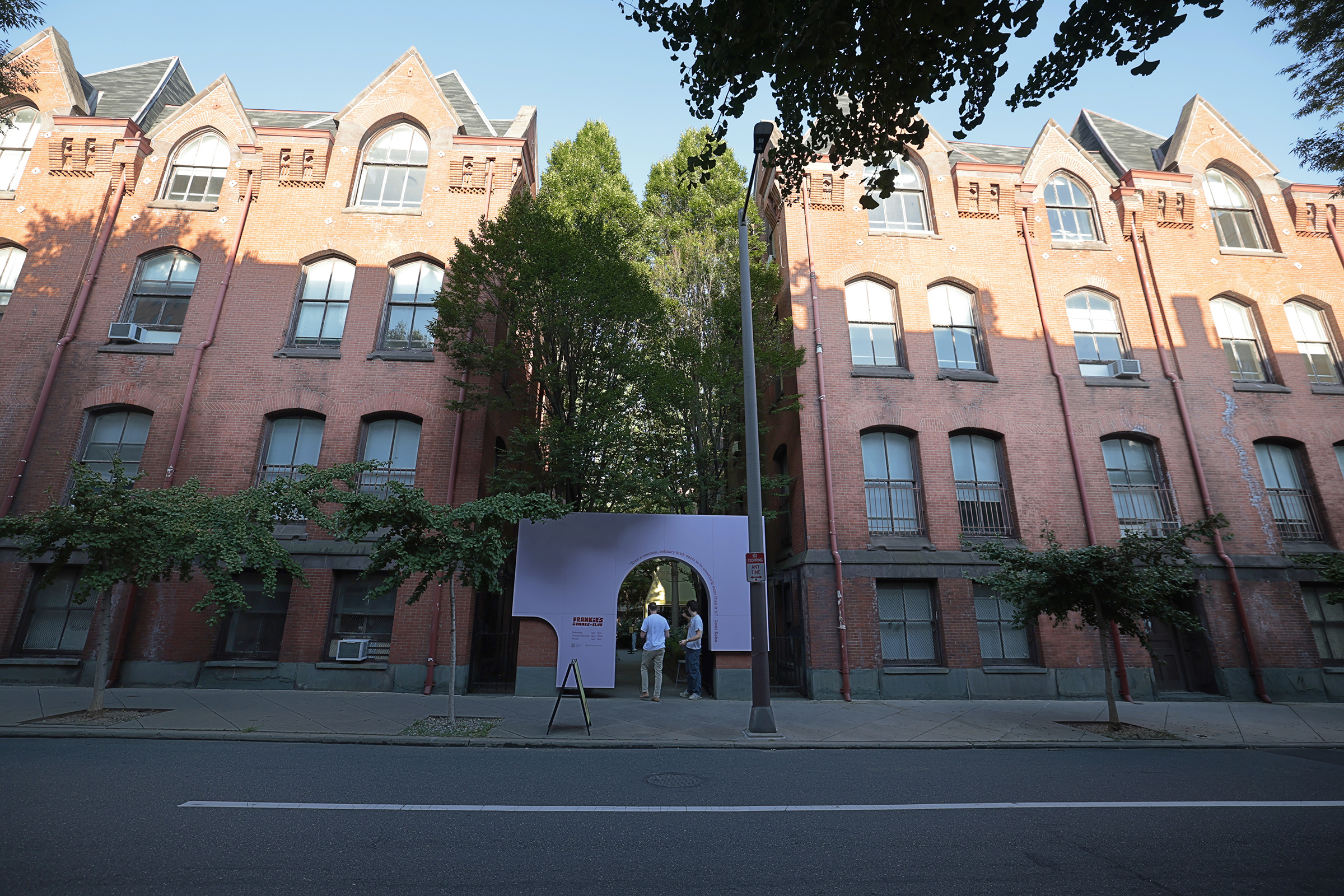
The Village of Industry & Art, which covers over 110,00 square feet, currently hosts the popular outdoor restaurant and bar Frankie’s Summer Club in its courtyard facing 15th Street.
A news release from Knight and Scout noted that it already includes tenants such as BlackStar Projects, Monument Lab, DesignPhiladelphia, and the Stained Glass Project.
As a retired federal employee, I am proud of my years of public service and the opportunity I had to serve the American people. Like many retirees, I planned my retirement carefully, expecting the benefits I earned to help provide financial security throughout my retirement.
Unfortunately, retirees under the Federal Employees Retirement System (FERS) do not receive the same full annual cost-of-living adjustments (COLAs) as retirees under the Civil Service Retirement System (CSRS) or many Social Security beneficiaries. During periods of high inflation, that difference can significantly reduce the purchasing power of a retiree’s earned annuity, making it more difficult to keep up with the rising costs of housing, groceries, healthcare, and other everyday necessities.
The Equal COLA Act (HR 491/S 624) would correct this inequity by providing FERS retirees with the same full annual COLAs received by CSRS retirees. It’s a matter of fairness for the men and women who devoted their careers to serving our nation.
Bob Downey,Marlton
ICE success
Rosemary McDonough from Narberth submitted a letter to the editor that rightfully complimented Luis F. Carrasco’s recent column on immigration. In that letter, she asked an excellent question: If U.S. Immigration and Customs Enforcement were succeeding in arresting the “worst of the worst,” why isn’t this front-page news? The answer to McDonough’s question is clearly not that ICE has been unsuccessful. If anyone chooses to access the ICE website, they would find a section that identifies 27,400 of the “worst” illegal immigrant criminals it has apprehended. There are 3,425 pages (eight per page).
The answer to her question appears to be that the media is unwilling to cover that side of the ICE situation — preferring to align themselves with the liberal narrative that demonizes the people working so hard to resolve the ponderous immigration situation they created.
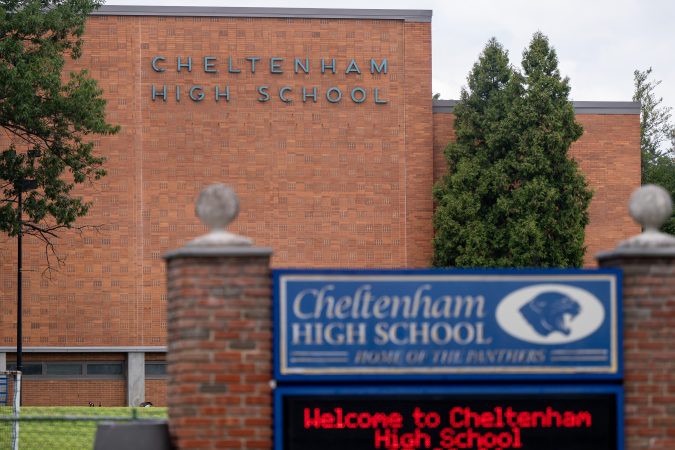
I read Jonathan Zimmerman’s column on the Cheltenham hazing incident and was struck by what was left out. Although I don’t disagree with what Zimmerman said, what he left out is important to fully wrap our heads around this heinous story. Nowhere did Zimmerman mention that we elected as our president a man who stated he could grab a woman’s private parts whenever he wants and was convicted in civil court of sexual assault. Despite that, he was elected twice and is still defended by followers, including many elected officials. Zimmerman’s right: This is who we are. If we want different, we must all fight for the change we want, and not just at one moment of trauma or in one school district.
Really? This, after recruiters inform men and women during the enlistment process that their families would enjoy immigration benefits.
It is beyond outrageous and cruel. And once again it shows that Donald Trump has no regard for our service members. Of all persons, he who dodged the draft is condoning this action.
“Duty, honor, country” is the motto of the U.S. Military Academy. “… to keep our honor clean” is in the Marine Corps hymn (I served as an officer). I imagine the other military services have similar promises they make to America. Trump and his enablers have no concept of honor, and we Americans and the whole world know it.
Luis W. Morales,Paoli
Shared blame
Now that hearings are underway to look at the crowd control tactics of the police during Pride in June, Police Commissioner Kevin J. Bethel seems to be taking all the heat. His police force, his responsibility. But it would seem there are other players we should be looking at. Mark Squilla is the City Council member for that district. Where was he in the decision-making process over whether or not to close the streets in the Gayborhood? Rue Landau is leading the inquiry over the event. As a member of the LGBTQ+ community, does she not have contacts in the Gayborhood? Did she not consult them? The rest of City Council? Hell, where was Mayor Cherelle L. Parker throughout this? Did anyone reach out to the bar and other business owners for input? I’m not attempting to minimize Commissioner Bethel’s responsibility over his officers. I’m just saying he shouldn’t bear it all.
Tim Reed, Philadelphia
RINOs and sheep
We have to be honest about what happened around the appointment of a permanent U.S. attorney general. Sens. Thom Tillis of North Carolina and John Cornyn of Texas, both of whom will be leaving the Senate, got absolutely nothing in terms of concessions from the White House after threatening to oppose the nominations. In the end, they caved — plain and simple. No one can legitimately say they stood up to President Donald Trump. They merely gave cover to all the vulnerable Republicans in Congress who, for obvious political reasons, were reluctant to vote on the nomination. Tillis and Cornyn, it should be remembered, are first and foremost Republicans in Trump’s Republican Party. As has been the case since Trump was reelected in 2024, Republican leaders doth protest too much. At first, they feign concerns, and then acquiesce when the critical vote comes. Enough said. Please stop insisting Tillis and Cornyn are heroes; they are cowards — RINOs in sheep clothing. They represent what is wrong with politics in the age of MAGA.
Richard Cherwitz, Austin, Texas
Pandemic amnesia
Anthony Fauci, a public health researcher, has served under seven presidents. The current and former president, Donald Trump, awarded him a presidential commendation on the last day of his first term. Today, the 85-year-old Fauci must have full-time security. The secretary of Health and Human Services, Robert F. Kennedy Jr., copied Fauci’s diaries so Republican Kentucky Sen. Rand Paul could distribute them so they would become available to the public. Republican Sen. Ron Johnson of Wisconsin has possession of Fauci’s phone and is investigating its contents.
As the witch hunt continues, and while the nonscientists on the Republican side of the aisle run a revisionist history of the COVID-19 scourge, there are a few pieces missing. More than one million Americans died of COVID. Many spent their last days and hours on ventilators as their families watched them die through hospital windows. Body bags were sent to freezer trucks in some cities. Some still suffer from the debilitating effects of long COVID. The coronavirus was novel and contagious and deadly. Fauci steered us through this scary time as we all navigated this together. He exercised extreme caution, steered us away from crackpot quick fixes, and with the help of the vaccine, helped us get beyond it. But the crackpots have taken over. Fauci is paying the price. We only have to watch the measles statistics and the scary trip down the produce aisles to recognize that the Trump administration and the U.S. Department of Health and Human Services are putting us all at risk for worse to come.
Elliott Miller,Bala Cynwyd
Join the conversation: Send letters to letters@inquirer.com. Limit length to 150 words and include home address and day and evening phone number. Letters run in The Inquirer six days a week on the editorial pages and online.