Tag: topic-link-auto

  • Jon Batiste cancels Friday concert at Highmark Mann Center

    Jon Batiste cancels Friday concert at Highmark Mann Center

    Jon Batiste’s show at the Highmark Mann this Friday has been canceled, the popular singer, songwriter, TV personality, and bandleader wrote in a note posted on the arts center’s website Tuesday.

    As he navigates “some personal circumstances,” Batiste said he needed to cancel some upcoming concert dates, including the one at the Highmark Mann.

    He is “finding new ways and opportunities to share live music with you,” and “truly can’t wait to come back and perform for you soon,” he wrote in the message.

    Batiste — Louisiana-born and -raised, Juilliard-trained — has forged a multifaceted career, often blending classical and jazz. He has been nominated for 25 Grammy Awards, winning eight, and was bandleader and musical director of the Late Show with Stephen Colbert from 2015 to 2022.

    Last summer, he performed with the Philadelphia Orchestra at its summer home in Saratoga Springs, N.Y. His new release, Black Mozart, is due out Friday.

    Batiste is beloved for the sense of joy he brings to music-making and for being an “incandescent spirit,” as Inquirer music critic Dan DeLuca has written. At his show at the Met Philly in October, DeLuca wrote, Batiste ended by “tooting on his melodica, leading a Crescent City-style parade through the lobby onto Poplar Street, making it a mission to weave the multifarious strains of American music into one exuberant tapestry.”

    Refunds for the Aug. 14 show are available at point of purchase. For tickets purchased via Ticketmaster, no action is required and refunds will be processed within 14-21 days, according to the cancellation notice. For more information visit highmarkmann.org.

  • Violence by extremist Israeli settlers against Palestinian civilians on the West Bank threatens new Mideast flash point

    Violence by extremist Israeli settlers against Palestinian civilians on the West Bank threatens new Mideast flash point

    While the world is focused on the failures of Donald Trump’s warmongering in Iran and “peacemaking” in Gaza, too little attention is being paid to a potential new Mideast flash point sparked by messianic Israeli settlers on the occupied West Bank.

    Escalating settler violence against Palestinians — attacking their villages, farms, and even homes — is unchecked and often assisted by Israeli military forces. It is also chilling because it is fully supported by extremists in Prime Minister Benjamin Netanyahu’s government who have his full backing.

    I have witnessed such settler violence during reporting trips over the years, but it is reaching unprecedented heights (or depths) as Bibi courts right-wing votes before Israeli elections in October.

    Far-right extremists are even encouraging Jewish-Arab violence atop the Temple Mount, the most sacred site in Judaism and the third holiest in Islam, which could ignite anti-Israel religious violence and terrorism in the region.

    The extremists’ goal — as clearly spelled out in a “Decisive Plan” by current Finance Minister Bezalel Smotrich, who also oversees administration of the West Bank — is to present the Palestinians with three choices: legalized apartheid and repression, massive ethnic cleansing (labeled “voluntary emigration”) from the West Bank, or death if Palestinians resist.

    The plan’s goals have extended to Gaza.

    The quibble over language that feeds debate over Israel in the United States — as in whether to call what’s happening in Gaza “genocide” — only distracts from the central problem. When Palestinians are offered nothing — meaning no political future or rights — they have nothing to lose. Unfettered occupation and ethnic cleansing will provoke resistance and terror attacks. It will be untenable in the long run.

    What is more likely to happen is a third uprising on the West Bank, followed by massive bloodshed between Palestinians and settlers. It would guarantee a disastrous end to Trump’s Gaza project and to his Abraham Accords, which were meant to advance peace between Israel and Gulf Arab states. Yet, the president is clearly blind to how quickly his Mideast peace efforts are sliding toward disaster.

    In desperation, 600 retired Israel Defense Forces generals and colonels, as well as retired intelligence and foreign service officers, recently wrote to Trump urging him to press Bibi to halt the West Bank violence.

    I spoke to one of the group’s organizers, Nimrod Novik, a senior adviser to former Prime Minister Shimon Peres, a deeply experienced negotiator and distinguished fellow at the Israel Policy Forum, about his fears for the future if Israel’s policy toward Palestinians doesn’t change.

    “What we will see in the West Bank in the next 90 days [before the Israeli election], you haven’t seen ever,” he warned. “The whole ideological right-wing extremist group, helped by the government, fears this is their last opportunity [to advance Smotrich’s goals]. If the Netanyahu government is ousted, the next government would deal harshly with Jewish terrorism.”

    President Donald Trump listens as Israel’s Prime Minister Benjamin Netanyahu speaks at President Donald Trump’s Mar-a-Lago club, Dec. 29, 2025, in Palm Beach, Fla.Alex Brandon

    I would add a caveat: It isn’t clear how much a coalition of opposition parties, even if they were able to push Bibi out, would change policy toward Palestinians. The two largest opposition parties are against any future Palestinian state alongside Israel. But a new Israeli prime minister would likely try to reassert Israeli army control over army reserve units that support extremist settlers who regularly attack Palestinian civilians. And he might have less patience with radical groups of settler youths who roam unchallenged and even attack Israeli soldiers who try to block their violence.

    Novik had a stark warning about what could happen if the violent settlers were allowed to continue their rampage. In certain security circles, he told me, “They think the settlers want to provoke a security crisis, and the West Bank might be the best opportunity.” He believes Jewish settler terrorism will produce revenge-seeking by Palestinians who are defending their families. Israeli security agencies, he added, are worried about a possible effort to provoke large-scale violence on the Temple Mount.

    I still recall how a 1982 plot by Jewish religious terrorists to blow up the third holiest mosque in Islam atop the Temple Mount was discovered only at the last minute. “Even if they don’t bomb the mosque,” Novik pointed out, violence could still explode. Only recently, “one thousand Israelis in one day violated the status quo by praying on the mount.”

    The status quo between Israel and Arab states, in place since the 1967 war, prohibits such praying, which is also banned by Israel’s rabbinate for religious reasons. Palestinians fear it indicates an imminent takeover of the holy site by Israeli Jews.

    Unless a new Israeli government reestablishes central military control over settler military units and armed extremist youths, unless it stops these youths from destroying Palestinian villages and homes, there is bound to be violence.

    And unless a newly elected leadership permits the rebuilding of the West Bank’s Palestinian Authority, the body which technically governed Palestinians, there is no authority to counter Hamas. Bibi did everything he could to destroy and bankrupt the Palestinian Authority. What would happen with a new government is unclear.

    What is clear is that Bibi’s tolerance of Jewish terror is leading to a clash in the West Bank, and is aimed at driving the population of Gaza out into the Sinai Desert by keeping two million Palestinians underfed, without schools or medicine, and living in tents.

    Even liberal Israelis are still traumatized by Hamas’ Oct. 7, 2023, slaughter, and a new government will still tilt rightward. But a recent Israeli survey by the Israeli Democracy Institute shows that the largest share of respondents — among left, center, and even center-right — said authorities treat violence by Jews against Palestinians in the West Bank too leniently, with perpetrators rarely arrested and hardly ever punished.

    Whether or not that poll hints at a particular voter response is also unclear.

    However, Trump has a chance to stop his being labeled a complete loser in the Mideast by backing the opposition to Bibi, which may still carry weight with many Israeli voters. Yet no one should rely on Trump’s awakening to reality.

    It will be up to Israeli voters to decide whether or not they accept Smotrich’s vision — and the consequences that are bound to follow if they do.

  • Colin Kaepernick, ‘Black August,’ and the legacy of Black athlete activism

    Colin Kaepernick, ‘Black August,’ and the legacy of Black athlete activism

    It’s been said that a social movement can start with the smallest gestures. Ten years ago this month, a simple act by Colin Kaepernick sparked a movement. He chose to protest the playing of the national anthem by sitting and later kneeling, breaking with the norm of showing respect and pride by standing. On Aug. 26, 2016, during a preseason game, Kaepernick was photographed sitting on the bench as the anthem was being played. When questioned by reporters, Kaepernick explained:

    “I am not going to stand up to show pride in a flag for a country that oppresses Black people and people of color … To me, this is bigger than football, and it would be selfish on my part to look the other way. There are bodies in the street and people getting paid leave and getting away with murder.”

    Numerous professional athletes joined in his protest and spoke out to call attention to the history of anti-Blackness in the United States. African Americans were inspired to continue organizing and protesting — specifically around a series of high-profile killings of Black people, including Trayvon Martin in 2012, Michael Brown in 2014, and Freddie Gray in 2015.

    In this Oct. 2, 2016, file photo, (from left) San Francisco 49ers outside linebacker Eli Harold, quarterback Colin Kaepernick, and safety Eric Reid kneel during the national anthem before an NFL football game against the Dallas Cowboys in Santa Clara, Calif.Marcio Jose Sanchez

    However, a poll conducted during that season labeled him the most disliked player in the NFL. Kaepernick became an easy target of political conservatives, including Donald Trump, who said, “Wouldn’t you love to see one of these NFL owners — when somebody disrespects our flag — to say, ‘Get that son of a bitch off the field right now, out, he’s fired.’”

    It shouldn’t be lost on anyone that Kaepernick’s protest began in August. Among many activists, August is referred to as “Black August” — a nod to numerous historical milestones in our community, from the arrival of the first enslaved Africans in America in August 1619, to the March on Washington in August 1963, to the assassinations of members of the Black Panthers in California prisons in August of 1970 and 1971.

    One social justice group describes the month as being “a celebration of freedom fighters past and present.” It is also meant to honor the lives and sacrifices of Black political prisoners and martyrs of the Black Freedom Struggle while calling attention to the plight of African Americans, particularly those in prisons — a recognition that Black people remain incarcerated at disproportionately high rates. The efforts of these freedom fighters are a modern rendering of the Black radical tradition.

    The same is true for many Black athletes whose protests came at a cost to their careers and livelihoods.

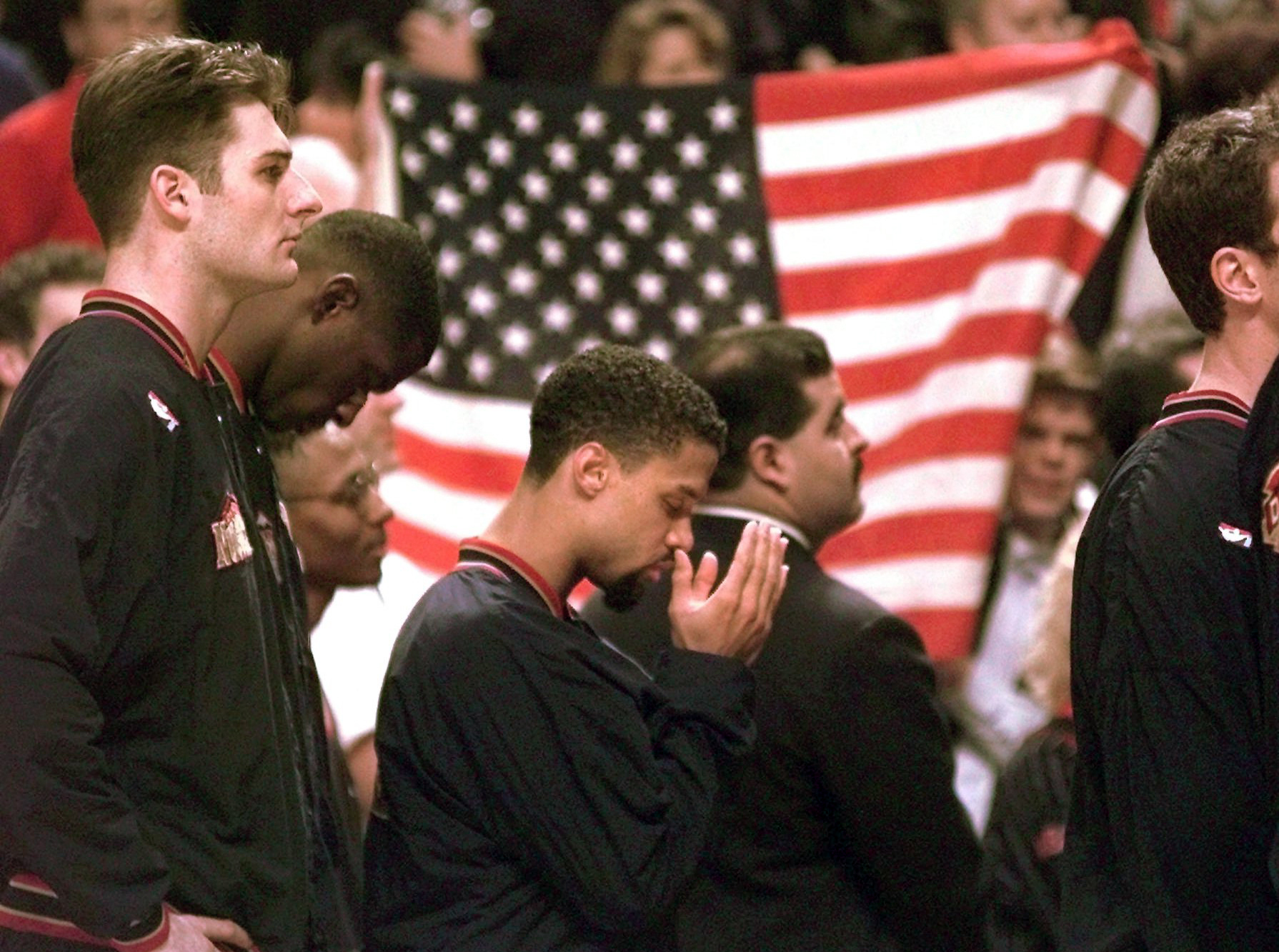
    Mahmoud Abdul-Rauf was suspended for one game during the 1995-96 season for refusing to stand during the national anthem. Former NBA commissioner David Stern was the one who made the call.AP FILE

    Folks like Mahmoud Abdul-Rauf, whose NBA career was cut short for protesting the anthem.

    Or Muhammad Ali, who lost his prime earning years and was stripped of his heavyweight title when he refused to fight in the Vietnam War.

    Or Paul Robeson, whose career and freedom were derailed not only for naming anti-Black racism, but for organizing against it — and Jackie Robinson, of all people, played a role in discrediting him.

    Kaepernick experienced a version of all of the above, too — months after he started his protest, he opted out of his contract, became a free agent, and was not signed by another NFL team. He later alleged in a lawsuit that the league’s owners colluded to keep him out of the game; that suit was settled in 2019.

    That is the role of the freedom fighter: to advocate on behalf of oppressed people everywhere in ways that disrupt the status quo. Their advocacy marks the line of demarcation between those who fight for freedom no matter the cost, or work to continue the legacy of global oppression and exploitation.

    Colin Kaepernick made that already divided line even more stark.

    Inarguably, Kaepernick’s legacy is that he inspired others, athletes included, to find their voice in advocating for social justice.

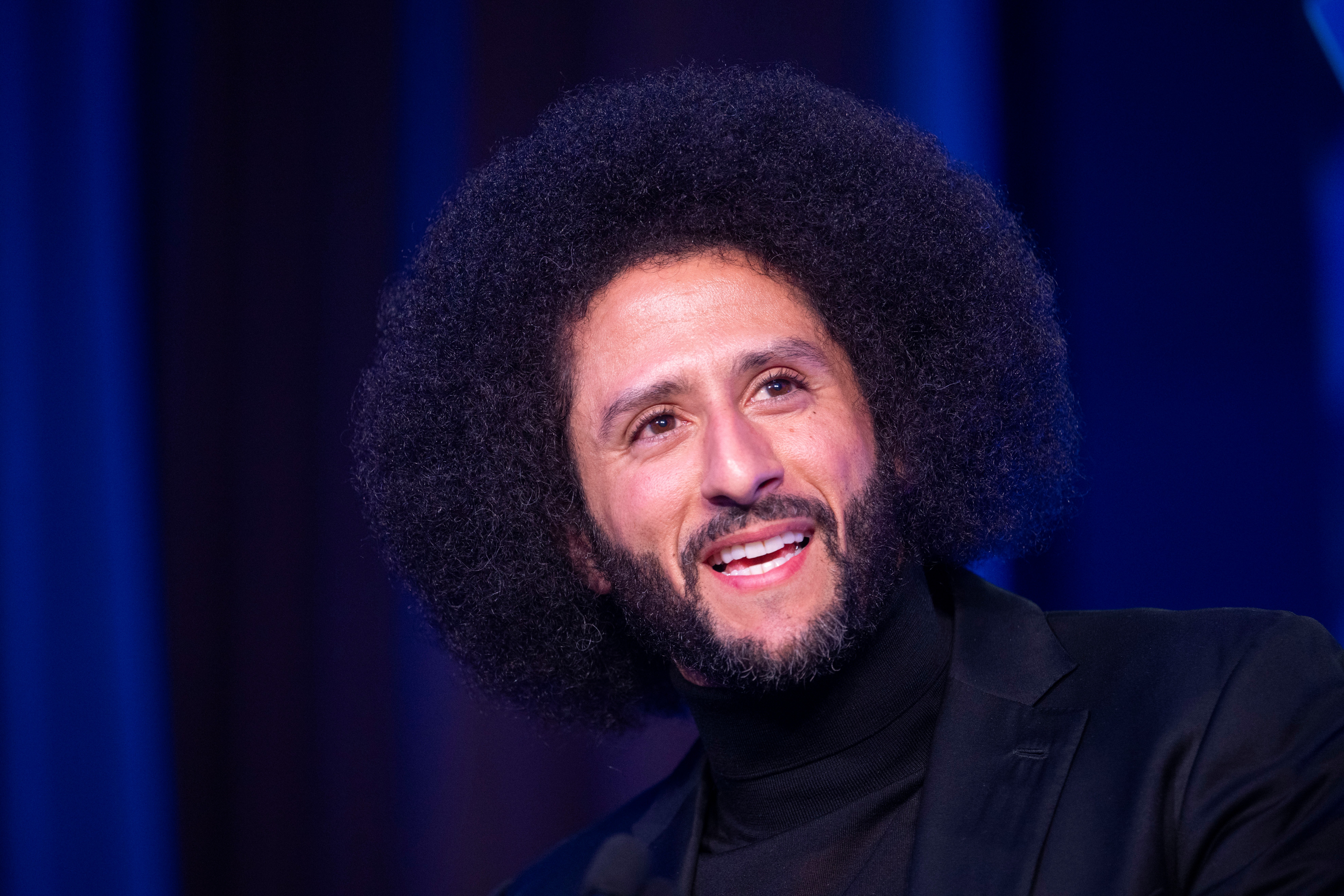
    Colin Kaepernick is presented with the American Civil Liberties Union’s Ralph Ellison Award for Defenders of Civil Rights and Civil Liberties in the Arts, Business, Science, and Sports by Deborah Archer at the ACLU’s 2026 Biennial Leadership Conference on July 24 in Washington.Kevin Wolf

    Kaepernick, who now works as a civil rights activist, joined the aforementioned athletes as part of what sports writer Howard Bryant calls “the heritage”: the tradition of Black athletes using their public visibility and star power to speak out against racial injustice, even at professional and personal cost.

    These athletes throughout history have made their positions clear. Whether we’re talking about Black lives in America, lives in Palestine, Congo, Sudan, Haiti, or Cuba, you’re either working on the side of empowering or exploiting. Kaepernick made clear where he stood 10 years ago.

    To sufficiently honor his costly protest — and the protests of so many others — during Black August, we must ask ourselves if we can say the same.

    Rann Miller is an educator and freelance writer based in Southern New Jersey. His “Urban Education Mixtape” blog supports urban educators and parents of children attending urban schools. urbanedmixtape.com @UrbanEdDJ

  • Trump’s vaccine order hands some MAHA voters a win. It also gives Democrats an attack line

    Trump’s vaccine order hands some MAHA voters a win. It also gives Democrats an attack line

    NEW YORK — President Donald Trump pivoted the nation’s attention back to vaccines this week with an executive order that aims to scale back the childhood immunization schedule and space out shots into separate visits.

    After acting to overhaul the nation’s vaccine policy and guidance, the Trump administration had recently largely stepped back from additional changes to focus on less controversial subjects, raising questions over the political impetus behind and implications of the Republican president’s renewed focus on vaccines.

    For well over a decade, Trump has expressed his view — against medical groups’ guidance — that childhood vaccines should be administered in smaller doses over a long period of time. The executive order sought to bear out that discredited theory.

    While the move could endear Trump to some “Make America Healthy Again” voters who want more flexibility on immunizations, it’s also already attracting attacks designed to hurt Trump’s aligned candidates in November’s midterm elections.

    Jayme Franklin, a 28-year-old conservative activist who appeared with the president to promote his executive order on Monday, said she thinks the action is “going to go a long way” for MAHA mom voters like herself.

    But Shaughnessy Naughton, president of the left-leaning political action committee 314 Action, which aims to elect doctors to office, said she sees the order as “one more data point” in support of Democrats’ cause.

    “Our organization and our candidates are certainly going to hammer that message home — that if you want healthcare that’s accessible and affordable, if you want medical advice that is science-based, we need to have accountability in Washington,” she said.

    Trump has long called for shots spread out in separate visits

    Trump’s doubt in the number and cadence of vaccines dates back at least to 2014, when he posted to social media the disproven claim that combination shots can cause autism and said if he were president he would spread them out.

    While he’s since shown pride in his first-term Operation Warp Speed effort to disseminate COVID-19 vaccines quickly and praised certain other shots like the polio vaccine, he also has repeatedly called for reforming the childhood vaccine schedule. While his administration released an assessment comparing U.S. childhood vaccine schedules to peer nations’, several of his suggestions have come without any new scientific evidence.

    “This is based on what I feel,” Trump said last September when he called for splitting the measles, mumps and rubella, or MMR, vaccine into three single-disease vaccines.

    On Monday, he again pushed for separating the MMR shot into three, ordering the U.S. Department of Health and Human Services to work on developing that option for children, since it doesn’t currently exist in the United States. Public health experts have warned that spacing out shots could increase the risk of infection with a vaccine-preventable disease before a child returns for the next visit.

    Most Americans don’t see reevaluating vaccine safety as a top issue

    Trump’s views have aligned him with Health Secretary Robert F. Kennedy Jr., a longtime anti-vaccine activist before he entered politics.

    The president credits Kennedy’s diverse coalition of MAHA followers — whose priorities range from regulating pesticides to ending vaccine mandates — with helping him win back the White House in 2024.

    Even as the Trump administration has handed several wins to the MAHA coalition, including changing the federal dietary guidelines and loosening restrictions on peptides, some in the movement have grown impatient as their other priorities remain unfinished. It’s unclear whether Trump’s action to loosen vaccine recommendations, an issue some MAHA supporters are passionate about, will be enough to shore up those voters ahead of the midterms.

    Franklin, who runs a conservative magazine, said she had talked with Trump about making vaccine recommendations more flexible at a MAHA roundtable earlier this year. She was pleased when the administration informed her that her requests were coming true.

    “I think it just really shows he loves to hear from everyday Americans on how his policies and his administration affect the lives of people who are raising kids in this country,” she said.

    But political strategists and Trump’s own pollster Tony Fabrizio have warned that efforts to shave down vaccine recommendations may not matter much to most voters this fall.

    Polls show most Americans believe children should be vaccinated to attend school, though Republicans are less likely to see vaccines as important. And as rising prices on things like groceries, gas and healthcare tighten Americans’ budgets, many view the economy as a top issue they care about.

    “Nothing in America matters more than affordability,” pollster Frank Luntz said. “And anytime the administration or Republicans goes off affordability, they’re not talking about what Americans really care about.”

    Whit Ayres, a Republican pollster, said with most Americans viewing vaccines positively, Trump’s announcement “does not strike me as the most persuasive political message.”

    Recent polling from the healthcare research nonprofit KFF suggests that even among MAHA supporters, only 10% rank reevaluating vaccine safety as their top priority for the federal government. Higher-ranking priorities included lowering health costs (42%) and restricting chemical additives in the food supply (21%).

    Democrats are seizing on Trump’s message

    Asked about the timing of the order with the midterms approaching, a White House official who insisted on anonymity to brief reporters said that the move was a longstanding presidential priority and that other health issues voters care about were still being addressed.

    To that effect, on the day Trump signed the order, the Food and Drug Administration announced an effort to require more transparency from food manufacturers about new ingredients or additives in foods — something many in the MAHA movement had been calling for.

    The administration has also touted its efforts to lower drug prices and crack down on federal health program fraud, which it argues will save taxpayers money.

    Still, Democratic candidates, including doctors linked to Naughton’s group 314 Action, seized on Trump’s order in messages to voters this week.

    Richard Pan, a physician running as a Democrat for the U.S. House in Northern California, reposted the American Medical Association’s condemnation of Trump’s vaccine falsehoods, among other fact checks. He told the Associated Press he thinks voters are deciding between electing people who choose not to hold the administration accountable and those who “stand for the science.”

    Annie Andrews, a pediatrician and Democrat running for the U.S. Senate in South Carolina, pleaded with voters not to take health information from Trump in a video posted on Instagram in collaboration with the left-leaning Courier Newsroom.

    “Do whatever you can to help elect scientists up and down the ballot in November, including sending me to the U.S. Senate,” she said to the camera. “I cannot think of a more urgent time for us to have a pediatrician in the room where these conversations are happening.”

  • Trump administration set to spend at least $900 million on White House construction

    Trump administration set to spend at least $900 million on White House construction

    The Trump administration plans to spend at least $900 million for construction projects on the White House grounds, a significantly larger price tag than has been previously reported and one that would be covered primarily by taxpayers, according to records reviewed by the Washington Post.

    Instead of securing money directly from Congress, the records show, the administration has pieced together funding from other agencies and private donors and directed it to a little-known account that typically holds a few million dollars for routine maintenance of the executive mansion.

    Confidential contracts and related planning documents indicate that the administration plans to use money in that account for White House “modernization projects” — the administration’s term for President Donald Trump’s planned overhaul of the property, at the center of which is a gilded East Wing ballroom.

    Together, the records reveal in the greatest detail yet how the Trump administration has sidestepped Congress and shielded visibility into what would become the most expensive overhaul of the White House in more than 80 years.

    A federal appeals court struck a blow to Trump’s plans on Friday, ruling that the administration needed congressional approval to continue building the East Wing ballroom. Trump vowed to appeal the ruling, which applied only to the ballroom, setting up a Supreme Court battle over the limits of his authority to remake the White House.

    “Congress has exclusive authority to regulate the construction and demolition of White House structures,” Judges Patricia A. Millett and Bradley N. Garcia wrote in the accompanying opinion.

    In the past, administrations planning major changes to the White House grounds have done so by submitting budget requests to Congress, receiving appropriations, and directing agencies to seek approvals and hire contractors, according to historians and budget records.

    The Trump administration has not disclosed the total cost of all planned White House construction or shared details about the sources or original intended purposes of most of the money it has assembled. Trump has repeatedly said that the East Wing ballroom project would be covered by private donations.

    The Post previously reported that the projected cost of the East Wing construction alone was $600 million, with half coming from taxpayers. The confidential contracting documents include the costs of upgrades to nearby Lafayette Square, construction of a helipad, a new visitor screening center, and other previously reported projects that would drive the total cost of work on the grounds to at least $927 million.

    The contracts reviewed by the Post leave open the possibility that the work will not move forward as planned and that the money will not be spent. As of the end of June, administration officials had issued orders for over $100 million of work to be paid from the White House maintenance account, budget office records show.

    The White House did not answer questions from the Post about the source of all the funding or the total cost of the planned work, but said the money is being spent in a “manner consistent with” Congress’ original intent.

    “President Trump continues to implement long-overdue and necessary renovations to beautify the People’s House as we celebrate our great Nation’s 250th anniversary of independence,” White House spokesman Davis Ingle said in a statement. “Thanks to the Builder-in-Chief, the White House will be properly glorified and remain in excellent condition for generations to come.”

    The contracts and money for the work are being routed through the Executive Residence, a White House office with fewer than 100 employees that maintains the president’s private home. The office is not subject to rules that require most federal agencies to disclose government records, rendering the contracts confidential.

    The Executive Residence, which employs housekeepers, curators, calligraphers, and carpenters, has not previously managed major construction efforts, experts said. In recent years, Congress has appropriated $2.5 million annually to its maintenance account, known as “White House Repair and Restoration.”

    Since Trump took office, the administration has directed $875 million to that account, public budget records show.

    “That is incredibly unusual,” said Cerin Lindgrensavage, counsel for Protect Democracy, an advocacy group that is suing the Trump administration for allegedly withholding public information about federal spending.

    To assemble funding in that account, the White House budget office authorized a series of transfers from the U.S. Secret Service and the White House Military Office totaling $500 million, planning and budget documents indicate, while an additional $305 million came from private donations. The documents reviewed by the Post show another $70 million directed to that account but do not identify the source.

    Most of the $415 million in Secret Service funding was directed to the account in June after Trump allies on Capitol Hill were unable to pass legislation that would have allocated $400 million toward the East Wing and the visitor screening facility.

    That Secret Service funding was appropriated by Congress in part to recruit and train Secret Service agents, the Post previously reported, raising concerns from members of both parties on Capitol Hill that the administration was improperly using funds.

    After his confirmation hearing in June, Hal Duncan, Trump’s pick to be deputy budget officer, wrote in response to questions from Sen. Gary Peters (D., Mich.) that using the money for White House construction was consistent with the Secret Service’s mission because the project “includes security enhancements related to the East Wing Modernization Project, to include structural hardening.”

    Ingle, the White House spokesman, told the Post that the ballroom itself would be paid for by $400 million in private donations and that it was appropriate for the Secret Service and the White House Military Office to be involved in providing security infrastructure on the campus.

    “Recent events such as the foiled attack on the historic UFC Freedom 250 event at the White House proves exactly why the East Wing Modernization Project is severely needed for large scale events, which include drone proof structures and drone ports among other critical security enhancements,” Ingle said.

    A Secret Service spokesman referred questions to the White House.

    The Constitution reserves for Congress the power to decide how tax dollars should be spent. The White House budget office is permitted to move funds from one account to another, for purposes that are consistent with the original appropriation, but experts said the extent to which the Trump administration has relied on such transfers is unusual.

    “If the executive can do anything they want with appropriated funds, then the executive can do anything they want, period,” said Joe Carlile, who served as an associate director of the Office of Management and Budget during the Biden administration and now runs a firm that analyzes federal appropriations data.

    In scope, Trump’s plans rival those of Franklin D. Roosevelt, who oversaw the completion of the East Wing in 1942. Trump’s vision dwarfs all White House construction projects since, according to Ed Lengel, former chief historian for the White House Historical Association.

    Roosevelt’s successor, Harry S. Truman, carried out what Lengel said was the most extensive overhaul of the private residence of the White House, where the president and his family live. At Truman’s request, Congress approved around $80 million in today’s dollars to refurbish and bolster the structure, which had fallen into disrepair, and established a six-person commission to oversee the work.

    To fund the most recent major White House construction project, in 2009 the Obama administration requested $376 million over multiple years for electrical upgrades and structural repairs to the East and West wings. Congress appropriated money over the next several years to fund the work, and it was largely managed by the General Services Administration, which typically oversees government real estate projects.

    The federal lawsuit now headed to the Supreme Court alleges that the Trump administration illegally circumvented Congress when it demolished the East Wing in December. In response, government lawyers argued that the president is permitted by law to spend funds on “the care, maintenance, repair, alteration, refurnishing, improvement” of the executive mansion.

    The D.C. Circuit court disagreed, upholding a lower court’s decision.

    “Whether or not a massive ballroom should be constructed is for Congress to decide and is not a matter for Executive self-help,” the judges wrote.

  • Close Trump aides — but no cabinet officials — made secret catering truck move

    Close Trump aides — but no cabinet officials — made secret catering truck move

    As President Donald Trump secretly left an Air Force One jet on a catering truck last month in response to a potential Iranian assassination threat in Turkey, he was accompanied by some of his most loyal and longest-serving aides but no cabinet officials.

    Other passengers on the truck included Dan Scavino, the White House deputy chief of staff; Natalie Harp, the president’s executive assistant; and Walt Nauta, the director of Oval Office operations, according to a U.S. official familiar with the operation and corroborating material reviewed by the Washington Post. The official spoke on the condition of anonymity because he was not authorized to talk to the media.

    A few lower-profile aides also were present, but the group did not include Secretary of State Marco Rubio or other officials at the highest level of the government, according to the official and the material. Together, those aboard the catering truck moved under concealment from the legacy Air Force One aircraft to a smaller Air Force C-32A before flying to Britain separately from the White House press corps and senior officials.

    The account adds a new level of understanding to a July 8 operation that was first reported by the Post on Monday and has triggered calls from congressional Democrats for an immediate briefing. White House officials withheld the secret move from journalists traveling with the president that day and for more than a month afterward.

    Among those on the smaller jet was Defense Secretary Pete Hegseth, who boarded the C-32A using external stairs in a manner that made him look like the senior-most official on the flight, the Post reported Monday.

    Scavino, Harp, and Nauta were among an inner circle of supporters who worked for Trump at his Mar-a-Lago estate in Florida during the four years between his presidencies, after many other officials who served in the first Trump White House distanced themselves following his two impeachments and multiple criminal investigations.

    Other senior administration officials, military personnel, Secret Service agents, and journalists remained on the legacy Air Force One plane, which had been deemed too risky for the president’s travel.

    More than a month after the operation and two days after the Post first revealed the ruse involving the military aircraft, the White House has declined to say which administration officials remained on that jumbo jet, which the White House falsely claimed Trump used to leave Turkey.

    In his first public comments about the operation, Trump said the decision for him to take an alternative flight was made by the Secret Service.

    “It’s really just up to Secret Service. I just follow what they like to do,” Trump told reporters at Joint Base Andrews on Tuesday night. “They wanted me to go on a different flight, a different plane, equal safety. … I do what they say.”

    It remains unclear whether all the top administration officials involved were aware they were flying on a different plane than the president or whether they, like the reporters assigned to be in the pool covering him, were kept in the dark.

    When asked Tuesday why it was too dangerous for him to fly on the legacy Air Force One but not the press, Trump asserted that he still faced a greater threat than those on the other plane.

    “The plane that I was on was at greater risk,” Trump said. “Because that would be the plane that I think that they would be more likely to go for.”

    The White House did not provide the media with a list of passengers leaving Turkey — information that it commonly does share. Treasury Secretary Scott Bessent and Rubio were among the officials listed on the manifest on the way to Turkey, where they attended a NATO summit. Other officials on that flight included White House Deputy Chief of Staff Stephen Miller, Communications Director Steven Cheung, deputy national security adviser Michael Needham and staff secretary Will Scharf, who was promoted this week to White House counsel.

    Scavino, Harp, and Nauta did not respond to requests for comment about accompanying Trump on the catering truck and the ensuing flight from Ankara to Britain.

    Scavino has worked for Trump for more than a decade, managing his social media presence and running the White House Presidential Personnel Office. Harp, known as the “human printer,” constantly accompanies Trump with hard copies of emails, news articles, and social media posts. Nauta, a Navy veteran who served as a valet in the first Trump White House, was a key witness in the Justice Department’s probe of Trump’s handling of classified documents at Mar-a-Lago.

    The journalists flying on the old Air Force One were unaware of the operation, though they asked Trump later in the day why staff directed them to keep their windows closed throughout the flight.

    Trump responded that it was “because you’re probably on a dangerous flight because of the sleaze bags that we have to deal with.” Trump said that he has a “threat all the time” against his life and that he is “number one” on Iran’s “list.”

    Democrats have raised concerns that the maneuver left the press and some White House staff unwittingly in harm’s way. They’ve called for the administration to brief Congress on the operation.

    “There has to be a congressional briefing because it involves not just the safety of the president,” Sen. Richard Blumenthal (D., Conn.) said in an interview with CNN.

    “I want to know what precautions were taken to make sure that all of the passengers on that Air Force One, which was judged too dangerous for the president to fly on, what precautions were taken to keep the staff and reporters on that plane safe.”

    Trump told reporters Tuesday that he was not surprised by the Secret Service operation because he faces “a lot of threats that you don’t know about.”

    “Any consequential president has a lot of threats,” he said. “Non-consequential presidents don’t get threatened. And I think that I may be the most consequential.”

  • We’re going bananas | Let’s Eat

    We’re going bananas | Let’s Eat

    Pumpkin spice is passé. Read on to see why banana is the flavor we now savor.

    Also in this edition:

    • Fare ball: You would not believe what foods Phillies fans are taking to games.
    • End of the line: A Northeast Philadelphia seafood landmark prepares to close.
    • News: Read on for word of a new Vietnamese bar-restaurant, news about this year’s Michelin Awards, and a sale offering for the Pub.

    — Mike Klein

    If someone forwarded you this email, sign up for free here.

    Why bananas are appealing in Philly

    Bananas are trending everywhere, but especially at cocktail bars and cafes, which use fresh bananas, banana liqueur, banana extract, and even banana peel. Kiki Aranita isn’t alone in suggesting it might be “the next pumpkin spice.”

    Phillies fans have cracked the food game

    Phillies fans are bringing way more than hoagies and cheesesteaks into Citizens Bank Park. Beatrice Forman winds up and delivers a fun read about the BYO eats you’ll find in the stands. Curried tuna salad, anyone?

    Last call for Kelly’s Seafood

    Kelly’s Seafood has been a Northeast Philly fixture, serving generations of families — and plenty of snapper soup. Now, as the family prepares to close, longtime customers are returning for one last meal, stocking their freezers, and saying goodbye.

    A bakery cafe with comfy seating — and a drive-through

    Mazaj, an offshoot of the twin Malooga restaurants, has landed in Willow Grove with Yemeni coffee, Middle Eastern pastries, a drive-through, and a plan to expand.

    Eat, pray, sail: ‘Odyssey’ makes us hungry

    The Odyssey by Christopher Nolan has plenty of monsters, mayhem, and spectacle — but where’s the feast? Kiki Aranita, a classics scholar in her past life, explains what Homer’s heroes would have eaten, and where to embark on your own culinary odyssey around Philly.

    A pizzeria celebrating Black culture

    In Crust We Trust has joined the pizza boom now underway in Fishtown. Anyae Wilson-Worley’s pizzeria is offering something none of the others are: a taste of Philly-style Black culture.

    In other pizza news: Dave Portnoy, the Barstool Sports founder, visited the Philadelphia area last week to shoot a handful of “One Bite Pizza Reviews,” whose scores in previous years have transformed the fortunes of a neighborhood pizzeria.

    The best thing Hira Qureshi ate last week

    What a joy: Dunking chunks of octopus into the almond romesco and black garlic purée at Stina in West Passyunk. For another treat, writes Hira Qureshi, don’t miss the spanakopita.

    Scoop

    The Pub in Pennsauken, which sits on 6 acres, is being offered for sale for the first time in 26 years. The steakhouse institution is closed now for summer break, but the owner insists that it will reopen next month — unless a deal is magically struck.

    Restaurant report

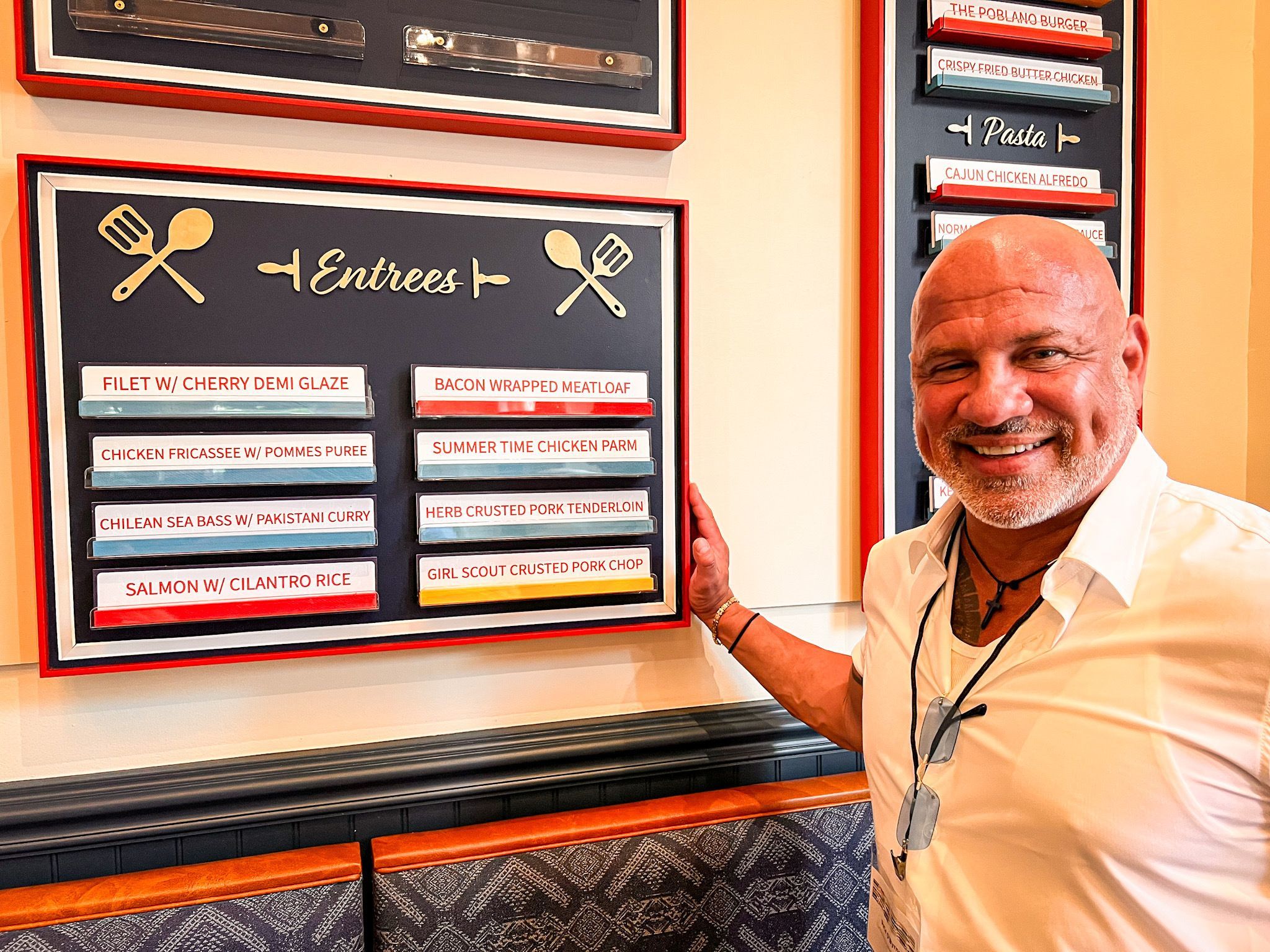
    Recipe Philly, whose menu is built around recipes submitted by local home cooks, opens Monday at 1401 Arch St., a splashy, 175-seat redo of the long-ago McDonald’s at Broad and Arch. Funded by retired business executive Ed Baumstein (above), the restaurant will serve lunch and dinner, featuring dishes from 31 cooks who also will appear in a reality TV series now being shopped around.

    Among them:

    Germantown data analyst Chyan Adams Bentley (above), 30, drew inspiration for her honey-chipotle shrimp tostadas from a rooftop cooking class she took in Guatemala.

    Pete O’Byrne (above), 60, of Jeffersonville, contributed a pork chop crusted with Pecorino Romano, panko, and shortbread Girl Scout cookies. “The Girl Scouts are one of my customers,” said O’Byrne, who sells production printers and software. “I know when the truck comes in.”

    Nayha Hussain (above), 24, a Spring Garden software engineer who has cooked since age 12, elevated a home-style Pakistani coconut curry with Chilean sea bass. Since Recipe is a 15-minute walk from her place, “it’s my local neighborhood restaurant that has my dish on it,” she said.

    Read up on Recipe Philly here and here.


    You’ll be hearing a lot about Anh Em, which soft-opened last weekend at 21st and Titan Streets in Point Breeze. Anna Huynh and husband Victor Nguyen are behind the 50-or-so-seater specializing in Vietnamese comfort food, mixing classics with home-style dishes (like crispy bánh xèo, above, and the beef carpaccio dish known as bò tái chanh), inspired by what the couple grew up eating. Chef is Nguyen, who managed Tango and once co-owned a Chinatown bubble-tea shop; he oversees a 20-seat bar pouring local beers from 24 taps, plus cocktails. The couple retained the former Madeira Indian Grill’s exposed brick while adding burgundy booths, light-blue accents, lanterns, and shelving built by Nguyen and their son. Here’s the soft-opening menu.

    Anh Em, 1252 S. 21st St. Hours: 4 p.m.-2 a.m. Wednesday-Monday. Closed Tuesday.

    Briefly noted

    The 2026 Michelin Awards will return to New York City for its ceremony. Reminder that its inspectors are scouring Philadelphia in advance of the December announcements.

    Heytea, the expanding Chinese tea shop, enters the Philadelphia market Friday at 1001 Arch St. in Chinatown. Drinks will be buy-one/get-one from Friday-Sunday.

    With Ember & Ash still closed after a June 24 fire, chef Scott Calhoun will cook at Cartesian Brewing (1326 E. Passyunk Ave.) from 4-8 p.m. Saturday. Using yakitori grills in the courtyard, Calhoun will serve dishes including octopus “dogs,” a Filet-O-Fish-inspired skate sandwich, ’nduja-stuffed piquillo peppers, and sourdough with romesco, along with Cartesian’s beverages.

    Javelin (1811 Fairmount Ave.) will host chef Carlos Wills of Ogawa Sushi & Kappo for a maguro kaitai, or tuna-cutting ceremony, Aug. 18. Starting at 5 p.m., Wills will break down a 250- to 300-pound bluefin tuna for a multicourse tasting ($170 plus tax/tip) including sashimi, nigiri, hand rolls, and tuna marrow with uni and caviar. Richie Tray will serve Cambodian-inspired appetizers and cocktails. Reserve via Toast.

    Libertee Grounds (1600 W. Girard Ave.) will host a Cooper DeJean look-alike contest on Aug. 27. Doors/registration at 5 p.m., contest at 6:30 p.m. Signup via Instagram.

    ❓Pop quiz

    Why can red Côtes-du-Rhône wines such as Ogier Artésis remain relatively affordable?

    A) Rhône producers are prohibited from aging their wines in pricey oak barrels.

    B) Grenache can produce large crops of flavorful grapes even in dry conditions.

    C) French law limits the markup on Côtes-du-Rhône wines.

    D) The wines are made primarily from surplus Syrah grapes, and this is the source of the expression “Qué Syrah Syrah.”

    Find out if you know the answer.

    Ask Mike anything

    What do you know about the sale of Ardana in Bucks County? — Cindy S.

    The Cristou family announced last week that they’ve sold their Ardana Food & Drink location in Newtown, Bucks County, to Rob LaScala after 3½ years. LaScala tells me that the Ardana name and Cypriot-inspired menu will remain for about two months before he transitions to LaScala’s Fire, his semicasual Italian concept. LaScala, who also owns Chicken or the Egg in Marlton and Beach Haven, is on fire with Fire, as there are nearly a dozen locations now, plus New Jersey expansion plans for Freehold, Bridgewater, and Cherry Hill. The Cristous still retain their Ardana and KC Prime Steakhouse, both in Warrington.

    📮 Have a question about food in Philly? Email your questions to me at mklein@inquirer.com for a chance to be featured in my newsletter.

    By submitting your written, visual, and/or audio contributions, you agree to The Inquirer’s Terms of Use, including the grant of rights in Section 10.

  • Millennial homeownership in the Philly area almost doubled in 5 years, outpacing every other major Northeastern metro

    Millennial homeownership in the Philly area almost doubled in 5 years, outpacing every other major Northeastern metro

    The Philadelphia region became a homebuying hot spot for millennials in recent years.

    The number of millennial households that own their homes in the Philadelphia area almost doubled between 2018 and 2023, outpacing the generation’s homeownership growth in every other major metropolitan area in the Northeast, according to an analysis by RentCafe.

    In that five-year period, homeownership among Philadelphia-area millennial households jumped roughly 92%, from about 201,000 to about 386,000, according to the nationwide apartment search website.

    That’s higher growth than the 74% increase nationally. In RentCafe’s analysis of 107 metro areas with the biggest populations of millennial households, the Philadelphia region ranked 17th for its jump in millennial homeownership. And among metros with at least 100,000 millennial households in 2023, it ranked seventh.

    “Philadelphia stands out because it’s unique in the Northeast,” said Doug Ressler, manager of business intelligence at Yardi Matrix, RentCafe’s sister company.

    He points to the Philadelphia area’s combination of positive characteristics. Compared to many other markets, the region has lower home prices, stronger job opportunities, and good wage growth, Ressler said.

    It also has a good supply of starter homes, which he called “key.” Rowhouses in particular “provide an entry point for homeowners at a price you can’t find anywhere else,” he said.

    Coastal areas are popular among millennials — people born from 1981 to 1996. But “millennials in many coastal markets remain locked out of homeownership,” Ressler said. The Philadelphia region’s relative affordability gives renters a chance to become homeowners.

    RentCafe’s report specifically points to the area’s older housing stock and availability of homebuyer assistance programs to further explain why millennials can buy homes in the Philadelphia region.

    Also, the generation’s income growth has outpaced the growth of home prices. Between 2018 and 2023, area millennials’ incomes increased by roughly 38%, while home prices increased by 18.5%, according to the RentCafe analysis.

    Roughly 56% of Philadelphia-area millennial households were homeowners in 2023. More millennials owned homes than rented them in 83 of the 107 metro areas RentCafe analyzed.

    While millennial homeownership in the area increased by about 92% between 2018 and 2023, the number of millennial renter households increased by just 2.4% — below the roughly 5% increase nationwide.

    (function(){function e(){window.addEventListener(`message`,function(e){if(e.data[`datawrapper-height`]!==void 0){var t=document.querySelectorAll(`iframe`);for(var n in e.data[`datawrapper-height`])for(var r=0,i;i=t[r];r++)if(i.contentWindow===e.source){var a=e.data[`datawrapper-height`][n]+`px`;i.style.height=a}}})}e()})();

    Where millennials are buying homes nationwide

    Small and mid-sized metro areas have seen the highest concentrations of millennial homeowners, thanks to more affordable home prices. In the Lancaster area, roughly 63% of millennials owned homes in 2023.

    In the Grand Rapids, Mich., area and two metros in Utah — Ogden and Provo — more than two-thirds of millennial households owned their homes.

    From 2018 to 2023, small and mid-sized metros in Florida and California had the highest increases in millennial homeowners. They’re all places with more affordable home prices and strong income growth. And they attracted millennials during the pandemic who moved away from denser and more expensive major cities.

    The number of homeowner millennial households more than doubled in 12 of the 107 metro areas RentCafe analyzed.

    The nearest of these to the Philadelphia area is Youngstown in northeastern Ohio, near the Pennsylvania border. The number of millennial households that own homes increased from about 15,900 in 2018 to about 32,400 in 2023.

    Three Florida metro areas topped RentCafe’s list for highest rates of millennial homeownership growth: North Port, Lakeland, and Jacksonville. The North Port area has ranked among the country’s fastest-growing metros overall.

  • How utility and tech firms ‘educate’ regulators with big donations, secret retreats

    How utility and tech firms ‘educate’ regulators with big donations, secret retreats

    WEST PALM BEACH, Florida — As a pink-and-gold sunset faded over the waterside Ben Hotel, Republican state utility officials streamed out of a reception where they had been imbibing with executives from the industries they regulate.

    Milling about the coastal glam lobby, one attendee complained about service dogs in the first-class cabin on his flight. A group of men in cowboy hats urged fellow regulators and operatives to join them in continuing the night elsewhere. Another cluster lamented the growing number of local data center bans.

    The industry-funded retreat was not meant to be seen. Handouts said reporters and constituents were not welcome. But their name tags identified the attendees moving through the lobby. Among them were utility commissioners — state officials whose decisions impact electricity bills and determine whether utilities can build power plants and transmission lines.

    As energy-hungry data centers and rising electricity bills have stoked voters’ anger, some elected but obscure utility commissioners are meeting privately with companies whose fortunes they regulate, according to corporate filings and internal emails reviewed by The Washington Post.

    In interviews, commissioners and industry reps said it’s all in the interest of education. But watchdog groups say the industry-funded intermingling is a brazen conflict, as utility and tech companies seek project approvals and elected officials work to keep their seats.

    Last month’s all-expenses-paid West Palm Beach retreat was organized by the Regulators Roundtable, an ideologically conservative group whose membership is recruited from the utility industry, tech firms and right-leaning commissioners who tend to support their plans for rapid growth. Major funders have included Google, NRG Energy, the American Gas Association and the Nuclear Energy Institute, according to documents that the Energy and Policy Institute, a utility watchdog, obtained under public records laws and shared with The Post.

    “These are companies whose profits are directly affected by decisions made by a remarkably small group of regulators,” said Gabriel Straus, a research fellow at the Energy and Policy Institute. “The last thing you want to hear when you are struggling to make ends meet is your utility commissioner is sipping cocktails at a resort with the utility executives raising your rates.”

    The group promises sponsors — several paying $50,000 to be “Inaugural Member Investors” — the chance to “engage directly with these key decision-makers” and provide “insights and expertise that can help steer policy.” Its nonprofit arm flies commissioners to luxury hotels for private meetings with industry representatives, while its political wing contributes directly to campaigns in the 10 states where voters elect these regulators.

    The Regulators Roundtable denied any conflicts of interest.

    Elizabeth Gianini, the group’s president, said the access promised to corporate sponsors is appropriate, because the organization is private and “no official actions by public service and utility commissioners can nor do occur during programming.” She said the involvement of commissioners in raising money from regulated companies and the lack of public access to the gatherings does not violate any laws.

    Gianini declined to provide a full list of companies and trade groups financing the organization. IRS filings show the group is aiming to spend more than $3.7 million over this year and next.

    Founded last year by Gianini and a regulator from Georgia, the Regulators Roundtable is intertwined with GOPAC, one of the Republican Party’s oldest political training and recruiting organizations. It shares GOPAC’s offices in suburban Virginia. And a GOPAC “education” fund provides the Roundtable with administrative support and strategic guidance, according to Gianini, who is also a director at GOPAC.

    The Roundtable hosts a “campaign school” for commissioners at GOPAC’s headquarters that is aimed at honing their political skills and helping them win reelection.

    At the January session, presenters included Americans for Prosperity, the Koch-backed political powerhouse that has helped roll back renewable energy subsidies and climate regulations. Google was there, too, leading a session on using artificial intelligence to improve political communications.

    The involvement of Google, long a leader in promoting clean energy, reflects how the politics of electricity are changing as the company seeks more power plants and commissioners willing to approve them.

    “Google has been a great supporter from the start of our organization,” Gianini wrote in an email connecting Ed Lodge, an Idaho utilities commissioner and honorary chair of the Roundtable Institute, with Google lobbyist Ron Barnes.

    Google is identified in internal emails as a founding sponsor of the Regulators Roundtable, and Barnes serves on the board of the institute, which supports the retreats with industry officials.

    Google said in a statement it only funds and participates in the group’s networking and educational activities, adding it “regularly engages with policymakers to share our responsible approach to energy, infrastructure and data center development. Like many in our industry, we collaborate with third parties to facilitate these conversations with officials across the political spectrum.”

    The Roundtable’s outreach to prospective donors positions the organization as protecting utility-friendly regulators from “radical climate activists,” consumer advocates and other adversaries eager to tap ratepayer frustration to “shift regulatory control.”

    “The need for this group became clear when liberal organizations invested millions to defeat conservative candidates for Corporate Commissioner in Arizona,” Gianini wrote in a March 2025 email to a vice president at Georgia-based electricity giant Southern Company.

    Georgia illustrates the political stakes. Voters ousted two long-serving GOP commissioners there last year, after the commission green-lit six rate increases for Southern Company subsidiary Georgia Power in five years. This fall, Republicans risk losing control of the commission for the first time in three decades. Gianini highlighted the risk that “control of Georgia’s Commission could flip entirely” in a recruiting email to a commissioner from another state.

    Her email to Southern Company took aim at PowerLines, a nonpartisan utility watchdog that tracks rate increases and helps consumers participate in commission proceedings. It warned that such groups “advocating against conservative commissioners” are investing heavily in commission races and argued that energy companies should help build a political counterweight.

    PowerLines officials say it spends no money on races, and the group is focused narrowly on why utility bills are going up.

    Big energy companies “don’t want to upset the relationships they are comfortable with,” said Ari Peskoe, an electricity markets scholar at Harvard University who sits on the PowerLines advisory board. “They don’t want fresh voices on these commissions. It is a risk. It is an unknown that jeopardizes their entire business model.”

    The Roundtable’s fundraising relies in part on utility commissioners cultivating financial support for the organization from companies they regulate during meetings not typically disclosed to constituents.

    Internal emails show Gianini enlisted several commissioners in trying to persuade utilities and industry groups to become “investors.”

    “Michele Wheeler from NextEra needs to be impressed!” she wrote to an Oklahoma regulator before a series of meals with prospective Roundtable sponsors on the sidelines of an industry conference in Santa Fe. “I want to be sure she sits next to you and another commissioner that night.”

    Gianini continued: “I am getting nervous about the ‘noticing requirements’ every state seems to have their own laws and what it means. Does it make it open to the Public and or Press?”

    NextEra, the largest U.S. power utility company, which also touts its commitment to erasing carbon emissions by 2045, did not respond to questions.

    Asked about any potential ethical issues raised by elected regulators and industry officials mixing behind closed doors, Lodge, the Idaho utilities commissioner and honorary chair, wrote in an email to The Post that all of the commissioners involved are expected to abide by their state ethics laws.

    Tommy Tucker, a North Carolina commissioner who disclosed accepting $2,274 of expenses for the institute’s event in Washington, said critics misunderstand the purpose of the gatherings.

    “There is no conflict whatsoever,” he said. “It is educational. You get to meet with other commissioners who are experiencing the same things we are also dealing with data centers.”

    He said conversations have also included how to best deploy wind and solar.

    But some commissioners have voiced reservations after being courted by the group.

    Internal emails show that Alabama Public Service Commissioner Jeremy Oden hesitated over an invitation to a Roundtable gathering in Washington just months before his Republican primary.

    Oden had previously signed on to a Roundtable effort to shield regulated utilities — and the state utility commissions — from a White House-ordered review of policies that foster anticompetitive monopolies.

    About the Washington event, though, Oden wrote to a political consultant: “I would really like to go to this but don’t know if it is a good idea.”

    In the end, he decided against it. “I have never attended one of their events nor phone conversations,” Oden, who lost his reelection bid, said in an email to The Post.

    Josh Byrnes, an Iowa utility commissioner, shows up on the internal invite list for another dinner, this one with “potential investor” Southern Company.

    Byrnes said he had cut off contact with the Roundtable by then, amid scheduling conflicts and his concerns about its political overtones.

    “This is probably something I should not be involved with,” he said in an interview. “People need to do a better job thinking things through when they go to these events. I always ask myself, ‘How would you explain that to a ratepayer?’”

    Many utility and tech companies, however, have appeared enthusiastic about supporting and participating in Roundtable events.

    NRG, which disclosed its $50,000 donation in corporate filings, said it enlisted with the Regulators Roundtable to “ensure that the perspective of competitive suppliers was represented in discussions.”

    The company said in a statement that “NRG regularly engages with regulators, policymakers, and industry stakeholders across the political spectrum to advocate for consumer choice, competitive markets, and reliable, affordable energy.”

    It added that it is “not currently active with the organization,” though Roundtable emails suggest its membership won’t lapse until 2027.

    Southern Company has not reported donating directly to the Regulators Roundtable, but the company did give $25,000 to GOPAC last year, as that organization’s contributions from utilities soared.

    Dominion Energy, Duke Energy and NextEra have also collectively contributed $950,000 to GOPAC since last year. All are seeking regulatory approval for billions of dollars in new power plants, transmission lines and other infrastructure needed to serve surging electricity demand driven by AI data centers — investments expected to generate substantial returns for shareholders.

    “We participate in the political process on behalf of our customers and employees,” Dominion said in a statement. “Our contributions are bipartisan and transparent, and we don’t ask the recipients of our campaign contributions for favors.”

    Duke did not respond to questions.

    GOPAC officials wrote in an email that their support for the Roundtable comes from a separate GOPAC educational fund that does not disclose its donors. They said those donors are not permitted to “earmark” their contributions to be passed through to specific groups or causes. The chief of staff for that GOPAC fund is also identified on tax documents as the Roundtable’s secretary.

    Asked about concerns the funding of GOPAC and the Roundtable with regulated industry money creates a conflict, GOPAC responded: “One person’s concern is another’s enthusiasm for a mission of supporting public service and utility commissioners by giving them access to a broad range of perspectives to boost energy reliability, affordability, modernization and innovation.”

    “We acknowledge there are those who want to halt production, stop permitting, put on hidden fees, and mandate transitions in their drive to discredit the Regulators Roundtable and Regulators Roundtable Institute,” said the GOPAC statement. “Fortunately, most Americans want their elected and appointed leaders to have a wide-ranging and well-informed understanding of the challenges and opportunities before them.”

    The program from a GOPAC energy conference in Nashville last summer offers a glimpse of how it is seeking to influence regulation. Former Trump senior economic adviserSteve Moore pilloried renewable energy incentives and emissions targets, according to a copy of his presentation obtained through a public records request. The documents also show a Texas energy investment firm prepared slides depicting lawmakers who champion aggressive greenhouse gas rules as hapless weaklings getting shoved into a school locker.

    On the sidelines, Roundtable donors NRG and the American Gas Association were joined by several state regulators at a Roundtable dinner.

    Gas association spokeswoman Emily Ellis said the organization “engages with elected officials and regulators at all levels and across the political spectrum to educate them on energy policy issues.”

    The secrecy of the Regulators Roundtable stands in contrast to transparency demands some of its members make of other groups seeking to influence them.

    In Louisiana, utility commissioner Eric Skrmetta is leading an effort to require groups involving themselves in regulatory activities to produce sworn affidavits disclosing all the out-of-state donors of any large national organizations that provide financial support. Critics call it an onerous rule aimed at sidelining local nonprofits with layered funding streams.

    As drafted, the rule does not appear to apply to activities outside commission proceedings.

    So Skrmetta, who did not respond to requests for comment, would not have been required to disclose which donors bankrolled his Regulators Roundtable trip to Washington in January and what was discussed there.

  • Takeaways from the primaries in South Carolina, Wisconsin, Minnesota and Connecticut

    Takeaways from the primaries in South Carolina, Wisconsin, Minnesota and Connecticut

    Progressive Democrats notched another big victory in Tuesday’s Minnesota Senate primary. But a moderate Democrat narrowly won the high-profile governor’s race in Wisconsin, defying expectations of an easy win for the party’s surging democratic socialist wing.

    President Donald Trump, meanwhile, suffered a defeat after the candidate he endorsed for Minnesota governor fell short in the Republican primary.

    Here are five takeaways from Tuesday’s primaries:

    Crowley upsets Hong in Wisconsin governor’s race

    Milwaukee County executive David Crowley defeated Francesca Hong, a State Assembly member and democratic socialist, in the Democratic primary for governor after an unusually unpredictable — and unexpectedly close — primary.

    Crowley initially dropped out last month, saying it was clear he could not win. Lt. Gov. Sara Rodriguez dropped out the following week, citing irregularities with her campaign’s financial reports. Then Crowley returned to the race with the endorsement of Wisconsin Gov. Tony Evers (D). After that, yet another Democrat — Mandela Barnes, a former lieutenant governor — dropped out, further scrambling the race. To add to the confusion, Barnes and Rodriguez remained on the ballot.

    Hong was the latest democratic socialist to catch fire after several other democratic socialists defeated House Democrats in primaries earlier this year. She led in polling in the final weeks of the race but attracted criticism for calling years ago for the cancellation of Thanksgiving, which she described as a holiday “celebrating colonialism.” Evers warned that Hong probably could not defeat Rep. Tom Tiffany, who won the Republican nomination.

    Progressives prevail in Minnesota

    Another progressive, Lt. Gov. Peggy Flanagan, won the Democratic primary for an open Senate seat in Minnesota, defeating a more moderate rival, Rep. Angie Craig. Flanagan had the backing of Sens. Elizabeth Warren (D-Massachusetts) and Bernie Sanders (I-Vermont) and other progressives in Congress. She will face Michele Tafoya, a former sideline reporter for NBC’s “Sunday Night Football” who easily won the Republican nomination.

    Republicans view Flanagan as vulnerable due to the welfare-fraud scandal that rocked the state while Flanagan was in office, and they have expressed enthusiasm that Tafoya could put the seat in play.

    However, no Republican has won a Senate seat in Minnesota since 2002, and Republicans are more optimistic about flipping Democratic-held seats in Michigan, New Hampshire and Georgia than Minnesota. The Cook Political Report, which rates the race as “likely Democratic,” said it would maintain its rating regardless of which Democrat won the nomination.

    Another progressive, Matt Little, won the Democratic primary to succeed Craig in the House. Little, a former state senator and Lakeville mayor, was endorsed by Rep. Greg Casar (D-Texas), the chairman of the Congressional Progressive Caucus, among others.

    Another Democrat falls to a primary challenge

    Luke Bronin, a 47-year-old former Hartford mayor, ousted Rep. John B. Larson, 78, from his House seat representing central Connecticut in the latest generational clash to convulse the Democratic Party.

    Larson is not the only older House Democrat to lose a primary this year. Reps. Al Green (D-Texas), who is 78; Adriano Espaillat (D-New York), who is 71; Diana DeGette (D-Colorado), who is 69; and Shri Thanedar (D-Michigan), who is 71, all lost primaries to younger challengers. (Green lost his seat to another House Democrat, Rep. Christian Menefee, after redistricting reshaped their districts.)

    Unlike some of those races, Larson’s primary did not feature a strong ideological divide. Instead, Bronin campaigned on “energy, urgency and change,” and urged Larson to “pass the torch,” though he did not explicitly criticize Larson as too old.

    Larson, in turn, tried to cast himself as more progressive than Bronin and emphasized his experience representing the solidly Democratic district.

    “It’s not about age, generational change,” Larson said at a recent rally alongside Connecticut Gov. Ned Lamont (D) and labor groups. “This campaign … is about who has the record of delivering in this community.”

    Lamont, 72, who is running for a third term, also faced a younger primary challenger on Tuesday. He prevailed, easily defeating state Rep. Josh Elliott, 41.

    Graham, Norman advance to runoff in South Carolina

    Sen. Lindsey Graham (R-South Carolina) defeated a primary challenger in June, avoiding a runoff by winning a majority of the vote. But his sudden death last month forced South Carolina to hold a second Republican primary, pitting Graham’s sister, Sen. Darline Graham — whom Gov. Henry McMaster named to succeed him — against nine other Republicans.

    Graham won 33 percent of the vote on Tuesday, leading her rivals. But she did not win a majority of the vote, forcing an Aug. 25 runoff. She will face Rep. Ralph Norman, who trailed Graham with 25 percent of the vote.

    Trump endorsed Graham ahead of the primary, giving her an edge in the runoff — but it’s not clear whether it will be enough to defeat Norman.

    Consider what happened in the Republican primary for South Carolina governor. Trump endorsed Lt. Gov. Pamela Evette, who made the June runoff along with Alan Wilson, the state attorney general. When it appeared that Evette might lose to Wilson ahead of the runoff, though, Trump also endorsed Wilson, allowing him to claim victory days later when Wilson won.

    Trump could be more reluctant to back Norman, who endorsed former South Carolina governor Nikki Haley over Trump in 2024 in the presidential primary. It is also unclear whether Rep. Russell Fry — who finished third in the primary — will endorse Norman or Graham.

    Asked Tuesday night whether he would campaign for Graham in South Carolina, Trump told reporters, “I think so.” He added that he also liked “the other people” in the race, without naming them.

    “They’re all Trumpers,” he said.

    Norman told The Washington Post last week that he wasn’t sure Trump would issue a dual endorsement again. “I think people see it for what it is,” Norman said. “Double endorsement, really, is problematic to me.”

    But, he added, “I’d love to have it at any time.”

    Lindell loses primary despite Trump’s endorsement

    Trump endorsed Mike Lindell, the MyPillow chief executive who enthusiastically supported his efforts to overturn the 2020 election results, for governor of Minnesota.

    But Trump’s endorsement wasn’t enough. Lisa Demuth, the state House speaker, defeated Lindell on Tuesday. She will face Sen. Amy Klobuchar, who easily won the Democratic nomination, in November.

    Lindell’s loss was the latest blow to Trump’s endorsement record. The candidates he backed for governor in Georgia and Iowa also lost. So did Rep. Andy Ogles (R-Tennessee) and Amir Hassan, whom Trump backed for an open House seat in Michigan.

    Other Trump picks prevailed on Tuesday.

    Graham led in South Carolina. Tiffany won in Wisconsin. Michael Alfonso won the Republican primary for a House seat in northern Wisconsin that his father-in-law, Transportation Secretary Sean P. Duffy, once represented. And former congressman Jerry L. Carl and state Rep. Rhett Marques won primaries for House seats in Alabama that the state legislature redrew earlier this year following a Supreme Court ruling that weakened the Voting Rights Act.

    Natalie Allison, Matthew Choi and Ben Binday contributed to this report.