The symphonic world has evolved into an ongoing Mahler festival, so much that the composer’s Symphony No. 5 surfaced in adjacent performances this week — the New York Philharmonic under its new music director Gustavo Dudamel and the Philadelphia Orchestra under Yannick Nézet-Séguin.
I heard both — Dudamel on a livestream Tuesday at Lincoln Center and Philadelphia on Friday at the Kimmel Center.
Then there’s Mahler 7th in Boston and Mahler 3rd in Paris, available on radio broadcasts.
Is Mahler ruling the world?
Only a few years ago, any Mahler symphonies beyond the amiable 1st and 4th were heard occasionally. But the stormy 5th symphonies being heard almost simultaneously (Philadelphia’s will be repeated at Carnegie Hall Oct. 13) show that Mahler performances are rarely redundant experiences.
Even with expansive running times from 60 to 100 minutes, Mahler symphonies are packed with content. With so many performance instructions (the composer was a micro manager) any conductor/orchestra combination connects the dots quite differently.
Consider the contrasting personalities of the PHL and NYC orchestras.
NYC’s hot, Dudamel-appointed hornist David Cooper nearly turned the 5th Symphony into the world’s biggest horn concerto. He seemed to lead the Tuesday performance almost as much as Dudamel.
That wouldn’t do in Philadelphia with its tradition of blended sonorities dating back more than a century. The NY Phil has been called an orchestra of soloists. The Mahler 5th encourages that with high-profile incidental solos. But the amassed sonorities in Philadelphia have one-of-a-kind power.
Consider, also, the different conductor personalities: Nézet-Séguin’s treatment of the opening trumpet solo — at the start of a funeral March — felt like a dire warning. Dudamel’s was like a requiem. (Considering what his home country of Venezuela has been through lately, could it be any other way?) Nézet-Séguin generates excitement, often uses speed and clarity of intention. Dudamel creates a kind of frenzy seldom heard since Leonard Bernstein. But not always. The final moments of Dudamel’s Mahler 5th had it. But while his performance had solid playing and steady electricity, there were few surprises.
It was safe, which is understandable.
The pressure on Dudamel is enormous. His mandate isn’t just great music making but outreach, including concerts at Radio City Music Hall. He’s building an ensemble whose last three music directors, most recently Jaap van Zweden, didn’t make the orchestra their own. Dudamel himself recently came off a curtailed tenure at the Paris Opera. And he has left his longtime comfort zone, the Los Angeles Philharmonic.
At the end of Tuesday’s Mahler 5th, the floor-to-ceiling livestream video screens at David Geffen Hall showed Dudamel looking relieved, not joyful.
On the other hand, few orchestras have a history of stable leadership as the Philadelphians, and it shows with artistic consistency and ability to take risks with confidence. At this point, the Philadelphia Orchestra commands as much attention with supersoft playing as with fortissimos.
Yannick Nézet-Séguin and Julia Wolfe whose “Liberty Bell” was played by the Philadelphia Orchestra along with Mahler’s “Symphony No. 5” on Oct. 1 in Marian Anderson HallJeff Fusco
But the orchestra has not grown so refined that it can’t rock ‘n’ roll in the final section of Julia Wolfe’s Liberty Bell, co-commissioned by the orchestra, and also in Friday’s program. It’s apocalyptic as well as celebratory. Having grown up in the area, Wolfe spent formative weekends on South Street, and you hear that in this piece. But then, in the middle of the last section, comes an explosion sounding like World War III. Say it isn’t so.
Explosions, softness bode well for Mahler.
In the symphony’s long spans of music, Nézet-Séguin finds an underlying element that makes them more cogent, whether the underlying bass lines, the waltz rhythms of the third movement, or something less discernible in the finale where everything is happening at once. Layers of counterpoint, fugues plus antiphonal effects between upper and lower strings all tumble out at warp speed — and not with the light touch Nézet-Séguin employed in past years.
In Nézet-Séguin’s Carnegie Hall concerts with the Metropolitan Opera Orchestra, every symphonic motif behaves like a stage character. It comes naturally to those players, and I’m hearing more of that in his Philadelphia Mahler. It’s a great fit. These are some of the more fully realized Mahler performances I ever hope to hear.
CAIRO — The copilot accused of attacking the captain of an Israel-bound flight with an ax and trying to seize the controls was an Omani national who had been barred from flying on his country’s airline because of concerns about extremist views, officials said Saturday.
The copilot has been identified as Hamam al-Hammami, according to three people with knowledge of the situation, including a Gulf and a Western diplomat, who spoke on condition of anonymity because they were not authorized to speak to the media.
The United Arab Emirates, which is leading the investigation, said the copilot attacked with the cockpit’s crash ax and tried to take control of the plummeting plane in a “terrorist attack” Wednesday. His actions nearly crashed the flight with 182 people on board before passengers and others rushed in and subdued him.
The new details raised questions about how thoroughly FlyDubai vets potential employees, and how the copilot’s presence on a flight filled with Israeli passengers got past Israel’s strict security protocols.
Israel has said it has agreements with foreign carriers to keep pilots of nations without diplomatic ties from flying there. Israel and Oman don’t have formal diplomatic relations. The UAE government has earned a reputation for effective measures against extremist activities but has bristled in the past over criticism of security lapses.
The incident occurred at a sensitive time for Israel, a week before the anniversary of the Hamas-led attack on Oct. 7, 2023, that sparked the war in Gaza. It also came weeks before a highly contentious election in which security, and Oct. 7 security failures, have been central issues.
FlyDubai hired the copilot after Oman Air barred him
Separately, a regional official and a person familiar with the matter said the copilot had been barred from flying by Oman over concerns that he had adopted extremist views. The official said he was moved to an administrative job at Oman Air. Both spoke on condition of anonymity to discuss the ongoing investigation. They gave no details about the alleged extremist views.
The copilot was later hired by UAE-based airline FlyDubai, the person said. It wasn’t immediately clear to what extent the copilot was vetted. The Gulf diplomat said he had undergone standard security checks before being hired, but it appears that the checks focused on whether he had been convicted of criminal charges and didn’t go deeper into examining his background for potential signs of radicalization.
The regional official also said security agencies from four regional countries were working to establish the copilot’s motives, aided by the United States and other Western governments. The Gulf diplomat said the investigation, which hasn’t concluded, hasn’t found any connections with militant groups, suggesting that the copilot acted on his own.
The regional official said the copilot was born in the UAE and his mother is Syrian. He obtained Omani nationality from his father, also an Omani national. The regional official also said the copilot had traveled to Syria, with no details.
Israeli Prime Minister Benjamin Netanyahu on Friday said the copilot had undergone “Islamist radicalization,” but provided no evidence. There was no immediate comment Saturday from Israel’s government.
A social media account was deleted the day of the flight
A FlyDubai spokesperson said in an email that the airline could not comment beyond its official statements and acknowledged “there are many questions at this stage.” There was no immediate comment from Oman Air, and Oman’s government has said nothing publicly in response to repeated questions since the incident.
In a statement to the Associated Press, Royal Air Maroc, Morocco’s national carrier, said the copilot “completed a three-month theoretical training period with the airline in 2025, as part of the pre-employment process. At the end of this training period, his application was not selected for employment.” There were no details.
Keith Coles, a spokesperson for Buckinghamshire New University in England, told the AP that al-Hammami previously completed a distance-learning course in aviation management there but “did not undertake any pilot training.” There were no details on the timing.
Little else was immediately known about the copilot’s background. His Instagram account was active until the day of the flight and then deleted.
Captain and passengers have described drama on board
Airlines are generally required to carry a crash ax in the cockpit that could be used in an emergency to break open a window to escape or break open a panel to access a fire.
The captain, who was badly wounded, has said he used his remaining energy while being attacked to unlock the cockpit door, allowing people who had noticed alarming sounds to come in, tackle the copilot, and stabilize the flight while passengers screamed.
The plane made an emergency landing in Saudi Arabia after a descent so extreme that part of the rudder was torn away, and aviation experts have marveled that it didn’t crash. FlyDubai has said crew traveling on the plane helped to stabilize it and land. They haven’t been publicly identified.
Both the captain and copilot were later taken to the UAE. The passengers, most of them Israeli, flew home later Wednesday on a separate plane, to cheers.
Beginning this month, states are required to shoulder a higher portion of the costs associated with administering the Supplemental Nutrition Assistance Program.
It’s the latest change to the federal food aid program resulting from the “One Big Beautiful Bill Act” signed by President Donald Trump last year. A local legal expert said that it’s another challenge for a program that has already seen tens of thousands of people in Philly lose their benefits.
Here’s the latest on what’s changed, and what people can do:
How do the October changes affect SNAP recipients?
Beginning Oct. 1, Pennsylvania and other states are required to take on 75% of the administrative costs of managing SNAP, said Mackenzie Libbey, a supervising attorney at Community Legal Services, which provides free legal assistance.
State agencies are already struggling to keep up with recent changes to SNAP, Libbey said. In addition, they’re preparing for another rule change that will go into effect next year — requiring states to keep a low “error rate” or take on more of the costs of the food assistance itself.
So on one hand, state case workers are overloaded, and on the other, SNAP recipients are struggling to navigate a lot more documentation requirements.
“So what we’re seeing, and I think we’ll continue to see, is people getting cut off due to paperwork,” she said.
Does this have to do with work requirements?
As of last September, people on SNAP in Philadelphia had to start proving that they were working, or that they were exempt because of medical or other reasons, to qualify.
That’s contributed to a steady decline in recipients, she said.
People who are on SNAP tend to be either working low-wage jobs and raising children, or dealing with issues related to health or age. That often doesn’t put them in a good position to handle the bureaucracy of the new system.
“It can be really difficult for people who are trying to feed their family or get back on their feet. It’s just too much, and people just give up,” Libbey said.
Who is losing their benefits?
With a few exceptions, noncitizens have lost their access to SNAP benefits, Libbey said. That includes refugees, asylum seekers, victims of human trafficking, and those awaiting a permanent status. Green-card holders and a few other groups remain eligible.
However, most people who have lost benefits are citizens who have failed to meet paperwork requirements. That’s led to a massive drop in enrollment.
How many people have lost SNAP benefits?
Almost two million people in Pennsylvania were on SNAP last summer, when the federal changes were signed into law, Libbey said. Since then, 234,000 people — 12% — have fallen off the rolls.
About 106,000 lost SNAP benefits because of work requirements, including 36,000 in Philadelphia.
Children make up 29% of those who lost benefits, with 69,000 people under age 18 losing benefits since last July, she said.
How much do SNAP recipients get?
The amount of benefits has not changed because of federal rules, and has increased slightly because of cost of living adjustments, federal data show.
SNAP benefits for a single person may be as high as $306. A family of four could receive as much as $1,023. A household of seven people would cap out at $1,616 per month. Most families get less than those amounts; average benefits are roughly a third less than the maximums.
What resources are available?
Food pantries such as Philabundance are one short-term resource for people in need.
For noncitizens in particular, charitable organizations targeting specific groups have popped up. Recently, the Asian Pacific Islander Political Alliance has organized food drives focused on Asian food staples.
Libbey encourages people who have lost SNAP benefits to contact Community Legal Services, which provides free legal help in Philly and has processed thousands of SNAP applications.
“We’ve seen a sad trend where people lose their benefits, they don’t know why, and they think, that’s it, there’s nothing I can do. And typically there are ways to get help, depending on your situation,” she said.
Fatima Jones had already buried two of her sons when she sat in a courtroom and heard prosecutors accuse a third son of killing them.
Amir Jones, 33, was among several men who opened fire when a brawl broke out at a West Philadelphia block party on July 21, 2024, prosecutors said. They charged him with murder in the deaths of his brothers, Akil, 33, and Rashie, 29, and a friend, Sekayi Robinson, 23, and with aggravated assault and other crimes for wounding four others on North Alden Street.
Last week, that case fell apart.
On the morning Jones’ trial was set to begin, prosecutors dropped the murder and aggravated assault charges, saying he had acted in defense of his brothers. And by the end of the trial, a judge had acquitted him of everything else.
The reversal lets Fatima Jones finally grieve alongside her surviving son, she said in an interview. But it leaves open a question authorities have been unable to answer: If Amir Jones didn’t kill his brothers, who did?
When Jones was arrested, his mother said, ”I felt like I lost three sons. Amir was alive, but incarcerated and accused of killing his two brothers — something I knew he would never do.”
Now, she said, “I want the men who killed my sons held accountable. Like, where are they at?”
The only person convicted in the shooting is Jones’ codefendant, Tahir Shoatz, 30. Before she acquitted Jones, Common Pleas Court Judge Roxanne Covington found Shoatz guilty of third-degree murder in Robinson’s death, along with attempted murder and other offenses, but acquitted him of killing the Jones brothers.
Chaos on a crowded block
The shooting turned the block party into a sprawling, chaotic crime scene, video footage played at the trial showed.
Officers who arrived five minutes after the first gunshot found wounded victims scattered across the block, people shouting, and cars still passing down the road.
They found Akil Jones dead in the street, his torso pierced by a bullet.
Seconds later, after a woman screamed, “He’s not dead!” officers discovered Rashie Jones bleeding and crawling in an alleyway, a 9mm handgun in his hand. Shot once in the torso, at close range, he was pronounced dead soon after at a hospital.
Inside a North Alden Street house, officers followed a trail of blood to Shoatz, who had been shot in the abdomen, right shoulder, and right knee. Four other victims — a 26-year-old woman and three men ages 26 to 29 — were also shot, but survived.
Neither Jones, who was struck by two bullets on his left side, nor Robinson, who had been shot in his leg and chest, was at the scene when officers arrived. Both had already been taken to a hospital, where Robinson later died.
Surveillance video captured how the shooting began, Assistant District Attorney Cydney Pope said at trial. Shoatz reached for a gun during an argument with Akil Jones, and the two wrestled over it, tumbling to the ground.
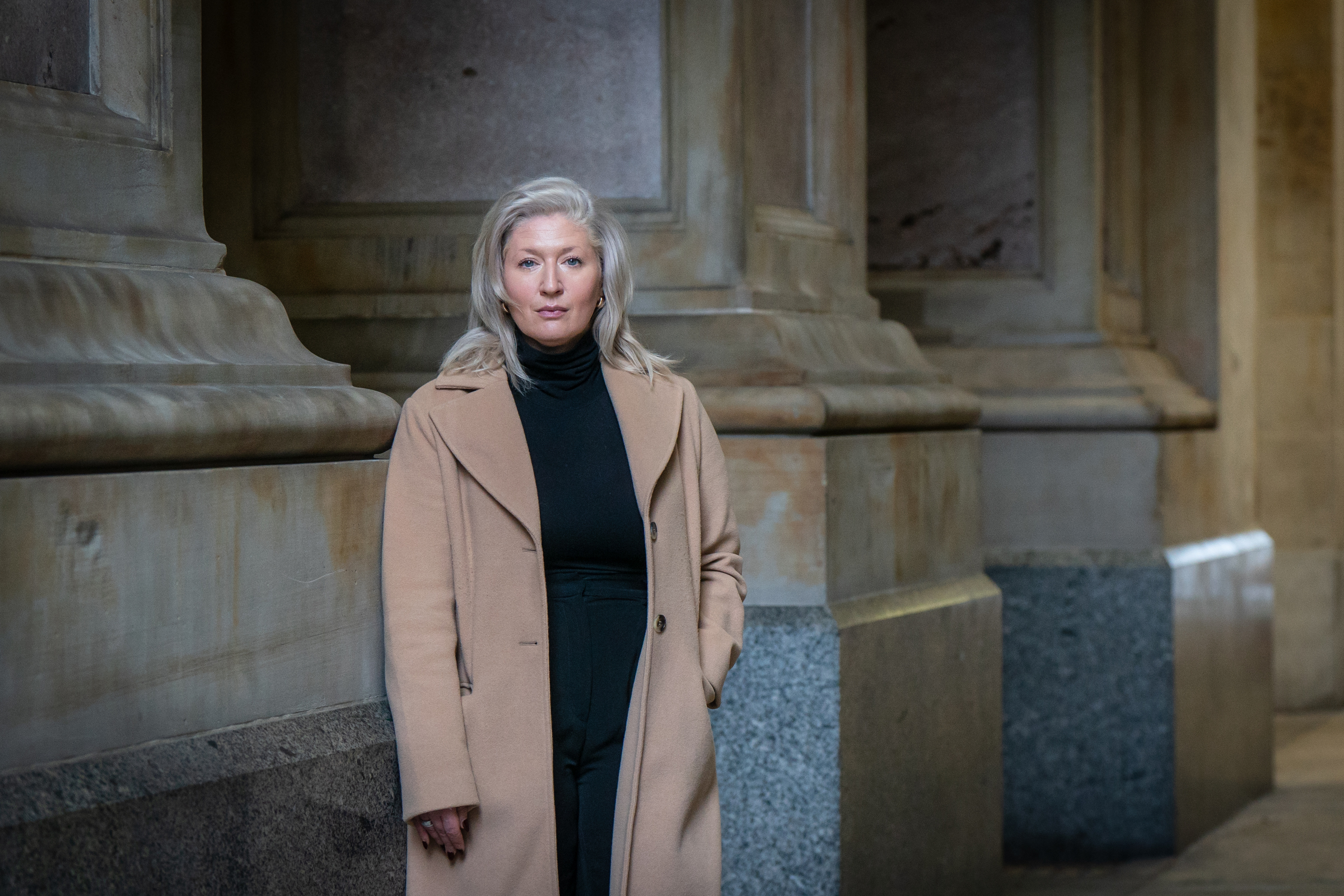
Assistant District Attorney Cydney Pope outside City Hall in Philadelphia.Jessica Griffin / Staff Photographer
Amir Jones jumped in, Pope said, and came out of the scrum holding a gun.
Gunfire came from several directions, from at least six shooters, including Jones and Shoatz, firearms experts testified. Some, however, have not been identified.
One gunman, taking cover behind a van across the street, fired repeatedly toward the men on the ground. As the judge delivered her verdict last week, she said it was clear that this gunman killed Akil Jones. Covington also found that one of the other shooters — not Jones or Shoatz — killed Rashie Jones.
It was the verdict Loretta Jones, grandmother to all three brothers, said she had prayed for.
As she sat in the courtroom awaiting it, she said, she made one request: “I said, ‘God, don’t nobody know the story but you. You was the only one there to see the whole thing. So please, let the judge see the same thing you saw and let my grandson go.’ And God made the judge see what He saw: that Amir had nothing to do with it.”
Attempts to reach Jones were unsuccessful.
What the videos showed
Prosecutors built their case largely on videos. But the footage could not answer everything, and little else could fill the gaps.
Police recovered 41 casings and bullet fragments and three guns, but none of the weapons could be linked to the killings.
More than 100 people were at the party, and some may have disturbed evidence before police secured the scene, Pope acknowledged at trial. None of the partygoers — including the four other people who were shot — testified as witnesses.
“We always knew there were people we could identify, and people we couldn’t,” Pope said in an interview. The shooter who fired from behind the van, “never gets close enough to the camera for us to be able to identify him,” she said.
Jones’ attorney, David Nenner, raised the issue of the unidentified gunmen from the start, asking a judge to dismiss the case at a preliminary hearing — a request the judge rejected.
Pope contended that Jones was responsible even if he didn’t fire the fatal shots.
“This is a tragedy, there’s no question,” she said at the time. “But … the number of people who were ultimately killed would not have been what it was had it not been for the conduct of the defendant.”
Pope said the decision to drop the murder and aggravated assault charges against Jones last week followed a “very intensive review of the videos” and a firearms examiner’s findings. Jones was “acting in defense of others,” she said, until after his brothers were hit.
After that, cameras showed Jones firing several shots up North Alden Street, which Pope said she believes were aimed at Shoatz. Because of that, she said, prosecutors did not dismiss reckless endangerment and other charges against Jones.
‘An incredibly sad’ case
Nenner, Jones’ lawyer, called the case “an incredibly sad situation” and said Jones had struggled with the weight of being accused of killing his brothers. Jones spent 14 months behind bars after he was arrested by U.S. marshals in July 2025, nearly a year after the shooting.
Before acquitting Jones, Covington told him, “I am very sorry for your loss.” She said she believed he had acted to defend his brothers, and more than a dozen relatives applauded.
Jones wiped tears away with a tissue. Then, as soon as he could, he rose from the defense table and walked quickly toward a holding cell, never turning to face his family.
Amir, his mother said, was “always the quiet one.”
Akil Jones had an entrepreneurial streak and owned a daycare, his family said. Rashie was a free spirit who loved to rap, his mother said.
Robinson owned a West Philadelphia water ice and ice cream shop and had played basketball in high school and college. He would do anything for anyone, his father, Vernon Robinson, said.
“He was the glue to this family,” he said.
Although Shoatz was convicted of Robinson’s murder, Robinson’s father said he doesn’t believe Shoatz fired the shot that killed his son. Citing the video evidence and the angle of the wound, he said he believed Shoatz hit his son in the leg and another gunman shot him in the chest.
Like Fatima Jones, Vernon Robinson said he wants prosecutors to keep pursuing the other shooters.
“I want my son back. But I need answers,” he said. “And I want justice.”
Pope said investigators are still working to identify the other gunmen, and she urged anyone with information to contact police or prosecutors. The police department’s homicide unit can be reached at 215-686-3334 or 215-686-3335, and tips can be submitted anonymously to 215-686-TIPS.
“We don’t believe that any case is closed until all suspects are identified,” she said.
Washington Lake Park sees more than 100,000 visitors every year. Now there’s a new way to keep them safe — and it honors the lives of two South Jersey hockey players.
The Aliver Foundation, a nonprofit that works to promote cardiac arrest prevention, donated outdoor automated external defibrillator equipment to the Gloucester County park in the spring. AEDs analyze the heart’s rhythm and deliver an electric shock to help recalibrate the heart if necessary, according to the American Red Cross.
The bright yellow enclosure, which keeps the AED in a climate-controlled environment, features a small plaque memorializing Johnny and Matty Gaudreau, Salem County natives and brothers who used to skate at a rink not far from the park.
Johnny, an NHL player, and Matty, an American Hockey League alumnus, died in 2024 when they were struck and killed while riding their bikes in Salem County. Johnny was 31, and Matty was 29.
Jane Gaudreau, Johnny and Matty’s mother, said she’s glad that something used to save lives is honoring her sons.
“My sons were always there for everybody else. They always wanted to help other people,” Jane said. “They would take their shirts off their backs for someone.”
Although the equipment has been up and running for months, the AED will be officially dedicated to the Gaudreaus at a community celebration at Washington Lake Park on Hurffville-Cross Keys Road on Sunday, from 10 to 11 a.m. There will also be AED and CPR demonstrations, children’s activities, and the chance to engage with first responders.
Placed on the brick wall of Washington Lake Park’s ranger station, the AED equipment is in the same park where the Gaudreau family hosts an annual memorial 5K run, and less than two miles from Hollydell Ice Rink in Sewell, a place the brothers used to skate and where their father, Guy Gaudreau, teaches skating lessons for kids.
To access the kit, visitors in need must call 911 to get a code to open the AED enclosure.
Barbara Moore, Washington Lake Park’s events coordinator, said the park already has an AED, but the equipment isn’t outdoors and public-facing.
“With the amount of youth sports, daily visitors and community events taking place at the park, having readily accessible outdoor AED equipment is an important additional safety measure that can be accessed while emergency responders are en route,” Moore wrote in an email.
Five years ago, Jill Pall, Aliver’s founder, experienced cardiac arrest at a park in North Jersey. Her friend did CPR for nearly 15 minutes, and because there was no AED on site to use, Pall had to wait for first responders to arrive with the equipment.
Since then, Pall’s organization has helped place more than 185 outdoor AEDs in 12 states, with the majority located in New Jersey.
The Gaudreau family once needed the emergency equipment, too.
In 2018, Guy collapsed while running up a hill during Philly’s annual Love Run, Jane said. Luckily, there was an AED on a nearby golf cart, and after a few days in an induced coma, he recovered.
Jane said her husband still runs the Love Run, but he doesn’t push himself so hard on the hills. And now, runners who pass through Washington Lake Park for the Gaudreau 5K every spring will have life-saving equipment close by, too.
“Anything we can do to keep John and Matty’s legacy alive, we’re for it,” Jane said.
Armed with a vintage camera, the photojournalist John Pendygraft spent several weeks approaching people along Main Street in Darby, Pa., to ask if they’d like to collaborate on creating a photograph. Specifically, he asked if they wanted to create a tintype, a photographic process invented in the 1850s.
Tintypes need to be developed immediately on-site in a portable darkroom, and each one is a unique creation. It is a purely chemical process that takes time, embraces inefficiency, and is open to surprises.
During the process, subjects were invited to share their stories with Pendygraft. Together, the words and photos create a complex portrait of a changing town.
Main Street originated along the Great Minquas Path, and was settled by Quakers in 1682. Along the way, Main Street was a 1777 battle site, a historic foundation for the Underground Railroad, center of a boom town that busted, home to a growing African diaspora community, and ground zero to Hurricane Floyd’s destruction.
Through it all, Main Street in Darby has consistently been a place defined by the grit of people who call it home.
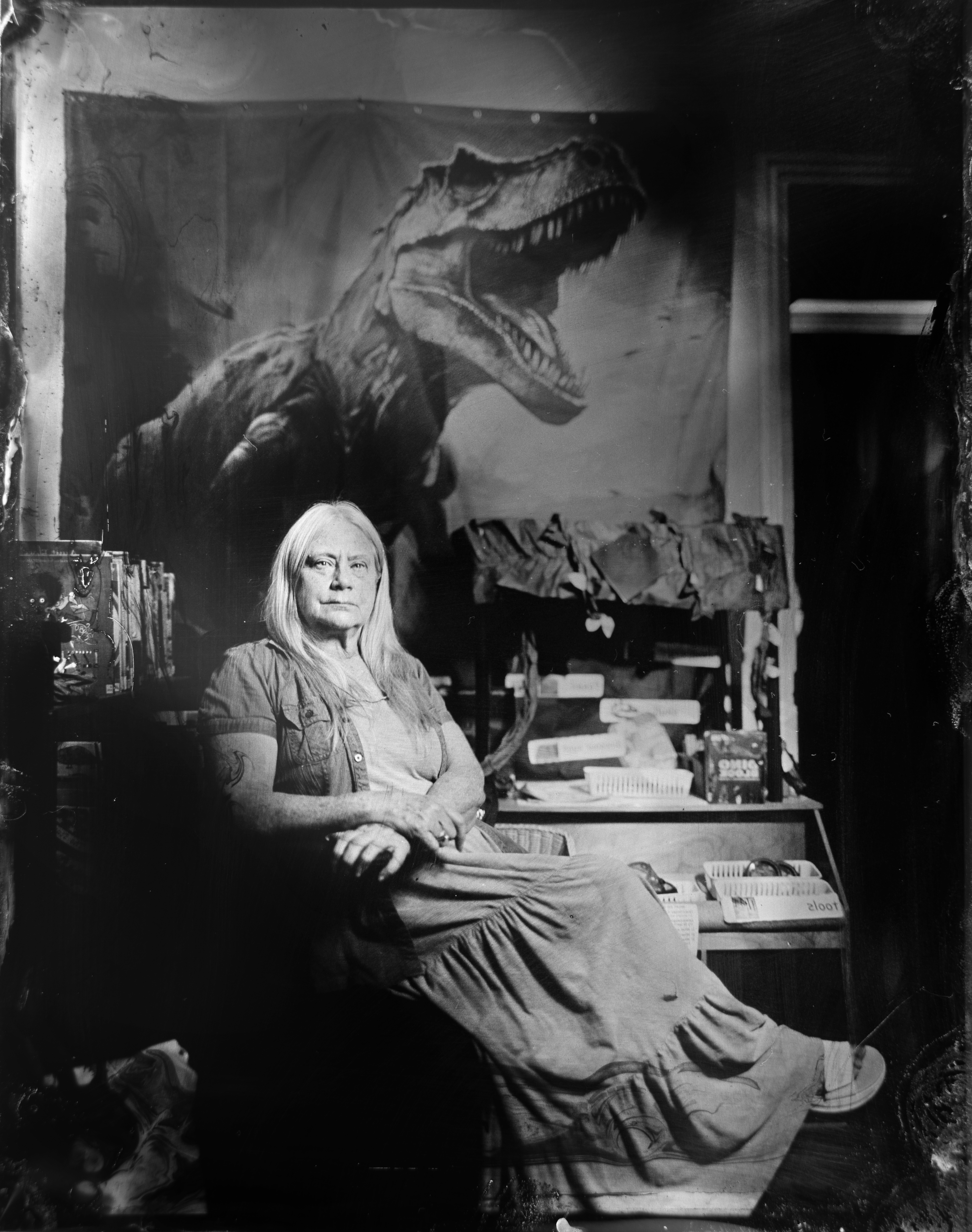
Susan Borders, 68, director of the Darby Free Library, poses in the children’s reading room, which was decorated with dinosaurs as part of the “Unearth a Story” 2026 summer reading theme.John Pendygraft / For The Inquirer
Susan Borders
The Darby Free Library is the country’s oldest library in continuous operation. The library was established in 1743 by 29 Darby Quakers. It was modeled after Benjamin Franklin’s Library Company of Philadelphia, which formed in 1731. The Darby library claimed the title “oldest library in continuous operation” when Franklin’s Library Company closed for repairs after a fire. The librarians who work there claim it is haunted.
For 34 of its 283 years, Susan Borders has been the heart and soul of the nation’s second-oldest library. She knows a nearby homeless shelter closes between 9 a.m. and 4 p.m., and makes sure the library is a welcoming place, rain, shine, or snow.
“I meet people who other people might be afraid of. The community needs us and we need the community.”
The Darby Free Library is the country’s oldest library in continuous operation. It was established in 1743 and modeled after Benjamin Franklin’s Library Company of Philadelphia, which formed in 1731. John Pendygraft / For The Inquirer
She takes a call about late fines: “Just bring the books in and we’ll waive the fees. I just want you to keep reading.” The caller got off easy. Normally, she makes people tell her a story before she waives the late fees.
She deals with a flustered dad and a grumpy toddler trying to make a letter-size print from an email attachment on an iPhone. “Just try to send it and we’ll see if the size is right. First one is on me.”
“The history of this place isn’t about dates. This is a living library. It is about 280-something years of days with people.”
Harold Finigan is a historian, educator, project manager of the Darby Library Company, and manager of the Darby Friends Meeting. John Pendygraft / For The Inquirer
Harold Finigan
Harold Finigan is untroubled by the sweat saturating his shirt or the record-breaking summer heat. He paces an open lot at 1000 Main St. with a cell phone to his ear, walking first toward the historic library, on the southwest side of the lot, and then toward the historic Darby Friends Meeting house on the north side.
Finigan is supervising renovations on both. He guides his days through time-honored Quaker principles: simplicity, peace, integrity, community, equality, and stewardship.
He traces his own Quaker values to 1682 — one year after King Charles II granted William Penn a charter for the land that would become Pennsylvania. That year, the Darby Quaker meeting was established along the Great Minquas Path by John Blunston as a foundation for Penn’s “holy experiment” — a country unified by a commitment to freedom of religion, equality, and democratic government.
Bernard Freeman, 56, (right) and James Vani, 71, (left) take a break from mowing and edging the vacant lot on Main Street where Woolworth once stood.John Pendygraft / For The Inquirer
Bernard Freeman
As Bernard Freeman, assistant foreman for Darby Borough Public Works, rides his lawnmower across the now-vacant lot at 870 Main St., he remembers when it was Woolworth. He points to the corner of the lot where the cafeteria counter used to be. “Main Street back then was bustling. We had jewelry stores, hardware stores, shoe stores. You didn’t have to go to the mall for nothing. Christmas time? You did all your shopping here. Everything was right here in Darby. You could get everything you needed. Everything. Man, it was bustling. But now? People don’t do the small towns anymore. At least, not here.”
There was a huge Christmas parade, a Memorial Day parade with a tank kids could climb on, a parade to open Little League season, and a parade for the high school homecoming football game.
“Last parade I can remember must have been 15, 20 years ago?”
Freeman has five children, born between 1987 and 2006. Only the child born in 1987 had the opportunity to play Little League, PAL football, or was able to join a swim club. Local organizations dried up in the ’90s.
“We didn’t have the volunteers and parent participation. Recreation-wise, we didn’t have anything anymore.”
And then Floyd hit. The storm took one life, impacted 330 homes and 59 businesses. Many of the businesses never reopened. Scores of properties were purchased by the government, who relocated families and leveled homes.
Freeman was hired by the city as part of the cleanup. The job, which he still holds today, hit home. “I have aunts, uncles, sisters, cousins, all kinds of family here. 10th Street is named after my uncle, Marine Lt. General Ronald S. Coleman.”
This is his hometown, come what may. “If you can make it here you can make it anywhere. Darby makes you tough. It’s a no-nonsense type of town.”
James Vani
James Vani, 71, who is also with Darby Borough Public Works, fled Liberia’s civil war with his wife in 2002. They joined his parents in Florida. “My wife went to nursing school. She graduated and everything, but she couldn’t find a job. She tried to find a job in Florida, but she couldn’t because of our accent,” Vani explains. “A friend of my wife was here [in Darby] and she said ‘Come over here. You will be able to find a job because there are a lot of Africans here.’”
There are. According to Data USA, 20% of Darby Township is foreign-born, and 79% of that population comes from Africa. If you drive down Darby’s Main Street a short distance to the Philadelphia city line, the road turns into Africatown. The organization website touts the area as “the premier destination for the global African Diaspora, celebrating arts, culture, and business.”
As soon as Vani’s wife got a job, she called her husband to join her. “I’m lucky,” he says. “I have a job in Darby and I live in Darby. Thanks be to God.”
Machi Hall, 17, poses in the Darby Free Library after applying for a library card.John Pendygraft / For The Inquirer
Machi Hall
“Almost nobody from my generation is going to be able to buy a house,” laments Machi Hall, 17. His family moved to Darby two years ago from West Philly because “the crime here is lower and the houses are cheaper.”
Hall worries about AI replacing jobs, a future that might soon spin out of human control, and the possibility that current conflicts will escalate into a global war. He dreams of a career in 3D film animation, but what if AI takes those jobs?
He has also made plans to enroll in a four-year electrical contractor apprenticeship program, with an eye to joining a union. “I won’t get rich, but it will put food on the table,” he says.
Jan and John Haigis, who jokingly describe themselves as “vaguely Victorian,” pose in front of their home on Main Street in Darby.John Pendygraft / For The Inquirer
Jan and John Haigis
Jan and John Haigis, who jokingly describe themselves as “vaguely Victorian,” pose in front of their home at 1006 Main St. The home was once owned by Passmore Williamson, who, along with “Father of the Underground Railroad” William Still, was jailed in 1855 for helping Jane Johnson and her two sons escape slavery.
Early on in any conversation with the couple, you will very likely hear about at least one of their two quirky obsessions. They will either sing a duet of one of the hundreds of songs they have written together (“I can always make a harmony,” Jan explains. “I don’t know what key he is going to be in, but we never stop singing.”) or they will dive into the minutiae of Darby history.
Their shared love of Darby history began in 1985 when John rode his bicycle past the Blue Bell Inn, a crumbling tavern at the very end of Main Street. He didn’t know that it was once frequented by George Washington, housed troops during the American Revolution, or was the site of an epic battle in 1777 led by Lord Cornwallis and 2,500 soldiers. But he was curious.
The couple learned the Blue Bell was on a list to be destroyed and approached the city about saving the inn.
“The city council told us ‘it would cost money to tear it down, so let’s see what they can do,’” John explains. They leased it to the couple for $1 a year.
A small grant allowed Jan and John to replace doors and windows and find a caretaker. The couple created Friends of the Blue Bell. The group of new friends became a kind of family.
They leased the inn from 1985 until 1999 and did what they could. Then Hurricane Floyd hit and flooded the interior. Today, the city maintains the exterior and the Haigises curate a website to preserve Darby history.
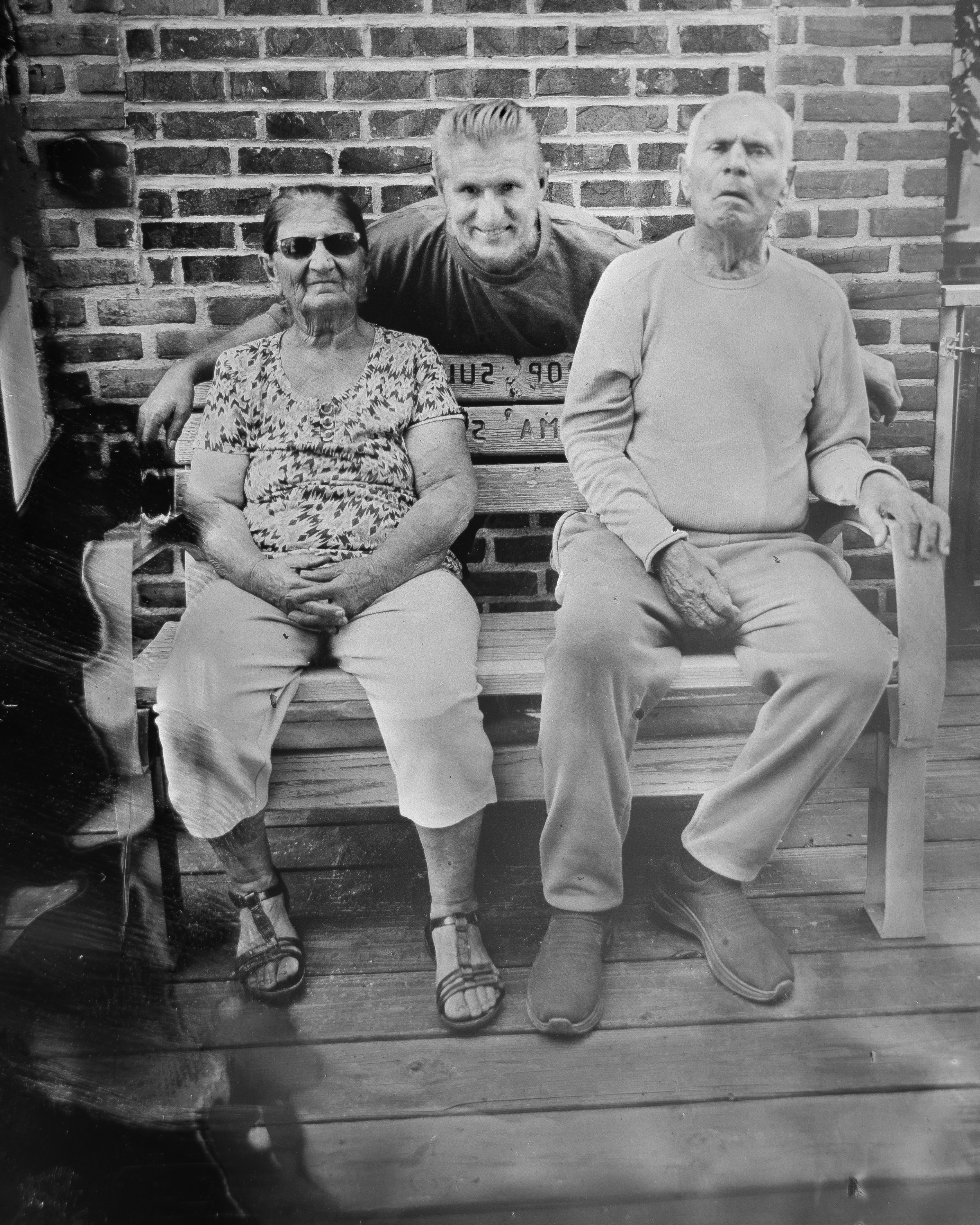
Artan Sulollari, 56, the owner of Main Street Pizza, poses with his mother Lule, 88, and father Irfan, 92, on the back porch of their home on Main Street in Darby.John Pendygraft / For The Inquirer
The Sulollari family
In 1990, Artan Sulollari was serving in the Albanian army. One day, they brought him in for questioning. At the time, he had no idea that one of his brothers had fled the communist country.
“They beat me up very good, to tell them what I knew. I didn’t know anything,” he says. He still suffers from hearing loss as a result of his injuries.
“It was a crazy life there. The communism was the worst communism. They would say ‘this guy does propaganda, this guy is a spy.’ They would arrest you. They’d beat you. They put you in jail. They’d take your family. They’d incarcerate you far, far away.”
The Sulollari family was granted political asylum in the early 1990s. Today, Tony and his brother run Main Street Pizza in Darby and care for their aging parents, who live just a few houses down from the restaurant.
“Have you ever seen the movie The Outlaw Josey Wales? Clint Eastwood says to the Apache chief, ‘I’ve come to live with you, because the government will follow you. I’ve come to live with you or fight with you. To die is easy. To live is hard. Because life is hard, and death is easy.’ That’s how it is.”
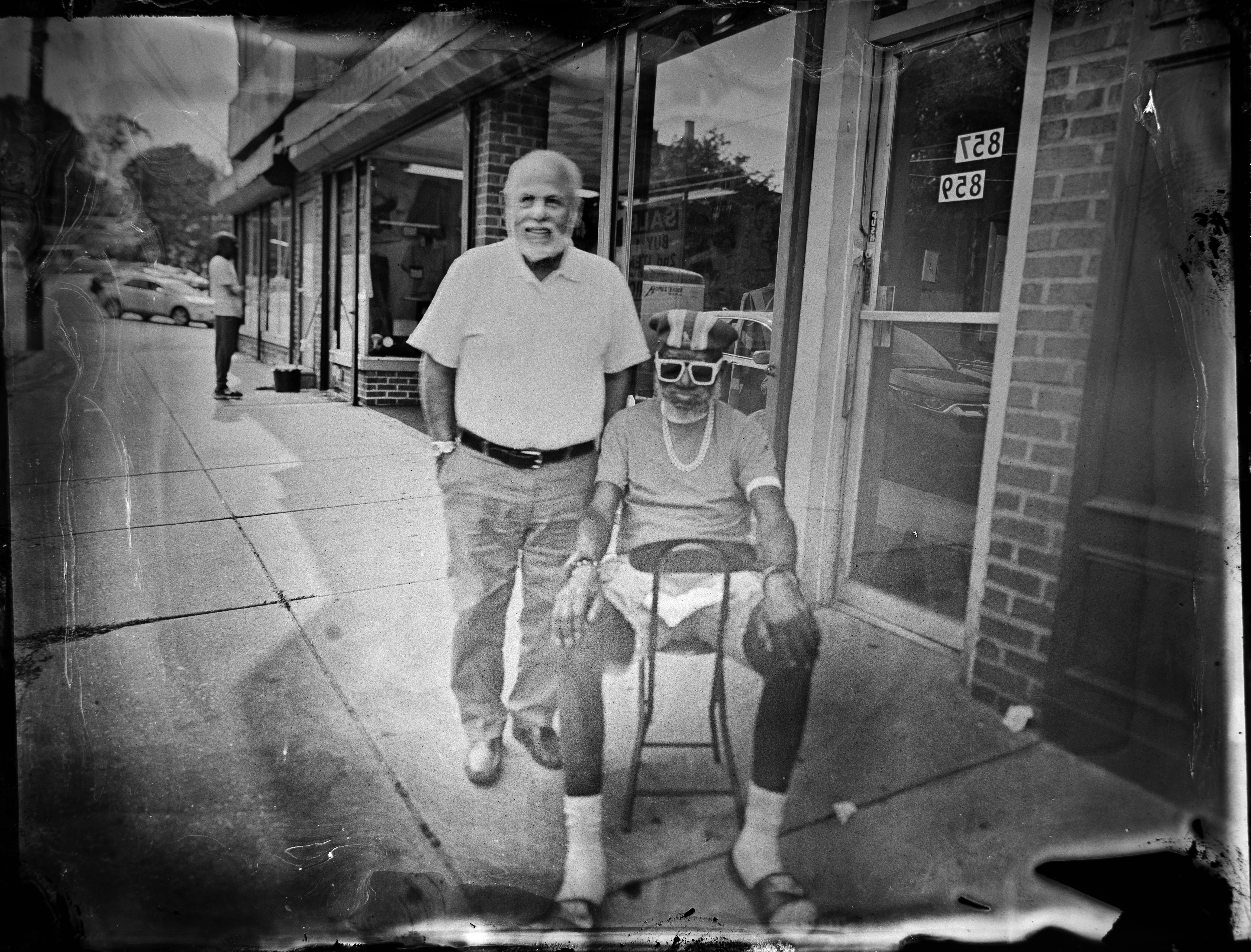
Benett’s menswear store owner Paul Feldman, 79, (left) and William Hall, 73, pose in front of Feldman’s store on Main Street.John Pendygraft / For The Inquirer
Paul Feldman and William Hall
Paul Feldman was born Sept. 18, 1947, one day before his father opened Benett’s menswear store on Main Street. “I remember as a kid my dad giving me a check to deposit in the bank on Friday night. I had to walk in the streets because the sidewalks were so crowded,” he remembers.
“You know how many stores there were in Darby that were run by a father and a son? I am the only one that is still around. Everyone else closed.”
Feldman looks around. “This place is starting to fall apart. I am, too.”
William Hall, 73, works a couple of days a week at the store. He remembers coming in as a young boy.
“My mother used to do a day’s work for $6 a day. So, I used to collect cans and bottles to take them back for the refund. I would bring my money here and put my clothes on layaway,” he said. “Heavens to Betsy, I didn’t know I’d be working here today.”
Two years ago, Hall was diagnosed with throat cancer. As the treatments wore on him, he turned to store manager Bud Teaford, who has navigated his own health challenges, for advice and support. Hall believes the friendship helped save his life.
“Now when I come in, I won’t say to him, ‘Hi.’ I say ‘Bud I love you.’ Every day.”
“I love you too,” Bud answers.
“If you don’t have love, you don’t get no love. You get that mental aggravation.”
Bud says with a laugh, “We get plenty of that here, too.”
John Pendygraft is a photojournalist who teaches visual storytelling at Penn State University.
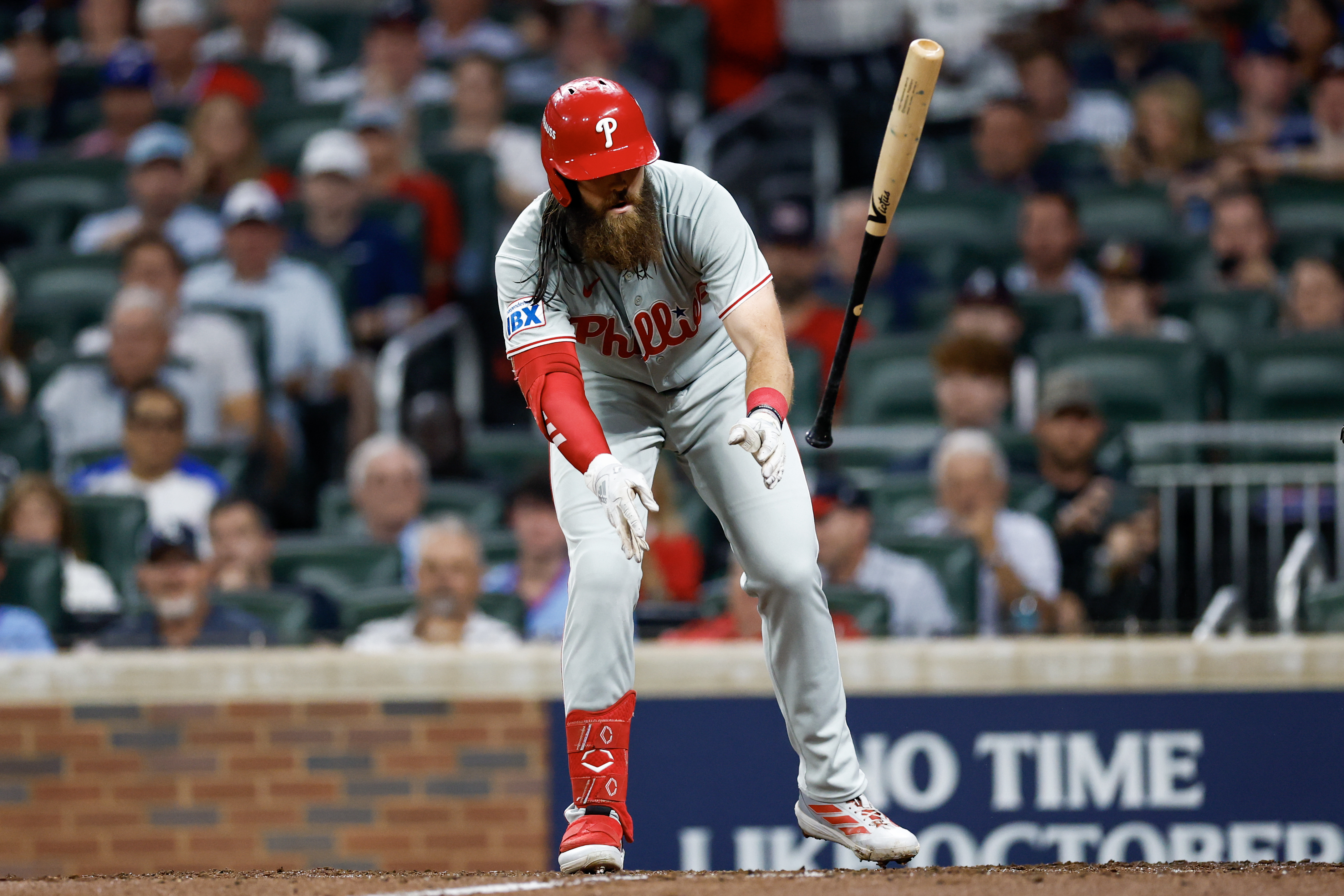
As Bryce Harper came to the plate, with two out in the eighth inning Thursday night and the Phillies trailing by four runs, the Braves prepared their final insult.
They brought in Chris Sale.
Sale is Harper’s Kryptonite and has struck him out in 14 of 25 at-bats through the years. This time, the Braves ace and future Hall of Famer slung four hellacious sliders. Harper flailed at three, the last of which wound up in the other batter‘s box and skipped to the backstop.
It wasn’t the last image from another early postseason ouster, but it will be the one that lingers the longest. The Phillies have made the playoffs five years in a row for only the second time in their 144-season history, but haven’t won a series since 2023. In fact, they’ve backslid one round every year since their unexpected run to the 2022 World Series.
Dave Dombrowski has one year left on his contract and is expected to get an extension. If there was even a sliver of doubt, it vanished last Sunday when owner John Middleton said interim manager Don Mattingly’s future is “Dave’s decision.”
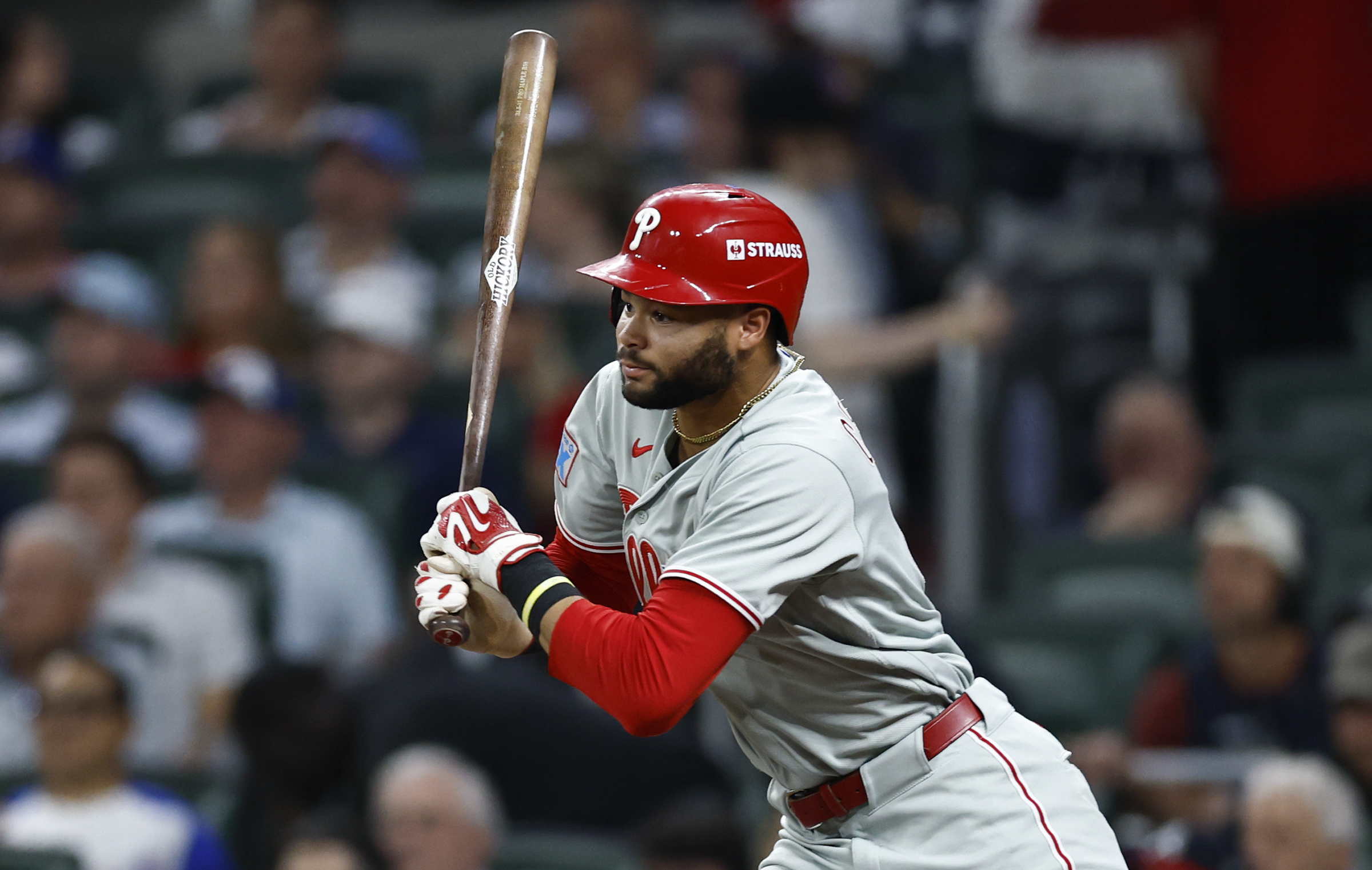
Fixing the roster is up to Dombrowski, too. And neither Harper, who turns 34 in two weeks, nor the rest of the core that has been kept together through it all — Kyle Schwarber (33), Trea Turner (33), Aaron Nola (33), J.T. Realmuto (35), and Zack Wheeler (36) — is getting any younger. Their baseball biological clocks are ticking.
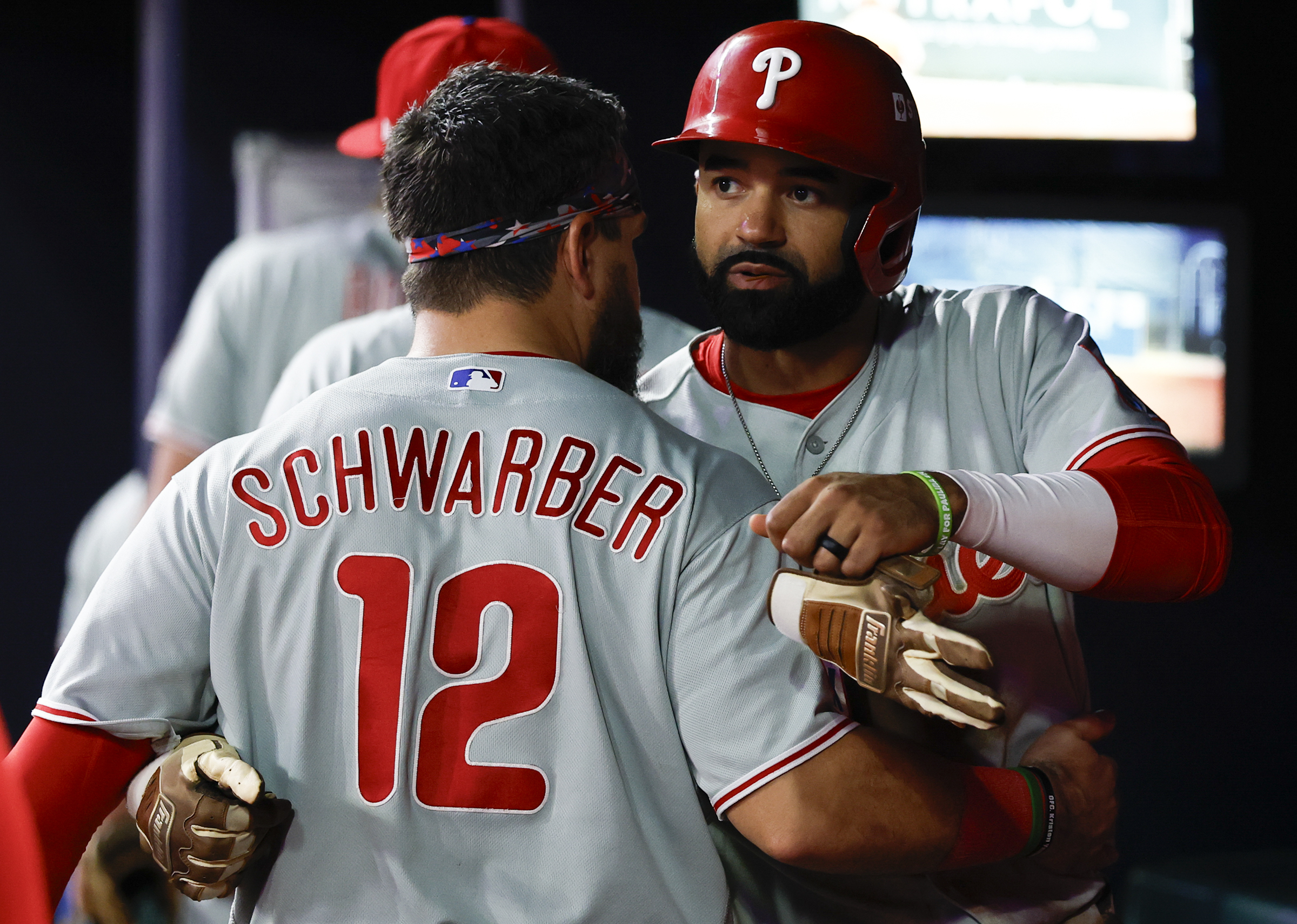
Derek Hill, Kyle Schwarber, and the Phillies begin “a long offseason” after losing to the Braves in their wild-card series.Yong Kim / Staff Photographer
“It’s going to be a long offseason,” Harper said, in the most literal sense.
Everybody knows what’s coming. Baseball’s owners are pushing for a salary cap, a nonnegotiable issue for the players’ union for decades. The collective bargaining agreement expires Dec. 1, at which time the owners intend to lock out the players, effectively shuttering the sport.
Five years ago, a 99-day lockout preceded an agreement in mid-March and a slightly delayed 162-game season. This labor fight may last much longer.
In that case, so will the taste in the Phillies’ mouths, which is more bitter than a case of lemons.
Will the Thirtysomethings ever win the World Series that they need to cement their legacies as franchise greats?
Will the Phillies keep Turner at shortstop or move him to another position?
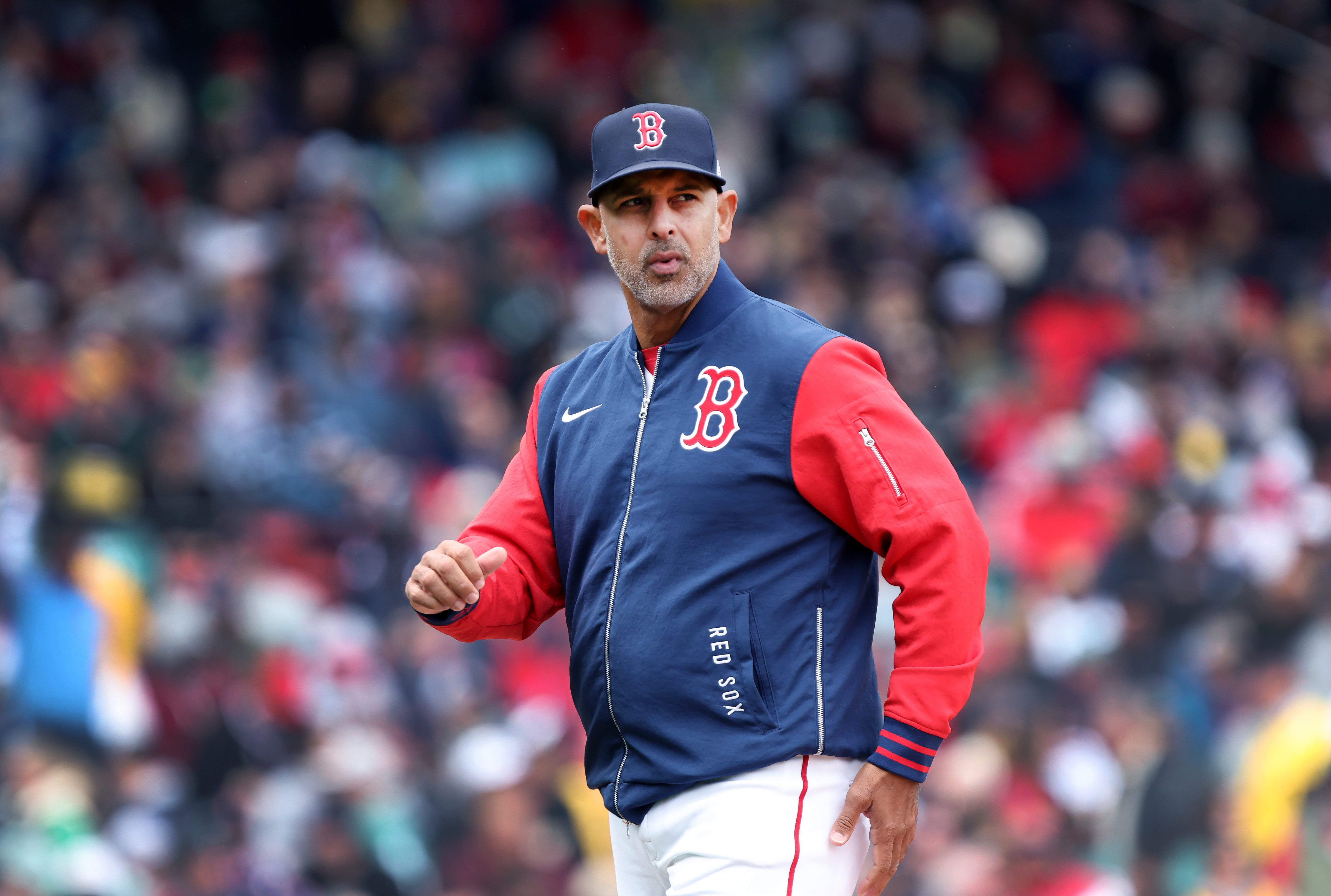
Amid industrywide speculation that Dombrowski will try again to hire Alex Cora, does he need to make moves that are more drastic than a new manager and the coaching changes that would come with it?
Is that even possible with $236.5 million in luxury tax commitments already for 2027?
“Yeah, I don’t know,” said Harper, never shy about sharing his State of the Phillies thoughts. “I mean, I obviously have trust in the organization and people that are in charge, you know? We’ll see where we go.
“I’d imagine this team is going to look a lot different next year, with the guys that are kind of leaving this clubhouse. So we’ll see.”
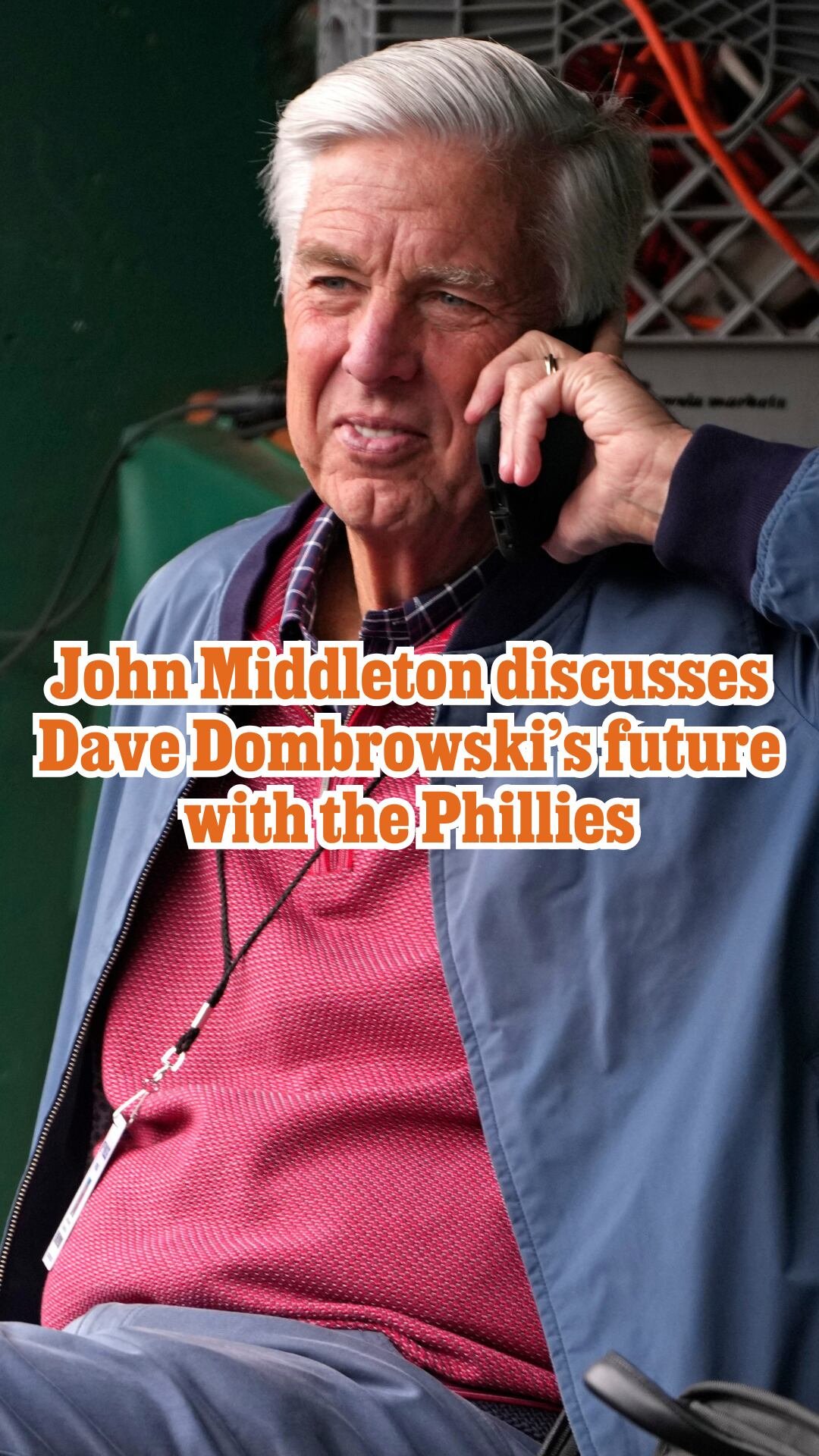
Video: John Middleton discusses Dave Dombrowski’s future with the Phillies
There will be opportunities for Dombrowski to find some answers in the next two months. In 2021, a flock of free agents signed before the lockout.
But there’s a lot of work to be done on a $322 million roster that only narrowly avoided a historic collapse in the last week of the season only to exit the playoffs one round earlier than the 2024 and 2025 runs, which were one round shorter than 2023.
Let’s dive in:
Kyle Schwarber (middle) and Trea Turner are part of a veteran core that hasn’t gotten back to the World Series.Yong Kim / Staff Photographer
Is time up for the Thirtysomethings?
Dombrowski and his lieutenants push back on the idea of a “championship window,” noting that the Phillies added three rookies — Andrew Painter, Justin Crawford, and, later in the season, reliever Alex McFarlane — in meaningful roles.
Schwarber is clinging to that narrative, too.
“Maybe I’m just the positive outlook guy, right?” he said, mustering a smile. “But we had a lot of first-year guys here who came in and just got their feet wet, not just in the big leagues but also in the postseason. That experience is huge.”
Painter, in particular, appears poised to fulfill his top-of-the-rotation promise. The Phillies demoted him to triple A with a 7.06 ERA in mid-June. He returned 44 days later, posted a 3.65 ERA in 11 starts, then threw three scoreless innings in relief in Game 2 against the Braves, a performance that Realmuto called “career-altering.”
Crawford’s impact is less certain. His tendency to hit the ball on the ground and defensive imperfections put him in a center-field platoon with Derek Hill. But context is important: Crawford was among only 10 players this season with at least 400 plate appearances at age 22 or younger. And he impressed teammates and staff with his poise and confidence
Maybe he develops into an everyday player. Maybe not.
Phillies center fielder Justin Crawford was among only 10 players this season with at least 400 plate appearances at age 22 or younger.Yong Kim / Staff Photographer
McFarlane, a converted starter who throws 100 mph, could be a bullpen fixture. Then again, the Phillies once said the same about the player drafted one round after him in 2022: Orion Kerkering. Once a late-inning mainstay, Kerkering got demoted in triple A in September.
The Phillies’ previous infusion of youth produced Alec Bohm, Bryson Stott, and Brandon Marsh, solid players who remained supporting actors. They need Painter, Crawford, and eventually Aidan Miller (more on him shortly) to be leading men.
But, mostly, Dombrowski must deepen an organization that lacked a No. 6 starter and had three catchers and only two trustworthy leverage relievers on the playoff roster.
“When you look at our team, it’s easy to kind of point to us older guys and say that that’s why we succeed,” Schwarber said. “I think the biggest thing is that it takes everyone.“
The Phillies’ proverbial window often is tied to Wheeler, who is under contract through 2027 and unsure if he will play beyond then. With Cristopher Sánchez, Jesús Luzardo, and Painter under control through at least 2031, the Phillies believe the window can stay open for longer.
Phillies shortstop Trea Turner has seven years and nearly $191 million left on his contract. Yong Kim / Staff Photographer
How do they fix the offense?
Over the last six years, Dombrowski’s solution to most problems has been to throw money at them.
That might not be possible now.
Even if the owners are unsuccessful in getting a salary cap, the penalties for the high-payroll teams almost certainly will be harsher in the next CBA. The Phillies had the fourth-highest luxury-tax payroll this season. After getting taxed $56.06 million last year, their 2026 bill is projected to be $61 million.
That’s a lot to pay for three postseason games — none at home — and one win.
The Phillies scored three runs or less in 72 games, including the postseason. They were 19th in the majors in runs, 22nd in OPS, and 23rd in on-base percentage. And they were 28th in on-base percentage from the right side of the plate.
Something needs to change.
Dombrowski’s impulse may be to sign a free-agent right fielder such as Seiya Suzuki or Randy Arozarena, right-handed hitters who will be 32 on opening day. It will help that $38 million in dead money for released Nick Castellanos and Taijuan Walker finally will be off the books.
But without knowing the financial rules of the sport, Dombrowski may have to get more creative. Marsh went from an All-Star starter in July to not cracking the Phillies’ lineup against a lefty opener in winner-takes-all Game 3 in Atlanta. His value went through the floor. But if the Phillies can spin him in a trade for a hitter who better fits their lineup (righty-hitting outfielder Jo Adell comes to mind), they should.
An All-Star starter in July, Brandon Marsh struggled after the break. Yong Kim / Staff Photographer
Bohm is heading into free agency. The 30-year-old third/first baseman grew up before our eyes after the Phillies drafted him third overall in 2018. He was miscast as a cleanup hitter, but 88 or more RBIs in three of the last four seasons won’t be easy to replace.
“I would love to be back if they would have me back,” Bohm said, though it’s unlikely after the Phillies dangled him in trade talks in consecutive offseasons.
With seven years and nearly $191 million left on his contract, Turner isn’t going anywhere — except maybe to a new position. The Phillies will talk internally about a move, maybe to the outfield, which would open shortstop eventually for Miller. But the 22-year-old top prospect missed almost the entire season because of a back condition that necessitated a spinal procedure in June.
Regardless, Turner understands his role in all this.
“I’ve got a lot of work to do to kind of just go over everything and figure out as much as I can, find answers, see what I did bad,” Turner said. “But I think this year is the biggest question mark for me offensively in a long time.”
It’s reasonable to expect a rebound from Turner after the worst season of his career. But it wouldn’t solve all of the Phillies’ problems, either.
Phillies president of baseball operations Dave Dombrowski has long struggled to solve his bullpen issues.Yong Kim / Staff Photographer
How do they fix the bullpen?
Dombrowski probably is bound for the Hall of Fame, if he ever stops working. But building a bullpen has long been a blind spot.
To be fair, the Phillies didn’t know Brad Keller would tear a ligament in his elbow three months into a two-year, $22 million contract. But they signed Keller based on one big season with the Cubs. And while Dombrowski won a reliever swap with the Royals to get Jonathan Bowlan for Matt Strahm, the Phillies needed more.
Instead, they banked on José Alvarado and Kerkering. Neither pitched in the postseason. Dombrowski acquired lefty Brooks Raley and Caleb Kilian at the trade deadline. The former was ineffective; the latter got injured.
Now, Dombrowski must recast most of the bullpen around closer Jhoan Duran. Alvarado is a free agent and needs a fresh start. Kerkering’s stock plummeted, but it’s in everyone’s interest to move on.
Dombrowski could throw money at pending free agent Adrian Morejon, although the hard-throwing lefty may be seeking a chance to close after setting up for Mason Miller with the Padres.
There isn’t much help in the farm system, unless the Phillies turn former first-round pick Gage Wood into a reliever. It wouldn’t be the worst idea. The fiery 22-year-old once was a closer in college at Arkansas.
Alex Cora was fired as Red Sox manager in April.Jim Davis
Who will be the manager?
Absent changes to the core, Dombrowski’s biggest move may be to hire Cora.
Dombrowski gave Cora his first managerial job nine years ago in Boston, and they won 108 games and World Series with a high-payroll team in their first season together. They’ve remained close, with Cora often calling Dombrowski a “mentor” and Dombrowski comparing Cora to Hall of Fame tacticians Tony La Russa and Jim Leyland.
Cora turned down Dombrowski’s offer to manage the team in April (while Rob Thomson still had the job). After getting fired days earlier by the Red Sox, Cora preferred to spend the summer at home with his young family while still getting paid.
Only then did Dombrowski elevate Mattingly from bench coach after firing Thomson. It’s notable that Mattingly’s interim tag wasn’t removed even though the Phillies went 79-55 under his leadership after a 9-19 start.
One thing is clear: If Cora is ready to get back in the dugout, Dombrowski surely will have him.
But Cora can’t bat cleanup or get three outs in the eighth inning.
The Eagles host the Los Angeles Rams at 1 p.m. Sunday at Lincoln Financial Field. Here’s what you need to know about the matchup:
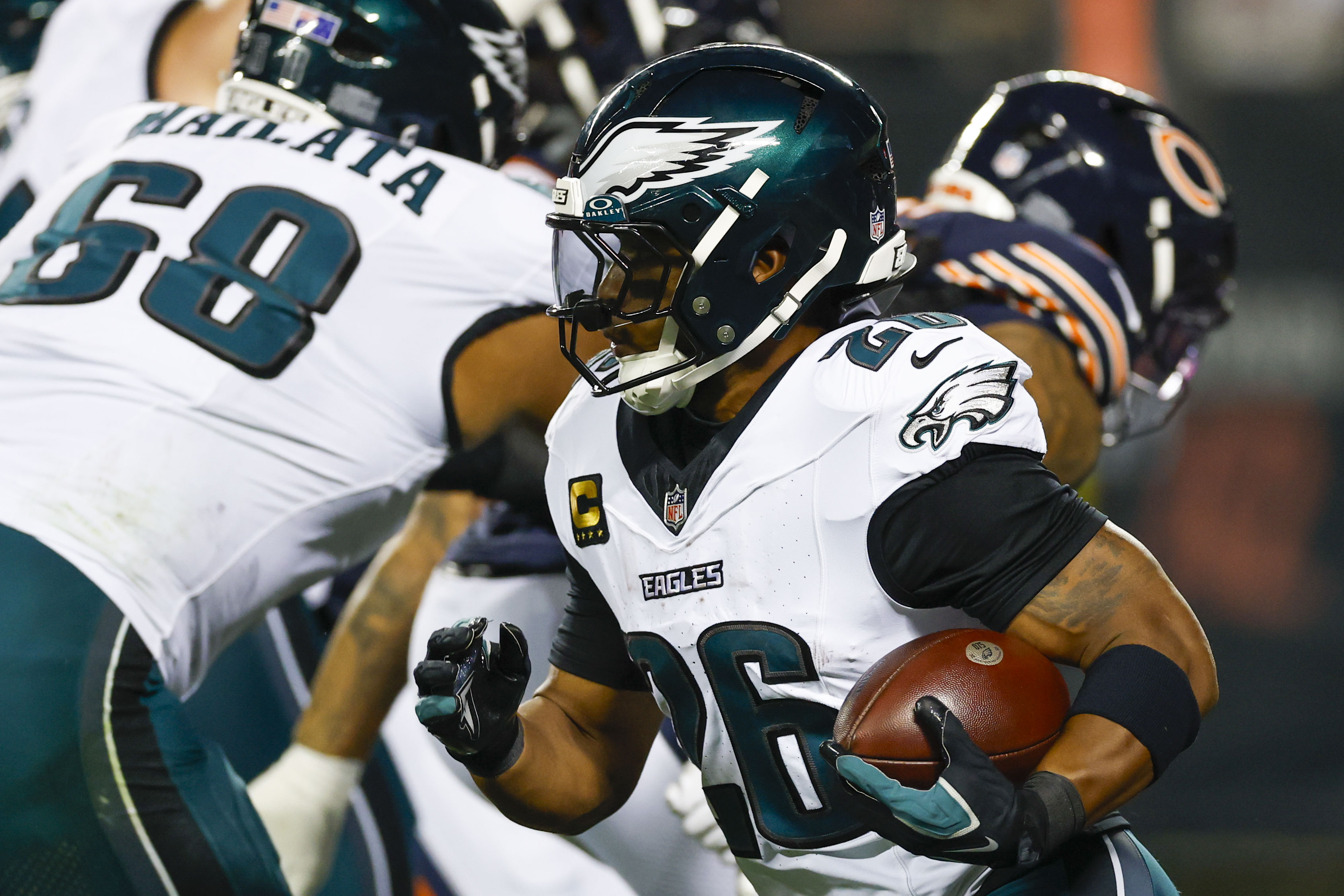
When the Eagles have the ball: If success on the ground in the first half of the Chicago Bears game didn’t convince Sean Mannion to lean into the run game against the Rams, DeVonta Smith’s absence should only reinforce to him that his best chance of turning the offense around is to feed Saquon Barkley the ball early and often. Yeah, Mannion is going to need Jalen Hurts to check to passes if Rams defensive coordinator Chris Shula stacks the box. But you’re cutting into your chances of winning if you’re consistently in third-and-long.
Saquon Barkley was effective in the first half against the Bears on Monday night. Yong Kim / Staff Photographer
The Eagles need early down yards. They had some impressive gains on outside-zone runs in Chicago. Left tackle Jordan Mailata was a mauler. Run behind that! Center Drew Kendall and left guard Cam Jurgens were effectively combo blocking and getting to the second level to create lanes for Barkley, too.
The Rams have a solid run defense, even if they got scorched by the San Francisco 49ers and gave up 174 rushing yards in the opener. They allowed only 2.9 yards a carry in the next two games. Shula has a deep defensive line, but future Hall of Famer Aaron Donald was ruled out Friday and the team will also be without all-world end Myles Garrett for another week.
It’s an aggressive front that Mannion may be able to exploit with crack blocks and counters. If he can get Barkley to the second level against the likes of linebacker Nate Landman, who is dealing with a shoulder injury, there could be opportunities for explosive runs. The Rams kept Barkley in check last season (18 carries for 46 yards), but he rushed for over 200 yards in each of their meetings in 2024.
If the Eagles can have even a modicum of success on outside runs, they should be able to incorporate more play-action when Hurts is under center. Mannion and offensive line coach Chris Kuper just need to find a better way to counter blitzes up the “A” gaps in those scenarios. Some of that has to do with blocking assignments and blitz pickup, but we’ve yet to see much of Hurts on naked bootlegs. Get him out of the pocket for layup throws.
Hurts was great on third down in the first two games, but it was unsustainable and he was crushed under that weight in the second half of the Bears game. This will be the best pass rush the Eagles have yet to face, even without Donald and Garrett. Byron Young is explosive, and defensive tackles Braden Fiske and Kobie Turner can win at the point of attack.
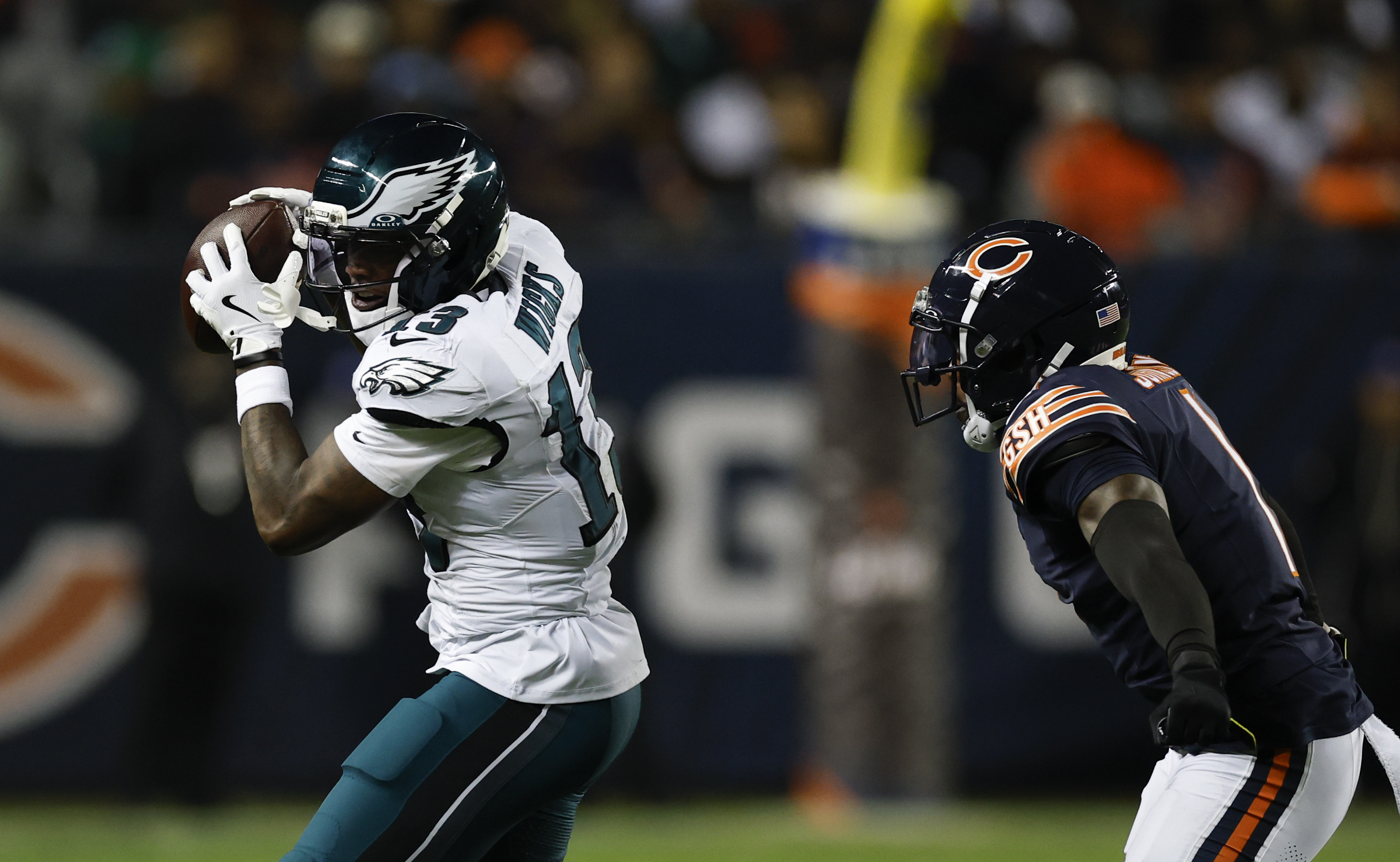
Smith’s hamstring injury obviously needed to be dealt with now. The Eagles can’t afford for it to get worse and for their No. 1 receiver to miss more than two or three games. They’re hoping it’s just a little short-term pain. Dontayvion Wicks’ emergence as a true No. 2 should lessen the sting. He’s just not of Smith’s caliber. Rookie receiver Makai Lemon, tight end Zach Ertz, and others are going to have to help fill the void.
Dontayvion Wicks ascends to the de facto No. 1 receiver role with DeVonta Smith out on Sunday. Yong Kim / Staff Photographer
Shula likes to mix up his coverages to keep offenses guessing. Recently acquired cornerback Trent McDuffie will be difficult to throw at, but the Rams are banged up in the secondary. Cornerback Jaylen Watson (shoulder) is out and safety Kam Kinchens (hamstring) and backup slot corner Josh Wallace (shoulder) were also on the injury report this week.
When the Rams have the ball: Sean McVay is going to want to run the ball early. He’s going to want to stay balanced. And he’s going to want to marry the run with the pass off play action. Kyren Williams is his ace in the backfield, but Blake Corum is a solid No. 2 counterpart. They average 5.6 and 5.3 yards per rush, respectively. McVay still employs a lot of the wide-zone blocking that is central to the Shanahan run scheme. But he’s incorporated more power blocking into his runs in recent seasons. He’s also utilized three-tight end sets more than most play-callers. His run offense is actually more effective running out of “11” and “12” personnel, partly because he has good blocking receivers like Puka Nacua.
But a collection of versatile tight ends in Colby Parkinson, Tyler Higbee and Davis Allen allows McVay to exploit base defenses through the air despite being in “13” personnel. He will be down at least one tight end though, as Terrance Ferguson (ankle) has been ruled out and Parkinson (knee/shoulder) is also banged up. Will Vic Fangio take the bait and match personnel, which would allow him to keep Cooper DeJean at safety over Michael Carter II? Or will he roll the dice with either nickel safety covering one of the tight ends?
Riq Woolen (2) is among the players who could use a bounce-back effort on Sunday. Yong Kim / Staff Photographer
Fangio has plenty to clean up after the Bears mess. His defense struggled vs. pre-snap motion and route concepts that forced switch releases and stressed his match coverage. Cornerback Riq Woolen especially had trouble in that regard. The Eagles’ linebackers and safeties were also often sucked in by play action.
Improving communication is imperative. It will be tested with linebacker Zack Baun (concussion) out. Jeremiah Trotter Jr. will take Baun’s place alongside Jihaad Campbell. Fangio sold out to stop the run in Chicago and Bears coach Ben Johnson preyed on that emphasis. He should get back to his preferred light boxes and let interior linemen Jordan Davis and Jalen Carter earn their paychecks. Carter has been playing with a hairline fracture in his right wrist. Davis (calf) and Moro Ojomo (calf/elbow) also popped up on the injury list this week.
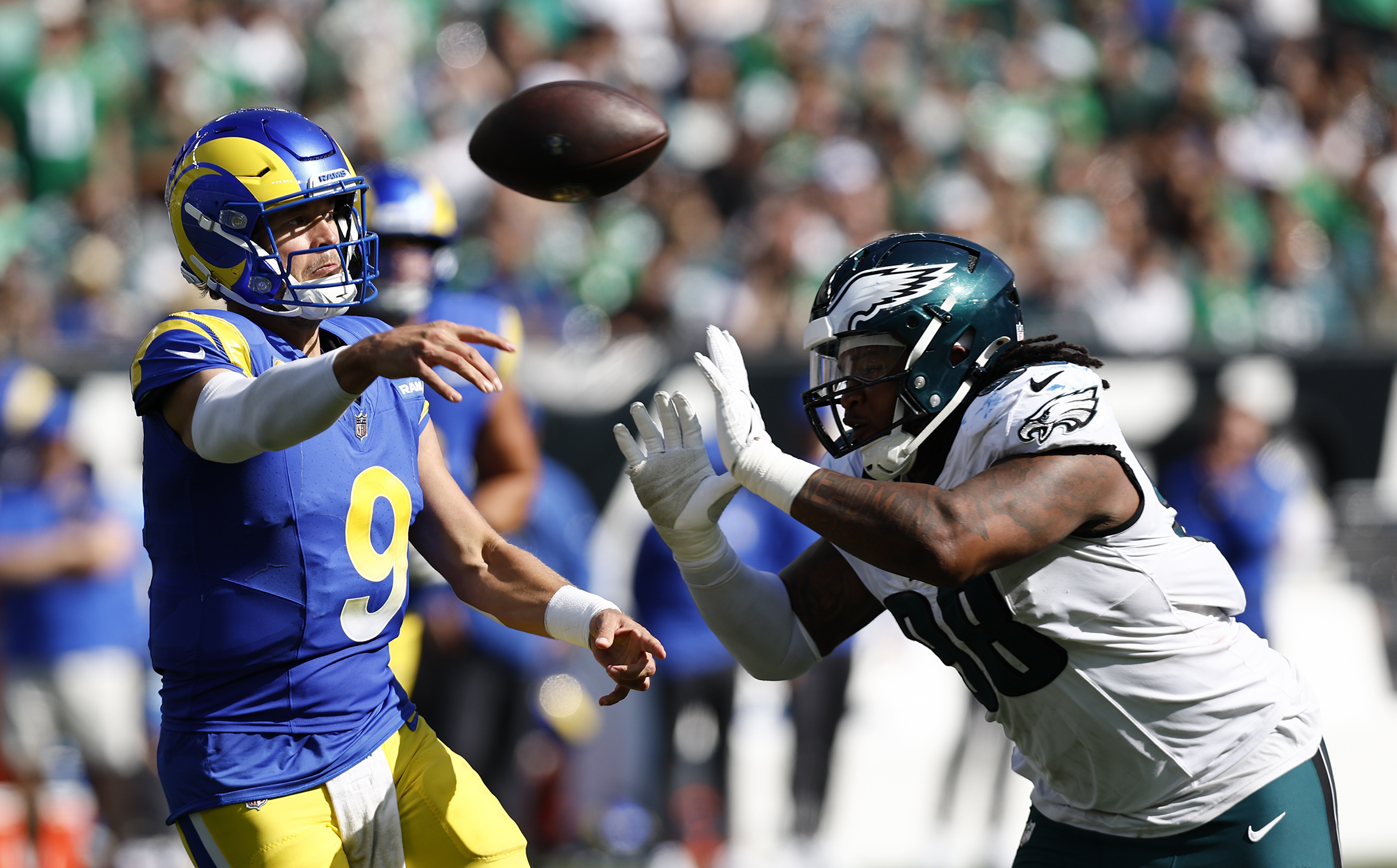
Even if the Eagles can bottle up Williams and Corum, they have quarterback Matthew Stafford and two of the better receivers in Davante Adams and Nacua to contend with. Nacua is expected to play despite a hip injury that kept him out of the last two games. He specializes in contested catches, yards after the catch, and giving defensive backs fits. Adams is still dangerous. He has 18 catches for 358 yards and two touchdowns so far this season. He can beat defenses in man or zone and is one of the best ever in the red zone. Stafford, a first-ballot Hall of Famer, according to Fangio, can make every pass from the pocket. He can throw from multiple arm angles and even toss in a no-looker when needed.
Jalen Carter (right) will try to get after Rams QB Matthew Stafford on Sunday. Monica Herndon / Staff Photographer
The Eagles have not tackled well. They missed 23 tackles total vs. the Tennessee Titans and Bears. Form matters, but it’s more a byproduct of players being out of position and the unit just not being as cohesive. Fangio still has top-tier corners in Quinyon Mitchell and DeJean. But with the outside corners playing sides this season, McVay could pick on Woolen by often motioning to the right side.
The 1-2 Rams aren’t perfect, of course. The offensive line is fine, but not impenetrable. Right guard Kevin Dotson is maybe the weakest pass blocking link. Stafford has shown that when pressured he can make mistakes. He’s not going to escape from many ambushes. If edge Jonathan Greenard can make more hay in his second game with the Eagles, it could be the key to unlocking a pass rush that has only three sacks.
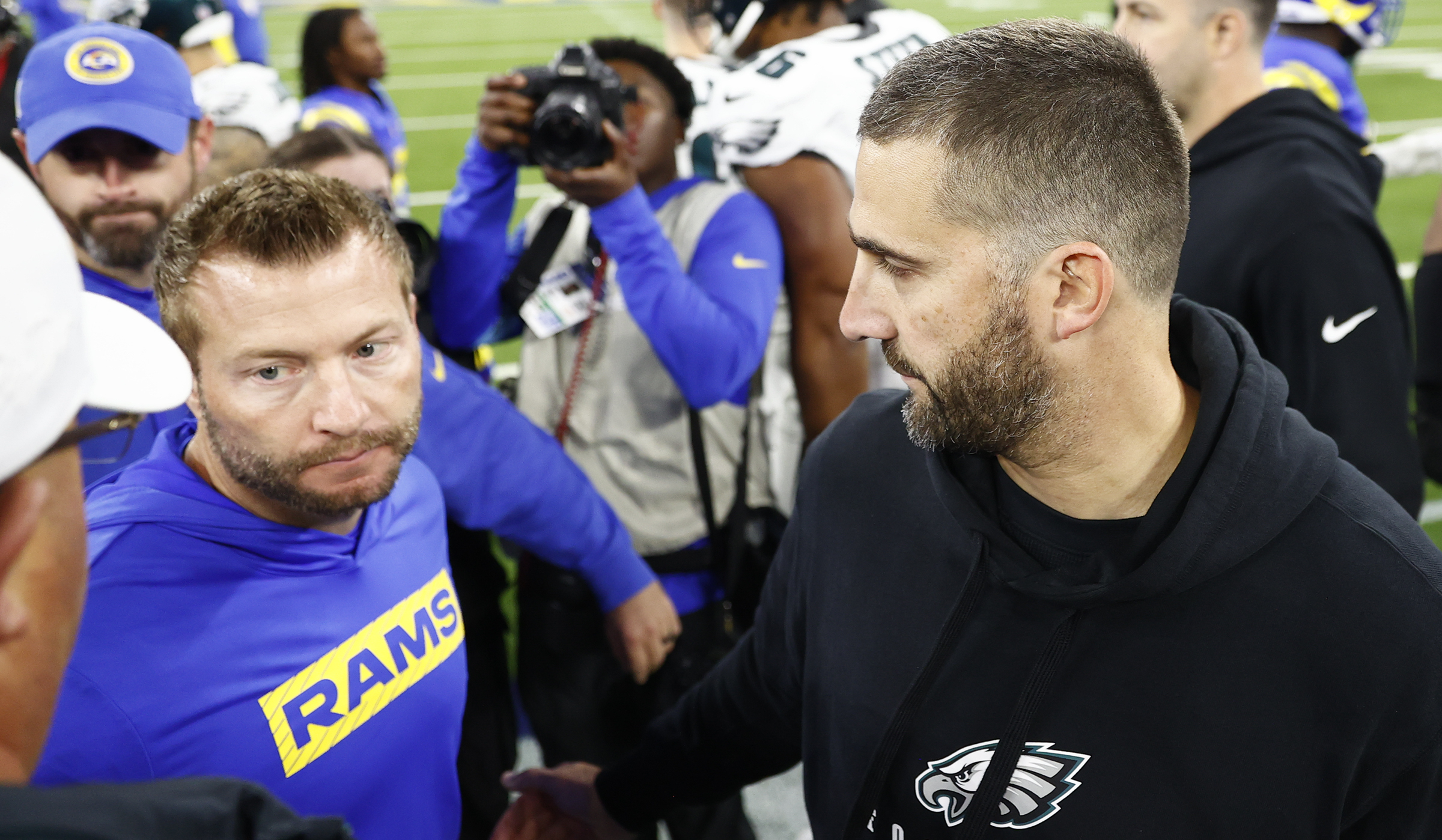
Extra point: Nick Sirianni is 4-0 vs. McVay. It’s certainly a feather in his cap, although he declined to gloat when asked about the record on Friday. There were a lot factors in the four-game winning streak. It’s not just coach vs. coach. But Sirianni has done better in game management situations. McVay may be one of the best offensive play callers in the game, but he turtles up in fourth down situations. He coughed up a 26-7 lead a year ago by getting too conservative and the Eagles won on Davis’ blocked field goal return for a touchdown.
The Rams’ special teams units were brutal last season. They may have kept McVay from getting back to another Super Bowl. Perhaps Sunday’s outcome can turn on a kick return here, or a missed field goal there, or a special teams mistake there. The Rams cut punt returner Xavier Smith on Friday. They have candidates to replace him, but no obvious names.
Either way, I think Sirianni’s Eagles may finally fall to McVay’s Rams. I wouldn’t make a prediction based on the law of averages. Many of the reasons stated above should be ultimately why the Birds fall to 2-2. Can they win? Of course. I just think they still have too many issues to sort out before they can beat a team as talented as the Rams.
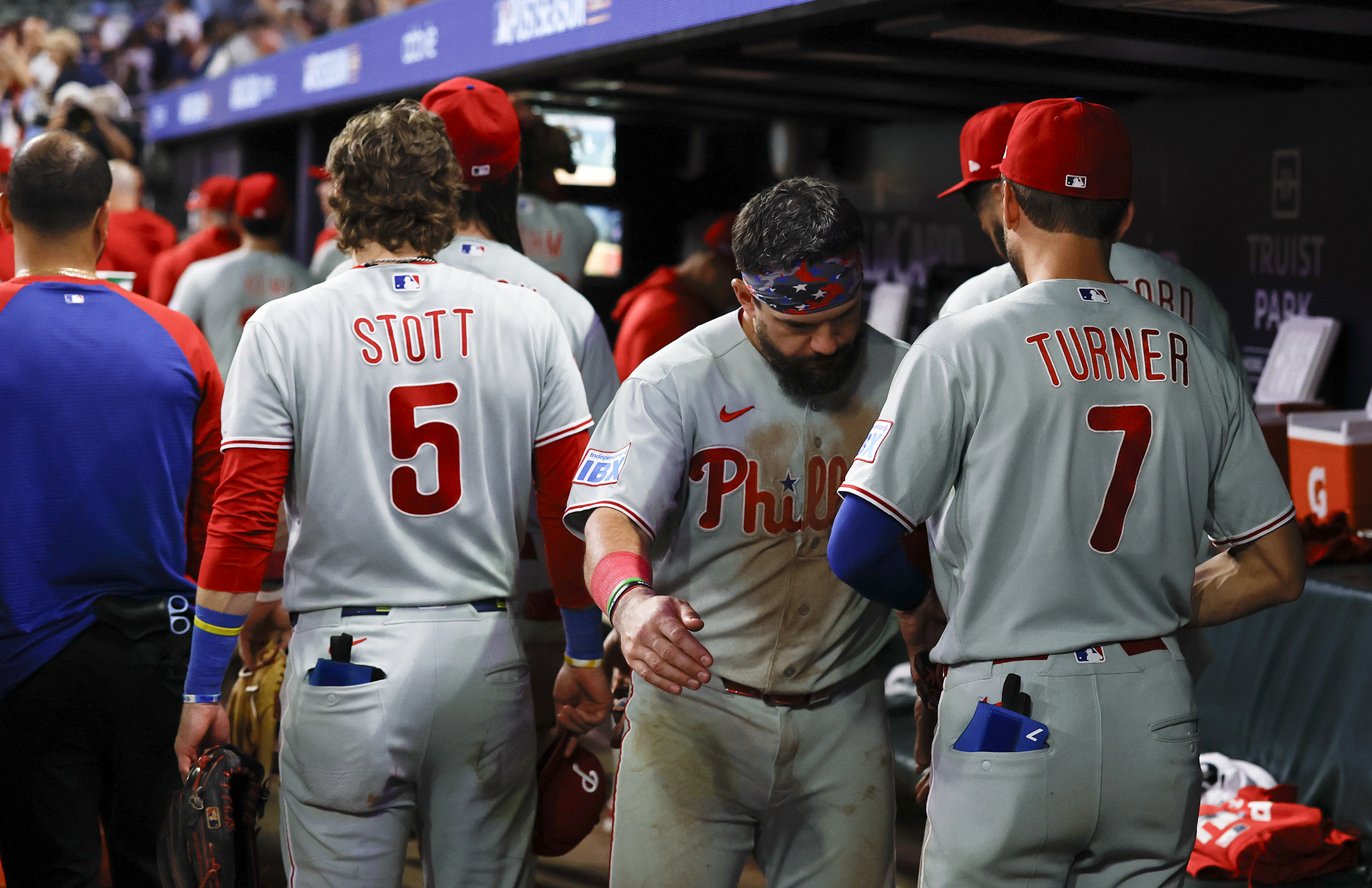
Considering the efficiency he has shown at second base, the brilliance he’s shown at third base, his capacity to play shortstop, his durability, his affability, and his age, Bryson Stott surely will be in somebody’s lineup for at least the next five years.
On Thursday, Stott was among the last of the Phillies to shower and dress after the Game 3 wild-card loss in Atlanta ended their season. But then, it’s always more of a challenge to get ready when you’re carrying the weight of personal failure on your shoulders with your future in doubt.
Stott, who will be 29 on Tuesday, is entering his final season of arbitration and will be a free agent in 2028 (all of this assumes, perhaps naively, that the 2027 season will not be affected by labor strife.)
He might not be expensive, but, if he continues to sputter, will Stott even be worth the roster spot for a Phillies team already heavily invested in contending for a title for the next five to seven years? As expensive, aging players like Trea Turner and J.T. Realmuto and their diminishing contributions are sure to occupy spots in the lineup, can the Phillies afford to carry even one player who isn’t dynamic at the plate?
Stott’s fun to watch. He is 100% baseball player. His aura is the closest thing the Phillies have had to Chase Utley’s since Ut was traded in 2015, all scruff and gristle muscle and bone and unsettling ferocity, possessed of baseball knowledge beyond his years and baseball instinct beyond his peers.
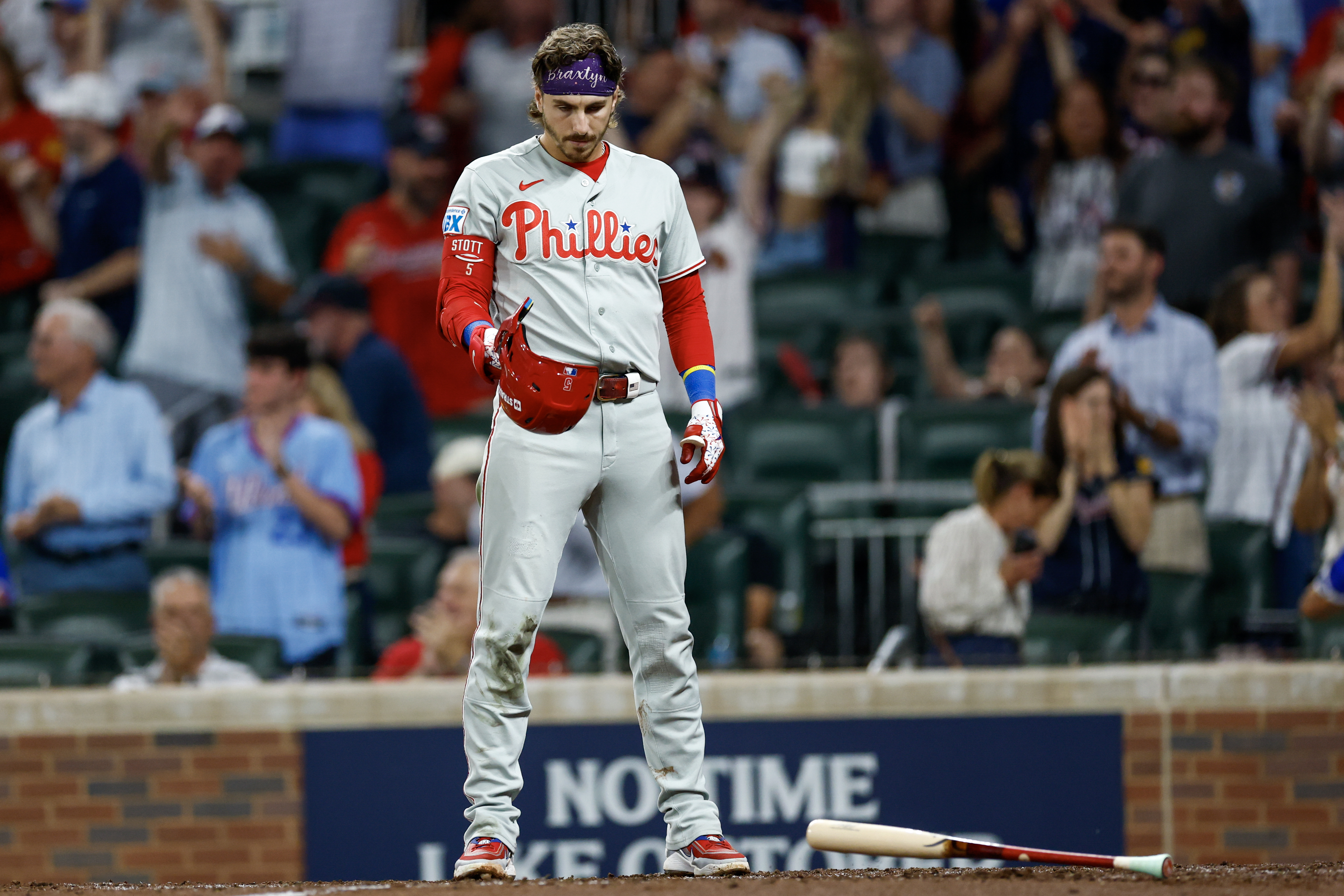
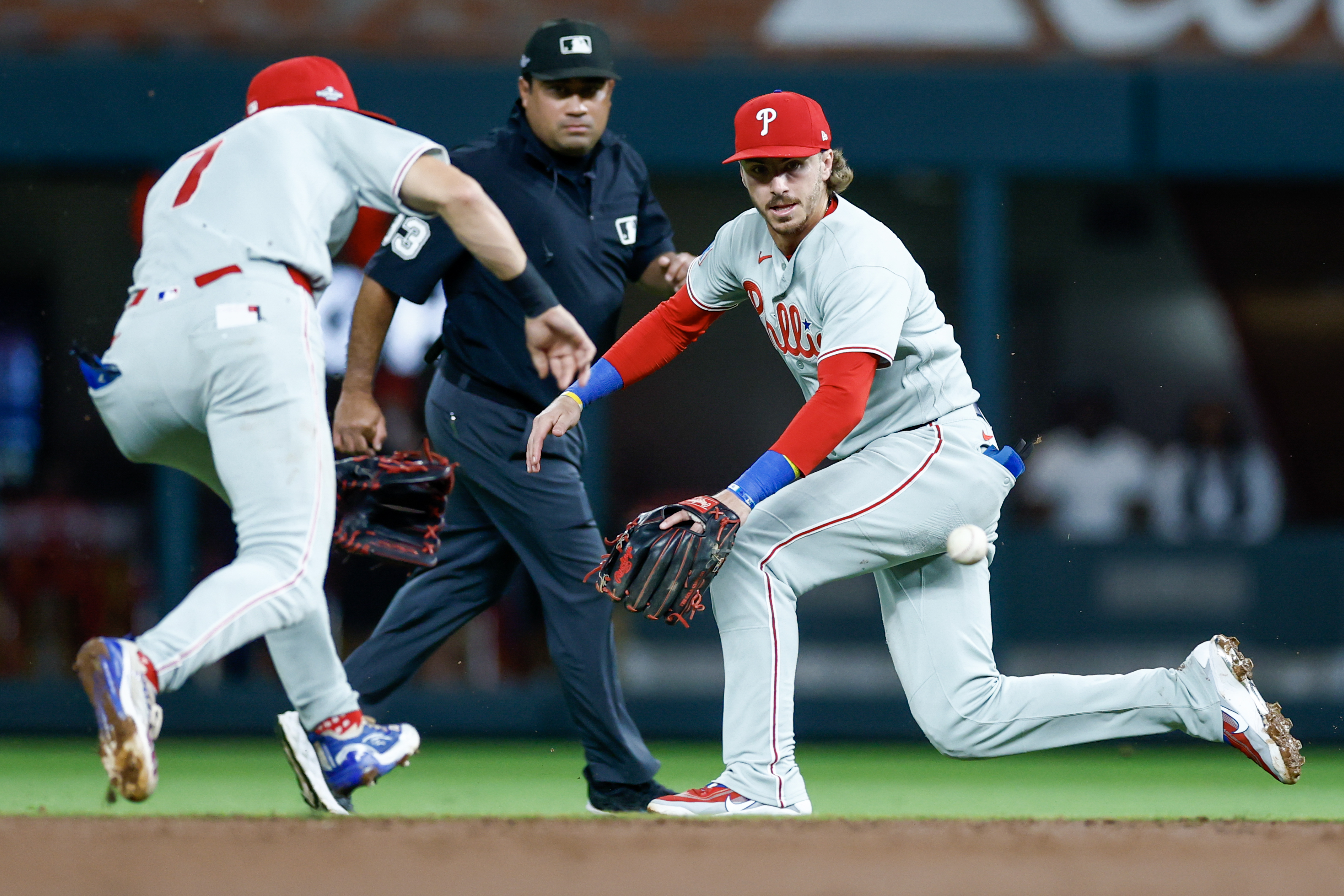
While his bat has been inconsistent, Bryson Stott’s defense at second and third base bring value to the Phillies.Yong Kim / Staff Photographer
Nevertheless, considering Stott’s pedestrian offensive production in the recent regular seasons and his disappearances in the recent playoffs, it’s fair to question whether a player like Stott should be in any lineup intent on winning in October, particularly considering Stott’s last three Octobers.
Stott is 6-for-37 in the Phillies’ losses in their first-round collapses of 2024, 2025, and 2026. That’s a .162 average, and it has been consistent: He managed just two hits in each of those series. He has no home runs. Two RBIs. Thirteen strikeouts.
He was a first-round pick in 2019 who, at one point, was considered an option to lead off a lineup ahead of a batting champion, an MVP, and a home run king. It’s his baseball DNA. Stott hit leadoff at both UNLV and in the minor leagues. In his second big-league season, 2023, Stott batted leadoff 39 times in a lineup that included monied, veteran leadoff hitters Turner, who’d won a batting title, and Kyle Schwarber, who’d led the National League in home runs.
Stott finished 2023 with a .280 average, 15 home runs, and a brilliant future.
His future now is clouded.
Bryson Stott has hit .252 averaged 11 homers and 63 RBIs over the past three seasons.Yong Kim / Staff Photographer
Since 2023, Stott’s batting average is .252, he has averaged 11.2 home runs, and he hasn’t moved the needle in eons. He has batted leadoff just 48 times.
He’s the poster child for long, freezing-cold streaks: He hit .216 with a .638 OPS through his first 58 games this season, hit .301 with an .832 OPS in his next 70 games, then reverted to early-season form for the remainder.
His defense is the only thing that keeps him in the lineup, because, as Donna Summer sang, when he’s bad, he’s so, so bad.
“I tell the hitting coaches, if I can just hit .230 in my bad months, my overall numbers will look a lot better,” Stott said. At issue: “Trying to find ways to get out of those ruts, those bad months, as fast as possible.”
That’s part of any hitter’s maturation. Pitchers find weaknesses and exploit them. The hitter must adjust in kind. Stott presents an intriguing history of weaknesses, though. In 2024, four-seam fastballs ate him up. Last year, sliders and curveballs. This season, curves and split-finger fastballs.
Stott studies. Maybe too much. That might be the issue with his postseason woes.
“You look at how a team pitches you all season and what they’re doing, and you plan going into a game,” Stott said. “Then you get to the playoffs and it could be a complete 180.”
And, after the first time not being served what you thought you’d be served …
“Your initial thought is, ‘That was one at-bat. They’re gonna go back to what they did for 12 or 13 games.’ But sometimes they don’t,” Stott said. “Then, you’ve got to adjust on the fly. It’s just a giant cat-and-mouse game.”
Bryson Stott, who will be 29 on Oct. 6, can be a free agent after the 2027 season.Yong Kim / Staff Photographer
In that metaphor, Stott mostly has been the mouse.
He pointed to his feeble plate appearance against Braves left-handed reliever Dylan Lee in Game 2. Moments before, Schwarber and Bryce Harper, the former MVP, had homered and tied the game. When Stott came to the plate, the afterglow of those heroics overshadowed how badly Stott was overmatched.
Lee threw Stott four fastballs that averaged about 94 mph. The first one was high, and he took it for ball one. The next three were in the top of the strike zone: take, foul, whiff, sit.
The cat ate the mouse.
“I’ve never faced Dylan Lee that I didn’t see a slider,” Stott said.
Entering that at-bat Stott was 2-for-4 against Lee, with a hit in each of his previous two plate appearances, but losing this sort of mind game has been typical for him in the last three playoff series.
“I see sinkers and splitters and changeups from some of these guys all season, then see cutters and four-seamers that I didn’t see in the regular season,” Stott said. “So you want to stick to your plan going up there for that specific event, but sometimes it’s the complete wrong one.”
Every hitter faces this issue. The hitters who adjust are hitters who keep their spots on competitive teams. Stott has at least one more chance to adjust as a Phillie.
The hitters who can’t adjust?
If they aren’t a good fielder, then they start selling real estate.
If, like Stott, they’re 100% ballplayers, then they become placeholders on noncontenders until there’s no longer a spot on the roster for a light-hitting, 30-something, hard-nosed defensive specialist.
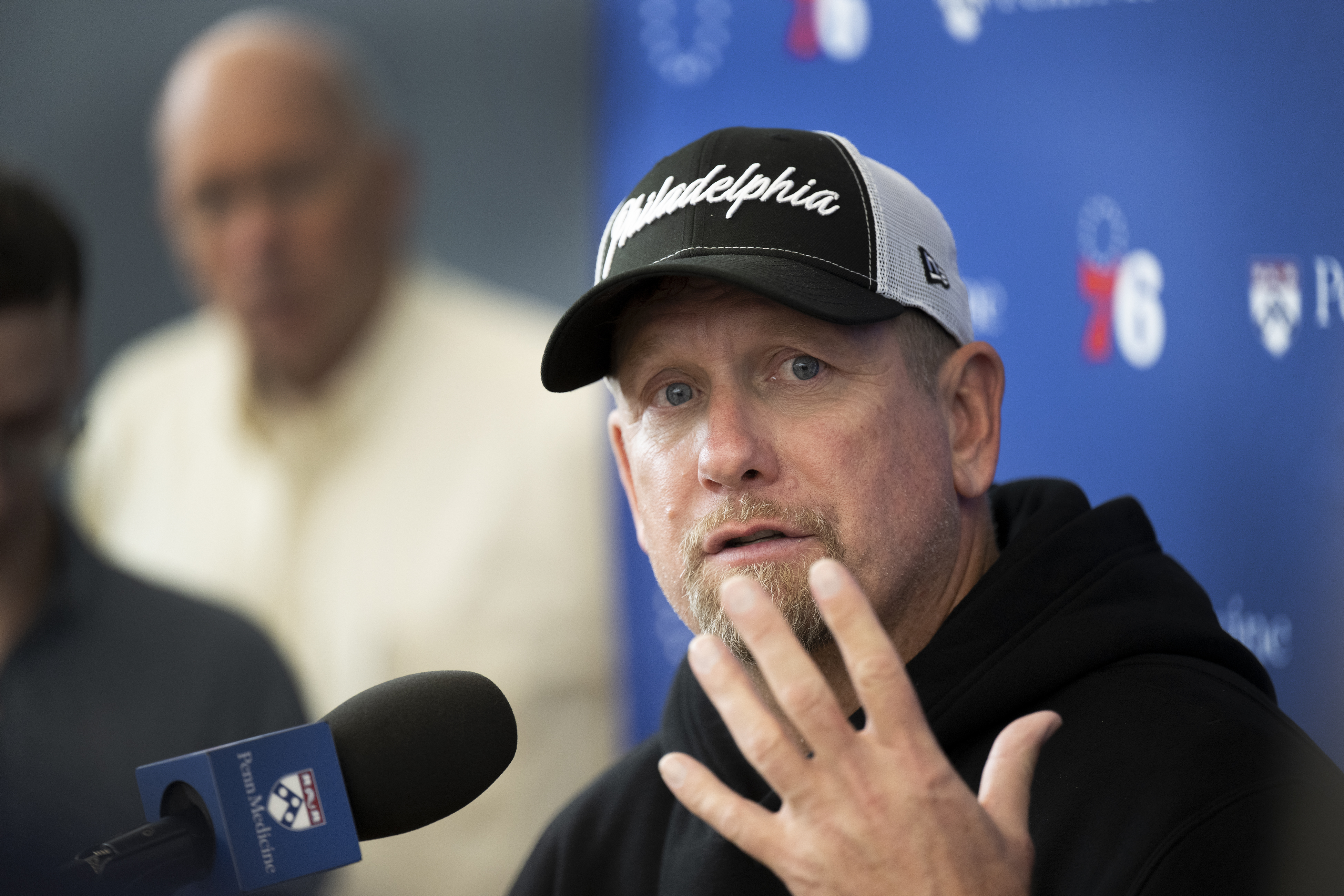
For the first two days of 76ers training camp, coach Nick Nurse was installing defensive concepts. This was especially exciting for Nurse, whose eyes lit up when talking about what this roster allows him to do on that end of the floor.
“I don’t feel like I’ve been able to get into my bag of defensive stuff nearly as much as I would like to,” Nurse said of his previous years as Sixers coach. “And I think now we’ve got a little bit more depth, size, athleticism. It may take us a minute, but I think I’m most excited about that.”
A young, inexperienced team might not have the bandwidth to execute multiple coverages like switching one through five, drop coverage, or a high wall without some miscommunication and needing an extra beat to remember which is the current coverage.
A team lacking size and athleticism limits the kinds of coverages that could be deployed for the sake of ending up in unfavorable mismatches. What the Sixers seem to have is a good mix of that experience, athleticism, and basketball IQ to make it all work.
That they don’t have to just play one way throughout the course of a game, and Nurse can do different things with different lineups and match up better against specific opponents.
“We have so many defenders and athletes and good players that can do so many different things; we can really go deep inside the playbook and rotations and do things that other teams really don’t have the ability to do,” forward Dean Wade said. “That’s what’s going to separate us on the defensive end, too. We have so many great defenders, great help side defenders and great on-ball defenders.”
The Sixers were 17th in defensive efficiency a season ago, which speaks, perhaps, to the limited upside of what Nurse could do, especially with Joel Embiid only playing 38 regular-season games. But even when Embiid does take off games to maintain his health, the Sixers have a deeper roster that should still give them flexibility on defense. Wade figures to play a significant part in the team’s defensive success off the bench, while VJ Edgecombe said he will continue to burnish his reputation as a point-of-attack defender after getting “faster and stronger” from where he started a season ago.
Jaylen Brown on learning new defensive systems and terminology, an overlooked part of changing teams players have to get used to:
“It’s a whole new system, whole new calls. I got to like download my brain to a different algorithm to make sure I’m not calling the wrong stuff.” pic.twitter.com/ObZTebDajJ
“I’m just trying to make sure I’m in top-tier shape so I can do that,” Edgecombe said. “Obviously, that’s important. The league is full of great guards. And, like you said, that’s important to be that point-of-attack defense because that’s what kind of starts it with most of the possessions. And I want to be able to set that tone for us defensively, and we go from there.”
Then there’s LeBron James, who still can dial up the intensity defensively when needed. James relayed Monday that Tyrese Maxey previously said Jaylen Brown also was taking on primary defensive responsibilities and trying to set a defensive tone.
“What’s stood out to me so far is his communication and he’s willing to pick up the ball defensively, kind of just do whatever coach needs him to do right now,” Maxey said.
Brown mentioned Thursday that he was getting used to the terminology the Sixers use. One thing that might mean a certain coverage when he was in Boston might mean something different with the Sixers.
“It’s just getting him through it and getting him comfortable,” Nurse said. “I think we’ve covered a lot and probably calmed down on putting more stuff in and really started repping this out, so everybody gets comfortable with what the plays are called.”
The more Nurse can take out of his “bag,” the more versatility the Sixers can have defensively.
Up and down the roster, the Sixers have talked about the importance of that side of the ball. Nurse mentioned on Day 1 that James was “extremely loud” on defense, trying to set an example for the rest of the roster, while Brown said, “We’re focused on defense for a couple days, and I like that because that’s where the game is going to be won or lost.”