Tag: topic-link-auto

  • In Pennsylvania, the epicenter of online gambling, anger over addiction and loss fuels a backlash

    In Pennsylvania, the epicenter of online gambling, anger over addiction and loss fuels a backlash

    Reynaldo Rivera had little interest in sports betting. He preferred playing slots and table games at casinos around Philadelphia, where he’d unwind a couple times a week after covering the graveyard shift as a tow truck driver.

    But when the COVID-19 pandemic left most forms of indoor recreation off-limits in 2020, Rivera downloaded some sportsbook apps, and sampled their digital simulations of casino games.

    He soon discovered that he had no reason to ever return to Rivers Casino on Delaware Avenue, or Parx Casino in Bensalem, to play slot machines and Ultimate Texas Hold’em.

    “You open your phone,” he said, “and it’s right there.”

    Occasional after-work gambling turned into constant on-the-job gambling. Rivera sat for hours in the cabin of his tow truck, the outside world dark and still, while he tapped and tapped on his phone.

    Hundreds of dollars in losses became thousands. Then, tens of thousands. By this spring, he’d wagered about $2.4 million, losing $137,000.

    As his losses ballooned, the gambling companies made sure he knew how valuable he was to them. They granted Rivera VIP status and supplied him bonus credits and gifts, like a Peloton bike, courtesy of DraftKings.

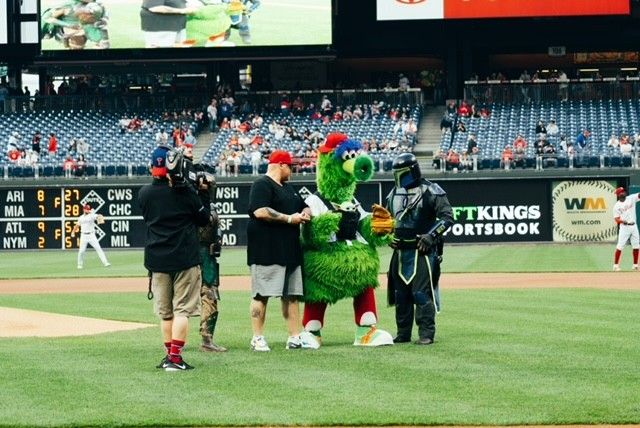
    BetMGM arranged an even more remarkable reward through a sponsorship deal with the Philadelphia Phillies. On a spring evening in May 2022, Rivera was led onto the lush infield grass at Citizens Bank Park, before the Phillies played the Texas Rangers. As thousands of fans watched, Rivera tossed a ceremonial first pitch.

    Yet the constant gambling and losing left Rivera feeling ashamed and foolish. He was struggling to get by, instead of living comfortably from the money he made driving a tow truck.

    He just couldn’t stop.

    “Listen, I don’t have a drug addiction,” Rivera, 56, said in a recent interview. “But if that’s what it feels like, that’s crazy.”
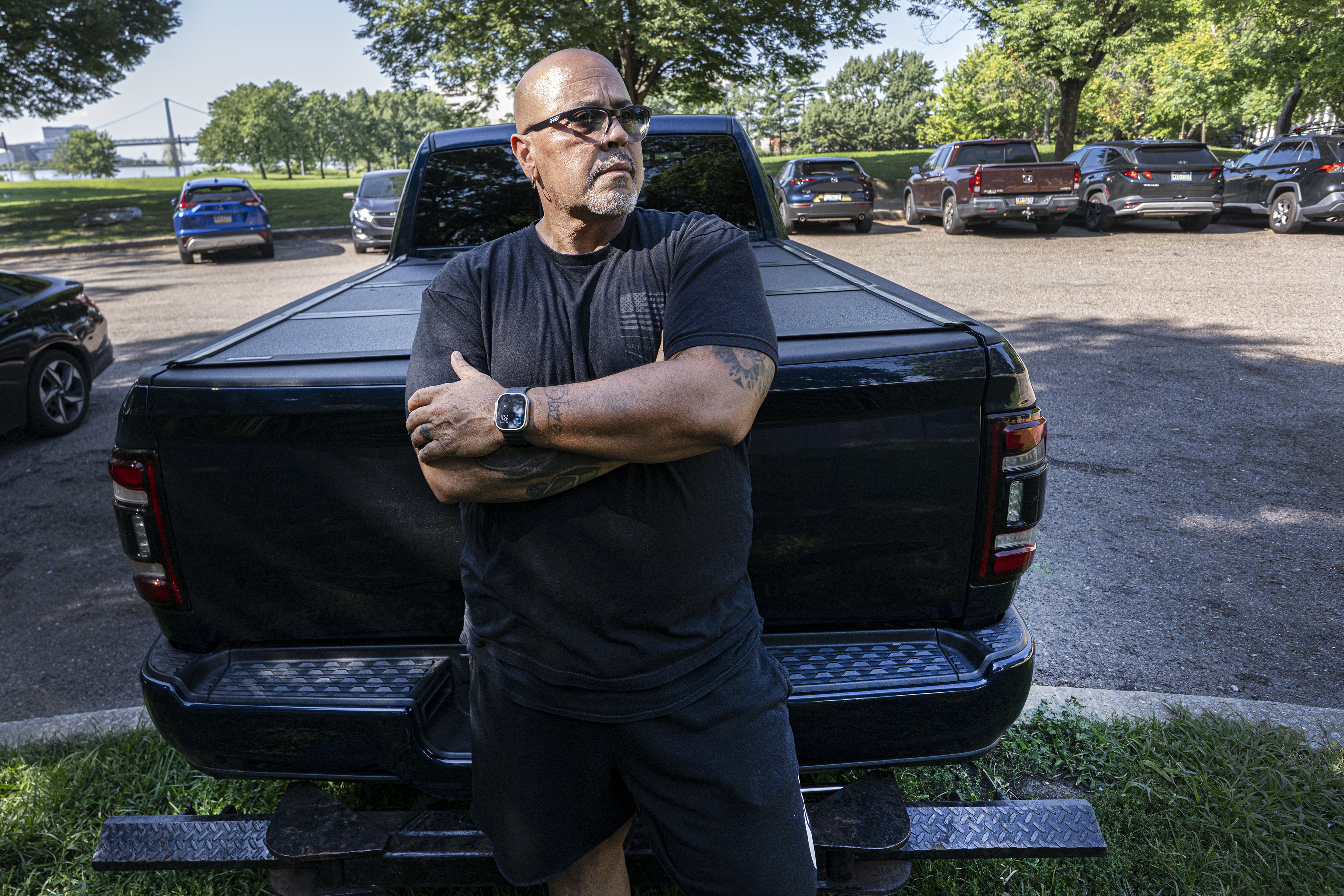
    Reynaldo Rivera said he grew addicted to playing online casino games on his phone while working as an overnight tow truck driver in Philadelphia. Earlier this year, his attorney filed a lawsuit against DraftKings and FanDuel over his addiction.Jose F. Moreno / Staff Photographer
    As Rivera’s gambling losses deepened, he said companies granted him VIP status and enviable rewards, like throwing out the first pitch before a Phillies game at Citizens Bank Park in 2022. Courtesy of Reynaldo Rivera

    Less than a decade ago, gamblers had to invest time and physical effort if they wanted to bet on sports or play casino games, whether it meant going to Las Vegas or Atlantic City, or meeting up with a bookie. Now, it takes only the flick of a thumb to open an app.

    And it’s no longer a fringe activity that needs to be sought out. Nearly everywhere Americans look, there are advertisements about sports betting or prediction markets: billboards alongside highways, banner ads in stadiums, sponsored segments in sports broadcasts, and TV and online pitches featuring global stars-turned-well-paid ambassadors, including Philadelphia 76er LeBron James, tennis legend Maria Sharapova, and Academy Award winner Jamie Foxx.

    But a corollary backlash is also taking shape, as the repercussions of nearly unlimited access to gambling have become impossible to ignore.

    Lawmakers are demanding greater control over how sportsbooks and prediction markets operate, while a wave of litigation is attempting to hold those companies responsible for their customers’ addictions, echoing similar legal action that’s been taken against social media companies. (Meta agreed in August to pay up to $18 billion to settle lawsuits it faced over claims that it designed its products to be addictive to children and teens.)

    The impact of the gambling industry’s skyrocketing growth might be felt more acutely in Pennsylvania than anywhere else. In March, the American Gaming Association wrote in a report that Pennsylvania had the largest online gambling market in the U.S., generating $3.46 billion in revenue in 2025 — a 27.9% increase from the year before.

    Pennsylvania recorded $7.7 billion in overall gambling revenue in 2025, a sum that trailed only Nevada, according to the gaming association. Pennsylvania is also one of just eight states that have thus far legalized both online gambling and sports betting.

    Philadelphia, meanwhile, is the seventh-largest commercial casino market in the country, having generated $1.4 billion in 2025, the gaming association said, and last year was the top market for online gambling advertisements.

    “The casino itself has expanded basically into infinity,” said Timothy Fong, the co-director of the UCLA Gambling Studies Program, which researches gambling disorders and evidence-based addiction treatments.

    While brick-and-mortar casinos have long wooed bettors with offers of free meals and hotel rooms, the modern gambling industry bears little resemblance to the neon palaces of past generations.

    “If you go back in time, like 25 years ago, and you compare the differences, it’s obviously not the same world,” Fong said. “It’s not even the same universe, and it’s because gambling is frictionless right now. It takes very little effort to get bets down. And you also have a much wider array of choices of how to bet, what types of wagers are out there.”

    The state’s Gaming Control Board last week published an annual overview of its regulatory activity, and reported that 30,000 people are enrolled in its self-exclusion programs, which prevent bettors with addictions from being able to legally gamble.

    Researchers at Pennsylvania State University’s Criminal Justice Research Center have found that between 60% and 73% of adults in the state had engaged in some form of betting in 2025, with as much as 30% gambling online. The average age of online gamblers was 37, and more than 77% were men, with 61% identifying as white.

    Overall, Penn State found that between 2.4% and 6.4% of Pennsylvanians might be problem gamblers — more than double the reported national average of 1% to 3%.

    “That’s an inordinate amount of people,” said Eric Webber, a senior behavioral health therapist for Caron Treatment Centers, which offers addiction rehabilitation services in Pennsylvania, Florida, Georgia, New York, and Washington, D.C.

    Webber, since 2013, has been treating people who have gambling addictions. The number of his patients — who include lawyers, executives, and college students — has climbed steadily since the U.S. Supreme Court ruled in 2018 that states could adopt their own sports betting laws.

    He described one young client whose compulsions led him to coordinate a phone, laptop, and tablet to play multiple hands of blackjack simultaneously.

    “I tell people this is the new epidemic,” Webber said, and Pennsylvania “is at the epicenter of it.”

    Rivera is among a half dozen former customers of FanDuel and DraftKings who have recently sued the companies in Common Pleas Court of Philadelphia. Their lawsuits allege that the apps use “hyper-personalized algorithms” and loyalty programs to target “the most addicted, problem users” that make up a disproportionate chunk of the sportsbooks’ revenue.

    Rivera’s lawyer, Jennifer Hoekstra, said her Pensacola, Fla.-based firm, Aylstock, Witkin, Kreis & Overholtz, has retained about 15,000 clients with similar claims, and has filed lawsuits against sportsbook operators in Delaware, Massachusetts, and New Jersey.

    “FanDuel and DraftKings have created, essentially, an addiction crisis,” Hoekstra said. “They built an addictive product intentionally.”
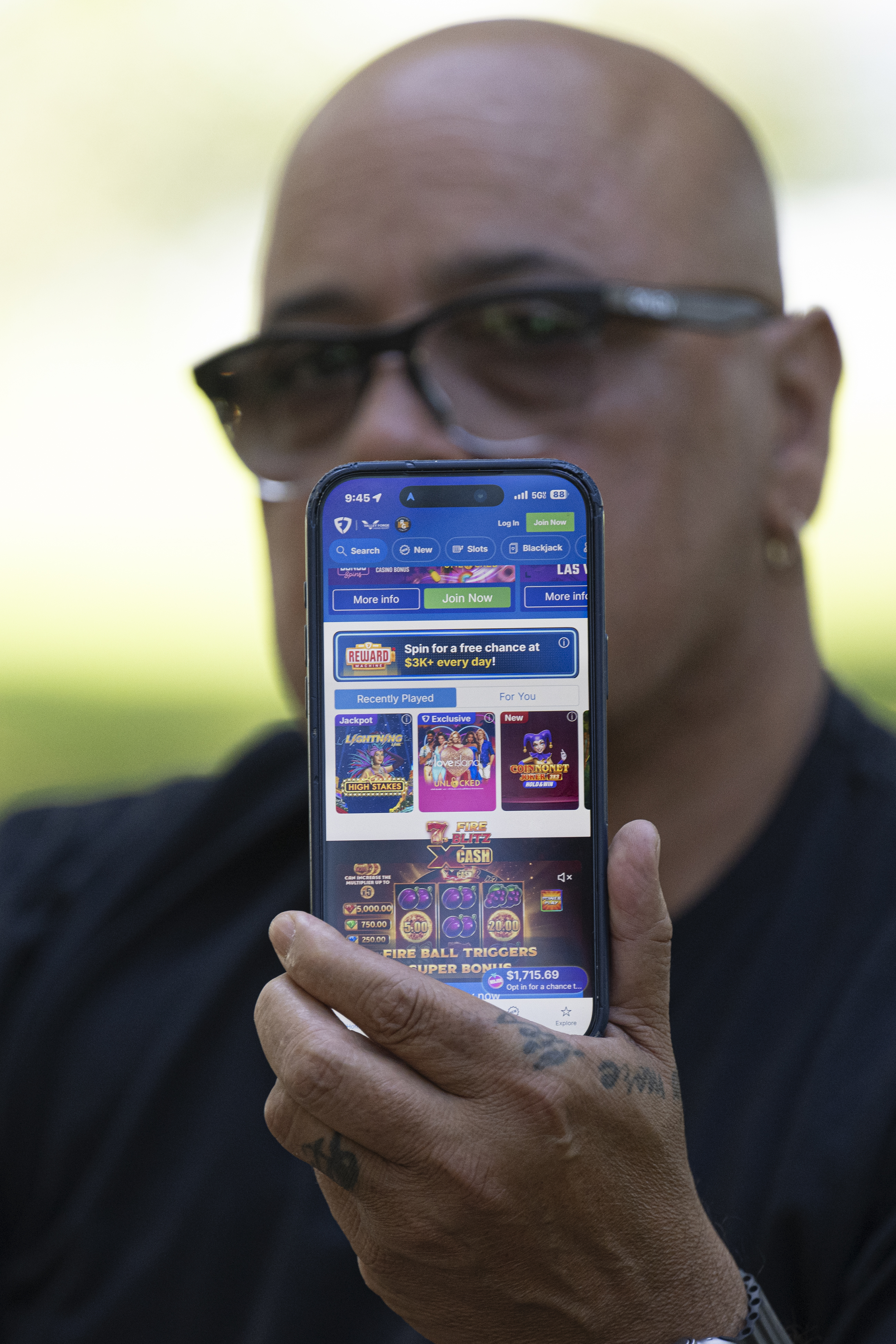
    Rivera’s attorney, Jennifer Hoekstra, said DraftKings and FanDuel banned him from their apps after he sued the companies. Rivera said he still can’t bring himself to delete the apps. Jose F. Moreno / Staff Photographer

    The companies have rejected that characterization and said they offer tools that allow players to monitor and set limits on their deposits, wagering, and playing time.

    FanDuel “supports and exceeds the comprehensive requirements set by Pennsylvania regulators for how we monitor customer behavior and respond to signs of harm,” a spokesperson wrote in an email.

    In 2025, the company spent $158 million on responsible gaming technology, conducted 58,000 account reviews, and removed 5,700 users from FanDuel’s platform, the spokesperson said.

    A DraftKings spokesperson wrote that while the company won’t comment on pending litigation, it “takes responsible engagement concerns very seriously” and has a team of more than 50 full-time employees and a chief responsible gaming officer who focus on that issue. “Responsible engagement is embedded across our business and essential to DraftKings’ long-term sustainability,” the spokesperson said.

    The sportsbooks have asked judges to dismiss other lawsuits that have accused them of product liability and violating state consumer protection laws. Their attorneys have argued that FanDuel and DraftKings don’t sell an actual product, but instead offer a free app and have no obligation to protect customers from placing lawful bets, even if their gambling becomes excessive.

    Shortly after Rivera’s lawsuit reached the court docket in July, DraftKings and FanDuel banned him from their apps, and the friendly VIP managers who had once texted him regularly no longer responded to his messages, his lawyer said. Yet Rivera can’t bring himself to delete the sportsbook apps from his phone. The urge to place a bet remains just under the surface, an itch he can’t scratch. Sometimes, he imagines winning back the money he’s lost.

    “If I had access to them apps, I’d probably be on them,” he said. “I know I’d be on them.”

    Advertisements for sports betting can now be easily found at professional sports stadiums and during broadcasts of games. Elizabeth Robertson / Staff Photographer

    A bond, broken

    On Sept. 23, a cluster of parents walked through the echoey halls of the Russell Senate Office Building in Washington to a small, cream-colored room. Once inside, they unspooled personal accounts of how gambling addiction had impacted their lives. Politicians and advocates listened and nodded solemnly, and discussed the urgency of a newly announced gambling reform movement.

    Raymond Mikesell described the inseparable bond that he shared with his son, Ray, who at the age of 4 began helping out at Cafe Raymond, the breakfast and lunch spot that Mikesell operated for 17 years in Pittsburgh, beginning in 2007. Ray became a full-time fixture in the restaurant as he grew older, whipping up blueberry ricotta pancakes in the kitchen while his father amiably chatted with customers.

    By age 20, Ray had enough money to buy his own house. That picture of success was punctured when Mikesell one day received some of his son’s bank statements by mistake, and discovered that his account had been repeatedly flagged for insufficient funds.

    “I said, ‘Ray, what’s going on here? You got to explain this to me,’” Mikesell recalled. “He said he was betting.”

    Mikesell wanted to help his son climb out of debt. He began managing his finances, giving him an allowance, and sometimes paying his mortgage. Mikesell said he also avoided mentioning professional sports altogether, for fear that it would drive his son to place more wagers.

    “Within a month, he was kicking my door down to tell me I’m ruining his life,” he said. “We all knew what it was. It was the addiction to gambling. He just wanted to bet all his money.”

    Mikesell said his son spiraled deeper into addiction. He maxed out his credit cards, and his home fell into foreclosure, and then was sold at a sheriff’s sale.

    Among those who had assembled in the senate room with Mikesell were U.S. Sen. Richard Blumenthal (D., Conn.) and U.S. Rep. Paul Tonko (D., N.Y.). In 2025 the lawmakers introduced the SAFE Bet Act, which would prohibit sportsbooks from marketing during live games and using artificial intelligence to inform the promotions they offer to bettors.

    Blumenthal and Tonko each addressed the parents, who represented a nonprofit, Families and Friends of Gamblers, which was created with the help of the Public Health Advocacy Institute. (Lawyers for the institute in March sued FanDuel, DraftKings, and the NFL on behalf of Terry Thompson and Christopher Sage, men from the Philadelphia suburbs who developed sports gambling addictions.)

    Blumenthal accused sportsbook companies and prediction markets of exploiting their customers’ compulsions.

    “It drives families apart. Ruins people’s careers,” he said. “It basically decimates lives, because gambling can be an addiction. We know it’s an addiction. It’s a disease, like every addiction.”

    Tonko and Blumenthal in August demanded that FanDuel end its VIP services, citing reporting from The Inquirer that revealed that a FanDuel VIP host had sent a personalized video of Phillies star Bryce Harper to Thompson, who earlier this year planned to end his life after gambling away the last of his family’s savings.

    A FanDuel executive disclosed to the lawmakers in a Sept. 24 letter that the company has sent approximately 30 personalized videos from athletes and entertainers to its customers during the last two years, but said such perks are not meant to encourage betting.

    In response to the congressional scrutiny, the Major League Baseball Players Association has said it would support prohibiting players from doing promotional work for gambling VIP programs.

    Such measures arrived too late for Mikesell’s son.

    A few days before Thanksgiving in 2024, Mikesell spoke by phone with Ray, who was still staying in his foreclosed-upon house in South Fayette. Neither knew that Allegheny County Sheriff’s Office deputies planned that day to serve Ray with an eviction notice.

    When the deputies later arrived and knocked on Ray’s door, they heard a single gunshot.

    Ray, 24, had died by suicide.

    Mikesell later said that he didn’t believe his son had planned on taking his life — he had already packed his belongings and his two cats in his car — but might have panicked when he saw police at his property.

    “We found a note in his garage,” Mikesell recalled. “It said, ‘Please take care of my cats.’”
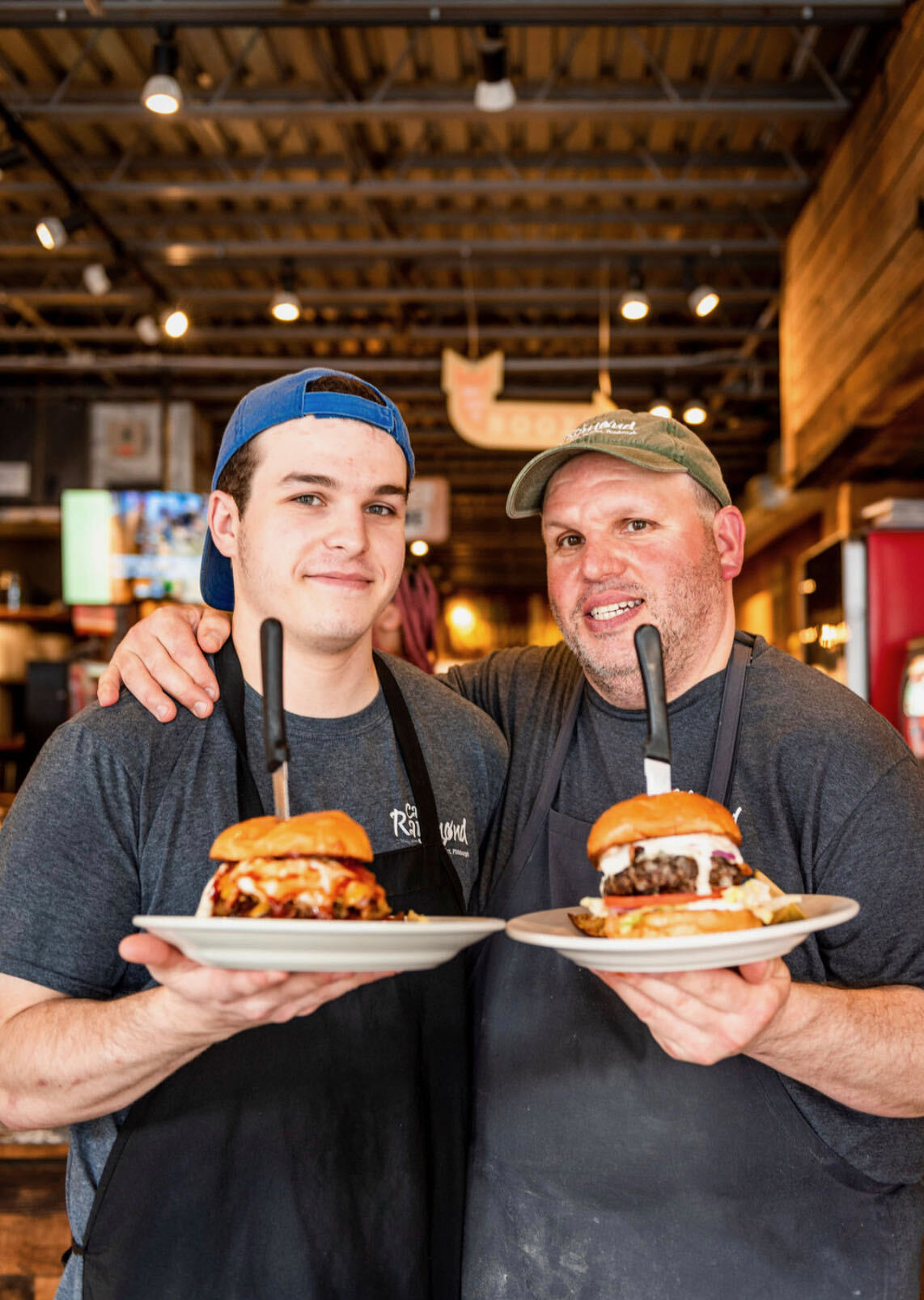
    Raymond Mikesell (right) and his son Ray (left) worked together daily at Cafe Raymond, Mikesell’s restaurant in Pittsburgh. Courtesy of Raymond Mikesell

    Grief-stricken, Mikesell contacted Rep. Jason Ortitay, an Allegheny County Republican, to ask if anything could be done to address gambling addiction. Earlier this year, Ortitay introduced a bill that would prevent betting apps from being accessed within Pennsylvania schools.

    “I called my wife and daughter, and we cried,” Mikesell said, his voice breaking. “Because it’s a small step in a big thing that’s going to mean a lot someday soon.”

    After police closed their investigation into Ray’s suicide, investigators returned his cell phone to his parents. They discovered that a month after his death, Ray’s phone was still buzzing with promotional offers from gambling companies.

    “There was one text from DraftKings,” Mikesell said, “asking him, ‘Are you betting with someone else? What’s going on?’”

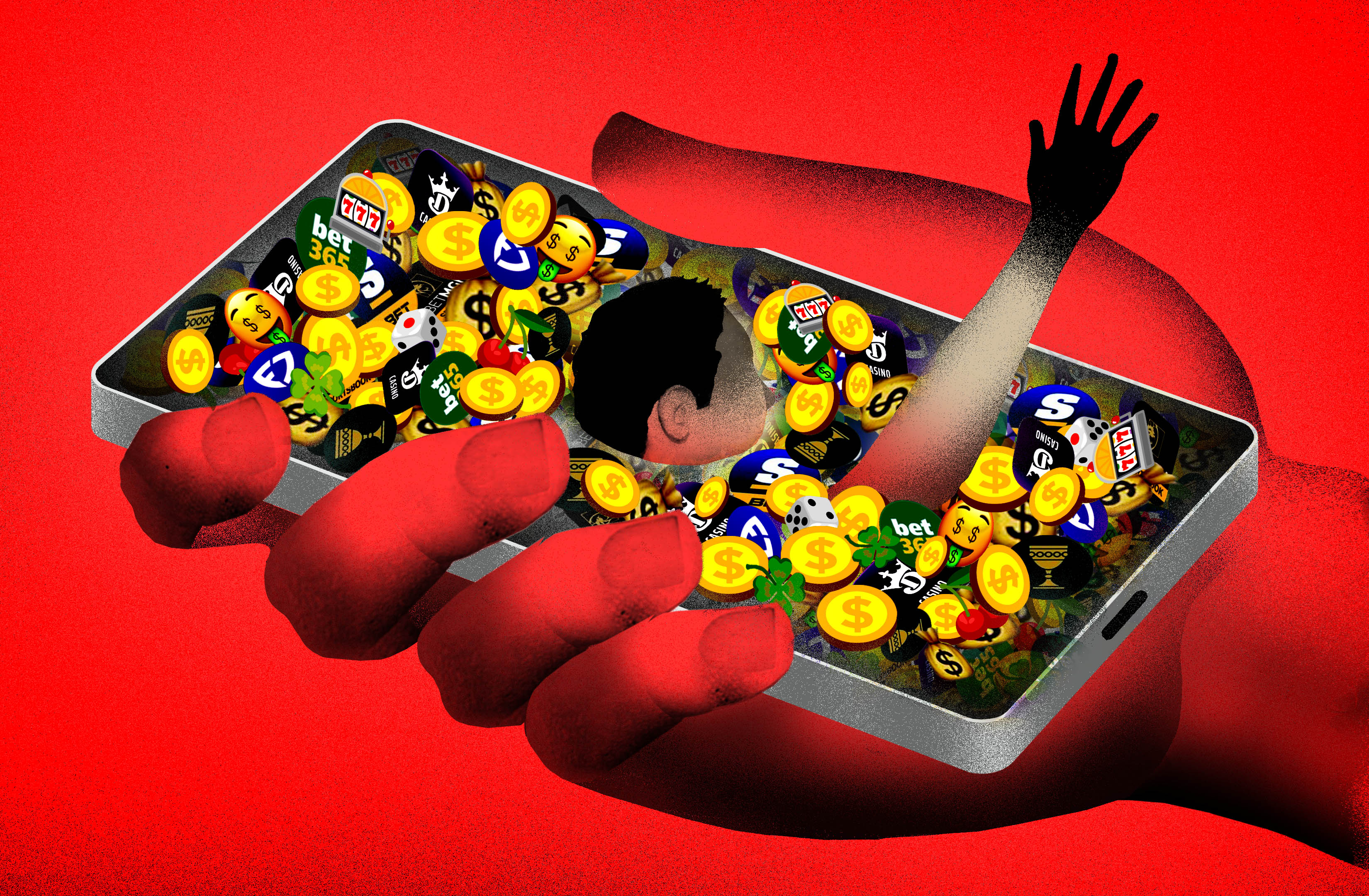
    Advertisements that encourage viewers to try online gambling or prediction markets have become nearly inescapable. Staff Illustration

    ‘The gambler’s fallacy’

    Tales of tragedy and heartache like Mikesell’s have spurred other legislative and legal efforts to rein in sportsbooks and prediction markets.

    Pennsylvania lawmakers are drafting legislation to ban in-game microbets and curtail VIP programs, and have introduced additional bills to prohibit consumers from using credit cards to place wagers, restrict gambling entities’ ability to send push notifications to customers, and ban insider trading on prediction markets.

    The Sports Betting Alliance — a national advocacy organization whose members include FanDuel, DraftKings, BetMGM, bet365, and Fanatics — has said it would oppose legislation to eliminate microbets, and has likened VIP services to rewards that retailers like Starbucks offer to frequent customers.

    New York Attorney General Letitia James has sued prediction markets Polymarket and Kalshi, accusing each of operating illegal gambling platforms. The federally regulated markets are available in 50 states, and customers can be as young as 18, while the legal gambling age remains 21.

    Prediction market officials insist that their products are not gambling apps — even after recording tens of billions of dollars in sports wagers during the FIFA World Cup — but rather a financial product similar to the stock exchange.

    In early September, New Jersey Attorney General Jennifer Davenport petitioned the Supreme Court to decide whether states should have the authority to regulate prediction markets as they do gambling.

    Amid those legal tussles, researchers are still assessing the complex picture of addiction that has been associated with the widespread growth of online sports betting and prediction markets.

    In early September, Bank of America Institute published an analysis that showed the largest share of customers who engaged in online betting in July came from lower- and middle-income households.
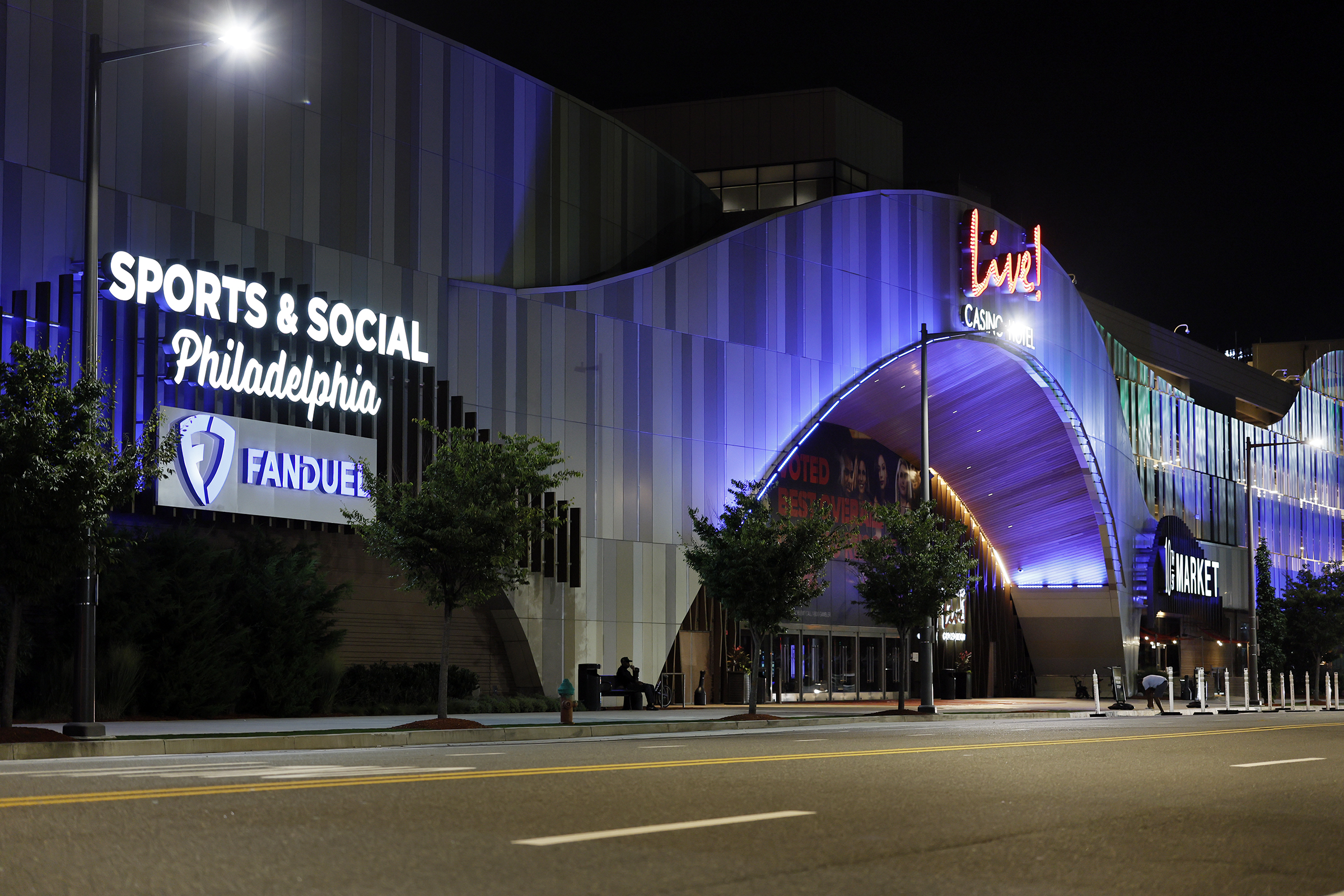
    FanDuel’s logo can be found next to the entrance of Live! Casino & Hotel, which sits about a block north from Citizens Bank Park in South Philadelphia.Elizabeth Robertson / Staff Photographer

    The institute said that median account balances of households that participated in online betting was 59% of those that did not, but didn’t include demographic or other details about those customers.

    “There’s something called the gambler’s fallacy, which basically goes like this: ‘If I keep doing this, I have to win,’” said Webber, who conducts inpatient rehabilitation at Caron’s 110-acre campus in Berks County.

    “From a biological standpoint, it’s a dopamine rush, so even if I’m losing, I’m getting a reward. It’s the excitement of the chance — ‘I might get this. And VIP [rewards] are going to make me feel like the man.’”

    In June, researchers from West Virginia University and the University of Oviedo published a study suggesting that the legalization of sports betting could lead to a 3% increase in the annual divorce rate. “Effects emerge gradually and are driven almost entirely by online wagering,” the authors wrote. (The study, which examined state and county data from 2012 to 2024, has not yet been peer-reviewed.)

    A 2025 report from the Democrat-leaning Progressive Policy Institute, meanwhile, found a 36% decrease in bankruptcies between 2019 and 2024 in states that legalized online sports betting, with “no sign of a tidal wave of bankruptcies or consumer credit downgrades.”

    That same year, The Lancet Regional Health-Europe published a study that showed suicide was the leading cause of death among 6,899 patients in Norway who had a gambling disorder between 2008 and 2021.

    Though those patients had a higher suicide risk than the general population, the researchers found that gambling addiction had a lower suicide risk than substance use disorders, alcohol dependence, psychotic disorders, or mood disorders.

    None of that research, though, captures how easily even a new gambler’s experience can escalate from a fun diversion to a life-altering obsession.
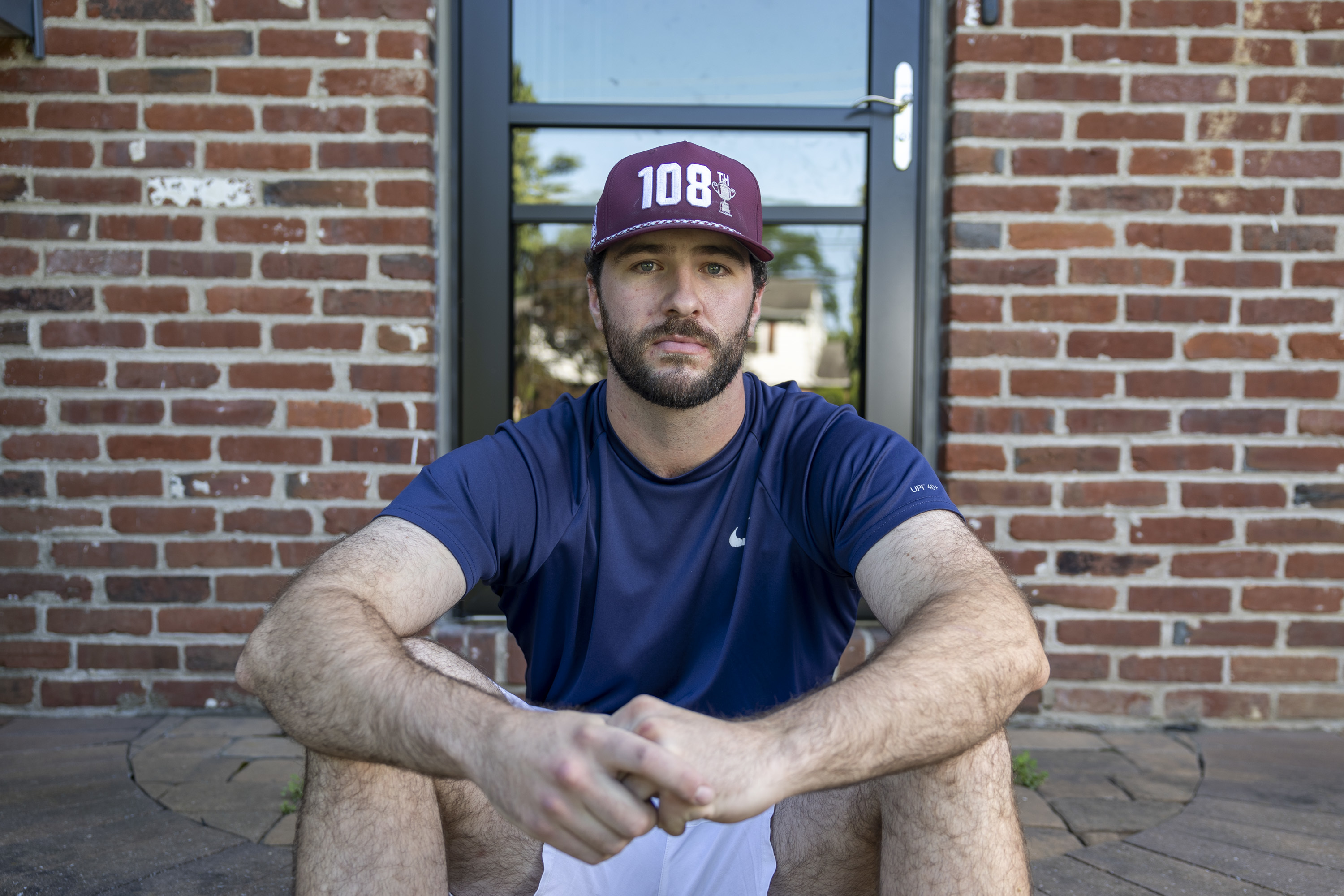
    Hiding his online gambling addiction from those closest to him left John Field feeling like he was living a double life, and ultimately drove him to lose a long-term relationship. Tyger Williams / Staff Photographer

    A double life

    When John Field turned 21, he opened accounts with DraftKings and FanDuel, and occasionally placed football parlay bets when he hung out with friends. Eventually, he tried the apps’ casino offerings, and became hooked on slots — 20 cents a spin at first, then 50 cents, then 5 bucks, then 10 dollars.

    He gambled nonstop at a warehouse job that he held in Clifton Heights, but hid this newfound compulsion from those closest to him. He felt like he was leading a double life.

    “Have you ever seen the show Severance?” Field asked, referring to the Apple TV sci-fi show in which office workers live separate lives in and out of work. “It was just like that. I had to basically pretend like I was a completely different person.”

    One person knew the truth: Field’s mother, Debbie. She still had access to his bank account from when he was younger and observed that Field was regularly moving money to a FanDuel account.

    “It started off slow,” Debbie said, “and then every year, it got worse.”

    Field recognized that he had a problem, and said he tried several times to close his FanDuel or DraftKings accounts. But then he felt a maddening urge to start gambling again.

    “Every time I’d run out of money, I’d see an ad, like, ‘Deposit 50 bucks and get $500 in casino credit.’ So when I was down real bad I’d download the other apps,” Field said. “I knew they’d give me a bunch of money to start with.”

    His phone eventually held apps from Fanatics, BetRivers, Borgata Online, BetMGM, Caesars Palace Online, SugarHouse, Stardust, and Bally Bet. Some weeks, he gambled away nearly his entire paycheck.

    Debbie Field saw that her son’s bank account was plunging into negative figures, and accruing overdraft fees. She implored him to disclose his addiction to his longtime girlfriend. The couple had started dating when they were sophomores at Penncrest High School in Middletown, Delaware County, and were planning to get an apartment together.

    “I was like, ‘John, you can’t move in with your girlfriend without telling her. You tell her, or we will,’” Debbie recalled. “He was petrified.”

    Field told his girlfriend about his struggles with addiction. The couple forged ahead and moved in together in February 2025.

    “I figured we got our own place, I got rent, bills, I really should probably stop this,” Field said. “And it just, again, got way worse. Because then when I lost money, I was like, ‘Holy s—, I have to pay rent, I have to get groceries.’”

    He chased his losses, diverting more money into gambling apps.
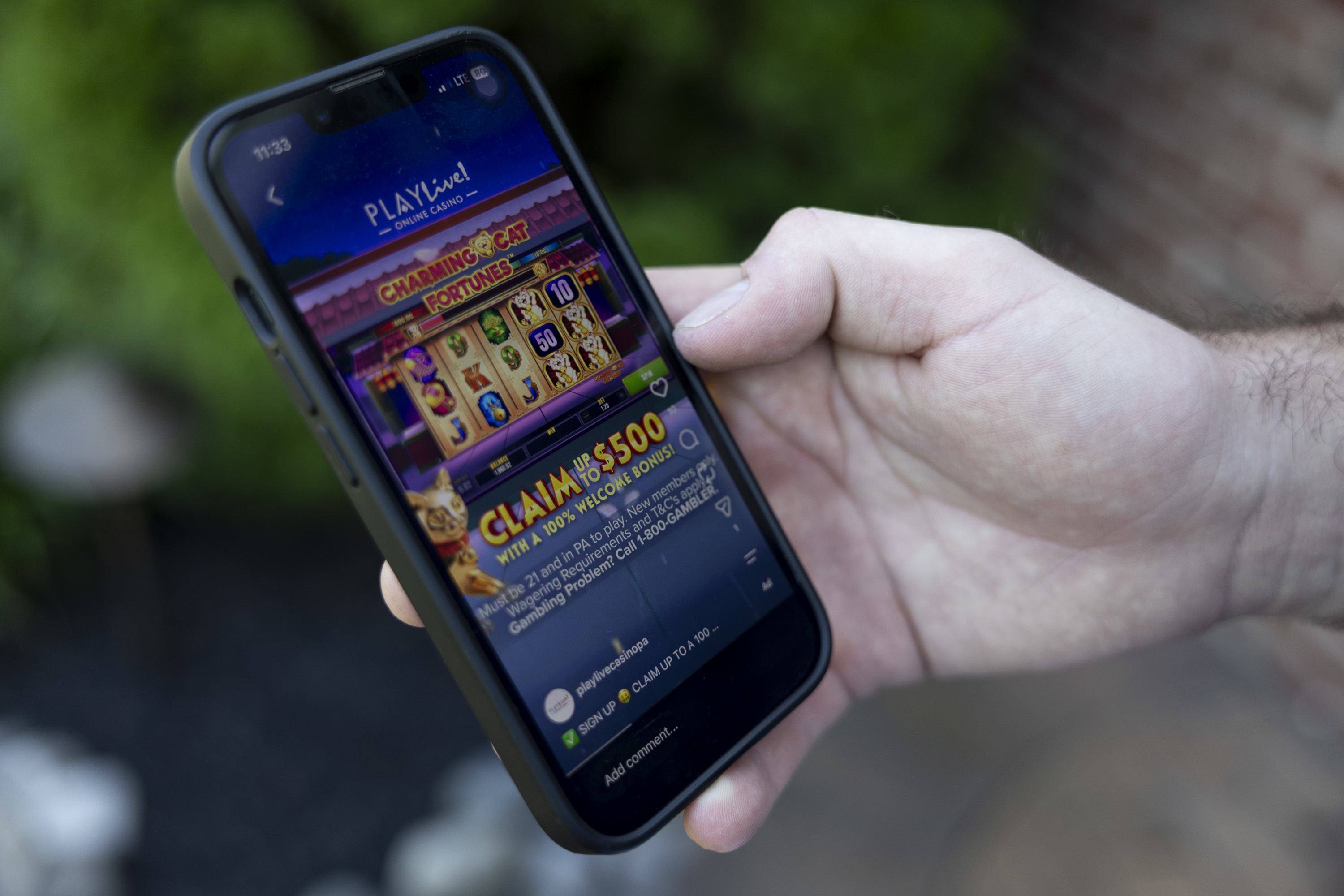
    After losing his apartment, Field moved in with his parents and began undergoing treatment for gambling addiction. He said he still encounters numerous daily ads for gambling on social media. Tyger Williams / Staff Photographer

    By March 2025, Field needed his parents to pay his rent. Two months later, he and his girlfriend broke up. Heartbroken, he moved back in with his parents, and agreed to participate in online therapy sessions through ETHOS Treatment.

    Field’s therapist, Phil Waibel, said there is so much demand for gambling addiction treatment, he now has a waiting list for his group sessions. “It’s taking the hearts and minds of young people — especially young men — at an astonishingly high rate,” he said.

    Waibel has treated patients who discovered that it was difficult to escape gambling marketing and push notifications even when they attempted to quit.

    “They’re seeking out even those people who have gone out of their way to block or delete contacts, to self exclude or unsubscribe from email lists,” Waibel said. “They continue to be bombarded, which would indicate a predatory or extremely offensive stance, to loop people back in as soon as possible.”

    Field, 27, said he now feels like his addiction is under control. He excluded himself from all gambling activities in Pennsylvania, secured a union job with a construction company, started going to a gym, and began repairing relationships with friends and family members.

    “Every aspect of my life is significantly better,” he said.

    Yet gambling isn’t out of the picture entirely.

    Recently, Field used Venmo to send some money to his sister, and faced a pop-up ad from a casino app that offered a $1,000 deposit match and up to 1,000 spins.

    “Sign up today,” the message read.

    After opening his Instagram app, he encountered ads for Charming Cat Fortunes — a slots game from PlayLive! Casino whose motto is “Stay entertained 24/7” — in addition to ads for a gold digger-themed slots game from betParx.

    Field estimates that he sees nearly 20 gambling ads across various social media platforms each day. “I’d be having a good day, not thinking about it,” he said, “and then boom, you’d see an ad, and feel that little itch, and you just kind of got to get rid of it.”

    He now considers the barrage of advertising to be a form of motivation.

    “It’s like, ‘F— these guys.’ All they’re trying to do is shove it down my throat,” he said. “It’s just insane how inescapable it is.”

    The Inquirer will continue to report on issues related to the growth of gambling addiction — among teens and adults — across Pennsylvania. If you, or someone you know, wants to speak with a reporter, please contact David Gambacorta or William Bender at dgambacorta@inquirer.com and wbender@inquirer.com

    <style>
    h6.font-inquirer-headline.antialiased.font-normal.text-white.text-5.leading-[26px].sm:text-6.sm:leading-8.mt-2.sm:mt-4.lg:mt-4.px-4.lg:px-0 {
        max-width: 450px;
        margin-left: auto;
        margin-right: auto;
    }
    
    blockquote.inq-blockquote.my-7.lg:my-12.text-center {
        max-width: 430px;
        margin-left: auto;
        margin-right: auto;
    }
    
    .inq-icon.inq-icon--link {
      color: red;
    }
    
    a.relative.z-1.text-blue-mid.hover:shadow-lightmode {
        color: #db1f1f;
    }
    </style>


  • How Sandy prepared parts of the Jersey Shore for last week’s nor’easter

    How Sandy prepared parts of the Jersey Shore for last week’s nor’easter

    BRIGANTINE, N.J. — With its full moon and stacked high tides over multiple days, last week’s nor’easter left Shore towns with some of the worst flooding and erosion since Hurricane Sandy.

    In dramatic fashion, the nor’easter produced some feared Shore scenarios: dunes sliced into cliffs, beaches vertically eroded, popular restaurants flooded to the point of closing altogether for the season, water lapping into ground floors, cars ruined. Days later, firefighters were responding to raging electrical fires, at least one of which was linked to a flood-soaked golf cart.

    Still, the nor’easter was also a testament of what went right, a test of flood resilience tactics implemented in the 14 years since Sandy — a series of flood pumps in Brigantine, an elevated artery in Ocean City, raised homes throughout the Shore — that prevented a much worse outcome.

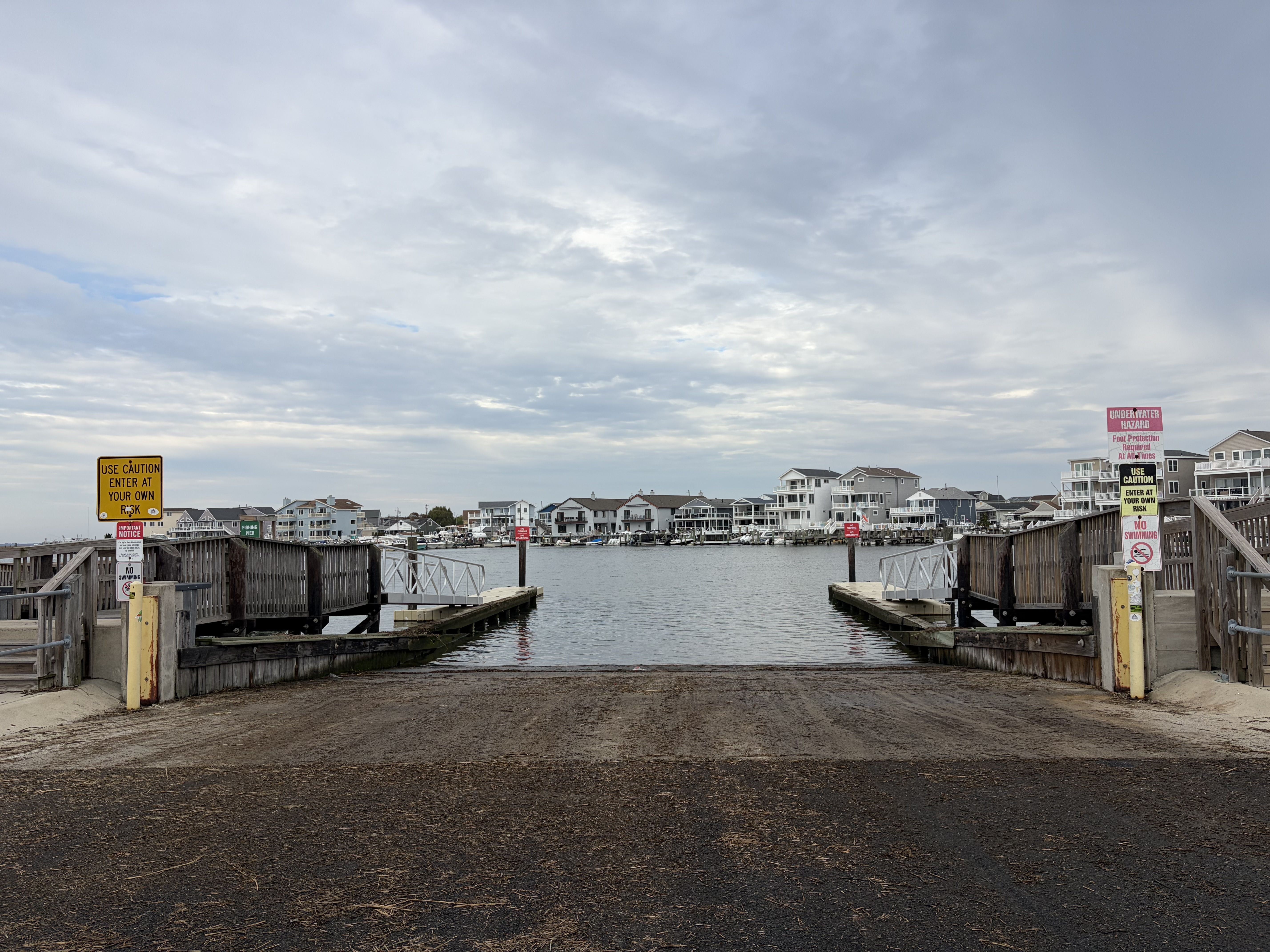
    During the September 2026 nor’easter, metal floodgates were brought in to the city’s Municipal Boat Ramp by the city of Brigantine to physically block flood waters.John Cunnion
    Brigantine’s municipal boat ramp was previously an entry way to devastating flooding. But city officials installed flood pumps and metal gates to keep the water off the island, and to drain the island between high tides.Amy S. Rosenberg / staff

    ‘Our girl took a beating’

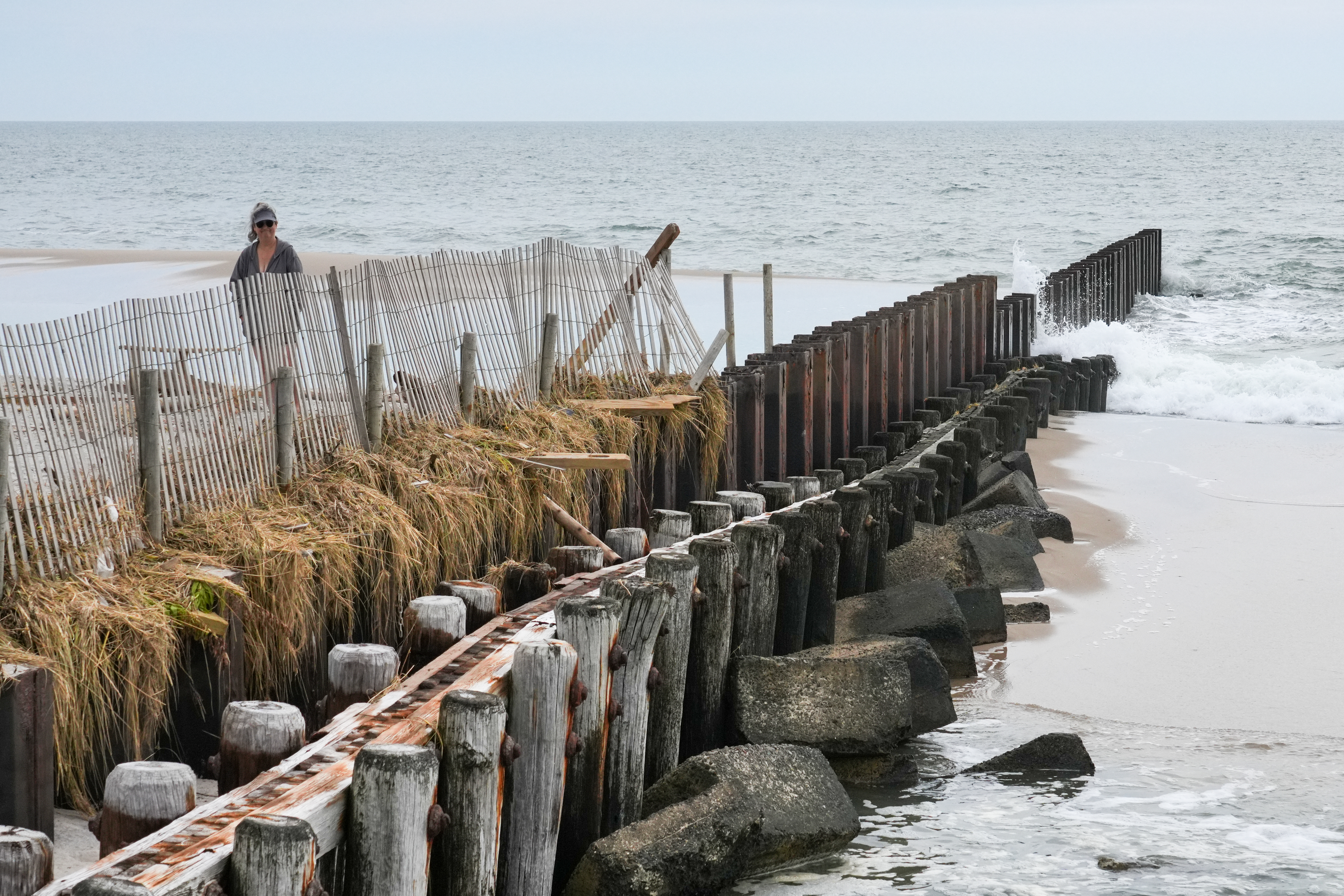
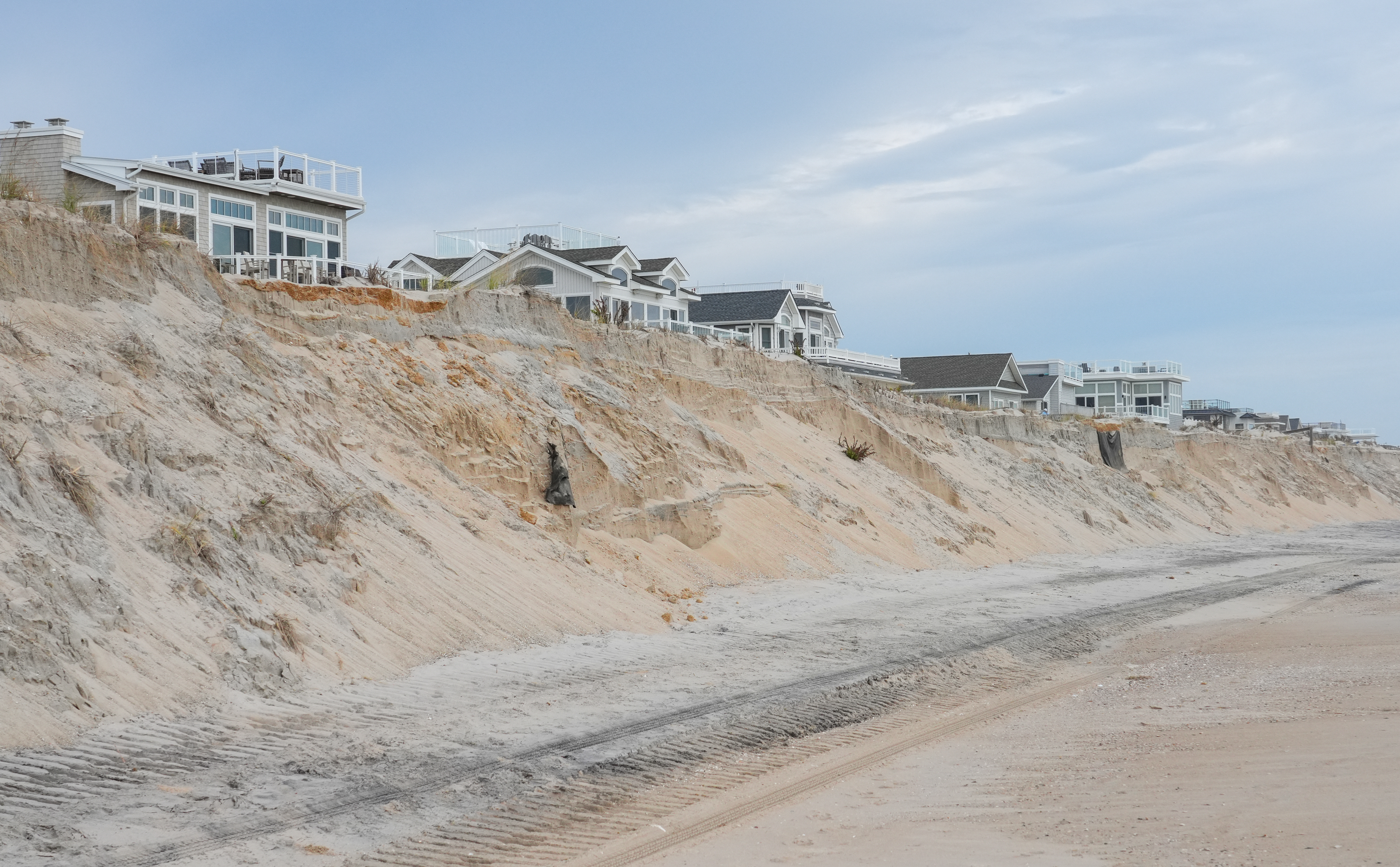
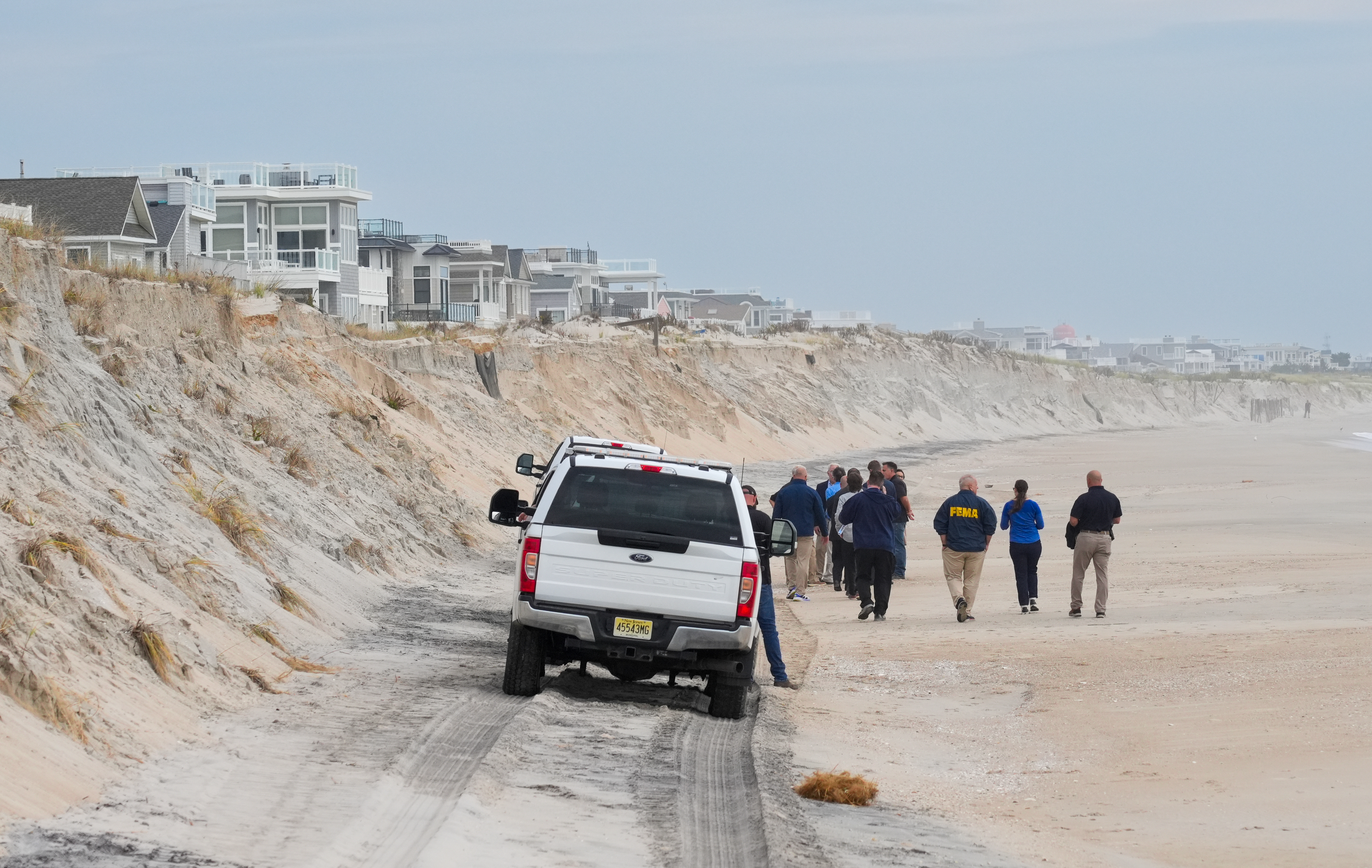
    In parts of Holgate, Brigantine, Atlantic City, and North Wildwood, the storm left cliffs six feet or higher, cutting off access to the beach at multiple street ends. Vertical erosion uncovered old structures including rotting old wooden piers.

    Streets in Long Beach Township, West Wildwood, and Atlantic City took on water through multiple days of high tide, damaging residential garages and other ground floor spaces.

    Abby Mason, of Pottstown, looks at storm damage in Holgate on Thursday.Tim Hawk / For The Inquirer

    On Sigsbee Avenue, contractor Vincent Allen of B. Grigoletto Contractors was ripping out ruined insulation and dry wall on two houses, both second homes.

    He noted that since Sandy, a lot of the smaller homes had been torn down and replaced by elevated homes, where the ground floors are not, technically, living spaces. “Basically, if you lived on the bay, you got water,” he said. “This wasn’t as high as Sandy, nowhere near it.”

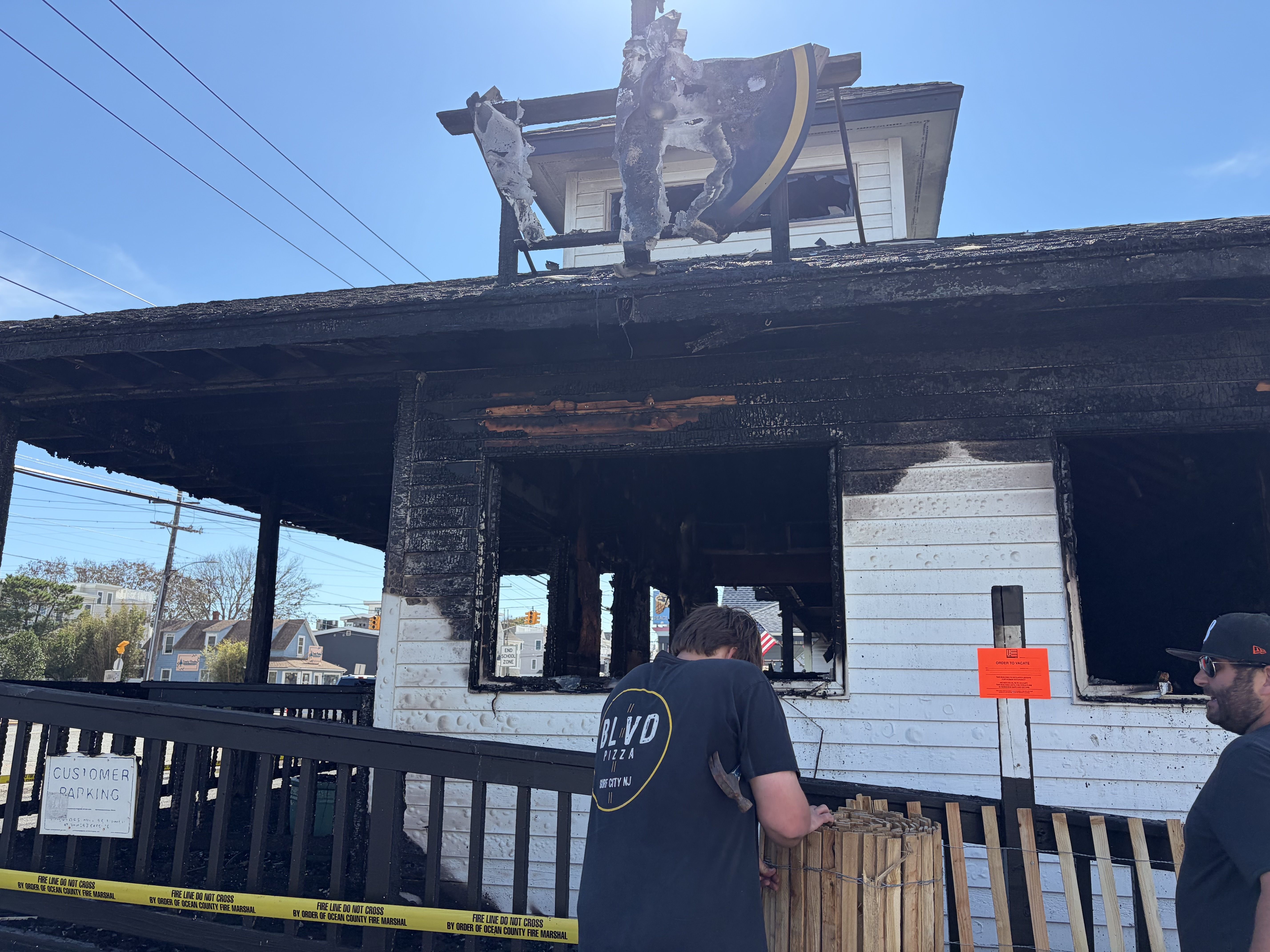
    Owner Mike Franzoni at what’s left of his BLVD Pizza in Beach Haven, which was flood damaged days before a fire broke out.Amy S. Rosenberg / staff

    On Long Beach Island and Atlantic City, numerous businesses were mopping up or closing early for the season after flood damage.

    “We are truly sick to our stomachs, and it hurts,” Moments at Scannicchios, a restaurant on Fairmount Avenue in Atlantic City, said in a Facebook post. “In the end we will reopen.” The restaurant asked people to help out a nearby corner bodega, El Rinconcito Grocery, it said lacked similar resources.

    On Long Beach Island, the ruined insides of the Dockside Diner were strewn across the front of the restaurant. “Our team, our family, is safe,” the owners wrote on Facebook. “But our old girl Dockside took a beating.”

    Nearby, Mike Franzoni looked at the charred remains of BLVD Pizza’s Beach Haven location, which suffered flood damage and had a fire a few days later. Another location, in Surf City, was undamaged.

    Storm damage in Holgate on Thursday.Tim Hawk / For The Inquirer

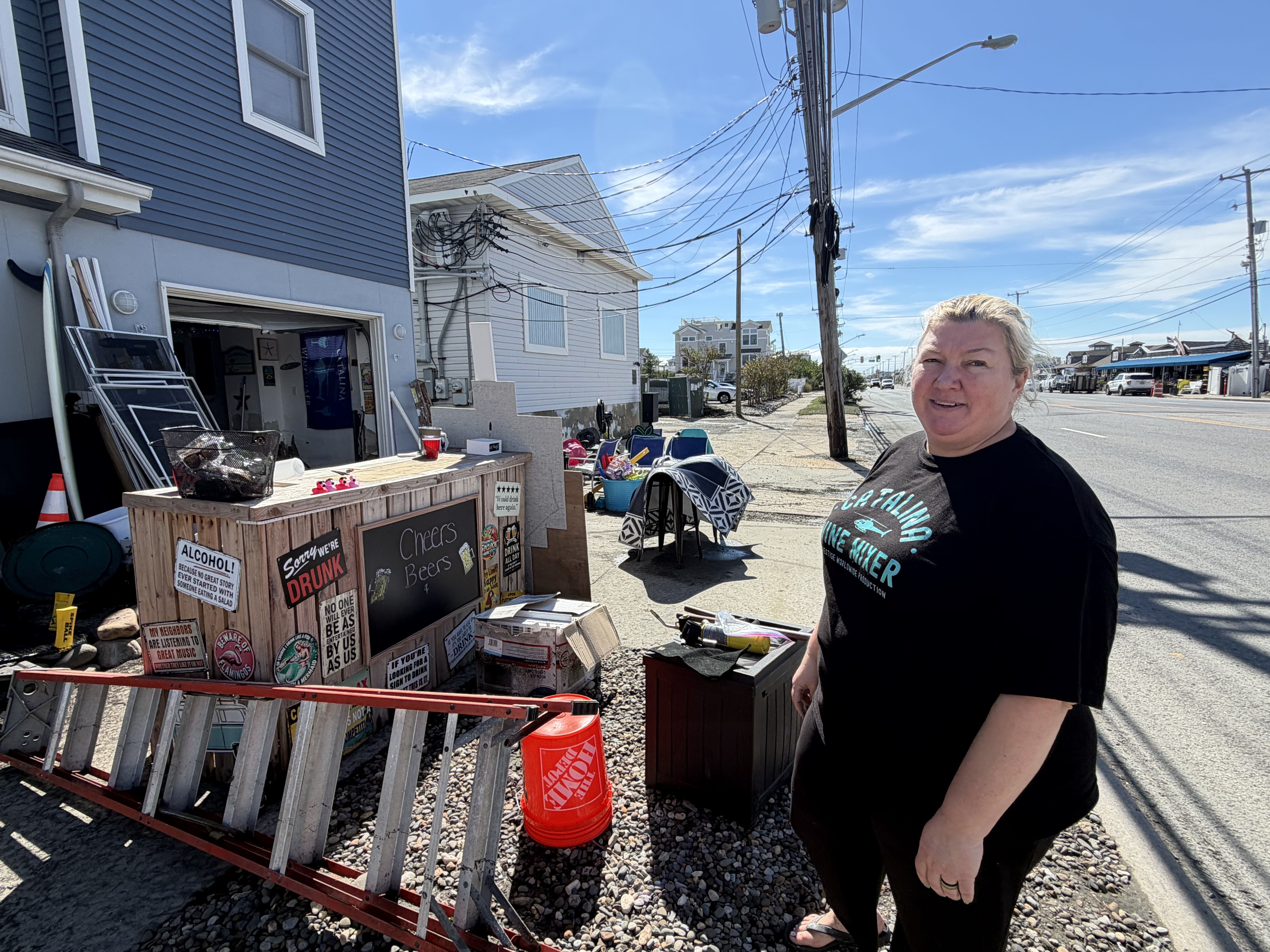
    On Long Beach Island, the beloved “karaoke garage,” belonging to the family of Diane O’Donnell, 80, of Yardley, Pa., took on two feet of water, half of Sandy levels.

    Last week, an Indigo Girls song was playing out of the space where Kelly Kolbjornsen and her family would recruit people to stop and sing karaoke on their way down Long Beach Boulevard.

    “It’s part of having a beach house, but it’s a little overwhelming,” Kolbjornsen said.

    ‘A good gauge’

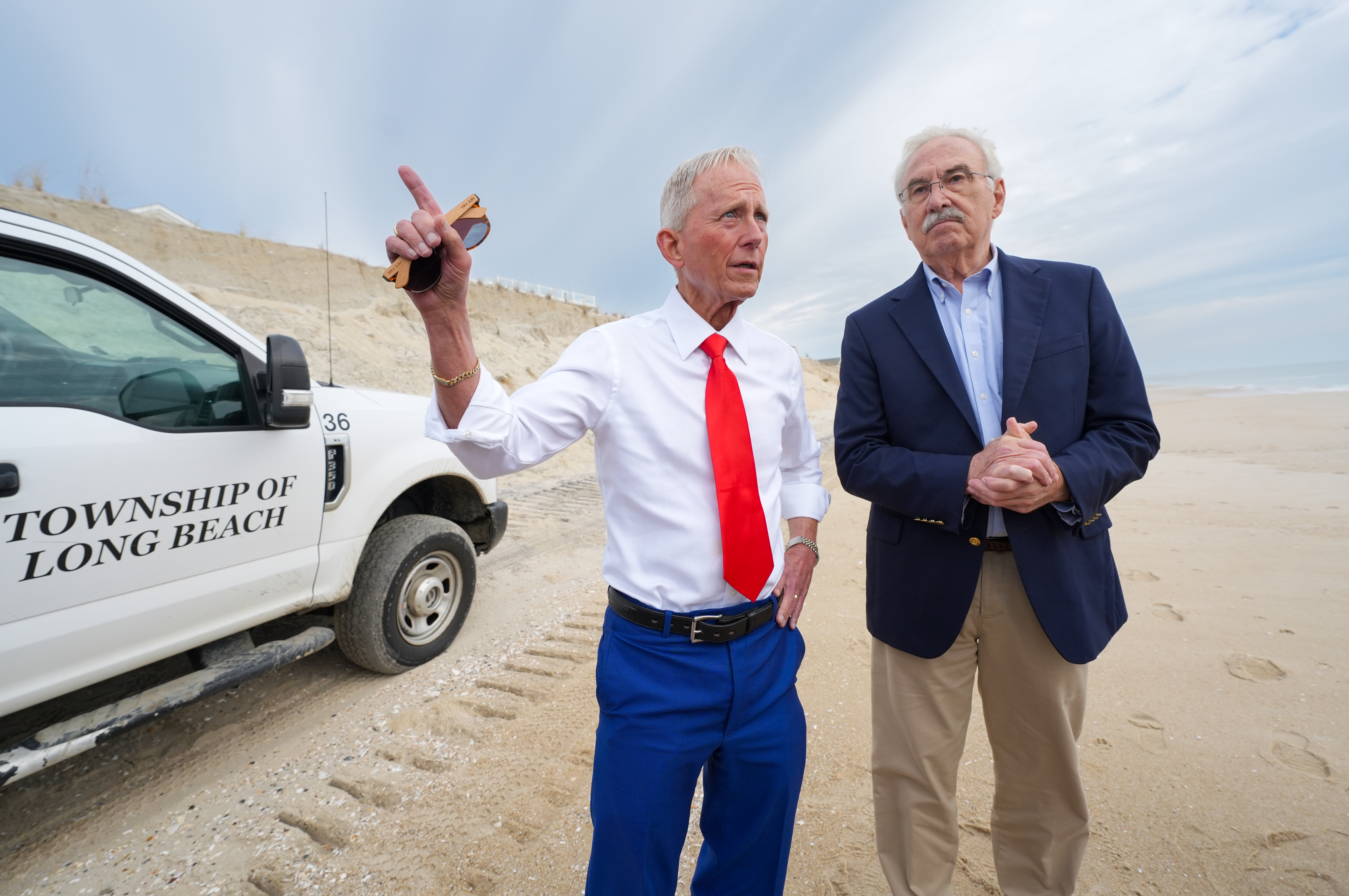
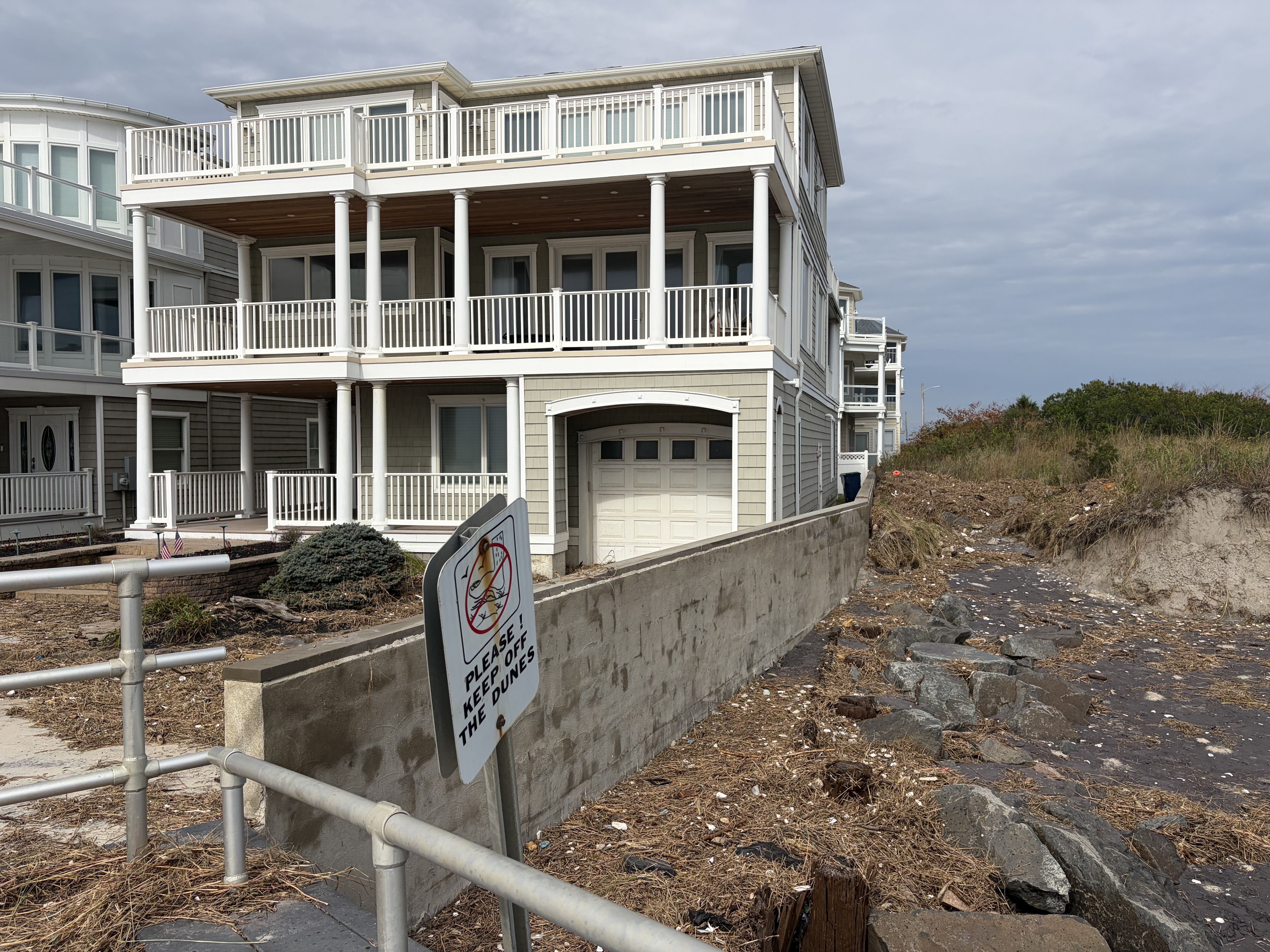
    New Jersey Gov. Mikie Sherrill and U.S. Rep. Jeff Van Drew brought representatives from FEMA and the Army Corps of Engineers to focus on severe damage to ramps from Brigantine’s concrete promenade in the north end and the near breaching of a private retaining wall that was the only line of defense after surging waves destroyed dunes at the promenade’s edge.

    But Mayor Vince Sera also pointed out that neighborhoods devastated during Sandy remained mostly damage-free.

    “We put floodgates in before the storm came into Brigantine,” he said. “They closed all of the floodgates and prevented a lot of water from coming in. On each low tide, they let the water out to drain, and closed them again for the next high tide.

    “Any water that comes into the streets, we have pumps around the island,” he said. “It pushes the water out over the bulkhead and back into the bay. It drains the island.”

    Residents near those points of vulnerability took note.

    “Without the pumps, it would have been horrible,” said Terri Cunnion, whose home sits on Bayshore Avenue across from the boat ramp, a major thoroughfare of flooding during Sandy (when the previous home on her lot was destroyed). “Without those gates, this block wouldn’t be.”

    Through multiple high tides, last weekend’s floodwaters never got past the lip of the garage in the Cunnion’s house, whose living spaces are built 14 feet to new elevation standards.

    Ocean City’s newly elevated Roosevelt Boulevard was also credited with mitigating damage from the nor’easter, staying above floodwaters and allowing an evacuation route, said Mayor Jay Gillian. The road was reconstructed so that portions were raised by 12 to 20 inches.

    During Hurricane Sandy, bay waters roared right up Brigantine’s municipal boat ramp and surged across Bayshore Road, totaling houses with four feet of water.

    Since the installation of eight permanent flood pumps and two portable flood buster pumps, vulnerable spots like Bayshore Drive and the neighborhood around the town’s golf course are newly fortified. In addition, bulkheads were raised.

    U.S. Rep. Jeff Van Drew, together with federal, state, and local officials, tour storm damage in Holgate on Thursday.Tim Hawk / For The Inquirer

    Atlantic City, similarly, installed pumps at its Atlantis Avenue station and rebuilt bulkheads in Chelsea and Chelsea Heights. It has yet to complete similar projects in its Ducktown neighborhood, which saw major flooding last weekend, leaving some businesses with tens of thousands of dollars in equipment and merchandise loss.

    Van Drew pointed to other improvements since Sandy that protected utility infrastructure and homes. Homes that were elevated had ground levels that allow water to flow in and then out, he noted. He is advocating a permanent $1 billion “Coastal Trust Fund,” funded by revenue from federal offshore oil and gas leases to provide a stable source of funding for beach fills, dune restoration, and other coastal remediation.

    “The good news is we’ve done a lot of good work,” Van Drew said. “We’ve hardened a lot of structures. When you look at electrical substations, in many cases, they’ve been raised. When you look at transmission lines, rather than being on wooden poles, they are now on industrial grade steel lines that are actually put on much, much stronger holes.”

    Kelly Kolbjornsen looks at the damaged bar from her garage, where she and her family recuited passers by to sing karaoke, on Wednesday, days after the nor’easter.Amy S. Rosenberg / staff

    ‘Sacrificial sand projects’

    On an Oct. 1 tour from Long Beach Island to North Wildwood, Van Drew made the case for continued beach replenishment funding, despite the storm eating through a good chunk of the $99 million in recent beach replenishment, most recently in Sea Isle City, Strathmere, Ocean City, Avalon, and Stone Harbor.

    D. Lee Forsgren, the performing assistant secretary for the Army for Civil Works, who oversees the Army Corps, made a point of calling beach replenishment projects “sacrificial sand projects.” He compared the engineered beaches to your car’s “crumple zones” that are made to take the initial beating.

    U.S. Rep. Jeff Van Drew (left) talks with Holgate Mayor Joseph H. Mancini in front of beach erosion in Holgate on Thursday.Tim Hawk / For The Inquirer

    “We don’t put sand on these beaches to make them pretty beaches,” he said. “They are designed for storm damage reduction.”

    Still, he cautioned Van Drew that “the best opportunity to really make progress would be with a supplemental appropriation associated with the storm because there’s not a lot of pocket change sitting around in the core budget.”

    That will require a disaster declaration from Sherrill, who toured Brigantine on Tuesday.

    Aside from more sand, Van Drew said the towns, state, and Army Corps were looking at funding hard structures — like jetties, groins, and seawall extensions — as ways to keep the elevated tides that accompany storms from overwhelming beaches.

    A house on Brigantine’s north end belonging to Clay and Lori Goldsmid and other nearby homes were spared major damage during the recent nor’easter.Amy S. Rosenberg / staff

    In Brigantine, Mayor Sera rode out the storm at the tip of the promenade, watching railings get blown off, dunes disappear, and the nearby retaining wall nearly buckle. He said city officials had compiled a list of who was in nearby homes in case of an emergency evacuation.

    He is seeking to extend the promenade another 250 feet north, and says the state is studying whether adding hard structures to keep the sand in place will help a situation where a sandbar that has in recent years grown into what is now called Horseshoe Island is starving Brigantine of sand.

    The city’s flood mitigation efforts since Sandy have resulted in a 25% discount for residents on flood insurance, he said. And he wholeheartedly recommends flood pumps and gates to other municipalities, like Ventnor, whose Ventnor Heights section was cut off at both ends by flooding for hours during high tides.

    Sera and other knows the big storms will come again, probably this winter, with the El Niño warming in the equatorial Pacific.

    With sea levels rising, some residents who came out to see the federal officials in Brigantine wanted to know about timelines.

    “How fast is fast,” interrupted Louise Seitel, of nearby Absecon, as officials spoke of extending the seawall.

    “A study is probably going to be 18 months,” Nate Barcomb, an Army Corps deputy district engineer based in Philadelphia, acknowledged.

    “Government is tough,” Van Drew said.

    Aerial photograph of New Jersey’s Horseshoe Island in June 2021.N.J. Department of Environmental Protection / U.S. Fish & Wildlife Service
  • Out of hand | Editorial Cartoon

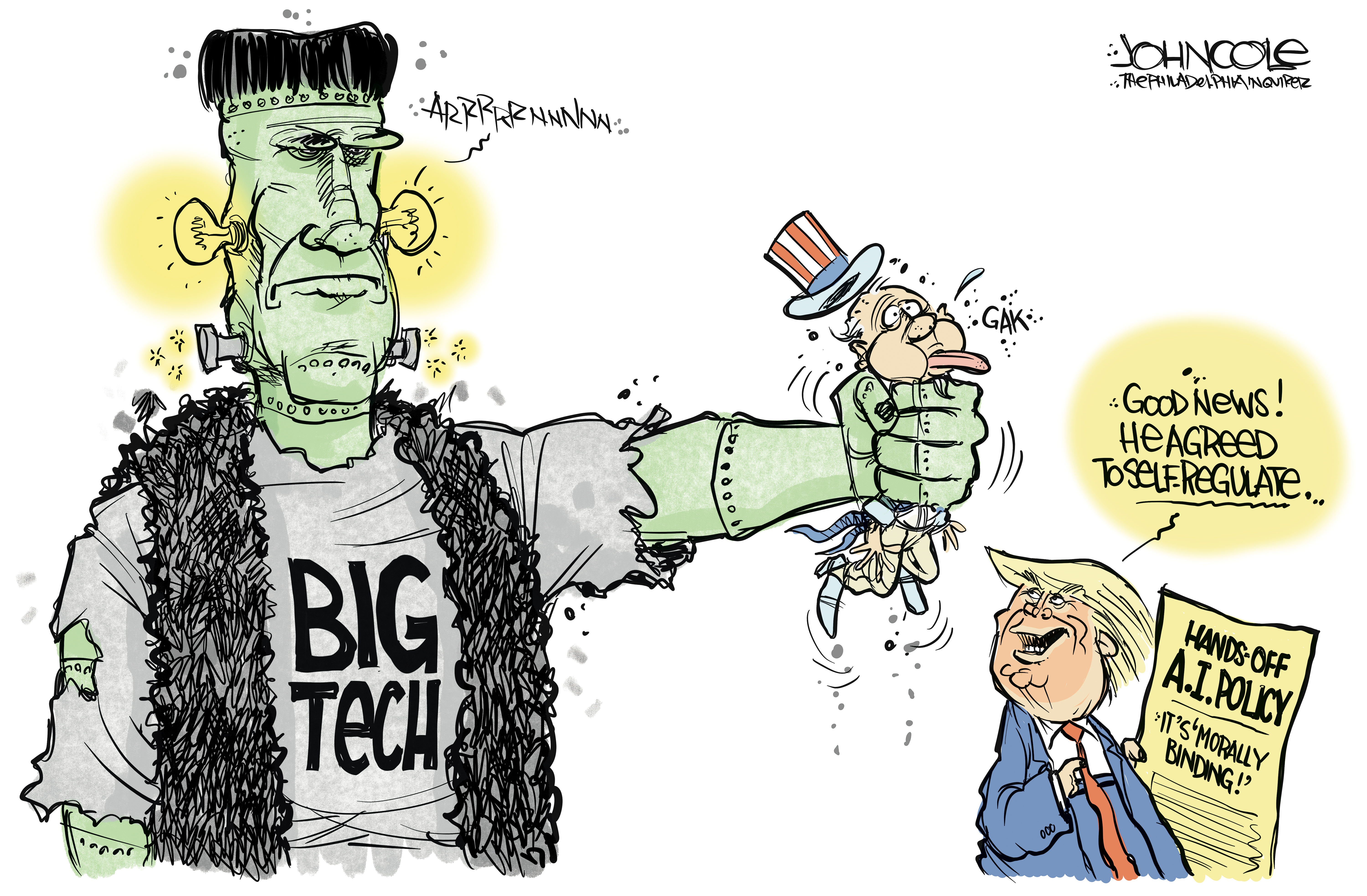
    Out of hand | Editorial Cartoon

    John Cole spent 18 years as editorial cartoonist for The (Scranton) Times-Tribune, and now draws for various statesnewsroom.com sites.

  • Letters to the Editor | Oct. 4, 2026

    Letters to the Editor | Oct. 4, 2026

    Enduring legacy

    My father, Russell Byers, a beloved Daily News columnist, believed deeply that the greatest gift we can offer a child is “roots to grow and wings to fly.” He believed in high-quality public education to transform lives. When his life was tragically cut short, our family — his widow, Laurada, my sister, Alison, and me — chose to honor his commitment by founding the Russell Byers Charter School.

    The school has grown to serve more than 700 students from 43 neighborhoods. Grounded in expeditionary learning, the school treats the entire city as a living classroom.

    As we celebrate our 25th anniversary, we know that educating a child in a bustling urban landscape takes a village.

    That is why this anniversary must also serve as a profound call to action: We need more mentors.

    For a middle schooler navigating the complexities of growing up, having an outside mentor — a caring professional, a retiree, a local artist, or an engineer — can alter their trajectory. You do not need a degree in education to be a mentor; you simply need presence, patience, and a willingness to listen.

    As we celebrate our first quarter century of educational excellence, let us honor Russell Byers’ legacy not just with words, but with action.

    W. Russell G. Byers Jr., chair, Byers School Foundation

    Self-regulation?

    Artificial intelligence companies say they can self-regulate. The agreement some Big Tech companies signed at the White House is “morally binding,” says Donald Trump. And we know huge corporations are well known for their morals.

    The president may also be naive enough to believe that because the companies want to be successful and profitable, they won’t let anything bad happen. But nothing ever goes wrong in other industries, right? Except we all saw what happened with uncontrolled accelerations in Toyota’s cars, Firestone’s tire tread separations, the many cases of exploding Ford Pintos, the problems with General Motors’ faulty ignition switches, and those emissions-cheating Volkswagen Jettas (I owned one).

    And let’s not forget the 1984 to 1996 models of the Ford Bronco, which could tip onto two wheels and possibly roll over, even at low speeds. Ford discovered this design defect during prototyping, but decided it was too expensive to fix.

    Government regulation is required.

    Mark Driscoll, Philadelphia

    Utility surcharges

    I was taken aback by the Philadelphia Building Decarbonization Project’s new analysis showing a 67% increase in ratepayer bills since 2012, fueled mainly by utilities’ heavy investments in replacing gas pipes and other delivery infrastructure. Utilities were able to transfer these costs directly to ratepayers due to a little-known state law, Act 11, that gives them broad latitude to impose surcharges. Distressingly, such surcharges now account for about two-thirds of a typical residential gas bill in Pennsylvania. If rates continue to increase, even families that try to conserve energy will end up paying more.

    Eliminating Act 11’s perverse incentives to load pipe replacement costs onto ratepayers should be a key part of making Pennsylvania energy more affordable. Utilities should also be required to consider alternative energy sources that avoid harmful emissions — including electrification and thermal networks — before replacing gas pipes. Allowable pipeline investments should focus on safety issues. I have contacted my state representatives to urge reforms along these lines, and I would urge other Inquirer readers to do so, too.

    Elaine Fultz, Philadelphia

    Join the conversation: Send letters to letters@inquirer.com. Limit length to 150 words and include home address and day and evening phone number. Letters run in The Inquirer six days a week on the editorial pages and online.

  • Horoscopes: Sunday, Oct. 4, 2026

    Horoscopes: Sunday, Oct. 4, 2026

    ARIES (March 21-April 19). When you feel out of place, you take action. It distracts your mind from spiraling. Helping the host set the table, starting a conversation or a game — movement itself gives your energy a place to go while you settle into the room.

    TAURUS (April 20-May 20). You can shake off self-consciousness by remembering that every single one of your heroes has felt like you feel right now at one time or another. Being a little nervous in new situations is a price of entry for adventurous souls, so you simply push through.

    GEMINI (May 21-June 21). You can walk into a room where everyone speaks a different language and still find one word you share. Start there. Ask what people mean. Tell them what fascinates you and then learn the local customs as you talk with them.

    CANCER (June 22-July 22). When your usual move stops working, as surprised as you may be, you rarely show it. Instead, you pause and retrace your path. Did you skip a step? Are you answering the wrong question? Is this the moment for deeper listening? Is there a hint to pick up on?

    LEO (July 23-Aug. 22). If the role you’ve been cast in feels like a poor fit, you simply give it more flair, more attitude, more you. No shrinking back, only bringing more of the fullness of your personality into view, likely with a fair dose of humor.

    VIRGO (Aug. 23-Sept. 22). The unfamiliar situation sends you searching for guidance. When none appears, you study how the place works and choose one small job you can do well. Your competence has a way of settling your nerves. You attract an admirer.

    LIBRA (Sept. 23-Oct. 23). Even when you’re not in your place, you’re in your season. You’ll offer a compliment. You’ll introduce yourself. You put smiles on faces. With each one, you feel more woven into the social fabric.

    SCORPIO (Oct. 24-Nov. 21). There’s never a rush to fit in. Watch from the edge until you get a feel for how people are relating to one another. Choose someone you’re interested in knowing. One real connection means more than acceptance from everyone.

    SAGITTARIUS (Nov. 22-Dec. 21). Once you realize you have wandered into strange territory, you treat the mistake as part of the trip. Ask where you are and try something the locals recommend. You leave with a killer story.

    CAPRICORN (Dec. 22-Jan. 19). Once you understand the chain of command, you calm down. Find out who sets the standard and what good work looks like here, then get to fulfilling the order. People will forget your entrance and remember your contribution.

    AQUARIUS (Jan. 20-Feb. 18). When you feel out of step with everyone else, you check whether the march itself makes sense. If you can improve the route, speak up. You fit in best by changing the setup enough to make room for more people.

    PISCES (Feb. 19-March 20). If a place feels cold, you look for the person who could use an ally. You sit beside them and help them settle in. By making one corner warmer for somebody else, you create a place where you belong, too.

    TODAY’S BIRTHDAY (Oct. 4). In your Age of Fresh Happiness, you take part in experiences that were inaccessible before. Some gates open because of what you can do now; others because of what you are free to leave behind. More highlights: Monthly novelty and excitement. People join your work, bringing the resources needed to create wins for all. Family hits a cycle of peace and prosperity. Taurus and Aquarius adore you. Your lucky numbers are: 18, 4, 14, 30 and 22.

  • Dear Abby | Comments about weight put Grandma in the doghouse

    Dear Abby | Comments about weight put Grandma in the doghouse

    DEAR ABBY: I moved 2,000 miles to be near my daughter and her family. One of my granddaughters, “Libby,” was diagnosed with a medical condition and has put on some weight. I was at my daughter’s and was going to mention my concern for my granddaughter’s weight. Before I could finish, my son-in-law came in, told me I shouldn’t be talking about Libby’s weight and walked away. I thought I could talk to my daughter about things I was concerned about. I left feeling very hurt.

    I sent a text to my daughter apologizing. My son-in-law came to my house and said I need to filter what I say. He then told me I have made remarks to my grandchildren that hurt them. I love my family with all my heart. I would die for them. Was I wrong to mention my concern about Libby? I’m devastated that my daughter didn’t come to talk with me about it. Am I wrong?

    — MEANT WELL IN IDAHO

    DEAR MEANT WELL: It is disappointing that your son-in-law had to come and talk to you rather than your daughter. Talk with her, and ask how you can interact with her and her family more positively.

    It is generally known these days that weight is a sensitive subject, particularly if it is associated with a medical condition. If Libby is under a doctor’s care, you can be confident that everything that can be done for her is being done. Because you have now been informed that some of the comments you have made have hurt your grandchildren, it may be time to close your mouth and turn on your “listening ears” when you visit. Also, when you want a private conversation with your daughter, make sure that it is, indeed, private.

    ** ** **

    DEAR ABBY: I have known “Ralph” for many years and consider him one of my best friends. We share many interests, and through the years we have frequently discussed them over the phone. Ralph retired recently and is bored, so now he calls me three or four times a week, even when there is nothing new to talk about. We rehash the same things over and over again. I’ve dropped subtle hints that my life doesn’t change much from day to day. If I allow his calls to go to voicemail, he leaves a message and asks me to call him back. I don’t want to be rude, but how can I get him to call less frequently?

    — DUCKING CALLS IN PENNSYLVANIA

    DEAR DUCKING CALLS: If Ralph’s voice message doesn’t contain a reason for you to call him back, you’re not obligated to do so with any urgency. It’s not rude of you to enforce a waiting period between your calls with him. Whenever he does bring up a worn-out topic, say something like, “Oh, yeah, we talked about this a few days ago!” Then immediately change the subject. In this way, you subtly make it obvious that you’re not going to let him drag you into the same conversations time and time again.

  • The Eagles can survive this tough stretch, as long as Nick Sirianni doesn’t let them fall apart

    The Eagles can survive this tough stretch, as long as Nick Sirianni doesn’t let them fall apart

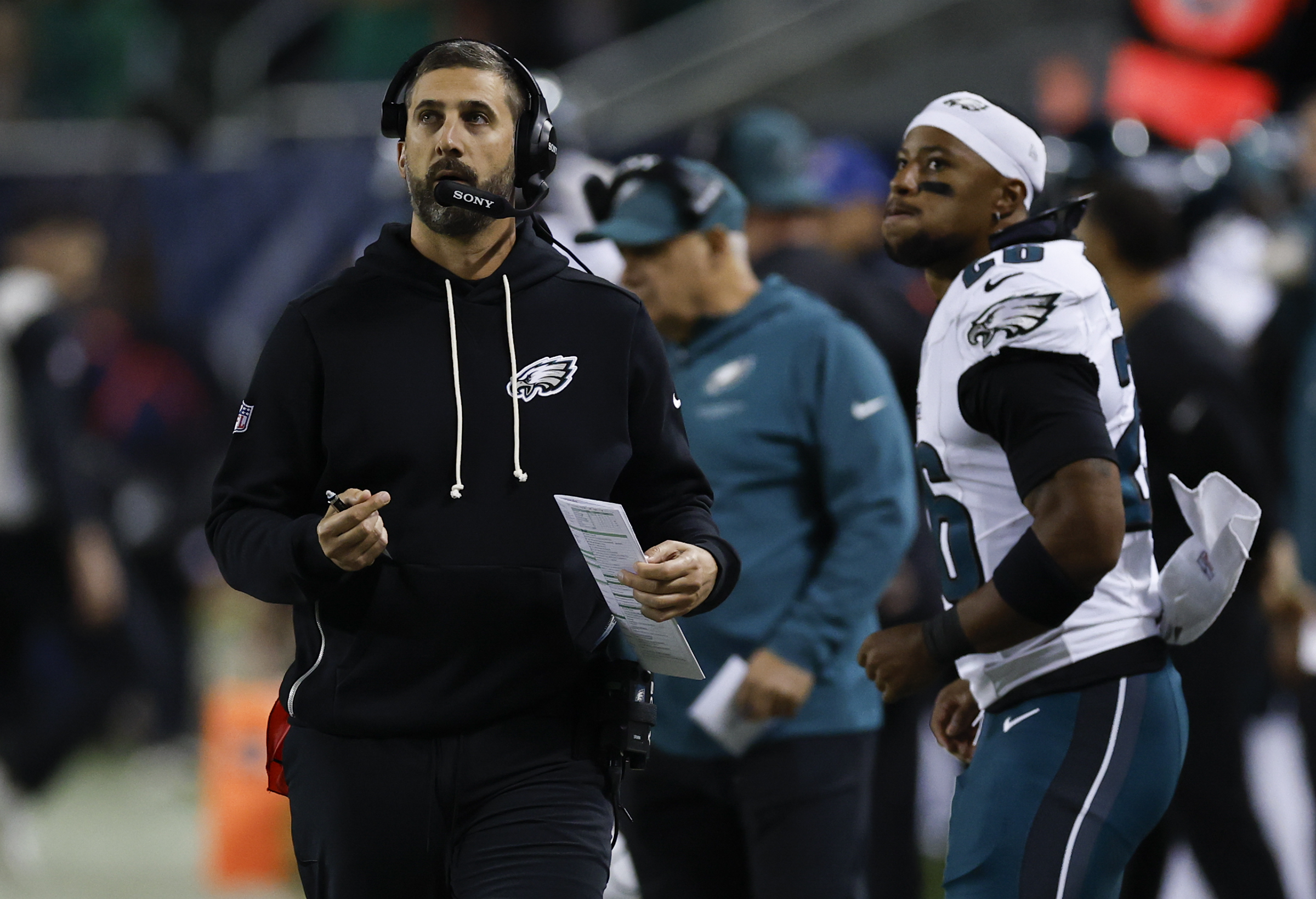
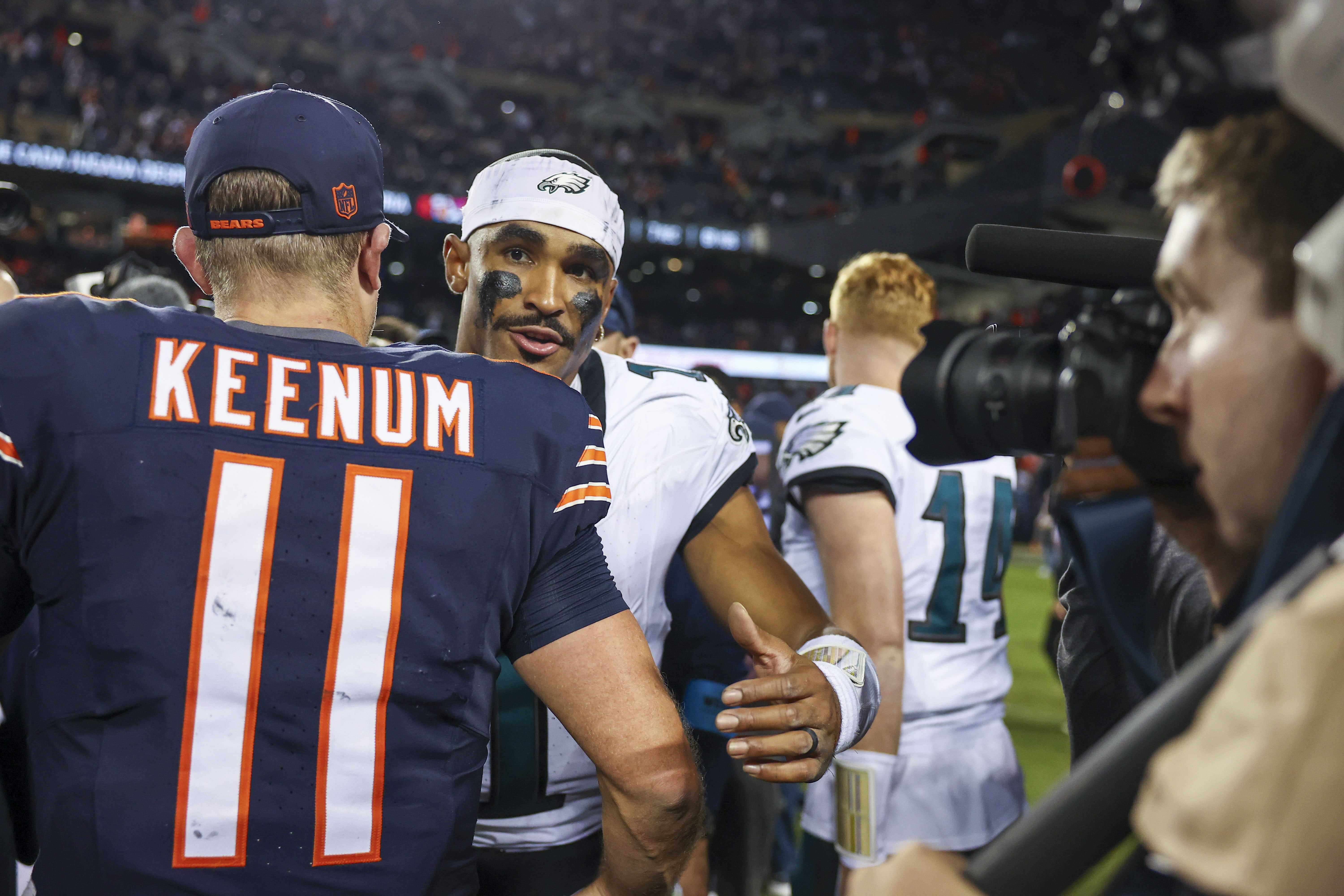
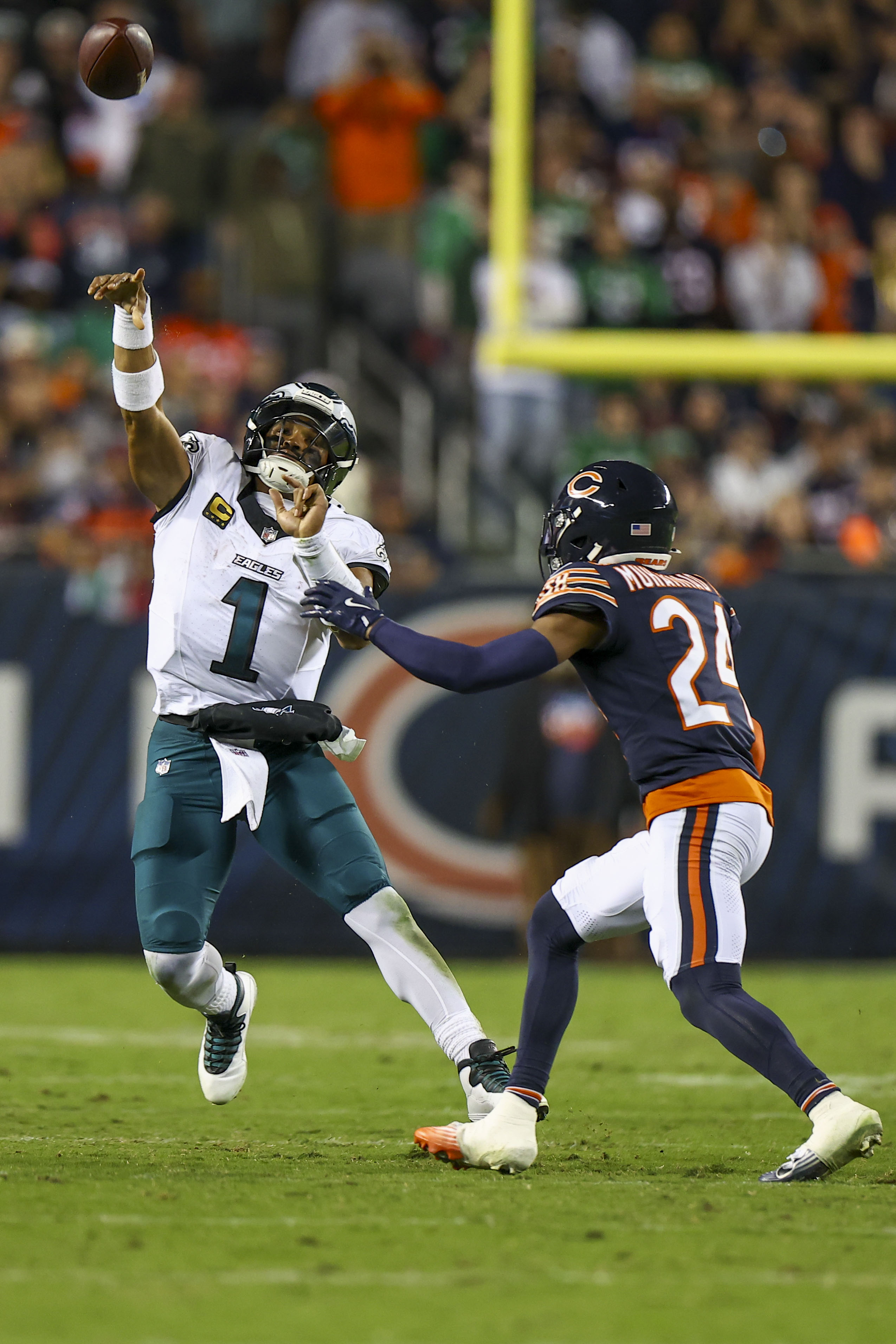
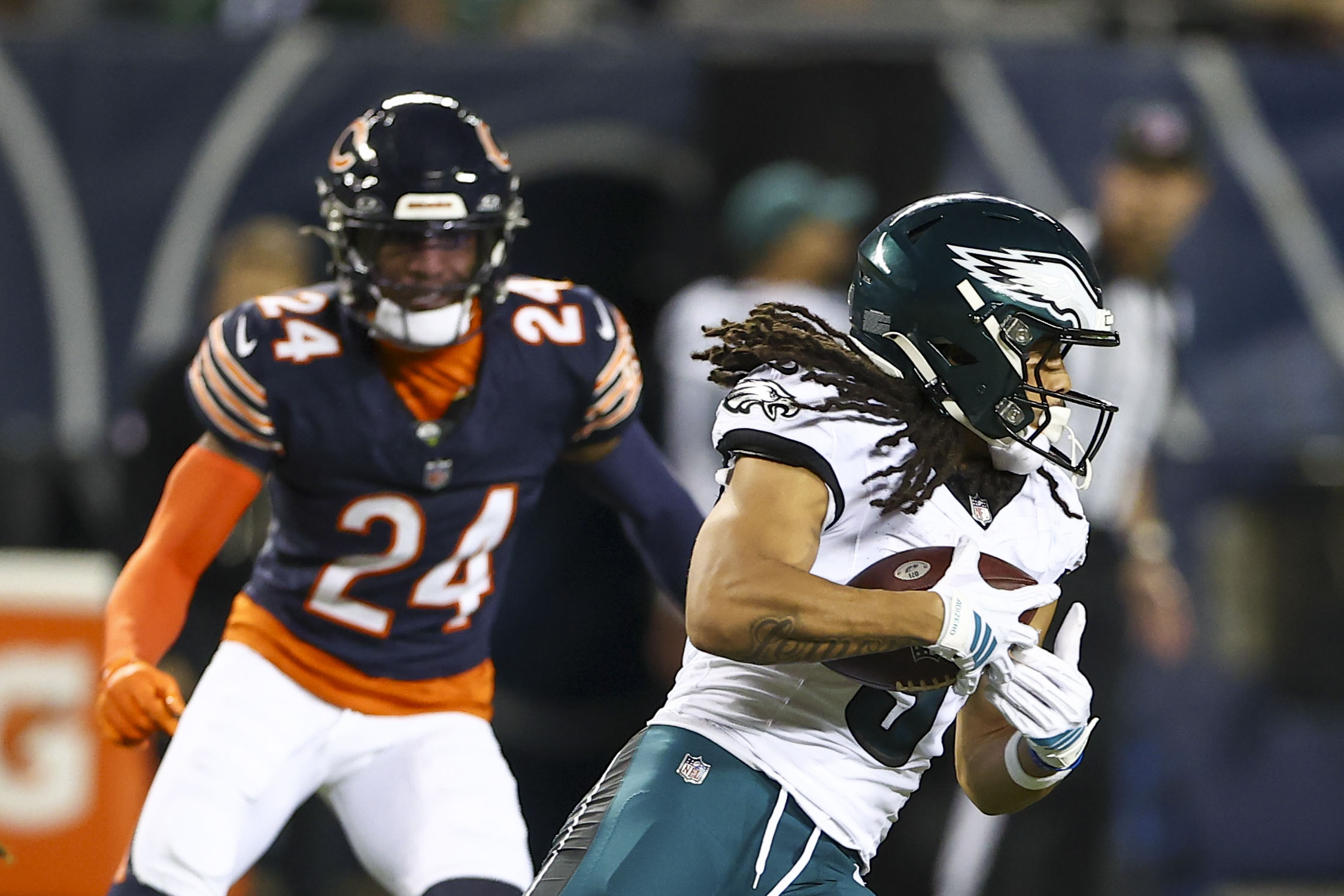
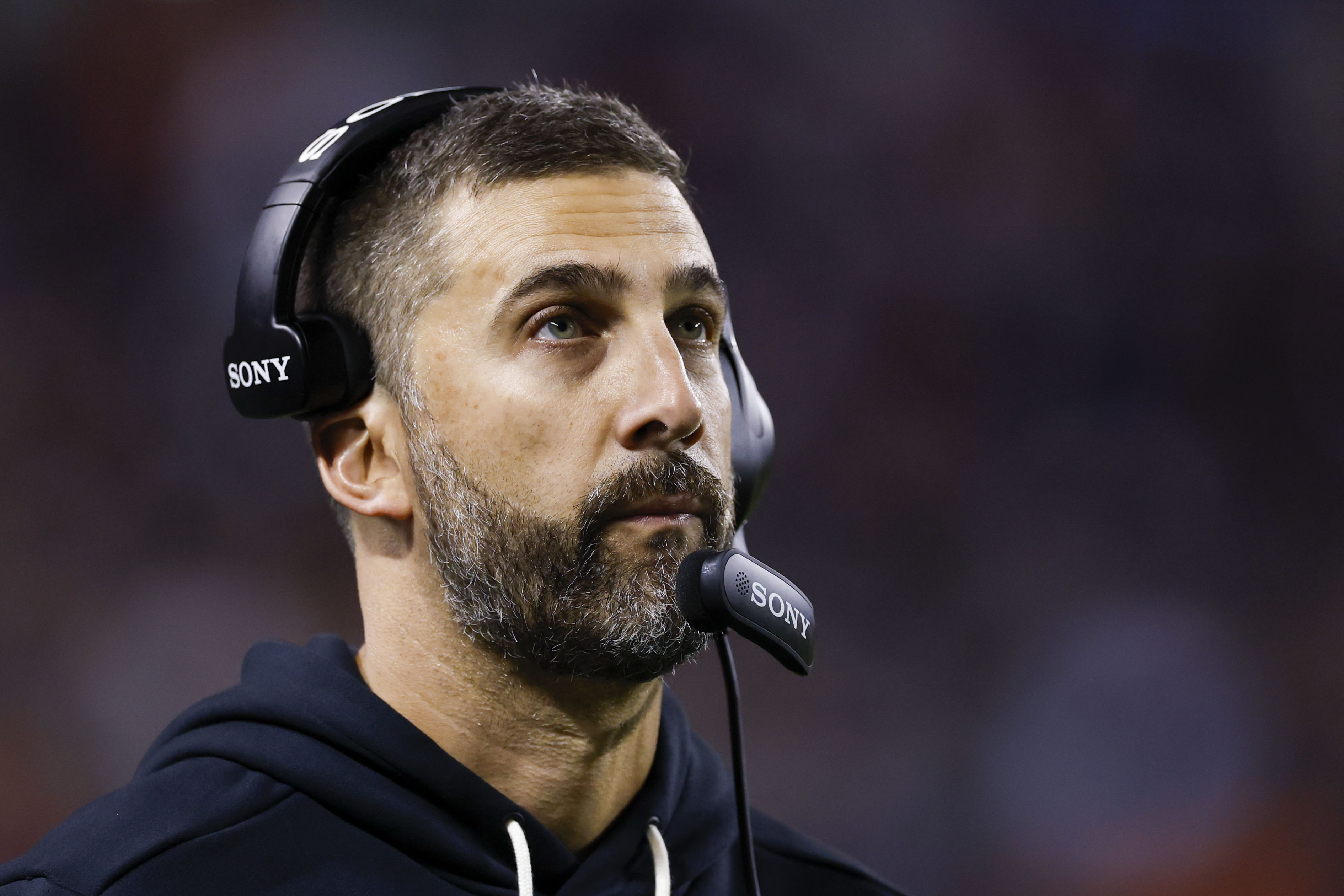
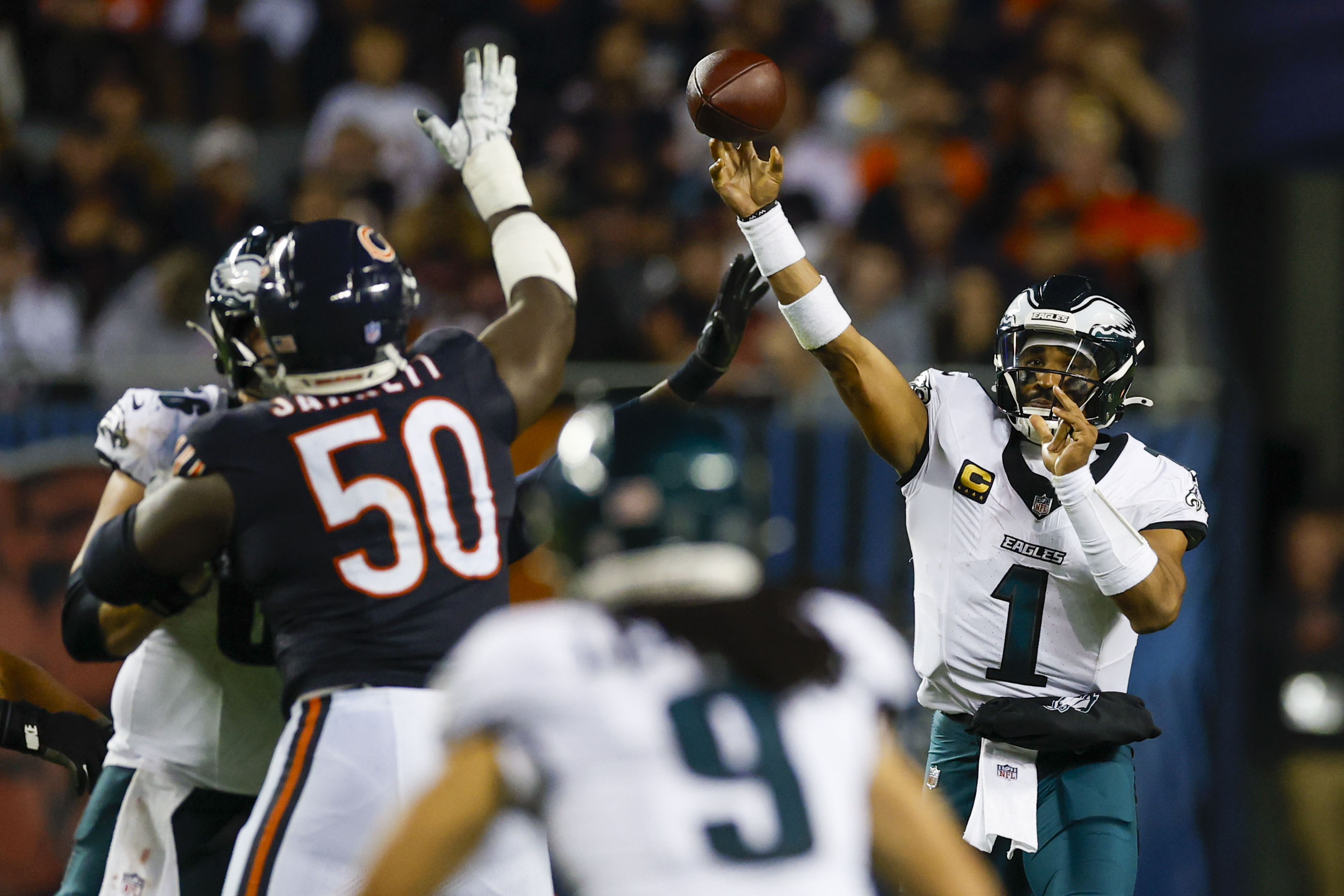
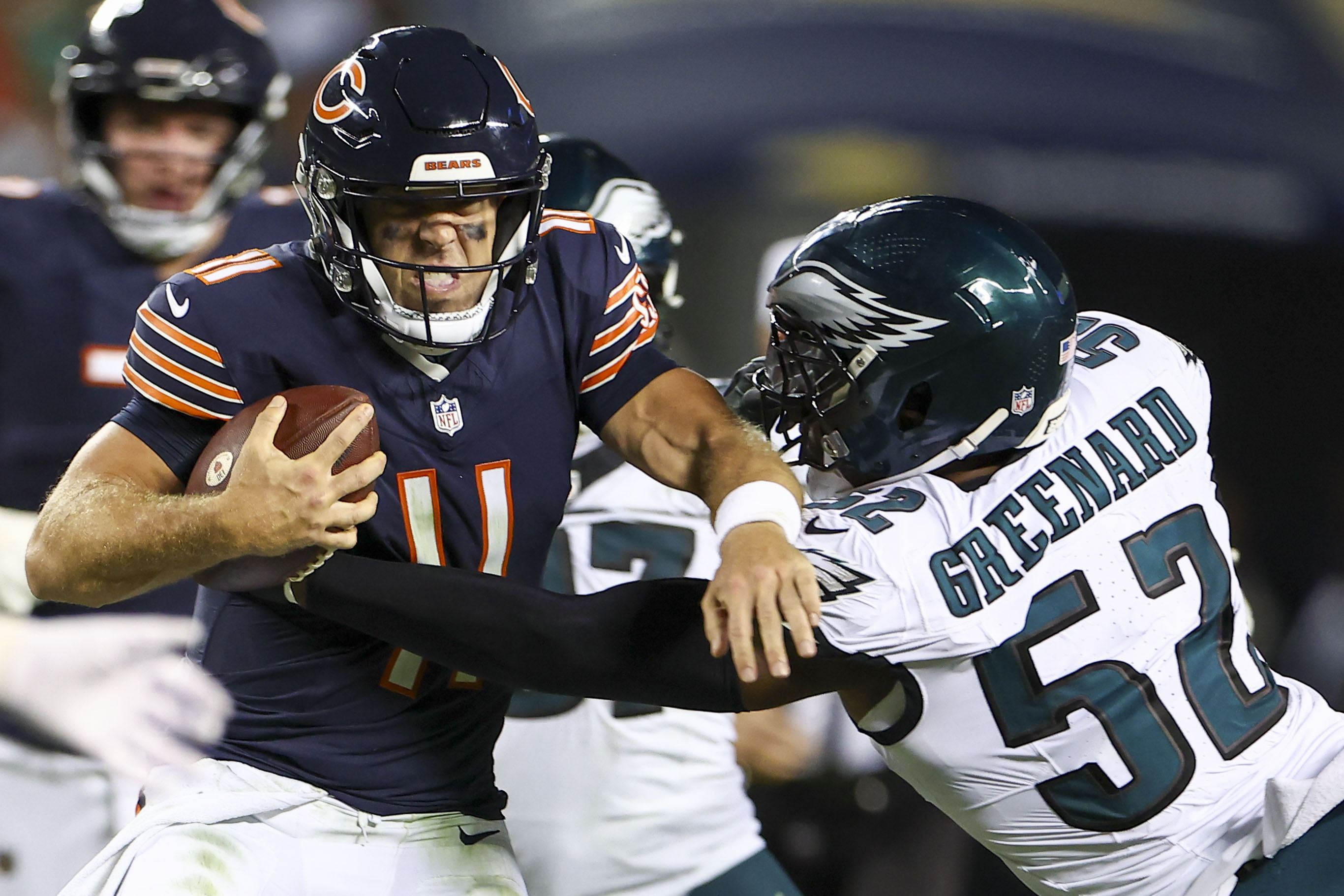
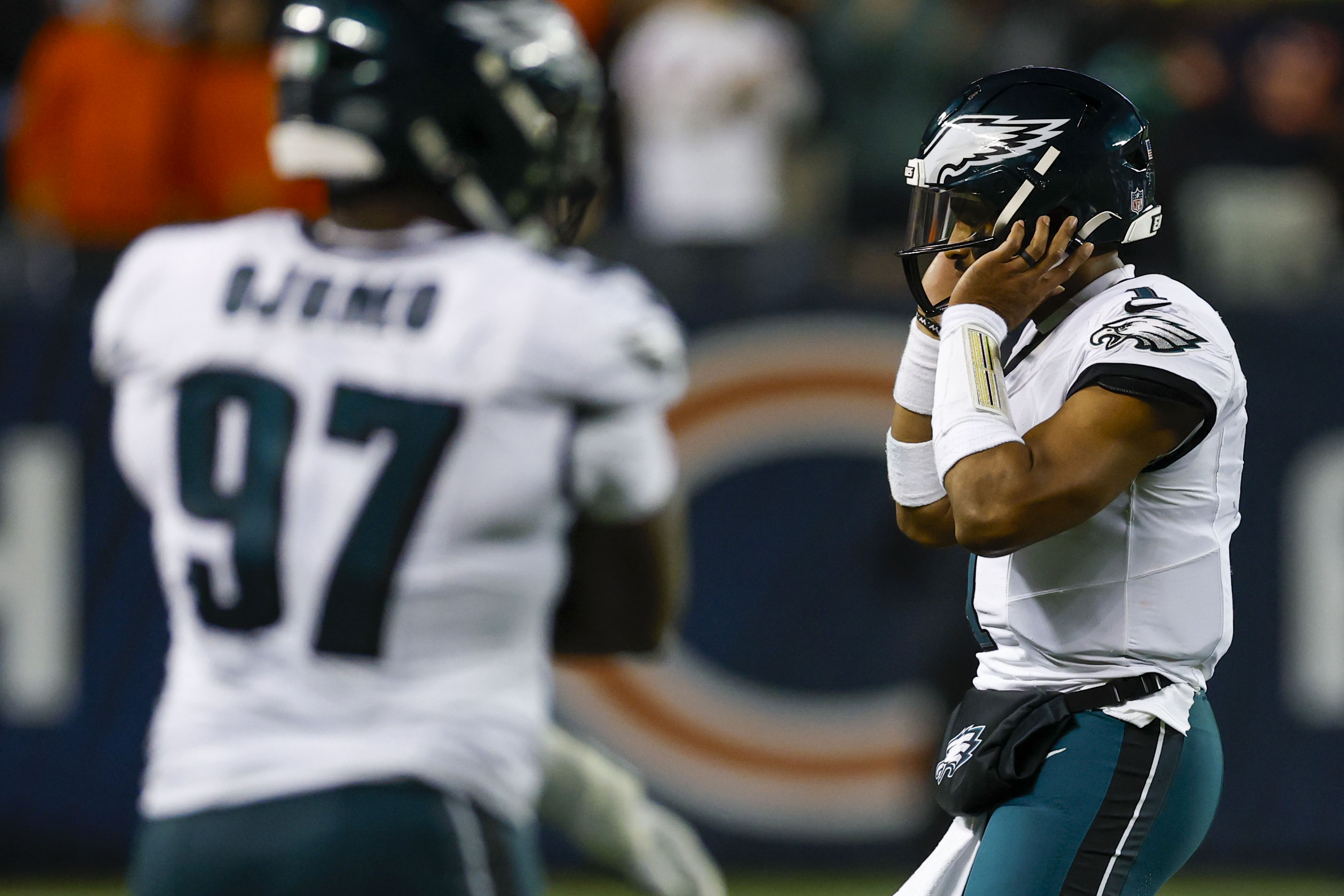
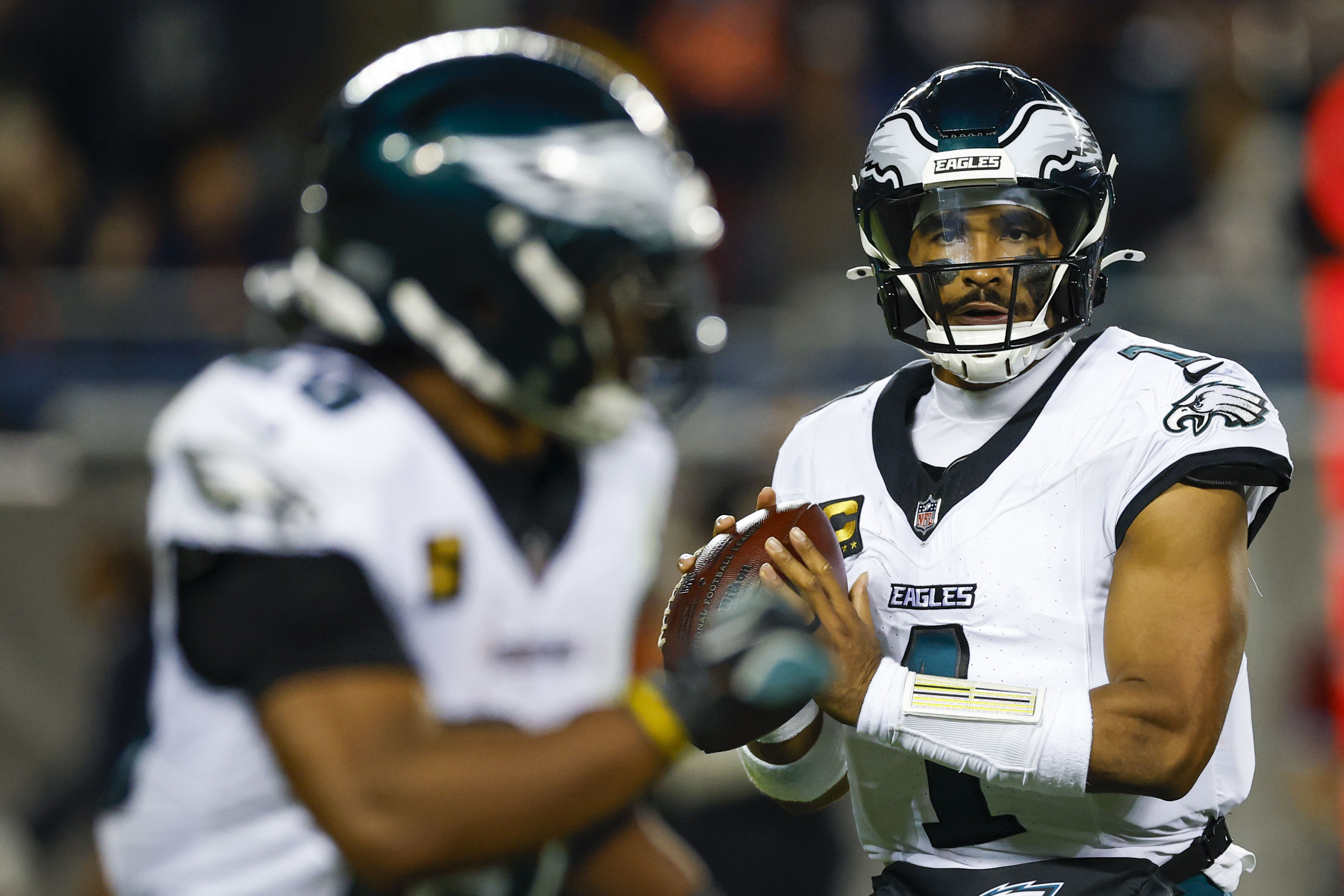
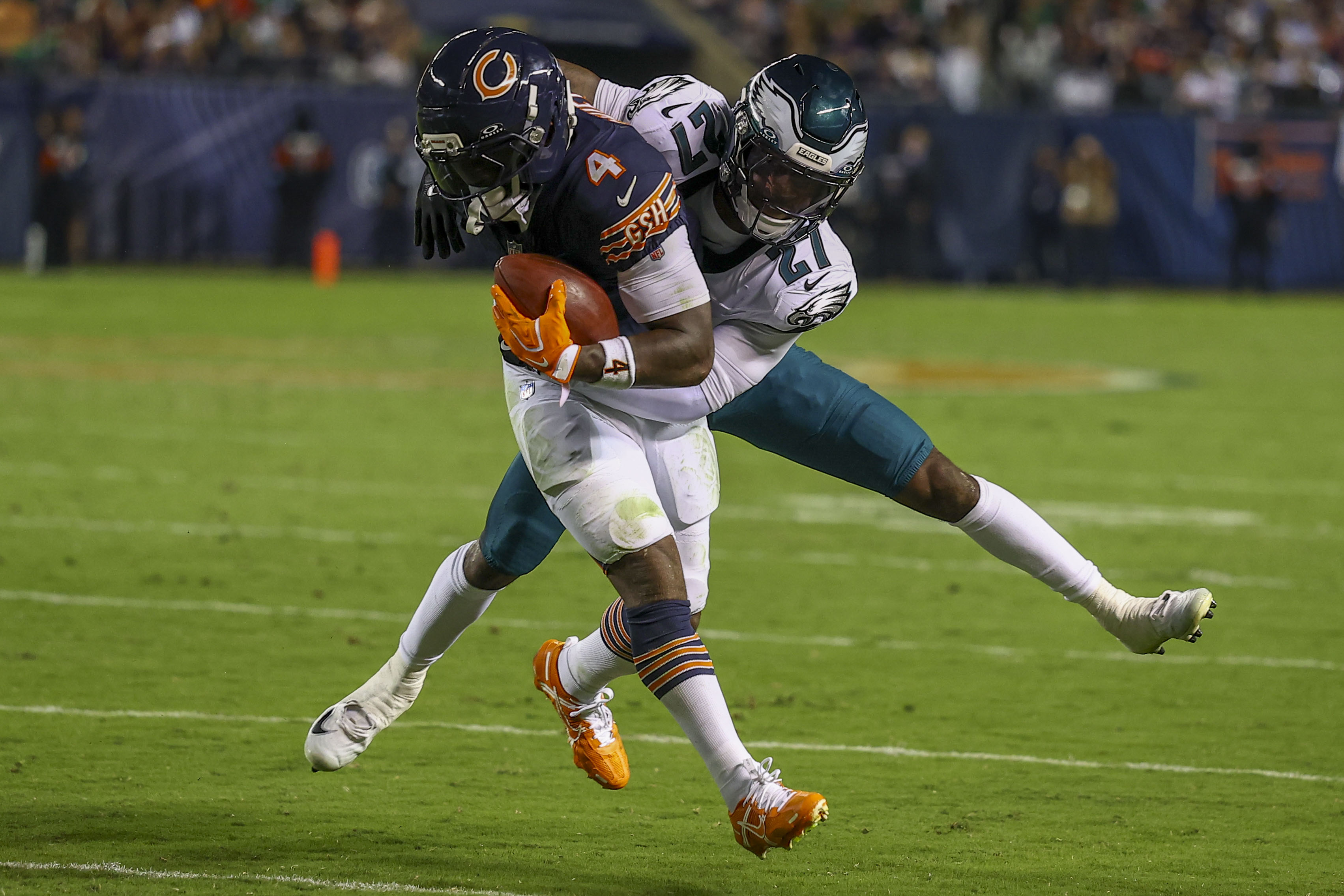
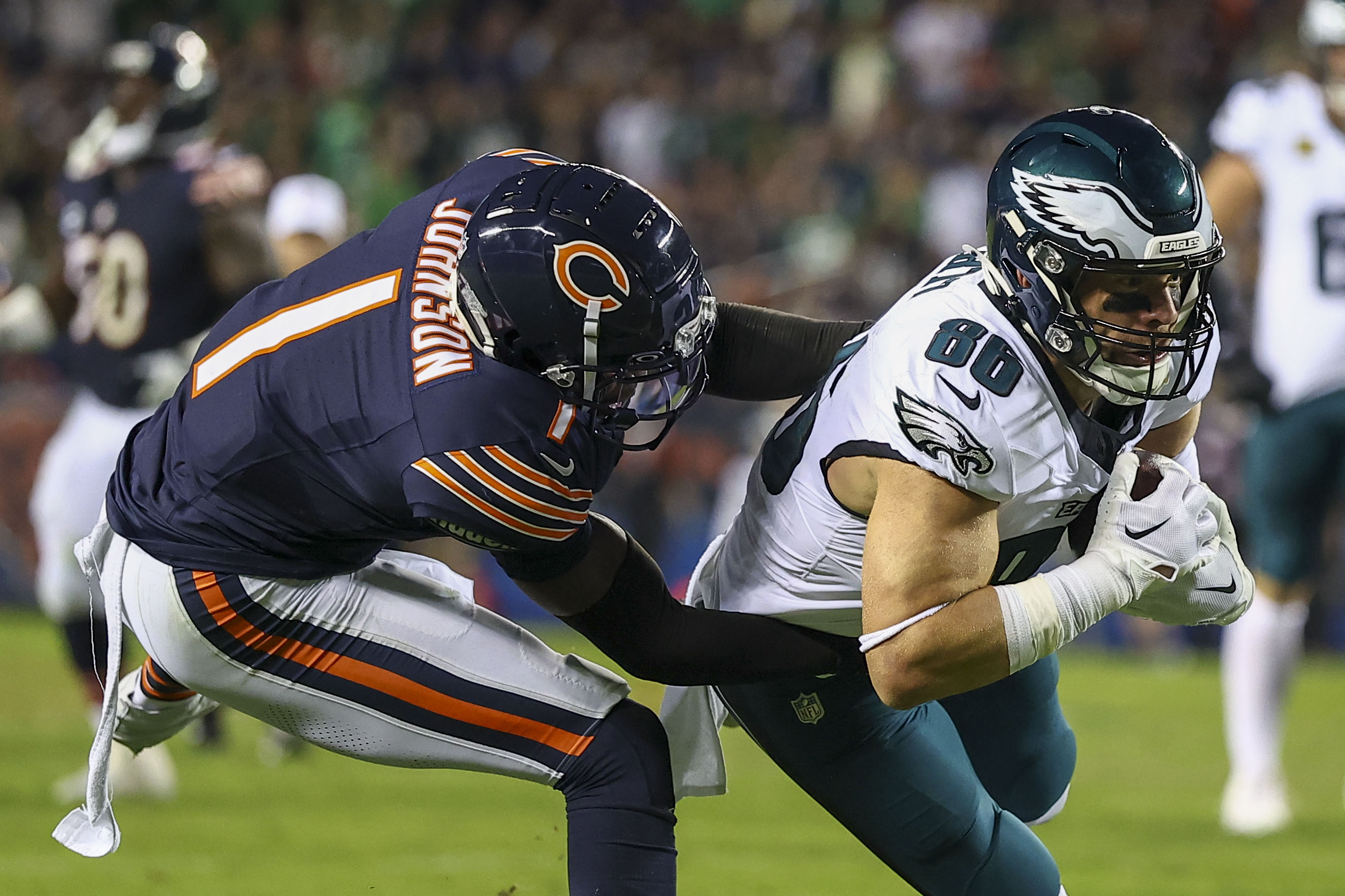
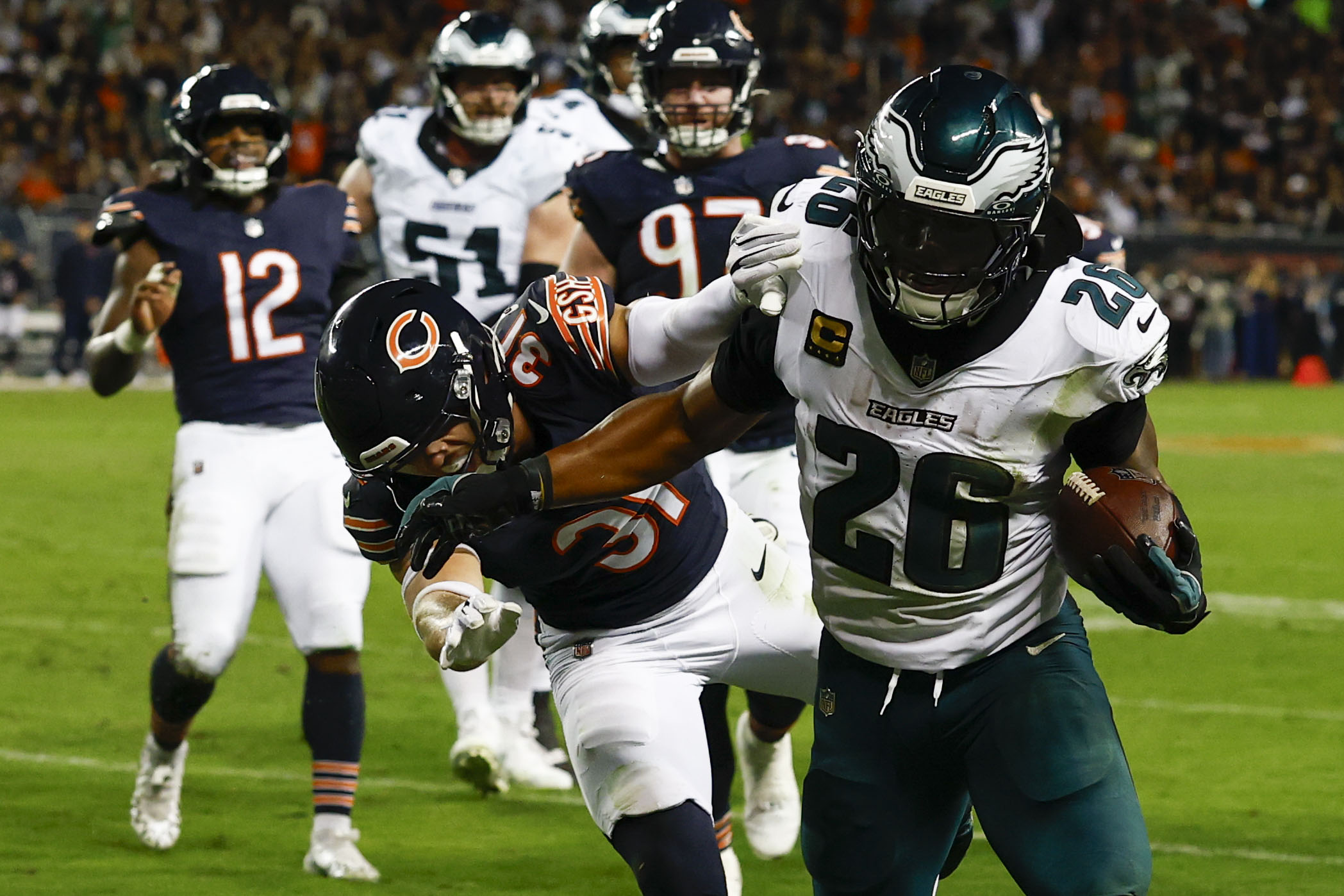
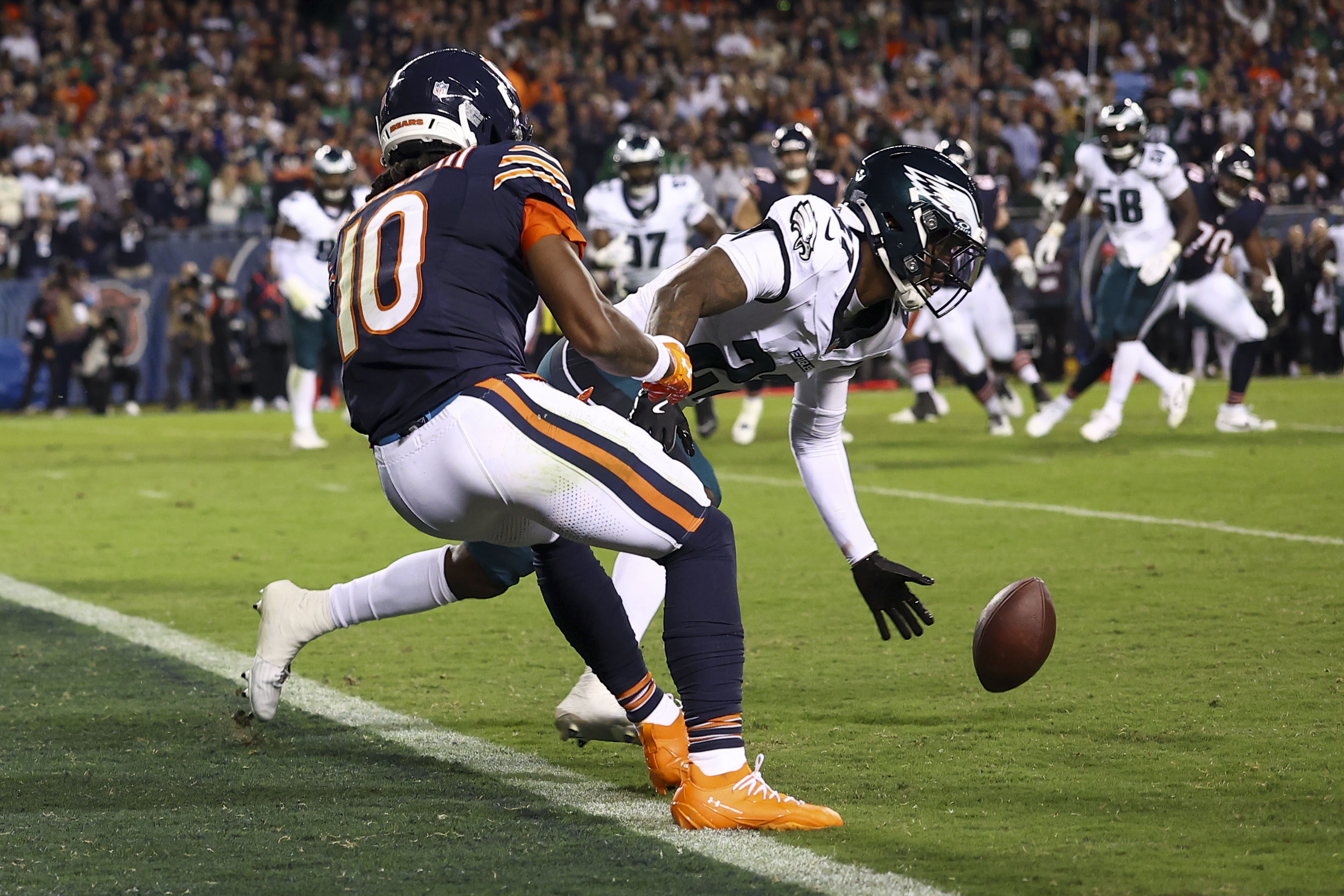
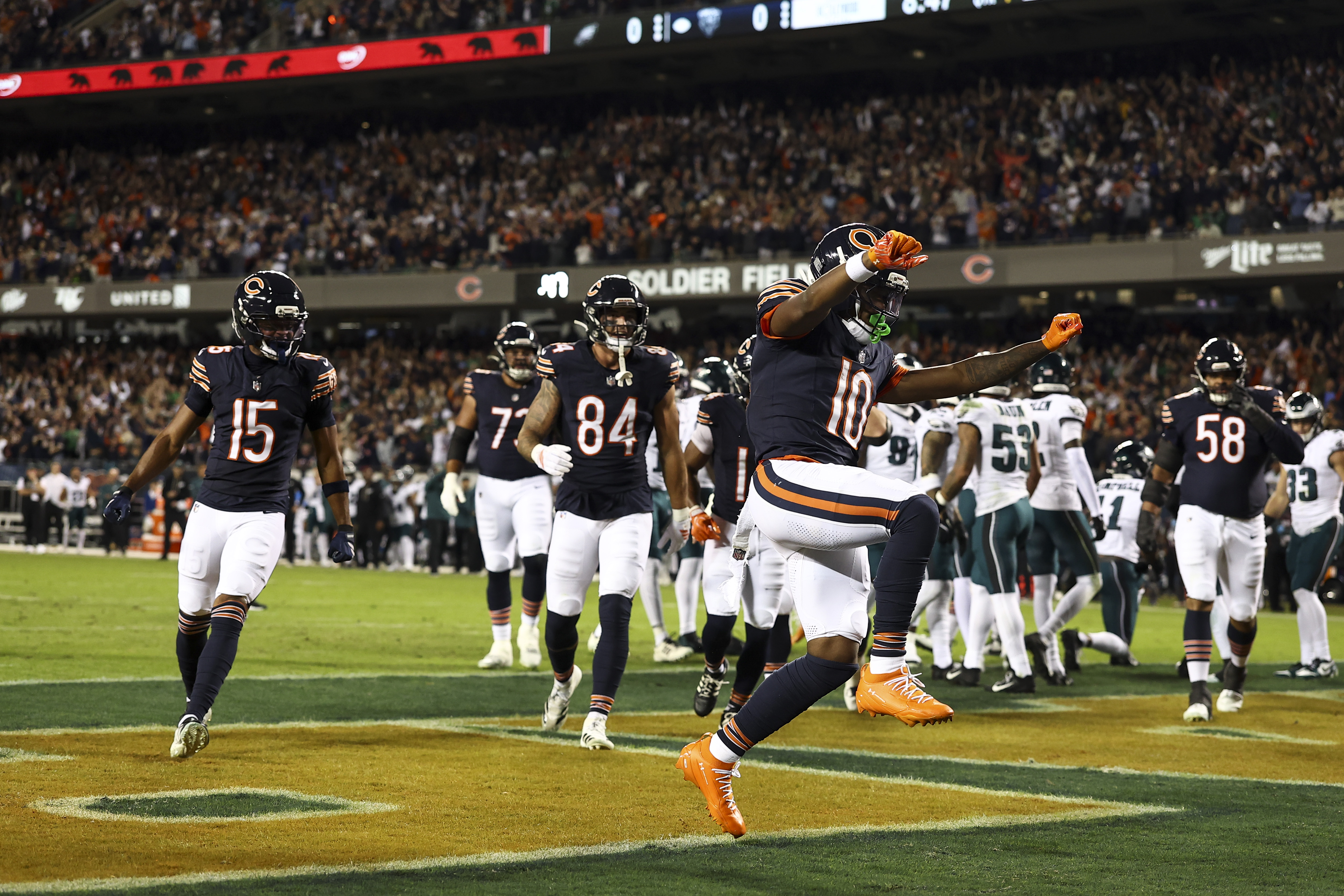
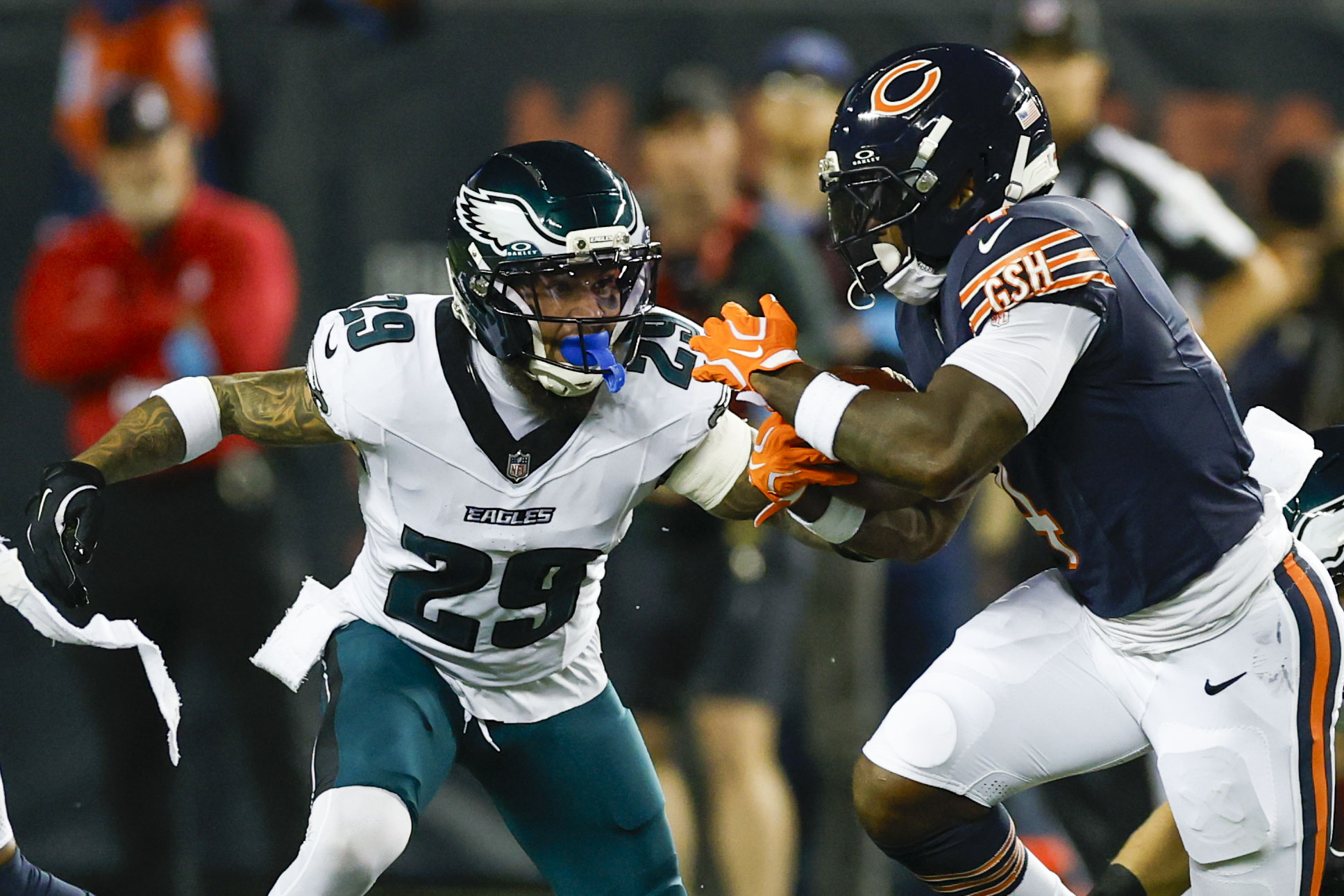
    One more time, Nick Sirianni had spent several days seeking shelter from a storm whose clouds he had created. The Eagles’ 27-7 loss to the Bears last Monday had been a greatest-hits collection of the flaws his critics cite whenever they want to make a case that he’s the luckiest head coach in the NFL, that Howie Roseman’s brain and one of the league’s best rosters often save Sirianni from himself.

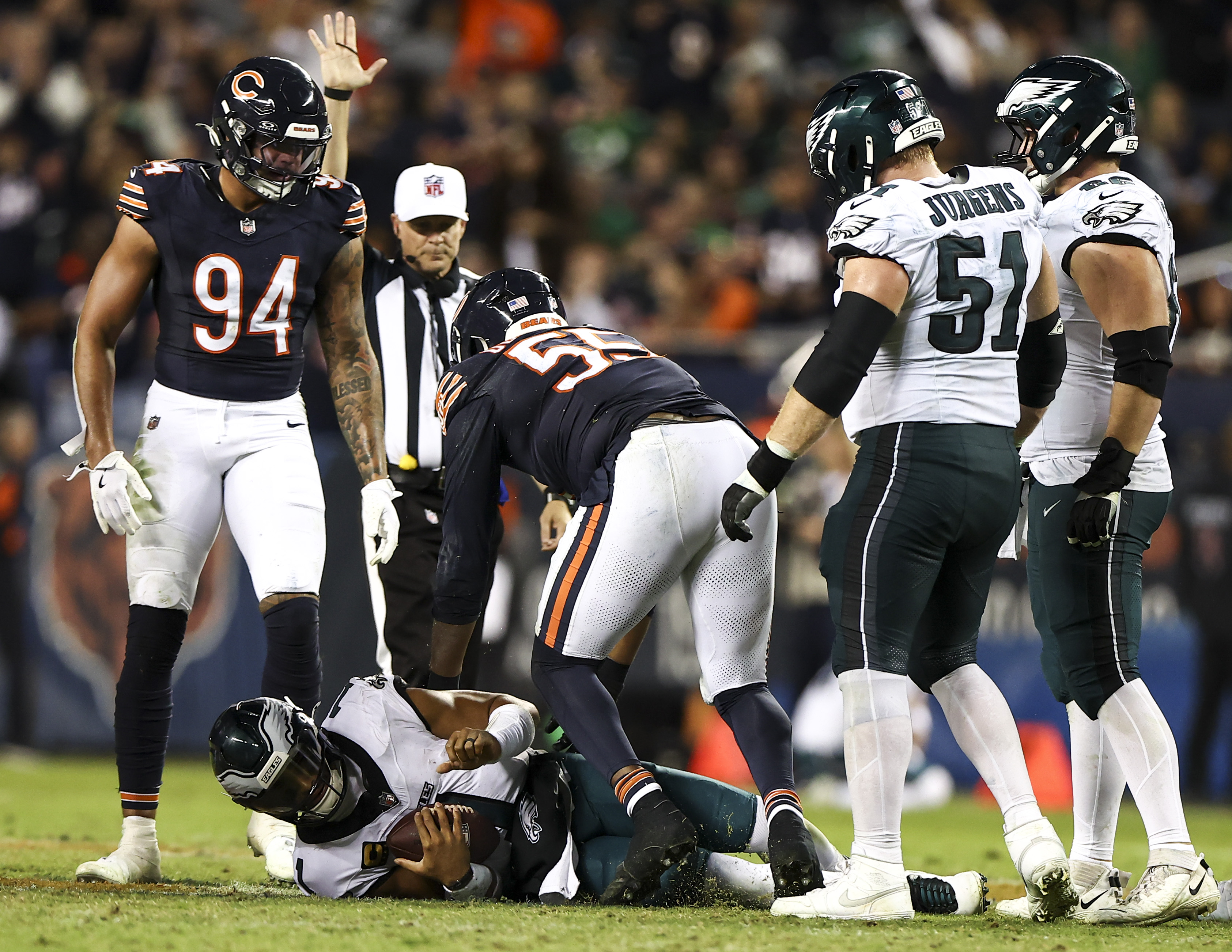
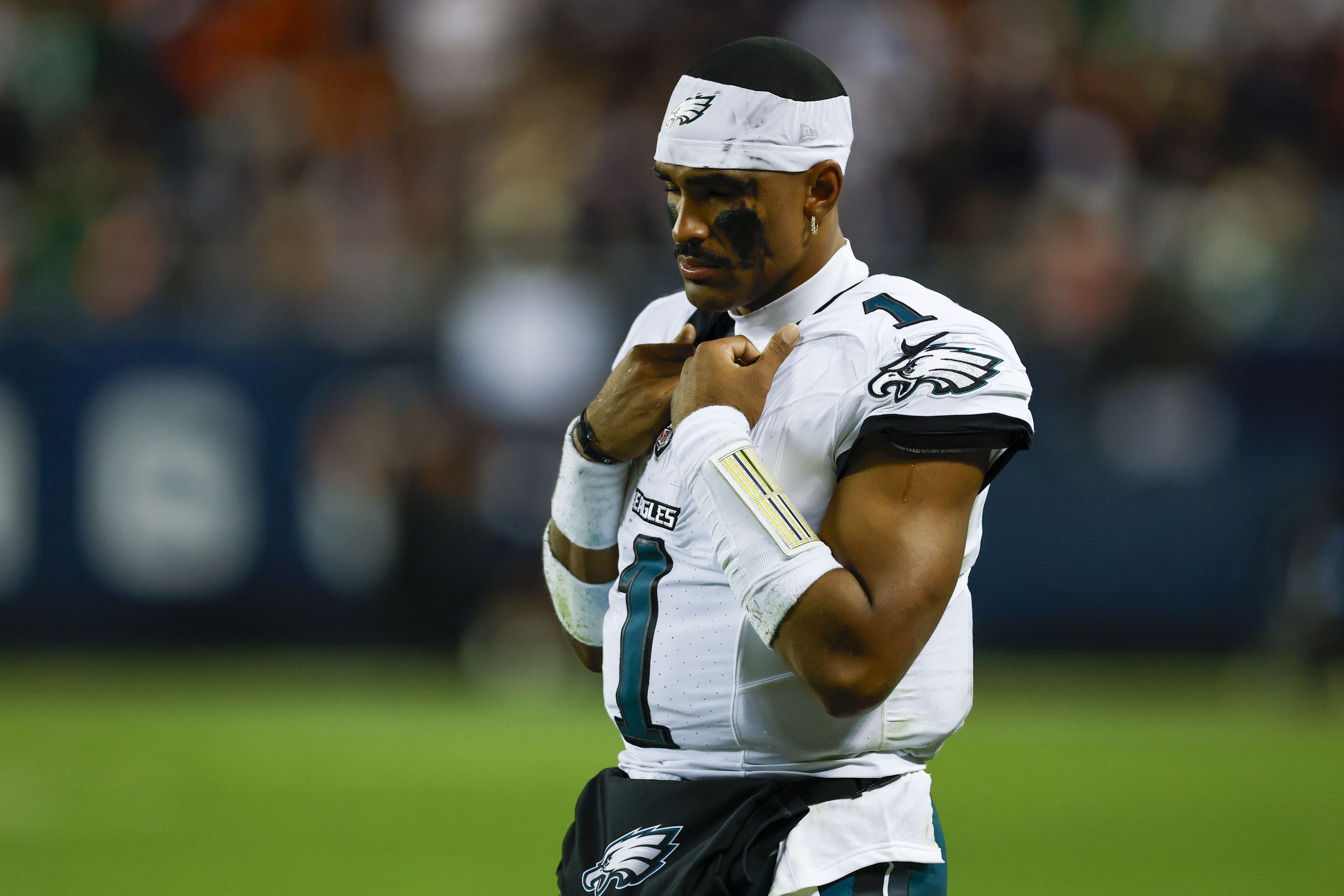
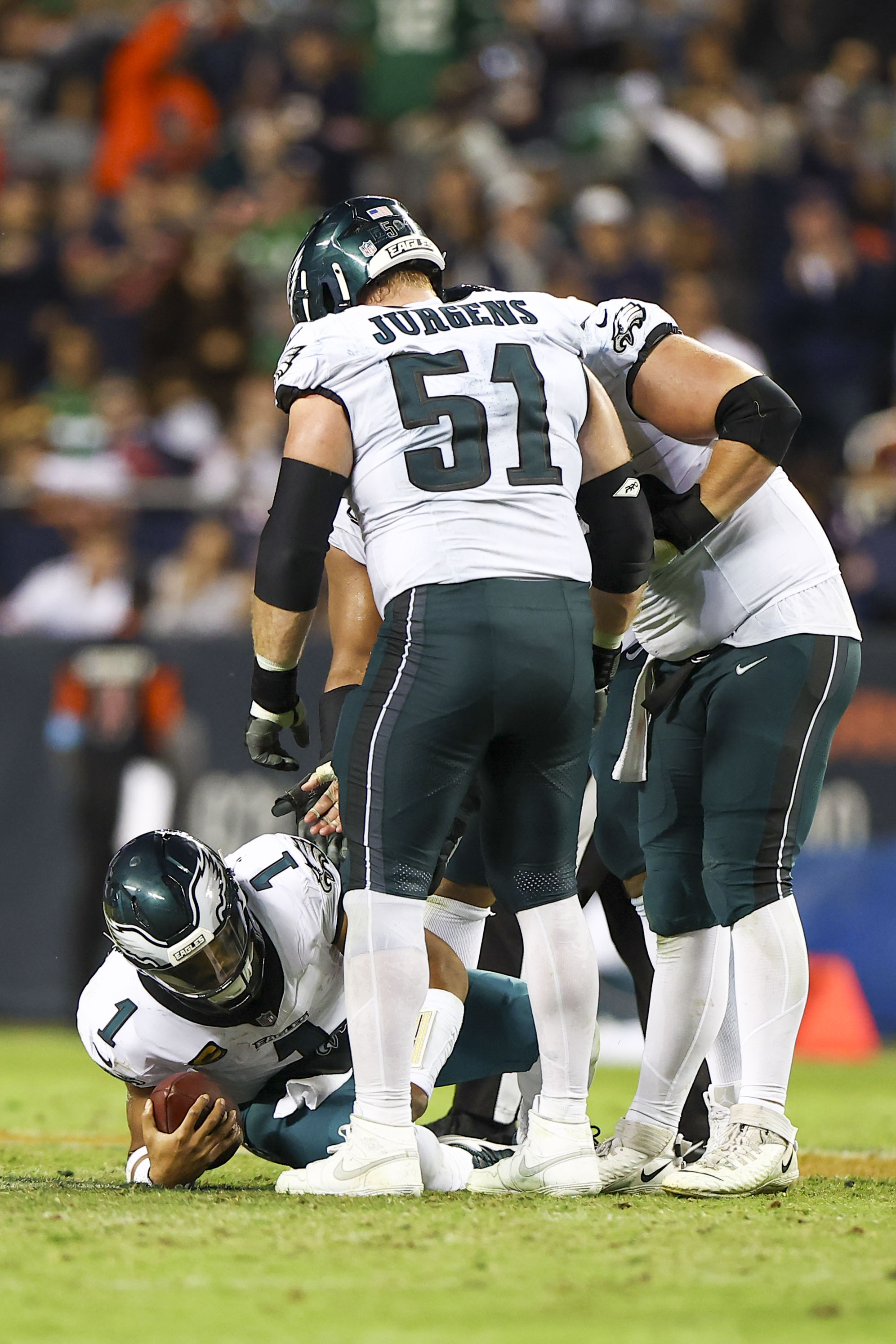
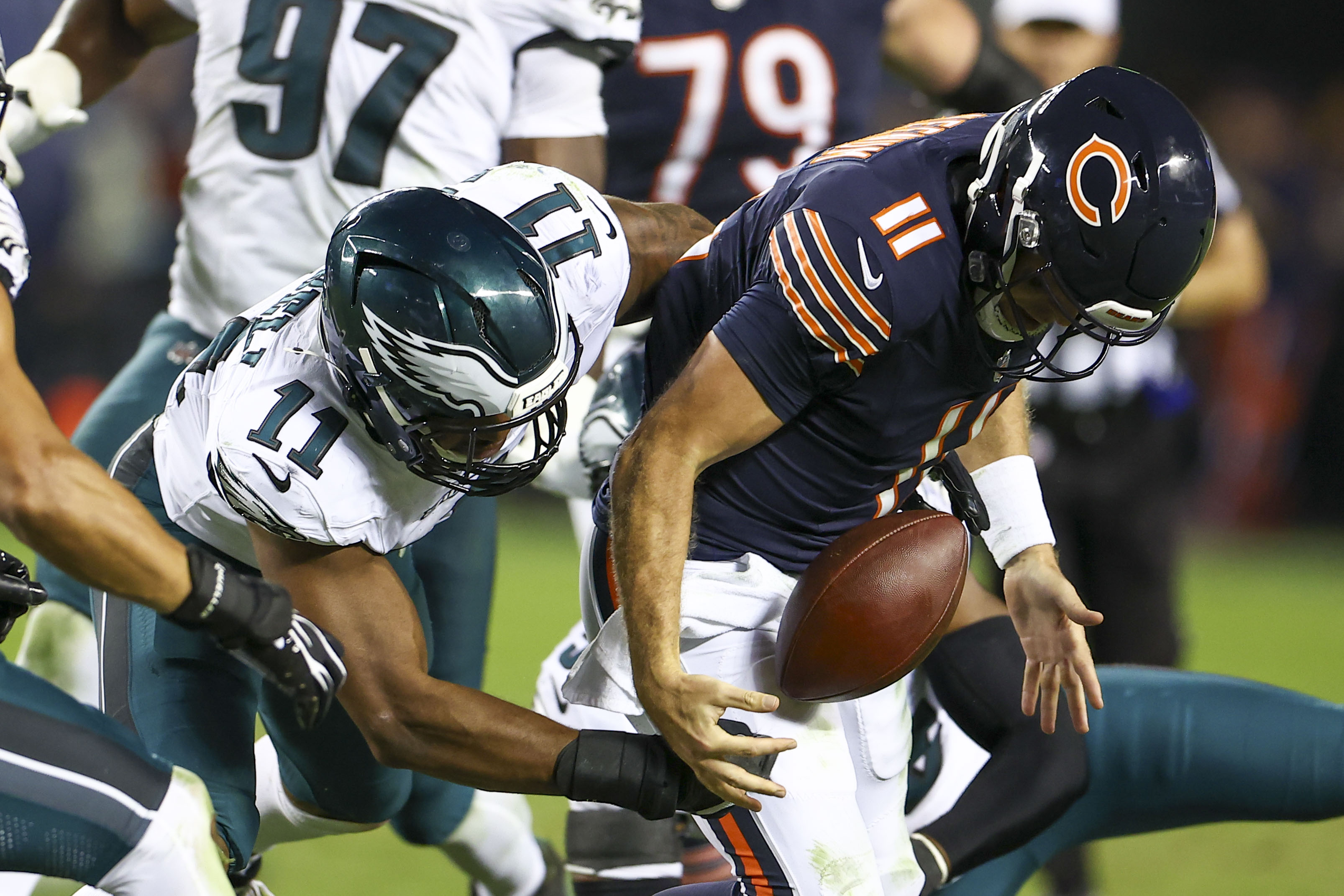
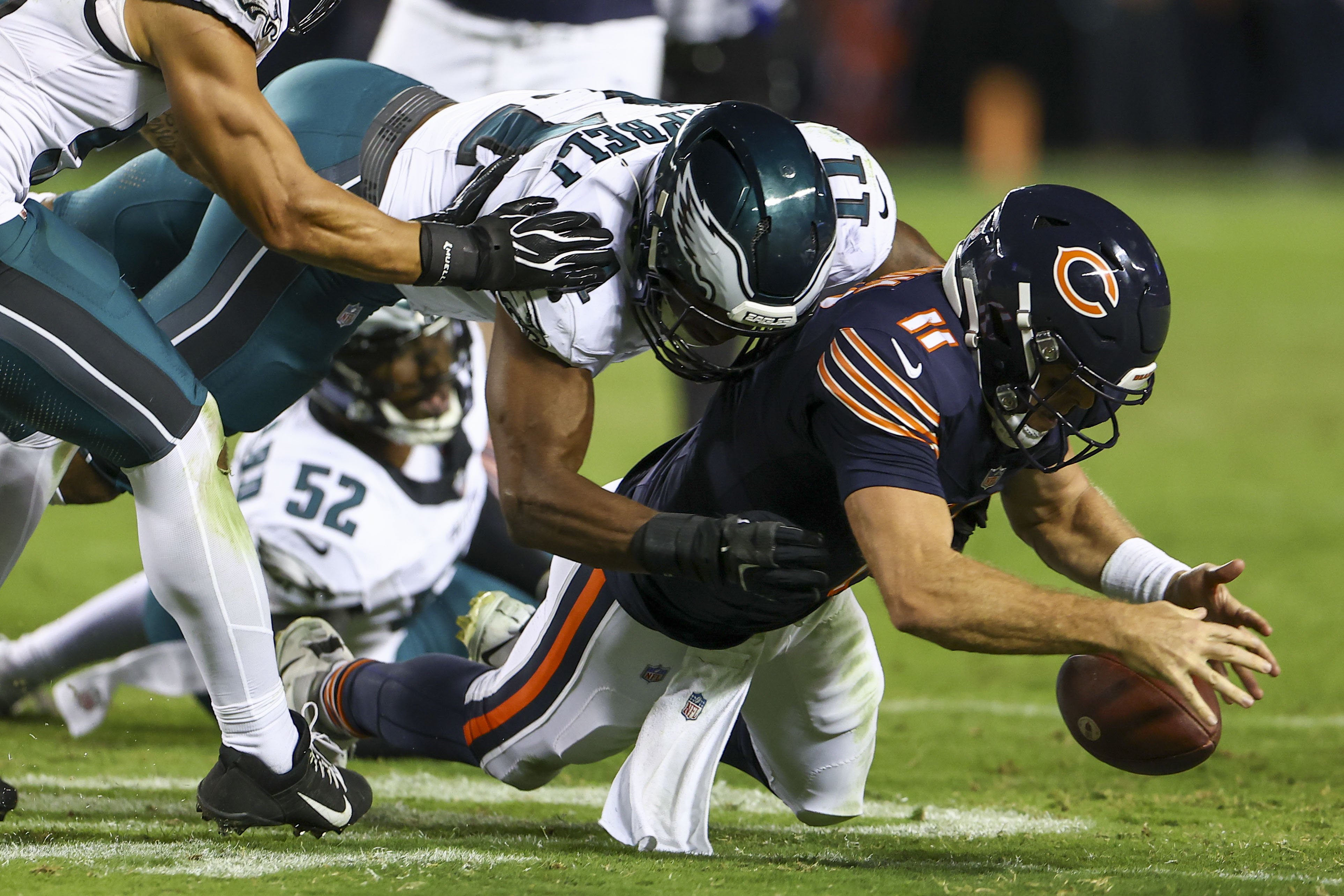
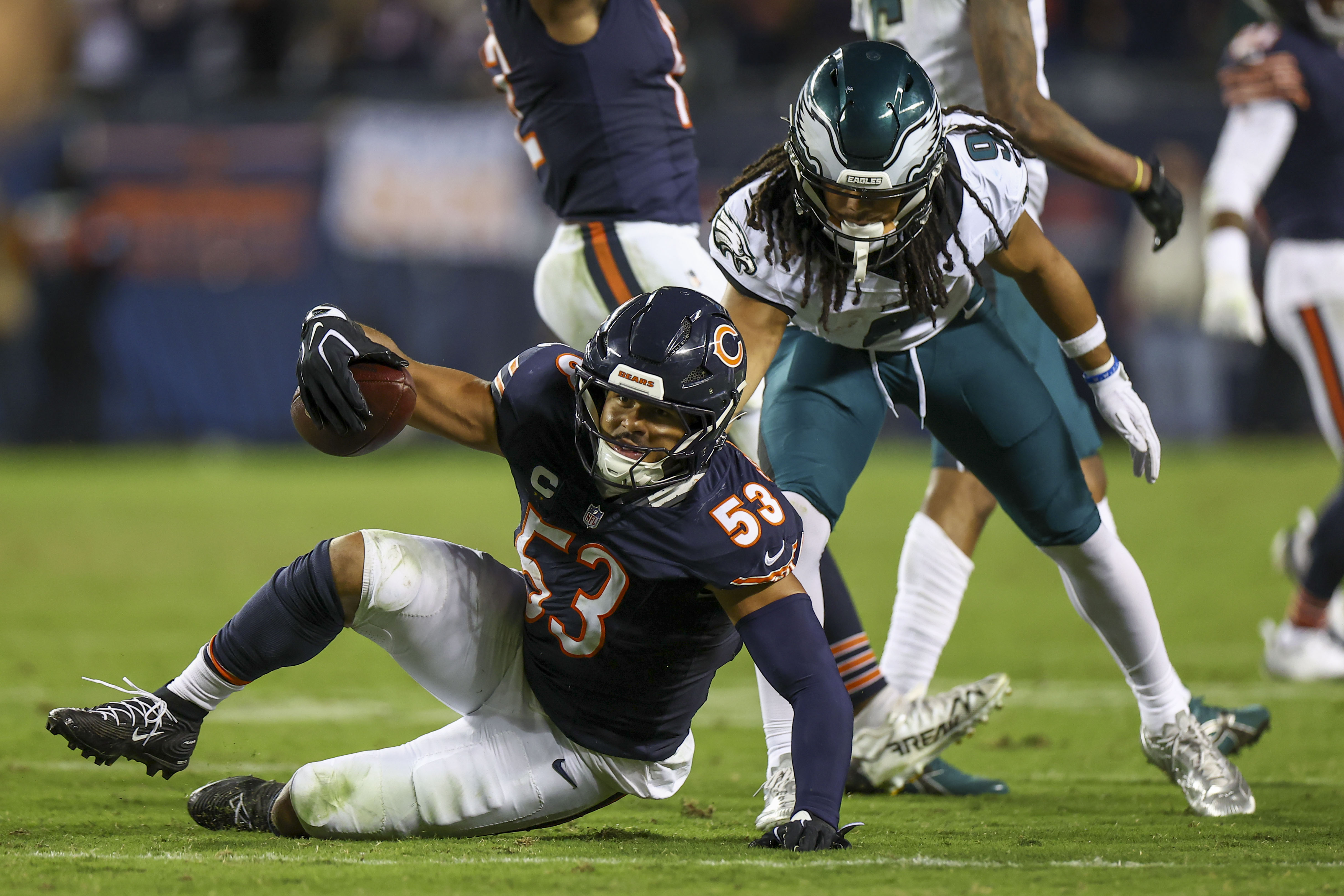
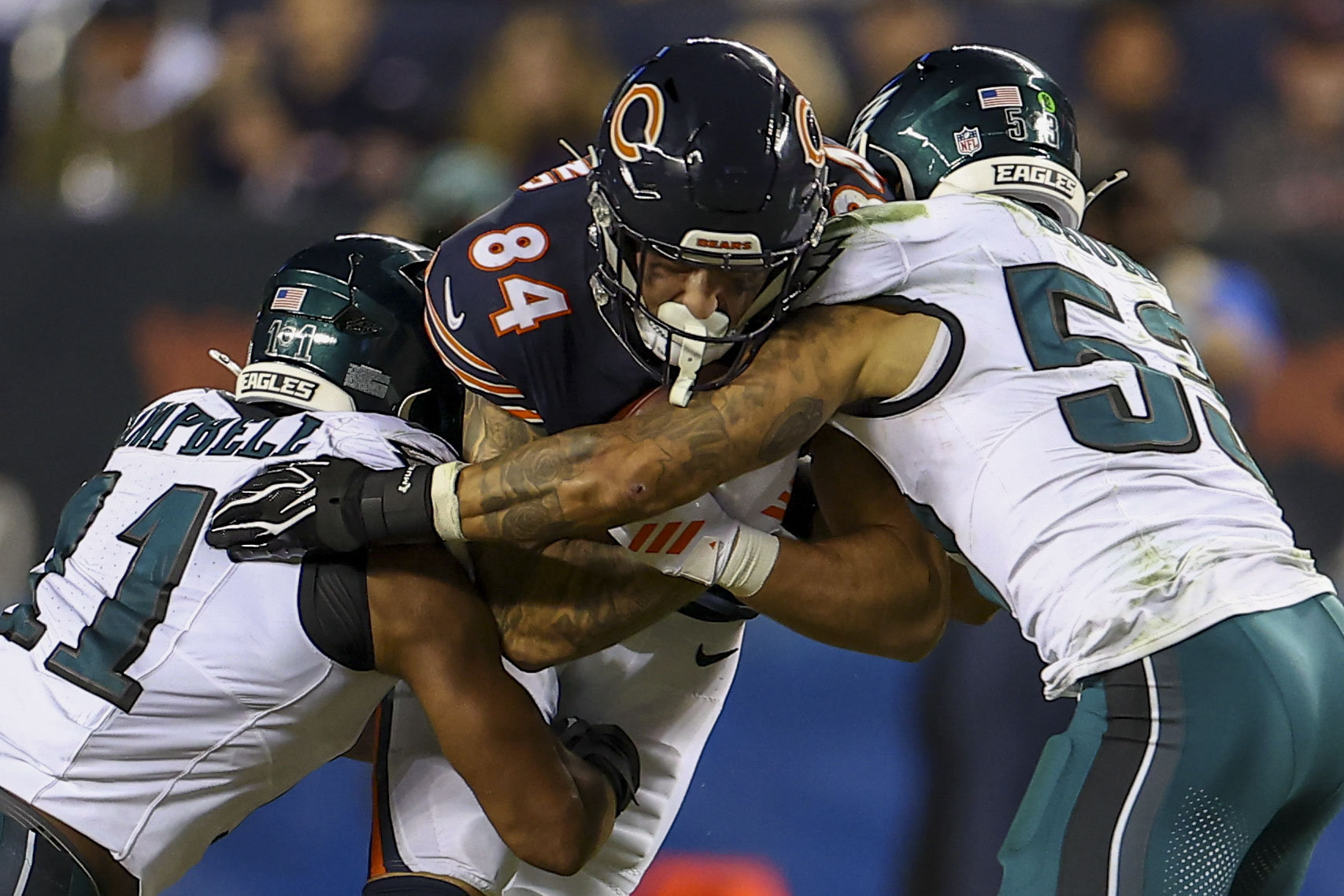
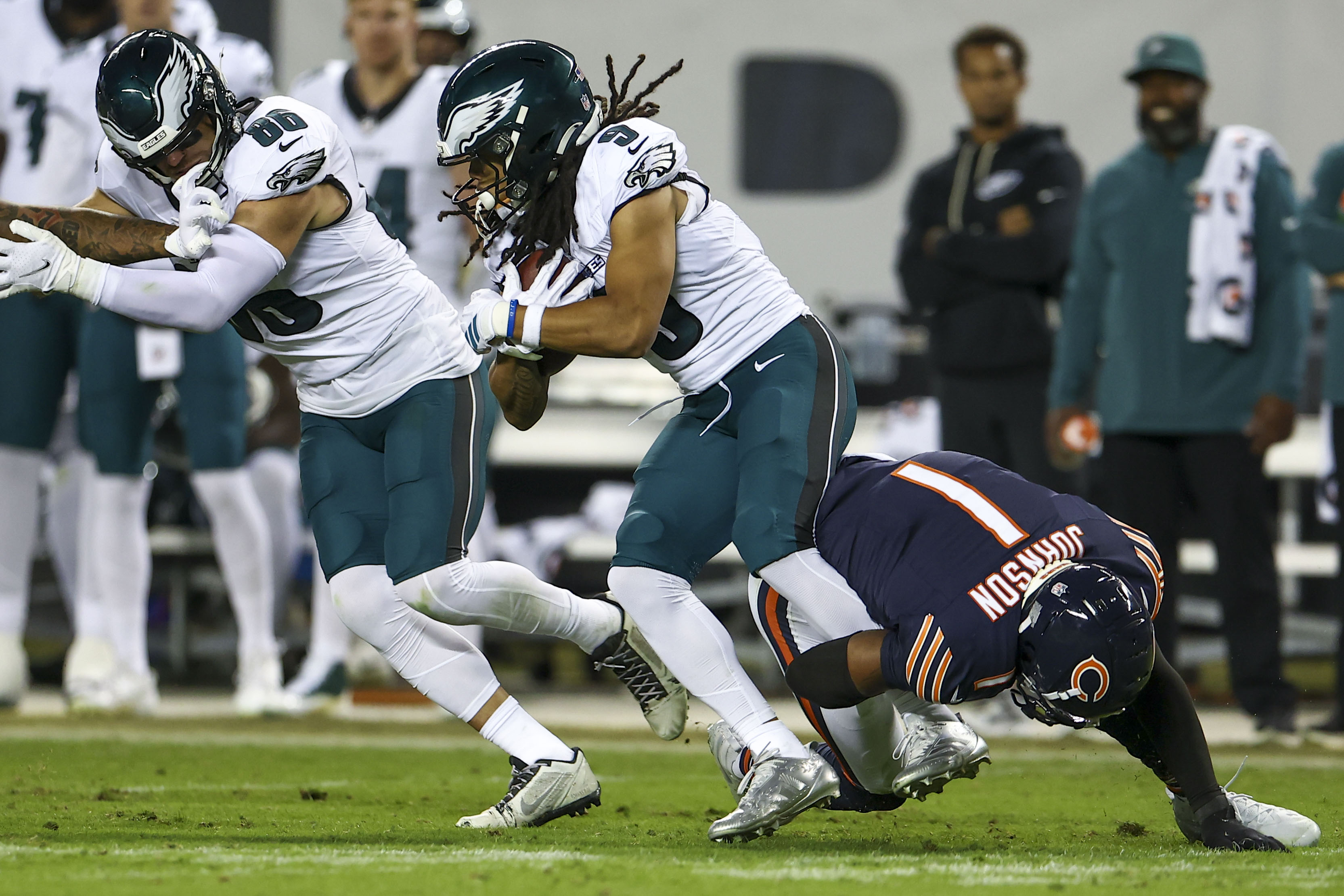
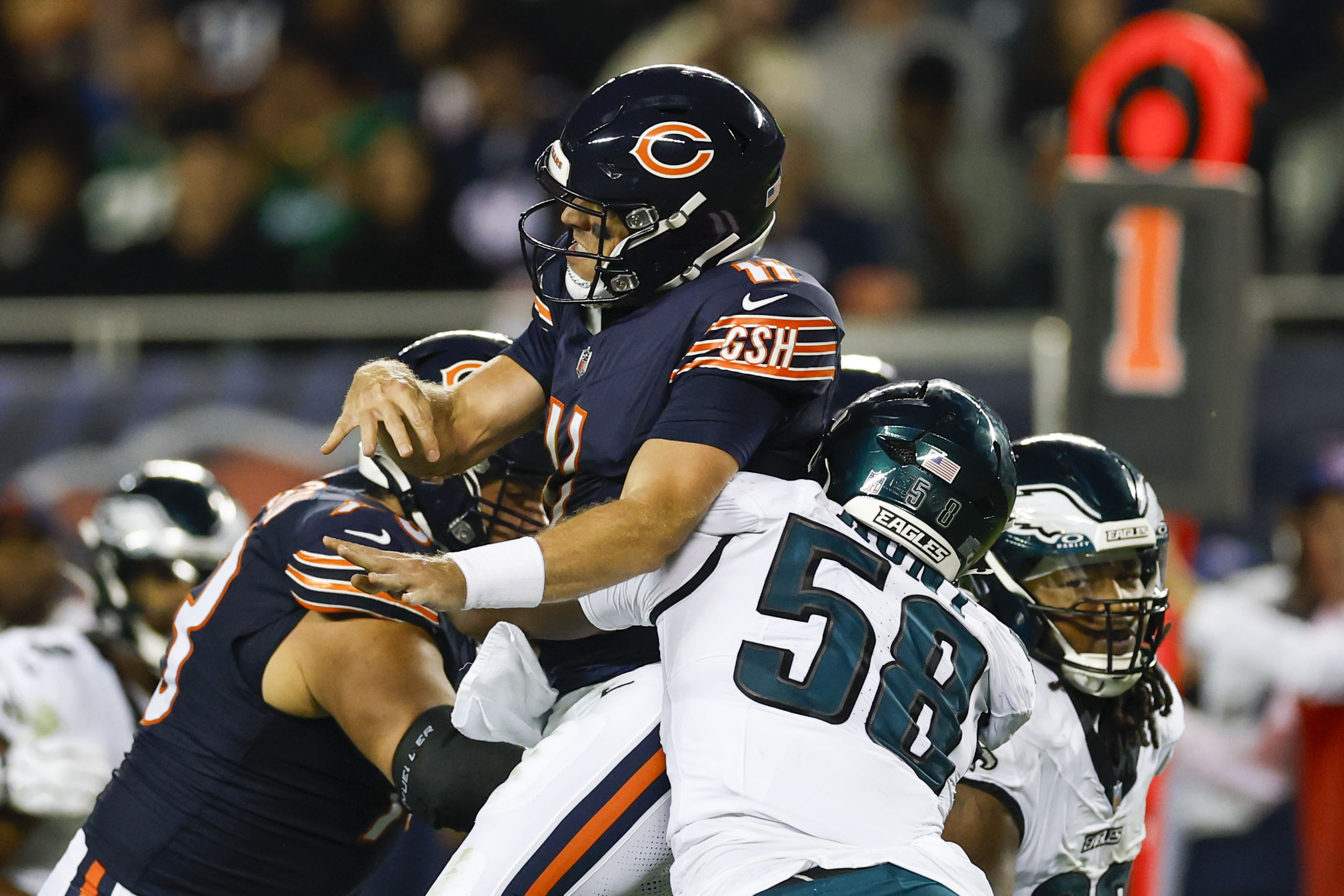
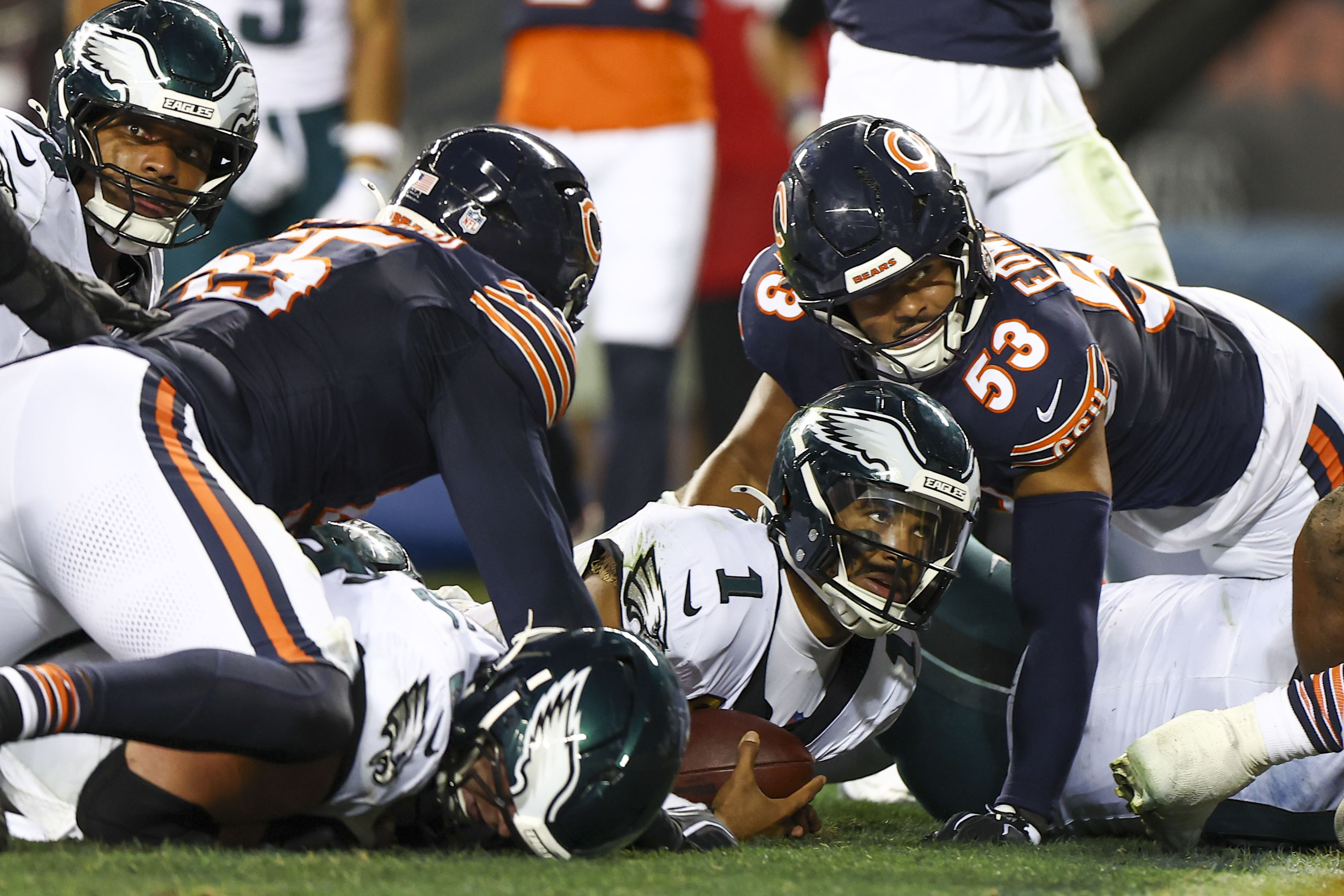
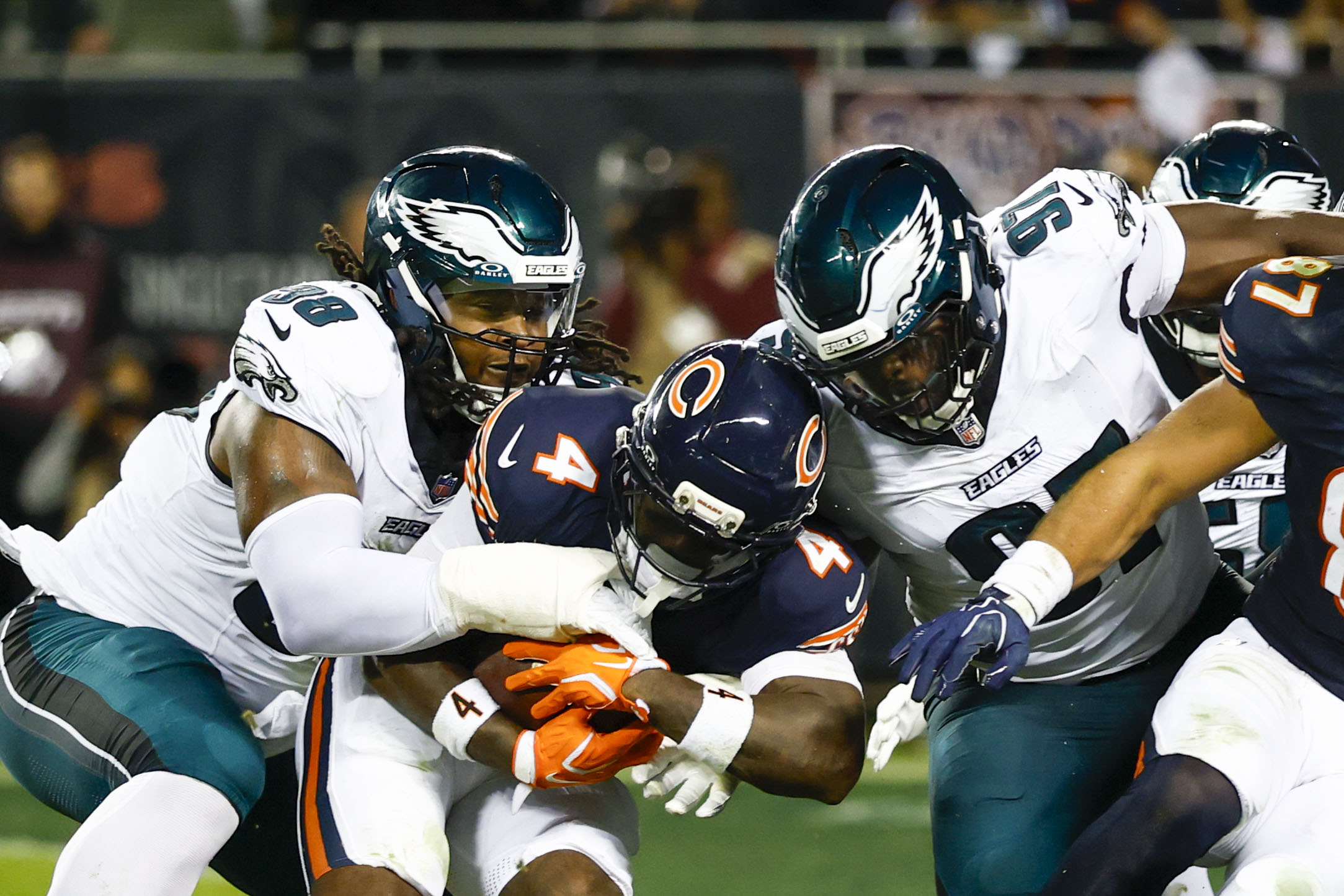
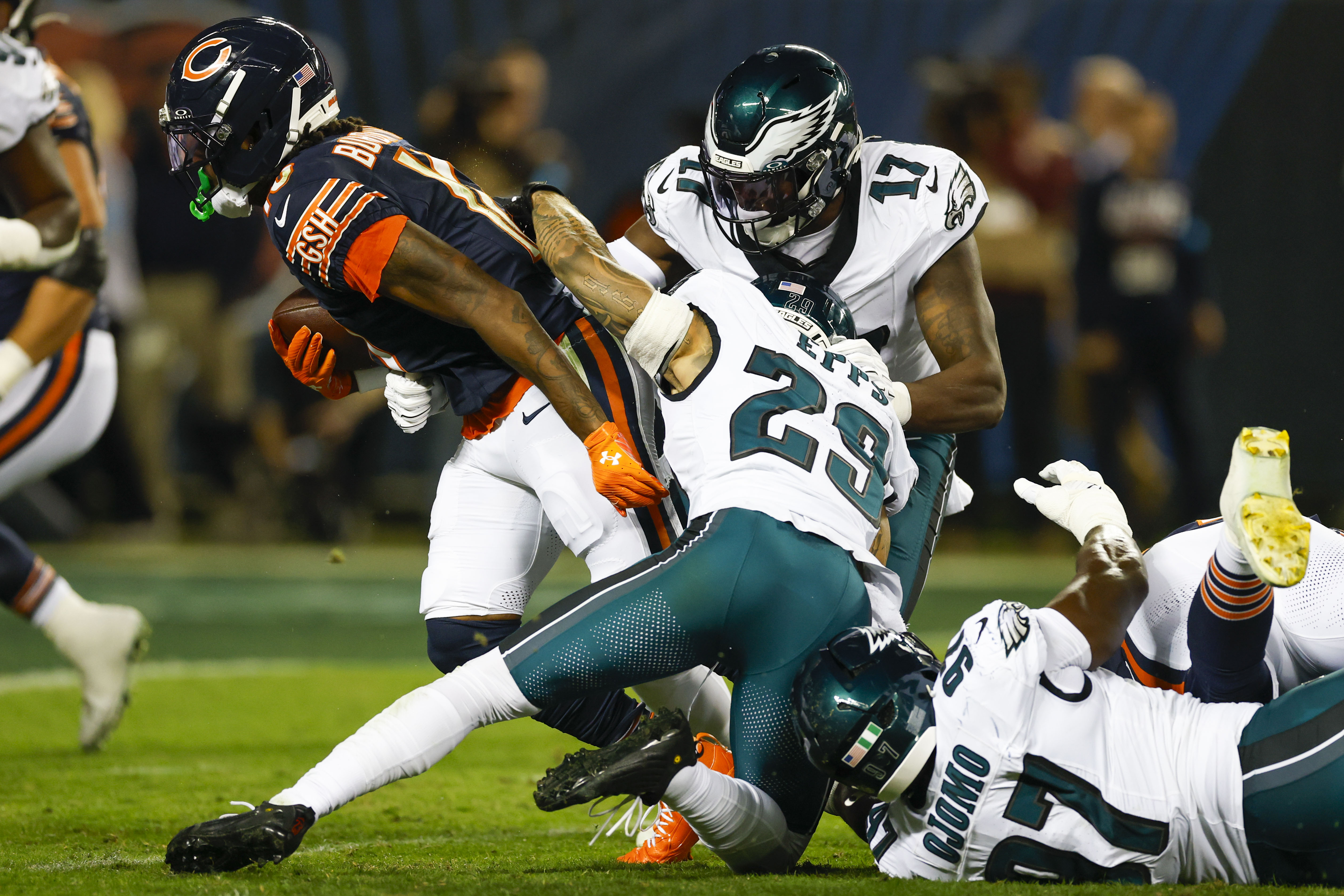
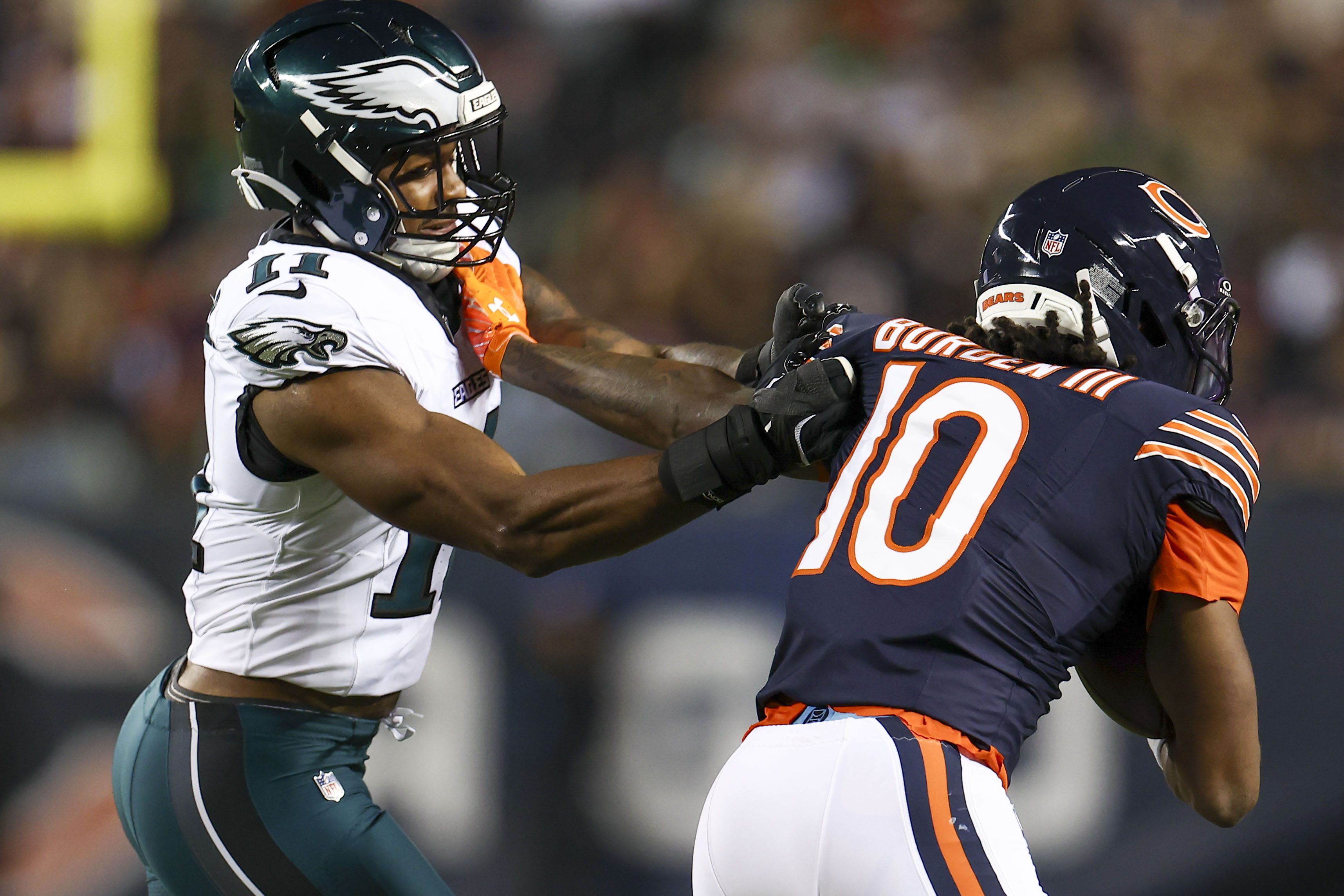
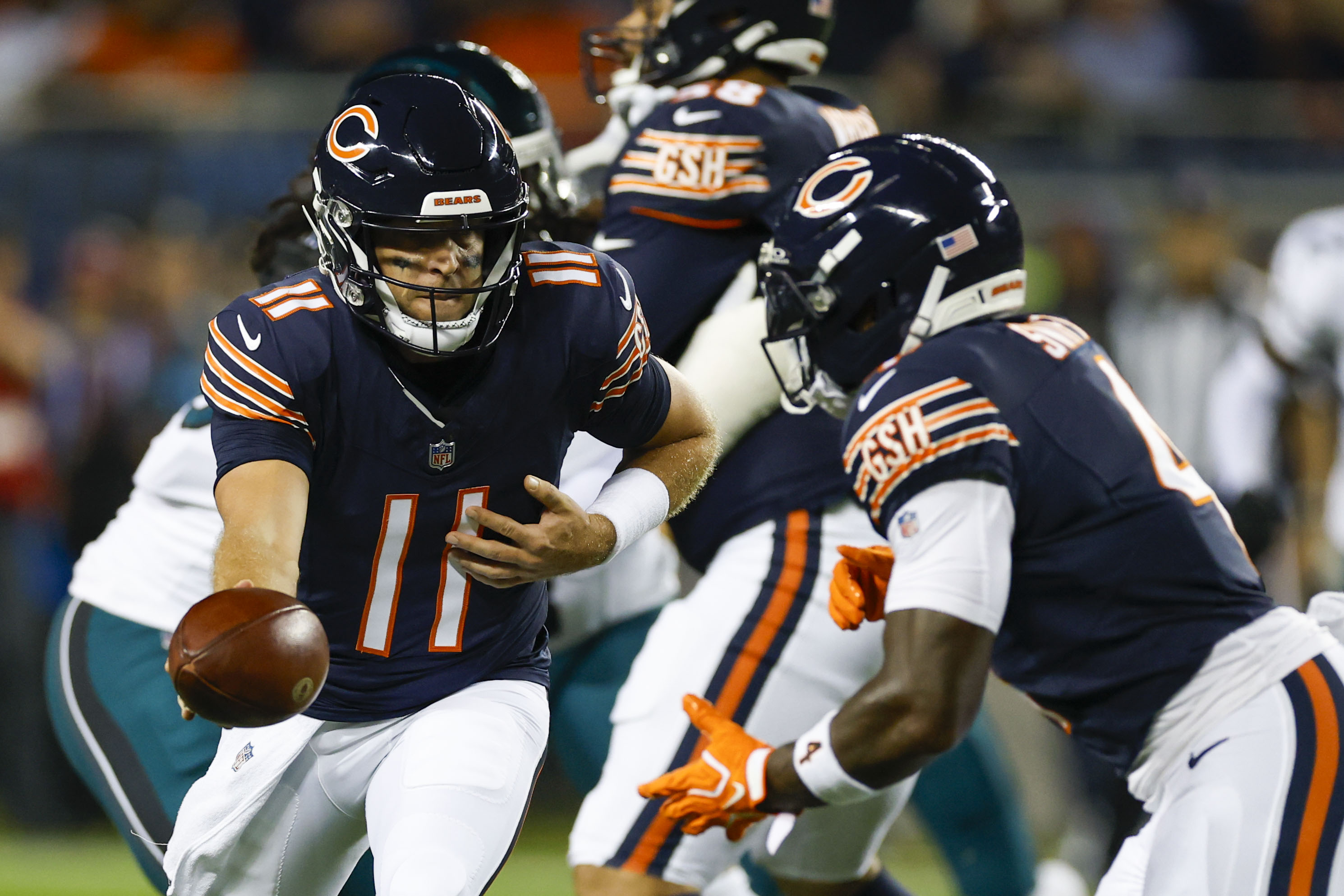
    He had screamed an obscenity at Bears linebacker D’Marco Jackson just after Jackson had sent Jalen Hurts flying near the sideline. With the Eagles down by just two scores in the third quarter, he had decided to have his offense punt on fourth-and-1, seeming to freeze in the moment once he realized the distance to earn a first down was too long for Hurts to try a quarterback sneak. His team had been unprepared and overwhelmed from the start against third-string QB Case Keenum and a defense that doesn’t exactly recall Buddy Ryan, Mike Singletary, and the ’85 Bears.

    Yes, it was another one of those weeks for Sirianni, which means it’s another one of those moments for Sirianni, the kind he has faced before during his five-plus seasons in Philadelphia. From a 2-5 start in 2021 to the Eagles’ free fall late in 2023, from teetering on the edge early in 2024 to winning a Super Bowl months later, he has these inflection points when it felt as if a season — or his career — could go either way. Find a way to win, and he quiets the noise and keeps his job. Fail to stop the spiral, and people start asking what Jeffrey Lurie might be thinking.

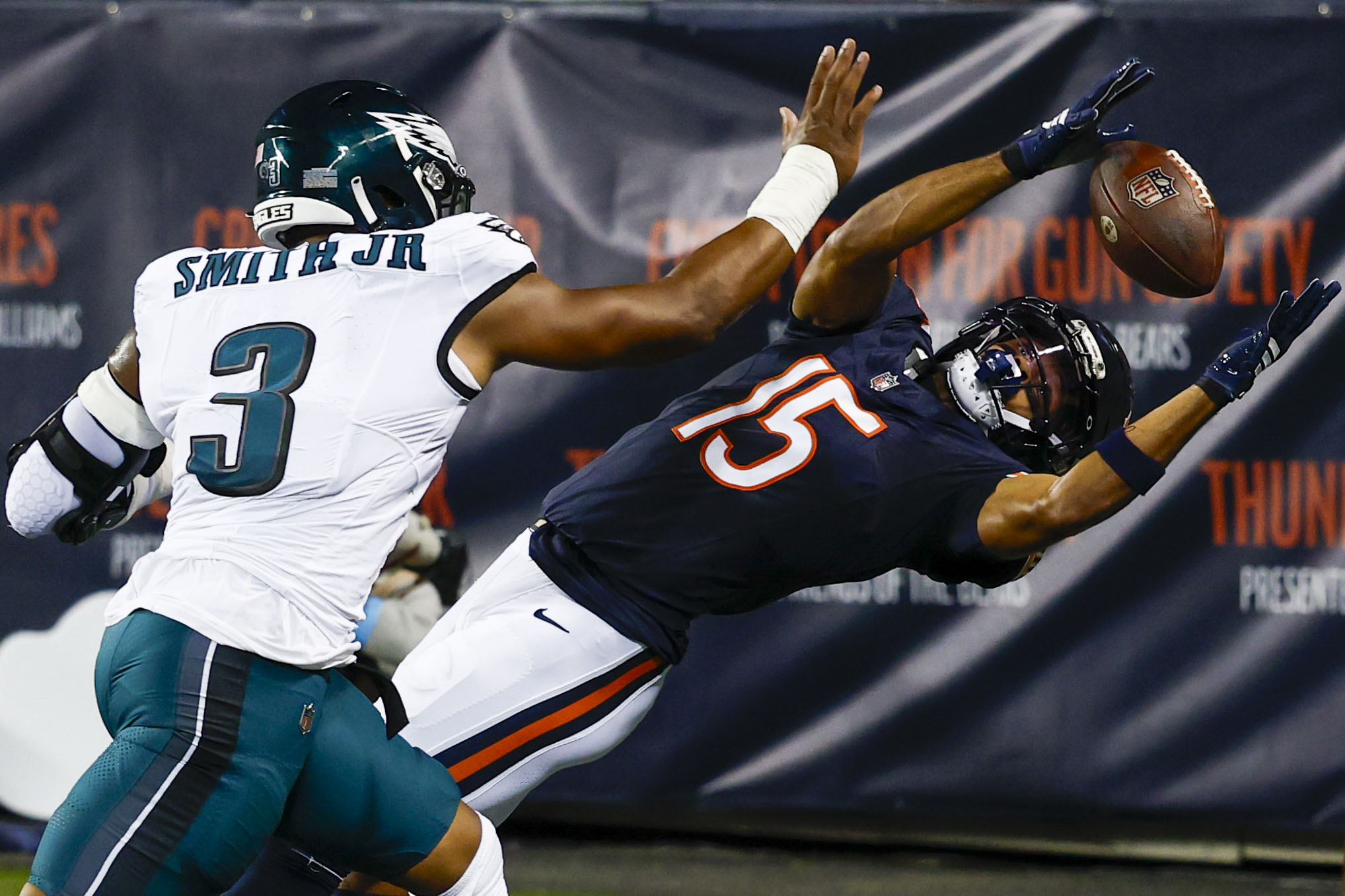
    Now here’s his latest walk on the high wire. The Eagles are 2-1 but reeling after that embarrassing loss in Chicago, missing DeVonta Smith, Zack Baun, and several other key players, and hosting the Los Angeles Rams on Sunday — a championship-caliber team that’s ticked off that it’s 1-2. The following week, they travel to London to play the Jacksonville Jaguars, who are emerging as a contender in the AFC. No one should be surprised if the Eagles end up staring at a three-game losing streak and a 2-3 record out of these two weeks, and it’s on Sirianni to make sure everything doesn’t fall apart.

    “Whether you win or you lose, you go through the same process,” he said. “I read something Kobe [Bryant] said: ‘You win, great. You’ve got to get up and do the same thing. You lose, it sucks, but you’ve got to get up and do the same thing.’ …

    “I know it’s boring, and you can probably say, ‘Hey, that’s just coach-talk.’ But you’ve got to have faith in the process until the process produces results in everything that you do. So business as usual this week. I have a lot of faith in all the guys in this building. That’s why they’re in this building. That’s why they’re on the team.”

    Sirianni could have said the same thing in ’21, when the Eagles won seven of nine games and scratched into the playoffs, or in ’24, when they won 16 of 17 and earned the right to party in New Orleans in early February.

    Those turnarounds came with strategic changes on offense, sure, and Sirianni and Sean Mannion might need to rethink their approach. But first things first: Sirianni and his players can’t allow that Bears loss to snowball into an avalanche.

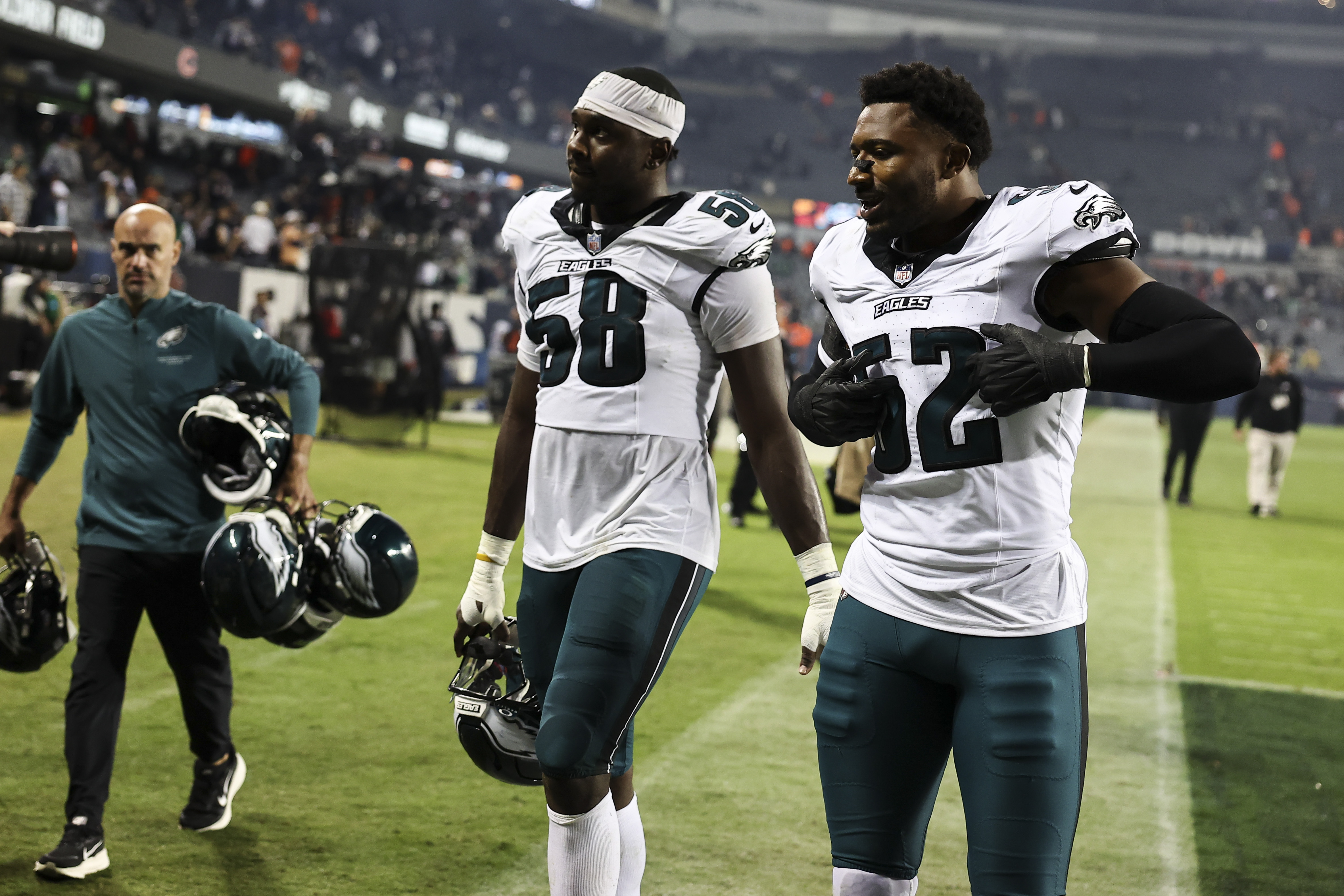
    “You make the corrections, but you don’t stay on it too long,” defensive tackle Moro Ojomo said. “You can’t let a team beat you twice. We’ve got to game-prep, and we’ve got a hell of a team coming in. They’re a playoff team. They’ve been a great team. So you’ve got to flush that really quick. If you don’t, you’re going to lose twice on the same thing. You’ve probably got 24 hours to deal with it. That’s it.”

    The good thing for Sirianni and his team this time is that the standard for success has to be different, has to be a little lower. Losses to the Rams and to the Jaguars wouldn’t necessarily be the worst possible outcomes for them. The nature of those losses — of how the Eagles play — would matter more. Put simply, even if they go down, the Eagles have to go down fighting. They can’t get blown out again. They have to remain competitive. They have to give everyone, themselves included, reason to believe they can turn things around once they get healthier, once all their defensive starters settle into Vic Fangio’s system, once Mannion has more opportunities to show whether he’s the budding genius the Eagles have billed him to be.

    A 2-3 start is still too early in a season to write off any team, especially one that has qualified for the playoffs five years running. After Jacksonville, the Eagles get the Carolina Panthers and the Dallas Cowboys, both at home, so the schedule will ease up a bit, at least in theory. The most important task for Sirianni over the next month is to hold the locker room and the coaching staff together, to prevent what happened in 2023 — one awful loss leading to another and another, morale plummeting, veterans looking out for themselves instead of focusing on the team’s greater good — from happening again.

    “You get in a bind,” Ojomo said, “and it’s hard to get out of it.”

    For the Eagles and their head coach, then, the mission is simple: Don’t get in one.

  • Flyers earn a point, but still seek first win of the season following an overtime loss to the Carolina Hurricanes

    Flyers earn a point, but still seek first win of the season following an overtime loss to the Carolina Hurricanes

    The Flyers are still looking for their first win of the season, after losing 3-2 in overtime to the defending Stanley Cup champion Carolina Hurricanes — and questionable officiating.

    Owen Tippett was called for a slashing call in overtime, one of several debatable calls against the Flyers on the night, and former Flyers defenseman Shayne Gostisbehere ripped the game-winner past goalie Joseph Woll in his home debut.

    The Flyers stayed on the bench after, wanting the goal reviewed by the NHL. Right before Gostisbehere scored, the Flyers thought Andrei Svechnikov cross-checked Nick Seeler and bumped Woll as he skated atop the crease to set a screen.

    Facing the team that eliminated them from the 2026 playoffs in a sweep , the Flyers played a little better than the first two games of the season. However, they still went 0-for-4 on the power play with nine shot attempts and two shots on goal, including a man advantage that carried into overtime. And while Carolina is known as a high shot volume team and put 40 shots on goal, the Flyers could only muster 18.

    Philly is now 0-1-2. It is the first three-game winless streak to start the season since 2014-15, when they lost four straight back then.

    It didn’t look like the Flyers would earn a point in this one because, just 10 seconds in, Sebastian Aho put the Flyers in a 1-0 hole. The Hurricanes won the opening face-off, with Jaccob Slavin dumping it into the Flyers’ end and Andrei Svechnikov chasing it down as it rang around.

    He sent it back behind the net to William Carrier, who put the puck in front, but onto the stick of Christian Dvorak. The center tried to tap it to Matvei Michkov, but it went right to Aho, who scored off the glove of Woll.

    76 Seconds with the Flyers before the 2026-27 season opener
    Video: 76 Seconds with the Flyers before the 2026-27 season opener

    With the Flyers struggling, Tippett told The Inquirer on Saturday morning that simplifying everything right now was important. Well, he did that in the offensive zone and, as a result, found the back of the net.

    The play started in the neutral zone when, after a pass from Travis Sanheim missed Tippett, Rasmus Ristolainen bodied Aho along the boards a few feet into the Flyers’ end. The puck popped loose, and Tippett grabbed it to begin the rush.

    Trevor Zegras got the puck and found Sanheim trailing, but the defenseman, instead of shooting straight down the pike, tried to feed Tippett for a redirect as he was crashing down the right side. It didn’t connect there either, but Tippett got the puck back for a turnaround shot that was blocked, then a one-timer from above the circles, and eventually, off a scramble, collected it for a snapshot past Pyotr Kochetkov’s glove.

    Sandwiched around two power plays —the first one was only 70 seconds — that saw the Flyers get four shots to the Hurricanes’ two, was Michkov’s first goal of the season.

    Skating with Travis Konecny and Dvorak, Michkov was left all alone as his linemates were battling to get the puck down the right boards. With two Hurricanes drawn to Konecny, Michkov skated down the middle, got the pass from his fellow winger, and buried it past his countryman Kochetkov as the goalie came out of the crease to challenge.

    Carolina tied it 2-2 in the third period, scoring a power-play goal on a bumper shot from Aho off a pass by Nikolaj Ehlers. Michkov was in the box for a legitimate holding call.

    Owen Tippett (center) battles for the puck in Saturday’s game against the Carolina Hurricanes.Elizabeth Robertson / Staff Photographer

    Breakaways

    Ristolainen left the game in the third period with an undisclosed injury and will be reevaluated on Sunday. Ristolainen blocked a shot by Hurricanes defenseman K’Andre Miller with 3 minutes and 31 seconds left in the second period. He finished that shift, ending over a minute later, but missed his next shift and played one 37-second shift to start the third period. Tocchet said Flyers general manager Danny Brière was speaking with the trainers at that moment. They will decide tonight or tomorrow if they need to make a call-up for the upcoming road trip. … Carolina earned their first win of the season.

    Up next

    Flyers hit the road for a three-game trip beginning on Monday in Tampa Bay against the Lightning (7 p.m., NBCSP).

  • Cornell president calls alleged gang rape ‘deeply disturbing,’ pledges greater transparency

    Cornell president calls alleged gang rape ‘deeply disturbing,’ pledges greater transparency

    Cornell’s president called the alleged gang rape of a student at a fraternity house in 2024 “deeply disturbing” Saturday, said it would weigh on the university for years to come, and pledged greater transparency amid mounting outrage over the school’s handling of the case.

    In an eight-minute video message to the Cornell community, Michael Kotlikoff described the past week as one of the most difficult in the university’s history and acknowledged troubling questions about the investigations that followed the allegations.

    “My heart aches when I think of what she experienced,” Kotlikoff said. “It raises heartbreaking and troubling issues about sexual assault, dehumanization and aspects of party culture, alcohol, and drug use.”

    Kotlikoff reaffirmed his commitment to supporting an independent review of Cornell’s handling of the case called for by New York Gov. Kathy Hochul and said the school’s Board of Trustees would announce details next week. He also expressed support for Hochul’s decision to turn the criminal investigation over to the state attorney general.

    “I want to acknowledge something that can be difficult for an institution to say,” Kotlikoff said. “We don’t have all the answers, but we are committed to investigating and finding the answers our community deserves.”

    Scrutiny has mounted in recent days over Cornell’s response to allegations that the woman was sexually assaulted by multiple fraternity members in 2024. The woman, identified in court documents as Jane Doe, has sued the university and seven former students.

    During a student assembly hearing Thursday that gave students an opportunity to voice concerns and discuss proposals to improve Cornell’s response to sexual assault, several speakers called for Kotlikoff’s resignation.

    Hochul, asked at a news conference Friday whether she believed Kotlikoff should resign over the university’s handling of the case, declined to take a position, saying she did not yet have enough information.

    Kotlikoff acknowledged frustration that Cornell has not communicated enough, saying that has led to distrust. While citing “real legal and privacy limits” on what the university can disclose, he pledged greater transparency and more opportunities for students, parents, and others to engage with university leaders.

    He also committed Cornell’s support to legislative efforts to change New York’s sexual assault laws.

    The case has renewed scrutiny of a state law that makes it difficult to prosecute sexual assaults involving people who voluntarily consume alcohol or drugs, even if they became too intoxicated to consent.

    Tompkins County District Attorney Matthew Van Houten cited the law in defending his initial decision not to pursue charges, saying the woman’s original statement to police described voluntary drug use and sexual activity.

    Critics have long sought to close what they call the “voluntary intoxication loophole,” which distinguishes between people incapacitated by drugs administered without their consent and those who voluntarily became intoxicated. Hochul has pledged to push for changes to the law.

    Kotlikoff also called for a “serious look at the role of fraternities and sororities in campus life,” saying Cornell would engage students, alumni, and others in examining how to preserve the benefits of Greek life while strengthening accountability and transparency.

    “Being part of a group can never diminish individual responsibility for our own actions, for how we treat others or for speaking up when someone may be at risk,” he said.

  • Villanova still fighting for its first win at home this season after losing a thriller to Morgan State

    Villanova still fighting for its first win at home this season after losing a thriller to Morgan State

    Villanova football might be running out of time.

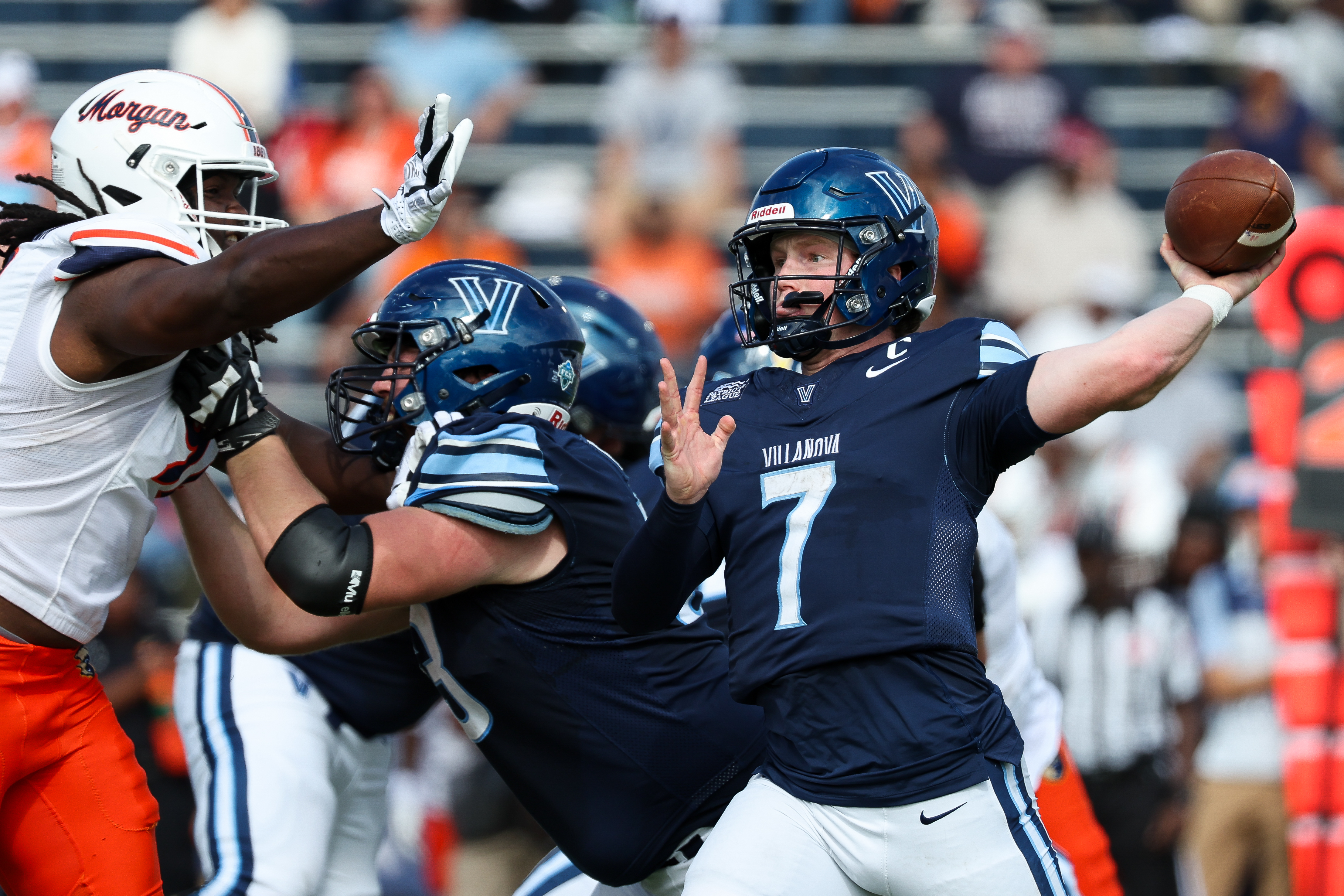
    In a game where Villanova was favored to win by two or more possessions, it traded scores with Morgan State all the way until the final seconds of regulation. With 2 seconds left, Villanova sophomore kicker Dom LeBlanc attempted a 47-yard field goal to force overtime. However, LeBlanc missed just his second attempt of the season, and Villanova fell to Morgan State, 38-35.

    The loss marked the Wildcats’ fourth consecutive home defeat.

    Villanova (2-4) has yet to win consecutive games this season and has not won inside Villanova Stadium since last November.

    “Yeah, I mean, just trying to give us a chance to tie the game,” graduate quarterback Pat McQuaide said on the last drive. “We have a ton of confidence in our kicker. I mean, he’s been great all year, and we still have a ton of confidence in him. I mean, the goal was to get an opportunity to tie the game and go to overtime. Or if there was an opportunity, to score a touchdown. Obviously, you want to do that. Like I said, he’s still our guy, and I’ll still take him 10 times out of 10.”

    Morgan State Bears wide receiver Justin Perry runs on one of his five receptions in the win over the Wildcats. Isaiah Vazquez / For The Inquirer

    McQuaide completed 22-of-28 pass attempts for 266 yards, marking the most passing yards the fifth-year QB has had since the season opener against William & Mary. McQuaide also threw an interception after a pass breakup tipped the ball into the air, into the hands of Morgan State (4-1).

    Morgan State quarterback Cameron Edge completed 31-of-41 passes for 444 yards and three touchdowns. His longest pass of the day was for 79 yards.

    Villanova’s dual-headed backfield

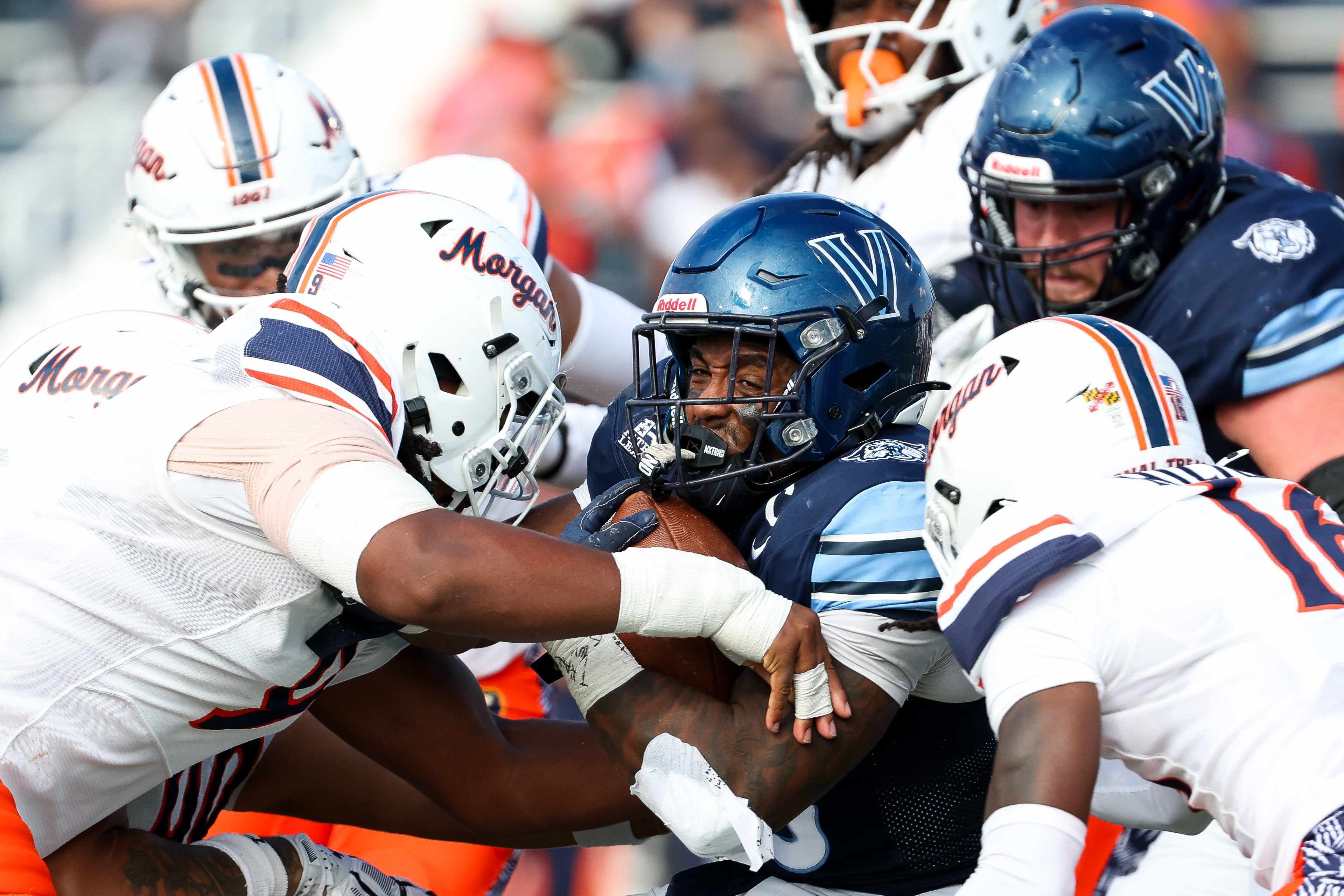
    Villanova’s running back duo of Ja’briel Mace and Isaiah Ragland combined for five touchdowns and 182 yards on the ground.

    Mace rushed for 105 yards, which marked the first 100-plus-yard game from a Wildcat this season.

    “Ja’briel and [Ragland] are unbelievable,” McQuaide said. “The guys in front did a great job. The offensive linemen with tight ends. Even the receivers, getting in there and blocking. Those guys do a great job every week. And Rags and Ja’briel are great players. And I’ve said this before, but they don’t do what they do without those guys in front of them. So you’ve got to give credit to everybody. It’s not just those two.”

    Villanova running back Ja’briel Mace runs the ball during the third quarter against Morgan State on Saturday.Isaiah Vazquez / For The Inquirer

    Defense has its ‘highs and lows’

    Villanova sophomore defensive back Jamie Tyson intercepted Edge in the end zone on fourth-and-7 with 2:45 left to play. At the time, Villanova led, 35-31.

    The Wildcats were in position to win with a two-possession, while uncomfortable, lead.

    Tyson’s interception came after Villanova’s defense allowed Morgan State to convert big, chunk yardage plays. The Bears had nine plays of 15 or more yards, with three of them being larger than 45 yards.

    Villanova running back Isaiah Ragland (center) fights for yardage against a group of Morgan State defenders on Saturday.Isaiah Vazquez / For The Inquirer

    In comparison, Villanova only had four plays that were greater than 15-plus yards.

    Morgan State would score the eventual game-winning touchdown on a six-play, 56-yard drive, which took just 1:15 off the clock..

    “We weren’t consistent today,” Omari Bursey said. The redshirt sophomore linebacker led Villanova with nine total tackles (seven solo), one sack, one quarterback hit, and one tackle for a loss. “We had some great highs, but we had a good amount of lows too. So it’s kind of just, we got to stay steady.”

    Up next

    Villanova now has a bye week before returning to Patriot League play on the road against Fordham (1-5, 1-2 Patriot League) on Saturday, Oct. 17 (3:30 p.m., ESPN+).

    “Yeah, we’ll see how our guys respond,” Ferrante said when asked about the upcoming week off. “I mean, they’re still in class next week, so it’s not like they have a week ‘off.’ And then we have an extra week to prepare for the next opponent, which is Fordham. So we’ll clean this up tomorrow, just like we do on every Sunday.”

    The last time the two programs faced off was in 2015. Villanova defeated Fordham, 14-7, on the road in the Bronx. The Wildcats are 3-1 all-time against the Rams.