Tag: topic-link-auto

  • Vic Fangio reveals that Jalen Hurts lost a step in 2025, but he’s back, which is huge for the Eagles

    Vic Fangio reveals that Jalen Hurts lost a step in 2025, but he’s back, which is huge for the Eagles

    Despite his implication that American hero Dr. Anthony Fauci somehow acted improperly during the COVID-19 pandemic, and despite his denials that he was considering retiring over the winter (he was), Vic Fangio is a compulsive truth-teller — at least, in his own mind. He dogged the Dolphins when he was there, he’s told us that Jalen Carter has been out of shape, and he said last year that Adoree’ Jackson was playing so badly he might not start.

    On Tuesday, Veritas Vic revealed a truth about 2025 that had been self-evident:

    Jalen Hurts lost a step.

    From 2021-24, Hurts was the second-most dynamic running quarterback in the NFL, a sabertooth tiger on the hunt. But in 2025 he looked like a woolly mammoth trying to escape the La Brea Tar Pits.

    Teams no longer feared his ability to convert first downs and his ability to turn broken plays in the red zone into rushing touchdowns or scramble TD throws.

    Expect that fear to return.

    In public last year, Hurts, his coaches, and the front office swore that there was no real difference in Hurts’ speed. In Fangio parlance, they pled the Fifth (Fangio last week ripped Fauci’s performance at a Senate hearing: “I’m gonna be like Fauci and just take the Fifth Amendment on all questions.”).

    In private, NFL sources swore that Hurts was not the same player in 2025 that he had been in previous seasons.

    Just two weeks into 2026 training camp, for Fangio, the difference is palpable.

    Fangio was asked his perspective as a defensive coordinator regarding how Hurts was acclimating to the new offense being installed by first-year offensive coordinator Sean Mannion. Fangio did not hesitate:

    “He looks faster,” Fangio said.

    There you have it.

    In training camp practices, Hurts is eluding would-be tacklers the way he used to do. He’s breaking into the clear. He’s turning the corners. He’s finding gears he didn’t have in 2025, and, you can assume, he’ll locate the overdrive level that once struck fear into the hearts of defenders league-wide.

    Vic Fangio’s comments on Jalen Hurts’ increased speed were telling. Yong Kim / Staff Photographer

    True, it’s just practice, but Fangio made it clear that Hurts didn’t perform this way this time last year. And no, it’s not as if Hurts’ defensive teammates can snag an arm or foot as he blasts past them, but Fangio’s been coaching pro football for more than 40 years, so you can trust him to gauge a quarterback’s potency.

    “Obviously, we can’t touch him during practice,” Fangio said. “There’s been a few times where our guys think they had him and they really didn’t. He’s moving good.”

    Last year, offseason reports surfaced that said Hurts wanted game plans to include fewer designed runs. Hamstring, ankle, shoulder, and finger issues cost Hurts time from 2020-23. A concussion in Game 16 of 2024 cost him the final two games of the season, though he returned in fine fettle and led the Eagles to the Super Bowl LIX title.

    Things clearly changed for Hurts in the 2025 season. In his first four full seasons as a starter he’d averaged 9.9 rushing attempts and 44.8 yards per game. Last season he averaged 6.6 runs for 26.3 yards. He averaged 13 rushing touchdowns in his first four full seasons. He scored eight last year.

    There were other factors.

    Offensive linemen Lane Johnson, Landon Dickerson, and Cam Jurgens all missed time with chronic injury issues that also diminished their effectiveness when they did play.

    After a grueling, record-setting first season as an Eagle, featured back Saquon Barkley was far less explosive.

    First-time offensive coordinator Kevin Patullo was overmatched, and head coach Nick Sirianni was powerless to help him.

    Star receiver A.J. Brown so badly regressed physically, mentally, and psychologically that the Eagles traded him for pennies on the dollar at a massive salary-cap hit on June 1.

    And, finally, defenses realized that, all things being equal, they would rather force Hurts to beat them with his legs than Barkley, since Barkley was a home-run threat every time he was handled the ball. Then defenses realized that Hurts couldn’t beat them with his legs anymore.

    Between 2021-24, Hurts ran for 267 first downs, 31 more than 2024 MVP Josh Allen, who was second, and 67 more than 2023 MVP Lamar Jackson, who was third. Hurts averaged 66.8 first downs in those four years. He ran for 37 first downs last season.

    Hurts’ absence of speed answers questions independent of his abilities. It answers questions about his motivation.

    The insidious question that loomed last season:

    Was Hurts protecting himself because, with the Super Bowl title and a Super Bowl MVP in his back pocket, even a modestly productive season was likely to produce a massive contract extension?

    Eagles fans saw less running from Jalen Hurts in 2025. Yong Kim / Staff Photographer

    Hurts is under contract through 2028, but 2026 is his last fully guaranteed season. Historically, the Eagles reward their best young players with early extensions that generally serve two purposes: Early extensions give the player cash in his pocket right away, and, if the player continues to play well, they give the Eagles a bargain — a player paid below comparable talents at comparable positions.

    But Hurts didn’t have a moderately productive season. He had a poor season. The passing game, ranked 23rd, was abysmal considering its weapons. Hurts’ passer rating dropped from 103.7 in 2024, which ranked fifth, to 98.5 in 2025, which ranked 12th. His quarterback rating, which attempts to include all aspects of the position, fell from 62.5 in 2024, which was 10th, to 55.2 in 2025, which was 20th.

    There was no extension in the offing. That might change during or after 2026, if, as Fangio says, he’s got his legs back.

    And if he’s willing to use them.

  • Tight end in the new Eagles offense is a ‘blue collar job’ that will be key to the team’s success in 2026

    Tight end in the new Eagles offense is a ‘blue collar job’ that will be key to the team’s success in 2026

    New Eagles tight end Johnny Mundt likens his occupation as a tight end in the NFL to “a blue collar job.”

    “Getting it done in the trenches next to the big guys is something I take pride in,” Mundt said after a recent Eagles practice.

    It is why the Eagles signed the 31-year-old veteran. Their tight end corps lacked a requisite handyman in 2025. Dallas Goedert was his normal self as a weapon in the passing game, but his effectiveness as a blocker took a step back. Grant Calcaterra, meanwhile, is most useful as a pass catcher and not doing the dirty work in the trenches.

    New offense, new tight end.

    But the merit in Mundt’s signing was twofold. Not only has he been one of the better blocking tight ends in recent seasons, but he also broke into the NFL playing in Sean McVay’s offense and learned how to become a multifaceted tight end in a style of offense — the Kyle Shanahan-McVay system — that the Eagles are adopting under first-year offensive coordinator Sean Mannion.

    How will the Eagles replace A.J. Brown’s production? Will the offensive line be healthy enough? Can Jalen Hurts learn a new system and thrive? Those are worthy questions to contemplate when trying to evaluate what happens next with the 2026 offense, but the tight end position will be an underrated element to the engine.

    The Eagles are asking their tight ends to do new things. The tight end in the wide zone running scheme is a critical cog, and Goedert, for example, will be asked to block at the point of attack more than he ever has. Tight ends have been crucial to executing the Shanahan-McVay scheme successfully.

    Johnny Mundt (83) is among the new faces for the Eagles at tight end. Tyger Williams / Staff Photographer

    Nick Sirianni has used the term “marrying the run and pass” so often that he’s probably at this point ordained to officiate a wedding.

    “We’re huge in that,” Mundt said. “Being attached to the line of scrimmage, being the point of attack on a lot of these blocks, you can do a lot of play-action stuff off that. The marriage of the run and the pass has been core to this offense ever since its start.”

    Attached at the hip

    The Eagles are installing an offense with more motion and play action. They are shifting from an offense that got to the line of scrimmage, read the defense, and tried to play chess to one that gets to the line of scrimmage and tries to attack.

    In the new scheme, Shawn Syed of SumerSports calls the outside or wide zone run “home base.” It is effectively the starting point. The Eagles were formerly a running offense that utilized a lot of inside zone and gap scheme runs. Now, they’ll be implementing more outside or wide runs that aim to stretch the defense horizontally.

    The Eagles have athletic tackles in Jordan Mailata and Lane Johnson, but the tight end is a key part of outside running success. Assuming a run is going to the strong side, the back will set his running track to the outside hip of the tight end while starting to read the defense. A run to the strong side requires the tight end to block at the point of attack and seal off the edge.

    “Our aiming points have changed, the back path has changed,” Goedert said recently. “Still trying to get comfortable with it, but I’ve been enjoying it. I think it makes our job as tight ends easier, being able to use the path of the running backs to help stretch the defense and trusting that the running back is going to make us right is a big piece of it.”

    Johnny Mundt (86) most recently played in Jacksonville and has experience with new coordinator Sean Mannion, including as his teammate. Maria Lysaker

    Sometimes, sealing an edge means going up against a bigger edge defender. Tight ends in this scheme sometimes motion into the backfield before a snap. Sometimes they line up at fullback. They’re then sometimes asked to execute a wham block against an interior defensive lineman, some of whom are more than 300 pounds.

    “It’s sometimes a mismatch, but with the right technique and leverage, you can take care of it,” Mundt said.

    “If you trust what you’re coached to do and you can win the first half of the snap, you’re going to put yourself in a better position to have success. It comes down to technique and attitude and effort.”

    Personnel packages

    It’s important to note that there’s no one-size-fits-all rule for the offense when it comes to personnel deployment.

    Last year San Francisco under Shanahan, and Miami under Shanahan disciple Mike McDaniel ran more 21 personnel (two running backs, one tight end) than any other team in the league. Both teams had a versatile fullback. But Shanahan’s offense in Atlanta ran a lot of 13 personnel (one running back, three tight ends).

    McVay also has deployed different personnel packages that suited his roster. A few seasons ago, when the Rams had Cooper Kupp and Puka Nacua, two of the best blocking receivers in the league, the Rams ran the highest rate of 11 personnel (one back, one tight end, three receivers) in the league. They used condensed sets and had receivers lined up close to the offensive line.

    But with Kupp on a different team, the Rams last season used 13 personnel on a league-high 30.5% of their offensive plays, according to SumerSports. That was more than double the rate of the team (Pittsburgh) with the second-highest usage rate of 13.

    Eagles coach Nick Sirianni (center) talks to Los Rams coach Sean McVay (left) before a 2023 game. David Maialetti / Staff Photographer

    Green Bay, meanwhile, ran the fifth-highest rate of 12 personnel (one back, two tight ends), which the Packers deployed on 33.8% of their offensive snaps, and used 11 personnel on 55.6% of their snaps.

    Moral of the story: teams adapt their formations to the makeup of their roster.

    What does that mean for the Eagles?

    It remains to be seen how the Eagles deploy their personnel. Given their roster, 12 personnel seems like a pretty friendly position grouping that will keep Mundt on the field as a blocker and allow Goedert to use his versatile skill set to impact both the blocking and passing game. They also have a few receivers who can block in Darius Cooper and Makai Lemon, though both are inexperienced at the NFL level.

    Perhaps there’s a world where second-round pick Eli Stowers, who has been open about his struggles adapting to the NFL game during camp, gets on the field and the Eagles deploy some 13 personnel. There’s also Cameron Latu, who can play fullback if needed. Calcaterra, meanwhile, is back with the Eagles and has gotten some recent first-team reps. The likeliest scenario has the Eagles keeping four tight ends on the initial 53-man roster: Goedert, Mundt, Stowers, and Latu.

    ‘A workmanlike mentality’

    Eagles tight ends coach Ryan Mahaffey was a college tight end who made the transition to fullback. Mahaffey worked with Mannion in Green Bay and also has the title in Philadelphia of run game coordinator.

    Mahaffey said in the spring that tight end is a “unique” position at the “cross section” of the offense being part of the passing game, the running game, and being involved in pass protection.

    “I think tight ends, generally speaking, they’re intellectual guys,” Mahaffey said. “They got a little bit of a lineman mindset to them where they’ve got a workmanlike mentality and then you also get the pass-catching aspect of things.”

    A lot has been made about the new blocking technique being asked of Goedert, but it’s not hard to imagine him having a major role in the passing game. Without Brown, the Eagles have DeVonta Smith and then some question marks behind him when it comes to who Hurts will be able to rely on to consistently make plays.

    Eagles tight end Dallas Goedert works on footwork drills during training camp practice earlier this month. Jose F. Moreno / Staff Photographer

    The new offense utilizing more under-center play action should create opportunities for Goedert to impact the offense with his hands. George Kittle has long dominated in the 49ers’ offense as a tight end who blocks well in the running game and gets open in the passing game. Green Bay often found ways to get Tucker Kraft the ball. And the Rams had three tight ends with at least 24 catches last season.

    The Eagles are in the early stages of putting it all together, and there’s still so much more of the offense that hasn’t been shown during the practices open to media.

    Mundt so far has acted like a translator of sorts during camp.

    “I’ve taken a few guys and taken a play and said, ‘This is how I look at it,’ and it marries well to how we’re coaching it,” he said.

    He arrived in Los Angeles in 2017 as an undrafted free agent out of Oregon who viewed himself as a pass-catching tight end. The Rams, he said, taught him how to get hands on defenders and take the steam out of a pass rusher. He morphed into a reliable blocker who had just 13 targets in his first four NFL seasons. Mundt overlapped with Mannion when the two played for Minnesota under former McVay assistant Kevin O’Connell. He was used more there in the passing game, and all four of his NFL touchdowns came with the Vikings. But he had just nine catches last year under Liam Coen — another former McVay assistant — in Jacksonville.

    Mundt signed a one-year deal with the Eagles worth just $1.5 million. He said he was happy to be able to join a franchise that always seems to be competing for a championship. The Eagles were looking for some value and to upgrade their blocking chops at the tight end spot. The fit has been a good one so far.

    “It’s a lot of what I’ve been brought up doing, a lot of point-of-attack blocking, making plays in the pass game, just being a multidimensional tight end and helping out any way I can,” Mundt said.

  • ‘Shoeless’ Joe Jackson is known for ‘Field of Dreams’ and the Black Sox. But his career started in Philly.

    ‘Shoeless’ Joe Jackson is known for ‘Field of Dreams’ and the Black Sox. But his career started in Philly.

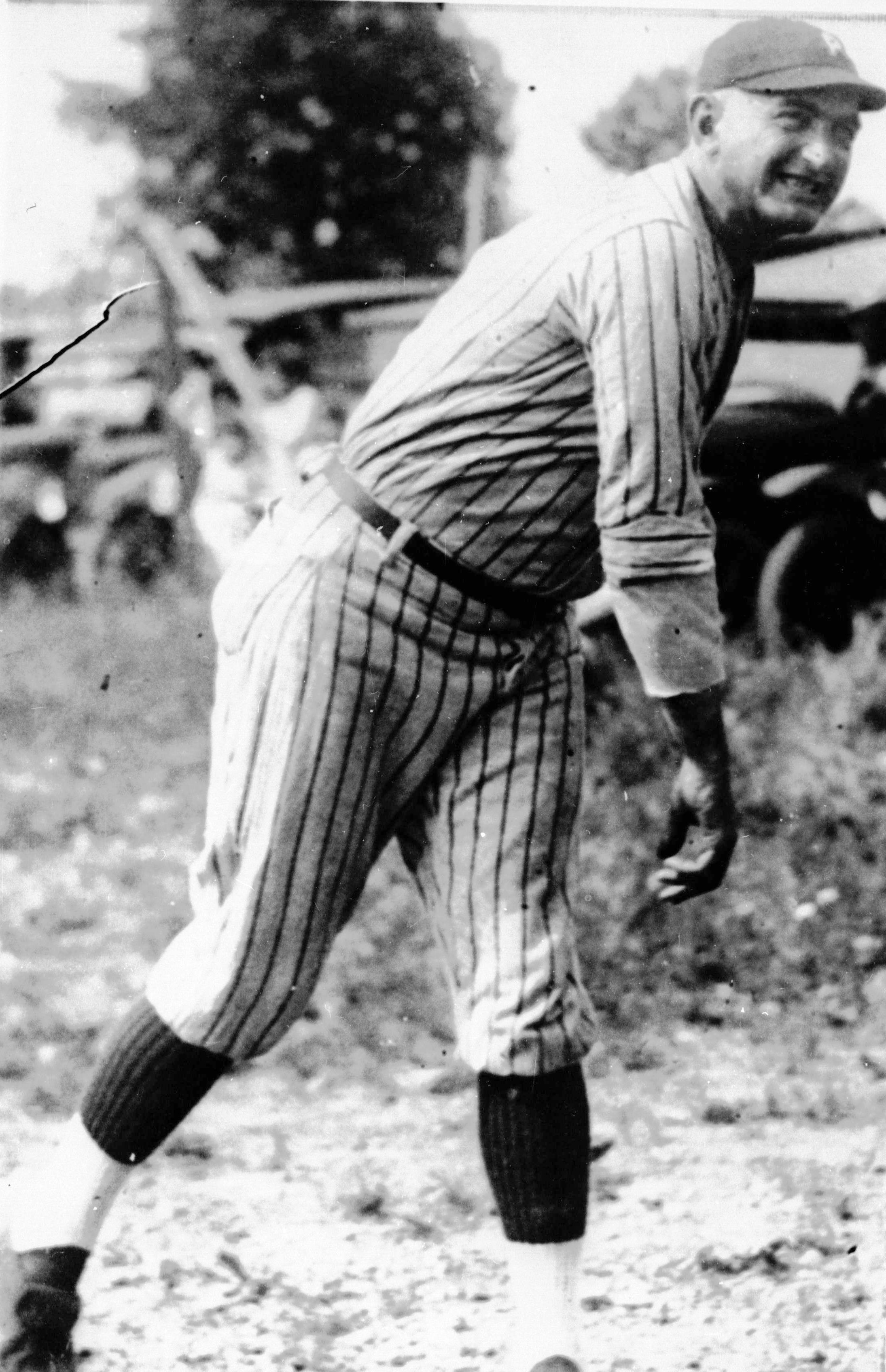
    It was just the previous season that Joe Jackson played a game without cleats, so he had only been “Shoeless Joe” for a few months. Yet it was already obvious that Shoeless Joe was destined to be a star. That’s why Jackson was on a sleeper train bound for Philadelphia in August of 1908.

    Philadelphia Athletics manager Connie Mack had dispatched three scouts — including his top lieutenant — earlier that summer to get eyes on Jackson in Greenville, S.C., before signing him for $900.

    But Jackson didn’t want to leave his tiny South Carolina hometown. He had just turned 21 years old and was married weeks earlier. A son of a sharecropper, Jackson never went to school and was thrilled to be earning $75 a week for the Greenville Spinners.

    Jackson, leery of life up North in the big city, delayed his trip while another teammate whom Mack signed left for Philly.

    Shoeless Joe finally relented and boarded the train with his minor-league manager Tom Stauch, who was instructed to deliver Mack the player an A’s scout described as “the sweetest hitter I’ve ever seen.”

    Stauch woke up when the train pulled into Philadelphia. Jackson wasn’t there. He hopped off overnight during a stop in North Carolina while everyone was sleeping. Jackson sent Mack a telegram, claiming that his mother was ill and he had to take care of her. Shoeless Joe would one day become baseball royalty before being blackballed in one of sports’ greatest scandals. But he had no interest in playing for the A’s.

    “Connie Mack understood,” said Dan Wallach, the former executive director of the Shoeless Joe Jackson Museum in Greenville, S.C.

    “Shoeless” Joe Jackson was a .356 career hitter over 13 seasons.Anonymous

    Field of Dreams

    Shoeless Joe will be remembered Thursday night when the Phillies play the Twins in an Iowa cornfield where the 1989 film Field of Dreams was shot. The portrayal of Jackson — “Is this heaven?” his character, played by Ray Liotta, famously asked after emerging from the stalks — is an iconic piece of Hollywood lore.

    His baseball career was made for movies, so much that films — the other being 1988’s Eight Men Out — were released in consecutive years about Jackson. He was a baseball superstar who became tied up in a gambling scandal that nearly took down the sport after Jackson and seven Chicago White Sox teammates were banned for life amid accusations of throwing the 1919 World Series.

    Jackson denied until his death at age 64 in 1951 that he lost on purpose and a legion of supporters have since worked to clear his name.

    Major League Baseball clarified in 2025 that Jackson — along with Pete Rose — was no longer banned as lifetime penalties expire once someone died. So Jackson’s Hall of Fame case will be voted on in December 2027 by a panel assembled by the museum.

    “I have never advocated for him to be inducted into the Hall of Fame because I think he’s more famous outside the Hall than in it,” said Wallach, who now hosts a baseball podcast called My Baseball History. “Obviously, I think his play and his career warrants that he be honored the way his contemporaries are. But the entire thing that makes his story unique and gives people a reason to fight for him is that he belongs in the Hall of Fame and he’s not in it. So the day he gets in it, there’s no story anymore. I have mixed emotions about him getting in.”

    Jackson, like he is portrayed in Field of Dreams, is best remembered for his time with the White Sox. He won the World Series in 1917 and then hit .375 in the 1919 Series against Cincinnati that the “Black Sox” were accused of throwing. He’ll always be known for the years in Chicago. But his big-league career started in Philadelphia.

    “He didn’t spend a ton of time in Philadelphia,” Wallach said. “But it was an interesting footnote to his career.”

    Ray Liotta portrayed “Shoeless” Joe Jackson in the classic 1989 film “Field of Dreams.”UNIVERSAL / MCT

    It started in Philly

    Mack sent Socks Seybold, a player who scouted Jackson earlier that summer, back to South Carolina in hopes of persuading Jackson to give Philly a chance. Seybold found Jackson working at a cotton mill. Shoeless Joe said he would come to Philadelphia but he had to bring his wife, Katie. The A’s agreed.

    Mack usually required his players to be high school educated and preferred that they went to college. But Jackson didn’t even know how to read or write. He never signed autographs and carried a copy of his signature signed by his wife in his wallet that he would trace if he had to complete a legal document.

    “He knew the lines he was making on the paper spelled ‘Joe Jackson,’ but I don’t think he knew he was writing a ‘J’ and writing an ‘O’ and writing an ‘E,’” Wallach said. “I don’t think he knew exactly what he was doing, but he could mimic the paper.”

    That’s how much Mack thought of Jackson’s ability that the owner overlooked his education. Mack offered to get Shoeless Joe a tutor and tried to find ways for him to get comfortable in Philadelphia. But there was little Mack could do.

    The A’s players teased Jackson when they went out to dinner and he held his menu upside down.

    “If the waitress came to him first, he would say, ‘Give me a second and let everyone else order,’” Wallach said. “He would listen to his teammates’ orders and whatever he thought sounded the best, that’s what he would order when it came back to him. His teammates weren’t stupid. Most of them were college educated. They saw exactly what was going on. He just didn’t feel comfortable being there.”

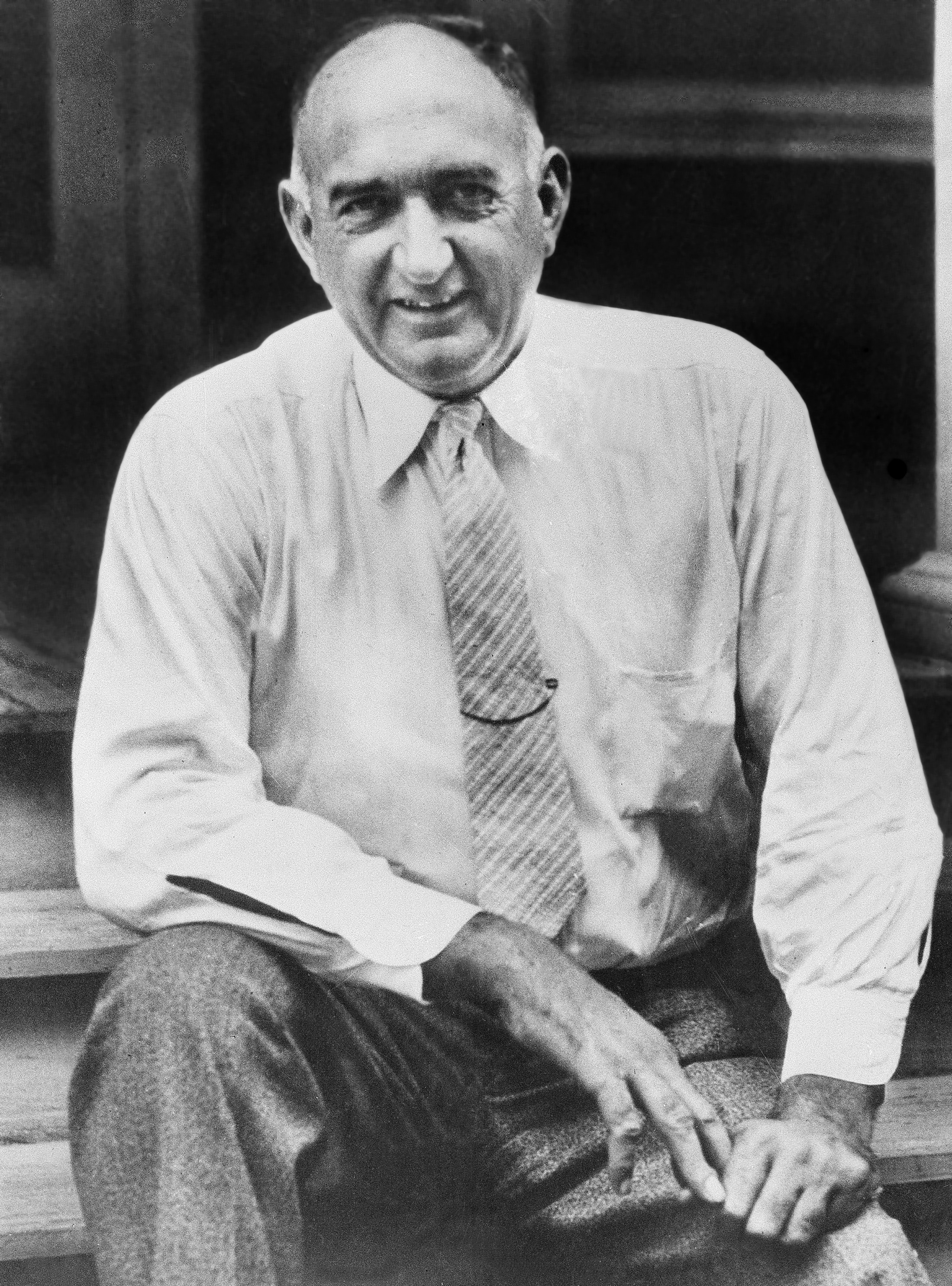
    “Shoeless” Joe Jackson is shown in 1935. He owned businesses in Savannah, Ga., and Greenville, S.C. He died in 1951.ASSOCIATED PRESS

    Jackson played five games for the A’s in 1908 at Columbia Park in Brewerytown before playing the next season in Savannah, Ga., where he led the South Atlantic League with a .358 batting average. Mack called Jackson back to Philadelphia for the final month of the 1909 season and he again played five games at the newly opened Shibe Park at 21st and Lehigh.

    “Connie Mack did what he could to make Joe’s time in Philadelphia positive,” Wallach said. “But it just wasn’t going to work. It became clear pretty quickly that Joe was talented and was going to be a star but that wasn’t going to happen with the Athletics.”

    Mack traded Jackson before the 1910 season to Cleveland, knowing the player he lured to Philadelphia would be better suited elsewhere.

    Jackson’s career is now cleared to reach Cooperstown, N.Y., via the Classic Baseball Era Committee. It might not happen in December 2027, but he will eventually be enshrined. The numbers — his career .356 average is fifth best all-time — are too strong to deny.

    His plaque will likely detail the betting scandal, his trusty bat Black Betsy, and his time in Chicago and Cleveland, where his career blossomed after Mack sent him there.

    But the first line under Jackson’s nickname will say “PHILADELPHIA” as Shoeless Joe’s iconic career started with 10 games in North Philly that have long been forgotten.

    “Connie Mack said he regretted selling Jackson to Cleveland,” Wallach said. “They really had a mutual respect for each other. Connie Mack wanted Joe to work out in Philadelphia. He knew he was going to be a star. He knew he had this ability. He won batting titles in every league before Philadelphia. He was great.

    “But it was like he traded him to Cleveland out of mercy because he wanted him to have success. It was clear to him that that wasn’t going to happen in Philadelphia.”

  • UFC 330 is coming to Philadelphia this weekend. Here’s everything to know, from local fighters to the match schedule.

    UFC 330 is coming to Philadelphia this weekend. Here’s everything to know, from local fighters to the match schedule.

    The Ultimate Fighting Championship is returning to Philadelphia.

    On Saturday, Xfinity Mobile Arena will host UFC 330, the first time the city has hosted a numbered event since 2011. Saturday’s 12-fight slate includes two title bouts. In the women’s strawweight division, Brazil’s Mackenzie Dern will defend her title against Canada’s Gillian Robertson. Then, Russia’s Islam Makhachev is slated to take on Irish challenger Ian Machado Garry in the men’s welterweight championship.

    Here’s everything you need to know:

    What’s at stake in the title fights?

    Saturday will be the first time Makhachev is putting his title on the line after winning it at UFC 322 in November.

    Makhachev (28-1-0) is a two-weight world champion and currently on a 16-fight winning streak — tied for the longest in UFC history. Machado Garry (17-1-0) comes in as the underdog, but his size may prove advantageous in the Octagon. The Irishman is listed at 6-foot-3 while Makhachev comes in at 5-11.

    UFC fighter Mackenzie Dern will defend her women’s strawweight title on Saturday in Philly.Elizabeth Robertson / Staff Photographer

    Meanwhile, Dern (16-5) will also put her title on the line for the first time. She won the belt last October after defeating Virna Jandiroba at UFC 321 in Abu Dhabi. Her opponent, Robertson (17-8), has won five straight fights entering Saturday.

    Is anyone from the area fighting?

    Philadelphia’s own Jeremiah Wells will fight Kyrgyzstan’s Myktybek Orolbai in an early preliminary welterweight fight.

    Wells, 39, is a West Philly native who attended Overbrook and boasts a 13-4-1 record. Before joining the UFC, Wells actually worked at the Xfinity Mobile Arena (then the Wells Fargo Center), setting up concerts and other events. Now, he is looking to get his first UFC win in the arena. He currently trains in the Poconos.

    The 28-year-old Orolbai (16-2-1) will be a formidable opponent. The Kyrgyzstani has won his last three fights. Most recently, he defeated Chris Curtis via unanimous decision in March.

    When is the weigh-in?

    On Friday, the fighters will participate in a ceremonial weigh-in at Xfinity Mobile Arena. The event, which is open to the public, will start with a news conference at 5 p.m.

    The weigh-in will also be streamed for free on UFC.com and UFC’s socials accounts.

    When was the last time the UFC came to Philadelphia?

    In 2011, UFC drew a meager Philadelphia crowd — filling up just over half of the then-named Wells Fargo Center.

    That night, Taylor Swift sold out Lincoln Financial Field across the street. Expect a bigger crowd this weekend. The UFC has exploded in popularity in recent years and UFC president Dana White won’t be competing with Swift this time.

    Rashad Evans (right) defeated Tito Ortiz during their UFC 133 fight in 2011 in Philly.

    The 11-fight card in 2011 featured former light heavyweight champions Rashad Evans and Tito Ortiz. Evans knocked out Ortiz with a knee to Ortiz’s upper abdomen in the fight’s second round.

    “It was a great night, I got mad respect for Tito for taking this fight,” Evans told the Inquirer at the time.

    UFC’s most recent visit came in 2019 for a Fight Night card at the then-Wells Fargo Center, featuring a main event between Justin Gaethje and Edson Barboza.

    Are there any notable Philadelphians who fought in the UFC before?

    There have been quite a few. Here’s some notable names:

    Eddie Alvarez: Alvarez (30-8) grew up in Kensington. Alvarez, nicknamed the “The Underground King,” is widely considered to be one of the best lightweight fighters ever. He has won two Bellator lightweight championships and one UFC championship. His last official fight came in 2021, a loss to South Korea’s Rae Yoon Ok.

    Kyle Daukaus: Daukaus (17-5) grew up in Northeast Philadelphia. He was most recently featured on the White House fight card, where he was knocked out by Bo Nickal, a former Penn State wrestler. Before joining the UFC, Daukaus previously worked as a police officer in North Philadelphia’s 25th District.

    Andre Petroski: Petroski (13-7) grew up in Chester and attended Springfield High School. When he’s not in the Octagon, Petroski moonlights as one of the Flyers’ fighting coaches. He has lost his last three fights.

    Pat Sabatini: Sabatini (22-5) most recently saw action at May’s UFC 328, winning his fourth consecutive fight. He began training in Northeast Philly at 5 years old.

    Sean Brady: Brady (19-2), who defeated Joaquin Buckley via unanimous decision at May’s UFC 328, grew up in Northeast Philadelphia. He is a top-ranked welterweight fighter.

    “I think [Philadelphia fighters are] just really gritty, tough, hard workers,” Brady told the Inquirer in 2025. “And anyone who’s ever seen us train at our gym, they just see how hard we train and we wear that as a badge of honor”

    How do I get tickets?

    Tickets are still available to purchase from Ticketmaster and other verified secondary markets.

    How can I watch at home?

    The UFC has an exclusive deal with Paramount+, meaning that any viewers must subscribe to the streaming platform to watch Saturday’s fights. Plans start at $8.99 per month.

    UFC fighter Justin Gaethje poses with fans after a workout in Philadelphia in 2019.Jacqueline Larma

    What else is going on?

    UFC is hosting a fan experience event outside of Xfinity Mobile Arena on Saturday. The event will run from 2 to 6 p.m.

    Attendees can take a photograph with the UFC Championship belt, buy merchandise, and take a swing at the “UFC Striking Challenge.” There will also be opportunities to meet select UFC athletes from 2 p.m. to 3:30 p.m. and 4 to 5:30 p.m.

    What is the full schedule?

    Early Prelims, 4:30 p.m. start

    • Jeremiah Wells vs. Myktybek Orolbai, men’s welterweight
    • Neil Magny vs. Ramiz Brahimaj, men’s welterweight
    • Rafael Tobias vs. Lucas Fernando, men’s light heavyweights

    Prelims, 6 p.m. start

    • Tresean Gore vs. Vicente Luque, men’s middleweights
    • Eric McConico vs. Donte Johnson, men’s iddleweights
    • Jalin Turner vs. Kauê Fernandes, men’s lightweights
    • Chidi Njokuani vs. Joel Álvarez, men’s welterweights

    Main Card, 8 p.m. start

    • Esteban Ribovics vs. Edson Barboza, men’s lightweights
    • Dustin Stoltzfus vs. Mansur Abdul-Malik, men’s middleweights
    • Jose Ochoa vs. Charles Johnson, men’s flyweights
    • Mackenzie Dern vs. Gillian Robertson, women’s strawweight
    • Islam Makhachev vs. Ian Machado Garry, men’s welterweight
  • Big man Luigi Suigo has arrived at Villanova. His journey to the 2027 NBA draft is underway.

    Big man Luigi Suigo has arrived at Villanova. His journey to the 2027 NBA draft is underway.

    Luigi Suigo has only been on campus for a few weeks, but he’s already had his Villanova rite of passage.

    Assistant coach Ricky Harris took Suigo to Campus Corner, the longtime pizza shop on Lancaster Ave., and Suigo, a 7-foot-3, 19-year-old from Italy, was overwhelmed by all the menu options.

    Harris asked: “Have you ever had a cheesesteak?”

    Suigo didn’t know what it was, he said, but let Harris lead the way. The cheesesteak was “crazy good,” Suigo said, though he said Villanova general manager Baker Dunleavy playfully cautioned against having too many of them.

    “Maybe I’ll have them in secret,” said Suigo, who goes by “Gigi.”

    He better get them in while he can. Suigo’s stay on the Main Line is not expected to be long. The freshman big man, who played professionally last season with Serbia’s Mega Basket, is expected to join the short list of modern Villanova players who are on campus for one season before being selected in the NBA draft.

    Cam Whitmore did it in 2023, but before that was Tim Thomas all the way back in 1996. Suigo arriving at Villanova has rivaled the excitement of those players and even Jalen Brunson, who was a McDonald’s All-American before he played at Villanova for three seasons.

    Suigo went through the draft process this offseason and participated in the NBA draft combine before ultimately deciding to remove his name from the field and sign to play at Villanova. He likely is the highest-paid Villanova player in the nascent era of paying players. (Villanova, like all schools, does not publicly disclose the terms of player contracts, but it’s not hard to guesstimate that Suigo is making more than $3 million this season.)

    This makes Villanova seemingly a temporary stopping point for Suigo, but it is a rather critical one. Suigo was projected to be selected in the later stages of the first round of the 2026 NBA draft, though there was no guarantee. He is a talented big man with a versatile skill set whose shooting range stretches beyond the three-point line, but there are elements of his game that need to improve if he’s going to be worthy of the “Italian Wemby” nickname.

    That process already has started. Since arriving at Villanova at the end of July following a delay in his visa paperwork, Suigo has been working on conditioning. Suigo, who wants to be a lottery pick in next year’s draft, averaged 18.8 minutes in 26 games last season with Mega Basket. Working on his physique is a big part of what he’s doing right now on campus.

    It is a bit of a lonely time on an empty campus, Suigo said, but he’s in the gym most days running and dunking on the court, pedaling on the bike, jumping, and doing “everything to get me back in shape.”

    Besides his body, Suigo said he wants to expand the things he’s already good at, but also add an improved face-up element to his game from the perimeter. The NBA draft process also taught him about having a strong mindset, he said.

    “Even in workouts with NBA teams, they’re just trying to see if you’re weak and you give up, or if you’re strong even if you’re dead tired,” Suigo said. “You just keep going. I learned to be tougher, stronger with my mind before even my body.”

    Kevin Willard said in June that with some more development, the “sky is the limit” for Suigo, whose addition near the end of the offseason catapulted Villanova into discussion for a preseason top 25 ranking. With Suigo in tow, the Wildcats have a formidable front court and a versatile roster that can play big or small.

    “I think he maybe would have gotten drafted late in the first round, but he doesn’t want that,” Willard said. “He wants to make sure when he gets drafted he’s going to play. The big thing is I think he needs to get Americanized a little bit, to American basketball. I think that’s why college will be really good for him. Get in shape a little bit, just kind of get used to American basketball.”

    Willard flew overseas to see Suigo at least twice. Willard first went to see him with Dunleavy in Belgrade, Serbia, before he signed, and Suigo said Willard visited him again this summer in Italy.

    Suigo is from Tradate, in the province of Varese, in the Lombardy region of the country, and this is his first time living outside of Europe, but he said he’s not worried about the distance from home. He has lived away from Tradate before. Suigo described himself as a guy who can meet new people easily, who likes to play video games or go bowling, but also a guy who likes to sleep and recover from basketball and doesn’t mind being alone.

    Plus, he said, “I have my guys here.”

    Luigi Suigo says guard Tyler Perkins is “a machine.”Yong Kim / Staff Photographer

    He’s still getting to know his new teammates, but Suigo has been impressed by returning leading scorer Tyler Perkins.

    “Perk, he’s a machine, man,” Suigo said. “He’s that type of guy that works every day without saying nothing and he’s never tired. He just keeps working. I’m trying to be like him and be more tough.”

    Suigo, who will open his college basketball career in his home country when Villanova takes on Notre Dame in Rome on Nov. 1, said he expects to get along well with Willard, who he called “a good man and a good coach from what I’ve seen.”

    The visits from Willard are part of the reason why Suigo was sold that Villanova is the place to help him get to where he wants to go next. There’s money, sure, but it’s “the people, man,” Suigo said.

    “I like to be around these people,” he said. “I think they were more honest with me and it’s just a feeling. You have to feel it. When you make new friends or meet new people, you have to have a feeling for those types of people. I think they’re the right people to push me through everything and try to get me better, and also the type of people you can have dinner with and have fun.

    “I love it over here.”

  • Immigration courts in Pa., N.J., and Del. issued record number of deportation orders in June

    Immigration courts in Pa., N.J., and Del. issued record number of deportation orders in June

    Immigration courts in Pennsylvania, New Jersey, and Delaware are ordering people removed from the country in numbers not seen in at least a quarter century.

    At the Philadelphia immigration court — which hears cases for most Pennsylvania and Delaware residents — orders of removal or voluntary departure rose 71%, from 1,230 in May to 2,105 in June. At New Jersey’s courts, orders rose 47%, from 2,348 to 3,446.

    The figures are the highest since at least late 1997.

    “We’re definitely seeing an increase in removal orders where we may not have seen them in the past,” said Emma Tuohy, a partner at Philadelphia’s Simon, Choi & Tuohy and a past president of the American Immigration Lawyers Association’s Philadelphia chapter. “Cases are getting more difficult to win.”

    June’s cases bring to more than 46,000 the number of removal and voluntary deportation orders courts across the three states have issued since President Donald Trump’s return to office — slightly more than the total issued over the entirety of former President Joe Biden’s term.

    (function(){function e(){window.addEventListener(`message`,function(e){if(e.data[`datawrapper-height`]!==void 0){var t=document.querySelectorAll(`iframe`);for(var n in e.data[`datawrapper-height`])for(var r=0,i;i=t[r];r++)if(i.contentWindow===e.source){var a=e.data[`datawrapper-height`][n]+`px`;i.style.height=a}}})}e()})();

    (A voluntary departure order requires an individual to leave the country but, unlike a removal order, does not legally bar them from returning.)

    Local immigration attorneys say the surge in such orders reflects the Trump administration’s success in transforming immigration courts from independent arbiters of the law into components of a larger deportation machine. Immigration judges, they say, now often work in concert with government agents and attorneys to remove the maximum number of people from the country as quickly as possible, sometimes violating the due process rights of people who find themselves caught up in the system.

    Lilah Thompson, chief of immigration in the Community Defense Unit at the Defender Association of Philadelphia, has seen the trend in her own practice.

    “The immigration judges are on the same side as ICE and DHS, which is not supposed to be the case. They’re supposed to be neutral arbiters of the law,” Thompson said. “But that is not how it actually plays out.”

    Unlike typical federal judges, immigration court judges are not independent judicial branch officials but executive branch employees within the Executive Office for Immigration Review (EOIR), the agency responsible for overseeing the nation’s immigration courts system.

    EOIR officials declined an interview request for this article. In a statement, a Department of Justice spokesperson said: “The Justice Department is restoring integrity to our immigration system by hearing cases fairly, expeditiously, and uniformly, in accordance with the law.”

    The states’ record high figures and sharp month-over-month increases match the trend nationwide, as the country saw such orders rise by a third, to nearly 87,000. Nationally, more than 960,000 of these orders have been issued since Trump returned to office.

    June’s increases reflect a steady rise in such orders since then.

    Compared with January 2025, removal and voluntary departure orders were up nearly 300% in Pennsylvania and Delaware, and more than 280% in New Jersey. Nationally, removal orders were up almost 160%.

    The data were published by the Transactional Records Access Clearinghouse (TRAC), a data gathering and research organization that regularly acquires and analyzes such data from EOIR.

    Faster cases, more deportations

    As the number of deportation orders has reached all-time highs, such orders have also come to represent the vast majority of deportation case outcomes.

    In June, 90% of Pennsylvania and Delaware cases ended with an order of removal or voluntary departure. In New Jersey, 94% did. Nationally, about 89% of cases ended with such an order.

    Since the start of Trump’s second term, more than 85% of cases have ended with such orders. Under Biden, about 44% did. About two-thirds of cases ended in a removal or voluntary departure order during Trump’s first term.

    Rosina Stambaugh, a York-based immigration attorney, pointed to the faster pace of recent deportation cases as a major factor.

    “They’re scheduling a final hearing in like two weeks. Before, we’d have at least a month to prepare,” Stambaugh said. “To prepare for a final hearing in just two weeks is insane. We used to have at least 30, sometimes 45 to 60, days to prepare for a hearing.”

    (function(){function e(){window.addEventListener(`message`,function(e){if(e.data[`datawrapper-height`]!==void 0){var t=document.querySelectorAll(`iframe`);for(var n in e.data[`datawrapper-height`])for(var r=0,i;i=t[r];r++)if(i.contentWindow===e.source){var a=e.data[`datawrapper-height`][n]+`px`;i.style.height=a}}})}e()})();

    The faster pace is in part the result of judges refusing to offer continuances, lawyers say. Before, it was ordinary for a judge to delay a hearing so an attorney had more time to prepare. That is no longer the case.

    The change follows a series of rulings from the Board of Immigration Appeals (BIA) — the highest administrative body for interpreting immigration laws. One such ruling largely prohibited judges from extending cases based on future eligibility for relief.

    Stambaugh offered a client of hers as an example.

    After the man was arrested in an ICE sweep, his fiancée, an American citizen, raced to file marriage paperwork. The couple were scheduled to get married the day after his hearing. Stambaugh asked the judge to delay issuing a ruling, as the impending marriage would have granted new grounds for protection from deportation. The judge refused and the man accepted a voluntary departure.

    Tuohy pointed to another set of BIA decisions that has sped up cases — and made them harder to win.

    Those rulings instruct judges to order someone removed before providing them with an opportunity for a full hearing of their case in some circumstances.

    “So before anyone’s even had a chance to dive into the meat of the case — to really prepare evidence and prepare for the case — the judges are predetermining that the case is without merit and [removing] them,” Tuohy said.

    More people detained while facing deportation, the vast majority with no criminal record

    The increasing number of detained individuals is another factor fueling the surge in deportations, according to lawyers.

    In June, more than 11% of people receiving orders of removal or voluntary departure in Pennsylvania, New Jersey, and Delaware were in detention. That is up from 7% in January 2025. Since Trump returned to office, about one in four people in the three states was detained, compared with about 7% during the Biden administration and 29% during Trump’s first term.

    (function(){function e(){window.addEventListener(`message`,function(e){if(e.data[`datawrapper-height`]!==void 0){var t=document.querySelectorAll(`iframe`);for(var n in e.data[`datawrapper-height`])for(var r=0,i;i=t[r];r++)if(i.contentWindow===e.source){var a=e.data[`datawrapper-height`][n]+`px`;i.style.height=a}}})}e()})();

    Stambaugh said that in the past, when Immigration and Customs Enforcement agents encountered someone without legal status who did not have a criminal record, they would usually just issue a notice to appear before a judge or even let them go after advising them to seek legal status. That has changed.

    “It is 100% that ICE officers no longer have discretion in who they can detain,” Stambaugh said. “Now, if you come in contact with ICE and you’re not a lawful permanent resident or U.S. citizen, you’re detained.”

    As more people are detained during deportation proceedings, a smaller share of them have a criminal record.

    In June, just 1% of cases in Pennsylvania, New Jersey, and Delaware ending in an order of removal or voluntary departure were brought on grounds alleging a criminal violation, matching the share nationally. The last time more than 5% of cases ending in an order of removal or voluntary departure were brought under a criminal charge was December 2024, the month before Trump took office for his second term.

    “They’re trying to remove as many people as possible, and they’re going to go for low-hanging fruit, which is individuals out in the community who are doing nothing wrong,” Thompson said, referencing collateral arrests and those that have occurred during individuals’ ICE check-ins.

    A series of BIA rulings last year have also led to a growing detained population, lawyers say. In the most consequential of those, the board prohibited immigration judges from granting bond to people who entered the country without permission — regardless of the length of time they had lived in the United States or whether they had a criminal record.

    Previously, attorneys say they had adequate time to prepare cases. That is no longer true.

    “When you have to do these cases in two weeks, you don’t really have much to work with because the main person who has to get you evidence is stuck in detention,” Stambaugh said. “That’s what makes these cases a lot harder.”

    Share of people without legal representation increasing

    People with legal representation are far more likely to avoid an order of removal or voluntary departure. In June, 73% of such individuals in Pennsylvania, New Jersey, and Delaware courts had their cases end in removal vs. 98% of those who lacked legal representation, similar to national figures and long-standing trends.

    At the same time, the share of people without legal representation has steadily climbed in recent years.

    In June, a little under 24% of individuals in deportation cases in Pennsylvania, New Jersey, and Delaware had a lawyer. That is down from about 57% in January 2025. Since Trump returned to office, about one in three people in the three states had a lawyer, as compared with about 57% during the Biden administration and 52% during Trump’s first term.

    (function(){function e(){window.addEventListener(`message`,function(e){if(e.data[`datawrapper-height`]!==void 0){var t=document.querySelectorAll(`iframe`);for(var n in e.data[`datawrapper-height`])for(var r=0,i;i=t[r];r++)if(i.contentWindow===e.source){var a=e.data[`datawrapper-height`][n]+`px`;i.style.height=a}}})}e()})();

    Thompson, of the Defender Association of Philadelphia, said several factors were at play.

    First, the demand for attorneys has increased alongside the volume of cases, swamping supply.

    Second, cases both move more quickly and are more complex, limiting the number of cases attorneys can juggle at once.

    “Our ability to take on cases is so much less now because what a case requires now is so much more,” she said.

    And unlike Thompson and her colleagues, who offer their services at no charge, private lawyers are expensive and their fees reflect the increasing complexity of cases, meaning fewer people can afford them.

    Tuohy suggested the increase in detention is likely also making it more difficult for people to afford legal services.

    “You’re not working anymore if you’re in detention, right?” Tuohy said. “So then you’re asking your family to foot the bill, and that consideration [to hire an attorney] becomes even more difficult.”

    Stambaugh suggested an additional factor: The flurry of policy changes has led to immigration courts so stacked in the government’s favor that many immigrants may regard hiring an attorney as a waste of money since they will likely face deportation no matter the strength of their case.

    She has begun advising potential clients that their best option may be to keep their money and instead accept voluntary deportation.

    “In my opinion, you’re going to have to go back [to your home country], so you might as well keep your money and go find somewhere to live,” Stambaugh said.


  • Waltz feels like an old haunt, but this polished Italian restaurant delivers new flavors to deep South Philly

    Waltz feels like an old haunt, but this polished Italian restaurant delivers new flavors to deep South Philly

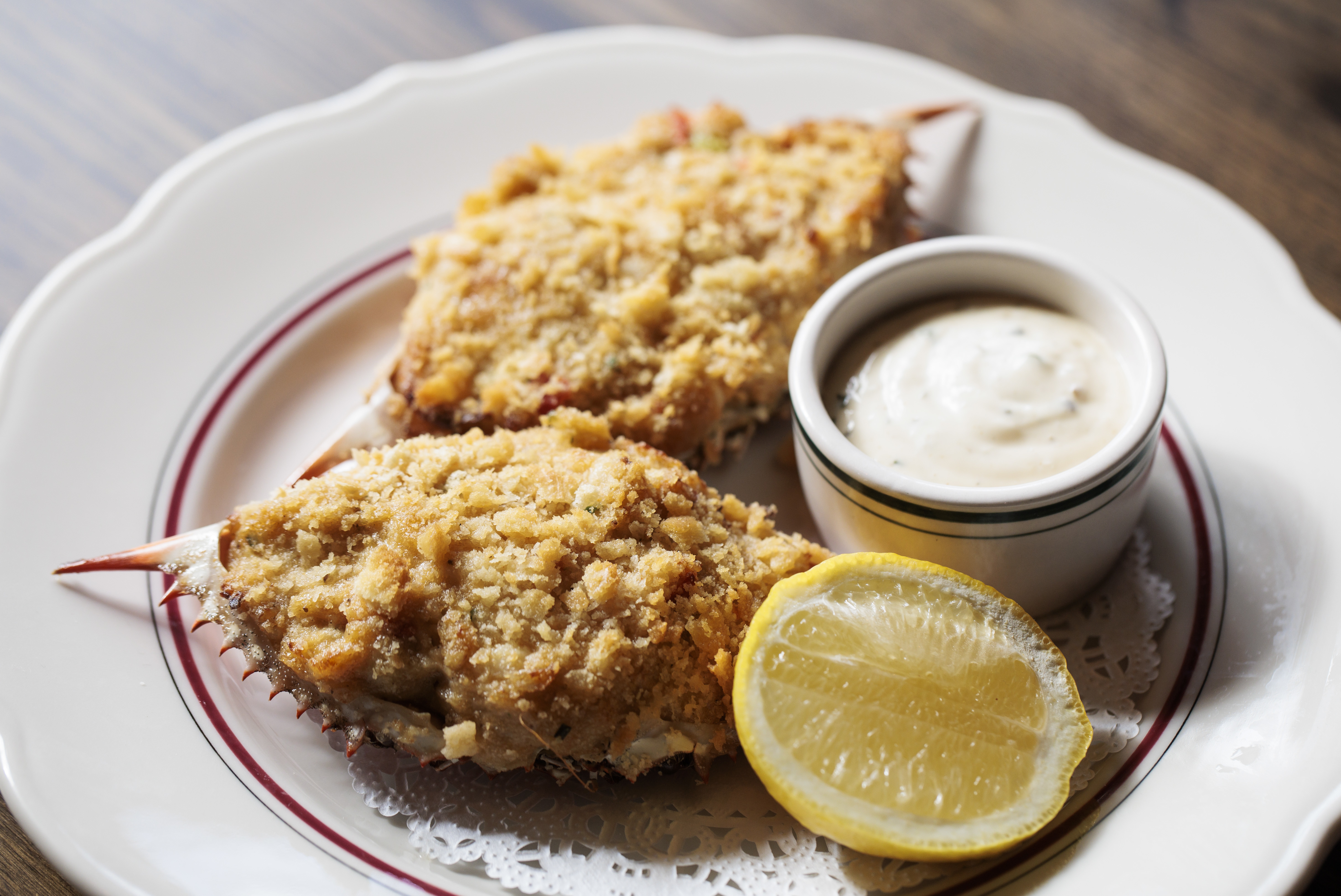
    If you didn’t know better, you could be convinced — as you slide a spoonful of lightly breaded crab cake out from its stuffed shell, gaze at the soft light pouring through stained glass windows, and sip a frosty martini — that Waltz, at Front and Ritner, has been dancing on this corner of deep South Philadelphia for decades.

    Cue the crowds that reliably fill the bentwood chairs in its wood-paneled downstairs bar and the bustling upper dining room even on weekdays. Forks angle through heaping platters of spaghetti while the Delfonics, O’Jays, and other Philly soul greats croon in the background. The vintage vibes here are pristine — except for the fact that Waltz is not vintage at all, but a five-month-old passion project that unpretentiously delivers a style of polished Italian American dining that’s been on the slow fade for decades due to demographic shifts and changing tastes.

    Celine Tobin and Joey Dougherty work at Waltz on Wednesday, May 27, 2026 in Philadelphia.Monica Herndon / Staff Photographer
    The bar at Waltz on Wednesday, May 27, 2026 in Philadelphia.Monica Herndon / Staff Photographer

    This restaurant’s charm is more than just a wistful nod to “they don’t build ’em like that anymore” nostalgia. Waltz is anything but stale from the moment you’re greeted warmly at the maître d’ stand, most likely attended by manager Celine Tobin, who also happens to be co-owner Joey Dougherty’s girlfriend. A wood-fired oven beckons from just beyond in the partially open kitchen, where the 800-degree hearth fuels a menu built around pizzas, roasted meats, and house pastas.

    The menu, conceived and implemented by consulting chef Eric Leveillee, formerly of Lacroix at the Rittenhouse, is key to Waltz’s allure, offering a familiar repertoire of popular dishes, then raising the bar with added elements of craft. The mozzarella is hand-pulled from Caputo Bros. Creamery curds just before service, so the milky white burrata — its core stuffed with rosemary-infused mascarpone — is extra sweet when draped with salty pink curls of prosciutto, juicy cantaloupe, and peppery green olive oil. The pizzas are made from sourdough, which lends their crusts an extra crackle, complexity, and tang.

    The burrata with prosciutto, melon, and olive oil at Waltz on Tuesday, Aug. 4, 2026, in Philadelphia.Monica Herndon / Staff Photographer

    The house-extruded pastas gain extra vibrance from their springy texture. There’s noticeable resilience in the wide lumache elbows, for example, whose bounce stands up to a spiced blush sauce that’s not simply rich with cream and fistfuls of crab, but boosted by the depth of a freshly steeped crab stock. That pasta, as well as the signature appetizer of crab cakes, is a nod to the hard-shell history of this address’ previous occupant, Anthony’s Crab House.

    Waltz is a wordplay tribute to the Whitman neighborhood at the city’s southeasternmost corner, an area near the port bordered by railyards and strip malls rich in casual dining options (John’s Roast Pork, Wolf Burger, Oregon Diner, and the newly opened Angelo’s location), but slim on date-night draws. Dougherty aimed to answer that need by rehabbing this corner haunt, which had fallen into disrepair a block from his family’s contracting business, Dougherty Electric. As such projects often go, an intended modest facelift turned into a major renovation: The Doughertys created a wider opening between the dining rooms in two adjoining properties, restored the exterior brick by brick, and completely rebuilt the interior, down to the framed collage of 1924 editions of The Inquirer that had been used inside the walls as insulation.

    The stuffed crabs at Waltz on Wednesday, May 27, 2026 in Philadelphia.Monica Herndon / Staff Photographer
    The interior of Waltz on Wednesday, May 27, 2026 in Philadelphia.Monica Herndon / Staff Photographer

    Based on the craftsmanship of the fixtures, from the millwork of the wood paneling to the barroom tiles, vintage pendant lights, and even the beautifully outfitted marble bathrooms downstairs, it’s clear the Doughertys used many of their professional contacts here.

    They might want a rebate, though, from their HVAC guy. The air-conditioning in the nautical-themed upper dining room cut out halfway through a meal with my boss on a 100-degree day, awkwardly leaving us sweaty over our peperoncini-spiked martinis and the crisply fried fritto misto.

    The interior of Waltz on Wednesday, May 27, 2026 in Philadelphia.Monica Herndon / Staff Photographer
    The sourdough piccante pizza at Waltz includes pepperoni, soppressata, hot honey, and onion agrodolce.Craig LaBan / Staff

    It’s a tribute to the kitchen that our table remained upbeat despite the sticky heat. The carbonara pizza — a white pie with béchamel and fontina scattered with salty nuggets of guanciale and a golden glaze of egg yolk — was my favorite pizza of that first visit. The piccante — a red pie with pepperoni, soppressata, hot honey, and sweet-tart onion agrodolce — was my pick on a return meal when the AC, thankfully, was working again.

    The pastas at Waltz are also consistently excellent, including deftly folded tortellini stuffed with mushrooms in Parmesan cream sauce, and the ruffled-edge ribbons of pappardelle that cradled rustic duck ragù. The snap of fresh noodles lend the already irresistible silver platter of spaghetti with meatballs and sausage in red sauce extra oomph. It was so zesty, I couldn’t help but wonder how this Sunday gravy became a treasured tradition of the Dougherty family in this historically Irish enclave of South Philly.

    The tortellini at Waltz on Wednesday, May 27, 2026 in Philadelphia.Monica Herndon / Staff Photographer
    The spaghetti and meatballs at Waltz on Tuesday, Aug. 4, 2026 in Philadelphia.Monica Herndon / Staff Photographer

    “We call it ‘Gus’ gravy,’” says Dougherty, noting that his father, Donald “Gus” Dougherty, also a partner at Waltz, learned the recipe in 2008 from some Italian friends he met while he was serving 18 months in federal prison at Fort Dix for defrauding the IBEW Local 98 electricians union, formerly run by his close (but unrelated) associate, John “Johnny Doc” Dougherty. “He’s made it every Sunday since.”

    That gravy also features prominently on the chicken Parm, although that is one dish here I found unexciting. Yes, the sharing portion is gigantic, which, at $30, is a reminder that prices here are very fair. But the breading had gone so soggy in all that red sauce the exterior was almost fluffy, leaving this Parm one-dimensional. Your best bets for the handful of large-format sharing dishes emerge from that wood hearth; the heat-blistered silver skin of a butterflied whole branzino, for example, is fantastic over the tangy vinaigrette — called sauce vierge — of fresh tomatoes, capers, and a splash of chili oil that makes it glow.

    The superbly tender 14-ounce strip steak, meanwhile, roasted to a perfect medium-rare in that pizza oven, was one of the more memorable cuts of beef I’ve eaten this year. It arrived fanned over a silver platter beside shatteringly crisp fried fingerling potatoes and a head of sweet roasted garlic glossed in a black peppercorn jus that’s a telltale perk from Leveillee’s years of sauce work in French kitchens.

    The 14-ounce New York strip steak with smashed fingerling potatoes, roasted garlic, and black pepper jus at Waltz on Tuesday, Aug. 4, 2026 in Philadelphia.Monica Herndon / Staff Photographer
    The whole branzino at Waltz is roasted in the wood-fired oven and paired with a tomato and caper vinaigrette.Craig LaBan / Staff

    Between that steak, the crab cakes, pastas, and the retro tavern vibe, I can see why some have likened Waltz to a combination of the Saloon and the newly revived Bomb Bomb Bar. Waltz’s still-evolving repertoire isn’t quite that proven or deep yet, even if I have little doubt executive chef Sergio Mateo — an alum of Ambra, Whetstone, and Lacroix who’ll be carrying the menu forward once Leveillee’s consultancy is finished — has the skills to get there.

    Waltz’s drink program has a bit further to go. The cocktails offer some trendy twists to classics but occasionally landed shy of their promise (the weak foam on the Fluffy Negroni Sour, for example, had deflated by the time it arrived). The potentially clever concept of a cocktail list organized by glass shapes fumbled over its own format: The Centerbe-spiked Waltz Whit Me came in a large martini coupe instead of the Nick and Nora tulip touted on the menu.

    The Blush Sour and the Pepperoncini Tini at Waltz on Tuesday, Aug. 4, 2026 in Philadelphia.Monica Herndon / Staff Photographer

    At a very reasonable $15 or less a cocktail, however, it’s hard to complain loudly. Joey Dougherty is admirably determined not to overprice Waltz for a neighborhood that currently doesn’t have many upscale dining options. The small wine list is also full of basic Italian wine values for $13 a glass or less, and a tiny reserve bottle list for a Super Tuscan or Brunello di Montalcino. Dinner as a whole is fairly priced considering the quality, with check averages of $55 to $65 including beverage, before tax and tip.

    Dinner finishes up strong with good scratch versions of common desserts. The made-to-order tiramisu, whose lady fingers are dunked to order in coffee then layered with sweet cheese, is somewhat controversial among traditionalists who expect it to be already fully saturated, but I enjoyed the faint crunch of those biscuits softening while we ate. There were no quibbles over the lusciously rich chocolate mousse, which is made with 70% Valrhona chocolate and served with raspberry compote and amaretto whipped cream.

    The lusciously rich chocolate mousse, made with 70% Valrhona chocolate and served with raspberry compote and amaretto whipped cream, at Waltz on Wednesday, May 27, 2026, in Philadelphia.Monica Herndon / Staff Photographer

    Waltz’s finest finishing moves are the exceptional gelati, which are spun daily before service so the textures remain spoonably soft and vivid of flavor. The pistachio is always my go-to, and didn’t disappoint here, but I could also taste the real Tahitian beans (not extract) steeped into the vanilla. I was thoroughly charmed by the Andes Mint flavor topped with a dusting of the grated chocolate-and-crème de menthe candies. Even better was the strawberry sorbetto, which doubled down on berry flavor with a crimson glaze of strawberry compote.

    If you’re going to build a new restaurant that feels like an old soul inspired by another era, these are just the kinds of fresh touches required to appeal to diners today.

    Pistachio gelato at Waltz on Wednesday, May 27, 2026 in Philadelphia.Monica Herndon / Staff Photographer

    Waltz

    2351 S. Front St., 215-436-9293; waltzphilly.com

    Dinner: 5:30 to 9 p.m. Wednesday through Sunday.

    Pizzas and pastas: $16-$24; larger sharing plates, $30-$50.

    The bar dining room is wheelchair accessible through a side door, but the bathrooms, located in the basement, are not.

    About 50% of the menu is gluten-free or can be modified, including availability of gluten-free pastas.

    Menu highlights: House burrata with prosciutto and melon; stuffed crabs; fritto misto; pizzas (carbonara, piccante); lumache pasta with spicy crab vodka sauce; tortellini; pappardelle with duck ragù; spaghetti with meatballs and sausage; New York strip steak; branzino; house gelati (pistachio; Andes mint); strawberry sorbetto.

    Drinks: Classic cocktails with modern twists are categorized by glass shape (highball, coupe, Nick and Nora) but perplexingly not always served in the advertised glass. The drinks themselves are solid, not spectacular, but fairly priced at $15 or less. The small wine list offers affordable Italian basics, including a Pecorino white and a plush Piemonte Rosso I’d drink all night for $11 a pour.

    The owners of Waltz restaurant in South Philadelphia made a collage of articles from a 1924 Inquirer that was found during renovations in the walls of the building at Front and Ritner, where it was used for insulation.Courtesy Waltz restaurant / Joey Dougherty
  • Philadelphia, home of the first U.S. Mint, is where the country’s first and last pennies were made

    Philadelphia, home of the first U.S. Mint, is where the country’s first and last pennies were made

    On the advice of United States Treasurer Alexander Hamilton, Congress passed a law establishing America’s first federally funded bank on Feb. 8, 1791.

    The bank — located inside Philadelphia’s Carpenters Hall — would serve as the primary fiscal agent for the federal government and one of its many jobs was to issue paper money that was printed by private banknote companies and local print shops.

    Coins, though, weren’t in the mix yet.

    Sean Martorana’s No. 1 reflects themes of craftsmanship, trust and unity of the U.S. Mint.Sean Martorana and the Colibri Workshop

    On April 2, 1792, Congress established the United States Mint in Philadelphia with the adoption of the Coinage Act. The act set the dollar as the standard and set denominations — pennies, dimes, nickels, quarters — and their weights, compositions, and regulations.

    The new law also required a symbol and inscription of the word “liberty” on each of the coins.

    The first U.S. Mint will be celebrated Saturday at the United States Mint in Old City, from 11 a.m. to 1 p.m. as part of the Philadelphia Historic District’s 33rd “Firstival.” Firstivals are weekly day parties held in honor of America’s 250th birthday.

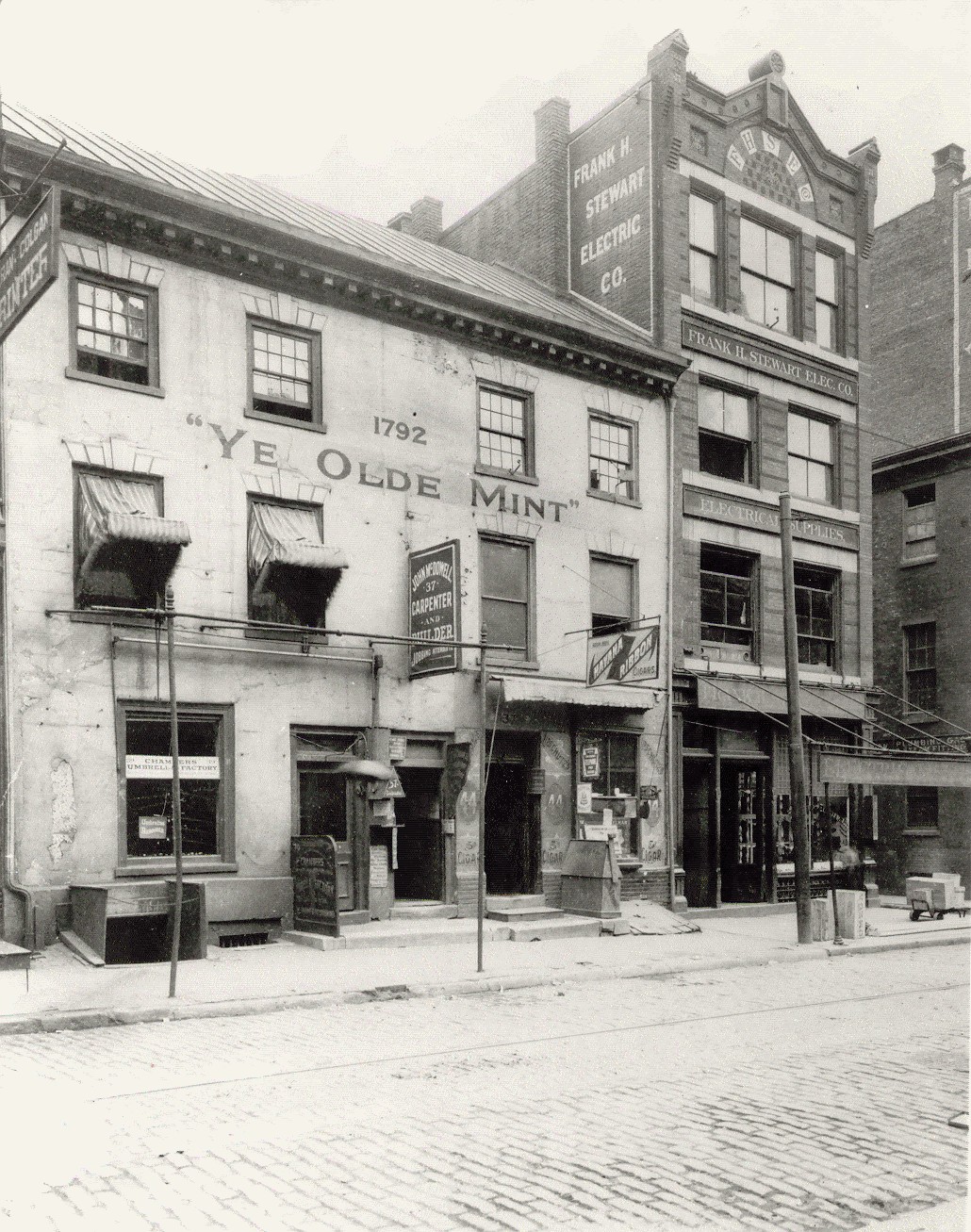
    The first U.S. Mint — fondly remembered as Ye Olde Mint — was located on the east side of Seventh Street, just south of Arch, on land purchased by David Rittenhouse.

    Ye Olde Mint — the original Mint building — pictured in 1911. It was located on Seventh Street, south of Arch, on land purchased by David Rittenhouse, the first director of the U.S. Mint. The Mint was housed there until 1833.The U.S. Mint

    Rittenhouse, the well-heeled great-grandson of America’s first paper mill owner, William Rittenhouse, was an 18th-century astrologer and clockmaker who would serve as the first director of the U.S. Mint. Rittenhouse Square is named after him.

    The first coins made after the Coinage Act were half dimes and fashioned off-site, according to Tim Grant, exhibits and public affairs manager at the U.S. Mint. “Made of silver, these half dimes were supposedly struck using silver donated by Martha Washington,” Grant wrote in an email.

    The first coins fashioned at the actual mint building were 11,178 copper cents, or pennies, and were delivered in March of 1793. (The U.S. Mint stopped making pennies in November, ending its 232-year production run.)

    A worker at the cutting press at the U.S. Mint’s third location, which took up the entire block of Spring Garden Street between 16th and 17th Streets in 1901.U.S. Mint

    During America’s early days in the late 18th century, work conditions at the U.S. Mint were grueling, Grant wrote. Employees worked 11 hours a day, six days a week, and earned $1 a day. It took workers three years to produce the nation’s first 1 million coins.

    “Today we can produce one million coins in less than a half an hour,” Grant wrote.

    As the nation grew, so did its demand for coins.

    By the late 1820s, the U.S. Mint had outgrown its original buildings, and in May of 1828, Congress voted to keep the Mint in Philadelphia and erect a second building. The cornerstone of this new, larger U.S. Mint was laid on July 4, 1829, on the northwest corner of Juniper and Chestnut Streets. It opened in 1833. That building served as the U.S. Mint’s home for 68 years.

    In 1901, the U.S. Mint moved to its third location, taking up the entire block of Spring Garden Street between 16th and 17th Streets. The building, with a lobby containing seven Tiffany mosaics, was its home through the mid-1960s. The Community College of Philadelphia occupies the site today.

    Mike Spinosa, a pit driver at the U.S. Mint, transfers one-cent blanks before they are struck into pennies in Philadelphia in 2007. MUST CREDIT: Demetrius Freeman/The Washington PostStephen Hilger

    The Mint returned to Old City in 1969, moving into its current building on five acres on Fifth Street between Arch and Race Streets. It has over 600,000 square feet of manufacturing space.

    There are three other active U.S. Mints in America: the Denver Mint, the West Point Mint, and the San Francisco Mint. The San Francisco Mint is not open to the public and specializes in commemorative coins.

    “The mission of the United States Mint has remained the same for over two centuries,” Grant wrote. “To serve the American people by safely and efficiently manufacturing, distributing, and circulating precious metal, collectible coins, and national metals.”

    This week’s Firstival is Saturday, Aug. 15, from 11 a.m.-1 p.m. at the United States Mint, 151 N. Independence Mall East.

    Each week, The Inquirer is highlighting a “first” from the Philadelphia Historic District’s 52 Weeks of Firsts. A “52 Weeks of Firsts” podcast, produced by All That’s Good Productions, drops every Tuesday.

  • Letters to the Editor | Aug. 13, 2026

    Letters to the Editor | Aug. 13, 2026

    Two-state solution

    Hurrah for Jonathan Zimmerman’s recent column on the settlement of an antisemitism lawsuit by Haverford College. As a Jew, a supporter of Israel, and a strong opponent of Benjamin Netanyahu’s domestic policy vis-à-vis the Palestinians, Zimmerman has given voice to many of us. When Palestinians say “From the river to the sea,” it sounds a lot like a sentiment expressed by Netanyahu’s supporters — but it has a different meaning. My personal support for a two-state solution does not make me antisemitic or anti-Zionist.

    William Eisen, Philadelphia

    Remember when

    I’m 67 years old, and these are the things I remember. I remember when gambling was considered a vice and a moral failing. Now I can gamble on pretty much anything. And I’m encouraged to do so by celebrities and athletes.

    I remember when Congress would present legislation to the president, and he would sign it into law. Now we have a Congress that puts forward no new legislation and seems completely content to let the president govern through executive orders. That is not democracy; that is dictatorship.

    I remember a Congress and Supreme Court that fulfilled their roles as powers equal to those commanded by the White House. I now see a Congress and Supreme Court more interested in appeasing the current president than in doing their jobs.

    I remember a time when the president acted … well, presidential. We now have a president who lies constantly and denigrates and vilifies anyone who disagrees with him.

    I miss those times.

    Barry Muth, Willow Grove

    Grid strain

    Your editorial calling for a pause on new data centers has the problem right. Auditors blamed 38% of a recent energy price increase on data center demand. That was $6.3 billion, and it lands on my bill and yours without anyone asking.

    But a pause treats the symptom. We are adding enormous demand to a grid we have stopped building.

    Look at what else happened this year. The federal government paid about $4 billion to energy companies to cancel offshore wind projects, including $1.2 billion to RWE this month, with the money redirected into liquefied natural gas. We are spending public funds to keep power off the grid. Then we act surprised when power gets expensive.

    China added more than seven times the solar capacity we did last year, and close to 15 times the wind. It now has twice as much wind and solar under construction as the rest of the world combined. Whatever you think of the AI boom, the country that can generate the electricity is going to host the industry.

    So we have managed the worst of both worlds. We block the demand, and we cancel the supply. One of those is a local decision made by neighbors trying to protect each other. The other is a national decision made by people who do not pay our electric bills.

    Barry Vernick, Philadelphia

    Join the conversation: Send letters to letters@inquirer.com. Limit length to 150 words and include home address and day and evening phone number. Letters run in The Inquirer six days a week on the editorial pages and online.

  • Dear Abby | Late husband’s unknown, oldest daughter makes contact

    DEAR ABBY: I have been widowed for seven years. My husband served in the Air Force in Saigon during the conflict in Vietnam. We met and married shortly after he returned from his hitch overseas. We had two daughters together.

    Recently, my older daughter was notified through social media that she has a half-sister, “Leiba,” from a woman her father knew in Vietnam. They agreed to meet this weekend for lunch at a local restaurant.

    My daughter asked if I would accompany her to this meeting. I told her that while I had no qualms about finding out he had a child with another woman, I didn’t see any point in my being there to meet her. There is no connection there for me, and I would feel uncomfortable in the situation. Am I wrong for not going with my daughters to this luncheon?

    — UNRELATED IN SOUTH CAROLINA

    DEAR UNRELATED: Although you feel no connection to your late husband’s love child, Leiba is related to your daughters. If they choose to develop a relationship with their half sister, you cannot ignore her existence forever. Your daughters may be asking for your support. If you decide to go, do it for them.

    ** ** **

    DEAR ABBY: My son and his partner have lived together for more than 10 years. During this time, his partner’s parents and sister have visited my state numerous times. They have stayed at my lake house, in my condo and another home I own. Yet, in all this time, I have never met them (and I have tried to).

    Only once did I receive a thank-you note on my mantle at one of my homes. When they come into town, it’s almost like they deliberately avoid meeting me. Is this something I should address with my son and his partner? At this point, I feel hurt.

    — USED IN THE MIDWEST

    DEAR USED: Should you address this with your son and his partner? Of course you should. In fact, you should have done it the first time you were asked to let these people live in one of your dwellings. Do you really want to continue having strangers vacation in your homes? Because that’s what they have chosen to make themselves, it may be time to roll up the welcome mat.

    ** ** **

    DEAR ABBY: I have a daughter, “Imogen,” who has been married to her narcissistic and controlling wife, “Brianna,” for 20 years. Imogen’s relationships with me, my husband and her sister have been entirely dictated by Brianna. We’re not allowed in their house, her calls are made from the car, I have not been invited to birthday parties for their two boys, and I’m told not to attend my grandson’s swimming competitions if Brianna is in the building.

    Two attempts at divorce by Imogen were unsuccessful, the last one having been a month ago. Imogen appears to be willing to accept verbal abuse and non-negotiable demands from her wife, interpreting the control as caring behavior. This cultlike existence has resulted in resentment and disappointment. I’m at a loss as to how to help my daughter extricate herself from a life of dysfunction and dependency. Any advice would be appreciated.

    — WORRIED MOM

    DEAR MOM: Your daughter will not leave Brianna until she’s ready, but that doesn’t mean you should give up. Avoid criticizing Brianna directly but continue to ask Imogen how Brianna’s controlling actions make her feel. Getting her to think along those lines may lead her in the right direction. Above all, make sure she knows about the National Domestic Violence Hotline at 1-800-799-7233, and remind her that controlling behavior is a form of violence.