Tag: topic-link-auto

  • Soldiers seriously wounded in Iranian drone strike tell AP the military’s medical system failed them

    Soldiers seriously wounded in Iranian drone strike tell AP the military’s medical system failed them

    The shrapnel hit Army Lt. Col. Arturo Lincón’s body like shattered glass.

    One chunk of metal lodged into the left side of his jaw. Another piece sliced through his salivary gland before bouncing off his jaw and piercing the back of his neck, severing an artery and embedding in a vertebra.

    Lincón was among dozens of U.S. soldiers injured in an Iranian drone strike on March 1. The attack on the second day of the U.S. war with Iran killed six troops who were providing logistical support of critical supplies at Port Shuaiba in Kuwait.

    Whether the military was properly prepared for treating its wounded has become a sharp point of contention. Soldiers and family members have told the Associated Press of a failure to recognize the seriousness of injuries, a poor plan to get the wounded to hospitals, and red tape that has hindered follow-up care. The Pentagon has said that the medical care was appropriate.

    Nine U.S. service members who were wounded spoke to the AP on the record — rare for troops still in the Army — about what they describe as a medical system that left them in many ways fighting to get treatment on their own.

    The medical care was just one of the military’s failures stemming from the Port Shuaiba attack that soldiers described to the AP. The Army declined to comment on the AP’s reporting, saying it had not yet briefed the families of those killed on the outcome of its investigation into the attack. The Pentagon also declined to comment.

    The soldiers’ criticism comes against the backdrop of years of disinvestment and drawdowns in the Middle East by multiple administrations and political leaders who sought to end U.S. involvement in the region. Those choices left the region without any major U.S.-run medical facilities.

    Lincón’s wounds included a damaged left vertebral artery, which supplies blood to the brain, and put him at risk for a stroke. That was not considered by the Army to be serious enough to be admitted to Landstuhl Regional Medical Center in Germany, a major U.S. military facility, even though Lincón said a nurse there marveled that he was alive.

    Instead he was sent to the nearby Army barracks and told to schedule outpatient appointments.

    “I was just kind of on my own, at least it felt like that,” said Lincón, a veteran of wars in Iraq and Afghanistan.

    Lincón’s was not an isolated case.

    Another soldier who had shrapnel removed from his head, Maj. Stephen Ramsbottom, said he waited over four months to receive his MRI results.

    “I’ve had to build my own case for everything,” Ramsbottom told the AP. “It’s very frustrating.”

    Soldiers helped save each other after Iranian attack

    After the deadly drone strike, soldiers, who are equipped with tourniquets and trained in first aid, tended to each other and then searched on Google to race the wounded to the nearest hospital in Kuwait City, about 20 minutes away.

    Some of the most seriously wounded soldiers were medically evacuated from Kuwait within two days. Lincón, who was only about 7 feet from the blast, spent a week hospitalized there where he had surgery to remove shrapnel from his jaw. He said medical staff told him he had a traumatic brain injury from the force of the blast that ruptured his eardrum and left him briefly blinded.

    Chief Warrant Officer 4 Rodney Bearman, who had shrapnel embedded from his face to his legs, and some of the other soldiers who were briefly seen at Kuwaiti medical facilities were sent to the homes of U.S. government employees. Iran had unleashed missiles and drones that made it risky for evacuation flights.

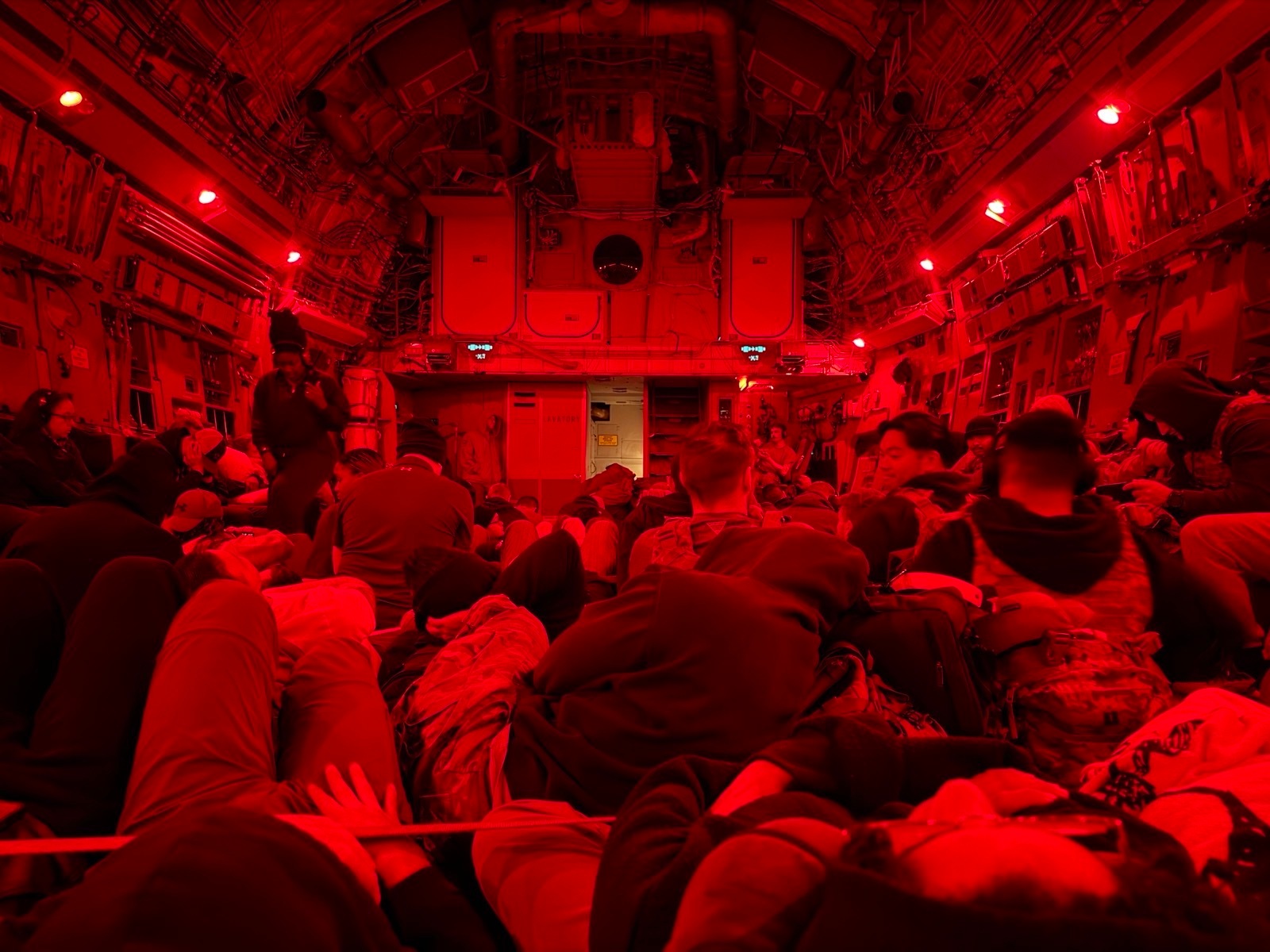
    Some 10 days after the attack, the soldiers were loaded onto a cargo plane. They sat on the floor with straps, including Bearman, who could barely eat or lie down.

    When they arrived in Germany, Bearman said, they learned they were not documented as wounded in combat and would not be hospitalized at Landstuhl. Instead, they were sent to the barracks, as Lincón had been, and told to get outpatient care. Bearman said they were documented that way due to a coding error.

    “Never did I think that if I was wounded that these things would happen,” said Bearman, who has served for over three decades, including in Afghanistan. “Some sacred trust that I thought would never be broken was broken.”

    Lincón says he went days without pain medication. He carried a CD with a copy of medical records from Kuwait that he showed the ER doctor at Landstuhl, who expressed concern that he had not been evaluated yet by a trauma team.

    Pentagon says all wounded troops are evaluated

    Soldiers may not be aware of initial evaluations, like the Army’s battlefield concussion evaluation, that focus on identifying symptoms such as double vision or repeated vomiting and other observations. Troops with mild TBIs and those hit by shrapnel often returned to duty quickly in Iraq and Afghanistan. Many soldiers who spoke to the AP did not know the severity of their TBIs.

    A Pentagon official told the AP that Landstuhl’s mission, especially in battlefield casualty situations, is focused on stabilizing patients to transfer them for more specialized care at a military hospital in the U.S. rather than admitting them.

    Meanwhile, large hospitals closer to Kuwait have been shuttered. For example, Air Force Theater Hospital at Joint Base Balad in Iraq was handed over to the Iraqi government in 2011 as part of drawdown efforts.

    In a statement, the Pentagon said that all wounded troops who arrive at its medical facilities are evaluated and may be admitted based on the severity of the injury according to physicians who follow “healthcare-industry practices.”

    After about a week in Germany, many of the injured soldiers were sent to Fort Hood in Texas, where they underwent the Army’s demobilization process to return deployed troops home.

    Medical records shared with the AP by Ramsbottom and another officer show they were not diagnosed with TBIs until Fort Hood. The officer, who was blown off his chair, said he did not get care for weeks after that diagnosis and had to identify the specialists he needed, like a neuro-ophthalmologist to diagnose the blurred vision from his TBI, rather than counting on the military’s medical system.

    Maj. Billy Key says he did not get specialized care until mid-April when he was sent to a U.S. soldier recovery unit to be treated for his head injury, hearing loss, and the smoke inhalation that damaged his lungs.

    “It took too long,” he said.

    James Kelly, chief medical scientist at the Invisible Wounds Foundation, which is focused on military brain injuries, said it’s still not uncommon for a TBI diagnosis to take longer than it should, which could impact a soldier getting treatment as early as possible for the best outcome.

    “It’s disappointing but not surprising,” said Kelly, an emeritus professor of neurology at the University of Colorado School of Medicine. “In a war scenario, it goes on a fair bit.”

    An initial thorough check should be done by a medically trained person, not simply another soldier, he said. Kelly said that too often medical records note only a concussion, which is in fact a mild TBI, but can be overlooked.

    Many soldiers are struggling months after attack

    Lincón spent seven weeks getting specialized outpatient care at Walter Reed National Military Medical Center in Maryland, before being sent home to Kansas. Shrapnel is still in his back because it was too close to his spinal cord to remove without risking his being left paralyzed. He struggles with dizziness that disrupts his life, he said.

    He was awarded the Purple Heart and is back on active duty as an instructor at Fort Leavenworth. But his troubles continued beyond medical care.

    Lincón, who was born in Texas to Mexican parents, was issued only a temporary one-year passport after his passport was blown up in the attack and he was asked for additional documentation to prove his U.S. citizenship. After the AP reached out to the State Department to inquire about his case, the 1995 West Point graduate said he received a call saying the request for more information was a mistake and he would be receiving a passport that would be good for 10 years.

    “I’m American enough to have fought in three different wars,” Lincón said.

    He’s also concerned his medical records are incomplete. His claim for Traumatic Injury benefits under the Servicemembers’ Group Life Insurance was denied due to not meeting the threshold for hearing loss, though it never addressed his other issues, he said. The program gives cash to service members who suffer severe injuries.

    The Army’s Human Resources Command did not immediately respond to an email from the AP asking for an explanation.

    “I’m fortunate to survive and that’s how I look at it,” Lincón said. “That’s the only way to look at it at this point.”
  • More Philly restaurants are adding bottle shops — here’s why

    More Philly restaurants are adding bottle shops — here’s why

    At some restaurants, you select the fish that will be cooked and served for your dinner before you sit down. In Philly restaurants, that particular experience is being replicated with wine. The PLCB’s “wine expanded permit,” which launched a decade ago, allows restaurants with conventional liquor licenses to greatly expand their wine lists. It’s turning your neighborhood restaurant into your neighborhood wine shop.

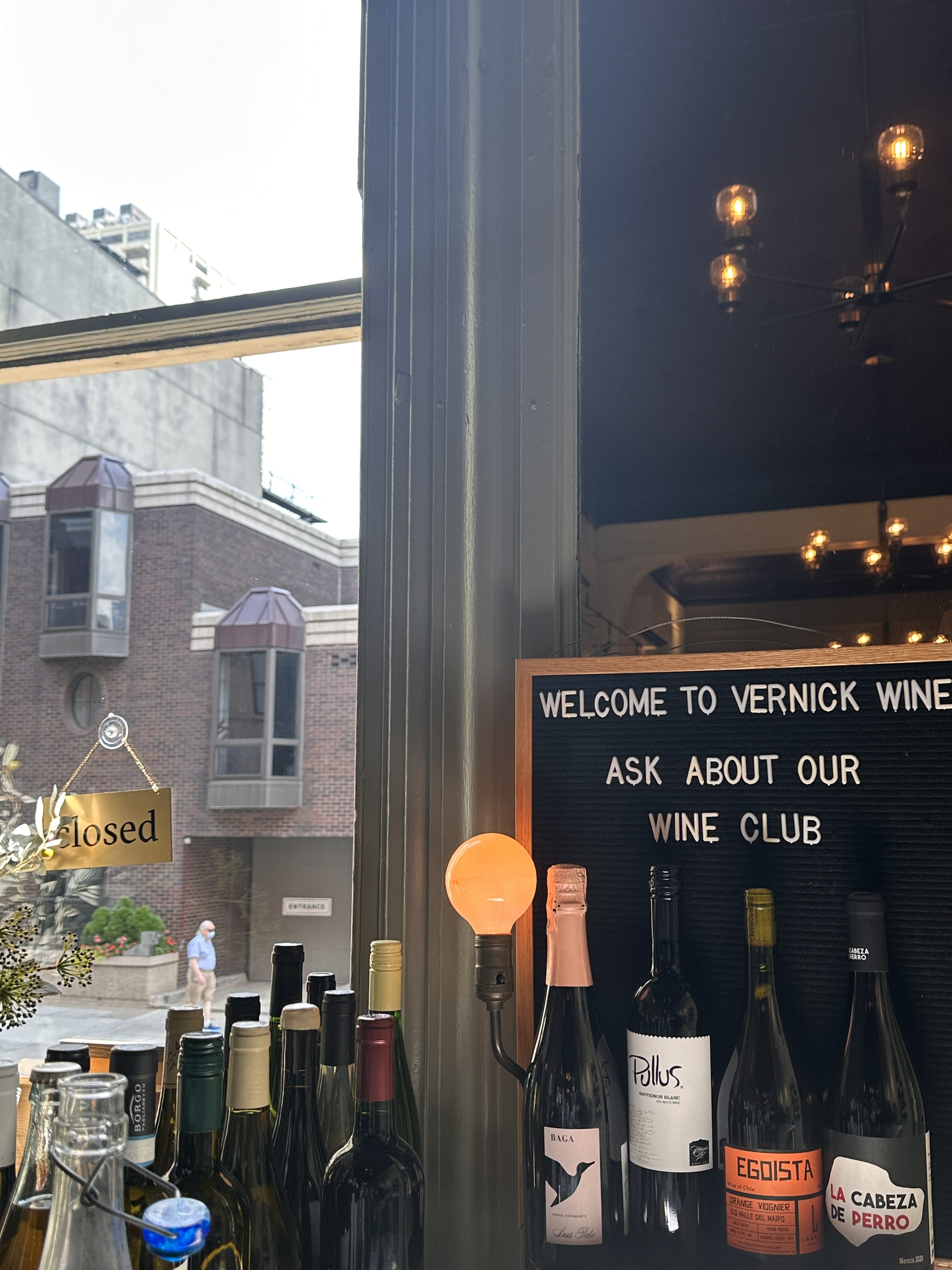
    Restaurants like Sally in Fitler Square, Vernick in Rittenhouse, and Picnic in East Kensington (along with several others around the city) have evolved into retail wine shops, welcoming in guests who aren’t dining in and presenting them with reasonably priced bottles that cannot be found on the shelves of PLCB-run wine stores. The shopping experience is curated by the same sommelier who has selected the bottles for the restaurant’s wine list. Sally and Vernick also run their own monthly wine clubs.

    Vernick Wine offers an expanded selection of wines to shoppers and diners, and even offers a wine club.courtesy of Vernick Wine

    To be clear, you can’t drink the bottle in the restaurants you purchase them at, unless you pay a corkage fee or dining-in surcharge. But even with those fees, you’re still likely getting a great deal.

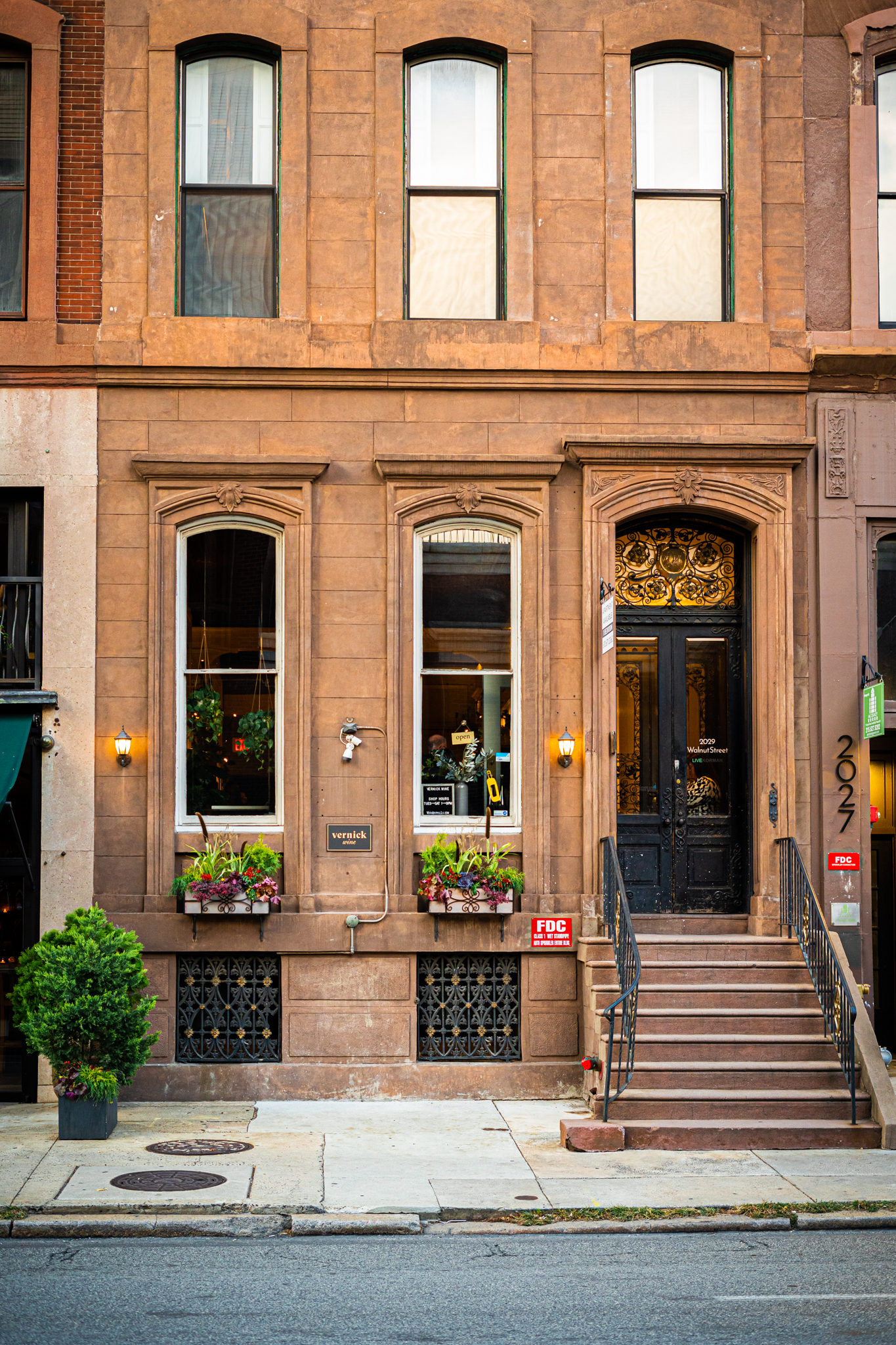
    Take the offerings at Vernick Food & Drink. When Greg Vernick opened his award-winning restaurant with former business partner Ryan Mulholland in 2012, there had been no plan — and also no legal basis — for them to open a wine shop in the restaurant. But in 2019, several opportunities presented themselves. First, the former office space next door opened up, and they knew it would be perfect for the private parties the restaurant hosted. It also gave them the wall space to open a wine shop.

    “It was a way to expand the curriculum of the wine program and spread the wings of the restaurant,” said Vernick. “It’s like giving a chef different ingredients to work out specials.”

    Vernick Wine opened in 2019 and connects through a narrow passageway to Vernick Food & Drink.courtesy of Vernick Wine

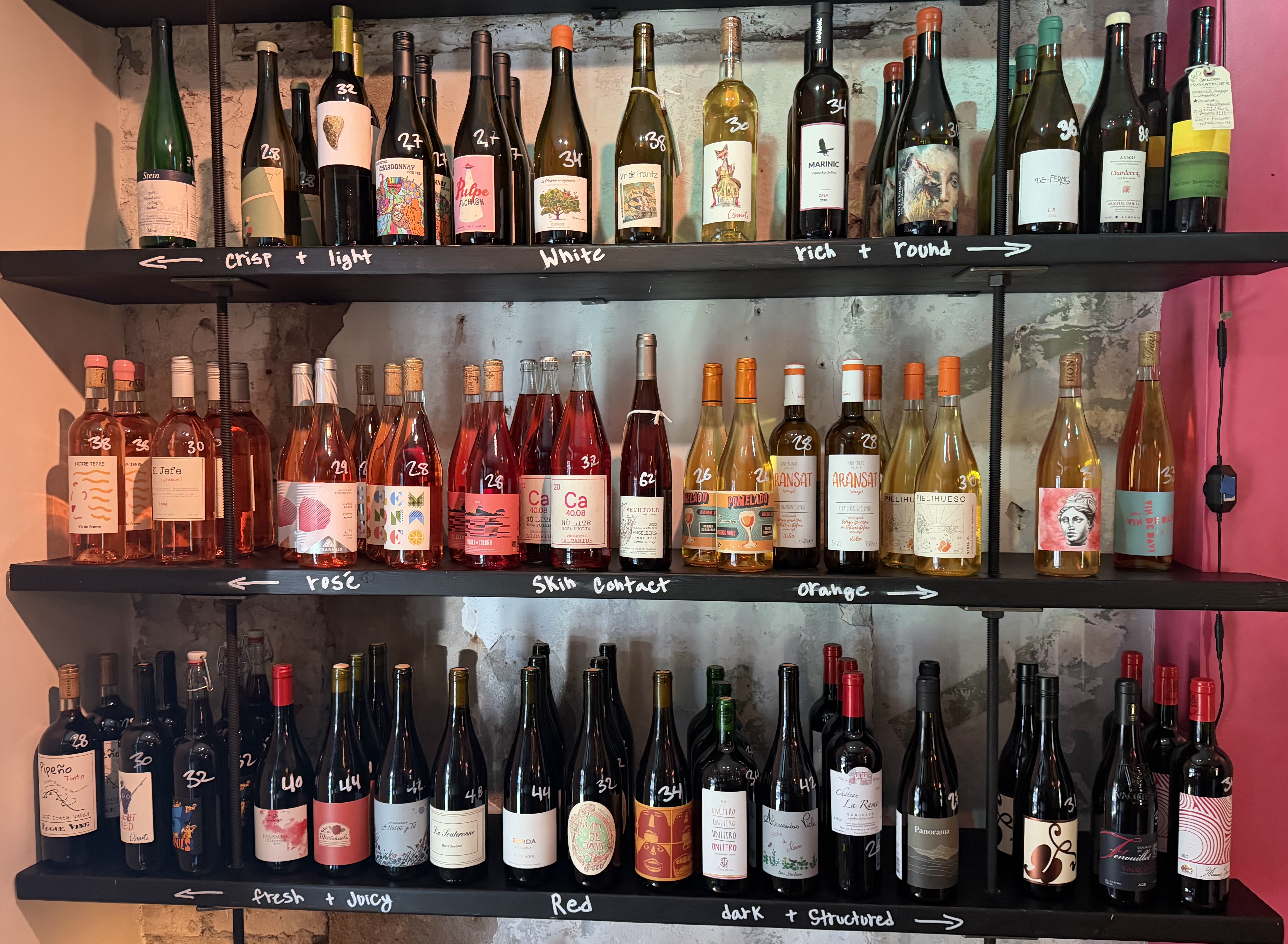
    Today, Vernick Wine is connected to Vernick Food & Drink through a narrow passageway, and it has a separate street entrance that opens at 11 a.m. on Saturdays and at 1 p.m. from Tuesday to Friday — hours before the restaurant opens for dinner service. Its walls are lined with 100 bottles that don’t appear on the restaurant’s wine list, which itself contains about 200 wines.

    “There’s almost no overlap between the lists,” said Harry Jamison, the general manager of both Vernick Wine and Vernick Food & Drink, who stocks more easy-drinking rosés at Vernick Wine. “At Vernick Wine, we sell a lot of bottles that cost around $35 but at the restaurant, where people are celebrating special occasions, they’re usually going for something more elevated.”

    Like at any other wine shop, you can purchase a bottle off the shelf, marked up for retail at 30% to 50% from its wholesale price, and take it home. Or you can enjoy it at Vernick Food & Drink with an additional $45 corkage fee, which applies to all bottles brought into the restaurant. The corkage fee covers the restaurant’s labor costs in serving the wine and in providing glassware.

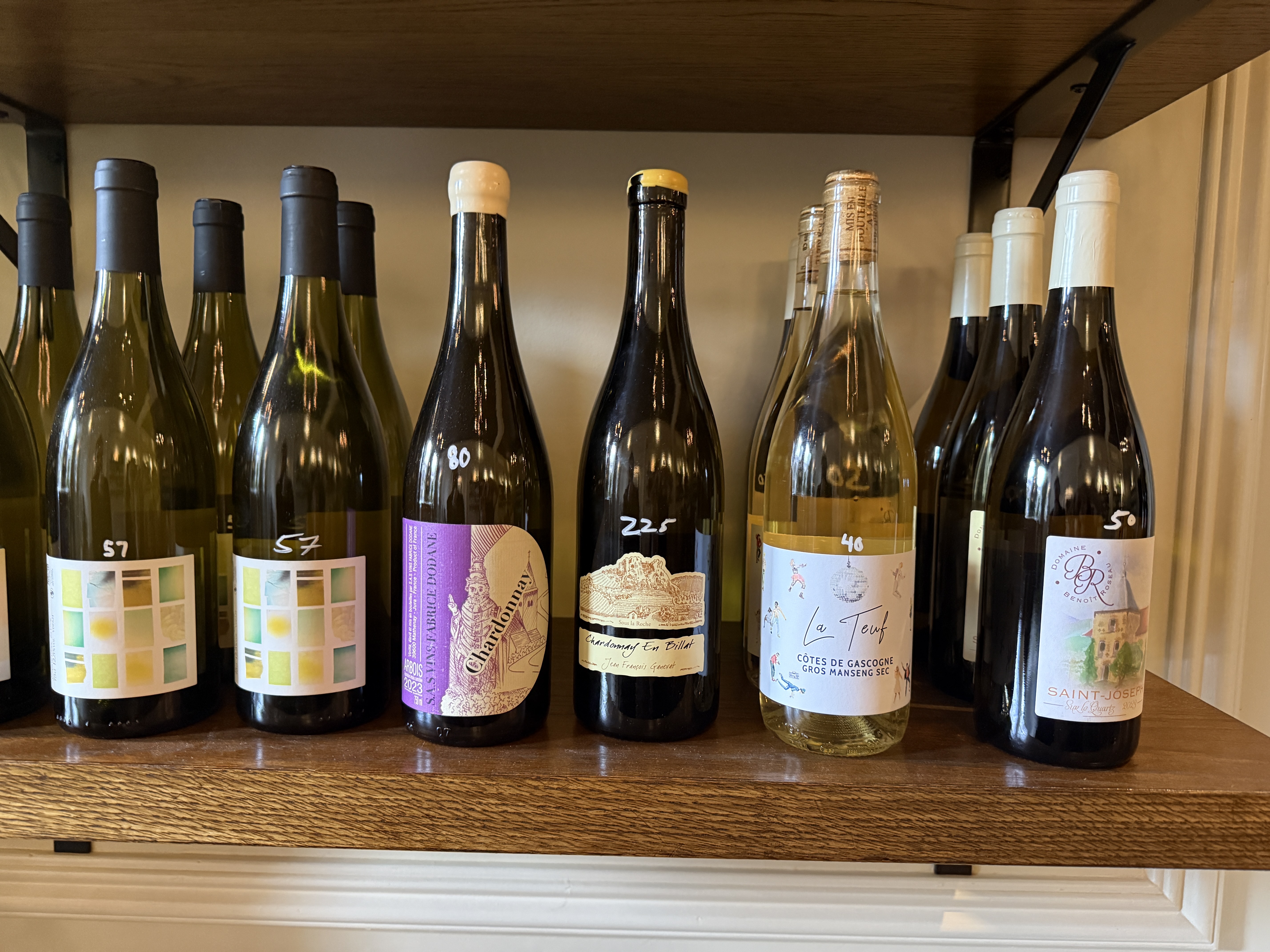
    And when it comes to certain wines, that fee is really worth it. “If you buy a bottle that costs $26 from Vernick Wine and bring it into the restaurant and pay another $45, it’s probably going to be about the same price as just ordering a bottle at a restaurant,” said Jamison. “But if you order a bottle of really cool chardonnay from the Jura, a region that doesn’t produce a lot of wine and there is a great demand for it, on a restaurant list it can cost you $180.” Purchase it off the shelf at Vernick Wine, where it’s priced at $80, and with a corkage fee, you can drink it for $125 — far below what a restaurant would normally price it.

    Wines from the Jura, France’s smallest wine region, can be a real bargain even with Vernick’s corkage fee for diners.Kiki Aranita / Starr

    At Picnic, beverage director Max Glenn has over 100 bottles in rotation in its retail wine shop, which exists on shelves adjacent to the restaurant’s raw bar and kitchen, and which you walk through before you even get to their dining room.

    The bottles change constantly. Glenn makes it a point to carry wines that aren’t available anywhere else in Philadelphia.

    The Wine Shop entrance at Picnic in East Kensington features wines otherwise not available in Philadelphia. Tyger Williams / Staff Photographer

    It’s also a way for Picnic’s servers to deepen their knowledge and excitement about wine. “The servers walk around the bottle shop, pick up bottles, hold them, and interact with them. They feel more connected to their work because it’s not just a name on a piece of paper that they’re expected to memorize. The wines are there for them to touch, look at, see the labels, and read the notes on.” Glenn said that experiences like these, “make wine cool.”

    Picnic Beverage Director Max Glenn keeps 100 wines in rotation at the restaurant’s wine shop.Tyger Williams / Staff Photographer

    Roughly half of Picnic’s wine sales are from to-go bottles. Rather than a corkage fee, Picnic uses dynamic pricing to adjust each bottle’s cost for whether it’s going to be consumed in the restaurant or taken to go. This can sometimes mean, for limited, high-end wines like those from natural winemaker Domaine Yoyo in the south of France, that they’re charging a far smaller retail mark-up (about 20%) when you take it to go.

    Even tiny restaurant wine shops like Sally, which takes up just one small wall in a nook near the pizza restaurant’s kitchen, are a boon to both customers and in-house beverage professionals. They offer opportunities to taste and explore far more wines than what can reasonably appear on a neighborhood restaurant’s by-the-glass list.

    At Sally, where the corkage fee is $30, general manager Willem Sandercox (for whom “wine is my passion”) is able to bring in “a huge rotation of natural wines from small farmers who are crafting their wine without additives.”

    In spite of the small physical footprint of Sally’s wine shop, Sandercox maintains that it and Sally the restaurant are separate entities and the lists are kept very separate, though they inform one another. A wine that was superpopular on the restaurant list may be pulled off and sold by the bottle from the wine shop “because people are always constantly like, ‘Oh my God, I love this glass. Can I buy it?’” said Sandercox.

    The wine shop has also been a means for Sandercox to replicate the atmosphere of the small, independent wine shop he once managed in Vermont.

    Markups and corkage fees are, of course, necessary. “We have to pay our rent and we have to make sure that we are making the money for the space. But at the end of the day, we’re here to represent the people who are doing the work and making the wine,” said Sandercox.

  • Penn leads $26 million NIH study to identify early signs of ALS and frontotemporal dementia

    Penn leads $26 million NIH study to identify early signs of ALS and frontotemporal dementia

    The University of Pennsylvania is leading a $26 million effort to detect early signs of brain diseases in genetic carriers.

    Funded by the National Institutes of Health, the project will study people with the most common inherited cause of both amyotrophic lateral sclerosis (ALS) and frontotemporal dementia (FTD). ALS is a fatal neurodegenerative disorder in which patients progressively lose the ability to move, while FTD alters behavior and language.

    People who carry a variant in the C9orf72 gene have an increased chance of developing either disease, with an average age of onset in the 50s.

    “It’s scary for people,” said Corey McMillan, co-lead of the project and co-director of the Penn Frontotemporal Degeneration Center. “They see their parents or their aunts and uncles or their grandparents dying of ALS or FTD and know that they’re at risk for the same course.”

    People with ALS typically die within two to five years of symptom onset, with an average survival rate of three years. The average life expectancy for FTD is seven to 13 years after symptoms begin.

    Most clinical trials targeting these diseases have failed, in part because researchers may be intervening too late, he said. For many patients, the diseases have already been brewing for years by the time novel interventions are tested.

    But if scientists can find reliable signs of disease before symptoms appear, they could start planning clinical trials aimed at prevention.

    “We want to intervene early and actually prevent disease from even happening at all,” McMillan said.

    That requires identifying biomarkers: a measurable substance or process in the body.

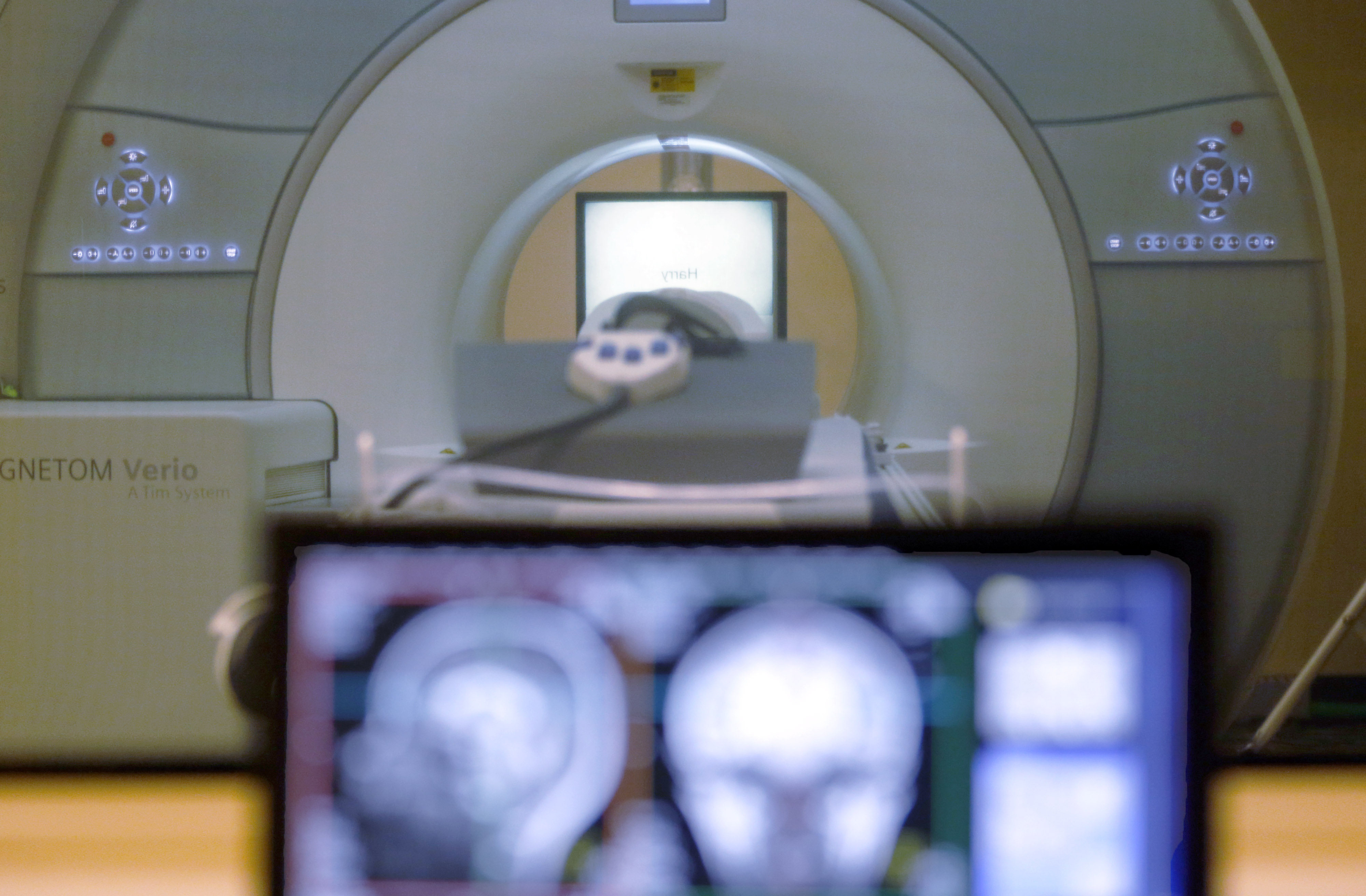
    In this collaboration between Penn and the University of Miami, researchers will track 330 carriers who are over the age of 45. The participants will undergo regular cognitive and motor testing, MRI scans, and analyses of body fluids.

    McMillan expects a subset will develop ALS or FTD during the five-year study, allowing his team to test whether potential biomarkers can predict disease onset.

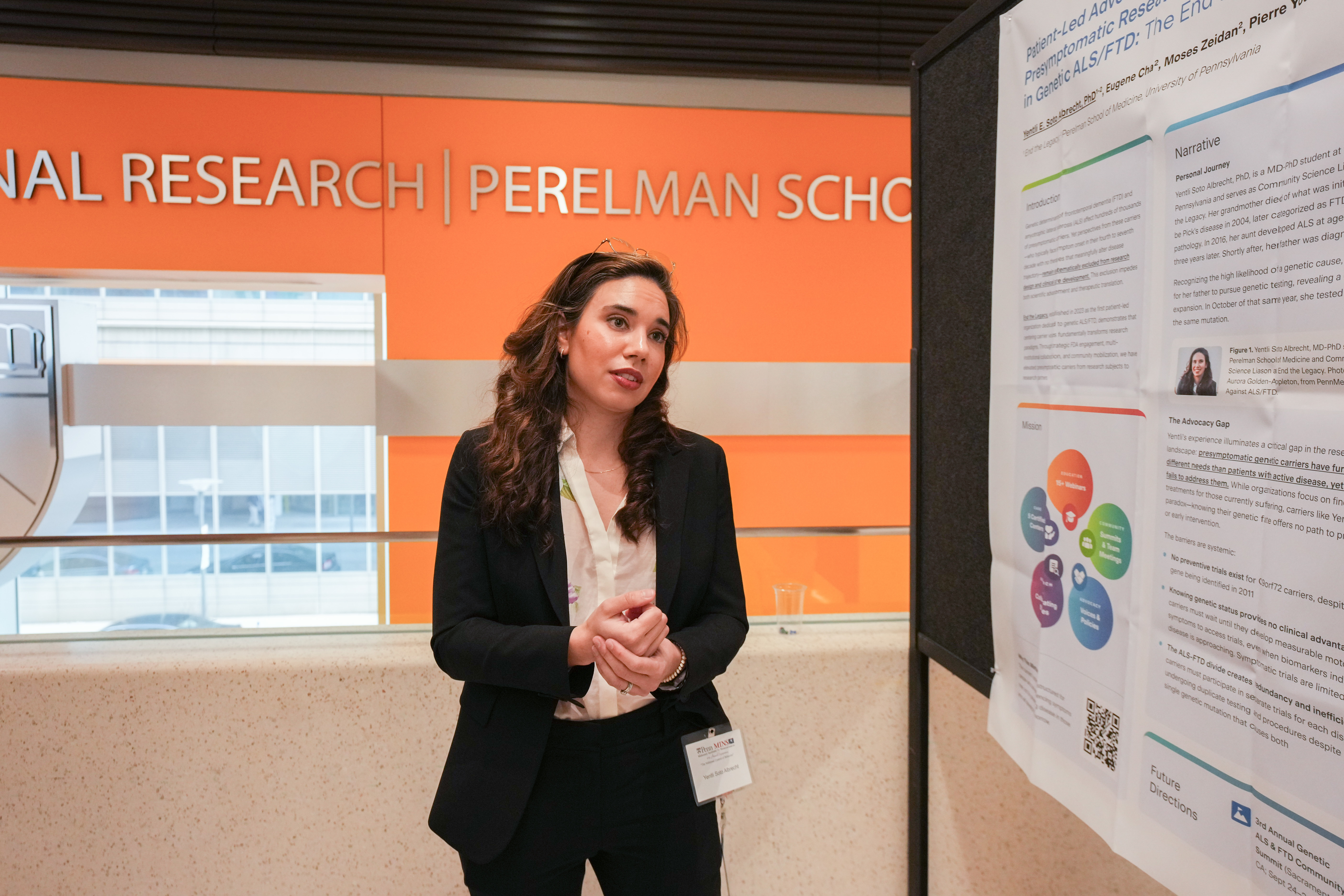
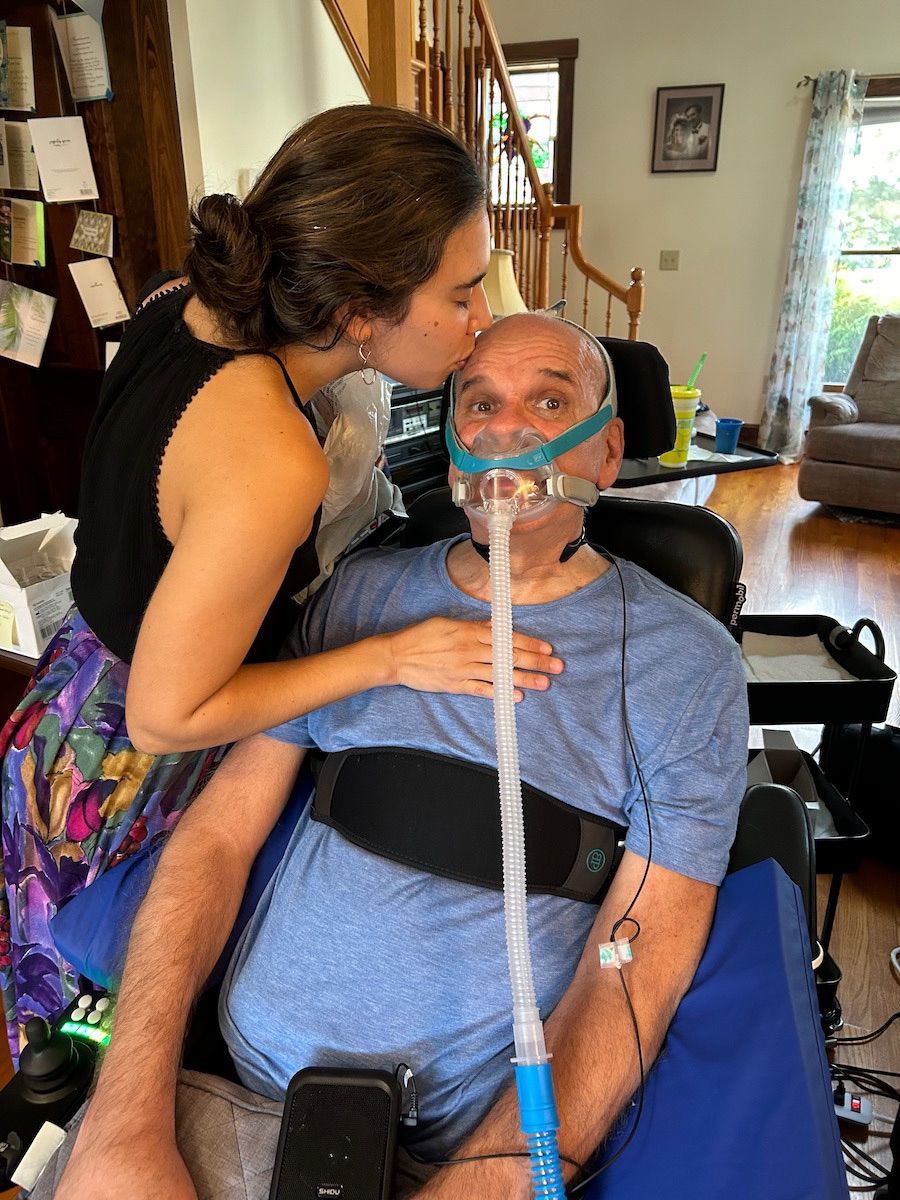
    For Yentli Soto Albrecht, a 33-year-old Penn MD-Ph.D. student who is not involved in the study, the project offers hope.

    Her father died from ALS, and she is a carrier. As founder of CureC9, a research program within the Washington-based nonprofit EverythingALS, she’s been pushing for studies like these that focus on prevention.

    “With these biomarkers, there is a chance that in five years we might have a prevention trial,” Soto Albrecht said. “That means that I might have hope of not dying of these diseases.”

    Yentli Soto Albrecht is a genetic carrier and advocate.Jessica Griffin / Staff Photographer

    At risk

    Imagine copy-and-pasting the same word over and over again in a text file.

    The C9orf72 gene contains a similar series of repeats in its genetic code.

    Normally, the sequence is repeated fewer than 30 times. But in people with the genetic variant, it can be repeated up to thousands of times.

    That so-called “repeat expansion” is what puts carriers at higher risk of developing neurodegenerative diseases.

    “If you have a C9 expansion, it’s a coin toss of whether somebody gets ALS or they get FTD,” McMillan said.

    Corey McMillan (shown) is collaborating with the University of Miami’s Michael Benatar on this grant.Courtesy of Corey McMillan

    Carriers can develop disease at a range of ages, making it difficult to predict onset. However, scientists believe biological changes may begin years before symptoms appear.

    The challenge is identifying those changes.

    The team has five candidate biomarkers that, based on preliminary data, they believe could predict disease onset. One is the volume of the thalamus, a region of the brain that they hypothesize gets smaller when disease nears.

    The team will be testing each biomarker individually and in combination with others in this study.

    “If we can show that those markers work, then we’re ready to do the first C9 prevention trial,” McMillan said.

    A disease prevention trial

    Yentli Soto Albrecht and her father, Frank Albrecht, a month before his death from ALS in August 2024.Courtesy of Yentli Soto Albrecht

    For Penn’s Soto Albrecht, birthdays are bittersweet.

    Each year brings her closer to potentially developing ALS or FTD. She faces a 50% chance of developing one of the diseases by age 55 and a 95% chance by age 65.

    C9orf72 carriers like her have no known preventive options, and most clinical trials focus on treating patients who already have symptoms.

    One barrier to prevention trials is a lack of biomarkers that can show whether the disease is developing.

    “You could have the perfect gene therapy that modifies C9 [the risk gene], but if you don’t have the tools to test whether it’s working or not, then you’re not going to do that trial,” McMillan said.

    If his study successfully identifies biomarkers, that could help researchers identify people at highest risk of disease and provide a measurable outcome to show whether their course of disease has changed as a result of a trial.

    This, he hopes, could entice drug companies to invest in developing and testing treatments for prevention.

    It would also make it possible to pinpoint disease onset more accurately, regardless of a person’s age. The team is excluding carriers younger than 45 from this study to maximize the chances of catching disease onset.

    However, Soto Albrecht knows a patient under the age of 30 who is dying from C9-related ALS, and another just shy of 40 who was recently diagnosed.

    “In the absence of knowing what the biomarkers are, we’re leaving people in the dust,” she said.

    Penn will be one of 14 study sites nationwide. The team plans to start enrolling by December, and has resources to fly participants out if they do not live near a site. Interested people can reach out to C9Prevent@miami.edu.

  • ‘Girl From the North Country’: Arden Theatre makes the best case for a middling Bob Dylan musical

    ‘Girl From the North Country’: Arden Theatre makes the best case for a middling Bob Dylan musical

    When it comes to jukebox musicals, Girl From the North Country is an outlier.

    It is neither a revue (like Side by Side by Sondheim), nor a bio-musical (Jersey Boys, Ain’t Too Proud), nor an effort to integrate an artist’s song catalog into a purely fictional story (Mamma Mia!, Jagged Little Pill).

    The show, which opened Wednesday and runs through Oct. 25 at the Arden Theatre Company, pairs a bleak Depression-era tale by the Irish playwright Conor McPherson with an eclectic selection of more than 20 Bob Dylan tunes, from the obscure to the familiar (”Like a Rolling Stone,” “Hurricane,” “Forever Young”).

    The music and drama exist adjacent to each other, distinct but part of the same melancholic world in which nearly every character is damaged, broke, jobless, ruthless, desperate, or some combination thereof.

    “McPherson kept saying, ‘I’m writing a play, and I’m writing a musical, side by side,’ ” explains Terrence J. Nolen, the Arden’s producing artistic director, who directed the show. Girl From the North Country resembles a Eugene O’Neill play in which “strangers are thrown together and their stories unfold,” he says.

    “And next to it are the songs, orchestrated with a sound that would be true to 1934, when the piece is set.”
    To Nolen, in fact, Girl From the North Country isn’t a jukebox musical at all. “Not by my definition,” he says, since “a lot of jukebox musicals celebrate a writer’s greatest hits. And sometimes there’s a kind of loose biography of the writer throughout.” Here the only literal connection to Dylan is the setting of Duluth, Minn., his birthplace.
    Sevon Askew, who plays Joe Scott, and the cast of Arden Theatre Company’s 2026 production of “Girl From the North Country.”Ashley Smith, Wide Eyed Studios

    The Arden breaks from the 2020 Broadway production and subsequent national tour by using actor-musicians. The 2018 Arden production of the folk-rock musical Once was one inspiration, Nolen says. Another was his 1998 production of Frank Galati’s adaptation of The Grapes of Wrath, which interspersed dramatic scenes with music.

    In Girl From the North Country, the 13-member ensemble plays more than 40 instruments in addition to singing. Nolen frames the piece as a radio drama, with characters stepping up to old-fashioned microphones to belt out songs.

    Songs that, to be clear, mostly have only a marginal connection to either the action or the characters. They are atmospheric, sometimes emotionally resonant, and, at the Arden, terrifically well performed by an outstanding ensemble of mostly local actors.

    “I Want You” becomes a duet for two parting sweethearts (played by Giacomo Fizzano and Lyndie Moe), who want other things or people more. “Like a Rolling Stone” is the plaint of Elizabeth Laine (Sarah Gliko), the boarding house owner’s wife, whose dementia has eroded her inhibitions, to sometimes comic effect. “Hurricane” tells the story of one unjustly incarcerated boxer and is sung by another, Joe Scott (Sevon Askew).
    The cast of Arden Theatre Company’s 2026 production “Girl From the North Country.”Ashley Smith, Wide Eyed Studios

    Along with its debt to O’Neill, the piece uses a narrator evocative of Thornton Wilder’s Our Town. Here Dr. Walker (Greg Wood) not only sees the past and future of other characters, he also medicates their present-day pain. But, Girl From the North Country doesn’t pack the emotional punch of Wilder’s classic, and it won’t leave you in tears (unless you were hoping for a short evening — the show runs about two hours, 40 minutes).

    The show’s Broadway national tour, which stopped at the Forrest Theatre in 2024, seemed unbearably dreary to me. And I will never be convinced that McPherson’s sketchily drawn and improbable agglomeration of characters, anachronistic dialogue, and (mostly tragic) incidents constitutes a good play, with or without Dylan’s music.

    A few instances: It’s hard to believe that any father (here boarding house owner Nick Laine), however cash-poor, would try to couple his pregnant 19-year-old daughter with a nearly 70-year-old man. Or that his son, an aspiring writer, however drunk, would insist that a professional boxer punch him — or, for that matter, hurl racially-tinged insults at the boxer, given that the adoptive sister he presumably loves is also Black.

    Nevertheless, music director Ryan Touhey and Nolen, known for deft direction of dark, challenging musicals by Stephen Sondheim and his successors, have made the best case possible for Girl From the North Country.

    They are aided by the intimacy of the F. Otto Haas Stage (the simple scenic design is by James Kronzer, restrained lighting by Chris Lee), a fine central performance by Eric Hissom as Nick Laine, and the rest of the cast.

    Among the show’s pleasures: Gliko tearing into “Like a Rolling Stone” and “Forever Young;” Candace Thomas as the amiable Mrs. Neilson, Nick Laine’s potential escape hatch; the charismatic Matteo Scammell as a Bible-selling reverend, botching attempts at theft and extortion; and Scott Greer, as a problematic father and failed factory owner. As his intellectually stunted son, Harrison Smith electrifies the theater with a thrilling rendition of “Duquesne Whistle.”

    On Broadway, Girl From the North Country was a polarizing piece. Critics mostly raved; audiences were divided between lovers and haters. The Arden’s well-wrought production has moved me closer to the middle.


    “Girl From the North Country” runs through Oct. 25 at the Arden Theatre Company, 40 N. Second St. 215-922-1122 or ardentheatre.org.

  • This couple is venturing to eat at every Garden State diner. They’re now onto South Jersey.

    This couple is venturing to eat at every Garden State diner. They’re now onto South Jersey.

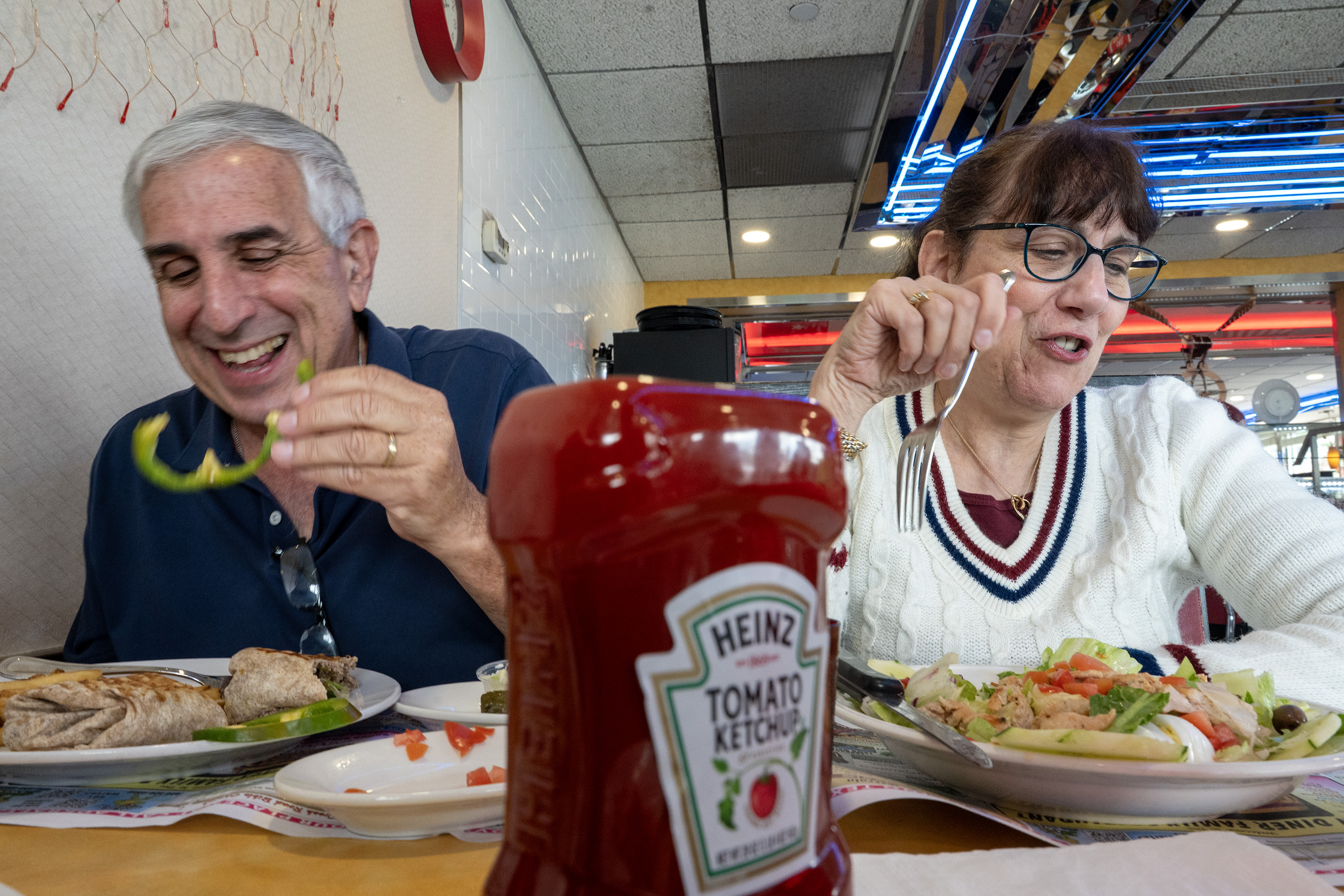
    Tucked into a booth toward the back of the Falcon Diner in Brooklawn in late September, Jon and Karri Ricklin fell into the routine they’ve come to perfect over the past decade.

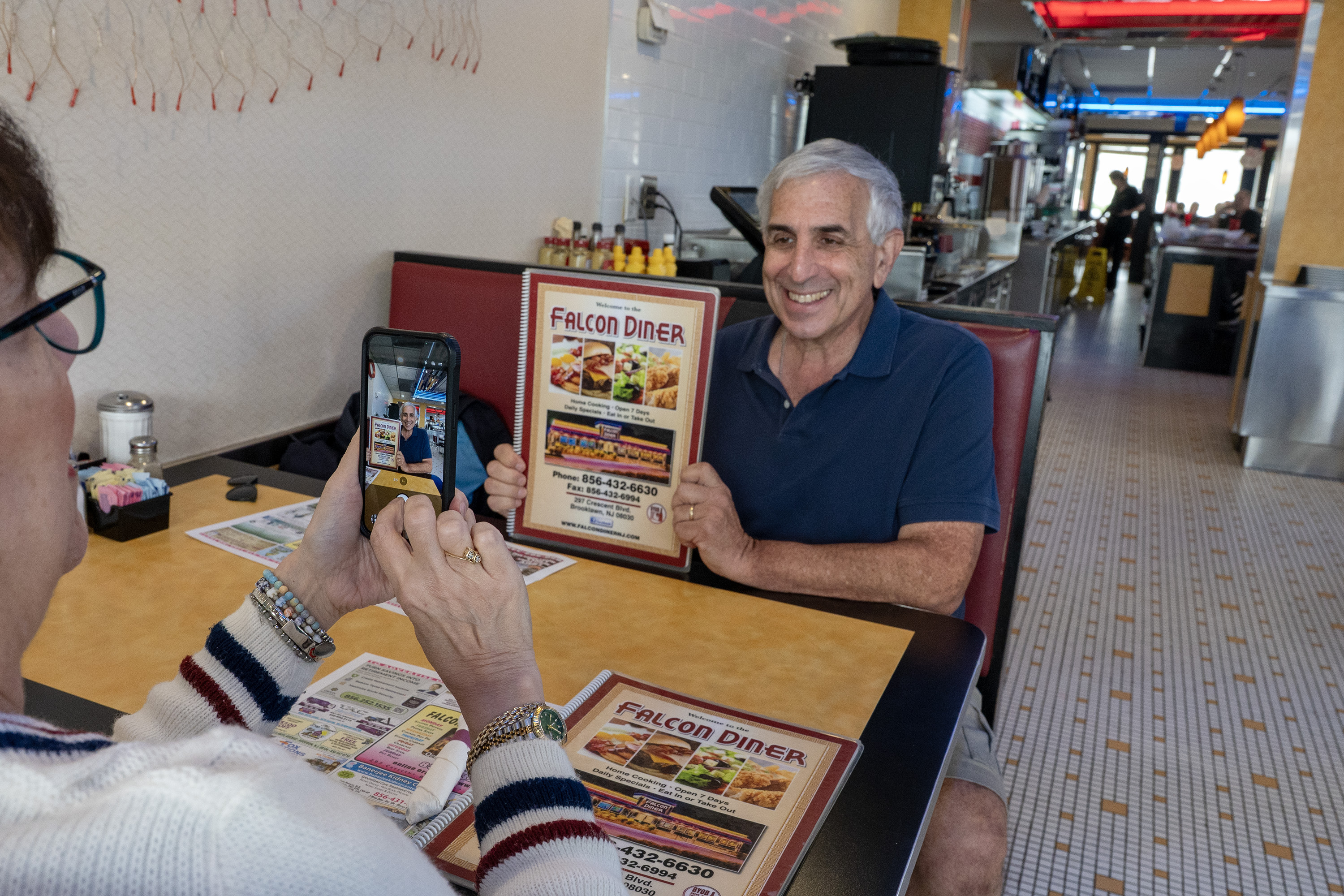
    As they took their seats, Karri captured a photo of her husband smiling brightly as he held up the multipage menu. This photo — the 331st of its kind — has become their trademark.

    The hundreds of nearly identical shots serve as a sort of digital passport for the pair as they venture to eat at every diner in New Jersey.

    And in a state dubbed the “Diner Capital of the World,” that has proven to be no easy task.

    The list is always changing as diners open, close, and change ownership, Jon said. But of 130 places they haven’t visited, the majority will bring them to South Jersey — stretching from the Philly suburbs to the Jersey Shore.

    At the same time, the longtime Bergen County residents are now considering a potential move a little further south, so far looking around Red Bank and Hamilton Township.

    After Karri’s recent retirement from a 40-year nursing career, the couple is hoping to downsize, and because of their yearslong effort, they “have no choice” but to stay in New Jersey — at least until they cross that final diner off their list, Karri joked.

    “It’s not because of the diner project,” Jon added, “but it’ll help with the diner project.”

    Keeping the tradition alive

    It all began in 2015 when the Hillsdale couple, married for 42 years this summer, stopped at the Livingston Diner in North Jersey after visiting with family in the hospital.

    Karri took the first of the now-famous menu photos to which Jon jokingly suggested, “Wouldn’t it be cool if we take this same picture at every diner in the state?”

    More than 11 years and 330 meals later, the couple is still chasing that goal, documenting the project on their Instagram, @NJDinerJourney, and as of a few months ago, a new website.

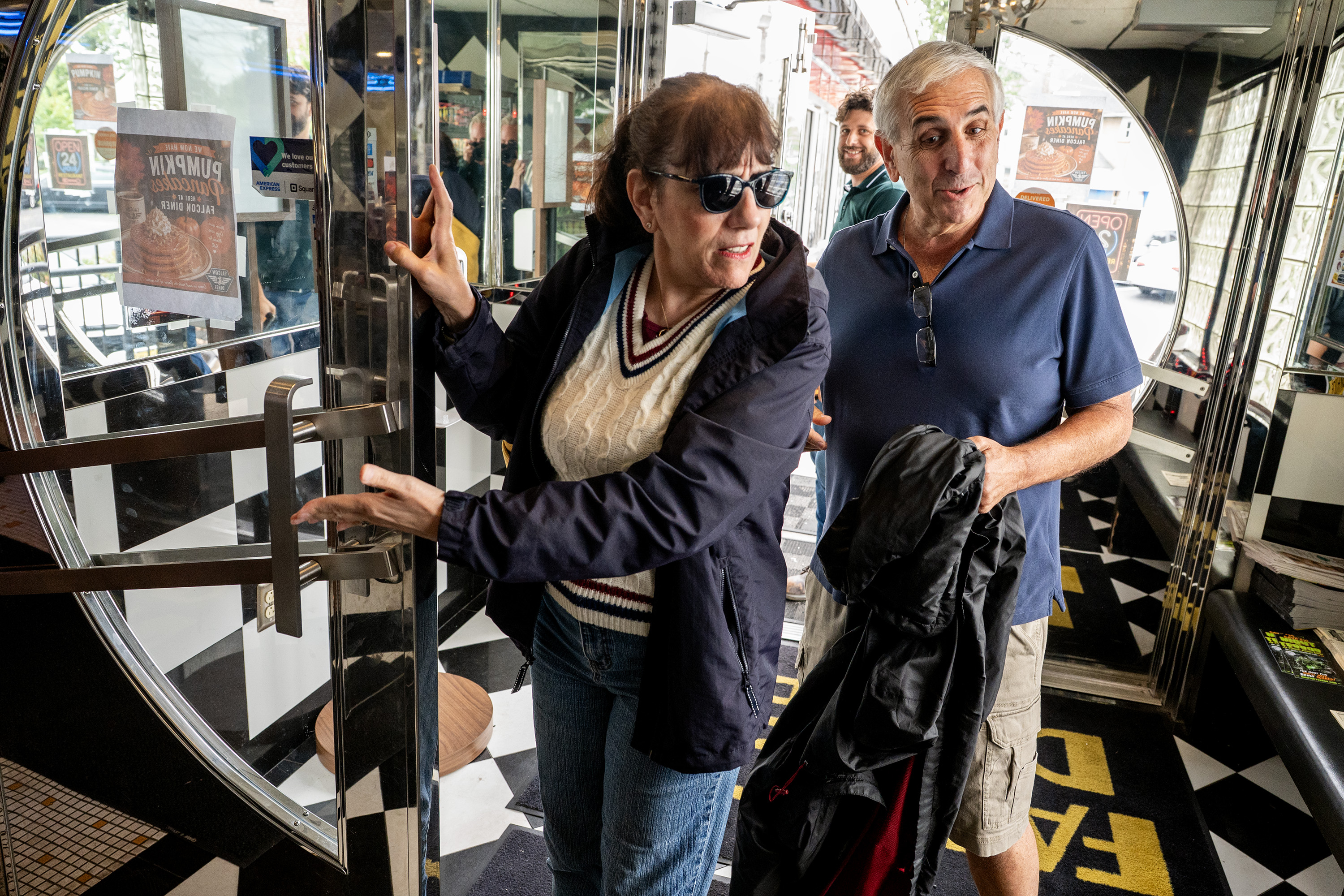
    Jon and Karri Ricklin arrive at the Falcon Diner in Brooklawn on Sept. 30. They’re on a mission to eat at every diner in the state of New Jersey.Tom Gralish / Staff Photographer

    Now with over 6,000 followers, Karri and Jon have become something of unofficial spokespeople for the preservation of diners and diner culture in New Jersey.

    “It’s been fun,” Jon said. “It feels good to be sort of an ambassador to the state. We just never expected it.”

    “Jersey is known for its diners, but you go to any small town anywhere in America, they’re going to have a little coffee shop or a little luncheonette and that’s their diner. So people can relate to that,” he said.

    When they first started their journey, the couple counted between 500 and 550 total diners in the state, Jon said.

    They have since watched that number fall to about 400, he said, with fewer than two dozen around-the-clock operations still standing — the retro-inspired Falcon Diner among them.

    Karri Ricklin inadvertently started the project when she casually grabbed a photo of Jon holding up his menu before a meal in 2015.Tom Gralish / Staff Photographer

    With its chrome trim and neon striping, the Falcon — which locals may know better under its previous names, most recently the Empire Diner and the Brooklawn Diner before that — is one of the few places still carrying on the “any food at any hour” ethos that has made the New Jersey diner so timeless.

    From construction workers grabbing a pre-sunrise breakfast to college kids looking for a late-night meal, the 24-hour diner has long been a central gathering place where everyone in the community is welcome to sit down for an affordable, filling meal, or simply a conversation and a cup of coffee (bottomless, of course).

    “We really want to keep that tradition alive and support small businesses,” Jon said. “Just about every one is a small business.”

    ‘How’s everything, hon’?’

    The couple’s trips are rarely planned more than a day or two in advance.

    Typically the conversation starts with some version of: “Will this be a Parkway day, a Turnpike day, or a Route 80 day?”

    Lunch at Brooklawn’s Falcon Diner was the 331st meal for Jon and Karri Ricklin as they venture to eat at every diner in the state.Tom Gralish / Staff Photographer

    They pick one, find a diner along the route, and then they’re off, they said.

    After quickly working their way through what Jon calls the “low-hanging fruit” — the diners closest to them in North Jersey — the couple has started venturing into South Jersey more often.

    “It’s been an interesting journey,” Jon said. “We’ve seen a lot of the state that we normally would not have seen.”

    Because their trips often take them to towns they’ve never visited, they also make an effort to check out the community before they head home, whether it be a stroll through a nearby park or a visit to a local farmers market or museum.

    After a recent visit to the Legacy Diner in Audubon, they perused downtown Haddonfield, where Karri fell in love with the English Gardener Gift Shop before they grabbed a drink at King’s Road Brewing.

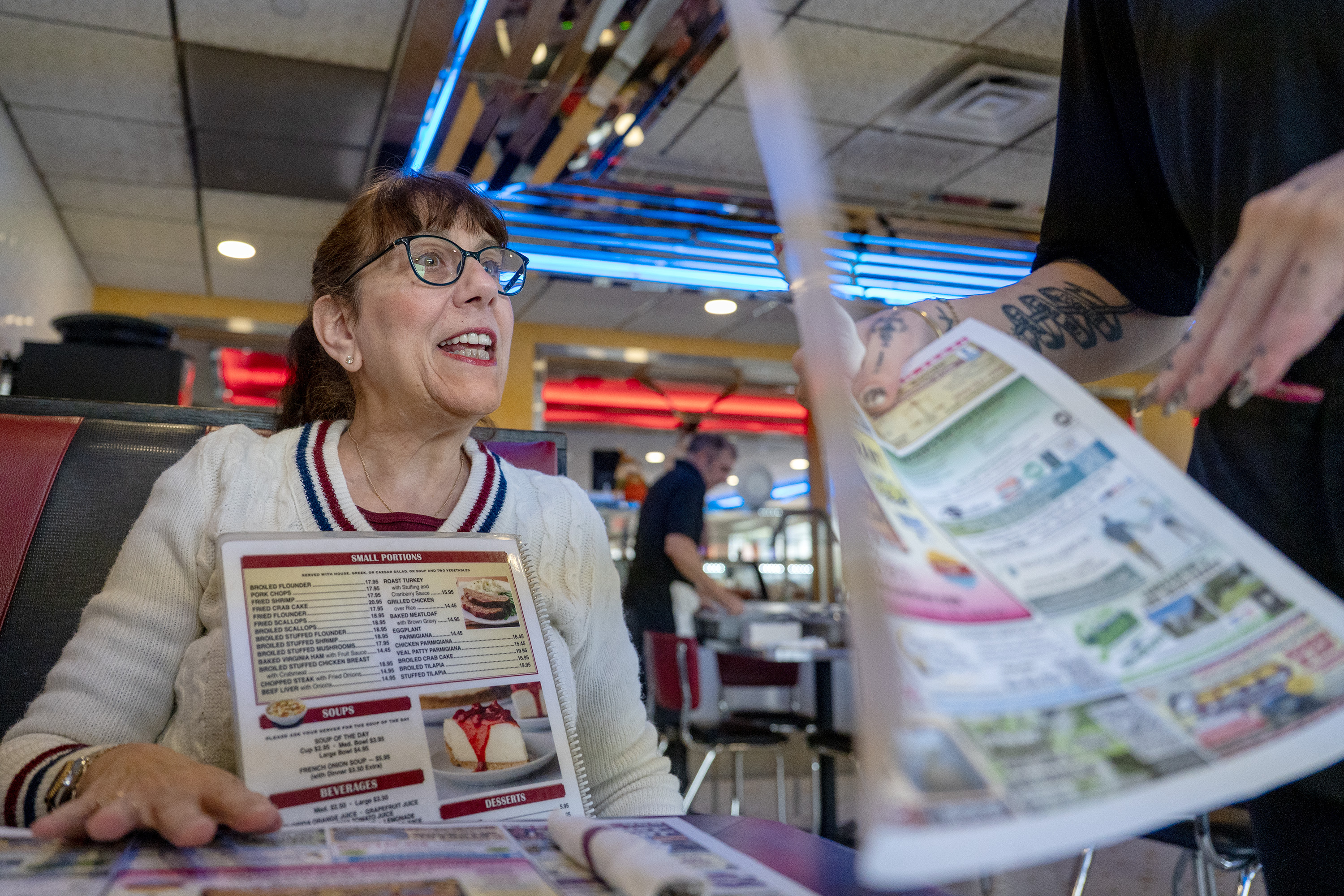
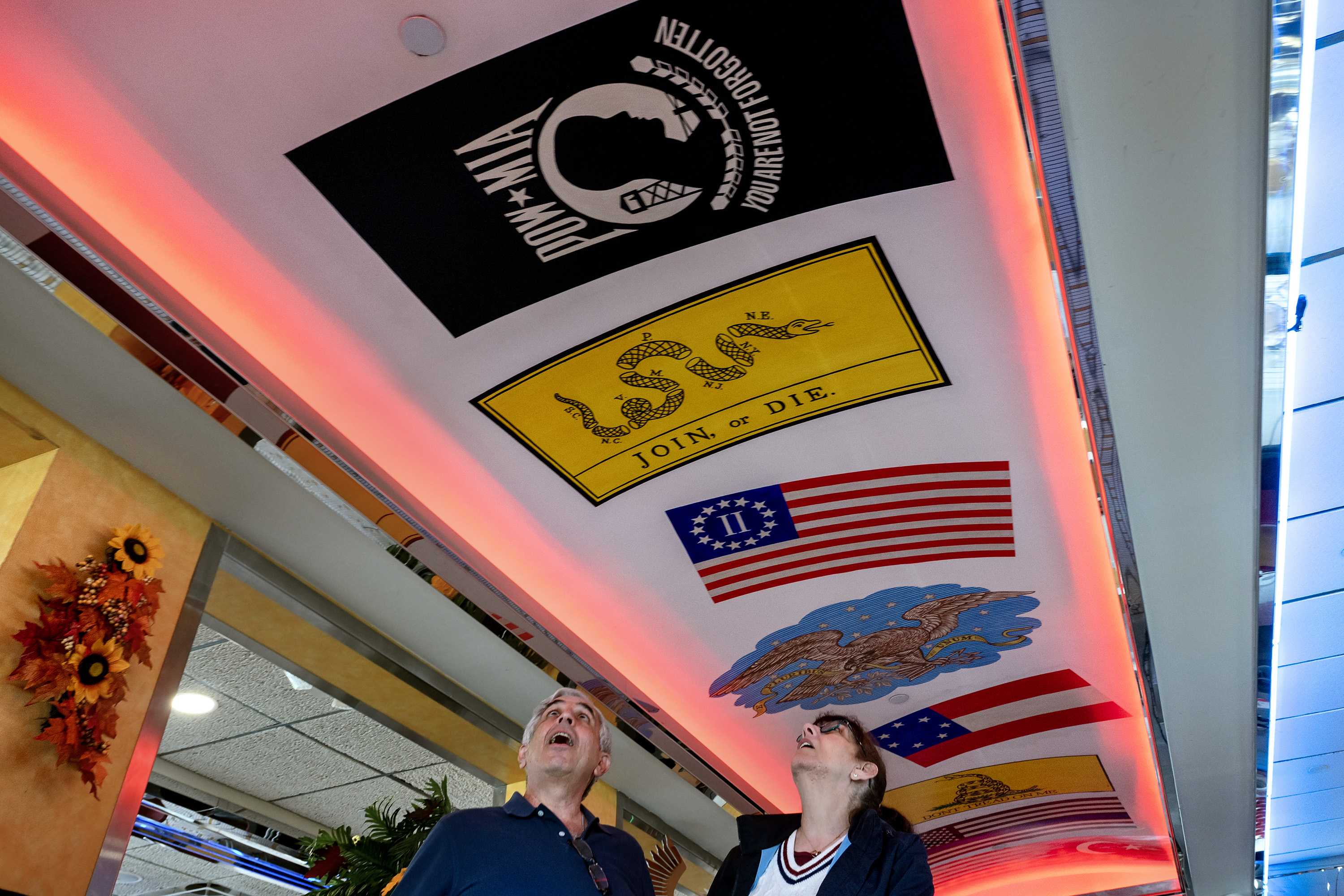
    Jon and Karri Ricklin look at the flag-painted ceiling above the dessert display case at the Falcon Diner.Tom Gralish / Staff Photographer

    What qualifies as a diner?

    For the Ricklins, the criteria is pretty simple: If it’s called a diner or serves traditional diner food, it’s most likely going to make the list.

    For places that don’t have the word “diner” in the title, such as Maple Shade’s Maple Hill Restaurant or the White House Restaurant in Moorestown, it comes down to the type of food and experience they provide, Jon said.

    A few requirements: A menu offering “classic diner food,” American fare at minimum but often a lot more, including all-day breakfast. A brightly lit dessert display case. Pots of fresh coffee at the ready.

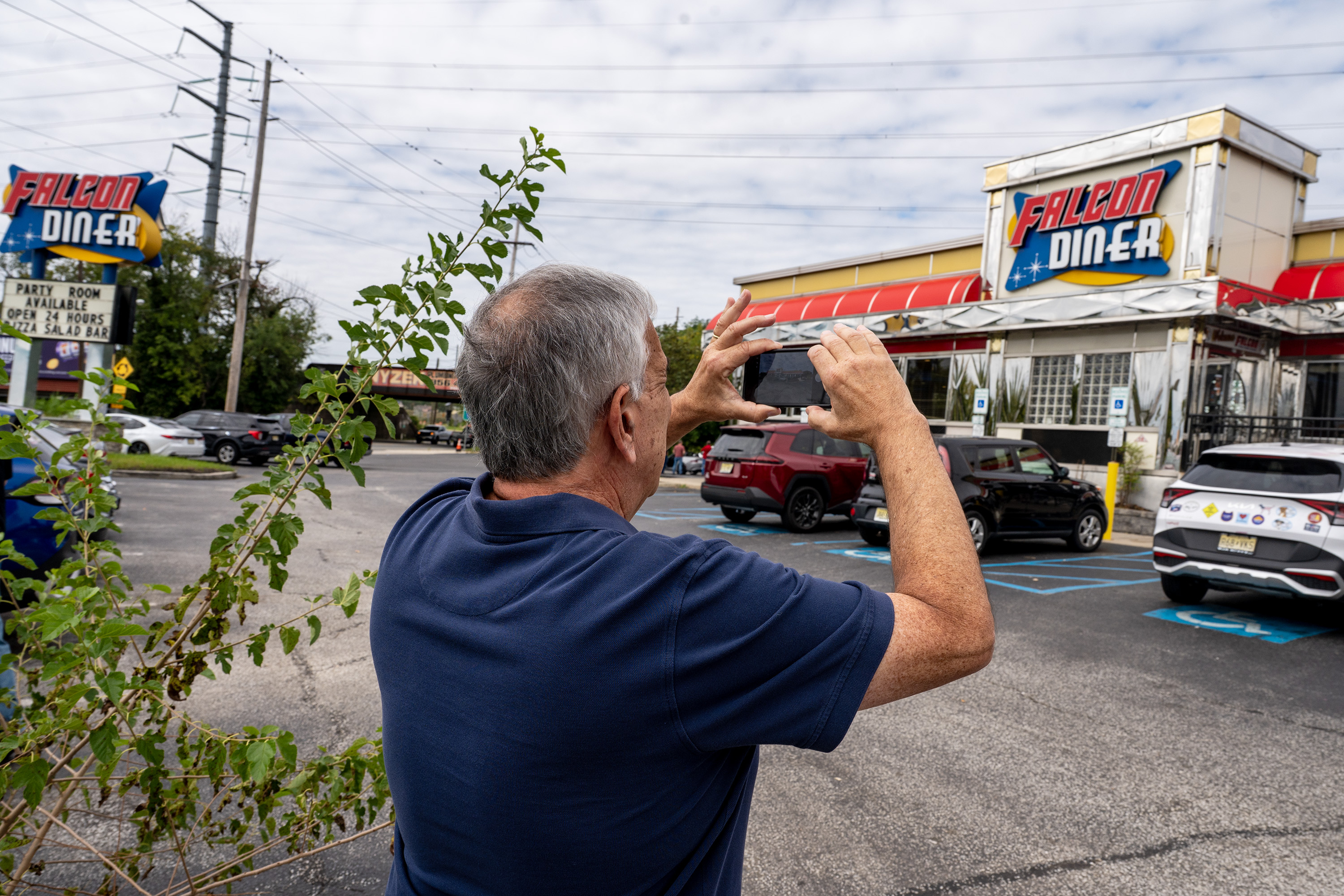
    Jon Ricklin grabs a photo of the retro-inspired Falcon Diner in Brooklawn, one of the many South Jersey diners left on their list.Tom Gralish / Staff Photographer

    Some Jersey diner purists they’ve heard from online approach the question differently and don’t agree with their methodology, he said, and they’re OK with that.

    The Ricklins’ main goal is to have fun together and support small businesses in the process, he said, so in his mind, the more the merrier.

    And as usual, North and South Jersey do things a little differently.

    Beyond the perennial debate about what to call pork roll, a few more regional quirks have emerged over the years. Meals get a bit pricier the further north you are, for instance, but they rarely come with the cup of soup that is customary in many diners down south, they said.

    They also noted South Jersey servers are quicker to throw out a warm “hon’” when greeting the table.

    The Ricklins travel with a map of the state with color-coded push pins marking each of the diners they’ve visited since they began their journey more than a decade ago.Tom Gralish / Staff Photographer

    As more people have taken notice of their journey, Jon said they sometimes get recognized when they’re taking the requisite menu shot. They were even invited to join former Gov. Phil Murphy and his wife for a diner lunch to celebrate National New Jersey Day in 2024, he said.

    But for the most part, they’re still anonymous, just another table of happy patrons chatting over a meal.

    And while they don’t expect anyone else to start their own diner journey, they are hoping that their story inspires people to try something new, even if it’s just a visit one town over.

    “Just get off the couch and go,” Karri said.

  • From Philly to Texas, Democrats have moved on from Fetterman

    From Philly to Texas, Democrats have moved on from Fetterman

    AUSTIN, Texas — It would be unfair to compare the vibrant reception U.S. Senate candidate James Talarico received at the recent Texas Tribune Festival to the muted response U.S. Sen. John Fetterman drew here two days later.

    But allow me to do so anyway.

    It was a hometown crowd for the rising Talarico, who, if the polls are to be believed, may become the first Texas Democrat elected to statewide office since 1994. When the doors closed to a capacity crowd at First Baptist Church — with more than 100 people left outside to grumble in the humid 95-degree weather — the vibe as groups of young people rushed to find seats was more pop star than politician.

    Even with media access, I barely made it inside. A standing ovation greeted Talarico, and it seemed like every other sentence uttered by the charismatic 37-year-old was met with applause. I had no such trouble finding a seat for Fetterman.

    Yet, it wasn’t long ago that the Pennsylvania Democrat elicited similar swooning during his own Senate run in 2022, or that the imposing Fetterman — who leaned progressive and ditched the suit and tie for gym attire — seemed like the future of the party.

    Cut to TribFest 2026 and the biggest reaction the Keystone State senator produced from the largely polite, mostly liberal audience was gales of laughter and some jeers from the balcony as he misspoke and identified himself as a “lifelong Republican.”

    While some called it a Freudian slip, perhaps Fetterman had seen the Inquirer/New York Times/Siena University poll published earlier that week that showed a majority of Pennsylvania voters saw him more as a Republican than a Democrat.

    I couldn’t help but feel for the senator, who expressed genuine exasperation over being questioned about his ideological loyalty. He was speaking my language, after all, when he said he respected Republicans and that to tackle the important kinds of problems facing the nation, “we’re going to need bipartisanship.”

    Fetterman is also right when he says he votes with Democrats around 90% of the time. Unfortunately, when he splits, it’s been a doozy.

    The senator has unquestionably backed the Israeli government’s response to the brutal Oct. 7, 2023, attacks by Hamas in which terrorists killed about 1,200 people and kidnapped more than 200 others. Israel’s subsequent invasion of Gaza has resulted in the deaths of more than 74,000 Palestinians, in what is labeled by some (including many Democrats) as a genocide.

    Support by the government led by Prime Minister Benjamin Netanyahu has increasingly emboldened illegal settlements and violence in the occupied West Bank, as well.

    Texas Tribune editor-in-chief Matthew Watkins (right) speaks with Texas Democratic Senate nominee James Talarico during a one-on-one conversation at the Texas Tribune Festival 2026.Eli Hartman for The Texas Tribune

    On Tuesday, Fetterman was the lone Democrat to vote against a measure that would have required the U.S. Department of State to report on any investigations into the killings of nine U.S. citizens by Israeli security forces or settlers since 2022.

    Fetterman has also blindly supported President Donald Trump’s war of choice in Iran, telling his Texas audience that “the Iranians are really no different than the Nazis.” The senator has been the only Democrat to consistently reject efforts to enact a war powers resolution to rein in the White House, most recently on Sept. 24.

    What comes through listening to Fetterman defend his positions is his earnest belief in what he’s doing. He tried to frame his actions as those of someone led by common sense and a plain understanding of right and wrong.

    “We’re the good guys,” he said. “The problem is Iran and Hamas.”

    When questioned by an audience member about his apparent black-and-white worldview and whether there was room for nuanced positions in U.S. geopolitics, Fetterman said he was nothing but.

    “My argument is nuance,” he noted. “That’s why it’s not a genocide [in Gaza], and that’s why is Iran allowed to build a nuclear bomb? That there is nuance.”

    Maybe later I’ll coin the term for the sound of a mass skeptical smirk, but here I’ll just call it the audience response to Fetterman’s answer.

    The senator’s problem — and why he’s losing Democrats across the country — is that regardless of his earnest belief in what he’s doing, he’s wrong.

    He can’t see that you can understand that what happened on Oct. 7 was an atrocity and that the Israeli government’s reaction has gone beyond any reasonable response; that while Iran was a rogue nation that punished its people and sought to undermine Western allies, Trump’s ill-planned war has done nothing but destabilize the region, raise energy prices, and make America weaker.

    Still, there seems to be a method to Fetterman’s foolhardiness, and his time on the Texas stage was a mix of defensiveness and defiance.

    Pennsylvania’s senior senator seems to be betting on the fact that even if someone like the beloved Talarico wins his race, the electoral reality may leave the Senate almost evenly split between Democrats and Republicans.

    “What if that happens …? Who’s 51 …? Oh, yeah,” he mugged. “Wait until the midterms and let’s see what happens.”

    Sure, let’s.

    Based on his misguided stubbornness, if Fetterman is going to receive any standing ovations from a Texas crowd, it will be down the road in Houston at the 2028 Republican National Convention.

  • SEC plans to end limits on campaign donor practice that fed pension corruption

    SEC plans to end limits on campaign donor practice that fed pension corruption

    The Securities and Exchange Commission board plans to rescind a rule that said Wall Street money managers who gave money to state and local campaigns were barred from collecting fees for managing state and local-government dollars, for two years after they donated.

    The board, currently reduced to two members and three vacant seats, is giving Americans until Nov. 9 to comment on the proposal.

    The SEC rule, created in 2010, had special resonance in Pennsylvania, which is home to nearly one-third of the nation’s 5,000 public pension funds. Before then, private money managers had donated relentlessly to the politicians whose pension investment boards hired them.

    The proposal would end the limit on political contributions and stop requiring investment advisers to keep detailed political-contribution records.

    “The SEC is not the nation’s elections regulator,” SEC chairman Paul S. Atkins, wrote in a public letter accompanying his September proposal to ease the rule. Acknowledging the rule he wants to gut “was intended to deter fraud” by barring donors from getting paid to manage public money, Atkins wrote that the rule instead “resulted in the suppression of free speech,” pushing extra-careful firms to ban all political donations, and reducing Wall Street funding for political candidates.

    Fraud is already illegal; leave policing money managers’ influence-buying to state and local law and federal election rules, Atkins urged.

    But some money managers, including Pennsylvania fund managers, expressed concern about the scale of the federal rollback.

    The 2010 SEC rule was “an objective, preventive restraint,” to prevent corruption, Christopher Tobe, a former Kentucky state pension trustee, said in a summary of his comments to the SEC.

    By contrast, state and local antifraud laws are typically applied only “after misconduct and harm have occurred,” added Tobe, a critic of private investments in public funds, who features in the public-pension documentary Pension Fight Club.

    The first civil case brought under the SEC rule, in 2011, resulted in then-Pennsylvania Gov. Tom Corbett and Philadelphia Mayor Michael Nutter returning campaign contributions to TL Ventures. The state and city pension boards had hired this money-losing Chester County firm in a failed attempt to cash in on the dot-com boom. TL agreed to return nearly $300,000 in fees and interest, which the SEC said the firm had wrongly collected after donating to the campaigns of top state city and state officeholders.

    The Pennsylvania State Capitol in Harrisburg. A rolled-back SEC rule could loosen restrictions on state-elected officials taking campaign donations from money managers who work for the government.

    Politicians were convicted over investment-firm donations

    The SEC rule limiting pay-to-play was enacted amid a string of pay-to-play scandals.

    In the late 2000s, a string of mostly Democratic state and city politicians went to prison for receiving or demanding bribes in exchange for hiring professional investors to manage public pension money. In 2010, California pension chief Fred Buenrostro and New York State Comptroller Alan Hevesi were each convicted of corruption charges for taking campaign cash from investment contractors, and sentenced to prison.

    The political contributors cited in Buenrostro’s case, portrayed by prosecutors as victims of public officials’ extortion, included Apollo Global Management. Apollo was then headed by Leon Black, who later lost the job over his relationship with disgraced financier and sex offender Jeffrey Epstein. Apollo is now the largest private-equity fund and its clients include Pennsylvania’s state pension funds.

    In Pennsylvania, elected state treasurers Rob McCord in 2015 and Barbara Hafer in 2017 pleaded guilty to criminal violations related to their handling of campaign contributions from money managers.

    McCord, who had been a tireless political fundraiser for governors and his own campaigns, was sentenced to federal prison; he was released early. He didn’t return calls seeking comment.

    Rob McCord, former state treasurer, leaves Federal Court in Harrisburg after pleading guilty to two counts of attempted extortion of an investor seeking contracts to manage state funds, in 2015. CLEM MURRAY / File Photograph

    Hafer, who got probation and a fine, died last year.

    Prior to the SEC rule, it was a common practice for money managers to fund Pennsylvania campaigns for governor, treasurer, and legislators. “Not only do they give me money, I hope they vote for me,” Hafer told The Inquirer in 2002.

    Political contributions continued

    Still, the rule didn’t stop political contributions altogether.

    On Sept. 14, 2020, the state officials, teachers’ union local officers, and school board reps who formed the state school pension (PSERS) board met in secret to approve a $100 million investment. The target, code-named Project Newton, was a proposal by Pittsburgh tycoon and Steelers co-owner Thomas Tull.

    Two days later, The Inquirer reported, Tull gave $711,000 to campaign funds backing Joe Biden, who was running for president, and $750,000 to a national super PAC for U.S. Senate Republicans. “There is no connection,” Tull said of the timing, so soon after the state’s secret investment. That investment, in hospital-wear maker Figs, later proved profitable.

    Indeed, the SEC rule didn’t stop investment managers from donating to national politicians or even out-of-state races.

    Still, Tull and national Democrats promised to recover $10,000 of Tull’s money after The Inquirer noted that those funds had been passed to Pennsylvania Democrats, whose leaders included pension board members. The SEC filed no complaint.

    What money managers say

    “I thought the rule had it right,” said Michael DiPiano, founder of NewSpring Capital, a $3.5 billion private investment fund group in Radnor, whose clients have included the Pennsylvania state and New York City pension funds.

    “Limiting or eliminating pay-to-play took donor pressure off of [private-investment fund managers] and leveled the playing field,” so larger firms that could afford the biggest donations wouldn’t crowd out smaller firms, DiPiano said.

    “Tighter pay-to-play restrictions should lead to a more objective-based approach” for picking money managers, he added.

    Richard Vague, the former banker and Pennsylvania Secretary of Banking who chairs the PSERS pension board, says SEC limits might fairly be eased in some details but “an outright rescinding goes far beyond.”

    The rule came after Wall Street “corruption” was exposed in the late 2000s, with the pension fraud cases, he noted. “Protective regulations, laws, and other safeguards get put in place in the aftermath of a major crisis,” Vague added.

    It’s not surprising that money managers and their Washington allies chip away at those rules, but with too much trimming, “those safeguards largely disappear,” Vague concluded.

    “That makes a subsequent crisis all the more likely.”

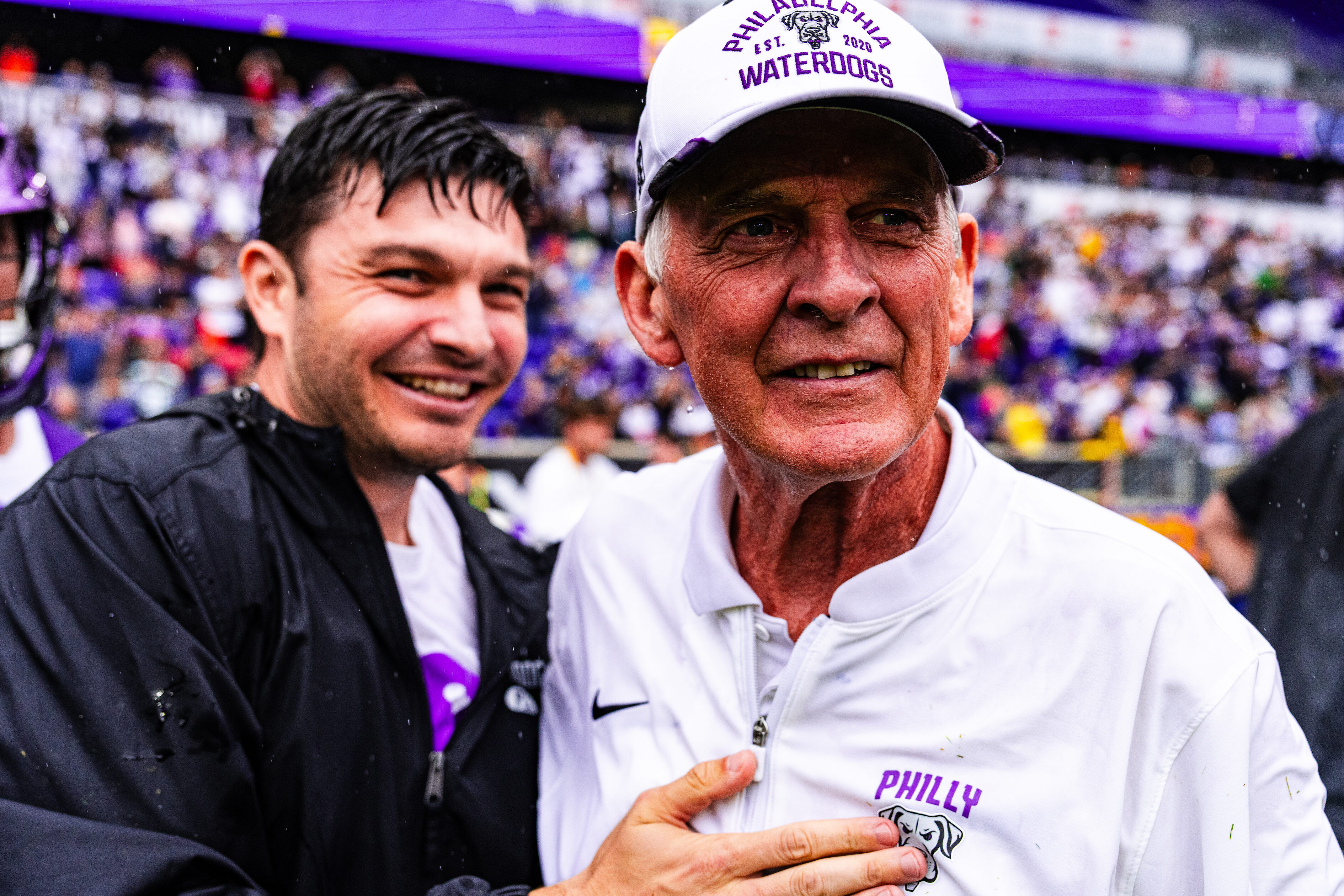
  • The Waterdogs want Philadelphians to embrace lacrosse: ‘There’s no better way to do it than winning’

    The Waterdogs want Philadelphians to embrace lacrosse: ‘There’s no better way to do it than winning’

    Bill Tierney knows a thing or two about building a winning lacrosse program.

    In 1988, his first year as Princeton’s head coach, his team finished 2-13. He went on to win six national championships.

    In 2024, the Philadelphia Waterdogs had a 2-8 record. Two years later, Tierney led the Waterdogs to the 2026 Premier Lacrosse League championship with a dominant 14-4 victory over the Denver Outlaws on Sept. 20 in Harrison, N.J.

    This is the Waterdogs’ second league title since the PLL’s inaugural season in 2018. They won their first in 2022. Their success is fueling fan interest in Philadelphia.

    “We’re proud to have brought this championship to Philly so that we can be on board with all those other great franchises and championship programs in the city,” Tierney said.

    In total, Tierney has won seven NCAA championships — six at Princeton and one at Denver — and he became the first lacrosse coach to win a college and professional championship. But his lacrosse career began later than most.

    When Tierney arrived at SUNY Cortland in fall 1969, a friend who lived on his dorm floor was a lacrosse goalie and asked Tierney to shoot on him to help prepare for the season. Tierney, who had never played lacrosse prior to that, eventually tried out for the team, and by his senior year, Cortland won a national championship.

    “By sitting on the bench a lot I was able to listen to coaches and take a lot in,” he said. “So it was the best of both worlds.”

    Tierney retired from coaching in 2023 and spent seven months away from the game before receiving a call about coaching the Waterdogs in the PLL.

    Transitioning to the professional league came with a different challenge for Tierney, he said. Unlike college teams whose players practice together every day, PLL players balance lacrosse with full-time jobs and only practice together on the weekends before a game.

    “The key is the culture,” Tierney said. “What you got to learn at the pro level with the lack of real contact with the guys is to dive in with them on their personal lives and them getting to know you better off the field. It took me a while to do that better than I did at first.”

    Building those relationships off the field helped the Waterdogs create that championship culture.

    Philadelphia had the No. 1 pick in the 2025 PLL College Draft after finishing 2-8 in 2024 and 2-6 in 2025. The Waterdogs selected CJ Kirst, who was the youngest player since 2009 to earn the 2026 PLL MVP award.

    Kirst won a national championship at Cornell in 2025 before receiving the Tewaaraton Award as the nation’s top college lacrosse player. He broke the PLL single-season record with 34 goals in 10 games and earned Championship MVP honors after recording seven points in the championship game.

    “My motivation every weekend is just the excitement that I have when I go and play the game,” Kirst said. “I just love being a part of the locker rooms and showing up and being a part of something that is so much bigger than yourself. I pride myself in playing with a ton of passion and that is the fire inside me where I have so much joy playing the game.”

    Growing the game

    A Montgomery County native and 2026 PLL Attackman of the Year, Michael Sowers said winning is essential to building a fan base and growing the league in Philadelphia.

    “When you’re trying to break into a new market, there’s no better way to do it than winning and especially in the city of Philadelphia, the city rallies behind winners,” he said.

    In 2024, the PLL announced that each team would be tied to a home market, and the Waterdogs were assigned Philadelphia.

    Its losing record made creating a local following difficult when the Waterdogs first relocated to the city in 2024.

    Michael Sowers, a Montgomery County, says “the city rallies behind winners.”Premier Lacrosse League

    “I remember being embarrassed to tell people I played for the Waterdogs because the first question they would ask is, ‘How’d you guys do this year?’ And it was like, ‘Oh, we’re 2-8, we sucked,’” Sowers said. “So, now to be able say we’re champions for the best team in the world, like that’s pretty cool.”

    The Waterdogs are also trying to establish themselves in a city with a history in lacrosse. Sowers previously played for the Philadelphia Wings, whose National Lacrosse League franchise ceased operations on Sept. 10 after Comcast Spectator withdrew its ownership following the 2025-26 season.

    “It’s as simple as winning,” Sowers said. “And unfortunately for the Wings, we just didn’t really win.”

    The championship game on Sept. 20 showed the team’s and PLL’s growth.

    ESPN announced that the Waterdogs-Outlaws game on ABC was the most-viewed championship game in PLL history, averaging 405,000 viewers.

    Kirst has noticed more local fans supporting the team when they play on the road each weekend from May to September.

    “It’s very visible now when I’m on the field looking into the stands and seeing tons of purple,” Kirst said. “Obviously it’s a great representation of family and friends, but I think now having little kids who are wearing the jerseys and showing support is truly special. Philadelphia is definitely gravitating towards being Waterdogs fans.”

    Winning the PLL title is an opportunity to continue to build something lasting in Philadelphia.

    “We’re in position, hopefully, to really create something special here and be in a position to win for the foreseeable future,” Sowers said.

  • The Flyers’ identity under Rick Tocchet is built on limiting chances against. The number they are allowing is alarming.

    The Flyers’ identity under Rick Tocchet is built on limiting chances against. The number they are allowing is alarming.

    Speaking to the media following Saturday night’s overtime loss to the Carolina Hurricanes, Flyers forward Trevor Zegras was asked if there is a concern about the number of shots the team has given up.

    “I know they had a ton, but a lot of them, for the most part, were them flinging it from the outside,” he said. “I still think we gave up maybe one too many from inside the house, but that’s their kind of game, and their M.O. is to put pucks on the net.

    “So I’m probably more concerned with how many shots we had, opposed to how many they had, but we’re getting better. We’ll learn from it and keep going.”

    The Flyers allowed 40 shots to the defending Stanley Cup champion Hurricanes, compared to their own 18.

    Carolina, which eliminated the hometown team from the playoffs in a sweep, is a high-shot-volume team that throws pucks from everywhere. That was to be expected.

    But the issue isn’t that the Hurricanes purely outshot Philadelphia more than two-to-one. It isn’t that this was the third straight game the Flyers allowed a team to eclipse the 37-shot mark, and the second straight past 40, or that they are averaging the fourth-fewest shots (20.7) in the NHL themselves. And it isn’t that, according to NHL Edge, they have spent 46% of the time in the defensive zone.

    The more concerning issue is where the shots from their opponents are coming from. A team that has prided itself on protecting the middle of the ice in the defensive zone is allowing teams to walk right in and take high-danger shot attempt after high-danger shot attempt. They are forcing goalies Dan Vladař, who didn’t get much prep time due to an upper-body injury in the opening period of his only preseason game, and new addition Joseph Woll to stand on their heads.

    Year, Coach
    (Numbers via Natural Stat Trick)
    HDCF HDCA HDCF% HDGF HDGA HDGF%
    2026-27, Tocchet 24 48 33.33 2 4 33.33
    2025-26, Tocchet 993 878 53.07 100 99 50.25
    2024-25, Tortorella/Shaw 916 837 52.25 117 127 47.95
    2023-24, Tortorella 1005 900 52.76 113 129 46.69
    2022-23, Tortorella 933 1090 46.12 122 131 48.22

    The “house” or “home plate” is the area where the analytic community believes a player has a higher probability of scoring. Although it can be subjective, especially when talking about shot attempts, it is accurate that shooting from the slot down to the goal line gives a player a greater opportunity to score.

    Analytics site Natural Stat Trick defines a high-danger shot as “any shot attempt on net (goals and shots on net) that qualifies as a high-danger scoring chance.”

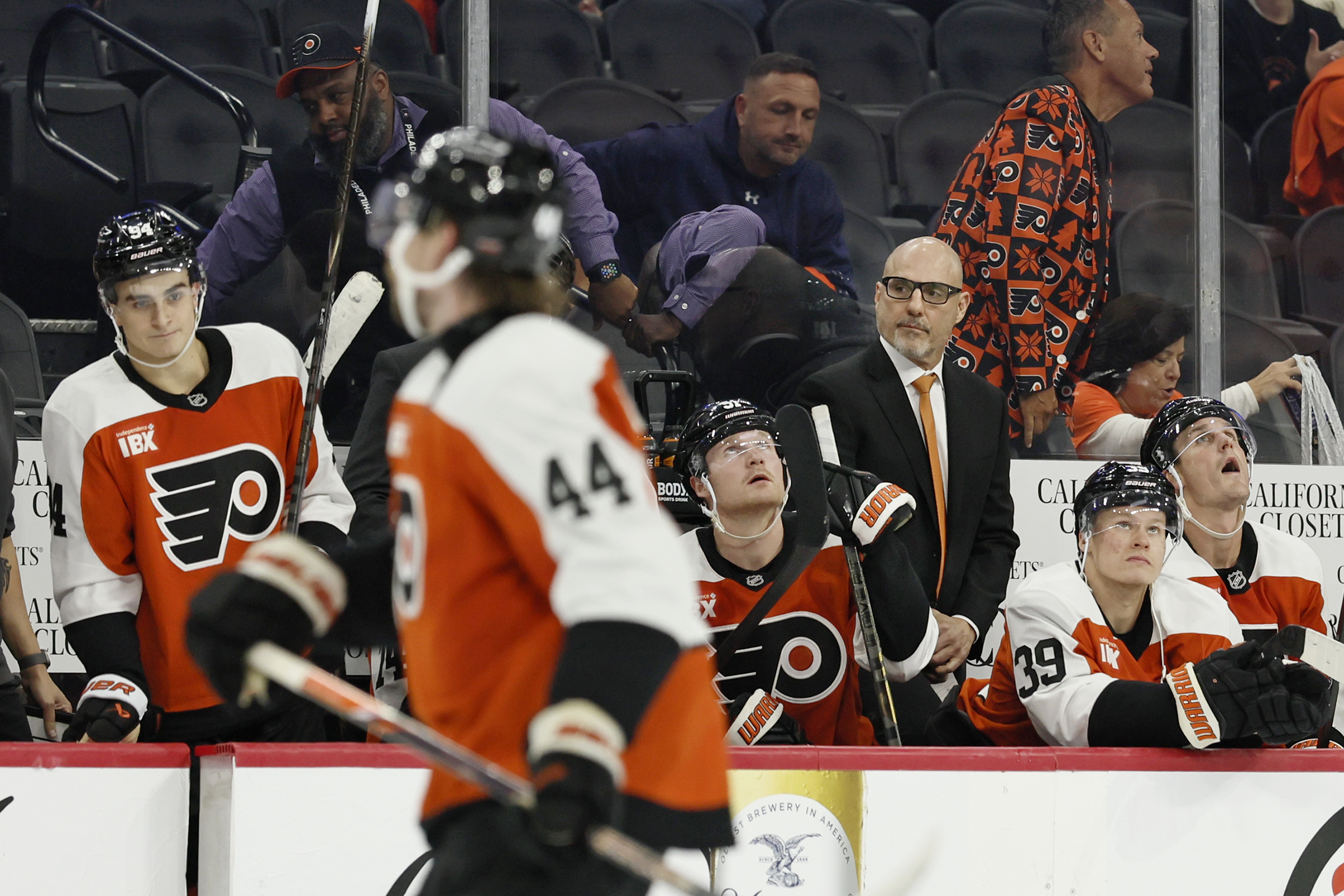
    Rick Tocchet’s Flyers are struggling to defend, which is their identity.Elizabeth Robertson / Staff Photographer

    A high-danger scoring chance is any “scoring chance with a score of 3 or higher,” and they assign anything straight down the middle, from the slot to the goal line, as a high-danger scoring chance. A shot from a spot assigned a 2 can become a 3 if it’s off the rush or on a quick rebound attempt.

    The Flyers have two high-danger goals: Rasmus Ristolainen’s redirect of a Travis Sanheim point shot from atop the crease during a delayed penalty on the New Jersey Devils, and the one an untouched Matvei Michkov finished against the Hurricanes. The opposition has four across all strengths.

    “We shot ourselves in the foot on a couple of them,” Sanheim said after the 7-0 loss to the Pittsburgh Penguins in the season opener. “We gave them probably half their goals.”

    Pittsburgh scored three high-danger goals on 21 high-danger chances at all strengths. The Flyers’ defensive zone looked messy, reverting to the six weeks leading up to the Olympic break when shots from the middle and weak-side goals against were a dime a dozen. The Devils had 14 chances, scoring once, to the Flyers’ five for the second straight game.

    On Saturday, Philly finally found itself on the plus side; it registered 14 high-danger chances to the Hurricanes’ 13 at all strengths. Woll stood on his head again, including stopping William Carrier near the goal mouth. This backs up what Zegras said about many of Carolina’s shots being weaker attempts from the perimeter.

    It may sound like an insignificant improvement, but winning the high-danger chance battle was noteworthy, especially for a team struggling to create in the early going, and whose entire defensive zone strategy is built on protecting the middle.

    Although the Flyers primarily employed the box-and-one when Tocchet came on board — during training camp, he called it “a very aggressive zone” — the bench boss tweaked the structure after speaking with his fellow Hockey Canada coaches at the Olympics when things started going south last season. “We’re not strict man-on-man, but we’re trying to be more aggressive,” he said back in March.

    The changes worked. The Flyers ended the regular season seventh in high-danger chances for percentage (53.07%) and allowed the third-fewest high-danger chances (878) in the NHL.

    Tocchet said in March he was keeping the changes simple and would make it more complex as the team graduates. If that’s the case, it could take a little more time to get back on track.

    But when it does, the hope is that it will right the ship at both ends and get the Flyers up the ice more and back to attacking the middle in the offensive zone, too. Entering Sunday, they ranked 22nd in high-danger shots, per NHL Edge, with 12.

    “Well, I think that just comes with our systems, and eventually, once it becomes second nature, your systems, it’s easier to read off, you know exactly where each guy is going to be,” Sanheim told The Inquirer on Saturday morning. “Right now, it just feels like we’re off just a little bit, and guys aren’t exactly where you think they’re going to be or where they need to be.

    “Just continue to work on that, watch film, get better in those areas, and as a group, once that kind of clicks, I feel like it’s just going to come natural, and it’s going to be easier to make those plays, understand where the puck needs to go, and should look a lot cleaner.”

  • What, exactly, do the Eagles do well? A crucial question as injuries mount and London calls

    What, exactly, do the Eagles do well? A crucial question as injuries mount and London calls

    Every great team needs a thing.

    It needs a thing it can do better than anything else.

    What is that thing for the Eagles?

    Where should they turn when nothing is working? When the injuries accumulate? When the score tightens? When the offense as a whole looks lost?

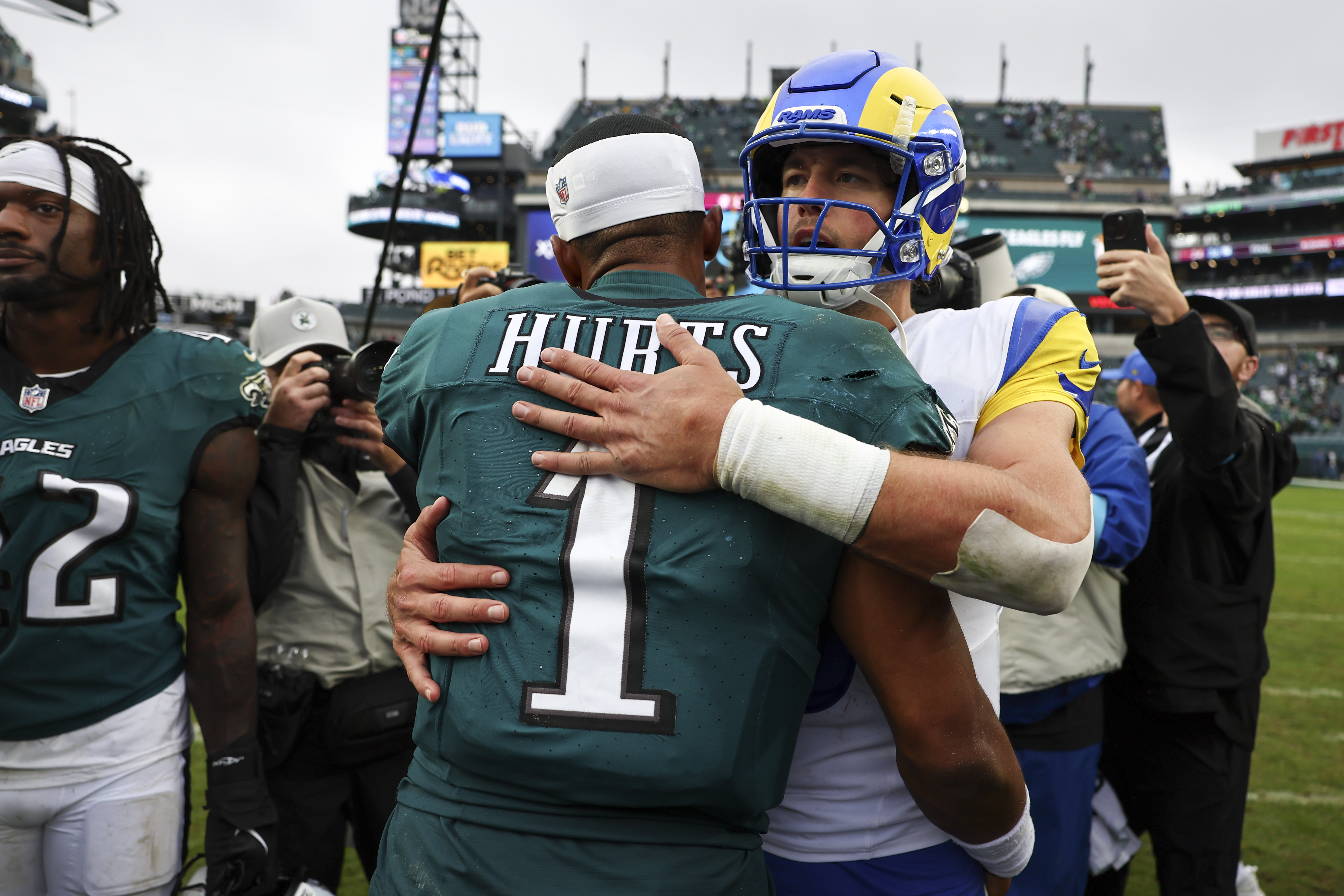
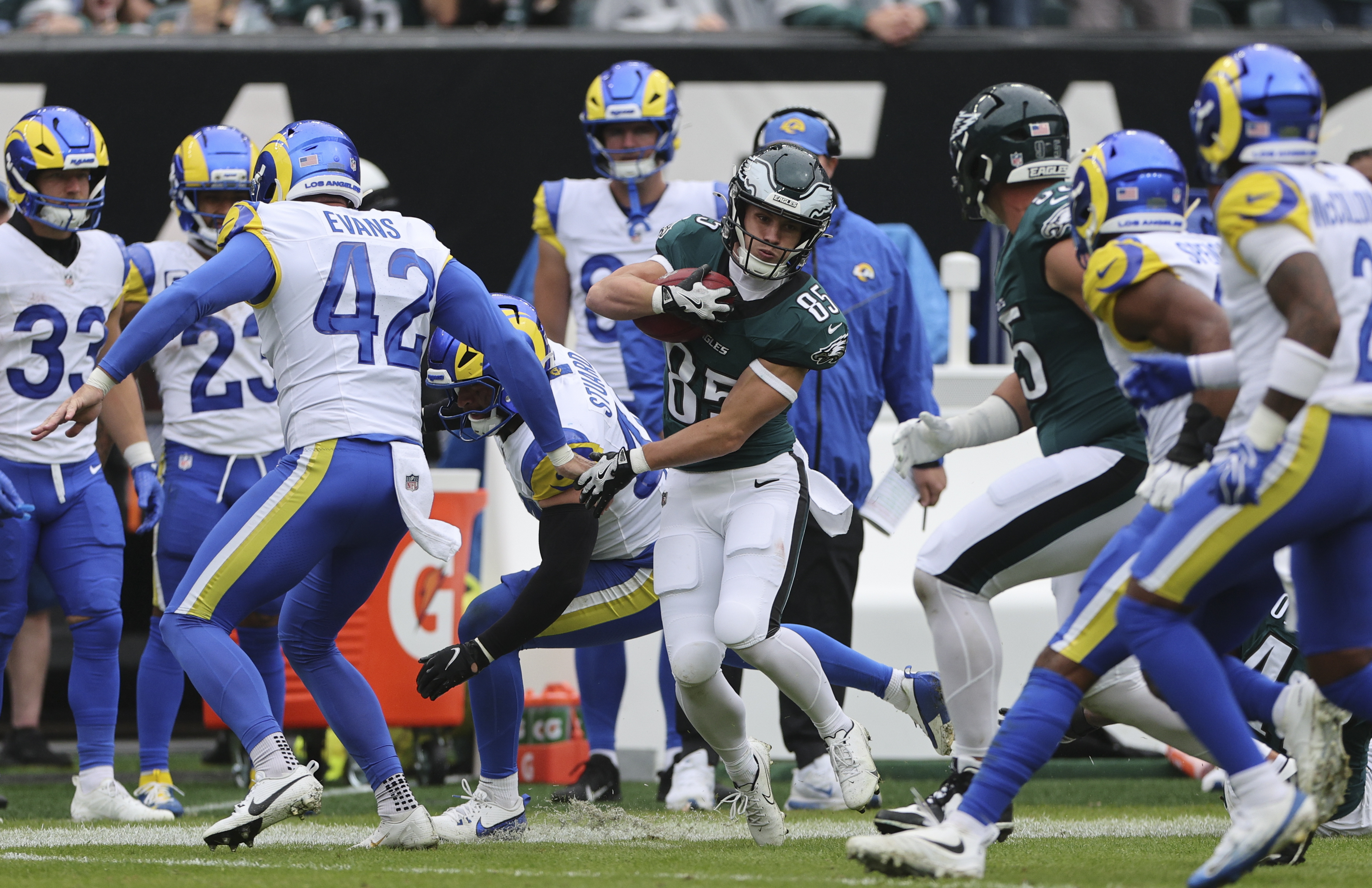
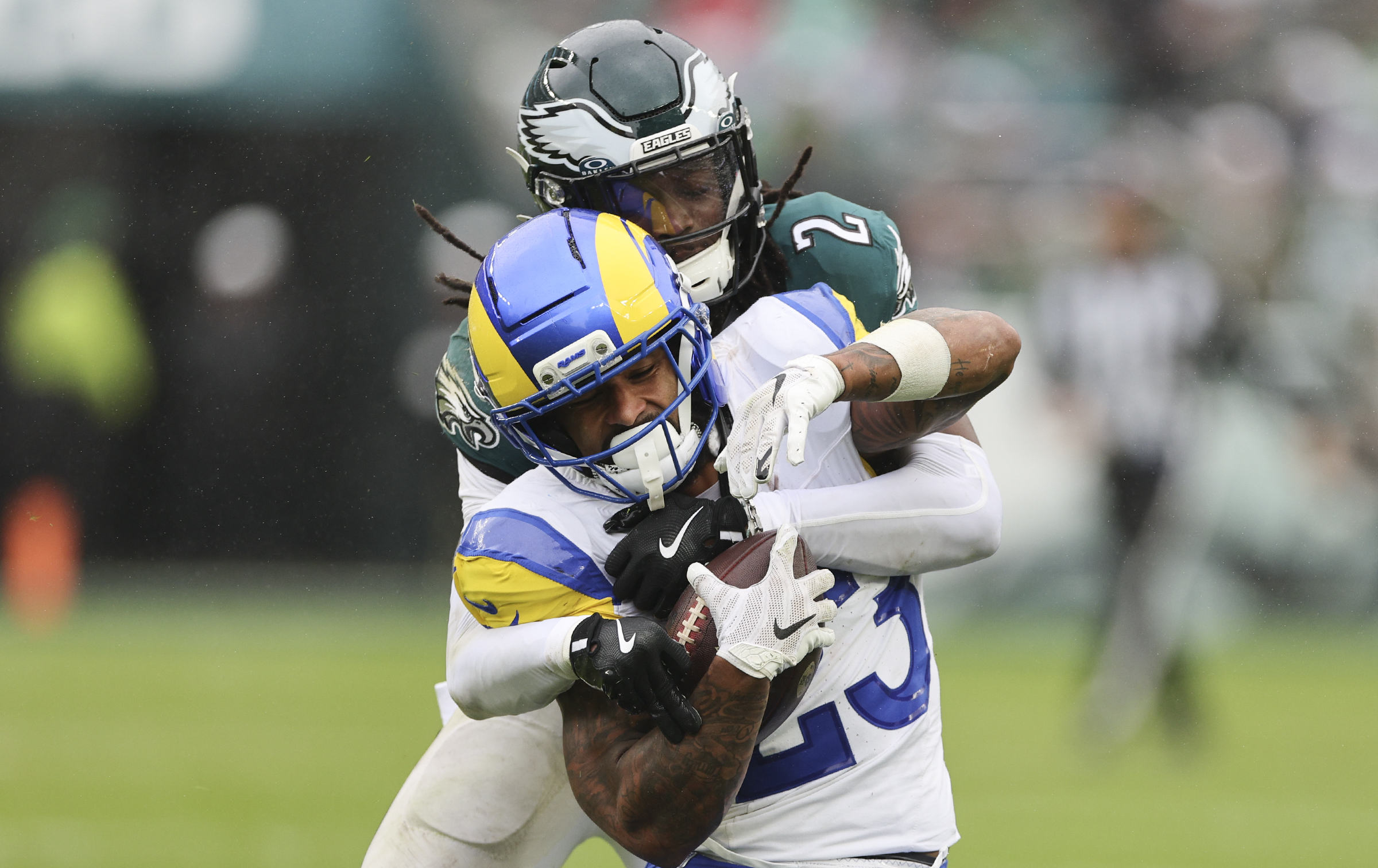
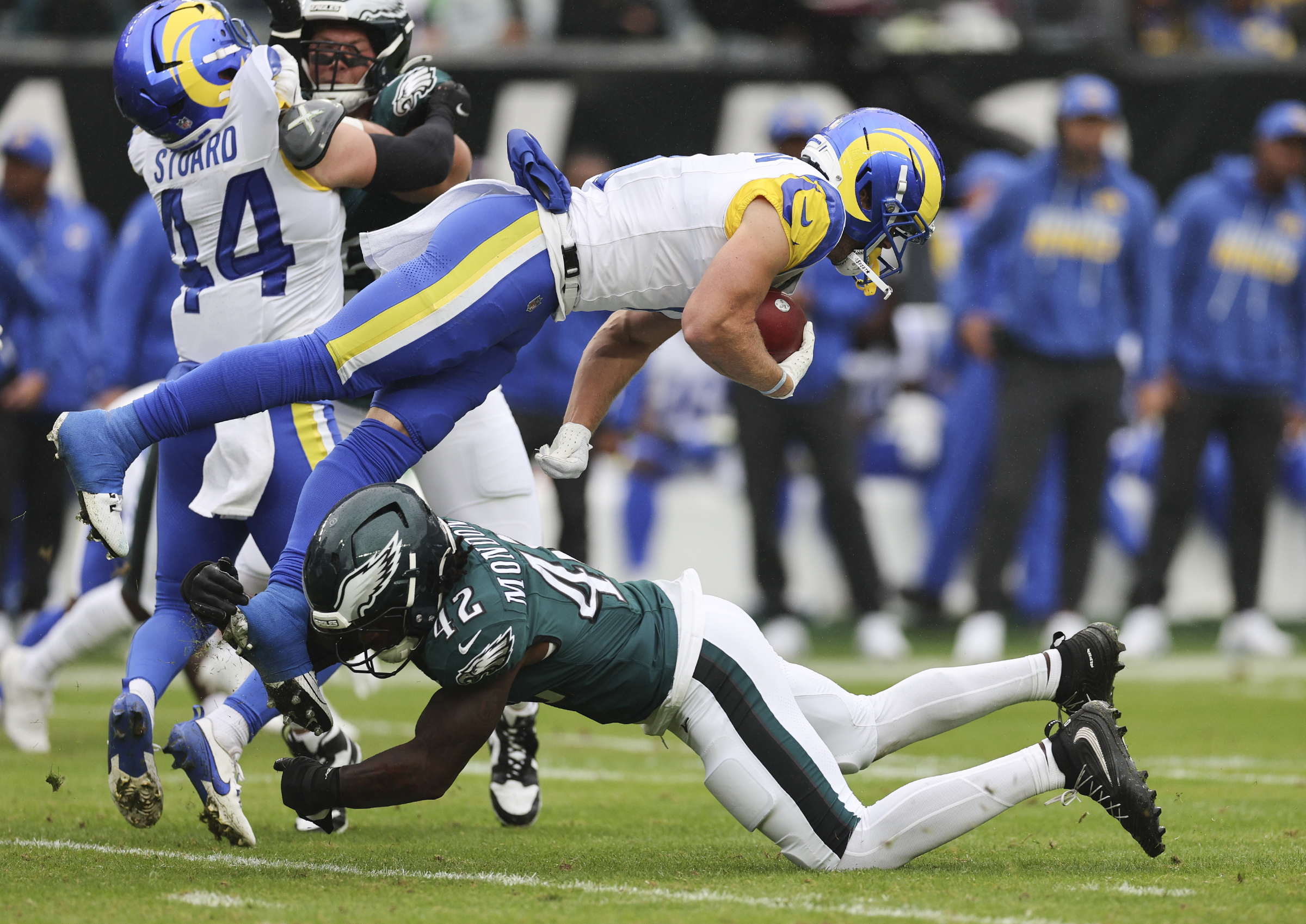
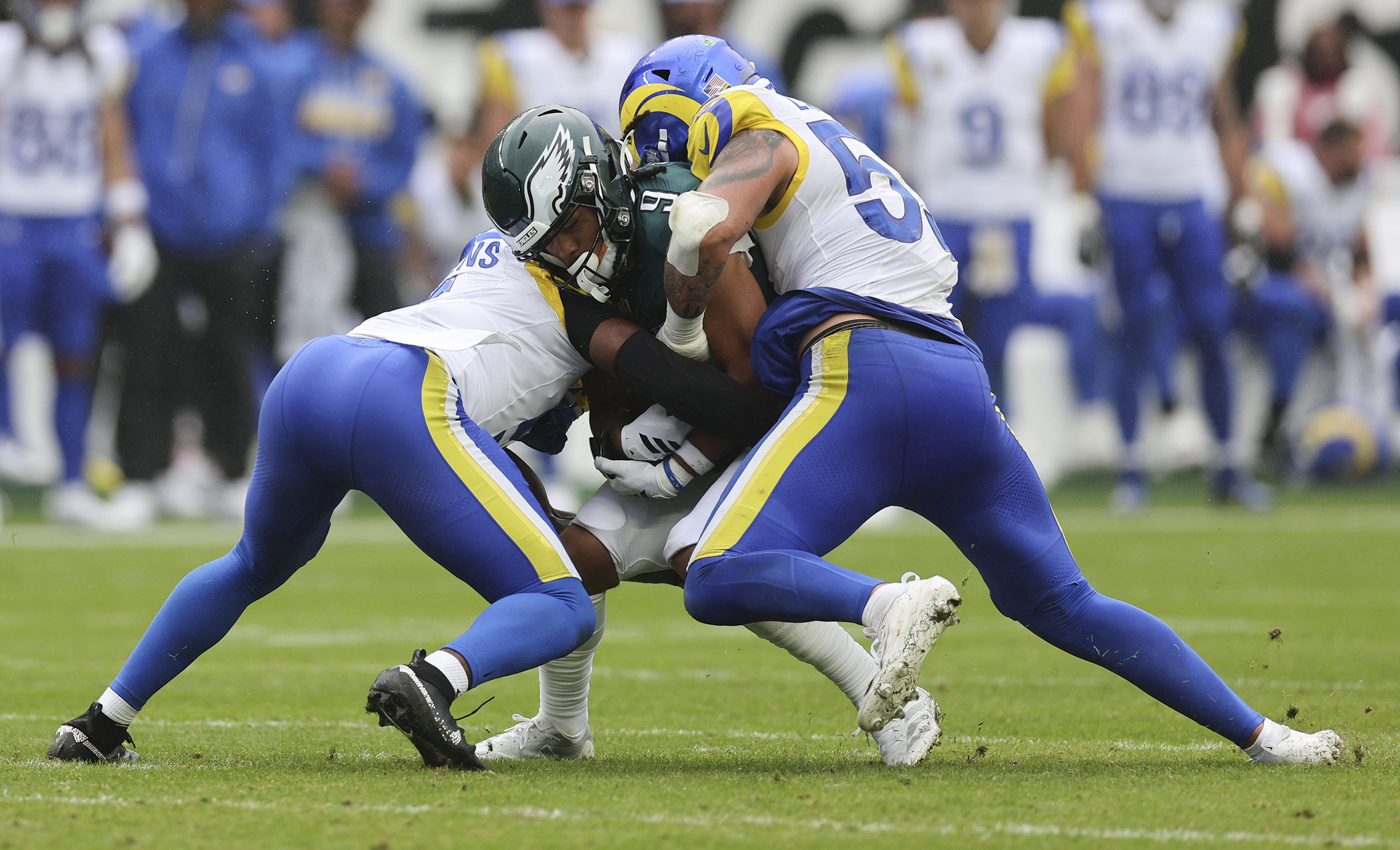
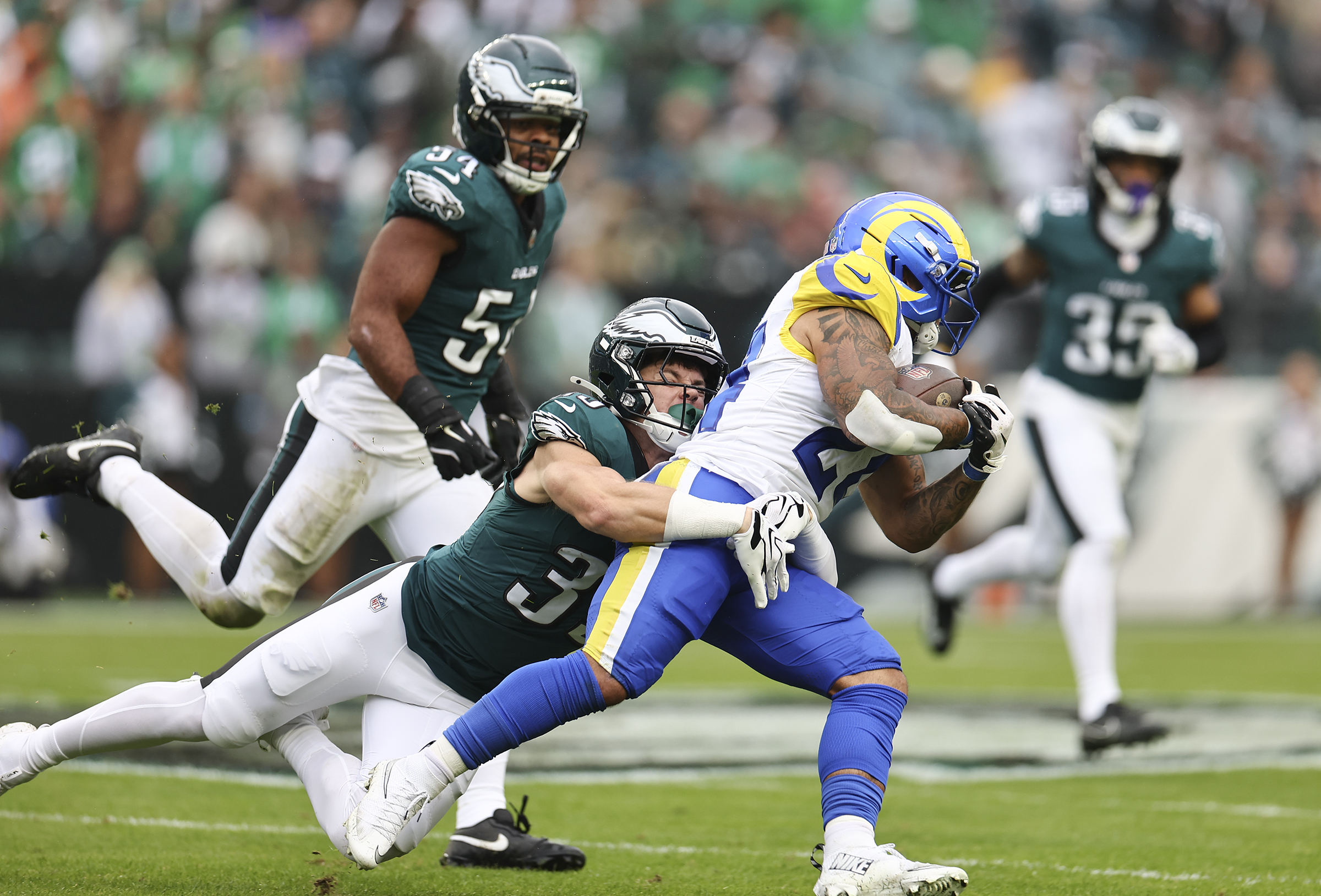
    There are lots of things that might explain the Eagles’ 24-20 loss to the Rams on Sunday. At the top of the list is this:

    The Rams had their thing. The Eagles did not.

    Before we tackle the daunting question of what that thing is, or what it should be, or what it could be eventually, or whether such a thing even exists, let’s remind ourselves of what it looks like. The Rams’ thing was Matthew Stafford throwing the ball to Puka Nacua, regardless of the coverage.

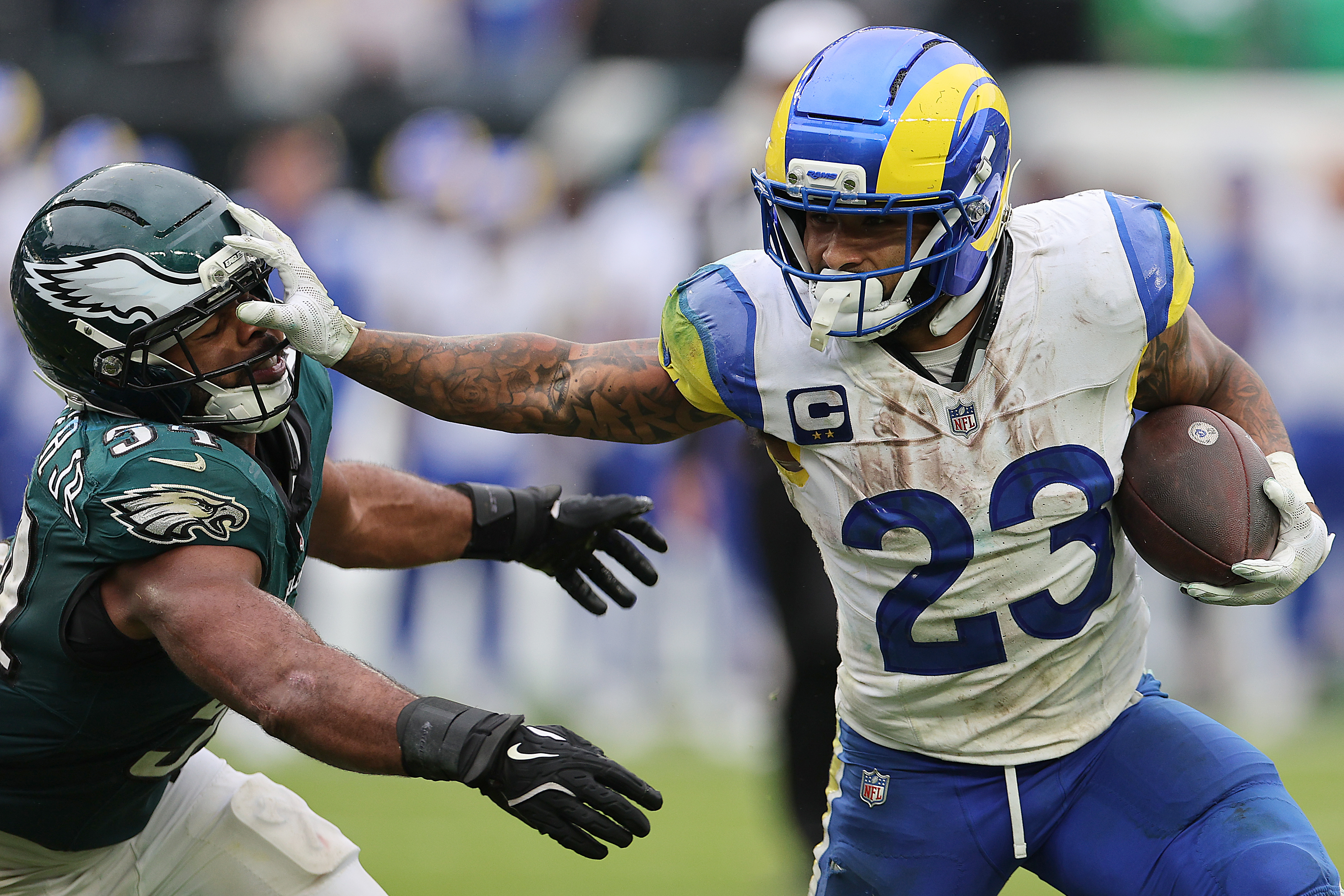
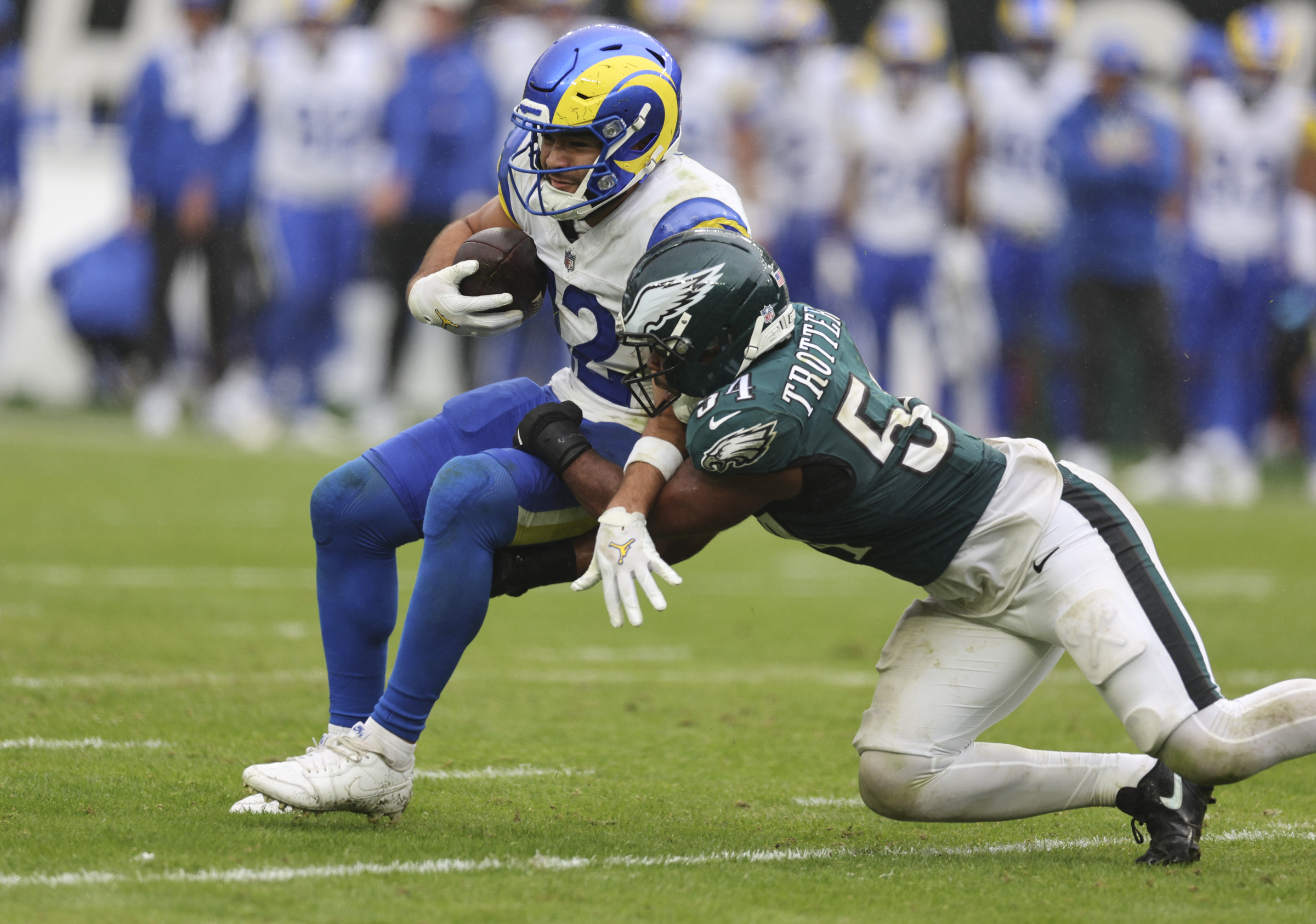
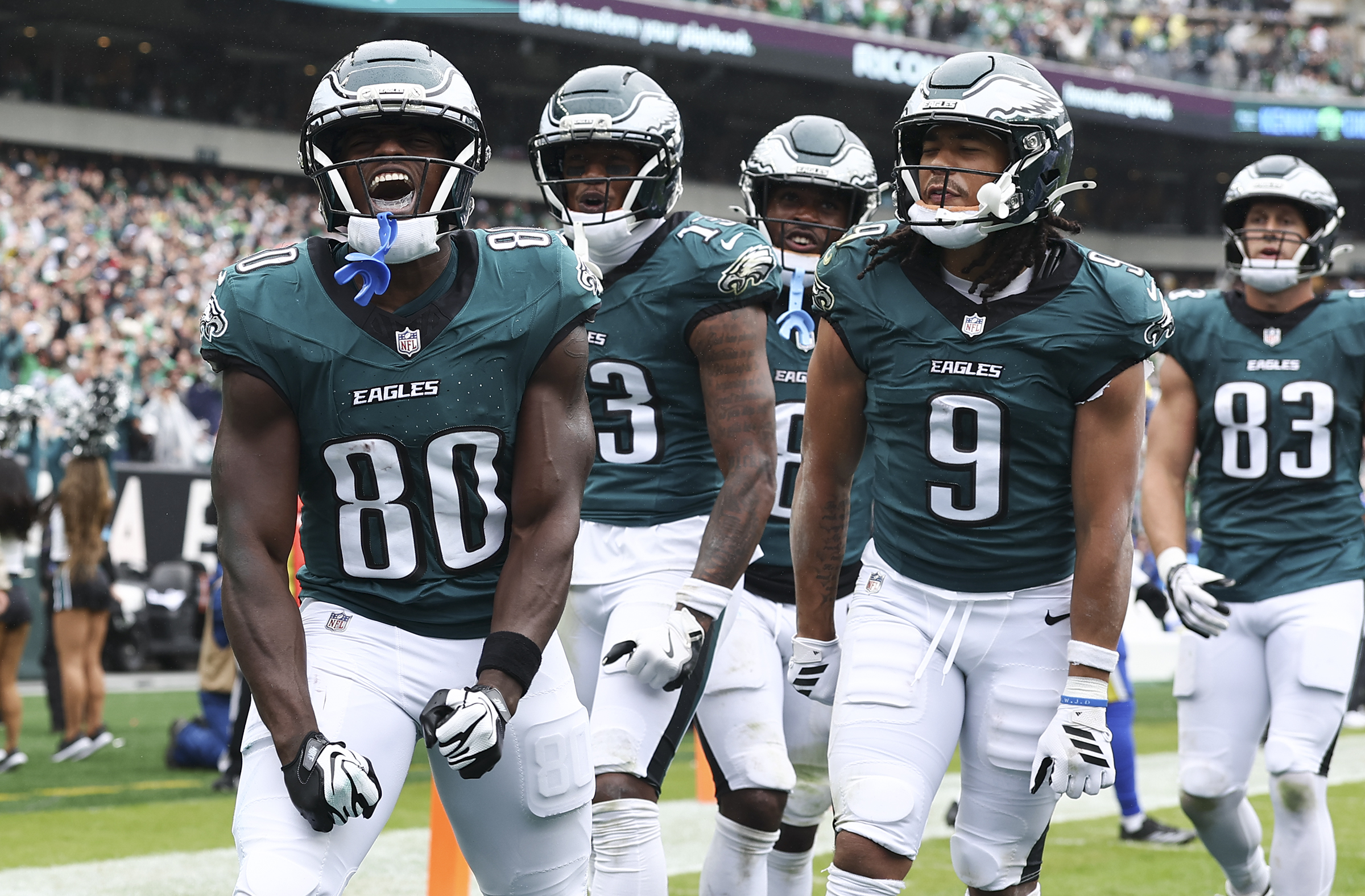
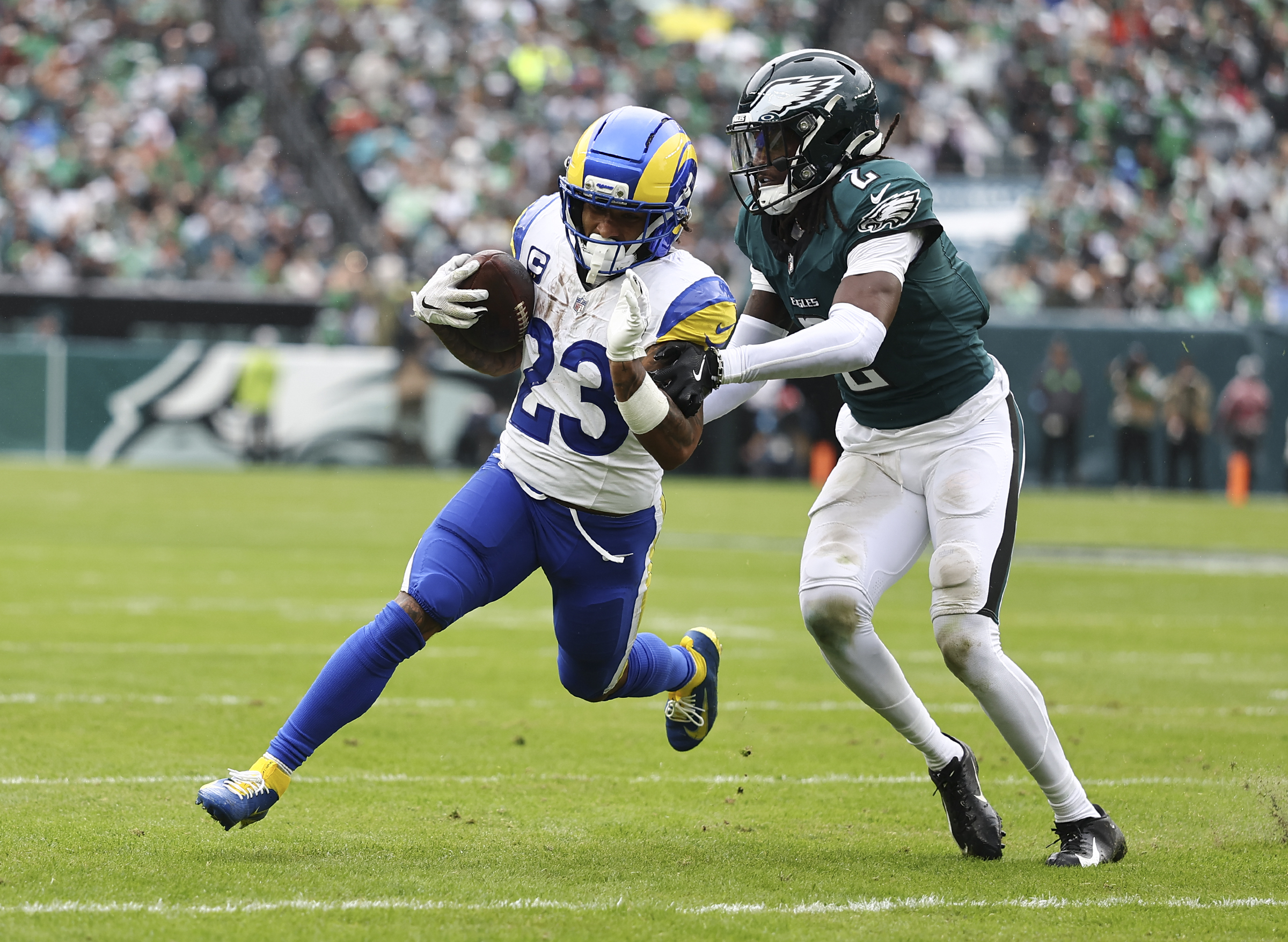
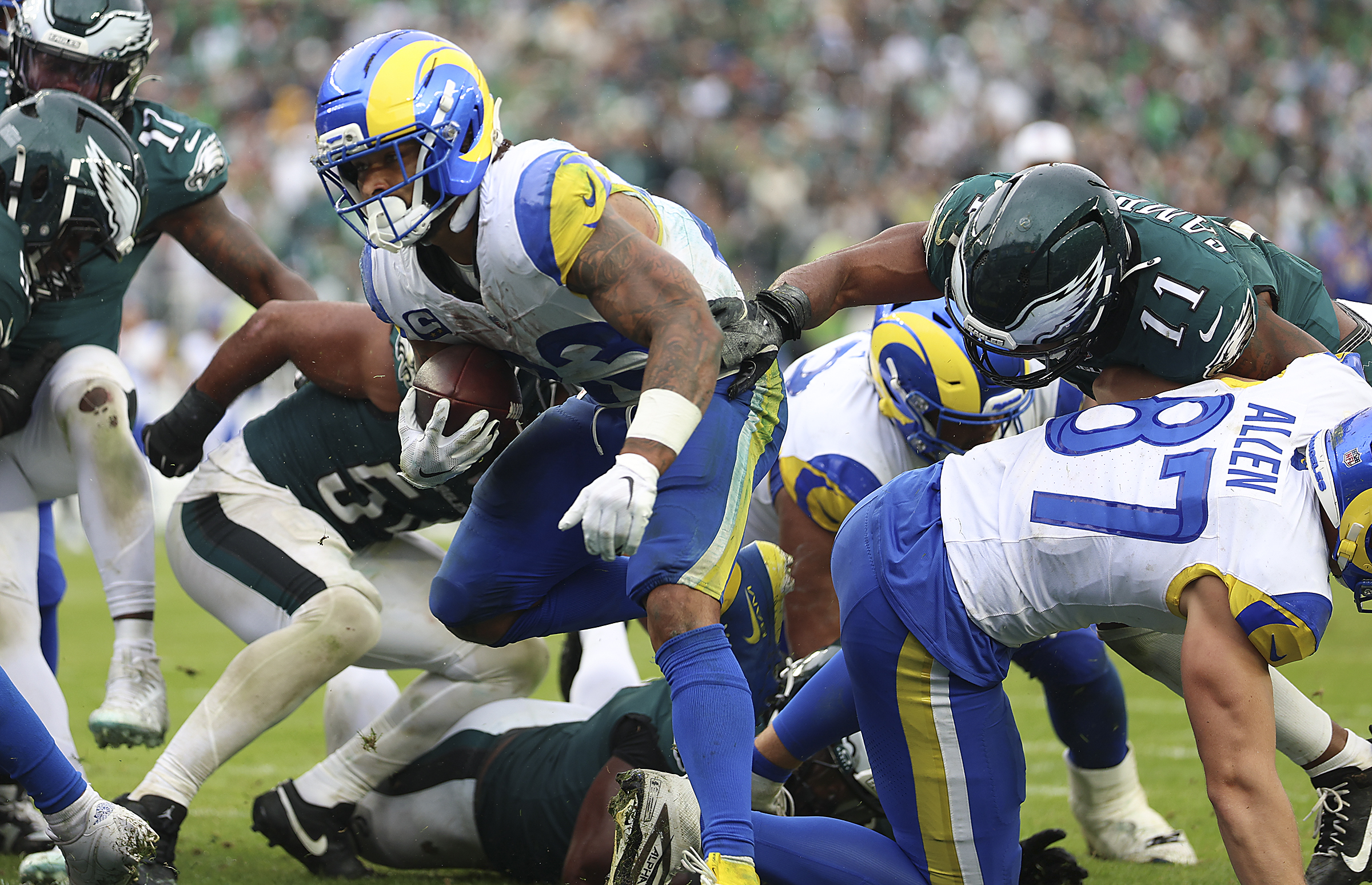
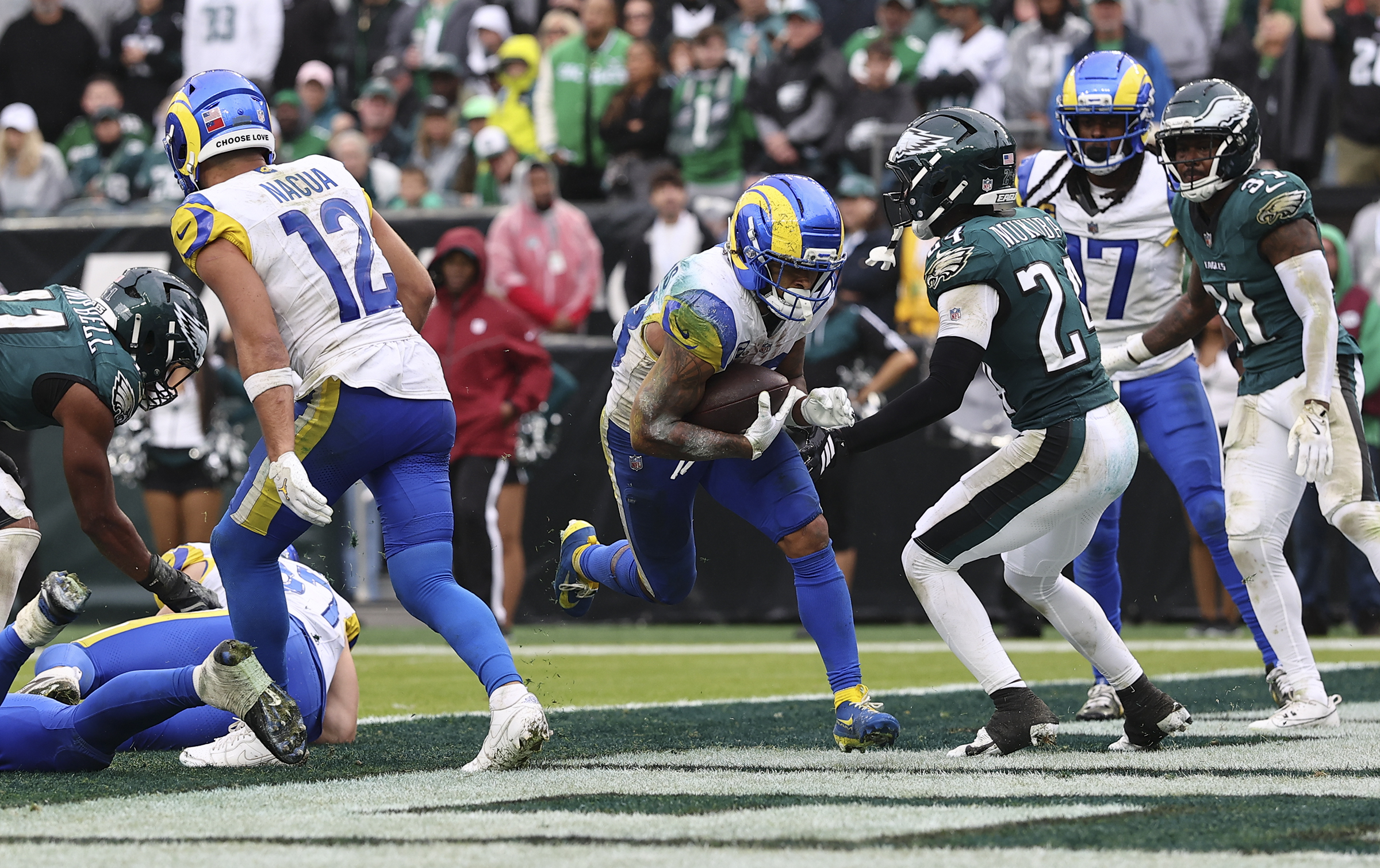
    The veteran quarterback did it six times in the final eight minutes of play. Those plays resulted in 80 of the 177 yards the Rams would travel on their two touchdown drives that erased a 20-10 Eagles lead. They included catches of 32, 16, 12, 9, and 7 yards, as well as a 4-yard pass interference penalty. They were the driving forces behind Kyren Williams’ 1-yard touchdown run with 3 minutes, 59 seconds remaining that cut the Eagles lead to 20-17 and Williams’ 7-yard touchdown run with 1:10 left that gave the Rams the lead for good.

    It was who the Rams are. It was what they do.

    The question: Who are the Eagles?

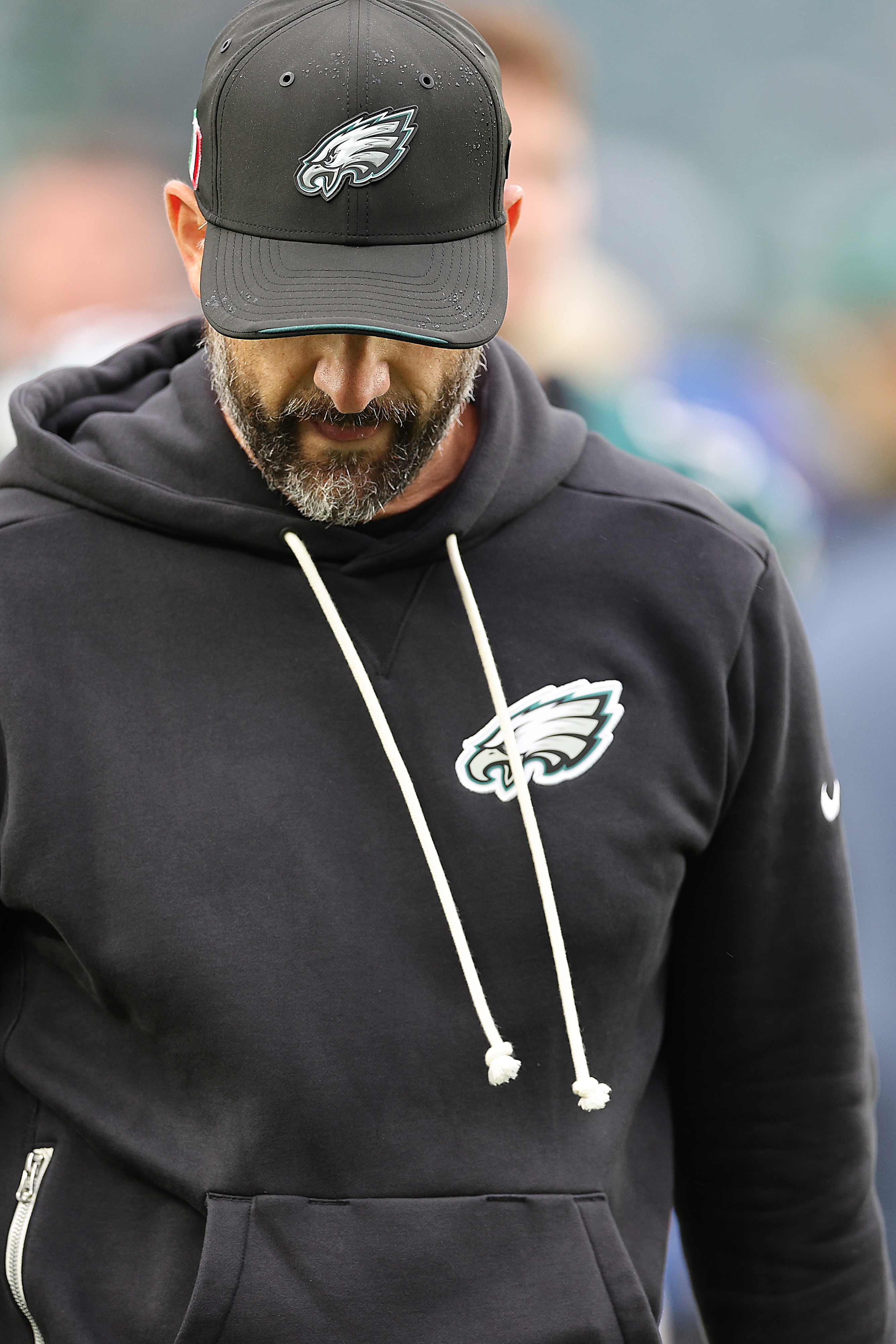
    “We know our formula of how we need to do that within the week and we have to trust that even though sometimes growth feels invisible, you’ve got to trust and keep putting the work in,” head coach Nick Sirianni said.

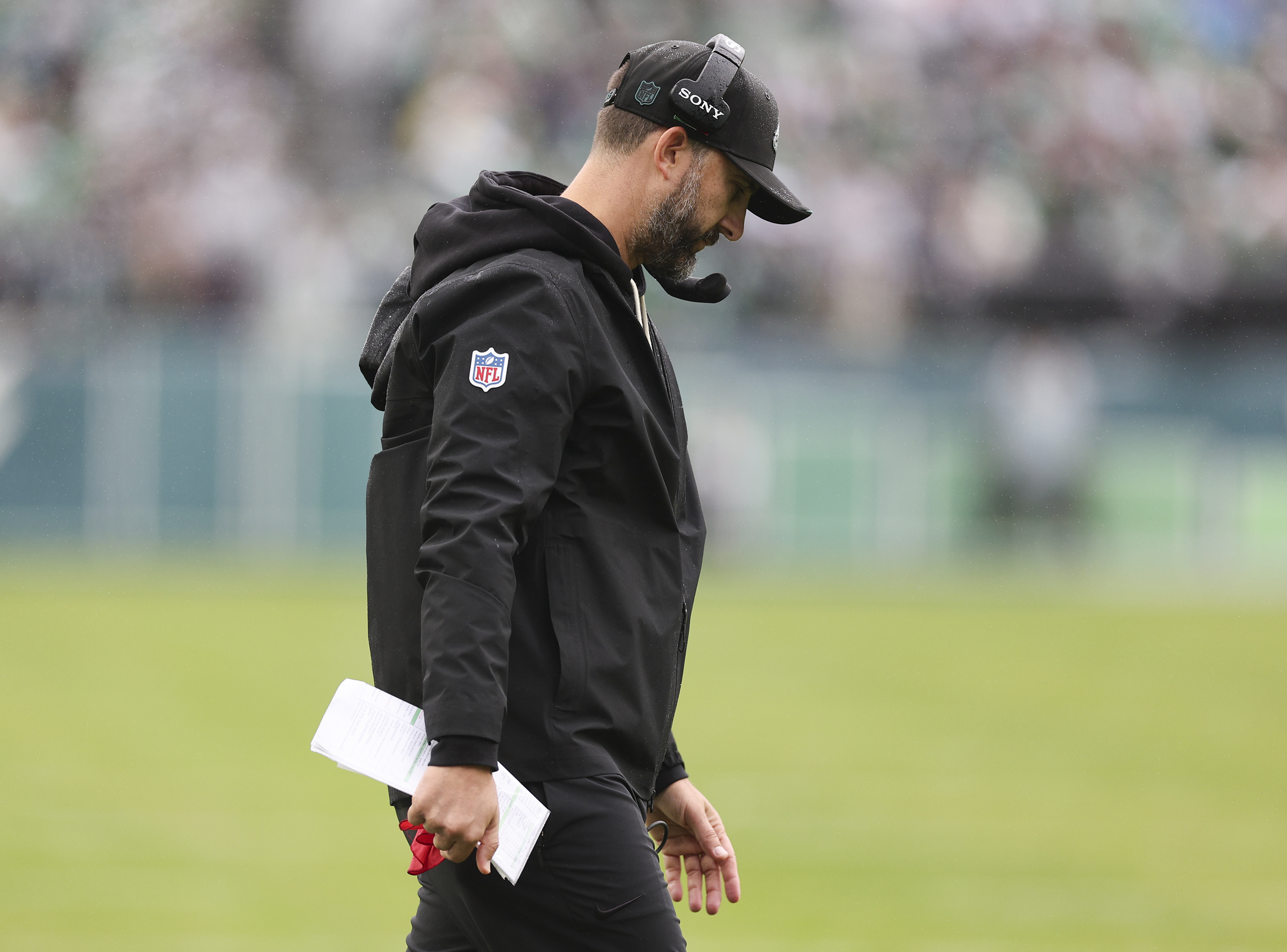
    Those words might come across as maddeningly upbeat, but Sirianni was nothing of the sort in his postgame news conference. His body language suggested a man who understands his team is falling well short of its standard.

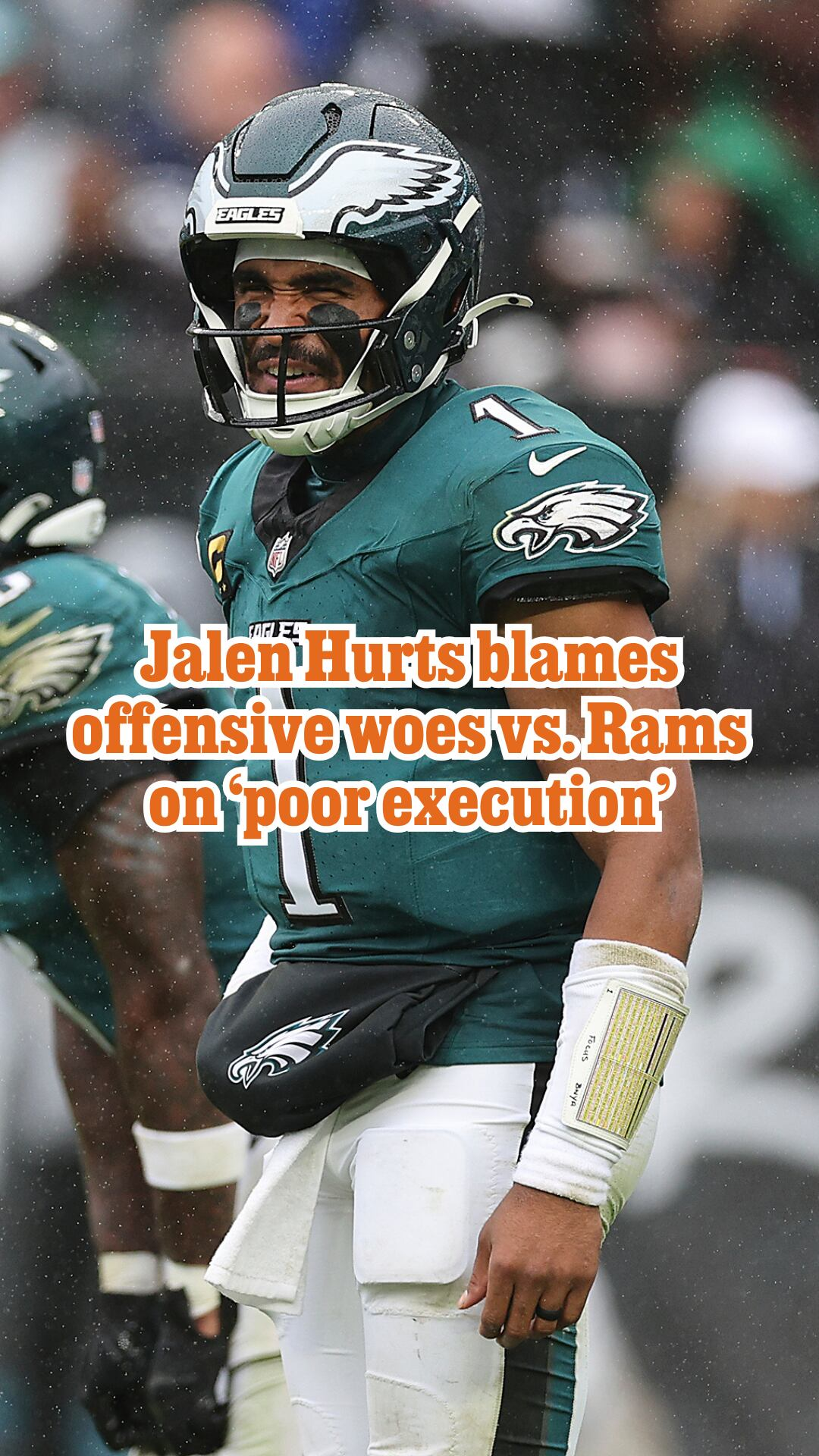
    Jalen Hurts blames offensive woes vs. Rams on 'poor execution'
    Video: Jalen Hurts blames offensive woes vs. Rams on ‘poor execution’

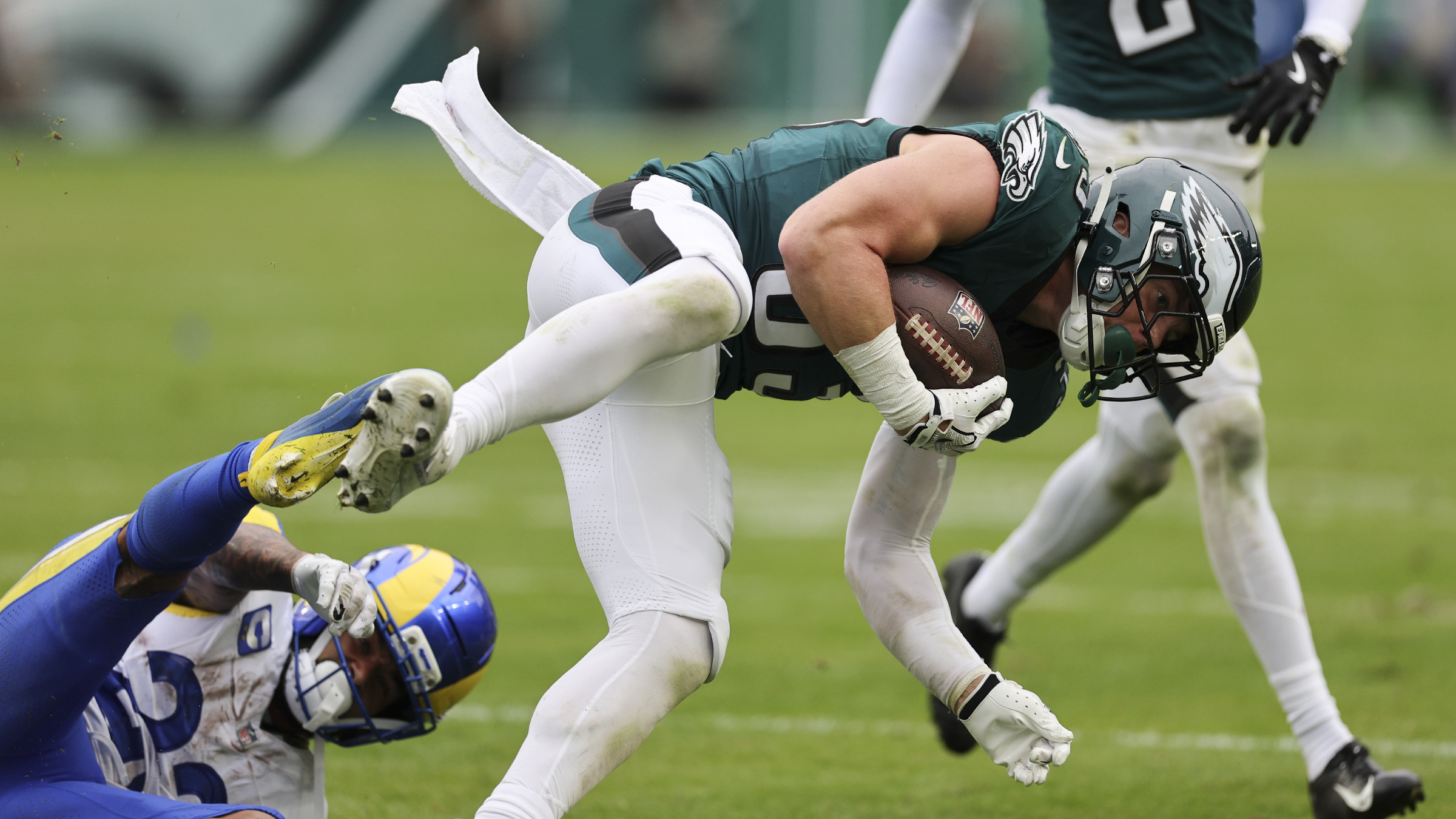
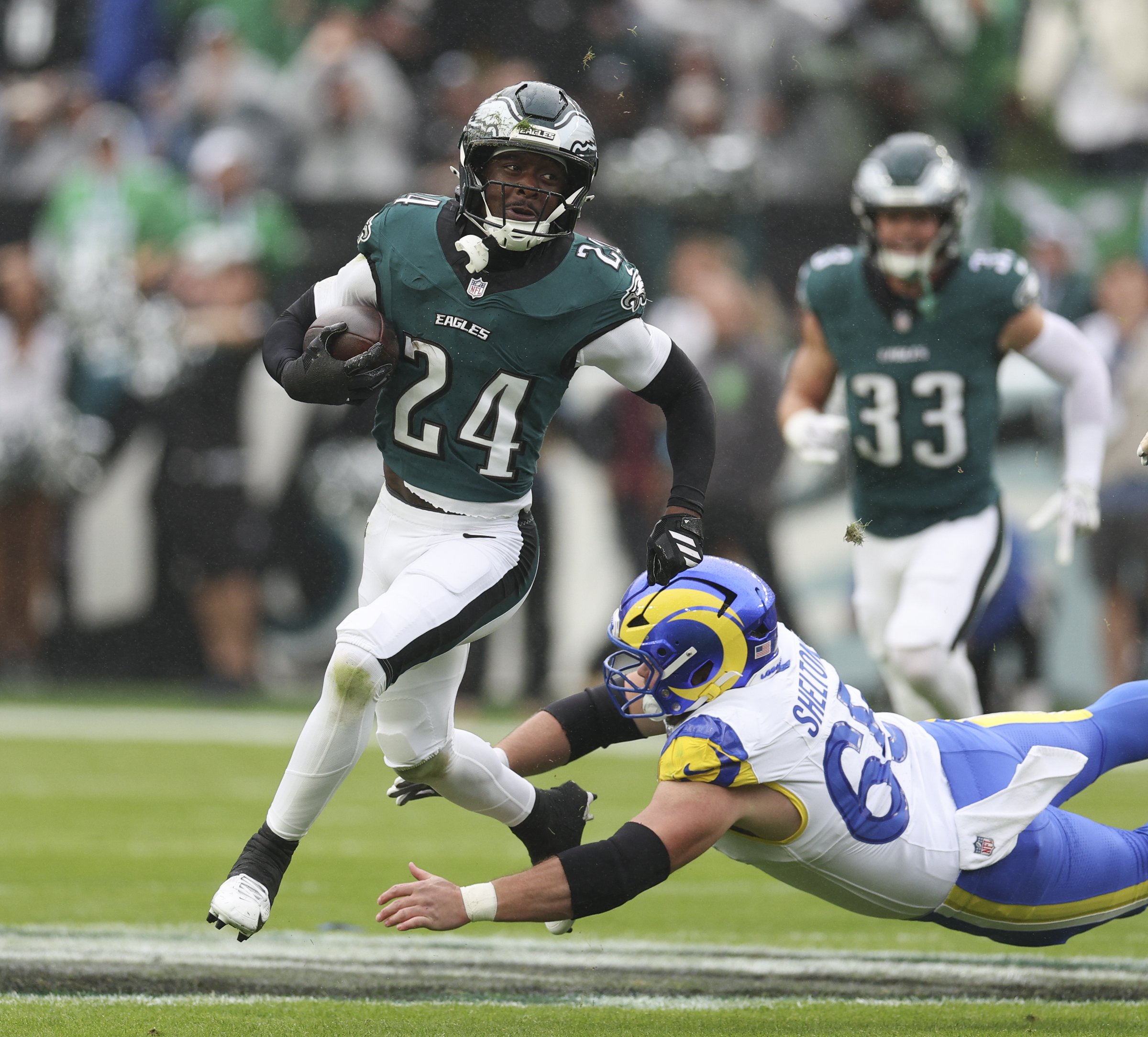
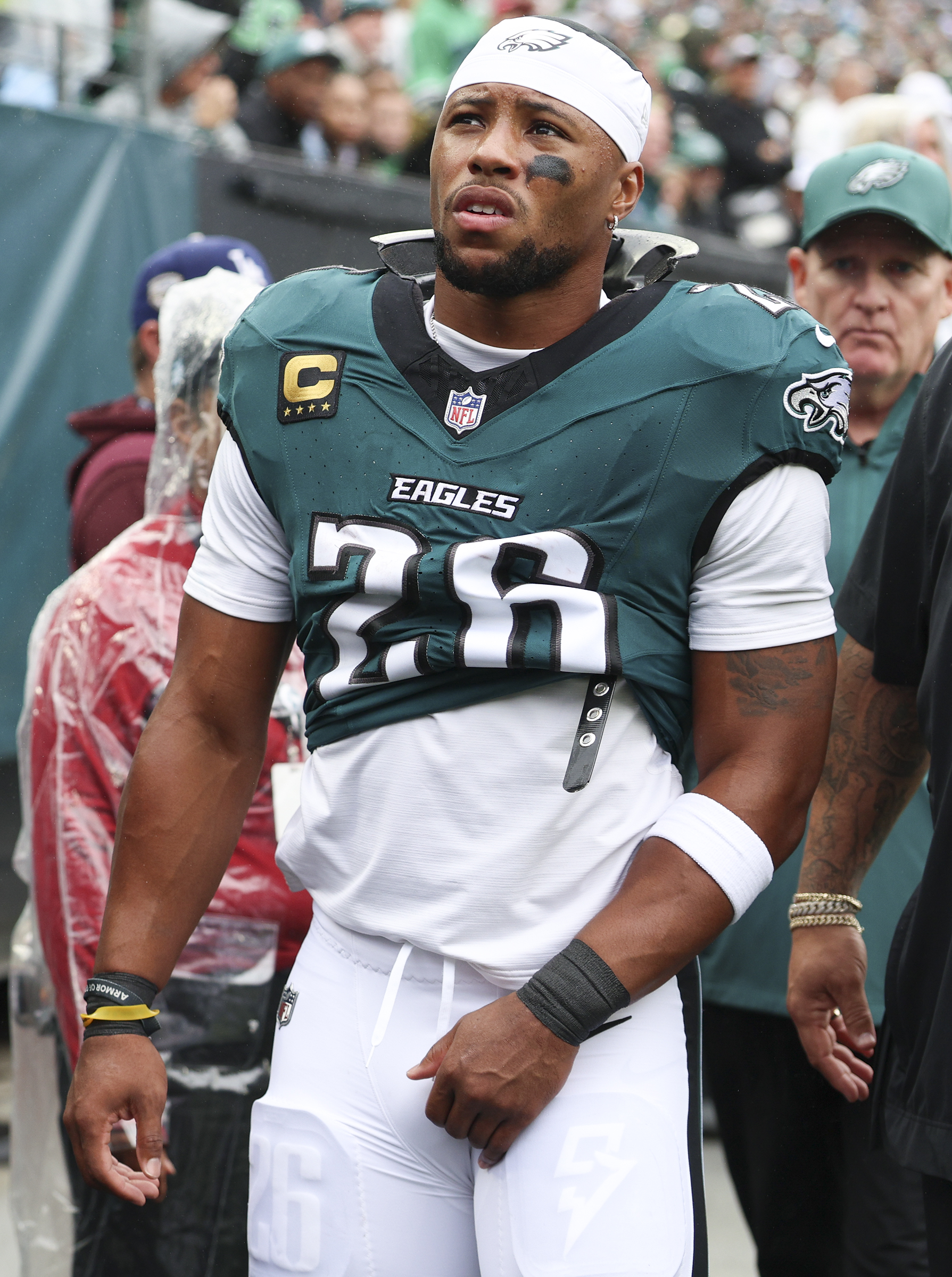
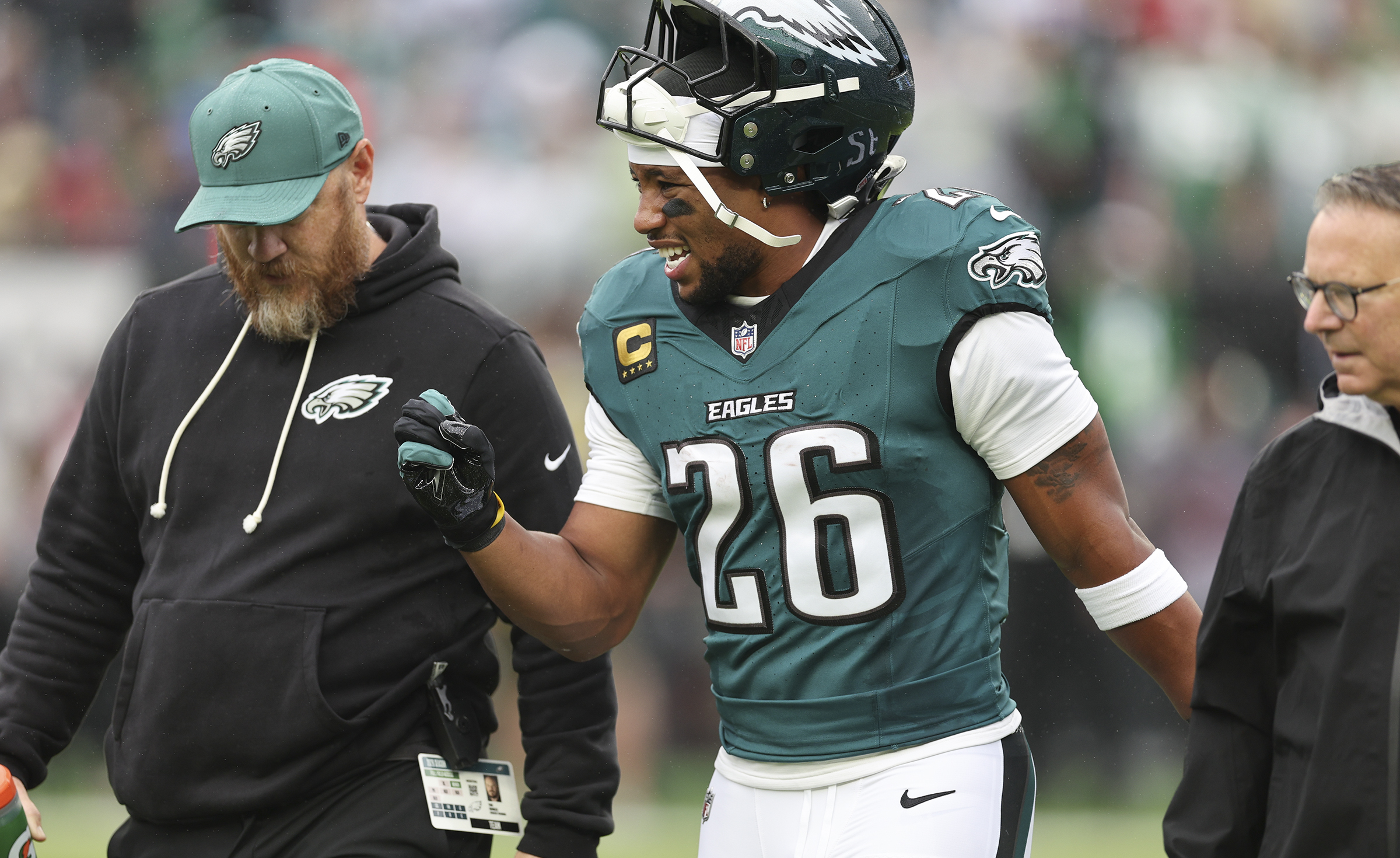
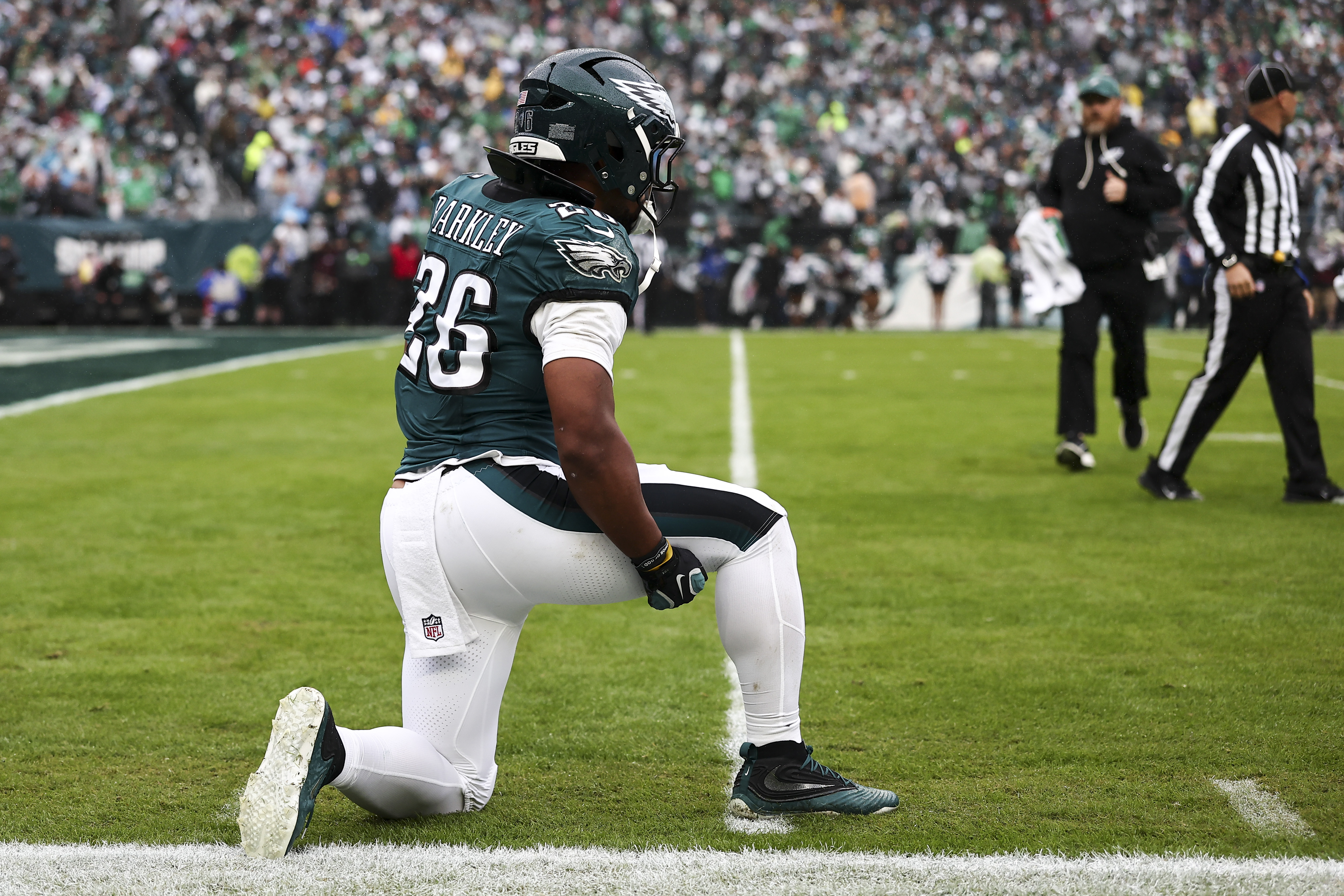
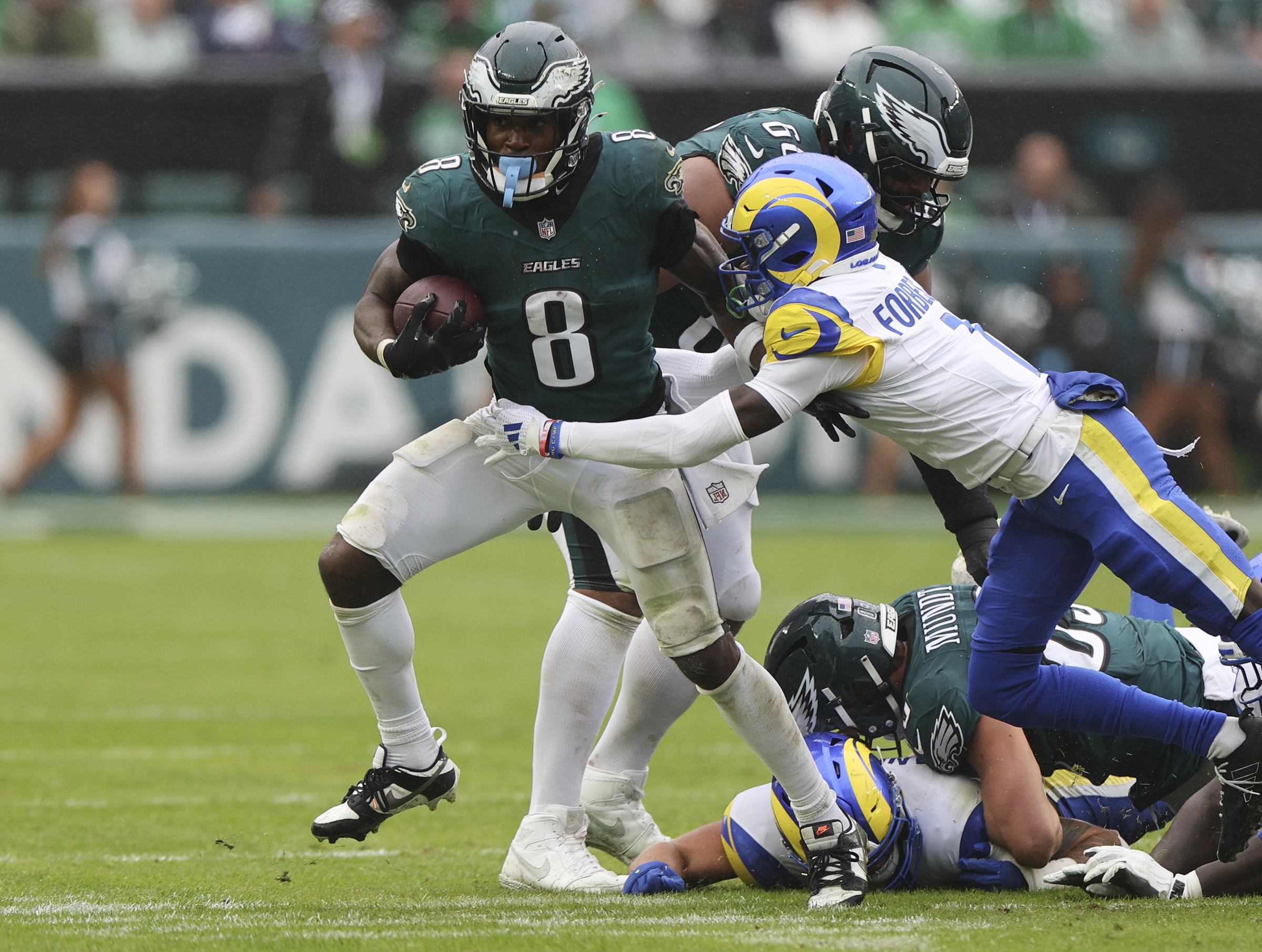
    Injuries are a factor. But only to an extent. The Eagles had to scramble to adjust for the absence of All-Pro right tackle Lane Johnson, who missed the game for what the team is calling a personal matter. Sirianni declined to offer any further detail. They were already without wide receiver DeVonta Smith, who could miss multiple weeks with a hamstring injury. The absence of Johnson left them with three players in foreign positions: Cam Jurgens, filling in for injured guard Landon Dickerson; Drew Kendall, filling in for Jurgens at center; and rookie Markel Bell, making his first NFL start. Compounding matters was hamstring injury Saquon Barkley suffered early in the game on Sunday (backup Tank Bigsby later left the game).

    “I’m never going to use anything as an excuse,” Sirianni said. “We have to look at ourselves in the mirror. We have to pick ourselves back up and you have to do … Life hands you a lot of different scenarios. Football hands you a lot of different scenarios. You’ve got to be accountable to who you are and to what you do, each and every one of us. You’ll never hear me say a word about an injury. I have a lot of faith in everybody on this football team. There’s a reason they’re Philadelphia Eagles. I’ve got to do a better job. We’ve got to play better. We’ve got to coach better. All of us have things to get better from. I don’t care who’s on the field.”

    On the defensive side, All-Pro cornerback Quinyon Mitchell left the game with a knee injury, while defensive end Jonathan Greenard left with an ankle injury. The Eagles were already playing without star linebacker Zack Baun.

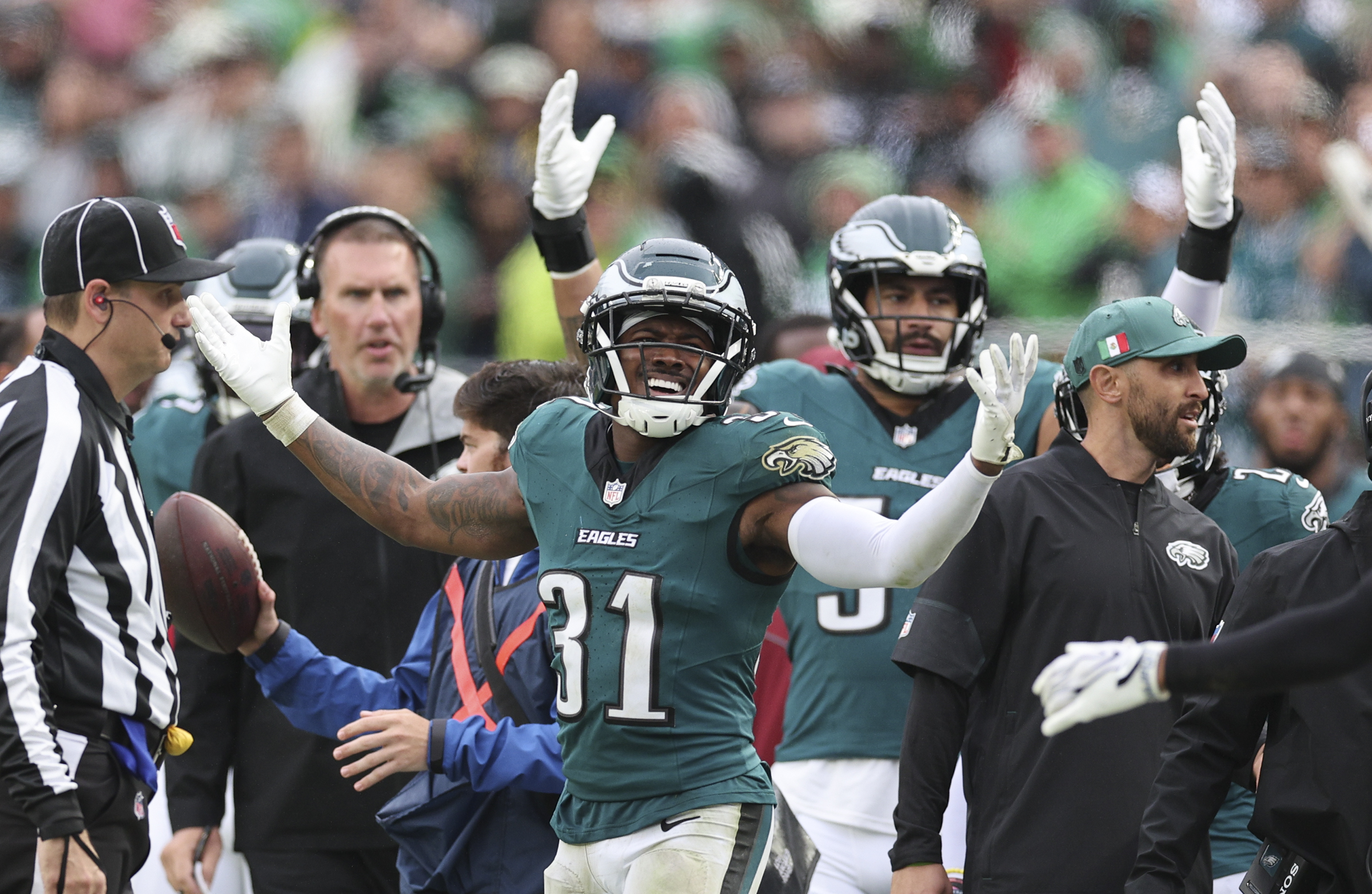
    “Obviously, you want your best players on the field,” said cornerback Cooper DeJean, who had one of the Eagles’ two interceptions and also was briefly shaken up himself. “It’s tough when they’re not out there. … You just have to move on and hope those guys get healthy. But the next guys have to be ready.”

    The Eagles are living life as a lot of NFL teams know it. It is an alternate universe compared to the one they enjoyed in 2024, when a dominant and healthy offensive line was backed by a defense that largely avoided the injury report. This was a week when the Eagles needed to find a way to basic competence. The search came up empty.

    The Rams couldn’t do anything right. By halftime, they’d allowed more return yards on punts and interceptions than they had total yards of offense. But they had a place to which they could turn.

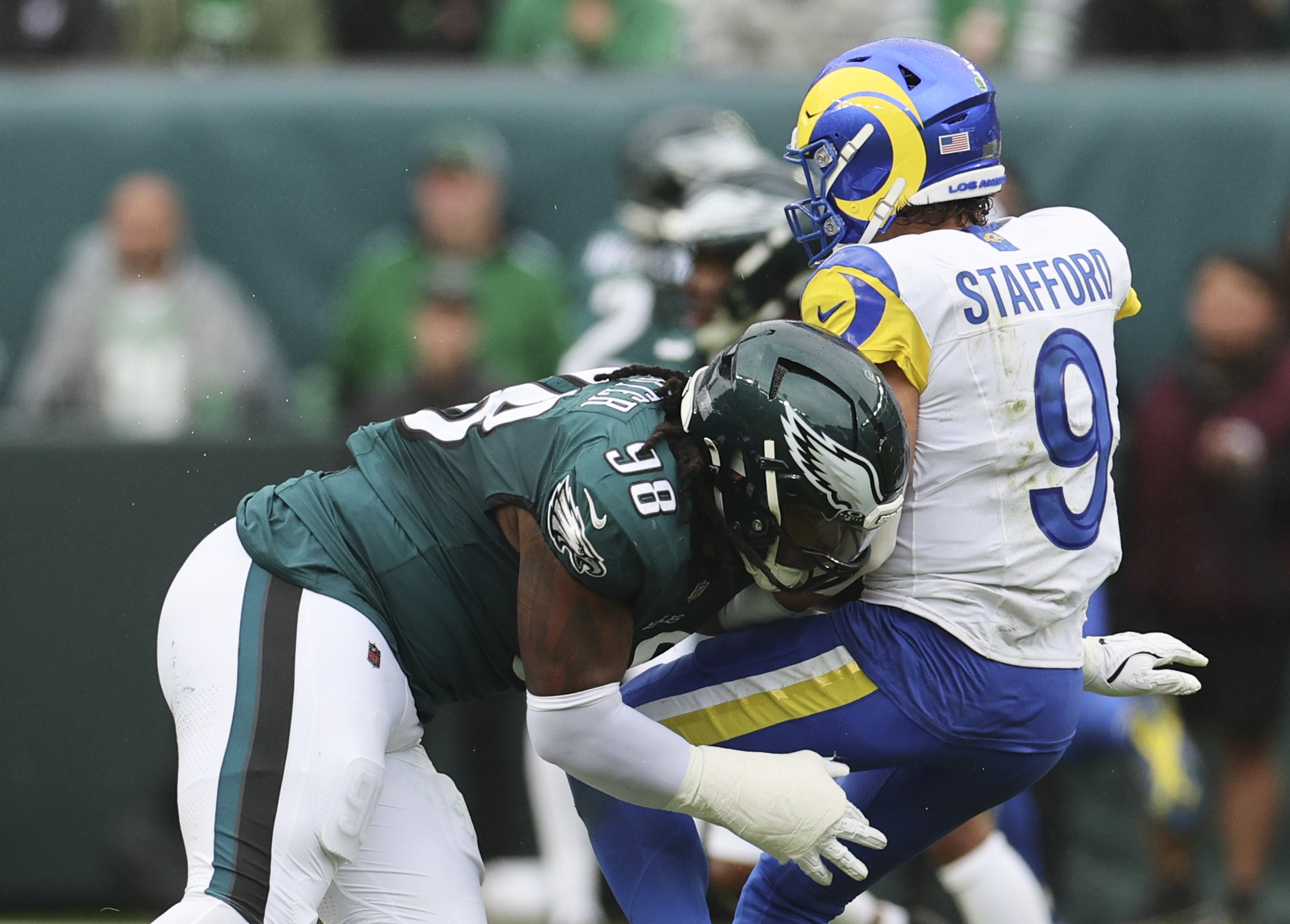
    Stafford played a jarringly bad game of quarterback on Sunday. All is not well for the now 2-2 Rams. It is difficult for a passer’s feet to be concurrently happy and flat, but Stafford achieved the feat on several different drop-backs. Is that a Vic Fangio thing? It might be. Fangio entered the day 3-0 against Stafford, Sean McVay, and the Rams in his first two seasons in Philly.

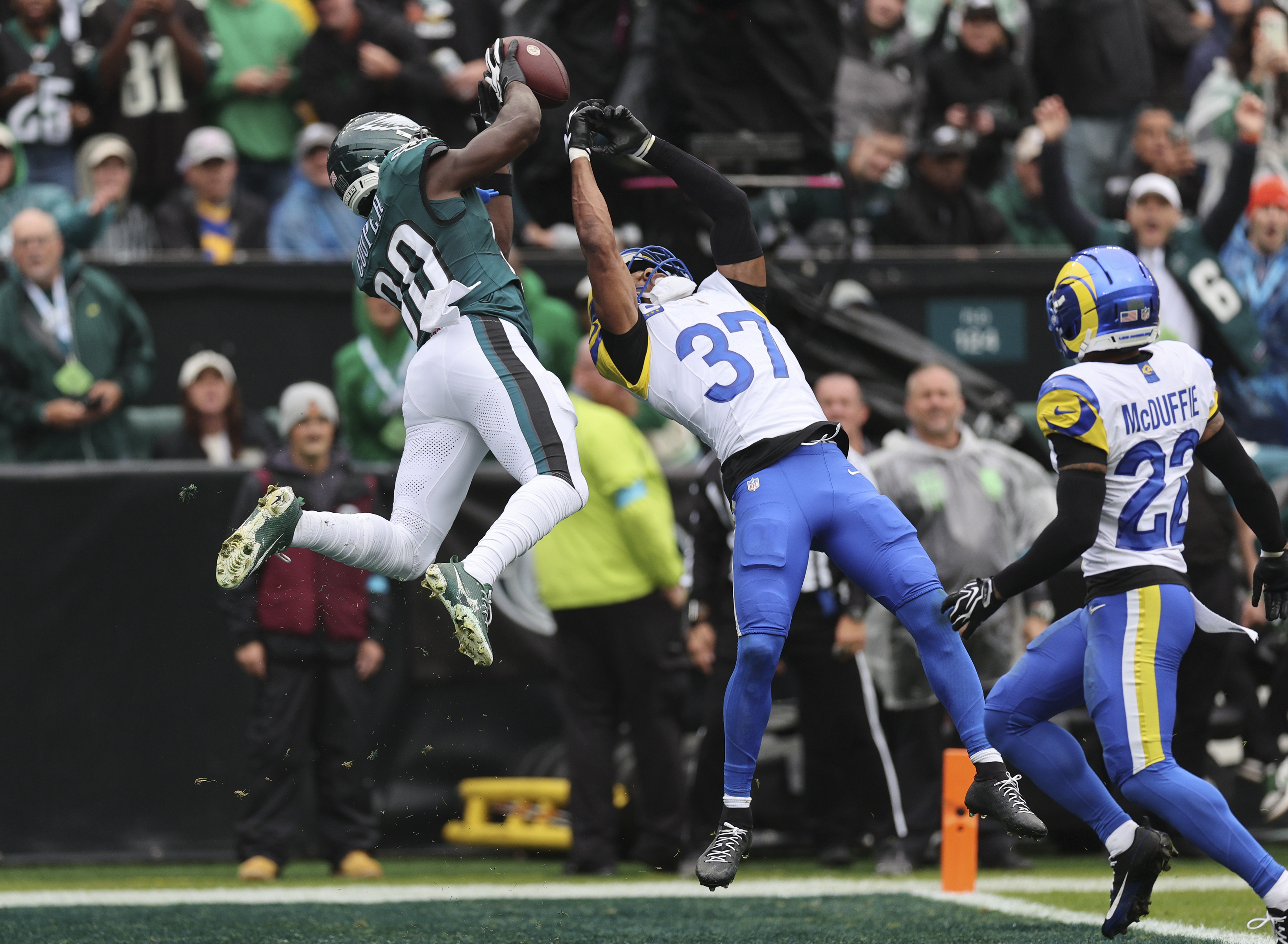
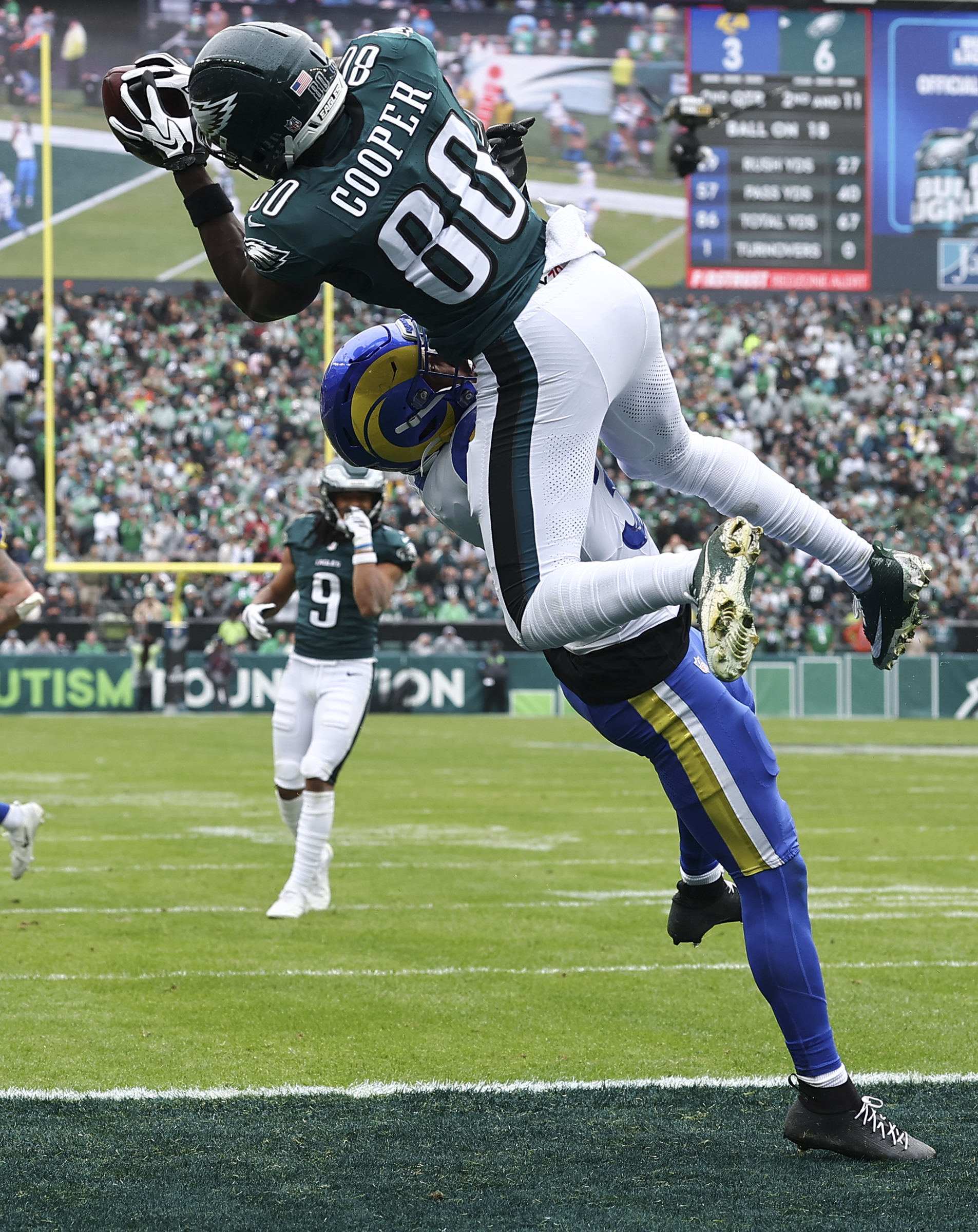
    A year ago, the Eagles held Stafford to 19-of-33 passing for 196 yards and an interception in a come-from-behind 33-26 win at Lincoln Financial Field. On Sunday, he was even worse. Both of his interceptions came on awful overthrows in dangerous parts of the field. One led to an Eagles field goal. The other led to an Eagles touchdown. For three-and-a-half quarters, Fangio could claim perhaps his most decisive victory yet.

    Then again, maybe the Rams will ultimately go down as the NFL’s paper-est of tigers since the 2012 Eagles Dream Team. In Week 4, Stafford didn’t look all that different than he did in the Rams’ season-opening loss to the 49ers. Is playing a 1 p.m. East Coast game the same as flying to Australia two days before kickoff? It sure looked like it.

    These are the sorts of questions that animate an NFL season. Every week adds another game to the sample by which a team is ultimately judged. One thing you could say about the Rams this week: they had something to fall back on.

    Have the Eagles had such a thing all season?

    They sure haven’t had it like they’ve had it in the past.

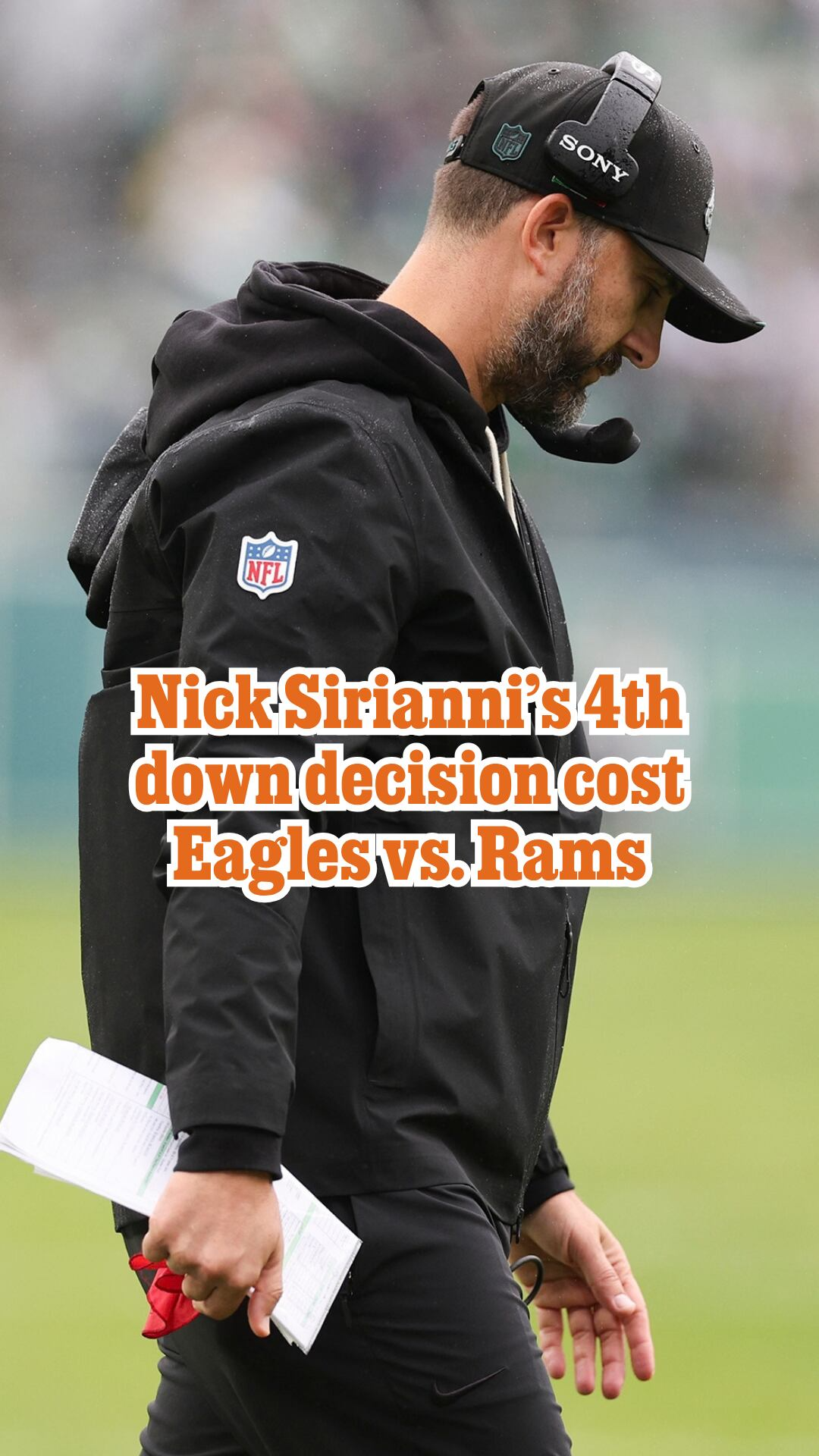
    Nick Sirianni's 4th down decision cost Eagles vs. Rams
    Video: Nick Sirianni’s 4th down decision cost Eagles vs. Rams

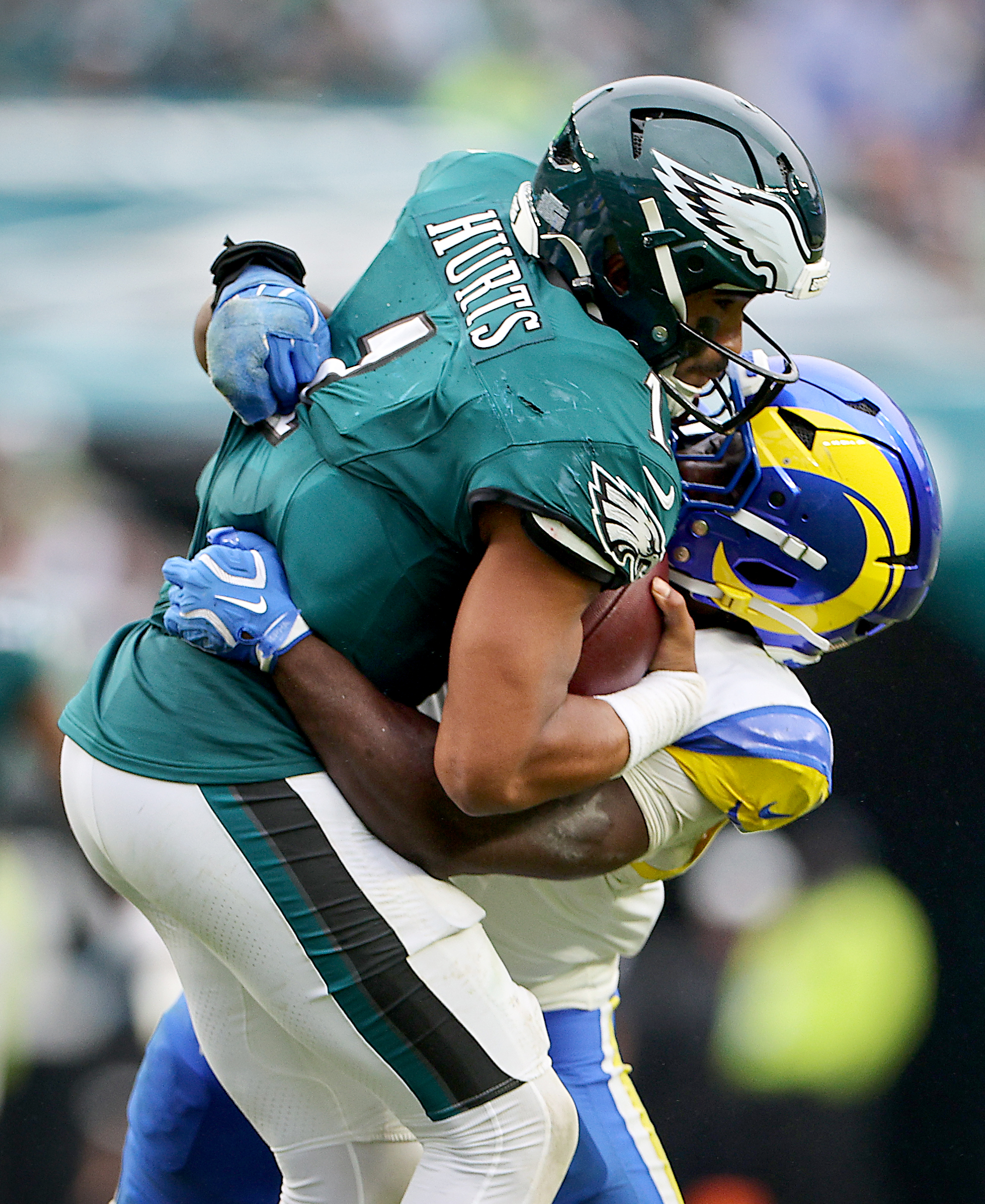
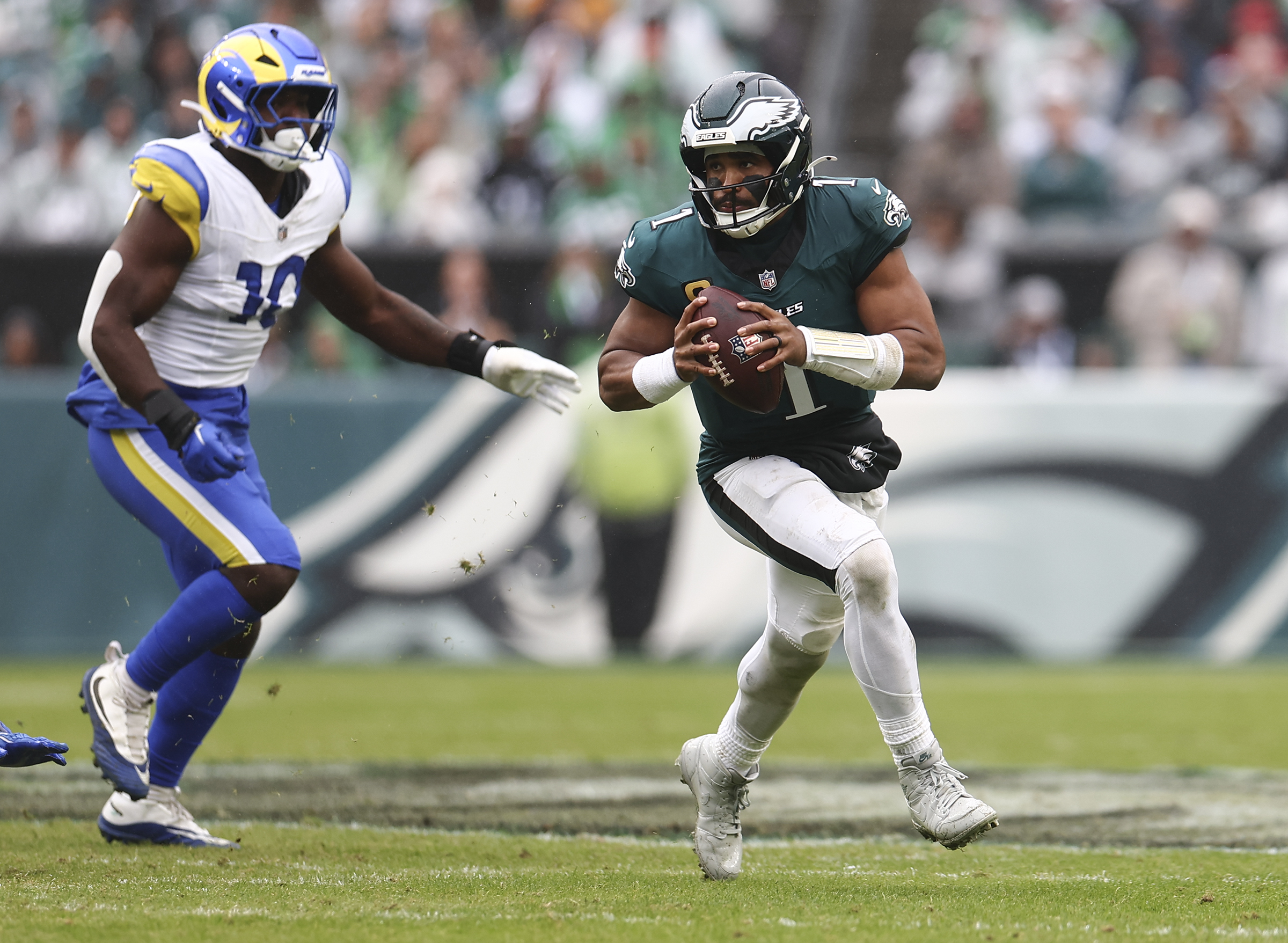
    In 2022, their thing was Jalen Hurts scrambling like everyone else on the field was moving at a slower speed. We have seen flashes of the player we saw when he almost single-handedly led the Eagles to an upset over the Chiefs. We saw it most vividly two weeks ago during the game-winning drive that he engineered against the Titans. It has been a while since we have consistently seen that player. That doesn’t mean he is a bad quarterback, or the wrong quarterback for this team. It just means that the Eagles can’t lean on Hurts, which is what they’ve needed to do these first four weeks.

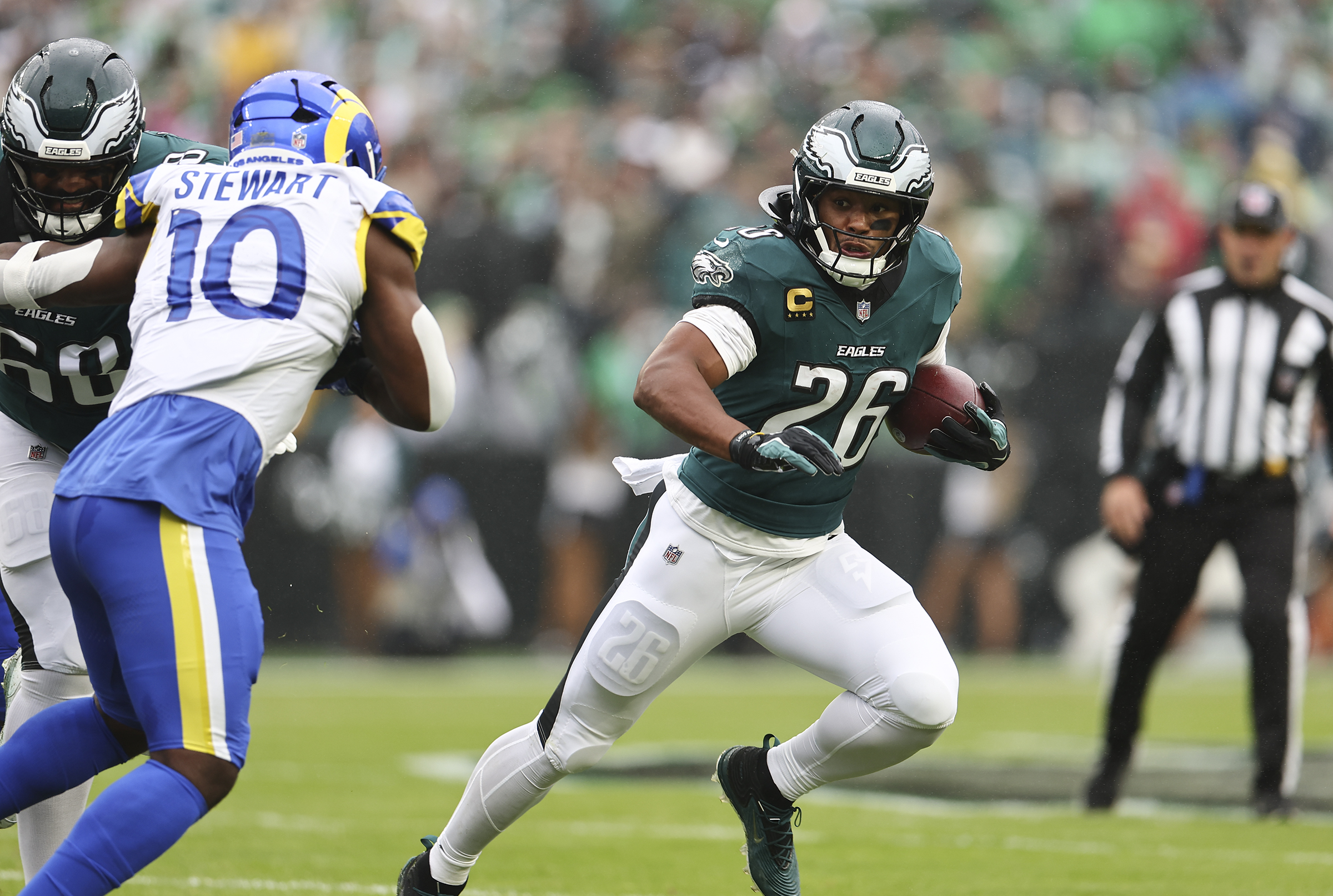
    In 2024, the thing was Saquon Barkley, the offensive line, and a running game that was as unstoppable as continental drift.

    Before this season, A.J. Brown qualified as a thing.

    Brown is gone. Jury is out on the run game.

    “This offense can’t keep relying on Jalen to bail us out on third down,” left tackle Jordan Mailata said.

    That was clear against the Rams. The Eagles were 0-for-12 on third down. They gained just 12 first downs total. The Rams had 26. Those two interceptions that Stafford threw left the Eagles needing to gain just 52 yards to score 10 points. At no point did they look capable of gaining much more than that. It is a problem, and a big one, and they are lucky they will try to solve it at 2-2 rather than 1-3.

    They need to figure out what they do the best. Then, they need to do it better.