An athletic director at a Mercer County school district has been charged with loitering and prowling after he leered into the bedroom window of his neighbor’s underage daughter, Plumstead Township Police say.
Winfield “Tripp” Becker, 48, was caught on a surveillance camera Aug. 6 looking into the window, according to the affidavit of probable cause for his arrest. The victim’s mother installed that camera after an unidentified man spent months knocking on the window at night and then “fleeing the area,” the document said.
Neither Becker nor his attorney, Thomas Logan, responded to requests for comment.
Becker lives one street over from the victim in Pipersville, according to court records, and is known to the girl and her family. He was charged via summons, and has a preliminary hearing scheduled for next month.
Becker is the athletic director at Hopewell Valley Regional School District, a district north of Trenton that serves about 3,400 students. In a letter sent to parents, Superintendent Rosetta Treece, without naming Becker, said a district employee was the subject of a criminal investigation, and had been suspended until the conclusion of that investigation.
Treece said the district was working to secure temporary staffing to fill the position.
How can you also be OK with a college lowering its academic expectations for students?
I’m talking about the University of Michigan, which announced last week that first-semester students in its college of arts and sciences would receive pass-fail grades rather than traditional letter marks. The aim, Michigan said, was to “curb the mental health crisis unfolding among college-aged individuals.”
That’s an admirable goal, of course. But there’s no evidence that easing up on students will help them feel better.
To the contrary, psychologists have been reminding us for years that the best way to improve mental health is to address our fears and challenges head-on. Avoiding them might bring momentary relief, but it will make us feel worse in the long run.
Put simply, Michigan is engaging in a huge collective experiment in avoidance. The first term of college is indeed a challenging time for students. But we don’t do them any favors by letting them coast in class.
And make no mistake: That’s what they’ll do. I’ve been teaching college for 35 years, and I can assure you that all but a handful of students would do less work if I wasn’t grading them.
Think about yourself at 18. Would you have devoted yourself fully to your studies if you could get the same grade without putting in the effort?
Gamely, Michigan officials said that eliminating grades in the first term would “allow intrinsic motivations to guide personally meaningful academic journeys.” Instead of just working for a grade, the argument goes, students will explore ideas that truly interest them.
That would be wonderful, but it won’t happen. Of course, I want students to develop a love for learning. But most of them won’t do that unless we grade them, too. Remember, they’ve been graded for a decade or more before they arrive at our doors. It’s what they know.
And the more we expect of them, the more they’ll learn. In a now-classic 1965 experiment, psychologists Robert Rosenthal and Lenore Jacobson administered IQ tests to elementary students, and then told their teachers that certain randomly selected members of the class were “bloomers” who would likely improve. Regardless of their initial scores, those students showed more gains than their classmates when the test was administered again at the end of the school year.
Rosenthal and Jacobson called that the Pygmalion effect, after the artist in Greek mythology who falls in love with a statue he built and asks the gods to bring it to life. Teachers can breathe life into their students, too, but only if the teachers believe the students can succeed.
And if we lower expectations for them, we communicate the opposite: You’re too weak and fragile to get the job done. How can that be good for their development as human beings?
Even at elite schools, let’s remember, a rising number of people arrive without the skills and knowledge that first-year students formerly possessed. Letting them skate by won’t solve that problem; instead, we will reinforce it.
The only way to help them succeed — and to feel better about themselves — is to ask more of them. Over the past five decades, college students have done progressively less homework even as their grades have gone up.
We need to reverse that trend. Rather than eliminating first-semester grades, we should raise the requirements for earning the top one.
That might mean some students are disappointed with the marks they get. But that, too, can be good for them.
“College should be one of the places where young people learn that evaluation isn’t always pleasant,” psychotherapist Jonathan Alpert said last week, criticizing the new Michigan plan. “These experiences can hurt, but learning that you can tolerate them and move forward prepares you for adulthood.”
I’m not saying we should curve grades to limit the number of A’s, like Harvard did earlier this year. Instead, we should raise the bar and encourage everyone to meet it.
That won’t be popular with our students, of course. At Michigan, the student body president praised the elimination of first-semester grades on, yes, mental health grounds. “You’re just figuring out how to be an adult and live on your own,” he said. “It gets extremely stressful having to balance that with also wanting to be a straight-A student.”
I’m sure it does. But that’s why students need to confront the stress, not shrink from it. The science on that is real. The only question is whether we’ll shrink from it, too.
Jonathan Zimmerman teaches history and education at the University of Pennsylvania. He is the author of “Schooling Citizens: How Education Can Save Democracy,” which will be published next spring by the American Philosophical Society Press.
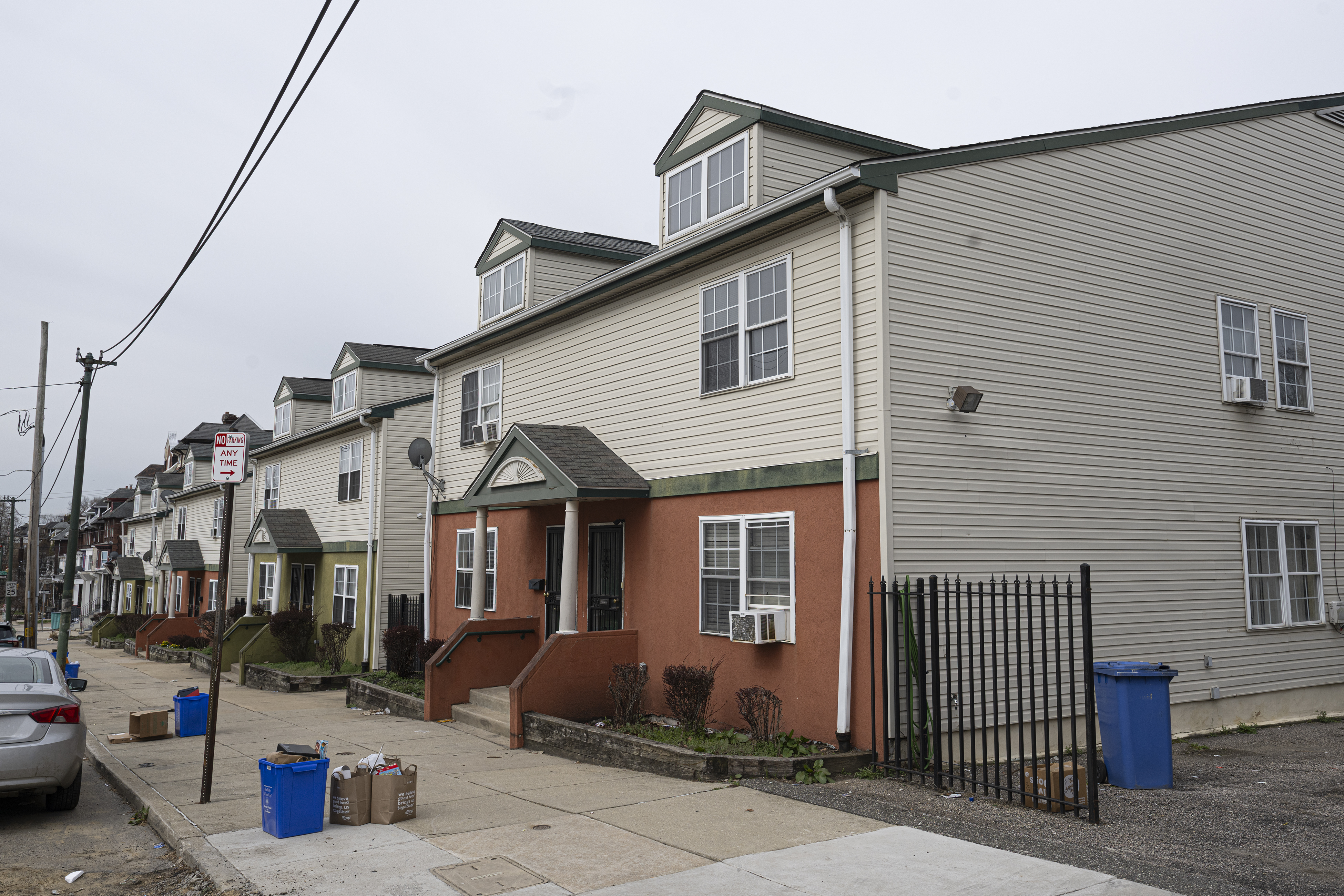
Mayor Cherelle L. Parker’s administration met formally for the first timeFriday with the owner of hundreds ofrental homes in West and Southwest Philadelphia whose federal affordability requirements are expiring and committed to working to preserve the homes.
Jim Levin of Neighborhood Restorations plans to sell 925 homes where tenants pay below-market-rate rents, and he wants to keep them affordable. But he needed assurance that the city plans to work with him, said Angela D. Brooks, Parker’s chief housing and urban development officer.
Brooks gave him that on Friday, she said, telling Levin “we’re in this, we’re going to be a good partner, and we’re going to move this forward.”
“We are committed to being part of the solution,” Brooks said in an interview Friday.
About 3,000 people live in the 925 rental units in West and Southwest Philadelphia. The homes were developed through the federal Low Income Housing Tax Credit program, which requires reduced rents at the properties for three decades.
The city’s initial focus will be on 225 of the homes: the 63 that are no longer required to be leased for below-market-rate rents or will lose the requirement by the end of the year, and the 162 homes where affordability requirements are set to expire within the next three years.
Agreements for reduced rents at the other 700 homes are set to expire between 2030 and 2040.
Across the city, Philadelphia is at risk of losing more than 7,500 subsidized rental homes during the next decade as federal affordability agreements expire, according to an analysis published last fall by the Housing Initiative at Penn.
When agreements end, property owners can choose to continue charging below-market rents, charge higher rents, or sell their properties in potentially lucrative deals to take advantage of the city’s rising property values.
Levin told tenants and city officials a year ago that he planned to sell the properties.
The city will not buy the homes, Brooks said, and it has not made a spending commitment toward its goal of keeping the properties affordable once they’re sold.
But a steering committee that began meeting at the end of last year and includes members of the administration, elected officials, and housing policyexperts recommended that the city provide $36 million over five years to help preserve Neighborhood Restorations properties.
Over the next few months, the committee plans to start evaluating the conditions of the properties and identifying funding sources, Brooks said.
Three days before Brooks’ meeting with the property owner, tenants who fear losing their reduced rents and their homes rallied at City Hall to push the administration to help save the properties.
Brooks said preserving all 925 homes could cost more than $260 million.
In a statement, Parker said, “There is no simple or immediate solution at this scale.”
“The city remains committed to doing our part and continuing the work,” she said. “But preserving these homes will require all of us, including strong intergovernmental support that includes resources from local, state, and federal government.”
Tenants have partnered with the grassroots social justice nonprofit OnePA to push the city to keep the homes affordable permanently and to give renters the opportunity to buy their homes for below-market prices.
In a statement, tenants thanked Parker and her administration “for making an initial commitment to saving our homes.”
“We know there is still a long way to go before our homes are safe, and we urge the city to act quickly before it is too late,” they said. “We look forward to working with Mayor Parker and others, and we will continue organizing until all 925 units are protected and no one is displaced.”
NEW YORK — There were plenty of opinions on the penalty kicks that whistle-happy referee Sergii Demianchuk called in the first half. But there wasn’t much disagreement that the Union deserved to be down two goals at intermission to New York City FC, because they’d been outplayed for more than just those two moments Sunday night.
It was easy to figure interim manager Ryan Richter would have some choice words for his players in the locker room, and he revealed at the end of the night that he did.
“One or two things tactically, but it was more about challenging the guys to just play better,” he said after the Union’s 3-2 victory. “To give more, to be more connected when they didn’t have the ball.”
Richter admitted to “challenging some guys individually,” and said at first that he didn’t want to name names. But that attempt didn’t last long, because the first player he was asked about turned out to be one of them.
It also happened to be Cavan Sullivan.
This was his first start against NYCFC, and his first time on the field at Yankee Stadium since a one-minute cameo as a rookie in 2024. It isn’t his fault or the Union’s that outsiders put a little more on this matchup than some others with him. But they do, and not just because of the famous stage.
The Pigeons are owned by Manchester City, the English Premier League giant that Sullivan will move to when he turns 18. So if he does something big against their New York siblings, it gets noticed in a few more places.
And if NYCFC keeps him quiet, as happened for much of the first half, that gets noticed, too.
The outside chatter isn’t Richter’s business, either. All he wanted to do was hold Sullivan to the same standard he has kept all along. And he made it clear that Sullivan wasn’t meeting it.
Ryan Richter (center) celebrates after the Union’s stunning comeback win at New York City FC.Philadelphia Union
“I can say he’s one of the guys at halftime that I really challenged,” Richter said. “Because we know about his talent. It’s incredible the things that he can do, the mentality that he has. But he can’t only play when the ball is at his feet. Every game is not going to be a situation where he is getting in these positions, can go at guys, create from there.”
He continued on, giving the media what felt like much of the speech he gave the locker room.
“He’s going to have to find the game in different ways sometimes,” Richter said. “And that was more the challenge: You have to position yourself for second balls. You have to recover in the game. You have to find the ball in the middle of the field in tight windows, and turn and make plays from there. And you have to just, yeah, play better, because you’re capable of it, bring everything at a higher level.”
Three minutes into the second half, Sullivan won the foul for the free kick that delivered the first goal, then headed Kai Wagner’s service on to eventual scorer Danley Jean Jacques. Just over 20 minutes later, he broke past New York’s defense to receive Milan Iloski’s pass and set up Bruno Damiani for the equalizer.
But it wasn’t just those two plays. It was a tackle a few seconds before the counterattack that led to Damiani’s eventual winner. It was three tackles total, one interception, seven duels won from 11 contested, four passes into the attacking third, and six shots.
It was jumping into Quinn Sullivan’s arms after the older brother sprang free on the left and assisted Damiani’s winner. And at the end of the night, it was leading the team over to the cluster of Union fans along the first-base line to celebrate a wild victory.
Cavan Sullivan leads the Union over to the away fans’ section to celebrate the win:
“He’s a guy that, for a young man, that he can accept this in the moment, take it, and then put together what he did in the second half. And then have the unselfish play that he made on Bruno’s first goal — that’s what makes him different,” Richter said. “It’s this maturity and this mentality. With a lot of the guys, I’m proud of them, but I’m really proud of the way that he responded to what I think was not his best first half.”
Did it matter a little more in this game than others? Probably not, especially compared to what’s coming next: Inter Miami’s visit to Subaru Park on Wednesday, the first time Sullivan will play against Lionel Messi on the Bridesburg native’s home turf.
But you can be sure outsiders put a little more meaning into Sunday night. On top of the New York-to-Manchester connection, the calls are growing fast for Mauricio Pochettino to pick the 16-year-old for the U.S. men’s national team’s upcoming friendlies.
That, too, is for later. Right now, the Union (5-10-4, 19 points) have just two days to prepare for their biggest game of the year, and Jovan Lukić will be suspended due to yellow-card accumulation.
Cavan Sullivan takes a photo with fans at Yankee Stadium after the game.Philadelphia Union
“For the coach and the coaches, a lot of work,” Richter said of having just two days to prepare. “For the players, a lot of recovery.”
Damiani delivers again
Admit it: When Sullivan sent that pass to a wide-open Damiani for the equalizer, what was on your mind?
Was it Surely he can’t miss this?
This is a safe space, so you can say yes.
Bruno Damiani celebrates scoring one of his two goals Sunday night.Philadelphia Union
No doubt the critics are breathing easier now, even if the striker still has a ways to go to make up for all his misses before the last few days: two goals Sunday, and the first since February the previous Sunday against Necaxa in the Leagues Cup.
“The run that he was in prior to scoring in the Leagues Cup, you could feel the weight come off of him in that moment,” Richter said. “And tonight, like his goal against Necaxa, tonight was two striker’s goals: run to the right spot, be available for your teammate, one-touch finish, bang, easy business.”
If the Union are to make the playoffs, few things could help more than Damiani scoring consistently.
“The work that he does outside of that, that always makes the team better,” Richter said. “But his job is to put the ball in the back of the net, and to see him do that twice tonight in a big moment was really good.”
Tower Health reported an $8.5 million operating profit in the year that ended June 30, compared to a $20.6 million loss the year before.
The fiscal 2026 profit will be Tower’s first in eight years, if the result holds in its audited financial.
In the Berks County nonprofit’s preliminary financial report to bond investors Friday, Tower management called the result “an important milestone in Tower Health’s ongoing journey toward sustained financial strength.”
In addition to Pottstown, Tower owns Phoenixville Hospital and Reading Hospital in West Reading, and half of St. Christopher’s Hospital for Children in North Philadelphia in a joint venture with Drexel University.
Here are more details:
Revenue: Tower reported a 2% increase in revenue, to $2.07 billion from $2.03 billion. Reading Hospital in West Reading logged an 11% increase in revenue, while the combined revenue of Phoenixville and Pottstown Hospitals fell 8%.
Patient volumes: Pottstown saw an 11% decrease in hospital admissions, likely because Tower closed the hospital’s intensive care unit at the beginning of the this year. Phoenixville had a small gain of 0.7% in admissions, while Reading was flat. Total surgeries across the system were flat.
Notable: A year ago, Tower reported a preliminary operating profit of $5.9 million for fiscal 2025, thanks to a gain on the sale of the former Brandywine Hospital. That would have been the system’s first profit in seven years, but it turned into a $20.6 million loss in Tower’s audited financial statements. Auditors from KPMG decided that Tower needed to boost medical malpractice reserves and give up on collecting millions owed by patients.
In an email to The Inquirer, Tower CEO Michael Stern expressed confidence this year’s audit will uphold the preliminary result, giving Tower its first profitable year since 2017.
Deli Boys, a crime dramedy set in Philadelphia, has been canceled after two seasons, according to Deadline.
The Hulu series followed a pair of Pakistani American brothers, Raj and Mir (played by Saagar Shaikh and Asif Ali, respectively), as they took over their deli-magnate father’s empire — and reckoned with his secret criminal enterprises.
Created by Temple University alum and former Philadelphia Weekly journalist Abdullah Saeed and executive produced by South Philly native Michelle Nader, Deli Boys packed plenty of Philly references into its 16-episode run, from SEPTA jokes to expired Tastykakes and a Super Bowl watch party.
And the titular delicatessen, “ABC Deli,” was inspired by a real Philly institution at Third and Poplar Streets in Northern Liberties.
The show, however, was filmed in Chicago.
Deli Boys also centered on South Asian characters, with the core cast being of South Asian descent — a “rarity in Hollywood in 2026,” Deadline wrote.
“Thank you to every brown and Muslim and Pakistani and immigrant person who saw themselves in my show,” Saeed wrote on Instagram. “I created this world and these characters for YOU.”
Saeed told the next generation in his post: “I hope I helped you see that you deserve the airwaves, no matter how hard you have to fight for your rightful place.”
Queer Eye star Tan France, who played a British Pakistani gang leader on the show’s first season, previously told The Inquirer that the show “represents us [South Asians] so beautifully.”
France reprised his role for season two, and Saturday Night Live alum Fred Armisen also joined the cast as a Philly gambling savant.
Deli Boys “gives us a chance to be real, fully formed humans,” France said.
The show “failed to find a wide enough audience” to justify a third season, according to Variety, and sources told Deadline the show’s cancellation was due to ratings.
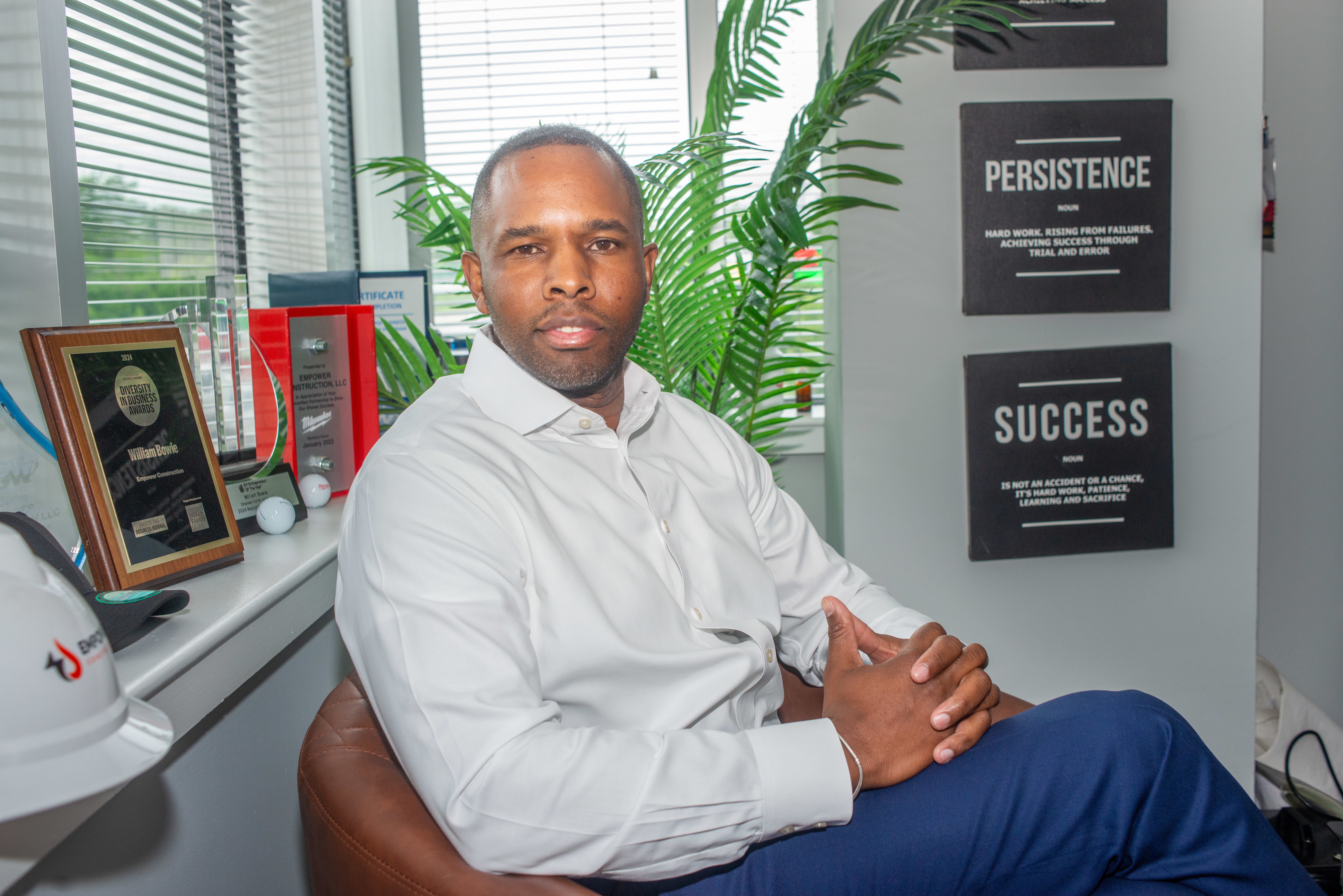
Growing up, William Bowie measured poverty in cups of water warmed in the microwave for his morning baths at a sink. He lived in the Richard Allen public housing project in the Poplar section of North Philadelphia, raised with his brother by a single mother. Even as a high schooler, he was eager to improve his life’s circumstances, but lacked just about everything he needed to do so except a willingness to work hard.
Three decades later, Bowie is president and CEO of his own nine-figure construction company, a journey that he largely attributes to a Philadelphia-based trade community apprenticeship system, similar to the “Nwa Boy” model that has been practiced in West Africa for centuries.
“I kind of challenged myself,” said Bowie, who’s 42,referring to his mindset when he was embarking on his career. “Why can’t I be the best? And why can’t I open that door for others?”
Bowie’s path is hardly an isolated success story. It is one node in a growing, informal network — from union apprenticeships in Philadelphia to a training cohort in Oakland, Calif. — of programs borrowing the Nwa Boy model’s core promise: a credentialed path from labor to ownership, built on relationships and trust rather than credit scores or venture capital.
As race-conscious funding efforts designed to level the playing field for African Americans are dismantled, that promise is drawing new attention from investors, workforce officials, and Black entrepreneurs looking for an alternative route to generational wealth.
The Nwa Boy system, which has its roots in the communities of the Igbo people in southeastern Nigeria, works this way: An established craftsman or business owner — known as the “Oga,” or master — takes on the training of a young person — known as the “Nwa Boy” (pronounced: nwah), or apprentice — often straight out of secondary school.
The apprentice lives and works closely with the Oga for as long as eight years, learning the nuances, logistics, and administration of their chosen craft.
When the apprenticeship ends, the Oga provides the graduate with a “settlement,” or capital — which often includes giving them money or business space — to launch their own independent businesses. The apprentice then continues the cycle.
The Harvard Business Review has called the Nwa Boy system “a Nigerian model for stakeholder capitalism” in which community, workers, and shared prosperity take precedence over individual shareholder return.
In 1970, at the conclusion of three years of civil war, the Igbo people used the Nwa Boy system to build a multibillion-dollar economy from the ground up. That’s when the Nigerian government seized control of the nation’s financial institutions and gave the equivalent of only about 20 British pounds (or roughly $400 in today’s money) to every Igbo adult, regardless of how much they had in their bank accounts before the conflict.
Today, at a moment when Black Americans are witnessing the erosion of affirmative action and DEI programs through court rulings and presidential executive orders, Bowie and others believe the Nwa Boy system may provide an answer to the question of what happens when the system meant to fix a problem becomes the next thing that needs fixing.
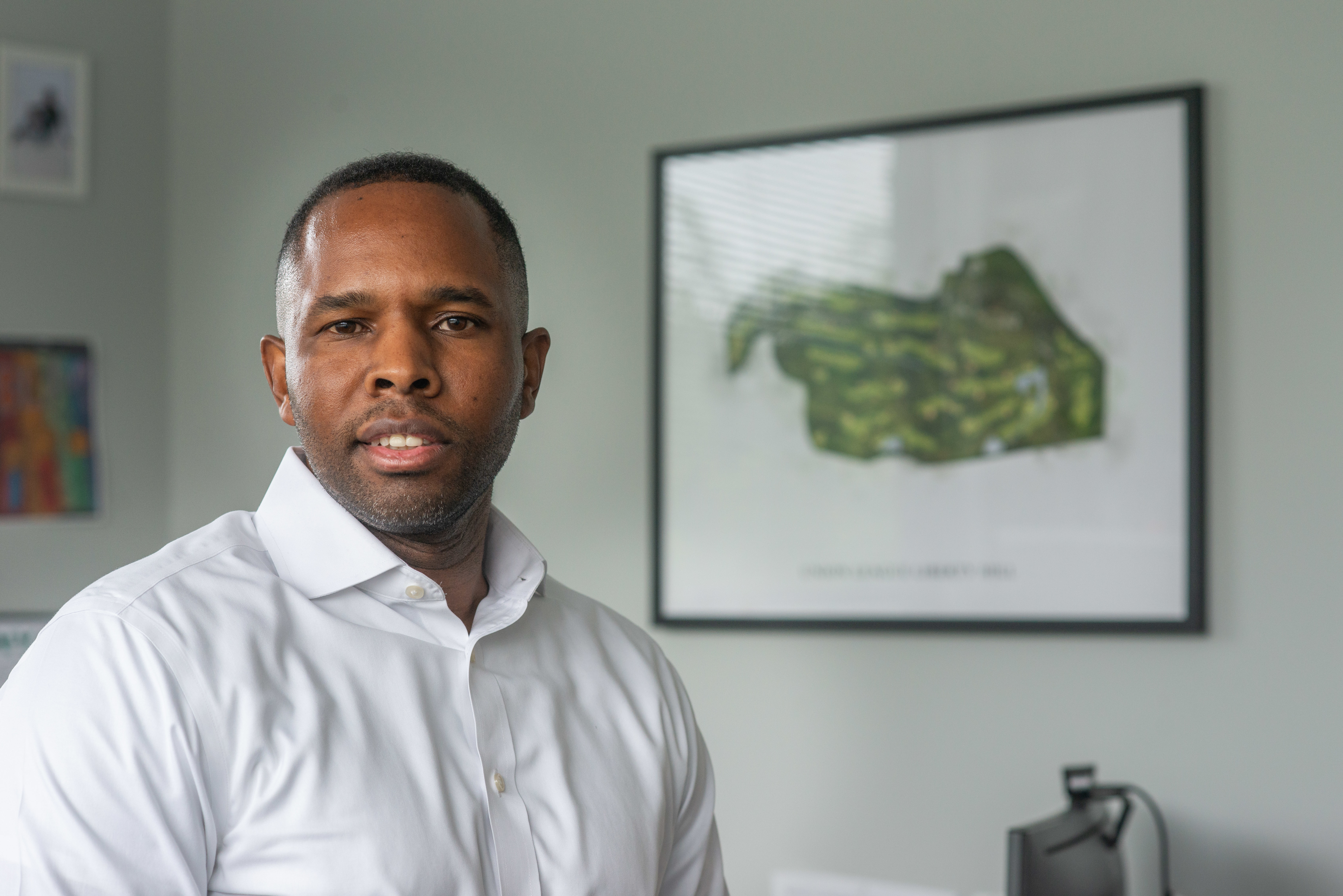
As he was embarking on his career in construction, North Philadelphia native William Bowie said he asked himself, “Why can’t I be the best? And why can’t I open that door for others?”William Thomas Cain / For The Inquirer
The blueprint
While Bowie’s blueprint moves from employment to ownership, it did not happen in a vacuum.
After finishing his first year at Drexel University, Bowie faced a dilemma — he had no way to pay a $6,500 bill to enroll for his sophomore year.
“I tested into a magnet school,” Bowie said. “Academics wasn’t a problem. I was thriving in that environment. It’s just that financially I couldn’t afford it after the first year.”
Bowie was not deterred.
“I looked for a different path,” he said. “I tried to make money to get back into my second year in college.”
In Nigeria, young men had been solving the same problem for generations — not with legislation, but with a handshake that meant more than a contract between an Oga and their apprentice. The pact is simple: The master teaches. The apprentice serves.
In North Philadelphia, though, the syndicate of trust had little that resembled the stalls of Lagos’ Alaba International Market. It had Frank Murray.
Murray, a member of the International Brotherhood of Electrical Workers (IBEW) and a family friend of Bowie’s mother, Margaret, encountered a young man desperate for an opportunity. He told Bowie, “This is where the money is at.”
In the Nwa Boy system, the Oga does not simply teach a trade — he transfers his reputation, his customer network, and at the end of the apprenticeship cycle, his start-up capital. The system does not run on contracts, but on trust enforced by community witnesses.
Murray gave Bowie the same thing — a pathway — and Bowie walked through it. Bowie joined IBEW at 19 years old.
He completed a four-year U.S. Department of Labor-certified apprenticeship in three and a half years, earned $75,000 in his first year, and rose to become the youngest area manager overseeing about $300 million in business.
Bowie says IBEW gave him what the Nwa Boy system has always understood, and American institutions have always struggled to replicate — a means to succeed that required no college degree, no venture capital pitch, and no generational wealth.
‘Financial gravity’
Bowie’s playbook from two decades ago is what many American venture builders and investors are now being forced to consider as the formula for prosperity is being recalibrated. They must confront the brutal reality that even seven-figure salaries are no guarantee for wealth creation.
“A paycheck — even a seven-figure one — is just a stay of execution. It doesn’t detach you from financial gravity,” Brandon Jones, founder and CEO of Gravy Capital, said during a virtual panel in April hosted by Visible Hands VC.
When Bowie applied for capital to launch his company, Empower Construction, he felt the earth tugging at his dreams. Even though he had two decades of industry experience and managed a $300 million book of business, the banks still said no.
What finally opened the door was not a stronger application, but a different messenger.
One of Bowie’s mentors, Daniel K. Fitzpatrick, an executive at Citizens Bank, made a single phone call to his colleagues. A line of credit came through. To Bowie, it was the equivalent of receiving an Oga’s settlement.
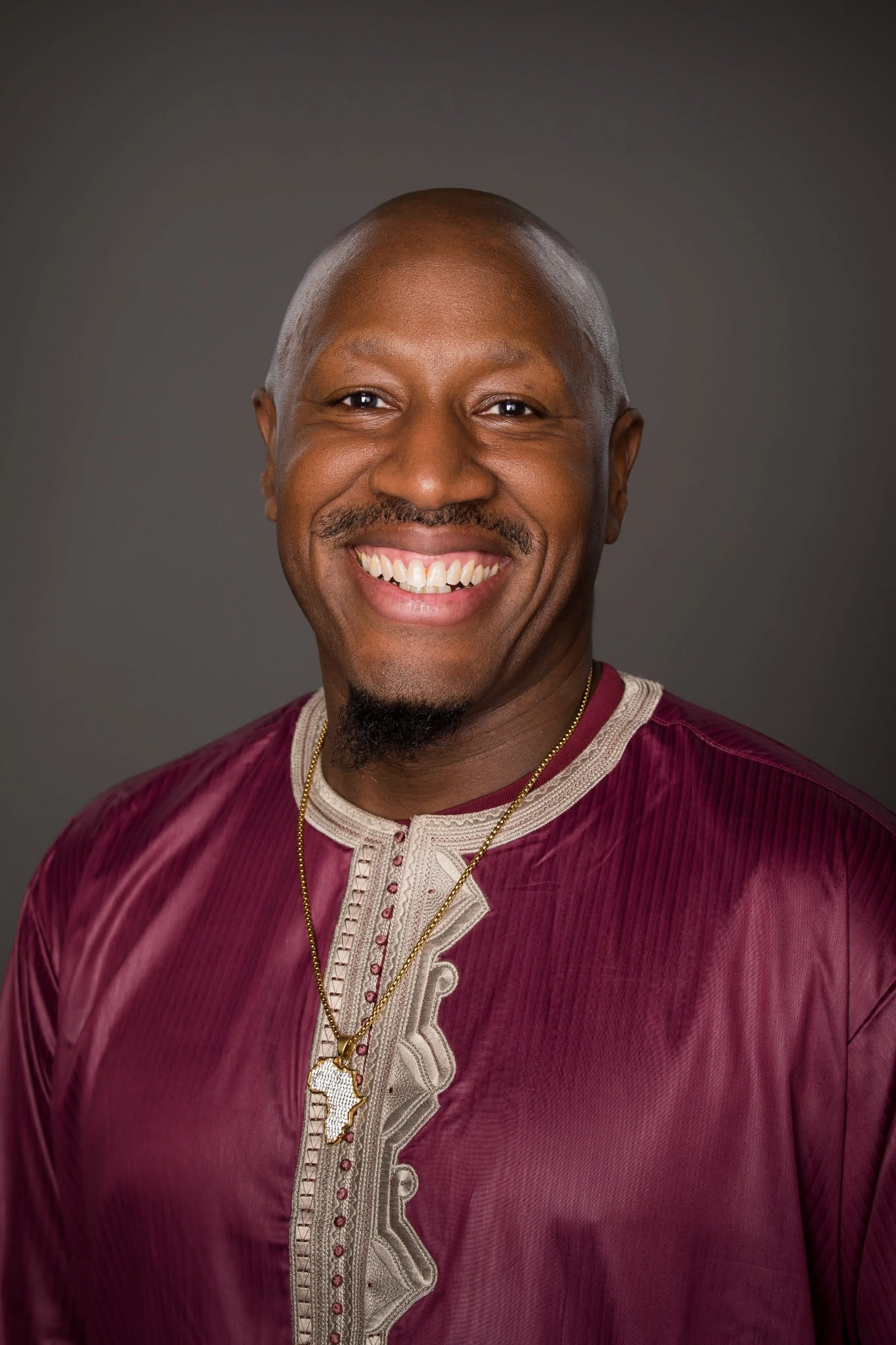
Saantis Fenmu Davis, a Philadelphia-based financial literacy educator and founder of Geb Cultural Exchange, said the problem starts earlier than the bank. He said it’s essential that Black Americans are taught how to be producers and investors, and not just consumers. “While higher spending and status-signaling often masquerade as affluence, they represent a fundamental mirage of social capital, which may or may not translate to equity or wealth,” he said.
Saantis Fenmu Davis, a Philadelphia-based financial literacy educator and founder of Geb Cultural Exchange, says consumerism is a “fundamental mirage of social capital.”Courtesy of Saantis Fenmu Davis
Murray did not teach Bowie to consume. He taught him to produce.
Patrick Clancy, president and CEO of the city’s workforce development program, Philadelphia Works, is trying to replicate what Murray did across its programs. Philadelphia Works manages roughly $11 million in apprenticeship funding across skilled trades and emerging sectors including IT, healthcare, and education.
Murray was Bowie’s Philadelphia Works, but the path is not without its shadows.
For every successful apprenticeship program or Nwa Boy story told, there is a possibility of exploitation.
In the Nwa Boy framework in Lagos, Nigeria, some apprentices have reported exploitation at the hands of their masters.
Naboth Nwaikwu spent 20 grueling years navigating three successive apprenticeships before finally being settled. He was an orphan. His first master did not settle him because his aunt and uncle instructed him not to. The same thing happened the second time.
It wasn’t until his third attempt, under the apprenticeship of a friend, that he got his settlement, all of which could not account for the years lost.
Nwaikwu now sells construction accessories for a living at Lagos’ Alaba International Market, and makes enough profit to take apprentices of his own if he wanted to, but told me he refuses to do so because “There is a thin line between unpaid apprenticeship and indentured service. I do not want to be the one to cross it.”
Uyi Samuel Oni, a corporate attorney licensed in Nigeria and trained at the University of Pennsylvania’s Carey Law School, said the covenant must become a contract before it can successfully cross continents. “The Nwa Boy system must avoid negative historical connotations linked to terms such as master,” Oni said.
Uyi Samuel Oni, a corporate attorney licensed in Nigeria and trained at the University of Pennsylvania’s Carey Law School, says the Nwa Boy covenant must become a legally binding contract before it can successfully be used in America.Courtesy of Uyi Samuel Oni
A legally compliant American adaptation, he said, must be a win-win for both parties — not merely vocational or community service, but a binding agreement that protects the apprentice’s right to the capital payout that makes ownership possible.
In Oakland, a program called Built Here has emerged as a 21st-century proxy for the Nwa Boy system.
Onye Ahanotu, a former Harvard engineering research fellow and founding member of Built Here, uses training cohorts to mirror the communal trade apprenticeships of southeastern Nigeria. “We meet every week,” Ahanotu said.
The frequency is intentional. In the Nwa Boy system, the covenant is not a one-time transaction — it is a continuous relationship between master and apprentice, reinforced week by week, skill by skill, until the apprentice is ready to stand alone.
Clancy, of Philadelphia Works, understands that frequency. But he said the barriers that push apprentices out are not about ambition. They are about logistics. Most apprentices who do not complete the program fall offbecause of logistics — literacy gaps, a lack of childcare, transportation difficulties, and rigid drug-testing requirements.
The apprenticeship demands sacrifice.
Bowie was 19 years old and the only African American male in a trade that was overwhelmingly white and male. The culture shock was real. His determination was not given. It was chosen every single day.
Bowie narrated his apprenticeship years as a period of determination and exposure to wealth — not suffering. Once he entered IBEW, his obstacles became opportunities.
Clancy said Philadelphia Works offers pathways into the building trades and is open to second-chance applicants. Prior convictions are not automatic disqualifiers. The door is open. Most people do not know it is there.
At the Philadelphia Navy Yard, Hanwha builds ships. The company needs welders. It cannot find them.
Patrick Clancy, president and CEO of Philadelphia Works, the city’s workforce development program, which offers pathways into the building trades and is open to second-chance applicants.Courtesy of Patrick Clancy
Not because the welders do not exist. Not because the work is not there. Not because the wages are not competitive — apprenticeship wages in the building trades start at $25 per hour and can exceed $100,000 annually with overtime. The positions have gone unfilled for three years, Bowie said, because nobody told the kids in North Philadelphia, West Philadelphia, and Germantown that the door is open.
Bowie knows this the way he knows everything about the trades — from the inside. He gives talks online. He goes into Philadelphia schools. And while he may not have known about the Nwa Boy system when he was an apprentice, he regularly references its principles today.
He stands in front of teenagers the same age he was when the system ran out of road for him and tells them what Murray told him: This is where the money is at.
“In Philadelphia, there’s a shipbuilding company at the Navy Yard,” Bowie said. “They need welders. They can’t find them. And you’re telling me that in the city of Philadelphia, in the communities that we come from, that we can’t find welders?” He paused. “The parents don’t know. The kids don’t know. Nobody’s telling them.”
Clancy is trying to change that. Philadelphia Works is actively pursuing apprenticeship funding for Hanwha’s shipyard — planned cohorts of 20 to 30 apprentices at a time. The infrastructure, funding, and jobs exist. What is missing is the same thing that was missing when Bowie was standing at the edge — someone to point at the door.
Murray pointed. One phone call — and a kid from the Richard Allen Homes became a $100 million CEO. Philadelphia has not yet produced its Frank Murrays at scale.
Bowie is working on it. One conversation — and one handshake — at a time.
Ibe Imo is a Philadelphia-based investigative journalist whose reporting examines technology, power, capital, and the systems that determine who builds wealth and who pays for it. He is a recent graduate of the master of journalism program at Harvard University.
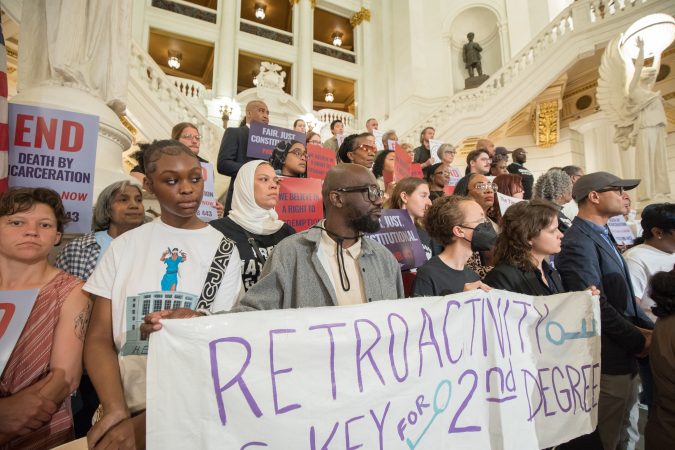
For decades, a second-degree murder conviction in Pennsylvania meant an automatic sentence of life in prison — even for people who did not kill anyone.
But in March, the Pennsylvania Supreme Court ruled that punishment unconstitutional in the case of Derek Lee, a Pittsburgh man who argued the mandatory nature of the sentence violated constitutional prohibitions against cruel punishment.
The high court gave the state legislature 120 days to devise an alternative and decide whether to apply it to those already serving the sentence.
That deadline passed without a resolution on July 24. And in early August, the high court rejected a bid by several district attorneys to give lawmakers more time.
So what happens now? Here’s what to know.
What was the maximum sentence for second-degree murder — and what is it now?
Before the ruling, the punishment was life without parole. Now there is no clear answer.
Setting criminal penalties is the legislature’s job, and lawmakers have not put in place a replacement.
The high court’s ruling did not abolish life without parole for felony murder; it only barred making the punishment automatic. A judge may still impose such a sentence, but only after weighing a defendant’s role in the crime.
The justices declined to say whether the ruling applies retroactively to people already serving those sentences, leaving that question to lawmakers, too.
How will judges sentence second-degree murder now that there’s no mandatory penalty?
With no law to guide them, judges are left to their own decisions. And without statewide guidelines, similar cases could end differently depending on the county in which a defendant is tried and on the judge who hears the case.
Philadelphia District Attorney Larry Krasner has expressed little concern about the lack of guidelines.
In an interview this week, Krasner, a Democrat who has forged a path as a progressive prosecutor, said “there’s nothing unusual” about asking judges to weigh the facts and use their discretion. “I’ve always believed that mandatory sentencing is problematic at best, usually a terrible idea, and that individual justice is what the system is supposed to be about,” he said.
But at a joint GOP policy committee meeting in Hazleton last week, several Republican prosecutors and lawmakers voiced concern about the lack of uniformity across the state.
Luzerne County District Attorney Sam Sanguedolce pointed to a case in which a defendant recently asked to plead guilty to second-degree murder.
“I can’t properly advise the defendant what the consequence might be,” Sanguedolce said. “Second [-degree murder] sounds like it’s better than first, but is it? We don’t even know.”
What happens to the people already serving life in prison?
For the nearly 1,100 people serving life for second-degree murder, nothing changes automatically.
The ruling made only one person eligible for resentencing: Lee. And even he could again receive life without parole, if a judge finds his role warrants it.
Others who wish to have their life sentences reconsidered have to go to court and ask to be resentenced. Bret Grote, a lawyer with the Abolitionist Law Center who represented Lee, said such petitions are likely to be denied by trial courts until retroactivity is settled.
Hundreds are expected to try anyway.
That flood could overwhelm courts and public defenders. Statewide, handling the cases could cost more than $34 million, the Public Defender Association of Pennsylvania estimates. In Philadelphia — home to more than 500 people currently serving such sentences — Chief Defender Keisha Hudson puts her office’s share at $40,000 per defendant, or $24 million total.
“We are going to need substantial funding,” she said last week, adding that she hopes to meet soon with city officials about how to pay for it.
Legal experts expect the question of retroactivity to reach the state Supreme Court again, either through an appeal of a lower court’s denial or a so-called King’s Bench petition asking the justices to take up the issue directly.
Lawmakers could also provide a quicker alternative by writing legislation that allows people serving second-degree murder sentences to seek parole, rather than requiring individual resentencing.
Can lawmakers still pass a fix, and what might that look like?
Lawmakers say negotiations will resume when they return in September. Each chamber has passed its own bill, but the two are far apart, with no compromise in sight.
The bill in the Republican-controlled Senate would set a 35-year mandatory minimum for most second-degree murder convictions, while keeping life without parole as an option. Current lifers would become eligible for parole after 35 years — or 20 years, if they are at least 70.
The measure in the Democratic-led House sets no mandatory minimum, instead directing the Pennsylvania Commission on Sentencing to write guidelines while keeping life without parole available. It would make current lifers parole-eligible after 30 years and add a medical parole option for the terminally ill.
Sen. Lisa Baker (R., Luzerne), who wrote the Senate proposal, said she is still hopeful that her caucus and House Democrats will reach a deal. But the parties remain far apart, she said.
“It’s difficult when you’ve got people whose priorities are no mandatory minimums for any crime,” she said. “I understand that we want to keep nonviolent first-time offenders [out of prison], give people second chances. But there needs to be accountability for these crimes.”
Few expect action before November’s midterm elections. “We can’t, unfortunately, make Harrisburg move any more quickly than they already are,” said Hudson, of the Defender Association. “And in the meantime, there are a lot of questions.”
What does all this mean for victims’ families?
Victims’ families are caught in a limbo of their own, said Melany Nelson, executive director of Northwest Victim Services, a Philadelphia nonprofit that assists crime victims.
Those whose loved ones’ killers have not been sentenced are now waiting to learn what punishment will come, and whether it will feel like justice. Those whose cases closed long ago face now the prospect of being summoned back — to a courtroom or a parole hearing — to confront the killer again and potentially watch them set free.
Nelson urged families to contact prosecutors’ offices and victim-advocate services now, rather than be caught off guard, and to weigh in with their state lawmakers.
“We do not want them to be blindsided by anything,” she said.
Correction: A previous version of this article incorrectly described what could happen to people who wish to appeal their sentences. Bret Grote, a lawyer with the Abolitionist Law Center, said such petitions are likely to be denied by trial courts until the question of whether a recent Pennsylvania Supreme Court ruling applies retroactively is settled.
I love hearing from readers. From those who agree and those who disagree. Unless I mess up, I try to respond to everyone who invested their time in what I had to say and then cared enough to write in. The only kind of feedback I abhor is the one that accuses me of bias, because duh.
Whether you’re reading this in print (bless you) or online (thank you), it should be clear we are in the Opinion section, and bias, in the sense of a bent or an outlook, is how we do. However, I do not consider my side of the story to be the end of it. Regardless of whether someone is moved to drop me a line or not, I am here for the conversation.
This is what happens in real life, at least ideally. I say something, and you say something back, and if we disagree, we at least respect each other’s right to do so.
Unfortunately, the hardening of political positions seems to be doing away with even that. I know liberals who feel it’s a waste of time to try and talk to someone who thinks differently on trans rights, for example, just like I know conservatives who believe there’s nothing they care to learn from some socialist “Dumocrat.”
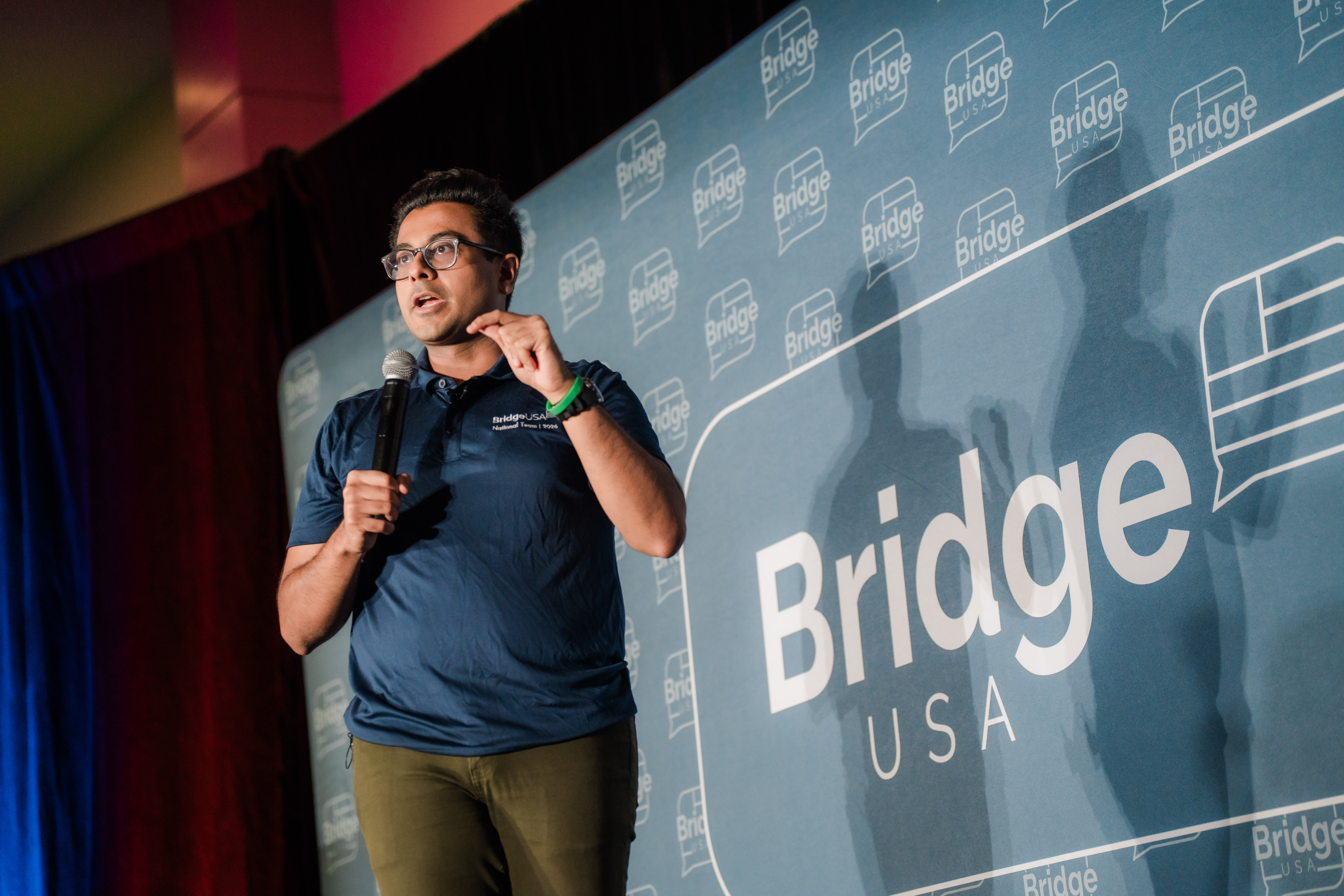
Perhaps that’s why — even with the decade or two (or three) age gap between the participants and me — there was a feeling of kinship for me at the 2026 BridgeUSA National Summit held recently in Philadelphia. The group, which has 130 chapters on college campuses across the country, wants to ensure we don’t stop talking (and listening) to each other — especially if we disagree.
And no, this isn’t some equivocating, middle-of-the-road, fine-people-on-both-sides kind of thing, Manu Meel, BridgeUSA cofounder and CEO, said. The organization’s goal isn’t to find common ground or change the way people think, but to urge and teach students to use their strong opinions to engage respectfully and constructively with those who have different beliefs.
To hear the 27-year-old Meel tell it, Americans have always had differing opinions, and that disagreement is the engine of democracy. What our young nation would look like, in fact, was forged in disagreement. The problem today isn’t that there are disparate points of view, he said.
“The real divide is between the open-minded MAGA people, the open-minded liberals, the curious conservatives, and the close-minded ideologues,” Meel noted. “The real divide is between the builders and the breakers.”
Manu Meel, cofounder and CEO of BridgeUSA, speaks during his keynote speech at the group’s annual summit in Philadelphia on Aug. 8.Courtesy Clay Goswick/BridgeUSA
The breakers in this case are the extremists on both sides of the political spectrum, those who make up for what they lack in numbers with the volume of their voices and rigidity of their views. The ones who stoke the outrage machine and scare the majority into silence.
Sahar Toshtzar, a 21-year-old political science student at Drexel, told me she feels that fear often keeps people from engaging.
“Sometimes it can be a little bit isolating having a mission of wanting to bridge the political divide,” she said. “Nobody really wants to talk about politics; nobody feels safe enough to talk.”
For Toshtzar, her first BridgeUSA events on campus about a year ago proved revelatory.
“I went to the discussions that we had, and it was, ‘Wow, people are talking like normal,’” she said. “I’m laughing with a conservative and relating to something completely outside of politics with them.”
The experience didn’t alter her beliefs, but it changed her opinion about those she disagreed with politically, she said, and she hoped that perhaps they shifted their opinion, as well.
I think that’s the biggest lesson to learn from engaging with people we disagree with. Our differences aren’t the issue. Deciding we can’t talk about them is — and that decision is just a choice we dress up as a fact. If we can start to acknowledge that, it will become much harder for those who fearmonger and demonize to control the public discourse, to degrade our politics until it is all a zero-sum game meant to humiliate the losing side.
Of course, there are a few people who you absolutely cannot reach, and some you may not even want to be in the same room with, but, again, they are in the minority. Speaking from experience, even someone who may seem initially hostile can turn out to be willing to engage in conversation. So, to paraphrase Hillary Clinton, don’t put all your deplorables in one basket.
Better still, we can learn from young people like Meel and Toshtzar.
“At the end of the day, it’s a basic social skill to be able to sit down and talk to somebody. To stay calm, hear them out, and have them hear you out. Maybe even change your opinion on something,” Toshtzar said. “If you can’t do that, the basics of politics don’t exist.”
We could certainly do far worse than sticking to the basics.
That’s what Samantha Paige Rosen’s father told her when she was 29.
Rosen was living alone in Bethesda, Md., and struggling with what she called unrealistic deadlines at her copywriting job.
She liked being in the D.C. area and was reluctant to move back to her parents’ house in Bala Cynwyd. Plus, this wasn’t what adults were supposed to do, she thought. Ultimately, she decided to listen to her dad.
“My job was making me sick,” she said, referring to her deteriorating mental health.
The morning after she moved back into her childhood room, she already felt a difference. “The depression lifted. A lightness. A steady, quiet heartbeat,” she wrote in a 2022 essay, “Unlearning the Shame of Living with My Parents as an Adult,” for the literary publication Catapult.
That decision shaped the trajectory of her life.
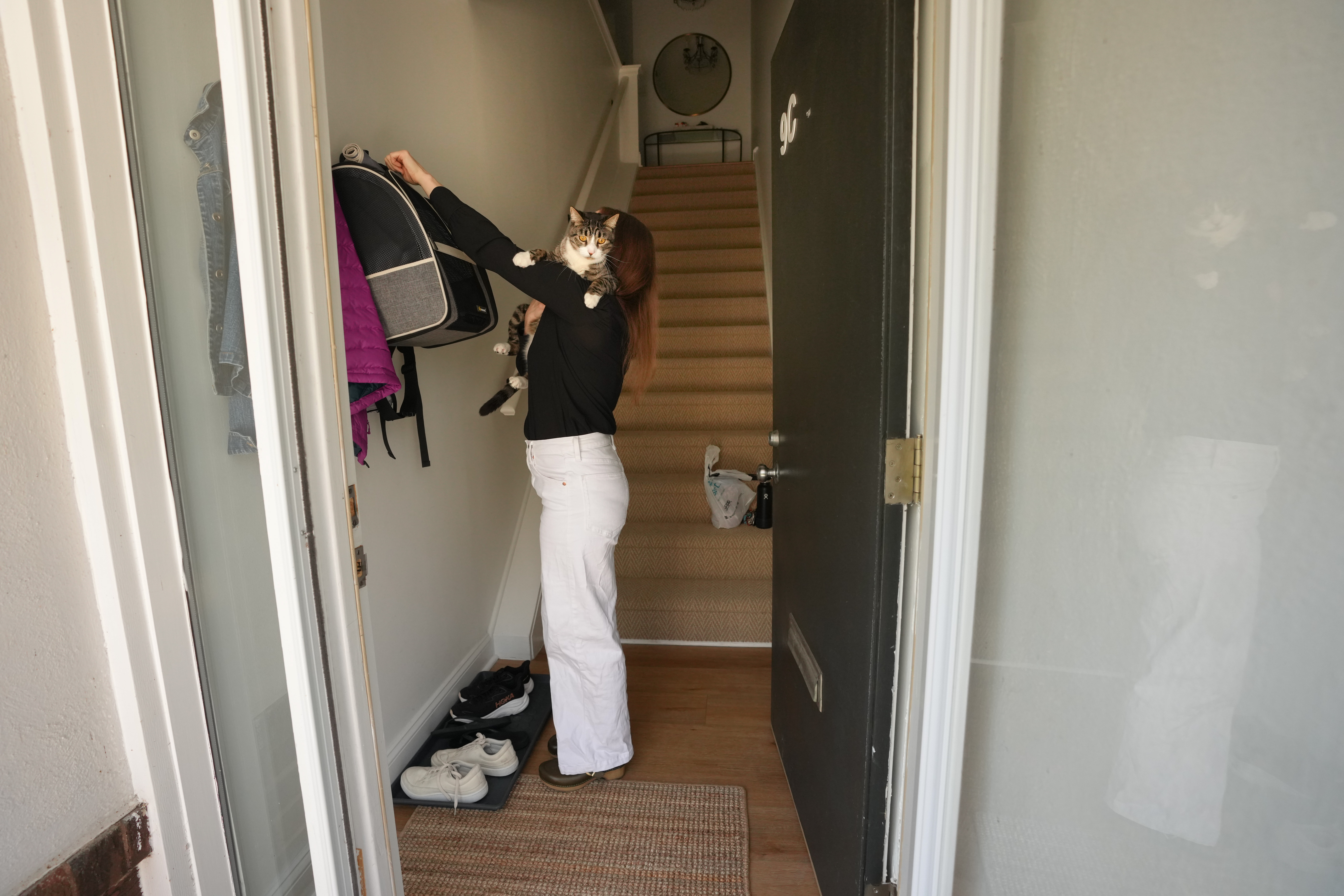
Samantha Paige Rosen, author of the anthology “Living, Together,” prepares to take her cat to her parents’ home for a visit last month. She lives in Penn Valley, a short walk from her parents’ home.Jessica Griffin / Staff Photographer
Thanks to the care provided by her parents, she was able to get well and build a tutoring business. And her experience inspired her to pitch, sell, and edit an anthology called Living, Together: Reimagining Community in the Age of Disconnection, out last month from Beacon Press and now an indie press bestseller.
The anthology, a mix of personal essays and conversations featuring 22 writers who live in the U.S., offers a window into the experience of living outside of a nuclear family arrangement. For some, that means living in a multigenerational household, a cohousing community, or three polyamorous parents and children. The book also goes beyond just housing, to focus on building community and chosen family.
Copies of the anthology “Living, Together” by writer Samantha Paige Rosen.Jessica Griffin / Staff Photographer
Novelist Sarah Thankam Mathews writes about her experience sustaining Bed Stuy Strong, the mutual aid organization she helped found during the pandemic. Author Rhaina Cohen explores her and her husband’s decision to live with their friends. Novelist Jonathan Escoffery talks about how his sense of community was shaped by his Jamaican immigrant parents and fellow writers of color.
When she was living with her parents, Rosen, now 36, said she didn’t know anyone who was living in a nontraditional setting and couldn’t find much writing about it. In a lot of ways, the book, she said, “was for me.” She wanted to hear about all the ways people were building homes and community.
It’s difficult to quantify the trend of alternative living arrangements because it’s such a vast term. But what is clear is that what Americans tend to think is middle-class “normal” — living with a spouse and children — is on the decline.
Writer Samantha Paige Rosen, author of an anthology called “Living, Together”, in her home, located a short walk from her parents house, July 20, 2026, in Penn Valley, PA.Jessica Griffin / Staff Photographer
Multigenerational and otherwise non-nuclear family living is common in several global cultures, but Rosen wanted to highlight American writers as a way to combat the thinking that more communal ways of living are suited for other countries but not here.
Living, Together fits into a growing canon of literature focused on envisioning alternative family and relationship structures. From Cohen’s best-selling 2024 The Other Significant Others: Reimagining Life with Friendship at the Center to Mathews’ 2022 novel All This Could Be Different, from Sophie Lewis’ 2022 Abolish the Family: A Manifesto for Care and Liberation to Lola Milholland’s 2024 memoir Group Living and Other Recipes, there’s a growing tide of voices calling for collectivism over individualism.
“There’s a real hunger for interdependence and people don’t know how to get it,” Rosen said. She hopes the book will open people’s eyes to what’s possible. And not just what’s great about communal living, but what’s difficult about it, too.
When Rosen lived with her parents, sometimes she’d visit friends’ places and wonder if she was doing what she should be doing “as an adult woman.” Her mom, Patty Rosen, also remembers fielding some judgment from others about her daughter’s living situation.
“When’s Sam gonna move out?” they asked.
But the Rosens said they loved living together, even with things like negotiating sound while Samantha was tutoring and dealing with her cat crying at the front door. Or being parented a little too much.
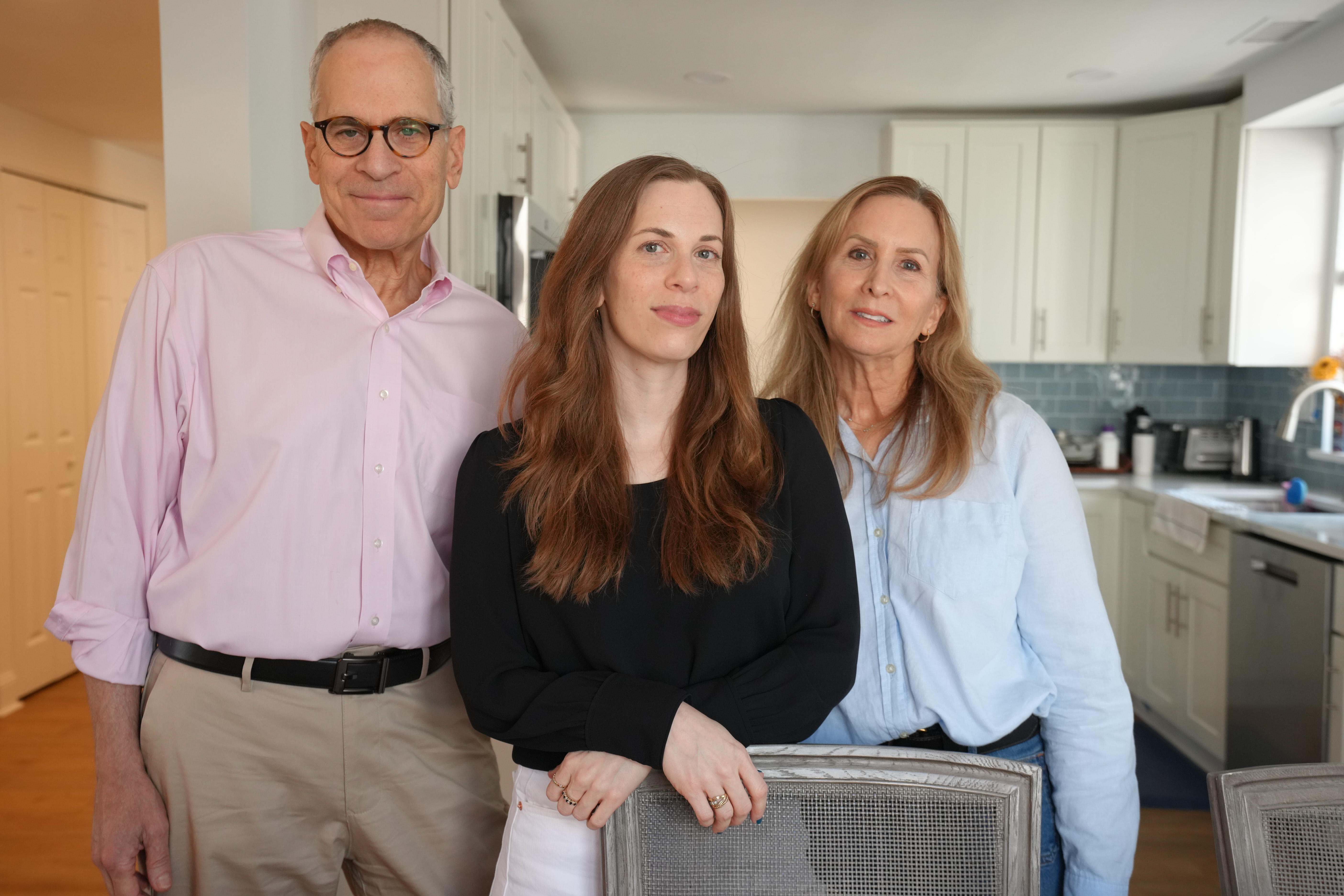
Writer Samantha Paige Rosen, author of the anthology “Living, Together,” poses with her parents in their home in July. Rosen lives a short walk from her parents’ home in Penn Valley and visits with them daily.Jessica Griffin / Staff Photographer
And going on dates? “She didn’t like to be asked about it,” Patty said.
They’d ask about the date’s name and profession, Rosen explained. “Then,” her father, Stuart Rosen, said, pretending to whisper behind his hand, “I would Google.”
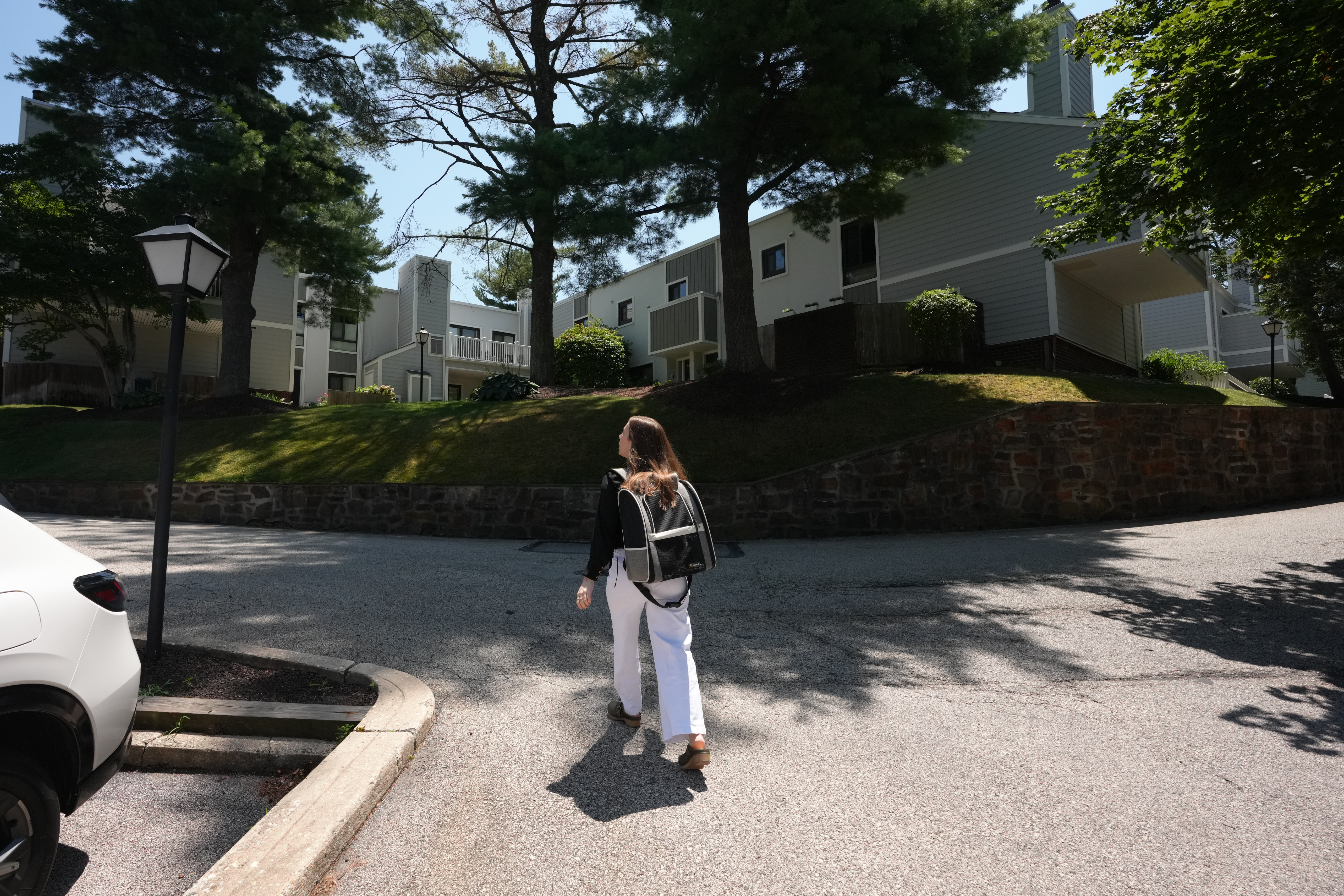
In 2025, Stuart and Patty downsized and moved into a house in Penn Valley. Rosen moved into the house across the parking lot — a house she could only afford because of the years she lived with her parents.
The shift in their family’s living situation echoes something Rosen learned while working on the book.
“Those who’ve taken communal living from an idea to reality have reframed their thinking around it again and again, or gotten rid of the frame entirely,” Rosen wrote in an email. “It can last forever or for a season of life.”
In this season of life, Rosen brings Fergal, her cat, in a backpack to her parents’ house everyday to play with their cats. Every Tuesday, she and her dad have dinner and watch a movie. Some evenings, her mom comes over after she finishes work to watch a movie in bed.
Writer Samantha Paige Rosen, author of the anthology “Living, Together,” lives across a parking lot from her parents’ home in Penn Valley.Jessica Griffin / Staff Photographer
The latest iteration of their living situation — and the potential for all the other ways she might live in the future — calls to mind something Rosen wrote in her essay.
She said she wasn’t sure what she’d choose if she had complete freedom to live the way she wanted.
“But I know I’m interested in figuring out how to live beyond the boundaries society has established for me. I didn’t always believe I was capable of that, but I am. We all are.”
Samantha Paige Rosen will be speaking about her book at the Head & the Hand, 2230 Frankford Ave., Philadelphia, as part of “Hot Debut Summer” on Saturday, Aug. 22, 7 p.m.-9 p.m.
“Living, Together: Reimagining Community in the Age of Disconnection” is available in digital and physical bookstores.