Electric bikes make up 71% of the fleet for Indego, the city’s bike-share program, according to Ryan Wall, spokesperson for Philadelphia’s Office of Transportation and Infrastructure Systems. That’s roughly 2,000 e-bikes.
“Rider demand initially drove the growth of e-bikes within the Indego system,” Wall said, adding that e-bikes can “make longer trips easier, faster, and more accessible.”
Out of 1.3 million Indego trips so far this year, 915,000 or 70% have been on e-bikes, Wall said.
E-bikes have been gaining popularity nationally, too. The National Association of City Transportation Officials says e-bikes represented 42% of station-based bike share fleets in 2025, up from 30% in 2022.
New York City’s Citi Bike program has been growing its supply of e-bikes as well. In 2023, e-bikes made up roughly 20% of its fleet but were being used on nearly half of rides.
How many e-bikes does Indego aim to have?
The Indego program launched in 2015, and e-bikes were introduced in 2018, with a test pilot of 10 bikes.
In 2020, the program announced that it would add more e-bikes, aiming to have them make up half of the bikes available within five years. At the time of the announcement, there were 1,400 Indego bikes, 250 of which were e-bikes.
Now Indego is looking to bulk up its regular bike offering, by 200 next yearand another 500 in 2028, so regular bikes make up 40% of the fleet, up from the current 29%.
“Riders have expressed that they value a mixed fleet, and they enjoy having the option of which type of bike to use,” Wall said.
The program is also adding bike stations. Indego currently has over 300 locations and aims to have 350 by the end of the year.
Riders can borrow Indego bikes for a single ride at a time-based rate, which is 30 cents per minute more for e-bikes. For example, a 30-minute ride on a regular bike costs $4.50 and on an e-bike costs $13.50.
A basic yearly plan starts at $156 for unlimited one-hour rides on a regular bike, but e-bike rides cost an added 20 cents per minute.
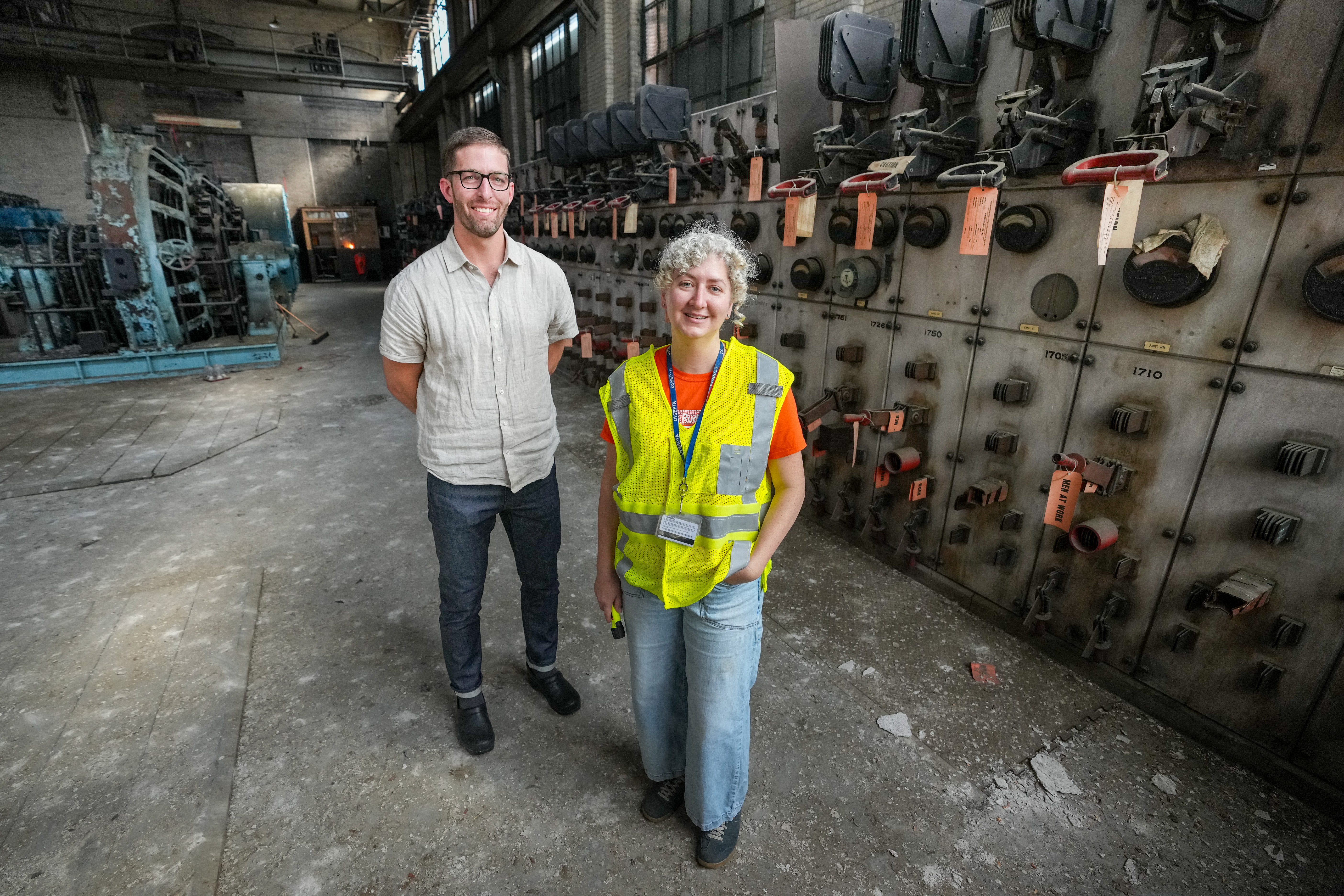
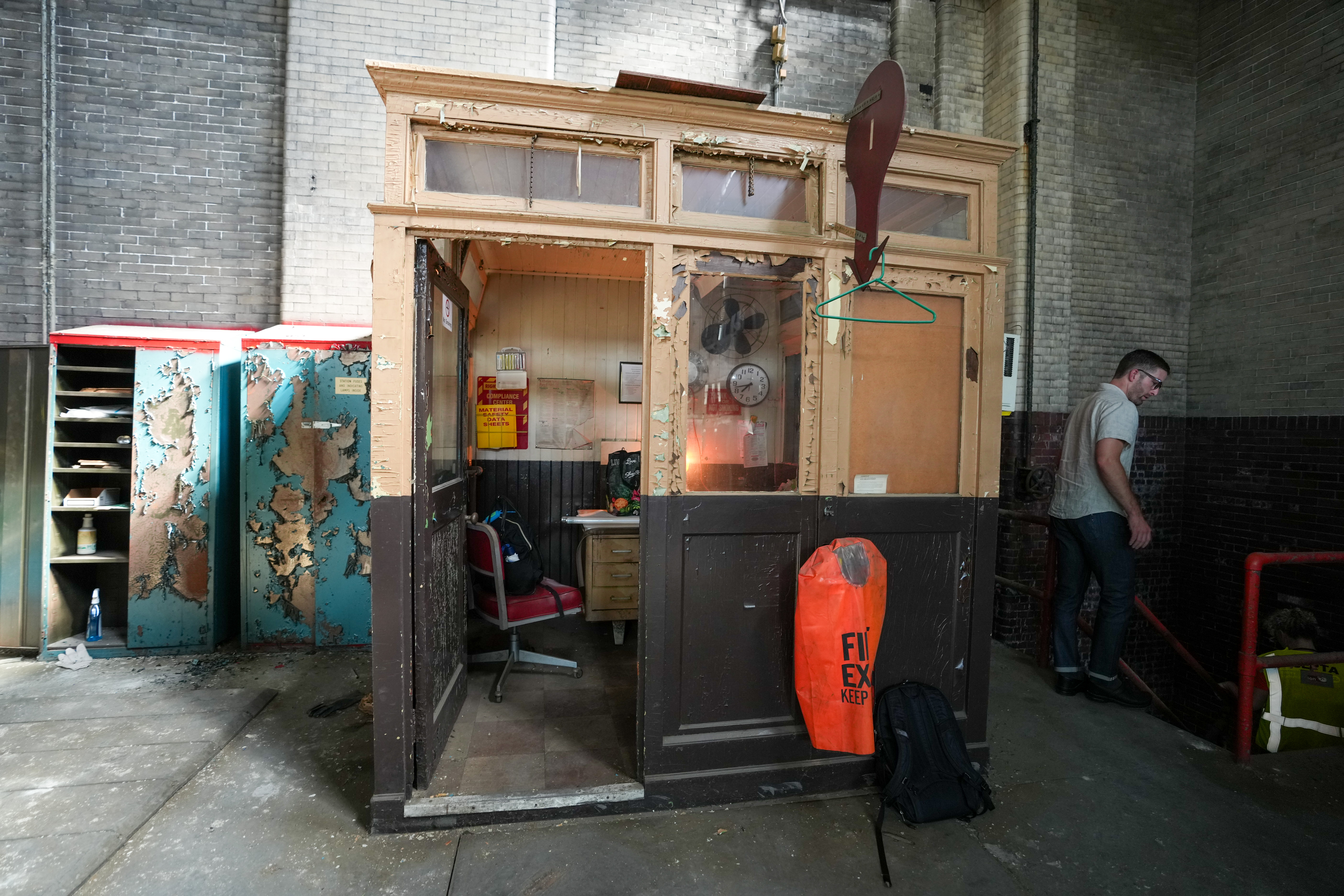
Inside the silent Mifflin Substation, afternoon light filtered by dust illuminated generators and artifacts left behind.
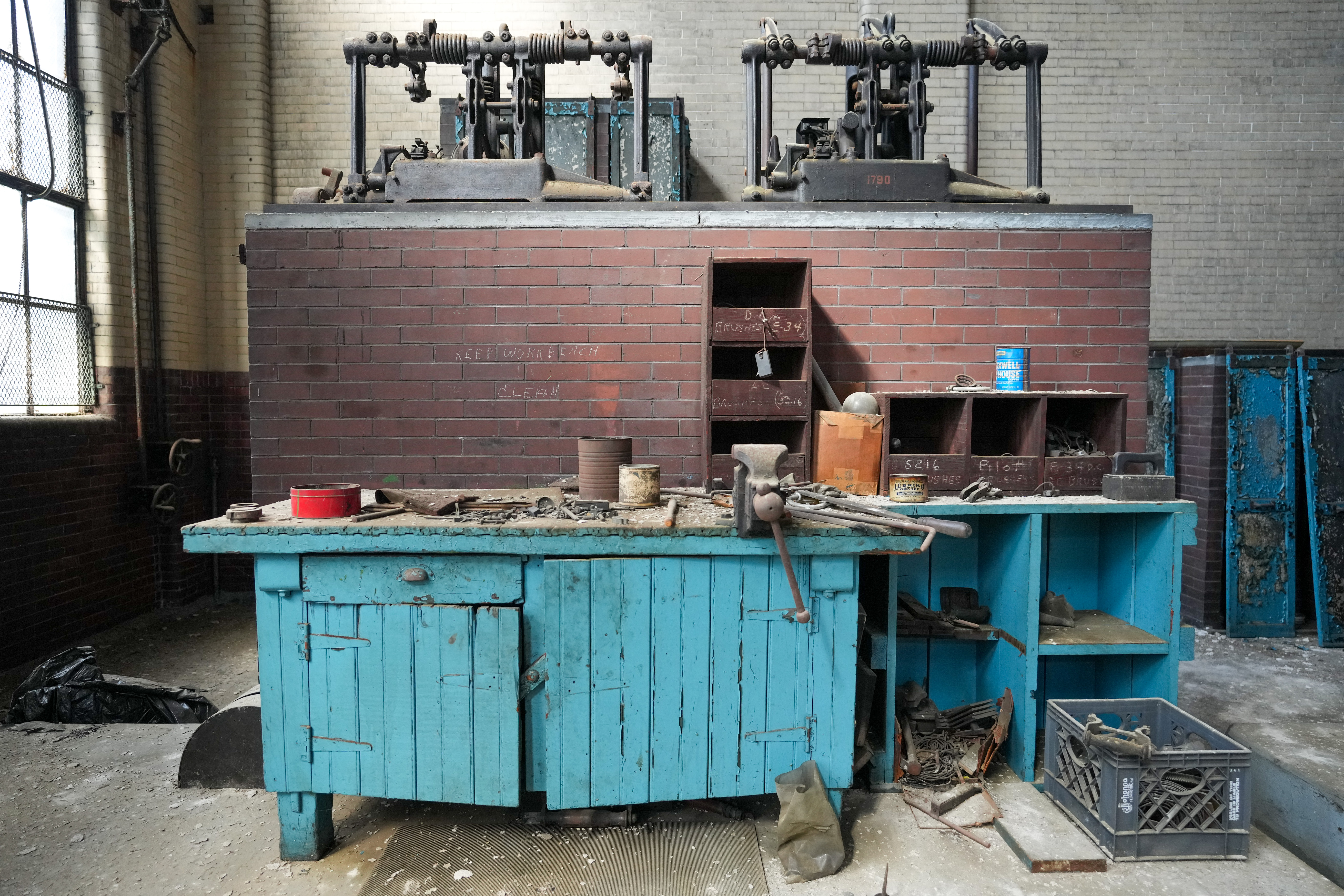
Tools, paper, pencils, a ruler, and paint chips littered a table despite a painted admonition to “Keep workbench clean.“
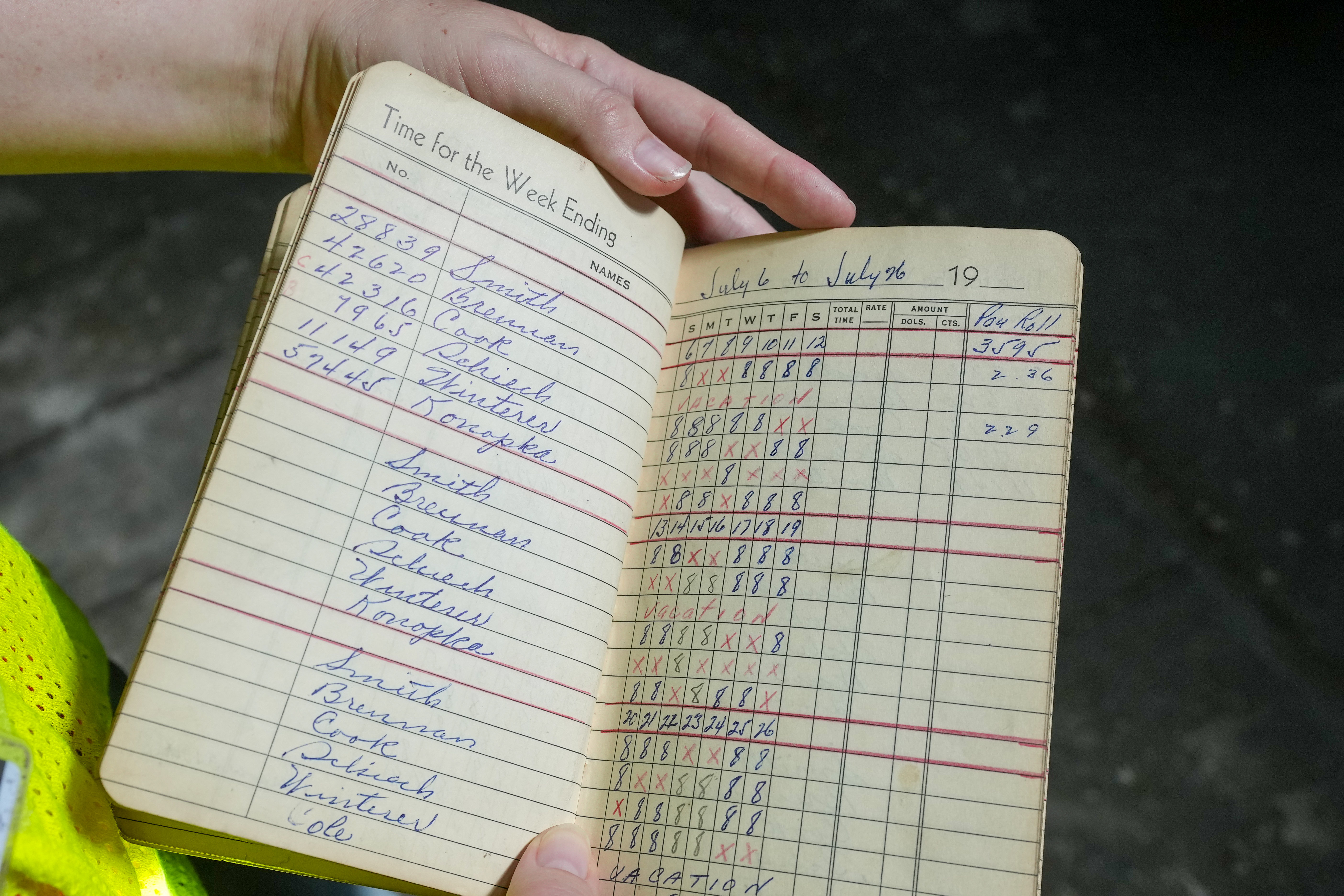
On another wall, cubbyholes held clothbound logbooks dating at least to the 1950s, with the hours worked by those who supplied electricity to trolleys recorded in the neat handwriting taught by old-school South Philadelphia nuns.
“It’s definitely a place of its time,” said Jennifer Dougherty, manager of real estate planning and development at SEPTA, during a tour of the 5,184-square-foot space last week.
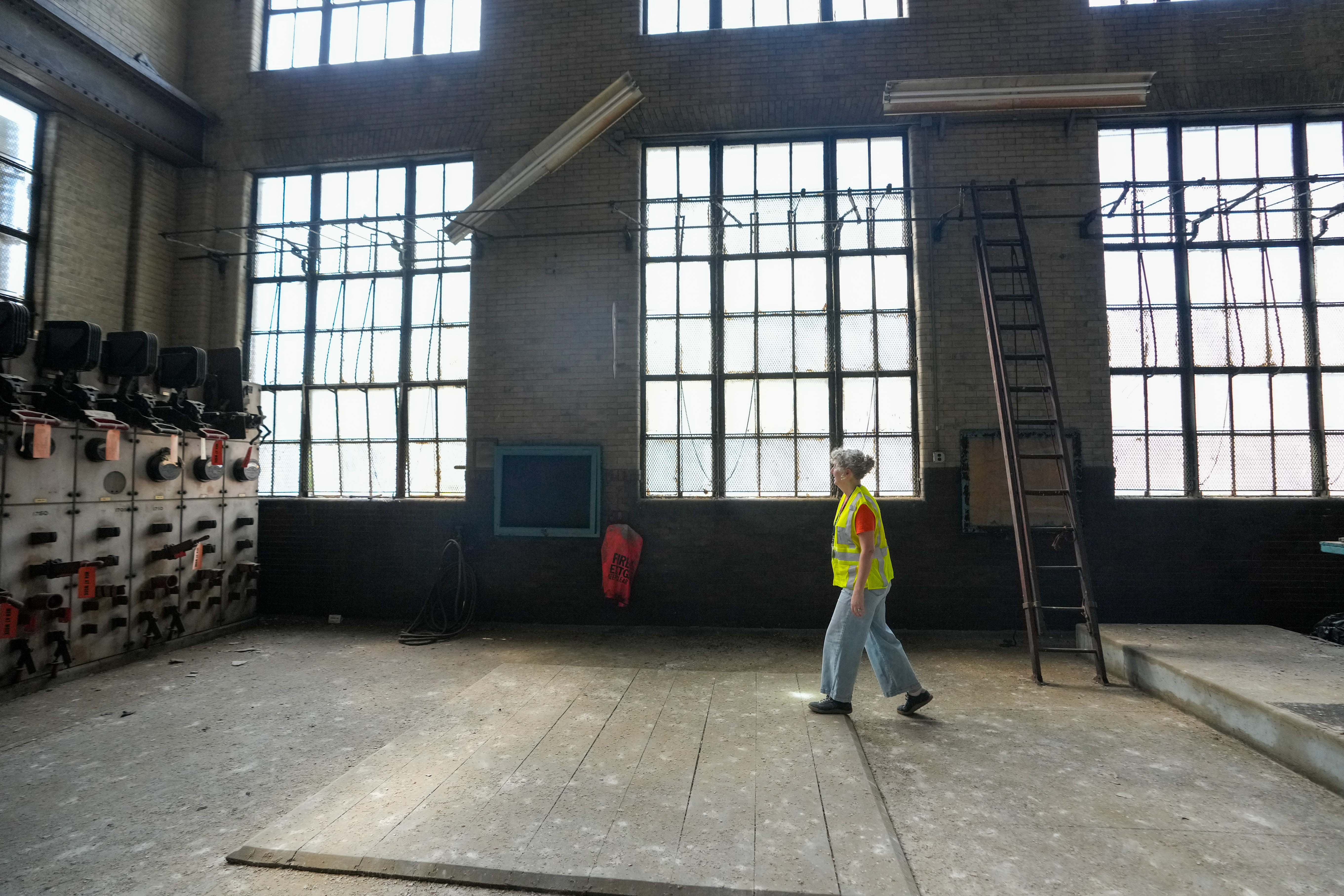
The transit agency is betting that the industrial brick-and-steel aesthetic of the Mifflin Substation — with its 35-foot ceilings, massive windows, and open main floor — can generate income for SEPTA and develop an empty building into a new asset for the East Passyunk Avenue area.
Time sheets for the workers were written neatly in clothbound log books. Dozens of them, some dating back 80 years, are still in the substation.Jessica Griffin / Staff PhotographerA workbench at Mifflin Substation cluttered with tools, cans of nails, bolts, and other debris abandoned at the end of the last shift.Jessica Griffin / Staff Photographer
Built in 1914 by the Philadelphia Rapid Transit Co., the station delivered electric power to trolleys for generations. PRT went bankrupt and reorganized in 1940 as the Philadelphia Transportation Co., in turn absorbed by SEPTA in 1968.
Route 23, the last fixed-track trolley in South Philadelphia, was replaced by diesel buses in 1992. Mifflin Substation was de-energized in 2003 when the Route 79 trackless trolley converted to buses.
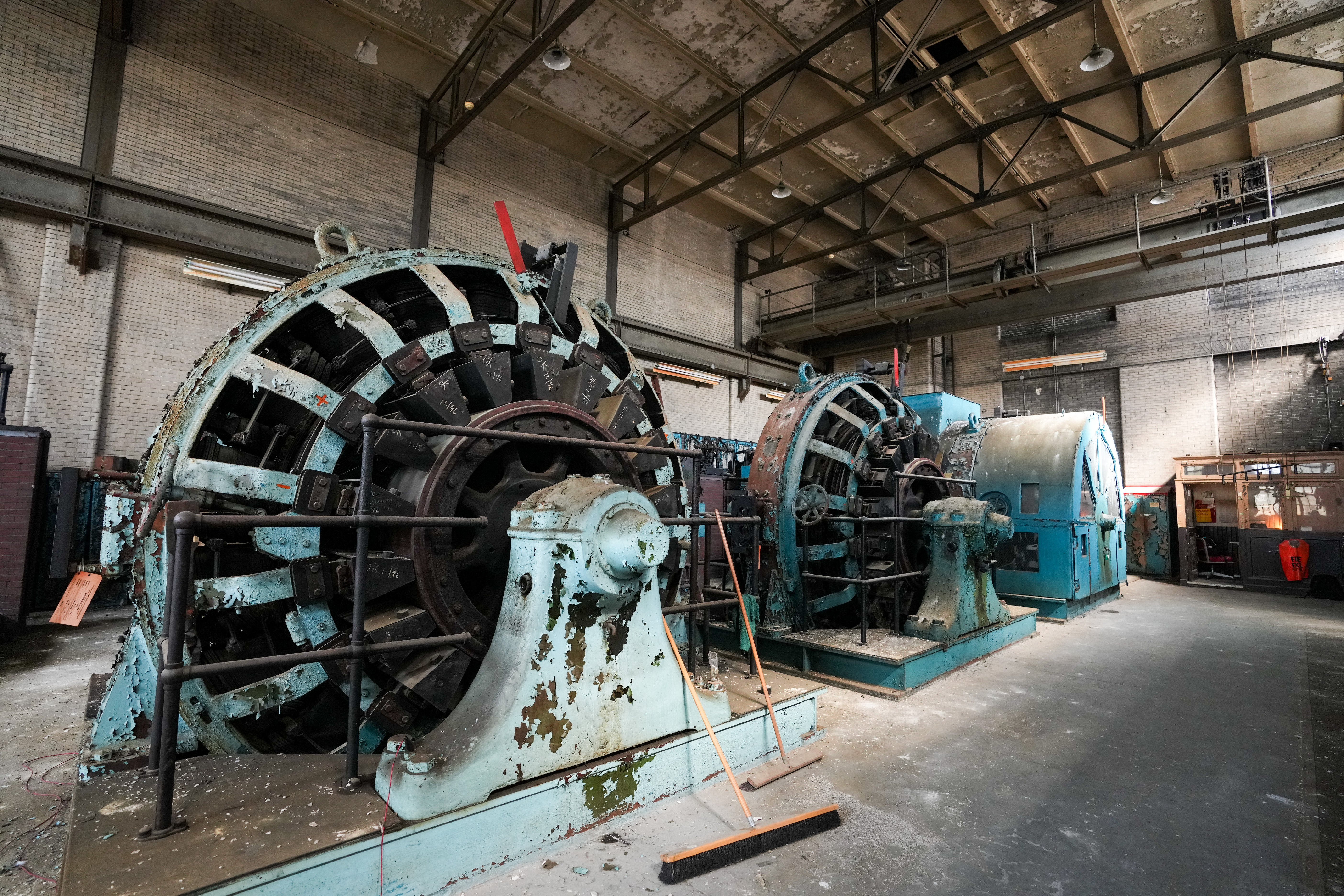
A sense of the scale of the trolley power substation, which has 35-foot ceilings and two walls dominated by windows for natural light. Jessica Griffin / Staff Photographer
What could the space become?
Most of the other properties SEPTA has offered for development deals so far have been under- or unused parking lots or land parcels. It has several joint-development deals in the works for new multifamily housing around Regional Rail stations.
“Conceptually, this is more wide open,” said Michael Kendall, SEPTA’s assistant treasurer.
When he walked into the soaring room the other day, Kendall pointed to a generator encased in metal housing and said, “I could see this as a pizza oven!”
Some people have said it could be a venue for concerts or other entertainment, a brewpub, a climbing gym, a high-concept restaurant, or something cultural.
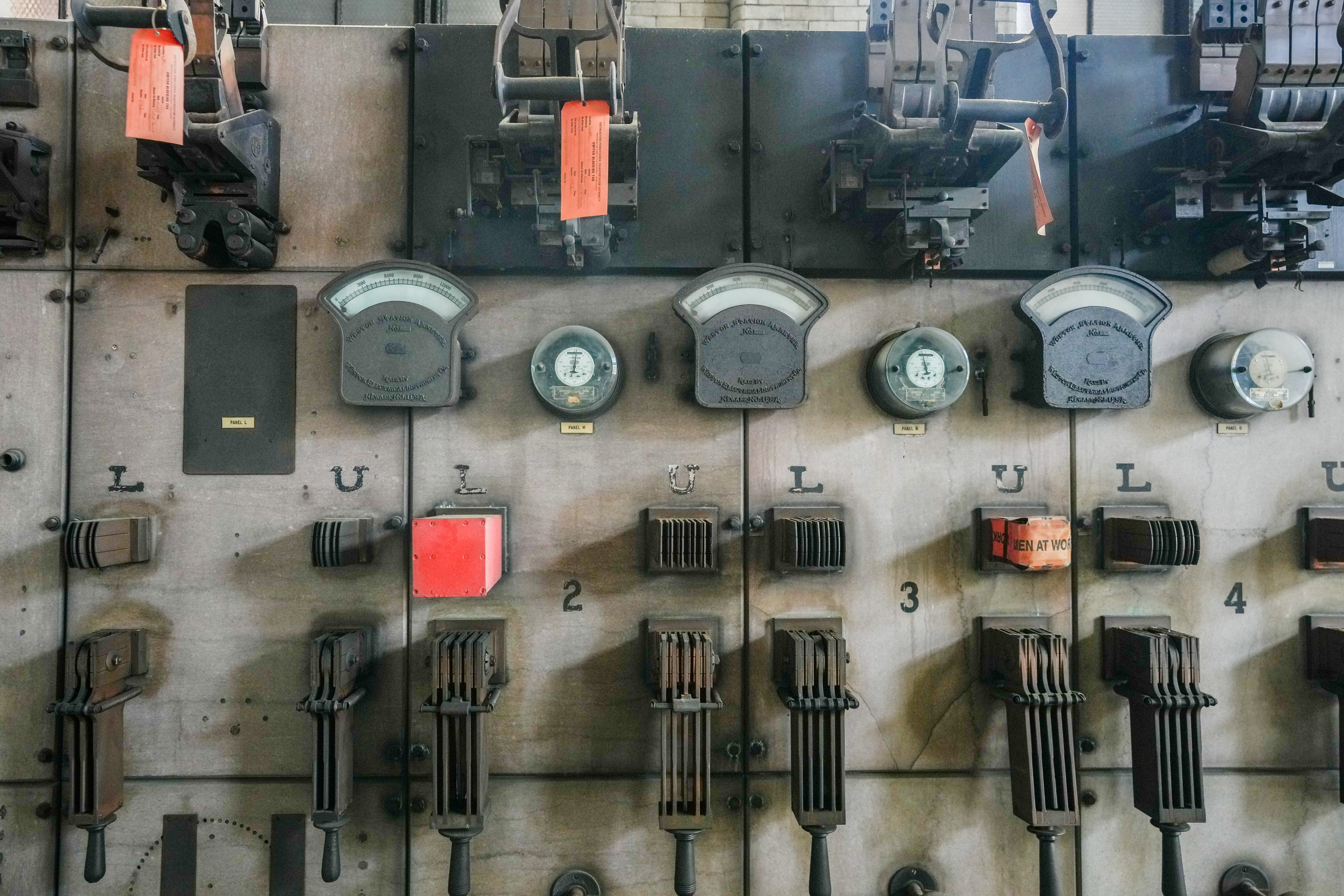
Gauges, switches, and cables in the Mifflin substation, where electric power was meted out to trolleys, which connect to overhead wires via mechanical arms.Jessica Griffin / Staff PhotographerGenerators that pushed power from the Mifflin Substation to wires above trolley routes.Jessica Griffin / Staff Photographer
SEPTA plans to invite the community to help shape an adaptive reuse concept for the plant at 1831-37 S. 13th St. Later, it will invite developers to compete for the job. The winner would lease the property from SEPTA and rebuild.
Some preliminary conversations have begun with business and community groups. A public brainstorming meeting is scheduled for Dec. 9 at the East Passyunk Community Center, 1025 Mifflin St., from 6:30 p.m. to 8 p.m.
Kendall and Dougherty said they’ve even heard a suggestion that the main room be turned into a facility for padel, a Spanish racquet game played on small courts with a squishy ball. “Think pickleball but with four walls,” Kendall said.
Frozen in time
Mifflin Substation sits where East Passyunk Avenue meets South 13th Street and Morris Street. The commercial corridor has a vacancy rate of just 2.4%, SEPTA says, with rents of about $20 per square foot.
Within a one-mile radius, median household income is about $78,700, with more than 3,200 businesses and 20,000 workers nearby, SEPTA says.
While the area has plenty of retail shops and restaurants, there are few entertainment-oriented places, and the transit agency believes that provides an opportunity.
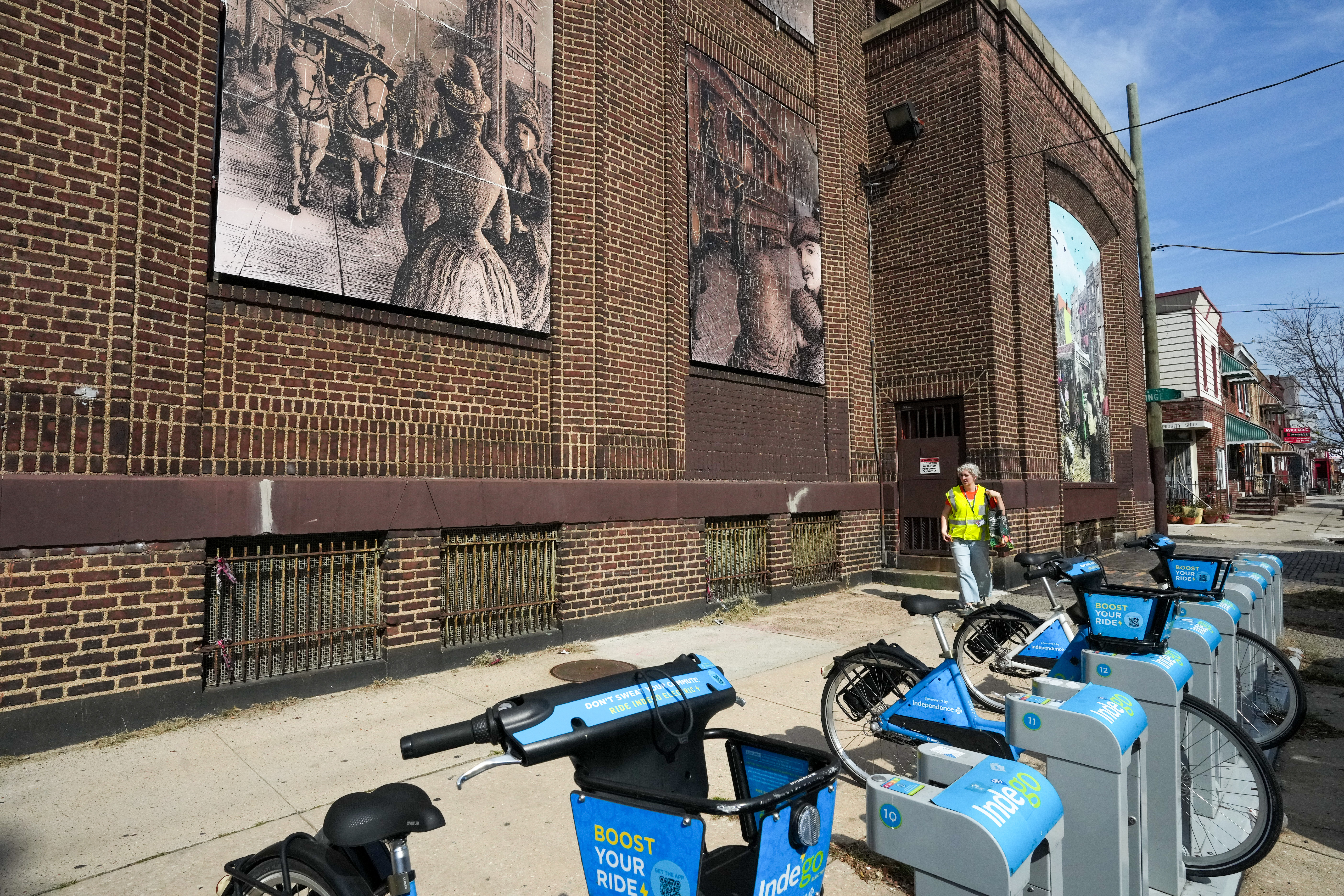
Constructed in 1914, the substation was used by trolleys for the Philadelphia Rapid Transit Co. and, much later, SEPTA. Massive windows currently are obscured by mural panels.Jessica Griffin / Staff Photographer
Adapting the substation will require some environmental remediation — there is asbestos and lead paint in the building, Dougherty said. It’s not known yet if there are PCBs, a toxic compound that historically was used to insulate in electric generating and transformer stations.
Salvageable metals and other materials may need to be removed.
For now the place is frozen in time.
Two dozen antique voltage gauges and dials, a row of manual iron switches, and cables that look like Dr. Frankenstein’s laboratory in a 1930s B-movie.
“These are literal museum pieces,” Kendall said.
“We don’t want to just scrap all this,” Dougherty said.
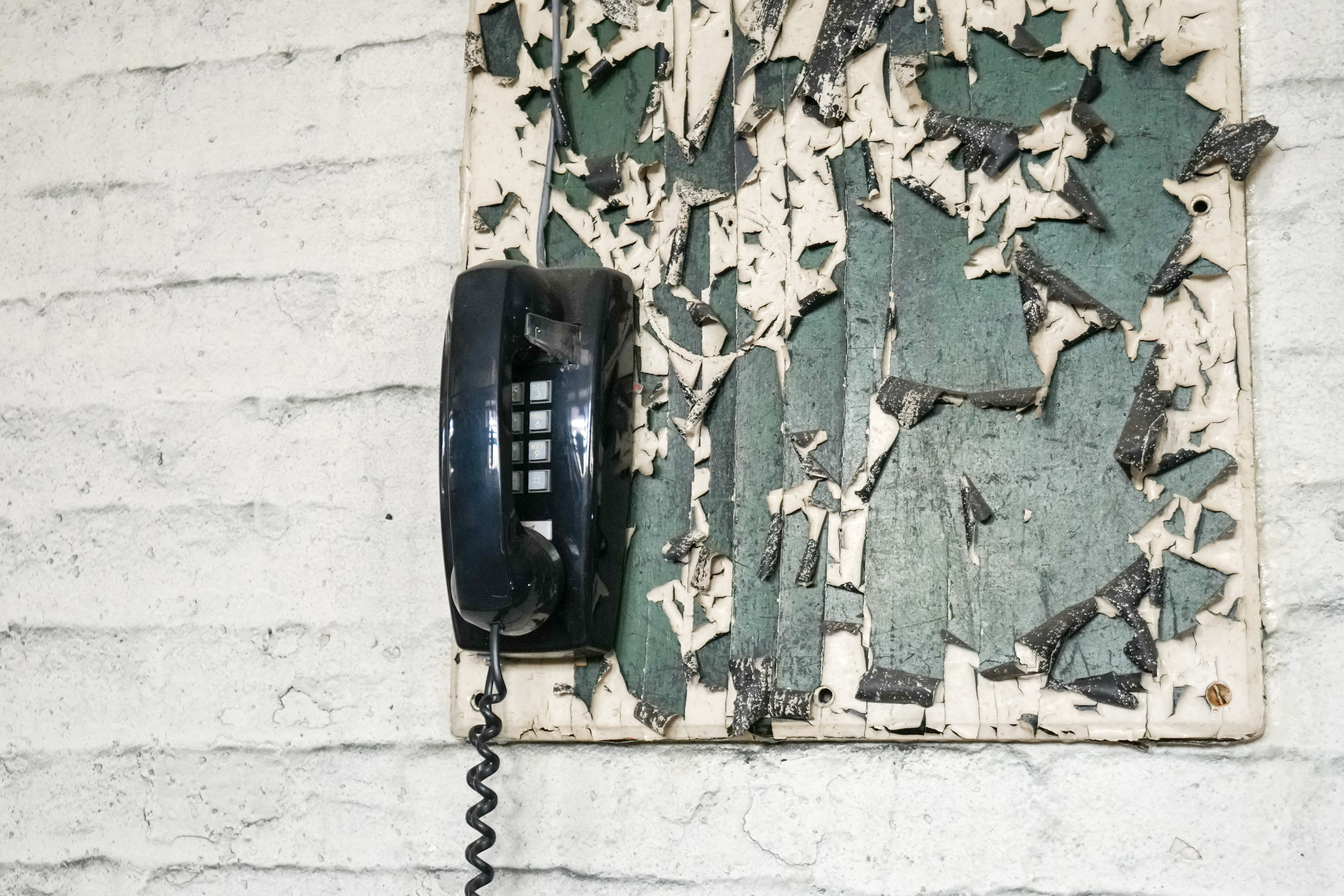
A landline telephone in the substation. Remember those?Jessica Griffin / Staff PhotographerMichael Kendall, SEPTA’s assistant treasurer, who oversees the real estate department, in the Mifflin Substation, in East Passyunk. A supervisor’s office is behind him.Jessica Griffin / Staff Photographer
SEPTA hopes to donate some of the equipment to an institution like the Electric City Trolley Museum in Scranton or the Pennsylvania Trolley museum in Washington, Pa., or perhaps the Railroad Museum of Pennsylvania in Strasburg, southeast of Lancaster.
The South Philadelphia substation is not listed on local or national historic registers, though a developer could seek such a designation to unlock tax credits.
“It’s not going to be demolished. That is off the table,” Dougherty said.
What the industrial relic becomes depends foremost on the imaginations of residents and real estate developers.
Editor’s note: This article has been edited to correct the time of the public brainstorming meeting on Dec. 9.
Most disposable vaporizers, vape juice, and electronic cigarette products will soon be illegal to sell in Pennsylvania, a move that will affect more than 10,000 local businesses and limit consumers to a select few brands and products.
Under a new law, signed by Gov. Josh Shapiro last year, six companies are approved to manufacture, distribute, and sell electronic nicotine products in Pennsylvania, starting Oct. 19. Any product not approved in the electronic nicotine delivery system directory will be banned from sale.
The law’s prime sponsor, State Rep. Jeanne McNeill (D., Lehigh), called the measure a tool “to protect kids, support law-abiding retailers, and crack down on illegal vapor products.” The bipartisan bill passed the state House 147-56.
“Right now, there is no clear way for states to determine which products are legally authorized by the FDA. This [law] closes that gap and brings accountability to a system that has been exploited for too long,” McNeill said before the directory was signed into law.
Vape store owners along Philadelphia’s South Street were still confused about the nature of the ban, which products would be illegal to sell, and what enforcement would look like. One store owner did not even know the act existed.
“It’s monopolizing the market,” said one store manager, who asked not to be identified out of fear of being targeted for enforcement. “It’s not just harming us, but it’s harming customers. Now that we won’t have these products, customers say they’re heading to New Jersey or figuring out ways to buy online.”
Vapes and their accessories can account for 25% to 75% of a store’s revenue, South Street store managers said. Taking a hit on these products will put some stores in dire circumstances.
Which vapes are banned?
Almost all nicotine vape products sold in vape stores, smoke shops, and gas stations will be outlawed for sale.
This means consumers will not be able to buy unlisted disposable vapes, vape juice, or manually fillable vaporizers in Pennsylvania after Oct. 18.
If it’s not in the directory, it’s not legal to sell.
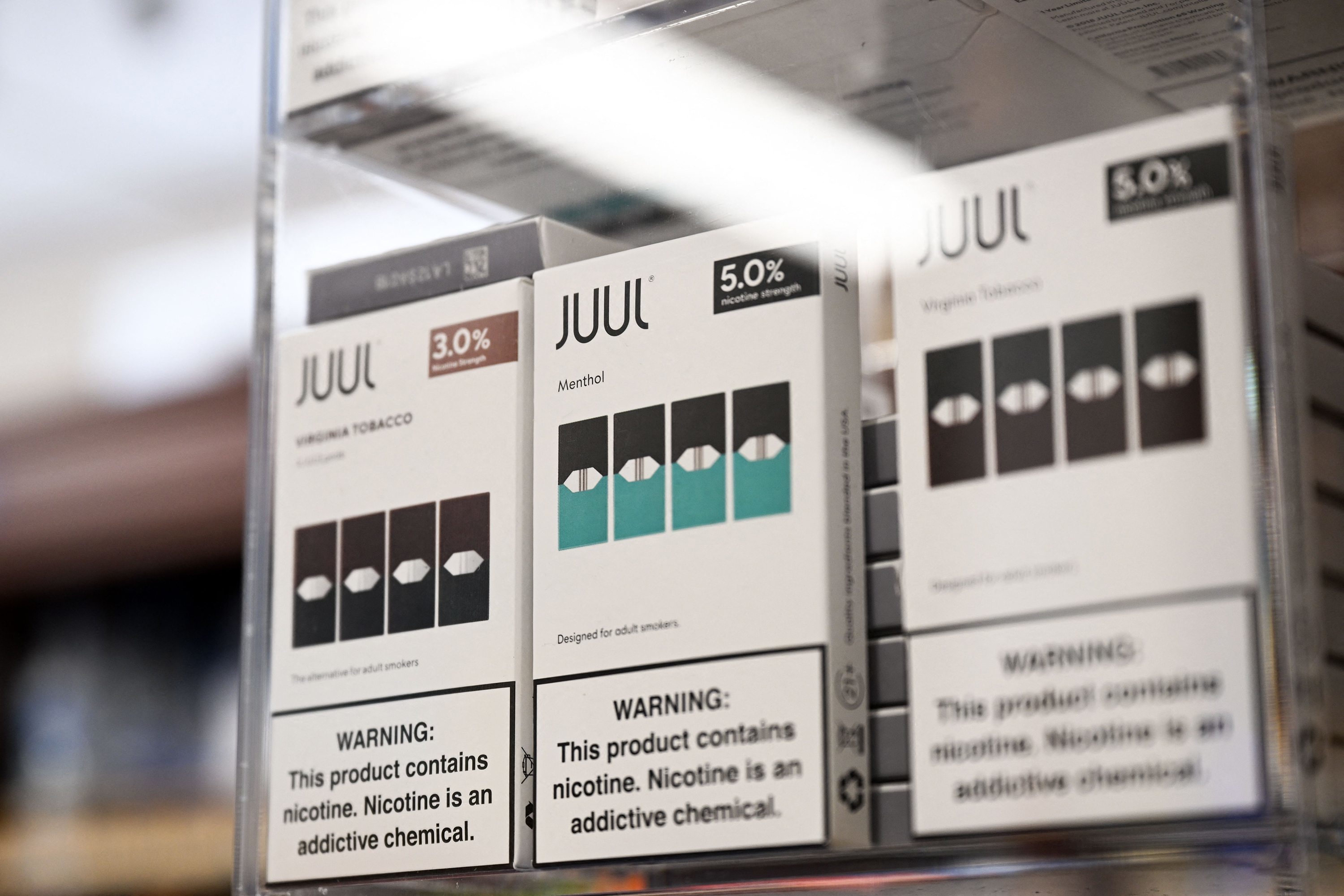
JUUL Labs Inc. Virginia tobacco- and menthol-flavored vaping e-cigarette products are displayed in a convenience store on June 23, 2022, in El Segundo, California.PATRICK T. FALLON / MCT
Which vapes are not banned?
Six manufacturers are approved to sell nicotine vape products in Pennsylvania: Blue Nine, Custom Technologies, Juul Labs, NJoy, R.J. Reynolds Vapor Co., and the Schwartz E-Liquid.
Approved products include the Juul, NJoy Ace, and Vuse Alto vaporizers commonly available at Wawa and other corporate chain convenience stores. These vapes use a pod-based vaporizer and can only come in menthol or tobacco flavors, similar to cigarettes. These pods can have up to 50mg of nicotine content, often advertised as 5% nicotine.
One brand of disposable vape is approved: the CrossBar, which comes in four flavors at 50mg of nicotine content.
Only one brand of vape juice, Naked 100, is allowed to be sold, with 10 approved flavors that can reach up to 12mg of nicotine per product.
Several of the listed brands are approved in other states, like Virginia, Utah, and Wisconsin, that implemented electronic nicotine delivery system directories, and some, like NJoy and R.J. Reynolds Vapor Co., are owned by some of the country’s largest tobacco companies.
Being approved for the directory requires a vape manufacturer to have marketed its products in the United States as of Aug. 8, 2016, and submitted a product review to the U.S. Food and Drug Administration on or before Sept. 9, 2020.
How will this be enforced?
Starting Oct. 19, Pennsylvania Attorney General Dave Sunday’s office will begin targeted enforcement inspections of vape wholesalers and retailers across the state, according to spokesperson Brett Hambright.
“Part of that enforcement will involve education at the time of enforcement inspections to ensure compliance,” he said.
Retailers and other businesses in the supply chain will have to get rid of inventory “intended for sale” by Oct. 18, or their products can be seized and fines levied against the business. Hambright said the office’s tobacco enforcement section, in collaboration with the Pennsylvania Department of Environmental Protection, would advise retailers “on their options for legal disposal of their products.”
“We will not physically remove any product from the marketplace until October 19, 2026. Beginning on that date, any product not listed on the directory is subject to seizure if it is sold, offered for sale, or possessed for sale in Pennsylvania,” Sunday’s office said in a statement.
In this photo made on Friday, Oct. 4, 2019, a woman uses her vaping device in Harmony, Pa. (AP Photo/Keith Srakocic)AP
What are the penalties for stores selling unlisted vape products?
Penalties for violations will not be criminal, but fines start at $500 for each product that violates the new law.
A second violation within the year brings a fine of up to $1,000 per day, per product, and a license suspension.
Third-time violators will face up to a $1,500-per-day, per-product fine, revocation of their license, and responsibility for the cost to destroy the seized products, according to the attorney general.
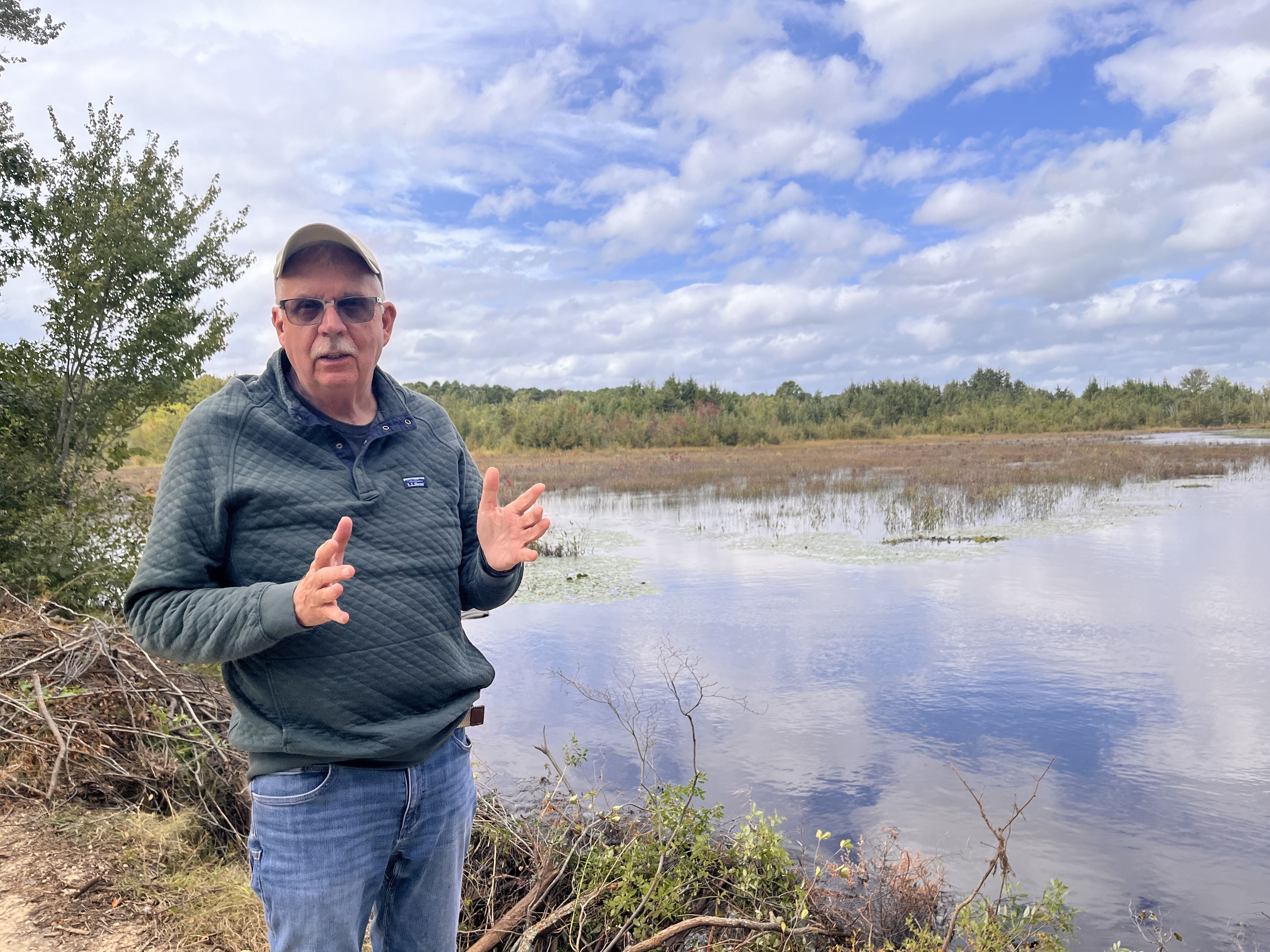
Bob Williams, a rangy 77-year-old forester, pulled his pickup truck over on a sand road in Wharton State Forest, stepped out, and pointed to a wide pond.
“This was once an old cranberry bog with a nice stream running down the middle,” he said.
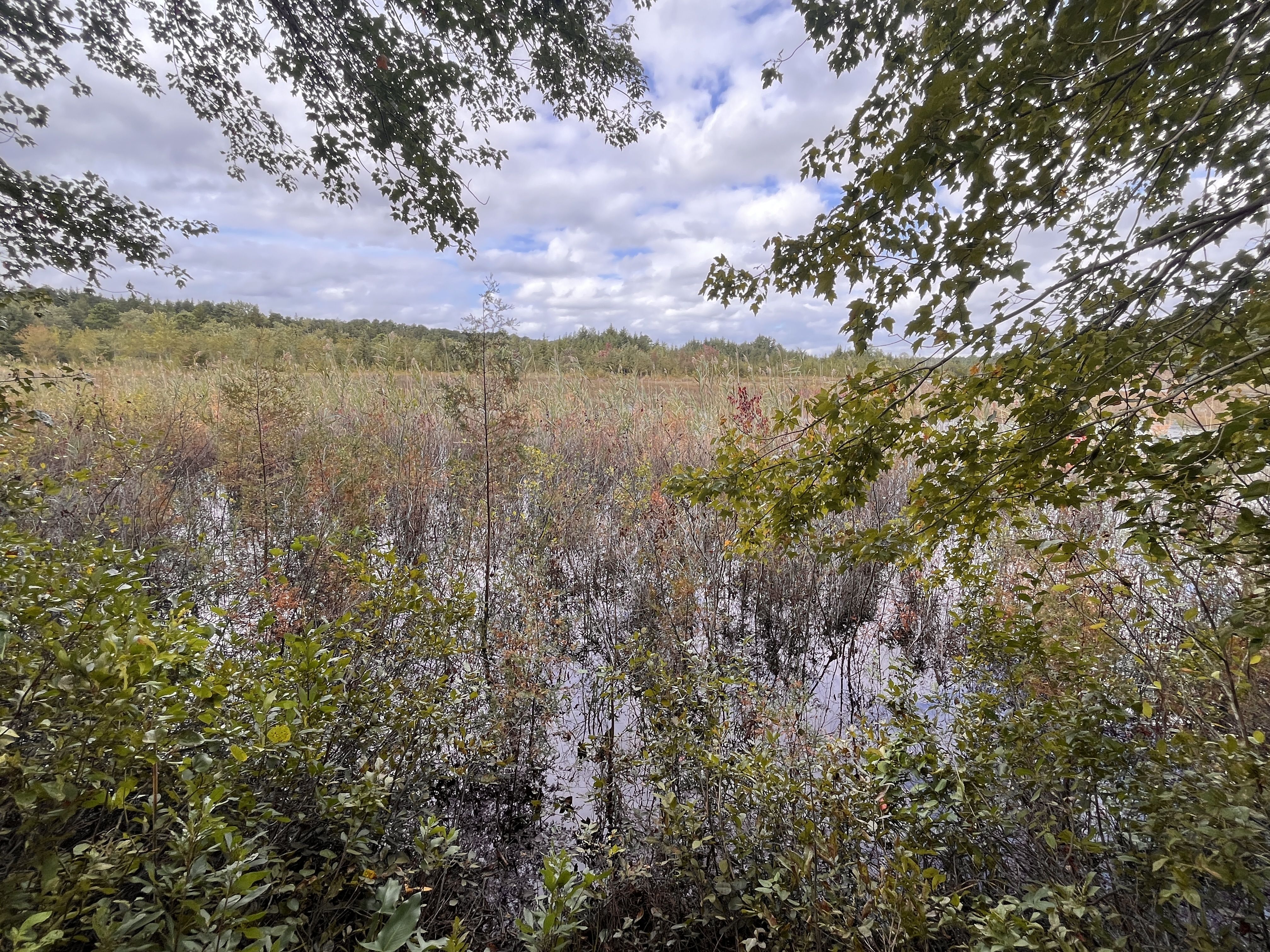
In just eight months, beavers transformed the stream into a sprawling pond that’s currently drowning Atlantic white cedar trees and inviting invasive phragmites reeds to takeover.
“You can see them dying,” he said, pointing to discolored cedar. “See those in the distance? They’ll soon be gone.”
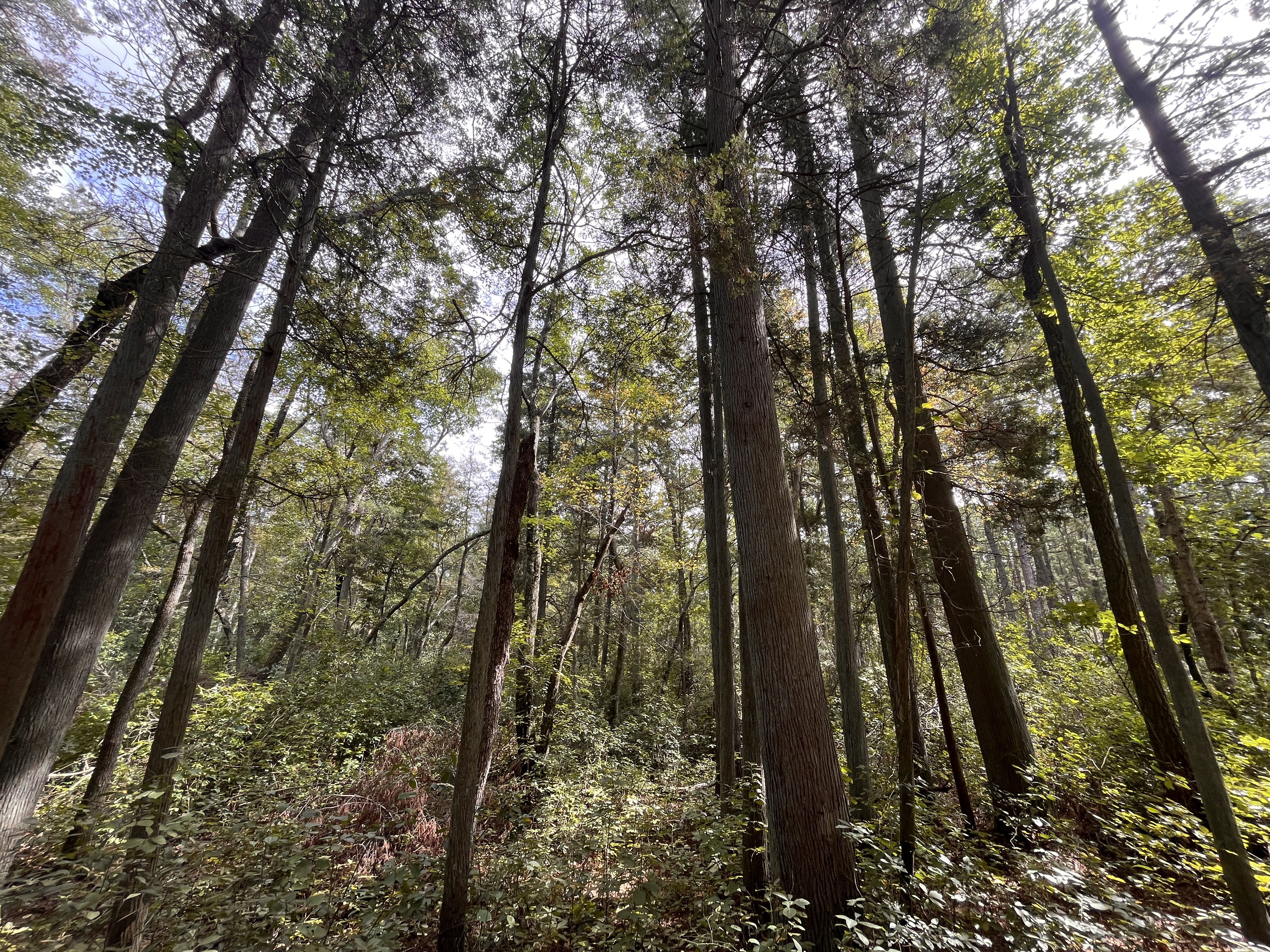
The majestic cedars, which soar up to 80 feet and give Pinelands’ rivers their signature tea color, hover at a tipping point.
New Jersey harbors the East Coast’s last major concentrations of Atlantic white cedar, holding roughly half its remaining stock. Yet the state’s historical 115,000 acres have collapsed to just 25,000.
State officials have a $19 million plan to reverse the decay by jump-starting restoration of 10,000 acres. The first phase targets 171 upland acres off Sandy Causeway in Waterford Township and was crafted by Williams. New Jersey’s Pinelands Commission will vote on the proposal Friday.
However, environmentalists, even those who support restoration, are challenging the strategy, directing the most ire at the part calling for culling mature, healthy trees. They spoke out against the plan at a Sept. 11 Pinelands Commission meeting. They’ve rallied against it on social media and blogs.
“It is about asking whether the state is choosing the least destructive way to create the conditions cedar needs,” Jeff Tittel, retired director of the New Jersey Sierra Club, wrote in the Jersey Vindicator, an online publication. “There is a difference between ecological restoration and an industrial logging operation wearing a green hat.”
Forester Bob Williams shows an area of Wharton State Forest in New Jersey’s Pinelands. Beavers have built a dam and flooded a stream that’s now a wide body of water drowning Atlantic white cedar that can be seen in the distance.Frank Kummer
‘Collaboration with nature’
Atlantic white cedar was logged for centuries before the federal Pinelands Protection Act of 1979 was enacted to save New Jersey’s forests and massive underground aquifers from rapid sprawl. Freshwater swamps were drained for development. Beavers built dams. Fires burned through life-sustaining peat.
In recent decades, climate change has worsened severe weather combining with sea level rise to push in damaging salt water from the coast, leaving behind so-called ghost forests, vast tracts of spindly, dead cedar trees.
Williams drew up the plan with Lawrenceville-based engineering firm,WSP U.S. He says time is of the essence to carry it out and believes in active management of state forests, which includes cutting some trees, rather than a hands-off approach.
“The time of let’s leave it to nature is passed,” Williams said. “We need to apply our energy, our resources, and knowledge to start a collaboration with nature.”
(function(){function e(){window.addEventListener(`message`,function(e){if(e.data[`datawrapper-height`]!==void 0){var t=document.querySelectorAll(`iframe`);for(var n in e.data[`datawrapper-height`])for(var r=0,i;i=t[r];r++)if(i.contentWindow===e.source){var a=e.data[`datawrapper-height`][n]+`px`;i.style.height=a}}})}e()})();
‘Most beautiful white cedar forest’
Jason Howell, an advocate with the Pinelands Alliance, is skeptical, fearing that the plan is a step toward logging in the protected Pinelands National Reserve.
“What they’re defining as the area to be restored is, the majority, among the most beautiful white cedar forest in Wharton State Forest,” Howell said as he walked through the trees recently, noting tall, mature cedar.
“I’m not denying there’s a need to restore Atlantic white cedar,” he said. “But this is a timber harvest logging plan. They have 20 or so log loading areas in the plan. They are going to go in there with giant machines.”
The plan calls for removing up to 2,475 cords of cedar. That could amount to 64% of the cords of cedar in the project area. There are an estimated 12,000 cedar in the 171-acre area.
“This is the beginning of a plan to log and clear-cut most of the river corridors in Wharton State Forest (10,000 acres), including the Batsto, the Mullica, the Wading, and more,” Howell wrote on a recent Facebook post with hundreds of comments.
Phragmites have taken over the area of this beaver pond, helping crowd out Atlantic white cedar in Wharton State Forest.Frank Kummer
A ‘selective harvest’
New Jersey State Forester Todd Wyckoff says there is a misunderstanding of the plan, and that the goal is not to clear-cut woods for loggers, but to save the forests.
Wyckoff said there must be healthy cedars present for restoration to work. Some will have to be cut, he said, so others can thrive and grow. He said it would not make sense to try to restore cedar in a section of Wharton where there are none.
“Given the type of tree and the type of forest that Atlantic white cedar forests are, they just aren’t competitive in shade,” Wyckoff said. “They need that competing vegetation to be removed to have an open, full sunlight.”
Temperature in dark cedar forests and swamps can run 15 degrees cooler just a few feet within.
Wyckoff said existing healthy, wind-resistant cedars will be retained to drop seeds, rather than relying on costly and labor-intensive seeding by hand.
“This is often framed as a clear-cut, but it’s really a selective harvest,” he said. “The reason to act now is that the sites we’ve selected have cedar in the canopy.”
Once sunlight hits the forest floor, cedars reseed aggressively, sprouting a carpet of “800 to over 1,500 seedlings” per area, he said.
In addition, Wyckoff said it is critical that restoration areas be in uplands outside of areasthat face saltwater intrusion, further limiting available areas.
New Jersey’s Pinelands National Reserve spans about 1.1 million acres with a roughly 300,000 acre core where virtually all development is banned.
Gregory McLaughlin, New Jersey’s Forest and Natural Lands administrator, dismissed beliefs that there’s a profit-driven incentive to log the land. In fact, he said, restoration is costly.
“The New Jersey Forest Service is not in the commercial logging business,” McLaughlin said. “We’re not approaching this from a standpoint of a profit margin … In protecting these forests and restoring these forests and creating healthy forests, we have to cut some trees.”
State officials said no contracts had been awarded for tree removal or logging.
Once, hundreds of small sawmills dotted the Pinelands, but now only a handful survive. Owners who support the plan note that they are part of the Pinelands historic culture.
Ed Sherwood, who owns a small cedar forest in Forked River, appeared during a recent Pinelands Commission meeting and spoke in favor the plan.
“I don’t make a lot of money in it,” he told the commissioners— but protectingthe cedar, he said, is vital.
As Philadelphia celebrates the country’s 250th birthday, it’s important to Lenape activist, artist, and storyteller Holly Wilson that Americans remember the Indigenous peoples to whom the lands of this nation once belonged.
The Delaware Valley Lenape, Wilson points out, have persevered through centuries of broken treaties. Each one accompanied by violent land grabs forcing the people further west.
Yet through it all, she said, the Lenape have maintained their culture. Today, the people are artists, writers, teachers, parents, and friends. Lenape people, she said, vow to remain present as America’s story continues to unfold.
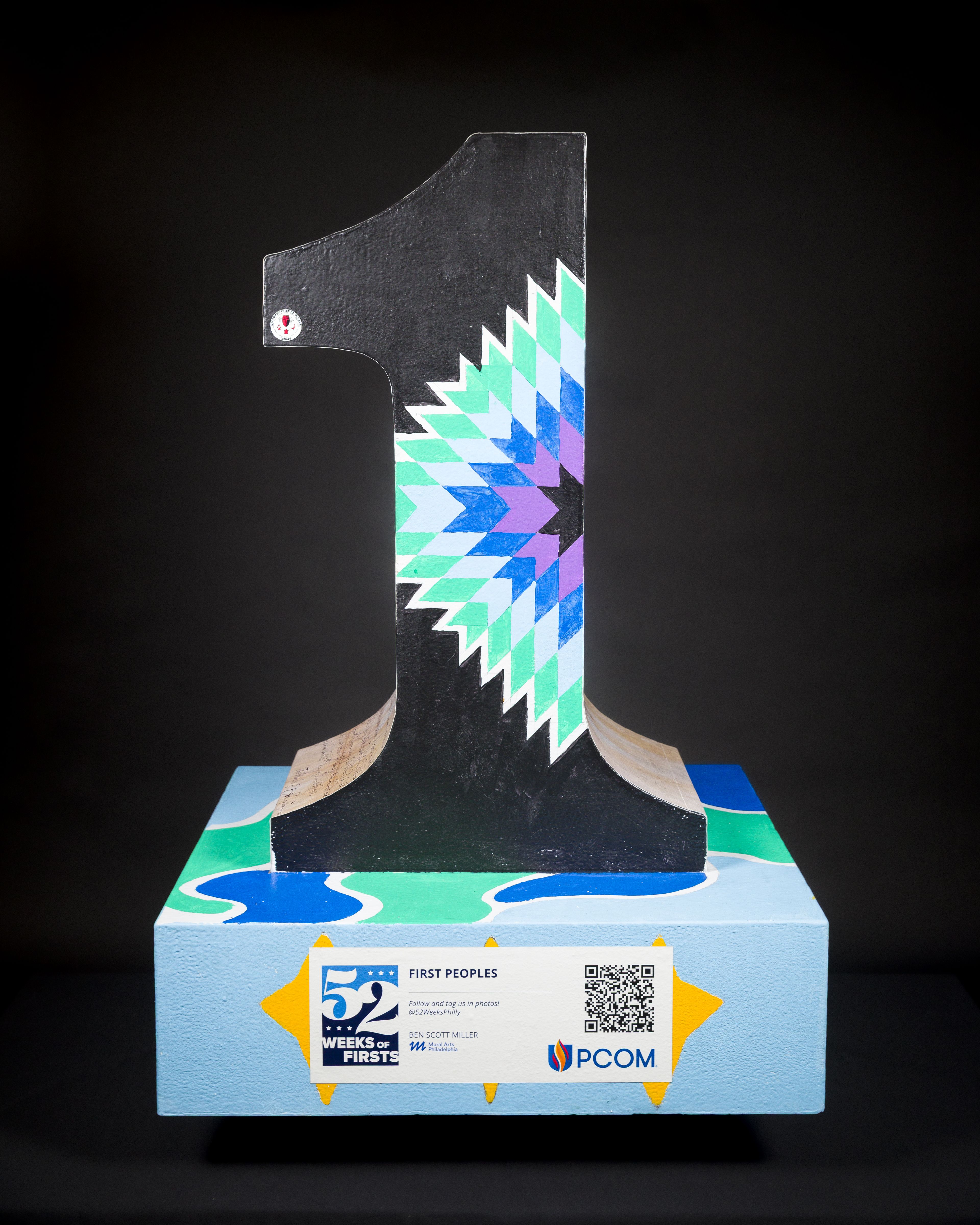
Miller is a citizen and artisan of the federally recognized Delaware Tribe of Indians. This sculpture represents the culture, resilience and perseverance of the Indigenous peoples of Pennsylvania, honoring the Lenape as the first inhabitants of the land.Ben Scott Miller and
“I believe in this idea of Native futurism,” said Wilson, who lives in Mustang, Okla. Her family has lived in Oklahoma since the mid-1800s, but she traces her lineage all the way back to the 1600s to the Lenape who lived along the Delaware River and the Schuylkill.
“Even with everything that’s happened to us, we have an existence, we have a future,” Wilson said. “As hard as they tried to wipe us out, they couldn’t.”
Wilson will be in Philadelphia Saturday paying homage to her ancestors at the Philadelphia Historic District’s firstival honoring the First Peoples at Penn Museum’s Native North America Gallery. Firstivals are part of the city’s yearlong celebration of America’s 250th birthday, commemorating all things quintessentially American that boast Philadelphia roots.
In remembering the “First Peoples,” the historic district is recognizing the millions of souls who lost their homes and homelands to make room for the United States of America.
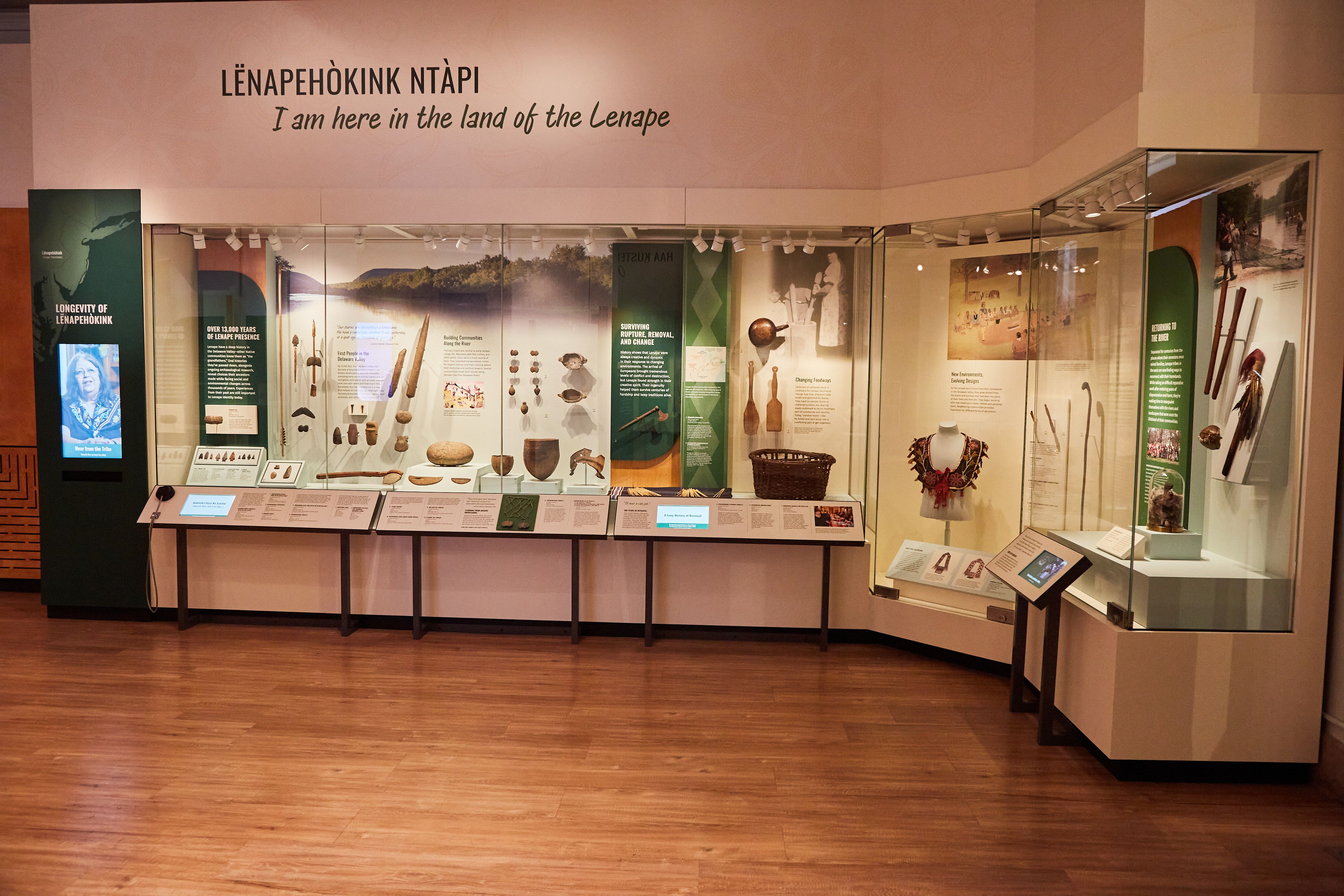
“I Am Here in the Land of Lenape” at Penn Museum in the Native North America GalleryQuinn R. Brown
“The Native American experience in America didn’t end when colonists came to America,” said Megan C. Kassabaum, Penn Museum’s Weingarten Associate Curator for North America. Kassabaum was among the scholars who curated the permanent Native North America Gallery that opened last November in advance of America’s 250th.
“Nor did America begin when the colonists came here. Those are two very important concepts we want people who come here to grasp.”
The North America Gallery, Kassabaum said, focuses on Native Americans from four regions of the United States: The Northeast region is an ode to the Lenape. The Southeast centers the Cherokee, while the Southwest and Northwest areas of the exhibit feature the Lingit and Alutiiq tribes along with the Pacific Northwest Eskimos, respectively.
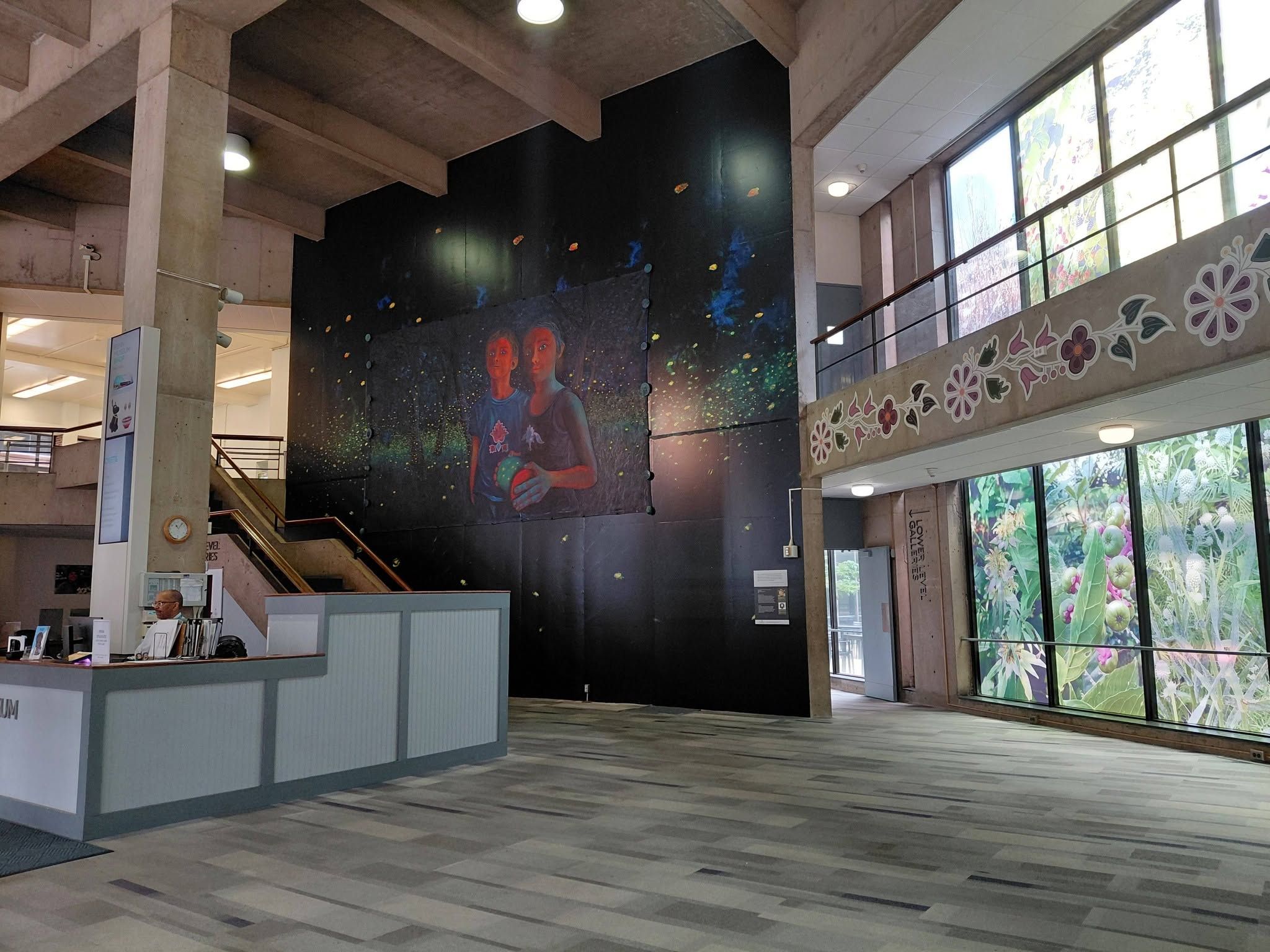
The Penn Museum’s East Entrance features Holly Wilson’s large scale mixed media installation, “Native Futurism.”Penn Museum
Each regional grouping features artifacts found in archaeological digs, like bows, spears, stones, pipes, and baskets discovered in the 18th, 19th, and early 20th centuries. But there are also pieces made by modern Native American artists that speak to the continued evolution of the Indigenous American experience.
“We wanted to emphasize that the Native culture isn’t static,” Kassabaum said. “These modern day Indigenous people aren’t making historic items, they are making contemporary works using glass, crayons, and brass. It’s an important reminder they are making choices to speak about their destiny through their art.”
Wilson has several works on display in Penn’s North America Gallery.
Her large-scale mixed media installation, Native Futurism, is a 20-foot photorealistic painting that depicts two Indigenous children catching fireflies on an early summer evening. Showing children with the fireflies, Wilson said, represents magic, dreams, and possibilities, giving the characters humanity.
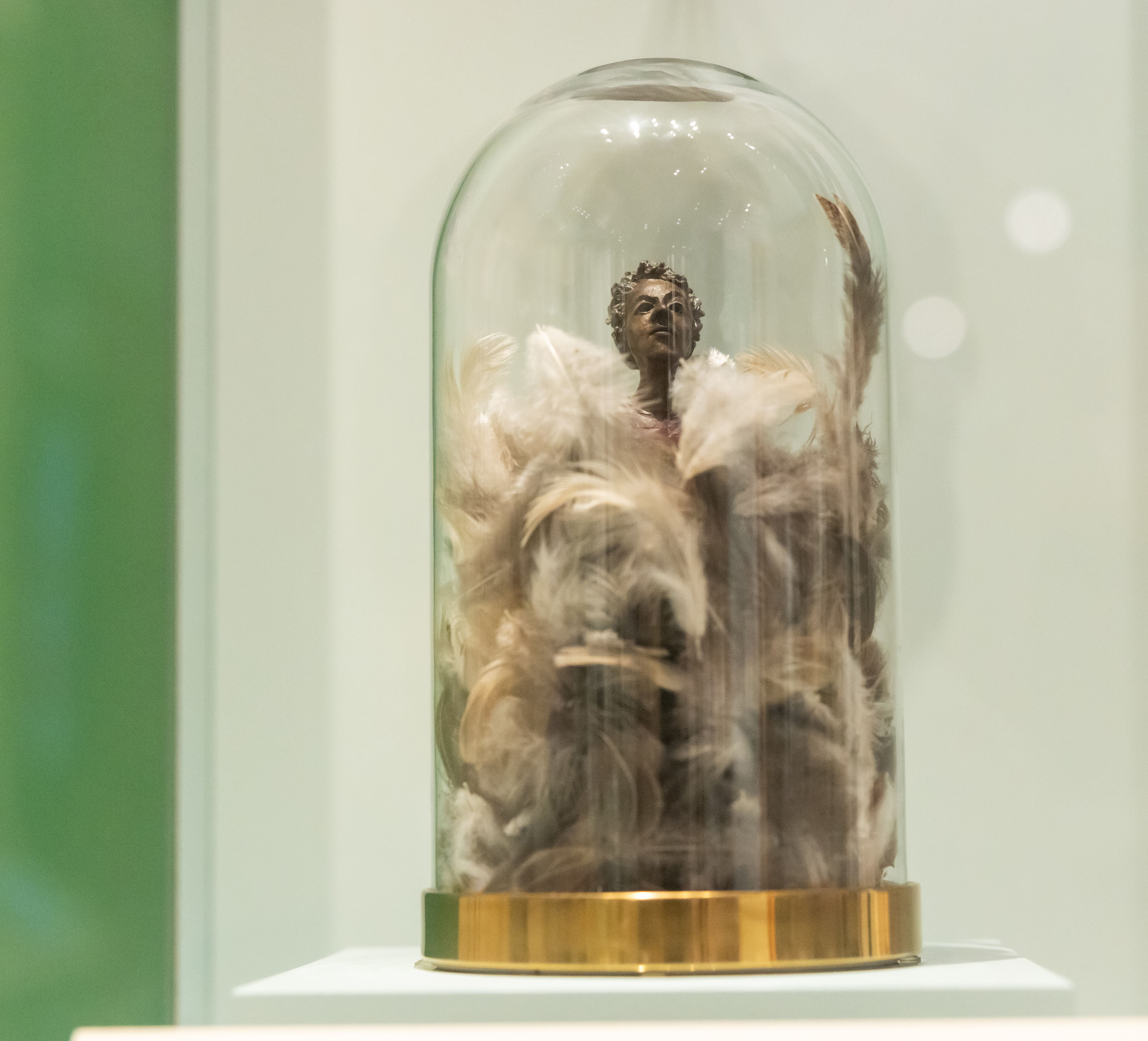
Another sculpture, I’m More Than Fluff, features a carving of an Indigenous girl surrounded by feathers.
Artist Holly Wilson can trace her ancestors to the Lenape tribes in Delaware. This piece “I’m More Than Fluff” is cast bronze featuring glass and feathers. It is on display at Penn Museum’s North America Gallery.Eddy Marenco
“I put her in a specimen bell jar surrounded by beautiful flowers as a way of saying I am more than something for you to study,” Wilson said. “We [Indigenous people] are not frozen in this romanticized era from the late 1800s where we have feathers and beads for you to gawk at. We exist as whole people today.”
This week’s Firstival is Saturday, Oct. 10, from 11 a.m. to 1 p.m., at Penn Museum, 3260 South St.
A Main Line private school is planning a campus redevelopment that would increase on-site parking and turn school-owned homes into a playing field.
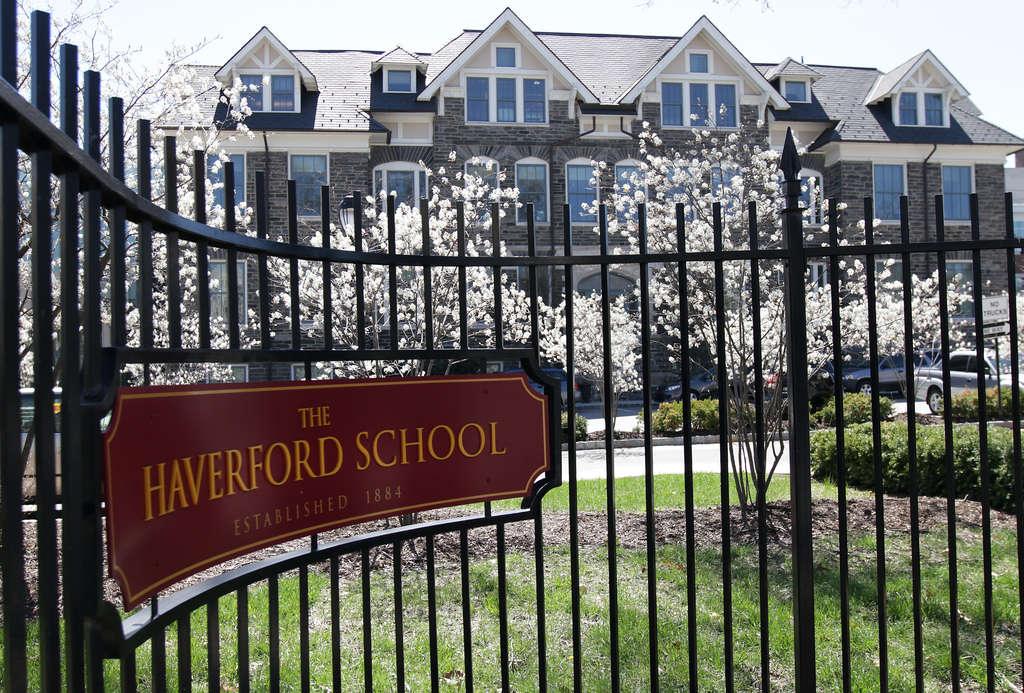
The Haverford School, an all-boys private school that straddles Lower Merion and Haverford Townships, has proposed an overhaul of its campus that would involve constructing a two-story parking deck off Lancaster Avenue, razing three campus-owned homes to make way for a playing field, and taking over a public road on the campus’s southwestern edge. School officials say the proposal will take student and visitor parking off neighborhood streets and create safer traffic patterns.
Yet the school’s proposal will require a complex set of approvals from both Lower Merion and Haverford Townships, and it’s faced pushback from neighbors, many of whom warn of institutional encroachment and unintended consequences for their neighborhood’s already congested streets.
What is the Haverford School proposing?
The Haverford School, founded in 1884, enrolls around 960 students in kindergarten through 12th grades. The school’s campus sits in both Haverford and Lower Merion Townships, with the bulk of its academic buildings in Lower Merion and a handful of fields and school-owned homes in Haverford.
At the heart of the school’s redevelopment proposal is parking.
At a Sept. 10 Haverford Township planning commission meeting, Tyler Casertano, the head of school, described the Haverford School’s campus as “underparked.”
The school has around 297 parking spaces, and in any given year, Casertano said, it needs between 350 and 400. Student parking spills out into the neighborhood, which school officials say has created tension with neighbors.
The multistory parking deck proposed along Lancaster Avenue would allow 480 cars to park on campus and would connect existing lots internally, meaning drivers would no longer have to circle out onto public roads and back onto campus to look for spots.
In addition to building the parking deck, the school plans to take over Panmure Road, rezone theresidential parcel of campus as institutional, and tear down a pair of school-owned homes to make way for a soccer and baseball field that would be displaced by the parking deck.One of the homes is currently vacant, one is being occupied by a Haverford School employee, and one is being rented to a Haverford College employee, according to the school.
To offset closing Panmure Road, the school has offered to provide resources to widen neighboring Buck Lane, add a safer walking path, and return Buck Lane’s traffic to two ways (it was recently reduced to one way to limit cut-through traffic). Casertano said the school has also been in conversations with Lower Merion Township about partnering to improve the intersection at Lancaster and Railroad Avenues.
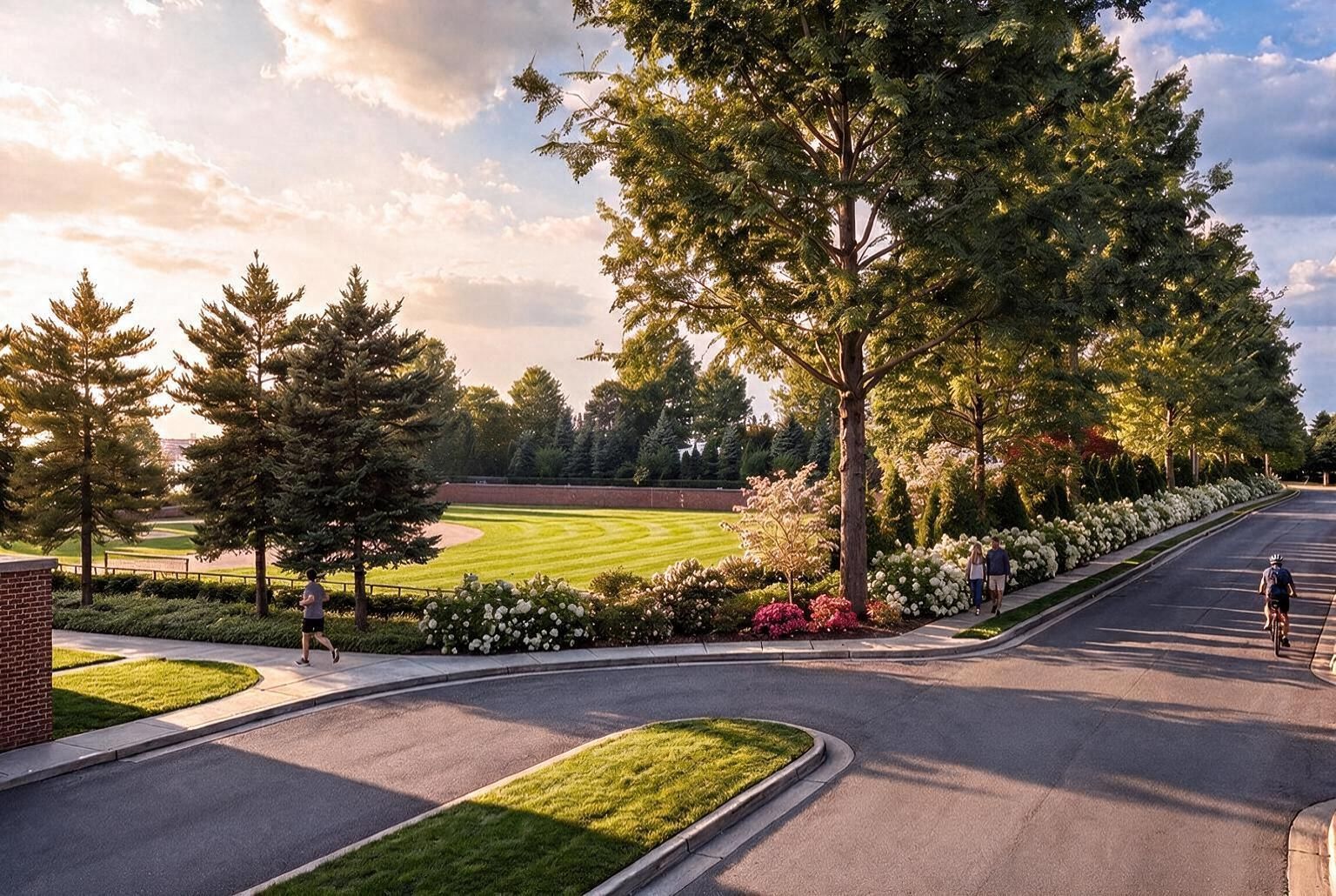
A rendering of an athletic field proposed by the Haverford School.The Haverford School
Why redevelop campus?
The Haverford School’s redevelopment plan came at the heels of a strategic visioning process that called for reimagining the school’s facilities to “create intentional spaces that will evolve with our future needs.”
Casertano told the planning commission the plan will shift the “operational realities of our campus and the human density” as far away from the residential neighborhood as possible.
Casertano said the school bought the Radnor property “to have the ability to use it should, through this process, we decide that it was in our best interest to use that land.”
In its strategic process, Casertano said, it became clear that having all the students at one location was “central to our culture” and that there was little appetite for making Radnor a satellite campus.
Neighbors warn of noise and encroachment
At the lengthy planning commissionmeeting in September, a cascade of residents said the proposal would allow the school to continue to creep into their neighborhood, disrupting its quiet character and posing a risk to neighbors’ centuries-old Quaker traditions.
Martha Sharples, director of the Haverford Friends Fiduciary Corp., which owns three properties abutting the school, said the proposal would “have no benefit and be fundamentally detrimental” for the Haverford Monthly Meeting, which holds its Quaker services at a building near the proposed spot for the new field.
Multiple members of the Quakermeeting opposed the school’s request, noting the importance of silence in their faith, which could be disrupted should a baseball and soccer field be placed adjacent to their place of worship. Currently, many Quakermeeting members said, the school’s residences and Panmure Road create an important buffer that shields the meeting from noise.
“Silence, as you have heard, is not incidental to Quaker worship. It is the worship,” member Wendy De La Rosa said. “… Imagine, for my Catholic friends, to be sitting in communion and hearing ‘goal.’ Imagine to be sitting in your worship and having to hear a baseball game.”
A rendering of an expanded Buck Lane and athletic fields in Haverford, as proposed by the Haverford School.The Haverford School
Others warned vacating Panmure Road and eliminating a key egress for residents would deteriorate driving conditions.
“I’m just curious what the real benefits are for the people who live in the community and pay taxes in the community,” resident Eric Hartman said at the township meeting.
Some noted a provision in the township’s comprehensive plan that calls for instituting strategies to “eliminate encroachments by institutional and commercial users into adjacent residential neighborhoods.”
Sean Livesey, an attorney for the Haverford School, said the plan is not a case of institutional encroachment, but rather unites a series of existing school-owned properties already being used for institutional purposes.
Teachers and alumni of the Haverford School, as well as a handful of residents, encouraged commission members to support the proposal, saying it would create safer traffic patterns on campus while keeping drivers looking for parking off township roads. Some commended Casertano and the school for communicating proactively with residents and incorporating feedback into their plans.
What comes next?
Municipal boundaries will complicate the school’s proposal. Rezoning a residential parcel as institutional and moving the field will require approval from Haverford Township, while building the new parking structure will need Lower Merion’s green light. The school says it has had conversations with Lower Merion but is waiting to submit official plans until it moves forward with the Haverford Township side of the plan.
Haverford Township’s planning commission, an advisory body that will provide a recommendation to the township commissioners, postponed a vote on the project, asking the school to come back with a concrete traffic and noise study.
Commission chair Maggie Dobbs told Casertano that the school’s help making improvements to Buck Lane would “be kind of the critical element to my support of this proposal.”
Correction: The story has been updated to reflect the number of residential homes owned and proposed to be demolished by The Haverford School.
This suburban content is produced with support from the Leslie Miller and Richard Worley Foundation and The Lenfest Institute for Journalism. Editorial content is created independently of the project donors. Gifts to support The Inquirer’s high-impact journalism can be made at inquirer.com/donate. A list of Lenfest Institute donors can be found at lenfestinstitute.org/supporters.
Pennsylvania reached a total of more than 1,000 confirmed measles cases this week, the largest U.S. outbreak in the generation since the disease was all but eliminated from this country. Based on the illness’ fatality rate and the five measles-related deaths recorded in the state as of last week, up to five times as many Pennsylvanians may have been infected.
Sadly, this is likely a mere harbinger of what America faces in an era of unprecedented misinformation and political recklessness.
Measles is both highly preventable by vaccination and highly contagious among the unvaccinated: 99.6% of Pennsylvania’s confirmed infections have been of people who were not vaccinated.
With two of America’s superspreaders of anti-vaccine disinformation, President Donald Trump and Health and Human Services Secretary Robert F. Kennedy Jr., running the federal government and its health agencies, vaccination rates for measles and other diseases have continued to decline. The worst consequences will disproportionately befall vulnerable communities, such as the state’s highly unvaccinated Amish enclaves, and vulnerable people within them, such as the very young and immunocompromised people the disease has killed.
Kennedy is doing for America what he did for Samoa, the Pacific island nation where he infamously fueled anti-vaccination sentiment during a visit in 2019, shortly before a measles contagion there killed 83 people. Two years later, he appeared in Lancaster County, the epicenter of the current outbreak, to also stoke unfounded suspicion of vaccines.
President Donald Trump speaks as Health and Human Services Secretary Robert F. Kennedy Jr., right, and Mehmet Oz, administrator of the Centers for Medicare & Medicaid Services, listen during an event about healthcare in the Oval Office of the White House, Sept. 18.Jacquelyn Martin
As health secretary, Kennedy has hardly failed to add some qualification or confusion to his every mention of the vaccine for measles, mumps, and rubella, which is widely administered, safe, and effective. A recent poll by the University of Pennsylvania’s Annenberg Public Policy Center found that fewer than one in three Americans believe he supports the MMR shot. Further undermining confidence in the vaccine, Trump issued an executive order in August calling for it to be split into three shots that aren’t available in the United States while making false claims about the safety of the combined dose. The order also endorsed Kennedy’s attempt to reduce the number of school vaccinations recommended by the government, which was blocked by a federal judge.
Even without legal force, the administration’s anti-vaccination message is unmistakable and corrosive. With 95% vaccine coverage thought necessary to confer population-level protection, known as herd immunity, every additional doubt is dangerous.
Measles outbreaks in Pennsylvania, Texas, South Carolina, Utah, and, most recently, New York — which led Gov. Kathy Hochul to declare a state of emergency this week — are the predictable result of the Trump administration’s campaign to discredit the vaccine. Tellingly, Kennedy has responded to Pennsylvania’s plight with even more of the misinformation that caused it, denying the role of the disease in the deaths.
Fortunately, even without the assistance of a responsible federal government, states such as Texas and South Carolina have contained their outbreaks, partly by taking advantage of the accompanying interest in vaccination to boost collective immunity. While the spread of measles to 39 Pennsylvania counties is alarming, Pennsylvania health officials say 53,000 doses of the MMR vaccine were administered to residents last month, roughly double the average, with state pop-up clinics and other facilities boosting the numbers.
The recommended two doses of the vaccine confer a lifetime of prevention for 97% of those who get them. Given the state of our federal health infrastructure, that is a considerable comfort.
A new storefront in Collingswood is a one-stop shop for music makers, record lovers, and those who really miss renting VHS tapes.
Joseph Mallah, the owner of Vintage Future Now, is still figuring out how to describe the place.
“It’s like a bag of squirrels. I don’t know,” he said. “How do I say stuff about it?”
Mallah, 42, recently opened the shop at 554 Haddon Ave. as a hodgepodge of all the things he likes. After moving to South Jersey, he said he wanted to invent a creative space for artists to make and buy music.
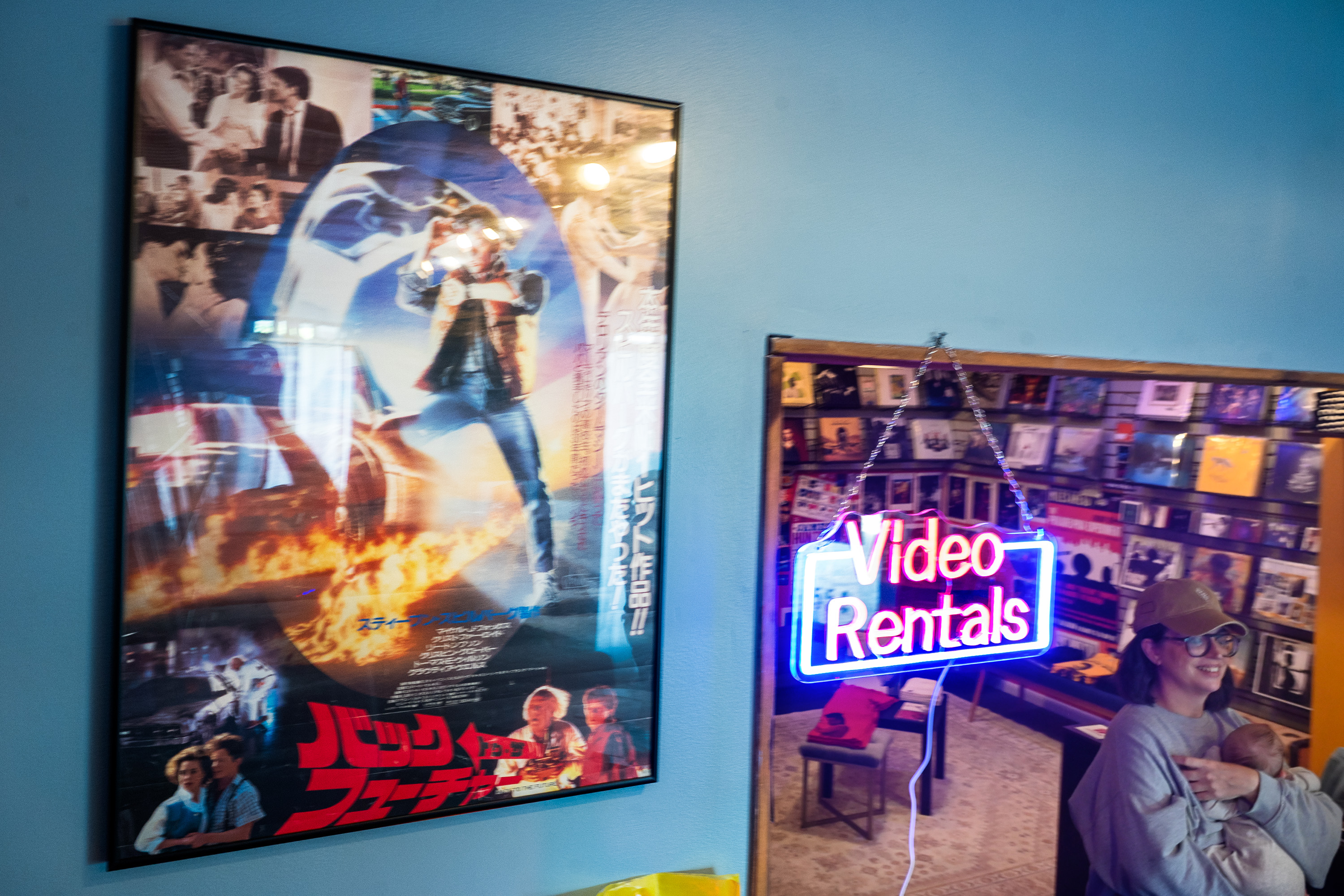
Mallah shares his Vintage Future Now space with his friend Mike Jada, who has turned his own lifelong movie collection into Deja Vu Video, where people can rent some of Jada’s favorite movies.
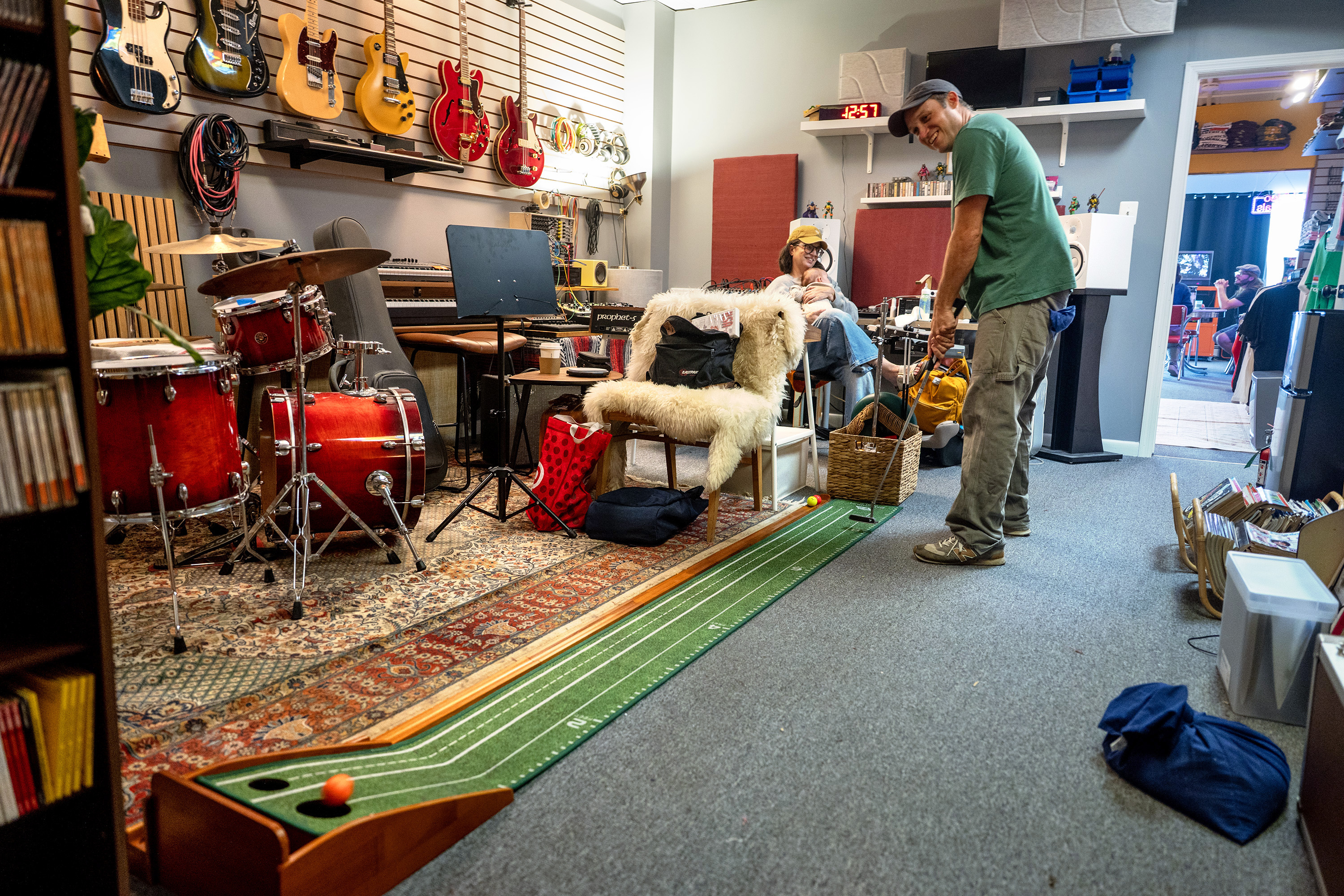
Owner Joseph Mallah putting in his office/music space in back of the Vintage Future Now shop in Collingswood on Sept. 30. He is not a golfer but has the putting hole green because that’s what executive offices have in movies, he says. His wife Samantha Mallah and their two-month old son Elliot are in rear.Tom Gralish / Staff Photographer
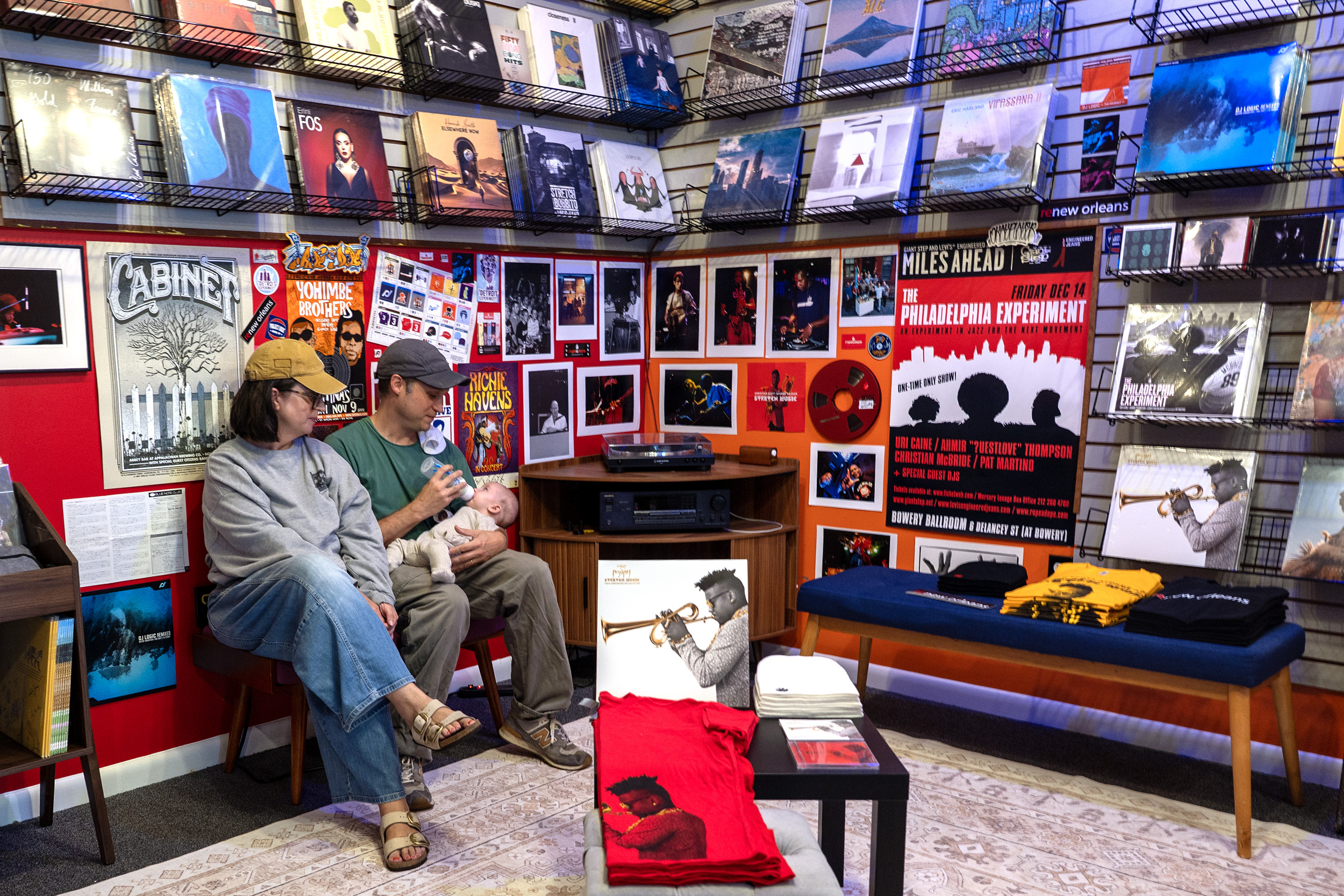
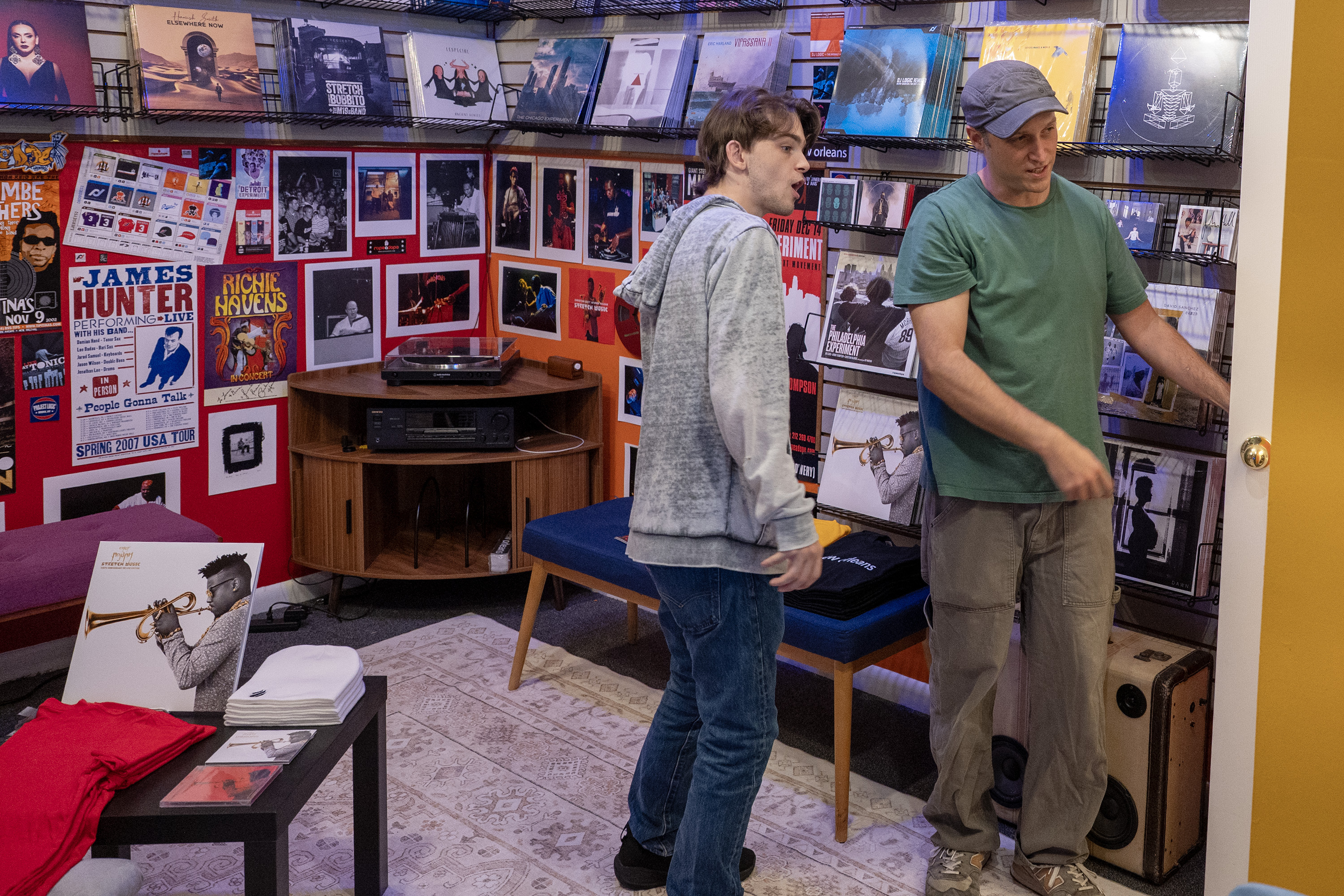
In the backroom, there are instruments, from synthesizers to guitars, and recording equipment for local bands who need a place to experiment. In the middle of the store, Ropeadope, a music and apparel brand, sellsjazz-adjacentvinyl and T-shirts.
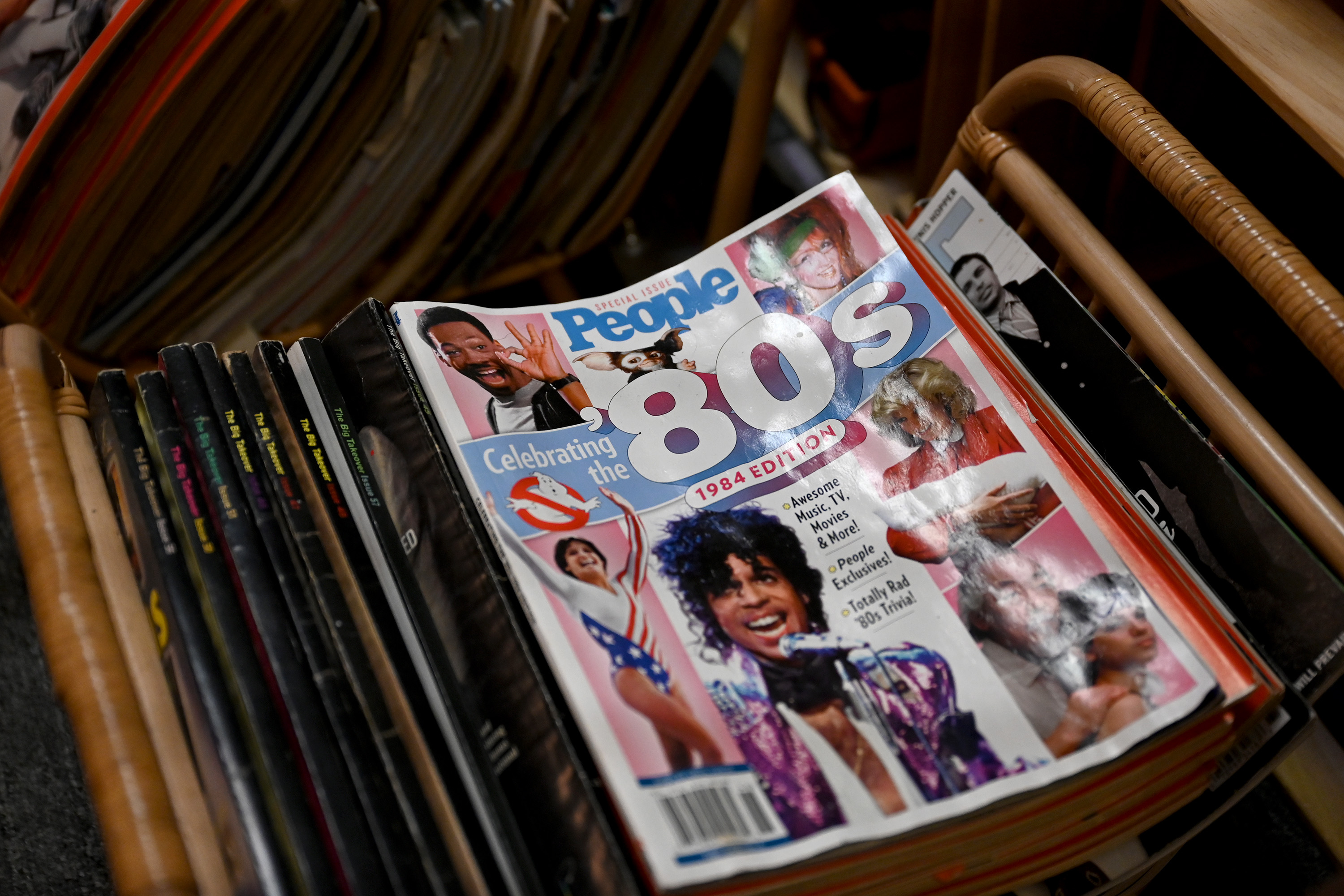
The walls, peppered with film and band posters, will eventually feature pictures of customers that Mallah takes with his Polaroid (at the end of September, there were two). As decor, there’s a mini golf-putting green, Teenage Mutant Ninja Turtle figurines, and a pile of old People magazines.
Mallah said he wants to give local musicians a low-stakes environment to record quick songs without too much thought, and then release their music onto his shelves so their neighbors can take a listen.
“Can you imagine if we did an EP a week or album a month for 30 years?” Mallah said. “If you dug it up later … what did the people in South Jersey feel?”
After years spent teaching Logic Pro at Apple, working at Adventure Aquarium, mailing records, and helping Philly bands cut demos in his garage, Mallah said having his own business could help him spend more time with family.
Old magazines collected by owner Joseph Mallah — including a People from 1984, the year he was born.Tom Gralish / Staff Photographer
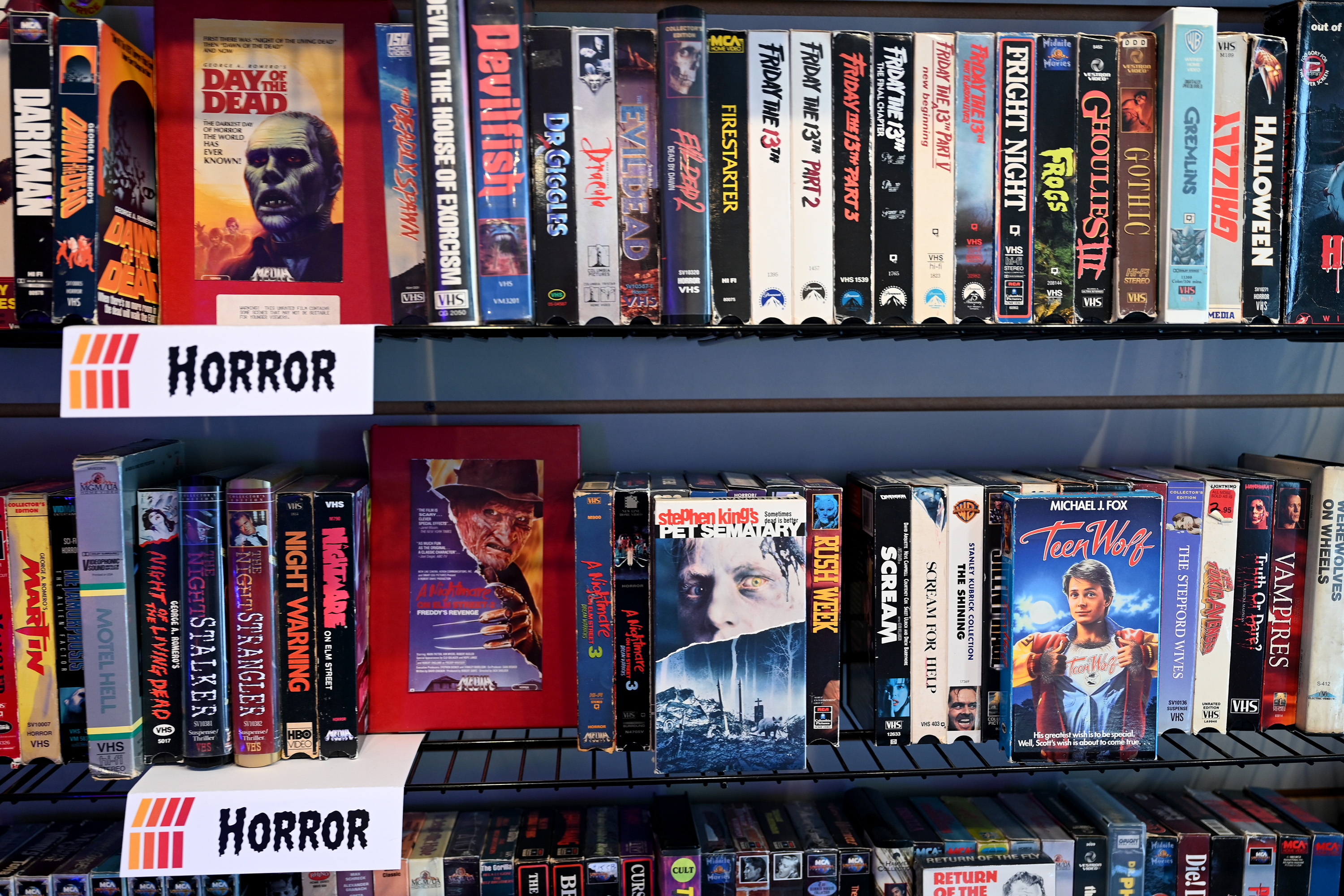
Deja Vu Video — the DVD, Blu-ray, and VHS rental area — takes up the front of the shop. Jada estimated that about 3,000 films and TV series are on display and categorized by genre, ranging from Poliziotteschi/Eurocrime to Bigfoot to Legit Cinema, a section for movies that are on the more-normal side, he said.
After years of accumulating physical media, Jada, a Haddon Township resident, decided it was time to share his passion with the community. He met Mallah at Collingswood Music, a store that sells instruments and vinyl records and offers music lessons.
The movies, rentable for $5 per week, come from Jada’s personal library, taken from his storage space and from a friend who had been holding onto the films to save Jada space.
His favorite collection is a mishmash genre he calls Bikers, Hippies, Hillbillies, Cars, and Creeps, which includes 1971 horror film Werewolves on Wheels. Some movies are for rent as a pair to make themed double features, like The Incredible Shrinking Man and Attack of the 50 Foot Woman or The Incredible Two-Headed Transplant and The Thing with Two Heads.
Samantha Mallah with 2-month old son Elliot at the Vintage Future Now shop.Tom Gralish / Staff Photographer
It’s been more than a decade since Blockbuster declared bankruptcy, years since the death of Redbox, and longer since the COVID-19 pandemic solidified the appeal of streaming services. But as movie theaters make a comeback in the Philly region and people crave holding physical media in their own two hands, the appetite for a video, music, and record store isn’t so surprising. Mallah and Jada haven’t hosted a grand opening yet, but they’ve already had shoppers wander through their doors and sign up for rentals.
“It’s not like we’re going to put Netflix out of business or anything,” Mallah said. “We just have to pay the rent.”
Horror VHS tapes collected by Mike Jada at the Deja Vu Video section of the Vintage Future Now shop in Collingswood.Tom Gralish / Staff Photographer
Recently, Doug Huber, 26, left work at Cafe 1903 down the street to check out the new shop, which has started testing the waters with soft opening hours. He said he hasn’t visited a video rental store since his last stop at South Jersey’s long-closed Wow Video when he was a kid.
“The fact that you have Bill Bixby’s TheIncredible Hulk, like, the complete series?” Huber said. The 1977 TV show featured Bixby as Dr. David Banner and Lou Ferrigno, a 6-foot-5 bodybuilder, as his green counterpart.
Huber, who picked up a shirt from the Ropeadope section and posed for one of Mallah’s Polaroids, said he’d likely be back, potentially to pick up a sci-fi horror film. His favorite is The Thing.
Owner Joseph Mallah shows customer Doug Huber (left) his T-shirt printer.Tom Gralish / Staff Photographer
In 2026, most people don’t have VHS and DVD players laying around their houses. To fix that problem, Jada is working on collecting equipment that customers will eventually be able to rent and take home with their movie of choice.
Plus, Jada still has more films back home awaiting shelf space, so he plans to rotate the selection over time.
“I feel like every town should have a video store,” Jada said. “And once upon a time, they did. Then they got displaced by the big chains, and then got displaced by streaming. Now that it seems like the sentiment toward streaming has changed a little bit, it seems like it’s a good opportunity to bring some of this stuff back.”
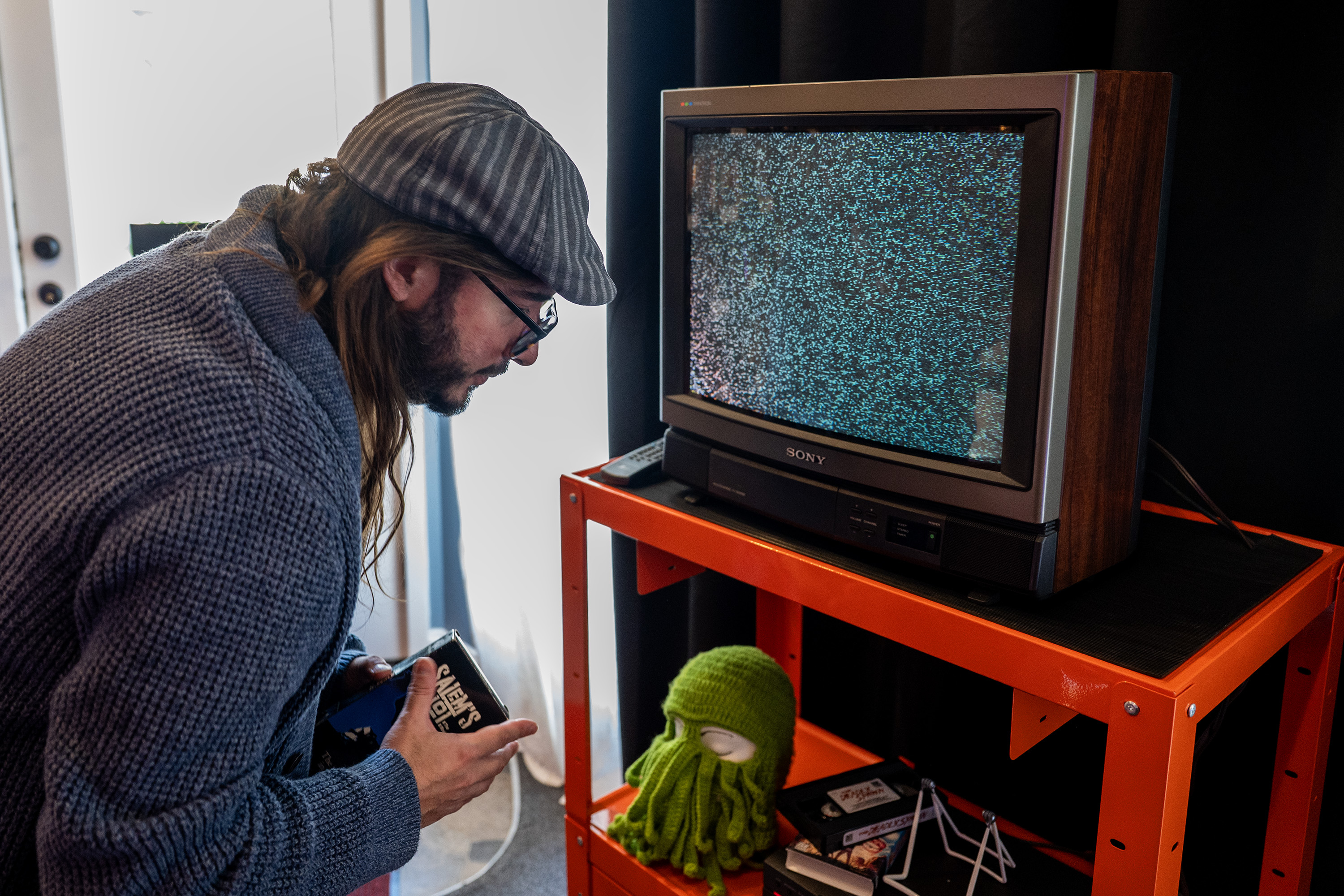
Mike Jada loads a VHS tape for playing on vintage CRT television at the Vintage Future Now shop in Collingswood on Sept. 30.Tom Gralish / Staff Photographer
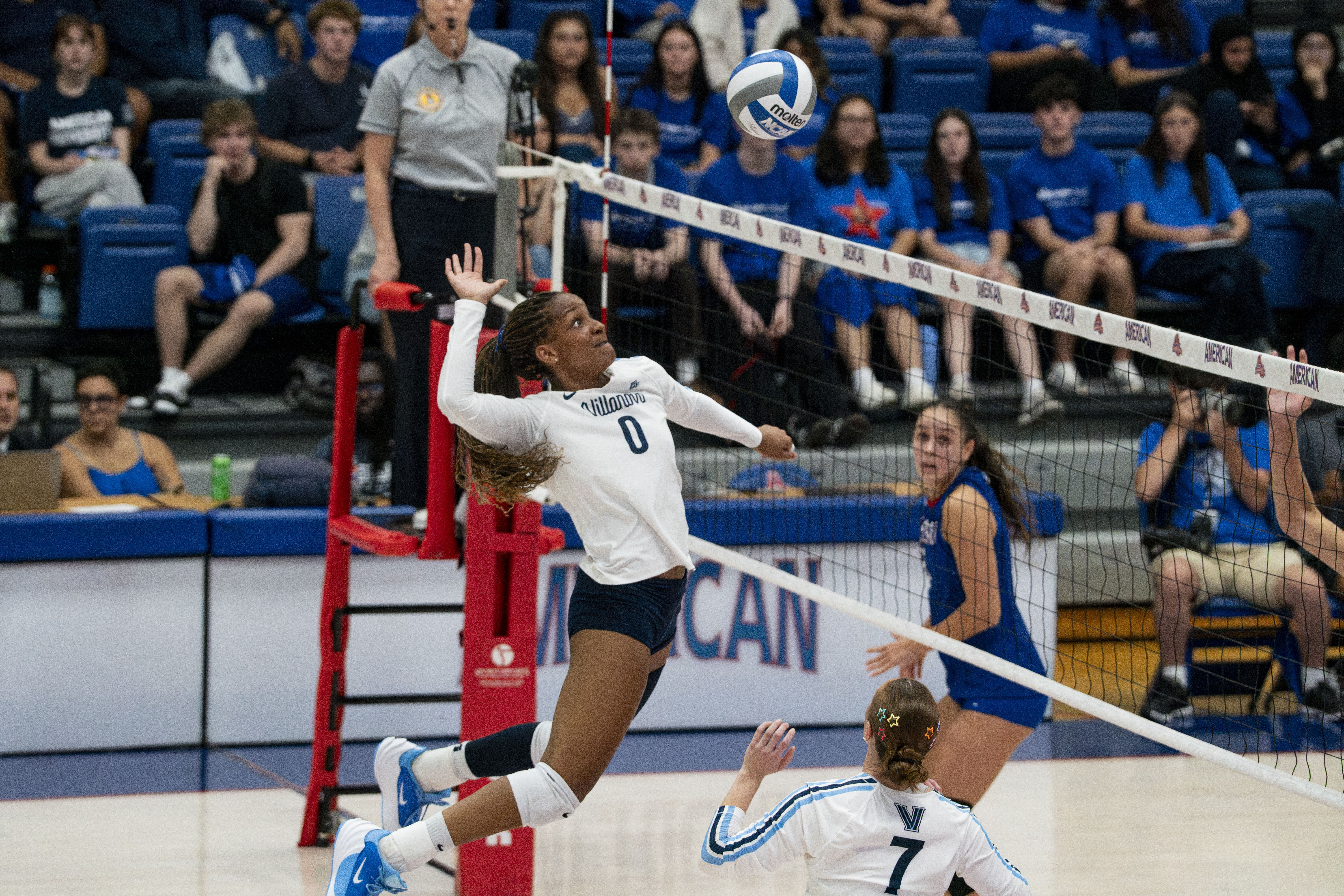
For the majority of Campbell McKinnon’s volleyball career, she’s known where her place is on the hardwood: the middle.
McKinnon has thrived as a middle blocker, starring as a two-time district regular- season MVP during her high school days in Collierville, Tenn., outside Memphis.
At Villanova, despite initial concerns about where she’d fit in due to her size — which, standing 5-foot-10, is considered undersized for the position — she has been one of Villanova’s brightest stars. Since her arrival on the Main Line, McKinnon earned a Big East All-Freshman selection in 2024 and was named a unanimous All-Big East selection last year.
Now a junior, McKinnon is learning to balance the leadership responsibilities that come with being an upperclassman, and a new position. She recently started flipping between middle and outside blocker.
Campbell McKinnon earned unanimous All-Big East volleyball honors as a sophomore.Villanova Athletics
“It’s definitely been difficult because middle is a faster position where you’re just kind of up and you just hit what you have,” McKinnon said. “But outside, there’s more time to think, there’s less to block. So there’s more time to think, which is different for me.”
The adjustment hasn’t fazed McKinnon, who’s off to an outstanding start. She leads all Villanova players in points, kills, and blocks through the team’s first 15 games.
McKinnon said the Wildcats (9-6, 2-2 Big East) are still looking for consistent cohesion as they enter the heart of Big East play. DePaul is up next on Friday (8 p.m., ESPN+).
“She’s better at everything; she’s gotten better serving, she’s better defending, she can pass a bit now, she’s made huge jumps as a blocker,” Steinbach said. “Her attacking skills have always been good, but she’s worked on it; she’s got more ability to do more things and score in different ways. She’s just a super hard-working, super competitive kid.”
When McKinnon first committed to the Wildcats, Steinbach or his assistants could not have envisioned her remarkable career to date.
“We had some debate as to whether she was good enough, it wasn’t a slam dunk,” Steinbach said. “She was an undersized middle blocker at that time who had some bad blocking technique and [we] just didn’t know what role she was going to be able to fall into. But, day one on campus, we’re like ‘This kid’s kind of special.’”
McKinnon says she was drawn to the Main Line for its academic-athletics balance and for the Wildcats coaching staff.
“When I came on a visit, I really loved the coaching dynamics, I liked the way they ran practices,” McKinnon said. “Outside of volleyball, I feel like the school has a good sports culture in general, like everyone supports athletics and as well, the academic culture here is very driven and people do want to succeed. So, I found that this was the perfect balance of what I was looking for.”
In the summer of 2024, when McKinnon first arrived on campus and with those initial questions of her fit on this team lingering, the team embarked on a European trip to Slovenia and Italy. During those matches, the staff quickly saw McKinnon’s talents and her upside in the middle.
“This kid has some tools that are going to be pretty special and we just got to get her to figure out what she can and can’t do,” Steinbach said, recalling that summer. “And there’s not much she can’t do.”
Those tools first seen two and a half years ago have only blossomed. As a freshman, she led the team in hitting percentage (.332) and a year later, McKinnon made history with the highest hitting percentage for a middle blocker in program history (.379), nearly identical to her mark to date this season (.378). Now, with more playing time on the outside, Steinbach aims to get the most out of her play and versatility.
As her career continues to evolve at Villanova, Campbell McKinnon is looking to be more of a leader on the Wildcats’ volleyball program. Villanova Athletics
“As a left side, she’s going to get more touches on the ball and more swings and we have the opportunity to let her go in the back row a little bit and do some things back there,” Steinbach said. “She’s getting better as a defender and passer and she’s one of our best servers too so it makes sense, we want to get her touching the ball as much as we can.”
In addition to her on-court prowess, McKinnon has become a team leader, passing along lessons while setting the tone both in practice and matches.
“I’m definitely a lead-by-example type player,” McKinnon said. “Every day on the court, the coaches and my teammates know I’m gonna give 100%, 110% even, and hopefully that helps my teammates’ [desire to] want to do the same.”
Another adjustment McKinnon has strived to make this season is in her on-court demeanor, making sure she’s not unintentionally affecting her fellow teammates.
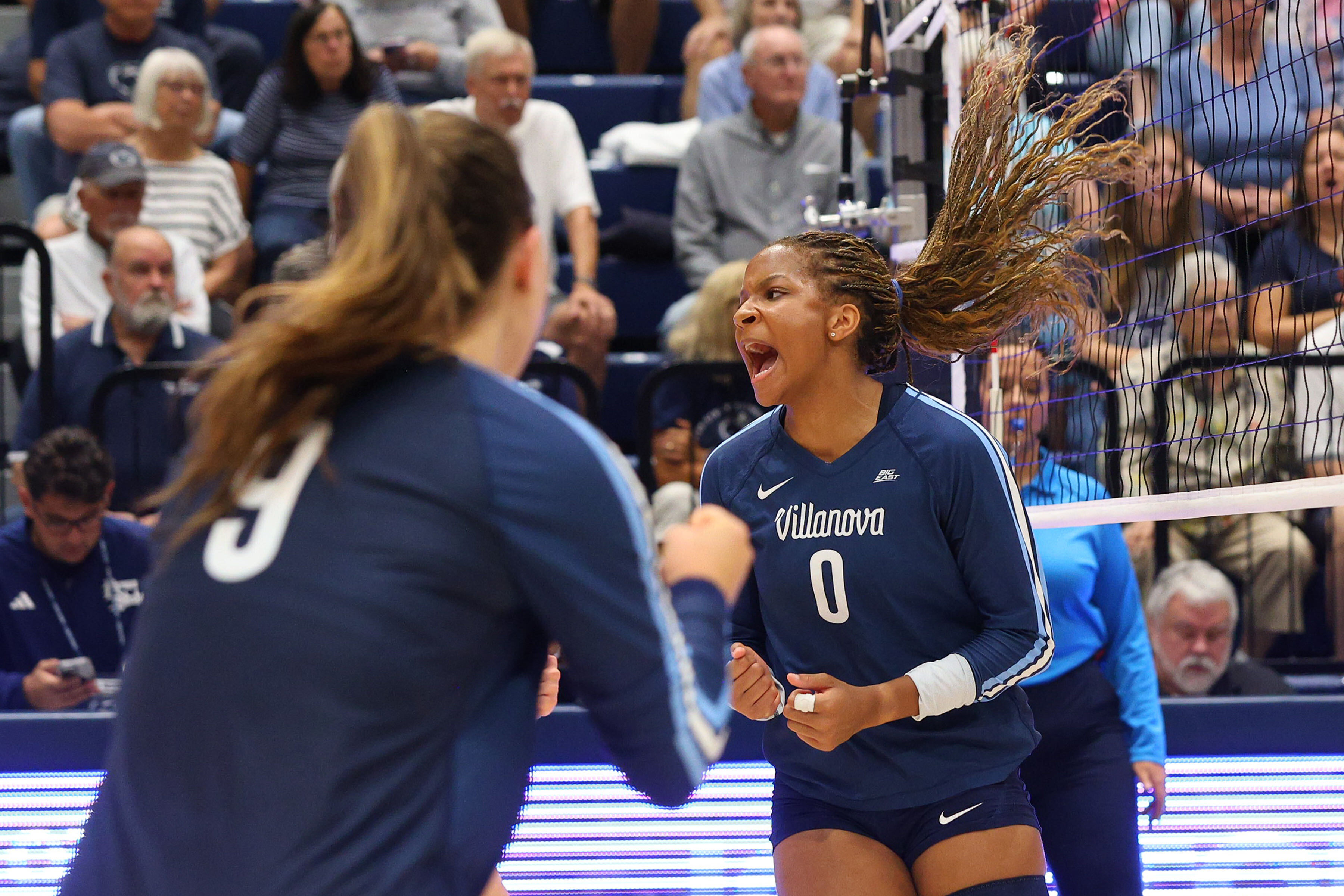
“I do have to be more mindful of how I react to things, on the volleyball court. Everyone knows I’m pretty emotional, but at times, that’s not really necessary and I have to realize my facial expressions, my actions do impact my teammates because volleyball is such a team sport,” McKinnon said. “If I see my body language is bad, that could start to impact them. So [I’ve] just kind of been being more mindful of how I react to things on the court.”
Steinbach has seen McKinnon grow into a very coachable player to the point where he hasn’t found himself focusing on her as much as others on the roster.
“It’s interesting as a coach, you know you’re worried about your least problematic children or your players, right, and she’s the one I have to worry about the least,” Steinbach said. “I have to consciously sometimes spend time with my best kids because they need as much attention as everybody else.”
Especially now, as the Wildcats haven’t been at the level where they aimed to be in the preseason, remaining confident in their play and turning frustration into progress is key for McKinnon and the Wildcats.
“We’ve got some frustration in the program right now as far as wins and losses,” Steinbach said. “I think she needs to make sure she’s staying the course and doesn’t let any of those things affect how she’s playing and keep it day to day. If she can separate those things and [stay focused] right now, doing the best you can, she’s gonna be fine.”
“We all know we’re very capable volleyball players,” McKinnon said, “but at times, things can be choppier rather than smooth playing. If we can find our glue together and start to work together a little bit better, I think we can find some success.”
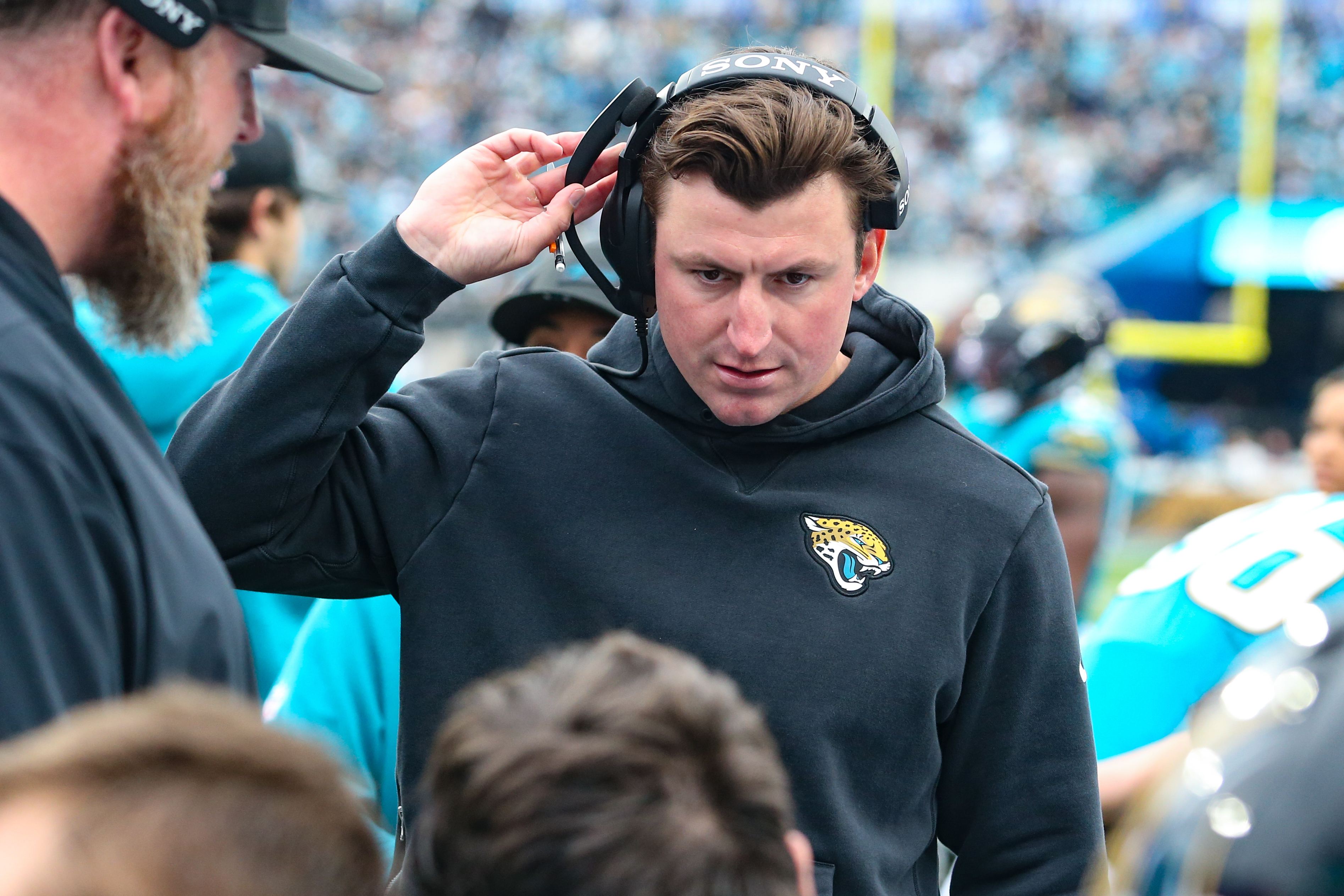
During NFL broadcasts on Sundays, anyone can watch 30-year-old Jacksonville Jaguars offensive coordinator Grant Udinski coach from the sideline, working closely with head coach and offensive play-caller Liam Coen.
But his father, Jim, has a unique vantage point on the sideline that he gets to see any day of the week.
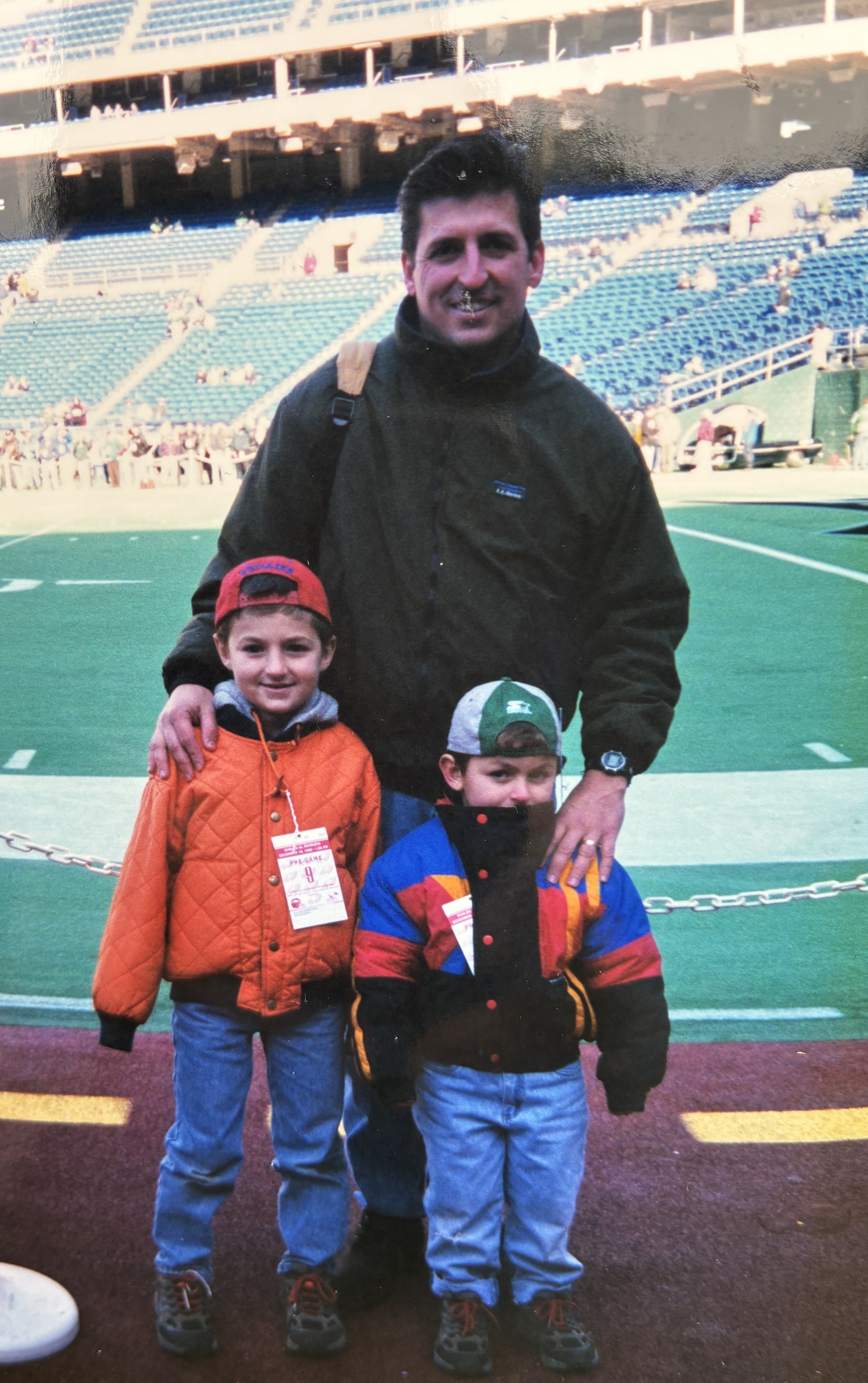
Jim keeps a photo in his Doylestown home office that captured Udinski’s first foray on an NFL sideline. On Dec. 19, 1999, a month shy of his third birthday, Udinski attended his first Eagles game with his older brother, Ward, and Jim at Veterans Stadium. Before they watched Koy Detmer lead the Eagles to a 24-9 victory over the New England Patriots, they took a photo together just inches from the field, with Udinski wearing an Eagles cap backward.
Jacksonville Jaguars offensive coordinator Grant Udinski attended his first Eagles game ahead of his third birthday with his father, Jim, and his older brother, Ward, in 1999.Courtesy of Jim Udinski
Looking back, Udinski recognizes that his up-close view of the many Eagles playoff teams of the Andy Reid era influenced his early fascination with the game. He never could have fathomed, though, that he would have an opportunity to coach from those NFL sidelines, even after he’d first considered getting into coaching when he was in middle school.
“I don’t know that I ever thought I was going to coach in the NFL,” Udinski said. “I don’t know [if] that ever crossed my mind. That probably seemed like such a far stretch or such a reach that I don’t know that I ever would have thought that coaching at that level would be possible.”
He didn’t stretch too far. Twenty-seven years after he attended his first Eagles game, Udinski began his second season in his role with the Jaguars, who currently sit atop the AFC South with a 3-1 record. Last season, he worked with Coen to help lead the team to franchise records in scoring and first downs, reaching 13 wins for the first time since 1999.
Come Sunday in London, Udinski will stand on the Tottenham Hotspur Stadium sideline opposite the Eagles, coaching against the team he grew up watching.
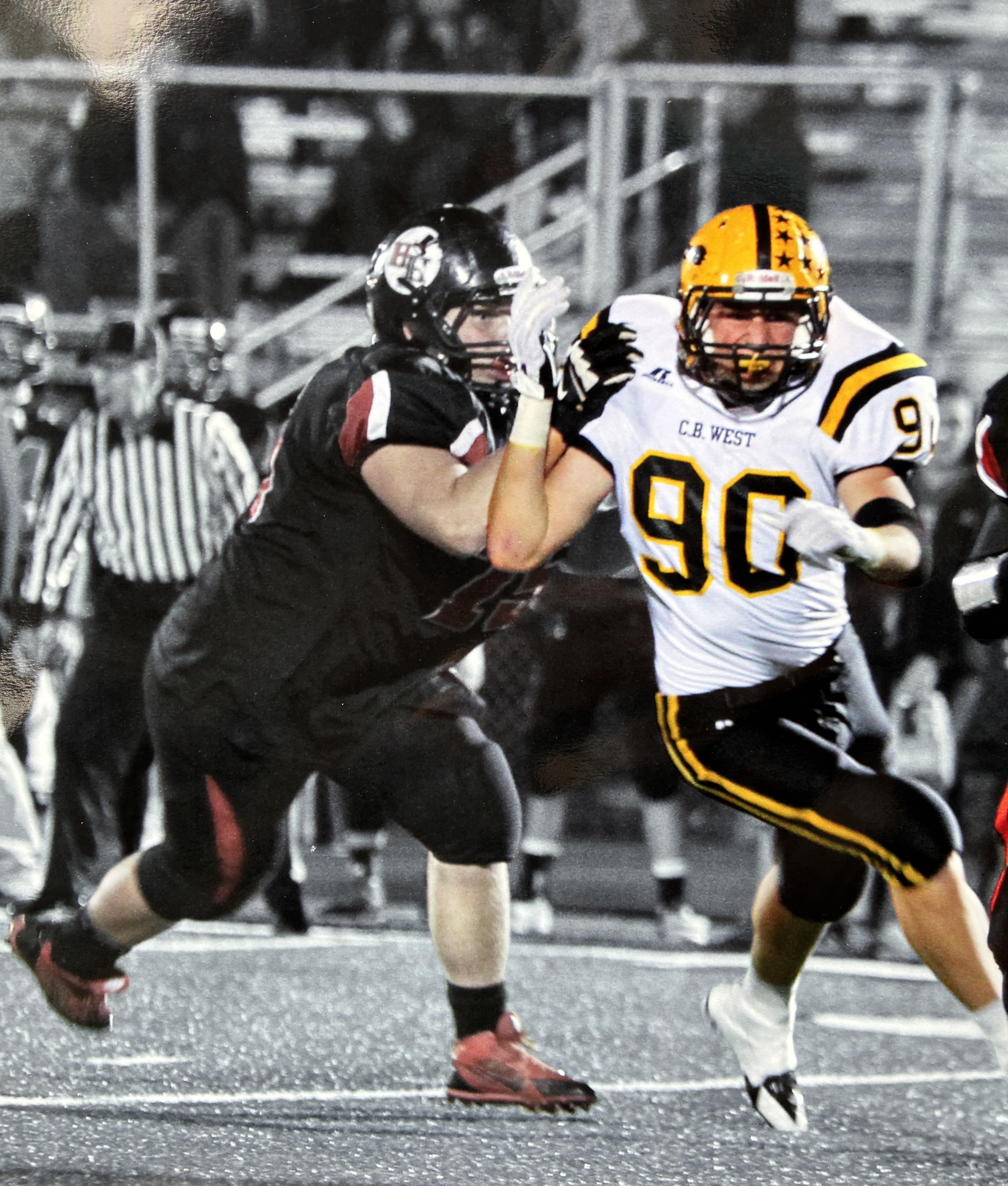
Udinski’s early love of football wasn’t limited to the Eagles. Growing up in Doylestown, he said, Sundays were for watching the Eagles, and Fridays were for Central Bucks West football. Udinski is the latest CB West product to coach in the NFL, joining longtime former coach Mike Pettine Jr., Seattle Seahawks run game coordinator Justin Outten, and Detroit Lions safeties coach Jim O’Neil.
“People maybe say there’s something in the water in Doylestown,” Pettine said.
Jacksonville Jaguars offensive coordinator Grant Udinski was a defensive lineman and a tight end at Central Bucks West High School in Doylestown who graduated in 2014.Courtesy of Jim Udinski
Pettine, whose late father, Mike Sr., won four state championships as the head coach of CB West, hesitated to lump Udinski in as an offshoot of a theoretical coaching tree at the school. But his local roots are undeniably at the foundation of his football journey and a fervor for the game that has fueled him throughout it.
“That’s what drives him,” Pettine said of Udinski’s passion. “That’s obviously what has gotten him very quickly to where he is today.”
Father’s coaching style ‘rubbed off’
Udinski’s earliest football memories in the early 2000s were at CB West, where Jim, his seven siblings, and Kerry, Jim’s wife and Grant’s mother went to high school.
He remembers eating Nat’s Pizza before games. He remembers going to the stadium — both at home in Doylestown and on the road at neighboring schools — with his family, including his cousins, who lived down the street.
Most of the specifics are fuzzy, though. Udinski said he was at CB West’s three consecutive state championship wins from 1997-99, even if he doesn’t remember being there. Nonetheless, he was exposed to the success of the program early in his life, and it stuck with him, Jim said.
“He definitely knew of the aura of CB West from those years, because it was still fresh in people’s minds,” Jim said.
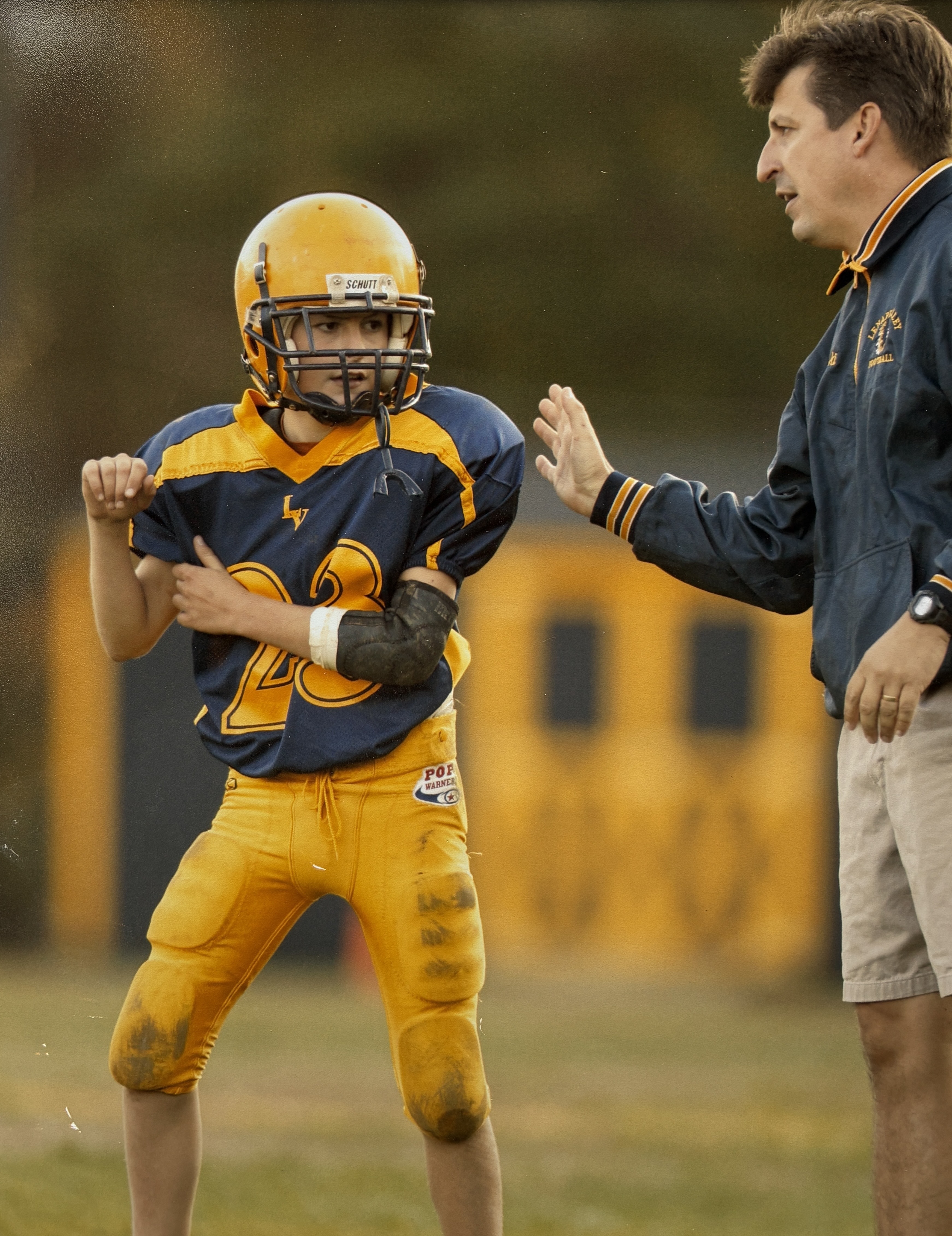
Jim played football at CB West for Pettine Sr. He overlapped on the team for a year with Pettine Jr., who was two grades behind him. But the joy Jim derived from his playing career paled in comparison to the pride he took in coaching all three of his sons — Ward, Grant, and Reece, his youngest — in Pop Warner football.
Jim Udinski coached all three of his sons, Grant (pictured), Ward, and Reece, for the Lenape Valley Indians Pop Warner program based in Chalfont.Courtesy of Jim Udinski
In 1998, Jim got involved with the Lenape Valley Indians, the Pop Warner program based in Chalfont, Bucks County. He estimated the association consisted of a handful of tackle football teams and a couple of flag teams at the time. He took over as president two years later, which he called the “right time,” coinciding with an influx of people moving to the area.
The organization grew rapidly. By the time Udinski was in his later elementary years, Jim said they had upward of 22 tackle teams and 12 flag teams. He saw the parents invest a lot of time and money into the program, so as a volunteer, he wanted to give them something back of equal value. Brian Hensel, the current CB West head coach, met the Udinski family when his son, Brian Jr., played with Udinski and was coached by Jim on the same Pop Warner team when the boys were about 8 years old.
“[Jim] took football very seriously and grew up under Coach Pettine Sr.’s tutelage, and he took an approach with the kids when they were young to keep it simple, but also be sharp and execute to the highest level of degrees you could,” Hensel said.
Jim said he viewed himself more as a teacher than a coach. He felt that with his players — not just his own kids — the better he taught them the game, the more they wanted to be part of it. He said he never cared which level his sons were playing, whether it was the top team or the middle team. Getting reps and learning the different concepts in all three phases of the game was more important than getting the ball in their hands, he said.
He coached Grant through the Pop Warner program from third grade through eighth grade. Before Grant, he coached Ward’s teams. After Grant, he coached Reece’s teams. Grant joked that his mother, who ran the snack bar, was “so ready for us to be done” with Lenape Valley football by the time they reached high school.
Kerry said they practically lived at the field. When she went into labor with Reece in 1998, on the same day as Ward’s picture day, they swung by the field before going to the hospital.
“It was part of what we did,” Kerry said.
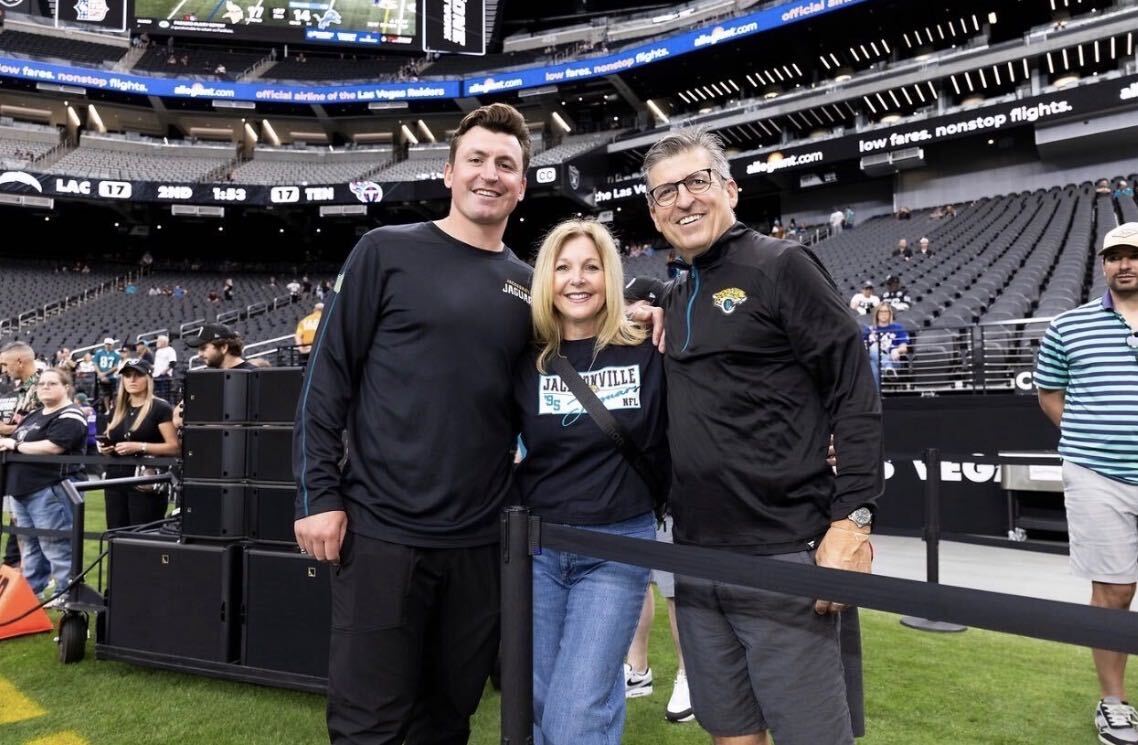
Grant Udinski (with parents Jim and Kerry) has evolved quickly into one of the league’s hot young offensive coordinators.Jacksonville Jaguars/Chris Kim
Their football endeavors weren’t limited to the field. Jim would watch film with his players, too, starting when they were 8 years old. He didn’t review film to critique his players’ past performances, though. He said he used it as a tool to prepare for upcoming opponents, especially as the kids got older and reached the “competitive level” of Pop Warner after age 10.
Udinski isn’t sure how many fifth- and sixth-grade Pop Warner teams were watching extra tape together to study an opponent after practice. Nonetheless, his father’s approach to coaching taught him the importance of detail, discipline, and work ethic at an early age.
“I was certainly very thankful to have him as our coach growing up,” Udinski said. “He did a great job with us, and probably more than I would like to admit that he taught me has rubbed off onto how I coach now.”
Earliest ‘coaching’ experience
Ward and Reece both became quarterbacks, playing at CB West and North Penn, respectively, in high school. Ward would play in college at Division III Juniata in central Pennsylvania, while Reece would play at FCS Virginia Military Institute and Richmond as well as a season at Maryland.
Grant was the lone Udinski brother who didn’t play quarterback. Jim noted that he preferred the blocking and tackling aspect of the game, traits that led him to play on the defensive line and at tight end as he got older. Occasionally, though, at the Pop Warner level, his father would call on him to play quarterback if the starter got hurt.
In those instances, Udinski, a gifted student in school, demonstrated his aptitude for the game. Jim would start reading a play to Udinski that he wanted him to run, and he would put his hand up mid-call and run back to the huddle because he already knew the rest. Sometimes, Jim would call the wrong play, and Udinski would run back to the huddle with his father shouting after him.
“He would wave me off, going, ‘I know you called it wrong. I got this,’ and he would correct it,” Jim said.
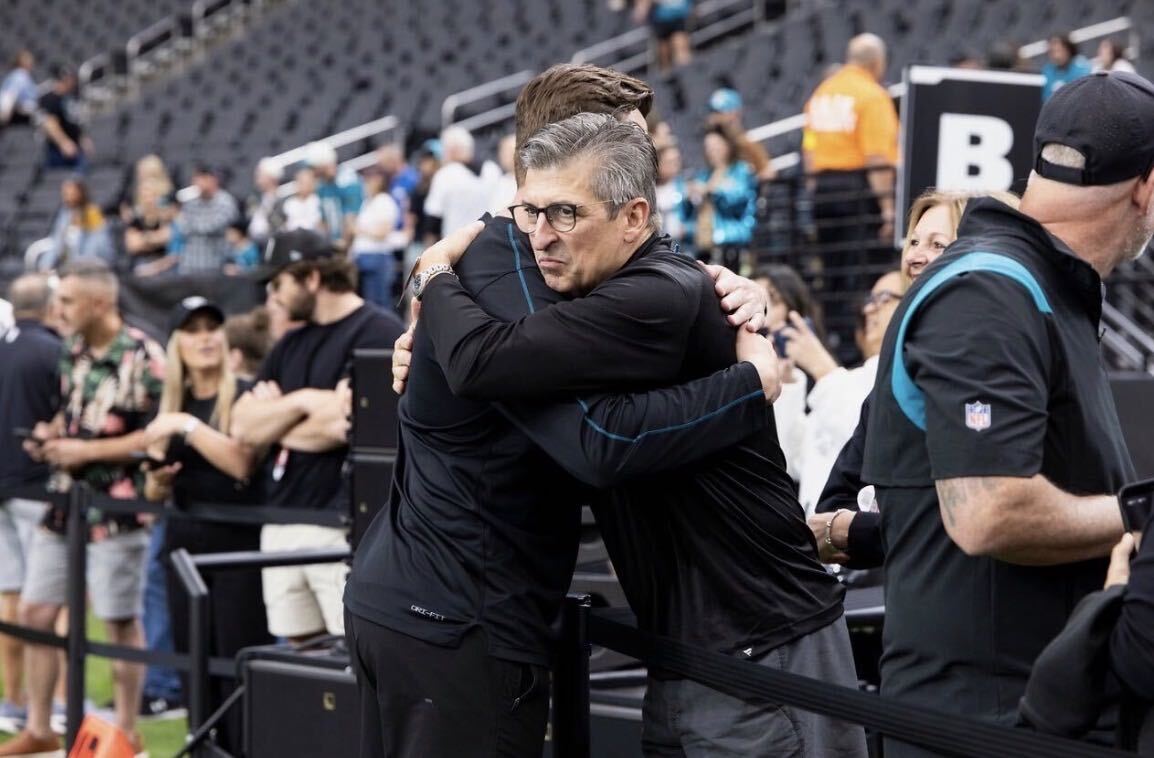
Grant Udinski (left) was coached at an early age by his father, Jim, who has now watched his son excel as a coach himself.Jacksonville Jaguars/Chris Kim
Udinski displayed that aptitude on the sideline, too. Jim said his first “coaching” experience came when he was 12 years old. Jim was coaching Reece’s team, two age groups behind Grant. Jim had scouted the team in advance, wrote down their signals, and told Grant to study the plays. He asked Grantto stand with him on the sideline on game day, watch the team’s signals, and tell him the play.
Jim estimated the sheet contained approximately 20 signals. He said Grant was “dead on” every play.
“I don’t think he ever looked down,” Jim said. “I think he just memorized them, and then when the other coach would signal them, Grant knew what that signal meant and would tell me the play, and then we would adjust our defense accordingly.”
He took on more responsibility assisting his father when he was in high school. Jim didn’t want to miss Ward’s college games on the weekends, so he would send Grant to scout Reece’s upcoming opponents. Scouting was a common practice at the competitive level of Pop Warner, Jim said, but it wasn’t so common to see a 16-year-old doing it rather than a coach.
Udinski scouted one of the better teams in the league three or four times, Jim recalled. Again, when it came time to play against them, Reece and his teammates were well-prepared.
“We knew every play,” Jim said. “We knew everything, because [Grant] told me everything. He told me their cadence, he told me their audibles, everything. And we, of course, took the time to prepare, and taught the kids on the team what to expect.”
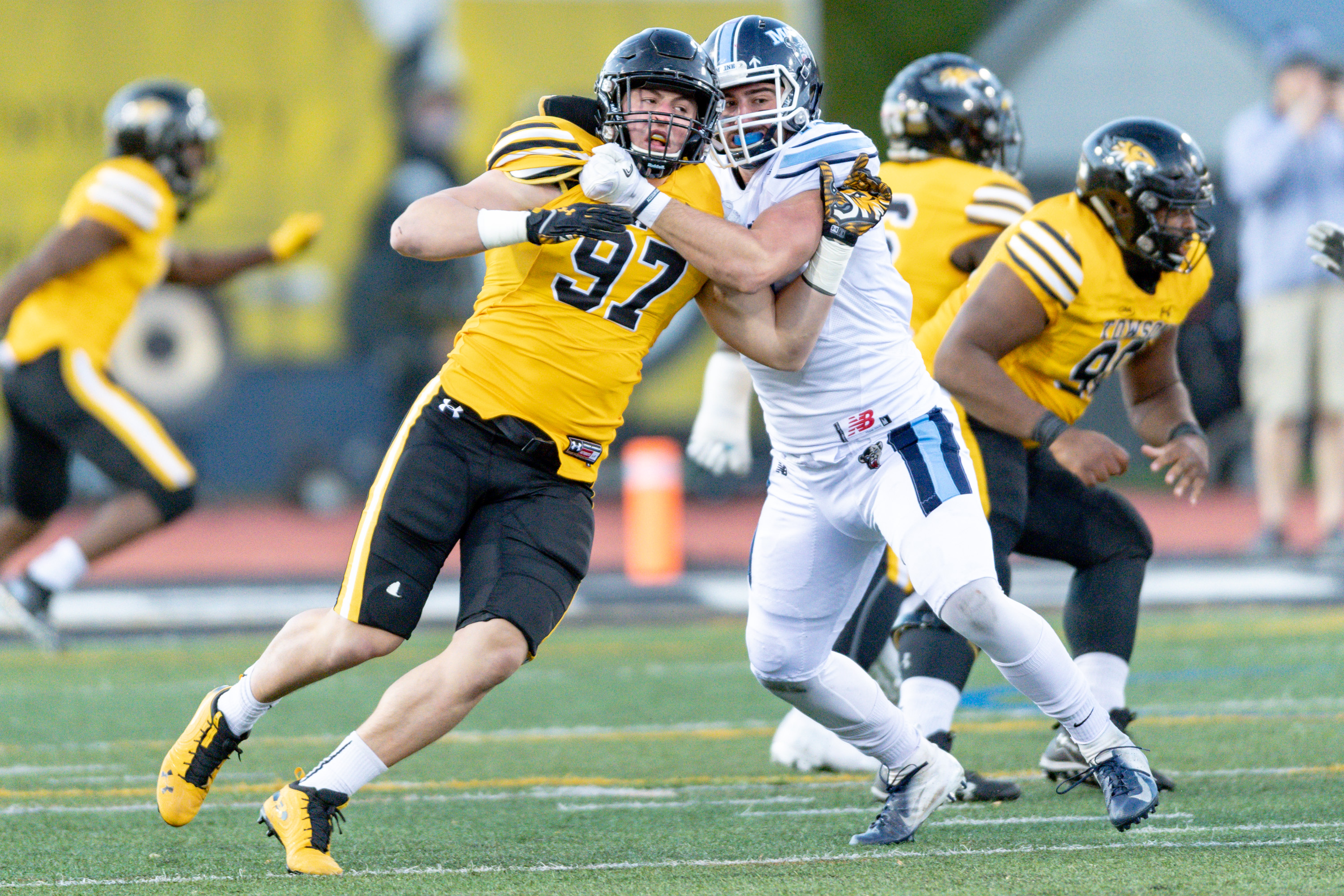
At that point, Udinski already knew he wanted to get into coaching. He said he understood his playing career wouldn’t last long, although he went on to play in college at Davidson at tight end and Towson as a defensive lineman. Even at Towson, Jim recalled watching Udinski shout out the opposing team’s plays in his junior season, both on the field before the snap and as he was rotating out.
Grant Udinski (97) parlayed his CB West career into a successful collegiate career as a tight end and pass rusher at the Division I FCS level.ENP Photography
When he was in high school and when he would come home for breaks in college, Udinski would watch every college football game on Saturdays, from noon to 2 a.m., when Pac-12 play was ending. Jim knew how much he cared about the game, but he and Kerry weren’t informed of Udinski’s intent to get into coaching until he told them he was going to Baylor in spring 2019 to watch practice.
Udinski had been networking, sending emails to schools and attending coaches’ conventions and clinics, and was invited to visit Baylor by then-co-offensive coordinator Jeff Nixon. He drove down to Waco, Texas, without a return date in mind, sleeping in his car in a nearby Walmart parking lot at the end of each day. Kerry assumed Udinski had a temporary housing situation set up, though he hadn’t filled in his parents with many of the details of his trip.
“Honestly, tons of worry,” Kerry said. “I can remember basically being like, ‘Please just respond to my texts and let me know you’re good. Send me an emoji, whatever it takes. I want to know you’re good.’”
Phil Snow, who was Baylor’s defensive coordinator at the time, took Udinski in and gave him a place to stay for the duration of spring practice. That eased his parents’ minds — and so did his eventual acceptance into Baylor’s graduate school and his hiring as a graduate assistant when a spot became available.
Matt Rhule, the former Temple head coach who was then at the helm at Baylor, wasn’t about to let Udinski’s stint in Waco end after spring practice. He said he could tell that Udinski was “kind of a genius,” and he also possessed the requisite “grit and determination” of a promising coach.
“We only let people [in here that] we feel like are one of us, right?” Rhule, now at Nebraska, said. “That are going to bring great value. So the fact that he was willing to do that let me know that, hey, he loves this, and that no job’s going to be too small for him. It’s kind of rare to have someone who has that type of desire and dedication.”
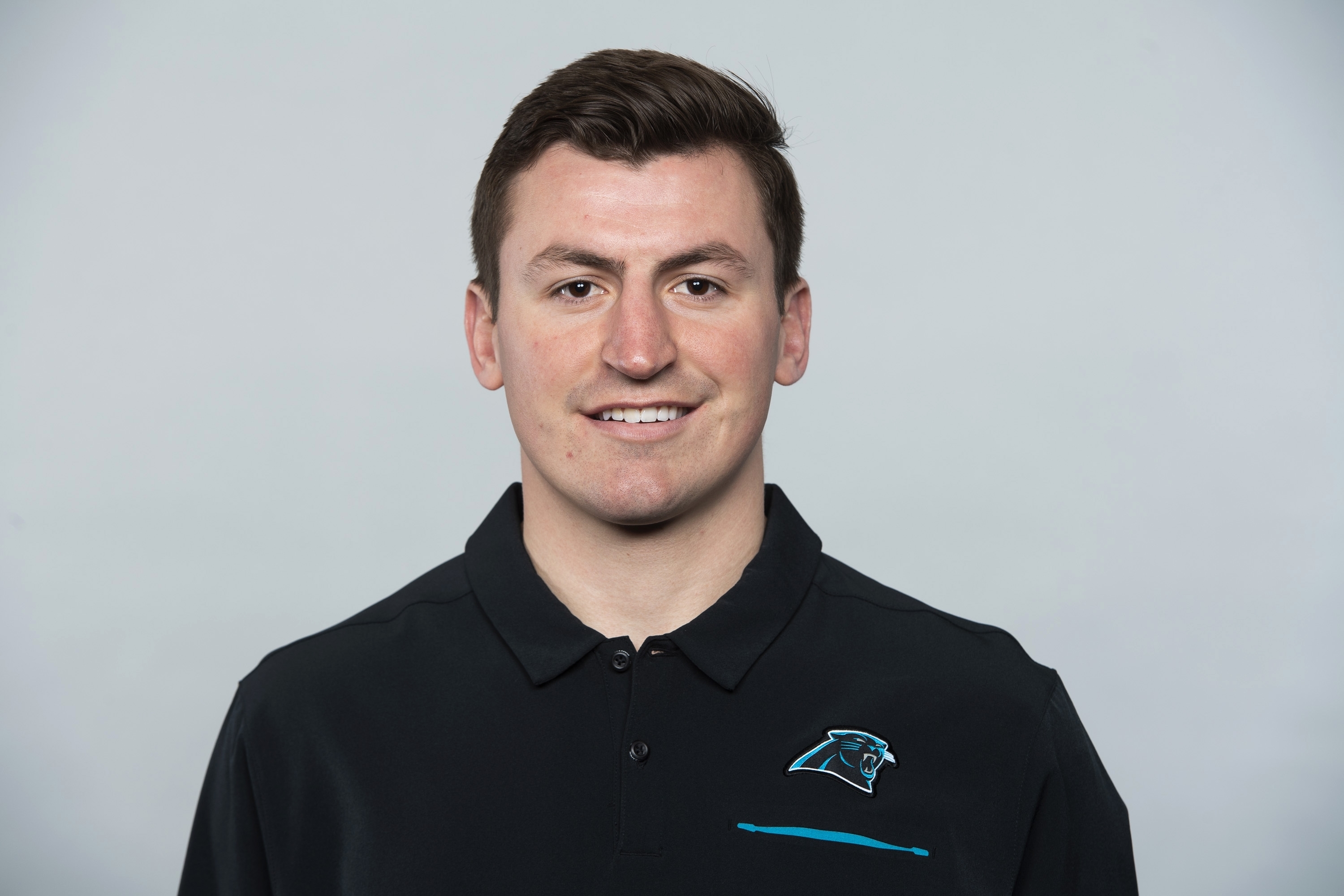
Grant Udinski was introduced to the NFL by Matt Rhule, who brought Udinski with him from Baylor to the pros in 2020. Associated Press
Bringing the ‘it factor’
At Baylor, Udinski was tasked with doing all of what Rhule called the “quality control work” — the game plans, the scouting reports, the opponent breakdowns. Rhule was especially impressed with Udinski’s “unbelievable recall” when relaying information about the opponent and their scheme, while also self-scouting Baylor’s own tendencies.
After Baylor went 11-3 that season and made trips to the Big 12 Championship and the Sugar Bowl, the Carolina Panthers hired Rhule as their head coach. Following the Bill Belichick model, Rhule wanted to fill out the lower ranks of his staff with “really smart, young coaches” at a relatively low cost, then see if they could work their way up the ranks.
“I thought, ‘Hey, who could be a head coach?’” Rhule said. “Who could be a coordinator? And make them learn kind of from the ground up. Start [at] that entry-level position, and kind of go from there.”
Rhule said Udinski was a natural fit for a coaching assistant position, doing many of the same tasks he handled at Baylor for two seasons with the Panthers. During Udinski’s time with Carolina, he connected with Pettine at the NFL scouting combine over breakfast. While Pettine knew of Udinski because of his parents and Reece, who was the quarterback at North Penn, where Pettine was the head coach at the turn of the century, he hadn’t yet met the middle son.
Pettine left the conversation feeling like they had a shared vision of football and the application of technology within it. He continued to monitor Udinski’s progress through Brian Angelichio, the former Panthers tight ends coach who was on staff with Pettine in Cleveland and Green Bay. When Kevin O’Connell hired Pettine and Angelichio to his Minnesota Vikings staff in 2022, Pettine asked Udinski to send him some of his work, from scouting reports to playbook drawings.
He wasn’t surprised by the quality of Udinski’s work. Shortly after their hiring, both Pettine and Angelichio walked into O’Connell’s office and advocated for Udinski to join the staff. Pettine said they were both “annoying enough” that O’Connell finally agreed to meet with Udinski over Zoom.
“I’m like, ‘Good,’” Pettine recalled. “You won’t be five minutes into the Zoom and you’re going to know that you’re going to want to hire the guy.’”
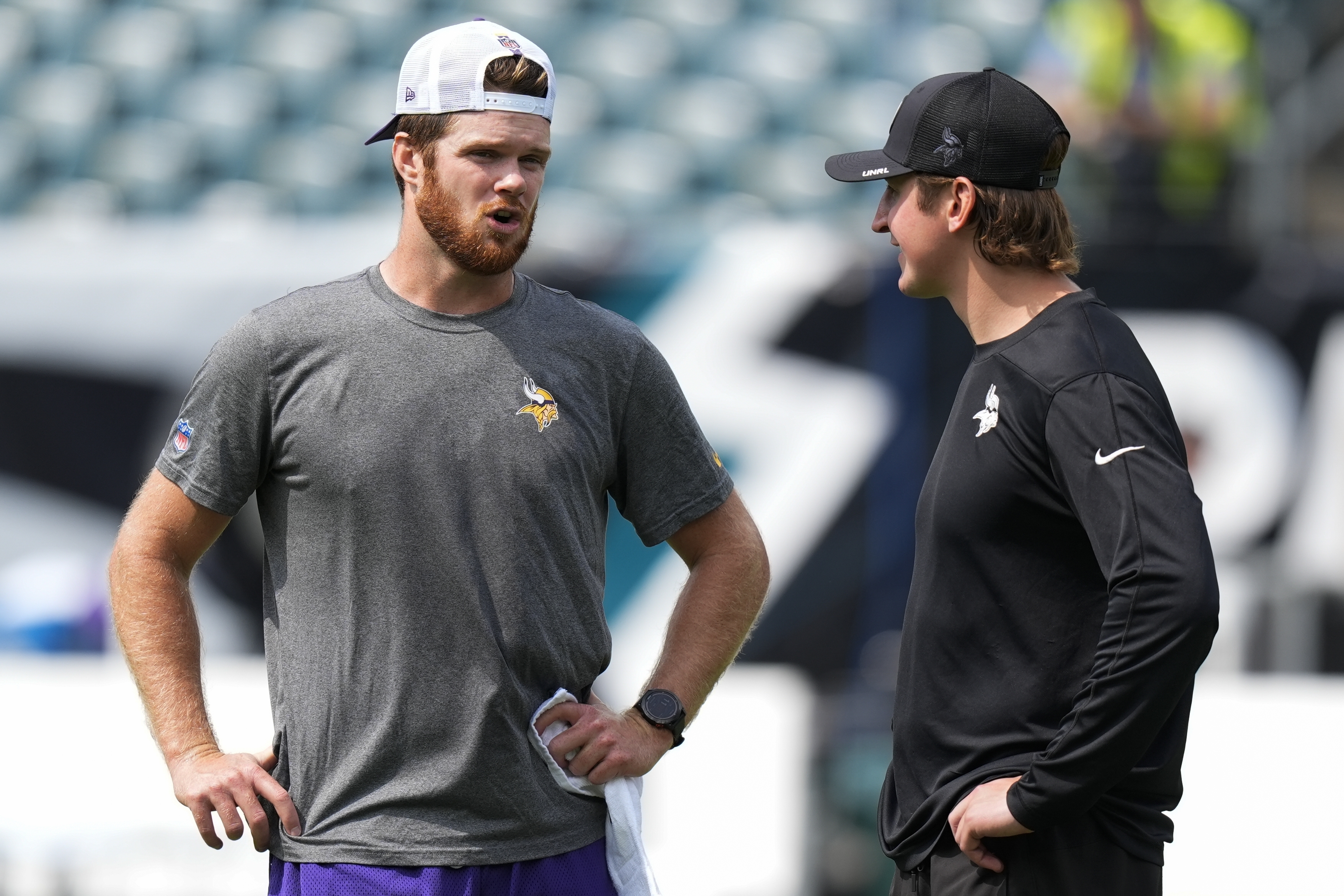
Then-Vikings quarterback Sam Darnold (left) talks to assistant QB coach Grant Udinski in 2024.Chris Szagola
Udinski joined the Vikings as an assistant to the head coach, which was technically more of an administrative role. He was still giving detailed introductory scouting reports to the offensive staff to begin the week of game preparation. Given his fluency in Excel, he could type the plays into the call sheet for O’Connell. But Pettine said that Udinski wasn’t simply dictating the plays from someone else into the system — he was responsible for checks and balances, ensuring that each play had the right name or was typed in the proper way.
He was also a “very quiet, but calming influence in Kevin’s ear” during games, Pettine said. He would monitor how defenses were responding to the Vikings’ game plan and whether their defensive calls aligned with his expectations.
“He thinks very quickly on his feet, he has excellent recall, and can make an adjustment very quickly, and I just think that’s one of the bigger reasons why he’s the rising star that he is,” Pettine said.
That trust led to more responsibility, as he became the assistant quarterbacks coach in 2023 and added assistant offensive coordinator to his title in 2024. As an assistant quarterbacks coach, Udinski played a role in ensuring the backups were ready to play, which was particularly important in 2023 when Kirk Cousins tore his Achilles tendon. But he didn’t solely have an impact in the quarterbacks room, Pettine said.
“A good indicator of a guy who’s a good coach is that the players go to him,” Pettine said. “So everybody would be just like, ‘Oh, ask Grant.’ So a lot of times when the players weren’t clear, obviously starting with the quarterbacks, but even the other positions. ‘Hey, if you weren’t sure,’ because Grant just had such a good feel for not just what the quarterbacks were doing, but just kind of like the concept of the whole plan.”
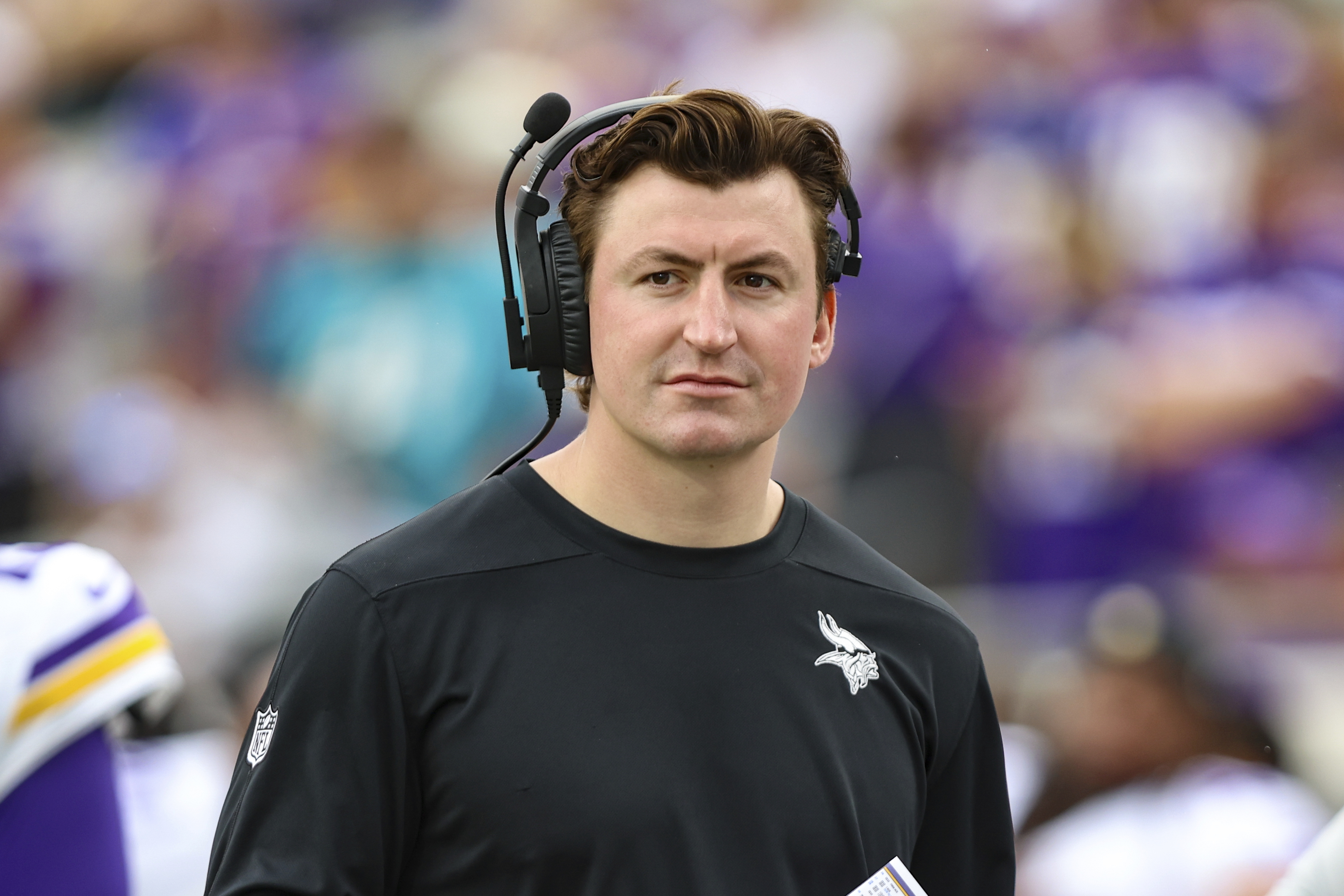
Grant Udinski’s work with the Vikings helped put him on the radar to become an offensive coordinator in Jacksonville. Gary McCullough
Now, as the Jaguars offensive coordinator, Udinski is able to make more of an impact on the whole plan. A head coaching opportunity could be next. This summer, Udinski interviewed for the Cleveland Browns and Buffalo Bills head coaching vacancies. He withdrew from the Browns’ coaching search, ultimately deciding to return for his second season with Jacksonville.
Udinski said the interview process was a “great opportunity” to refine and present the philosophies that he believes in as a coach. Pettine said it isn’t a matter of if, but when, as it relates to Udinski’s future as a head coach.
“It first goes back to that ‘it’ factor,” Pettine said. “He has a presence about him. He’s so well respected because he knows the information inside and out, and he communicates it well. I think he has excellent people skills, excellent communication skills. A lot of times he would be the quietest guy in the room. But when it comes time to speak, when Grant would speak up, it would carry some weight.
“I think from that standpoint, everybody looked at him as ‘Wow, this guy’s too young. This guy’s too young,’ and I just didn’t see it that way because he was very mature beyond his years.”
Still, Jim said what has impressed him most about Udinski’s fast rise has been his level of focus on the present. He asserted that his son isn’t focused on himself and his own climb.
His parents are just happy to be along for the ride, whether they’re cheering him on from Doylestown, Jacksonville, or London. Jim said their friends, who are Eagles fans, are making the trip across the pond for Sunday’s game and want to go to Eagles bars. Jim and Kerry, who shed their Eagles allegiance long ago, will keep their distance, he said.
“People ask me all the time, ‘What if he went to a team like the Dallas Cowboys?’ and I look at them and say, without hesitation, ‘I would cheer for the Dallas Cowboys,’” Jim said. “It’s my son. So that’s just the way it goes.”