Tag: topic-link-auto

  • After Ariel Hukporti’s Achilles injury, how will the Sixers fill the center minutes behind Joel Embiid?

    After Ariel Hukporti’s Achilles injury, how will the Sixers fill the center minutes behind Joel Embiid?

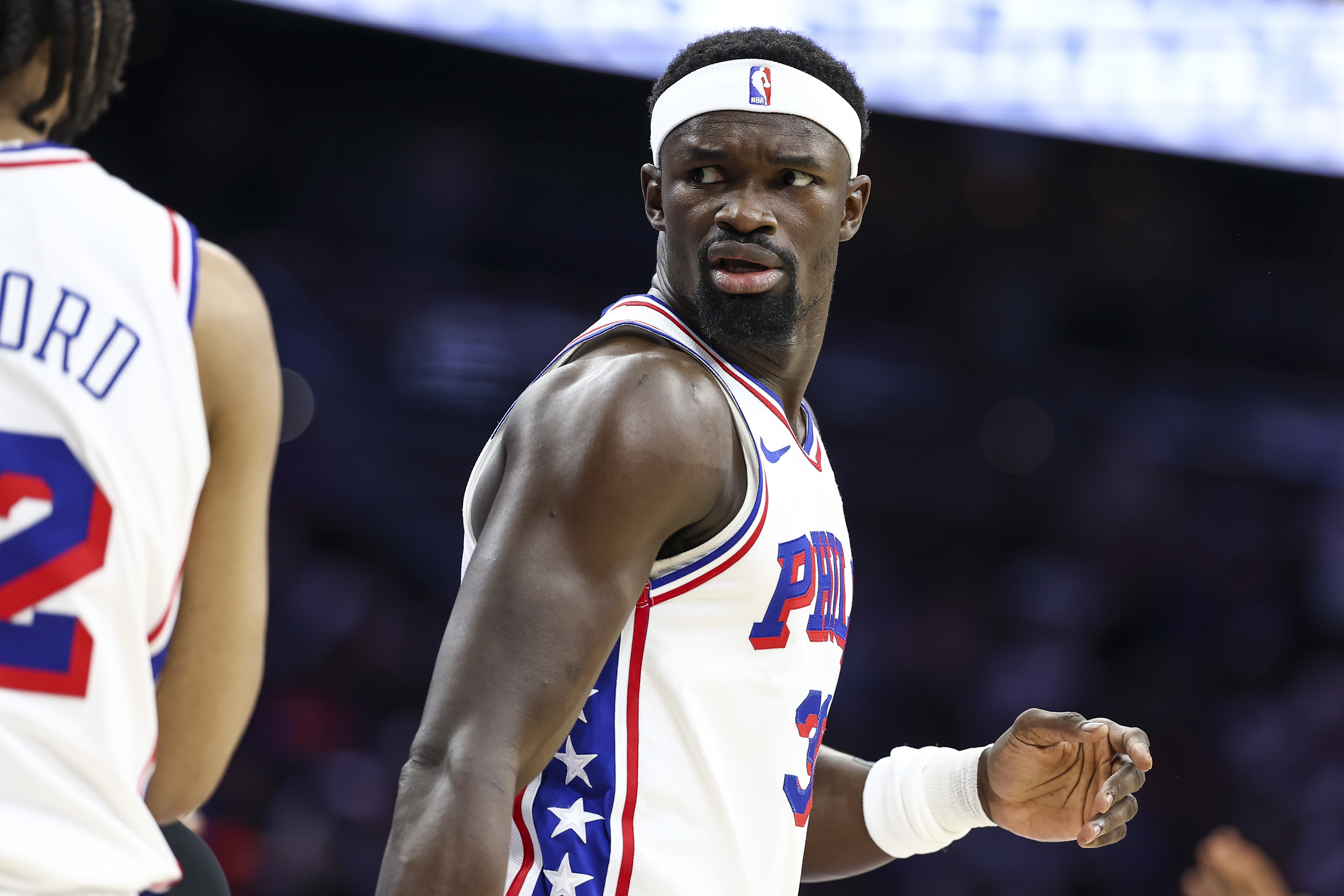
    The injury bug has officially struck the 76ers before the season opener, with newcomer Ariel Hukporti undergoing surgery to repair a torn Achilles tendon that occurred during Monday’s preseason game against the New York Knicks.

    It is a tough personal blow for Hukporti, a 24-year-old 7-footer who was vying for the Sixers’ backup center job after spending his first two NBA seasons playing sparingly for the Knicks. It also is a hit to the Sixers at an important position.

    That rotation role not only receives the minutes behind former MVP Joel Embiid, but is in line for spot starts when Embiid inevitably misses games to manage his health. And those Embiid absences move somebody else into the backup role, which is now almost exclusively undersized options.

    Oddly enough, Embiid currently is the healthiest of the top of the center pecking order. Adem Bona, the backup for most of last season, is still nursing a foot sprain, though he has progressed to on-court activities, the team said Wednesday. Dominick Barlow, a contender for small-ball lineups, still has a back issue and had his midsection wrapped after Wednesday’s practice. Neither player are expected to be available for the preseason games at the Brooklyn Nets Thursday and the Boston Celtics Saturday.

    Even if the Sixers are granted the Designated Player Exception, they cannot make an additional signing because they are hard-capped at the first apron. They could add another center via a trade, though most players on the first year of their contract are ineligible to be moved before Dec. 15. They do have a two-way contract still open.

    For now, here are the Sixers’ remaining center options behind Embiid:

    Adem Bona

    Bona, now entering his third NBA season, is a high-energy rim protector with an athletic 6-foot-10 frame. His raw offensive game primarily revolves around the basket, though drilling three-point shooting is consistently part of his pregame routine. He also struggled last season with fouling too frequently and with fundamentals such as catching the ball.

    Bona’s $2.3 million salary the 2026-27 season became guaranteed in July. And though Hukporti’s injury gives Bona the inside track to hold the backup role again, this season feels even more important for the 23-year-old.
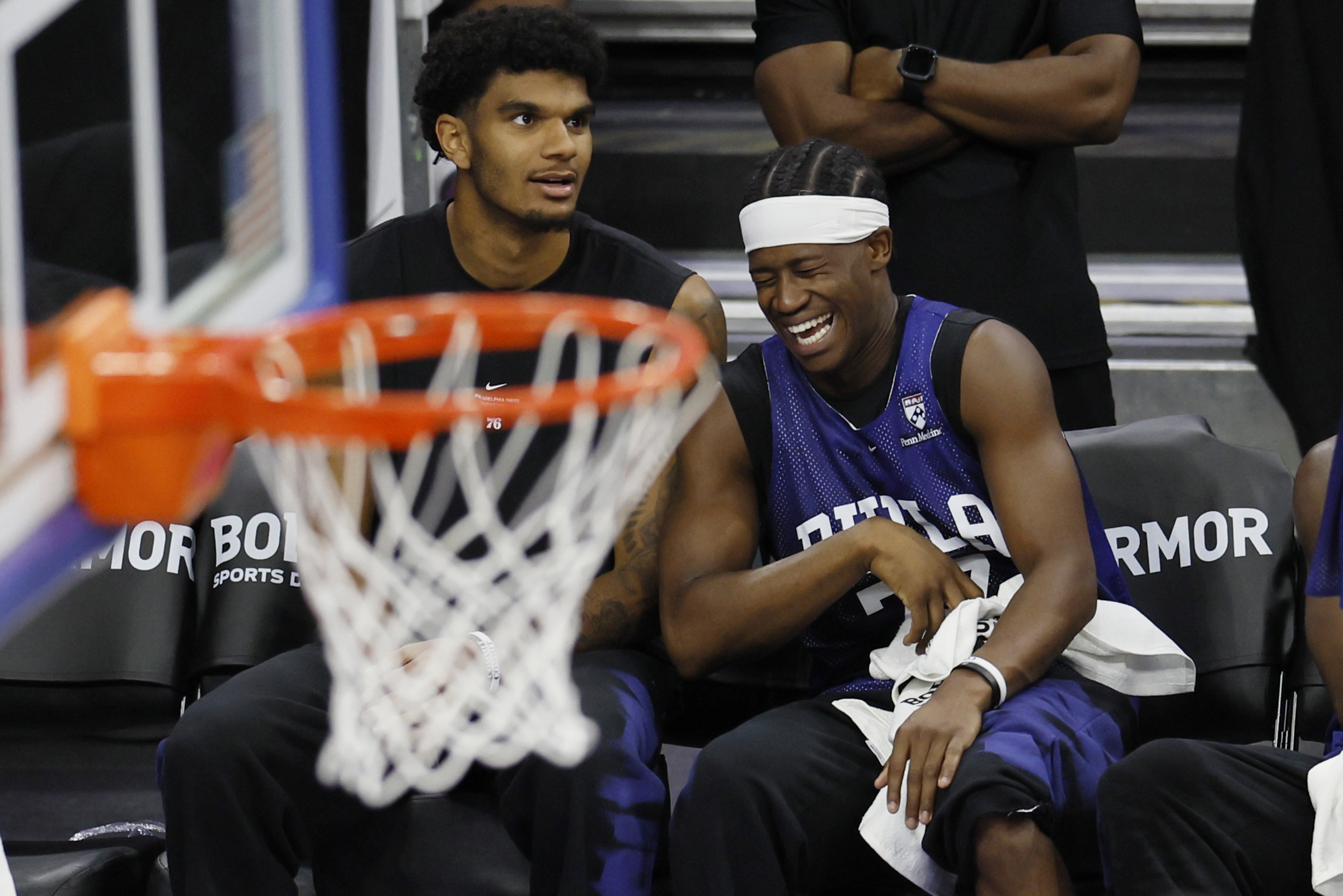
    Sixers center Dominick Barlow has a back issue and had his midsection wrapped after Wednesday’s practice.Elizabeth Robertson / Staff Photographer

    Dominick Barlow

    Barlow arguably was last season’s most pleasant surprise, starting 59 games at power forward and parlaying a two-year contract into a standard deal. He put up career-best numbers in his first time in a consistent NBA rotation role, averaging 7.7 points, 4.8 rebounds, and 1.2 assists.

    The 6-9, 23-year-old excels at under-the-radar skills such as cutting and crashing the offensive glass. He also played well off Embiid, sparking interest in how he can collaborate with star newcomers LeBron James and Jaylen Brown.

    “There’s going to be times where we’re probably experiment with things,” Barlow said of the possibility that he could play some center. “And it’s just my job to be ready to be productive wherever I’m at on the floor.”

    The massive knock on Barlow’s game is his shooting, making only 25.4% of his career three-point attempts. He said he worked on that element of his game during the offseason, though he has not yet flashed that in a public setting while sidelined with the injury. Barlow’s minutes also dwindled during the playoffs, when former Sixers forwards Paul George and Kelly Oubre Jr. both were healthy.

    Jabari Walker

    Another Sixer who last season had his two-way contract converted to a standard deal, Walker is an energetic rebounder who has been encouraged to let it fly from beyond the arc since arriving in Philly last season. Both skills were on display when the 6-7 Walker stepped in following Hukporti’s injury Monday night, totaling 11 points and 11 rebounds.

    “[I] can’t really even explain how much work has gone into it,” Walker said of his shot. “But a lot of mental work has [gone] into it, as well — just the confidence to shoot it. My teammates have seen me do it a lot of times, and now it’s just about me understanding that it’s the best shot for our team sometimes, and I’m a good shooter. I deserve to shoot that.”

    Only $250,000 of Walker’s $3.3 million salary for 2026-27 is guaranteed until Jan. 10, when it becomes fully guaranteed.

    Dean Wade

    Wade spent a few first-half minutes at center Monday, and Nurse put him in this group of future possibilities following Wednesday’s practice.

    All-NBA point guard Tyrese Maxey quipped last week that, at 6-10, Wade is taller than he remembers from playing against him as an opponent. Wade is best known as a versatile defender, but also can stretch the floor as a long-range shooter and be a connector on offense.

    “They pay me to shoot the ball when I’m open and play defense,” Wade said after a practice last week. “So I have to do that.”

    Tacko Fall

    Fall gained popularity as a college and professional player because, even by basketball standards, he stands at a gigantic 7-6. But he has only played in 37 NBA games since 2019, and has not logged minutes in the league since 2022.

    Nurse said last week that Fall was in contention for the Sixers’ final two-way spot. But he suffered a hip injury in practice, which is expected to keep him out for at least another week.

    LeBron James

    Yes, LeBron.

    Nurse confirmed as much Wednesday. James has used his versatility to play small-ball center in some lineups at previous stops in his illustrious career.

  • ‘The next [Nelson] Agholor guy?’ Eagles ‘meatball subs’ fan is turning his viral moment into funds for Philly PAWS

    ‘The next [Nelson] Agholor guy?’ Eagles ‘meatball subs’ fan is turning his viral moment into funds for Philly PAWS

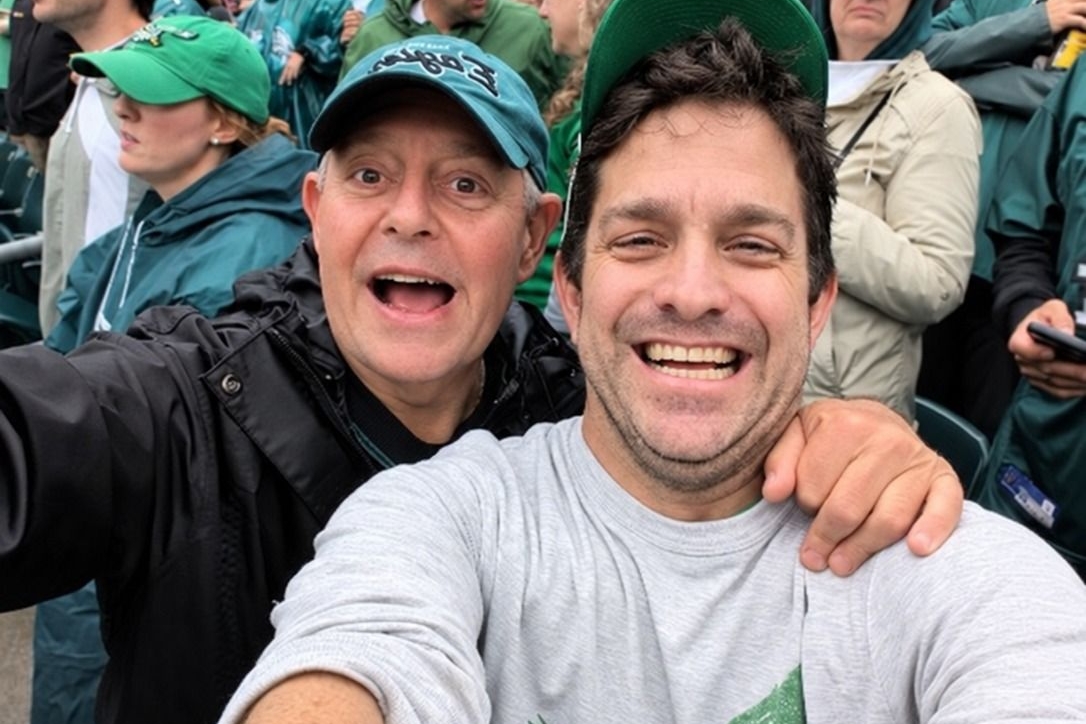
    Dan Price is turning his viral moment into something positive.

    The 42-year-old South Philly native was interviewed by CBS Philadelphia after Sunday’s Eagles loss. And in his interview, he gave Birds fans another iconic moment that will live on in Philly sports history right next to the time Larry Poff called Jeff Garcia “our baby,” and Tom Trampe’s “two years, varsity,” moment.

    Price was walking out of Lincoln Financial Field and noticed several fans yelling into a camera. When he walked by, he realized it was his turn to say something.

    “Nick [Sirianni] ain’t it,” Price said. “Nick is cute. He’s angry. He can scream. But he doesn’t make the team come out at halftime and make the team — What’s happening at halftime? Are we eating meatball subs?”

    Eventually, the latter part of the rant blew up on social media. The clip even was featured on a segment of New Heights and on NFL on FOX.

    “The next day I woke up and I’m like, ‘Oh, I remember being on TV but I doubt anything happened with it,’” Price said. “Then the texts, the tags, and the calls from people that I haven’t spoken to in years came in as it went viral. … I’ve had people say to me or tweet at me like, ‘Oh, you’re the next [Nelson] Agholor guy, you’re going down as a Philly sports legend.’”

    But Price isn’t focused on becoming a Philly legend. Instead, he wants to turn his viral moment into a way to help animals.

    Just one day after going viral, the Eagles fan realized he needed to find a way to use the quote to help raise money for Philadelphia PAWS, a nonprofit dedicated to saving Philadelphia’s homeless and at-risk pets and serving pet owners in need.

    “The two biggest loves in my life are animals and the Philadelphia Eagles,” Price said. “I can get some money to help some animals, take this embarrassing moment and, you know, turn it into something a little better.”

    As a freelance creative director who does a lot of work on social media, Price realized he needed to act fast while the clip was still hot. He decided to sell shirts with his now famous line — “Are we eating meatball subs?” — displayed across the front. The shirts cost $25, with a portion of the funds going to Philadelphia PAWS.

    A portion of the proceeds from the sale of Price’s “meatball subs” shirts will go to Philadelphia PAWS.Dan Price

    “Only in Philly could a question about halftime meatball subs turn into a way to help save animals in need,” Cory Topel, the communications and grants manager at PAWS, said in a statement to The Inquirer. “We’re incredibly grateful that Dan thought of PAWS and is using this attention to support the animals in our care. It’s always special to see our community find creative ways to show up for Philadelphia’s most vulnerable pets and the people who love them, and this is certainly one we won’t forget. GO BIRDS!”

    Price has always been a passionate Eagles fan, growing up and attending games with his Uncle Ira Feitelson, who is a season-ticket holder and can be seen in the background of Price’s viral clip. Price was also in attendance for Super Bowl LII, the franchise’s first Super Bowl title.

    “Thinking about it gives me chills,” Price said. “I remember being in the stadium for the NFC championship game when we were playing Minnesota and a friend of mine at the time, we talked about during the tailgate if they won, we were going to the Super Bowl. And then they were absolutely crushing Minnesota. And I actually bought the tickets during the NFC championship game.”

    Now, Price’s passion for the Birds will hopefully help support his love for animals, which dates back to his days in school. While attending The Creative Circus, a former advertising portfolio school in Atlanta, Price worked at a dog daycare and training facility while also volunteering at local shelters. And even in his free time, he fosters and looks after his friends’ animals.

    “I always grew up with dogs,” Price said. “And there are just so many dogs and cats and other animals that need help, that are on the street. And these wonderful rescue organizations never have enough money. Anything I can give them, you know, even if it saves the life of one animal, that’s one animal that may not have made it. So that just makes me happy.”

  • ⚾ It’s your call | Sports Daily Newsletter

    ⚾ It’s your call | Sports Daily Newsletter

    So, as we were still dealing with the fallout of Lane Johnson’s abrupt retirement on Tuesday, news broke yesterday that the Eagles traded center Cam Jurgens to the Baltimore Ravens for draft selections in 2027 and 2028.

    It’s a lot to process, and we’ll get into it later, but switching gears for a second. … Remember, the Phillies season that ended too abruptly still stings, but it’s time for you to play general manager today and retool the roster, courtesy of The Inquirer’s Stay or Go series, Phillies Edition.

    You’ll examine everything from the bullpen to the base runners and determine who will be in pinstripes next season and who you’re OK with cleaning out their clubhouse stall.

    The good news is you’re waking up to what’s expected to be a gem of a day, with sunny skies and temperatures topping the 70s.

    Finally, today’s question of the day will actually go a long way into settling a debate on the sports desk. Take a look and tell us what you think.

    — Kerith Gabriel, @phillysport, sports.daily@inquirer.com.

    If someone forwarded you this email, sign up for free here.

    ❓Is Lane Johnson the best Eagles player of his generation? Email us back for a chance to be featured in the newsletter.

    Extreme makeover

    Cam Jurgens was traded to the Baltimore Ravens for a pair of draft picks in 2027 and 2028. David Maialetti / Staff Photographer

    Less than 24 hours after Lane Johnson announced his abrupt retirement from the NFL, the Eagles traded two-time Pro Bowl center Cam Jurgens to Baltimore, further emaciating what was once one of the most feared offensive fronts in football.

    Jurgens, 27, was shuffled from center to left guard earlier this season, and now the news of his departure came as he’s in concussion protocol after the loss to the Los Angeles Rams.

    So what happens now?

    What we’re …

    🤔 Wondering: If Alex Cora was interested in still being an MLB manager, would he have taken the Phillies job? Our sources say no.

    🦉 Reading: The numbers that show K.C. Keeler is turning around Temple’s football program. But there’s still work to be done.

    🎙️ Sharing: ESPN pundit Stephen A. Smith’s rant and subsequent apology when it comes to the state of Lane Johnson’s mental health.

    👀 Watching: Jordan Mailata’s reaction to the Eagles trading fellow offensive lineman Cam Jurgens.

    ‘Stop the lies’

    LeBron James sounded off on a reporter who intimated that he chided new Sixers teammate Joel Embiid for showing up late to practice. Elizabeth Robertson / Staff Photographer

    LeBron James just got here. He doesn’t want any drama.

    So when ESPN broadcaster Mike Breen suggested that James checked Sixers center and fellow NBA All-Star Joel Embiid for being late to a practice recently, James put the kibosh on that, instantly via his Instagram account, saying: “He ain’t been late, so stop the lies.”

    Inquirer writer Chris Hine looks at what sparked it all and how Breen responded on Wednesday to his initial claim and James’ comments.

    And we all know James is traveling to practice by helicopter. Wondering if he might’ve flown over your house? Good thing we mapped his flight plan.

    Big game hunting

    Detroit Red Wings defenseman Simon Edvinsson is a player the Flyers could target. Will they however, remains to be seen. Ryan Sun

    The Flyers are on the hunt. Well, they’re giving the appearance that they are, and right now there is a potential catch to snag. After being linked to disgruntled Detroit center Dylan Larkin earlier this summer, the Flyers might reach out to the Red Wings about another player: defenseman Simon Edvinsson.

    The 23-year-old restricted free agent remains without a contract and recently returned to Sweden to regroup after the Red Wings failed to work out a deal with him during training camp. Inquirer writer Gustav Elvin examines just how realistic it is to see Edvinsson in orange and black.

    On this date

    Oct. 8, 1977: The largest crowd ever assembled for a baseball game in Pennsylvania (64,924) at that time happened inside Veterans Stadium when the Phillies hosted the Dodgers in Game 4 of the National League Championship Series.

    🧩 Unscramble the anagram

    REBAML LEKL

    This player is one of two being hailed as the future of the Eagles offensive line with the departures of Lane Johnson and Cam Jurgens. Think you know? Take a guess and then click here to see if you’re correct.

    What you’re saying about the Flyers

    We asked: How is it possible that only one Flyers player cracked ESPN’s Top 100 list of NHL players?

    It’s not so much that the Flyers should have had more players; it’s a little bit of the fact that the Flyers still have so much to prove as a team that it probably feels disingenuous to give them more than one person, who probably was a charity pick anyway. Look, I’m a Flyers fan since 1986; I’ve seen it all. And I can tell you that real fans don’t care about lists; we care about winning, and that’s all we wanna see this team do, whether they individually crack some list or not. — Dave P.

    We compiled today’s newsletter using reporting from Scott Lauber, Lochlahn March, Gustav Elvin, Mike Livingston, Jeff Neiburg, Olivia Reiner, Chris Hine, Rob Tornoe, and Vaughn Johnson.

    By submitting your written, visual, and/or audio contributions, you agree to The Inquirer’s Terms of Use, including the grant of rights in Section 10.

    That’s a lot to process; we know. Then again, Philly, you’ve been trusting in the process for a decade, so act accordingly. I’ll catch you tomorrow.— Kerith

  • From Passyunk Avenue to a Darius Slay pep rally, here’s a guide to London for Eagles fans

    From Passyunk Avenue to a Darius Slay pep rally, here’s a guide to London for Eagles fans

    The Eagles are not spending much time in London.

    Coach Nick Sirianni told reporters that the team will depart Friday and fly overnight to the United Kingdom’s capital. The Eagles will arrive less than 36 hours before kickoff against the Jacksonville Jaguars at Tottenham Hotspur Stadium on Sunday (9:30 a.m., NFL Network).

    Unlike the Eagles, thousands of Birds fans traveling for the game will have time to take in the city. Here’s our Eagles fan guide to London.

    Where do I find fellow Birds fans?

    Birds fans are again looking to take over their host city.

    The Green Legion is hosting a pregame party on Sunday at Tottenham Community Sports Centre from 10:30 a.m. to 2 p.m. The tailgate will feature food, drinks, and music. The fan group made sure to bring traditional tailgate games, like beer pong and cornhole, over the pond. Tickets can be purchased on Green Legion’s site.

    Philly Sports Trips will also host events for Eagles fans. On Friday, the group is hosting a four-hour dinner cruise on the Thames River. Then, on Saturday, the group is throwing a pep rally with former Eagles corner Darius Slay at Waterloo’s Passyunk Avenue bar from noon to 4 p.m. To end the weekend, the group is hosting a pregame tailgate outside of Tottenham Hotspur Stadium. Tickets can be purchased on Philly Sports Trips’ site.

    What’s Passyunk Avenue?

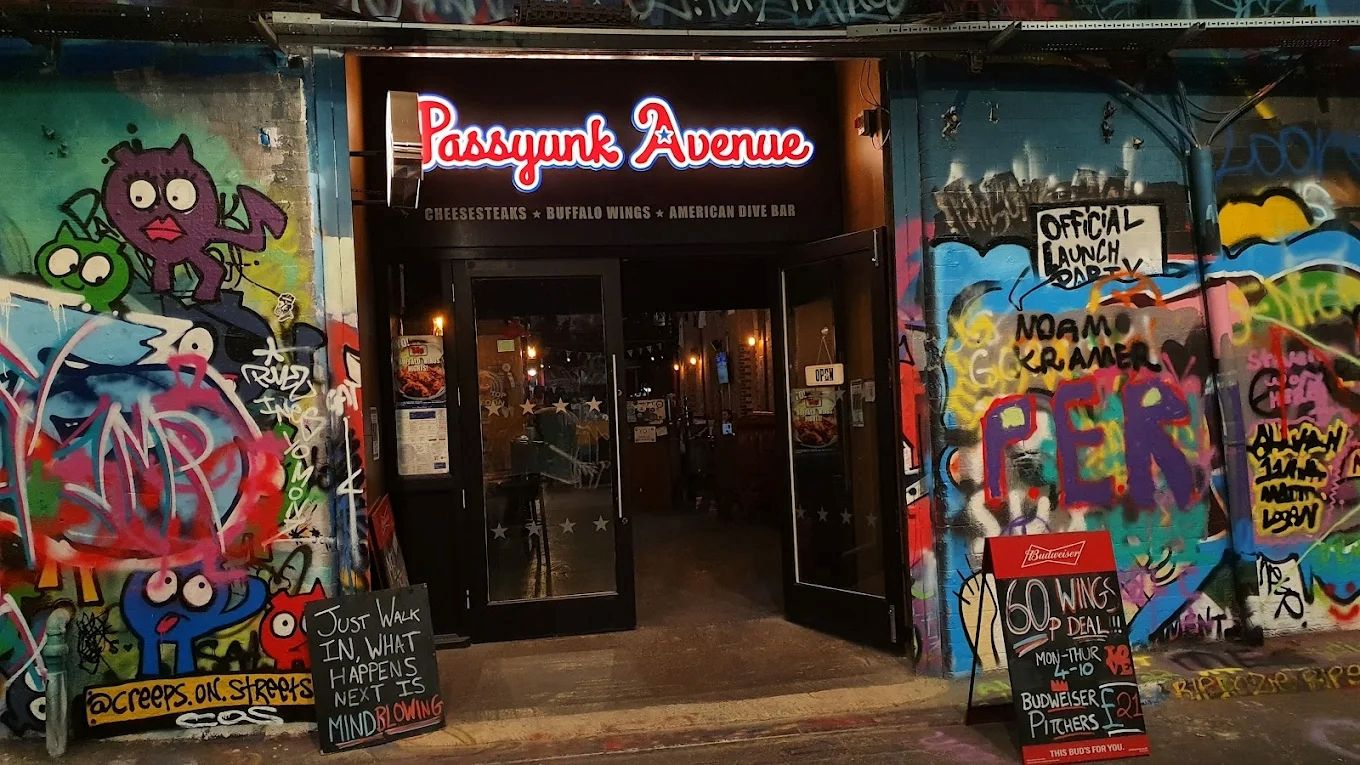
    For Philadelphians visiting the United Kingdom, visiting one of Passyunk Avenue’s locations has become a “must” in recent years. The bars are authentically Philadelphian.

    The bar chain opened its first location in the Fitzrovia neighborhood in 2018. Owner JP Teti now runs locations in Fitzrovia, Waterloo, Battersea, and Kensington (not that one). There’s also Passyunk Play, a game-focused bar that can also be found in Waterloo. Inquirer food reporter Michael Klein caught up with Teti earlier this week.

    Passyunk Avenue’s Waterloo location sports a familiar font in the sign.Courtesy of Passyunk Avenue

    “Coming from a South Philly Italian American ethnic inheritance, I think about food constantly,” Teti told The Inquirer. “I wondered why, in a city as diverse as London, you couldn’t get hoagies, cheesesteaks, chicken parms, and so on.”

    Passyunk Ave is hosting two unique events for Eagles fans this weekend.

    The Wooderloo Terminal Market will run from Thursday to Saturday. The market is modeled after Philadelphia’s Reading Terminal Market and will feature entertainment, food vendors, drinks, and merchandise. Then, on Saturday, the bar is hosting an Eagles-themed tour of London on a red double-decker bus.

    Where can I experience the other ‘football?’

    If you got hooked during the World Cup or are a longtime fan of the sport, there are plenty of ways to engage with soccer in London this weekend.

    On Friday, you can catch an English Football League Championship game. At 8 p.m. London time, West Ham United will play Queens Park Rangers at London Stadium. Tickets start at $47. On Saturday, you can attend a Premier League matchup between Arsenal and Leeds for a steeper price. The game, played at Arsenal’s Emirates Stadium at 12:30 p.m. local time, has an entry price of $257. London-based Chelsea also hosts Bournemouth in the Premier League on Saturday at 3 p.m.

    If you don’t have time to catch a game in person, London’s two top clubs have museums in the city. The Arsenal Football Club Museum is located in North London, while Chelsea’s resides in West London.

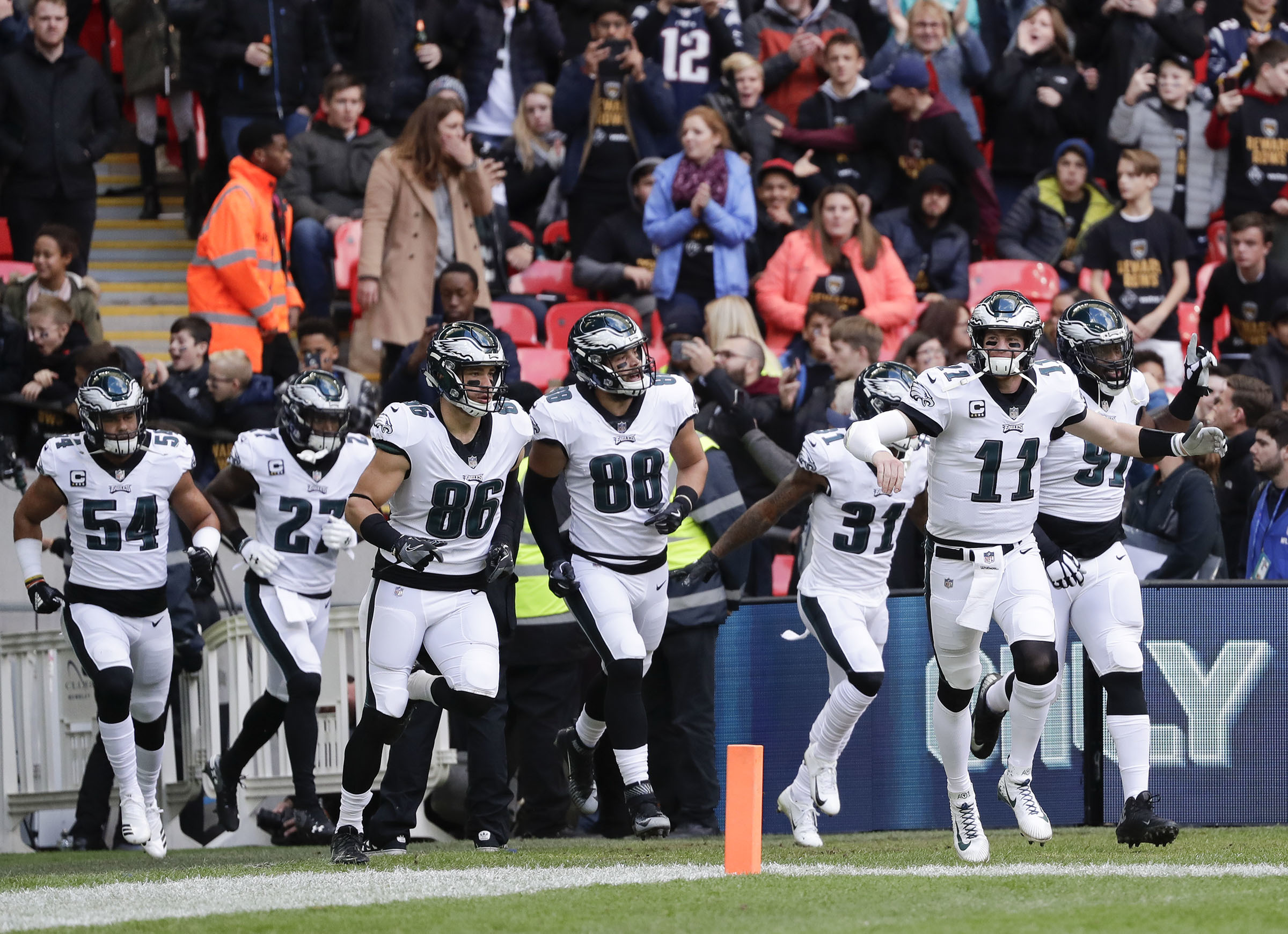
    The Eagles run on to the field before they played the Jacksonville Jaguars at Wembley Stadium in London eight years ago.YONG KIM / Staff Photographer

    What are some tourist spots?

    London is almost 2,000 years old. It’s hard to find a street corner that isn’t a tourist spot, but here are some recommendations:

    • It would not be a trip to London without taking a ride on the London Eye. The massive Ferris wheel is over 440 feet high and offers fantastic views of the city.
    • You can “Come Together” with some of your fellow Eagles fans at Abbey Road in northwest London. The famous street was featured on the cover of The Beatles’ 1969 album of the same name and has since become a tourist mainstay.
    • For history buffs, consider checking out the Churchill War Rooms — the underground headquarters for English Prime Minister Winston Churchill during World War II. Guided tours of the untouched war rooms can be purchased on the museum’s website.
    • Philadelphia’s favorite founding father, Benjamin Franklin, spent a large part of his life in London. The Benjamin Franklin house at 36 Craven Street is his only remaining home. Franklin, a known prankster, would probably enjoy an Eagles chant in his old abode.
    • William Shakespeare might not have made sense in high school but give him another chance this weekend. You can catch As You Like It, a comedy written by Shakespeare, at the historic Globe Theatre. The play has available showtimes on Thursday, Friday, and Sunday.
    • Given Philadelphians’ love-hate (mostly hate) relationship with SEPTA, it is hard to imagine a subway doubling up as a tourist attraction. However, The Tube, London’s transit system, has become iconic in its own right.
  • Council President Kenyatta Johnson is holding up a bill aimed at providing tax relief for Philly’s small businesses

    Council President Kenyatta Johnson is holding up a bill aimed at providing tax relief for Philly’s small businesses

    It has been almost a year since a bill aimed at providing relief to Philadelphia small businesses affected by the recent elimination of a popular tax break first came before City Council.

    A majority of Council supports the proposal, which was introduced by Councilmember Mike Driscoll.

    And yet, for months, the bill has languished in Council’s Finance Committee. The holdup, according to Driscoll, is Council President Kenyatta Johnson.

    “The Council president wasn’t interested in moving any bills that could risk revenue generation, and he’s concentrating on working with the revenue department on ways to increase revenue,” Driscoll said in an interview Wednesday, when he was hoping the measure would be called up in committee.

    Driscoll’s bill would exempt sole proprietors and single-member limited liability corporations from paying the city’s business income and receipts tax, or BIRT.

    He introduced the measure in November 2025 in response to Mayor Cherelle L. Parker earlier that year persuading Council to get rid of a tax break that excluded firms’ first $100,000 in revenue from taxation under the BIRT, effectively eliminating the tax for firms that make less than that, including many gig economy workers and mom-and-pop businesses.

    Parker said she supported the intention of the tax break, but moved to end it after Zoll Medical Corp., a Massachusetts-based company that did business in Philly, sued the city, claiming the policy was illegal under the Pennsylvania Constitution. Parker said she was acting on advice from the law department, which determined the city would likely lose a court battle over the issue, and Council members grudgingly eliminated it in June 2025.

    Driscoll’s bill aims to provide a legal workaround that would help many of the firms affected by the elimination of the tax break while passing constitutional muster.

    In a statement, Johnson declined to explain why the bill was not brought up in committee and said he supports small businesses.

    “All of us on City Council understand the challenges they are facing,” Johnson said. “Council is reviewing all tax relief proposals as part of a larger conversation regarding the Fiscal Year 2028 operating budget, revenues, and fiscal priorities.”

    The mayor’s office declined to comment.

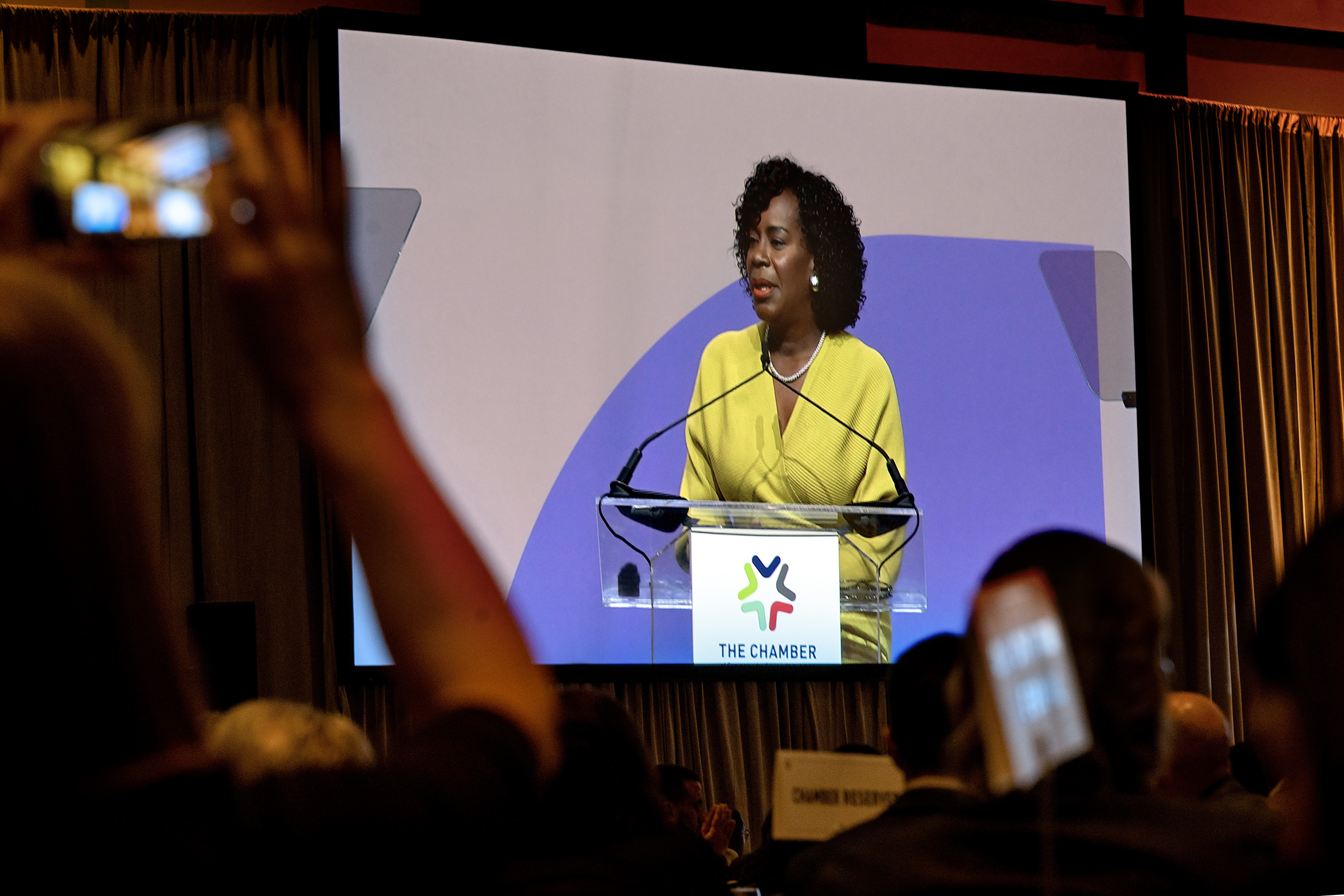
    Attendees record Mayor Cherelle L. Parker on big screen as she delivers her keynote address at the Chamber of Commerce for Greater Philadelphia’s Annual Mayoral Luncheon Wednesday, Feb. 11, 2026.Tom Gralish / Staff Photographer

    When she moved to eliminate the $100,000 BIRT exclusion, Parker also proposed a bill that would gradually reduce BIRT rates over 13 years, and Council approved the tax cuts in June 2025. While the tax cut measure will eventually lead to a dramatic reduction in BIRT bills for all firms in the city, small businesses are being hit hard by the end of the tax break in the meantime.

    “Sending a message to small business that we’re not here to help right now, I think, is the wrong message,” said Driscoll, who represents parts of Northeast Philadelphia.

    The bill is currently pending in the Committee on Finance, which is chaired by Majority Leader Katherine Gilmore Richardson.

    Gilmore Richardson, who has previously said she supports the proposal, declined to comment.

    The BIRT, which is Philly’s third-largest local tax and brought in about $779 million last fiscal year, consists of two tax rates. Firms must pay 5.71% of their net income, or profits, made in Philadelphia, as well as 0.141% of their gross receipts, or total income, according to the city’s website.

    The elimination of the $100,000 exemption has subjected tens of thousands of small businesses to the BIRT for the first time in years. It was projected to generate about $30 million in increased revenue for the city per year, and Parker and Council in 2025 allocated $38.5 million for programs aimed at helping small firms navigate the burden of getting in compliance with the tax.

    The city’s law department concluded Pennsylvania courts would likely rule that the old tax break violated the state constitution’s uniformity clause because it exempted from taxation $100,000 in income from all companies, producing different effective tax rates for firms depending on how much they made.

    Driscoll’s bill, which the administration has said would cost the city about $29.5 million per year, is aimed at finding a legal way to exempt many of the small businesses most affected by the elimination of the tax break. His measure aims to sidestep uniformity concerns by shielding entire classes of firms that include many of the small businesses that previously benefited from the $100,000 exemption from having to pay the tax at all.

    But the legislation also risks incentivizing more well-off business taxpayers, such as real estate investors, to dodge the tax by restructuring into the types of companies it would exempt from the BIRT. The bill, for instance, could allow investors to organize their companies as single-member LLCs while still requiring small stores with multiple owners to pay the tax.

    “The Department of Revenue anticipates businesses may change their business structure specifically to take advantage of the exemption, which will increase potential revenue losses,” the administration wrote in a fiscal analysis of the bill.

    Johnson has previously supported efforts to lower the business tax, and his opposition to Driscoll’s bill came as a surprise — not least to Jigar Mehta, a Bucks County-based management consultant who championed the idea for Driscoll’s legislation.

    Mehta said Wednesday that Johnson’s staff had helped draft the legislation.

    “They literally helped us put this bill together, his office,” said Mehta, who added that he was told at the time that Johnson supported it. “If you’re for exempting this group, why now all of a sudden are you saying we need this revenue? That’s what’s shocking.”

  • Pa. measles outbreak is nation’s worst, echoing deadly 1991 Philadelphia epidemic

    Pa. measles outbreak is nation’s worst, echoing deadly 1991 Philadelphia epidemic

    The child gasped for air, sitting alone in front of an upstairs television, near death inside her Northeast Philadelphia home.

    As a measles outbreak ravaged the city, Philadelphia’s deputy health commissioner, Robert Ross, used the home phone to call a judge for a court order to treat the girl. Her family worshiped at Faith Tabernacle Congregation, a fundamentalist Christian church at the center of the outbreak. Many members were refusing all medical care, including vaccinations.

    The 1991 outbreak would eventually sicken 1,400 people across Philadelphia and kill nine children. It spurred the city to pursue the nation’s first and only court-compelled vaccinations. Some parents at Faith Tabernacle were ordered, against their wishes, to vaccinate their children against measles.

    The girl in the house in Northeast Philadelphia was about 9 years old and “minutes, maybe an hour, away from respiratory failure,” Ross recalled. And when he tried to call for medical care, her grandmother tried to block him from the phone.

    The child ended up on a ventilator at St. Christopher’s Hospital for Children and ultimately survived. Her story became a defining moment in the public health response to the state’s last major measles outbreak, part of a nationwide surge between 1989 and 1991 that sickened tens of thousands of people and led to at least 166 deaths.

    Three decades later, Pennsylvania is again contending with the nation’s worst measles outbreak, with more than 1,000 cases and five measles-related deaths reported this year.

    Then and now, the highly contagious disease spread in communities with low vaccination rates, but for different reasons. The 1991 outbreak spread in a community that rejected vaccines — and across a city with limited access to vaccination even for those open to them. Now, vaccines are easier to access — but too many people don’t want them.

    So far, Philadelphia has been spared as measles actively spreads in the region’s western suburbs of Chester County and just beyond in Lancaster County, whose 401 reported cases lead the state.

    Ross and other physicians who treated children in Philadelphia in 1991 lament the return of measles, which tops the list of vaccine-preventable diseases once common during childhood.

    “I would have said there was no chance this would ever happen again,” said Ross, who went on to spend decades as a public health administrator in California. “We were looking forward to decades of measles-free, whooping cough-free, polio-free livelihoods for children.”

    In 1991, parents flocked to vaccine clinics organized around the city. At one event that May, doctors handed out shots to 60 children — with Nerf balls and a DJ on hand to make the medicine go down — in Fishtown and South Kensington, then without full-time pediatricians to routinely provide vaccines. Another vaccination effort immunized 6,000 children over a weekend, with help from the Phillie Phanatic.

    Today, families increasingly are opting out of vaccines, often by taking advantage of religious and philosophical exemptions that provide legal outs from immunizations otherwise required to enter school. And vaccine skeptics once relegated to the fringes of public discourse now are setting the federal health agenda under President Donald Trump.

    Years of declining vaccination rates have left not only children but also many unvaccinated adults vulnerable. Where only children died in 1991, three of five deaths in the current outbreak appear to have occurred in adults.

    “It felt like a more winnable battle in ’90, ’91, than right now,” Ross said.

    ‘You just knew that an outbreak was imminent’

    In the spring of 1989, an R.E.M. concert led to Philadelphia’s first reported cases, involving concertgoers at the Spectrum. The city health department interviewed teenagers exposed at the show, ramped up vaccinations, and braced for the worst.

    Pennsylvania laws requiring vaccinations for school admission were still relatively new — on the books for less than a decade — and federal health officials had only just begun recommending a second dose of measles, mumps, and rubella vaccines for children.

    Tens of thousands of preschoolers had not received even one dose of the MMR vaccine, the Daily News reported when the first cases emerged. Nearly two-thirds of Hispanic toddlers in North Philadelphia had not received the one dose recommended by age 2, The Inquirer noted at the time.

    The virus started spreading: 89 cases were reported in the city in 1989, followed by more than 200 the next year.

    The numbers followed a nationwide trend: By December 1990, measles had infected more than 25,000 people across the country, a 68% increase over the year before.

    At Philadelphia’s children’s hospitals, St. Christopher’s was receiving three to four measles cases a day in city neighborhoods with high poverty and low access to medical care. Children’s Hospital of Philadelphia was handling one to two at its main campus in West Philadelphia, where at least half of preschoolers had received their recommended shots.

    In 1991, officials told The Inquirer that roughly 60% of preschoolers citywide were vaccinated against measles, well below the 95% threshold that scientists now say is necessary to prevent the virus from spreading in a community.

    In part, this reflected access challenges. The federal government had reduced public health funding under President Ronald Reagan, a Republican, as rising poverty contributed to a growing uninsured population. The illicit drug use that defined the crack epidemic also meant some parents neglected to seek medical care for their kids, Ross said. All contributed to “a toxic brew” that kept kids from getting immunized, he said.

    “You just knew that an outbreak was imminent,” Ross said.

    Deaths mount

    In January 1991, Philadelphia recorded its first measles death in 20 years — an unvaccinated 18-month-old who developed pneumonia after contracting measles.

    The next month, two unvaccinated girls involved with Faith Tabernacle died from measles. Church members told the Daily News their views required rejecting medical care: Only God could cure illness. “They effectively had a ban not just on vaccines but on all medical care,” Ross said.

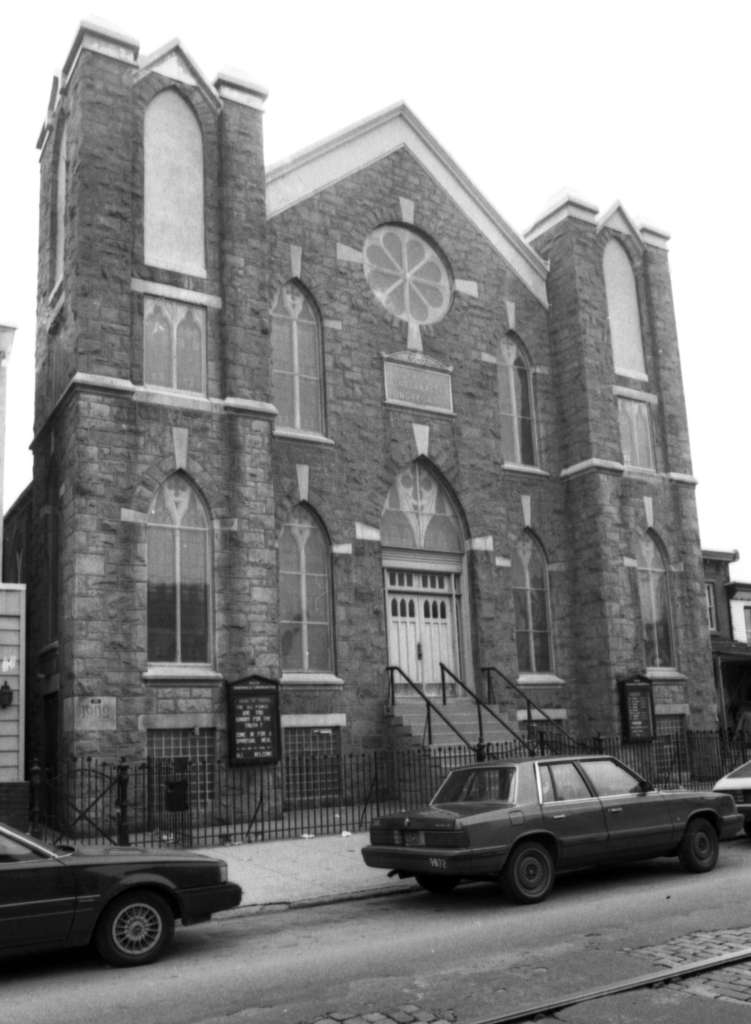
    Faith Tabernacle Church at Fifth and Erie Streets in 1991. Children from the congregation died in a measles outbreak that year.File Photograph

    Some church members refused to call a doctor or visit a hospital even as their children lay dying. Other parents associated with the church, however, did take their children to the hospital as their conditions deteriorated.

    Sarah Long, then an infectious-disease physician at St. Christopher’s, remembers the first child with measles she treated in 1991 — a 2-year-old with a high fever and rapid breathing, characteristic of a case of pneumonia.

    But with a classic case of pneumonia, “the child is hyperalert and anxious,” Long said.

    “These children — they were not able to sit up. Not able to take fluids. They’re just lying there, incapacitated,” she recalled.

    She was stunned by the consequences of a disease avoidable through immunization since the 1960s. “This was a completely preventable problem,” Long said.

    After a third death, of a Cheltenham girl whose family attended the church, Ross and other health department workers grew concerned that phone calls with the church’s members were not producing accurate information.

    With a judge on call to order medical treatment if necessary, Ross and others knocked on congregants’ doors.

    At the house where he discovered the girl gasping for breath upstairs, Ross met eight other children recovering from measles infections, the virus’ characteristic rash fading from their faces.

    Hundreds of children not affiliated with the church also fell ill. Six of the nine children who died were church members.

    Reached by phone, Faith Tabernacle’s pastor said news reports over the years had “misconstrued the truth” about the church’s experience during the outbreak.

    Declining to give his name, and noting that he was not its leader at the time, he said the church supports personal choices about medical care. “We’re not a cult. We present the word. It’s up to the individual,” he said. “We trust the Lord for our healings.”

    ‘We had to resort to it’

    In March 1991, after another child died, several judges upheld a Common Pleas Court ruling that ordered five Faith Tabernacle parents to vaccinate their children. Their parents cried as they brought their children to court for the shots.

    “We had to resort to it,” Ross said. ”We just had nothing else available to us to protect those kids.”

    Such a ruling is unlikely to happen again in the current political landscape, said Paul Offit, a vaccination expert who heads CHOP’s Vaccine Education Center and worked at the hospital during the 1991 outbreak.

    The 1991 court rulings were much more stringent than typical vaccine requirements for schools or employment, Offit said. Under a vaccine mandate, for example, a person might face a penalty for not being vaccinated — like not being able to work a specific job — but can still decline a vaccine.

    Philadelphia courts compelled Faith Tabernacle parents to vaccinate their children — with no way to opt out.

    By the time courts were compelling parents to vaccinate their children, the city’s large-scale vaccine drives helped ensure that few children still lacked immunity to measles, he said.

    The arrival of spring and summer — measles traditionally spreads in the fall and winter — also helped quell the outbreak. So did a wave of media coverage that raised awareness about the virus and spurred many parents to vaccinate.

    Offit published a book, Bad Faith, in 2015 about religious objections to vaccination, including Faith Tabernacle’s experience.

    In 1991, immunization rates came up as shots were made more widely available.

    Now, stricter vaccine mandates for school entry could help reduce measles transmission — but that is politically unviable, Offit said.

    Pennsylvania has some of that nation’s most permissive exemption laws, requiring only that parents indicate a religious or philosophical objection to vaccinations on a form before sending unvaccinated kids to school.

    An Inquirer analysis found a 15% increase in the use of these exemptions in the last two years, reflecting increasing public mistrust in vaccines.

    In the state’s current outbreak, Health Secretary Robert F. Kennedy Jr. has spent years stoking skepticism of the vaccine, although he recently said the MMR vaccine is effective.

    Downplaying the dangers of the state’s measles outbreak, he has accused Pennsylvania Gov. Josh Shapiro, a Democrat, of politicizing the outbreak and said his administration may have “fabricated” the first reports of measles-related deaths.

    Kennedy later acknowledged that one of the deaths was caused by measles. Yet the Centers for Disease Control and Prevention website currently lists two measles-related death across the nation this year, despite Pennsylvania’s reports of five deaths.

    Now local physicians and health systems have limited options to combat anti-vaccination sentiment to increase immunization rates.

    “We have two tools: quarantine and vaccine mandates,” Offit said, “and there’s been an erosion in both because people like RFK Jr. say you can’t trust medical experts. I am worried we’re going to be seeing this for years.”

  • Before Lane Johnson was an Eagles All-Pro tackle, he was a ‘pretty boy’ quarterback for a junior college in East Texas

    Before Lane Johnson was an Eagles All-Pro tackle, he was a ‘pretty boy’ quarterback for a junior college in East Texas

    When Keith Thomas first met Lane Johnson, he was on his way to the Groveton High School weight room. It was his freshman year, and Johnson was a lanky quarterback, wearing athletic shorts and cowboy boots, with a jug of water by his side.

    The teenager was far from the behemoth he’d later become. He was clean-shaven, with “literally no muscle,” according to Thomas, his coach at the time. He estimated that the quarterback weighed “maybe” 180 pounds by the end of his junior year.

    But Thomas could see potential. Johnson was a versatile athlete who excelled in seemingly every sport he tried. On the basketball court, he regularly put up 20 to 25 points. On the track, he ran the 400-meter and threw shot put (and made all-state).

    On the football field, he played quarterback and safety, and while his arm was average, his legs more than made up for it. So did his height. At 6-foot-6, Johnson towered over defensive linemen, with a toughness that could only be forged in East Texas.

    “He was so big, half of ‘em couldn’t tackle him,” Thomas said.

    The coach tried calling colleges, big and small, in the hopes of finding his pupil a football home. But none were interested; at least not to the level of offering Johnson a scholarship.

    They didn’t see the senior as a fit at quarterback, and were discouraged by his slender frame. So, Thomas contacted Kilgore College, a junior college about 100 miles north of Groveton.

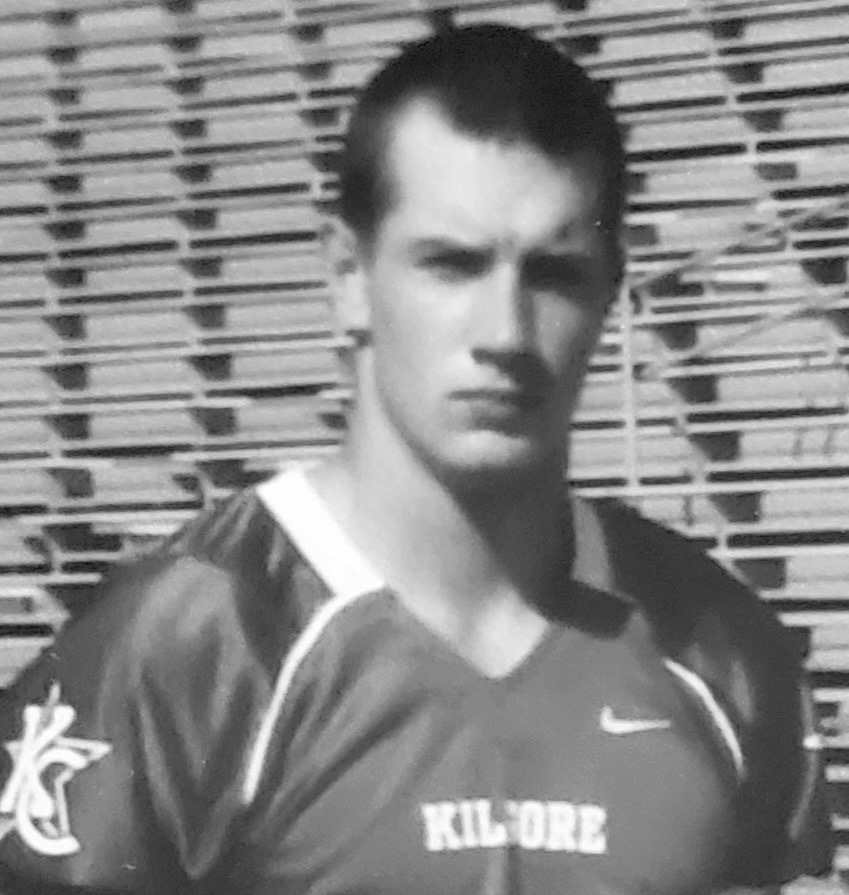
    Lane Johnson at Kilgore Collegeprovided by Kilgore College

    Stevie Moore, Kilgore’s defensive backs coach, made the two-hour drive in January 2008, and immediately saw what the other schools didn’t. He brought back a DVD of Johnson’s film for head coach J.J. Eckert, and together the two men decided to make him an offer.

    By February, the future Eagles All-Pro right tackle was sitting across from Moore in a Groveton sandwich shop, The Wooden Indian, talking about his future in the sport.

    The day ended with Johnson’s verbal commitment to sign with Kilgore. But before he did, Moore made a prediction, one that proved prescient, on the week Johnson retired from the NFL after 14 seasons.

    “I said, ‘Son, I just feel like one day, you’re going to be playing on Sundays,’” Moore recalled. “‘I really believe that.’”

    From field general to dirty work

    It was Johnson’s role on Sundays that no one anticipated. Moore thought he would stay at quarterback, or maybe move to tight end. Eckert and Thomas agreed with the latter.

    Few, if anyone, expected Johnson to become an offensive lineman, let alone one of the preeminent offensive linemen in the league. But by 2011, he was in the trenches at Oklahoma, tasked with protecting the “pretty boy quarterback” he once personified, in Thomas’s telling.

    To get to that point — to get to the Eagles in the first round of the 2013 NFL draft — he’d have to survive JUCO first. And that was no small feat.

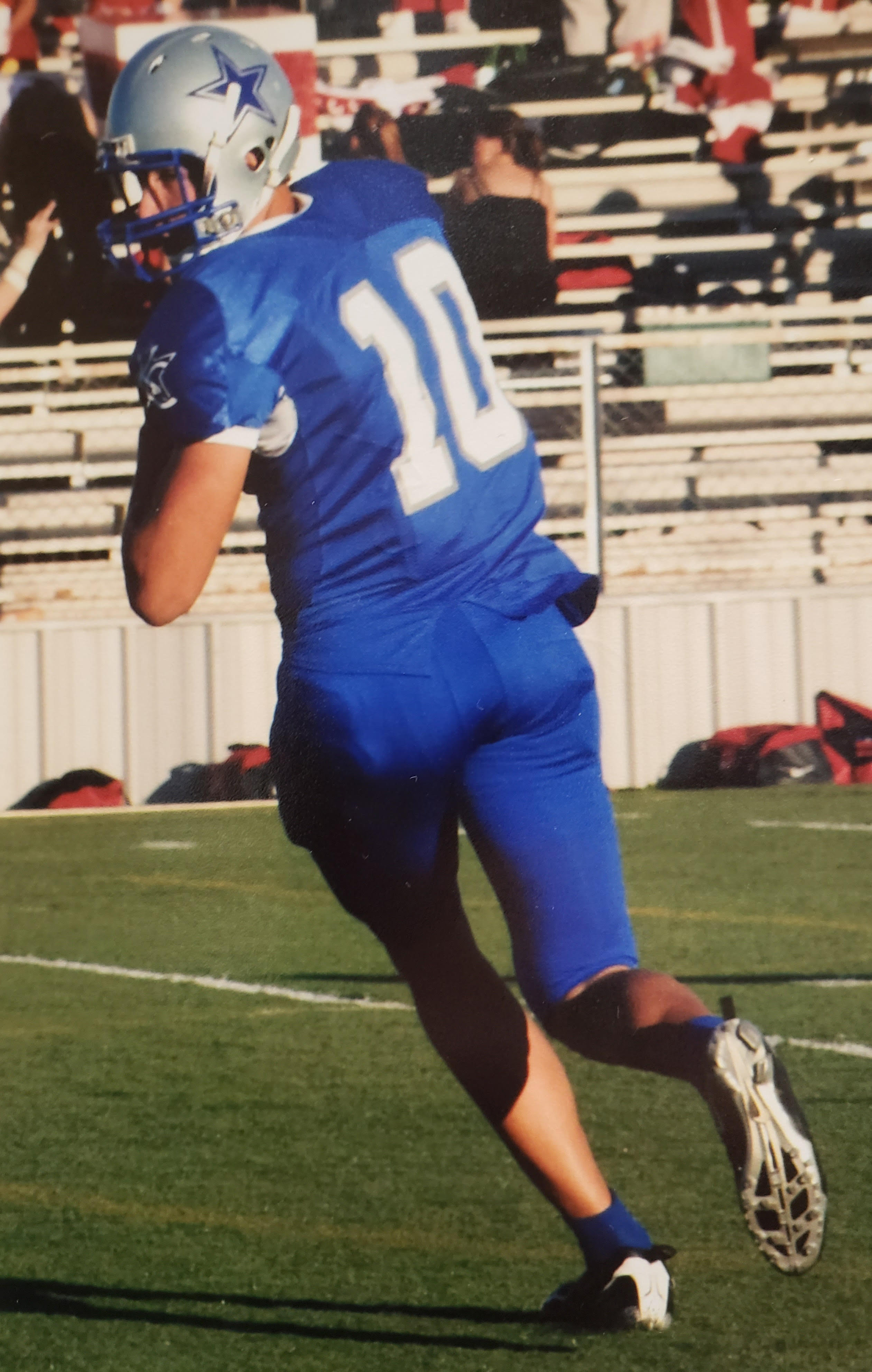
    Lane Johnson began his collegiate career as a quarterback at Kilgore College, before converting to tight end en route to becoming an elite offensive lineman at Oklahoma. provided by Kilgore College

    Even though Johnson wasn’t at a Division I school, he was often competing against Division I talent — players who had transferred in due to academic or personal struggles, or had somehow fallen off the radar.

    On top of that, he’d be working out with 40 to 50 redshirt players, all of whom had the chance to walk on, and 85 players who had guaranteed spots on the roster.

    It was quite different from the tiny Division 2A high school Johnson came from, which only had 16 to 20 guys on varsity.

    “Now, you’ve got five to six people at every position,” said Willie Gooden, who coached the offensive line and now runs Kilgore’s program. “You really have to bring your best, every single day, to even have a chance.”

    Johnson told The Athletic in 2019 that the workouts he underwent at Kilgore were some of the toughest of his life. The football program didn’t have dedicated strength coaches. They used the same rusty equipment that Gooden used when he was a player eight years prior.

    Kilgore didn’t even have its own weight room. The team would share the recreation center on campus with students and faculty, lifting at times when it was less busy.

    But the coaching staff made the most of what they had. And together, they drew up workouts that built not just strength, but endurance, with minimal recovery time mixed in.

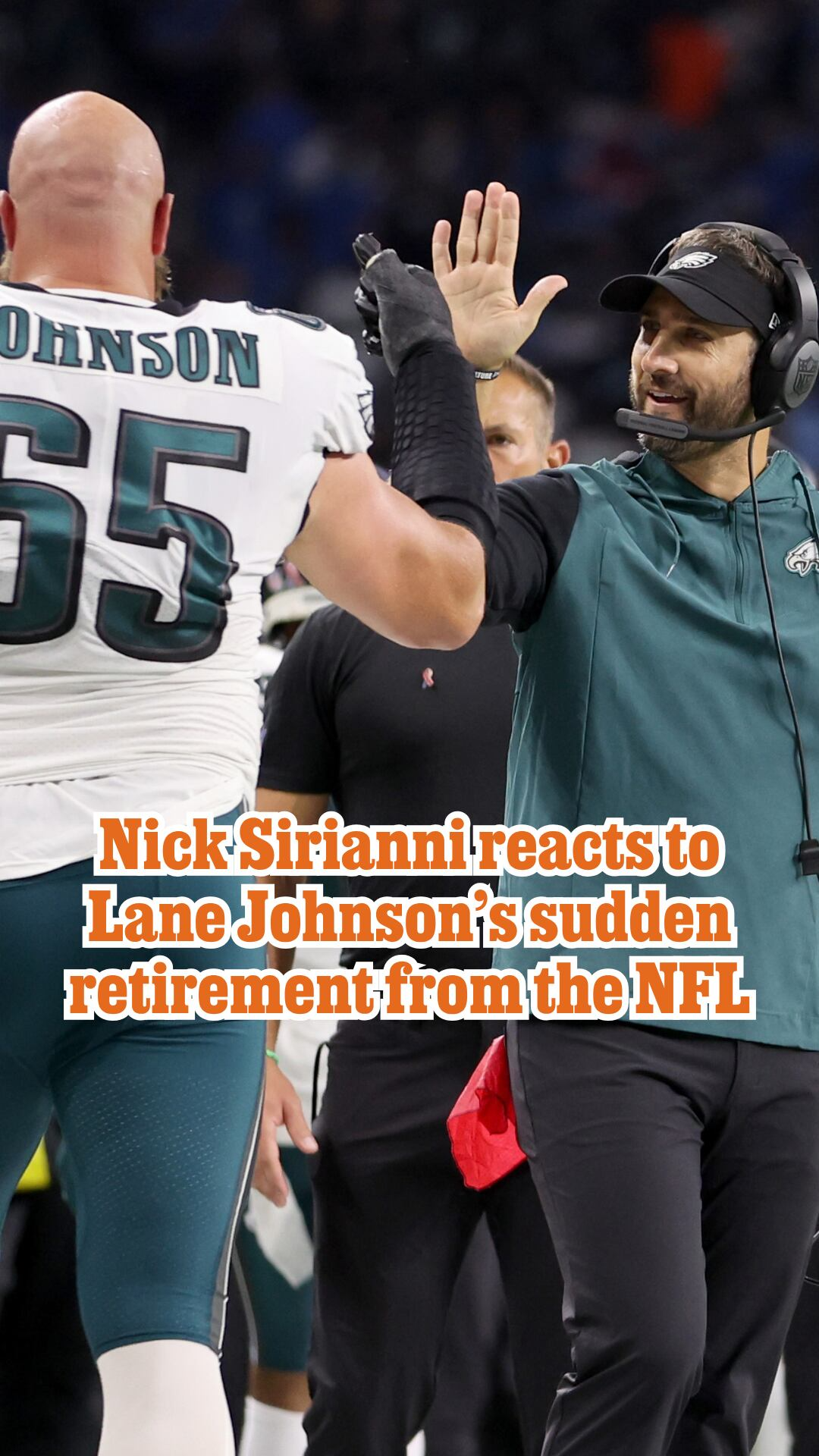
    Nick Sirianni reacts to Lane Johnson's sudden retirement from the NFL
    Video: Nick Sirianni reacts to Lane Johnson’s sudden retirement from the NFL

    Among the most challenging was the “four quarters drill,” a staple of the winter and spring, which was held in a carpeted gym (with concrete beneath).

    Players would do three exercises per quarter, with 10 reps each, and repeat those exercises in the fourth quarter, but increase their reps to 12.

    Coaches would pace the room, carefully studying the athletes’ form. If one did a crunch without lifting his shoulders, or a push-up without flattening his back, he’d have to start the drill all over again.

    “Every time you went in there — pure chaos,” Johnson told The Athletic. “There was gonna be people possibly getting in fights, there was gonna be people puking, there was gonna be people quitting. It was just all-out mania every day. That’s what I remember. But I remember we did work our ass off.”

    Kilgore placed a premium on punctuality, and if a player was late to a workout, or practice, or even skipped a class, they would face what Gooden referred to as “Ranger Reminders.”

    These reminders had a somewhat medieval flair. One, called “Block Busters,” involved lifting cinder blocks up and down the bleacher steps, while a player wrapped his arms through the holes of the blocks.

    Another, called “Screaming Cats,” involved hanging off a chain-link fence, with hands fastened to the pole at the top, and feet fastened between the chains.

    Lane Johnson has not shied away from discussing his humbling experience as a prospective collegiate quarterback at Kilgore College. provided by Kilgore College

    (Wooden says Kilgore has since moved on to other disciplinary measures).

    Johnson didn’t often find himself in these positions. He was not the kind of player that the coaches needed to stay on top of. He was a strong student, and well-behaved; one of Moore’s most vivid memories was of the teenager helping the assistant coach’s wife carry her groceries up the stairs.

    He split his 2008 season with another quarterback, Shane Fry, rotating every few games. Johnson was now closer to 220-230 pounds, but could still move quite fluidly, which was among his biggest assets.

    “People didn’t realize how fast he was,” Eckert said. “I remember one play, when we were playing Trinity Valley … and this kid took a flat angle like he was going to get him.

    “And Lane was just more athletic. It wasn’t even close. This guy thought he was gonna just cut him off, like it was real easy. Like it was some slow quarterback. And [Lane], he runs what, a 4.6 at the combine?”

    Tackling Johnson was an exercise in futility. Defenders would take on a giant coming out of the backfield, who could stiff-arm players with ease.

    Nevertheless, it was not a strong enough performance to take the starting spot. Johnson finished his season with more interceptions (seven) than touchdowns (three), completing 32 of 61 pass attempts.

    A switch to tight end put Lane Johnson on the path to becoming a decorated tackle at Oklahoma.

    He went into an exit meeting with Eckert looking to improve. They talked about adding weight, and the quarterback spent the entire offseason getting after it.

    Every morning, the team held breakfast checks from 7 to 7:50 a.m. Johnson would arrive just before then, lining up for two waffles from Eckert, before heading to class or the gym.

    When he wasn’t at the gym, he was lifting dumbbells in his dorm room at Stark Hall. The quarterback weighed 240 to 245 pounds by spring practices.

    This was when Division I schools began to take note. One day, a Kilgore tight end, Derek McGahee, injured his knee. Eckert wanted to get into a 22-personnel alignment, but didn’t have the players to do so.

    He turned to the hulking man in the green jersey, sitting beside him.

    Johnson was dubious.

    “He was like, ‘What do you want me to do?’” Eckert recalled. “I was like, ‘I don’t know … just get in a stance, run C-gap. If you see somebody, hit them.’”

    Lane Johnson impressed scouts all the way through his performance at the Senior Bowl and 2013 NFL Combine.

    The future Eagle did more than that.

    “Lane goes backside C-gap, and he hits a guy and pancakes him,” the former head coach said. “First play he’s ever [done] there. He goes and pancakes the guy.”

    A coach from Rice University was in attendance, and asked about the “tight end in the green jersey.” Before long, word got out about Johnson, and powerhouse programs all over the country started calling.

    Before he signed with Oklahoma ahead of the 2009 season, Johnson sat down with Eckert and athletic director Jim Rieves. It was not the happiest of conversations.

    The former head coach remembers a player who was “sad-eyed” about leaving the school that chose him when no one else would.

    “And I remember saying, ‘Don’t be sad-eyed,’” Eckert recalled. “‘I told you before that you should be playing in front of 100,000 people. And guess what? This is your opportunity to go do that.’”

    Giving back to Kilgore

    It was not an easy path from there. At Oklahoma, Johnson went from tight end to defensive end, before joining the offensive line in 2011.

    But he eventually found his calling (and Jeff Stoutland) and embraced his new role wholeheartedly, en route to two Super Bowl titles and six Pro-Bowl appearances.

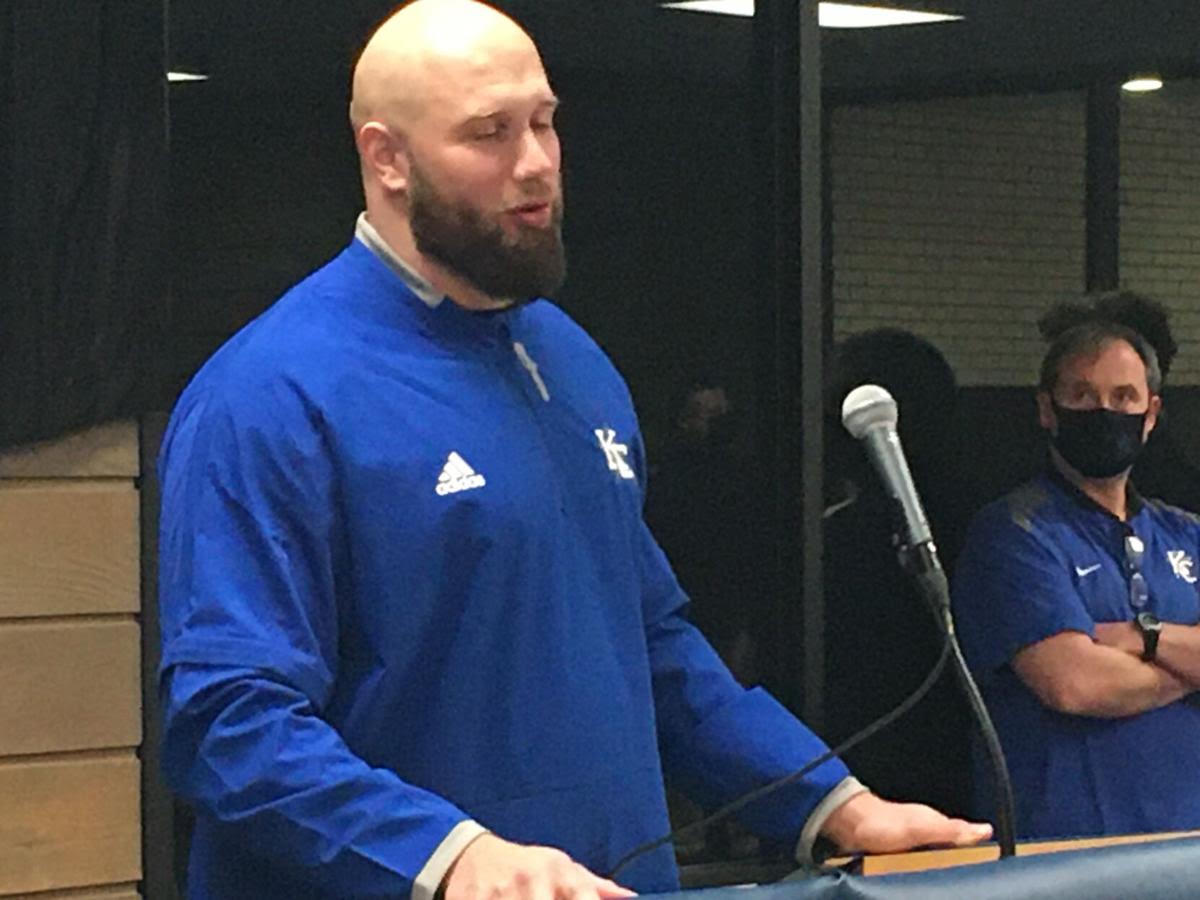
    And he never forgot where he came from. Over the last seven years, the longtime Eagles right tackle has donated over $700,000 to Kilgore. Most of this money went toward “The Lane,” a 3,800 square foot, state-of-the-art athletic performance center on campus.

    Since it was built in 2021, he’s continued to give, helping to renovate the locker rooms, the restrooms, even paying for new uniforms and shoulder pads.

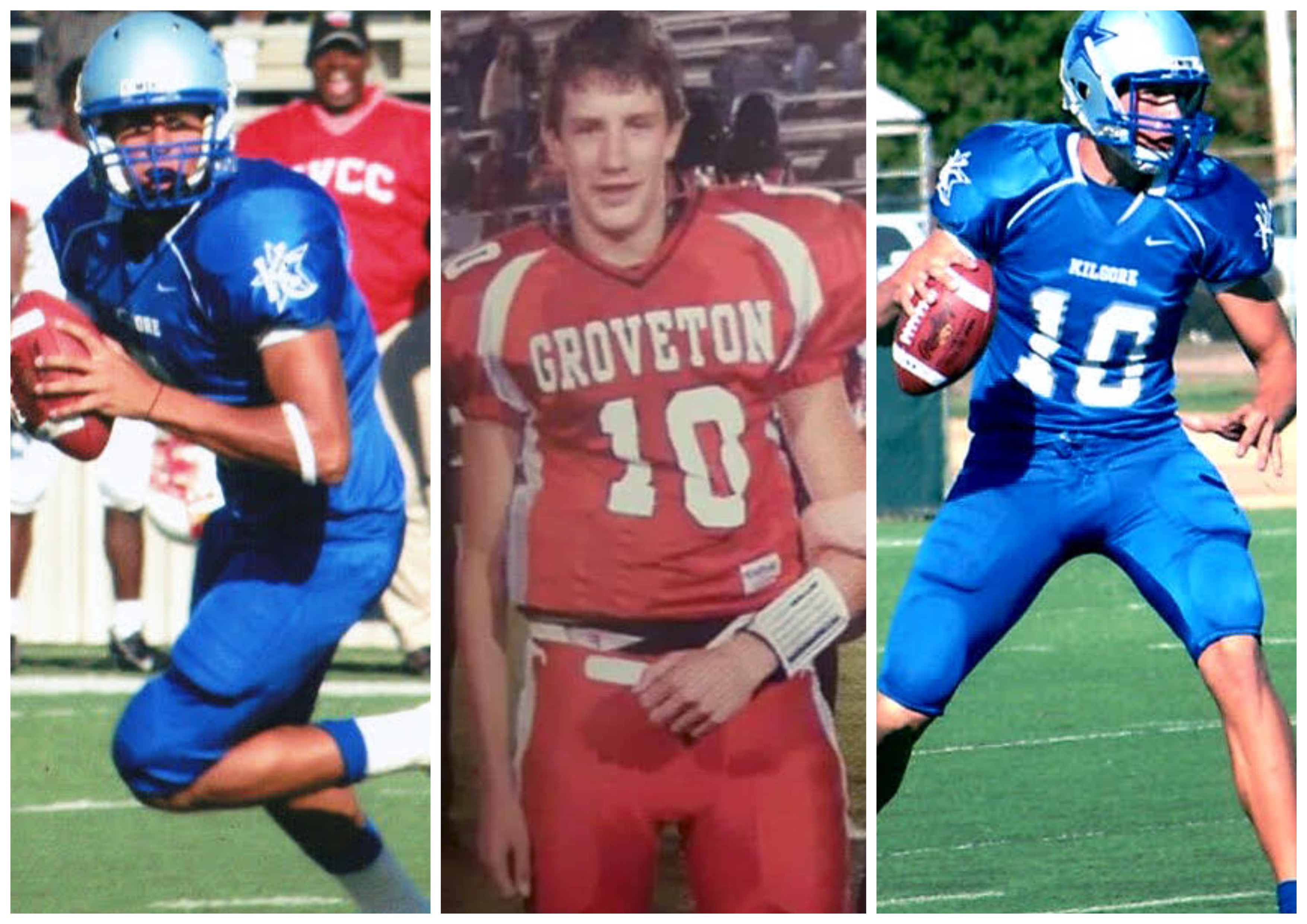
    Toward the back of the athletic center, just past a line of bench presses, is a wall with three photographs. On the left, is a slimmed-down Johnson, in Kilgore bright blue, football in hand.

    In the middle, is Johnson in his two-point stance at Oklahoma. And on the right, is Johnson as Eagles fans will remember him: in midnight green, his right foot forward, staring menacingly ahead; ready to protect a position he knows all too well.

  • Our military leaders should mark the lesson of Nixon’s final days in office

    Our military leaders should mark the lesson of Nixon’s final days in office

    The final days of Richard Nixon’s presidency offer an enduring lesson for America’s military.

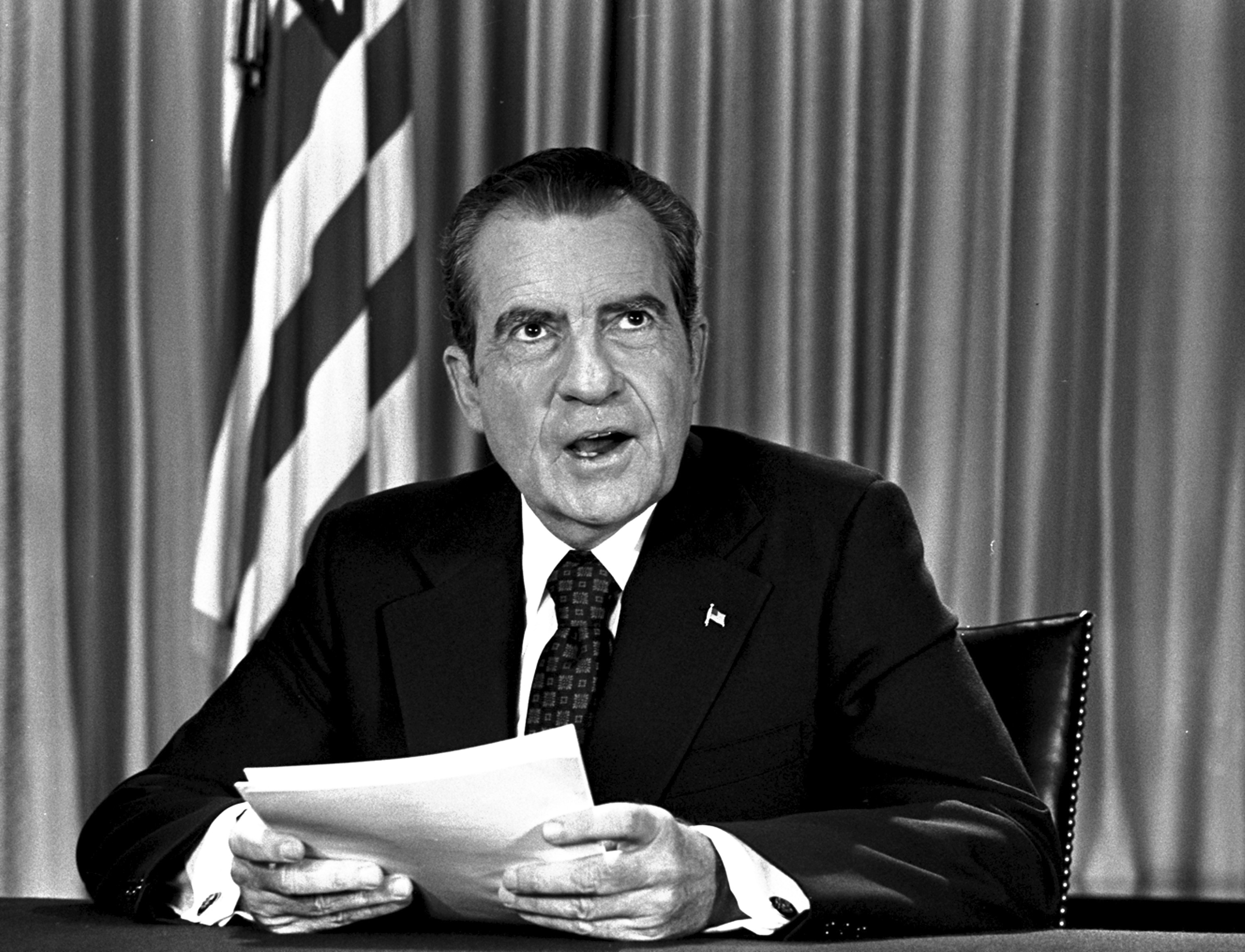
    In July 1974, the U.S. Supreme Court unanimously ordered that President Nixon produce the tapes of his Oval Office conversations relating to campaign operatives who had been caught burglarizing the Watergate Democratic headquarters. Nixon knew the tapes would show he had authorized a cover-up and obstruction of justice to protect senior administration officials.

    Facing both impeachment and potential criminal prosecution, he was volatile. Would he defy the court, refuse to produce the tapes, and order the military into the streets?

    James Schlesinger, who was the secretary of defense, and Gen. George S. Brown, the chairman of the Joint Chiefs of Staff, were reportedly concerned about this precise hypothetical and tightened their control of the military.

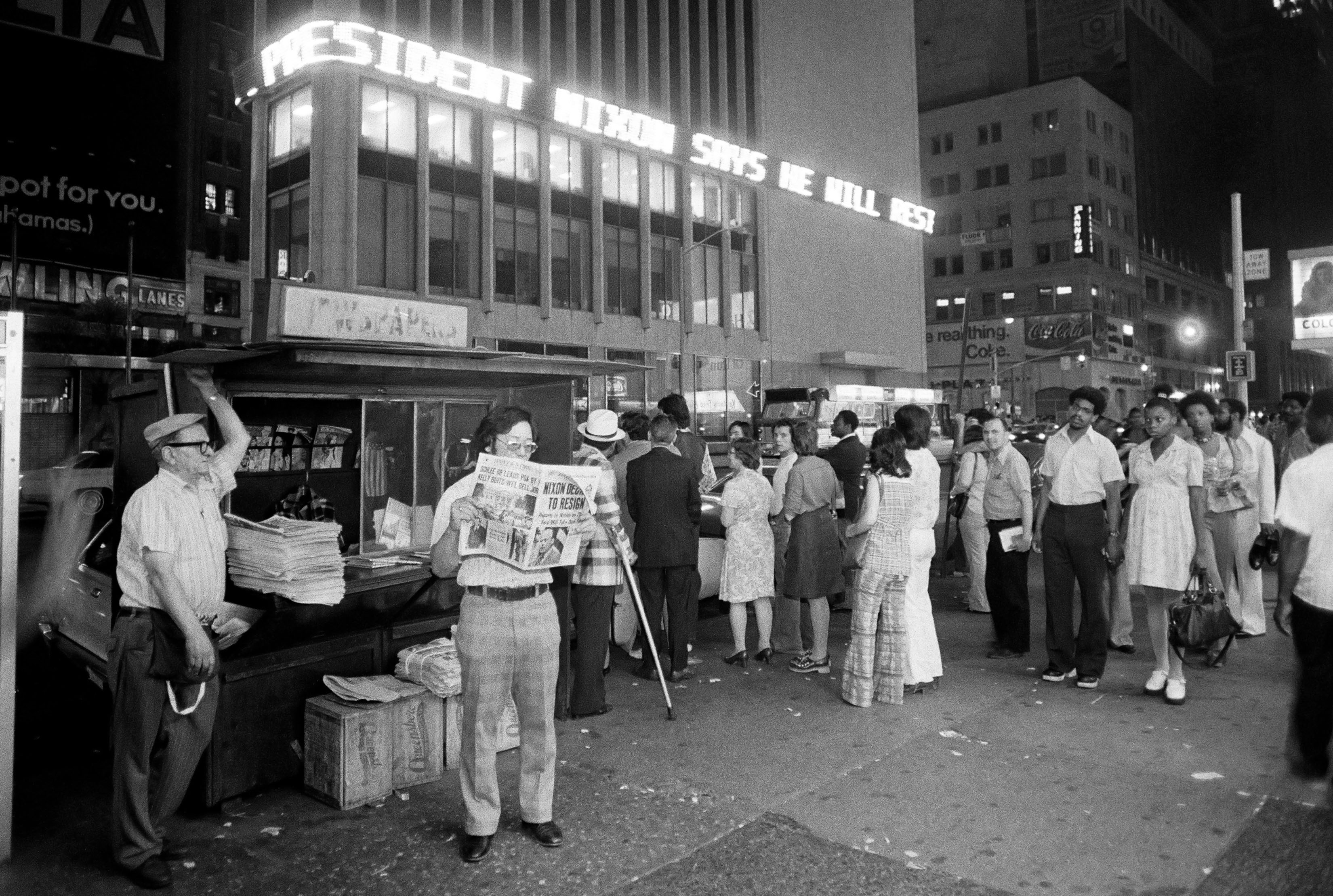
    Nixon ultimately did not defy the Supreme Court. With the tapes documenting his criminality and his conviction in the Senate on impeachment certain, he resigned on Aug. 9, 1974.

    New Yorkers in Times Square learn of the impending resignation of President Richard Nixon in this Aug. 8, 1974, photo.BARTON SILVERMAN

    The roles of Schlesinger, the chair of the Joint Chiefs, and Gen. Alexander Haig in Nixon’s resignation were likely to have been pivotal.

    A new crisis confronts Americans.

    President Donald Trump constantly attacks election results that are unfavorable to him as fraudulent despite the lack of evidence of significant fraud.

    The president delegitimizes the courts that have found no significant electoral fraud, or that otherwise rule against him.

    He claims the 2020 presidential election was stolen when his then-U.S. Department of Justice found otherwise and some 60 court cases failed to prove it.

    The president claims one need only look at the long vote count in California to deduce fraud, but he has not read or ignores the applicable sections of the California Elections Code and the convenient summary on the website of the California Secretary of State that explains the process. That process, in similar form, has been around for years, but the president and his party have never proven any significant fraud, which they surely could have if it were there.

    The delegitimization of a fair democratic electoral process, if tolerated and successful, can lead to the creation of a Russian-like electoral rubber-stamp dictatorship.

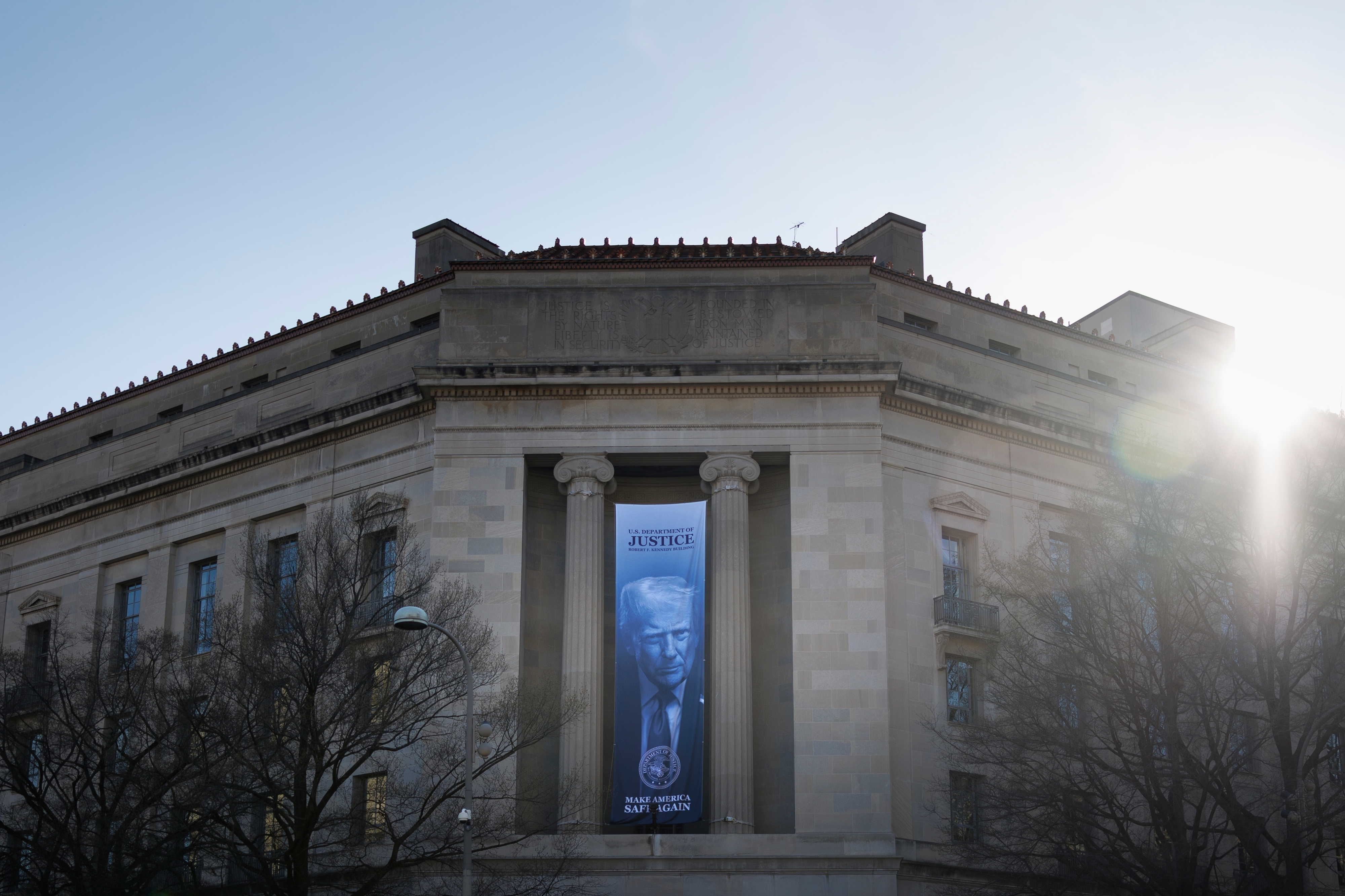
    A banner of President Donald Trump hangs outside the U.S. Department of Justice in March.Tom Brenner

    The president’s June 7 interview on Meet the Press underscores that for him, if he or his party loses a critical election, it’s because of fraud. Those who challenge his claims are “crooked.” Huge banners of his glowering face on the Department of Justice building and other agencies reflect his self-aggrandizement.

    The Constitution’s separation of powers was designed to protect the nation when an enlightened statesman was not at the presidential helm, but the current congressional majority supports or is indifferent to the president’s conduct.

    For its part, the Supreme Court shockingly ruled that presidents cannot be criminally prosecuted for official acts that are crimes.

    The people, by their vote, remain a check on tyranny, but this president has declared without material evidence that pivotal elections in which he or his party loses are — or will be — fraudulent. He has set the stage for trying to throw out legitimate election results.

    The military is the guardian of the Constitution and the American people. The military’s oath is to preserve and protect the Constitution. Today, our secretary of defense, Pete Hegseth, is not a Schlesinger. The current secretary has purged qualified senior military officers. It remains to be seen how this could affect the military’s guardian role.

    That role may soon be essential to preserve our democratic republic.

    The concern with Nixon was that he might try to use the military to prevent his lawful removal from office.

    That a president might try to use the military unlawfully to maintain himself and his party in power by illegally rejecting an election loss presents the same concern.

    The hypothetical scenarios for the upcoming midterms, and, indeed, for any national election, are alarming.

    The lesson from Nixon’s final days in office?

    That whenever any president, Democrat, Republican, or other, threatens unlawfully to declare an emergency, invoke the Insurrection Act, and put troops in the streets to try to prevent or deny election results that are unfavorable to him, the chair of the Joint Chiefs of Staff and other military leaders must be prepared — like the advisers to President Nixon seemingly were — to tell the president that the military will not follow him.

    Daniel O. Jamison is a retired attorney. He is the author of the forthcoming book, “The Birth of Jim Crow: Racism, Reconstruction and the Pivotal Supreme Court Cases of 1857-1908.”

  • The Eagles, Flyers, and Phillies have crushed people’s spirits. Worse, they’ve bored us to death.

    The Eagles, Flyers, and Phillies have crushed people’s spirits. Worse, they’ve bored us to death.

    Sometimes I feel like I missed my window. As a sportswriter, I mean. Paul Simon has a song called “Born at the Right Time” that he released in 1990, which is fitting, because when it comes to covering pro sports, I struggle to shake the sense that I was born at the wrong time.

    It would have been cooler, and perhaps more fulfilling, to have been a sportswriter in that era, the mid-1980s into the mid-1990s, not just because the nature of the job was different, but because the nature of sports was, too.

    Access to the athletes, coaches, and executives was much greater, of course, and traditional media had a wider reach, more influence, and healthier expense accounts. But the games and teams themselves were themselves more colorful, more daring, full of characters and strategic experimentation.

    The most popular terms, trends, and names in the NFL included Buddy Ryan and the 46 defense, the Buffalo Bills and the K-Gun, Jerry Glanville and the run and shoot, Brett Favre, Deion Sanders. It wasn’t unusual to see NHL players score between 65 and 80 goals in a season: Wayne Gretzky, Mario Lemieux, Steve Yzerman, Brett Hull, Teemu Selänne, Alexander Mogilny.

    The ’93 Phillies, bawdy and beer-bellied and built to beat you or beat you up, didn’t have to win the World Series to define baseball in this city for a generation. And in the NBA, you could ricochet from the Bad Boy Detroit Pistons dynasty to the 1990-91 Denver Nuggets, coached by West Philly native Paul Westhead, who quoted Shakespeare on the regular, tried to implement his breakneck “system” at the pro level, and won just 20 games … but goosed the offensive stats of such immortals as Michael Adams, Orlando Woolridge, and Blair Rasmussen.

    The point is, it’s possible — and I’d argue it was much more common back then — to lose, or to have a season with a disappointing ending, while still being interesting. Why the reminder? Because the last two weeks might have convinced people around here that following their favorite teams must be the emotional equivalent of having Joe Pesci put your head in a vise and start slowly turning the handle.

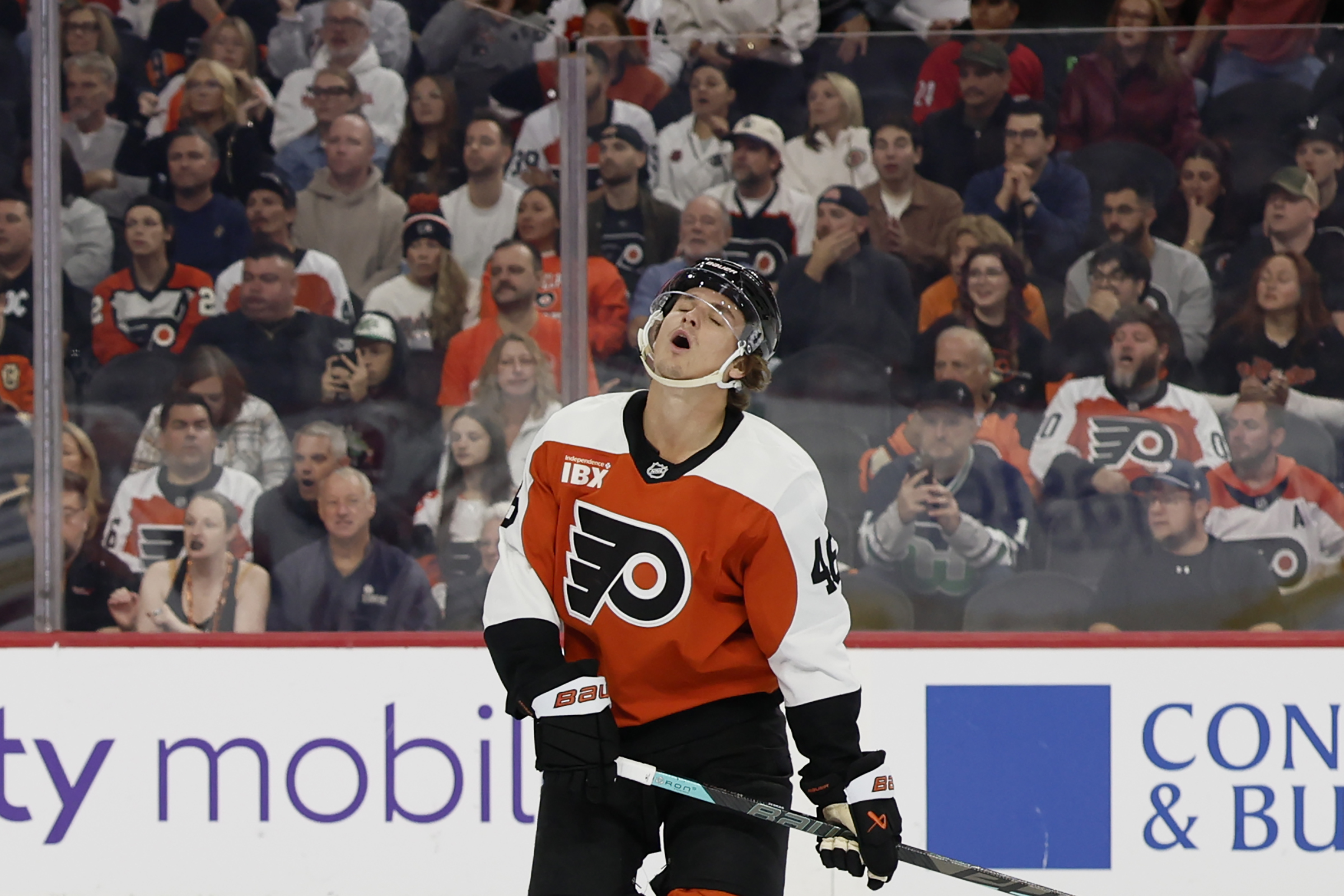
    Trevor Zegras and the Flyers are off to one of the worst starts in NHL history.Elizabeth Robertson / Staff Photographer

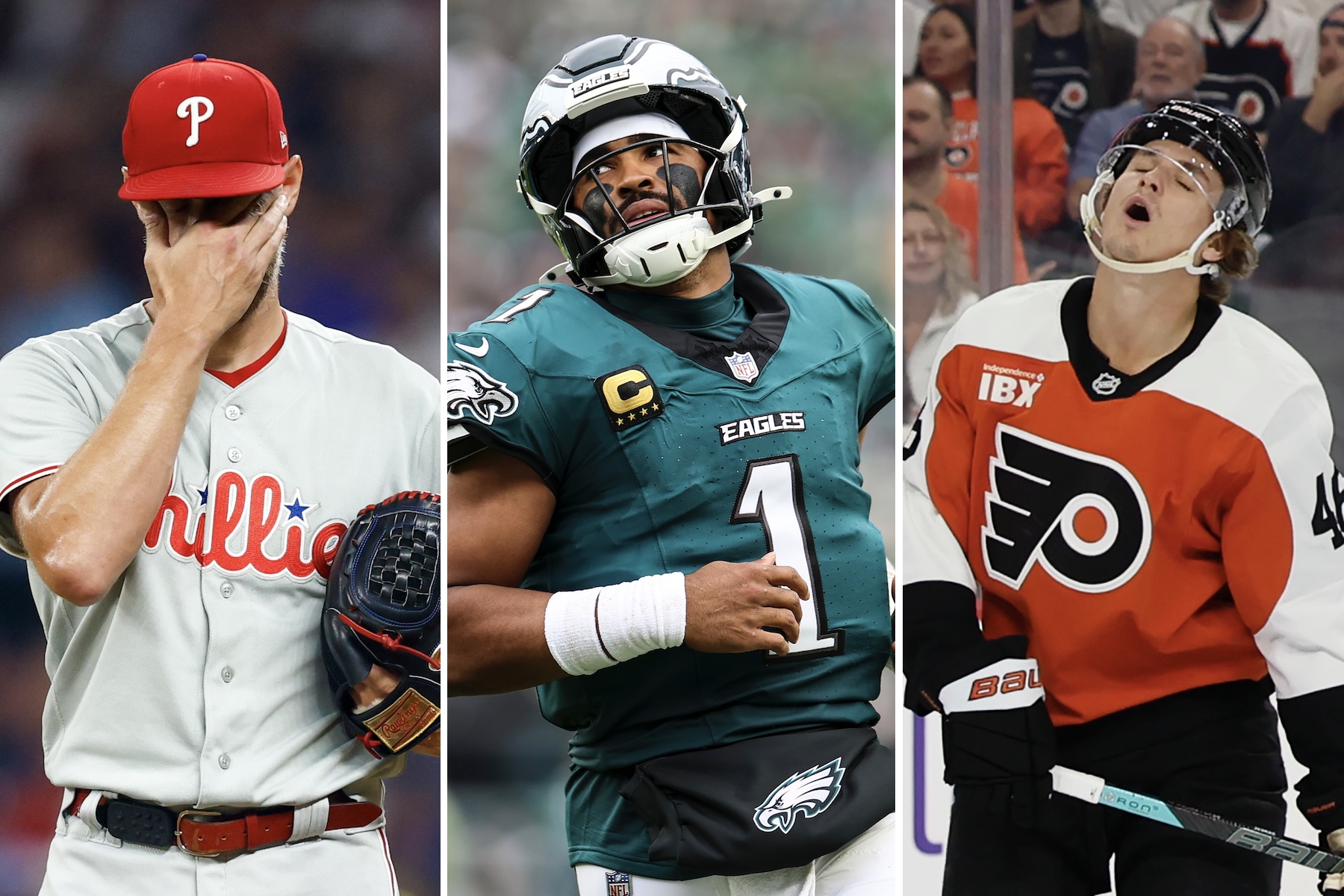
    It has been rough, all right. The Phillies had every baseball-loving teenager in the Delaware Valley asking ChatGPT about “1964 COLLAPSE” before the Braves knocked them out of the National League wild-card round. The Eagles are an injury-riddled, identity-missing mess, fortunate to be 2-2. And over their first four games, the Flyers have done little more than lie down at center ice with their skates in the air.

    Even the most dispassionate observer would have to acknowledge that it has been excruciating just to pay attention to these three teams lately, let alone care about them deeply. But the reasons that they’ve been such a hard watch, that so much anger and angst has been bubbling up, go beyond the Phillies’ dropping their fourth straight playoff series or the Eagles’ squandering a double-digit fourth-quarter lead. It isn’t just that these teams have been losing. It’s that these teams have been boring.

    The 2026 Phillies were exactly the club that everyone (other than John Middleton and Dave Dombrowski, apparently) expected them to be. They had their moments, thanks to their starting pitching and Kyle Schwarber, but those flickers were snuffed out by the team’s atrocious baserunning, lousy situational hitting, and poor defense. All of those flaws were present and visible when the regular season began, and the Phillies corrected none of them. They were on track most of the season to meet every worst expectation, so it was hardly surprising or fascinating when they did.

    A similar dynamic is playing out with the Eagles. Sure, the offense had a new coordinator in Sean Mannion, some question marks along the offensive line, and some work to do to make up for the departure of A.J. Brown. It was natural to think Mannion, Jalen Hurts, and everyone else would need time, maybe a few weeks into the regular season, before they got their footing, except they’re wobbling and wiping out like rookie surfers. (Turns out, converting on third down is kind of important for an offense!)

    Hurts can’t operate the system from under center. Lane Johnson retired. Cam Jurgens has been traded. DeVonta Smith, Dallas Goedert, Saquon Barkley, and Landon Dickerson are hurt. The result of all this upheaval, inexperience, and incompetence is that Mannion might as well be drawing up plays in the dirt at FDR Park. OK, Darius, you’re the bottle cap. Elijah, you’re the piece of glass. Remember not to cover up the tight end this time.

    The Flyers are a different category of bus crash altogether, because they were supposed to be fun. They were supposed to be the young, up-and-coming team hitting its stride. Instead, they’re the perfect example of the distinction between bad and dull. If they were losing 5-4 or 6-5 every night, if Porter Martone and Matvei Michkov were scoring and setting up one goal after another, if the team merely needed to clean up some defensive deficiencies, that would be one thing. It’s another thing, though, to be outscored, 17-5; to be outshot, 158-77 —tied for the league’s second-highest such differential through four games since 1959 — and to be a shallow speed bump for opponents to drive over.

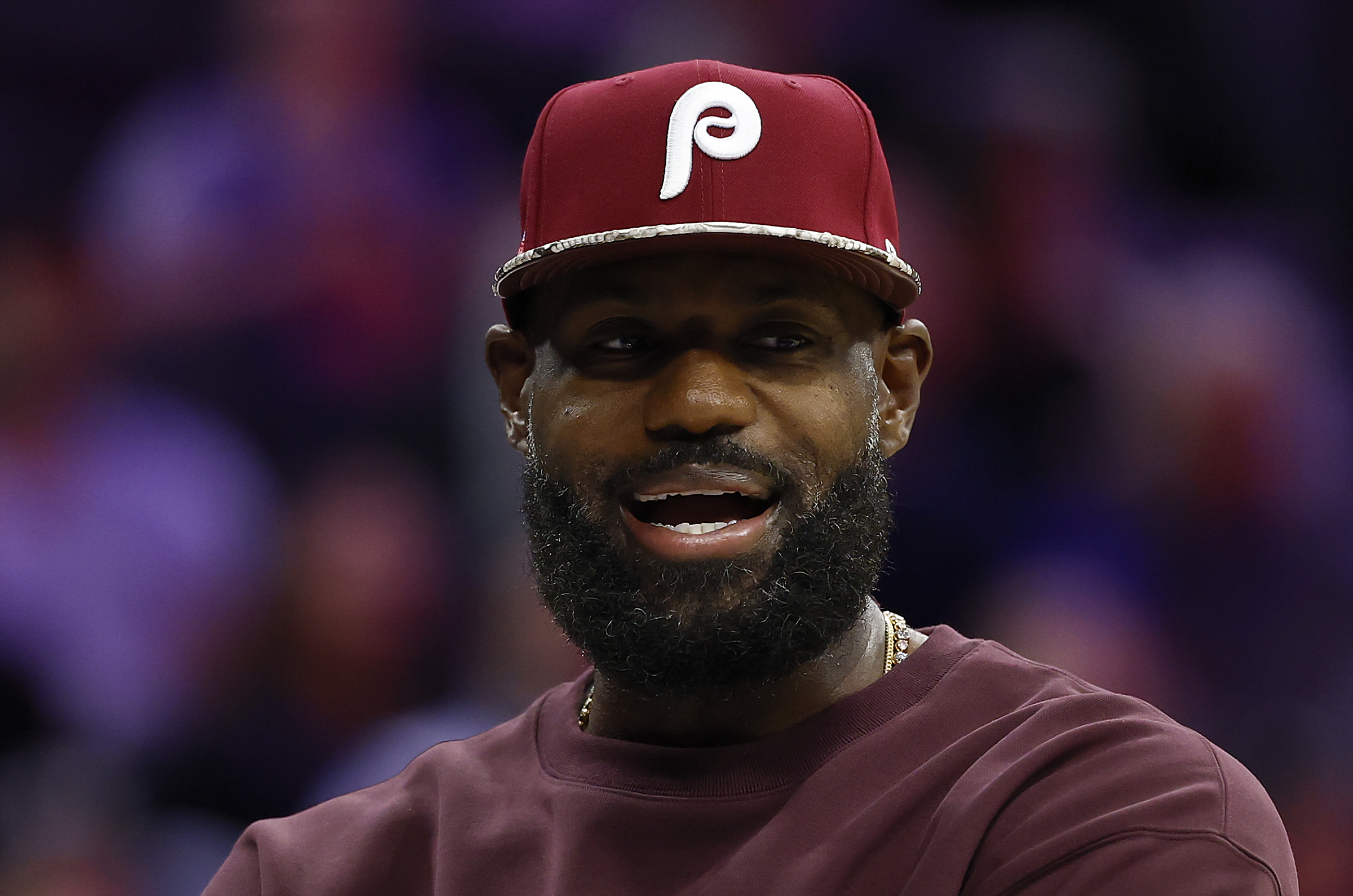
    Philadelphia’s hopes for a winner this year might be down to LeBron James and the 76ers.Yong Kim / Staff Photographer

    Hopelessness. That’s the prevailing feeling here. The Eagles’ defense might improve enough that they can slog through the rest of the season into the playoffs, dragging the offense along. The Flyers could make a franchise-altering trade or, in theory, straighten things out without one. But at the moment, there’s no sign of either of those happy outcomes on the horizon. There seems to be just the same predictable tedium until Oct. 20, when the 76ers open their regular season. Help us, LeBron. Hey, entertain us, at least.

  • Letters to the Editor | Oct. 8, 2026

    Letters to the Editor | Oct. 8, 2026

    Life imitating art?

    I would recommend people read the Sinclair Lewis novel, It Can’t Happen Here. While set in the 1930s — and while depicting more egregious government overreach than today — the similarities are striking. A militia similar to U.S. Immigration and Customs Enforcement to detain those opposed to the fictional president, and a promise of a $5,000 payment to all citizens if the fictional president was elected (which he was), are among the parallels to Trumpism today. Of course, in the novel, the public never saw the $5,000 payments, and we can be almost certain that if Republicans manage to maintain control of the House and Senate in November, it will be a cold day in hell before anyone receives a $5,000 check.

    Joe Riches, Coatesville

    Prevention saves lives

    Pennsylvania’s rise in measles cases, including hospitalizations and deaths, should be more than a statistic. It must be a wake-up call.

    Measles is highly contagious yet preventable. When vaccination rates drop, the consequences extend far beyond individual choice. Infants too young for immunization and individuals with compromised health are left at severe risk.

    We must be able to discuss public health without devolving into political arguments. Parents deserve accurate information, communities deserve transparent guidance, and our most vulnerable neighbors deserve our protection.

    Faith and civic responsibility both teach us that caring for our community is a shared duty. We may hold different beliefs, but protecting those who cannot protect themselves transcends background or ideology.

    Pennsylvania should not wait for health crises to escalate further before taking prevention seriously. Caring for our neighbors starts with the choices we make today.

    Farid Ahmad, Easton

    Appeal of socialism

    If the Trump administration, considering the extreme corruption, malfeasance, and cruelty of its policies and the cadre of crackpots and greedy billionaires that now seem to run it for their own benefit, represents the best corporate capitalism has to offer, then it’s really no wonder democratic socialism has become more appealing to many Americans. Under Donald Trump, the federal government exists mainly for the purpose of doing favors for whoever is wealthy or powerful enough to pay for them. The idea that corporations, billionaires, and tech bros are suddenly going to start to police themselves is laughable. The people look to the government to address the unregulated excesses of the capitalist system, because in a democratic society, government is the voice of the people.

    Patrick J. Ream, Millville

    Join the conversation: Send letters to letters@inquirer.com. Limit length to 150 words and include home address and day and evening phone number. Letters run in The Inquirer six days a week on the editorial pages and online.