Tag: topic-link-auto

  • Nick Sirianni talks Eagles backup QB battle, Makai Lemon’s progress

    Nick Sirianni talks Eagles backup QB battle, Makai Lemon’s progress

    Four plays. That’s how long it took Eagles backup quarterback Andy Dalton to throw an interception after he briefly replaced Jalen Hurts on Monday.

    This turnover, a major turning point in the Eagles’ 27-7 loss to the Bears, shined a national spotlight on the team’s messy backup quarterback situation.

    Naturally, Nick Sirianni was asked a direct question about it in his press conference on Wednesday: “Do you feel like Andy Dalton is your backup quarterback?”

    Sirianni gave a minute-long response — though he didn’t exactly answer the question.

    “You know, I have a lot of faith in both of those guys,” Sirianni said. “Obviously, you know what happened in the game. We don’t want turnovers by anybody. Whether it was that [play], whether it was Jalen’s interception, whether it was Tank [Bigsby’s] fumble, that has not been our winning formula. We can’t turn the ball over. And we did in a situation and lost points from it.

    “I still have faith in that entire [quarterback room]. With Tanner [McKee], I still have faith in Andy, I still like the way that Cole [Payton] is developing. And so, yeah, I still love that room.”

    Minutes later, another reporter followed up: “You didn’t really answer [The Inquirer’s] question. Is there a chance Tanner might be No. 2?”

    Sirianni responded, “Like I said, I answered how I wanted to … I’ve got a lot of faith in that everybody in that room.”

    Sirianni is likely deflecting to keep confidence high in the quarterback room, but he didn’t exactly give Dalton a ringing endorsement.

    This comes weeks after the Eagles decided to keep four quarterbacks on their initial 53-man roster. Dalton and McKee alternately struggled at times during their preseason quarterback competition, which left the Eagles in a tough spot — they didn’t have a great backup or an attractive enough trade target.

    After a bad preseason showing and even worse debut, Sirianni might have no choice but to shake up the depth chart and put McKee ahead of Dalton. The 26-year-old McKee — who was once viewed as a promising prospect — threw for 263 yards, one touchdown and one interception in three preseason games.
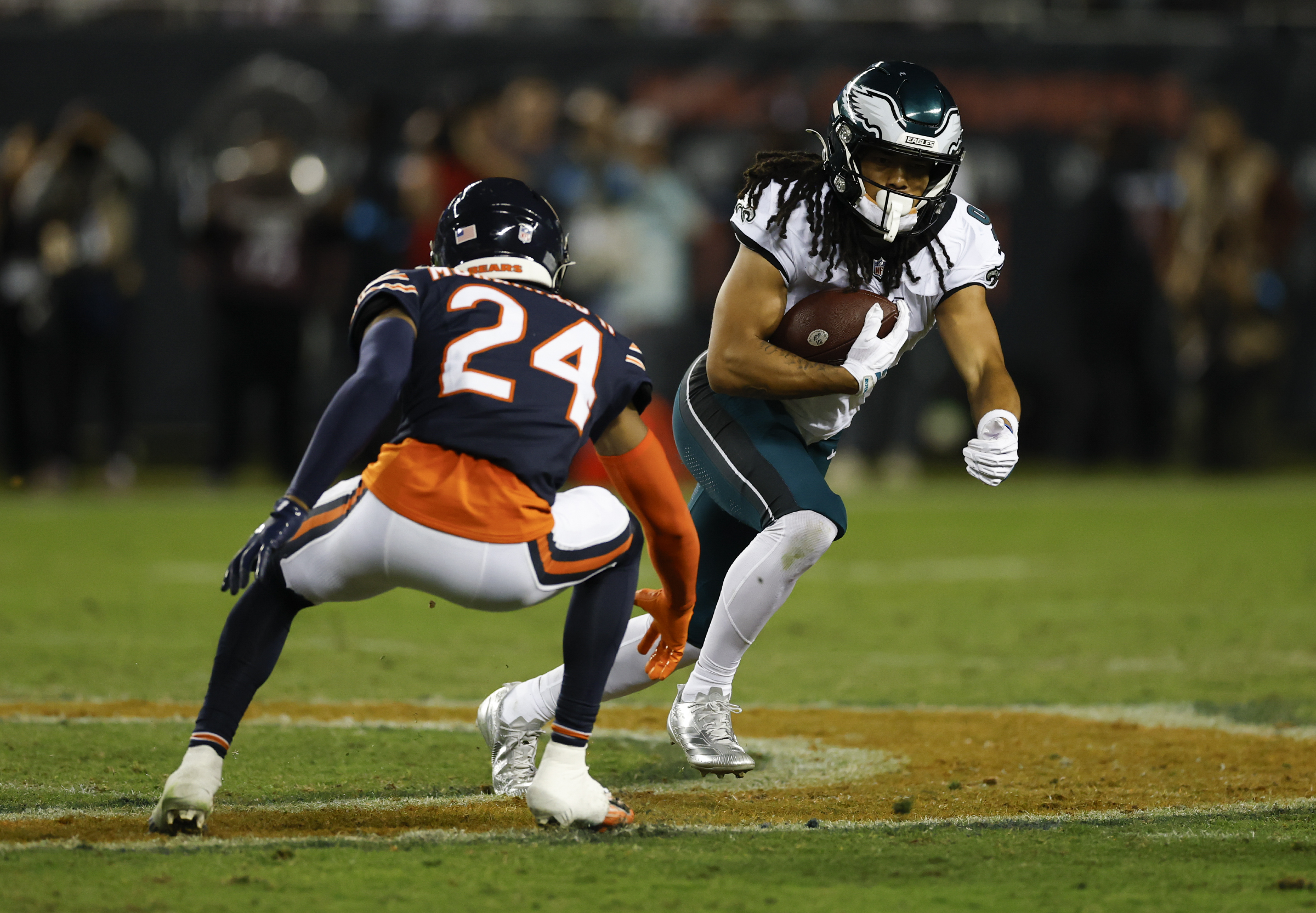
    Makai Lemon had the longest reception of his young career on Monday night. Yong Kim / Staff Photographer

    Is Makai Lemon improving?

    Rookie first-round pick Makai Lemon has not had the best start to his NFL career. He has 38 yards on seven receptions and he’s been targeted nine times.

    He’s shown glimpses — like when he snagged a career-best 19-yard catch on the Eagles’ opening drive on Monday — but he hasn’t lit up the stat sheet the way he’d like to.

    Sirianni still isn’t panicking. In fact, the Eagles head coach said the 22-year-old has given him an increased comfort level.

    “Makai gives you confidence as he’s getting more and more touches,” Sirianni said. “The trust has to build, obviously, in a different way. It’s got to build through practice, but it’s got to build also through the things that he consistently does on the field without the ball in his hands.

    “And I think that’s what’s been good with Makai. He gives you a lot of faith that he knows what he’s doing in all situations. And when the ball starts to come to him, more chances will come to him because he consistently does his job with other factors, without the ball on his hands. And I think he’s scrappy. He is consistently on the same page and, he blocked his butt off the other day in that game and played a solid game.”

    Lemon was one of college football’s top receivers in 2025, becoming the second Southern Cal player ever to win the Biletnikoff Award for most outstanding receiver in college football. He caught 79 passes for 1,156 receiving yards and 11 touchdowns in his final collegiate season.

    The Eagles took him the 20th pick of the NFL draft in April, dealing with the rival Cowboys in order to move up and do so.

  • Black Panther-style group members arrested in Chester, as mayor decries their presence

    Black Panther-style group members arrested in Chester, as mayor decries their presence

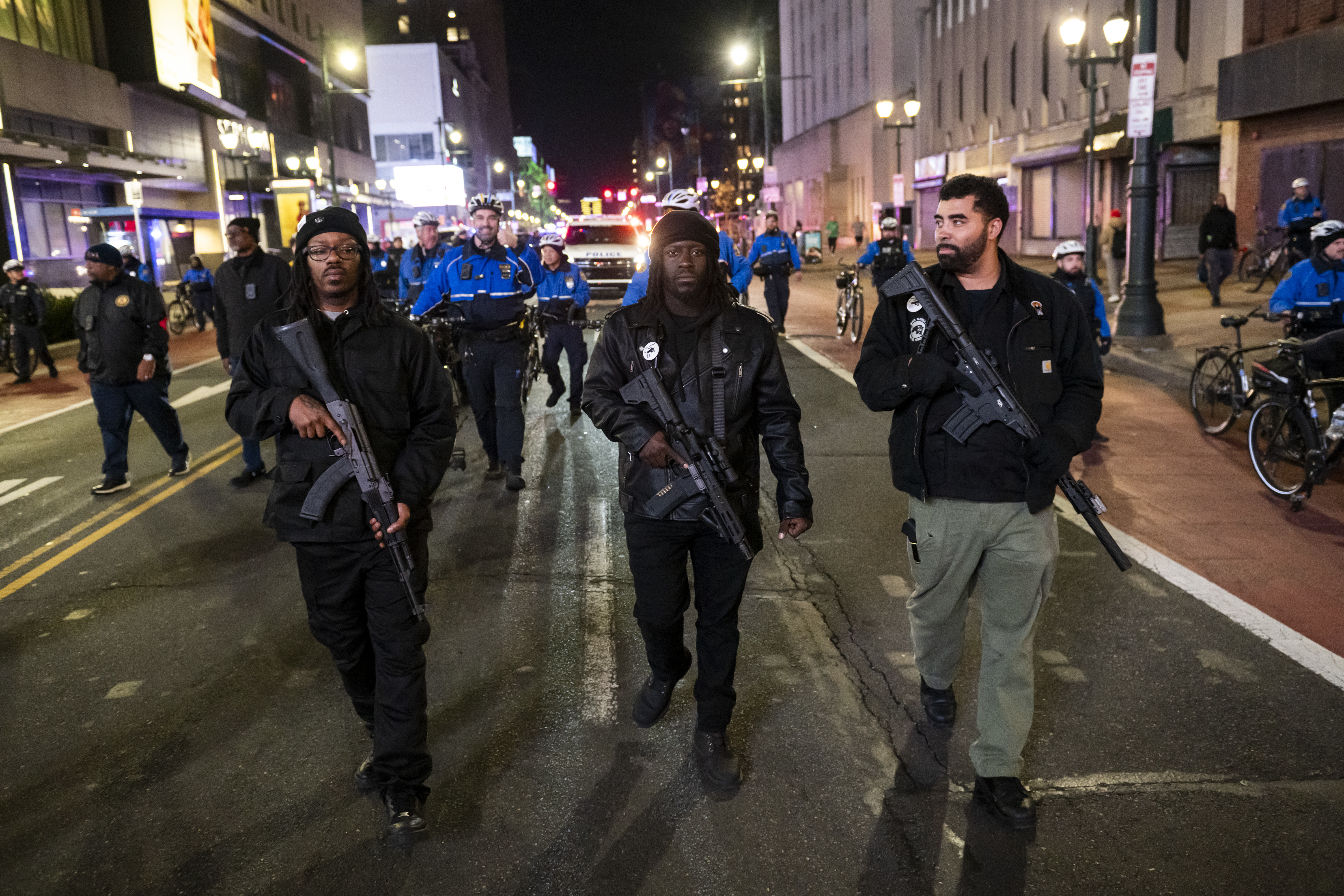
    The leader of a Philadelphia offshoot of the Black Panther Party for Self-Defense was charged with a firearms crime for carrying a concealed gun without a permit in the city of Chester — and the group’s growing visibility in the Delaware County community is sparking a clash with the city’s mayor.

    Paul Birdsong, who founded Philly’s Panther group, was arrested this summer during what the group says was an armed community patrol of Chester’s streets.

    Birdsong had been carrying two holstered handguns, one of which police said was partially obstructed by his waistband and constituted carrying a concealed weapon, according to the affidavit of probable cause for his arrest.

    Birdsong, 40, is out on bail and appeared earlier this month in Magisterial District Court, where a judge ruled he should stand trial for that crime.

    The judge dismissed two counts of disorderly conduct and one count of resisting arrest stemming from the July 11 incident, court records show.

    Birdsong’s arrest, as well as the arrest of another Panthers member in Chester in August, marked the latest run-in between police and the armed citizens group, which is styled after the 1960s political and militant organization. The Panthers first made headlines this winter during anti-ICE protests during which they carried assault-style weapons in Center City.

    Panthers members say they are Second Amendment advocates and regularly conduct patrols in the name of public safety. They say the guns are not meant to intimidate, but to deter crime and encourage responsible firearms ownership. The group also holds weekly giveaways of food and essential supplies for those in need.

    But Chester Mayor Stefan Roots has decried the group’s foray in the city, saying its presence has created “horrible optics” as officials try to reduce gun violence, especially among young people.

    To address the Panthers’ presence, Roots and members of Chester City Council met with Birdsong and other members in a closed-door meeting on Tuesday.

    Councilmembers appeared to have left the meeting with supportive views of the group. But tensions flared when Roots grew frustrated during talks and abruptly left the gathering early, according to Birdsong.

    Roots declined to comment Tuesday, saying only that he had not been aware of the Panther members’ arrests. He did not immediately respond to an additional request for comment Wednesday.

    Birdsong made headlines in May when Philadelphia police revoked his city-issued gun license along with those of four other Panthers.

    The following month, in an unusual show of federal oversight, the Department of Justice’s Civil Rights Division opened an investigation into whether the police department violated the Second Amendment by revoking gun licenses without proper cause. The filing did not name Birdsong or other Panthers in the inquiry.

    A spokesperson for DOJ did not return a request for comment on the status of the investigation. A police spokesperson referred The Inquirer to the city’s law department, which declined to comment.

    After the restrictions in Philadelphia, Panthers became active in Chester, where members have patrolled in the past.

    In July, Birdsong was armed when he was stopped by a police officer near Barclay and West 5th Streets, according to the affidavit of probable cause for his arrest.

    The officer said that he recognized Birdsong from a past encounter in Chester, and that he stopped him after seeing one of his handguns holstered “inside his right pants pocket with the majority of the firearm being concealed from view,” the document said.

    Birdsong questioned why he was stopped and began to record the interaction, the affidavit said. He began to “curse and yell” when additional officers arrived, and he was detained, the document said.

    In an interview this week, Birdsong disputed the officer’s account. He said that the gun was clearly visible and that he believes the enforcement was racially motivated.

    “They’re arresting us as an effort on their part to bully us, to scare us,” he said.

    Carrying a firearm in the open without a license is legal in Pennsylvania — but not in Philadelphia, where a license is required to carry either open or concealed.

    Birdsong’s lawyer, Lyandra Retacco, said the matter would be resolved in court.

    The July incident was not the only time Panthers have clashed with Chester police.

    On Aug. 28, member William Ozah was charged with disorderly conduct and evading arrest after police said he ran from an officer who attempted to stop him for having a knife protruding from his pants pocket, according to the affidavit of probable cause for his arrest.

    The officer used a Taser to subdue Ozah, the document said. During the chase, the officer said, Ozah tried to reach into a satchel, which he believed concealed a firearm.

    After detaining Ozah, officers recovered a knife and a Bryna SD pepper-ball pistol — a less-lethal firearm that uses compressed gas to shoot projectiles filled with a chemical irritant.

    He was held for court on both charges, court records show.

    Meanwhile, Panthers have continued their Chester presence.

    In addition to armed patrols, the group is handing out informational pamphlets to those curious about the group’s mission: to “protect and defend ourselves and our beautiful Black people,” it said.

    The group had arrived, the pamphlet said, because “people reached out to us for help.”

    This article has been updated to reflect comments made by Birdsong’s attorney.

  • Tyrese Maxey lands on Time’s NEXT100 list, with new Sixers teammate LeBron James writing his tribute

    Tyrese Maxey lands on Time’s NEXT100 list, with new Sixers teammate LeBron James writing his tribute

    Tyrese Maxey helped bring LeBron James to Philadelphia. Now, James is helping explain how the Sixers guard influenced his decision beyond sending a few text messages.

    On Wednesday, Time Magazine named Maxey to its 2026 TIME100 Next list, recognizing him among the world’s most influential rising stars. His new teammate, James, wrote the accompanying tribute.

    “Tyrese Maxey gets better every season, and he’s really just getting started,” James wrote.

    James pointed not only to Maxey’s development as a player, but also to his growth as a leader. He acknowledged something that has become increasingly clear since James arrived in Philadelphia this summer: Maxey played a significant role in getting him here.

    James wrote that the two have trained in the summer together for five years and said their relationship away from basketball influenced his decision to sign with the Sixers.

    It is a relationship years in the making. Maxey first worked out with James before entering the NBA in 2020, and they continued training together each offseason.

    Maxey had even floated Philadelphia to James during a previous free-agency period, though the possibility became much more realistic this summer after the Sixers acquired Jaylen Brown from the Boston Celtics and James decided to leave Los Angeles.

    James said at Sixers media day Monday that he had a “great relationship” with Maxey and confirmed they had multiple conversations about Philadelphia before he signed.

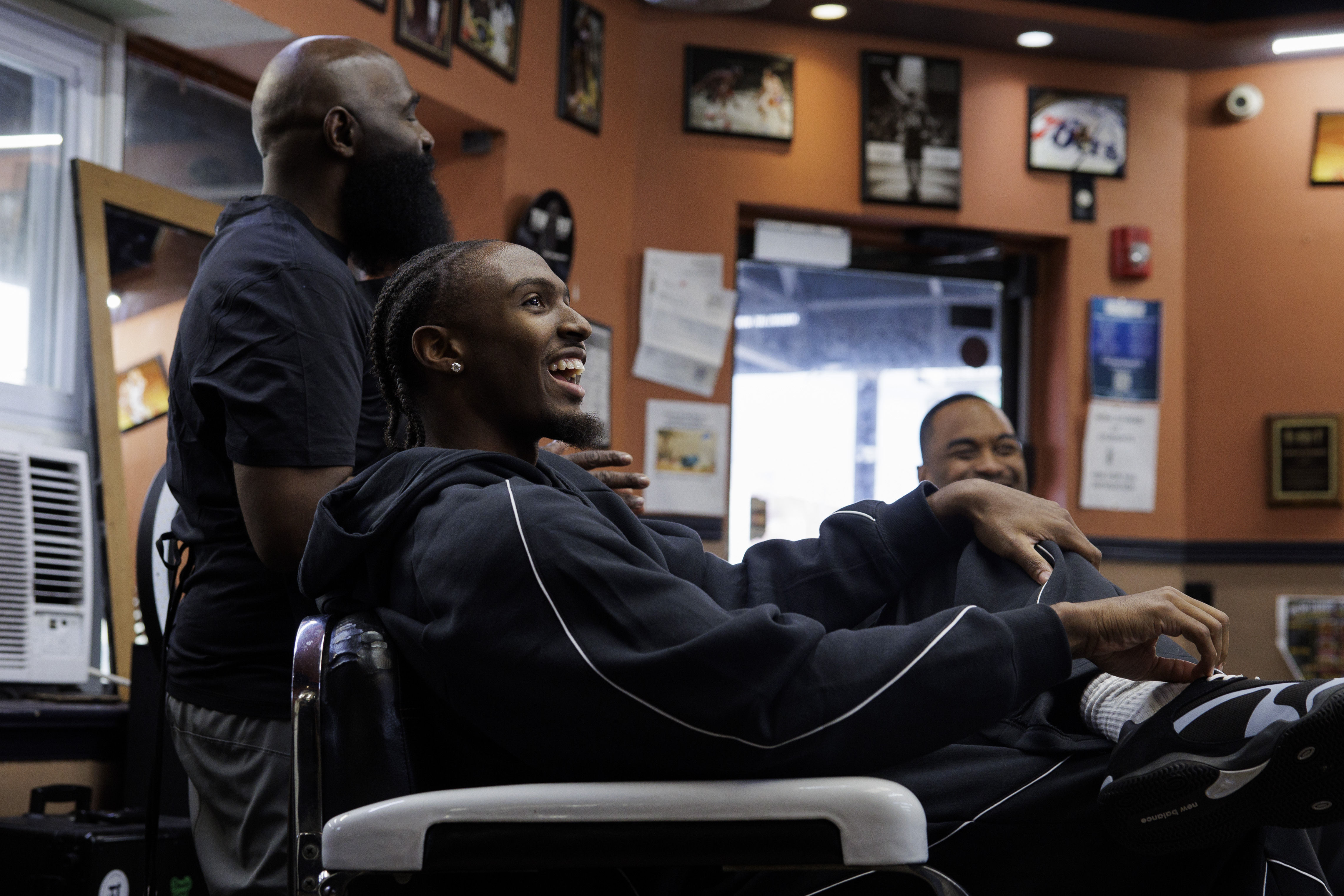
    Sixers player Tyrese Maxey visited his barbershop, Faheem’s Hands of Precision, to promote his new signature sneakers, New Balance Maxey V1s earlier this month.Monica Herndon / Staff Photographer

    The latest honor among honors

    The Time recognition is the latest marker of Maxey’s continued rise.

    The 25-year-old averaged career highs of 28.3 points and 6.6 assists last season. He earned his second All-Star selection and started the game for the first time. He was later named third-team All-NBA, the first All-NBA honor of his career.

    Earlier this month, ESPN ranked Maxey as the NBA’s No. 11 player entering the 2026-27 season — ahead of new teammate Brown, who ranked 14th, and James, who came in at No. 18. Maxey is a two-time All-Star, the 2023-24 NBA Most Improved Player, and was All-NBA third team last season.

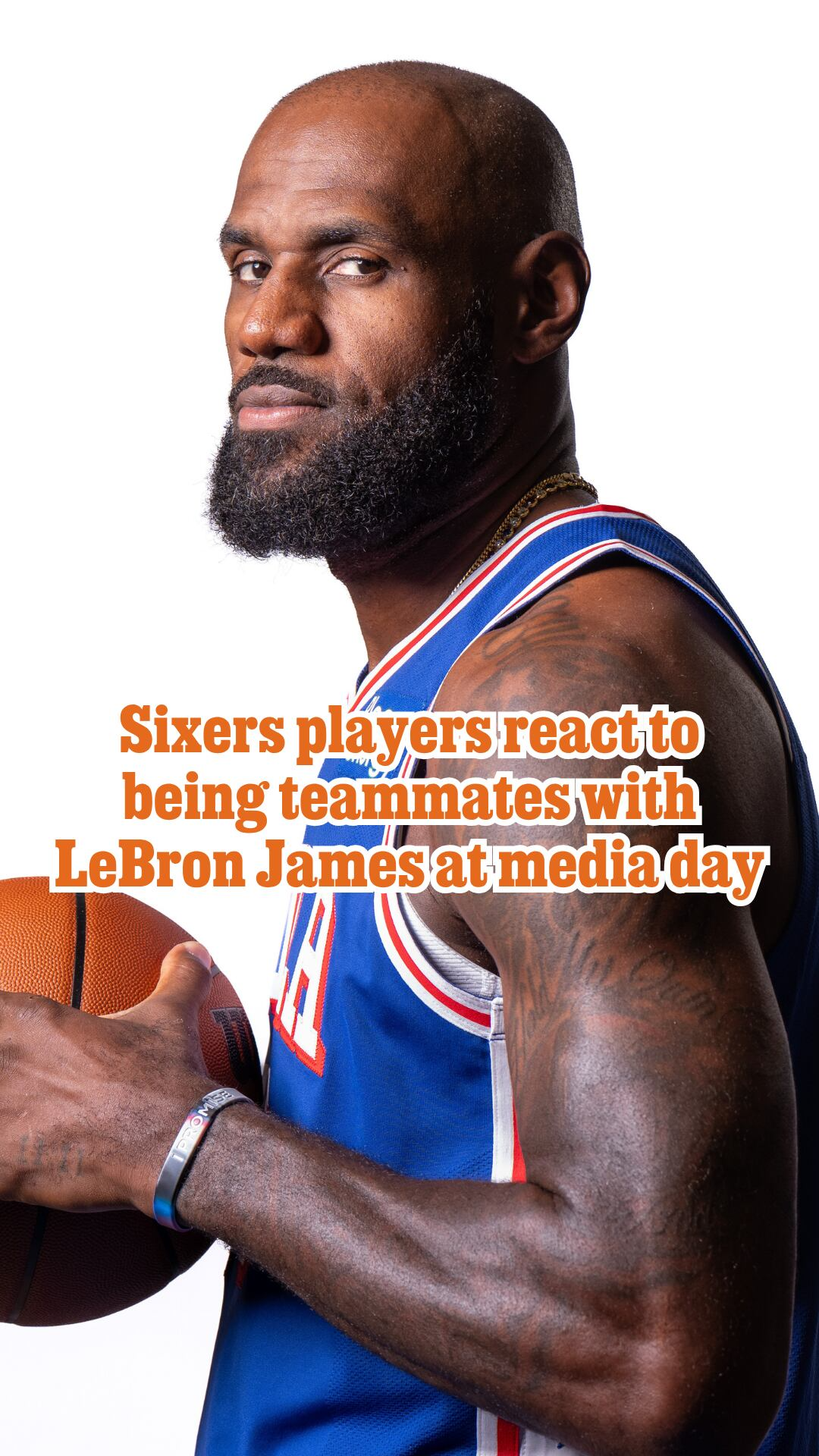
    Sixers players react to being teammates with LeBron James at media day
    Video: Sixers players react to being teammates with LeBron James at media day

    Maxey joins another Philadelphia star who recently made the jump onto Time’s radar.

    Jalen Hurts was selected for the TIME100 Next list in 2023, with Peyton Manning writing his tribute after Hurts led the Eagles to the Super Bowl and signed a five-year contract extension. Two years later, following the Eagles’ Super Bowl LIX championship, Hurts graduated to TIME’s main list of the world’s 100 most influential people, with Derek Jeter writing his tribute.

  • 3 science-backed home remedies to ease the common cold

    3 science-backed home remedies to ease the common cold

    In addition to rest, healthy food, and hydration, there are a few at-home remedies that many doctors recommend to help treat the common cold.

    Here are three science-backed ways to soothe your throat, calm your cough, and help you recover sooner.

    Honey

    Honey coats the throat and “can reduce your cough fairly significantly,” said Geeta Sood, an assistant professor and epidemiologist at Johns Hopkins University. Also, because it calms coughs, it can indirectly help sore throats. Not to mention, it has antibacterial properties.

    Studies have shown that honey can reduce cough frequency and severity. Many studies have focused on children, but it’s important to note that the American Academy of Pediatrics does not recommend giving any kind of honey to babies younger than 1 year of age because it can contain bacterial spores that can lead to potentially life-threatening infant botulism. (In adults and older children, the spores can’t grow into toxin-producing bacteria.)

    A review of randomized controlled trials in children showed that honey may have similar benefits as the over-the-counter cough medicine dextromethorphan and may be better than diphenhydramine, an antihistamine, at reducing the frequency of coughs. (Over-the-counter cough medications are not recommended for children younger than 4.)

    And a small 2023 study found that gargling with one tablespoon of honey mixed in about one teaspoon of water helped ease pain from a tonsillectomy, a surgery to remove the tonsils.

    To try it at home: You can take a teaspoon of honey a few times per day to help with your cough and sore throat. Alternatively, you can add it to hot tea or a few ounces of hot water, but it may be less effective the more you dilute it, said Sharon Bergquist, an internal medicine physician and associate professor at the Emory University School of Medicine.

    Bergquist noted that taking a dose before bed to help ease your symptoms may help you sleep. “Typically, by the end of the day, people cough more as talking tends to irritate the throat and trigger more coughing,” she said.

    Saline rinses

    Nasal rinses — using a saline solution to clear out your nasal passages — is an at-home remedy that may help temporarily clear congestion and soothe irritated sinuses, and it comes recommended by the American Academy of Otolaryngology.

    Bergquist said saline rinses can help reduce the thickness of nasal secretions, which also can help sore throats and can alleviate some of the dryness that comes with blowing your nose. “It’s not necessarily going to make nasal congestion significantly better, but I do think that it’s very soothing, especially in children where the options are probably a little bit more limited,” she said.

    Small studies have shown that they may help treat nasal irritation and inflammation. One review found that nasal saline irrigation may help relieve nasal symptoms associated with upper respiratory infections.

    To try it at home: Nasal rinsing can be done with a nasal irrigation device, such as a neti pot, or an over-the-counter nasal saline spray. If you choose to go with a device, you can make a homemade saline solution for it by mixing 3 teaspoons of non-iodinated salt and 1 teaspoon of baking soda, then taking 1 teaspoon of that mixture and dissolving it in 1 cup of sterile, distilled, or boiled (and cooled down) tap water. (Never use tap water unless it’s boiled; tap water can contain germs such as the “brain-eating amoeba” Naegleria fowleri.)

    The ready-made saline sprays take the guesswork out of it. To use, tilt your head to the side, insert the nozzle into one of your nostrils, and spray the mist. Then repeat on the other side.

    Zinc

    Zinc is important for a healthy immune system and metabolism. Adult women should get eight milligrams of zinc from their diets each day and men 11 mg, according to federal health authorities. Because your body doesn’t produce zinc, you have to get it from zinc-rich foods including meat, fish, and seafood.

    You may have also noticed zinc supplements, sold as over-the-counter lozenges or quick-dissolve tablets, at the drugstore. A 2024 review showed that while zinc is unlikely to prevent a cold, it may help shorten the duration of your symptoms by about two days.

    Nasal sprays, however, are not recommended. After the Food and Drug Administration issued a public health advisory in 2009 about the link between some zinc nasal products and long-lasting or permanent loss of smell, many manufacturers removed zinc from their nasal sprays.

    To try it at home: As with any medication or supplement, before taking zinc, consult your healthcare provider, as zinc can interact with some medications. Bergquist recommends starting zinc within the first 24 hours after you notice cold symptoms. A common daily dose used in studies is about 80 milligrams, which may be split up into multiple lozenges per day. But there are possible side effects, especially with higher doses, including an upset stomach.

    In addition to these home remedies, “the motherly advice of staying well hydrated and getting good rest are going to help with recovery just as much as any over-the-counter remedy,” Bergquist said.

  • A sickly falcon found at the PMA in June is cleared for takeoff

    A sickly falcon found at the PMA in June is cleared for takeoff

    A gray plastic tote shook outside the Schuylkill Center for Environmental Education every few minutes Tuesday afternoon, proof that patient 718 was ready to fly.

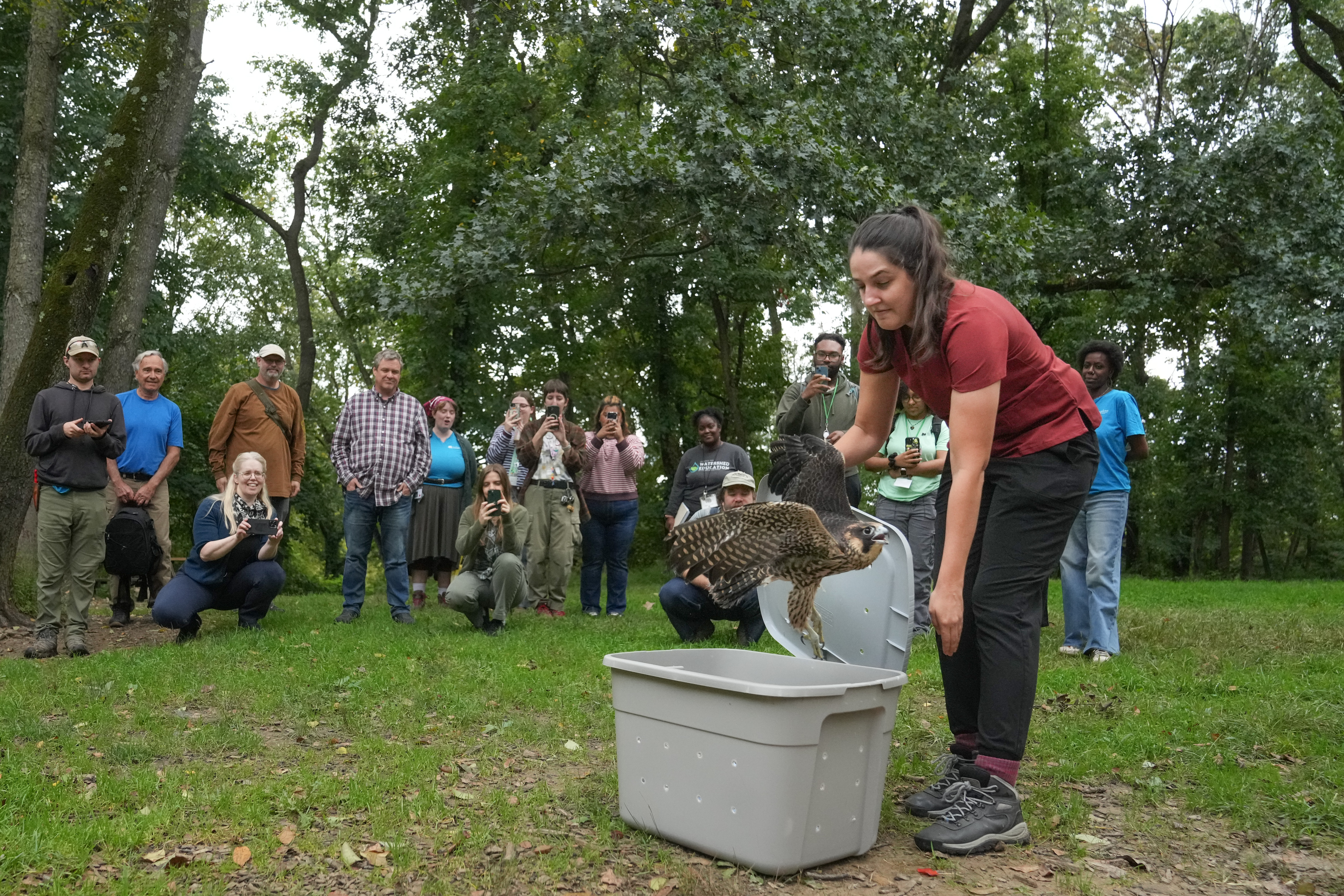
    A crowd gathered on the lawn beside it, adjusting shutter speeds to capture the world’s fastest animal. Just after 1 p.m., Sydney Glisan, director of the center’s wildlife clinic, unfastened the bungee cord, removed the lid, and offered the male peregrine falcon a few words of encouragement.

    “All right, buddy,” Glisan said. “Today’s the day.”

    Peregrine falcon released into the wild after healing from lead poisoning
    Video: Peregrine falcon released into the wild after healing from lead poisoning

    Like a feathered fighter jet, the bird burst from the tote and bolted for the big trees in Roxborough, letting out a few raucous shrieks as it disappeared.

    Patient 718 — animals are rarely named at the Schuylkill Center — arrived thin and sickly on June 4, suffering from high levels of lead poisoning. The bird was found near the entrance of the Philadelphia Museum of Art earlier that day, far below the nest its parents built there.

    “He was just kind of sitting there,” Glisan said of 718.

    A sibling, who had lower levels of lead poisoning, was also discovered at the museum the same day. That falcon, also a male, was treated at the clinic and released into the wild on July 1.

    Glisan said most raptors in the region would test positive for lead, but 718’s levels were “off the charts.” Lead can be found in the soil, she said, from bullets, lead-poisoned prey, and even fishing gear.

    At the clinic, 718 received chelation therapy, where a medication binds to the lead in the bloodstream and is then passed by the bird. The falcon received four rounds of chelation over the summer, with recovery breaks.

    “It’s hard on the body,” Glisan said, “but he was a real trouper.”

    After chelation, the falcon was taken to an aviary, where he practiced flying through an obstacle course that included pool noodles. He aced the test.

    “It was fascinating,” she said. “They move so fast.”

    Peregrines mostly hunt other birds from high perches and can reach speeds of over 200 mph when dive-bombing on prey.

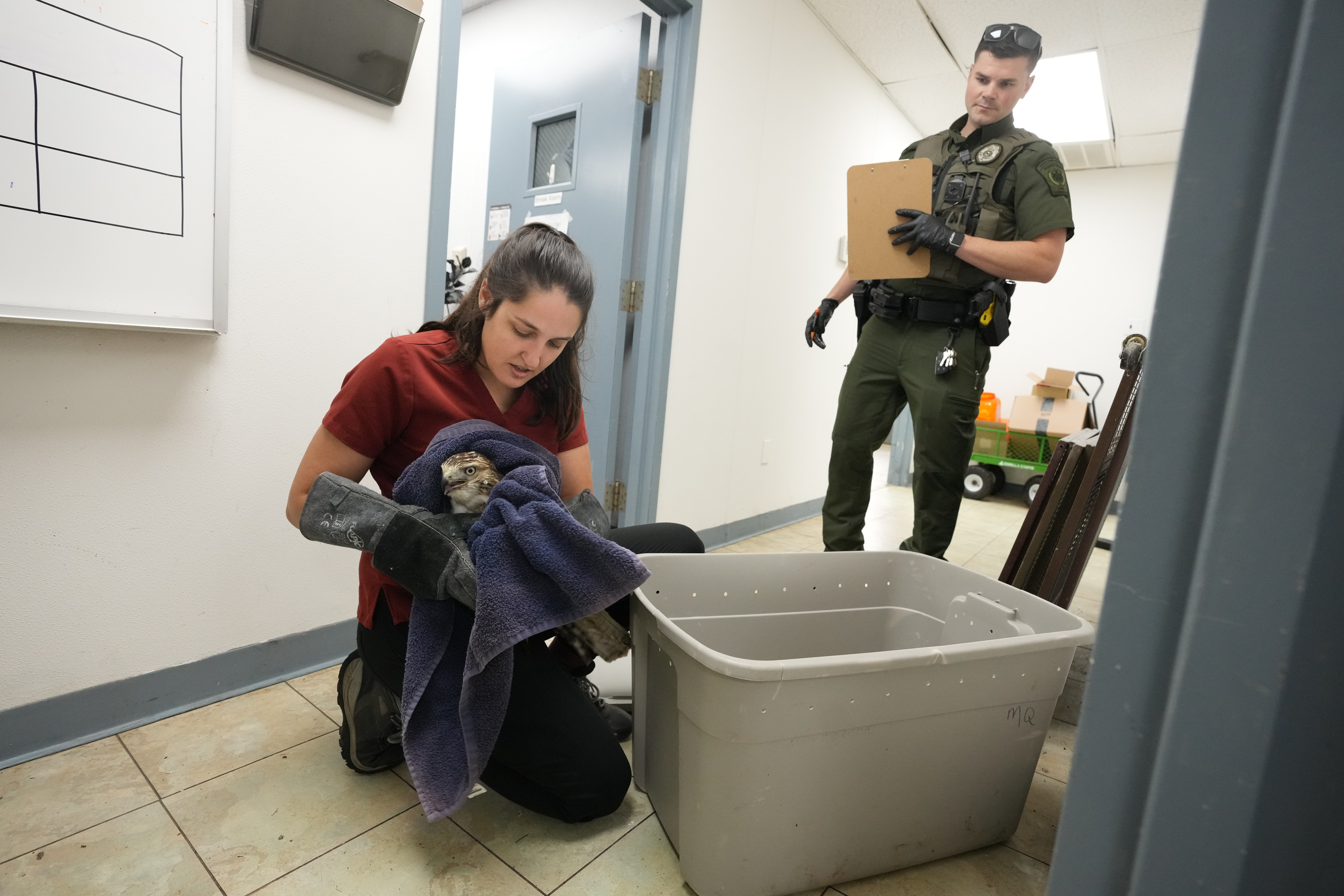
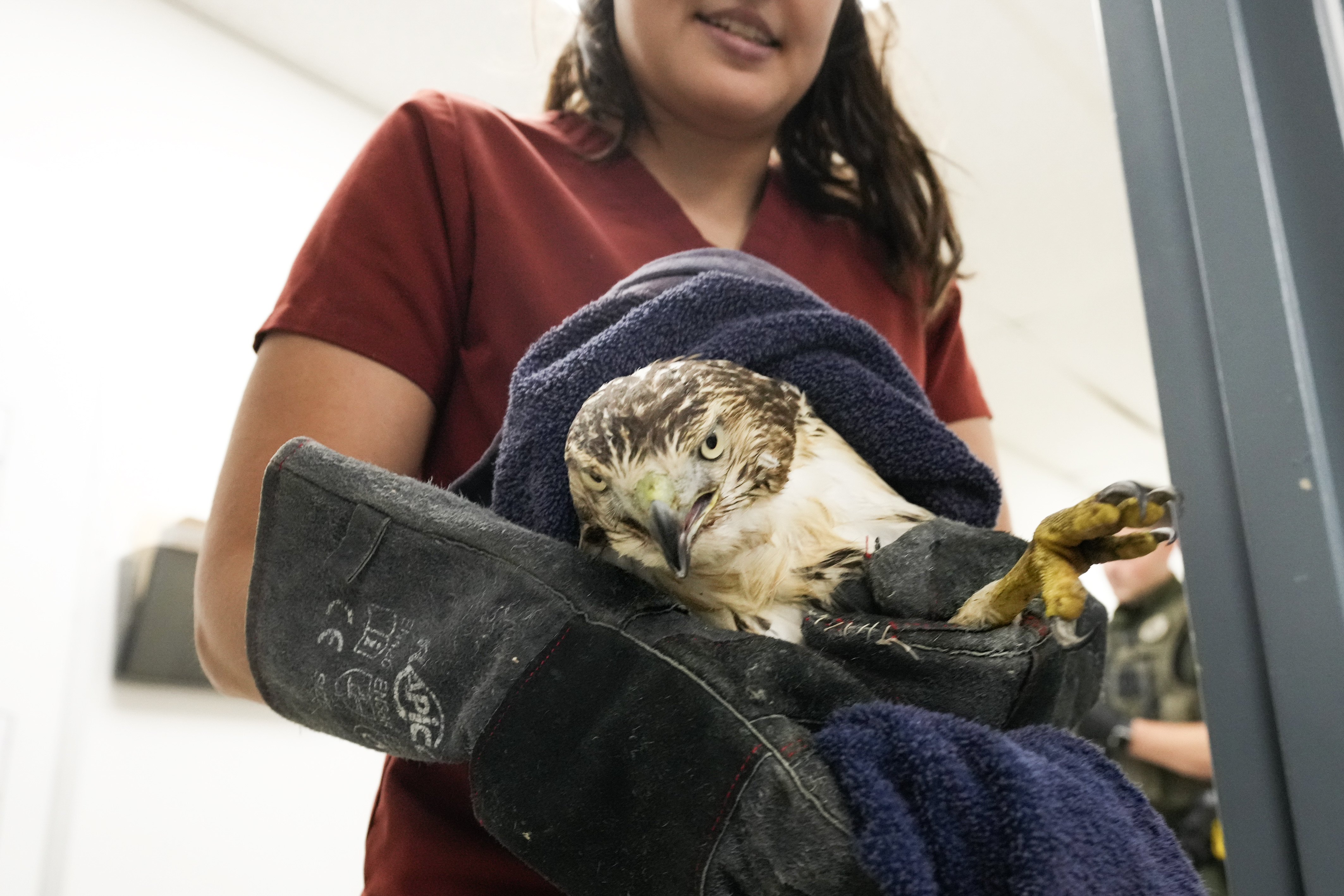
    Sydney Glisan, director of the wildlife clinic at the Schuylkill Center for Environmental Education, cares for a red-tailed hawk who was brought into the clinic on Tuesday.Jessica Griffin / Staff Photographer

    Glisan said 718 would probably find his own territory and not return to the art museum. She said there are at least three active peregrine nests in Philadelphia, including one at City Hall.

    Sydney Glisan, director of the wildlife clinic at The Schuylkill Center for Environmental Education, cares for a red-tailed hawk who was brought into the clinic Tuesday.Jessica Griffin / Staff Photographer

    As of Tuesday afternoon, the Schuylkill Center has treated 1,775 animals this year, including numerous species of birds, gray squirrels, and rabbits. More were coming in by the minute, including a red-tailed hawk with an injured talon and a baby squirrel that tangled with a dog.

    Many animals that come in don’t survive long, Glisan said, and some, like Buttercup, the mostly blind-but-friendly opossum with frostbitten ears, are unable to be released due to their injuries. They are used for education and, on occasion, cuddling.

    “I do love you, Butter,” Glisan said, cradling the opossum.

    Sydney Glisan, director of the wildlife clinic at The Schuylkill Center for Environmental Education, shown here with Buttercup, the mostly blind-but-friendly opossuma who is a permanent resident at the clinic.Jessica Griffin / Staff Photographer

    Erin Mooney, the Schuylkill Center’s executive director, said the facility does not charge to take in and treat animals. She also said the center needs a new clinic building because theirs is 31 years old, and too small.

    While the Schuylkill Center receives money from outside agencies on occasion, Mooney said they rely heavily on donors.

    “In order for the work at the clinic and the Schuylkill Center itself to continue, we need people to give,” Mooney said.


    For more information, visit: https://schuylkillcenter.org/support/donate/

  • A pedestrian was killed in a car crash in Center City

    A pedestrian was killed in a car crash in Center City

    A pedestrian was killed in a car crash in Center City on Wednesday morning, police said.

    At about 6:42 a.m., Philadelphia police responded to a report of a crash involving a vehicle and pedestrian near 19th and Lombard Streets. The victim was a woman in her 20s and she was pronounced dead at the scene, according to police.

    The woman was crossing Lombard Street when the vehicle driver, who was traveling westbound, struck her. The driver remained at the scene, and no arrests have been made.

    Police are investigating the incident.

    Last year, Philadelphia reported its fewest number of traffic-crash deaths since 1928. But the city still remains dangerous for pedestrians and cyclists.

    Overall crashes declined from 2020 to 2025, while crashes involving non-motorists have stayed the same or increased, according to an analysis of Pennsylvania Department of Transportation data by the group Philly Bike Action. Fifty-five percent of people killed in Philly traffic crashes last year were non-motorists, and 52% of serious injuries from crashes occurred when a driver hit someone not in a car, the group found.

  • Penn State made head-scratching decisions in its first loss. It also exposed glaring weaknesses.

    Penn State made head-scratching decisions in its first loss. It also exposed glaring weaknesses.

    While leading by 10 points, Penn State decided to run on third-and-12 midway through the fourth quarter. Running back James Peoples didn’t pick up the first down as boos echoed through Beaver Stadium.

    It was the fourth time that offensive coordinator Taylor Mouser called a run in a third-and-long situation in a 24-20 loss to Wisconsin on Saturday.

    “It’s always situational for me,” Mouser said Tuesday. “The defense had been playing so good up to that point, didn’t want to put them in a bad spot, have something bad happen. Didn’t have a ton of rhythm going in the pass game up to that point either. So it was take the less of two evils and play the field position game, as dumb as that sounds and as much as I hate to say that.”

    Those third-and-long decisions were just some of the head-scratchers from the Nittany Lions first loss of the season (3-1, 0-1 Big Ten) and showed where the offense needs to grow ahead of their road matchup against Northwestern (2-1, 0-1) on Friday night (8 o’clock).

    “You got to stay focused on what the goal is,” Mouser said. “And the goal for us on a short week has to be the work. We just don’t have the time to be able to dwell on it and feel sorry for yourself. No one else does. And this Northwestern team is going to try to murder us.”

    Red zone struggles

    Penn State has made 20 red-zone trips this year, but only 10 have ended in a touchdown. Against Wisconsin, the Nittany Lions reached the 1-yard line on their second possession, but settled for a field goal.

    “I’m frustrated with that,” Mouser said. “And it’s an ongoing message. … Are we playing the right people? Are we handing it to the right people? Are we throwing to the right people? Are the right people in the right spots to be able to block and execute the plays? We haven’t been able to do that, and it’s our job as coaches to figure that out.”

    Penn State went 1 of 3 on red-zone trips, with the lone touchdown coming off sophomore cornerback Daryus Dixson’s interception that set up the Nittany Lions at the Badgers’ 11-yard line.

    These red-zone struggles first popped up against Temple, with Penn State’s first three opportunities only resulting in three points. The issues haven’t gone away.

    Lack of tight end usage

    Senior Benjamin Brahmer was the only tight end with a catch in Saturday’s loss, finishing with four receptions. Redshirt senior Gabe Burkle was targeted twice, while redshirt junior Andrew Rappleyea was thrown to once.

    “I still walk out of the game frustrated with my inability to get those guys the ball as much as we should,” Mouser said. “Rapp’s one of our best pass catchers and didn’t find a way to get the ball more. Same with Ben and even with Gabe.”

    Mouser took accountability for the lack of targets his tight ends received, and knows he needs to rely on Brahmer and his fellow tight ends in the passing game with top wide receiver Koby Howard out for the foreseeable future.

    “Those three are some of our best pass catchers and we’re going to have to find ways to get them the ball in easier ways that we can make those throws,” Mouser said. “I still don’t think we’ve sniffed just how good that room can be and the standard I think those guys can play with.”

    Becht’s poor showing

    Rocco Becht said Tuesday he plays better on the road, so it’s a good thing Penn State is headed to Northwestern this weekend after the quarterback’s performance against the Badgers.

    Becht went 12-for-29 with 129 yards, zero touchdowns, and his first interception of the year, though the pass was tipped. He put blame on himself postgame, saying he needs to be better for his team.

    On Tuesday, Mouser took accountability for Becht’s struggles.

    Rocco Becht went 12-for-29 with 129 yards and zero touchdowns against Wisconsin.Barry Reeger

    “I know what Rocco Becht is,” said Mouser, who also was his offensive coordinator at Iowa State. “He’s a 10,000-yard passer, and I’ve known him for three years, and I know how good he is. So when it’s not working, I’m going to always put it on myself because I know how talented he is and the way that he prepares.”

    The Wildcats’ defense sits at the bottom half of the Big Ten in passing yards allowed this season with 218 per game, potentially giving Becht an opportunity to get himself and his wide receivers going after a tough showing against Wisconsin.

    “We didn’t really show ourselves last Saturday who we were, and we didn’t put enough out there to bring that win home for us,” Becht said Tuesday. “I think for us, it’s just continuing to go out there on Friday and continuing to just do our job and have fun and go out there and play ball.”

  • Skill games funded my VFW post. Harrisburg’s inaction could close it.

    Skill games funded my VFW post. Harrisburg’s inaction could close it.

    In a matter of weeks, my Veterans of Foreign Wars post could be facing a decision none of us ever thought we would have to make: closing our doors.

    Not cutting back. Not shortening our hours. Closing.

    Think about that for a moment.

    A place built by veterans, sustained by veterans, and dedicated to serving veterans and our community could disappear because lawmakers in Harrisburg could not find a way to create a set of guidelines to govern skill games — the slot machine-like devices that everything from convenience stores to veterans posts like mine rely on for income.

    And I have one question for them: Why? Why, when there are ways to come up with a solution, would you allow organizations like ours to fail?

    VFWs, American Legions, volunteer fire companies, fraternal clubs, and small businesses across Pennsylvania are looking at their finances and making painful plans for what comes next if skill games go away.

    Back in June, the Pennsylvania Supreme Court gave state lawmakers 120 days to regulate skill games and help businesses and organizations stay open. With less than a month left, they have not acted.

    At our VFW, the revenue from skill games isn’t extra money sitting around waiting to be spent. It has become part of what allows us to keep the lights on, pay our bills, employ people, and continue serving our community.

    It isn’t just us at risk. Jim Brown, state commander of the VFWs, warns that a ban on skill games risks a vital revenue source for these organizations and threatens the survival of many VFW posts across the state.

    Senate Bill 1079, sponsored by State Sens. Gene Yaw and Anthony Williams, or House Bill 2213, sponsored by State Reps. Danilo Burgos and Jonathan Fritz, offers a path forward. They would responsibly regulate skill games and establish a $500 monthly fee per machine.

    That’s a compromise. The state gets revenue — $300 million a year. The games get regulated. And organizations like ours get a fighting chance to survive.

    So why can’t lawmakers get this done?

    I’ve heard the argument that veterans organizations, firefighters, and other nonprofits survived before skill games, so we should simply go back to raising money the way we used to.

    I would invite anyone making that argument to try it themselves.

    Could you go back five or 10 years and live on the income you made then while paying today’s bills?

    Could the state run today on the budget it passed 10 years ago (which notably was less than half of what the state budget is today)?

    We can’t chicken barbecue ourselves out of the coming budget hole. There aren’t enough dinners, raffles, bake sales, and pass-the-boot drives to replace the dependable revenue many organizations now receive from skill games.

    Our volunteer firefighters want to fight fires and keep protecting our communities. They do not want to be full-time fundraisers.

    What scares me most is that this doesn’t end at our front door. When a VFW loses revenue, the community loses revenue. We support food drives, local charities, and families who need a hand. Volunteer fire companies do the same while providing an essential public service.

    Will Harrisburg step in to support the Little League team? Will it help the food bank? Will it support the homeless veteran? Will it replace every donation that disappears when a VFW, American Legion, fire company, or Elks Club can no longer afford to give?

    That is the part of this debate I don’t hear enough about. The consequences don’t stop with the machines. They are far-reaching.

    They reach the bartender or club employee who loses a job. They reach the veteran who loses a gathering place and support system. They reach the firefighter whose organization loses revenue and struggles to find new volunteers.

    They reach every community organization that depended on donations from local clubs.

    Organizations are making plans right now. They are looking at layoffs. They’re deciding what expenses they can cut. They’re considering which donations and community programs they can no longer afford. Some, like us, are wondering whether they can remain open at all.

    The East Wing and Pennsylvania War Veterans’ Memorial Fountain at the main public entrance to the Pennsylvania Capitol on Commonwealth Avenue in Harrisburg. There is still time for legislators to pass legislation on skills games that allows for regulation and a path forward for the small businesses that depend on them, writes Rusty Miller.Tom Gralish / Staff Photographer

    Pennsylvania lawmakers have legislative days coming up. They have an opportunity to prevent a crisis.

    Lawmakers must pass legislation that regulates skill games and gives organizations a workable path forward. This would protect the jobs tied to these establishments. Protect veterans organizations and volunteer fire companies. Protect the community programs those organizations make possible.

    We have spent our lives believing that when our community needs us, we show up.

    Now we need our lawmakers to show up and do their job and find a solution.

    Rusty Miller worked for many years as president of a wireless construction company that specialized in all facets of cell site and switch construction, and retired in 2021. He has belonged to the Mechanicsburg VFW Post 6704 for 25 years.

  • AC/DC did the same thing it always does. Philly fans wearing devil horns lapped it all up.

    AC/DC did the same thing it always does. Philly fans wearing devil horns lapped it all up.

    AC/DC frontman Brian Johnson made a promise shortly after taking the stage at Lincoln Financial Field on Tuesday night: “We’re gonna do the same thing we always do.”

    It was met by a roar of approval from the sea of fans sporting red light-up devil horns, reaffirming that the Australian-born band’s multigenerational audience expects nothing less — or more.

    Throughout its more than half-century history, AC/DC has belonged to a stunted-but-exultant branch of the rock family tree that stubbornly refused to evolve past the bracingly simple riffs, the strutting duckwalk of Chuck Berry, and the lyrical concerns of a hormonal adolescent.

    That these sentiments are coming from a group of men in their 70s has rarely been an issue for rock icons of a certain age, but AC/DC has clung to its aura of misspent youth with an impish fervor that shrugs off questions of dignity with a raised pint and a lascivious grin.

    AC/DC fans sing and dance Tuesday during the band’s “Power Up” tour stop at Lincoln Financial Field.Elizabeth Robertson / Staff Photographer

    At 78, Johnson remains the gregarious, leering charmer with the air of a man perpetually perched on his favorite barstool, even as he skulks around a stadium-size stage. A decade after being replaced on tour by Guns N’ Roses frontman Axl Rose because of hearing loss, Johnson sounded strong despite a few stumbles — swapping verses on “Dirty Deeds Done Dirt Cheap,” which he acknowledged with a chuckle, or missing his entrance on “Whole Lotta Rosie.”

    A voice that in its prime sounded like a junkyard dog snarling double entendres through a barbed-wire fence suffers the ravages of age differently than a more finely honed instrument. But Johnson managed to summon his gloriously serrated howls when he needed them, talk-singing his way through the rough patches as if sharing a private joke.

    AC/DC’s guitarist Angus Young performs during the band’s “Power Up” tour stop at Lincoln Financial Field on Tuesday.Elizabeth Robertson / Staff Photographer

    Which brings us to Angus.

    The poster boy for arrested development, Angus Young still sports a schoolboy uniform at 71 (royal blue for this occasion, topped by a bright yellow cap emblazoned with his first initial). With his shock of gray hair, Young looks less like the juvenile reprobate gone to seed of his younger days, more like a student cursed, mummylike, to wander the halls of his school for all eternity.

    The sole remaining member from the band’s 1973 founding, Young is indisputably the star of the show. From the opening riff of “If You Want Blood (You’ve Got It)” to the closing cannon fire of “For Those About To Rock (We Salute You),” the guitarist remained in perpetual motion throughout the two hour-plus show while churning out nearly two dozen indelible riffs. He eventually removed his tie, bashing it against his strings for the solo to “Sin City,” and even took the mic to growl a couple of lines of “Dirty Deeds.”

    AC/DC’s Brian Johnson (left) and Angus Young play on during the band’s “Power Up” tour stop at Lincoln Financial Field on Tuesday.Elizabeth Robertson / Staff Photographer

    The leaps that accompanied each song’s final crashing chord don’t quite achieve the height they used to, and the blistering fretwork on “Thunderstruck” has slowed a step or two, but Young commands attention like few guitarists can. He quite literally eclipsed the rest of the band for an extended solo showcase on “Let There Be Rock”: As the rest of the stage fell into shadow, he first duckwalked to the end of the stage, where he was hoisted skyward on a raised platform, spinning and spasming on the floor as confetti erupted around him; then ascended to a catwalk atop the bank of Marshall amps to engage in an extended call and response with his adoring audience.

    Johnson and Young both have personalities outsized enough to split the spotlight between them, necessarily so as the touring version of the band is otherwise filled out by hired guns. Longtime bassist Cliff Williams and drummer Phil Rudd remain official members of the band and contributed to the most recent album, 2020’s Power Up, but have been replaced for the tour by Chris Chaney, formerly of Jane’s Addiction, and Slash’s Snakepit/Alanis Morissette drummer Matt Laug. From half a football field away, Stevie Young could pass for his late uncle Malcolm, clad in all black and jittering along with the steady chug of his rhythm guitar.

    AC/DC’s Brian Johnson sings during the band’s “Power Up” tour stop at Lincoln Financial Field on Tuesday.Elizabeth Robertson / Staff Photographer

    AC/DC’s first Philly stop in seven years came two and half years into its “Power Up” tour, which finally wraps up Friday in East Rutherford, N.J. Its namesake album was given two nods in the 21-song setlist, with “Demon Fire” and “Shot in the Dark” fitting snugly in with the classics. The title track from 2000’s Stiff Upper Lip was the only other song drawn from the band’s 21st-century output.

    Otherwise they stuck, as promised, to the familiar, accompanied by unobtrusive visuals: columns of flame for “Highway to Hell,” monochrome and static for “Back in Black,” a bell lowered from the rafters for “Hells Bells.”

    Opening the evening, as they have throughout the lengthy tour schedule, was the Pretty Reckless. Led by former child star and model Taylor Momsen, who has been moonlighting recently with the sporadically reuniting Soundgarden, the band shares the headliner’s penchant for amped-up, blues-based rock, if not its gift for memorable riffs.

  • South Jersey’s century-old amusement park is back up for auction

    South Jersey’s century-old amusement park is back up for auction

    The 119-year-old Clementon Park & Splash World is heading back to auction just weeks after announcing its closure and five years after it was purchased at a bankruptcy auction.

    Potential buyers can either continue operating the park, spanning more than 50 acres in Camden County, as an amusement destination or redevelop the property in a variety of ways, including as a hotel or for retail, residential, or entertainment uses, according to the property listing.

    The public auction is set to begin Oct. 19 at noon with bids starting at $1.5 million, the listing shows. The 48-hour auction window is scheduled to close at noon on Oct. 21.

    IB Parks & Entertainment bought the park for $2.37 million in the 2021 bankruptcy auction after financial struggles forced the park to shut down suddenly two years earlier.

    The company operated the park for five seasons before announcing its closure at the end of Labor Day weekend this year.

    “After five memorable years, we are saddened to announce that we have made the difficult decision to close the park and plan to offer the park for sale,” the company said in a statement announcing the closure on its website and social media accounts earlier this month. “It has been a privilege to care for a place that has meant so much to generations of families.”

    At the time of the closure, the park was one of five amusement properties owned by the company, including West Berlin’s Sahara Sam’s.

    IB Parks & Entertainment did not respond to requests for comment.

    Clementon Park opened in 1907 as the brainchild of state Assembly member Theodore B. Gibbs and his sons and quickly became a popular destination for families across South Jersey.

    After years of being independently owned by various families, the park was bought by its first private amusement park operation company in 2007.

    With various management companies at the helm over the next decade, the park expanded significantly with the addition of new thrill rides, children’s attractions, and a 23,000-square-foot wave pool.