Tag: topic-link-auto

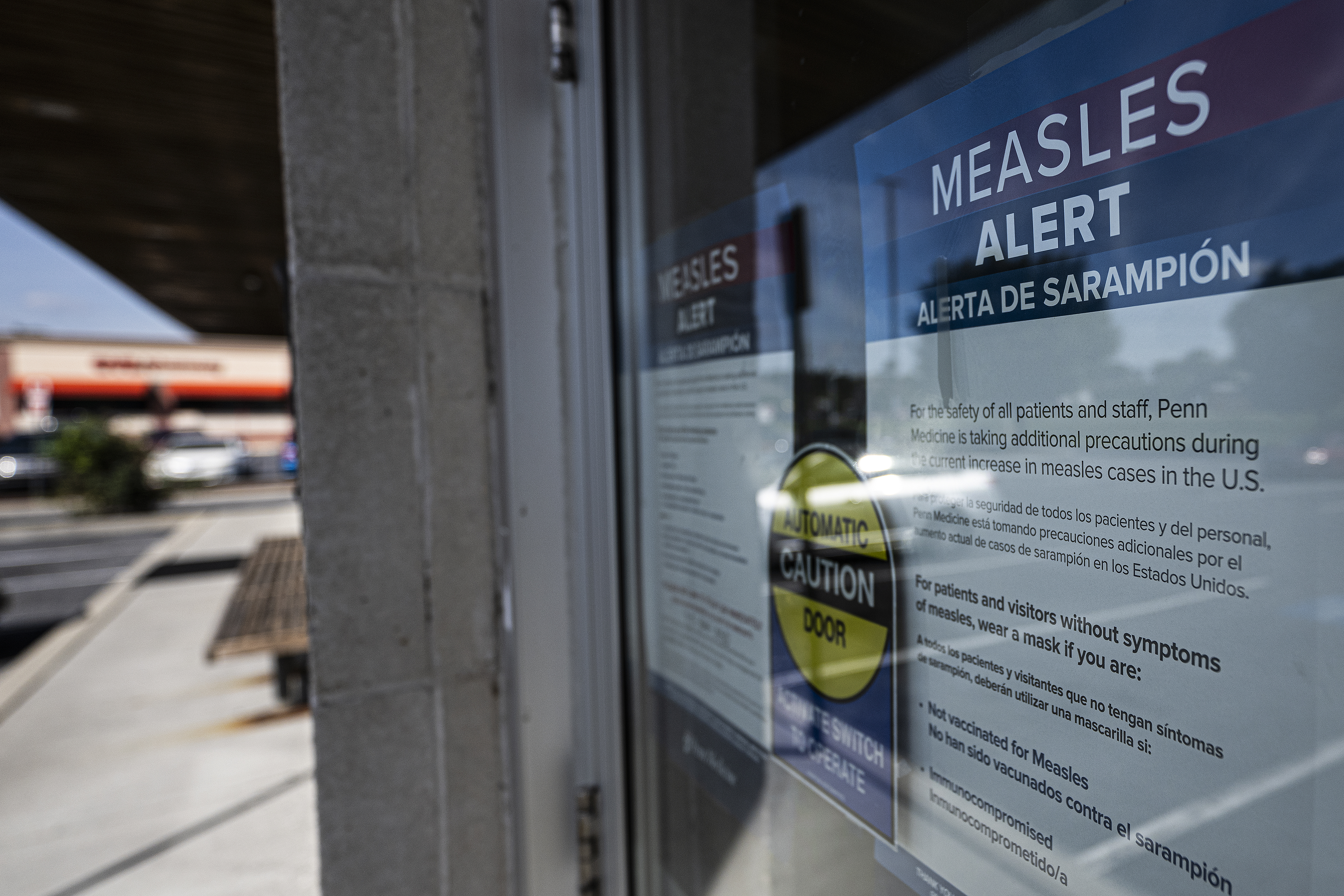
  • Pennsylvania confirms a fifth death associated with widening measles outbreak

    Pennsylvania confirms a fifth death associated with widening measles outbreak

    A fifth person has died amid Pennsylvania’s growing measles outbreak, state health officials confirmed on Wednesday.

    The Pennsylvania Department of Health said in a news release that an unvaccinated resident of Lancaster County tested positive for measles and has died.

    Health officials said they would not release any additional identifying details about the person who died, citing state privacy laws.

    The state has confirmed two other measles-associated deaths this year in Lancaster County residents, both involving infants in the Amish community.

    Mifflin and Jefferson Counties have also reported two measles-associated deaths involving an 18-year-old and a 40-year-old, respectively.

    The announcement came as confirmed measles cases in Pennsylvania reached 943 so far this year, the largest outbreak in the state in three decades and the highest case count nationwide this year. The state has confirmed 40 new cases in the last two days.

    The outbreak is centered in Lancaster, where nearly 400 people have been sickened so far this year, but also expanding in other counties, including Chester County in suburban Philadelphia, which had reported 83 cases as of Wednesday, the third-highest countywide case count in the state.

    (function(){function e(){window.addEventListener(`message`,function(e){if(e.data[`datawrapper-height`]!==void 0){var t=document.querySelectorAll(`iframe`);for(var n in e.data[`datawrapper-height`])for(var r=0,i;i=t[r];r++)if(i.contentWindow===e.source){var a=e.data[`datawrapper-height`][n]+`px`;i.style.height=a}}})}e()})();

    The death toll reported in Pennsylvania is also the nation’s highest since 1992, but state and federal officials have clashed over how to characterize the four previous deaths reported in the state, all in people who were unvaccinated and confirmed to have measles infections.

    The CDC’s public tracking of the toll of measles outbreaks nationally currently only shows two deaths from measles, reflecting decisions made under the leadership of President Donald Trump’s Health Secretary Robert F. Kennedy, Jr., a longtime anti-vaccine activist. The CDC’s website does not say where the two deaths occurred.

    Gov. Josh Shapiro, a Democrat, has accused Kennedy of spreading misinformation about the safety of the measles vaccine, contributing to declining vaccination rates statewide. Kennedy has faulted Shapiro for politicizing the deaths and initially said his administration may have “fabricated” two deaths.

    Pennsylvania officials said the latest death also fits the criteria for the state’s definition of a measles-associated death: One that occurred within 30 days of symptom onset in a person with clinical evidence of a measles infection and a positive lab test, that wasn’t due to an unrelated cause, like a car crash.

    In confirming measles-associated deaths, the state also considers medical records and whether the person was exposed to measles before their death.

    Statewide, nearly one in five people with reported cases have been hospitalized.

    About a third of confirmed measles cases have occurred in children under 18.

    Physicians and local officials in affected counties have warned that there are likely far more cases than have been officially reported.

    Nearly all of the confirmed cases of measles have been in unvaccinated people, state officials said. The state confirmed four cases involving extremely rare “breakthrough” infections in people who were vaccinated, less than 1% of the total cases reported.

    (function(){function e(){window.addEventListener(`message`,function(e){if(e.data[`datawrapper-height`]!==void 0){var t=document.querySelectorAll(`iframe`);for(var n in e.data[`datawrapper-height`])for(var r=0,i;i=t[r];r++)if(i.contentWindow===e.source){var a=e.data[`datawrapper-height`][n]+`px`;i.style.height=a}}})}e()})();

    Lancaster County coroner Stephen Diamantoni said state officials called him Wednesday to inform him of the latest measles-associated death, but provided no additional information on the case.

    He said his office had not handled any recent deaths involving a person who tested positive for measles.

    State officials have noted that not all deaths are referred to a coroner. They did not specify whether the latest death occurred in Lancaster County.

    Diamantoni, an elected Republican who is also a physician, had questioned the state’s conclusions about an earlier death in Lancaster County, in an infant who tested positive for a measles infection acquired before birth.

    The baby died shortly after birth from a lacerated spleen, Diamantoni said, adding that he did not believe the child’s death was caused by measles.

    State officials have said that the baby’s death fits their definition of a measles-associated death, and physicians have noted that measles can weaken the spleen, putting it at risk for rupture.

    Diamantoni also investigated the death of a second infant, which was not initially reported to his office. The six-week-old had a fatal genetic condition that made her particularly vulnerable to respiratory illnesses. That death was caused by measles, Diamantoni said.

    The other two deaths, in Mifflin and Jefferson Counties, involved an 18-year-old who died from a rare neurological complication of measles and a 40-year-old woman with serious respiratory issues that also put her at higher risk of death from measles.


  • Can newcomer Noel Acciari help strengthen the face-off circle? The Flyers think he can.

    Can newcomer Noel Acciari help strengthen the face-off circle? The Flyers think he can.

    Speaking to the media on Day 2 of training camp, Trevor Zegras expressed that if he wants to play center, which he is slated to do to start the season, he needs to be better at faceoffs.

    A question followed noting how good Noel Acciari’s numbers were in the playoffs, when the then-Pittsburgh Penguins forward had a 61% winning percentage in the circle against the Flyers.

    “Yeah, yeah, I know. I wonder why,” Zegras said with a chuckle. The question continued, asking if Acciari is someone whose brain he would pick. “Yeah, for sure,” Zegras said. “Ask him what I was doing wrong, probably.”

    Zegras, who famously battled Acciari in the regular season, can now look across the Flyers’ locker room in Voorhees to find out. Acciari inked a two-year deal with a $2.8 million average annual value on July 1.

    “I think the right-handed draw,” coach Rick Tocchet said about the value Acciari adds to the lineup. “He killed us last year, and now they don’t have that, so that’s good; helps us for our face-offs tonight.”

    Danny Brière on 2026-27 Flyers: 'We're not going to creep up on anyone'
    Video: Danny Brière on 2026-27 Flyers: ‘We’re not going to creep up on anyone’

    The Flyers open the 2026-27 season at Xfinity Mobile Arena on Wednesday (7:30 p.m., TNT, truTV), against their Keystone State rivals, whom they knocked out of the playoffs in six games in the first round of the 2026 Stanley Cup playoffs. A veteran of 585 NHL games, the 34-year-old is excited to kickstart the season against his former team and play in front of his new fanbase.

    “I’m just glad I’m on this side now,” grinned Acciari. “They’re passionate, and I love that.”

    The native of Rhode Island, who wore Rasmus Ristolainen’s No. 55 in Pittsburgh, will now don 52 because “in high school [at Bishop Hendricken High] I was number 10, so five and five is 10, so five times two is 10.” Acciari will be slotted onto a revamped fourth line alongside captain Sean Couturier and rotating left wingers Carl Grundström and Garrett Wilson.

    “North-South, try to be heavy on the puck, good in the defensive zone,” he said when asked to describe his game to The Inquirer. “[Penalty kill], take pride in that, block shots, throw hits, and the occasional try and score when we can.”

    Noel Acciari (55, facing off against the Devils’ Jack Hughes) is slated to make his Flyers debut Wednesday night. Noah K. Murray

    Last season Acciari finished seventh in hits (65) and blocked shots (62) on the Penguins, despite averaging less than 14 minutes a night. Since becoming an NHL mainstay in the 2017-18 season with the Boston Bruins — he’s also played for the Florida Panthers, St. Louis Blues, and Toronto Maple Leafs — Acciari ranks 43rd in hits (1,246), between tough defenseman Ben Chiarot and winger Milan Lucic, who each have four inches on him.

    “He’s super effective,” said Owen Tippett, who played with Acciari in Florida and was someone the new guy bounced questions off.

    “Obviously, he plays the game heavy, but just his details of his stick and blocking shots and everything like that, he’s going to help not only that line but also our PK as well. And having a right-handed centerman doesn’t hurt as well.”

    The only right-handed centerman on the team — like Luke Glendening, who came on later in the 2025-26 season — Acciari will switch with Couturier depending on the side of the faceoff circle. He has also become a penalty-killing partner to Couturier, the longest-tenured Flyer. The two have already built a strong relationship on and off the ice.

    “Just kind of being able to read off each other,” Acciari said. “The short time we’ve been together, I feel we’ve kind of made some sort of connection in the preseason games and practices. Each time it’s gotten better, and I think it’ll continue to grow.”

    Breakaways

    Tocchet confirmed that Dan Vladař will get the start in the opener. … The coach said forwards Denver Barkey and Nikita Grebenkin, who were not on the ice for morning skate, are still day-to-day. “Barks has improved. He might be a little ahead of Grebby,” Tocchet said. … The Flyers held an optional skate, and Acciari and Couturier did not participate but are good to go.

  • Microplastic pollution found in 100% of Delaware River tributaries tested

    Microplastic pollution found in 100% of Delaware River tributaries tested

    Fleece fragments in a washer flow into a wastewater treatment plant. A plastic bag blows into a stream. A water bottle washes down a storm drain.

    All can end up in the region’s waterways as microplastics smaller than a grain of rice and find their way into drinking water and the stomachs of animals and fish.

    This kind of microplastic pollution was detected in 22 stream and river segments across the Delaware River watershed, according to a new survey of waterways by the nonprofit advocacy group PennEnvironment Research and Policy Center.

    Researchers analyzed water samples from sites along the Delaware River and its tributaries across Pennsylvania, New Jersey, Delaware, and New York.

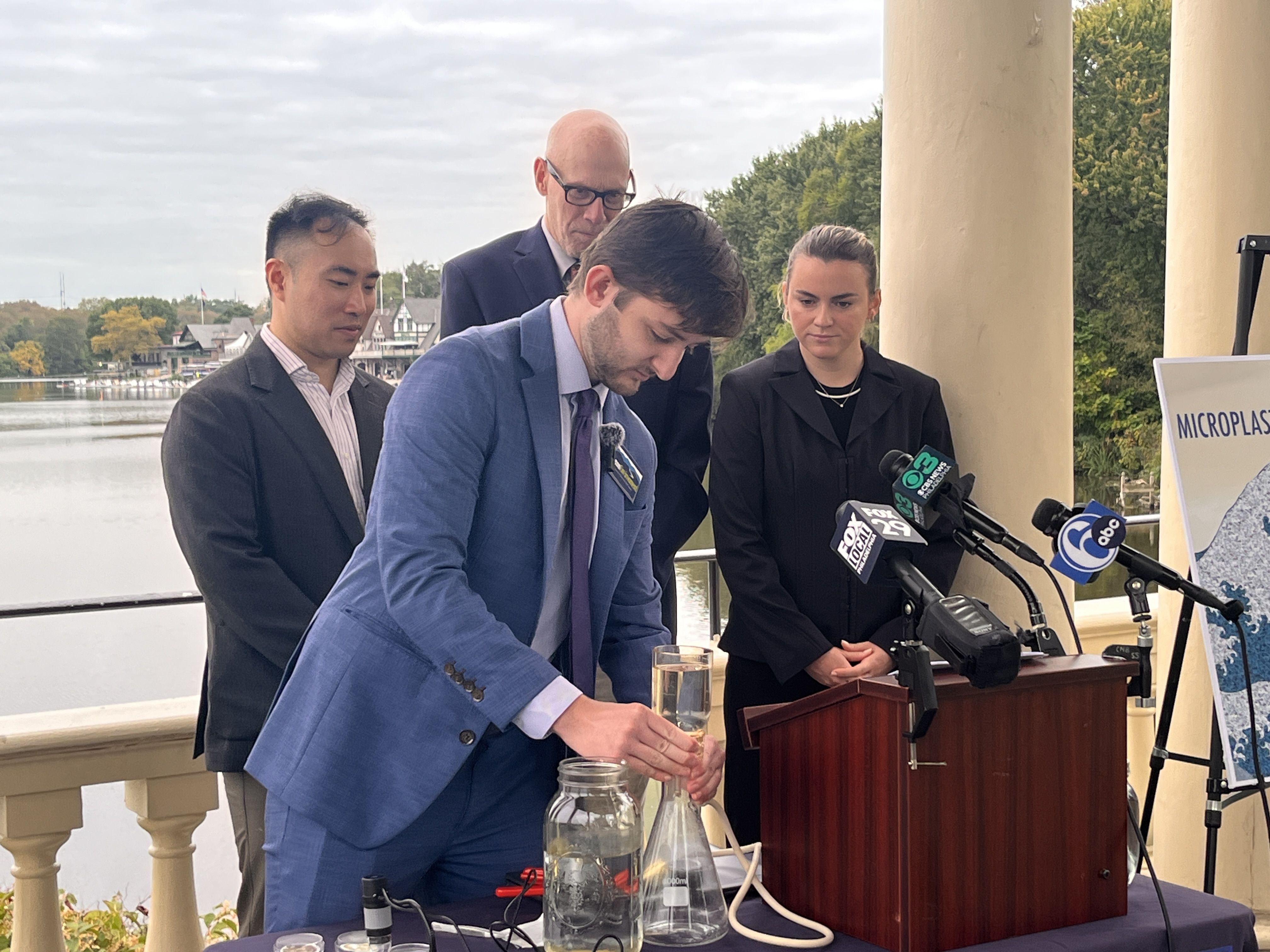
    The research was conducted in partnership with the nonprofit Environment New Jersey Research and Policy Center. Scientists with the Academy of Natural Sciences at Drexel University helped analyze the results, which were released Wednesday during a news conference at Fairmount Water Works.

    Contamination was found in the Delaware and Lehigh Rivers and the Schuylkill. It was found in Neshaminy Creek in Bucks County, Brandywine Creek in Chester County, and Cooper River in Camden County. And it was found along the Christina River in Delaware.

    Drexel’s lab analysis confirmed microscopic plastic at every sampled site, highlighting what the researchers say is a widespread environmental threat.

    “We can look at a waterway, and it might be free of litter, it might be free of visible plastic pollution, but that doesn’t necessarily mean it’s clean,” said Faran Savitz, an advocate for PennEnvironment. “The big takeaway is that we should be concerned. The depth, the breadth of this plastic pollution is staggering.”

    Faran Savitz with PennEnvironment demonstrates water testing. In the background from right are: Lizzy Mulvenna, with Environment New Jersey Research & Policy Center; David Velinsky, senior scientist, Academy of Natural Sciences; and Derek Ho, microplastics researcher, University of Pennsylvania.Frank Kummer

    Where do microfibers come from?

    Waterways in and around Philadelphia emerged as significant focal points in the survey results.

    Samples drawn from the Delaware River in Philadelphia tested positive for multiple categories of microplastics including microfibers, microfragments, and microfilm, as did other waterways. Microbeads, often found in cosmetic products, were also found in the Christina River.

    Microplastics are defined as fragments of less than 5 mm in length.

    The synthetic microfibers came primarily from clothing and textiles. Rigid microfragments from items such as fishing line were found in 82% of locations. And flexible microfilm from bags and packaging appeared in 77%.

    (function(){function e(){window.addEventListener(`message`,function(e){if(e.data[`datawrapper-height`]!==void 0){var t=document.querySelectorAll(`iframe`);for(var n in e.data[`datawrapper-height`])for(var r=0,i;i=t[r];r++)if(i.contentWindow===e.source){var a=e.data[`datawrapper-height`][n]+`px`;i.style.height=a}}})}e()})();

    Microplastics have been found in humans

    Researchers explained that laundering synthetic garments releases millions of microfibers that wastewater treatment facilities are unable to completely filter out before they are discharged into local streams.

    However, because plastic does not biodegrade but continuously fractures into tiny fragments, filters capture only a portion of plastic entering a waterway.

    Savitz said PennEnvironment’s study did not release the concentrations of microplastics because it did not want to compare one waterway or state against another.

    The findings carry ecological and public health implications, as microplastics can block digestive tracts in wildlife and absorb toxic chemicals like PCBs and PFAS that bioaccumulate up the food chain, the report stated.

    On average, humans ingest approximately 5 grams of plastic weekly, which is roughly equivalent to the weight of a credit card. Microplastics have been found in human blood, lung tissue, and organs, the researchers said.

    Plastics are also routinely found in wildlife, including sea turtles, birds, and whales. About 60% of all seabirds have ingested plastic, with that number rising.

    The environmental advocates are urging state and local leaders to enact policies such as producer responsibility for plastic packaging, bans on single-use foam and plastic bags, strict limits on pre-production plastic pellets, and enhanced drinking water filtration systems.

    Microbeads once used in personal care products were phased out under President Barack Obama in 2015. But many of those products still linger on household shelves.

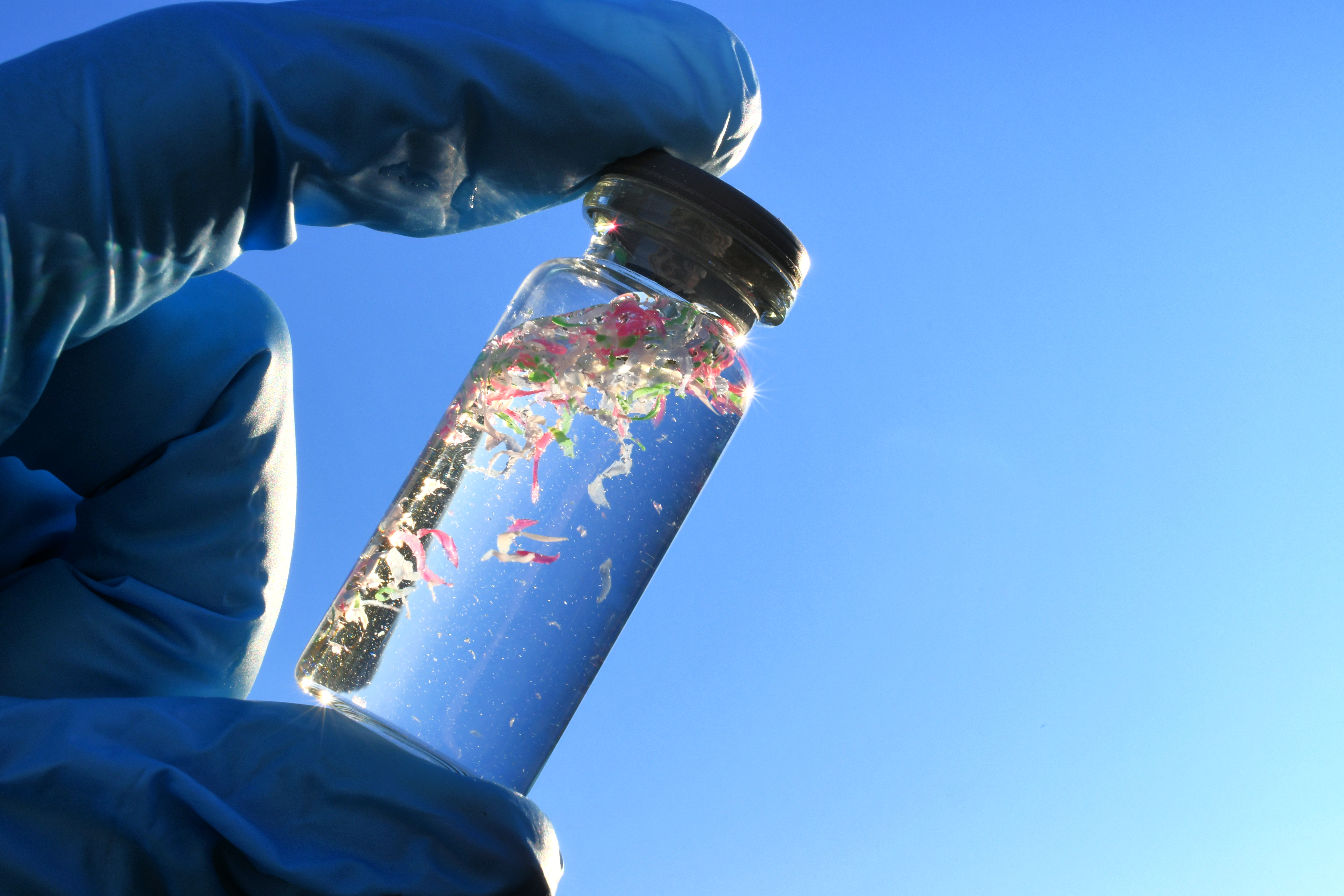
    File: A glass vial containing water and microplastic pollutionGetty Images

    Philadelphia’s drinking water

    Philadelphians get their drinking water from the Delaware River and the Schuylkill. Most microplastics are filtered out at the Philadelphia Water Department’s wastewater treatment plants, but some particles still get through.

    In 2025, PWD removed 4.6 tons of plastic litter from the Delaware and the Schuylkill, alongside an estimated 1,000 tons of plastic extracted through sewer maintenance, the researchers stated.

    PWD said in an online report that it is “unclear whether microplastics pose a danger to human health,” noting that the risk could depend on the level of exposure, the type of plastic, and the size of the particles.

    But it noted that research suggests some are harmful to fish and animals and can build up in the organs or bloodstream over time.

    “PWD is always investigating advanced treatment technologies that may eliminate microplastics and other impurities,” the report stated.

    David Velinsky, a senior scientist at the Academy of Natural Sciences of Drexel University, said, “plastics and microplastics are everywhere, from our clothing to the ubiquitous water bottle.”

    When plastics and microplastics are not properly disposed of or recycled, he said, they break down into ever smaller pieces.

    They “can travel great distances through both the air and in the water,” Velinsky noted.

    A plea for ‘producer responsibility’

    To combat pervasive plastics, advocates are urging federal and state lawmakers to enact targeted reforms, including the federal Plastic Pellet Free Waters Act currently before Congress, and state-level producer responsibility legislation for plastic packaging.

    Savitz emphasized that shifting financial and operational burdens back onto manufacturers is critical to curbing waste at its source.

    At least seven states have passed producer responsibility laws, though not all are in effect, according to the Product Stewardship Institute. Those states include Washington, Oregon, California, Colorado, Minnesota, Maryland, and Maine.

    “If we can shift the burden back onto companies that create this waste in the first place,” Savitz said, “we can actually reduce the waste, encourage recycling, and make these broader, more systemic changes.”

  • Temple releases 2026-27 conference schedules for women’s and men’s basketball

    Temple releases 2026-27 conference schedules for women’s and men’s basketball

    Temple’s men’s and women’s basketball teams will open American play on Dec. 30, with the men traveling to Rice and the women hosting Charlotte, as part of the Owls’ 18- game conference slate announced Wednesday.

    Both programs will face six conference opponents twice, with three at home and three on the road. The Owls’ men’s and women’s teams each finished 8-10 in the American last season.

    The American men’s and women’s basketball tournaments will be held in Tampa in March. Game times and broadcast information for Temple’s conference schedules will be announced at a later date.

    Men’s schedule

    The men will play their first two conference games at home against UTSA on Jan. 2 and UAB on Jan. 5. Temple will also host each of the American’s top three finishers from last season — South Florida, Wichita State and Tulsa — with defending regular-season and tournament champion South Florida visiting the Liacouras Center on Jan. 14.

    Temple handed South Florida one of its three conference losses last season, beating the Bulls, 79-78, at the Liacouras Center on a Mohamed Keita tip-in with six seconds remaining.

    The Owls will have a difficult road stretch midway through conference play. Beginning Jan. 31, Temple plays four of five games away from home, traveling to UAB, North Texas, Florida Atlantic, and South Florida in between a Feb. 7 home matchup with East Carolina.

    Temple will return home to face Wichita State on Feb. 21 and Tulane on Feb. 24 before visiting East Carolina on Feb. 27. The Owls will play their conference home finale against Memphis on March 4 before ending the regular season at UTSA on March 7.

    Women’s schedule

    The women begin conference play with two home games, following their opener against Charlotte with a Jan. 2 matchup against Rice. The Owls will get an immediate test against the defending American regular-season champions, who went 17-1 in conference play last season.

    Temple will host each of the five teams who finished above the Owls in last season’s conference standings — Rice, East Carolina, South Florida, Tulsa, and North Texas — at the Liacouras Center.

    After opening January at home, the Owls will play four of their next six games on the road, including trips to Memphis, UAB, South Florida, and Wichita State. Temple closes the month at Tulane on Jan. 30 before traveling to UTSA on Feb. 6.

    The UTSA game will be Temple’s first meeting with the Roadrunners since they eliminated the Owls from last season’s American tournament. UTSA beat Temple, 59-51, in the second round before going on to win the conference tournament and earn an NCAA Tournament berth.

    Temple then begins a three-game homestand against Tulsa on Feb. 9, followed by Wichita State on Feb. 13 and Florida Atlantic on Feb. 17. The Owls’ final home game is against South Florida on Feb. 27 before they close the regular season at Florida Atlantic on March 6.

  • Gameday Central: Eagles vs. Rams Preview | Sponsored by Xfinity

    Gameday Central: Eagles vs. Rams Preview | Sponsored by Xfinity

    Olivia Reiner and Jeff Neiburg break down the Eagles’ Week 4 matchup against the Los Angeles Rams, discussing key storylines, matchups, injury updates and what Philadelphia needs to do.

  • Philly DA Larry Krasner said the federal judge who accused him of crimes should be removed from the case

    Philly DA Larry Krasner said the federal judge who accused him of crimes should be removed from the case

    Philadelphia District Attorney Larry Krasner said Wednesday that the federal judge who accused him of potentially breaking the law while overseeing a post-conviction case had reached “baseless,” illogical, and legally unsupported conclusions — and that the judge should be removed from the case because he had acted more like “an advocate against DA Krasner” than an impartial arbiter.

    In a series of documents filed in federal court overnight, Krasner took the unusual step of openly criticizing U.S. District Judge Paul S. Diamond — sometimes using strikingly pointed language.

    In one brief, signed by Krasner and a subordinate, the district attorney said Diamond’s suggestion that Krasner might be guilty of criminal conspiracy relied on allegations “more closely resembling fever-dream conspiracy theories than evidence.”

    Other suggestions of criminality by Diamond — which revolved around actions Krasner took while overseeing the case and his staff — were equally wrong, Krasner wrote.

    “When it comes to all of these nominally-serious-but-actually-wafty accusations of criminal conduct, tempered by ‘coulds’ and ‘mights’ and ‘may haves,’ [Diamond’s] analysis rests on nothing of substance,” he wrote.

    Then, in a separate nine-page letter signed only by Krasner, the city’s top prosecutor said Diamond’s “factual findings and accusatory legal conclusions twist the truth to the point of breaking in ways that defy logic and employ Orwellian language.”

    And if Diamond’s assertions had been made in a setting other than a court case, Krasner said, “these accusations could be litigated as civil claims of defamation, slander, or libel.”

    Finally, in a third document, Krasner and Assistant District Attorney Thomas Gaeta wrote that Diamond’s actions had been so out of line that he should no longer oversee the case. At one point, they said the proceedings had become a “circus,” with Diamond the “ringmaster.”

    And they said Diamond — who was appointed by President George W. Bush, a Republican — had displayed his biases against Krasner, a Democrat, in a number of ways, including by asking improper questions of witnesses, reaching inconsistent conclusions about which witnesses were credible, and improperly blaming and discrediting Krasner for not testifying — even though Diamond had never asked him to.

    Diamond’s conduct, they wrote, “provides a clear and obvious view into the type of unfair and improper proceedings and decisions [Diamond] deigned to make.”

    The filings served as the latest chapter in a saga that has been marked by a series of explosive developments about Krasner’s office in recent months. The episode has also raised legal and political questions about Krasner’s future.

    Most recently, in mid-September, Diamond filed a stunning memorandum in which he said Krasner and one of his top supervisors, Matthew Stiegler, may have committed crimes including conspiracy, obstruction of justice, or perjury while participating in the underlying case. Diamond also said he had referred the matter to the U.S. Attorney’s Office for potential investigation. Federal prosecutors have declined to comment.

    Krasner has consistently disputed the notion that his actions were improper and appealed Diamond’s ruling, which also disqualified him and Stiegler from participating in the case moving forward.

    The underlying matter is centered on Dennis Johnson’s attempts to have his 2009 murder conviction overturned; Krasner’s office had once supported that effort, but reversed course earlier this year after some of his staff discovered that a previous prosecutor had made mistakes in her handling of the appeal.

    Wednesday’s filings served as Krasner’s most extensive response yet to accusations that he had committed misconduct while his staff tried to rectify those errors in court.

    In Krasner’s view, the fact that his office was seeking to correct its own mistakes in open court was just one example of how Diamond’s conclusions — including that Krasner may have conspired to concoct a false cover story about the episode — “cannot logically be reconciled with each other.”

    “I know many of the facts found by [Diamond] and conclusions inferred by [Diamond] are not correct from personal knowledge,” Krasner wrote. “I lived it.”

    Dispute over ‘false narrative”

    The roots of the controversy date to 2022, when then-Assistant District Attorney Jaclyn Mason filed a brief supporting Johnson’s bid to have his conviction overturned.

    Krasner was unaware of the case at that time, he said in his new filings. But he became involved this spring, when some of Mason’s supervisors in the law division concluded that she had made significant errors in her brief, and that they needed to try to withdraw it.

    Krasner approved a document alerting Diamond to the mistakes and apologizing for Mason’s errors.

    Mason, meanwhile, resigned and said Stiegler — her former boss — was most at fault.

    Diamond, in his Sept. 15 memorandum, said that in the aftermath of Mason’s resignation, staff in Krasner’s office discussed how the errors occurred. And in those discussions, he said, Krasner and Stiegler worked to create a “false narrative” to blame Mason, including by considering a Stiegler proposal: to review all of Mason’s old cases and find additional errors they could use to cast Mason as a “rogue” prosecutor.

    Diamond said such an effort could amount to criminal conspiracy.

    But Krasner, in his filings, called that conclusion “baseless,” saying Stiegler’s proposal was to review Mason’s old cases to see if there were additional errors — not to manufacture problems they could improperly attribute to her.

    “Nothing in the record supports the Court’s determination that providing a broader account of their competence would have advanced a ‘false narrative,’” Krasner wrote. “They either had or had not made errors in other cases, and there was absolutely no testimony indicating that DA Krasner (or Stiegler, for that matter) suggested submitting false allegations of error.”

    In addition, he said, Stiegler’s proposal was never actually pursued once other law division supervisors voiced opposition to it — further diluting any notion that Krasner was seeking to force his staff into lying to Diamond.

    “Stiegler proposed a strategy that DA Krasner considered, but DA Krasner also considered and accepted the Law Division supervisors’ advice that it was inadvisable,” Krasner wrote. “This is not misconduct.”

    ‘Reasonable’ consequences?

    Diamond, in his Sept. 15 memorandum, also took issue with Krasner threatening “consequences” for prosecutors who told the judge about another issue roiling the district attorney’s office: whether to refer Johnson’s case to the state attorney general’s office.

    The law division supervisors handling the case after Mason’s resignation — Katherine Ernst, Steven Wildberger, David Napiorski, and Peter Andrews — generally agreed that was the appropriate course of action because of the inner-office drama consuming the matter. And they repeatedly urged Krasner to refer the case to avoid what they viewed as a conflict of interest.

    But Krasner disagreed. And in his filings, he said that as the referral discussions took place over several weeks, he had consulted with several ethics experts who generally agreed there was no conflict necessitating a referral.

    As for the threat of consequences, he said, he was not seeking to prevent his staff from telling Diamond the truth about their deliberations — which the judge later said could amount to obstruction of justice. Instead, Krasner said, he was seeking to prevent them from submitting court documents without his approval.

    “That is particularly so where, as here, those pleadings are premature, legally incorrect, and unnecessary,” Krasner wrote. “It is reasonable to expect consequences for filing a pleading the District Attorney disapproves of while he is still examining the issue and determining the correct course of action.”

    Seeking the judge’s recusal

    In addition to disputing Diamond’s conclusions about his actions — and whether they constituted crimes — Krasner went on to say the judge should no longer oversee the case, which remains pending.

    He said Diamond’s “apparent bias is evident from a number of remarkable circumstances,” all of which should lead to his removal, according to the district attorney.

    One example, Krasner said, was that as Diamond questioned witnesses in his courtroom this summer about what happened in the case — including asking questions of lawyers who still work in Krasner’s office — the judge “departed from [his] role as a neutral arbiter and undertook an active inquisitorial and advocacy role.”

    “The Court’s questions and assertions reflected the Court’s apparently preconceived view that the DAO’s conduct in all cases is inherently suspect,” Krasner wrote.

    Diamond also made “selective credibility determinations” about which witnesses he believed and which ones he discredited, the DA wrote. And he took particular issue with what he cast as Diamond’s reluctance to criticize Mason: Krasner, in his filing, said there were “many additional reasons to question the honesty of Mason’s testimony, all of which were ignored by the Court.”

    Then there was the issue of Krasner’s failing to testify.

    Diamond, in his memorandum, blamed Krasner for not taking the stand. But Krasner, in his filing, said Diamond — who scheduled the hearings and set the witness list — “appears to have taken pains to avoid having DA Krasner testify.”

    In any case, he said, it was improper for Diamond to assume that Krasner’s lack of testimony was somehow “concession by silence.”

    Overall, Krasner said in his motion, the judge “served as a prosecutor for DA Krasner and his office,” thereby requiring his recusal from the matter.

    In his nine-page letter, Krasner went even further, saying he believes Diamond should be recused “from this matter and every other matter involving the Philadelphia District Attorney’s Office for the foreseeable future.”

    It was not immediately clear how Diamond might respond to such a request. On Wednesday, he said any additional paperwork on that issue must be filed within a week.

  • Nick Sirianni talks Eagles backup QB battle, Makai Lemon’s progress

    Nick Sirianni talks Eagles backup QB battle, Makai Lemon’s progress

    Four plays. That’s how long it took Eagles backup quarterback Andy Dalton to throw an interception after he briefly replaced Jalen Hurts on Monday.

    This turnover, a major turning point in the Eagles’ 27-7 loss to the Bears, shined a national spotlight on the team’s messy backup quarterback situation.

    Naturally, Nick Sirianni was asked a direct question about it in his press conference on Wednesday: “Do you feel like Andy Dalton is your backup quarterback?”

    Sirianni gave a minute-long response — though he didn’t exactly answer the question.

    “You know, I have a lot of faith in both of those guys,” Sirianni said. “Obviously, you know what happened in the game. We don’t want turnovers by anybody. Whether it was that [play], whether it was Jalen’s interception, whether it was Tank [Bigsby’s] fumble, that has not been our winning formula. We can’t turn the ball over. And we did in a situation and lost points from it.

    “I still have faith in that entire [quarterback room]. With Tanner [McKee], I still have faith in Andy, I still like the way that Cole [Payton] is developing. And so, yeah, I still love that room.”

    Minutes later, another reporter followed up: “You didn’t really answer [The Inquirer’s] question. Is there a chance Tanner might be No. 2?”

    Sirianni responded, “Like I said, I answered how I wanted to … I’ve got a lot of faith in that everybody in that room.”

    Sirianni is likely deflecting to keep confidence high in the quarterback room, but he didn’t exactly give Dalton a ringing endorsement.

    This comes weeks after the Eagles decided to keep four quarterbacks on their initial 53-man roster. Dalton and McKee alternately struggled at times during their preseason quarterback competition, which left the Eagles in a tough spot — they didn’t have a great backup or an attractive enough trade target.

    After a bad preseason showing and even worse debut, Sirianni might have no choice but to shake up the depth chart and put McKee ahead of Dalton. The 26-year-old McKee — who was once viewed as a promising prospect — threw for 263 yards, one touchdown and one interception in three preseason games.

    Makai Lemon had the longest reception of his young career on Monday night. Yong Kim / Staff Photographer

    Is Makai Lemon improving?

    Rookie first-round pick Makai Lemon has not had the best start to his NFL career. He has 38 yards on seven receptions and he’s been targeted nine times.

    He’s shown glimpses — like when he snagged a career-best 19-yard catch on the Eagles’ opening drive on Monday — but he hasn’t lit up the stat sheet the way he’d like to.

    Sirianni still isn’t panicking. In fact, the Eagles head coach said the 22-year-old has given him an increased comfort level.

    “Makai gives you confidence as he’s getting more and more touches,” Sirianni said. “The trust has to build, obviously, in a different way. It’s got to build through practice, but it’s got to build also through the things that he consistently does on the field without the ball in his hands.

    “And I think that’s what’s been good with Makai. He gives you a lot of faith that he knows what he’s doing in all situations. And when the ball starts to come to him, more chances will come to him because he consistently does his job with other factors, without the ball on his hands. And I think he’s scrappy. He is consistently on the same page and, he blocked his butt off the other day in that game and played a solid game.”

    Lemon was one of college football’s top receivers in 2025, becoming the second Southern Cal player ever to win the Biletnikoff Award for most outstanding receiver in college football. He caught 79 passes for 1,156 receiving yards and 11 touchdowns in his final collegiate season.

    The Eagles took him the 20th pick of the NFL draft in April, dealing with the rival Cowboys in order to move up and do so.

  • Black Panther-style group members arrested in Chester, as mayor decries their presence

    Black Panther-style group members arrested in Chester, as mayor decries their presence

    The leader of a Philadelphia offshoot of the Black Panther Party for Self-Defense was charged with a firearms crime for carrying a concealed gun without a permit in the city of Chester — and the group’s growing visibility in the Delaware County community is sparking a clash with the city’s mayor.

    Paul Birdsong, who founded Philly’s Panther group, was arrested this summer during what the group says was an armed community patrol of Chester’s streets.

    Birdsong had been carrying two holstered handguns, one of which police said was partially obstructed by his waistband and constituted carrying a concealed weapon, according to the affidavit of probable cause for his arrest.

    Birdsong, 40, is out on bail and appeared earlier this month in Magisterial District Court, where a judge ruled he should stand trial for that crime.

    The judge dismissed two counts of disorderly conduct and one count of resisting arrest stemming from the July 11 incident, court records show.

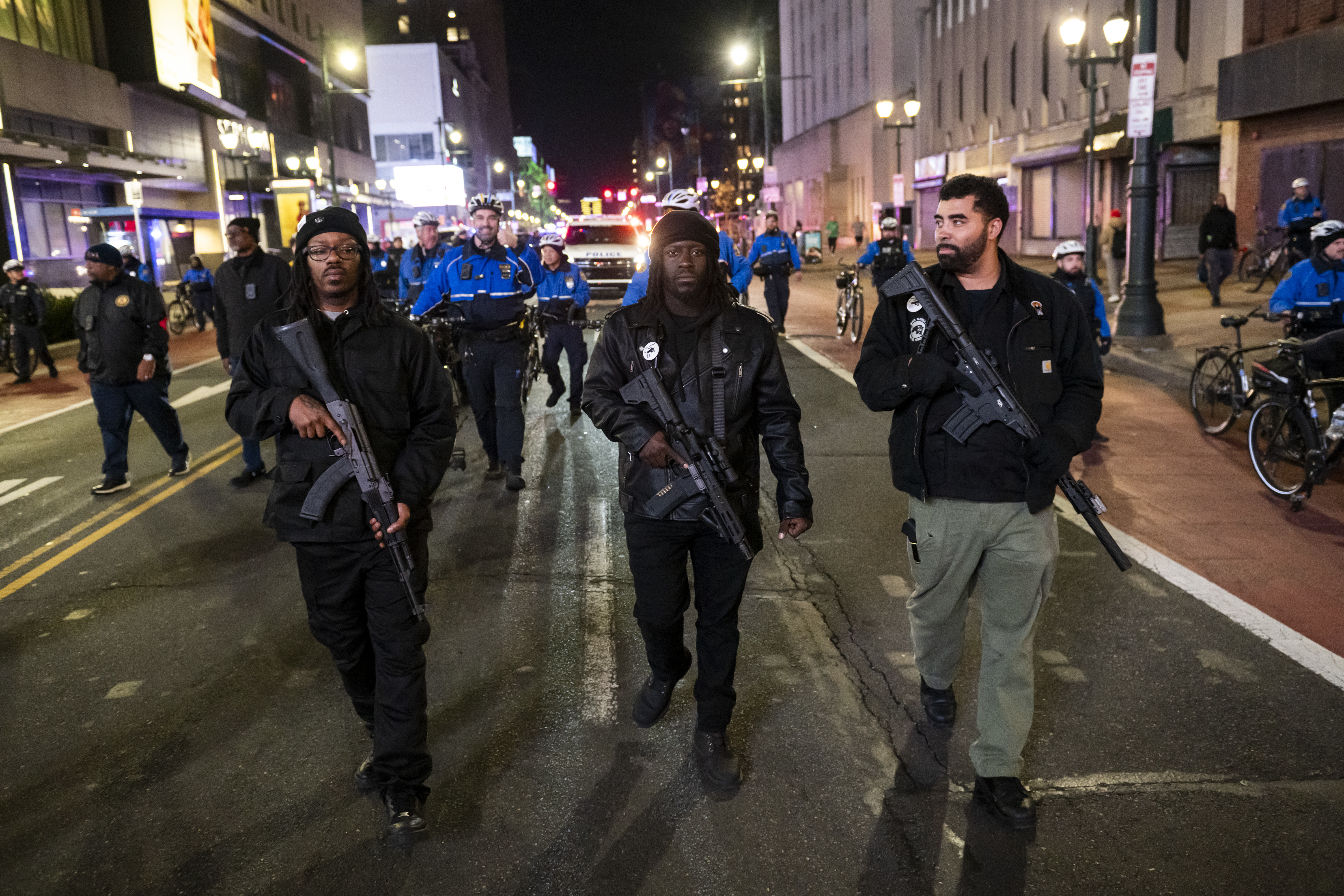
    Birdsong’s arrest, as well as the arrest of another Panthers member in Chester in August, marked the latest run-in between police and the armed citizens group, which is styled after the 1960s political and militant organization. The Panthers first made headlines this winter during anti-ICE protests during which they carried assault-style weapons in Center City.

    Panthers members say they are Second Amendment advocates and regularly conduct patrols in the name of public safety. They say the guns are not meant to intimidate, but to deter crime and encourage responsible firearms ownership. The group also holds weekly giveaways of food and essential supplies for those in need.

    But Chester Mayor Stefan Roots has decried the group’s foray in the city, saying its presence has created “horrible optics” as officials try to reduce gun violence, especially among young people.

    To address the Panthers’ presence, Roots and members of Chester City Council met with Birdsong and other members in a closed-door meeting on Tuesday.

    Councilmembers appeared to have left the meeting with supportive views of the group. But tensions flared when Roots grew frustrated during talks and abruptly left the gathering early, according to Birdsong.

    Roots declined to comment Tuesday, saying only that he had not been aware of the Panther members’ arrests. He did not immediately respond to an additional request for comment Wednesday.

    Birdsong made headlines in May when Philadelphia police revoked his city-issued gun license along with those of four other Panthers.

    The following month, in an unusual show of federal oversight, the Department of Justice’s Civil Rights Division opened an investigation into whether the police department violated the Second Amendment by revoking gun licenses without proper cause. The filing did not name Birdsong or other Panthers in the inquiry.

    A spokesperson for DOJ did not return a request for comment on the status of the investigation. A police spokesperson referred The Inquirer to the city’s law department, which declined to comment.

    After the restrictions in Philadelphia, Panthers became active in Chester, where members have patrolled in the past.

    In July, Birdsong was armed when he was stopped by a police officer near Barclay and West 5th Streets, according to the affidavit of probable cause for his arrest.

    The officer said that he recognized Birdsong from a past encounter in Chester, and that he stopped him after seeing one of his handguns holstered “inside his right pants pocket with the majority of the firearm being concealed from view,” the document said.

    Birdsong questioned why he was stopped and began to record the interaction, the affidavit said. He began to “curse and yell” when additional officers arrived, and he was detained, the document said.

    In an interview this week, Birdsong disputed the officer’s account. He said that the gun was clearly visible and that he believes the enforcement was racially motivated.

    “They’re arresting us as an effort on their part to bully us, to scare us,” he said.

    Carrying a firearm in the open without a license is legal in Pennsylvania — but not in Philadelphia, where a license is required to carry either open or concealed.

    Birdsong’s lawyer, Lyandra Retacco, said the matter would be resolved in court.

    The July incident was not the only time Panthers have clashed with Chester police.

    On Aug. 28, member William Ozah was charged with disorderly conduct and evading arrest after police said he ran from an officer who attempted to stop him for having a knife protruding from his pants pocket, according to the affidavit of probable cause for his arrest.

    The officer used a Taser to subdue Ozah, the document said. During the chase, the officer said, Ozah tried to reach into a satchel, which he believed concealed a firearm.

    After detaining Ozah, officers recovered a knife and a Bryna SD pepper-ball pistol — a less-lethal firearm that uses compressed gas to shoot projectiles filled with a chemical irritant.

    He was held for court on both charges, court records show.

    Meanwhile, Panthers have continued their Chester presence.

    In addition to armed patrols, the group is handing out informational pamphlets to those curious about the group’s mission: to “protect and defend ourselves and our beautiful Black people,” it said.

    The group had arrived, the pamphlet said, because “people reached out to us for help.”

    This article has been updated to reflect comments made by Birdsong’s attorney.

  • Tyrese Maxey lands on Time’s NEXT100 list, with new Sixers teammate LeBron James writing his tribute

    Tyrese Maxey lands on Time’s NEXT100 list, with new Sixers teammate LeBron James writing his tribute

    Tyrese Maxey helped bring LeBron James to Philadelphia. Now, James is helping explain how the Sixers guard influenced his decision beyond sending a few text messages.

    On Wednesday, Time Magazine named Maxey to its 2026 TIME100 Next list, recognizing him among the world’s most influential rising stars. His new teammate, James, wrote the accompanying tribute.

    “Tyrese Maxey gets better every season, and he’s really just getting started,” James wrote.

    James pointed not only to Maxey’s development as a player, but also to his growth as a leader. He acknowledged something that has become increasingly clear since James arrived in Philadelphia this summer: Maxey played a significant role in getting him here.

    James wrote that the two have trained in the summer together for five years and said their relationship away from basketball influenced his decision to sign with the Sixers.

    It is a relationship years in the making. Maxey first worked out with James before entering the NBA in 2020, and they continued training together each offseason.

    Maxey had even floated Philadelphia to James during a previous free-agency period, though the possibility became much more realistic this summer after the Sixers acquired Jaylen Brown from the Boston Celtics and James decided to leave Los Angeles.

    James said at Sixers media day Monday that he had a “great relationship” with Maxey and confirmed they had multiple conversations about Philadelphia before he signed.

    Sixers player Tyrese Maxey visited his barbershop, Faheem’s Hands of Precision, to promote his new signature sneakers, New Balance Maxey V1s earlier this month.Monica Herndon / Staff Photographer

    The latest honor among honors

    The Time recognition is the latest marker of Maxey’s continued rise.

    The 25-year-old averaged career highs of 28.3 points and 6.6 assists last season. He earned his second All-Star selection and started the game for the first time. He was later named third-team All-NBA, the first All-NBA honor of his career.

    Earlier this month, ESPN ranked Maxey as the NBA’s No. 11 player entering the 2026-27 season — ahead of new teammate Brown, who ranked 14th, and James, who came in at No. 18. Maxey is a two-time All-Star, the 2023-24 NBA Most Improved Player, and was All-NBA third team last season.

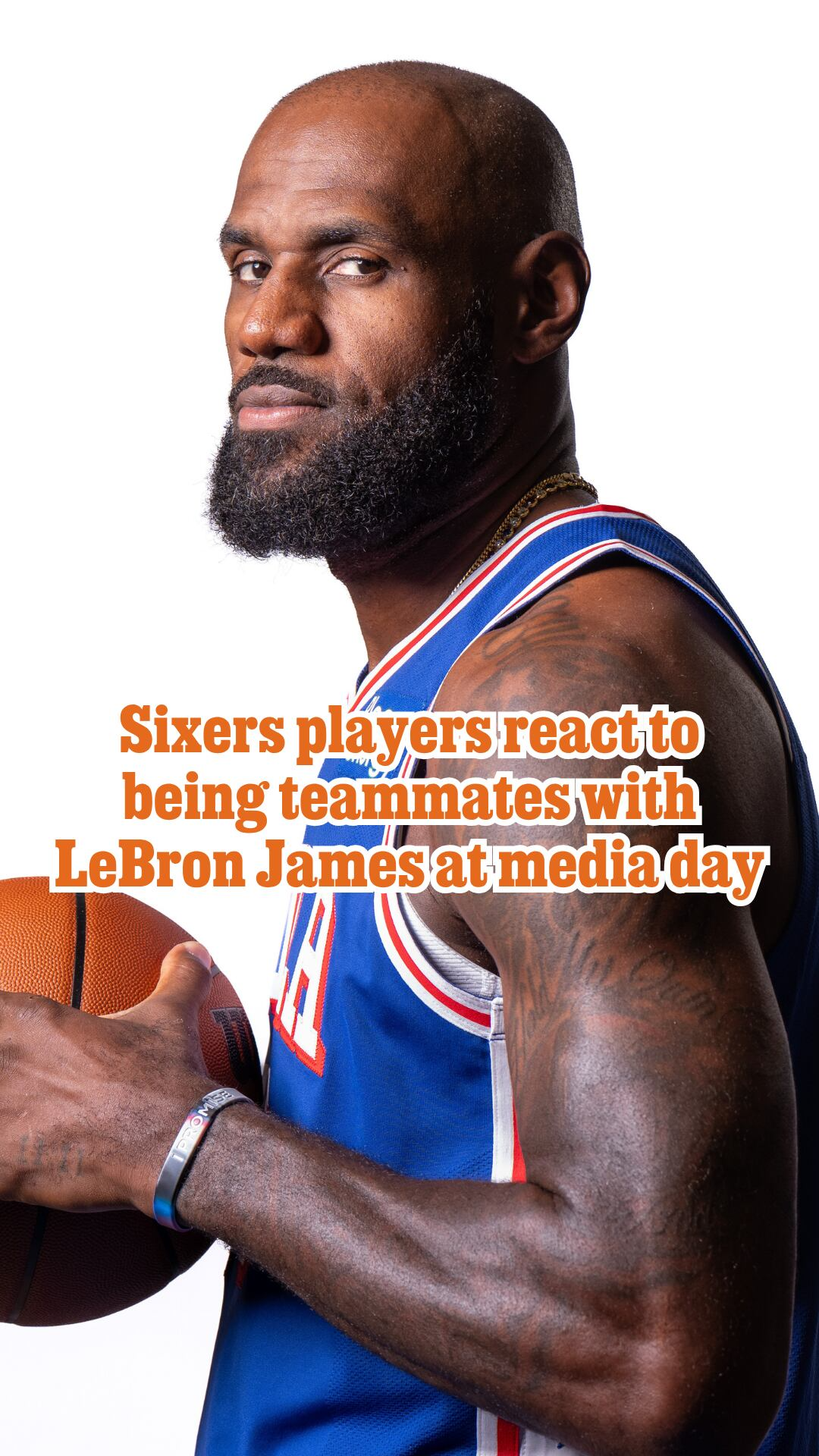
    Sixers players react to being teammates with LeBron James at media day
    Video: Sixers players react to being teammates with LeBron James at media day

    Maxey joins another Philadelphia star who recently made the jump onto Time’s radar.

    Jalen Hurts was selected for the TIME100 Next list in 2023, with Peyton Manning writing his tribute after Hurts led the Eagles to the Super Bowl and signed a five-year contract extension. Two years later, following the Eagles’ Super Bowl LIX championship, Hurts graduated to TIME’s main list of the world’s 100 most influential people, with Derek Jeter writing his tribute.

  • 3 science-backed home remedies to ease the common cold

    3 science-backed home remedies to ease the common cold

    In addition to rest, healthy food, and hydration, there are a few at-home remedies that many doctors recommend to help treat the common cold.

    Here are three science-backed ways to soothe your throat, calm your cough, and help you recover sooner.

    Honey

    Honey coats the throat and “can reduce your cough fairly significantly,” said Geeta Sood, an assistant professor and epidemiologist at Johns Hopkins University. Also, because it calms coughs, it can indirectly help sore throats. Not to mention, it has antibacterial properties.

    Studies have shown that honey can reduce cough frequency and severity. Many studies have focused on children, but it’s important to note that the American Academy of Pediatrics does not recommend giving any kind of honey to babies younger than 1 year of age because it can contain bacterial spores that can lead to potentially life-threatening infant botulism. (In adults and older children, the spores can’t grow into toxin-producing bacteria.)

    A review of randomized controlled trials in children showed that honey may have similar benefits as the over-the-counter cough medicine dextromethorphan and may be better than diphenhydramine, an antihistamine, at reducing the frequency of coughs. (Over-the-counter cough medications are not recommended for children younger than 4.)

    And a small 2023 study found that gargling with one tablespoon of honey mixed in about one teaspoon of water helped ease pain from a tonsillectomy, a surgery to remove the tonsils.

    To try it at home: You can take a teaspoon of honey a few times per day to help with your cough and sore throat. Alternatively, you can add it to hot tea or a few ounces of hot water, but it may be less effective the more you dilute it, said Sharon Bergquist, an internal medicine physician and associate professor at the Emory University School of Medicine.

    Bergquist noted that taking a dose before bed to help ease your symptoms may help you sleep. “Typically, by the end of the day, people cough more as talking tends to irritate the throat and trigger more coughing,” she said.

    Saline rinses

    Nasal rinses — using a saline solution to clear out your nasal passages — is an at-home remedy that may help temporarily clear congestion and soothe irritated sinuses, and it comes recommended by the American Academy of Otolaryngology.

    Bergquist said saline rinses can help reduce the thickness of nasal secretions, which also can help sore throats and can alleviate some of the dryness that comes with blowing your nose. “It’s not necessarily going to make nasal congestion significantly better, but I do think that it’s very soothing, especially in children where the options are probably a little bit more limited,” she said.

    Small studies have shown that they may help treat nasal irritation and inflammation. One review found that nasal saline irrigation may help relieve nasal symptoms associated with upper respiratory infections.

    To try it at home: Nasal rinsing can be done with a nasal irrigation device, such as a neti pot, or an over-the-counter nasal saline spray. If you choose to go with a device, you can make a homemade saline solution for it by mixing 3 teaspoons of non-iodinated salt and 1 teaspoon of baking soda, then taking 1 teaspoon of that mixture and dissolving it in 1 cup of sterile, distilled, or boiled (and cooled down) tap water. (Never use tap water unless it’s boiled; tap water can contain germs such as the “brain-eating amoeba” Naegleria fowleri.)

    The ready-made saline sprays take the guesswork out of it. To use, tilt your head to the side, insert the nozzle into one of your nostrils, and spray the mist. Then repeat on the other side.

    Zinc

    Zinc is important for a healthy immune system and metabolism. Adult women should get eight milligrams of zinc from their diets each day and men 11 mg, according to federal health authorities. Because your body doesn’t produce zinc, you have to get it from zinc-rich foods including meat, fish, and seafood.

    You may have also noticed zinc supplements, sold as over-the-counter lozenges or quick-dissolve tablets, at the drugstore. A 2024 review showed that while zinc is unlikely to prevent a cold, it may help shorten the duration of your symptoms by about two days.

    Nasal sprays, however, are not recommended. After the Food and Drug Administration issued a public health advisory in 2009 about the link between some zinc nasal products and long-lasting or permanent loss of smell, many manufacturers removed zinc from their nasal sprays.

    To try it at home: As with any medication or supplement, before taking zinc, consult your healthcare provider, as zinc can interact with some medications. Bergquist recommends starting zinc within the first 24 hours after you notice cold symptoms. A common daily dose used in studies is about 80 milligrams, which may be split up into multiple lozenges per day. But there are possible side effects, especially with higher doses, including an upset stomach.

    In addition to these home remedies, “the motherly advice of staying well hydrated and getting good rest are going to help with recovery just as much as any over-the-counter remedy,” Bergquist said.