Vincent Riedel wants to skip school Thursday. His father, David Riedel, is not so sure, but he’s willing to hear him out.
“We’re currently at the dinner table negotiating,” Riedel said Wednesday night as Vincent, 15, a high school freshman in Pittsburgh, made what he found to be a surprisingly convincing argument to spend the next day playing “Grand Theft Auto VI” instead.
“Grand Theft Auto VI,” a highly anticipated game over a decade in the making, is rolling out worldwide as the clocks tip into Thursday. The game is expected to leave millions of gamers glued to screens, and parents, teachers, school administrators and human resources departments managing a flood of sick calls and unexcused absences. It even has a diagnosis, “GTA Flu,” and it’s spreading worldwide.
The game, too, is already a global phenomenon, with wildly positive reviews — and it is engaging deeper sentiments. “It’s a profound moment in capitalism and democracy where people feel like they aren’t getting a fair share,” said Dmitri Williams, a professor of communication at the University of Southern California’s Annenberg School for Communication and Journalism. “It’s not surprising that media with antiheroes would be successful. They’re almost a protest vote.”
But the cultural juggernaut has presented a novel challenge.
Riedel received a message an English teacher sent to parents Wednesday morning addressing “rumors” that many students would miss her Thursday classes, which could include “a short assessment on poetry.”
“Hope to see all my wonderful students tomorrow,” she wrote. “They can play all weekend!”
For some companies, the arrival of “Grand Theft Auto VI” has been months in the making, as employees have booked personal time off well in advance.
A Silicon Valley company, Logitech, offered a new floating holiday for employees to play video games after internal research showed engaging in virtual worlds reduced anxiety and improved productivity, according to a statement. Robin Piispanen, the global general manager and vice president of Logitech, said about 70% of his team — which amounts to hundreds — had already planned to cash in the off-day Thursday.
In Australia, KFC had a tongue-in-cheek excuse to miss work. The chain planned to livestream a faux funeral for a fictional “Ann Alibi” during the Australian workday Thursday.
The game series has countless fans, and the arrival of the sequel has kindled feelings of nostalgia and camaraderie, experts said. There’s something exciting for a young person who finds community through creating bonds by while gaming, said Carly Kocurek, a professor in game design and experimental media at the Illinois Institute of Technology.
“That sense of belonging is really, really powerful,” she said.
The experience spans generations.
While Logitech is offering paid time off, high schools across the country are bracing for sick days. The scale remains unknown, and different schools have taken different approaches to managing it.
Dr. Jim Brauer, principal of Atlantic High School in Atlantic, Iowa, had a warning for his students and words for the video game’s creators.
“To the students currently developing elaborate excuses,” Brauer said in a public message on Facebook. “I admire the creativity. I really do. Unfortunately, our attendance procedures remain unchanged.” He went on to address Rockstar Games, the developer of “Grand Theft Auto VI”.
“You made a game about stealing cars,” Brauer said. “Tomorrow, you’re apparently planning to steal our entire student body. Thank you?!?”
Esteban Malacara, the academy principal at Jerome I. Case High School in Racine, Wisconsin, thought about addressing the rumors in an email blast but ultimately felt strange writing “‘Grand Theft Auto’ into a correspondence with all the families,” he said Wednesday night.
“Maybe I don’t want to bring attention to it,” Malacara said, adding that the game’s release and its implications for attendance at the school of nearly 2,000 students had been “on the radar” since the summer.
He expected at least “some tired kids in seats” Thursday. Malacara, 48, has fond memories of skipping high school for record releases at Best Buy.
“I can remember the excitement,” he said. “I can understand it.”
Amar Humphrey, 15, a freshman at Walter H. Dyett High School for the Arts in Chicago, said he had heard chatter that “a lot of people” would not be joining him at school Thursday. But it was the first that his uncle, Chuck Neely, the school’s student engagement director, was hearing of it.
“Who is going to say ahead of time they’re not coming to school?” Neely said.
Dillon Fleming, an algebra teacher at Food and Finance High School in New York City, said his students had voted to push back a test from Thursday to Monday. Now he’s left wondering why.
“I would be disappointed in the parents, for the most part, allowing kids to stay home for a video game,” Fleming said. “That would disappoint me.”
But Riedel, at least, seemed to be leaning toward letting his son stay home. The teenager had insisted that he already had good grades — and made an even stronger pitch.
“Do you have a favorite game you played as a kid and you love a lot?” Riedel said of their conversation. “If they made another one of those, would you want to wake up, play some, and then go to school and wait all day?”
“It’s sort of akin to the Beatles showing up in town,” Riedel said. “What’s one day of school for an event like that?”
Villanova women’s soccer set its sights on one goal at the start of the season: win the Big East championship.
It had not been done in 23 years. Almost the entire roster was not born when it last happened. But the team collectively agreed that they had the talent and work ethic to do it.
After finishing the regular season 12-1-5, with Villanova’s only loss against Butler on Oct. 24, the Wildcats found themselves playing in the Big East tournament. They defeated No. 3-seeded Seton Hall, 3-0, to move on to the Big East championship against No. 1 Xavier, a nationally ranked team. Villanova took a 1-0 lead before Xavier tied it.
“I can’t drink coffee for a month because my heart rate spiked and stayed so high,” head coach said Samar Azem when asked about Xavier’s game-tying goal.
Then, Amalia Cardo scored the game-winning goal in the 70th minute to win Villanova’s second Big East title in program history and clinch a spot in the NCAA Tournament.
“It means the world,” Azem said. “When we put on any of our Villanova gear, we know that it is representing more than just ourselves. We’re representing the university, all the students, the faculty, the staff, and we’re representing our alumni as well, and they’ve built an incredible foundation for us.”
Villanova will make its seventh appearance in the NCAA Tournament when it travels to No. 6 Penn State on Friday at 6 p.m. The Wildcats last advanced to the tournament in 2009, when they earned an at-large bid and lost in the first round.
Winning a conference championship didn’t seem in reach until Azem took over in 2021. The program had not been to the NCAA Tournament in 12 years, and Azem came in with the goal to take the program back.
“When she started her tenure, you had to set the foundation first,” said graduate goalkeeper Hannah Dickinson. “And I think those first couple years were obviously hard. But you have to set the cultural foundation before you can start seeing results, and I think that’s what we did. And last year and this year — those results have come to fruition a little bit. And instead of you working on culture, now we’re working on execution.”
Dickinson, the Big East goalkeeper of the year, transferred to Villanova from Southern California for her junior year, leaving a top 50 national program where she was a starter. She wanted to join a school that had not been in the postseason in a long time.
“I said to her this is going to be one of the hardest things you’ve ever done, is what you’re going to do, day in and day out, in this program because we’re going to challenge you,” Azem said. “But it’s also going to be unbelievably rewarding because we are going to win a Big East championship together.”
After Villanova defeated Xavier to win the conference title, Dickinson found Azem, hugged her, and picked her up. She told Azem, “You were right.”
“But it’s not because I did anything,” Azem said. “It’s because of the work she did and everything she and her teammates put into rebuilding and reawakening this program.”
Villanova had one of the best defenses in the country this season. It held opponents to nine goals in 20 games, including 13 shutouts. The Wildcats rank fifth in shutout percentage (.650) and fourth in goals-against average (0.45) in the nation.
While Dickinson has starred in goal, conference defensive player of the year Meredith Palmer led the defensive efforts elsewhere.
“I remember talking with some of our teammates in the beginning of the season, and it was like, what if we can make it to the Big East tournament?” Palmer said. “But as the season went on, it wasn’t like a ‘What if?’ It’s like we’re going to make it to the Big East tournament, and then we’re going to win it too. And so I think it’s just that mindset going in, that belief in yourself.”
Villanova women’s soccer beat Xavier for the Big East championship last weekend. Bob Blakely
The team understands the season is not over, and the Big East championship was not the final destination. Villanova would need six wins to earn its first national championship, which concludes on Dec. 13 at First Horizon Stadium at WakeMed Soccer Park in Cary, North Carolina.
“In 2003, the last time we won a Big East [title] was also the last time we made a run in the NCAA [Tournament],” Azem said. “They went to the Sweet 16. And we know we’re representing that. So the history there is going to be a story that our team knows, and we keep repeating this week that this is not about the destination, but that’s also been part of our process all season.
“It’s never about the destination. It’s been about the process, the journey of who we’ve become and what our identity is.”
THE HAGUE, Netherlands — In a landmark judgment, the United Nations’ top court ruled Thursday that Myanmar committed genocide against the Rohingya minority in a brutal 2017 military operation and ordered the Southeast Asian nation to allow people who fled the violence to return home.
The decision marks the first time the court has ruled that a state committed genocide and comes as the World Court also is handling genocide allegations linked to the Gaza conflict and the war in Ukraine.
But it remains to be seen how much of the ruling can be implemented. The court’s rulings are final and legally binding, but it has no way to enforce them beyond reporting noncompliance to the U.N. Security Council.
International Court of Justice President Yuji Iwasawa said the court, in a 9-6 decision, found that Myanmar “has committed genocide against the Rohingya group in northern Rakhine state, in violation of its obligations under the Genocide Convention.”
The 15-judge panel of the World Court, which included Navi Pillay, the respected international jurist who won the Nobel Peace Prize last month, rejected Myanmar’s defense that the 2017 campaign was a legitimate operation against insurgents.
Iwasawa said that “the court finds that Myanmar’s security forces killed thousands of Rohingya civilians, perpetrated widespread acts of sexual violence, as well as acts of extreme violence against children, and attacked fleeing Rohingya as they sought to flee in large numbers.”
Rohingya say the ruling validates the suffering of their community
The atmosphere following the hearing was electric, with lawyers and members of the Rohingya, some of whom had traveled thousands of miles to attend the reading, hugging and crying.
“I’m beyond ecstatic today, hearing the judgment, being read out in detail. A lot of those moments and instances that the judges really went into detail, it really validates the kind of experience that Rohingya have,” said Yasmin Ullah, a Rohingya rights activist who sat in the court’s ornate, wood-paneled Great Hall of Justice for the nearly three-hour reading of the ruling.
In Cox’s Bazar, Bangladesh, refugee Mohammad Rofik welcomed the recognition of the plight of the Rohingya.
“Today, the world could recognize and give the victory to the Rohingya community, not only the Rohingya community. It is the victory of the whole community of … Myanmar,” he said.
There was no immediate reaction from the Myanmar delegation in The Hague or from the government in Myanmar.
The court also ordered Myanmar to commit to reparations including allowing Rohingya “safe, voluntary, and dignified return to their place of residence.” It ordered Myanmar to investigate, prosecute, and punish people found to have committed genocidal acts and to pay compensation to Rohingya. The amount will be decided in later court proceedings.
An umbrella organization of Myanmar opposition groups said in a statement that “the struggle for justice will continue, and this judgment must now be enforced,” calling on the international community to ensure it is fully implemented.
U.N. Secretary-General Antonio Guterres called the ruling “a demonstration of international justice and a reaffirmation that impunity for such horrific acts must not stand.”
Shortly after the ruling was read, U.K. Foreign Secretary Ed Miliband said his government was expelling Myanmar’s defense attache from the U.K. and “calling urgently for a U.N. Security Council session to discuss the judgment.”
The Trump administration, meanwhile, said it is withholding judgment on the verdict. The president has taken a dim view of international law.
The U.S. State Department said Thursday that it was “studying the decision to fully assess its implications” before weighing in with an opinion.
Brutal counterinsurgency campaign triggered the killings and expulsions
In August 2017, Myanmar’s military launched what it called a clearance campaign in Rakhine state in response to an attack by a Rohingya insurgent group. The campaign led to accusations that security forces committed mass rapes and killings and burned thousands of homes.
The court said that evidence showed Myanmar forces killed about 10,000 Rohingya.
Under the 1948 convention, to establish that genocide occurred, the court had to find that there was an intent to destroy the Rohingya “in whole or in part.”
About 1.2 million Rohingya refugees now live in Bangladesh, primarily in crowded camps across Cox’s Bazar district, where they endure harsh conditions marked by fire hazards, infectious diseases, monsoon landslides, inadequate sanitation, and strict work restrictions.
The case could impact genocide allegations elsewhere
In a 2007 judgment, the court said that Serbia “violated the obligation to prevent genocide” in the 1995 Srebrenica massacre, when Bosnian Serb forces murdered some 8,000 mostly Muslim men and boys in the Bosnian town.
Judges at The Hague-based court have also been asked to rule on other allegations of genocide.
South Africa has accused Israel of breaching the genocide convention during its offensive in Gaza, a claim Israel vehemently denies. That case is years from completion.
Ukraine also has a case pending against Russia. Shortly after Moscow’s full-scale invasion in February 2022, Kyiv accused Russia of fabricating genocide claims against Ukraine to justify the attack.
“The International Court of Justice’s landmark ruling is long-awaited recognition of the suffering the Rohingya have endured from Myanmar’s military. The ruling also provides a significant precedent for victims of genocide, and other grave crimes, across the world in their own quest for justice,” said Maria Elena Vignoli, senior international justice counsel at Human Rights Watch.
Gambia has a history of persecution of its own
The Muslim-majority nation of Gambia launched the proceedings in 2019, two years after it peacefully ousted a longtime military dictator, Yahya Jammeh, who committed widespread abuses against civilians. Since then, there has been a big push for accountability for the crimes committed by Jammeh’s regime.
Outside the courtroom, Gambian Justice Minister Dawda Jallow paid tribute to the Rohingya.
“The victory belongs to the Rohingya. They survived, they testified, and today they were believed. Many of them are here with our delegation from across the world and from the refugee camps in Cox’s Bazar. Their courage made this judgment possible,” he said.
SHENZHEN, China — China, Russia and the U.S. agreed Thursday to seek reforms at the United Nations, increase oil supplies and engage in dialogue to reduce nuclear risks at a three-way meeting, according to Chinese and Russian officials.
The three countries also took aim at the International Criminal Court, saying state officials should enjoy immunity from its prosecutions and warning that it should not abuse its jurisdiction. Russian President Vladimir Putin is wanted by the court — and the U.S. has heavily sanctioned it and its officials for recent investigations.
The declaration followed a historic meeting among U.S. President Donald Trump, China’s Xi Jinping and Russia’s Vladimir Putin, a moment that could mark a pivot in world history — or become a quickly forgotten photo op. Experts have kept expectations low for major breakthroughs.
The declaration did not mention the wars in Ukraine or Iran, two issues that U.S. President Donald Trump said he raised with the leaders earlier in the day. The U.S. has not released the document.
Xi later called the meeting positive, constructive and “fruitful.”
The statement said the leaders are committed to advancing U.N. reforms “to more effectively address global challenges,” to increase the production and supply of oil products to ensure a stable flow of energy, and to work to reduce nuclear risks and prevent nuclear proliferation.
Trump has promoted this first-ever three-way meeting with Xi and Putin — two of America’s leading rivals — as a chance to hash out rules for controlling nuclear arms and to start resolving the wars in Ukraine and Iran.
“We are really making history,” Trump said. “The United States, Russia and China are uniquely positioned to discuss how to reduce the number of nuclear weapons on Earth and also to lessen the risk of those weapons being used.”
Xi, meanwhile, earlier said the meeting would focus on “promoting world peace.” Putin, for his part, harkened back to the three countries’ shared history as “victors in World War II,” saying that “we hold joint responsibility for maintaining international peace.”
The last nuclear arms pact between Russia and the United States, known as New START, expired in February, and Trump has said he wants “a new, improved and modernized” deal that includes China. But China has less motivation to accept limits given that its arsenal of more than 600 warheads is far smaller than the more than 5,000 warheads believed to be in each of the U.S. and Russian stockpiles.
Daryl Kimball, executive director of the Arms Control Association, said the meeting could at best start a process that would eventually lead to a sustained set of talks for reducing nuclear arsenals.
“We need more than diplomatic theater and photo opportunities between Xi, Putin and Trump at APEC,” Kimball said. “And one meeting will not likely produce dramatic breakthroughs.”
The leaders also talked about Iran and trade
Before the three-way meeting — which lasted more than an hour on the sidelines of the Asia-Pacific Economic Cooperation Summit — the U.S. president had a separate one-on-one with Xi, their third substantial meeting this year.
The U.S. president praised their friendship and their shared interest in having oil shipped through the Strait of Hormuz, a key waterway for oil shipments from the Middle East that was repeatedly shut because of attacks in the Iran war. Trump suggested he would push Xi to buy more agricultural products from America.
Xi said that relations between the U.S. and China have been “generally stable and improved” during Trump’s presidency. The official Chinese news agency Xinhua reported that Xi discussed Taiwan with Trump and said the two countries needed to improve communication on economic and trade issues.
Trump also added a separate sit-down with Putin, marking the first time the leaders have met for talks since their discussions in Alaska last year that failed to broker a deal on Russia’s war in Ukraine.
“Wonderful things can come out of this — or at least start,” Trump said, calling Putin “my friend.”
“We’ve had a great relationship for many years,” Trump said after shaking hands with Putin. Their meeting lasted roughly 40 minutes.
The U.S. president also added that the trio would talk about ways to “protect our nation’s sovereignty from rogue globalist organizations such as the International Criminal Court.”
Trump’s administration has imposed sanctions on ICC officials and the institution itself as part of a campaign to dismantle the tribunal over investigations into the United States and its allies, including Israel.
Trump boasts about his relationships. But the ties between Xi and Putin are stronger
The U.S. president’s ambitions recall an era of great power politics when wealthier countries felt entitled to decide the fate of seemingly lesser nations. Trump is negotiating with China and Russia without the involvement of Ukraine — or allies like Germany, France, the United Kingdom, Japan and South Korea that also have stakes in the outcome of any talks.
Trump has long believed his ability to create personal connections gives him a diplomatic edge. Xi made a symbolic gesture of friendship Wednesday by taking the unusual step of greeting Air Force One on the tarmac, and the two leaders turned their handshake into a one-armed hug.
But for all the compliments the U.S. president has showered on the two autocrats, the warmth has not always been mutual — and Trump does not always appear to have the same deep relationship based on common interests that Xi and Putin share.
On Wednesday at APEC, Xi greeted Putin by calling him “my old friend.” The Russian leader responded by declaring Xi to be his “dear friend.” China has helped economically support Russia after its 2022 invasion of Ukraine, providing Putin with a financial lifeline after the U.S. and its allies imposed new sanctions.
By contrast, when Xi came to the White House for a state visit in September, he was far more restrained with Trump, saying they had built a “personal rapport and stayed in touch.” Trump and Xi have one more meeting planned this year, at the G20 summit in Florida in December.
There were also signs of friction Thursday in the U.S.-China relationship despite Trump’s praise of Xi.
Chinese officials blocked a Bloomberg reporter, Annmarie Hordern, from the trilateral meeting after she asked a question at the earlier Trump-Xi session.
Chinese television showed a video of Trump appearing drowsy, while the White House posted a clip of Trump helping Xi up an escalator.
Conflicts on AI also hang over the meetings
While Trump views his relationship with China as a positive, it has not necessarily resulted in meaningful changes between the world’s two largest economies. China continues to run large trade surpluses with the rest of the world, while the U.S. has almost equally large trade deficits.
And the race between the U.S. and China to master artificial intelligence has grown tense over the past two weeks. Trump’s ally Jensen Huang resigned last week as the CEO of Nvidia after confessing to an extramarital affair with a woman, Alice Huang, whose former company is under scrutiny over alleged transfers of advanced chips to Chinese companies. Beijing has denied that Alice Huang was a Chinese government agent.
Trump held off on imposing tougher restrictions on China’s ability to access the chips, suggesting he did not want to aggravate relations.
U.S. officials have said that China had not fully honored its commitments made last year in a Trump-Xi meeting to buy more U.S. agricultural products and loosen restrictions on the sale of rare earth minerals needed for electronics.
The trade truce between the U.S. and China reached last year after dueling tariff hikes is set to expire by Jan. 10.
Meanwhile, both China and Russia have used trade to support Iran, even during the U.S. war on that country, which has pushed up energy prices and reduced global economic growth.
Philadelphia invented American democracy — and the American penitentiary.
Philly’s role in the creation of American mass incarceration takes center stage in episode one of Crime and Punishment in America, the four-part PBS documentary directed by Lynn Novick and executive produced by Ken Burns, and now streaming on WHYY. A sweeping reckoning of 250 years of the American criminal justice system, blending evocative historical imagery, talking heads, and dramatic readings with contemporary scenes from American prisons, Novick traces how the Founding Fathers’ grand experiment of American liberty gave birth to the far messier realities of the American criminal justice system.
Philly reformers, like Benjamin Rush, a physician and signer of the Declaration of Independence, fought for a criminal justice system more befitting the lofty ideals of American liberty — one that moved away from public hangings and brutal floggings for petty crimes to repentance and reform.
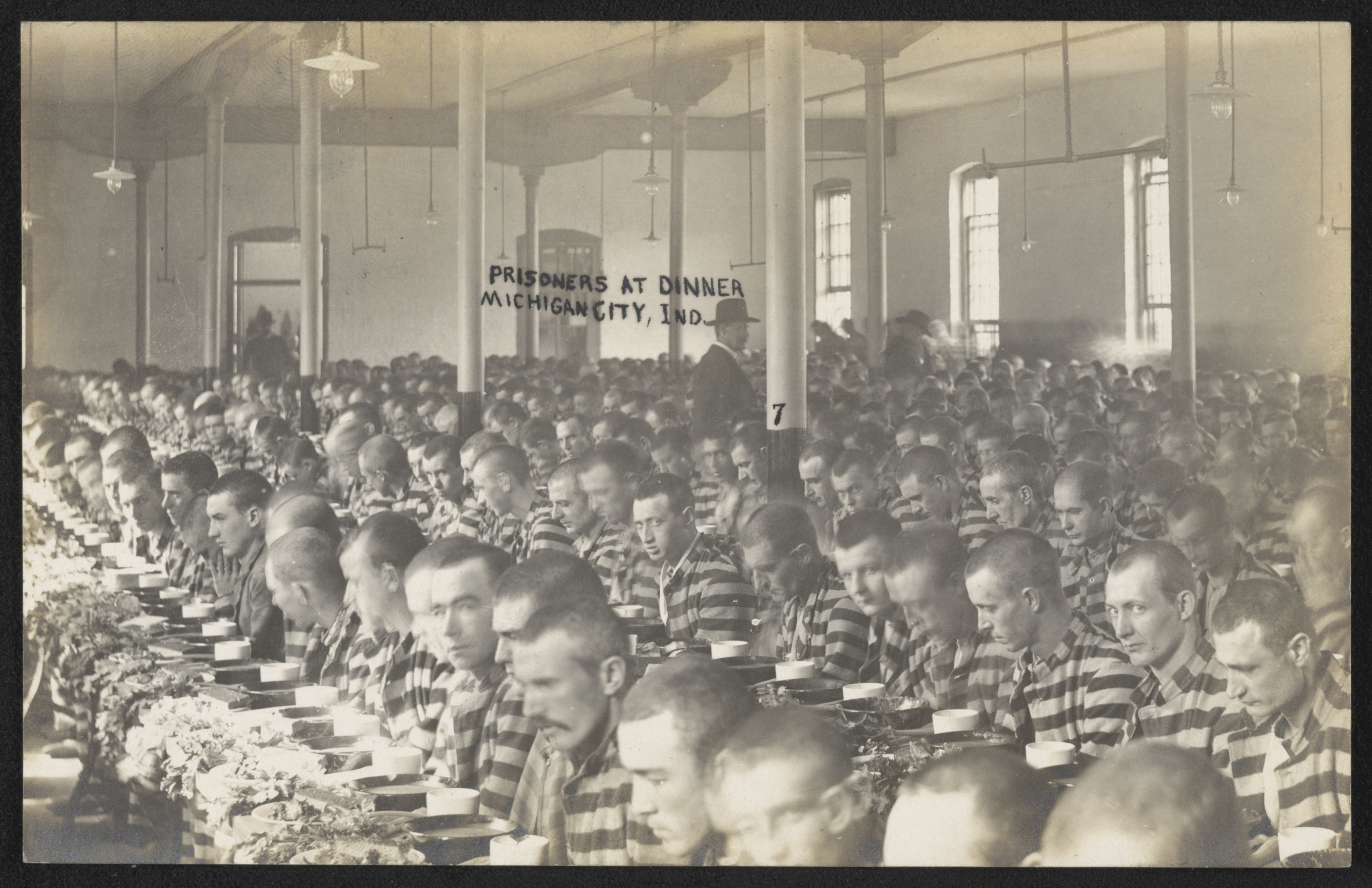
A 1972 image of Inmates from Cummins Prison Farm in Arkansas as seen in “Crime and Punishment in America” on PBS.Bruce Jackson
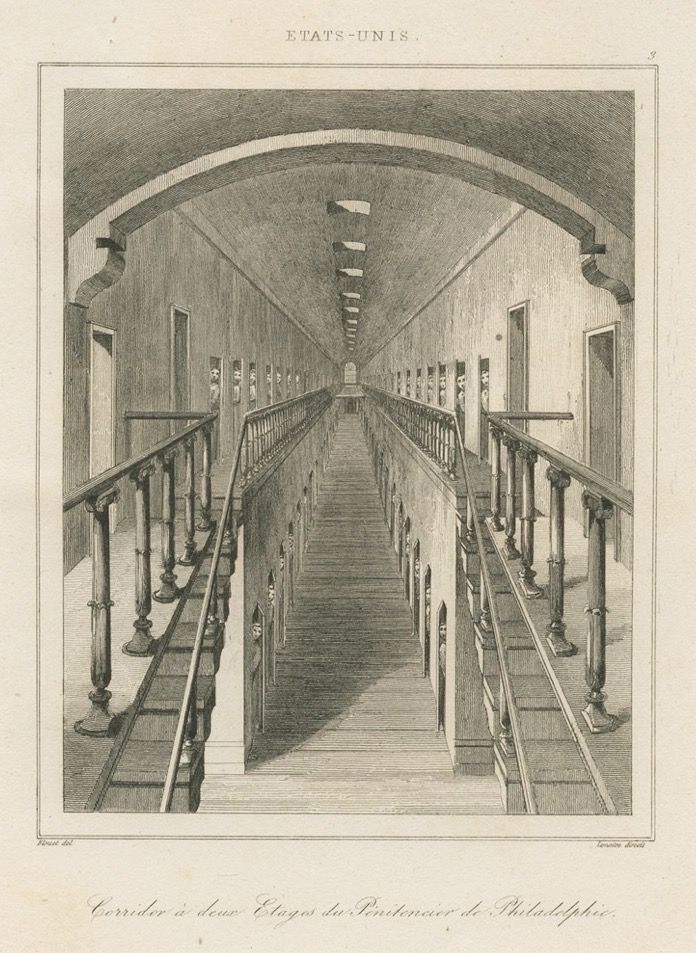
It led to the wretched confines of Walnut Street Jail, first opened across from Independence Hall in 1776, and eventually considered the first true prison in the United States and the world. Those incarcerated were herded from filthy mass holding rooms to individual cells. And at Eastern State Penitentiary, built in a cherry field outside downtown Philadelphia in 1829 with chapel-like cells with running water and flush toilets, and the first prison anywhere to emphasize reform over punishment, where inmates initially served in total isolation, 24 hours a day.
“The centrality of Philadelphia in developing the model of incarceration as both a punishment and a method of rehabilitation cannot be overstated,” said Novick. “It has become so baked into our way of thinking about what justice looks like for those who break the law that we can’t even imagine a world where that wasn’t the case — and it all began in Philadelphia.”
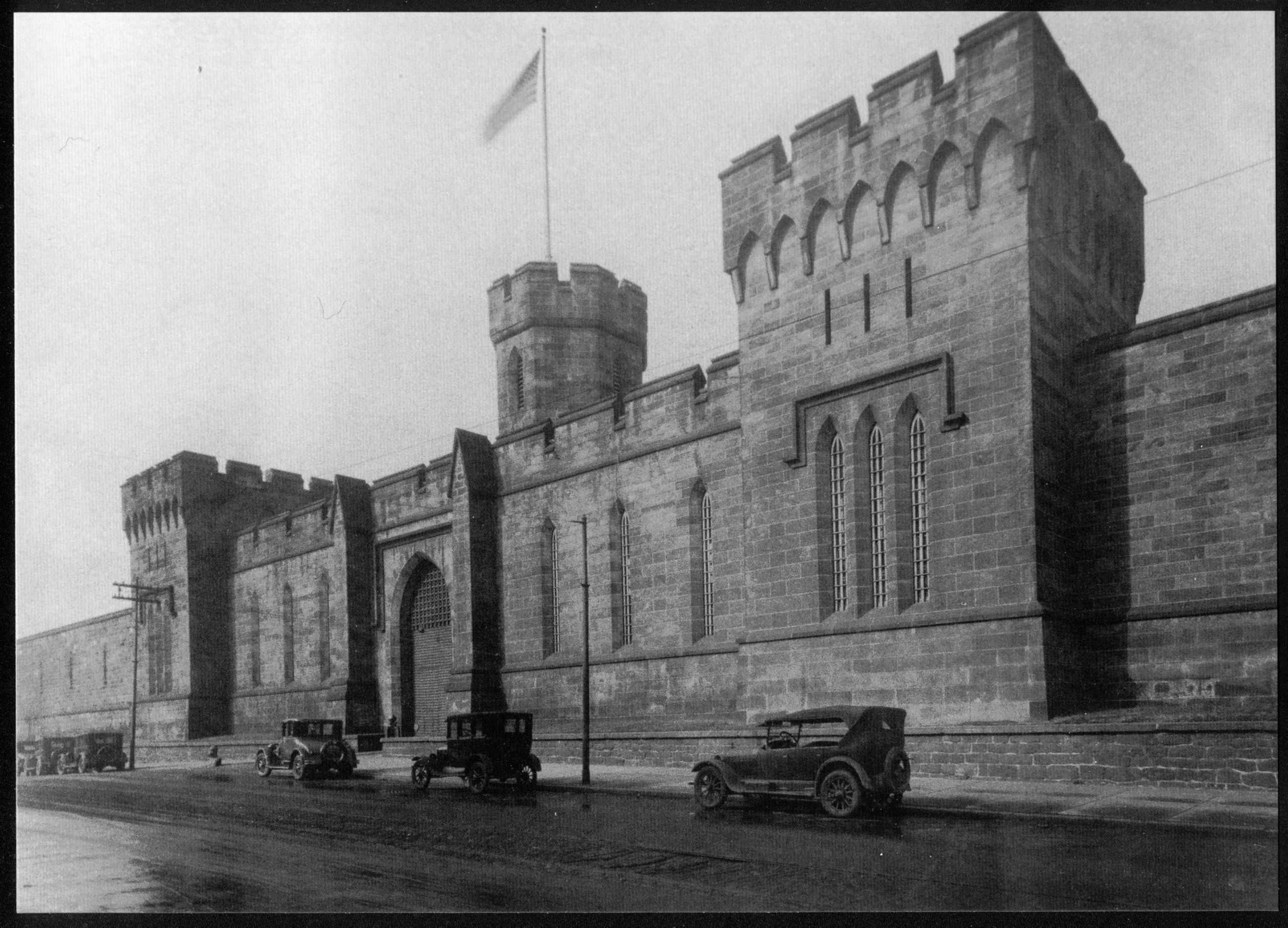
Eastern State Penitentiary exterior 1920sCourtesy of Eastern State Penitentiary
In later episodes, Philadelphia District Attorney Larry Krasner emerges in form as one of the more provocative interview subjects, bluntly eviscerating a criminal justice system stacked against the poor and vulnerable.
“Broke people get screwed,” Krasner says in “Episode 3: Public Enemies (1929-1969.)” “Would you like more? I mean, that’s how it works. Broke people get screwed.”
In an interview this week, Novick discussed Philly’s founding roots in the American industrial prison system, Krasner, and finally focusing on the thread of American crime and punishment.
The idea of moving away from routine public executions to reform isn’t just an American idea — it’s a Philadelphia idea?
There was a larger conversation going on around the time of the Revolution about public punishment and about capital punishment. So it wasn’t unique to Philadelphia that people were asking questions about [whether] our system of punishment and justice was appropriate for this new democracy. Philadelphia is extremely important because that is the place where the idea of the penitentiary was first expressed and actually brought into fruition.
The Founding Fathers could literally peer into the wretched wards of Walnut Street Jail, where colonial prisoners were held for trial and punishment, from the courtyard of Independence Hall?
There were terrible unsanitary conditions, to put it mildly. Disease was rampant. Food was inadequate. People were just thrown together. There was disorder, chaos, violence. They were seen as breeding grounds for crime.
This didn’t sit well with newly minted Americans?
There was a sense of outrage that the jails were a danger to the society at large and to the people inside there. The first idea was we’ll take part of the Walnut Street Jail and create this new thing called the Walnut Street Prison. They created individual cells. The intention was to separate people from each other, give them time and space to repent.
But that didn’t sit well with those incarcerated.
It was a new idea, and I don’t think it was welcomed by the people that were held there. Before this, when you broke the law, you would be punished and held up, and then you would go back about your business if you weren’t put to death. Now you’re being deprived of your liberty. There were riots. People tried to escape. They’d be leaning out the windows, trying to sort of harass passersby.
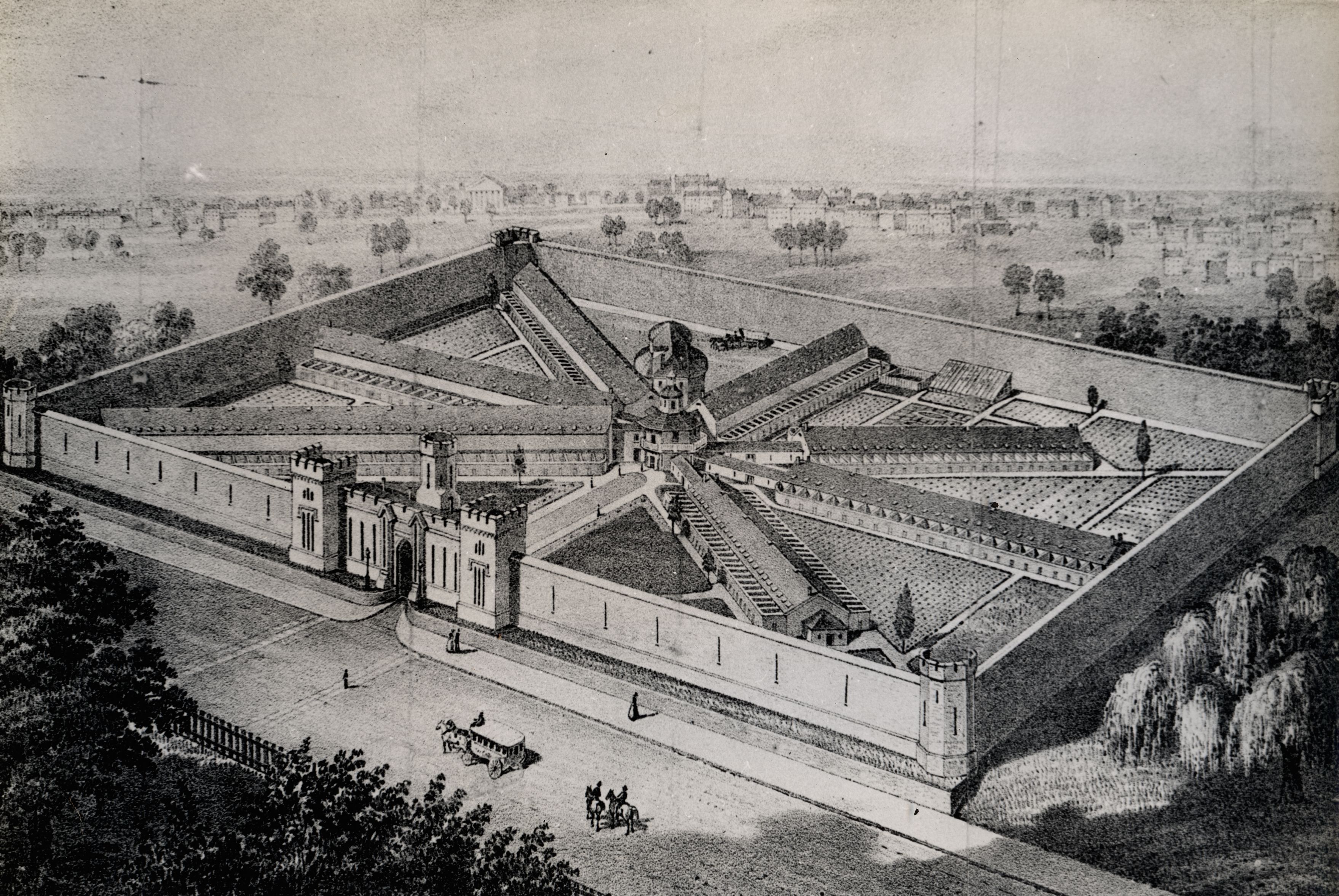
A lithograph of Eastern State Penitentiary from 1855.Eastern State Penitentiary
And all right in the heart of the city.
Eastern State Penitentiary was sort of a response to that — they created this institution that was built on the idea that pure isolation for people was the goal.
By 1842, a visiting Charles Dickens described the total isolation of Eastern State as “being buried alive”?
We are social animals. We need exposure and companionship to thrive. Depriving human beings of any contact with any other human beings for long periods of time is cruel and, to some degree, torturous.
Eastern State Penitentiary cellblock in 1837.Eastern State Penitentiary
So many strains of your and Ken Burns’ other subjects, from the Revolution to the Civil War to the American West and Prohibition, appear in the film, but with a new angle.
We’ve done many different walks through American history, but never focused on the prison system and the justice system. And it’s right there the whole time. We just sort of shifted the focus over here.
Why did you feel Larry Krasner was an essential voice?
He has his detractors — he’s a controversial figure. He’s not speaking about his career. He’s just sharing his perspective on white collar crime, on deinstitutionalization, on policing, on sentencing, and how the justice system functions in our society. He’s very direct. He doesn’t beat around the bush. I’ve interviewed a lot of public politicians and public officials, and they tend to be very careful and speak in platitudes, and that isn’t necessarily what you want when you’re making a documentary like this. Larry Krasner is really the opposite of that.
HARRISBURG — State lawmakers are readying themselves for a new beginning next year in Pennsylvania’s Capitol, where Democrats are set to control the state House, Senate, and governorship for the first time since 1993.
The first order of business: choosing who will be in charge.
Gov. Josh Shapiro and top Democrats have pledged to be more productive by passing more laws now that they do not have to compromise with Republicans to do so. During his first term, Shapiro often blamed the state’s split legislature — and the GOP-controlled state Senate — as the reason why so many top Democratic priorities were never passed. He is relying on the new Democratic trifecta to pass his agenda, in part, as a way to round out his resume before an expected 2028 presidential run.
Top Democrats from the state House and Senate are working with Shapiro to outline their priorities for the first 100 days of their trifecta. Shapiro promised that plan will include doubling the state’s minimum wage, securing a long-term funding source for mass transit, and more. The new legislative session begins on Jan. 5, 2027.
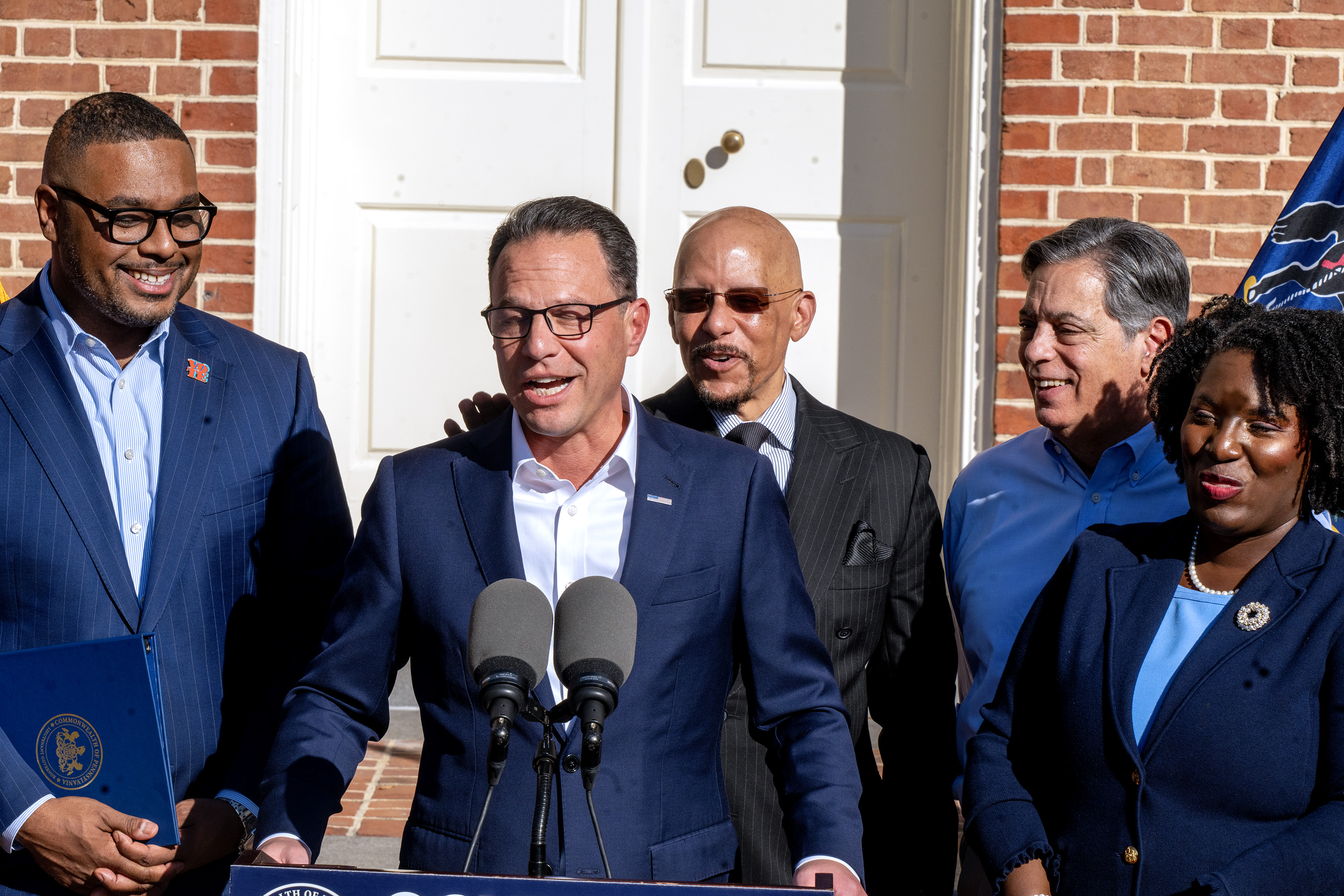
Gov. Josh Shapiro hosts a post election press conference with Lt. Gov. Austin Davis (left) and Democratic leaders at the Governor’s residence Wednesday, Nov. 4, 2026, including (from left) State Sen. Vincent Hughes, Senate Democratic Leader Jay Costa and House Speaker Joanna McClinton. It has been three decades since the caucus has had a trifecta.Tom Gralish / Staff Photographer
Despite Democrats consolidating power for the first time in decades and a lengthy list of long-stalled priorities to pass, it will not all be smooth sailing in Harrisburg. Senate Democrats, with a two-seat majority, will need to learn how to govern in the majority for the first time in decades while navigating a politically diverse caucus. Meanwhile, the outgoing top Senate Republican, President Pro Tempore Kim Ward (R., Westmoreland) — an outspoken critic of Shapiro — chose not to stay in leadership and has positioned herself to be a thorn in the side of Democrats as they move into power.
Each caucus chamber — Senate Democrats, Senate Republicans, House Democrats, and House Republicans — this month elected leaders for the next two-year legislative session. These administrative jobs play critical roles in the function of Pennsylvania’s General Assembly, which is the largest and most expensivefull-time legislature in the country, with 203 members in the House and 50 members in the Senate.
Who will lead Harrisburg?
The most powerful roles in the state legislature belong to each chamber’s highest-ranking officials: the Senate president pro tempore and House speaker. As the top leaders of their chambers, they can have as much control over the legislative agenda as they want. Some leaders, like former House Speaker Mike Turzai or former Senate President Pro Tempore Joe Scarnati, tightened their grip on everything that happened in the chamber and pushed their personal priorities, while others, like former House Speaker Bryan Cutler or current Speaker Joanna McClinton, focused on running the floor and the many administrative roles that come with the job.
Come January, longtime Minority Leader Jay Costa (D., Allegheny) will take the helm as the Senate president pro tempore.
The majority leader also holds a powerful position in the General Assembly, controlling which bills get a vote, working closely with their caucus whip to ensure they have the support they need to pass a bill, and negotiating an annual budget deal with the governor in closed-door meetings.
Senate Democrats chose Sen. Maria Collett, who this month was elected to her third term representing parts of eastern Montgomery County, to assume the majority leader role. She will replace Sen. Joe Pittman (R., Indiana), now the minority leader, as the new floor leader in the Senate. House Democrats also reelected Rep. Matt Bradford of Montgomery County as their floor leader, a role he has held since 2023.
Gov. Josh Shapiro talks with state Reps. Maria Collett (left, D-Montgomery) and Liz Hanbidge, (center, D-Montgomery) at a Johnson & Johnson event in Ambler Feb. 18, 2026.Tom Gralish / Staff Photographer
The appropriations committees in both the House and the Senate are influential panels that review every bill to determine whether a policy change will cost the state or its taxpayers any additional money. Chair of the appropriations committee is a coveted position responsible for allocating more than $50 billion in state revenues.Sen. Vincent Hughes (D., Philadelphia), who was formerly the minority chair, was elected as Senate appropriations chair.
Other leadership positions include: caucus whip, who is responsible for corralling votes; caucus chair, who leads the closed-door caucus meetings; policy committee chair, who is focused on developing the policy agenda for the caucus; caucus secretary, who has special recording duties for legislative action; and caucus administrator, who assigns parking spots and performs other operational duties.
Committee chairs, who will be chosen by leaders in early January, also play an influential role in what legislation gets considered. There are also a number of different caucuses that members can join, including those based on a member’s geographic or identity-based interests, which focus on how policies affect specific communities and regions.
Here is a look at who will lead each caucus in the 2027-28 legislative session.
Senate Democrats
The most anticipated choice among the new legislative leadership: Who will lead the state Senate as Democrats take control of the chamber for the first time in more than 30 years with a narrow 26-24 partisan split?The split will require Democrats to enforce party discipline and find consensus among its members from vastly different parts of the political spectrum — and, in some cases, may require them to compromise with Republicans.
Senate Democrats chose the following top leaders:
Jay Costa (D., Allegheny), a Pittsburgh native who has served as Senate minority leader since 2010, will be named Senate president pro tempore. (Costa’s position will not become official until the start of the new legislative session, when the full Senate casts a vote.)
Maria Collett (D., Montgomery), of Lower Gwynedd Township, will be the Democrats’ majority leader. She is a nurse-turned-legislator and attorney who was first elected to the state Senate in 2018.
Vincent Hughes (D., Philadelphia) will be the majority appropriations chair, after serving as its minority chair since 2010. He has been in the state Senate since 1994, with seven years in the House before that.
Senate Republicans
Senate Republicans will have to learn how to be in the minority and successfully negotiate with Democrats, after decades in control.
Senate Republicans on Tuesday chose these leaders:
Joe Pittman (R., Indiana) will be the Republican floor leader, after previously leading the chamber as its majority leader.
Scott Martin (R., Lancaster) will be the minority appropriations chair; he had led the committee since 2023.
President Pro Tempore Kim Ward gavels the opening as the Pennsylvania Senate hosts a ceremonial meeting at the National Constitution Center Tuesday, May 5, 2026.Tom Gralish / Staff Photographer
But there’s one name notably not on the GOP leadership list. Ward, the outgoing top Republican firebrandwho is known to frequently challenge Shapiro, said shesees herself as much freer to speak her mind by not operating on behalf of the chamber.
“It’s me, Kim Ward, unplugged,” she said in a brief interview Tuesday.
Ward will serve as the interim Senate president pro tempore until Costa is officially elected at the start of the year. She was sworn into the position on Tuesday.
“I’m rooting for you, because I care about our state,” she told Democrats in a brief speech following the oath of office.
House Democrats
With an expected 114-89 majority, House Democrats will no longer struggle for votes with a one-seat majority, as they did for the last four years.Since Democrats flipped the state House in 2022, they have sent hundreds of bills to the GOP-controlled Senate that never received a vote.
Now with fortified ranks, House Democrats are looking to promptly send legislation to a Democratic-controlled Senate that will pass it.
House Democrats reelected their same top leaders for the 2027-28 legislative session:
Joanna McClinton (D., Philadelphia), who was first elected to the job in 2023, will again be House speaker. She is the first Black woman and second Black person to lead the chamber in state history.
Matt Bradford (D., Montgomery) will also return as House majority leader. He has served in the state House since 2008.
Jordan Harris (D., Philadelphia) will again chair the House Appropriations Committee, which he has led since 2023.
House Republicans
Jesse Topper (R., Bedford) will return as House minority leader, a position he has held since 2025.
Jamie Barton (R., Schuylkill) will be the minority chair of the appropriations committee, replacing Rep. Jim Struzzi.
Challenges ahead
Both Democratic and Republican leaders in the Senate are poised to face a number of challenges over the next two years. And the most immediate one for Senate Democrats — soon to be in power — is finding a way to govern.
No current member of the Senate from either party was in office in 1993, when Democrats last held a trifecta. Senate Democrats have to quickly master the process, including whipping votes and finding consensus they have never had to do before. The 26-24 split leaves no room for Democrats to lose support from any member of their caucus — one with some deep ideological divides between progressive and moderate members.
Some of the divides between members are limited to specific issues, such as school choice, where at least one Philadelphia Democrat supports its expansion. Others are ideological, including at least one member who was endorsed by the Democratic Socialists of America. And other differences come from incompatible personalities who just do not see eye-to-eye.
Top Senate Democrats like Hughes and Collett said in interviews this month that although individual members may differ on specific issues, the caucus shares a core belief of “people first.”
“For decades, the Pennsylvania Senate has not been putting good energy toward making people’s lives better,” Collett said in an interview Tuesday. “For our purposes, we have been looking at this as our opportunity to deliver for people.”
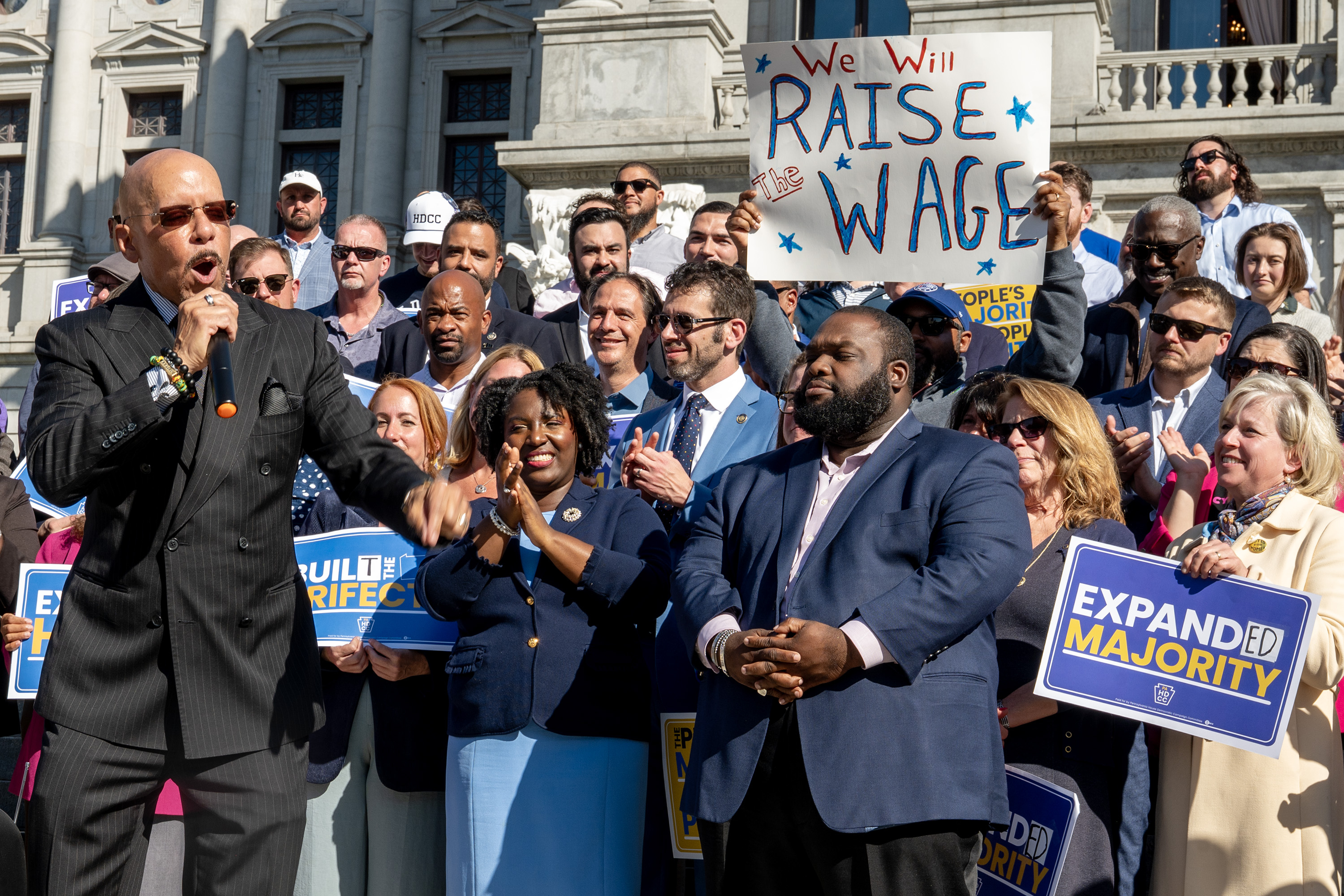
State Sen. Vincent Hughes (left) on the steps of the State Capitol in Harrisburg Wednesday, Nov. 4, 2026, joining Democratic Senate and House members and staffers and newly elected members gathering in a post-election celebration. At right are House Speaker Joanna McClinton and State Rep. Jordan Harris. It has been three decades since the caucus has had a trifecta.Tom Gralish / Staff Photographer
Hughes, just minutes after the Associated Press called the state Senate control for Democrats earlier this month, said his caucus is representative of the differences across Pennsylvania.
“They’re ready to roll up their sleeves to get some work done, responding to the needs of the people of Pennsylvania,” Hughes added.
In the case of a tie, Lt. Gov. Austin Davis has some tiebreaking powers but cannot be the deciding vote on a bill’s final passage.
Senate Republicans, meanwhile, will have to learn how to be effective in the minority, including how to challenge Democratic policies while also persuading top Democrats to consider their proposals.
Collett said she hopes her Republican colleagues know that “now is their opportunity to collaborate with us to make sure that the people in their communities are benefiting from the initiatives that we’re putting forward, just as much as the people from our communities.”
“This is not a partisan issue,” she added. “This is about Pennsylvanians.”
The entire General Assembly will have to face the state’s tough financial straits, with Pennsylvania’s government on a path to spend $6.6 billion more than it brings in next fiscal year, according to an Independent Fiscal Office report released Tuesday.
Shapiro is likely to propose spending down the state’s Rainy Day Fund, which Senate Republicans have painstakingly protected over the last few years. The potential 2028 presidential candidate is also likely to pitch a number of new revenue generators, rather than broad-based tax increases.
Pew Charitable Trusts has cautioned against state legislatures using their emergency reserves to help balance the budget.
Camden’s poverty rate has reached a significant milestone — but advocates say it’s still too soon to celebrate.
For the first time in more than 15 years, less than a quarter of the city’s population was living below the poverty line last year, according to data released by the U.S. Census Bureau in late October.
The poverty rate in Camden fell to 24.9% in 2025, the lowest it has been since at least 2010, according to the latest American Community Survey, which produces annual reports on a wide range of detailed population data.
In comparison, the poverty rate across Camden County was 9.9% in 2025, the data show.
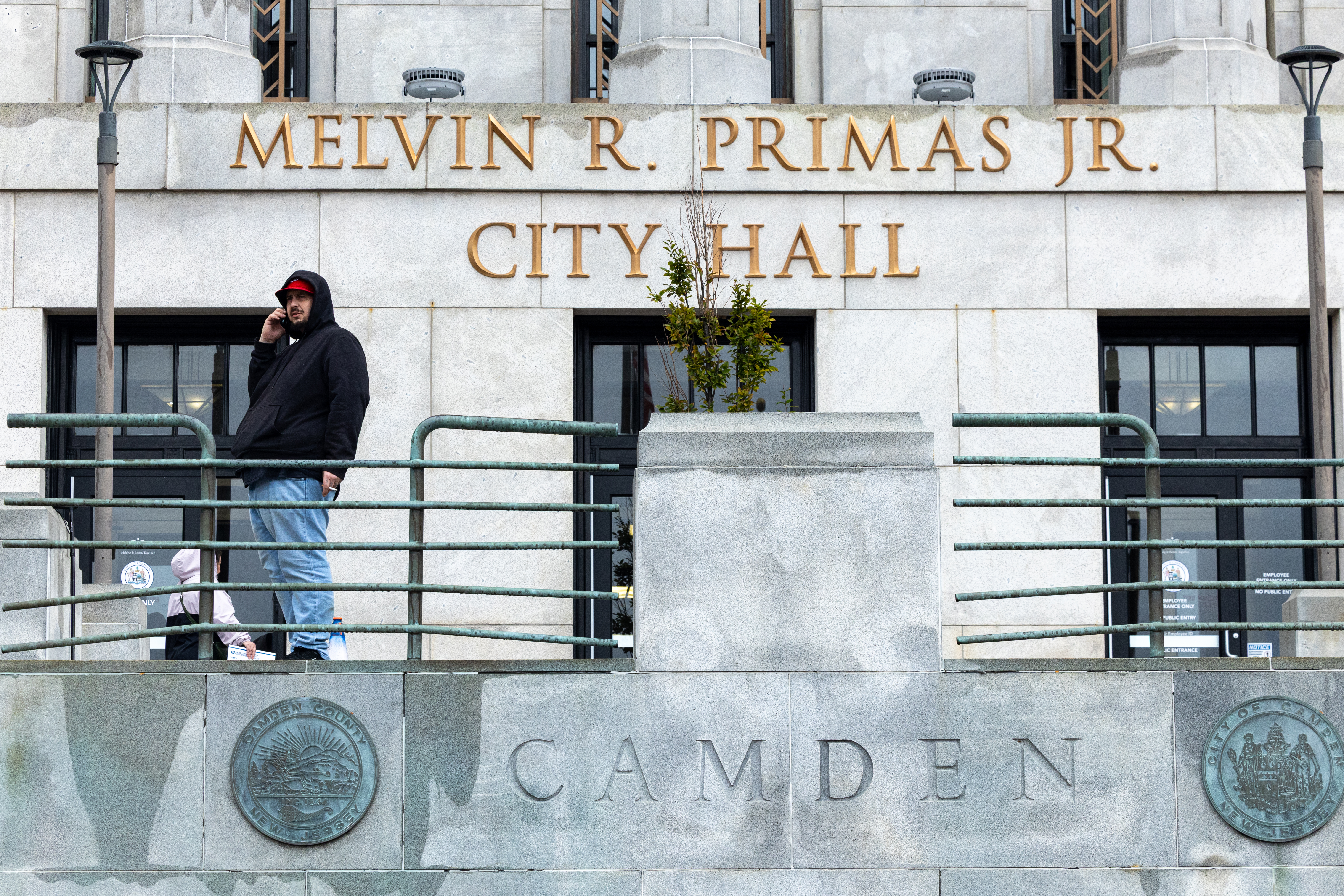
A man talks on the phone while waiting outside City Hall in Camden on Nov. 13. The city’s poverty rate exceeded 40% multiple times during the 2010s.Aidan T. Gallo / Staff Photographer
“Nobody’s going to be handing out any trophies in terms of the status quo,” said Bill Golderer, president and CEO of United Way of Greater Philadelphia and Southern New Jersey, a nonprofit that conducts a wide range of anti-poverty work in the city.
“It’s still an intolerably high rate, on the one hand, but on the other hand, it does represent significant progress,” he said.
The data, which reported Camden’s poverty rate was above 40% multiple times during the 2010s, show a return on the long-term investments made in the community, Golderer said.
(function(){function e(){window.addEventListener(`message`,function(e){if(e.data[`datawrapper-height`]!==void 0){var t=document.querySelectorAll(`iframe`);for(var n in e.data[`datawrapper-height`])for(var r=0,i;i=t[r];r++)if(i.contentWindow===e.source){var a=e.data[`datawrapper-height`][n]+`px`;i.style.height=a}}})}e()})();
In Camden’s case, that involves a coordinated effort among the city and county governments, the private sector, nonprofit organizations, and residents to approach the issue holistically, he said.
“There’s a momentum that’s created when that kind of coordinated action is undertaken and moves along with focus and discipline, you can see — sometimes in a longer time than anybody would appreciate — you can see actual progress. And progress begets progress if you’re doing this the right way,” Golderer said.
Camden Mayor Victor Carstarphen’s office did not respond to multiple requests for comment.
‘The poverty rate is a really low bar’
A man waits at a bus stop in Camden on Nov. 13. Camden consistently ranks among the top 10 cities with the lowest median household income in the country.Aidan T. Gallo / Staff Photographer
While there has been steady progress in the fight against poverty, those working on the front lines warn that the problem is far from eradicated.
Many families in Camden may technically be living above the federal poverty line — an annual income of $32,150 for a four-person household in 2025 — but are still struggling to afford the cost of living.
Roughly 76% of households in Camden earn more than the federal poverty threshold but cannot cover the cost of basic necessities, according to a United Way report thatanalyzed data from 2024.
The report included households that are what is known as ALICE — asset limited, income constrained, employed — to geta more comprehensive picture of how many people are experiencing financial hardship.
“The poverty rate is a really low bar,” said Noreen Flewelling, vice president of development at Camden’s Cathedral Kitchen, which just marked 50 years as an emergency meal provider in South Jersey and serves about 6,000 people each month.
Inflation is impacting families, she said, and household budgets often have very little room to absorb rising costs.
“At the end of the month, when people have used up their income, benefits, salary — that’s when our numbers are the highest, and it’s as many as 800 people in one day during that last week of the month,” she said.
Job training could lead to long-term gains
Though many solutions to poverty must come from the federal level, Golderer said, local efforts can improve Camden residents’ day-to-day lives, including expanded access to benefits like Medicaid or food assistance and workforce development programs.
Workers conduct renovations on a building in Camden on Nov. 13. Various workforce development programs in the city aim to get Camden residents into high-paying jobs. Aidan T. Gallo / Staff Photographer
“What is within our control is to build upon things that we absolutely know work and have demonstrated, in our market and other markets, real return on investment and progress,” he said.
Anyone eligible for assistance should apply for it, he said.
“Benefits access is the floor of stability,” he said.
While the city has gained ground against poverty over the last 15 years, Camden residents have struggled to raise their incomes over that same time. Median household income for Camden residents has risen only 8% since 2010, adjusted for inflation — on par with Camden County but well below the 14% increase nationwide, census data show.
Camden also consistently ranks among the 10 cities with populations 65,000 or larger with the lowest median household income in the country, according to the data. With households earning a median of $45,900 in 2025, Camden ranked 10th, according to census data.
(function(){function e(){window.addEventListener(`message`,function(e){if(e.data[`datawrapper-height`]!==void 0){var t=document.querySelectorAll(`iframe`);for(var n in e.data[`datawrapper-height`])for(var r=0,i;i=t[r];r++)if(i.contentWindow===e.source){var a=e.data[`datawrapper-height`][n]+`px`;i.style.height=a}}})}e()})();
After peaking at $47,200 in 2021, Camden’s median household income dropped steeply following the pandemic, falling roughly $10,000 in two years, after adjusting for inflation.
(function(){function e(){window.addEventListener(`message`,function(e){if(e.data[`datawrapper-height`]!==void 0){var t=document.querySelectorAll(`iframe`);for(var n in e.data[`datawrapper-height`])for(var r=0,i;i=t[r];r++)if(i.contentWindow===e.source){var a=e.data[`datawrapper-height`][n]+`px`;i.style.height=a}}})}e()})();
Workforce development training can help residents gain skills for higher-paying jobs, Golderer said, but many are unable to complete the monthslong endeavor because they simply cannot afford to miss work.
“The reality is that people have access to this training and there’s a job waiting for them on the other end that would improve their lives immensely,” he said. “But if they can’t afford to complete the program, they’re not going to get anywhere. And, in fact, they’ve gone backward because they lost wages that they could have had for the weeks that they tried.”
Launching next year, a newUnited Way stipend program will help cover those lost wages so that people can complete the training.
But as anti-poverty efforts continue to prioritize getting people higher-paying jobs, they need to do so carefully, said Kathleen Noonan with the Camden Coalition, a social services nonprofit.
For many people, a hard-earned raise at work could also mean losingessential healthcare or food assistance benefits without enough of a pay boost to afford those necessities out of pocket, she said.
“We don’t spend enough time thinking about ‘what’s the tipping point for people when they’re just making enough in wages that they’re not eligible for benefits anymore but they’re not making enough in wages that it really is more helpful?’” she said.
At 22, RJ Smith is on a roll: Freshly graduated from Drexel University, he’s extended hisOcho Supper Club operations at the Rittenhouse Hotel and is negotiating for a permanent restaurant of his own.
Not bad for a chef who, less than three years ago, was serving elaborate tasting menus in his dorm room.
Smith, whose Afro-Caribbean cookinghas attracted national attention, says he is narrowing his search for his first restaurant. One space is near Rittenhouse Square, the other closer to East Passyunk. His target is 2027, though the opening will depend on construction.
He envisions two versions of Ocho under one roof: a casual bar and à la carte dining area, alongside a more intimate space for tasting menus. The idea is to make his cooking available to diners who aren’t necessarily prepared to spend two hours at a special-occasion dinner.
“There’s such a barrier to entry with tasting menus,” Smith said. “We’re trying to knock that down as much as we can.”
The Atlantic cod from chef RJ Smith at the Rittenhouse Hotel, where Smith’s Ocho Supper Club has extended its run. Monica Herndon / Staff Photographer
It’s the next step in a rapid progression for the Bay Area native, who started Ocho in April 2024 as a $35 dorm-room dinner, graduated to pop-ups, and in February 2026 moved into the Rittenhouse Hotel’s former Scarpetta restaurant for a six-month engagement. Smith has worked in a number of prestigious kitchens, including Californios in San Francisco, Core by Clare Smyth in London, and Provenance in Philadelphia. He was also recently part of the Inquirer Food Festival, paired up with chef Rich Landau of Vedge for a collaboration dish.
Chef RJ Smith places a seafood plateau at the Rittenhouse.Jessica Griffin / Staff Photographer
His time at the Rittenhouse was supposed to end over the summer, as the hotel prepared to convert the bilevel Scarpetta restaurant into the Ruxton, a steakhouse from Baltimore-based Atlas Restaurant Group.
Instead, Smith and the hotel expanded their arrangement into what Smith calls “more of a culinary integration.”
With the Scarpetta space now under construction, Ocho’s Caribbean-inspired à la carte menu is now available at Lacroix’s bar and through room service Fridays through Sundays; on select Sundays, Smith and his team take over the dining room for tasting menu dinners (eight courses for $160 or five for $100). Lacroix’s dining room, which overlooks Rittenhouse Square, is reset with Ocho’s tableware and flowers. “It’s honestly surprising how different the dining room looks in just an hour,” Smith said.
Ocho sous chef Imani Williams prepares mussels for Ocho’s seafood plateau at Rittenhouse Hotel.Jessica Griffin / Staff Photographer
The arrangement coincides with a major transformation of the Rittenhouse’s public spaces. The Library Bar closed Oct. 31, and the Mary Cassatt Tea Room served its final afternoon tea Nov. 15. The project — expected to take at least six months — will usher in the Ruxton and a new cocktail bar, among other changes.
Lacroix will remain open throughout construction, and Smith’s Sunday dinners are scheduled through Dec. 20. The hotel has not announced Ocho’s plans beyond that date. “We’ve loved the partnership and are open to continuing to work together,” Rittenhouse managing director Gregg Skowronski said.
The evolution of Ocho has also brought changes to the food. Smith’s seafood plateau, a riff on the French shellfish tower, includes mussels poached and dressed escovitch-style with Jamaican red pepper sauce, butter bean salad, and pepita crumble. There’s also Japanese sea bream in a strawberry-hibiscus aguachile, and soft plantain coco bread topped with peekytoe crab salad, Jimmy Nardello peppers, and preserved lemon.
A seafood plateau from chef RJ Smith at the Rittenhouse Hotel.Jessica Griffin / Staff Photographer
Another dish reworks the Jamaican festival, a fried cornmeal dough, by stuffing it with braised oxtail and glazing it with curried honey. A 12-ounce New York strip comes over plantain purée with a jerk-spiced beef reduction, accompanied by aromatic rice, escovitch pickles, pineapple chutney, and a tropical fruit-pepper sauce.
The experience at the Rittenhouse is further preparing Smith for next steps. After building Ocho in borrowed spaces, he wants a place to call his own. “The natural evolution from here is to really find a home,” he said.
The notice on the front page of the Nov. 24, 1855, Philadelphia Ledger was nondescript.
“The Children’s Hospital, located on Blight St. running from Pine to Lombard below Broad is now open for the reception of patients.
Children suffering from acute diseases and accidents will be received free of charge.
A dispensary for sick children is also attached to the hospital and will be open at the same place every day (Sundays excepted) from 11 to 12 o’clock. When advice and medicine will be given free of charge.”
It was signed by T. Hewson Bache, M.D., Francis W. Lewis, M.D., and R.A.F. Penrose, M.D.
But those few lines were anything but nondescript. They announced the opening of Philadelphia Children’s Hospital, United States’ first medical facility specializing in pediatric care that would jump-start the country’s children’s health industry.
Aaminah Rasheed’s No. 1 uses bright, bold and complementary colors alongside inviting imagery representing a diverse range of young patientAaminah Rasheed and Colibri Workshop
CHOP’s beginning will be celebrated this Saturday at its Morgan Center for Research & Innovation. It is the latest firstival, the Philadelphia Historic District’s weekly day party celebrating major American milestones with Philly roots.
Bache, a descendant of Ben Franklin; Penrose, of the illustrious Biddle family; and Lewis were all accomplished doctors when they opened the 12-bed facility on Blight Street in the heart of Center City, now Watts Street.
Together they decided to open the hospital because children were becoming sick from living in unsanitary conditions marked by the beginning of the Industrial Revolution. Children were also being injured at an alarming rate from working in factories.
“Children are not just little adults,” said Joseph W. St. Geme III, CHOP’s physician-in-chief. “They have a unique physiology. One that evolves as they mature from newborn into adulthood.”
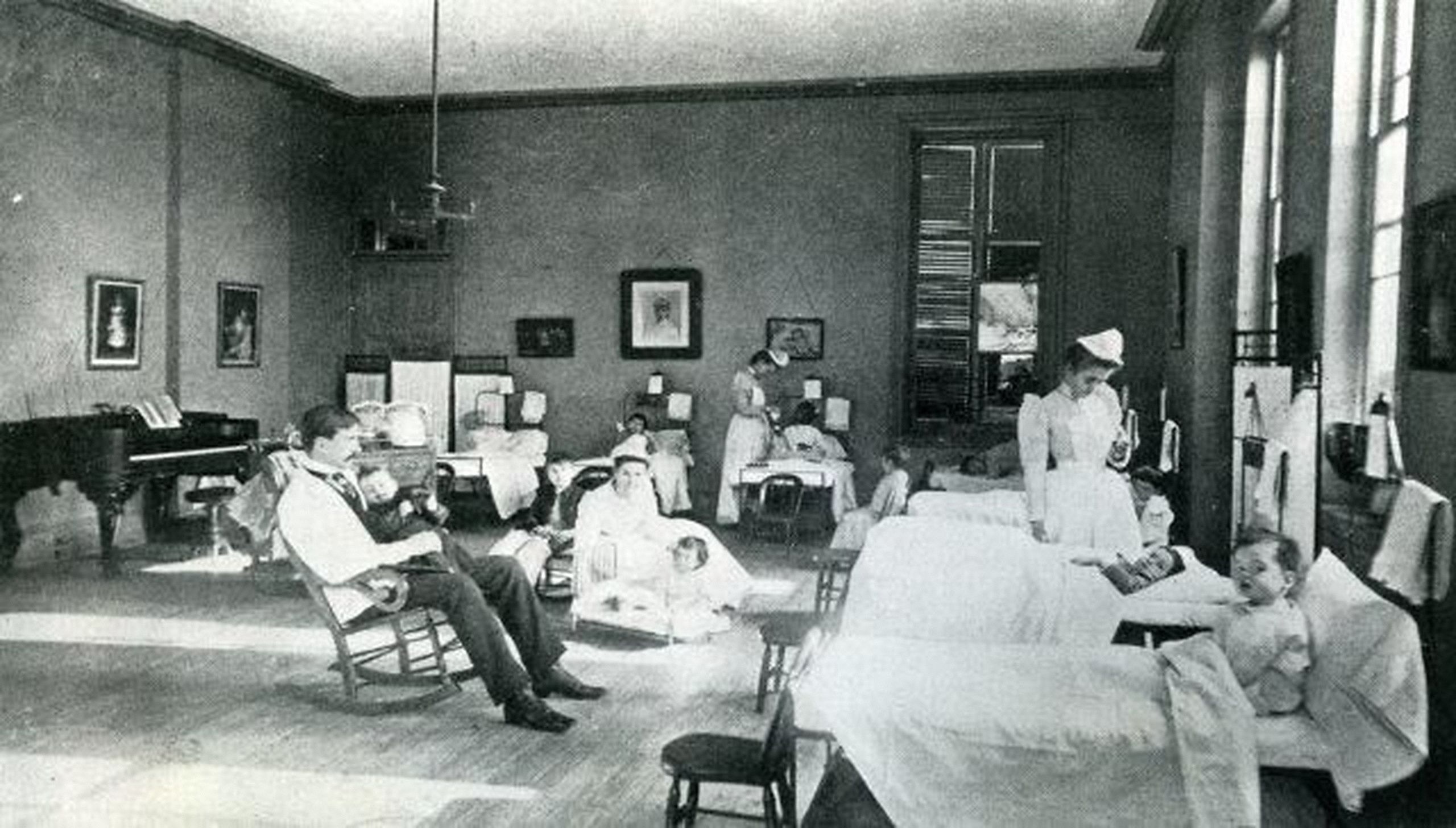
The original location of Children’s Hospital of Philadelphia or Chop located on Blight Street — now Watts Street — in Center City. It opened in 1855 and was there until 1886.Children's Hospital
During its first year, the children’s hospital treated 67 patients. And in 1877, CHOP created the country’s first training ground for pediatric doctors, establishing the foundation for pediatric practices in the United States.
CHOP moved to its second location at 22nd Street between Locust and Walnut Street in 1886, and in 1895, CHOP opened a training school for pediatric nurses. The hospital moved to 18th and Bainbridge in 1916, and it would stay there until 1974 when it made the campus on Civic Center Boulevard its home.
In 1929, CHOP formed its official affiliation with the University of Pennsylvania’s school of medicine, creating its pediatric department.
Throughout its 170 years, CHOP served as a leader in children’s health innovations making way for many firsts in the industry. In 1936, CHOP doctors discovered the vaccine for whooping cough. In 1943, they discovered the first vaccines for influenza — which were administered to adults, too. The first neonatal intensive care unit, or NICU, was established at CHOP in 1962. The first rubella vaccine was developed in 1963.
And more recently, CHOP doctors treated the newborn KJ Muldoon with CRISPR gene-editing therapy to treat a rare metabolic disease. They were the first doctors in the world to use these techniques.
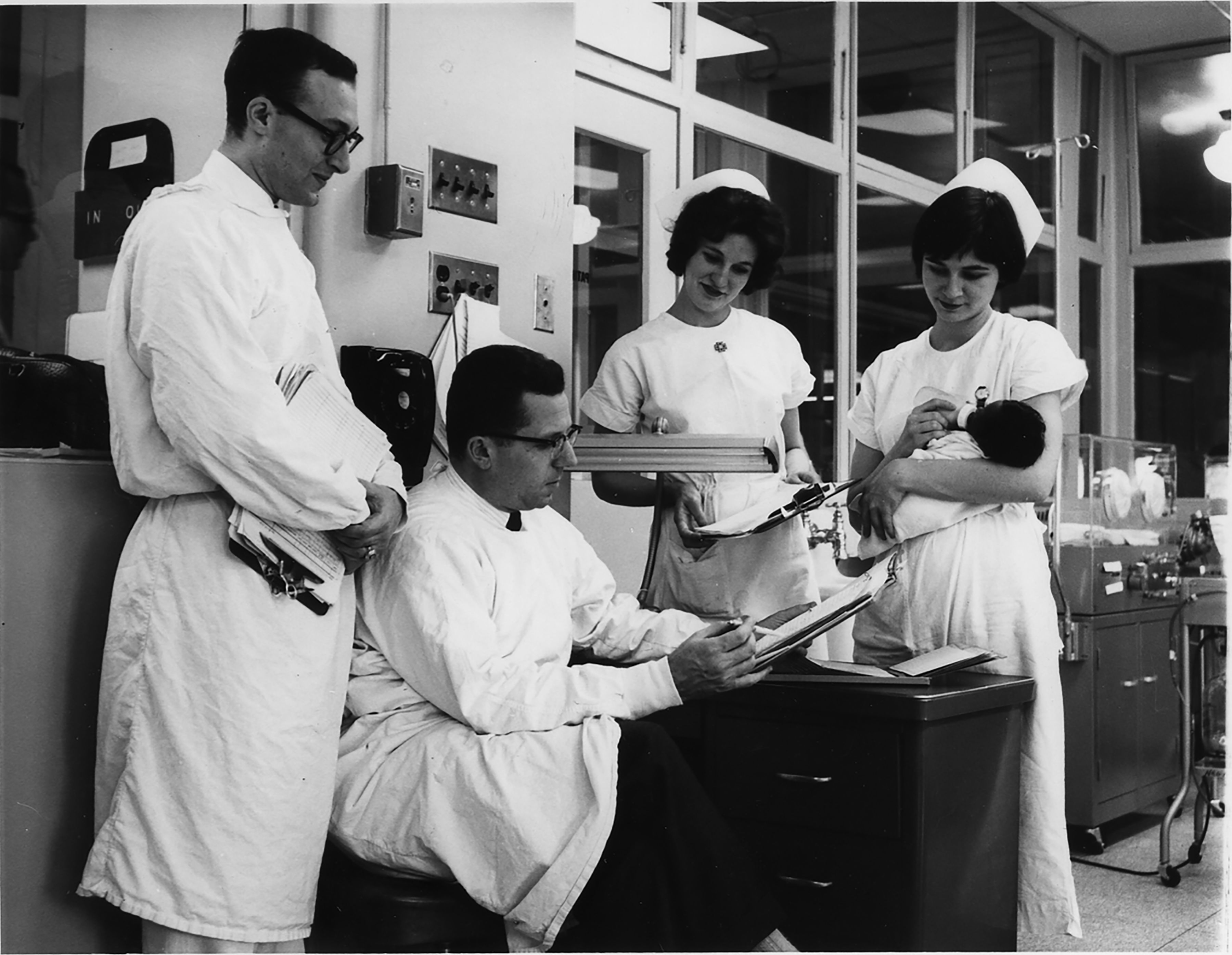
CHOP doctors at the the hospital’s NICU unit in the 1960s, the first in the nation.Children's Hopsital
C. Everett Koop was CHOP’s surgeon-in-chief from 1948 to 1981 before serving as U.S. Surgeon General from 1982 to 1989. He pioneered techniques for operating on newborn babies and became an outspoken surgeon general on health issues, from smoking to AIDS. He died in 2013.
“We’ve gone from having just 12 beds in 1855 and 740 today,” Geme said. “A lot has happened since 1855.”
Children’s Hospital of Philadelphia in 2025Children's Hospital of Philadelphia
This week’s Firstival is Saturday, Nov. 21, 11 a.m. to 1 p.m. at Children’s Hospital of Philadelphia Morgan Center for Research & Innovation, 2716 S. St.
Joe Picozzi is the state senator serving Northeast Philadelphia’s 5th Senate District. At 30, he is the youngest member of that legislative body and the first Republican elected to represent Philadelphia in the state Senate since 1996.
Congratulations to my Democratic colleagues on winning the state Senate majority. As we prepare for a new legislative session, I hope we can find common ground on an ambitious agenda for Pennsylvania. Here are five ideas worth building on together.
1. Free SEPTA passes for every student
Transportation shouldn’t be a barrier to education, employment, or opportunity. SEPTA already provides free passes to eligible students, but we should expand that benefit to every school student in Southeastern Pennsylvania.
Philadelphia City Council’s Resolution 240757 called for universal student passes without time or distance restrictions. Let’s build on that proposal and provide students with free SEPTA access seven days a week, including evenings and summers.
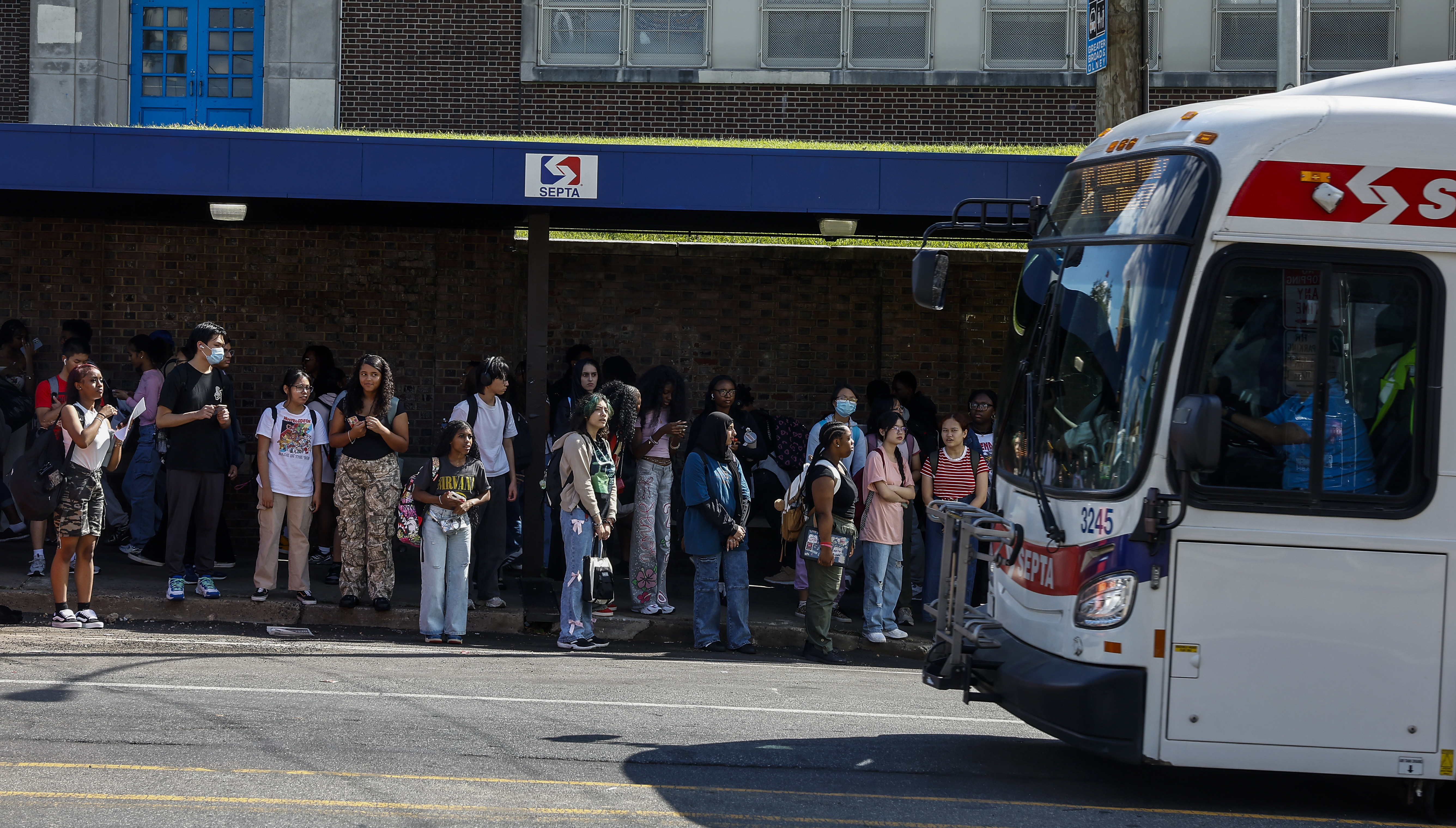
Students watch as a 26 bus passes the stop near Girls High at Broad and Olney Streets on Monday, Aug. 25, 2025 in Philadelphia. Monica Herndon / Staff Photographer
A student should be able to get to school, a part-time job, an internship, or a library without worrying about the fare. It’s an investment in young people and a way to introduce the next generation to public transportation.
2. Save our community hospitals, and try something different
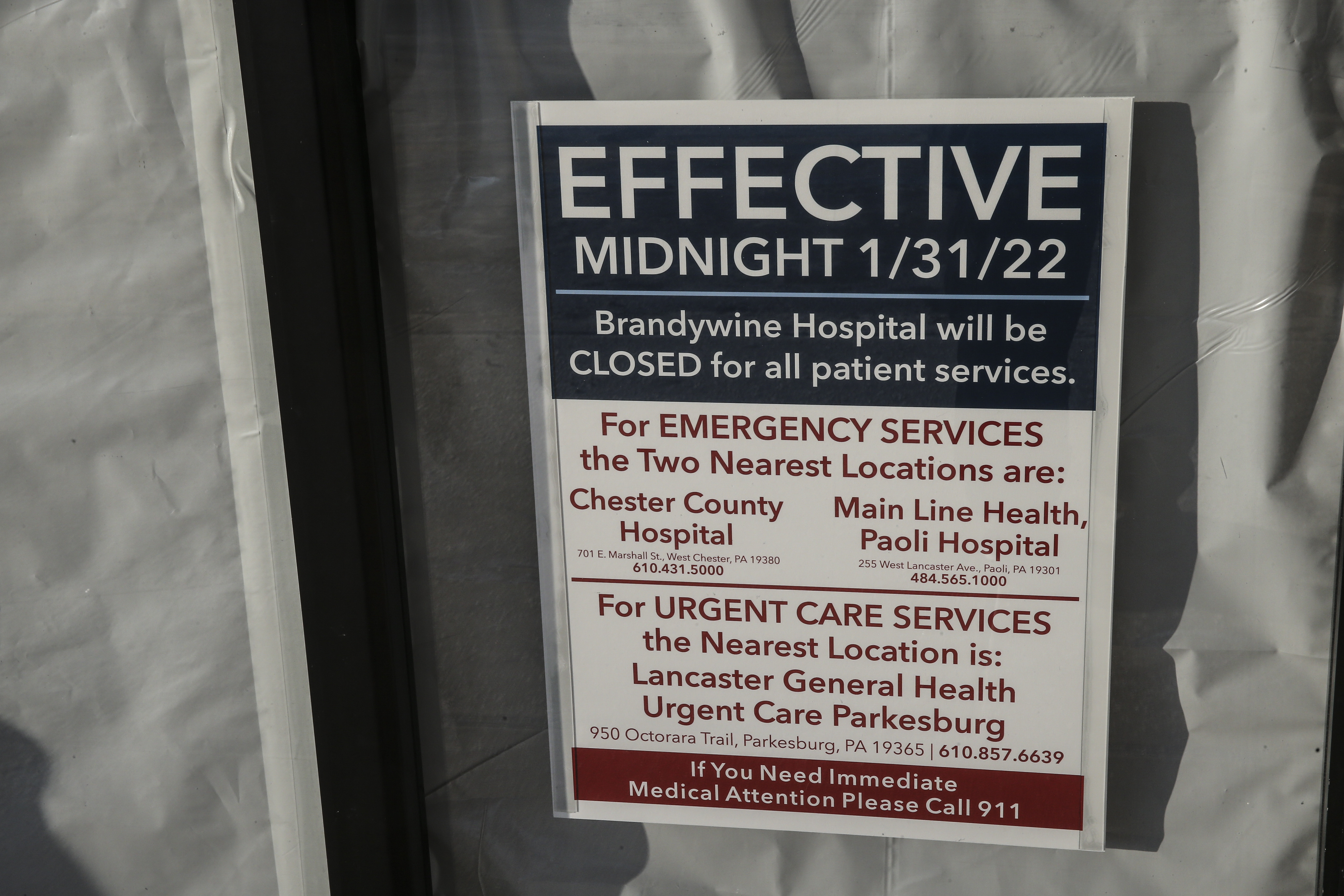
Across Pennsylvania, community hospitals are closing, eliminating good jobs and leaving families without nearby emergency care.
State Rep. Craig Williams proposed a $200 million Hospital Acquisition Assistance Fund to help reopen shuttered hospitals. We should build on that idea by giving the commonwealth the ability to acquire distressed hospitals directly.
Brandywine Hospital in Coatesville closed on Jan. 31, 2022, adding 25-30 minutes of travel time to get to the closest hospitals.STEVEN M. FALK / Staff Photographer
Let’s establish a pilot program for publicly owned, professionally managed community hospitals. Set clear standards for patient outcomes, financial performance, and access to care, and see whether a different model of hospital ownership can succeed where the existing system has failed.
3. Go big on literacy and workforce training
Every child in Pennsylvania should learn to read proficiently, and every young adult should have a path to a good-paying career.
State Sen. Devlin Robinson’s Senate Bill 700 would strengthen early literacy screening and evidence-based reading instruction. State Sen. Lisa Boscola’s Senate Bill 1343 would expand career and technical education and construction-trades pre-apprenticeships. I was proud to cosponsor both.
Let’s make literacy and workforce development major statewide priorities, with measurable goals and significant investments in tutoring, technical education, and apprenticeships.
We should also build on State Sen. Gene Yaw’s proposal for a data center impact fee, ensuring major new developments contribute to the infrastructure and workforce investments necessary to support Pennsylvania’s economic growth.
4. Reimagine passenger rail across Pennsylvania
Southeastern Pennsylvania has one of the most extensive regional rail networks in America. We should be using it to its full potential.
SEPTA’s Reimagining Regional Rail plan envisions frequent, reliable, all-day service, including trains every 15 minutes on major corridors. Let’s fund a serious implementation plan and transform Regional Rail into a system people can rely on for more than their morning commute.
We should think bigger about intercity rail, too. Earlier this year, State Sen. Sharif Street and I introduced Senate Resolution 349, urging Congress to pass the American High-Speed Rail Act.
Let’s build on that bipartisan effort by commissioning a comprehensive feasibility study of higher-speed and high-speed passenger rail connecting Philadelphia, Harrisburg, Pittsburgh, and other Pennsylvania cities. We should determine what it would cost, where it could work, and how federal and private investment could help make it happen.
5. Invest in big economic development projects
Pennsylvania should be willing to invest in major projects that create jobs, attract private investment, and transform regional economies.
Look at the Philadelphia Navy Yard. A former military installation has become a major center for research, manufacturing, and commercial development. Last year, the commonwealth committed $30 million through PA SITES to prepare another 54 acres for development.
We should identify the next generation of projects like the Navy Yard and help finance the infrastructure necessary to make them happen.
That means investing in industrial redevelopment, ports, energy infrastructure, and major employment centers across Pennsylvania. The proposed liquefied natural gas export terminal in Southeastern Pennsylvania, previously examined under Act 133 of 2022, deserves serious consideration, including its economic feasibility, safety, and environmental impacts.
We already have tools like PA SITES and the Redevelopment Assistance Capital Program. Let’s use them to support ambitious projects, with clear expectations for private investment, permanent jobs, and economic returns.
Alongside major development projects, Pennsylvania should invest in our entrepreneurs innovating and building new businesses in the commonwealth. We should increase annual state funding for Ben Franklin Technology Partners, which provides early-stage capital and business expertise to technology companies across the commonwealth. That support helps ambitious founders develop products, reach customers, attract private investment, and create more jobs here.
These five ideas won’t solve every problem facing Pennsylvania. They won’t all be easy, and they certainly won’t all be inexpensive. But each offers an opportunity to improve people’s lives, strengthen our economy, and deliver something tangible for the communities we represent.
The commonwealth should be in the business of building things again.