The hulking 6-foot-4, 238-pound defenseman and the Flyers agreed to a two-year, $1.825 million contract with an average annual value of $912,500 on Tuesday.
The first year is designated as a two-way deal, which means McDonald will be paid at a minor league rate for games he plays with Lehigh Valley of the American Hockey League. The second season of the contract is one-way, which means McDonald will be paid at the NHL rate no matter what.
The #LetsGoFlyers signed 24 y/o D Hunter McDonald to a two year $912.5K cap hit contract
Yr 1: $900K Salary, $250K Minors, $275K Guaranteed Yr 2: $925K Salary 1-Way
McDonald, who was a restricted free agent, was the final piece of business the Flyers had on the table. They also re-signed restricted free agents Trevor Zegras, Jamie Drysdale, and Nikita Grebenkin earlier in the offseason.
A sixth-round pick in 2022, McDonald, 24, made his NHL debut in the season finale of the 2025-26 season after the Flyers clinched the third seed in the Metropolitan Division the previous night at Xfinity Mobile Arena. He registered an assist on a goal by his defensive partner Oliver Bonk, who was also making his NHL debut.
“Hunter took a big step last year in his development, and that’s why he played that game late in the season,” Flyers general manager Danny Brière told The Inquirer in early June.
“I think our coaching staff was really impressed on how he took a step forward this year. He put in the work and really elevated his game, earned that NHL game at the end, and he was around the team when we played in the playoffs as well.
“Really exciting to see him have growth to his development. It’s a big summer for him, but we’re excited about him. A big, physical defenseman like that is not easy to find, and we hope he’s going to be one of those guys, eventually. But he’s going to have to beat someone at some point to earn those minutes.”
Oliver Bonk (left) celebrates after scoring on an assist from Hunter McDonald against the Montréal Canadiens on April 14. Derik Hamilton
Described as a “throwback” to the Broad Street Bullies by Jerry Keefe, his coach at Northeastern, he had three assists in 11 regular-season games and one goal in six playoff games with Lehigh Valley after his 2023-24 season ended with the Huskies.
Two seasons ago, his first as a full-time pro, he had four goals, 18 points, and 99 penalty minutes in 71 regular-season games. He led the team in games played and was tied for second in plus-minus (plus-12). The Western New York native added another goal in seven playoff games.
McDonald registered six assists and 92 penalty minutes in 65 regular-season games in his second full season. Out of the eight players who played in at least 60 games with the Phantoms, he was one of three (Zayde Wisdom and Tucker Robertson) who had at least an even plus-minus (even).
“He’s still learning the game and learning the type of player that he’s going to have to be to be an NHL player every day,” Phantoms coach John Snowden said.
“I thought he did a really good job with that. And maturing too and handling the ups and downs of the season, and knowing that you’re knocking on the door, and maybe you’re not the guy called up, and then you get your call-up, and what do you do with it? We saw his one game, and he was very good.”
McDonald was also recalled by the Flyers in January for the three-game swing through Colorado, Las Vegas, and Utah, due to an injury to defenseman Rasmus Ristolainen. He did not play in any of the games.
The expectation is McDonald will push for a spot on the Flyers’ defensive corps when training camp opens Sept. 17. While he said in January that he had been working at not getting sent to the penalty box as often, he said he’s still a physical blueliner.
“I think a bit. Kind of, hitting people,” McDonald said with a chuckle when asked if he considered himself a “throwback.”
“I want to get a stick on you, ending plays. I think that’s a super important part of the game. If I can end these plays in the D zone, be a pain to play against, and then we can go play offense.”
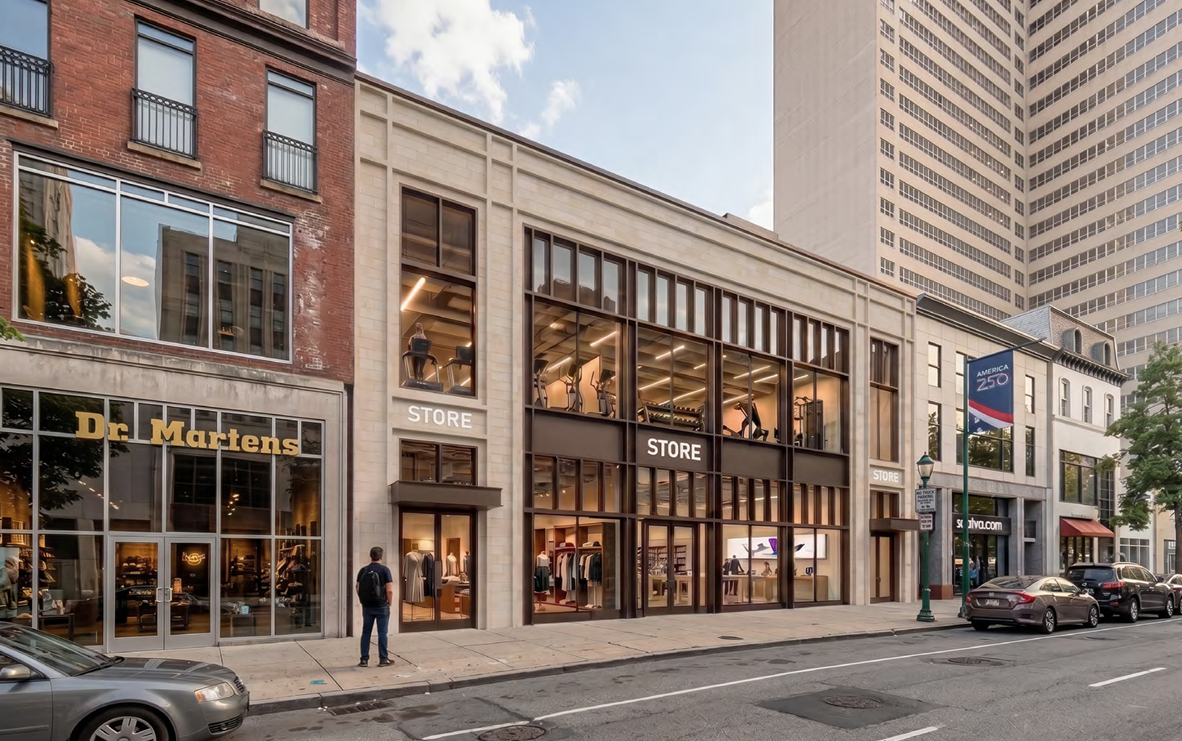
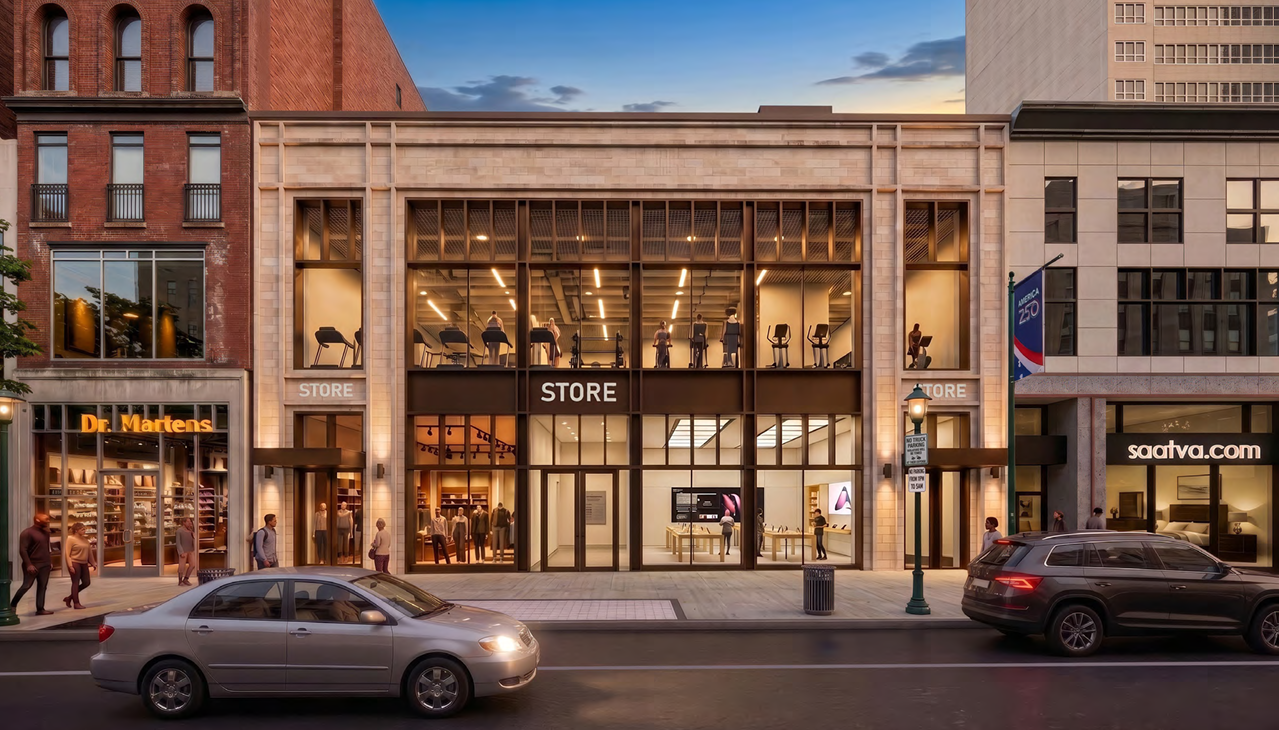
A two-story, 33,000-square-foot retail building is being proposed for 1706-10 Walnut St., the current site of a beer garden and formerly where three historic buildings were demolished after being damaged by fires during unrest in 2020.
The property is owned by the Gridmark Group, which was founded by Ari Weber, a Brooklyn-based real estate investor. The building is being designed by Philadelphia-based JKRP Architects.
After Weber acquired the property in late 2022 for over $12 million, he said he eventually planned to build a 30-story apartment building on the site. Now he has decided that conditions are not favorable for such a large-scale project.
“You see around Philly that there are sites that are on hold right now, that are sitting there waiting,” Weber said. “We were talking about a 30-story building, and I have made a decision that the time is not right for building such a high tower.”
Weber didn’t let the Walnut Street property sit empty for long after he acquired it. The Walnut Gardens opened in June 2023 and became a popular outdoor food-and-drinks attraction.
But Weber said he’s been fielding a lot of calls from high-end nationalretail companies searching for space on this in-demand stretch of Walnut Street.
“Currently, [a tower] is not what it calls for. What it calls for is beautiful retail commercial space that will change the block,” Weber said. “It’s the number-one retail block in the whole of Philly.”
The project will receive oversight from the Philadelphia Historical Commission because the property is in the Rittenhouse-Fitler Historic District. It will be considered by the commission’s Architectural Review committee on Tuesday.
Materials submitted to the commission show a limestone-clad building that will feature a roof deck “with a restaurant enclosure” and outdoor seating. The commission’s staff recommended approval of the project’s design.
“It’s meant to be like any other new construction in the historic district,” said Jerry Roller, the principal with JKRP Architects. “It’s meant to be in keeping with and in harmony with the remainder of the streetscape on Walnut Street.”
A rendering of Ari Weber’s proposed retail building, with a setback roof deck and restaurant, for the site where the Walnut Gardens currently sits.JKRP Architects
Before demolition, the site held three 19th-century townhomes, one designed by Frank Furness’s architecture firm, which had been converted to retail and restaurant uses, including a McDonald’s.
During unrest following protests over the police murder of George Floyd in Minneapolis, the buildings were damaged by arson in May 2020. Philadelphia’s Department of Licenses & Inspections found them too damaged to be saved, and they were then demolished in early 2021.
“It’s not surprising, given the state of the development market today, we all know that there are very few projects coming out of the ground,” said Paul Steinke, head of the Preservation Alliance of Greater Philadelphia.
“I’m glad that they’re not waiting around in hope for a better day, but that they’re going ahead and knitting back the urban fabric once again,” he said.
After Weber acquired the properties, he partnered with Philadelphia restaurateur Avram Hornik, of FCM Hospitality, to open the Walnut Gardens outdoor bar and restaurant.
“Every season was better than the season before,” Hornik said. “It’s been great for us, and it’s been great for the neighborhood. But we always knew it would be a temporary use for this type of property.”
Hornik said the closure date for Walnut Gardens depends on Weber’s construction timeline — although he believes they willbe open through the end of the year.
“We’ll be open all the way through our regular Halloween and Christmas activations,” he said, and possibly into next year.
For Weber, the time is right for construction of a modest scale. Weber said he does not intend to have the retail structure built in such a way that it could be used as a podium for a future tower.
“We’re going to put in something that’s really going to change the whole block and fill in that gap,” he said. “There cannot be any new developments like this on this block. You can’t tear down anything. We’re the only one — it’s unique — so I decided to start making moves and bring tenants in.”
When Weber first came to Center City, he was known in New York for the apartment brokerage group Brookliv, but he said he sold that company last year. Now, he wants to pursue more projects in Philadelphia, which he said is more conducive to real estate development.
“I feel like New York is a little bit of a shaky situation, but I like Philadelphia because … everybody wants to see Philly build,” he said. “We are looking at other [sites] in Philadelphia right now.”
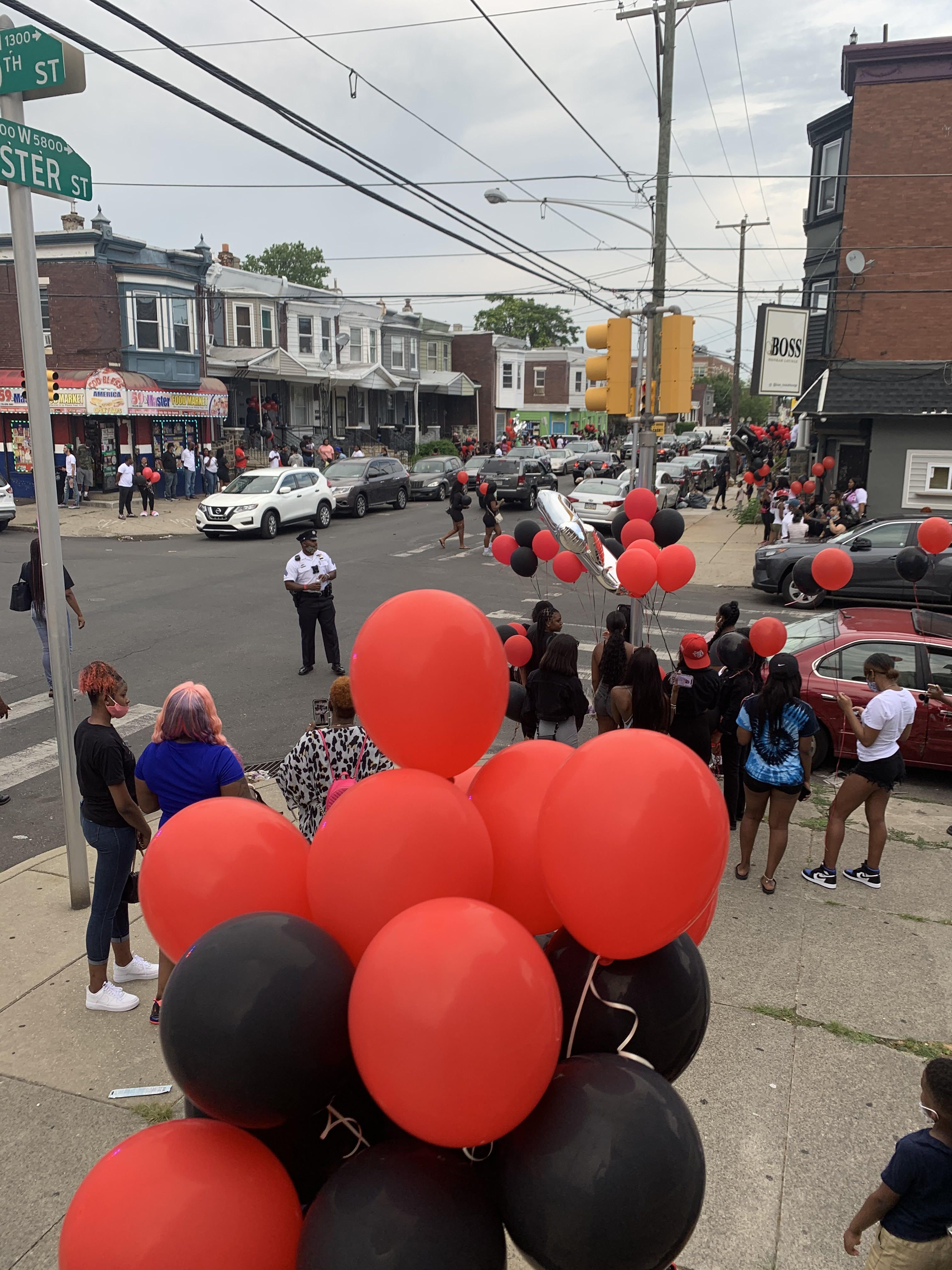
Six years after an up-and-coming teenage rapper was shot to death outside a West Philadelphia home, two of his killers have been convicted and sentenced, prosecutors said.
Donovan Williams, 24, was found guilty last week of first-degree murder in the killing of Aamir Johnson-Daye, known as D4M Skiano, and of the attempted murder of a man who was with him, the Philadelphia District Attorney’s Office announced Tuesday.
A judge on Friday sentenced Williams to life in prison without the possibility of parole, plus 46 to 92 years, court records show.
Williams’ codefendant, Bahij Dini, 28, pleaded guilty earlier this month to third-degree murder, conspiracy, and firearms offenses, and was sentenced to 13½ to 42 years, prosecutors said.
But the two convictions have not closed the case. Prosecutors said that three gunmen climbed from a car on July 5, 2020, and opened fire on the family’s home, but that the third shooter has not yet been identified. Nor was a possible fourth participant, they said, who may have stayed in the vehicle.
“We don’t have all the answers here,” District Attorney Larry Krasner said, appealing for the public’s help.
Johnson-Daye’s parents stood with prosecutors at the news conference, just days before what would have been their son’s 25th birthday, they said.
His mother, Latoya, thanked investigators, saying: “This is a perfect happy birthday for him.”
But she also pressed the public for information on the people being sought who have not yet been identified. “Please just come forward,” she said. “We’re still not done yet.”
One night, two killings
Johnson-Daye was part of a West Philadelphia rap collective whose videos drew hundreds of thousands of views online. His songs were also played on the radio.
Prosecutors said it was possible that his killing on the 1400 block of North 61st Street grew out of an earlier death the same night. A 15-year-old football player, Angelo Walker, was fatally shot nearby on Nassau Road, said Assistant District Attorney Jeff Hojnowski, who helps lead the office’s homicide unit and prosecuted the case against Williams and Dini.
Walker was affiliated with Williams and Dini, and word of his death spread quickly, Hojnowski said. He said a long-running feud between two neighborhood groups — one Williams belonged to and a rival that Johnson-Daye rapped with — may have also played a role in the fatal shootings.
About two hours after Walker was killed, he said, Williams, Dini, and a third gunman drove to the North 61st Street house. Johnson-Daye was on the front porch with another man when the gunmen approached and opened fire, killing him, Hojnowski said. No one else at the home was hit, he said.
Detectives recovered 14 spent casings, Hojnowski said, and determined three guns were used — one for each shooter.
The case against Williams and Dini was built almost entirely from surveillance video, cell phone location data, and digital records rather than eyewitnesses, Hojnowski said. Cameras captured a tinted Buick registered to Williams parking on the block with its lights off, then three figures walking toward the porch and the flashes of discharged bullets.
Prosecutors said the gunman they identified as Williams fired with his left hand — Williams is left-handed — and wore clothing later recovered from his home and car. Cell phone records placed him and Dini at the scene, and tracked them afterward to a hotel near Philadelphia International Airport.
Williams’ attorney did not immediately return a phone call Tuesday.
Dini had initially been charged with first-degree murder. Coley Reynolds, Dini’s attorney, called the plea to third-degree murder “an extremely competitive offer that resolved the case without looking at a possible life sentence.” Cooperation with the ongoing investigation, Reynolds said, was not part of Dini’s deal with prosecutors.
‘We can get these things done’
Johnson-Daye’s 2020 killing came in a year of increasingviolence in the city. The conviction of his killers, Krasner said, comes during one where homicides are down about 18% from last year — when such killings reached a decades-long low.
“We can get these things done,” he said. “But we can’t do anything without the support of the public.”
Anyone with information is encouraged to contact the Philadelphia police tip line at 215-686-TIPS (8477).
Despite Villanova quarterback Pat McQuaide being granted a preliminary injunction to play this season, the Patriot League has deemed the Wildcats starter ineligible.
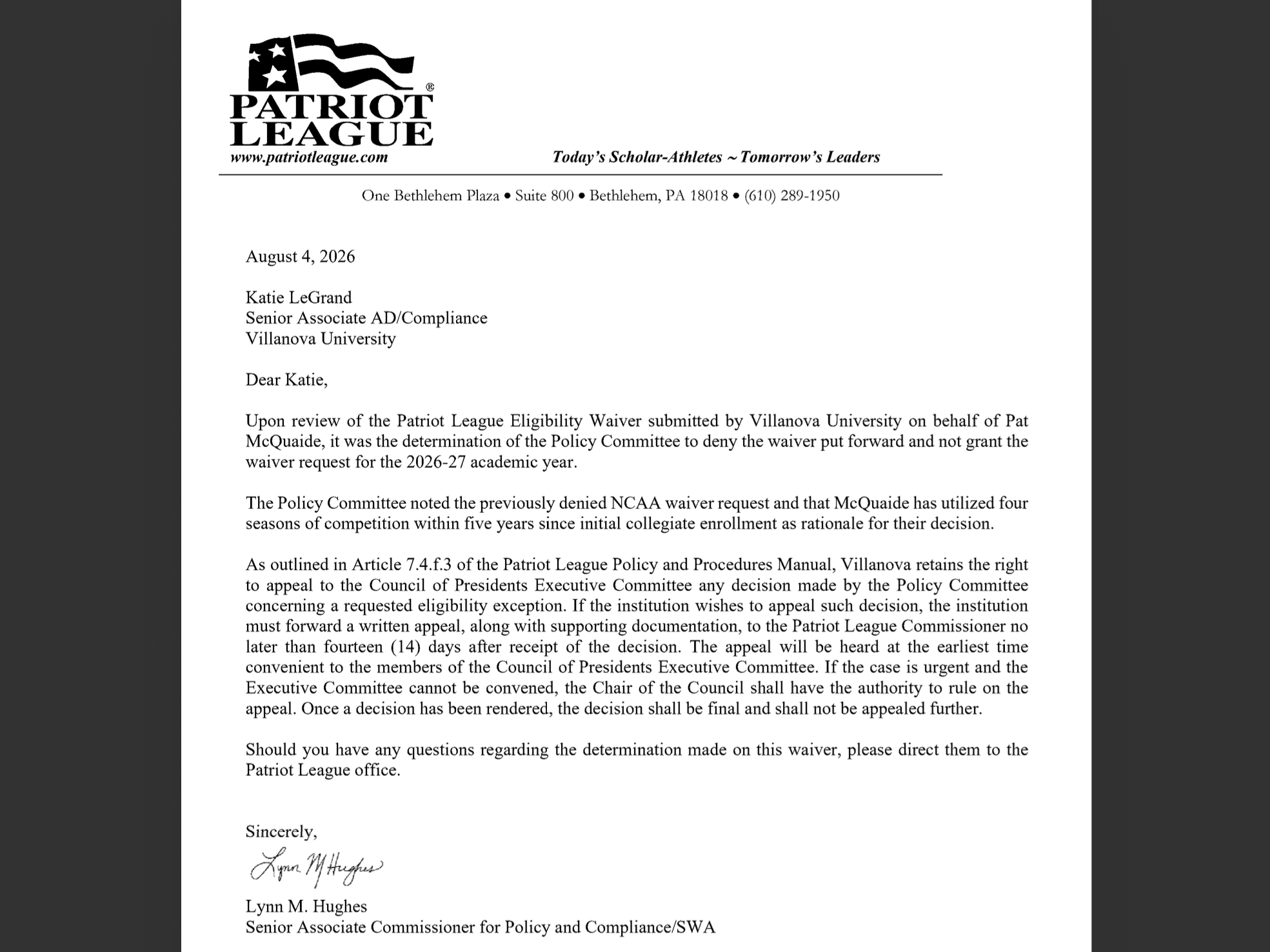
On Aug. 4, the Patriot League sent a letter to Villanova stating that the conference denied McQuaide’s eligibility waiver request. The conference’s decision conflicts with a preliminary injunction granted on Aug. 1 by Cuyahoga County (Ohio) Common Pleas Court judge Timothy P. McCormick. McQuaide, a native of Cuyahoga County, originally motioned to sue the NCAA after it denied his waiver request to play in 2026.
In its reasoning, the Patriot League cited the original NCAA ruling which had been overruled by the Ohio court. The letter to Villanova from Patriot League Senior Associate Commissioner for Policy and Compliance Lynn Hughes states that the quarterback “has utilized four seasons of competition within five years since initial collegiate enrollment.”
“The university is aware of the situation and are in the process of working with [McQuaide] and the Patriot League to determine next steps,” wrote Villanova athletics.
The Patriot League declined to comment.
“The Patriot League is now asserting [the four seasons of competition rule] as its basis to prohibit [McQuaide] from playing in any Patriot League games,” Richard Hamilton Jr., the attorney that represented McQuaide in Cuyahoga County, told the Inquirer. “My understanding is that Villanova has been informed that if he plays in any games, then they’ll be forfeited.”
On Aug. 11, Hamilton, on behalf of McQuaide, filed a Motion for Clarification to the Cuyahoga County Common Pleas Court. Hamilton is looking for the court to clarify whether the Patriot League is legally required to obey the court’s preliminary injunction. If so, the conference is required to allow McQuaide to play.
Patriot League Senior Associate Commissioner for Policy and Compliance Lynn Hughes wrote in a letter that Pat McQuaide “has utilized four seasons of competition within five years since initial collegiate enrollment.”Courtesy of Richard Hamilton Jr.
“It’s an extraordinary move,” Hamilton said. “No conference has done it. I have no idea why the Patriot League has insinuated itself into it, and have no idea why the Patriot League believes that it, and not the court, is the final arbiter on who plays and who doesn’t after a valid court injunction.
“Frankly, my own legal view is that [the Patriot League is] in contempt of court. Hopefully, we can get this resolved, if not in a Cleveland court in Delaware County.”
McQuaide contends the COVID-19 pandemic toward the end of his high school career disrupted his development and recruitment before he landed at Kent State as a walk-on. McQuaide redshirted at Kent State, before transferring to Mississippi Gulf Coast Community College, where he led the junior college ranks in passing yards, passing yards per game, and passing TDs.
The legal question around McQuaide’s eligibility surrounds his 2022 season at Mississippi Gulf Coast. JUCO programs are not under the purview of the NCAA, but seasons spent at that level have historically counted towards student-athletes’ eligibility.
Villanova, which submitted the waiver request to the NCAA on behalf of McQuaide, argued that the COVID-19 pandemic directly led to McQuaide’s single season at Mississippi Gulf Coast. The school described the year as a “necessary bridge rather than a choice to ‘use’ an additional season.”
For this reason, Villanova had requested that the season should not count as one of McQuaide’s allotted seasons of eligibility.
McQuaide subsequently played for two seasons at NCAA Division I FCS program Nicholls State before transferring to Villanova for the 2025 season.
The initial decision by the Ohio court had noted that Villanova was holding a roster spot for McQuaide, who threw for 3,123 yards and 25 touchdowns last season. McQuaide is not currently listed on Villanova’s official roster, but he has been seen at team practice. The Wildcats were recently ranked No. 7 in the preseason FCS coaches poll.
There’s no other quarterback on Villanova’s roster who has completed a pass in college. Villanova will host William & Mary next Friday (6 p.m.) in its season opener, which is also the first-ever Patriot League game for both teams.
Both programs were formerly longtime members of the Coastal Athletic Association (CAA).
The inaugural Ennoble Care Philly Open is bringing some big names to town, and now that field includes a past Grand Slam champion.
On Tuesday morning, the tournament, a WTA 125 event, announced that Sloane Stephens will enter the competition as a wild card. The former world No. 3 women’s singles player in the world has been making a comeback following a fractured right foot last year.
Currently ranked No. 240 in singles, the 33-year-old has a long history as a formidable force on the court. She won the 2017 U.S. Open and was a star for the former Philadelphia Freedoms, the World TeamTennis squad owned by Billie Jean King.
She reached the quarterfinals of the U.S. Open the next year and was a finalist at the 2018 French Open. Before that, she was an Australian Open semifinalist and Wimbledon quarterfinalist in 2013.
Stephens’ last tournament win on tour was at the 2024 Open Capfinances Rouen Métropole, a WTA 250 event on clay in Rouen, France. She has eight career singles titles.
The Philly Open is Aug. 23-29 at Penn’s Hamlin Tennis Center. Just one week before the U.S. Open in New York, the tournament will feature 32 singles players competing for a $115,000 purse.
Stephens has been competing around the world this season, often as a wild card. On Sunday at the Cincinnati Open, she upset No. 24 seed Anastasia Potapova in the second round. She will play the No. 10 seed Marta Kostyuk in the round of 32 on Tuesday afternoon.
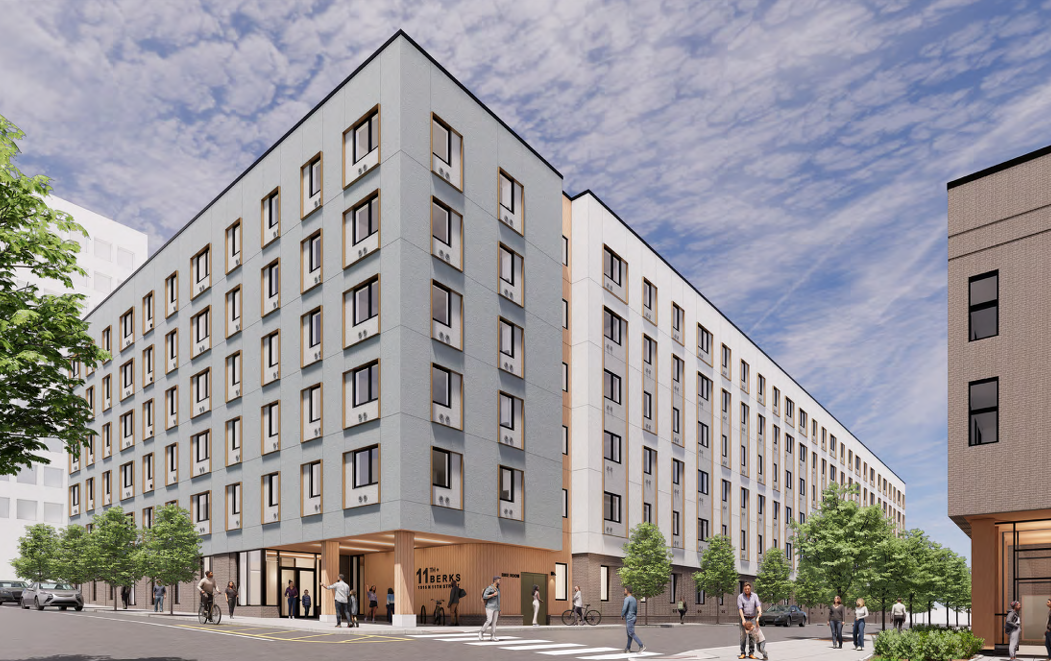
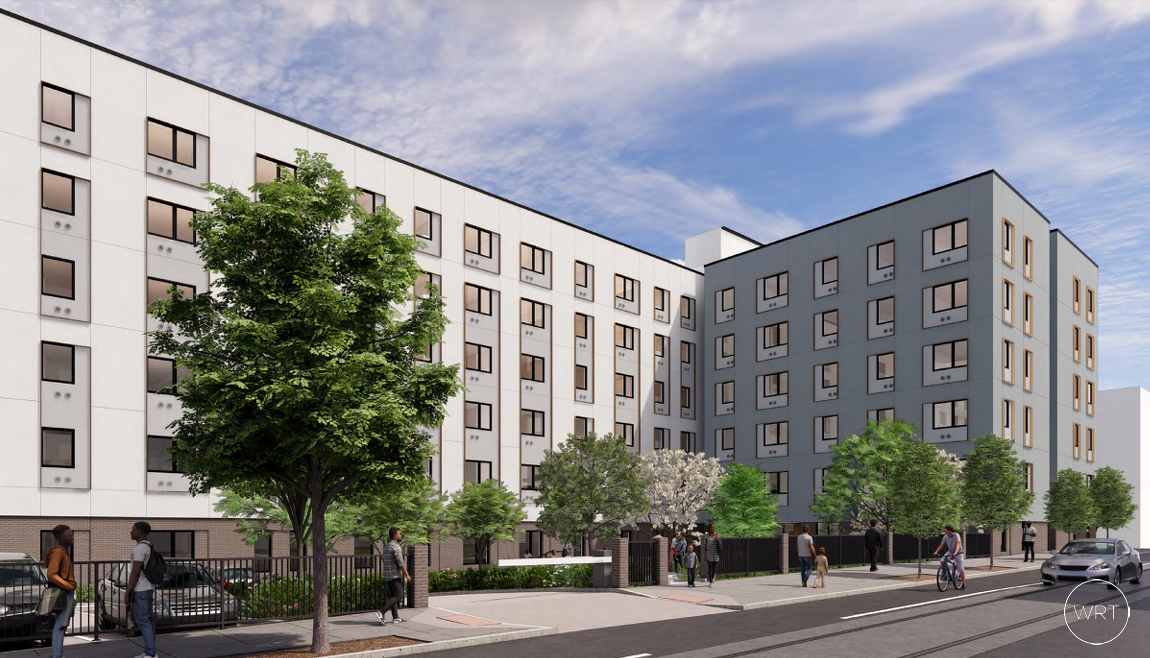
A 129-unit affordable apartment building is slated for 11th and Berks Streets in North Philadelphia, just east of Temple University’s campus.
The six-story structure will be built on land owned by the Philadelphia Housing Authority (PHA) but will be developed by New York City-based Jonathan Rose Cos., which has built two other affordable apartment complexes in the area.
The designer for the building is Philadelphia-based WRT architects, which worked with Jonathan Rose on other projects in the neighborhood.
“We’ve kind of been marching our way down the block,” said Marissa Hebert, an architect for the building with WRT. “This will be their third project in Philadelphia.”
The others include 120 units in Paseo Verde at the corner of Ninth and Berks and 133 units at NC Five at 10th and Berks.
“Being able to still have the site so close to Temple, to be able to put affordable units for the actual residents and long-term community members has been really great,” Hebert said. “You can see the impact of still having affordable housing in this neighborhood.”
The majority of the units — 61 apartments — will be affordable to those making 60% of area median income (AMI), or just over $44,000 for a one-person household; 54 units will be at 50% of AMI, which is just under $42,000 for a one-person household, and 14 will be for those making under 20% of AMI, or almost $17,000.
The project is being largely funded through Low Income Housing Tax Credits, a federal program, and subsidies through PHA such as the project-based Section 8 program.
The proposed apartment building from Jonathan Rose Cos., the New York-based developer’s third project in North Philly.WRT Architects
The building will be carved into 60 one-bedroom apartments, 60 two-bedrooms units, and nine three-bedrooms.
“They said they would have the three-bedroom units on the first floor,” said Elizabeth Segarra, of Asociación Puertorriqueños en Marcha (APM), a nonprofit developer and the lead community group in the area.
“Why? Because they don’t want families on a third floor jumping, and then a single person complaining because they’re hearing too much jumping,” Segarra said. “So they’re going to keep that kind of environment on the first floor.”
The project will include 21 parking spaces and no ground-floor commercial, although there will be amenities such as a gym and community room in the building.
On the rest of the site, PHA is planning to build 15 for-sale townhouses at affordable prices, as well as recreational spaces including a basketball court.
Hebert of WRT says the apartment building will be the largest “passive house” project in Philadelphia, in reference to a building standard that tries to minimize energy use in structures.
“That’ll mean lower utility costs for all the residents, better thermal comfort for them, and higher indoor air quality,” Hebert said.
Jonathan Rose plans to begin construction in December and anticipates the building taking two years to complete. Tenants will be able to move in early in 2029.
“It’s not only going to bring more people to the community, it’s going to bring more jobs, and it’s going to bring a live vibe in that area,” Segarra said. “They really knocked it out of the park.”
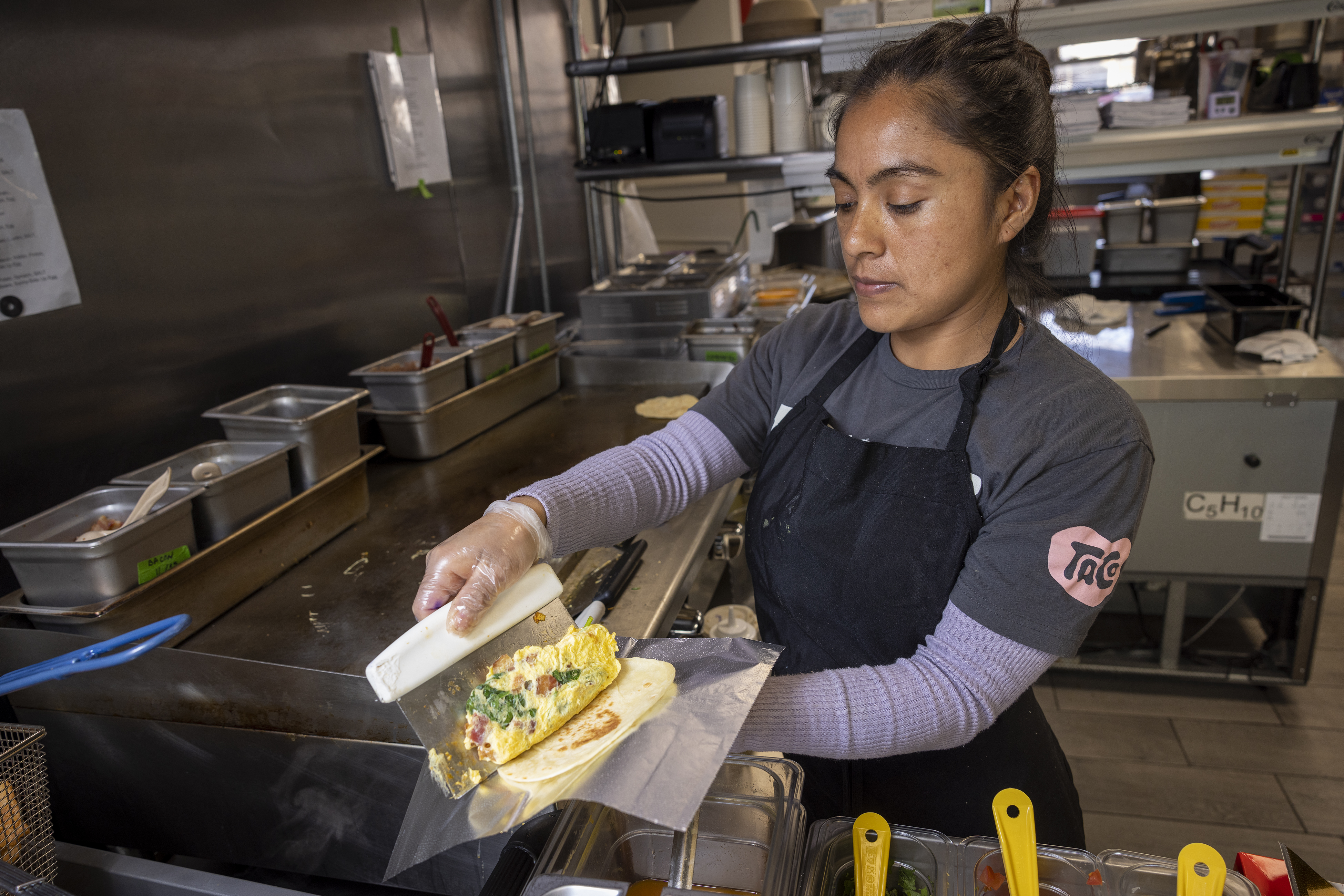
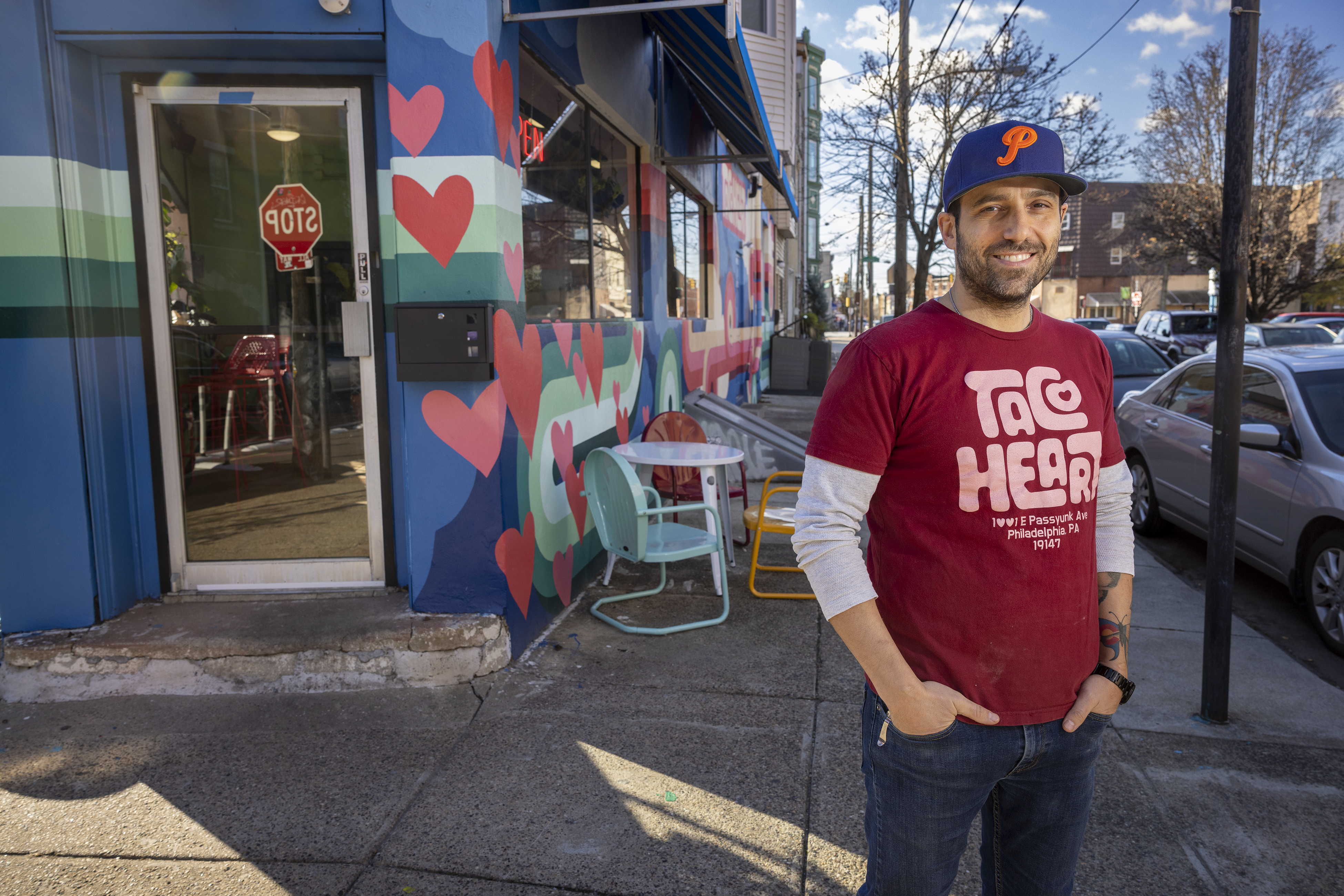
Taco Heart, South Philly’s hub for Texas-style breakfast tacos, is set to open in the Ardmore Farmers Market in October, bringing its fresh flour tortillas and Tex-Mex fare to the Main Line.
Nano Wheedan, Taco Heart’s owner, said coming to Ardmore “seemed like the perfect next step for us” as the restaurant navigates its first expansion beyond South Philadelphia.
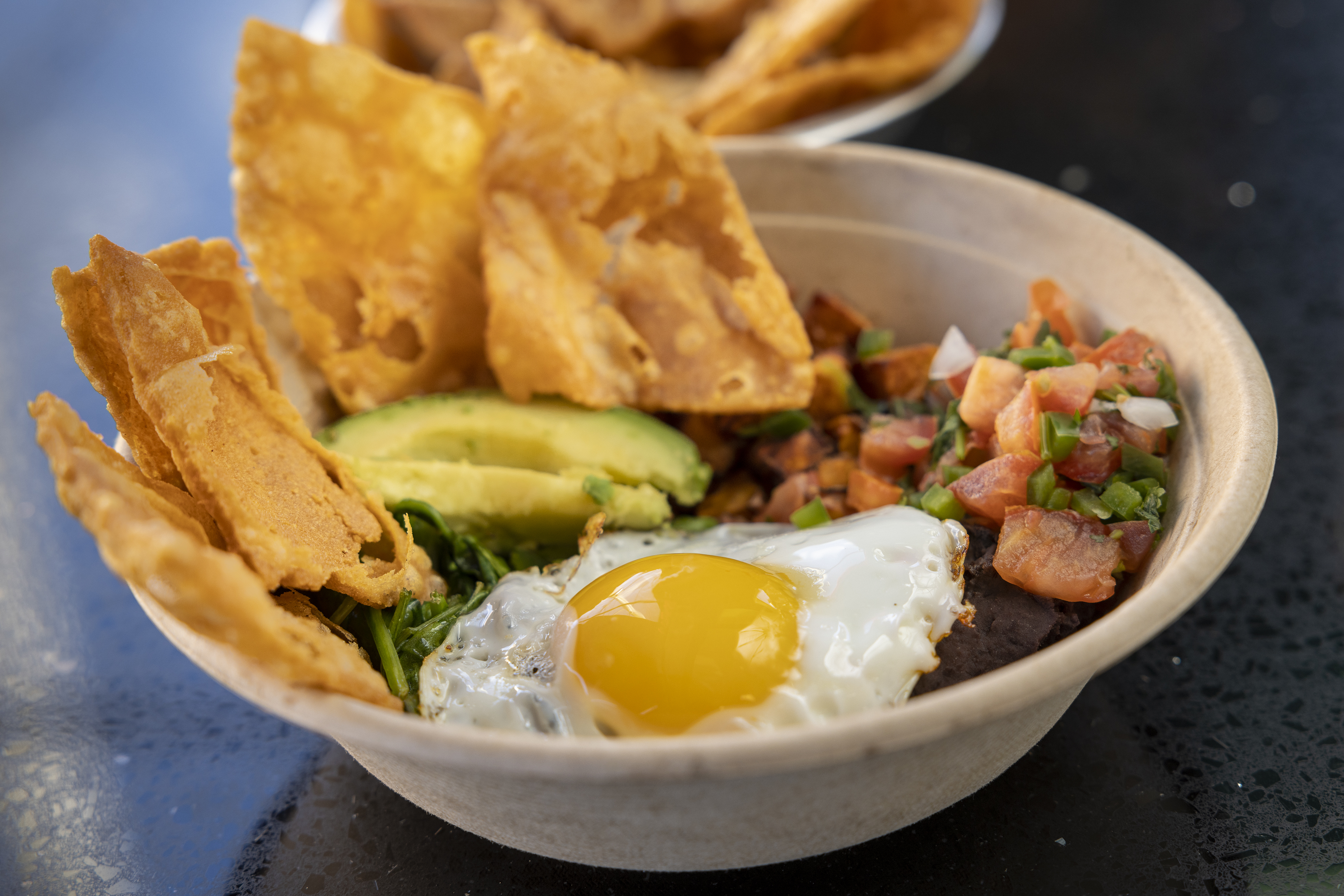
Taco Heart’s menu is anchored by the tastes and textures familiar to anyone who’s stepped into a Texas-style taco restaurant before: egg, cheese, avocado, jalapeño, queso, refried beans, pico de gallo, steak, brisket. In addition to tacos, customers can order bowls served with house-made chips, quesadillas, sides of queso, desserts, and beverages, such as cucumber limeade and cold-pressed juice.
Wheedan and his wife, Carinne, a Texas native, relocated to Philly during the pandemic. It was during the height of lockdowns that Wheedan set up a stand outside of his South Philly home, hawking breakfast tacos to neighbors. The ad hoc taco project later got the name Nano’s Tortillas, and Wheedan found a spot in the Bok Building, where he could cook and serve pickup orders. During this time, Wheedan also became an investor and business manager at Korshak’s namesake bagel joint, Korshak Bagels. (Korshak is now working on building Korshak Picnic Provisions, a corner shop built around hot dogs and house-made sourdough biscuits.)
In 2022, Taco Heart opened its doors in a polychromatic corner building on Seventh Street and Passyunk Avenue.
Nano Wheedan, owner/chef Taco Heart, in 2022. Alejandro A. Alvarez / Staff Photographer
For Wheedan, introducing Philadelphians to the Texas-style breakfast taco has been a tall task, but he’s been heartened by the reception, both from Philly locals and transplants from the Lone Star State, or “Tex-pats,” as he calls them.
“There’s so many people with a connection to this food who have been missing it, and I am so grateful and moved when Texans tell me that they’ve finally found a piece of home at Taco Heart,” he said.
It was in the last year that Wheedan felt Taco Heart finally “had its feet under itself,” and he began to think about what it would mean if he “took advantage of economies of scale” and opened a second location, using Taco Heart’s South Philly flagship as a prep kitchen at night. He was looking into opening his next location in the River Wards when the Ardmore Farmers Market approached him. The market offered a fully-functional kitchen setup, a solid base of foot traffic, and exciting culinary neighbors. He signed on.
Taco Heart’s Morning Bowl. Alejandro A. Alvarez / Staff Photographer
Large swaths of the market, located at Suburban Square, were left vacant earlier this year after Di Bruno Brothers shuttered multiple locations, including its outpost in Ardmore.
Wheedan is planning to serve most of the same items in Ardmore as he does in South Philly. While some items like salsas, quesos, and refried beans may be prepared in South Philly and transported to Ardmore, Taco Heart’s signature flour tortillas will still be made fresh.
Wheedan also hopes the expansion will allow Taco Heart to move into the world of catering: In Austin, getting breakfast tacos for the office is the equivalent of the East Coast bagel breakfast, he says.
Taco Heart is set to open Oct. 5 at the Ardmore Farmers Market (120 Coulter Ave.).
This suburban content is produced with support from the Leslie Miller and Richard Worley Foundation and The Lenfest Institute for Journalism. Editorial content is created independently of the project donors. Gifts to support The Inquirer’s high-impact journalism can be made at inquirer.com/donate. A list of Lenfest Institute donors can be found at lenfestinstitute.org/supporters.
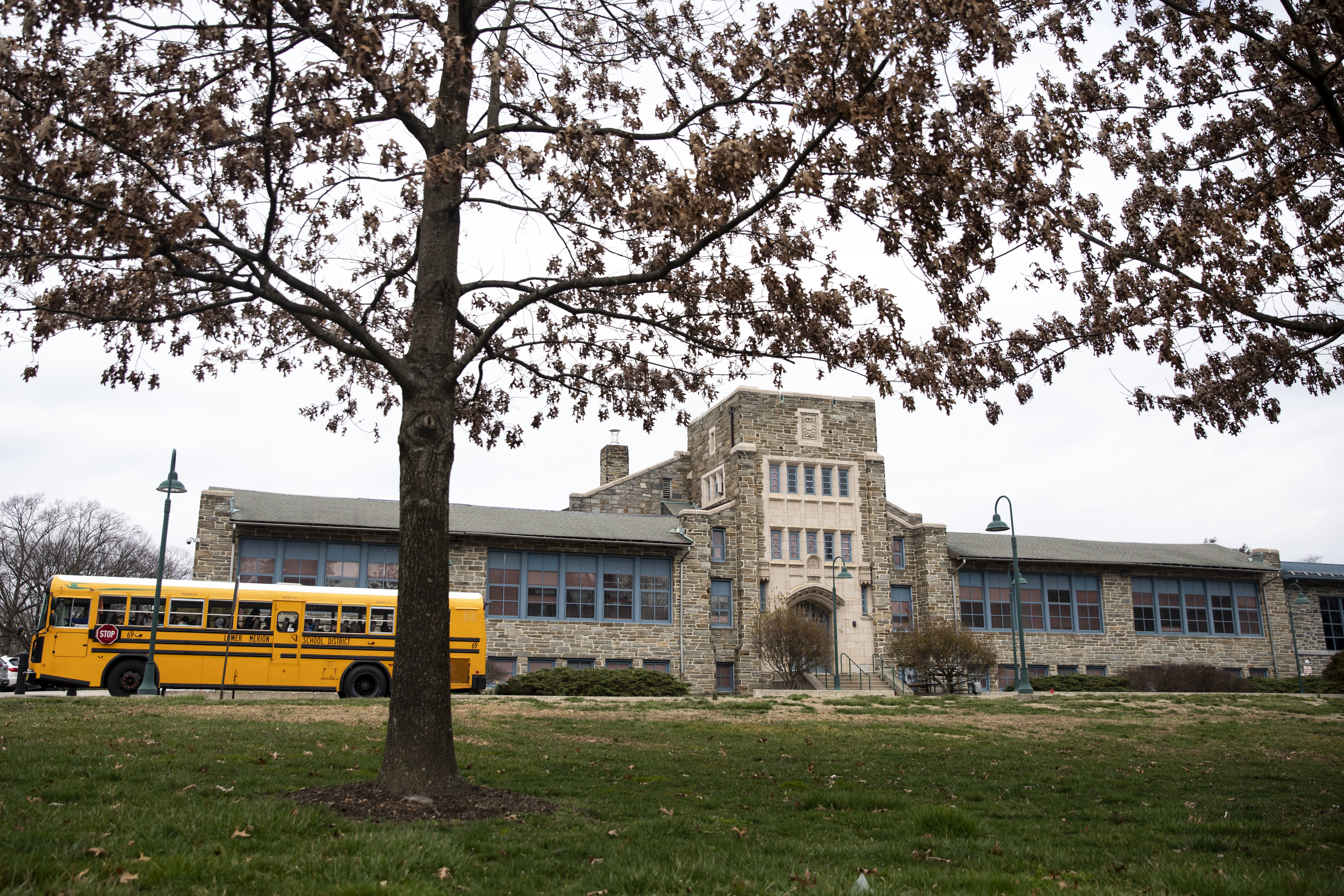
Kindergartners, first graders, and second graders in Lower Merion schools will no longer receive personal iPads and laptops, under a policy passed by the school board Monday scaling back on students’ technology use.
The policy — which also specifies that third and fourth graders will not bring computers home and limits fifth and sixth graders’ use of computers at lunch and between classes — follows backlash from parents who have been confronting the board since spring about the use of screens in schools. These parents fault the district for providing their kids with devices they say distract them in the classroom, expose them to dangerous content, and fail to help them learn.
“We heard legitimate concerns and undertook an unusually significant amount of time to really make substantial change,” Anna Shurak, the board’s policy committee chair, said at Monday’s meeting, noting that the district will also give teachers and parents new tools to monitor what kids are doing on their laptops.
“What we actually will see will be much different when students walk into school this fall,” Shurak said.
After parents shouted at the board during a meeting earlier this month, it went into recess and moved the meeting online — and announced late last week that Monday’s meeting would be online only, citing disruptions and “threatening comments posted on social media pages.” The district has banned two parents from school board meetings for a year.
“Over the past several months, Lower Merion school board members and our school district superintendent have been subject to threats, our meetings have sustained disruption over and over, and we have witnessed harassment during our public meetings,” board president Kerry Sautner said at the start of Monday’s meeting, adding that “our school team has had their home and families harassed.”
“This is unacceptable,” Sautner said.
District spokesperson Amy Buckman said that comments posted on the Facebook page for Pencils Over Pixels, the parent group pushing for less technology use, “included calls for both death and doxing of Lower Merion School District leadership.”
The comments “were viewable for approximately 48 hours (and maybe longer),” Buckman said in an email.
In a statement Monday, Pencils Over Pixels said it was “horrified by threatening, violent, or hateful comments directed at board members and district employees.” The group, which has enlisted a public relations firm to help promote its message and has gained national attention, said it did not believe the comments came from its members, and once it became aware of them, “we deleted and reported them.”
The controversy, it said, reflected why the parents have been pushing back on screens in school.
“What chance do children and teenagers have in this toxic digital environment while their brains, judgment, and emotional regulation are still developing?” the group said.
The district is strengthening its filtering system to block kids from inappropriate sites, and parents will be able to restrict what kids can access on their school-issued devices in their homes, Shurak said.
The new technology policy makes clear that “teachers and relationships are central to learning,” Shurak said. “Technology is a tool, not a substitute for instruction.”
Tech changes by grade level
The new policy ends Lower Merion’s practice of giving personal devices to kindergartners, first graders, and second graders.
In the classroom, any use of devices at those grade levels “shall be minimal, highly structured, and limited to specific educational purposes such as diagnostic testing, whole-class demonstration, visual display, or, if applicable, state testing preparation,” the policy says. (Pennsylvania’s standardized tests, which start in third grade, are required to be done online.)
In third and fourth grades, students will have “teacher-directed” access to devices that remain in the classroom, while starting in fifth and sixth grades, kids will be issued individual devices. But they will stay in classrooms unless parents want their kids to bring them home, according to the policy.
By seventh and eighth grades, kids may take their devices to and from school under the policy, though they will not be penalized for not completing any computer-based homework, district officials have said.
The policy describes giving students increased independence with devices to form “responsible digital habits,” preparing high schoolers for college and careers.
Theresa Doggett, a parent of three children in district elementary, middle, and high schools, said the district was making substantial changes.
Because of pushback from parents, “public narrative is making it sound like nothing’s being done,” said Doggett, an administrator at a charter school network in Philadelphia. With help from another parent, she wrote and circulated an open letter to support the board and administrators that read in part: “Enough is enough.”
“We cannot continue creating conditions in which talented educators and leaders spend disproportionate amounts of their time responding to conflict, personal attacks, and the demands of whichever voices are loudest rather than leading our schools,” the letter says, noting high turnover in Lower Merion’s superintendent job.
Questions about implementation
But in comments submitted via chat and read aloud by the district’s solicitor during Monday’s meeting, parents continued to question how the policy would play out in practice.
Some noted the lack of strict limits on screen time. Administrative rules accompanying the policy list guidelines for how much time students should “typically” spend on devices each day: less than 30 minutes for third and fourth grades, 60 minutes for fifth and sixth grades, 90 minutes for seventh and eighth grades, and 120 minutes for high school.
The rules also describe “allowing reasonable flexibility based on educational purpose.”
The policy “leaves devices in my 7-year-old’s classroom and sets no enforceable limit on how long she uses them,” said Akshaya Kumar, a lawyer who teaches at Columbia Law School. She also questioned a separate technology safety policy passed by the board Monday, noting it does not require the district to tell parents what it sees while monitoring student devices.
Michael Post, a physician with two children in the district, said he had “never seen a group of people so adamantly disregard what is happening in front of them.”
“The amount of research and data showing educational technology harms to our children are astronomical,” Post said. He called on the district to form an expert panel to advise it on technology use and “eliminate all technology for elementary and middle school.”
One parent expressed an opposite concern — wondering if children would still be able to take home Chromebooks to do accelerated math, and if her fourth grader would have the same chance to learn how to create PowerPoint presentations as her seventh-grade son.
“Our community does not have one perspective on technology,” Shurak said.
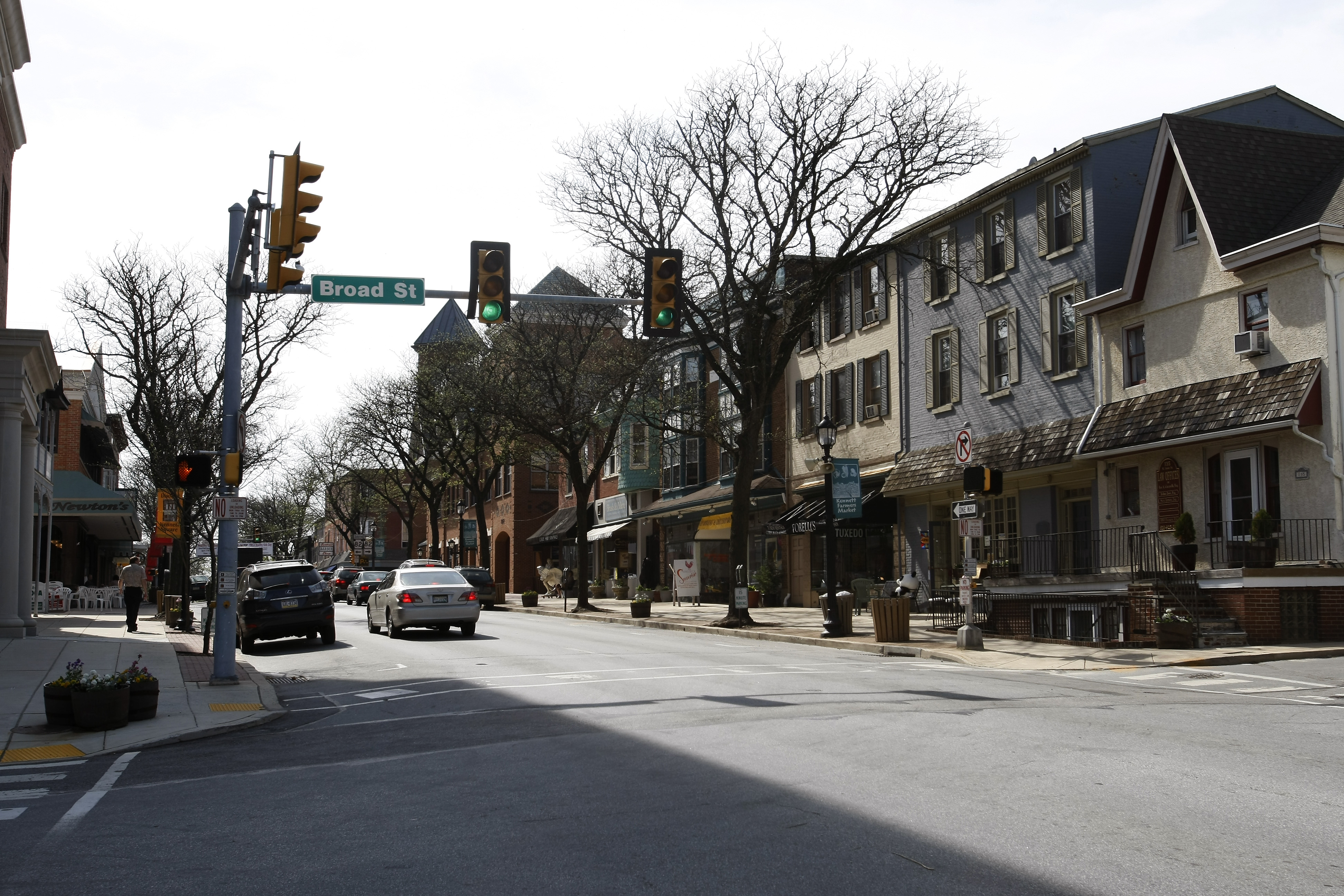
In an effort to “drastically” cut down on short-term rentals like Airbnbs, Kennett Square council passed an ordinance Monday capping the number of active units and restricting where they’re able to pop up.
Council voted unanimously to update its ordinance, allowing for a maximum of 20 short-term rentals, and prohibiting single-family homes from turning into short-term rentals as their primary use.
The decision comes after the borough has seen soaring population growth in recent years — an increase of 16% since 2020 — but as housing has become increasingly limited.
Residents had decried several homes getting snapped up, only to be turned into full-time short-term rentals. The borough’s planning commission took up the issue again this year, after a first foray in 2025 didn’t go far enough, officials said previously.
Under the new short-term rental ordinance, the existing units — roughly 22 — will be grandfathered in. But if people sell, move, or don’t maintain rental registration, that status is gone. Future rentals will only be allowed in accessory units — like garages, or guest houses — and the number of available units won’t be able to exceed 20. The property must be owner-occupied during the rental period. Pre-existing short-term rentals will lose their grandfathering status if they don’t maintain rental registration.
“The net effect of this is to actually drastically reduce the potential number of short-term rentals,” council president Bob Norris said. “But it actually reduces the possibility and the probability of having more and more, especially in single-family homes, which we heard loud and clear was a major issue.”
Meanwhile, cost is going up. In 2024, the median sales price hit $525,000 — the highest in the county’s history. That year, 331 homes sold for under $250,000, a decrease from 462 units in 2023, according to the commission. In 2025, 315 homes were sold in that range, making up just 5.3% of all sales.
Kennett Square officials have viewed cutting down on the short-term rentals as one way to address housing availability.
Kennett Square isn’t the only one to grapple with balancing meeting the needs of tourism with the desires of residents. West Chester similarly capped its short-term rentals at 20, and contained them to its town center. It sent cease-and-desist letters to those that weren’t in that radius, officials said previously. But in Phoenixville, short-term rentals have been meeting a need not otherwise addressed by the borough’s singular boutique hotel.
This suburban content is produced with support from the Leslie Miller and Richard Worley Foundation and The Lenfest Institute for Journalism. Editorial content is created independently of the project donors. Gifts to support The Inquirer’s high-impact journalism can be made at inquirer.com/donate. A list of Lenfest Institute donors can be found at lenfestinstitute.org/supporters.
What a difference three words can make. For weeks, the American body politic has watched the strange relationship between Donald Trump and his ever-present 35-year-old aide Natalie Harp in a state of puzzled silence. Then, Georgia Democratic Sen. Jon Ossoff spoke at a weekend rally and said that Trump “doesn’t want to do the job” and would rather “build his ballroom and travelwith Natalie on their apparently defenseless flying palace.” The floodgates opened — on social media and sites like the Drudge Report and in angry retorts from the White House that only threw gasoline on the controversy. It goes to show what Democrats can accomplish when they’re not afraid to speak the truth.
An expert raises questions about Freedom Fuel and Venezuelan oil
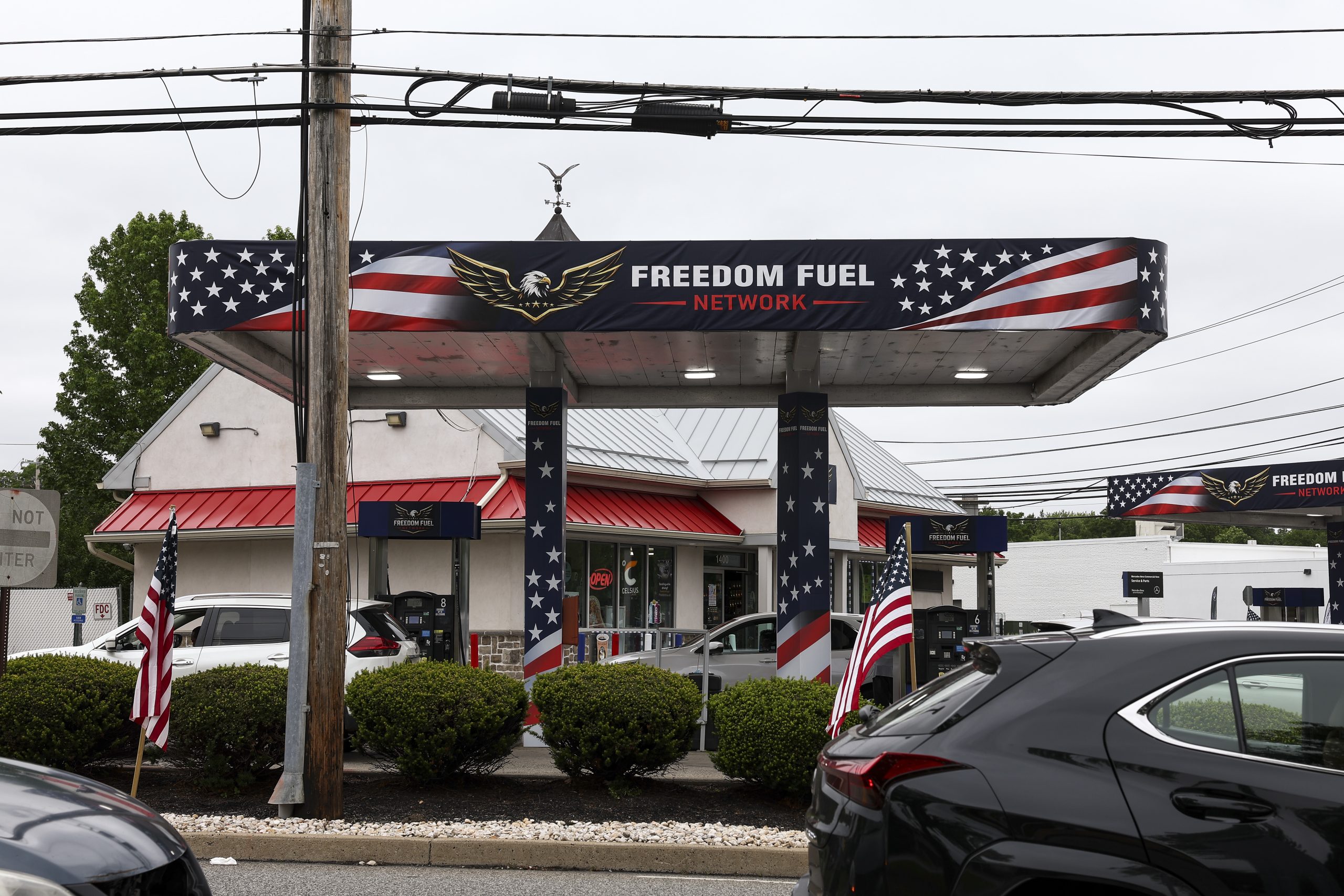
The Freedom Fuel Network gas station at 1400 Dreshertown Rd. in Dresher last month.Monica Herndon / Staff Photographer
For a government that seems to be in your face 24 hours a day, the Trump regime has managed to produce more mysteries than Sir Arthur Conan Doyle. Where’s Melania? Why was the president’s butt sticking way out at his last event? But here in Philadelphia, one Donald Trump-linked mystery has confounded motorists for weeks.
Why is Trump-promoted Freedom Fuel, a web of 29 service stations that popped up out of nowhere this summer, able to continue to sell gas cheaper than its rivals down the street?
The mostly suburban stations in Southeastern Pennsylvania and South Jersey burst onto the scene with prices at $3.47 a gallon — lower than anything since Trump’s disastrous war of choice against Iran launched in late February — and continue to undercut their competitors by about 10-20 cents per gallon. Experts have said that’s not sustainable, unless the stations are somehow getting their gasoline on the cheap.
Now a former high-level State Department official in the Barack Obama administration is trying to connect the dots between the Freedom Fuel conundrum and the ongoing questions about millions of barrels of crude oil Trump has bragged that the United States has taken out of Venezuela.
Jonathan Winer, who recently wrote about Freedom Fuel and Venezuela for the Washington Spectator and discussed his findings on the Court of History podcast, doesn’t connect all the dots, but his research is a reminder of how little the American public knows about the aftermath of the Trump regime’s January assault on Venezuela that captured strongman Nicolás Maduro and installed a friendlier head of state.
The Inquirer and other outlets have reported extensively on Freedom Fuel stations in Greater Philadelphia, including its ties to pro-Trump Republican ex-mayor of Evesham Township, N.J., Randy Brown, who signed Freedom Fuel’s certificate of formation. Former commodities trader Yoni Gontownik — a major donor to GOP causes and a New Jersey-based pro-Israel political action committee — also signed those papers.
Trump promoted the launch of Freedom Fuel on his Truth Social feed, but the White House has denied direct involvement in the flag-themed gas stations, and so has the companyitself. “Freedom Fuel Network is a privately owned and proudly patriotic company — along with its convenience store operators, haulers, sign companies, and operational partners — that answered President Trump’s call to action to lower prices at the pump,” it proclaims on its website.
Veterans in tracking the complicated oil market remain baffled. “People can’t mysteriously get fuel at a lower price and continue to offer that,” Winer said on the podcast. “You could, of course, do a very short promotion, but you basically can’t [sustain]it.”
It may be a total coincidence, but the giant enigma that is Freedom Fuel and its cheap gasoline surfaced at exactly the same time the president boasted about the cheap oil the United States is supposedly getting from the resource-rich South American nation his troops invaded.
“We’re taking their oil,” Trump proclaimed about Venezuela while in Las Vegas earlier this month. “To the victor belong the spoils.” He added that what America has taken has paid for the brief January war “many, many, many times.” But analysts know next to nothing about what is actually happening to as much as one million barrels of oil that Venezuela produces every day.
Winer pointed to a couple of common bonds between the efforts to market low-cost gasoline here in Philly and White House efforts to control the flow of Venezuelan oil.
The first is the role of Jarrod Agen, executive director of the National Energy Dominance Council inside the White House, who posted two photos of himself giving a thumbs-up at a new Freedom Fuel station in Philadelphia whenit opened on the July 4 weekend. Both Agen and the president himself insisted that the new gas retailer is proof of what the Trump regime is doing to lower prices at the pump.
Winer noted that Agen was also a key member of an American team that traveled to Caracas in April, met with the Trump-backed new president, Delcy Rodríguez, and came home bragging of new commodities deals, including in the oil sector.
The second overlap that Winer points to involves a Texas-based global commodities firm, Mercuria, which announced on May 1 that it had reached a major deal with Venezuela under what it called a “White House-supported initiative.” The announcement featured a photo of atop Mercuria official posing with Agen.
Mercuria told the Washington Post, which has also investigated Freedom Fuel, that it has no involvement with Freedom Fuel. Yet Gontownik, the trader listed as a backer of Freedom Fuel, was also listed as recently as March in campaign finance reports as an executive with Mercuria. But he also insists that he no longer works for the Texas firm — which has been linked to other Trump-regime commodities initiatives. (The ex-Philly journalist Maureen Tkacik, investigations editor at American Prospect, also raises a lot of questions about the role of Mercuria, Gontownik, and the firm Blue Owl Capital, which Trump invested in earlier this year.)
It must be stressed again that all of these connections are circumstantial. At the same time, this much cannot be disputed: The American people have not been given the most basic information about the extent of U.S. involvement in the Venezuelan oil trade, how much money is involved, or where all that money is going at a time when the price of crude oil has skyrocketed.
I could not agree more with Winer’s plea that Congress go after the U.S. Treasury, State, and Energy Departments that are sitting on undisclosed records of U.S.-linked oil transactions — even though realistically that might have to wait until Democrats gain a foothold on Capitol Hill next year. He also called on the media to dig deeper, which is why I wanted to amplify Winer’s early-stage reporting.
Look, we all want to pay less for gas, which is why motorists have been lining up at Freedom Fuel pumps since the stations opened last month. But most of us don’t want to live in a dying empire where a strongman’s tin soldiers steal a sovereign nation’s buried treasure so that favored insiders can profit. We still have no idea what’s been done in Venezuela in our name, and we need to find out.
Yo, do this!
It’s great that people — especially younger people — are returning to brick-and-mortar movie theaters in the long, hot summer of 2026, but the quality of the releases hasn’t really matched the boffo box-office numbers. That may change starting this weekend with the release of Tony, a movie that could have been titled “Becoming Anthony Bourdain.” The film stars Dominic Sessa playing the future chef, author, and beloved TV traveler as a lanky, awkward 19-year-old, spending a summer on Cape Cod and learning to embrace his love for the kitchen — and humanity. I’m really looking forward to this one.
There are two must-read articles out this week from Adam Bonica, a Stanford University professor who specializes in money and politics. The first is his lengthy investigation into dodgy fundraising practices by top Democratic Party committees and leaders, in which endless spam fundraising emails have hit home with susceptible elderly donors, some of whom have drained their life savings. The second is the story behind the story of how both the New York Times and the “Never Trumper” website the Bulwark both chickened out on publishing Bonica’s essential journalism. The cowardice of the elite media in America’s authoritarian moment is beyond disheartening.
Ask me anything
Question: Why aren’t more Democrats supporting and campaigning on the 32hour work week? It seems like a policy that would appeal to working people across the political spectrum. — brown cloud (@milehighdsa.bsky.social) via Bluesky
Answer: Good question. One political leader, Vermont Sen. Bernie Sanders, has aggressively pushed the 32-hour workweek without a reduction in pay, noting that this would pass the productivity gains of the computer era back to the workers who are being more productive. So, yeah, what’s not to like? It’s certainly true that a lot of Democrats, especially centrists, are heavily dependent on campaign contributions from corporate types who don’t like the idea of a shorter workweek. But I think ultimately, Democratic cowardice on these pro-worker issues goes all the way back to the Ronald Reagan era, and a fear that they’ll be branded by the GOP as the party of “free stuff.” But this isn’t free stuff. We’ve earned it.
What you’re saying about …
Last week’s question about how Democrats should view the primary success of leftists such as Michigan Senate hopeful Abdul El-Sayed drew a response that was both robust (despite the summer doldrums) and fairly unanimous. Proposals from the progressive movement like Medicare-for-All and taxing the wealthy, you agreed, are long overdue. Tom Lees noted that the GOP is trying to find the most extreme democratic socialists, but that “the [Rep. Alexandria Ocasio-Cortez] branch which supports ideas similar to European Social Democrats is the group that is getting people excited.” Craig Strimel added that leftist candidates have failed in the past, but “I also believe that we are so far deep in the current fiasco, and so damned close to total collapse of democracy, that we really are in an all-or-nothing situation right now.”
📮 This week’s question: Georgia Democratic Sen. Jon Ossoff has caused something of a political earthquake with his blunt criticisms of Donald Trump, including a reference to his ever-present young aide Natalie Harp. Has Ossoff crossed a line of incivility that’s a bad look for Dems, or are his criticisms a breath of fresh air? Please email me your answer and put the exact phrase “Ossoff comments” in the subject line.
Backstory on Jason Arday, casualty in the ‘war on woke’
Torchbearer Jason Arday carries the Olympic flame on the torch relay leg between Sutton and Merton in London in July 2012.Joe Giddens
There are two kinds of people in this world. There are normal folks who maybe get a slight whiff of news from the TV or when they boot up their computer, and never heard of a man named Jason Arday. Then there are people who (like me) spend far too much of their day on social media, and now know all about the charismatic Cambridge professor — the youngest Black man to reach those heights in the university’s long history — who came under fire for alleged plagiarism and biographical exaggerations.
The allegations apparently simmered from the day of Arday’s 2023 appointment, but boiled over in recent weeks. He acknowledged some citation errors in his 2015 doctoral thesis — mistakes that Liverpool John Moores University called “honest and reasonable” — but the allegations kept coming. They were fueled by a Cambridge colleague and self-proclaimed “race realist” who went on British national TV to lambaste Arday as “not smart” and label him as merely a diversity hire.
The famously not-laid-back British press went wild on the controversy, with literally hundreds of articles about Arday — not just the Fleet Street tabloids, but even the august Times of London, which ran 60 stories. The media frenzy over the young, dreadlocked sociology of education professor didn’t stop when Arday resigned his Cambridge post, saying that “the relentless accusations, speculation and public commentary have taken a profound toll on me and on those I love.” The media frenzy didn’t even stop when Arday was found dead in his home last Friday. He was 41.
Just one day after Arday’s body was found, Julia Hartley-Brewer, a host on a Rupert Murdoch-owned U.K. TV network, told her audience that Arday “was a liar and a fraud who was rightly exposed for what he really was by academics and journalists who were simply doing their job.”
I’m sorry, but as a lifelong journalist, I never realized that hounding a professor who wasn’t perfect but was loved by his students to his early death is part of the job. To the contrary, I think that good journalism might involve noting that scores of white professors and authors who’ve been caught and admitted to plagiarism or similar issues have been allowed to apologize and go on with their careers. And that bad journalism might be implying that Arday’s middling issues are some kind of commentary on any and every academic with darker skin — as opposed to researching the systemic racism that leaves a supposedly enlightened school like Cambridge with 0.4% Black professors, in an England that’s 4.2% Black.
The ghouls who hounded Arday to his death didn’t work in a vacuum. They tapped intoa disgusting narrative that way too many journalists and self-appointed public intellectuals are spreading not just in the U.K. and the rest of Europe, but here in the United States. They think the righteous COVID-19-era outcry against police brutality and a grossly unequal society was some kind of mania they’ve branded “Woke 1.0.” Never mind that the police were never defunded in 2020, not even close. The nattering nabobs of anti-wokeness won’t rest until every college classroom or airplane cockpit is made safe for white privilege.
Let me do my job as an opinion writer and tell you what I think about these mostly aging, mostly white, mostly male pundits who have so little to say about right-wing fascism that’s in power in America and on the rise in Britain and instead desperately cling to their status from the perceived threat of a few Black intellectuals. With key elections approaching on both sides of the pond, they opportunistically saw Arday as their latest chance to stir up white voters and preserve the status quo, even if that means tolerating an authoritarian police state. Now, a once-promising Black professor is a casualty in their glorious “war on woke.” Have they no shame?
What I wrote on this date in 2020
As I noted in this space a couple of weeks ago, there’s so much about the peak year of the COVID-19 pandemic that we’ve successfully tried to forget. That includes much about the consequential yet somehow anemic showdown between Donald Trump and Joe Biden, which included their virtual, prepackaged summer conventions. On this date six years ago, I grumpily covered the Democratic National Convention from my couch in Delco and — stop me if this sounds familiar — complained that the party was ducking progressive issues. “If viewers didn’t notice what the Democrats left out in their tightly scripted telethon so focused on Trump’s coronavirus failings and his paranoid style — such as climate change, gun violence, and the other things that young people across America have been marching for — the history books might.”
I’ve cut back on column writing this month, mainly because I’m working on a long-term investigation that I’m really excited about. In my one piece published this weekend, I took a deeper dive into the stunning reports that winter drone attacks on fishing boats off the coast of Ecuador — with eight sailors missing and presumed dead — were a covert operation by Donald Trump’s CIA. This callous disregard for innocent human life is the latest example of a White House death cult that must be held to account by a new Congress, and eventually by prosecutors.
It’s truly remarkable the extent to which public opposition to the data centers that support artificial intelligence, or AI, has gone from near zero to 60 mph (or maybe 80) in a matter of months — especially here in Pennsylvania. With public unrest over these behemoths around their air and noise pollution and impact on electric bills, as well as growing discomfort with AI itself, becoming a key issue in the fall election, The Inquirer has been all over this story. On Tuesday, veteran business columnist Joseph M. DiStefano looked at how major contractors are hoping that demand for new data centers will get them through an otherwise sluggish economy. That might be a pipe dream if municipalities respond to voters by rejecting these proposals, as happened last week with a massive facility planned for suburban King of Prussia. You’re going to want to read The Inquirer’s in-depth coverage of this debate before you vote in November, which means it’s time to finally subscribe. What have you been waiting for?
By submitting your written, visual, and/or audio contributions, you agree to The Inquirer’s Terms of Use, including the grant of rights in Section 10.