Three big questions for the Phillies as they look to do to the Cardinals what they just did to the Marlins …
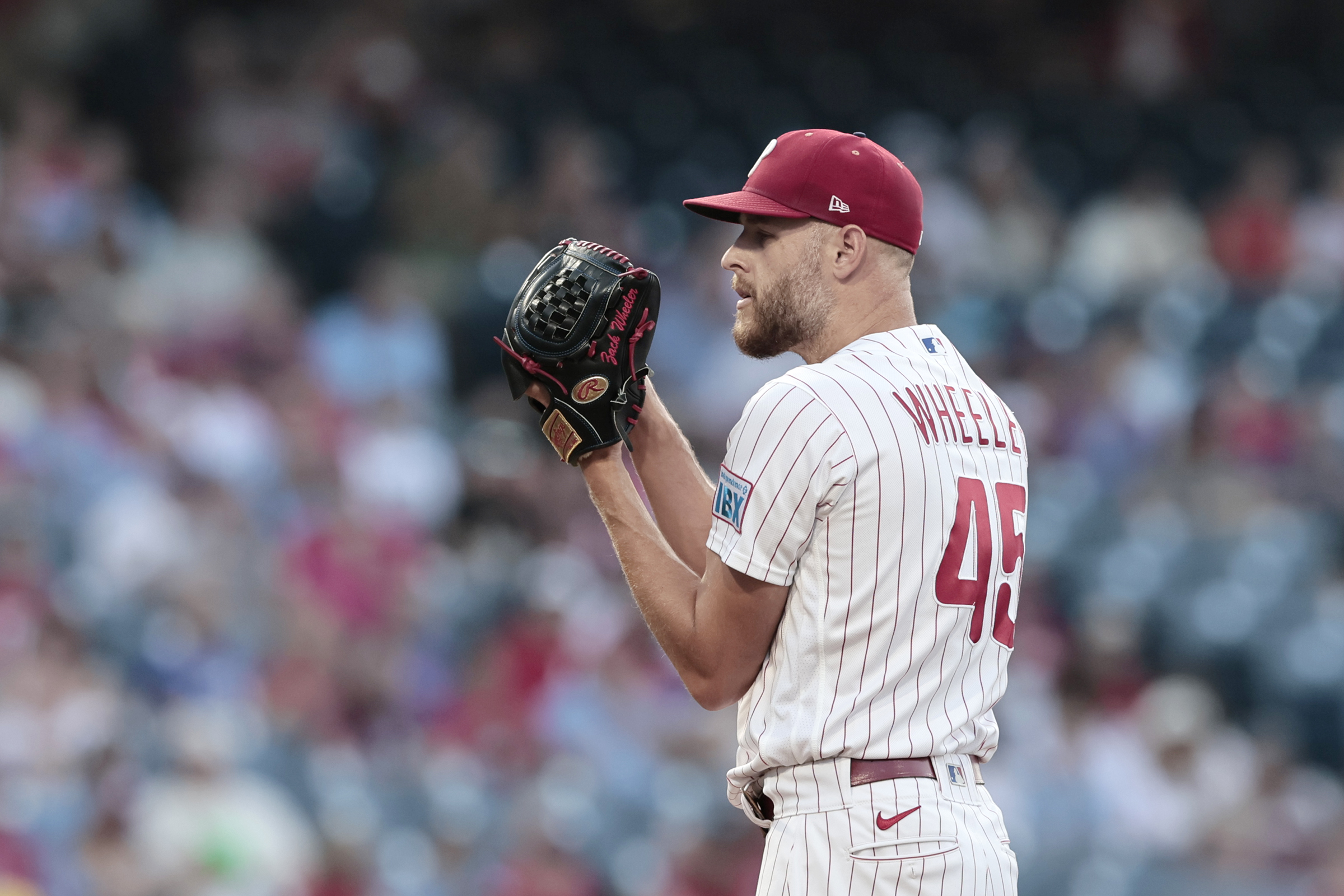
Zack Wheeler is going to be OK, right?
Only once in Wheeler’s seven years with the Phillies had he gone more than two consecutive starts without pitching at least 5⅔ innings. Never had he gone more than three. His current streak now stands at five, a career-high and by far the most important subplot of the Phillies’ stretch run.
The top-line key performance indicators suggest something more than bad luck is responsible. Wheeler’s ground ball ratio over his last five starts is half of what it was in the first two-plus months of this season. His soft contact percentage is down, while his hard contact percentage is up. His 10 walks over his last three starts are his most in a three-start span since 2019, his last season with the Mets. His strike percentage on Tuesday was his second lowest of the season.
The Phillies don’t sound too concerned. Wheeler’s pitch-level metrics don’t set off any health alarm bells.
His fastball velocity remains in line with his overall season average: 95.5 mph on the four-seamer and 95 on the sinker in his most recent start, per Statcast. Both are marginally above their season-long baseline. Wheeler’s spin rates haven’t changed much at all. He is simply struggling to locate.
Can Bryson Stott keep this up?
The Phillies don’t need Stott to be Albert Pujols, but it’s always a good thing when a player does something that nobody since Pujols had done. In Stott’s case, that something was walking 21 times with just four strikeouts in a 19-game on-base streak that ended earlier this week with an 0-for-4 outing against the Marlins.
The Phillies’ formula for a late-season surge has always required somebody in the bottom-third of the lineup to get hot. They are a completely different team when somebody at the bottom of the order is reaching base consistently. Few hitters have been hotter than Stott in recent weeks. Less than a month ago, his OPS was .692. As of Thursday, it was .755. That’s a remarkable jump this late in the season. The encouraging thing is what preceded it.
In his last 81 games, Bryson Stott is hitting .284 with a .375 OBP and a .429 slugging percentageYong Kim / Staff Photographer
Stott has been a well-above average big league hitter for half of a season now. In his last 81 games, he is hitting .284 with a .375 OBP and a .429 slugging percentage. That’s an .804 OPS, with 52 strikeouts and 41 walks in 326 plate appearances.
If Stott continues at this pace for the rest of the season, there is a conceivable world where Bryce Harper and Kyle Schwarber both get hot at the same time and the Phillies score runs with enough consistency to rattle off the kind of winning streak that can pressure the Braves.
Can the Phillies avoid overworking Jonathan Bowlan?
This is one of those questions that would have sounded like a foreign language at the start of the season. Not only has Bowlan worked his way to the back of the bullpen, the Phillies might not be able to survive without him. It’s worth noting, then, that the 29-year-old right-hander threw a combined 62 pitches in his last two outings with one day of rest between them.
Bowlan fits the profile of a guy who can handle the rigor of intensive bullpen action. With the Royals last season, he threw 63 pitches in a three-day stretch and 96 over four days and showed no ill effects. He was optioned to the minors but continued pitching regularly and returned to the big leagues later in the month, posting a 2.55 ERA in 17⅔ innings from late August through the end of last season.
All that said, the Phillies will need to exert some willpower with Bowlan, who has emerged as the most dependable arm in the bullpen this side of Jhoan Duran. He has walked just seven batters in 19⅓ innings since moving into a high-leverage seventh- or eighth-inning role on July 7. He has a 2.33 ERA during that stretch, even after allowing a couple of runs to the Marlins on Monday. Bowlan’s has been the kind of unforeseen emergence that a team needs to get where the Phillies want to go. Interim manager Don Mattingly and his athletic training staff are going to need to walk the perilous line that always exists when a manager trusts one reliever above all others.
A shuttered veterinarian’s office in Wayne may become the new site of a local courthouse.
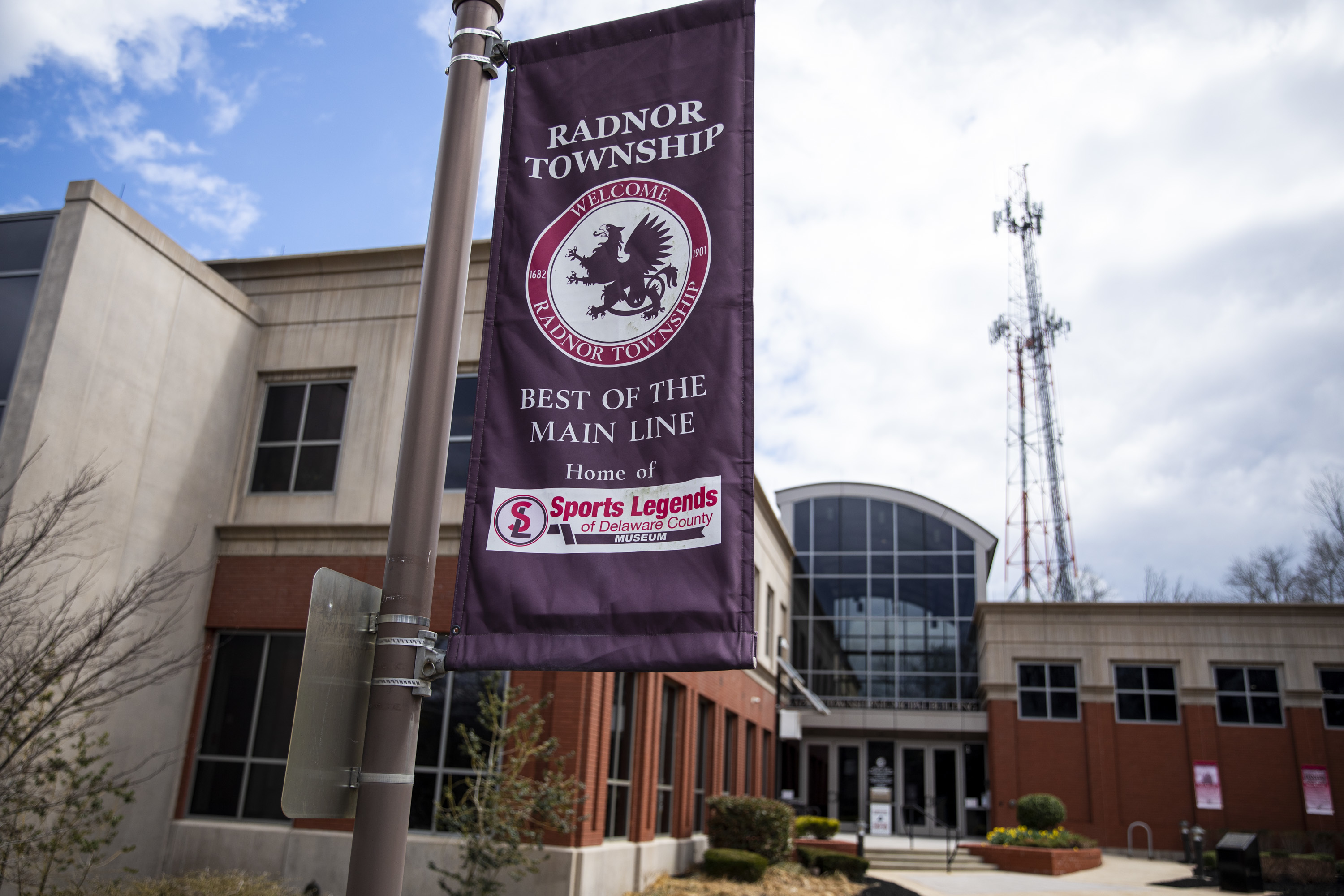
Radnor Township has set its sights on purchasing 405 W. Wayne Ave., the former home of St. George Hunt Memorial Veterinary Hospital, for $1.45 millionand converting the building into its magisterial districtcourt.
The building would be owned by the township and leased back to Delaware County, which pays for and operates the county’s 30 district courts. District courts are the first level in Pennsylvania’s state court system and typically handle traffic cases, minor criminal cases, and civil cases involving amounts up to $12,000.
Radnor’s district court cases were previously split between Marple and Newtown Townships, meaning Radnor residents looking to challenge a speeding ticket or sue a faulty contractor would have to do their legal business in another town. Three years ago, a realignment of the court once again gave Radnor its own court, but a struggle to find a home has forced Radnor’s court proceedings to take place in Newtown Square.
Radnor’s district judge is Sloan Walker.
Officials said bringing Radnor’s district court home would make hearings more convenient for residents and law enforcement officers, would save the police department on gas and overtime expenditures, and would, the next time court realignment occurs, send a message to the state that Radnor should retain its own court.
“Eventually there’s going to be pressure, some other district is going to want a judge, and when the Supreme Court looks at Radnor and we haven’t had a magistrate in Radnor for 15 years, they’re going to say, ‘Well, they don’t really want one,’” Township Commissioner Jack Larkin told attendees at a July meeting, warning of the consequences of continuing to hold Radnor’s legal proceedings in Newtown Square.
Why is Radnor’s district court judge still sitting in Newtown Square? The cash-strapped county has been unable to afford the high cost of renting a space in Radnor, Larkin said.
Officials said they looked far and wide for commercial space in the township that would fit the court’s needs. Though “there are other places that are probably better locations” in the township, Larkin said, the Wayne Avenue site is already zoned for commercial use, has ample parking, is within the county’s price range, and is, most importantly, available.
Under the proposal, officials say, the county would pay the township back for the cost of purchasing the building and retrofitting it as a courthouse over the course of 10 years.
Township Commissioner Moira Mulroney said Radnor has “exhausted every option” during its three-year search.
At a meeting this week, residents pleaded with the commissioners to find another location for the court, citing concerns over traffic, parking, and the safety of having court proceedings happening in a neighborhood full of children.
“Respectfully, this is a square peg going in a round hole,” resident Jason Bologna said. “This is a court that is being put into a residential neighborhood, and that is not appropriate for our neighborhood.”
Diane Edbril, another resident, said the commissioners’ proposal is “an idiotic solution” and “ridiculous.”
“I am absolutely terrified by the idea of shackles and handcuffs in my backyard. I don’t think that that should be in anybody’s backyard,” resident Marciana Bradley said.
Larkin told residents that it is “incredibly early in the process” and that there will be a “lot of opportunities for feedback.”
In order to move the court into the old vet building, the township board of commissioners would need to approve and finalize the sale, and the county would need to agree to a lease price.
Radnor Township is planning to hold a public meeting in September, where residents will be able to ask questions and learn more about the district court.
This suburban content is produced with support from the Leslie Miller and Richard Worley Foundation and The Lenfest Institute for Journalism. Editorial content is created independently of the project donors. Gifts to support The Inquirer’s high-impact journalism can be made at inquirer.com/donate. A list of Lenfest Institute donors can be found at lenfestinstitute.org/supporters.
The Philadelphia area, which is not exactly known for its voracious college football fan base, continues to produce high-end college football talent. Over the last decade, the area’s high school football programs have been a gateway for many players to reach the NFL.
Last year, the area featured a national-level player in La Salle College High’s Joey O’Brien, who’s now at Notre Dame. This year features two top-10 national players in their respective classes: Coatesville’s 6-foot-5, 305-pound offensive tackle Max Hiller, committed to Florida, and ranked No. 3 in the nation by ESPN and No. 1 offensive tackle for the Class of 2027; and Jett Harrison, the youngest son of Hall of Famer Marvin Harrison and younger brother of Marvin Harrison Jr., the former St. Joseph’s Prep star and Arizona Cardinal receiver who was the No. 4 overall pick in the 2024 NFL draft. Jett is ranked No. 6 in the Class of 2028 and the No. 2 ranked wide receiver in the nation.
Here’s the area’s top 20 players, according to area coaches, college scouts, and recruiting services, to watch this season.
Cooper is committed to Louisiana State University after a junior season in which he caught 44 passes for 644 yards and six touchdowns. He is rangy, explosive, and impossible to cover one-on-one at the high school level, where his ability to high point the ball is nearly unstoppable. He’s an exceptional route runner and possesses a high-end work ethic.
Cade Cooper plans to play at Louisiana State University next fall.Steven M. Falk / For The Inquirer
Sammy Dantonka
Cardinal O’Hara, 6-2, 230 pounds, Edge, Sr.
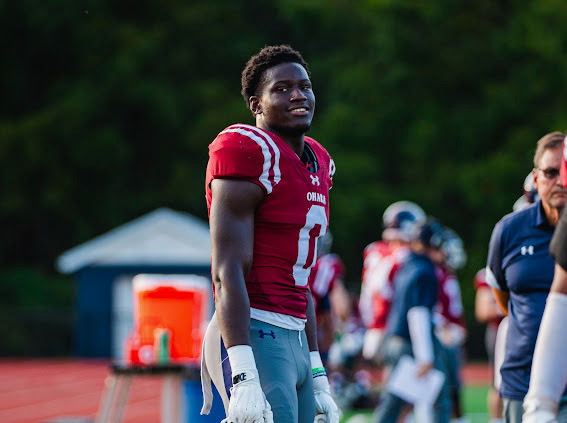
Dantonka is one of the more underrated players in the area and really blossomed last season. He was the cornerstone of O’Hara winning its first District 12 Class 4A championship and first state playoff game in 2025. He committed to Wake Forest after a junior season in which he had 83 tackles (40 solo) as a defensive end. He had seven sacks and 15 tackles for loss. He may play both ways this season, possibly playing some tight end in addition to defensive end. He is projected to be an edge rusher at Wake Forest. Dantonka started playing football as a freshman at O’Hara.
Sammy Dantonka had 83 tackles as a defensive end with Cardinal O’Hara last season.Cardinal O'Hara Athletics
Tyrie Davis-Winn
Bonner-Prendergast, 6-8, 270 pounds, OT, Jr.
Davis-Winn is receiving interest from Notre Dame, Penn State, Ohio State, Virginia Tech, Georgia Tech, Florida, Florida State, and Texas, among others. Davis-Winn is a two-year starter and very good athlete. He has an 84-inch reach and will play both sides of the ball for the Friars at offensive tackle and as a rotational defensive tackle. He was on the Friars’ Class 5A state championship basketball team, but his college ticket will be in football.
Ezeukwu, a three-year starter, and is already committed to Oregon. He is a rangy athlete who can cover open ground and the scary part is, he’s still improving. Ezeukwu was a one-man wrecking crew for the PIAA Class 5A state champions, who will face a tougher task this season in its move up to 6A, where defending state champion La Salle and perennial powerhouse St. Joe’s Prep reside.
Victor Ezeukwu is a three-year starter for Roman Catholic.Jose F. Moreno / Staff Photographer
Mekhi Graham
Owen J. Roberts, 6-foot, 210 pounds, RB, Sr.
Graham, who’s bound for Maryland next fall, rushed for 1,732 yards and 15 touchdowns last season. He will be a key cog in OJ Roberts’ quest to win a Pioneer Athletic Conference championship, which the Wildcats last won in 2010 (shared with Boyertown). It last won the PAC outright in 1993.
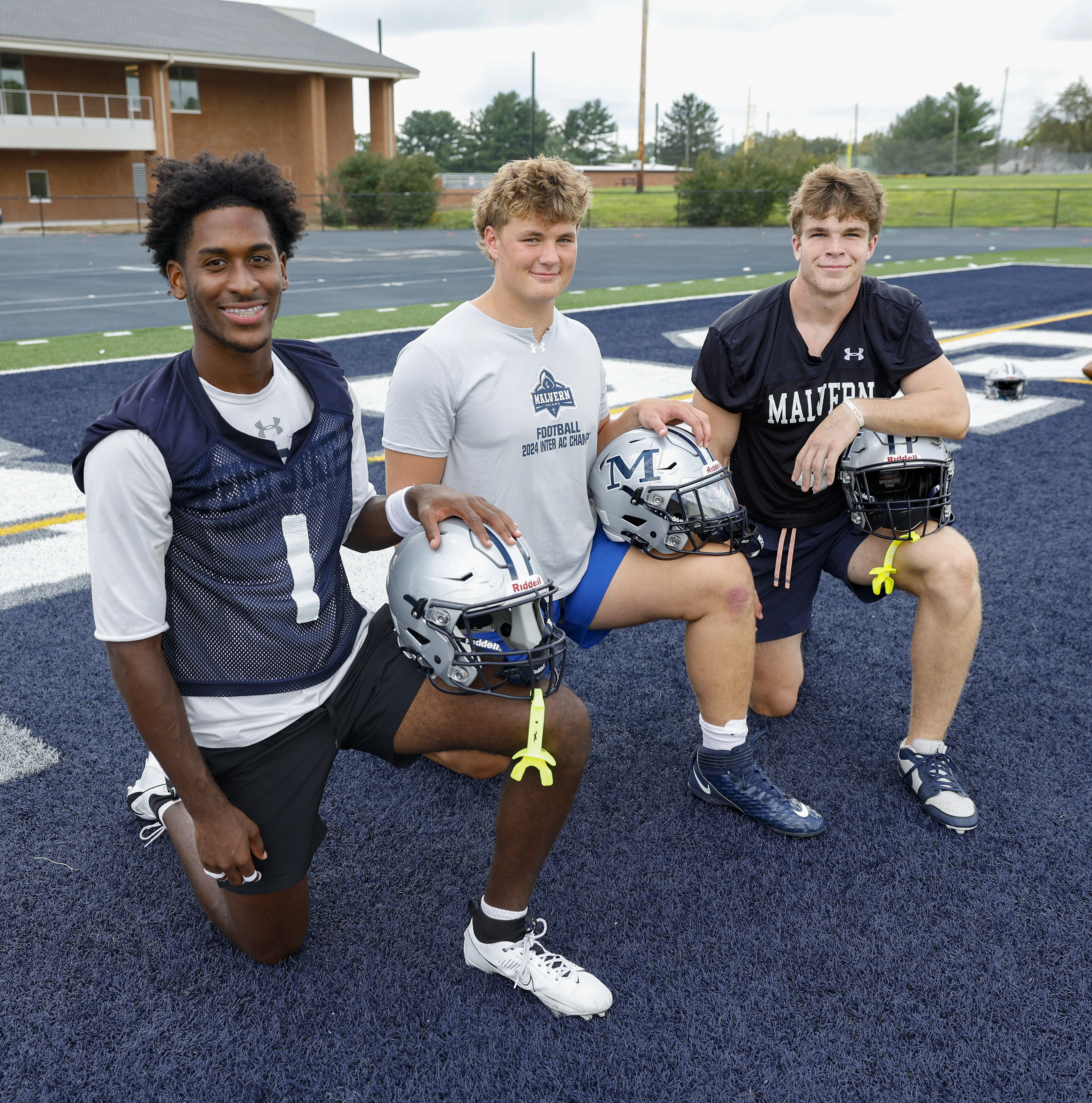
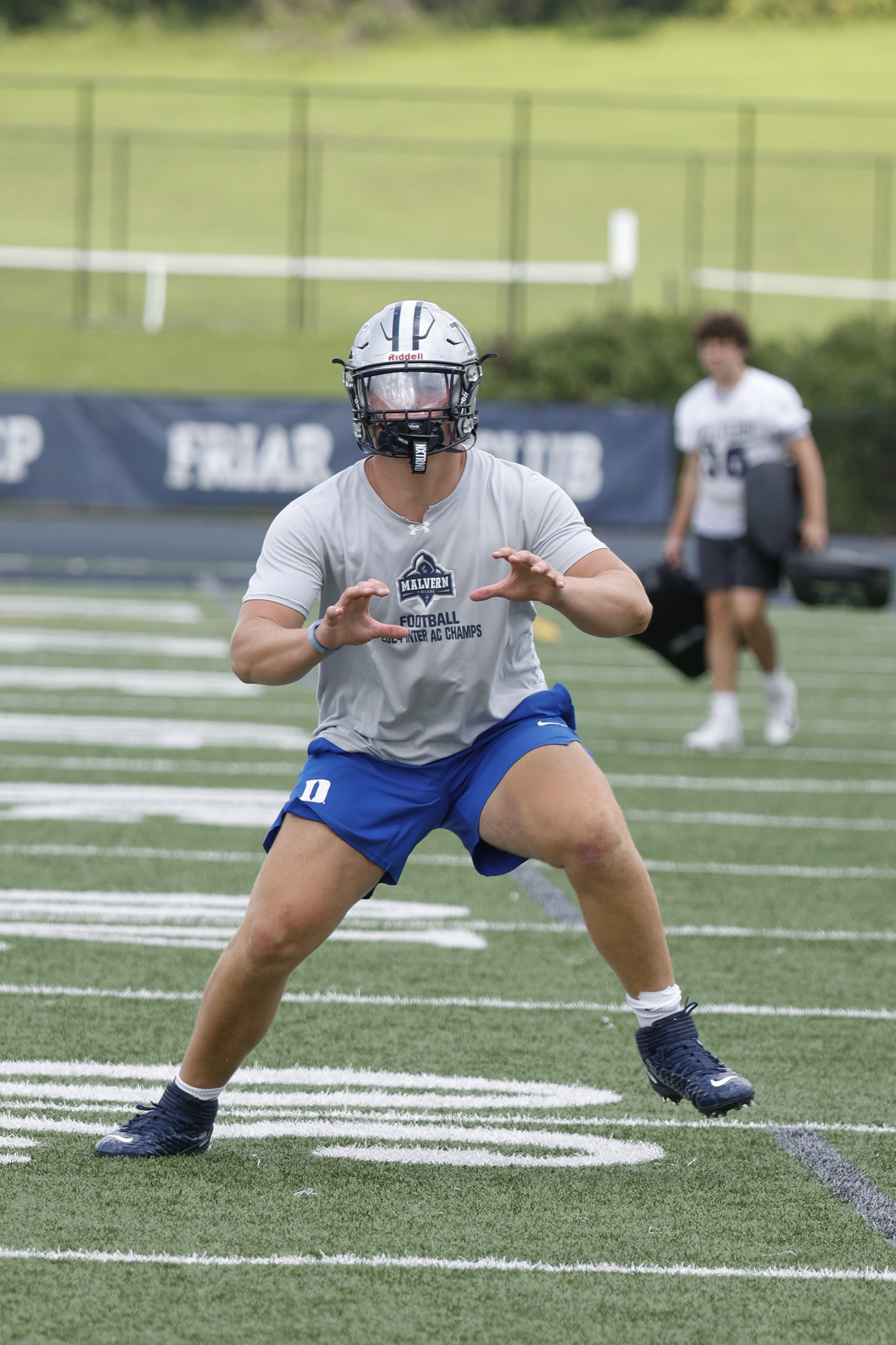
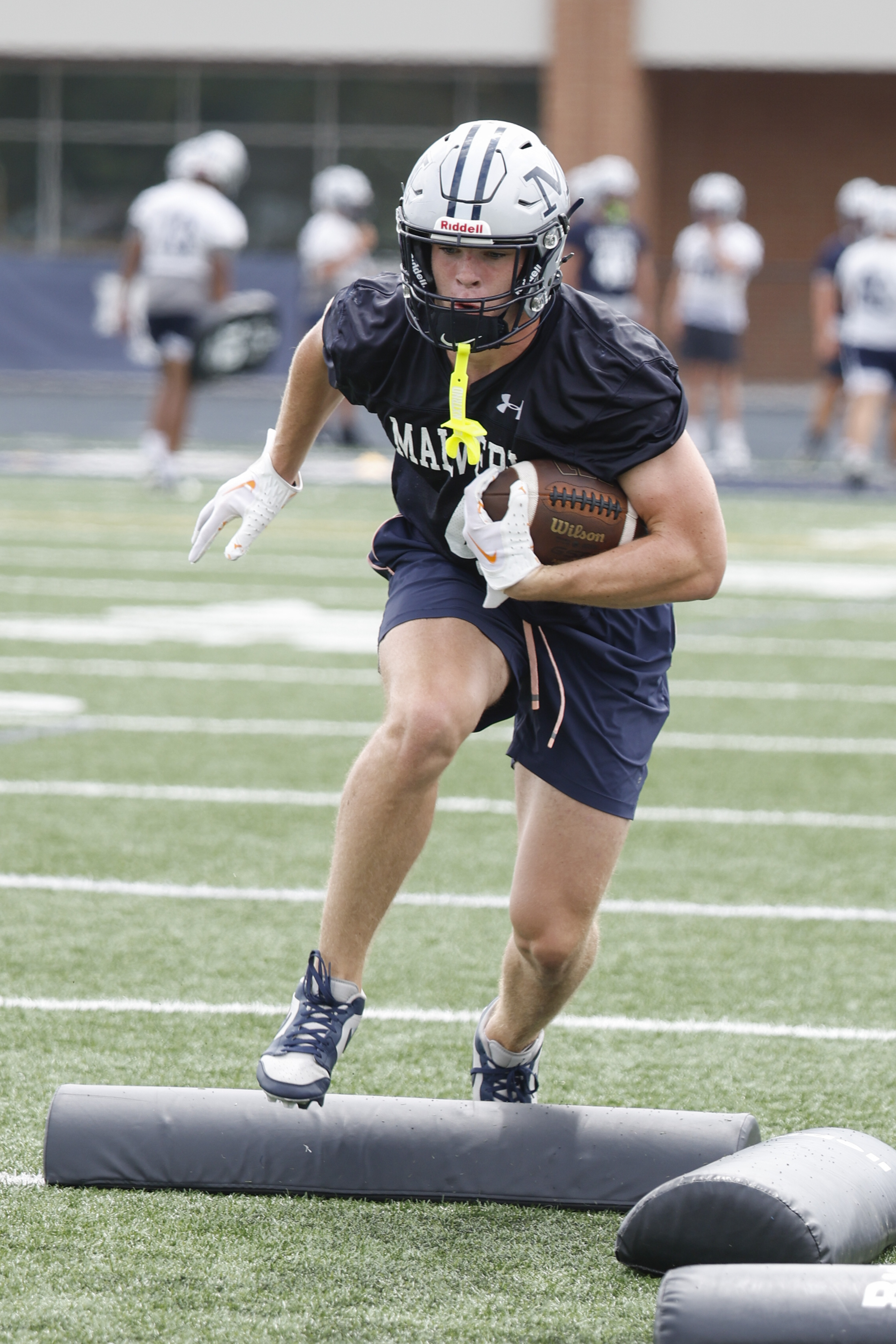
A two-year starter at right tackle, Graham is headed to Duke next year. The converted tight end has great balance and great coordination. He is a first-team All-Inter-Ac choice and will play some defensive tackle.
Malvern Prep’s Tyler Graham has been a two-year starter at right tackle.Steven M. Falk / For The Inquirer
Matthew Gregory
Owen J. Roberts, 6-1, 180 pounds, WR, Sr.
Gregory is a UCLA pledge and one of the fastest athletes in the state. He’s ranked as the No. 7 wide receiver nationally, after catching 58 passes for 911 yards and seven touchdowns as a junior. Something to think about: Gregory’s talent is so respected, UCLA came across the country to snare him over major programs like LSU, Notre Dame, and James Franklin’s Virginia Tech.
The youngest son of former Roman Catholic star and NFL Hall of Famer Marvin Harrison, Jett is already committed to Ohio State, where is older brother played. Jett is considered by many recruiters as the top 2028 prospect in the country. As a sophomore, Jett broke the Catholic League single-season touchdown record with 15 last season and will likely by double and sometimes triple teamed this season. He’s the No. 6-rated recruit in the nation for the Class of 2028 and recently signed a deal with New Balance.
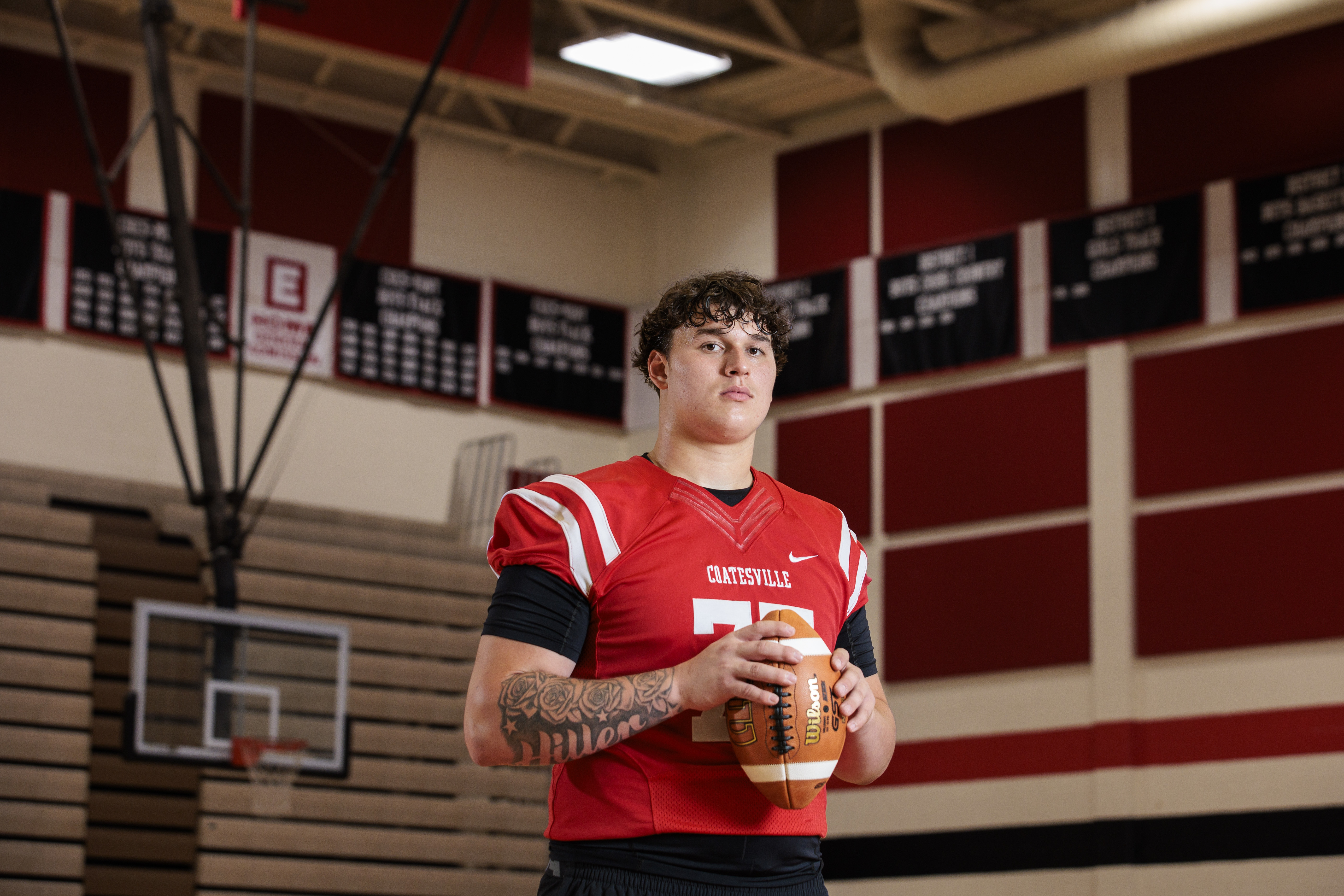
Hiller committed to Florida in April and signed with mega-agent Creative Artists Agency (CAA), which also signed his brother, basketball standout Colton Hiller. Max will play both ways this season, though he is projected to be an offensive tackle at Florida. What makes him unique is how quick and nimble his feet are for someone so large. The only thing missing from his resume is a PIAA District 1 Class 6A championship.
Maxwell Hiller is considered the best recruit in the state in the Class of 2027.Monica Herndon / Staff Photographer
Trey Hopkins
La Salle, 6-2, 195 pounds, CB, Sr.
Committed to UCLA, Hopkins was a shutdown cornerback who had one interception last season. At 6-2, he is a rangy corner who uses his hands well, and is very good at playing the ball in the air. He can play both cornerback and safety, though he is projected to be a corner at UCLA. He will go both ways for the Explorers this season as a defensive back and wide receiver.
Trey Hopkins celebrates after intercepting the ball during the PIAA Class 6A football semifinal game on Nov. 29, 2025.Colleen Claggett / For The Inquirer
Walter Hudson
Roman Catholic, 6-1, 215 pounds, LB, Sr.
Hudson is bound for Pittsburgh next year, after a junior year in which he made 77 tackles (13 for loss). A three-year varsity starter, Hudson was a keystone of arguably the best team in the state last season, winners of Roman’s first-ever state football championship. The Cahillites and Hudson face a steeper test this season moving to Class 6A.
As a junior, Walter Hudson had 77 tackles and 13 tackles for loss.Jose F. Moreno / Staff Photographer
Owen Johnson
La Salle, 5-10, 190 pounds, WR, Jr.
He has offers from Notre Dame, Penn State, Oregon, Alabama, Auburn, and Ole Miss, with more to follow. As a sophomore, Johnson performed well in significant games. He hauled in 73 catches for 1,000 yards and 11 touchdowns. He had a game-high nine catches for 96 yards and scored two of La Salle’s three touchdowns in a 24-14 victory over Prep in the PCL championship. He followed that with three touchdowns in the state title game. It helped getting single coverage with Notre Dame-bound O’Brien on the other side of the field. This year, Johnson will be the focal point of opposing defenses.
Owen Johnson caught 73 catches for 1,000 yards and 11 touchdowns as a sophomore.Tyger Williams / Staff Photographer
Marcus Jones
The Haverford School, 6-3, 190 pounds, S, Sr.
Jones is a four-year starter and committed to Tennessee, where his uncle Mark Jones played. Marcus is the son of former Strath Haven great and Purdue receiver Ike Jones, who caught passes from two Hall of Famers: Drew Brees and Peyton Manning. Marcus is projected to play safety at Tennessee. Marcus plays on both sides of the ball for the Fords, as a wide receiver and defensive back. He is coming off a junior season in which he caught 38 passes for 542 yards and four touchdowns. Defensively, he made 52 tackles (37 solo) and four tackles for loss.
Marcus Jones caught 38 passes for 542 yards and four touchdowns last season.Haverford School Athletics
Brandon Lockley
St. Joe’s Prep, 6-2, 216 pounds, LB, Sr.
Lockley may arguably be the best linebacker in the state. A physical, versatile defender, Lockley is a three-year starter bound for Oregon, after coming off a first-team, all-Catholic League junior season. He has the ability to play in space, support the run, and matchup in multiple offensive groupings. He won’t come off the field this season.
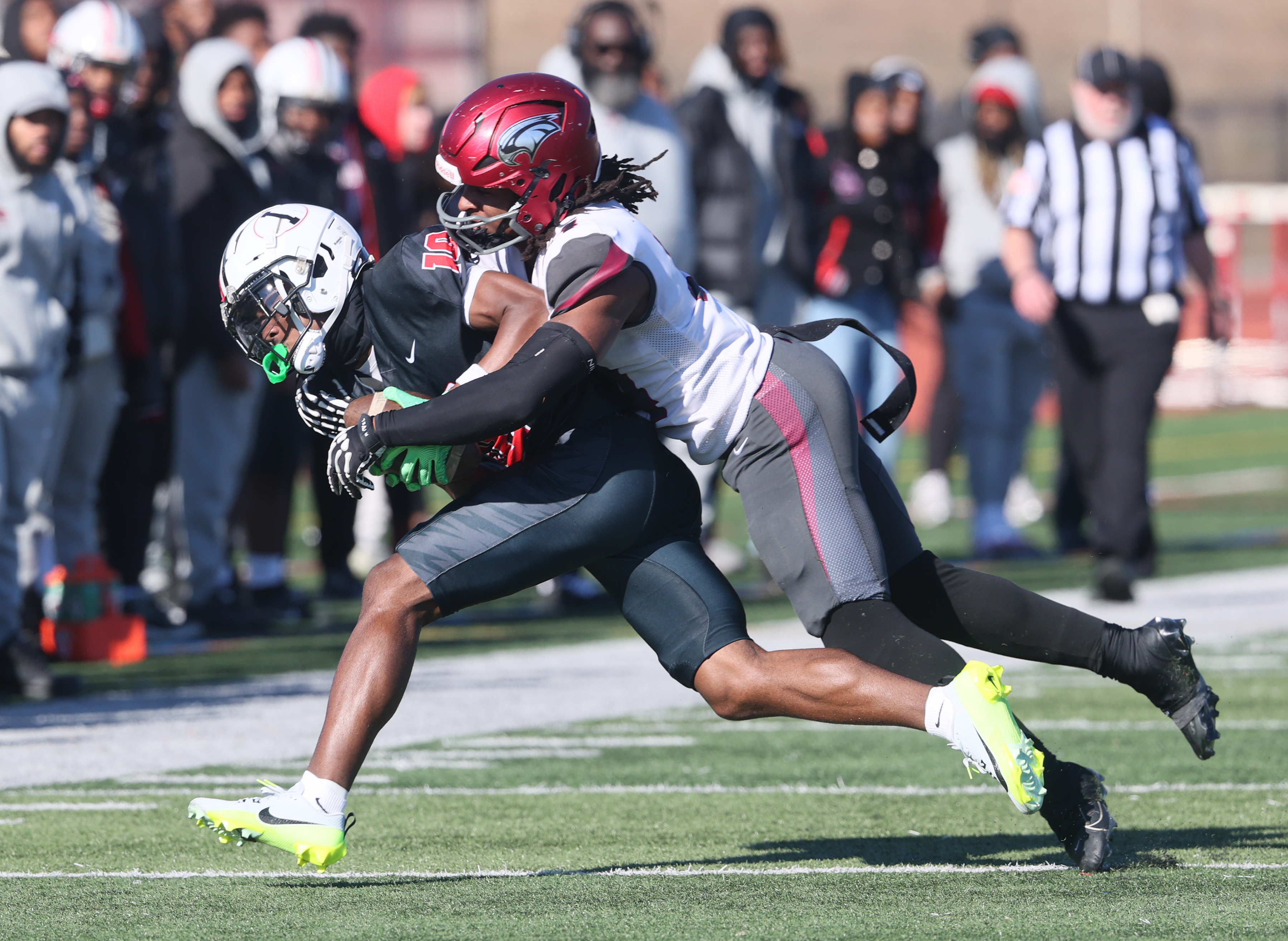
Brandon Lockley (right) of St. Joe’s Prep tackles Zah Pollard of Imhotep Charter on Nov. 16, 2024.Charles Fox / Staff Photographer
Stanley Montgomery
Archbishop Ryan, 6-3, 300 pounds, DL/OT, Sr.
Montgomery is rare in this age of specialization as a two-sport standout in football and wrestling, both of which he plans to do at Penn State. A three-year starter, Montgomery is coming off a junior season in which he tallied 45 tackles, 8½ sacks and 19 tackles for loss. He’s explosive, quick, and carries himself low. He’s projected to be a defensive tackle at Penn State. He’s unblockable at the high school level.
A long, strong, athletic edge rusher with a non-stop motor, he is getting attention from Penn State, Texas A&M, Tennessee, LSU, Oregon, and Ohio State after a sophomore year in which he had eight sacks, 35 tackles, nine tackles for loss, and 16 hurries. He runs a 4.6-second 40-yard dash and jumped 37 inches. He played primarily edge rusher. And will play some defensive tackle and linebacker. He is being recruited as an edge rusher.
George Parkinson IV had eight sacks, 35 tackles, 9 tackles for loss, and 16 hurries last season.Steven M. Falk / For The Inquirer
Ben Sakyiama
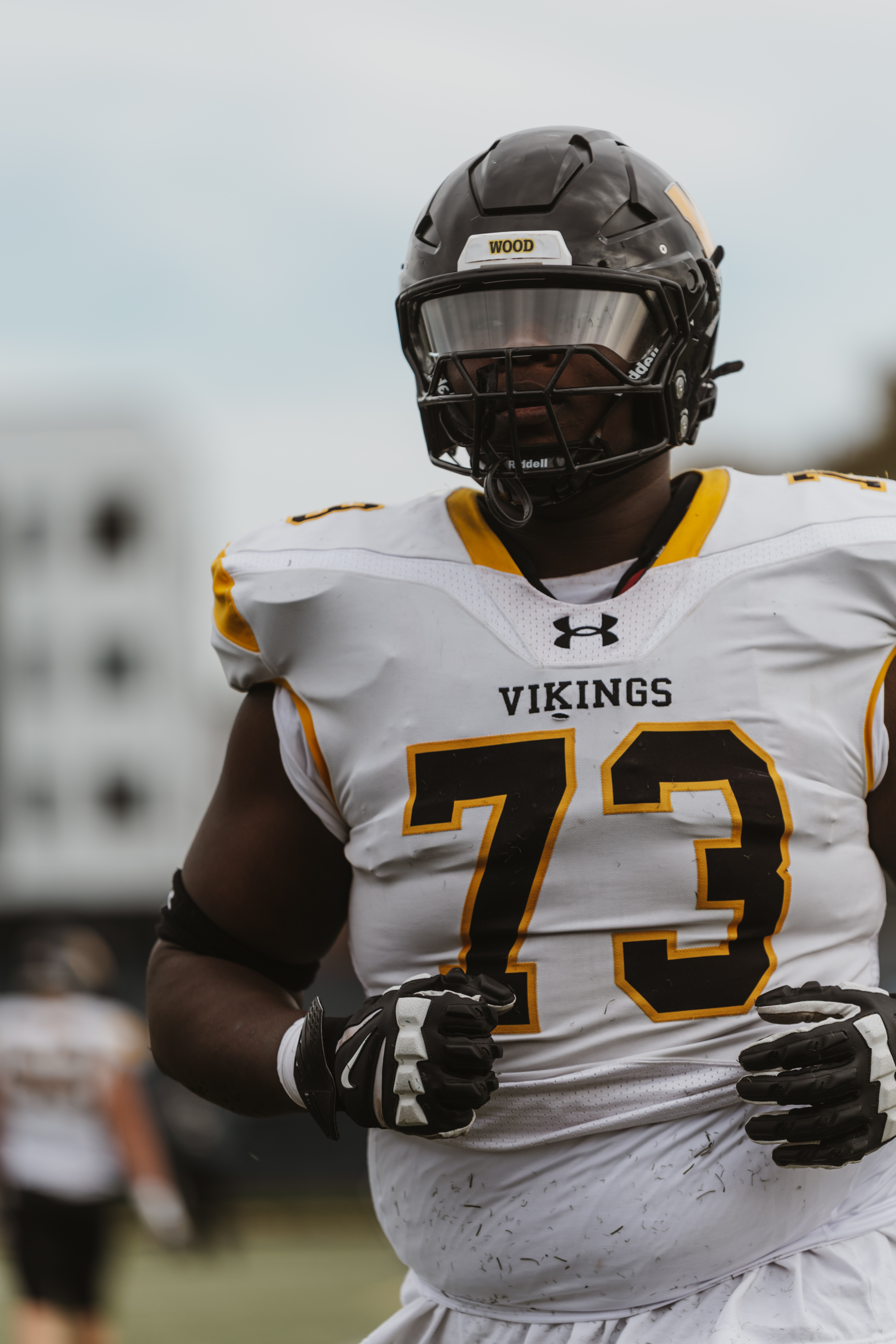
Archbishop Wood, 6-8, 320 pounds, OT, Sr.
A two-year starter, Sakyiama is a Syracuse pledge, where he is projected to be a left tackle. He will be a two-way starter as a left tackle and situational defensive tackle for coach Brian Goettner, who enters his second season as head coach. Sakyiama has grown an inch since last year and is down to around 320 pounds from playing at 345 last year. Sakyiama started playing football three years ago. He is still learning the game, with a tremendous upside.
Archbishop Wood’s Ben Sakyiama just started playing football three years ago.Francesca Rossillo / Archbishop Wood Athletics
Abraham Sesay
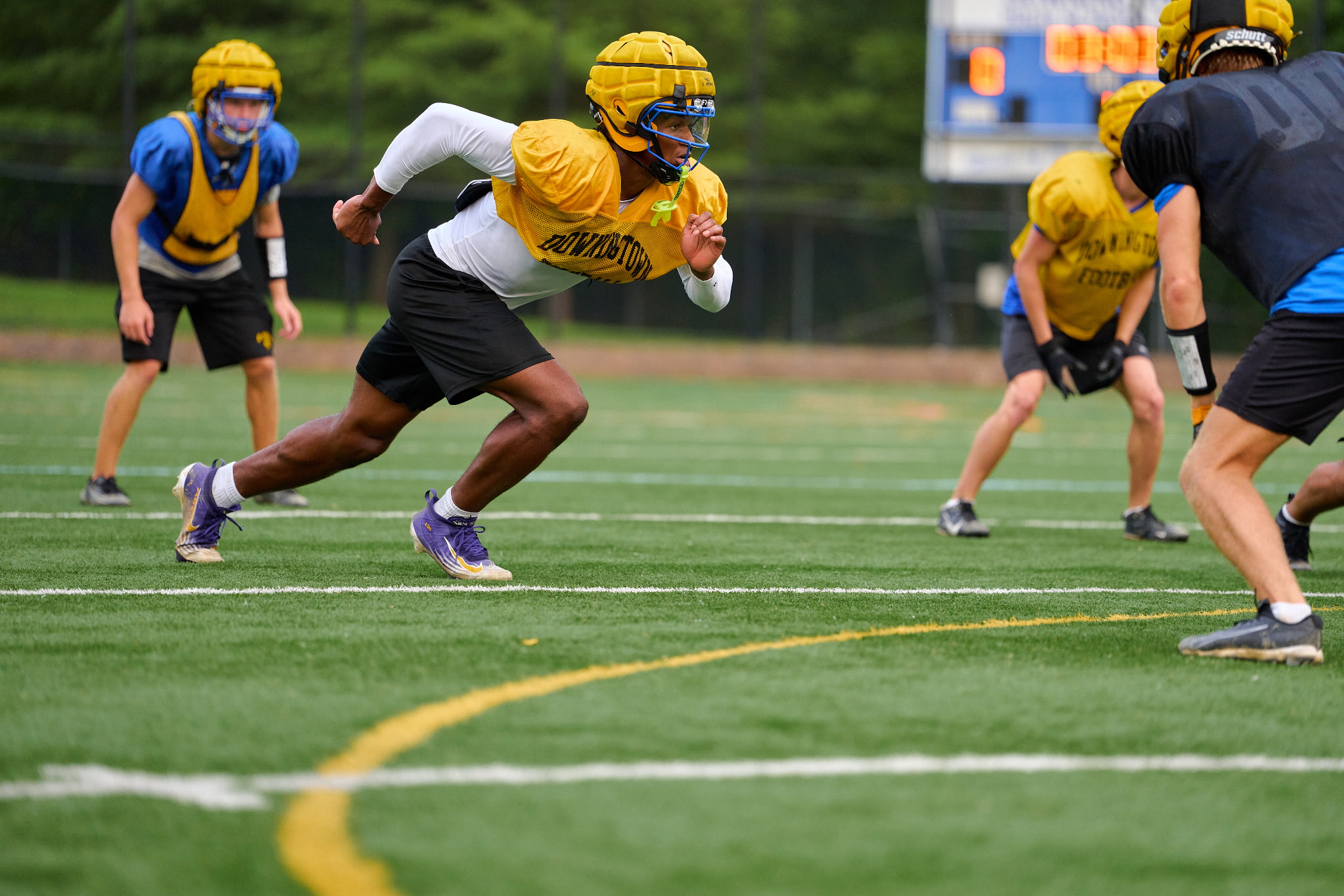
Downingtown East, 6-6, 230 pounds, Edge, Sr.
Sesay continues to blow up, even though he’s committed to Notre Dame. As a junior, he had 13 sacks and 89 tackles and will double up as a tight end. He is rated No. 90 overall in the country by ESPN for the Class of 2027 and is a three-year starter, projected to be an edge rusher at Notre Dame. He has been clocked at 4.5 seconds in the 40-yard dash and is an early admittance to Notre Dame. He has signed with the Octagon agency, which represents Steph Curry. He has grown an inch and gained 20 pounds since last season. Sesay’s East team plays Hiller at Coatesville on Oct. 23.
Abraham Sesay had 13 sacks and 89 tackles as a junior.Downingtown East Athletics
Terrance Smith
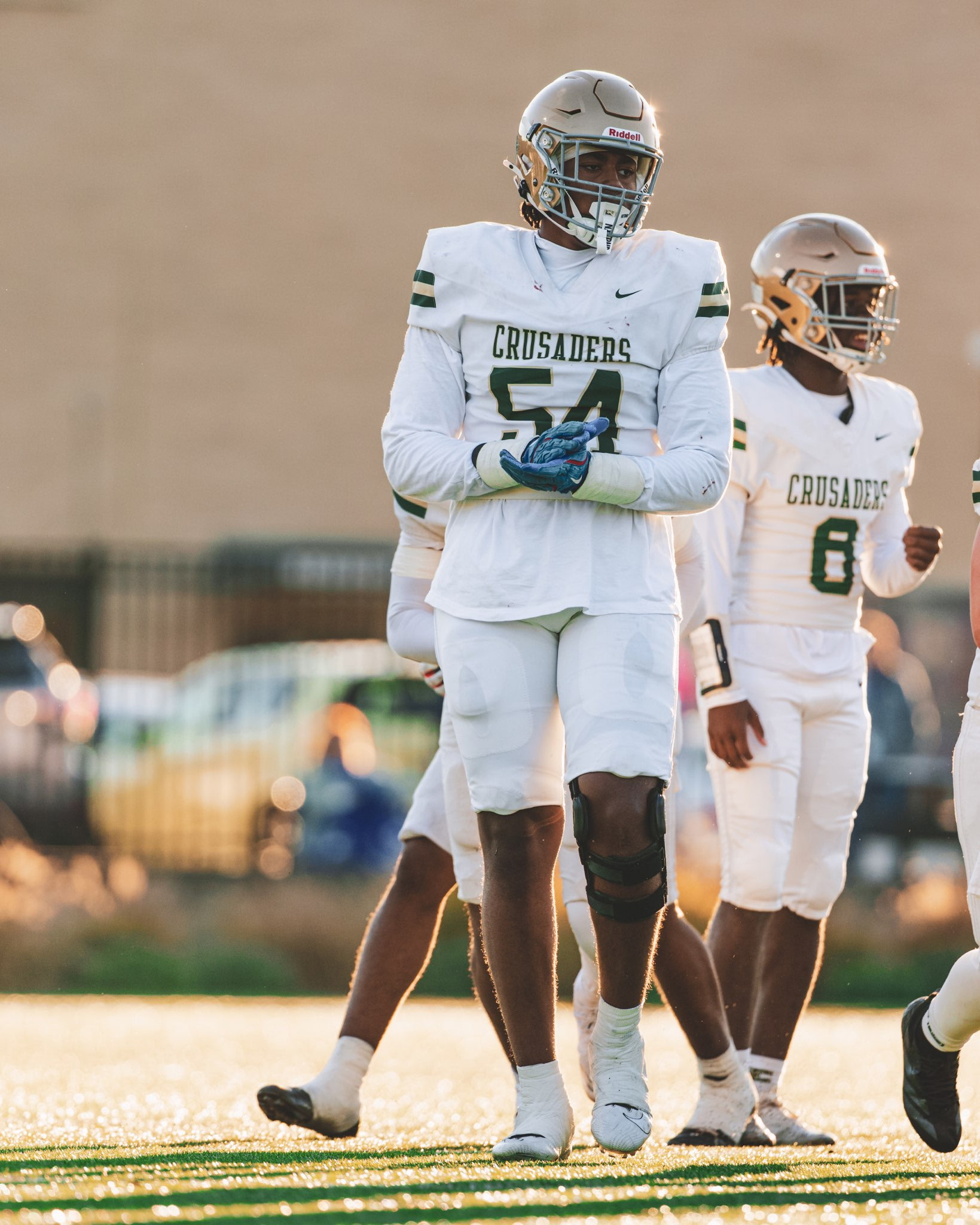
Lansdale Catholic, 6-7, 290 pounds, OT, Sr.
Smith is headed to LSU and projected to be an offensive tackle, though will be a defensive tackle and left tackle for the defending PIAA District 12 Class 2A champions. The Crusaders move up to Class 3A this season. Smith, a three-year starter, has a high football IQ, great feet, and played on both sides of the ball. He did not play until the last seven games, recovering from a torn ACL in his right knee during his sophomore season. He has since made a full recovery and is expected to play his entire senior season. He is related to former Sixer great and Hall of Famer Allen Iverson. He did not start playing football until seventh grade. Lansdale Catholic opens the season at Pope John Paul II on Aug. 28.
Terrance Smith will play defensive tackle and offensive tackle this season for Lansdale Catholic.Lansdale Catholic Athletics
Andrew Sorge
La Salle, 6-3, 290 pounds, OG, Sr.
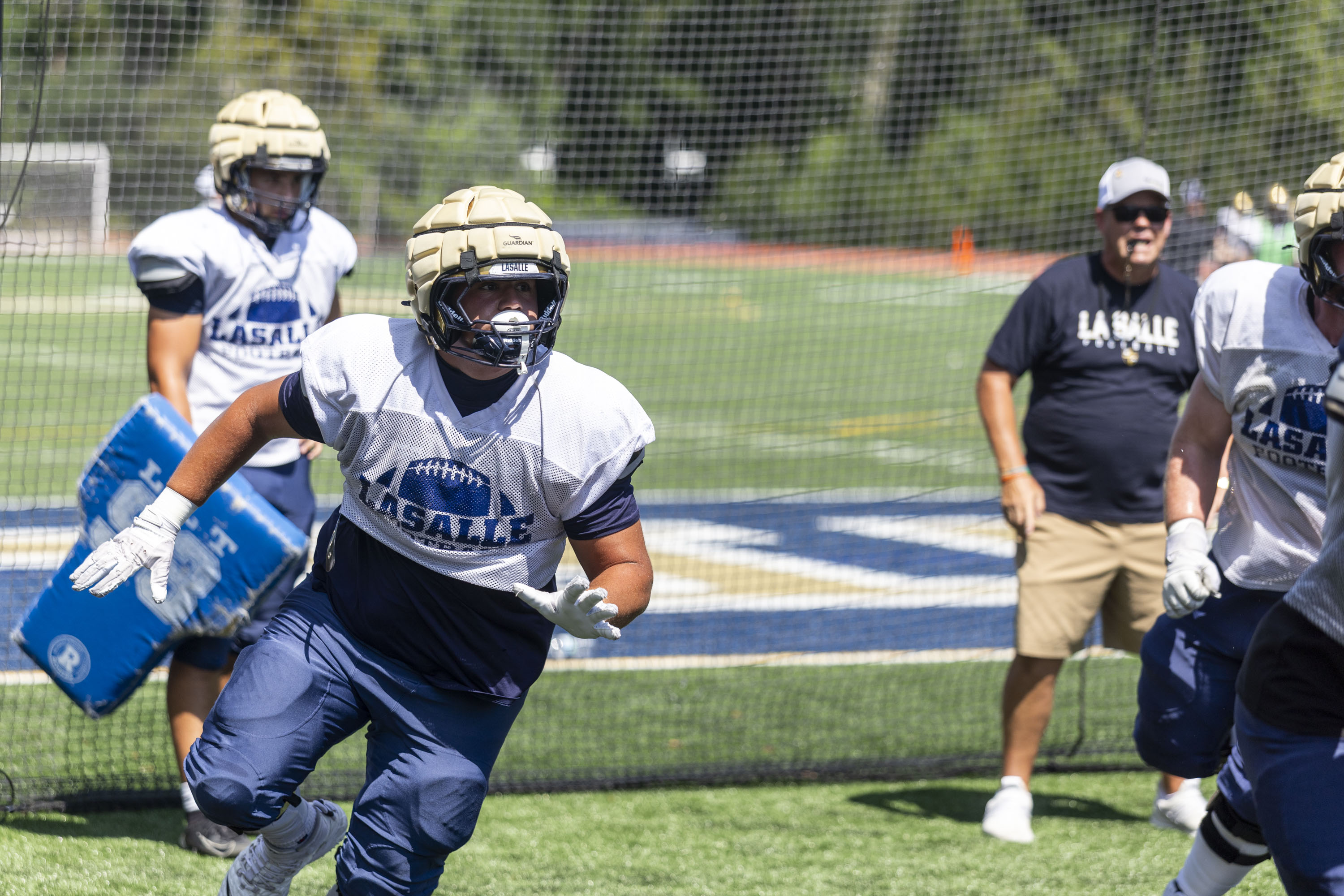
Sorge was the cornerstone of an offensive line that won the Catholic League Red Division and PIAA Class 6A state title last season. Committed to Lafayette, Sorge will again be counted on to stabilize the Explorers’ front. He is a returning All-Catholic League selection, a league that produced two PIAA state champions, and is known for his strength as a pass blocker. La Salle coach Brett Gordon calls him the best interior lineman in Pennsylvania.
Offensive guard Andrew Sorge is one of La Salle’s leaders this season.Tyger Williams / Staff Photographer
In September 2023, seven months after Blair Tonzelli was reported missing, a nude photograph of her appeared prominently on a local pornographer’s website.
She is staring at the camera, with what appears to be a black eye and blood running down her lower lip.
While it is unclear when it was taken, Raymond “R.C.” Horsch first uploaded the picture to his website’s homepage around 2020, sometime after he had met Tonzelli in Kensington, and he used it as one of several lead images on the site for years, according to archived website data reviewed by The Inquirer.
Horsch’s website is now inactive. But it was up and running when Tonzelli’s friends reported her missing in February 2023, telling officers she was last seen at Horsch’s home the previous summer.
Police have not said whether officers ever visited the home or interviewed Horsch about her disappearance — or if they were aware Tonzelli’s nude photo was featured on his public website. Officers raided the home as part of a drug investigation in May 2025, but investigators in that case did not appear to link the property to any missing women at that time.
A Philadelphia Police Department spokesperson declined to comment, citing an ongoing investigation.
Tonzelli’s disappearance did not appear to gain attention from law enforcement until June of this year, when police arrested Horsch’s son, Eugene, who was with a woman carrying a fake ID in Tonzelli’s name.
The discovery ignited a two-month search of Horsch’s home, where police unearthed an array of disturbing evidence — including “graphic and dark” photos, videos, and writings on hard drives. Police on Aug. 12 said the footage reviewed so far suggests two other missing women had died inside the property: Maribel Fresses, reported missing in 2018, and Gabrielle Amarando, who went missing in 2012.
Police have found no human remains, and have not said whether Tonzelli was featured in any of the materials on the hard drives. She remains missing.
Tonzelli was 35 when she was reported missing. Her Facebook page states she went to Archbishop Ryan High School. Her family could not be reached for comment.
She is among at least three dozen women, many still unidentified, featured in Horsch’s works. Website data showed his online pages once displayed at least 2,100 unique images spanning decades, though The Inquirer was able to recover only a fraction of them.
Blair Tonzelli, in one of her Facebook posts. Tonzelli was last seen at the Horsch property on West Chew Avenue in 2016.Facebook account of Blair Tonzelli
The elder Horsch died in May 2025 at the age of 82 from lung issues. He was well-known in pornographic and erotic art circles for publishing more than a dozen photo books, films, and novels. Some of Horsch’s writings describe a nearly autobiographical character who is an “empathetic” serial killer, murdering addicts to end their suffering. He built a small following, in part, by leaving viewers wondering what was real or fake.
Vulnerable women, desperate to stay off the streets and out of withdrawal, were often used as props for his violent fantasies as he profited off footage or images of them appearing to be strangled, drowned, hanged, or crucified.
Beneath the rotating photos of gaunt and dazed models, Horsch’s homepage also contained a chilling quote, attributed to him.
“I fear what I love,” he wrote. “And destroy what I fear.”
While Horsch claimed all his scenes were staged and consensual, he openly acknowledged that he recruited women in addiction with cash and drugs to enact his “psychosexual” fantasies.
“Without exception, their singular interest is their drug,” Horsch said in a 2006 interview. “Provide that — or the means — and they will do anything.”
Tonzelli had battled addiction for years, according to her friends. Horsch was in his late 70s when met her in Kensington, while she was living at a known drug house. He later claimed she worked as a “home health aide” before she went missing in August 2022.
The recent search for Tonzelli also led police to reexamine the disappearance of Amy McHale, Horsch’s ex-wife and onetime film collaborator, who was last seen at the family home in 2016.
McHale is also among the women Horsch featured on his website, in films and music videos.
So is Krista Killen, Horsch’s longtime companion, who died of an overdose last year. Killen lived at the Olney house, where she acted in several of Horsch’s publicly released films, on and off for years.
Several other women who cycled through the Olney house died of overdoses. Another woman who appeared in Horsch’s films and photographs overdosed in 2016 and a man was charged after leaving her dead body on the side of the road.
While some photos he took were more conventional erotic portraits, Horsch also published galleries of work on his website that portrayed women as dead or covered in blood. One series — titled “Thanatopsis,” a Greek term for the contemplation of death — shows a woman hanging from a noose. Horsch noted that the series also contained photographs of the real corpses of fatal overdose victims.
In a 2007 interview, Horsch said he focused on people addicted to opioids because he saw their need as a mirror of his own desires for increasingly “extreme” forms of sexual gratification.
“My motivation goes beyond desire and well into the realm of obsession,” Horsch said. “I am very much addicted to sex. And the more I do and the more I experience, the more jaded I become and the greater the stimulation, and extreme, I require. This is an obvious parallel to heroin addiction.”
But Horsch also sought to profit.
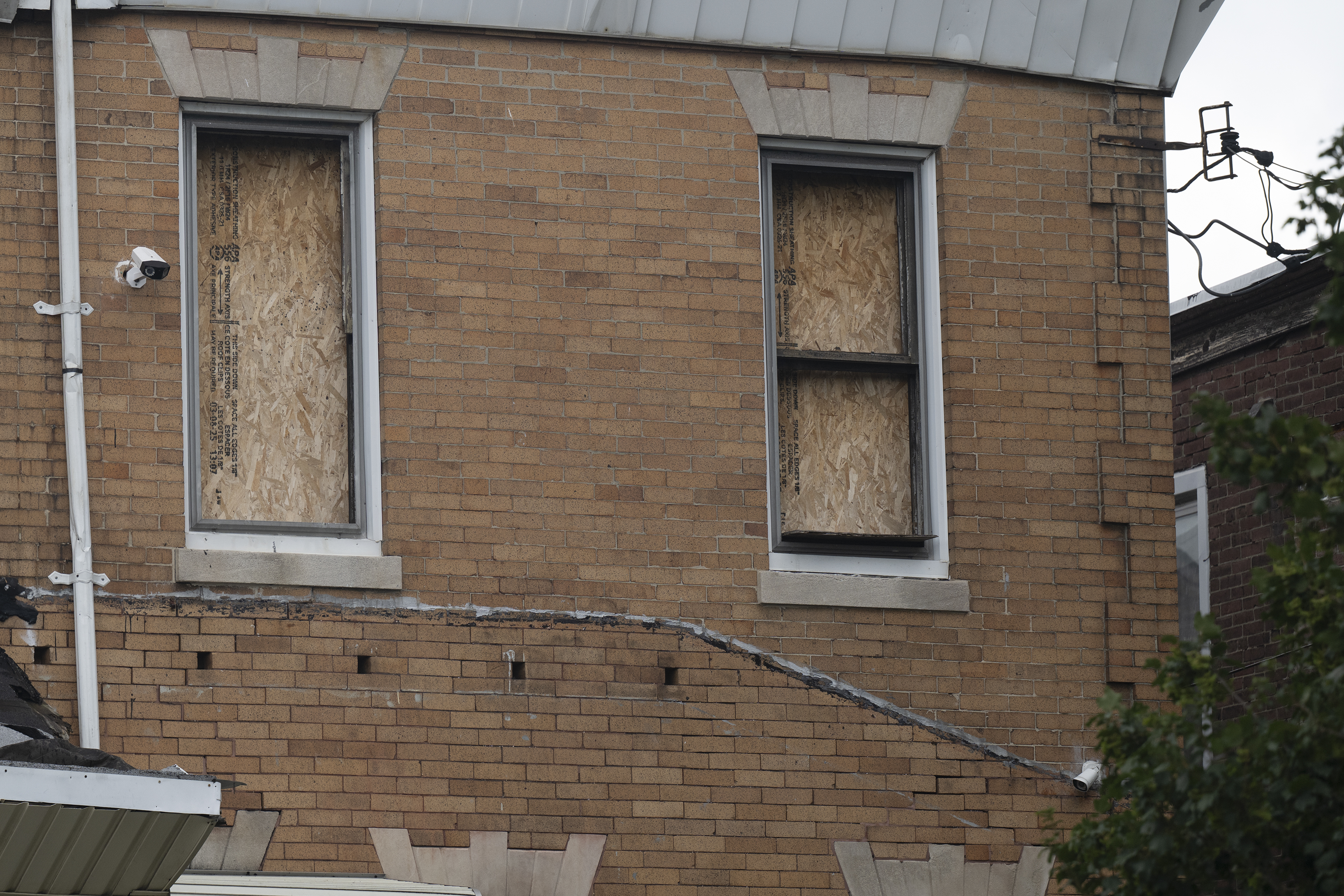
A surveillance camera is mounted near a boarded-up second-floor window at the home of Eugene Albert Horsch on West Chew Avenue in the Olney section of Philadelphia as investigators dig for possible evidence on Tuesday, July 21, 2026.Jose F. Moreno / Staff Photographer
Through at least 2019, Horsch ran a membership program on his website, with subscription tiers ranging from $3 a day to $20 a year that offered paying customers “unrestricted access” to his photographs and videos.
Other archived images and video reviewed by The Inquirer show that Horsch used his personal website to solicit an escort service from 2017 through 2021, and reviews suggest that clients may have visited the Olney house.
Philadelphia police are in the process of sorting through the trove of digital materials recovered inside the home, and have said they may return to the property to continue searching the premises for evidence connected to the women.
Eugene Horsch, 44, remains in federal custody, charged with illegal gun possession. He has not been charged with any crimes connected to the women’s deaths or disappearances. His lawyer has declined to comment.
Police have declined to say whether they believe the younger Horsch played a role in his father’s business. Still, Inspector Raymond Evers said earlier this month, he resided in the house now linked to at least four missing women and a cache of disturbing documents.
“Eugene lived there,” he said. “He lived there for a long time.”
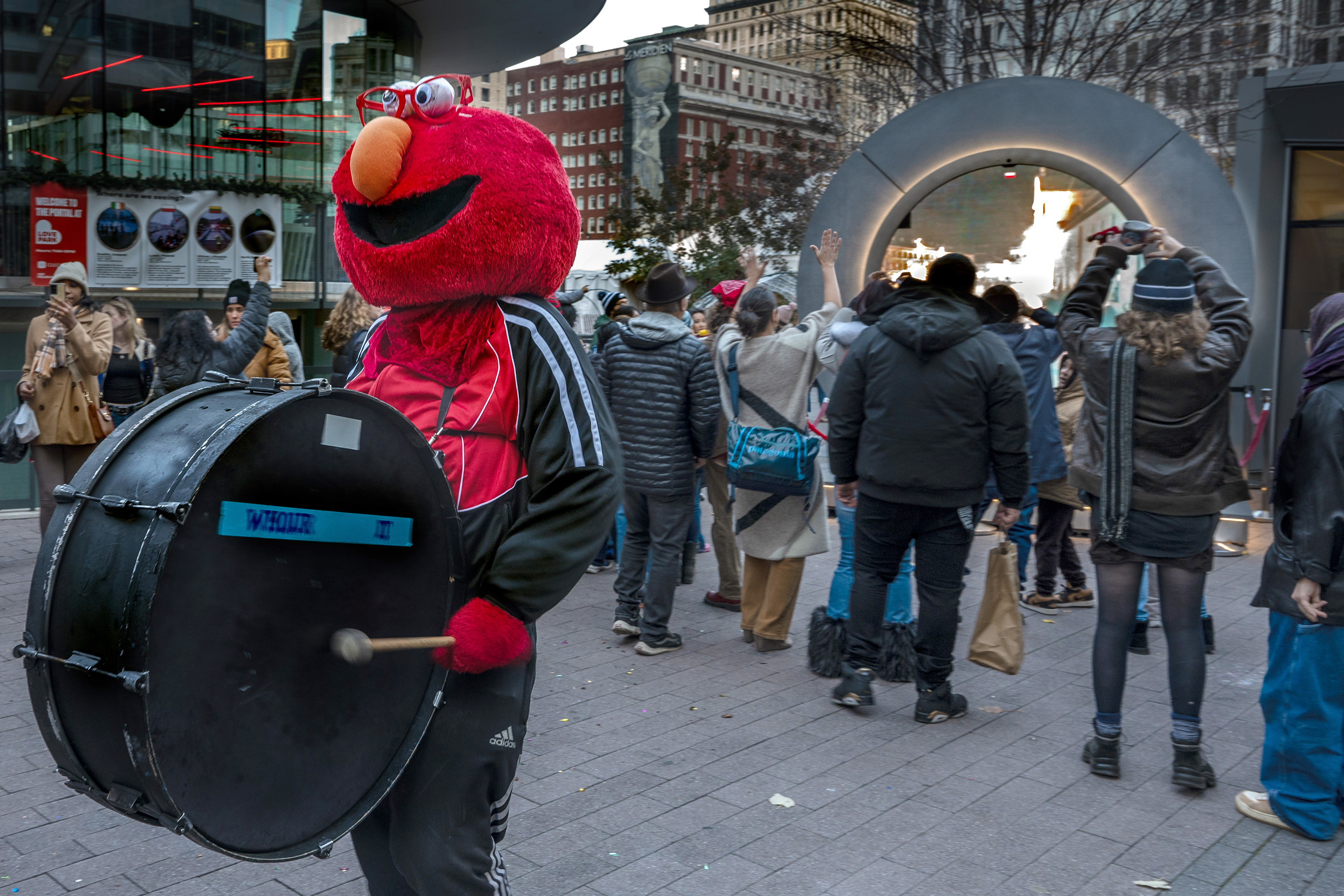
I’ve been a fan of the Portal ever since I spent five hours documenting how Philadelphians reacted to it and how the world reacted to us when this interactive installation arrived here in 2024.
The soundless, circular livestream screen with sci-fi vibes that connects strangers around the world was at its best at its first location in LOVE Park. But after it was vandalized twice, it was relocated to the courtyard of City Hall last year, where it has remained.
Honestly, I’m impressed it made it this long. Most of us didn’t give it 24 hours.
The Portal’s time here may soon be up though if organizers can’t find a new home for it. The city didn’t extend its permit, citing upcoming commitments to the holiday market in the courtyard, Nicolas Klaus, CEO of Portals.org, told The Inquirer last week.
Steve Farkas holds up a heart sign to people in Lithuania at the Philadelphia Portal installation in the courtyard of City Hall on June 11, 2025.Kaiden J. Yu / Staff Photographer
With the permit due to expire at the end of October, Portals.org is now looking for a new home for the 3.5-ton video screen and a sponsor to cover the cost of relocation and annual maintenance, which averages about $30,000 a year, according to Klaus.
Philly could lose the Portal to another city if a new site isn’t found, and Philly doesn’t like losing anything — even if it is our fault — so I asked readers on social media where it should head next.
With money no object and logic an afterthought, here’s where people said they’d like to see the Portal go.
The Art Museum steps
If you want to frame this city beautifully for outsiders, there’s perhaps no better place to put the Portal than at the top of the Philadelphia Museum of Art steps looking down the Benjamin Franklin Parkway. This was the clear winner from people who answered my question seriously (I was surprised I got any serious answers).
I’m sure the “Rocky” statue won’t mind if we put the Portal right here for the best view. Jose F. Moreno / Staff Photographer
We could put it right in front of the Rocky statue so that when folks run up the stairs, people around the world can cheer them on or make fun of them for tripping. Nobody will be able to hear their laughter, so what does it matter anyway? Let’s give the viewers what they really want — athleticism and slapstick. Plus, the Art Museum is where all of our great city celebrations are held. Next time one of our teams wins a championship and ends its parade at the museum steps, folks could fly to Lithuania for a front-row seat to the celebration. Pirmyn paukščiai!
The sports complex
For a crash course in our culture, there’s nowhere to get the full-on Philly quicker than by putting the Portal at the sports complex, so long as organizers can also slap an R-rating and a force field around that thing.
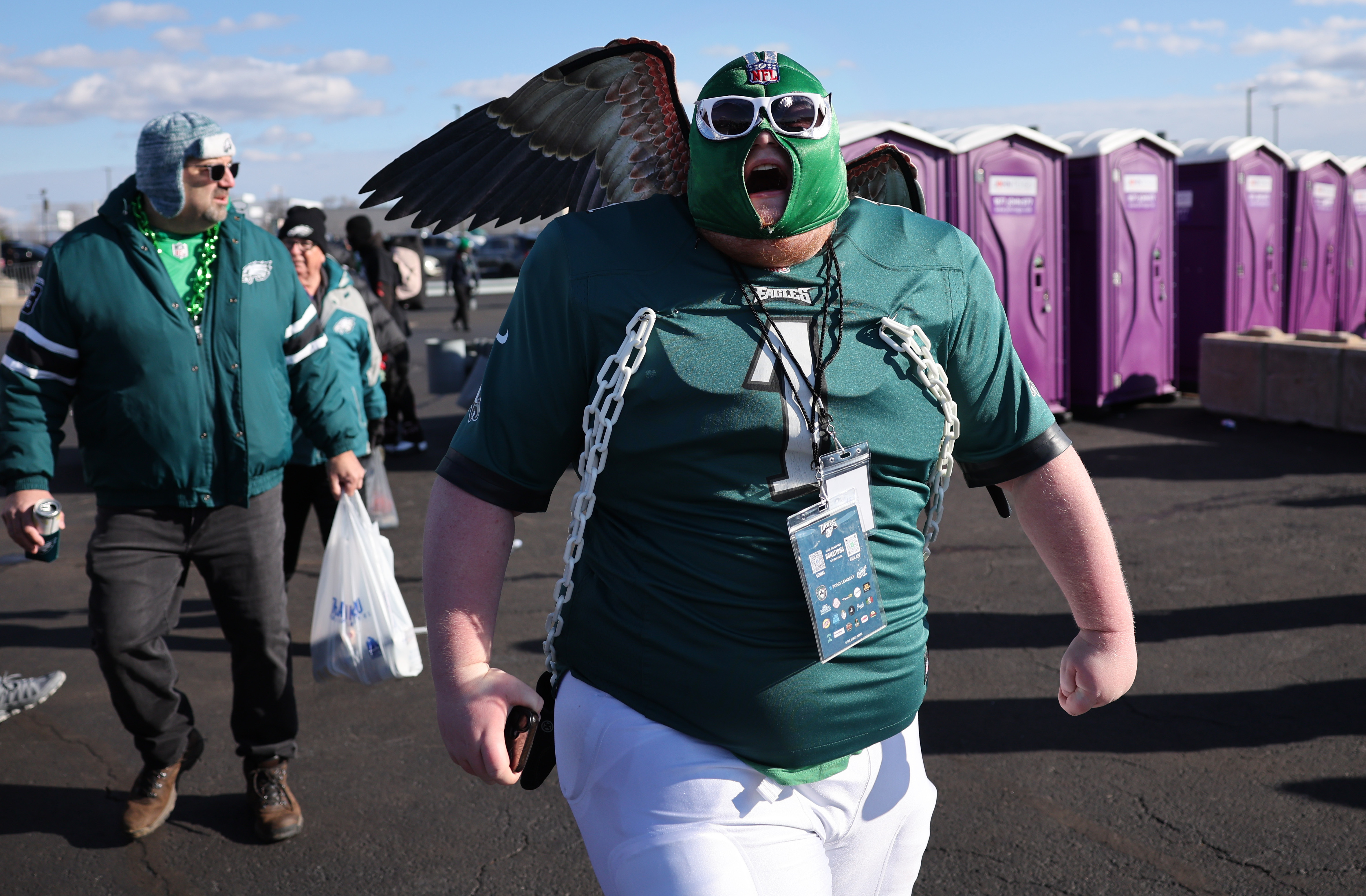
Several people suggested putting the Portal in tailgating lots (particularly K and Jetro), which I think the Irish would really get a kick out of. I can picture “Whiskey in the Jar” sing-a-longs across the pond and peat moss fires in the parking lots.
Welcome to our tailgating, world. David Maialetti / Staff Photographer
Others suggested placing the Portal right on Lincoln Financial Field or at third base at Citizen’s Bank Park (please meet our king, the Phanatic, and his court of jesters, the Galápagos Gang) and one guy wants it put in the “Last stall, men’s restroom Section 323 at the Linc,” which is oddly specific and unsettling, sir.
Personally, I think it should go inside Gritty’s secret hideout at Xfinity Mobile Arena. Gritty is a master at entertaining without talking and we’d finally get to see what he does at night. Plus, Gritty could invite LeBron James to hang out after Sixers games. Portal ratings would go through the roof!
Boner 4ever building
When it comes to indelible Philly landmarks it’s hard to top the “Boner 4ever” building, the 14-story building on North Broad Street that’s been adorned with the graffiti tags “Boner 4ever” on one side and “Forever Boner” on the other for as long as anyone can remember.
Thanks to Shana Fallon on Bluesky for this fantastic suggestion.
“I mean, honestly, this is the only right answer,” Fallon wrote. “Bunches of tourists taking the BSL up to Broad and Erie for Max’s, the Portal, and Boner 4ever/Forever Boner. What a full, Philadelphia experience.”
The Beury Building is more commonly known in Philadelphia by its nicknames, the “Boner 4Ever” and “Forever Boner” building. STEVEN M. FALK / Staff Photographer
Putting the Portal here would also ensure that the building and graffiti remain forever, as is foretold, and spotlighting a building festooned with such an enduring nickname will make people even more confused about just what goes on here in Philly.
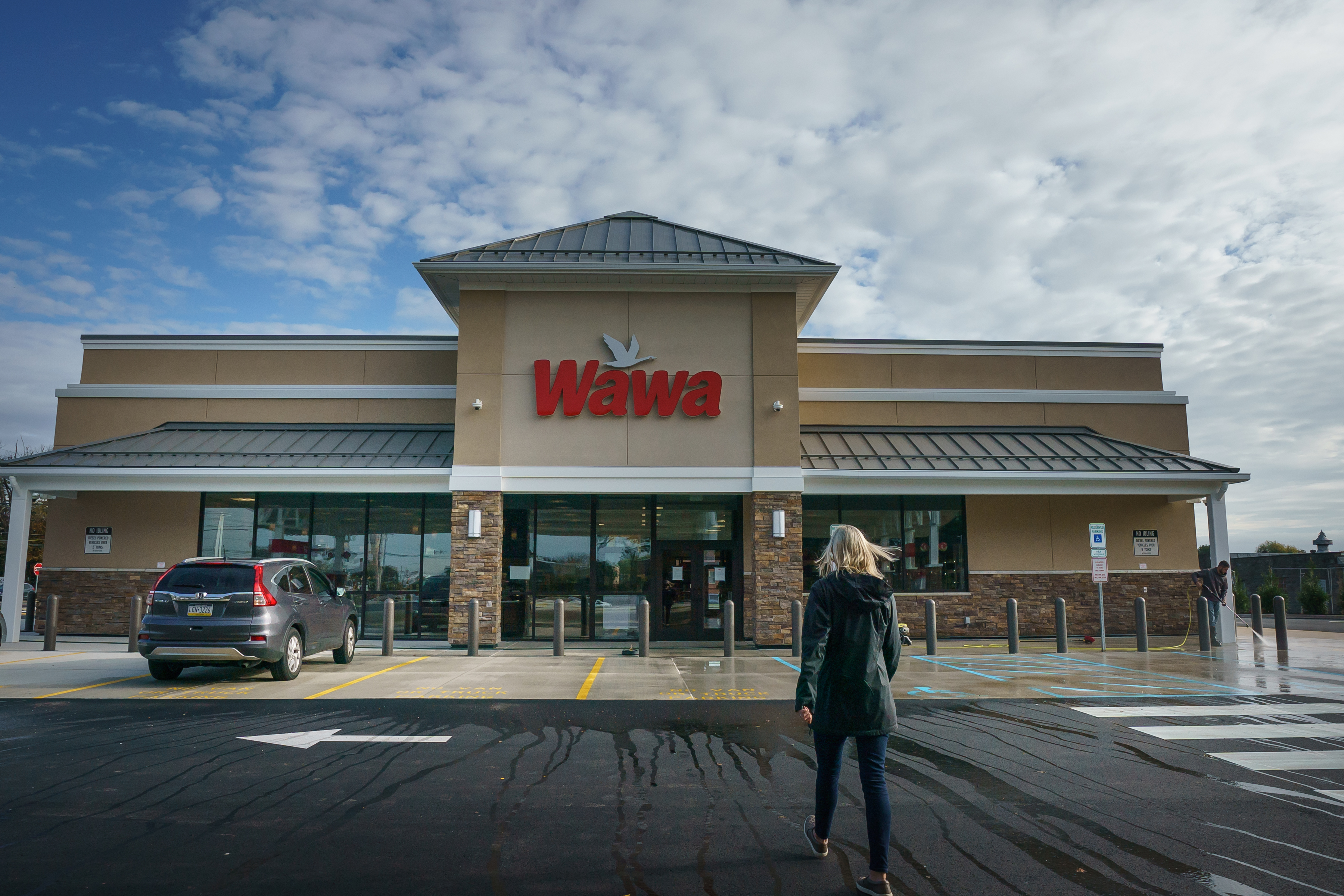
At a Wawa
For an easily-digestible microcosm of Philly, putting the Portal inside of a Wawa would be a Sizzli move, as Larry Durland suggested on Threads. You may not like that one of our region’s cultural touchstones is a convenience store with touch screens, but for many it’s a third space on the go, which makes it a classic fit for the Portal.
Could the most convenient place for the Portal be in Philly’s hometown convenience store? JESSICA GRIFFIN / Staff Photographer
With the Portal at Wawa, the world could see our sartorial splendor on full display — men in matching tracksuits and slides, women in pajama pants and flip-flops, and without fail, someone whose every item of clothing is Eagles-branded. Plus, the doors at Wawa are already like a portal all their own, making us all a little more polite toward our fellow man.
Of course, everything changes after midnight at Wawa, so if viewers get bored watching folks patiently stand around waiting for their order numbers to be called, they need only wait for the clock to strike midnight Eastern for the real show to begin.
Four Seasons Total Landscaping
Few places in Philly are as iconic as the garage doors of Four Seasons Total Landscaping, the site of one of the greatest and worst news conferences of all time. It’s inspired shirts, a beer, a run, a concert, and countless memes, and perhaps a whole new era of the Portal as well.
Rudy Giuliani, a former lawyer for President Donald Trump, speaks during a news conference at Four Seasons Total Landscaping in Philadelphia in November 2020.John Minchillo
Working together, Portal organizers and Four Seasons staffers could bill this as the hottest spot, in between a crematorium and a sex shop, to hold news conferences that have absolutely nothing to do with landscaping — and they’d be broadcast around the world, too! Sure, they wouldn’t have sound, but I’d cover every one to let you know what was said.
Four Seasons has already proven it’s great with lawn-distance relationships and the Portal sows goodwill so let’s make this thing happen. Thanks to Bluesky user Tim Bak for the suggestion.
Reading Terminal Market
As a place frequented by both residents and tourists, putting the Portal “dead center” inside of Reading Terminal Market would definitely give folks a flavor of Philly, as Bluesky user Mike Zufel suggested. It’d provide phenomenal foot traffic and captivating aesthetics, but organizers would risk people in other cities demanding a scratch-and-sniff function be added to their devices.
Patrick Moser works on his Tush Push scrapple sculpture at Reading Terminal Market’s annual Scrapple Sculpting Contest on Oct. 10, 2025.Alejandro A. Alvarez / Staff Photographer
If the Portal was inside Reading Terminal, viewers would also get to watch one of Philly’s more unusual traditions — the market’s annual Scrapple Sculpting Contest. Explaining scrapple is hard enough, explaining why people here chisel sculptures of the Eagles’ Tush Push out of blocks of it to win a pig trophy would be sow hard, especially since you can’t use words. We’re gonna need the Philadelphia Ballet to start working on an interpretive dance about this now to help us explain it to the world.
President’s House Site
This suggestion from a Threads user is about as serious as it gets, and it’s an excellent one, too. No place in Philadelphia has faced more scrutiny, controversy, or whitewashing of history this year than the President’s House Site, which until recently laid bare the Founding Fathers’ role in slavery and told the stories of the people George Washington enslaved here in Philadelphia.
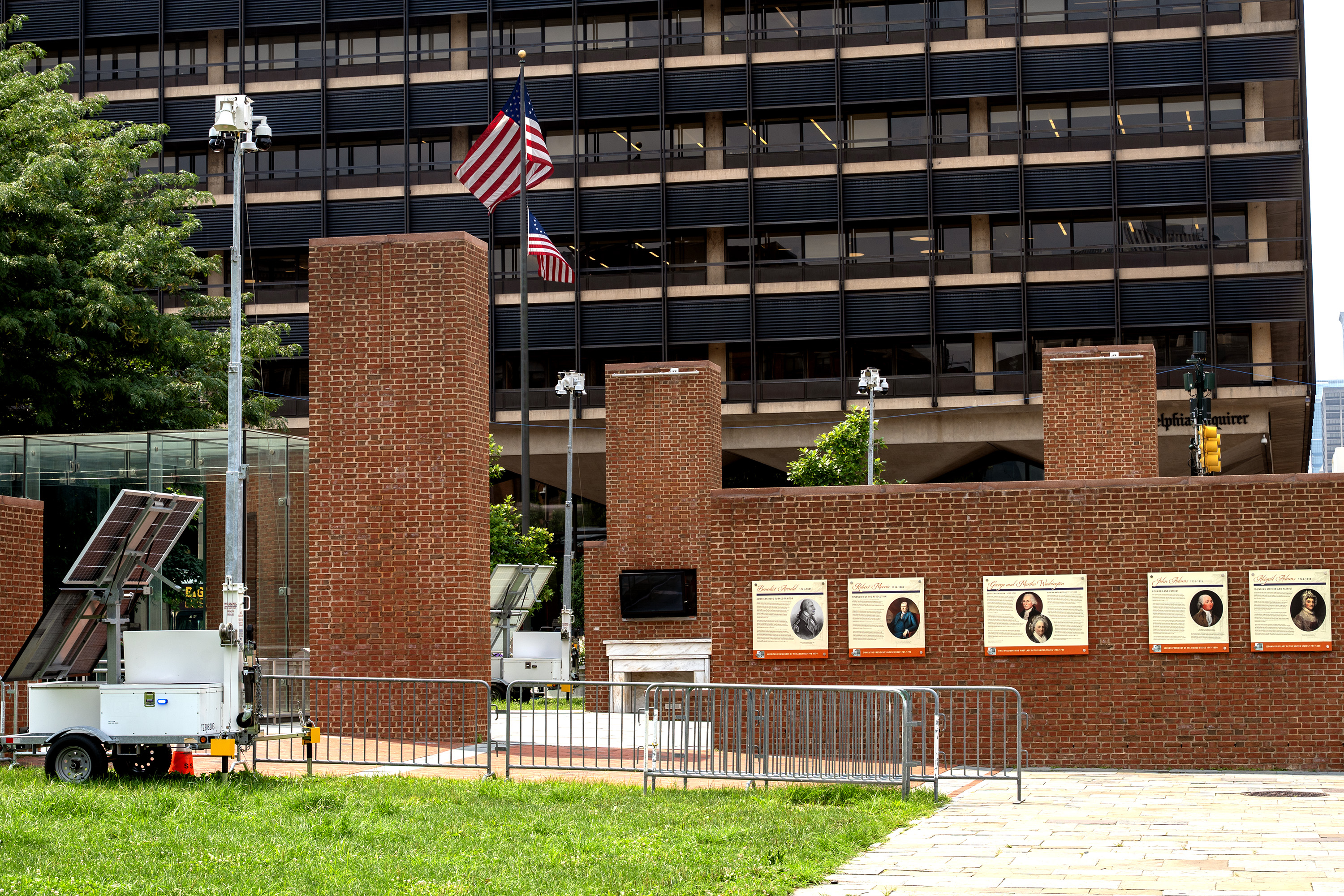
After months of legal battles and under the cover of night in mid-July, President Donald Trump’s administration installed its own watered-down panels at the National Park site on Independence Mall, panels that experts say dilute Washington’s position as an enslaver of human beings. Large, solar-powered surveillance cameras now loom over the President’s House, giving it an eerie surveillance-state vibe.
The President’s House on Independence Mall is flanked by three mobile surveillance trailers with cameras on Aug. 11.Tom Gralish / Staff Photographer
So let’s give Big Brother a taste of its own medicine by putting the Portal at the site so we can keep an eye on what the federal government is doing there at all times. Plus the more people who see the President’s House, the more questions they may ask about it, questions that could lead them to research the full history. And even if Philadelphians can’t talk to people through the Portal about what’s happened at the site, I guarantee they will volunteer to hold up signs in front of it that speak the truth.
Outside a cheesesteak shop
Several people who didn’t skirt around the fact that Philadelphia is probably most internationally known for the steak sandwich that carries its name suggested putting the Portal right outside of a cheesesteak shop to help give folks a taste of Philly.
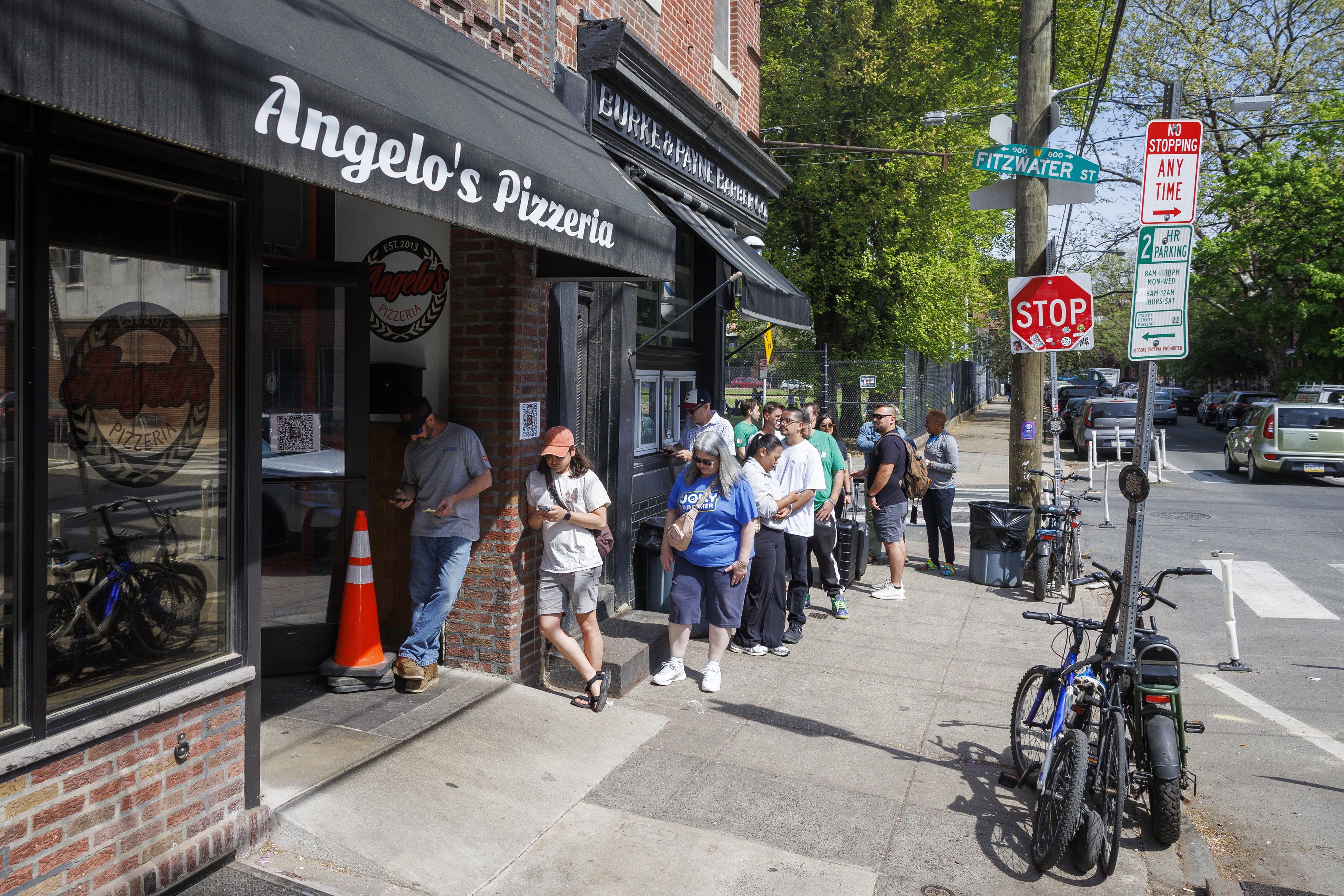
These sharp readers were on a roll, but they differed on exactly which shop the Portal should go to. Some said it should be flanked by cheesy Pat’s and Geno’s, so people can gawk at tourists, while others suggested local favs, like Angelo’s or Dalessandro’s, so visitors know where to go.
Patrons of Angelo’s Pizzeria in South Philly wait in line for the shop’s famous cheesesteaks last year. Alejandro A. Alvarez / Staff Photographer
Though it’s cliche, I’m on board wit this idea for one reason: I’ve been hoping for a Portal love connection story since day one and if there’s anywhere a meat-cute is bound to happen in Philly, it’s at a cheesesteak shop.
I can see the handwritten love sign on dirty butcher paper being held up to the Portal now:
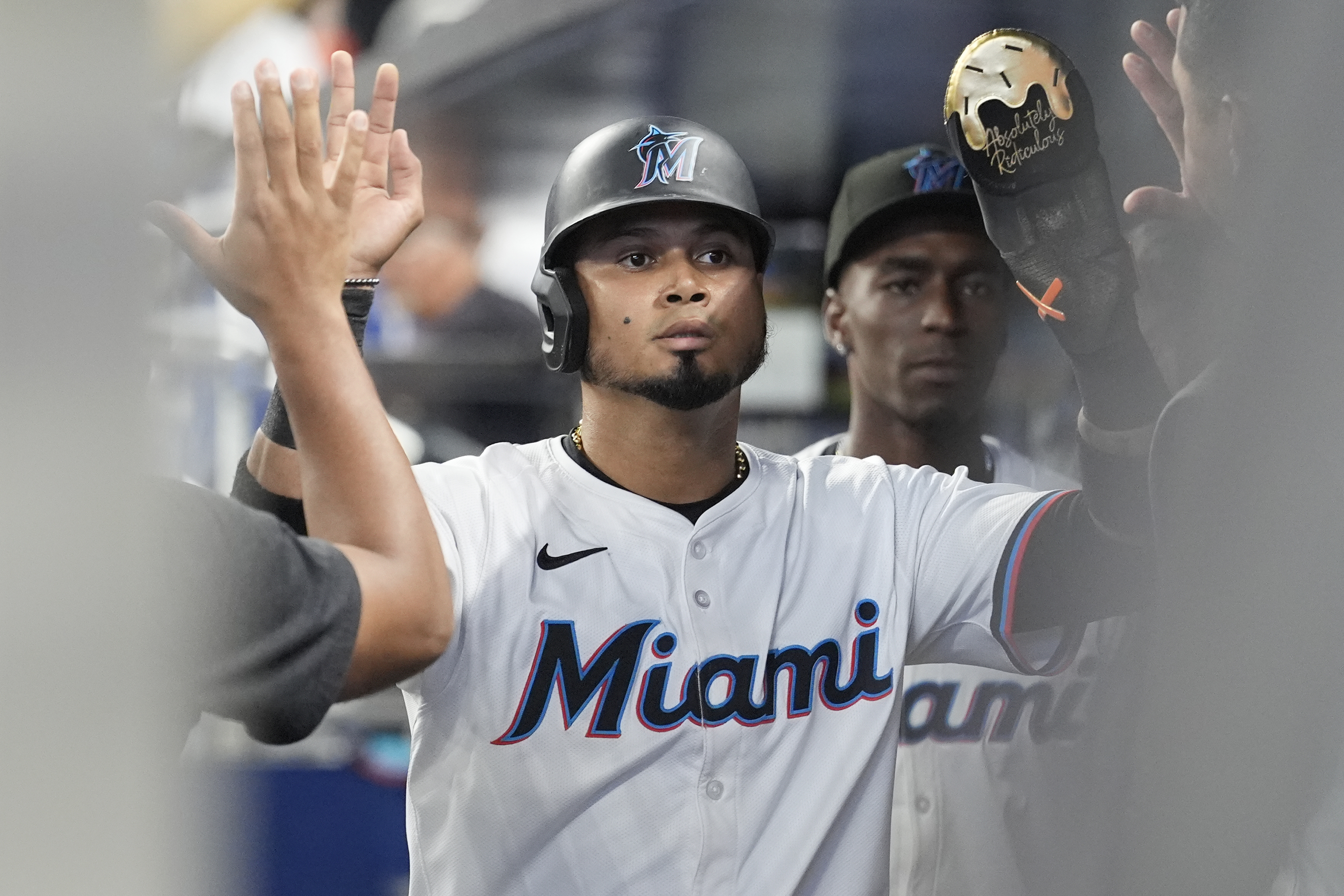
Luis Arraez opened the door and revealed the secret to winning three batting titles.
Not even Tony Gwynn Jr. could believe it.
“Listen,” said the son of the late Hall of Famer, “my dad was as much of a worker as possible. Never once did he have a tee and a net in his hotel room. I walked into the room and watched this man go to work. It was mind-blowing.”
In fact, since 2021, the new Phillies second baseman has traveled with a portable tee, a fold-up net, a short bat, and a small weight that fit neatly into his backpack. He sets it all up in his room, takes full or partial swings (without a ball) to perfect his compact stroke, and often sends the video to his personal hitting coach in Miami.
“Just a short move, point A to point B, and that’s all he was working on the whole time,” Gwynn said on The Inquirer’s Phillies Extra podcast. “And at that point I was like, ‘OK, this gentleman is a little bit different.’”
In 2026, he’s actually one of a kind.
Arraez, 29, ranks in the lowest percentile among major league batters in bat speed, hard-hit rate, and barrel percentage, which measures how frequently a hitter makes contact with the optimal combination of exit velocity and launch angle. And these days, baseball is obsessed with exit velocities and launch angles.
Phillies second baseman Luis Arraez has won three batting titles.Yong Kim / Staff Photographer
Here’s the thing, though: Arraez has more hits than any player since 2022. He has won batting titles in both leagues: 2022 with the Twins (.316), 2023 with the Marlins (.354), and 2024 with the Marlins and Padres (.314).
Oh, and did we mention he hardly ever strikes out?
Entering the weekend, Arraez made contact on 92.2% of his swings. The major league average was 76.4%. His career strikeout rate was 5.9%, including 4.5% this season. In the last 50 years, three players struck out less than 6% of the time while maintaining a .300 batting average: Arraez, Phillies interim manager Don Mattingly, and the late Tony Gwynn, a first-ballot Hall of Famer.
“The skills that he has, they are so different that I think players in a lot of ways consider it a novelty,” said former Marlins general manager Kim Ng, who traded for Arraez before the 2023 season. “It doesn’t have to be just shooting for pull-side fly balls in hopes they’ll go over the fence.”
Yet the industry no longer values a contact-hitting savant. Arraez has been traded three times in the last 3½ years. And he went unsigned as a free agent last winter until a few days before spring training when the Giants gave him a one-year, $12 million contract.
On Aug. 3, the Phillies made a deadline trade for Arraez, a lefty-hitting second baseman, because their search for a righty-hitting outfielder lacked appealing options. And they were able to fit him in only because Bryce Harper consented to move back to right field for the balance of the season, part of a realignment in which they displaced three-fourths of the infield.
But now that Arraez is here, his one-of-one skill set will be on display for a new audience. The Phillies will form their opinion about his value, especially to a lineup that tends to strike out frequently and struggles at times to score without hitting home runs.
Maybe they will try to re-sign Arraez in the offseason. Maybe he will pack up his travel batting cage and shuffle to his sixth major-league team in a nomadic career. Whatever the case, the Phillies will have baseball’s most unique hitter for the playoff push.
Luis Arraez had his best season with the Marlins in 2023.Marta Lavandier
‘Infectious’ style
The Phillies aren’t the first team to move chess pieces around the field to accommodate a trade for Arraez.
Jazz Chisholm Jr. was an All-Star second baseman for the Marlins in 2022. But after a 93-loss season, they swapped righty Pablo López and two minor leaguers to the Twins for Arraez and moved Chisholm to center field.
“We were just lacking bats,” Ng said by phone last week. “Jazz was really good at second, but we also felt like he could be put in the outfield. We felt like he would really grow into the position, and then, you’d have two premium bats in the middle of the field.”
Arraez held up his end. He mimicked Ted Williams for almost half the 2023 season, carrying a .401 average into the final week of June. He finished with 203 hits, a career-high, and won his second batting title.
But Ng recalled Arraez’s impact beyond the knocks.
“I think our players were in awe of him,” said Ng, the commissioner of the 2-year-old Athletes Unlimited Softball League. “He’d walk up to the plate and size up the field and take note of where players were positioned, and he’d just put it where they weren’t. And I think the players were just so awe-struck by him and this uncanny ability that he has, and we were hoping that that would rub off in some ways on others.
“And I’m not saying it was a direct correlation, but if you look at our one-run record in 2022 vs. our one-run record in ’23, vastly different. Is it all because of Luis? No. We tried to change the way we thought about the game across the board. But Luis was a huge instrument to that change.”
Indeed, the Marlins went from 69 wins to 84 and made the playoffs largely due to a 33-14 record in one-run games. Arraez finished eighth in the NL MVP voting.
Ng said teammates became aware of Arraez’s work habits, including hitting for 15 to 20 minutes each morning in a batting cage at his house, similar to his exercises in road hotels. Seven-time All-Star outfielder Nelson Cruz introduced him to the daily ritual when they were teammates with the Twins.
“I do my routine every day,” Arraez said. “I’ll bring my short bat and my regular bat and a little heavy weight to do my routine and then to prepare my body and especially my mind.
“It’s helped a lot. You can tell. I feel really good when I do my routine every day.”
And when Arraez got to the ballpark, the young Marlins would either pick his brain about his approach at the plate or absorb it like a sponge by watching.
“His personality and the effect that he had on the team, it really was infectious,” Ng said. “And I do think that he was one of the core pillars of that team.”
The Phillies are seeing similar benefits. Mattingly batted him cleanup to utilize his contact skills in front of Harper. And even as Arraez cooled after going 5-for-13 with four RBIs in his first three games, the Phillies’ collective strikeout rate plummeted from 23.6% before he arrived to 15.9% through his first 11 games.
Coincidence? Maybe.
Then again …
“I mean, I’ve definitely learned a lot from watching him,” Alec Bohm said. “It’s the modern-day Tony Gwynn. Like, it’s one of the best bat-to-ball [hitters] that any of us have ever seen. So, yeah, I think obviously bringing a guy like that in not only makes the lineup better, but it’s also just hitters watching other good hitters. I think there’s something to be said for that.”
Luis Arraez went 5-for-13 in his first three games with the Phillies.Monica Herndon / Staff Photographer
‘Know thyself’
Ng left the Marlins amid a reorganization of the front office after the 2023 season. In May 2024, Arraez got traded to the Padres.
Upon arriving in San Diego, he visited the 9½-foot tall statue of Tony Gwynn — titled “Mr. Padre” — outside Petco Park.
And he asked Gwynn’s son to accompany him.
“I was like, ‘Of course,’” said Gwynn Jr., an eight-year major-league outfielder and now a Padres radio broadcaster. “Because I had seen Luis play, and it was very apparent his style of hitting was different than everybody else in Major League Baseball and had some resemblance to my father.”
Arraez seems to appreciate baseball history, maybe because it often feels like he’s from a bygone era. With the Twins, he became close with Rod Carew, the Hall of Famer who mentored him about using the field and being satisfied with line drives and ground balls instead of trying to pull everything in the air to right field.
Even before the trade to San Diego, Arraez heard the comparisons to Gwynn. His nickname: “La Regadera” — “The Sprinkler,” in Spanish — because he sprays the ball around the field.
If he played 35 years ago, he would’ve fit right in alongside Gwynn, Carew, and Wade Boggs. As Phillies hitting coach Kevin Long said, Arraez “would’ve been elite.”
But the 21st century launch-angle craze has changed not only hitting styles but also how players are paid. In 1991, when hitting for average still mattered, 29 players batted at least .300. Last season, there were seven; Trea Turner was the only .300 hitter in the National League.
“When there’s economics involved, players aren’t dumb,” Gwynn said. “They’re going to shoot for the moon in terms of paydays.”
And it’s moonshot homers, not singles up the middle that pay the most. Arraez, signed by the Twins as a teenager out of Venezuela for $40,000, has never had a multiyear contract. His highest annual salary: $14 million in 2025, hardly a pittance but tied for only 63rd among position players last season.
But his approach at the plate hasn’t changed to amplify his bank account.
“I can’t change,” Arraez said. “If I change, I’ll be in my house watching the guys play baseball.”
Said Gwynn: “There is certainly space in this game, if you’re going to be as skilled as him, to make money that can set you up for the rest of your life. Maybe not in the 30s and 35 million [per year], but you can get in that 10- to 20-[million] range and do pretty well for yourself.
“And I think Luis is unique in that self-awareness. My dad used to say this all the time — and it was part joke but part serious — and that’s ‘know thyself.’ And Luis knows himself very well, and he has chosen to maximize the skill set that God has given him.”
So, Arraez packs up his backpack and moves right along, from hotel room to hotel room, playing the hits like they used to do.
Like scattered billiard balls, 16 Early Head Start children scampered across a rubber-matted playground in Southwest Philadelphia last week.
Vigilant for tumbles or conflicts, four teachers calmly monitored the 1- and 2-year-olds in their high-energy frolic at an early learning center run by KenCrest, a nonprofit that operates Head Start and other programs in seven neighborhoods throughout Philadelphia.
Head Start’s low ratio of one teacher for every four toddlers is a hallmark of standards for the 61-year-oldfederal program that provides free education, health, nutrition, family support, and daycare services for low-income children from birth to age 5.
But now, advocates say, Head Start risks being eviscerated by changes proposed by the Trump administration.
The vaunted teacher-child ratio, along with other foundational principles that make Head Start unique, is being threatened by plans to “deregulate” the program — overhauling the way it operates by eliminating more than 1,400 regulatory mandates that dictate how the program is administered.
“We could be going to two staff members for 25 toddlers and two for 30 older kids,” said Melanie Brennan, executive director of early learning programs at KenCrest.
“What’ll bathroom time look like?”
The Trump administration defends its proposed changes as the building blocks for a better Head Start, which serves 700,000 low-income children nationwide, including an estimated 7,500 in Philadelphia.
“We are removing unnecessary bureaucracy, strengthening nutrition and physical health, trusting parents and local communities,” said Health and Human Services Secretary Robert F. Kennedy Jr., whose department administers Head Startat the federal level.
That does not ring true to Head Start professionals in Philadelphia.
“It’s laughable to say all they’re trying to do is take away some bureaucracy,” Brennan said. “By ending rules that guide Head Start’s high, uniform standards, the administration’s real goal is to leave the education business.”
In Philadelphia, more than $70 million in federal funding for Head Start goes through the Philadelphia School District, the program’s largest provider in the city, said Diane Castelbuono, the district’s deputy chief for early learning.
KenCrest Director Josie Jones with staff and Early Head Start students.Jessica Griffin / Staff Photographer
The district uses that money to directly operate Head Start programming in more than 60 school buildings, mostly elementary schools, throughout the city, she said. It also works with approved contractors who run Head Start classrooms at approximately 75 childcare sites in Philadelphia, Castelbuono added.
Asked for comment on the proposed changes, the school district said in a statement that the Head Start program has “positively impacted” students and that district officials “remain committed to preserving the robust standards that have proven essential to our program’s success.”
‘Stunned and sad’
While only Congress can repeal the statutory authorization for Head Start, which has an annual budget of about $12 billion, opponents of the Trump administration’s proposal warn the new rules would weaken the program to the point it became unrecognizable — or stopped existing altogether.
The plan, called “Reducing Federal Burden for Head Start Programs,” was released Aug. 7.
Public comment will be accepted until October, when the administration hopes to finalize the rules.
Kush Desai, a spokesperson for the White House, said the changes would enable the government to provide a stronger program that ensures services “are delivered effectively to children and families in need” by reducing “unnecessary administrative burden.”
Advocates who have spent their late-summer vacations reading the complex, nearly 200-page document say they are in the process of marshaling opposition, which they hope will delay or alter the administration’s plans.
“There’s so much to unpack,” said Kara McFalls, executive director of the Pennsylvania Head Start Association in Harrisburg. “We’re checking with experts to see if Head Start becomes gravely harmed.”
Advocates say initial readings of the new rule justify their concerns.
Beyond altering teacher-child ratios, the administration would lower the cap on Head Start administrative program costs from 15% to 5%, which means local programs could spend only up to 5% of their total budget on operational overhead like management, human resources, IT, and administrative salaries.
That would be “devastating,” McFalls said, making it harder for programs to pay staff working in these departments.
An Early Head Start student plays with a doll at KenCrest in Southwest Philadelphia.Jessica Griffin / Staff Photographer
Additionally, the administration would require instruction to be conducted in English only — which could hit several Head Start programs across the city that offer bilingual education.
“That policy would be ridiculous and biased,” said Rachel Sanders, executive director of Your Child’s World Learning Center, which includes Head Start programs in Southwest and Northeast Philadelphia, as well as in West Oak Lane. “Our children speak multiple languages.”
While all primary instruction is in English, Sanders said, children who speak Spanish, Mandarin, Arabic, or another language are taught the lessons either by teachers fluent in those languages or by translators brought in to help.She added that 50% of the students in the Northeast location do not speak English on the first day of instruction, but that the additional support helps them eventually learnthe language.
“No way would we ever discontinue translating,” she said.
Under the Trump administration plan, requirements for math and literacy curricula would be removed. Also gone would be stipulations that programs check on whether families have provided their children with immunizations, dental visits, wellness checks, and mental health consultations.
And hygiene training — including the Head Start tradition that children brush their teeth in class — would end.
The proposed changes “left me stunned and sad,” said Chandell Craig-Cromwell, 39, of West Philadelphia, a mother of two Head Start graduates who works in human resources in a city agency.
“This isn’t just education, or babysitting. It’s developmental support,” she said. “I’m upset for all the moms who’ll get this new version of Head Start.”
If the administration alters Head Start so profoundly, said Sharon Wolf, an early education expert at the University of Pennsylvania, she questioned whether the program should still keep its name.
“I fear we could be moving to weakened, ordinary childcare,” she said.“Then, is it Head Start anymore?”
Madison Marino Doan, a policy analyst in the Center for Education Policy at the conservative Heritage Foundation, disputed the notion that the administration’s proposal represented an effort to eliminate Head Start.
“The current proposal under consideration is an effort to deregulate the program and give states greater flexibility to design programs that reflect the needs of their communities while maintaining current funding,” she said.
Doan added that Congress should simply end the program — a recommendation made in the foundation’s Project 2025, a conservative blueprint for a second Trump administration.
Some advocates warn the administration’s push to change the program has more to do with ideology than concerns about efficiency.
Tyrone Scott, a director at First Up, a Philadelphia-based early education nonprofit, said he often runs into people who self-identify as conservatives at public forums who say that part of Head Start’s true mission is to “indoctrinate kids with a political ideology that includes ideas like racial justice.”
But, he said, the mission of Head Start is a lot simpler than that.
“It teaches kindness,” he said. “That isn’t a political philosophy.”
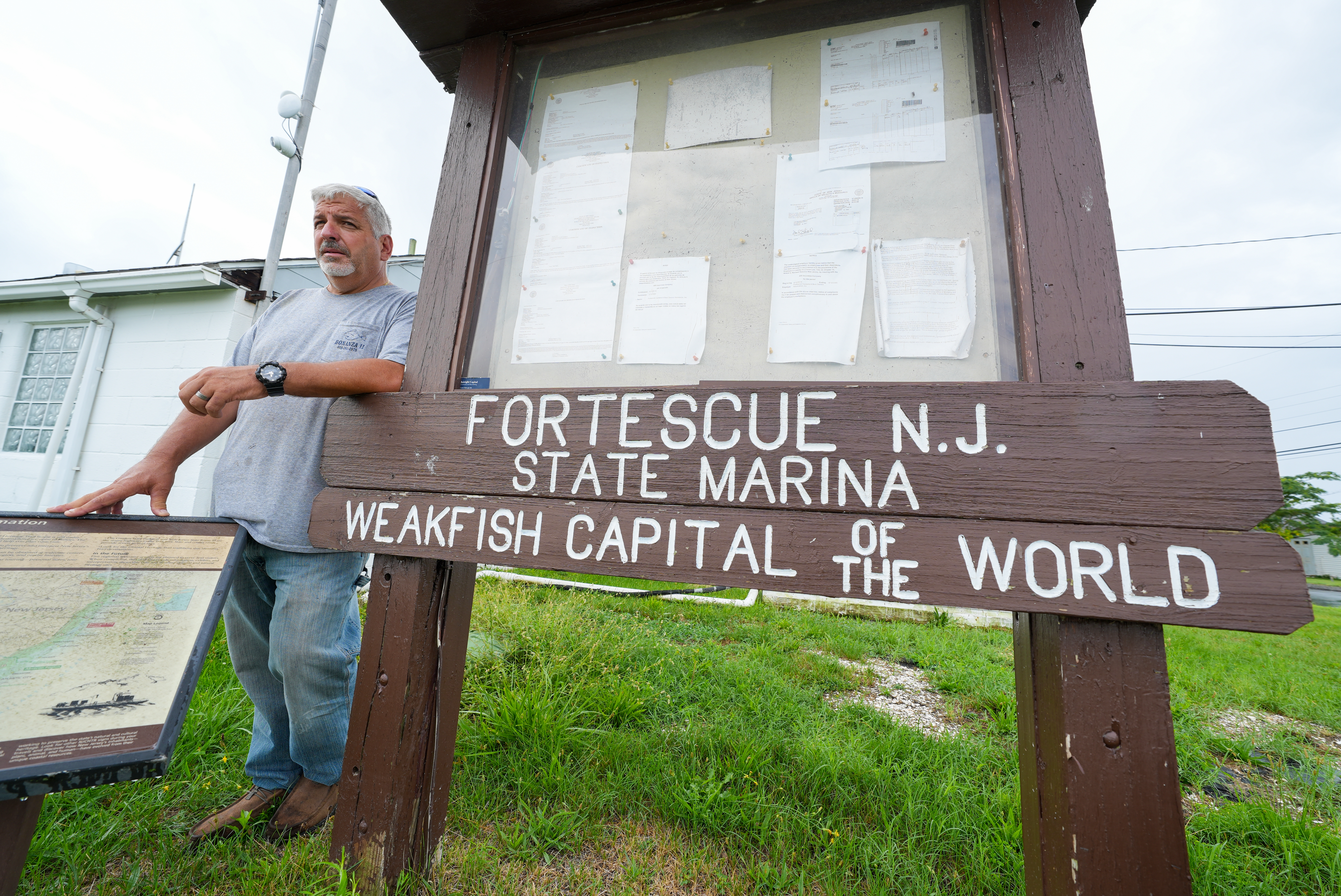
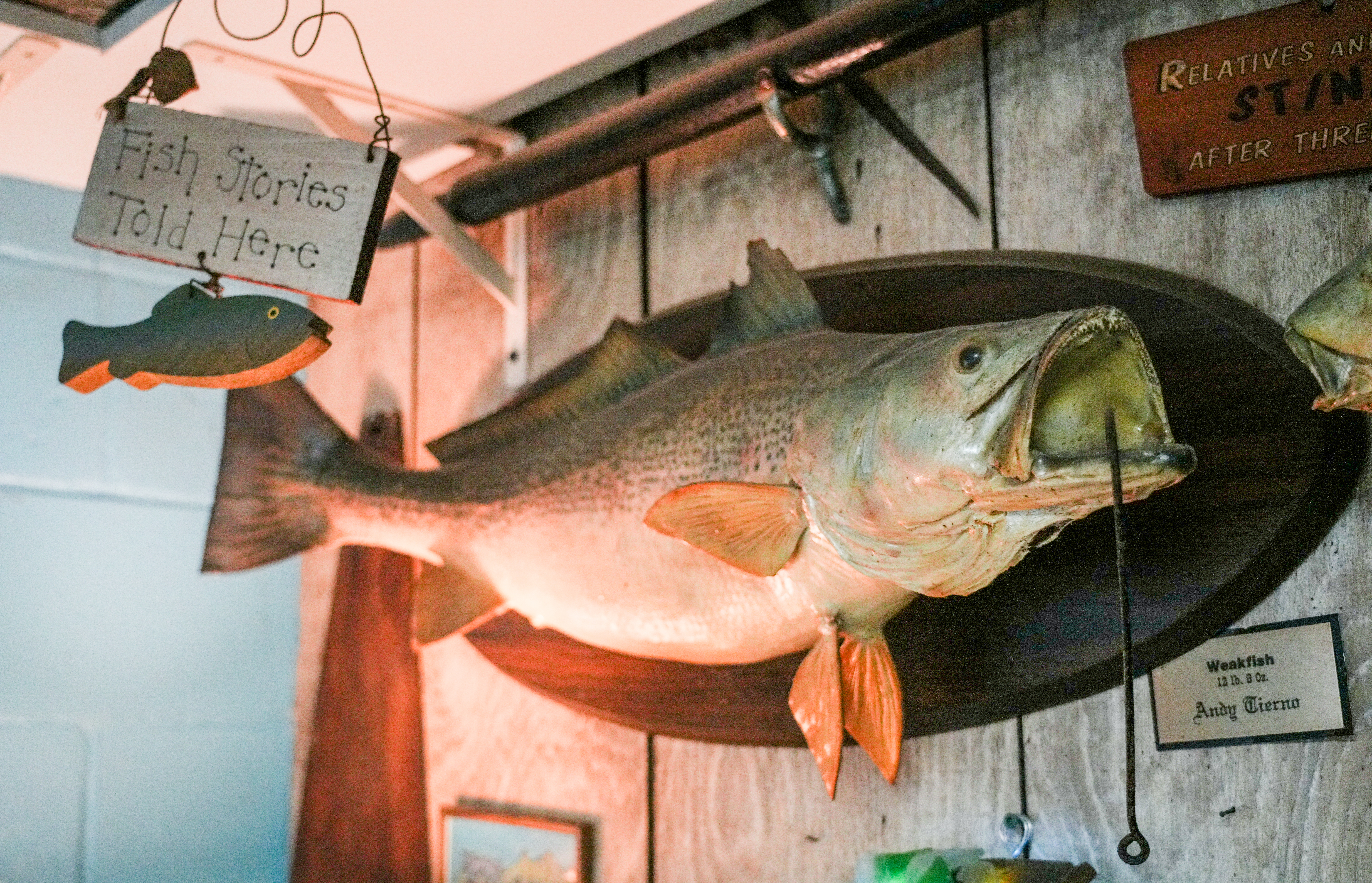
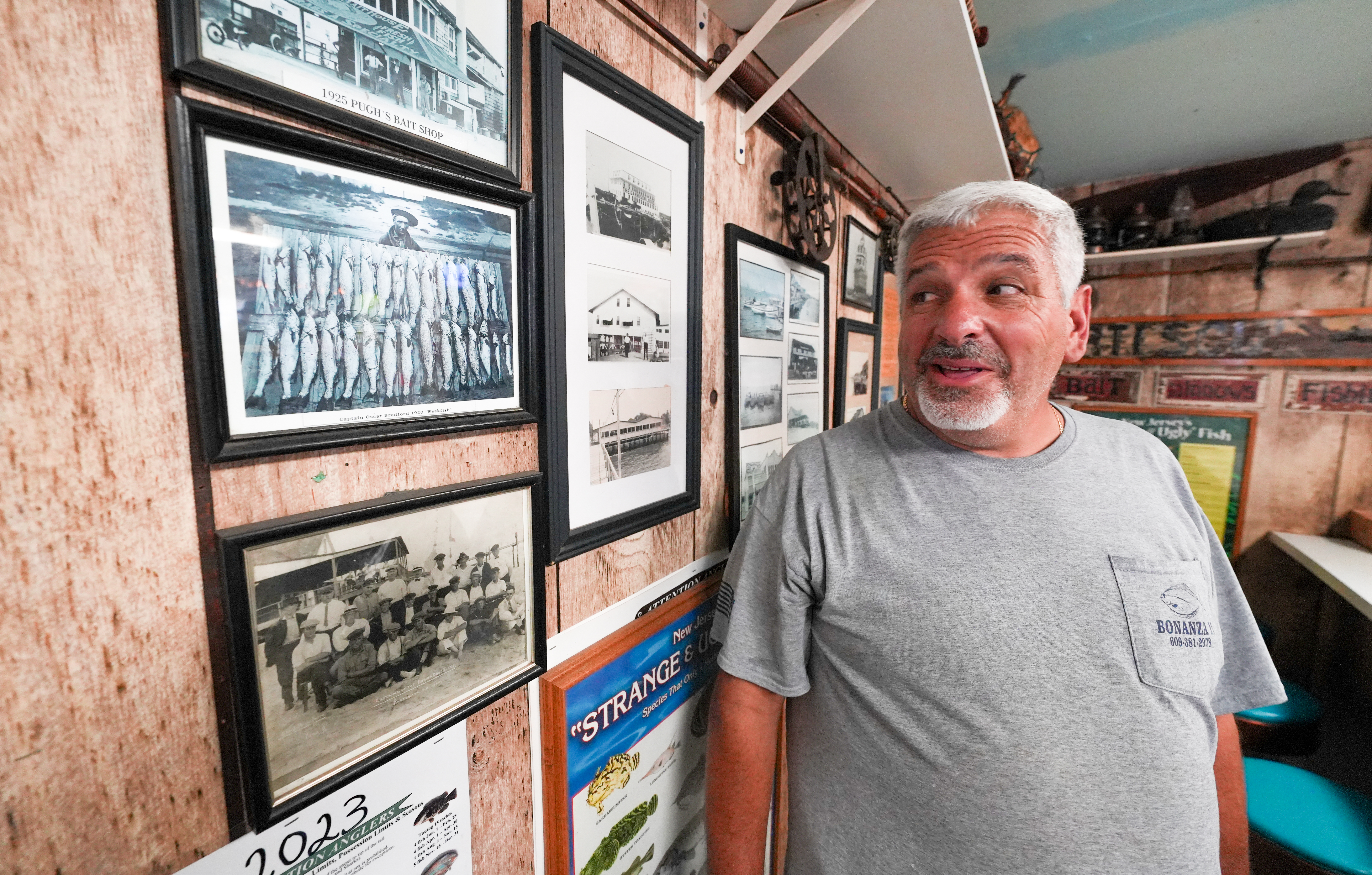
CUMBERLAND COUNTY, N.J. — Taxidermy and weathered photos line the walls at Higbee’s Bait and Tackle in Fortescue, artifacts from bygone days when the sleepy Delaware Bay town was truly the “weakfish capital of the world.”
The taxidermy is a dusty, 12-pound “tide runner,” the nickname fishermen bestow on the biggest, trophy weakfish, a member of the drum family with a tan, often iridescent body and a reputation for fighting hard on a fishing line. The black-and-white photo shows a single fisherman standing beside his catch, about 30 weakfish of various sizes.
Tide runners are unicorns today, a rarity on New Jersey coasts and across the bay, in Delaware. Catch limits enacted by state fisheries would prevent a single fisherman from catching dozens of fish today, though most would be happy with one legal keeper they could fry up in lemon and butter.
Fishermen have plenty of theories about where all the weakfish have gone. They blame dolphins and dogfish for gobbling up the young; nuclear power plants; the rise of other popular game fish, like striped bass; and offshore seafood trawlers.
Some are introspective.
“I’ll be real honest. It’s us. Back in the day, in the ’80s, we fished these things so hard,” said Mike Rothman, captain of the Bonanza II, a 65-foot charter boat out of Fortescue. “We did it to ourselves, and I’m the first one that — 100% — we did this to ourselves.”
A weakfish hangs on the wall of Higbee’s Bait and Tackle located at the Higbee Marina on Monday, Aug., 3, 2026. Once known as the “Weakfish capital of the world,” locals are curious where the fish has gone.Tim Hawk / For The Inquirer
Jessica Gorzo, a scientist with the New Jersey Department of Environmental Protection, who’s studied weakfish, said the population has been on the decline since the mid-2000s. She said the decline over those two decades is the result of natural mortality from predators, not fishing.
“The prevailing thought is the majority of predation is likely dolphins, offshore, in the winter. It’s estimated that 55% of the mortality can be attributed to dolphins,” Gorzo said. “Coming in second, a far second at 21%, is attributed to striped bass, but the dolphins are taking the lion’s share.”
Like all things under the sea, however, there’s a degree of mystery involved in spawning stock estimates. Gorzo said weakfish spawning stock estimates, in 2017, were 1,922 metric tons, which was a low number.
“To have a healthy weakfish population, the spawning stock threshold would be 6,170 metric tons,” she said.
The Marine Mammal Protection Act protects dolphins, and most fishermen and beachgoers agree their populations have grown along the Jersey coast in the summer for decades.
“More than ever,” said Joseph LoBianco, owner of Cape May Bait & Tackle. “When I go out on the Delaware Bay, I see them year-round. They are here all the time, and they’re eating a lot of the smaller fish.”
‘I would’ve released all those tide runners’
In 2010, New Jersey tightened weakfish regulations, allowing fishermen to keep just one fish, 13 inches or longer, per day, but many said it was too late to stop the population free fall.
“Back in the day, you were allowed to keep 15 fish per fisherman,” Rothman said.
Mike Rothman looks at a picture of weakfish, from 1920, that hangs on the wall of Higbee’s Bait and Tackle located at the Higbee Marina, Monday, Aug., 3, 2026. Once known as the “weakfish capital of the world,” locals are curious where the fish has gone.Tim Hawk / For The Inquirer
Gorzo said tight regulations on weakfish should result in a comeback. That’s what happened with striped bass, arguably the most popular sport fish along the Jersey Shore, a species that seems more abundant today than it was decades ago.
“Striped bass do seem to be doing really well,” she said.
Striped bass are also voracious and grow large enough to swallow bigger weakfish.
“They are the vacuum cleaners of the ocean,” Rothman said of striped bass.
In May, Gorzo appeared on the Finnsylvania podcast to discuss the decline of weakfish. The episode was titled “The Ghosts of Cape May,” another longtime weakfish destination for anglers. Host James Suleski reminisced about catching them during childhood summers there.
“They were just so abundant,” Suleski said.
Suleski, in his podcast, described the population collapse as one of the biggest mysteries in marine biology.
Around the same time the episode was released, avid fisherman Frank Ruczynski posted on Facebook, reminiscing about Fortescue’s claim to be the “weakfish capital of the world.” It received close to 700 likes and 200 comments, many of which discussed theories or dismissed the issue.
“They are probably cyclical like many species,” one man wrote.
Another said you could almost walk across the backs of weakfish in the bay at one time.
“If I would’ve known, I would’ve released all those tide runners,” another wrote.
Weakfish caught by New Jersey angler Frank Ruczynski.Frank Ruczynski
Ruczynski, who also works for NJDEP, said 2026 was especially bad for him.
“Overall, I think it’s a mix of 100 different things going on,” he said in May, in Fortescue. “They just disappeared. It’s a shell of what we had here, back in the day.”
Ruczynski said he’s followed weakfish north, up into Cape May County and even into New York, and he wondered whether water temperatures were prompting the species to move. He said he received a message from a man in Portugal — straight east from New Jersey — who claimed that he caught a weakfish there.
Weakfish caught by New Jersey angler Frank Ruczynski.Frank Ruczynski
Rothman, the mayor of Downe Township, which includes Fortescue, said he can take customers out and still catch weakfish, but he relies on other species, or whale and dolphin sightseeing, and even dinner cruises, for the bulk of his business.
“I’m in the entertainment business these days,” he said.
Fortescue has never been bustling as far as Shore towns go. There are no traffic lights, few businesses, and plenty of biting greenhead flies. Fishermen will always go there, but the loss of the weakfish gives it a bit of a ghost-town feel at times.
“We had a world-class fishery here, right in our backyard,” Ruczynski said.
Across the road from Rothman’s boat, at the tackle shop, owner Cliff Higbee Sr. said there were far larger weakfish in the Delaware Bay than the taxidermy on his wall.
“We had 16-, 17-pounders in here,” he said. “Used to at least.”
Higbee isn’t waiting for the tide runners to return, though. The family tackle shop is for sale for just under $400,000.
Cliff Higbee Sr. owner of Higbee’s Bait and Tackle located at the Higbee Marina, talks about the lack of weakfish, Monday, Aug., 3, 2026. Once known as the “Weakfish capital of the world,” locals are curious where the fish has gone.Tim Hawk / For The Inquirer
Two days of joint practices with the New England Patriots offered the Eagles the best barometer they will get during this training camp to see where they stand.
Don’t expect to see many regulars when the teams collide again Saturday night for preseason game No. 2. The Eagles rested most of their starters in their preseason opener in Baltimore and likely will do the same again.
Still, roster spots and places on the depth chart are up for grabs. With that in mind, here are the players and positions we’ll be watching closely on Saturday night:
Who gets the start, Andy Dalton or Tanner McKee? The competition for the No. 2 spot behind Jalen Hurts is ongoing, Nick Sirianni says, but Dalton appears to be the leader for the time being, and the Eagles said as much by starting him in their first preseason game.
That being said, Dalton wasn’t very impressive playing alongside his fellow backups trying to execute a toned-down version of Sean Mannion’s playbook. Neither was McKee.
Will Andy Dalton get a second straight preseason start for the Eagles?David Maialetti / Staff Photographer
Can the offense — and the quarterbacks — show a little more life on Saturday?
The Eagles don’t want to put too much of their offense on film, but they do want to make one of their backup candidates attractive for a potential trade.
Rookie quarterback Cole Payton should again be the closer. He made some plays with his legs in his pro debut, but he has been turnover-prone during training camp, and while the Eagles like the excitement his athleticism offers, a more sound performance in the pocket and with his arm will be desired. That’s assuming the third-string offensive line can protect him.
It’s not as sexy as a quarterback battle, but the competition for the final spots on the offensive line is a good one.
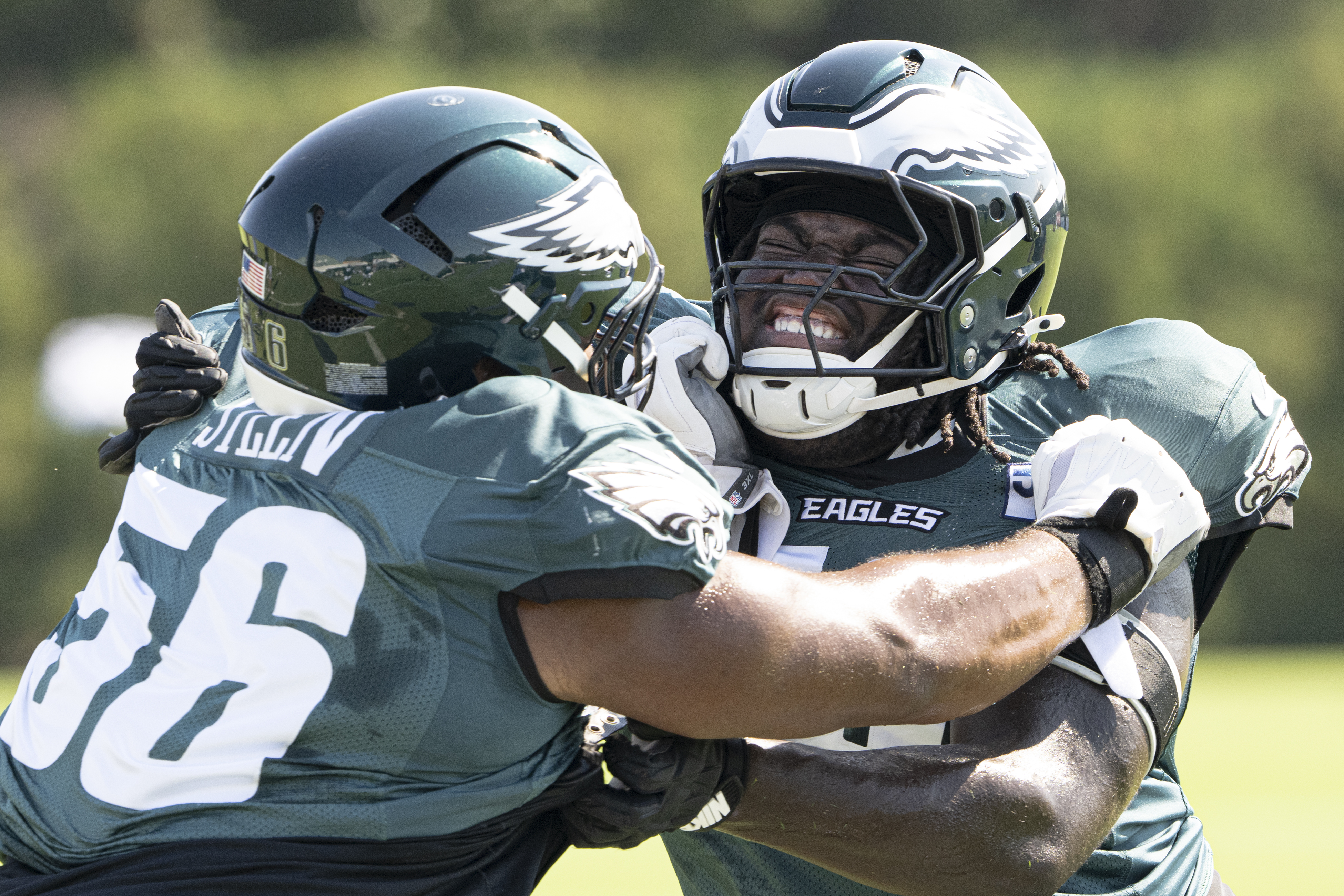
It’s probably fair to assume eight spots are locked up by Jordan Mailata, Landon Dickerson, Cam Jurgens, Tyler Steen, Lane Johnson, Markel Bell, Fred Johnson, and Drew Kendall. But the most likely scenario is the Eagles keep 10 players here, and the final two spots are seemingly still available.
Willie Lampkin has come on strong in camp and performed well in his first preseason game. The undersized interior lineman played both center and guard and had some noticeable plays. Rookie guard Micah Morris, a sixth-round pick, may currently have the No. 10 spot and played 34 snaps (77%) in the first game. As did Jake Majors, who was on the practice squad last year and, like Lampkin, can play both center and guard.
Tyler Steen (left) and Micah Morris practice during a training camp drill.Jose F. Moreno / Staff Photographer
Others are in the mix, too. The Eagles have been repping veteran tackle John Ojukwu at guard, but he’s unlikely to play after missing practices with a pectoral injury. Veteran guard Michael Jordan has NFL starting experience that the Eagles could value on their 53-man roster.
Myles Hinton, meanwhile, has struggled in his transition from tackle to guard in his second NFL training camp. He had a rough joint practice session Wednesday and was beaten badly in most of his one-on-one reps.
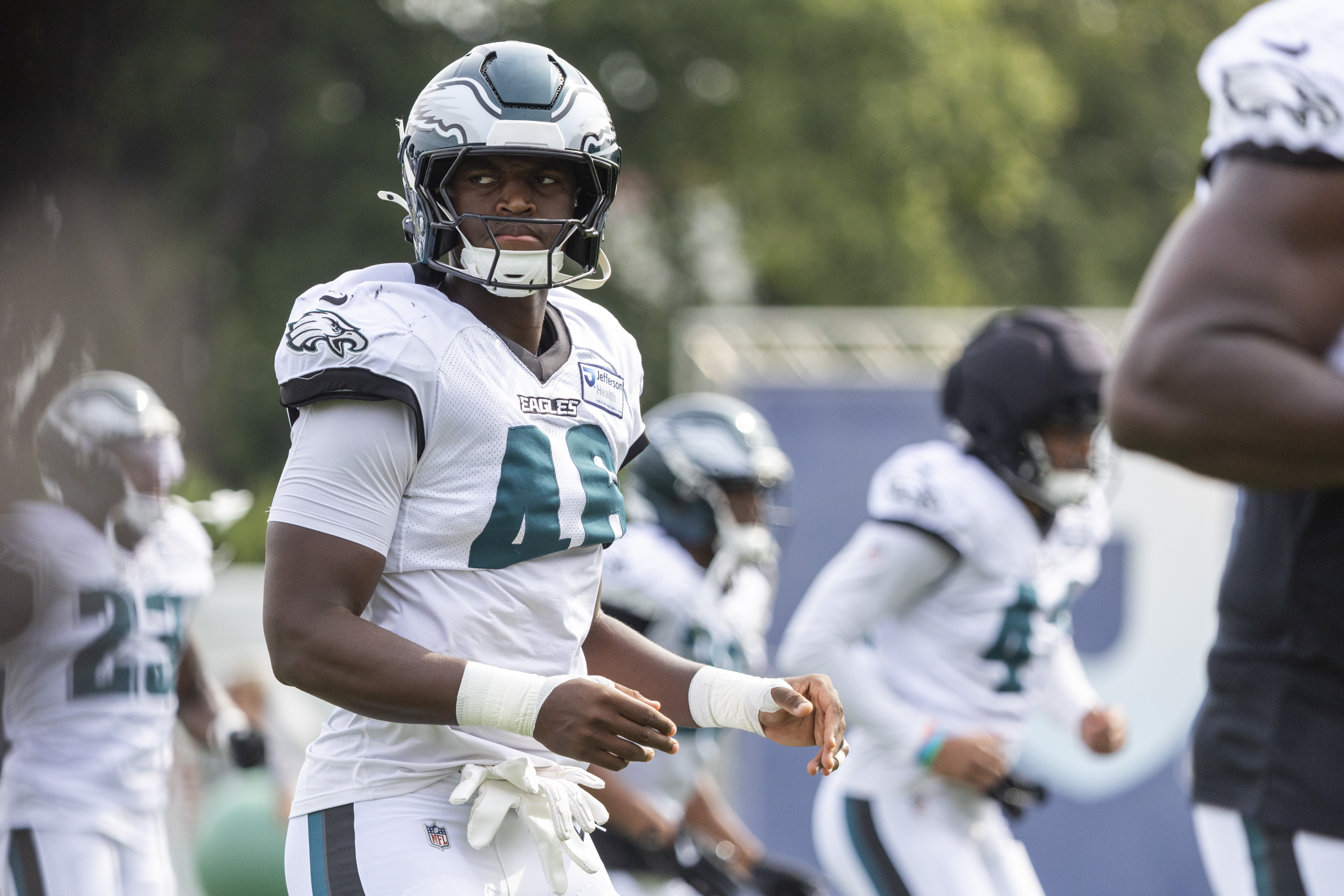
Cooper played 29 snaps in the first preseason game, eight more than the next wide receiver on the list (Quez Watkins). It was fair to expect a little less run from the second-year camp standout, who has taken advantage of the absences of DeVonta Smith and Makai Lemon during team drills.
But Cooper has come back to earth a little bit. He made a few plays in the 24-7 loss to the Ravens, catching two passes for 21 yards, but he also had a drop on what would have been a first-down conversion.
Wide receiver Darius Cooper can make a persuasive bid for a roster spot on Saturday. Yong Kim / Staff Photographer
Did the Eagles reveal with their usage that Elijah Moore (7 snaps) is above Cooper on the depth chart? It’s probably a little unfair and unwise to read that deeply into it, but Moore made a big play on a deep ball from Hurts during the joint session Wednesday, while Cooper was a little less visible.
Cooper’s job seems safe for now, but a strong showing Saturday can’t hurt.
Mac McWilliams and Kelee Ringo
Speaking of players who have been up and down of late, McWilliams played most of the game in Baltimore, logging 65 snaps (81%). Pro Football Focus had him allowing four catches on four targets for 37 yards and a 105.2 passer rating against. He also had two penalties.
It seems like the competition for the depth spots at corner is still ongoing. The first four spots on the depth chart are set with Quinyon Mitchell and Riq Woolen on the outside, Cooper DeJean at nickel, and Jonathan Jones as the primary backup. But Jones has missed time with a shoulder injury, and behind him the Eagles are looking for more consistency.
Cornerback Mac McWilliams (left) could use a better showing on Saturday that what he displayed in Baltimore. David Maialetti / Staff Photographer
McWilliams has gotten first-team reps recently, and he seems to be ahead of Ringo, but Vic Fangio seemed to sort of challenge Ringo earlier this week when he said he had a sense that Ringo “could be coming.”
“He’s been everybody’s piñata doll for a while,” Fangio quipped.
The Ringo experience was on full display in Baltimore. He was beat for a touchdown and also had an interception. Ringo has been a primary special teamer and a good one, but he may need the Eagles to willingly keep six cornerbacks in order to make the team. And with Michael Carter II, a safety, in line to play backup nickel and be on the field in dime packages, it’s a bit unnecessary to keep a sixth corner unless that player gives you reason to.
Elsewhere in the corner competition, Jakorian Bennett’s knee injury in Baltimore may make it tough for him to get back in the mix. But time will tell.
Uar Bernard and Joshua Weru
The “exchange students,” as Fangio calls them, will suit up for their second padded football game of their lives. They had some moments in Baltimore, especially Weru, who had a quarterback hit and looked the part of a speedy edge rusher.
Weru played 30 snaps (38%) while Bernard played 15 (19%).
Joshua Weru (46) has had some eye-opening moments for a guy whose football experience is limited. Tyger Williams / Staff Photographer
Both have taken strides in their first NFL training camp, but as Fangio says, “they’ve got a long way to go.”
Still, the Eagles will be faced with some difficult decisions on their roster statuses when it’s time to cut down to 53 on Aug. 30.
Anthony Bourdain spent much of his career telling audiences that the best way to understand a place was to resist the easy story about it.
Tony, the new movie about his formative summers in Provincetown, Mass., might have taken that advice.
Director Matt Johnson’s film is an affectionate, funny, atmospheric, and beautifully acted origin story about the future chef, writer, and television personality. Its smartest decision is to avoid trying to encompass Bourdain’s entire life, which ended with his suicide in 2018 at age 61.
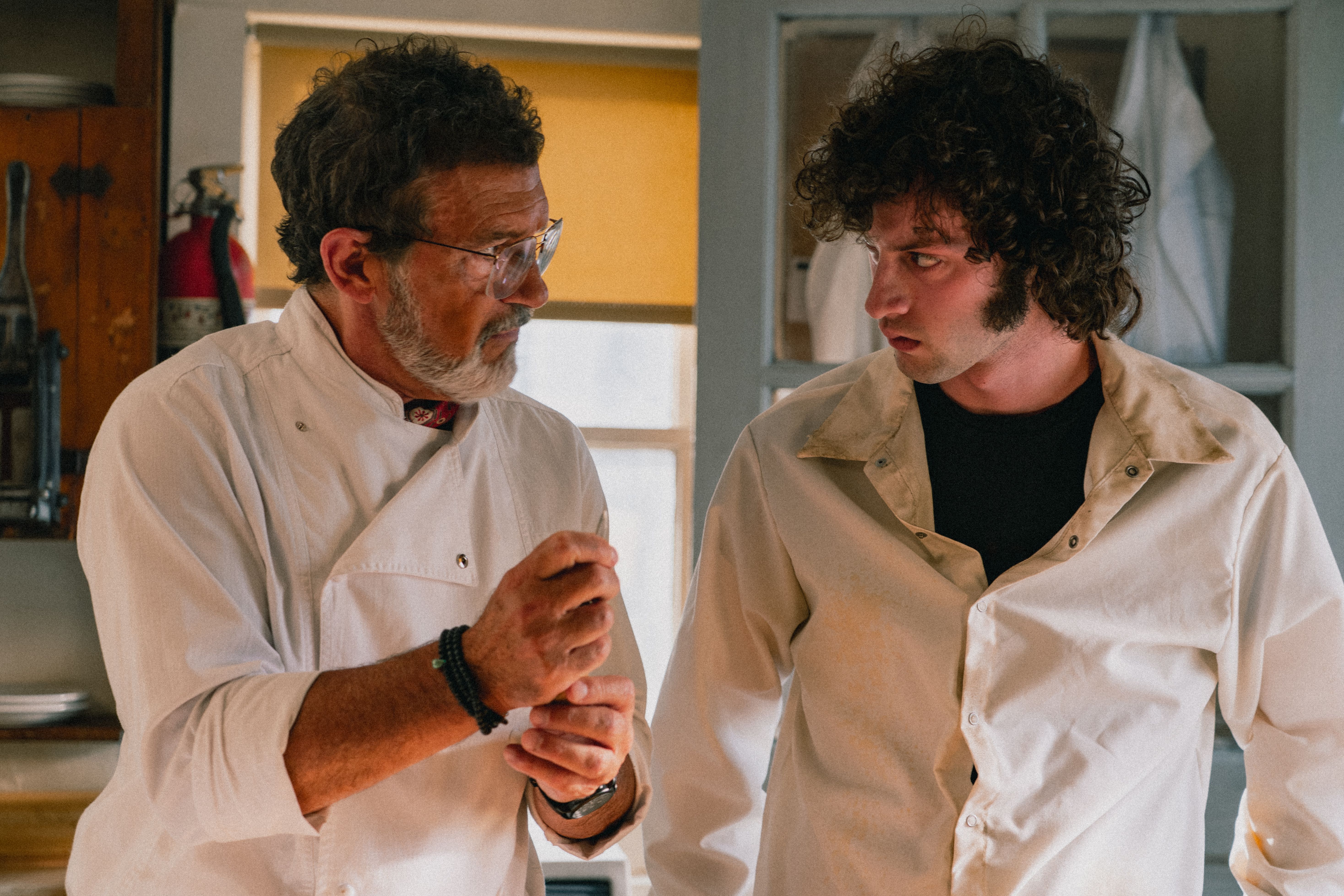
Antonio Banderas (left) as a chef-mentor with Cherry Hill native Dominic Sessa as Anthony Bourdain in “Tony.”A24
Instead, Tony concentrates on the period when a privileged, unhappy teenager from New Jersey stumbled into a restaurant kitchen and discovered a world more exciting than his own.
The historical outline is true. The story Tony builds around it is considerably less so.
Cherry Hill nativeDominic Sessa, who made an impression in The Holdovers, plays Bourdain at 19: a Vassar student, would-be writer, romantic, poseur, and world-class pain in the a—. He arrives in Provincetown chasing both an idea of himself and Nancy Putkoski (Emilia Jones), his girlfriend and eventual first wife.
Sessa wisely avoids a Bourdain impersonation. Rather than reproduce the familiar television cadence or Parts Unknown mannerisms, he gives us a young man who has not yet earned the persona he is trying on.
Bourdain later described his younger self as spoiled, narcissistic, miserable, and self-destructive. Tony takes him at his word. This Tony is clever but not nearly as clever as he thinks, hungry for experience but desperate for other people to notice him having it.
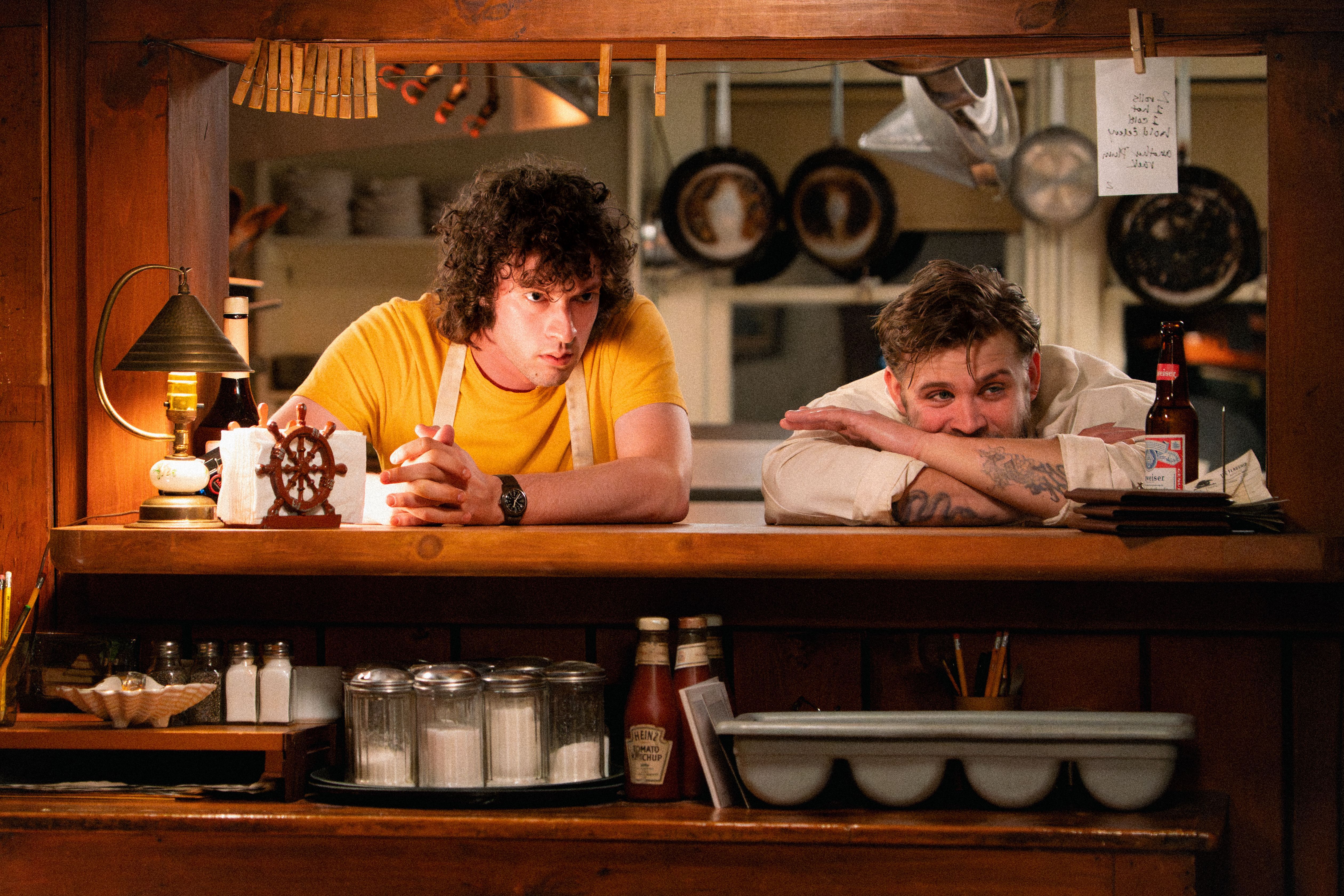
The movie becomes much more interesting once he lands a job washing dishes at the Flagship, a waterfront seafood restaurant in Provincetown that Bourdain renamed the Dreadnaught in Kitchen Confidential.
Here Johnson has something unusually valuable for a biopic: Bourdain’s own account of being seduced by the restaurant life.
He remembered the Flagship cooks as pirates and gods, former hippies, drifters, and hard-living professionals who drank, swore, stole, screwed, and seemed afraid of nothing. To a sheltered young man searching for an identity, they represented an intoxicating alternative to his comfortable world.
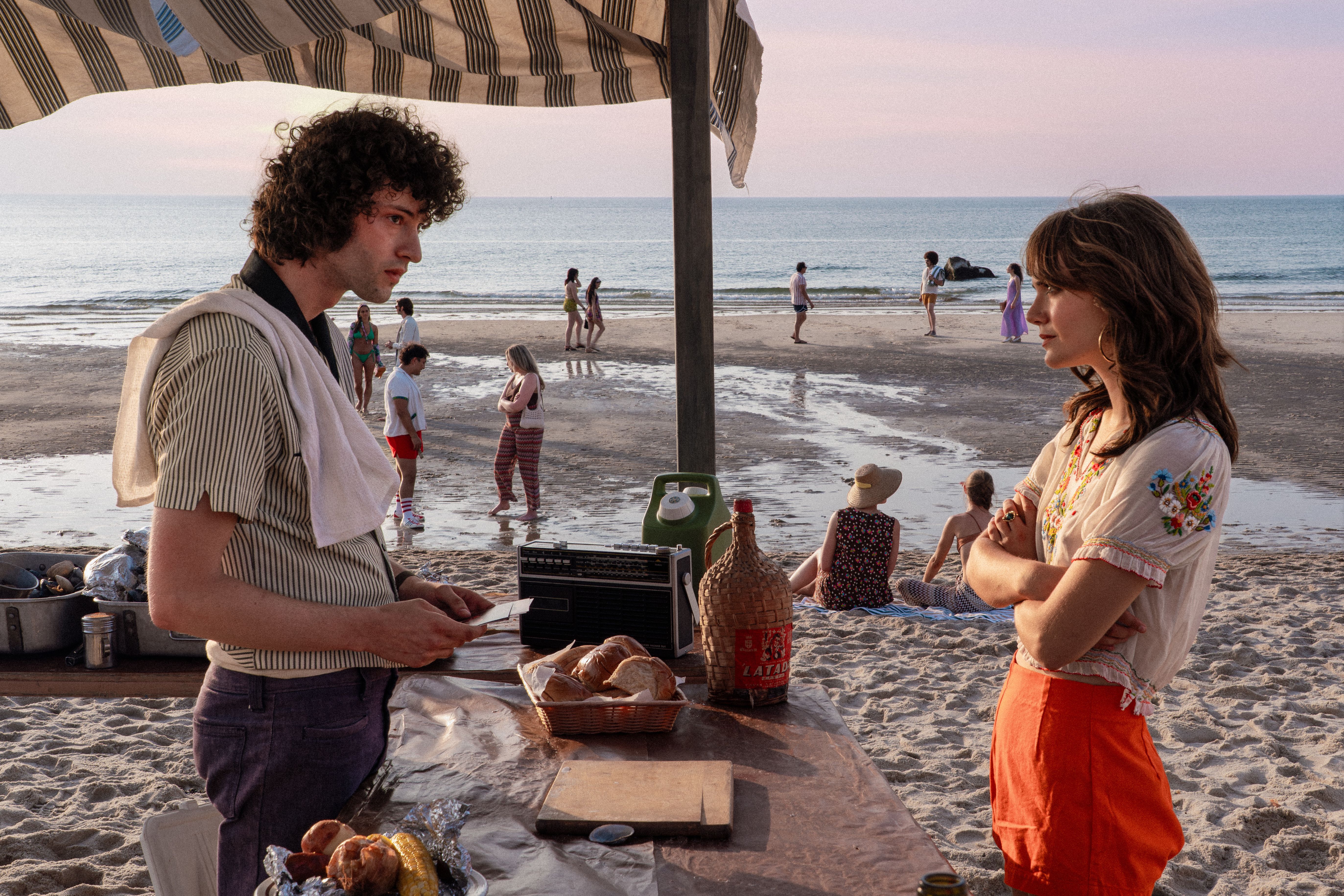
Cherry Hill native Dominic Sessa as Anthony Bourdain with Emilia Jones as Nancy, his girlfriend, in “Tony.”A24
Tony is at its best capturing that attraction.
The kitchen is hot, filthy, profane, sexually charged, and physically punishing. The cooks haze newcomer Tony, who starts in the dish pit and discovers he likes being useful, gradually working his way toward cooking.
Sessa is especially good at conveying Tony’s fascination with people who seem more authentic than he feels.
Leo Woodall plays Sal, a charismatic cook with the confidence, appetites, and recklessness Tony envies. Antonio Banderas supplies the opposite influence as Ciro, the restaurant’s chef-owner, a disciplined professional who sees something worth cultivating in the callow teenager.
Both are effective characters. But neither should be mistaken for straightforward biography.
That is the complication at the center of Tony.
The movie draws from the opening sections of Bourdain’s 2000 memoir, Kitchen Confidential, and his later recollections in a 2014 Parts Unknown episode. With thin source material, Johnson and his cowriters have filled the gaps aggressively.
Johnson has acknowledged that he compressed Bourdain’s several formative summers in Provincetown into one, set in 1975. Nancy was real and worked at Spiritus Pizza, a gathering place in Bourdain’s Provincetown years. The Flagship was real, and Bourdain began there as a dishwasher. His fascination with its swaggering cooks comes directly from his writing.
Much of the rest is interpretation. Relationships are reshaped and characters are combined. Experiences Bourdain described retrospectively become revelations occurring in real time.
That is hardly unusual for a biopic, and some of the inventions work.
Nancy is not merely the girlfriend waiting to recognize the greatness everyone in the audience knows is coming. She is often the person least impressed by Tony’s performance of himself, and Jones gives her enough intelligence and independence to puncture his pretensions.
Banderas brings a quiet dignity to a movie otherwise swimming in adolescent testosterone. But Ciro appears largely to be a composite created to give Bourdain something his own account of Provincetown did not provide so neatly: a moral mentor.
Sal serves the opposite function. He represents the seductive outlaw kitchen culture Bourdain embraced — drugs, sex, appetite, danger — and its costs.
The arrangement is dramatically efficient: two models of the man Tony might become.
It is also awfully tidy.
Bourdain’s relationship with restaurant culture was more complicated. The same world that gave him purpose also gave him permission to indulge some of his most destructive instincts. He understood that contradiction particularly well in middle age, when he returned to Provincetown for Parts Unknown and discussed his past with considerably less nostalgia.
Tony occasionally seems reluctant to live with that ambiguity.
Johnson, cinematographer Michael Bauman, and production designer Ryan Warren Smith compensate with a Provincetown rendered in a hazy mid-1970s glow. The movie moves languidly between the restaurant, Nancy, parties, beaches, and the community around him. At its best, it feels less like a conventional biopic than a memory of a summer whose significance became clear only later.
Some of Bourdain’s later literary observations are handed to his teenage self, a familiar biopic trick that makes young geniuses sound suspiciously like their accomplished older selves.
That is unfortunate because one of the interesting things about Bourdain’s story is how long it took him to become Anthony Bourdain.
He did not emerge from Provincetown as the finished article. He still had the Culinary Institute of America, decades of restaurant work, addiction, failure, writing, celebrity, television, travel, and reinvention ahead of him.
What Provincetown gave him was simpler: restaurants.
Bourdain found satisfaction in washing dishes and learning to cook. He discovered a tribe whose confidence and camaraderie fascinated him and people whose lives bore little resemblance to his cushy upbringing. Eventually he recognized that cooking might offer something writing had not yet provided — a place to belong.
Those facts are compelling enough without forcing them into a neat transformation.
That is why Tony succeeds when it stops trying to show us the instant Anthony Bourdain became Anthony Bourdain. The more it simply observes a confused young man falling in love with restaurant life, the closer it gets to the truth.