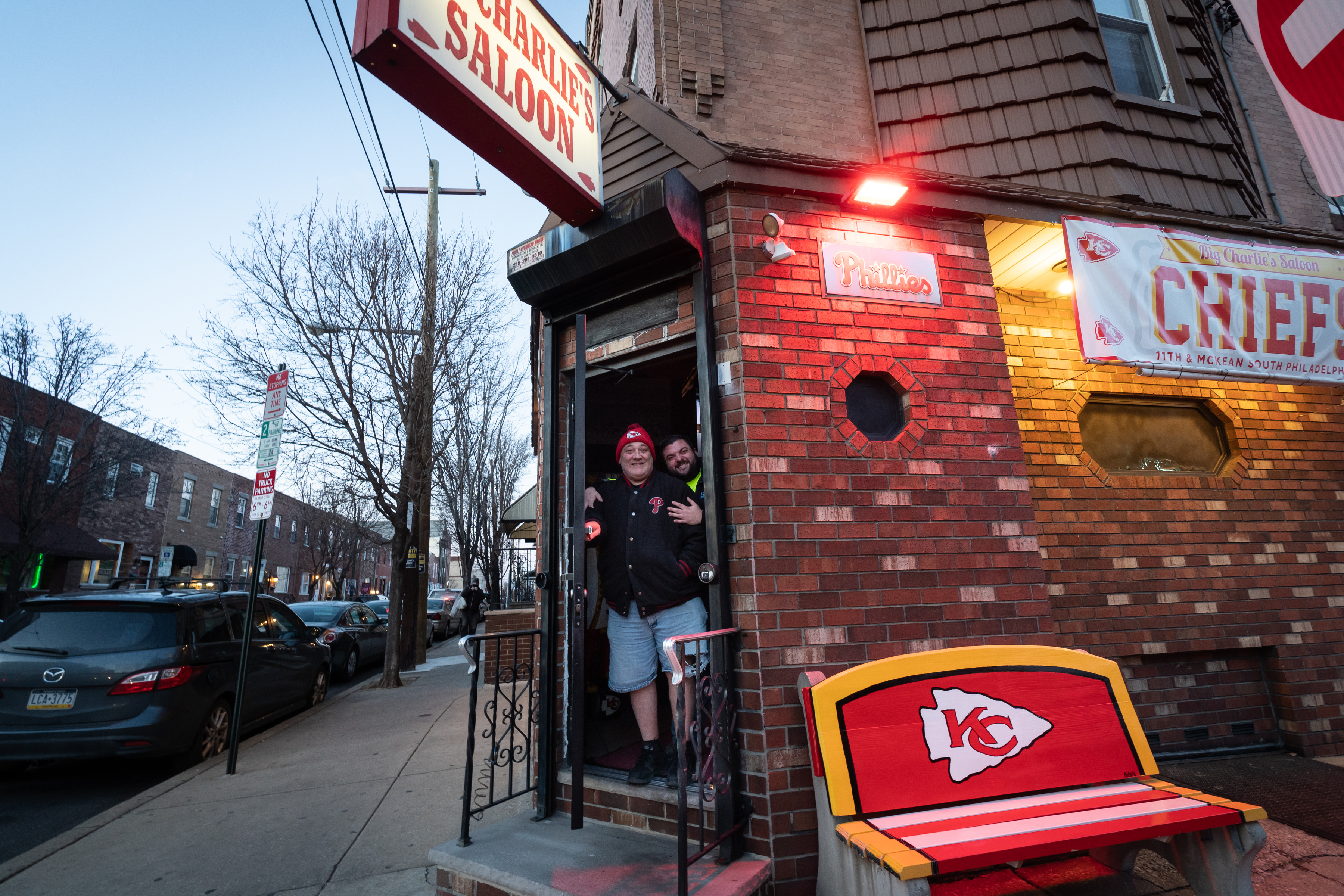
Big Charlie’s Saloon, the South Philadelphia corner bar known nationally for its unlikely devotion to the Kansas City Chiefs, is getting a new playbook.
DiTomo and Jacobsen say they plan to turn it into Sweets, a neighborhood bar. DiTomo said that he would remain at Meetinghouse and that his business partners there have no stake whatsoever in Sweets.
Sweets will have no Chiefs memorabilia — or sports theme of any kind, for that matter. DiTomo said they’re thinking low-key. “I’m not a big concept guy,” he said. “I’m going to stay true to what that neighborhood deserves out of a neighborhood bar, and that’s about it.” The partners started an Instagram account to float photos that inspire them.
DiTomo said he and Jacobsen are working through due diligence for the purchase of the building, which had been listed at $1.1 million and includes apartments upstairs. A liquor license transfer is also pending.
They are aiming for a winter opening, though that timing is tentative. “If we could capture the holiday season, that would be beyond fantastic,” DiTomo said. “But we’re both realists. We’ll see how it goes.”
Its allegiance dated to Super Bowl IV in January 1970, when Staico’s father, Charlie, bet on Kansas City to beat the Minnesota Vikings and promised his young son a bicycle if the Chiefs won. They did, Paul got the bike, and a lifelong allegiance began.
After taking over the bar following his father’s death in 1983, Staico bought a satellite dish in 1986 so he and friends could watch Chiefs games that rarely appeared on Philadelphia television. Over the decades, the bar became known as “Arrowhead East,” its wood-paneled rooms covered with signed helmets, pennants, bobbleheads, street signs, and other Chiefs memorabilia.
But Big Charlie’s was also a neighborhood bar, and that is the aspect of the property that DiTomo intends to preserve — rather than its sports identity. He and Jacobsen both live in South Philadelphia.
“I’ve always admired neighborhood bars,” he said. “I grew up in neighborhood bars, so I want it to be true to form — just the classics, done well.”
That philosophy will extend to the drinks. DiTomo said the bar will pour Meetinghouse beer, along with a straightforward selection of beer, wine, and cocktails built around classics.
Sweet’s food will be simple, he said, because of the tiny kitchen.
DiTomo, a Culinary Institute of America graduate who rose to prominence a decade ago in the Marc Vetri organization at Amis, was a chef consultant on M. Night Shyamalan’s series Servant on Apple TV+ when Meetinghouse opened in 2023.
DiTomo and Jacobsen have been friends for about five years. DiTomo said Jacobsen had long been interested in doing a project together, but nothing had clicked until the Big Charlie’s building became available. “This building spoke to him, so he jumped on it,” DiTomo said.
Stickball, Jacobsen’s shop, specializes in vintage clothing, art, and objects. GQ included it on its 2024 list of 30 notable vintage menswear stores in the United States.
DiTomo said the Sweets name came from a running list he has kept over the years. He associates the word with several of his uncles, who used it as a term of affection. “I always liked the feeling of it,” he said. “It sounds nice, and it’s timeless. It feels good for the neighborhood, too.”
There were so many jaw-dropping moments in U.S. District Court Judge Paul S. Diamond’s courtroom on Thursday that it is hard to know where to begin.
For starters, I had a stint covering courts in the mid-2000s, and have never seen a courtroom packed with so many lawyers — including lawyers representing lawyers — for a hearing in an exoneration case. An overflow room was needed to handle the rapt onlookers.
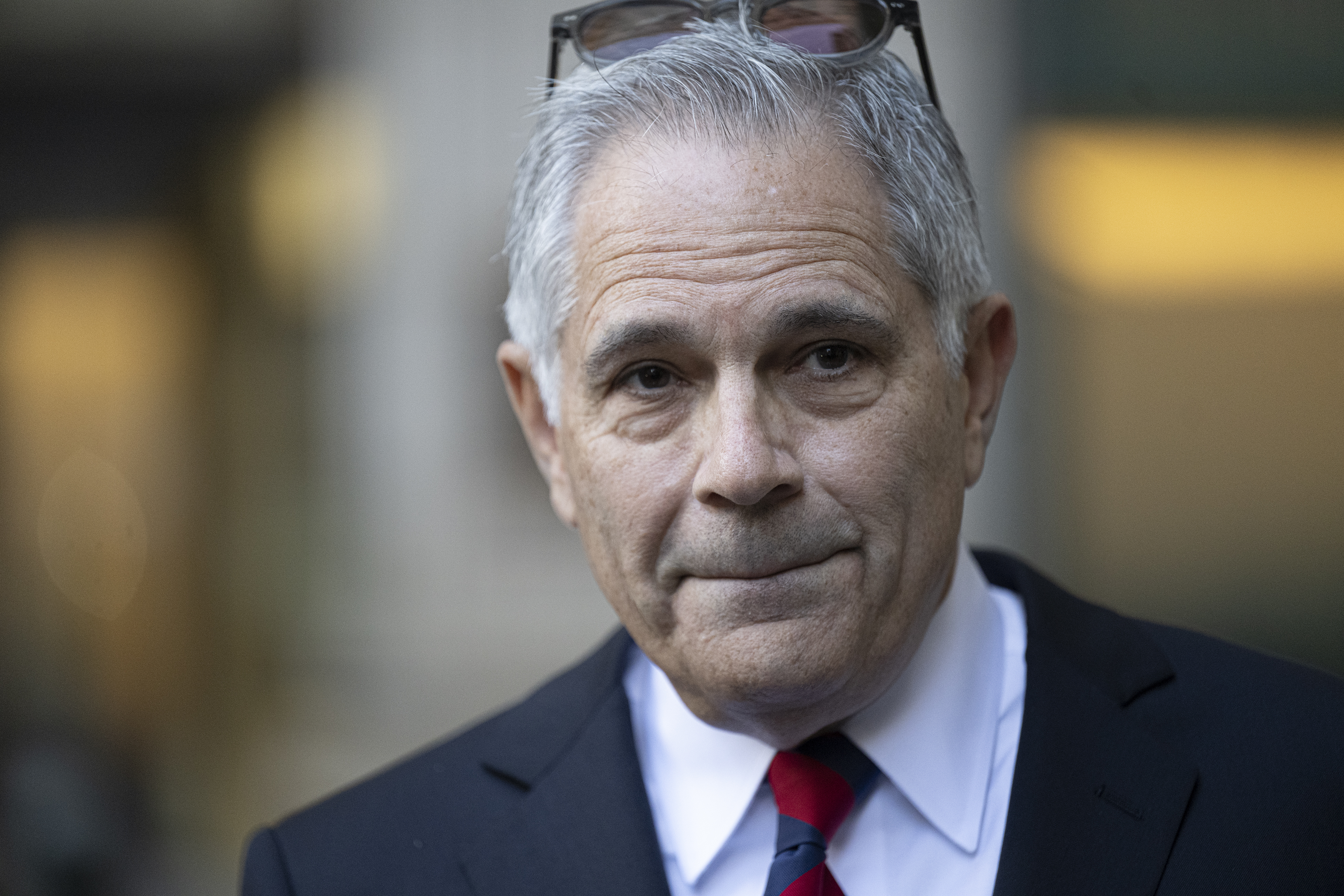
The hearing grew out of efforts by Philadelphia District Attorney Larry Krasner’s office to overturn the conviction of Dennis Johnson, who was found guilty of second-degree murder in the 2007 shooting of a man at a North Philadelphia convenience store. While Johnson’s future was ostensibly on the line, it quickly became clear that so was Krasner’s.
By the end of the day, the future for both men looked bleak.
While Johnson was in court with his attorneys, the hearing focused on the machinations within Krasner’s office.
The office has already run into a heap of legal trouble over previous efforts to overturn other convictions or reduce sentences, mainly for those convicted ofmurder.
Federal courts have disbarred and suspended prosecutors in Krasner’s office for lying to the court. The state Supreme Court found more lies and, in an unprecedented move, appointed the state attorney general to review future efforts to undo prior convictions.
So essentially, Krasner’s office now has a court-appointed babysitter because it can no longer be trusted.
It was easy to see why after three prosecutors — who still work for Krasner — provided damning testimony about their own office’s sloppy handling of efforts to vacate Johnson’s conviction. They accused Krasner of conduct that bordered on paranoia and cover-up, and painted a picture of an office that seemed less focused on the pursuit of justice than on shielding itself.
Katherine Ernst, the chief of training in the law division, went first, followed by colleagues Steven Wildberger, an assistant district attorney in the appeals unit, and David Napiorski, the head of the law division.
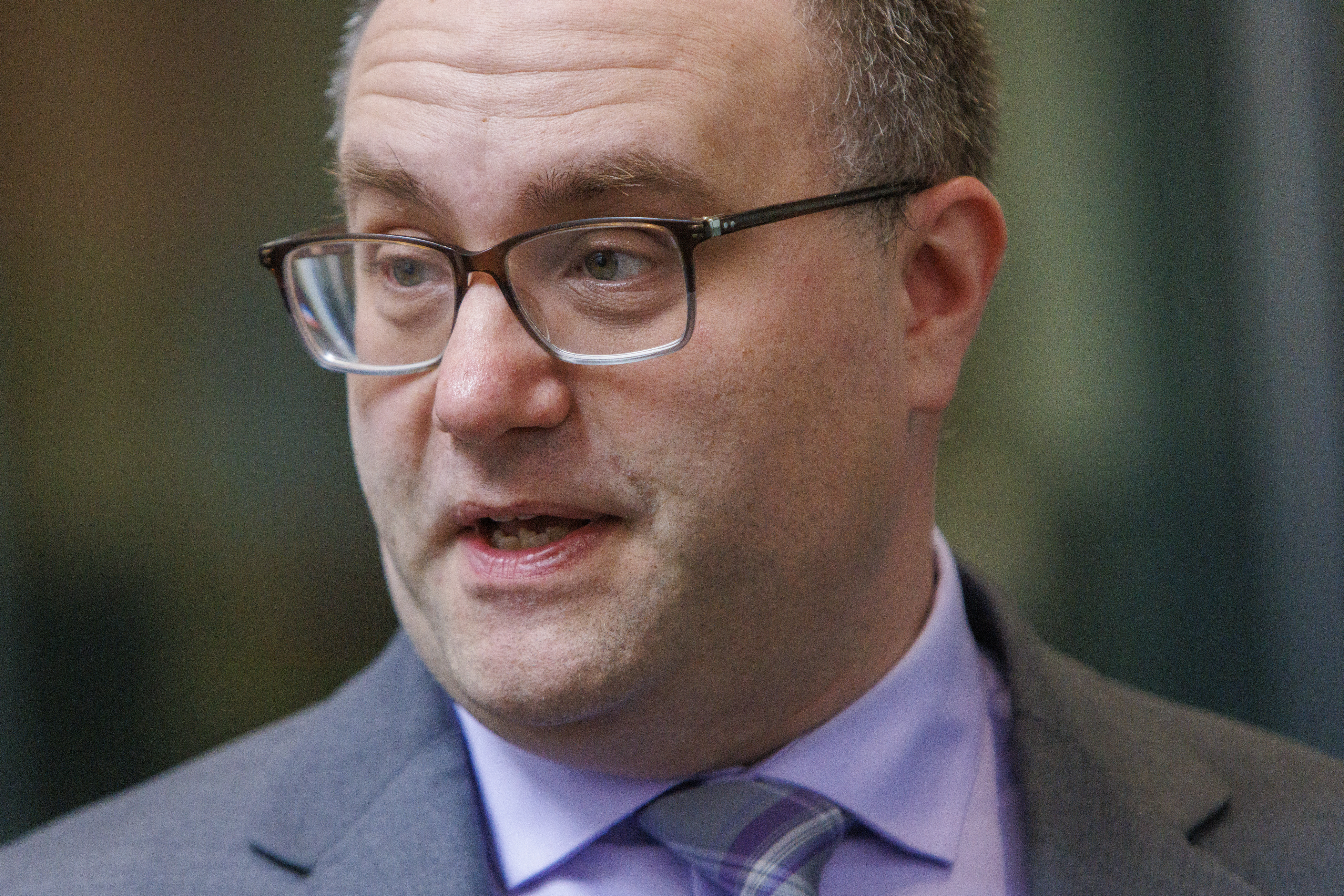
David Napiorski, the head of the law division in the Philadelphia District Attorney’s Office, testified that Krasner eschewed his official email account and “always prefers oral, in-person conversations.”Alejandro A. Alvarez / Staff Photographer
They came with receipts, providing meeting times, memos, and emails documenting conversations with Krasner about how to handle errors in court filings by the DA’s office related to an attempt to undo Johnson’s conviction.
Krasner did not respond to a request for comment, but in an earlier filing his office said the prosecutors were “ill informed.”
The three prosecutors provided alarming testimony detailing how Krasner avoided using his official office email and threatened them.
“DA Krasner typically didn’t use that email,” Ernst said about his office email. “He wouldn’t check it. And so, if you wanted to email him, then you typically had to email his private address.”
Napiorski backed that view: “He always prefers oral, in-person conversations.”
In late June, after the three prosecutors drafted a memo to Krasner detailing the office’s conflict of interest in handling the Johnson matter, he responded with an email sent from the account of his chief of staff, Jennifer Lin, which began, “This response is not from Jen Lin, it is from Larry Krasner.”
At another point, Wildberger testified that when they presented Krasner a letter turning the Johnson case over to the state attorney general, he went “apoplectic.”
“He said something about having already told us not to bring him printed-out material, things in writing,” Wildberger said.
‘Paraguay’
The prosecutors pushed for the attorney general to take over, because their self-interest had become a focus rather than the merits of the case. In their view, they had conflicts, and so did Krasner.
But Krasner wanted to hire an outside lawyer to handle the matter, and repeatedly resisted efforts to turn the case over to the state Office of Attorney General, or OAG.
Ernst testified that Krasner “hated” everyone in the OAG. Wildberger said Krasner “referred to the Office of the Attorney General as Paraguay” and “the people that work there as Nazis.”
Adding to the drama was the fact that the attorney questioning Ernst and Wildberger was John Boscia, a senior deputy attorney general in the OAG.
To clarify, Boscia asked Wildberger, “So that the people from the OAG’s office were escaped Nazis who had gone to Paraguay?”
“That’s my understanding,” Wildberger responded.
All three prosecutors testified that throughout the internal discussions, Krasner remained adamant about retaining control of the case in order to “protect the office” — a phrase that came up more than two dozen times during the hearing.
At one point, Judge Diamond asked if Krasner’s reference to “protect the office” meant “protect himself?”
“I think that was probably part of it,” Napiorski said.
In another twist, Thomas Gaeta, the DA’s civil litigation supervisor, was involved in some of the internal discussion, yet he handled the brief and mild cross-examination of his colleagues on Thursday.
The roots of the DA’s conflict began after Johnson appealed the verdict, claiming his defense attorney was ineffective.
In 2022, then-Assistant District Attorney Jaclyn Mason filed a document that agreed with the arguments made by Johnson’s attorneys at the Pennsylvania Innocence Project, and that his conviction should be overturned. According to the document Mason signed, the detective’s testimony in Johnson’s trial was improper and had “tipped the scales” toward a conviction.
But this spring, following an order from Diamond, Ernst and some of her colleagues reviewed the case. Ernst said she found multiple errors in Mason’s motion and confronted her.
Ernst and her colleagues urged Mason to fall on her sword for the office,take responsibility for the errors, and withdraw the motion. Napiorski said he told Mason he had done something similar in a different exoneration case that blew up.
Profiles in courage.
‘Reluctantly but loudly’
The main hero in what is shaping up to be an unraveling of Krasner’s mass exoneration scheme appears to be Mason.
Her dramatic testimony in Diamond’s courtroom last month provided a window into the lack of independent investigation by Krasner’s office into the wrongful conviction claims. (Mason also appears to have provided some backbone to the three prosecutors who testified on Thursday.)
Mason explained that she had only been on the job a few months in 2022, and had largely taken directions from her supervisor, Matthew Stiegler, who she said told her if Johnson’s claims were good enough for the Innocence Project, they were good enough for him.
In the meeting with the prosecutors, Ernst recounted that Mason said, “This is all Matthew Stiegler’s fault.”
Mason told her colleagues that Stiegler should have to sign the withdrawal motion, as well. Apparently, that was not an option. Instead of going along with the plan to take all the blame, Mason resigned on June 2.
In a two-page resignation letter addressed to Krasner, Mason wrote that she had limited experience with federal habeas law when she was hired. Yet, the first two cases Stiegler assigned to her “involved complicated cases where he determined that it was appropriate to concede habeas relief.”
Mason said she “trusted” Stiegler, but later learned about a mass exodus of prosecutors when he oversaw the federal litigation unit.
Mason said Stiegler had “worked closely with the Innocence Project and the Federal Defenders on the [Johnson] case, deeming it worthy of a concession with little independent investigation.”
Therein lies the problem when it comes to reviewing past convictions. Under Krasner, the prosecution and defense are largely on the same team.
Mason added that Stiegler reviewed several drafts of the concession she filed in the Johnson case, but did not sign his name to it. Mason ended by writing that she “reluctantly but loudly” resigned.
After Mason quit, all three prosecutors testified that Stiegler hatched a plan to manage the fallout. He suggested combing through Mason’s past cases for errors and claiming she was a rogue operator.
Ernst testified that Stiegler asked to meet and told her, “Mason purposely inserted the false facts into the response.” Ernst explained that Stiegler wanted to make it seem as if any mistakes in the case were “100% [Mason’s] fault and 0% his fault.”
Krasner was on board with Stiegler’s plan, according to Ernst, who recounted a conversation with the district attorney.
Krasner said Stiegler “gave me this really good idea,” Ernst testified. “I think that we should go through Ms. Mason’s cases, say that this was a pattern by her, and then file something with the court saying that.”
Why the deference to Stiegler is unclear. He has come and gone from Krasner’s office three times and remains a lightning rod. Stiegler now oversees the Conviction Integrity Unit, a departmental name fast becoming an oxymoron.
Stiegler sat in the front row of Judge Diamond’s courtroom on Thursday as the other prosecutors testified about his role and reputation with the office.
Wildberger testified that in the meeting with Mason and the other prosecutors, he told her, “You’ll find no Matt Stiegler apologists here.” He later explained that Stiegler “was not well liked” and had chased away many prosecutors.
The internal drama and legal troubles have roiled Krasner’s office. Ernst testified that many frontline prosecutors were “angry” at Krasner for what happened to Mason. Wildberger said he had “lost faith in the administration of the Philadelphia District Attorney’s Office.”
Amid the discussions over whether to tell the court about the errors in the Johnson case came another bombshell.
Ernst testified that Napiorski warned her Krasner had threatened “to fire anyone who tells the judge about this.” She added that Wildberger clarified Krasner didn’t use the word fire, but said that “there would be consequences.”
Early on in the proceeding, Judge Diamond signaled his take on the emerging testimony.
“If what they say is true, potential wrongdoing abounds,” Diamond said. “There’s a question of whether perjury was committed, subornation of perjury was committed, criminal conspiracy was committed, and obstruction of justice was committed.”
The hearing is scheduled to continue on Tuesday. It is unclear what the judge will do next.
I left the courthouse thinking about the Watergate hearings and, in particular, a March 1973 meeting in which White House counsel John Dean warned RichardNixon about a “cancer” on the presidency.
Has something similar metastasized in Krasner’s office?
Next year’s Met Gala will not spotlight controversial fashion designer John Galliano after all.
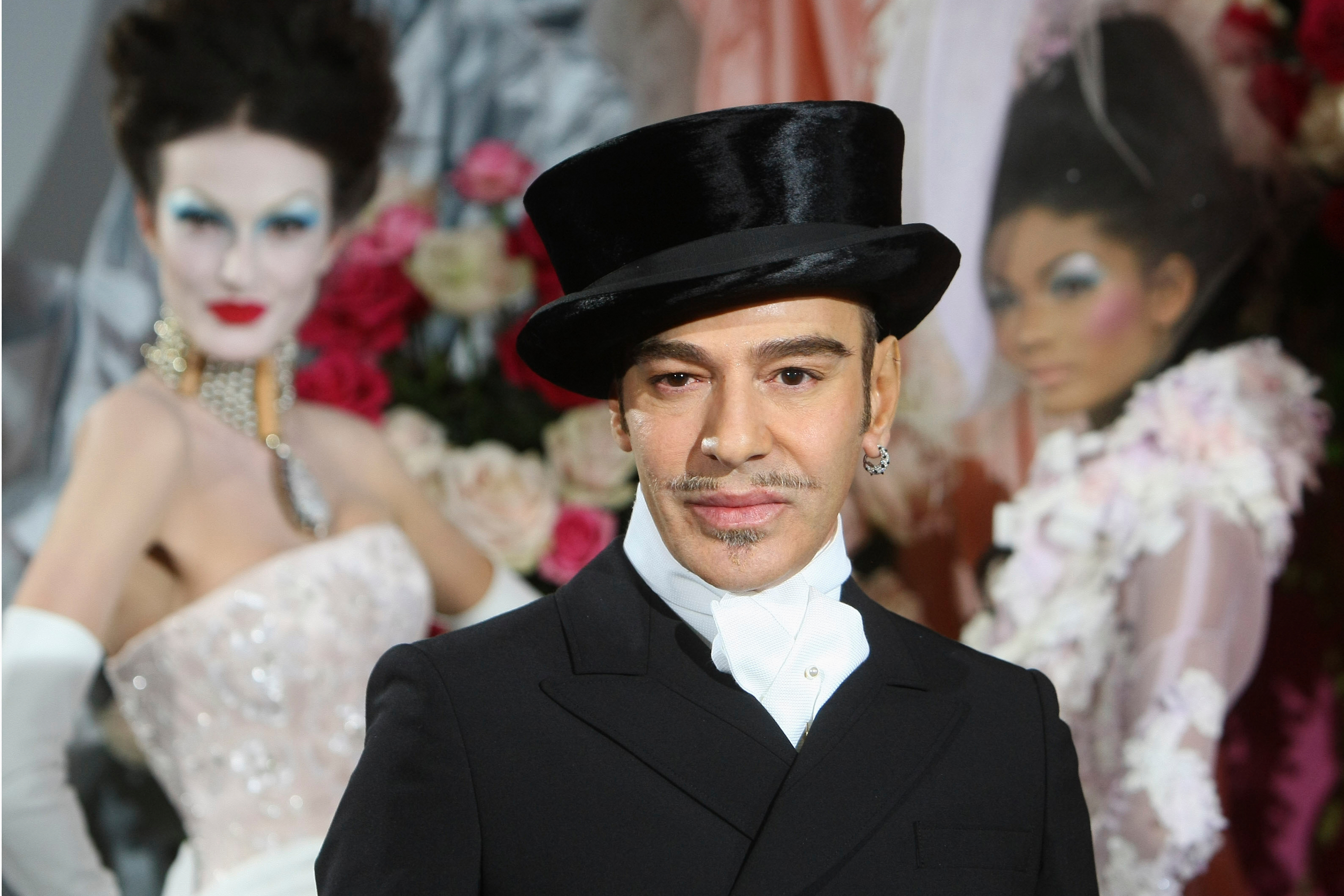
The Metropolitan Museum of Art and Galliano announced in a joint statement that the museum would not move forward with John Galliano: Horizons. Galliano, 65, is a British designer who has worked for some of the industry’s top fashion houses, including Christian Dior, Givenchy, and Oscar de la Renta.
At the peak of his career, he served as Dior’s creative director for nearly 15 years. But in 2011, he was infamously canceled after his conviction in a Parisian court over a series of racist and antisemitic comments. It cost him his job leading Dior. At the time, Galliano said his alcohol abuse sparked the outburst.
The museum’s retrospective was reportedly going to highlight the fashion director’s portfolio while also addressing his personal life, including his public exile and the work he later did to atone and get sober.
“Following thoughtful discussions with many stakeholders and with John Galliano, we together have decided not to proceed with the exhibition,” said Metropolitan Museum of Art director Max Hollein.
The announcement came exactly one month after the initial Met Gala theme reveal. Galliano’s exhibit would have only been the third retrospective for a living designer in the Costume Institute’s history.
While fashion experts largely agreed the fashion director’s work is seminal, critics said the exhibit’s timing — which coincides with a global surge in antisemitism — was cause for concern.
Professional thrifter and fashion writer Virginia Chamlee previously told The Inquirer that while the Met was equipped to accurately cover the designer’s checkered past, she was concerned about whether the storytelling would resonate with the average Met Gala consumer.
The annual exhibit’s largest publicity draw is a televised red carpet where celebrities invited often wear pieces by or paying tribute to the spotlighted designer — not the exhibit itself.
“Even if the museum intends to offer a complete examination of Galliano’s complicated legacy, it may come off as a straightforward celebration of someone who said things so heinous and racist that they were charged and fired for them.”
In the joint statement, Galliano himself said he requested not to move forward with the exhibit.
“After much reflection and discussion with The Met and all those involved, I have decided, with great sadness, that it is best for the exhibition not to take place at this time,” Galliano said. “I remain fully accountable for the pain caused by my words in the past, particularly the hurt I caused to the Jewish and Asian communities, and I remain deeply sorry for it. I understand that meaningful atonement is not achieved through an exhibition, institutional recognition or a single public gesture. It is a continuing responsibility, demonstrated through listening, learning and one’s conduct over time.”
Galliano went on to thank Anna Wintour, a longtime champion of Galliano’s and the global editorial director of Vogue, chief content officer of Condé Nast, and Met Gala chairperson responsible for the event’s programming.
In her extended statement to Vogue, Wintour framed Horizons’ cancellation as a “postponement.”
“John’s decision to ask the Museum to postpone the exhibition devoted to his work is very courageous and a measure of the man he is,” she said. “I believe this is the right decision, and both he and the Museum have my full support.” The Met’s version of Wintour’s statement does not use that phrasing.
Information on a new Spring Costume Institute exhibition and the 2027 Met Gala will be announced later, the museum said. The Gala itself was initially scheduled to take place May 3, though it’s unclear if that date would shift in light of the exhibit change.
Donald Trump seemed genuinely happy last Sunday as he waved the green flag to start the Freedom 250 Grand Prix, the first IndyCar race in the nation’s capital. Whether you regarded the event as crass exploitation or a rousing sports presentation, it certainly wasn’t surprising.
Way before he became a politician, the president was an entertainer.
Trump made cameos in movies, headlined his own reality TV show, The Apprentice, and organized high-profile boxing matches and MMA fights at his casinos. He owned the Miss Universe pageant and a football franchise of the short-lived USFL, brought in Michael Jackson to the grand opening of his Trump Taj Mahal in Atlantic City, and he even “fought” in wrestling bouts himself.
As a journalist based in Berlin, I’ve done a great deal of reporting over the past decade about the global tilt to the political right. What Trump has done as president, especially in his second term, echoes what autocrats around the world do to boost their public image.
The race was already the final event of Trump’s attempt to commandeer America’s Semiquincentennial festivities under the Freedom 250 banner. But just in case it wasn’t clear who the star was, the military flyover and the presidential limousine cruising down Pennsylvania Avenue before the race made it obvious. The president was also front and center (it was coincidentally his birthday, after all) when he used the South Lawn of the White House to host a mixed martial arts event on June 14.
It seems fitting that, just like Trump’s family businesses have no problem taking large amounts of money from the leaders of authoritarian nations like Saudi Arabia and the United Arab Emirates — including $2 billion to a private equity firm founded by son-in-law Jared Kushner and $500 million for the Trumps’ crypto ventures — the president would also take to their sportswashing playbook.
Both the Saudi government and the UAE have used sports and entertainment to improve their global reputation and distract from allegations of human rights abuses and repressive policies.
Trump’s supporters may argue that the president’s great race wasn’t much different from the high-profile sporting contests that are held in European capitals — and they would be right, up to a point. A crucial difference is that most of those European events have historical and communal aspects to them that are very different from the spectacles Trump is setting up left and right.
The Monaco Grand Prix, for instance, was first held in 1929, during a time when European motor sports were gradually turning professional. In the years leading up to the first race in the principality, other famous European circuits like Monza, the Nürburgring, or Spa-Francorchamps had held their first races, so it was fitting for the time.
The Tour de France has been held since 1903 and was founded as a marketing ploy for a French sports paper. The first tour consisted of only six stages, ended in a small suburb of Paris, and developed steadily over time to become the global phenomenon we know today. Formula E races are held in world capitals, but in restricted spaces like former airports or fairgrounds.
Trump’s Freedom 250 Grand Prix had more in common with the Azerbaijan Grand Prix in Baku.
A former member state of the Soviet Union, Azerbaijan had been ruled autocratically by former Azerbaijani KGB head Heydar Aliyev since 1993. Shortly before his death in 2003, he had his son take over in an election described as fraudulent by independent observers. Ilham Aliyev has been ruling the country ever since — and has implemented a thorough sportswashing strategy for more than a decade.
Baku has hosted European Football Championship games and has been a sponsor of Spain’s Atlético Madrid. For the grand prix, the country pays 40 million to 50 million euros per year to Formula One — all while freedom of speech is highly restricted, journalists are being jailed, and there’s a gap — in both income and equity — between the shiny capital of Baku and the rural areas filled with subsistence farmers.
With the ongoing war in the Middle East, the Jeffrey Epstein issue still looming, and the cost of living continuing to rise thanks to his bad policies, Trump may believe he can paper over the cracks with a checkered flag.
After all, if the people can’t afford bread, Trump’s happy to give them circuses.
Wim Orth is a journalist with WELT in Berlin and an Arthur F. Burns fellow at The Inquirer.
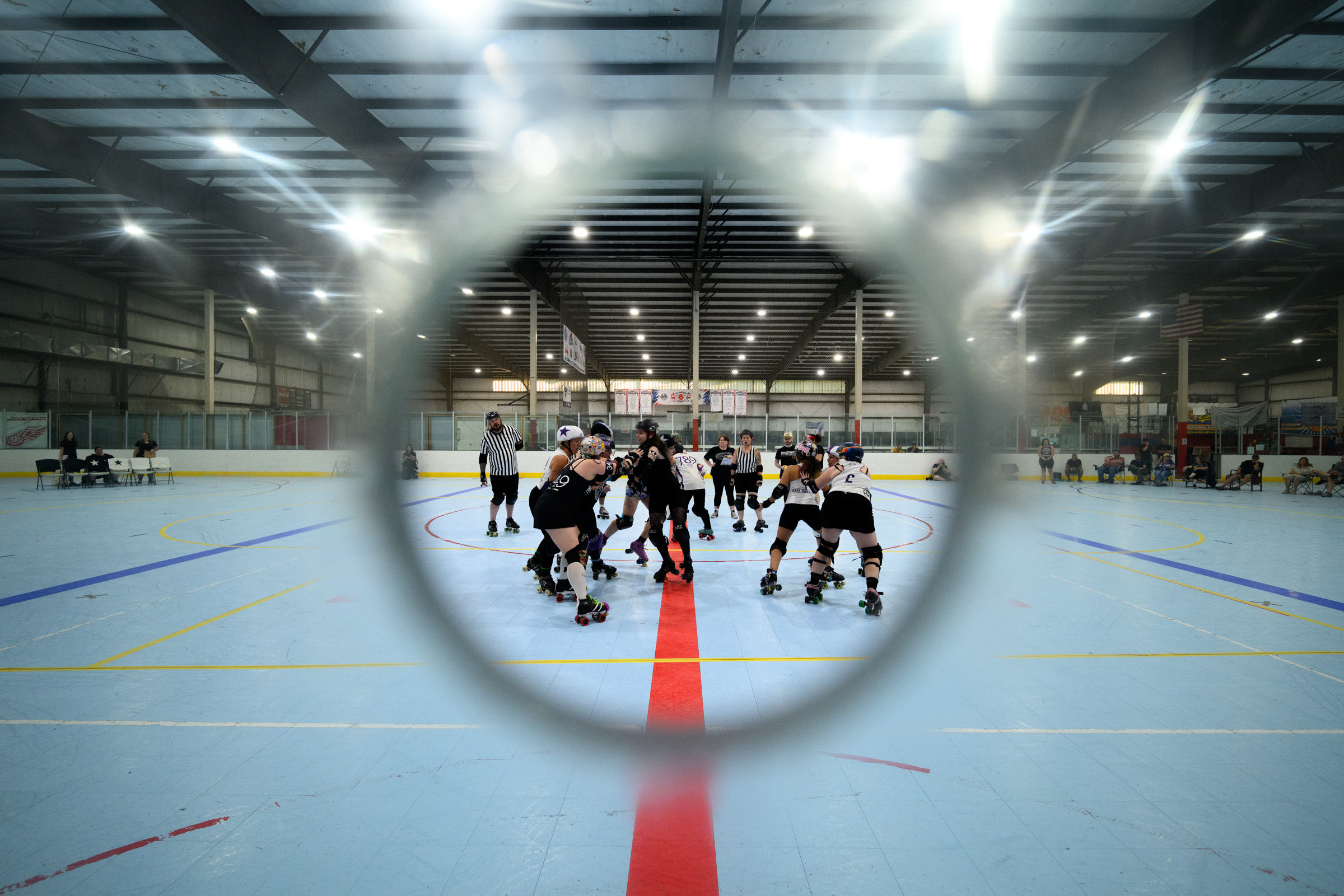
After graduating nursing school and navigating the loss of her mother, Corinne Kucewicz was looking for something positive to focus her energy on. That’s when she found Brandywine Roller Derby, Chester County’s only league.
Now the league’s president, overseeing roughly 26 members, Kucewicz, 28, worries about Brandywine’s future as they struggle to find a permanent and affordable home in Chester County to practice, hold games, and fundraisers. Without any roller rinks in the county, they’ve ended up at their current space at a school facility in Exton. It offers enough room for their track, but with a slippery — and sometimes muddy — floor that can make skating conditions iffy, the location is starting to hurt retention.
“It worries me if we don’t find another space that our league is going to go kaput,” said Kucewicz, who goes by Maria Von Scrapp on the track. “That would obviously be worst-case scenario, but unfortunately, as one of the leaders of the league, that’s something I have to worry about.”
Corinne “Maria Von Scrapp” Kucewicz, captain of Brandywine Roller Derby, sits for a portrait at the 422 Sportsplex in Pottstown on Saturday, Aug. 22, 2026.Kriston Jae Bethel / For the Inquirer
Roller skating has seen its peaks and valleys. There was a boom as far back as the 1880s. More recently it’s been a fixture of school trips or birthday parties. Roller derby, which started in 1935, has a long history itself, transforming from a race, to a full-contact sport, to a scripted professional-wrestling-esque performance.
Today’s roller derby — a DIY, gender-expansive, and LGBTQ+-friendly sport — cropped up in the early 2000s. Gone are many of the banked tracks, the raised, curved oval that was synonymous with derby of the ’70s and ’80s. Many leagues rent spaces and play on “flat tracks,” which is exactly how it sounds.
COVID-19 offered a bit of a paradox for roller skating and derby. The pandemic led to the closing of rinks across the country, as many large venues struggled with shutdowns. It simultaneously put roller derby leagues on pause, with skaters unable to hold practices or bouts (i.e. games), eating into funds they had raised through selling tickets and skaters’ dues. Some leagues collapsed.
Members of the Brandywine Roller Derby warm up on the track before a bout against the Dirty Jersey Roller Derby Violet Uprising at the 422 Sportsplex in Pottstown. Kriston Jae Bethel / For the Inquirer
As pandemic restrictions eased, and roller derby leagues were able to practice again, they saw a depleted returning membership but heightened interest in the niche sport.
Kucewicz was among them. She showed up with a cohort of other interested skaters to a 2024 recruiting event. The team took her in despite having no past skating experience, and taught her how to skate, how to fall safely, how to hit, and how to take a hit.
“It was an amazing mix of friendly people and people that I saw myself being friends with,” Kucewicz said. “That was something that I definitely needed at the time, and is still important.”
Before the pandemic, Brandywine had a large league that was doing well, Kucewicz said. When they were able to start skating again after, they were down to six returning skaters but also had a crowd of interested newbies.
Rachael “The Texorcist” Gable laughs alongside teammates. Kriston Jae Bethel / For the Inquirer
Finding a space has proven to be difficult. When the league was founded in 2010 by a group of skaters, they met at the Caln Roller Rink in Downingtown. But a changing of the rink’s ownership ultimately closed the rink.
The league ended up at Collegium Charter School in Exton two years ago, practicing in an outdoor-indoor, climate-controlled space. The floor is, essentially, plastic tiles on top of dirt. When it rains, mud seeps through.
The floor itself is uneven: On one side of their track, it goes uphill; the other, downhill. Aside from scrimmaging, derby is a lot of learning and drilling fundamentals, focusing on agility and footwork. A slippery, uneven floor makes that difficult.
“Members have left and gone to other leagues because they’re afraid, because our floor is so slippery, that they’re going to injure themselves. Or they just want a higher level of derby that we can’t really provide at this moment because our floor is not that great,” Kucewicz said.
Brandywine Roller Derby and Dirty Jersey Roller Derby Violet Uprising compete during a bout at the 422 Sportsplex in Pottstown. Kriston Jae Bethel / For the Inquirer
In their hunt, they’ve been priced out of anywhere that can be an option for them, said Christi Tuminelli, a league skater who has been overseeing the search for a new space. Most warehouse spaces are going for $12 to $24 per square foot. Their budget is closer to $2 per square foot. They’ve reached out to more than 30 properties. Most have gone quiet.
Others don’t work, either because the property doesn’t fit the size of the track they need, or the owner isn’t interested in sports. They also have had to contend with worries about damaging the floor, which they say is a nonissue.
The league is open-minded about its future home; Tuminelli was contacting farms about their barns. They need an open space, with minimal columns in the way. The track spans 108 by 75 feet, which is roughly 8,100 square feet. They want to stay in Chester County, with the hope of getting more involved with the community when they have a stable location. Ideally, they’ll be able to host the public for games or fundraising events. Right now, the team hosts its bouts in Pottstown, in Montgomery County. They’re breaking even between renting the space and raising funds from ticket sales, they said.
“Right now we’re at an impasse because we need the space to generate the income, but we can’t afford the space without new people,” Tuminelli said. “We are a working nonprofit that can pay sustainable rent. We just can’t compete with the market rates in Chester County.”
While derby is a sport, it’s also a community.
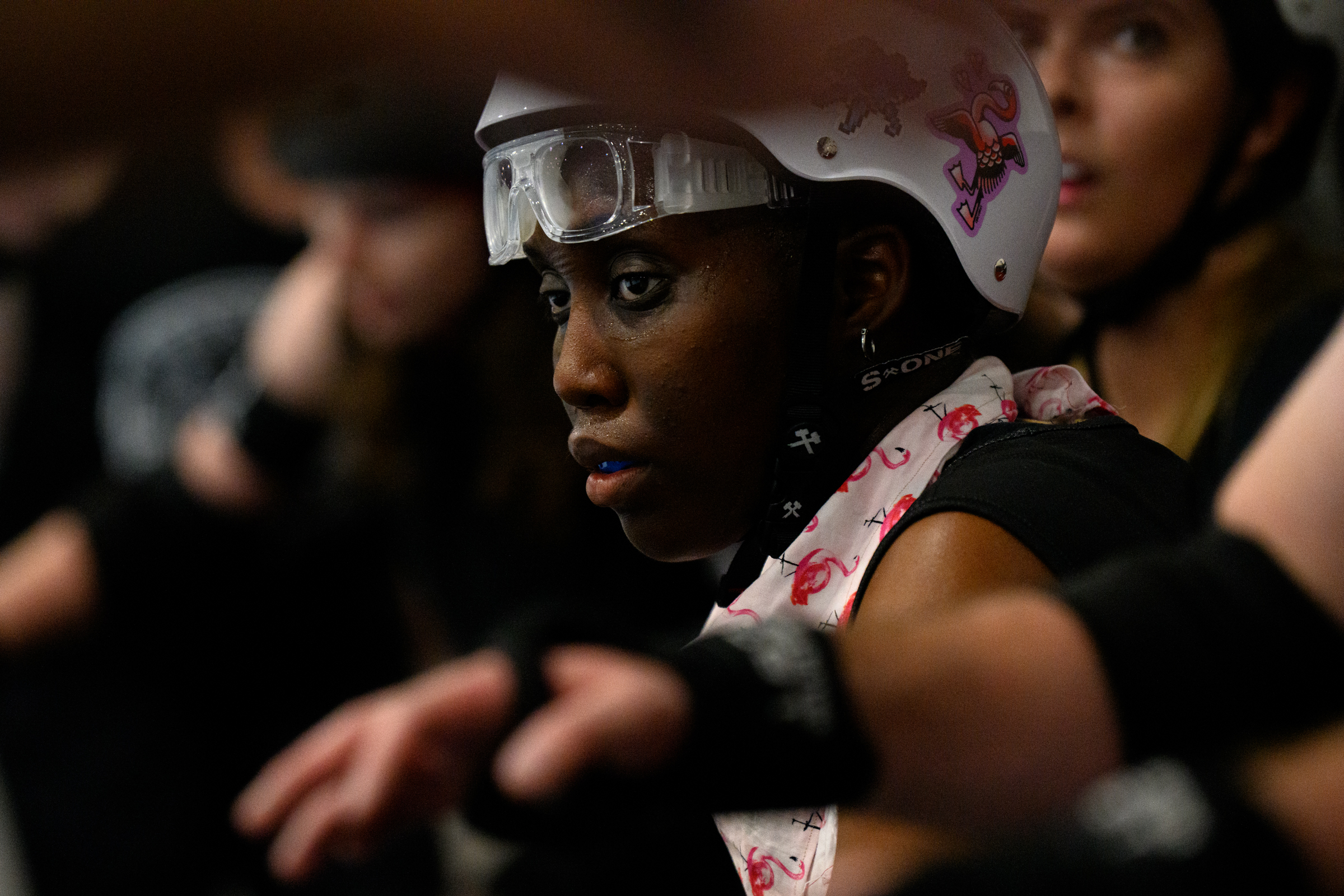
Najah “Chaotic Condor” Coon from Brandywine Roller Derby sits on the bench during a recent bout. Kriston Jae Bethel / For the Inquirer
Tuminelli — or Mother Mayhem, on the track — went to her first bout wracked with nerves but walked away feeling excited and empowered. Tuminelli, 42, was never a “sports girlie” growing up, she said. But if she had known what they offered, maybe she would have joined earlier.
With other teams an hour or so away from the suburbs, it’s an important to have the outlet within their own community, Tuminelli said.
“When I moved here from New York, I didn’t know anybody. And having a kid that was young and being in a new space, it’s scary as a new mom,” she said. “I wanted something for me, and this was great. Derby just allows you to do things. It raises your confidence.”
This suburban content is produced with support from the Leslie Miller and Richard Worley Foundation and The Lenfest Institute for Journalism. Editorial content is created independently of the project donors. Gifts to support The Inquirer’s high-impact journalism can be made at inquirer.com/donate. A list of Lenfest Institute donors can be found at lenfestinstitute.org/supporters.
In September of 2026, the Diamondbacks will serve as a benchmark as to whether these Phillies even have a chance of achieving what the 2023 Phillies came so close to achieving.
Hard to believe, Harry.
A month ago, as the Phillies foundered on the edges of relevance, none of this seemed to matter much. Today, the Phillies have found an identity grounded in smart at-bats, a solid starting rotation, and unexpectedly competent defense. Suddenly, what seemed like a wasted season through four months has transformed into a season of hope and expectations.
As in, if the Phillies are playing this well now, there’s no reason to think they can’t win their first World Series in 18 years.
The Phillies on Monday night begin a three-game series in Arizona that could determine whether the Phils host a wild-card series in October. The D-backs lead the season series after winning two of three in Philly in April.
As this series begins, the Diamondbacks hold the final wild-card slot but stand 4½ games behind the Phillies. The Phillies are tied with the Cubs, but the Cubs won six of seven against the Phillies in the April games that exhausted the teams’ head-to-head matchups. Should the Diamondbacks surge and the Cubs stall, there’s a chance this week’s results provide the tiebreaker that gives the Phillies the top wild-card spot, the No. 4 seed in the National League playoffs, and home-field advantage over No. 5 that comes with it.
This is the first month the Phillies have had four sweeps of 3 or more games in 35 years.
Of course, the Phillies can render these scenarios obsolete if they clobber the Diamondbacks, pass the Cubs, and maybe even catch the Braves for the NL East title, in which case tiebreakers won’t matter. But the Braves lead by five games with 25 to play, so that seems a bit much to ask.
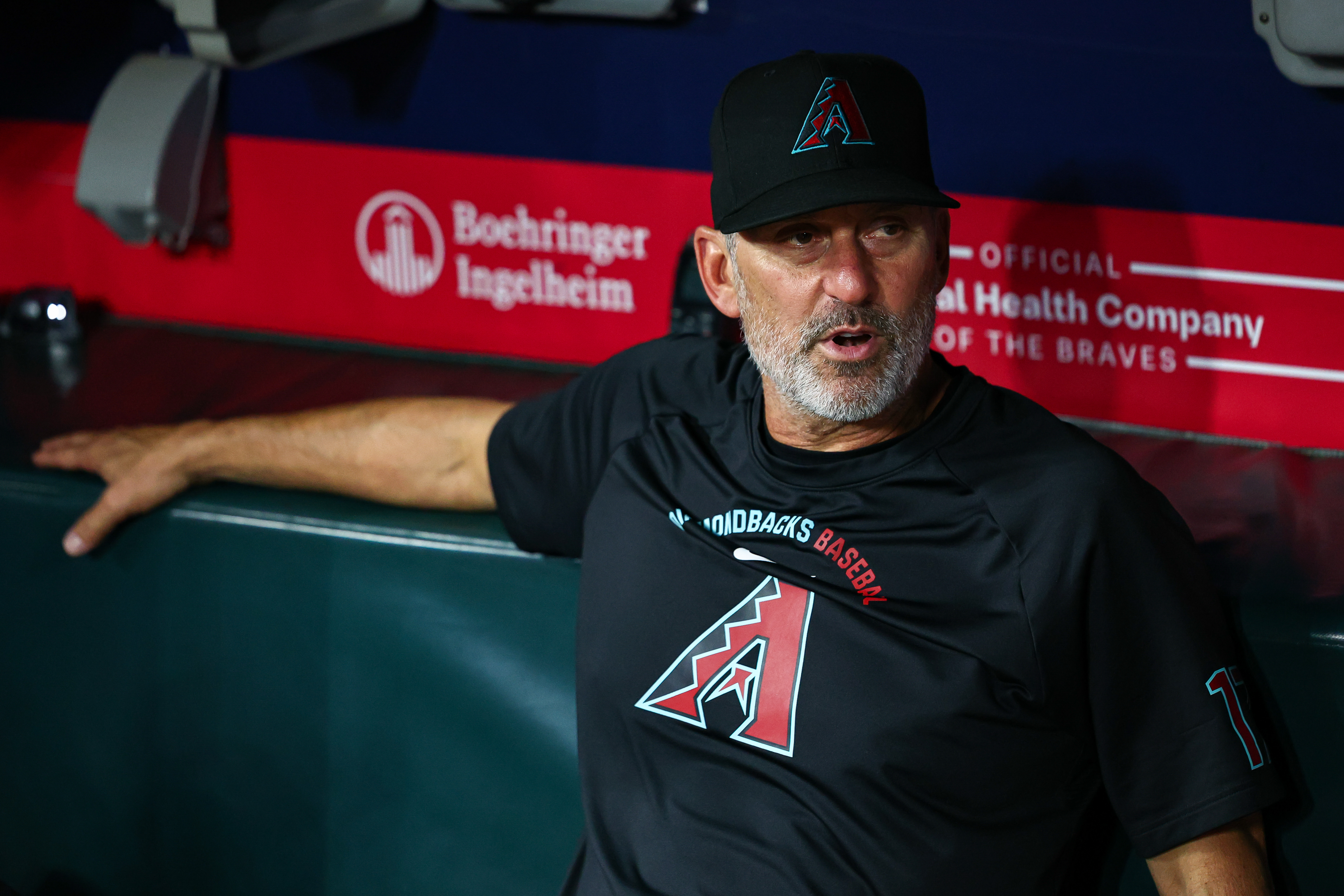
Manager Torey Lovullo’s Diamondbacks have a half-game lead on the Padres for the third and final wild-card spot going into Monday’s series opener against the Phillies.Colin Hubbard
For the moment, it’s more important to judge whether the Phillies can play excellent baseball on the road against a team that is 13-8 against them since Game 3 of the 2023 NLCS.
The magnitude of the lows might skew the emotions, but the lows against the Diamondbacks seem to be lower than most of the other lows this Harper-Wheeler-Schwarber edition of the Phillies has delivered since 2022.
It begins with that 2023 NLCS, when the Phillies’ bats deserted them and they lost Games 6 and 7 at home. The Phils haven’t won a season series against Arizona since, and their first meeting this season did not portend favorably.
The Phillies struck out 16 times against the Diamondbacks on April 10, 16 games before the Phillies fired manager Rob Thomson and promoted new bench coach Don Mattingly to interim manager. The 16 Ks remain a season high, part of the 8.8 strikeouts per game that was among baseball’s worst rates.
Now, though, they’re striking out 2.5 fewer times per game, the second-best rate in baseball. It is the most promising stat of a slew of numbers that indicate that this Phillies team might even be able to topple the Dodgers in the postseason.
If it’s hard for you to believe, that’s completely understandable. Even in the middle of their recent nine-game winning streak, their longest in four years, the Phillies supplied little real reason to believe they might make another long run into October.
Shortstop Trea Turner’s Season from Hell continued. The bullpen remained unreliable. And the two best pitchers weren’t the two best pitchers.
Things change.
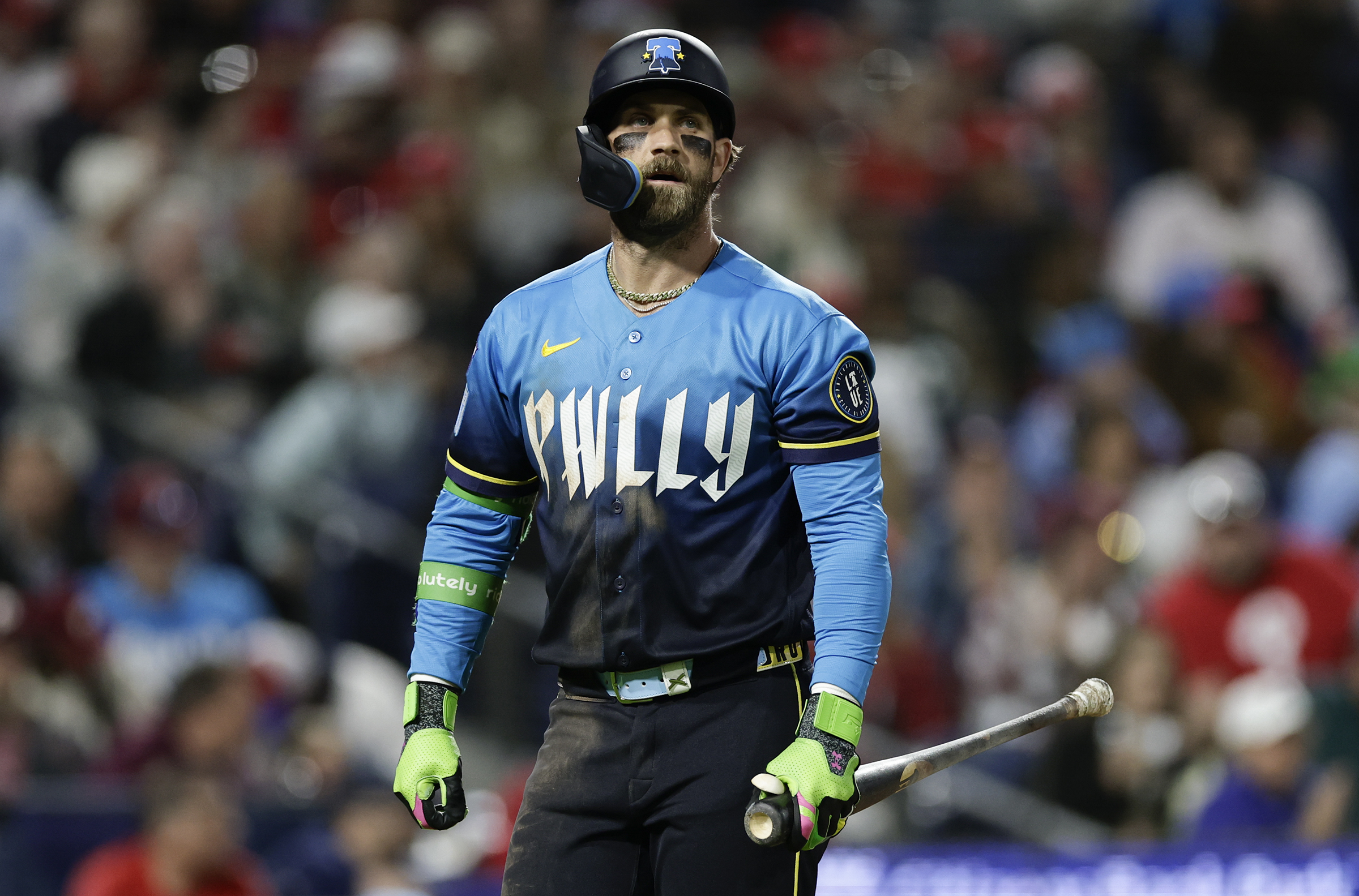
Phillies first baseman Bryce Harper after striking out against the Arizona Diamondbacks on April 10.Yong Kim / Staff Photographer
Struggling aces Cristopher Sánchez and Zack Wheeler just combined to allow one run over 13 innings Saturday and Sunday against the Angels. Which, of course, makes them formerly struggling aces Cristopher Sánchez and Zack Wheeler. Add in Jesús Luzardo’s seven shutout innings in Seattle on Wednesday, and that’s one run allowed for the Big Three in their last 20 innings.
That’s just the icing.
Consider the continued efficiency of No. 4 starter Aaron Nola, who’s on a six-game heater, and rookie Andrew Painter, who’s been better than a No. 5 in five of his six starts since his recall from the minors, and the Phillies transform from Lost Cause to Title Contender.
Since three-time batting champ Luis Arráez played his first game Aug. 4 just after Dave Dombrowski’s latest deadline magic, the Phillies lead Major League Baseball with a .272 batting average and are tied with the Red Sox for the lead in on-base percentage, at .353, improvements of 35 and 48 points, respectively; their .305 on-base percentage had been third-worst. In that same span, they lead the National League with 100 walks. They are averaging 5.5 runs, an improvement of more than a run per game.
Since Arráez slid into the cleanup spot they are 16-7, have gone from eight games above .500 to a season-high 17 games above .500, and are tied with the Cubs atop the National League wild-card standings going into Monday.
Arráez’s arrival shuffled the defense, an unintended consequence that reaps daily rewards. Arráez is best at second base, so Bryson Stott moved to third base, where he has proved to be the best third baseman in baseball since the move. Third baseman Alec Bohm pushed first baseman Bryce Harper to right field, where both are at least average, whereas neither was average in his previous position.
In the middle of it all, Harper has reached base in 32 consecutive games, a career best. A two-time MVP in the midst of his most efficient stretch of offense would be the biggest news of all on a team that didn’t have so much to win, so much to lose, and so much scar tissue since its NLCS collapse in 2023.
But if they take off from PHX on Wednesday night with two or three wins in hand, maybe overtake the Cubs if the Brewers beat up on them the next four days, and sustain this surprising run of professionalism and competence, then yes.
The lines are long. The branding is adorable. The drinks are bright green, as are the lacy swirls of matcha-seasoned soft serve. This is the formula for Kyo Matcha, which opened in August in Chinatown.
The same trappings can be found at both Matcha Panda Cafe, which opened in 2022, and Matcha Cafe Maiko, which opened in 2023 — years before high-end Japanese tea became so in-demand that suppliers couldn’t keep up. But there’s something a little curious about Kyo Matcha, a chain that is also known as Kyoto Matcha, with locations in Maryland, Pittsburgh, Virginia, and Massachusetts, as well as in Spain, Vietnam, and Turkey.
The inside of Kyo Matcha.Tyger Williams / Staff PhotographerA soft serve ice cream matcha mix at Kyo Matcha.Tyger Williams / Staff Photographer
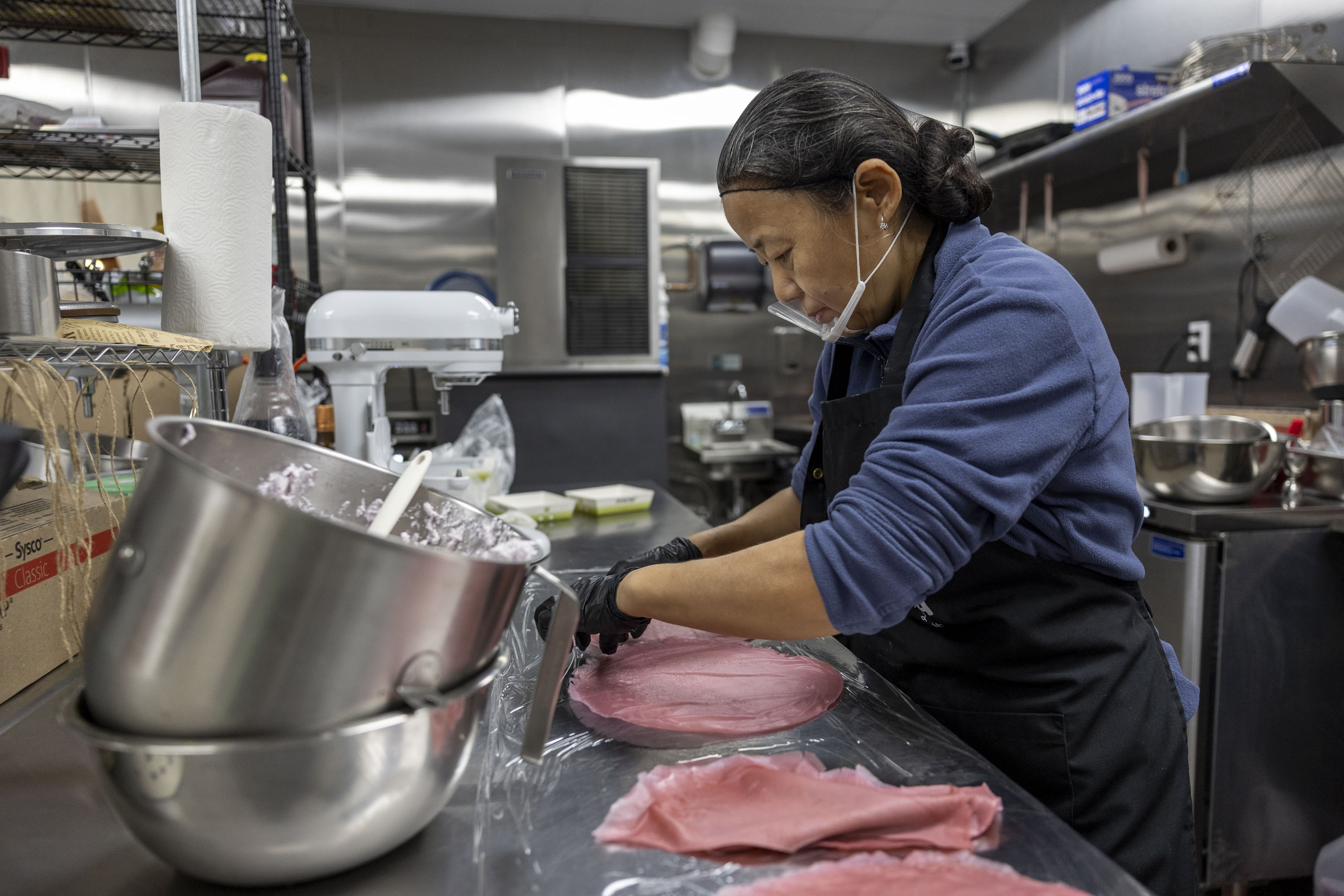
Indeed, the students who work the front of house are just as bubbly as the ones who serve similar ice creams and tea drinks at the other matcha-focused shops in Chinatown. But in the kitchen at Kyo Matcha, a small crew of older Chinese chefs who previously worked at dumpling stores or preparing food in retirement homes are painstakingly making matcha and ube crepes, then layering them into cakes or rolling them into desserts by hand.
The franchise is a project that brought two mainland Chinese couples into business together: Tom Kang, 34, and Danya Li, 30, who met studying hospitality at Temple University; and Alex An, 32, who also owns an international trading business, and Jing Xiong, 31, a UX lead designer.
Mrs. Jiao is making a fresh Ube Tower Cake at Kyo Matcha on Wednesday, Aug. 26, 2026, in Philadelphia.Tyger Williams / Staff PhotographerA Ube Tower Cake at Kyo Matcha on Wednesday, Aug. 26, 2026, in Philadelphia.Tyger Williams / Staff Photographer
Kang also owns and operates Stay at Luna, a collection of 10 apartment hotels mostly clustered around Chinatown. (There’s a Stay at Luna located above Kyo Matcha.)
Located on 11th Street between Race and Vine Streets, in the former Vietnam Palace space, Kyo Matcha is a little off Chinatown’s beaten path. “We felt that if we created a beautiful space and offered something a little different, it could become another reason for people to come to this part of Chinatown,” said Kang.
A Creme Brûlée Matcha at Kyo Matcha on Wednesday, Aug. 26, 2026, in Philadelphia.Tyger Williams / Staff Photographer
He became enamored with Kyo Matcha due to both its high-quality matcha powder and its menu, equally balanced between beverage and desserts.
And why did four young people choose to open a franchise instead of creating their own brand?
“Starting a brand from scratch is so hard,” said Li.
While menu items all have to be approved by Kyo Matcha’s corporate office, the business arrangement still leaves room for the owners to innovate as they develop desserts for Philly customers.
As at other beverage chains, you can specify your preferred level of sweetness when ordering a drink here. There’s only one option, a simple iced matcha, where you can try matcha unadulterated by milk or syrup, to appreciate its grassiness. All beverages are served cold.
A Matcha Crepe Cake at Kyo Matcha on Wednesday, Aug. 26, 2026, in Philadelphia.Tyger Williams / Staff Photographer
The matcha trend shows no sign of abating, though global shortages persist as the tea’s leaves take four to five years to mature. The obsession with the bright green Japanese tea has manifested in a slew of matcha-driven beverages and desserts in Philly’s Chinatown, where there’s also been a wave of beverage shop openings.
Kyo Matcha opened the same week as Arch Street’s branch of Heytea, a Chinese brand operating over 4,000 locations worldwide. They join over a dozen tea-focused shops in the neighborhood.
The inside of Kyo Matcha on Wednesday, Aug. 26, 2026, in Philadelphia.Tyger Williams / Staff Photographer
But there stillseems to be plenty of appetite for approachable matcha offerings. “Matcha is especially popular among younger customers, and we see a lot of students and younger professionals, but we’ve also seen families, tourists, Chinatown residents, and people who have never tried matcha,” said Kang.
Kyo Matcha, 222 N. 11th St., kyotomatcha.us. Hours: Noon to 10 p.m. Monday to Thursday, 11:30 a.m. to 10:30 p.m. Friday and Saturday
House lawmakers, fresh from their August break, are expected to vote this week on a Senate-passed measure that would fund federal agencies through Dec. 11, avoiding a government shutdown before the Nov. 3 midterm elections.
Republican leaders aim to pass the stopgap funding bill Tuesday under a “suspension of the rules” — a fast-track process that requires support from a two-thirds majority of the chamber, according to two House GOP aides who spoke on the condition of anonymity to candidly discuss party strategy.
Bills on the House suspension calendar get limited time for debate and are not subject to amendment or other procedural hurdles, allowing Republican leaders to move quickly to avert a shutdown. With control of Congress on the line, both parties are eager to return to the campaign trail.
“That’ll be a priority over in the House because we get things done,” Majority Whip Tom Emmer (R-Minnesota) said Sunday in an interview on Fox News.
The House passed its own stopgap funding measure in July, but it lacked support in the Senate. Senate appropriators Susan Collins (R-Maine) and Patty Murray (D-Washington) instead drafted their own stopgap bill, which passed the Senate on a bipartisan 90-6 vote.
In addition to funding the government past the Sept. 30 deadline, the measure includes additional funding for housing and nutrition programs requested by the White House. It also would temporarily block the White House budget office from adopting a rule to give political appointees more power over discretionary grants.
Despite that constraint on its authority, the White House has issued a statement of administration policy in support of the legislation.
“President [Donald] Trump strongly opposes another futile Government shutdown,” the White House said in the statement. “Every Member of Congress should support passage of this [bill] to keep the Government open as discussions on fullyear appropriations continue.”
If the House approves the measure, lawmakers will be free to head back out of town by the end of the week.
Avoiding a shutdown is just the most urgent of several items on lawmakers’ to-do list before November elections. Republicans also hope to approve fresh funding for the war in Iran and implement new restrictions on voting — top Trump priorities. And they want to provide emergency assistance to American farmers battered by Trump administration policies, including tariffs and high fuel costs caused by the Iran war.
GOP lawmakers are looking to use the reconciliation process to advance all three priorities, which would allow them to pass with a simple majority in both chambers, forgoing Democratic support. But last month, Senate Republicans delayed a vote on a budget framework — the first step in the reconciliation process — amid opposition from multiple members of the conference.
Senate Budget Committee Chairman Ron Johnson (R-Wisconsin) told reporters that senators would bring forward a “better” budget framework in September.
Work on the federal farm bill — which is due to expire Sept. 30 — is also stalled just as lawmakers are eager to find another way to demonstrate support for a critical constituency. The House passed its version in April, but the Senate has struggled to advance its own version amid opposition from Democrats who do not support reductions in federal funding for food stamps proposed by Republicans.
With the Senate not due back in Washington until Sept. 14, House lawmakers are in a holding pattern on these measures. Emmer, speaking to Fox News on Sunday, expressed frustration with the Senate logjam.
“We sent our priorities over to the Senate,” he said. “We sent the Clarity Act. … We sent the Save America Act several times, and it sits over there, languishing in the Senate. … It really is going to be on the Senate’s shoulders to start getting something done when we get back.”
Besides voting on the stopgap budget bill this week, the House is expected to vote on a censure motion against Rep. Chuck Edwards (R-North Carolina) following a recommendation from the Ethics Committee.
Earlier this month, the committee found that Edwards engaged in “persistent unprofessional and inappropriate conduct” toward two female staffers, behavior Edwards denies.
FLAGSTAFF, Ariz. — More rain and thunderstorms were possible Monday at the Grand Canyon following a major flash flood that left one person dead and about 15 others missing or unaccounted for, with scores of visitors evacuated and the only water pipeline for tourists and residents destroyed.
Emergency water restrictions that began Monday prevented tourists from staying overnight at lodges and hotels within the park. Year-round residents were asked to conserve water.
A flood watch was in effect. Visiting the Grand Canyon — a crown jewel of the national park system — can be particularly dangerous in the summer because of the risk of flash flooding that accompanies the monsoon, or rainy season. Clear days can give way quickly to thunderstorms and downpours.
“With deep monsoonal moisture in place and already saturated soils in some locations, an elevated risk of flash flooding will be in place through Monday,” the National Weather Service said early Monday.
The body of a 46-year-old man was recovered Sunday evening near Crystal Rapids along the Colorado River, the National Park Service said without providing additional details.
The flooding Saturday in Bright Angel Creek, which flows into the river, led to more than 60 people being airlifted from the depths of the canyon. The park service asked anyone with details about hikers or campers still unaccounted for to get in touch. The Arizona Department of Public Safety helped with additional evacuations Sunday.
“These measures are crucial for ensuring the safety and sustainability of water resources,” the park said in a statement.
Parth Desai was hiking through a narrow passage in Bright Angel Canyon with fellow physicians and a park ranger when heavy rain started falling Saturday.
“We saw the creek flood, waterfalls coming up out of nowhere, boulders, mud, landslides happening everywhere,” he said.
Later, as they made their way toward Phantom Ranch, a colleague shouted “Up, Up, Up, Up!” as a 4-foot (1-meter) debris wall headed toward them and they ran up into a patch of cacti, he said. They were rescued by helicopter late Saturday after making it to the Phantom Ranch area, he said.
Torrents of water wiped out footbridges over the creek and altered the landscape, widening the creek bed and extending an existing river rapid or creating a new one. The flood was a major blow to an enduring effort to modernize the pipeline that serves 6 million visitors a year and roughly 1,600 residents of Grand Canyon Village.
“Heaven help us if the whole thing down there at the bottom has to be reconstructed,” said Jack Schmidt, director of the Center for Colorado River Studies at Utah State University. “Where are they going to get the money?”
Halting overnight stays at the park because of a lack of water is rare, although the pipeline frequently has failed over the years. While the Grand Canyon has large storage tanks for potable water on the South Rim, they won’t be refilled while the pipeline is out of service.
A $208 million rehabilitation of the pipeline and upgrades to the associated water delivery system started in 2023, with the park service calling it a crucial investment to ensure the park can meet the needs of residents and visitors. The project was expected to be completed next year.
BIDUR, Nepal — Rajendra Dawadi was inside his classroom when the school’s accountant rushed in with a warning: Floodwaters were racing through Nepal’s Trishuli Valley, tearing apart homes, bridges and entire villages.
Then a teacher received another warning by phone. Moments later, a parent arrived to take her child home. The danger had not yet been confirmed, but Dawadi had little time to act. He rang the school bell and ordered his students and staff out of the building and toward higher ground.
“I immediately decided to stop … school and (get the children out),” he told The Associated Press.
As he followed them to a nearby hill, the floodwaters rose behind him. From the safety of the hillside, he turned to watch the school where he had once been a student — and where he had spent years teaching — disappear beneath a torrent of water, mud, boulders and debris. Two staff members could not make it and remain missing.
Dawadi’s decision to evacuate the school saved at least 900 students from last week’s devastating flash floods in Nepal, unleashed after a glacial collapse in the Himalayas. The disaster killed over 900 people across Nepal and China, while more than 4,700 remain missing.
As Nepal grapples with the catastrophic natural disaster, Dawadi’s story has emerged as a striking example of foresight and courage.
The Tribhuvan Trishuli Secondary School in the Trishuli Valley of north-central Nepal had 1,643 students. At least 900 were on campus that morning, while some students were still making their way to school. Dawadi ordered those already there to leave and called bus drivers, telling them to only stop at safer places.
One bus, packed with students, had already reached the school when Dawadi told the driver to turn back, he said. The bus crossed a newly constructed bridge and, moments later, the old bridge beside it collapsed.
For Dawadi, the scale of the destruction has become personal, as the school had been both his workplace and a large part of his life.
“I have no words. I got education from that school. And I gave education at that school,” he said.
The destruction of Dawadi’s school was not an isolated loss.
Across northern Nepal, the floods have left thousands of children without classrooms, disrupted their education and raised fears that the disaster could cost them months of schooling. Charity group Save the Children said in a statement that at least 69 schools in northern Nepal have been completely destroyed, putting the education of nearly 19,000 students at risk.
Dawadi’s quick thinking and swift response during the disaster have been hailed as an act of heroism. When he returned to the site of the school days later, parents embraced him as they thanked him for saving their children.
“Their parents hugged me, they cried with me,” he said. “They were emotional.”
Student Suvina Tamang, 14, said the school’s three-story building was swept away shortly after all the students had been evacuated.
“I will thank him when I see him” for saving my life, she said.
But Dawadi is reluctant to accept the role of hero. For him, rescuing his students was his responsibility. Now he says, students will need psychological counseling. Then, lessons must begin again, even if the school must temporarily relocate.
His appeal to the Nepalese government is simple: rebuild the schools and get children back to classes.