Tag: topic-link-auto

  • At the end of a busy summer, Philly band Snacktime has a new song and a new video

    At the end of a busy summer, Philly band Snacktime has a new song and a new video

    Snacktime has had an excellent summer.

    The Philly soul-funk band that got its start busking in Rittenhouse Square in 2020, had high-profile gigs this year. That includes the Newport Folk Festival, where they backed up Ms. Lauryn Hill as well as played their own set, and the Lollapalooza Festival in Chicago.

    Now the septet, which was the house band for Jason Kelce’s ESPN late-night TV show, has released a new single. It has also signed with Nashville’s Thirty Tigers, which will handle the band’s label services and distribution. Their other clients include Rufus Wainwright, Jason Isbell & the 400 Unit, and Rosanne Cash, as well as Philadelphians Amos Lee and Eric Slick.

    The new single, “Can’t Imagine Why You’d Stay,” features singer Nico Bryant, who joined the group in 2025, after vocalist and sax player Yesseh Furaha-Ali departed.

    The song, which was mixed and produced in Los Angeles and Philadelphia by Josh Lucas, who’s previously teamed with Khalid and Daniel Caesar, shows the continued evolution of the group from its horn-happy busking beginnings.

    For one thing, Snacktime is (sometimes) less “horn-y” than it used to be. In the accompanying music video directed by the band’s tenor saxophonist Ben Stocker, sousaphone player Sam Gellerstein plays bass, trumpeter Eric Sherman is on guitar, and trombonist Michael Spearman plays keys.

    The band can still shift to a four-horn attack when it pleases, but on the snappy dysfunctional relationship song “Can’t Imagine Why You’d Stay,” the only brass heard is Stocker’s sax.

    On Thursday, Snacktime will celebrate its new era with a show that’s free (but you must RSVP) at the Bok Bar in South Philly; a party put on by Ilegal Mezcal as part of its Bar Ilegal tour. Tattoo artist Daniel Cottee will also be on hand.

    Snacktime kicks off a tour with Delaware County-bred soul singer Devon Gilfillian on Sept. 14 in Carrboro, N.C., and will play a late-night set at the Sea.Hear.Now Festival in Asbury Park on Sept. 18. A full Snacktime album is expected in 2027.

    Snacktime at the Bok Bar, 800 Mifflin St. on Thursday Sept. 10. at 7 p.m. RSVP at ilegalmezcal.com/barilegal

  • Key Pennsylvania races to watch in the midterm elections this November

    Key Pennsylvania races to watch in the midterm elections this November

    In the country’s premier battleground state, Pennsylvania Democrats believe they’re in striking distance of a tidal-wave victories that would dramatically shift the balance of power in both Washington and Harrisburg.

    For the first time in decades, the party could take full control of the legislature. That would give Democratic Gov. Josh Shapiro — seeking reelection with a wide polling gap on his Republican challenger Stacy Garrity — significantly more power to shape the direction of the state as he potentially pursues a White House bid in 2028.

    Democrats also see a chance to flip four congressional seats and take control of the U.S. House. Republicans, meanwhile, are prioritizing defending the Pennsylvania seats with their House majority on the line as President Donald Trump, who won the state just two years ago, sinks in popularity.

    The path for power in Washington in the high-stakes midterms runs through Pennsylvania and its results will be closely watched as both parties prepare for a presidential race in two years when the state promises to play a pivotal role.

    Voters across Pennsylvania will head to the polls in November to cast their ballots for races that will decide the balance of power in the state and nation.

    Here are the races to watch and how to vote.

    Shapiro’s November could dictate his 2028

    Shapiro, widely viewed as a likely contender for the 2028 presidency, has big ambitions this fall when he’ll stand for reelection against Garrity, the state’s treasurer.

    More than just securing his own reelection, Shapiro hopes to run up the margin and carry downballot Democrats across the finish line.

    Another double-digits win and a string of coattail victories would be a show of strength about his ability to perform in a key swing state that his party lost in the last presidential election. In a presidential primary, Shapiro could use that result to make an argument that he’s a strong general election candidate who can boost the Democratic brand.

    Two months out from the election, all signs point to a Shapiro win. He holds a historically large campaign war chest and a commanding 55-39% lead in the race against Garrity, according to a recent Philadelphia Inquirer/New York Times/Siena University poll.

    Garrity, who has been endorsed by Trump, broke the record in 2024 for the most number of votes received by a candidate running for state-level office in Pennsylvania. But support from the national GOP establishment has been limited, and as she faces off against a formidable incumbent, the question is: Can she overcome her stark cash disadvantage and low name recognition to become the state’s first female governor?

    Will Republicans hold on in competitive congressional seats?

    There are four U.S. House districts in the eastern portion of Pennsylvania, targeted by both parties as must wins. In each, the Republican incumbents are seeking to fend off highly financed challengers amid deep frustration among voters with the leader of their party that could translate into a wave of Democratic victories down ballot.

    1st Congressional District: Five-term Republican U.S. Rep. Brian Fitzpatrick faces a challenge from Bucks County Commissioner Bob Harvie in the district, which covers all of Bucks County and a portion of Montgomery. Fitzpatrick, a moderate who has survived previous blue waves, has maintained a fundraising advantage on Harvie unlike the other swing-district incumbents.

    7th Congressional District: Freshman Republican U.S. Rep. Ryan Mackenzie narrowly flipped the Lehigh Valley district two years ago and is widely seen as one of most vulnerable incumbents in Congress. He’s facing a challenge Democrat Bob Brooks, a retired firefighter and union leader whose blue-collar campaign has attracted support across the party’s ideological spectrum with endorsements from Shapiro and U.S. Sen. Bernie Sanders.

    8th Congressional District: Freshman Republican U.S. Rep. Rob Bresnahan ousted a six-term incumbent in this district centered in former President Joe Biden’s hometown of Scranton two years ago. But as he faces a tough challenge from Scranton Mayor Paige Cognetti, Bresnahan has faced scrutiny over his stock trades and his vote to cut Medicaid — to pay for Trump’s tax cuts — despite a promise to protect the program.

    10th Congressional District: Republican U.S. Rep. Scott Perry, a close ally of Trump, faces a November rematch against Democrat Janelle Stelson, a former TV anchor, in the Harrisburg area district. Stelson has consistently outraised Perry after narrowly losing in 2024.

    In addition to these four races both national parties have targeted, Shapiro has argued that the 9th Congressional District, where Democrat Rachel Wallace is taking on incumbent GOP U.S. Rep. Dan Meuser, is flippable — despite the strong GOP lean in the district, which stretches from Berks County to the New York state border. The district is home to two warehouses that ICE was planning to convert into detention centers before abandoning the plan after a backlash from residents.

    Will Democrats flip the Pennsylvania Senate?

    In Harrisburg, Democrats hold an extremely narrow majority in the state House, but the Pennsylvania state Senate has been under Republican control for more than 30 years.

    This year, Shapiro wants to flip the chamber and win a trifecta to push forward his key priorities, such as codifying abortion access, raising the state’s minimum wage, and increasing funding for transit.

    Republicans currently hold 27 of the chamber’s 50 seats. Democrats, who currently hold 23 seats, need to win at least two additional seats and the governor’s office to win control of the chamber with the lieutenant governor as a tiebreaking vote.

    The seats, drawn advantageously for Republicans, have been stubbornly resistant to political change for decades.

    But this year a blue wave could usher in Democratic pickups in Philadelphia suburbs and the Lehigh Valley.

    Races to watch include:

    • Bucks County’s 6th District, where Republican incumbent State Sen. Frank Farry faces a challenge from Democrat Eileen Hartnett Albillar.
    • Montgomery County’s 24th District, where incumbent Republican State Sen. Tracy Pennycuick is up for reelection against Democrat Chris Thomas.
    • Bucks and Lehigh County’s 16th District, which will see a rematch race between incumbent Republican State Sen. Jarrett Coleman and Democrat Mark Pinsley, the Lehigh County controller.

    What are the important dates to know?

    Election Day is Nov. 3.

    The deadline to register to vote is Oct. 19. You must be at least 18 years old, a resident of Pennsylvania and a citizen of the United States to vote. You can register online, by mail, at your county elections office, or at one of several other government buildings.

    You can check your voter registration on the Department of State’s website.

    Pennsylvanians can vote by mail with no excuse required. To apply, fill out an application by mail, online, or in-person and send it into your county election office. Applications must be received by Oct. 27 at 5 p.m. and the completed mail ballot must be received — not just postmarked — by 8 p.m. on Election Day.

    An application and mail ballot can be completed in one visit at an election office, essentially functioning as early voting.

    Staff writer Fallon Roth contributed to this article.

  • Ryan Richter has ‘too much work to do’ to enjoy the growing buzz around the Union

    Ryan Richter has ‘too much work to do’ to enjoy the growing buzz around the Union

    The spotlight keeps growing on Cavan Sullivan, Neil Pierre, and the Union’s push for a playoff berth. But interim manager Ryan Richter remains steadfastly unmoved.

    “I’m not just saying this when you guys ask,” he said heading into Saturday’s home game against CF Montréal (7:30 p.m., Apple TV). “The reality is, there’s too much work to do on a game-to-game basis to worry about the big-picture stuff, and where we’re at in the league, and what the next 10 games might look like. There’s too much to focus on today, and what we want to see out of training, and the environment that we want to create to get the best out of the guys — and I really mean that.”

    Richter proved his sincerity when asked if the team would get a boost in spirits from rising above the playoff line. The Union enter the weekend in 12th place in the East (6-10-6, 24 points), but just one point back of ninth-place Orlando. Toronto and D.C. are also on 25 points, while eighth-place Red Bull New York is on 26, and seventh-place New York City FC is on 28.

    The three teams beneath the Union — Atlanta, Montréal, and Columbus — are on 21, 21, and 20 respectively. And no one expects Columbus to remain in the basement, having just signed former NYCFC winger Santi Rodríguez.

    Though the Union are on a seven-game unbeaten run in league play, Ryan Richter (left) knows there’s still a lot of work to do.Elizabeth Robertson / Staff Photographer

    “It’s not important to me,” Richter said. “There’s no psychological bounce of being above that line. … There’s too much to focus on here that takes all the attention away from what-could-be types of things.”

    An eight-point difference from seventh to 15th makes for a pretty big traffic jam. It probably won’t clear up any time soon, with 12 games still to play in the last two months of the season and a two-week FIFA international window in the middle. It’s so much congestion that there will be a full round of games during the first weekend of that FIFA window, a practice the league used to swear off.

    That includes the Union’s quick turnarounds to their next two games: Wednesday at home vs. FC Cincinnati (7:30 p.m., FS1, Apple TV), then the longest road trip of the year to play San Diego next Sunday (9 p.m., Apple TV).

    But a team can make its situation worse by not doing what it should. That certainly applies to Saturday’s game at Subaru Park. Not only is Montréal beneath the Union in the standings, but it played a Canadian Championship cup game in Vancouver on Wednesday. Another midweek game awaits next Wednesday, at home against Charlotte.

    MLS’s schedule flip next year will fix much of this, because the league won’t have to jam games in places to make room for breaks during major tournaments. Until then, Richter offered sympathies to the visitors.

    “It’s a tough week for them,” Richter said. “I don’t want to say it’s a break for us, but it makes it a tough week for them, playing in Vancouver. And sometimes you need these breaks in your schedule. But we know that doesn’t mean it’s going to be an easy game.”

    Nor might it be the easiest to scout from film. Montréal is still integrating its two big summer signings, former Colorado Rapids winger Dante Sealy and Chilean legend of many big European clubs Alexis Sánchez.

    Though Sánchez has only played as a substitute so far, the 37-year-old is one of those players who could pull a rabbit out of his hat at any time.

    Alexis Sánchez (right) has played for a slew of big clubs in his career, including Spain’s Barcelona, England’s Arsenal and Manchester United, and Italy’s Inter Milan.Graham Hughes

    “For us, it’s a little unpredictable what kind of lineup they’ll go with,” Richter said. “We’ll see where Alexis Sánchez is exactly fitness-wise: if he’s ready to start a game, if he’s available for that. But they’ve added some quality pieces, so it’s a dangerous team.”

    A front office addition

    The Union have filled the role of technical director in their front office for the first time since Chris Albright’s departure.

    Roberto Giménez, who was the club’s head of academy scouting from 2021-24, has returned to Chester and been hired for the new title. He spent the last two years as U.S. Soccer’s talent identification manager for the West Region.

    “Roberto has a strong understanding of our club, our identity, and strategy, and our approach to identifying and developing talent,” Union sporting director Jon Scheer said in a statement. “His time with U.S. Soccer has broadened his perspective on best practices across the landscape, while allowing him to collaborate with club and federation leaders domestically and internationally. … We are excited to welcome him back, as he will play an important role in advancing our sporting strategy across every level of our professional player pathway — from the academy through Union II and into the first team.”

    Union sporting director Jon Scheer.Alejandro A. Alvarez / Staff Photographer

    That work has been done by a range of people in recent years, especially Scheer before he was promoted to the top job. His previous title was head of academy and professional development.

    Now the front office’s leaders are Scheer, Giménez, assistant sporting director Matt Ratajczak, and director of scouting Chris Zitterbart.

    The standings

    Since it’s September, it’s time to start looking at the Eastern Conference standings. Here’s how the bottom end stacks up heading into this weekend, with eight teams separated by eight points.

    The first standings tiebreaker is total wins, then goal difference.

    7. New York City FC: 7-8-7, 28 points, +5 goal difference

    8. Red Bull New York: 7-10-5, 26 pts., -14 GD

    9. Orlando City: 7-11-4, 25 pts., -17

    10. Toronto FC: 5-7-10, 25 pts., -6

    11. D.C. United: 5-7-10, 25 pts. -8

    12. Union: 6-10-6, 24 pts., -5

    13. Atlanta United: 6-13-3, 21 pts., -13

    14. CF Montréal: 5-11-6, 21 pts., -16

    15. Columbus Crew: 5-12-5, 20 pts., -8

  • SEPTA bus drives through wet concrete outside of Termini Bros. in what locals say is the ‘most South Philly thing ever’

    SEPTA bus drives through wet concrete outside of Termini Bros. in what locals say is the ‘most South Philly thing ever’

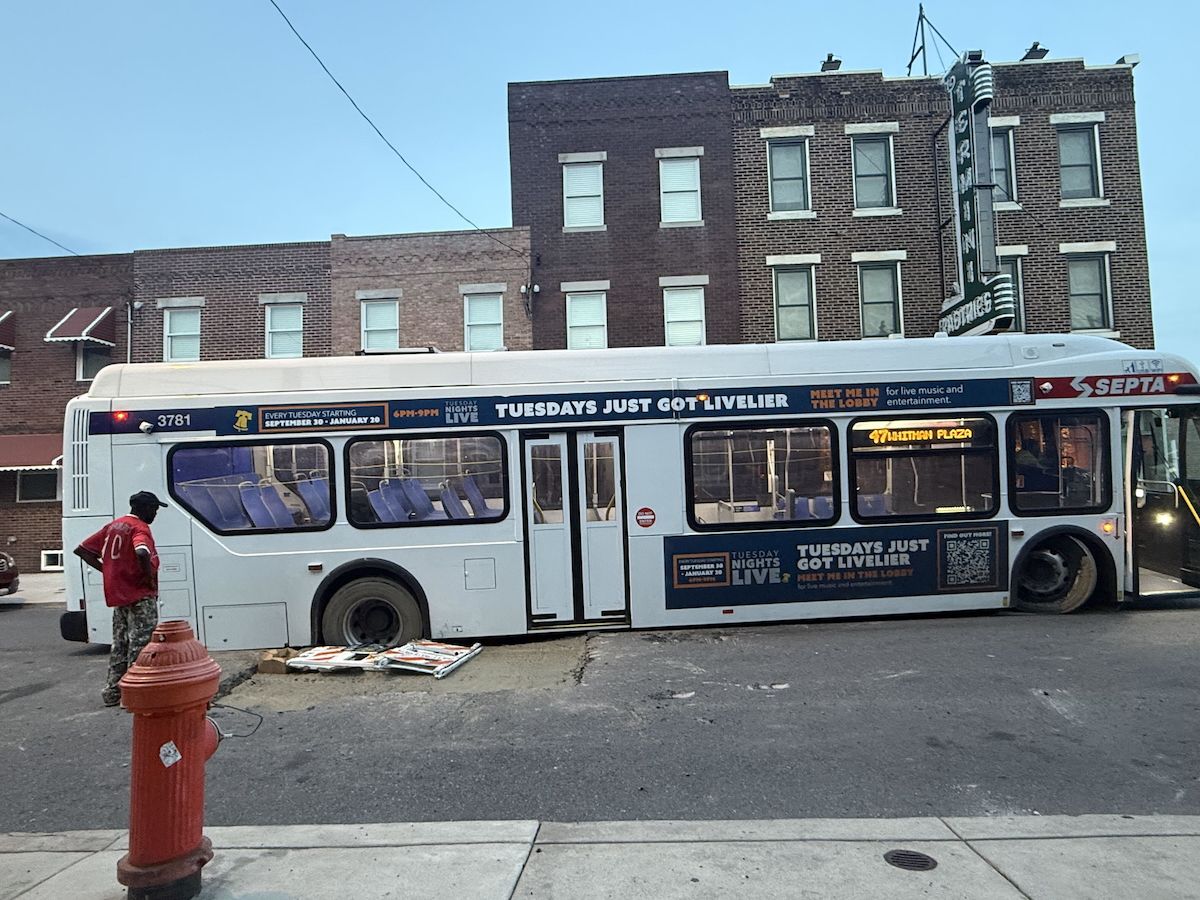
    In what Joey Termini of Termini Brothers Bakery is calling the “most South Philadelphia thing ever,” a Route 47 bus drove through wet concrete after two people reportedly hopped off to move street barricades so the bus could pass Thursday.

    The sinking bus, which tilted on a slight edge as it got stuck on South Eighth Street outside Termini Bros., drove through the concrete only two minutes after city crews poured it into the road.

    In surveillance footage provided by Termini, the bus, aptly adorned with Top Dog Law advertisements, slows to a halt in front of two A-frame street closure signs on Eighth Street. Two passengers are then seen hopping off the bus, casually moving the signs out of the way and directing the bus driver like air traffic controllers around the patch of concrete in the middle of the road. As the bus gets stuck and tilts to the side, smacking the pavement in the process, hardly any of the passengers on the bus can be seen visibly reacting.

    “In South Philly, people are like, “I’ll find a way,” Termini said. “At the time I was a little frustrated because we waited months to get that pothole fixed, but you know looking back at it now, it really is funny. I’m just glad nobody was hurt.”

    The brothers Termini have been coordinating with the city to get the pothole-turned-sinkhole resolved since it formed 14 months ago, Termini said. He knew it was getting bad when the sinkhole started swallowing traffic cones placed inside it — a time-honored Philadelphian quick fix.

    Their prayers were answered Thursday when city crews came in the afternoon to repair the street. But right after the concrete was poured and the street blocked off at 7:21 p.m., a 47 bus found its way into the concrete pit at 7:23 p.m., according to Termini’s surveillance footage.

    The bus was towed within about 45 minutes, SEPTA spokesperson Andrew Busch said. According to an inspection, the only damage to the bus was from cement on one tire, so it will not be out of service for an extended period of time, Busch said.

    The city posted notices about the scheduled maintenance along the street in the days preceding the repair and no-parking signs were posted. “This wasn’t something that they just decided to do on a whim,” Termini said.

    SEPTA had a detour in place for this block along Route 47 on Thursday, which is standard operating procedure during planned road maintenance, Busch said. All internal notices of the detour were made, including to operators working on the 47.

    “We have an internal review underway to determine exactly why this occurred,” Busch said. “We will also see what we can learn from it and possibly improve on moving forward.”

    Termini feels for the driver, who wasn’t the first to have trouble on Eighth Street, as he saw at least three other buses making difficult turns to move around detours — something he felt could have been coordinated better by the city and SEPTA.

    “I know the driver was probably really stressed out,” Termini said. “But the guy getting off the bus to move the barriers and then run back on the bus, even after the bus got stuck in concrete, I was like, ‘This is Philly.’”

    And to make the ending sweeter, when city crews came out Friday morning to repair the bus-botched repair job, Termini handed out cannolis to those working on the road.

    “There’s enough craziness going on in the world out there,” Termini said. “Sometimes, we just have to laugh.”

  • Former Sixers star Ben Simmons is coming back to the NBA on a one-year deal with the Kings

    Former Sixers star Ben Simmons is coming back to the NBA on a one-year deal with the Kings

    Ben Simmons, a former No. 1 overall pick of the 76ers, is making an NBA comeback.

    Simmons, 30, has agreed to sign a one-year, $3.5 million deal with the Sacramento Kings, according to ESPN.

    Simmons’ NBA return comes after he stepped away from basketball for a year following several seasons plagued by injury and mental health struggles.

    Simmons was a can’t-miss prospect out of LSU when the Sixers selected him No. 1 in the 2016 NBA draft. That proved true early in his career. After missing his entire first year with a foot injury, Simmons was named Rookie of the Year in 2018 and became an All-Star, All-Defensive, and All-NBA performer before his 24th birthday.

    But things went off the rails during the 2020-21 season when the Sixers lost to the Atlanta Hawks in the Eastern Conference semifinals. In that series, the Sixers lost a tightly contested Game 7, and Simmons bore the brunt of the burden after he passed up an open dunk attempt to pass the ball with the Sixers trailing 88-86 with 3 minutes, 30 seconds on the clock.

    He subsequently orchestrated a holdout and forced his way out of Philly, landing with the Brooklyn Nets in a trade that sent James Harden to Philly.

    Simmons never regained that early flash after leaving Philly. After averaging 15.9 points, 8.1 rebounds, 7.7 assists, and 1.7 steals for the Sixers, his numbers dipped severely with the Nets and Los Angeles Clippers.

    Joining Sacramento could provide a real opportunity for Simmons. The Kings have been in a perpetual rebuild for decades, so there will be chances for Simmons to get playing time and show if he’s fully healthy mentally and physically.

    Ben Simmons last played in an NBA game on April 29, 2025.Adam Hunger / AP

    Talk of his return started with rumors about a potential reconnection with the Sixers after he spoke with Men’s Health in June.

    “I plan on getting as strong as I can physically, getting my ass on the court, and then the team realizing that my abilities will be needed,” Simmons said.

    Asked where he would like to play, Simmons didn’t have a specific destination but named a few franchises he had his eye on.

    “Maybe I’ll go back to Philly,” Simmons told Men’s Health. “Miami would be nice. And not because it’s Miami — I like Erik Spoelstra, I like the Heat, I like their organization, I like the culture.”

    He ended up in Sacramento for what could be one of his final shots at an NBA career.

  • Mistrial is declared in Lindsay Clancy child killings case after jury deadlocks

    Mistrial is declared in Lindsay Clancy child killings case after jury deadlocks

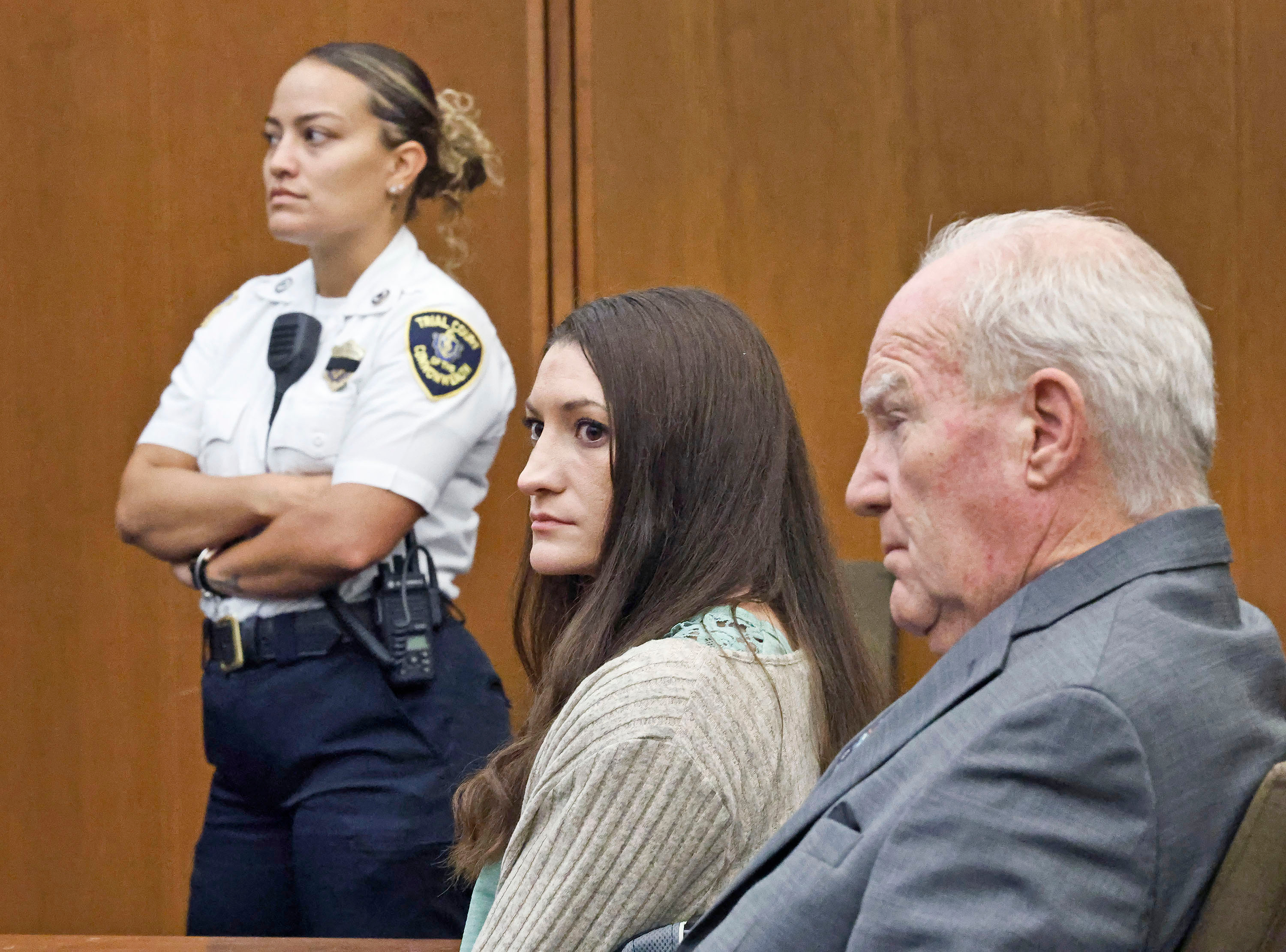
    PLYMOUTH, Mass. — A judge in the Lindsay Clancy murder trial declared a mistrial Friday after jurors failed to reach a verdict in a case that sharply divided many Americans over whether the Massachusetts woman should be held criminally responsible for killing her three young children.

    The trial generated intense interest for more than a month, drawing attention to issues around maternal mental health after childbirth.

    Clancy, a 36-year-old former labor and delivery nurse, never disputed that she killed the children. But her attorney said she had a rare condition called postpartum psychosis when she strangled her kids, the youngest just 8 months old, then tried to take her own life in 2023. Prosecutors said Clancy knew what she was doing.

    Friday’s mistrial, on the seventh day of deliberations, leaves the case unresolved. In the end, the decision seemed to surprise no one in the courtroom. Neither Clancy nor her family showed any emotion as the judge announced the trial was ending without a resolution.

    Her parents and her sister were escorted by state police from the back of the courthouse, saying nothing to reporters. Her ex-husband Patrick Clancy, the trial’s first witness, has said in past interviews that he forgives her and believes her actions were the result of mental illness.

    Lindsay Clancy could face another trial

    The prosecutor who originally decided to charge Clancy said there would not be an immediate decision about a second trial. He said public opinion would not influence any decision.

    “This was and has always been about getting justice for those three little babies,” said Plymouth County District Attorney Timothy Cruz. “This case is not about the healthcare system, or about how women are treated in it, or what diagnoses there are.”

    He pointed out that the two trial prosecutors were “both mothers themselves.”

    The deliberations took a dramatic turn when the judge said he was going to declare a mistrial Friday before suddenly changing course and letting her defense attorney appeal that decision to the top court in Massachusetts. But the court declined to stop the judge from declaring a mistrial.

    Prosecutors said Clancy acted deliberately when she strangled 5-year-old Cora, 3-year-old Dawson, and 8-month-old Callan Clancy with exercise bands. They said she contrived to get her husband out of the house on Jan. 24, 2023, by sending him to pick up medicine for one of their children and dinner for the family.

    Clancy’s lawyer, Kevin Reddington, said she should not be held criminally responsible because of her postpartum psychosis, a rare mental illness linked to the stress, sleep deprivation, and hormonal changes that follow childbirth.

    Trump weighs in on Lindsay Clancy case

    Three times this week, jurors said they were unable to reach a unanimous decision. The jury’s foreperson told the judge Thursday that a single juror wouldn’t follow the court’s instructions about reasonable doubt.

    Outside the courthouse Friday, Reddington blasted the juror he believes stood in the way of an acquittal by other jurors.

    “They (the jury) know they were robbed by one man, for whatever his agenda was, who stole seven weeks of the life of these other jurors that were so attentive, so beautiful, so wonderful,” he said.

    “You could see how defeated they were sitting there,” he said. “I got a funny feeling they would have gone on for another week if they had to. So I hope that guy can sleep well at night.”

    Millions across the U.S. watched the livestreamed trial. Even President Donald Trump said he was following the coverage.

    “It’s a terrible situation. Look, she did a horrible, horrible thing,” Trump said Friday. “Can’t be worse. But you’ll find out what the price to pay is. There’ll be a price — a mental institution or jail or something.”

    The judge acknowledged early during deliberations that the trial had been emotionally and physically exhausting for everyone. Much of the testimony was excruciating to hear, from the heartbreaking 911 call made by the children’s father who found their bodies, to the descriptions of how they died.

    Clancy was brought to tears several times. At one point, the judge called a short break as Clancy’s loud sobs filled the courtroom while the children’s autopsy photos were shown.

    Clancy’s mental health was the focus of the trial

    Over 21 days of testimony, jurors heard how Clancy’s mental health collapsed after Callan’s birth.

    Deeply anxious about a planned return to work, unable to sleep, and experiencing what she described as a disturbing brain fog, Clancy sought care from experts in postpregnancy mood disorders, who prescribed multiple psychiatric medications.

    Clancy’s family members testified that she expressed concern about her mental health decline. Her former mother-in-law, Susan Clancy, described her as a “very nurturing, very loving mother” who was “begging for help.”

    In early January, she checked herself in to a psychiatric hospital for more intensive treatment, but her stay was short. She killed the children 19 days after she was discharged, leaving their bodies in the basement of the family’s home in coastal Duxbury, Mass. Clancy jumped from a second-story window immediately after and remains paralyzed from the waist down.

    Clancy jurors heard differing views from experts

    Prosecutors conceded that Clancy had severe mental illness, but insisted she was able to understand and control her actions. They emphasized that although she claimed to have heard a male voice commanding her to kill the children, she never disclosed hearing voices to her mental health providers before the killings.

    In its latter stages, the trial became a battle of medical experts.

    Kirk Heilbrun, a forensic psychologist hired by prosecutors, testified he didn’t believe her story about hearing voices or that she had acute psychosis. He said she took the children’s lives so they wouldn’t “suffer” after she killed herself.

    Phillip Resnick, a forensic psychiatrist who testified for the defense, said Clancy was “clearly psychotic” and not in control of her actions. “It was almost like she was a puppet and someone else was pulling the strings,” he said.

  • Crestmont is the product of American racism and Black survival

    Crestmont is the product of American racism and Black survival

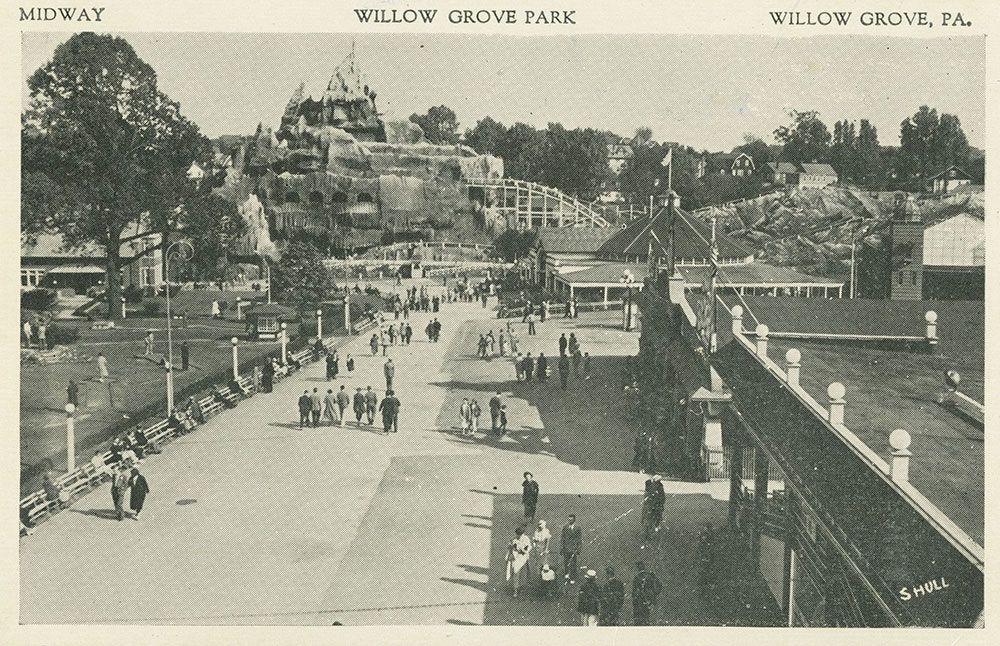
    Before you can understand Abington Township’s historically African American unincorporated community of Crestmont, you have to understand Willow Grove Park.

    Not the mall with that name, but the Willow Grove Park that predates it: One of the largest and most famous amusement parks on the East Coast.

    It opened in 1896, built by the Philadelphia Rapid Transit Co. It had roller coasters, a lake, restaurants, concerts, a massive music pavilion, and crowds pouring in.

    It shaped the entire local economy and brought thousands of people out to the suburbs every week. A place like that needed labor. Real labor. Constant labor. And that’s where Crestmont’s story begins.

    The “Welcome to Crestmont” sign sits directly across from the Willow Grove Mall.DJ Atkins

    I didn’t grow up in Glenside or Willow Grove. I came out here for work, almost 15 years ago, and eventually I moved here. Eight years living in these suburbs gives you time to notice things, to ask questions, to wonder about the layout of the place. And one question kept coming back to me: Why is Crestmont, a mostly Black community, sitting right in the middle of overwhelmingly white suburbs?

    If you know the area, you know exactly what I mean. Roslyn, Glenside, Willow Grove, Abington … they’re all majority white, and have been that way for generations.

    Then suddenly, right next to the Willow Grove Mall parking lot, there’s Crestmont.

    Houses closer together. A different feel. A different history. A different story.

    Crestmont’s density, the layout, the architecture, the vibe, the community identity — all of it comes from early working‑class development, limited access to loans, limited access to improvements, township decisions, generational continuity, racial boundaries, economic exclusion, and the strength of the people who lived there, writes DJ Atkins.DJ Atkins

    I started talking about Crestmont to people who grew up here. I started learning about Willow Grove Park, looking at the geography, thinking about the era, and the truth became impossible to ignore.

    It’s a truth all of us need to hear, because it shows exactly how racism shapes the places we live.

    Willow Grove Park opened only 31 years after slavery ended. That was the same year Plessy v. Ferguson legalized segregation. Old newspaper coverage, township references, and public history written about the park all describe a large-scale operation with ties to the trolley company, township officials, police, contractors, and local business owners.

    A machine like that needed workers who could show up every day, early, late, and in all seasons. Black workers came to fill Willow Grove Park jobs and stayed because the work kept coming. In line with what the public record shows, people with long family histories in Crestmont talked to me about how common it was for their relatives and neighbors to all work at the park.

    A vintage postcard showing the Willow Grove Park midway. Willow Grove Park opened in 1896; it was closed in 1975 and demolished a year later.Courtesy of D.J. Atkins

    But many of those workers didn’t have cars, and walking through certain neighborhoods wasn’t safe. Black people weren’t welcome. Renting was restricted, and loans for home purchases were denied. Still, the workers needed to live close. Close to the park, close to the trolley line, close to the commercial strip that fed the park.

    Exactly where Crestmont is.

    Once a few Black families moved in, the neighborhood took shape. Word spread. More families followed. White buyers stayed away. Black buyers were directed toward the same area. The lots stayed small. The houses stayed close. The community grew through necessity, connection, and resilience.

    People who grew up here remember the tensions between high schoolers. They remember buying packaged goods in Crestmont because they couldn’t get them elsewhere. They remember the social boundaries. They remember how Crestmont stood out from the surrounding suburbs. None of that is random. It’s the long-term result of how the neighborhood began.

    Crestmont exists because Willow Grove Park existed. Segregation created the boundary. The park created the need. Together, they created the neighborhood.

    One of the homes in Crestmont, photographed in 2026.DJ Atkins

    Crestmont isn’t unique.

    Across the country, Black neighborhoods formed near major employers because segregation blocked housing everywhere else.

    In Ardmore, Black families lived near the railroad and the estates they worked in. In Bryn Mawr, the Black neighborhood grew beside the service corridors of the Main Line mansions. In Atlantic City, Black workers lived near the Boardwalk hotels they kept running. In Pittsburgh’s Hill District, Black families settled near the steel mills and rail yards. In Baltimore, Black neighborhoods formed beside the shipyards and factories.

    Wherever a big employer needed labor, and wherever white neighborhoods refused to open their doors, a Black community formed in the one pocket where the pressure made it possible — and they look the way they do today because of their origins.

    One of the homes in Crestmont, an unincorporated community in Abington Township that owes its existence to Willow Grove Park and to housing segregation in the surrounding communities.DJ Atkins

    Crestmont’s density, the layout, the architecture, the vibe, the community identity — all of it comes from early working‑class development, limited access to loans, limited access to improvements, township decisions, generational continuity, racial boundaries, economic exclusion, and the strength of the people who lived there.

    It’s not a mystery. It’s not random. It’s not accidental. It’s a product of American racism and Black survival.

    People around here know Crestmont. But they don’t necessarily know its origin or see in it an example of how racism shapes geography and how Black communities build life anyway.

    Once you see that, you can’t unsee it.

    DJ Atkins is a Philly‑area DJ, radio host, and cultural writer. He also works in poetry, blending storytelling, music, and community history in his creative work.

  • WNBA commissioner Cathy Engelbert, a South Jersey native, to retire in December

    WNBA commissioner Cathy Engelbert, a South Jersey native, to retire in December

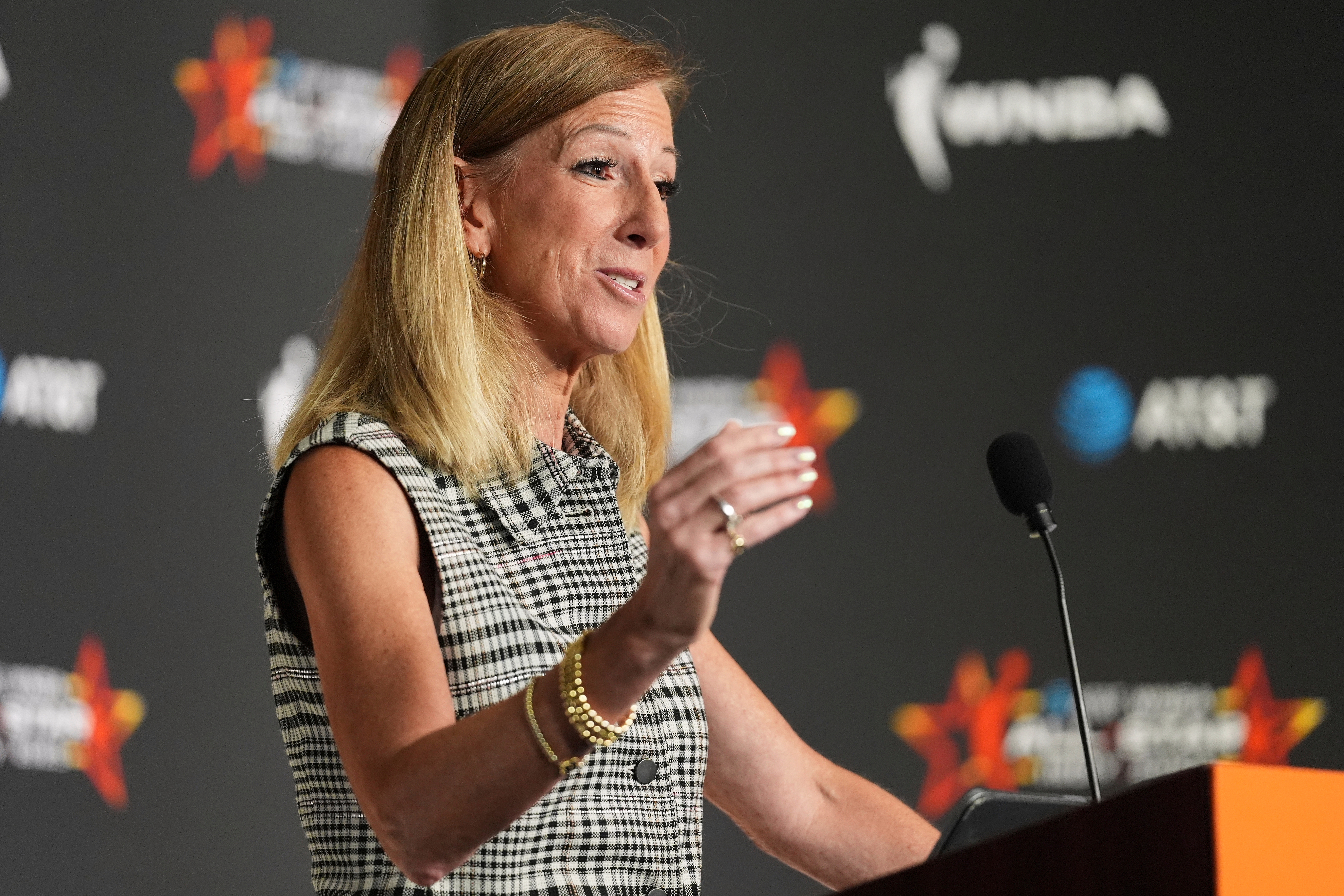
    WNBA commissioner Cathy Engelbert is retiring at the end the year, bringing to a close her seven-plus years at the helm of the league and a stewardship that has been transformative and at times tumultuous.

    Engelbert is the second-longest tenured WNBA president or commissioner, and she helped negotiate a lucrative collective bargaining agreement this past spring that resulted in the league’s first set of million-dollar player salaries. Philly-based lawyer Deb Willig helped lead negotiations for that CBA.

    “Cathy has presided over the WNBA through the most significant period of growth in the league’s 30-year history,” NBA commissioner Adam Silver said Friday when announcing Engelbert’s decision. “We are grateful for Cathy’s leadership and unwavering commitment to the advancement of women’s basketball.”

    Engelbert, a Collingswood native who turns 62 in November, told the Associated Press that she has been thinking about retiring for months.

    “When I first came to the league, I intended to do this for 3½ years,” she said in a phone interview. “The 7½ years exceeded that time. This is a really good time, given the financial transformation journey we’ve been on. Getting the collective bargaining agreement done, getting a long-term media rights deal done, getting expansion done.”

    Engelbert insists that the decision to leave was her own and that she did not feel any pressure to step down from NBA or WNBA stakeholders.

    Who’s next?

    The commissioner said she has been working on a succession plan over the last few years. While she didn’t give any specifics on who might be considered for the position, Engelbert did say there are both internal and external potential candidates on the league’s radar.

    “It’s a good time to hand it off to the next leader to take the ‘W’ into a better phase,” she said. “I’m proud of the team we built and everything we accomplished. A leader knows when it’s time to drop the mic and move on after building a powerhouse team in the league office.”

    Engelbert said she has mixed emotions about leaving.

    “I love women’s basketball, and am not going anywhere yet,” said Engelbert, who was a point guard for Muffet McGraw at Lehigh. “We’ll run a real succession process in the remaining four months. If we don’t find someone, I’ll stay on. I had no transition. I walked in the door, and I was by myself as no one transitioned me into this role.

    “Hopefully I can help this next leader transition in especially considering the elevation of this league.”

    The WNBA has grown at an exponential rate during Engelbert’s tenure as commissioner, with record television ratings, strong attendance, a new long-term media rights deal and expansion to 18 teams by the end of the decade. That run of expansion will be capped by a team coming to Philadelphia in 2030.

    “I was brought in as a business leader to transform the business,” she said. “I look at revenue and merchandise, viewership and attendance,” she said, noting how they’ve all improved. “A great leader senses when it’s time for someone else to come in. When I came in, this league was facing questions about our long-term viability and sustainability.”

    Turmoil, tension

    Engelbert said the growth of the league has “blown away her expectations” since she stepped into her role after leaving her previous position as president of Deloitte in 2019.

    Besides the new CBA, the list of things she is most proud of includes getting charter travel for players, keeping the league going during the coronavirus pandemic, the historic media rights deal and exponential increase in the value of WNBA franchises. In 2019, the average value of a WNBA franchise was $10 million; in 2026, it is about $460 million.

    Along with the financial gains, however, turmoil and tension have accompanied the WNBA’s growth.

    Players say they have seen more social media vitriol directed toward them over the last few years, and some don’t feel the league has done enough to ensure their safety. The league also has been at the center of discussions about transgender athletes playing in the league.

    Engelbert has repeatedly said the online attacks of players are unacceptable and she backs league initiatives to protect players. She also said there should be no confusion on the transgender question.

    “We have no current eligibility issues in the WNBA,” Engelbert said, adding that “if we did, we would have a thoughtful policy discussion with the [players’ association] and the players.”

    While there was a strained partnership between the commissioner and players during the recent CBA negotiations, Engelbert insists she has a good relationship with them.

    Talks between the commissioner and players have been complicated.

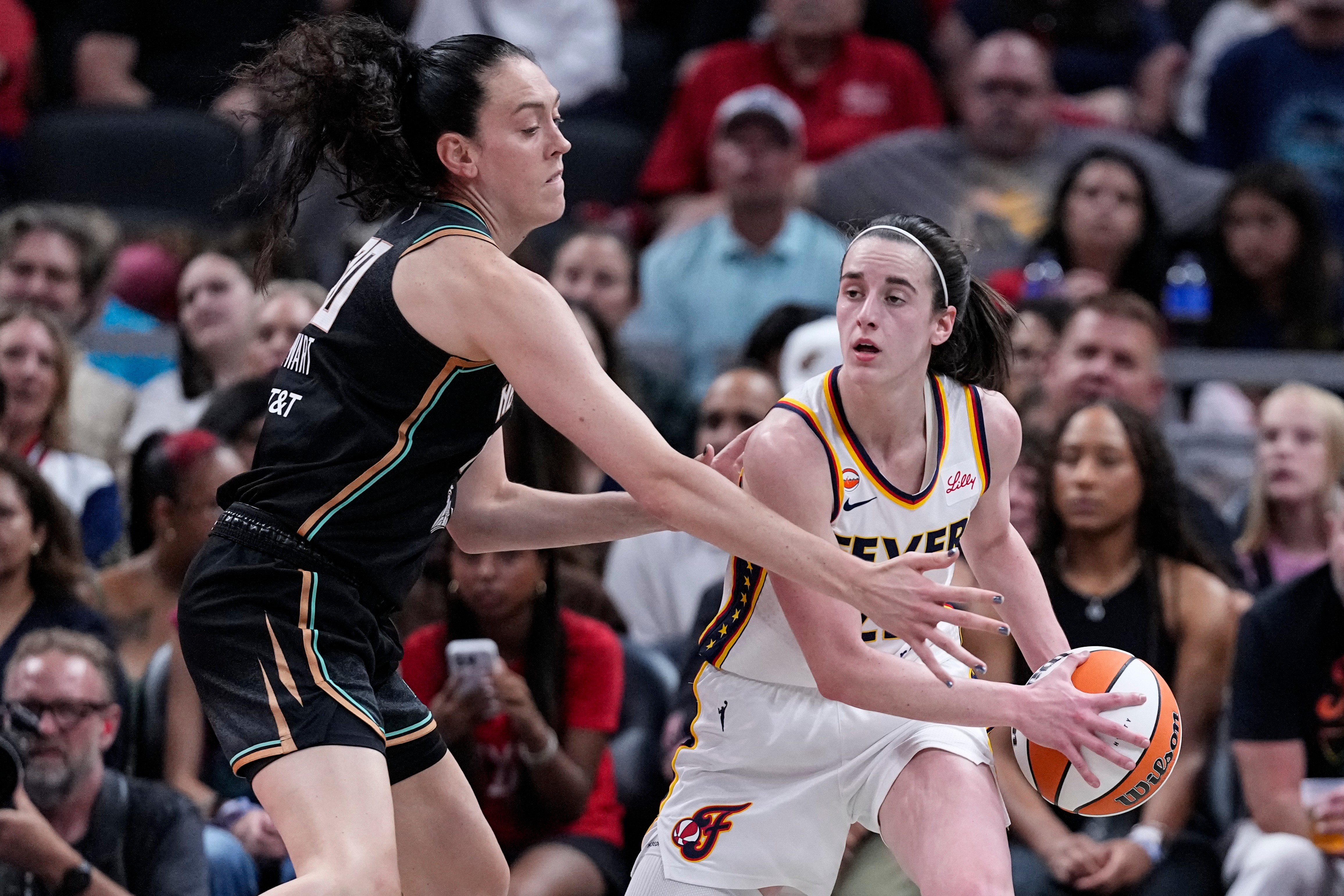
    New York Liberty forward Breanna Stewart, who’s vice president of the WNBA players’ union executive committee, said before the All-Star Game that there is a respect for Engelbert among the players, just not much of a relationship.

    New York Liberty forward Breanna Stewart (30) defends as Indiana Fever guard Caitlin Clark looks to pass in the first half of a game on Aug. 11 in Indianapolis.Michael Conroy

    Engelbert’s future

    Engelbert said she is ready to do what most retirees plan: spend more time with family.

    She also admitted that the online hate she receives has affected her family as well, though she did not share details of the impact.

    “There have been some hard parts of that on my family with the vitriol and hate I get online,” Engelbert said.

    Sixers majority owner Josh Harris (left), Detroit Pistons vice chairman Arn Tellem, WNBA commissioner Cathy Engelbert, and Cleveland Cavaliers CEO Nic Barlage celebrate the announcement of three new teams, including a franchise coming to Philly.Jonathan Tannenwald

    Her retirement will make her mother happy. Her father, Kurt, was a Hall of Fame basketball player at St. Joseph’s who died in 1987. Her parents were from Northeast Philly, and five of her siblings attended Villanova, according to a 2019 Inquirer article.

    “My mom is turning 90 this year, and she said that ‘it would be good if you were retired to spend more time with me,’” Engelbert said, laughing. “I have two children, one I barely see.

    “I’m one of eight kids [and I] have five brothers. They always say can you retire so you can spend more time with us.”

    Come Jan. 1, her family will get its wish.

  • John Fetterman reportedly dismissed CHOP leaders, rejected other meetings as he avoids Senate duties

    John Fetterman reportedly dismissed CHOP leaders, rejected other meetings as he avoids Senate duties

    U.S. Sen. John Fetterman privately rejected the concerns of leaders at the Children’s Hospital of Philadelphia who requested a meeting to talk about vaccine policy and Medicaid cuts, speculating to an aide that they “just want free trips to DC,” according to a new report that sparked another wave of criticism aimed at the first-term senator.

    The report from The Wall Street Journal details several meetings or events that while routine for many senators in Washington Fetterman frequently tried to get out of, including the meeting with CHOP and a funeral for three York County police officers who were killed while on duty.

    Claims that Fetterman is not fully performing the role of a U.S. senator have plagued much of his nearly four years in office. His former staffers have publicly and privately said he often cancels meetings at the last minute, including with constituent groups and Pennsylvania officials who would normally be considered allies.

    As he increasingly attacks his own party, the Pennsylvania Democrat has instead appeared regularly on conservative media. He’s prioritized meetings and events about Israel, whose war in Gaza had been a flashpoint in his break with former Democratic allies and supporters, and he does not make regular public appearances across the state he represents.

    Among the new revelations in The Wall Street Journal story is an interaction the senator had with Yechiel Leiter, the Israel ambassador to the U.S. last year.

    After Fetterman said he wanted to craft a Senate resolution that would require his colleagues to vote on whether the war in Gaza was a genocide, Leiter suggested Fetterman instead write an op-ed about why he supported Israel, The Wall Street Journal reported. Leiter’s embassy later “sent over drafted points for Fetterman to consider,” but Fetterman’s staff withheld them from him out of concerns that writing the op-ed based on the talking points “risked violating the Foreign Agents Registration Act,” according to the report.

    Trump administration official comes to Fetterman’s defense as critics react

    Fetterman’s office did not immediately respond to The Inquirer about the claims in the report or about the reactions to it.

    “John Fetterman is a disgrace,” U.S. Rep. Brendan Boyle (D., Phila.) wrote on social media in response to the story. “Our state deserves better than a lazy trust fund baby who is too lazy to do the job.”

    U.S. Rep. Chris Deluzio (D., Allegheny) called Fetterman’s behavior “pathetic.”

    “[B]etween the laziness, disrespect, and willingness to carry water for a foreign government, it shows us something we already know: this man has no sense of duty,” Deluzio wrote on social media. “He is not up for the high office he was elected to — and we in Pennsylvania will do something about it in 2028.”

    Former U.S. Rep. Conor Lamb and State Rep. Malcolm Kenyatta, Fetterman’s opponents in the 2022 Democratic primary, also condemned him.

    “This report is horrifying, but not new to many of us in PA. John barely showed up as [lieutenant governor] and is constantly MIA as our Senator,” Kenyatta, vice chair of the Democratic National Committee, wrote on social media.

    Boyle, Deluzio, Lamb and Kenyatta are among the Pennsylvania Democrats who are considered potential candidates when Fetterman’s seat is on the ballot again in 2028. Fetterman has not said whether he will seek a second term, and he’s rejected speculation that he will switch parties to become a Republican.

    A robust Democratic primary is likely either way. Just one out of every five likely Democratic voters have a favorable view of him, an Inquirer/New York Times/Siena University poll found last month. At the same time, his favorability among Republicans had grown to a higher level than Pennsylvania’s Republican senator, Dave McCormick.

    The Working Families Party, a left-leaning organization that backed Fetterman in the general election in 2022, has said since late last year that it will recruit a Democratic challenger to replace him. And State Rep. Chris Rabb’s sweeping win in Philadelphia’s race to succeed retiring U.S. Rep. Dwight Evans last spring has given some members of the party hope about the chances for a progressive, anti-establishment candidate for the position.

    Fetterman, meanwhile, has also isolated himself from other Democrats in Washington, according to The Wall Street Journal and other reports this year. The party is looking to capture the Senate majority in the midterm elections this fall — a tall task considering the map of competitive races, but one that could make Fetterman a key swing vote depending on how narrow the majority is for either party. Senate Minority Leader Chuck Schumer, who has called Fetterman “an important member of our caucus,” had dinner with Fetterman last month, according to The Wall Street Journal.

    But Fetterman’s detractors in the party — and his former staffers — have indicated they will continue to put pressure on the senator.

    On Friday as the latest story was circulating, an X account claiming to be a group of the senator’s former staffers launched with the message that it would share their experiences.

    “It’s even worse than you thought,” the first post stated, calling the latest news “the tip of the iceberg.”

    One former staffer with insight into the project, and who spoke with The Inquirer on the condition of anonymity, said it was a legitimate group of former staffers who plan to share real accounts of working for the senator.

    The account quickly gained tens of thousands of followers on Friday afternoon, even drawing the attention of a Trump administration official.

    “I’m disgusted by anonymous leakers, actually,” Harmeet Dhillon, an assistant attorney general for the Civil Rights Division of the U.S. Department of Justice, wrote in a response on X.

    Tré Easton, a former legislative director for Fetterman who has frequently criticized him since leaving his staff in early 2025, said it was “sort of extraordinary” to see other former staffers create such an account. He said he is not involved in the effort.

    Easton said the claims in the story aligned with his experience working for Fetterman.

    “A lot of ink has been spilled about John and his time in office,” Easton said. “What this Journal story captured that these other stories really haven’t is how completely disconnected he is from the work and how he just doesn’t care about it — how he doesn’t care about his constituents and doesn’t care about Pennsylvania in a worthwhile way.”

    ‘Why do I have to keep having to meet with chop’

    The newspaper’s report includes text messages between Fetterman and his staff as they discuss meetings and events that senators would normally attend.

    “3 hours??” Fetterman wrote in response to an aide who told him about the length of a funeral last year for three police officers who were killed while serving a warrant in York County, where Fetterman grew up.

    Fetterman wrote that the time “may be a nonstarter” and did not attend, the Journal reported.

    Discussing the meeting with CHOP officials last September, Fetterman wrote, “Why do I have to keep having to meet with chop,” and an aide responded it was to talk about vaccines and Medicaid cuts, according to the report.

    Along with children’s hospitals and health systems nationally, CHOP faces financial pressure from Medicaid cuts starting next year. While the internationally prominent research institution remains financially strong, around half its patients rely on Medicaid for coverage.

    During the debate over President Donald Trump’s signature budget legislation, CHOP circulated form letters to federal lawmakers that warned about the potential for the cuts to harm families, asking staff and patient families to sign them in opposition.

    Vaccines have also become increasingly political as Trump’s health secretary, Robert F. Kennedy Jr., a longtime anti-vaccine activist, has sought to upend longstanding federal recommendations about the timing and number of immunizations that children receive.

    Fetterman has not weighed in publicly about vaccine changes. But he has loudly rejected the Medicaid changes — saying in a statement last year that he was voting “HELL NO” on the Republican bill, which he called “a disaster.”

    About two months later, he wrote to an aide while discussing the CHOP meeting that he was not concerned about, the Journal reported.

    “I’m convinced they just want free trips to DC,” he wrote.

    Asked for comment on Friday, CHOP, in a statement to The Inquirer, did not comment on that text or its relationship with Fetterman in general.

    “We value the productive conversations we have with legislators and government officials at a local, state and federal level,” the statement read. “Their decisions have a direct impact on children’s ability to thrive in Pennsylvania and beyond, and we take our role as a voice for children very seriously.”

    Staff writer Wendy Ruderman contributed to this article.

  • The Phillies’ Alec Bohm and his parents settled a multimillion-dollar financial mismanagement lawsuit

    The Phillies’ Alec Bohm and his parents settled a multimillion-dollar financial mismanagement lawsuit

    Alec Bohm and his parents have settled a multimillion-dollar financial mismanagement lawsuit, nearly six months after the Phillies’ infielder accused the elder Bohms of enriching themselves off his baseball earnings.

    The terms of the settlement are confidential, said Gary DeVito, a Zarwin Baum attorney representing Bohm.

    The 30-year-old one-time All-Star accused his parents of using several limited liability companies to funnel money from his personal financial accounts, which they then “converted to their own use,” the suit said.

    The young Bohm asked a Philadelphia Common Pleas Judge to order his parents to pay him at least a $3 million judgment.

    The parents denied wrongdoing throughout the litigation. In court filings, they called the allegations “cruel and publicly humiliating.”

    Justin Kadoura, a Holland & Knight attorney for Daniel and Lisa Bohm, confirmed the case was settled and declined to comment further.

    Bohm’s parents had overseen his finances since 2019, using a series of LLCs to hold the money and assets he earned as a professional baseball player, the suit says.

    The Phillies player alleged his parents told him they needed to take a 10% interest in those LLCs on paper in order to act as authorized representatives of his interests, but he would retain all the assets and funds they contained.

    Daniel and Lisa Bohm went on to gain access to their son’s personal financial accounts, the lawsuit says. They would limit the amount of money in Alec Bohm’s personal accounts, and transfer the rest to ones held by LLCs, according to the suit.

    While the money was intended for “traditional investment purposes,” such as stock trading, to secure the player’s passive income, the suit says, Bohm’s parents “converted to their own use” an undetermined amount, and used money from the Alec Bohm Foundation — which they also established — to “pay their own personal expenses.”

    When Alec Bohm asked his parents in January to provide him with information about his holdings, the suit says, they opted to “engage counsel,” who then gave minimal information.

    Bohm’s parents later allegedly indicated they would bill the Phillie for “all the time they spent to administer Alec’s affairs” at a rate of $50 per hour.

    In the suit, the 2018 third-overall MLB draft pick asked the court to order his parents to return any money they used for their own purposes, as well as pay “make Alec whole.”

    Daniel and Lisa Bohm said in court records their son was aware of the corporate entities that held his assets and the entities were created based on advice of Alec Bohm’s attorney and financial adviser.

    The baseball player’s “apparent lack of knowledge” over his finances “emanates solely from his own lack of attention and interest,” the parents’ said in a court filing.

    “He had been perfectly happy to have Mom and Dad do all of the work, while he focused on baseball and enjoyed an otherwise carefree life,” the filing said.

    The settlement was announced Thursday night, hours after a scheduled hearing in the Philadelphia Court of Common Pleas that did not take place.

    In a May hearing, attorneys clashed over a request for an injunction that would have halted arbitration proceeding in Florida and freeze $528,618 that his parents transferred into their attorney’s trust account.

    The majority of the hearing surrounded minute legal details about jurisdiction and the type of fraud that Bohm alleged his parents committed.

    Throughout the summer, the parties sparred in court filings over when Alec Bohm would sit for a deposition. The parents’ attorneys sought a court order compelling their son to be deposed. They called the delays in scheduling “gamesmanship designed to avoid the truth.”

    Attorneys for both sides declined to say whether Bohm was deposed.

    The public family dispute comes to an end as the Phillies prepare to face the Atlanta Braves in an attempt to take over the top spot in their division. The team has been red-hot over the past month, and Bohm is playing the best baseball he has played this year.