Tag: topic-link-auto

  • Trump’s election attacks enter new preemptive phase

    Trump’s election attacks enter new preemptive phase

    WASHINGTON — For months, President Donald Trump has mounted a sustained effort to attack the integrity of U.S. elections while using the federal government to try to assert more control over the voting process overseen by states.

    Recently, Trump opened a new front.

    Rather than simply push false claims at his rallies or target voters his administration claims should not be on the rolls, Trump moved to preemptively challenge the certification of Alaska’s Senate election if the Republican candidate narrowly loses.

    In doing so, Trump harnessed the power of the federal government to try to interfere in the voting process before Election Day — essentially trying to nullify an opponent’s potential win before the game has been called.

    Even for a president who worked to undermine and overturn the 2020 presidential election, the anticipatory strike reflects a new intensification of Trump’s attempts to use his official powers to achieve the election results he wants — one that undermines the democratic process, according to election and legal experts. While they say the administration’s lawsuit is unlikely to be successful, the tactic could still further Trump’s goals by shaking the confidence of voters in the outcome of the race.

    “This is part of the election takeover playbook that I’ve seen around the world and unfortunately in some other autocratic environments,” said Michael McNulty, a former senior elections adviser for the U.S. Agency for International Development who has studied election issues around the world, including in El Salvador, Hungary and Venezuela. “Trump has essentially undermined the independence of the DOJ and it’s been weaponized.”

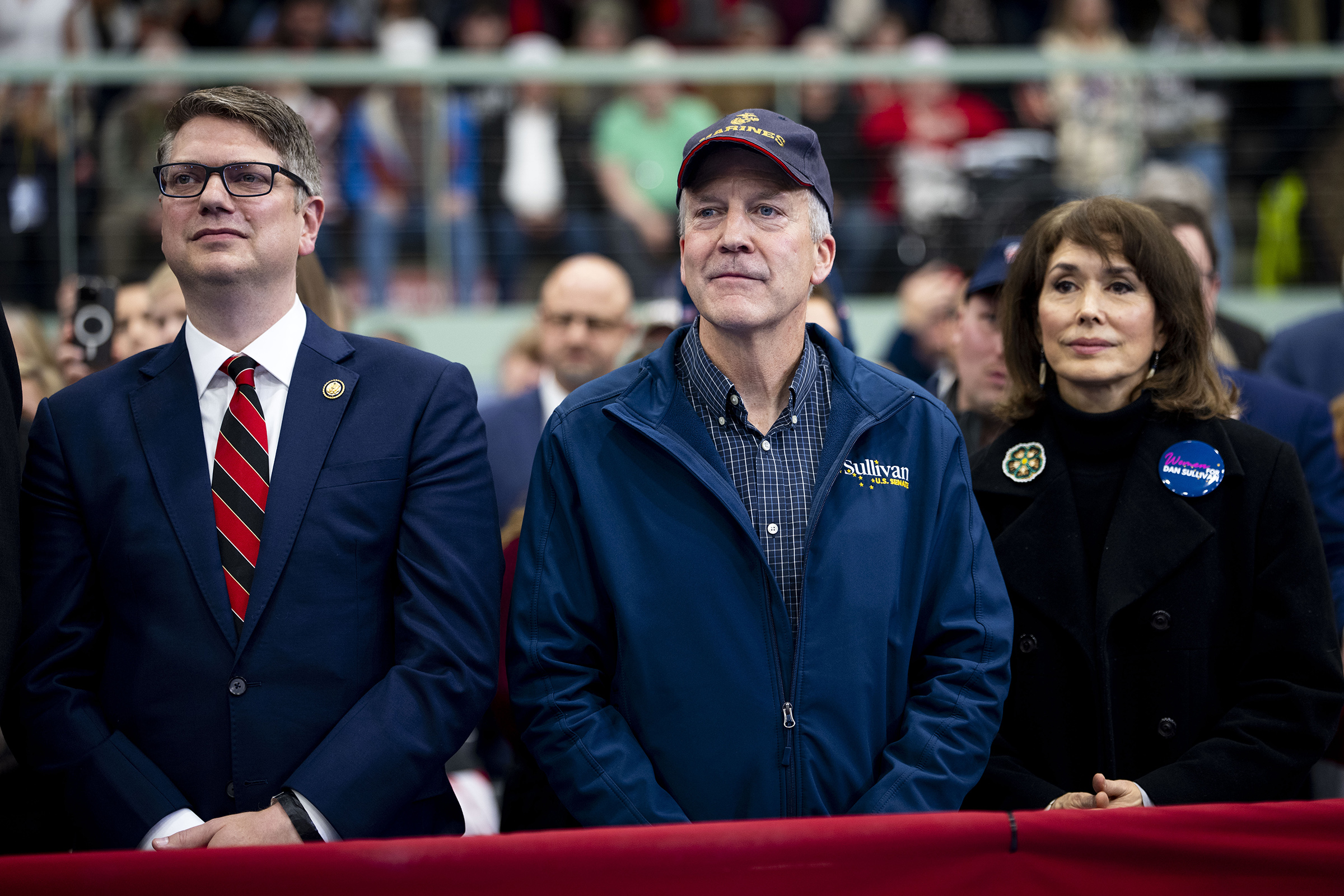
    The latest phase of Trump’s strategy centers on the Justice Department, which asked a federal court to block the certification of the election if the Republican incumbent, Sen. Dan S. Sullivan, were to lose by a slim margin. The administration argued the presence of another candidate with a nearly identical name on the ballot has skewed the election toward Democrats.

    The issue has already been litigated in the state: In June, the Alaska Supreme Court ruled that Daniel J. Sullivan Jr., a retired elementary schoolteacher, could appear on the ballot.

    But Attorney General Todd Blanche maintained on Sunday that the federal government had a role in inserting itself into the process.

    “We’re not saying that the federal government is going to decide who the next senator from Alaska is,” Blanche said on CNN’s “State of the Union.” He added: “But if it’s clear that there was confusion and that confusion led to an unjust, improper result that is not the will of the Alaskan voters, we want to make sure that the Alaskan system and the Alaskan state courts and the Alaskan electoral process can understand that in a way that lets them do the right thing.”

    When asked for comment, the White House referred to an exchange Trump had with reporters on Saturday about his administration’s efforts to intervene in Alaska, a lawsuit he said was made at his direction. Republicans have asserted that the candidacy of the second Sullivan is a Democratic scheme to confuse voters. Democrats have said they have no connection to that candidate, who will appear on the ballot without any party affiliation and has said he is running a genuine campaign.

    “It is a totally corrupt weaponization situation, and they shouldn’t be allowed to do it,” Trump said of the Democrats in Alaska. “So I recommended it to the DOJ. They looked at it, they agreed with me, and they’ve gone to court. Let’s see what happens. But that’s pure corruption.”

    Election law specialists say Trump’s lawsuit in Alaska lacks legal basis and will likely fail. But that might not be the point.

    The lawsuit is just one piece of a blitz of federal actions by the Trump administration to assert more control over the electoral process that have run into court challenges. Trump introduced a plan to have the U.S. Postal Service screen mail ballots, only to have it be blocked by the Supreme Court.

    The administration has sued 30 states and the District of Columbia for refusing to cede to the federal government’s demands to turn over voter rolls. The administration has lost 27 of those cases. The other cases are pending.

    Trump has deployed homeland security investigators to find evidence of illegal voting in states where it has claimed without evidence there is widespread noncitizen voting. A federal judge restricted much of that effort in the past week.

    But with each claim of election fraud, Trump is creating another platform to sow doubt about the elections and, some state officials and election experts worry, lay the groundwork to challenge the results of the specific contests.

    “The goal is obviously not to win the legal case because if so, that would be a complete failure because it’s going to fail,” said McNulty, senior policy director for Issue One, a nonpartisan group that tracks election issues. “The goal is to create doubt about the process and then use that doubt to justify later intervention or interference.”

    Trump’s frequent attacks on the security of voting machines have raised fears among congressional Democrats and some election officials that he could be setting the stage to contest the results of the November elections.

    The lawsuit in Alaska has added a new layer to those worries. The federal challenge could give cover to officials in the state to question the results of the election, experts warned.

    The state’s Division of Elections is overseen by Alaska’s lieutenant governor, a Republican, who initially gave the green light to remove the second Sullivan from the ballot before he was reinstated by the courts. The lieutenant governor, Nancy Dahlstrom, previously challenged Rep. Mary Peltola, Sullivan’s primary Democratic opponent in the Senate race, for her House seat.

    Trump has installed allies throughout the federal government who have echoed his false claims about voting. And across the country, a number of local election officials who have expressed sympathy with the election-denier movement now occupy key posts.

    Benjamin Hovland, who was ousted by Trump from the independent, bipartisan federal Election Assistance Commission earlier this year, said he worried the various actions by the administration were serving a pretext for lawsuits after Election Day, based on dubious claims of noncitizen voting and fraud in the electoral process.

    “What the DOJ is tipping its hand to is stepping in as essentially the president’s personal law firm to try to undercut the credibility of election results they don’t like,” Hovland said. “And that is a pretty horrible prospect.”

    This article originally appeared in The New York Times.

  • Israeli Jews across the spectrum face an election of fears

    Israeli Jews across the spectrum face an election of fears

    JERUSALEM — At an event in Jerusalem in July, an opposition candidate for Israel’s Parliament kicked things off by asking what voters feared most if Prime Minister Benjamin Netanyahu’s right-wing, religious government won another four-year term. The answers were startling.

    Israel would become even more of an international pariah, one said. “I’m afraid my children would leave,” said another. “I’d want my children to leave,” said a third.

    It got darker from there. “Tyranny of the majority.” “Civil war.” “Collapse.”

    Every national election is important, and many play on voters’ fears. But none has felt so consequential and dire to so many Israeli Jews as the one Tuesday.

    And no wonder: They have the chance to render a verdict on polarizing decisions that have torn the country apart for years — and to choose between starkly different visions for Israel’s future.

    Perhaps the rawest emotions among Netanyahu’s opponents surround the question of whether the long-serving prime minister, legendary for his political survival skills, will be held accountable for the worst national-security failure in Israel’s history, the Oct. 7, 2023, massacre.

    As traumatic and shocking as that attack was, many other deep questions about Israel’s character hang in the balance.

    Will the country weaken its judiciary and grant the government far more power? Will it rewrite the social contract to demand service and sacrifice from all sectors of society?

    Will it arrest accelerating emigration before a brain drain threatens its tech-driven economy and, close behind, its vaunted military?

    Will Israel defy global opprobrium and try to thwart Palestinian aspirations to statehood once and for all, potentially risking its relationship with the United States? Or will it reverse course and attempt to repair ties, at least with Washington?

    Finally, will it end Netanyahu’s tenure precisely at a moment when his staunchest supporters believe that his fortitude and skills are most needed to face down Israel’s adversaries on the global stage?

    These issues are so divisive, and the country so polarized, that even a clear election result may not begin healing the rifts.

    “Whoever wins, the other side will feel that they’re not part of the Israeli state,” said Yuval Eylon, a retired Israeli rear admiral and researcher at the Institute for National Security Studies in Tel Aviv, Israel.

    In a recent poll, the institute found that 39% of Israelis fear violence between different segments of society — as many as fear an Iranian nuclear weapon.

    “It’s really a danger for the Israeli state as an idea,” Eylon said. “Ten years ago, people said we could deal even with a nuclear Iran, because we’re strong as a country, strong inside. But if you don’t have unity of the people, then the external threat becomes a mortal threat.”

    Targeting the ultra-orthodox

    Dan Ben-David, president of the Shoresh Institution for Socioeconomic Research, has been warning for years that Israel faces a demographic point of no return.

    He focused largely on the ultra-Orthodox, or Haredi Jews, who tend to have many children and educate them in religious schools that don’t teach math, science, English or civics. They also receive far more subsidies than they contribute in taxes, largely thanks to Netanyahu, who has relied on their support to stay in power.

    The ultra-Orthodox are doubling as a percentage of the population every 25 years, even as fewer of them are prepared for jobs in a modern economy.

    That is an unsustainable trend, Ben-David warns, and a key driver of another: Already, just 20% of Israel’s workers supply 93% of all income-tax revenue, while half of all Israelis are so poor that they pay no income tax whatsoever.

    Crucially, the ultra-Orthodox have also avoided military service — first under a decades-old exemption, and then, after the Supreme Court ordered in 2024 that conscription begin, by simply draft-dodging.

    The Israel-Hamas war in the Gaza Strip brought that issue to the fore. Roughly half of Israel’s citizens serve in the army, bearing the burden, in casualties and reserve duty, of defending the country, while many Haredim loudly declare they would rather die than be drafted and shut down highways and train lines with protests.

    “We ourselves hang in the balance here,” Israel Friedman, editor-in-chief of Yated Ne’eman, a Haredi daily newspaper, said in an interview. “What is at stake is our right to be Haredi.”

    Ben-David, whose recommendations have been embraced to varying degrees by most opposition leaders, says the resulting fury at the ultra-Orthodox has created a rare chance not only to make them enlist but to cut their subsidies, overhaul a failing education system and reorient Israel toward a sustainable future.

    If the opposition fails to dislodge Netanyahu and the Haredi parties now, he says, Israel may never get another chance.

    A brain drain is already underway: The country faces an acute shortage of doctors, more people are moving out of the country than immigrating to it, and those leaving are better educated and better earners than those staying behind.

    Should enough of Israel’s roughly 300,000 physicians, tech workers, professors, engineers — the citizens who could most easily take jobs elsewhere — decide to emigrate, Ben-David said, those left behind would be too unskilled to save the economy or defend themselves.

    Israel simply “won’t be,” he said. “It’ll be over.”

    The threat of international isolation

    Even erstwhile Netanyahu allies worry that Israel’s international isolation could cost it dearly.

    Michael Oren, who was Netanyahu’s deputy prime minister and ambassador to the United States, said the spread of sanctions against Israel as it backs settlers in the occupied West Bank could devastate the economy.

    “We’re going to have a choice of whether we’re going to build in E1 or have an economy,” he said, referring to a vast tract outside East Jerusalem where the government is pushing for new Israeli settlement. Critics say doing so would effectively cut the West Bank in two, making a contiguous Palestinian state all but impossible.

    Oren said that a new government, by contrast, could buy some global goodwill by ending vigilante violence and illegal settlement construction in the West Bank, stating its desire for peace with Palestinians and disavowing territorial ambitions in Gaza, Syria or Lebanon.

    But he added that the damage in relations with some U.S. Democrats was done: “It’s no longer what we do but who we are, and no matter who the prime minister is, it’s not going to make much difference.”

    Fears over security and the courts

    Many Israelis who oppose the government describe Tuesday’s vote as make-or-break.

    “The building is burning,” said Paul Gross, a British-born scholar at the Menachem Begin Heritage Center in Jerusalem, “and this election is about putting the fire out.”

    What worries him most, Gross said, is the prospect that the government could finish what it started in 2022: an effort to undermine the judiciary and give itself effectively unchecked power.

    “The last time, we could always say, this isn’t what people voted for,” he said. “Netanyahu ran in 2021 on security and Iran, not on judicial reform. This time, no one can claim they don’t know what the government’s intentions are.”

    Without a strong judiciary, he could envision some demonstrations being barred, he said, noting that Netanyahu’s allies have already voted to ban some political parties only for the Supreme Court to stop those moves. Without that judicial check, “you really are in authoritarian territory,” he said. “That is very scary.”

    Backers of the judicial overhaul, of course, see it positively, as a chance to bolster democracy by removing power from “deep state” judges and bureaucrats, and returning it to elected lawmakers and ministers.

    But the prospect has many Israelis obtaining or renewing foreign passports and considering options elsewhere.

    Alexandra Benjamin, who moved to Israel from London a quarter-century ago, said she was eyeing the exits out of despair over the country’s politics.

    She mentioned the widespread denigration of the rights of Arab citizens and political leftists, and how some citizens had been willing to write off Israeli hostages held in Gaza for the sake of destroying Hamas.

    “If we end up with the same government, I just can’t see how to be in Israel anymore,” Benjamin said. “Do my kids really have a future here? Do I? Is the state of Israel even sustainable?”

    Benjamin, 49, has lived in Israel through difficult times, including the Second Intifada, when about 1,000 Israelis were killed in attacks, but had not considered leaving till now. “External” threats like from Iran, she said, had never made her afraid to stay.

    “That didn’t challenge my sense of purpose and the sense of identity around this society and who we are, and who we want to be,” she said. “But you have to decide, has the country changed in a way that I can’t stay bought all-in?

    She added, “It’s hopelessness about the country, but also, like, who are these voters who will reelect these people?”

    Fights over identity and faith

    Few supporters of the current government talk about emigrating.

    Rather, many right-wing Israelis say that their determination to stay, no matter what, makes them the real Zionists, and grants them a moral superiority over others, said Shraga Bar-On, a settler and a professor of Jewish thought at the Shalom Hartman Institute.

    But they, too, see the stakes as enormous.

    For Israeli settlers led by the far-right Bezalel Smotrich, the finance minister in Netanyahu’s government, reelection would be a chance to drive a stake through the heart of a two-state solution and declare Israel’s sovereignty over the West Bank — land they see as their biblical birthright, and the heart of a potential Palestinian state that they consider a fundamental threat.

    Smotrich calls for Palestinians to submit to Israeli rule or leave.

    “If, God forbid, a government from the left comes to power, its view of Judea and Samaria would be entirely different,” said Yair Frank, rabbi of the Amihai settlement, using the biblical names for the West Bank. “Development could come to a halt, or things could become even worse.”

    For Netanyahu’s die-hard supporters, Israel’s international isolation is only an added reason to keep him in power. No one else, they often say, is capable of defending the country, prosecuting multifront wars and standing up to President Donald Trump, let alone to the rest of the world.

    The rhetoric is even more apocalyptic among the ultra-Orthodox. Some say they feel hated or demonized, and compare their situation to how it felt to be Jewish in 1930s Germany.

    Friedman, the Haredi editor, argued that yeshiva students ought to be exempt from the draft because the military threatens the Haredi way of life. “This is an army with a gender agenda, an army with an educational agenda,” he said. “This is what we oppose: the melting pot. I don’t want a melting pot. I want to be Amish.”

    Deep divisions

    To some, perhaps the most frightening thing about the election is the possibility that the outcome does nothing to cool the tensions bubbling over in Israeli society.

    Ehud Olmert, a former prime minister, said he feared the polarization could spark violence. “It was always underneath the issues of the day, but never did we arrive at a point of physical confrontation as it is now,” he said.

    It felt, Bar-On said, as though “every segment of Israeli society is completely sure that the others want to crush it.”

    Some Israelis have been reaching back to ancient times for comparisons, noting that Israel, at 78 years old, is roughly the same age as two Jewish states that didn’t survive their third generations: the biblical kingdom of Saul, David and Solomon, and the Hasmonean dynasty, which fell to Pompey the Great of Rome.

    Amotz Asa-El, a veteran columnist, argues in a new book that modern Israel is failing to heed the grim lessons of ancient Jewish civil wars.

    “I feel the willingness and ability to assault fellow Jews,” he said. “That’s how civil wars begin. Talk to people and you feel that they hate each other.”

    He recalled a first-century historian’s observation: “Josephus at one point says the Jews were so divided, while the Romans approached, that arguments invaded families and split them down the middle,” he said. “I feel that happening here.”

    This article originally appeared in The New York Times.
  • The Sixers’ halfcourt offense has been beyond a work in progress. They are confident it can improve.

    The Sixers’ halfcourt offense has been beyond a work in progress. They are confident it can improve.

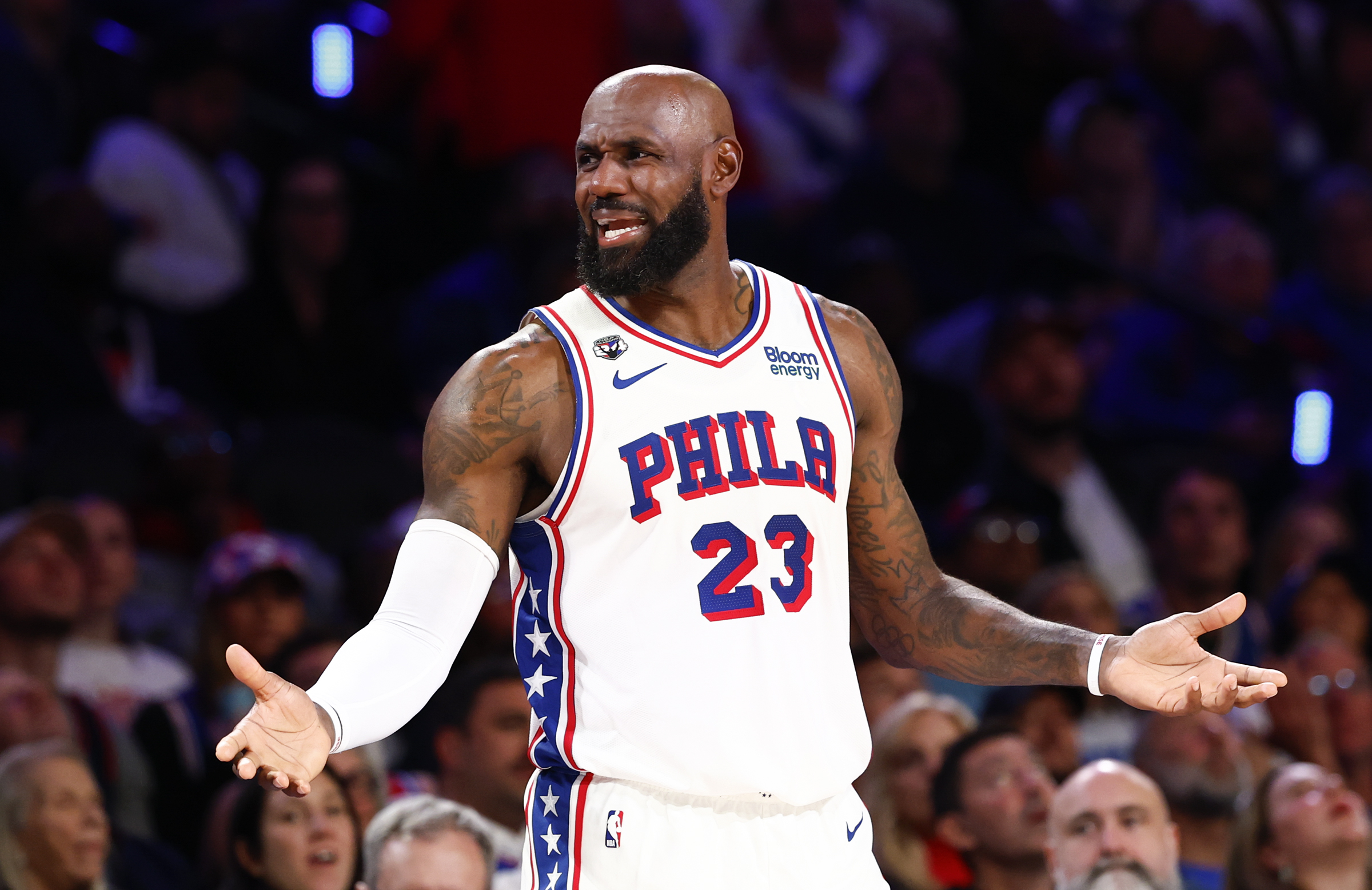
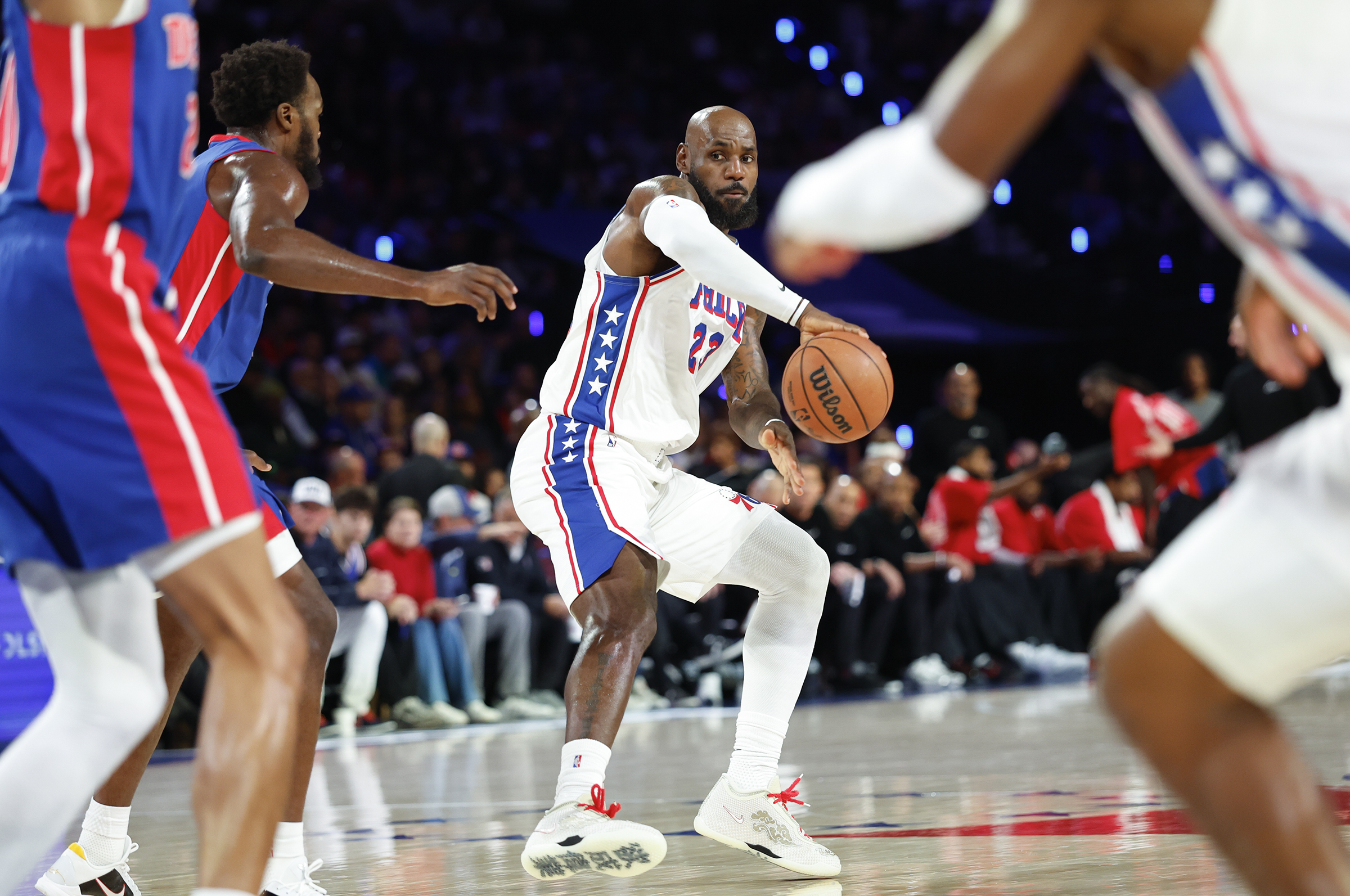
    In his 24 seasons, LeBron James said he’s observed that there’s one facet of the game that typically takes a long time to calibrate when acclimating to new teammates or a new team — the offensive side of the ball. Not just the offense as a whole, but specifically the halfcourt, where teammates have to adapt to the individual tendencies of players they are getting to know in a new light.

    “Offense is, for the most part, about rhythm, and about knowing where your teammates are going to be,” James said. “You can close your eyes and know where your teammate is going to be, and that takes time. That takes a lot of like, reps and reps and reps, from games, to practices, to film, ‘OK, we need to be there when that happens.’ So, we just have to go through that.”

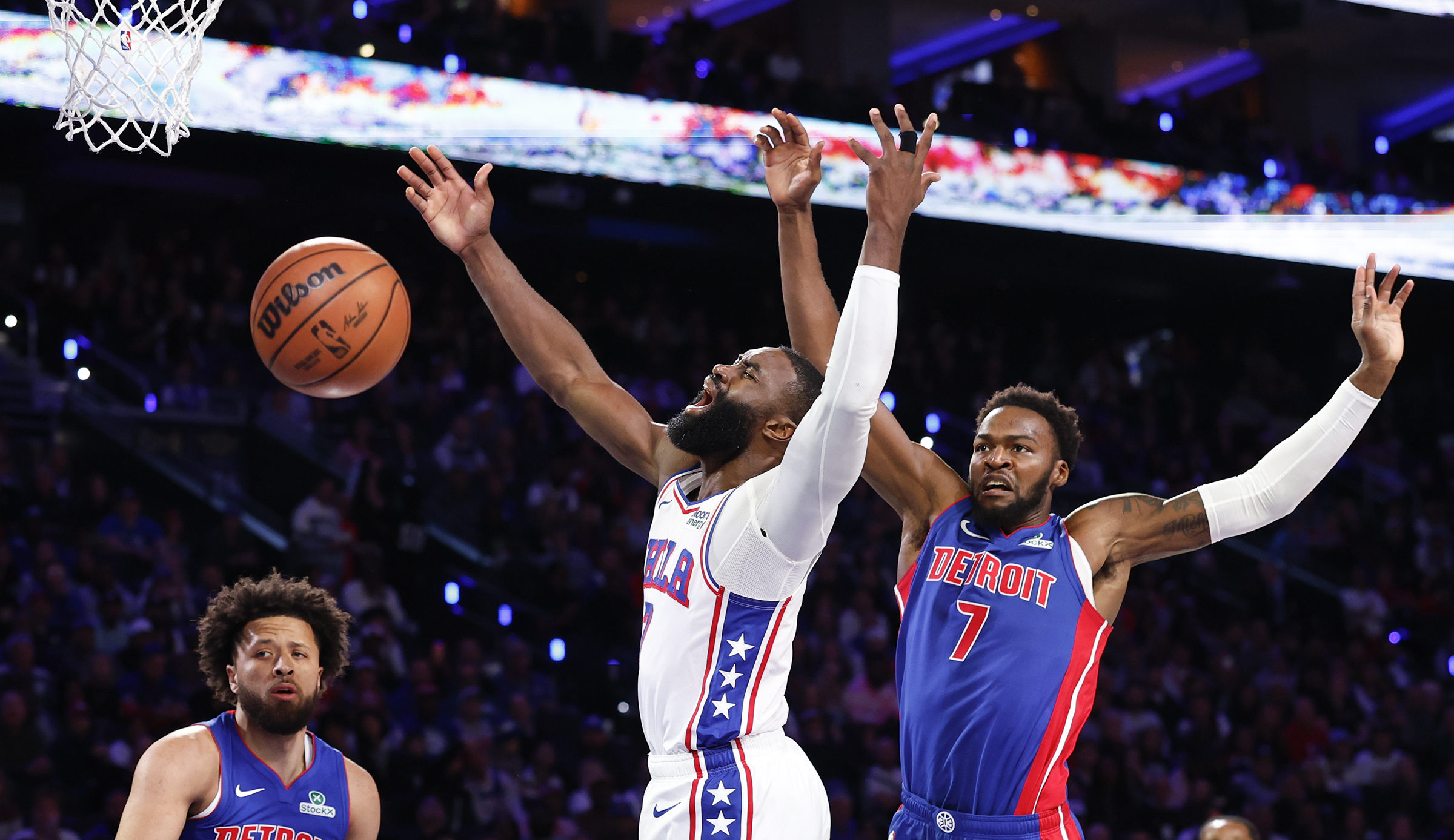
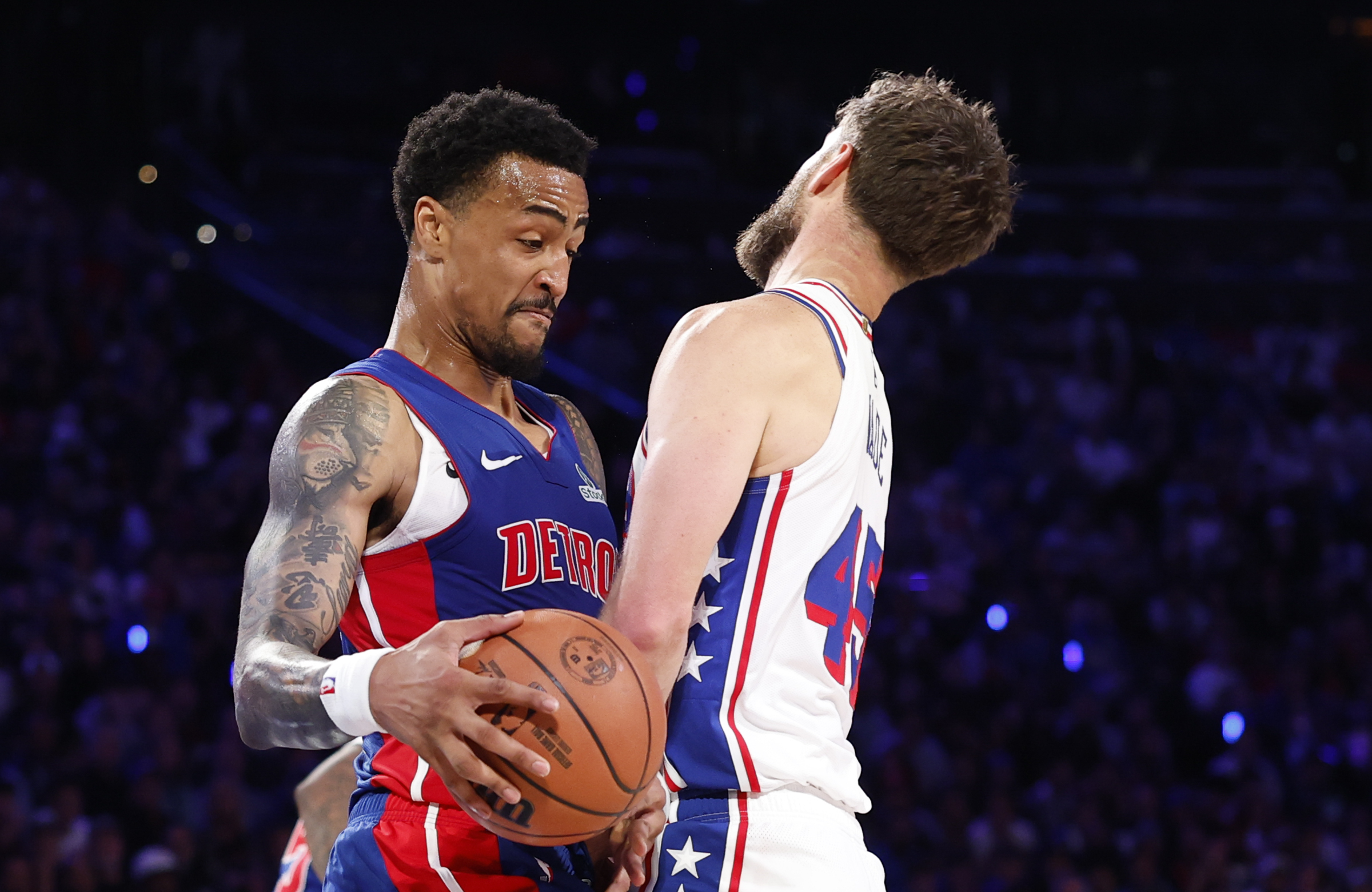
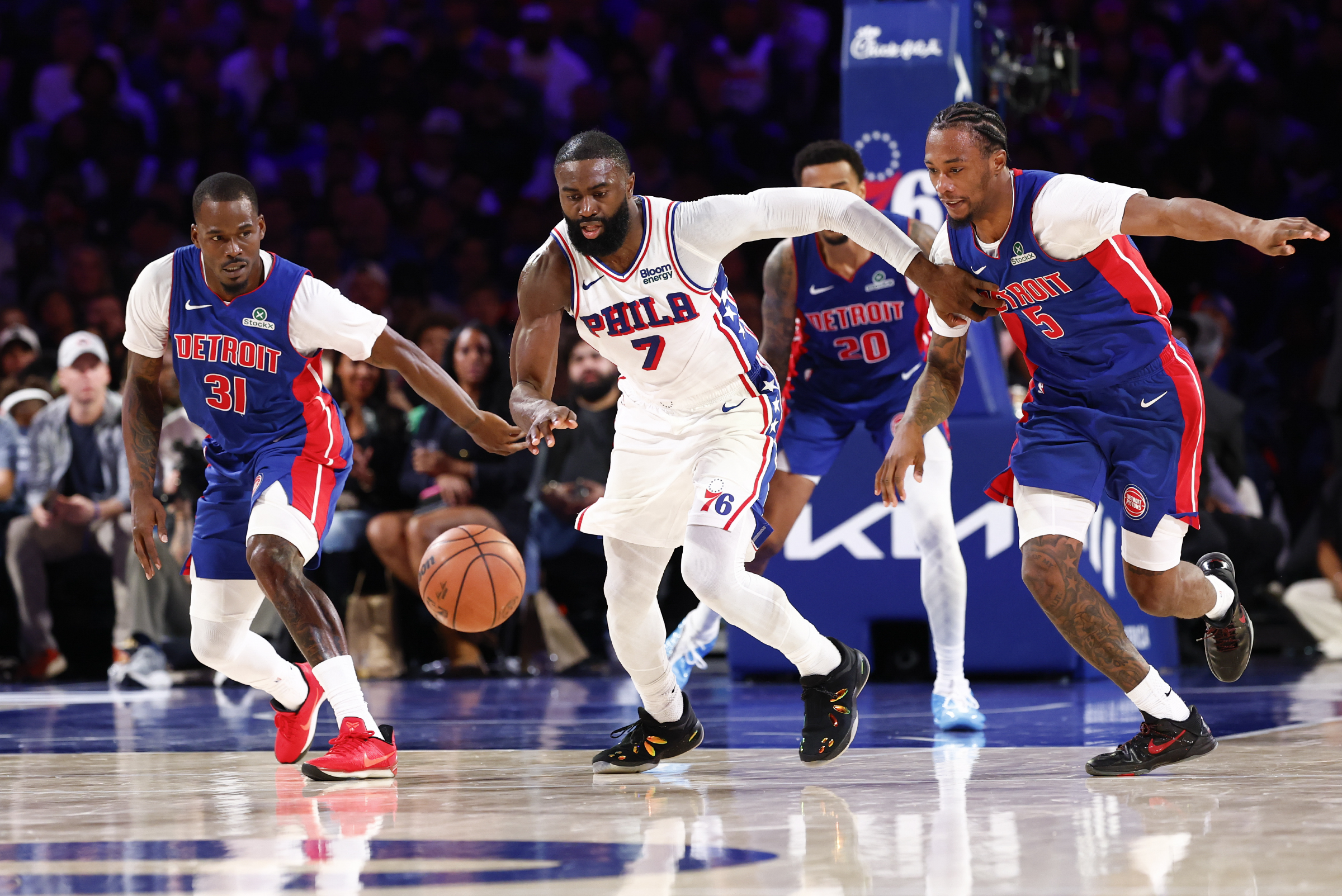
    That’s one reason why through four games, the Sixers’ halfcourt offense has veered from inconsistent to downright clunky. It was the latter, especially in the first half, of their 106-93 loss to the Detroit Pistons on Sunday. Even in their three wins, transition and early shot-clock offense has saved the Sixers and spurred comebacks against the New York Knicks and Cleveland Cavaliers.

    The Pistons’ switch-heavy defense, which was without its best perimeter defender in Ausar Thompson, exposed the Sixers’ nascent cohesion in the halfcourt. In that jagged first half, the Sixers offense had a rating of 69.4 points per 100 possessions. For reference, the worst halfcourt offense in basketball last season, the Brooklyn Nets, had an offensive rating of 91.6, according to the website Cleaning the Glass.

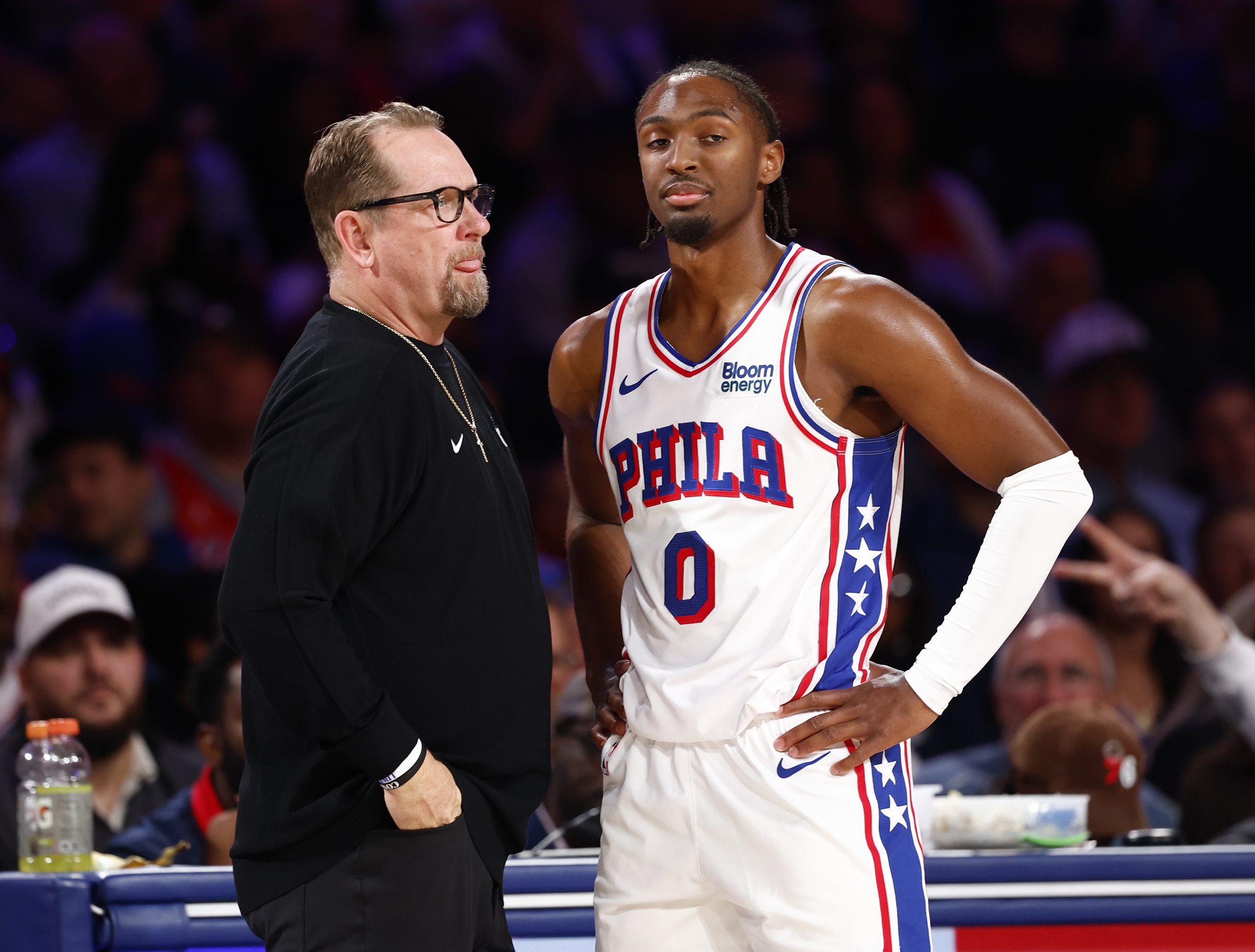
    Sixers coach Nick Nurse talks with guard Tyrese Maxey during Sunday’s game against the Pistons.Yong Kim / Staff Photographer

    “I didn’t think we got into a very good flow offensively,” Sixers coach Nike Nurse said. “… We felt like we were disorganized a little bit. A lot of guys moving positions, a couple guys coming back, all that kind of stuff. It felt that way. We just weren’t able to get much flow in the offense. So those two things.”

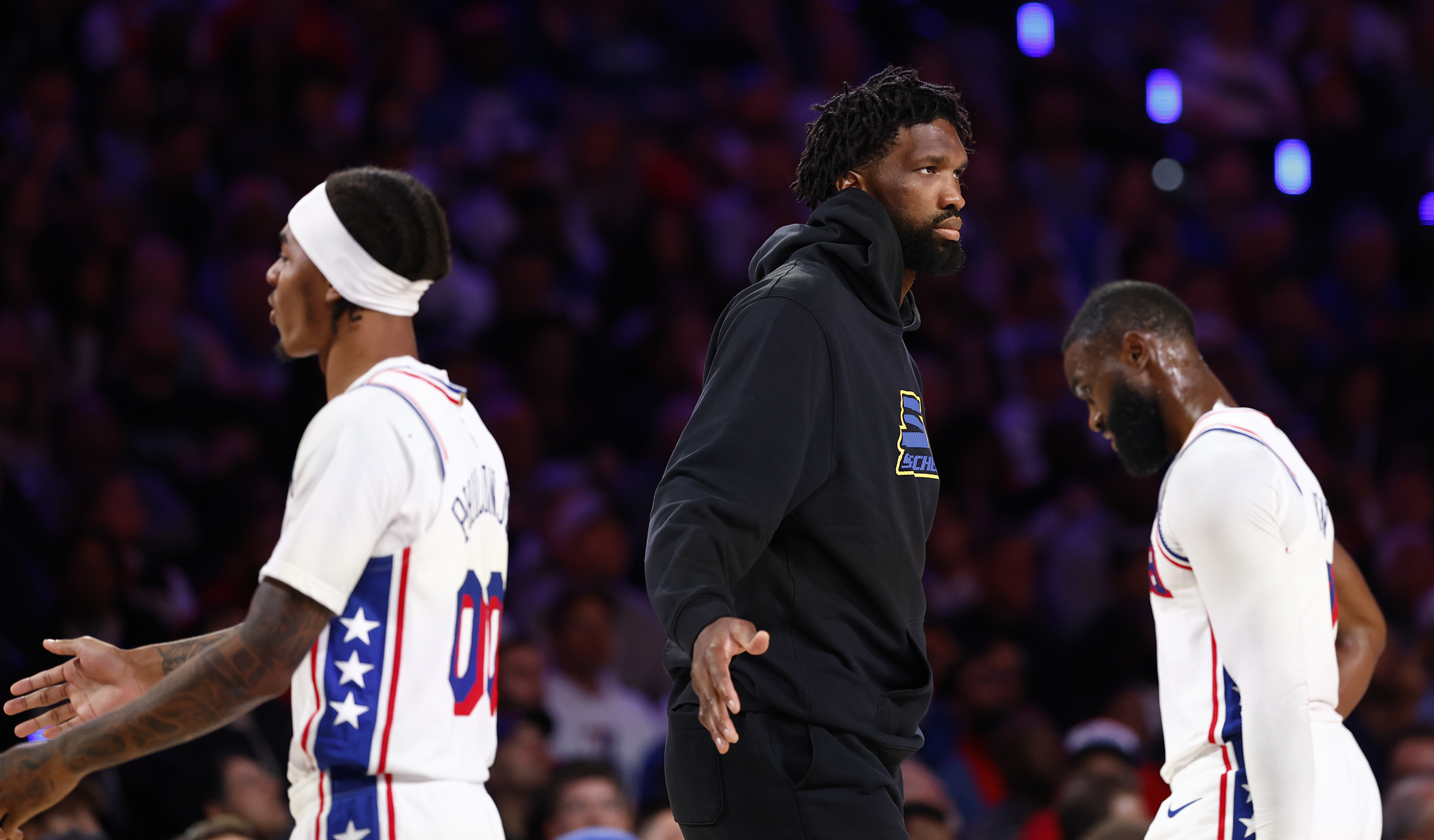
    Without Joel Embiid and VJ Edgecombe, the Sixers were trying some lineups they had not experimented with much during training camp. Guard Tyrese Maxey said they had shuffled through a lot of lineups in the first month of practices, but the starting lineup with Maxey, James, Dean Wade, Jaylen Brown, and Kentavious Caldwell-Pope?

    “That was one we hadn’t worked on,” Maxey said. “But it happens, and I take some responsibility on myself of not going to get the ball and get it orchestrated sometimes, and organized. I’ll be better at that.”

    The offense looked as if it could use some more organization as it bogged down into isolation-heavy possessions that ended with contested shots. But learning some of the nuances of how certain players like to play could alleviate that pressure if chemistry between two teammates can create space for a cut, or a good pass to an area where a certain player likes to receive the ball, or where he likes to operate on the floor.

    Maxey used what he’s learning about Brown as an example of what it’s like to play against someone, then try to learn them as a teammate.

    “When he drives, what is his tendency?” Maxey said. “Once you’re playing against the guy you kind of know, and you know how to kind of stop him, but when you’re playing with him, now you’re trying to help him. ‘OK, is he going over there? When he goes over there, now I got to pull over here, or I got to space there.’

    “Bron is the same way. But I think, yeah, we’ll be fine on that.”

    Nurse emphasized a theme he repeated during training camp, even when the offense didn’t look they way the team wanted — that the intent to make the right plays was there. He still sensed that, even as the halfcourt offense is finding its way a week into the season.

    “I think for the most part, the intent of making the right play and passing ahead and throwing to the next action, etc., has been excellent,” Nurse said.

  • Serbia’s longtime strongman Vucic concedes defeat in parliamentary elections

    Serbia’s longtime strongman Vucic concedes defeat in parliamentary elections

    BELGRADE, Serbia — Serbia’s longtime nationalist strongman, Aleksandar Vucic, conceded defeat Sunday in a general election held after his once-tight grip on power was weakened by nearly two years of student-led street protests.

    Serbia’s vote for a new parliament came just six months after voters in neighboring Hungary rejected their own populist nationalist leader, Viktor Orban, a close ally of Vucic. The Serbian leader had adopted many of the Hungarian’s authoritarian methods — and, at the end, his gracious acceptance of defeat, as well.

    “It is clear that we have lost these elections,” Vucic said in a surprisingly early speech congratulating the victors, a new political grouping called Student List-Students Win. He said that the slate of candidates selected by protesting students had won at least 135 seats in Serbia’s 250-member legislature, compared with around 105 for his own party.

    Vucic’s speech set off joyous celebrations by tens of thousands of mostly young people in central Belgrade, the Serbian capital. Car horns honked and fireworks lit the sky as the crowd, waving Serbian flags and cheering, welcomed a day that many feared would never arrive.

    “For the first time in my adult life, I’m seeing a change of government. After so many years under the same leadership, I’m happy that I’ll finally get to live in a free, normal country,” said Milos Milutinovic, 24, an engineering student.

    Vucic, Europe’s longest-serving leader outside the former Soviet Union, has been Serbia’s dominant political figure since 2012, serving as both president and prime minister, a post he had hoped to regain after Sunday’s election.

    Amid widespread reports during the day of violence and irregularities at polling stations, many feared that Vucic might follow the example of his former mentor, Slobodan Milosevic, Serbia’s nationalist leader during the Balkan wars of the 1990s, who declared victory in a contested election in 2000 before huge street protests forced him to accept that he had in fact lost.

    “What happened in Serbia tonight is not the electoral defeat of one government but a tectonic blow to the political order established in 1987,” said Ratko Knecevic, a former diplomat from Serbia’s neighbor Montenegro. That was the year Milosevic visited Kosovo and vowed to defend Serbs against ethnic Albanians in what was then a region of Serbia.

    Milosevic built an order in which Serbia’s neighbors all became enemies and “every criticism of power is treason,” Knecevic said, adding that “Vucic perfected it,”

    On many contentious issues, however, like the status of Kosovo (which declared independence from Serbia in 2008) and relations with Russia and the European Union, little divides Vucic’s party and Sunday’s victors. European Serbia, the only party that openly campaigned for speeding up Serbia’s stalled application to join the European bloc, failed to reach the 3% threshold of votes needed to enter parliament.

    During the campaign, opposition candidates pointed to Serbians’ complaints about rampant corruption. Vucic tried to keep the focus on his construction of new highways and the relatively strong economy.

    In the end, the vote was largely a referendum on Vucic.

    He and his governing Serbian Progressive Party — known as SNS, but rebranded for the election as “Aleksandar Vucic — United Serbia” — are deeply detested by their opponents.

    “SNS is a big evil that we have to rip out,” Nina Dordevic, 29, a psychology student, said after casting her vote for the Student List in Belgrade

    “Nobody should be in power for so many years,” she said.

    At polling stations in Belgrade, only a few people were ready to acknowledge voting for Vucic, and among those that did some refused to give their names.

    An older woman who spent time in Beijing as the spouse of a diplomat at the embassy of Yugoslavia, of which Serbia was formerly part, said her experience of the 1989 student protests in Tiananmen Square and the military assault that ended them had left her “scared of all protests.” She was wary of supporting the Student List, she said.

    A retired military officer who gave only his first name, Ivan, said he had voted for Vucic because “students should be studying, not playing politics.” He also said he admired Vucic for refusing to condemn Ratko Mladic, a Serb general convicted of genocide by an international tribunal. Mladic died in custody in the Hague in September and was buried with military honors in Belgrade last month.

    Vucic, who was Milosevic’s information minister, began his career in politics as a radical nationalist committed to “Greater Serbia,” but later moderated his views somewhat. However, he continued to embrace many of the authoritarian methods and the narratives of Serb victimhood used by his former boss.

    “No force can forever overpower a people who have decided to take their destiny into their own hands,” one Student List candidate, Radomir N. Saicic, a chemistry professor at Belgrade University, said after Vucic’s concession speech. “Almost every citizen of Serbia, whether at home or far away, cast their vote and showed that they care about this country’s future,” he said.

    This article originally appeared in the New York Times.

  • Housing prices are out of control. How much will building more homes help?

    Housing prices are out of control. How much will building more homes help?

    As the housing shortage in the United States has become more acute, a political movement called Yes in My Backyard (YIMBY) has sought to promote policy solutions and advocate for more construction.

    That idea cuts against the sense that many city residents have of how gentrification works. New buildings are often understood as driving nearby housing costs up.

    Author Ned Resnikoff argues that new housing is, in fact, responding to gentrification that is already taking place, and without construction, neighborhood rents will get even more expensive.

    While building more market-rate homes will not create affordability for those in the greatest need, YIMBY advocates argue that it will moderate prices — and prevent lower-income residents from being displaced.

    Resnikoff, who was policy director for California YIMBY, has been on the front lines of housing policy fights in Sacramento. He uses that perch to explore why American cities have struggled with growth in the 21st century in his new book, Build or Die, which comes out Dec. 8.

    Resnikoff also argues for renewed and more competitive local democracy in America’s cities and for a transportation system that doesn’t center on private automobiles.

    This conversation has been edited for length and clarity.

    Many people don’t believe that an abundance of new homes will lower prices the same way it does for other goods. What would you say to those skeptics?

    Homes occupy a different space politically and emotionally than the vast majority of consumer goods. We’re in this weird situation where housing is very often primarily an investment vehicle for homeowners, but at the same time, it’s their actual home.

    It’s not like a car or a phone that you expect to depreciate over time, and then you’ll drop it and get a new one. That personal connection can complicate our understanding of the underlying economics of housing and how it’s similar to other consumption goods.

    Then there is the time scale that changes in the housing market operate on and the sequencing of when new housing starts to go up and what effect it is having on prices and what prices are having on housing construction. It makes the causality harder to see.

    Ned Resnikoff is a writer, researcher, and policy consultant in California.Ned Resnikoff
    You argue that healthy cities need more housing development and that this would boost many progressive goals such as fighting homelessness. That’s a counterintuitive idea to many people.

    If you live in a neighborhood that is getting more expensive, then you’re probably going to see new construction going up well before rents start to go down. A lot of that new construction is probably going to be nicer and shinier than the existing housing.

    And depending on how much new construction actually happens, it might not cause rents to drop. It might just slightly slow the rate at which rents would otherwise increase.

    As a result, it’s very easy and understandable to say, “Oh, all these new buildings are going up, and my rent is going up.” So the causal connection must be that these shiny new luxury buildings are causing my rent to go up.

    When, in fact, the causal relationship is more the reverse: The fact that an area is seeing more demand pressure creates a market opportunity for developers.

    What about the sheer scale of construction that would be required to bring affordability to a city like New York? 700,000 new homes over the next decade sounds like an unimaginable number.

    Sometimes people think, oh well, New York or San Francisco is always going to be expensive. But that wasn’t always the case with those cities.

    Really high-cost cities for the foreseeable future are going to be more expensive than midsize cities in the United States, but the vast gulf in housing costs between, say, New York City and a Raleigh, N.C., is not a permanent fact.

    It’s hard to conceptualize the scale, and so as a result, when people, for example in New York, see new pencil towers going up on Billionaires’ Row, they think, Oh wow, that’s so much housing, and it’s clearly not having an impact on my rent.

    But in the context of a metropolitan area the size of New York, a handful of mega projects in Manhattan is actually not all that much housing.

    The cover of Resnikoff’s new book, which comes out in December.Island Press
    How does the YIMBY theory apply in a city like Philadelphia, which is still 500,000 people under its 1950 peak? Some neighborhoods are seeing strong growth, but others are still losing population.

    A couple other cities that come to mind in that in-between zone would be Pittsburgh and Chicago. These are dense, fairly vibrant cities with growing populations, but for better and for worse, they don’t have the “superstar” status.

    The way to think about housing policy in those cities is with a combination of different interventions, some of which are more relevant to declining Rust Belt towns and some of which are more relevant to “superstar” cities.

    With a growing population, the things that really help a city grow in a deliberate, net positive way are things like building more housing, continuously improving transit, making sure that there’s room for new amenities and small businesses to accommodate residents.

    Then for the areas where you have declining populations, it’s a combination of focusing on housing preservation, so that the existing housing stock is not deteriorating.

    And then, really thinking about economic development, and how can those areas benefit from the overall city growth?

    What else could help?

    To the extent that these areas are cut off by freeways, I’m a big proponent of tearing down all interurban freeways and making sure that there’s good transit connectivity to the central city for those areas and that there’s economic development happening there.

    That could involve new housing construction, but it could also involve investment in local businesses and local amenities and trying to make sure that as the central city grows and becomes wealthier and denser and more affluent, that that has positive spillover effects for everyone else.

  • Mobility challenges, market pressures, and historic charm: Six takeaways from a newly accepted ‘Vision for Wayne’

    Mobility challenges, market pressures, and historic charm: Six takeaways from a newly accepted ‘Vision for Wayne’

    What does the future hold for Wayne? A 144-page document accepted by Radnor’s commissioners may have some clues.

    The Radnor Township Board of Commissioners on Oct. 12 voted to accept “A Vision for Wayne,” a downtown master plan that outlines land use, transportation, economic development, and infrastructure policy recommendations to allow Wayne in 2036 to “continue to be the premier suburban town center on the Main Line” and “a vibrant, active place for people of all ages, abilities, and backgrounds to live, learn, work, dine, shop, relax, and socialize.”

    The document includes resident survey data, a historical look at downtown Wayne, and a menu of recommendations for spurring economic development.

    Though the plan was accepted by commissioners, Township Manager William White clarified at the meeting that it is “conceptual,” and that any new developments or policy changes would need to be approved by the board through separate processes.

    Here are six takeaways from “A Vision For Wayne.”

    Residents love Wayne’s walkability

    When asked what they love most about downtown Wayne, 77% of survey respondents cited walkability. Wayne is “highly valued for its historic village character and human-scaled streets,” according to the report, and its compact, mixed-use planning creates an “active, well-connected community.” Following walkability, 54% of respondents said retail and restaurants are the things they love most about Wayne, and 40% said Wayne’s historic character.

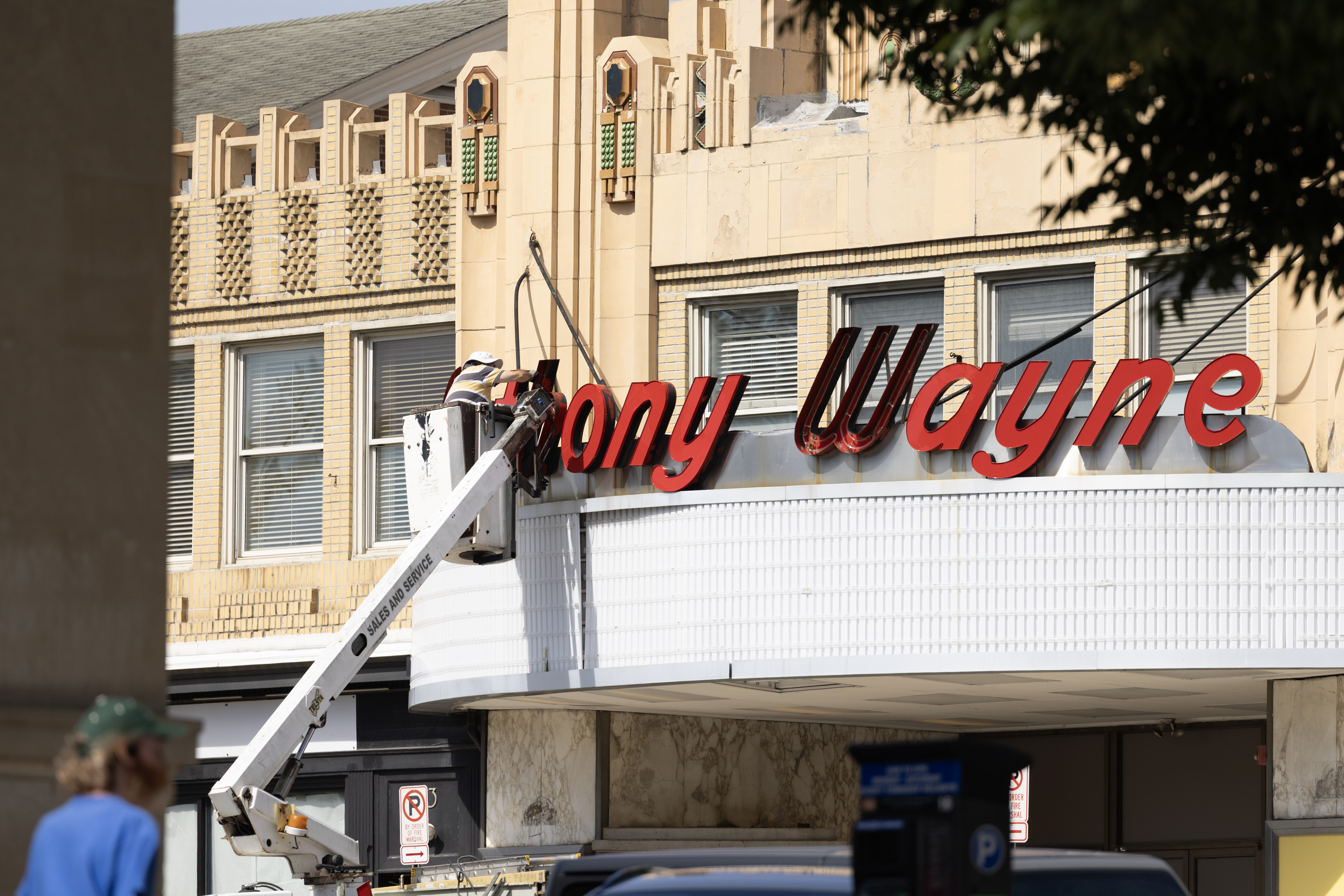
    A report accepted by Radnor’s commissioners outlines a vision for the next decade in downtown Wayne. Jasmine Goldband / Staff

    Lancaster Avenue presents the ‘biggest mobility challenge’

    While Lancaster Avenue, which cuts through downtown Wayne, is a “vital regional roadway,” it presents “the most significant mobility challenge within the downtown core,” according to the report.

    At evening rush hour, the busiest time of day on Lancaster Avenue, its main intersection with Wayne Avenue handles around 2,130 vehicles per hour. Frequent curb cuts, fast vehicle speeds, and difficult crossing conditions “feel out of step” with the village’s quaint character and create a “barrier that divides the business district,” according to the report.

    The visioning document, as well as Radnor’s 2035 comprehensive plan, calls for numerous traffic calming solutions along Lancaster Avenue, including changing traffic flows, installing speed reduction devices, reducing the number of driving lanes, and strictly enforcing speed limits.

    Market pressures could threaten to displace local businesses

    Downtown Wayne “exists in a kind of equilibrium right now,” with a healthy mix of restaurants, shops, large brands, and independent retailers, according to the report.

    Wayne has long staved off an influx of national chains due to its smaller storefronts and proximity to large malls, the report says. Now, however, many large retailers are gravitating toward “Main Street” settings. FP Movement and Ballard Designs, both national brands, relocated to Wayne from King of Prussia last year.

    Low storefront turnover and rising tenant interest suggest that, as leases expire, higher-priced dining concepts and large chains that can pay rising rents may have the upper hand.

    “In other words, some existing boutiques and other mom-and-pops might be lost in the shuffle,” the report reads.

    A visioning document proposes a host of policy changes that stakeholders say will bolster Wayne’s economy in the decade to come. Jasmine Goldband / Staff

    The data say Wayne has an ‘overall surplus of parking,’ though it doesn’t always feel that way

    The numbers say Wayne has plenty of parking — but not everyone feels that way.

    According to a comprehensive parking supply-and-demand analysis conducted by Walker Consultants, there are nearly 2,400 parking spaces in Wayne, the majority of which are in private, business-specific lots. During peak occupancy in Wayne, around noon on a day in September 2025, only around 1,550 spaces, or 66% of the total supply, were in use, according to Walker Consultants’ study. At that lunchtime peak, there were over 80 vacant spots in public off-street lots, 145 vacant street parking spaces, and 550 vacant spaces in private lots. While there is technically a “surplus,” according to the report, hot spots like North Wayne Avenue and the North Wayne lot saw excess use, whereas spaces on the periphery of the downtown core had more availability.

    While the data show enough parking, the report acknowledges that “parking is an emotional and highly subjective experience for most users,” and that just as important as data is “how parking in a community is perceived.”

    A key recommendation that came out of the visioning document, a plan to turn a portion of the North Wayne Avenue municipal parking lot into a community park, has drawn ire from some local business owners who say eliminating 24 parking spaces would strain businesses already operating under difficult economic conditions.

    Wayne’s special zoning district provides an ‘important framework,’ but needs updating

    In 2006, Radnor Township adopted the Wayne Business District Master Plan, a framework for land use and economic decisions designed to spur the development of a vibrant downtown core in Wayne. One of the provisions that arose from the plan was the Wayne Business Overlay District, a special zoning and land use district that established Wayne-specific architecture standards.

    While the overlay district has provided an “important framework” for guiding Wayne, the report suggests a number of updates, including creating standards and incentives for the development of diverse housing options, clarifying language to allow explicitly for everyday retail uses like grocery stores and fitness studios, and creating clearer guidelines for how buildings can look.

    Radnor Township’s approval process can make development too cumbersome

    Like many municipal governments, Radnor currently requires developers to navigate multiple levels of approvals to update or construct new buildings. In some cases, this involves receiving a green light from the historical architectural review board, planning commission, zoning hearing board, and board of commissioners, depending on the proposal at hand. This approval structure “creates a real burden for minor applications,” the report says, and can “inhibit investment and unnecessarily prolong commercial vacancies.” The report recommends allowing administrative approval for certain smaller changes and exempting planning commission and board of commissioners reviews for buildings under a certain square footage.

    Clarification: This story has been updated to note that the board of commissioners accepted the “Vision for Wayne” recommendations.

    This suburban content is produced with support from the Leslie Miller and Richard Worley Foundation and The Lenfest Institute for Journalism. Editorial content is created independently of the project donors. Gifts to support The Inquirer’s high-impact journalism can be made at inquirer.com/donate. A list of Lenfest Institute donors can be found at lenfestinstitute.org/supporters.

  • A Pennsylvania tourism official doesn’t believe in ghosts but says she saw one in Gettysburg

    A Pennsylvania tourism official doesn’t believe in ghosts but says she saw one in Gettysburg

    When Anne Ryan arrived in Gettysburg for a ghost tour last month, she was a skeptic.

    The Civil War battle of Gettysburg, where Union troops defeated Confederate forces in 1863, was the bloodiest battle in American history. More than 7,000 soldiers died on both sides and thousands more were injured.

    If ever a place should be haunted, it’s Gettysburg. Ryan, Pennsylvania’s deputy secretary of tourism, was hosting a group of writers there and figured she’d play along.

    “I don’t believe in ghosts,” Ryan told The Inquirer this week.

    Still, Ryan left that night with a ghostly picture she can’t explain and found her double-knotted sneakers untied, a specialty of Gettysburg ghosts.

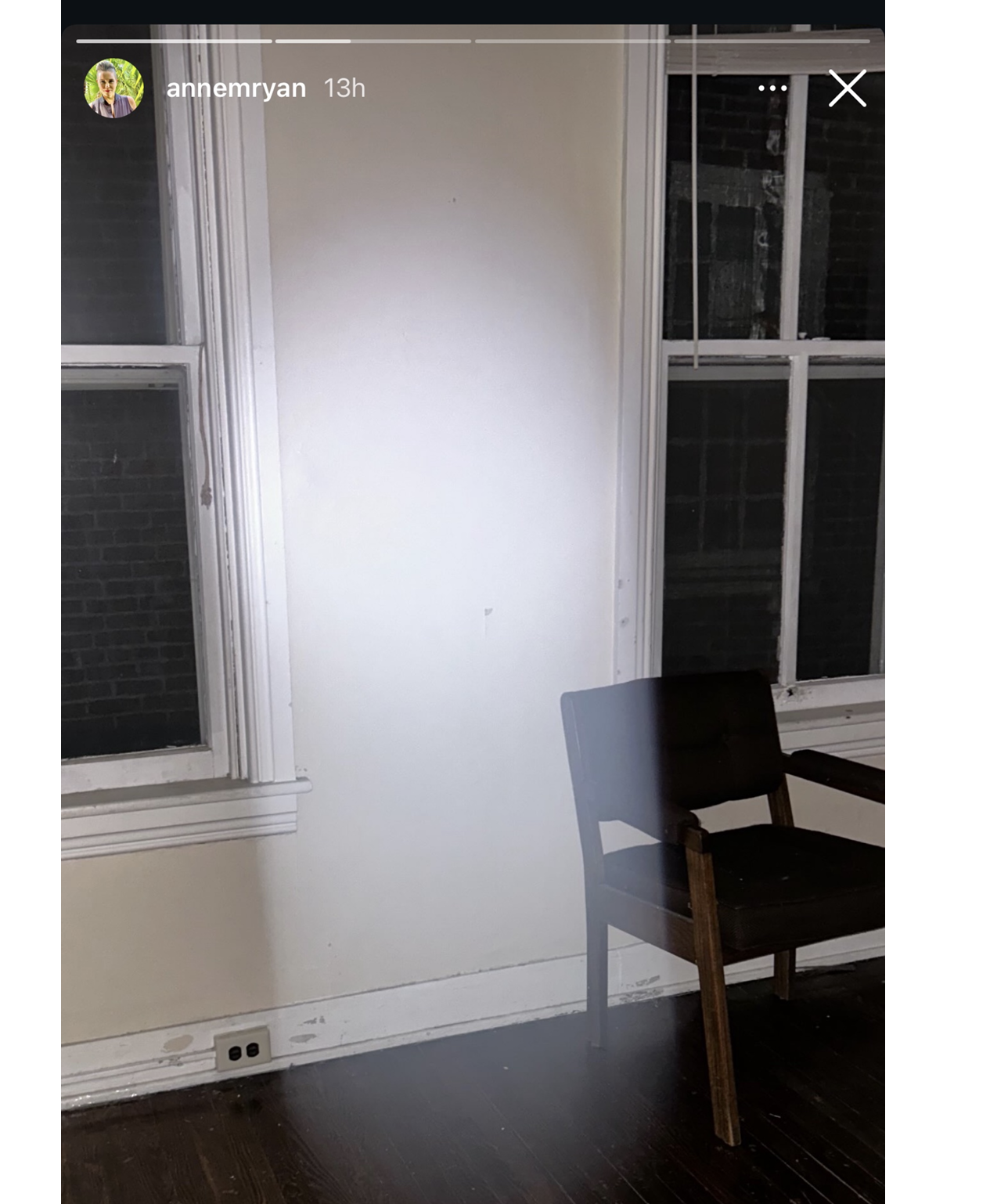
    Ryan said she snapped a photo on her phone at a house, looking for what ghost hunters describe as orbs in a room where a murder had allegedly taken place. Online, that location has been dubbed the “Baltimore Street Murder House.”

    Is this a ghost? Who knows. Anne Ryan took this photo last month in Gettysburg.Anne Ryan

    Ryan snapped a photo with her phone and can’t explain the glowing white shape that appeared. Ryan said she isn’t sure she’s a believer, but she sounds like one. Or a savvy deputy tourism secretary.

    “You could really feel the energy, and I’m not really an ‘energy’ person,” she said.

    The Union lost 3,155 soldiers and the Confederacy lost 3,903 during the bloody, three-day battle that raged from July 1 to July 3. Across the 6,000 acres of Gettysburg National Military Park, more than 1,300 monuments have been placed since the war ended.

    “According to the tour guide, a lot of the ghosts there are soldiers who still believe they’re in battle,” she said. “Essentially, there are so many spirits that are still stuck in those three days and the days that followed.”

    Ryan’s tour guide had also warned visitors that ghosts of “mischievous child ghosts” like to untie shoelaces.

    “So I double-knotted my sneakers,” she said.

    Before she left, though, Ryan visited a home that had been struck by countless bullets. It was nighttime. She began walking to her car. Then she looked down, and her Adidas were untied.

    “I couldn’t get out of there fast enough,” she said. “I don’t want any ghost, even a child ghost, in my orbit.”

    That being said, Ryan thinks Gettysburg is a great place to visit during Halloween. Just make sure you tie your shoes.

  • A historic church in Camden County once housed abolitionists and Walt Whitman. You can buy it for $455,000.

    A historic church in Camden County once housed abolitionists and Walt Whitman. You can buy it for $455,000.

    A historic South Jersey church is the only surviving building from Glendale, a mid-19th-century settlement that now sits within Voorhees Township’s borders.

    Now, that church, listed on both the state and national registers of historic places, is for sale.

    Glendale Methodist Episcopal Church’s schoolroom, which makes the church one of the oldest standing public school buildings in Camden County, hosted meetings for abolitionists before the Civil War. Famed poet Walt Whitman spent months there recovering from a paralytic stroke, writing poetry, and bathing in a creek behind the church, historic preservationists said in documents explaining the property’s significance.

    “Anytime you put a property for sale, it’s in danger,” said Margaret Westfield, a Woodbury-based preservation architect who worries that the church’s future owner might not keep its historic qualities intact. Westfield nominated the church for the national register in 1995, oversaw grants for the building, and created a preservation plan for the property.

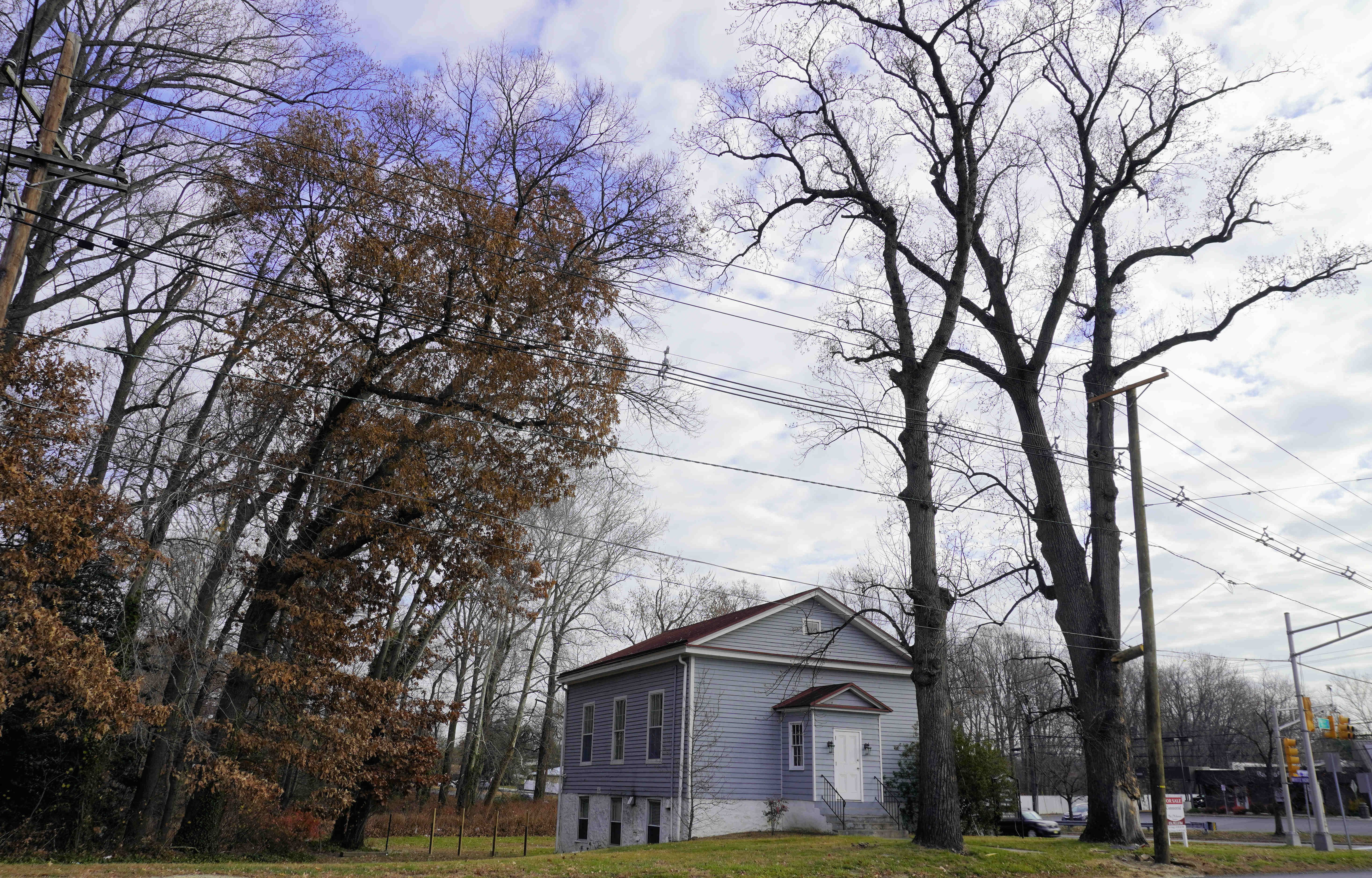
    The Camden County church, at Haddonfield-Berlin and White Horse Roads, was built in 1855.

    Keller Williams Realty listed the property this summer for $455,000. The 1,800-square-foot building includes a church sanctuary, basement, and kitchenette.

    Keller Williams Realty and the listed real estate agent did not respond to requests for comment.

    The Greek Revival-style church was last sold in 2022, when the United Methodists of Greater New Jersey, a Neptune-based religious organization with hundreds of congregations, sold the building to Seventh Day Holy Ghost Church for $245,000. Seventh Day’s IRS filing describes the organization as a Protestant place of worship.

    Chocolate Obasoanya, Seventh Day’s founder, said the church building is in good condition, but the congregation wants to relocate.

    “We’ve been using it well,” Obasoanya said. “We just want to downgrade.”

    Long before Seventh Day purchased the property, Quaker Alexander Cooper donated the land to three church trustees in 1855. Glendale’s residents helped build the church so long as the building’s lower level, which had a separate entrance, could serve as a school and meeting place, according to a sign installed at the church and shared by Westfield.

    “Honestly, this building is one of the most significant buildings in South Jersey. People don’t recognize that,” Westfield said.

    County and state grants have helped restore the church in recent decades, Westfield said, including a nearly $124,000 historic preservation grant in 2004 that helped stabilize the structure and restore the exterior to recreate its look from the 1930s.

    The historic church property’s front entrance was once flanked by two tulip poplar trees dating back to 1855, but energy company PSEG chopped them down four years ago. The aging trees had been protected by the New Jersey Historic Sites Council, which found in 1997 that chopping down the trees would have an “adverse effect” on historic preservation of the property, Westfield said.

    Camden County has since widened the intersection and added a turning lane in “what was once a high-crash zone,” said Dan Keashen, the county’s public affairs director.

    Westfield said the removal of the trees, which she had pushed against, and the widening of the road make the church’s main entrance leading to the sanctuary unsafe to use. An elder at Seventh Day emailed Westfield for help in 2023 as workers dug out the stumps. The trees, the elder wrote, had offered worshippers a shield from the road to get to the church’s front door.

    Zed Fox, president of the Camden County Historical Society, said the society has no position on what should happen to the property.

    Stephen Steglik, Voorhees Township’s administrator, said the township has no current plans to acquire the building, which is just a two-minute walk from the police department.

    “We hope any future use of the property will benefit the township and enhance the quality of life for our residents,” Steglik said.

    The church’s presence on the national and state historic registers offers the property some protections, including from federally funded projects, but not from private buyers. The person or entity that buys the property could alter or demolish the 19th-century church if desired.

    But Westfield said a buyer would have no rational reason to demolish the church, because the slope of the property makes the land pretty much unusable without the church there. Unless a new congregation moves in, Westfield said, the best use for the property would be a private residence, with the first floor and former school serving as a living room and kitchen and the upstairs sanctuary transforming into bedrooms.

    Westfield said she hopes the new owner will preserve the church’s historic exterior and keep Glendale’s story alive. If she hadn’t moved into a new home so recently, Westfield said, she would have tried to make it her own.

    “It needs a new steward,” she said. “It needs somebody to come in and save it.”

  • After decades of partnership, Trump’s policies have decidedly pushed away U.S. allies

    After decades of partnership, Trump’s policies have decidedly pushed away U.S. allies

    Wim Orth is a journalist with WELT in Berlin and an Arthur F. Burns fellow at The Inquirer.

    For generations of Germans, the United States had always felt like the slightly cooler cousin from overseas. In culture, there were icons like Coca-Cola, denim jeans, fast food chains, rock and roll — and, of course, Hollywood — that shaped culture not only in America but across the Atlantic as well.

    Politically, the U.S. helped West Germany get back on its feet after World War II had left it in rubble. The Marshall Plan, signed by President Harry S. Truman, helped Germany and other European governments rebuild, and the trust shown by America toward the German people would frequently overrule the doubts that British and French forces had toward their former enemy.

    That trust went so far that just a few years after the war, the U.S. stationed nuclear warheads in bases in Germany and encouraged the Adenauer government to set up its own army again. To guarantee a contained German military, the Bundeswehr became part of NATO right after its founding. Additionally, government and military leaders worked closely together with the U.S. to prove that the days of aggressive German militarism were a thing of the past.

    From then on, Germans and Americans in particular — and Western Europe and Americans in general — would work in unison to counter aggression by the Soviet Union and its proxies, defend West Germany against the constant threat of Soviet invasion, and eventually bring down the Berlin Wall and shred the Iron Curtain.

    For decades, Germany and the rest of Europe knew they could count on the United States, and America was guaranteed devoted partners across the pond. In case there was any doubt, this partnership and its steadfastness was proved when Article 5 of the NATO treaty was invoked for the first and only time so far on Sept. 12, 2001.

    After the terrorist attacks on New York City and Washington, it was America’s NATO partners who helped patrol the American skies and were part of the war on terror, commanding several missions in Afghanistan and Iraq.

    Now, take all that shared history and goodwill and put it in the trash.

    President Donald Trump with President Vladimir Putin of Russia in Anchorage, Alaska, on Aug. 15, 2025.Doug Mills

    Today, not even two years since Donald Trump returned to the White House, there is painfully little trust left between the United States and its NATO partners — only plenty of doubt that if the situation were reversed, and Europe were attacked, that America and its NATO allies would step side by side into the breach.

    After months of being battered and bruised by Trump and his administration, most Germans aren’t even mad about the situation anymore. Some are disappointed, others have simply moved on from the cooler cousin who grew up and grew distant. In the regions formerly under Soviet control, people may even turn to a bit of “I told you so” thinking.

    When Trump was first elected in 2016, his presidency was regarded by many Europeans as an “accident” of the country’s curious electoral system, where having the most votes does not automatically equal victory. After all, how could the same voters who made history when they sent Barack Obama to the White House (twice!) now support a bigoted charlatan?

    Europeans were convinced that it was over for Trump after he lost the 2020 presidential contest against Joe Biden and lied about the election being stolen, with his falsehoods culminating in the assault by Trump supporters on the U.S. Capitol on Jan. 6, 2021. Trump then went on trial several times and was found liable for sexual abuse and was convicted of 34 felony counts.

    And yet … when Americans went to the polls in 2024, Trump defeated Kamala Harris. There were no Electoral College excuses as he won the popular vote by more than two million votes. That Election Day result was the moment when many Europeans shifted from hope to utter disbelief.

    Unlike the eye rolls that greeted much of Trump’s ridiculous rhetoric during his first term, the president’s words and deeds the second time around have seriously damaged the relationship between Europe and America.

    Vice President JD Vance addresses the audience during the Munich Security Conference at the Bayerischer Hof Hotel in Munich, Germany, on Feb. 14, 2025.Matthias Schrader

    Incidents like Vice President JD Vance supporting far-right extremists under the guise of lecturing Germans on free speech at the Munich Security Conference, the scandalous treatment of Ukrainian President Volodymyr Zelensky, and Trump’s apparently unwavering support of Vladimir Putin, even as Russia continues to target Ukrainian civilians and play with provocations toward NATO — including a failed drone attack on a German airport.

    Europe was used to having a bad partner in the White House during Trump’s first term. Now, we wonder if the term partner can even be applied anymore.

    Threats of annexing Greenland or Canada, withdrawing the U.S. from NATO altogether, and even the thought that Trump is considering a three-way summit with China and Russia to determine Ukraine’s fate have only added to the estrangement.

    (And that’s not even considering the Trump administration’s assault on human rights as it deploys immigration enforcement agents — who have so far killed nine people and shot at least a dozen more — and detains people indefinitely in substandard conditions over civil immigration offenses.)

    While some podcasters and journalists in Europe seem to embrace the president’s sillier shenanigans — think renaming the Gulf of Mexico and Lake Ontario — many people I’ve spoken with in Europe have lost faith in the United States.

    A recent study conducted across Europe found 73% of respondents agreeing to the question whether they “think it’s time for Europe to go its own way.” In Germany, just 27% see the U.S. as a “trustworthy partner” anymore.

    Polling in the U.S. finds that Americans themselves are repudiating Trump’s policies and there is hope that the midterm elections will provide a critical check on the president’s rampant abuses and ill-advised positions.

    But it may be too little, too late.

    After Trump’s defeat in 2020, Europeans thought that America had come to its senses. Seeing Trump being not only reelected, but cheered on as he berated partners, allies, and friends across the globe, had an impact.

    The damage has been done, and one or two elections won’t be able to erase the doubt that lingers.

  • 🦅 A positive presence | Sports Daily Newsletter

    🦅 A positive presence | Sports Daily Newsletter

    The Eagles are in need of some positive energy. As Jalen Hurts continues going through treatment for blood clots, Tanner McKee will be under center for the foreseeable future.

    And Monday night’s showdown at the Linc against the Cowboys is his first consecutive start of his career. The Eagles, which are on a four-game losing streak, will be without DeVonta Smith and Dontayvion Wicks.

    However, Dallas Goedert is available, and Saquon Barkley could play. The running back missed the last two contests with a hamstring injury and is listed as questionable. His return could spark the struggling Eagles offense.

    But a lot will be dependent on McKee. The 26-year-old is tasked with bring everyone together. McKee has shown that he is capable of flipping the switch within. His teammates and those who have coached him describe him as “one of the most positive people” who inspires confidence with his command.

    Can he help flip the switch on the Eagles’ season? Well, he’ll have another opportunity against the Cowboys to prove he can run the offense. Check out Jeff Neiburg’s guide to the Birds’ Week 7 matchup on Monday Night Football (8:15 p.m., 6abc).

    — Isabella DiAmore, @phillysport, sports.daily@inquirer.com.

    If someone forwarded you this email, sign up for free here.

    ❓What are your Eagles vs. Cowboys predictions? Email us back for a chance to be featured in the newsletter.

    Improving in 2027

    Better utilizing the speed of Phillies like Justin Crawford is part of Don Mattingly’s vision for improving the offense in 2027.Elizabeth Robertson / Staff Photographer

    It wasn’t long ago that the Phillies had a high-powered offense. From 2022 to 2025, they scored the fifth-most runs of any team in baseball and ranked third in both on-base percentage and slugging.

    But with mostly the same hitters, they struggled this season. To win, offenses must be multidimensional. The Rays and Brewers are first and second in the majors, respectively, in bunt hits, infield hits, and sacrifice bunt attempts. There’s a lot about those two rosters that’s worth imitating.

    What we’re…

    🤔 Wondering: What the national media is saying about Monday’s matchup at the Linc. Several experts are favoring the Cowboys.

    🙌 Celebrating: Philadelphia Academy Charter’s Kaitlyn Asher was honored at the World Series on Saturday.

    🏀 Learning: Top recruit Jordyn Palmer, a senior at Westtown, committed to South Carolina and Dawn Staley.

    📖 Reading: The Union’s first loss in three months isn’t a problem, just as there shouldn’t be alarm bells if there’s a loss on Wednesday.

    ‘No beef’ for Brown

    Sixers guard Jaylen Brown against the Milwaukee Bucks on Saturday, Oct. 24, 2026 in Philadelphia.Yong Kim / Staff Photographer

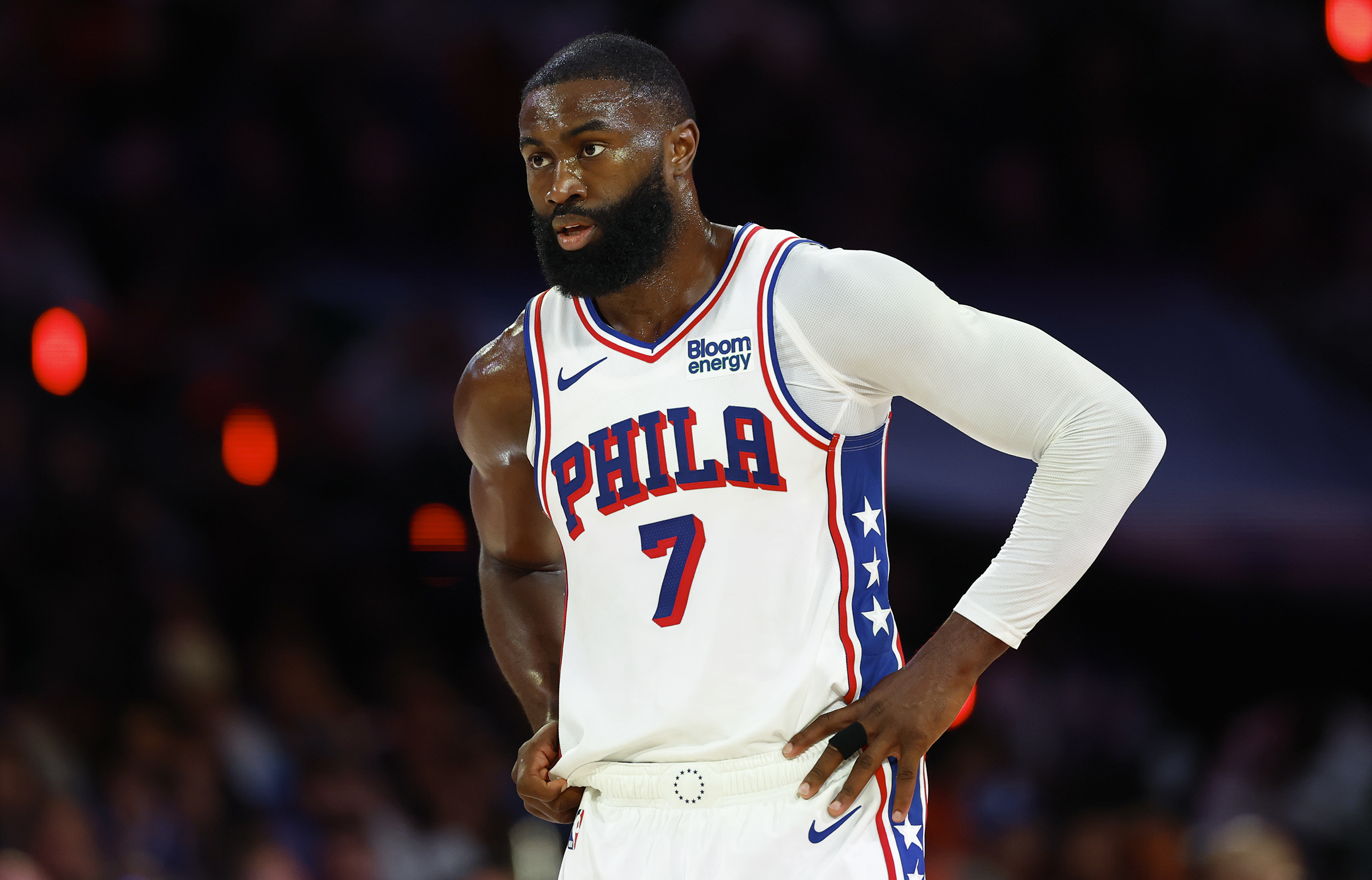
    Jaylen Brown had a busy 30th birthday. On Saturday, the new Sixers forward scored 27 points in a win over the Bucks, he then answered questions about one of the league’s most intriguing bits of reality-show-style drama: the state of his relationship with former Celtics teammate Jayson Tatum.

    It seemed as if the two had beef after the Celtics traded Brown to the Sixers, but Brown prefers a different term. “There’s no beef, but it might be a little lamb chops and some gravy.”

    Unfortunately for Brown, he and the rest of the Sixers struggled to score during a 106-93 loss to the Pistons.

    Cross-coast rivalry?

    Anaheim’s Cutter Gauthier battles on the ice with the Flyers’ Cole Knuble during the first period of their game on Saturday.Elizabeth Robertson / Staff Photographer

    It seems as though the Flyers and Ducks have built a real rivalry.

    Three years ago, former No. 5 overall pick Cutter Gauthier spurned the Flyers and was traded to Anaheim for Jamie Drysdale and a second-round pick. Then, the Flyers landed Trevor Zegras from the Ducks the following offseason. The latest wrinkle in the rivalry is this summer’s offer sheet on the Ducks’ young star center Leo Carlsson, who decided to remain in Anaheim.

    Saturday’s matchup was a little less electric compared to the first two meetings between these two teams, but as the Flyers fell, 5-4, the game still had its fireworks.

    Up next, the Flyers will host the Blue Jackets on Tuesday. (7 p.m./ESPN)

    Winning ways

    Villanova ran all over No. 12 Lehigh en route to a much-needed win at home on Saturday.Tyger Williams / Staff Photographer

    It was a quieter weekend in local college football, with Penn State and Temple on byes. But for Penn and Villanova, it was about rebounding. Villanova picked up its first home win since November 2025, thanks to Garrett Rogan’s game-sealing sack against No. 12 Lehigh.

    The Quakers also achieved a first of the season. On Friday night, they earned their first Ivy League victory against a tough Yale team at Franklin Field. After missing a game-winning field goal against Columbia, Penn was on the other side of a special teams flub.

    Marcus Hayes’ take

    NFL commissioner Roger Goodell had to field questions surrounding Jalen Hurts during the NFL owners’ meetings last week.Yuki Iwamura

    Several NFL sources indicated that the NFL office and commissioner Roger Goodell are “furious” at how the Eagles handled the deteriorating health of Jalen Hurts. The doctors weren’t the problem. The problem lies with transparency and messaging, writes columnist Marcus Hayes.

    We compiled today’s newsletter using reporting from Jeff McLane, Marcus Hayes, Olivia Reiner, Jeff Neiburg, Scott Lauber, Mia Messina, Gina Mizell, Lauren Jones, Jonathan Tannenwald, Chris Hine, Jackie Spiegel, Gabriela Carroll, and Dylan Johnson.

    By submitting your written, visual, and/or audio contributions, you agree to The Inquirer’s Terms of Use, including the grant of rights in Section 10.

    Thanks for getting your morning started with me. Hope you had a restful weekend and enjoyed the weather. I’ll be back in your inbox on Tuesday. — Bella