Music triggers memory. So, the long gone Philly venue that inevitably came to my mind during Kacey Musgraves’ “Middle of Nowhere” tour stop at Xfinity Mobile Arena in South Philly on Friday was the Valley Forge Music Fair.
My head is spinning just thinking about it.
Why? Because just as was the case at the Devon venue where I saw legends like George Jones, Merle Haggard, and Ray Charles, Musgraves staged her show in support of a superb new return-to-country album giving her tour its name in the round.
And not only in the round, but also — just as at the Music Fair, which closed in 1996 and was located on a site where home improvement retailer Floor & Decor now stands — with a spinning stage.
Listening to Musgraves’ music can be mildly trippy . Going back to “Follow Your Arrow,” from her 2013 debut Same Trailer, Different Park, the East Texas native who uses @SpaceyKacey as a social media handle has espoused a you-do-you philosophy.
That song is the foundation of Musgraves’ arena-sized following, and her significant role in making country cool for younger audiences who might be turned off by too much twang or homilies about small towns, pickup trucks, and beer.
Instead, Musgraves opened the door wide to the LGBTQ community on “Follow Your Arrow,” which was the penultimate song in a sparkling, consistently pleasing set. The song suggests fans “kiss lots of boys, or kiss lots of girls, if that’s something you’re into” and advises taking a toke or two “when the straight and narrow gets a little too straight.”
No weed smoke was sniffable from where I sat. But the sense of strange things happening was nonetheless in the air; with the stage and video screen above encircling it moving clockwise, then abruptly moving in the opposite direction.
Kacey Musgraves performing in Chicago in August. The country crossover star brought her “Middle of Nowhere” tour to the Xfinity Mobile Arena in South Philadelphia on Friday.Charles Reagan
Also notably odd was the faux roadhouse building constructed behind the stage from which Musgraves made her initial entrance, walking through the crowd over a floor strewn with hay. It remained otherwise unused.
More memorable was how Musgraves chose to present “Rhinestoned,” a terrific tune about stepping out behind the roadhouse for a smoke in hopes of taking the sting out of a breakup.
“Is every one having a good time?” she asked, adding coyly: “Would you go so far to say you are having a ball?” With that, a double disco ball appeared over in the anatomically correct shape of a pair of testicles.
Conveniently, the mirrored object was built with space for Musgraves to take a seat within it as she was lifted above the stage. “The is my grandma’s favorite part of the show,” she quipped, then rather remarkably managed to maintain the emotional thrust of the song, singing “Ooh, let’s put a little sparkle on / Ooh, until the heartache and sadness is gone.”
The moving stage and aerial scrotum made for clever — dare I say ballsy? — strategy by an artist who is more mellowed out than dynamic in performance.
“Thunderstruck” by AC/DC — the Australian hard rock vets who will be across the street at the Linc on Sept. 29 — played during the entrance countdown.
Nothing nearly so raucous followed in the 22-song set to come, as Musgraves was backed by a subtle and understated band that included steel guitar and accordion, spicing up a Tex-Mex vibe in songs like “Uncertain, Texas” and the Texas Tornados cover “(Hey Baby) ¿Que Pasó?”
But if Musgraves is somewhat of a static performer — she moved with such deliberation that her hair never seemed to move beneath her black cowboy hat — that’s OK, because her fans aren’t coming to see the sort of aerobic display expected at most outsized pop concerts.
Instead — and refreshingly — it’s all about the songs. Musgraves’ strength is in her writing, which is sharply focused in Middle of Nowhere tunes like “Horses and Divorces” and “Loneliest Girl” that settle contentedly into mid-30s singledom and convey the satisfaction of making peace with oneself as middle age approaches.
Musgraves’ crossover from country to pop was highly successful — 2018’s Golden Hourwas named Grammy album of the year. But Middle of Nowhere is as satisfying as it is in part because after wandering away from the music she grew up on, it feels like a homecoming.
“The bones of country music are really in my heart,” she said, while thanking her fans for a decade plus of loyalty. “Whenever you strip it down to its beautiful basic form, it’s a genre that is built on stories about real people, and just real hearts, real life stuff. And that’s what inspires me the most.”
Two unexpected things happened — or didn’t — over the course of the evening.
First, after singing a spooky “I Believe In Ghosts” — about cowardly guys and Irish goodbyes — Musgraves broke out in a snippet of “Here Comes the Sixers,” the snappy theme song of the team for whom LeBron James will soon be dribbling on the very spot she was standing.
“I don’t know why I know this song,” she said, before leading the crowd in a “10, 9, 8 … 76ers,” singalong, confessing that “I don’t know [much] about sports.” (Turns out, she has a history with the song — though why is a mystery — as my colleague Emily Bloch explained in 2024.)
Second, the show included no tribute to Dolly Parton, or even mention of the beloved country great who died last month. In her first two shows after Parton’s death, in Boston and in New York, Musgraves sang her own “Rainbow” plus a Parton cover — “Here You Come Again” one night, “9 to 5” the other.
“It’s already hard to navigate these times right now and when we lose a matriarch like that,” Musgraves said of Parton during the first of her two shows at Madison Square Garden. “It’s the closest thing we’ve ever had to royalty … I definitely would not be able to stand up here and do what I do if it hadn’t been for Dolly Parton.”
During her second show in New York last week, however, Musgraves cut the Parton tribute, as she did again in Philly on Friday night.
Kacey Musgraves new album is “Middle of Nowhere.”Kelly Christine Sutton
It was a disappointing missed opportunity for a collective expression of grief, but perhaps Musgraves feels the pain too keenly to revisit it night after night. Instead, she stuck to the set list closing the show with a lively cover of George Strait’s “All My Ex’s Live In Texas,” complete with a Lone Star State flag hung from the rafters.
Flatland Cavalry, the Lubbock, Texas, country sextet, opened the show with an agreeable mix of fiddle and steel guitar tunes punched up with a rock and roll backbeat. Singing songs from its new album Work of Heart, the band displayed the influence of fellow Texans Strait and Robert Earl Keen.
Leader Cleto Cordero got the crowd’s attention by claiming he’s always been an Eagles fan despite growing up in Cowboys country, and the band delivered a tasteful cover of Hank Williams’ “I Saw the Light.”
But as well as they went over, there was one clear reminder that the band were second fiddle on the bill: The stage didn’t spin for them.
An executive order signed by New Jersey Gov. Mikie Sherrill blocking federal immigration agents from using nonpublic state property does not violate the constitution, a federal judge ruled Friday.
U.S. District Judge Georgette Castner dismissed the lawsuit by President Donald Trump’s administration against Sherrill over her executive order banning Immigration and Customs Enforcement agents from “entering accessing, or using nonpublic areas” of state-owned property without a court order.
The February order also prohibits New Jersey agencies from allowing ICE to use state property as a “staging area, processing location, or operation base” for immigration operations.
The Department of Justice sued New Jersey and Sherrill days after she signed the order, accusing the governor of “blatant disregard for federal laws” and taking a “deliberate action that jeopardizes the public safety of All Americans.”
“Gov. Mikie Sherrill aims to intentionally obstruct federal law enforcement and celebrates thwarting the constitutional obligation of the President of the United States to take care that federal immigration law be faithfully executed,” the suit says.
But the Garden State is not required to assist the federal government in immigration enforcement, Castner wrote while dismissing the case.
“Congress contemplated state assistance in federal immigration enforcement, but it contemplated that assistance on a voluntary basis. The fact that New Jersey has decided not to volunteer — in the limited context of [the executive order] — is in accordance, not in conflict, with Congress’s design,” the Joe Biden-appointed judge wrote.
And the Justice Department did not prove its claim that ICE would need to “entirely transform” its operations as a result of the order, Castner said.
The Justice Department did not respond to a request for comment.
ICE’s “untrained agents” are not making New Jersey safer, Sherrill said in a statement.
“Once again, Trump tried to stop us, and once again we won,” the governor said.
Civil rights and immigration advocacy organizations also celebrated Castner’s decision.
The ruling assures that immigrants in New Jersey can use state resources, according to a statement by Jeanne LoCicero, legal director for the ACLU of New Jersey.
“All New Jerseyans deserve to feel safe when they enter state-owned property, and New Jersey has the authority to ensure that safety,” LoCicero said.
Renters in New York are looking to come to Philly and vice versa, according to an analysis of rental search trends in 50 metropolitan areas by Zillow.
The Philadelphia metro area’s top out-of-town market for rental searches was the New York area, as of July. And the New York area’s top out-of-town market for rental searches was the Philadelphia region.
Slightly more than 7% of views on rental listings in the Philadelphia area came from people in the New York metro. In the New York area, which was the market most driven by local searches, 1.6% of views came from residents of the Philadelphia region.
The Philadelphia area has long been a destination for New Yorkers looking for relatively more affordable homes.
Overall, two in five views for a rental in the Philadelphia area came from outside the region. Most searches — the other roughly 61% — came from locals.
(function(){function e(){window.addEventListener(`message`,function(e){if(e.data[`datawrapper-height`]!==void 0){var t=document.querySelectorAll(`iframe`);for(var n in e.data[`datawrapper-height`])for(var r=0,i;i=t[r];r++)if(i.contentWindow===e.source){var a=e.data[`datawrapper-height`][n]+`px`;i.style.height=a}}})}e()})();
In the Philadelphia area, the percentage of rental listing views from out of town grew slightly — by 0.6 percentage points — from last year.
Shares of out-of-town rental searches grew the most — a few percentage points — in the Buffalo, Chicago, and Houston metro areas.
“Renting is often how people try out a new community before committing,” Mischa Fisher, chief economist at Zillow, said in a statement. “When we see a market with a growing share of rental searches coming from outside the metro, that tips us off to a developing pipeline.”
In hot spots such as Raleigh, N.C.; Hartford, Conn.; and New Orleans; out-of-town rental hunters outnumber locals searching on Zillow. These places have been destinations for people living in coastal metros with higher costs.
In the New York metro, more than three in four views on rental listings came from locals. Rental markets in the Los Angeles and Chicago areas also are mostly driven by locals. These three markets are the biggest in the country, so their population sizes fuel higher local search traffic.
Only one applicant has been pre-qualified to bid on Haddon Heights’ first retail liquor license — a Philadelphia-based developer with plans for a restaurant and luxury apartments on the corner of Station Avenue and the White Horse Pike.
Haddon Heights Borough Council unanimously approved the resolution prequalifying Station Avenue Partners LLC to bid on the license during its Sept. 1 work session.
The company submitted an application for a retail liquor license at 501 Station Ave. at the northeastern entrance of the borough’s downtown corridor, according to the resolution.
The team behind Station Avenue Partners also own Broken Ground Properties, which is redeveloping the property at the corner.
Plans for the site include a 2,750-square-foot first-floor restaurant or commercial space with outdoor seating and a rooftop deck, Broken Ground Properties owner Gary Farrell said. The top two floors will be home to a dozen luxury apartments and a nearly 3,000-square-foot rooftop area for residents, he said.
The entire project will stretch across both 501 and 503 Station Ave., adjoining properties that were previously home to buildings dating back to the early 20th century. The buildings had fallen into disrepair over the years and the borough included the property in its redevelopment plan in 2023.
With utility lines placed and construction moving along, Farrell said he expects the project to be finished by February. The commercial space will likely be the last part of the project completed, he said, because the future tenant will be in charge of the remaining outfitting and design.
So far, Farrell said, they’ve been in talks with multiple restaurant groups interested in the property, but they’re waiting to officially have the liquor license in hand before putting it on the market.
The company was the only applicant for pre-qualification ahead of the Sept. 15 public auction for the license, Haddon Heights Mayor Zachary Houck said.
Pre-qualification is required to participate in municipal liquor license auctions in New Jersey to ensure that all bidders are legally and financially eligible to hold a liquor license under the state’s Alcoholic Beverage Control laws.
But pre-qualification does not automatically mean the license is awarded; Station Avenue Partners will still need to participate in the upcoming public auction.
The minimum bid for the license is $200,000 after being reduced by the borough from its original $400,000 starting price.
In 2024, voters approved a referendum ending the borough’s 120-year status as a dry town and permitting Haddon Heights to issue two plenary retail consumption licenses that allow the sale and consumption of alcoholic beverages on licensed properties.
Following a successful first public auction, Houck said, the administration would consider initiating the same process for the borough’s second liquor license by the end of the year or sometime in early 2027.
Just a few miles away, historically dry Collingswood is following Haddon Heights’ lead.
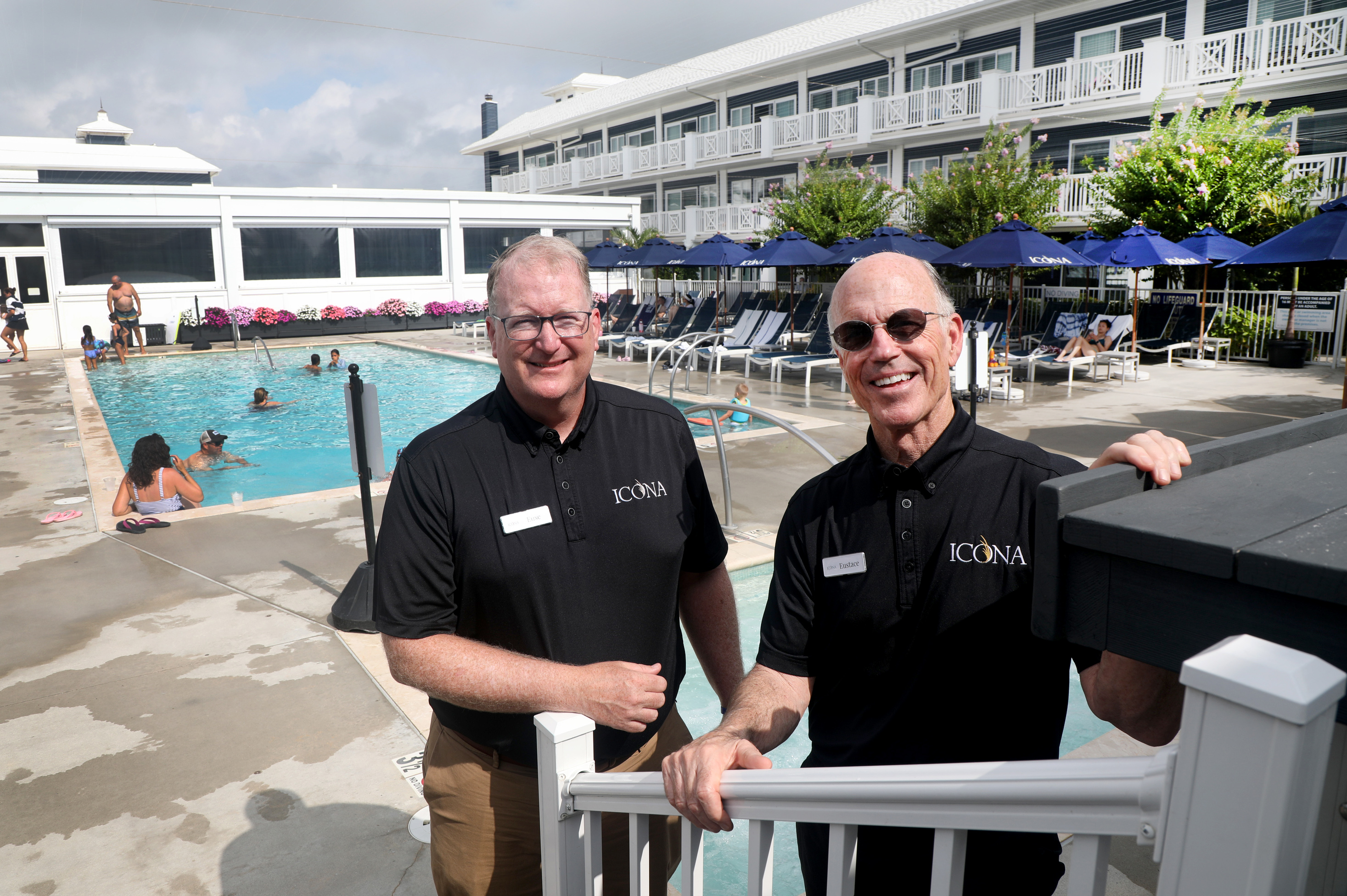
Icona Resorts founder Eustace Mita says he didn’t set out to change the Jersey Shore.
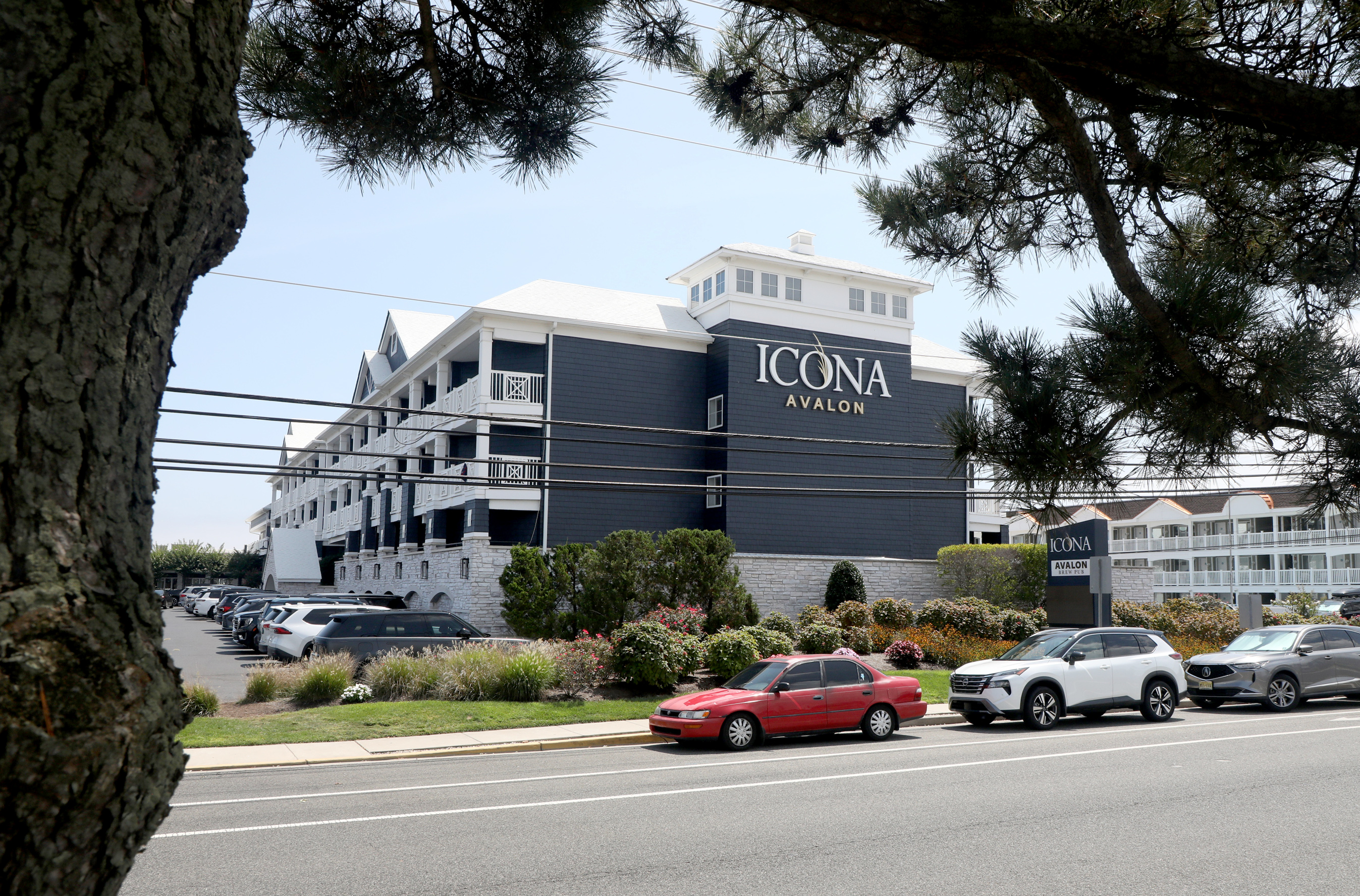
Sitting in a corner room at the Icona Avalon, the largest of Mita’s seven luxury hotels, the 72-year-old said it was the Shore, his lifelong “happy place,” that transformed him.
As Mita looked out onto the dunes, he recalled his baptism at St. Paul Catholic Church in Stone Harbor and his summer job as a teenage busboy and server at the Princeton Bar & Grill in Avalon.
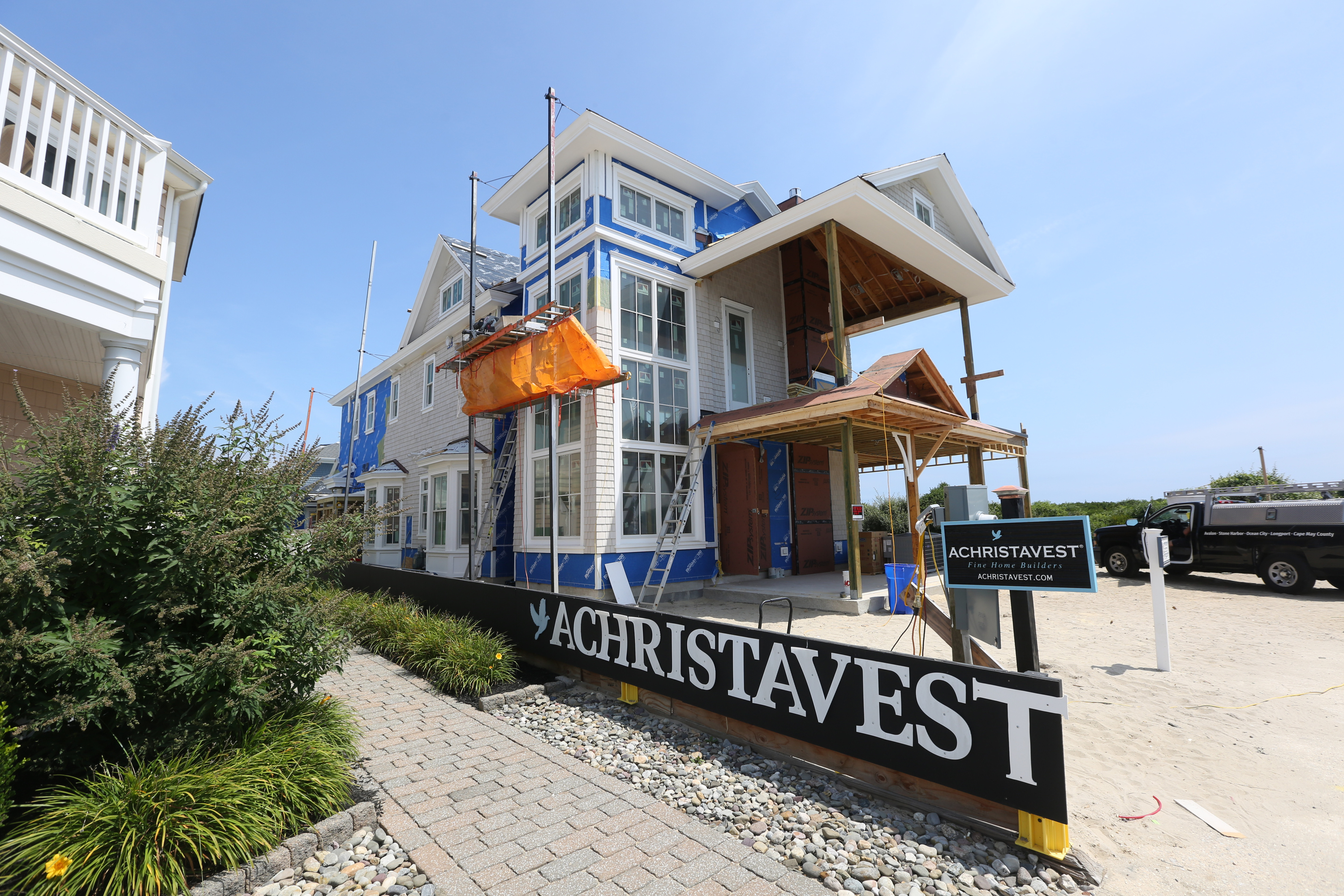
Decades later, Mita leads both Icona Resorts and Achristavest homebuilders, which constructs multimillion-dollar waterfront homes — including a controversial 18,000-square-foot mansion that would be the largest in Avalon. Built on spec, it will likely sell for several tens of millions.
His for-profit companies are all about luxury. At the same time, they are imbued with Mita’s faith: The names, Icona and Achristavest, were inspired by spiritual experiences and words, and he displays 18-inch statues of the Blessed Mother in the hotel lobbies.
On a recent August day,he greeted employees by name and chatted with guests as he walked through Icona Avalon and neighboring Icona Windrift. Later, he visited under-construction homes, rattling off details about each project and staring in awe at the ocean views, as if seeing them for the first time.
Eustace Mita takes in the view from an under-construction Achristavest home on 77th Street in Avalon.Vernon Ogrodnek / For The Inquirer
“Do what you love and the money will come,” Mita said, referencing a lesson he learned from his grandfather, Eustace Wolfington, who owned Avalon’s first beachfront hotel, the Puritan, later renamed the Whitebrier. “That has been so true in my life.”
Mita declined to share how much his companies, which are privately held,are worth, or how much he’s invested in the Shore, saying only that it’s “hundreds and hundreds of millions of dollars” — and counting.
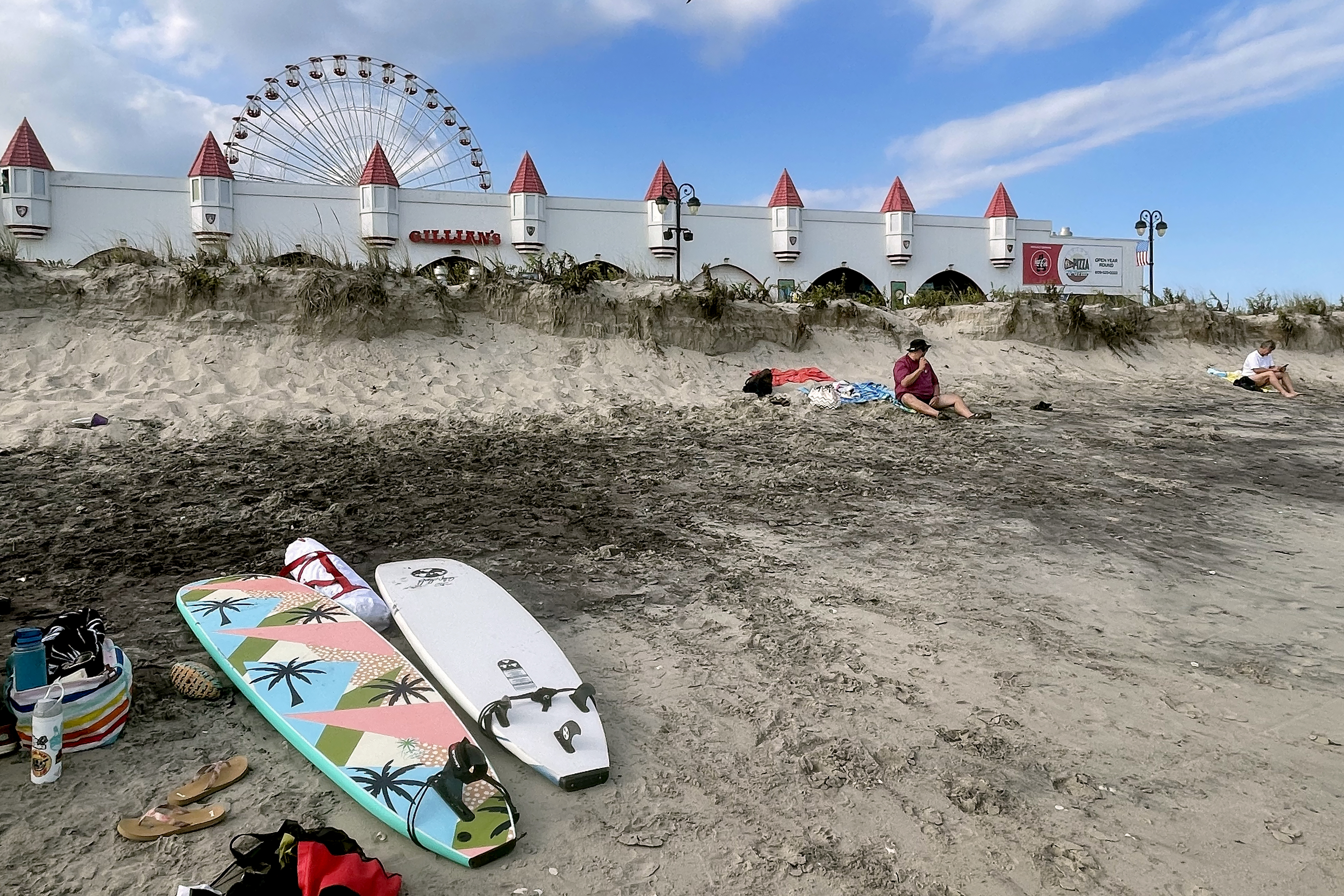
The now-closed Gillian’s Wonderland Pier rose above the dunes at Sixth Street and the Boardwalk in Ocean City during its final weekend in September 2024.Tom Gralish / Staff Photographer
For five years since he boughtthe now-shuttered Gillian’s Wonderland Pier, Mita says he has faced roadblocks and pushback, most recently from community groups who sued Ocean City and its council asking to void the site’s “in need of rehabilitation” designation. The designation allowed council to start talks with Mita about his plans to redevelop the former amusement park.
In a statement announcing the lawsuit, Jack Gutenkunst of Plaza Place Civic Association, one of the neighborhood-group plaintiffs, called the designation “deeply flawed” and said it “seeks to improperly strip away important planning protections that residents have long relied upon.”
“We have [millions] worth of real estate right here that would be degraded by this hotel, and our way of life would be degraded,” said Marie Crawford, who lives behind the pier.
Mita said the project, which has been downsized from the original proposal, would be an asset to Ocean City. The town calls itself “America’s Greatest Family Resort,” he added, but has not opened a new hotel in more than 50 years. He noted that several business owners on the boardwalk and elsewhere have spoken in favor of the project.
“We’re on the pathway now to being able to build Icona Ocean City, but we’ll see,” Mita said. “I don’t take anything for granted.”
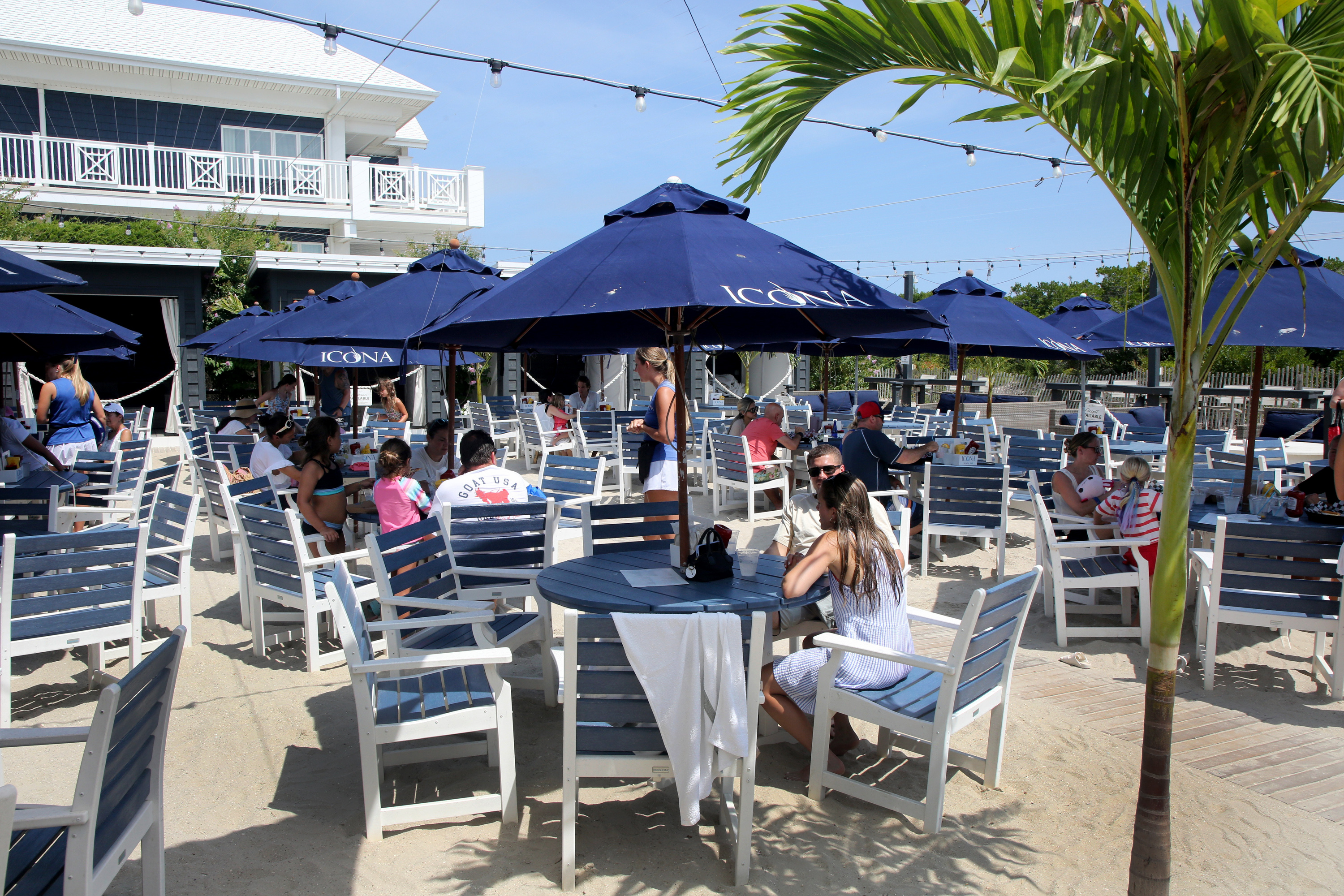
Guests eat lunch at Icona Avalon’s Beach Bar on a weekday in August.Vernon Ogrodnek / For The Inquirer
He has his sights on two other potential hotel properties, one in Cape May County, though he wasn’t ready to share details.
Despite many offers, Mita has no interest in selling Icona Resorts. He has told his five grown children that they could do so someday — as long as they don’t sell the prime beachfront real estate where his hotels sit.
For now, his answer to the near-constant acquisition proposals is polite but firm: “Thank you, we’re not interested.”
But, he added with a laugh, “we’ll sell you a house.”
An Achristavest home is under construction on 116th Street in Stone Harbor.Vernon Ogrodnek / For The Inquirer
Mixing faith and luxury down the Shore
In a conference room off the Icona Avalon ballroom, dozens of hotel employees — many of them international workers on J-1 visas — sit facing a projection screen and white board where the company’s guiding principles are about to be reinforced.
Wearing a black Icona polo, black pants, and an unwavering smile, Mita slips into the morning meeting with little fanfare.
A manager kicks off a regular exercise: Stand, introduce yourself, and greet coworkers on either side of you by name. Seated in the back, Mita is among the last to participate, standing ramrod straight and speaking with a joyful lilt.
Randel Davis, general manager of Icona Avalon, leads an employee meeting.Vernon Ogrodnek / For The Inquirer
Whenever possible, managers remind the employees, they should call guests by their names, too.
“The sweetest sound to a person’s ears is the sound of their own name,” Mita said, referencing How to Win Friends and Influence People by Dale Carnegie, one of many books that influenced Mita’s leadership style. The most instrumental, he said, was Greatest Salesman in the World by Christian writer Og Mandino.
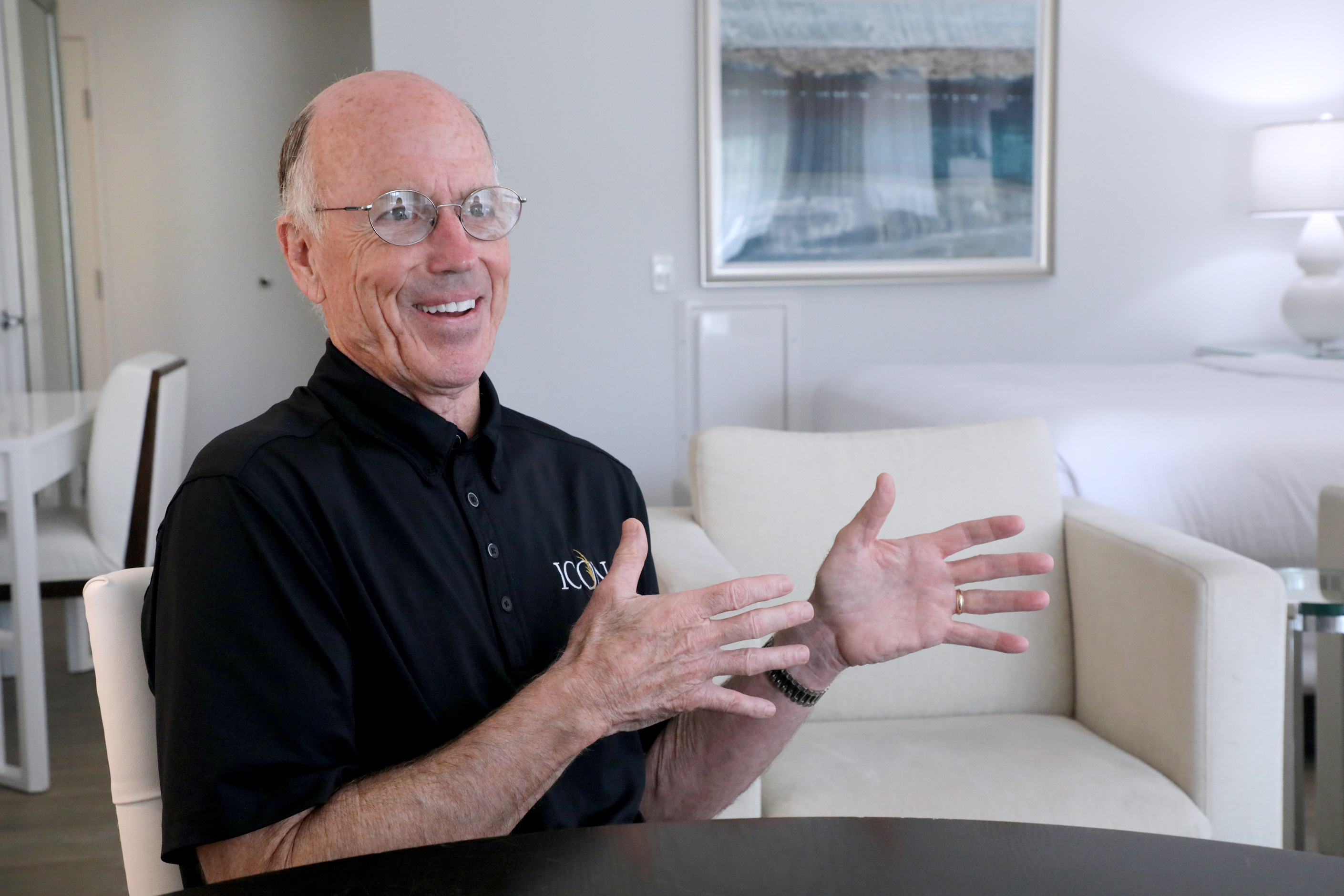
Eustace Mita talks about his business and life philosophy in a guest room at Icona Avalon.Vernon Ogrodnek / For The Inquirer
When Mita first placed Blessed Mother statues in his hotels, he said, some suggested it could be “a little too religious.” But he stood by it, saying the Blessed Mother is the matriarch of all people, not just Catholics.
“If you don’t like Mom,” he said, “you don’t have to stay with us.”
More often, Mita said guests compliment the statues. He sees some passersby bless themselves and say a silent prayer.
“We don’t apologize for that,” he said of the iconography. “But we honor all faiths.”
A statue of the Blessed Mother overlooks the pool at Icona Windrift.Vernon Ogrodnek / For The Inquirer
How Icona Resorts were built
In his pursuit of hotels, Mita was particularly motivated by scroll three of Mandino’s work: “I will persist until I succeed.”
After graduating from Archbishop John Carroll High School in 1973and studying for three years at Drexel University, Mita worked in the auto industry. In the 1980s, he founded Mita Leasing, then ran Half-a-Car, a lease-training company, with his uncle, Eustace Wolfington II.
Mita said he “backed into” the hotel industry around the time of the 2008 financial crisis, during which he lost about three-quarters of his net worth.
Back then, Mita’s Achristavest real estate company was knocking down small Shore hotels and building condo complexes, including the Grand at Diamond Beach, which sits between Wildwood Crest and Cape May.
Achristavest acquired the Grand’s neighbor, the Pier 6600 hotel, for $12 million in 2006, Mita said. Then, “Armageddon hit” with the recession.
Home construction at an Archistavest home in Stone Harbor in AugustVernon Ogrodnek / For The Inquirer
“Our homebuilding business didn’t slow down; it literally stopped,” Mita said. When you’re building second homes, “everybody wants one, but they don’t need one.”
While demand for Shore homes remained low, Mita said he found that families were flocking to the hotel for short beach vacations at lower prices. So he went all in on resorts.
The Pier 6600 became Icona Diamond Beach in 2012. Mita has spent $30 million renovating it, he said, including the addition of a third-floor ballroom for its thriving wedding business.
Eustace Mita bought Icona Avalon from the former owners of the Golden Inn in 2015. Vernon Ogrodnek / For The Inquirer
Then, after 16 years of knocking on the door at the Golden Inn in Avalon, Mita acquired the iconic beachfront property for $25 million, which in 2015 was the largest hotel transaction in Cape May County history, he said.
Mita renamed it Icona Avalon. He said he has spent $35 million to remodel it.
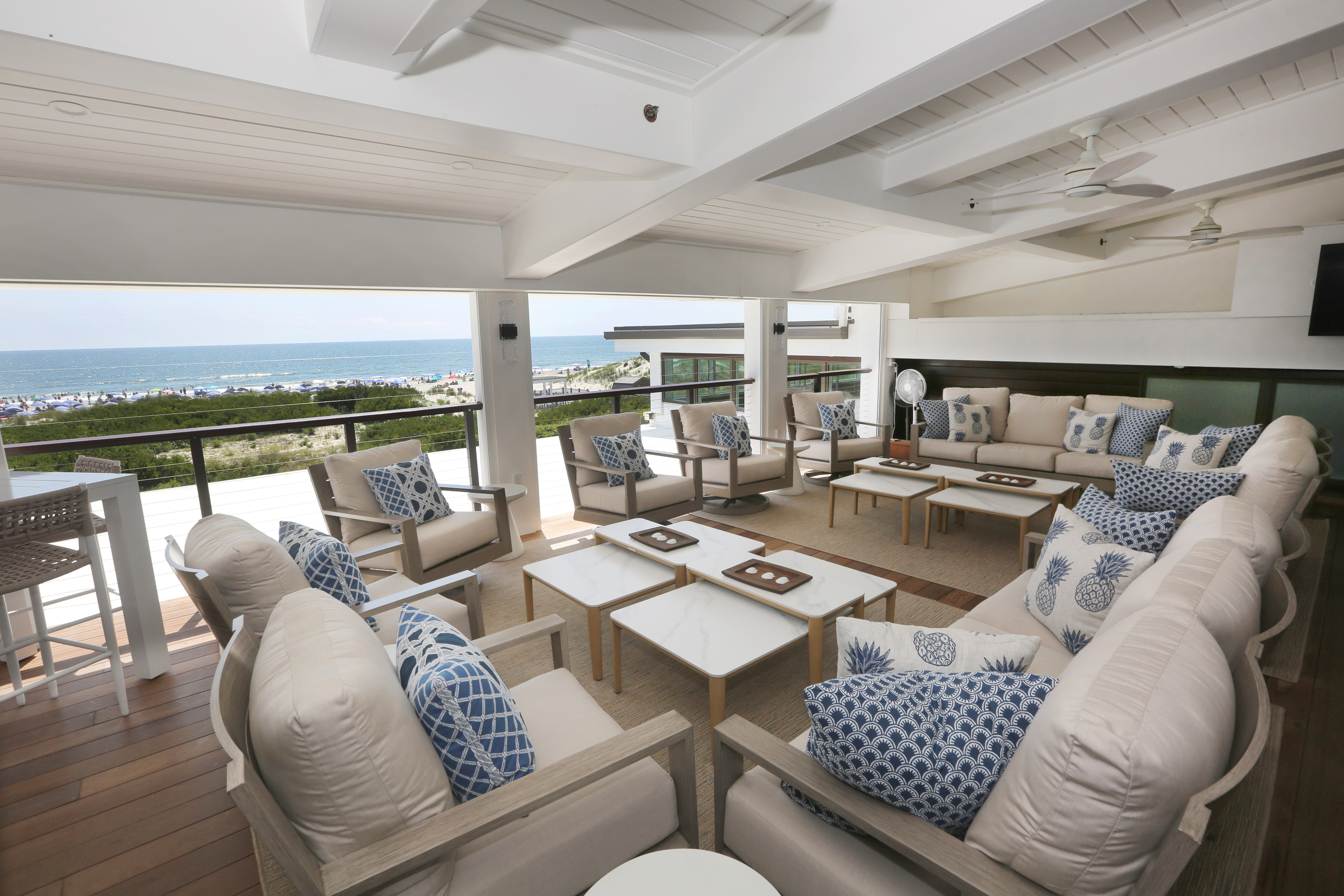
A few years later, he purchased the Windrift hotel next door for more than $30 million and spent $27 million on renovations there, which include the new Avalon Prime steakhouse and a private third-floor “sky lounge.”
The Icona Windrift in Avalon, which Eustace Mita has spent $27 million renovating since he purchased it five years agoVernon Ogrodnek / For The Inquirer
Icona Yacht & Beach Club members, who pay a $7,000 initiation fee plus $5,000 a year, can access the sky lounge, the Icona yacht, private beach service, and shuttle service.
They number about 25 now, Mita said, and he plans to cap membership at around 200 people.
It’s a similar setup as the Union League. The historic club, headquartered on South Broad Street, recently bought Avalon’s iconic Whitebrier for $23 million and last summer made it members-only. The move sparked debate over whether the Shore town was becoming too exclusive for even its wealthy homeowners.
The members-only Sky Bar at Icona Windrift in Avalon sits on the highest point on Seven Mile Beach, according to Eustace Mita.Vernon Ogrodnek / For The Inquirer
The Jersey Shore experience, elevated
While middle-class families have increasingly been priced out of the Shore, Mita said he doesn’t believe his hotels are contributing to the trend.
“We don’t cater to the wealthy,” Mita said, adding that Icona has opened two “select-service” hotels — Mahalo Diamond Beach and Mahalo Cape May — which have fewer amenities and sometimes lower prices.
Rooms there are about $200 a night on shoulder-season weekdays but can cost $500 to $700 on a summer weekend.
At Icona’s full-service resorts in Avalon and Diamond Beach, and its boutique hotel in Cape May, rooms start around $700 a night on peak summer weekends.
A corner guest room at the Icona Avalon.Vernon Ogrodnek / For The Inquirer
Outside South Jersey, Icona’s Grand Victorian boutique hotel in Spring Lake, Monmouth County, has slightly lower rates.
Icona is not the first brand to bring luxe hotel accommodations to Seven Mile Island, which contains Avalon and Stone Harbor.
The Reeds at Shelter Haven, a year-round resort in downtown Stone Harbor, opened a couple years before Icona Avalon. Rooms there start around $600 a night on midsummer weekends.
“It’s great to have healthy competition, right?” the Reeds’ general manager Carmen Russo said. “We always look at them and see what they’re doing, just as they look at us and see what we’re doing.”
Eustace Mita rattles off details about the construction of this Achristavest home on 116th Street in Stone Harbor.Vernon Ogrodnek / For The Inquirer
As for Mita’s home-building business, Achristavest builds on the beach and bay from Cape May to Longport, with properties starting at $5 million. By comparison, the median listing price for all homes — not only waterfront ones — in Stone Harbor is just under $4.7 million.
Achristavest homes being built on spec in Avalon and Stone Harbor will likely sell for $15 million to $25 million.
“I tell my children rent in Delaware County and buy in Cape May County,” said Mita, who grew up in Bala Cynwyd and now has homes in Malvern and Ocean City.
What’s ahead for Icona and Achristavest
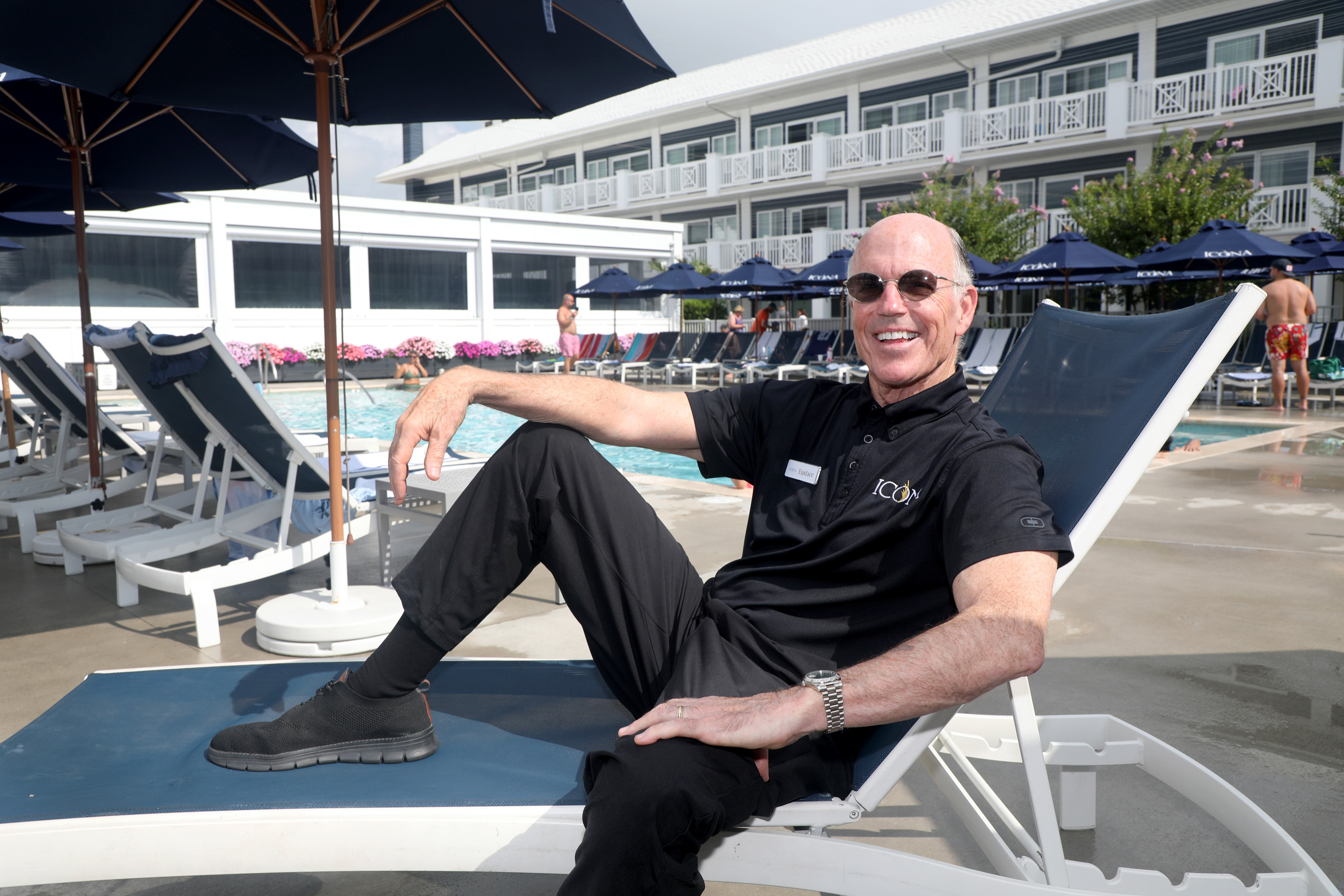
Eustace Mita, Icona’s chairman, poses by the pool at Icona Avalon.Vernon Ogrodnek / For The Inquirer
Mita speaks often of his legacy.
“I’ll be dead and gone, but imagine the next generation and then the next generation,” Mita said. “Everything we’ve built is built to last.”
And he said he hopes the lessons he instilled in employees are just as permanent.
One employee, Rob LaScala, worked at Mita Leasing and then went on to found LaScala Restaurant Group, which has dozens of locations across the region. In just a couple years working together, LaScala said, Mita left a mark.
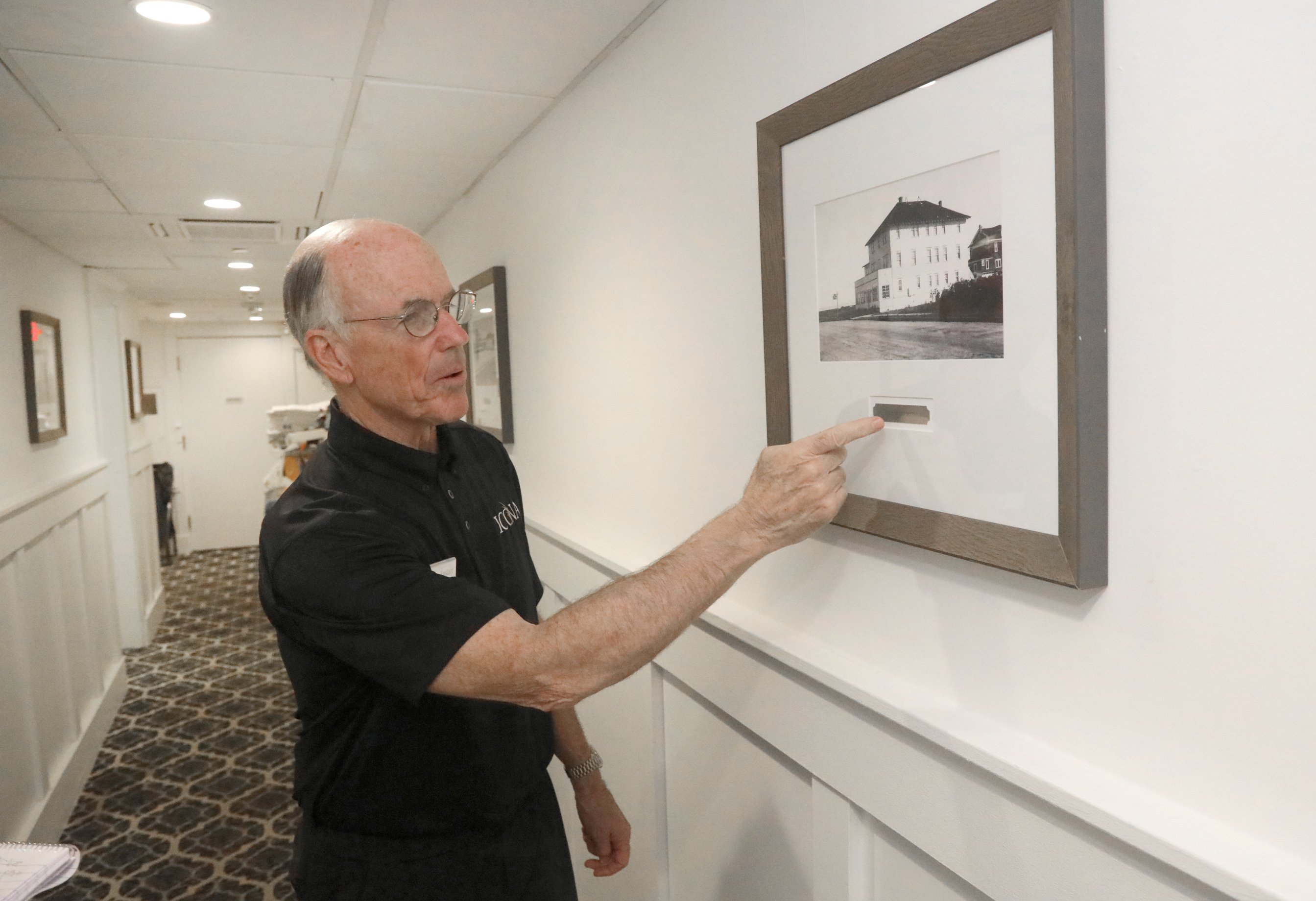
At his Icona Avalon hotel, Eustace Mita points to a black-and-white photo of the Puritan, Avalon’s first beachfront hotel that was founded by his grandfather, Eustace Wolfington.Vernon Ogrodnek / For The Inquirer
Mita is “just a make-you-feel-good type of person,” LaScala said. “I over the years have tried to emulate him” and create a company culture that transcends business.
Mita refers to his 1,100 employees as family but said he works to prioritize time with his actual family. He spends summer weekends with his wife, Susie, and some combination of their five children and 18 grandchildren. His oldest son, Euse, was recently named Icona’s president and CEO.
Eustace Mita (right), founder and chairman of Icona, with his son Euse, who was recently named president and CEO.Vernon Ogrodnek / For The Inquirer
But, of course, he said, work sometimes calls. On a recent weekend, with many summer staffers back at college, Mita helped clear tables at Icona Avalon while Euse was a fill-in valet.
Said Mita: “There’s no reason just because I’m a leader that I can’t bus tables, that I can’t sweep floors.”
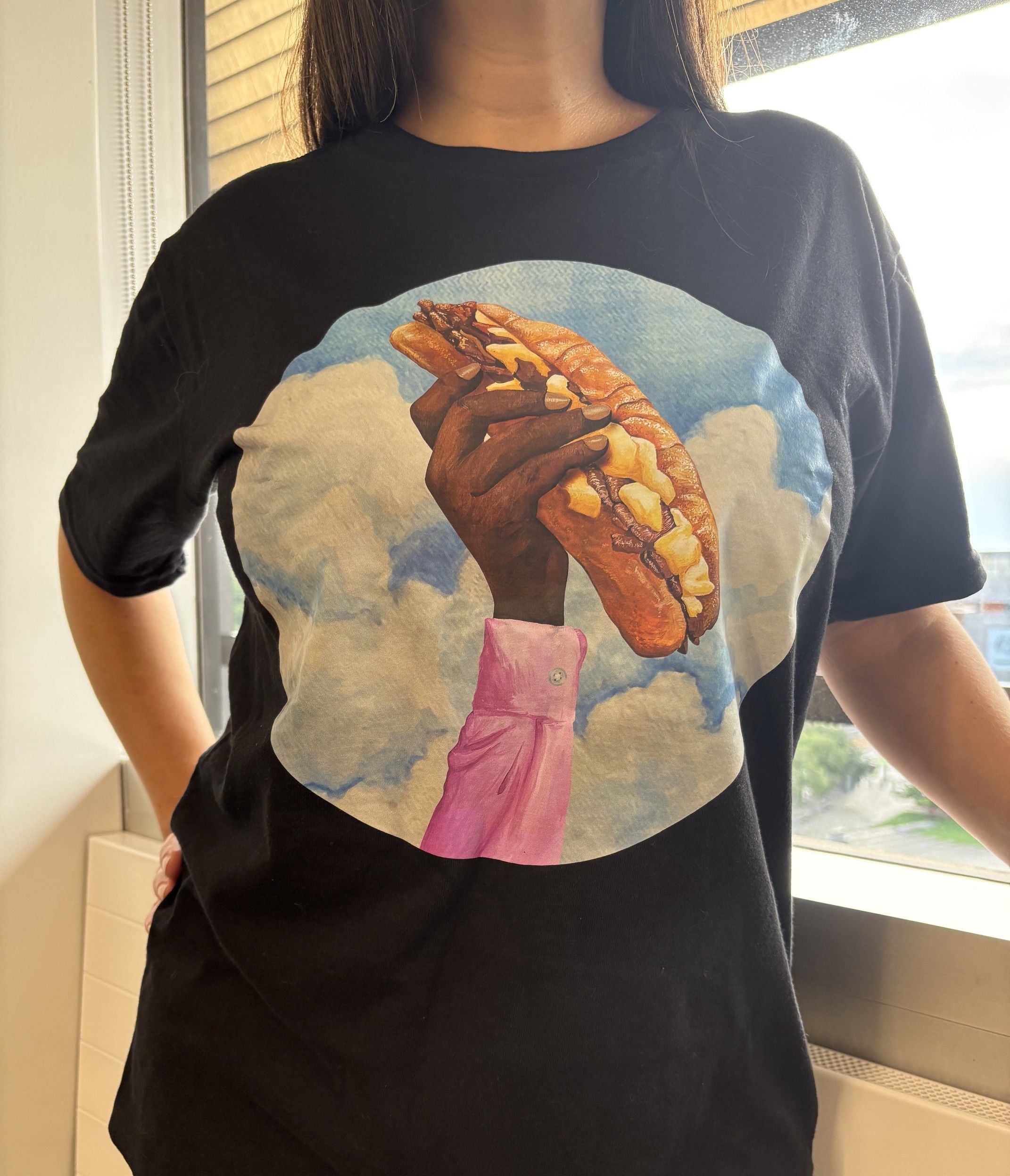
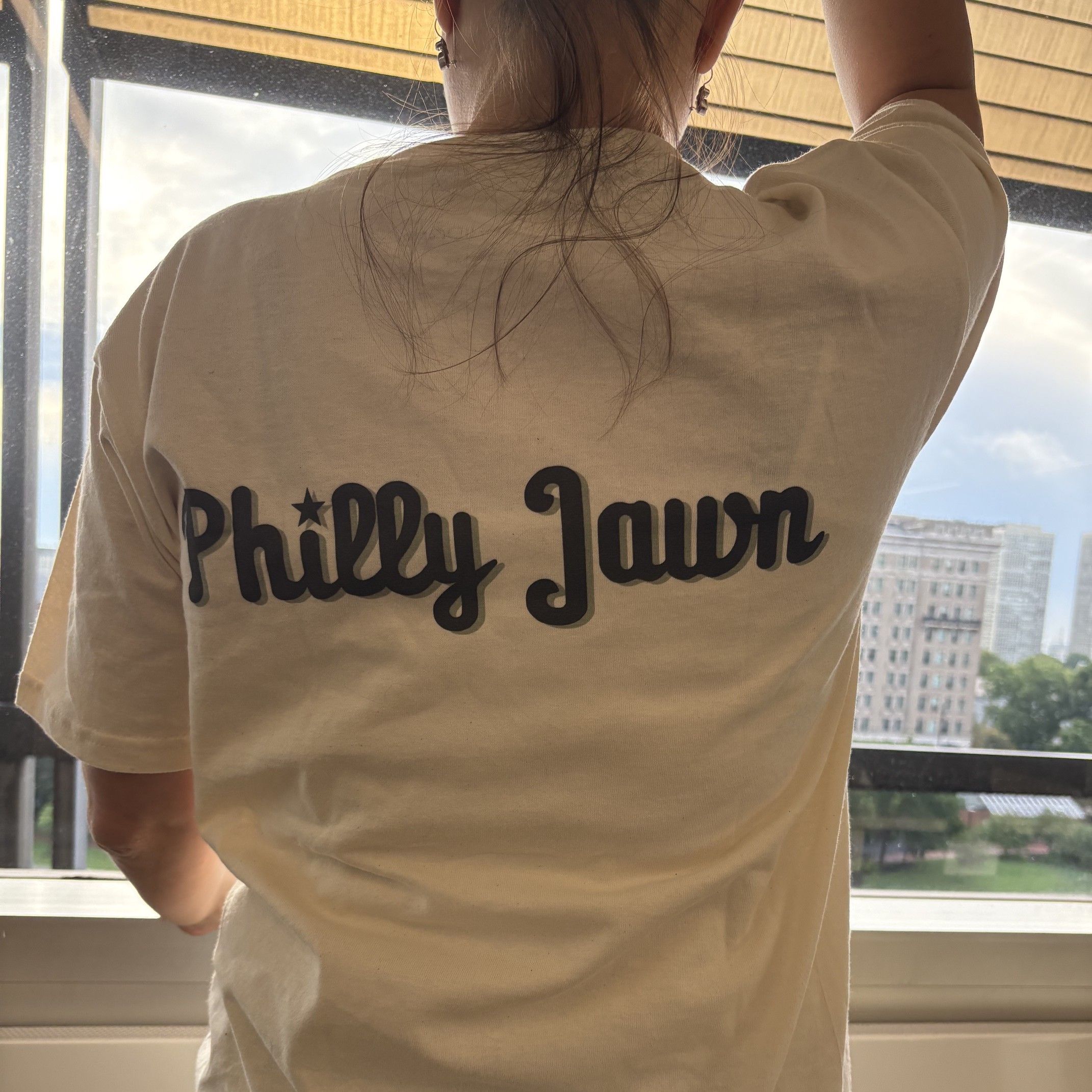
A manicured hand holding a cheesesteak, a hoagie, or an iron skillet filled with scrapple. Now imagine that on a hoodie or T-shirt. Add to that the beloved moniker “Philly Jawn” printed on the back in Philadelphia Phillies-style print and I’m hooked.
I may be a born and bred New Yorker, but after living here for 23 years, I’m a total Philly Jawn.
This latest sartorial homage to Philly food is a collaboration between interior designer Sheila Bridges and food writer, producer, and media entrepreneur Stephen Satterfield.
Sheila Bridges X COMOCO T-shirts featuring a Philly cheesesteak, are part of a limited-edition collaboration between interior designer Sheila Bridges and Stephen Satterfield, best known for the Netfix documentary on African American food, “High on the Hog.”Elizabeth Wellington
Earlier this year Bridges partnered with Walmart on a Philly-centric collection of tableware featuring her iconic Harlem Toille de Juoy print. Satterfield is best known for Netflix’s Peabody and NAACP award-winning series High on the Hog. Its first season featured Philadelphia food and Black catering families including Robert Bogle.
The Sheila Bridges X COMOCO T-shirts and hoodies are available in six foodie styles. In addition to the cheesesteak, hoagie, and scrapple designs are a soft pretzel, a rainbow water ice, and a hot dog.
Black tees feature hands raising hoagies, cheesesteaks, and hot dogs to a clear blue sky with fluffy white clouds. To me, it depicts the heavenly experience of biting into a yummy hoagie, cheesesteak, or hotdog.
“Because of the 250th, I was in this very Philly mindset,” said Bridges, Bill Clinton and author Tom Clancy’s interior decorator, who is calling Philly home these days.
The back of Sheila Bridges X COMOCO T-shirts inspired by iconic Philadelphia food. The shirts are part of a limited-edition collaboration between interior designer Sheila Bridges and Stephen Satterfield, best known for the Netfix documentary on African American food, “High on the Hog.”Elizabeth Wellington
“I love Philly food,” she said. “Every time I’m in town, I’m always looking for a soft pretzel with mustard or a cheesesteak.”
One of Bridges’ in-house artists nailed the illustrations. The shirts were produced by COMOCO Cotton, Satterfield’s apparel brand that uses cotton grown by Black-owned family farms in the South.
“I love how all of the cotton in our products is fully traceable from seed to garment,” Bridges said.
So do I.
Sheila Bridges X COMOCO Cotton’s limited-edition Philly-centric shirts are available online at SheilaBridges.com. Hoodies are $100. T-shirts are $85. Sizes: S, M, L, XL, and 2XL
— Elizabeth Wellington
A childhood anime favorite in 4K
Katsuhiro Otomo’s Akira (1988) is one of my favorite films ever. I watched a grainy pirated copy of it from an USB drive a friend lent me on my laptop screen and was spellbound by the hand-drawn animated frames. The film, based on the manga of the same name, is set in the dystopian faraway year of 2019 where Tokyo is in ruins following sudden destruction in 1988. It is plagued with protests, unemployment, corruption, and an overwhelming sense of decay and anger.
The action of the film unfolds when Shōtarō Kaneda’s bike gang, the Capsules, races against a rival gang in the midst of a rally that quickly escalates and becomes disruptive. In the middle of the action, Kaneda’s best friend Tetsuo Shima clashes with an otherworldly esper and gains supernatural powers, the same powers possessed by Akira who caused 1988’s wreckage. What follows is a tale of Shima developing superhuman strength and a destructive rage that consumes much of the city. The army and the police fail to manipulate Shima into submission.
It is a cyberpunk action film; so yes, there’s blood, death, several crashes, splintering glass, and never-ending dystopic vistas. The excellent score draws heavily from traditional Japanese and Indonesian styles and is composed by Shōji Yamashiro.
Imagine experiencing all of that on a grainy .mov file on a laptop screen. But you don’t have to! A new 4K and IMAX restoration, distributed by Crunchyroll and Sony Pictures Entertainment, has been released with English subtitles and English dub. Watching it felt like I was watching the film for the first time.
The glass shimmers, the blood glows redder, and everything looks grander on the big screen. It is an epic for our times, and for any era where too many people suffer under the reckless might of men drunk on their own power.
The 4K restoration of “Akira” is playing in theaters across the region, including AMC Broadstreet 7, AMC Cherry Hill 24, and AMC Voorhees 16.
— Bedatri D. Choudhury
The new art installation, “Echoes Beyond the Stage,” was dedicated to the Highmark Mann Center for the Performing Arts on July 31, 2026.Courtesy of Earl
As visitors walk along the gravel-covered trail on Georges Hill Drive, they see a series of 10-foot-long panels that are a part of Echoes Beyond the Stage. The new installation was developed by artists Nile Livingston and De’von Downes to commemorate 50 years since the Mann moved to its current West Fairmount Park location.
Livingston and Downes collaborated with Streets Dept founder Conrad Benner and Mural Arts Philadelphia to create artwork that reflects the amphitheater’s history, while illuminating the people, historic blocks, and other institutions that surround its borders.
The new art installation, “Echoes Beyond the Stage,” was dedicated to the Highmark Mann Center for the Performing Arts on July 31, 2026.Courtesy of Earl
One mural references one of Aretha Franklin’s final performances at the Mann. Another highlights the century-old rowhouses that line the outside blocks, and others reflect the energy of past block parties, barbecues, and other activities brought to the community. Musical notes float from one panel to the next, showcasing the musical influences and memorable performances that have passed through time. Dancers, vocalists, DJs, and instrumentalists perform under purple, green, and amber-covered skies, while spectators watch from their amphitheater seats or windowsills.
While each panel differs in focus, they are bound by visual harmony. These works show Mann is not just a performance venue; it’s an essential part of the community and an integral piece of the city’s broader music history. And the best part? Visitors get a glimpse of it before stepping foot inside through the entrance gates.
The Highmark Mann Center for the Performing Arts is at 5201 Parkside Ave., Phila.
— Earl Hopkins
Turnstile’s ‘Never Enough’ reimagined by Will Yip, Alex G., and … Elton John?!
What do Alex G., Will Yip, and Elton John have in common?
The Havertown indie songwriter, Grammy-winning Philly producer and studio owner, and “Philadelphia Freedom” British rock legend all have a hand in Never Enough: Versions, the new album that reimagines Never Enough, the 2025 album by Baltimore pop hardcore band Turnstile.
Turnstile’s “Never Enough” won a best rock album Grammy for the band and Philadelphia engineer-producer Will Yip. Now it has been reimagined as “Never Enough: Versions,” with new takes on the songs by Elton John, Alex G., Hayley Williams, Branden Woody, Panda Bear, Slayyyter, and more.Trevor Roberts
Never Enough was already one of the most-acclaimed rock albums of the decade. At this year’s Grammys, the Brendan Yates-fronted band’s “Birds” won for best metal performance. And Turnstile and Yip, the owner of South Philly’s Memory Music Studios, who engineered the album and assisted Yates in producing it, won prestigious best rock album trophies.
Now, the 14-song album has been expanded with 22 new tracks, with the original songs remixed, rearranged, and reinterpreted by a dazzling array of artists.
Will Yip in Studio 5 in his newly constructed studio, Memory Music Studios, South Philadelphia, Tuesday, Jan. 13, 2026. He won a Grammy for his work engineering and assisting with production on Turnstile’s “Never Enough” which has now been expanded as “Never Enough: Versions.”Alejandro A. Alvarez / Staff Photographer
The most mind-blowing presence is John, who turns “Seein’ Stars” into a proper song, and whose fame exponential outreaches that of his fellow Turnstile fans.
Those fans include Paramore singer Hayley Williams, who interprets “Ceilings”; boygenius’ Julien Baker, who teams with Sudanese Canadian poet Mustafa on an absolutely gorgeous “Time Is Happening”; jazz trumpeter Brandon Woody, who turns in a lovely instrumental “Dreaming”; and breakout electro-pop star Slayyyter, who soars on a high-flying “Birds.”
Both Baltimore club party MC Rod Lee and New York synth-pop songwriter Porches take on the Never Enough title track. Alex G. — whose full name is Alex Giannascoli and is also in music news for his score to Jane Schoenbrun’s movie Teenage Sex and Death and Camp Miasma — delivers an atmospheric, cinematic spin on “Magic Man,” which is also interpreted by Panda Bear of Animal Collective.
All in all, it’s a thoroughly impressive project that makes Turnstile seem like they might possibly be the coolest band in the world.
“Never Enough: Versions” is available to stream and purchase on music stores and platforms.
Elysia Baskins and Christopher Johnson did not intend to raise a child together.
They instantly got along when they met on Bumble in 2022; they both loved anime and eating Japanese food. But after their first date, Baskins didn’t feel a romantic chemistry, so they became best friends instead.
In 2025, Baskins got pregnant with her partner and asked Johnson to be the godfather.
She and her partner planned to live together with the baby. They signed a new lease on her West Philadelphia apartment and he packed a U-Haul. But he died by suicide on the day he was set to move in.
Baskins was left reeling, four months pregnant with barely enough money to cover rent.
Johnson, who lived in Fishtown, kept showing up. He drove her to prenatal appointments and watched episodes of Better Call Saul with her. Sometimes he stayed the night in her guest room when she didn’t want to face it alone.
In January, he was the one who drove her to the Hospital of the University of Pennsylvania to give birth. In the months that followed, he visited every week. He folded laundry; he built the crib. He told Baskins the baby could call him “DD,” short for “Deity-ous Dad,” a joking play on “godfather.” He calls her “Baba.”
The baby’s father was Black, and to Johnson, who is also Black, it felt especially important that the baby grow up with another Black parent.
“I never thought about it in a casual way, or a lackadaisical way,” Johnson, 31, said. “I fully planned to be the next parent, the third.”
Christopher Johnson with Elysia Baskins’ daughter, Thursday, Sept. 3, 2026 in Philadelphia.Elizabeth Robertson / Staff Photographer
In July, Baskins, 33, and her daughter, who is 8 months, moved in to Johnson’s home in Fishtown.
Baskins now works from that home, as a text counselor for the 988 Suicide & Crisis Lifeline. Johnson works as an inventory coordinator at a Kensington hardware store and as a home health aide for his mother. Though they are not romantically involved, neither are dating other people right now. They are raising her daughter together.
“With him not being her biological father, I wouldn’t necessarily feel like I need to consult him on all the parenting decisions,” Baskins said. “But I would want to anyway. So it almost doesn’t matter.”
The following, as told to Zoe Greenberg in separate interviews, has been edited for length and clarity and combined.
On telling Johnson she was pregnant
Baskins: I was very nervous because things weren’t ideal, but I had been really wanting a baby for a long time. I knew he would potentially be worried about me. It was planned, but maybe not entirely well-thought-out.
Johnson: I was a bit apprehensive. I cannot make that choice for anyone else, obviously. But I thought circumstantially, they weren’t ready. In terms of mental health, finances. My apprehension was known before the pregnancy — there are no real secrets between us.
On asking Johnson to be the godfather
Baskins: As soon as I knew I was pregnant, I wanted him to be her godfather. I knew I was going to need to rely on a community of people to raise this child. It wasn’t going to just be me and my partner. If anything happened to both of us, he would literally step up and take care of her.
Johnson: They asked me together. I said yes, I’d love to. I knew I was going to be present.
On deciding to move in together
Baskins: It wasn’t something I jumped on. I really thought it over for weeks, maybe even months. I asked everyone in my support system, “Do you think I should do this?” I didn’t want to put a big strain on our friendship.
Johnson: We talked about it when she was pregnant. At least I threw it out there as a thought. But it was just too hard of a time to try to make that kind of decision.
On committing to each other
Baskins: I said, “If we move in together, I’m going to be here for at least five years probably before I can be fully independent. … I worry about when that time comes. She’s gonna be attached to you like you’re her parent.”
Johnson: I tried to be properly responsible and consider all the factors. For myself, my answer was: at worst, everything will be OK.
On sharing the parenting
Baskins: He does a little bit of everything. He’s fed her. He puts her to bed. He changes her. He takes her out. He gives her baths. I just do that stuff more.
I think of myself as the primary parent, but I also refer to him as a co-parent. I don’t have the exact same expectations as I might have had of my partner, but somewhere in the middle — not just a regular friendship either.
Johnson: I think of myself both as godfather and as Dad. I’m proud to be the person that’s here, day in and day out, in this paternal role. But in no way will I not also honor her true father. Her father was a great dude. We’ll be as close as parent and child can be, but we’ll have to navigate that as she gets older.
On dating other people
Baskins: I’m not really interested in dating, but a time could come when that might be different.
Johnson: I’d rather have stability and everything settled for a bit before I go back into dating. We’re two grown adults who aren’t partners, living with each other and co-parenting. If one of us wants to date and have someone that we’re dating over, there’s a lot to explain ahead of time.
On what the future might look like
Baskins: I would love to still be living in really close quarters. We have talked about what if we want to get a house around the same time? Could we get a house together?
Johnson: I think we’ll probably still be living together. Or living in such close vicinity it’s practically like we’re living together.
This story is part of a series about life partners across the Philadelphia area.
If you want to share your story about who you’re navigating life with, romantically or otherwise, write to lifepartners@inquirer.com. We won’t publish anything without speaking to you first.
The Academy of Natural Sciences has been an institution in Philadelphia for nearly 200 years.
Generations of kids have walked into Dinosaur Hall and stared up at the skeletons, pressed buttons, dug for fossils, looked at bugs, and wandered past those wonderfully old-school animal dioramas. Then they grew up, had kids, and brought them back to do the exact same things.
At the end of the month, that stops. The museum is closing as attendance has fallen and operating costs have risen, though the Academy’s scientific research and its collection of roughly 19 million specimens will remain. What happens to the museum is uncertain; Academy leaders say they hope public access can return in some form.
That uncertainty is what makes this feel like more than another attraction closing. Philadelphia’s identity isn’t just cheesesteaks and sports teams and the stuff that fits neatly on a tourism poster. It’s also the institutions that have been here so long that generations assume they’ll always be here — the Academy, the Franklin Institute, the Art Museum, the Please Touch Museum. They’re where Philly kids learn, and learn what their city is.
The dinosaurs aren’t just leaving the Parkway. Philly is losing one of the places that helped make us, us.
6abc meteorologist Cecily Tynan walks off the set at the 6abc studios in Philadelphia on Thursday, August 27, 2026.Elizabeth Robertson / Staff Photographer
Cecily gives her final forecast: D
For 31 years, Cecily Tynan told the Delaware Valley what was coming. On Monday night, everyone already knew the forecast: This was going to hurt a little.
Tynan delivered her final weather report on Action News, choking up as she thanked viewers who had watched her through everything from the Blizzard of ’96 to Superstorm Sandy. She talked about meeting families who had watched 6abc for generations and even young Cecilys whose parents named them after her.
Then Jim Gardner — because apparently this goodbye wasn’t emotional enough already — returned to the studio to send off his longtime colleague (WITHOUT HIS MUSTACHE, let’s not forget to mention).
Cecily wasn’t just there for the giant storms people remember. She was there on thousands of ordinary nights, standing in front of that weather map while families ate dinner, packed lunches, wondered about school the next morning, or decided whether they needed an umbrella. She became part of the routine.
Even Cecily seemed to understand that relationship when she told viewers that although she was retiring, she’d “always be part of the Action News team.”
Team Nutz celebrates taking first place in the 25th Dushore Founder’s Day Outhouse Race on Saturday, Aug. 8, 2026 in Dushore, Pa. The Dushore Lyons Club event featured 10 teams comprised of a driver and four pushers who raced custom-designed outhouses along Main Street as hundreds of locals lined the sidewalks to watch and cheer.RALPH WILSON/For the Inquirer
Philly needs an outhouse race: A
Every once in a while, another part of Pennsylvania comes up with an idea so stupid that Philadelphia should immediately steal it.
In Dushore, a tiny Sullivan County town of about 450 people, residents have spent the last 26 years racing outhouses down Main Street. The rules require a real toilet seat, four pushers and one person sitting on the throne to steer. Teams have names like Perfect Dump, Steiny’s Heineys, and the Coal Region Turd Herders. There are trophies. People train for this.
Naturally, the question is: Why aren’t we doing this in Philly?
Imagine outhouses flying down the Parkway, preferably with Gritty sitting on the toilet. Put one on the Manayunk Wall if we’re feeling reckless. Neighborhood teams would have to build their own: Rittenhouse vs. Fishtown vs. Delco, which isn’t technically a neighborhood but would absolutely show up with an outhouse anyway. Wawa could sponsor one. SEPTA could enter another.
Dushore drew a crowd several times larger than the town’s population to watch people push toilets up and down the street, and Philadelphia has closed roads for far less compelling reasons.
So bring the Turd Herders to Broad Street!
You cannot reboot ‘Jersey Shore’: C
Netflix is filming a new reality show, The Leftovers, in Seaside Heights with longtime Jersey Shore producer SallyAnn Salsano. They insist it’s not a reboot, which is smart, because you cannot recreate that level of magic.
Jersey Shore gave us GTL, “cabs are here,” Snooki getting arrested on the beach, Ron and Sam fighting about everything, and an anonymous note becoming one of the most important documents ever produced in New Jersey.
You can find another group of hot, messy 20-somethings, but you cannot make them accidentally invent GTL again. Reality TV contestants know too much now. They arrive with Instagram strategies and a preferred angle.
So let The Leftovers be its own beautiful Jersey disaster.
Phillies Bryce Harper high-fives teammates after hitting a two-run home run in the sixth inning against the St. Louis Cardinals at Citizens Bank Park in Philadelphia on Saturday, August 22, 2026.Elizabeth Robertson / Staff Photographer
Falling for the Phillies, again: A
The problem with this particular Phillies team is that we know better.
We have been here before. We’ve watched October end against Arizona, the Mets, and the Dodgers in increasingly creative ways, then spent entire off seasons insisting we would not let these people hurt us again.
And yet, look at us.
The Phillies have won six straight, moved into the top National League wild-card spot, and are suddenly just three games behind Atlanta in the NL East with a four-game series against the Braves this weekend. That is exactly the kind of September setup that makes all those carefully constructed emotional boundaries start to seem a little dramatic.
It helps that Bryce Harper looks like Bryce Harper again. After hitting .333 with a 1.069 OPS in August, he opened September by going 4-for-4 with a walk, extending his on-base streak to 34 games, and pushing his season OPS above .900. Jesús Luzardo is 9-0 on the road. The lineup is finding ways to score without relying entirely on home runs. Even when one part of this team isn’t carrying the night, somebody else seems to be.
This is how they get you. A month ago, October still felt like something to approach with extreme caution. Now the Braves are here, Harper is cooking, and Citizens Bank Park gets four chances at them this weekend.
When Mayor Cherelle L. Parker took office in early 2024, William F. Dunbar Sr. became one of the most important people in Philadelphia politics.
A confidant of Parker who played an important advisory role in her 2023 campaign, Dunbar was also a registered lobbyist with a growing client list.
When other key figures in Parker’s campaign took top roles in her administration, Dunbar stepped into an official, but unpaid, role managing People for Parker, the mayor’s political committee.
Those dual roles created an unusual circumstance: Someone who raised money from donors for the mayor’s campaign was also a lobbyist whose clients paid him to influence her administration.
And they werephysically embodied in a 2,250-square-foot office in the Penn Center complex one block west of City Hall. Dunbar’s lobbying firm, Dunbar Public Affairs & Associates, rented the space in March 2024, and People for Parker paid half of the $3,750 rent through a sublease agreement, according to lease documents obtained by The Inquirer.
But the heady days for Dunbar didn’t last. Parker let Dunbar go from her campaign in August 2024. Neither side has publicly explained what led to the separation. And last week, he pleaded guilty to federal tax fraud charges unrelated to Parker’s campaign.
A plea agreement Dunbar signed allows U.S. District Court Judge Kelley B. Hodge to consider three instances of “additional misconduct” — separate from the tax fraud scheme — that did not result in charges when she decides his sentence in January.
One instance stemmed from a dispute over the sublease agreement for the Penn Center office. (In the other incidents, prosecutors said Dunbar falsified a document for a mortgage application and submitted false financial information to receive additional financial aid at a private school.)
In the plea agreement, Dunbar stipulated that he “falsely modified the terms of the lease agreement” to increase the notice the campaign was required to give him to terminate the lease, a move that could have resulted in the campaign paying him money he was not owed had it not been discovered.
City law prohibits officials from using government resources, including City Hall office space, for political purposes. By renting space with Dunbar’s firm, Parker and her team could pop across the street and attend to political tasks without running afoul of ethics rules.
In a letter from March 2025 that was obtained by The Inquirer, an attorney for Dunbar wrote that his firm “had no need for an office space that was close to City Hall other than to support the Mayor’s needs.”
The dispute culminated in the final breakdown of their already-strained relationship, an exchange of emails between lawyers for Parker and Dunbar shows.
“It has come to our attention that Mr. Dunbar has misrepresented that he continues to have relationships with People for Parker to current and prospective clients,” Timothy J. Ford, an attorney for Parker, wrote to Dunbar’s lawyer, Mark Jaffe, in March 2025. “Mr. Dunbar must cease and desist immediately from making incorrect statements of any affiliation with People for Parker, Mayor Parker in her political or personal capacity, or staff or consultants related to People for Parker.”
Jaffe fired back.
“Respectfully, my client asks that the Mayor cease and desist from contacting all donors and personal/business contacts that Dunbar Public Affairs supplied her immediately,” Jaffe wrote Ford in response. “It has come to Mr. Dunbar’s attention that the Mayor continues to misrepresent that Dunbar is still supportive of her efforts and that said relationships should still support her.”
Dunbar asked for “a letter of formal apology from the Mayor [for] the harm she has caused as to his reputation and financial losses to his company.”
Dunbar declined to comment for this story.
From Lincoln to ‘kitchen cabinet’
Dunbar, 42, first met Parker, 53, around 2005, when he was a student at Lincoln University, he said in a 2023 interview. Parker, a Lincoln alum, was a Pennsylvania state representative, and she visited her alma mater to speak to political science students.
“She was a star to the folks at Lincoln then,” Dunbar said in the interview. “Cherelle is the big sister. She sometimes call me the big little brother. I’m very, very protective of Cherelle.”
Both were elected student government presidents during their time at the historically Black university in Chester County.
They maintained a connection over the years as they made their way up the ladder in local politics, Parker as an increasingly high-profile elected official and Dunbar as a well-connected operator.
By the time Parker began preparing to launch her mayoral campaign, Dunbar had become a lobbyist for Comcast. He volunteered as part of her “kitchen cabinet” of informal advisers, and he made a key contribution by championing a strategy of Parker leaning into her life experience, from growing up in a household that needed public assistance to being a single mother.
“I always would come back to that we need to continue to define Cherelle as the authentic Black woman working mom,” he said. “Cherelle is able to live with that every day, so I knew and believed that the message would always resonate more, in particular with Black women, who obviously are the No. 1 voting bloc in our city.”
An unexplained separation
When the top aides in Parker’s campaign joined her administration, preventing them from managing or being paid by a political group, the mayor turned to Dunbar to run People for Parker in 2024.
Although Parker is not up for reelection until 2027, her campaign has remained active, raising and spending hundreds of thousands of dollars each year since she became mayor.
Meanwhile, Dunbar’s lobbying practice grew: the School District of Philadelphia, which employed him a subcontractor, and an ATM company became clients in January 2024, according to the public records. (Dunbar is no longer representing the district because the primary contractor terminated their agreement, according to the district.)
“Will has been a valued friend to me, and let me just say that life is good right now [for Dunbar] and business is good and it’s growing,” she said.
Dunbar said at the time: “I’m very much still an informal senior adviser but because of a different set of priorities, the mayor has decided to manage her politics herself. … My business has continued to grow as we work to support our clients.”
In the March 2025 letter, Dunbar’s attorney said Parker in August 2024 had “agreed to continue a business relationship for public perception” after the split.
The sublease dispute that unfolded over the next six months eliminated that possibility.
Two documents, one lease
The Inquirer has obtained two versions of the sublease agreement, one with a 30-day termination window and one lasting a year. Both versions include electronic signatures from Dunbar on March 2, 2024, and Gabrielle Cook-Frazier, on behalf of the campaign, on March 8, 2024.
Parker’s attorney said it only ever had the version with a 30-day window. Federal prosecutors alleged Dunbar forged the version with a one-year window to squeeze more rent payments out of the campaign.
“People for Parker is particularly concerned that Mr. Dunbar produced a different version of the Document containing a term to which People for Parker did not and never would have agreed,” Ford wrote.
Ford said the campaign was willing to make rent payments through the end of 2024 to “soften” Dunbar’s separation, but not after. The campaign made rent payments totaling $22,850 to Dunbar Public Affairs between March 2024 and November 2024, according to campaign finance records.
In the letter, Dunbar’s attorney suggests Parker’saides could have violated city ethics laws by doing political work “on City time using said space for political meetings with the Mayor.”
The Parker campaign declined to answer questions for this story, but sent a statement rejecting Jaffe’s assertion in the 2025 letter.
“The allegation is patently false,” Ford said in a statement. “Neither the Mayor nor her team engaged in political activity on City time or using City resources.”
It’s far from clear that the arrangement would be a violation of ethics rules. The top officials in Parker’s administration were salaried employees for the city who worked far more than 40 hours per week, making it difficult to assess when they were on the clock. They are allowed to participate in political meetings so long as they are not paid by the campaign and have only “minimal input” on strategy, communications, or finance, the city’s ethics regulations state.
Despite the breakdown in their relationship, Dunbar held out hope for a reconciliation.
“Notably, if the Mayor or her political team would ever like to reconcile and restore this relationship, my client would welcome that and he stands ready to continue to be a selfless supporter of the Mayor and her administration,” Jaffe wrote,adding that Dunbar would no longer seek additional rent payments.
Weeks later, Dunbar learned that federal agents were investigating him for tax fraud.
The Flyers and goaltenders go together like oil and water. But it hasn’t always been that way.
Original Flyer and franchise icon Bernie Parent backstopped the team to back-to-back Stanley Cups in 1974 and ‘75 with arguably the best two-year run by a goalie in NHL history. But fast forward 51 years, and the Flyers are still waiting to hoist Lord Stanley again, and still searching for a franchise goaltender who can hold a candle to the man that Philadelphians joked saved almost as much as the Lord.
There have been aspirants along the way: Pelle Lindbergh tragically died just as he was entering his prime. Ron Hextall never quite reached the hype of his Conn Smythe-winning rookie season. Future Hall of Famer Sergei Bobrovsky was shipped out in favor of Ilya Bryzgalov, and most recently Carter Hart’s promising start here ended in disgrace.
That brings us to the next great hope to solve the Flyers’ longstanding conundrum in the crease: Dan Vladař.
Signed to a two-year, $6.7 million contract before last season, the 29-year-old career backup was a revelation for the Flyers, finishing sixth in Vezina Trophy voting and leading the team to an improbable run to the second round of the playoffs. For his efforts, the Flyers rewarded Vladař this summer with a five-year, $27.5 million extension, one that will pay the Czech netminder through his age-34 season.
Given Vladař’s exploits and the Flyers’ perpetual void between the pipes, you’d have expected his extension to be greeted warmly. Instead, due to his age and short track record, it has become a point of contention among the faithful. Here’s a closer look at Vladař’s new deal and why it was a no-brainer from a Flyers perspective.
Vladař’s the team’s most important player
Why were the Flyers so eager to extend Vladař even with a year remaining on his contract? Well, to start, he was really bleeping good.
Among goalies who started 40 games last season, Vladař ranked third in goals-against average (2.42), tied for eighth in save percentage (.906), was ninth in goals saved above expected (13.8), second in quality start percentage (72.5%), and third in even-strength save percentage (.923). He was even better in the postseason, leading all qualified goalies in save percentage (.922) and ranking second in goals-against average (2.18) and goals saved above expected per 60 (.805), according to Money Puck.
Dan Vladař came to Philly to prove he can be a No. 1 goalie. He passed that test with flying colors in Year 1.Yong Kim / Staff Photographer
For a Flyers franchise that has recycled goalies like soda cans over the years, and that was just one year removed from posting a historically bad .879 team save percentage among Sam Ersson, Ivan Fedotov, and Aleksei Kolosov, Vladař stabilized the problem position beyond imagination and showed he was capable of handling the workload of a No. 1. He also demonstrated the calm demeanor and bounceback ability needed to play the much-scrutinized position in a city like Philadelphia.
But what if he is a one-year wonder?
While never a full-time starter, the 6-foot-5 Vladař showed promising signs before last season and was well regarded in the goalie analytics community. He posted a .906 save percentage in 23 games in 2022-23, and in his final year with the Flames, he ranked 18th in the NHL in even-strength save percentage (.913), only to be done in by the league’s 25th-ranked penalty kill. That’s not to say anyone expected a top-10 Vezina glow up, just that he’s long been a solid NHL netminder.
Vladař’s value to the Flyers goes beyond his play in the crease as well, as, rather atypically for a goalie, he was a team leader and a prominent voice in the dressing room. Rick Tocchet and several of his teammates praised his positivity in tough moments, while Owen Tippett said he’d “never played with a goalie that’s been that vocal, both on the ice [and] off.”
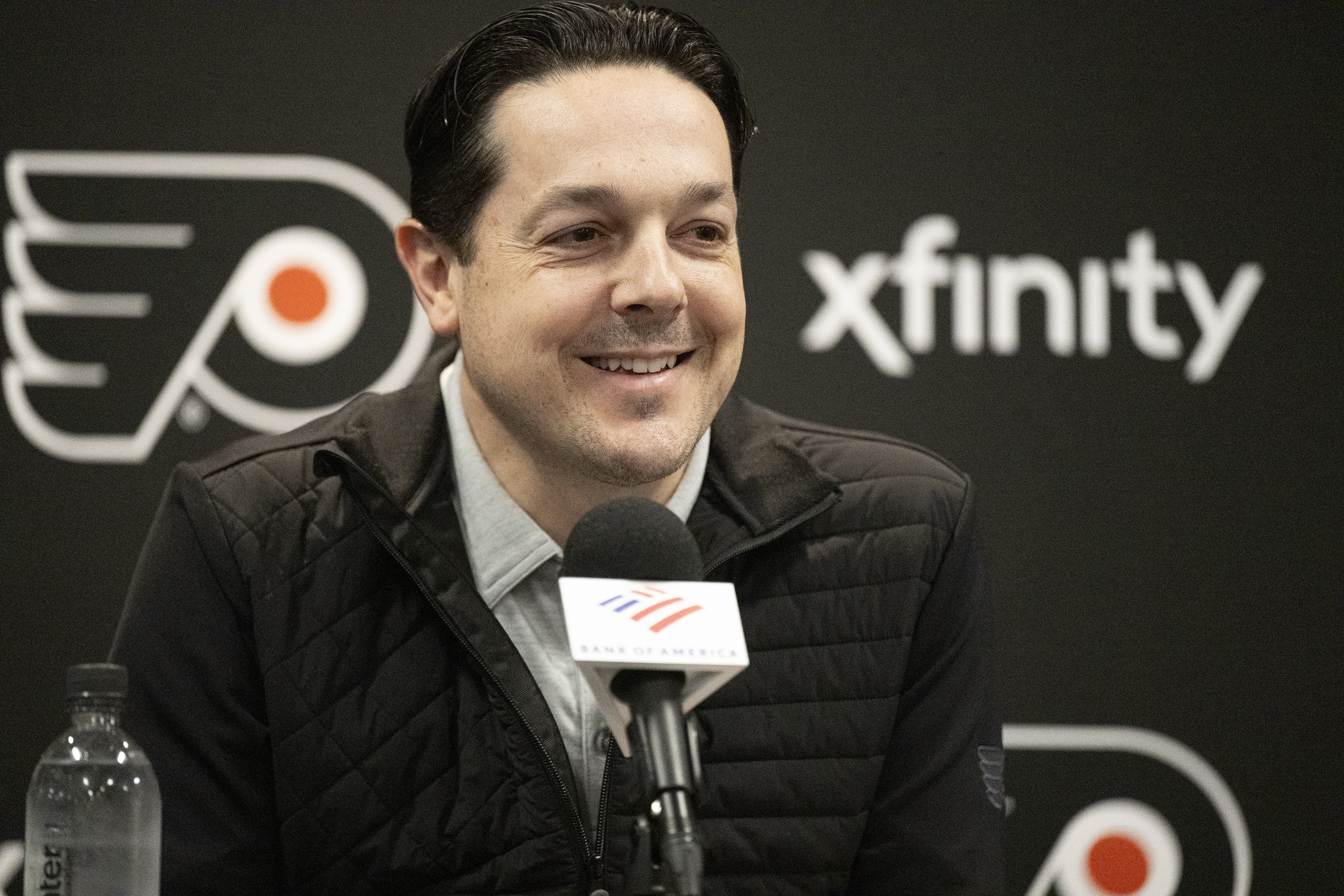
“Dan Vladař wanted to be a Flyer,” general manager Danny Brière said on July 1. “He was adamant … when you have your MVP from the previous year who says,’ I want to be here, this is my team, I want to lead this team,’ it made it really easy for us to [sign him] — especially at the number that we got [him at].”
The force (environment) is strong in Philly
As good as Vladař was, and anyone who watched him last season will vouch that he was excellent, he was also helped by the way the Flyers played.
The Flyers were one of the league’s best shot suppression teams, surrendering just 25.5 per game, the fourth-best mark in the NHL. That correlated to high-danger shots as well, as the Flyers allowed the fourth-fewest high-danger chances at five-on-five and had the fourth-fewest expected goals allowed mark, according to Natural Stat Trick.
Flyers general manager Danny Brière is confident Dan Vladař can live up to his new contract extension.Jose F. Moreno / Staff Photographer
This was no fluke either, as Tocchet is a defense-first coach who has a track record of keeping opposing teams’ shots to the outside and insulating his goaltenders. Thatcher Demko came second in Vezina voting during Tocchet’s time in Vancouver, while the Arizona Coyotes ranked in the top five in team save percentage in two of Tocchet’s four years in the desert.
The Flyers upgrading the backup position with a starting-caliber goaltender in Joseph Woll should also only help Vladař. Last season, the gap in quality between Vladař and Ersson was so vast that the Flyers were forced to overplay Vladař, especially as they pushed for the playoffs late in the year. Woll, 28, comes with durability concerns, but if he’s healthy, he’s a .906 goalie for his career and someone who should allow the Flyers to divide the 84 games up more evenly and keep Vladař fresh.
While many are harping that Vladař is over the hill, he only turned 29 in August and should still have a lot of good hockey in front of him.
Being 29 as a goalie is not nearly the same as being 29 as a skater, as many goalies’ primes run into their early-to-mid-30s. In fact, five of the last six Vezina winners have been 29 or older, while each of the top four goalies in save percentage last season was at least 29.
Like with a starting pitcher, Vladař should also age more gracefully than most given he’s been relatively healthy throughout his career and has an extremely low number of games under his belt for someone his age. Theoretically, the lower number of miles on Vladař’s speedometer should mean his body is fresher and less taxed than the typical 29-year-old netminder.
For context, Vladař has started 156 games (including playoffs) entering his age-29 season. That number pales in comparison to contemporaries like Andrei Vasilevskiy (535), Connor Hellebuyck (407), Igor Shesterkin (252), and Ilya Sorokin (202) at that age — the latter two also had 117 and 244 Kontinental Hockey League games played, respectively, before coming to North America. How little has Vladař played comparatively? Jake Oettinger, who is entering his 28-year-old season, has already started 365 games, and Jeremy Swayman (27) has 261 under his belt.
Flyers goaltender Dan Vladař established himself as a leader on and off the ice in his first season in Philadelphia.Yong Kim / Staff Photographer
Those numbers all bode well for a goalie who started 51 games last year in the regular season and all 10 in the playoffs after previously never starting more than 29 in a season. Vladař did so without showing any signs of fatigue or his play dropping off, case in point being his stellar play in Round 2 vs. Carolina.
All these factors make a five-year contract, at a below-market average annual value of $5.5 million per year, a good bet for the goalie-starved Flyers. When his contract kicks in after next season, Vladař will only rank 21st in terms of goaltender AAV. If he continues to play anywhere like he did last year, when he finished sixth in the Vezina and even received MVP votes, for even half this deal, that would represent one heck of a bargain and maybe, just maybe, another parade down Broad Street some day.