Butter chicken has taken an indirect route to South Street’s Pronto Pizza: from its roots in North India to a Pakistani family kitchen in Northeast Philadelphia, then into an Italian American pizza shop and, finally, onto a roll.
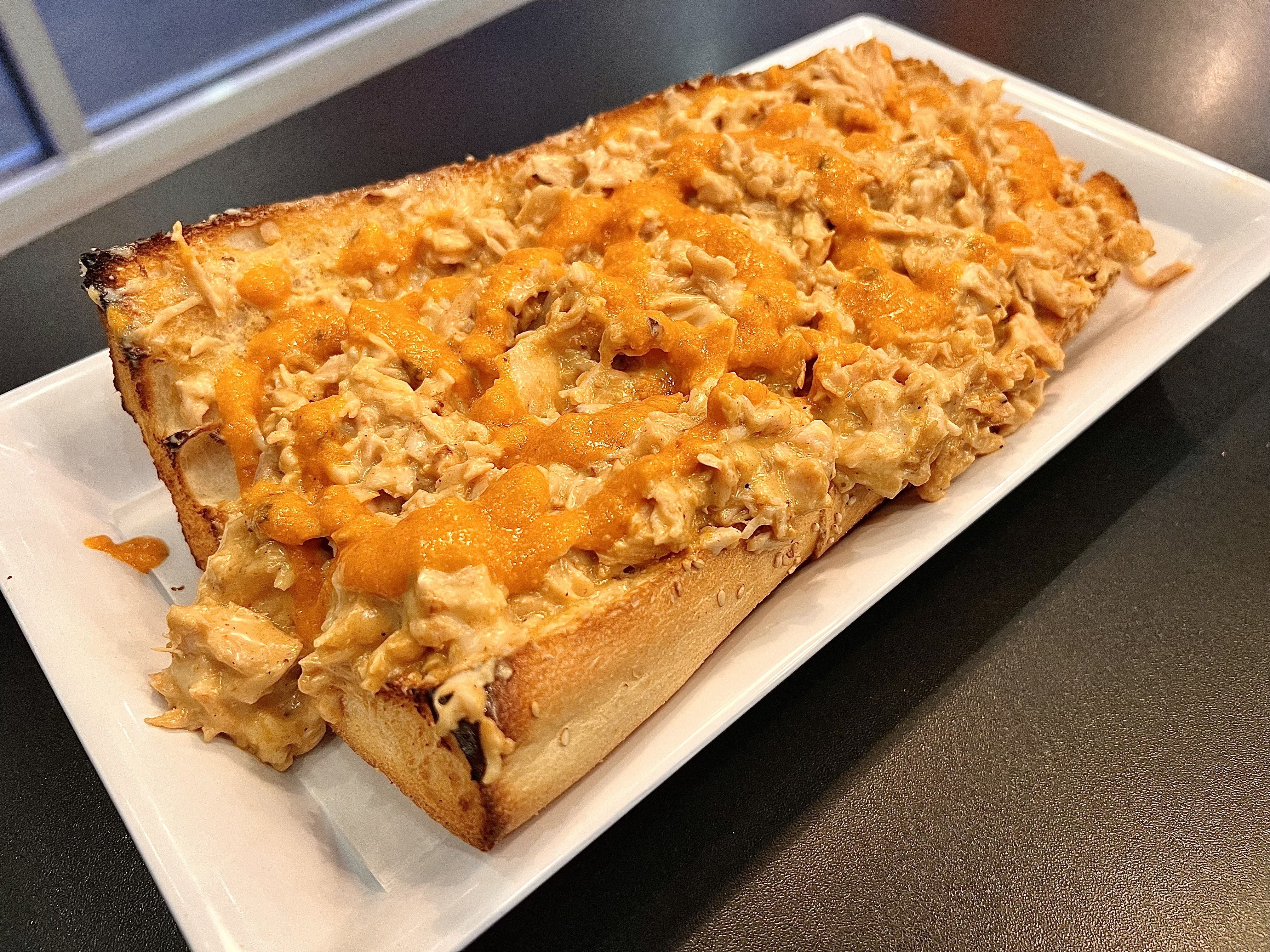
At Pronto, just off Broad Street, it’s a secret menu item. Owner Umair Cheema tops chopped marinated chicken with Cooper Sharp and butter chicken sauce based on his mother Asma’s recipe. The $12 sandwich is Cheema’s addition to a citywide assortment of cheesesteak variations that includes versions made with oxtail and salmon.
Cheema does not skimp. He lightly toasts the Liscio’s roll before adding nearly a pound of a mixture of chicken and melted cheese. Then comes a ladle or two of the rich butter sauce, which comes perilously close to gilding the lily.
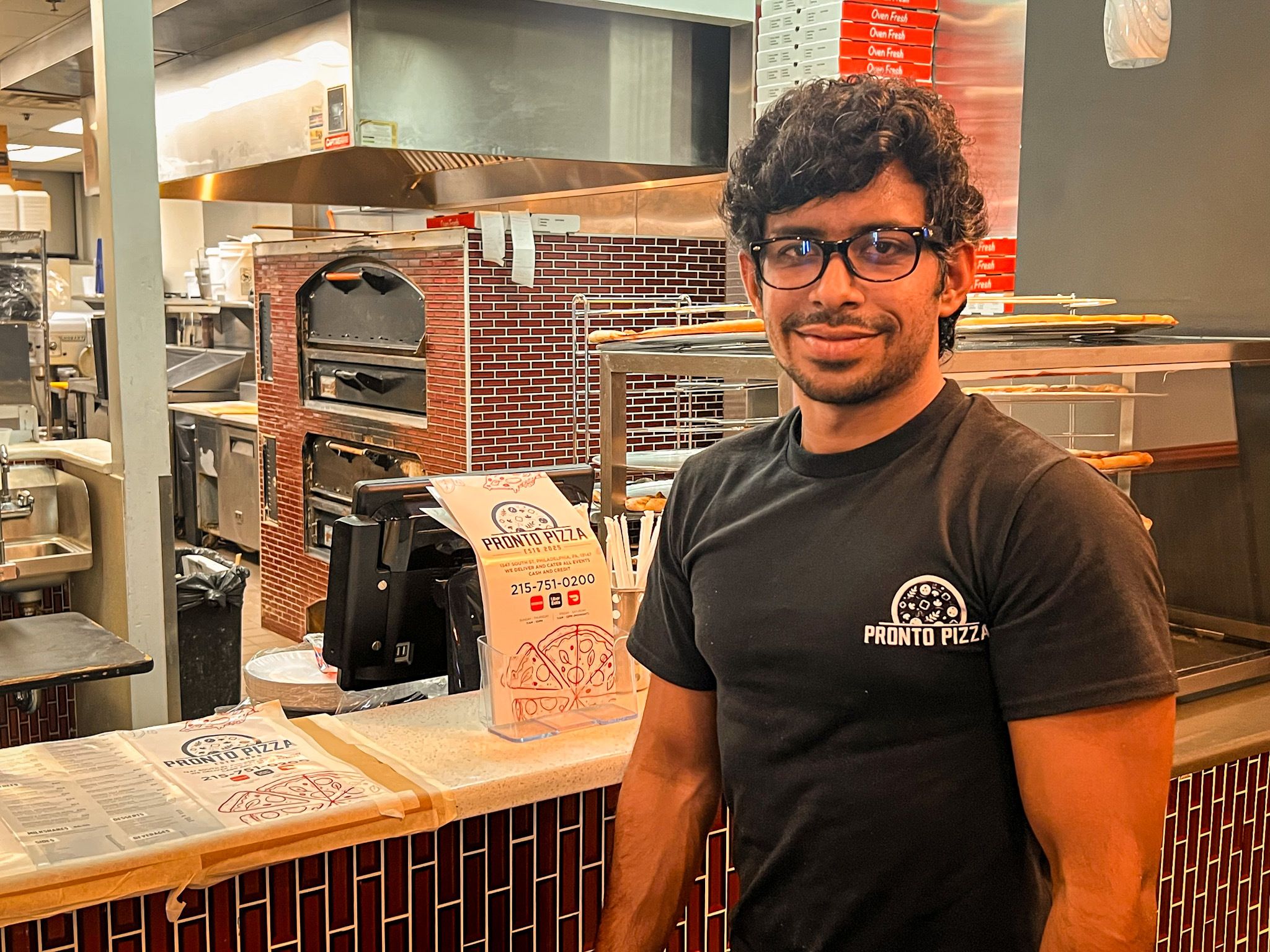
Umair Cheema owns Pronto Pizza, 1347 South St., which previously was LaScala’s Pronto.Michael Klein / Staff
Cheema, 28, had eaten plenty of butter chicken in Pakistan, but he credits his younger brother, Adil, with inspiring Pronto’s version. After the family moved to Northeast Philadelphia in 2019, Adil routinely asked their mother to cook for him.
“One day my mom made butter chicken, and I was like, ‘Mom, this is outstanding. This is the kind of butter chicken I eat at restaurants,’” Cheema said.
A staple entree on Indian restaurant menus in the United States, butter chicken typically features yogurt-marinated chicken in a mild, creamy tomato sauce seasoned with onions, garlic, and spices such as garam masala, turmeric, cumin, and coriander. The dish has proved adaptable to other formats. Chef Reuben Asaram, for example, has incorporated it into his Mexican-Indian “Reubychanga.”
Pronto is also not the area’s only shop making a butter chicken cheesesteak. Double Down Kitchen at Ridge Hall in Ambler serves one alongside versions made with jerk chicken and bulgogi-marinated rib-eye.
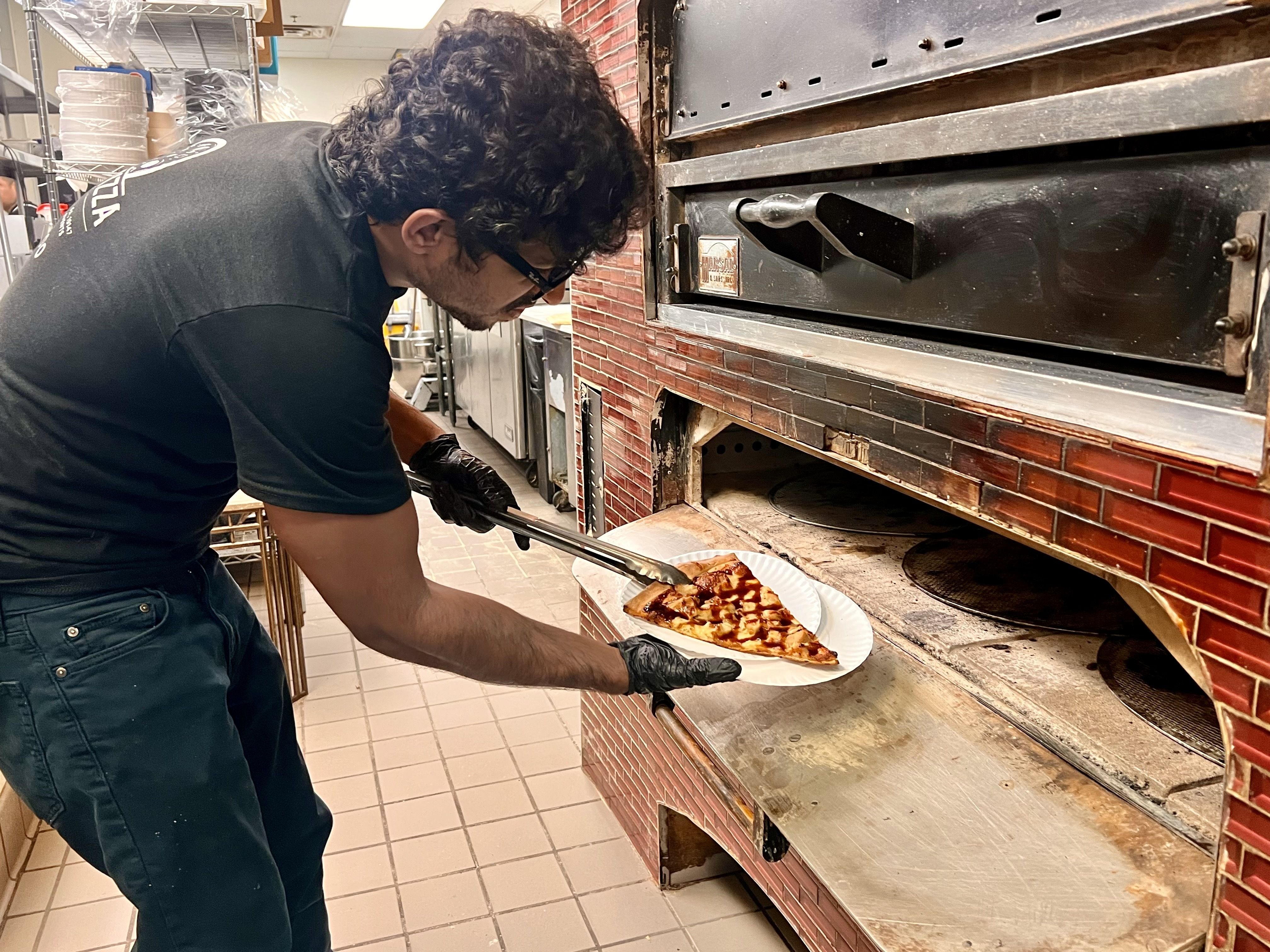
Owner Umair Cheema pulls a slice of pizza from the oven at Pronto Pizza, 1347 South St.Michael Klein / Staff
Cheema’s sandwich is part of his effort to broaden the menu at Pronto, which he bought from restaurateur Rob LaScala. He largely retained LaScala’s offerings of pizza, sandwiches, wings, pasta, meatballs, chicken Parmesan, and grilled salmon platters.
Cheema had not expected to enter the pizza business. After arriving from Pakistan, where his father had worked as a banker, he took a job at Kabobeesh, his aunt’s West Philadelphia restaurant. His father was diagnosed with severe diabetes soon afterward, while his mother found warehouse work.
“I took charge,” Cheema said. “I was like, ‘Let me deal with all of this now. It’s my time to handle this.’”
His opportunity came when an uncle learned that Naz’s Pizza in Chester was for sale.
“He called me and said, ‘Someone is really desperate. They want to sell their pizza shop. I know you have some money saved. If you really want to look into it, I’ll help you out, too.’”
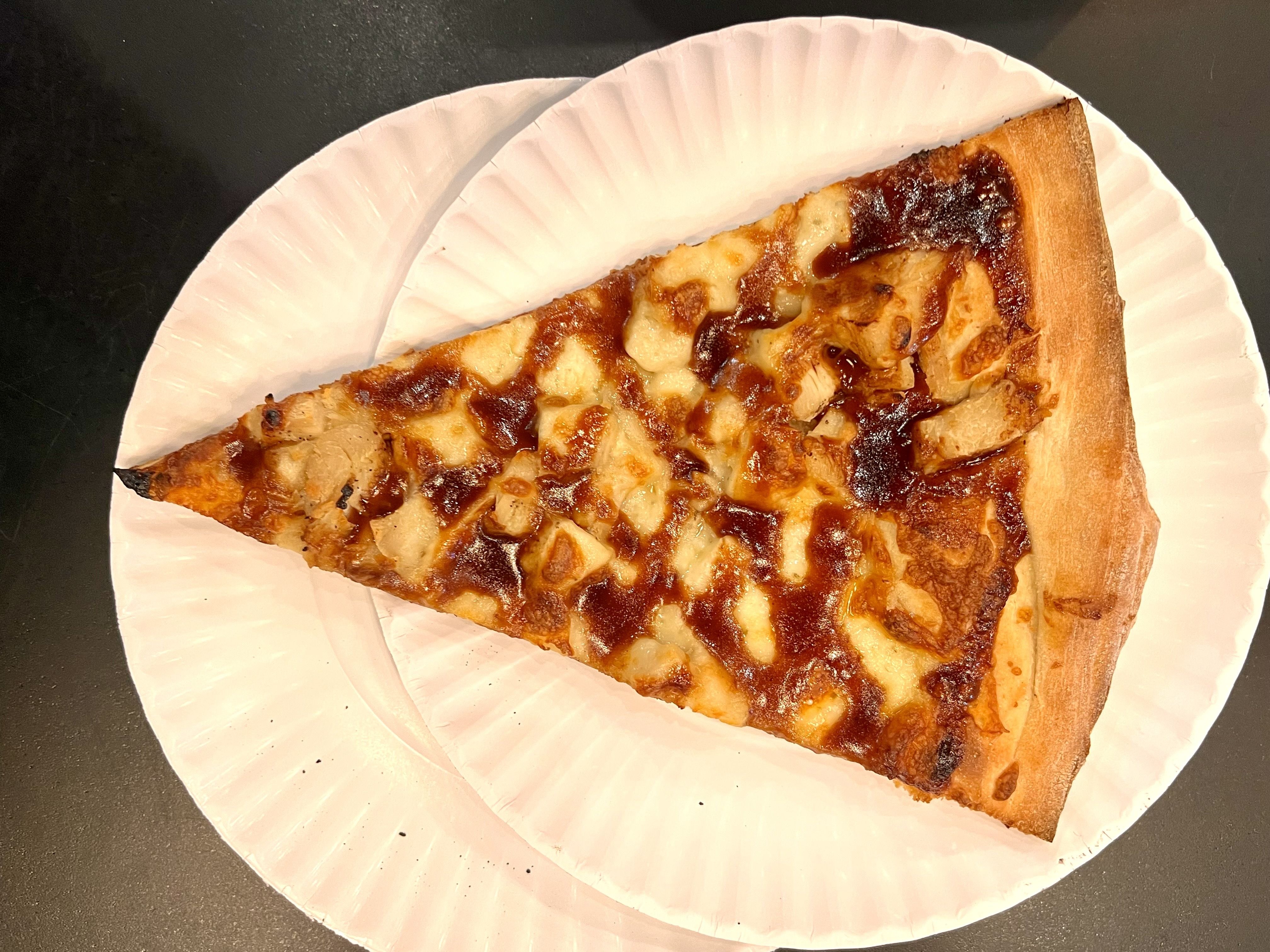
Barbecue chicken pizza slice at Pronto Pizza, 1347 South St.Michael Klein / Staff
Cheema drove to Chester the next day and arrived around 3 p.m., hardly primetime at most pizzerias. “I saw people coming in and the phones ringing,” he said. “That means a business is working. So I told my uncle, ‘Everything seems OK. They are short a couple of things, but we can fix it.’”
Cheema and his uncle bought the shop, and Cheema said sales doubled within six months. They eventually expanded to six shops before dividing the business to pursue separate growth; Cheema sold off the Chester store. Besides the Pronto at 1347 South St., Cheema owns another Pronto in Torresdale, Holme Style Pizza near Holme Circle, and Old English Style Pizza in Olney.
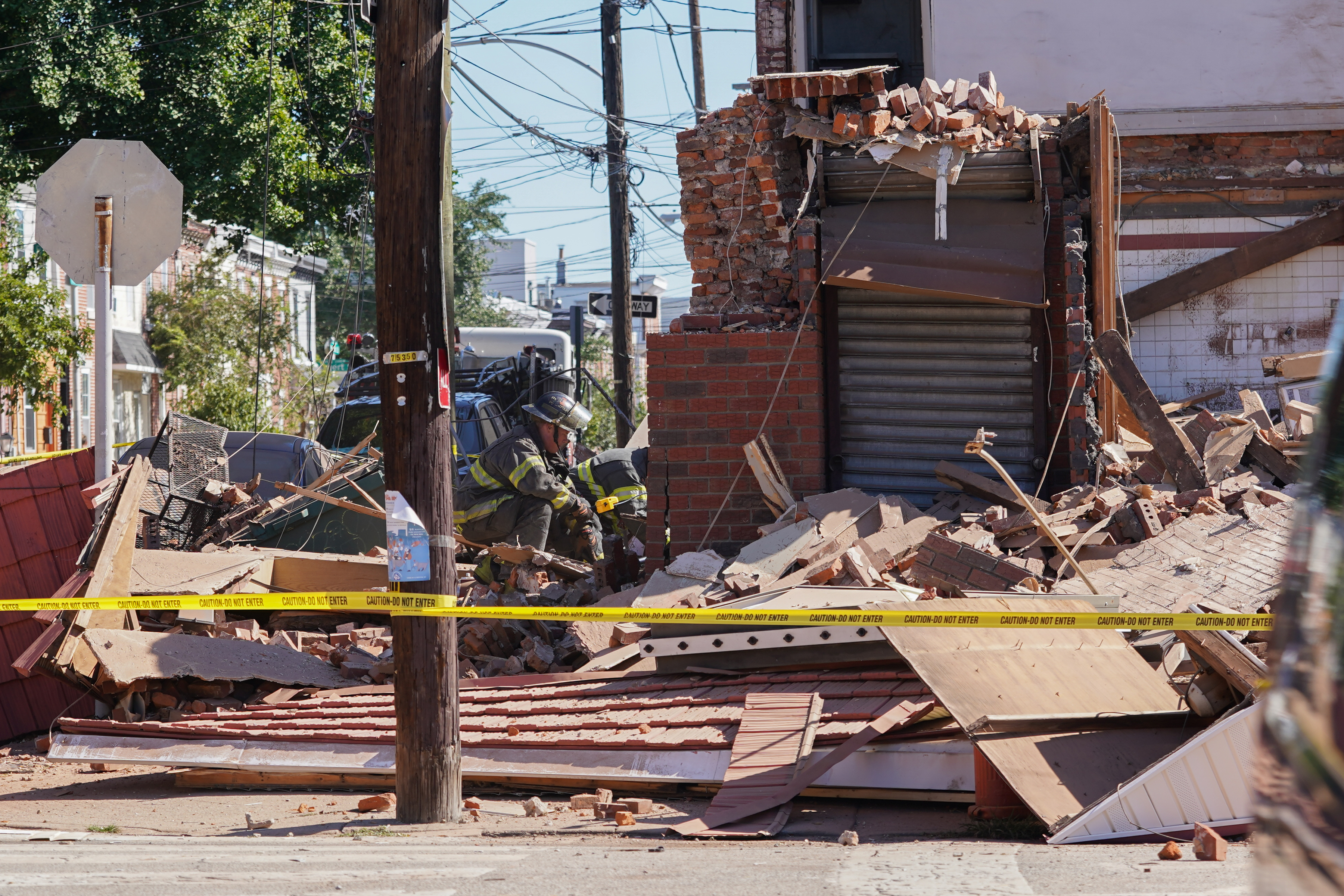
His most serious setback came in September 2022, when the three-story East York Street building housing Key Pizza, his busiest shop, collapsed. “You couldn’t tell there had been a pizza shop there the night before,” Cheema said. Construction work next door was blamed.
The roll-up door and some bricks are all that remained of Key Pizza at 2329 E. York St. after its collapse on Sept. 14, 2022.Jessica Griffin / Staff Photographer
No injuries were reported, but he lost the business, and the resulting insurance litigation was resolved only recently, about 3½ years later, he said.
Cheema does not plan to rebuild Key. He is focused instead on Pronto, its catering operation, and potential additional locations. The butter chicken cheesesteak gives him a way to integrate his family’s cooking into the kind of business in which he found his footing.
“Everybody in Philly knows what a cheesesteak is, and there are so many good places out there already selling cheesesteaks that are famous for them,” he said. “But I wanted to do something different, and something that still relates to Philly.”
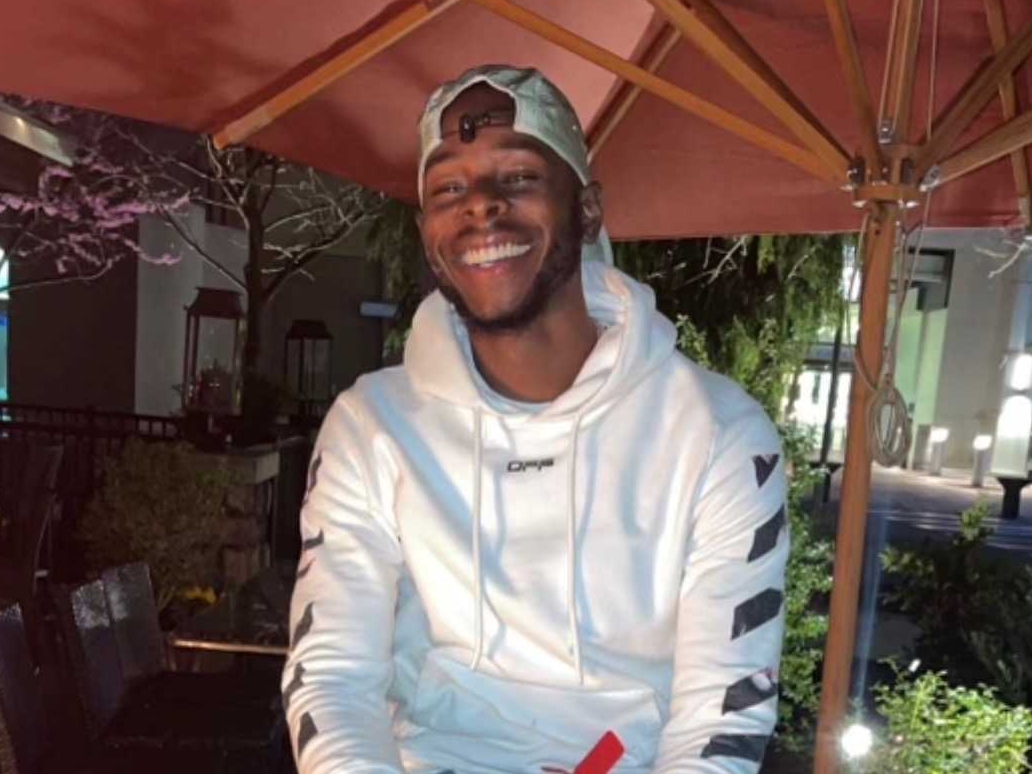
Davina Neuson has been haunted for years by questions about the killing of her son Armand Hayes, who was fatally shot outside a West Philadelphia bar in 2022.
She never understood how the fight that ended her 30-year-old son’s life escalated into murder.
Now, finally, she may get an answer.
Lawrence Cary, 44, was arrested in late August and charged with murder and related crimes in connection with Hayes’ killing after the men got into a bar fight the evening of Aug. 15, 2022, according to court documents. He is set to appear Monday before Judge Gregory O. Yorgey-Girdy for a preliminary hearing.
“I don’t know how to put it into words,” Neuson said. “I’ve waited four years for this moment.”
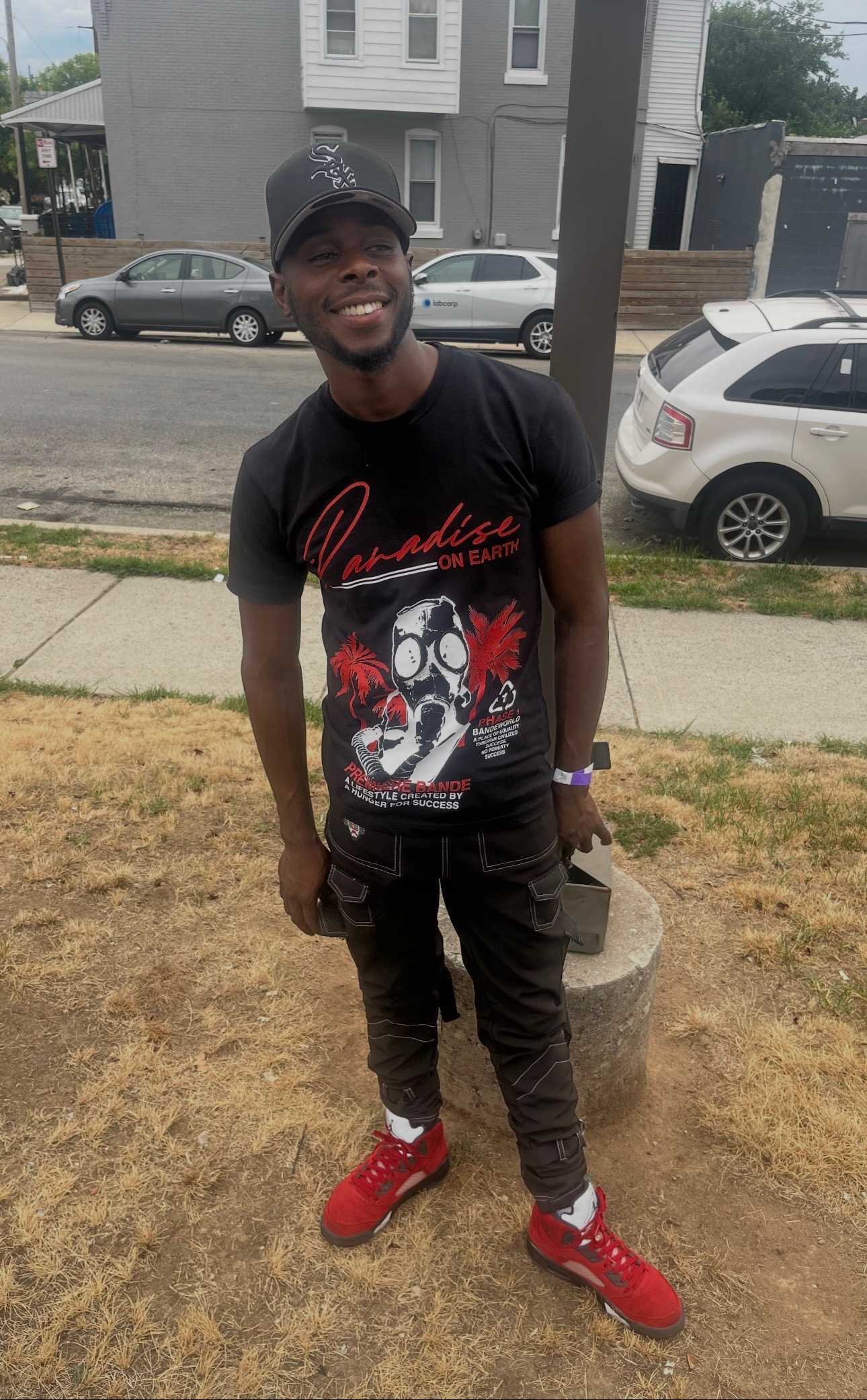
Hayes, known by many as “Ace,” was a father of two daughters and beloved by his family, Neuson said.
He attended Strayer University and Philadelphia Community College and had been working as a compressor operator for Philadelphia Gas Works when he was killed.
“Ace was a genuinely good person, he had a personality that could light up a room,” Neuson said. “A smile of his was unforgettable.”
Neuson said she never has been able to stop wondering about his last moments.
Police investigators said Cary and Hayes got into a physical altercation around 11:45 p.m. in the Asmara Lounge on Haverford Avenue, not far from where Hayes was found laying in the street with multiple gunshot wounds through his body.
He was taken to nearby Lankenau Hospital and pronounced dead shortly after his arrival.
A photo of Armand Hayes.Davina Neuson
Surveillance footage showed Cary leaving the bar after the altercation and driving in the area of 64th and Vine streets, near where Hayes was found wounded, according to the affidavit of probable cause for his arrest.
Investigators later learned that Cary, seated in the driver’s seat of his Chevrolet Trailblazer, fired multiple shots from a handgun out his passenger window when he encountered Hayes, the document says.
Earlier in the evening, Hayes had told a bartender that Cary had bitten him during the scuffle, according to the document.
Investigators soon identified Cary using eyewitnesses, surveillance footage, and receipts from the bar marked with his name.
And in 2023, they learned that a week after the killing, Cary’s Trailblazer had been given a new title and gifted to another man who registered the vehicle in the name of a Bryn Mawr woman. The man asked the woman to do that for insurance purposes, according to the affidavit.
Neuson, Hayes’ mother, said she did not believe that Cary and her son knew each other before the incident.
She still cannot comprehend why her son’s life was taken.
“What hurts the most is knowing his life was taken so suddenly,” she said. “He had so much more life to live, so many more memories to make, so many people who loved him.”
Many of those people will be present in court as Cary’s case works through the system, Neuson added.
Cary is being held at the Curran-Fromhold Correctional Facility and was denied bail.
While Steve Gerben is known for having cocreated one of the year’s most popular Netflix comedy series, his friends and the internet are attempting to crown him with a more ribbing title: The “King of West Chester Golf.”
The Berwyn-born actor, comedian, and costar of Netflix’s Tires says the nickname is just a joke created by his costar and fellow Pennsylvanian Shane Gillis after Gerben “broke 80″ for the first time, scoring 79 on 18 holes of golf last year. It’s something that fewer than 10% of golfers worldwide reportedly do in their lifetime.
“I thought I would just get my friend to start videotaping in case it happened on the 18th hole. And then I did it,” Gerben, 43, remembers with fondness. “So Shane saw that video and was making fun of it on his podcast, calling me the ‘King of West Chester Golf.’”
Gerben’s character on Tires, Will, an anxious go-getter who sees the best in those around him, is not unlike Gerben in real life. Even when receiving praise for his golf prowess or growing television career, Gerben is more comfortable sharing credit with others and not taking the spotlight. And while he downplays his claim to the West Chester golf throne, Gerben does play golf every week in the Philadelphia region — from West Chester courses to the occasional charity event at Ardmore’s Merion Golf Club.
As his profile has grown with the success of Tires, Gerben continues to live in West Chester, cultivating a life around golfing near home and creating a local television production alongside his best friends.
“I can’t see myself leaving the area. I really love it here and it’s home,” he said. “Also, just given how I feel about golf, suburbs make way more sense — it’s just scratching the right itch for me.”
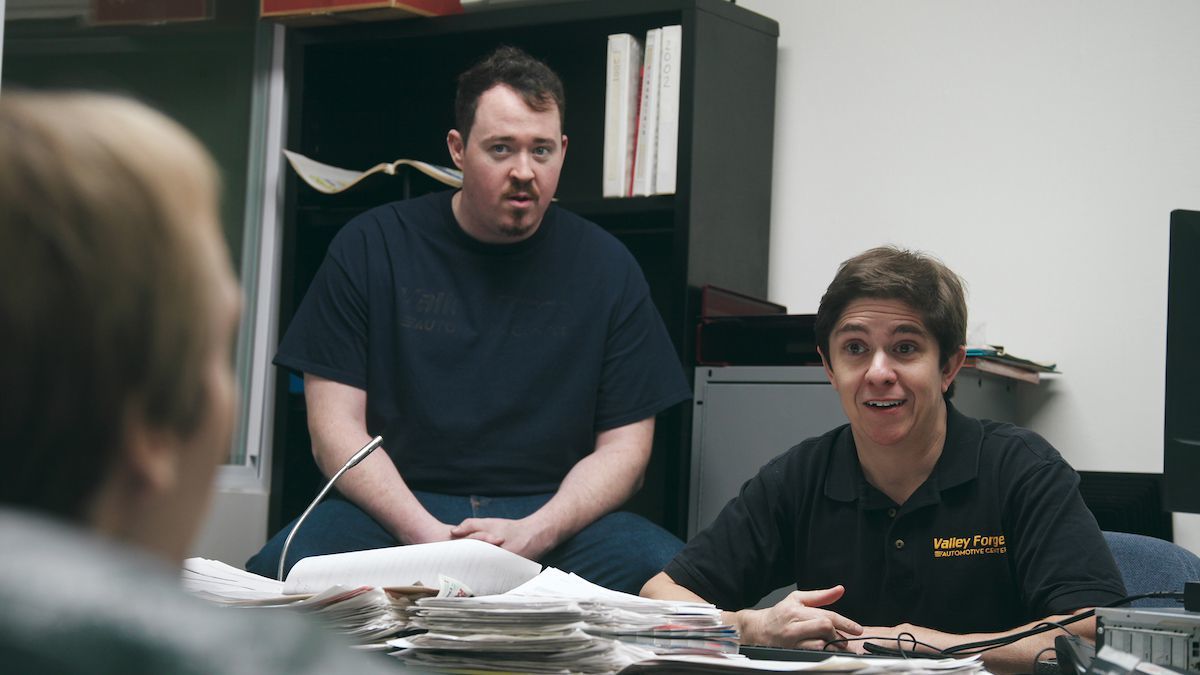
It also helps that the hit show Gerben cocreated with Mechanicsburg-born Gillis and Philadelphia’s John McKeever is filmed in West Chester off East Gay Street, inside an addition to the real-life tire shop of Gerben’s father.
Tires, which had its season three premiere Aug. 13, follows two cousins, Will (Gerben) and Shane (Gillis) as they run the fictional Valley Forge Automotive Center, named after the previous real-life automotive business of Gerben’s father, which was sold in 2011.
“I remember after season one, my dad was on the boardwalk and he saw a Valley Forge Auto shirt in one of the stores, and he was just like, ‘This is insane,’ because it’s this company that he had for 20 years, and then gone, and now we brought it back in a way,” Gerben said.
With Gerben and Gillis on screen, and McKeever as the magic behind the camera, the Tires crew navigates the world of a Pennsylvania small business, rivalries with a national tire chain, and coming to terms with life and romance in your late 30s and 40s.
Tires was recently renewed for a fourth season. That renewal, along with the suburban life he’s created with his girlfriend and cat, has Gerben doubling down on the Philly region. One factor that now rules his life is golf, and how to keep enjoying the sport that eases his mind and boosts his confidence.
“Playing golf is a flow state for me. I get out of a perfect golf swing what I’m sure people that meditate get out of meditation or when people feel a piece of art really speaks to them,” Gerben said.
What started as something to do as a senior at Conestoga High School, joining the Valley Forge Golf Club for $8 after school, has grown into a passion that has seen him playing alongside Eagles players like Jason Kelce and appearing in vlog-style golfing videos with comedian Andrew Santino.
Golf feels like meeting up with an old flame for Gerben, who essentially gave up on the pastime as he attempted to make it in the East Coast stand-up comedy circuit in the 2010s. That’s where he met Gillis and McKeever, doing open mics at the now-closed Raven Lounge and Helium Comedy Club.
While Gillis would continue to rise in stand-up comedy, Gerben said he struggled to find footing. Yet, constants in his life were Gillis and McKeever, who reportedly were known to not take on certain projects unless Gerben could be involved.
But one thing that always sat in Gerben’s back pocket was a script for a show based on his experience working at his father’s Valley Forge tire shop that he initially wrote nearly 15 years before Tires would premiere on Netflix in 2024. Two years later, Tires’ third season debuted in the No. 9 spot on Netflix with 2.4 million views in its opening weekend.
The success doesn’t get to Gerben’s head, as he’s focused on enjoying life in the burbs and golfing as much as possible, he said. With golf swinging back into his life, the sport brings a chance of pace in a busy work schedule and/ allows Gerben, who has had arthritis since he was 2, to stay active.
“I feel so unbelievably healthy because I think it’s about like a five- or six-mile walk each golf session, and you’re not even paying attention to that, given you’re doing this thing that you just absolutely love doing, and is a little bit easier on the joints,” Gerben said.
Gerben also sees golf as a way to meet friends.
“Golf is just a weird addiction that some people have that cuts across generational barriers because you spend so much time with people on the course who have the same passion as you,” he said.
In the meantime, Gerben will continue flirting with the idea of starting his own golfing YouTube career, like “Bryan Bros Golf.” But until Tires is wrapped, Gerben said there would be no official online golf career on the horizon.
Besides, if Gillis finds Gerben’s golf videos, Gerben will never hear the end of it from his best friend, he said.
Philadelphians reacted with outrage when Drexel University and the Academy of Natural Sciences announced the closing of its museum on the Ben Franklin Parkway earlier this month.
But the museum is only a part of what the academy does. And while most Philadelphians think of dinosaurs and dioramas,the main business of the academy — its “beating heart,” as one board member calls it — will continue, even if it has often escaped the notice of the general public.
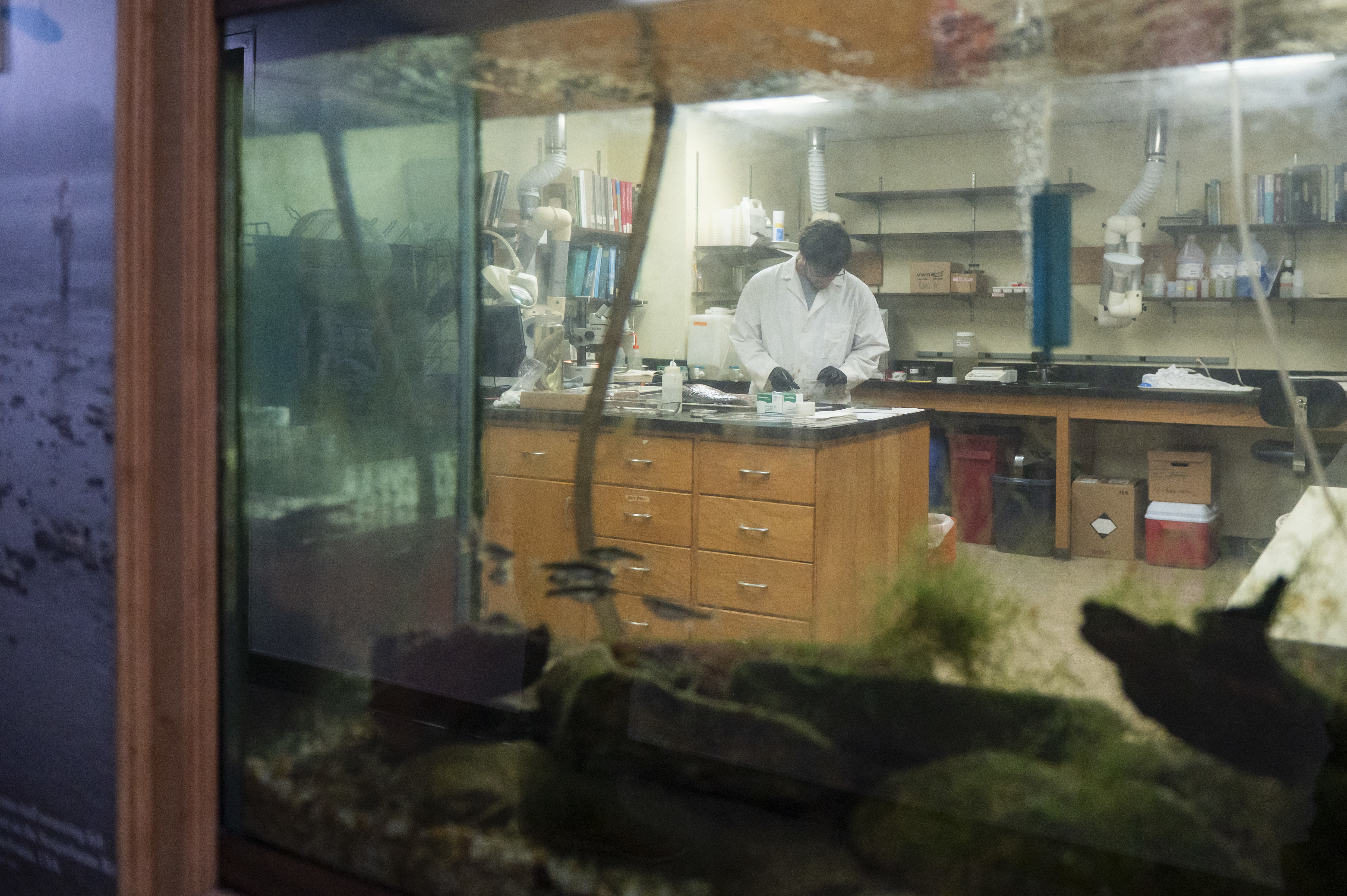
Housed backstage beyond the museum walls is one of the world’s largest repositories of natural specimens: bird carcasses, fish, mollusks, minerals, and bones of various kinds — millions of them amassed over more than two centuries.
And now, amid reports that the academy’s building may be sold and the collection moved, all eyes are on the fate of this trove.
“It’s not just the scope of the collection that’s so important — 19 million specimens representing every aspect of the natural world,” says Robert McCracken Peck, curator of art and artifacts and senior fellow emeritus of the Academy of Natural Sciences of Drexel University. “The collections are not only important because of their associations with historical figures like Lewis and Clark and Thomas Jefferson.
“But these collections were made at specific times in history. We can never go back to collect more of these voucher specimens. They tell us how our world is changing.
“It is by definition irreplaceable.”
Microalgae too numerous to count
Among its peers, the academy’s group of species collections is one of the most significant in the world, and is perhaps unrivaled in certain areas of concentration and historical importance.
More than 220 plant specimens collected by Lewis and Clark on their landmark 1804-06 expedition between the Mississippi River and the Pacific Ocean are housed at the academy. Among the institution’s corresponding members over the years were Thomas Jefferson, John James Audubon, and Charles Darwin. The American Medical Association was founded here in 1847.
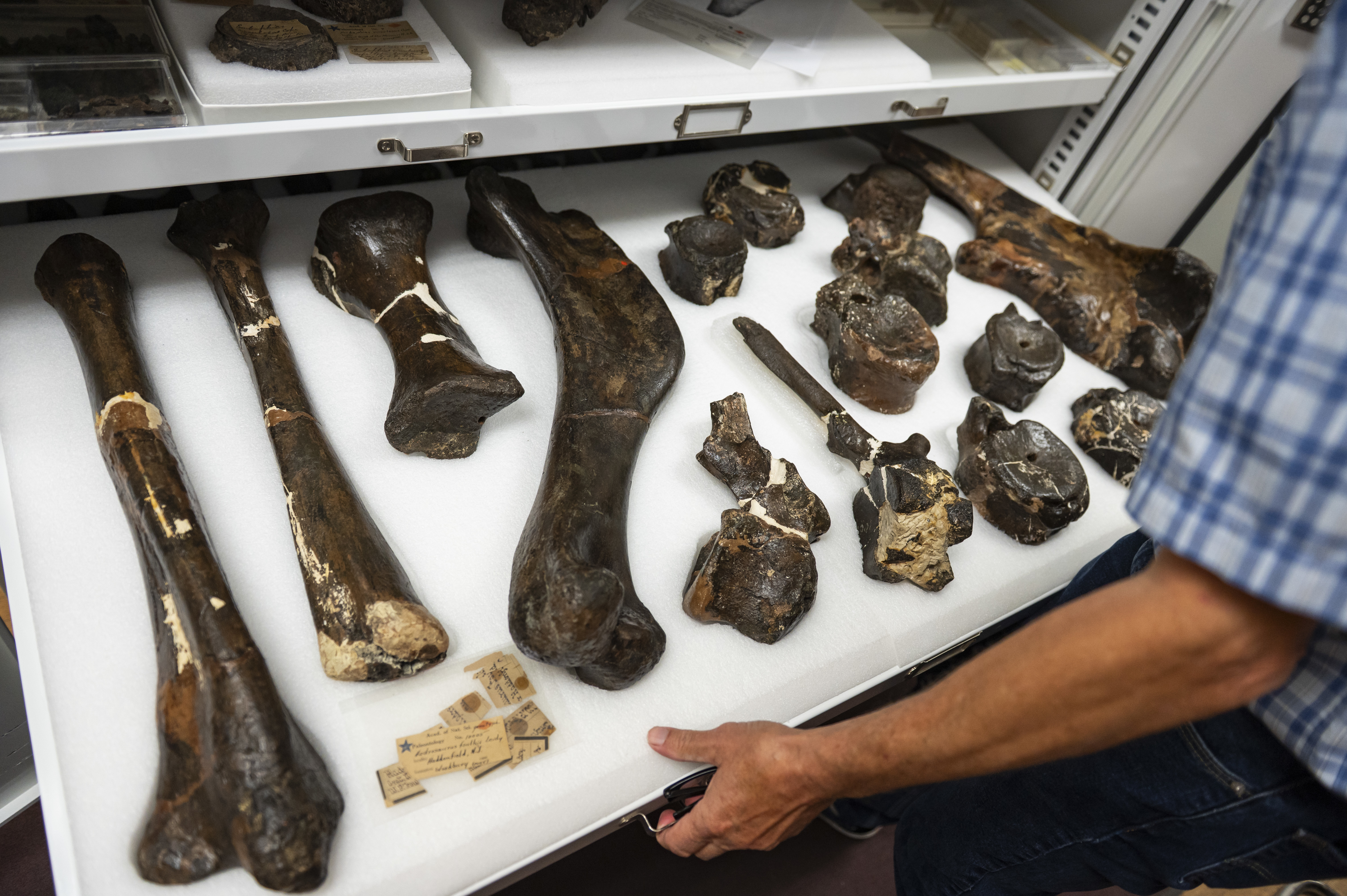
Ned Gilmore, collection manager for vertebrate paleontology, pulls out a drawer filled with bones from the Academy of Natural Sciences’ “Hadrosaurus foulkii.”Allie Ippolito / For The Inquirer
The plants and fungi collection holds 1.4 million specimens of algae, lichens, fungi, and slime molds and includes some of the oldest and most important plant collections in the Americas. The invertebrate paleontology collection is the oldest such collection in the United States.
The number of diatoms in that collection is unknown, says Laura Aycock, manager of the academy’s hoard of the single-celled microalgae that are neither animals nor plants, though the academy has around 300,000 slides, with some slides containing upward of a hundred thousand diatoms.
“I’m not going to attempt to calculate that,” Aycock said.
Laura Aycock, collection manager of diatoms at the Academy of Natural Sciences. The diatoms serve as a time capsule.Allie Ippolito / For The Inquirer
The diatoms captured at the academy — which go back to the 19th century and come from around the world — serve as a time capsule.
“You can actually look at water quality and monitor how it’s changing and biodiversity of the diatoms looking at our slides,” says Aycock. “So people will reach out wanting to see, ‘Hey, can I see a snapshot of what this river looked like X many years ago?’”
The academy’s collections are a magnet internationally, says Ted Daeschler, professor emeritus, curator, and chair of vertebrate zoology at the academy.
“It’s a stopping point for people studying a wide variety of different things,” says Daeschler. “Every time I talk to any mollusk person in the world who’s done research, they’re like, ‘Oh yeah, I’ve been to the academy. I’ve done research there.’ Talk to anybody working on crickets and grasshoppers — ‘Oh yeah, I’ve been to the academy.’ People working on Devonian fish, they all came through at one point or another.”
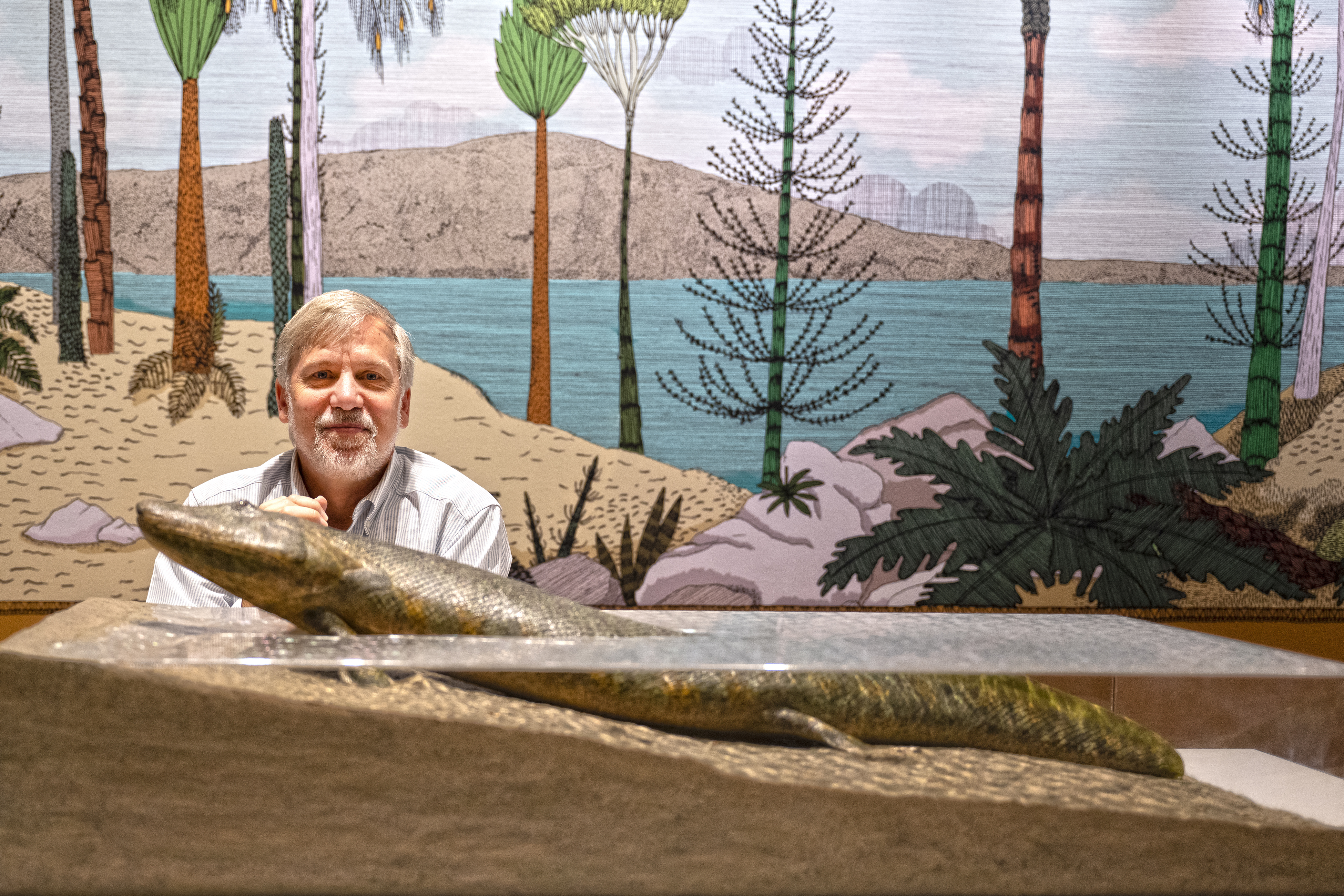
Ted Daeschler in 2023 with a model of “Tiktaalik roseae,” a 375-million-year-old beast whose discovery by Daeschler, Neil H. Shubin, and Farish A. Jenkins Jr. established a new link between fish and land creatures.Jose F. Moreno / Staff Photographer
The academy has seen some novelties over the years: an albacore tuna shipped to the institute from Ernest Hemingway in 1934, fingernail samples from now-retired U.S. Supreme Court Justice Stephen G. Breyer collected in 2010, and two red-eared sliders donated in 1977 by Sylvester Stallone as souvenirs from the original Rocky film.
Hemingway’s tuna remains. But Breyer’s fingernails were tested for stable isotopic composition of carbon and nitrogen to determine the justice’s diet and then discarded, and the turtles Cuff and Link are no longer with us, a spokesperson said.
A key to the ‘next pandemic’?
If some of the collections work and research going on at the academy seems esoteric, there’s no way of knowing what might become urgently relevant at some point.
“We all lived through a pandemic recently — pretty much hell on earth for most of us,” says Jason D. Weckstein, curator of the academy’s ornithology collection and professor at Drexel University College of Arts and Sciences.
“Understanding the ecological interactions that lead to those kinds of events is part of this kind of research. So why are some parasites specific to some hosts, whereas other ones can jump between hosts easily, and there are ecological characteristics that allow that?”
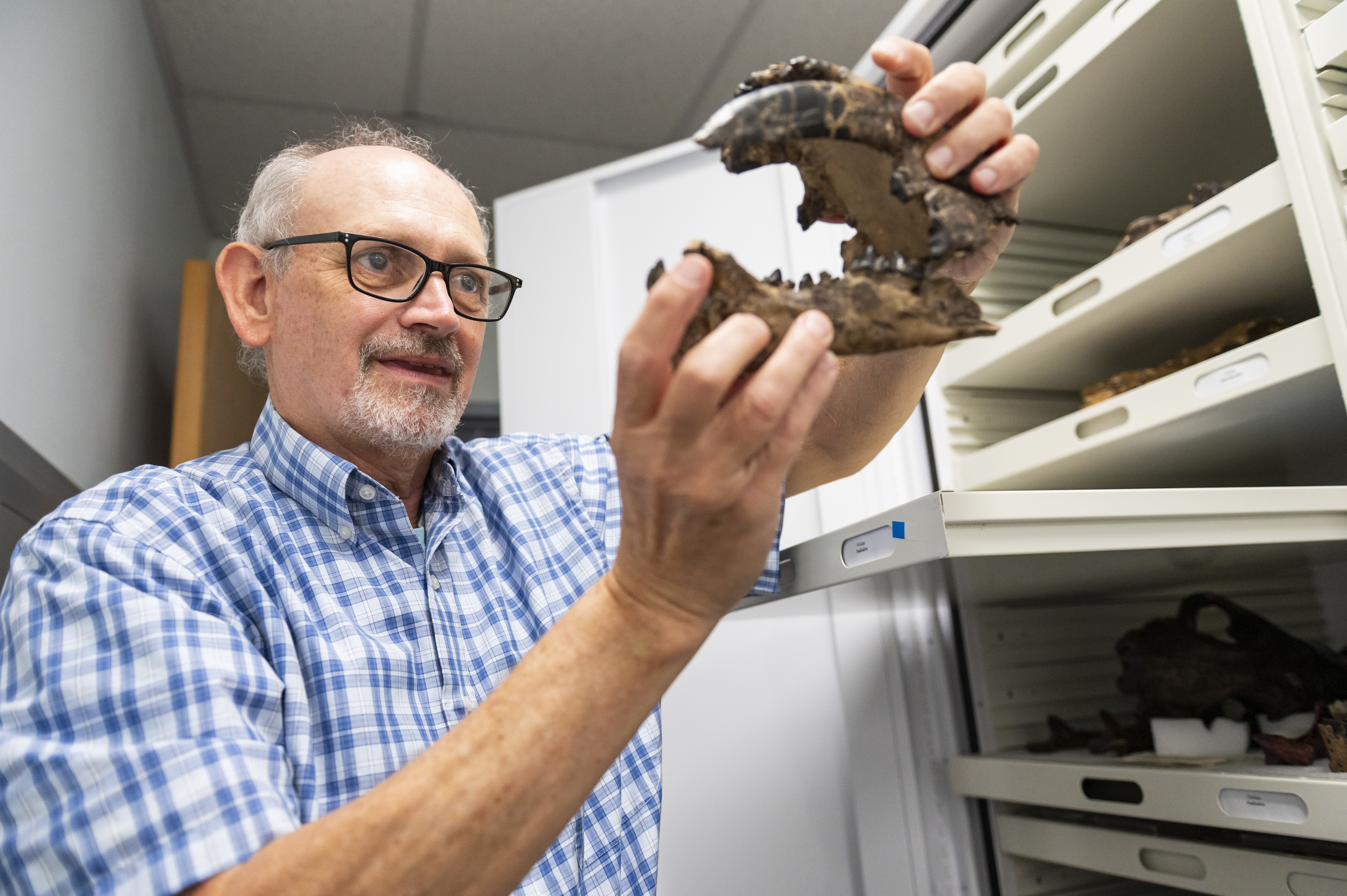
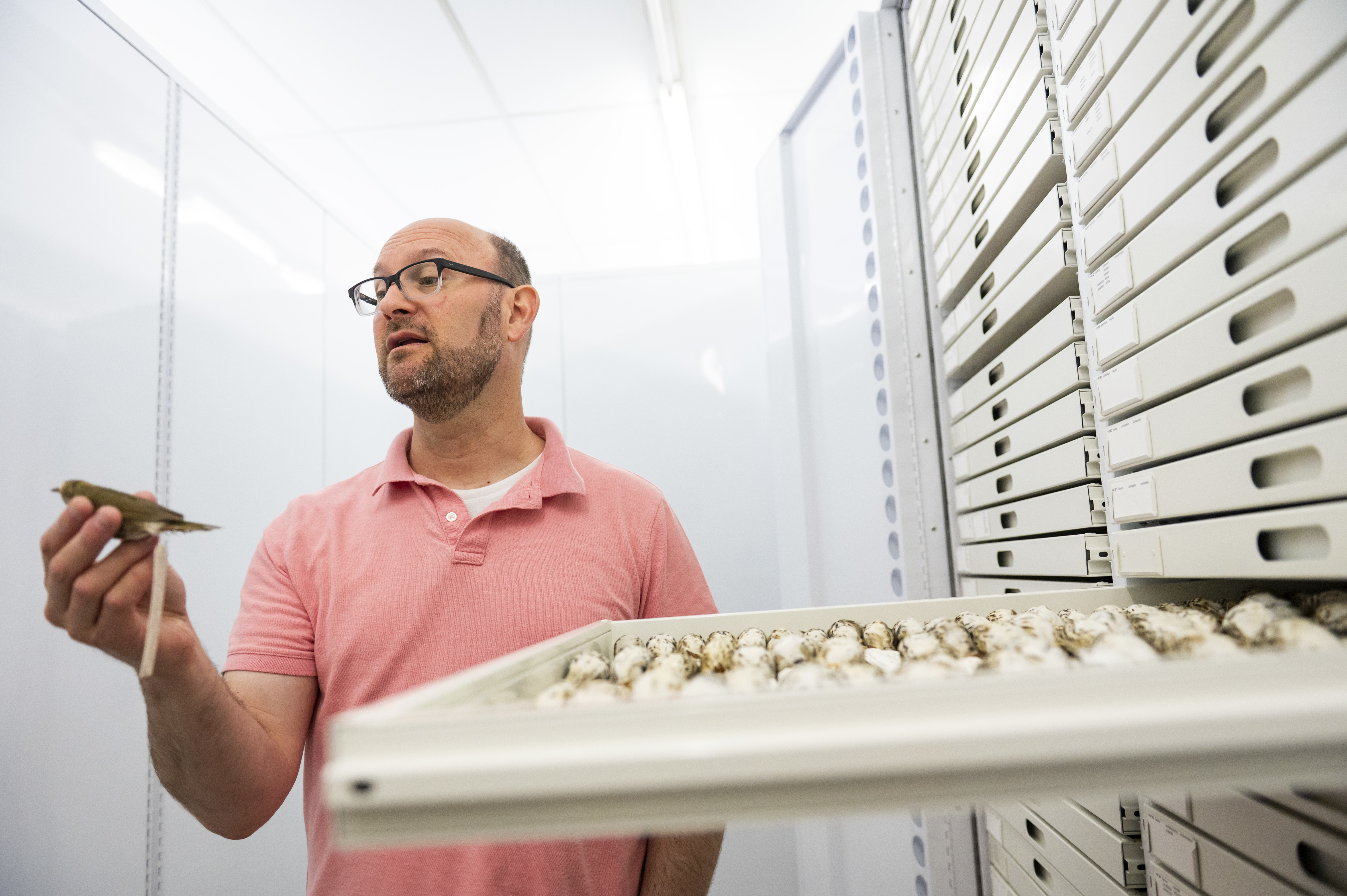
Jason Weckstein, curator of orninthology, holds a warbler at the Academy of Natural Sciences.Allie Ippolito / For The Inquirer
“You just never know when something’s going to happen in the world,” says Weckstein, “and then it turns out there’s something here. We have tissue samples from all over the world. It’s possible we could discover something in those samples that is important for understanding the next pandemic.”
That’s possible, in part, because in the future, specimens might be tested for characteristics whose existence is beyond our current base of knowledge.
Paul Callomon, the academy’s collection manager for malacology and general invertebrates, says that when the first snails entered the academy, “We had no idea what an isotope was. Nobody knew anything about that. But we had an unshakable faith that if we preserve and stabilize these things, as time goes on, they’ll become more important to more people. And so it’s turned out to be. And now of course, with climate change and with this enormous Anthropocene influence on the natural system, the number of ways in which our specimens are going to help tell that story is enormous.”
Each specimen functions as an irreplaceable snapshot in time. Organic materials in their environment are continually breaking down and becoming something else. But when a bird or fish is plucked from its environment, it becomes a permanent record — of itself, but also of the world as it existed at that particular moment.
Biological specimens are often called upon to help solve certain mysteries.
“There are examples in the world generally of new pharmaceutical products being developed from the study of mollusks and their venoms,” says Callomon, “or closer to the academy, we provided shells that were material evidence in the lawsuit against BP for the gulf [Deepwater] Horizon oil spill — historical specimens that proved there was oil in the gulf’s waters before any drilling started, but that it was of a very low level.”
There’s a bigger role now for the academy’s species collection to play, Callomon says.
“The real world is on fire. And the real natural world, the natural ecosystem that sustains all life on Earth, is undergoing enormous changes at the moment. And the only place that you can find material evidence for what it was like before that started, or what it was like at an earlier stage of that process, is natural history collections, and they are mostly housed in museums.”
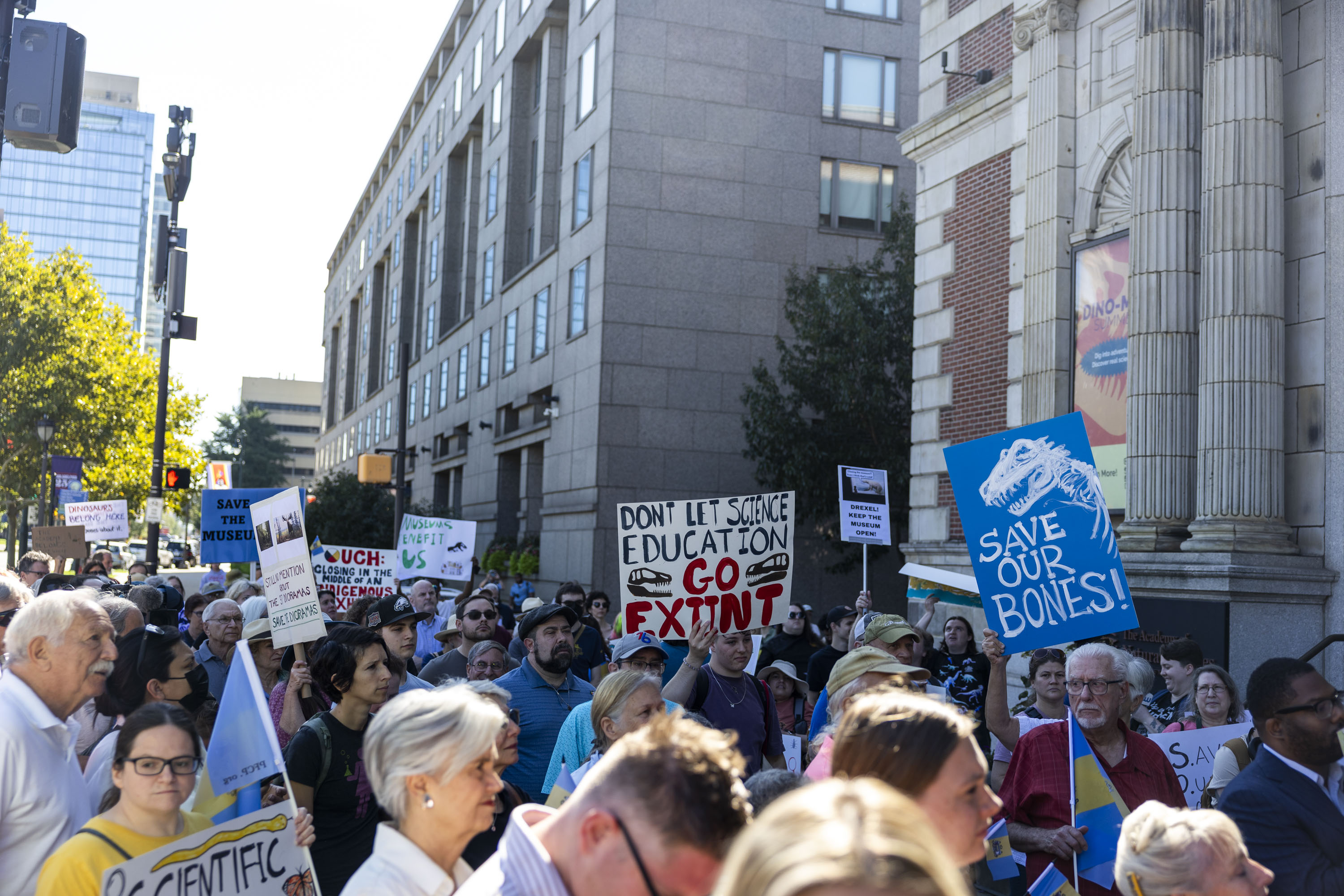
Several hundred Academy of Natural Sciences supporters came out to protest the decision by Drexel University and the Academy to close the Academy’s museum, Sept. 8, 2026.Tyger Williams / Staff Photographer
‘Profound concern’
Curators and scientists say that as the academy has arrived at a vulnerable juncture, its collections and research are more critical than ever given the march of climate change, microplastics contamination, biodiversity loss, and other crises.
The scientific powerhouse’s own future is a question mark at the moment. Drexel is facing deficits and a challenging enrollment environment, and, in a cost-cutting move a decade and a half after a partial merger of Drexel and the academy, the two groups announced last week that the academy museum will end its nearly two-century run at the end of the month.
The aim now is to move the collection and sell the building, according to a source close to the situation who asked not to be identified. This raises questions about the fate of the academy’s historic building and the critical mass of the Parkway’s cultural attractions, as well as concerns for the future of the collection and the academy’s historically significant library and archive, whose holdings span five centuries.
“Profound concern” is how a group whose board includes the largest and most important natural history and science centers in the U.S. has expressed its apprehension over the future of the academy.
“As the oldest natural science research institution and museum in the United States, the academy is a globally important natural history collection and center for biodiversity research,” the Washington, D.C.-based Natural Science Collections Alliance wrote in an April statement after news of a potential schism between Drexel and the academy.
“Any administrative or structural changes at the Academy must prioritize the integrity of these collections. The destabilization of the institutional support or the specialist staff required to maintain these specimens for active use in research would represent an immense loss to the city of Philadelphia, the state of Pennsylvania, and the global scientific community.”
The NSCA’s concerns remain, said president Trina E. Roberts this week, and while “we’re glad to see that the importance of the collection has been acknowledged in public statements,” she said, the closing of the museum was an unwelcome surprise.
“Education, research and collections are all part of a truly functioning natural history museum. It would be wonderful if the academy can find a way to maintain all of those,” she said.
Academy leaders say they will work to find “new and financially sustainable opportunities for the public display of elements” of its collections, but have not specified any details.
In a statement last week, the two institutions affirmed their attention to the trove of specimens, library, and archive.
“The stewardship of the Academy’s collections and their use to advance scientific knowledge will be the focus of our work for the near future,” said a statement from Drexel president Antonio Merlo and academy board chair Suzanne Biemiller.
A Drexel spokesperson this week said there were no immediate plans to move the collection, and, regarding a potential sale of the building, “no decisions have been made regarding its future disposition.”
“The academy’s home will continue to house its collections, library, archives, and laboratories while Drexel and academy leadership consider potential pathways forward,” said Britt Faulstick.
Should relocation become part of a future plan, Faulstick said, “maintaining appropriate access to the collections for research [during a move] would be an important consideration in that process.”
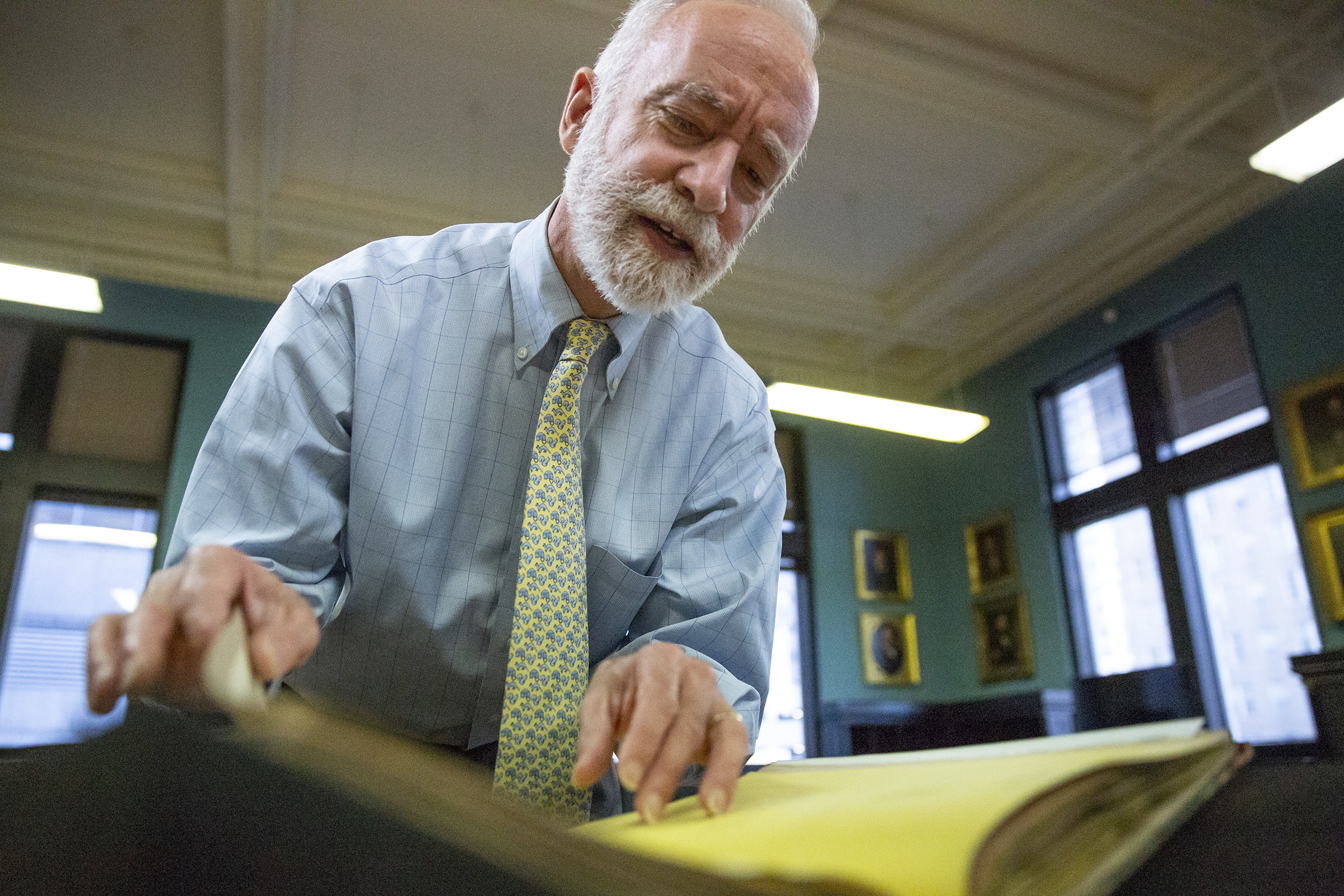
Robert McCracken Peck, curator of art and artifacts and senior fellow emeritus of the Academy of Natural Sciences of Drexel University.HEATHER KHALIFA / Staff Photographer
‘A recipe for disaster’
Moving the collection would be expensive and time-consuming, says Peck, who, with Patricia Tyson Stroud, co-authored AGlorious Enterprise: The Academy of Natural Sciences of Philadelphia and the Making of American Science.
Peck says that in the 1970s, parts of the collection were moved into the former Reliance Standard Life Insurance Co. building on Pennsylvania Avenue now occupied by the Philadelphia Museum of Art, and then, a short time later, were moved back.
“I imagine it would take a couple of years,” he says of a potential move now of 19 million specimens, “because that’s how long it took to move our collections to and from the Art Museum area, and they didn’t even move them all.”
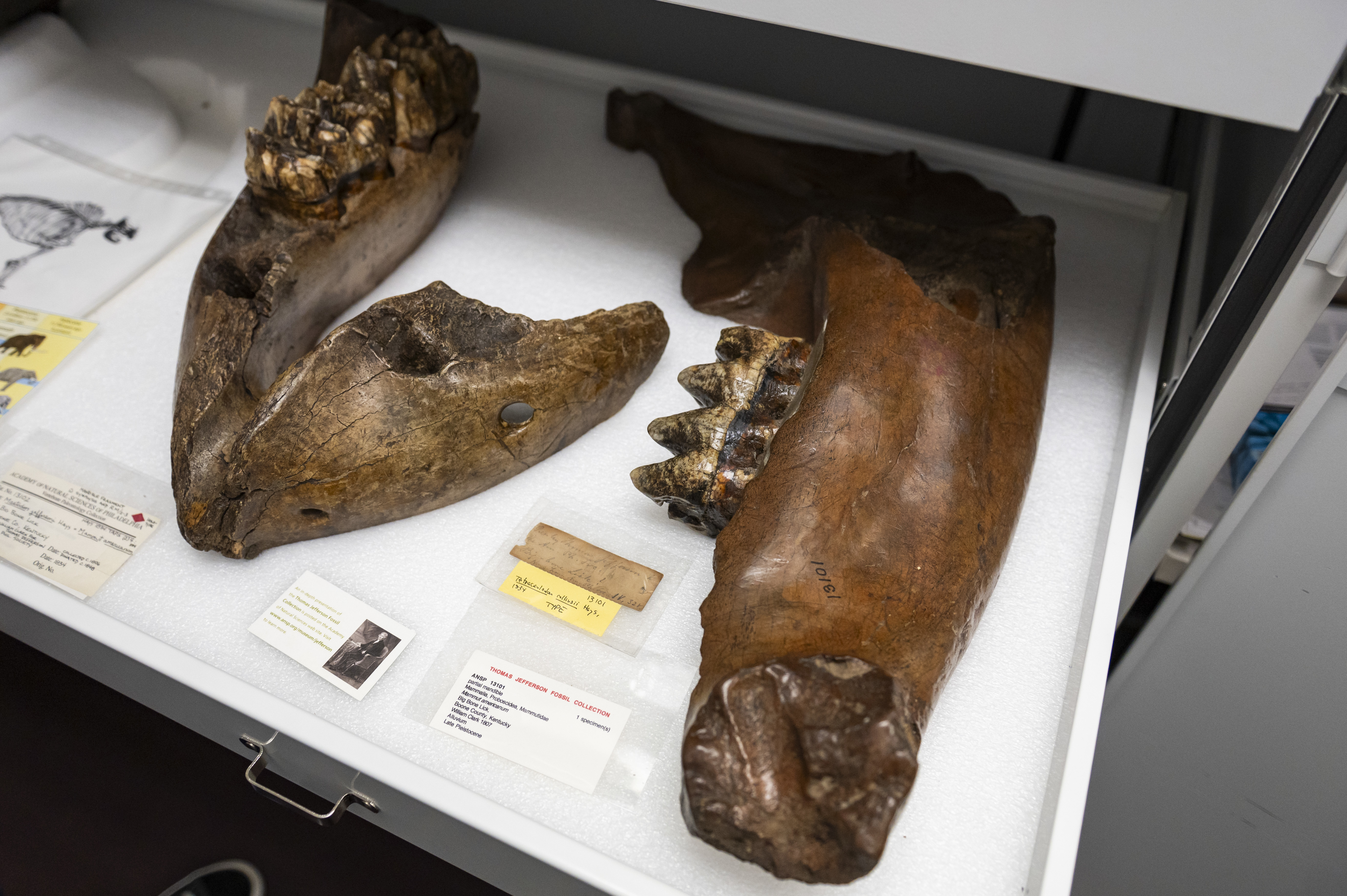
A partial mandible from an American mastodon from the Thomas Jefferson Fossil Collection at the Academy of Natural Sciences.Allie Ippolito / For The Inquirer
“It can be done, and it can be done in a professional and careful way that maintains the integrity of the collection, but you can’t do it in a hurried way,” says the NSCA’s Roberts. “That is a recipe for disaster for a collection of this size and importance. They need to plan for a year before they move any specimens out of the building.”
Collections like these require a specific kind of care, says Roberts, who is also associate vice president for collections at the Natural History Museums of Los Angeles County.
Specimens can degrade over time if not maintained properly, she said.
“We rely on good temperature and humidity control depending on what kind of specimen you have. A dinosaur bone that is basically stone is a lot less sensitive than a plant specimen that is a dried leaf. We’re also concerned about the curatorial and collections expertise that’s represented by the staff.”
Much of the academy’s collection is digitized, and a certain amount of information can be gleaned online, but for some purposes, the actual specimen must be available, which happens either by a visit to Philadelphia or a loan.
“DNA research is just exploding in natural history collections because it turns out that we have this resource we’ve been building for hundreds of years that can still be used for DNA,” says Roberts. “So a plant specimen, an insect specimen, a mammal specimen in a natural history collection from 100 years ago, you can get DNA out of that, and that’s an amazing resource. You absolutely cannot do that from a digitized record.”
It’s possible now, she says, “to look at actual gene expression patterns in different environments — for example, what genes are turned off or turned on in cold vs. hot conditions. That might be something important in an era of climate change if we want to understand how something like plant communities and animal communities are going to respond to that.”
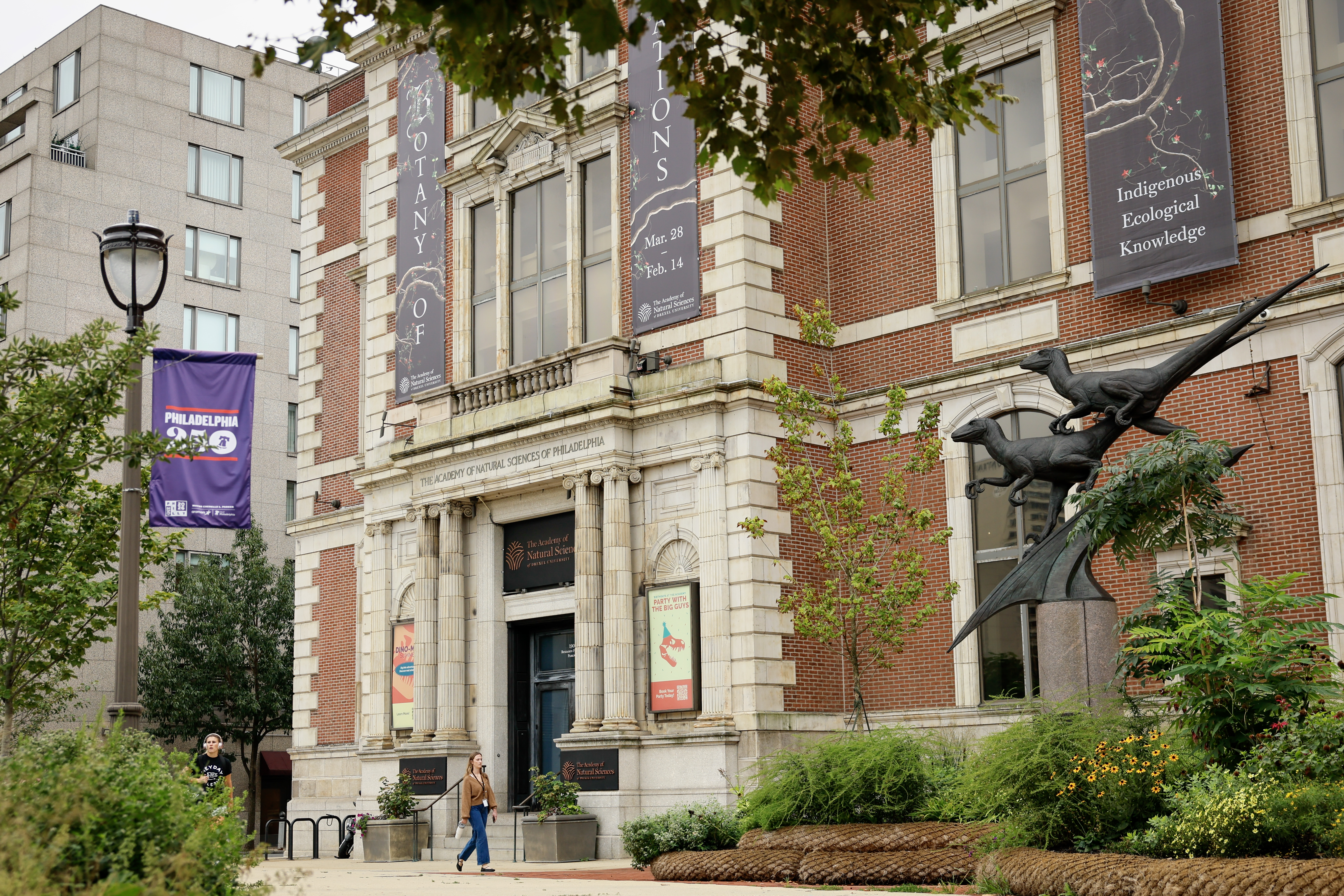
The Academy of Natural Sciences of Drexel University on the Ben Franklin Parkway.Elizabeth Robertson / Staff Photographer
‘It changed their minds completely’
The academy-Drexel partnership, 15 years in, was much in evidence during a several hour visit in early August. In one room at the academy, a group of students was removing organs from birds, and in another, Drexel environmental sciences undergraduate Ean Geller-Nocella was examining a freshwater drum, an invasive species that’s recently turned up in local waters, to see what the fish has been eating.
“I’ve been cutting them open, taking out their stomachs and removing the stomach contents. All that is mussels — freshwater mussels,” he said, referring to a small cluster of crushed up shells.
Another invasive species is being looked at by the academy.
Ean Geller-Nocella, Drexel University co-op student, inspects the contents of the stomach of a freshwater drum in the fisheries department at the Academy of Natural Sciences.Allie Ippolito / For The Inquirer
“Ten years ago in Tinicum, snakeheads weren’t there and we got a picture of what the diet was for the resident fish,” said David Velinsky, senior scientist of the Patrick Center for Environmental Research and professor at Drexel University College of Arts and Sciences. “They’re now there, so we’re doing a study. We already have the samples collected, analyzing on the mass spectrometer how the food web changed, and this gives us an idea of what needs to be protected or not protected.”
Weckstein recently had a Drexel undergraduate student who sequenced the genomes of the parasitic lice living on vultures.
Having students working there “just adds a vibrancy to the place,” says Velinsky.
Says the malacology department’s Callomon:
“I think the role that I’m proudest of our collection’s playing is when Drexel undergrads come here on their co-op and we have successfully diverted careers in medicine, the law, and engineering in favor of working in our part of the world, in our part of science, because of the experience. They came and did a six-month co-op here and it changed their minds completely. It changed their minds because it moved their hearts, and your heart is what drives your mind. But they had no way of previously knowing.”
One persuading factor: at the academy, students have direct, hands-on contact with specimens in the collection.
“Other places use photographs,” says Peck. “Drexel students, thanks to the academy, get to work with real specimens, which dramatically enhances their interest in and understanding of the natural world.”
Just another reason, advocates say, that the academy’s treasures must be kept intact and accessible to all.
“My greatest concern is over keeping the collection together,” says Peck. “It needs to be cared for, for reasons that extend well beyond Philadelphia and the academy. These are collections we hold in trust for the world.”
Staff writer Susan Snyder contributed to this article.
Only 76 songs to encapsulate the history of the boundlessly rich and impossibly varied sound of Philadelphia?
That wasn’t nearly enough.
Earlier this year, in time for the approaching Philly 250 celebration of the nation’s Semiquincentennial, and with the help of my classical music colleague Peter Dobrin, I compiled a list of 76 songs made in the city — or about the city, or by people from the city or region — that are essentially Philadelphian.
I’m not complaining. It was fun and sent me on journeys of discovery to learn stuff I didn’t know about the bottomless depth of Philly soul, the city’s enthralling jazz history, or the range of indie rock that’s become a calling card this century.
But list-making is a difficult, fraught process, and I made lots of choices that I immediately had second thoughts about. Like cutting Grover Washington Jr. to make way for the Trammps, or leaving Sister Sledge or Jazmine Sullivan or personal favorites like Go To Blazes off the list. Or including the Soul Survivors’ “Expressway To Your Heart” but leaving “I-76” by G. Love & Special Sauce parked on the side of the road.
Were those stupid decisions? Possibly. So this list that follows — 25 more essential songs of Philadelphia — is a chance to make room for those shoulda-coulda selections and bring the total number up to a more reasonable 101. Which, quite frankly, will still be an inadequate number for any true Philly music lover.
Some ground rules: Artists who were included in the original 76 were ineligible this time. So while the initial list featured the O’Jays’ “Back Stabbers,” I ruled out another undeniably iconic O’Jays song, “For the Love of Money,” to make way for other artists.
And I didn’t consider holiday songs, which belong in a separate category. So apologies to the Philly Specials’ “Fairytale of Philadelphia” and Alan Mann’s “Christmas on the Block.”
Also, these songs are numbered in reverse, but I thought of them more as a playlist than a worst-to-first ranking. They’re all worthy additions to the original 76.
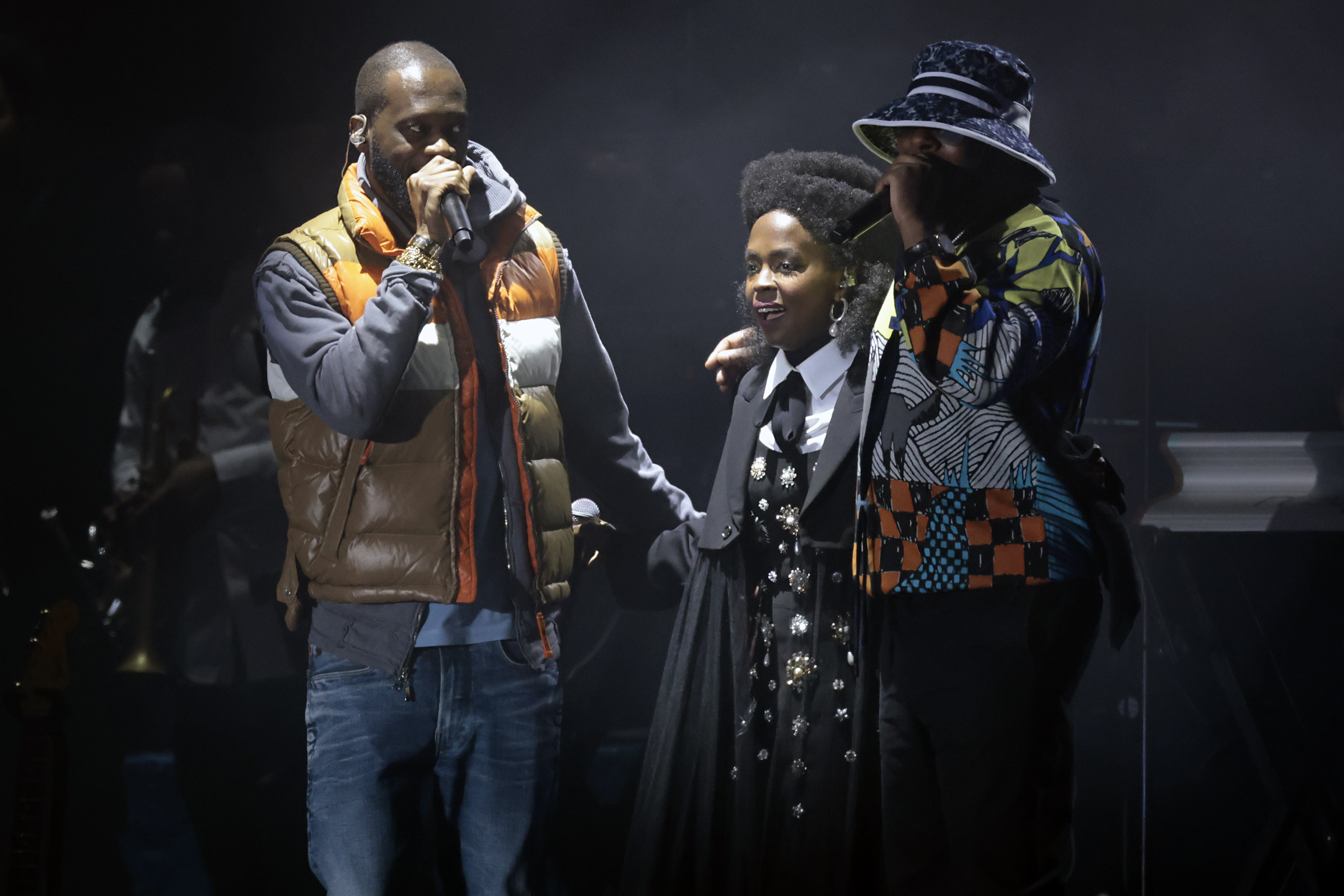
The Fugees reunite as Lauryn Hill (middle) is joined by Pras Michel (left) and Wyclef Jean during the Roots Picnic Philadelphia at the Mann in Fairmount Park on June 3, 2023.Elizabeth Robertson / Staff Photographer
25. The Fugees, “Ready or Not”
The Fugees are not a Philly band — they’re from Haiti and North Jersey. But the hip-hop trio of Lauryn Hill, Wyclef Jean, and Pras Michel recorded for Ruffhouse Records, the Conshohocken label founded by Chris Schwartz and Joe “The Butcher” Nicolo, which also released Hill’s 1998 album The Miseducation of Lauryn Hill, as well as albums by Cypress Hill, Kris Kross, and Ben Arnold. “Ready or Not,” from the Fugees’ 1996 album The Score, represents Ruffhouse because its chorus is based on a Philly soul classic, the Delfonics’ “Ready or Not Here I Come (Can’t Hide From Love),” written by William Hart and Thom Bell.
24. Mark Knopfler, “Sailing To Philadelphia”
“Sailing to Philadelphia” is a song about surveyors. Dire Straits leader Mark Knopfler was making his way through Thomas Pynchon’s 1997 novel Mason & Dixon, about Charles Mason and Jeremiah Dixon, the Englishmen who drew the boundary line that became recognized as the United States’ free states and slave states when he wrote what he once called a “two-minute take on a two-ton book.” (The lovely narrative ballad, which is a duet with James Taylor and the title cut of Knopfler’s 2000 album, is actually five and a half minutes long.)
Indie rock harpist and “Wawa By the Ocean” composer Mary Lattimore. Scott Troyan
23. Mary Lattimore, “Wawa by the Ocean”
Philly’s favorite convenience store and the Jersey Shore, all in one song title? Indie rock harpist Mary Lattimore’s sparkling, transporting instrumental was inspired by a Wawa steps away from the beach on Long Beach Island.
22. The Wonder Years, “Came Out Swinging”
The lead track from the Lansdale-born band the Wonder Years’ 2011 album Suburbia I’ve Given You All and Now I’m Nothing reps Philadelphia’s central role in this century’s pop-punk and emo scene, which includes bands like Modern Baseball, Algernon Cadwallader, and Marietta.
Singer Dan “Soupy” Campbell is frank about struggling with his mental health on the song’s coda, repeated three times: “I came out swinging from a South Philly basement, caked in stale beer and sweat under half-lit fluorescents,” Campbell sings (and shouts). “And I spent the winter writing songs about getting better, well, if I’m being honest, I’m getting there.”
21. Clap Your Hands Say Yeah, “The Skin Of My Yellow Country Teeth”
To be honest, I didn’t like this song by the Philly band led by Alec Ounsworth when it came out in 2005. There’s the unappealing title, and I never understood the Talking Heads comparisons, other than a vocal similarity to David Byrne.
But with its driving, hypnotic rhythm, it’s aged well and is a great example of a Philly band at the center of a moment in music history. It’s a “blog-rock” success story from a time when the internet seemed like a wide-open, not malignant place. Bands like CYHSY could make their music available for free download on MP3 blogs and create a buzz that spread like wildfire, resulting in a career still going strong two decades later. Those were the days.
20. Go To Blazes, “New Morning Sun”
Hard-hitting Philly roots-rockers Go To Blazes made a series of bruising blues- and country-infused albums in the 1990s, each one marked by high-quality songwriting by singer Ted Warren and guitarist Tom Heyman that, in retrospect, was ahead of the Americana boom to come. This swaggering song from 1996’s Eric “Roscoe” Ambel-produced Waiting Around for the Crash faces the day after a restless night: “I can’t sleep, for the things I know I had done.”
19. Phyllis Hyman, “Old Friend”
Written by 2026 Rock & Roll Hall of Fame inductee Linda Creed — who died of cancer months before the song’s 1986 release — “Old Friend” is a melancholy ballad by the statuesque Philly soul singer on her first album for Philadelphia International Records. A modest hit, it became a sentimental fan favorite, particularly after Hyman’s death in 1995 at age 45.
18. Bill Haley & His Comets, “Rock Around The Clock”
With his kiss curl and clean-cut image, Bill Haley presented as more palatable to middle America than subversive 1950s sorts like Elvis Presley, Little Richard, and Chuck Berry. But that doesn’t mean Haley didn’t have a sizable pop-cultural impact. With 1954’s “Rock Around The Clock,” which was written by Max C. Freedman and James E. Myers, the singer and bandleader who transitioned from Western swing to rock and roll and grew up in Boothwyn in Delaware County, scored the first rock-and-roll song to top the pop charts in both the U.S. and the U.K.
The Three Degrees.Courtesy of the artist
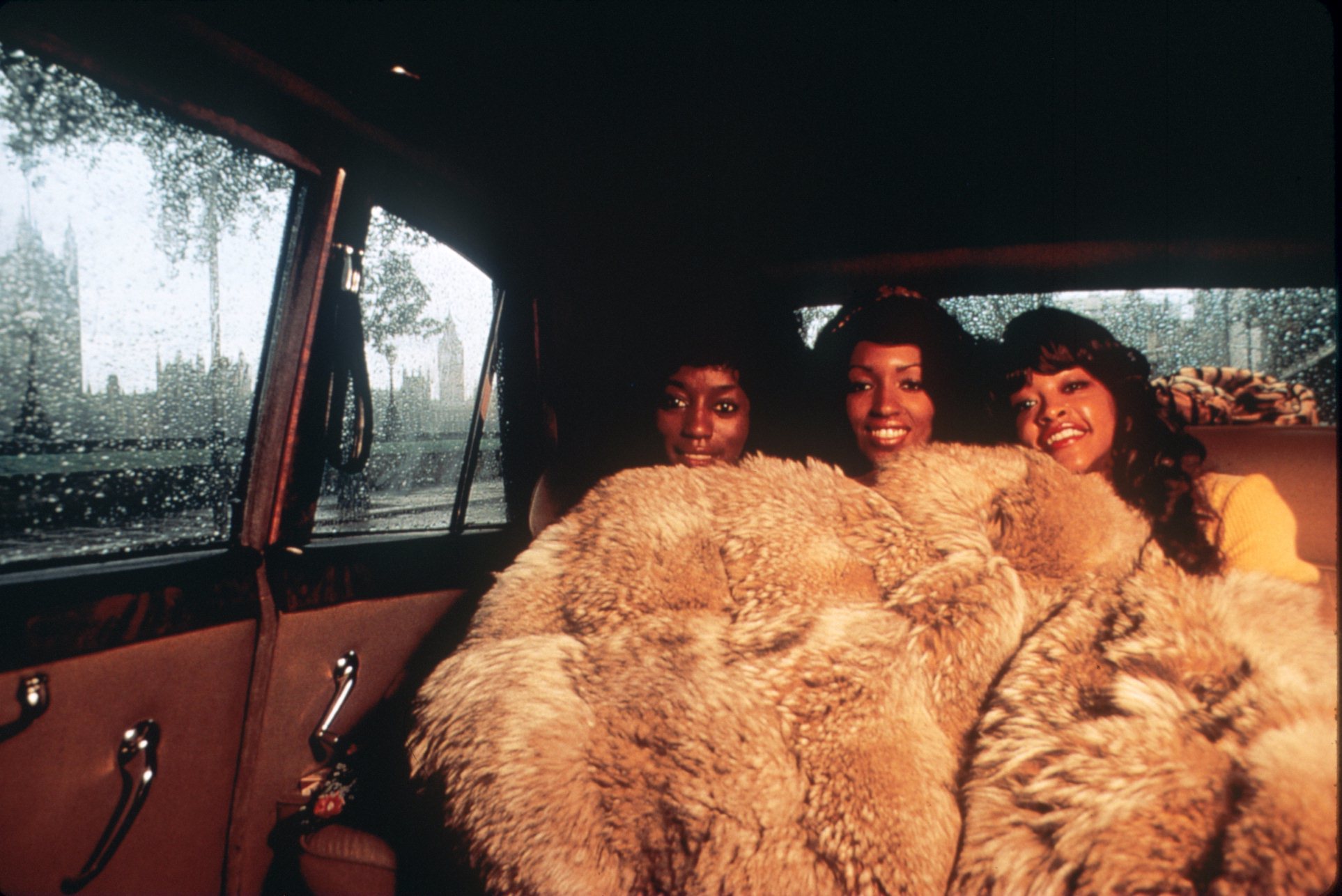
17. The Three Degrees, “When Will I See You Again”
My first exposure to this Gamble and Huff composition with a lead vocal by Sheila Ferguson and support from Fayette Pinkney and Valerie Holiday came from an episode of the 1970s sitcom Sanford and Son in which the Philly soul vocal trio guest-starred as themselves. Another fun fact: In the ‘70s, the Three Degrees were the favorite group of the now-king, Charles III, and performed at his 30th birthday party at Buckingham Palace in 1978 when he was known only as Prince Charles.
16. Benny Golson and the Philadelphians, “I Remember Clifford”
Hard-bop saxophonist Golson — with a band that included his fellow Philly natives Percy Heath, Lee Morgan, Ray Bryant, and Philly Joe Jones — paid tribute to Delaware trumpeter Clifford Brown, who died in a car accident in Pennsylvania in 1956 at 25. The song has been covered by dozens of artists, including Ray Charles and Sonny Rollins.
15. Sylk 130, “The Reason”
Philly DJ, producer, and Blacktronika professor King Britt put his own 1990s house music spin on classic Philly soul with his Sylk 130 project. Jafar Barron’s haunting trumpet and Vicki Miles’ seductive vocal add a touch of class.
14. The Jacksons, “Enjoy Yourself”
Yes, Michael Jackson recorded in Philadelphia. In the years between the Motown era with the Jackson 5 and his partnership with Quincy Jones, Michael and his brothers recorded as the Jacksons at Sigma Sound Studios on both 1976’s The Jacksons and 1977’s Goin’ Places. On the former, the songs were written by Kenny Gamble and Leon Huff. The upbeat “Enjoy Yourself” was the biggest hit from the Jacksons’ Philly years, and the one song from the era that points forward to the unstoppable alchemy that Michael and Jones would find starting with Off the Wall in 1979.
13. Jimmy Smith, “Walk on the Wild Side”
Norristown native Jimmy Smith revolutionized the Hammond B-3 organ as an instrument central to jazz and was the leading light of the long lineage of Philly organists that includes Shirley Scott, Charles Earland, Jimmy McGriff, Trudy Pitts, and Papa John DeFrancesco and Joey DeFrancesco.
“Walk on the Wild Side” is not the Lou Reed song. It’s an instrumental version of the Brook Benton song from a 1962 film noir. Later that year, Smith — whose music would later be sampled by hip-hop artists including the Beastie Boys, Nas, and Gang Starr — scored an unlikely hit from his album Bashin’: The Unpredictable Jimmy Smith.
12. Dee Dee Sharp, “Mashed Potato Time”
A 1962 dance-craze song by Kal Mann and Bernie Lowe that borrowed from the Marvelettes’ “Please Mr. Postman.” The Orlons sang backup vocals on the No. 1 hit from the American Bandstand era, when Philadelphia was the center of the pop music industry until Dick Clark moved the show to California in 1963.
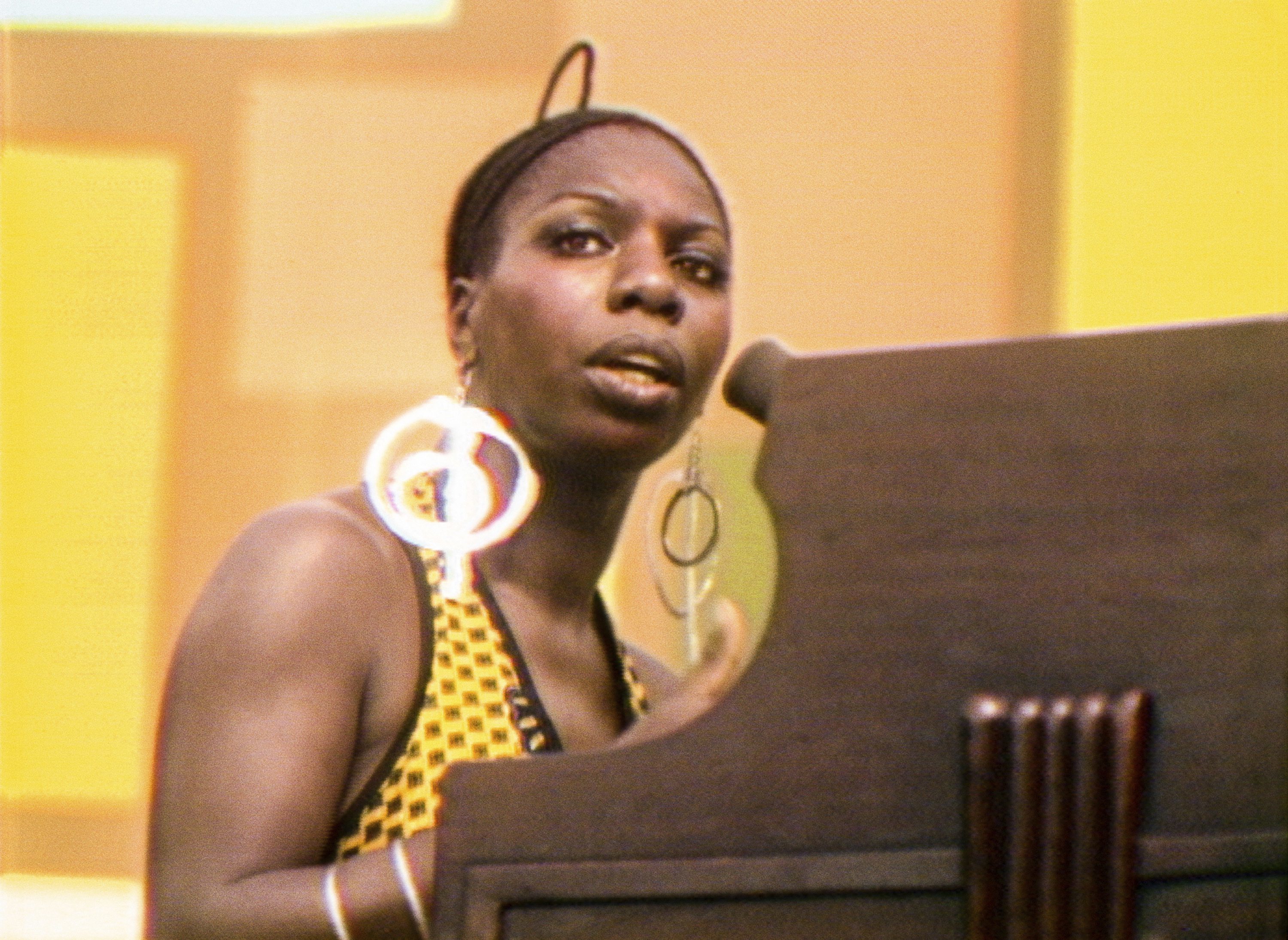
Nina Simone performing at the Harlem Cultural Festival in 1969, featured in the documentary “Summer of Soul.” / AP
But her failure to gain acceptance spurred reinvention: She adopted the stage name Nina Simone while playing piano and singing at the Midtown Bar & Grill in Atlantic City. A great career as an artist and civil rights activist followed. There are many songs to choose from — “Sinnerman,” “Feeling Good”— but I’m going with her most urgent and arresting, written in part as a response to the murder of Medgar Evers in 1963.
10. G. Love & Special Sauce, “I-76”
It might not be the best advice, but it does rhyme: “If you want to get downtown real quick, the only way to go is I-76.” Garrett Dutton’s ode to the Schuylkill Expressway from the hip-hop bluesman’s 1997 album Yeah, It’s That Easy includes shout-outs to Sixers players and the mascot from the 1983 championship year: “Big Shot, and Mo Cheeks and Moses Malone / Julius Erving called Philly his home.”
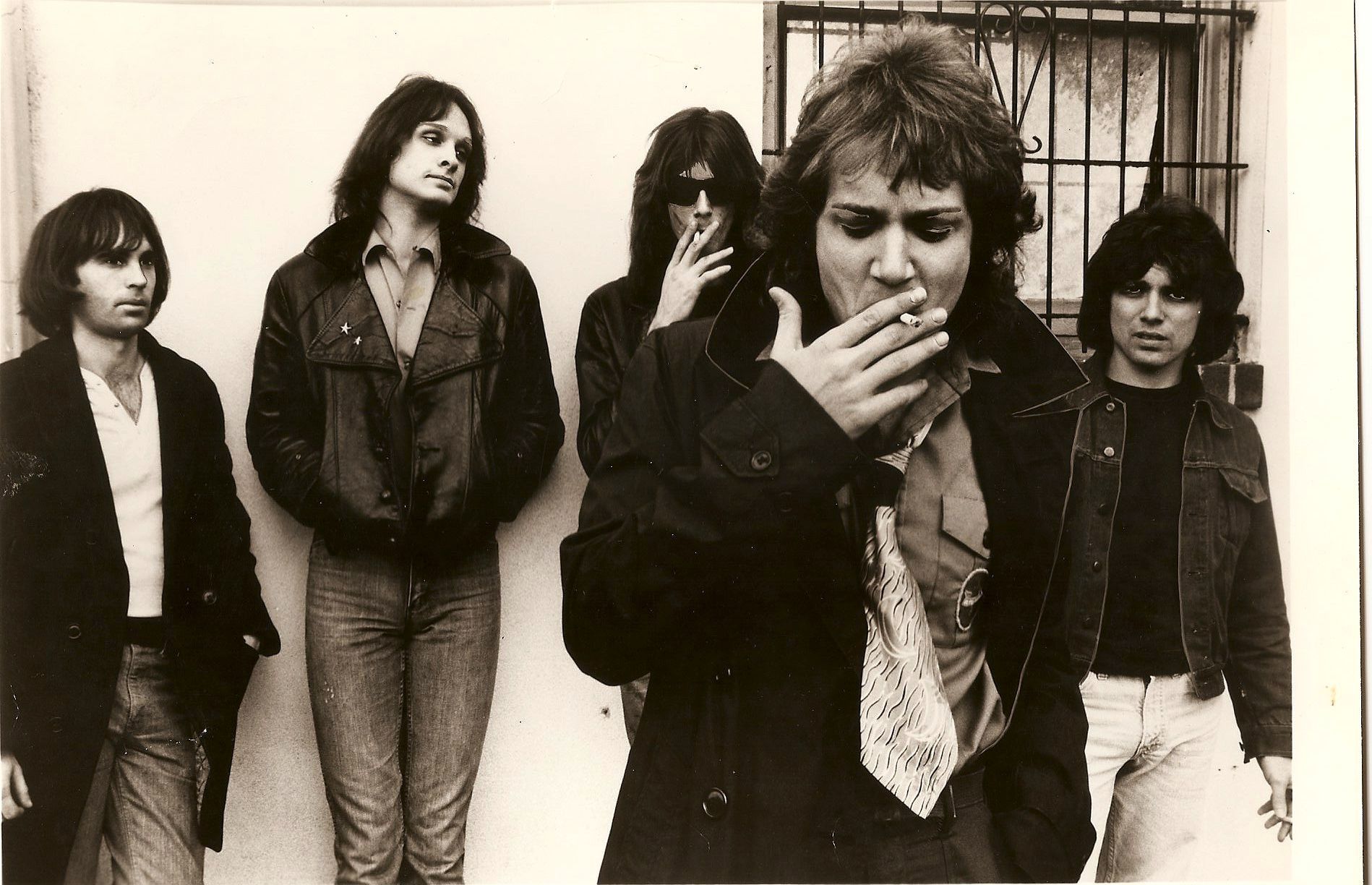
The Philadelphia rock band the A’s in the late 1970s. Left to right: Terry Bortman, Rocco Notte, Rick DiFonzo, Richard Bush, and Mikey Snyder. Courtesy of the A's
9. The A’s, “After Last Night”
A ripping power-pop masterwork that showcases the magnetism of Richard Bush, the lead singer of the A’s, the New Wave-era band that energized the Philly club scene before breaking up in 1982. One of two killer A’s singles written by Bush — who performs locally with his band the Peace Creeps — and songwriting partner Rocco Notte, along with “A Woman’s Got the Power.”
8. Laura Nyro, “Gonna Take A Miracle”
“Gonna Take A Miracle” is a case study in how Kenny Gamble, Leon Huff, Thom Bell, and Sigma Sound Studios founder Joe Tarsia turned Philadelphia into a music mecca in the early 1970s.
Nyro was a New York songwriter three albums into her career when she came to Sigma Sound in 1971 to record an album of cover songs with Labelle — the trio of Patti LaBelle, Nona Hendryx, and Sarah Dash, who would explode in popularity with “Lady Marmalade” three years later.
The Gonna Take a Miracle album was produced by Gamble and Huff, and featured the MFSB Sigma house band, with horn and string arrangements by Bell and Bobby Martin. And the title cut, originally a hit for the Royalettes in 1965, is cowritten by Teddy Randazzo, one of Bell’s musical heroes.
7. John Legend and the Roots, “Wake Up Everybody”
For their 2010 collaborative album Wake Up!, mostly made up of covers of socially conscious R&B songs, Penn grad Legend and the Philly hip-hop band picked a winner. Sure, Legend isn’t equal to Teddy Pendergrass, who sang the original version of the John Whitehead-, Gene McFadden- and Victor Carstarphen-penned title cut from Harold Melvin & the Blue Notes’ 1975 album. But then, who is?
6. The Tymes, “So Much In Love”
Swoony street corner harmony from 1963, written by Tymes singers George Williams and Roy Straigis with producer Billy Jackson, who voices the spoken intro. A hit on the Cameo-Parkway label in pre-Beatles doo-wop era, it was later a hit for R&B vocal group All-4-One in 1993.
In 1983, Robert Hazard filmed a music video for his song “Change Reaction” at what was then J.C. Dobbs.File Photograph
5. Robert Hazard & the Heroes, “Escalator Of Life”
Along with the Hooters and Tommy Conwell & the Young Rumblers — whose “I’m Not Your Man” is a near miss on this list — Robert Hazard was one of the most-likely-to-succeed faces of Philadelphia rock in the 1980s. The son of a Philadelphia Opera Company tenor wrote and recorded “Girls Just Want To Have Fun” in 1979, four years before Cyndi Lauper turned it into a megahit. Hazard was in heavy rotation on FM stations WMMR and WYSP with this echoey electro-pop hit and “Change Reaction,” from his self-titled 1982 EP.
4. Grover Washington Jr., “East River Drive”
“Just The Two of Us,” Washington’s 1980 team-up with Bill Withers, was the much bigger hit. Will Smith repurposed it for a different song of the same name on 1997’s Big Willie Style. And “Mister Magic,” the nine-minute jazz-R&B jam that’s the title cut from his 1975 album is another Grover contender. But I’m going to go geographical on this smooth-jazz mood piece from the Philly saxophonist, who cruised down what is now Kelly Drive on his 1981 album Come Morning.
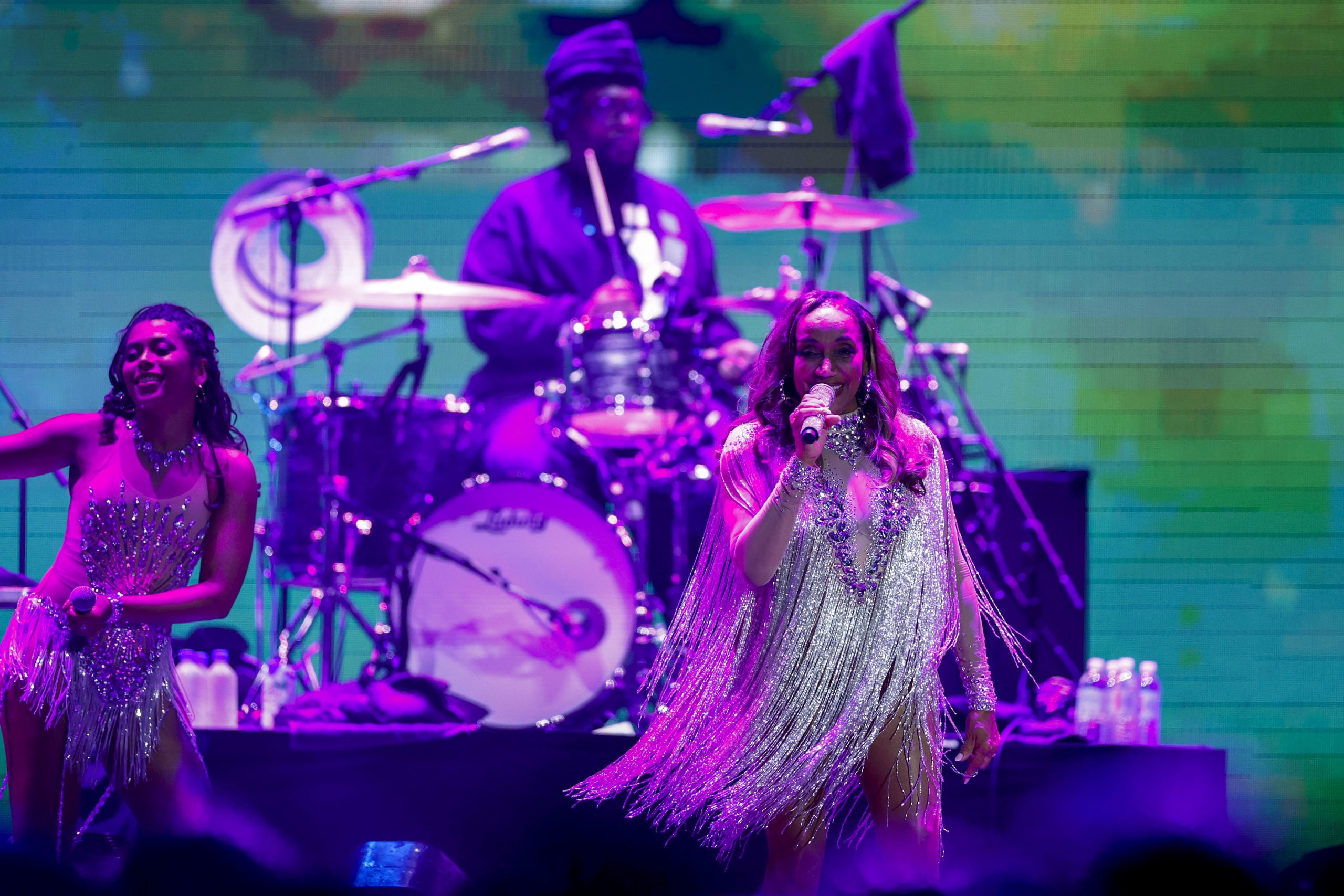
Kathy Sledge from Sister Sledge performs with the Roots at the July Fourth concert on the Benjamin Franklin Parkway.Yong Kim / Staff Photographer
3. Sister Sledge, “We Are Family”
“You couldn’t find room for Sister Sledge’s ‘We Are Family’ on a list of 76 songs?” was a refrain I heard in various forms. In excluding it I might have given too much weight to the fact that “We Are Family” became closely associated with Pittsburgh after the Pirates used it as their theme song on the way to winning the World Series in 1979.
In any case, “We Are Family” endures, well beyond its origins as a 1979 disco hit that was the first song penned by Nile Rodgers and Bernard Edwards outside of their own band, Chic. Kathy Sledge delivered a stirring version of it with the Roots at the One Philly concert on the Ben Franklin Parkway, and just the other night, I heard it at a Phillies game.
2. Maze, “Before I Let Go”
Frankie Beverly grew up in Germantown and didn’t hit his stride as a purveyor of smooth, sensual soul music until moving to San Francisco in the 1970s. Over time, songs like “Joy and Pain” and “Before I Let Go” sung by Eagles quarterback Jalen Hurts’ favorite musician became essential to Black culture, as “the soundtrack of cookouts and summer music fests … and that kind of bliss that is sweet and peaceful,” as novelist S.A. Cosby put it when Beverly died in 2024. Beyoncé covered “Before I Let Go” at Coachella in 2018, and Questlove has called the song “the happiest breakup song ever” and “the national anthem.”
1. Jazmine Sullivan, “Pick Up Your Feelings”
The standout track from Sullivan’s 2021 tour de force Heaux Tales is full of soaring, swooping vocal runs and staccato syncopations. Along with other hits like “Bust Your Windows,” it demonstrates why Sullivan is the premier contemporary embodiment of the grand Philly soul tradition of great vocalists like Patti LaBelle, Teddy Pendergrass, and Russell Thompkins Jr.
The Eagles begin their campaign for a third-straight NFC East title on Sunday afternoon, when they host the Washington Commanders in their season opener (4:25 p.m., Fox29).
The Eagles are coming off an 11-6 season and a busy offseason. The spotlight will be on the new offense led by first-year coordinator Sean Mannion.
Washington is looking to start strong after going 5-12 last season. Quarterback Jayden Daniels returns healthy after appearing in just seven games last season because of a left knee sprain, a right hamstring strain, and a dislocated left elbow.
What are the experts thinking about the season opener? Here’s a look at what local and national pundits are saying:
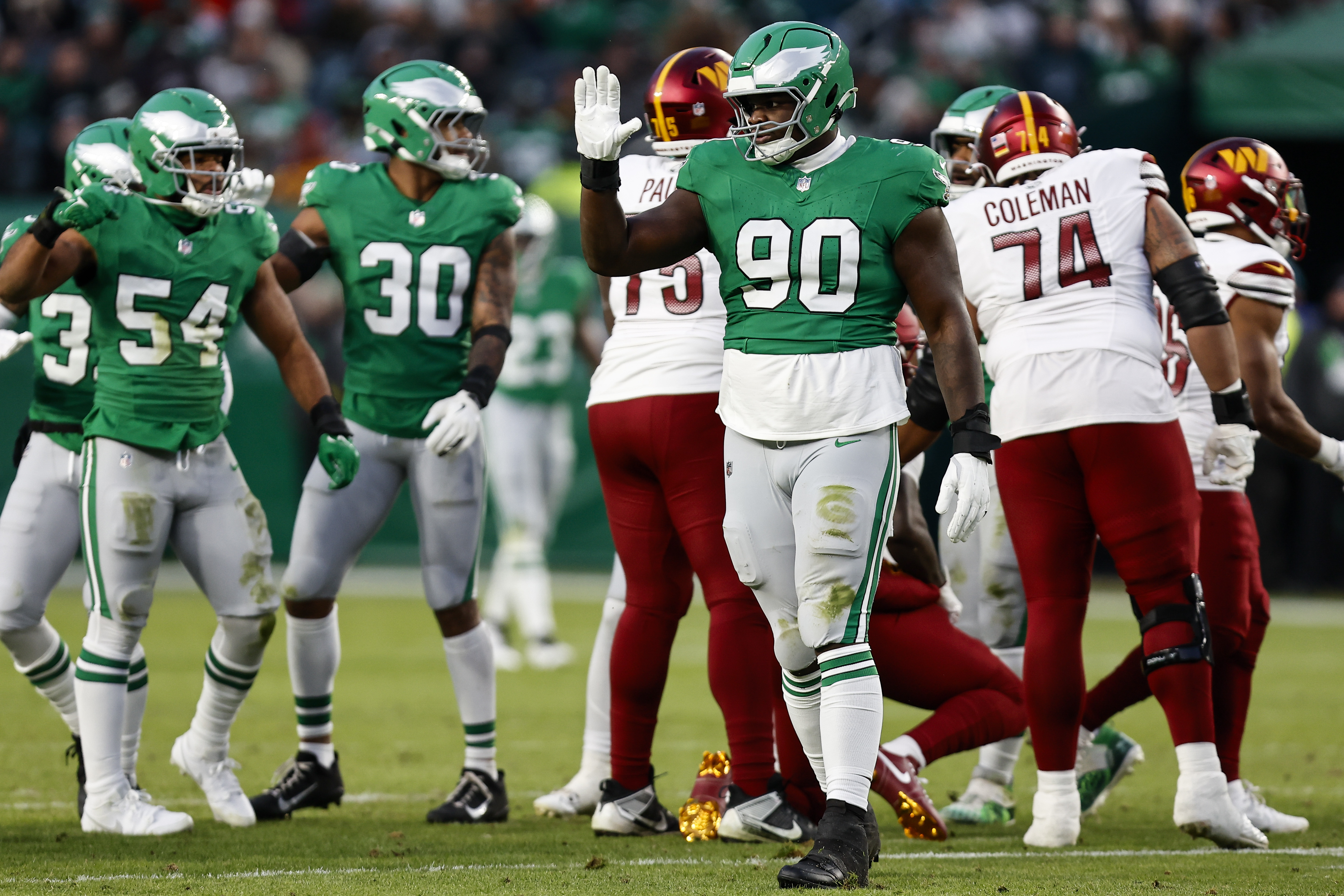
Eagles defensive tackle Jordan Davis waves after a stop on a Commanders’ offensive drive last season.Monica Herndon / Staff Photographer
Inquirer predictions
It’s a clean sweep for the Eagles. All three Inquirer beat reporters — Ryan Novozinsky, Jeff Neiburg, and Olivia Reiner — agree that the Eagles will win.
Novozinsky wrote that the Mannion era will begin “with a bang.” Here’s more:
“Sure, the Commanders have a new, lauded defensive coordinator in Daronte Jones. But they didn’t exactly make any splashy moves on that side of the ball, which means they’re largely returning a unit that ranked No. 32 in total defense last season.
“Their passing defense ranked fourth-worst in the league. Their run defense was even worse, ranking 30th. Mannion’s wide-zone scheme should feast against a unit like this, especially if the run game gets going early, which would set up a play-action attack through the air.”
The national media is just as high on the Eagles entering Sunday’s opener, with few experts picking the Commanders. Here’s a look at how the biggest outlets are predicting the outcome:
NFL.com: All five NFL.com editors selected Philadelphia to win. Gennaro Filice says Washington’s offensive line concerns, especially the loss of Laremy Tunsil, could create a lopsided matchup against defensive coordinator Vic Fangio’s unit.
ESPN.com: ESPN experts also are unanimously backing the Birds.
The Athletic: NFL reporter Vic Tafur is confident the Eagles will win their sixth straight season opener, writing: “Eagles quarterback Jalen Hurts is skipping around because they finally got rid of Brown and have a competent play caller.”
CBS Sports: The seven-person panel at CBS unanimously picked the Eagles to start the season 1-0.
USA Today: In the season-opening battle against NFC East opponents, USA Today analysts believe the winning team will be the Birds.
Sports Illustrated: Unlike many national outlets, there is a difference in predictions at Sports Illustrated. Out of the eight experts, Albert Breer and Conor Orr went with the Commanders in Week 1.
Bleacher Report: Five of the seven analysts picked the Commanders this weekend. Moe Moton said to “expect both teams to be inefficient in a game of missed opportunities, while both defenses capitalize on miscues with takeaways.”
Pro Football Talk: Mike Florio went with the Eagles for this weekend’s matchup, saying the Commanders are visiting “one of the best teams in the league to start the season.”
Sporting News: Bill Bender chose the Birds to win by eight against the Commanders.
There is always a feeling of a fresh start at the beginning of every NFL season, but this week there was an extra sense of newness mixed with intrigue at the Eagles’ Jefferson Health Training Complex — a name that is still taking some getting used to.
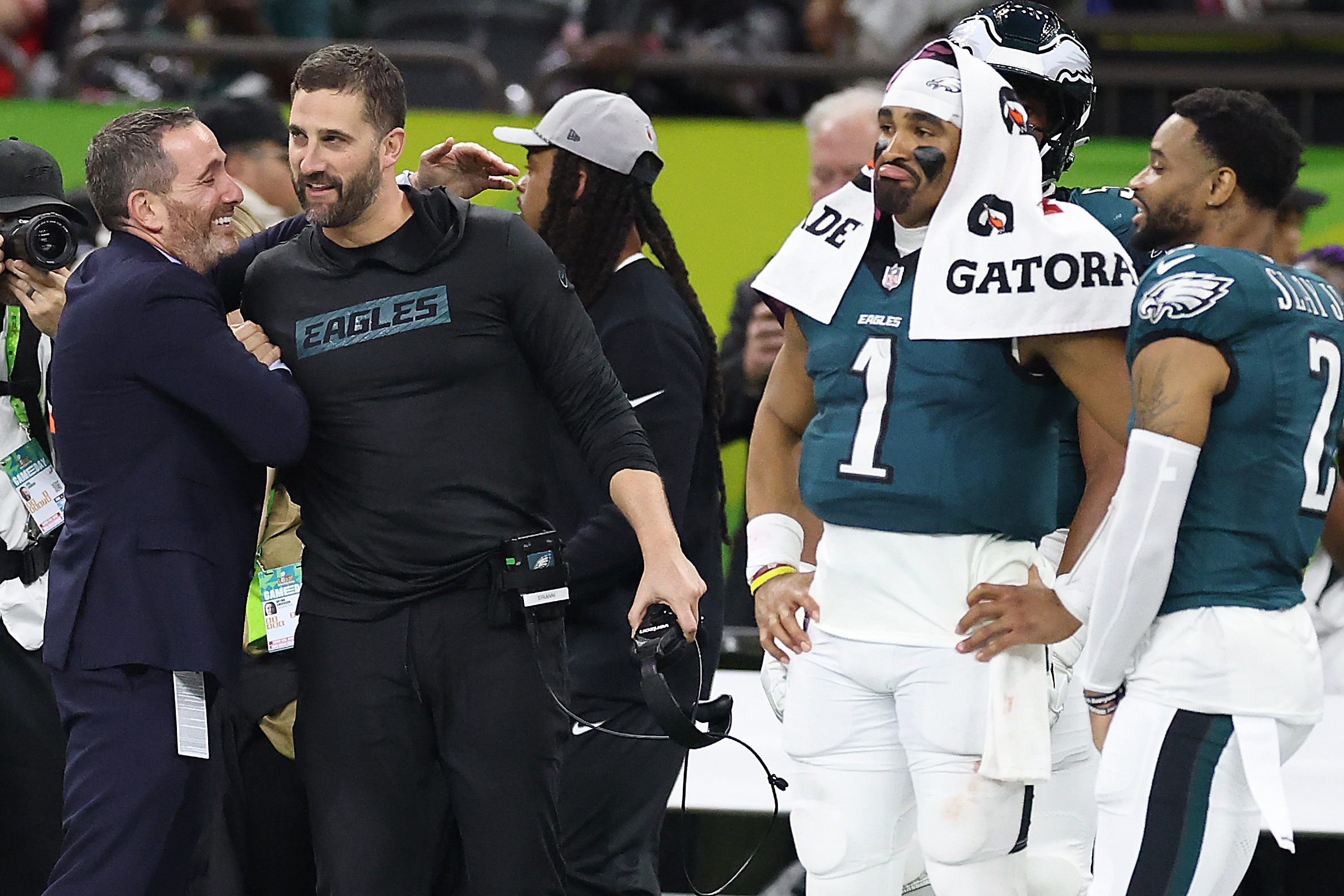
The Eagles have a new offense under a new offensive coordinator, Sean Mannion. They are beginning life without A.J. Brown. And for Lane Johnson, the team’s future Hall of Fame right tackle, this Week 1 is new, too, after he announced during training camp that this season probably would be his last.
Emotional week? Johnson said in August that he wanted to take time to appreciate all of the little things.
“I try not to get too emotional with it,” Johnson said this week.
Any emotional moments, though?
“We got some new restrooms installed,” he quipped. “I got pretty emotional seeing that, not having to go in that crowded stalls. Thank you, Mr. Lurie, for your contributions. We’re all very happy.”
Ah, nothing like some new showers.
New season, new-look locker room. When the locker room doors opened to reporters on Wednesday for the first time since the Eagles cleaned the room out in January, gone were the center locker stalls given to practice squad players that made the narrow room look cramped. Gone was the back wall, which now opens up to an area where some practice squad lockers live along with a few couches and, most importantly to Johnson, more showers and bathrooms.
Johnson, a New Jerseyan, thanked Eagles owner Jeffrey Lurie, but he also can thank his teammates with Pennsylvania addresses. The Eagles, in an effort to upgrade facilities their players have been critical of in recent years, received a $4 million grant from the state of Pennsylvania to help fund their renovation project.
The remodel extends beyond the locker room — including work on the training room and upgrades to the cafeteria — but Johnson, it seems, is content with the extra showers.
The changes aren’t just happening at the NovaCare Jefferson Health Training Complex. You might have also noticed something new at The Inquirer as well — in addition to our mid-week Eagles preview show and live postgame show. Each week throughout the football season, we’ll be sending a special edition of Sports Daily the day before the Eagles play to get you prepared with anything you may have missed leading up to the game.
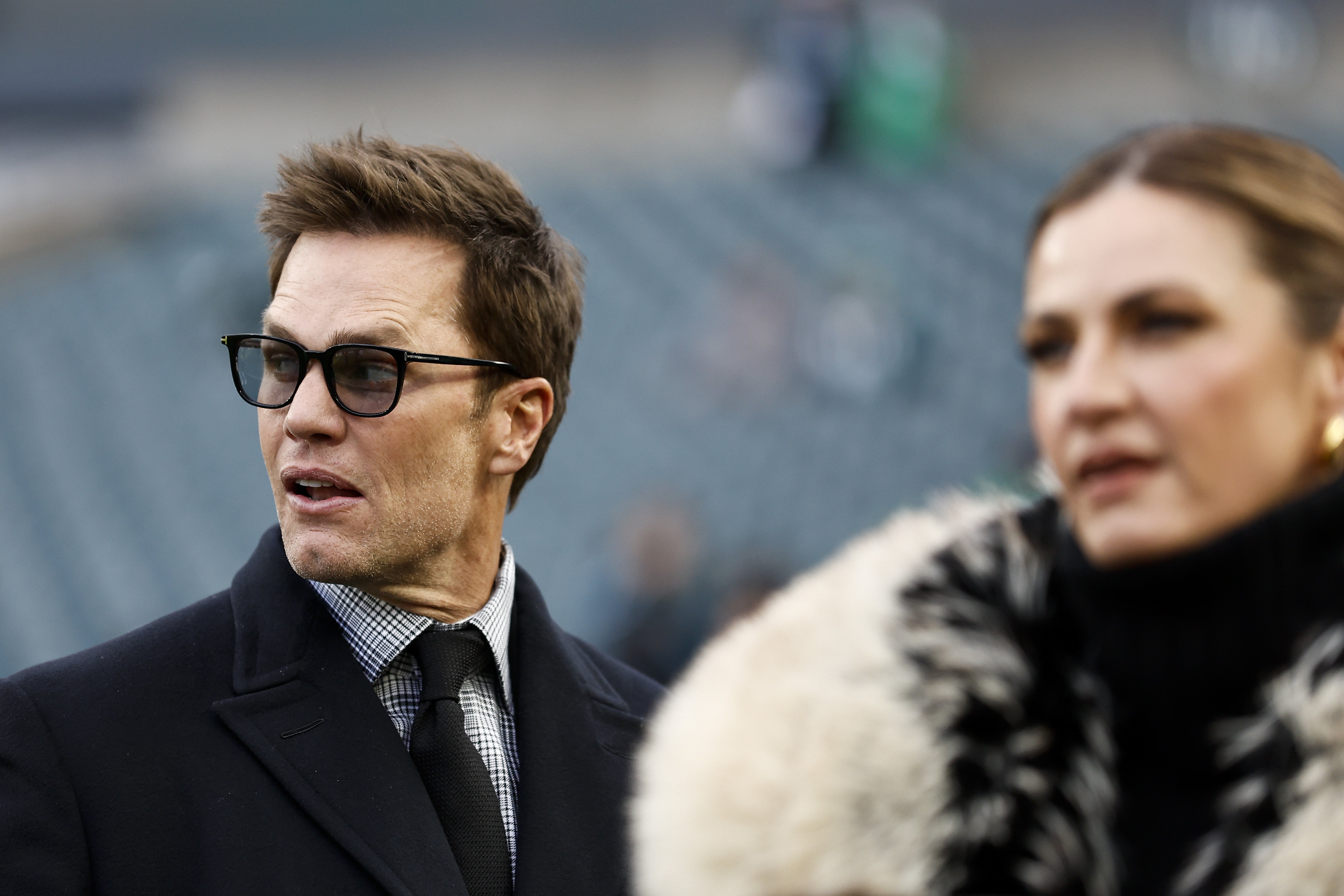
Tom Brady (left) also was on the call during the last Eagles game that mattered — their wild-card loss to the San Francisco 49ers.Monica Herndon / Staff Photographer
The Eagles and Commanders kick off at 4:25 p.m. Sunday on Fox29, which will send its top broadcast team of Kevin Burkhardt doing play-by-play and analyst Tom Brady. Erin Andrews and Tom Rinaldi are the sideline reporters.
You can listen to longtime radio play-by-play voice Merrill Reese call the game on 94 WIP alongside Mike Quick. Reese is entering his 50th season calling Eagles games, and in case you missed it this week, The Inquirer’s Matt Breen wrote about Reese and his wife, Cindy, who has helped the 84-year-old broadcaster stay sharp through all of these years.
Final injury report
The Eagles’ biggest offseason acquisition will miss the opener. On Friday, the team ruled out edge rusher Jonathan Greenard, who missed all of training camp with a pectoral injury but returned to the practice field this week.
“I feel good, though. I will say, I feel I’m in a good spot,” Greenard said Thursday. “Just know that. I know that I’m working every day to continue to try to get this thing stronger. We’re close, I know that.”
With Greenard out, the Eagles will need a lot from Jalyx Hunt and Nolan Smith, as well as significant contributions from Arnold Ebiketie and A.J. Epenesa. The Eagles have three edge rushers on the practice squad if they decide to elevate one and dress a fifth body on game day: Keyshawn James-Newby, Mason Reiger, and Joshua Weru.
Eagles
Out
Questionable
Stowers said Friday that he expects to be available for the game.
Commanders
Washington did not rule anyone out for Sunday’s game, and no one on the team’s active roster carries a game designation into the weekend, but that injury report does not tell the full story.
Washington will be without many key players.
Most notably, left tackle Laremy Tunsil (triceps), the team’s best offensive lineman, is on injured reserve. Edge rushers Dorance Armstrong (suspended) and Deatrich Wise (physically unable to perform list) also will miss the game, as will other key defensive players like cornerback Trey Amos — who is on IR with an ankle injury — and defensive tackle Jer’Zhan Newton (pectoral).
Backup running back Jeremy McNichols also is on IR with a quadriceps injury.
Storylines to watch
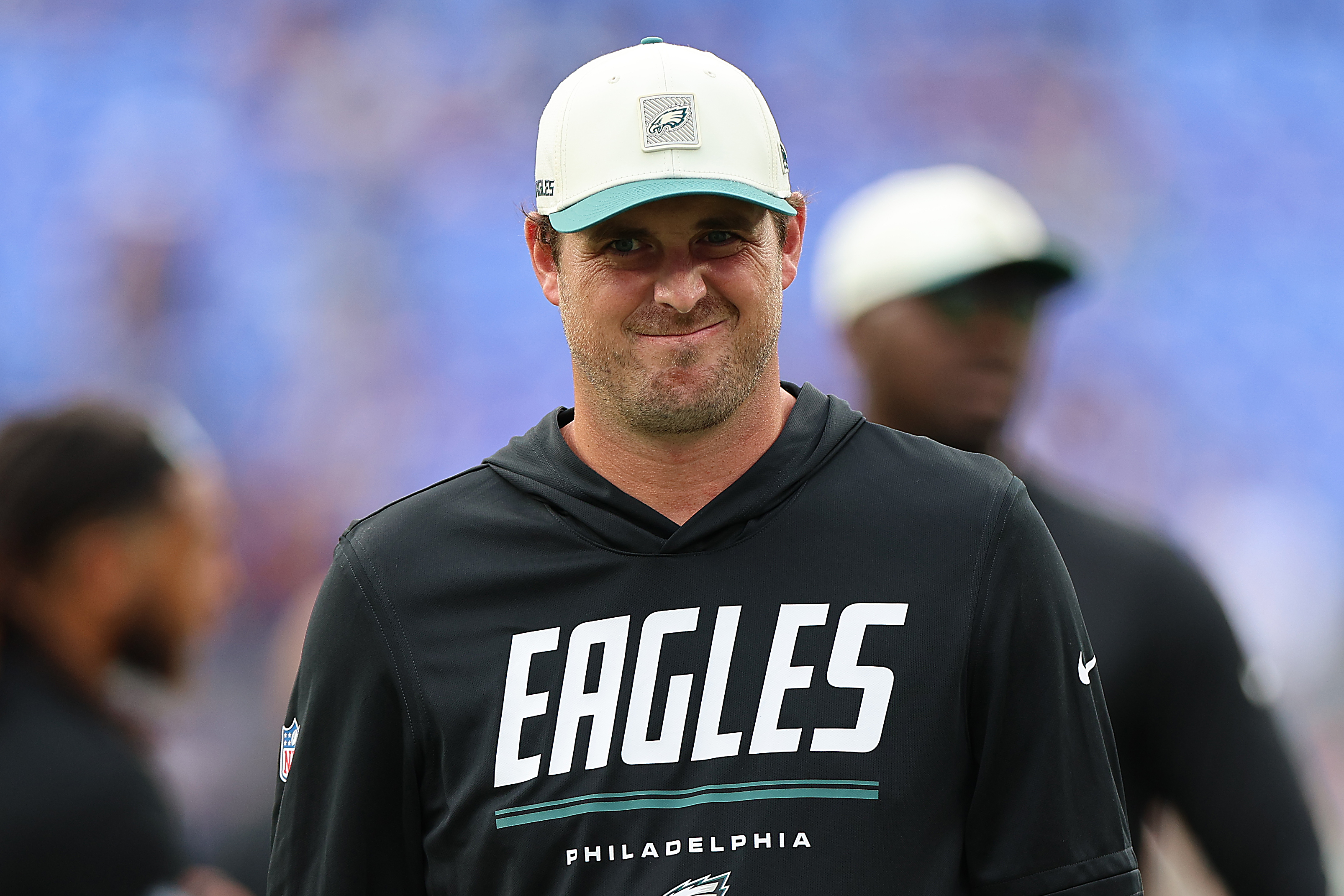
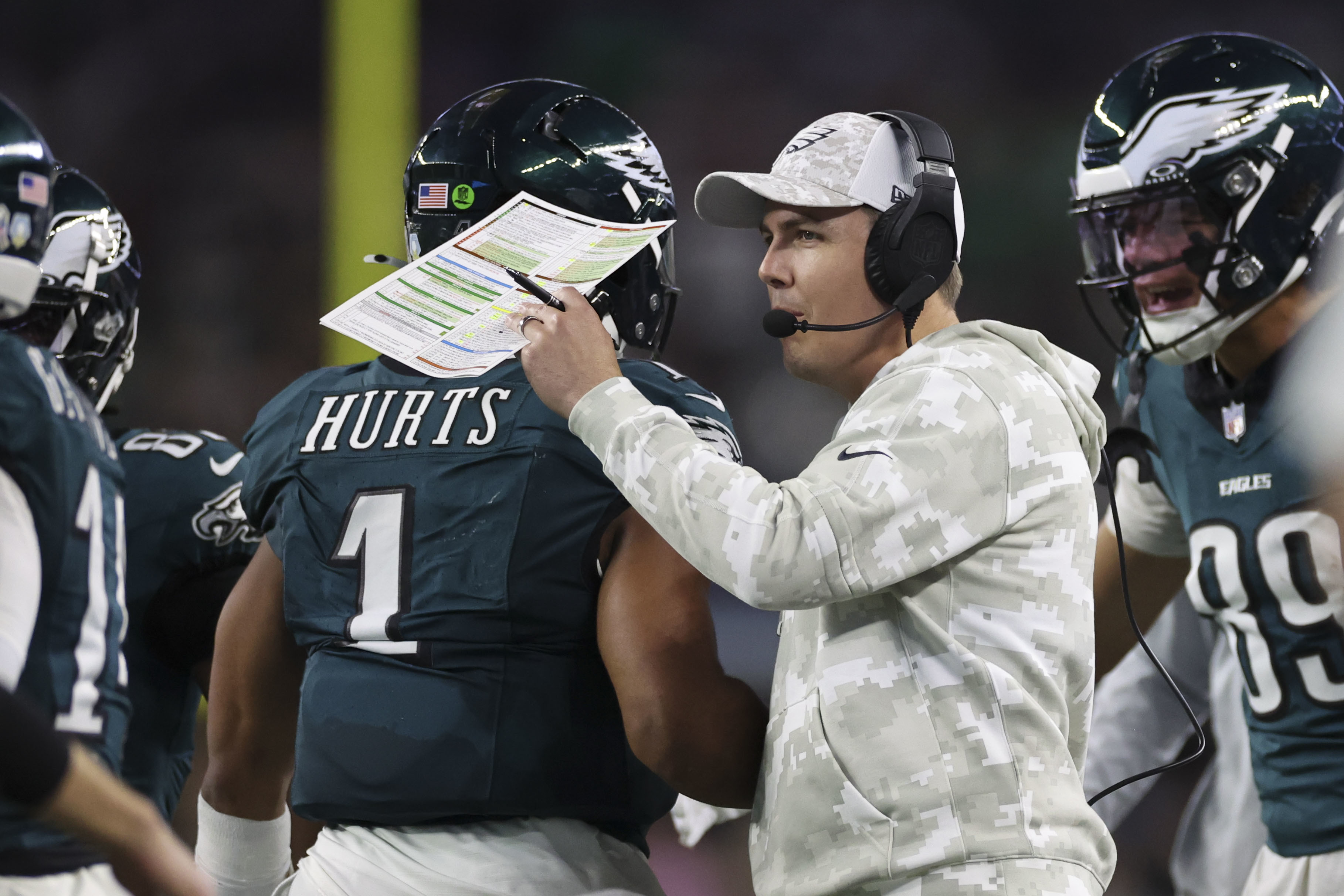
Sunday will be offensive coordinator Sean Mannion’s first game with the Eagles.David Maialetti / Staff Photographer
All eyes are on Mannion. His predecessor, Kevin Patullo, oversaw an offense that took a major step back in 2025, and he was fired after his first season on the job.
Mannion is just 34 and calling plays in the NFL for the first time, but he’s been preparing for this moment since his days playing high school football under his father, John, in California. And maybe even before that. (Spoiler alert on that link: Mannion has a Delco connection because, well, of course he does.)
It’s not just Mannion under the microscope, though. There’s also Jalen Hurts, who regressed in 2025 and has a murky contract situation beyond this season. Hurts’ latest effort to evolve could determine his future.
Here are a few more storylines to follow:
The Eagles were so good in 2024 because they ran the ball so well, and they struggled in 2025 in part because they didn’t. Mannion, a quarterback, “loves the run game,” according to his colleagues, and the Eagles are revamping how they run the ball in 2026.
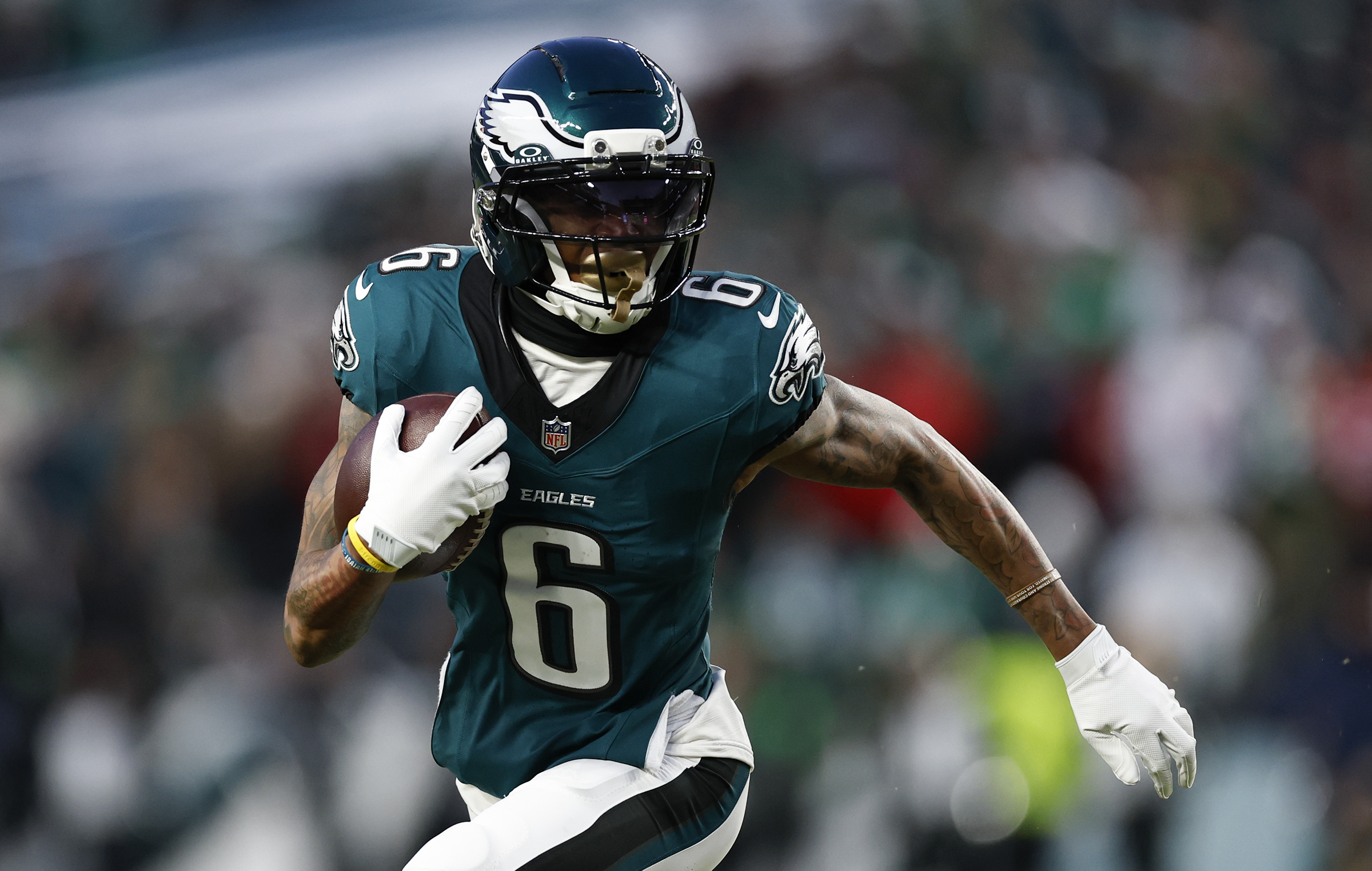
With Brown no longer ahead of him on the depth chart, DeVonta Smith is the unquestioned No. 1 receiver in the building. He’s a team captain for the first time, too. “The guy was built to do this,” said James Madison coach Billy Napier, who recruited Smith when Napier was the wide receivers coach at Alabama.
There won’t be a Brandon Graham return in the middle of the season like last year. The legendary Eagles defensive end sounds like he’s done with football. Up next? A budding media career.
Latest Week 1 odds
The Eagles, as of Friday, were six-point favorites over Washington at DraftKings and favored by 5½ at FanDuel. Both sportsbooks listed the over/under at 44½.
Eagles-Commanders predictions
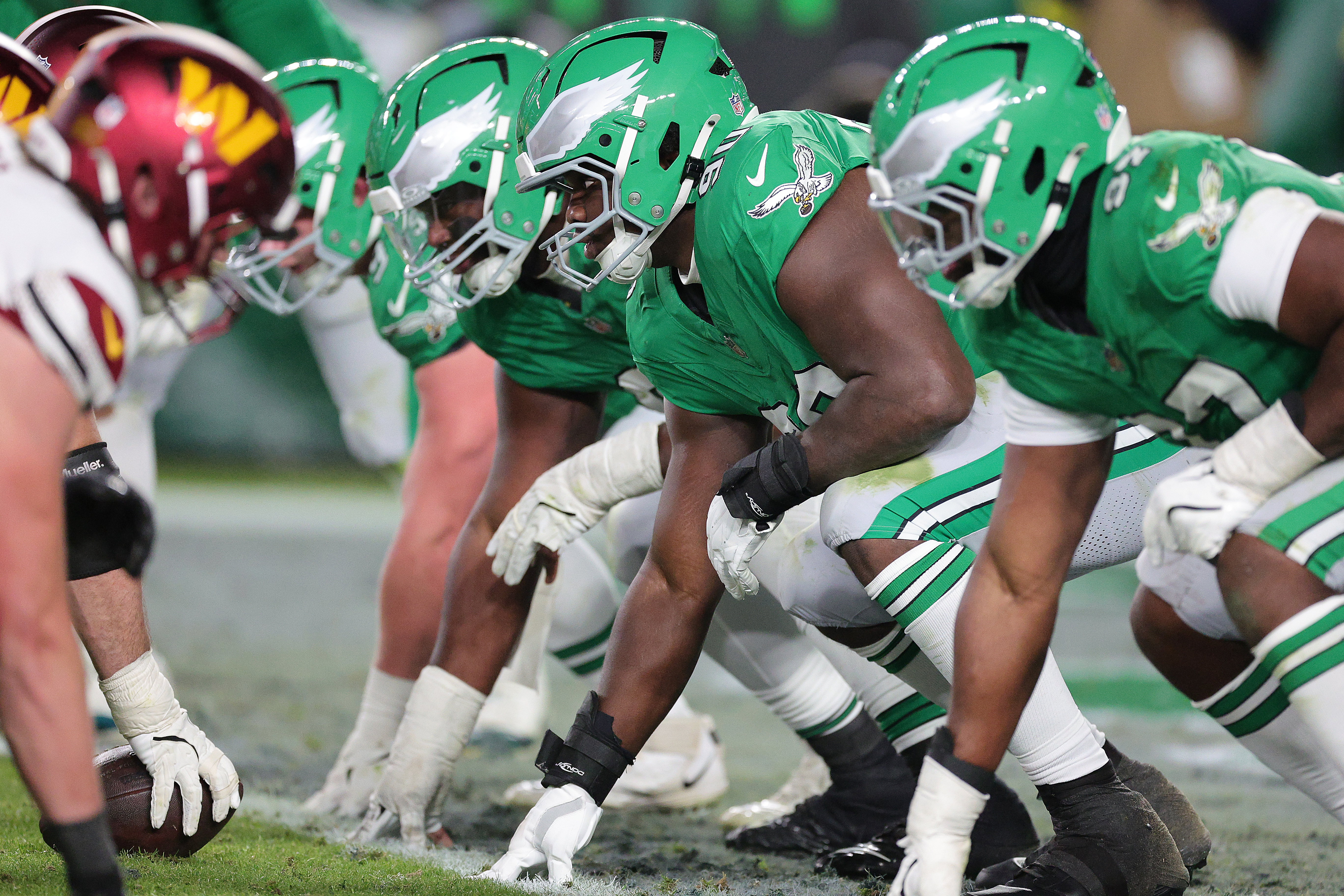
The Eagles defensive line, including defensive tackle Jordan Davis (second from right) line up against the Washington Commanders during last year’s regular-season finale at Lincoln Financial Field.David Maialetti / Staff Photographer
Here’s what our columnists are saying this week, starting with Mike Sielski, who wrote about the dominant defense the Eagles are poised to have:
Mike Sielski: “Will the 2026 Eagles’ defense be as great as the 1991 Eagles’? No. Will it have to be? Probably not. … The most important questions the Eagles have to answer this season don’t have much to do with their defense, if any of them have anything to do with the defense at all.” Read more.
Marcus Hayes: “Is this the make-or-break year for Jalen Hurts? Or is it a make-or-break year for Nick Sirianni? Both? Neither? … An offseason of communications with various NFL sources indicated two things:
The Eagles do not consider 2026 to be a make-or-break season for either Hurts or Sirianni. That’s because …
Installing an offense that is so philosophically different than what’s come before it is not a 17-game undertaking. It’s a two-season project.” Read more.
David Murphy: “23rd. That’s the average ranking from last season of the 14 pass defenses the Eagles will face in 2026. It is the softest schedule in the league by a wide, wide margin. The Eagles couldn’t have handpicked a better setup for Jalen Hurts and first-year offensive coordinator Sean Mannion. Right out of the gate, they’ll face a Commanders defense that finished tied for 30th in yards per pass attempt allowed.” Read more.
What the Commanders are saying
The Eagles aren’t the only team on Sunday with a new offensive coordinator. David Blough, a former quarterback, will make his Commanders debut.Nick Wass/AP
The Commanders have two new coordinators to start the 2026 season. David Blough is taking over the offense after Kliff Kingsbury and the Commanders parted ways. Blough, like Mannion, was a quarterback in the NFL as recently as 2023 and has been a coach since 2024, when he joined Washington as an assistant.
On the other side, Daronte Jones, a longtime defensive coach who most recently was with the Vikings, steps in for Joe Whitt.
There was a bit of uncertainty in both buildings this week. The Eagles didn’t know what exactly to expect from both of Washington’s units, while the Commanders were preparing for a new offense.
They are, however, familiar with what the Eagles will be doing on defense.
Blough on Vic Fangio’s defense: “They’re so sound as a defense, how they attack you, where they try to stress you as an offense and they got a lot of really good players who have been there for a long time. We’ve seen matchups with some of our familiar players. We’ve seen things that Jayden [Daniels] does well. We’ve seen ways that they’ve tried to attack us. So, all of those data points for us kind of go into how we build the plan to to get after him this week.”
Jones on Saquon Barkley: “Saquon is special. It’s not a one-man job. It’s a it’s a team effort, and even with that, I mean, his explosiveness, his playmaking ability, he’s very dynamic and they’ve done a great job of using him in that way and finding different spaces to get him touches. And so, you take your hat off to the organization how they utilize their personnel over there.”
ESPN polled more than 60 writers and analysts to predict the big winners for the 2026 NFL season. How many of them have the Eagles playing in the Super Bowl in Los Angeles come February? Just four. And two of those four, national reporters Kevin Clark and Cameron Wolfe, have the Eagles hoisting the Lombardi Trophy. Meanwhile, none of our beat writers have them reaching the Super Bowl — but you’ll be happy to know I picked them to win the division.
As for this week’s matchup, are the Commanders wasting Daniels’ rookie contract? That’s the view here, and also from The Athletic’s Nick Kostos.
“I feel bad for Jayden Daniels. Less than two years ago, he had the Commanders in the NFC Championship Game as a rookie (coincidentally in Philly against the Eagles),” Kostos wrote. “And it feels like the Commanders are wasting the years on his rookie deal. I love Daniels, but the Eagles might have the best defense in the NFL — and I’m a Jalen Hurts believer.”
NFL.com editor Gennaro Filice on Sunday’s game: “I have serious doubts about Daniels’ supporting cast, especially the Laremy Tunsil-less offensive line,” Filice wrote. “That’s a recipe for disaster against Vic Fangio’s defense.”
After the game, be sure to tune into our live postgame show, hosted by Ryan Novozinsky. We’ll be back in your inboxes Monday with a regular edition of Sports Daily — and keep an eye out for another special Eagles edition next weekend.
It’s astounding, in a matter of months, how bad a quarterback Jalen Hurts became, how ineffective a coach Nick Sirianni was revealed to be, how overwhelmed DeVonta Smith was sure to become without A.J. Brown, how formerly brilliant defensive coordinator Vic Fangio had devolved into mediocrity, how irrelevant an elite defense was projected to be, and how uselessly a suddenly healthier offensive line was projected to perform.
Because all of these things need to happen for the Eagles to not win the NFC East and surge to a third Super Bowl in five years.
A year ago, most prognosticators chose the Eagles to at least reach the NFC championship game if not to repeat as Super Bowl champions. So why are expectations so low for 2026?
Currently, the forecasters rate as highly or higher than the Eagles: The Rams, whom the Eagles own; the Seahawks, the flukiest Super Bowl winner since the 2011 Giants; the Packers, after five straight years of postseason flops; and the Lions, who, well, are the Lions.
This is madness.
If the Eagles’ offensive line had been healthy in 2025 they would have won a second straight Lombardi Trophy. It’s healthy today. They should be everyone’s favorite. They should roll through 2026.
What games worry you? At Dallas on Thanksgiving? OK. Seattle on Dec. 19? OK, but it’s a wintertime home game. At San Francisco on Jan. 3? The Silicon Valley Power electrical substation might have winnowed the 49ers to nothing by then.
There’s no way this team should lose more than three games, four at the most. They’ve got a Pro Bowl quarterback, a superstar running back, a franchise receiver, and a genius running a defense with more talent than any defense in team history that didn’t include Reggie White.
Yes, they lost in the first round of the playoffs last year, and, yes, they’re installing a new offense with a new coordinator, and all of that is scary.
Kellen Moore (right) was new to the Eagles, just as Sean Mannion is, and helped engineer a Super Bowl win. David Maialetti / Staff Photographer
You know what happened the last time they installed a new offense with a new coordinator?
They won Super Bowl LIX.
They begin their run to Super Bowl LXI at 4:25 p.m. Sunday, hosting the Commanders, who lost All-Pro left tackle Laremy Tunsil to injury in training camp. The Eagles should win by about 20 points.
Maybe then the fog will lift from the minds of the deluded.
No A.J.? OK
It’s tempting and understandable to dwell on the departure of Brown, and it’s important to not diminish it. No Eagles receiver ever connected four seasons of at least 1,000 receiving yards, and Brown did so as Hurts’ No. 1 target. Hurts is a running quarterback whose passing offense did not average even 200 yards per game the past two seasons. A.J. in Philly was special.
It’s tempting, but unwise. Teams occasionally lose top receivers but succeed nevertheless. The Chiefs lost Tyreek Hill after the 2021 season but still went to the next three Super Bowls and won the next two.
DeVonta Smith is primed to take a major step forward this season. Yong Kim / Staff Photographer
DeVonta’s moment
Smith has 13 100-yard games in his five-year career (plus two more in the playoffs), and he played four of those years with Brown and two with Saquon Barkley, both high-volume offensive weapons. He’d have 25 games with 100 yards if he’d been option No. 1. Expect him to have five or six this season.
Because he’s a Heisman Trophy winner who has never been asked to be the best player on a great team, though he’s shown every capacity for the job. He’s a route-runner on par with Justin Jefferson. He finds the soft spots in zones with uncanny instinct. He’s mature, he’s a leader, and, at 27, he’s in the middle of his prime.
Brown set the Eagles’ record for receiving yards with 1,496 in 2022. Zach Ertz set the record for catches with 116 in 2018. Terrell Owens set the record for TD catches with 14 in 2004.
Smith could challenge each of these … or all of them.
Run it up
New coordinator Sean Mannion wasn’t hired to implement a new offense that would turn the Eagles into Air Coryell. He was hired to implement an offense that would emulate the general run-game efficiency of 49ers coach Kyle Shanahan and Rams coach Sean McVay. Expect that to happen.
Jonathan Greenard won’t play in Week 1 but should be an upgrade off the edge once he does. David Maialetti / Staff Photographer
Upgrade at end
The Eagles signed Jonathan Greenard to a four-year, $98 million deal to improve the pass rush. His injured pectoral muscle is a concern, and maybe he won’t play for a while, but he’s going to be more effective than trade-deadline addition Jaelan Philips, who left via free agency to wails of consternation.
Really, what did you lose … a guy with two sacks in eight regular-season games and zero tackles in a playoff loss?
Coop = Dawk
An undrafted free agent four years ago, safety Reed Blankenship’s superpower lay in his ability to understand the job and know where he was supposed to be. His Achilles’ heel, bless his heart, was his inability to get there rapidly and make plays once he arrived.
There never was a doubt when the Eagles traded up 10 picks in the second round of the 2024 draft, that Cooper DeJean would become a safety. He played nickel corner his first two seasons, but he’s where he belongs now. He often will slide to nickel against certain teams. Cool. You know who else did that?
Second-round safety Brian Dawkins, who’s now in the Pro Football Hall of Fame.
Cooper DeJean will play safety in the Eagles’ base package this season. Monica Herndon / Staff Photographer
O-line OK
They played maybe three games with a fully functional offensive line. Even if Jalen Hurts doesn’t improve, and even if the offense doesn’t explode, there will be better efficiency, a better running game, more time for Hurts to find Smith and Dallas Goedert and Barkley.
There’s a thought: Use the best player on the team more, and throw him the ball.
Barkley, Part I
Barkley was targeted 68 times per season his last two years with the Giants, when offensive maestro Brian Daboll was the head coach. He was targeted less than 48 times per season in his first two seasons with the Eagles, when Kellen Moore and Kevin Patullo called plays.
There’s a reason Daboll is considered an offensive maestro, unlike Moore and Patullo.
No Stout? No problem
Normally, the subtraction of an elite coach like Jeff Stoutland would be crippling, but every offensive line starter has been coached by Stout for at least three years, and every one of them has never had another line coach. No matter how much the scheme changes, Stout’s replacement, Chris Kuper, isn’t going to fracture the foundation.
Just because Sean Mannion hasn’t called plays doesn’t preclude him from being great in the role. David Maialetti / Staff Photographer
On-the-job training
There never was an indication that Patullo would be a competent offensive coordinator or play-caller. There remains no indication that Mannion will be competent, either … but, to be fair to both, there never was much indication that Shane Steichen would be competent, either. He’d done it for one full season in Philly before 2022, and his offense that season powered the Eagles to Super Bowl LVII.
Barkley, Part II
Barkley’s workload plummeted. In 2024, at the age of 27, he touched the ball 482 total times between the regular season and playoffs. In 2025, at 28, that number fell to 346, a difference of 136 touches, a decrease of roughly 28%. It was like getting four games of rest.
Nick wins games
Like him or loathe him, Sirianni wins games. Maybe that’s been because of Fangio’s genius, Howie Roseman‘s personnel management, or Jeffrey Lurie’s deep pockets. In any case, even if Sirianni isn’t a main reason they’re winning, he’s certainly not impeding their path to wins. And to argue that they’re winning in spite of him is as foolhardy as it is disingenuous.
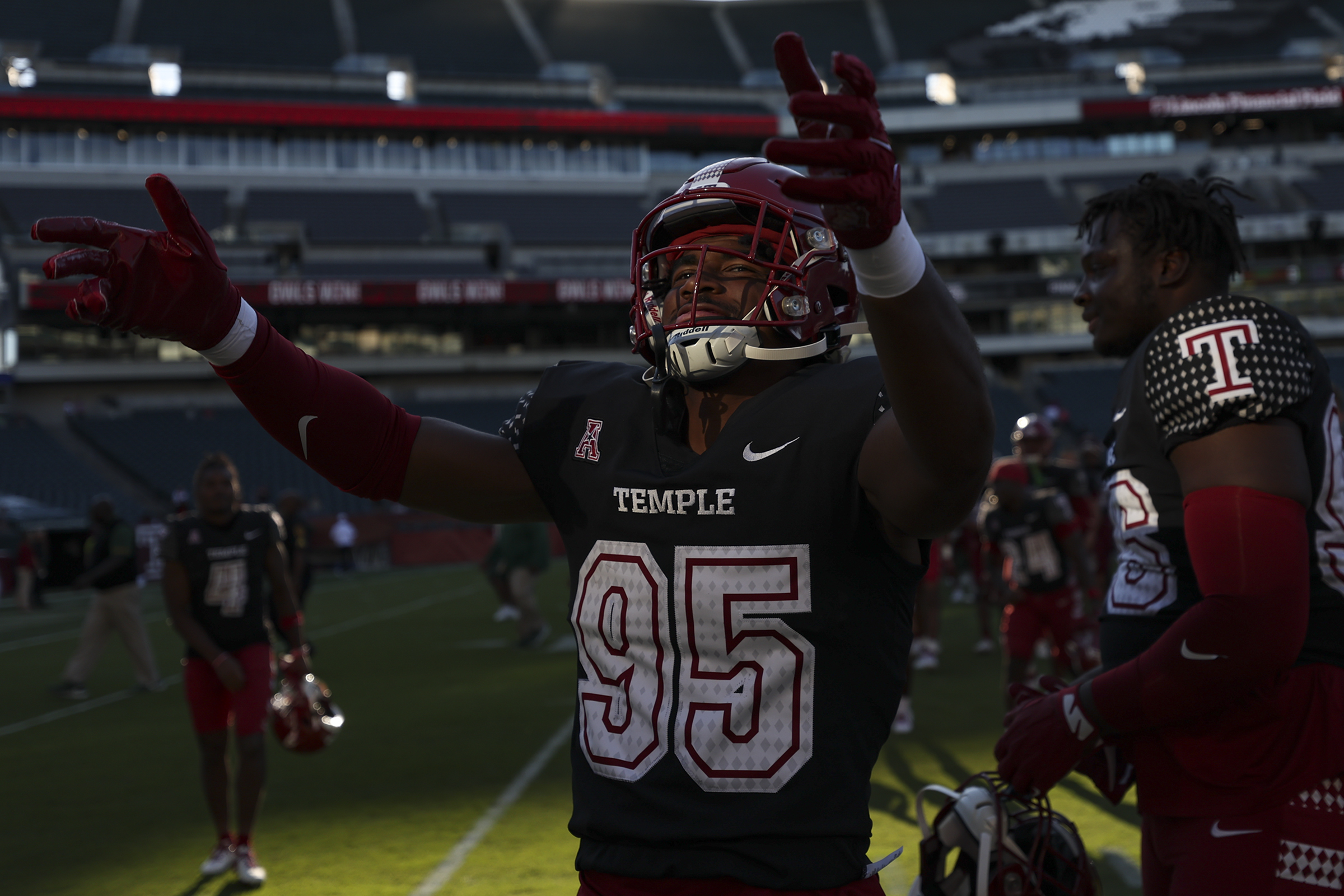
Reggie Jones played college football for three seasons.
But he didn’t actually play.
He was on Temple’s scout team, where his role was to help the guys who did play prepare each week for Saturday. He practiced all week and then watched the games last season from his apartment near campus.
Finally, he had enough.
Jones told his parents and girlfriend following last season that he was quitting. He let some teammates know. That was it.
“I would come home so sad because I didn’t know what I was going to do with myself,” Jones said. “Then one day, I was scrolling on TikTok, and I came across this walk-on basketball player named Brandon Dwyer from Florida Gulf Coast.”
Video: K.C. Keeler on where Temple football is headed in the future
Dwyer had gone viral on social media for documenting his life as a walk-on as he created a series of videos titled “The Road to One Point.” He made his first basket last November, just as Jones was deciding he was through being a walk-on. And the video inspired Jones to keep going.
“For a month straight, I would go to his page every day and just watch his videos,” Jones said. His story was exactly like mine. He was always a bench rider. He was about to quit, too. Watching these, I got the love back for football.”
Temple linebacker Reggie Jones says his persistence to stay with the Owls program was watching TikToks from a Florida-based basketball player going through a similar situation.Isaiah Vazquez / For The Inquirer
Jones stayed with the football team and started to document his “Road to One Tackle.” His first video in January picked up thousands of views, and his followers grew. He was on to something. But Jones knew he couldn’t make a tackle from the scout team. He had to get on the field.
“I told myself, ‘Reggie, this is your season. I don’t care what you do, but get off the scout team because you can’t be in the same boat for four years,’” said Jones, who has 174,000 followers on Instagram. “Every year, I was tired of it, but this year I was like, ‘This is my senior year. I can’t go out like this.’ That first padded practice, I was just trying to go through everyone because I had to show these coaches that I deserved to play.”
Jones quickly worked his way off the scout team this summer and then found his name on the team’s depth chart. He was a special teamer. Nine months after nearly quitting, Jones earned a spot on the team.
“You know when you have a lot on your chest, and it feels like something was taken off,” Jones said. “Like, I can finally breathe.”
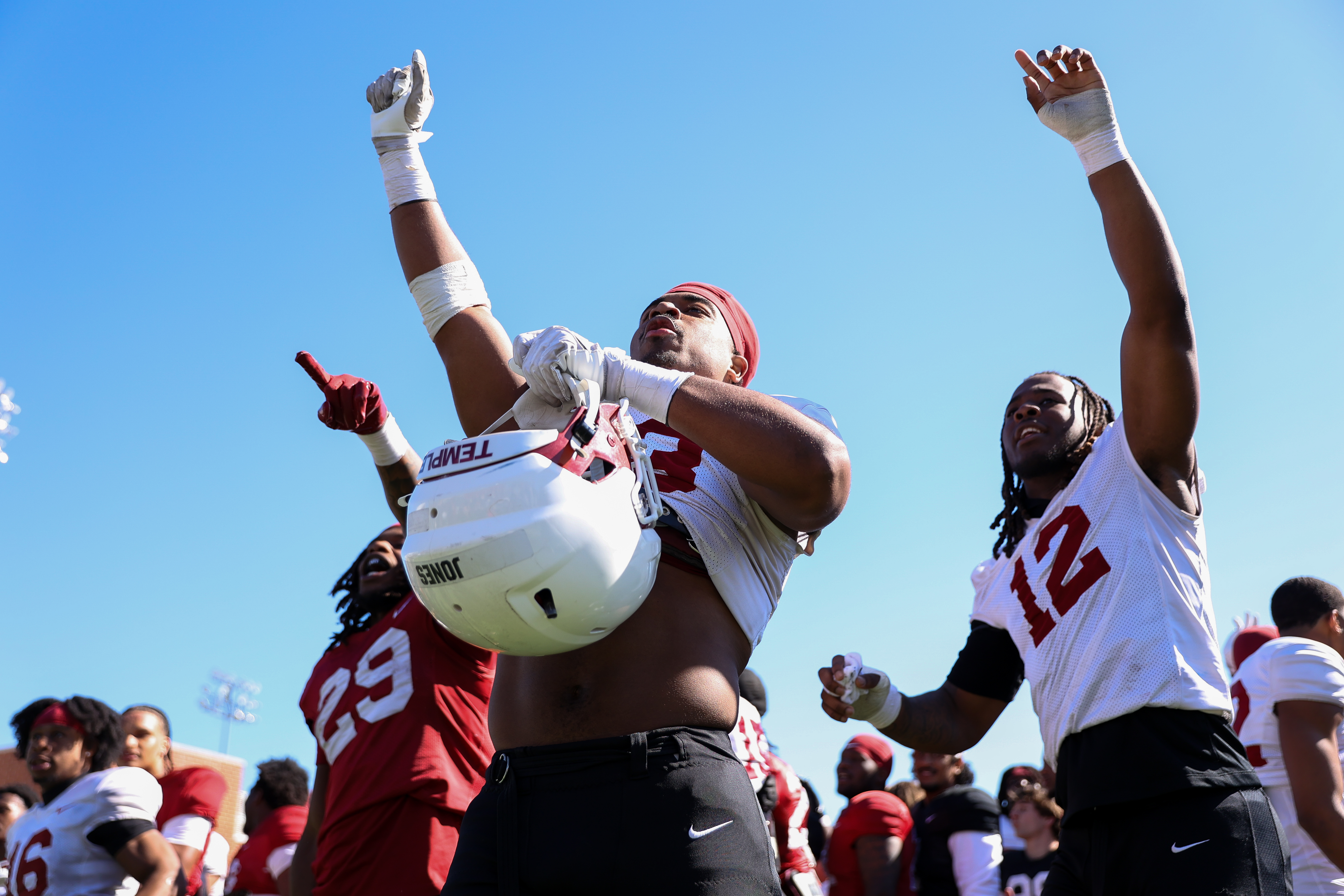
Temple linebacker Reggie Jones (center) and cornerback Denzel Chavis cheer after last spring’s Cherry and White Spring Game at Edberg-Olson Hall.Isaiah Vazquez / For The Inquirer
Building a following
Jones attended Maryland’s DeMatha Catholic High and hoped to play college basketball. But he stopped growing as a high school junior.
“I wasn’t about to be a point guard,” said Jones, who is 6-foot-1.
Jones played football at DeMatha but didn’t take it seriously until his senior year. By then, it was too late to earn a college scholarship. Temple offered him a chance to walk on, which meant he would be on the hook for his tuition and had slim chances of seeing the field. Jones took it.
He came to Temple with 20,000 social media followers, building a following making silly videos during high school. A friend told Jones he should start making football videos. Soon, he started making some money and signed with an agent, who helped him connect with more sponsors. He wasn’t playing on the football team, but his videos were finding an audience.
“Of course I’m a walk-on on the team, but there’s a lot of walk-ons in life,” said Jones, who is on track to graduate in May with a degree in sports and entertainment management. “You know what I mean? Everyone is an underdog. I’ve been an underdog my entire life. For some reason, I always got put in the position where people looked down on me and I always made them eat their words. You have people who are looking for ways to get out of that funk and I think that’s why my story has resonated with so many people.”
His “Road to One Tackle” videos showed him practicing, lifting weights, and hitting the tackling sled. But Jones is a content creator so there was a video this summer of him dancing after practice, struggling to take his pads off, and purchasing a seltzer water that sponsors him. His videos – some of which have more than 100,000 views – are more than just football.
Video: K.C. Keeler is building Temple football around ‘love and trust’
“I can’t even look at Instagram and TikTok anymore like a normal person,” said Jones, who simply shoots his videos with his iPhone. “I’m constantly looking for ideas. Most of the time, I get my ideas from non-football-related ideas. I then connect them to football. I’ve learned from making content that you can’t go straight to football, football, football because they won’t resonate with everyone. Then I put a football twist on it.”
The first tackle
Jones called his girlfriend Gabby Linden last month after he learned he was going to play in Temple’s season opener. She started crying and told Jones to call his parents. They started screaming.
“My parents paid for school,” Jones said. “They saw me grind day in and day out to play college football and they were so excited.”
The Owls were well ahead on Saturday against Rhode Island when the team’s linebackers coach told Jones that he was going in. Jones said he was flooded with emotions. He almost quit football a season earlier and now he had a chance to make a tackle in an NCAA game. His girlfriend, who he met his first semester at Temple, was in the crowd. So were his parents.
“My heart dropped to my ankles,” Jones said. “This is the opportunity I’ve been waiting for.”
The first play was a handoff, Jones rushed to the line of scrimmage, and found the ball carrier. He did it. Jones pointed a finger to the sky and cried as his teammates roared from the sidelines. But there wasn’t much more time to celebrate. Rhode Island was in a hurry-up offense and Jones had to get ready for another play.
“I had to lock back in,” Jones said.
But that was OK. There was plenty of time afterwards for Jones to create content. He filmed the scene in the locker room as he danced with his teammates and had someone take a picture of him holding a piece of paper with “1” on it as a nod to Wilt Chamberlain after his 100-point game. It was a great moment. And it was also great content.
Temple linebacker Reggie Jones (center) and cornerback Denzel Chavis cheer after last spring’s Cherry and White Spring Game at Edberg-Olson Hall.Isaiah Vazquez / For The Inquirer
“As soon as I took the picture, everyone jumped me at once,” Jones said. “It was so cool. I’m glad I was able to do that with my teammates. You know when someone in your family does something good and the whole family celebrates? It was just like that. A big family celebration because they knew how much work I put in and they were so proud that I actually did it.”
Rubber Band Gun’s ‘Bloodwork’: More musical gems from Historic New Jersey
Kevin Basko has a suggestion: Music might make everything better.
“If you don’t know what to do because you’ve never been this sad before,” Basko sings. “You don’t feel those problems when you’re singing the songs you love.”
That lyric about music’s comforting and healing power is from “Songs You Love,” the closing track on Bloodwork, the winning new album by Rubber Band Gun, Basko’s primary vehicle for the many, many songs he loves to write.
It’s been a good year for Historic New Jersey, the label that — somewhat confusingly — is based in South Philadelphia and whose emergence is one of the most heartening indie rock stories of 2026.
Basko and his Historic NJ pals Emily Moales, who records as Star Moales, and sibling act Sam and Louise Sullivan have been producing a steady stream of retro-leaning but wholly in-the-moment high-level songcraft for a few years now.
Emily Moles (center), known as Star Moles, passes a guitar to longtime collaborator Kevin Basko inside the Historic NJ studio in South Philadelphia on Friday, July 10, 2026.Aidan T. Gallo / Staff Photographer
Since the spring, the national and international music press has caught wind of what makes Historic NJ special, praising the warmth and camaraderie that comes through on Star Moales’ Highway to Hell and the Sullivans’ Love & Devotion.
Now, it’s Basko’s turn. Rubber Band Gun’s Bloodwork, like all of the other Historic NJ projects, was recorded and produced at Basko’s home studio in South Philly, with Moales and the Sullivans contributing musically and vocally.
The newest of the dozens of streamable releases on Rubber Band Gun’s Bandcamp page showcases Basko’s canny, inviting songwriting. Tunes like “Love Me Dawg” and “Money on My Mind” consistently offer subtle surprises and are never merely clever, even when Basko is punning on Rihanna and Rage Against the Machine lyrics while singing about feeling out of place in America in “Zombie in the Country.”
— Dan DeLuca
Julia Baccellieri as Joice Heth in “Strange Root, or the Murder of P.T. Barnum by Joice Heth.” Elizabeth Wellington
A Fringe Festival performance gives agency to enslaved member of P.T. Barnum’s 19th-century circus troupe
In 1835, showman, businessman, and politician P.T. Barnum bought an elderly enslaved woman, Joice Heth, from a Kentucky enslaver, added her to his circus, and falsely claimed she was George Washington’s 161-year-old nursemaid.
His advertisements described her as weighing 46 pounds and being blind and toothless — supposed evidence of her extreme age.
To reinforce the trope of the frail, subservient, illiterate Black person, Barnum insisted she use a poor, Southern dialect to regale the audience with stories about her relationship to Washington.
Heth died in 1836 at 80 and Barnum even exploited her in death, charging circusgoers 25 cents to see her dead body, an experience he marketed as a public autopsy.
Baccellieri doesn’t portray Heth as a weak woman beaten down by her circumstances. Instead, they use dance trapeze, aerial apparatus, Chinese pole, and hula hoops to give Heth power, agency, and beauty.
The music is contemporary and soulful, weaving in Nina Simone’s jazz with Kendrick Lamar’s bars. Baccellieri dons a clown mask during the performance. They affix it as the audience listens to Maya Angelou read Paul Laurence Dunbar’s 1896 poem “We Wear the Mask,” which speaks to Black Americans’ dual consciousness.
Alston’s portrayal of Barnum as a buffoon gives voice to the stupidity of racism, speaking truth to power: Racists who refuse to see the evil in their actions will cause their own demise.
Strange Root is short — it runs under 45 minutes — but it’s powerful.
“Tejedora (Weaver)” from Puebla, Mexico, artist Ivette Chaires is on view at Philadelphia’s Magic Gardens as part of her solo show, “Living Through Death,” through Nov. 8.Rosa Cartagena
Skeletal spectacles
South Street’s Magic Gardens are often packed with tourists and fans walking through the outdoor mosaic labyrinth of mirrors, glass bottles, clay sculptures, and ceramic tiles lovingly built by South Philly legend Isaiah Zagar. Inside, though, the building hosts rotating exhibits from other artists; currently on view is “Living Through Death” from Puebla artist Ivette Chaires, who spent time working in Philadelphia as part of the Julia Zagar Residency for Women Artists.
Using papier-mâché, Chaires crafted 36 skeletal figures in the Mexican tradition of cartonería, often seen during Día de los Muertos celebrations. Her skeletons are strikingly animated, decked out in funky modern clothing and thick-rimmed glasses or posing cheekily. There’s a Frida Kahlo figure and an Edgar Allan Poe — and a football fan with an Eagles cap. Several works depict the Zagars, like one with Isaiah and Julia wearing colorful mosaic outfits. The show debuted five months after Zagar died, making it a powerful tribute to his legacy.
Each delightfully spooky sculpture contains incredible layers. Tejedora (Weaver) features a bony woman bending over a loom attached to a tree trunk on one end and wrapped around her waist on the other. The details are so carefully crafted, from her twisted belt to her intricately woven gold earrings. Nearby stands a sweet little chicken with a living head and a dead underbelly. It was a fascinating, fully-formed scene that accomplished Chaires’ goal — for the viewer to feel deeply connected to the dead.
“Living Through Death: Works by Ivette Chaires” is on view through Nov. 8 at Philadelphia’s Magic Gardens, 1020 South St., Philadelphia, 215-733-0390 or phillymagicgardens.org.