Austin Turnbull loves the idea of making necessary improvements in an older home but retaining its true character.
He found Philadelphia to be fertile ground for such projects and fell in love with the city despite his original intent to stay only a few years. He renovated and sold a house in Fairmount and now plans to sell his home in Graduate Hospital so he can do it a third time in Rittenhouse.
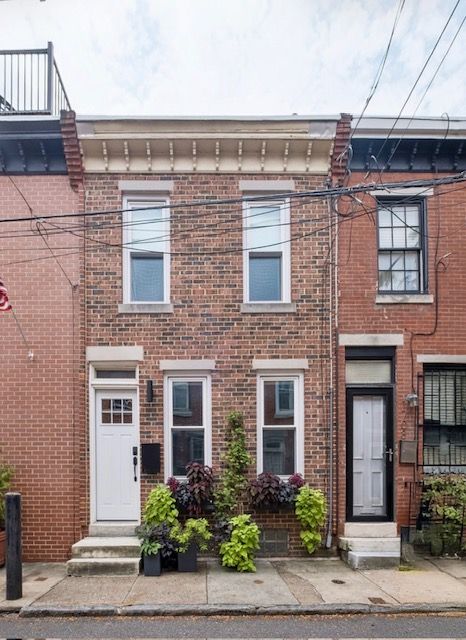
The exterior of the house at 1706 Webster St. in the Graduate Hospital neighborhood. Powelton Digital Media
“I like the concept of being a steward of history,” said Turnbull, a nurse, who does some of the work himself — “painting, demolition, light plumbing, stuff like that” — while contracting out larger jobs like electrical.
The kitchen has granite countertops.Powelton Digital Media
Turnbull bought the 874-square-foot Graduate Hospital house in 2022, struck by, among other things, a staircase going up the center of the two-bedroom, 1½-bathroom home. Plus it was close to his work.
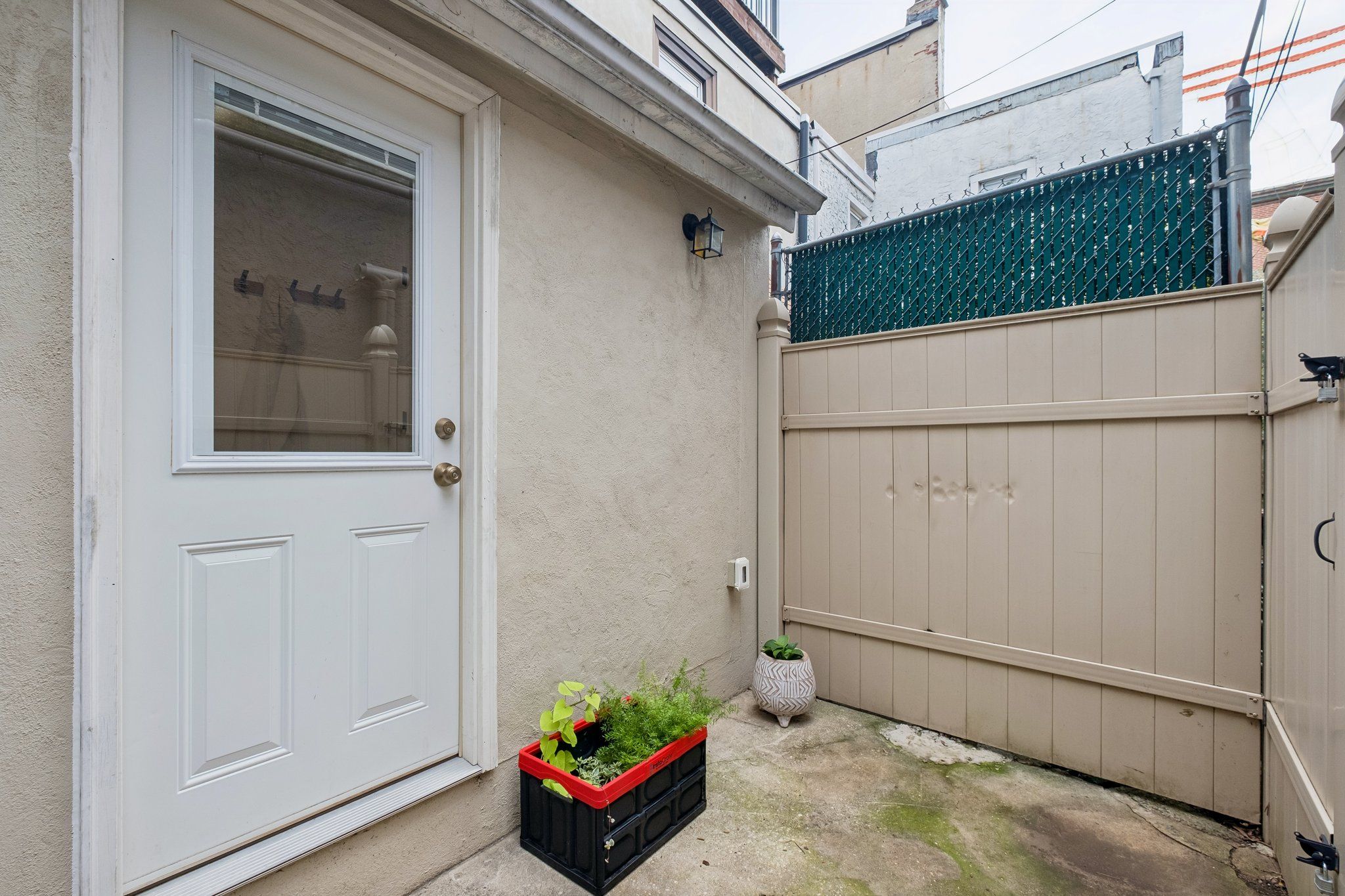
The first floor has an open layout with the living room and a kitchen with granite countertops, a laundry room, a half-bathroom and the door to a back patio and barbecue area.
The second bedroom, which is being used as a TV and entertainment area.Powelton Digital Media
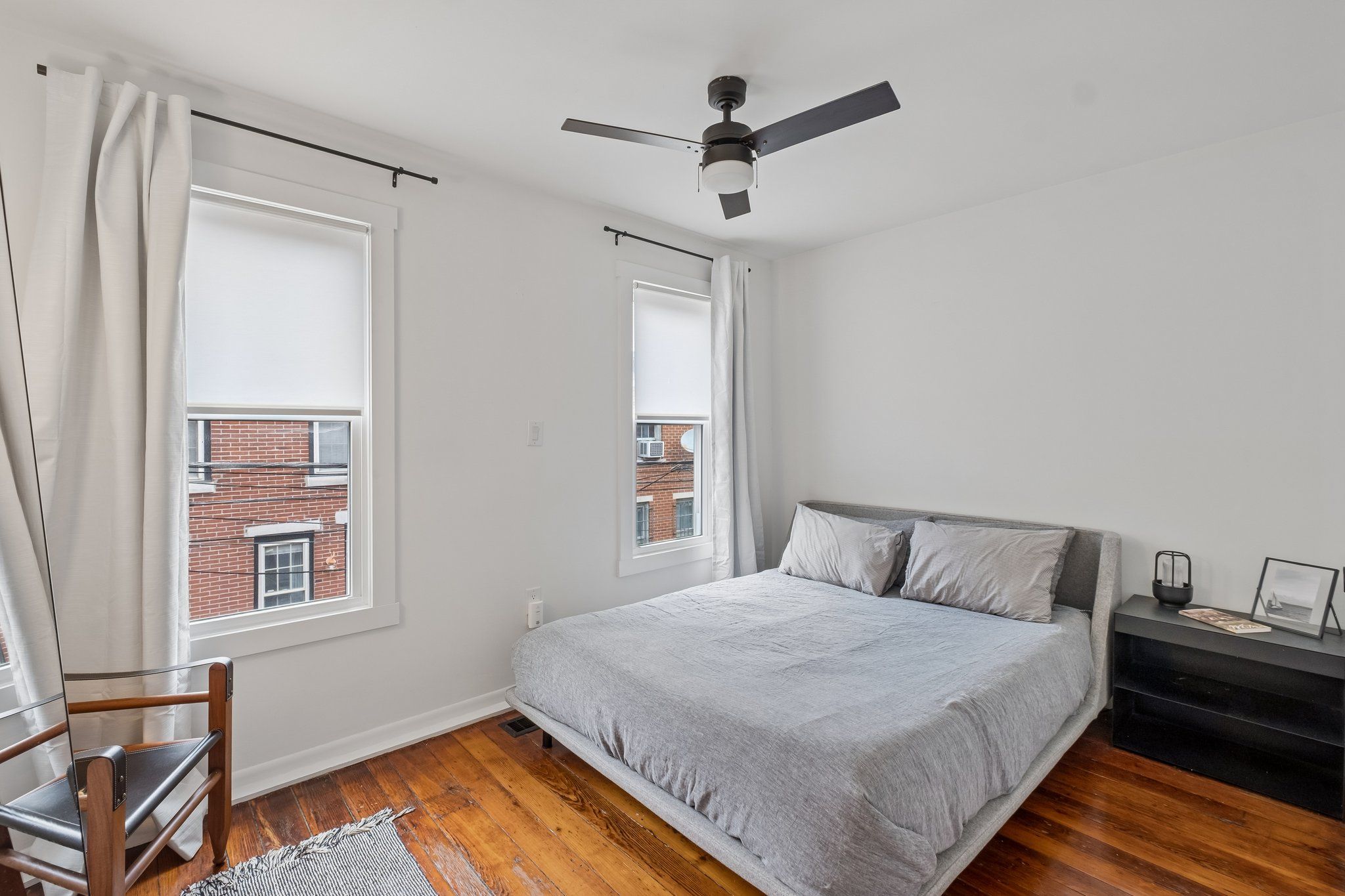
The second floor has the bedrooms, conjoined by a Jack-and-Jill bathroom with a claw-foot tub. Turnbull has used the second bedroom as a TV and entertainment area.
The primary bedroom.Powelton Digital Media
The house has an unfinished basement with storage space.
It is a walkable distance from Rittenhouse Square and Schuylkill River Trail and an easy commute to University City.
It is listed by Pamela Rosser-Thistle of BHHS Fox & Roach at the Harper Rittenhouse Square, for $485,000.
The back patio of the house.Powelton Digital Media
Lorianne Moore always wanted to run her own business.
Two years ago, after decades in the corporate world, Moore began to think about opening a storefront in her home community of Havertown. She and her husband, Joe Singer, kicked around the idea of a coffee shop or gift store, something people were really “looking for,” Singer said.
When Moore brought her small-business dreams to Jeanne Angell, executive director of Discover Haverford, Haverford Township’s economic development organization, Angell said she knew exactly what Havertown needed.
Consumer data collected by Discover Haverford at the time had found that residents’ number one desire for the community was a local bookstore.
Moore, a “voracious reader,” figured her “love of reading and her passion for that would align awesomely with what the town was looking for,” Singer said. Moore Books opened in September 2024 and has since become a hub for readers, writers, and shoppers in one of Havertown’s core commercial neighborhoods.
“I don’t know if we would have landed on bookstore without Discover Haverford, but once [Moore] started talking with them, it just made sense,” said Singer, who’s now the bookstore’s manager and events coordinator.
The data that guided the opening of Moore Books was part of Discover Haverford’s biannual consumer surveys, which poll residents on the state of the local economy and help provide a framework for recruiting businesses to town, a partnership Angell said is exemplified in Moore Books’ story. Understanding what consumers want, Angell said, gives proprietors important information as they consider opening a brick-and-mortar business, a venture that can be economically risky, especially for small-business owners.
Discover Haverford’s newest survey, published in July, has given officials a fresh round of data regarding consumers’ vision for the community’s future. Sowhat do Haverford Township residents want most? Recent data points toward a desire for family-friendly businesses, communal spaces, and a revitalized streetscape.
What do Haverford residents want?
Discover Haverford conducted its biannual consumer survey in July, gathering data from 601 respondents about what types of businesses they’d like to see and how they feel Haverford Township’s commercial experience can be improved.
When it came to grocery and retail options, nearly 60% of respondents expressed a desire for a multi-vendor marketplace, and nearly 80% said they’d like to see an indoor farmers market.
On restaurants, 71% were interested in a bakery, 67% in a family restaurant, 63% in a Greek restaurant, and 57% in a BYOB restaurant.
When it comes to non-retail businesses, respondents also showed an interest in movie theaters, concert venues, and day spas.
(function(){function e(){window.addEventListener(`message`,function(e){if(e.data[`datawrapper-height`]!==void 0){var t=document.querySelectorAll(`iframe`);for(var n in e.data[`datawrapper-height`])for(var r=0,i;i=t[r];r++)if(i.contentWindow===e.source){var a=e.data[`datawrapper-height`][n]+`px`;i.style.height=a}}})}e()})();
Angell said she’s long heard residents ask for a multi-vendor market, a desire that falls in line with the growing appetite for “third spaces,” or communal places to socialize that aren’t work or home.
“I think people do need that, a place to feel that community,” Angell said.
She noted, however, that a multi-vendor market is “a very difficult thing to recruit for,” requiring a large space and considerable funding. A local movie theater is another feat Angell said is difficult to pull off due to space constraints.
(function(){function e(){window.addEventListener(`message`,function(e){if(e.data[`datawrapper-height`]!==void 0){var t=document.querySelectorAll(`iframe`);for(var n in e.data[`datawrapper-height`])for(var r=0,i;i=t[r];r++)if(i.contentWindow===e.source){var a=e.data[`datawrapper-height`][n]+`px`;i.style.height=a}}})}e()})();
How else should Haverford Township create a more vibrant business community?
Numerous respondents raised concerns over traffic safety. Some said the township needs more walkable town centers, safe bike lanes, and pedestrian crossings.
Some said parking inconveniences and costs deter them from shopping in Haverford Township, while others said older storefront facades need to be revitalized to beautify the township’s commercial strips.
This suburban content is produced with support from the Leslie Miller and Richard Worley Foundation and The Lenfest Institute for Journalism. Editorial content is created independently of the project donors. Gifts to support The Inquirer’s high-impact journalism can be made at inquirer.com/donate. A list of Lenfest Institute donors can be found at lenfestinstitute.org/supporters.
Clarification: The story has been updated to clarify the survey’s location.
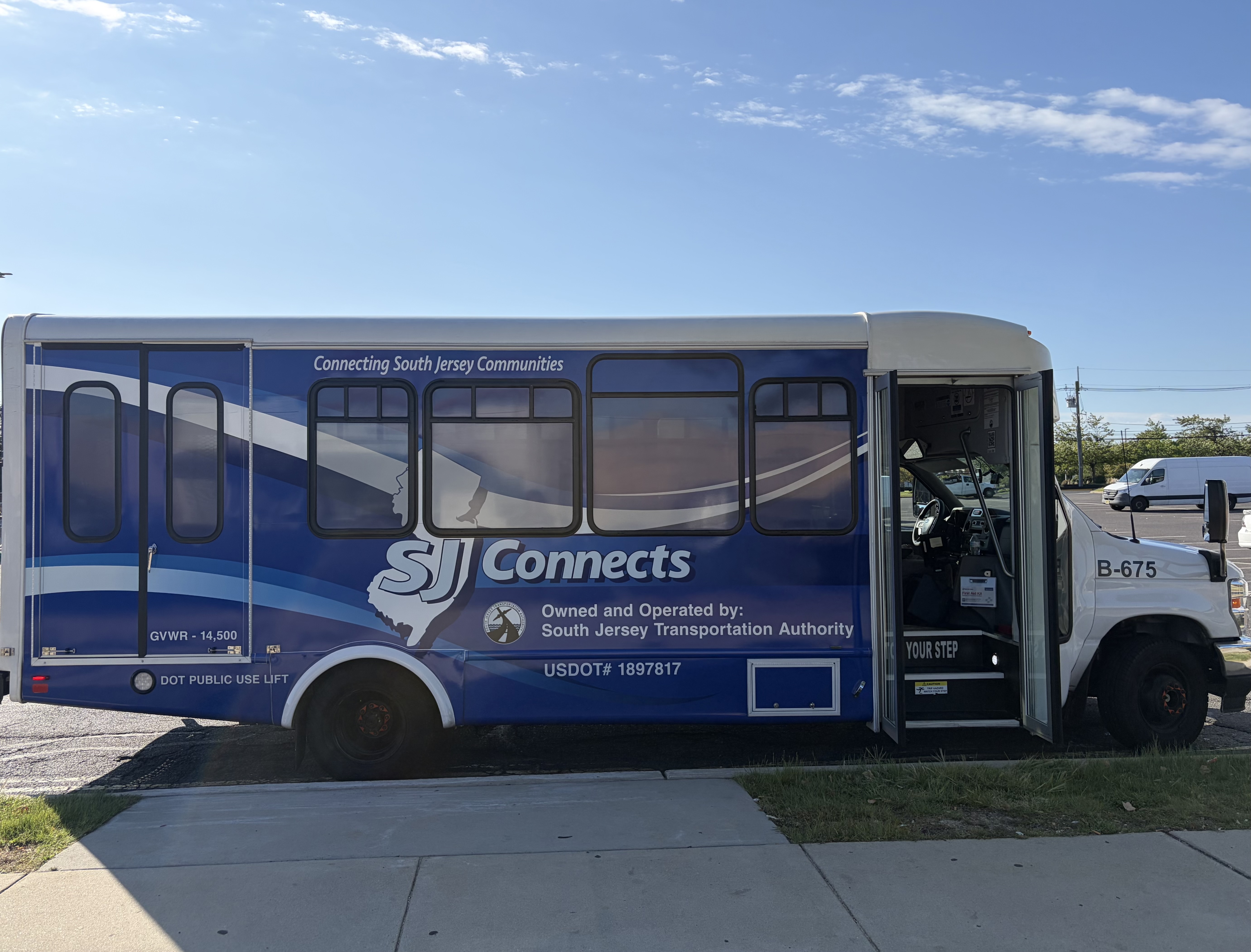
Some Burlington County residents might see an unfamiliar blue shuttle bus on the roads next week as the region welcomes its first new public transit option in more than two decades.
The new route will officially start service on Sept. 21, the last of six new shuttle lines that form SJ Connects, a free bus service run by the South Jersey Transportation Authority (SJTA). The first five lines were launched on June 1 while the transportation authority worked to get formal authorization to operate in the county.
Together, the shuttles can take riders from Cape May Court House to as far north as Palmyra with connections to other shuttles, SJTA routes, NJ Transit lines, and more sprinkled throughout.
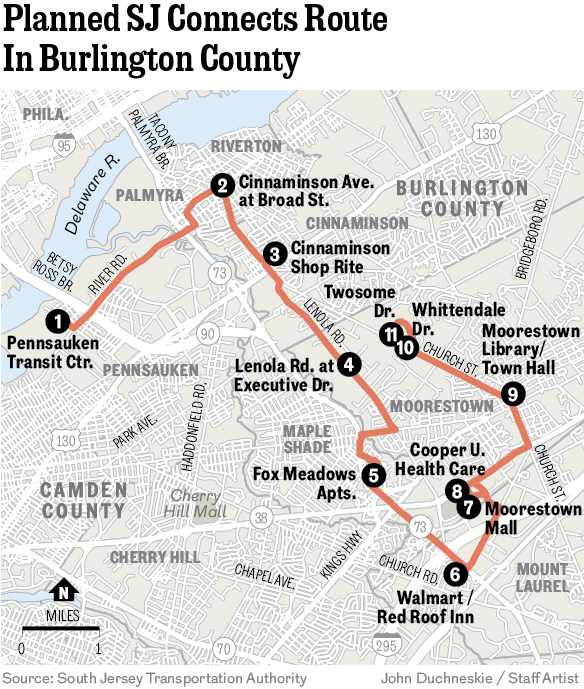
Though the newest route is called the Burlington County Shuttle, it technically begins over the Camden County line at the Pennsauken Transit Center before concluding 10 stops later at Twosome Drive and Church Street in Moorestown.
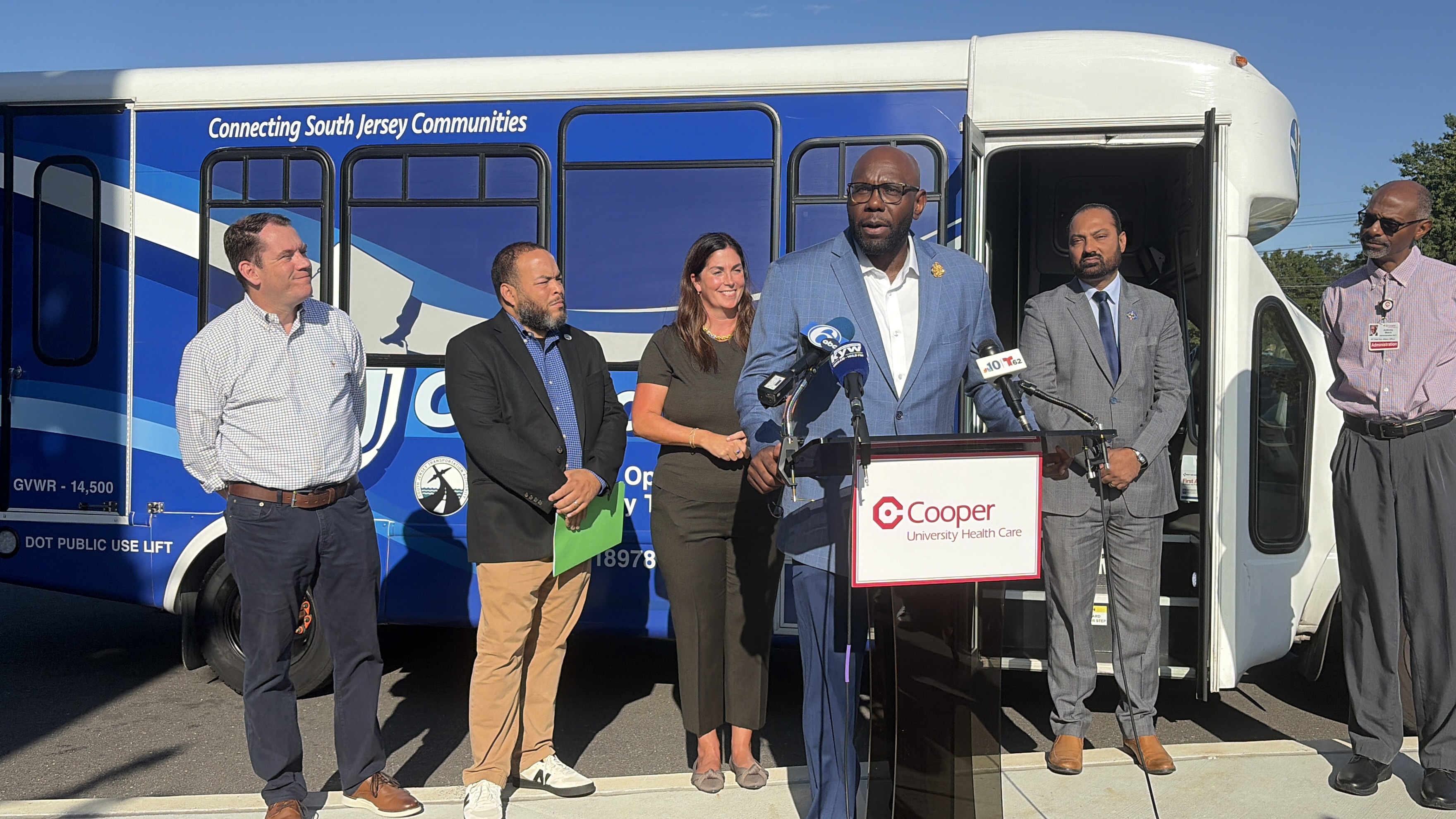
Along the new route, up to 20 riders per bus can hop on or off at various locations including the Cinnaminson ShopRite, Fox Meadow Apartments in Maple Shade, or at Cooper University Healthcare’s Moorestown Mall location.
Stretching from early morning to late evening, the shuttles will make a total of five visits to each of the stops along the route throughout the day.
The first shuttle leaves from the Pennsauken Transit Center at 7 a.m. with the final drop-off scheduled for 8:11 p.m., according to the SJTA schedule. A full schedule for the Burlington County shuttle is available online.
SJ Connects received $5 million in state funding from former Gov. Phil Murphy’s administration for an 18- to 24-month trial run to boost transit services in the region.
Map of planned SJ Connects route in Burlington County.John Duchneskie
The investment was secured in part thanks to the efforts of state Sen. Troy Singleton, a longtime Burlington County resident who called the county “the crown jewel of South Jersey.”
“Burlington County is the largest county by land mass here in New Jersey and being able to connect what was a lot of former farmland to economic and educational opportunities is critically important,” Singleton said during a ride-along of the new route Monday.
“We know that there’s enormous economic opportunity here in South Jersey as it connects to Philadelphia and connects to other parts of New Jersey so continuing that investment is one of my responsibilities that I take really personal,” he said.
Many of the stops along the SJ Connects routes were chosen to help South Jersey residents travel between medical centers, educational institutions, and other areas of interest, said Stephen Dougherty, SJTA’s executive director.
The Burlington County Shuttle will begin service on Sept. 21, 2026.Lacey Latch
The half-dozen routes include stops at multiple Cooper and Inspira locations in addition to the region’s various community colleges and universities. The routes also have stops located at or near large employers, Dougherty said, including Logan Township’s Pureland Industrial Complex, the second largest industrial park east of the Mississippi River.
“We know that these routes are crucial — based on the nature of what these stops are — to people’s everyday lives,” Dougherty said.
Now that all six of the SJ Connects shuttles are ready for riders, local leaders are simply asking South Jersey residents to hop on for a ride.
The more demand there is for this service in Burlington County, the more likely it will be for legislators to get state funding to keep the rides free and create more routes in the future, Singleton said.
“My hope and my ask of the public is to utilize this free resource — their tax dollars coming to their benefit — in order for us to try and expand it even more,” Singleton said.
After Sunday’s season-opening win over the Washington Commanders, Fox sideline reporter Erin Andrews used an analogy in her postgame interview with Jalen Hurts to describe the Eagles’ ever-changing offense each year.
Given the regular turnover at offensive coordinator, Hurts is required to learn how to drive a “different car” every year, she said.
But Hurts has a different perspective on the situation.
Hurts has been the constant — the car, so to speak — for the last six seasons. It wasn’t Sean Mannion’s new-look offense that put the Eagles over the edge against the Commanders — rather, Hurts’ traits that have been evident throughout his tenure as the starter took center stage. His ability to make something out of nothing with his legs and push the ball downfield came in clutch when the Eagles needed momentum-shifting plays.
But is a reliance on the quarterback’s ability to take over a game a sustainable way to win every week?
Here’s what we know (and what we don’t) about the Eagles heading into Week 2 against the Tennessee Titans:
The Eagles offensive line will be under the microscope in Nashville. David Maialetti / Staff Photographer
Running on empty
Since his arrival in Philadelphia, Mannion has preached the importance of the marriage between the run and the pass, much like other disciples of the West Coast offense.
It takes two to make any relationship work, and on Sunday, the run game struggled to gain ground.
Saquon Barkley didn’t have much room to operate, an issue that plagued the rushing unit last season, too. According to Next Gen Stats, Barkley was hit at or behind the line of scrimmage on seven of his 15 carries. He rushed for a total of 83 yards, 78 of which came after contact (thus, just 5 before contact). He also forced five missed tackles.
A running back’s ability to pick up yards before contact isn’t on the offensive line alone, but its struggles in the season opener were well-documented.
Cam Jurgens was flagged twice for holding on Barkley carries. Landon Dickerson was often deficient both as a run and pass blocker, and he was placed on the injured reserve list Monday. Five of Barkley’s 15 carries went for negative yardage (including one penalty), which in part prevented the Eagles offense from sustaining a rhythm throughout the entire game.
Video: Immediate takeaways from the Eagles’ offense under Sean Mannion
There were some highlights. Barkley had an explosive 42-yard run on an inside zone call, highlighted by Jurgens redirecting Commanders linebacker Leo Chenal into cornerback Amik Robertson at the line of scrimmage to spring the running back.
They got the outside zone game going at times, too. Barkley ran for 6 yards on an outside zone call late in the first quarter, but he appeared to leave meat on the bone. Instead of hitting the edge, he initially attempted to cut upfield inside of DeVonta Smith, who was blocking on the perimeter.
It seemed like Barkley was trying to avoid Commanders safety Jeremy Reaves, who shed a block from Dontayvion Wicks inside of Smith. But as Barkley bounced outside, he tripped over Smith’s leg.
The Eagles will need more from the run game going forward, especially if they want to take some of the pressure off Hurts. Was Week 1 a sign of the struggles to come on the ground, or can the group rebound?
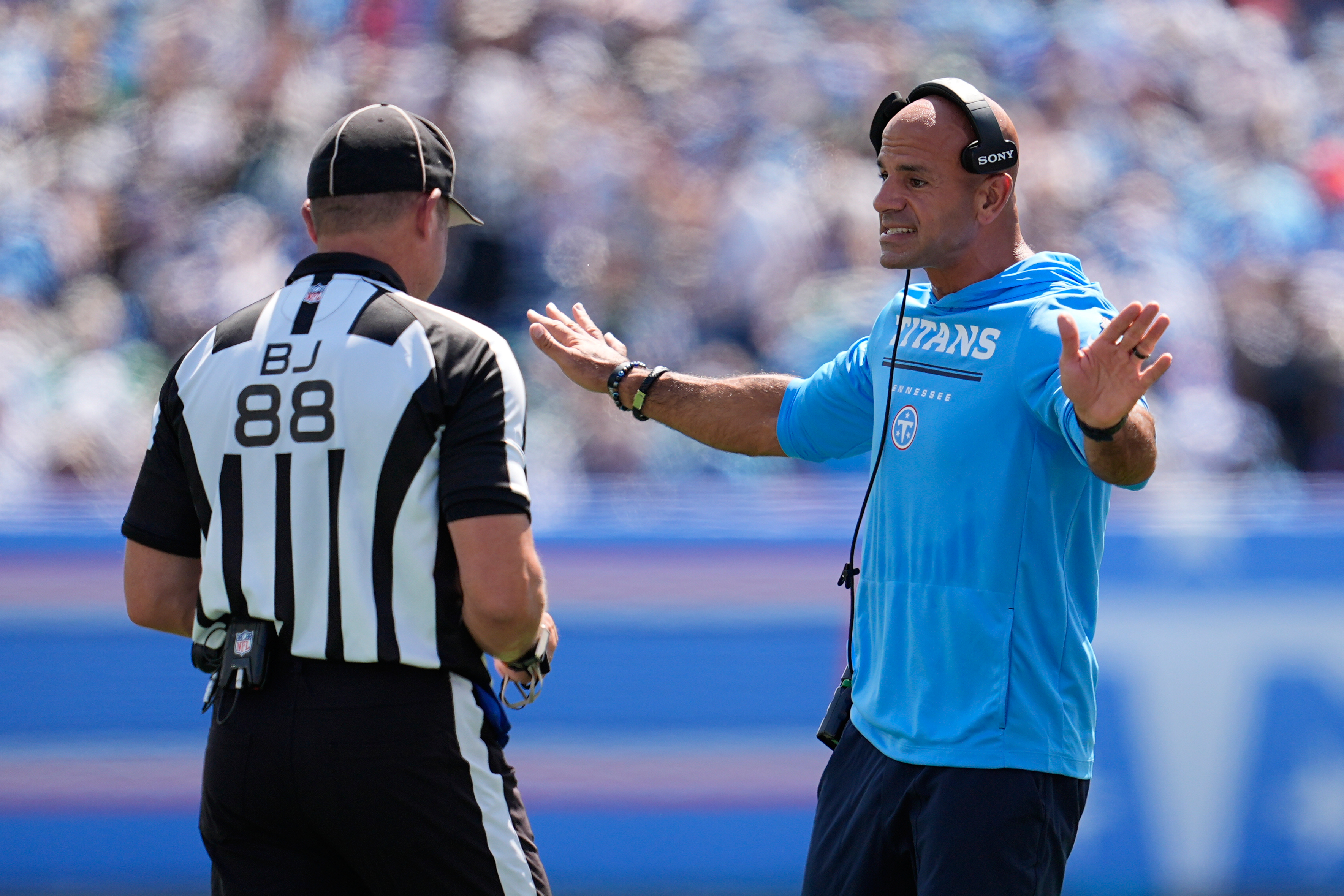
Robert Saleh’s debut in Tennessee was kind of a mess. George Walker IV
Titan down
Fortunately for the Eagles, the Titans are up next on their schedule.
It’s a new era in Tennessee under head coach Robert Saleh, but the Titans — who went 3-14 last season — suffered the same lousy results in their Week 1 outing. The team fell 23-10 to the New York Jets, although it was 23-3 until the final three minutes of the game.
The Titans defense is headlined by defensive tackle Jeffery Simmons, who was the highest paid at his position for about a month until Jalen Carter signed his extension before the start of training camp.
Pro Football Focus credited Simmons with a team-high three pressures, but the entire defensive front was essentially neutralized by the Jets offensive line. Jets quarterback Geno Smith was only hit once, and he didn’t take a sack. Smith had 3.04 seconds to throw, according to Next Gen Stats, which ranked seventh most among starting quarterbacks in Week 1 before Monday night’s game.
The group wasn’t any better in run defense. They conceded 152 yards and two touchdowns on 39 carries, with Jets running back Breece Hall leading the way with 102 yards and a touchdown on 22 attempts.
The Eagles should expect the Titans to adjust in Week 2. But can they exploit some of their weaknesses, particularly on the ground?
Cam Ward (1) extended some plays against the Jets, but to little avail. George Walker IV
Weary for Ward
For as lackluster as the Titans defense was in their season debut, the offense was even worse.
Cam Ward, the 2025 No. 1 overall pick out of Miami, was 19-for-32 for 140 yards and a touchdown (80.2 quarterback rating). Take out the garbage-time scoring drive, though, and Ward went 13-for-24 for 85 yards.
He was under siege often. According to PFF, Ward saw pressure on 16 of his 39 dropbacks (41%), completing just 5 of 10 passing attempts for 33 yards on those plays. Titans rookie right guard Fernando Carmona was particularly susceptible to allowing pressure, conceding two hurries and one hit in his regular-season debut.
The Eagles generated pressure on Jayden Daniels on Sunday, as he was pressured on 16 of 38 of his dropbacks (42.1%). In those circumstances, he completed just two of his passes on 12 attempts for 17 yards. But just like last season, the Eagles defense struggled to finish, with Jihaad Campbell notching the lone sack of the afternoon.
Given the Titans’ struggles up front, the Eagles defense could fare better in the sack column in Week 2.
Additionally, Ward is no Daniels, but he does have an ability to extend plays and scramble. He had 21 scramble yards on four attempts against the Jets. The Eagles gave up 29 scramble yards to Daniels, including a 13-yarder late in the third quarter that helped set up Stefon Diggs’ touchdown in the fourth.
About two to three times a week, Ryan Richter will sit in front of reporters in the bowels of Subaru Park. His hair will be neatly combed to the side, his hands folded in front of him, with his shirt buttoned to the very top.
The Union’s interim head coach will calmly discuss the game ahead, or the game just played, answering questions as anyone else in his position would. But every now and then, those watching from his hometown of Southampton, Bucks County, have to laugh.
In some ways, this version of Richter is just like he was as a kid: driven, focused, thoroughly prepared. But aesthetically, it is completely different. Richter, a three-sport athlete at William Tennent High School, was captivated by NBA culture growing up, particularly Allen Iverson.
He’d wear a headband during basketball games. He pierced both ears. He’d drive around Bucks County in a white Kia, with an enlarged Jumpman logo on its hood, and Sixers jerseys covering its seats.
À la Shaquille O’Neal, Richter would give himself nicknames: “Shaq Daddy,” “Shaq-Daddy-Licious,” “Ric-Daddy-Docious.” Those monikers are long gone, but that side of Richter isn’t.
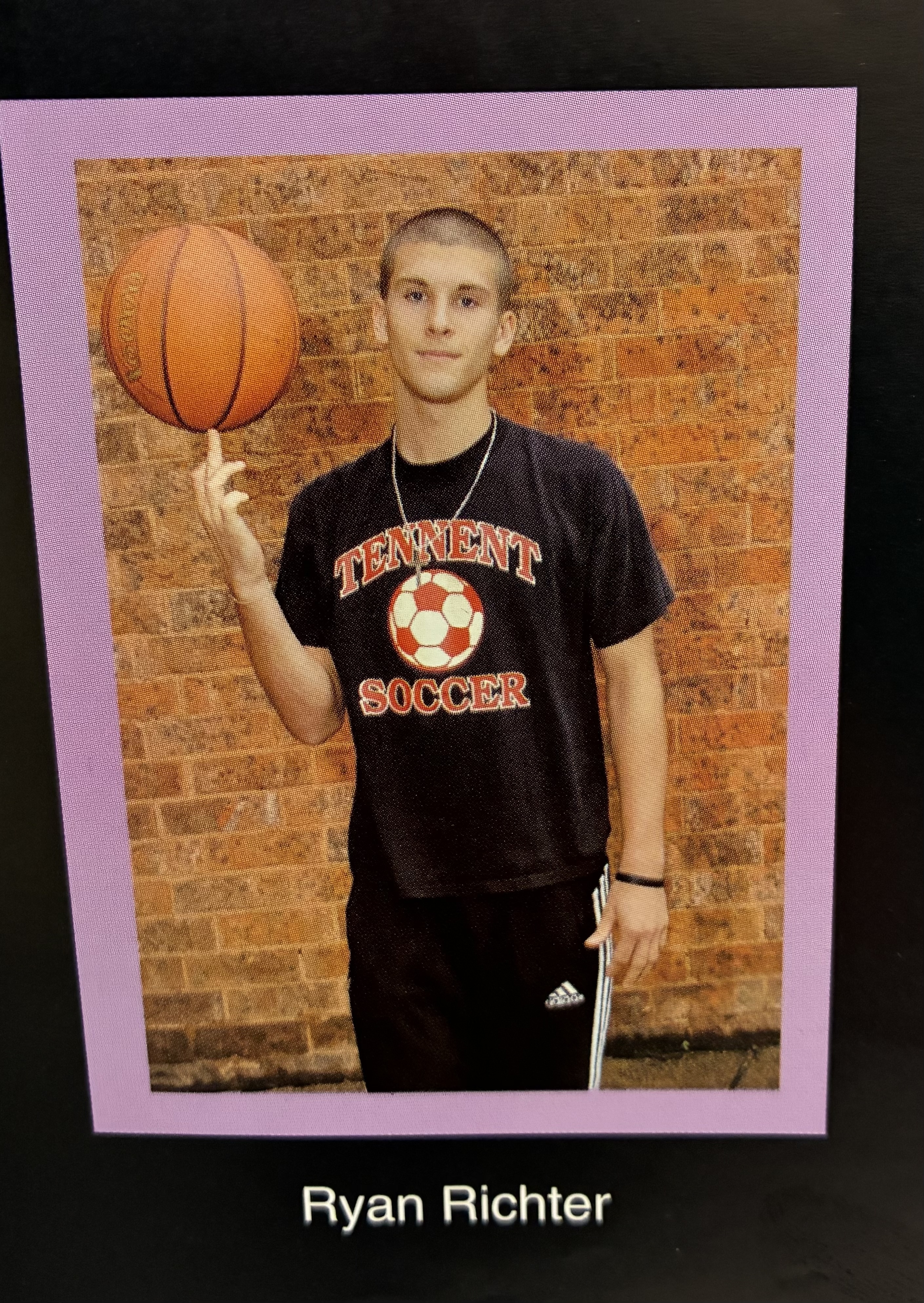
Ryan Richter was a three-sport athlete at William Tennent High School, who parlayed his talents into a pro soccer career and now an interim role as the Union’s head coach. Courtesy / William Tennent H.S.
“It’s like, I’m still listening to Get Rich or Die Tryin’ when I’m driving into work,” Richter said. “You know?”
His high school basketball coach, Glenn Dolton, called this a “paradox.” Beneath the panache was a teenager who was confident, but not cocky. Hard-working, but also light-hearted, with a self-deprecating sense of humor.
Treating pro soccer as a profession wasn’t a main goal. Richter was always immersed in the sport — his dad played at The College of New Jersey, back when it was known as Trenton State, and his grandfather played for a team in Warminster — but he also played basketball and football through high school.
The Sixers were Richter’s favorite team, and Iverson his favorite player. Richter was in the building for Game 5 of the 2001 Eastern Conference semifinals, when The Answer dropped 52 points, and returned for the Eastern Conference finals against the Milwaukee Bucks.
Before he was the Union’s interim head coach, Ryan Richter was the Atlantic 10 Player of the Year at La Salle University.Courtesy / La Salle Athletics
A La Salle graduate, Richter was drafted by his hometown MLS team in 2011, began coaching for them in 2018, and has gradually worked his way up since.
Now, the 37-year-old is at the helm, leading the Union from the worst record in the league to playoff contention. At the time of this report, the club hasn’t lost a league game under his watch. Players say the energy in the locker room has changed for the better.
The soccer world might be surprised. But Southampton isn’t.
“He knows what it takes to get the job done, and he does not like to lose,” his childhood best friend, Mike Pio Jr., said. “And, I mean, that’s pretty evident with how they’ve been doing so far.”
Some people hate losing more than they love winning. Richter says he’s the opposite, and has been that way since he was a child.
He was competitive not just on the field, but in everyday life. If he was playing a game of Connect Four, he’d want to crush the opposition. He and his friends would hang out at the local youth center to jump into hotly contested pickup hoops games.
Once, the teenagers joined an adult bowling league. They were the youngest members by about 20 years, but that didn’t quash Richter’s spirit.
“The competitiveness was also there,” Pio said. “I think everybody else in that league was probably old enough to be our fathers.”
A formative moment came in his freshman year of high school. Richter tried out for the junior varsity basketball and soccer squads, and failed to make either team. He got to work, and by sophomore year, made varsity in both sports.
Ryan Richter (center) didn’t make the varsity team his freshman year at William Tennent. The next season, he made varsity in both soccer and basketball. Courtesy / William Tennent H.S.
But he never forgot the feeling of being passed over — or the names of the students who passed him.
“He still reminds me of that occasionally,” Dolton said, “that I should have brought him up. Which, looking back on it, I’m like, ‘Yeah, you may have a good point there.’”
Coaches loved Richter, because he’d push his teammates as hard as he’d push himself. If a fellow athlete wasn’t hustling enough, he’d pull him aside or ask a higher-up to step in.
Pio’s father, Mike Pio Sr., experienced this firsthand when he worked as an assistant soccer coach at Tennent.
Video: Union interim manager Ryan Richter not satisfied with landing in a playoff spot
“He expected his teammates to basically bleed the way he bled,” Pio Sr. said. “Even during practice, he would call people out.”
Teenagers didn’t always love being challenged, but Richter had an affability which allowed him to break through. He was athletically gifted on the field, but didn’t take himself too seriously or act like he was better than anyone else.
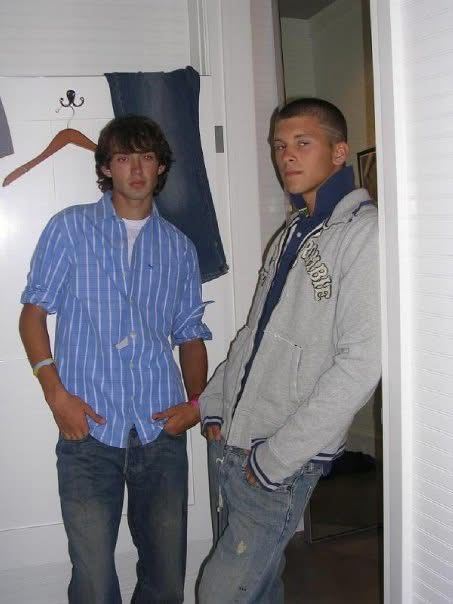
The hood-sized ode to Michael Jordan was evidence of this. So was a photo that Richter took with Pio Jr. when they were in high school. The two friends were at the Willow Grove Park Mall, in an Abercrombie and Fitch dressing room.
Before he was the Union’s interim manager, Ryan Richter (right) was a three-sport athlete at William Tennent High School, with an affinity for NBA culture and swag.Courtesy / Mike Pio
Images of models adorned the walls, and Richter and Pio Jr. wondered how easy that work must be.
So, they tried it themselves, posing for a photograph that still hangs beneath a magnet on Pio Sr.’s refrigerator door.
“It was like they were posing for GQ magazine,” Pio Sr. said. “Hilarious.”
The teenager would set up silly challenges, like singing the national anthem before a basketball game, despite the fact that he was not musically inclined. And physical challenges, like improving his vertical so he could dunk in a game.
Richter stood at 6-foot, but had smaller hands, which made it difficult to palm the ball. But he was determined. In a game against Abington, he finally got the moment he’d been waiting for.
“He threw one down, and it was like the place exploded,” Dolton recalled. “It was like the greatest thing that ever happened. It was really funny.”
Union interim manager Ryan Richter starred on William Tennent’s varsity basketball team.Courtesy / William Tennent H.S.
Richter was recruited by several nearby soccer programs: Temple, Delaware, and Iona. But he ultimately chose La Salle because of its coaching staff.
Head coach Pat Farrell’s rules were rigorous, but aligned with Richter’s already sky-high expectations. He noted that Farrell pushed him, personally too.
“It was just the things that he emphasized,” Richter said. “About taking responsibility, about being a man and taking care of your school stuff, and staying out of trouble.
“He’s not a guy of so many words, but he was just a father figure for everybody.”
Before he was the Union’s interim head coach, Ryan Richter was the Atlantic 10 Offensive Player of the Year at La Salle University.Courtesy / La Salle Athletics
Richter upped his work ethic to a new level in college. The striker showed up to practice an hour-and-a-half or two hours early. He’d train with the Ocean City Nor’easters, a USL League Two team, to stay in shape during the offseason.
When he returned in the fall, he’d be ready for more. And by 2011, he was en route to a professional career.
“He would say, ‘Do you want to do some extra [shooting], or do you want to do some skill work,’ like ball work and things like that,” Farrell said. “And we could never say no.”
Richter’s playing career with the Union was brief — only making an appearance in two international friendlies and 10 reserve league matches — but his time as a coach there has spanned nearly nine years.
After playing professionally for seven years, Richter was hired by the Union in 2018 to work at their academy, serving in various development roles.
In 2022, he was promoted to assistant coach of the Union, under then-head coach Jim Curtin, and in 2025, was named head coach of the Philadelphia Union II.
Ryan Richter has held several roles within the Union, including former head coach of the club’s developmental team, Union II. Jonathan Tannenwald / Staff
When Bradley Carnell was fired in late May, after a league-worst record of 1-10-4, and replaced with Richter, many current players were already familiar with him.
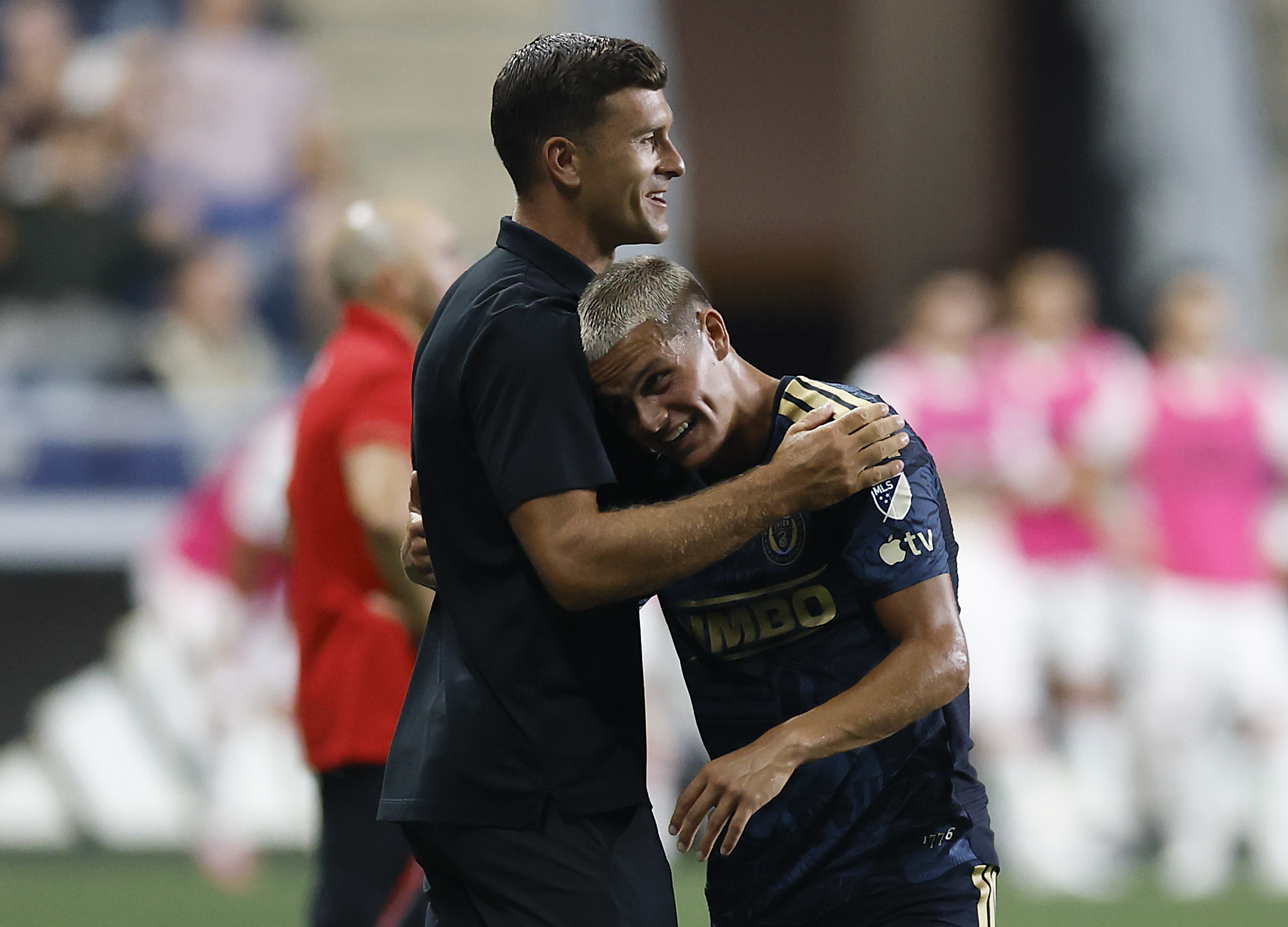
The Southampton native had coached Cavan Sullivan since he was 8. Outside back Frankie Westfield had never played for Richter, but knew him through regular games of teqball and basketball with his teammates at the Academy.
Centerback Neil Pierre started his season on a six-month loan to a team in Denmark. When he returned in July, he wasn’t sure what he’d find.
He’d heard from teammates that the locker room was “losing its head.” But with Richter already having an established relationship with multiple players, it helped make Pierre’s immersion back into the squad smooth.
“We were going through a tough time,” Pierre said. “I guess it wouldn’t be the same upbeat attitude. People wouldn’t be as into the culture. Kind of lost that ‘Philly’ mindset. And I think when [Richter] came back, he just brought it back.”
Ryan Richter (left) greets Union midfielder Quinn Sullivan during a recent match.Elizabeth Robertson / Staff Photographer
Richter’s Bucks County tendencies are never too far. He has been known to challenge other coaches on the basketball court. He is still a massive Sixers fan, and gleefully shared the news of LeBron James coming to Philadelphia after a Union practice in July.
But perhaps the biggest way his upbringing shines through is in his approach to younger players. Sullivan is only 16, but a teenage phenom who is bound for Manchester City when he turns 18.
In an Aug. 19 match between the Union and Inter Miami, Sullivan defended his brother, Quinn, after defender Ian Fray stepped over him and pushed his head down.
Cavan ran over, and got in a scuffle that instantly became the story of the game. He received a red card (later rescinded).
Got to protect your own brother.
Cavan Sullivan and Yannick Bright were given red cards.
Cavan Sullivan and Richter talked about the incident two days later. The head coach told him that he did nothing wrong, but to remember that he draws scrutiny like nobody else on the roster.
And that if he does act up, it’ll become international news.
“I always try to keep in mind of where some of the younger guys are at, and remember what I was like,” Richter said. “When I was 16, I was driving around with a Jordan logo on my car, and who knows what kind of trouble I was getting in.
“That’s why I think Cavan is such an amazing kid; because of the pressure that he has to deal with, and the spotlight that’s always on him. Could you deal with that when you were 16?”
Richter, seen here with Union teen midfielder Cavan Sullivan, says he tries to remember himself at a young age in order to keep his players, many of whom are still in their teens, focused on the team’s mission.Yong Kim / Staff Photographer
Learning soccer on the fly
Richter’s friends did not grow up diehard soccer fans. Like most Philadelphians, they are all-in on the Eagles and the Phillies; maybe some basketball and hockey, too.
His new role has served as a teaching moment for everyone. Last month, a group of Southampton natives went to Subaru Park for a game against Atlanta United. They were stunned by what they saw: Union goals in 96th and 97th minute, en route to a 3-2 comeback win.
“They’re like, ‘Soccer is amazing!’” Richter said. “It’s like, ‘This is a one-in-a-thousand game that you guys saw tonight.’”
Nevertheless, the head coach’s buddies have since tuned into to every press conference and every match, home or away. They’ve been filling his group chat with lots of “DOOP” and other words of encouragement.
Ryan Richter says his approach is solely game by game and isn’t taking too much stock in the success the Union have had since he took over as interim manager. Isaiah Vazquez / For The Inquirer
They’re also provided some friendly, albeit superstitious, advice.
“One of our buddies just texted this morning,” Pio Jr. said “He goes, ‘I changed my mind. I don’t think they should remove the interim tag, because you’re doing way too good with it.’”
Richter’s friends have ninemore games to learn; maybe more, if the Union make the playoffs. But regardless of how this season ends, his community will continue to be proud of him.
A local kid, who once patrolled Bucks County, is now patrolling the sidelines of Subaru Park — and doing a good job, at that. The headband and earrings may be gone, and so is the White Kia.
But somewhere, beneath his outward professionalism, is that same Iverson-loving teenager; better known not as Ryan Richter, but as a “licious” or a “docious.”
The Atlantic 10 track and field outdoor championships have long represented the end of the competitive season for many college athletes.
But for St. Joseph’s, the 2026 A-10 championships in Fairfax, Va., weren’t just the end of another season, it was the end of a chapter.
Senior Lily Ferguson’s 5.40-meter finish in the women’s long jump final on May 2 at George Mason Stadium was the final jump for St. Joe’s.
The jumps program, which was part of the St. Joe’s track and field team, started its phase-out process in the 2023-24 season, when athletes were notified of the eventual end of the program, three former Hawks told The Inquirer. Following the 2025-26 season, after the remaining three jumpers in the program, Ferguson, Logan Henry, and Cameron Campbell-Miller graduated in May, the program was terminated, the trio said.
“When it came to jumps, you can clearly see it was almost like we were more freelance than being a part of the team,” Campbell-Miller said.
With two full seasons ahead of him after learning this news, Campbell-Miller said he became “a lot more school-oriented,” and focused on taking advantage of the time he had left to get involved in other programs and opportunities. By the time he finished his jumping career, Campbell-Miller said he felt more detached from the team than ever before.
The group of jumpers remained close, though its size dwindled each year. By the end of their senior year, Campbell-Miller said the three remaining jumpers “were [their] own little family.” The rest of the team, he said, remained supportive, but ultimately still separate.
In the 2022-23 season, Yvonne Harrison and Brian Hirshblond were coaches for sprints, jumps, and hurdles. Following that season, no coach was listed as a jumps specialist.
“The head coach, if you talk to even the [coaches] below him, they didn’t jump when they were in high school. They didn’t really work with jumps beforehand,” Campbell-Miller said. “You could tell they would try. They’re trying their best with everything that they’re doing, and I give them kudos for that.”
St. Joe’s head coach Mike Glavin specializes in cross country and distance events, while assistant head coach and recruiting coordinator Chris Tarello coaches the middle distance group. Assistant coach David Reick focuses on sprints and hurdles.
Luke Noss, a fellow senior who competed in long sprints and hurdles, saw the events unfold from a different perspective but also noticed the coaching being spread thin.
“When you have 30 to 35 sprinters and you only have three jumpers, it’s a little hard to give the jumpers what they need, just based on numbers,” Noss said. “As a coach, you’re going to give the people that’s your biggest group of people the biggest chance of scoring the most time, so it was definitely, I guess, in one word, just an afterthought for the jumpers these past few years.”
Joel Maxcy, a sports business professor at Drexel said, in his broad understanding, there were a lot of factors that could have led to the decision.
Track and field isn’t a revenue sport or one that garners widespread attention like basketball. The House v. NCAA settlement, which came after the decision but imposed roster limits of 45 athletes for men and 45 athletes for women implemented in the 2025—26 academic year, likely only reaffirmed it.
“Probably, they looked at the costs and benefits of this and said, ‘The cost of either hiring a new coach or now complying with the house rules don’t make jumps worth it to us anymore. The cost of keeping jumpers is not worth the benefit of a somewhat more competitive and better track and field team,’” Maxcy said.
Ashwin Puri, the new athletic director at St. Joe’s, shared a similar sentiment about pouring resources into more competitive areas of the program in his written statement to The Inquirer about why the school decided to cut the program.
“Saint Joseph’s is committed to aligning its resources to best serve its mission,” Puri said. “In the current landscape of collegiate athletics, like many institutions across the country, that means focusing on areas of strength that allow our programs to flourish and set themselves apart. Saint Joseph’s track and field programs will continue to compete at the highest level and prepare student-athletes for bright futures both on and off the track.”
Ashwin Puri is the new AD at St. Joe’s.Steven M. Falk / Staff Photographer
Despite the program’s deterioration over the seasons, Campbell-Miller said that when he started at St. Joe’s in 2022, the jumps program was a big contributor to the team’s success at meets.
At that time, Patrick Fehm, who finished his career as one of the program’s best jumpers, was in his junior year. Fehm medaled eight times for St. Joe’s, including gold medals in the high jump at the 2023 A-10 indoor championships, at the 2022 IC4A outdoor championships, and at the 2024 IC4A indoor championships. He also won one silver medal and four bronzes.
Fehm was in his senior year when the future of the program was shared with the athletes. With one year of eligibility left because of COVID-19, that decision meant exploring other options for him. He completed his final year of eligibility at Tennessee.
Even though the decision altered his plans, Fehm said he felt worse for the jumpers coming up behind him in the program but understood what went into it as a nonrevenue sport at a mid-major school.
“To an extent, I can respect a little bit more, especially going forward, you want to recruit athletes and you want student athletes to be a part of the program or the thing they’re doing or specializing in, you want there to be consistency with the resources you’re getting,” Fehm said.
Patrick Fehm won eight medals during his time at St. Joe’s.SJU Athletics
However, Noss said the irony of the situation is that the only national champion at St. Joe’s came from the jumps program.
In 1991, Donna Crumety was the NCAA triple jump champion and remains the only athlete from the school to win a national title.
“We invest so much in our schools, in basketball, and field hockey, and etc., lacrosse,” Noss said. “Those are the big sports, but our only national champion is a triple jumper, and that program’s gone.”
Going forward, it’s unclear to the former athletes how this will affect the program’s ability to stay competitive. Without ever having throws and now cutting jumps, Noss said it’s not feasible to compete with bigger schools such as Rhode Island, Virginia Commonwealth, or George Mason that have an entire team.
Campbell-Miller said it could help with recruiting for sprints and distance runners with the focus on these athletes, but he ultimately thinks the lack of jumps and a full team can be harmful to the program.
“We have a more competitive track team than we’ve had in a very long time, both distance and sprints and hurdles,” Campbell-Miller said. “I feel like scoring may go up on the track, but without the jump scoring or that possibility points, I feel like where we’re going to be as a team will feel pretty stagnant, and we’re not going to be going, at least on the A-10 level, to where we want to be, so I think that hurts. Obviously, it was terrible for everyone who was here.”
Starting Thursday, Owen Tippett will begin preparations for his seventh full NHL season and fifth in Philly. For the 27-year-old, the memories aren’t always at the forefront, but now and then, a picture pops up and reminds him of his days skating as a kid in Toronto.
This is why the Flyers winger is also entering his third straight season serving as an ambassador for the Flyers Learn to Play Rookie Program.
“Obviously, that’s how a lot of hockey careers start, is in learn to play. Anytime you get a program that kind of helps out the way the Flyers do, it’s always nice to help them out when you can, and to have your name behind something like that means a lot,” said Tippett. His wife, Taylor, who also grew up playing hockey, is joining him as an ambassador.
“We all started out at that point, and I can still remember playing and learning how to skate, too. So to pay it back in any way is always special.”
Launched in 2017, the Flyers Learn to Play Rookie Program has introduced more than 6,700 kids to hockey. Last year saw a record-breaking 33% increase in registration and more than 200 girls participating.
Many of those girls first got a taste of the sport on World Girls Hockey Weekend, where young women can try hockey for free. This year, the weekend will be held Oct. 16-18 at the Flyers Training Center in Voorhees or Havertown’s Skatium.
“If you’re a kid that’s growing up playing hockey in this area, odds are you’re going to be a Flyers fan — we hope that’s the case — but we try and make sure that we’re always present in the rinks and in the hockey community, sort of at every step of development, so that they always feel that pull and they feel that connection to the Flyers,” Rob Baer, the team’s senior director of community relations and hockey development, told The Inquirer. ”It starts at the very beginning.”
The Flyers’ Learn to Play program costs $299 and outfits each kid from head to toe with equipment.Courtesy of the Flyers
To grow the game and make participating in the sport easier despite the steep cost, each player in the program gets outfitted from head to toe with hockey equipment — including skates and a bag to carry all the gear — a personal welcome message from the Tippetts, a certificate of completion signed by Owen, and the chance to meet Flyers alumni at select sessions.
This season, the program, which costs $299, will operate at 20 rinks across Pennsylvania, New Jersey, and Delaware. Families seeking financial assistance can apply for the 2026 Flyers Charities Scholarship.
On Monday, after wrapping up his own hockey session — he said he is “all good” and ready to go after missing the second round of the playoffs due to an internal bleeding issue and an unrelated sports hernia — Tippett met two graduates of the Learn to Skate program. Tessa Kobal, 7, from Voorhees, and 8-year-old Eleanor McDermott from Cherry Hill. Both were brand new to the sport this past spring.
“There was this birthday party; it was an ice skating birthday party, and I liked ice skating, so my parents signed me up for Learn to Skate, and I decided I wanted to do hockey, not figure skating,” said Eleanor, who, like Tessa, participated in a girls-only session of the Learn to Play program this spring.
“She hadn’t touched a hockey stick — we did skating — and then she said, ‘Well, I kind of like hockey,’” added Eleanor’s father, Travis McDermott. “Then Learn to Play came up and she did that once and [it was like], ‘Oh, yeah, tryouts are next week.’”
Without much preparation, Eleanor and Tessa each tried out and made the Philadelphia Liberties under-10 and under-8 teams, respectively. The Liberties are an all-girls hockey club based out of the Flyers Training Center.
The pair finished out the Learn to Play program, and now the dynamic duo is tearing it up on the ice in No. 1 (Tessa) and No. 99 (Eleanor) jerseys. Tessa is enjoying scoring goals — she also plays dek hockey and proudly recalled the time she scored four during a game in Medford. — and Eleanor, a speedy player who likes to play defense and already has a game under her belt, is excited to work on her crossovers.
“It’s great,” Tippett said about his involvement. “Obviously we’re super busy, and anytime you get the chance to, not only with this, but we’ve gone to children’s hospitals, and around the holidays we’ll do extra stuff. It’s an easy ask, and it’s an easy answer to say yes, to get out in the community and meet people.
“Obviously, [with] what we do, it’s nice to get a break and get away from the game a little bit and give back. The fans do so much for us, and the least we can do is be out in the community, showing how much we appreciate them.”
Owen Tippett’s wife, Taylor, played hockey growing up and is also heavily involved in the Learn to Play program.Courtesy of Flyers
More than 4,000 homes were built in greater Center City — defined by the business improvement district as the area from Girard Avenue to Tasker Street and from the Schuylkill to the Delaware River — between Jan. 1, 2025, and June 30. Over this period, more than 10,000 homes were completed citywide.
(function() { var l = function() { new pym.Parent( ‘cc-housing__graphic’, ‘https://media.inquirer.com/storage/inquirer/ai2html/cc-housing/index.html’); }; if(typeof(pym) === ‘undefined’) { var h = document.getElementsByTagName(‘head’)[0], s = document.createElement(‘script’); s.type = ‘text/javascript’; s.src = ‘https://pym.nprapps.org/pym.v1.min.js’; s.onload = l; h.appendChild(s); } else { l(); } })();
Greater Center City represents 6% of Philadelphia’s land area. But one in eight Philadelphians — more than 206,000 — lived there in 2025.
“It’s not an accident,” said Prema Katari Gupta, Center City District’s president and CEO. She said the area’s concentration of housing reflects deliberate policy choices, the development industry’s willingness to build there, and strong demand for walkable and transit-accessible communities.
“This matters for the whole city, not just for the downtown,” she said. “When Center City and the neighborhoods around it keep adding supply, it takes pressure off rents elsewhere.”
The city’s housing, especially downtown, “has been a source of strength and resilience since the pandemic and beyond and has allowed our city a recovery and renewal that I think a lot of other cities would envy,” she said.
Recent housing construction was spurred byCenter City’s flexible land-use code and developers’ desire to start projects before the full 10-year tax abatement for new construction ended.
And the area has the capacity for much more housing to be built, said Clint Randall, Center City District’s vice president of economic development.
“Center City still has the potential to continue to be this real engine of housing production for the city at large,” he said.
New homes built
Last year was the second-most productive year for housing construction this decade, behind record-breaking 2024. In 2025, 3,175 homes were completed, compared with 3,811 in 2024.
(function(){function e(){window.addEventListener(`message`,function(e){if(e.data[`datawrapper-height`]!==void 0){var t=document.querySelectorAll(`iframe`);for(var n in e.data[`datawrapper-height`])for(var r=0,i;i=t[r];r++)if(i.contentWindow===e.source){var a=e.data[`datawrapper-height`][n]+`px`;i.style.height=a}}})}e()})();
Since the start of Mayor Cherelle L. Parker’s administration in 2024, greater Center City has added more than 7,800 homes — 26% of the mayor’s goal to build or preserve 30,000 homes during her first term.
More than 1,300 homes currently have active construction permits in greater Center City.
Housing construction has slowed as interest rates remain elevated, costs for labor and materials remain unpredictable due to federal policies, and developers complete projects that were part of the flood of permits issued before the end of the full 10-year tax abatement for new construction.
Most of the housing construction in core Center City, defined as Vine Street to Pine Street, were units in office-to-residential conversions.
The L&I data used in Center City District’s report does not distinguish between homes built as rentals and those for ownership. But downtown, most homes constructed last year and the first half of this year were in multifamily buildings, where renting is common.
More housing supply helps moderate rent growth and keep wealthy residents from pushing into more affordable sections of the city.
Compared with downtown Boston, for example, core Center City added a higher share of apartments over the last decade, and rents didn’t grow as much. Rents grewmore slowlyin greater Center City than in Philadelphia and the region.
Future housing growth
Randall said “the most meaningful thing Center City can do” to make housing more affordable for residents “is just be a place where as much housing gets built as possible.”
Core Center City has a concentration of the city’s highest-density zoning districts, but many parcels don’t have as much housing as allowed or don’t have any housing, including surface parking lots.
Center City’s core could accommodate 15,000 to 25,000 more housing units in areas where construction is already allowed, according to Center City District.
The report says: “The density that makes certain pockets of Center City so vibrant and lively can be extended to underutilized and sometimes barren blocks, allowing more people to live in amenity-rich and walkable areas.”
The business improvement district celebrated recent legislation that eliminated parking minimums — a major cost barrier to development — in high-density mixed-use zoning districts.
Downtown demand
Core Center City’s population grew by roughly 5% in 2025, according to anonymized cell phone data from Placer.ai. In the zip codes immediately to the north and south, the population grew by just over 3%. By comparison, Philadelphia’s population grew by 1.7%.
Center City’s population density of more than 24,500 residents per square mile is more than double the citywide average density.
(function(){function e(){window.addEventListener(`message`,function(e){if(e.data[`datawrapper-height`]!==void 0){var t=document.querySelectorAll(`iframe`);for(var n in e.data[`datawrapper-height`])for(var r=0,i;i=t[r];r++)if(i.contentWindow===e.source){var a=e.data[`datawrapper-height`][n]+`px`;i.style.height=a}}})}e()})();
Households in greater Center City are smaller and make more money than households across Philadelphia or in the Philadelphia metropolitan area.
A Center City District survey of apartment residents last year found that 44% of respondents moved to Philadelphia’s downtown core from outside the region, and 41% moved downtown from other parts of the city.
Strong demand has helped fill the influx of homes that have hit the market in recent years. In core Center City, 92% of homes are occupied. In the zip codes directly to the north and south, 88% of homes are occupied.
For many, a quintessential South Jersey fall includes apple picking, a warm cider, and sugared doughnuts.
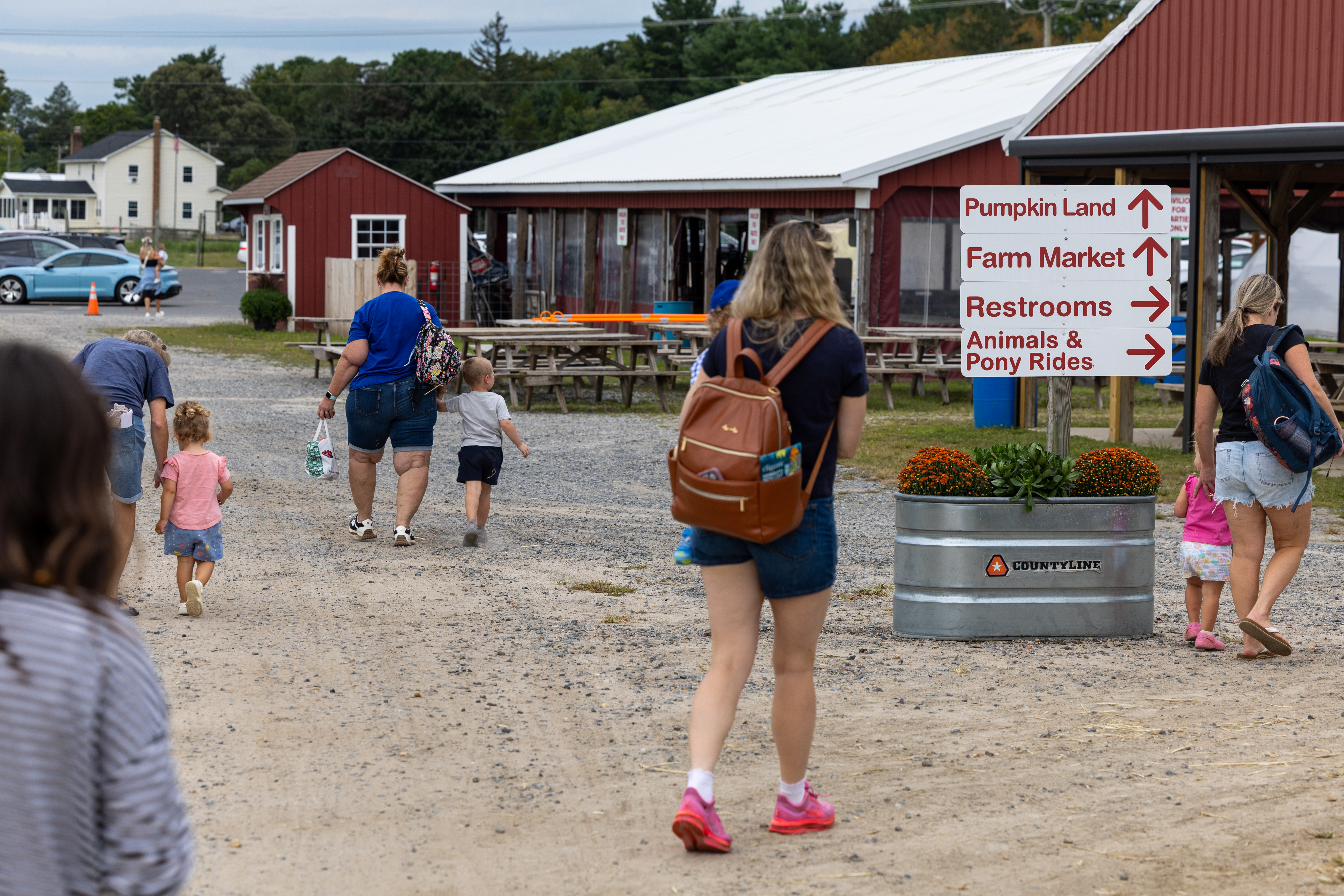
But fall in the Garden State might look a little different this year after a spring freeze left farms across the region with damaged apple varieties and huge crop losses — at least $300 million worth, Gov. Mikie Sherrill said in May.
At Russo’s Fruit & Vegetable Farm in Tabernacle, which typically attracts visitors for six weeks of picking, the apple cropwas decimated by the freeze. The farm had to purchase apples from a farm in New York to sell this year, the most local they could get.
Third-generation owner Joann Gsell, 59, said she won’t know the extent of their lost profit until fall is over, but the farmers are doing their best to fill in the gaps.
Russo’s staff planted sunflower fields and popcorn plants for picking instead, both new experiments, along with their usual pumpkins. Gsell planned new events, too, spread across the picking season to draw in more customers.
“Even if we get the same amount of customers coming out, the per-dollar sale won’t be what it was when apples were available,” Gsell said. “But we really don’t know until we’re past it.”
Jersey’s apple harvest season typically begins in mid-July and wraps up by the end of October, according to a report by the state Department of Agriculture, but local farmers, who are still recovering from a tough summer of sparse berries and higher prices, say the season will likely be much shorter and will rely on success in their pumpkin fields.
Still, fall must go on, farm owners say, starting with their apple festivals.
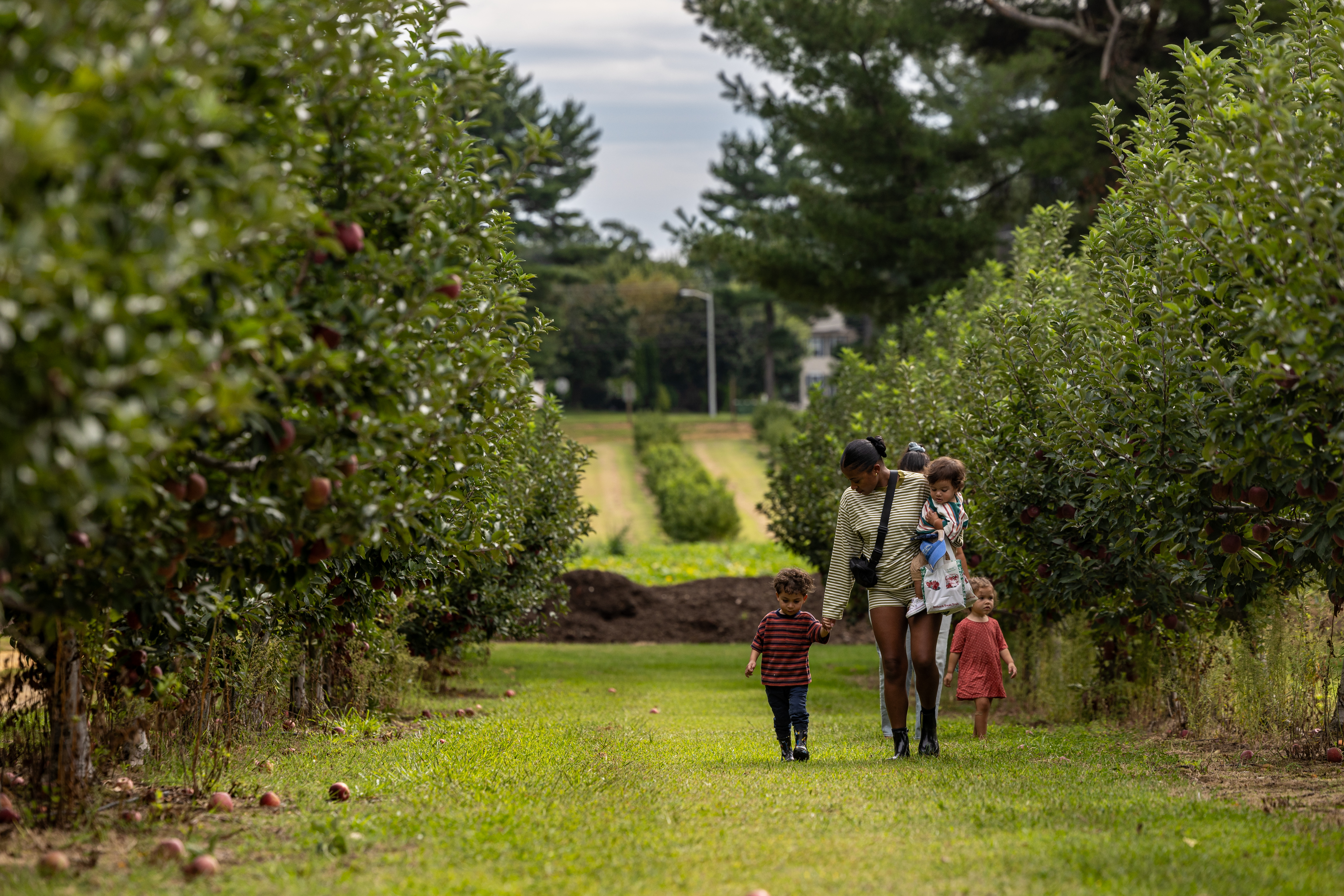
17-month-old Rome Imbesi bites into a big apple next to his mother Kristen Imbesi, 34, of Haddonfield, after picking apples at Duffield’s Farm.Aidan T. Gallo / Staff Photographer17-month-old Rome Imbesi bites into his apple.Aidan T. Gallo / Staff Photographer
‘Figure things out’
Tracy Duffield, who has worked at Duffield’s Farm Market in Sewell for four decades, said the Gloucester County farm had to push back the start of apple picking by a month.
The freeze killed Duffield’s early apple cropplanted in January, and with half its crop remaining, it’s uncertain how long picking will last this fall.
But that didn’t stop Duffield’s from hosting its annual Apple & Food Truck Festival on Saturday, featuring apple picking, pony and hayrides, and face painting. It’s the official launch of the farm’s apple season this year.
“I compare it to COVID. You have to get creative and figure things out,” Duffield said. “It is what it is. You just make the best of it.”
Calah Donato, 26, of Port Elizabeth, N.J., holds her son Neo, 1, while he picks an apple off an apple tree at Duffield’s Farm.Aidan T. Gallo / Staff Photographer
Duffield’s will still carry its beloved apple cider doughnuts this year, along with new apple-cider-doughnut-scented candles. But they did have to switch cider providers this year, buying from a Central Jersey-based farm instead of Mood’s Farm, 20 minutes away in Mullica Hill.
Mood’s is not making fresh cider this year, said co-owner Patti Mood, but they’ll have frozen cider from past apple seasons to get them through.
“We’ll just see how long it lasts,” Mood said. “We’re not sure what next year will look like.”
Kristine Duffield (center), the daughter-in-law of farm owner Tracy Duffield, hosts an apple-themed story time at Duffield’s Farm in Sewell on Friday, Sept. 11.Aidan T. Gallo / Staff Photographer
This fall, Mood’s doesn’t have enough quality apples to run its pick-your-own operation. At the farm’s own Apple Festival on Saturday, visitors gathered apples sourced from nearby states placed in bins in the orchard during discounted hayrides, instead of picking them off the trees.
Other farms have canceled their apple-picking operations this year. Neither Strawberry Hill Farm in Chesterfield nor Johnson’s Corner Farm in Medford have apples to pick.
Julian, who is two-and-a-half years old, makes a craft next to his grandmother Deb Carter, 69, of Washington Township, at Duffield’s Farm Market on Friday, Sept. 11.Aidan T. Gallo / Staff Photographer
Off the farm
Despite the shortage, apples are still being celebrated this year, on and off the farm. First Methodist Church of Moorestown is hosting its third apple festival on Sept. 18.
And Medford Historical Society will host its 47th annual Apple Festival on Oct. 10, their biggest fundraiser of the year.
Danny, 2, attempts to poke his sister Sosie, 4, with a piece of hay while being held by his great-grandmother Joan Ballah, 80, at Duffield’s Farm in Sewell on Friday, Sept. 11. The family is local to Sewell and comes to the farm often to participate in the farm’s activities and shop the farmer’s market.Aidan T. Gallo / Staff Photographer
Thomas Gerber, copresident of the historical society, said their usual supplier in Pennsylvania lost all their apples and couldn’t provide the 320 pounds needed for the festival, so they found a different farm in New Jersey.
Families wait to enter the hayride to pick apples out in the orchard at Duffield’s Farm in Sewell on Friday, Sept. 11.Aidan T. Gallo / Staff Photographer
Amy Zorn, an eighth-generation owner of Hunter’s Farm in Cinnaminson, said their farm market has been able to buy Jersey apples from other farms, but they’ve had to pay higher rates for smaller apples compared to previous years. She hopes customers continue to support their local farms through this year’s challenges.
“There are still Jersey fresh items out there,” she said. “You might not see as many apples, but there are fall squashes, sweet potatoes, and other things coming to Jersey. I encourage people to go out to their farmers markets.”
Families exit Duffield’s Farm after the apple-themed activities concluded on Sept. 11.Aidan T. Gallo / Staff Photographer
‘For the long run’
Mario Caltabiano, 31, has been farming since he was 6 years old. As the owner of MC Farms in Pilesgrove in Salem County, Caltabiano grows 14 varieties of apples, Asian pears, and several types of vegetables.
He said he’s used to freezes that take out large sums of fruit, but apples, “the hardiest things,” usually power through.
Caltabiano said one of his farms saw a total apple loss, and the other lost 90% of its crop. With about 20 apples clustered on each tree, and thousands of trees, Caltabiano said he’s not sure how long it’ll take the public to pick them all. Either way, Caltabiano has to continue to tend to the orchards to make sure the trees stay strong enough to produce fruit next season.
“This year, when fruit is 90% of your business, you have the same amount of bills. You have to take care of the trees to the very end,” Caltabiano said. “How do you make up for that?”
In recent years, MC Farms has ventured into the agritourism world, offering hayrides, barrel train rides for kids, cut-your-own flowers, and a wine garden settled in the orchards. Rising prices for fuel and fertilizer are still making work difficult, along with the destruction of most of his crops.
But Caltabiano said he plans to make it to next fall, and the one after that.
“I’m in it for the long run,” Caltabiano said. “I’m in it till I croak.”
Drew Kendall was talking last Thursday about his rise on the depth chart from a deep reserve last season to a primary backup for 2026, and the Eagles interior offensive lineman noted that nothing would really change.
Kendall, a fifth-round pick last year, got on the field for seven games last season. After a standout summer that had him cross-training at guard and center, Kendall said his game-day approach would be the same, though the chances of playing were much greater.
“I was usually the second guy in, but this year is different,” he said. “I’ll be the next guy in. So I’m just excited to be there for my guys if they need me and go out there and make sure we don’t skip a beat.”
It was hypothetical then, but four days later, it’s likely his job.
The Eagles are placing left guard Landon Dickerson on injured reserve, sources told The Inquirer on Monday, and Dickerson will miss at least the next four games with a knee injury. The veteran lineman struggled Sunday during the Eagles’ 24-22 win over Washington after a 2025 season that was marred by inconsistent play while battling through multiple injuries.
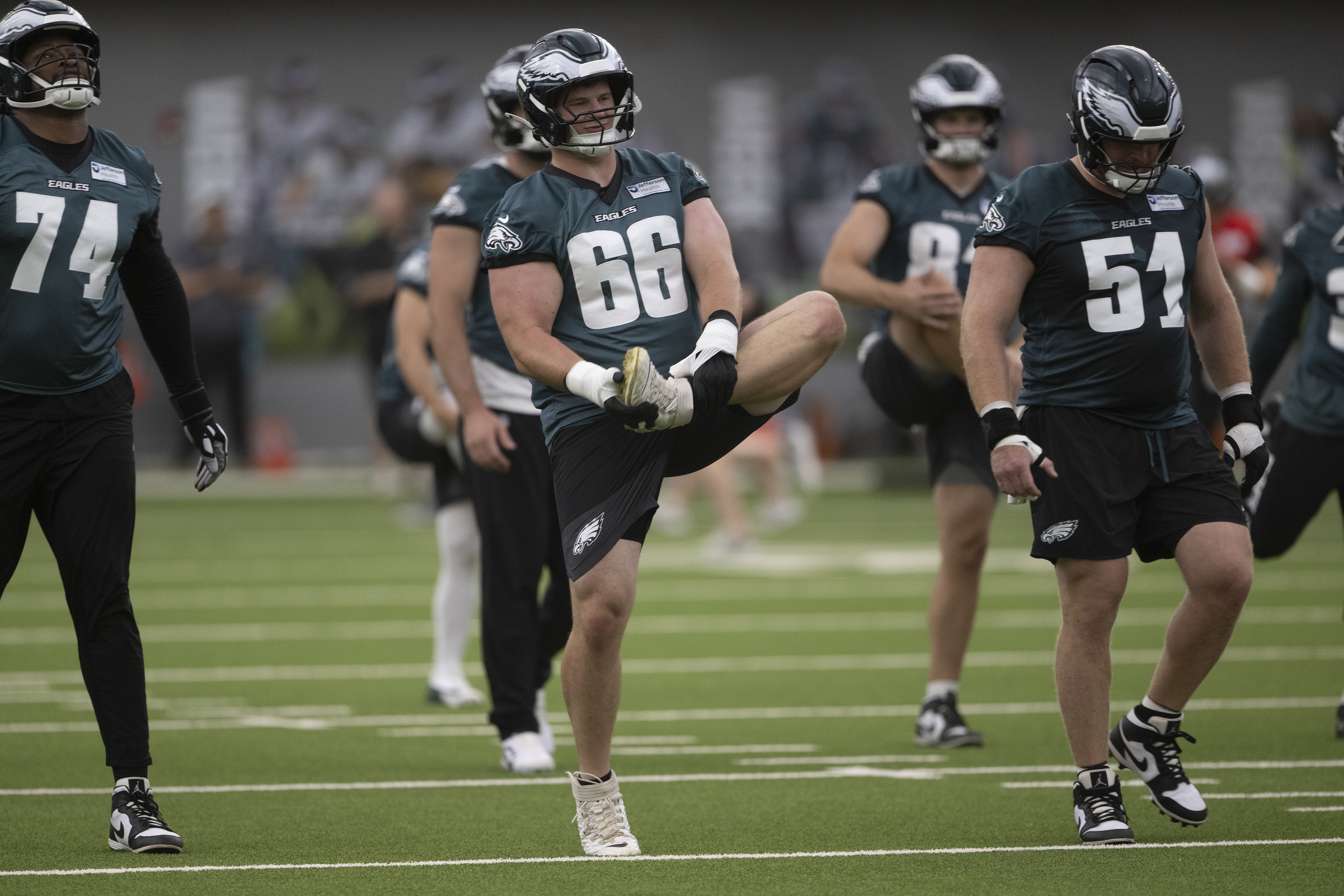
Kendall is expected to be Dickerson’s replacement, but it remains to be seen if the Eagles opt to reconfigure their front and put Kendall at center while sliding Cam Jurgens to guard. Kendall was a center in college while Jurgens played his first season as a starter in the NFL at right guard. Willie Lampkin is also in the mix for more playing time, though Kendall likely gets the first shot.
Philadelphia Eagles’ Drew Kendall speaks during a news conference at the NFL football team’s training facility in Philadelphia, Friday, May 2, 2025.Jose F. Moreno / Staff Photographer
Kendall was one of a few bottom-of-the-depth-chart players who stood out this summer. He said last month that he worked hard during the offseason on his body and “put on weight in good ways and shed weight in bad ways.” The offseason program and training camp put that transformation and what he learned last year as a rookie to the test. “Rookie year is always the long one,” he said last week, “but I learned from a lot of the great guys here.”
The Eagles put a lot on Kendall’s plate, putting him at both guard and center during camp and in preseason games.
“I really embrace that,” Kendall said last month. “I’m about that as a guy and as a player. It’s never fun to take the easy way out. You want to come over some things.”
There were adjustments to make.
“I’d say the biggest thing was, one, there’s just a little more space,” Kendall said last week. “And then, two, it’s just getting confidence, and that comes with repetition, just doing it day after day and just building on top of things that you’re doing.”
He credited offensive line coach Chris Kuper as well as the starting guards, Dickerson and right guard Tyler Steen, with helping him learn new techniques.
Dickerson, Kendall said, has been “super helpful.”
“He’s one of the smartest guys I’ve been around, so just giving me tips and different tools that I can add to my game has been very valuable,” Kendall said.
He also may lean on his father, Pete, who was a guard in the NFL from when he was a first-round pick with Seattle in 1996 until he retired in 2008 with Washington. Kendall made a rule of sorts to not talk so much football with his dad — who coached him for most of his life — when he went to Boston College. However, Kendall did occasionally break the pact by sending clips to Pete in search of tips.
Pete was among more than a dozen family and friends Kendall had on hand last month when the Eagles went to New England for joint practices.
“I think he enjoys seeing me at guard because that’s what he played mostly so I think it’s fun for him,” Kendall said. “I just know that he loves football so anytime he can come watch me play, it makes his day.”
Kendall started last year’s meaningless Week 18 game when the Eagles rested their starters. He is in line to make his second career start when the Eagles play on the road at Tennessee on Sunday. The Eagles’ new-look offensive scheme could be a benefit to Kendall. Boston College did some wide zone running when Kendall was there, though it mostly was from the shotgun.
“It’s a great way to run an offense in general, but I think it definitely showcases my abilities more than other offenses for sure,” Kendall said.
General manager Howie Roseman said after cutting the roster down to 53 spots two weeks ago that “if any of you would’ve given me a truth serum” before training camp, “how our interior offensive line depth panned out” was a worry.
“Feel like we’re in a really good spot there and it was a concern going into camp,” Roseman said.
His words soon will be put to the test.
Inquirer staff writer Jeff McLane contributed reporting.