Tag: topic-link-auto

  • How Philly-area businesses use employee bonuses to reward performance

    How Philly-area businesses use employee bonuses to reward performance

    As we enter the last quarter of this calendar year, many businesses are budgeting for pay raises in 2027. Most of my clients — and many other small businesses — also offer bonuses, which can provide extra financial incentives to employees.

    According to HR consulting firm Korn Ferry, the average pay raise is expected to be about 3.3% next year. Professional services firm Marsh says raises should be about 3.5%.

    Given the current rate of inflation, this may barely seem enough to cover the cost of living. But base pay isn’t everything, and bonuses can be a great motivator.

    Here is how several area businesses use this tool.

    Employees ‘write their own ticket’

    At the Pest Rangers, a pest control company based in Hanover Township, CEO Jeff King utilizes several bonus and incentive plans, all with the aim of rewarding workers for reliability, customer service, and sales.

    “Our technicians receive baseline bonuses for punctuality, weekly truck inspections, and avoiding customer complaints,” he said. “Employees who sell recurring pest-control plans share a monthly bonus pool based on their portion of total sales.”

    The company also offers sales commissions and production bonuses with no cap on earnings, he said.

    The company’s “raving customers” program rewards employees who receive exceptional customer feedback, King added. The company paid more than $18,000 in these bonuses in 2025, including more than $6,000 to its top technician.

    “This method we’ve formulated allows the employee to write their own ticket. If you want to go above and beyond, you’re being recognized for that behavior,” he said. “We put money directly into the employees’ pockets, rather than spending on traditional marketing.”

    Lowering costs while paying good managers what they’re worth

    Chickie’s & Pete’s, the popular Philadelphia-based restaurant chain, offers several bonus programs, but focuses its rewards primarily on managers and supervisors.

    “We award managers for things like developing hourly employees into supervisors and managers, training incoming managers at designated training locations, and keeping labor and food costs within quarterly budget targets without hurting customer service,” said vice president of operations Peter “Pete” Ciarrocchi III.

    “Our plans were designed to help retain the staff that we have and also providing consistent quality services to our families,” he added.

    Bonus plans have helped to reduce the company’s labor costs, Ciarrocchi said, but managers make 20% more on average since the restaurants started giving bonuses.
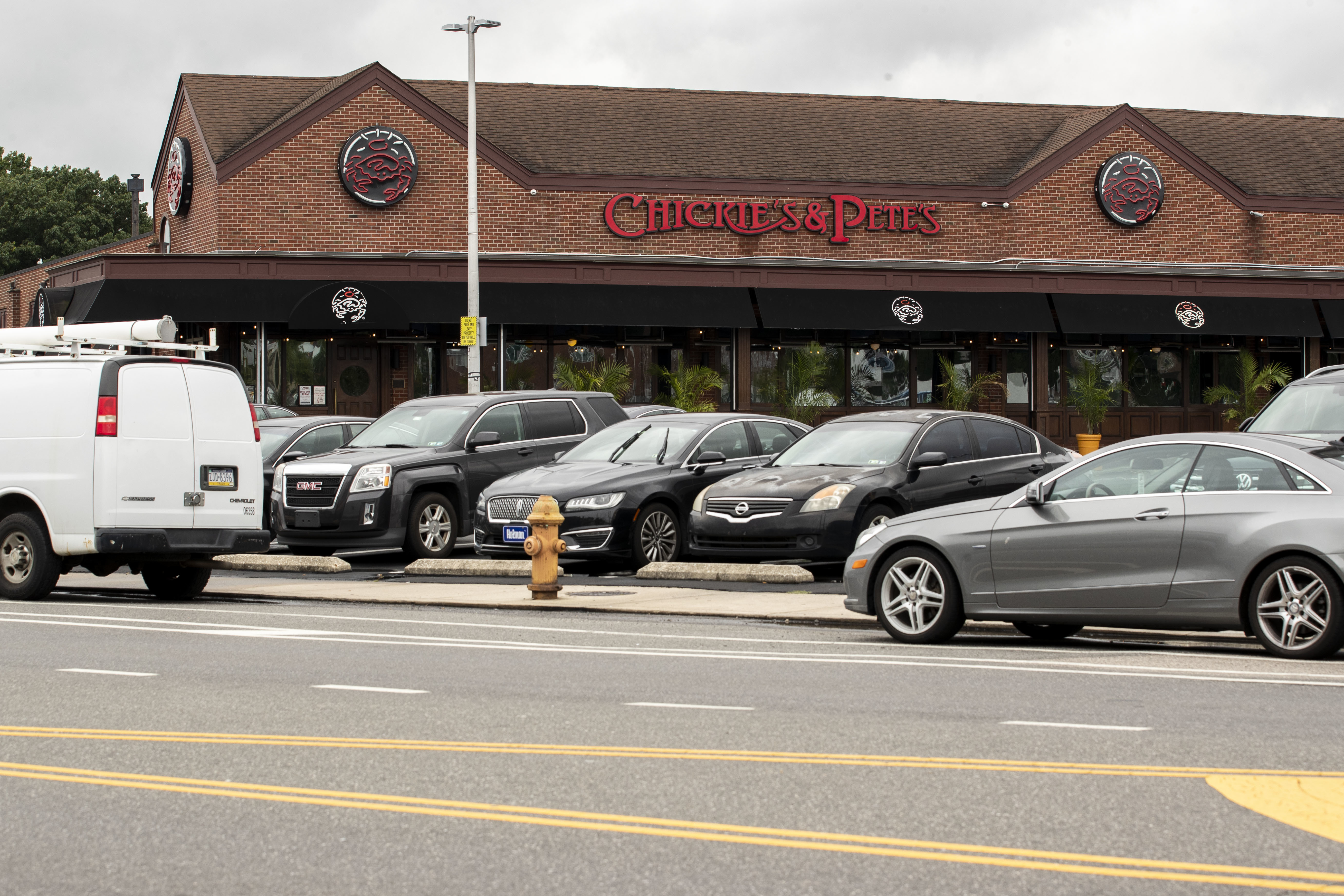
    Chickie’s & Pete’s restaurant in South Philadelphia.MONICA HERNDON / Staff Photographer

    Bonuses rewarding consistency

    Werner Bus Lines in Phoenixville uses targeted bonus programs that are tied directly to the results or behaviors the company wants from each department.

    For example, sales employees get paid based on bookings and mechanics get a bonus for punctuality.

    “I tried to think about the systems I could design where my employees and the company are happy,” Werner’s president Heath Ochroch said. ”I asked what was the actual behavior that I wanted to see more of in each of these departments and that would be the common thread.”

    Jamie Turner, founder and president of Acclaim Autism, focuses bonus programs on the people providing services.

    Acclaim Autism’s “frontline workers,” who help provide behavior analysis and therapy, among other services, can earn up to $300 in bonuses per month, Turner said.

    “Their bonuses are primarily based on consistently completing scheduled patient-facing hours, maintaining continuity and routine for patients, and meeting quality and compliance standards,” he said.

    Turner said it’s critical for their employees to be incentivized to provide consistency in their patient-facing hours, “which our patients need on a regular routine basis.”

    Using discretion to reward less quantifiable contributions

    Many firms I know like to pay once-a-year bonuses based on management’s discretion.

    Employees at PayUSA, a King of Prussia-based payroll processing firm, receive an annual year-end bonus based primarily on their individual performance. President and CEO Christian Hoyt said most established employees receive a bonus equal to at least one week’s salary, with a larger multiple for stronger performers. The largest bonuses are up to 2.5 times the employee’s weekly pay.

    “The basic idea is to recognize a full year of hard work with an additional week or more of compensation,” he said. “If an employee worked really hard for 50 weeks, let’s pay them for 53.”

    At Newtown-based JS Benefits Group, an employee benefits consulting firm, all 26 employees are eligible for discretionary bonuses, which can be as much as 5% of their salary, or about 2.5 weeks’ pay. Founder and CEO Jennifer Schaefer said there is no fixed formula.

    “We generally consider three principal factors: the company’s overall performance, the employee’s individual contribution, and the employee’s years of service,” she said.

    Schaefer deliberately keeps the bonuses discretionary because conventional productivity measures do not capture every valuable contribution. She considers how employees serve clients, support colleagues, solve problems, and strengthen the company’s culture.

    “A formula can measure revenue, but it can’t always measure the employee who quietly solves problems, earns a client’s trust, or makes the entire team better,” she said.


  • The cult-favorite ceramic dinnerware from ‘The Bear’ holds a pop-up sale in Philly

    The cult-favorite ceramic dinnerware from ‘The Bear’ holds a pop-up sale in Philly

    On the first morning of the Jono Pandolfi dinnerware pop-up in Philly, a woman FaceTimed her best friend from the center of the studio, documenting the shelves of turquoise and yellow and persimmon salad plates. A man cradled a 4-ounce, birch white creamer made of toast-colored clay.

    Pandolfi is the designer behind the handmade plates and cups in some of Philly’s most well-regarded restaurants, including Southwark, River Twice, and Vetri Cucina.

    Based in North Jersey, Pandolfi started his eponymous company in 2004 and has since become famous in the (niche) world of high-end plateware. He crafted the espresso and cappuccino cups for Eleven Madison Park and recently designed five new shapes for chef Daniel Humm’s forthcoming West Village restaurant. (Usually, “I only release one new shape every few years,” he said.)

    Even Carmy on HBO’s The Bear uses Jono Pandolfi dinnerware.

    A price list for the Philly pop-up. Tyger Williams / Staff Photographer

    The 10-day Philly pop-up, held at an Olde Kensington apartment complex, offers pieces at deep discounts. Some are overstock from restaurant orders or one-off commissions with special colors and shapes. Others are seconds, pottery with small cosmetic flaws. One of the best-selling pieces is the Alaska bowl — a “pasta-sized bowl,” as Pandolfi calls it — which normally sells for $57 and is on sale for $28.

    “If you need to make 100 dinner plates for a customer, you have to probably fire 120,” Pandolfi, in black jeans and a magnetic name tag reading “Jono, Founder,” said in an interview at the Philly sale. The pop-ups are a way to sell off the extras. Some are stamped with the labels of the restaurants that originally commissioned them.

    Founder Jono Pandolfi poses for a portrait at his Philly pop-up. His dinnerware has become a cult favorite. Tyger Williams / Staff Photographer

    The sale runs daily 11 a.m. to 7 p.m. through Sept. 21, at 1525 N. American St. Studio #109. Reservations are available online, though people can also just walk in.

    The first day drew pottery enthusiasts and devoted home chefs, as well as fans of The Bear, from across the city. Customers pored over a crumpled seconds sale-price list on the main table, and the studio echoed with the gentle thunk of pottery being lifted, examined, and restacked.

    “I’m always looking for beautiful things to collect,” said Julia Jacob, 38, an interior designer living in South Philly. She is planning to host family in her new home for the first time this Thanksgiving and wanted clean white plates to make the food look good.

    One of Pandolfi’s golden rules is that his beautiful dinnerware cannot upstage beautiful food. He likes working within the confines of what chefs want from their dishes: They must be minimalist, durable, dishwasher-safe. The company churns out 1,000 such pieces a day from a studio in Union City, New Jersey.

    Alex Nguyen, of South Philly, examined a salad plate at the pop-up. Tyger Williams / Staff Photographer

    “It feels like you’re buying something that’s not made at Target,” said Soumya Dayananda, 50, an attorney who lives in Society Hill. She was considering salad plates in four colors, as well as turquoise dinner plates.

    Susan West, 41, carried a large serving tray, a medium serving tray, two bread plates, and three small bowls, all in vibrant yellow.

    “I don’t need anything,” she said. She couldn’t justify buying all new dinner plates — but these were for hosting. For cheese, for olives! She liked the rustic look of the pottery, and the way it lent itself to showing off unfussy food. She was almost ready to check out when she spotted a small red-and-green-banded plate on a shelf by the register.

    “I’m very tempted by this for Christmas cookies. But I’m like, that’s ridiculous.” She paused to consider the plate. “Should I get one? This is where I spiral.”

    The pop-up is being held at a 500-square-foot studio at 1525 N. American St.Tyger Williams / Staff Photographer

    Some customers returned multiple times in a single day.

    Catherine Pelletier, 60, a designer on the Main Line, had learned about Jono Pandolfi after researching the dinnerware on The Bear. She has since been to Pandolfi’s pop-ups in New Jersey and New York.

    She arrived at the Philly studio sale right when it opened, and bought serving platters and dip bowls for herself. Then she left. But her friend asked if it wasn’t too much trouble, could she return, and pick up a few things for her? So Pelletier came back and ended up purchasing serving trays and bowls for her friend as well.

    The “tiki cups” on sale at the Philly pop-up. Tyger Williams / Staff Photographer

    Maryam Mahdavi, 64, and a collector of pottery, was eager to talk shop with Pandolfi, but she also recognized she had a lot to do. She had dragged her husband to the pop-up, and now he was enchanted by the shiny green tiki cup, a nearly foot-high mug with a face like an Easter Island statue. (“I don’t want that,” Mahdavi said, before magnanimously agreeing to buy it for her husband.)

    She stared down the studio’s central table, piled high with bread plates and pasta bowls and ramekins and square-sided salad plates originally designed for chef April Bloomfield’s Tosca Cafe in San Francisco. She had no more time for small talk.

    “Now,” she said, “I gotta focus.”

  • NATO jets shoot down drone over Lithuania and Russian ship fires flares at Danish helicopter

    NATO jets shoot down drone over Lithuania and Russian ship fires flares at Danish helicopter

    VILNIUS, Lithuania — NATO fighter jets shot down a drone that entered Lithuanian airspace overnight, officials said Tuesday, the day after the head of the alliance said strikes close to its territory would only increase its support for Ukraine in the war against Russia’s full-scale invasion.

    Military officials in Lithuania, a NATO member, said the incident marked the first time that a drone had been shot down in its airspace. Authorities didn’t comment on the drone’s origin or purpose, saying further investigation was needed, but two senior officials said the device was likely carrying explosives.

    Officials in other NATO countries, including Germany, Denmark, the United Kingdom, and Poland, have in recent weeks accused Russia of involvement in acts such as drone incursions, sabotage, arson, and surveillance of defense facilities and in plans to use a drone carrying explosives to attack an airport.

    Separately, Denmark said Tuesday that one of its air force helicopters was fired on with flares as it was carrying out surveillance of a Russian frigate in the Baltic Sea.

    Strikes close to NATO territory showed Russian President Vladimir Putin’s “desperation and also his desire to sow fear and terror,” NATO Secretary-General Mark Rutte said Monday. He spoke after a Russian drone struck a railway line near the Ukraine-Poland border on Sunday shortly after senior visiting officials passed through.

    Rutte pledged to bolster the 32-nation alliance’s own defenses along its long eastern border with Russia and with Belarus, a Russian ally.

    Ursula von der Leyen, head of the European Commission, said the incidents in Lithuania and Denmark were not isolated but “part of a broader pattern of Russian aggression and provocation against Europe, testing our readiness and our resolve.”

    “Russia will find our resolve only growing stronger,” she said.

    Drone found to be carrying explosives

    The drone downed Tuesday in Lithuania fell near the village of Pratkūnai, about 60 miles west of the capital, Vilnius, and near the Kaunas Reservoir, Lithuania’s National Crisis Management Center said Tuesday.

    Vilmantas Vitkauskas, head of the crisis center, told Lithuanian public broadcaster LRT that the drone most likely entered from Belarus. It remained in Lithuanian airspace for about 30 minutes and flew along the outskirts of populated areas before being intercepted, he said.

    Writing on Facebook on Tuesday, Lithuanian Defense Minister Robertas Kaunas said an explosive device was detected on the drone and neutralized by bomb-disposal experts.

    Menacing drones have repeatedly loomed over the skies of Lithuania, which shares borders with Belarus and the Russian exclave of Kaliningrad.

    In May, residents of Vilnius were told to take shelter, and the president and prime minister were taken to safe locations during an alarm over drone activity near the border with Belarus.

    Stray Ukrainian drones have also previously crossed the border into Baltic airspace, including in May, when a NATO fighter jet shot down a Ukrainian drone over southern Estonia.

    Meanwhile, Denmark accused Russia of firing flares at one of its air force helicopters in connection with “routine photographic coverage” of a Russian frigate in waters off the port of Gedser in the Baltic Sea.

    “This is completely unacceptable,” the Danish Foreign Ministry wrote on X, saying that the Russian ambassador was summoned over the incident.

    Russia’s ambassador to Denmark, Vladimir Barbin, said it was “not the first time” that Danish air force helicopters “carried out dangerous maneuvers near Russian warships.”

    He said the Danish helicopter conducted “provocative actions against the Russian frigate.”

    The Kremlin declined to comment Tuesday, with presidential spokesperson Dmitry Peskov saying that he did not have details.

    Kyiv says it’s ‘ready to support de-escalation’

    In Ukraine, Russian drone strikes continued across the country following a social media post from U.S. President Donald Trump on Monday that Russia and Ukraine had agreed “not to hit” each other’s energy infrastructure.

    Trump didn’t offer details on the purported agreement. Previous efforts to broker even a partial ceasefire have repeatedly fallen apart within hours, with both sides accusing the other of violations.

    Ukrainian President Volodymyr Zelensky said late Monday that Kyiv was “ready to support de-escalation” if the United States could ensure “Russia is genuinely ready to stop this war.”

    But Zelensky said Tuesday in a statement that Moscow had continued to attack Ukraine’s energy sector, logistics, and critical infrastructure, and that Kyiv responded by striking an oil refinery in Syzran, a city in western Russia.

    “There is no alternative to ending this war. And all forms of pressure on Russia must create the right diplomatic conditions,” Zelensky said.

    The Kremlin said Tuesday that it considered Trump’s proposal for a ceasefire on energy infrastructure to be “a good idea.”

    However, it stressed that strikes on Russian oil refineries were not the root cause of global supply issues for gas or diesel.

    “The core problem lies in the export of petroleum products to global markets,” Peskov said. He said that countries instead needed to guarantee safe navigation for oil tankers and lift global sanctions on Russian oil.

    The Kremlin’s comments contradict those of Trump, who on Sunday called on Zelensky to halt strikes on Russian oil refineries and claimed that such attacks had caused a global shortage.

    “Mr. Zelensky has to do one thing. He has to stop knocking out diesel fuel in Russia,” Trump told reporters, following news on Friday that diesel prices in the U.S. had soared past an average of $6 a gallon.

    “We spoke to Mr. Zelensky about it. There are plenty of other targets. Don’t hit diesel fuel, because that’s hurting, that’s hurting the world,” he said.

    Ukraine’s State Emergency Service said Tuesday that Russian strikes on Kyiv had killed one person and wounded seven other people since the start of the day, with attacks carried out on the capital’s gas stations.

    Two more people were killed in separate Russian strikes in the Ukrainian cities of Sloviansk and Kramatorsk, the emergency service said.

    Elsewhere, Russian forces shot down 222 Ukrainian drones overnight, Russia’s Defense Ministry said Tuesday.

    A “massive” Ukrainian drone attack sparked several fires in the Russian city of Taganrog, regional Gov. Yuri Slyusar said. He said on Telegram that two apartment buildings and three private homes had been damaged, as well as an educational institution, agricultural warehouses, and a site belonging to Russian e-retailer Ozon.

    Zelenskyy said Tuesday that Kyiv’s forces had targeted a drone-production facility in the city.

    Ukrainian parliament votes to dismiss prosecutor general

    In other developments, Ukraine’s parliament voted to dismiss Ruslan Kravchenko from the post of prosecutor general Tuesday.

    Kravchenko submitted his resignation on Sept. 7 amid an investigation into corruption in his office, though no notice of suspicion was issued against him. Zelensky had suspended Kravchenko from the post the day before. Kravchenko had served as prosecutor general since June 21, 2025.

    Repeated corruption scandals have hurt Zelensky’s approval ratings.

  • Federal Reserve is expected to raise its benchmark rate, defying Trump’s demands

    Federal Reserve is expected to raise its benchmark rate, defying Trump’s demands

    WASHINGTON — The Federal Reserve is widely expected to lift its short-term interest rate Wednesday for the first time in three years to fight stubbornly high inflation, a move that would put the central bank at odds with President Donald Trump’s support for a cut.

    A quarter-point increase in the Fed’s rate, currently about 3.6%, isn’t guaranteed because Fed Chair Kevin Warsh doesn’t provide the signals about next moves that his predecessors did. Still, most analysts and economists expect a hike after a speech two weeks ago at the Fed’s annual conference in Jackson Hole, Wyoming, in which Warsh argued that the Fed had not yet achieved its goal of putting inflation in check.

    A rate increase would throw another sharp shift into a volatile period for the economy and financial markets. As recently as March, the Fed had forecast it would cut its rate once this year. But with the Iran war flaring up again and causing sharp increases in oil and gas prices, inflation is likely to remain higher than the Fed’s 2% target for even longer.

    “I don’t see any end to the war in Iran right now,” Kristin Forbes, an economist at MIT’s Sloan School, said. “Given what everyone has been through in the last few years of high inflation, consumers are more sensitive, companies are more sensitive, they raise prices faster … The risks are much more on more persistent inflation than it falling quickly.”

    Surging investment in AI data centers has also been accelerating inflation and contributing to higher longer-term interest rates, though now leading companies are discussing slowing the technology’s development.

    All eyes are on interest rates before the midterms

    The Fed’s potential rate hike comes just seven weeks before the midterm elections in which high prices and affordability have taken key roles. Trump has demanded that the Fed cut rates, a move that isn’t on the table, and on Sunday the president said, “the United States is so strong we should be paying the lowest interest rate in the world.”

    Trump repeatedly attacked Warsh’s predecessor, Jerome Powell, in harshly personal terms, upending decades of tradition in which presidents treated the Fed as independent.

    Kevin Hassett, Trump’s top economic adviser, said Sunday on CNN that Trump “100% respects the independence of Kevin Warsh.”

    Yet at the same time, Hassett suggested in a Fox News interview that the Fed shouldn’t hike so close to the midterms.

    “I’d be wary of a rate hike … I think if you want an independent Fed, then one thing the Fed does is it stays out of the way of elections,” Hassett said.

    Financial markets expect that Warsh and the central bank will brush off such warnings. Traders now see a 90% chance the Fed will hike Wednesday, according to futures prices. That figure jumped after Friday’s inflation report showed that prices remain stubbornly high and core inflation, which excludes volatile food and energy, picked up in August from the previous month.

    After that report, and Warsh’s tough talk on inflation late last month, most economists argue that Warsh will have to hike rates or risk undermining his credibility with financial markets. Longer-term interest rates, such as those on the 10-year and 30-year Treasury bonds, could spike if he doesn’t hike, as they did after a Fed meeting in late July when Warsh failed to convince markets he was willing to lift rates if needed.

    “At the end of the day the Chair’s repeated stern warnings on inflation intolerance risk institutional credibility absent some action to back it up,” Michael Feroli, an economist at JPMorgan Chase, wrote in a preview of the Fed’s meeting.

    A rate increase could raise other questions

    Some members of the Fed’s interest-rate setting committee still expect inflation, outside of food and energy, to fade over time and may not feel a rate hike is necessary.

    But Warsh has not made that argument. Instead, in his Jackson Hole remarks, he said recent inflation reports “do not tell me that underlying trends have improved,” adding that if such improvement wasn’t seen soon, “we have work to do.”

    Ironically, by boosting Fed credibility, a rate hike could hold down longer-term interest rates that consumers pay for things like mortgages and auto loans. Some of the recent spike in mortgage rates has likely reflected concerns among investors that the Fed wasn’t committed to fighting inflation. Investors typically demand higher yields to own bonds when inflation is elevated.

    Still, if the Fed does increase its rate Wednesday, then Warsh will face a new set of questions: How many hikes will the Fed implement? How effective will they be in reducing inflation when much of it stems from higher oil prices, something the Fed can’t control? What will they do if an AI slowdown threatens to slow the economy, which would typically get the central bank to cut rates?

    Matthew Luzzetti, chief U.S. economist at Deutsche Bank, said it is rare for the Fed to lift its key rate just once, which is likely to have little impact on the economy, and so multiple hikes are likely.

    But how the Fed characterizes possible rate increases on Wednesday could give clues to its next steps, he said. For example, if Warsh suggests the Fed is unwinding the three cuts it made in late 2025 — when it feared that unemployment was rising — that would suggest two more hikes would be needed.

    Alternatively, Warsh could portray a hike as an act of “risk management,” Luzzetti said, with the Fed expecting inflation to cool but hiking rates to essentially ensure it falls. That could point to possibly just two increases.

    Warsh has resisted providing such guidance so far. But Wall Street traders expect three hikes — in September, December, and March — according to futures prices.

  • AI companies buoyed the U.S. economy. What happens if they slow down?

    AI companies buoyed the U.S. economy. What happens if they slow down?

    U.S. investors face a novel question as warnings grow about the potential dangers of artificial intelligence: Is it bad for business and Americans’ stock wealth if AI leaders slow down the technology to avoid catastrophe?

    Prominent technology moguls including the CEOs of ChatGPT-maker OpenAI and its rival Anthropic have said such a slowdown is necessary to tame the risks of expensive or deadly threats such as cyberattacks from out-of-control AI.

    Technology stocks wilted Monday as investors focused on the ripple effects of any new AI controls. A self-imposed or government-ordered slowdown of AI development could douse enthusiasm for the expected initial public offerings of OpenAI and Anthropic and dent the AI boom that is boosting U.S. economic growth, corporate profits, and the stock portfolios of millions of Americans.

    Ed Mills, a Washington policy analyst with the financial firm Raymond James, said AI-related companies have soared in stock market value as though there’s little risk of regulatory speed bumps to the technology. He said he’s spent the past week encouraging investors to take seriously a potential surge of AI regulation.

    “The data center policy debate is going to seem quaint” compared to the coming showdown over AI regulation, Mills predicted. “Part of that process is going to cause investors to potentially re-evaluate the worth of these [AI] models and these companies.”

    It’s plausible that little changes with how AI companies operate, some policy and technology analysts say. But the worries reflected on Wall Street underscore how much the nearly four-year-old AI boom is built on faith over facts.

    The bull case for AI is that the trillions of dollars being spent to develop AI technologies and distribute them through data centers will reorder American life and unleash untold profits and economic growth. If AI development or corporate usage of AI slows, it could push the potential payday from the titanic AI bet even further into the future.

    President Donald Trump noted the potential economic costs of an AI slowdown in one of several Truth Social posts Monday in which he attacked AI leaders backing the concept.

    “When, in the History of Business, did anyone see the Leaders of an Industry call for Regulation that, if strongly implemented, will drive them into oblivion and bankruptcy?,” he wrote. “AI, and Data Centers, will be the Greatest Economic Development Engine in History ­­- Bigger than Oil, Gold, Diamonds, or even the Internet.”

    The Nasdaq stock index, considered a proxy for the investor enthusiasm for technology companies, fell Monday after a weekend of AI doomsday discussions. Multiple factors roiled markets, but analysts noted that prices of some companies heavily dependent on the AI boom, including computer chip maker Nvidia and Elon Musk’s rocket-and-AI company, SpaceX, dropped significantly.

    Asian shares fell slightly Tuesday, with South Korea’s Kospi index down nearly 1% as Samsung and SK Hynix extended declines.

    One of the biggest questions is what happens to planned initial public offerings by the two leading AI start-ups, Anthropic, which makes the Claude chatbot, and OpenAI. The companies have been collectively valued at close to $2 trillion by investors and are widely expected to jump significantly in worth when they list shares on public markets. (The Washington Post has a content partnership with OpenAI.)

    Dario Amodei, CEO of Anthropic, warned about AI’s potentially catastrophic downsides, but he is also hoping to sell investors on an optimistic vision of AI as his company prepares for an initial public offering.Markus Schreiber

    Dario Amodei, the Anthropic CEO who has long warned about AI’s potentially catastrophic downsides, now faces a contradiction partly of his own making.

    He is simultaneously warning publicly that technology from Anthropic and its peers could be dangerous to human life and economic prosperity — while also hoping to sell investors on an optimistic vision of a profitable, glorious AI future.

    It is “unprecedented” for a company preparing an IPO to offer a dueling narrative like that, said Nick Smith, a senior analyst at the research firm and IPO stock index Renaissance Capital.

    He and other financial experts said it’s not unusual for companies to be candid about navigating concerns and regulatory scrutiny of contentious products, including from pharmaceutical and gene-editing companies.

    But Smith said that it raises red flags for people buying a company’s stock when its top executive “notes issues that could cause real problems for the company, and more importantly calls for a slowdown in its technology’s development.”

    Anthropic’s IPO could come as early as this fall, according to reporting by Reuters. The company has said that the listing will “depend on market conditions and other factors.”

    Eddie Best, a partner at the law firm Willkie Farr & Gallagher who advises companies on IPOs, said he doubts that a potential industry slowdown or speculative fears of AI-caused extinction would derail Anthropic’s IPO.

    He did say, though, that he and other corporate lawyers have been playing a “nerdy game” about whether AI end times could appear in the “risk factors” section of Anthropic’s IPO pitch document for investors. These are usually boilerplate legalese about the large and small potential roadblocks to a company selling its stock to the public.

    Some technology companies already warn investors that AI could get them into hot water, though none appear to stray into the human extinction territory of Amodei’s weekend essay.

    Google’s annual financial report says that “some uses of AI will present ethical issues and may have broad effects on society.” Risk factors from Microsoft outline the possibility that people could get hooked on using AI as companions.

    Best said he couldn’t imagine lawyers crafting a doomsday scenario in the Anthropic IPO pitch document.

    “I don’t really see a risk factor that says our product could blow up the world,” Best said.

  • Trump’s effort to assert control over elections continues, despite court loss

    Trump’s effort to assert control over elections continues, despite court loss

    WASHINGTON — The Supreme Court dealt President Donald Trump a major blow Monday when it blocked his executive order to restrict mail ballots. But Trump’s battle to assert control over the election process is far from finished.

    The stymied attempt to have the U.S. Postal Service screen mail ballots was just one piece of a broader effort involving the full power of the federal government to take more control of state-run elections.

    Just days before the Supreme Court blocked Trump’s mail ballot order, the Justice Department sent threatening letters to at least 30 top election officials across the country, escalating a fight to gain access to private voter data and election records.

    Federal agents are scouring voter rolls managed by states for noncitizens, despite a lack of evidence of widespread fraud. Trump’s homeland security secretary recently pushed for an investigation into whether a commonly used voting machine can be trusted, casting doubt on digital voting systems.

    “This is far from over,” said Benjamin Hovland, who was ousted from the independent, bipartisan Election Assistance Commission by the Trump administration this year.

    Hovland acknowledged that the Supreme Court’s decision mitigated “real-world impact” on voters and election workers, particularly since voters in some states have already begun to mail in their ballots. But he said Trump’s actions were alarming.

    “What you’re seeing is using the apparatus of government, using federal agencies, using taxpayer dollars, to push that narrative that only undermines confidence in our democracy and ultimately hurts voters and election officials,” Hovland said.

    Trump argues that he is trying to secure the integrity of the vote, but his claims of widespread fraud in the election system have been investigated and debunked repeatedly, and critics say his actions needlessly sow doubt about the outcome of the vote.

    The White House did not immediately respond to requests for comment.

    There are stark differences between now and Trump’s first term, when his attempts to undermine the election results in 2020 ran into stiff pushback not only from the courts but also from his own government officials. In his second term, Trump has surrounded himself with loyalists willing to turn his obsession over the country’s election systems into a blitz of federal actions. He has also installed election deniers in key posts.

    The Supreme Court’s decision Monday did, however, add to a string of mounting losses for Trump, who said this year that he wanted to “take over” and nationalize elections. Even before the Supreme Court decision, two lower court judges ruled that Trump’s changes to mail-in balloting were most likely illegal and should not be imposed so close to the November elections.

    Trump administration lawyers had urged the Supreme Court to step in and clear the way for its plan to use the Postal Service to screen ballot envelopes after they are submitted by state elections officials. The new rules would require states to submit lists of voters approved to receive mail ballots. The Postal Service would then deliver mail ballots only to the voters on the lists.

    In addition to the loss Monday, Trump’s other attempts to pressure states over the election process have faced legal setbacks.

    The Justice Department has sued 30 states for unredacted voter lists, which include personal information such as driver’s license numbers and partial Social Security numbers.

    They have lost 23 of those cases. Decisions are pending in the rest.

    The federal actions, as well as the various court decisions, have caused alarm among local election officials and voters, according to election experts.

    This month, the chief election officials in seven Republican-controlled states filed a brief to the Supreme Court, arguing that with less than two months until Election Day, it was too close to the midterms to make any major changes to the election process.

    Some states including North Carolina, Delaware and Alabama had already mailed out their ballots, even before the Supreme Court issued a final decision.

    “Attempting to implement the rule now will almost certainly lead to mistakes, delays and confusion for both voters and election officials,” the brief stated.

    But it was not just the pending Postal Service rule that has caused confusion and upended coordination among local election officials and the federal government.

    The administration has also asked the Supreme Court to intervene to allow it to move forward with an effort to build citizenship lists by merging data from various agencies, including the Department of Homeland Security and the Social Security Administration. A lower court has so far blocked the use of that tool, which administration officials argue is needed to verify citizenship for voting, among other purposes.

    In July, Markwayne Mullin, the homeland security secretary, threatened election officials in a speech and said they could face prison time if they did not comply with the Trump administration’s efforts to change election policies. Officials in the Justice Department officials have also explored whether they could bring criminal charges against state or local election officials if the administration determined they had not sufficiently safeguarded their computer systems.

    The Federal Emergency Management Agency, which sits under the Homeland Security Department, is demanding that states change the way they conduct elections or risk losing tens of millions in federal terrorism-prevention funds.

    Kimball W. Brace, the president of Election Data Services, an organization that works with local governments on election preparedness, said he did not expect the Supreme Court decision to stop Trump’s broader effort to pursue his election grievances.

    “I don’t anticipate people on the Republican side not wanting to continue and push their side of the story as much as possible,” Brace said.

    Distrust of the election process among voters is growing as the November elections approach. A survey from The Associated Press and the NORC Center for Public Affairs Research and USAFacts showed that only 34% of U.S. adults trust government certifications of election results “a great deal” or “quite a bit,” down from 40% in 2024.

    Trump has also gutted the government’s election security infrastructure. Experts warn that his cuts to agencies tasked with coordinating election security with state governments could reduce visibility into foreign influence campaigns and cyberattacks.

    Brace said all the executive actions have fueled pressure on local election officials.

    “They don’t want to deal with this crazy pressure that various interests and various individuals have pushed on the election administration,” he said.

    This article originally appeared in The New York Times.

  • Philly still hasn’t announced its Hispanic Heritage Month events. Where’s the list, Mayor Parker?

    Philly still hasn’t announced its Hispanic Heritage Month events. Where’s the list, Mayor Parker?

    Tuesday is the first day of Hispanic Heritage Month, which runs from Sept. 15 to Oct. 15. I’ve always had a bit of a love/hate relationship with this month, which purports to recognize and celebrate that Latinos have been a formative part of the nation since its early days. While the attention to the extraordinary individuals and myriad cultural heritages that comprise “Latinidad” in the United States is gratifying, it is, by its very nature and time limitation, a glancing and shallow attention.

    Even so, I always note the arrival of a mass email from the mayor’s office about the events the city has programmed to mark the month.

    This year, I’m still waiting.

    As yet, there’s been no email from the city of Philadelphia announcing any special programming during Hispanic Heritage Month, and nothing when I search for that on phila.gov.

    Screen capture of a search for “Hispanic Heritage” month on the phila.gov website on Monday.Screen capture of phila.gov

    There aren’t even links to information about two signature events that took place this past Sunday: La Feria del Barrio (organized by Taller Puertorriqueño) and the Mexican Independence Day Festival (organized by the Mexican Cultural Center), nor even the unofficial culminating event in Philadelphia — the Puerto Rican Day Parade, which Concilio has been hosting for more than 60 years — on Sept. 27.

    While I’d like to say I’m completely surprised by the elision of Hispanic Heritage Month that the city is doing, I’m not.

    Francisco Gonzales, of Lawrenceville, N.J., dances with his daughter Bianca, 17, near the stage as musicians perform at last year’s Mexican Independence Day Festival at the Independence Blue Cross RiverRink at Penn’s Landing.Tom Gralish / Staff Photographer

    Philadelphia’s Latino communities get surprisingly little respect — outside of the high regard for our undeniably wonderful food and dance moves — from our electeds, and have long been slighted by city government in far more significant ways.

    For me, nothing epitomizes that more than an example from 2015, when there was a Latino managing director and even so, then-Mayor Michael Nutter convened — at the behest of Attorney General Eric Holder and the U.S. Department of Justice — a Philadelphia roundtable about the imperative of improving police-community relations at which there wasn’t a single person from a Latino-serving organization at the table. In a city where our community was subjected to relatively high stop-and-frisk rates, experienced excessive force incidents (and still does), was historically targeted for extortion by police, and was (and still is) racially profiled by police and U.S. Immigration and Customs Enforcement.

    No. Latinos. At. The. Table.

    Is it simply that our political capital has been stagnant since the 1980s — or is there something else?

    We’ve had three Latino primary contenders for mayor (two in 2015 and one in 2023), but no substantive progress when it comes to the political power necessary to be taken seriously in Philadelphia.

    To wit, in 1983 Philadelphia elected its first Latino City Council member, and a year later it elected a Latino state legislator (the second in the city’s history). The census conducted in 1980 put Philadelphia’s Latino population at 3.9% of the city’s total. Fast-forward some four decades, and Latinos are now about 17% of Philadelphia’s total population, but we still have only one Latina City Council member, and just two Latino Philadelphia state legislators.

    The city has mostly relied on department-level appointments — back in the ’80s, it was the Office of Hispanic Community Affairs; now it’s the Office of Immigrant Affairs and the Office of Latino Engagement — to see to the concerns of its Latino residents, and to tout the communities’ contributions to Philadelphia.

    But departments and offices reflect the administrations they are part of, and Mayor Cherelle L.Parker has sent mixed signals to her Latino constituents.

    On the one hand, she has addressed issues in Kensington in concert with District 7 Councilmember Quetcy Lozada — who is a well-liked and respected Boricua leader. On the other hand, she had to be dragged, kicking and screaming, by City Council’s veto-proof “ICE Out” proposals into offering any public comment about ICE actions under President Donald Trump.

    Or maybe the offices that are meant to be in conversation with, and about, Philadelphia’s Latino communities aren’t up to the job?

    I’m willing to offer the benefit of the doubt: Maybe they are focusing on important work behind the scenes. But in my opinion, they have minimized Latino visibility — to our detriment, and to all of Philadelphia’s detriment.

    I was struck recently by the events the Office of Immigrant Affairs is publicizing as part of its Welcoming Week 2026 (from Sept. 10 to 25), for example. The focus this year is on the Caribbean, but in the publicity I’ve received (or dug up) about it, there seems to be nothing scheduled about or from the Spanish-speaking Caribbean. The thing is, this isn’t a zero-sum game — we can (and must) celebrate our significant Haitian and Jamaican communities, for example, and their incredible cultural contributions to Philadelphia, without ghosting our Dominican and Boricua ones.

    So, come on, send that Hispanic Heritage Month email, Mayor Parker. List those events and programs on the website. Latinos are here and doing amazing things in service of our city. We should celebrate that together.

  • ‘Widow’s Bay’ breaks Emmys record with 14 wins, ‘Pitt’ wins best drama

    ‘Widow’s Bay’ breaks Emmys record with 14 wins, ‘Pitt’ wins best drama

    LOS ANGELES — A “Widow’s Bay” wave slammed into the Emmy Awards on Monday night as the Apple TV show set a single-season record for a comedy with 14 wins, including best comedy series and best actor for star Matthew Rhys, who personally took home three trophies.

    “The celebrations will be long, varied, and I hope at times wild,” Rhys said backstage while holding two of his Emmys.

    “The Pitt” won best drama series for the second straight year, and star Noah Wyle repeated as best actor in a drama, but the HBO Max emergency room drama won no other Emmys and underperformed its expectations.

    Rhea Seehorn won best actress in a drama for “Pluribus,” and Jean Smart won her fifth best actress in a comedy award for the fifth and final season of “Hacks.” No actor had won an Emmy every year for a series that lasted more than three seasons until Smart did it Monday.

    Every other comedy award went to “Widow’s Bay,” which unequivocally owned the night and broke the comedy series record set last year by “The Studio” when it won 13.

    The ‘weird’ ‘Widow’s Bay’ sweeps across categories

    Along with best actor in a comedy, Rhys won best actor in a limited series for “The Beast in Me,” becoming the first man to win two leading actor categories in the same year, and he gets one of the best comedy series trophies as an executive producer for “Widow’s Bay.”

    The first-season series created by Katie Dippold leans hard into both comedy and horror as it tells the story of a New England island community, with Rhys as its mayor, reckoning with a centuries-old curse.

    “Thank you, Apple, for letting us take this crazy, creative swing,” Dippold said as she accepted the best comedy award. ”They truly just let us do this weird show.”

    Apple TV solidified its status as the owner of the Emmy comedy categories. Between “Widow’s Bay,” “The Studio” and “Ted Lasso,” it has won best comedy series four times in six seasons. The latter two shows were between seasons and not eligible this year.

    “Widow’s Bay” also won for directing for Hiro Murai and for writing for its creator Dippold, a first-time Emmy winner and first-time nominee who was previously best known for a decade-old viral tweet showing her awkwardly dressed as “The Babadook.”

    “When I was sitting there in that costume,” Dippold said backstage after the show, “I did not think that this moment would happen.”

    “Widow’s Bay” had won eight Emmys in a previous ceremony before sweeping all six of its categories Monday night. Stephen Root won best supporting actor in a comedy series and Kate O’Flynn won best supporting actress.

    ‘The Pitt’ and ‘Hacks’ fail to run up numbers

    “The Pitt” was the top drama nominee with 25 and “Hacks” was the top comedy nominee with 24, but neither made much of a splash when it came time to claim trophies.

    Smart’s was the only win for “Hacks” on Monday night.

    “What a ride this has been,” an emotional Smart said after getting a standing ovation.

    The 75-year-old has won eight Emmys overall in a career that was already more than respectable when she landed her defining role of Deborah Vance, a brash stand-up comic pushing back against age, obscurity and sexism in the HBO Max series.

    And best drama and best actor were the only wins for “The Pitt,” though it had won four at an earlier ceremony.

    Wyle won for playing Dr. Michael “Robby” Robinavitch, a role that brought him a major career revival after starring in “ER” in the 1990s.

    “This is all I’ve ever wanted to do, and this is the only club I’ve ever wanted to join,” Wyle said in his acceptance.

    Seehorn gets her first Emmy, Janney and Pelphrey beat ‘Pitt’ competition

    Seehorn won her first Emmy for playing the lone central character on Apple TV’s “Pluribus.”

    The 54-year-old had been nominated twice without winning for her breakthrough role on “Better Call Saul,” a show from “Breaking Bad” creator Vince Gilligan, who put Seehorn at the center of “Pluribus.” Gilligan won his fifth career Emmy for his writing on the show.

    Allison Janney won best supporting actress in a drama for “The Diplomat,” and Tom Pelphrey won supporting actor in a drama for “Task,” both beating several nominees from “The Pitt.”

    “DTF St. Louis” won best limited series. Stars David Harbour and Linda Cardellini both won for supporting acting at a previous ceremony on Sept. 6 as the Television Academy moved several categories off the main telecast to shorten the show. “DTF St. Louis” won seven Emmys overall.

    ‘Widow’s Bay’ gets rewarded for its elite cast

    “Widow’s Bay” brought a combination of younger, well-respected unknowns and widely known and beloved veterans to work on the show.

    It was the first Emmy for both O’Flynn and Root.

    O’Flynn, a 40-year-old British actor whose previous acclaim came mostly for her work in theater, plays Patricia Moyer, a city worker and social outcast dealing with a demonic darkness on “Widow’s Bay.”

    “This is the role of a lifetime,” O’Flynn said from the stage. “This is for all the Patricias out there.”

    Root, one of the most ubiquitous character actors of the last few decades, beat out Harrison Ford, who many thought would get his first major competitive Hollywood award for his role on “Shrinking.”

    “Thank you, sir, for all your many years of great, great, great acting,” Root said to Ford during his acceptance.

    Root, 74, is the oldest person to win the category.

    Sally Field, 79, became the oldest woman to win best actress in a limited or anthology series or TV movie for “Remarkably Bright Creatures.”

    Colbert wins after cancellation again

    “The Late Show with Stephen Colbert,” taken off the air by CBS, won best variety series. It’s one of six Emmys the show has won this year after the show was cancelled for what the network said was economic reasons while many believe it was his criticism of the Trump administration.

    “If you like the comedy tonight, my old writers wrote it,” Colbert said.

    Mariska Hargitay hosted the NBC telecast held at the traditional Emmys home of the Peacock Theater in Los Angeles.

    “NBC is celebrating its 100th year, and I have been on ‘Law & Order: SVU’ for all of them,” said Hargitay, a three-time Emmy winner who has starred in the show for 27 seasons, during her opening monologue.

    Hargitay closed the show — which came in at a relatively lean three hours with the shortened awards slate — with the famous “Law & Order” gavel sound.

    Michael J. Fox, a nominee for his work with Ford on “Shrinking,” received the Bob Hope Humanitarian Award.

    Tearful tributes to Parton, O’Hara and Reiner

    Field paid tribute to her “Steel Magnolias” co-star Dolly Parton, who died last month, in a tribute during the telecast that also included Reba McEntire.

    There were also emotional tributes to Catherine O’Hara, who died in March, and Rob Reiner, who was killed along with his wife, Michele Singer Reiner, in their home in December.

    Reiner, who won a posthumous Emmy at an earlier ceremony for best guest actor in a comedy series for his role on “The Bear,” was honored by his friend and “Bear” co-star Jamie Lee Curtis.

    “He was generous, kind and funny as hell, and a friend to all,” Curtis said. “And we all miss Rob and Michele and all those we lost this year.”

  • Delaware Container Port plan is full speed ahead, despite lacking research showing it’s needed

    Delaware Container Port plan is full speed ahead, despite lacking research showing it’s needed

    Contractors for Delaware and its port manager, Enstructure LLC, have started work on a $669 million container port that leaders hope will attract thousands of jobs to the state’s industrial northeast near the Pennsylvania state line.

    Delaware has agreed to pay $325 million of the container terminal cost, with Enstructure, which is financed by the Blackstone private equity group and other investors, committing $225 million. Federal grants are expected to cover the rest.

    U.S. Sen. Chris Coons (D., Del.) told the crowd of construction and port workers and public officials at a groundbreaking Monday that the Delaware Container Port is designed to replace high-wage union industrial jobs lost when northern Delaware’s auto, steel, and chemical works shut over the past 20 years.

    When the port is finished by late next year, “bigger ships will come to Delaware first,” Gov. Matt Meyer said, as container ships traveling the Delaware River to Pennsylvania and South Jersey terminals passed by.

    Meyer said the new Delaware terminal would feature electric cranes and other equipment, instead of diesel power at “one of the cleanest, greenest ports in the world.”

    Shippers have been “containerizing” cargo into trailers suitable for shipping by sea, rail, and truck since the 1950s, though union leaders complain that automated cargo handling reduces the need for labor. Port managers clear land, buy cranes, and pour concrete based on uncertain estimates. South Carolina earlier this year shut a four-year-old, $1 billion container port because it attracted few cargoes.

    The site of Delaware’s new port is a former DuPont Co. titanium dioxide plant at Edgemoor, north of Wilmington. During Monday’s event, earth movers smoothed property east of a mound that sealed in contaminants left over from DuPont days.

    Coons said the site had been “the biggest dioxin pile in North America” before it was sealed and praised advocacy by the International Longshoremen’s Association for the site’s “new beginning.”

    ILA activists said they faced long opposition from political leaders concerned by the cost of a new port and from competing ports who sued to derail the project.

    Litigation is ongoing, but the work is going ahead, said Delaware Secretary of State Charuni Patibanda-Sanchez, whose father was an engineer at the DuPont plant before its 2015 shutdown. “The very complex legal situations still continues, but we will work through it,” she said in an interview.

    The new port is designed to handle 1.2 million Twenty-foot Equivalent Units (TEUs) — about 600,000 40-foot trailers. Meyer said that’s triple the capacity of the Port of Wilmington, three miles south.

    And it’s more trailers than the port of Philadelphia handled in 2025, a record year. In Philadelphia, the state port authority says it has raised $266 million from the U.S. Department of Transportation to boost container capacity at the Mustin property it acquired last year and is also growing space at the Packer Avenue terminal. “Competition among neighbors working together is good for all,” said PhilaPort CEO Rich Lazer. he added that new terminal space anywhere on the river can boost the region’s market share.

    Matthew Satnick (left) and Philippe De Montigny, are co-CEOs of Enstructure, the port management company overseeing construction of Delaware’s planned port at the former DuPont Co. titanium dioxide plant at Edgemoor on the Delaware River.Joseph N. DiStefano

    State officials did not present research supporting the need for the new terminal. Patibanda-Sanchez, who chairs the state-controlled Diamond State Port Corp. board that oversees the ports, said a study by University of Delaware researchers is not finished.

    The port will support “2,500 to 3,000″ workers when fully open by 2028, according to Bill Ashe, international vice president of the International Longshoremen’s Association and president of ILA Local 1694, which he said represents 1,500 workers at the current Port of Wilmington.

    He said the port’s rail service would be able to send stacked railroad cars to industrial sites in the region, such as the 4 million-square-foot Amazon warehouse in nearby Stanton, Del.

    Holt Logistics and its affiliates, which manage facilities in South Philadelphia, Camden, and Gloucester City, is spending more than $200 million adding cranes and expanding its container storage and service areas, Leo Holt, president of the family-owned business, said in an interview last week.

    Separately, PhilaPort, the city’s port agency, and state officials are considering a new container facility in part of the Mustin property whose $90 million purchase was announced last year.

    With all these possible container ports in the works, Holt said, Delaware is waging an expensive “race to the bottom” and should cooperate with Pennsylvania and New Jersey instead of competing.

    Protesters picket at the entrance to Delaware’s planned port at Edgemoor on the Delaware River during a groundbreaking Monday attended by federal, state, and local officials. Joseph N. DiStefano

    As leaders arrived at the groundbreaking, protesters gathered at an entrance to the property holding signs urging officials to reverse the plan and backing candidates who are challenging incumbent Democrats in Tuesday’s primary.

    Karen Hartley-Nagle, a former New Castle County Council chair, said neighbors were worried about increased ship and truck traffic.

    Among the supporters who spoke after Gov. Meyer was Daniel Elkins, head of the Bellevue Community Center, which runs youth and other programs near the port. He said Enstructure had supplied food for neighborhood families after the Trump administration stopped a federal food program. He said port jobs would boost the neighborhood.

    “Thank you for bringing back opportunity,” he said.

    Delaware Gov. Matt Meyer, in a yellow tie, waits for his turn to speak at the groundbreaking for his state’s long-proposed container port at Edgemoor on the Delaware River. Joseph N. DiStefano

    Enstructure, the port operator, is a 10-year-old firm that operates more than 20 port facilities, including the port at the former U.S. Steel Fairless Works in Lower Bucks County.

    Co-CEO Matthew Satnick told the crowd he and his partner had founded the firm in Winona, Minn., in 2016, and were used to being underestimated. He promised to complete the container port “on time and budget,” with “economic development to follow.”

  • Fishtown’s latest sandwich spot is inside a car club

    Fishtown’s latest sandwich spot is inside a car club

    The vintage and collectible cars stacked behind glass at Fishtown’s new Cannonball club may be the obvious attraction, but founder Chris Allen thinks people need another reason to stick around — and, more important, to come back.

    That’s where the focaccia sandwiches come in.

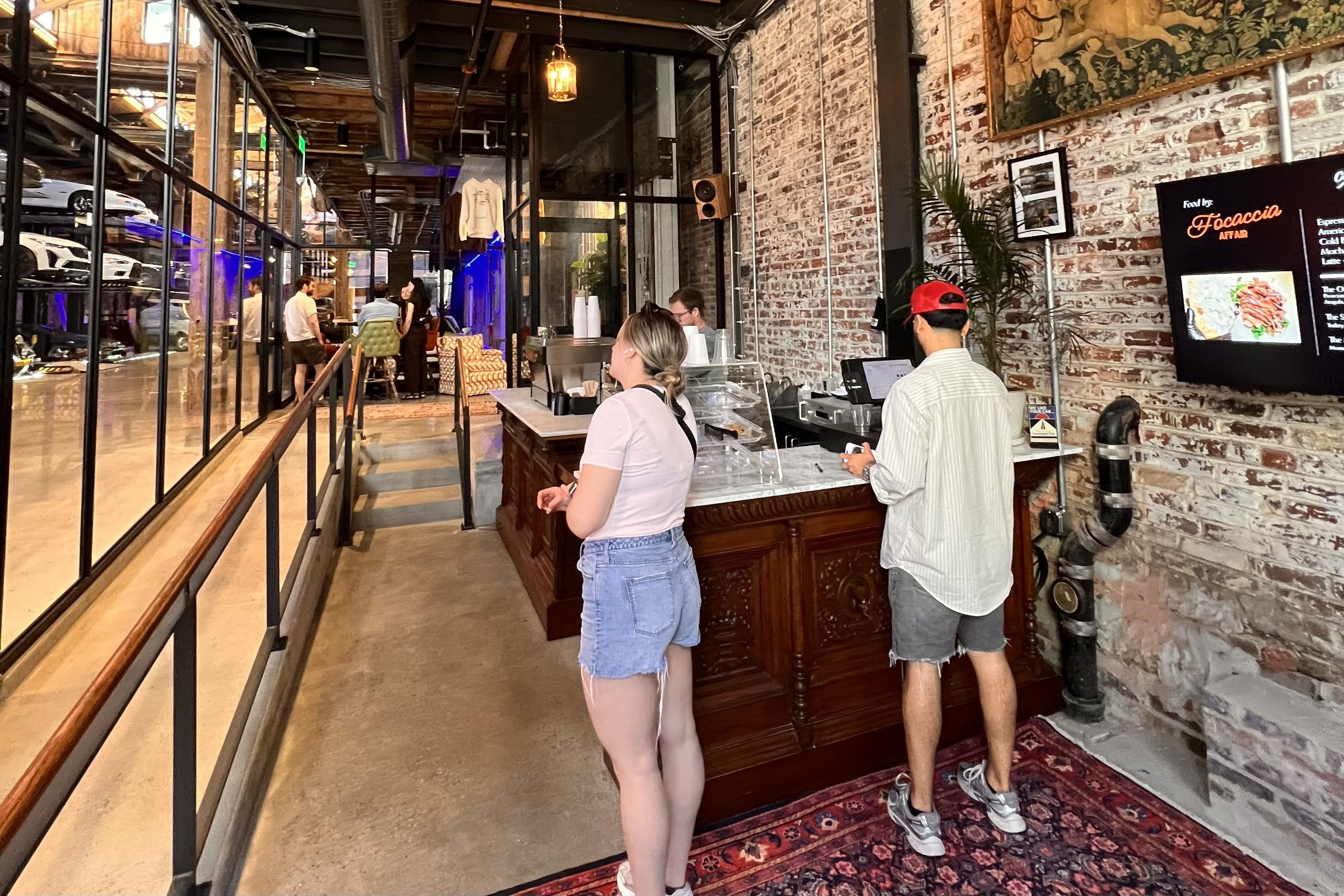
    Cannonball, the new private club for car enthusiasts near the Fillmore, has brought in Focaccia Affair — a fledgling business from Anthony Santucci and Gianluca Mazzarelli — to run its food operations. The club, housed in the sprawling former Morse Elevator Works at 1105 Frankford Ave., combines car storage with social and coworking space, a bar, and a public-facing cafe where you can gawk at classic cars through the window while sipping espresso.

    Focaccia Affair’s cafe at Cannonball serves walk-ins.Michael Klein / Staff

    The cafe, open to anyone, is where Santucci’s focaccia sandwiches take center stage. He’s offering two sandwiches, plus cookies and coffee, to start.

    Santucci, whose family operates Santucci’s Original Square Pizza, developed the bread after moving to San Diego before the pandemic. He had initially considered expanding his family’s pizza business there but began experimenting with focaccia as table bread and as a possible addition to the pizza operation.

    The experiment eventually became something else.

    Santucci and Mazzarelli, a former VIP manager at Barstool on Sansom Street, were friends whose common bonds include hockey and Italian food. After Santucci returned from a 2024 trip to Italy raving about a focaccia sandwich he had eaten, the two made one using the recipe he had been developing.

    Focaccia Affair’s Anthony Santucci (left) and Cannonball founder Christopher Allen in the mezzanine seating area.Michael Klein / Staff

    Focaccia Affair grew from there, although quietly. Santucci and Mazzarelli started testing the sandwiches over the last year through small catering orders and by dropping off food for restaurant staffs around Philadelphia.

    The business is now making its formal debut on two fronts: at Cannonball, where it’s open daily, and at Barstool Sansom Street in Washington Square West. The Barstool menu, which started Thursday, is more extensive than Cannonball’s: six focaccia sandwiches, crostini (on focaccia), burgers on brioche buns, salads, and appetizers.

    Santucci said the bread — which took months of development — is baked after a 48-hour cold fermentation. The result is focaccia with a crispy crust and fruity olive oil flavor. Its sturdy interior holds up to substantial fillings without turning the sandwich into a sloppy mess.

    Seating on the mezzanine at Cannonball, 1105 Frankford Ave.Michael Klein / Staff

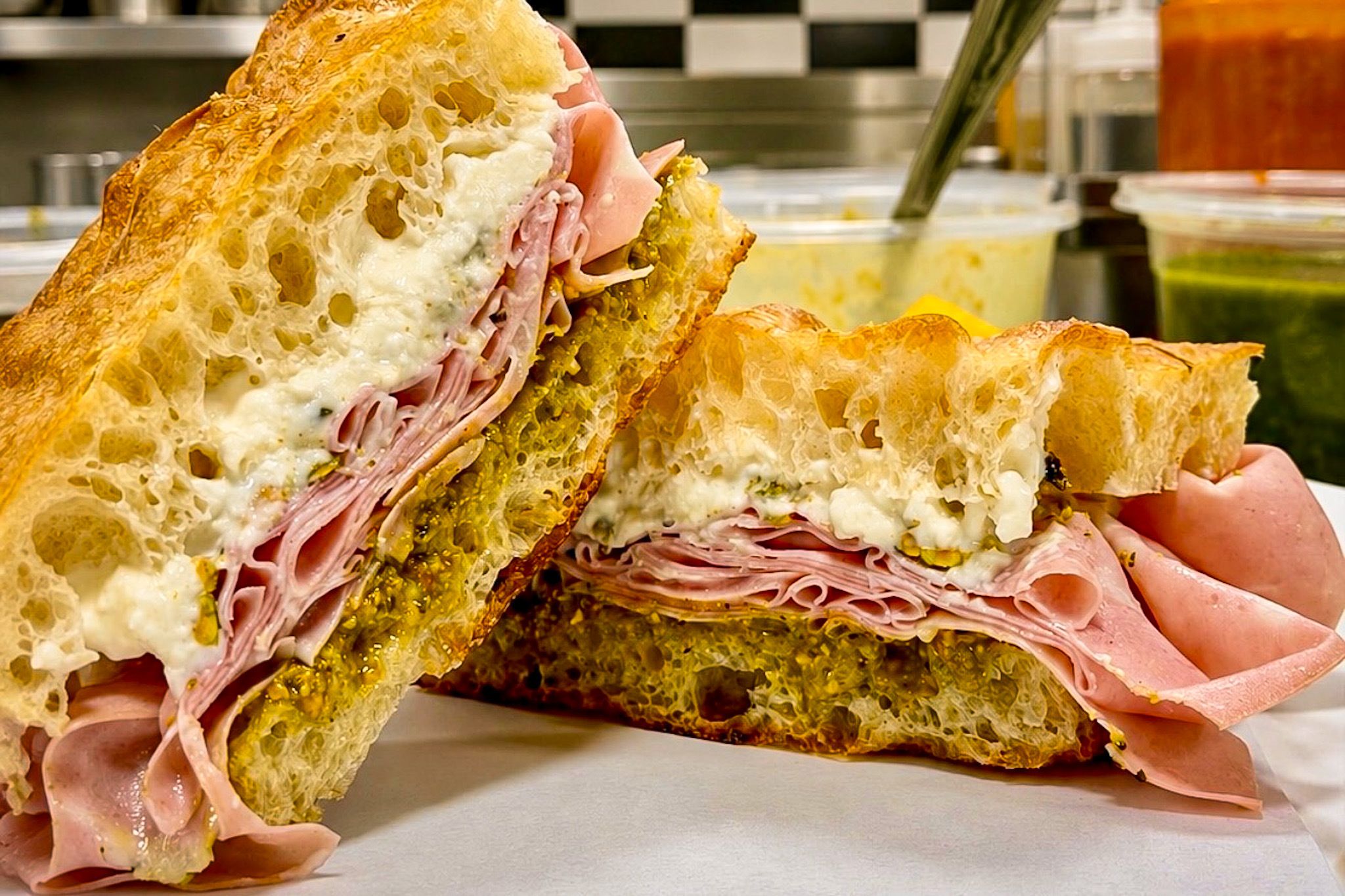
    Cannonball’s cafe will generally offer two or three focaccia sandwiches at a time, rotating them seasonally. Currently, the Muse combines mortadella and stracciatella, a pairing that puts the bread’s structure to good use. (It also survives a test that many sandwiches do not: refrigeration. Gently reheated in a toaster oven the next day, I found the bread just as good.) The Situationship layers sliced turkey, goat cheese, arugula, and fig jam between focaccia, the jam’s sweetness playing against the peppery greens and tangy cheese.

    Santucci has begun developing breakfast versions; the first combines soft-scrambled eggs and bacon with house-made Calabrian chile-infused hot honey. Pastries are being developed, too, including a pumpkin cinnamon roll with brown-butter icing.

    Cannonball’s members-only bar overlooks the car storage.Michael Klein / Staff

    Focaccia Affair also oversees food for Cannonball members and their guests upstairs. Dinner starts at 4 p.m. daily with a six- to eight-item menu modeled on Italian aperitivo culture: smaller dishes designed for sharing rather than conventional entrées. Fresh pastas and additional desserts are expected to join the menu in October.

    Allen said food was essential to his plan for Cannonball, because even a spectacular collection of automobiles has limits as a daily attraction.

    “You can visit the most amazing car collection in the world, but after 15 or 20 minutes, you want to sit down, have a coffee, and eat a sandwich,” he said. “Most of all, you want a reason to come back tomorrow.”

    Focaccia Affair, 1105 Frankford Ave., instagram.com/focaccia_affair. Hours: 6:30 a.m. to 3 p.m. weekdays; 8 a.m. until roughly 3:30 or 4 p.m. weekends.