Rival Bros. cofounder Jonathan Adams said that the company intends for the Wayne location to open by spring 2027. It will likely have capacity for upward of 60 seats thanks to 2,100 square feet of space and limited outdoor seating, he said.
“We always had this idea of proving ourselves in the city first,” said Adams. He said Rival Bros. venture into Wayne was motivated by watching more and more regulars move to the suburbs after the pandemic.
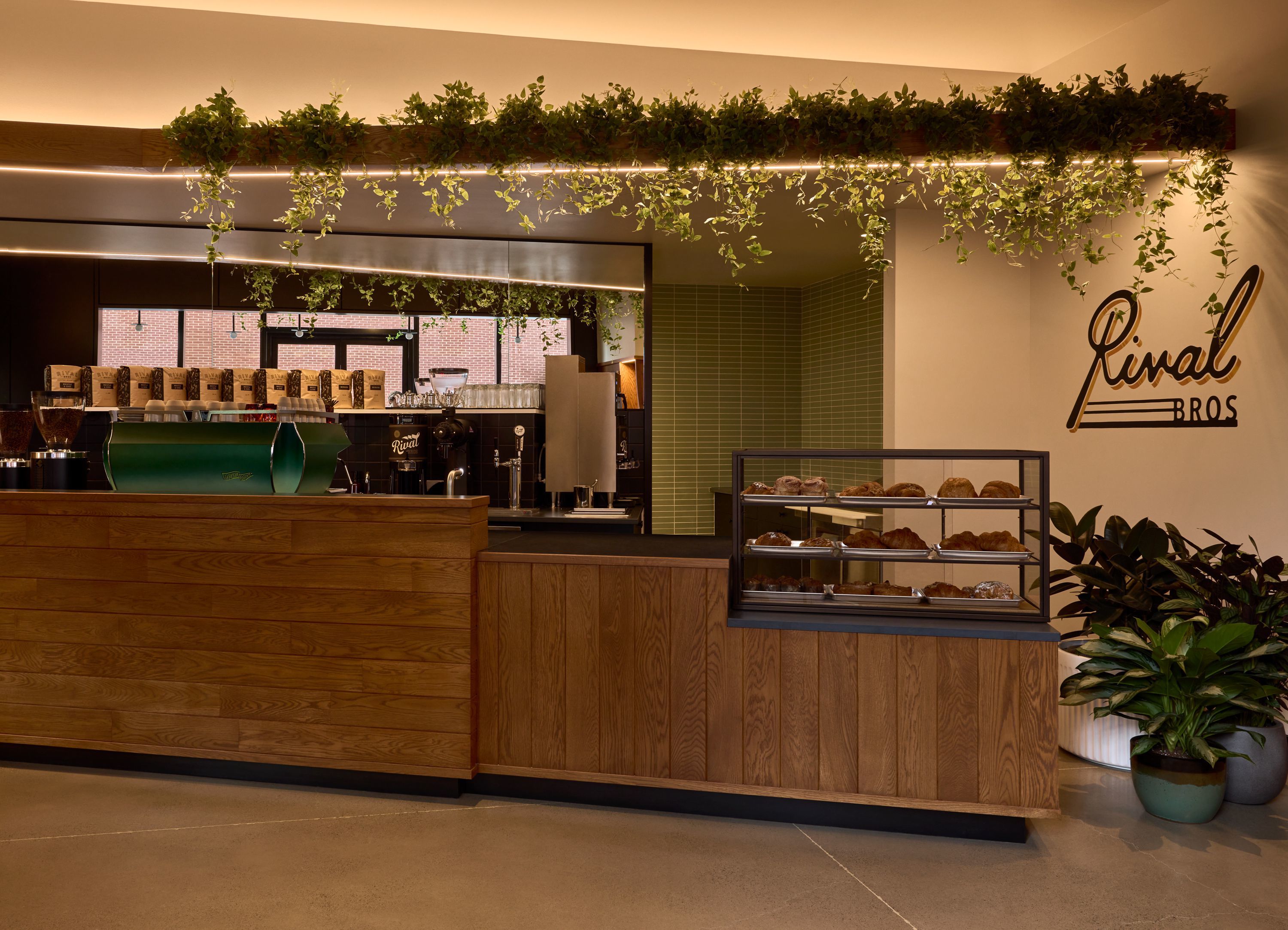
The interior of Rival Bros. coffee shop at 1100 Tasker St. in East Passyunk. The local roastery currently operates five brick-and-mortars in Philly.JASON VARNEY
“They’d just move out to the ’burbs, start families. We thought, ‘Let’s go with them,’” Adams said.
Adams and business partner Damien Pileggi opened Rival Bros. in 2011 as a roastery and mobile coffee truck. In 2014, the duo opened Rival Bros.’ first brick-and-mortar coffee shop, at 2400 Lombard St. in Fitler Square, followed by locations in East Passyunk, Center City, and Brewerytown. Their fifth outpost opened in September 2025, on the ground floor of the Rally apartment building at 1701 N. Second St. in Olde Kensington.
Rival Bros. roasts its signature espresso blends at Global Dye Works in Frankford.Handout
Adams said that five coffee shops makeup the “lion’s share” of Rival Bros.’ business, which also includes an e-commerce site and wholesale arm that sells Rival Bros.’ signature espresso blends, sourced from across Latin America and roasted in Globe Dye Works.
Rival Bros. is working with the restaurant design firm Stokes Architecture + Design (past projects include Stephen Starr’s Borromini and the Michelin-starred Provenance) on the chain’s Wayne location, which Adams said will have a more relaxed vibe than its city counterparts.
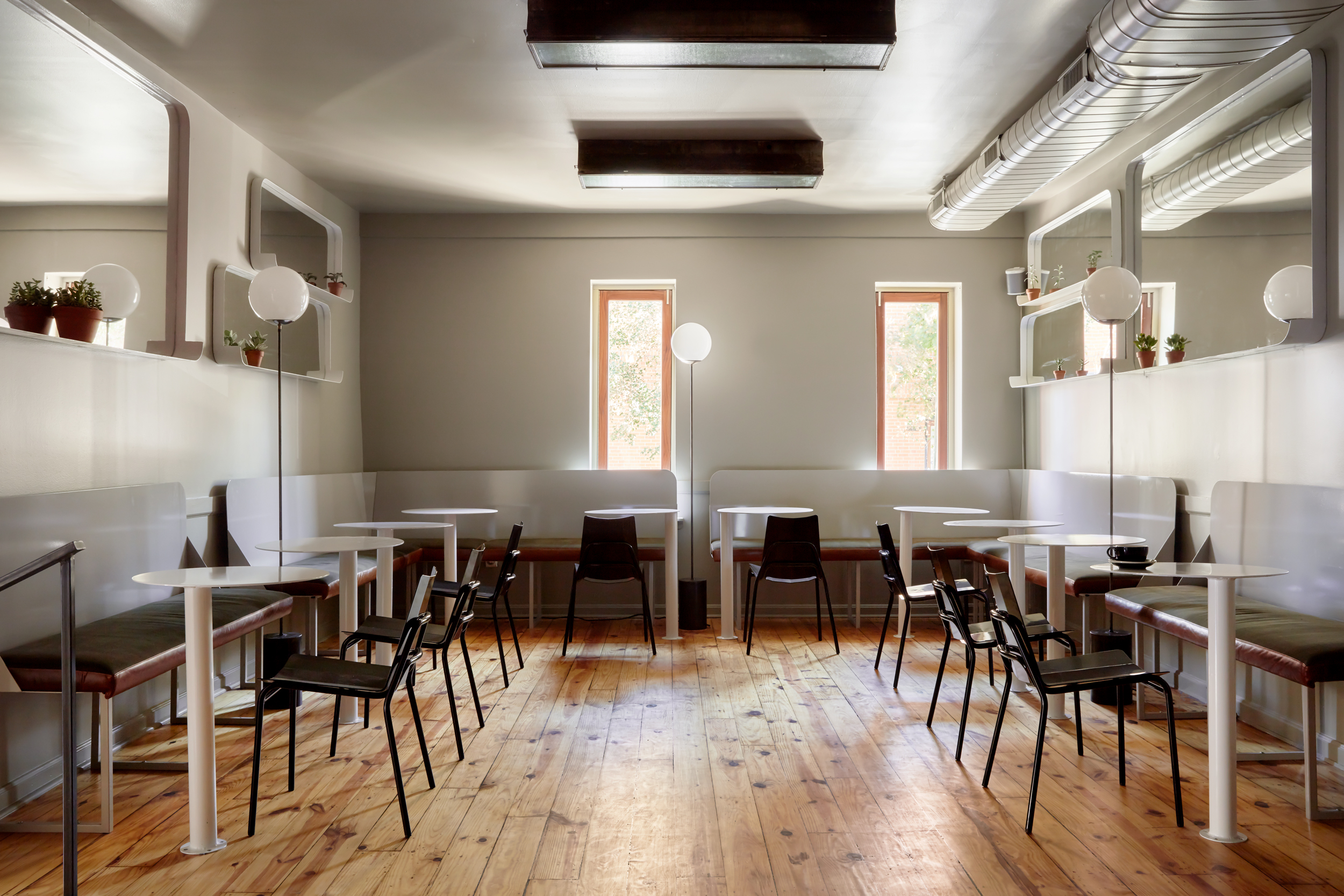
“It’s not going to be like Central Perk, right? We’re not going to have big fluffy couches or anything,” said Adams. But “we’re noticing that people in the suburbs like to sit and linger longer,” so there will be two distinct seating areas.
A pumpkin spice latte from Rival Bros.Courtesy Rival Bros.
Wayne is already home to more than a half-dozen coffee shops and cafés, including two Starbucks, the original Gryphon Cafe, and the French Matines Café, which Adams said already uses Rival Bros. products. He’s unconcerned about oversaturation.
“I’ve been in Wayne on a Saturday morning and still had to wait in line for a while just for coffee, which I think is great,” Adams said. “It means that cafe culture is alive and well there.”
Rival Bros.’ foray into the suburbs comes a little over a year after the company sought to raise $4 million in equity to fund an expansion. That money, Adams said, has mostly gone to “nonflashy things,” such as a growing their warehouse space and rolling out a website redesign.
All of it feeds into one goal, according to Adams: “Trying to be the mid-Atlantic’s dominant coffee roaster.”
West Pikeland Township will move ahead with purchasing a new facility for its police department and put its existing municipal building up for bid this month, without protections in place for the community theater based there, even after an attempt to reconsider that decision.
A motion before West Pikeland’s board of supervisors — which would have rescinded a vote from earlier this year to purchase 1001 Kimberton Rd. for its municipal offices and police department and simultaneously stopped the township from putting its existing building up for sale — failed, 3-2, Monday night after hours of public comment. Supervisors Steven Costa and Harold M. Hallman III voted in favor of the motion.
The township is expected to close on the new building on Nov. 13, and has already paid nearly $400,000 in a nonrefundable down payment and due diligence, officials said at Monday’s meeting.
The board also, for a second time, voted to put the municipal building at 1645 Art School Rd., which houses SALT Performing Arts, up for bid after back-and-forth last month temporarily rescinded the move. The vote passed 3-2, with supervisors Costa and Hallman casting the dissenting votes.
The meeting, which went into the early hours of Tuesday, drew a sizable crowd of people who opposed the sale and criticized the board’s decision to move forward with the new property. It’s the third meeting in recent weeks to deliberate the sale of the township building.
SALT, in recent years, made roughly $400,000 in capital improvements to the building in exchange for a 10-year, fixed-rent licensing agreement. Its supporters came out in force, pleading with officials to protect the theater that has called the space home for more than a decade.
“If you go through with this, we’re getting that money back,” SALT’s president Lauren McComas told the board Monday.
The bid will be advertised Wednesday. It doesn’t preclude a new owner from taking on SALT’s existing licensing agreement, but it doesn’t offer protections for it, after officials said such a provision would devalue what the township could get.
“This is a sad day for West Pikeland Township,” supervisor Hallman said.
In hours of public comment, residents pressed the township supervisors to pause or reconsider the investment and preserve the home of the theater.
“Going against a licensing agreement to SALT, I think, is despicable,” said resident Jonathan Martin.
The purchase and sale are happening concurrently, as the township’s police department is based in a second building on the 1645 Art School Rd. property. The sale of that site would help offset the purchase of the Kimberton Road building, which the township envisions becoming an upgraded police departmentand a way to raise funds by leasing space to other tenants.
Several years ago, residents overwhelmingly agreed to increase their taxes to retain the police department. To maintain the police, officials want to grow the force and seek accreditation — a prospect hamstrung by the current facility, they have said.
In a brief presentation to the public, supervisor Bryan Maher said the current facility was “woefully insufficient” and “a joke,” noting that its jail cellis a bench bolted to the floor, with handcuffs attached. He argued that, in addition to a better place for the police department, the new property could be a destination for the township, with potential for farmers markets and events, and with the ability to publicize meetings to the traffic driving by on the main thoroughfare.
The movedid garner the support of two public speakers.
“I personally would rather administrators and police in a well-lit and accessible area rather than some of the other businesses who had expressed interest for that parcel,” resident Regan Sarmento said.
But many others said the purchase was flawed, and some collected hundreds of signatures on a petition opposing it.
“This purchase is just so financially fraught,” said resident Meredith Murphy, adding that the board’s pending budget was based on speculation about what revenue the new building could generate.
Costa raised concerns about the possible debt they could take on in the deal, along with the vision for the future.
“We’re going to have the police department, the admin, and maybe the post office or whatever. That’s not a destination,” he said. “What we have now in Historic Yellow Springs is a destination.”
This suburban content is produced with support from the Leslie Miller and Richard Worley Foundation and The Lenfest Institute for Journalism. Editorial content is created independently of the project donors. Gifts to support The Inquirer’s high-impact journalism can be made at inquirer.com/donate. A list of Lenfest Institute donors can be found at lenfestinstitute.org/supporters.
Temple’s nonconference schedule will provide opportunities to measure how far coach Adam Fisher’s rebuilt men’s basketball program has come. Monday night’s season opener against Central Connecticut State offered the first glimpse.
The Blue Devils entered the season following an 18-12 campaign and a second-place finish in the Northeast Conference. Picked to finish tied for third in the league’s preseason poll, Central Connecticut State presented an early test for Temple’s new-look roster.
With nine incoming transfers, an emphasis on defensive pressure and a deeper rotation surrounding returning standouts Derrian Ford and Gavin Griffiths, the Owls had plenty to evaluate.
Temple opened on a 17-0 run, held Central Connecticut State to 20% shooting before halftime, and earned a 68-56 victory at the Liacouras Center.
However, the Blue Devils outscored Temple, 40-32, after halftime, exposing some of the challenges facing Fisher’s revamped team.
“We’ve got to figure out, again, [how] to attack and finish out games the right way and play Temple basketball for 40 minutes,” Fisher said.
The Owls return to action Sunday at 5 p.m. against Richmond at the Palestra.
Griffiths provides versatility
Griffiths finished with 11 points, eight rebounds, and three assists, providing a steady presence as Temple experimented with different rotations.
The 6-foot-7 senior made two three-pointers and finished 4-for-11 from the field in 29 minutes.
His performance built on a productive first year with the Owls, when he averaged 10.1 points and 4.9 rebounds after transferring from Nebraska.
Griffiths also made 63 three-pointers and blocked 53 shots last season, becoming the only Division I player to record at least 60 threes and 50 blocks.
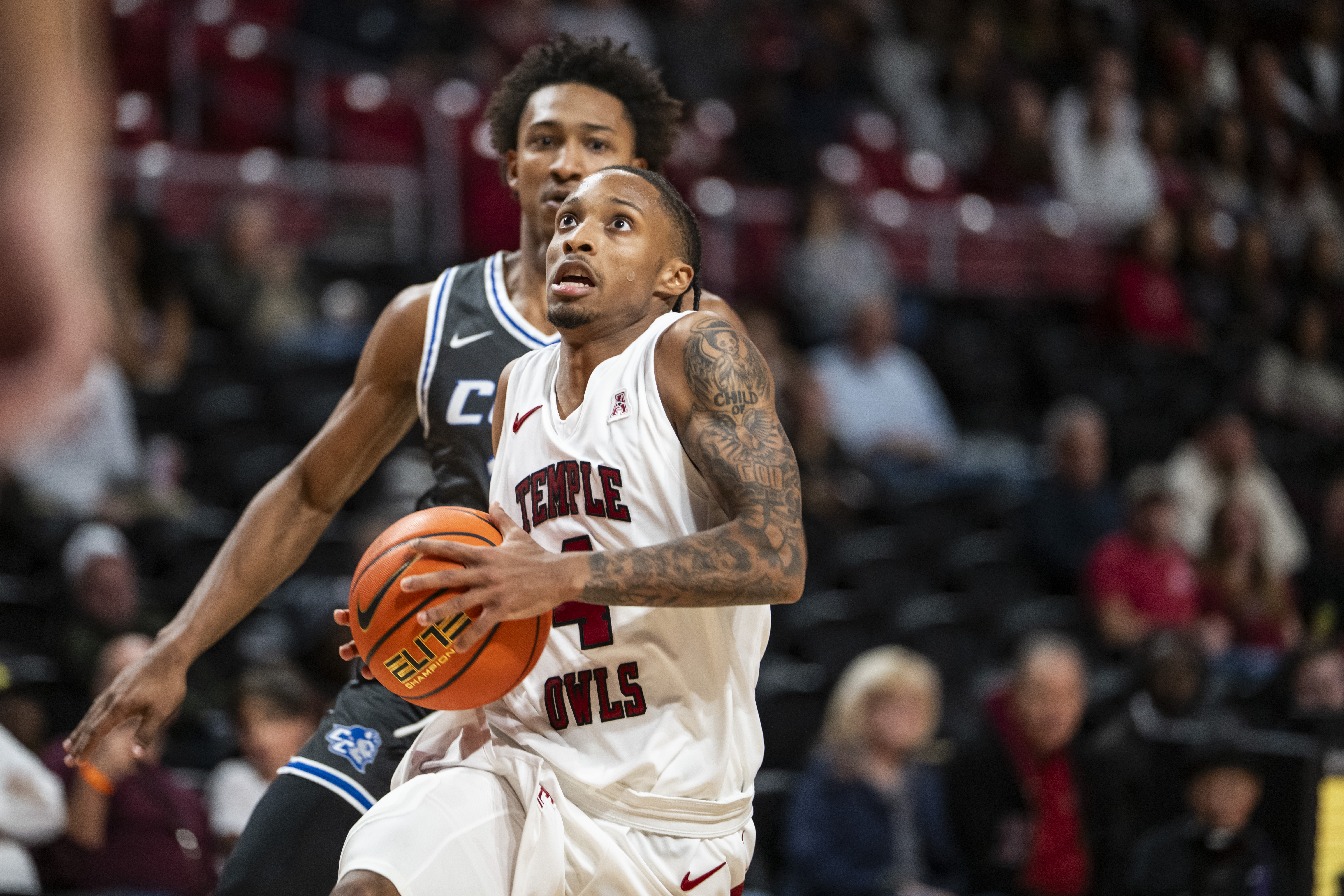
Gavin Griffiths finished with 11 points, eight rebounds, and three assists.Allie Ippolito / For The Inquirer
His combination of perimeter shooting and interior defense gives Temple flexibility on both ends.
“Because I’m tall and I have a quick release, it affects defenses a lot because they have to pull over to my side,” Griffiths said before the season. “That allows our guards to really get downhill and make plays.”
Fisher wants Griffiths to become a more consistent rebounder and embrace a larger leadership role as the newcomers adjust.
“I thought Gavin Griffiths was really steady,” Fisher said.
A deeper rotation
Fisher’s new approach this season emphasizes defensive pressure, faster play, and frequent substitutions to maintain intensity.
Temple started Griffiths alongside transfers Jordan Marsh, Cam Scott, Dez White, and Christian Beam.
Marsh, who transferred from Southern California, opened the scoring with consecutive three-pointers and helped establish Temple’s early advantage.
He finished with a team-high 16 points, four assists, and two steals, repeatedly creating opportunities with his speed and defensive activity.
“He’s electric,” Fisher said. “The speed he has with the basketball. He makes the defense have to put on a lot of pressure.”
Jordan Marsh finished with a team-high 16 points, four assists, and two steals.Allie Ippolito / For The Inquirer
Temple forced 12 turnovers, converted them into 17 points, and scored 21 fast-break points.
The frontcourt also demonstrated its versatility. Beam, a 7-1 center, started and provided early rim protection, while UTSA transfer Baboucarr Njie contributed eight points, 12 rebounds, and three blocks off the bench.
Ford, Temple’s leading scorer last season, entered with 16 minutes remaining in the first half. Fisher revealed afterward that Ford had practiced about three days over the previous three weeks and was being eased back into action.
Deuce Drake provided another spark off the bench, scoring 11 points in 15 minutes, including five consecutive points during a crucial second-half stretch.
Second-half concerns
Despite leading 36-16 at halftime, Temple struggled to maintain its defensive intensity.
Central Connecticut State improved to 50% shooting after the half, while Temple made three of 16 second-half three-point attempts.
The Owls led by 23 points with 11:19 remaining, but the Blue Devils repeatedly cut into the advantage, reducing the deficit to 11 with 1:26 left.
Fisher criticized Temple’s stagnant offensive possessions and tendency to settle for perimeter shots rather than attacking the basket.
Adam Fisher said his team “settled in the second half offensively” on Monday night.Allie Ippolito / For The Inquirer
“I thought we really settled in the second half offensively,” Fisher said. “You’ve got to attack more.”
Marsh attributed the late struggles to a lack of attention to detail.
Still, the opener demonstrated Temple’s potential to pressure opponents with its depth and athleticism.
The pilot of the Learjet 60 that crashed in South Florida Sunday and left nine people dead has been identified as a Montgomery County man who previously worked for an Allentown-based aviation company.
Jeffrey Gregory, 55, of Gilbertsville, obtained his transport pilot’s license in 2021 and was certified to fly multiple Learjet models, according to Federal Aviation Administration records. He became a certified flight instructor for single-engine and multiengine aircraft in April 2025.
According to his LinkedIn, Gregory began working at East Coast Jets, a private jet charter company in Allentown. In a statement provided to multiple news outlets, the company confirmed Gregory worked there from 2016 to 2017 and expressed condolences for this “heartbreaking tragedy.”
Gregory grew up attending Limerick Chapel in Pennsylvania, with his parents working at the church, and always dreamed of flying, according to a former neighbor who spoke with the US Sun.
He’s being remembered in social media tributes as a loving father, husband, and aerophile.
In audio transmissions from the plane’s descent, a male voice could be heard reciting the Lord’s Prayer. John Goldfuss, who attended Bob Jones University with Gregory, said on Facebook he had “no doubt” it was Gregory’s voice.
Thomas Noetzel, the director of operations at the company that operated the flight, Upper Jets, organized an online fundraiser to support Gregory’s wife and children. Upper Jets said in a previous statement it was fully cooperating with investigations surrounding the crash and pledged to support the victims’ families.
Noetzel called Gregory a close friend. “Knowing him has made me a better person,” he wrote on the GoFundMe page, which had raised over $6,000 as of publication time.
“Jeff was a devoted, conscientious, and deeply faithful man who had a genuine passion for flying and a strong love for the Lord,” Noetzel’s father, Walter, posted on Facebook. “His journey on earth may have ended, but I like to think he is now flying among the angels, soaring peacefully in the presence of our Lord.”
The National Transportation Safety Board is leading an investigation into the crash alongside the Federal Aviation Administration.
Federal investigators suspect the business jet was already breaking apart before it slammed into the ground in Greenacres, just southwest of West Palm Beach, Fla., and erupted into a fireball. Thick black smoke engulfed the crash site, and little remained of the plane.
The private jet had been traveling from Texas to the Bahamas.
Nine people were aboard the plane, including 20-year-old copilot Nathalia Gadelha Filgueiras, who made the final radio transmissions; technology entrepreneur Adam Robinson; his wife, Helen Sharp; their two young children, Emma and Charlie; the family’s nanny, Anita Maria Cetina; and couple Rachael Reed and Charmi Fehr.
The jet did a steep nosedive, leaving behind a crater and a wide debris field as rain pounded the area. One injury was reported on the ground, and about 600 nearby residents remain displaced.
Authorities said weather would be a key initial focus of the investigation, and the National Transportation Safety Board would also examine the actions of the crew and look for any mechanical problems with the plane.
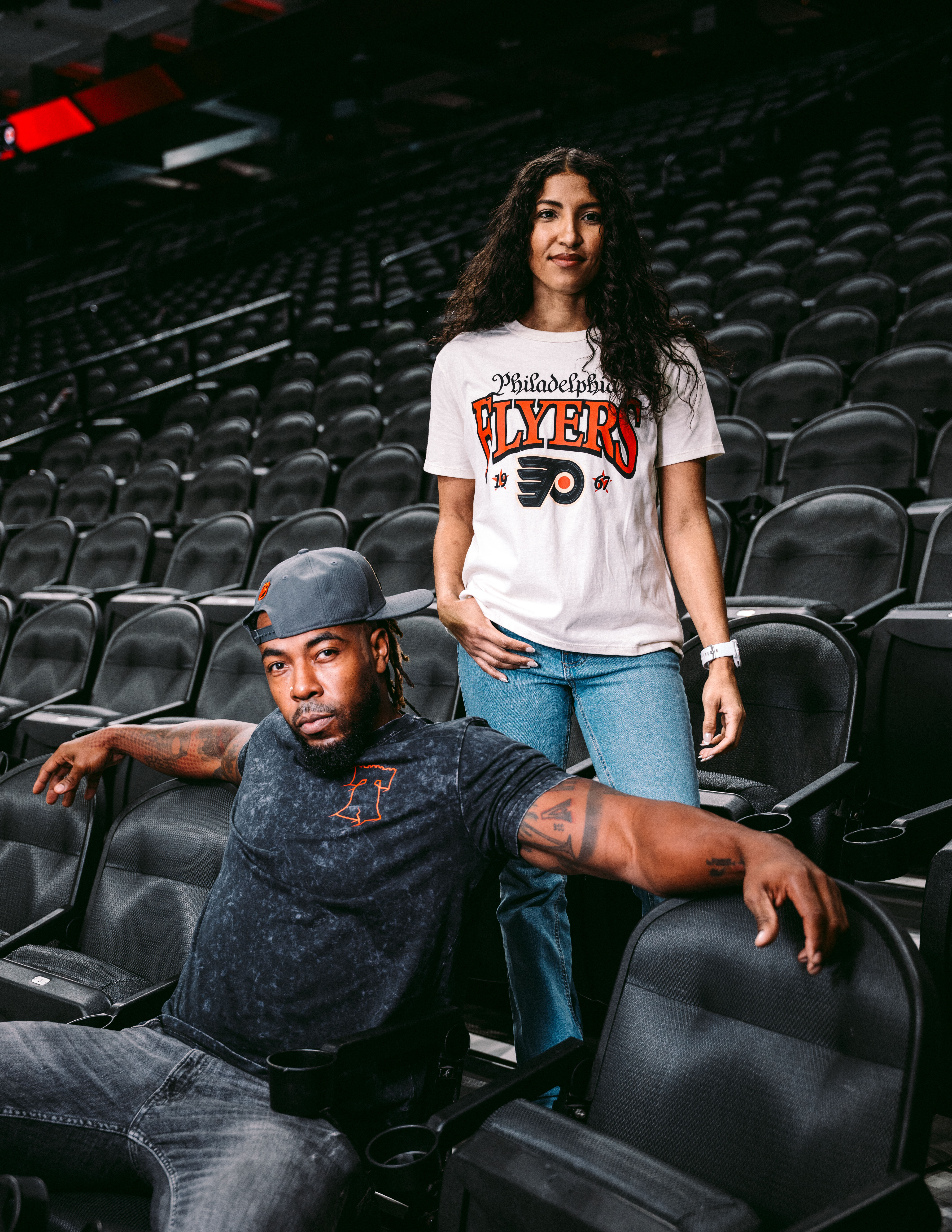
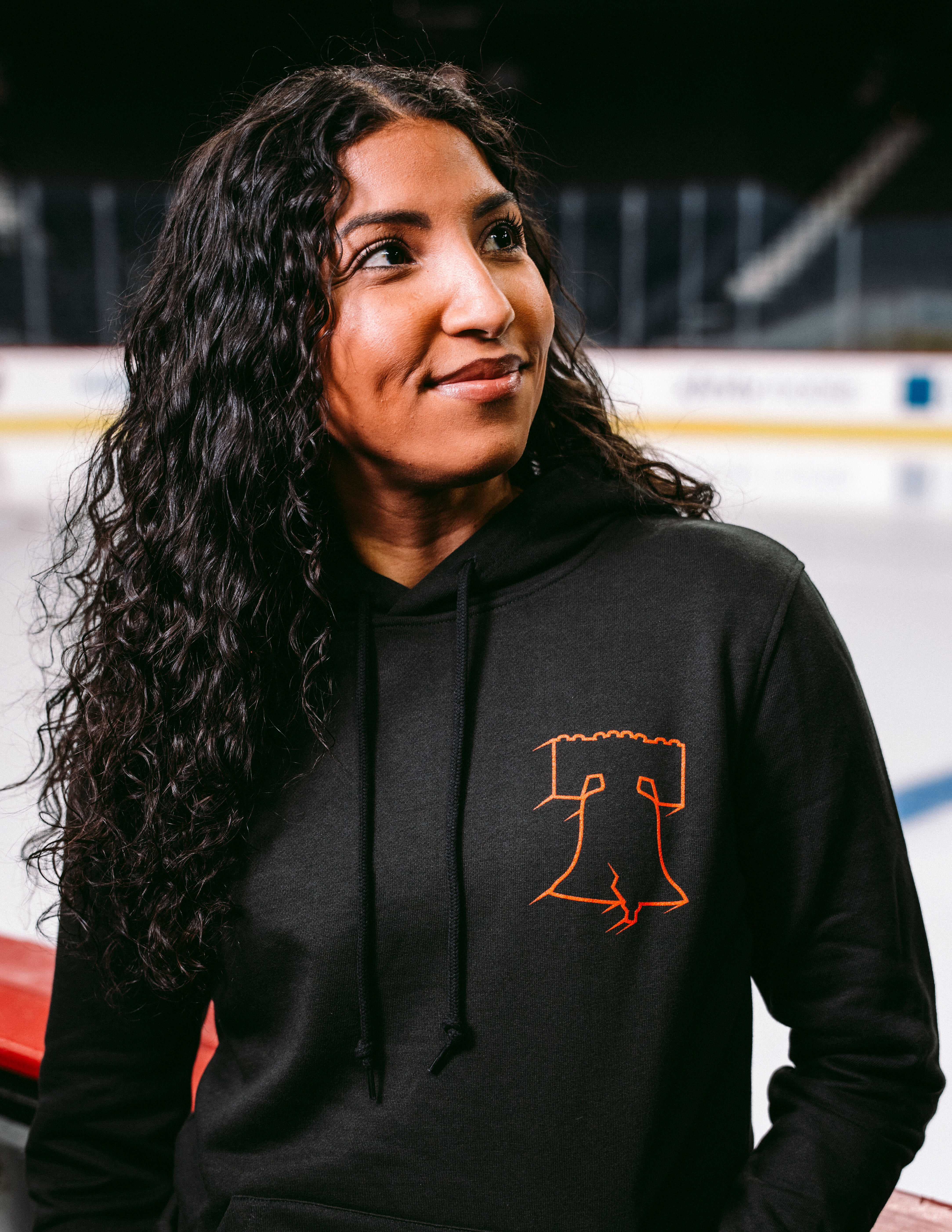
For the last half-year, the Flyers have been teasing a new Liberty Bell logo. The front office teased it back at the NHL draft, featuring the logo prominently in a photo posted to their social media.
So, in anticipation of the “Hometown Remix” jersey campaign, a lot of fans speculated the Flyers might, for the first time ever, use a new crest on the front of the jersey, or use the Liberty Bell logo on the shoulder pads.
That’s not happening — the Flyers are sticking with their traditional crest — but the jersey is Liberty Bell-inspired. The team wanted to use the newly developed Liberty Bell logo to support the campaign, featuring motion lines to mimic the iconic “Flying P” logo, in some way.
In honor of that campaign and the country’s 250th anniversary celebration, the Flyers are releasing an Independence Edition merchandise collection, with the new Liberty Bell logo at the center.
“We’re excited to showcase some incredible storytelling elements with our new campaign to support our Hometown Remix uniforms,” said Todd Glickman, Comcast Spectacor’s chief business & revenue officer, in a release.
The Flyers’ new “Independence Edition” collection went on sale Tuesday.Courtesy of F
“The Independence Edition is an opportunity for us to expand our brand while honoring our city’s legacy by carrying it forward through the next generation. We wanted to find ways to portray our true Philadelphia identity in a way that is also authentic to the Flyers brand — one that embodies boldness, defiance, and resilience. We’re proud to introduce a number of interactive elements for fans to experience and engage with during Independence Edition games and to showcase their fandom through our extensive retail collection.”
The logo, which also is featured on a small sticker on the back of the helmets, will be available on everything from hats to T-shirts and sweatshirts. The collection makes use of a Philadelphia wordmark in a Declaration of Independence-inspired font.
The initial collection will be available online and at the Flyers team store starting with Tuesday’s Hometown Remix jersey debut. Later collections will follow around the holidays and in the spring.
The Flyers’ new merchandise collection features the new Liberty Bell logo they’ve teased over the past few months.Courtesy of Flyers
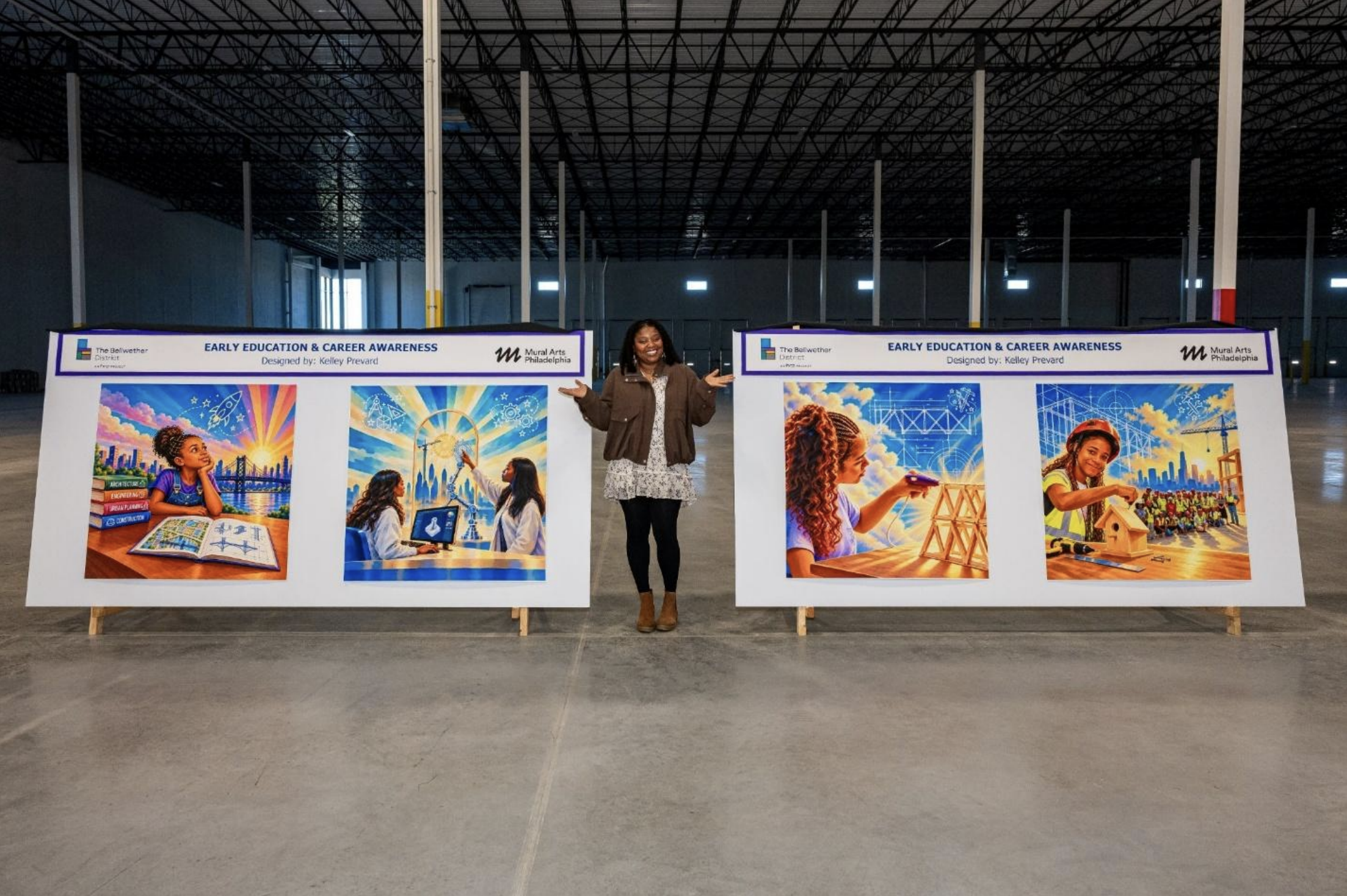
Last month, Mural Arts unveiled designs for banners to decorate a fence along the Bellwether District development in South Philly and, in doing so, jump-started a conversation about the role of AI in Philly’s public art.
The public art project, part of Mural Arts’ “Throughlines” exhibit displayed around the city, is meant to beautify the 26th Street fence on the Bellwether District campus during its ongoing construction.
In partnership with the real estate investment firm HRP Group, Mural Arts hired five artists to create 20 vinyl mesh banners illustrating Philadelphians who live near the former oil refinery site.
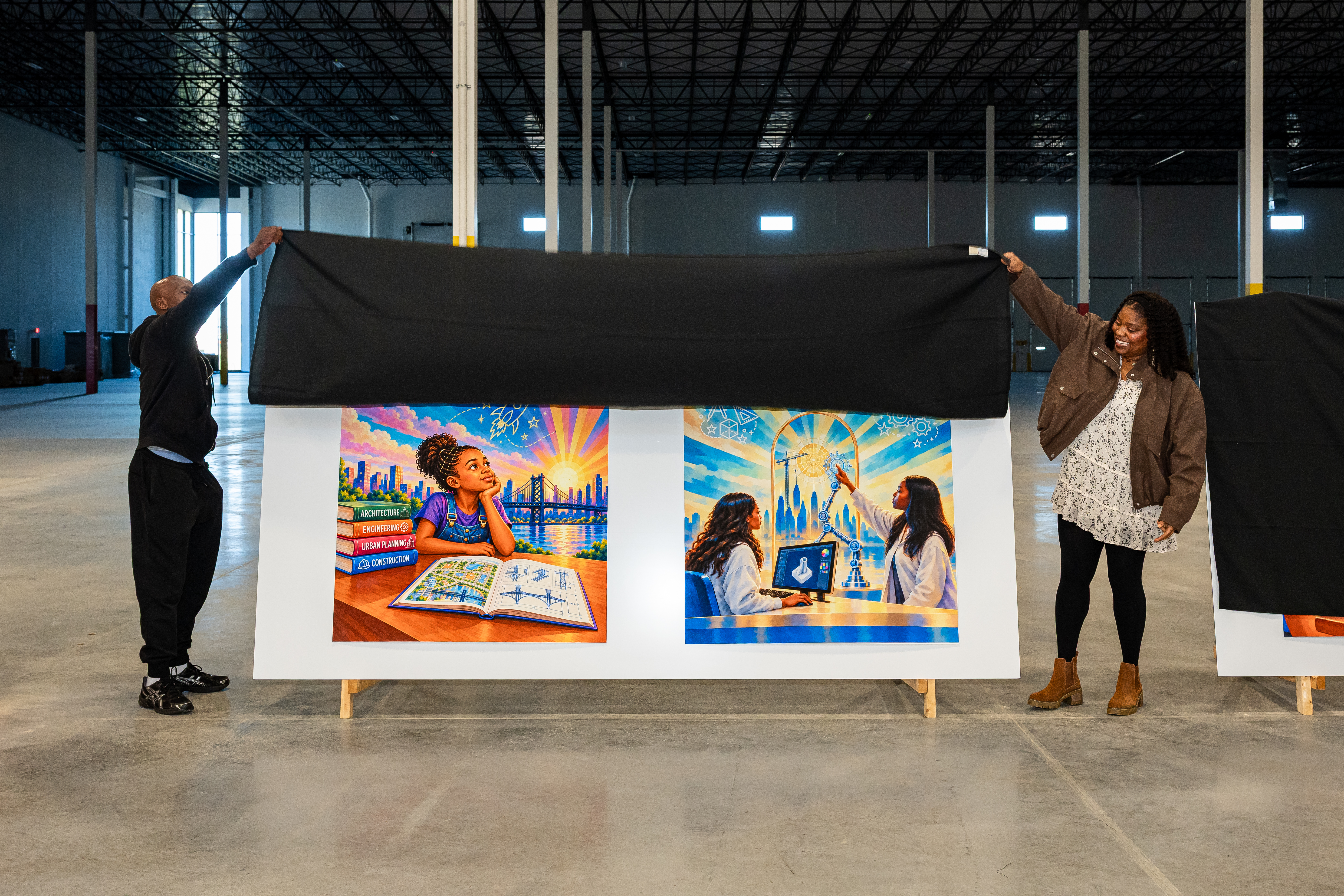
Four colorful designs from muralist Kelley Prevard aimed to portray early education and career awareness with images of young girls working in science, construction, and engineering.
Artist Kelley Prevard (right) at a news conference on Oct. 7 unveiling designs for Mural Arts’ “Throughlines” project at the Bellwether District.Elijah M.Dreuitt III
But users on social media pointed out that in three of Prevard’s designs, the skyline featured a building that looked more like Chicago’s Willis Tower than Philadelphia’s Liberty Place. They spotted other details that bore similarities to AI-generated illustrations, like the lettering and the style of the girls’ portraits.
Prevard, who did not respond to requests for comment, is a painter based in South Jersey who has had a long career in Philly’s art scene.
The aesthetic styles of those works look distinctly different from the Bellwether District banner designs that Prevard presented: They look more photorealistic with a cohesive painting style, while the banner portraits evoke cartoon illustrations.
“My four designs focus on early education and inspiring the next generation of young girls to see themselves in STEM, engineering, and construction,” wrote Prevard in a now-deleted Oct. 9 Instagram post featuring her Bellwether District designs.
So I’m not seeing anyone report on this but Mural Arts is going to feature an artist who is using AI for a series of banners in the “Bellwether District” development in South Philly. No other artists featured clearly used AI but I’m just confused as to how this happened pic.twitter.com/gg6BJkjEMt
AI scholar Tuhin Chakrabarty, who teaches computer science at Stony Brook University in New York, said it was “very obvious” that Prevard’s designs looked like AI.
“The color, texture, and synthetic nature of the image is very indicative of AI slop,” said Chakrabarty in an email. He ran images of Prevard’s designs through Pangram, an AI detection software with 99% accuracy, which concluded that AI was detected in each of the four illustrations, meaning that the images were either AI-generated or edited with AI tools. “Pangram also confirms it,” he added.
(When passed through Pangram’s detection software, the works by the other artists involved — Priscilla Bell Lamberty, Jamee Grigsby, Ernel Martinez, and Cesar E. Viveros-Herrera — did not indicate AI use.)
While critics of the Bellwether banners called them out as AI slop, Mural Arts doesn’t have a policy about the use of AI in artwork.
Mural Arts executive director Emily Mello, who took over from founder and longtime arts leader Jane Golden in September, declined to comment on whether the banners in question used AI-generated imagery or whether Mural Arts staff was aware of potential AI use in this project when they approved the designs, which typically go through several review processes during creative development.
Mello said she recognizes that the role of AI tools and imagery in the arts is a divisive issue.
“People have really strong feelings about it, which I think they should, with any rapidly changing technology and how it enters the creative field,” said Mello.
Arts educator and curator Emily Mello, who has led arts institutions in New York, Chicago, and Miami, is Mural Arts’ new executive director.Courtesy of Ray Bailey
“I really would love to bring the discussion away from this individual and her artwork, and doing forensics on the [designs]. I think it’s a much larger question than one individual’s work. There are questions to be asked about a whole range of ways artists are using AI and what is acceptable and what is not, and people have a huge range of opinions about that,” she said.
According to Mello, there are no plans for these mesh banners to become permanent painted murals. The banners are in the final stages of design edits and Mural Arts is moving forward with printing and installing them, including Prevard’s, in late November.
After this article was first published, Mural Arts spokesperson Frank Luzi said the skylines in Prevard’s designs will be changed to more accurately reflect Philadelphia.
Amelia Chasse Alcivar, executive vice president of corporate affairs at HRP Group, developer of the Bellwether District, said the banners pictured real Philadelphians. Prevard, she said, included a local high schooler studying engineering, who participated in the Bellwether District’s Career-Connected Learning program.
“This public art project was inspired by real community members in South and Southwest Philly living and working at or around the Bellwether District,” she said in a statement. “We are proud to center their faces and their stories along one of the gateways to the city.”
Luzi declined to disclose how much the artists were paid for the Bellwether District work. He said in an email that the compensation was “in line” with other Mural Arts projects “of this scale.”
Artist Cesar E. Viveros-Herrera presented two of his banner designs for the Bellwether District as part of Mural Arts’ “Throughlines” project at an Oct. 7 news conference.Elijah M.Dreuitt III
Mello said that Mural Arts, which receives some funding from the City of Philadelphia, among other sources, has been developing an AI policy in recent months. The arts organization was already scheduled to host a town hall on Nov. 5 for artists to provide feedback on its AI policy draft.
Following public concerns over Prevard’s work, Mello said they added a second session on Nov. 12 in response, given the high interest in these conversations. The events are aimed at an artist audience but open to the public, with RSVPs required.
“Mural Arts will always center humans — human artists, communities. That is central to our mission,” said Mello. “We hire artists throughout the year to work with communities and to change the visual landscape of our city, and that will always center human-made art.”
She added: “One work of art isn’t going to set a precedent for us, either.”
Editor’s Note: This story has been updated to reflect new information from Mural Arts received after publication.
Voters in Philadelphia will be asked two questions on Tuesday’s primary ballot. Here are the Editorial Board’s recommendations.
Question No. 1
Should the Philadelphia Home Rule Charter be amended to revise the City’s contracting procedures to allow for bid preferences and set-asides for small businesses; modify the threshold and standards for contracts that can be set aside for small and local businesses; and grant the Procurement Department and the City Solicitor discretion on bond requirements for certain construction projects?
The first question would change the City Charter so officials can provide preferences to small businesses that bid on contracts for city-funded projects. The measure would also expand the preferences that are given to local businesses.
A study conducted last year by the Pew Charitable Trusts found that Philadelphia’s business density — a key driver of municipal economies based on the number of firms per 1,000 residents 16 and older — has increased in recent years, but is still well below the national average (111 here; 129 across the country). Philadelphia also trails such cities as Indianapolis (122), St. Louis (119), and Baltimore (113). Anecdotally, local business owners also report significant pressures from inflation, high interest rates, and general uncertainty about the economy.
While preferences could provide some relief for many local entrepreneurs, they can hardly be counted on as a singular cure for what ails Philadelphia’s business ecosystem. It is crucial that city officials continue to address the systemic challenges facing local businesses — including a burdensome and uncompetitive tax system, and what has historically been an often-cumbersome permitting process (even as expedited review initiatives like PHL Prime show promise).
While it is an imperfect solution with an unfinished surrounding infrastructure, voters should vote YES to allow officials to offer the preferences, which can serve as a much-needed tool to help promote economic growth locally. At the same time, this board also calls on City Hall to continue working to overhaul the structural hurdles to business development in Philadelphia.
Question No. 2
Shall the Philadelphia Home Rule Charter be amended to establish and define the functions of Creative Philadelphia, an office headed by the Chief Cultural Officer to promote the City’s arts, culture, and creative economy sector?
The second question would make Creative Philadelphia — which now exists via executive order and which promotes and supports the city’s arts community — a formal and permanent part of municipal government. Aside from the often intangible civic value of increasing public engagement with the arts, a recent study found that the cultural sector in Philadelphia has an annual economic impact of $2.2 billion.
Given those stakes and the broader public benefits, voters should vote YES to formally establish Creative Philadelphia as a permanent office in city government.
ENDORSEMENTS
Election Day is today — Tuesday, Nov. 3. That means it is time to vote.
The polls are open from 7 a.m. to 8 p.m. Mail ballots must also be returned by 8 p.m.
To help voters make their decisions, The Inquirer Editorial Board — which operates independently from the newsroom — interviewed candidates in several competitive primary races in the city and statewide. The board conducted independent research, reviewed the candidates’ position statements, and discussed the strengths and weaknesses of the candidates before making its endorsements.
There were 26% fewer crash-related deaths on Philadelphia roadways in 2025 compared to the prior year but serious nonfatal injuries in collisions increased slightly.
Last year, 89 people were killed in Philadelphia crashes, down from 120 in 2024, amounting to the biggest one-year drop since 2016, when the city began its Vision Zero program, aimed at reducing and ultimately ending traffic deaths.
While that is good news, city transportation officials said hard work lies ahead to ensure the overall decline in fatalities becomes a trend rather than a statistical blip.
Since the pandemic, people outside of cars have accounted for an increasing share of all traffic fatalities in cities across the nation. The trend holds true in the city last year.
Only 6% of the people involved in all Philadelphia crashes were walking when they were hit but pedestrians represented 41% of crash fatalities, said Virginia Lynn, senior Vision Zero coordinator for the city Office of Transportation and Infrastructure Systems.
Most fatal pedestrian crashes happen overnight, when fewer walkers and drivers are out, she said, adding that speeding is a leading cause.
“The lack of traffic overnight leaves open roads, and this induces speeding,” Lynn said. “Most speeding-related crashes occur between 9 p.m. and 2 a.m.”
Signs of progress
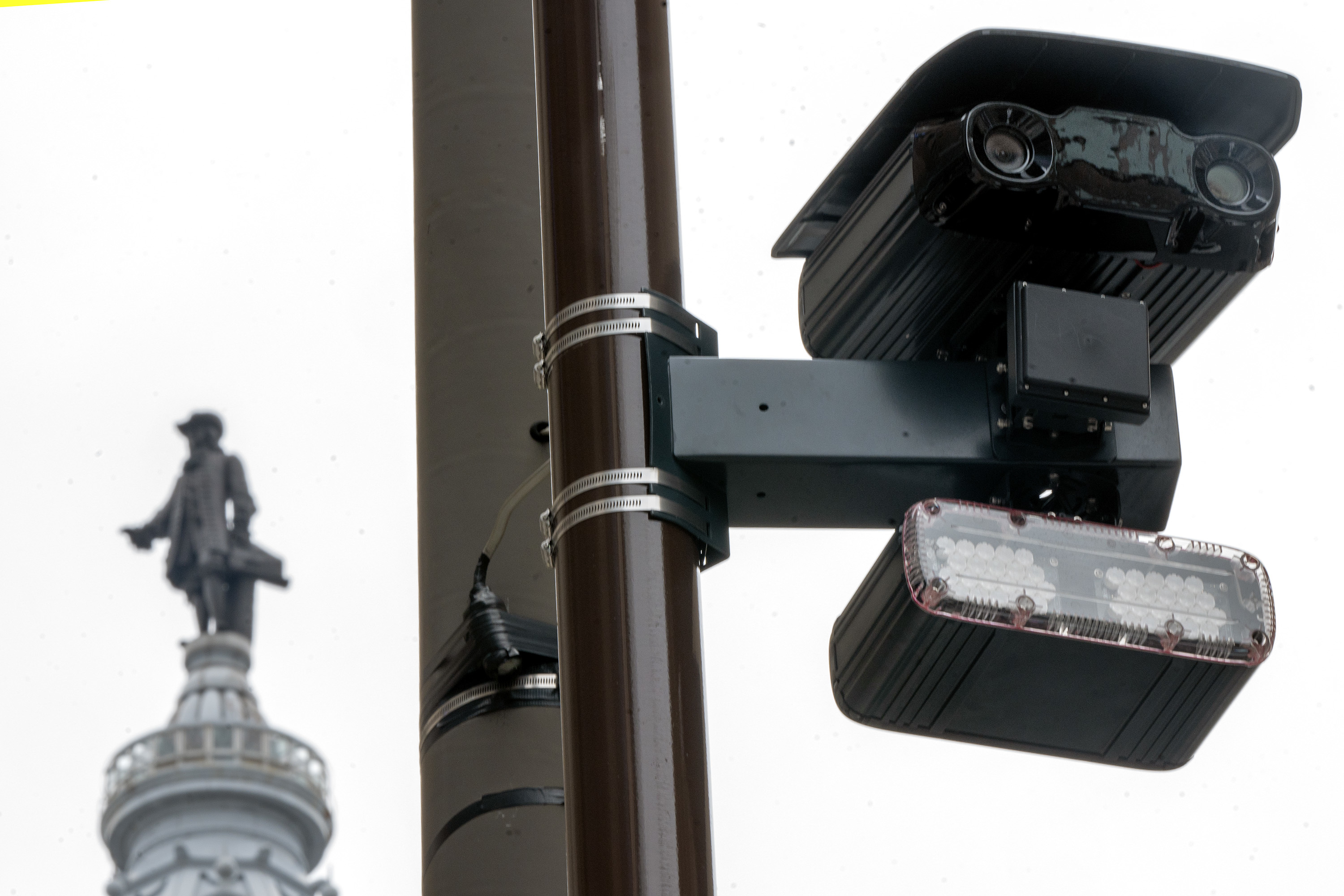
City officials point to increased use of automated speed-enforcement cameras, which have reduced fatalities by 40% on Roosevelt Boulevard since they were installed in 2020.
Speed cameras were placed on Broad Street in October 2025 and speeding violations declined 67% between then and March 30, according to a Philadelphia Parking Authority report filed with the state legislature.
Average vehicle speeds on Broad Street also declined.
“Lower speeds save lives,” said Marco Gorini, manager of the city’s Vision Zero program.
“When a person is hit by a driver at 20 miles per hour, there’s a 10% chance that crash results in a fatality. If the driver’s speed increases to 30 miles per hour, there’s a 50-50 chance,” he said.
A pedestrian struck by a car traveling 40 mph will die 90% of the time, Gorini said.
Speed cameras now are active along U.S. 13 in North and West Philadelphia and the city plans to install dozens more cameras on three more corridors with high numbers of crashes.
Traffic calming projects were installed on 27 additional blocks along roadways identified as having the most crashes causing serious injuries and deaths.
Installation of devices at dangerous intersections that give pedestrians a head start to enter a crosswalk before vehicles get a green light.
Educational efforts to create a culture of safety are less discussed but perhaps just as important over the long term.
The city Office of Transportation and Infrastructure Systems has developed safety lessons that schoolteachers can weave into classes in a variety of subjects. And so far this year, staff members have visited classrooms, reaching about 700 Philly third graders with an interactive program called Safe Routes Basics.
“We do classroom activities about how to be a safe pedestrian, to stop, look, and listen every time they cross the streets,” Gorini said.
The nation’s unemployment rate stands at about 4%. But it’s only 3.2% for workers in sales and related occupations.
That’s because even when business slows, many of my clients are reluctant to let good salespeople go. They’re counting on those employees to bring in new customers and keep existing ones.
But how should they pay them? For Philadelphia-area businesses, there’s no single formula. They might choose from several different approaches.
Base plus commission
One way is to keep compensation simple by paying salespeople a commission based on both new and existing customers.
This is how salespeople are paid at GLOBO Language Solutions in Wyncote, says senior vice president Jenny Esno. GLOBO helps organizations communicate with their employees, customers, partners, and suppliers across languages. The company uses thousands of linguists and employs about 15 salespeople.
“We compensate with above-average earnings through a built-in model that allows a senior account executive the opportunity to nurture and grow the accounts they serve,” Esno said. This structure is designed to retain high performers, she said.
New Jersey online retailer Adagio Teas pays their two salespeople a base salary and a percentage of sales.
“The plan aligns the company’s performance with salespeople’s compensation,” CEO Michael Cramer explained, adding that “high performers are rewarded with growing commissions.”
Anchor Pest Control in East Brunswick, N.J., also pays its salespeople a base salary plus commission. In addition, the company runs monthly sales contests, according to company president Carmen Reino.
“We’re a very competitive culture here,” he said, “so everything we do is based on competition.”
Project delivery
At First State Building & Design, a residential construction firm in Chadds Ford, a successful project delivery is just as important as making the sale, said general manager Micah Weeks.
“In construction, a sale doesn’t end when the contract is signed,” he said. “Poorly scoped or poorly priced work creates problems throughout design and production and ultimately affects the client experience.”
This is why, for him, it’s important to incentivize successful projects.
“Our approach keeps sales aligned with the overall success of the project, not just getting a contract signed,” he said. “That means selling work that’s properly scoped, appropriately priced, and positioned to deliver the quality and client experience we expect.”
Salary and bonuses
Mount Laurel-based Roosevelt Paper pays its 36 salespeople a salary plus monthly bonuses and incentives, CEO David Kosloff said. That makes the compensation split approximately 50% salary and 50% incentive pay. Newer salespeople receive a larger salary component.
“Our approach, starting over the last 10 years on the sales side, is a team concept with selling, where every account is shared between the inside and outside sales person,” said Kosloff, whose company has 350 total employees.
Although this approach is important, Kosloff wants to make sure he’s recognizing the best performers with a separate monthly bonus.
“Even though there’s a team concept with each account having two sales reps, there’s an individualized incentive,” he said.
Coaching and metrics
Several executives stressed that salespeople are not just motivated by compensation. Most want to be better at what they do. So a low-performing sales representative should not simply be terminated. Coaching could be a better solution.
At GLOBO Language, Esno says she works to distinguish those employees who need help developing skills from those who just lack motivation. She says that for lower-performing salespeople, the company evaluates whether performance issues stem from skill or motivation. Then it establishes a clear, time-bound improvement plan and provides hands-on coaching in the field. Reino is using AI to help train.
“We now have some AI programs so that for every call, a sales or customer service representative will get an email at the end of the day with feedback and suggestions for things they could have done better,” he said.
It’s important to make sure that reliable numbers are being used to best evaluate a salesperson’s results.
“In all cases, performance decisions are importantly guided by verifiable data,” Esno said. ”Because we rely on the success of our sales team, maintaining data integrity aligned with scorecard metrics is essential for measuring performance accurately.”
Anchor Pest Control’s Reino believes that clear performance expectations should extend beyond the sales department.
“Everyone has clear metrics from salespeople to customer service representatives, to management, to technicians and everyone knows what their numbers are supposed to be,” he said. “If they’re not meeting their numbers, we have an improvement program. We’ll put them through coaching.”
For business owners, the lesson is to decide what a successful sale looks like before deciding how to reward it. Build the compensation plan around that outcome, make the expectations clear, and give employees the coaching needed to meet them.
Since the Academy of Natural Sciences of Drexel University museum closed its doors to the public on Sept. 27, a fiery City Council meeting, a significant financialoffer from a local foundation, and packed public protests have aimed to save the nearly200-year-old institution. But, inside the museum’s brick walls, a quieter act of care and compassion was taking place.
In their final weeks of employment, a small group of museum staffers secured new homes for the museum’s animals from its live animal shows and “Outside In” center. Every tortoise, snake, and cockroach got settled in its new home by the start of November, said Anwar Abdul-Qawi, formermanager of animal programs at the Academy of Natural Sciences museum. His last day of employment, like the rest of his team at the museum, was Nov. 1.
Planning for the relocation of the animals started soon after the museum’s closure was announced on Sept. 1, Abdul-Qawi said.
“Me and my team were preemptive with everything,” he said. “We got that ball rolling immediately.”
Anwar Abdul-Qawi, former manager of animal programs at the Academy of Natural Sciences museum, does a live animal show on the museum’s last day open, Sept. 27.John Hutelmyer
Industry peers who work at other live animal facilities were more than willing to help, said Stephenie Koniers, previouslyan animal programs coordinator on Abdul-Qawi’s team.
“All of these people that have reached out, and we have been sending our animals to, are all very entrusted,” Koniers said.
Some of the most well-known animals at the museum, including the African bullfrog “Morbo the destroyer,” and Ollie the leopard tortoise went to nearby zoos last week.
Cohanzick Zoo in Bridgeton, N.J., took Ollie and Kobe, a fellow leopard tortoise (museum staff consider them girlfriend-boyfriend), as well as their beloved third wheel Francis, who is a red-footed tortoise. Armadillo sisters, Blue and Violet, moved there too and “are having a blast” already, Koniers said, running on a giant wheel and tearing up their quarantine enclosure within hours.
Two armadillos eat cheek to cheek. Blue, the armadillo on the left, is now at the Cohanzick Zoo in Bridgeton, N.J.Karen Verderame
The Philadelphia Zoo, meanwhile, took Morbo, as well as a yellow-margined box turtle, a wood turtle, five red-eye tree frogs, and two American green tree frogs.
All the animals from the museum at both zoos will become visible to the public once their quarantines end, representatives from the zoos said. The armadillos at theCohanzick Zoo are quarantining in a place where the public can view them now.
Many of the decisions around which animals went where centered on what animals area zoos were looking for, and what resources and space were available at each, said Rachel Brown, formerly lead animal keeper on Abdul-Qawi’s team.
Morbo, an African bullfrog, was in the Academy of Natural Sciences museum’s collection until last week. He’s now at the Philadelphia Zoo.Anwar Abdul-Qawi
Some of the animals that are older and heading toward retirement wentto private homes, others moved to animal sanctuaries and other museums and zoos, Brown said.
All of them are staying within a two-hour drive of the museum.
“There’s not one of them I would have placed differently,” Brown said. “I think that they’ve all ended up where they needed to be.”
Moving more than 30 vertebrate animals and at least six invertebrate colonies in the museum’s collection wasn’t simply a matter of driving them from one location to another. It involved checkups from vets, legal paperwork, and permits.
Former staffer Karen Verderame returned to the museum, where she worked for nearly 20 years and previously held Abdul-Qawi’s position, to help orchestrate the rehoming as a consultant. She now works at Penn Vet doing outreach and teaching about animal welfare.
“Any change on any living organism can be a little stress,” she said. “Every one of these animals, including the cockroaches, the welfare is the priority.”
Verderame herself took some of the hissing cockroaches, vinegarroons, and spiders mostly to be used in educational programming through Penn Vet.
Rachel Brown, formerly lead animal keeper at the Academy of Natural Sciences museum, holds a vinegarroon.Rachel Brown
The Academy museum team moved animals primarily during the last week of October. Koniers and Brown took five animals to the Cohanzick Zoo and the Philadelphia Zoo picked up 10 last week.
Knowing some of the animals are at the Philadelphia Zoo, particularly, is a comfort to the staffers; that’s where Stefan Gallini works. He’s been a contract veterinarian for the museum’s animals for three years and now works as an associate vet at the zoo.
Since the museum’s closure, Gallini’s role shifted from doing monthly assessments of all the animals to doing health checks on them all before they relocated. That primarily involved looking for infectious diseases and illnesses that can flare in times of stress.
Two rats in the museum’s collection, Elton and Freddie, get cozy in a tunnel.Anwar Abdul-Qawi
He said he didn’t find any big issues with the animals’ health as he did his final assessments. He credits much of that to the museum’s animal care team including Abdul-Qawi, Koniers, and Brown.
“As resources were kind of minimal, especially these few years that we’ve been working with them, they’ve done an excellent job working with what they’ve had and keeping these animals in great shape,” Gallini said.
Visitorship at the museum had slipped in recent years, according to the museum closure statement signed by Drexel president Antonio Merlo and Academy board chair Suzanne Biemiller. The Academy worked to rebuild attendance after the pandemic, but “patterns of visitation and audience behavior changed in lasting ways, while the costs of operating the museum continued to rise,” the Sept. 1 statement said.
Drexel University, which became affiliated with the Academy in 2011, estimates the closure-causing deficit to be $4.4 million. But recent financial documents show that the budget deficit, according to Biemiller, could be as low as $960,000.
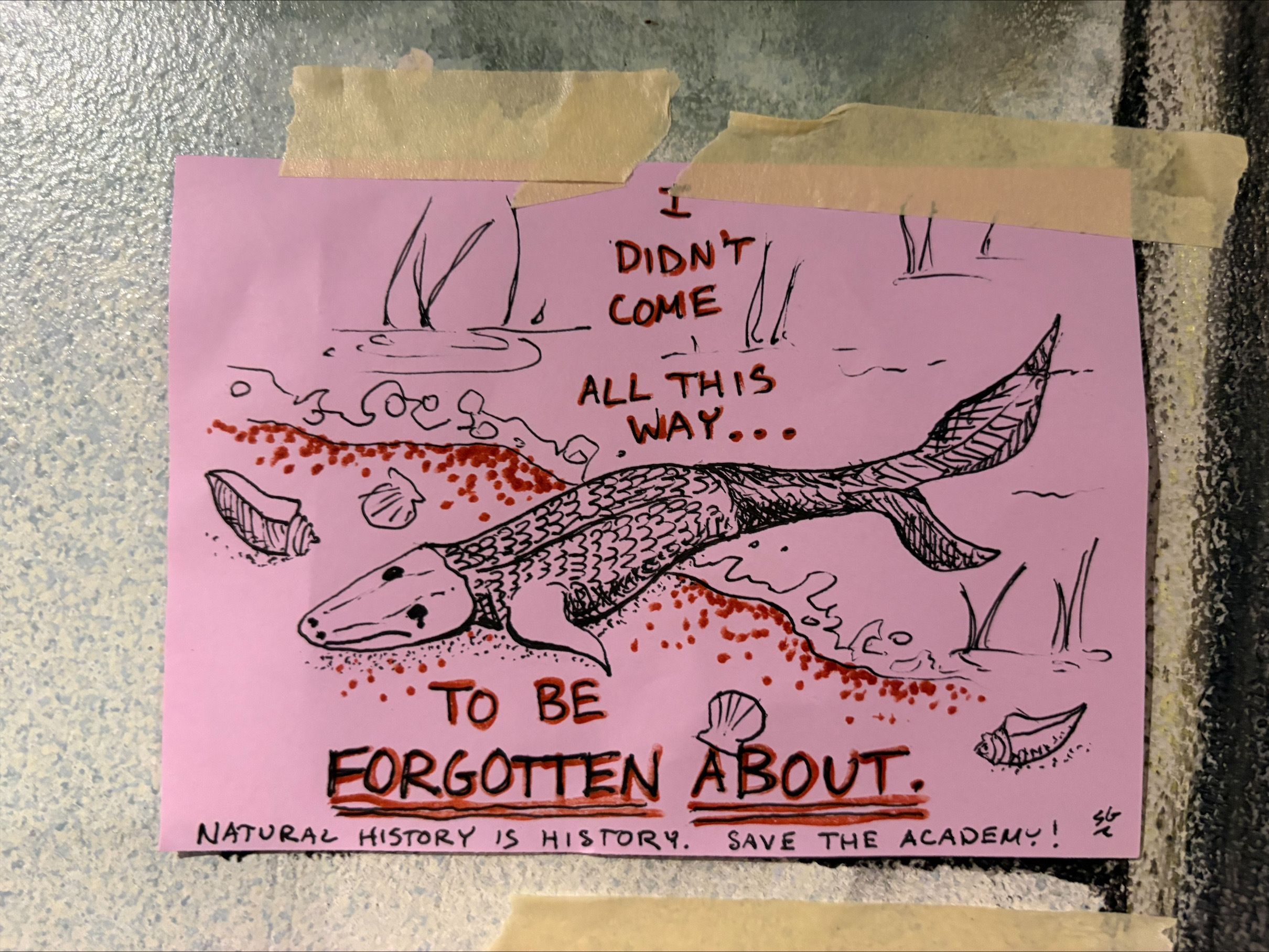
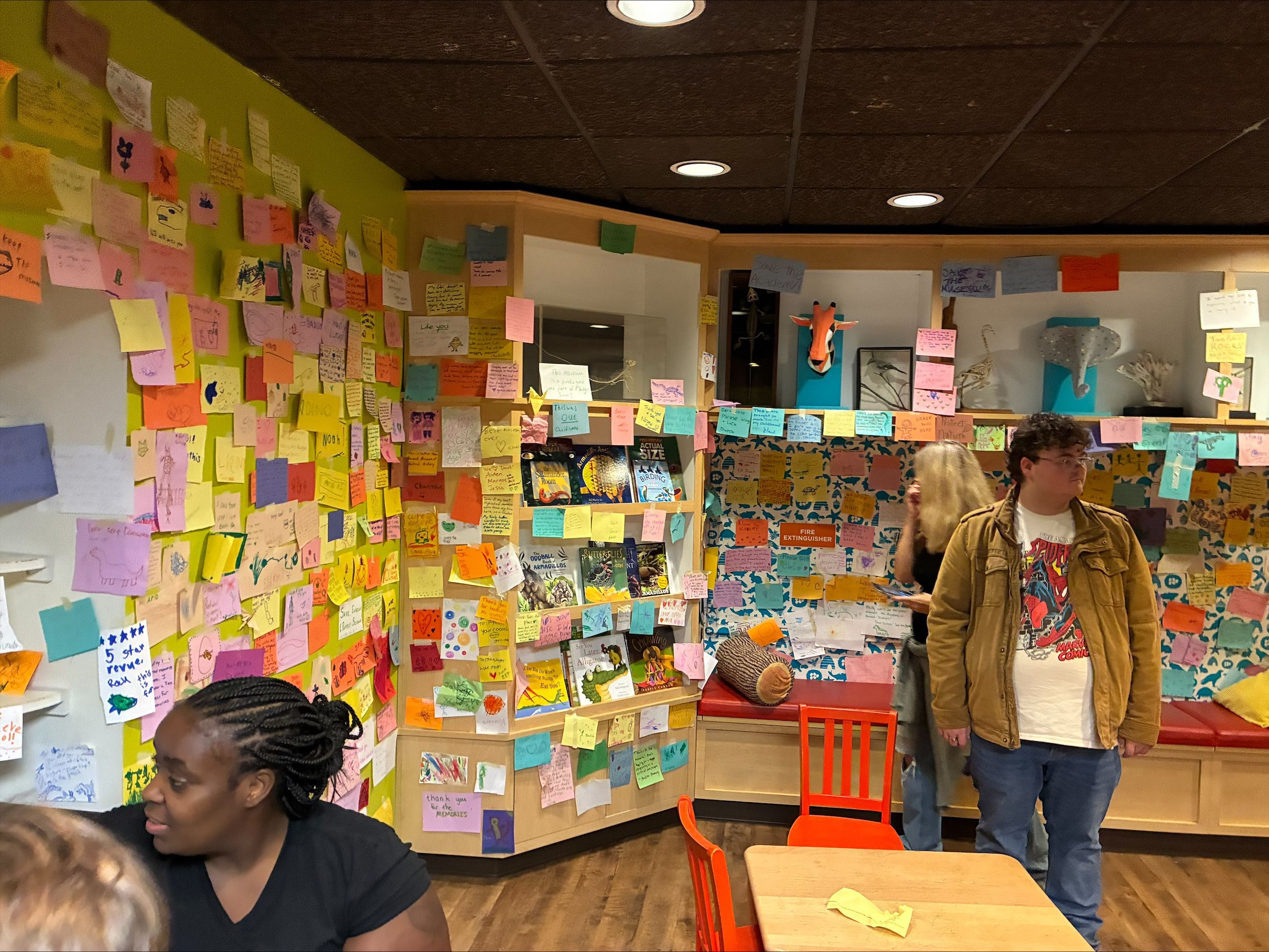
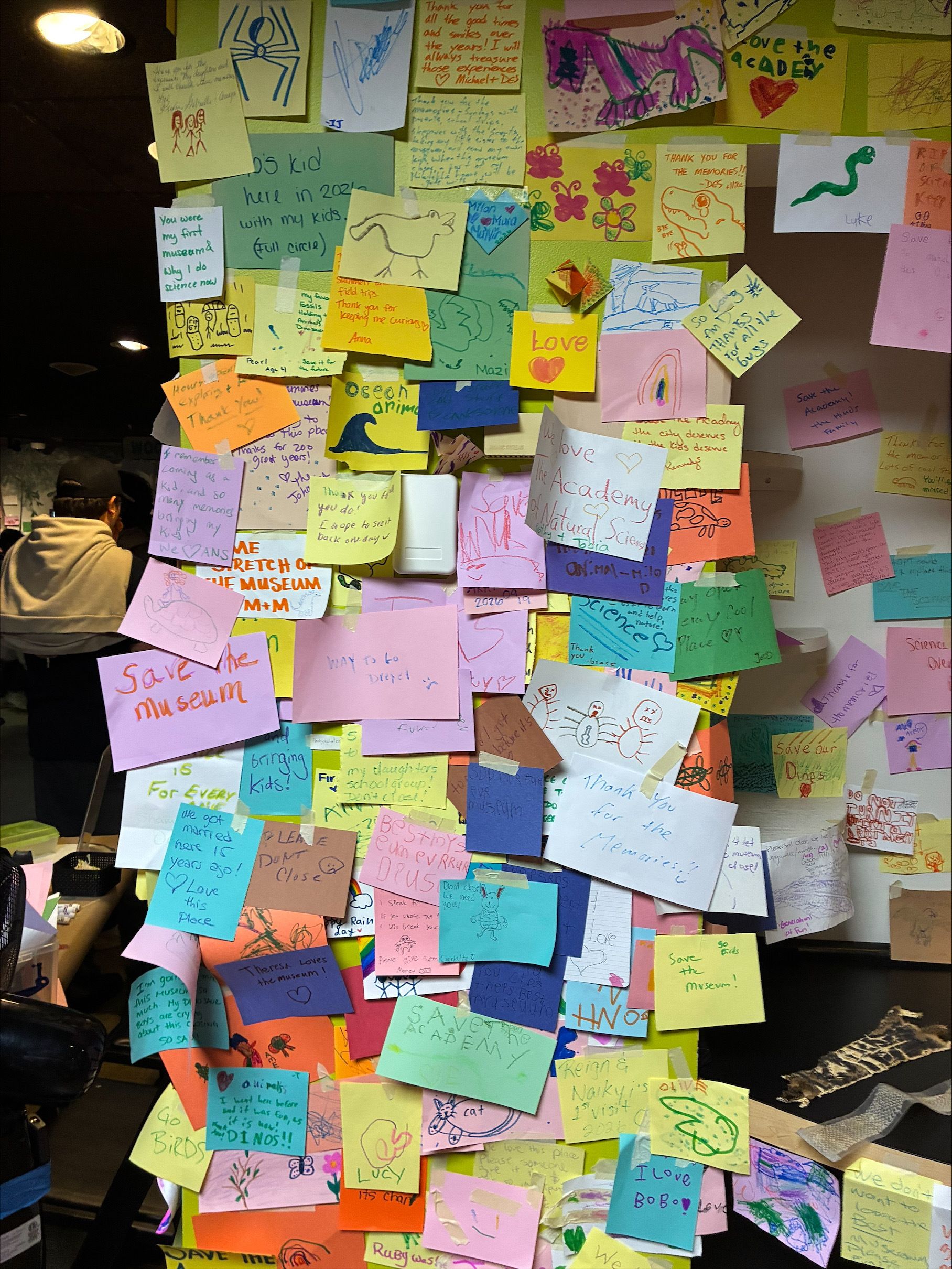
In the last month the Academy of Natural Sciences museum was open, visitors left hundreds of notes for the animals on the walls of its Outside In center.Rachel Brown
As far as the animals go, moving to thesenew homes may be a little jarring for them, but they probably don’t really know what’s happening, Verderame said. The real emotional toll primarily rests on the caretaking team.
“We don’t consider these guys as pets, they’re co-workers,” Koniers said. “We work with them, we take care of them, but they also take care of us.”
It’s bittersweet. She’s confident the animals are going to suitable homes, but it’s hard not to grow attached.
“When you’re having a rough day, they can sense it and feel it. They come up and they’re like, ‘Oh OK I’m going to sniff your shoes’ or ‘OK we will cuddle’,” she said. “I’ve had tortoises climb up on my lap.”
In the last month the Academy of Natural Sciences museum was open, visitors left hundreds of notes for the animals on the walls of its Outside In center.Rachel Brown
The museum has had live animals for 100 years, Koniers said. The “Outside In” center is now covered in hundreds of love letters to the animals written by museum visitors in its last month open, but all its living creatures are gone.
Though many prominent Philadelphians are fighting hard to find a solution to reopen the museum, watching life vacate the museum hallsmakes the closure feel more final.
“Seeing all of the tanks getting emptied out and the empty shelves, it’s been hard,” Koniers said. “It feels very, very permanent.”
In the last month the Academy of Natural Sciences museum was open, visitors left hundreds of notes for the animals on the walls of its Outside In center.Rachel Brown