Jonathan Greenard played 47% of the defensive snaps in the Eagles’ 27-10 loss to the Washington Commanders on Sunday.
It was the highest percentage of snaps Greenard has played this season, a fact that on its own is a disappointment for a team that traded two third-round picks on draft weekend to acquire the edge rusher and then signed him to a four-year deal worth nearly $100 million.
But the facts get worse.
Of Greenard’s 28 snaps Sunday, 18 were pass rushes, and he had little impact on the game. Pro Football Focus credited him with zero pressures, and Next Gen Stats gave him one, on Jalen Carter’s third-quarter sack.
Greenard’s pressure rate Sunday was 5.9%, according to Next Gen, and his season-long pressure rate fell to 9%, down more than six points from his 15.4% rate in Minnesota last season. He has yet to register a sack, and all five games he has played in have resulted in Eagles losses.
Missed time explains a lot of what has been a woeful start to the 29-year-old’s Eagles tenure. A pectoral injury suffered while lifting weights before camp led to Greenard missing all of training camp and the first two games. Then he suffered an ankle injury in Week 4 that kept him out of Week 5 and has limited his ability to play more snaps over the last three weeks.
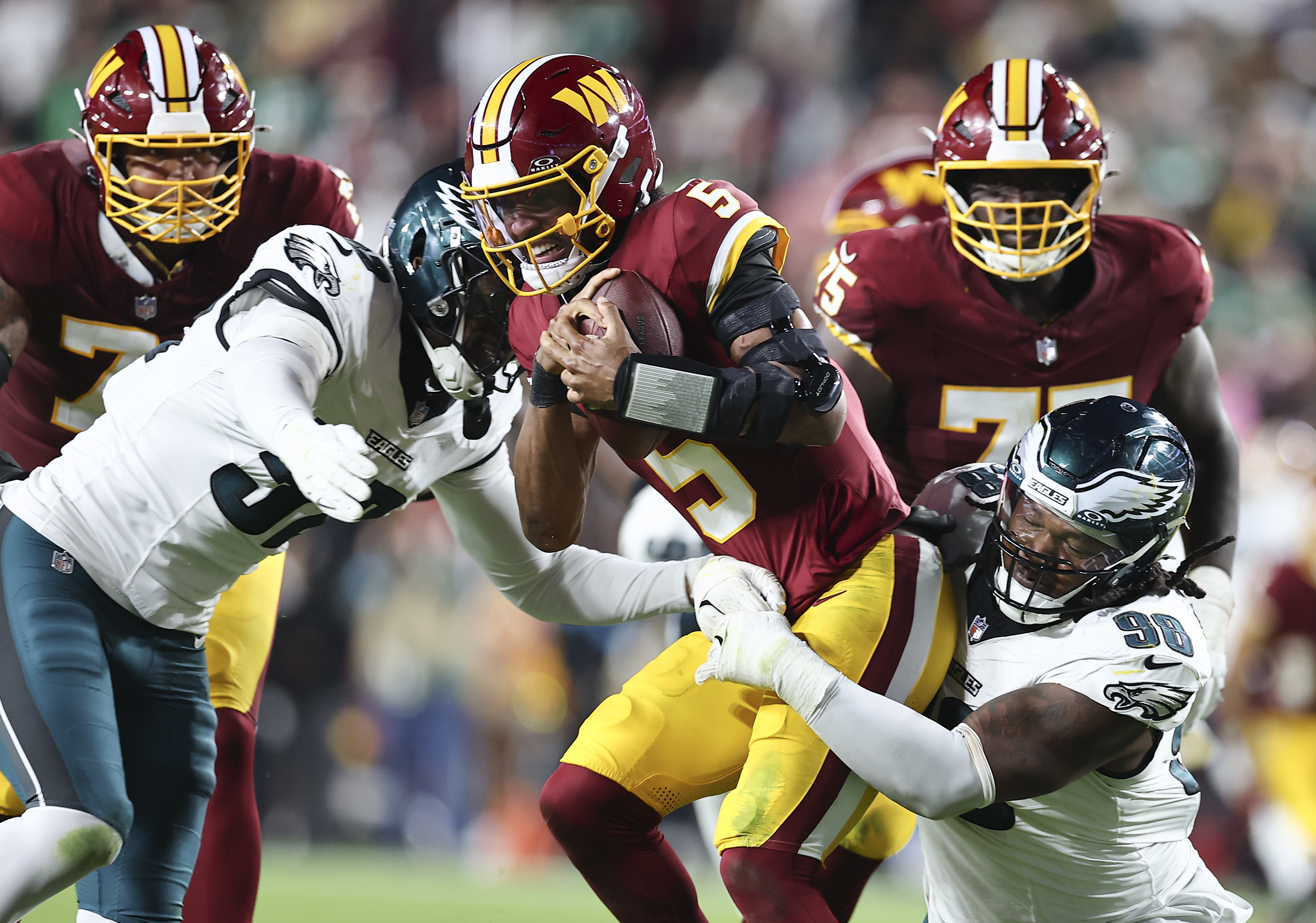
Eagles defensive tackle Jalen Carter (right) and linebacker Jonathan Greenard (left) sack Washington Commanders quarterback Jayden Daniels during the third quarter on Sunday.Monica Herndon / Staff Photographer
What gives? Eagles defensive coordinator Vic Fangio was talking about practice on Tuesday.
“What I see is a guy that has had very, very little practice,” Fangio said. “When I say very little — minuscule. He missed all of training camp, missed the first two weeks of the season — no practice. Started practicing, was on pitch count, played 19 plays. Was going to increase the next week, got hurt early in that game. Didn’t finish that game. Didn’t play the next game, and he’s been limited in practice. Contrary to some people’s popular belief, practice is important. And he has had next to none.”
“Practice,” Fangio said. “There’s no pill, there’s no magic potion. You can watch all the tape you want. You can sit in meetings all you want. You can do walkthroughs all you want. Guys got to practice.”
Even a veteran pass rusher with six-plus seasons under his belt?
“Practice is important for everybody,” said Fangio.
“He’s just not into a groove. He’s not comfortable in our system totally and what we want him to do. And it’s not because he doesn’t know or doesn’t want to, it’s just [he] hadn’t executed it. Walkthroughs are an assignment check. It’s not an execution. I don’t know if I’ve had a guy that’s had so little practice.”
Greenard has been listed as a full participant in just six Eagles practices so far this season.
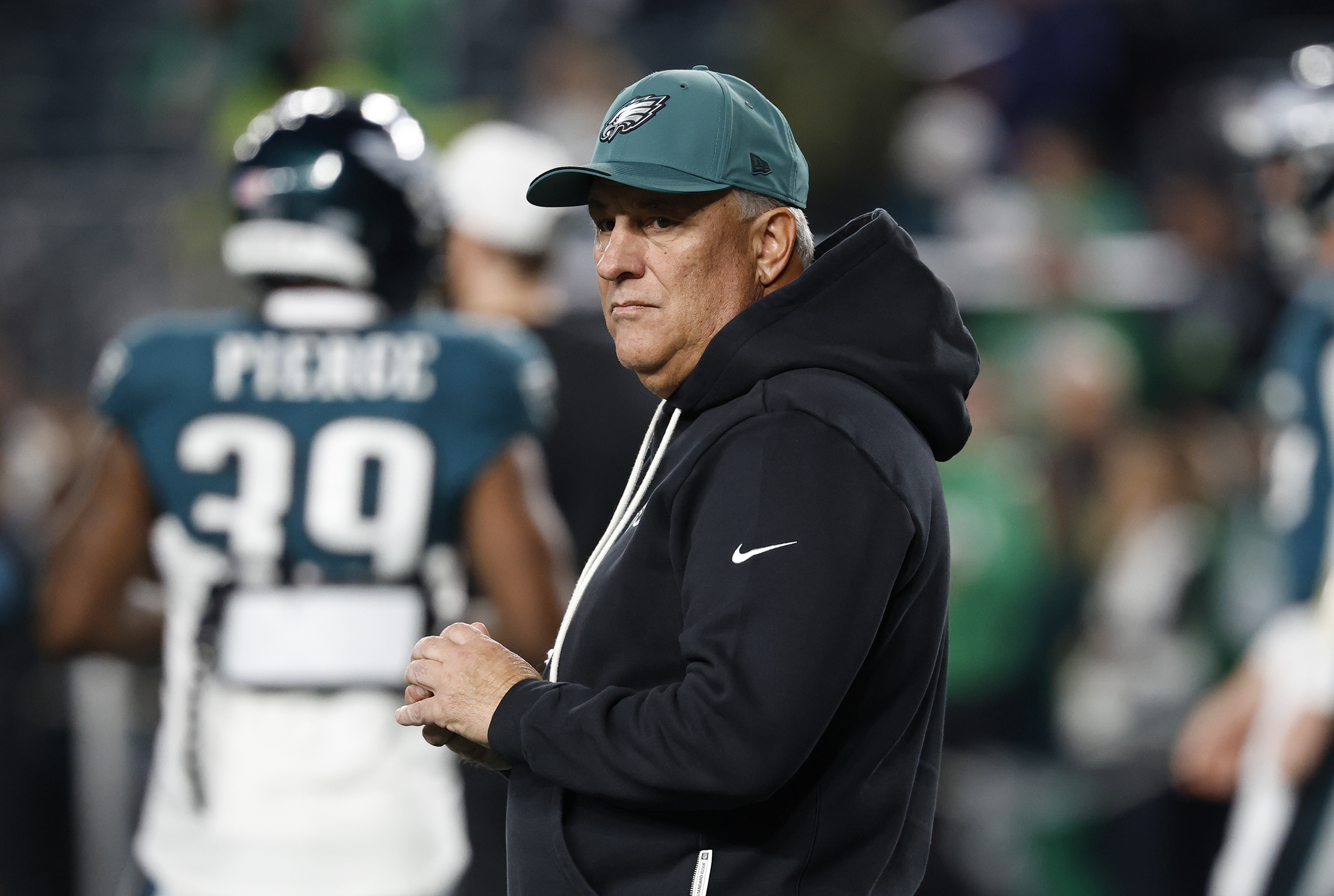
Eagles defensive coordinator Vic Fangio emphasized the importance of practice on Tuesday. Yong Kim / Staff Photographer
Commanders quarterback Jayden Daniels was pressured just eight times on 33 dropbacks (24.2%), according to Next Gen. That’s his lowest rate of the 2026 season.
The Eagles rank 29th in pressure rate (31.5%) and in total sacks (10), according to Next Gen.
“It’s been there some, and some it hasn’t been,” Fangio said. “Like all of us, it could get a little better.”
The New York Giants are coming off their bye week and should feel pretty good about their offense after pulling off a 27-21 overtime victory in Houston before the break.
The division leader at 4-2-1 lost starting quarterback Jaxson Dart in Week 2, turned to Jameis Winston, then handed the keys to J.J. McCarthy after acquiring the 2024 10th overall pick in a trade from Minnesota.
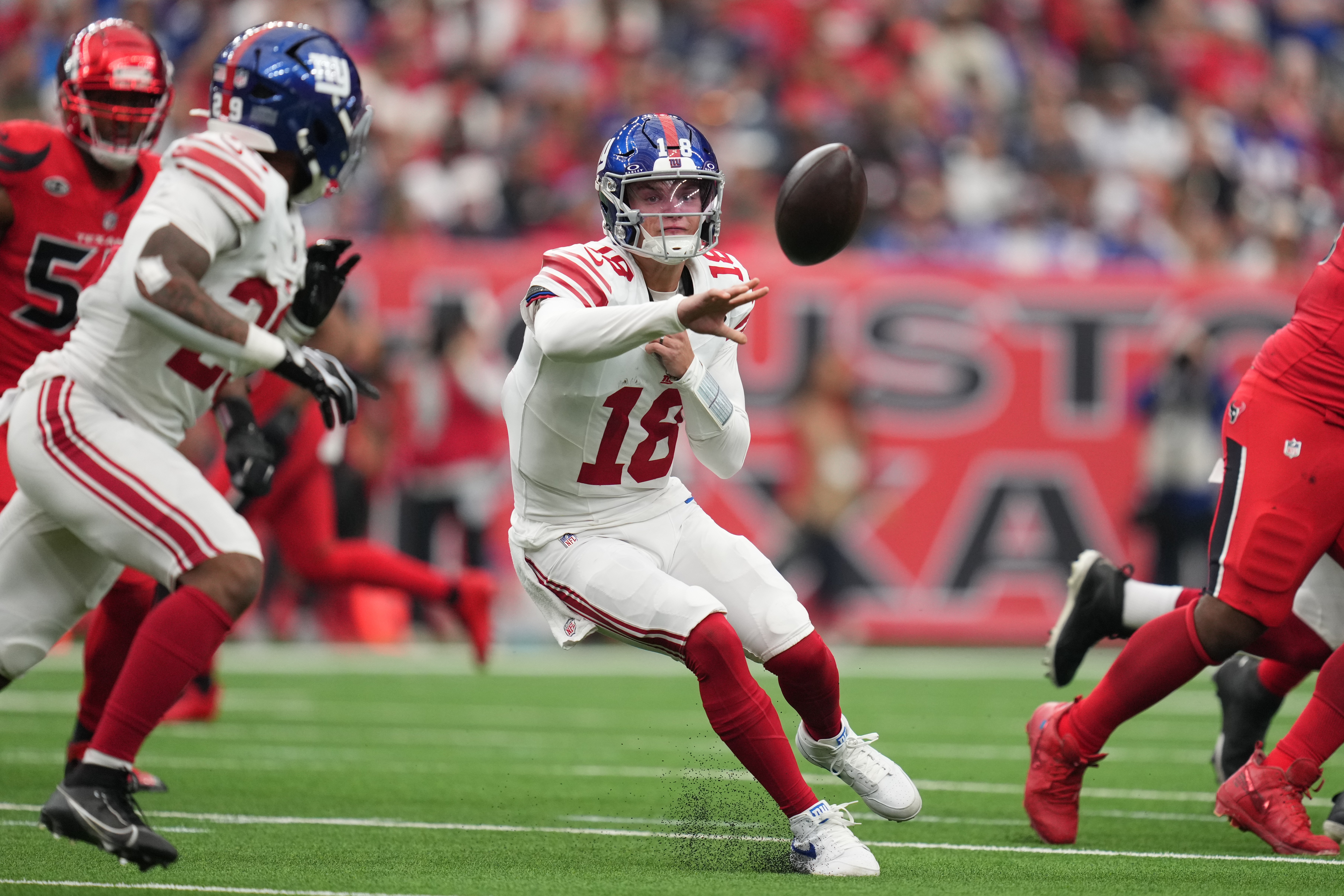
The Eagles will see J.J. McCarthy at the controls for the Giants in Week 9. Eric Smith
Fangio said he sees a blend of what the Baltimore Ravens used to run when Greg Roman — now an offensive assistant with the Giants — ran the show for John Harbaugh in Baltimore and what offensive coordinator Matt Nagy used to run in Kansas City.
“They’ve got it going right now,” Fangio said. “They’ve got good wideouts, good tight ends, two good backs, and the quarterback has come in in a short period of time and really done a nice job. For them to get him for a [fifth]-round pick is a steal.”
David Blitzer always has an eye on sports properties as the managing partner of the 76ers and New Jersey Devils, and as the only person with equity in five major sports leagues. What got his attention recently was youth, specifically golf, with participation levels soaring.
“Good business doing excellent things for kids is a wonderful combination,” Blitzer said.
That combination — along with partnering with the most trusted name in golf — has led to the creation of the Arnold Palmer Junior Golf Tour. It launches in January with 400 tournaments planned across the country, including events at RiverWinds in West Deptford and at Seaview in Galloway, with an emphasis on accessibility.
The new junior tour is a partnership among Bolt Ventures (the family office of Blitzer), Arnold Palmer Enterprises and the Arnold & Winnie Palmer Foundation. The idea is to lean on Palmer’s timeless name to help develop juniors for college scholarships and beyond.
“Our goal with the Arnold Palmer Junior Golf Tour is simple — to create more opportunities for young people and their families to experience the positive benefits of golf, both on and off the course,” Blitzer said. “This is an incredible opportunity to build on the legacy of one of the sport’s greatest global icons and carry Mr. Palmer’s mission forward through the next generation.”
The golf ball got rolling before Blitzer’s group connected with Arnold Palmer Enterprises and the foundation. Bolt Ventures earlier this year acquired the Florida-based Hurricane Junior Golf Tour and the Texas Junior Golf Tour, a circuit that partners with the Rocky Mountain Junior Golf Tour.
Now those junior tours are under one umbrella — the colorful Palmer umbrella, the King’s famous logo seen at the Arnold Palmer Invitational at Bay Hill and the Palmer Cup college matches.
“We are hyper-protective of the brand and cautious, for sure,” said Brodie Waters, president of Arnold Palmer Enterprises. “We’re also focused on Mr. Palmer’s legacy, making sure we can share that legacy with the next generation. He really cared about giving opportunity to youth.
“We had these conversations, and it became pretty clear quickly their passion and vision aligned with what we were wanting to do.”
The Arnold Palmer Junior Golf Tour figures to complement, not so much compete, with the more established American Junior Golf Association, which has been around for some 50 years and has captured golf’s growth coming out of the COVID-19 pandemic.
The AJGA has about 150 tournaments around the country this year and has been using some of its many alumni, such as Jordan Spieth and Justin Thomas and Billy Horschel, to either support or lend their name to tournaments, often with corporate partners
Also key to the Arnold Palmer Junior Golf Tour was accessibility and affordability. The “Palmer Foundation Player Access Award” is being designed to help family cope with financial obstacles that can limit participation.
“It’s a mechanism of giving to the right people,” said Josh Press, CEO of the new tour. “We want to provide kids that need assistance and give them a path.”
Temple opened its women’s basketball season similarly to how it closed 2025-26.
The Owls lacked depth and defense last season, and they didn’t make much progress at George Mason on Monday night. Temple crumbled to the Patriots, who went on a 22-0 run in the second quarter to seal the Owls’ 91-71 loss..
Guard Kaylah Turner led Temple with a team-high 21 points, but the same problems from last season persisted.
Next, Temple will host Navy in its home opener on Nov. 7 (2 p.m., ESPN+).
A short rotation
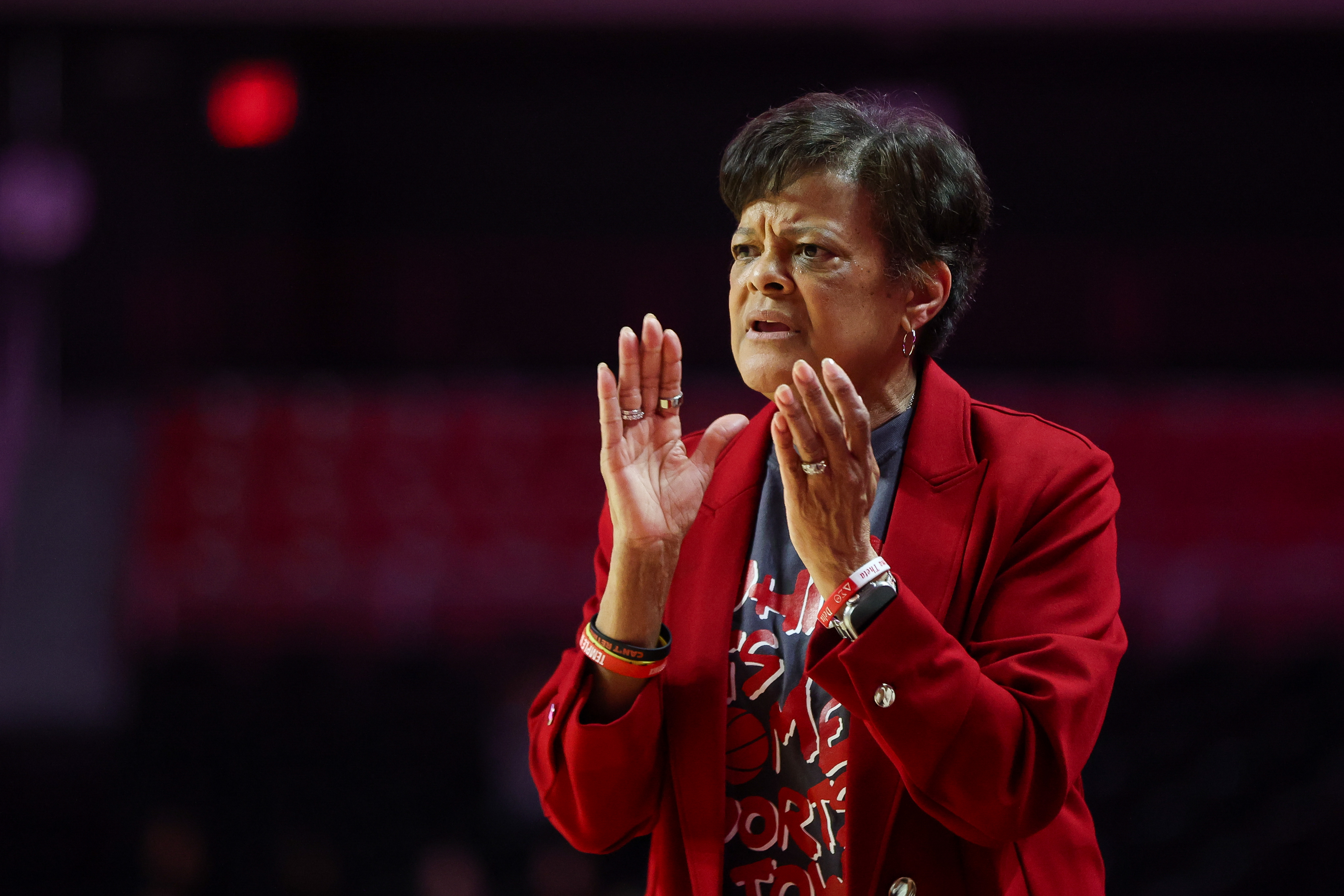
Temple coach Diane Richardson attributed last year’s shortcomings to a lack of depth. Progress was made Monday night, but not nearly as much as Temple would like.
The Owls’ bench scored 15 points to the Patriots’ 27. Richardson made it a point to give the reserves more playing time. Four of them logged more than 10 minutes, though production from the bench didn’t follow, as the second-stringers shot just 25%.
Transfer guard Taliyah Logwood, who played for Texas Southern last year, showed promise. She scored eight of her nine points in the third quarter.
It still wasn’t enough. Temple’s only double-digit scorers were starters, including Turner, Tristen Taylor (12), and Saniyah Craig (10).
Troubles on the glass
The Owls showcased their full-court defense that Richardson emphasized in the offseason. Directly under the basket, however, they faltered.
Temple conceded 18 offensive rebounds that led to 21 second-chance points. Four of those boards came in the first five minutes. When shots went up, the Owls lost their assignments and let George Mason grab rebounds.
The Patriots shot 54.2% on two-pointers and scored 34 points in the paint. In the fourth quarter, George Mason scored nine second-chance points, while Temple tallied zero.
You can measure Cavan Sullivan’s popularity in a lot of ways.
On Tuesday, MLS offered another one.
The Union’s teen phenom is No. 6 for player jersey sales this year, the league announced. That is the first spot behind the league’s big five international stars: Miami’s Lionel Messi, Los Angeles FC’s Son Heung-Min, Vancouver’s Thomas Müller, Chicago’s Robert Lewandowski, and Orlando’s Antoine Griezmann.
Rounding out the top 10 are LAFC’s Denis Bouanga, Miami’s Luis Suárez, Nashville’s Hany Mukhtar, and Miami’s Rodrigo De Paul.
You’ll notice that Sullivan is the only U.S. player in the top 10. If that feels like a sign that MLS doesn’t have big-name Americans, it’s a fair point. But there might be two caveats.
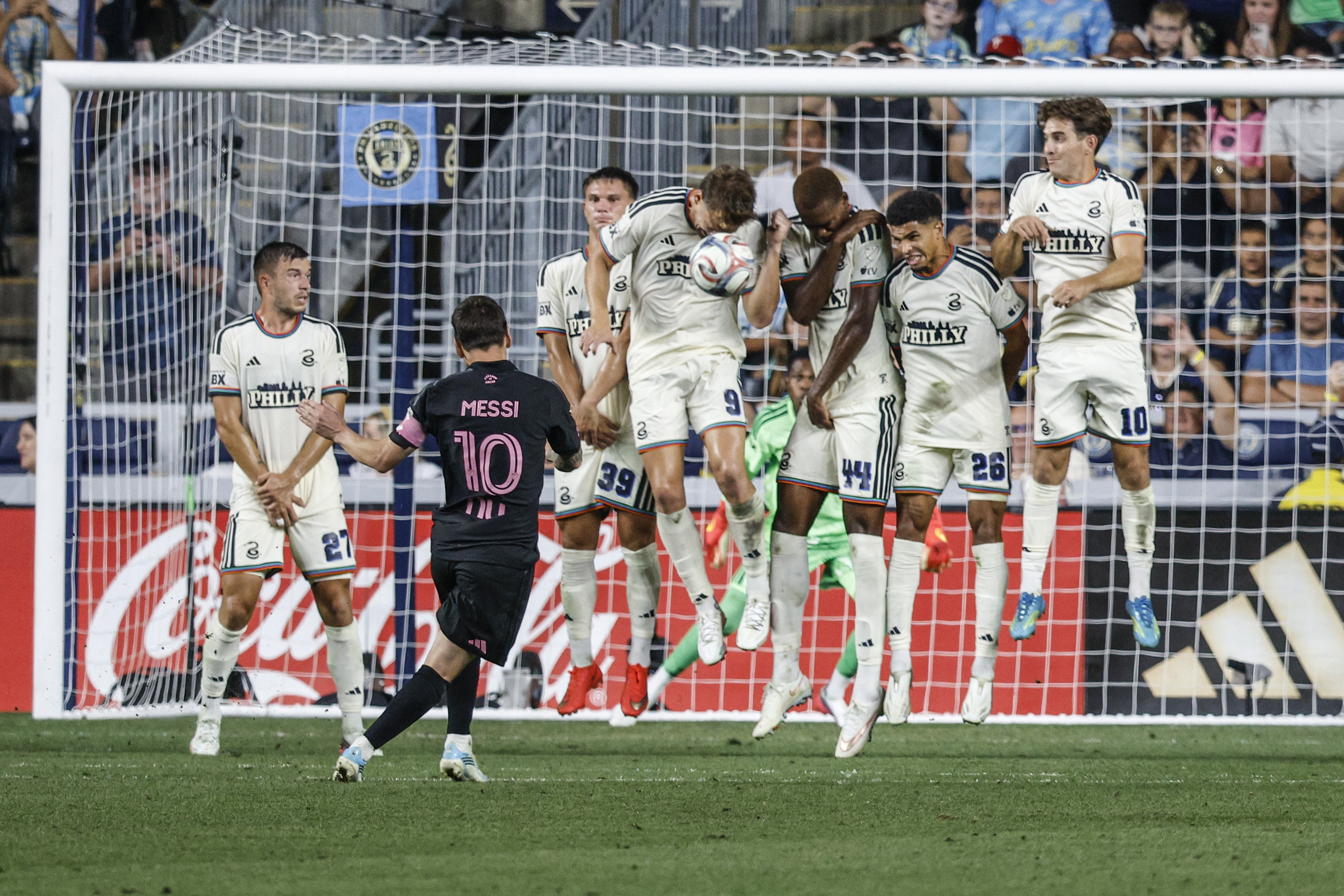
It’s no surprise that Inter Miami’s Lionel Messi continues to have the best-selling jersey in MLS.Steven M. Falk / For The Inquirer
The first is that the league doesn’t lack for rising young U.S. stars. Red Bull New York’s Julian Hall and Adri Mehmeti, Orlando’s Justin Ellis, and New England’s Peyton Miller all reach that bar, as they showed by making the national team earlier this fall.
Hall and Ellis were just as big-time as Sullivan in those games, while Mehmeti and Miller have earned their national hype.
But it isn’t Ellis’ fault that Griezmann came to the World Cup as a 2018 World Cup winner and 2022 finalist, along with club stardom at Spain’s Atlético Madrid and Barcelona. That draws international wallets, not just domestic ones.
Nor is it any of the prospects’ fault that the Fire finally landed Lewandowski after years of dreaming of bringing the Polish superstar to the city with the world’s largest Polish expat population. Now, with eight goals in 22 games, he has the hottest-selling jersey of anyone since the summer.
What it does mean is Hall and Mehmeti haven’t yet broken through in the New York market. The Red Bulls’ failure to make the playoffs this year despite their talents will hurt that effort.
The second caveat is about the MLS players on the U.S. World Cup squad. Sebastian Berhalter was a breakout player, but he left the Vancouver Whitecaps days after the league resumed. Columbus’ Max Arfsten soon joined him at England’s Middlesbrough.
Cincinnati’s Miles Robinson was a reserve, and Charlotte’s Tim Ream bowed out of the national team after the tournament at 39. Anyone who was going to buy Ream’s jersey probably already had it.
Seattle’s Cristian Roldan suffered the same fate. He’s been in top jersey sales rankings before, as a longtime star in that soccer-crazed city. But there was no pop this year, as the World Cup stung him unfairly. Though the U.S. played two World Cup games in Seattle, Roldan missed the first by manager Mauricio Pochettino’s choice and the second due to an injury.
It might also help that the Bridesburg native is playing for his hometown team, in a place that’s one of the most sports-obsessed in the nation. The Union haven’t had many stars in their history, and now they have the homegrown one they’ve dreamed of for years.
That they’ll only have Sullivan for one more year before he heads to Europe is a subject for another day. Right now, there’s a playoff stage to prepare for after Saturday’s regular-season finale against Toronto FC at Subaru Park (4 p.m., Apple TV). If he can take the team on an upset run, his star will grow even more.
To upset Houston, La Salle needed to be at full strength for 40 minutes. Early fouls made that impossible.
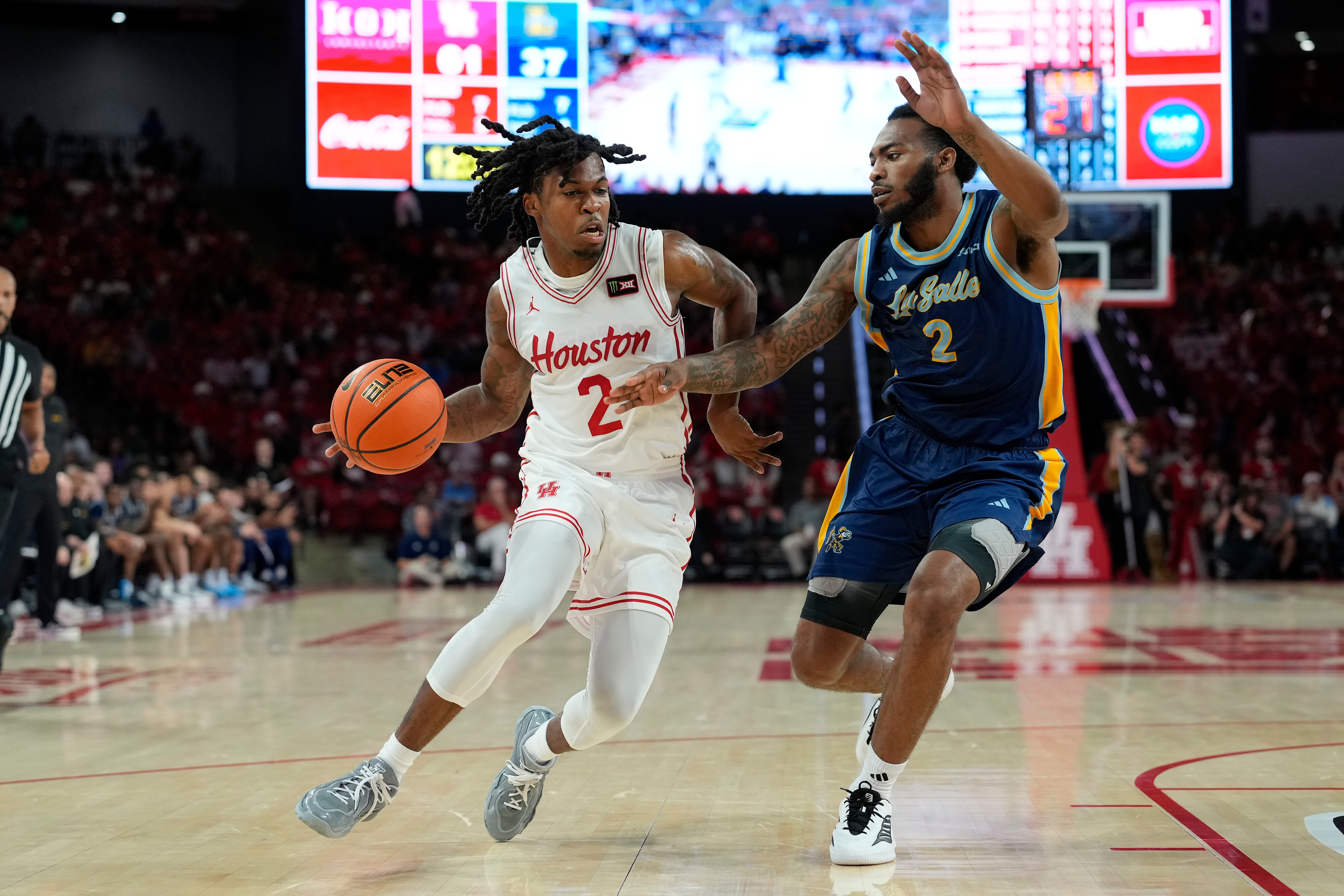
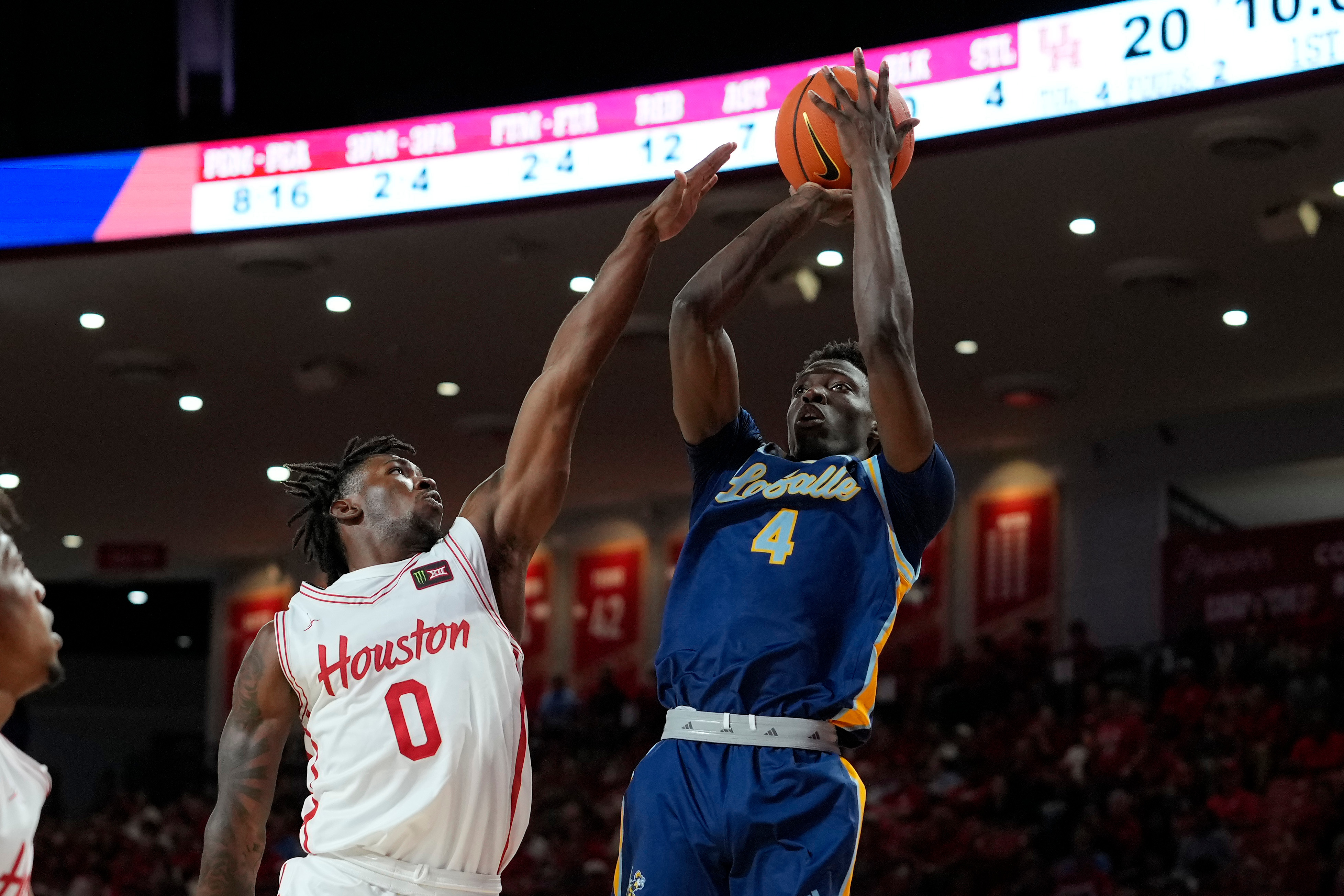
On Monday, La Salle dropped its season opener at No. 10 Houston, falling to the Cougars 94-55. The Explorers (0-1) did not hold a lead, trailing Houston (1-0) from the tipoff. With La Salle in foul trouble, the Cougars came out to a 20-point halftime lead that only ballooned after Explorers’ standout guard Rob Dockery fouled out in the second half.
La Salle senior guard Kam Burton logged a team-high 15 points, two rebounds, and one steal in his hometown of Houston. Meanwhile, five Cougars scored in double-digits. Senior guard Dedan Thomas Jr. led the way with 16 points and five assists.
Here’s what we saw from La Salle’s season opener:
Foul trouble
In the first half, four Explorers picked up two or more fouls, forcing coach Darris Nichols to reach further into his bench.
Dockery, who was named to the Atlantic-10’s preseason second-team, expects to be La Salle’s most dominate player this season. However, Monday did not provide much of a preview of how the 6-foot-6 guard could look alongside La Salle’s revamped roster.
In seven minutes, Dockery finished with one point and three rebounds. He also committed a game-high five turnovers. La Salle turned the ball over 19 times.
Transfers in
Five of La Salle’s seven transfers saw game action.
Anthony Finkley, a key reserve for St. Joseph’s over the past three seasons, got the start for the Explorers and looked aggressive early. The Roman Catholic graduate scored the team’s first six points. However, in 23 minutes, he failed to find the basket again.
Burton, a Stephen F. Austin transfer, was the most consistent player for La Salle, but his night did not come without faults. After converting a 26-footer in the first half, Burton gestured toward a Houston defender. He was assessed a technical foul and was promptly sent to the bench by Nichols. The ensuing free throws extended Houston’s lead to 13 points.
La Salle guard Devin Booker scores past Houston guard Kordel Jefferson on Monday.Kevin M. Cox
George Mason transfer Devin Booker, who starred at Cristo Ray, trailed Burton in the box score with 12 points.
Threes galore
Last season, La Salle ranked 350th out of 364 programs in three-pointers made per game. Nichols prioritized shooting in the portal, and it showed in terms of sheer volume on Monday.
The Explorers attempted 39 three-pointers — more than double the team’s 17.9 attempts per game last year. However, La Salle converted just 21% of its attempts from deep. Booker shot 1 of 7 from beyond the arc while freshman RJ Smith missed all six attempts.
The Explorers’ barrage of three-point attempts was a product of their inability to convert down low. The Cougars outscored La Salle 44-10 in the paint.
‘Fight on Speedy’
During Monday’s broadcast on CBS Sports Network, it was announced that the La Salle men’s and women’s basketball teams will sport a pin in honor of former coach Speedy Morris. The pin will read “Fight on! Speedy” and will be worn for the rest of the season.
CBS play-by-play commentator Tom McCarthy, who is also the voice of the Phillies for NBC Sports Philadelphia, explained that Morris has been “battling some illness back in Philadelphia.” Morris, La Salle’s all-time winningest coach, has lived with Parkinson’s disease since 2017.
NEW: La Salle men's and women's basketball will sport a jersey patch for former coach Speedy Morris this season.
The patch was announced on tonight's @CBSSportsCBB broadcast, and the school just confirmed it to me.
For more than two years, David Backhus had been hearing the same question from customers at Bloom Southern Kitchen, his restaurant in Chester Springs: When was he going to bring back Oori?
The Korean-inspired restaurant just outside of Pottstown, known for its fried chicken and noodle dishes, had closed in late 2023, but its fans hadn’t forgotten it.
“I’d walk into Bloom and we’d hear it probably two or three times a week: ‘Hey, we really miss Oori. Are you ever going to reopen it?’”
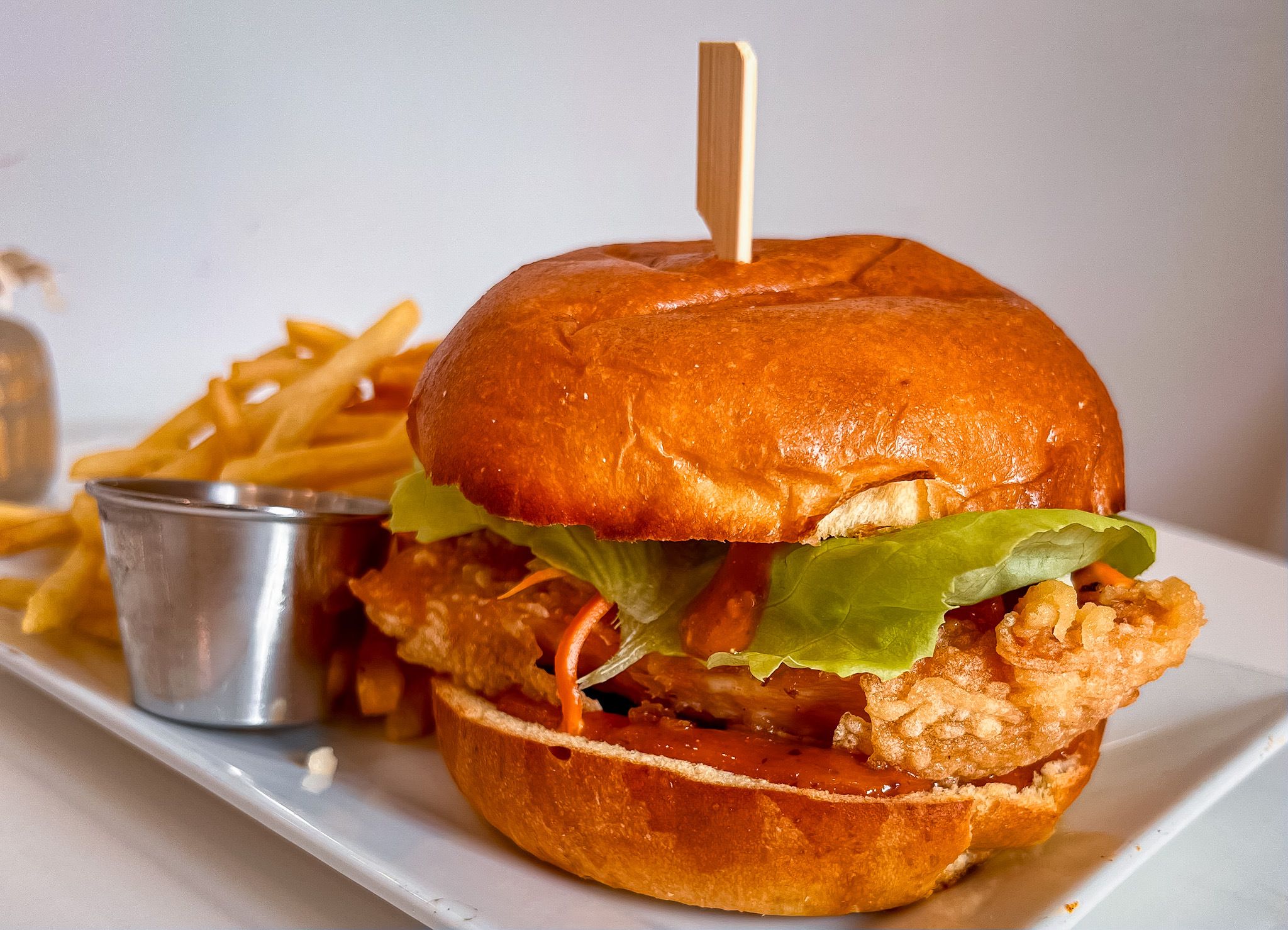
Fried chicken sandwich at Maru, 2922 Conestoga Rd., Glenmoore.Michael Klein / StaffDan dan noodles, available gluten-free and prepared conventionally, at Maru.Steven M. Falk / For The InquirerPork belly bao buns at Maru, 2922 Conestoga Rd., Glenmoore.Michael Klein / Staff Cold chili noodles at Maru in Glenmoore.Steven M. Falk / For The InquirerWings in Korean white barbecue sauce at Maru in Glenmoore.Steven M. Falk / For The InquirerMarinated tofu buns, which are not gluten-free, at Maru.Steven M. Falk / For The Inquirer
The answer is Maru, which opened in late August in Ludwig’s Corner in Glenmoore, Chester County. Backhus and partners Tim Cone and Meredith Jacks converted their Collective Coffee & Bakery into an all-day cafe serving bubble-style gluten-free doughnuts — a new attraction — along with breakfast sandwiches, toasts, pastries, and specialty coffee in the morning, followed by double-fried Korean chicken sandwiches, bao buns, wings, tenders, and noodle dishes in the afternoon and evenings. It’s BYOB.
Backhus said the team spent about a year refining old recipes and developing new ones while retaining the coffee-and-bakery business. Most of the menu is gluten-free or can be prepared that way.
Backhus also saw an opportunity to address a weakness of Oori, where he and former chef and partner Michael Falcone had struggled to attract lunchtime business. At Maru, sandwiches, espresso drinks, and doughnuts give customers reasons to stop throughout the day in the busy courtyard of shops.
Cold chili noodles at Maru.Steven M. Falk / For The Inquirer
The name Maru, he said, refers to a gathering space in a Korean home, reflecting the communal nature of traditional Korean meals.
Oori regulars will recognize the crunchy, rice flour-coated fried chicken, though the kitchen now soaks the chicken in buttermilk rather than dry-brining it, producing more tender meat.
The dan dan noodles have been reworked, too. The kitchen increased the heat and changed the preparation to keep the oil, chile, and sesame paste from separating, producing a punchier, more cohesive sauce.
Maru co-owner David Bachkus at the cafe in Ludwig’s Corner.Steven M. Falk / For The Inquirer
Backhus credits Falcone and former colleague Matt Florentine for much of the food development. “It’s their recipes and their life on the menu, too,” Backhus said.
The kitchen is now led by Jorge Lima; the chef spent about 12 years at Han Dynasty in Exton, where Backhus is a regular and had gotten to know Lima and his family over the years before recruiting him for Maru.
The other major undertaking was the doughnuts, developed with longtime pastry chef Kortney Hails, who has worked with Backhus’ restaurants for about six years.
Hails helped create a gluten-free dough using rice flour and other ingredients, with eggs added for structure. The doughnuts have a delicate exterior crunch and tender interior, without the dense, gummy texture that can undermine gluten-free baked goods.
The yuzu doughnut, with its bright citrus flavor, has become the bestseller. Traditional glazed and cinnamon-sugar varieties are also popular, and a pumpkin spice version recently joined the lineup.
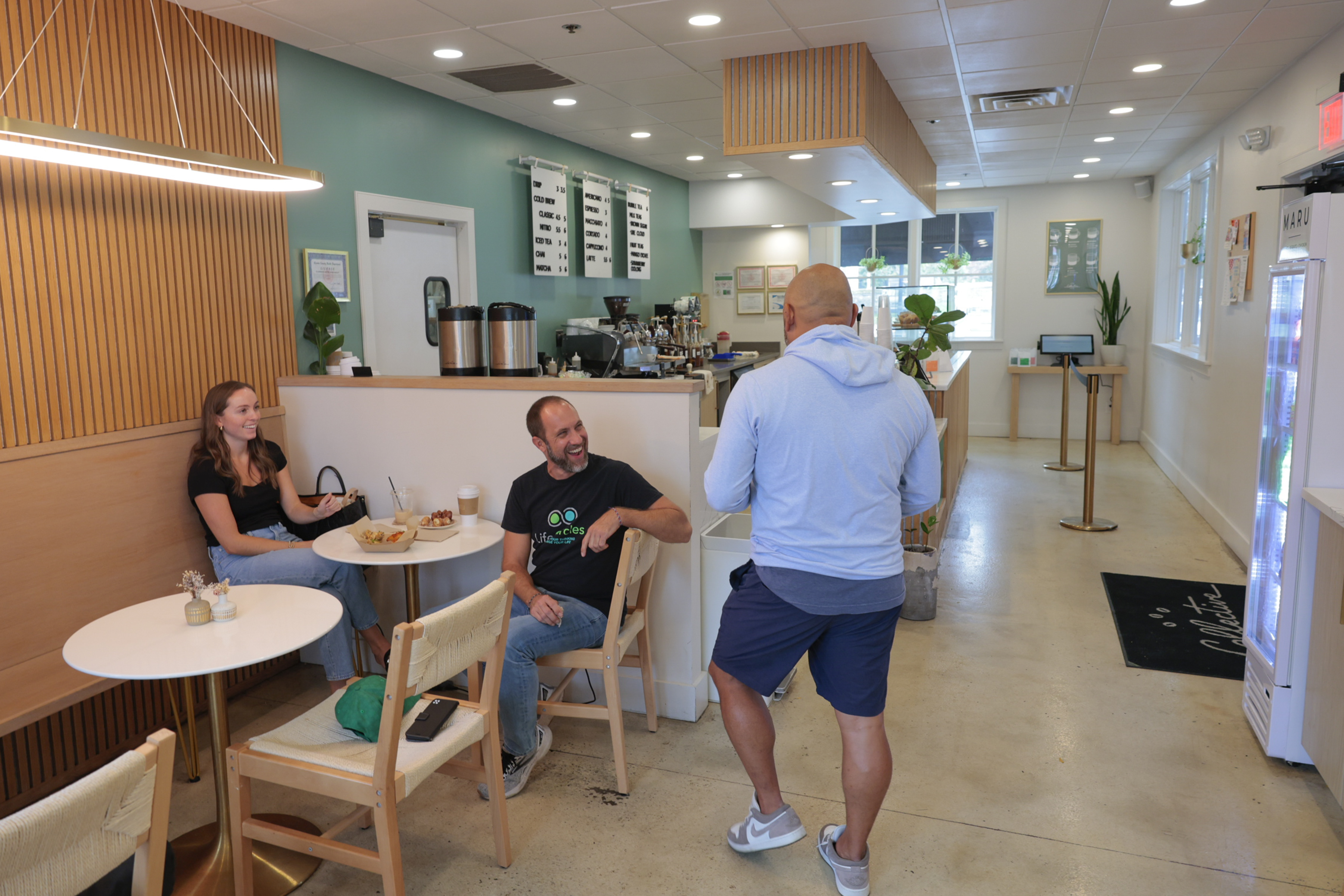
Maru co-owner David Bachkus (right) chats with customers Alexis Haas and Marty Matika.Steven M. Falk / For The Inquirer
The gluten-free emphasis is personal. Backhus said his son has Hashimoto’s disease, and accommodating his dietary needs became a priority when planning the restaurant.
That commitment extends to the kitchen setup. Maru uses separate pastry-preparation tables and equipment for gluten-free products, a dedicated doughnut fryer, and fryers reserved exclusively for gluten-free foods. Potato starch replaces wheat flour for dusting during preparation.
For Backhus, Maru is a chance to bring back the food Oori customers missed, “and we’ve created something broader for everyone, including our son.”
Maru, 2922 Conestoga Rd., Glenmoore, 484-558-0988, marueats.com. Hours: 6 a.m. to 8 p.m. Monday to Thursday; 6 a.m. to 9 p.m. Friday; 7 a.m. to 9 p.m. Saturday; and 7 a.m. to 8 p.m. Sunday. Full menu from 11:30 a.m. to close.
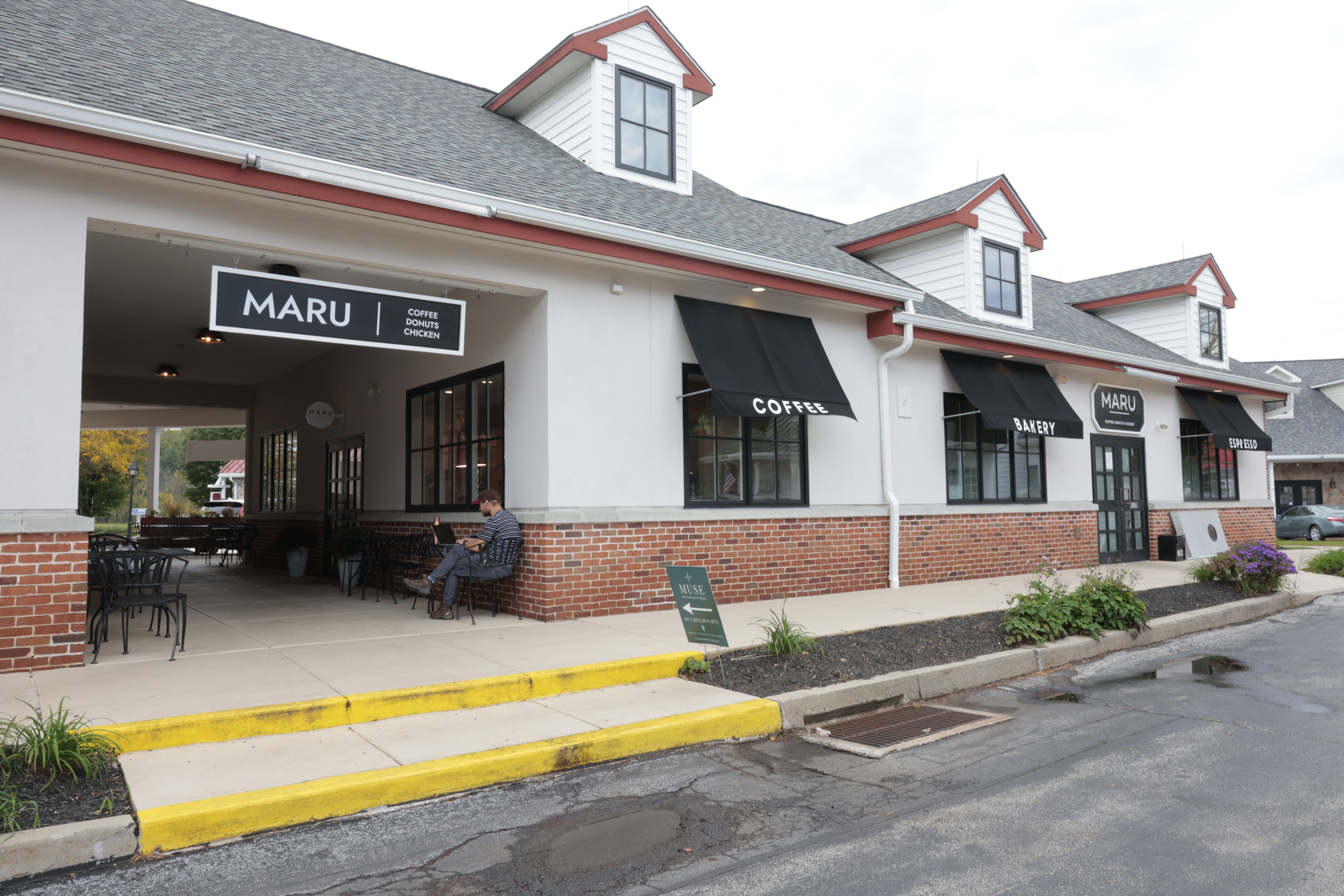
Maru in Ludwig’s Corner, Glenmoore.Steven M. Falk / For The Inquirer
One of the joys, or perils, of a weekly Tuesday newsletter is coming out every year on Election Day, right when the world is on hold for those 13 or so hours the polls are open. If you live, as I do, in a corner of Pennsylvania without a hotly contested congressional race, and with Gov. Josh Shapiro up by double digits, the day might seem less consequential. That’s wrong. Not only is control of the state legislature on the line, but we’re fighting for a bigger principle: the right to vote again in a free and fair election in two years. Vote as if your life depends upon it, because in a sense, it does.
Those with the most riding on Election Day can’t vote: the undocumented
Authorities with batons stand near a demonstration where a man was shot in his vehicle by an ICE officer on Sept. 20 in Austin, Texas.Joel Angel Juarez
In Maryland, a man named Julian Curo Churata arrived more than a decade ago from Peru to work as a carpenter and build a new life with his wife, Veronica Ramirez, their two children from previous marriages, and eventually their own daughter, now age 6.
In June, as Donald Trump’s campaign of mass deportation was surging across America, agents from U.S. Immigration and Customs Enforcement (ICE) arrested Curo Churata in a targeted operation, and the undocumented immigrant was flown to detention in Louisiana. He managed to call his daughter every day — pretending he was out of town on a job — until Sept. 29, when ICE said he suffered cardiac arrest, was rushed to a nearby hospital, and was pronounced dead. He was just 47.
Ramirez went public with her grief, her unanswered questions about her husband’s death, and the lack of information she was receiving from ICE, in a story on the front page of the Washington Post.
“He wasn’t a criminal,” Ramirez said at the time. “All he wanted to do in this country was work. He paid his taxes; he wanted a better future for his children and for me — for his family. He didn’t deserve this at all. I want justice.”
What Ramirez got instead from ICE was a notice to appear for an immigration court hearing that could lead to her deportation to El Salvador — dated just three days after the newspaper article. Now she fears for the future of her already traumatized daughter, who may lose a second parent. “She’s afraid — afraid of being alone,” Ramirez said.
This case of seeming retaliation by an uncaring and increasingly tyrannical U.S. government in which the ultimate victim is a defenseless 6-year-old girl is the kind of article that makes your blood boil. But it’s also just one of a series of stories of heartlessness and violent thuggery toward the undocumented on our soil that have polluted my social media feed in recent days.
I saw a video of an ICE agent pointing a gun in the face of an innocent bystander in North Hollywood, Calif., during the arrest of an immigrant, read about the Afghan refugees whom ICE plans to fly back to their native country even after their relatives risked everything to aid U.S. troops, and noted the Cuban American lawyer who voted for Trump in 2024, tried and failed to stop his cousin’s deportation during the ensuing ICE crackdown,and then cried that “This isn’t what I voted for.”
No, this is exactly what you voted for. I was inside Milwaukee’s Fiserv Forum on the night of July 16, 2024 — watching in horror as white Trump delegates in their red MAGA garb or Texas cowboy hats waved placards that read, “MASS DEPORTATION NOW.” The most despicable campaign promise in American history proved to be the only one Trump kept.
And you still don’t think elections have consequences?
There are millions of people — who live on our blocks, and pray in our houses of worship, and work the backbreaking jobs in our communities no one else seems willing to do — who face the greatest consequences from the results of Tuesday’s midterm election. People like Veronica Ramirez and her 6-year-old girl.
Our neighbors with the most to gain or lose from the election results, for whom Tuesday’s election is about a lot more than paying a few cents less per gallon at the gas pump, are also people who cannot vote.
They desperately need you to cast a vote for them.
Hubert Humphrey, the former Democratic vice president known for his outspoken defenses of civil rights in the postwar era, said most famously that “the moral test of government is how that government treats those who are in the dawn of life, and those who are in the shadows of life …”
In today’s United States, no one is forced to retreat into those shadows more deeply than the 14 million-or-so undocumented immigrants and the American dreams of their children, many of whom are U.S. citizens who might have to watch masked government goons rip their parents away.
Unfortunately, it’s a nightmare that won’t end on Wednesday morning, no matter who wins, since Trump and his xenophobic henchmen like Stephen Miller will still be in the White House and — barring the unexpected — will be there until Jan. 20, 2029.
But your vote will still make a huge difference. One party will hold public hearings, subpoena top officials, expose evil, and refuse to provide any new dollars to co-opt our local police to arrest our neighbors, hire more masked thugs, or open the squalid equivalent of concentration camps. The other party will continue, and look to expand, a mass deportation crusade that has become a dark moral stain on our nation.
It’s fine to vote your pocketbook, but Tuesday’s ballot is about so much more. This is a moral imperative.
I know when I vote Tuesday, I’ll be thinking about Wendy Martínez, a woman I met this summer in Pottsville, Pa. With her four kids, Martínez rarely left their cramped apartment with the windows covered in blankets after ICE took away her husband, Carlos Moreno. There are thousands like her — women whose family breadwinner was arrested by ICE in a deliberate strategy to drive their families out of the United States.
Martínez won’t be voting Tuesday, but you can.
I think about the family members like Maryland’s Ramirez or Ly Wang, the stepdaughter of a Philadelphia Amerasian immigrant from Vietnam named Tuan Van Bui, whose loved ones died this year in the ICE detention gulag archipelago, with little or no explanation.
Ramirez won’t be voting Tuesday, but you can.
Tuesday’s election caps a year that started with the brutal murders by immigration officers in Minneapolis of two U.S. citizens, Renee Good and Alex Pretti, who objected to what the government is doing in our name.
Good and Pretti won’t be casting ballots on Tuesday, but you can. If you care about justice, you must.
Many are. Tuesday morning, I woke up to see a photo online of the ever-growing memorial to Pretti on the Minneapolis street corner where the protester was gunned down nine months ago. A number of Minnesotans have traveled straight from their early voting site to the memorial and attached their “I Voted” stickers.
Immigration, of course, isn’t the only important issue on the ballot. It’s not even the only moral one. You can play a role in ending the erosion of gains for Black and brown Americans in the classroom and the voting booth, turning the tide back toward the LGBTQ+ community, including our transgender neighbors, and electing more opponents of U.S. militarism from Iran to the Caribbean.
But the fiercest battle for the soul of America is being waged in the streets of our immigrant communities. Sen. Bernie Sanders used to ask his rallygoers, “Are you willing to fight for that person who you don’t even know as much as you’re willing to fight for yourself?”
This Tuesday, the existential question is: Are you willing to vote for the immigrant who can’t — even more than you’re willing to vote for yourself?
Yo, do this!
Philadelphia is a city that’s spawned a million stories, and a lot of them have ended up on the big screen. But Rocky will always be the ultimate film about our town, freezing in time the 1970s moment that blue-collar gumption that became Philly’s calling card. So the next best thing would have to be a drama about how Rocky was made. I’m really looking forward to I Play Rocky, the Sylvester Stallone mini-biopic that opens in a few select theaters Friday before going wide on Nov. 20. Punch out a few slabs of meat while you wait.
After Rocky, the thing that’s come to define civic grit in Philadelphia is our never-ending love affair with the NFL’s Eagles, who’ve fallen from the skies in 2026 in a bloody trail of feathers. But there’s also hope, and not just from LeBron James’ streaking new-look 76ers. The Major League Soccer playoffs are almost here, and the rejuvenated Philadelphia Union are going to be in the thick of things. First comes Saturday’s Decision Day, when Cavan Sullivan and his mates play Toronto at 4 p.m., looking to rise in the playoff seedings. Check it out on Apple TV.
Ask me anything
Question: Will PA be governed by a Dem trifecta at the end of the week? If so, what are the most meaningful changes that will be put into place? — @nufcnuf.bsky.social via Bluesky
Answer: I’ve been pondering this myself. Although I haven’t followed individual state legislative races very closely, my sense is that a “blue wave” at the ballot box could be enough to not only expand the one-vote Democratic majority in the state House, but also pick up the three seats needed for the party to retake the Senate. Then what? I’d watch several issues that are broadly supported across the spectrum of Democrats that have been stymied in the past by GOP lawmakers: commonsense gun laws, LGBTQ+ rights, and finally an increase in the state’s lowest-in-the-nation minimum wage. For any progressive legislation beyond that, the wild card is Gov. Josh Shapiro. Does he stick to his normal, very centrist political instincts? Or does he look to curry favor with left-wing voters in the 2028 presidential primaries? One issue I’ll watch intensely is whether Pennsylvania can follow the lead of neighboring states and ban local police agreements with ICE under the controversial program known as 287(g).
What you’re saying about …
As I expected, last week’s question about top Democratic priorities for the new Congress drew the most robust response in months. Readers have a massive to-do list for Dems if they do indeed retake control of Congress. Your suggestions include impeaching the worst cabinet members like Pete Hegseth at the Pentagon and Todd Blanche at the Justice Department, end the war in Iran and restore the U.S. foreign aid that was gutted in the early weeks of the Trump regime, repeal 2025’s so-called Big Beautiful Bill while enacting legislation to restore health insurance subsidies and nutrition benefits. The most common concern is rooting out corruption. Margaret Manos wrote that she believes the “first thing to do is to investigate Trump’s criminality and corruption and self-dealing and emoluments violations.” But regular contributor Mary Ann Petro wants to see lawmakers focus on making laws again. “Our country has had a do-nothing Congress for two years, so actually getting any type of lawmaking done would be a step in the right direction,” she wrote, echoing the late great Harry S. Truman.
📮 This week’s question: The end of the midterm election can only mean one thing: The 2028 presidential race is officially underway. During the fall campaign, whose political stock — any individual Democrat or Republican — rose the most? Who plummeted in the rankings? Please email me your answer and put the exact phrase “2028 presidential hopefuls” in the subject line.
Backstory on the other postelection fear: Iran
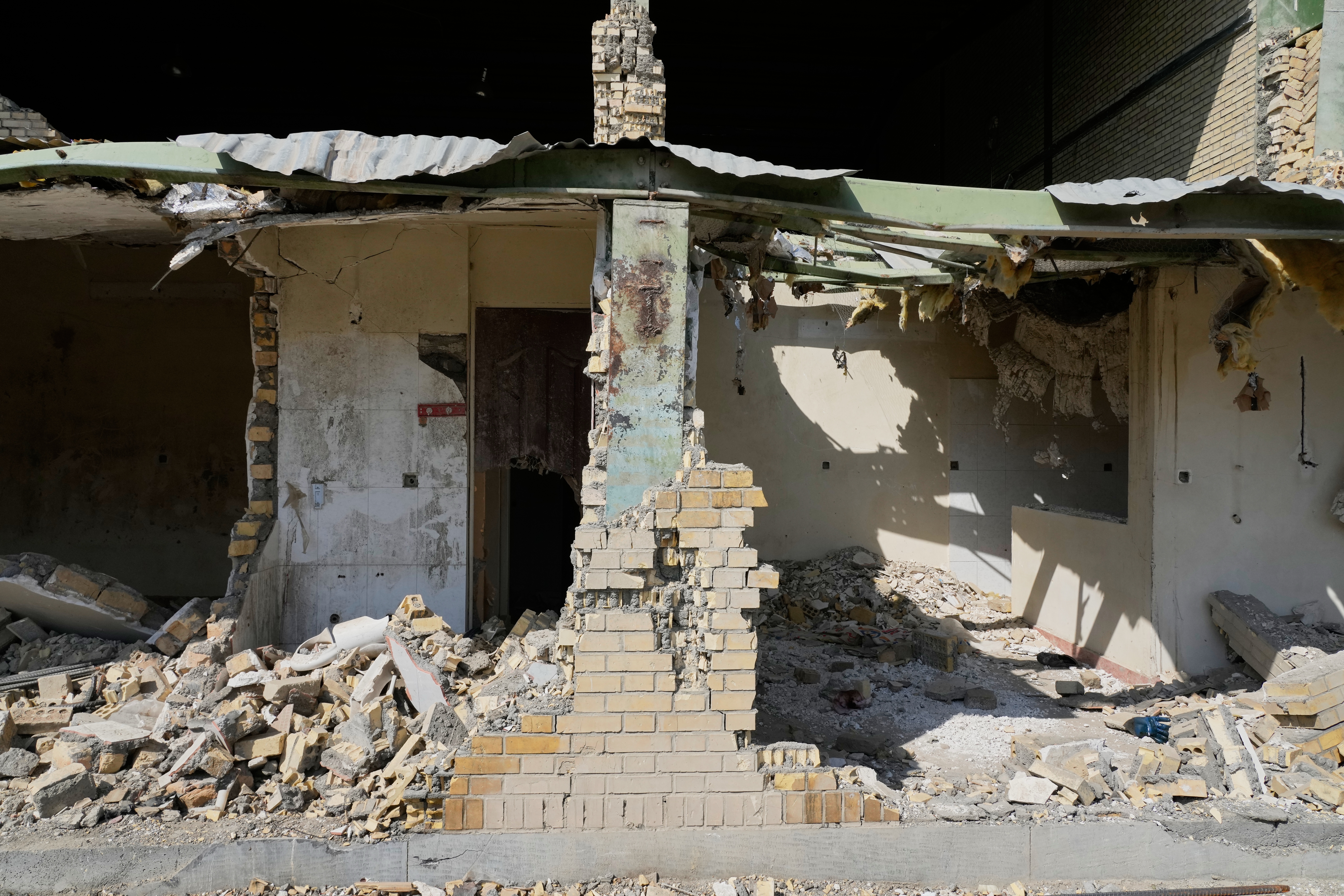
A school sports hall that Iranian authorities said was damaged when a nearby building was hit on March 28 is seen in Khomein, southwest of Tehran, Iran, last month.Vahid Salemi
Donald Trump has struggled to give American voters good news in the run-up to the election, and you might have missed this seeming bombshell — or maybe you could call it the lack of a bombshell — when the president spoke with Fox News’ Sean Hannity on Monday night. It turns out there actually is no war in Iran.
“But this isn’t like a war that’s going on,” Trump insisted of the Middle Eastern conflict he initiated in late February, and which has proved to be incredibly unpopular with voters. “There’s no war raging. It could happen if they don’t make a deal, but they want to make a deal very badly, and there’s a very good chance we make a deal.”
Literally as Trump was speaking with his longtime friend, the U.S. military was dropping a new round of bombs on Iran’s Qeshm Island, a key strategic outpost in the fight for control of oil traffic through the bitterly contested Strait of Hormuz. Pentagon sources told the Wall Street Journal, which broke the story of the attack by a military that’s stopped giving public briefings on the war, that the new bombing was in response to Iranian attacks on a U.S. drone and potshots at two fighter jets. To any rational person, it sounds like a war is raging.
The president has given wildly mixed signals in recent days on whether the war would resume after voting ends — a conversation that has linked killing and politics in ways that should make all of us uncomfortable. But news reports have suggested that — urged on by Israeli Prime Minister Benjamin Netanyahu, who, just like Trump, is clinging to political power — the Pentagon has a plan for a short but intense postelection attack on Iran.
Last week, Connecticut Democratic Sen. Chris Murphy, a vocal critic of Trump’s foreign policy, revealed at a forum that as a member of the Senate Foreign Relations Committee, he’s received a Pentagon briefing on the war plan, and while he’s sworn to secrecy about the operational details, the overall idea is, in his words, “insane.” Murphy suffered a stroke a couple of days later (aides said the 53-year-old senator is expected to fully recover, thankfully) — a likely coincidence that some will view as a metaphor for the stress of trying to restrain a president’s madness.
Analysts say an attack could target Iran’s infrastructure, such as its electrical grid — arguably a war crime — and could include the United States dropping the so-called mother of all bombs on an alleged Iranian nuclear site. And for what? The Trump regime has yet to adequately explain a war that’s killed at least several thousand Iranians and 22 U.S. troops. A Democratic Congress could take concrete steps to end this madness — both by passing the War Powers Act and using its authority over the purse to cut off funding.
It’s one more reason why the stakes of a midterm election have never been higher.
What I wrote on this date in 2020
One thing about Election Day is that it’s always the anniversary of some other important Election Day. Six years ago, Americans went to the polls on Nov. 3, 2020, still wallowing in the COVID-19 pandemic and nearly evenly divided about whether the recently impeached Donald Trump should remain in office. I struggled to write a column that night, as it was clear the surge of mail ballots meant we would not know the winner for days. “Midmorning, I hopped in my car and headed to St. Maron Maronite Catholic Church in the heart of South Philadelphia, after I’d seen a photo of shivering masses of voters lined up for two blocks,” I wrote. “The church is just a stone’s throw from South Street, where the CVS and Whole Foods were covered in plywood, the stress wall of a national nervous breakdown.”
I spent the week before the election with one eye on the potential shenanigans of a White House that doesn’t believe in free and fair elections, and the other on a more hopeful future. In that latter category, I interviewed State Rep. Chris Rabb, the all-but-certain next Congress member from the Philly-based 3rd Congressional District, about why he spent some critical days before the U.S. election in Brazil, where he watched and saluted a reelection victory for that country’s leftist president, Luiz Inácio Lula da Silva. Over the weekend, I looked at the Trump regime’s push to intimidate voters and possibly nullify the results in the critical U.S. Senate race in Alaska, where a banal Democratic ploy of recruiting a second Dan Sullivan to enter the race is not nearly as big a threat as government election interference.
One war for the soul of America is coming to a climax on Tuesday, but arguably a bigger battle is just getting started. That would be the rising influence of artificial intelligence in our day-to-day lives, as noisy, polluting data centers come for our neighborhoods and robots come for our jobs. For many, it was an ominous sign of things to come when The Inquirer reported that Philadelphia’s top business employer, the media giant Comcast — whose two skyscrapers dominate the city skyline — is laying off 600 of the humans who work in those towers. A key part of Comcast’s cost-cutting strategy involves “deploying AI agents to connect with customers.” Meanwhile, on the city’s western border, Lower Merion is the latest suburb racing to impose restrictions on AI data centers that have been proposed throughout the region and across Pennsylvania and South Jersey. No matter who wins the election, AI will remain the dominant issue for U.S. society in the 2020s and in The Inquirer’s daily news report. Follow it every day by subscribing. You might even save some human jobs: ours!
By submitting your written, visual, and/or audio contributions, you agree to The Inquirer’s Terms of Use, including the grant of rights in Section 10.
When Nina Langsam Jay was growing up, it went without saying in her family that it was taboo to ask her parents, both Auschwitz survivors, about their Holocaust experiences.
Like many post-World War II, second-generation Jewish immigrants, Jay said she didn’t want to cause them any more pain by bringing up past trauma or picking at their survivor’s guilt. She knew many of their family members had not made it out alive.
So when decades later, Jay heard her young daughter, Lisa, ask Dora Bursztajn Langsam, Jay’s mother, to share her account of the Holocaust with her Hebrew class, Jay was “shocked” that Langsam agreed. Jay accompanied her mother to the class and “couldn’t believe” the tragedies Langsam recounted: two ghettos, two concentration camps, and working as a slave laborer alongside her younger sister, Salla. Jay wrote down the details as quickly as she could in the notebooks she’d brought, finally putting in ink the family history she’d wondered about her entire life.
“It was like a cathartic happening for her,” said Jay, now 77, who has lived in Cherry Hill for 43 years. The class kicked off a decade-long speaking tour for Langsam, who began sharing her story at other schools, community programs, and, at 80 years old, a prison. She went on to give testimony to Steven Spielberg’s USC Shoah Foundation, a worldwide oral history project for Holocaust survivors.
Before Langsam publicly shared her story, the main anecdote Jay had heard was about how she saved Salla’s life by disobeying orders and pulling her out of a line to a crematorium. Nazi soldiers noticed, Jay said, but before they could act, an air raid occurred, and Langsam pulled Salla into an open train car during the chaos. They both survived the Holocaust, and made it to a displaced persons camp inSweden.
Salla married and started a children’s boutique with her husband in Stockholm. Dora met and married Harry Langsam, who had survived the Holocaust but lost his first wife and two young children. The couple had Jay and her older brother Saul, and the four of them immigrated to the United States in 1953 with help from the nonprofit HIAS.
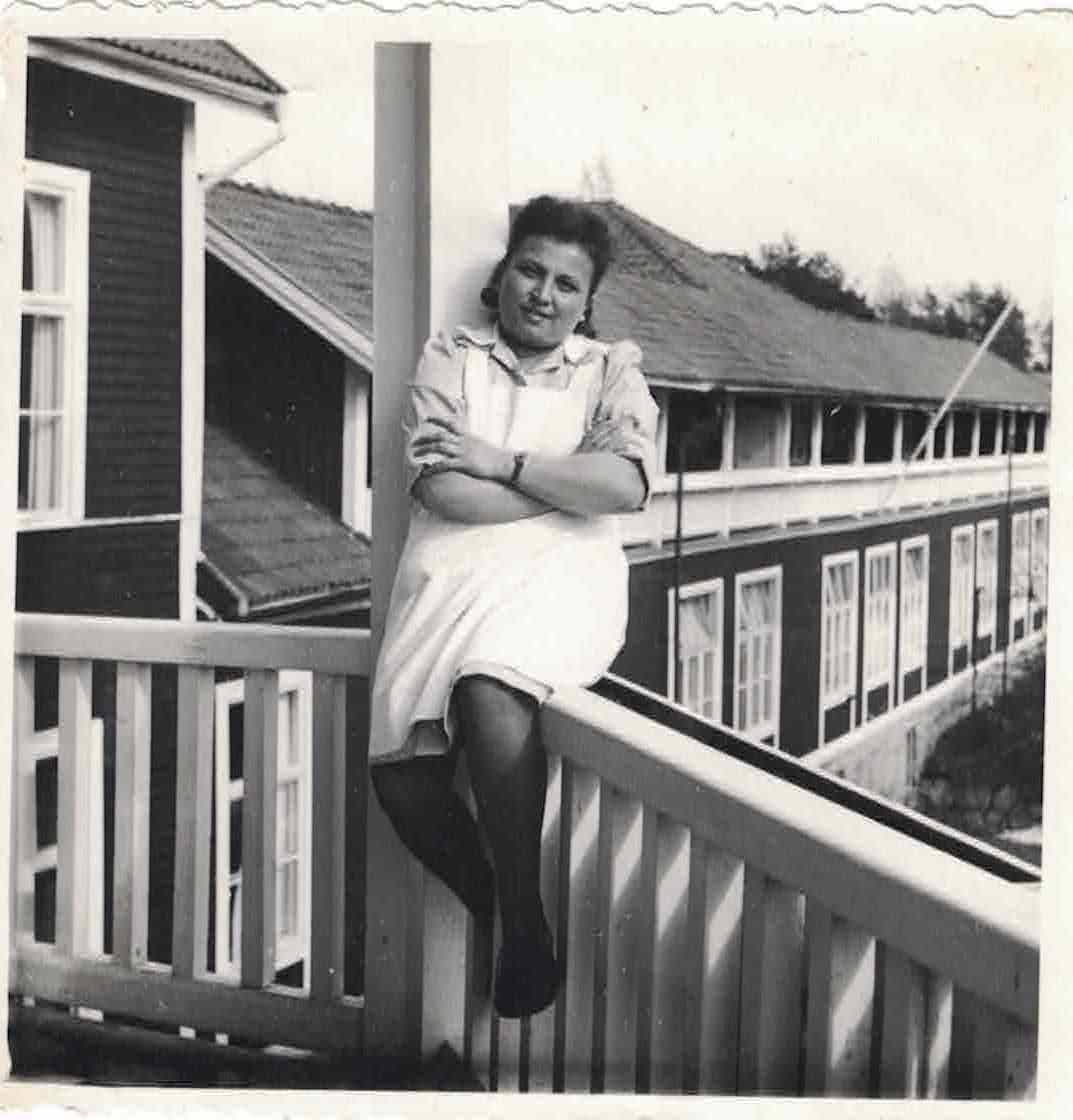
Dora in her work uniform in Sweden, where she was training as a nurse in a local sanitorium (photo from around 1945-6).Courtesy Leah Grisham, PhD
Langsam died in January 2017 while residing at the Lions Gate retirement community in Voorhees Township. Salla died in May 2017. The sisters kept in touch throughout their lives, and often visited each other, sometimes staying months at a time, Jay said.
Jay served as Dora’s caretaker in her final years. And now, Jay is continuing to care for her mom’s story by teaming up with author Leah Grisham, a researcher who wove Langsam’s story into the biography The World Has Caught Fire: One Jewish Family’s Attempt to Survive Nazi-occupied Poland, released in September by Amsterdam Publishers, which exclusively publishes Holocaust memoirs.
“It’s a lifelong dream,” Jay said of the book. “For years I said, ‘If I could just do this one thing for mom, I would feel like I’ve accomplished so much.’”
On Sunday morning, Jay will representthe book at an interactive local authors showcase at Katz JCC. Ahead of the event, we spoke with Jay about what it meant to document her family’s history.
Responses have been edited for length and clarity.
What inspired you to dig into your mom’s story?
She wanted people to know what had happened. It was very hard for her to tell her story, but she realized once she started that she needed to share what happened with the world. If not, who’s going to know? She kept going, and people appreciated that. I still have thank-you notes from some of the schools she spoke at.
I wanted to honor her and my aunt, Salla. When their mother was taken from them, she told [Dora], ‘Don’t cry. Take care of your sister.” And that’s what she did the entire time. I think about that all the time.
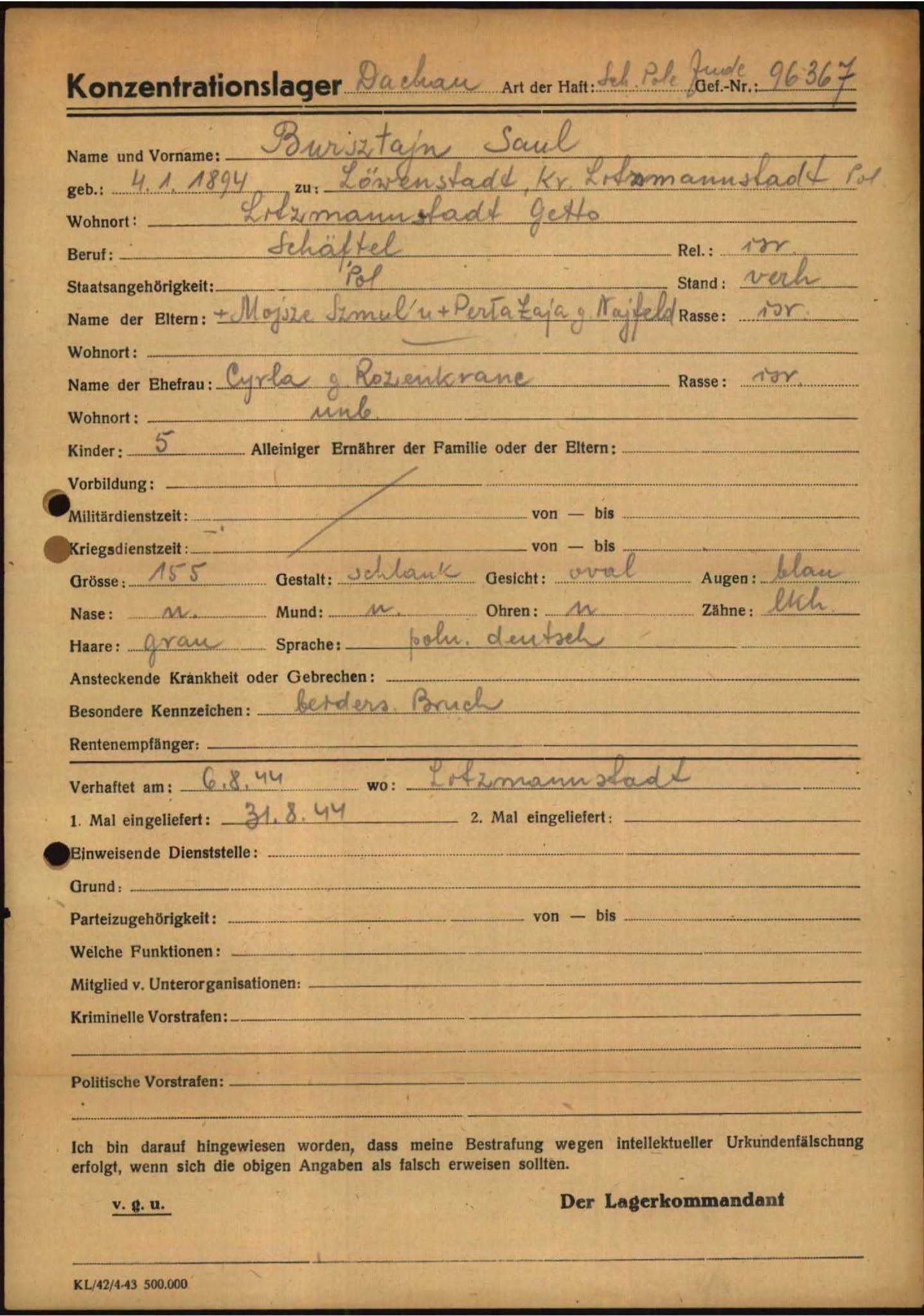
Szoel Bursztajn’s (Dora’s father) registration papers for Dachau. He was moved from Auschwitz to Dachau and then back to Auschwitz, where he was killed sometime in late 1944, according to Leah Grisham. Courtesy Leah Grisham, PhD
How did you connect with Grisham for this project?
My mom’s whole story was so shocking, and I thought, ‘How do I do this?’ I’m not a writer. I have the information, but I don’t know the first thing about putting it into words. I researched online about people who wrote about survivors and Leah’s name popped up. Leah is my daughter’s middle Hebrew name, so I thought maybe that’s a good sign, and I shot her an email out of the blue.
What was it like for you to, generations later, find answers to questions about what happened to specific family members in your lineage?
We grew up to appreciate what our parents sacrificed, and that’s what we hope people will realize. Our parents sacrificed a lot, and that pain never leaves you. My mother said the pain doesn’t leave; she could think about wonderful things and look forward, but she said her heart is broken in two for the family she lost.
Her father was with them until they got to Auschwitz, where they were separated. She thought he was burned right away, but [Grisham] discovered he was taken to another camp. I was hysterical hearing that. My mother never knew.
I never knew my grandparents, obviously. So I had told my husband we would be great grandparents because we knew what it felt like to miss out on that.
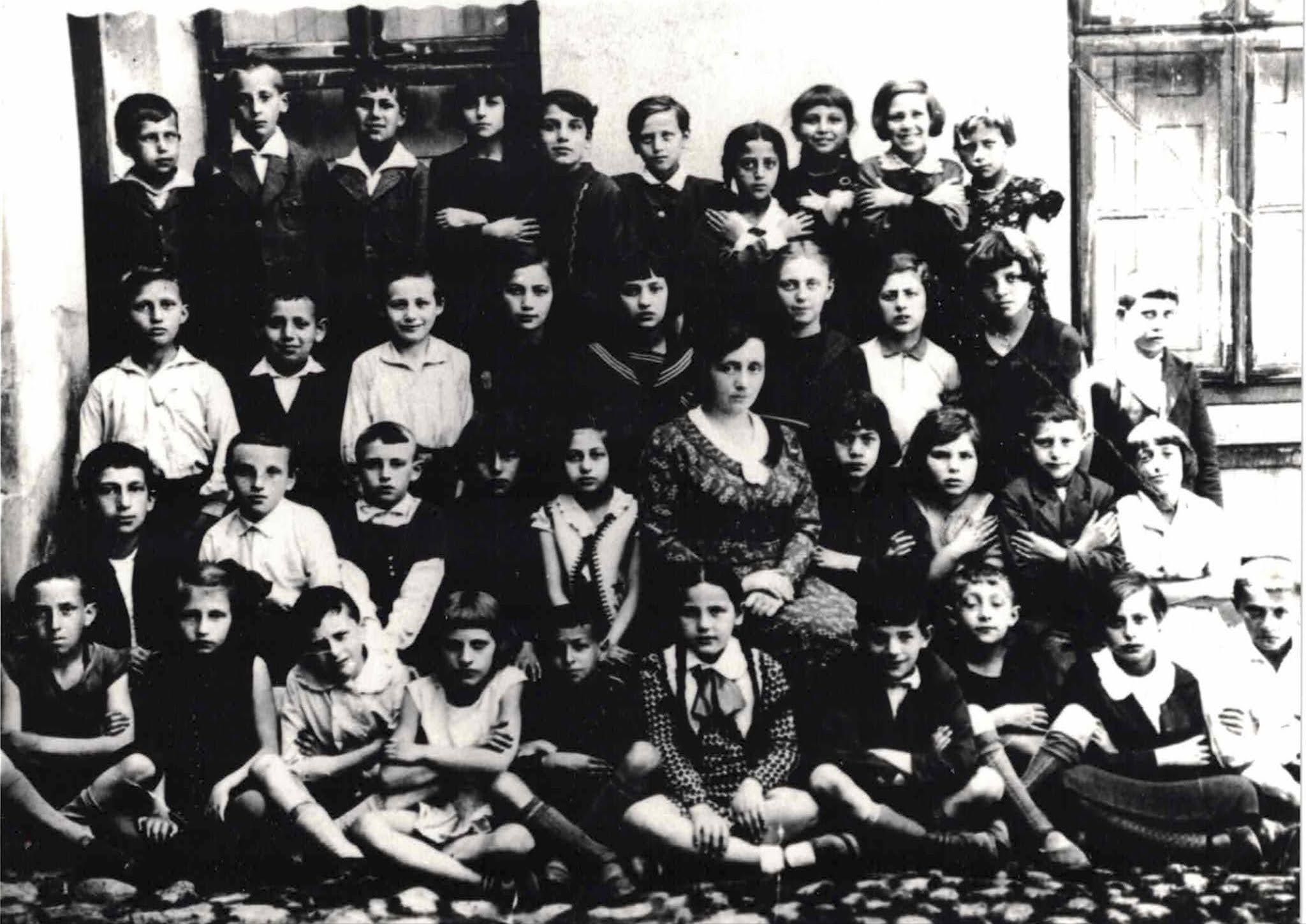
A class photo taken before the war. Dora is in the top row, third from the right. A schoolmate whose family left Poland before the war later reconnected with Dora and shared this photo. Approximately 95% of the Jews in her town, Brzeziny, were killed in the Holocaust, according to Grisham.Courtesy Leah Grisham, PhD
What do you feel makes your mom’s story and this book different from other stories we have from the Holocaust?
This book also weaves in the family members and the people who didn’t make it. That’s what a lot of the books today do not talk about. It’s always about the hope, the love, and the rescue, but sometimes it doesn’t portray the whole story accurately.
It also provides the bigger picture. My mom had a loving family, siblings, and a happy childhood. She had a beautiful home life until the Holocaust happened. Her father was a shoe manufacturer, and he’d make samples in her size so she could show them off. She always loved shoes as an adult; they reminded her of her father’s love. He made two-blade ice skates for her and her sisters, and she’d tell me about this frozen pond they’d skate on.
I wanted to share her childhood and the things she enjoyed, not only the painful parts of her story. This book does that.
Do you hope this will inspire others to dig into their family history?
Yes, of course. And if they can find a beautiful writer to help them, that’s great. I know a couple people who did it on their own, but I felt I couldn’t do it justice. [Grisham] weaves my mother’s story with other survivors’ stories in books out there, and draws you in like you are there with her in the camps, the ghettos, watching the deaths.
My mother refused to turn away; she was determined to be a witness. It’s tragic, and she was very brave. That’s just who my mother was, even at a young age.
(Left to right): Dora’s uncle Walter (Wolek) Bursztajn, Dora, son Saul, husband Harry, and Nina Langsam celebrate Saul’s bar mitzvah in 1960. Harry (Hersh) and Dora met in a displaced persons camp in Sweden after the war, where they married and eventually had their two children before moving to the United States. Walter was one of Dora’s only surviving relatives, and someone whom Nina and Saul considered a grandfather-like figure.Courtesy Leah Grisham, PhD
What do you hope people will take away from this memoir?
I hope they take away what she always said: “I’m the winner. Hitler did not win.” People like my mom were so strong, and they wanted to live. They made beautiful lives, and they were able to overcome.
She would say, “Look at my beautiful family, my grandchildren, my great-grandchildren.” We were four generations for a long time. She was in the loop for every little thing: every birthday party, outing with the kids, anniversaries. It was wonderful.
Plans unanimously advanced Monday by the West Pikeland Township board of supervisors would leave “Cayden’s Corner” in Pine Creek Park, where it opened in 2023.
A packed meeting room applauded when Rick Tralies, a landscape architect at Natural Lands who has been consulting on the playground for the township, said, “It will not be touched.”
“Some of the first iterations we did didn’t quite hit the mark,” he said. “So we went back, and we made revisions.”
The supervisorson Mondayadvanced two proposals with different equipment manufacturers for the consultants to price out before they select a final plan. Officials also requested that the township’s advisory parks and recreation committee make a recommendation on a preferred design, after the committee pushed both plans forward to the board at its last meeting, declining to select one.
The new playground, funded by a roughly $230,000 grant and private donations, is expected to add upgraded equipment including slides and swings, a nature play area,landscaping, and other updates. It will be “bigger, more modern” than the existing playground, which Tralies called “at the end of its useful life.”
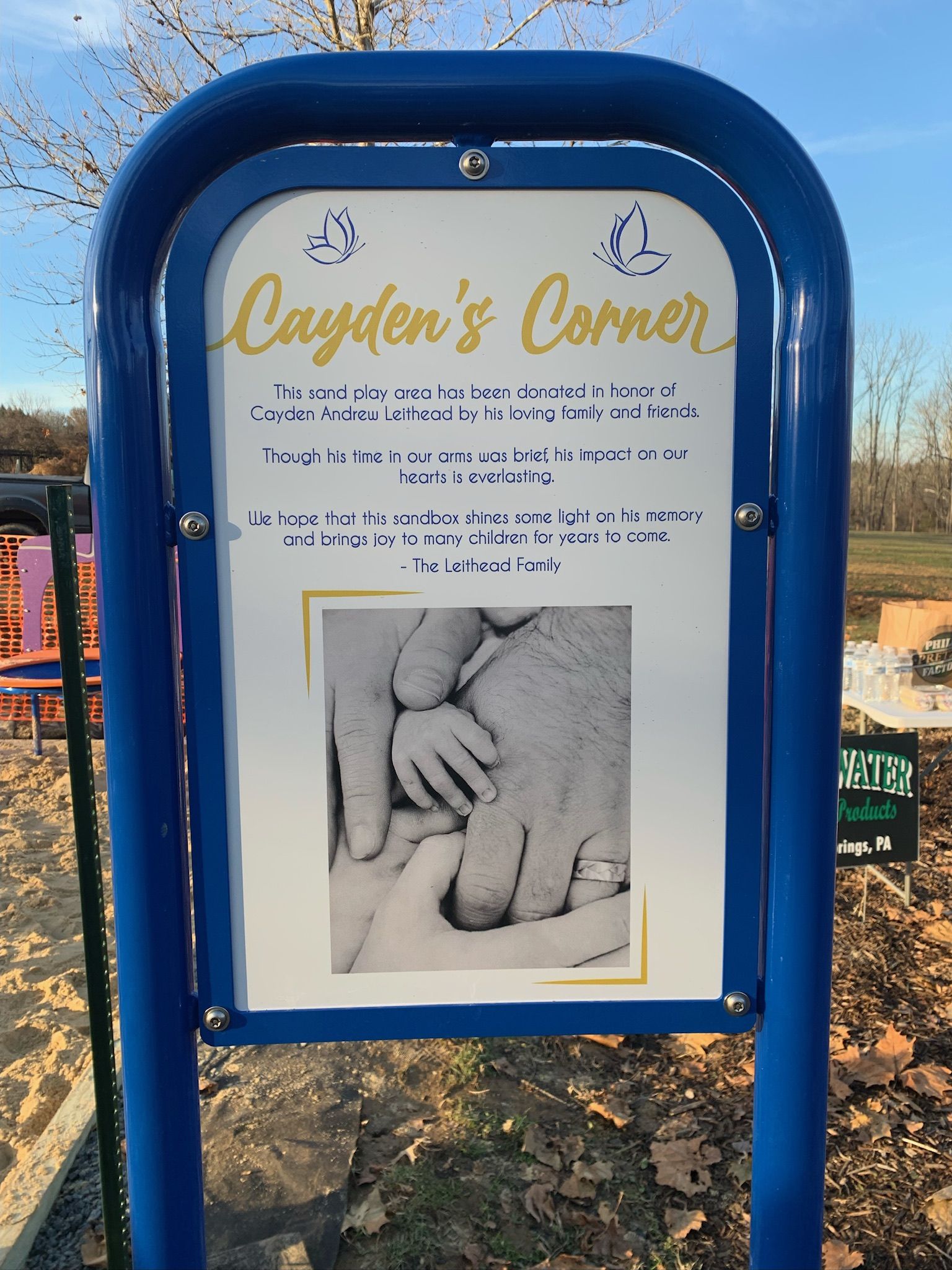
The sandbox was constructed by Ryan Leithead after he and his wife Denise lost their newborn son, Cayden, in 2022. Leithead worked with the township to design and install the sandpit, as an early foray into renovating the decades-old park. A memorial sign, with a black-and-white photo of Cayden’s hand with his parents’, is posted at the play area.
“After months of battling a conversation that should have never happened, we’re finally preserving [it], so I celebrate that,” Leithead said at Monday’s meeting.
Leithead, who serves on the township’s parks and recreation committee, opposed the work of the consultants and requested they reconsider the proposals, pressing for a third option to be on the table that he argues better aligns with the community’s desires while updating the park.
The Parks and Recreation committee is expected to discuss the proposals at its next meeting on Thursday.
This suburban content is produced with support from the Leslie Miller and Richard Worley Foundation and The Lenfest Institute for Journalism. Editorial content is created independently of the project donors. Gifts to support The Inquirer’s high-impact journalism can be made at inquirer.com/donate. A list of Lenfest Institute donors can be found at lenfestinstitute.org/supporters.
Jonathan Zimmerman teaches history and education at the University of Pennsylvania. His next book, “Schooling Citizens: How Education Can Save Democracy,” will be published in the spring by the American Philosophical Society Press.
Last week, at a campaign stop in Michigan, Health and Human Services Secretary Robert F. Kennedy Jr. said contemporary Arab Muslims don’t produce prize-winning science or literature.
Secretary Kennedy, meet Magid Abou-Gharbia.
A few days before Kennedy’s speech, Abou-Gharbia won America’s oldest science prize: the John Scott Award. Other recipients have included Marie Curie, Thomas Edison, and Jonas Salk.
Abou-Gharbia’s research has led to 145 patents and 10 new drugs, including the antidepressants Effexor and Pristiq. He’s the founding director of the Moulder Center for Drug Discovery Research at Temple, where Abou-Gharbia is developing medicines to treat opioid and cocaine addiction.
And Abou-Gharbia grew up in Egypt. He came to the U.S. in 1974 to pursue his doctoral degree at the University of Pennsylvania.
Kennedy was in Michigan to barnstorm against Senate nominee Abdul El-Sayed, whom President Donald Trump has labeled a “jihadist.”
Sen. Tommy Tuberville (R., Ala.) posted a picture of New York Mayor Zohran Mamdani next to a photo of the 9/11 attacks, along with the caption “the enemy is inside the gates.”
It’s tempting to just call these attacks racist and Islamophobic, which they surely are. But that’s also guaranteed to stoke yet more anti-Muslim sentiment. When you call people names, they dig in their heels.
The best strategy is to stick to the facts. Across history, bigotry has rested on ignorance. And the only antidote to that is knowledge.
Muslims don’t win high-status prizes? Before Abou-Gharbia, there was the Egyptian diplomat Mohamed ElBaradei, who won the 2005 Nobel Peace Prize for his efforts to limit nuclear weapons. An Egyptian American scientist, Ahmed Zewail, received the 1999 Nobel Prize for chemistry. Egyptian novelist Naguib Mahfouz received the Nobel Prize in literature in 1988.
Secretary Kennedy might not know any of that, and he certainly doesn’t seem to care about it. He’s got his story, and he’s sticking to it.
But we don’t have to play along. When our leaders spread falsehoods about Muslims, we should reply with the truth. It’s our most lethal weapon.
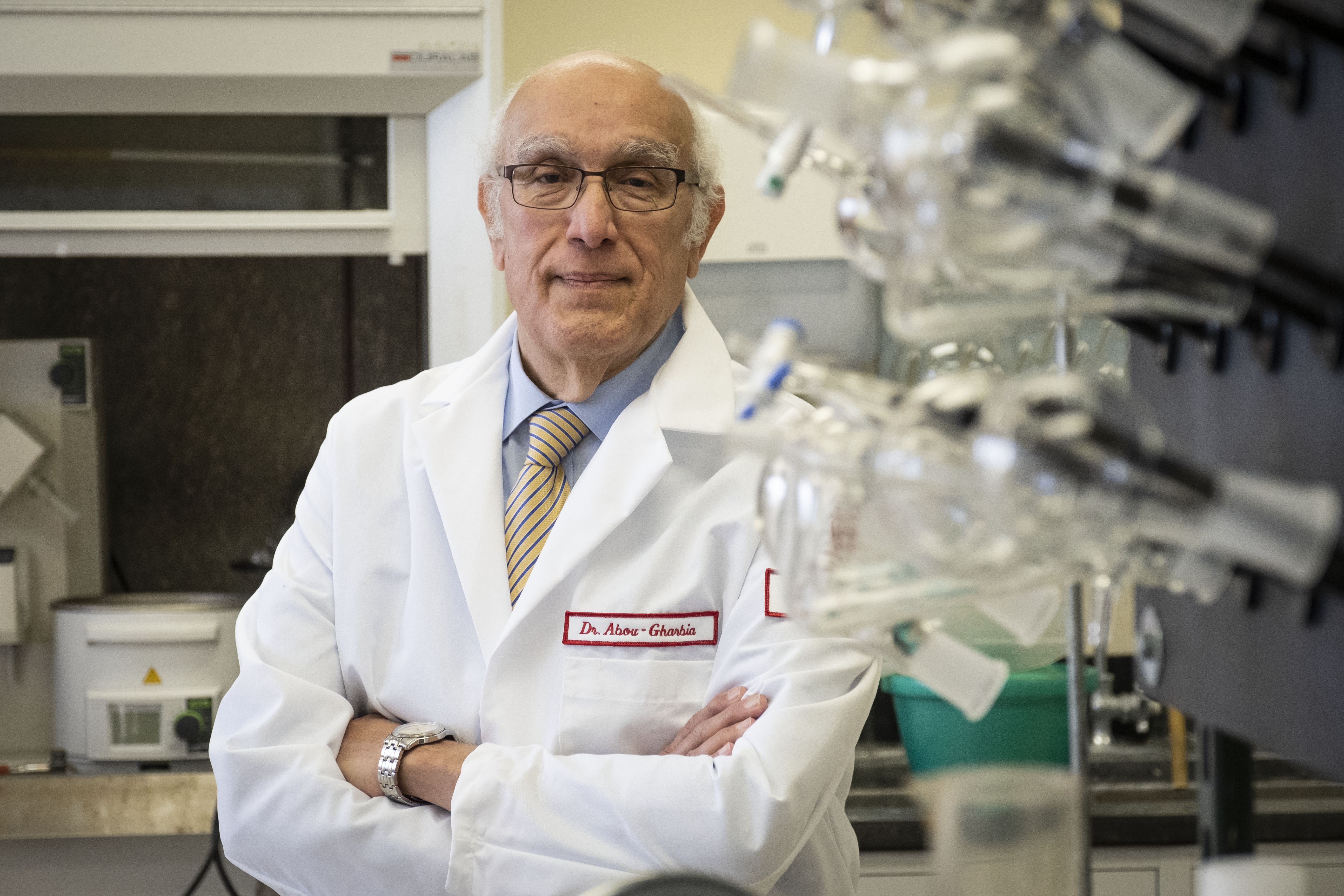
Magid Abou-Gharbia, the director of the Moulder Center for Drug Discovery Research at Temple University, was recently honored with the nation’s oldest prize for scientific innovation, the John Scott Award.Courtesy of Magid Abou-Gharbia
Take Sharia law, a set of guidelines in the Quran — Islam’s major religious text — for living a good life. Over the past two years, state and federal legislators have introduced at least 39 anti-Sharia bills and resolutions. But there is not a single known instance — not one — of a state or municipality adopting or requiring Sharia law.
Does the movement against Sharia reflect anti-Muslim prejudice? Sure. But it’s also deeply ignorant. It imagines Muslims are trying to impose their religious code on other Americans. Again, that’s simply untrue.
Likewise, President Trump’s repeated claim that Muslims in New Jersey cheered after the 9/11 attacks was obviously bigoted. But more than that, it was false. Although some Muslims in other parts of the world celebrated when the World Trade Center towers came down, there is no evidence — none — that Muslims in America did so.
To be sure, people don’t necessarily change their minds when they’re confronted with facts. But they will almost surely tune us out if we simply call them Islamophobes, racists, or fascists.
Carl Rogers, one of the foremost psychologists of the 20th century, noted a “curious paradox” in human beings: When they feel accepted, they’re more likely to change. But if they feel alienated or demeaned, they’ll resist.
So we need to proceed gently if we want to win anyone over. That means pointing out the facts, over and over again. And it also means asking people — again, gently — how they would feel if they were judged as harshly as they judged others.
Nearly a decade ago, my Penn colleague Emile Bruneau showed that people who imagined all Muslims as terrorists were more likely to alter their views if they were asked whether white people should be held responsible for the actions of a white mass murderer like Dylan Roof. That works a whole lot better than calling them names.
Emile died of brain cancer in 2020, at the too-young age of 47. A great way to remember him would be to remind ourselves that nobody listens when they feel insulted.
And that includes people who insult Muslims. I won’t excuse or apologize for them, but I want them to change. Don’t you?
Then stop telling them they are evil or subhuman, which is what they say about Muslims. Tell them about Magid Abou-Gharbia instead.