Tag: topic-link-auto

  • The first Colored Convention was held in Philadelphia in 1830. Mother Bethel AME Church will revive it this weekend.

    The first Colored Convention was held in Philadelphia in 1830. Mother Bethel AME Church will revive it this weekend.

    To Denise Burgher, co-organizer of this weekend’s 2026 Colored Convention Conference, the attack on civil rights and Black history under President Donald Trump’s administration is chilling.

    Among the most egregious, she said, were his attempts to repeal the 14th Amendment, the Reconstruction-era addition to the Constitution guaranteeing citizenship to anyone born in the United States. In June, the Supreme Court upheld birthright citizenship.

    “The 14th Amendment overturned the Dred Scott Decision of 1857 ruling Black people — freed or enslaved — do not have the same rights as [their] white counterparts,” Burgher said. “Without that protection, Black Americans’ citizenship would be in question. Don’t think that could happen? We thought a woman’s right to chose was set in stone, too.”
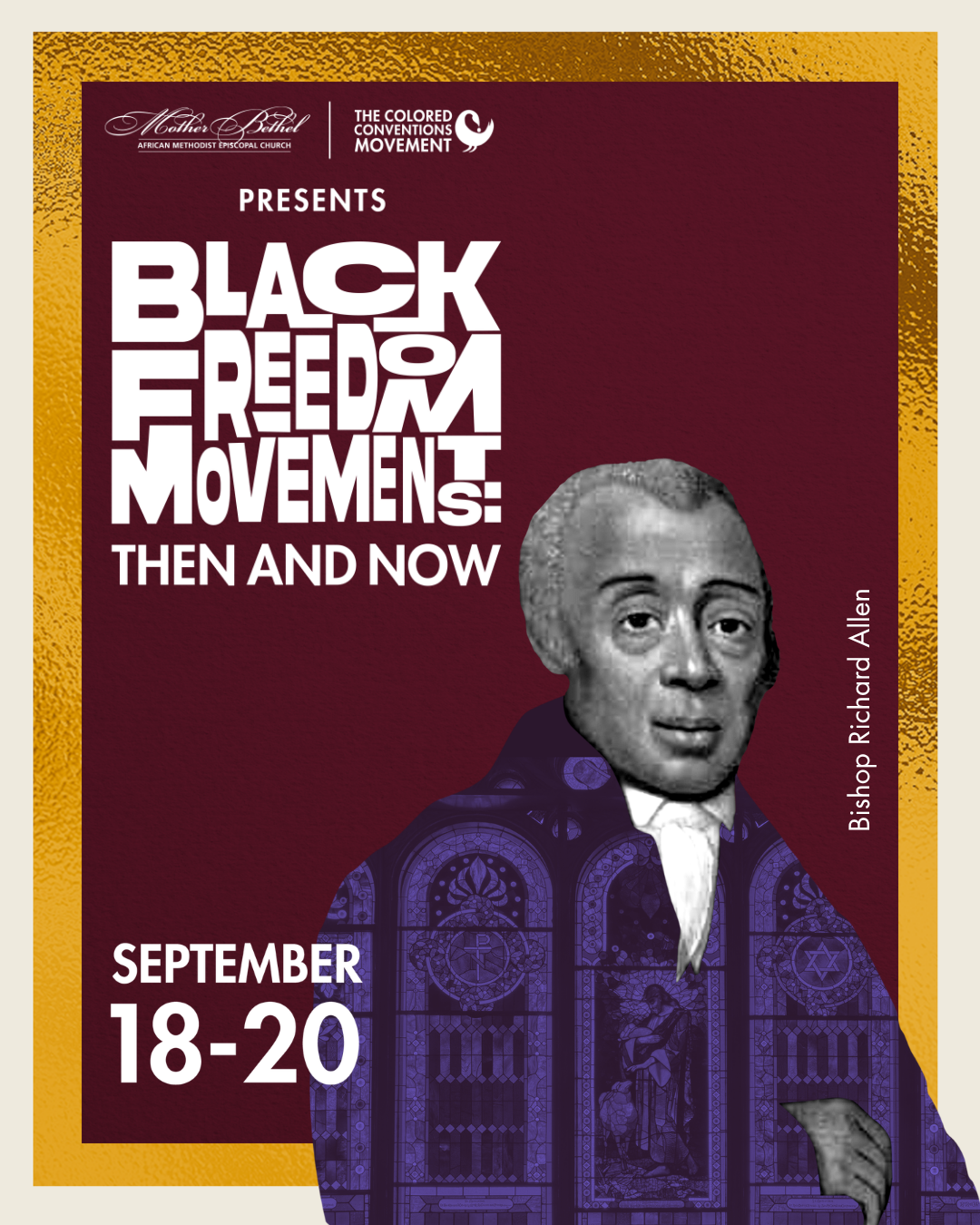
    A flyer advertising the 2026 Colored Convention: Black Freedom Movements Then and Now.2026 Colored Convention Committtee

    Burgher went on: Last week Trump threatened to snatch the tax exempt status from private schools that give minority students access to scholarships and educational programs, including at historically Black colleges and universities like Howard and Hampton.

    Add to that the dismal unemployment rate of college-educated Black women, who, according to D.C. think tank Economic Policy Institute, have lost more jobs in the public sector than Black men and white women in the last two years. Plus, the assault on Black history, including last week’s forced retirement of the Smithsonian secretary, Lonnie Bunch III, and the abrupt removal of memorials to enslaved souls at the President’s House site in Philadelphia.

    It’s clear Black equality in this political climate is not guaranteed.

    “We haven’t seen a threat like this on Black livelihood in this country since the post-Reconstruction era,” said Burgher, who is also the director of community engagement and curriculum development at Penn State’s Center for Black Digital Research. “This part of American history was a part of our past, now, it is not so suddenly aggressively and nakedly a part of our present.”

    A 19th-century America, she said, calls for 19th-century tactics.

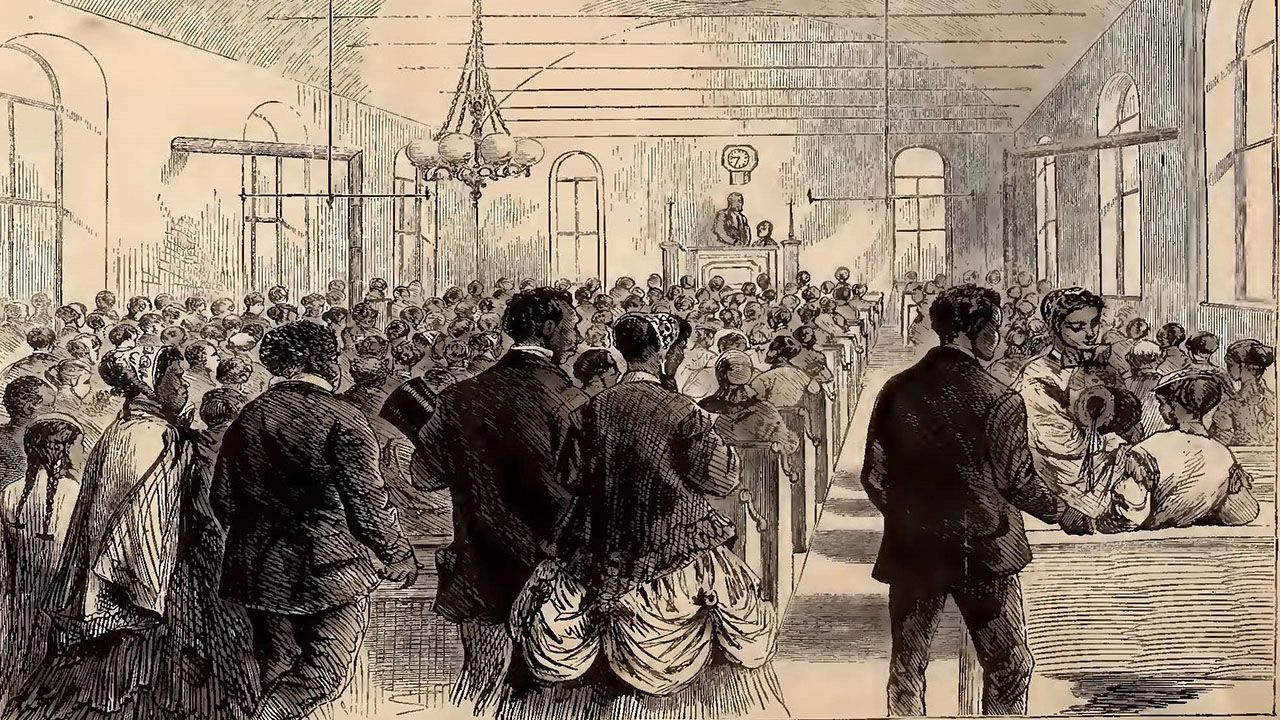
    This weekend, Mother Bethel AME will host the “2026 Colored Convention: Black Freedom Movements Here and Now,” a celebration of the first Colored Convention held almost 200 years ago at the church. Dozens of influential free Black clergymen, statesmen, and activists convened at the 1830 Colored Convention and laid the foundation for civil rights groups like the Niagara Movement and the NAACP.
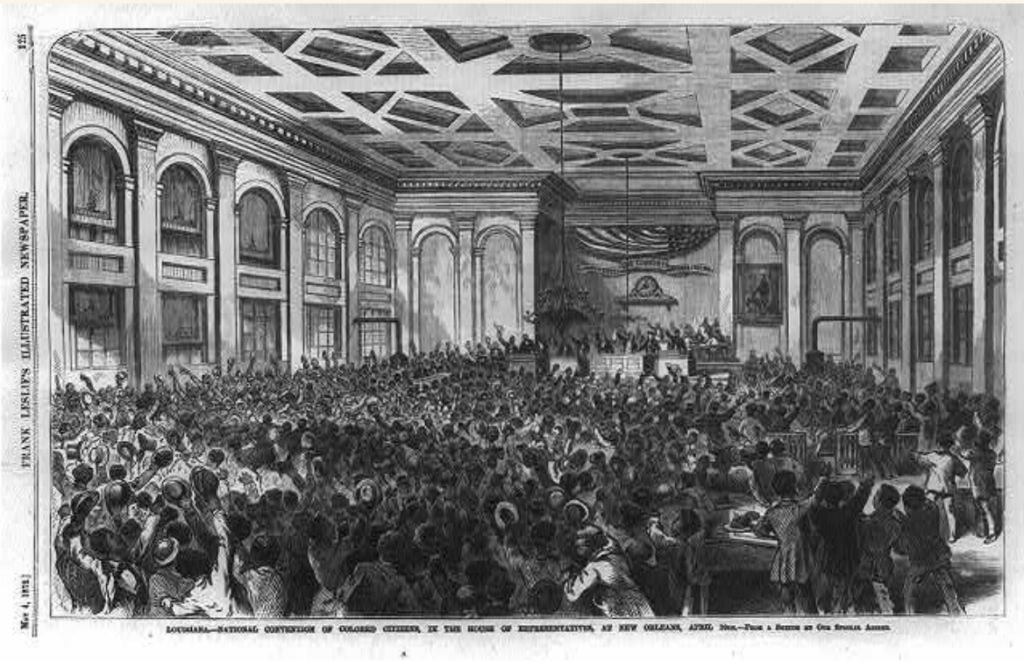
    This print from Frank Leslie’s Illustrated Newspaper depicts the National Convention of Colored Citizens’ meeting in the House of Representatives in New Orleans, in April 1872.The Library of Congress

    These organizations agitated for civil rights through the Civil War, Reconstruction, Jim Crow and into the 1960s, said Carolyn C. Cavaness, Mother Bethel’s pastor who tapped Burgher and Derrick Spires, historian and associate professor of English at the University of Delaware, to reignite the Colored Convention’s legacy.

    “To reclaim and be challenged by such a movement … is of much worth and esteem,” Cavaness said. “We are literally in a struggle now for equality and fairness of all people.”

    This weekend’s Colored Convention will feature workshops on genealogy, activism, and the 18th- and 19th-century Black press. Philadelphia school children will attend Thursday for arts and crafts projects that will teach them about the history of the Colored Convention.

    Andre E. Johnson, codirector of the Colored Conventions Project and professor at the University of Memphis, will deliver the keynote on the history of the Colored Convention and share how activists can apply 19th-century action plans to 21st-century technology to create a strategy to combat the present crisis.

    “In this year of the Semiquincentennial, this is yet another opportunity for Philadelphians to pay attention to history,” Burgher said, “and look at strategies our ancestors used more than 100 years ago. I’m not going to say the same thing is happening, but the events sure do rhyme.”

    The event will include a voter-registration drive, emphasizing the importance of voting in the midterms.

    Richard Allen founded Mother Bethel in 1794, and by 1830, the church was the cornerstone of the largest free community of African Americans in the country.

    In August of 1829, white mobs burned Black businesses and neighborhoods during the Cincinnati Race Riots. In response to the brutal loss of life and business, free man Hezekiah Grice wrote to Allen, asking the influential pastor to gather free Black intellectuals to strategize. His reasoning was, if white mobs could do this in Cincinnati, what’s to stop them from attacking Black communities everywhere else.

    More than 2,000 Black people from Cincinnati moved to Canada. The first Colored Convention was held from Sept. 20 to Sept. 24 in 1830 at Mother Bethel, resulting in emissaries from Philadelphia asking the Canadian government to allow Black people to establish communities there.

    The Colored Convention held annual meetings at Mother Bethel from 1831-85. By the turn of the 20th century, there were Colored Conventions regularly in nearly every major American city along the Northeast Corridor, in the Midwest, and along the West Coast.
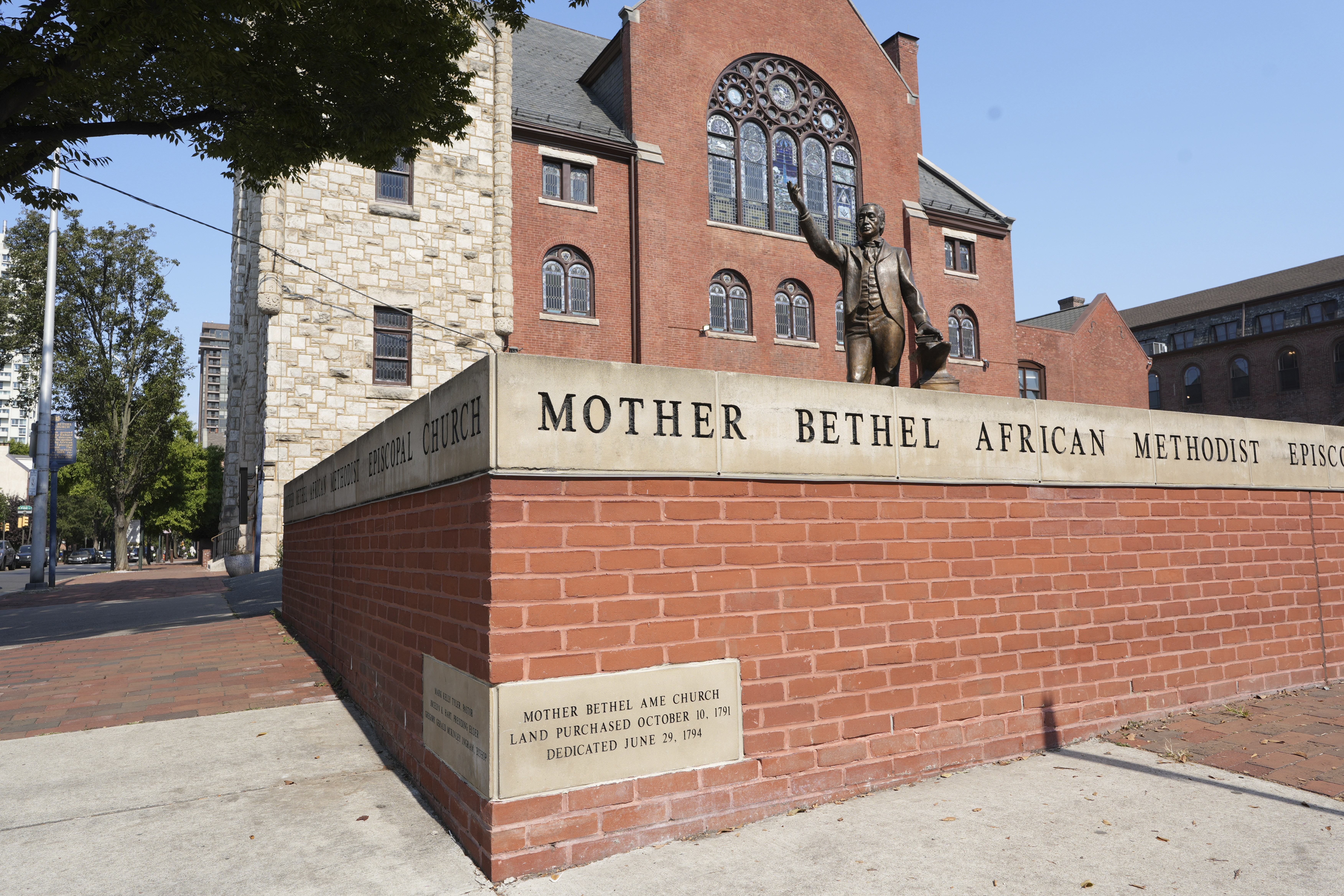
    A statue of Mother Bethel AME Church founder Richard Allen stands on the oldest parcel of land continuously owned by Black Americans in Philadelphia on Oct 13, 2024. (AP Photo/Luis Andres Henao)Luis Andres Henao

    Black leaders from every walk of life attended, among them Frederick Douglass — known as the Lion of the Convention because of his deep oratory voice and big, distinctive hair — poet Frances Ellen Watkins Harper, newspaperman T. Thomas Fortune, and Philadelphia educators Jacob C. White and Charles L. Reason.

    Colored Conventions, Burgher said, became forums for Black leaders to discuss abolition, fugitive slave laws, voting rights, and education. Many Black institutions were born from these conventions, including the charters for Talladega University and Howard University Law School, established in 1865 and 1869, respectively.

    The last Colored Convention on record was in 1972 in Newark, N.J., Burgher said.

    “I hope this 2026 celebration will not only bring this history home,” Burgher said. “And I also hope it inspires Philly residents to respond to the current moment like history has taught us.”

    2026 Colored Convention: Black Freedom Movements Here and Now will take place Thursday, Sept. 17 — Sunday, Sept. 20. Mother Bethel is located at 419 S. Sixth St. Admission is by donation.


  • Philly-area war robot makers Asylon and Rajant reveal plans to score military contracts

    Philly-area war robot makers Asylon and Rajant reveal plans to score military contracts

    Two Philadelphia-area robot developers who have sought more contracts from the rapidly increasing U.S. military budget have detailed growth plans with new investments.

    German-based Bosch Ventures on Sept. 14 agreed to make a large new investment in Asylon, a Norristown-based robot systems maker whose products the Air Force is testing to perform automated aircraft inspections at its Warner Robins base in Georgia.

    Asylon also helps run drone-based security systems for the Air Force and for civilian clients, including Citizens Bank.

    Bosch Ventures says it typically spends up to $30 million to buy up to 25% of each company it targets for investment. It has not confirmed how much it has pledged to Asylon.

    Bosch, which has branch offices in the U.S. and Israel, made its bet on Asylon after its Bosch Building Technologies affiliate became a user of Asylon’s DroneIQ platform.

    That placed Asylon’s birdlike Guardian flying drones and DroneDog systems in position to detect and respond to intruders and other threats at Bosch’s building security and safety clients. Asylon’s DroneDog systems are typically clipped onto Boston Dynamics’ doglike Spot robots.

    Even before the latest investment, the relationship with Bosch helped Asylon in “connecting traditional alarm infrastructure with autonomous robotic response,” Damon Henry, Asylon’s founder and CEO, said in a statement.

    Bosch’s investment “will accelerate our path” to better production and lower costs “for some of the most demanding [clients] in the world,” he said.

    By combining autonomous aerial and ground systems with intelligent software, Asylon is bringing robotics into demanding real-world environments, Ingo Ramesohl, co-managing director at Bosch Ventures, said in a statement.

    Asylon’s investors include New York-based Insight Partners, Virginia-based Veteran Ventures Capital, Indiana-based Allegion Ventures, and the taxpayer-financed GO PA Fund.

    Separately, Malvern-based Rajant on Sept. 14 said it had purchased Bellwether Group, a military and spy agency contractor run by the husband-and-wife team of Tim Teal, a Navy veteran and former U.S. Cyber Command and National Security Agency manager, and Shana Teal, an information scientist, based in suburban Washington, D.C.

    The Teals, who have “top secret” military clearance, according to Rajant, will report to Rajant co-founder and CEO Robert J. Schena. They can help Rajant land contracts “in areas we couldn’t reach before,” Schena said in a statement. The cost of the acquisition wasn’t disclosed.

    Tim Teal, now Rajant’s chief mission and capability officer, in a statement called Rajant’s technology “extraordinary,” adding that “the opportunity now is to connect those capabilities directly to mission” and “deliver capabilities that make a meaningful difference for the warfighter.

    Shana Teal, who holds an information technology Ph.D. from the University of North Carolina at Charlotte, was named Rajant’s chief scientist. Besides her career in data analytics, she has experience working within “highly cleared government environments,” Rajant said in a statement.

    Rajant, founded in 2002, has developed communications systems for NFL coaches and for mines in remote areas of South America’s Andes Mountains, among other clients.

    The company’s Kinetic Mesh broadband communications system was developed to operate without needing to be part of an outside communications grid.

    CEO Schena told The Inquirer in 2020 that he tried to build a factory near his offices in Tredyffrin but was stymied by obstacles in local development approval.

    The company instead located the factory in Morehead, Ky., and last year agreed to expand the operation.

    Rajant’s investors have included Pittsburgh-based Wabtec (Westinghouse Air Brake Technologies,) Japan’s Mitsui, and Pennsylvania’s state-supported Ben Franklin Technology Partners.

  • Jalyx Hunt wants to remain grounded as his NFL star rises. His support of Little Flower helps him stay connected.

    Jalyx Hunt wants to remain grounded as his NFL star rises. His support of Little Flower helps him stay connected.

    Jaaqua Hunt, a longtime teacher, has a favorite saying that she shares with her students and with her son Jalyx, the third-year Eagles outside linebacker — “blossom where you’re planted.”

    “You don’t have to originate in a place to become a part of that place,” she said. “So, take advantage of where you are.”

    Jaaqua said it’s become clear that Jalyx is listening.

    He isn’t native to Philadelphia. He was born in Memphis, Tenn., but he spent his adolescence in the Orlando, Fla., area, then moved with his family back to Tennessee, then to Maryland, then to South Carolina, then back to Florida.

    In Philadelphia, though, Hunt has found a new home — and an extended family off the field.

    Hunt has an older sister, Jessica, and what he calls a “whole bunch of little sisters” in the hundreds of students at Little Flower Catholic High School for Girls in the Hunting Park section of North Philadelphia. His relationship with the school began in 2024, the year the Eagles drafted him in the third round out of Houston Christian, when he started a fundraiser for underfunded school sports programs. Little Flower’s basketball team raised their hands.

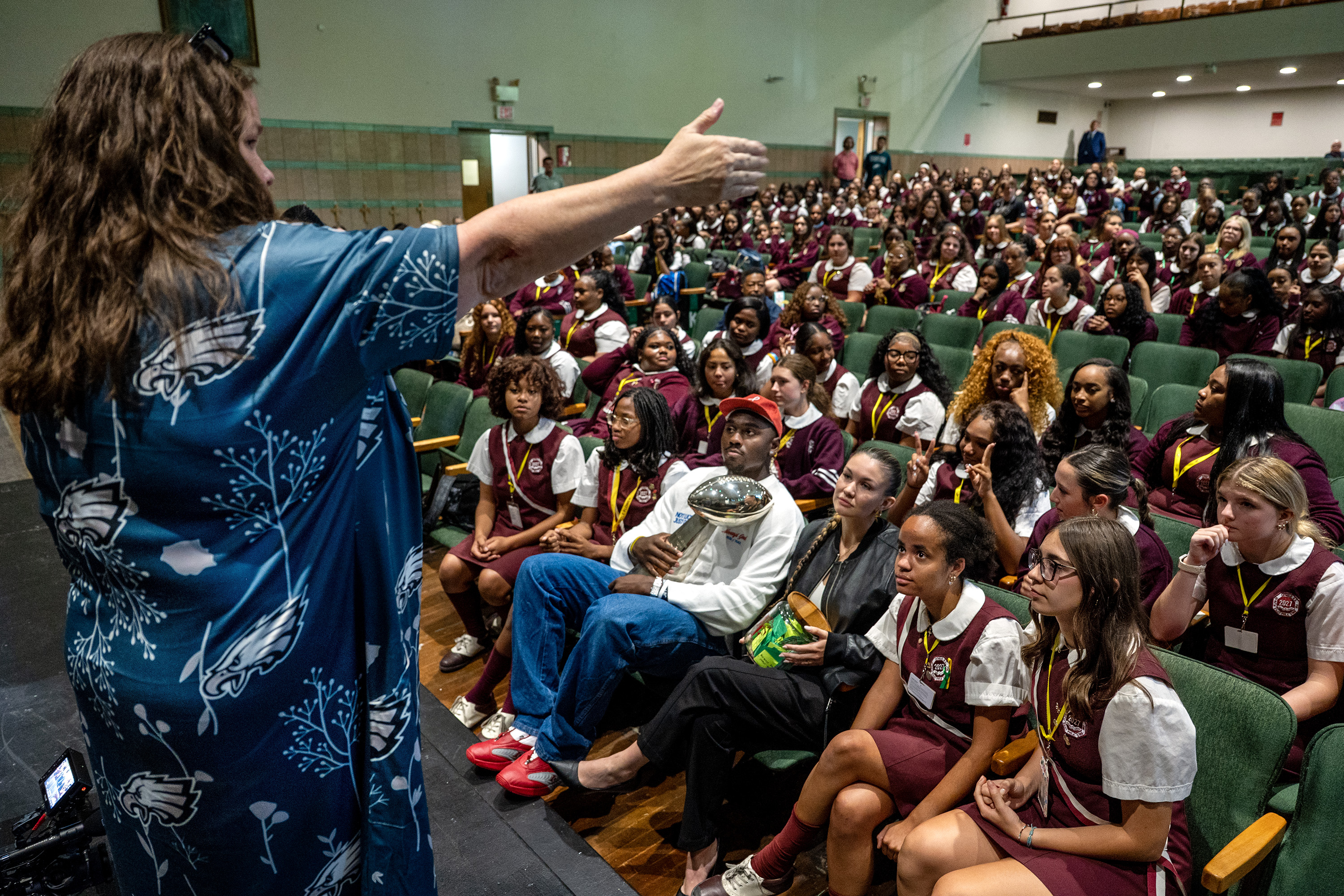
    Eagles linebacker Jalyx Hunt holds the Lombardi Trophy while school president Kristie Dugan addresses Little Flower students on Tuesday. Tom Gralish / Staff Photographer

    Two years later, Hunt hasn’t forgotten about the students. On Tuesday afternoon in the school auditorium, he announced the establishment of three scholarships and an endowment to support the Little Flower students. One of the scholarships will cover two years of tuition, while two others will cover all four. The endowment will help generate interest to fund future scholarships.

    The scholarships and the endowment have extra importance to Hunt. They’re each named after important women in his life — his mother, his sister, his grandmother, Alice, and his marketing manager and longtime friend, Rachel Booth. The initiative aims to honor the women who have made an impact in his life, all while uplifting the next generation.

    “This is longevity,” Hunt said. “I’ve had a lot of talks with [Little Flower president Kristie] Dugan, and I just know that this is something that helps out a lot. A lot of people at this school require and need some sort of help to pay tuition, and if I can do that, I would love to do that.”

    Getting involved with the Little Flower community has had a grounding effect on Hunt, which he said has been particularly important as he develops his sense of self as a player and as a person in Year 3 of his NFL career.

    “Outside of football, I know that I need to do things that remind me of myself,” Hunt said. “And one thing is giving back.”

    Jalyx Hunt (seated in front row) has become an active member of the Little Flower community.Olivia Reiner

    ‘It makes our community feel seen’

    Laniah Brooks, a 16-year-old junior at Little Flower, expected to have a typical school day Tuesday. She expected to attend her eight classes and go home in the afternoon.

    But her sense of normalcy shifted when she was called into Dugan’s office during eighth period.

    Dugan had told her father, Rodney, that Laniah was in consideration to receive a scholarship. They were to participate in an interview conducted by Little Flower staff. While Laniah and Rodney were sitting in an office, Hunt entered the room and surprised the Brooks family with the news that Laniah wasn’t in the running for the scholarship — she had already earned it.

    “It just blew us away,” Rodney said. “It is one of the best days of my life.”

    As a single father, Rodney said that without financial aid, affording tuition would be a hardship on him. The scholarship, which is named after Jaaqua, will cover the cost of Laniah’s junior and senior years at Little Flower.

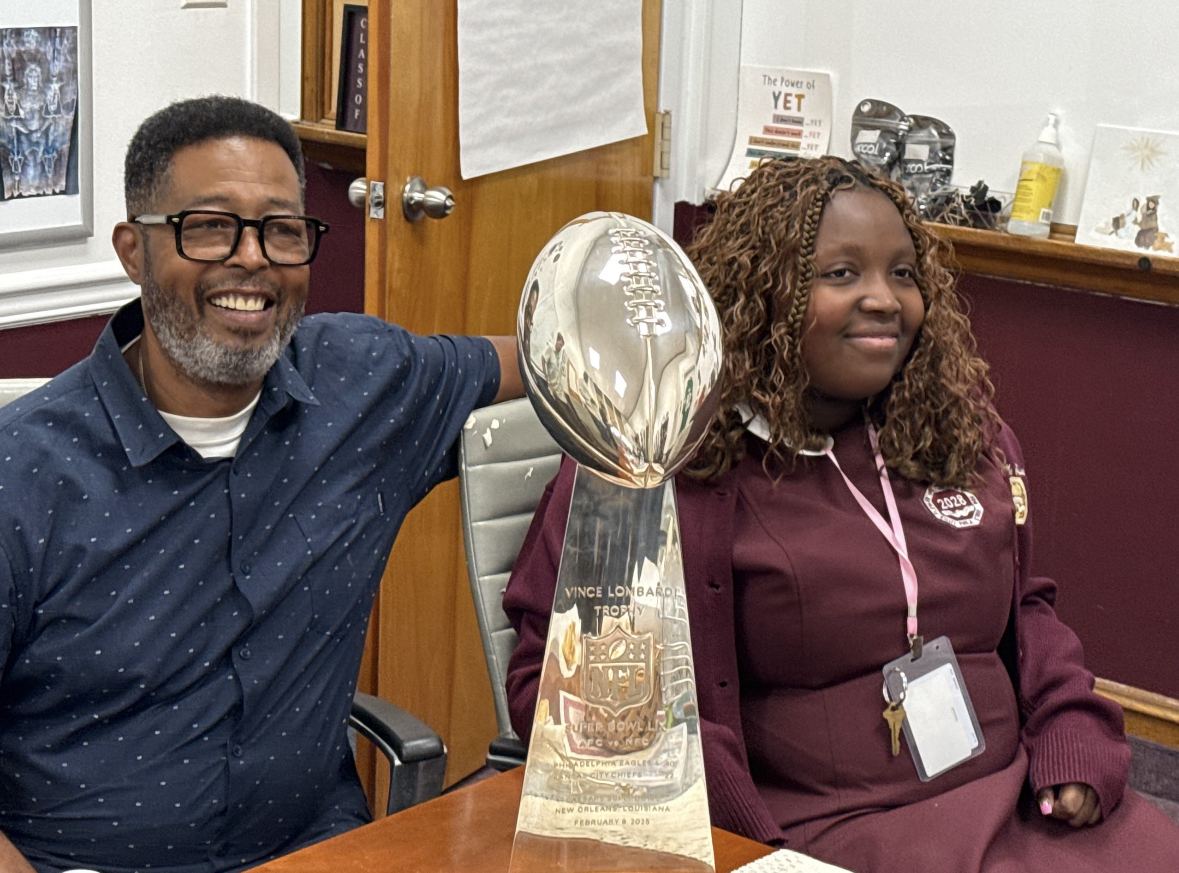
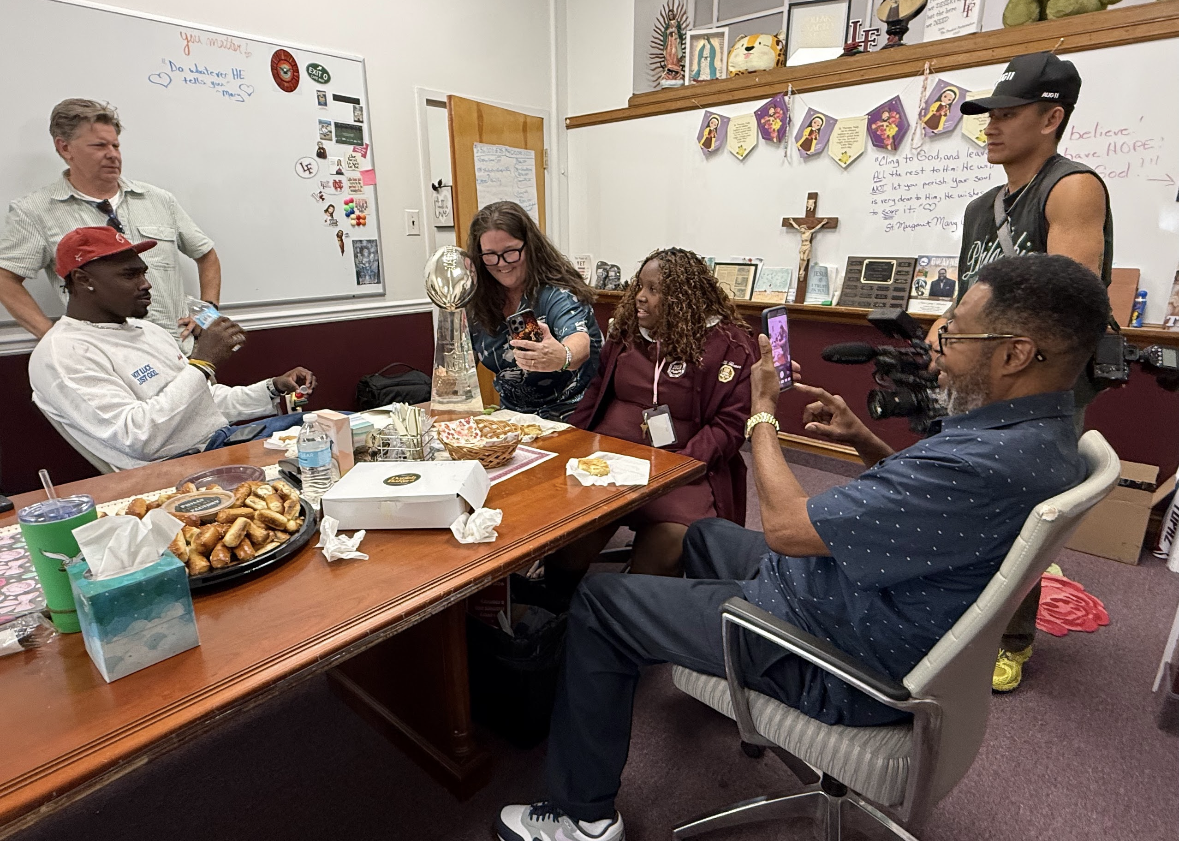
    Laniah Brooks (right) and father, Rodney, who got to spend time with Jalyx Hunt and the Lombardi Trophy on Tuesday, are grateful for Hunt’s philanthropy and inspiration.Olivia Reiner

    For Laniah, the scholarship served as validation for her hard work in school. The fact that it came from Hunt — and that she got to spend time with him, discussing their shared love for anime — reminded her that her support system is bigger than she ever realized.

    “In order to thrive, no matter who you are, even if you’re like peak smartness, everybody needs somebody there, because if not, you could just burn out or give up,” Laniah said. “I feel like no matter who you are, you need that support system, because if you fall, they’re going to be there for you.”

    Hunt’s support of Little Flower began with the fundraiser in December 2024. Not only did Hunt donate a portion of the GoFundMe money to Little Flower’s basketball team, but he also visited the students and their parents in their gym. He shared advice about the importance of developing a sense of discipline as an athlete, at the request of head coach Jesse Morgan.

    Hunt’s parents, Jaaqua and James, instilled the spirit of giving within him. Growing up, they would help out children in need, whether they were giving them a place to live in their own home or paying for their registration and equipment in youth sports.

    Jalyx Hunt (left) has helped Little Flower president Kristie Dugan (third from left) and students like Laniah Brooks (next to Dugan) accomplish their shared goals.Olivia Reiner

    Jalyx continued to follow their example, and not just financially. That winter, Hunt returned to Little Flower to watch a basketball game. Dugan recalled greeting him and former Eagles defensive end KJ Henry at the door to the gym. She offered them seats behind the team’s bench, where they could have more privacy.

    Hunt declined and said he wanted to sit with the fans.

    “I said, ‘OK, but I just need you to know, people know who you are, so people are going to talk to you,’” Dugan recalled. “‘People are going to approach you.’ And he said, ‘That’s OK.’ He said, ‘I’m here as a fan. I’m not here as a football player. I’m here as a fan of Little Flower, and I’m here to support these girls.’”

    The girls have done the same for Hunt. After the Eagles won the Super Bowl that year, he returned to Little Flower for a pep rally they planned for him. They gave him a bouquet of roses, which are symbols associated with St. Thérèse, the namesake of Little Flower.

    “I love coming back just because of the people that are here, and I don’t know what it is specifically that they do in the building to make the girls so authentic, so hardworking, but you can definitely see that in how they interact with you, how excited the girls are whenever you talk to them about their future, what they’re doing at the school, that they like the school,” Hunt said.

    He wears his Little Flower sweatshirt with pride as he boards the Eagles bus to road games. He helped bring Kylie Kelce to the school to speak to students as part of their women in leadership series in April. He gave the school a shoutout during the first recording of his radio show on 94.1 WIP on Monday night.

    “Beyond the donation coming to Little Flower, Jalyx investing in our school and in our girls, it makes our community feel seen and valued,” Dugan said.

    Jalyx Hunt had a breakout season in 2025 and is looking to keep ascending on the field this season. David Maialetti / Staff Photographer

    ‘I want to impact the world’

    Hunt’s star has risen since he was a rookie standing in the Little Flower gym two years ago. Last season, he led the Eagles with 6½ sacks. Vic Fangio said at the outset of training camp that he’s looking for a big year from the 25-year-old outside linebacker.

    Fangio said he believes Hunt is capable of it. His parents have been steadfast in their belief, too, as they watched their son go from Cornell safety to promising Eagles pass rusher in a span of six years.

    “We’ve always told him that he would be in a place of greatness, and that with great placement and talent and skill comes a lot of responsibility,” Jaaqua said.

    Hunt has learned that those responsibilities exist both on and off the field, and in some ways, they are intertwined. Going into his third year with the Eagles, he said he has a better understanding of how to set himself up for success on the field. He has heeded Nick Sirianni’s advice of falling in love with the process, not necessarily the result. Hunt has perfected his routine throughout the week and has identified the details he must hone in on in practice and during film study to prepare himself for game day.

    Becoming a more intentional player on the field has allowed him to become a more intentional person off it, he said.

    When he entered the NFL, Hunt acknowledged that the celebrity associated with his job was something he fought. But he came to realize that his humility was getting in the way of the reality that he had become a public figure.

    Eagles linebacker Jalyx Hunt is given a “Blessings Jar” as he appears at an assembly at Little Flower Catholic High School on Tuesday. Tom Gralish / Staff Photographer

    Hunt expressed an understanding that he has a responsibility to use his platform for good. He wants to do it in a way that is true to himself, and his increasing support of Little Flower is part of that effort.

    “I could just be one of those people who’s in the house all the time, which is no problem,” Hunt said. “If that’s what you want to do, that’s what you want to do. But it’s not what I want to do. I want to get out. I want to meet people. I want to impact the world. I want to impact those around me, who pour into me.”

    Hunt is trying to heed his mother’s advice of blossoming where he is planted. Jaaqua is already seeing the fruits of his efforts.

    “He’s matured and has grown significantly just in his time there,” Jaaqua said. “And a lot of times when you experience that type of growth in an area, you kind of get rooted because that’s where the growth took place.

    “So he’s blossoming, as a player for sure. But more importantly to me as a person, as a man.”

  • A judge wouldn’t let Trump put his name on the Kennedy Center. So he closed it.

    A judge wouldn’t let Trump put his name on the Kennedy Center. So he closed it.

    A federal judge wouldn’t let the man-baby in the Oval Office put his name on the Kennedy Center for the Performing Arts. So President Donald Trump shut it down.

    Trump claimed on Truth Social that it was closed “for safety reasons.” He also said renovations won’t happen unless his name can be on the front of the building.

    So there.

    Closing the Kennedy Center is narcissistic even for someone like Trump. His huge ego now stands between Americans and our right to enjoy one of the most beautiful landmarks in Washington, D.C.

    Yes, I’m mad.

    I grew up in the nation’s capital. D.C. residents are in and out of the Kennedy Center like Philadelphians are in and out of the Kimmel Center. During college, I worked as a tour guide, and I never passed by the building without marveling at its beauty.

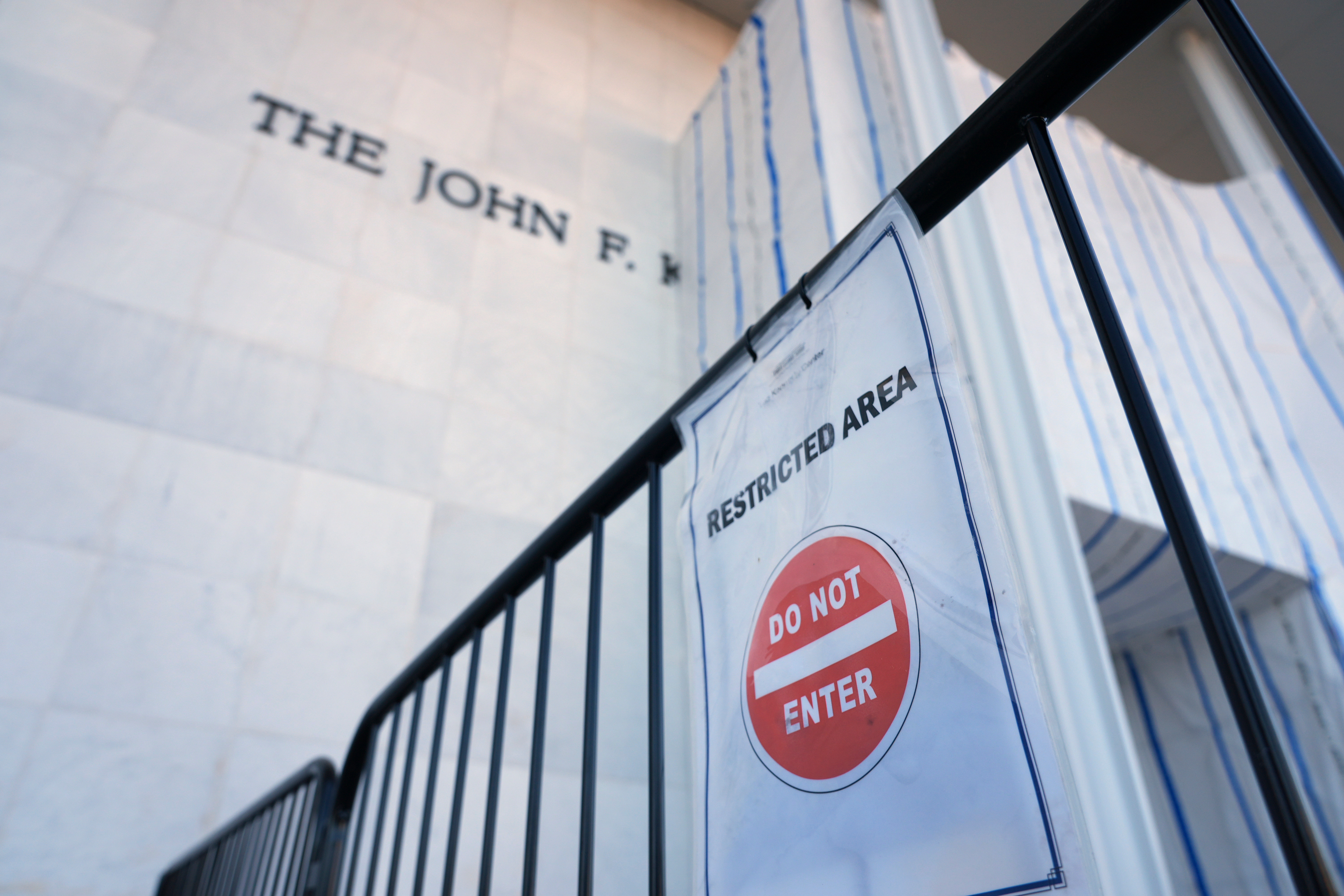
    A sign is placed on a gate outside the John F. Kennedy Center for the Performing Arts in Washington, Tuesday.Jacquelyn Martin

    I’m grateful that I got to spend time inside twice in recent months. The first time was in June after I took a train to Washington to see for myself what was going on with the Reflecting Pool and Trump’s renovation fiasco there.

    Afterward, I headed to the Kennedy Center to see if Trump’s name had been removed as a court had ordered. It was hard to tell for certain because a giant white tarp had been placed in front of the building.

    I gazed up at that for a bit before deciding to venture inside. Many performers canceled their shows following Trump’s hostile takeover of the venue’s board of directors, purportedly because the center’s programming was too “woke.”

    A uniformed guard directed us to a massive sunlight-filled dining room with glorious views of the skyline. Our jaws dropped. We practically had it to ourselves. We were the only visitors. A cafeteria worker piled an extra-large helping of teriyaki salmon and rice on my plate, while my sister placed an order for a smash burger. We carried our trays to a table near one of the gigantic windows so we could enjoy the view. The food tasted as good as homemade.

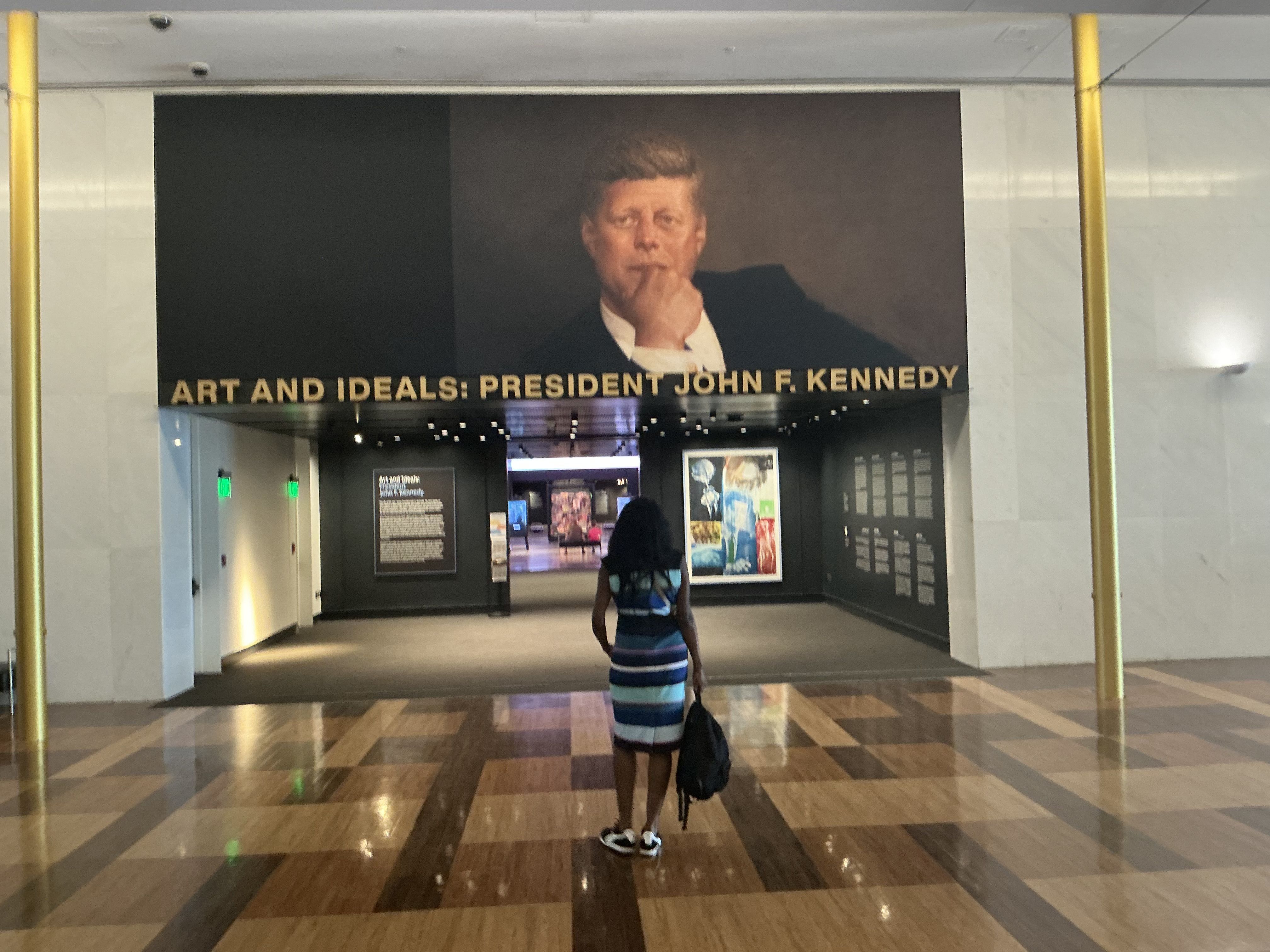
    Inquirer columnist Jenice Armstrong pauses outside an interactive exhibit about the life of President John F. Kennedy inside the Kennedy Center for the Performing Arts in Washington, D.C., in June.Jenice Armstrong

    Afterward, we decided to explore the interactive exhibit dedicated to the art and ideals of President John F. Kennedy. We took our time wandering around. Perhaps we sensed that with all the orange spray-tanned storm clouds hovering over the institution, this might be a moment to savor — and that a major change was imminent.

    Reading about the Kennedy era made me nostalgic. My late parents had been huge fans because of Kennedy’s work advancing the cause of civil rights. My mother admired the grace and style of first lady Jacqueline Kennedy so much that she considered naming me after her.

    Kennedy personified youthful optimism. He inspired Americans to be civic-minded and urged people to “Ask not what your country can do for you — ask what you can do for your country.” Kennedy founded the Peace Corps and created the U.S. Agency for International Development, which the Trump administration decimated last year.

    The two presidents couldn’t be more different. Kennedy, a Democrat, was a decorated hero of World War II; Trump never served, reportedly getting five draft deferments, including one by claiming he had bone spurs.

    Trump intentionally stokes racial divisions. He launched his presidential campaign in 2015 by calling Mexicans rapists and drug dealers. Kennedy sent federal troops and U.S. marshals to the Jim Crow South to protect Black civil rights demonstrators.

    I went back to the Kennedy Center about a week later, after returning to the National Mall to write about Trump’s Great American State Fair — which wasn’t so great. This time around, we arrived too late to eat, so we grabbed a few bags of chips and sat in a lobby for a bit.

    Again, I took my time at the exhibit about the life and legacies of the Camelot era. I noted how the first lady back then transformed the White House Rose Garden into an oasis.

    There are no oases allowed in the Trump era, however. He tore up the roses, poured cement over the garden, and rendered it lifeless.

    Sounds a lot like what he’s doing to the Kennedy Center.

  • Osprey chicks are starving at the Jersey Shore, study says

    Osprey chicks are starving at the Jersey Shore, study says

    An icon of Jersey Shore waterways is in peril, according to a Stockton University study.

    The osprey, a raptor that feeds primarily on fish, was reclassified from “threatened” to “stable” by New Jersey’s Department of Environmental Protection’s Fish and Wildlife agency, but a recent study by Atlantic County University, whose mascot is the osprey, found staggering declines along the Mullica River and Great Bay.

    Biology students and instructors at the school monitored 27 osprey nests along the Mullica River and Great Bay this year and discovered that chicks were surviving at a dismal rate. During the first survey, in May, the team counted 54 eggs and three chicks. During the final survey, last month, there were nine fledged chicks, an 85% loss.

    Melanie Schroer, a biology instructor at the school, said the study’s results were alarming.

    “The broader context here is that osprey nest productivity is declining. Nesting success has taken a huge hit, not only in my little part of the world, but also New Jersey and much of the East Coast, and so, of course, everyone wants to figure out what’s going on,” Schroer said in a statement. “This population has been recovering for 50 years, and it’s been doing great, and then just the last handful of years, not so much anymore.”

    Last year, the Conserve Wildlife Foundation of New Jersey found that osprey nest productivity had its steepest decline in decades, with 57% of active nests failing to produce any young.

    Both studies mentioned fluctuations in food sources, particularly the Atlantic menhaden, also known as “bunker,” as a potential issue for the empty nests. Shroer, of Stockton, said researchers noticed that adult ospreys were bringing more flounder to their nests as opposed to menhaden, their typical food source. Menhaden, Schroer said, pack more calories.

    “So they’re putting in more work and bringing back fewer calories, fewer resources for their young,” she said.

    Menhaden are considered a “keystone species,” vital to a slew of food chains up and down the East Coast, feeding everything from whales, to game fish, to coastal birds like osprey. Commercial fishing harvests vast quantities of menhaden for animal feed and human supplements, particularly in the Chesapeake Bay. Advocates of the Chesapeake are calling for as much as a 50% reduction in menhaden harvests.

    Last year, when New Jersey reclassified ospreys as stable, officials noted how pesticides had decimated populations, with only 50 nests statewide in the 1970s. Those numbers had rebounded to 800 by 2023.

    Schroer said Stockton’s study reveals a questionable future, however, as those adults age out.

    “There are still many adults in the ecosystem, ” she said, “but if the nest productivity declines as it has been in the last couple years, there won’t be enough young birds to replace the older ones and sustain the population.”

  • President Trump’s assault on the midterm election is down but not out | Editorial

    President Trump’s assault on the midterm election is down but not out | Editorial

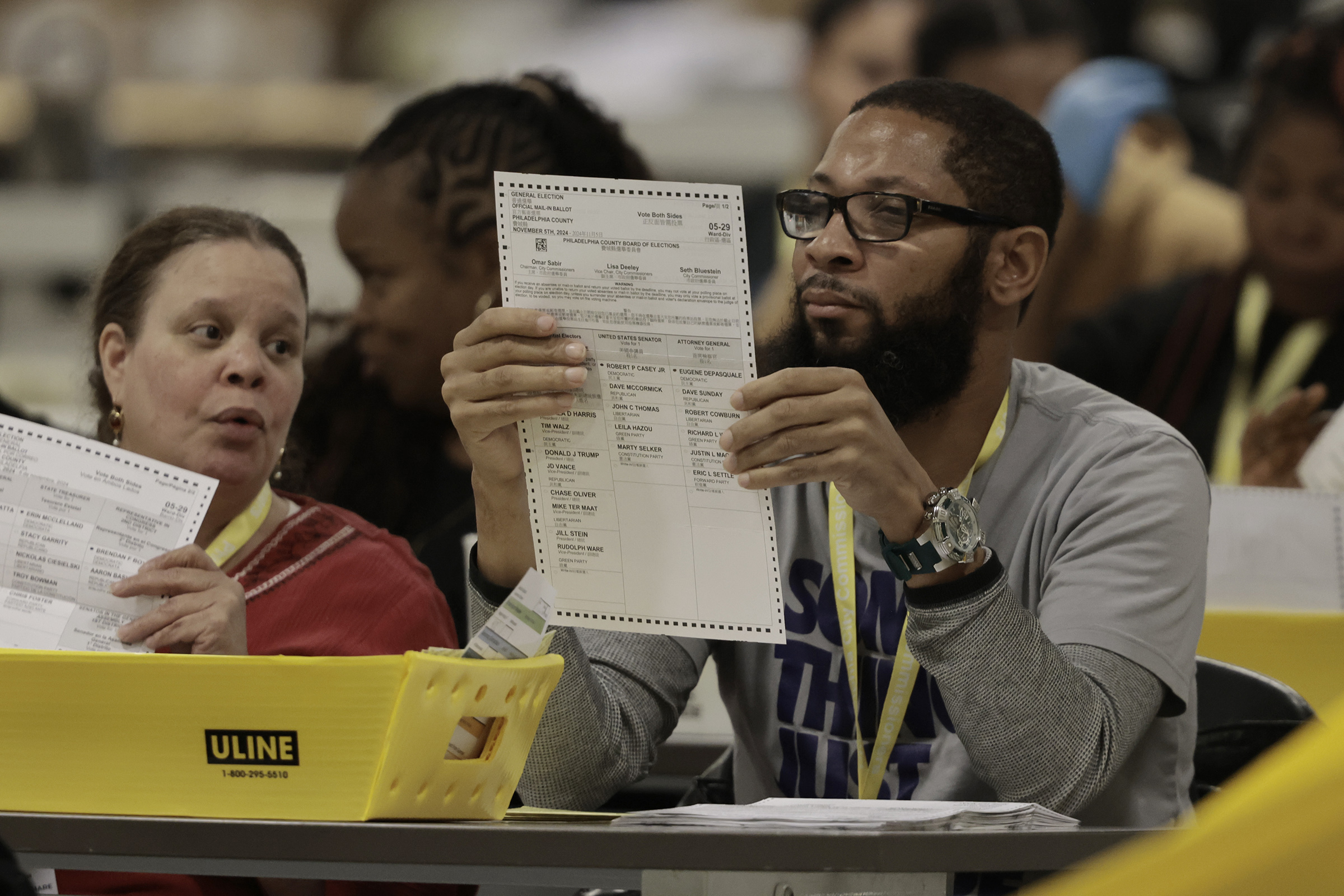
    At a dark moment for American democracy, it qualifies as a relief that the U.S. Supreme Court has finally acknowledged that the U.S. Postal Service has no legitimate role in running elections. The court’s ruling this week put a well-deserved end to Donald Trump’s plot to interfere with the midterms by steering absentee votes to the dead-letter office. That should give voters welcome assurance that ballots mailed early enough to arrive by Election Day will be counted.

    That said, the court’s all too halting response to this constitutional absurdity is an example of the institutional frailty that has enabled Trump’s assault on our laws and elections. The justices’ willingness to seriously consider such an obviously illegal attempt to suppress votes is one reason Trump can be counted on to continue his efforts to meddle with the midterms.

    The president revealed his plan back in March, when he ordered the U.S. Department of Homeland Security to assemble a list of certified citizens permitted to vote by mail. By June, responding to a lawsuit by Gov. Josh Shapiro and 22 other state officials, a federal judge in Boston blocked the order for the purposes of the midterm elections. U.S. District Judge Indira Talwani noted that the Constitution gives the president no authority to administer elections, which fall squarely under the purview of Congress and the states. An appellate court and a district court in Washington reached similar conclusions.

    The Supreme Court’s six Republican-appointed justices nonetheless allowed the Postal Service to continue developing the plan as late as last month, finding that it was too soon to rule on the matter. It wasn’t until Monday that a majority ruled the notion too dubious and the election too imminent to allow it to proceed. Even then, three of the justices — Samuel Alito, Clarence Thomas, and Brett Kavanaugh — held in separate opinions that the president and postal officials could well possess the authority to deliberately lose our votes in the mail.

    By then the court had allowed this supposed legal riddle to linger unanswered for half a year, long enough that a few states had already issued mail ballots and several Republican-controlled states had joined the objectors. Despite the administration’s ultimate loss in court, some election officials fear the months of uncertainty about absentee voting — a centuries-old practice the president himself engaged in as recently as this summer — served Trump’s purposes by undermining confidence in the electoral process.

    Trump is clearly determined to continue doing that by every available means.

    His Justice Department has demanded access to election data, leading to largely losing litigation in more than half the states, including Pennsylvania and New Jersey. Homeland Security Secretary Markwayne Mullin has pushed for federal investigations of voting machines and data based on groundless conspiracy theories. Administration officials have deployed federal agents to trawl the voting rolls for noncitizens and could send more to the polls to intimidate voters. And they have threatened to prosecute state election officials over illegal voting even though no such thing appears to be taking place at any scale.

    These are the paroxysms of an unpopular and unscrupulous regime desperate to dodge the will of voters. The most effective response will be the sort of robust “too big to rig” turnout that overwhelms any petty trickery and begins to limit the president’s power to further undermine democracy.

  • With Jesús Luzardo out, Phillies hitters need to start earning their millions

    With Jesús Luzardo out, Phillies hitters need to start earning their millions

    Bryce Harper, Trea Turner, Kyle Schwarber, J.T. Realmuto, Alec Bohm, and Luis Arraez will make a combined $111.2 million this season.

    Now would be a good time for them to start earning it.

    The Phillies entered Wednesday night’s game in Washington ranked fourth in MLB in payroll but ranked 15th in runs scored, 19th in batting average, and 21st (!) in OPS.

    And this is a lineup that features the major league home run leader, Schwarber, and Arraez, who looks like a lock to win his fourth batting title in five years.

    This is a crisis. They’re a half-game behind the Cubs for first place in the wild-card race and just 3½ games ahead of the Diamondbacks who are the first team out of the three-team wild-card pool. Eleven games remain, the last 10 against the surging Mets, the first-place Brewers, and the first-place Rays.

    Sound the klaxon.

    The bullpen is in shambles. The starters are wearing down. The defense and baserunning — bad as ever.

    Now, on Tuesday, All-Star lefty Jesús Luzardo landed on the injured list with shoulder soreness. He’s done until the day before the season ends, but it’s fair to assume he’s done until next March.

    Cristopher Sánchez, one of the Phillies’ aces, has struggled of late.Jose F. Moreno / Staff Photographer

    It’s easy to focus on the sudden struggles of lefty ace Cristopher Sánchez and bullpen surprise Big Jonathan Bowlan, and to criticize the significant mistake made at the deadline of trading for lefty reliever Brooks Raley, the 38-year-old who spent five years in the Korean league.

    But entering Wednesday the Phillies had lost eight of their last 12 games, and they had scored three runs or less six times.

    Your $111 million at work.

    Phils president Dave Dombrowski constructed this team to hit its way past all of the expected deficiencies: defense, baserunning, speed, and bullpen.

    The last four postseasons, those hitters failed. They didn’t fail to the same degree each playoff run, and they didn’t fail the entirety of each playoff run, and not every single guy failed, but the lineup underproduced to its pay grade, and that was the biggest difference between winning and losing.

    Not pulling Zack Wheeler against Yordan Alvarez; not asking Bryson Stott to bunt Nick Castellanos from second to third base; not Craig Kimbrel imploding, and not Orion Kerkering glitching. It’s been the hitters every October, whether late against the Astros, in the middle of the playoffs against the Diamondbacks, or early against the Mets, then the Dodgers.

    They can do this.

    When they won 15 of 17 games from mid-August to Sept. 1 they scored four or more runs 14 times.

    They were patient.

    They took close strikes.

    They walked like Egyptians.

    Bryce Harper, one of baseball’s best hitters in August, has tailed off in September.Yong Kim / Staff Photographer

    Harper, hitting third, was in the middle of it all, hitting third in the order, so literally; and showing unprecedented discipline, so, figuratively as well. In a run that eclipsed both ends of that 17-game stretch, Harper established a career-high by reaching base in 35 consecutive games. He walked 37 times.

    His on-base percentage is .250 since.

    That’s the issue with this team.

    Schwarber will hit four home runs in five games, a run that ended a week ago, and then he’ll go 2-for-22 with seven strikeouts, as he did in the next five games.

    No one will argue that Turner’s season from hell is the biggest issue in the lineup, and no one will argue that Realmuto’s astonishing decline makes Nike stock look like a good investment.

    We will absolve Stott from this discussion, since he seems to have settled into a consistent offensive profile and since he’s been a defensive savior. We will absolve rookie center fielder Justin Crawford, too, as well as the outfield platoon.

    And this is not a crisis of starting pitching.

    There are reasons the Phillies are paying more than $381 million in salary and cap taxes this year, and one of the main reasons is quality depth.

    They entered the playoffs last year without Zack Wheeler, perhaps the second-best pitcher in franchise history. They lost that best-of-five series to the eventual champion Dodgers in four games, but that had nothing to do with the starting pitching. Sánchez, Luzardo, and an Aaron Nola/Ranger Suárez piggyback start combined to allow six earned runs in 25 innings. That’s a 2.16 ERA.

    Luzardo might return. He’s eligible to come off the IL just before the postseason begins, but who knows?

    And will it matter?

    Zack Wheeler may be the second-best pitcher in Phillies history.Monica Herndon / Staff Photographer

    Luzardo, who signed a five-year, $135 million extension that nullified his free agency after this season, was an All-Star in July. He was 5-0 in his last seven starts, all Phillies wins, with a 1.08 ERA and three scoreless outings, including his first complete game, which was his last outing.

    Wheeler had been just as good as Luzardo, but, as was the case last season, when Wheeler was lost for the stretch run and the playoffs, there was plenty of depth behind him. Such is the case now, between Wheeler, Sánchez, a resurgent Nola, and suddenly competent rookie Andrew Painter.

    All is not lost.

    But the starters have to have help. Luzardo won the last game he pitched, but he had to go nine innings and allow zero runs. Score of that game? 1-0.

    No team is going to have all of its highly paid offensive weapons producing at the same time. But if they hope to reach the playoffs, and if they hope to advance, the best starting pitching in history won’t help them if the bats don’t get hot and stay hot.

    One hundred eleven million dollars worth of hot.

    Starters are fading. The bullpen is trash. The defense and baserunning stink.

    Time to cash in on the bats.

  • A federal judge believes DA Larry Krasner may have broken the law, and he referred the case to the U.S. Attorney’s Office

    A federal judge believes DA Larry Krasner may have broken the law, and he referred the case to the U.S. Attorney’s Office

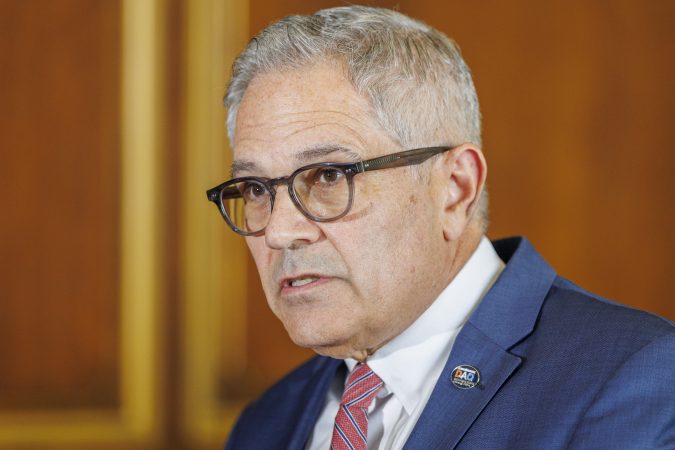
    A federal judge said Tuesday that District Attorney Larry Krasner may have broken the law while overseeing a contentious post-conviction case, and he said he referred the matter to the U.S. Attorney’s Office to investigate whether Krasner should be charged with crimes including conspiracy or obstruction of justice.

    U.S. District Judge Paul S. Diamond made those stunning statements in a memorandum in which he also ruled that Krasner and one of his top supervisors, Matthew Stiegler, could no longer participate in the case — a matter in which a man is seeking to have his murder conviction overturned.

    Diamond wrote that over the last several months, as he conducted hearings to learn more about how attorneys in the district attorney’s office handled that case, testimony from some of Krasner’s staffers revealed actions by Krasner and Stiegler that Diamond called “troubling,” “disturbing” — and potentially illegal.

    Those actions, he wrote, included pressuring other staffers to take steps to protect Stiegler and blame one of his subordinates, urging staffers to lie to Diamond in court, and threatening “consequences” for those who did not follow Krasner’s orders.

    “I have thus reluctantly concluded that Philadelphia’s highest law enforcement official and one of his top assistants may have violated the law,” Diamond wrote. “In these circumstances, with the issuance of this Memorandum, I refer the DAO, Mr. Krasner, and Stiegler to this District’s United States Attorney’s Office for investigation and other appropriate action.”

    In a statement Tuesday, Krasner said, “I respectfully and vigorously disagree” with Diamond’s findings, adding: “I look forward to appealing to the higher court as soon as the law allows.” He said he could not comment further because the case is pending.

    Stiegler did not respond to a request for comment. A spokesperson for the U.S. Attorney’s Office declined to comment. That office would have to determine whether to open an investigation or file charges. Diamond, as a judge, cannot do so himself.

    The filing was the latest explosive development in the case, which is centered on Dennis Johnson’s 2009 conviction for second-degree murder. Johnson has been fighting to have that conviction overturned, and the matter before Diamond began years ago as a routine petition in federal court.

    But in recent months, the case has led to a series of unusual revelations about the inner workings of the district attorney’s office as various lawyers have worked on aspects of the case. And it comes as Krasner’s office has faced increasing scrutiny over the way it has acted in other murder appeals — including a forceful opinion from the Pennsylvania Supreme Court, which said Krasner’s office had misled judges so frequently and flagrantly in such matters that state prosecutors must now review instances when his office says a conviction should be overturned.

    Diamond, in his filing Tuesday, said the assertions in his courtroom — made primarily by members of Krasner’s staff — were not only proof of significant internal disagreements about Johnson’s case, but also “evidence of possible criminal wrongdoing by Mr. Krasner and Stiegler.”

    Contentious internal discussions

    The origins of the controversy began to take shape in 2022.

    That year, after the district attorney’s office had spent years opposing Johnson’s bid for freedom, then-Assistant District Attorney Jaclyn Mason filed a brief changing course.

    In her filing, Mason agreed with Johnson’s lawyers that his trial counsel had been ineffective. She also said the office had discovered additional problems with the case while reviewing it again, and she recommended that Johnson’s conviction be overturned.

    A federal magistrate — relying on Mason’s brief — agreed, but Diamond was the judge with the power to accept or reject the recommendations. And this spring, he scheduled an evidentiary hearing to evaluate some of the evidence before deciding how to proceed.

    That led to a series of contentious developments within the district attorney’s office, prosecutors have since testified.

    First, Mason’s supervisors in the law division reviewed her brief and found a series of what they called “material misstatements.” They decided they needed to try to withdraw Mason’s filing and apologize to Diamond for the mistakes.

    They asked Mason to sign on to the filing with them, but she declined and resigned instead. She has since said she filed her brief only because Stiegler pressured her to do so, and she thought her supervisors, in preparing an apology, were angling to make her a scapegoat on Stiegler’s behalf.

    During testimony before Diamond in recent months, her supervisors said that was not true. But the supervisors — Katherine Ernst, Steven Wildberger, David Napiorski, and Peter Andrews — said Stiegler and, eventually, Krasner did try to persuade them to direct blame toward Mason.

    Potential crimes?

    In the supervisors’ telling, Stiegler asked them to review every case Mason had handled to find other errors in her work. That way, Stiegler suggested, Mason could be painted before Diamond as a “rogue” prosecutor who was routinely making mistakes in problematic filings.

    Krasner echoed that potential course of action, and even described it as a “good idea,” the supervisors testified.

    Diamond said those actions were “troubling.” He wrote that Krasner “did not simply learn of the Stiegler proposal; he urged the Law Division supervisors — who serve at Mr. Krasner’s pleasure — to implement it and to present a false narrative to the Court.”

    And Stiegler, he said, was “urging the DAO to present the Court with a false account to shield himself.” Diamond said that he found all of Stiegler’s testimony “contradictory, evasive, or outright dishonest” and that Stiegler may have committed perjury while on the stand.

    In addition, Diamond said, as internal discussions continued about how to proceed in the case, Krasner repeatedly rejected requests by the law division supervisors to refer it to the attorney general’s office. The supervisors generally agreed that was the appropriate course because the inner-office drama surrounding the matter was hampering their ability to handle it properly.

    But Krasner, they testified, was vehemently opposed — in part because of his disdain for people who worked in the attorney general’s office. And during some meetings, they said, Krasner said he wanted to “protect the office”; expressed opposition to telling Diamond about the referral deliberations; and said they would face “consequences” if they did so, which they took to mean being fired.

    Diamond, in his memorandum, said such a threat “could amount to obstruction of justice.” And he said the efforts by Krasner and Stiegler to present a false narrative to the court “might amount to conspiracy.”

    It was not immediately clear Tuesday if federal prosecutors would agree with Diamond’s assessment, or if they would seek to empanel a grand jury to evaluate it.

    Johnson’s petition, meanwhile, remains on hold. Diamond said the district attorney’s office could continue to handle the case moving forward, but it was not clear who might do so.

    All of the law division supervisors have already recused themselves, and Diamond said Tuesday that neither Krasner nor Stiegler could have any role in the matter. He also said he also would not allow an outside attorney selected by Krasner to handle the matter on his behalf.

  • JD Vance is right about one thing: Caring for children has value. His plan gets the rest wrong.

    JD Vance is right about one thing: Caring for children has value. His plan gets the rest wrong.

    This week, the Trump administration floated an idea that has managed to irritate almost everyone: Allow some parents who stay home with their children to receive federal childcare subsidies.

    The proposal, championed by Vice President JD Vance, would allow some low-income married couples to use money from the federal Child Care and Development Fund to support a parent caring for a child at home. The fund currently helps families pay for childcare so parents can work, study, or get job training.

    Vance is right about the premise. Caring for your own child is work; our economy depends on enormous amounts of it, and public policy does remarkably little to recognize its value.

    But the administration’s proposed solution would draw from a childcare fund already nowhere close to meeting demand. The federal government’s latest estimate found that only about one in six eligible children receive subsidies, and eligible families across the country are already sitting on waiting lists.

    The proposal has become yet another argument about whether or not mothers should work. Conservatives praise it as overdue support for stay-at-home parents; critics see it as another attempt to push women out of the labor force. Both framings make family life sound much tidier than it is.

    I have spent my career working with childcare providers and parents, and the arrangements they cobble together rarely fit clean categories. A mother may stay home with an infant, return to work later, rely on a grandmother some days and use a childcare center on others. A parent who considers herself “stay-at-home” may still want childcare for part of the week. No single work or care arrangement comes close to satisfying everyone, and preferences shift as children grow.

    Using the same federal pot for both obscures an important difference.

    Money paid directly to a parent may make staying home possible when it otherwise would not be. A childcare subsidy, however, does more than help one family purchase care. It also helps sustain the supply of care itself: the teacher’s salary, the home-based provider’s income, the classroom that needs enough children enrolled to remain open.

    If these dollars move elsewhere, the effect does not stop with the family receiving them. A provider may need to close its doors, leaving fewer options for everyone else.

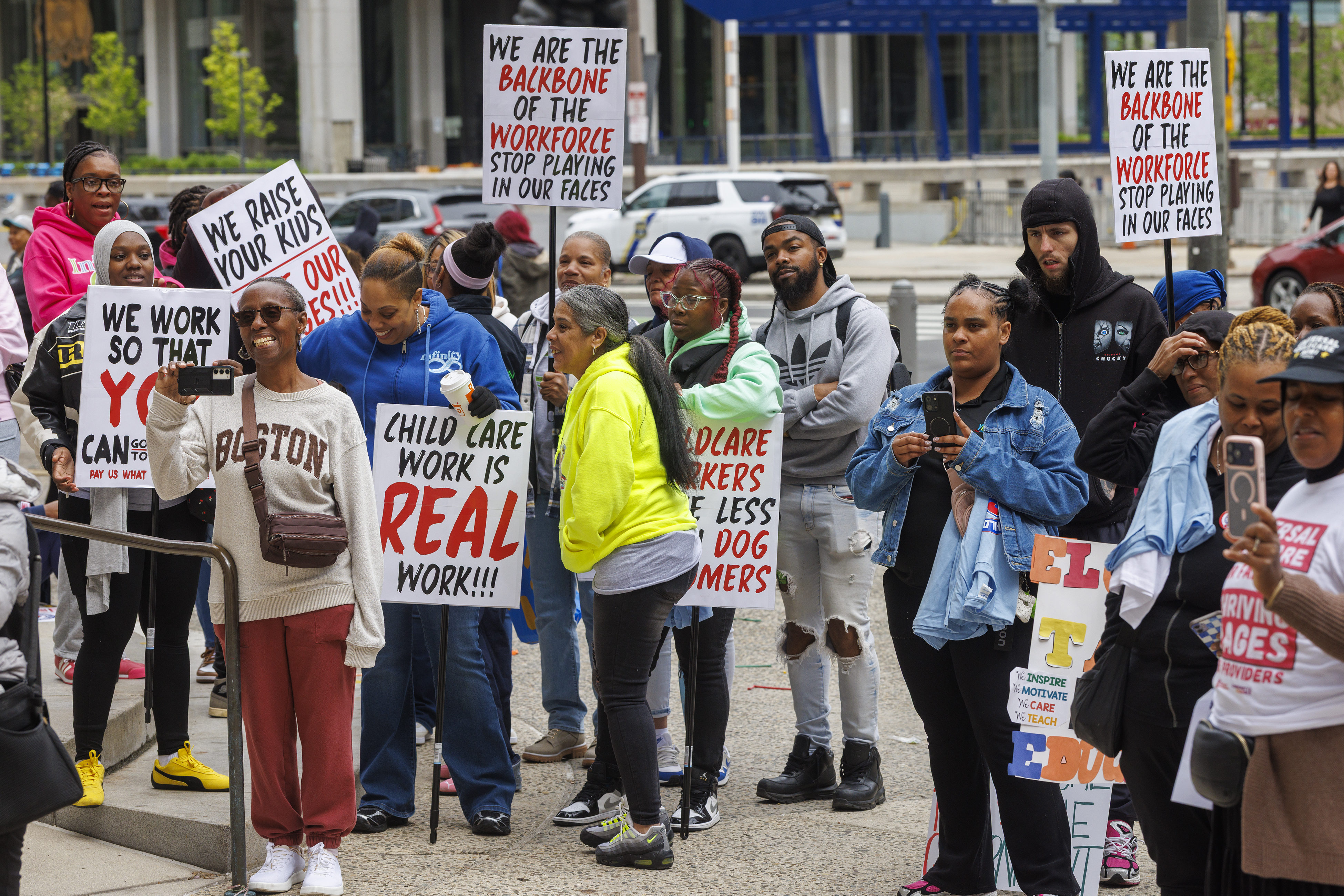
    Childcare educators gather on the north side of Philadelphia City Hall in May. About 98% of center-based early childhood teaching staff are female, writes Sabrina Habib.Alejandro A. Alvarez / Staff Photographer

    The debate usually stops with two mothers: the one who wants to stay at home and the one who needs childcare in order to work. It overlooks a third woman whose livelihood depends on those same dollars: the childcare worker.

    About 98% of center-based early childhood teaching staff are female, earning a median of less than $17 an hour. For self-employed childcare workers — including those running care from their own homes — the latest estimate is even lower, at $9 an hour, or about $18,500 a year, barely above the U.S. federal poverty level. Many of these childcare providers are mothers themselves.

    Seen this way, the proposal exposes a much bigger problem than a fight over who should receive a childcare subsidy. A woman caring for her own child often cannot afford to stay home, while a woman caring for someone else’s child often cannot afford to live on what she earns. Now we are considering asking those women to compete for the same scarce public dollars. Taking money from one underfunded form of care and giving it to another is a peculiar way to show that America values caregiving.

    There are better ways to give parents more room to stay home when that is what they want, such as through paid family leave or a more generous child tax credit. If Washington wants to recognize the economic value of parental care, it should fund that goal directly rather than weakening the childcare system other parents need in order to work.

    While the proposal may have been intended to signal that the administration values caregiving, instead it reveals how little public money America is willing to put behind care in any form.

    Parents at home are undersupported. Childcare workers are underpaid. Families who need care and qualify are stuck on waiting lists. And rather than fixing any of those shortages, the administration is proposing to make them compete against one another.

    America can do better than deciding which woman’s care counts.

    Sabrina Habib is the cofounder of Kidogo, Kenya’s largest childcare network, and leads the Zera Fund, spurring new investments into childcare globally as part of Melinda French Gates’ Global Leaders Initiative. She is also a Public Voices fellow tackling poverty, a partnership between the Op-Ed Project and Acumen.

  • Two teens were injured in a possible drive-by shooting in North Philly

    Two teens were injured in a possible drive-by shooting in North Philly

    Two teenagers were wounded Tuesday night in North Philadelphia in what may have been a drive-by shooting, police said.

    The 18-year-old and 17-year-old, both male, were found on the 1800 block of North Woodstock Street about 10:30 p.m., when police responded to a report of a shooting in the area.

    Chief Inspector Scott Small told reporters one of the victims told officers he believed the incident was a drive-by shooting. Police recovered at least 17 spent shell casings.

    The 18-year-old suffered a gunshot wound to the right side of his abdomen, and the 17-year-old was grazed above his right hip. Both were transported by police to Temple University Hospital and were placed in stable condition.

    Police said they did not have a motive for the shooting or a description of any suspects, and detectives are requesting anyone with information to call the department’s anonymous tip line at 215-686-TIPS (8477).

    Earlier this year, according to Philadelphia City Controller’s Office data, another nonfatal shooting occurred on the 1800 block of North Woodstock Street involving an 18-year-old male.

    There have been 124 homicides in Philadelphia this year, a 20% decrease from 2025 for the year to date.

    While Philadelphians navigated one of the city’s deadliest years just three years ago, the homicide rate has dropped to a level not experienced since the 1960s.