Tag: topic-link-auto

  • Letters to the Editor | Nov. 4, 2026

    Letters to the Editor | Nov. 4, 2026

    Schools under scrutiny

    The Inquirer recently reported on the Philadelphia School District’s effort to fire its social studies curriculum director — Ismael Jimenez — as the result of a report produced by the House Committee on Education and Workforce entitled “Antisemitism in K-12 Schools.”

    While the district should be proactive in combating all forms of prejudice — including antisemitism — it is doubtful whether this report will accomplish those objectives.

    For example, the report argues that students learning about “environmental justice,” climate activism, and “the impact of bias, injustice, and privilege on a global scale” is unacceptable. The committee also found fault with the district’s recommendation of “a book introducing children to pronouns including ‘ey/em’ and ‘ze/zir.’”

    It is understandable why the committee’s Republican majority included this material, whose agenda has nothing to do with antisemitism. What is less comprehensible is why the district would acquiesce to this subcommittee’s demands.

    Coleman Poses, Philadelphia

    . . .

    Ismael Jimenez, the social studies curriculum director of the Philadelphia School District, is being considered for termination. He claims he had no issues with the district until the district’s Jewish Family Association called him out. But the real issue is — why didn’t the Board of Education call him out first?

    Public school employees are entitled to freedom of speech outside of classrooms. But inside school classrooms, publicly funded teachers have a responsibility to teach both sides of issues equitably, so students, using critical thinking, can make up their own minds.

    This was not happening in the Philadelphia School District, the ninth-largest public school district in the country, thanks to Jimenez and his one-sided social studies curriculum. Jimenez and the teachers who followed his curriculum were promoting only anti-Israel views, while omitting the entire Israeli side of the conflict. This is called indoctrination, not education, and millions of Philadelphia taxpayers were footing the bill.

    Teachers’ public media posts are an extension of their classrooms, as students have access to these posts and can read and comment on them. The district has clear policies for teachers’ use of social media, but Jimenez and his like-minded teachers repeatedly violated district policy by posting their extreme anti-Israel views, with no counternarrative.

    Jimenez’ single-sided curriculum and inflammatory social media posts were a leading factor in a pair of federal investigations into antisemitism in the district.

    The Board of Education should not only terminate Jimenez — it should also apologize to the tax-paying public for allowing Jimenez’s indoctrination-based curriculum to pass for education and for allowing our public schools to become a national disgrace.

    Katherine Kaplan, Mount Laurel

    . . .

    AJ Ernst makes an excellent point in his essay about the need to teach Pennsylvania students how to civically engage. The Academy at Palumbo project Ernst referenced was from my class, which used a teacher-designed curriculum from the Philadelphia School District and support from PhillyBOLT, a community organization.

    The school district’s civics curriculum includes government advocacy lessons designed by teachers in partnership with local organizations. These lessons, as Superintendent Tony B. Watlington Sr. rightfully says, are “to teach children how to think and not what to think” by posing real issues in their communities, developing skills of academic research considering multiple perspectives, and engaging directly with the leaders who make policy — critical life skills for Philly students to become civic actors.

    However, with the district’s curriculum under politically motivated attack from Washington, the superintendent now says the district is “standardizing its social studies curriculum and will no longer allow staff to write district social studies curricula.”

    The district needs to stand up to political bullying, defend its teachers, and stand by its locally created and relevant curriculum. The Pennsylvania General Assembly should also go beyond a civics test and legislate an inquiry-based civic skills project for high school seniors.

    Charlie McGeehan, teacher, Philadelphia School District

    Time’s up

    Last week’s online public meeting focusing on developer KBK Enterprises’ latest attempt to assemble a plan to renovate and repurpose the historic Germantown YWCA building fell far short of instilling confidence among the participants. But this is nothing new — it marks the continuation of more than a decade of raised expectations and dashed hopes.

    While KBK’s CEO and president, Keith B. Key, was present at the virtual meeting, offered a project overview, and invited questions, he failed to provide substantive answers to critical queries. Repeatedly, via the chat, he was asked for details on the funding mix — the capital stack, as he called it. Most notably, several people inquired about the terms and amounts of the city’s contribution of loans and grants, but to no avail.

    Back in 2024, when KBK first applied for Low-Income Housing Tax Credits from the Pennsylvania Housing Finance Agency (PHFA), its application was rejected. Quoting from the agency’s standard protocols, PHFA wrote that “In accordance with our published 2024 Qualified Allocation Plan, a development must receive AT LEAST 120 points to even be considered for a potential reservation of Low Income Housing Tax Credits.” That KBK submission scored a mere 87 points out of a possible 218, far below the minimum threshold. Once again KBK is seeking tax credits from PHFA, but Key could not explain why this time around, “Things look good,” as he asserted.

    In fact, things did not look so good to the 50-plus concerned participants who sat through the 90-minute online meeting. And when asked by one person if the funding commitment letters could be posted, the host responded with, “Perhaps at a more appropriate time.” The time is now, for such letters and much more.

    Sydelle Zove, Conshohocken

    Dictator envy

    I had a good laugh when I read the historical essay headlined, “Trump could learn from Grover Cleveland about the ‘sixth-year curse.’” Yeah, and my cat “could learn” to play piano. The author mistakenly assumes Donald Trump might actually care about his “governing effectiveness” or persuading Congress to pass legislation that helps ordinary Americans. Trump is only interested in two things: grabbing shady opportunities to enrich himself, and littering Washington, D.C., with garish tributes to himself. For learning about that, Trump looks to foreign dictators like Vladimir Putin, not previous U.S. presidents.

    Matt Zencey, West Chester, mzencey@hotmail.com

    The writer is a former editor at The Inquirer.

    Voter vigilance

    Whenever someone complains about election fraud, I always wonder how much they know about it. Over 15 years, I volunteered at polling places in two different states and saw attempts to vote fraudulently. In each case, I filed challenges and the election board handled them properly, preventing fraudulent votes and removing fraudsters from future voting rolls. After the word got out, attempts to vote fraudulently subsided.

    It is easy (and correct) to say voting fraud is bad, but instead of blaming one party or complaining that the “system” is corrupt, do what I did: Get to know your voting precinct, learn what the law requires, and volunteer to watch the polls on Election Day.

    James Jones, Newark, Del.

  • Horoscopes: Wednesday, Nov. 4, 2026

    Horoscopes: Wednesday, Nov. 4, 2026

    ARIES (March 21-April 19). Someone’s behavior has you baffled. Don’t worry about why they are like this, just figure out what works. Once you figure out what they respond well to, you have something better than a theory. You have a working method.

    TAURUS (April 20-May 20). What you’re working on feels useless because you haven’t landed on exactly what this project is yet. Accept that you don’t know and keep producing. Once you have enough material in front of you, a form will start to emerge.

    GEMINI (May 21-June 21). You’ll get clearer about your stance on issues by talking things out. Pick someone who can debate with cool intellectual curiosity instead of passion, which could make the argument messy.

    CANCER (June 22-July 22). Children want to be grown-up and grown-ups want to be children. Today, they both get their way to some degree. You take young people seriously, give older people an excuse to play, and you bridge a generational divide.

    LEO (July 23-Aug. 22). You’re good at “working what works,” but what about when it stops working? Today, that will be a blessing. Something interrupts your routine and sends you tinkering. By the time you’re finished, you’ll have a new method.

    VIRGO (Aug. 23-Sept. 22). You’re putting together an argument and it’s not quite clicking. You’ll discover that one of your facts is wrong. Well! That changes the whole story. Your case comes together perfectly when every piece of it is true.

    LIBRA (Sept. 23-Oct. 23). They owe you one. You know it, and they know it, too. You could keep score, but today offers something much more interesting to do. Put your energy into your own plans and trust that things will balance out later.

    SCORPIO (Oct. 24-Nov. 21). You’re always you, but today you feel somehow more you because there’s no one requiring you to pretend. Your tastes make sense to you. Your choices fit. You’ll move through the day with the pleasure of good company: your own.

    SAGITTARIUS (Nov. 22-Dec. 21). People are counting on you, which is an excellent reason to avoid running yourself into the ground. Pace yourself. You’ll get the important work done and still have enough energy left to enjoy your personal time.

    CAPRICORN (Dec. 22-Jan. 19). Funny how you can keep coming back to the same argument without knowing what the issue is really about. Well today changes that. The underlying problem may not be pretty, but at least now you can discuss the right subject.

    AQUARIUS (Jan. 20-Feb. 18). It’s easy to accept a behavior when everyone around you acts like it’s normal. But with a little distance you’ll see a familiar custom with fresh eyes. Suddenly it seems absurd. The fun part is deciding what to do instead.

    PISCES (Feb. 19-March 20). Something has been weighing on you, but its actual size is only part of the story. Your position matters, too. Step away, hand off what you can or change your involvement. The situation may stay the same while becoming much lighter for you.

    TODAY’S BIRTHDAY (Nov. 4). In your Year of the Brainchild, you’re able to devote yourself to a beloved project, with terrific results and the side effect of feeling purposefully immersed. The flow state has benefits to your health and finances, too. More highlights: You’ll host, visit and become part of traditions. Good fortune involving property, finding your ideal audience, team or customers. Taurus and Cancer adore you. Your lucky numbers are: 5, 11, 26, 30 and 42.

  • Dear Abby | Workplace assault leaves lasting scars

    Dear Abby | Workplace assault leaves lasting scars

    DEAR ABBY: I was sexually assaulted at work about 20 years ago. I went through an off-and-on cycle with that supervisor for almost a year. He used many different tactics: isolating me, befriending me, apologizing insincerely, stating that he was a pillar of the community and no one would believe it, and even telling me I hadn’t meant it when I said no. At the same time, my then-husband started drinking and also became abusive toward me.

    I left the job a year later after another incident occurred and the company swept it under the rug. Here I am, more than 20 years later, still dealing with the aftermath of that time period. I moved to another state for 18 years and thought it was all behind me. I moved back to my hometown last year, and I fell apart all over again. The triggers were intense at times. As a result, my current husband and I are moving to another state. I hate that my life and my kids’ lives were destroyed, and once again, I am leaving. I can’t fix anything or change the truth, and I have to live with the fallout every day! I had a good family before it all happened. I stood up to my boss for a long time until I got to the point where I just didn’t care anymore. No one should ever have to go through something like that. I am going to get a special form of PTSD therapy after I move, but I will never be the same. If you have any ideas, please let me know.

    — DAMAGED IN THE EAST

    DEAR DAMAGED: I agree that no one should ever have to go through that. Your story is an important reminder that workplace sexual assault is an ongoing problem. I’m glad you plan to get the help you need. Your therapist is much better equipped to help you at this point than I am.

    Readers, if you are ever sexually assaulted in the workplace, secure as much evidence as you can and go straight to the police. Do not start the process by going to the higher-ups in the company or the human resources department. Every one of those people will prioritize protecting the company over seeking justice for you. Consult a lawyer specializing in sexual abuse who can advise you on when and how to make your report to HR.

    RAINN (rainn.org) — the Rape, Abuse and Incest National Network — operates a national hotline at 1-800-656-4673. Please call them if you ever have any questions about sexual assault of any kind.

    ** ** **

    DEAR ABBY: We have a number of cats in our household, and my son-in-law lives downstairs with his wife. He knows we love cats, and he sends me “funny” pictures of cats via text message two or three times a day. How do I tell him to stop doing this without hurting his feelings?

    — ‘FELINE’ IT’S TOO MUCH

    DEAR ‘FELINE’: Because your son-in-law’s messages interrupt your routine, ask him to please save them and send them en masse once a week at a time when you can enjoy them.

  • Bob Harvie ousts Brian Fitzpatrick in Bucks County, flipping a House seat Republicans have held for over a decade

    Bob Harvie ousts Brian Fitzpatrick in Bucks County, flipping a House seat Republicans have held for over a decade

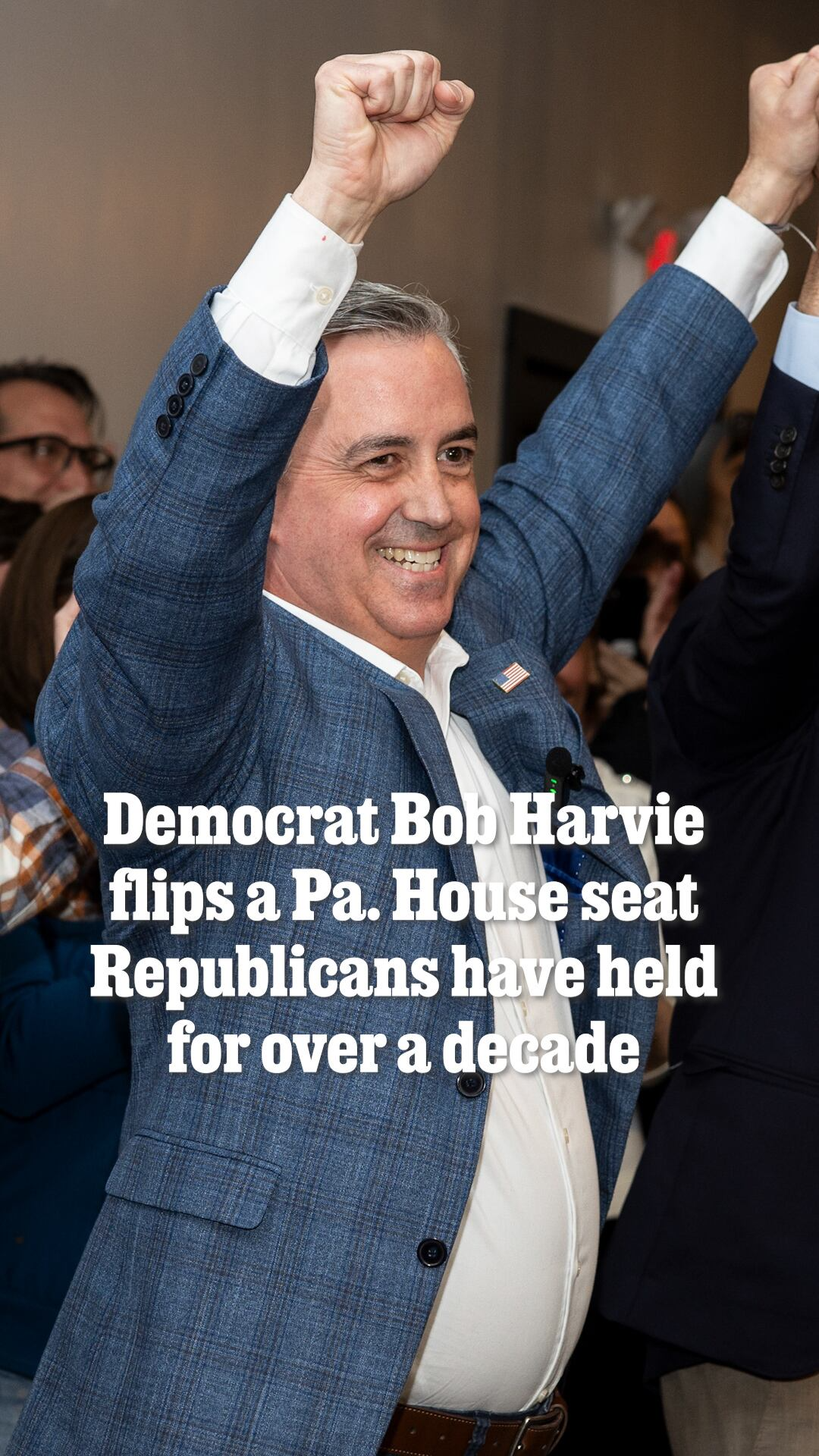
    Democratic County Commissioner Bob Harvie has defeated Republican incumbent U.S. Rep. Brian Fitzpatrick in Bucks County’s 1st Congressional District — a monumental outcome in one of the most closely watched races in the country.

    Harvie’s victory is seismic and marks the first time that a Democrat will represent Bucks County in Congress since 2011. Fitzpatrick is a five-term incumbent who has survived multiple blue waves in the past, touted enormous fundraising numbers and decades worth of family-name recognition, and has historically been able to score support from across the political spectrum.

    Running against one of the toughest incumbents in the country, Harvie, 55, had a lot of ground to cover as he lagged in fundraising and name recognition in comparison. But his momentum came in the homestretch, powered by three visits from popular Gov. Josh Shapiro, increased spending and attention from the national party, and a political climate fostered by President Donald Trump that has shown to be extremely toxic for Republicans on the ballot this year.

    “I was a Republican all my life, but this is the first time I went full Democrat,” said Dolores Hatton, 82, of Levittown, who listed the economy and cost of living among her chief concerns.

    The 1st Congressional District, which includes all of Bucks County and a part of Montgomery County, was one of four congressional races heavily targeted by both parties as they battled for control of the U.S. House.

    In an October Inquirer/New York Times/Siena University poll, Harvie was narrowly leading Fitzpatrick in the margin of error, a practically unthinkable prospect in years past. Democrats have worked to unseat Fitzpatrick for the better part of the past decade, but voters across the political spectrum in Bucks County — one of the swingiest parts of Pennsylvania — routinely decided to keep the Republican around.

    Harvie joined fellow Democrats on election night at Rafters, a 10,000-square-foot venue in Newtown, which often hosts weddings. Supporters backed the rustic-style event space — mingling with friends, eating pizza, and sipping drinks as they watched the election returns projected up on a wall.

    In blue wave victory, Democrat Bob Harvie flips a House seat Republicans have held for over a decade
    Video: In blue wave victory, Democrat Bob Harvie flips a House seat Republicans have held for over a decade

    The celebrations for Harvie stretched past midnight with Democratic supporters anxiously awaiting for their chosen candidate to speak. Even after the Democrat delivered a rousing victory speech (before the Associated Press had officially called the race) some voters, volunteers, staffers, and Harvie himself were still mingling in the Newtown event space riding the wave of their adrenaline and excitement.

    “I’m gonna keep leaning on you,” Harvie told the crowd. “As we should all lean on each other and we need to lift each other up.”

    Michelle Leiby, of Langhorne, cheers as early Bucks County results are announced during Bob Harvie’s election night party at Rafters in Newtown.Monica Herndon / Staff Photographer

    He pulled off the win as he focused his campaign message largely on affordability and achieving the “American Dream,” as the cost of living continues to take priority over any other issue for voters. Though Democrats have sought to tie Fitzpatrick to Trump in the past, this year it finally seemed to succeed for Harvie and allies who also worked to poke holes in the lawmaker’s moderate brand by painting him as an enabler of the president’s policies.

    Jacquie Shafer, 44, a teacher from Langhorne, does not typically vote in midterms but she cast her ballot for Harvie Tuesday and said cost-of-living issues prompted her to support a “straight blue” ballot.

    “You make this living and you think you’re doing well, and suddenly you’re strapped,” said Shafer, who says she’s now having to decide whether her kids can do extracurriculars or if the money could be better used elsewhere. “[Our family] has two kids, two working adults, and it’s still really, really stressful.”

    The Democrat is born and raised in Lower Bucks County, meaning he was able to lean into his roots growing up in populous neighborhoods on the campaign trail, particularly his 20 years teaching social studies at Bucks County Technical High School. He is also the first Fitzpatrick challenger to have won countywide office, giving him slightly more familiarity among voters than previous candidates.

    After serving as a Falls Township supervisor, Harvie won a seat on the board of the Bucks County Commissioners in 2019 and 2023, the latter of which marked the first time since the Civil War that Democrats held onto the majority party for two consecutive terms.

    (function () {window.addEventListener(‘message’, function (e) { var message = e.data; var els = document.querySelectorAll(‘iframe[src*=”‘ + message.id + ‘”]’); els.forEach(function(el) { el.style.height = message.height + ‘px’; }); }, false); })();

    Harvie’s background gave him some familiarity with voters. Evan Jeronis, a 27-year-old Langhorne resident who works in information technology and voted for the Democrat, said he attended Bucks County Technical High School while Harvie was teaching there and heard about his good reputation as an educator.

    “I never had him myself,” Jeronis said, “but everyone I know that ever had him … loved him.”

    Harvie was also able to overcome several ubiquitous lines of attacks from Fitzpatrick, who ran a far more public and expensive campaign than in years past. The contentious election cycle saw early jabs being thrown and dueling debate challenges that ultimately crashed and burned. The most prominently of which focused on Fitzpatrick, a former FBI agent, calling the Democrat the subject of a bureau investigation.

    (function(){function e(){window.addEventListener(`message`,function(e){if(e.data[`datawrapper-height`]!==void 0){var t=document.querySelectorAll(`iframe`);for(var n in e.data[`datawrapper-height`])for(var r=0,i;i=t[r];r++)if(i.contentWindow===e.source){var a=e.data[`datawrapper-height`][n]+`px`;i.style.height=a}}})}e()})();

    Harvie and lawyers have said the commissioner has never been under investigation and sued a super PAC supporting Fitzpatrick for defamation. That case is still ongoing.

    Adding to the tensions in the matchup, Fitzpatrick sued last week to remove Democratic County Commissioner Diane Ellis-Marseglia — a friend, colleague, and supporter of Harvie — from the county Board of Elections, alleging her bias against the Republican presents a conflict of interest.

    A judge rejected that bid on Monday.

    But Fitzpatrick struck a conciliatory tone Wednesday when he offered his concession and goodwill to Harvie after a heated race.

    “I wish Bob Harvie success as he assumes a responsibility that is both extraordinary and humbling. The responsibility to represent every person in our community, whether they voted for him or not. To lead with independence, to welcome differences of opinion, and to remember the people we serve must always come before party.

    “I wish Bob Harvie success as he assumes a responsibility that is both extraordinary and humbling. The responsibility to represent every person in our community, whether they voted for him or not. To lead with independence, to welcome differences of opinion, and to remember the people we serve must always come before party,” Fitzpatrick said in a statement.

    “I wish him well in that responsibility, and his success in serving our community is something we should all hope for.”

    Staff Writer Dugan Arnett contributed to this article.

    This story was updated to include a statement from Fitzpatrick.

  • Democrats flip six seats in Pa. and N.J., winning back the U.S. House in blue wave

    Democrats flip six seats in Pa. and N.J., winning back the U.S. House in blue wave

    Democrats in Pennsylvania and across the country racked up generational victories on Tuesday in a stunning display of dissatisfaction with President Donald Trump — flipping four U.S. House seats in what amounted to a clean sweep of competitive Keystone State races, as well as downballot races that put the party in control in both Washington and Harrisburg.

    The decisive wins left strategists on both sides of the aisle declaring the midterms a “blue tsunami” that not only reversed Republican gains from 2024 but changed the realm of political possibilities for Democrats.

    Two of the ousted GOP incumbents in Pennsylvania won their seats with Trump’s help just two years ago. The other two, including U.S. Rep. Brian Fitzpatrick in Bucks County, were longtime Republican lawmakers with long tenures and distinct political brands.

    The Pennsylvania results — along with Democratic wins in New Jersey — will help put the party in control of the House for the first time in four years and for the remaining years of Trump’s presidency.

    And the party racked up Senate wins in longtime Republican states across the country — flipping seats in Kansas, Texas, and South Carolina — to build solid majorities in both chambers.

    It was the second time in the last decade that an uprising against Trump’s unpopularity led to Democrats gaining four seats in Pennsylvania’s House delegation, with the first happening in the 2018 midterms.

    This year, it also came as Democratic Gov. Josh Shapiro — who handily defeated Republican challenger Stacy Garrity on Tuesday — used his campaign and popularity as a boon to downballot Democrats.

    Unlike the 2018 midterm backlash against Trump, Democrats in Pennsylvania didn’t just win open seats that Republicans had vacated. They unseated incumbents in each of the races this year — a particularly challenging feat in modern politics when elected officials run for reelection with substantial resources and name identification.

    “Sometimes in this political life you’re the windshield, and sometimes you’re the bug,” said Christopher Nicholas, a veteran GOP strategist. “Pennsylvania voters have totally reversed what they did in 2024.”

    Across the river, Democrats also flipped two U.S. House seats in New Jersey, including a shocking upset in which Cape May Mayor Zack Mullock ousted four-term U.S. Rep. Jeff Van Drew in South Jersey’s 2nd District.

    “It was not only a normal wave election,” Van Drew said after conceding. “What I said all along was, ‘I’ll be fine as long as it isn’t Watergate.’ And it kind of is a Watergate, where it’s larger-than-life and just swept people along with it who weren’t necessarily doing anything wrong.”

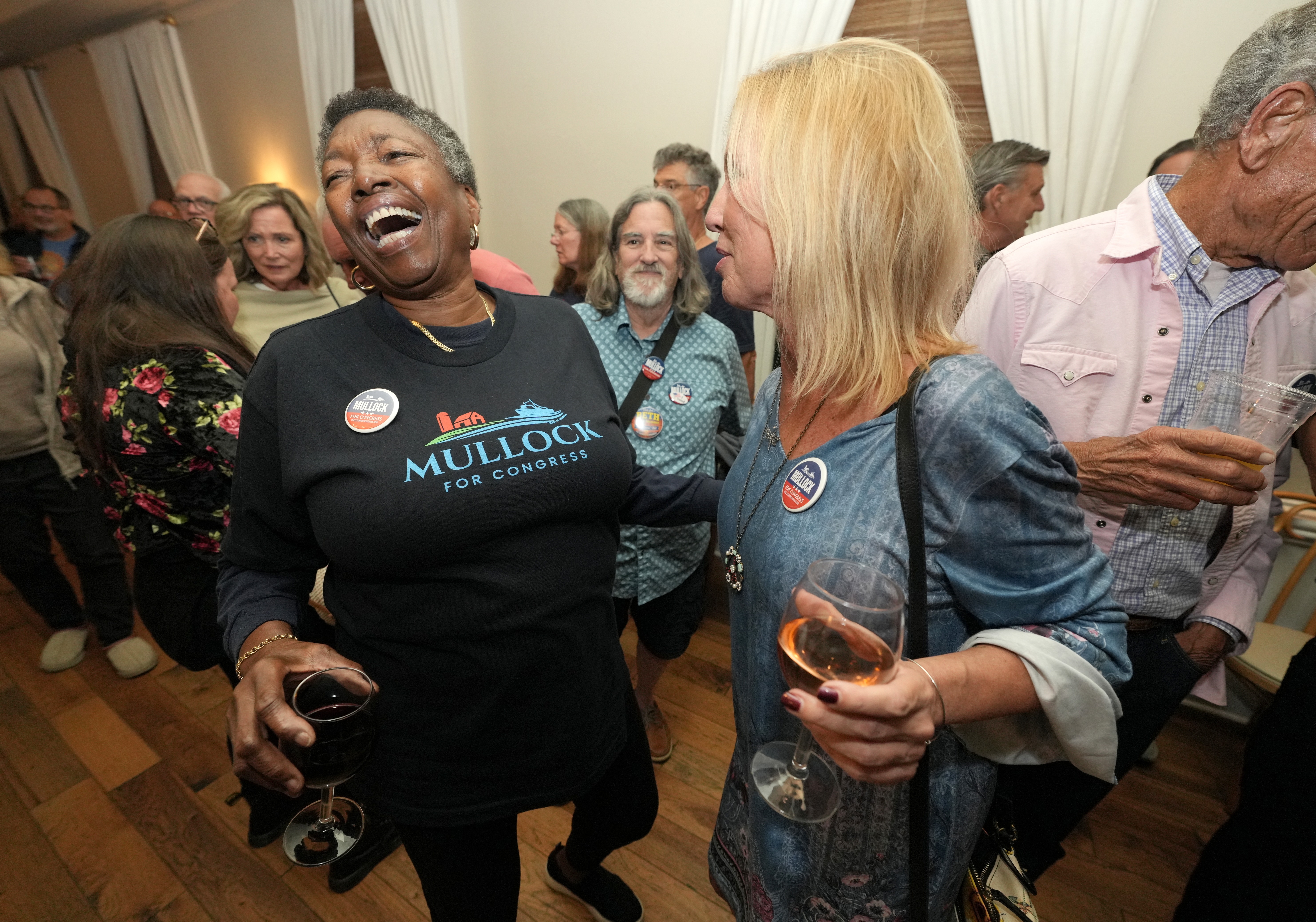
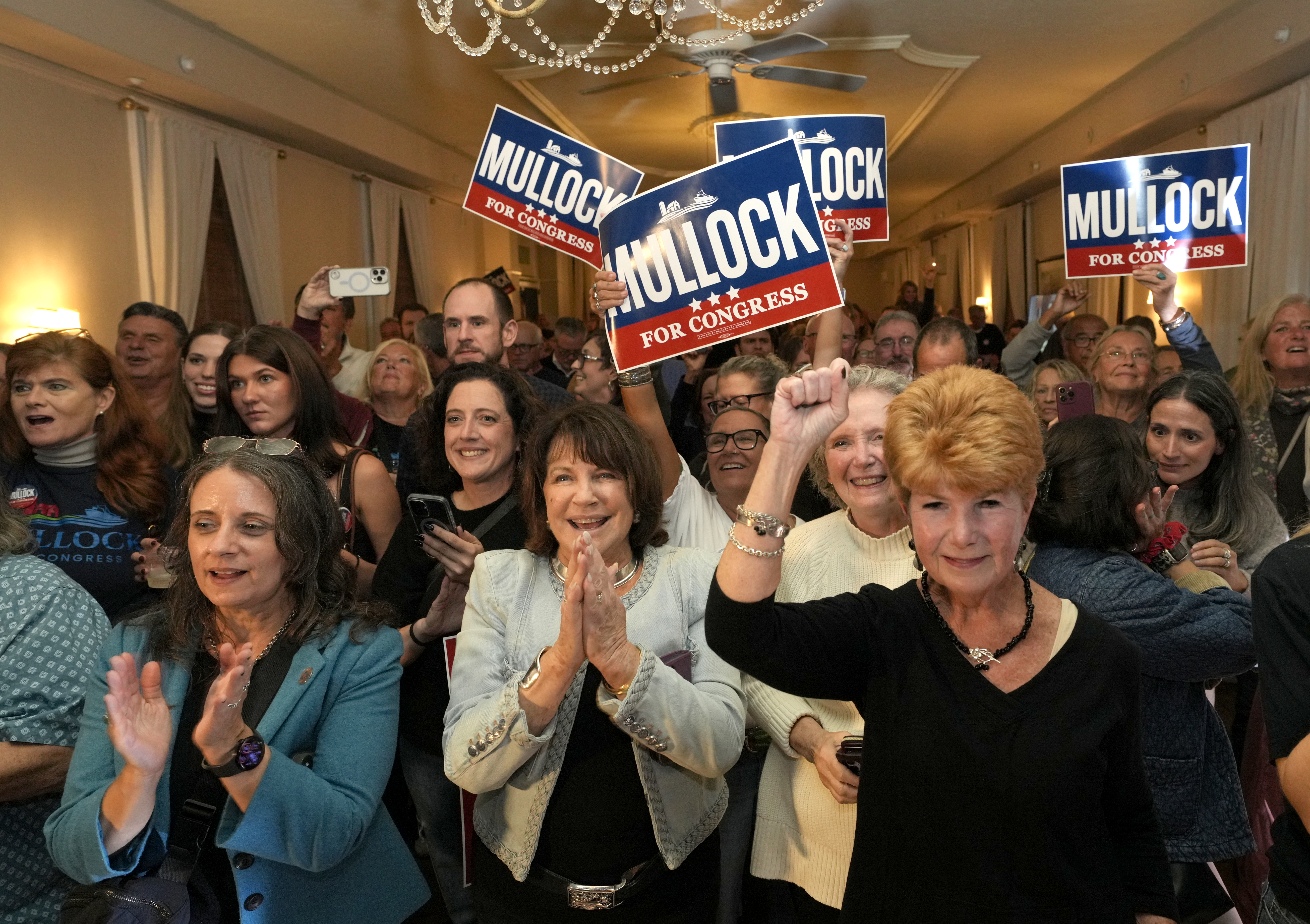
    Julia Hankerson (left), from Woodbine, and Amelia May, from North Cape May, dance during an election night party for Democratic congressional candidate and Cape May Mayor Zack Mullock at the Chalfonte Hotel in Cape May.Tim Hawk / For The Inquirer

    Fitzpatrick’s loss to Democrat Bob Harvie in Bucks County was perhaps the most monumental of those outcomes, and it means that Democrats had ousted the last House Republican in the Philadelphia suburbs. Fitzpatrick had repeatedly survived blue waves and entered the race with a massive cash advantage.

    “We’re turning it away from the negative, from the ugly, from the heartless, from the ignorant, from those who would take us backward and who would divide us and make us fight each other,” Harvie said. “And instead we are turning toward the America that we have always wanted to be and have been at brief times in our past.”

    A late surge of momentum behind Harvie meant millions of dollars in ad support from national Democrats and repeated voter turnout efforts headlined by Shapiro and other prominent party members.

    Fitzpatrick’s astounding $11.9 million in campaign spending in the campaign through Oct. 22, which was the last available public report, was ultimately more than he spent in his last three campaigns combined. He still saw millions of dollars more spent on his behalf from national Republican groups and even Trump’s super PAC.

    In his race and another around Harrisburg, Democrats worked to capitalize on the especially challenging moment for Republicans to attack lawmakers who repeatedly managed to win close elections in the past.

    Fitzpatrick’s loss was in part fueled by former supporters who, this year, decided to cast their ballot for Harvie.

    Julie Marshall, 61, a Democrat, has previously voted for Fitzpatrick, but the final straw for the Levittown resident was when she repeatedly called his congressional office but could not get in direct contact with him.

    She cited gas prices, housing, education, and healthcare among the issues that had left her frustrated with the state of the country, adding that Fitzpatrick hasn’t done enough to hold Trump and his contemporaries accountable.

    “Something’s gotta be done,” she said. “We can’t keep doing this.”

    Other voters were motivated by the economy. Democrat Dennis Bridges cast an enthusiastic vote for Harvie at Central Bucks High School South on Tuesday to, in his view, correct the course of a federal government that has veered wildly off track.

    “Healthcare was the big one, the gas, the war,” the 75-year-old Chalfont resident said of his concerns this year. “And then the corruption. It seems like no matter what, [Trump is] getting away with all kinds of corruption.”

    Attendees cheer as other Democratic winners are announced during Bob Harvie’s election night party at Rafters in Newtown.Monica Herndon / Staff Photographer

    Neil Makhija, a Montgomery County commissioner who stumped for Democrats across the state, compared the results to 2006, when the party won back power with George W. Bush in the White House as voters rejected an unpopular war. Among the losses that year: Fitzpatrick’s brother, then-U.S. Rep. Mike Fitzpatrick, in the seat that would later change hands within the family.

    “Back then, I remember feeling stunned that we were winning states we weren’t supposed to win,” Makhija said. “This kind of election expands people’s view of what’s possible.”

    Every precinct in the district shifted toward Democrats compared to 2024, a sign of how widespread the backlash to Trump was.

    (function(){function e(){window.addEventListener(`message`,function(e){if(e.data[`datawrapper-height`]!==void 0){var t=document.querySelectorAll(`iframe`);for(var n in e.data[`datawrapper-height`])for(var r=0,i;i=t[r];r++)if(i.contentWindow===e.source){var a=e.data[`datawrapper-height`][n]+`px`;i.style.height=a}}})}e()})();

    Fitzpatrick offered his concession Wednesday morning. He did not reference Trump or the wider backlash to his party, but he said that it was “not the ending we had hoped or envisioned” as he talked about transcending party lines.

    “But when I look back on all we have built, the extraordinary coalition of people we have brought together, and the countless people we have come to know as partners, friends, and family, I am overwhelmed not by what is ending, but by all we have been fortunate to experience together,” Fitzpatrick said in the statement.

    U.S. Rep. Scott Perry, one of Trump’s staunchest allies in Washington and the former leader of the far-right House Freedom Caucus, had won seven times in the 10th Congressional District that now encompasses all of Dauphin and parts of York and Cumberland Counties. The district morphed and became more competitive during Perry’s time in office, with the Republican winning by just 1 percentage point in 2024.

    In a rematch this year with Democrat Janelle Stelson, the challenger hammered Perry over rising gas prices due to the war in Iran and what she called his too-extreme platform for the district.

    Meghan Getz, 42, an elementary school art teacher, supported Stelson and said of the Democrat, “Her core values, like supporting food stamps and Medicaid, are just better than Perry’s.”

    The two other districts — one in the Lehigh Valley and another in the Northeast corner of the state — saw the largest influx of campaign spending as both parties saw opportunities in key battlegrounds.

    In the 7th Congressional District, union leader and retired Bethlehem firefighter Bob Brooks defeated U.S. Rep. Ryan Mackenzie. In the 8th District, Scranton Mayor Paige Cognetti won against U.S. Rep. Rob Bresnahan.

    Carlene Flynn, 74, hasn’t seen much change in the city since Cognetti became mayor in 2020, but was hoping Tuesday that she would replace Bresnahan because of the Republican’s alignment with Trump.

    “We just watched Bresnahan vote for everything that Trump wanted,” said Flynn, as nearly every voter passing by greeted her by name.

    As Democrats looked to rebound after a disastrous 2024 effort, all four races were not only defined by Trump but also hinged on critical recruitment efforts to secure what the party considered the best possible candidates.

    Harvie is a twice-elected Bucks County commissioner. Stelson is a well-known former local television anchor who came within a hair of defeating Perry in a GOP-friendly year in 2024.

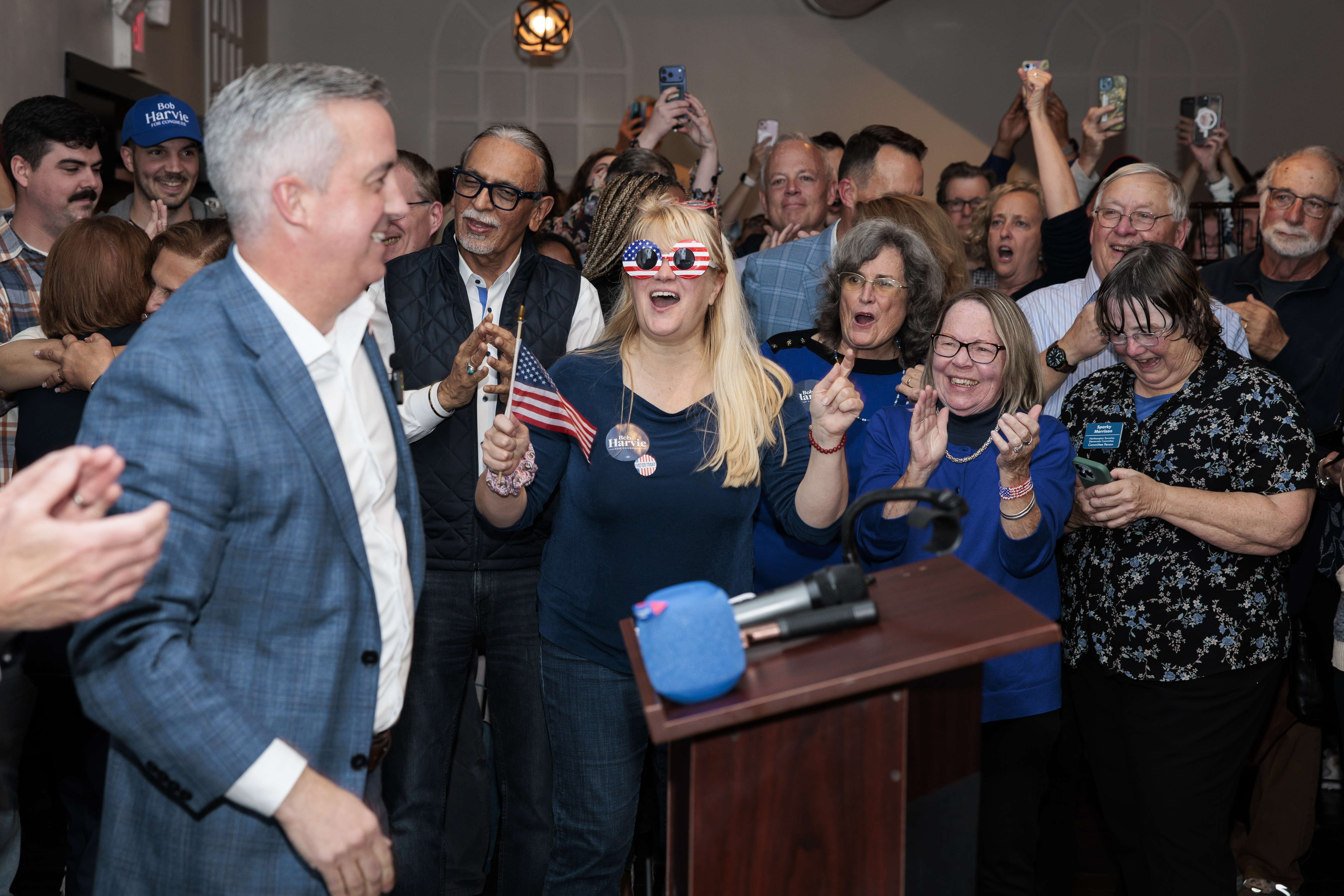
    Attendees cheer for 1st Congressional District winner Bob Harvie at his election night party at Rafters in Newtown.Monica Herndon / Staff Photographer

    Cognetti focused on her history in local politics and anti-corruption work that meshed with a top attack line against her opponent.

    And Brooks leaned into his working class background — a clear attempt to recapture voters who drifted toward Trump — and his experience around the political process as a well-connected advocate for emergency responders.

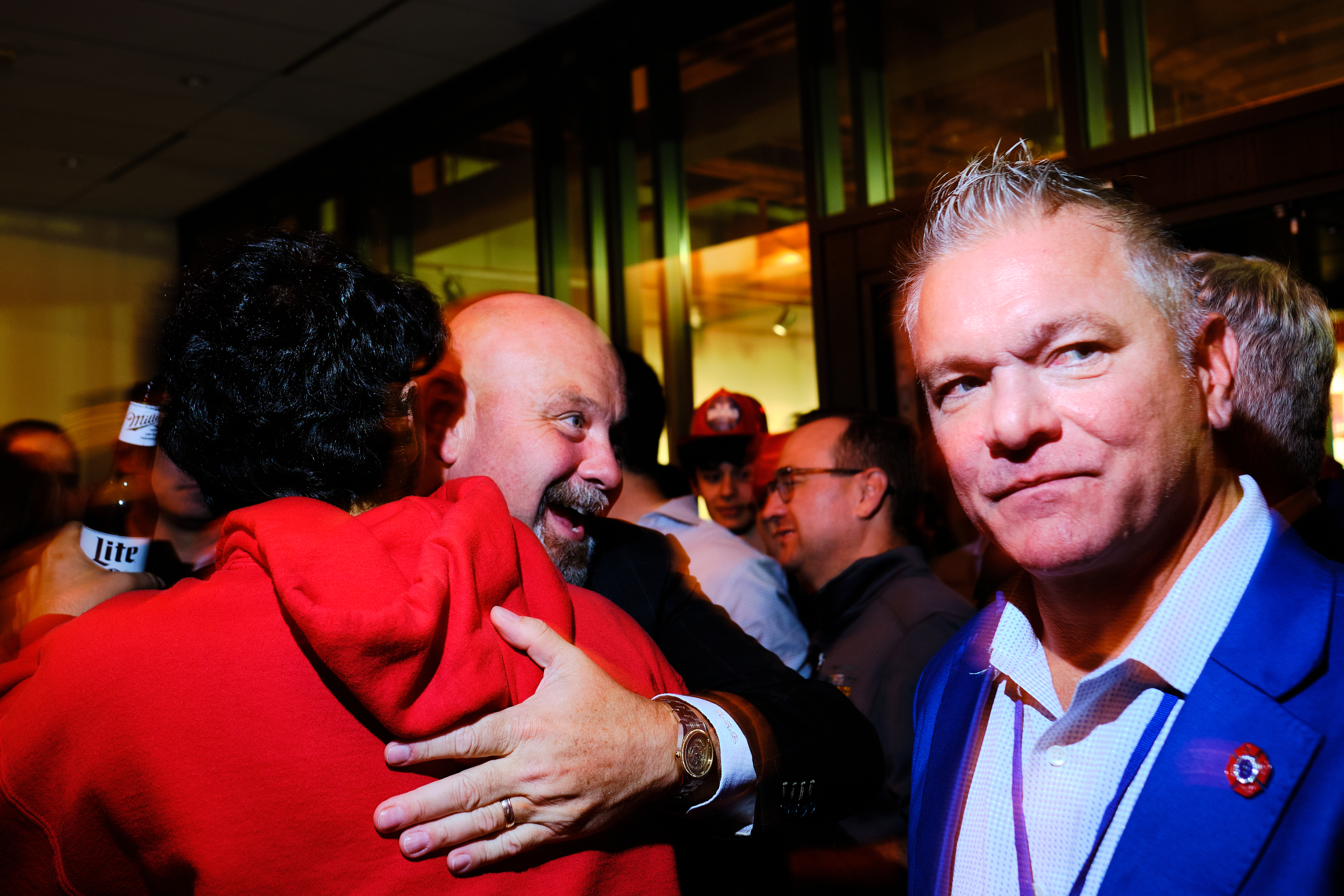
    “D.C. is going to hear this message loud and clear when Bob Brooks gets to town,” Brooks said while declaring victory in Bethlehem, surrounded by union leaders and supporters wearing plastic firefighter hats with his campaign logo. “We aren’t going down there to try and piece things back together where they were before. We’re going down to shake up the status quo, fight for working people, stop the bulls— and build something better from the ashes.”

    While Brooks emphasized his union support, one key ally said his and other victories around the country leaned on Latino voters who swung toward Trump in 2024 but had become enraged by his immigration enforcement and policies that raised prices.

    “Latinos decided this election,” said Allentown Mayor Matt Tuerk, the first Latino mayor of the majority-Latino city, which is Pennsylvania’s third largest. “We saw significant turnout in Allentown. … We supported candidates that rejected Republican policies and have done harm to our families [and] that have raised prices.”

    Kevin Black, 66, a retired teacher from Macungie, cast his vote for Brooks because he was turned off by Mackenzie’s negative ads and is concerned with the economy.

    “I can go either way. I used to vote with Republicans a lot. The past few years now, I’ve been switching around,” he said.

    Republicans in all four races launched attacks at the newcomers while defending their records and, in some cases, distancing themselves from the leader of their party.

    “There’s been plenty of examples of where we’ve pushed back on the administration,” Bresnahan said last week at the end of a debate — a notable move in a region that voted more for Trump than any of the other competitive districts.

    Those late rhetorical efforts came after Bresnahan and Mackenzie had largely stood by Trump and his policies. Each of them spoke at the Republican midterm convention he convened in September. They also welcomed support from House Republican leaders, though Trump didn’t appear in the state for a campaign event in the final stretch.

    But in all four of the districts, Trump’s approval ratings had sunk dramatically, according to an Inquirer/New York Times/Siena University poll conducted in recent weeks. Democrats also had the edge over their opponents on nearly every policy issue that the survey asked about — such as cost of living and corruption.

    By the time voters went to the polls on Tuesday, one major nonpartisan ratings agency had moved all of the races — which had started as toss-ups or “leans Republican” in the summer — to “leans Democratic.”

    Michelle Leiby, of Langhorne, cheers as early Bucks County results are announced during Bob Harvie’s election night party at Rafters in Newtown.Monica Herndon / Staff Photographer

    The picture was similar across the country, with Democrats projected to easily retake the House and also the Senate. When Trump took office nearly two years ago, that level of a blue wave seemed far out of reach.

    Samuel Chen, an Allentown-based GOP strategist, said voters often feel a sense of regret in midterm elections if they don’t feel like they’re getting what they bargained for.

    But amid rising inflation and the unpopular war in Iran, the dissatisfaction ran deeper. Even some Trump voters, Chen said, “felt a sense of betrayal.”

    “They didn’t want forever wars, they didn’t want prices to go back up, and they did,” Chen said. “And the president is saying ‘the economy is not that bad, suck it up.’”

    Philadelphia-based Democratic strategist Anthony Campisi said disaffection with the president appeared too much for even Fitzpatrick, who was the most bipartisan member of Congress and was considered the toughest challenge for Democrats, to overcome.

    “When the president is talking about the Reflecting Pool instead of the cost of living the night before the election,” Campisi said, “it’s kind of like an allegory.”

    Staff writers Aliya Schneider, Dugan Arnett, Al Lubrano, Dana Munro, and Jesse Bunch contributed to this article.

    This story was updated to include a statement from Fitzpatrick.

  • Democrat and former Navy pilot Rebecca Bennett wins key N.J. race against incumbent Tom Kean Jr.

    Democrat and former Navy pilot Rebecca Bennett wins key N.J. race against incumbent Tom Kean Jr.

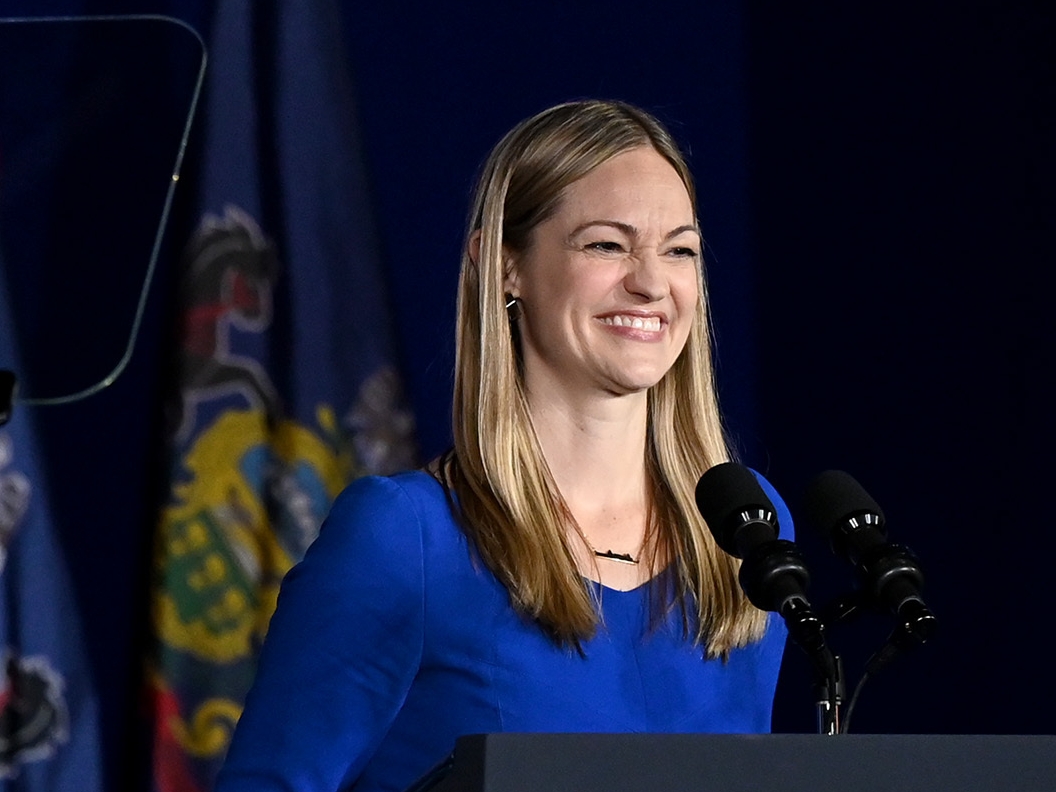
    Democratic newcomer Rebecca Bennett defeated incumbent and political scion Tom Kean Jr. to represent New Jersey’s 7th Congressional District, delivering a victory for her party in a race seen as key to wresting control of the U.S. House from Republicans.

    National pundits and polls predicted the 7th District — spread across Hunterdon and Warren Counties and parts of Morris, Somerset, Sussex and Union — was the most likely to turn Democratic. Democratic Gov. Mikie Sherrill won big across the state last year, including in Kean’s backyard of Westfield.

    Bennett, 39 is a health technology executive and a former U.S. Navy helicopter pilot who changed her political affiliation from Republican to Democrat after President Donald Trump won the 2016 primary election. She has never held elected office.

    <iframe src="https://interactives.inquirer.com/embeds/2026-election-results/EMBED/index.html?election=2026/general&id=us-house-nj-7" scrolling="no" frameborder="0" width="100%"></iframe><script type="text/javascript">(function () {window.addEventListener('message', function (e) { var message = e.data; var els = document.querySelectorAll('iframe[src*="' + message.id + '"]'); els.forEach(function(el) { el.style.height = message.height + 'px'; }); }, false); })();</script>

    She campaigned against Kean by often reminding the public of Trump’s agenda. But as party leaders directed more money and attention her way, she presented herself as a moderate focused on helping reduce the cost of living. Her candidacy resembles that of Sherrill, who is also a former U.S. Navy helicopter pilot and handily beat Republican Jack Ciattarelli by focusing on Trump’s unpopularity in the state.

    “We never let the cynicism of President Trump and his enablers snuff out our belief in a better America for ourselves and for our kids,” Bennett said in her victory speech at the Bridgewater Manor just before 10 p.m. “And now, after 10 long years, something remarkable is happening in New Jersey and across the country. And this is the moment we begin to turn the page on the Trump era.”

    Bennett said when she spoke to Kean by telephone, “He congratulated me on our victory and he expressed his commitment to the peaceful transfer of power — a tradition that is deeply American.”

    ”And here’s something else that is deeply American,” Bennett added. “Tonight is about something bigger than any one of us. It’s about us coming together … This is about my daughters, Rosie and Millie, and for every other little girl watching tonight. I want you to know that I’m going to make sure you can do whatever you want when you grow up.”

    Sherrill took the stage just as The Associated Press declared Bennett the winner.

    “You wanted a leader. You wanted a leader who was gonna find a way or make one. You wanted a badass,” Sherrill said. “She made it look easy but she worked her butt off.”

    Rebecca Bennett, holds her daughter Rosie and her husband, Alex Hydrean holds Millie after she delivers her victory speech in the 7th District race. She defeated Tom Kean Jr., who has spent a quarter of a century in elective office, including two terms in Congress.Susan Livio

    Kean spent two decades in the state legislature before defeating Democrat Rep. Tom Malinowski in 2022 in a newly designed district that contained slightly more Republicans voters. He is the son of former Gov. Thomas H. Kean, who remains New Jersey’s most revered politician.

    But Kean faced tough odds. Trump’s plummeting approval rating appeared to drag down loyalists like Kean, who defended the president’s war in Iran. Kean stood apart from the president on some issues, including opposing a new ICE detention facility in Roxbury and defending the $16 billion Gateway Tunnel project that will open a new rail connection between New Jersey and New York. Trump has tried to cancel the project.

    Kean also took a nearly four-month medical leave of absence for depression that he did not explain until he returned in June.

    (function () {window.addEventListener(‘message’, function (e) { var message = e.data; var els = document.querySelectorAll(‘iframe[src*=”‘ + message.id + ‘”]’); els.forEach(function(el) { el.style.height = message.height + ‘px’; }); }, false); })();

    Sue Altman, who lost to Kean in the 7th District race two years ago, said she was out on the trail for Bennett over the weekend and was impressed with the “positive energy.”

    “I have no doubt we are going to win tonight,” Altman said at 8:30 p.m., before the race was called.

    When asked if she wished she was running this year, Altman said that she was “totally happy with her life choices” and that “Rebecca will be great. I have no regrets.”

    “The district overall deserves this win,” she added. “People have been struggling from Sussex to Hunterdon County to Union County. And I think it’s incumbent on Democrats to make the most of this moment. Moments like this don’t come around all the time.”

    Mahen Gunaratna, a Democratic operative who lives in the 7th District, said enthusiasm is high, “certainly in New Jersey but also across the country, including the Midwest and the South. It’s certainly a Democratic wave, and this is the hottest race for sure.”

    The momentum behind Democrats has “depressed Republican turnout across the country,” Gunaratna said as he awaited results at 9 p.m.

    The Kean-Bennett battle is also on track to be the most expensive race in the nation, driven largely by the pricey New York City media market. Bennett overall raised $8.2 million, including outside support from congressional Democrats and left-leaning political action committees, according to the Federal Election Commission. Kean raised $5.8 million during this election cycle, with $4.2 million coming from the Congressional Leadership Fund. Its support ended about a month before the election as House Republicans looked to shore up states Trump won two years ago, such as Pennsylvania and Texas.

    For some voters in the 7th District, the state of the economy was a key factor in how they voted.

    Nance Shedlock and Kristin Bartel are good friends — such good friends that Bartel trusted Sherlock to mind her dog, Spike, while she cast her ballot at a polling place in Bedminster, Somerset County. And it doesn’t matter to them that they don’t share political viewpoints.

    “I want people to get along better. I am a Trump fan. I do go to his golf course. I like him,” said Shedlock, a Republican. “But everyone has their thing. I will still be friends with my friend over here because I love her.”

    She added: “I really want the gas prices to go down.”

    Bartel said she doesn’t consider herself a political person, but tends to vote Democratic, including this year.

    “I’m just about everyone being rational. Just make good decisions,” Bartel said.

    Also in Bedminster, Peter Abbate said he never misses a chance to vote. The most pressing issue for him this year is the economy, particularly the cost of gas and groceries. He voted for Kean Jr. because he believes he will do better on economic issues.

    “I hope so, based on what he said,” Abbate said. “I liked him better than the opposition.”

    Staff writer Sean Collins Walsh contributed to this article.

  • South Jersey shocker: Four-term GOP U.S. Rep. Jeff Van Drew concedes to Democrat Zack Mullock

    South Jersey shocker: Four-term GOP U.S. Rep. Jeff Van Drew concedes to Democrat Zack Mullock

    The blue wave has hit the Jersey Shore.

    In a major upset, Republican U.S. Rep. Jeff Van Drew has conceded to Democratic Cape May Mayor Zack Mullock in South Jersey’s 2nd Congressional district. Van Drew’s concession came even as the Associated Press was still reporting the race too close to call.

    The victory for Mullock, 41, is a major win for Democrats in a right-leaning district where Van Drew, 73, has been elected four times even though he switched his party to Republican in 2019, a year after being elected as a Democrat.

    “I am so humbled. I can’t believe this is happening,” Mullock said Tuesday, joined by his family and Gov. Mikie Sherrill who flew in on a helicopter to be present for the historic moment.

    “It’s a wave election. It can happen,” Van Drew said in an interview after conceding.

    He compared this year’s election cycle to the 1974 midterms, when Democrats racked up victories amid voter frustration with President Richard Nixon following the revelation of the Watergate scandal.

    “What I said all along is I’ll be fine as long as it’s not a Watergate, and it kind of is a Watergate,” Van Drew said. “There’s no Watergate issue, but it’s kind of like a Watergate where it’s larger than life and just swept people along with it.”

    Local Democrats saw the Jersey Shore mayor as their best bet to oust Van Drew but he was largely ignored by national players until the final stretch of the race. The Democratic Congressional Campaign Committee added the district to its ”districts in play” list just last month but did not prioritize it among more competitive races across the country and region.

    (function () {window.addEventListener(‘message’, function (e) { var message = e.data; var els = document.querySelectorAll(‘iframe[src*=”‘ + message.id + ‘”]’); els.forEach(function(el) { el.style.height = message.height + ‘px’; }); }, false); })();

    But Mullock’s victory indicates a blue tsunami even greater than the wave observers were expecting. U.S. Sen. Cory Booker (D, N.J.) declared at a get-out-the-vote rally that Democrats can turn their TVs off if Mullock wins his race “because you know we will have taken back the House.”

    Sen. Andy Kim, a Burlington County Democrat, also campaigned with Mullock, and in the final stretch of the race he was joined by DNC Chair Ken Martin, U.S. Rep. Jamie Raskin (D., Md.), and Sherrill.

    Van Drew has held elected positions in South Jersey for decades. He maintained support in the state even after switching his party from Democrat to Republican and vowing his “undying support” to President Donald Trump in 2019, one year after getting elected to the House. He defeated Amy Kennedy by almost 6 percentage points in 2020 and won reelection by nearly 19 percentage points in 2022 and nearly 17 points in 2024.

    Supports of Democratic congressional candidate and Cape May Mayor Zack Mullock cheer during an election night party at the Chalfonte Hotel in Cape May.Tim Hawk / For The Inquirer

    Galloway Township resident William Collier, 53, said he voted for Van Drew when he ran as a Democrat. The incumbent’s party change, Collier said, helped motivate him to vote for Mullock this year.

    “Van Drew doesn’t do anything for Jersey,” said Collier, a hospice worker who was interviewed while leaving work in Atlantic City. “He doesn’t do anything. He let us down. He was a Democrat, then he switched over to be a Republican. I can’t vote for Van Drew.”

    At Mullock’s results party, Karen Kurtz, 73, a resident of Cape May for 50 years, said Mullock’s victory was “amazing.”

    “We’ve gone out and went house to house and promoted him, and we are just over the moon that he has won,” Kurtz said. “Everybody was ready for a change. … It needed to happen.”

    One local issue that may have helped Mullock was the development of a controversial data center in Vineland.

    Irene Demaio, 68, said she can hear a constant hum from the data center in Vineland at her home on quiet mornings.

    “Someone I spoke to today, her brother lives even closer and has hearing aids, has to take them out, and still wear earplugs because of the humming noise,” Demaio said from a polling site at a fire station less than two miles away from the massive data center.

    Van Drew, whose district includes the center, has said he has no authority over the project. But Demaio said she doesn’t trust his word.

    “I think the politicians that let it happen need to go. Point blank,” she said. “They need to be out of office. Van Drew, specifically.”

    Dan Vandzura, 31, also had the data center front of mind on Tuesday — this year above other issues he would usually prioritize, he said.

    “There’s a certain set of issues that I might usually be inclined to focus on,” he said. “That one, definitely, I’ll say has risen higher than others. … I never thought data center would be the thing that’s a big deal, but here we are.”

    He declined to share who he was voting for.

    Mullock said in an interview last month that voters across the state are most interested in knowing whether he will “be a decent human being.”

    “I think it’s beautiful that people are willing to put aside some of their biggest issues for the greater good, but it also says how low the bar has gotten,” he told The Inquirer.

    “They have zero faith in the system, and they just think what’s happening right now is just outright corruption, and they just want good people to go in and fight it,” he added.

    Cape May is a nonpartisan government, and the South Jersey Democrat said he’s hired Republican city managers and has no problem working across the aisle. He’s touted local investments in his community and said he has kept taxes down.

    With his family, Mullock helped create the Harriet Tubman Museum and the Cape May Point Arts and Science Center. His family also owns the Cape May National Golf Club, where he has worked as vice president.

    He’s also a general contractor and serves on the Atlantic Cape Community College Board.

    Born and raised in South Jersey, Mullock and his wife, Justine, have three children.

    Mullock raised less than $1 million through Oct. 14 while Van Drew raised more than $2.4 million in the same time period. The Cape May mayor was also outspent in a four-way Democratic primary, which he won with nearly 40% of the vote.

    Mullock criticized Van Drew over his support of Trump’s One Big Beautiful Bill Act, which made large cuts to Medicaid. He also admonished the lawmaker for voting against bills calling for an end to the Iran war.

    “It’s been about fighting for the middle class for Social Security, for Medicare, for Medicaid and for affordable healthcare for all families,” Mullock said in his victory speech. “Yes, it’s about ending the war in Iran. It’s been about ending the tariffs that are causing all of our prices to skyrocket.”

    For some voters, national political concerns were top of mind.

    Margate resident Andy Slobotkin, 67, who owns a place mat advertising company, said he didn’t know much about Mullock, but was voting for him because “I know that I’d like some change.”

    “People are embracing a little bit of a change this election cycle,” said Slobotkin, a Democrat. “They need to send a message to the Republican Party that we were promised one thing and we got something else.”

    Staff writer Sarah Nicell contributed to this article.

  • Trump again looms large among Pa. and N.J. voters, with Congress and a governor’s chair at stake

    Trump again looms large among Pa. and N.J. voters, with Congress and a governor’s chair at stake

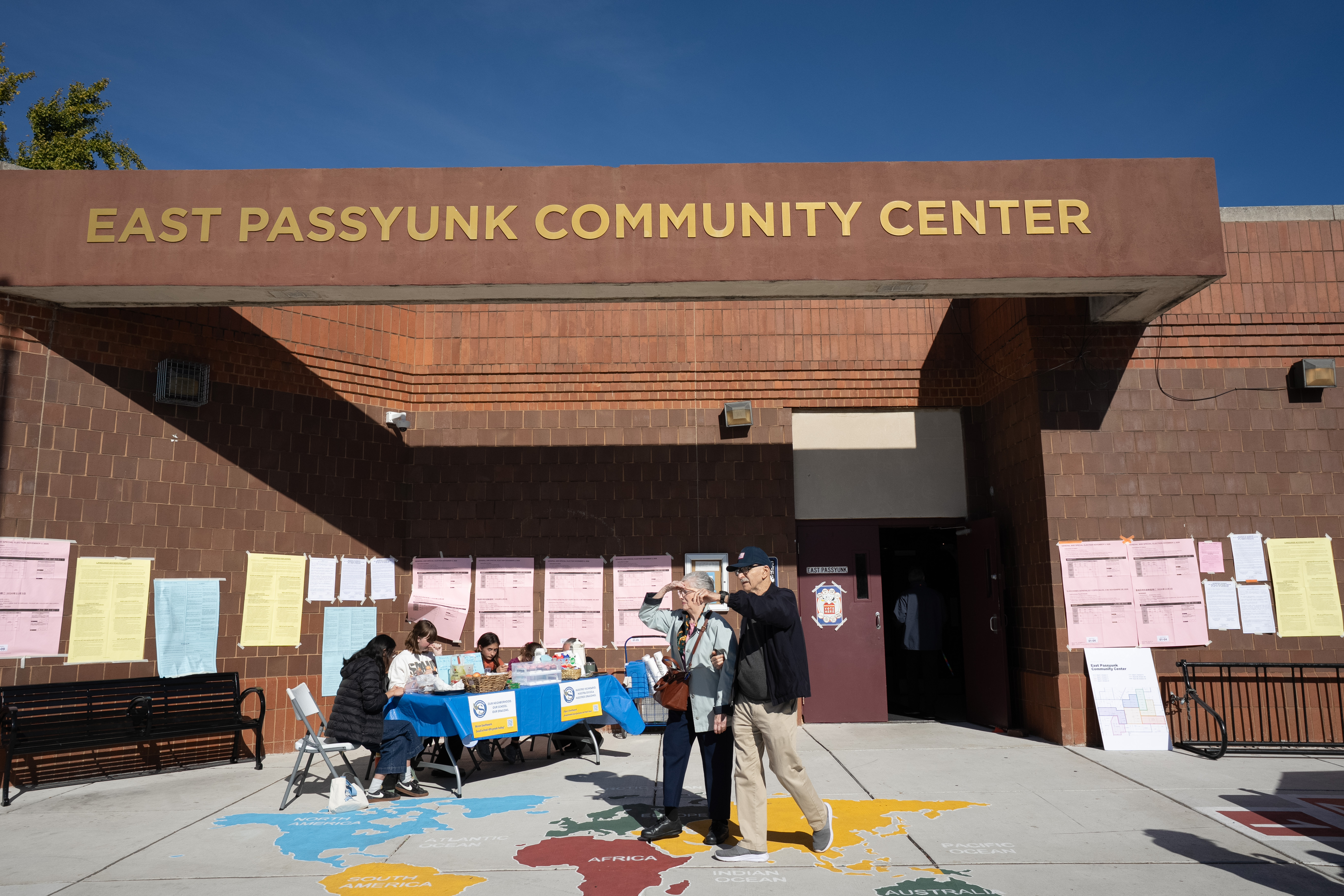
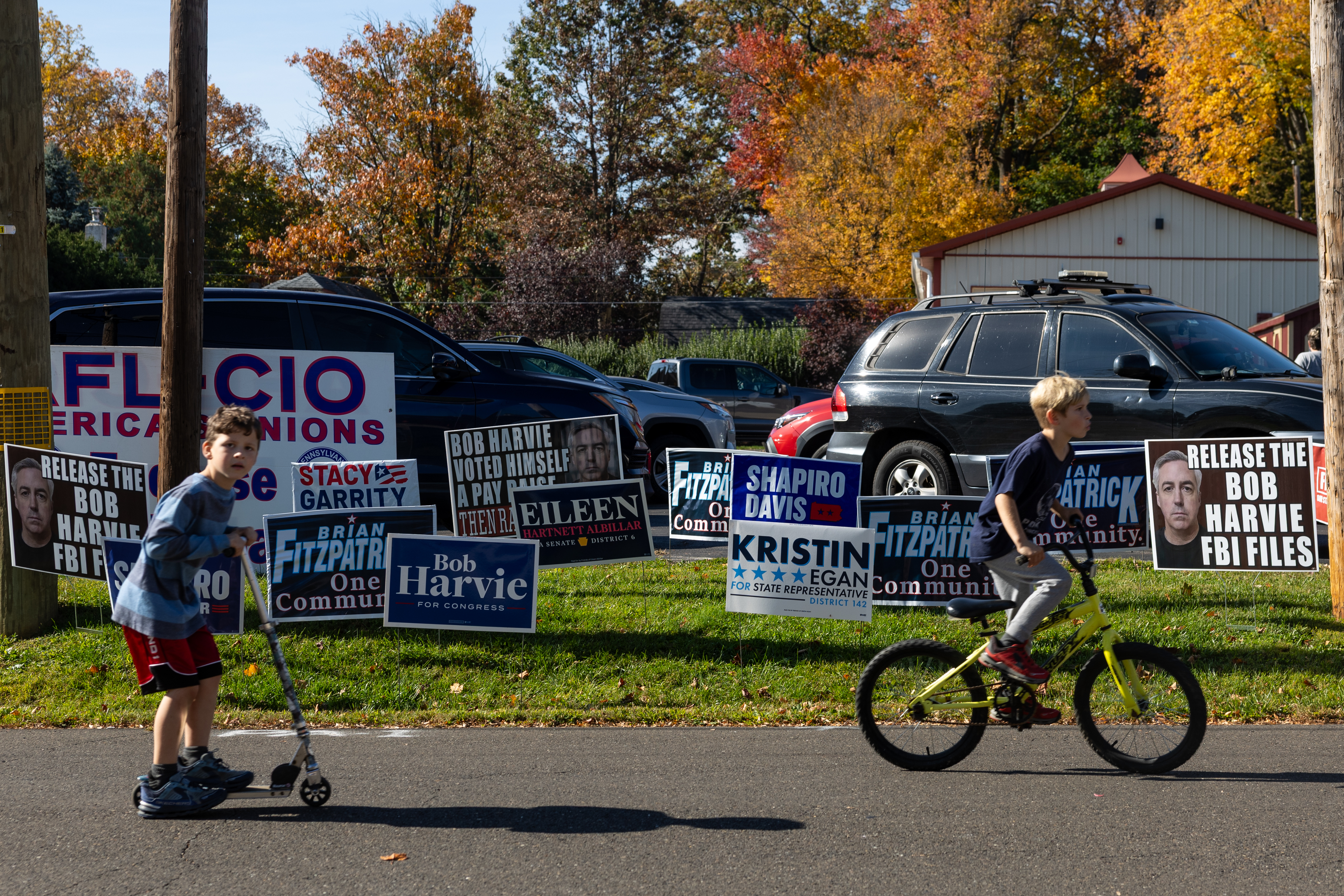
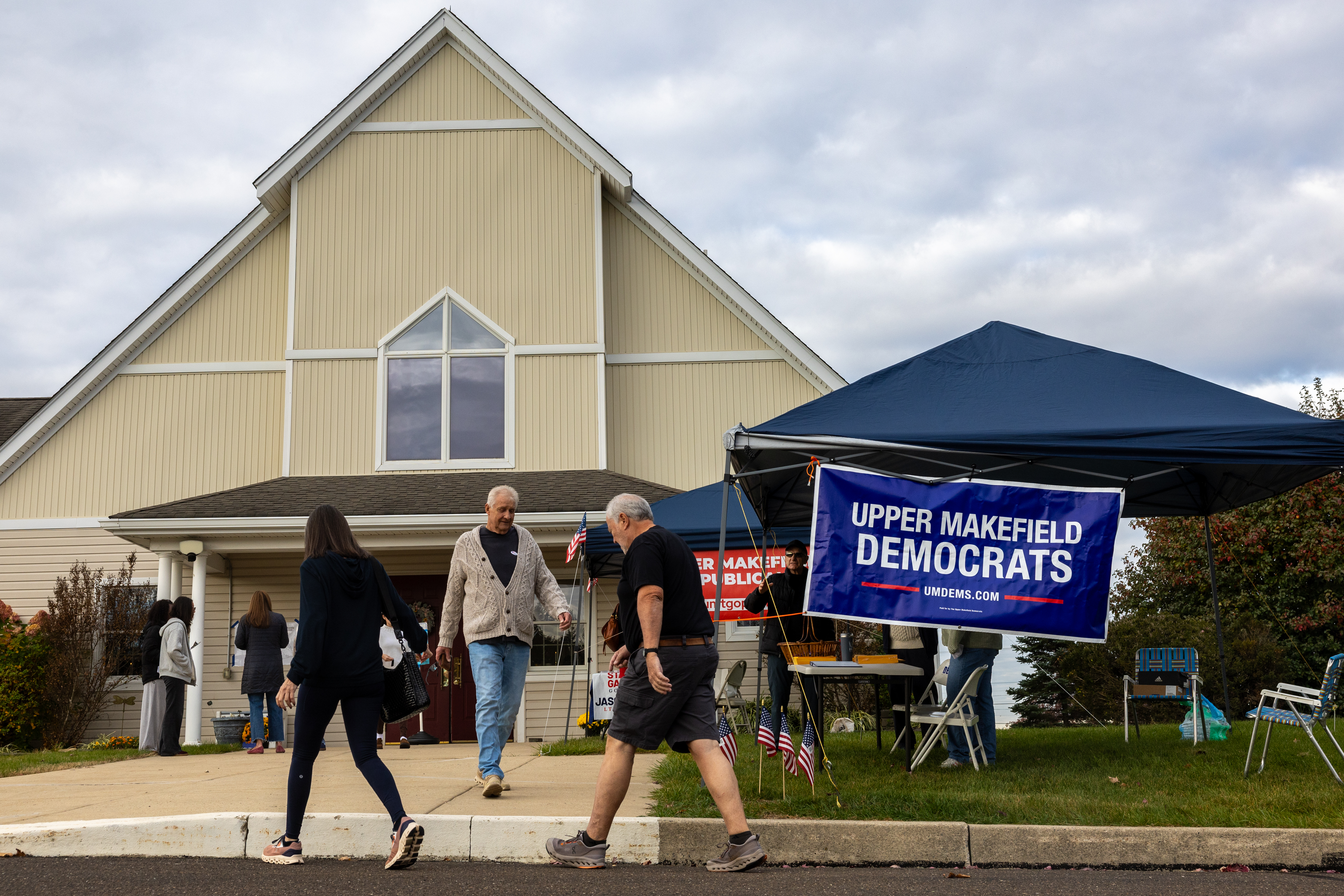
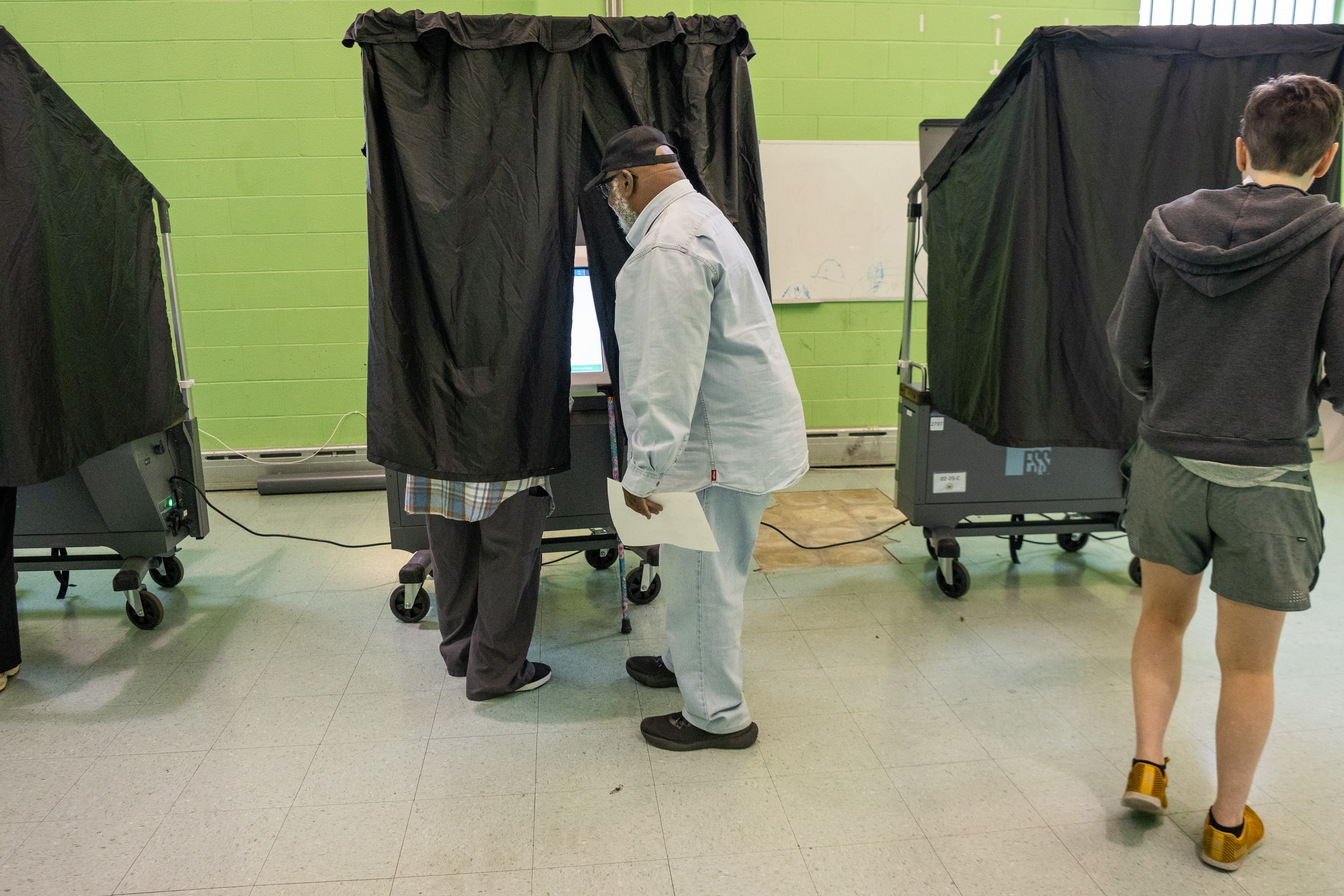
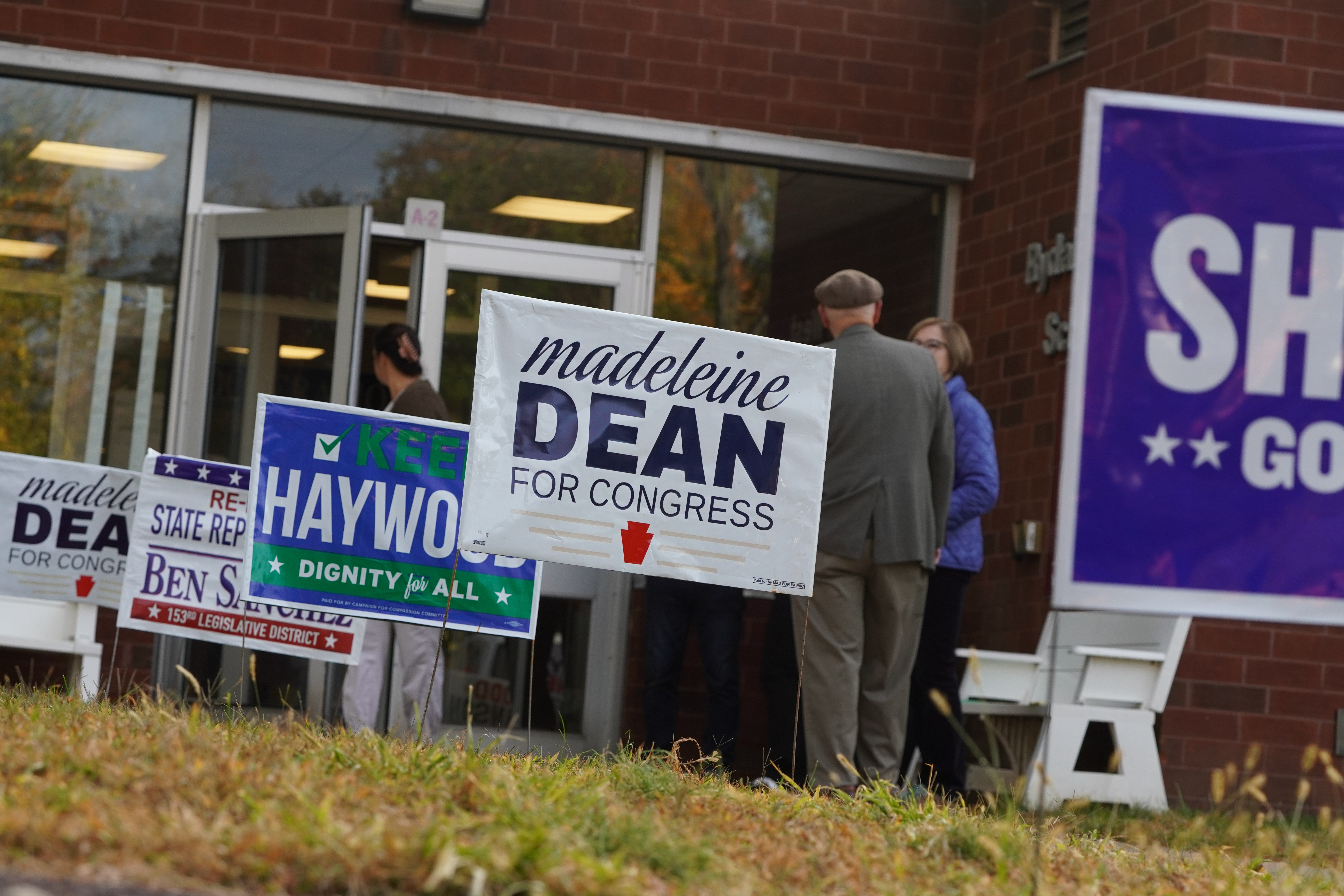
    By the time polls opened just after daybreak on what turned out to be a magnificent Election Day with the weather evoking a spring primary, the sunlight had turned the foliage on the treetops to fire.

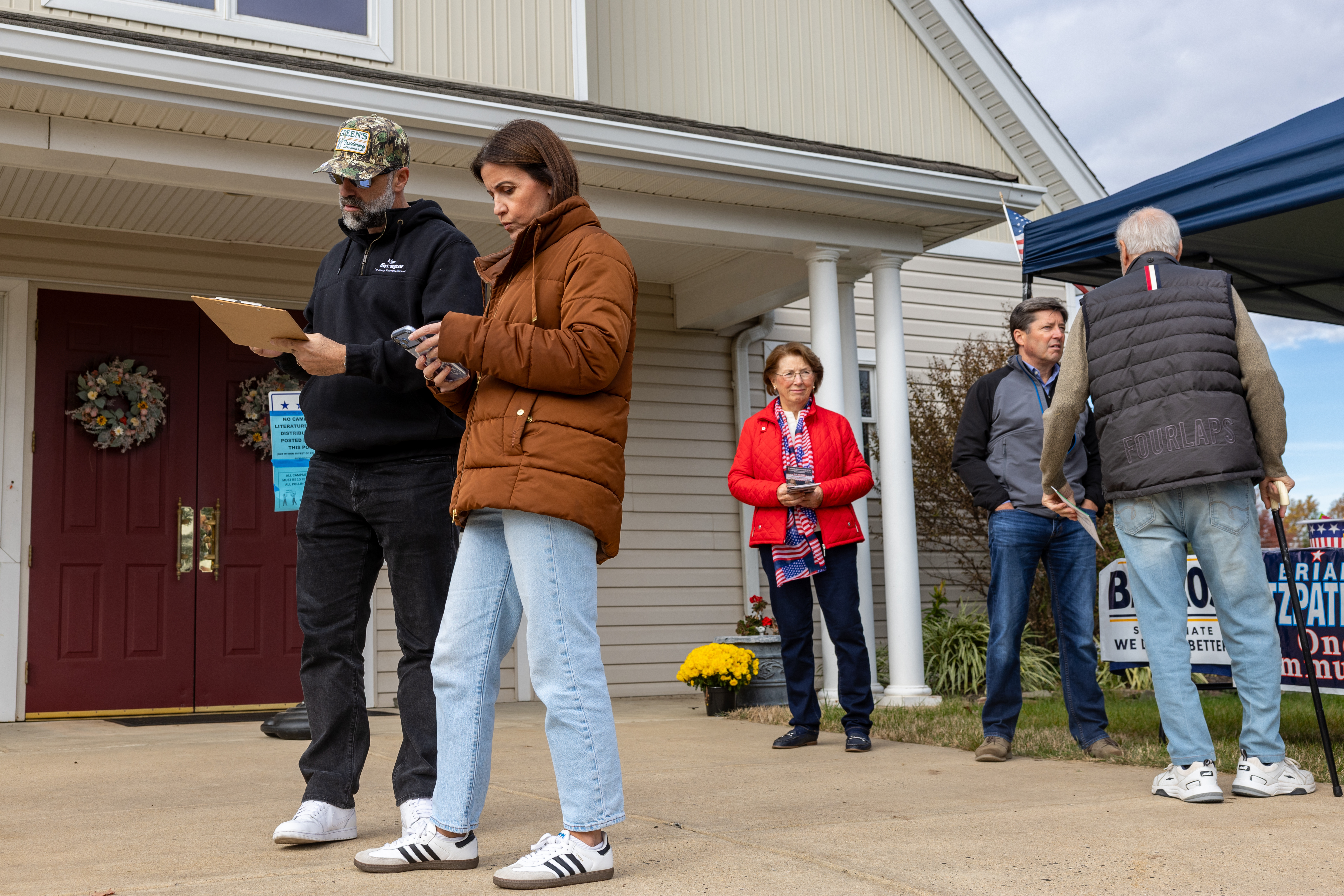
    Whether that somehow lit a fire among those who voted was arguable, but a certain energy was evident at the polls as voters cast ballots that potentially could change the balance of power in the U.S. House and the Pennsylvania Senate.

    Of several congressional seats considered up for grabs, the race in solid purple Bucks County between GOP incumbent U.S. Rep. Brian Fitzpatrick and Democratic challenger Bob Harvie was among the most closely watched in the nation as talk of a Democratic “blue wave” had been building.

    Voters in one of the nation’s most important swing states also were deciding on whether to return Democratic Gov. Josh Shapiro to Harrisburg in his race against Republican nominee Stacy Garrity. However, polls suggested strongly they already had decided, and the results affirmed that perception.

    Even so, and without hot races occurring in the Philadelphia and Allegheny County population centers, turnout in Pennsylvania likely would exceed 50%, said Lauren Cristella, executive director of the nonpartisan Committee of Seventy. That would be more than respectable for a midterm election.

    She added that everything appeared to have gone smoothly, and the federal monitors had not raised any issues.

    Voters interviewed spoke passionately about their top issues — the state of the economy; ICE; the war with Iran; AI data centers; and of course, he who was not on the ballot, President Donald Trump.

    After watching a steady stream of voter traffic at her Drexel Hill, Delaware County polling place, Democratic greeter Risa DeSilva-King, 43, remarked: “I think we have Trump to thank for that.”

    Trump was on the minds of voters throughout the region. Outside Margate’s city hall, Bill Grutzmacher, 73, a retired Philadelphia police officer, said he remained a steadfast Trump supporter. “I like Donald Trump because he supports Israel and supports law and order,” he said.

    Debra Fitzgerald, 67, voting in Shapiro’s hometown of Abington Township, didn’t quite agree. “This administration’s appalling,” she said.

    “Trump looms over this entire midterm,” said Ashley Koning, director of the Rutgers University Eagleton Institute Center for Public Interest Polling. “But he isn’t on the ballot the way he is in a presidential year, and that distinction matters.”

    It could matter particularly for the fortunes of Republican Jeff Van Drew in New Jersey’s 2nd Congressional District. Once heavily favored, his race against Democratic Cape May Mayor Zack Mullock tightened.

    On the Pennsylvania side, in addition to the Fitzpatrick race, Democrats had high hopes for taking three other seats in Pennsylvania, including the one held by Trump loyalist Scott Perry, being challenged by Democrat Janelle Stelson.

    At Monaghan Presbyterian Church in Dillsburg, York County, near Perry’s home, by 7:15 a.m. Tuesday, the parking lot was as full as it would be for a Sunday morning service as voters crammed into the brick sanctuary.

    Turnout was ultra-brisk in Scranton, where incumbent Republican U.S. Rep. Rob Bresnahan was in a tight race with Scranton’s Democratic mayor, Paige Cognetti.

    With the popular Shapiro leading the ticket, Pennsylvania Democrats believed they had a shot at taking control of the state Senate for the first time in decades. Shapiro was expected to win overwhelmingly, a possible prelude to a run for the presidency in 2028.

    Voters generally viewed him favorably, but not without at least a few reservations. Millie Grieve, 19, a Democrat voting in Swarthmore in her first federal election, voted for him although she says she disagrees with some of his policy positions, including on AI data centers. She felt he was a better choice than “someone who’s just going to be one of Trump’s lackeys.”

    In Northeast Philly, Audrey Lamping voted for Shapiro, saying, “I like him, and he’s doing a good job.”

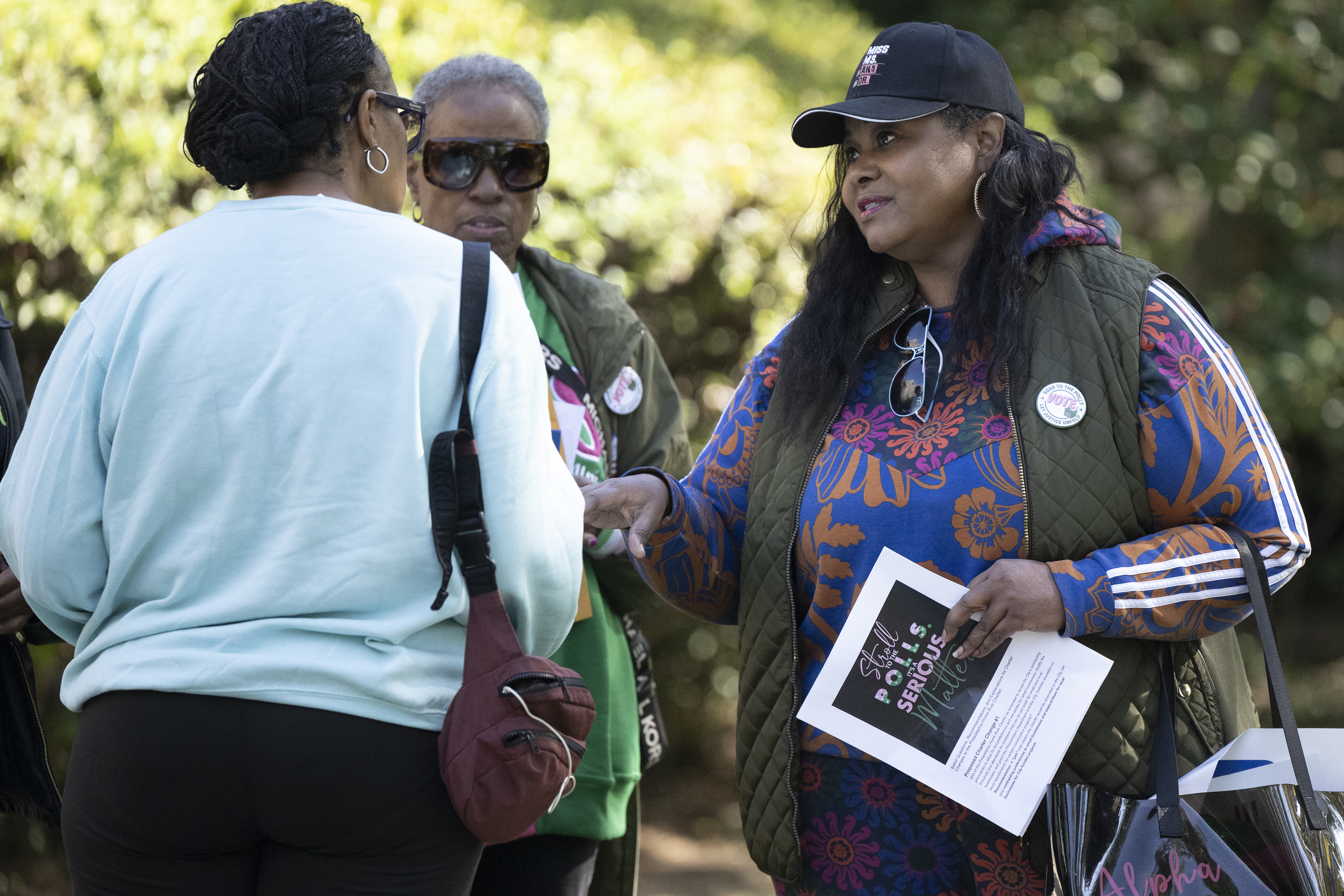
    Alpha Kappa Alpha Sorority members Muriel Moseley, left, and Alisa Rhodes assist voters by providing last-minute information at the 34th Ward polling place, located at the African Episcopal Church of St. Thomas, on Election Day, Tuesday, Nov. 3, 2026, in Philadelphia.Jose F. Moreno / Staff Photographer

    At the Erma Volunteer Fire Co. in Cape May County, voting was brisk as the sun began to set. Mike Lawrence, 81, said he was “not interested” in talk about a blue wave and predicted it would stop before it hit deep South Jersey.

    “I’m voting straight Republican,” said Lawrence, who owned a driving school before retiring. “Van Drew, I just think he does a good, good job. You know, he follows up.”

    Voters had their share of complaints about partisanship and divisions.

    And in that tense Bucks County race, voters said they were absolutely fed up — with the ads.

    The commercials — and mailers and text messages — have been flowing nonstop, they said.

    “They’re coming in every hour, just about,” said Sue Sutter, 73, a retired registered Republican from Penndel, of the political text messages she has received. She deletes them and reports them as spam, she says, “but they come in the mail, too.”

    “They’re killing too many trees.”

    Some voters decried the negative nature of some ads.

    “I think it’s disgusting and obnoxious how many millions of dollars are spent on this,” said Kathy Johnson, 71, a wealth adviser from Middletown Township and an independent. “And it gets worse and worse.”

    Fitzpatrick was on pace to spend more on advertising in this race than in his last three campaigns combined, The Inquirer reported last month. At the time, Harvie was approaching $1 million in spending.

    The result? In Bucks County, it’s all been difficult to avoid — and not just for those on the receiving end.

    Said Gary Ray Caton, 76, a pastor from Langhorne, “Every time we see the mail person he’s cursing up a storm because he’s got to deliver it all.”

    Whether the ad blitz had any effect on the outcome would be impossible to measure.

    “I’m done with Fitzpatrick,” said Kathy Johnson, 71, a wealth adviser from Middletown Township. “And I’m willing to give Harvie a chance.”

    “I dislike Fitzpatrick with a passion … but I would not put Harvie in,” said Gary Ray Caton, 76, a pastor from Langhorne. “I have no choice. We cannot lose Congress.”

    Anthony Falk, 26, of Perkasie, is a former Marine reservist, and hoped Fitzpatrick would help end the Iran war if he held on.

    Voting at Lincoln University in Chester County, student Carl Richardson, 21, had a decidedly nonpartisan perspective to offer.

    “It’s a blessing to vote,” he said. “We’re the generation of the future.”

    Staff writers Dugan Arnett, Jesse Bunch, Nate File, Kristen A. Graham, Zoe Greenberg, Sam Janesch, Jillian Kramer, Dana Munro, Sarah Nicell, Jess Rohan, Denali Sagner, Henry Savage, Brooke Schultz, and Vinny Vella contributed to this article.

  • Former TV anchor Janelle Stelson defeats Trump ally Scott Perry in tense central Pa. congressional rematch

    Former TV anchor Janelle Stelson defeats Trump ally Scott Perry in tense central Pa. congressional rematch

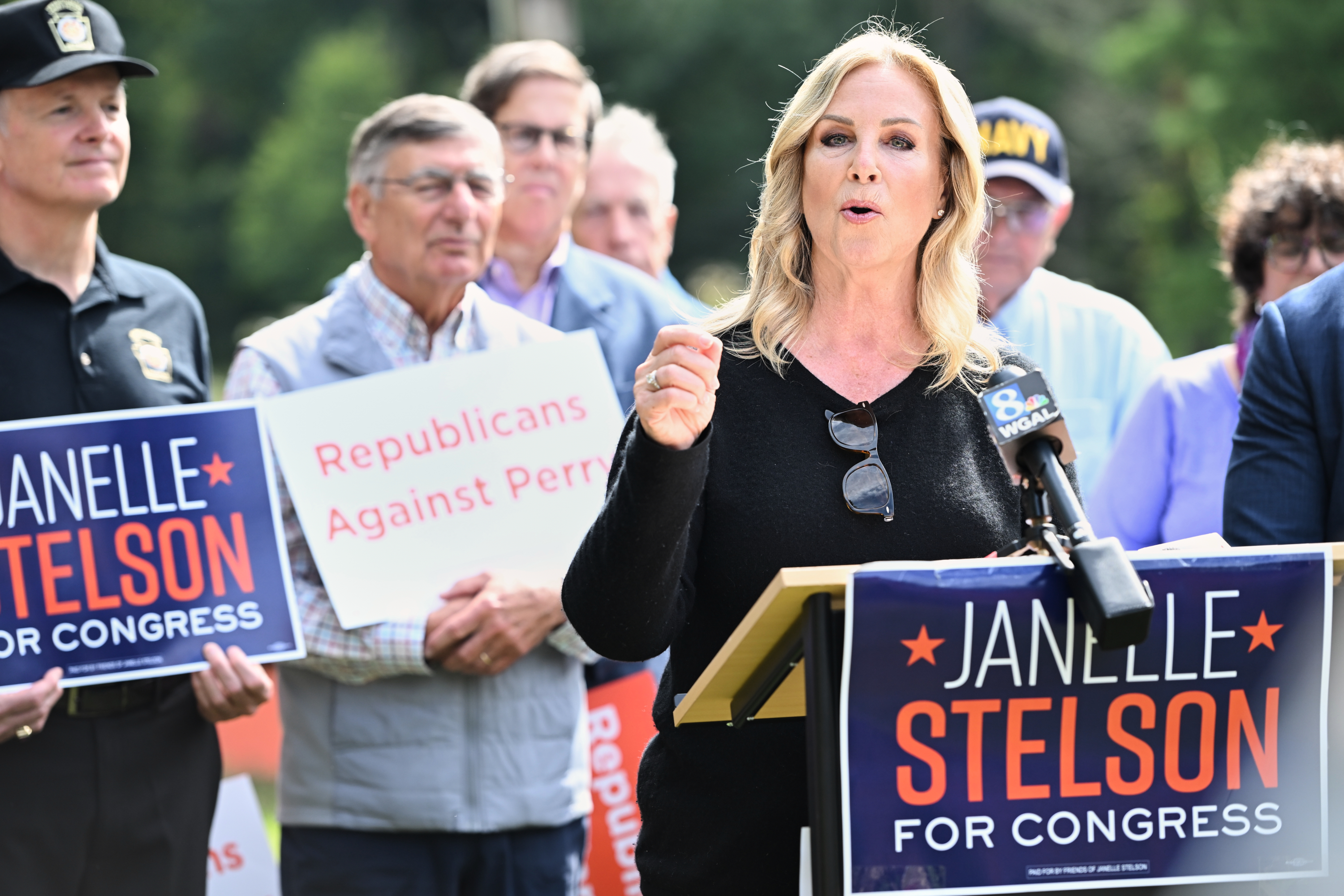
    Democrat Janelle Stelson defeated Republican U.S. Rep. Scott Perry in their rematch to represent the Harrisburg-based 10th District congressional seat, the Associated Press projected Tuesday.

    Stelson, a former TV anchor with name recognition in the district, managed to overtake Perry in the swing district as voters expressed their frustration with President Donald Trump at the polls, after losing to the GOP incumbent in 2024 by just over 1 percentage point.

    As suburban voters moved further toward the Democratic Party, Perry, who was first elected to Congress in 2012, struggled to hold on. Gov. Josh Shapiro, who won the district during his 2022 campaign, endorsed and campaigned with Stelson in the summer and fall to boost her campaign.

    “Forgive me,” Stelson said Tuesday night at her victory party in Hershey. “I’m kind of in shock.” Once she regained her composure, Stelson said that people ask what her first job will be. “One of the things I say is, ‘End the war in Iran.’”

    The crowed roared its approval.

    The 10th Congressional District covers Dauphin County as well as parts of York and Cumberland counties. And in a district the president won just two years ago, his job approval rating among voters sunk to 43%, with 55% disapproving, according to the recent Inquirer/NYT/Siena poll.

    Meghan Getz, a 42-year-old elementary school teacher from Dillsburg, pointed to Perry’s vote for Trump’s signature One Big Beautiful Bill Act, which cut funding for Medicaid and food assistance to pay for tax breaks, when she cast her ballot for Stelson.

    “Her core values, like supporting food stamps and Medicaid, are just better than Perry’s,” said Getz, an elementary school art teacher. “I just really feel like we need more Democratic people in Congress to change it and stop.”

    Other voters in the tight race appreciated the incumbent’s close association with the president.

    “Perry is with Trump on things like tariffs, which are the only way to get manufacturing back, and the jobs that come with it. Trump cares more about jobs than Stelson, or any other Democrat,” said Michael Phipps, a 75-year-old retired mechanic from Dillsburg.

    (function () {window.addEventListener(‘message’, function (e) { var message = e.data; var els = document.querySelectorAll(‘iframe[src*=”‘ + message.id + ‘”]’); els.forEach(function(el) { el.style.height = message.height + ‘px’; }); }, false); })();

    This year’s rematch added an additional layer of bitterness between the candidates who traded insults and allegations.

    Perry accused Stelson of harboring inside her campaign an immigrant who authorities say was in the country illegally. Although the Nigerian man was found with campaign materials from Stelson at the time of his police arrest, she said he was not a volunteer or staff member and denounced illegal entry into the U.S. during Perry and Stelson’s congressional debate.

    Meanwhile, Stelson painted Perry, a close ally of Donald Trump, as an election denier. Perry led the effort to contest Pennsylvania’s electoral votes within hours of the Capitol riot on Jan. 6, 2021 and was investigated by the select House committee for his alleged role in helping craft Trump’s strategy to stay in office despite his 2020 loss. The second time around, voters bought her depiction of Perry.

    (function () {window.addEventListener(‘message’, function (e) { var message = e.data; var els = document.querySelectorAll(‘iframe[src*=”‘ + message.id + ‘”]’); els.forEach(function(el) { el.style.height = message.height + ‘px’; }); }, false); })();

    “I mean he tried to overthrow the government, then asked for a pardon,” said David Koppenhoffer, a 79-year-old Democrat from Harrisburg. “He doesn’t belong in Congress. He belongs in jail.”

    Stelson also framed the stakes of the election around cost-of-living concerns, blaming Perry, a close ally of Trump, for his support of the war in Iran that she and experts have said led to a spike in oil costs throughout the summer and fall. Voters, in the Inquirer/NYT/Siena poll conducted in October, said the economy and cost-of-living concerns were their top priorities, and in a heavily-suburban district, gas prices were front and center.

    Jess Troutman, a 40-year-old Dillsburg Democrat, pointed to these issues as her reason for backing Shapiro and Stelson Tuesday. “Shapiro and Stelson are cohesive in moving in a direction people want to be going toward,” Troutman said. “A lot of us are struggling to afford day-to-day things, and can’t continue this way.”

  • Scranton Mayor Paige Cognetti ousts Rob Bresnahan in key race, flipping House seat for Democrats

    Scranton Mayor Paige Cognetti ousts Rob Bresnahan in key race, flipping House seat for Democrats

    Democrat Paige Cognetti defeated freshman Republican U.S. Rep. Rob Bresnahan on Tuesday to flip a critical Pennsylvania swing district in a region where President Donald Trump saw some of his strongest gains in the state two years ago.

    The result — in a race that had been considered a “toss-up” for months and where polls showed the Democrat leading in the final weeks — is a sizable victory for Democrats who hoped to reclaim a seat they lost in 2024 and that would help ensure their control of the U.S. House for the final half of Trump’s term.

    Cognetti, the 46-year-old mayor of Scranton, ran a robust campaign that focused relentlessly on Bresnahan’s stock trading in office. She also highlighted his support for some of the most controversial parts of Trump’s agenda, like the One Big Beautiful Bill Act, which cut future Medicaid spending and food assistance, and the war in Iran.

    Bresnahan, a 36-year-old former head of his family’s electrical contracting business in Luzerne County, had defeated a five-term Democratic incumbent by less than 2 percentage points in 2024.

    His campaign for a second term focused heavily on his work to secure federal funds for the district, support more popular GOP economic wins — tax cuts, primarily — and attacks on Cognetti for not having the same deep local roots as him. The Democrat grew up in Oregon and previously lived in Washington and New York.

    “Home is where you choose to serve,” Cognetti said during her victory speech Tuesday, recounting how she came to Scranton while working in politics but became devoted to city after meeting her husband.

    She moved to Scranton in 2016 and became its mayor in a 2019 special election after a local corruption scandal, which resulted in her predecessor going to prison.

    “She came in and turned that around and that is what we need at the federal level,” said Stacy Miller, 48, a lifelong Scranton resident who voted for the mayor.

    An early entry into the race, Cognetti did not face any challengers in the Democratic primary and became one of the most prolific fundraisers out of any candidates for Congress in Pennsylvania this year.

    (function () {window.addEventListener(‘message’, function (e) { var message = e.data; var els = document.querySelectorAll(‘iframe[src*=”‘ + message.id + ‘”]’); els.forEach(function(el) { el.style.height = message.height + ‘px’; }); }, false); })();

    By winning the 8th Congressional District, she put herself among a national cohort of Democratic candidates to win relatively Trump-friendly districts amid the president’s sinking approval ratings.

    “I hope it’s a little bit of a fear put into him,” Bernard Ott, a 76-year-old Scranton voter, said of the president on the prospect of Democratic control of the House.

    (function () {window.addEventListener(‘message’, function (e) { var message = e.data; var els = document.querySelectorAll(‘iframe[src*=”‘ + message.id + ‘”]’); els.forEach(function(el) { el.style.height = message.height + ‘px’; }); }, false); })();

    Trump won the district — which covers all of Lackawanna, Wayne and Pike Counties, as well as parts of Luzerne and Monroe Counties — by 8.5 percentage points in 2024, the most of any of Pennsylvania’s four competitive districts this year.

    But only 43% approved and 57% disapproved of his performance in office in a recent Inquirer/New York Times/Siena University poll, which also showed Cognetti leading Bresnahan, 51% to 46%, among likely voters.