Tag: topic-link-auto

  • Peter Max, trippy artist of counterculture era and beyond, dies at 88

    Peter Max, trippy artist of counterculture era and beyond, dies at 88

    NEW YORK — Peter Max, whose trippy posters of Day-Glo flowers, butterflies, rainbows, stars and planets sold by the millions and expressed the blissed-out exuberance of the countercultural 1960s, died Monday in New York City. He was 88.

    The death, at a hospital, was confirmed by his son, Adam Max. He had long suffered from dementia.

    Mr. Max, a vegetarian and a teetotaler who expanded his consciousness through yoga, not drugs, was one of the most visible and successful artists of his time, selling posters in the millions.

    His simple graphic images, brightly colored and infectiously happy, lent themselves to a long list of licensed commercial products, from sheets and glassware and shower curtains to airplanes and, on one occasion, a stamp for the Postal Service.

    Incorporating art nouveau, op art and psychedelic motifs, Mr. Max’s designs offered instant visual gratification and a cheery endorsement of the generational politics of love, joy and universal consciousness. His “panopticon” images repeated visual elements in tight formation, producing a kaleidoscope effect that recalled Easter mandalas.

    His “cosmic jumper,” a young man in bell bottoms traversing the globe in giant strides, became an emblem of modern youth, eager to explore the far reaches of inner and outer space. Barefoot and surrounded by puffy clouds and chubby birds, the jumper appeared on the 10-cent stamp commissioned for Expo ’74, the conservation-themed World’s Fair in Seattle.

    In The Universe of Peter Max, a memoir published in 2013, he wrote: “My cosmic art subjects were always euphoric: Himalayan sages levitating under a shower of flowers beside snowcapped mountain peaks; faces and flowers exploding into a symmetrical cosmic butterfly; mirrored lakes and waters with a cascade of stars and planets; flowers in perpetual states of organic growth, begetting blossoms. My inspiration came from the new youth movement in America and in return spoke to it.”

    Peter Max Finkelstein was born Oct. 19, 1937, in Berlin, where his father, Jakob, was in the import-export business and his mother, Salla (Zeisel) Finkelstein, had been a fashion designer before her marriage. With the rise of Nazism, the family moved to Shanghai, where Jakob set up as a pearl merchant. Peter attended an English-language school and spent much of his spare time talking to monks at the nearby Buddhist monastery.

    As the Maoist revolution gathered strength, the Finkelsteins moved again, this time to Haifa, in Israel, where Peter learned Hebrew and, infatuated with the stars and planets, took special courses in astronomy at the Technion, the Israel Institute of Technology.

    In 1953, the family emigrated to New York, settling in Bensonhurst, Brooklyn, where Peter attended Lafayette High School. He had taken private art lessons in Israel, and, at the urging of a classmate, signed up for summer classes at the Art Students League in Manhattan after high school graduation. Abandoning his rather vague plan to pursue astronomy as a career, he threw himself into art.

    Initially he painted as a realist, then dabbled in abstraction and finally concentrated on commercial art. Riverside Records gave him his first assignment, to design the LP sleeve for The Blues Piano Artistry of Meade Lux Lewis, released in 1962. His moody, vaporous portrait of Lewis at the piano won a gold medal at the annual exhibition of the Society of Illustrators.

    With Tom Daly, he formed a design company that quickly found favor with advertising agencies and book publishers. Within two years, Daly & Max Studio had collected more than 60 awards for its book jackets, album covers and other work, but Mr. Max, feeling constrained, left in 1965. For two years, he lived in virtual seclusion in his duplex apartment on Riverside Drive, turning out thousands of drawing and ideas.

    In 1967, he applied some of his new concepts to the Tin Lizzie in midtown Manhattan, a theme restaurant that he decorated with paisley wallpaper, photographic collages of Charlie Chaplin film scenes and an actual Model T Ford.

    His advertising posters for local shops began to attract special attention. Young customers called up the job printer, Security Printing Company, asking for a poster to hang in their rooms. Denton Stein, the company’s owner, went into partnership with Mr. Max to create Peter Max Posters, which sold 25 of the artist’s designs, in millions of copies, to book stores, head shops and department stores.

    As his popularity grew, Mr. Max began doing commercial posters for the American Cancer Society, the Peace Corps, and the United Nations. The 3,000 posters and 40,000 flyers he printed for a gathering in Central Park on Easter 1967 inadvertently gave the event its name. The words “Be In,” in large letters, followed by “Central Park on March 31,” were read as a noun, not a verb in the imperative mood.

    In 1968, a transit advertising company commissioned Mr. Max to design posters for buses, streetcars and subways in 10 major cities. “I am bringing art to the people where the people are,” he told Time magazine. “Now they don’t have to go to galleries and see paintings on a wall.”

    General Electric approached him to design a clock. He followed up with a line of linens for J.P. Stevens and shirts for Van Heusen. Through the half dozen businesses bearing his name, he entered into licensing agreements with more than 70 companies.

    “You provide the cash, the production and the selling,” he told Business Week in 1968. “I’ll furnish the ideas and the designs — and we’ll split the profits 50-50.” When Life magazine put Mr. Max on its cover in 1969, the headline read “Peter Max: Portrait of the Artist as a Very Rich Man.”

    Mr. Max was everywhere. He was not, however, involved with the 1969 Beatles film Yellow Submarine, often assumed to be his work, in part because he often took credit for it. The film’s art director was Heinz Edelmann, sometimes called the German Peter Max.

    By the 1970s, Mr. Max was in a rut. He shut down his studio and again went into seclusion. “I stopped cold,” he told People magazine in 1976. “I was repeating myself creatively. I had filled myself with being everywhere, doing everything. I had had it.”

    Gradually, he reemerged. For the American Bicentennial, he accepted a commission from the Swedish company ASEA to produce the book Peter Max Paints America, a collection of paintings and drawings honoring each of the 50 states.

    That same year, he produced a series of bilingual “Welcome to the United States” signs posted at more than 200 crossings along the Canadian and Mexican borders. Initially rejected by the Customs Service as implicitly endorsing the ’60s drug culture, they were finally put up in 1978.

    He designed the logo for MTV in the 1980s and the official poster for soccer’s World Cup in 1994. In 1999 he decorated a Boeing 777 for Continental Airlines to commemorate NYC 2000, the official millennium celebration in New York. In 2015, the Rock & Roll Hall of Fame commissioned him to do a poster for its annual induction ceremony.

    By then, he was already struggling with dementia. Yet the Peter Max brand flourished, boosted by the artist’s relationship with Park West Galleries, a Michigan-based company that sold Mr. Max’s work at cruise-ship auctions. Sales on a single voyage could reach $2 million, and in 2018, Mr. Max’s studio, ALP Inc. — named for its three owners, Peter Max and his two children, Adam and Libra — recorded a profit of more than $30 million.

    The artist’s production methods became the subject of widespread speculation. Friends reported that Mr. Max could no longer paint and merely signed his work, which was made, in prodigious quantities, by a small army of assistants.

    They were overseen by Adam Max, who was ousted from his father’s business in 2019 by his daughter, Libra Max, and the artist’s court-appointed guardian, who were concerned that Mr. Max was being exploited. Libra Max took over her father’s studio, fired many of his assistants and business associates, and set about restoring his reputation through galley and museum shows that showcased his earlier work.

    Mr. Max’s first marriage, to Elizabeth Nance, with whom he had two children, ended in divorce. In 1997, he married Mary Balkin, who was 30 years his junior and whom he randomly met on a Manhattan sidewalk a year earlier. “Hi, I’m Peter Max, and I’ve been painting your profile my entire life,” he reportedly said upon first seeing her.

    She died by apparent suicide in 2019, amid her husband’s worsening dementia and an extended legal dispute with her stepson over the handling of Peter Max’s art and wealth.

    Mr. Max is survived by Adam and Libra Max.

    For his legions of fans, Mr. Max would always remain an avatar of the 1960s counterculture in its happiest, most innocent phase. Whatever the year, and whatever the occasion, his work always breathed the spirit of the 1960s. When the De Young Museum in San Francisco organized an exhibition in 2007, the title said it all: “Peter Max and the Summer of Love.”

    “Just as The Beatles had the music, I had the images,” he told Crain’s New York Business in 2007. “Kids would buy the posters and look at them as they listened to the music. It was like their MTV.”


  • U.N.-backed experts cite possible U.S. war crimes in Iran strikes

    U.N.-backed experts cite possible U.S. war crimes in Iran strikes

    GENEVA — Human rights experts commissioned by the U.N.’s top human rights body say they have found “reasonable grounds” to believe the United States committed war crimes in two strikes in Iran, including on a school in the southern city of Minab. They also accuse Iran’s theocratic government of carrying out crimes against humanity against its own people in a report published Thursday.

    The report, while not binding, adds to international evidence gathered about crimes in the war in Iran, and could eventually be used in efforts to reach justice in international courts.

    The fact-finding mission on Iran, chaired by jurist Sara Hossain of Bangladesh, is made up of independent experts and was created in 2022 by the Human Rights Council, the U.N.’s top human rights body, which is based in Geneva.

    The experts were expected to present their findings on Monday to the council, which is made up of 47 U.N. member countries.

    The team says the U.S. launched ‘indiscriminate’ attacks

    The international fact-finding mission says its findings on U.S. war crimes center on a pair of U.S. airstrikes that killed at least 178 civilians, including women and children.

    At the start of the U.S.-Israeli war against Iran in February, at least one U.S. missile hit the Shajareh Tayyebeh school in Minab, according to an Associated Press investigation. There has been no final accounting of what happened.

    Iranian state media have said 168 people were killed in the strike, most of them children.

    “Following the United States and Israeli attacks on 28 February, the mission found reasonable grounds to believe the United States committed the war crime of launching indiscriminate attacks resulting in the loss of life or injury to civilians or damage to civilian objects,” a U.N. statement about the team’s findings said.

    The U.S. State Department did not immediately respond to a request from The Associated Press seeking comment.

    In their report, the experts concluded that “the building of the school was the intended point of impact” and the resulting damage wasn’t the result of an errant strike or collateral damage from an attack on a compound of Iran’s Revolutionary Guard next to the school.

    The Trump administration has yet to directly accept responsibility or release the findings of a Pentagon investigation into the school bombing.

    The U.N.-backed team based its allegations on two strikes — one involving Tomahawk missiles that hit the “clearly identifiable” school, and another in which Precision Strike Missiles dispersed tungsten pellets over a “clearly identifiable sports complex and residential area” in the southern city of Lamerd, also on Feb. 28.

    The U.N.-backed team said 22 civilian men and women were killed. U.S. Central Command has denied responsibility for the strike on Lamerd.

    Experts cite ‘crimes against humanity’ by Iran’s government

    The team found that killings by state security forces in Iran have occurred on a “staggering scale,” and civilians faced “gross human rights violations and crimes against humanity committed by their own government.”

    Iranian security forces carried out “violent repression” over the last two years by firing assault rifles into crowds, beating protesters and arresting healthcare workers, among other things, the team said. Detainees faced torture, and were deprived of legal counsel, leaving their families “in the dark” about their whereabouts, the experts said.

    The Tehran government intensified the use of the death penalty, and said more than 70 people – including five women and three boys – remain at “imminent risk of execution,” they added.

    “The report concluded that many of these gross violations amount to crimes against humanity — including murder, imprisonment, torture, and other inhumane acts committed as part of a widespread and systematic attack on civilians,” the statement said.

    Both the U.S. and Iran should provide reparations, they say

    The experts said the United States and Iran should halt all rights violations and crimes, and provide “full reparations to victims.”

    The report, built on a “victims-centered approach,” was based on interviews with 73 people both inside and outside Iran, along with documentation, satellite imagery, photographic and video material and information from “credible” organizations and experts, the experts wrote.

    The ongoing conflict that has driven people from their homes in Iran as well as an internet shutdown and a lack of full cooperation from the two governments partially impeded the team’s efforts to get information.

    Nearly three dozen requests from the experts for information from Iran’s government went unanswered, they said, as have requests in June to the U.S. government for information and meetings with officials.

  • House approves sweeping Russia sanctions bill, sending it to Trump

    House approves sweeping Russia sanctions bill, sending it to Trump

    WASHINGTON — The House on Wednesday passed a broad package of sanctions targeting Russian officials and key pillars of its economy as lawmakers look to deprive President Vladimir Putin of the financial resources needed to wage the war against Ukraine.

    The bill is named after the late Sen. Lindsey Graham of South Carolina, who spent more than a year negotiating it. The measure was approved in a 262-159 vote and now heads to President Donald Trump to be signed into law.

    The legislation represents the most ambitious effort to support Ukraine since Trump’s return to the White House and would break nearly two years of relative gridlock on the issue following a 2024 emergency aid package. Ukrainian President Volodymyr Zelensky has been pushing for the bill’s passage and made a direct appeal to senators shortly before they passed it last month.

    The measure sanctions Russian officials, banks and a shadow fleet of tankers that keeps Russian energy moving. It also directs Trump to impose up to 100% tariffs on the top five importers of Russian oil or natural gas, with an exception for countries that import less than 15% of Russia’s natural gas exports and have taken significant steps to reduce those imports.

    “These countries have a choice to make about whether they will continue to sustain Putin’s aggression,” Rep. Michael McCaul (R., Texas) said.

    Democrats are divided on the legislation

    Supporters said the tariff provisions are aimed at deterring China and India from purchasing Russian energy, but critics of the bill said they fear Trump will use the legislation to target allies in the European Union and elsewhere. Americans, they warned, would pay the price for such tariffs through higher prices at the cash register.

    “This president has always said he loves tariffs,” Rep. Gregory Meeks (D., N.Y.) said. “And we know the history of what he’s done with reference to tariffs to our European allies, and our allies everywhere.”

    Democrats were divided on the bill, despite overwhelming support in the caucus for aiding Ukraine. Rep. Steny Hoyer (D., Md.) told colleagues they can’t control what the president does, but they can stand up and declare where they are on the war.

    “If we fail to pass this bill, there will be cheers in the Kremlin and tears in Kyiv,” Hoyer said.

    But Rep. Don Beyer (D., Va.) predicted Ukraine supporters would come to regret voting for the bill.

    “Yes they will be able to say ‘we stood with Ukraine’ in the immediate aftermath,” Beyer said. “But when Donald Trump hits our allies with new tariffs and waives sanctions on Russia, the propaganda victory for Putin will be lasting, and the damage will be embedded in U.S. law.”

    Democratic leader Hakeem Jeffries of New York, speaking in opposition to the bill, said Democrats would continue to support the Ukrainian people until victory is won, “but this bill does not provide a path to secure that.”

    In all, 58 Democrats broke with Jeffries and voted for the bill, while 152 voted against it. Among Republicans, 203 voted yes while seven voted against it.

    Speaker Mike Johnson (R., La.) celebrated the vote and highlighted the additional tariff power it provides the president.

    “For too long, Putin has bankrolled this devastating war with money and resources from countries willing to look the other way, and today, that ends,” Johnson said.

    Getting Trump on board has been a long process

    Congress has struggled to ensure the flow of U.S. funding and munitions to Ukraine as Republican support for spending billions of dollars more on the effort has waned. Trump routinely derided the Ukraine aid while campaigning for the White House and insisted that, if elected, he would quickly end the war launched by Moscow’s February 2022 invasion.

    It took Graham essentially a full year to bring Trump on board with the Russia sanctions package. Eventually, Trump gave a nod to the bill after it included his push for a five-year extension of existing sanctions on Iran. Republicans speaking on the House floor in advance of Wednesday’s vote were overwhelmingly supportive of the package.

    Rep. French Hill (R., Ark.) acknowledged Democratic criticism that tariffs could be used aggressively on smaller U.S. allies, but said it was time to deliver a resounding message to the Kremlin: “End this war, get out of Ukraine, focus on rebuilding your shattered international reputation and your destroyed economy.”

    The Senate overwhelmingly passed the bill by a vote of 86-11 last month, but momentum slowed in the House. Republican leadership focused on other priorities, namely bills designed to put Democrats on defense going into the midterms. Meanwhile, a chorus of key Democratic lawmakers voiced alarm about the bill’s tariff provisions.

    Passage of the bill in the House came on the final day that the chamber is expected to be in session for votes before the Nov. 3 elections.

    After the vote, a group of Republicans and Democrats from the House and Senate celebrated the vote at a rare bipartisan press conference.

    Democratic Sen. Richard Blumenthal of Connecticut, who wrote the bill with Graham, said he hopes the sanctions will help force Putin to the negotiating table and end the war.

    “To Vladimir Putin — we have your number,” Blumenthal said. “And to Ukraine — you are not alone.”

    Leading up to the vote, Zelensky took to social media urging the House to pass the bill. He said during war it is sometimes better to “make a not-so-perfect decision than to do nothing.”

    “And this is a very important historical moment for the United States. The bill must be passed, voted on, and supported,” Zelensky said on X. “Beyond that, strong decisions from the U.S. Administration are important. Personal decisions by President Trump. I very much hope we will see that.”

  • Why RFK Jr. and Trump can’t be trusted on measles vaccine safety

    Why RFK Jr. and Trump can’t be trusted on measles vaccine safety

    A brouhaha recently broke out among Pennsylvania’s governor, the new head of the CDC, Health and Human Services head Robert F. Kennedy Jr., and various health agencies in the state about whether two infant deaths in Lancaster County, Pa., were caused by the measles. And now more measles-related deaths are further complicating the dispute.

    Two facts are important to keep in mind.

    One is that with a total of nearly 700 measles cases across 36 counties so far this year, maximum information from the Pennsylvania Department of Health about the deaths — particularly the deaths of the infants in Lancaster County — is needed in order to prevent further harm.

    And two, nothing the federal government has to say about measles is trustworthy.

    On Aug. 26, Kennedy told reporters, “We’re doing a better job than any country in the world at controlling the measles outbreak.” He made the same claim in congressional testimony earlier this year, arguing that measles is surging worldwide and the outbreak here is simply part of a global problem.

    It isn’t.

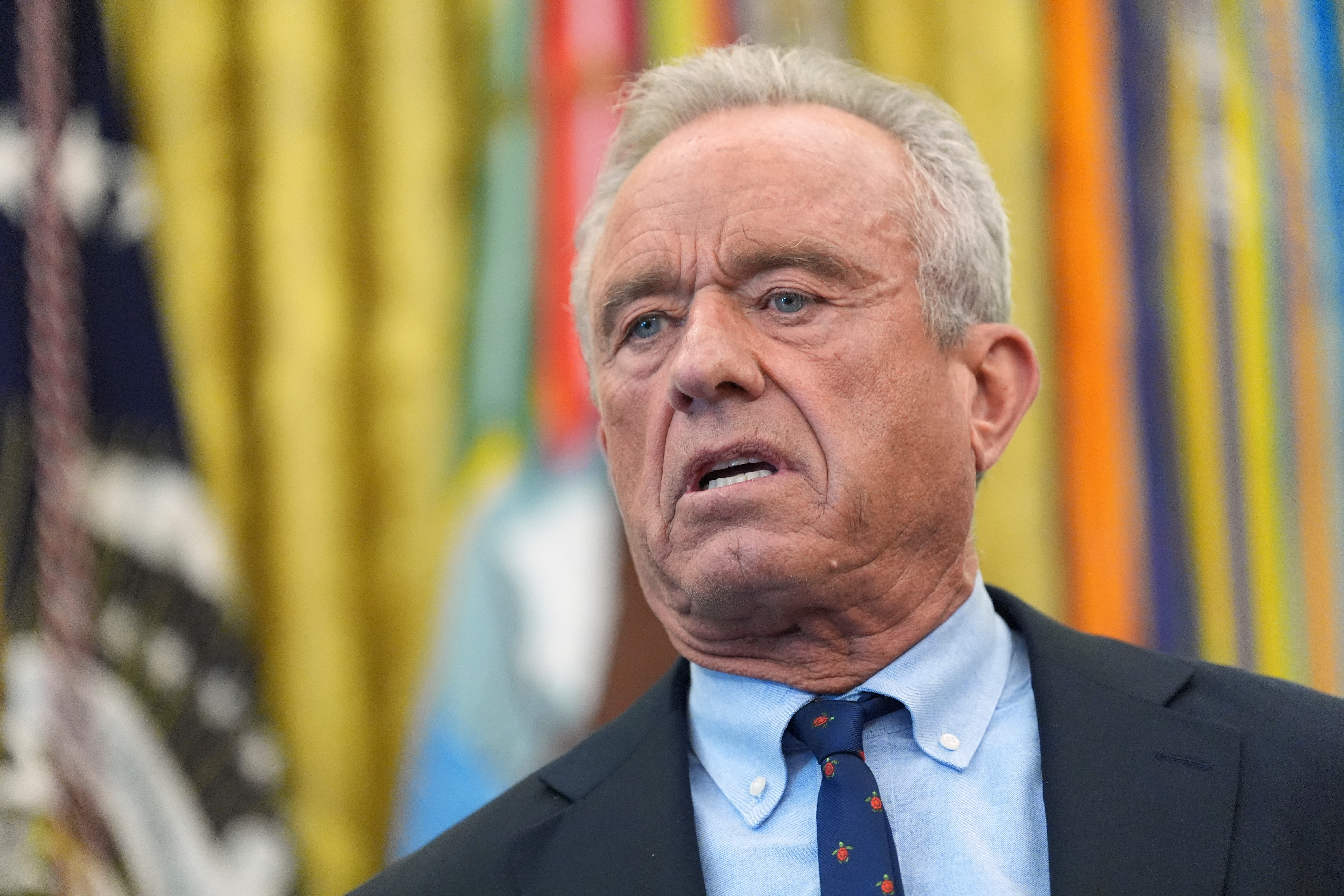
    Health and Human Services Secretary Robert F. Kennedy Jr. speaks during a meeting to sign an executive order about vaccines in the Oval Office last month.Jacquelyn Martin

    Kennedy is not telling the truth. His anti-vaccine efforts, along with President Donald Trump’s unhinged attacks on the measles, mumps, and rubella (MMR) shots — given in two doses to kids before entering kindergarten — have set off a 35-year high incidence of the disease in the U.S.

    What is causing the rapid return of measles is a never-before-seen decline in vaccination rates. This has led to an explosion in measles cases that is, contrary to Kennedy’s assertions, worse than in many other countries.

    Let’s look at the numbers.

    So what is going on elsewhere?

    The WHO European Region cut measles cases by 73% between 2024 and 2025. The U.S. saw an increase: 2,289 cases in all of 2025, and 3,294 already in 2026 — the highest number since 1991.

    Cases are falling in Canada and flat in the U.K. Furthermore, our rate of measles per million people is much higher than Japan’s or Australia’s.

    Why are we doing so poorly?

    Kennedy blames measles coming in from other nations. So does U.S. Rep. Byron Donalds, a Republican from Florida who is running for governor. He keeps pointing to “rampant illegal immigration” during the Biden administration for measles outbreaks.

    Those claims are based on misinformation and bigotry about foreigners.

    A total of 16 measles cases have been reported among international visitors to the United States, whereas 95% of U.S. cases this year are outbreak-associated — meaning they reflect domestic spread.

    Ninety-five percent of those cases occurred in unvaccinated or unknown vaccination status individuals.

    While some cases do have travel-related origins, the spread of measles is a domestic policy failure caused by falling vaccination rates. Other countries have tourists and immigrants, too — but only the U.S. is continuing to see rapidly increasing infection rates.

    Jessica Early holds a vial of the combination measles, mumps, and rubella (MMR) vaccine at Prisma Health Pediatrics in Greer, S.C., in March.Mary Conlon

    In the United States, kindergarten MMR coverage has slipped from 95.2% to 92.4%, with vaccine exemptions at a record 4.2%. In some states, the coverage is as low as around 75% — creating perfect conditions for the spread of the highly contagious disease.

    Our national leaders keep pouring inaccurate fuel on the epidemic.

    They suggest autism is a risk from the measles vaccine, that the combined MMR vaccine is lethally dangerous, that kids get too many shots, and that the MMR shot is losing efficacy every year. None of that is true.

    What is true is that measles is a dangerous disease that can cause seizures, immune problems, pneumonia, deafness, or contribute to deaths. Each case can cost as much as nearly $60,000, including the public health response.

    We can’t fight this preventable plague using incorrect data, misinformation, and outright lies. America’s kids deserve so much better.

    Arthur Caplan is a retired professor of medical ethics, soon to be moving to Medford, N.J. Samuel Howard is an undergraduate student at the School of Humanities and Sciences at Stanford University.

  • Carney embraces a proposal for Canada to become the European Union’s first associate member

    Carney embraces a proposal for Canada to become the European Union’s first associate member

    STRASBOURG, France — Canadian Prime Minister Mark Carney on Thursday embraced the prospect of his country becoming the European Union’s first associate member, saying closer ties with Europe were meant to ensure no country could control Canada’s markets, impair its sovereignty or undermine its freedoms.

    The remarks came after U.S. President Donald Trump suggested the proposed arrangement could be a “hostile act” and threatened heavy tariffs on Europe if he judged its intentions to be unfriendly.

    In a speech that repeatedly extolled cooperation between Europe and Canada, Carney told the European Parliament that he welcomed European Commission President Ursula von der Leyen’s proposal, unveiled Wednesday.

    He acknowledged that “associate membership” remains to be defined and outlined what he was proposing: deeper Canada-Europe integration across trade, defense, critical minerals, artificial intelligence, energy, space, research and financial services to make both sides less vulnerable to economic and geopolitical pressure.

    “I am not proposing a third bloc in order to become a great-power rival — only with better manners,” he said. “We do not seek power to dominate others.”

    Carney said the goal instead is to build Canada’s resilience so that no country can control its markets, undermine its sovereignty or dictate its choices.

    The prime minister received an ebullient welcome when he walked into the chamber, with many lawmakers approaching him to shake his hand and ask for selfies — and a standing ovation after he spoke. One parliamentarian had donned a Canadian hockey jersey.

    For generations, Canada built its economy around integration with the United States. Trump’s tariffs, demands for economic concessions and repeated talk of making Canada the 51st state have pushed Ottawa to reduce its dependence on the United States and seek a far deeper economic, security and political relationship with Europe.

    Europe offers Canada another path

    Von der Leyen proposed making Canada the EU’s first associate member — a status that does not currently exist in the bloc’s treaties and would have to be created. She said Europe wants to take its relationship with Canada to “the highest level possible.”

    Carney, sitting in the front row of the European Parliament chamber, nodded and rose to embrace von der Leyen as lawmakers gave the proposal a standing ovation.

    Von der Leyen said Canada and the EU should move beyond their existing free trade agreement and create an “Alliance for the Future” encompassing a “common prosperity and economic security space.”

    Carney will host EU leaders for a Canada-EU summit in Montreal on Oct. 29-30, where the two sides are expected to discuss the proposed new relationship in more detail.

    Canada sends roughly 70% of its exports to the United States, making it highly exposed to Trump’s tariffs. Ottawa has retaliated and rejected demands Carney says threaten Canadian sovereignty. Europe took a different path, shelving retaliation and accepting tariffs of up to 15% on most EU exports to the U.S.

    Carney has rallied ‘middle powers’

    Carney has repeatedly urged middle powers to resist that kind of economic coercion. At the World Economic Forum in Davos in January, he warned that when countries negotiate alone with a dominant power, “we negotiate from weakness. We accept what is offered.”

    Trump rebuked him the next day.

    Jonathan Wilkinson, Canada’s ambassador-designate to the EU, said Wednesday that Canada is not seeking full EU membership because that would require surrendering some sovereignty. Instead, Ottawa wants “to get as close as we possibly can” to Europe while increasing Canada’s independence.

    Exactly what associate membership would mean remains to be negotiated.

    Canada has already taken a major step. This year it became the first non-European country to join the EU’s 150-billion-euro ($173-billion) SAFE defense procurement program, giving Canadian companies access to joint procurement as Europe increases defense spending.

    The two sides have also discussed closer cooperation on energy, critical minerals, artificial intelligence and digital trade.

    “The policies and rhetoric of the Trump administration are clearly pushing both Canada and the EU to imagine a world without strong U.S. leadership and to act accordingly,” said Daniel Béland, a political-science professor at McGill University in Montreal.

    Nelson Wiseman, a professor emeritus at the University of Toronto, said Carney’s handling of Trump has heightened European interest in the Canadian leader.

    “Carney’s shrewdness in dealing with Trump has captured Europe’s attention,” Wiseman said.

    Washington will be watching

    Wiseman said Europeans have long regarded Canada as a country that understands the United States particularly well because of their deep economic and political ties. Carney’s willingness to resist Trump rather than quickly accept Washington’s demands has reinforced that perception, he said.

    Béland said Carney may avoid naming Trump on Thursday while leaving little doubt about the target of his broader argument.

    “He knows that, beyond Europe, the world will be watching, including the White House,” Béland said.

  • House passes bill taking aim at data center electricity costs

    House passes bill taking aim at data center electricity costs

    WASHINGTON — The House on Wednesday overwhelmingly passed a bipartisan bill that encourages state utility regulators to insulate consumers from rising energy costs tied to data centers, as members of Congress rush to address a voter outcry over the rapid advance of artificial intelligence.

    It was unclear whether the legislation, introduced by Reps. Gabe Evans, R-Colo., and Kathy Castor, D-Fla., would have its intended effect. The bill would direct state utility regulators to consider adopting federal rules requiring data centers to cover any higher costs associated with their large-scale power use. But under current law, Congress cannot force state regulators to follow federal standards when they are setting electricity rates.

    Still, as the boom in data center construction has become a potent issue in November’s midterm elections, lawmakers in both parties have been eager to have a legislative achievement that they could cite on the campaign trail. It would still have to pass the Senate and be signed by President Donald Trump before it could become law.

    Across the country, Americans in both parties are concerned about rising electricity prices and water use. Data centers, the large complexes of servers that are crucial to powering AI development, have become the most visible avatar of voters’ fears over the growth of AI and the power of big tech companies.

    That issue took on new political urgency this week, after concerns over the safety of AI emerged into wider view and key tech leaders began calling for a slowdown in the pace of development.

    Lawmakers in both parties have called on Congress to impose guardrails on AI, though there is no clear bipartisan consensus on how to do so, and Trump has rejected calls for regulation. Speaker Mike Johnson said Tuesday that he and the president would convene a meeting with AI executives at the White House next week.

    When asked about their plans to address the issue, some House Republicans pointed to the utility legislation, which does not address AI safety concerns. The measure mirrors a voluntary pledge that tech executives made at the White House this year, when they promised to shoulder a larger share of the energy costs associated with data centers.

    “It makes sure that the ratepayers are protected as you’re building out AI infrastructure,” said Rep. Steve Scalise of Louisiana, the No. 2 Republican. “That it’s got to be supported by the local community, and that it’s not going to adversely impact ratepayers.”

    Wednesday’s vote, 417-3, reflected the increasingly bipartisan nature of the data center backlash and a growing concern among Republicans that they are particularly vulnerable on the issue after their signature domestic policy bill included tax breaks that benefited developers of data centers. It also marked a turnabout from just a year ago, when almost all House Republicans backed a version of that measure that put a moratorium on any state regulation of AI, though the provision was later stripped by the Senate.

    With the House leaving town Wednesday until after Election Day, this week was lawmakers’ last chance to pass a bill showing they were responsive to voters’ concerns about data centers.

    Evans, who introduced the utility bill, is among the most politically vulnerable Republicans in the House. It is unclear whether the Senate will take up the legislation before October, when it is scheduled to recess until after November’s elections. Its version of the bill was put forward by Sen. Jon Husted, R-Ohio, who is in a competitive race in which Democrats have sought to make data centers a central issue.

    A poll conducted this month by The New York Times and Siena University found that 61% of voters said they opposed the construction of data centers and were about split on which party was better positioned to address it, with a considerable bloc saying they did not know which side to trust.

    When Republicans last year passed their sweeping tax and spending cut bill, they expanded significant tax advantages for businesses for research costs and new investments. They also adjusted a tax break program meant to encourage development in poorer areas so that it would incentivize more development in rural areas.

    Democrats have argued that those provisions have helped technology companies looking to build new data centers, and they have accused Republicans of being indifferent to voters’ worries that such construction is raising their electricity costs and changing their neighborhoods.

    “Unfortunately, these very real concerns are repeatedly swept to the sidelines, minimized or ridiculed by President Trump and Republican congressional leaders,” said Rep. Frank Pallone Jr., D-N.J.

    Some Republicans have argued that regulations on AI would hinder America’s ability to stay ahead of China in developing the technology. On the House floor, Evans presented his bill as a way to allow for data center development while ensuring that states had a mechanism to address implications for communities.

    The bill, he said, “keeps costs low for Americans and helps us build the energy backbone required to compete and win in the AI race.”

    This article originally appeared in The New York Times.

  • The United States got its name in Philadelphia’s Independence Hall

    The United States got its name in Philadelphia’s Independence Hall

    The skirmishes between the colonies and England in April 1775 grew into a full-on war by January of 1776. No longer contained to New England, the fighting had spread to Canada and the South; so much so that British loyalist and Virginia’s royal governor Lord Dunmore offered freedom to any enslaved man who fought on behalf of the Crown.

    The stakes were high.

    The colonies were no longer interested in making nice with England. They wanted independence and realized they had to unite to win.

    Kat Black’s design presents the flag of the original 13 colonies of 1776 when the name “United States” was approved by the Second Continental Congress in July of 1776 along with the Declaration of Independence.Kat Black for Colibrí Workshop

    Stephen Moylan, a Pennsylvanian and officer in the Continental Army, first floated the idea of calling the new nation the “United States” in a 1776 letter to politician and comrade in arms Joseph Reed.

    “Moylan wrote the ‘united states’ needed to spend emissaries to Spain and build a case for the rising revolution and secure foreign support,” explained Matthew Skic, director of collections and exhibitions at the Museum of the American Revolution.

    ”That letter, dated Jan. 2, 1776, is the first documented reference to the colonies as the ‘united states,’” Skic said.

    According to an article in the Pennsylvania Evening Post, it was seven days later on Jan. 9 that Common Sense, Thomas Paine’s revolutionary 74-page pamphlet urging the colonies to form an independent empire, dropped.

    An original copy of Thomas Paine’s 47-page Jan. 1776 Common Sense pamphlet where the revolutionary called for the colonies to form united states independent of English colonies.The Museum of the American Revolution

    The pamphlet, read aloud in taverns in Philadelphia and throughout the original colonies, stoked the flames of independence. It was printed in Robert Bell’s print shop at Third and Walnut Streets.

    “Paine urged the colonies to form states,” Skic said. “But not the 21st-century perspective of states as in New Jersey, Virginia, or New York. In the 18th century, states were an independent nation or country with its own government.”

    And those states, Paine said, needed to come together to defeat a common enemy: England.

    In May 1776, Virginia statesman Richard Henry Lee issued a resolution proposing that the Second Continental Congress declare the colonies’ independence, explicitly stating that the new country should consist of independent states formerly known as colonies.

    An image from the National Bobblehead Hall of Fame and Museum of its Declaration of Independence bobble created for the nation’s 250th anniversary.Courtesy of the National Bobblehead Hall of Fame and Museum

    On July 2, the Second Continental Congress adopted the Declaration of Independence that referred to the new country as the united States. The united was written in lowercase, Skic said, to emphasize the focus on “States.”

    However, it wasn’t until Sept. 9 when during the Second Continental Congress — meeting at the Pennsylvania State House, today’s Independence Hall — delegates voted to call the new government the United States of America, with a capital “U.”

    “As soon as independence becomes the goal, not just restoring liberty, the United States took hold as a name,” Skic said. “And it happened in a neat six month time period.”

    The official naming of the United States will be remembered Saturday at Independence Hall from 11 a.m. to 1 p.m. in the Philadelphia Historic District’s 38th firstival. Firstivals are weekly day parties held in honor of America’s 250th birthday.

    “The Continental Congress had been trying to decide how it should be represented when we present ourselves to other countries,” Skic said. “What would be the official seal on our government documents? With the Sept. 9 vote, Congress officially says all of the government’s official documents will say ‘United States.’”

    The Continental Congress ordered the Continental Army’s property be marked United States in February 1777.

    A Revolutionary War-era canteen marked U. States for United States. One of the first military-issued items that speaks to the formation of America’s independence.The Museum of the American Revolution

    “[The Museum of the American Revolution] has muskets, canteens, and cartridge boxes marked U. States,” Skic said. “We also have one of the only surviving original molds of USA buttons.”

    The army would be called the Continental Army through the end of the Revolutionary War in 1783, after which it disbanded. George Washington was elected president in 1789 and soon after his inauguration, it was reestablished as the United States Army.

    A previous version of the story misstated Common Sense’s publication date. It was published Jan. 9, 1776.

    This week’s Firstival is Saturday, Sept. 19, from 11 a.m.-1 p.m., at Independence Hall, 520 Chestnut St.

    Each week, The Inquirer is highlighting a “first” from the Philadelphia Historic District’s 52 Weeks of Firsts. A “52 Weeks of Firsts” podcast, produced by All That’s Good Productions, drops every Tuesday.

  • Planned Parenthood clinics now offering hormone replacement therapy, menopause care

    Planned Parenthood clinics now offering hormone replacement therapy, menopause care

    Philadelphia-area women can now seek relief from hot flashes, night sweats, and other menopause symptoms from a health provider better known for supporting their reproductive choices earlier in life.

    Planned Parenthood clinics around the region are now offering menopause hormone replacement therapy and perimenopause care and will begin providing vasectomies next year, in an effort to reach more patients and diversify services at a time when the nonprofit’s federal funding remains under fire because it is the nation’s largest abortion provider.

    Local Planned Parenthood clinics lost millions of dollars this year when Republicans prevented the organization from billing Medicaid for services, and some were forced to stop accepting patients with the publicly funded insurance coverage. Medicaid access was restored in July, but conservatives who oppose abortion have vowed to pursue more funding cuts after the midterm elections this fall.

    One way clinics have responded to ongoing financial and political attacks is by adding services that attract new patients who can pay out-of-pocket or with private insurance.

    New patients accounted for nearly a third of the 350 patients who came to Planned Parenthood Southeastern Pennsylvania clinics for menopause treatment last year, when the service was rolled out.

    The program has been popular in part because patients can typically get appointments within a week, said Dayle Steinberg, CEO of the Southeastern Pennsylvania affiliate, which operates clinics in Chester, Delaware, Montgomery, and Philadelphia Counties.

    Planned Parenthood Keystone began offering menopause and perimenopause care at its clinics in Allentown, Bensalem, Harrisburg, Lancaster, Reading, Wilkes-Barre, and York earlier this month.

    The Keystone affiliate plans to begin offering vasectomies at its Allentown location next year.

    “When we look at ways to be resilient, looking at service opportunities that speak to people of a variety of ages, sexual orientation and gender is going to be vital,” said Melissa Reed, CEO of the Keystone affiliate.

    Expanding reproductive health services

    With roughly 600 health centers nationally, Planned Parenthood is the largest abortion provider in the country. It is also a leading resource for family planning, sexual health education, and gynecological care, often operating in underserved communities where patients are more likely to be uninsured or covered by government insurance.

    At the Southeastern Pennsylvania network, eight out of 10 patients come for routine exams, tests for sexually transmitted diseases, contraception, family planning guidance, or other reproductive healthcare.

    The clinics serve women and men and provide gender-affirming care.

    Local Planned Parenthood leaders said the new menopause services are a natural extension of the organization’s reproductive healthcare.

    “For so long, women’s symptoms in menopause have been dismissed or ignored,” Reed said. “This is an important part of a woman’s reproductive health journey.”

    The organization is also capitalizing on surging interest in menopause and perimenopause in recent years, as high-profile public figures speak out about a midlife challenge long considered taboo. Revised health guidance now underscores the safety and benefits of treatment options.

    As a result, doctors often have long waitlists for appointments. And pharmacies struggle to keep in stock the hormone medications that have gained popularity as a way to control side effects, such as hot flashes, disrupted sleep, and bone degeneration.

    Planned Parenthood providers can counsel patients on hormonal and emotional changes associated with menopause and perimenopause, and write prescriptions for hormone therapy or other medications.

    Ongoing federal threats

    Planned Parenthood faced a financial crisis when President Donald Trump’s 2025 signature spending plan included new rules that prevented the organization from billing Medicaid for services.

    The two Philadelphia-area affiliates estimated they would lose about $3 million in revenue. The Keystone clinics temporarily stopped accepting Medicaid patients.

    They resumed seeing Medicaid patients in July, when the ban was lifted at the end of the fiscal year.

    The Southeastern Pennsylvania affiliate relied on fundraising and donations to continue caring for Medicaid patients who were no longer able to pay.

    But leaders acknowledged the approach was unsustainable.

    “This isn’t something you can fundraise your way out of,” Signe Espinoza, vice president of public policy and advocacy at the Southeastern Pennsylvania affiliate told The Inquirer in March. “We don’t want to turn patients away, but we know that eating the cost is not a sustainable model.”

    The organization has since begun offering more advanced OB-GYN services and expanded clinic hours. Leaders routinely survey community members to learn more about what other services they would like to see at Planned Parenthood.

    Some of the ideas patients and community members have suggested include postpartum and prenatal care, and fertility services.

    The organization isn’t ready to expand to include those types of services yet, but “we’re feeling much more optimistic in our ability to move forward,” Steinberg said.

  • A shuttered South Jersey golf course was approved for warehouses. Almost 2 years later, construction hasn’t started.

    A shuttered South Jersey golf course was approved for warehouses. Almost 2 years later, construction hasn’t started.

    Nearly two years after Chesterfield Township approved a plan to build a warehouse on a shuttered golf course, construction still has not begun.

    The Old York Country Club was purchased by New Jersey-based real estate developer Active Acquisitions in 2022 with plans to build at least one warehouse totaling up to about 1.1 million square feet, according to the redevelopment agreement. The project currently includes plans for a single building, but a second warehouse could be permitted — with the two buildings totaling up to 1.3 million square feet — if it were to be dedicated to cannabis cultivation or manufacturing, according to the township.

    Four years later, the developers are still working to obtain the final approvals and permits needed to start construction at 228 York Rd., with hopes to finally break ground early next year, Active Acquisitions founder Seth Gerszberg said.

    The developers have not identified a tenant for the future site, but Gerszberg said that regardless of who moves in, the property will operate as a traditional warehouse or logistics center with large trucks coming and going from the building throughout the day.

    The anticipated work at the 156-acre property was approved in November 2024 and comes more than six years after the township designated the site as an “area in need of rehabilitation” in May 2020.

    The sprawling golf course closed in 2021 in part due to pandemic-era drops in revenue and memberships. In the years since, the township’s redevelopment efforts have drawn some public pushback.

    Following the initial approval of a redevelopment plan for the site in October 2022, a neighborhood group called Save Old York filed a lawsuit against the township. While it was ultimately dismissed in court, the lawsuit argued that the redevelopment plan did not conform to the township’s master plan and amounted to “spot zoning” from agricultural to commercial.

    But Chesterfield administrator George Jackson, who began working in the township in 2024, argues that the project presents a rare opportunity for the township to welcome a new taxpayer with deep pockets.

    Much of Chesterfield’s 21 square miles is preserved farmland that is unable to be developed, Jackson said, which significantly limits new commercial development opportunities. The tax rates for preserved farmland are also much lower than the rates for residential or commercial properties, he said.

    “You need the balance in your ratables,” Jackson said of the township’s tax base. The warehouse “could take some of the burden off of our residential taxpayers.”

    In a town with a municipal budget of roughly $6.7 million in 2026, the potential yearly tax revenue generated by the new warehouse is expected to be around $2 million — roughly 30% of the total budget, he said.

    “Our opportunities to increase our tax base are very, very limited, and this is an opportunity to really increase it dramatically,” he said.

    As the developers work to secure an end user for the future warehouse, both Gerszberg and Jackson emphasized that the one thing they know for sure is that it won’t be an Amazon fulfillment center.

    The redevelopment agreement specifically prohibits that type of warehouse use on the site, while also requiring that vehicles exiting the property make a left turn onto Old York Road in an effort to keep truck traffic out of the center of town, Jackson said.

    Additionally, the site’s location about a half mile from Route 206 and adjacent to two existing warehouses across the street make it “a prime location for warehouse development,” Jackson said.

    “The township went through some great measures to ensure that it doesn’t turn into a big commercial trucking route in certain areas of the township,” he said. “They want that traffic to go out to the highway.”

  • Banking on Ball: Recruiting is the third rail in the Philadelphia area’s high school sports

    Banking on Ball: Recruiting is the third rail in the Philadelphia area’s high school sports

    Second in an occasional series.

    The sound inside the locker room was already overwhelming, Father Judge’s coaches and players shouting and singing after their 52-46 victory over Archbishop Wood in the Philadelphia Catholic League boys’ basketball semifinals last February. And every time someone opened the door to exit, the noise in the room rose, because a sold-out Palestra crowd was now roaring over the night’s second game: Neumann Goretti vs. Bonner-Prendergast.

    Still, the kid who had been the primary cause of the celebration, the 6-foot-4 senior guard who had made the night his, was calm. Derrick Morton-Rivera had scored 27 points on an array of three-pointers and pull-up jumpers, leading the Crusaders back from an early 16-point deficit.

    “Playing in front of 10,000 people every year, there’s nothing like it,” Morton-Rivera, now a freshman at Temple, said after the game. “I never knew about the PCL until my eighth-grade year. That’s when I learned.”

    How did he end up at Judge?

    The coaches “recruited me,” he said.

    Father Judge graduate Derrick Morton-Rivera after he sank a three-point shot during the 2026 Catholic League boys’ championship.Elizabeth Robertson / Staff Photographer

    With that one verb, recruited, Morton-Rivera touched the live wire that crackles among coaches, parents, administrators, and players throughout the high school sports scene in Pennsylvania. House Bill No. 41 — a measure that would allow the PIAA to create separate postseasons, one for public schools and one for private, parochial, and charter schools — passed the Pennsylvania State House of Representatives in April. And of all the factors that play into the longtime dispute over whether boundary and non-boundary schools should compete against each other for championships, none generates as much heat and controversy as recruiting.

    “It’s two different worlds,” longtime Lower Merion boys’ basketball coach Gregg Downer said. “If you don’t put massive talent out in basketball or football or soccer or lacrosse, you’re going to get run over.”

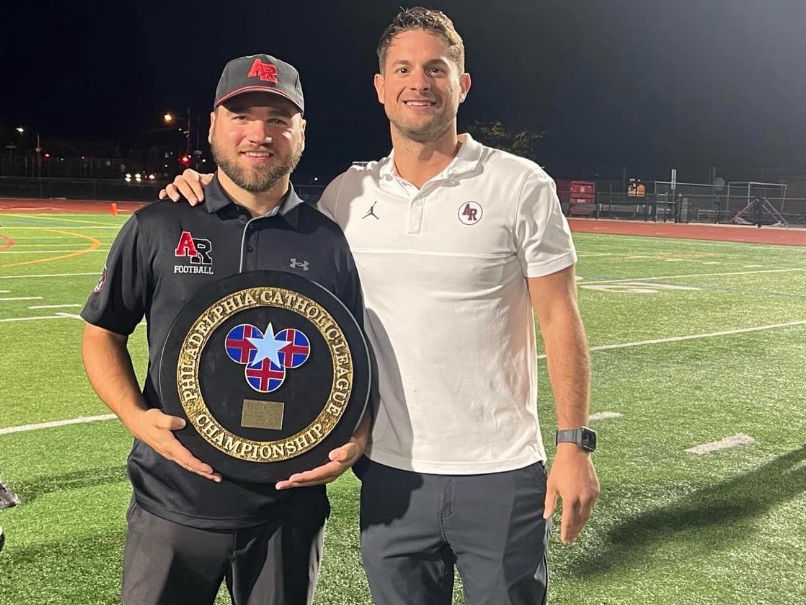
    Mark Ostaszewski with Archbishop Ryan athletic director Joe Zeglinski after the Raiders won the Catholic League Blue Division title in 2024.Courtesy of Archbishop Ryan

    ‘Philly is Philly’

    Since the Catholic League joined the PIAA in 2008, just one of its coaches, Archbishop Ryan football coach Mark Ostaszewski, has been suspended for recruiting violations. At a January 2025 football camp, Ostaszewski asked a student from the Bensalem School District if he wanted to apply to Ryan. District 12, the association’s umbrella for the Philadelphia Catholic and Public leagues, banned Ostaszewski for a year; he has returned to his role this season.

    Locally, recruiting accusations often put programs from District 12 at odds with those from District One, which comprises schools in Philadelphia’s suburbs. And that confirmed example is tame compared to the more intense efforts that coaches have allegedly made to coax athletes to their programs.

    A former basketball standout who graduated recently from a District One public school and his father told The Inquirer on the condition of anonymity that, while the student was in eighth grade and throughout his high school career, representatives from three Catholic League programs pursued him. One head coach offered him free tuition, a stipend, and the use of an apartment near campus. The coach also had his team’s star player send several direct messages on Instagram to the player in an attempt to persuade him to attend the school.

    Another program had an assistant coach and a parent take the player’s father out to lunch twice, telling him at both meals that he would not have to worry about paying any tuition for his son. The third program’s head coach told the father that, if his son helped the team win the Catholic League championship, a booster would provide a house for the player. Each of the three schools were located between 15 and 35 miles from the player’s home.

    Gregg Downer has spent three decades as the Lower Merion boys’ basketball coach.CHARLES FOX / Staff Photographer

    “They can twist this however they want,” Downer said. “These kids are targeted because they’re good at sports. I could list 50 examples of kids who have been recruited.”

    Morton-Rivera’s path to Father Judge captures the murkiness of the entire issue. Jim Meredith, a 1992 Judge graduate who became its president in late July, noted in a recent interview that while in eighth grade, Morton-Rivera had visited the school and taken its entrance exam — and that he grew up and lived in Lawncrest, just a mile-and-a-half from Judge.

    “I can say with full confidence that we’re following PIAA rules and regulations,” Meredith said. “We’re trying to put out an excellent product for our school and our students. Part of that is making sure we adhere to the guidelines that are prescribed to us.”

    When asked how Morton-Rivera ended up choosing Judge, head coach Chris Roantree pointed out that Morton-Rivera’s background and family history made it natural for him to consider attending a school with a strong basketball program. D.J. Rivera, his father, finished his high school career in 2006 as Neumann Goretti’s all-time leading scorer before playing Division I ball at St. Joseph’s and Binghamton.

    Father Judge coach Chris Roantree noted that Morton-Rivera’s background and family history made it natural for him to consider attending a school with a strong basketball program.Elizabeth Robertson / Staff Photographer

    “Philadelphia basketball is a very small community,” Roantree said. “There are different relationships that everybody has. When somebody shows interest in us, we sell the school. When we bring guys in, we show them our career-pathway center. We show them our academic center. …

    “Ultimately, ‘recruiting’ is a very broad thing. It’s going to be questioned because we’re a Catholic and private school. He’s within a mile or two of the school. To me, that’s no different from [a public-school coach] talking to someone from a Plymouth Whitemarsh middle school or an Abington middle school. He’s not a transfer. We didn’t aggressively go after him like that.”

    Under Article VI, Section 11 of its bylaws, the PIAA forbids “recruiting [that] is materially motivated in some way by an athletic purpose. Recruiting for athletic purposes is directly contrary to fundamental interests of PIAA and its member schools, and any school engaged in such conduct should do so with the expectation that it will be treated harshly upon proof of such conduct.”

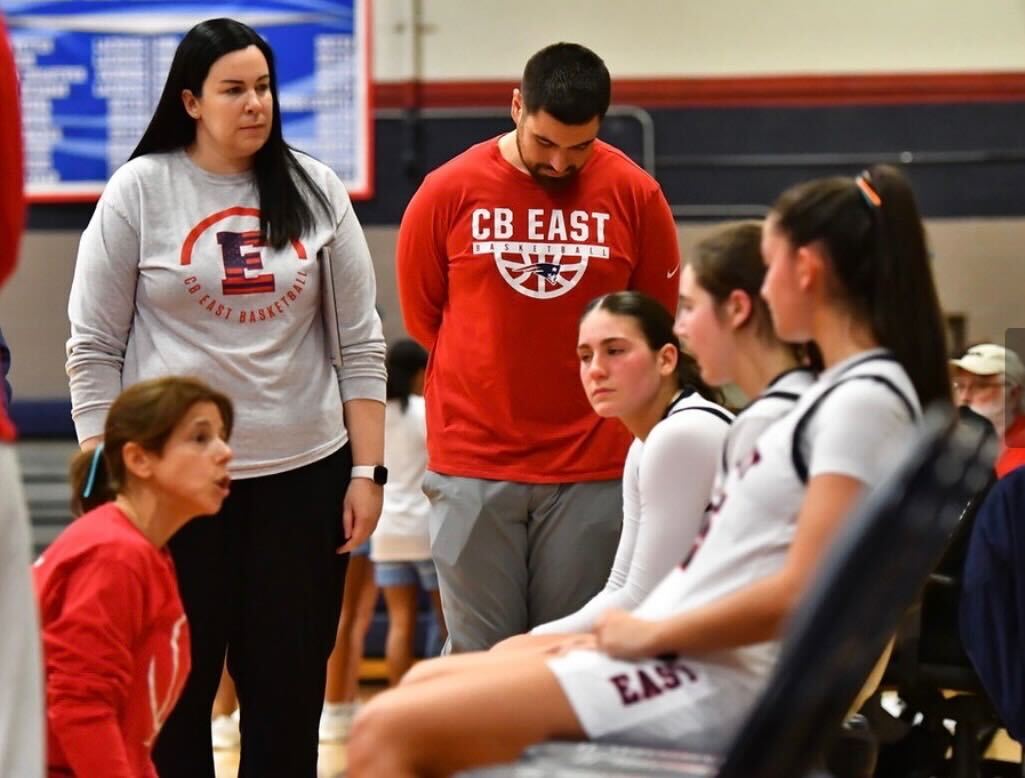
    Liz Potash retired earlier this summer after 13 years as Central Bucks East’s girls’ basketball coach.Courtesy of Diane Barry
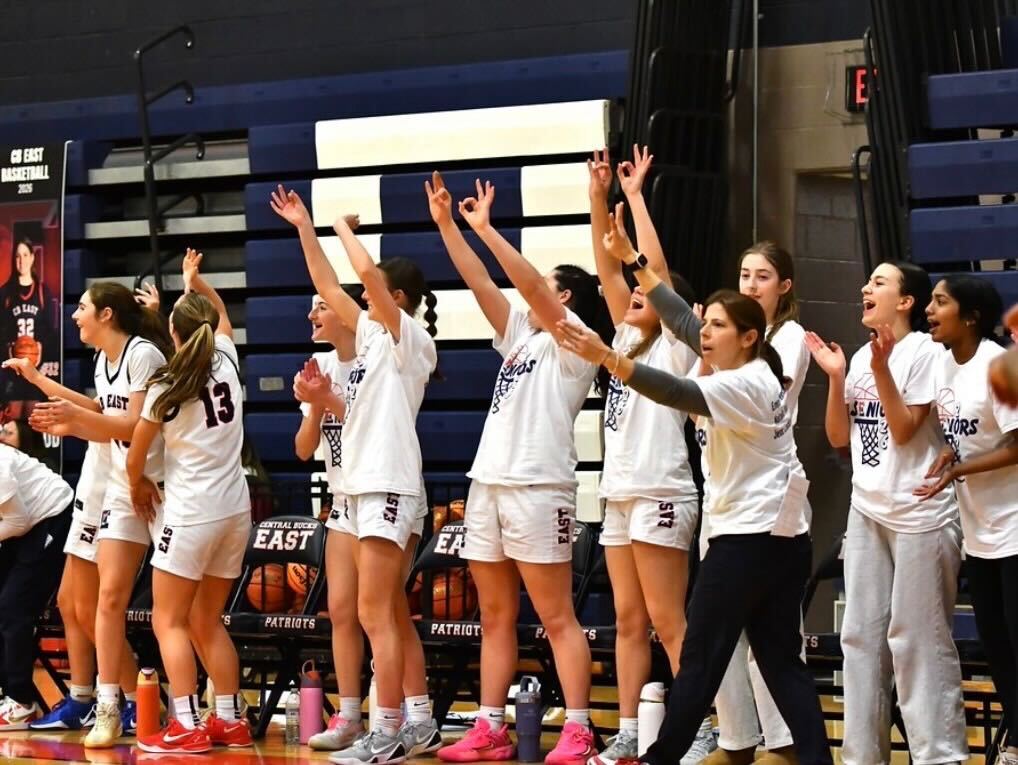
    She said, “If I wanted to recruit, I wouldn’t be a public-school coach.” Courtesy of Diane Barry

    As clear as that excerpt might seem, determining whether a student’s decision to attend a particular school was “materially motivated” by athletics requires hard and fast evidence, such as text or direct messages between a coach and the athlete, said Sean Kelly, District One’s vice chairman.

    If a principal or athletic director files a formal complaint charging an opposing program with violating PIAA bylaws, the association’s corresponding district committee will hold a hearing on the matter.

    “Sometimes I’ll get a call from a coach or an AD or somebody who’s associated with one of the schools who says, ‘Hey, this is what we’re hearing. We’re hearing Student A is going to go to this school,’” Kelly said. “I just ask them, ‘What evidence do you have? Are you saying they’re just transferring, or are you saying they’re being recruited?’ We take some time to make sure we pump the brakes because people get very sensitive and very emotional.”

    Neumann Goretti and Father Judge boys’ basketball play in South Philadelphia on Feb. 1, 2026.Yong Kim / Staff Photographer

    Article VI, Section 11 applies to both boundary and non-boundary schools, but suburban public school coaches bemoan what they see as an inherent imbalance in the system: To play a varsity sport at a public high school, a student must live in that school district. But private, parochial, and charter schools, such as those in the School District of Philadelphia and the Archdiocese of Philadelphia, can draw their students from anywhere. Too many of those institutions, several District One coaches said, bend the rules to do it.

    “It’s just not fair,” said Joe Dempsey, who has been the boys’ basketball coach at Spring-Ford High School in Royersford since 2021. “They have the ability to go and get players, to which I say: Let them do that. If they want to go play in that sandbox, let them go.”

    Dempsey had previously coached at La Salle College High School for 27 years, including 14 as the program’s head coach. At CYO games, he would see a promising seventh or eighth grader, he said, then approach the player’s parents without talking to the player.

    Joe Dempsey previously coached at La Salle College High School for 27 years.

    “La Salle made it very clear: Don’t step over the line. Don’t get us in trouble,” Dempsey said. “Once a couple of schools took the gloves off, the pressure came. The pressure was on me at La Salle. I went to the administration: ‘Are you looking around the Catholic League? I can’t just sit on my hands and wait on some wonderful 6-foot-7 kid who can pay a lot of tuition and go to school with all boys and get bused here. It ain’t going to happen by accident.’”

    That archdiocesan schools compete for students within District 12’s open-enrollment landscape only complicates matters further. Consider one example: Bonner-Prendie, nestled in Drexel Hill in Delaware County, won the 2024 PIAA Class 4A football championship. Of the top six zip codes from which the school drew students that year, five were within Delco, and the other was just nearby — the Overbook section of Philadelphia — according to Steve Clement, the chief administrative officer of the archdiocese’s Office of Catholic Education.

    How many of its football players did Bonner-Prendie recruit, if any? How many did it have to recruit, given the school’s proximity to West Philadelphia? And if a school such as Bonner-Prendie draws students from the city or St. Joseph’s Prep draws them from Camden — less than five miles away — how different is that from the dynamic at a public school in an especially large district?

    “The reality,” Clement said, “is that these schools are still serving the areas they were intended to serve.”

    Similarly, parents can and do contact the School District of Philadelphia to ask what high schools would best fit their children’s skills and interests: maybe sports, maybe drama, maybe career and technical education. Starr Davenport, the district’s director of finance for athletics, said she frequently fields phone calls from parents of rising ninth graders who ask her about the quality and array of athletic programs at a particular school, and she is happy to answer their questions.

    “It’s not a recruitment strategy,” Davenport said. “It’s just transparency. When they want to know, it means they’re trying to find their school home. That selection process seems equitable because we’re not putting it out there, ‘Go to this school if you like football.’ But if a parent or student-athlete inquires, we are definitely transparent in terms of the full gamut of what is offered at a school.”

    As for making competition across the state and the Delaware Valley more equitable — that is, giving boundary schools a better chance of beating non-boundary schools — it doesn’t matter much whether gifted athletes who already live within the city’s borders attend public or non-public schools. As long as it stays in Philadelphia, that talent will reveal itself in the results one way or another.

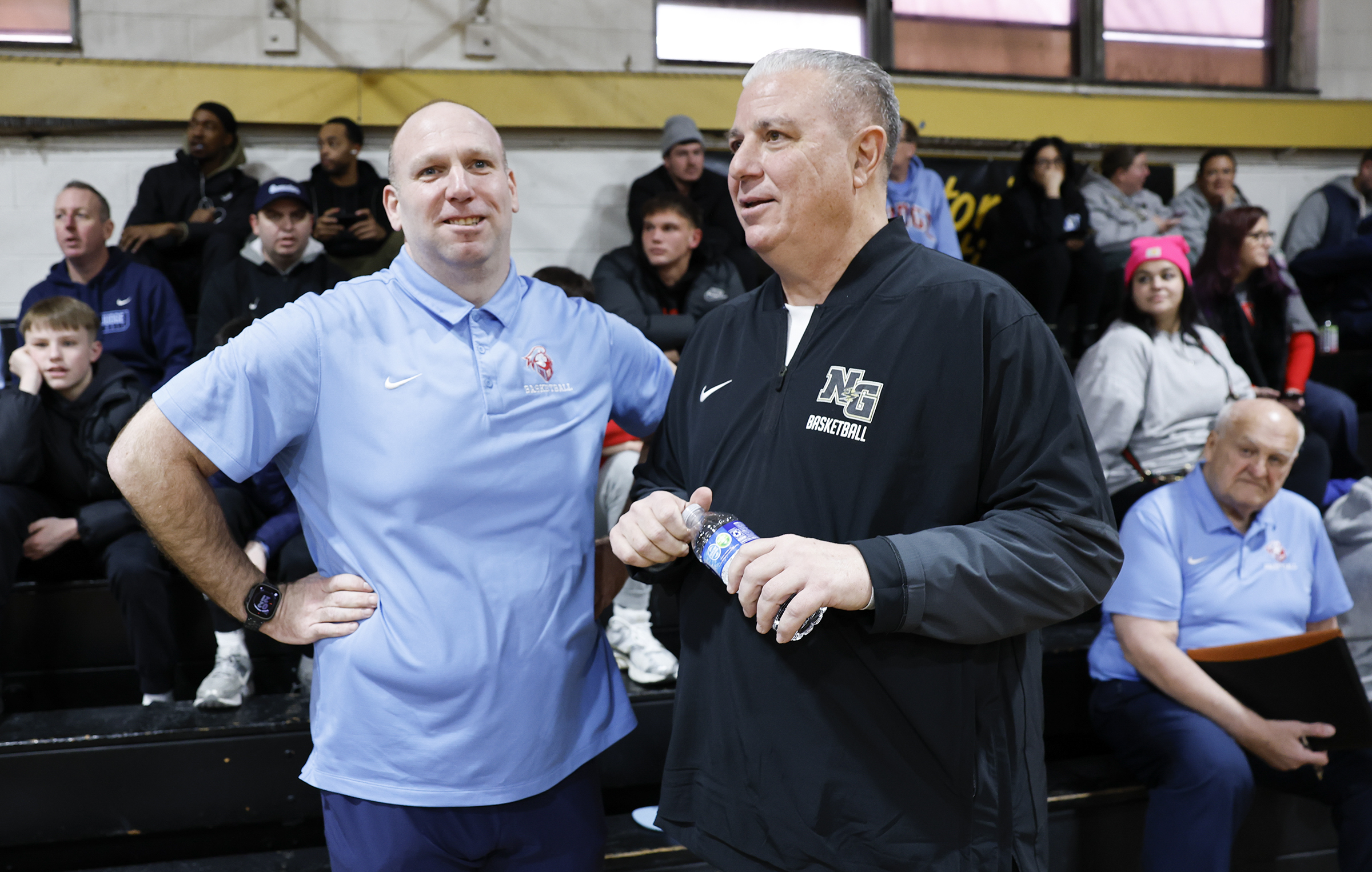
    Neumann Goretti head coach Carl Arrigale (right) meets with Father Judge head coach Chris Roantree before the two teams played each other in February 2026.Yong Kim / Staff Photographer

    “Here’s the thing: Philly is Philly,” Roantree said. “So if you want all the Philly kids to go to public schools, they’re still going to dominate. There are six, seven, eight, 10 good teams in the Catholic League. If they’re in the playoffs, they’re going to make some noise” in the state tournaments.

    The primary complaint among suburban public school coaches and administrators, of course, is that non-boundary schools don’t limit themselves to drawing talent from the city or the neighborhoods that surround them. To some public-school coaches, the notion of recruiting is an alien concept, one they wouldn’t consider if for no other reason than they or the athletes’ families would have to make the necessary arrangements for the athletes to live within district boundaries — say, finding a long-lost aunt whose house was within walking distance of a school bus stop.

    Liz Potash, who retired earlier this summer after 13 years as Central Bucks East’s girls’ basketball coach, said she never sought out players to refill her program’s talent pool. “If I wanted to recruit, I wouldn’t be a public-school coach,” she said. “I’m not going to beg an eighth grader to come to East.”

    But another coach might.

    “Everyone’s doing it,” said Daniel DiBerardinis, who spent 11 years as a Catholic League athletic director — six at Roman Catholic, five at St. Joe’s Prep — before becoming Penn Charter’s AD last year. “Public schools are recruiting. They recruit. People move to different zip codes all the time.

    “I’m not going to put any school on blast, but I know intimate situations — I know families who got an address to be a part of a district. I’m not going to say any schools, but I do know it happens. The rules are super-gray, and people are always going to find workarounds.”

    Father Judge takes on Archbishop Wood during in the Catholic League boys’ basketball semifinal at the Palestra on Feb. 18, 2026.Isaiah Vazquez / For The Inquirer

    Technicalities

    Football, boys’ basketball, girls’ basketball: It’s within the worlds of those three sports that the debates and bickering around recruiting are the loudest and have the most relevance. Rep. Scott Conklin, a Democrat who introduced House Bill No. 41 and represents the 77th district, in State College, all but admitted that the bill was aimed at stopping private, parochial, and charter schools from recruiting — and from continuing to move into the next frontier: wielding sponsor dollars or name, image, and likeness deals to entice athletes.

    “Technically, yes, public schools could cheat,” he said in a phone interview. “But we know how difficult that is. I’m 67 years old, and I can win the high-jump competition — technically. But we all know it’s never going to happen.”

    In that Palestra locker room back in February, Roantree snickered at the mere mention of the subject. “Everybody says it’s an unfair advantage,” he said. “What I say is, every kid’s got a dream of playing Division I, and there are a lot of coaches in our league who can make that happen. We don’t have to recruit as much as kids want to come and play for us.”

    Four days later, behind a team-high 14 points from Morton-Rivera, Father Judge beat Goretti to win its second straight PCL championship. The Crusaders advanced to the semifinals of the PIAA Class 6A tournament, where they lost to a city rival, Imhotep Charter, which then lost in the championship game to Harrisburg’s Central Dauphin.

    A public school.