Tag: School District of Philadelphia

  • Some Philly teachers say they’re pressured to pass students who rarely come to class or do work

    Some Philly teachers say they’re pressured to pass students who rarely come to class or do work

    Philadelphia School District students receive report cards on Thursday, the last day of the 2025-26 school year.

    But it’s an open secret that in many schools, it is nearly impossible to fail a student, according to interviews with two dozen teachers from schools across the city who say the district is making them give passing grades.

    Many teachers said they passed students who did little or no work, did not understand concepts being taught, or did not show up to class much. Most of the teachers interviewed requested anonymity for fear of reprisal.

    “There’s a bunch of kids in my class that have F’s in reading, and I’m probably going to pass them — I’ll bump it up to a D and call it a day,” one middle-grades teacher at a K-8 school said. “I don’t know of anyone who’s been able to keep anyone back, and we’re just setting kids up for failure.”

    On paper, Philadelphia students can fail courses, or be retained in a grade, so long as they are offered appropriate interventions and supports. Officially, the district, according to its policy, “is committed to excellence in student accomplishments and recognizes the contribution of a district wide promotion policy moving all schools to models of achievement.”

    But many teachers said that they were discouraged or forbidden by their principals from flunking students, or that they have given out failing grades that were overridden. Others said failing students was permitted if justified, but the administrative burden to rationalize failure, even for students who did not show up to school, is onerous or impossible.

    All of the teachers who spoke with The Inquirer said they fear for the long-term implications for students who are passed along without the skills they need to advance — especially in a city where so many students cope with the effects of poverty and trauma and a majority of students do not meet grade-level standards on state testing.

    Monique Braxton, district spokesperson, said the district’s policies “emphasize that student grades are meant to accurately reflect their academic performance and progress toward learning standards. Schools are required to provide and document appropriate interventions and progress monitoring when students encounter academic challenges. The district remains steadfast in its commitment to maintaining high expectations for students while ensuring they receive the necessary support to achieve success.”

    When did it start?

    The K-8 teacher, a veteran of district schools for three decades, said that at the beginning of her career, it was easier to give F’s or retain students who did not meet the learning standards. But, the teacher said, there has been a “subtle shift” since the early 2000s, the era of the federal No Child Left Behind Act.

    “When the pressure was on the schools to show promotions and graduation rates, and the district was so focused on showing data, it’s shifted grading, and now it’s a joke,” the teacher said.

    Philadelphia changed its grading policy in 2017, setting a 50 out of 100 as teachers’ grading floor and making it easier to pass. The minimum score for a D, once a 64, was changed to a 60.

    The rationale for the change, leaders said at the time, was standardizing grading procedures and preventing students from giving up if they perform poorly early in the year. Detractors of the policy shift said at the time they feared it would water down standards.

    The K-8 teacher, and others interviewed, emphasized that most Philadelphia students are bright and capable. But those who do not try because of complicated home lives or other reasons can skate by, they said.

    “We have a kid who’s done no work all year, and we’ve done everything, and they’re just going to push him forward,” the K-8 teacher said.

    The teacher also works in the service industry, and said the effects of passing students who have not earned passing grades is evident in that workplace.

    “We see people who don’t come to work on time, they can’t take orders, they can’t use a computer or figure things out, and this is why,” she said. “They’re not being held to standards for all their years in schools.”

    ‘Is there anything you can do to bump these up?’

    A second teacher said he has failed students who did not earn passing grades, though he has more latitude because he does not teach a major subject. But he absolutely understands why some teachers give 60s that should be F’s: With full course loads, teachers do not have time to document a pattern of contacting guardians, giving extra time for work, breaking down assignments, allowing extra credit, or extending deadlines.

    “Who has time to do that when you have 30 other kids?” the teacher said. “And the system is inherently causing laziness from teachers also, to just shut up, pass them, and you don’t get grief.”

    There is a ripple effect, he said.

    “I feel sorry for the good kids, the kids who struggle, do their work, and get a C. So I give them a B, a low A. They try,” he said.

    The district has posted academic improvement over the last several years. But district students’ academic achievement as measured by state tests remains low, with 33% of students meeting standards in reading and 25% in math.

    “The PSSA scores don’t match the grades kids are getting,” the second teacher said.

    The district’s four-year graduation rate has also risen. In 2024-25, it was up to 84%, from 69% in 2014-15.

    Grade inflation comes at the end of every year, said a third teacher, who works at a district high school.

    “There’s a push right after grades are due,” said the third teacher, who noted that administrators will say, “‘Is there anything you can do to bump these up?’”

    Grades are not changed for every student, but in some cases, administrators will “push [students] along because they want to see them graduate or pass,” the third teacher said. “There’s all this pressure from the district to increase the graduation rate — there are so many layers to it. I know that it happens in a lot of places. It’s not just our school. But this year, it was huge margins and huge numbers.”

    Administrators sometimes change the grades themselves, the third teacher said.

    In one instance, a student’s grade shot up with no explanation, the teacher said. “This student had a 50 yesterday. How did he have an 82 today? This was a student who didn’t turn in any additional work, and missed 63 of 84 classes,” the third teacher said.

    The third teacher said another student who was moved on without doing the work admitted it.

    “Even he was like, ‘Yeah, I didn’t deserve to pass, I don’t know how that happened. But I’m excited to graduate,’” the teacher said.

    The third teacher underscored that while the practice could be making the district’s numbers look better, it is not serving students.

    After graduation and not being held to standards, the teacher said, one former student “lost the first three jobs he had because he didn’t go to them. He had to learn that lesson in a much harder, more adult way, and he could have learned that in high school. I worry that when kids graduate and get into the workforce, it will impact the way they approach the goals they set for themselves and how they try to achieve those goals.”

    ‘The gap was huge’

    A fourth teacher who has worked in multiple types of schools in Philadelphia said the practice is not limited to the district.

    She most recently taught at a city charter and said some of her middle-grades students were at kindergarten reading and math levels.

    “The gap was huge,” the fourth teacher said. “The school’s explanation is that there’s a school-to-prison pipeline, and the older students are, the less likely they are to graduate. But they’re not meeting standards. The gaps are huge. It was very shocking to me how they would just pass the kids. I’m a parent, and I want my kids to be prepared properly.”

    A fifth teacher said that at her school, it is rare for students to be pushed along without doing work.

    “I can’t in good conscience pass anybody who doesn’t show up,” she said. “I think a lot of teachers around me also can do that. But I have also seen that teachers — maybe at a particular building, maybe those who work for a particular administrator — who say, ‘You know what, I’m not going to fight it.’”

    What is definitely not rare, the fifth teacher said, is giving students “a lot of different lifelines, a lot of different ways for them to pass,” whether it’s in-school credit recovery or summer school, “even when their trends of behavior and attendance and performance and engagement in the class suggest that they needed more time with that content.”

    A sixth teacher said his principal permits failure and retention, in rare cases, with significant documentation. There is some pressure to not fail students, but when needed, the teacher has been able to produce adequate paperwork to show failure was the last resort.

    But when deciding whether to pass or push through a student, “I ask myself whether holding them an extra year will make a significant difference,” the teacher said. One of the teacher’s students is bright but unmotivated and rarely completes work.

    “I don’t think that’s going to change with an extra year in the same grade, and therefore, I decided to pass him,” he said.

    Does he worry about the implications for the district writ large?

    “Honestly, I do think about it sometimes, but I’m just not sure there’s a right answer with the current situation,” the sixth teacher said. “I’m no policy expert, but I think for it to make sense on a larger scale we’d need significant cultural shift and policy changes.”
  • Reginald Streater: Philadelphia schools can use $50 million from City Council. But they still need a long-term funding solution.

    Reginald Streater: Philadelphia schools can use $50 million from City Council. But they still need a long-term funding solution.

    Amid the passionate debate about Philadelphia’s schools, one thing has been getting lost: No public school district wants a budget that requires changing people’s jobs. Behind every position is a person, a family, and years of service to students. Those decisions are difficult and are never made lightly.

    As caretakers of Philadelphia’s public schools, the Board of Education and the school district have a responsibility to look beyond this year’s budget. We have to make sure our schools remain financially stable and able to serve students not just this year, but for years to come. That is what good governance means.

    That is also why the district should stay the course with its planned reduction of some roles and the reassignment of teachers and staff, even after City Council approved a preliminary budget that includes a one-time $50 million funding increase.

    At first, that may seem confusing. If there is more money, why not keep every position? The answer is simple: One-time money should not be used to pay for permanent costs.

    A job is not a one-year expense. It comes with salary, benefits, retirement costs, and other ongoing expenses. If those costs are paid with money that exists for only one year, the district will face the same bills next year without the funds to cover them.

    Most families understand this idea. A one-time bonus at work might help pay for a new roof or replace an old refrigerator. But it would be foolish to use that bonus for a down payment on a car with a huge car note and no resources to pay it off.

    The author writes that the Board of Education is grateful for City Council’s $50 million boost — but won’t use it to fund permanent expenses.Jessica Griffin / Staff Photographer

    The same principle applies to the Board of Education and the school district. For too many years, difficult financial decisions have been delayed. Continuing to postpone them only makes the problem larger and harder to solve. Federal COVID-19 relief dollars did help the district avoid cuts, but that was a once-in-a-century time of crisis.

    That does not mean the additional funding lacks value, and we appreciate such support from City Council. It gives us a chance to address important needs that do not create permanent expenses. Those dollars can be used for building repairs, school safety improvements, technology upgrades, instructional materials, and managing staffing changes. Such spending would help improve schools today without creating a budget problem tomorrow.

    It is also important to understand what these staffing changes mean. The district’s goal is to move employees into positions where they are needed across the system whenever possible, keeping experienced staff and reducing disruption for students and schools.

    The Board of Education has a responsibility to protect the interests of both today’s and tomorrow’s students. Sometimes that means supporting new investments. Always it means advocating for more reliable funding from the city and the state. And at times it means making difficult decisions that protect the long-term financial health of the district, even when it appears there are easier choices.

    The reality is that Philadelphia’s students deserve a school system built on stable, dependable funding — not temporary fixes. One-time dollars can solve one-time problems. Permanent commitments require permanent funding.

    These decisions are not easy. But making responsible choices today is the best way to ensure our students have strong schools for years to come.

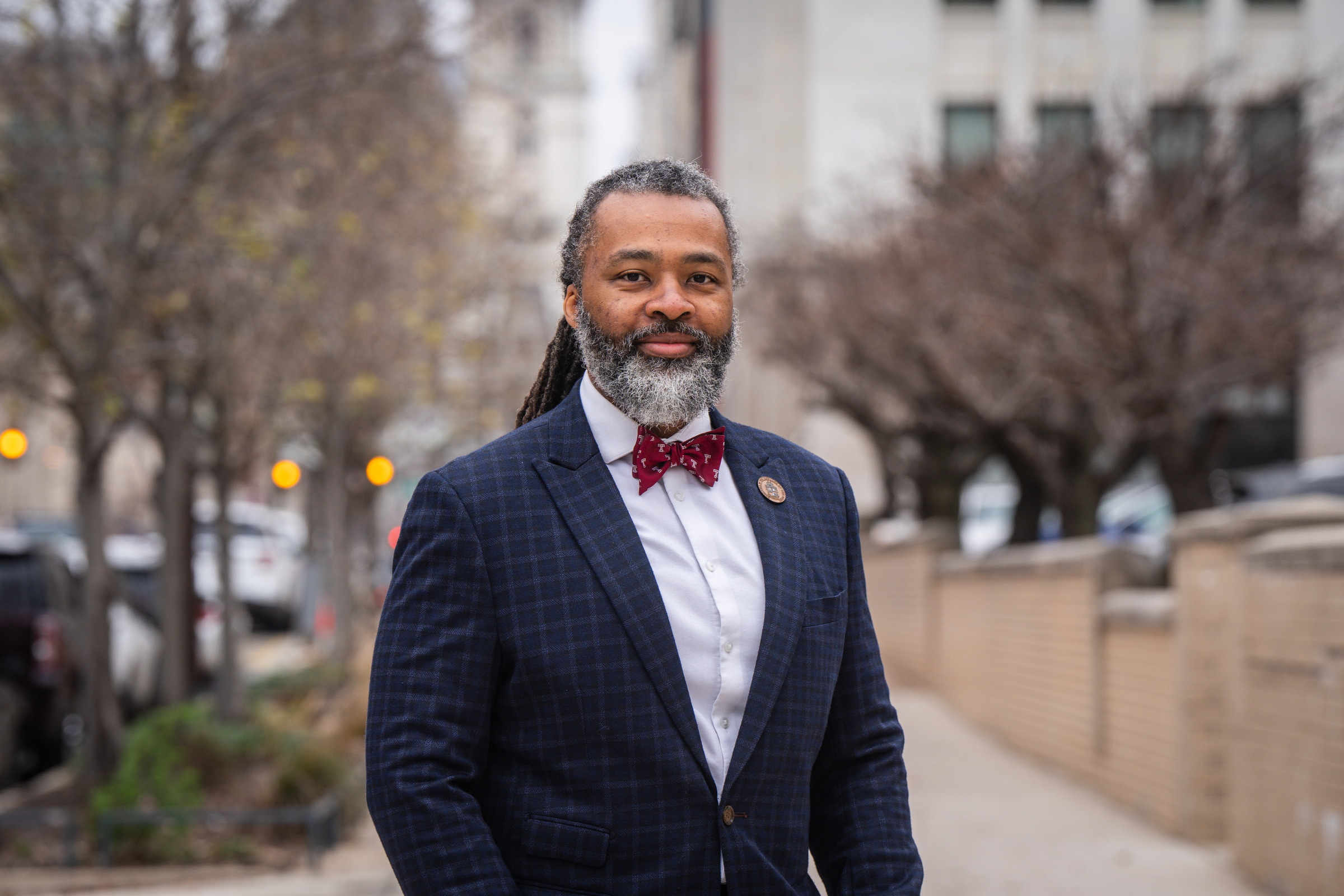
    Reginald L. Streater is the president of the Philadelphia Board of Education, to which he was elected in December 2022. He was appointed to the board in February 2021.

  • Philly’s state lawmakers will still push to close a tax loophole requested by Mayor Parker, as Pa. budget talks move along

    Philly’s state lawmakers will still push to close a tax loophole requested by Mayor Parker, as Pa. budget talks move along

    HARRISBURG — Pennsylvania lawmakers could still deliver additional revenue to Philadelphia, even after City Council last week largely rejected Mayor Cherelle L. Parker’s proposed tax increases for the next fiscal year.

    Philadelphia’s powerful House delegation to Harrisburg will push state lawmakers to close a loophole that allows online sellers to avoid paying Philadelphia’s 2% sales and use tax, its chair, Democratic Rep. Morgan Cephas, said Tuesday, as legislative leaders seek a quick state budget deal in a consequential midterm election year.

    The tax would be exacted on online sellers based outside the city selling goods to Philadelphia customers, including retail giants such as Amazon. Currently, sellers outside the city have to collect only the 6% state sales tax.

    The proposal — estimated to generate an additional $1.5 million for the city — would require authorizing legislation to be passed by the state and signed by Gov. Josh Shapiro.

    When asked about the Philadelphia delegation’s effort to revive one of Parker’s tax proposals — albeit the one that would generate the least revenue for the city — Joe Grace, a spokesperson for Parker, said it is a “technical amendment.”

    That development comes as top lawmakers are in closed-door budget negotiations trying to find additional revenue to close the state’s deficit, where Pennsylvania is expected to spend more than it brings in this fiscal year and in the future, ahead of the constitutionally required June 30 deadline. Legislators often blow past that deadline, with last year’s budget agreement stretching nearly five months after talks stalled over mass transit funding and resurfaced Pennsylvania’s rural-urban divide.

    Here is a look at the status of state budget negotiations, what Philadelphia’s delegation wants in a final budget deal, and the potential sticking points as the deadline draws nearer.

    Talks are ‘further along’ — in a big midterm year

    Senate Majority Leader Joe Pittman (R., Indiana) said in an interview last week that legislators are “a lot further along” in their budget negotiations than they were at this point last year, but still have more to do to rein in spending.

    Other top legislative leaders echoed a similar hope that budget talks will not draw out into another monthslong impasse during the midterm election year in Pennsylvania’s split legislature, where Democrats hope to ride an anticipated blue wave to gain seats in both chambers while Republicans hope to stave it off and maintain control of the state Senate.

    “There’s nothing like a political wave to help politicians focus,” said House Majority Leader Matt Bradford (D., Montgomery) in an interview last week.

    All 203 state representatives and half the Senate are up for reelection this year. Additionally, Shapiro is seeking a second term and is hoping to flex his political muscle to bring Pennsylvania Democratic wins in Congress and at the state level.

    Shapiro proposed a $53.2 billion budget earlier this year, which would be a 6.2% spending increase over last year and would largely rely on the state’s Rainy Day Fund and new revenue streams from skill games and adult-use cannabis to help fill a $4.6 billion budget hole. The state House in April passed Shapiro’s budget as introduced, though the final product will be struck in closed-door meetings involving Pittman, Bradford, and Shapiro. The three negotiators may call on additional leaders to join the budget talks in the state’s tightly divided legislature, where Democrats hold a one-seat majority in the House and Republicans control the Senate with a three-seat majority.

    In previous midterm election years, the electoral pressure has sped up negotiations, as legislators want to bring home results to their constituents before they return to the campaign trail in a year when the governor’s mansion and control of the state House and Senate are on the line.

    ‘An opportunity to regroup with Council and regroup with our mayor’

    Philadelphia’s delegation to Harrisburg, made up of 25 lawmakers representing parts of the state’s most populous city, will take up Parker’s requested sales tax loophole closure, in addition to any other requests from City Council once the city’s budget receives final approval on Thursday, Cephas said.

    “City Council hasn’t finalized their budget just yet. So we are paying close attention as to what is the final product that gets across the finish line, and then we look at it, look at it as an opportunity to regroup with Council and regroup with our mayor to see where we are and where there’s still gaps that would potentially fill,” Cephas added.

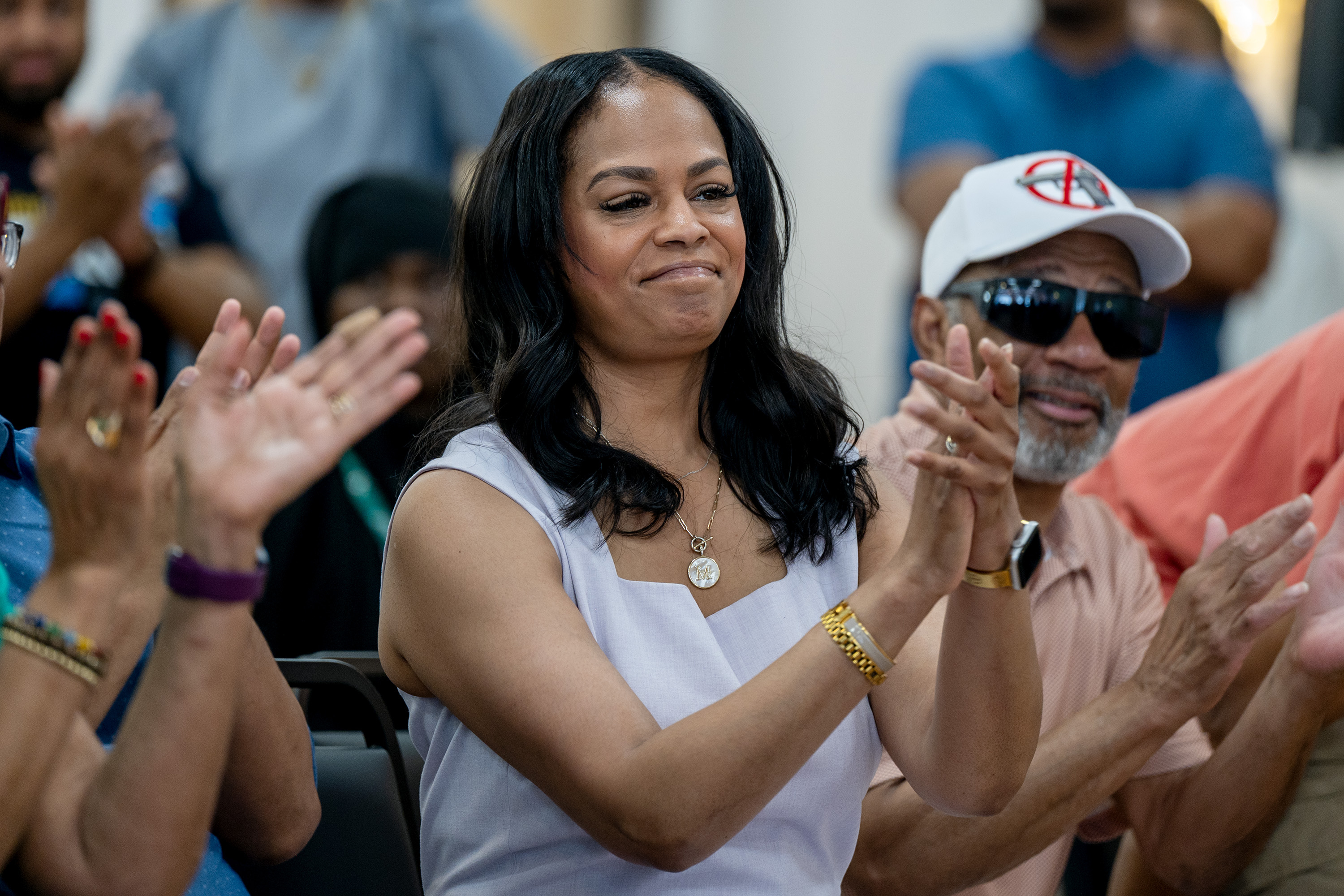
    State Rep. Morgan Cephas, who leads the Philadelphia delegation in Harrisburg, attends a get-out-the-vote rally for State Sen. Sharif Street at the Church of Christian Compassion in West Philadelphia Monday, May 18, 2026 on the day before Tuesday’s Democratic primary election for the 3rd Congressional District. Cephas was a candidate for the same seat, but withdrew early in the race.Tom Gralish / Staff Photographer

    As part of several proposals meant to juice revenue from gig economy companies, Parker requested the city’s sales tax loophole be closed in her budget pitch in March.

    Closing the loophole, however, was an easier sell in Harrisburg than Parker’s efforts to raise taxes on city hotels and short-term rentals, which would have also required state legislative approval.

    Last week, sources close to state budget negotiations told The Inquirer there was no interest in raising taxes in Philadelphia as Parker had proposed, even on big tech companies, in an election year. Shortly after, any support appeared to evaporate in City Council for Parker’s proposed taxes on hotels and rideshare services to fund homelessness-prevention programs and help plug the Philadelphia School District’s $300 million structural deficit.

    Shapiro previously said he was uninterested in raising any taxes, and has boasted about cutting taxes in past budgets.

    Shapiro’s office did not immediately respond to a request for comment.

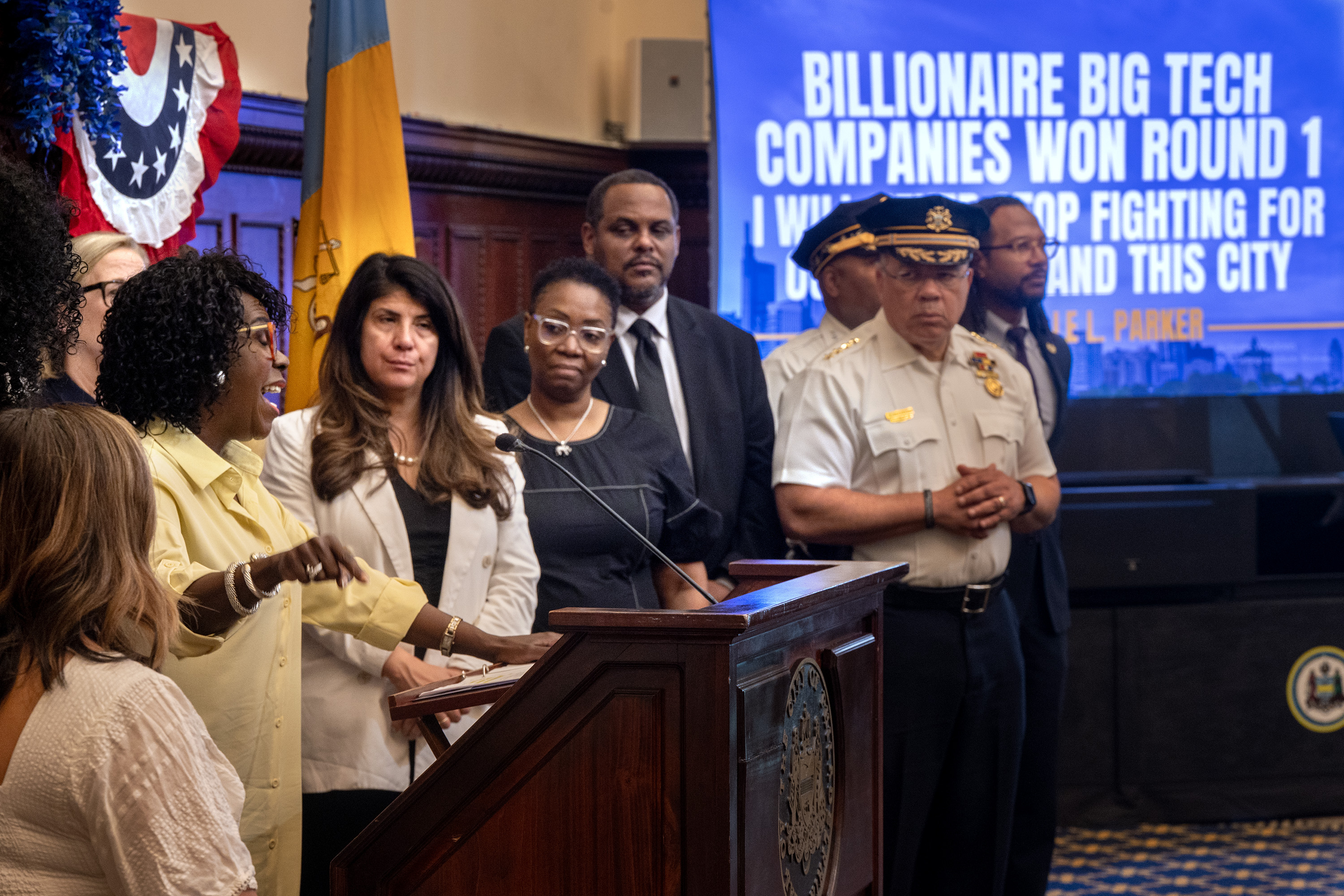
    “Billionaire big tech companies just won round one in this process,” says Mayor Cherelle L. Parker at City Hall Thursday, June 4, 2026 after City Council rejected most of her tax proposals for the city budget.Tom Gralish / Staff Photographer

    Cephas said Philadelphia’s statehouse delegation is also focused on continuing to increase public education funding through the state’s new adequacy formula, expanding a popular student-teacher stipend program, and increasing funding to improve school facilities.

    The delegation — which includes Democratic legislative leaders such as House Speaker Joanna McClinton and House Appropriations Chair Jordan Harris, who are involved in budget talks — will also push to expand a working families tax credit, a childcare tax credit, and an increase to the state minimum wage from its current $7.25 per hour, Cephas said.

    Potential sticking point: Skill games and gaming expansions

    The big unknown in Pennsylvania’s Capitol is whether lawmakers this year will finally address skill games and other gaming expansions in the state as an effort to raise additional revenue.

    Skill games are slot-machine look-alikes that have proliferated around Pennsylvania and, despite coaxing from Shapiro to tax them at a much lesser rate than the hefty 52% levied on slot machines, remain unregulated and untaxed by the state. Shapiro estimated that taxing machines at the same rate as slots would generate $765.9 million in its first year.

    A case is before the state Supreme Court to determine whether the machines found in restaurants, corner stores, and bars are legal — and distinct from other gambling devices.

    Skill games can be seen through the door of a mini mart on Kensington Avenue in the Kensington section of Philadelphia on Wednesday, July 30, 2025.Elizabeth Robertson / Staff Photographer

    The deep-pocketed skill games lobby had long been an ally of the Senate GOP until recent years, when Republicans considered a higher-than-desired tax on the industry that the lobbyists claim would hurt small businesses. The relationship eroded further last month when a conservative group tied to the skill games lobby helped fund three unsuccessful primary challenges to Republican state senators.

    Now, top GOP lawmakers say they are awaiting the court ruling before they decide how to tax the devices.

    Another emerging form of gaming that could require state regulation would be prediction markets like Kalshi or Polymarket, which allow users to place bets on the outcome of events, including elections. Pittman said he wants federal lawmakers to regulate the new industry, while House Minority Leader Jesse Topper (R., Bedford) said “it will need to be addressed.”

    “Prediction markets, to me, seem to be a whole new world,” Pittman said last week. “That is something that the federal government really needs to grab onto in a very consistent manner to make sure that you have consistent policy nationwide on that front.”

  • How some Philly students included a protest against looming budget cuts in their graduation ceremony

    How some Philly students included a protest against looming budget cuts in their graduation ceremony

    On the first day Olney High reopened as a traditional public school four years ago, 750 unregistered students showed up. Rosters had to be built on the spot. It took months for credits to be straightened out.

    Despite forbidding obstacles, Olney soared.

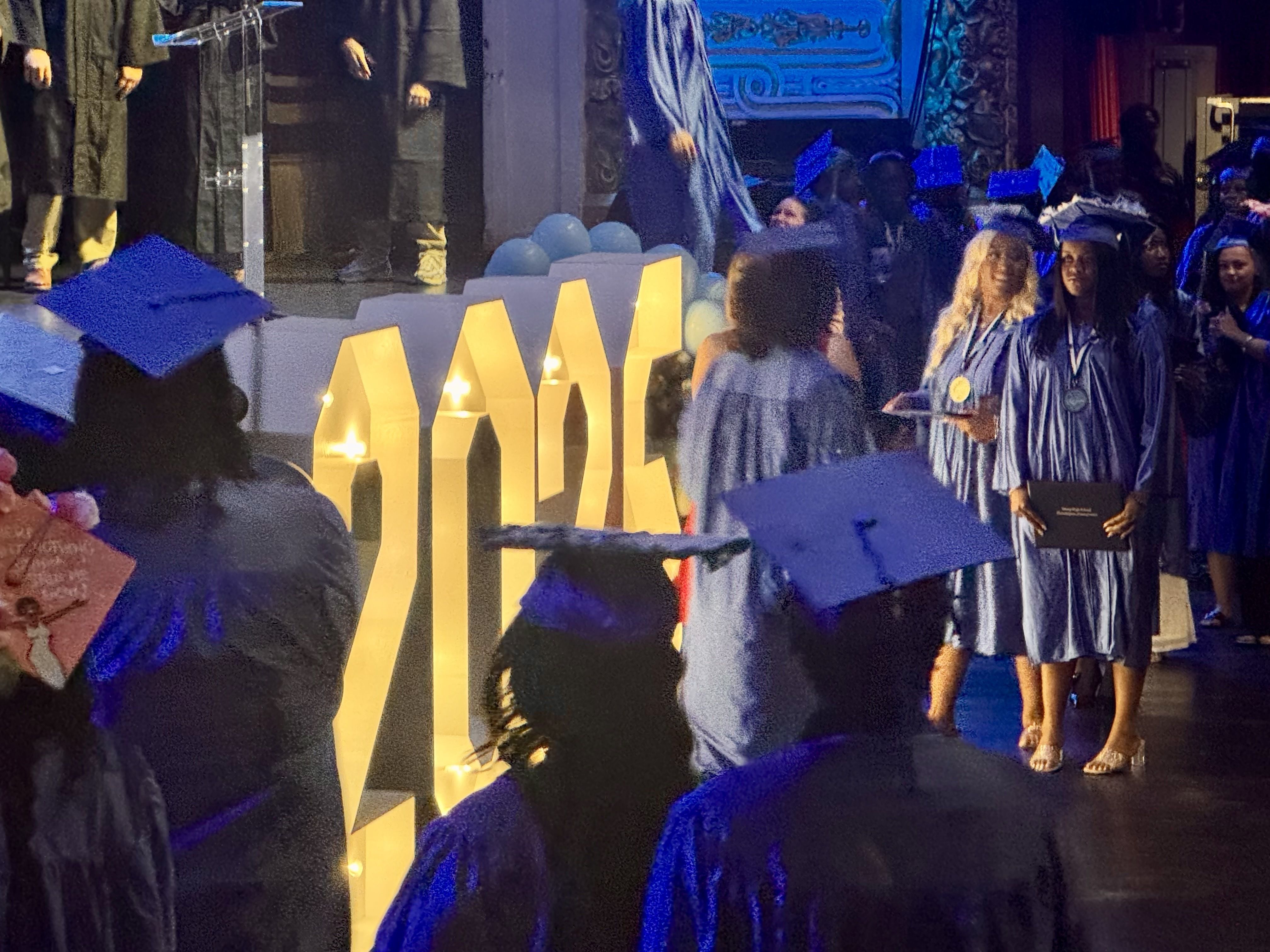
    On Tuesday, the first class that spent the entirety of its high school career at the “new” Olney graduated — with fanfare, joy, and a touch of wistfulness, as the school prepares for perhaps the deepest budget cuts in the Philadelphia School District next year.

    The looming budget cuts prompted a subtle graduation clapback.

    Valedictorian Iamdra Peguero was part of a small group that met with school board president Reginald Streater at the school Monday, imploring him to find a way to stop the budget cuts coming Olney’s way.

    With the district facing a $300 million budget gap, Superintendent Tony B. Watlington Sr. has ordered cuts at schools across the city.

    Olney received extra staff four years ago to address the complicated charter-to-district transition. Although it now enrolls nearly 1,000 students, officials have said they need to cut staff to balance the district’s budget.

    Peguero and others have expressed alarm about what losing 17 staff members, including 13 teachers and most of the faculty who teach classes in the college-prep track, would mean to Olney.

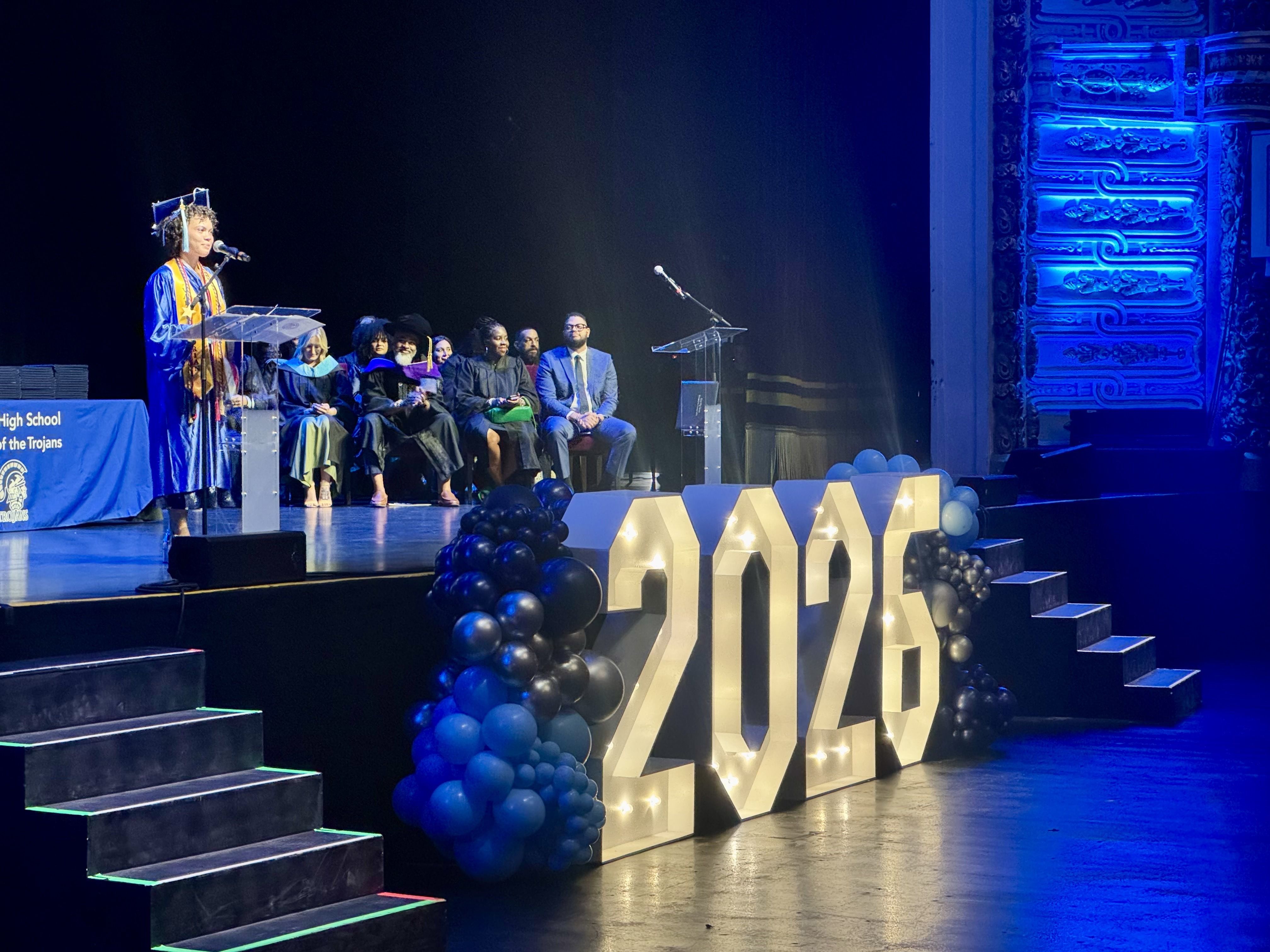
    Iamdra Peguero, Olney High class valedictorian, addresses the Olney High Class of 2026.Kristen A. Graham / Staff

    Last week, Olney staffers wrote Streater a letter asking him to consider slowing the budget cuts.

    “We applaud SDP for creating staffing and budgetary support for the transition beginning in 2022,” a group of eight Olney teachers wrote Streater. “These supports have helped make Olney’s transition an unprecedented success. We ask the district to extend this support, as the transition period is ongoing. We believe that a slow, planned adjustment to regular district staffing ratios over several years will allow us to sustain and build on the gains we have made.”

    The Olney teachers proposed that instead of losing 17 teachers all at once, officials cut a few teachers per year until 2032-33. If the school’s enrollment rises, the cuts can be avoided.

    Streater, who also spoke at the Olney graduation Tuesday, did not agree to the teachers’ proposal, but he said he was listening.

    “I had a glimpse yesterday, y’all, of the passionate students and teachers that walk these hallways, and they spoke with me about proposed school changes that they don’t agree with,” Streater said in his graduation speech. “I just want to affirm them right now, and say I appreciate their appeal for different options and their strong voices. It comes from a place and people they love. That’s what it means to be in this community.”

    Peguero, in her valedictory address, said she owed her success to her teachers, including many staff who are being transferred against their will because of the budget cuts.

    As she spoke, several students behind her unfurled signs: “A school is its people” and “Don’t rip away our teachers and counselors.” The audience applauded.

    “I want to think the teachers and staff that have supported my high school experience, especially the ones that won’t be here next year because of the ongoing school district force transfer. I speak on behalf of the class and say that we will miss you all.”

    ‘Restarted a school’

    Olney’s graduation was also a celebration of its return to the public school system.

    “All of us, four years ago, basically restarted a high school,” principal Michael Roth told students.

    Olney spent more than a decade as a charter school run by the nonprofit Aspira before it lost the charter for academic and other issues. Roth said he researched but could not find any other high school in the country that had reverted to become a traditional public school.

    Olney High students approach the stage on their way to receive diplomas Tuesday.Kristen A. Graham / Staff

    A committed administrative team and cohesive staff built myriad opportunities and paths for students, including career and technical education programs, industry certifications, routes into union jobs, a college-prep program, internships, clubs, and sports. The school now has 10 separate majors.

    There were moments, Roth said, when he questioned whether Olney, a traditional neighborhood Philadelphia high school — “not a magnet school, not a charter school, not a well-resourced suburban school” — could be great.

    “Class of 2026, you threw down a Victor Wembanyama-sized dunk,” Roth said. “You answered my question with a ‘Hell, yes!’”

    Ariel Lajara, an Olney High graduate and a Philadelphia assistant superintendent who was just named superintendent of the Vineland, N.J., school district, reminded the graduates in his keynote speech that the boundaries of their neighborhood are not the boundaries of their potential.

    “They don’t understand that when you have to work harder for your seat at the table, you don’t just want the seat,” Lajara said. “You want to rewrite the whole agenda.”

    There were also solemn moments. Honorary diplomas were given to the families of Marquise Saunders and Talik Bridges, Olney students who died as a result of gun violence in separate incidents in 2024.

    But there was plenty of joy, too — two students collected their diplomas holding their children. Some danced across the stage. At one point, someone screamed out, “That’s my sister!”