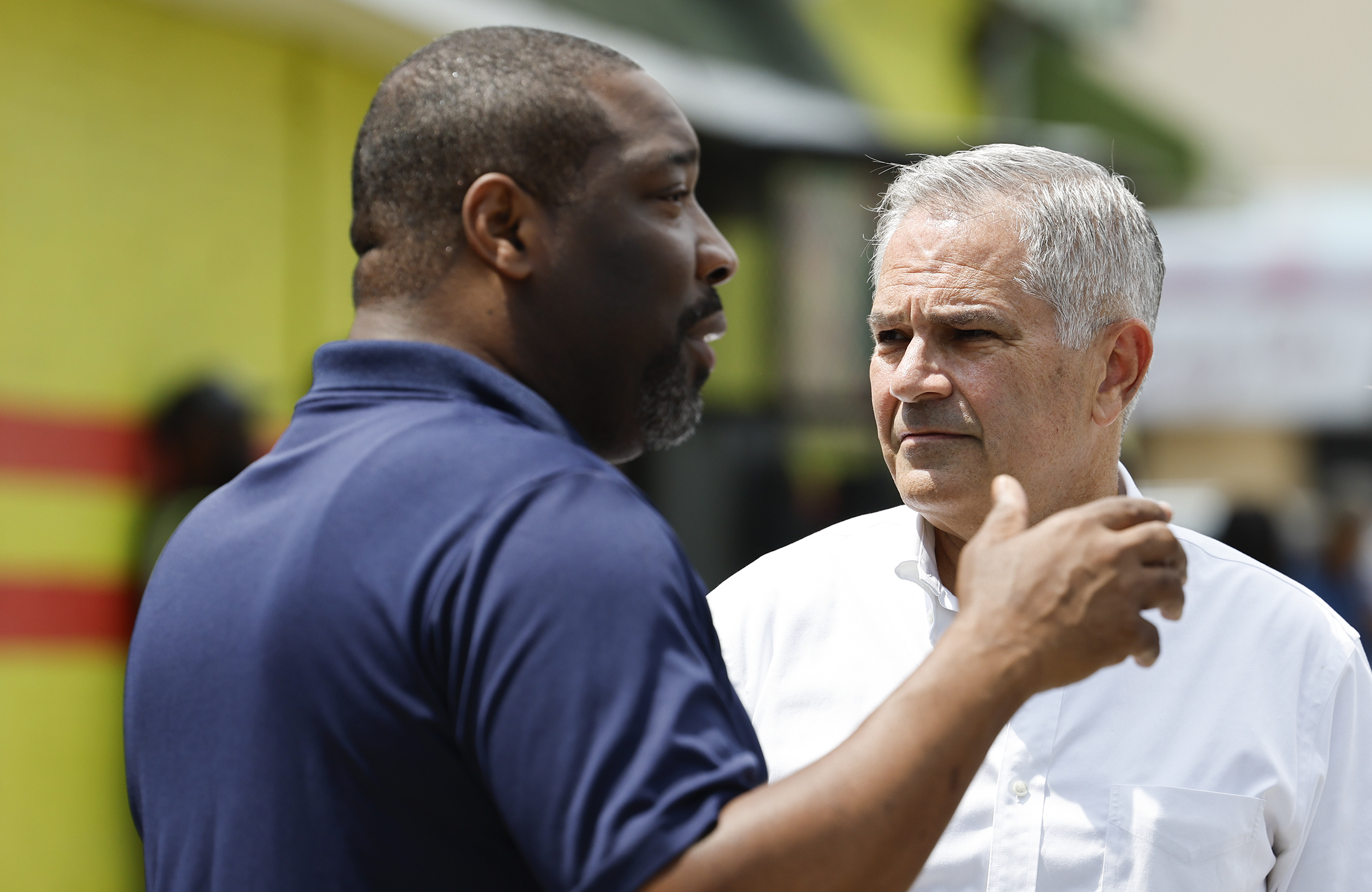
Philadelphia City Council President Kenyatta Johnson on Thursday offered a thinly veiled critique of District Attorney Larry Krasner, who earlier this week faulted the police department for botching an earlier murder case against the man accused of ambushing and killing Officer Shane Seiber last weekend.
“This is about us coming together and figuring out how we work together to make the city safe,” Johnson told reporters Thursday after Council’s weekly meeting. “Assigning blame, for me, right now is not relevant. We haven’t even had a funeral for this officer.”
The comments from the typically subdued Council president were notable because Johnson, a Democrat, has been an ally to Krasner. He endorsed Krasner’s reelection bid last year and has been the progressive prosecutor’s most high-profile political supporter in City Hall.
But on Thursday, Johnson — who was answering a question about Krasner’s allegations but did not name the district attorney — expressed disappointment in the “back-and-forth” that the prosecutor kicked off.
Johnson is the highest-ranking official in the city to weigh in on Krasner’s remarks. Mayor Cherelle L. Parker deferred comment to the police department earlier this week.
“This is a very, very dark week here in the city of Philadelphia, so at the end of the day, who done what, to me, doesn’t matter,” Johnson said. “We should be talking about supporting the family, and we should be talking about supporting the officers who lost their colleague, but also us as a city as a whole. We have to heal, because I know it impacted all of us.”
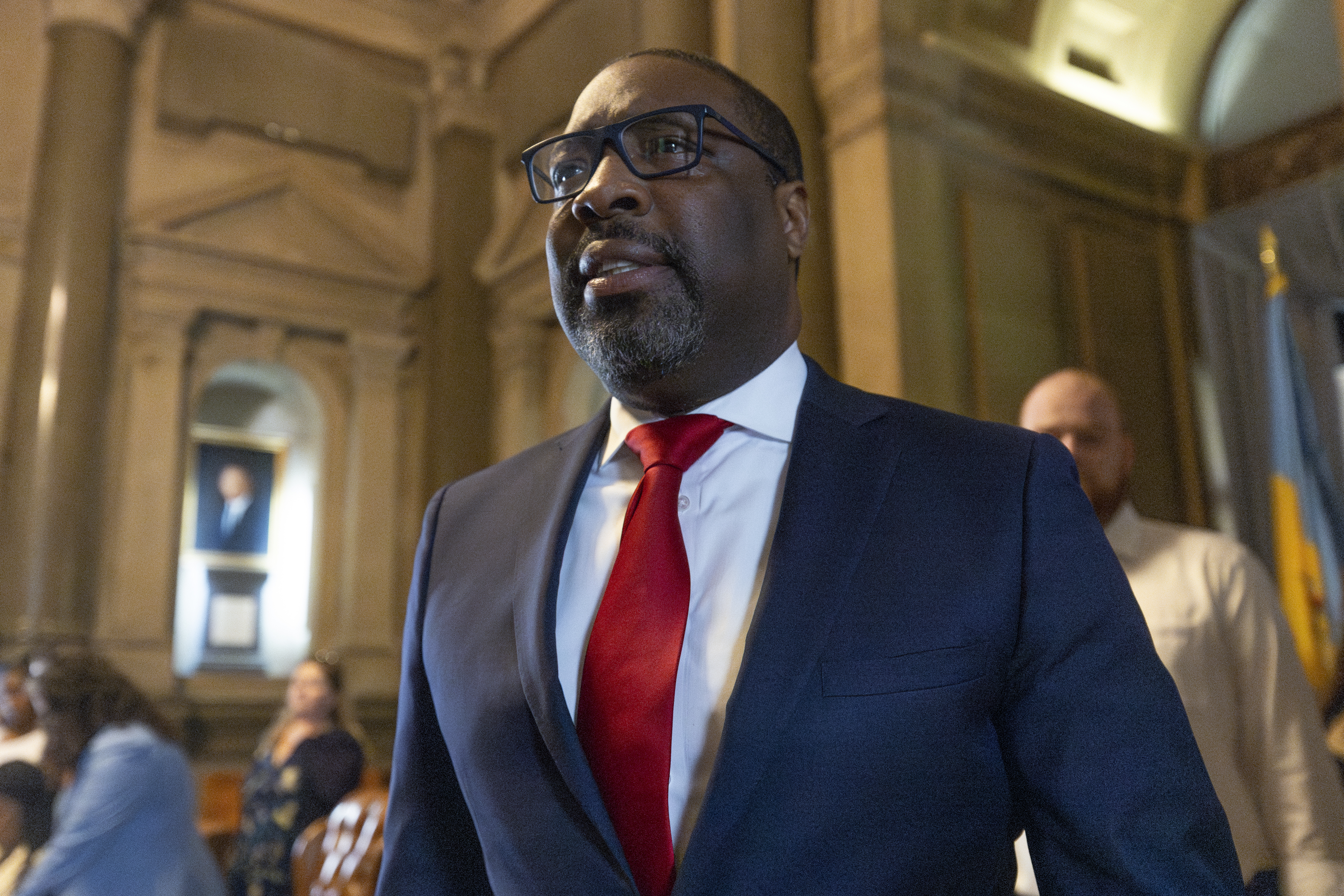
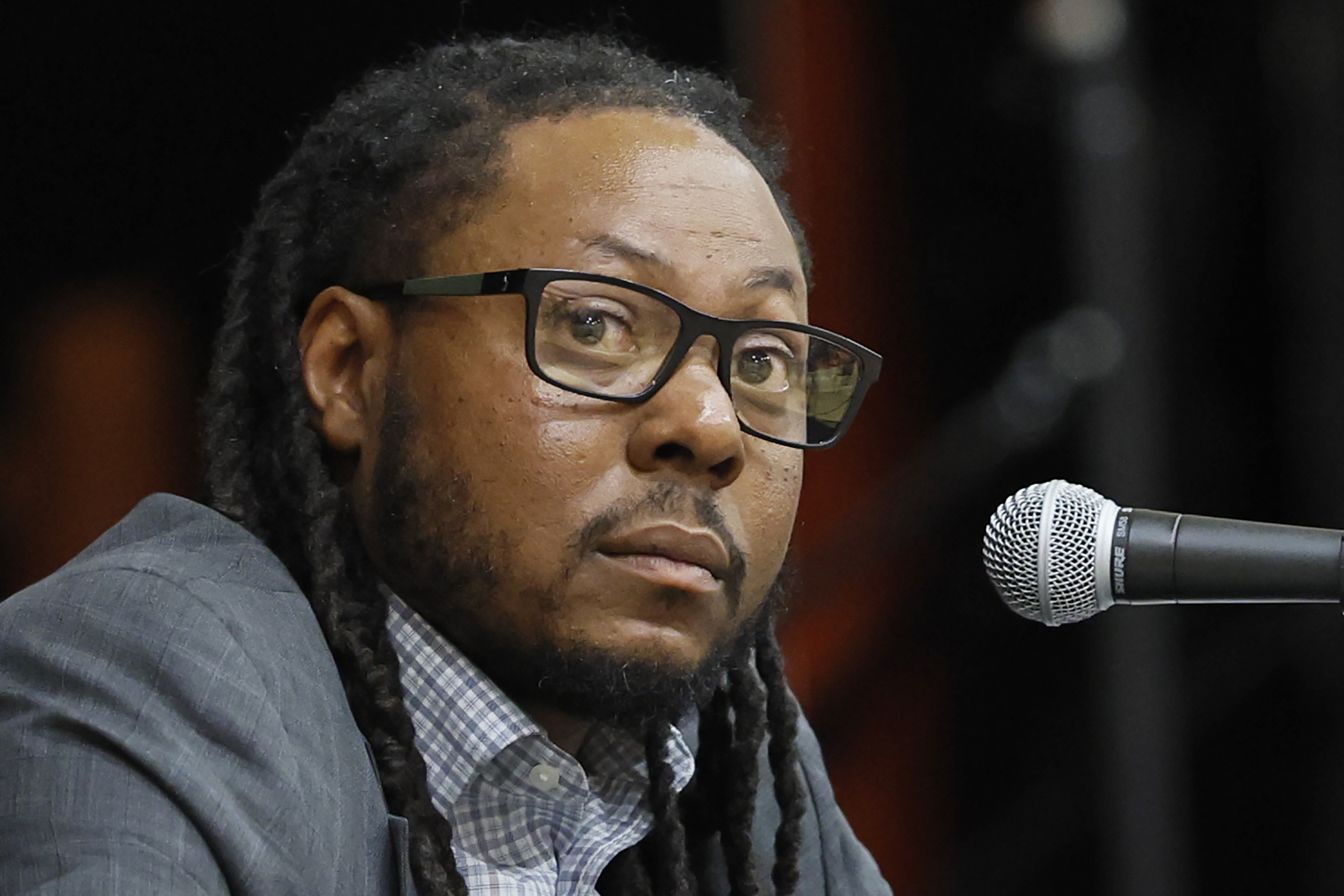
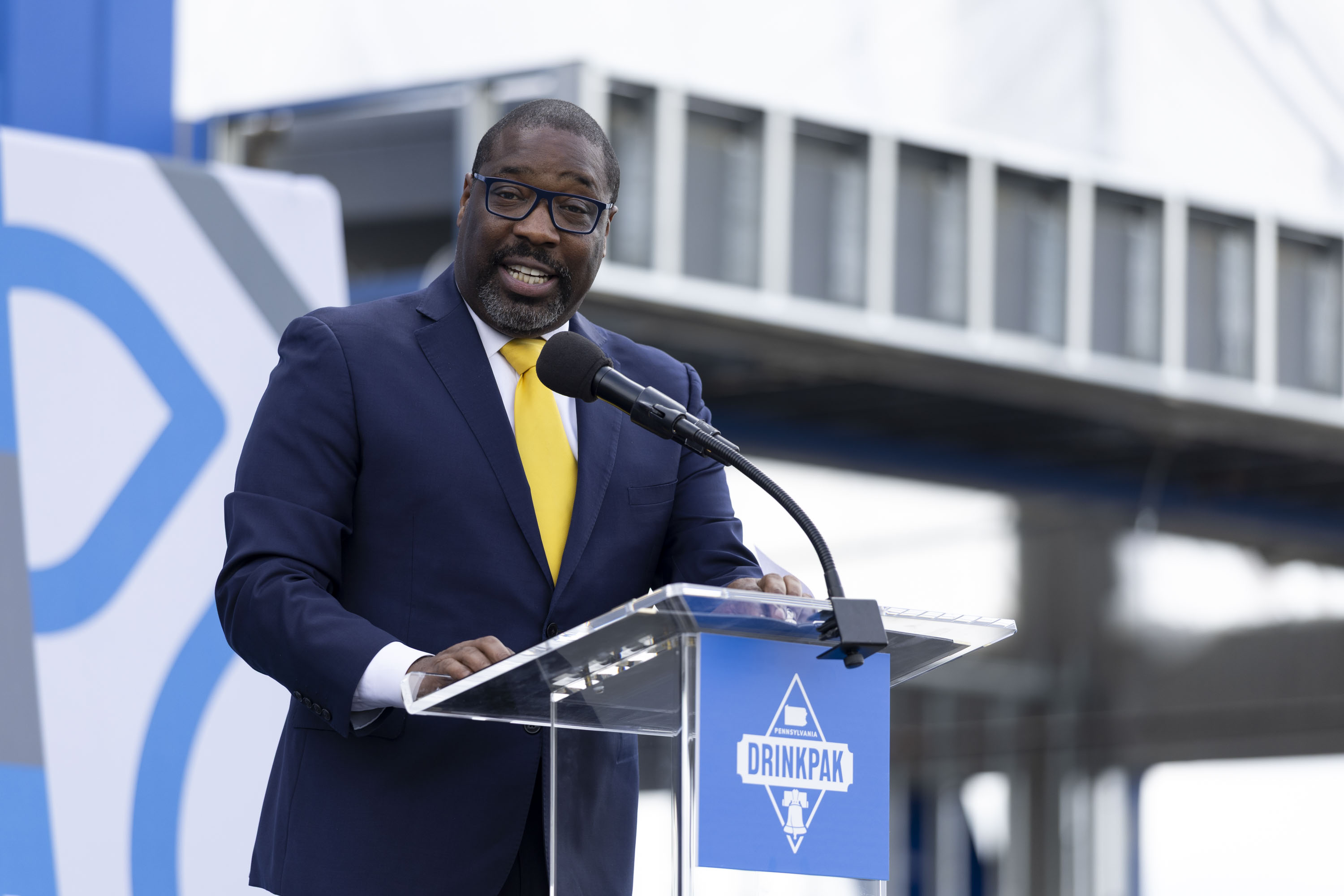
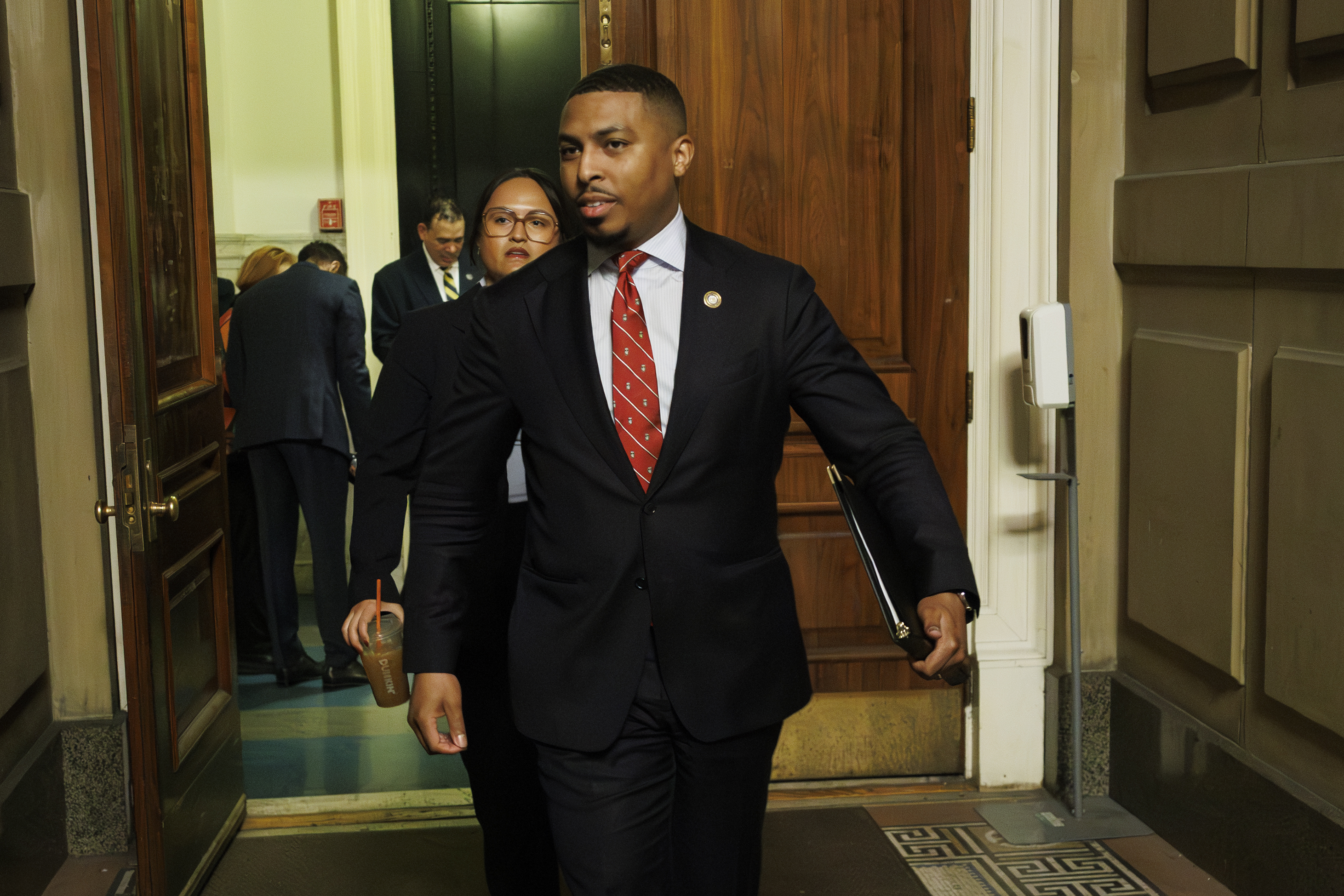
Council President Kenyatta Johnson walks to the chamber room inside City Hall in Philadelphia, Pa. on Thursday, June 11, 2026.Aidan T. Gallo / Staff Photographer
Krasner touched off a firestorm Tuesday when he posted a YouTube video in which he insinuated that Eric Lewis, the man now accused of killing Seiber and critically wounding another officer, was able to commit that crime because police had tanked an earlier murder investigation.
The district attorney called the conduct by police in that case potentially “criminal.”
In 2023, a judge acquitted Lewis on charges related to the 2019 shooting death of Christopher Williams in what investigators described as a road-rage incident. The Inquirer reported that the judge was so troubled by the weakness of the investigation presented in court that he took the extraordinary step of alerting the police department’s internal affairs bureau.
Krasner, in his video, said that a police officer who had dated Lewis’ sister sought to “torpedo” the case and provided false information to law enforcement.
He also accused the homicide detective assigned to the case of failing to investigate key aspects, and said that prosecutors in his office had done “everything humanly possible” to convict Lewis.
Police spokesperson Sgt. Eric Gripp said in response to Krasner’s allegations that the department was reviewing the investigation into the 2019 homicide, but that the leaders of the force are focused on supporting Seiber’s family and other officers grappling with the death of their colleague.
“Assigning blame while families are grieving does nothing to advance accountability or support those affected,” Gripp said in a statement. “True leadership does not seek to assign fault in a moment like this. It stands with the families. And when the time comes, it holds itself to the same scrutiny it asks of others.”
Police said Lewis on Saturday fatally shot Seiber and wounded his partner outside his home in West Philadelphia while the officers were responding to a 911 call. Lewis is charged with murder and related crimes in connection with Seiber’s death. He also faces 10 counts of attempted murder in connection with the shooting of the second officer and for allegedly firing at nine others who rushed to the block.
Philadelphia City Council wants to dramatically restrict where new stores that sell tobacco or vaping products can be located in the city, the latest attempt by the legislative body to rein in smoke shops.
Democratic Majority Leader Katherine Gilmore Richardson on Thursday introduced legislation that would adjust the city’s zoning code to prohibit any businesses selling tobacco from opening in much of the city. It would ban them from locating within 750 feet of a school, a daycare, a park, or an existing store that sells nicotine products.
Asked whether that would effectively ban new stores from opening in most of Philadelphia, Gilmore Richardson said: “Bingo.”
The new zoning definition would apply to any store that sells tobacco or vaping products, meaning it could also encompass new gas stations, groceries, and corner stores. Existing stores that sell nicotine products would not be affected by the legislation.
“We are hopeful that this piece of legislation will be the one that will make the difference for our communities,” Gilmore Richardson saidWednesday during a news conference.
Gilmore Richardson said she has not heard from a single Council member who opposes her legislation, and wants members to pass the measure before the end of the year. The bill is her 10th piece of legislation aimed at regulating smoke shops in the city.
The effort comes as the state is already significantly limiting vape sales in the state. Starting next week, Pennsylvania stores may sell only electronic nicotine products that are manufactured by six companies.
Also this week: Council passed a long-delayed bill to establish a bike lane around City Hall, and members honored Officer Shane Seiber, who was fatally shot in the line of duty on Saturday.
What was this week’s highlight?
Smoking ’em out: Currently, smoke shops that open in the city are classified as retail businesses under the zoning code, allowing them to locate in most areas that are zoned to allow commercial sales.
But under Gilmore Richardson’s legislation, such shops would fall under a new use definition specifically for stores that sell tobacco, nicotine, or vaping products.
“With its own new definition,” she said, “new smoke shops would no longer be treated like any other retail business.”
Shops that sell nicotine products will be able to open only in areas covered by the most flexible zoning rules — predominantly focused in Center City and University City — or in areas zoned for auto-oriented commercial uses like shopping centers.
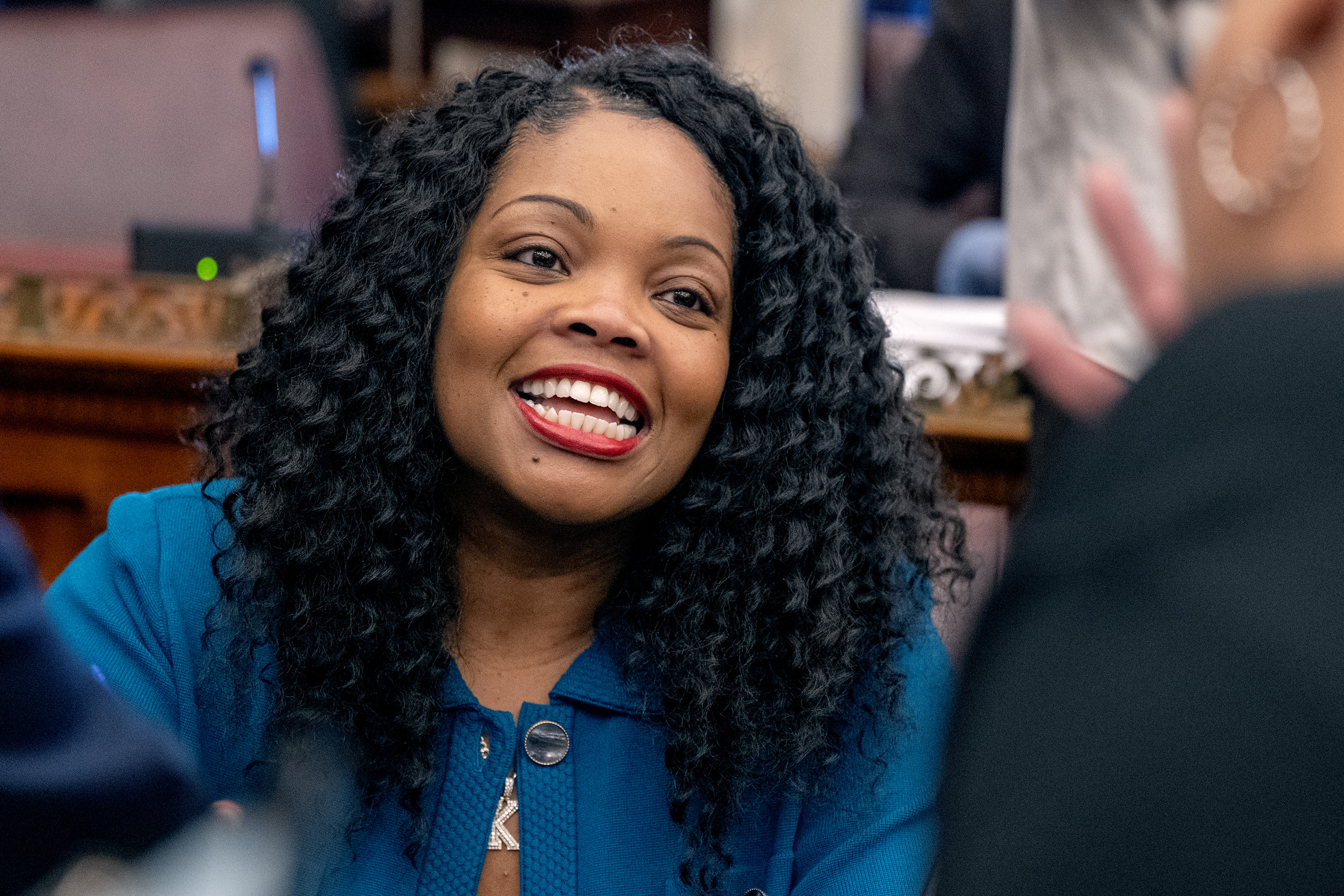
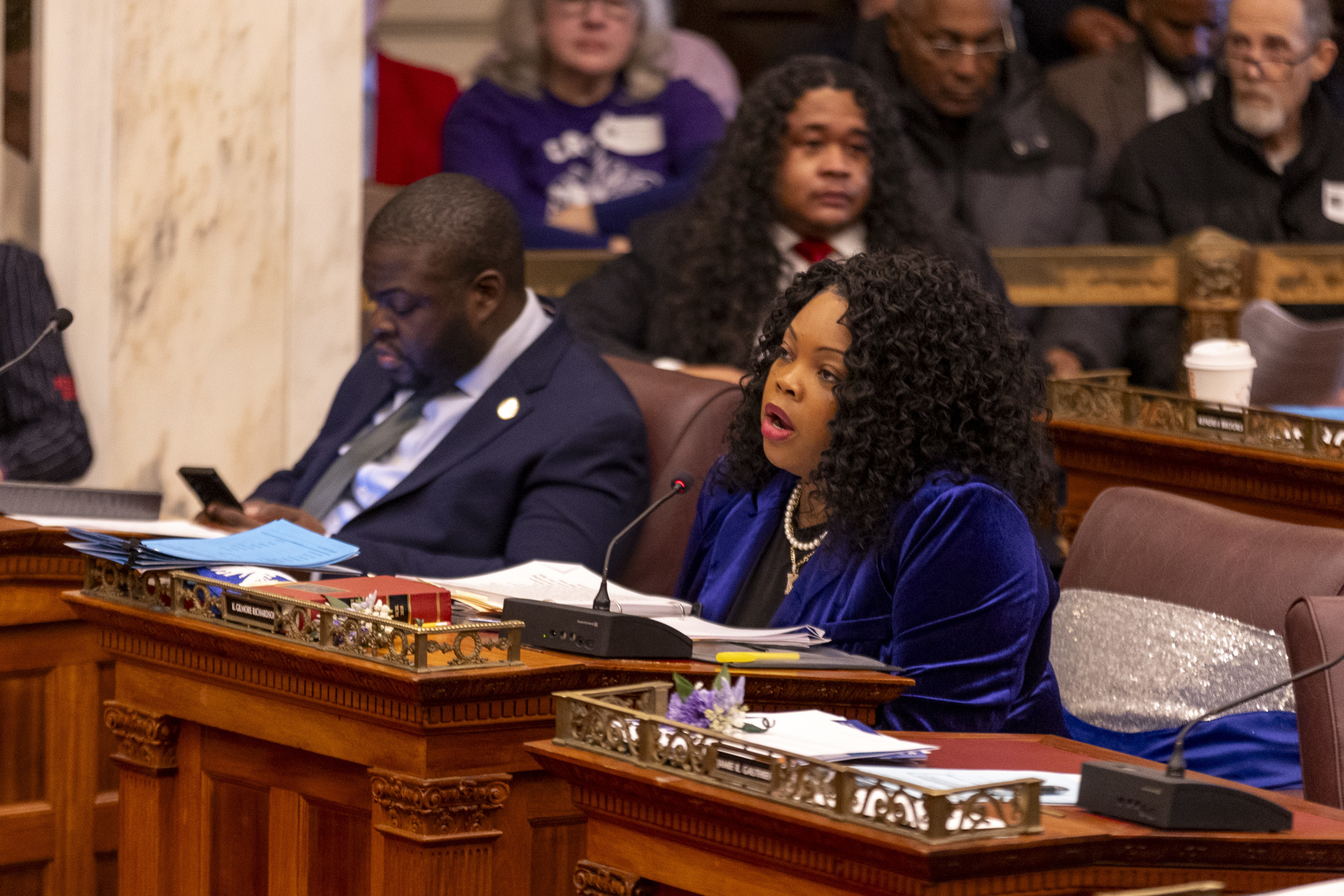
City Councilmember Katherine Gilmore Richardson in Council Chambers Thursday Oct. 8, 2026.Tom Gralish / Staff Photographer
On commercial corridors, stores selling nicotine products will be slightly less restricted and will only have to get a “special exception,” which requires a trip to the Philadelphia Zoning Board of Adjustment (ZBA), where they are almost always approved.
To open such a store in the rest of the city would require a variance, which is subject to greater scrutiny by the zoning board.
However, the wait times at the ZBA are so long that small businesses subjected to either requirement often struggle to afford the delays.
Gilmore Richardson’s latest legislation is squarely focused on tobacco and vape sales. It comes as part of a yearslong effort by Council to crack down on nuisance businesses and smoke shops, some of which hawk unregulated drugs with little oversight.
The Council member has cited Inquirer reporting in introducing pieces of legislation that have added layers of permitting and oversight for smoke shops, including implementing new age restrictions and penalizing landlords who rent space to illegal stores.
District members have also instituted business curfews in their jurisdictions, partly in an effort to crack down on smoke shops.
Councilmember Curtis Jones Jr., who represents parts of West Philadelphia, introduced such a restriction on Thursday, covering North 54th Street between Arlington Street and Montgomery Avenue, and instituting a curfew from 11 p.m. to 6 a.m.
What else happened this week?
Honoring Officer Seiber: Council President Kenyatta Johnson kicked off Thursday’s session by holding a moment of silence for Seiber, the Philadelphia police officer fatally shot in West Philadelphia on Saturday.
“We extend our deepest condolences to Officer Seiber’s wife, children, family, friends, and fellow officers during this heartbreaking time,” Johnson said. “May his memory live on, and may his family find strength and comfort in our city’s support.”
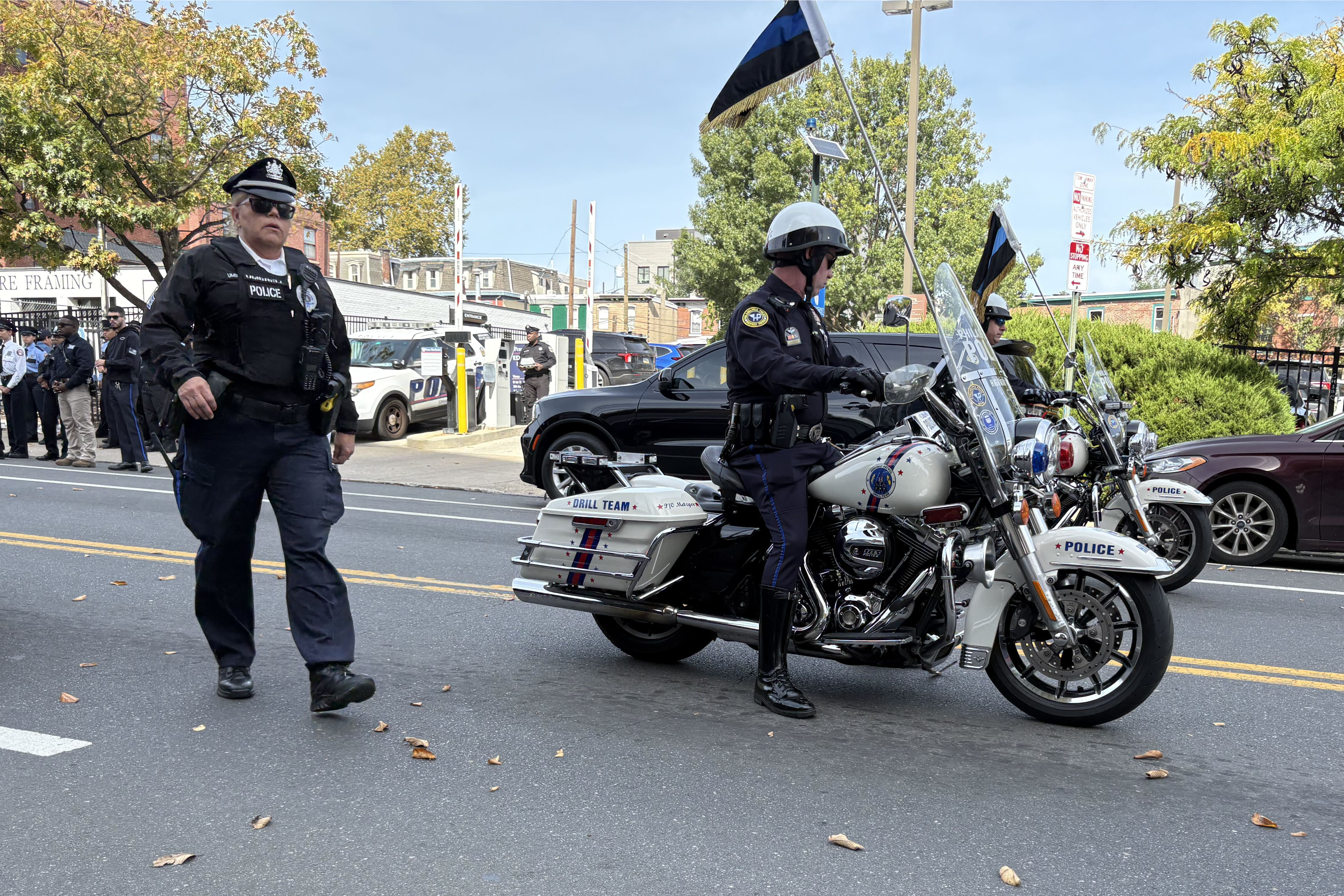
Motor police lining up for a procession for officer Shane Seiber, killed in an overnight shooting in West Philadelphia on Saturday, Oct. 10, 2026.Brett Sholtis / Sta
Prayers up: POWER Interfaith, a progressive coalition of religious leaders, this week called on Council to adopt a three-pronged “We Make Philly” agenda to contain costs for working families and raise revenue.
“Every food giveaway line in this city is long right now,” the Rev. Cean R. James, senior pastor of Salt and Light Church in West Philadelphia, said at a rally Tuesday. “There is not a clergy person with me today who is not weekly receiving requests from members for assistance.”
First, POWER wants Council to raise the real estate tax homestead exemption, which currently reduces the assessed value of owner-occupied properties by $100,000 and saves taxpayers up to $1,399 per year.
Second, the group renewed calls for a city “wealth tax,” which would be a 0.4% levy on the value of certain investment holdings like stocks and bonds. Councilmember Kendra Brooks proposed a similar measure in 2022, but the bill lacked support and never got a committee hearing.
Third, the group called for a five-year freeze on gas bills. Council cannot control gas bills, which are set by the Philadelphia Gas Works, but POWER asked lawmakers to pressure the utility, which is owned by the city, to enact a freeze.
Johnson said that idea could be a way to address the “affordability crisis around utilities.”
“But obviously,” he said, “we have to sit down with chair of the PGW board and the members and see what can actually be done when it comes to helping individuals who are having a hard time.”
A City Hall bike lane, at long last: The bike lane around Philadelphia City Hall is just a mayoral signature away from becoming permanent.
Councilman Jeffery Young Jr. during a community meeting hosted by his office at the MLK Recreation Center in Philadelphia on Tuesday, September 15, 2026.Elizabeth Robertson / Staff Photographer
New crime lab gets final green light: Council on Thursday also approved legislation authorizing the city to issue $40 million in bonds to finance the police department’s new forensics lab in University City, a project that has been in the works for more than five years.
The lab at 4101 Market St., which will cost about $90 million in total, is already under construction and could open as early as next year, according to Mayor Cherelle L. Parker’s administration.
Police have said a new, state-of-the-art crime lab to replace the force’s outdated space in North Philadelphia will allow investigators to solve more crimes and more quickly process evidence like guns, drugs, and DNA.
Quote of the week
Mario Zucca wins the first Parallel Parking Championship at Headhouse Square on Saturday.Bastiaan Slabbers/ For the Inquirer
That was Mario Zucca, aka “One-Shot Mar,” who won Philadelphia’s first parallel parking championship earlier this month and was honored with a resolution Thursday. While greeting Council members, Zucca clutched his trophy, which is topped, fittingly, with a chunk of concrete curb.
Staff writer Ryan Briggs contributed to this article.
The Community Reinvestment Act (CRA) is a foundational pillar for creating access to opportunity by requiring banks to provide credit and investment to low- and moderate-income residents and communities. Importantly, it also provides criteria to evaluate whether banks meet these obligations.
If you care about affordable housing or economic development, if you care about access to credit for a family looking to buy their first home or start a small business, if you care about the strides we have made since the days of redlining when banks wouldn’t lend to these communities, then you should care about the Community Reinvestment Act.
For decades, the work of building a more equitable Philadelphia that prioritizes housing stability and economic mobility has been grounded in partnership. Community-based nonprofit organizations, government, and the private sector have worked together to increase opportunity and quality of life for the communities of the Delaware Valley.
This ecosystem was created through hard-fought advocacy and a recognition that government must both support the work to break cycles of intergenerational poverty while leveraging its regulatory power to prevent the private sector from exacerbating inequality.
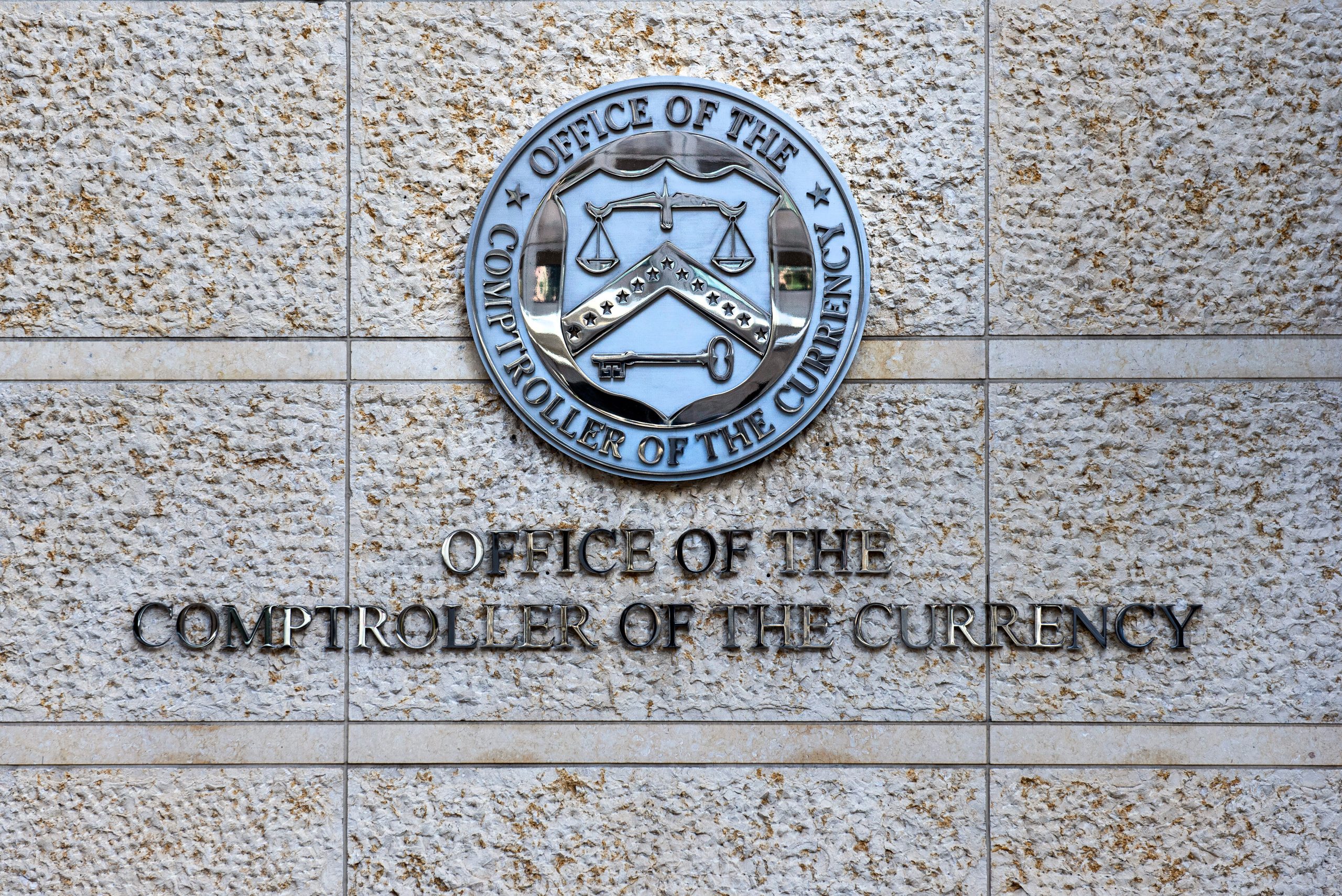
A new federal rule proposed by the Trump administration would enable the Federal Deposit Insurance Corp. and the Office of the Comptroller of Currency to exercise control over the Community Reinvestment Act and make drastic changes that would undermine credit and investment in low- and moderate-income households and communities.Manuel Balce Ceneta
However, a new federal rule proposed by two of the three federal banking regulatory agencies — the Federal Deposit Insurance Corp. and the Office of the Comptroller of Currency — risks jeopardizing this partnership.
These agencies exercise control over the Community Reinvestment Act and are attempting to make drastic changes that would undermine the progress we have made toward promoting equality in Philadelphia and the surrounding metropolitan area.
According to the National Community Revitalization Coalition, in the Philadelphia metro area from 2010-2024, banks made more than $64 billion in CRA-qualified mortgage lending to low- and moderate-income borrowers or in low- and moderate-income communities, and over $22 billion in CRA-qualified lending to small businesses.
Across Pennsylvania, there has been more than $108 billion in CRA-qualified mortgages and $48 billion in small business lending in the same period.
This proposed rule would, among other things, make many banks subject to a much lower degree of scrutiny, while exempting many others from its key provisions. It would broaden what qualifies toward a bank’s CRA obligations and degrade the connection to meaningful economic benefit to low- and moderate-income communities.
Were banks to adopt the lower targets proposed by the Trump administration and controlled by the Federal Deposit Insurance Corp. and the Office of the Comptroller of Currency, Pennsylvania could see an 80% reduction in CRA lending and investments, write Rick Sauer and Daniel Betancourt.Cliff Owen
The proposal would also make it more challenging to hold banks accountable and eliminate key data-sharing requirements that allow outside stakeholders like advocates and elected officials to understand whether resident needs are being met.
Were banks to adopt the lower targets proposed by the two regulators, Pennsylvania could see an 80% reduction in CRA lending and investments.
Should this proposed rule go into effect, it will set back our collective work to address economic mobility and housing instability in our region.
In particular, it will significantly undermine the goals of recently launched housing programs like Mayor Cherelle L. Parker’s H.O.M.E. Initiative or Gov. Josh Shapiro’s Housing Action Plan. This will happen in big, obvious ways, like more challenging financing for affordable housing development, and small, less obvious but no less insidious ways, like a first-time homebuyer who has done everything right but doesn’t understand why they still can’t get a mortgage.
It will also mean less support for nonprofits doing the work on the ground to improve your community and provide a better quality of life for residents.
At a time when housing affordability has reached a crisis and small businesses are struggling to stay afloat, we must preserve and build upon the gains we have made and not allow a rollback into a past where owning a home or starting a small business are placed out of reach for even more of our neighbors.
Now is the time for action: Elected officials at all levels of government should take a stand (as Philadelphia City Council recently did) to express their opposition to the proposed rule.
Members of the public can also make their voices heard. We encourage you to submit a public comment objecting in opposition to the proposal by the Oct. 13 deadline. The Philadelphia Association of Community Development Corps. has created a template for you to do just that.
Just as the partnerships that have sustained this work did not emerge without effort, they will not endure without action. Take a stand and submit your comments in opposition to the new rule by Tuesday.
Rick Sauer is the executive director of the Philadelphia Association of Community Development Corps. Daniel Betancourt is the president and chief executive officer of Finanta.
This week’s edition of Shackamaxon asks why City Council won’t hold Sheriff Bilal accountable, explores the Philadelphia Police Department’s continued inaction on traffic safety, offers a compromise for student SEPTA fares, and provides an update on historic preservation.
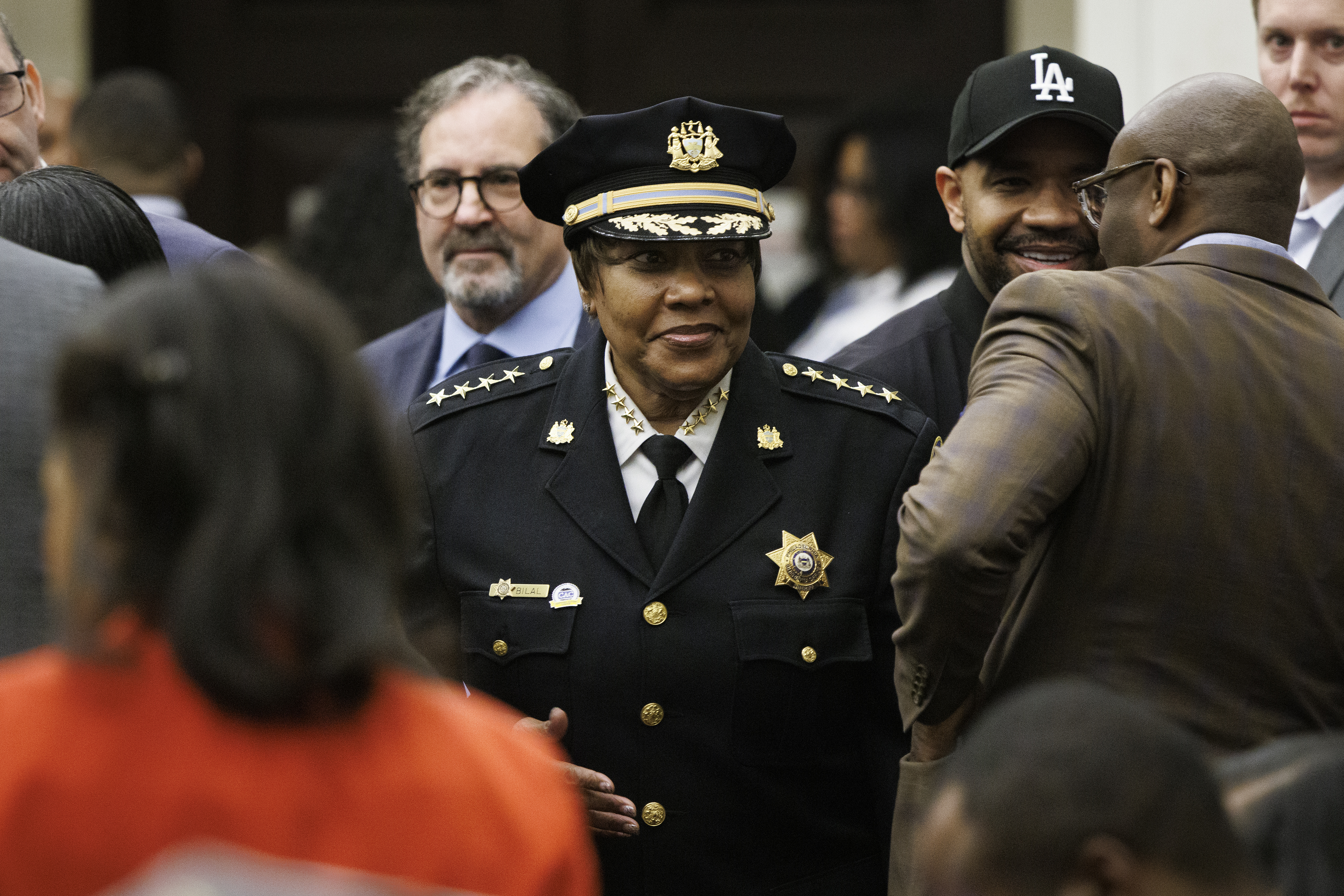
Sheriff Rochelle Bilal during the mayor’s budget address at City Hall in March.
Council’s choice
Philadelphia Sheriff Rochelle Bilal continues to embarrass the city. Most recently, she reneged on her agreement to accept court-appointed oversight of her office, while a top deputy announced that roughly $20 million worth of taxpayer dollars had been hiding in the department’s couch cushions.
All of this comes just months after Inquirer reporting showed that Bilal had misled City Council during her budget hearing, claiming deed processing was moving full steam ahead despite significant evidence that things were stuck.
Given these circumstances, you might think Council would act, hold fact-finding hearings, and even consider abolishing the office. Instead, their focus is on something completely different, namely Starbucks workers’ unionization effort. Council wants everyone to know it supports boycotting the coffee chain until a contract agreement is reached.
It is one thing for members to signal their support for organized labor, but Council could have done so by signing a letter. Instead, where people get their coffee became the biggest issue of the day during last week’s Council hearing, which included an anti-Starbucks rally. The Seattle-based chain itself is no longer thriving. The company just closed 250 stores nationwide, including three in the Philadelphia area.
This level of attention was particularly galling when paired with Council’s inaction over Bilal, which is an issue they can actually do something about. Instead, the city’s lawmakers have been virtually silent.
Beating up on big out-of-town corporations is easy; fixing systemic issues incity government is hard. It is clear what the current crop of Council members prefers to do.
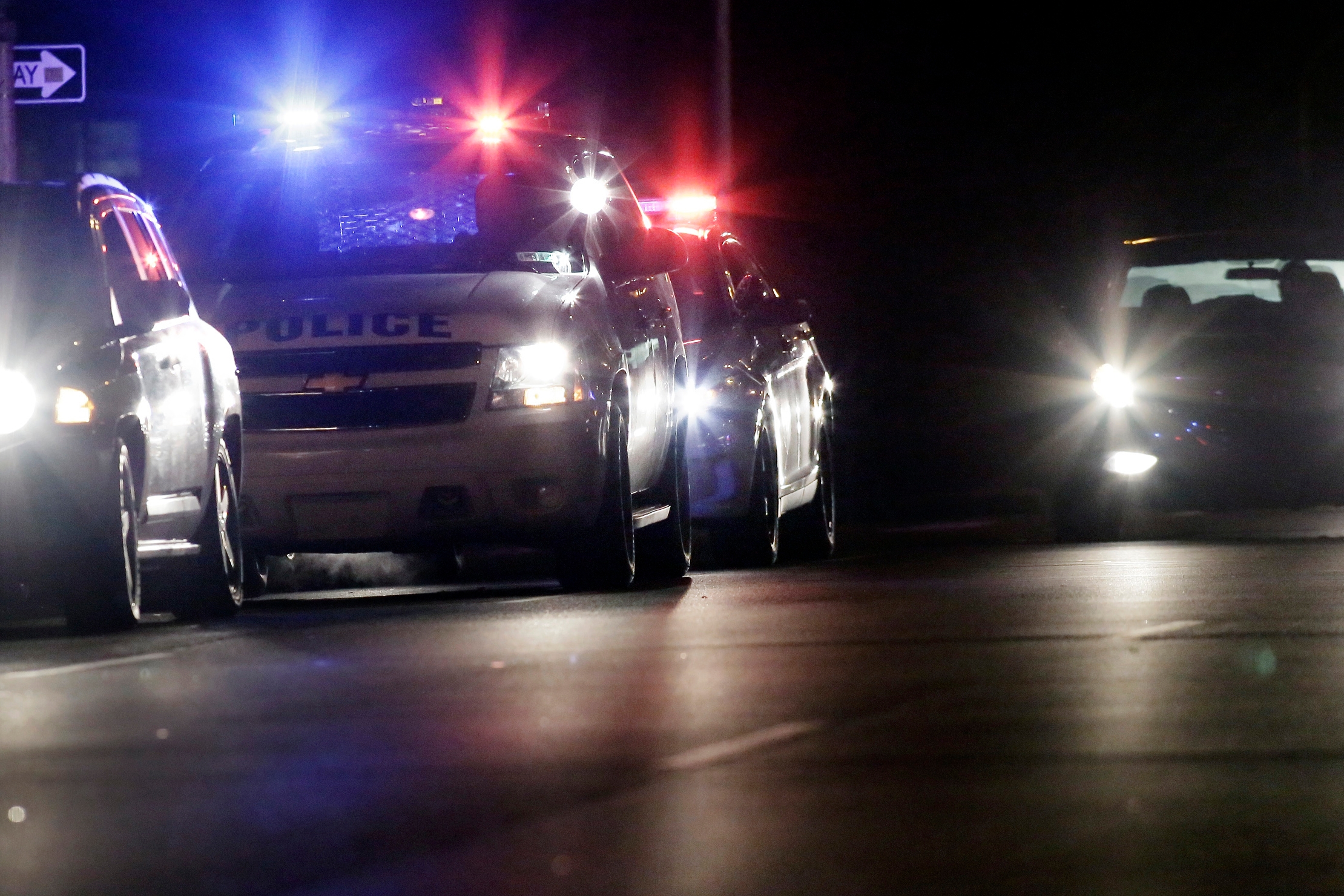
A Philadelphia police officer makes a car stop on the 4400 block of Chestnut Street just after midnight in December 2014.ELIZABETH ROBERTSON / Staff Photographer
Stalled stops
In August, after a Philadelphia police officer left a struggling man to die in the street, I joined others in criticizing the department’s decision to deprioritize traffic enforcement. Unfortunately, it doesn’t seem like anything has changed. When a cyclist was struck by a hit-and-run driver near Jefferson Einstein Hospital on North Broad Street on Sunday, police apparently failed to arrive at all. I wish I could say I was surprised, but this inaction is par for the course.
Walk or drive here long enough, and you’ll find multiple examples of motorists executing blatantly illegal maneuvers on the city’s streets, only for the police who witness it to do nothing at all. The numbers confirm it: Traffic citations have decreased by 90% since 2000.
Policing experts I’ve talked to suggest this strategy is a kind of risk avoidance. In an era when cops fear potential “social media moments,” doubling or tripling the number of stops could double or triple the number of bad headlines police brass are forced to explain.
It is safer, from a public relations standpoint, to simply respond to calls rather than engage in “proactive policing.” This, however, is the wrong mindset. What’s needed is for police to do their jobs, including traffic stops, with poise and professionalism.
Beyond the impact on traffic safety, there’s also evidence that traffic enforcement helps to reduce other forms of crime. Policing experts pointed to the U.S. Department of Justice’s “Data-Driven Approaches to Crime and Traffic Safety” program, which is built on the idea that “traffic law enforcement not only prevents accident fatalities and injuries, but also provides an opportunity to identify fugitives, stolen merchandise, illegal weapons, and stolen cars … the more vehicle stops an agency conducts, the more likely it is to identify persons wanted by the police.”
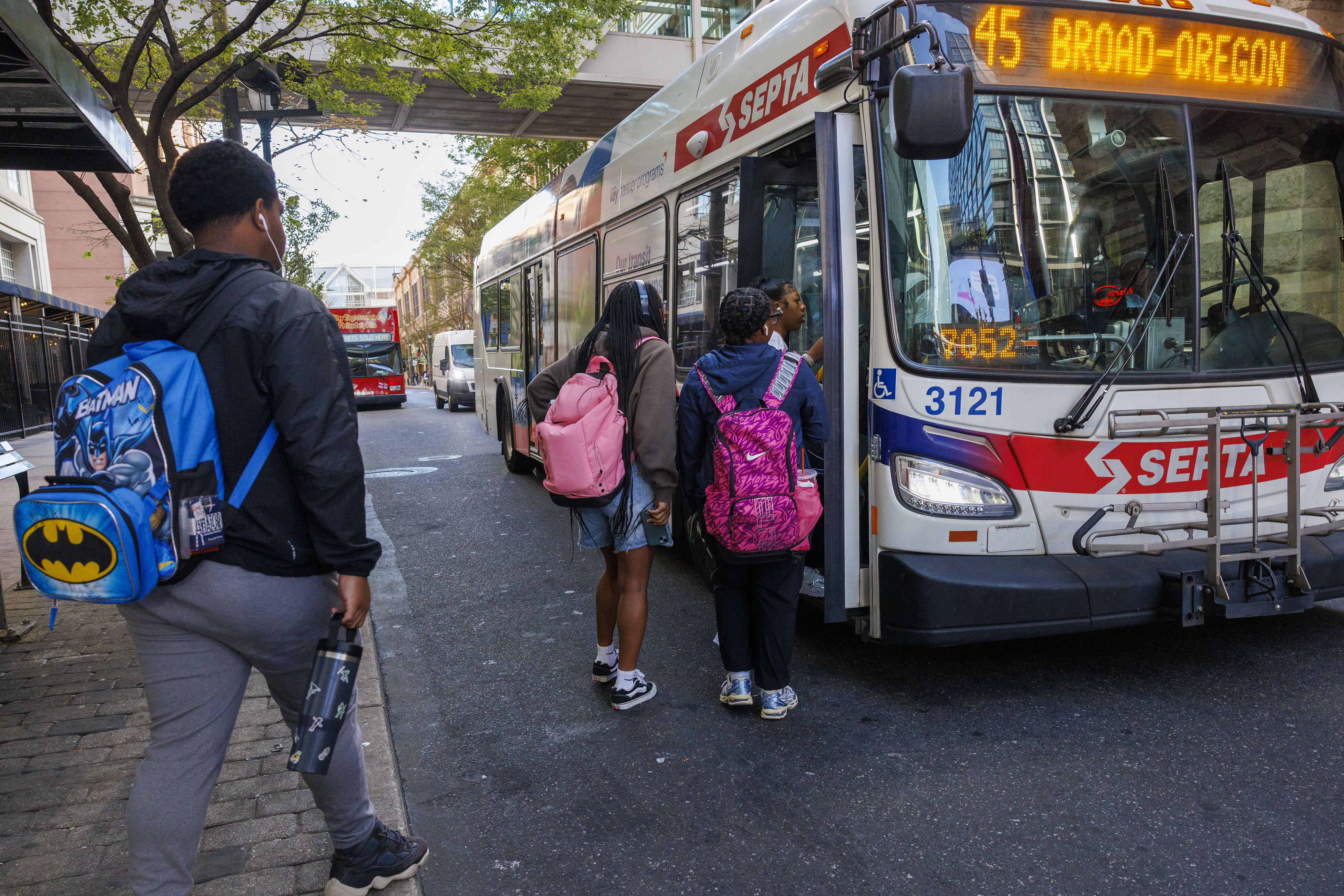
Students making their way south board a SEPTA Route 45 bus as they commute to school in September 2025.Alejandro A. Alvarez / Staff Photographer
Earned privilege
On Tuesday, City Council’s transportation committee held a hearing to explore expanding free student access to SEPTA’s TransPass+, which currently does not work after 8 p.m. or on weekends. There was widespread agreement that something should be done.
While we had to pay for our school tokens back when I attended Central, they were similarly restrictive. Paying full price to get home from work or engage in weekend extracurricular activities is a pain when the only people interested in hiring you pay just $7 an hour. Expanding access could help get more students to broaden their horizons, which would enrich both them and the city.
There were, however, two major concerns noted before Council. One is how to pay for this expanded access, which could cost tens of millions of dollars. The other is the behavior of some students. Councilmember Curtis Jones Jr. mentioned the crowds that have mobbed Dilworth Plaza, while others brought up the inexplicable failure of many students to tap their fare cards on their way to and from school, which reduces SEPTA’s ability to get reimbursed by the state.
Councilmember Anthony Phillips, citing his own experience working with young people, suggested limiting the expansion to only students who are enrolled in extracurricular activities, while Jones suggested turning off the benefit for students who have misbehaved. Althoughthese ideas are well-intentioned, they also sound like a headache to administer.
There may be a way to overcome these obstacles, in part by tying them together. A key part of growing up is earning privileges. In that spirit, SEPTA and the school district could extend transit access if students start tapping their cards at an acceptable rate. This would cut down on turnstile jumping, offer some of the accountability Jones and Phillips were looking for, and create a pathway to expanded access.
The Washington Square West neighborhood has accommodated all types of buildings, from elegant townhouses to modern high-rise towers.Inga Saffron
Historic ruling
Last week, I wrote that Common Pleas Court Judge Christopher Hallseemed skeptical of the case for the Washington Square West Historic District. That observation was confirmed by this week’s decision, which once again revoked the Philadelphia Historical Commission’s decision to create the city’s largest and most extensive preservation zone.
I share the Preservation Alliance’s appreciation for great architecture and our city’s history. At the same time, the revocation of this district should not come as a surprise. As Hall’s order notes, 85% of residents opposed the designation during the commission’s hearing, and in many cases, properties were included simply due to their location, with no other justification listed.
It turns out that infringing on homeowners’ ability to renovate their own property according to their own wishes requires more than good intentions.
City Council President Kenyatta Johnson wants to explore opening a city-supported grocery store in Philadelphia.
Johnson on Thursday proposed a “Philly Food Affordability Act” package of legislation that calls for the creation of a new Philadelphia Office of Food and Nutrition Safety, as well as Council hearings probing grocery pricing practices and examining the possibility of one run or supported by the city.
“We have leadership in Washington, D.C., that has taken thousands of individuals off these SNAP benefits rolls, which means you have thousands of families here in the city of Philadelphia who will be food-insecure,” Johnson told reporters Thursday, referring to President Donald Trump’s changes to the Supplemental Nutrition Assistance Program taking effect Oct. 1. “So we’re working to make sure that no children go to bed hungry, no children go to school hungry, and, at the end of the day, come up with an overall long-term comprehensive strategy to address the issue of food insecurity.”
Johnson’s proposed legislation comes after New York City Mayor Zohran Mamdani this year made national headlines for his push to open five municipally backed grocery stores that would offer prices 30% below market rate. The proposal is facing a lawsuit from the Multicultural Business Coalition, a coalition of small-business owners.
Johnson said his inspiration for exploring the issue was Newark Mayor Ras Baraka, who has opened five “community-partnered grocery stores” offering 25% to 30% discounts.
None of Johnson’s proposals involve immediate action on addressing food insecurity, but they instead lay the groundwork for potential future legislation by Council or actions by the mayor’s administration.
Johnson’s proposal so far includes no details on what a city-backed grocery store could look like in Philly. Rather, it calls for an informational public hearing exploring possibilities, such as a public-private partnership.
Johnson’s proposed Philadelphia Office of Food and Nutrition Safety would be led by a mayor-appointed director charged with developing citywide policies for food security, collecting and reporting data on food insecurity, and improving access to healthy, affordable food, among other things, according to Johnson’s office. The office would be guided by a Food and Nutrition Security Advisory Commission made up of five mayoral appointees.
The proposal, which was introduced by Majority Leader Katherine Gilmore Richardson on Johnson’s behalf, would amend the Home Rule Charter, meaning it would have to be approved first by Council and then by a majority of voters, who could see a ballot question about the issue in the May 2027 primary election.
Johnson turned to two of Council’s more progressive members to handle the issue-based public hearings he proposed.
Councilmember Nicolas O’Rourke, in Philadelphia City Hall on March 12, 2026.Alejandro A. Alvarez / Staff Photographer
Councilmember Nicolas O’Rourke, who chairs Council’s Cost of Living Task Force, introduced Johnson’s resolution to hold a hearing on the possibility of a “City of Philadelphia-Supported Grocery Store.” The hearing will consider various models for how such a store could be structured, as well as similar initiatives in other cities.
Councilmember Rue Landau, who has championed other consumer protection issues, introduced Johnson’s resolution to hold a hearing on emerging technologies in the grocery industry including “surveillance, algorithmic, and dynamic pricing systems … to examine opportunities to support transparency, affordability, and consumer confidence.”
Council on Thursday approved resolutions green-lighting both hearings. Legislation related to Johnson’s proposed charter amendment will be referred to committee.
It has been almost a year since a bill aimed at providing relief to Philadelphia small businesses affected by the recent elimination of a popular tax break first came before City Council.
A majority of Council supports the proposal, which was introduced by Councilmember Mike Driscoll.
And yet, for months, the bill has languished in Council’s Finance Committee. The holdup, according to Driscoll, is Council President Kenyatta Johnson.
“The Council president wasn’t interested in moving any bills that could risk revenue generation, and he’s concentrating on working with the revenue department on ways to increase revenue,” Driscoll said in an interview Wednesday, when he was hoping the measure would be called up in committee.
Driscoll’s bill would exempt sole proprietors and single-member limited liability corporations from paying the city’s business income and receipts tax, or BIRT.
He introduced the measure in November 2025 in response to Mayor Cherelle L. Parker earlier that year persuading Council to get rid of a tax break that excluded firms’ first $100,000 in revenue from taxation under the BIRT, effectively eliminating the tax for firms that make less than that, including many gig economy workers and mom-and-pop businesses.
Parker said she supported the intention of the tax break, but moved to end it after Zoll Medical Corp., a Massachusetts-based company that did business in Philly, sued the city, claiming the policy was illegal under the Pennsylvania Constitution. Parker said she was acting on advice from the law department, which determined the city would likely lose a court battle over the issue, and Council members grudgingly eliminated it in June 2025.
Driscoll’s bill aims to provide a legal workaround that would help many of the firms affected by the elimination of the tax break while passing constitutional muster.
In a statement, Johnson declined to explain why the bill was not brought up in committee and said he supports small businesses.
“All of us on City Council understand the challenges they are facing,” Johnson said. “Council is reviewing all tax relief proposals as part of a larger conversation regarding the Fiscal Year 2028 operating budget, revenues, and fiscal priorities.”
The mayor’s office declined to comment.
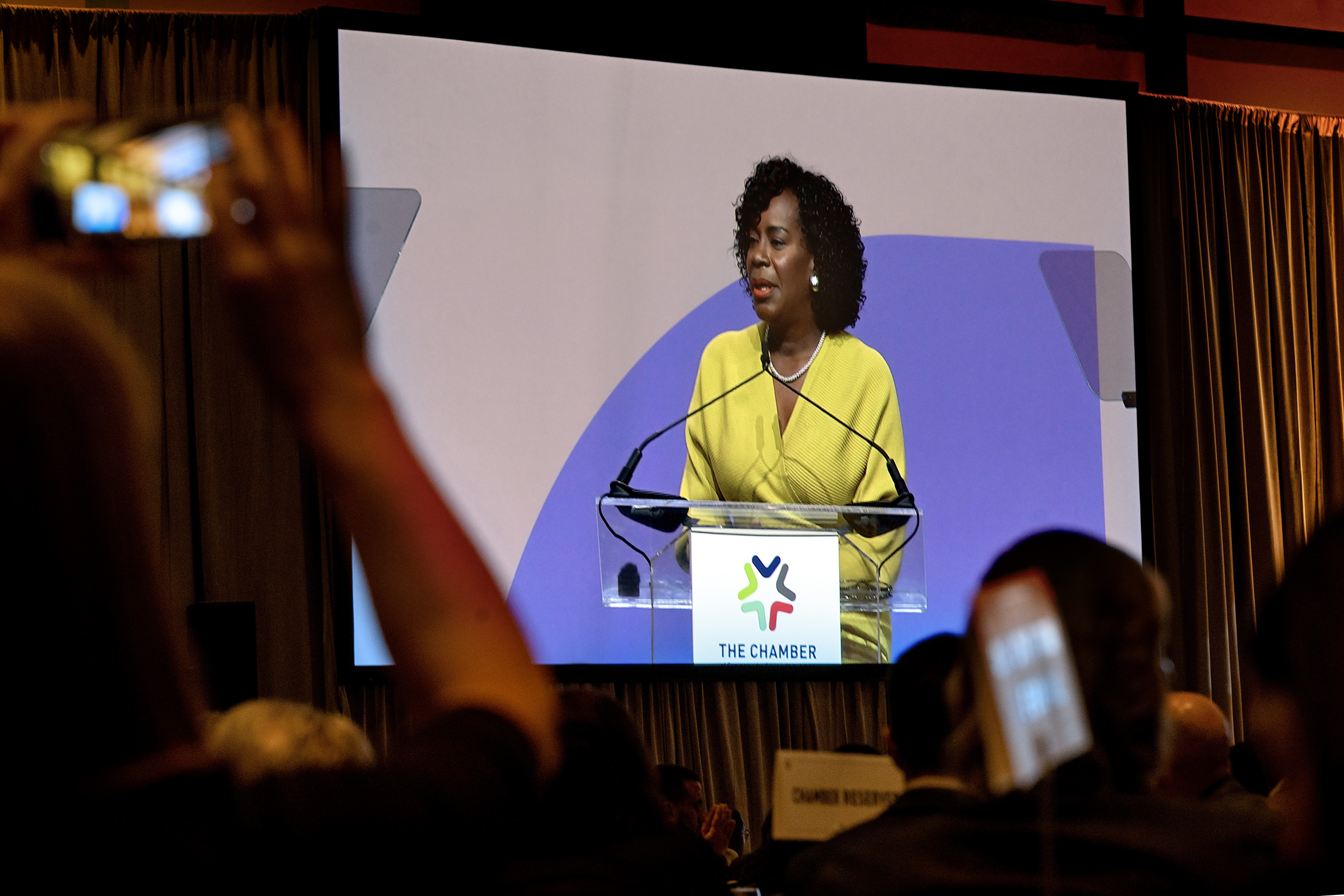
Attendees record Mayor Cherelle L. Parker on big screen as she delivers her keynote address at the Chamber of Commerce for Greater Philadelphia’s Annual Mayoral Luncheon Wednesday, Feb. 11, 2026.Tom Gralish / Staff Photographer
When she moved to eliminate the $100,000 BIRT exclusion, Parker also proposed a bill that would gradually reduce BIRT rates over 13 years, and Council approved the tax cuts in June 2025. While the tax cut measure will eventually lead to a dramatic reduction in BIRT bills for all firms in the city, small businesses are being hit hard by the end of the tax break in the meantime.
“Sending a message to small business that we’re not here to help right now, I think, is the wrong message,” said Driscoll, who represents parts of Northeast Philadelphia.
The bill is currently pending in the Committee on Finance, which is chaired by Majority Leader Katherine Gilmore Richardson.
Gilmore Richardson, who has previously said she supports the proposal, declined to comment.
The BIRT, which is Philly’s third-largest local tax and brought in about $779 million last fiscal year, consists of two tax rates. Firms must pay 5.71% of their net income, or profits, made in Philadelphia, as well as 0.141% of their gross receipts, or total income, according to the city’s website.
The elimination of the $100,000 exemption has subjected tens of thousands of small businesses to the BIRT for the first time in years. It was projected to generate about $30 million in increased revenue for the city per year, and Parker and Council in 2025 allocated $38.5 million for programs aimed at helping small firms navigate the burden of getting in compliance with the tax.
Driscoll’s bill, which the administration has said would cost the city about $29.5 million per year, is aimed at finding a legal way to exempt many of the small businesses most affected by the elimination of the tax break. His measure aims to sidestep uniformity concerns by shielding entire classes of firms that include many of the small businesses that previously benefited from the $100,000 exemption from having to pay the tax at all.
But the legislation also risks incentivizing more well-off business taxpayers, such as real estate investors, to dodge the tax by restructuring into the types of companies it would exempt from the BIRT. The bill, for instance, could allow investors to organize their companies as single-member LLCs while still requiring small stores with multiple owners to pay the tax.
“The Department of Revenue anticipates businesses may change their business structure specifically to take advantage of the exemption, which will increase potential revenue losses,” the administration wrote in a fiscal analysis of the bill.
Johnson has previously supported efforts to lower the business tax, and his opposition to Driscoll’s bill came as a surprise — not least to Jigar Mehta, a Bucks County-based management consultant whochampioned the idea for Driscoll’s legislation.
Mehta said Wednesday that Johnson’s staff had helped draft the legislation.
“They literally helped us put this bill together, his office,” said Mehta, who added that he was told at the time that Johnson supported it. “If you’re for exempting this group, why now all of a sudden are you saying we need this revenue? That’s what’s shocking.”
The Philadelphia Police Department’s new state-of-the-art forensics lab could be operational as early as next year, the culmination of a yearslong planning effort aimed at modernizing how the force solves crimes.
City Treasurer Jacqueline Dunn told a City Council committee on Wednesday that construction began at the University City site in December 2025 and will extend through April.
Dunn explained that timeline during a meeting of Council’s Finance Committee, which unanimously approved a request by Mayor Cherelle L. Parker’s administration to authorize the city to issue $40 million in bonds to finance the project. That measure will fund the build-out, construction, and equipment at the lab site, and it is expected to be approved by the full Council as soon as this week.
City officials, police brass, and members of Council have for years described the existing police crime lab in North Philadelphia — where the force processes guns, drugs, DNA, and other evidence — as undersized and outdated.
“This is something the public has been asking us for to really modernize the police operation,” said Councilmember Katherine Gilmore Richardson, the Democratic majority leader and the chair of the Finance Committee. “We’re glad that this day is finally here, and that we were able to to work out all the details to make it to this moment.”
Council member at-large Katherine Gilmore Richardson speaking at the City Council’s first session of the year in Philadelphia, Pa., on Thursday, Jan. 22, 2026.Tyger Williams / Staff Photographer
The proposed $40 million bond issuance would come in addition to $50 million that had already been secured and set aside in previous annual budgets to pay for the project. A Parker administration spokesperson confirmed that construction of the lab is expected to cost about $90 million total.
City financial records show the Parker administration anticipates to pay about $11.4 million a year in rent once the lab is operational.
The final phase of the construction of the site at 4101 Market St. follows a five-year process that began under former Mayor Jim Kenney.
During an unprecedented spike in gun violence in 2021, Kenney, police officials, and District Attorney Larry Krasner all advocated for the city to spend millions on a new crime lab, saying it would allow police to process evidence at faster rates and solve more crimes. Krasner long argued that his office could secure more convictions if police were able to build stronger cases based on physical evidence.
But getting to the point of construction on a new lab was a process beset by delays. Kenney’s administration had not selected a location by the time he left office in early 2024. After Parker was sworn in, her administration spent months evaluating potential sites amid lobbying efforts by other local and state elected officials who wanted the lab in their districts.
Ultimately, Parker’s administration chose the 4100 block of Market Street, a burgeoning life sciences district where lab space already existed.
In 2025, Parker hailed the selection as “a giant step forward in forensics technology and crime-solving ability for our police department.”
On Wednesday, Councilmember Curtis Jones Jr., who chairs Council’s Committee on Public Safety and has been among the body’s chief advocates for the new lab, acknowledged it has been a long process.
He said the small size of the existing lab meant “some of the processing of ballistics and other essential tools for justice are delayed.”
“This has been a long, winding, but an essential part of the criminal justice process,” he said.
Just in time for pumpkin spice latte season, Philadelphia City Council members are giving up Starbucks — and they want you to do the same.
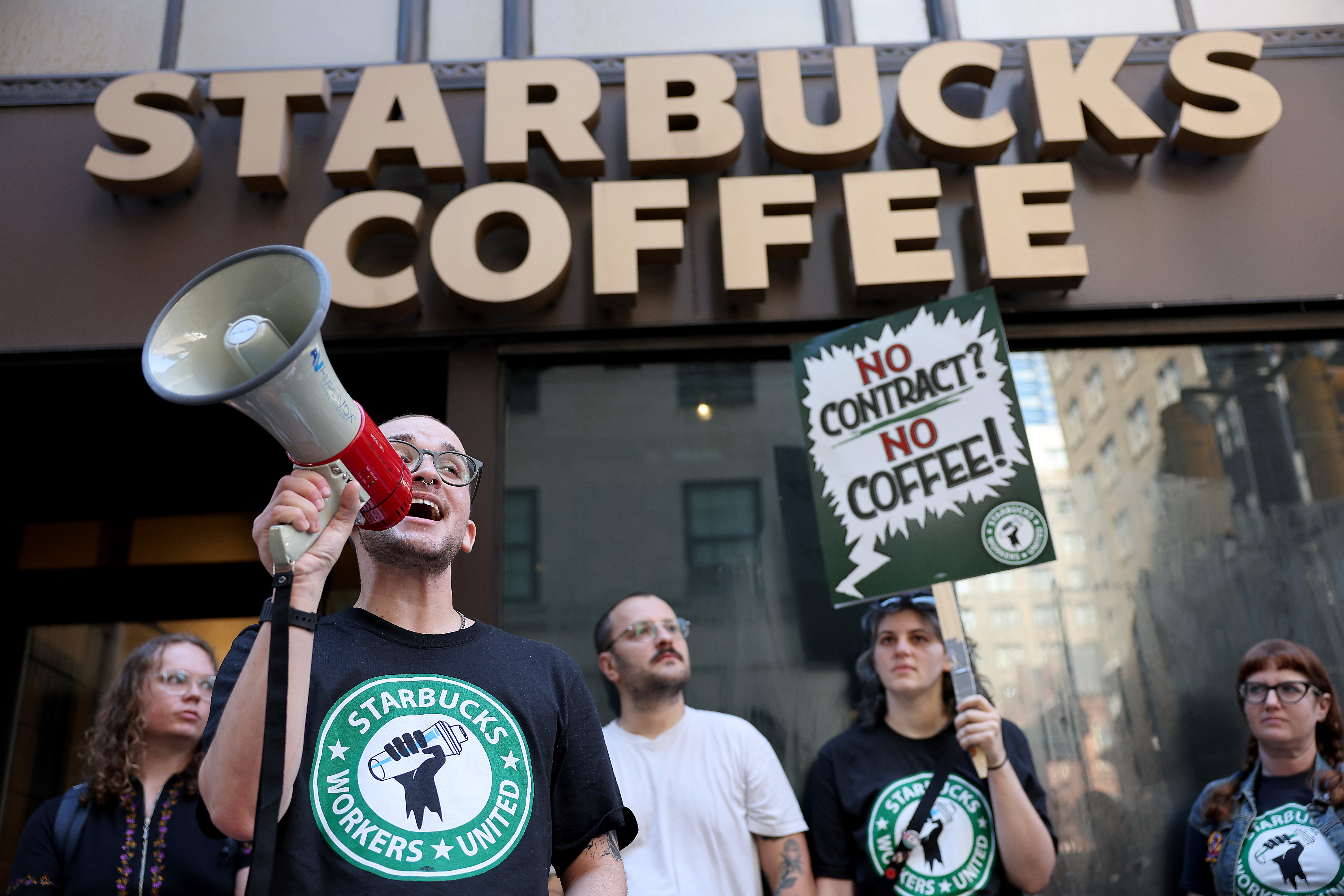
Council voted unanimously on Thursday to make Philadelphia one of the first cities in the country to explicitly endorse a nationwide boycott of Starbucks amid a unionization drive, and to pledge not to use city funds at the coffee chain until it reaches a contract agreement with its workers.
Also during Council’s session on Thursday: Councilmember Jamie Gauthier introduced controversial legislation to approve a contract with a trash incinerator that she doesn’t support. We’ll explain.
What was this week’s highlight?
Council puts Starbucks on ice: The expression of solidarity with Starbucks workers is a ceremonial resolution that does not carry the weight of law and does not require approval from Mayor Cherelle L. Parker.
Still, Council’s vote was a formal endorsement of the boycott orchestrated by Starbucks Workers United and targeting the world’s largest coffee chain, which is already reducing its footprint in the city. Starbucks closed six Philadelphia locations last year, and two additional branches — one at 2201 South St. in Southwest Center City and the other at 1018 N. Second St. in Northern Liberties — closed on Sunday.
The only other city to formally support the unionization effort is St. Louis, where last week the city’s board of aldermen approved a resolution to “express solidarity with Starbucks Workers United as they call for a boycott of Starbucks.”
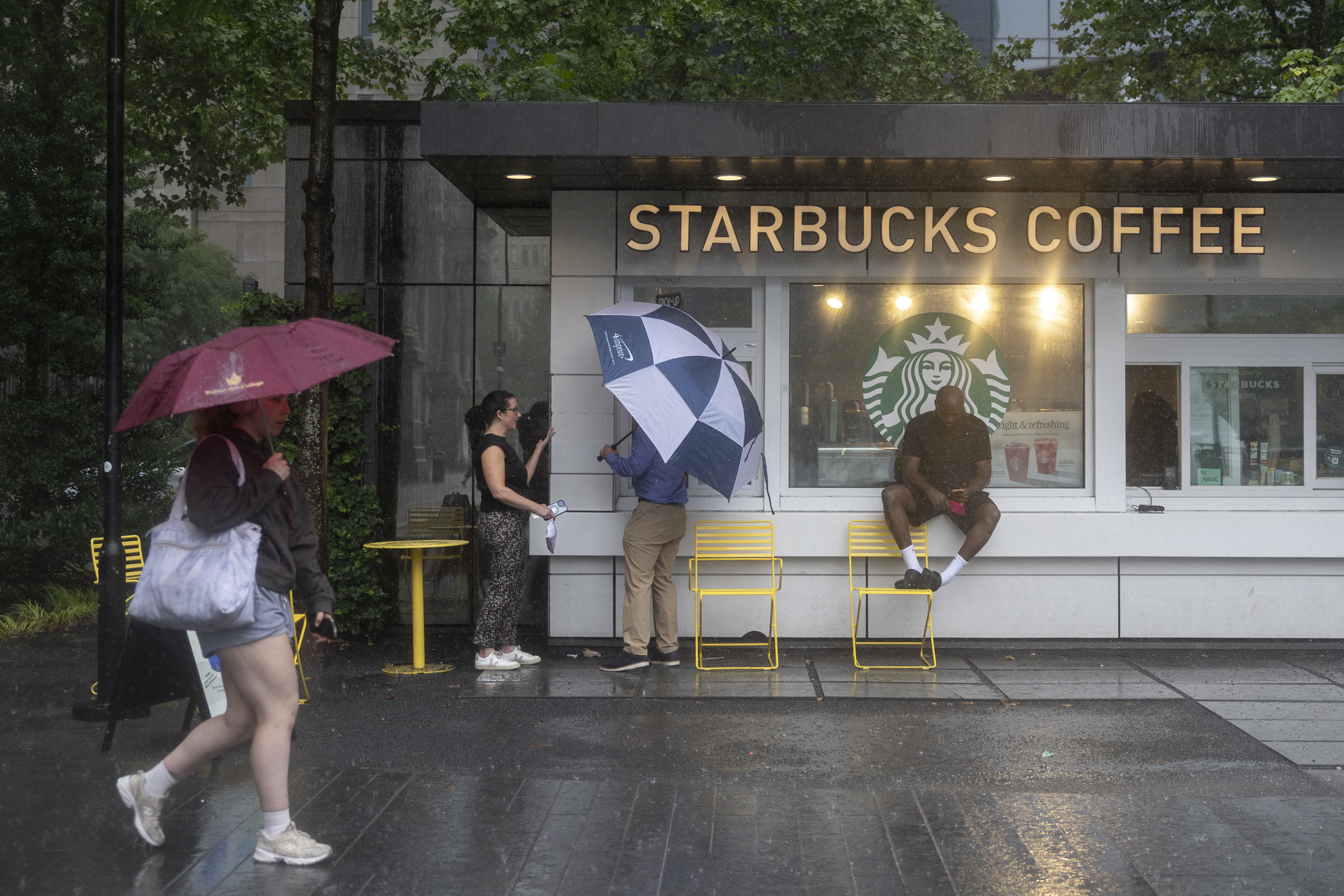
People staying dry at the Starbucks Coffee at Dilworth Park near City Hall in Philadelphia, Pa., on Thursday, July 9, 2026.Tyger Williams / Staff Photographer
Over the last five years, baristas have unionized at hundreds of individual Starbucks locations, but the company has not agreed to a nationwide contract that the union has sought. The union in August called for a nationwide boycott to last until an agreement is reached.
Councilmember Nicolas O’Rourke, a member of the progressive Working Families Party who represents the city at-large, authored the legislation and said its passage is “another affirmation of Philadelphia being a union town.”
“I am always interested in making sure that businesses in the city of Philadelphia and people are thriving,” O’Rourke said. “But my first priority is always to make sure that workers and workers’ conditions are right and that they are respected.”
Council is controlled by a supermajority of Democrats, and the body is largely supportive of organized labor.
Council President Kenyatta Johnson said he backs the Starbucks boycott, even though he is generally not a big coffee drinker.
“Unfortunately, they do have a vegan breakfast sandwich,” said Johnson, who follows a plant-based diet. “But I won’t be having those any time soon.”
A spokesperson for Starbucks said in a statement Thursday that the company is “committed to engaging in productive bargaining.”
What else happened today?
Introducing legislation she doesn’t support: Thursday’s meeting featured another twist in the long-running debate over a Chester trash incinerator and how Philadelphia gets rids of its garbage. Gauthier, a progressive Democrat who has advocated for the city to stop burning its trash, introduced legislation that would allow the city to continue doing so.
Here’s why: The Parker administration is looking to renew its long-held contract with Reworld, the Chester waste-to-energy facility where the city ships about one-third of its trash to be burned. (The rest of the trash is sent to landfills.)
In order to renew the multiyear contract, Council must approve authorizing legislation. Gauthier, who previously floated a bill to ban the city from incinerating trash but did not garner enough support to pass it, is asking her fellow lawmakers to vote against the contract renewal.
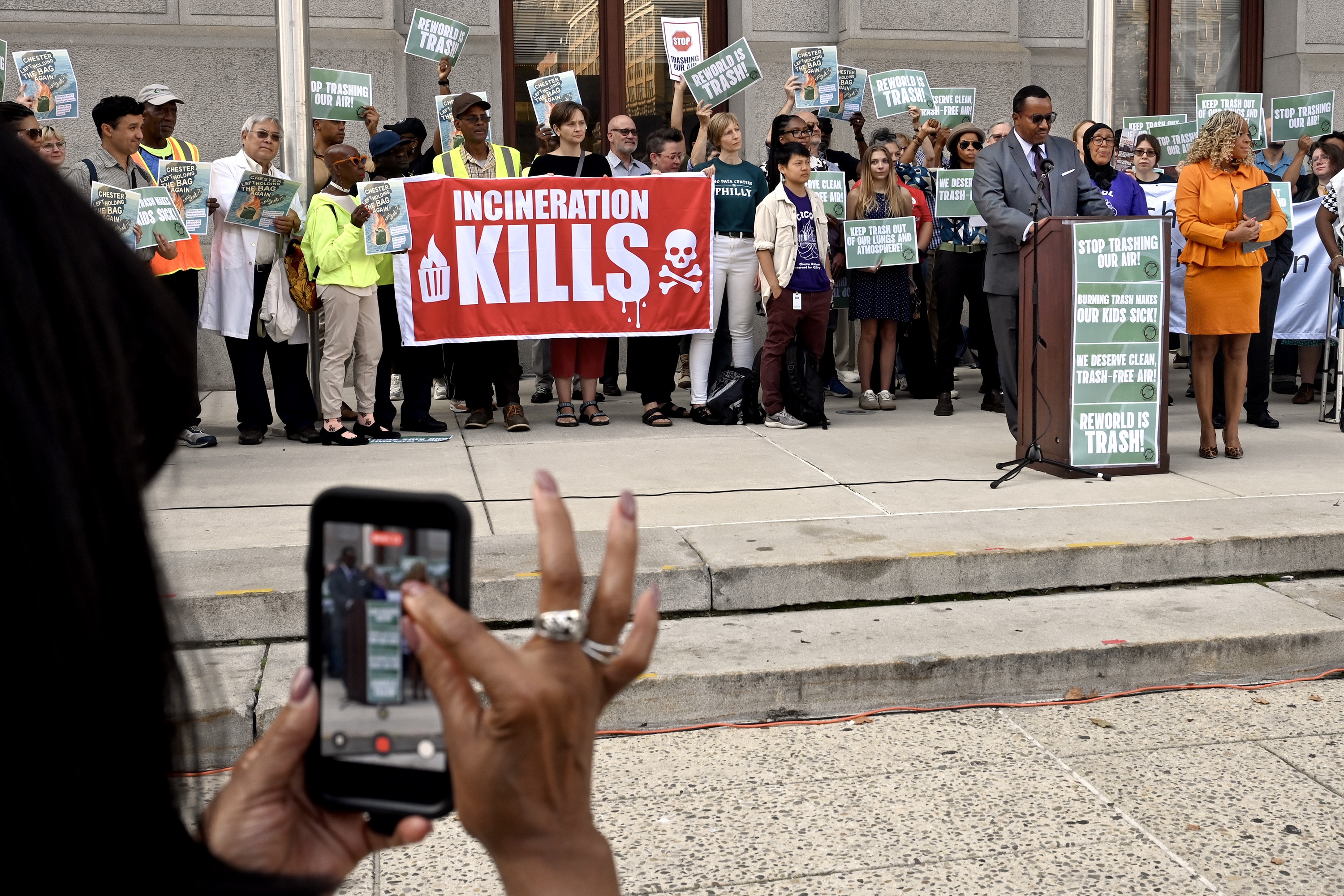
Chester Mayor Stefan Roots (at lectern) is joined by Philadelphia City Councilmember Jamie Gauthier (right) at a rally outside City Hall early Thursday morning Sept. 17, 2026.Tom Gralish / Staff Photographer
Although it may seem like a reversal of her position, Gauthier introducing the legislation herself — even when she does not support it — will allow her to have some say when a committee holds a hearing on the legislation. She hopes to amend it to strike Reworld from the deal so that the city processes all trash and recycling through landfills.
“It gives me and my coalition an opportunity to be at the table on something that we fought really hard on for more than a year now,” she said in an interview. “We’ve been working really hard to make sure that we’re protecting the health of folks in Chester and in Philadelphia, and protecting our environment.”
Johnson will decide which committee will hear the bill. He said Thursday that he is still reviewing the legislation.
Mamdani-fication: Create a Philly Medicaid Supplement Program. Expand access to programs that provide transit subsidies to low-income Philadelphians. Use city money to buy properties with expiring federal affordable housing subsidies.
These were some of the recommendations included in the Affordable Philly Now report, which was recently released by the Cost of Living Task Force.
O’Rourke, who convened the task force, held a committee hearing Wednesday examining the report’s findings, and he was not shy about noting that it was partly inspired by another progressive a few miles up I-95.
“You cannot deny the profound impact that … Mayor Zohran Mamdani has had,” O’Rourke said, praising the New Yorker for “mixing moonshot municipal goals with sewer socialism” and working to build a “protective hedge” of social safety net programs.
Nicolas O’Rourke, Philadelphia City Council member, during the mayor’s budget address on March 12.Alejandro A. Alvarez / Staff Photographer
Wednesday’s hearing was a meeting of the Committee on Global Opportunities and the Creative/Innovative Economy, which O’Rourke chairs. As a freshman and a member of a minority party, O’Rourke does not have a high-profile committee leadership post like some of the more senior Democratic lawmakers on Council. His committee was previously led by former GOP Councilmember David Oh and does not naturally align with O’Rourke’s progressive politics.
O’Rourke said at the committee hearing Wednesday — the first time he chaired a Council hearing — that he was shifting the panel’s work.
“The prior version of this committee revolved around corporate investment fitting into global value chains and making Philadelphia an international destination,” O’Rourke said. “In my reflection on the meaning of the committee, I have spent more time focusing on a part of the committee’s mandate that actually seems more in its merit — that is, to consider all matters related to making Philadelphia a world-class city. … And in some seasons, world-class cities show themselves by being bold in providing a protective hedge for its people.”
Quote of the week
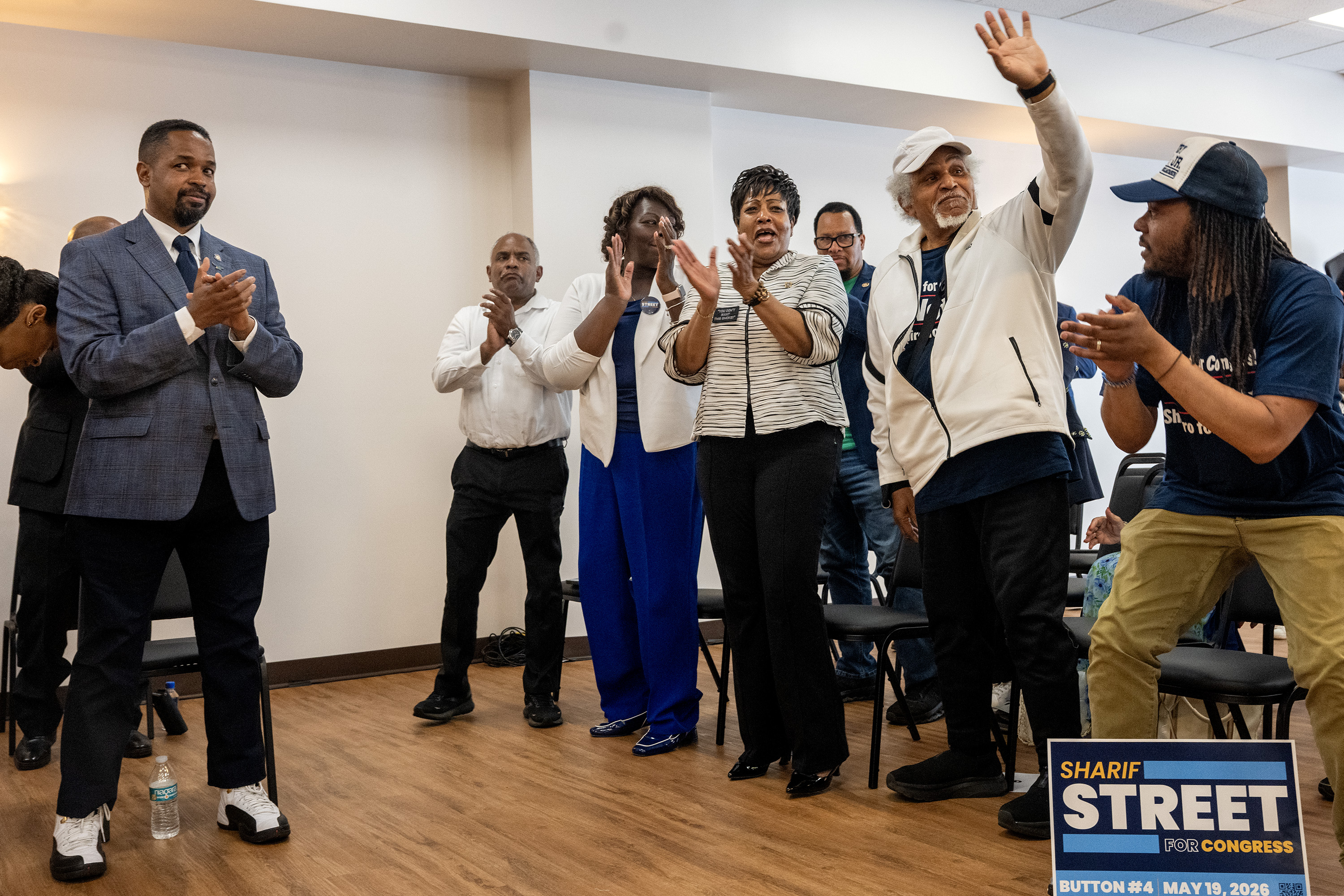
Former Mayor John F. Street (right) is acknowledged by supporters of his son, State Sen. Sharif Street (left), in West Philadelphia Monday, May 18, 2026.Tom Gralish / Staff Photographer
That was former Mayor John F. Street, the erstwhile City Council president, who returned to his old workplace Thursday to speak during public comment. He was testifying in support of a resolution to honor Philadelphia Police Lt. Greg Brown, who was, among other assignments, a member of Street’s security detail and is now retiring.
Street said Brown was one of the few people he never got to humiliate, because Brown “always got it right.”
“I never had a chance to put him on any list,” Street said.
With recent victories by democratic socialists nationwide prompting a fierce debate about the future of the Democratic Party, most Democrats in Pennsylvania have a positive view of socialism — and nearly 40% consider themselves to be a democratic socialist, a new poll found.
About one-third of likely voters in the midterm elections this fall have a favorable view of socialism and 56% have an unfavorable view. That result closely mirrors a recent national poll from the New York Times and Siena University, raising questions about the appeal of socialism to a wider swath of voters.
“We’re more popular than ever,” said Dan Parker, cochair of Philadelphia’s chapter of the Democratic Socialists of America (DSA). “But we still have a long way to go.”
(function(){function e(){window.addEventListener(`message`,function(e){if(e.data[`datawrapper-height`]!==void 0){var t=document.querySelectorAll(`iframe`);for(var n in e.data[`datawrapper-height`])for(var r=0,i;i=t[r];r++)if(i.contentWindow===e.source){var a=e.data[`datawrapper-height`][n]+`px`;i.style.height=a}}})}e()})();
The survey of 615 likely Pennsylvania voters conducted from Sept. 15 through 21 comes amid a surge of leftist victories both locally and across the country.
State Rep. Chris Rabb defeated a pair of more moderate candidates in Philadelphia’s highly competitive congressional primary in May. A democratic socialist, Rabb is highly favored to win in the general election and has spent the months since his primary campaigning for other like-minded candidates.
Nearly all of those candidates — from Abdul El-Sayed in the high-stakes Michigan U.S. Senate race to a pair of New York candidates boosted by Mayor Zohran Mamdani — have also won their primaries as Rabb and his allies look to grow the ranks of progressives starting on Capitol Hill in January.
“The mainstream Democratic establishment candidates are telling us time and time again to settle for less, to expect nothing other than the status quo,” Parker said. “People are looking for a different set of politics that speaks to their material needs and to the values of freedom that many are striving for.”
Parker said Philadelphia DSA has been “exploding” since Rabb’s victory. The group mobilized hundreds of volunteers to knock between 75,000 and 100,000 doors during his campaign, and more than 750 new members have joined since May to put the chapter’s total ranks at about 3,000, he said.
Councilmember Kendra Brooks speaks with colleague Nicolas O’Rourke during a March 12 caucus session. Alejandro A. Alvarez / Staff Photographer
Rabb’s success follow that of Pittsburgh’s U.S. Rep. Summer Lee, who was first elected to Congress with DSA support in 2022. Other DSA-backed elected officials include Philadelphia City Councilmembers Kendra Brooks and Nicolas O’Rourke, as well as State Sen. Nikil Saval, while new primary victories this year include Mark Pinsley and Ce-Ce Gerlach in Lehigh Valley-based legislative races.
Further growth, Parker said, will come with DSA-backed candidates working in office to “prove that government can exist to serve ordinary people.”
On that agenda: Advocating for universal healthcare, affordable housing, progressive tax policies, defunding and ultimately abolishing ICE, and ending the wars in Iran and Gaza.
“What makes DSA distinct — and democratic socialism as a political movement distinct — is that it’s not really just about who has the right ideas,” Parker said. “It’s about a theory of change that puts the vast majority of society in the driver’s seat.”
(function(){function e(){window.addEventListener(`message`,function(e){if(e.data[`datawrapper-height`]!==void 0){var t=document.querySelectorAll(`iframe`);for(var n in e.data[`datawrapper-height`])for(var r=0,i;i=t[r];r++)if(i.contentWindow===e.source){var a=e.data[`datawrapper-height`][n]+`px`;i.style.height=a}}})}e()})();
As Democrats look to retake control of Congress and the White House, how much influence that movement will yield remains an open question.
Moderates like Gov. Josh Shapiro, a potential 2028 Democratic presidential candidate, have acknowledged the energy on the left while advocating for a more centrist approach. Shapiro said this summer that the progressive candidates were practicing “performative politics” and would need to deliver if elected. He has also said he expects the party to have the most significant “battle over what we believe in” in more than three decades as the next presidential race gets underway.
The latest poll shows the party’s base remains divided in Pennsylvania.
While Democrats in the state remain split in their views of socialism, 38% consider themselves to be a democratic socialist while 57% do not, the poll found. Just over half of Democrats see their party as divided and 45% believe it’s united.
‘A tiny, tiny fraction’
Some observers also cautioned that the number of self-identifying democratic socialists across all of Pennsylvania — a swing state that has largely elected moderates to statewide office — may appear larger than reality. The poll did not define democratic socialism, for one. And progressives have been overrepresented in other polling this year, including in Wisconsin and Michigan, said Lew Irwin, a political science professor at Duquesne University in Pittsburgh.
“A lot of people will claim an affiliation when they actually have an affinity,” Irwin said, adding that it’s still become “increasingly mainstream and acceptable inside the Democratic Party” to identify as socialist.
J.J. Balaban, a Philadelphia-based ad maker for more moderate Democrats like U.S. Rep. Brendan Boyle, pointed to the fact that even with the additional energy on the left, the vast majority of Democrats in Washington next year will not be socialist.
“We’re talking about a tiny, tiny fraction of the Democratic caucus,” he said.
Balaban said that is one of the reasons why Republicans’ campaign messaging may also not be effective as they try to defend their majorities in the November midterm elections. Republicans have branded all kinds of Democrats as socialists — repeatedly denouncing the entire party as far left and “communist” in its agenda.
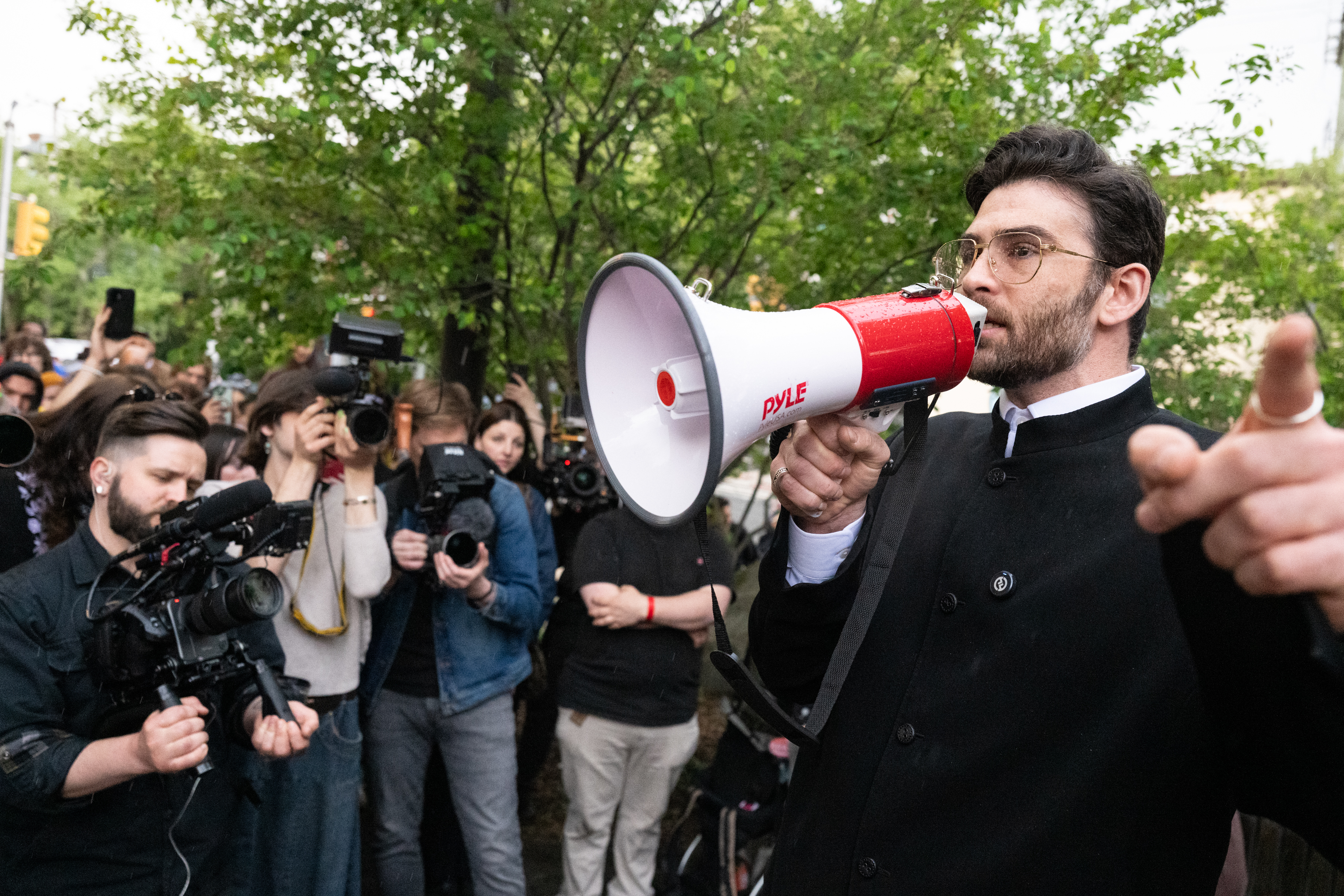
One of the main characters featured in those attacks has been Hasan Piker, the controversial leftist streamer who campaigned with Rabb and other candidates this year. His visit to Philadelphia in April drew hundreds of young progressives but was condemned by Rabb’s opponents and Jewish groups who consider his views antisemitic.
Online influencer Hasan Piker speaks to attendees at an April 30 fundraiser for State Rep. Chris Rabb’s 2026 congressional campaign at Renata’s Kitchen in West Philadelphia.Erin Blewett / For The Inquirer
Piker’s support of El-Sayed has become a dominant issue in the Michigan race, but the poll of Pennsylvania voters shows he is mostly unknown in the Keystone State.
Among Pennsylvania likely voters, 23% had an unfavorable view of Piker and 6% had a favorable view. Two-thirds said they had not heard of him — and a higher share of Republicans knew him compared to Democrats.
“He is a much greater part of the discourse in the Fox cinematic universe than he is in actual Democratic discourse,” Balaban said.
With polls increasingly showing Democratic momentum this fall, even some conservatives appear to be pushing for Republicans to shift their messaging away from socialism.
Former U.S. Rep. George Santos, a Republican who has reportedly lived at least partially in the Poconos since President Donald Trump commuted his sentence last year, posted a video Thursday in which he criticized a mailer for U.S. Rep. Rob Bresnahan, a freshman Republican in a tight reelection campaign. The mailer claims Bresnahan will “stop the socialists” and lists his Democratic challenger, Paige Cognetti, alongside the “socialist dream team” of progressives Mamdani, U.S. Sen. Bernie Sanders (Ind., Vt.), and U.S. Rep. Alexandria Ocasio-Cortez (D., N.Y.).
“Please stop sending me this. It’s silly,” Santos said in the video, adding colorful language to say Pennsylvania Republicans should be focusing on the cost of living.
“No more rhetoric!” he added.
Staff writer Joe Yerardi contributed to this article.
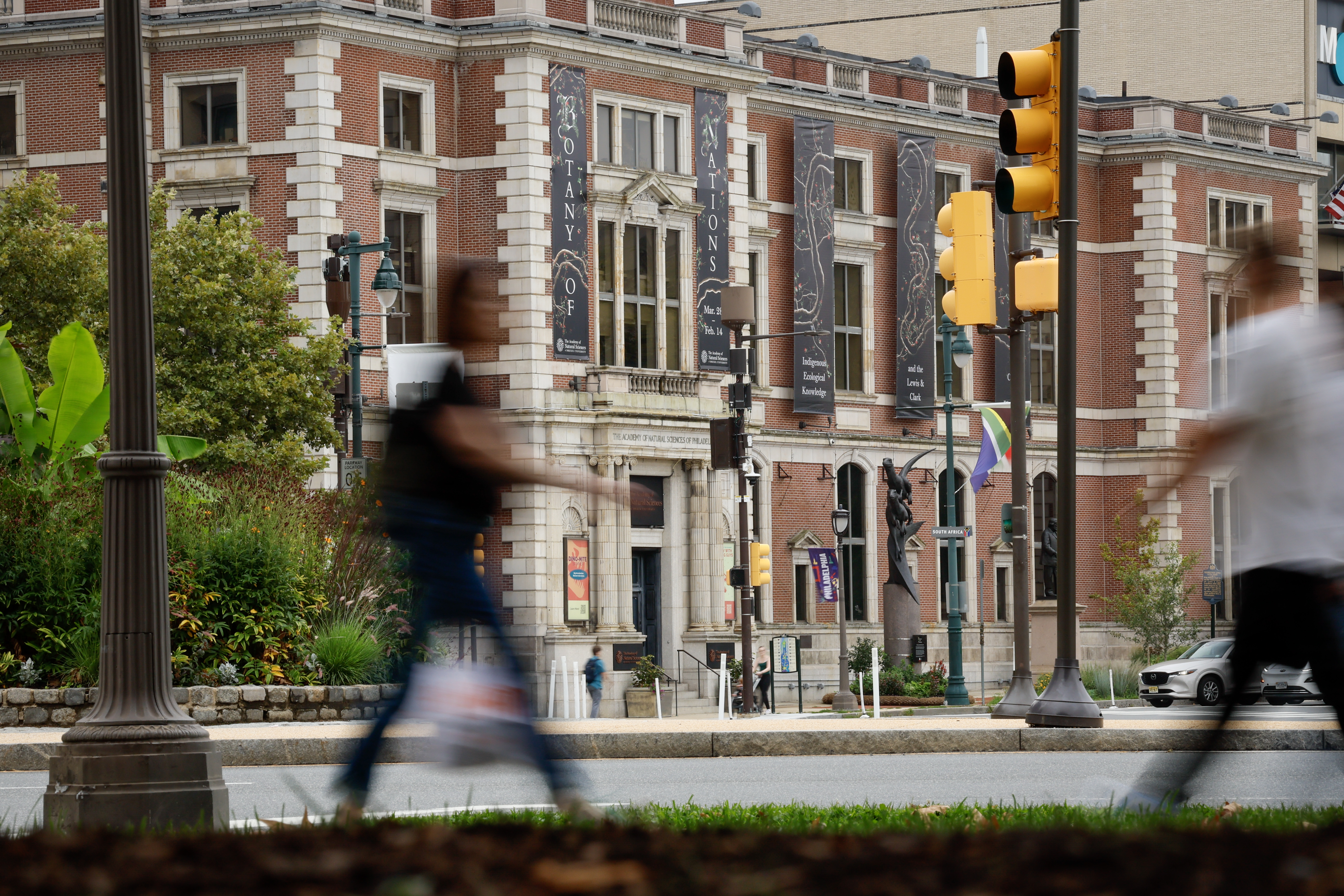
A new zoning bill by City Councilmember Jeffery Young Jr. would restrict the redevelopment potential of the Academy of Natural Sciences museum after Drexel University this month announced plans to shutter the centuries-old institution.
Young, whose 5th District includes the museum property on the Benjamin Franklin Parkway, introduced the ordinance at Thursday’s Council session.
It would limit the allowed uses of the property and others around it to specific categories, including hospitals, government uses, libraries and cultural exhibits, and “community-supported” farms.
Under Young’s legislation, residential and commercial uses would not be allowed. The property is currently zoned to allow multifamily residential development, unlike the other museums on the Parkway.
Young said his legislation would simply change the museum’s zoning to reflect what has long been on the site.
“It’s always been a cultural and civic use, so [my bill] would match the land use with the actual zoning to allow only cultural and civic type uses,” Young said. “But it wouldn’t prevent the academy from closing.”
Councilmember Jeffery Young Jr. Elizabeth Robertson / Staff Photographer
Drexel did not immediately offer comment on Young’s legislation.
If the bill passes, it will make it much harder to convert the building to other uses. The owner would need to secure a variance from the Philadelphia Zoning Board of Adjustment, an often lengthy and costly process with no guarantee of success.
During that process, any prospective developer would also be required to meet with community groups in advance of a zoning board hearing.
Young said the purpose of his bill is to allow “the community some input on a site that has been a cultural use for centuries.”
Instead of changing the property’s zoning to match those of neighboring museums and libraries, Young has proposed adding the restrictions to what is known as a zoning overlay — a kind of hyperlocal patch of the code — that covers his district and allows him to precisely describe what he wants to restrict and allow.
Young said he is also considering changing the underlying zoning to match that of the Philadelphia Museum of Art, the Barnes Foundation, and other cultural institutions on the Parkway.
“We are looking to do that, but the issue is that the planning commission doesn’t work for me and so they’re not on my time,” Young said. “Ultimately, we had to do what we could do from our office’s standpoint.”
To become law, the bill would need to be approved first in the Committee on Rules and then by the full Council before heading to Mayor Cherelle L. Parker’s desk.
If Young pushes forward, the bill is likely to pass in Council thanks to a practice known as councilmanic prerogative, in which the rest of Council defaults to the wishes of the member whose district includes a property when it comes to land-use decisions.
Young, whose district includes parts of Center City and much of North Philadelphia, has abandoned zoning legislation that stirred controversy in the past, such as a housing ban around the former Hahnemann University Hospital campus.
But the closure of the Academy of Natural Sciences is unpopular, and the new legislation is likely to have broad support from Council members.
If enacted, the bill would take effect immediately.
A surprise closure
Founded in 1812, the Academy of Natural Sciences is the oldest institution of its kind in the nation, and its museum, which opened in 1828, is the country’s oldest natural history research museum. It houses 19 million biological specimens, including bones, carcasses, and plants.
Drexel announced earlier this month that it was closing the museum effective Sept. 27, citing a decrease in attendance since the COVID-19 pandemic and the university’s financial woes. The decision caused an immediate uproar, including a protest on the Parkway attended by hundreds. Young vowed to “protect and preserve” the building.
Matt LeBlanc, of Manayunk, and his wife, Alyssa, show their children, Miles and Clara, the Dinosaur Exhibit at the Academy of Natural Sciences of Drexel University earlier this month.Tyger Williams / Staff Photographer
Leaders of Drexel and the academy have said that the “collections and their use to advance scientific knowledge will be the focus of our work for the near future” and that no final decision had been made on the building’s future.
A source told The Inquirer the university’s ultimate aim is to relocate the collection and sell the building.
After the announcement, Deputy Mayor Patricia Wellenbach, a top official in Parker’s administration, was named the academy’s temporary leader, serving as senior adviser while on loan from the city.
Young and other members of Council have been attending rallies against the closure.
“This academy has been there for over 200 years. It’s dedicated to civic and cultural education, to science,” Young said in a speech during Thursday’s meeting. “If we take that away, how will our kids learn?”
Correction: An earlier version of the story inaccurately attributed plans to sell the museum building and relocate the academy’s collection.