Tag: Philadelphia City Council

  • Mayor Parker wants Council to back a tax break for redeveloping derelict buildings. Council says it’s waiting on her.

    Mayor Parker wants Council to back a tax break for redeveloping derelict buildings. Council says it’s waiting on her.

    Last November, Mayor Cherelle L. Parker announced with great fanfare that Philadelphia could create a property tax break to spur the conversion of derelict buildings, such as empty Center City office towers and vacant school facilities, into apartments.

    She had worked with legislators in Harrisburg to change state law to allow Philadelphia to pursue the legislation, which would create a 20-year property tax abatement for conversions of “deteriorated” properties.

    But 10 months later, no such legislation has been introduced in City Council, and Parker on Wednesday called on city lawmakers to consider her 20-year abatement idea for distressed properties.

    “We have an affordability crisis here in the city of Philadelphia,” Parker told reporters Wednesday. “What if we marry that challenge with these persistently vacant buildings that have gone underutilized, and we put them to their best and their highest use to incentivize affordable housing?”

    Parker’s administration, however, has not yet transmitted a draft of the bill to Council, which is typically the first step for lawmakers to consider legislation championed by the mayor.

    “Tell them, ‘Send the bill over,’” Council President Kenyatta Johnson told reporters Thursday. “We haven’t seen any piece of legislation regarding 20-year tax abatement at this particular point in time.”

    Asked about the delay, Tiffany W. Thurman, Parker’s chief of staff, said Thursday that city agencies “are collaborating to ensure the proposed legislation is legally sound and can withstand constitutional scrutiny.” She added that Parker “remains firmly committed to presenting City Council with a bill that incentivizes the development of affordable and workforce housing on vacant, publicly owned land.”

    On Thursday, several members of Council questioned the lack of specifics from the mayor’s office, and others were less than enthused about the idea of approving a new tax break when the Philadelphia School District is facing a funding crisis.

    “I continue to appreciate an effort to make sure that we have access to affordable housing in the city of Philadelphia,” Councilmember Nicolas O’Rourke said. “At the same time, I am very much so laser-focused and desirous of the city getting the revenue that it needs.”

    A controversial policy

    Property tax abatements have long been controversial in Philadelphia, with opponents contending that they starve the city and school district of needed revenue while favoring real estate developers.

    Philadelphia’s 10-year abatement program, which was established in the 1990s, previously exempted owners from paying real estate tax on all new construction or improvements on any type of property for 10 years.

    That program was long hailed as key to the city’s turnaround in the early 2000s. But concerns about its impact on neighborhood inequality and school funding grew over time, and Council in 2019 roughly halved the value of the tax break for new construction.

    Parker argues that the idea behind her legislation is different: She wants to see a far more narrowly targeted bill that would only help developers who seek to redevelop large, derelict buildings.

    “We’re talking about … persistently vacant school buildings that have been vacant from three up to 30 years,” Parker said Wednesday.

    The mayor also noted that the development environment has worsened dramatically since Council cut the 10-year tax abatement’s power, with soaring interest rates and construction material inflation as factors that weigh heavily on complex and large-scale projects.

    Still, many Council members are skeptical of tackling a potentially controversial measure that is seen to favor developers ahead of next year’s municipal elections, when all 17 city lawmakers will be on the ballot.

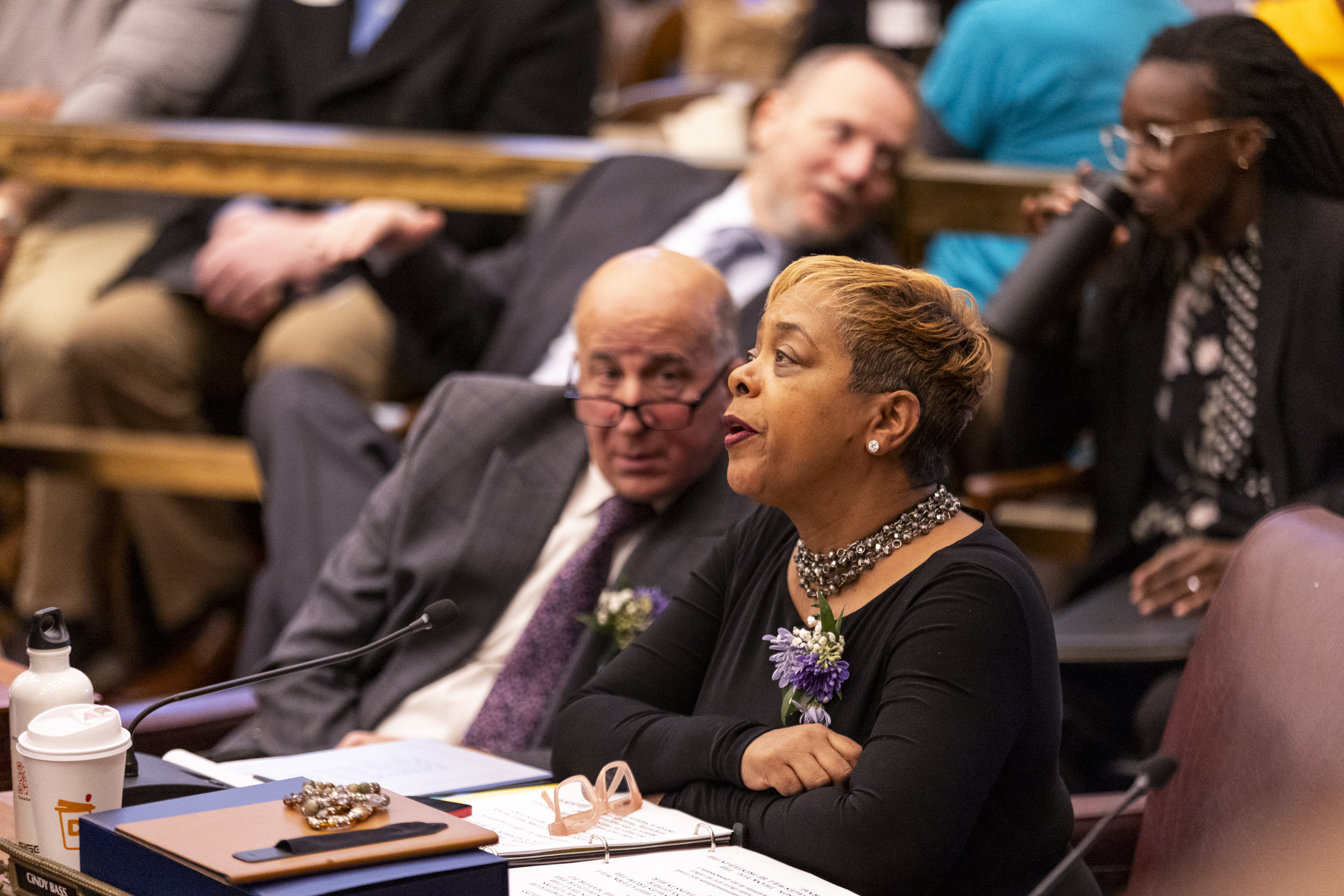
    “I’d like to get more information on exactly what the plan is because the tax abatements are, as you know, hugely unpopular,” said Councilmember Cindy Bass, who represents parts of North and Northwest Philadelphia.

    Bass said that while the abatement has spurred needed growth, she would need to see any expansion of it balanced with the needs of lower-income Philadelphians who are struggling with rising costs and property taxes.
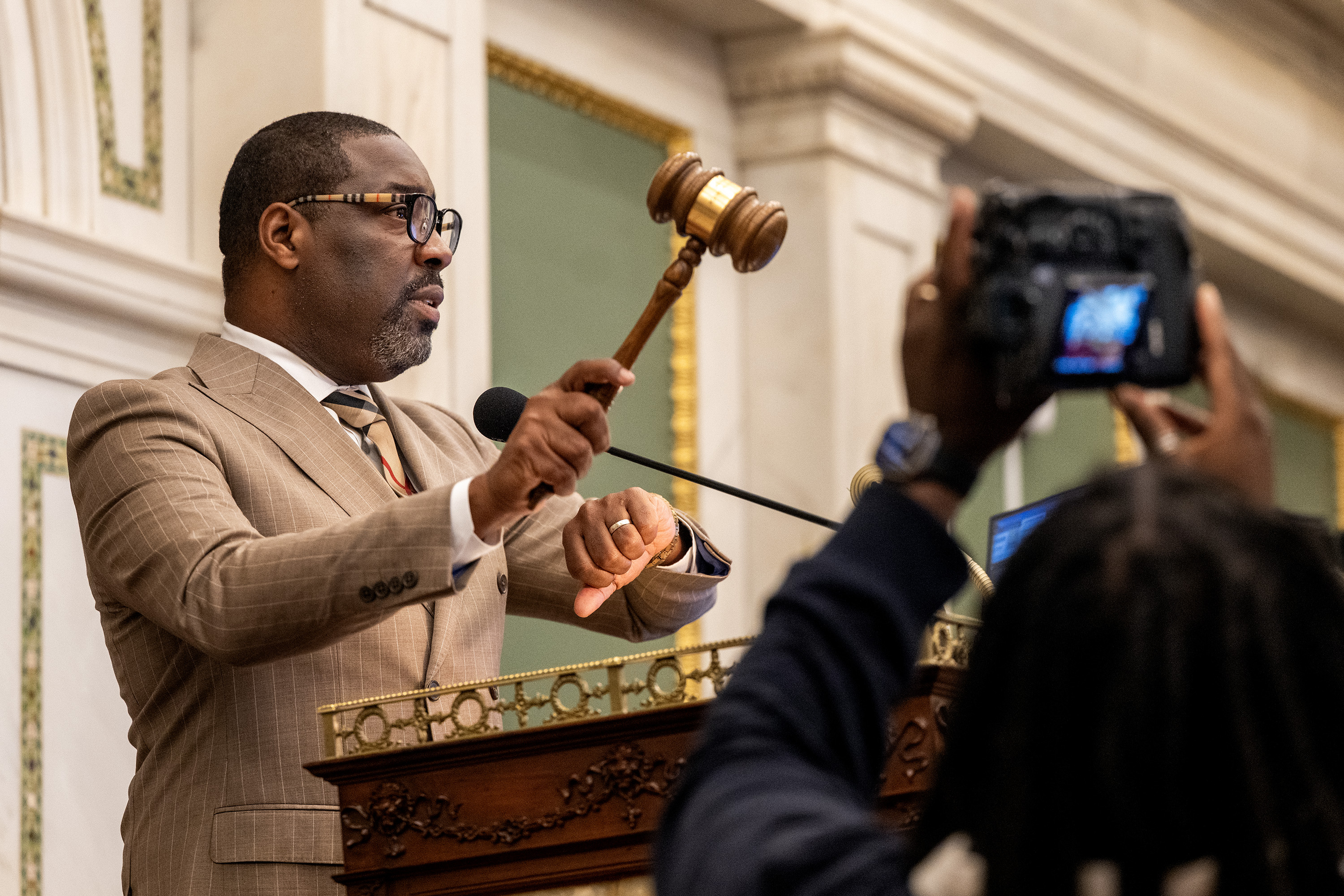
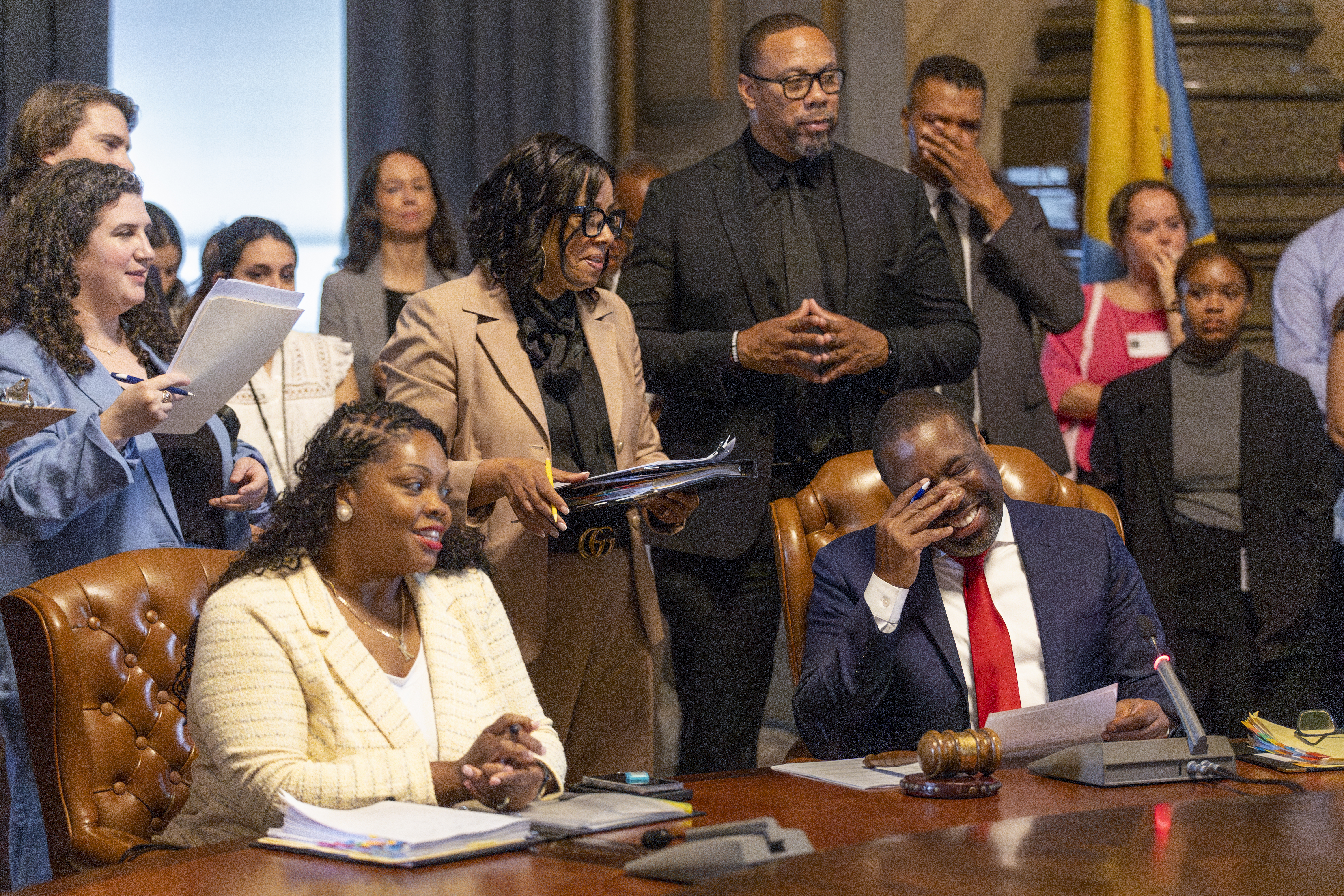
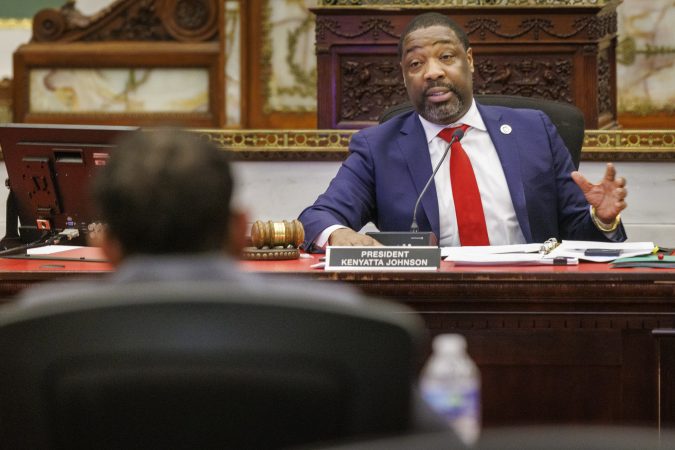
    President Kenyatta Johnson checks his watch and gavels City Council into session on Sept. 17, as the body returns for start of its fall session.Tom Gralish / Staff Photographer

    And Johnson on Thursday reiterated his comments from earlier this year that he would like to see the newly authorized 20-year abatement include a provision that requires an affordable housing component of the projects it enables.

    “Any type of legislation like that should really focus on making sure that we’re providing a level of affordability, also senior housing,” he said. “Obviously, the devil’s always in the details.”

    But it is not clear that state law would allow Philadelphia to mandate affordability in an abatement bill, and Parker cautioned against doing anything that would exceed the city’s authority.

    “We have to make sure that whatever we are proffering, that it is directly connected to what has been enabled,” Parker said. “It has to pass legal muster for no one to question the constitutionality of what it is that we’re doing.”

    Persistently vacant schools

    A 20-year abatement would apply to empty office buildings in Center City and long-vacant industrial buildings. But Parker and administration officials have focused their pitch on revitalizing empty public schools.

    “We need to pass it because it’s going to be extremely beneficial for challenging properties,” John Mondlak, chief of staff of the Philadelphia Department of Planning and Development, said Wednesday. “You think about schools in 10 years, 20 years — they are very difficult to reposition.”

    That pitch, however, runs up against another policy issue festering between Parker and Council.

    Councilmember Isaiah Thomas said some of the hesitation to take up the abatement legislation is due to Council’s dissatisfaction with the Philadelphia School District’s facilities plan, which the school board adopted last spring and calls for the closure of 17 school buildings and the renovation of 169 others.

    Thomas and other Council members vigorously protested the plan and are still pressing for the board to reconsider it.

    “That’s our priority,” Thomas said Thursday. “I don’t want to have a conversation about schools that are vacant until we have a conversation about schools that are occupied.”
  • Philly City Council returns with dueling plans for the city’s trash | Council roundup

    Philly City Council returns with dueling plans for the city’s trash | Council roundup

    Philadelphia City Council members are considering dueling proposals over how the city eliminates its garbage, with one lawmaker leading an effort to immediately block the city from shipping its garbage to a trash incinerator and another taking a longer-term approach.

    Councilmember Mark Squilla on Thursday introduced legislation authorizing Mayor Cherelle L. Parker’s administration to, within three years, develop a plan to dramatically reduce the city’s reliance on both trash incineration and landfills over the next 20 years.

    Squilla’s proposal, which he drafted with input from Parker’s administration, is something of an alternative for lawmakers to consider as Councilmember Jamie Gauthier has for months pushed for a more aggressive approach to stop the city from incinerating trash this year.

    Both lawmakers hosted news conferences this week alongside their allies to rally support for their cause, part of a long list of events Council members hosted as the legislative body returned Thursday for its first meeting of the fall session.

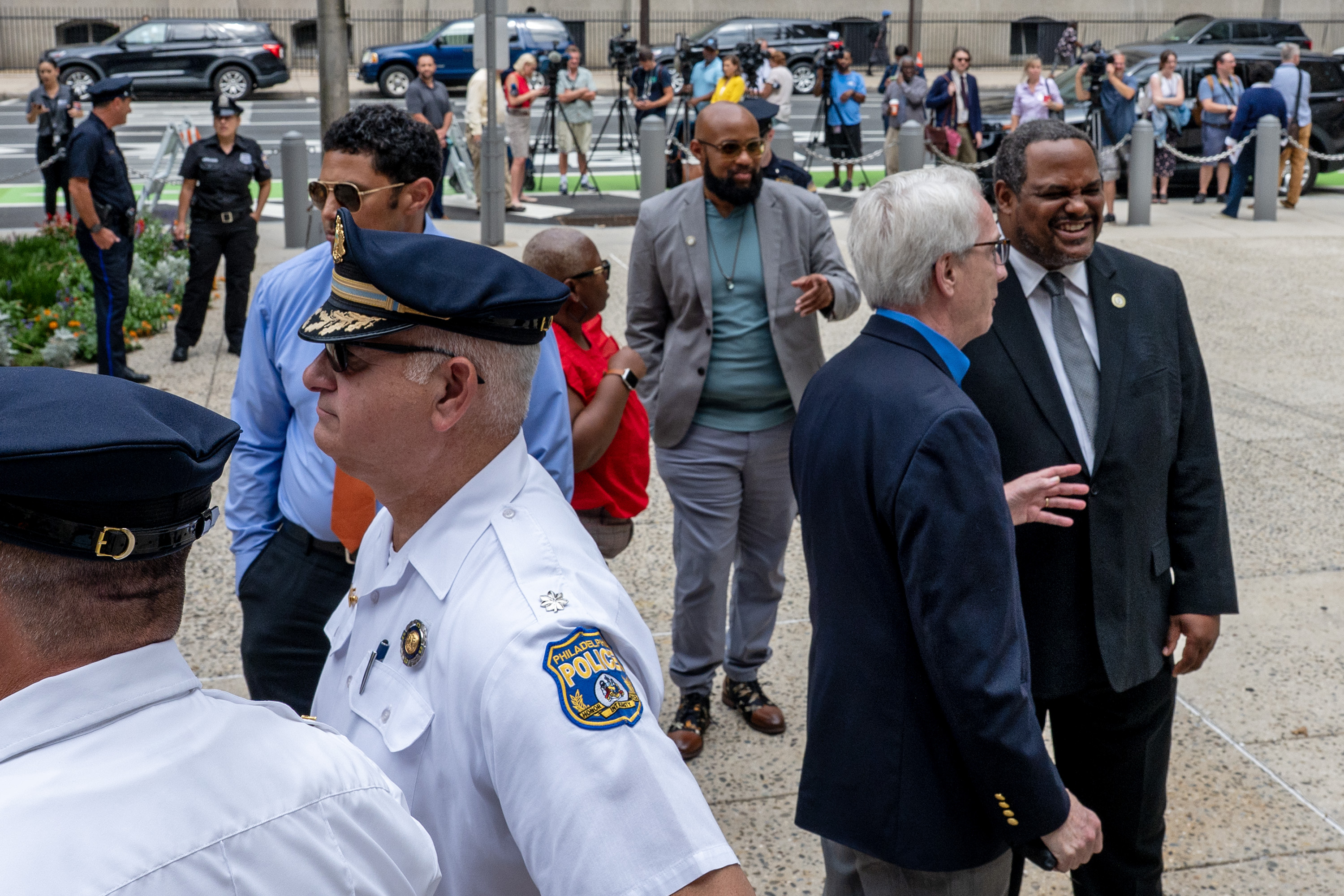
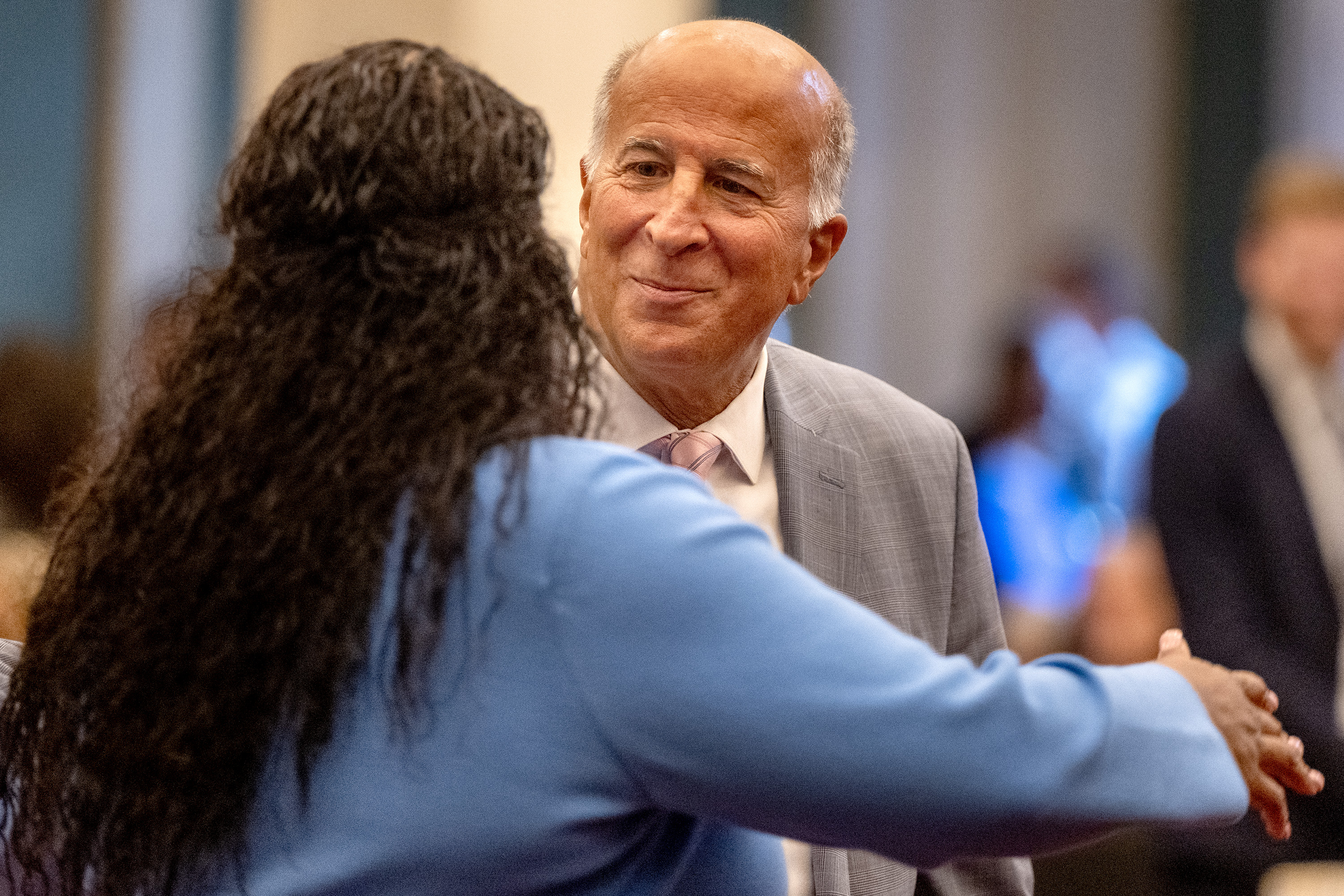
    Councilmembers Mark Squilla and Katherine Gilmore Richardson (back to camera) greet each other as City Council convenes for its fall session Thursday, Sept. 17, 2026.Tom Gralish / Staff Photographer

    The first meeting after the summer break typically has a jovial, first-day-of-school feel. But the mood briefly shifted Thursday when City Hall was evacuated and Council abruptly adjourned after a suspicious package was found on the floor where Council was meeting.

    Police cleared the package, and Council resumed its business Thursday afternoon.

    Here’s what else happened this week:

    What was this week’s highlight?

    Incinerator issue heats up: Gauthier has for months sought to pass legislation that would ban the city from continuing its long-term practice of sending about a third of its garbage to a trash incinerator in Chester, about 15 miles south of the city. She argues that incineration is bad for the environment and harms Chester residents’ health.

    Parker’s administration opposed the legislation, called the Stop Trashing Our Air Act, and Gauthier in the spring failed to gain enough support for it in Council.

    Now, Gauthier is trying to block the Parker administration from renewing its contract with Reworld, the incineration facility. The administration needs Council approval to enter into a new four-year contract with the firm.

    Gauthier has several members on her side, including three fellow progressive lawmakers, as well as Councilmember Isaiah Thomas, who is the Democratic majority whip.

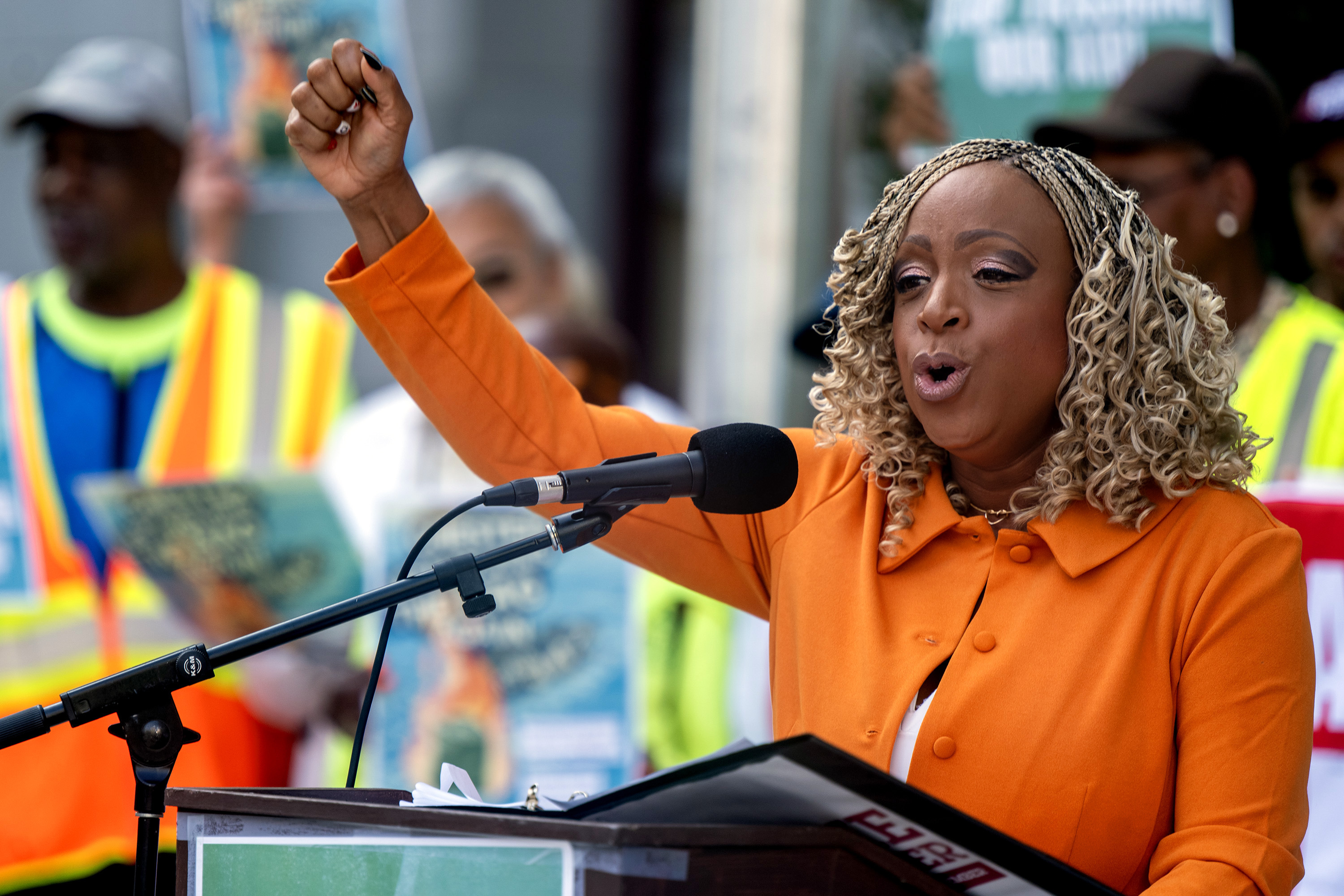
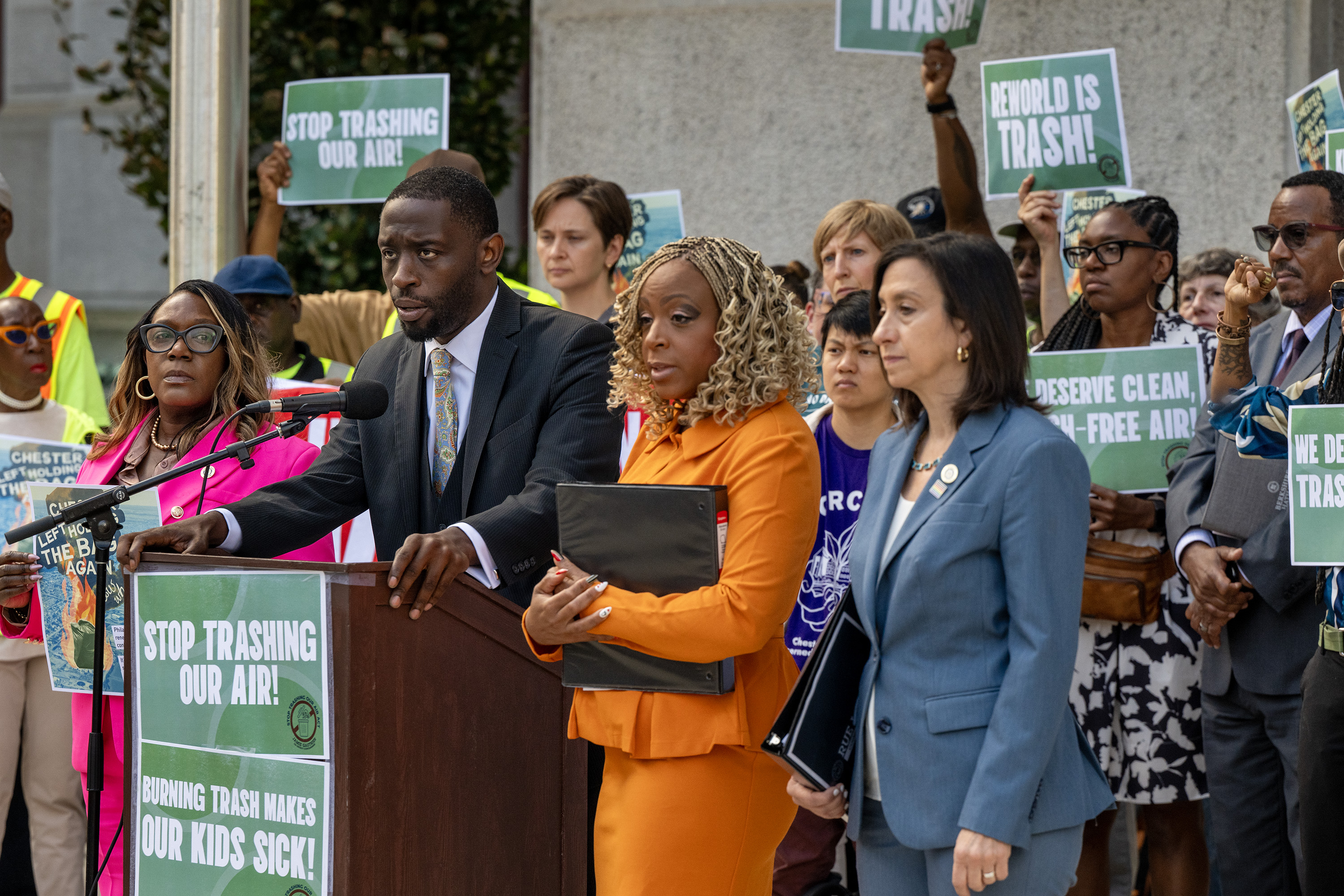
    City Councilmember Jamie Gauthier speaks at a rally outside City Hall early Thursday morning Sept. 17, 2026 where protesters called on Council to reject Mayor Cherelle L. Parker’s waste disposal contracts. A coalition of elected officials, health and climate experts, and advocates from Philadelphia and Chester gathered to oppose the city’s sending its trash to an incinerator in Chester.Tom Gralish / Staff Photographer

    Squilla’s proposal in some ways offers members an off-ramp. His bill calls for a “circular waste” system that includes new techniques for waste disposal, such as composting and “anaerobic digestion,” a process that breaks down organic waste.

    Managing Director Carlton Williams said Wednesday during a news conference with Squilla that the city is looking to build out an anaerobic digestion system within four years.

    Squilla said that while the administration is already working toward a more modern waste disposal system, passing a law would “codify what we had as plans and resolutions before.”

    Gauthier said that she supports Squilla’s goal of moving toward a more sustainable system, but that his legislation “is a plan to create a longer-range plan.”

    “It in no way changes the decision in front of Council,” she said. “We can move away from this practice right now.”

    What else happened this week?

    Severing the law department: The city law department serves as legal counsel for both the mayor’s administration and Council, a dynamic that can sometimes cause friction when the city’s elected officials disagree.

    Council on Thursday approved a resolution by Thomas to hold a hearing “to consider the separation of the [law] department’s functions between the administration and City Council.”

    The department is led by City Solicitor Monique Galloway, whom Parker appointed to the role in July.

    Thomas has clashed with Parker’s administration, and he said he became interested in looking at the department’s structure due to concerns that Council was not receiving independent legal advice on some issues.

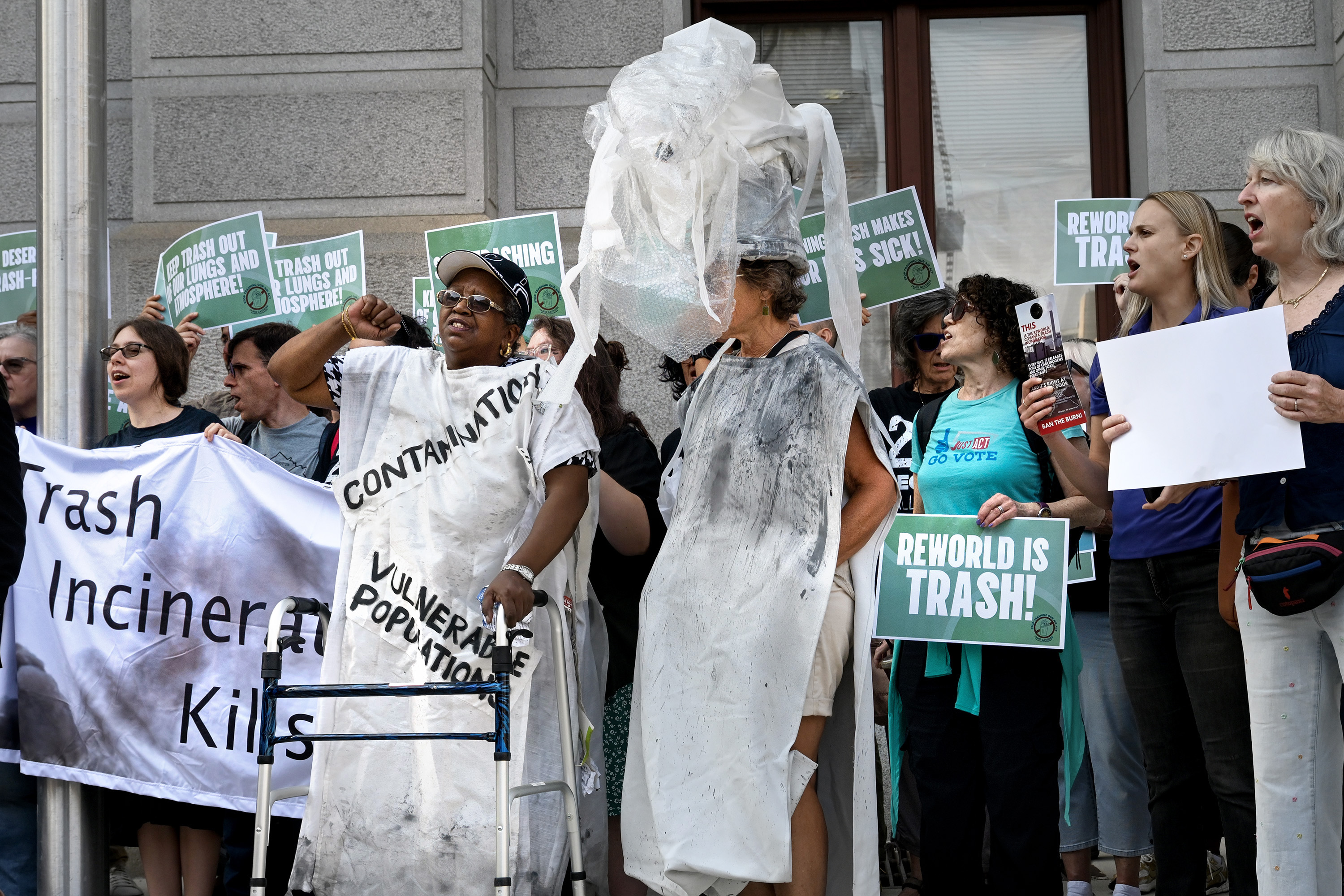
    Lois Williams (left), dressed as a “sick person,” and Shari Hersh (right) in costume as a “smokestack,” join a rally outside City Hall early Thursday to call on City Council to reject Mayor Cherelle L. Parker’s waste disposal contracts.Tom Gralish / Staff Photographer

    He pointed to the Philadelphia School District’s controversial facilities plan, which involves the closure of 17 school buildings and was adopted by the school board in April over the objections of many Council members.

    And he said recent legal proceedings around the city’s business income and receipts tax were “part of the motivation” to hold a hearing on the law department.

    In 2025, after a Massachusetts company sued the city seeking to overturn a popular tax break program that primarily helped small businesses, the law department said it had determined the lawsuit was likely to succeed. The Parker administration eventually settled the case and persuaded Council to eliminate the tax break. Some Council members at the time complained that the city did not defend the tax break more vigorously.

    The department already silos off some of the work it does on behalf of Council from the rest of the administration, such as when it drafts bills proposed by lawmakers. Council also may hire outside legal counsel, but must pay for those services out of its own budget.

    A law department spokesperson did not immediately respond to a request for comment.

    Storage wars: Councilmember Mike Driscoll introduced legislation on Thursday that would ban new self-storage facilities from his district in lower Northeast Philadelphia.

    The storage industry boomed during the COVID-19 pandemic, as consumer spending shifted from services to goods, many families struggled to afford larger homes, and low interest rates juiced development.

    Northeast Philadelphia saw a particularly large boom in self-storage buildings because of its rich supply of properties zoned for industrial development. Driscoll said that advocates in the Tacony neighborhood felt their community had become oversaturated.

    “They want more affordable housing and [self-storage units] are taking valuable sites for that,” Driscoll said.

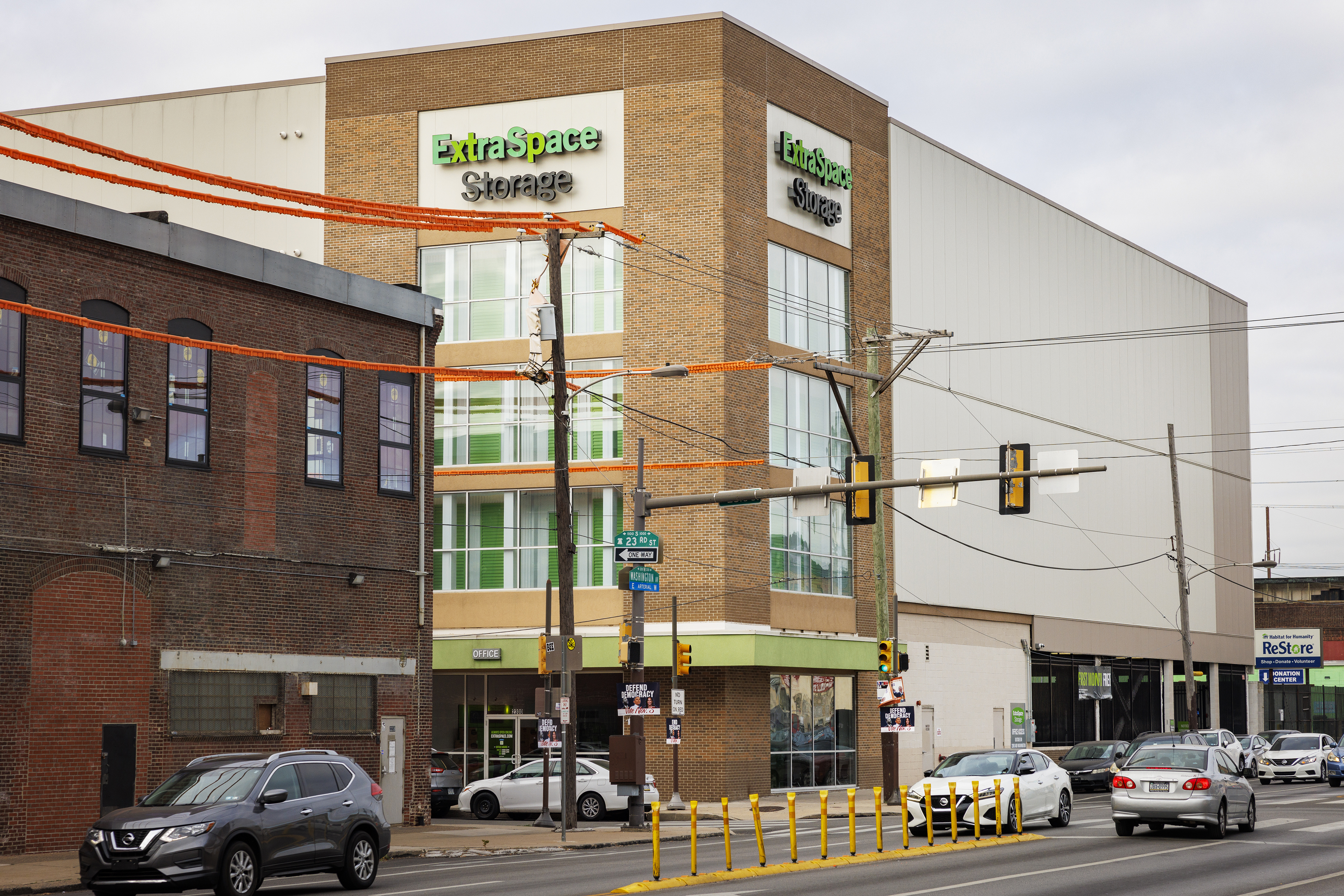
    ExtraSpace self-storage at Washington Avenue and S. 23rd Street, Philadelphia, Monday, November 4, 2024.Alejandro A. Alvarez / Staff Photographer

    Self-storage facilities are gold mines for developers. They suffer little wear and tear, they have few utility costs, and labor costs are low after construction.

    According to online industry search portal StorageCafe, Philadelphia has 89 self-storage sites containing more than seven million square feet of space. About a third of that has been built since 2019.

    Other municipalities have moved to limit the spread of self-storage facilities in recent years. New York City banned them from industrial areas to preserve jobs, and Denver blocked them from properties close to light rail lines. Providence, R.I., in 2023 banned new facilities from the city altogether.

    Driscoll said that he may further limit his legislation to the Tacony neighborhood.

    “I don’t want to hurt another part of my district that maybe wants these things,” he said.

    Embracing affordability: Multiple members of City Council said this week that tackling affordability is their primary objective this fall, including Councilmember Nicolas O’Rourke, whose office published a lengthy report outlining dozens of proposals aimed at reducing costs.

    Some may be more realistic short-term goals than others.

    The report, which was drafted by a Cost of Living Task Force made up of community advocates and industry leaders, recommended the city explore everything from opening municipal grocery stores to creating a local Medicaid supplement program.

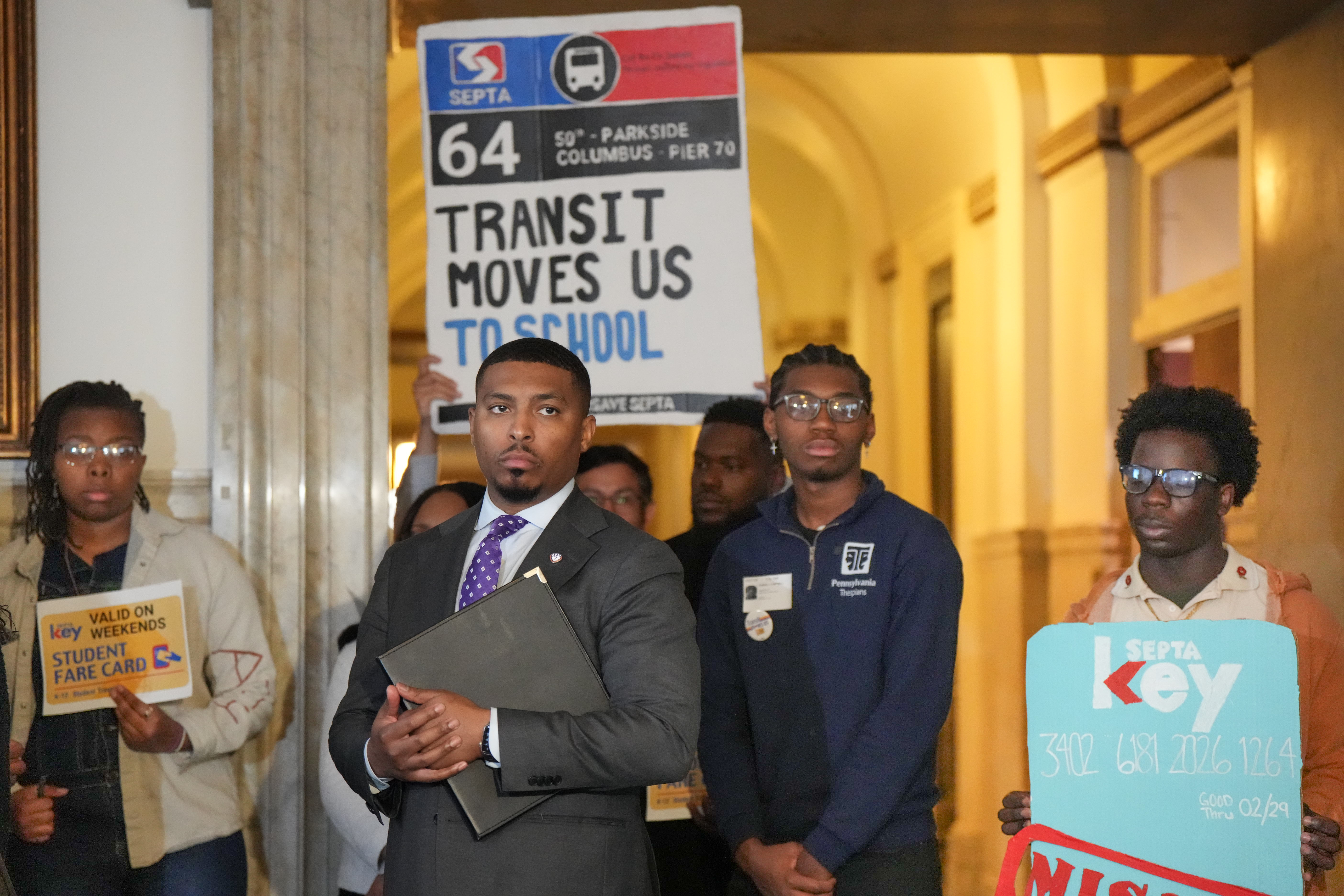
    Councilmember Nicholas O’Rourke with students and activists during a press conference about SEPTA in April.Jessica Griffin / Staff Photographer

    It also recommends restructuring existing housing programs to more aggressively target the poorest residents, and establishing a Transit Access Fund that would fund free or reduced-fare transit passes for low-income households.

    O’Rourke, a member of the progressive Working Families Party, plans to hold a committee hearing on the task force report this fall.

    Council President Kenyatta Johnson will also introduce an affordability measure this fall. He plans to bring forward legislation that would establish a permanent Food and Nutrition Security Coordination Office, he said in a statement.

    Quote of the week

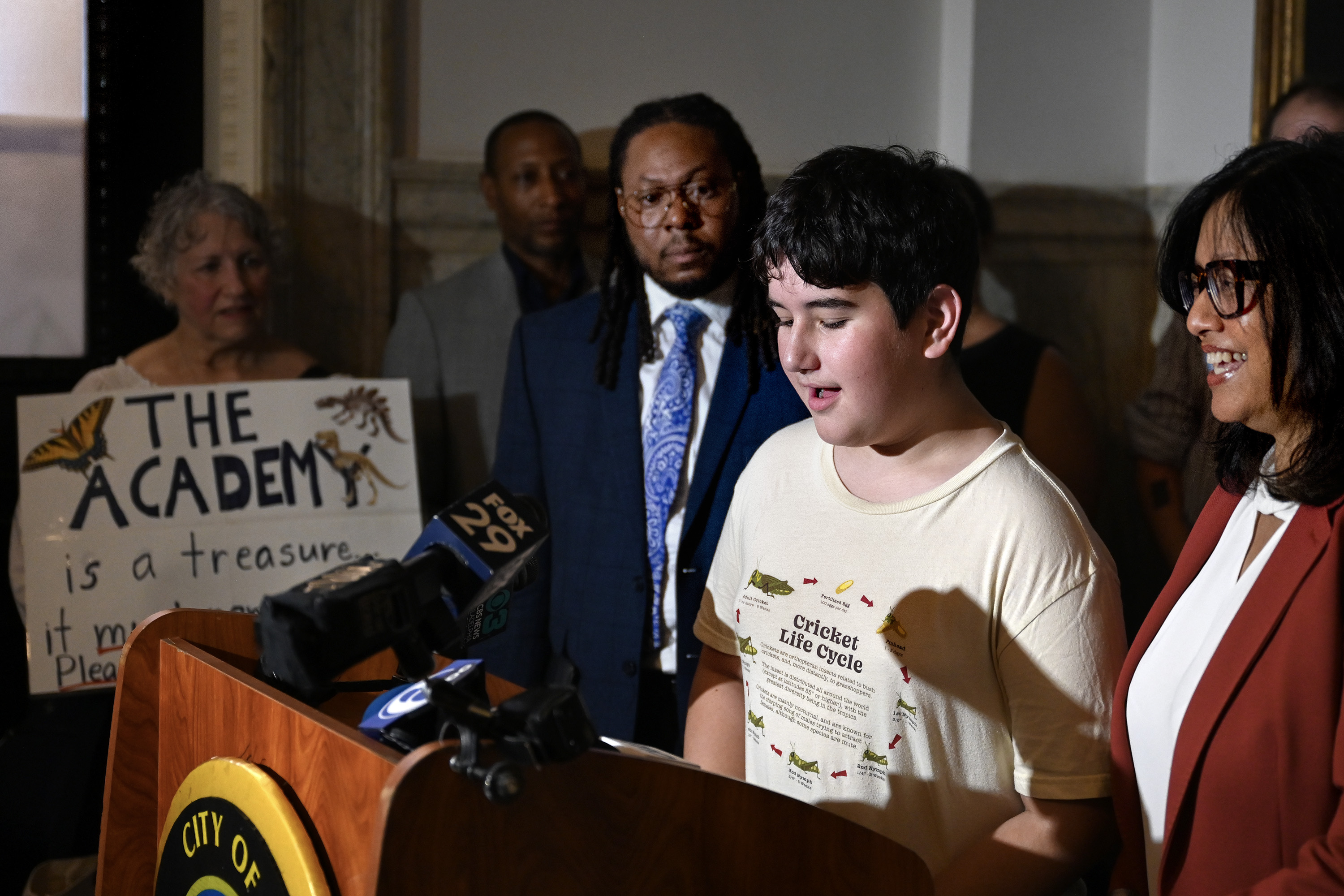
    Jeffery Young, Jr. (left) with twelve year-old Jack Erfer of Wynnewood and councilmembers and Nina Ahmad (right) in supporting the Academy of Natural Sciences of Drexel University before City Council resumes for its fall session Thursday.Tom Gralish / Staff Photographer

    No bones about it: That was Councilmember Jeffery Young Jr., who called for hearings on the planned closure of the Academy of Natural Sciences.

  • Philly City Hall was evacuated for a bomb squad investigation, but no explosive device was found

    Philly City Hall was evacuated for a bomb squad investigation, but no explosive device was found

    Philadelphia City Hall was evacuated and City Council was abruptly adjourned on Thursday after sheriff’s deputies alerted officials to a suspicious package in Council, Council President Kenyatta Johnson said.

    Johnson told The Inquirer about 11:45 a.m. that sheriff’s deputies were investigating a package found on the floor where Council members were holding their first meeting of the fall session. A bomb squad was called, and dogs signaled an alert on the package, he said.

    Police said the package was examined and determined not to contain a device, and the scene was cleared. No injuries were reported.

    All 17 Council members, their staffers, journalists, and members of the public were evacuated from the building. Managing Director Carlton Williams said that Mayor Cherelle L. Parker was safe and that she was not in the building when the package was discovered.

    People who evacuated were permitted to reenter City Hall shortly before 1 p.m. Council reconvened shortly after, according to Vincent Thompson, a spokesperson for Johnson.

    Deputy Police Commissioner Frank Vanore told reporters at the scene that no one was charged in connection with the incident.

    Vanore said two police dogs alerted officers to something suspicious in the bag, but he said it is possible nothing nefarious occurred. The bag, he said, could have had residue from a firearm or fireworks that had been in it within the last several days.

    As chambers were being evacuated, officers detained and removed a government employee. The employee spoke to a reporter while in handcuffs.

    He said he believed it was his package that was at the center of the ordeal.

    “I think it’s my bag that I left on the chair,” he said.

    He said it was not a bomb.

    Outside City Hall, members of Council and government employees milled about, many calmly speculating on the origin of the threat or lack thereof.

    Councilmember Jim Harrity, a Democrat known as one of the chamber’s more colorful members, said plainly: “Hopefully it turns out to be not a bomb, but something else.”

  • Head Start offers a model for ending preschool pushout. Don’t weaken it.

    Head Start offers a model for ending preschool pushout. Don’t weaken it.

    On Aug. 6, Philadelphia City Councilmember Isaiah Thomas held an Education Committee hearing on the crisis of preschool suspensions and expulsions, examining their devastating impact on families and possible policy solutions to this discriminatory practice, which research has shown is rife with racism and ableism.

    Ironically, on that same day, Health and Human Services Secretary Robert F. Kennedy Jr. announced plans for sweeping deregulation of Head Start, including rescinding its current regulations that prohibit expulsion and severely limit suspensions in all Head Start programs.

    At the advocacy organization where I serve as policy director, Education Law Center-PA, we help hundreds of families every year who are navigating preschool pushout. That includes families whose children — yes, even toddlers as young as 18 months old — have been suspended or expelled from preschool.

    This shocking practice is common: Preschools suspend children at a rate three times higher than K-12 schools.

    Suspensions and expulsions of our youngest learners, which are harmful to a child’s development and can profoundly impact their future, disproportionately harm Black and brown children, children with disabilities or developmental delays, and children sharing those identities.

    Myriad preschool programs exist in Philadelphia and across the commonwealth, which can make it difficult to untangle how each program is regulated and which agency oversees it. This patchwork can also make it difficult for families to understand which protections apply to their children. The clearest safeguards exist when protections, in conjunction with legal requirements, are explicitly codified in preschool program regulations.

    Head Start programs offer the strongest protections for our youngest learners, but in Philadelphia, those regulations only apply to 170 Head Start locations, a fraction of the city’s total early childcare settings.

    Current Head Start policy, which Kennedy now seeks to rescind, prohibits the expulsion of students in its programs and severely restricts suspensions to extraordinary circumstances, with a host of steps that must be taken before any temporary exclusion.

    During the recent City Council hearing, one of the most important policy suggestions offered by ELC-PA’s attorney, Rose Wehrman, included implementing the existing Head Start policy for all of the city’s preschool programs. It’s a policy that, if implemented with fidelity, could have afforded important protections for many families featured in our April report on preschool pushout.

    Jennifer Garrison’s 4-year-old son, Terrell, is a constant source of joy for everyone around him. Garrison described him to members of City Council as “loving, gentle, and full of energy.” But Terrell, who is Black and has autism, was denied the most basic needs in his preschool and was effectively excluded from his program under conditions that would not have been permissible under Head Start’s regulations.

    To hear Garrison talk about the juxtaposition of who Terrell is compared with how he was treated is gutting — and unfortunately too common.

    Had Terrell been in a program with the protections explicitly outlined by Head Start’s now-in-jeopardy regulation prohibiting such exclusion, perhaps he and his family would not have endured such a traumatic experience. We don’t know that for sure, but we do know that Head Start’s policy is one that should be expanded to more programs.

    The benefits of Head Start are comprehensive: The National Head Start Association outlines academic, social-emotional, and physical health benefits, and notes that the impacts are “particularly strong” among underserved students. This is, in part, due to strong policies around developmentally inappropriate practices like suspension and expulsion.

    But Secretary Kennedy, in the name of “parental empowerment” and even “freedom,” wants to upend the foundations of a decades-long program with lifelong benefits, ranging from increased educational success through K-12 and beyond, as well as physical, emotional, and financial health.

    Changes to Head Start proposed by Health and Human Services Secretary Robert F. Kennedy Jr. include deregulating nearly every facet of of the program, from appropriate staffing ratios to developmental screenings, writes Hillary Linardopoulos.Amanda Cuda

    In addition to the rescission of the suspension and expulsion policy, Kennedy’s proposed rule changes would deregulate nearly every other facet of Head Start. This includes appropriate staffing ratios, developmental screenings, and a host of regulations that are central to the program.

    Fortunately, these proposals are not final, and people can submit public comments (of any length or format) to the Department of Health and Human Services by Oct. 6 to oppose the deregulation of Head Start.

    The existing federal regulations are the ones we should emulate right here in Philadelphia and across the commonwealth. We urge our fellow community members to join us by submitting comments opposing the gutting of Head Start regulations, which would destabilize this foundational program.

    Meanwhile, our organization will continue to work to support families and expand the existing Head Start policies to include all programs educating our youngest learners across Philadelphia and the entire commonwealth.

    Hillary Linardopoulos is the policy director for the Education Law Center-PA, a nonprofit organization dedicated to ensuring equal access to a quality public education for all children in Pennsylvania.

  • Philly developers are planning a $1.5M campaign to protect City Council from progressive challengers

    Philly developers are planning a $1.5M campaign to protect City Council from progressive challengers

    Philadelphia real estate developers see the writing on the wall.

    As progressives have toppled centrist Democrats in nationally watched races, some local development interests are wary that the same trend could reshape Philadelphia City Council this spring, when every member is up for reelection. They see a growing progressive faction as a threat to business.

    Enter the incumbent protection plan.

    Nearly a dozen local developers are already pouring hundreds of thousands of dollars into Philly For Growth, a group that in the past two Council election cycles spent millions on advertising campaigns to back business-friendly Democrats, according to a source familiar with the planning.

    Philly For Growth is an independent expenditure group, also known as a super PAC. It can raise and spend unlimited amounts of money to influence an election, but there are rules barring super PACs from most forms of coordination with the candidates they support.

    In 2023, the group was the biggest special interest group involved in that year’s Council races, and it provided a substantial boost to its chosen candidates by outspending individual campaigns.

    Ahead of the May primary election, Philly For Growth plans to spend $1.5 million to support pro-business Democrats, most of whom are sitting Council members, according to the source, who spoke on the condition of anonymity because they were not authorized to discuss the plans. The group will not fund negative advertising about Council’s four incumbent progressives, the source added.

    Councilmember Kendra Brooks, of the progressive Working Families Party, speaks during a rally outside of the School District of Philadelphia headquarters in May. At left is Councilmember Rue Landau and at right is Councilmember Jamie Gauthier. All three are members of Council’s progressive faction.Monica Herndon / Staff Photographer

    The idea is to keep progressives from growing their power on Council instead of spending money to knock off the leftists who are already there. There are currently four reliably progressive votes out of the total 17 on Council, but some members may be more likely to vote with that faction as Democratic voters nationally revolt against incumbents.

    That’s a different strategy than in 2023, when Philly For Growth backed a slate of five candidates — two incumbents and three challengers. Both incumbents won, but all three challengers lost.

    Philly For Growth has previously been affiliated with the Building Industry Association of Philadelphia, an advocacy group for development interests. Mo Rushdy, the BIA’s former president who leads the organization’s political activity, declined to comment.

    The source said that Philly For Growth will fund advertising to support Council members Mark Squilla, whose 1st District includes parts of South Philly, Center City, and Fishtown; Cindy Bass, whose 8th District is based in North and Northwest Philadelphia; and Quetcy Lozada, whose 7th District includes much of North Philadelphia and Kensington.

    All three are seen as more centrist members and have said they intend to run for reelection. No challenger has officially launched a campaign against any of them, but candidates who are aligned with the city’s left-leaning political organizations are expected to emerge as the primary — still eight months away — draws nearer.

    The super PAC is making one exception when it comes to supporting incumbent district Council members, the source said. In the 5th District, currently represented by Councilmember Jeffrey Young Jr., the group will support a to-be-decided challenger.

    Councilmember Jeffery Young Jr. speaks to other members of Council during a 2025 session.Tom Gralish / Staff Photographer

    At least five people have said they are interested in running for the North Philly-based 5th District seat, and Young has drawn opposition from development interests for pushing proposals that would slow or halt some projects in his district.

    Young said in a statement that building “sensible, affordable housing” is one of his top priorities and that he has supported city programs like Turn the Key, which provides mortgage support to first-time homebuyers.

    “People are free to back those who share their values. These are my values,” Young said. “I am leaving it to the residents of the 5th to determine whose values best reflect them.”

    The super PAC will also fund advertising backing four incumbent members who represent the city at-large: Isaiah Thomas, Katherine Gilmore Richardson, Jim Harrity, and Nina Ahmad. That group doesn’t include progressive at-large Councilmember Rue Landau, but Philly For Growth doesn’t plan to oppose her, the source said.

    Council President Kenyatta Johnson laughs inside the caucus inside City Hall on June 11.Aidan T. Gallo / Staff Photographer

    A spokesperson for Landau’s campaign arm said in a statement that the Council member “stands by her accomplishments for working people, small businesses and vulnerable communities in Philadelphia and looks forward to voters having the opportunity to make up their own minds next year.”

    It’s unclear just how competitive the at-large race will be, and candidates have until the spring to decide — nomination paperwork is typically due in March. Seven of Council’s members represent the entire city at-large, and two of those seats are effectively reserved for members of minority parties under the city’s Home Rule Charter.

    That has traditionally meant that five seats are held by Democrats, given the party’s massive voter registration advantage in the city. In recent years, Republicans and the progressive Working Families Party have battled for the remaining two seats during the fall general election, and the WFP currently holds both.

    Mayor Cherelle L. Parker, who is also up for reelection, and Council President Kenyatta Johnson, who insiders do not expect will see a serious challenger, will likely be on Philly For Growth’s slate, too, the source said.

  • Johnny Doc is a free man after President Donald Trump cut his six-year prison term short

    Johnny Doc is a free man after President Donald Trump cut his six-year prison term short

    Johnny Doc is free.

    Convicted former Philadelphia labor leader John Dougherty was released Friday afternoon from a federal penitentiary in Lewisburg, his lawyer said, capping a surprise outcome that was the result of President Donald Trump’s decision to commute the remainder of Dougherty’s six-year prison term.

    Dougherty’s lawyer, George Bochetto, said he was released around 3 p.m. Attempts to reach Dougherty for comment Friday were unsuccessful.

    Dougherty — widely known as Johnny Doc — had served less than two years of that sentence, which came after he was convicted in two high-profile trials: The first in which he was found guilty of bribing former Philadelphia City Councilmember Bobby Henon, the second over his participation in an embezzlement scheme that cost his union nearly $600,000.

    For much of the past year, Dougherty had been petitioning U.S. District Judge Jeffrey L. Schmehl to release him on house arrest so he could provide care for his gravely ill wife. But Schmehl had repeatedly denied those efforts.

    Trump’s decision to commute Dougherty’s sentence instead will result in a more sweeping form of relief: His conviction will remain intact, but he will not be subject to any monitoring or house arrest, and he will no longer have to pay about $1.6 million in restitution to the union he was convicted of defrauding.

    Bochetto called Trump’s decision “a magnificent gesture of compassion.” And he said it came after he’d been in regular communication with White House staff members about the dire and longstanding health challenges faced by Dougherty’s wife, Cecilia.

    A White House official said Friday that those circumstances figured into Trump’s decision — particularly because Dougherty’s father-in-law, who had been serving as the primary caretaker, died last year.

    Bochetto said there was “absolutely no reason” to keep Dougherty behind bars while his wife’s health was continuing to decline.

    Dougherty, while testifying before Schmehl earlier this year, said he had done everything he could from prison to lift his wife’s spirits — mailing her letters, routinely calling her, and even singing to her over the phone.

    But he said he was desperate to get home and help her manage a set of challenges that have left her paralyzed and largely nonverbal. He said his adult daughters and private aides were struggling to provide the type of intensive, round-the-clock care she requires.

    “I just want to take care of Celia,” he said.

    The U.S. Attorney’s Office had opposed Dougherty’s efforts to be released. A spokesperson said the office had no comment on Trump’s decision to set Dougherty free.

    Beyond caring for his wife, it was not immediately clear Friday what Dougherty’s future might hold — or whether he’d use his newfound freedom to try to return to the political stage.

    Before he was prosecuted, Dougherty was a bona fide power broker while running Local 98 of the International Brotherhood of Electrical Workers, which he turned into the biggest independent source of campaign money in Pennsylvania. That funding helped elect mayors, City Council members, and members of Congress. It also helped bolster the judicial candidacy of Dougherty’s brother, Kevin Dougherty, who won a seat on the Pennsylvania Supreme Court in 2015.

    Even if John Dougherty did want to seek a return to the spotlight, it would have to come from a different perch.

    Not only is Local 98 under new leadership, Dougherty’s convictions on counts of bribery and embezzlement make him ineligible to hold an elected union office for 13 years under U.S. Department of Labor laws.

    Labor leader Ryan Boyer, who replaced Dougherty as chair of the Philadelphia Building and Construction Trades Council, said he nonetheless expected Dougherty to end up back in the mix in some fashion.

    “If I know John the way I know John,” he said, “he’s not going to sit on his hands.”

    Staff writers Sean Collins Walsh and Maggie Prosser contributed to this article.

  • Philadelphia’s police union endorses Gov. Josh Shapiro for his reelection bid

    Philadelphia’s police union endorses Gov. Josh Shapiro for his reelection bid

    Philadelphia’s police union on Tuesday endorsed Gov. Josh Shapiro’s reelection bid, announcing its continued support for the first-term Democratic governor while touting his commitment to law enforcement.

    “Every day, he has shown a commendable ability to work with local law enforcement and deliver the resources and support we need to protect and serve our friends, families, and neighbors,” said Roosevelt L. Poplar, president of the Fraternal Order of the Police Lodge 5, which represents over 14,000 active and retired Philadelphia police officers and sheriff’s deputies.

    In a statement, Shapiro said he was “honored” by the endorsement.

    “I’m going to keep fighting for the brave law enforcement officers who work to keep Philadelphia safe every single day,” he said. “I believe all Pennsylvanians deserve to be safe and feel safe in their communities — and we have focused every day on funding law enforcement and supporting the men and women that protect and serve our Commonwealth.”

    It marks the second time the police union has embraced Shapiro for governor after endorsing him in 2022 over Republican candidate Doug Mastriano, who the then-president of the union said couldn’t be trusted to protect their collective bargaining rights. Shapiro, a former state attorney general, was a reliable government official who the union said was “there to help us with whatever we need to do.”

    This election cycle, Shapiro holds a commanding lead over his Republican opponent, Treasurer Stacy Garrity, according to a recent poll from The Philadelphia Inquirer, the New York Times, and Siena University. The union has previously supported President Donald Trump, but Shapiro attracted its backing over Garrity, who Trump has endorsed in the Pennsylvania governor’s race.

    Shapiro has also received support from other organized labor unions, including the Pennsylvania AFL-CIO and the Pennsylvania Professional Fire Fighters Association. On Monday, he received the backing of the Pennsylvania State Troopers Association.

    Shapiro has maintained a comfortable relationship with law enforcement, and his campaign noted that he has signed multiple state budgets funding 2,000 additional officers across Pennsylvania and allocated more than $1 billion in community-based violence prevention grants.

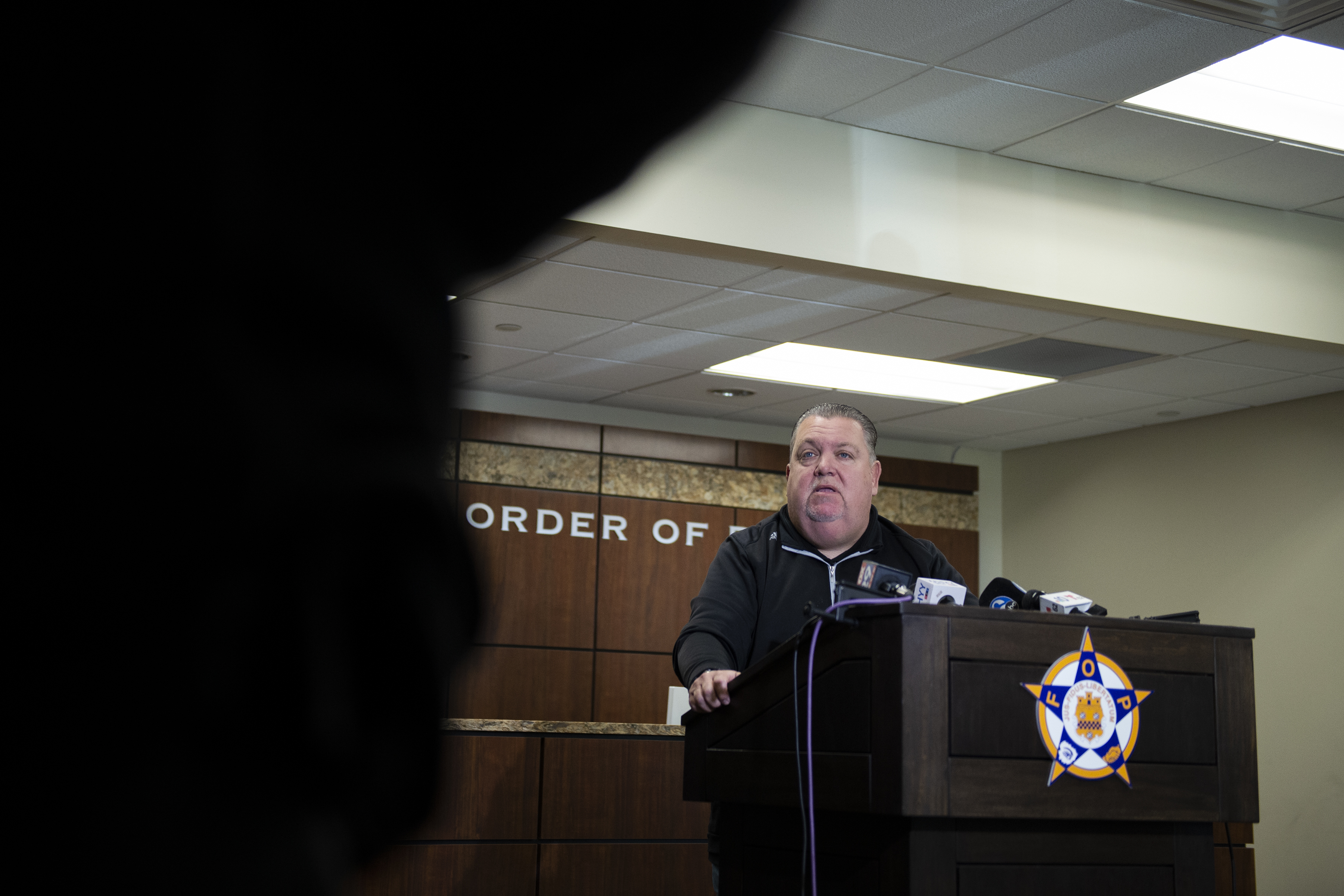
    Roosevelt Poplar, president of Fraternal Order of Police Lodge 5, on Jan. 26, 2024.Elizabeth Robertson / Staff Photographer

    In his statement, Poplar also commended Shapiro for providing funding for police department needs.

    “The Governor has delivered on his promise to invest in public safety, he has shown up with us in times of tragedy, and he has proven his commitment to keeping our officers and the communities we serve safe,” he said.

    The police union’s endorsement of Shapiro is notable for an organization that just a few years ago was seen by some Philadelphia Democrats as politically toxic.

    In the aftermath of the 2020 Minneapolis police killing of George Floyd, protests by racial justice activists swelled in Philadelphia and across the country with many of the movement’s participants calling to “defund” or abolish the police. They pressed local lawmakers to redirect police funding to social services, and Philadelphia City Council in June 2020 canceled a planned increase to the Philadelphia police budget.

    Amid the calls for reform, the FOP was a major point of contention, as was its bombastic former leader, John McNesby. Activists — and many of their allies in elected office — said the union was too resistant to change and protected bad cops.

    Former FOP president John McNesby holds a news conference on Oct. 19, 2022.Joe Lamberti

    At the time, Shapiro was running for reelection as the state attorney general, and his campaign presented him as a “progressive reformer” who had established a unit in his office to review criminal convictions that may have been unfairly applied and a council to support people leaving prison with housing and employment opportunities. The FOP endorsed Shapiro’s 2016 and backed his 2020 campaign for attorney general.

    Unlike some Philadelphia Democrats, Shapiro — who has rumored ambitions for a presidential run in 2028 — did not embrace the “defund” movement. He argued during a 2020 trip to Philadelphia that addressing structural inequities in the department and having strong law enforcement, especially in communities with high levels of poverty, were not mutually exclusive endeavors.

    “We reject that poverty or institutionalized indifference and marginalization should mean that some people don’t get to have a safe community to live in,” he said. “We won’t give up on the belief [of] law enforcement showing up in a community to make people feel safer.”

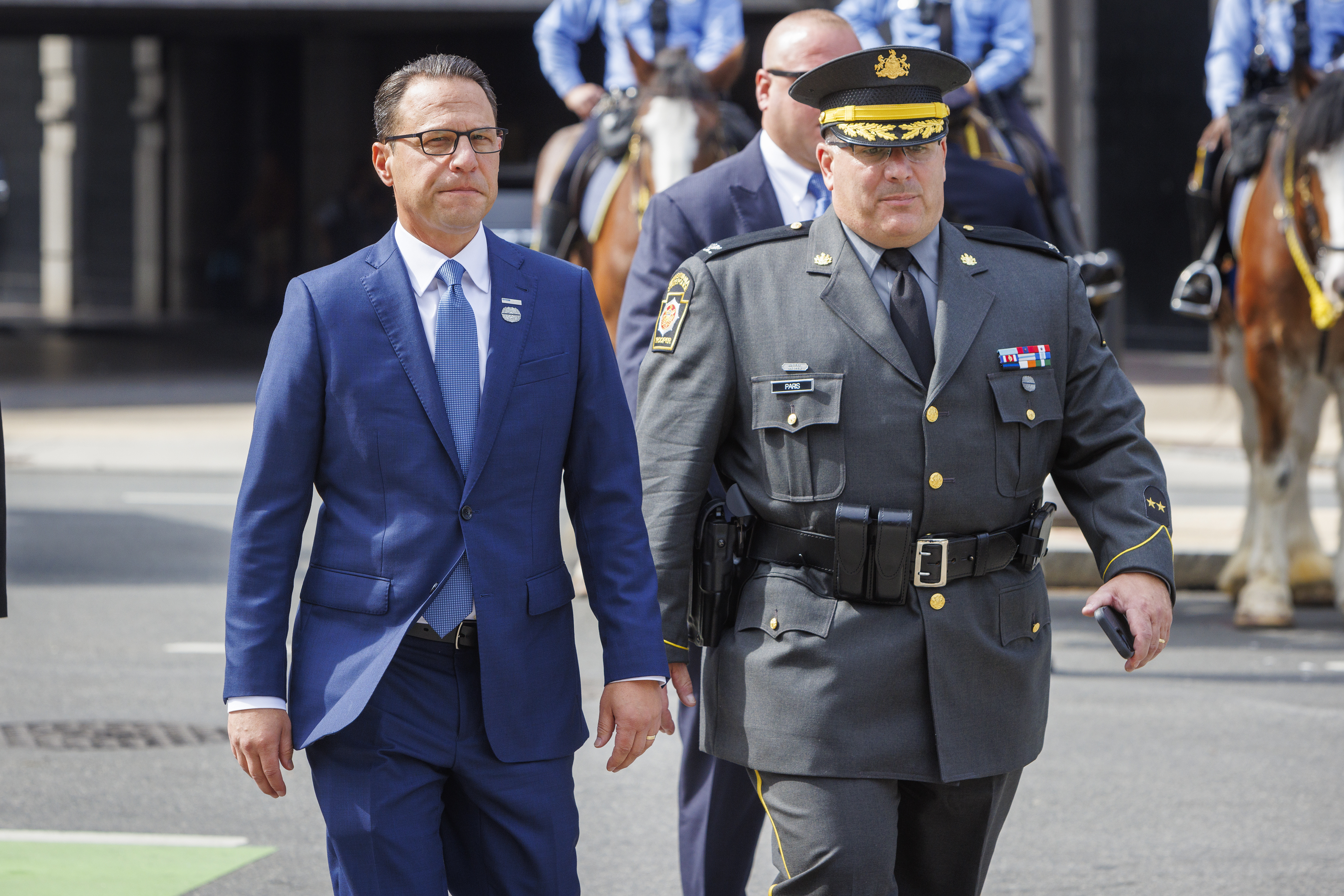
    Gov. Josh Shapiro with Pennsylvania State Police Col. Christopher L. Paris. They were attending the funeral for Philadelphia police officer Jaime Roman at the Cathedral Basilica of SS. Peter and Paul on Sept. 19, 2024.Alejandro A. Alvarez / Staff Photographer

    In the years following 2020, public support for police in Philadelphia appeared to grow. The city saw a historic spike in gun violence, and Republicans nationally portrayed Democrats as soft-on-crime. When a half-dozen Democrats were fighting for the mayoral nomination in 2023, polling showed that most voters saw public safety as the No. 1 issue driving the race. None of the candidates embraced “defund,” and most of them supported proposals to provide additional resources to the police department as it sought to solve shootings.

    In the end, the tough-on-crime mayoral candidate — then-City Councilmember Cherelle L. Parker — won decisively.

  • William Dunbar, a key adviser for Mayor Cherelle Parker’s 2023 campaign, pleaded guilty to federal tax evasion charges

    William Dunbar, a key adviser for Mayor Cherelle Parker’s 2023 campaign, pleaded guilty to federal tax evasion charges

    William F. Dunbar Sr., a Philadelphia lobbyist who was an important unpaid adviser to Mayor Cherelle L. Parker’s 2023 campaign, on Monday pleaded guilty to federal criminal charges related to a tax fraud scheme that lasted six years.

    Dunbar’s lawyer, Brian McMonagle, said Dunbar “accepts full responsibility for his conduct.” The charges were filed in July but were under seal until Monday morning. Dunbar entered his plea on Monday afternoon before District Court Judge Kelley B. Hodge.

    Dunbar, 42, was charged with four counts including tax evasion and filing a false tax return. He was charged by information, a process used when a defendant intends to plead guilty.

    “Today’s plea reflects his commitment to resolving this matter with honesty, accountability, and respect for the judicial process,” McMonagle said. “He has taken decisive steps to satisfy his outstanding tax obligations and has implemented appropriate financial controls and professional oversight to help ensure this does not recur.”

    McMonagle added that Dunbar “has dedicated his professional and personal life to serving his community through public service, civic leadership, and charitable engagement.”

    A spokesperson for the U.S. Attorney’s Office declined to comment on the case Monday.

    The charges carry a maximum sentence of 16 years in prison, plus supervised release and fines. A sentencing hearing was scheduled for Jan. 11, and Dunbar was released on bail pending sentencing.

    Dunbar pleaded guilty to filing fraudulent income tax returns for himself and his wife from 2020 through 2025. Prosecutors say Dunbar inflated his charitable giving and business expenses while dramatically undervaluing his taxable income, a scheme that likely would have lowered the couple’s tax bill.

    For example, they said, in the 2024 tax year, Dunbar claimed $1.45 million in total business expenses while indicating he had no taxable income. Dunbar also reported that he owed $46,000 in total taxes for that year, a sum that can include other taxes outside the income tax, but prosecutors said the amount he actually owed was “materially greater” than what he reported on his tax form.

    Prosecutors did not specify how much money Dunbar owed the government in taxes, but said in court papers that it was between $350,000 and $750,000.

    Assistant U.S. Attorney Louis D. Lappen told Hodge that, due to the fraudulent returns, Dunbar for tax year 2023 received a refund of about $30,000 while his spouse received a refund of about $36,000. Lappen said the couple claimed similar refund sums each year from 2020 through 2025, and that they should have paid additional taxes when they filed their returns instead of receiving refunds.

    “Had the taxes been filed accurately and appropriately and without fraud, [Dunbar and his spouse] would have owed,” Lappen said.

    Although prosecutors accused Dunbar of inflating expenses associated with his political consulting firm, Dunbar Public Affairs & Associates, there are no accusations in his charging documents that connect his conduct with Parker or others affiliated with her campaign.

    Dunbar was a key member of Parker’s “kitchen cabinet” of informal advisers during her 2023 run, in which she bested a crowded field to win the Democratic primary and become the city’s first female mayor. Dunbar also has had ties to other high-profile Democratic politicians, including Gov. Josh Shapiro, U.S. Sen. Cory Booker of New Jersey, and members of Philadelphia City Council.

    The Inquirer reported earlier this month that federal investigators last summer issued subpoenas for documents and financial records related to Dunbar, according to three sources with direct knowledge of the probe.

    One of the sources said the investigation appeared to be a “fairly broad” review of Dunbar.

    Parker’s campaign has dramatically increased its spending on legal services since early 2025, around the time the sources said subpoenas were issued, according to campaign finance reports.

    The campaign paid its law firm, Dilworth Paxson, about $108,000 since the start of 2025, The Inquirer reported. By comparison, it paid the firm less than $15,000 during the 2023 election year and about $19,000 in 2024.

    Parker last week declined to comment on the subpoenas related to Dunbar or on her campaign’s increased legal spending.

    Spokespeople for the mayor’s office and for Parker’s campaign declined to comment on the charges against Dunbar on Monday.

    Dunbar was never paid for his role in the campaign during the 2023 mayoral election.

    In 2024, Parker’s first year in office, Dunbar took over management of the campaign. The campaign paid Dunbar’s firm a series of rent payments totaling $22,850 between March 2024 and November 2024.

    Parker let Dunbar go from her campaign in the summer of 2024 in a move that Dunbar said at the time was the mayor’s decision. The campaign is now managed by Aren Platt, who was one of the architects of Parker’s 2023 run and served as chief deputy mayor in her administration before resigning in October 2024.

    Dunbar appears to still be active in politics despite no longer being on Parker’s team. Two weeks ago, he posted on social media a series of behind-the-scenes photos from a filming session at a West Philadelphia barbershop for a Shapiro campaign advertisement, writing: “Where politics meets the people.”

    Manuel Bonder, a spokesperson for Shapiro’s reelection campaign, said in a statement that Dunbar has “no formal or informal role with the Shapiro for Pennsylvania campaign.”

    Dunbar’s lobbying clients include Comcast, the Chamber of Commerce for Greater Philadelphia, and Jackmont Hospitality, an airport concessions company, according to his lobbying registration with the city.

    Dunbar previously lobbied for the Philadelphia School District, but a district spokesperson said earlier this month that he stopped working for the district in June.

    Staff writers Abraham Gutman and Ryan W. Briggs contributed to this article.

  • The race to unseat Philly Councilmember Jeffery Young Jr. is taking shape

    The race to unseat Philly Councilmember Jeffery Young Jr. is taking shape

    The ultracompetitive race to replace Philadelphia City Councilmember Jeffery Young Jr. is officially underway.

    With nine months until next year’s primary election, two candidates are already taking steps to challenge the first-term incumbent Council member from North Philly — and more may be to come.

    On Saturday, cybersecurity attorney Jalon Alexander launched his campaign for the seat during a party in Fairmount, where he told attendees that Council needs an infusion of fresh blood and new ideas to spur growth in the city.

    “We’ve spent the last two years meeting with different community organizations, speaking with different ward leaders, and community groups, and just everyday people,” Alexander said in an interview. “This is going to be a people-powered campaign that really is grassroots.”

    And on Friday, Curtis Wilkerson, who was the chief of staff to former City Council President Darrell L. Clarke, announced that he’s forming an “advisory committee” to evaluate a prospective run for the seat. The group will host community roundtables and neighborhood listening sessions to collect policy ideas and feedback from residents.

    Wilkerson, who campaigned for the seat four years ago but did not make it onto the ballot, said he’ll likely decide whether to launch an official campaign by September.

    A third potential candidate, Democratic political operative Kellan White, has been having conversations with party officials and labor leaders about running. White is a former deputy city controller who has managed and advised campaigns, including physician Ala Stanford’s recent unsuccessful run for Congress.

    At least two others have said they are considering launching campaigns for Young’s seat: Dustin Dove, the president of the Fairmount Civic Association, and Max Tuttleman, a philanthropist who in 2023 unsuccessfully ran for seat on Council representing the city at-large.

    The recent moves by several prospective candidates are the latest sign that the 5th District is likely to be the most crowded Council race this spring, when all 17 members of Council will be up for reelection and are expected to seek another term. The 5th District, which includes parts of Center City, North Philadelphia, and Fishtown, is overwhelmingly Democratic, meaning whoever prevails in the May primary is all but certain to win the seat in the general election.

    Fifth District Councilmember Jeffery Young Jr., during the Barber’s Hall community legacy celebration, a daylong celebration of music, history, and community in North Philadelphia on Aug. 1.Yong Kim / Staff Photographer

    Young’s campaign did not respond to a request for comment. In an interview last month, he said he intends to run for reelection and sees facing challengers as a normal part of the process.

    “People have a right to do what they want in a democracy,” he said. “But I’m focused on myself and what we can do as a leader of the 5th Council District and get the constituents to understand that every decision that we make is to improve their life.”

    The freshman lawmaker is seen as Council’s most vulnerable member in the upcoming election, in large part because of how he got into office.

    In 2023, several other candidates — including Wilkerson, who was Clarke’s preferred successor — were kicked off the ballot amid a series of legal challenges questioning the validity of their nominating petitions. Young ended up being the only Democrat on the ballot.

    Since January 2024 when he was sworn in, Young’s tenure has been tumultuous. He has championed legislation that at times has sought to slow or halt housing construction in parts of the district, drawing the ire of developers. Constituent groups have loudly opposed Young, specifically over his controversial plans for a popular library branch in North Philly.

    And he has publicly clashed with Mayor Cherelle L. Parker’s administration, including in 2024, when he took the rare step of introducing legislation to authorize Council to subpoena the mayor.

    Jalon Alexander greets supporters and community members as he kicks-off his bid in the 5th Council District seat, at a campaign event in Fairmount on Saturday.Bastiaan Slabbers / For The Inquirer

    Young, 40, an attorney by trade, has something of an independent streak. He has at times aligned with different political factions, and he does not fit neatly onto the Democratic ideological spectrum.

    Neither do some of his opponents. Alexander, 33, said he has progressive views on workers’ rights and keeping homes affordable, and he has built relationships with some leaders of the city’s progressive political organizations.

    But the tenor of Alexander’s campaign is pro-growth. He said he wants to cut the city’s business taxes with the goal of eventually eliminating the business, income, and receipts tax. And he said he’s committed to facilitating more development in the district, including through the city’s Turn the Key program that provides mortgage support to some first-time homeowners.

    Alexander has been particularly critical of Young’s use of councilmanic prerogative, the unwritten rule that gives district Council members an extraordinary level of control over land-use decisions and construction projects in their district.

    Young has used prerogative to attempt to obstruct projects he opposes, such as the redevelopment of the former Hahnemann University Hospital. He introduced legislation to ban residential housing development in the area, a move he said was to preserve the area’s job-generating capacity, but he did not advance the bill amid opposition from interest groups and Parker’s administration.

    Alexander — who was born and raised in Strawberry Mansion and still lives in the neighborhood — said his campaign is targeting Democrats “all over the tent.”

    “There’s room for progressives. There’s room for people who are loyal Democrats but feel let down by the establishment,” he said. “We’ve got one goal: We’re fully committed to removing and replacing Jeffery Young.”

  • A sweeping audit of the Philadelphia School District’s management and operations is coming, at City Council President Kenyatta Johnson’s request

    A sweeping audit of the Philadelphia School District’s management and operations is coming, at City Council President Kenyatta Johnson’s request

    The Philadelphia School District is about to face significant new scrutiny, with City Council President Kenyatta Johnson asking for a sweeping performance audit of the school system’s management and operations.

    City Controller Christy Brady has agreed to the request, which came via a letter in recent weeks signed by all 17 Council members, Johnson’s office told The Inquirer. The comprehensive review will go beyond the audit Brady’s office performs annually, delving into areas such as staffing and outside contractors.

    Council laid out no deadline for the audit but made clear it is expecting the results in time for next budget season, which will begin in the new year and ramp up in the spring.

    The district, one of the largest in the United States, has a $4.6 billion budget, which funds education for 113,000 students in 213 district schools and 65,000 in 81 charters. About $2 billion of that money comes directly from the city.

    “While the SDP is subject to regular financial statement audits that examine the accuracy of financial reporting and compliance with applicable accounting standards, this request seeks a performance audit focused on evaluating the efficiency, effectiveness, and management of financial and operational practices, including budgeting decisions, resource allocation, internal controls, and long-term fiscal planning,” Johnson said in a statement Thursday.

    The news comes during a period of heightened tensions between Council and the district, spurred by members’ frustration over the school board’s move to close 17 schools and a separate $300 million structural deficit that took Council by surprise.

    Last week, at a news conference where several members “begged” the district to come to the table to negotiate over school closings, Councilmember Curtis Jones Jr. said Council has “tools in our tool belt that we will use” if the board does not change its mind about some building closures.

    Jones has sponsored legislation to hold hearings on creating an independent financial authority, like the Pennsylvania Intergovernmental Cooperation Authority, to oversee the district’s finances.

    Council sources told The Inquirer that there is no indication that the district has conducted malfeasance, but that given the billions that flow to the district from city coffers, Philadelphia officials want a closer accounting of how the money is being spent.

    After the board voted to begin the closure process in April, multiple members of the public also called for increased financial scrutiny of the district.

    Reginald Streater, the school board president, said in a statement Thursday that the board and district will work with the controller’s office “to continue strengthening our financial processes and procedures.”

    Streater said the audit squares with the board’s approach to governance.

    “Good governance is not about assuming we have all the answers; it is about asking the right questions, using evidence to guide decisions and being willing to improve. We look forward to understanding the proposed scope of the audit and ensuring that the examination is constructive and focused on helping the district work well for students, families and educators,” Streater said.

    Superintendent Tony B. Watlington Sr. stressed the district’s academic strides, history of audits with no material weaknesses, and moves to solidify its credit rating.

    Frustration over a budget deficit and school closings

    Johnson, in his statement, said that the audit will reassure Council that “resources are being managed effectively and operations are functioning efficiently by the SDP,” and that he believes its findings will help inform priorities for next fiscal year’s budget.

    This year’s budget season was chaotic.

    After Mayor Cherelle L. Parker introduced her initial budget, Watlington ordered $225 million in cuts, including some school cuts, with 300-plus teachers, counselors, and climate staff slated to lose their positions.

    The problem, Watlington underscored in remarks in March, was “not because we’re not good stewards of the dollars, but because of historic underfunding.” (The district achieved its highest credit rating ever under Watlington, who has said he wants to be the superintendent to retire the system’s structural financial issues permanently.)

    Philadelphia’s school system cannot raise its own revenue but instead depends on the city and state to bankroll it, unlike every other district in Pennsylvania.

    City Hall seemed shocked at the news of the deficit and job cuts, despite the fact that Watlington had warned officials in 2025 that a budget gap was coming. The school district spent $300 million in reserves that year to avoid layoffs and program cuts as federal COVID-19 funds dried up.

    After Watlington said he would be forced to make the school cuts, Parker then upped her proposed 20-cent-per-trip rideshare tax to a $1-per-trip levy. That frustrated a Council already catching heat from city residents anguished over plans to close schools.

    (Left to Right) Councilmembers Isaiah Thomas, Curtis Jones Jr., and Jamie Gauthier protest at Thursday’s school board meeting as the board prepared to vote on the facilities plan.Jessica Griffin / Staff Photographer

    In April, several Council members took the dramatic step of repeatedly disrupting the school board’s vote in an attempt to get it to reconsider the closures of a handful of schools, including Lankenau and Robeson High Schools and Overbrook Elementary.

    The school board proceeded anyway — Council approves school board members, who are appointed by the mayor, and the city’s budget, but had no formal authority over the closures.

    The rideshare tax ultimately died.

    Eventually, Parker, Watlington, Council, and the school board worked out a deal to save the 300 jobs, with the city promising $216 million over five years from yet-unspecified sources.

    But it quickly became clear that some Council members remained frustrated with the school system and were looking for a way forward.

    Councilmember Isaiah Thomas has said he will not vote to reconfirm any school board member who voted for the closings; he and others have also said they believe it is time to rethink the school board’s governance structure.

    The city, as a primary funder of the district, needs a clearer picture of what is going on, they say.

    “Given the SDP’s current budget challenges, requests for additional public revenue, and recent proposals involving school closures and operational reductions, City Council believes a comprehensive performance and management review is warranted to ensure transparency, accountability, and informed public decision-making,” Johnson said in the statement. “The City of Philadelphia has a responsibility to ensure that all available revenues, expenditures, obligations, and funding strategies have been thoroughly reviewed before significant decisions affecting students, families, educators, neighborhoods, and public assets are implemented.”

    What will the special audit examine?

    City Controller Christy Brady (second from left, standing next to Mayor Cherelle L. Parker) is seen in this January file photo. Alejandro A. Alvarez / Staff Photographer

    Brady, in a statement, said the audit will “ensure resources are being managed effectively, operations are functioning efficiently and students are receiving the support they deserve. We’ve been encouraged by the SDP administration’s response to our previous audits and the steps it has taken to implement our recommendations. We expect this audit will continue that collaborative approach and continue to produce positive results for the benefit of students, educators and taxpayers.”

    Council has asked Brady to go deep, from probing into the current structural deficit and the projections used to get there to the status of Philadelphia Parking Authority revenues, both expected and received.

    Brady will also look at the district’s use of reserves and its administrative costs, and she will explore “the effectiveness and efficiency of administrative and operational expenditures, including central office functions, non-instructional spending and other costs not directly tied to classroom instruction.”

    She will look into how the district’s budgeting methods and long-term planning square with industry best practices, and examine contract management and consultant utilization to try to find areas “for improved accountability, transparency, and cost efficiency.”

    Brady is also charged with a deep dive into the financial effects of forthcoming school closings, and the potential ramifications of the closings on surrounding neighborhoods.