A federal judge said Tuesday that he will not call Philadelphia District Attorney Larry Krasner to testify about his actions in a controversial post-conviction case — despite the fact that some of Krasner’s own staffers have accused him of overseeing the matter in ways they viewed as inappropriate.
The decision by U.S. District Judge Paul S. Diamond came at the end of a multiday hearing at which two of Krasner’s prosecutors testified about the discord that emerged among lawyers in the office as they worked to determine whether a man’s murder conviction should be overturned.
Both prosecutors who testified Tuesday, David Napiorski and Peter Andrews, largely echoed assertions two of their colleagues made on previous days of the hearing — including that Krasner vehemently opposed referring the case to the state attorney general’s office, and that he threatened unspecified “consequences” for those who didn’t follow his orders.
In earlier testimony, other staffers accused Krasner of calling state prosecutors “Nazis” and growing “apoplectic” when they memorialized their disagreements with him in writing. Diamond last week also suggested that some actions in the case could amount to crimes including perjury, conspiracy, or obstruction of justice.
Napiorski and Andrews continued to paint a portrait of an office consumed by internal conflicts over its actions in the matter. And they accused Krasner of sometimes amplifying the drama.
Despite that, Diamond said at the conclusion of the hearing that he did not intend to hear from any other witnesses, including Krasner. Instead, Diamond said, his next step would be to determine whether Krasner’s office should be allowed to continue participating in the case moving forward. He did not specify how quickly that ruling might come.
Krasner declined to comment Tuesday. He has previously declined to talk about the matter, saying it would violate ethical rules to do so while it remains pending.
The underlying case is the conviction of Dennis Johnson, who was found guilty of second-degree murder in 2009 for fatally shooting Kenyatta Smith outside a North Philadelphia convenience store.
Johnson appealed his conviction, in part because he said his trial attorney was ineffective. And in 2022, a newly hired prosecutor in Krasner’s law division, Jaclyn Mason, filed court documents agreeing with him and saying his conviction should be overturned.
But this spring, some of Mason’s colleagues began reviewing the case and took the opposite view — in part because they said she’d made clear and important mistakes in her brief supporting Johnson’s position.
That set off a sequence of events that has gone on to roil Krasner’s office.
First, Mason’s supervisors said they had to withdraw her brief and apologize to Diamond for her mistakes — an unusual step for lawyers to take in court.
And although they said they offered Mason a chance to join that effort, she resigned instead, saying she’d only filed her brief because her boss, Matthew Stiegler, had pressured her to do so, and that she didn’t want to be used as a scapegoat for the office.
In the weeks that followed, prosecutors testified, Krasner became involved in a series of disputes with those who remained on the case, including Napiorski, Andrews, and two of their colleagues: Katherine Ernst and Steven Wildberger.
All four went on to testify that they believed their office should recuse itself from handling Johnson’s case because their internal discussions had veered into areas of self-preservation rather than the merits of Johnson’s claims.
But Krasner disagreed, they said, at times angrily. He said he would not refer the case to the attorney general’s office because he viewed their staffers as “Nazis,” according to Ernst and Wildberger. And they and Napiorski said Krasner also wanted to keep the case in-house to “protect the office.”
By mid-July — about six weeks after Mason resigned — Ernst, Wildberger, Napiorski, and Andrews filed documents with Diamond saying they could no longer participate in the case due to the behind-the-scenes drama.
Krasner, in a court document of his own, called their assertions unauthorized and “ill-informed.”
As Diamond weighs how to sort out the turmoil, Roy Clark, Johnson’s father, said he’s become demoralized by how attention has shifted away from whether or not his son should be released from prison.
“With all the in-house fighting and stuff for the DA’s Office, it takes the human component out of the case,” he said outside the courthouse Tuesday. “We’re trying to get my boy home.”
Staff writer Jesse Bunch contributed to this article.
A longtime fugitive charged in the rape and murder of a 5-year-old girl in North Philadelphia more than two decades ago has been extradited to the city from Central America, authorities said Monday.
Alexis Flores, 51, was arrested earlier this year in Lapaera, Honduras, in connection with the death of Iriana DeJesus in 2000.
He is now in Philadelphia and has been charged with murder, rape, kidnapping, and related crimes, according to law enforcement officials.
“The return of Alexis Flores to Philadelphia demonstrates our unwavering commitment to pursuing fugitives wherever they may run, no matter how much time has passed,” said Wayne A. Jacobs, special agent in charge of the FBI’s Philadelphia office.
Iriana’s killing rocked the city’s Hunting Park neighborhood, and in 2007 — when federal investigators identified Flores as the suspect — he was placed an the FBI’s Top 10 Most Wanted list.
The child was reported missing near her home on the 3900 block of North Fairhill Street on July 29, 2000. She was last seen walking with a stranger around 9 p.m., witnesses told police.
Within days, a store owner found the girl’s body in a vacant second-floor apartment above a nearby small business at West Pike and North Sixth Streets.
She had been raped and strangled. Her body, left in a corner facing the wall, was decomposing and had been partially concealed by a trash bag.
Investigators soon suspected the attacker was a “drifter” in his 20s who had been doing handyman work on the property. They said the man mistakenly ended up panhandlingin Philadelphia after traveling from Arizona on a boxcar that he thought was headed to Chicago.
Iyanna Vazques (right) records a balloon release in memory of her sister Iriana DeJesus on Feb. 15. Five year-old Iriana was kidnapped and killed in 2000. Alexis Flores was arrested after two decades on the FBI’s most-wanted list.Tom Gralish / Staff Photographer
A breakthrough in the case came in 2007 when Flores’ DNA — collected during an arrest on unrelated forgery charges in Arizona several years earlier — came up in a database as a match for genetic material taken from the scene of Iriana’s slaying.
But law enforcement officials could not find him for years.
Flores had entered the U.S. without official permission and was deported to his homeland of Honduras in 2005 after his Arizona arrest.
It took until February of this year for federal law enforcement to track him down and arrest him in connection with the Philadelphia case. When word of his arrest reached Iriana’s family, her mother and around 100 neighbors in Hunting Park gathered on the block to release balloons in memory of the child, affectionately known as “Nena.”
The effort to bring Flores to the U.S. to face charges of murder and related crimes was led by the FBI’s Transnational Anti-Gang Task Force and aided by Honduran authorities, officials said.
There were so many jaw-dropping moments in U.S. District Court Judge Paul S. Diamond’s courtroom on Thursday that it is hard to know where to begin.
For starters, I had a stint covering courts in the mid-2000s, and have never seen a courtroom packed with so many lawyers — including lawyers representing lawyers — for a hearing in an exoneration case. An overflow room was needed to handle the rapt onlookers.
The hearing grew out of efforts by Philadelphia District Attorney Larry Krasner’s office to overturn the conviction of Dennis Johnson, who was found guilty of second-degree murder in the 2007 shooting of a man at a North Philadelphia convenience store. While Johnson’s future was ostensibly on the line, it quickly became clear that so was Krasner’s.
By the end of the day, the future for both men looked bleak.
While Johnson was in court with his attorneys, the hearing focused on the machinations within Krasner’s office.
The office has already run into a heap of legal trouble over previous efforts to overturn other convictions or reduce sentences, mainly for those convicted ofmurder.
Federal courts have disbarred and suspended prosecutors in Krasner’s office for lying to the court. The state Supreme Court found more lies and, in an unprecedented move, appointed the state attorney general to review future efforts to undo prior convictions.
So essentially, Krasner’s office now has a court-appointed babysitter because it can no longer be trusted.
It was easy to see why after three prosecutors — who still work for Krasner — provided damning testimony about their own office’s sloppy handling of efforts to vacate Johnson’s conviction. They accused Krasner of conduct that bordered on paranoia and cover-up, and painted a picture of an office that seemed less focused on the pursuit of justice than on shielding itself.
Katherine Ernst, the chief of training in the law division, went first, followed by colleagues Steven Wildberger, an assistant district attorney in the appeals unit, and David Napiorski, the head of the law division.
David Napiorski, the head of the law division in the Philadelphia District Attorney’s Office, testified that Krasner eschewed his official email account and “always prefers oral, in-person conversations.”Alejandro A. Alvarez / Staff Photographer
They came with receipts, providing meeting times, memos, and emails documenting conversations with Krasner about how to handle errors in court filings by the DA’s office related to an attempt to undo Johnson’s conviction.
Krasner did not respond to a request for comment, but in an earlier filing his office said the prosecutors were “ill informed.”
The three prosecutors provided alarming testimony detailing how Krasner avoided using his official office email and threatened them.
“DA Krasner typically didn’t use that email,” Ernst said about his office email. “He wouldn’t check it. And so, if you wanted to email him, then you typically had to email his private address.”
Napiorski backed that view: “He always prefers oral, in-person conversations.”
In late June, after the three prosecutors drafted a memo to Krasner detailing the office’s conflict of interest in handling the Johnson matter, he responded with an email sent from the account of his chief of staff, Jennifer Lin, which began, “This response is not from Jen Lin, it is from Larry Krasner.”
At another point, Wildberger testified that when they presented Krasner a letter turning the Johnson case over to the state attorney general, he went “apoplectic.”
“He said something about having already told us not to bring him printed-out material, things in writing,” Wildberger said.
‘Paraguay’
The prosecutors pushed for the attorney general to take over, because their self-interest had become a focus rather than the merits of the case. In their view, they had conflicts, and so did Krasner.
But Krasner wanted to hire an outside lawyer to handle the matter, and repeatedly resisted efforts to turn the case over to the state Office of Attorney General, or OAG.
Ernst testified that Krasner “hated” everyone in the OAG. Wildberger said Krasner “referred to the Office of the Attorney General as Paraguay” and “the people that work there as Nazis.”
Adding to the drama was the fact that the attorney questioning Ernst and Wildberger was John Boscia, a senior deputy attorney general in the OAG.
To clarify, Boscia asked Wildberger, “So that the people from the OAG’s office were escaped Nazis who had gone to Paraguay?”
“That’s my understanding,” Wildberger responded.
All three prosecutors testified that throughout the internal discussions, Krasner remained adamant about retaining control of the case in order to “protect the office” — a phrase that came up more than two dozen times during the hearing.
At one point, Judge Diamond asked if Krasner’s reference to “protect the office” meant “protect himself?”
“I think that was probably part of it,” Napiorski said.
In another twist, Thomas Gaeta, the DA’s civil litigation supervisor, was involved in some of the internal discussion, yet he handled the brief and mild cross-examination of his colleagues on Thursday.
The roots of the DA’s conflict began after Johnson appealed the verdict, claiming his defense attorney was ineffective.
In 2022, then-Assistant District Attorney Jaclyn Mason filed a document that agreed with the arguments made by Johnson’s attorneys at the Pennsylvania Innocence Project, and that his conviction should be overturned. According to the document Mason signed, the detective’s testimony in Johnson’s trial was improper and had “tipped the scales” toward a conviction.
But this spring, following an order from Diamond, Ernst and some of her colleagues reviewed the case. Ernst said she found multiple errors in Mason’s motion and confronted her.
Ernst and her colleagues urged Mason to fall on her sword for the office,take responsibility for the errors, and withdraw the motion. Napiorski said he told Mason he had done something similar in a different exoneration case that blew up.
Profiles in courage.
‘Reluctantly but loudly’
The main hero in what is shaping up to be an unraveling of Krasner’s mass exoneration scheme appears to be Mason.
Her dramatic testimony in Diamond’s courtroom last month provided a window into the lack of independent investigation by Krasner’s office into the wrongful conviction claims. (Mason also appears to have provided some backbone to the three prosecutors who testified on Thursday.)
Mason explained that she had only been on the job a few months in 2022, and had largely taken directions from her supervisor, Matthew Stiegler, who she said told her if Johnson’s claims were good enough for the Innocence Project, they were good enough for him.
In the meeting with the prosecutors, Ernst recounted that Mason said, “This is all Matthew Stiegler’s fault.”
Mason told her colleagues that Stiegler should have to sign the withdrawal motion, as well. Apparently, that was not an option. Instead of going along with the plan to take all the blame, Mason resigned on June 2.
In a two-page resignation letter addressed to Krasner, Mason wrote that she had limited experience with federal habeas law when she was hired. Yet, the first two cases Stiegler assigned to her “involved complicated cases where he determined that it was appropriate to concede habeas relief.”
Mason said she “trusted” Stiegler, but later learned about a mass exodus of prosecutors when he oversaw the federal litigation unit.
Mason said Stiegler had “worked closely with the Innocence Project and the Federal Defenders on the [Johnson] case, deeming it worthy of a concession with little independent investigation.”
Therein lies the problem when it comes to reviewing past convictions. Under Krasner, the prosecution and defense are largely on the same team.
Mason added that Stiegler reviewed several drafts of the concession she filed in the Johnson case, but did not sign his name to it. Mason ended by writing that she “reluctantly but loudly” resigned.
After Mason quit, all three prosecutors testified that Stiegler hatched a plan to manage the fallout. He suggested combing through Mason’s past cases for errors and claiming she was a rogue operator.
Ernst testified that Stiegler asked to meet and told her, “Mason purposely inserted the false facts into the response.” Ernst explained that Stiegler wanted to make it seem as if any mistakes in the case were “100% [Mason’s] fault and 0% his fault.”
Krasner was on board with Stiegler’s plan, according to Ernst, who recounted a conversation with the district attorney.
Krasner said Stiegler “gave me this really good idea,” Ernst testified. “I think that we should go through Ms. Mason’s cases, say that this was a pattern by her, and then file something with the court saying that.”
Why the deference to Stiegler is unclear. He has come and gone from Krasner’s office three times and remains a lightning rod. Stiegler now oversees the Conviction Integrity Unit, a departmental name fast becoming an oxymoron.
Stiegler sat in the front row of Judge Diamond’s courtroom on Thursday as the other prosecutors testified about his role and reputation with the office.
Wildberger testified that in the meeting with Mason and the other prosecutors, he told her, “You’ll find no Matt Stiegler apologists here.” He later explained that Stiegler “was not well liked” and had chased away many prosecutors.
The internal drama and legal troubles have roiled Krasner’s office. Ernst testified that many frontline prosecutors were “angry” at Krasner for what happened to Mason. Wildberger said he had “lost faith in the administration of the Philadelphia District Attorney’s Office.”
Amid the discussions over whether to tell the court about the errors in the Johnson case came another bombshell.
Ernst testified that Napiorski warned her Krasner had threatened “to fire anyone who tells the judge about this.” She added that Wildberger clarified Krasner didn’t use the word fire, but said that “there would be consequences.”
Early on in the proceeding, Judge Diamond signaled his take on the emerging testimony.
“If what they say is true, potential wrongdoing abounds,” Diamond said. “There’s a question of whether perjury was committed, subornation of perjury was committed, criminal conspiracy was committed, and obstruction of justice was committed.”
The hearing is scheduled to continue on Tuesday. It is unclear what the judge will do next.
I left the courthouse thinking about the Watergate hearings and, in particular, a March 1973 meeting in which White House counsel John Dean warned RichardNixon about a “cancer” on the presidency.
Has something similar metastasized in Krasner’s office?
A federal judge on Thursday said actions city prosecutors took in a controversial post-conviction case could ultimately amount to perjury, conspiracy, or obstruction of justice — a stunning suggestion that inserted the threat of potential criminal consequences into a matter that has already roiled District Attorney Larry Krasner’s office.
U.S. District Judge Paul S. Diamond did not say whom he was referring to when he made that remark during an unusual hearing in his courtroom. But he raised the issue while an assistant district attorney was testifying about conversations she had with Krasner about the case, in which she said Krasner told her to “protect the office” and, by extension, violate her ethical obligations as a lawyer.
“If what they say is true,” Diamond said, “potential wrongdoing abounds.”
Diamond, as a judge, does not have the ability to file criminal charges himself. But his remarks from the bench were another new development in the case, which had already featured a host of explosive accusations about how prosecutors have behaved while determining whether a man’s murder conviction should be overturned.
And it was not the only notable moment during Thursday’s hearing.
During a full day of testimony, three prosecutors made a series of striking statements about the interoffice drama behind the case. And some of their assertions directly accused Krasner of questionable conduct.
Assistant District Attorney Katherine Ernst said Krasner repeatedly told her and others to protect the office and avoid additional scrutiny from the courts. She and colleague Steven Wildberger also said Krasner threatened “consequences” — which they believed to be potential firings — for those who resisted his preferred method of handling it.
Krasner also rejected their advice to ask the state attorney general’s office to take the lead on the matter, they said, because, according to Ernst, Krasner “hated” everyone in that office and said “everybody in that [office] is Nazis.”
And all three prosecutors said Krasner and another supervisor, Matthew Stiegler, tried to persuade them to effectively find a way to protect Stiegler’s reputation at the expense of a prosecutor he supervised, Jaclyn Mason.
As Ernst recalled it, Stiegler said he wanted to make it seem as if any mistakes in the case were “100% [Mason’s] fault and 0% his fault.”
In Ernst’s view, the events demonstrated that Krasner cared “more about the reputation of the office than competently handling this case.”
Wildberger said he was so disillusioned that he stepped down as a leader of the law division to move to a different unit because “I have lost faith in the administration of the Philadelphia District Attorney’s Office.”
The testimony from Ernst, Wildberger, and their colleague David Napiorski served as an extended rebuke of the office where all three still work. Ernst at one point acknowledged that some of her relationships in the office have become “icy.”
Ernst and Wildberger accused Krasner in court documents last month of some of the conduct they testified about Thursday.
Krasner’s office responded by saying their filings were unauthorized and “ill-informed.” He also said that he had taken steps to alleviate their concerns with how the case was being handled, and that they were in no position to comment on behalf of his office.
The prosecution at issue is the conviction of Dennis Johnson for second-degree murder. In 2009, a jury found Johnson guilty of fatally shooting Kenyatta Smith during a robbery outside a North Philadelphia convenience store two years earlier. He was sentenced to life in prison.
Johnson appealed, in part because he said his trial attorney was ineffective. And in 2022, Mason filed court documents agreeing with one of his post-conviction petitions and saying Johnson’s conviction should be overturned.
But this spring, Ernst and some of her colleagues reviewed the case and took the opposite view, saying they had discovered clear and important errors in Mason’s brief. They then took the unusual step of filing another brief to ask that Mason’s recommendation be withdrawn.
In the days after that development, Mason resigned, a decision she later said was an attempt to protect herself from what she viewed as a plot to turn her into a scapegoat.
Ernst and her colleagues denied that they were seeking to blame Mason. And in the weeks after Mason’s resignation, Ernst said, she and other supervisors got into an extended series of arguments with Krasner over how to handle the situation — which is what formed the basis of much of their testimony Thursday.
Most of the disputes concerned whether the office should recuse itself from handling Johnson’s case at all. Ernst said she repeatedly tried to get Krasner to let the attorney general’s office take over the case because the internal discussions had veered into areas of self-interest rather than the merits of the case.
Krasner consistently refused, she said. And Wildberger said Krasner once grew “apoplectic” when they attempted to memorialize their concerns in writing, because that would make their memos and emails potentially discoverable in future litigation.
Wildberger said Krasner threatened “consequences” if they continued to resist his preferred method of proceeding, which was to hire an outside lawyer to handle the matter on the office’s behalf.
But neither Wildberger nor Ernst saw that path as appropriate, and last month both signed on to a brief before Diamond saying they could no longer participate in the case because of their ongoing debates with Krasner.
Diamond paused Thursday’s hearing in the middle of Napiorski’s testimony. He plans to continue the proceedings next week.
He has not ordered Krasner to testify.
Krasner said it would violate ethical rules to comment while the hearing remains ongoing.
“As much as I would like to speak right now,” he said, “my comments will have to come at a later time.”
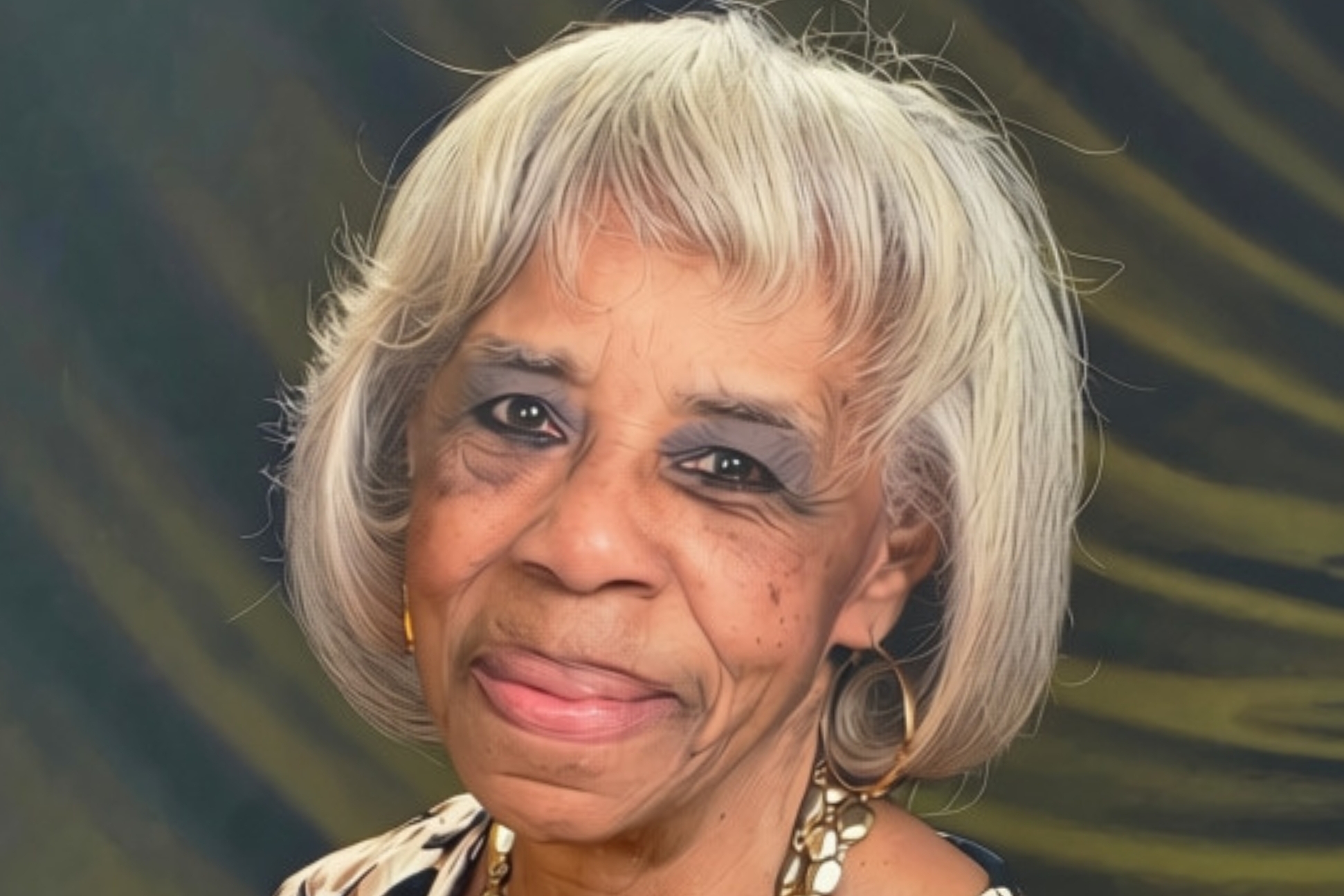
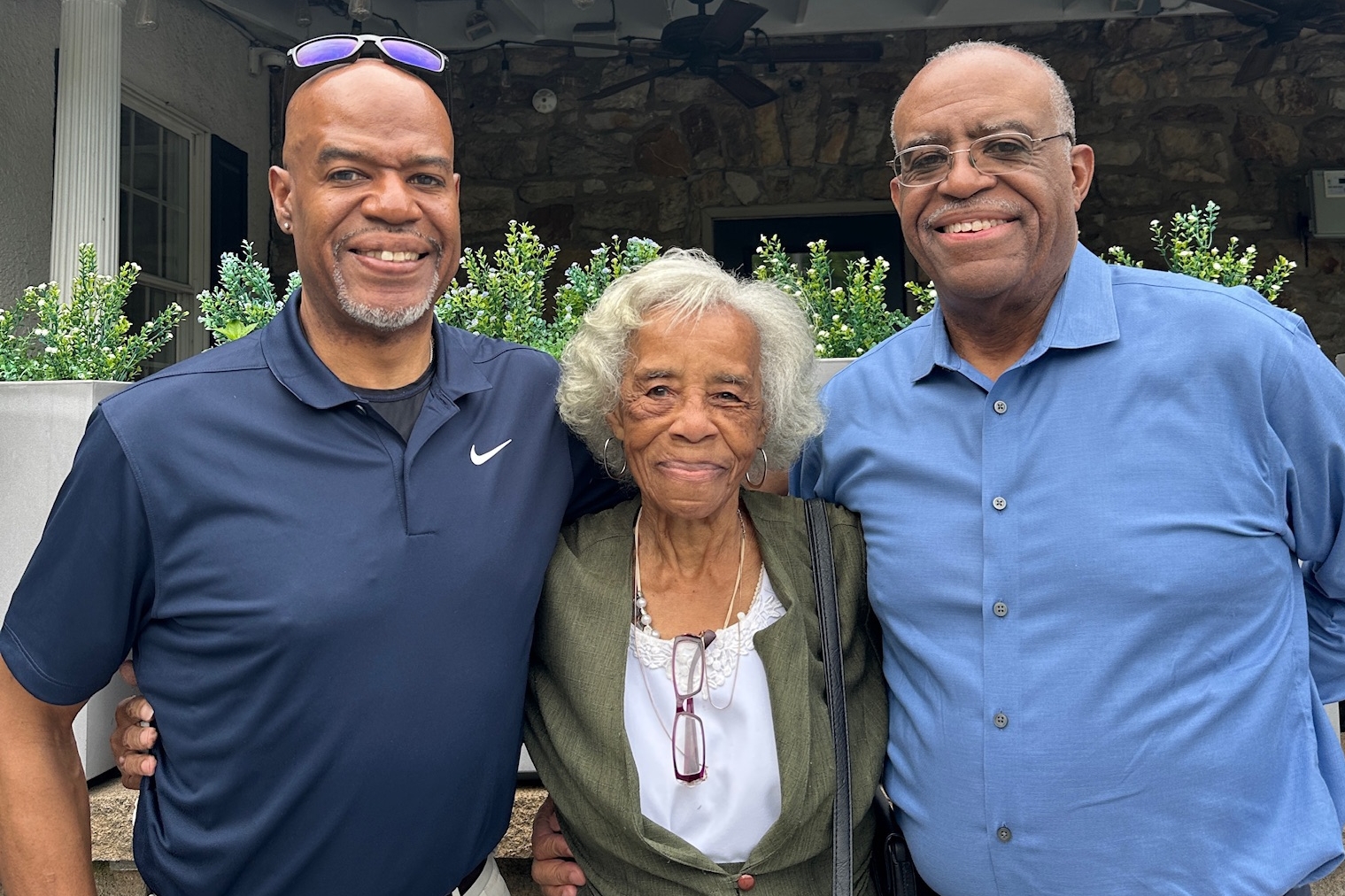
Joan M. Satterthwaite, 92, of Philadelphia, talented tailor and seamstress, longtime office administrator for the Mayor’s Commission on Aging, volunteer, and community caretaker, died Tuesday, Aug. 4, of sepsis at Jefferson Washington Township Hospital in Gloucester County.
Adept at designing, constructing, fitting, and altering garments of all kinds, Ms. Satterthwaite worked at the Botany 500 factory at Broad Street and Lehigh Avenue, and for other clothing manufacturers in Philadelphia, for more than 20 years. She could do every job on the intricate clothing assembly line, her son Kevin said, and she did them fast and well.
She joined the International Ladies’ Garment Workers’ Union in the 1950s and supplemented her weekday work by producing gowns, dresses, suits, and other clothing for family, friends, church choirs, wedding parties, and local businesses.
She made Halloween costumes for her two sons when they were young and tailored suits when they were older. She designed a wedding dress for her daughter-in-law.
She could duplicate many patterns by looking at them just once. Over the years, she collected eight sewing machines. “Her craftsmanship and attention to detail earned her the admiration and loyalty of countless clients,” her family said in a tribute.
Her son Kevin said: “We would call her an entrepreneur today.”
In the mid-1980s, Ms. Satterthwaite left garments and became certified in office administration and computer technology at the old Philadelphia School of Office Technologies. For a decade, she worked for the Joseph Shein Law Firm.
She tried to retire in the mid-1990s. But she impressed officials at the Mayor’s Commission on Aging so much as a client that they recruited her as a receptionist and administrative assistant. Sheleft that job in 2018, at 85.
Ms. Satterthwaite reared her sons in Philadelphia. Courtesy of the family
After that, she volunteered with veterans groups, was active in the community, and opened her home to anyone in need. “If someone asked for help,” her son Kevin said, “she was there.”
Her family said: “Joan’s life was a testament to perseverance, faith, compassion, and determination. Her kindness, generosity, and genuine concern for others became hallmarks of a life well lived.”
A friend said online: “Ms. Joan was the nicest person ever. … Her kind spirit reminded me of my grandmother.”
Joan Marie Watts was born Dec. 28, 1933, in North Philadelphia. Her mother died when she was 2, and she was reared by her grandfather and his wife.
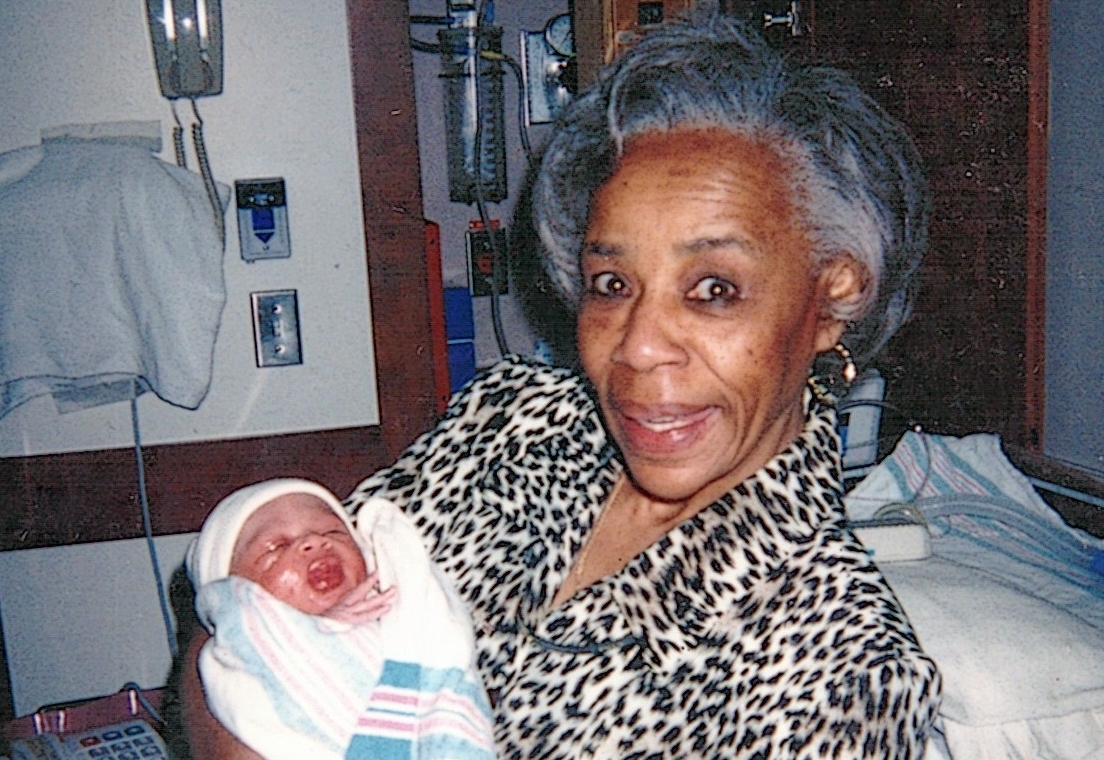
Ms. Satterthwaite doted on her grandchildren.Courtesy of the family
She studied tailoring and sewing at William Penn High School and graduated in 1952. She married Charles Satterthwaite in 1953, and they had sons Kevin and Eric. Her husband died earlier.
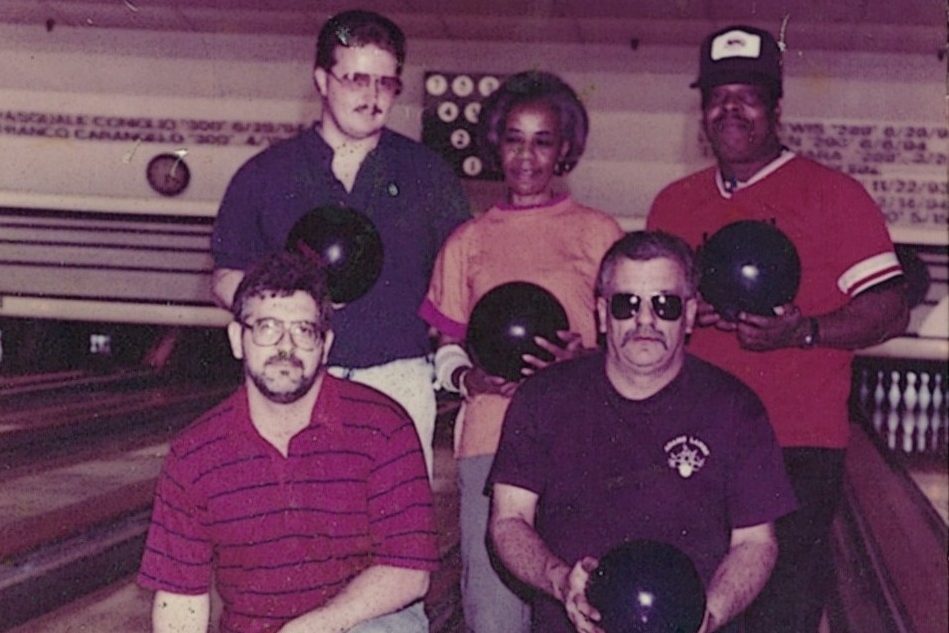
Ms. Satterthwaite was a member of Triumph Baptist Church for more than 35 years, and she went to breakfast with others often after Sunday service. She had breakfast with her sons on Saturdays, bowled every week for 30 years, hosted memorable family gatherings on holidays, and pored over puzzle books when she was older to stay sharp.
Her family noted her “warm heart, generous spirit, and love of people” in a tribute and said: “Her kindness, patience, and genuine concern for others left a lasting impression on all who knew her.”
She doted on her family and told them often that education was a key to success. She lived in Nicetown and Logan, and most recently in Washington Township.
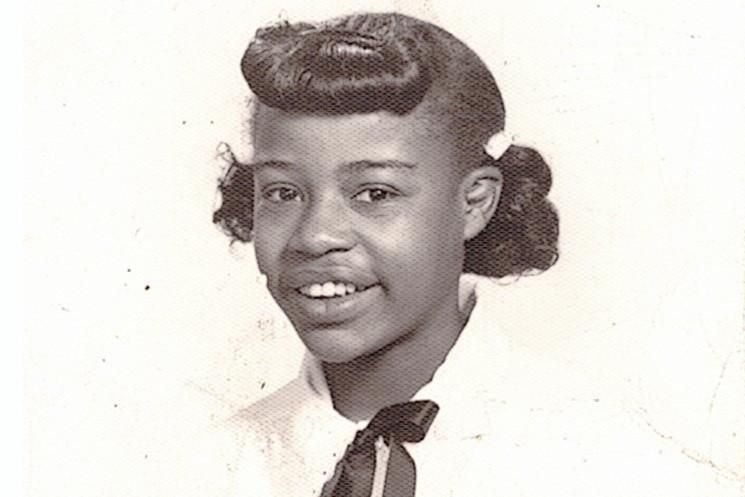
Ms. Satterthwaite graduated from William Penn High School. Courtesy of the family
Her son Eric praised her “unwavering belief that nothing in life was more important than family.” Her son Kevin said: “She was welcoming and warm. She liked being around people. Her life force kept her going.”
In addition to her sons, Ms. Satterthwaite is survived by four grandchildren, two sisters, a brother, and other relatives. Two brothers died earlier.
Services were held earlier.
Donations in her name may be made to Triumph Baptist Church, 1648 W. Hunting Park Ave., Philadelphia, Pa. 19140.
Ms. Satterthwaite bowled every week for decades. Courtesy of the family
Two years ago, every child in the kindergarten class at Eleanor Emlen Elementary in Mount Airy had vaccine protection against measles.
A year later, the school’s kindergarten immunization rate had dropped to just 80%, putting students and the surrounding community at risk of an outbreak of the highly contagious disease.
Emlen is among more than two dozen Philadelphia-area schools that saw double-digit declines in kindergarten immunization rates last school year — in many cases because parents are increasingly refusing vaccines.
The affected schools span a diverse range of communities, from city neighborhoods like Mount Airy to the outlying suburbs. In Chester County, for example, a small private school in Downingtown saw its vaccination rates plunge by 20%.
Even as countywide immunization levels remain relatively high, some 40% of kindergarten classrooms across the region became vulnerable to an outbreak during the 2025-26 school year, up from 33% the year prior, an Inquirer analysis of newly released state data found.
(function(){function e(){window.addEventListener(`message`,function(e){if(e.data[`datawrapper-height`]!==void 0){var t=document.querySelectorAll(`iframe`);for(var n in e.data[`datawrapper-height`])for(var r=0,i;i=t[r];r++)if(i.contentWindow===e.source){var a=e.data[`datawrapper-height`][n]+`px`;i.style.height=a}}})}e()})();
That means that at least 249 schools had vaccination rates below 95%, the level at which scientists say a population must be vaccinated to prevent the spread of measles, one of the most contagious diseases.
Of these, 98 Philadelphia-area schools reported measles vaccination rates below 90%, presenting an even greater risk to students.
A sharp increase in parents opting out of vaccination for religious or philosophical reasons continued to drive down vaccination rates; exemptions in this category rose by 15% in the latest two years for which data are available.
(function(){function e(){window.addEventListener(`message`,function(e){if(e.data[`datawrapper-height`]!==void 0){var t=document.querySelectorAll(`iframe`);for(var n in e.data[`datawrapper-height`])for(var r=0,i;i=t[r];r++)if(i.contentWindow===e.source){var a=e.data[`datawrapper-height`][n]+`px`;i.style.height=a}}})}e()})();
Pennsylvania is among a handful of states that allows parents to opt out of vaccine requirements for philosophical or religious reasons, often by simply signing a form.
The health department published more granular, school-level vaccination data this summer for the first time, after reporting by The Inquirer and the Pittsburgh Post Gazette made this information public for the prior school year, exposing pockets of vulnerability within counties with overall high vaccination.
The new data show the growing public health threat to the region from Pennsylvania’s growing measles outbreak, in which two people in Lancaster County have died, state officials reported Tuesday. They were the state’s first measles-related deaths in three decades.
(function(){function e(){window.addEventListener(`message`,function(e){if(e.data[`datawrapper-height`]!==void 0){var t=document.querySelectorAll(`iframe`);for(var n in e.data[`datawrapper-height`])for(var r=0,i;i=t[r];r++)if(i.contentWindow===e.source){var a=e.data[`datawrapper-height`][n]+`px`;i.style.height=a}}})}e()})();
So far, nearly 400 cases have been diagnosed, with nearly half in Lancaster County. The rapidly spreading outbreak is edging closer to densely populated Philadelphia. Chester County, just west of the city, has reported the second-highest number of cases in the state.
At a news conference on the measles deaths Tuesday, Gov. Josh Shapiro stressed his concern about the rise in Pennsylvania parents opting out of vaccinations over the last 10 years.
“It has dramatically reduced community immunity in different areas of our Commonwealth,” he said. “Today, we see the consequences of a lack of immunization.”
The new school-level data on vaccines, he said, allow “everyone to see their school’s vaccination coverage and make informed decisions.” Lawmakers have also said they hope that having more access to data about their children’s schools will make families more aware of risks within their communities and encourage them to vaccinate their children.
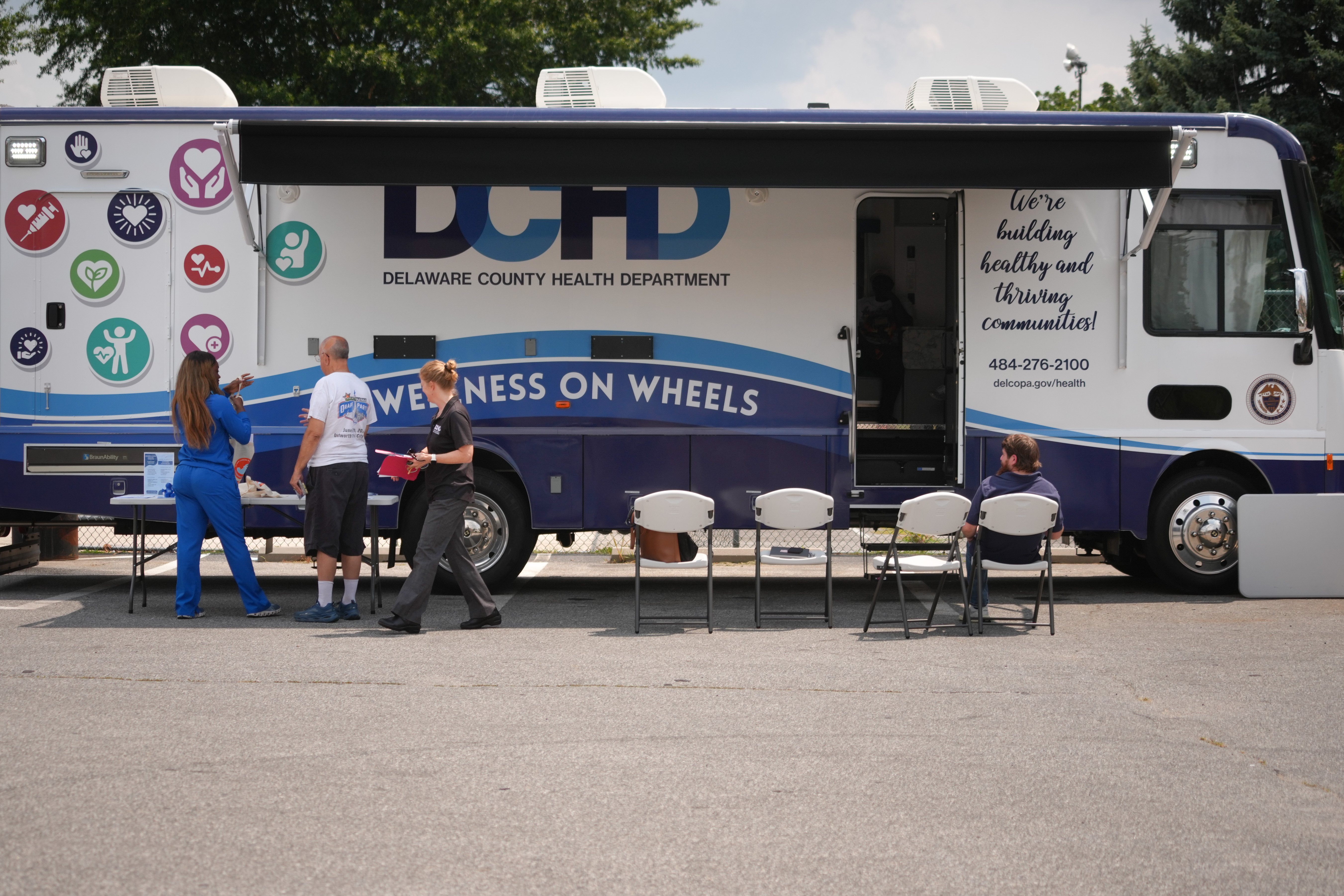
Amid rising measles case counts and declining immunization rates, Delaware County’s health department launched an immunization campaign over the summer to encourage families to vaccinate.Jessica Griffin / Staff Photographer
Emlen, which saw one of the steepest drops in protection, was one of 40 schools in the five-county region that reported 100% measles vaccination rates two years ago, only to drop below the 95% herd immunity threshold last year.
Philadelphia school officials say the changes at Emlen likely reflect increasing hesitancy among parents to immunize their children against measles, mumps, and rubella (MMR) and other diseases. State records show that most unvaccinated kindergarteners at Emlen have philosophical or religious exemptions.
Some fluctuations in kindergarten vaccination rates are typical from year to year, but the rise of anti-vaccine rhetoric in federal leadership appears to be exacerbating fears around vaccination, said Kendra McDow, a pediatrician who serves as the Philadelphia school district’s medical director.
“What we’re seeing is reflective of what I believe are local and national trends,” McDow said. “Families are confused, and they want to do right by their children.”
In the latest federal vaccine maneuver — opposed by the medical establishment, prominent Democrats, and Republican Sen. Bill Cassidy, a physician — President Donald Trump signed an executive order this month asking states to “consider updating” laws to require fewer vaccinations for schoolchildren without any medical justification. He also advocated for splitting the MMR vaccine into three separate shots — even though no separate measles, mumps, or rubella vaccines are licensed in the United States.
The order came after a chaotic year in which Health and Human Services Secretary Robert F. Kennedy fired federal vaccination advisers and pushed to upend the federal vaccine schedule. Kennedy, a longtime anti-vaccine activist, has promoted false concerns that vaccinations can lead to autism.
Families are faced with a barrage of misinformation about vaccines. Jessica Griffin / Staff Photographer
With Pennsylvania now experiencing its largest measles outbreak in three decades, Kevin Ressler, a healthcare nonprofit leader in suburban Philadelphia who was raised in Lancaster County, worries that declining vaccine rates reflect increasing political polarization.
“You don’t have to be a scientist to recognize that’s a problem,” said Ressler, the CEO of Alliance for Health Equity, a Coatesville nonprofit that works to improve access to health services. “A lot of this is rooted in whether we are able to hold trusted relationships.”
Philly-area counties all at risk
Philadelphia and its suburban counties overall remain well protected against measles, state officials say. The declines seen in the latest school year amount to less than 1% of all kindergarteners in each of the five counties in the area, an improvement from the drops that followed the COVID-19 pandemic.
But even small drops can be significant given the contagiousness of measles, which can linger in the air for hours and infect nine in 10 unvaccinated people who come into contact with it.
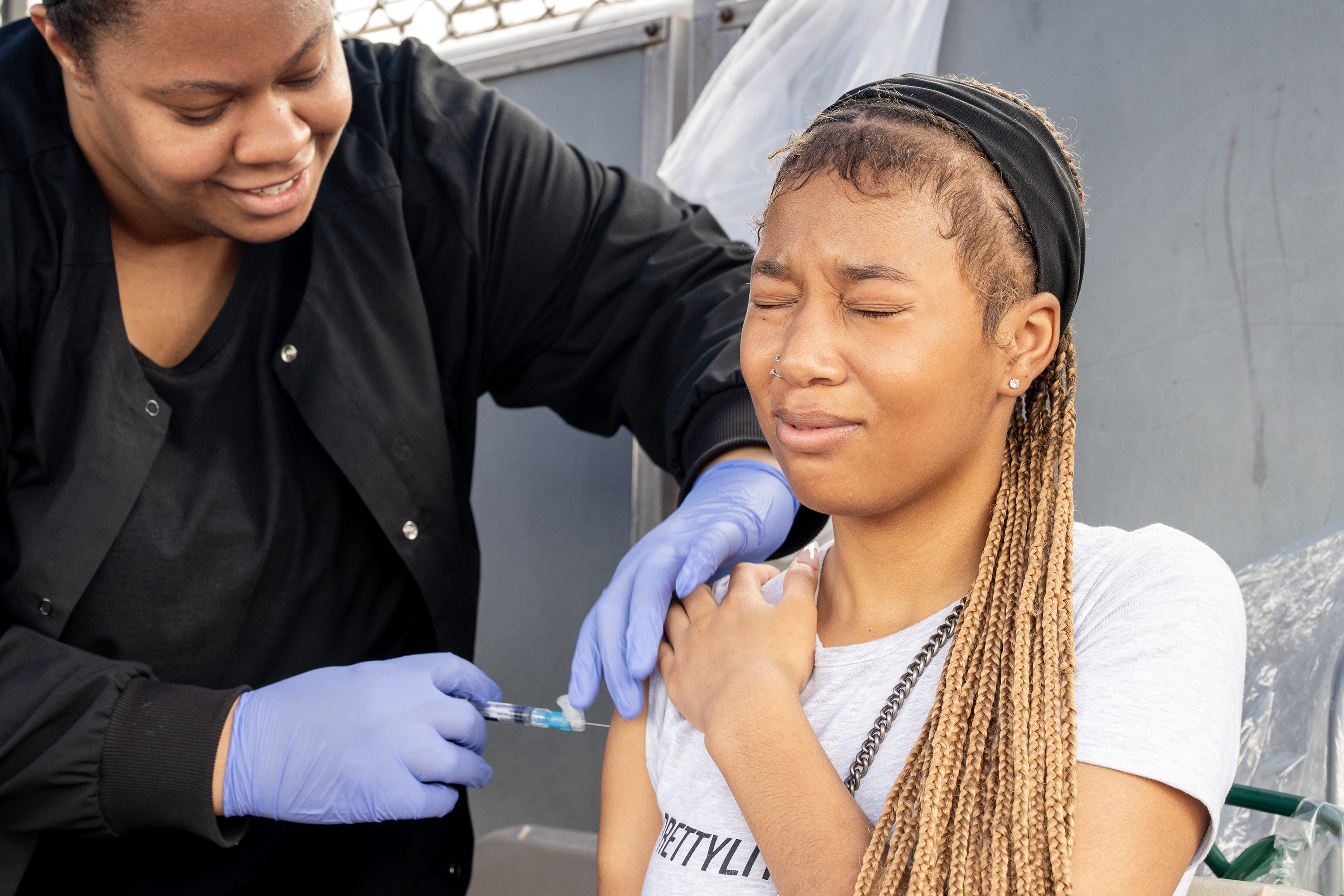
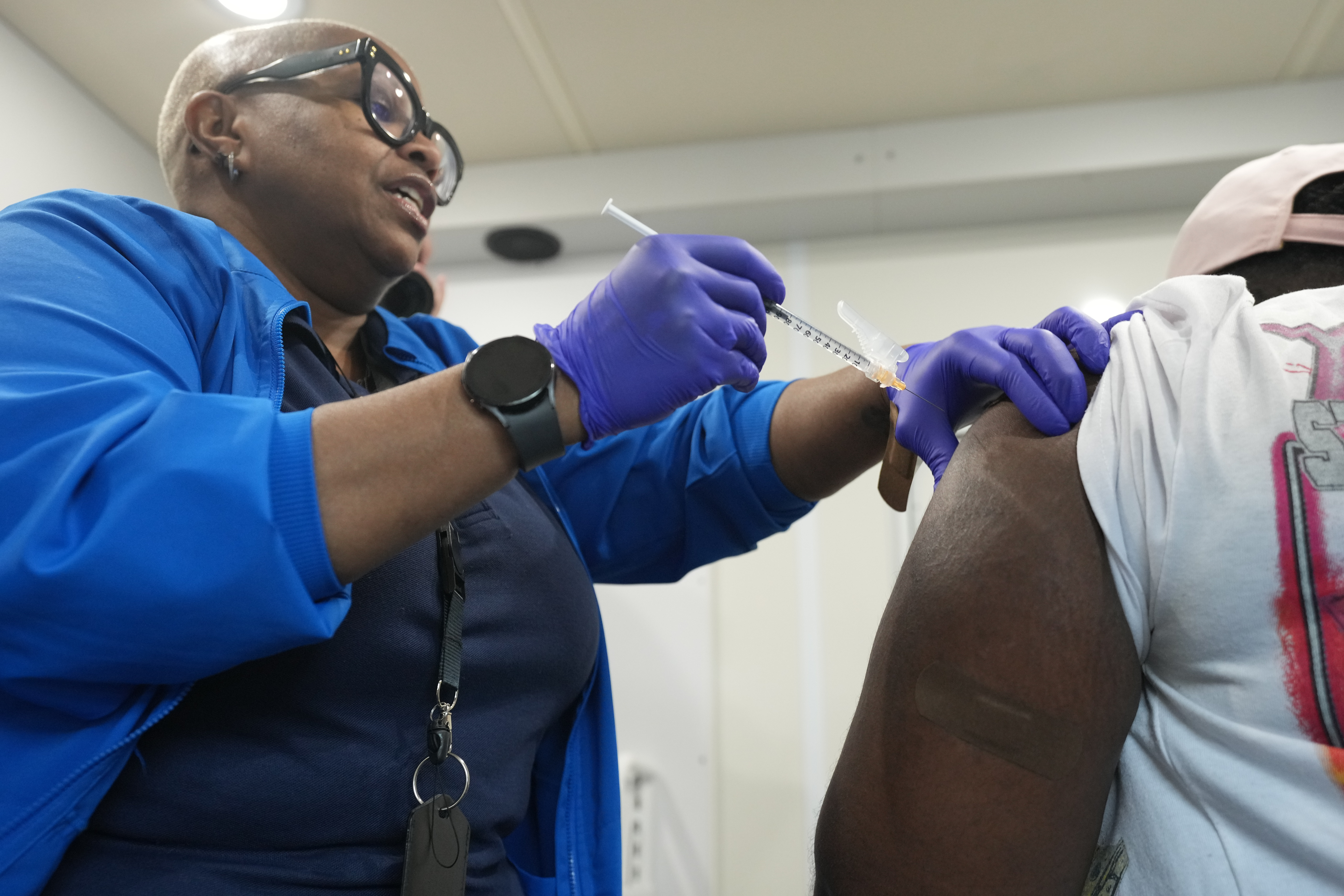
Mia Williams, a registered nurse, vaccinates a client at Delaware County’s mobile clinic in Upper Darby in July. Jessica Griffin / Staff Photographer
“The risk has definitely gone up because of lower vaccination numbers,” said Rene Najera, the director of public health at the College of Physicians of Philadelphia.
Najera says slipping vaccination rates especially endanger vulnerable students and community members beyond the schools, like pregnant women, cancer patients, or babies too young to be vaccinated. Parents of high-risk children should speak with their pediatricians about the risks of attending a school with lower vaccination rates, he said.
Last year marked the first time in more than 10 years that no Philadelphia-area county had reported measles vaccination rates above herd immunity.
Bucks County had the lowest MMR vaccination rate for kindergartners, at 93.7%, down by more than a half a percentage point from the year before.
Montgomery County, the only county in the Philadelphia region with kindergarten vaccination rates at herd immunity two years ago, slipped just below the threshold in 2025, to 94.8% vaccinated.
About 94% of Delaware County and Philadelphia kindergarteners were vaccinated last school year.
In Chester County, the only Philadelphia-area county to report cases in the current outbreak, vaccination rates for kindergartners have held steady at 94.5% for the last two school years. Some schools in the county reported steep drops in MMR coverage ahead of the current outbreak, which has seen 40 cases confirmed since June.
At Windsor Christian Academy in Downingtown, only one in four kindergarteners were vaccinated last year at a school that exceeded the herd immunity threshold the year prior. About 14% of the class had religious exemptions for vaccination. School officials did not return a request for comment.
Caln Elementary School in Thorndale saw measles vaccination rates drop from 100% to 74% in a year. Officials at the school declined to comment. (Caln closed at the end of last school year, and most of its students are transferring to the newly built Doe Run Elementary this year.)
Jeanne Franklin, Chester County’s health director, said she is “moderately” concerned about the current measles outbreak, given that many of the county’s most populous public schools still have high vaccination rates.
The school-level data improve the county’s ability to identify schools with lower vaccination rates.
Chester County health officials talk to school nurses, principals, and other administrators before the start of every school year to remind them of what to do if they identify a case of measles.
Under county policy, a single measles case in a school will mean all unvaccinated students and staff must stay home for 21 days.
This year, conversations that are usually hypothetical have taken on more urgency.
The health department has urged schools to take stock of who within their school is unvaccinated and develop a plan for how they will teach unvaccinated students who are sent home and staff classrooms of absent teachers.
“You don’t own getting them vaccinated,” Franklin said she tells administrators. “But you have to think through these things.”
Sisters A’zuri, 3, and A’Sara, 6, wait while their mother, Shania’ Jason, checks in at a vaccination clinic during the School District of Philadelphia’s sixth annual Back-To-School Bus Tour stop this month at Marcus Foster Memorial Stadium. Tom Gralish / Staff Photographer
Philly schools on alert
As the school district’s lead health officer, McDow worries about the threat of measles so close by, but believes concerted efforts in the city have kept vaccination rates “as high as they can be in this current climate.”
She’s also monitoring Philadelphia schools where the state data show declining vaccination coverage. (The publicly available school-level data does not include classes with fewer than 20 students, for privacy reasons, or schools that did not report to the state. About 90% of schools statewide reported data in 2025.)
In some cases, what looks like a decline can be explained by delays in data reporting due to administrative issues or staff absences. School vaccination records are reported to the state during the month of December.
For example, Mantua’s Morton McMichael School reported a 50% drop in MMR vaccination coverage, initially going from nearly nine in 10 kindergarteners vaccinated to just over a third.
But by the end of the 2025-2026 school year, records show 93% of McMichael kindergarteners were fully vaccinated against measles, district officials said, though the state data does not show the improvement.
McDow worries about drops at other schools, from Mount Airy’s Emlen Elementary to North Philadelphia’s James Logan Elementary’s 18.5% decrease in vaccination rates, which are likely related to parents increasingly refusing vaccines.
Pediatrician Amanda Bernard (left) talks with Shania’ Jason and her daughter A’zuri, 3, at a vaccination clinic hosted by the Philadelphia School District this month at Marcus Foster Memorial Stadium.Tom Gralish / Staff Photographer
The school district hosts vaccination clinics over the summer and during the school year, working with the city health department to target families with unvaccinated children and schools with low vaccination rates.
The district also works to ensure vaccination clinics are accessible to working parents, organizing some on weekends or evenings.
“We need to be talking to families and answering questions in transparent ways,” McDow said. “But we also need to be providing the opportunities for vaccination.”
Some families line up for immunizations
On a recent sweltering August afternoon, families lined up at a tent pitched on the football field at Marcus Foster Memorial Stadium in Olney, part of a back-to-school fair sponsored by the Philadelphia School District.
“IMMUNIZATIONS,” read a flag waving in the breeze. Business was brisk all day.
Some families who visited the tent were recent immigrants, getting caught up on vaccinations before their children started at their new schools.
“We’re vaccinated, my husband and I, because our parents vaccinated us. And I’ll do the same for my children,” said Betty Bachene, who moved to Philadelphia from Paris this summer. Speaking in French, she said she’s never been afraid of vaccinating her children, but does fear the diseases vaccines prevent.
Anaiya Burnham, a nurse, said she’d opted against getting COVID or flu shots for her two children, one of whom is entering kindergarten this year. But vaccinating them against measles was never a question.
“I would really be curious to know why anyone would opt out of the MMR, given the research,” she said.
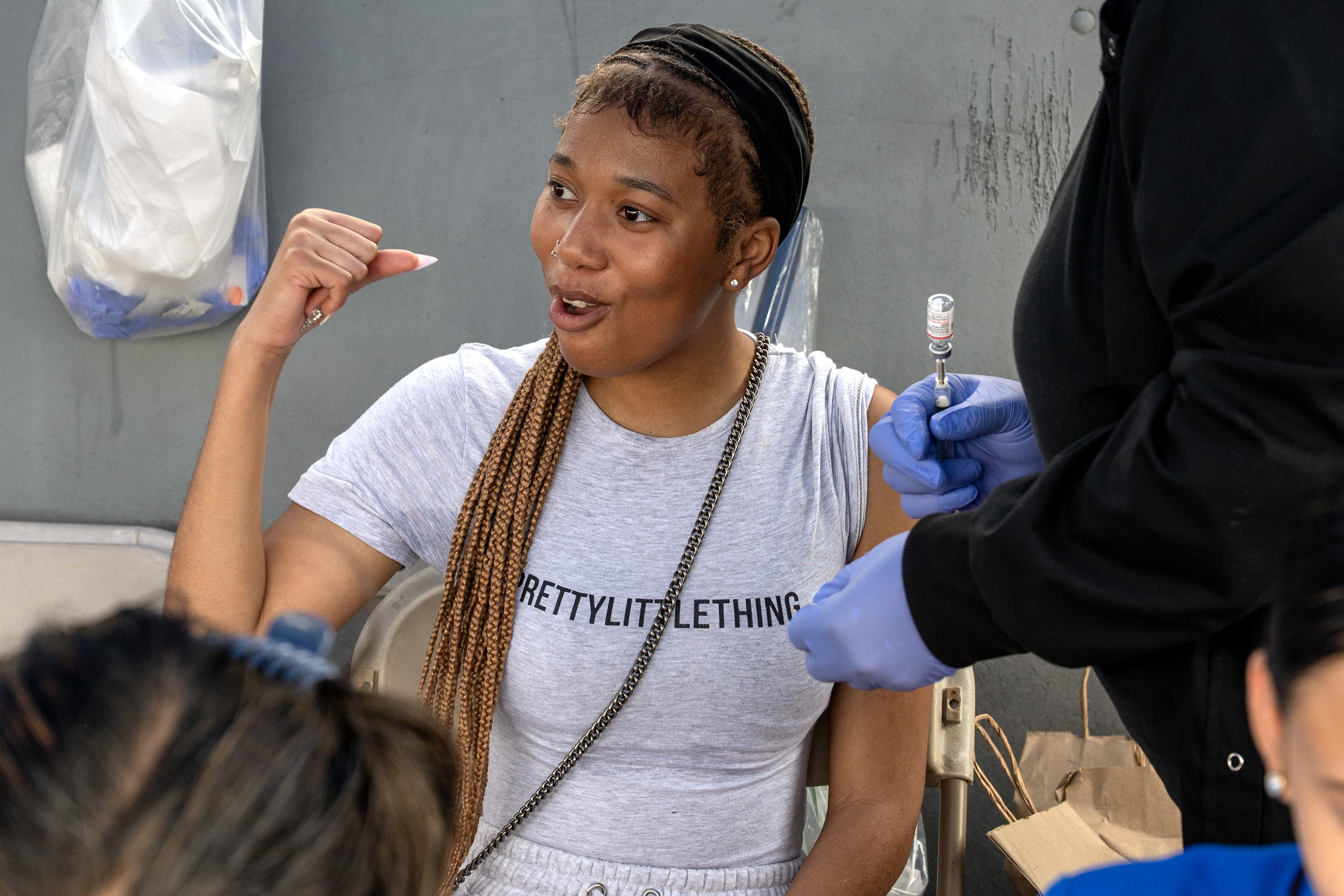
Cianey Brown, 16, reacts and turns to her family after getting an immunization at a Philadelphia school district vaccination clinic this month at Marcus Foster Memorial Stadium. Tom Gralish / Staff Photographer
Philadelphia parents face a number of different barriers that keep them from vaccinating children — and not all of them are related to vaccine hesitancy, said Amanda Bernard, a pediatrician with Greater Philadelphia Health Action, the clinic offering vaccinations at the event.
Some lack transportation to get to a health center outside their neighborhood, or don’t speak English well enough to navigate the healthcare system, she noted.
“I think that these sorts of events are really a way that we could combat that,” said Bernard, who has heightened her advocacy around vaccination as Pennsylvania’s measles outbreak has spread.
“There’s almost a desperation in my education. I sometimes feel like I’m almost begging [families] to get it.”
Editor’s note: This story has been updated to correct the name of James Logan Elementary in Philadelphia.
(function(){function e(){window.addEventListener(`message`,function(e){if(e.data[`datawrapper-height`]!==void 0){var t=document.querySelectorAll(`iframe`);for(var n in e.data[`datawrapper-height`])for(var r=0,i;i=t[r];r++)if(i.contentWindow===e.source){var a=e.data[`datawrapper-height`][n]+`px`;i.style.height=a}}})}e()})();
Food magazine Bon Appétit released its annual best new restaurants list on Monday, and it includes two Philadelphia restaurants.
Honeysuckle, Omar Tate and Cybille St.Aude-Tate’s fine-dining restaurant in North Philadelphia, and Sao, Phila and Rachel Lorn’s East Passyunk oyster bar, were among the 19 establishments that made the cut.They joined restaurants in New York City, San Francisco, Chicago, Seattle, Nashville, and Birmingham, Ala., and more.
The unranked list defines new restaurants as those that opened between March 2025 and March 2026. Scouts visited restaurants in 43 U.S. cities and rated them according to seven criteria: flavor, technique, hospitality, ambiance, cultural significance, innovation, and sense of place.
To be considered the best, “a restaurant must serve dishes and drinks that are complete in terms of flavor and technique, from the pre-meal cocktails to dessert, like an album with no skips,” wrote Bon Appétit editor-in-chief (and former Inquirer food editor) Jamila Robinson.
Partners and chefs Cybille St.Aude-Tate and Omar Tate, who opened Honeysuckle at 611 N. Broad St. in April 2025.Clay Williams
Tate and St.Aude-Tate opened Honeysuckle at 611 N. Broad St. in April 2025. The restaurant’s five-course tasting menu evolved from the couple’s beloved West Philly café-market, Honeysuckle Provisions, which closed in 2024. The couple uses the menu to weave a dynamic and complex narrative about how the Black diaspora has shaped American food culture.
The Mawn Cutlet at Sao, the East Passyunk Avenue oyster bar from married restaurateurs Phila and Rachel Lorn.Monica Herndon / Staff Photographer
“Chefs Omar Tate and Cybille St.Aude-Tate deliver a showstopping walk through nostalgia, pop culture, Philadelphia, and Black American history through dishes that spark new reflection and conversation,” Robinson wrote of Honeysuckle.
Phila (left) and Rachel Lorn (right) own Cambodian noodle bar Mawn and oyster bar Sao. Bon Appétit has named Sao one of the country’s best new restaurants of 2026.Monica Herndon / Staff Photographer
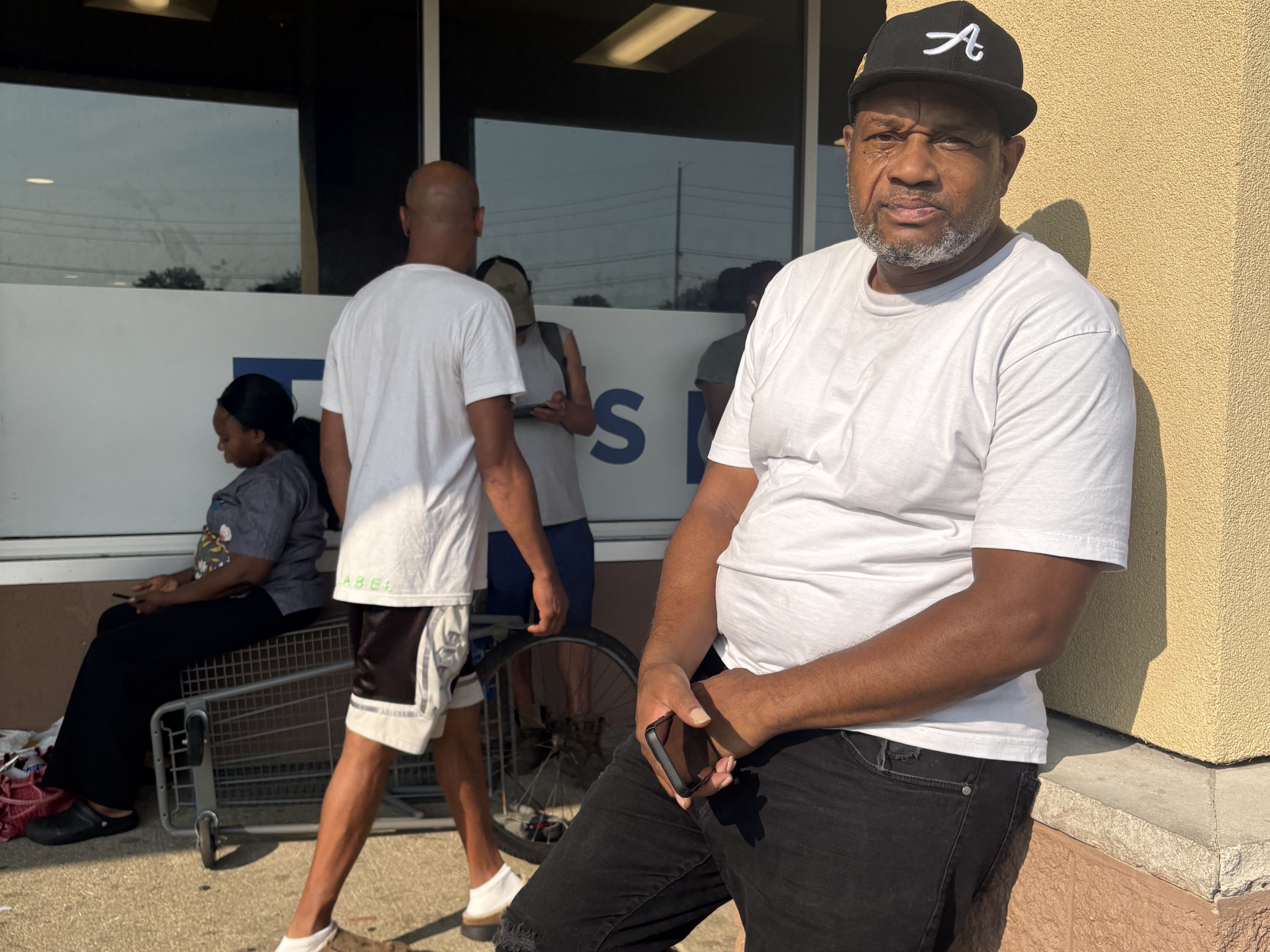
Maleka Evans waited outside Octapharma Plasma in South Jersey at 8:30 on a recent sweltering morning, sweat beading on her face. A dozen other prospective donors had arrived before her, and the line was still growing a half hour before doors opened.
One woman sat on an overturned shopping cart pilfered from the nearby Walmart. Another brought her own folding chair. A man held a bicycle tire, removed to protect his bike from being stolen once he was inside and hooked up to a machine that extracts antibody-rich blood plasma needed for medical treatments.
Every Monday and Friday for the last three years, Evans has trekked to the Audubon strip mall for what she considers her second job. She takes a 45-minute bus ride from her Willingboro home to Camden, then walks another 45 minutes to the donation site with a slogan posted in its window: “When it pays to give hope. That’s plasmagic.”
The 37-year-old single mom has noticed the lines growing in the last year, as others are seeing at donation sites elsewhere in the Philadelphia region and across the nation. The for-profit business is booming as more and more Americans, both poor and middle class, struggle to straddle the gap between stagnant wages and increased living costs.
Evans relies on the $50 that she typically earns for each plasma donation — loaded onto a prepaid debit card — to help with bills that she cannot cover with her $18-per-hour job packing boxes at a warehouse.
“Prices for everything — food, rent, transportation, electricity — are just getting higher and higher,” Evans said. “You have to work two jobs to make ends meet, and you’re still living paycheck to paycheck.”
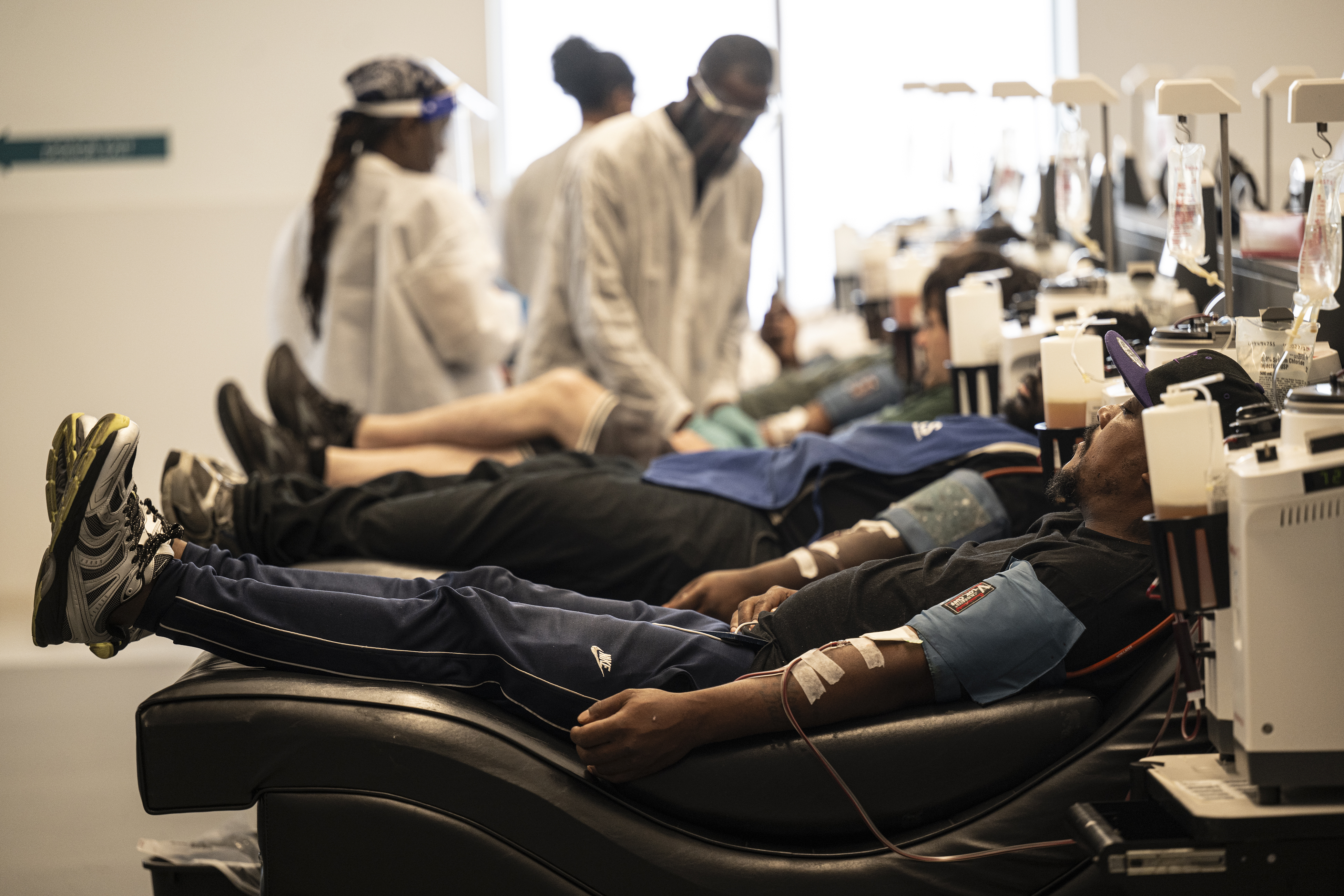
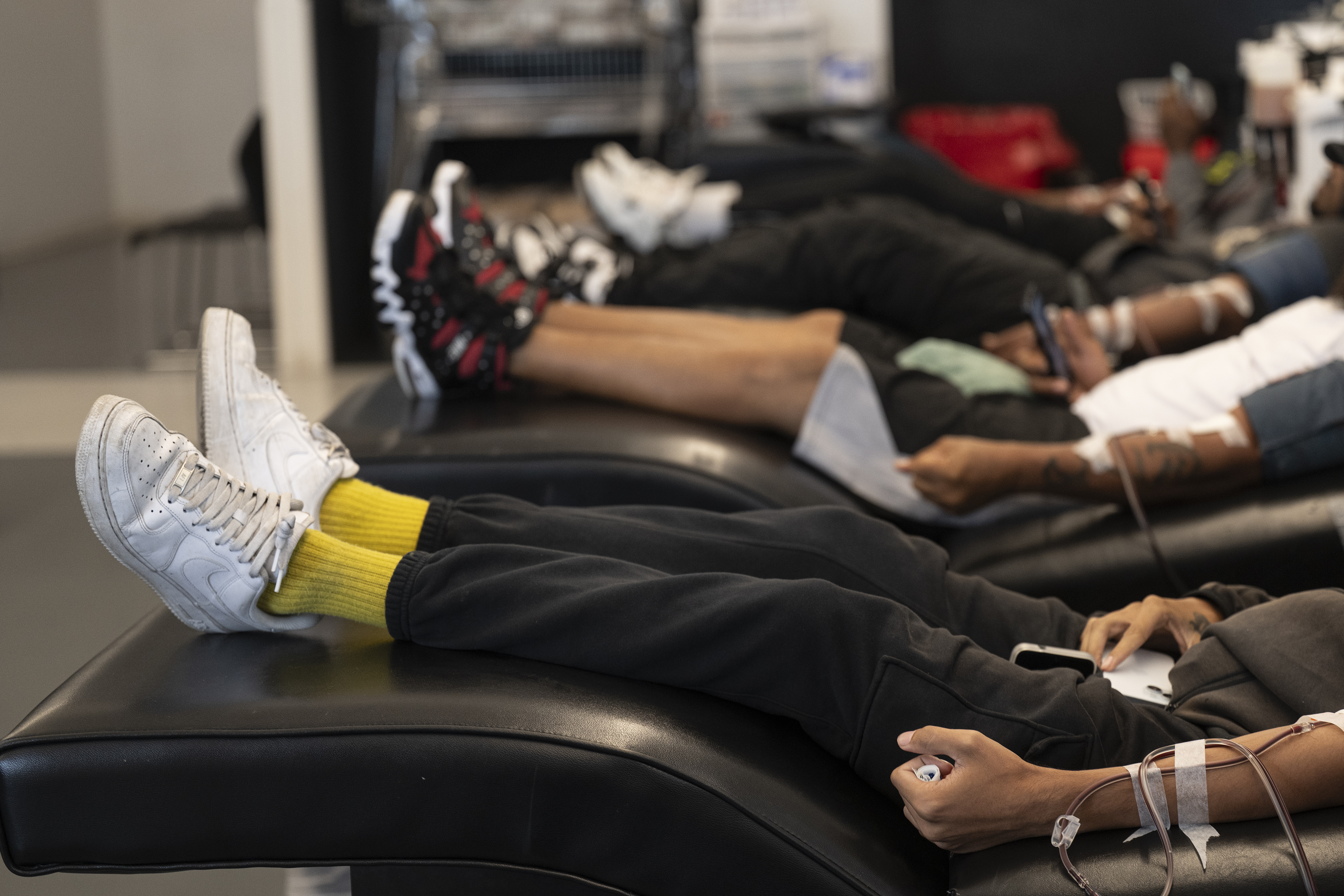
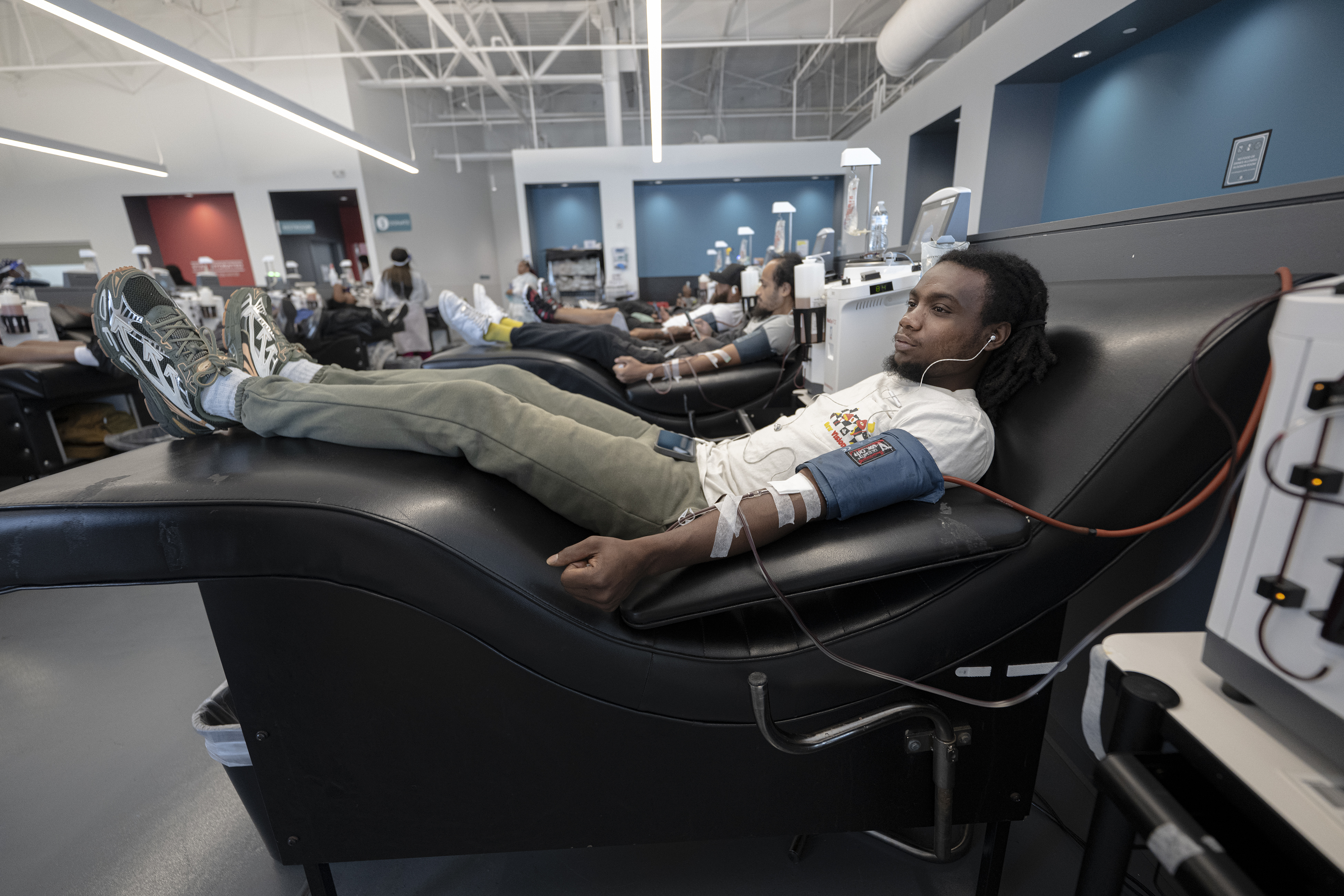
An increasing number of people in the Philadelphia region are selling their blood plasma for money. Here, local donors sit in recliners with needles in their arms at B Positive Plasma in Montgomery County.Jose F. Moreno / Staff Photographer
The U.S is one of about a dozen countries where it is legal to pay donors for plasma. It is among only three countries where people are allowed to donate two times over seven days, though not on back-to-back days, per U.S. Food and Drug Administration regulations.
Nearly 70% of the world’s plasma comes from donors in America, fueling a multibillion-dollar global industry. Plasma, a straw-colored liquid in blood, contains antibodies and other proteins used for treating a wide range of patients with immunodeficiencies, neurological conditions, kidney disease, and bleeding disorders.
Last year, U.S. donors produced 62.5 million liters of plasma — the highest volume ever collected and an 8% increase from the previous year. That trajectory has continued into this year, according to Georgetown University professor Peter Jaworski.
“When the price of most staples goes up, so does the amount of plasma donations,” Jaworski said. “If I fell on hard times, the very first thing I would do is become a regular plasma donor.”
Donating plasma is widely considered low-risk, with millions of people doing it each year without reported health problems. However, the long-term health effects of donating twice weekly for years have not been well-studied. Safety concerns raised by the deaths of two people in Canada who had recently donated at for-profit clinics run by the healthcare company Grifols haveprompted an investigation there.
In the U.S., an FDA investigation into 34 deaths of people who had donated plasma between 2016 and 2020 did not find a link between donations and fatalities.
Some donors experience lightheadedness, fatigue, bruising, bleeding, or dehydration. Drinking water and eating foods high in iron and protein can help alleviate those side effects, according to U.S. health guidance.
Security guard Danny Morales of North Philadelphia said he feels “tired” after donating. But that has not deterred him from heading to CSL Plasma in the city’s Olney neighborhood twice a week, as soon as he finishes his overnight shift at 6 a.m.
Morales can earn $520 a month donating plasma, which helps to offset rising expenses that have the 35-year-old father feeling ever more drained: The cost to fill up his Honda Civic’s gas tank jumped from $30 to $80 in the last year; a package of ground beef increased by $8; and even the brand of mac and cheese that his 8-year-old daughter and 2-year-old son enjoy costs about $1 more, he said.
“It’s just getting worse and worse,” said Morales, whose plasma donations supplement his $18 hourly security job wage. “Stuff is just getting so expensive. Groceries are ridiculous.”
CSL opens at 6 a.m., but a line starts to form around 4:30 a.m. In late July, it snaked past the building, wrapping around the corner. The sight caught the attention of nearby Olney resident Tony Reed.
“There’s always a line there, especially toward the end of the month and definitely on Monday mornings,” Reed said. “People are broke.”
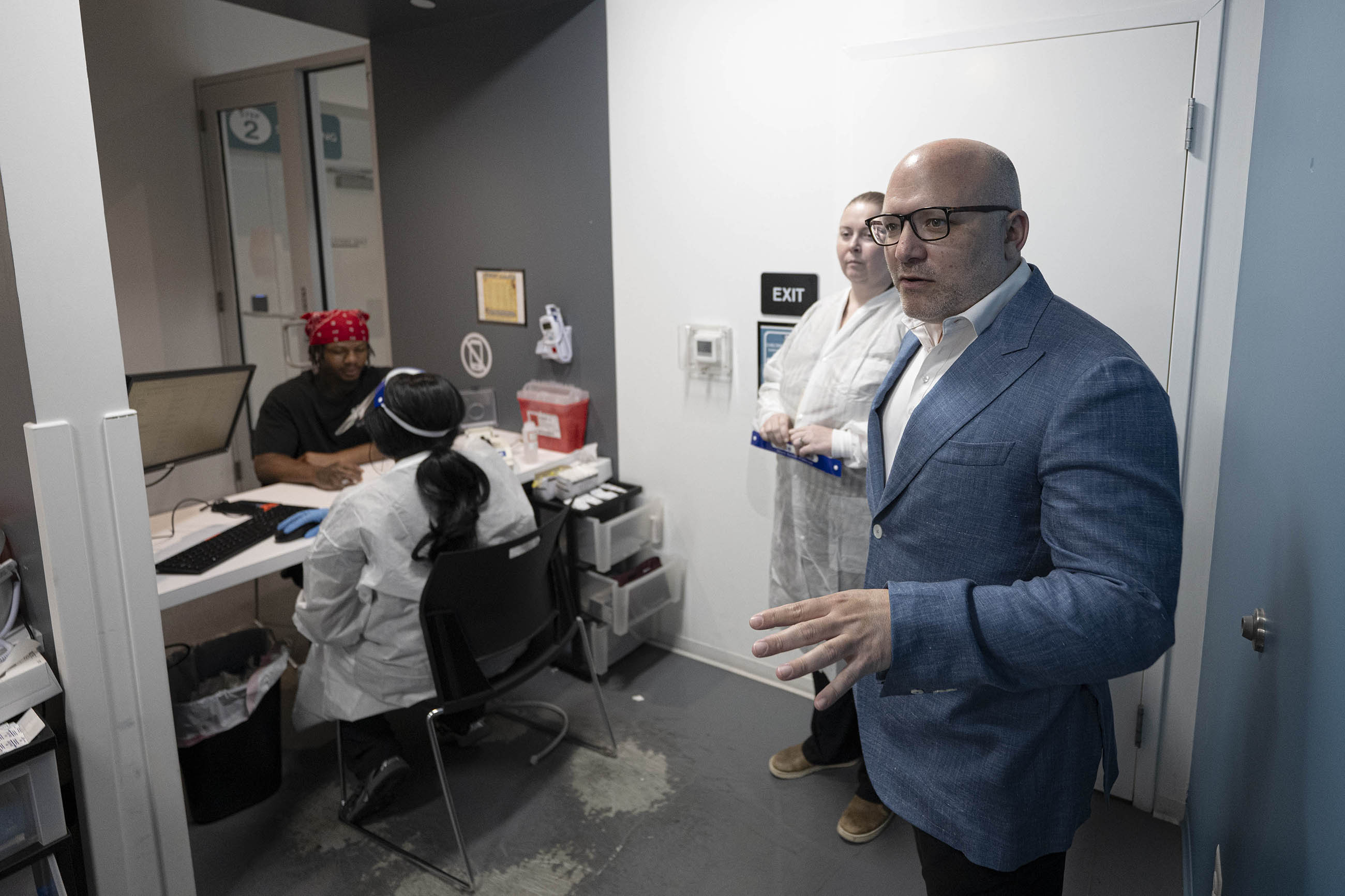
Ben Ruder, CEO and founder of B Positive Plasma, and Pearl Dixon, an assistant manager and phlebotomist, explain the donor intake process. Each donor fills out an extensive health questionnaire, undergoes a medical exam, and gets a finger prick to test their blood for iron and protein levels. Jose F. Moreno / Staff Photographer
Inside the booming industry
On a recent Wednesday afternoon at B Positive Plasma in Montgomery County, a steady stream of donors checked in at kiosks in the lobby.
After filling out an extensive health history questionnaire, each new donor undergoes an on-site medical exam by a licensed practical nurse. Repeat donors must get annual exams. At each visit, a medical tech checks their vitals, including blood pressure, pulse, and temperature, and performs a finger prick to test their blood for protein and iron levels. Donors must weigh at least 110 pounds.
“We make sure they’re healthy and well,” said Ben Ruder, founder and CEO of B Positive Plasma, noting that the plasma itself is tested for HIV and hepatitis B and C before being sold.
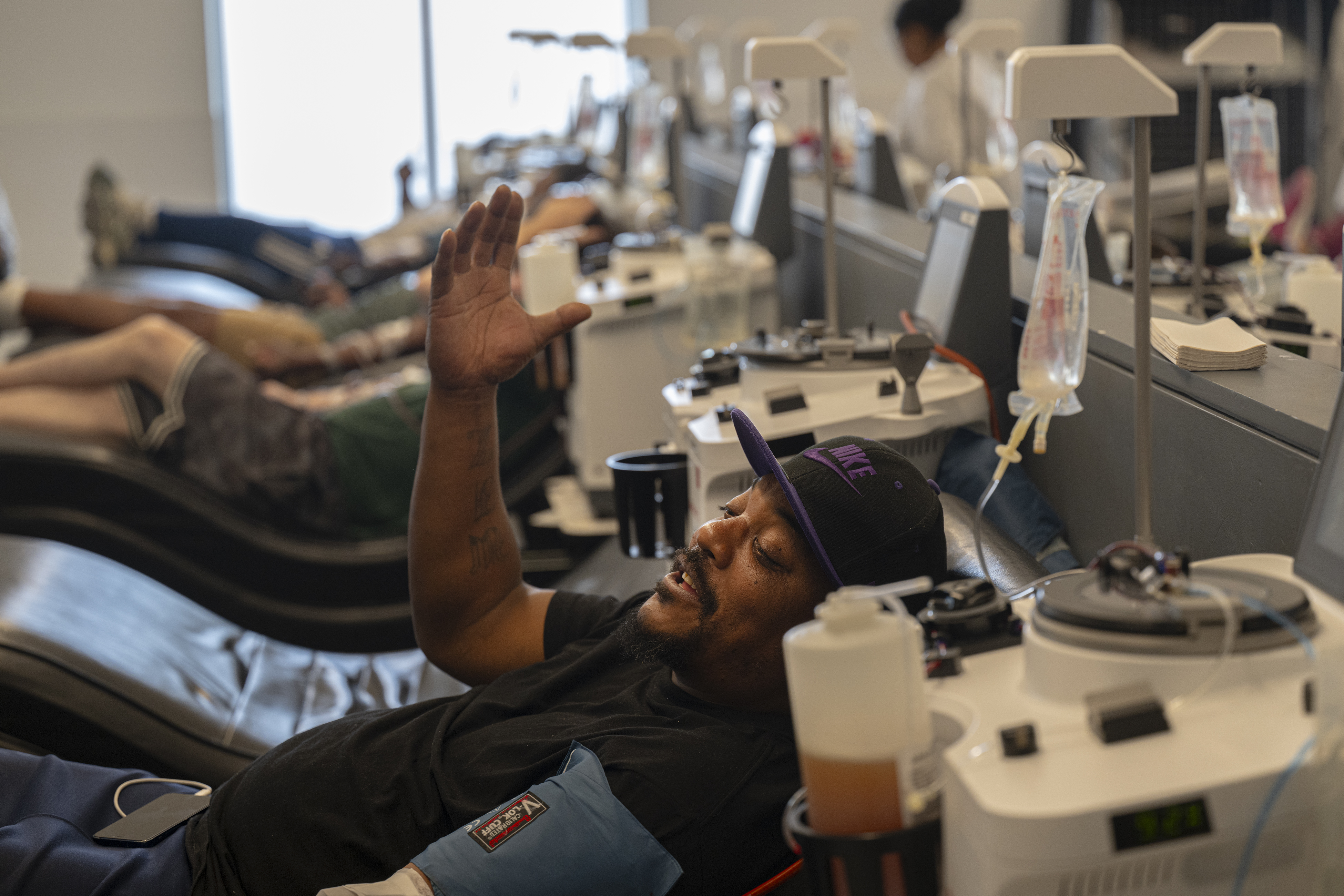
Next, plasma donors are hooked up to a machine that draws out blood, spins off the plasma, and then returns the red blood cells back to the donor, a process that typically takes 45 minutes to an hour.
At 2 p.m., 18 of the 24 cushioned recliners at the Wyncote location on Cheltenham Avenue were occupied by donors, each with a needle in one arm. They included a Philadelphia police officer who had donated more than two dozen times since May 2025; a casino cleaner who earns $120 a week donating to support his young daughter; and a home health aide who donates twice a week to help cover his $750 monthly apartment rent.
Jason Johnson, 29, of East Mount Airy, has donated plasma 68 times at B Positive Plasma in the past two years. He makes an extra $120 a week donating twice weekly. The money helps supplement the $17.80 an hour he earns as a cleaner at Live! Casino & Hotel Philadelphia. “In the beginning, I was doing it for the extra money, but once I learned that I’m helping people out in their life, it made me want to come back even more,” Johnson said. Jose F. Moreno / Staff Photographer
Plasma donation differs from whole blood donation, a faster process that relies on unpaid volunteers who can donate only once every 56 days in the U.S.
B Positive Plasma is on track to see a record year, with 180,000 donations, peaking this holiday season, when people need extra money for gifts. Last year, the company saw 150,000 donations at about 1 liter per person.
Ruder, 42, who lives in Center City, opened his first plasma donation center in Cherry Hill in 2012 and rapidly expanded to 12 locations in New Jersey, Pennsylvania, and Delaware. He plans to open two more sites in Maryland next year and another in Allentown later this year.
B Positive Plasma, like other plasma companies, structures payments to incentivize twice-weekly donors. For instance, donors whose weight and physical health yield the maximum amount of plasma — 1,001 to 1,200 milliliters — will receive $45 for the first visit and another $90 if they return that same week. Plus, the company offered a $50 bonus for anyone who donated eight times in August.
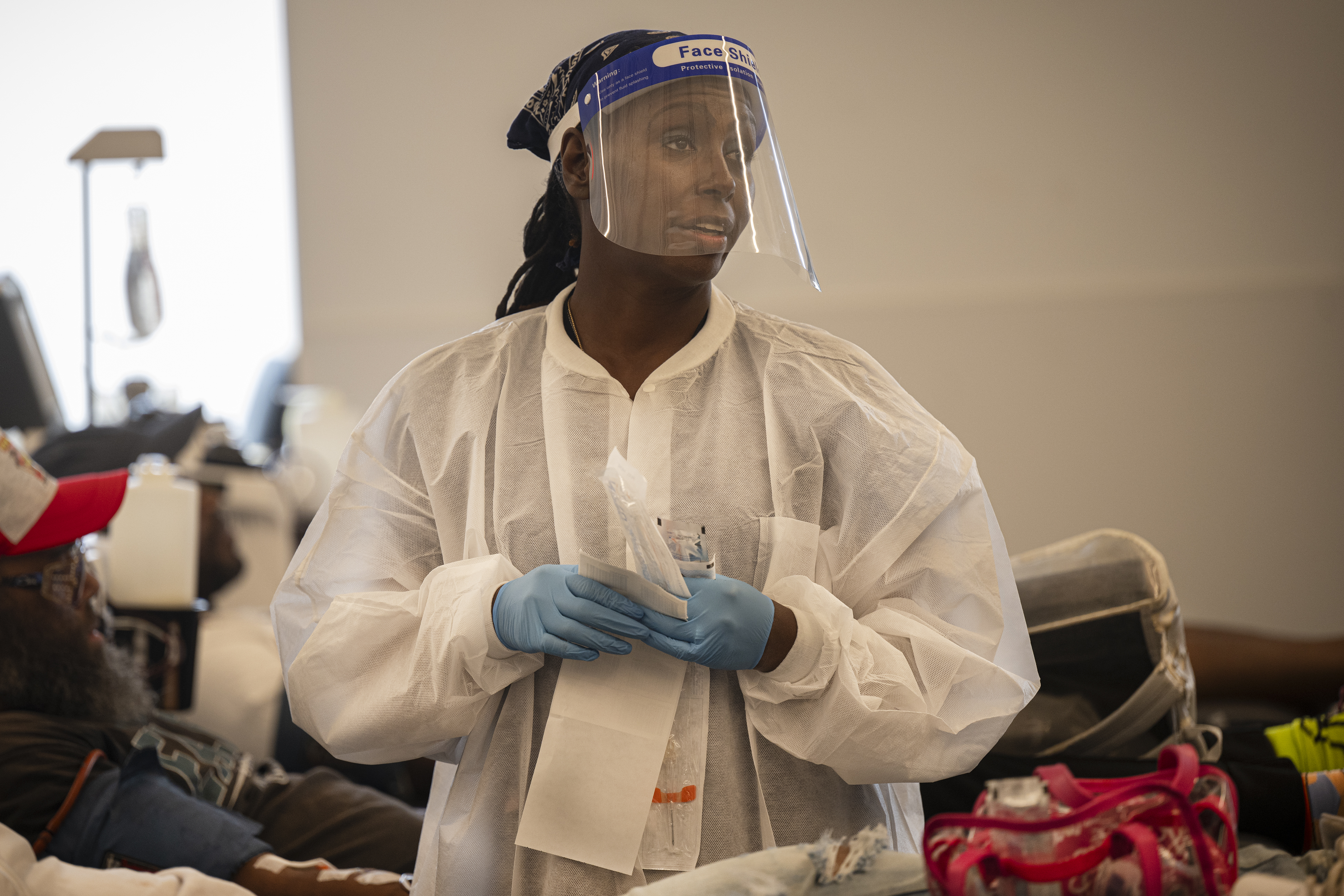
Donyele Wilkins, 48, a phlebotomist and medical assistant, works in the donation room at the B Positive Plasma in Montgomery County. She suffers from lupus, a chronic autoimmune disease for which she receives plasma-derived infusions to control her symptoms.Jose F. Moreno / Staff Photographer
Phlebotomist Donyele Wilkins works 12-hour shifts, four days a week, at B Positive Plasma.
For Wilkins, the paycheck is not the only benefit of working there.
The 48-year-old Northeast Philadelphia resident suffers from lupus, an autoimmune disease in which the body’s immune system attacks its own tissues and organs. Wilkins said she relies on plasma-derived medication, infused through an IV every four to five months, to help control symptoms like inflammation and joint pain.
Knowing how plasma is processed makes her feel “safe,” she said. She also likes getting to know “the regulars” who donate.
“It makes me feel like I know exactly where it’s coming from, and I know the people who are doing it,” Wilkins said. “A lot of them really need the money, so they’re helping me, on top of me helping them.”
‘Blood money’
Paying donors for plasma has sparked ethical debate, with some accusing the industry of exploiting poor people.
In her 2023 book, Blood Money: The Story of Life, Death, and Profit Inside America’s Blood Industry, Kathleen McLaughlin, a Montana-based journalist, found that donors in many U.S. regions are disproportionately Black and brown people.
McLaughlin, who has a rare autoimmune disease treated withmonthly plasma-derived infusions, said today’s rise in donations is “a symptom of our broken economic system.”
While the FDA regulates health safety at plasma centers, the pay rate is set by the companies, McLaughlin found. She thinks donors should be paid more and the amount should be standardized.
“Right now, it’s a capitalist free-market system, where the pricing isn’t transparent,” McLaughlin said. “The profit margins are crazy for these plasma companies, and it’s gamified to make you donate twice a week, every week, in perpetuity.”
Jaworski, the Georgetown University professor, said donors are compensated fairly. A donor whosits for an hour and a half makes “significantly more than” New Jersey’s $15.92 minimum hourly wage and Pennsylvania’s $7.25. Plus, he stressed, donors save “hundreds of thousands of lives.”
Wallace Smith, 45, of Upper Darby, prides himself on making an honest living. He earns $15 an hour as a home health aide. He makes an extra $130 a week selling his blood plasma. The money helps cover cigarettes, rent, and his phone bill. Jose F. Moreno / Staff Photographer
Recently published research suggests that communities can benefit when a new plasma center opens, because fewer young people take out high-interest payday loans and area crime drops, mostly driven by decreases in property and drug-related offenses.
“It helps you from having to do something wrong,” plasma donor Wallace Smith said.
When Smith was in his late 20s, he got arrested for selling drugs. Now 45, he is still struggling to find a job that pays a living wage, he said.
Smith, of Upper Darby, works three days a week, earning $15 an hour, as a home health aide. He earns $130 a week donating plasma, which helps pay for cigarettes, his phone bill, and rent, he said.
Like many donors, Smith said he likes the win-win of earning extra cash and helping patients who depend on plasma.
“They say there’s a job’s out here for everybody, but when you become a person who made mistakes in life, then they look at your background, so there’s only certain jobs you can do,” Smith said as his blood flowed into a spaghetti-thin clear tube at B Positive Plasma.
“With that being said, you don’t go back to your old ways,” he said. “You find better resources like this.”
On a hot August morning, donors line up outside Octapharma Plasma in South Jersey to sell their blood plasma for money. They arrive before the doors open at 9 a.m. to beat the wait. Donor Carl Davis, 56, of Camden, donates every Saturday and Monday, earning $70 each time. The extra money helps supplement his $900 monthly Social Security Income disability check. “I get SSI disability, but it’s not enough at all to pay my bills and buy food,” Davis said.Wendy Ruderman
Beach boardwalk fun
At Octapharma Plasma in South Jersey, the wait time can be as long as three hours, donors said. When a sewer pump broke and bathrooms stopped working earlier this year, the company trucked in a row of porta-potties to accommodate donors and staff.
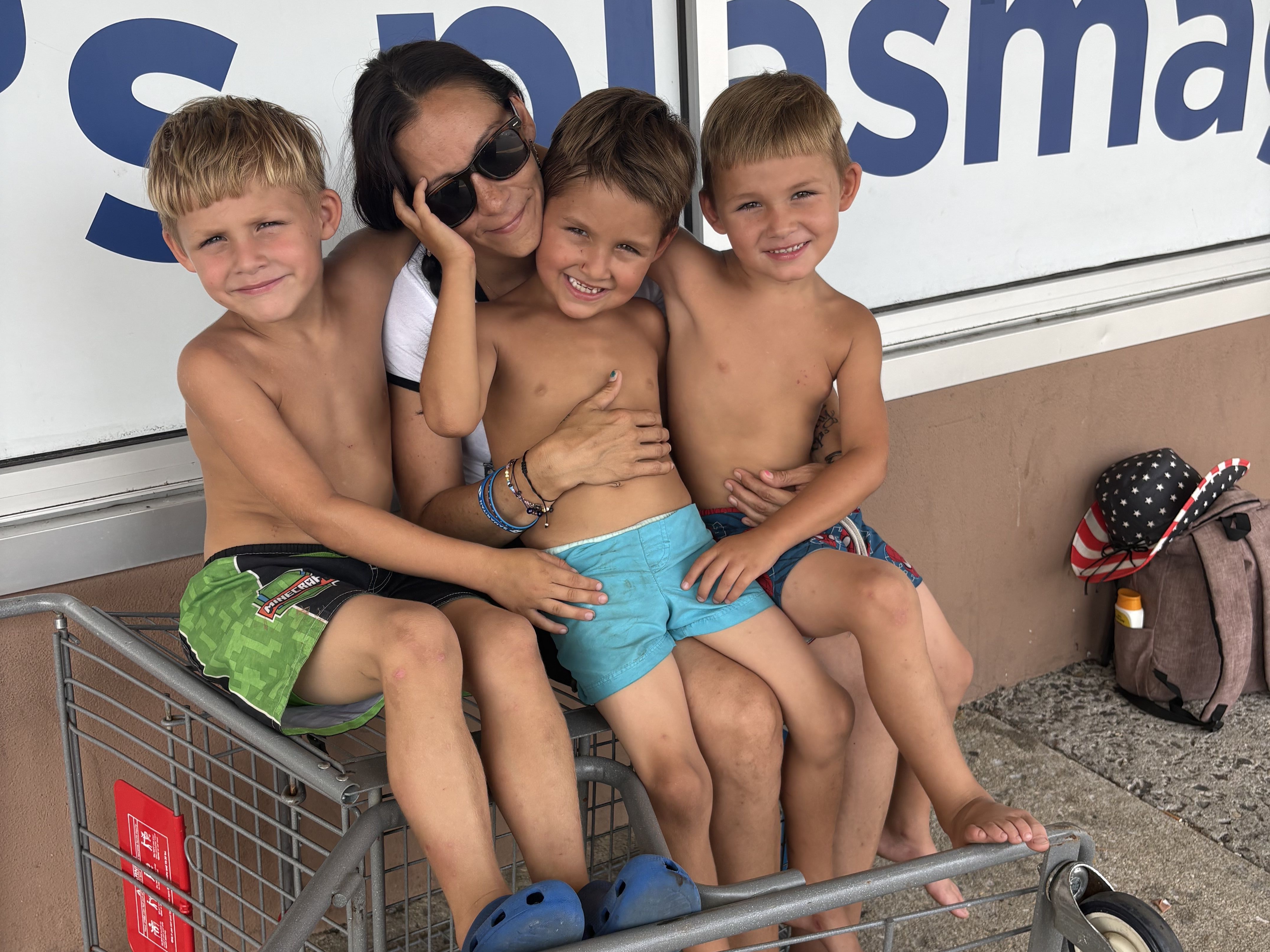
On a recent August morning, Brittany Barr, 36, and her three sons — 5-year-old twins and a 6-year-old — waited outside Octapharma as her husband donated. The family had walked roughly two miles from their Gloucester City home.
When Barr learned her friend had kidney failure and needed plasma infusions, she wanted to help. Barr was unable to donate plasma because she is anemic, so her husband agreed to do it.
In the month since Barr’s husband started donating, the family has earned more than $500. It has helped with groceries and their phone bills to supplement her husband’s income as a shipping manager.
“With only one income, money is tight these days,” Barr said. “Everything is messed up.”
The boys, clad in their bathing suits, climbed up on Barr as she sat on a tipped-over shopping cart. They were headed next to Atlantic City for a beach day.
“This week, the money is going toward fun. They’re going to play arcades and have ice cream or whatever their little hearts desire,” Barr said. “Next week, it’s going to school supplies.”
Brittany Barr, 36, seated with her boys (from left) Cooper, Cannon, and Colton, waits outside for her husband to finish donating plasma at Octapharma Plasma in Audubon, N.J. The family from Gloucester City was next headed down the Shore, where they planned to spend the extra money earned from donating plasma on arcade games and ice cream.Wendy Ruderman / Staff
Not long after Xin Guang-Go’s skill game business in North Philadelphia collapsed — a development that led to tension between him and his onetime business partner — Guang-Go decided he wanted his former colleague to die.
To follow through on his threat, Guang-Go sought to hire a hit man — supplying the man with his target’s address, pictures of his intended victim’s car and home, as well as a cash deposit and a tip about where his rival might be storing about $100,000 in a safe.
Guang-Go said the hit man could keep that money as long as the murder was carried out. And he also asked that his target’s girlfriend be killed in the process. For both killings, Guang-Go was willing to pay $30,000.
But unknown to Guang-Go, the hit man he tried to hire was working as a confidential informant for the Bureau of Alcohol, Tobacco, Firearms, and Explosives. Guang-Go was arrested before either of his victims was harmed.
In federal court Monday, Guang-Go, 48, of Plymouth, N.C., was ordered to serve more than 15 years in prison for seeking to carry out his scheme — a plot that U.S. District Judge Harvey Bartle III said was one of the most serious crimes a person could commit.
“It’s totally unacceptable to settle a business dispute by entering into a contract to have your opponent murdered,” Bartle said.
Guang-Go apologized, saying he had been consumed by impulses he now recognizes were wrong.
It was “as if there was evil in my heart,” he said through an interpreter. “Evil was controlling my brain.”
Neither of Guang-Go’s victims appeared in court Monday. Assistant U.S. Attorney Amanda McCool said both remain traumatized by his attempt on their lives.
She said Guang-Go was not simply an unlucky or bumbling criminal who made a deal with the wrong source. He fully intended for his victims to die, she said — and in court documents, prosecutors said he had asked his would-be hired killer to provide photographic proof that the victims had been slain.
“This is not some one-off of the defendant, that [he] ran into someone who suggested” the plot, McCool said. “Throughout the course of a week, he made multiple proactive steps to further his plan.”
Guang-Go — who pleaded guilty this spring to murder-for-hire offenses — said that he had brought shame to his entire family through his actions, and that he regretted his prison sentence would take him away from his children and his aging mother.
In addition to ordering Guang-Go to 188 months behind bars, Bartle imposed a three-year term of supervised release.
Guang-Go, a native of China and a legal permanent resident of the United States, is likely to be deported whenever his term of incarceration is finished.
But for thousands of residents, many of whom live in North Philadelphia, next year’s tax bills are expected to soar.
Nearly 6,000 homeowners in Philadelphia saw their property assessments this year climb by more than 50% compared with two years ago, the last time the city conducted a mass revaluation, according to an Inquirer analysis of city property assessment data released in June.
Of those homeowners, more than 2,200 saw their assessments more than double.
That is likely to result in sticker shock come tax time next year, because property tax bills in the city are calculated based on home values. The revenue is split between the city and the Philadelphia School District.
Homeowners across the city saw a median 3% increase in their property assessments this year compared with the 2025 tax year. Jumps were higher in neighborhoods that border gentrifying areas, such as in parts of Kensington and West Philadelphia.
But this year, two other areas of the city had the densest concentrations of homes where property assessments increased by 50% or more, according to The Inquirer’s analysis.
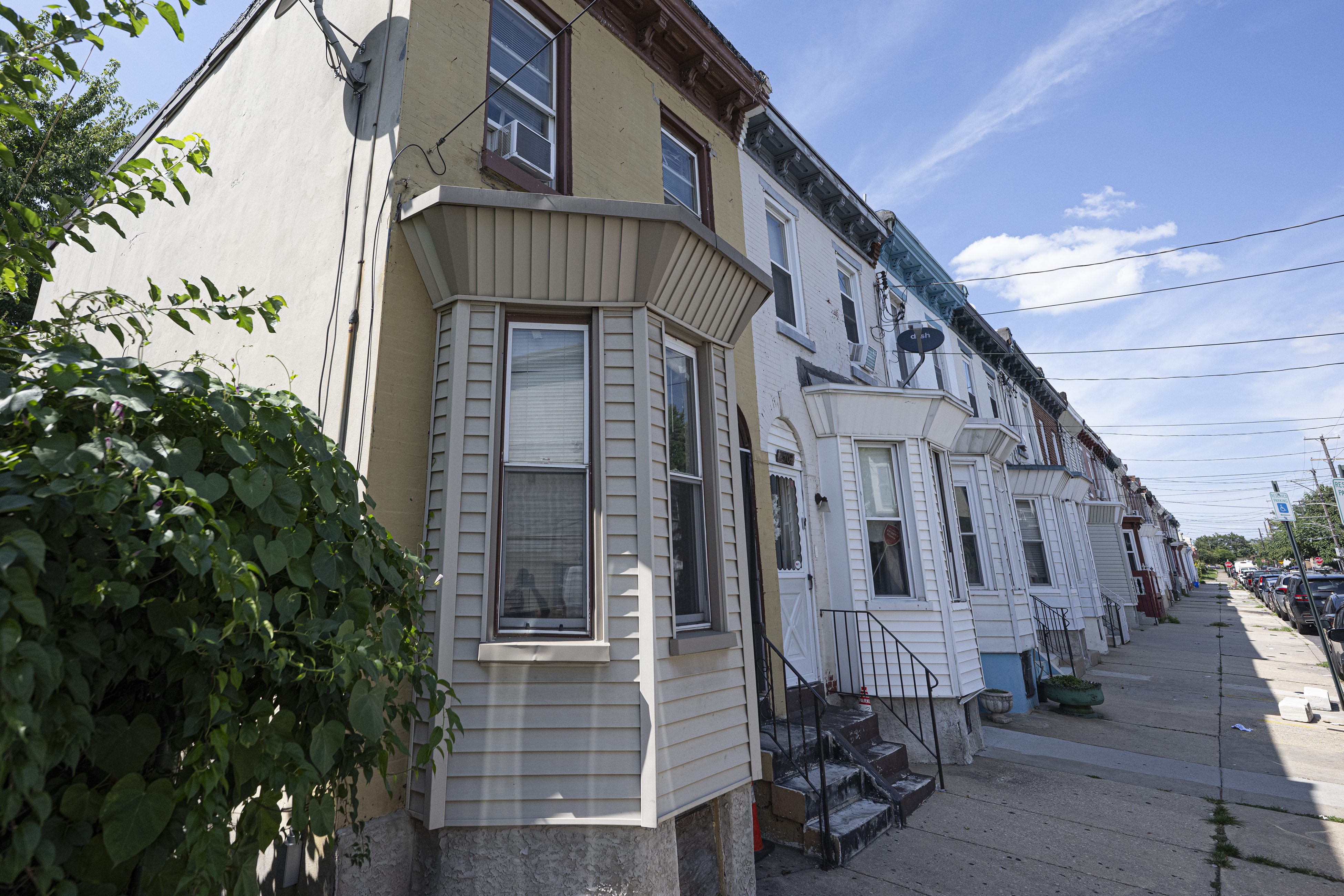
The steep rises are clustered in the southern end of Strawberry Mansion, the historically Black neighborhood along the Schuylkill, and in the tiny Hartranft neighborhood north of Temple University and east of Broad Street, where residents are predominately Latino.
(function() {
var l2 = function() {
new pym.Parent(‘html_sandwich_2026_property4’,
‘https://media.inquirer.com/storage/inquirer/projects/innovation/arcgis_iframe/html_sandwich_2026_property4.html’);
};
if (typeof(pym) === ‘undefined’) {
var h = document.getElementsByTagName(‘head’)[0],
s = document.createElement(‘script’);
s.type = ‘text/javascript’;
s.src = ‘https://pym.nprapps.org/pym.v1.min.js’;
s.onload = l2;
h.appendChild(s);
} else {
l2();
}
})();
Housing experts and advocates for low-income homeowners have long criticized the city’s assessment system as systemically biased, leaving Black and brown homeowners to pay disproportionately high property taxes. Mayor Cherelle L. Parker convened a task force in 2024 to study the city’s revaluation system, and that group’s recommendations are expected to be released later this year.
Monty Wilson, a senior attorney at Community Legal Services who sits on the task force, said the Philadelphia Office of Property Assessment is the best in the state and has “worked really hard to become more and more accurate.”
But he said bias persists in part because of the unique challenges that assessors face in low-income neighborhoods that can cause volatility in home values, such as higher rates of vacant lots, foreclosures, and other factors.
A 2024 CLS report found that errors were clustered in lower-value neighborhoods where a majority of residents are people of color.
“That means when a property is overassessed,” Wilson said, ”it tends to occur in a Black and brown neighborhood.”
(function(){function e(){window.addEventListener(`message`,function(e){if(e.data[`datawrapper-height`]!==void 0){var t=document.querySelectorAll(`iframe`);for(var n in e.data[`datawrapper-height`])for(var r=0,i;i=t[r];r++)if(i.contentWindow===e.source){var a=e.data[`datawrapper-height`][n]+`px`;i.style.height=a}}})}e()})();
The Parker administration did not respond to requests for comment.
In response to a previous article about this year’s property reassessments, city officials emphasized that some lower-income homeowners pay relatively low tax bills because of the popular homestead exemption tax break. The program, which any homeowners can apply for and obtain if they live in their house as their primary residence, exempts the first $100,000 from a home’s taxable value.
That means that some homeowners in working-class neighborhoods previously paid little to no property taxes. A sudden increase in valuation, like the ones seen this year in pockets of North Philadelphia, could require they pay bills next year that are several hundred dollars more than in the past.
Take the 2500 block of North Marshall Street. The residential North Philly street sits between West Kensington and Broad Street, and nearly every home saw its assessment increase by 60% or more, according to The Inquirer’s analysis.
Most of the homes there had previously been valued at less than $100,000, meaning owners with the homestead exemption owed no property taxes. Now, many of the homes on the block are valued at about $140,000, an amount that would next year yield more than $500 in yearly tax bills for owners with the homestead exemption.
More than 40% of the Hartranft neighborhood’s residents are below the federal poverty level, which is $33,000 a year for a family of four, according to U.S. Census data.
At Left a property on 2500 N. Marshall St., Philadelphia, PA 19133 is shown Wednesday, Aug. 19, 2026, in Philadelphia.Jose F. Moreno / Staff Photographer
City Councilmember Quetcy Lozada, whose district includes parts of Kensington and North Philadelphia, said the Hartranft area is not like sections of Kensington that have seen an influx of development in recent years and where increases in property assessments may be expected.
It is possible, she said, that lower-income residents who have been displaced from parts of Kensington looked to move west of the neighborhood, increasing demand in the Fairhill and Hartranft areas.
Lozada — who has held workshops in the neighborhood to connect residents with property tax relief programs — said she fears her constituents are being asked to pay disproportionately high taxes and not seeing better city services and stronger public schools.
“How is it possible that someone in Fairhill is paying a higher tax for a property that has not had any investment, in a neighborhood that is not as safe, whose school system is not as great, as somebody that lives in Chestnut Hill, for instance?” she said, referring to the upscale Northwest Philadelphia neighborhood with a $109,000 median household income. “There has to be a better way of doing a more accurate evaluation in every neighborhood.”
In Strawberry Mansion, community leaders said that increased assessments are likely a result of market pressure from Brewerytown to its south, a comparatively whiter and higher-income neighborhood.
“The city has to be super transparent about this assessment system so people can better understand it and not feel that sticker stock,” said Tonnetta Graham, president of the Strawberry Mansion Community Development Corp. “If we know how they came to their number, it’s easier to chew.”
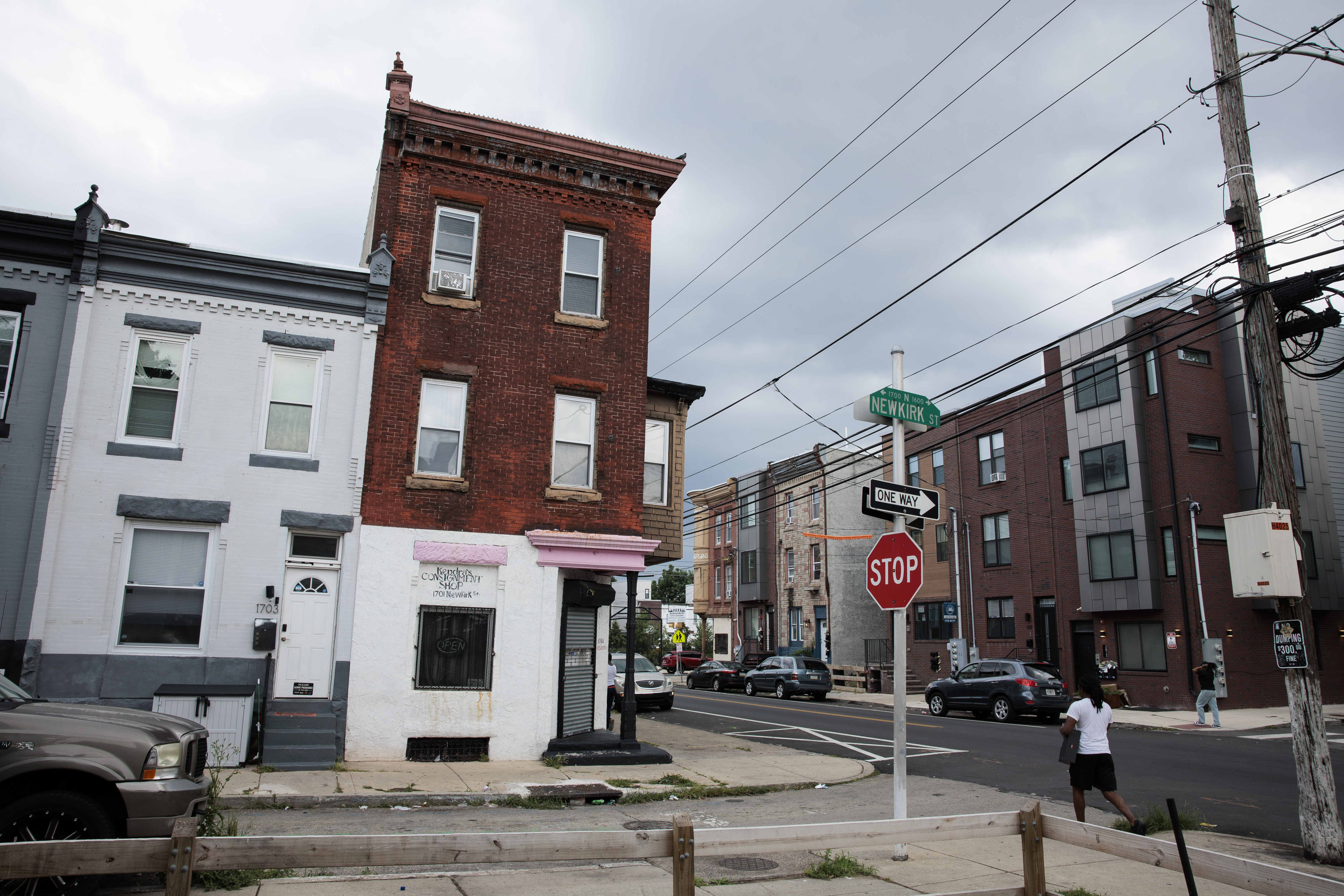
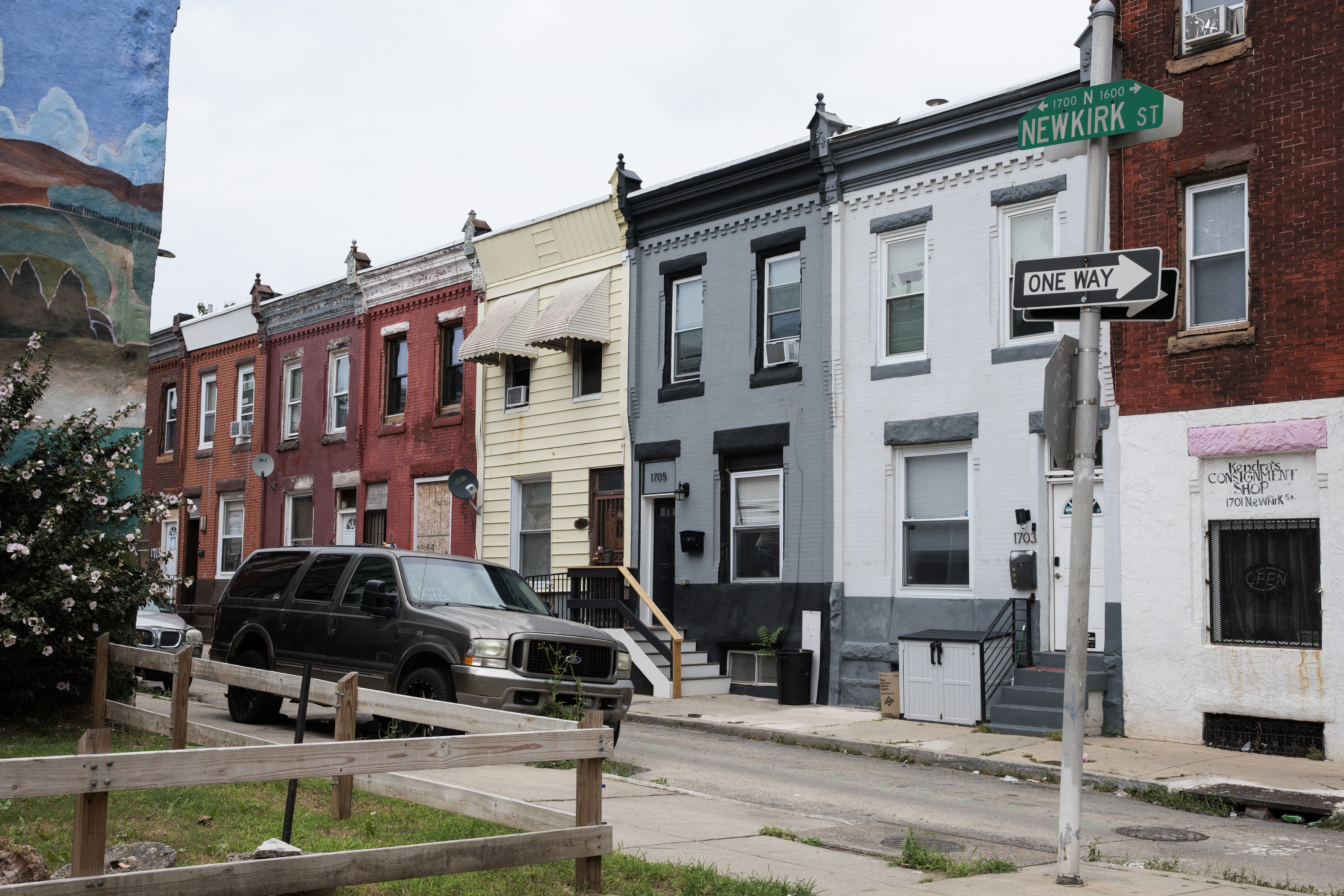
The 1700 block of North Newkirk Street on Thursday, Aug. 20, 2026 in Philadelphia.Monica Herndon / Staff Photographer
Councilmember Jeffery Young Jr., whose district includes both Strawberry Mansion and parts of Hartranft, did not respond to requests for comment.
Jalon Alexander, a Strawberry Mansion native who this month launched a campaign to challenge Young for his Council seat next year, said he was recently at a block party in the neighborhood where he heard repeatedly from older homeowners who were concerned about their increased assessments.
“They feel taken advantage of, and they feel like it’s coming out of nowhere,” Alexander said. “This is an area where there’s high levels of poverty, and there is not a lot of political or government attention in this area. I’ve spoken with many people whose rates have almost doubled. It’s the biggest issue in the neighborhood.”
Staff writer Michaelle Bond contributed to this article.