Tag: no-latest

  • Kennedy Center votes to restore Trump’s name and close for 2 years, challenging a judge’s order

    Kennedy Center votes to restore Trump’s name and close for 2 years, challenging a judge’s order

    WASHINGTON — The battle over the Kennedy Center’s future escalated Thursday as President Donald Trump’s allies on the board took new steps to commemorate him with physical changes to the iconic performing arts institution that could defy a federal court order.

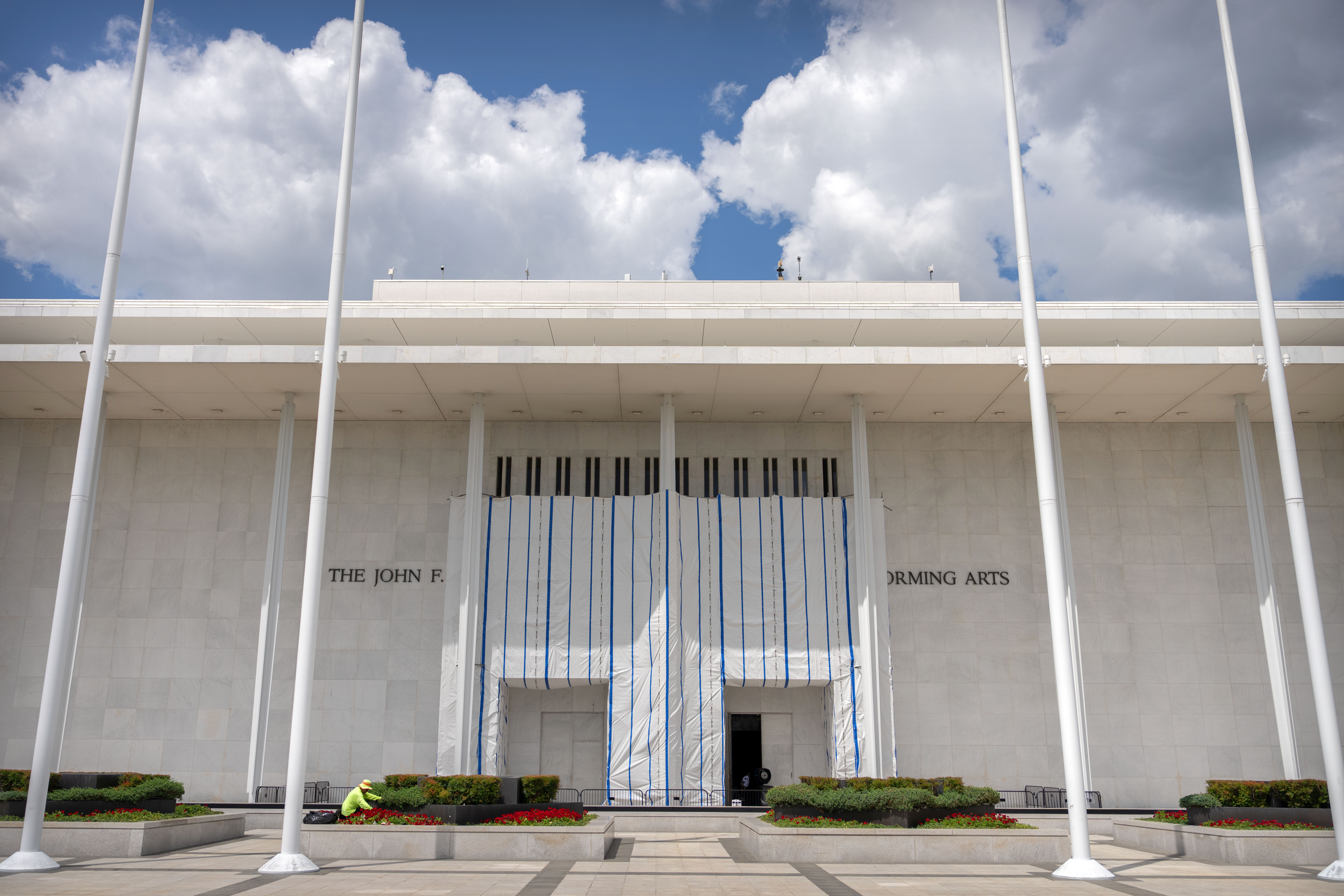
    During an hourslong meeting that was conducted virtually, the board voted to add Trump’s name to the building’s facade so it would read “The John F. Kennedy Center for the Performing Arts Restored and Renovated By President Donald J. Trump.” The plaza in front of the building would be named after Trump and most of the space at the venue would be closed for two years to allow for substantial renovations.

    The changes, described by Rep. Joyce Beatty, an Ohio Democrat who is an ex-officio board member, and her lawyers, amount to a dramatic test of U.S. District Judge Christopher Cooper. He ruled in May that letters affixed to the building that spelled out Trump’s name were added illegally and he ordered their removal, a decision that the Republican administration failed to persuade courts to overturn. At the same time, Cooper blocked a two-year closure that was set to take effect July 5, saying an earlier board vote authorizing the shuttering was “ill-informed and seemingly preordained.”

    “This latest development is a transparent effort to circumvent the Court’s ruling, and flies in the face of the statutes that Congress passed,” Beatty said in a statement. ”I will continue to fight for this treasured national monument.”

    A representative of the Kennedy Center did not immediately respond to a request for comment.

    Much of Thursday’s board meeting was expected to focus on the extent of closures required to allow for renovations that the Kennedy Center’s management says are needed to improve safety. In response to the judge’s criticism of the earlier vote, the institution’s leaders said they would provide the board with three options to consider.

    They included a complete closure or a partial closure that would allow “some continued public access and limited programming in spaces unaffected” by the work. A third option would “consider a highly limited series of phased closures to address only the Center’s most serious infrastructure needs while scheduling and maintaining a full slate of programming.”

    Ultimately, the board decided to close the building for two years while leaving the potential for some degree of programming to still happen in an outdoor space known as the Reach. The decision to move ahead with the two-year closure, in addition to the moves to memorialize Trump, could revive questions about whether the board seriously considered the full range of options.

    During Trump’s second term, the Kennedy Center has become an unlikely — and highly visible — metaphor of presidential power. While he largely ignored the institution during his first round in Washington, Trump moved quickly to oust the institution’s leadership when he returned to office in January 2025 and replaced it with a board of trustees that named him chairperson.

    His name was quickly added to the building, before coming down in June in response to Cooper’s order. The area where it once stood is now covered by a massive tarp.

    Trump’s push to remake the nation’s capital

    The Kennedy Center moves are part of Trump’s broader push to reshape the physical landscape of the nation’s capital in ways that have few modern parallels.

    He demolished the East Wing of the White House and is building a controversial ballroom in its place, though an appeals court ruled last week that construction should stop because Congress didn’t approve the project. Trump has said he will take the case to the Supreme Court.

    His remodel of the Lincoln Memorial Reflecting Pool has also stumbled after algae returned and U.S. Attorney Jeanine Pirro refuted his claims that a vandal was responsible for the damage.

    Meanwhile, Trump is planning extensive renovations of a golf course in East Potomac Park, which could significantly reduce the public’s access to running and biking paths. He is also moving forward with a triumphal arch that will sit near Arlington National Cemetery.

    Trump has derided the Kennedy Center as “rusted, rotted, and rat and bug infested” and threatened to hand the building over to Congress after Cooper rejected the closure and the addition of the president’s name to the building.

    The institution’s leadership has argued that it’s in genuine need of repair and updating.

    Matt Floca, the Kennedy Center’s executive director and chief operating officer, guided a group of journalists through the building in April, highlighting severe water damage that he said corroded steel in some places as thin as tissue paper. Some pieces of equipment, including several 800-ton chillers that help cool the building, are decades old and in need of replacement.

    At the time, Floca said he considered doing the repairs individually but insisted it was his recommendation to Trump to close the building and move forward with the renovation all at once.

    “When the president asked: ‘How do you make these projects the best? How do you make them really excellent and deliver them efficiently?’ my recommendation was you close the building and you do everything over a definite period of time, two years,” he said.

    More recently, the legal battles became the subject of barbs and jokes as comedian Bill Maher accepted the Mark Twain Prize for American Humor in late June. At the start of the program, Pamella Roland DeVos, a Kennedy Center trustee appointed by Trump, described the institution as a “national cultural center open not just for some but for every American patron who wants to experience the greatest art and expression the world has to offer.”

    “The responsibility that comes with it is one our board takes very seriously,” she said.
  • Luigi Mangione expected to plead guilty in federal case in UnitedHealthcare killing, AP source says

    Luigi Mangione expected to plead guilty in federal case in UnitedHealthcare killing, AP source says

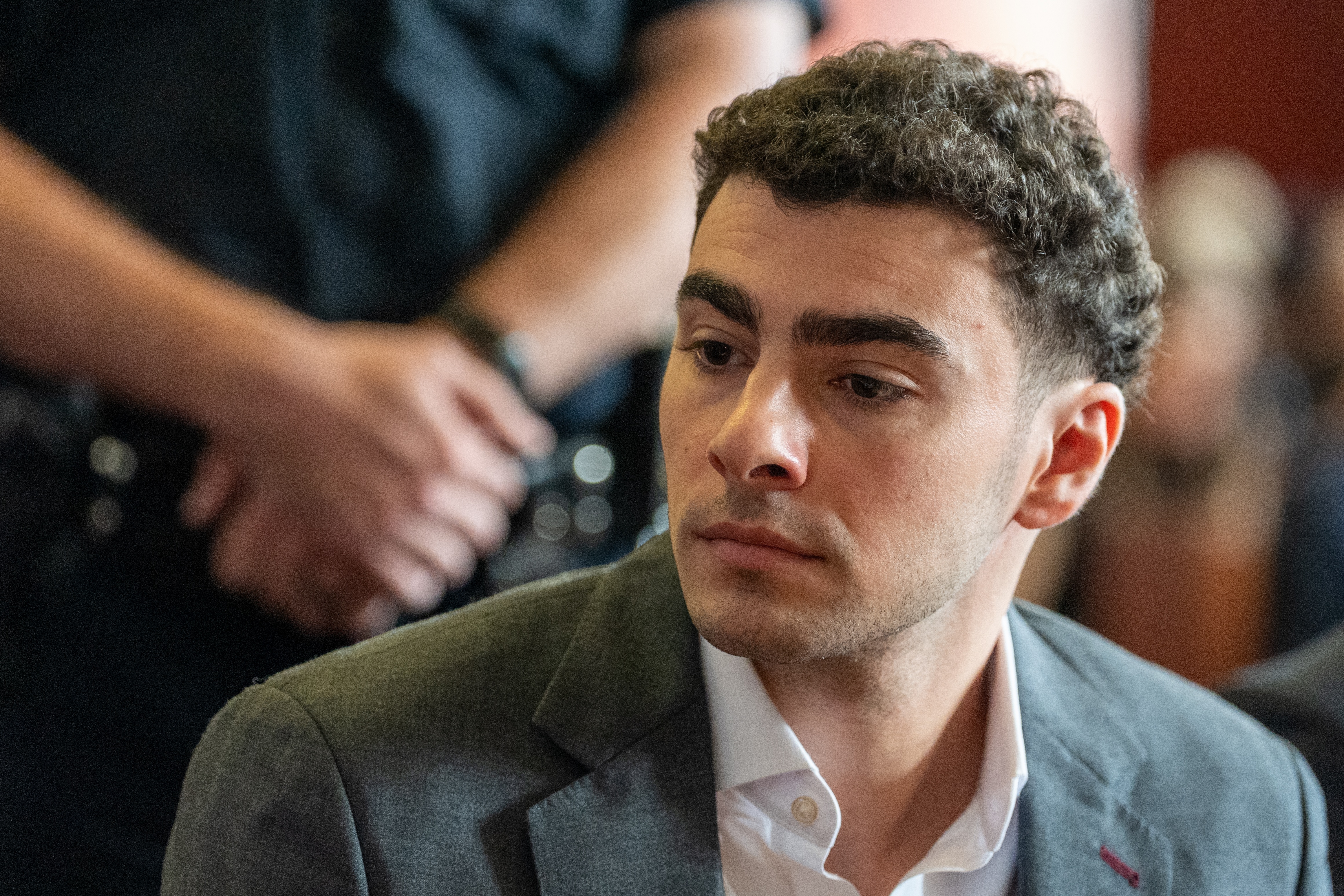
    NEW YORK — Luigi Mangione is expected to plead guilty as early as Friday in the federal case accusing him of stalking and killing UnitedHealthcare CEO Brian Thompson, according to a person familiar with the matter.

    The person, who was not authorized to talk publicly about the case and spoke to the Associated Press on the condition of anonymity, cautioned that Mangione could change his mind. If he follows through, it would be a stunning development in a case that rattled business leaders while galvanizing their critics.

    Mangione’s lawyers, and spokespeople for the Justice Department and Manhattan federal prosecutors, declined to comment.

    Mangione is accused of traveling to New York City to ambush Thompson, 50, then shooting him outside a Manhattan hotel on Dec. 4, 2024, as the executive walked to UnitedHealth Group’s annual investor conference.

    Mangione is due in court on Friday for a hastily scheduled hearing in the federal case, which involves two counts of stalking. It wasn’t clear what charge or charges Mangione is expected to plead guilty to. The hearing, in Manhattan federal court, comes as his lawyers have been talking with federal prosecutors about a possible resolution to one of two criminal cases against Mangione in Thompson’s death. Previous talks in June broke down.

    Mangione, 28, has been charged in both federal and state court in New York and still faces the possibility of a trial in his unresolved state case. Mangione’s state murder trial is set to begin Sept. 8. Both sets of charges carried the possibility of a life sentence.

    Mangione has pleaded not guilty and has spoken out publicly against the prospect of two trials, telling a judge in February: “It’s the same trial twice. One plus one is two. Double jeopardy by any commonsense definition.”

    Under New York law, a state prosecution could be barred if the federal case is resolved first, but it isn’t automatic.

    The state’s double jeopardy protections kick in if a jury has been sworn in a prior prosecution, such as a federal case, or if that prosecution ends in a guilty plea. Mangione’s cases involve different charges arising from the same course of conduct.

    Once Mangione pleads guilty, his lawyers could then ask the judge in the state case to throw out those charges on double jeopardy grounds. State prosecutors argue their case is distinct and double jeopardy shouldn’t apply.

    Mangione’s federal charges allege that he traveled across state lines by bus to stalk and kill Thompson and that he used means such as a cell phone, the internet, interstate highways, and staying at a hostel that serves out-of-state customers while planning and carrying out the attack. The state charges pertain to the killing itself, as well as firearms offenses.

    In a letter last month, state prosecutors objected to the possibility of a guilty plea in the federal case wiping out the state case.

    “Obviously, any guilty pleas in these matters must account for the seriousness of defendant’s offenses, the loss of an innocent life, the impact of those crimes on the victim’s family, and the other state interests that are implicated, including the sanctity of life principle that underpins the state homicide charges,” Seidemann wrote.

    Mangione’s apparent decision to plead guilty comes after a series of setbacks for his defense.

    In January, U.S. District Judge Margaret Garnett took the death penalty off the table but ruled that prosecutors could use items collected from Mangione’s backpack during his arrest as evidence against him.

    They included a 3D-printed pistol that investigators said matched the one used to kill Thompson and a notebook in which authorities say Mangione described his intent to kill an insurance executive.

    In June, Mangione’s lawyers said they would pursue a psychiatric defense in the state case but reversed course a day later. The defense, involving claims that he was suffering from extreme emotional disturbance at the time of the killing, isn’t allowed in federal court.

    Surveillance video of the killing showed a masked gunman shooting Thompson from behind. Police say “delay,” “deny,” and “depose” were written on the ammunition, mimicking a phrase used to describe how insurers avoid paying claims.

    Mangione, an Ivy League graduate from a wealthy Maryland family, was arrested five days later at a McDonald’s in Altoona, Pa., about 230 miles west of Manhattan.

    He has become a cause célèbre for people upset with the health insurance industry.

    An online fundraiser for his legal defense fund raised more than $1.5 million, and several dozen supporters have shown up to his court appearances, some wearing green clothing — the color worn by the Mario Bros. video game character Luigi — and “FREE LUIGI” T-shirts.

  • Rescuers call for silence around earthquake rubble as window for survival narrows in Colombia

    Rescuers call for silence around earthquake rubble as window for survival narrows in Colombia

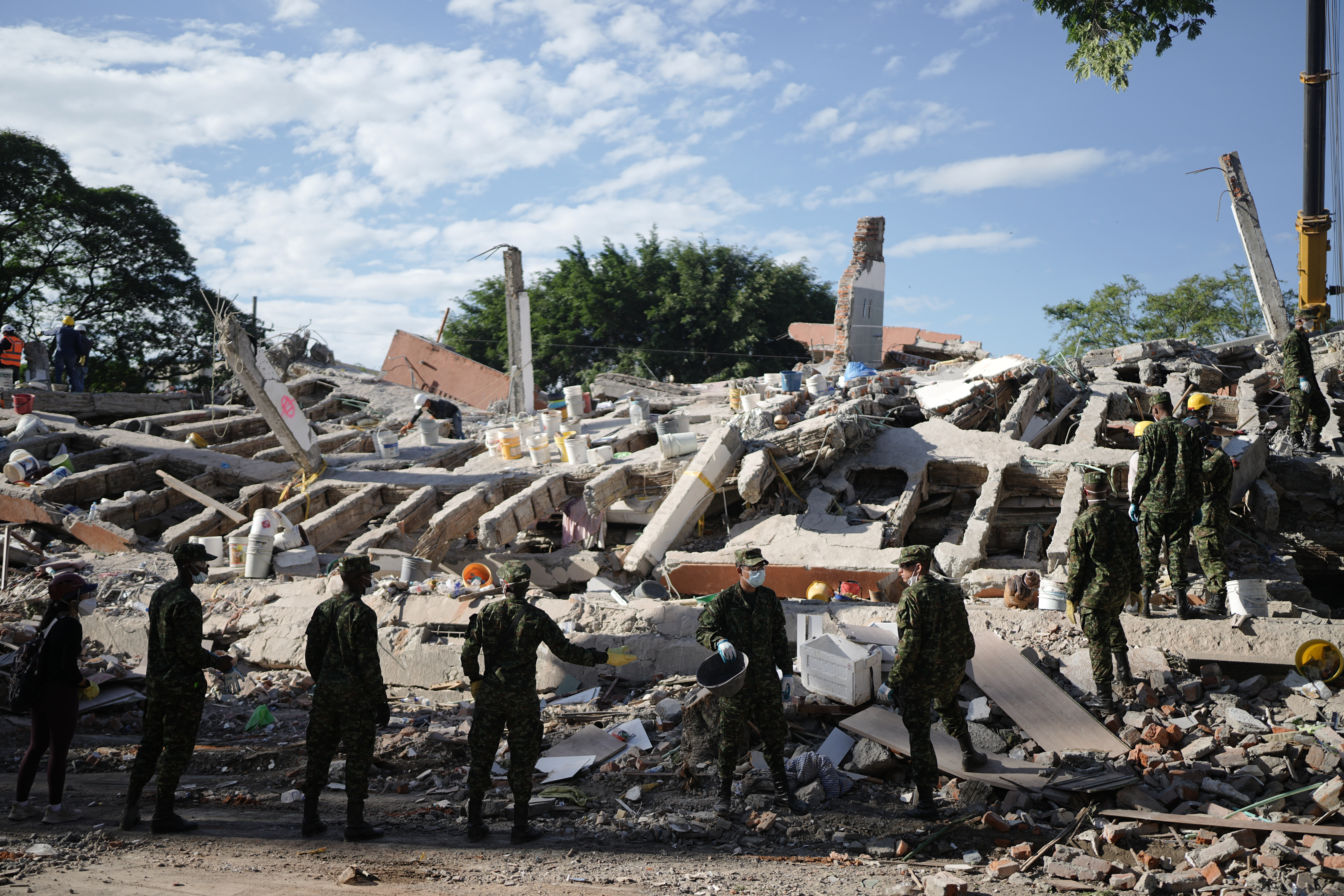
    CALI, Colombia — With arms raised and fists clenched, rescuers in Colombia called for silence Thursday as they listened for signs of life in the rubble left by a deadly earthquake that has killed more than 270 people and left hundreds more missing.

    The call for quiet was part of last-ditch efforts to find survivors in the aftermath of the 7.4-magnitude quake that struck the South American country Monday. Aid agencies consider the first two to three days after a quake to be the prime window for retrieving survivors. But that time frame can be extended if those trapped have access to food and water.

    “There might be two more people alive here, and I’m hopeful,” rescuer Daiana Rojas, 25, told the Associated Press. “We have been hearing sounds since 2:30 a.m., so our hope remains.”

    Rojas and her family were unharmed by the quake, the most powerful to hit Colombia in this century. She has been working as a volunteer to help search for survivors in Cali, one of the most affected cities, along with Pereira, Manizales, and Quibdó.

    “I thought that was going to be my last moment alive,” she said, recalling the terror of the quake. “Seeing this situation in my city breaks my heart.”

    Rojas has witnessed two people being pulled alive from the debris, as well as the recovery of bodies.

    “They are not a relative or a friend of mine, but it feels as they were,” she said of the survivors who have been found. “Whenever rescuers ask for silence, everyone stays still and tries not to move, speak, or whisper. But when signs of life are found, all the teams start to applaud.”

    The mayor of Cali, Alejandro Eder, told reporters Wednesday that rescue teams continue to find signs of life under the rubble and race to save anyone within reach. “The next 20 hours are the most critical to find and rescue people alive,” he said.

    But authorities recognize that the rescue effort is entering a grim phase as search teams begin shifting toward recovering bodies.

    “The removal of debris begins now; more than 72 hours have passed,” Milton Castrillón, who works in the Cali mayor’s office, told AP, adding that the teams now lean on “miracles from God to find survivors.”

    The death toll rose Thursday to 273, authorities said.

    Over 3,800 people were reported injured, with nearly 12,600 homes destroyed and more than 74,800 homes damaged, according to David Santiago Tamayo, director of the National Unit for Disaster Risk Management.

    The devastation has tested Colombia’s new president, Abelardo de la Espriella, and his government as they scramble to respond while aid groups seek to help the most heavily damaged communities.

    De la Espriella said Wednesday that nearly 500 people were reported missing, though civilian-run databases put that number at more than 4,200. In total, more than 25,800 families have been affected, de la Espriella said.

    Meanwhile, Colombia received more international aid from around the world.

    A group of rescuers from the Los Angeles County Fire Department arrived Thursday to help with search efforts and structural engineering assessments. Other countries, including Peru, El Salvador, Mexico, and Brazil, have also offered assistance.

    De la Espriella announced on X that Colombia will receive a $10 million donation from the United Arab Emirates.

    The South American Football Confederation and the Colombian Football Federation also jointly announced a $1 million donation to support reconstruction efforts.

    “Soccer transcends the pitch and remains close to its people, especially in the most difficult times,” they said in a joint statement.

    The Colombia disaster unfolded less than two months after neighboring Venezuela endured back-to-back earthquakes, and the contrast between the two countries’ responses was stark.

    In Venezuela, acting President Delcy Rodríguez waited nearly four hours before addressing the nation. In Colombia, de la Espriella announced an emergency command post to oversee rescue efforts barely an hour after the earthquake. For weeks, Venezuelan civilians were clawing through rubble by hand. Hours after the earthquake in Colombia, rescue teams were searching for survivors with cranes and excavators.

    The contrast was a reminder of the differences between the nations — their political systems, resources, and the strength of their institutions — and a demonstration of how those can take on life-or-death importance.

  • We’ll soon get a glimpse of future temperatures, thanks to this record El Niño

    We’ll soon get a glimpse of future temperatures, thanks to this record El Niño

    This year’s record-smashing El Niño will do more than just shift and enhance patterns of heat, extreme rainfall, and drought around the world.

    It will also give the planet a preview of the late 2030s.

    That’s because this El Niño will act like a climate time machine, temporarily pushing global temperatures to levels that might not otherwise be reached for another decade or so.

    According to an analysis by climate scientist Zeke Hausfather that was shared with the Washington Post, there’s around a 95% chance that 2027 will become Earth’s hottest year on record — soaring past the last record in 2024 — because the combination of El Niño and climate change could spike global temperatures to around 3.17 degrees Fahrenheit above preindustrial averages.

    Described as “stunning” by Hausfather, who researches and analyzes the climate for Stripe, Carbon Brief, and Berkeley Earth, this value would be so far above the warming trend of the past decade that it could bring global temperatures to levels not otherwise expected under that trend until around 2037.

    “I’m not sure folks have realized just how crazy the second half of 2026 and 2027 will be for global temperatures — on the back of a record-smashing El Niño event,” wrote Hausfather on X.

    It’s currently close to a coin flip whether 2026 would become the warmest year on record, according to Hausfather’s analysis, which considers the average of several different temperature data sets. It’s possible that 2026 sets a record in some, but not all, of these data sets.

    Jim Hansen, director of the Program on Climate Science, Awareness, and Solutions at Columbia University, said he expects 2026 to become the warmest year, but to hold that crown only until 2027 exceeds it.

    There is a much stronger signal for record warmth in 2027 because increasing air temperatures caused by El Niño lag slightly behind increasing ocean temperatures.

    A global temperature of 1.76 degrees Celsius above preindustrial levels in 2027 would be about 0.29 degrees Celsius higher than what’s expected based on the warming trend of the past decade.

    According to Hausfather’s temperature predictions for next year, the middle 50% of forecasts range from 1.67 degrees Celsius to 1.85 degrees Celsius above the preindustrial average.

    At the high end of that range, global temperatures in 2027 would jump roughly 13 years ahead of the recent warming trend, reaching levels that might otherwise become typical around 2040. The low end would represent a 7-year boost, to around 2034.

    Hausfather said that this El Niño event is happening on top of a “strong acceleration in the rate of warming associated with continued emissions of greenhouse gases.”

    Both Hausfather and Hansen also mentioned that decreasing atmospheric aerosols — which have historically offset some warming — are contributing to the acceleration in warming.

    Although Hausfather expects 2028 to be cooler than 2027, he added that “human emissions are adding a permanent El Niño worth of heat to the climate system each decade.”

    In other words, global temperatures in 2027 will take a big but temporary upward stairstep, and they are unlikely to permanently continue at or above those levels for now.

    These temperature increases will also have consequences for atmospheric water vapor. Because the water vapor-carrying capacity of air increases at a rate of 7% per degree Celsius, it’s possible — if not likely — that 2027 also sets a new global moisture record, surpassing 2024. In 2025, the Post mapped the planet’s rising moisture zones and showed how they are closely connected to an increasing risk for rainfall extremes.

    The role of El Niño

    During El Niño, huge stores of ocean heat from the western Pacific spread eastward, eventually reaching the west coast of South America. Thunderstorm activity shifts with that warmth, transferring heat from the ocean and pumping it high into the atmosphere. Winds and atmospheric circulation then redistribute that heat beyond the tropical Pacific and around the globe, raising global temperatures.

    That’s why strong El Niño events often appear as an upward stairstep in long-term plots of global temperatures.

    But this El Niño isn’t just going to be strong. Boosted by the planet’s long-term warming trend, it’s probably going to dwarf the six strongest that came before it in 2015, 1997, 1982, 1972, 1888, and 1877 — the latter contributing to a global famine that caused 3% to 4% of the global population to perish.

    Ocean temperatures in the central equatorial Pacific, where El Niño’s strength is measured, have already broken records for 75 days straight.

    That streak isn’t expected to end anytime soon.

    Temperatures in the equatorial Pacific Ocean may surge more than 7.2 degrees F above average by December, breaking the previous record.

    Those weather effects will vary from place to place.

    But the temperature spike will briefly push the entire planet into its warmer future.

  • Trump’s vaccine plan would require millions of individual shots last used decades ago

    Trump’s vaccine plan would require millions of individual shots last used decades ago

    WASHINGTON — Public health experts have been quick to condemn an executive order from President Donald Trump aimed at upending childhood vaccinations in the U.S., but the biggest obstacles may be the unprecedented financial and logistical challenges it would impose on parents, health providers, and drugmakers.

    Monday’s announcement by the Republican president calls for separating combination shots — including the measles, mumps, and rubella, or MMR, vaccine — into separate injections. Appointments for that and other vaccinations should be spaced out whenever possible, the order states.

    To accomplish that, drugmakers would need to revive a slate of individual vaccines that have not been marketed separately in the U.S. for decades. They would also have to build new manufacturing plants capable of producing millions more vaccine doses than the nation currently uses.

    For parents, unbundling the MMR vaccine and spacing out the shots would mean returning to the doctor’s office many more times than is currently needed. Those appointments could also strain pediatricians who typically administer the shots, while driving up costs tied to syringes and other medical supplies.

    Studies in the U.S. and other countries have shown that combination vaccines increase the likelihood that children will be fully protected from infectious diseases before starting school.

    Health experts say there is no scientific basis for changing course.

    “We do things that are less convenient and more expensive if there’s a good reason to do it,” said Anna Durbin, of the Johns Hopkins Bloomberg School of Public Health. “There is no good justification for this. I think it’s very bad public health policy.”

    Trump’s plan would require vaccine manufacturing overhaul

    Under Trump’s executive order, federal officials are instructed to develop within 90 days plans for breaking up the MMR shot and spacing out other vaccines.

    But pharmaceutical scientists and former regulators say those changes would likely take years and require drugmakers to spend tens of millions of dollars on new studies and manufacturing facilities.

    Currently, there are no individual vaccines in the U.S. for measles, mumps, or rubella. All the vaccines approved for those viruses by the Food and Drug Administration are combination shots. That three-in-one approach has been the standard in the U.S. since the early 1970s.

    Jesse Goodman, a former FDA vaccine chief, said companies would have to conduct large studies showing new individual shots produced immune system-boosting reactions in children similar to the current versions.

    Companies might also have to demonstrate the safety of new manufacturing facilities and procedures, given that individual measles shots haven’t been widely produced in the U.S. for roughly a half-century.

    “The question is how much has changed since then and how comfortable will the FDA and the companies be relying on those comparisons?” said Goodman, who is now a professor at Georgetown University.

    Designing, constructing, and getting federal sign-off for new vaccine plants typically takes about five years, according to industry experts.

    Additionally, Goodman said, the FDA would have to review and license each unbundled vaccine separately, a process with no precedent.

    “I don’t think there’s any comparable example of removing hugely effective public health measures that protect babies for no documented scientific reason,” he said.

    Individual shots for measles and related diseases tend to be used by lower-income countries that can’t afford the MMR shot. Merck, GSK, and the handful of other companies that supply U.S. childhood vaccines make only the combination shot.

    In separate statements, Merck and GSK said they stand by the safety and effectiveness of their products. Neither discussed plans to unbundle their shots.

    “To date, there has been no published scientific evidence that shows any benefit in separating the combination MMR vaccine into three individual shots,” Merck said in an emailed statement.

    Many more trips to the doctor

    The MMR shot is currently delivered in two doses — the first at the age of 1 and the second dose after age 4. Splitting up the shot into its three separate components would mean six office visits. Spacing out other shots for pertussis and other infectious diseases could multiply the number of visits many more times.

    As the number of visits goes up, parents are more likely to miss appointments or stop making them, according to Durbin.

    “It’s going to be less convenient, more expensive, and you’re going to have fewer people getting vaccinated,” she said.

    Since last year, Trump has repeatedly expressed concern about the number of vaccinations U.S. children are receiving and called on Health Secretary Robert F. Kennedy Jr. to reduce the number. Kennedy and other officials have pointed to smaller countries, such as Denmark, that recommended slightly fewer vaccines than the U.S.

    But breaking up combination shots will result in kids receiving many more individual shots than other comparable nations, Durbin notes.

    White House spokesperson Kush Desai said the Trump administration’s efforts on the MMR vaccine “will give parents more options on timing and frequency for their children, which ultimately will increase vaccination rates for all three diseases.”

    Vaccine order is not legally binding

    Despite the precedent-breaking nature of Trump’s order, some experts are skeptical it will result in meaningful changes.

    Neither the White House nor the FDA can compel drugmakers to develop and seek approval for new vaccines. And from a business perspective, companies have little incentive to develop individual versions of vaccines they already sell in combination shots.

    “They’d be competing against themselves, and there’s no reason to do that,” said Paul Offit, a Children’s Hospital of Philadelphia vaccine researcher and former government adviser.

    While Trump’s order calls for more federal research and recommendations, only state governments have the legal authority to require vaccinations for schoolchildren. The order simply advises states to consider updating their laws to reflect the Trump administration’s approach.

    “I think states will ignore this,” Offit said. “I think that bottom line is that we don’t need to look to Donald Trump for our medical advice.”

  • U.S. military has lost roughly 25% of its Reaper drones as Iran war depletes arsenal

    U.S. military has lost roughly 25% of its Reaper drones as Iran war depletes arsenal

    The U.S. military has lost at least 45 MQ-9 Reaper drones during the war with Iran, or roughly 25% of its fleet, according to three U.S. officials familiar with the matter.

    The Reaper is used to conduct surveillance and targeted strikes, and it can cost between $30 million to $50 million depending on the type of sensors and weapons it carries, according to the Air Force. The potential taxpayer cost of recent losses is over $1.3 billion for that weapon system alone.

    The aircraft have seen heavy use around the Strait of Hormuz, the vital shipping route that has become a major flash point in the conflict — and a key obstacle to negotiating a lasting peace deal. But the drones fly slowly and often at low altitudes, making them relatively easy targets for Iran’s military and its regional proxies in Yemen and Iraq.

    A fourth U.S. official, who like the others spoke on the condition of anonymity to discuss Pentagon data, said that not all of the lost Reapers were shot down. An unspecified number crashed after their operators’ communications link to the drones failed, the official said.

    The Reaper joins a growing list of U.S. weapons and munitions that have been drained by the Iran war and years of American military support for Ukraine in its conflict with Russia. As the Washington Post and others have reported, the shortages have constrained President Donald Trump’s military options as tensions with Iran remain high.

    The Pentagon, which declined to comment for this article, has consistently denied reports that its weapons stockpiles are running low. At the same time, the Trump administration has asked Congress for tens of billions of dollars in funding to offset costs incurred by the Iran war and to replenish supplies.

    As the Post reported last week, Trump confronted Defense Secretary Pete Hegseth about the state of the U.S. stockpile. The encounter occurred July 31, on the sidelines of a cabinet meeting at Camp David, the presidential retreat in Maryland.

    The shortages have appeared to embolden Iran, which has intensified its demands for control of the Strait of Hormuz and reparations for damage the country has sustained since Trump ordered the start of hostilities on Feb. 28.

    There were approximately 185 Reapers in the U.S. military fleet — 165 in the Air Force and 20 in the Marine Corps — before the conflict began, according to public budget data and the services. That figure does not include Reapers operated by U.S. intelligence agencies. To date, none of the Marines’ Reapers have been lost, a spokesperson, Lt. Col. Joshua Benson, said in a statement. Those operate primarily in the Asia-Pacific.

    In May, Lt. Gen. David Tabor, a senior Air Force officer at the Pentagon, told the Senate that the number of remaining drones had fallen to about 135. At the time, Tabor told lawmakers he was “concerned” about the losses and that the Air Force was exploring how to quickly replenish its fleet.

    The Pentagon is phasing out the General Atomics-produced Reaper and envisions a replacement fleet of less expensive armed surveillance drones that can swarm their targets.

    Meanwhile, the Trump administration is trying to shore up lawmaker support for a $67 billion Iran war supplemental budget that it says is vital to restocking the Pentagon’s arsenal. Even if Congress approves the funding, it will be years before stockpiles depleted by the conflict in Iran and the munitions sent to Ukraine are reconstituted.

    Hegseth told the Senate in July that the Pentagon would have to curtail military trainings without a quick infusion of additional funding as the Iran war strains the defense budget. He estimated that the conflict would cost $37.5 billion through the end of September, though that total does not include the cost of rebuilding U.S. bases in the Middle East damaged by Iranian strikes.

    Republicans in Congress are divided on the best strategy to secure the war-related funding and have left Washington for their August recess.

    This week, the right-leaning American Enterprise Institute think tank released a report examining the military’s effort to increase production of critical munitions. It found that in some cases the Pentagon’s plans have “key dependencies,” including a significant expansion of the defense industry’s factory output.

    For example, it could take years to replenish Terminal High Altitude Area Defense (THAAD) interceptors used throughout the war, the report found. The missile defends against incoming ballistic missiles and, as the Post reported previously, U.S. forces have used hundreds of them during the conflict.

    The U.S. Missile Defense Agency’s maximum production rate is 96 a year — but the Pentagon seeks 857 of them in next year’s defense budget, and almost 2,600 total over the next five years. At current production rates, it would require “approximately 27 years” to the fulfill the request, AEI found.

    It takes almost three years to manufacture a single THAAD interceptor, said AEI senior fellow Todd Harrison, the report’s author.

    “Even if you ordered them today, delivery wouldn’t be until President Trump leaves office,” Harrison said.

    Other U.S. munitions reviewed by AEI had similar timelines, the report showed.

    Although Hegseth has met with many of the companies responsible for building key munitions, and secured what the Pentagon calls framework agreements to increase production, there are no contracts or funding yet for those firms to move forward.

  • Rep. Max Miller’s ex-wife sues after sensitive image of child was publicly shared

    Rep. Max Miller’s ex-wife sues after sensitive image of child was publicly shared

    Rep. Max Miller’s ex-wife filed a federal civil rights lawsuit Wednesday against the Ohio Republican and his attorney, alleging that they “recklessly published” a nude image of Miller’s 2-year-old daughter online.

    The claim stems from a livestream Miller hosted this month to defend himself against charges of domestic violence by his ex-wife, Emily Moreno. In an attempt to support his assertion that Moreno made up the allegations, Miller released a trove of documents through a publicly accessible Dropbox account.

    In her lawsuit, Moreno says the folder included a picture of their daughter in which her genitalia was visible, and which remained available for anyone to download for 23 hours.

    Miller’s lawyer, Aaron Minc, apologized the following day in an email, included in the lawsuit, writing that he inadvertently published an unedited version of the image and deleted it as soon as he found out. He later disputed the characterization that genitals were visible.

    Moreno is seeking $150,000 in damages for each time the photo of her daughter was downloaded from the Dropbox account, which she says in the lawsuit was viewed hundreds of thousands of times.

    “This child is an entirely innocent victim who has become collateral damage to her father’s political ambition,” Moreno’s attorney, Subodh Chandra, said in a statement.

    Miller and Minc did not immediately respond to requests for comment.

    Following their divorce last year after three years of marriage, Moreno has alleged in court filings that Miller threw hot water on her from a pan of eggs he had just cooked, once held a gun to her head, and hurt their daughter, who suffered a fractured collarbone in February. Miller has dismissed the accusations, which are now being investigated by the House Ethics Committee, as fabrications during a messy custody battle.

    Some Republicans subsequently sought to pressure Miller, who represents a conservative House district stretching south from the Cleveland suburbs, to drop his bid for a third term. But Miller vowed to push ahead with his campaign, saying that he did not want his daughter to view him as “a quitter.”

    National Democrats are now taking greater interest in the race, sensing an opportunity to flip what would have been a safe Republican seat. The Democratic Congressional Campaign Committee, the political arm for House Democrats, announced Tuesday that it is adding Miller’s challenger, Brian Poindexter, to its priority Red to Blue program.

    The designation, which has been given to 30 other candidates seeking to flip GOP-held districts in November, opens up additional party resources, strategic guidance, and fundraising support for Poindexter, a union ironworker and city council member in a Cleveland suburb.

  • Senate Democrats request audit of Trump’s ballroom project

    Senate Democrats request audit of Trump’s ballroom project

    Minority Leader Chuck Schumer and other top Senate Democrats are requesting an audit of spending on the White House East Wing and ballroom, saying in a letter Wednesday that the Trump administration’s handling of the project raises “serious concerns about transparency, accountability, and stewardship of this national landmark.”

    The D.C. Circuit Court ruled Friday that Trump needed congressional approval to continue work on the ballroom, setting up a likely Supreme Court showdown.

    For months, President Donald Trump said the project would be fully funded by private donors; more recently, he has said that taxpayers will be paying for major security components of the East Wing. The White House maintains that the ballroom itself will be privately funded.

    On Wednesday, the Washington Post, citing confidential contracts and other documents, reported that the administration is now planning to spend at least $927 million on White House campus projects, including the East Wing, with most of the money coming from taxpayers. Over $500 million of that is coming from the Secret Service and the White House Military Office, records show.

    In their letter to the Government Accountability Office, an independent, nonpartisan agency that works for Congress, the eight senators took issue with the administration using public funds in ways that they say Congress did not approve.

    Led by Sen. Jeff Merkley of Oregon, the top Democrat on the Budget Committee, the lawmakers said the administration has not “provided any planning details or justifications that would allow for informed consideration of the White House’s plans that would be a prerequisite for authorization or appropriation of funds.”

    In a statement to the Post, White House spokesperson Davis Ingle said that the renovations are “long-overdue and necessary.”

    In response to questions from the Post for its report Wednesday, the White House did not give a tally of the total expected construction costs or funding sources but said all the public dollars were being spent in a “manner consistent with” Congress’ original intent.

    The Circuit Court decision halts East Wing construction but does not go into effect until 14 days from the Aug. 7 ruling, giving the administration time to appeal.

  • Sizing up the 2028 Democratic presidential contenders

    Sizing up the 2028 Democratic presidential contenders

    The Democratic field for president is still wide open and unsettled. The very early list includes former presidential candidates, governors, senators, House members and celebrities. While no one on this list has officially declared, some candidates have been more open than others about wanting to run.

    Ahead of November’s midterm elections, the field is starting to take shape as a major debate roils the party: Is the surging progressive movement helping or hurting Democrats’ chances to take back the White House in two years?

    Some Democrats argue it’s time to embrace bold, progressive policies to boost their party’s popularity among working-class voters. Others think centrists will stand out.

    “I think Democratic voters are going to get incredibly pragmatic when it comes to 2028,” said John Anzalone, who served as the chief pollster for President Joe Biden’s winning 2020 campaign.

    Here’s how the field is shaping up. (This is our fourth ranking so far. Our most recent ranking of potential Republican candidates is here.)

    The standouts

    Jon Ossoff, Wes Moore, Raphael Warnock and other newish names: The Democratic base seems hungry for new leaders right now. Ossoff, the 39-year-old Democratic senator from Georgia, is fitting that bill in a big way. He’s getting millions of views for his sharp social media posts and campaign speeches that mercilessly criticize President Donald Trump.

    “This is the cruelest and most arrogant group of people who have ever ascended to high office in modern American history,” Ossoff told supporters in July.

    He is running for reelection in Georgia, and his race will be one of the most competitive in the country.

    Other Democrats point to Ossoff’s fellow senator from Georgia, Raphael Warnock, as a potentially strong contender. (Warnock is not up for election in November.)

    “For the first time since Obama, there’d be a candidate that unites the progressive Democratic lane and Black voters,” Texas-based Democratic pollster Nancy Zdunkewicz said.

    Moore, the first-term Maryland governor and only sitting Black governor, is described by some Democrats as young and vibrant.

    “Ossoff is currently on fire,” Anzalone said, “and Moore is also the type of guy who could really catch fire.”

    Kamala Harris: This summer, Democrats recommended South Carolina vote first in the 2028 Democratic nominating process. That boosts Black voters’ representation in picking the nominee and Harris’s fortunes, given the former vice president and 2024 nominee is probably the candidate on this list with the most support among Black women. She’s been rallying voters for the midterm elections by touting her “controversial” plan to abolish the electoral college and add justices to the Supreme Court. “They are ruthless! We need to be ruthless too,” she said recently of Republicans. Some Democratic insiders don’t see her as a viable candidate, given she lost to Trump.

    Gavin Newsom: The other California Democrat on this list aside from Harris has used his position as governor of the largest Democratic-run state to consistently oppose Trump. This summer he announced he and his wife were under federal investigation. (The Post has reported prosecutors are looking into potential tax crimes related to a nonprofit Newsom’s wife is linked to.) Newsom framed it as a compliment: “He’s coming after me because I’m considering running for president,” Newsom said of Trump.

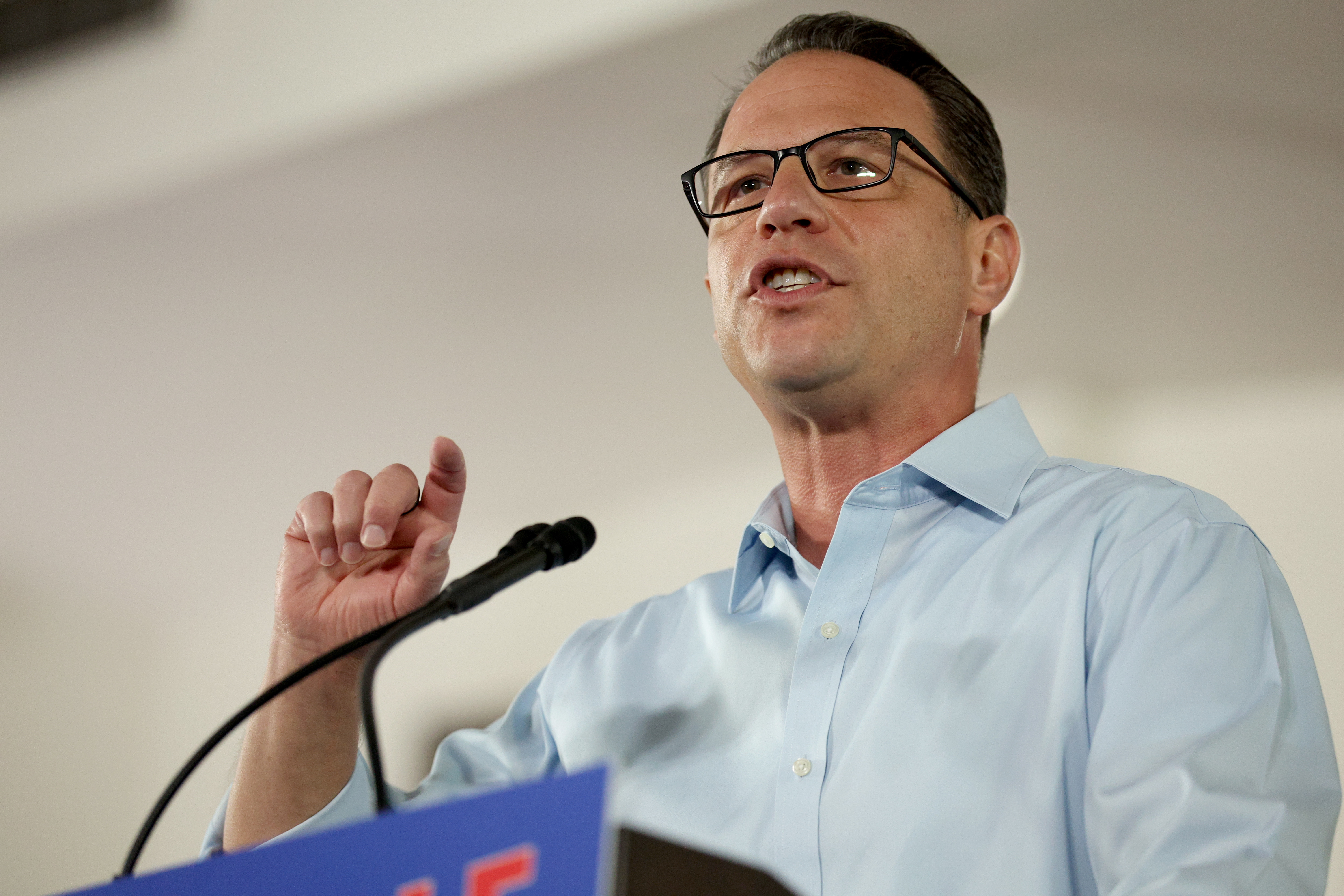
    Josh Shapiro: The popular Pennsylvania governor has had a relatively low-profile summer compared to other candidates on this list. He appeared in a music video. He has declined to take sides on the progressive-versus-centrist split in the party (at least for now). His breakout moment may be coming. He’s up for reelection in November and is trying to help Democrats take back control of the House by helping his party win four of the most competitive races in the nation, all in his state.

    Alexandria Ocasio-Cortez: Democratic socialists are having their own moment. After helping elect New York City’s mayor earlier this year, they and the broader progressive movement ousted longtime members of Congress in deep blue cities and won a hard-fought primary in Michigan. Ocasio-Cortez, a congresswoman from New York, was one of the first members of the Democratic Socialists of America to win federal office, and she’s an obvious pick for the broader progressive movement to get behind if she runs for president. She hasn’t ruled it out, though she could also run for Senate.

    Mark Kelly: The senator from Arizona has emerged as a forceful pushback against his party’s turn to the left. He’s also a candidate some Republicans say scare them: He’s a former astronaut (at a time when astronauts are cool again) and an astronomical fundraiser from a swing state.

    Pete Buttigieg: President Joe Biden’s transportation secretary is cited by Democrats as one of the party’s best messengers and another young candidate who can catch fire. Despite not currently holding office, he’s near the top of several polls of Democratic primary voters.

    The middle of the pack

    Any other number of governors: JB Pritzker, the billionaire governor of Illinois, has urged his party to focus more on economic issues than Trump: “You don’t win elections talking to the public about democracy,” he said.

    Kentucky’s Democratic governor Andy Beshear has been pitching himself as someone who can turn rural America against Trump. When Sen. Mitch McConnell (R-Kentucky) was hospitalized for weeks without many updates, Beshear demanded McConnell prove his “capacity to serve” or resign his seat.

    Jared Polis is on his final year as governor of Colorado. He’s a wealthy businessman who has received some credit for turning a reddish state more blue. He recently shocked his party by commuting the prison sentence of former election official Tina Peters, who was convicted on charges tied to Trump’s efforts to stay in power after losing the 2020 presidential election.

    No longer on our list is Gretchen Whitmer. This year marks her final term as governor of Michigan, and she’s repeatedly indicated she’s not interested in running.

    Any other number of U.S. senators: Sen. Cory Booker of New Jersey is a fiery presence in the Senate. Last year he broke the Senate record for the longest individual floor speech. This month, in a committee hearing he declared Republicans’ food stamp cuts as “effing ridiculous.”

    Sen. Elissa Slotkin of Michigan, one of the few women on this list, served combat tours as a CIA analyst and represents a swing state. She’s crisscrossing the Midwest to connect with voters. The centrist could play an interesting role in trying to help left-wing Democrat Abdul El-Sayed win the state’s other Senate seat in November.

    Sen. Chris Murphy of Connecticut has been a prominent Democratic voice on foreign policy for many years. Like many candidates on this list, he’s been critical of Israel’s violence in the Gaza Strip. He also made headlines recently saying he’d support a “bad deal” with Iran to end the war.

    “There’s only a couple of Democrats that are thinking of running for president that have won red states,” Sen. Ruben Gallego of Arizona said recently. “I’m one of them. There’s only a couple of Democrats that can speak to working-class America, especially Latino men. I’m one of them.”

    Rahm Emanuel: The former Chicago mayor was previously President Barack Obama’s chief of staff. Emanuel is leaning hard on policy. He outlined a proposal for Israeli-Arab peace while traveling to Israel last month. Back home, he’s proposed a national social media ban for children, a mandatory retirement age for federal politicians and judges, and bringing back accountability systems for teachers.

    Ro Khanna: The congressman from California has the eye of some progressives for being one of the first voices in the House to speak out against Israel’s military action in Gaza, for playing a leading role in bringing the Justice Department’s Jeffrey Epstein files to light, and for being willing to regularly go on Fox News.

    The dark horses

    A celebrity or other political figure: ESPN commentator Stephen A. Smith is considering a run as a centrist. United Auto Workers president Shawn Fain is popping up as a possibility among some on the left.

    Democrats I’ve talked to say to leave room for surprise candidates. “There may be someone running we’ve never thought of,” Anzalone said.

  • Record El Niño to give Earth a preview of its warmer future

    Record El Niño to give Earth a preview of its warmer future

    This year’s record-smashing El Niño will do more than just shift and enhance patterns of heat, extreme rainfall and drought around the world.

    It will also give the planet a preview of the late 2030s.

    That’s because this El Niño will act like a climate time machine, temporarily pushing global temperatures to levels that might not otherwise be reached for another decade or so.

    According to an analysis by climate scientist Zeke Hausfather that was shared with The Washington Post, there’s around a 95 percent chance that 2027 will become Earth’s hottest year on record — soaring past the last record in 2024 — because the combination of El Niño and climate change could spike global temperatures to around 1.76 degrees Celsius (3.17 degrees Fahrenheit) above preindustrial averages.

    Described as “stunning” by Hausfather, who researches and analyzes the climate for Stripe, Carbon Brief and Berkeley Earth, this value would be so far above the warming trend of the last decade that it could bring global temperatures to levels not otherwise expected under that trend until around 2037.

    “I’m not sure folks have realized just how crazy the second half of 2026 and 2027 will be for global temperatures — on the back of a record-smashing El Niño event,” wrote Hausfather on X.

    It’s currently close to a coin flip whether or not 2026 would become the warmest year on record, according to Hausfather’s analysis, which considers the average of several different temperature datasets. It’s possible that 2026 sets a record in some, but not all, of these datasets.

    Jim Hansen, director of the Program on Climate Science, Awareness and Solutions at Columbia University, said he expects 2026 to become the warmest year, but to only hold that crown until 2027 exceeds it.

    There is a much stronger signal for record warmth in 2027 because increasing air temperatures caused by El Niño lag slightly behind increasing ocean temperatures.

    A global temperature of 1.76 degrees Celsius above preindustrial levels in 2027 would be about 0.29 degrees Celsius higher than what’s expected based on the warming trend of the past decade.

    According to Hausfather’s temperature predictions for next year, the middle 50 percent of forecasts range from 1.67 degrees Celsius to 1.85 degrees Celsius above the preindustrial average.

    At the high end of that range, global temperatures in 2027 would jump roughly 13 years ahead of the recent warming trend, reaching levels that might otherwise become typical around 2040. The low end would represent a 7-year-boost, to around 2034.

    Hausfather said that this El Niño event is happening on top of a “strong acceleration in the rate of warming associated with continued emissions of greenhouse gases.”

    Both Hausfather and Hansen also mentioned that decreasing atmospheric aerosols — which have historically offset some warming — are contributing to the acceleration in warming.

    Although Hausfather expects 2028 to be cooler than 2027, he added that “human emissions are adding a permanent El Niño worth of heat to the climate system each decade.”

    In other words, global temperatures in 2027 will take a big but temporary upward stairstep, and they are unlikely to permanently continue at or above those levels for now.

    These temperature increases will also have consequences for atmospheric water vapor. Because the water vapor-carrying capacity of air increases at a rate of 7 percent per degree Celsius, it’s possible — if not likely — that 2027 also sets a new global moisture record, surpassing 2024. In 2025, The Post mapped the planet’s rising moisture zones and showed how they are closely connected to an increasing risk for rainfall extremes.

    The role of El Niño

    During El Niño, huge stores of ocean heat from the western Pacific spread eastward, eventually reaching the west coast of South America. Thunderstorm activity shifts with that warmth, transferring heat from the ocean and pumping it high into the atmosphere. Winds and atmospheric circulation then redistribute that heat beyond the tropical Pacific and around the globe, raising global temperatures.

    That’s why strong El Niño events often appear as an upward stairstep in long-term plots of global temperatures.

    But this El Niño isn’t just going to be strong. Boosted by the planet’s long-term warming trend, it’s probably going to dwarf the six strongest that came before it in 2015, 1997, 1982, 1972, 1888 and 1877 — the latter contributing to a global famine that caused 3 to 4 percent of the global population to perish.

    Ocean temperatures in the central equatorial Pacific, where El Niño’s strength is measured, have already broken records for 75 days straight.

    That streak isn’t expected to end anytime soon.

    Temperatures in the equatorial Pacific Ocean may surge more than 4.0 degrees Celsius above average (7.2 degrees Fahrenheit) by December, breaking the previous record by more than a degree Celsius.

    The Post is tracking these records on a regular basis — and mapping the potentially significant weather ripple effects — in an El Niño tracker.

    Those weather effects will vary from place to place.

    But the temperature spike will briefly push the entire planet into its warmer future.