Tag: no-latest

  • Prescription drug prices record sharpest drop in more than 60 years

    Prescription drug prices record sharpest drop in more than 60 years

    Prescription drug prices recorded the biggest year-over-year drop in more than 60 years in July, a startling reduction experts chalked up to an array of factors, including more generics and discount GLP-1 weight-loss drugs.

    While overall costs for medical services continued to rise, prices for medicinal drugs fell 2.7% over the 12 months ending in July, the largest annual drop on record, according to Bureau of Labor Statistics data released Wednesday. Prescription drugs, part of the medicinal drug category, fell by 3.1%, the steepest annual decline since March 1963.

    The White House took credit for the good news, saying President Donald Trump’s efforts to slash drug prices were working. Some experts said a Biden-era policy that requires Medicare to negotiate prices for some popular prescription drugs is more likely to be driving down costs.

    The drop in prescription drug prices is one of the few bright spots in the U.S. Consumer Price Index, which provides a snapshot of inflation. “Just what the doctor ordered!” Renaissance Macro, an investment research company, posted to X on Wednesday.

    Inflation has been running high for more than five years, sparked by the economic disruptions of the coronavirus pandemic and Washington’s response to it. More recently, prices have been rising because of energy pressures fueled by the war with Iran.

    Prescription drug prices, on the other hand, have slid sharply over the past six months, Renaissance Macro said, at a seasonally adjusted annual rate of 6.6% — “the sharpest six month drop on record.”

    While the results are stark, teasing out the cause is complicated, independent experts said.

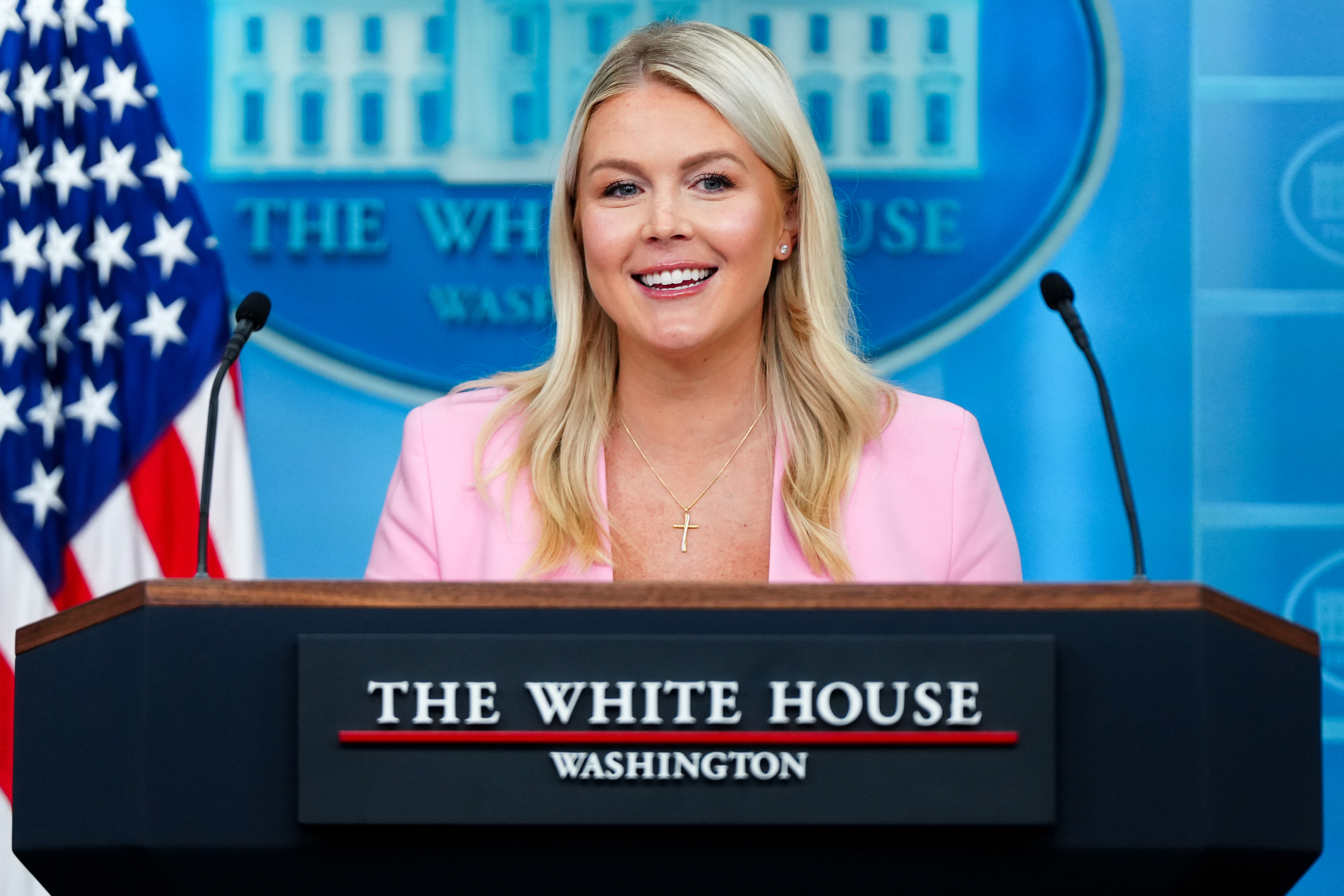
    President Donald Trump has long pledged to bring down prescription drug prices, and the White House made the case Wednesday that the president’s pricing agreements with drug companies and a new initiative, the direct-to-consumer site TrumpRx, are responsible for the lower prices.

    “No president in modern history has been able to drastically reduce prescription drug prices across the board except for President Trump,” White House spokesperson Kush Desai said in an email. “This is a direct result of the President’s willingness to push the envelope with bold policies that actually put Americans and America First.”

    White House officials pointed particularly to the costs of GLP-1 weight-loss drugs, which Trump calls the “fat drug.” TrumpRx, which launched earlier this year, offers GLP-1 drugs for as low as $150 for a starting dose. And under a Medicare pilot program that the administration launched in July, drugmakers Novo Nordisk and Eli Lilly agreed to charge the government just $245 a month for their products, Wegovy, Zepbound, and Foundayo.

    Monthly prices charged to insurance companies previously had topped $1,000. Trump and the drug companies began negotiating last year and announced the rough outlines of the deals in November.

    “In a matter of months, we got up and running these discounts in a way that they were meaningful for American patients,” said a White House official, speaking on the condition of anonymity because administration staff are not authorized to speak publicly.

    But bigger trends in the GLP-1 marketplace were already driving down prices independent of Trump’s negotiations, according to experts on drug pricing. Spotty insurance coverage for Wegovy and Zepbound for weight loss has produced enormous demand for lower consumer prices. And cheaper compounded drugs have posed genuine competition for the brand-name companies, adding even greater downward pressure.

    Richard Frank, a senior fellow at the Brookings Institution and a professor emeritus of health economics at Harvard University, said he doubts Trump’s initiatives are behind the drop in drug prices.

    “If I was a betting guy on what mattered most, it would be probably stuff around the Inflation Reduction Act,” Frank said, adding that Trump’s efforts “wouldn’t be where I’d place my money.”

    The Inflation Reduction Act was a signature accomplishment of former President Joe Biden, a sprawling measure enacted in 2022 that aimed to lower prescription drug prices by requiring Medicare, the federal health program for the elderly, to begin negotiating the prices it pays drugmakers for an array of popular and costly prescription drugs.

    The first price reductions took effect at the beginning of this year. Using 2023 prices as a benchmark, the Centers for Medicare and Medicaid Services has estimated taxpayer savings of $6 billion from that first round.

    The Trump White House argues that the Inflation Reduction Act gets too much credit for lowering prices, in part because it took four years to take effect.

    Stacie Dusetzina, a health policy professor at Vanderbilt University, said the Inflation Reduction Act is a more plausible contributor to the decline in prices than Trump’s initiatives.

    While only 10 drugs have had their prices negotiated so far, they are commonly used ones “and their prices would likely be reflected in the prescription drug index,” she said via email. TrumpRx, on the other hand, covers “a limited number of branded drugs,” Dusetzina said, and “aside from GLP1s, they may not be high enough volume to be included.”

    Dusetzina said another Trump policy — most-favored-nation pricing, which ties U.S. prices to lower ones paid abroad — could not explain the drop in prices either, “as the models that are supposed to use this form of pricing haven’t even launched.”

    The Bureau of Labor Statistics category for prescription drugs does not track what drug companies charge. It tracks how much a pharmacy actually receives when it fills a prescription. That means it includes a customer’s payment at the counter plus whatever is paid by their private insurance or by Medicare Part D, the program that pays for drugs picked up from a pharmacy.

    A drop in this index does not necessarily mean drugmakers have cut their prices. It can also reflect insurers and Medicare striking better deals or people switching to cheaper drugs.

    Which brings up another, less glamorous source of lower prices: generics. When a brand-name drug loses patent protection, BLS waits about six months, swaps the brand in its sample for the cheaper generic and records the difference as a reduction in price.

    A wave of blockbuster drugs lost exclusivity over the past year, and Dusetzina said that could be pushing the index down — “especially if the drugs were commonly filled.”

  • Chatbots are doing the work of Congress with little oversight

    Chatbots are doing the work of Congress with little oversight

    The amendment was one of hundreds filed this summer to an annual defense bill making its way through Congress. Along with her proposed change, Rep. Anna Paulina Luna’s office had sent a summary of what it would do.

    But the first line made no sense.

    “increasing example specific factors. Identical to H.R. 100 (118th Congress).11:25 AM????Claude responded:”

    One of Luna’s staffers had copied a chatbot’s answer — time-stamp and all — and pasted it into the public record of the National Defense Authorization Act.

    As a screenshot of the garbled text circulated on social media, the Florida Republican was nonchalant.

    “Not a shocker,” she wrote. “Most staff use it.”

    Asked later about the incident, Luna went further. “A lot of staff will use ChatGPT, Claude, Grok. I personally like Grok better, but my staffer prefers Claude,” she told The Washington Post. “I’m not gonna knock him for that. There’s nothing illegal about him doing a summary.”

    Across the Capitol, lawmakers and staffers are using artificial intelligence to write speeches and news releases, sort constituent mail, prepare questions for congressional hearings and draft amendments.

    Even as politicians are debating how to govern AI for the rest of America, Congress has already settled how it will use the technology: quickly, broadly and with little oversight.

    Both chambers have cleared members and staff to use chatbots — Copilot, ChatGPT, Gemini and, in the House, Claude — for official work, with more under review. The House bought 6,000 Microsoft Copilot licenses last year and encouraged staff to use them.

    Having someone else put words in a lawmaker’s mouth is nothing new. For almost as long as Congress has existed, staffers have been ghostwriting speeches for their bosses. But a speechwriter can be summoned or fired. Chatbots are products built by the tech companies lawmakers are in charge of regulating.

    Amid the rapid adoption of AI on the Hill, lawmakers face a key question: How much of their responsibilities are they willing to hand over?

    Interviews with more than two dozen lawmakers and staffers — some of whom spoke on the condition of anonymity to discuss internal operations — along with internal House and Senate policies obtained by The Post, show that the institution has left that question largely unanswered. The few House and Senate rules that exist are poorly understood and seldom enforced. In practice, AI use is left up to the hundreds of individual congressional offices to settle for themselves. It’s not clear how many offices have internal written policies on AI.

    And no one The Post asked knew of any instance where a staffer was formally disciplined by the House or Senate for breaking its rules.

    Luna was right. There was nothing illegal about having AI edit, spell-check — or even write — legislative materials. It wasn’t against House rules, either.

    Her staffer’s only mistake was letting Claude sign its work for others to see.

    Congress’s newest staffer

    Sen. Tommy Tuberville has found a new way to pass the long drives across Alabama: talking to ChatGPT.

    He asks it about Medicare and Medicaid, and listens as the machine’s voice talks back.

    “It’s kind of like you can sit there and talk to an expert,” said the Alabama Republican. “You don’t know whether or not they’re 100 percent correct. But they put you on the right path.”

    Rep. Mike Flood (R-Nebraska) said he consulted a chatbot while working on a bipartisan housing bill that passed this year, asking it where private equity was buying up single-family homes. Sen. Elizabeth Warren (D-Massachusetts), who has proposed stricter legislation on tech companies, uses ChatGPT to look up demographic information.

    One GOP staffer’s boss uses chatbots to generate the occasional cartoon of himself, she said with a laugh. Her explanation: “He’s a boomer.”

    But the real power users are the thousands of staffers who do most of Congress’s work.

    Earlier this year, Rep. Cleo Fields (D-Louisiana) had a town hall coming up in Natchitoches, a city in his district that his press secretary didn’t know well.

    So that aide, Sydney Broome, asked Claude for a list of TV stations in town, its newspapers, and reporters’ names and contacts. Then, she started calling each one.

    At 22, Broome is the youngest full-time staffer and only press secretary for Fields. AI saves her three or four hours of work a week, she said. Her boss does not use it at all.

    ChatGPT first emerged when Broome was still in college. Her professors, unable to stop students from using AI, urged restraint and ran their assignments through AI detection. Students could use it for research, they warned, but never to write from scratch.

    Congress has no such checks. So Broome has imposed them herself.

    She’ll use Claude to find a reporter’s email, but not to write to them. She doesn’t use it to produce anything in her boss’s name. “That’s just kind of a bit of a gray area,” she said.

    Many staffers say they are aware of AI’s limitations. The tools occasionally invent nonexistent bills. Other times, the writing is formulaic and clunky. Still, chatbots help speed up their work.

    A GOP aide in another office said he uses Copilot to write appropriations amendments. The subcommittee he works for used AI to suggest witnesses for a hearing and to help generate the questions lawmakers should ask them.

    Another Republican aide has taken AI even further. He exported all his phone contacts and text messages — years of conversations — into a personal Claude account and told it to build a database of every reporter he has ever dealt with: what he pitched them, which ones they accepted, which exchanges went badly. The chatbot auto-updates itself with each new conversation.

    Recently, his boss wanted to do a TV interview about surveillance law. The aide asked Claude whether he had ever pitched a TV booker on that topic and how it went. It came back instantly with a contact.

    Claude also runs that staffer’s office’s communications budget — the taxpayer-funded mail and ads sent to constituents. “I don’t really have to touch the data in Excel much anymore,” he said.

    The aide said he’s not sure what exactly is permitted by congressional rules. “You’re still not supposed to put constituent data into AI,” he said. “There are weird things around where the rules are. I don’t know all of them.”

    When nobody’s looking

    In 2024, the House Administration Committee convened a private, bipartisan meeting with House officers and outside AI experts to talk through how far to let AI into the legislative process. About 150 chiefs of staff attended.

    Out of it came the first AI guidance for Capitol Hill.

    Internal House and Senate policies obtained by The Post and interviews with people familiar with them show how Congress has embraced the use of AI.

    Last summer, the House bought 6,000 Copilot licenses. The tool was a natural fit for a chamber that already ran on Microsoft and a more secure way to keep congressional work inside a single system, officials believed. Starting in January, offices could sign up for access.

    They came with a major guardrail built into the system: Copilot is designed to refuse political requests. Ask it to criticize a party, politician or political group, and the machine declines.

    “I can’t create content that criticizes or condemns political parties, politicians, or political groups,” read one Copilot response shared by a staffer. “That includes writing tweets that attack Democrats, Republicans.”

    Roughly half the licenses are now in use, and House officials have extended the deal.

    The rules Congress wrote for itself are loose. Off limits under current House guidance: putting sensitive material such as constituent information into a chatbot, generating deepfakes, making personnel decisions and finalizing legislation.

    A machine may help write a bill but may not be the last hand on it. It may draft a reply to a constituent but can’t be told who the constituent is.

    In theory, a staffer breaking those rules can be stripped of access to AI tools, suspended, fired, even fined and imprisoned.

    But no one could name a single case of that happening. People familiar with House operations said they’re not aware of any enforcement action by the chief administrative officer. A spokesperson for the CAO said the office can’t comment on potential enforcement actions. A spokesperson for the Senate sergeant at arms didn’t respond.

    Catching violations largely falls on staffers, who would have to report a colleague, or themselves.

    Most said in interviews that they don’t know the rules. A former senior Republican House staffer said that his office subscribed to both ChatGPT and Claude and that staff used them however they liked. He wasn’t sure what the rules were, or whether his team followed them. “We just had a free-for-all,” he said.

    The House and Senate encourage individual offices to implement their own written AI policies. If a House office wants Copilot, in theory, it must have a policy in place.

    One reason Congress has moved so quickly to adopt AI tools is to keep pace with the executive branch, said people familiar with internal House operations. The Trump administration has spent the past year and a half pushing AI into every corner of the government.

    “If we are not keeping pace with how the executive branch is functioning,” one person said, “then we’re not performing effective oversight.”

    AI for everything

    The new frontier has left some lawmakers pondering how to proceed.

    “We want to make sure we’re using AI, and AI isn’t using us,” said Rep. Jamie Raskin (Maryland), a constitutional law professor and the top Democrat on the House Judiciary Committee.

    Sen. Elissa Slotkin (D-Michigan) recently worked with her staff on a new policy for her office. They can use AI to “enhance and streamline” work but not to generate “final products” — like floor speeches or public remarks. They have to take AI training. Nothing with personal information about constituents or the senator can be uploaded. And her office is holding unannounced “spot check” inspections.

    “We didn’t want to prohibit the use of the newest tools, but we also didn’t want absolute schlock showing up in my memos,” Slotkin said. “What I’m not willing to do is put my head in the sand and pretend that my young staff aren’t going to find new and interesting ways of doing this.”

    In recent months, one Democratic staffer said his office has been exploring something new: feeding AI his boss’s past statements so the tool can write in the lawmaker’s voice. He heard another office was pulling it off and wanted to try himself.

    In the same building, a GOP press secretary whose office has stricter AI limits said it’s unfair other offices get an advantage. “We could churn out so many op-eds if we were more comfortable with AI,” she said.

    Recently, she found her own press assistant using AI in violation of their office’s policy. “We had to have a very robust conversation about how not to use AI for things in [the boss’s] voice,” she said.

    A preview of what more rampant AI use could look like already exists in state legislatures — many of which have no rules or policies at all.

    Amber Hulse serves in the South Dakota state Senate, where money is tight and lawmakers have no full-time staff. Hulse, a Republican, uses AI for almost everything — policy research, constituent email, speeches, writing legislation.

    Lately, she said, the signs of AI’s effects are getting easier to spot.

    “It’s funny,” Hulse said, “how your ears will start to pick up on the floor someone who’s giving a speech that was very clearly written by AI.”

  • What doctors want you to know about ‘catch-up’ sleep

    What doctors want you to know about ‘catch-up’ sleep

    You’ve spent Monday through Friday running on five hours of sleep, working late nights, and waking up early just to do it all over again. On Saturday, you get 12 glorious hours of shut-eye and feel instantly refreshed when you wake up. You’re all caught up on your sleep, right?

    Actually, not quite. The idea that a single morning or weekend spent logging extra hours in bed can wipe away a week’s worth of sleep deprivation is one of the most persistent sleep myths out there.

    Here’s what sleep experts wish everyone understood about how “catch-up” sleep actually works and why your z’s can’t just be topped off like a gas tank.

    Sleep debt explained

    Sleep debt is essentially the difference between how much sleep your body needs and how much it gets, according to Kimberly Fenn, professor of cognition and cognitive neuroscience at Michigan State University. Put another way, it is the cumulative amount of lost sleep an individual has experienced.

    In general, you should aim to get at least seven hours of sleep each night, and most people need between seven and nine hours of sleep to function well the next day, said Ulysses Magalang, board-certified physician and director of the Sleep Medicine Program at Ohio State University. The ideal amount for you is whatever allows you to wake up feeling rested and like you have enough energy to make it through the day, according to Fenn.

    Each night you don’t sleep a sufficient amount, it adds to the “debt,” Fenn explained. For example, if you need eight hours of sleep every night to feel your best and on Sunday night you sleep for only six hours, on Monday, you’ll have a debt of two hours. If this pattern continues all week, then by Saturday, your cumulative amount of sleep debt would be 10 hours.

    Short-term side effects of not getting enough shut-eye include tiredness, trouble concentrating, difficulty paying attention, irritability, and memory impairment, Magalang said. Long-term sleep deprivation is associated with health issues such as a weakened immune system, high blood pressure, heart disease, stroke, increased inflammation, cognitive impairment, and insulin resistance, according to research.

    There’s also some evidence to suggest that people who consistently get fewer than six hours of sleep each night have shorter lifespans than those who get more than six hours of sleep each night.

    Why catching up on sleep isn’t the best strategy

    While you might feel refreshed in the short-term after a morning of sleeping in, changing your bedtime and wake-up time drastically can make you feel even groggier or more fatigued, according to Fenn. “Sleep consistency is important for feeling well rested, and straying too far off course can throw off your internal clock,” she said.

    She emphasized that maintaining the same bedtime is especially important. If you go to bed at your normal time but have accumulated sleep debt, you can let yourself sleep an additional hour or so in the morning.

    “Typically, due to the strength of the circadian rhythm, unless there are other factors involved — like alcohol or other drugs, or extreme sleep loss — most people won’t sleep more than an hour past their habitual wake time,” Fenn said.

    But your health might still be compromised, depending on the severity of your sleep debt, according to Fenn. For instance, a small 2019 study in Current Biology found that a weekend of recovery sleep isn’t a good way to prevent the metabolic damage associated with chronic sleep deprivation.

    “We know that sleep deprivation is associated with high blood pressure, but there’s really no definitive study that says if you have developed high blood pressure [due to chronic lack of sleep], and then you lengthen your sleep, your high blood pressure will be reversed,” Magalang added.

    Additionally, sleep consistency is just as important for your health as the amount of sleep you get, according to Magalang. Sticking roughly to the same bedtime and wake time daily is essential for aligning your body clock, or circadian rhythm, which moderates everything from hormone levels and metabolism to digestion. One large study found that people with the most irregular sleep schedules were 26% more likely to experience a major cardiovascular event, including heart attack and stroke. Another linked irregular sleep to a higher risk of early death compared to those with consistent routines.

    What to do instead

    The best way to combat the health effects of sleep deprivation, according to both experts, is to do your best to aim for that sweet spot of seven to nine hours of shut-eye each night. Prioritizing sleep isn’t always possible though, Fenn acknowledged.

    If you do have a few nights where you can’t get the sleep you need and find yourself craving a sleep-in to make up for it, a 20-minute nap during the day can be an effective way to power through the day and maintain your consistent sleep and wake time, according to Fenn.

    “This length is considered optimal because it’s sufficient to increase energy, mood, and attention, but is typically not long enough to get into deep sleep,” Fenn said. With lengthier naps, there’s a high probability that you’ll wake up in the midst of deep sleep and experience sleep inertia, which is a state of grogginess and reduced cognitive and neuromuscular function, she said.

    “That’s why people say that they awake from a nap more tired than they started,” she said. “Being in a state of sleep debt also increases sleep inertia, so taking a long nap after insufficient sleep is even more problematic.”

    Sleep is like any other biological necessity — if you skimp on it here and there, you’ll probably be fine in the long term, Fenn said. Your body is resilient and will find ways to manage and forge ahead. But being sleep-deprived for months on end is going to do some serious damage, she said, which is what you want to try to avoid as best as you can.

  • Letters to the Editor | Aug. 13, 2026

    Letters to the Editor | Aug. 13, 2026

    Two-state solution

    Hurrah for Jonathan Zimmerman’s recent column on the settlement of an antisemitism lawsuit by Haverford College. As a Jew, a supporter of Israel, and a strong opponent of Benjamin Netanyahu’s domestic policy vis-à-vis the Palestinians, Zimmerman has given voice to many of us. When Palestinians say “From the river to the sea,” it sounds a lot like a sentiment expressed by Netanyahu’s supporters — but it has a different meaning. My personal support for a two-state solution does not make me antisemitic or anti-Zionist.

    William Eisen, Philadelphia

    Remember when

    I’m 67 years old, and these are the things I remember. I remember when gambling was considered a vice and a moral failing. Now I can gamble on pretty much anything. And I’m encouraged to do so by celebrities and athletes.

    I remember when Congress would present legislation to the president, and he would sign it into law. Now we have a Congress that puts forward no new legislation and seems completely content to let the president govern through executive orders. That is not democracy; that is dictatorship.

    I remember a Congress and Supreme Court that fulfilled their roles as powers equal to those commanded by the White House. I now see a Congress and Supreme Court more interested in appeasing the current president than in doing their jobs.

    I remember a time when the president acted … well, presidential. We now have a president who lies constantly and denigrates and vilifies anyone who disagrees with him.

    I miss those times.

    Barry Muth, Willow Grove

    Grid strain

    Your editorial calling for a pause on new data centers has the problem right. Auditors blamed 38% of a recent energy price increase on data center demand. That was $6.3 billion, and it lands on my bill and yours without anyone asking.

    But a pause treats the symptom. We are adding enormous demand to a grid we have stopped building.

    Look at what else happened this year. The federal government paid about $4 billion to energy companies to cancel offshore wind projects, including $1.2 billion to RWE this month, with the money redirected into liquefied natural gas. We are spending public funds to keep power off the grid. Then we act surprised when power gets expensive.

    China added more than seven times the solar capacity we did last year, and close to 15 times the wind. It now has twice as much wind and solar under construction as the rest of the world combined. Whatever you think of the AI boom, the country that can generate the electricity is going to host the industry.

    So we have managed the worst of both worlds. We block the demand, and we cancel the supply. One of those is a local decision made by neighbors trying to protect each other. The other is a national decision made by people who do not pay our electric bills.

    Barry Vernick, Philadelphia

    Join the conversation: Send letters to letters@inquirer.com. Limit length to 150 words and include home address and day and evening phone number. Letters run in The Inquirer six days a week on the editorial pages and online.

  • Dear Abby | Late husband’s unknown, oldest daughter makes contact

    DEAR ABBY: I have been widowed for seven years. My husband served in the Air Force in Saigon during the conflict in Vietnam. We met and married shortly after he returned from his hitch overseas. We had two daughters together.

    Recently, my older daughter was notified through social media that she has a half-sister, “Leiba,” from a woman her father knew in Vietnam. They agreed to meet this weekend for lunch at a local restaurant.

    My daughter asked if I would accompany her to this meeting. I told her that while I had no qualms about finding out he had a child with another woman, I didn’t see any point in my being there to meet her. There is no connection there for me, and I would feel uncomfortable in the situation. Am I wrong for not going with my daughters to this luncheon?

    — UNRELATED IN SOUTH CAROLINA

    DEAR UNRELATED: Although you feel no connection to your late husband’s love child, Leiba is related to your daughters. If they choose to develop a relationship with their half sister, you cannot ignore her existence forever. Your daughters may be asking for your support. If you decide to go, do it for them.

    ** ** **

    DEAR ABBY: My son and his partner have lived together for more than 10 years. During this time, his partner’s parents and sister have visited my state numerous times. They have stayed at my lake house, in my condo and another home I own. Yet, in all this time, I have never met them (and I have tried to).

    Only once did I receive a thank-you note on my mantle at one of my homes. When they come into town, it’s almost like they deliberately avoid meeting me. Is this something I should address with my son and his partner? At this point, I feel hurt.

    — USED IN THE MIDWEST

    DEAR USED: Should you address this with your son and his partner? Of course you should. In fact, you should have done it the first time you were asked to let these people live in one of your dwellings. Do you really want to continue having strangers vacation in your homes? Because that’s what they have chosen to make themselves, it may be time to roll up the welcome mat.

    ** ** **

    DEAR ABBY: I have a daughter, “Imogen,” who has been married to her narcissistic and controlling wife, “Brianna,” for 20 years. Imogen’s relationships with me, my husband and her sister have been entirely dictated by Brianna. We’re not allowed in their house, her calls are made from the car, I have not been invited to birthday parties for their two boys, and I’m told not to attend my grandson’s swimming competitions if Brianna is in the building.

    Two attempts at divorce by Imogen were unsuccessful, the last one having been a month ago. Imogen appears to be willing to accept verbal abuse and non-negotiable demands from her wife, interpreting the control as caring behavior. This cultlike existence has resulted in resentment and disappointment. I’m at a loss as to how to help my daughter extricate herself from a life of dysfunction and dependency. Any advice would be appreciated.

    — WORRIED MOM

    DEAR MOM: Your daughter will not leave Brianna until she’s ready, but that doesn’t mean you should give up. Avoid criticizing Brianna directly but continue to ask Imogen how Brianna’s controlling actions make her feel. Getting her to think along those lines may lead her in the right direction. Above all, make sure she knows about the National Domestic Violence Hotline at 1-800-799-7233, and remind her that controlling behavior is a form of violence.

  • Horoscopes: Thursday, Aug. 13, 2026

    ARIES (March 21-April 19). A stubborn problem seems to resist your efforts to solve it. Consider setting this one aside for a while. Let time do some of the work. Circumstances will shift and with them, the light. New illumination will make the solution obvious.

    TAURUS (April 20-May 20). You know your schedule fits your life when an interruption doesn’t ruin the whole day. Real life has surprises, messes, opportunities and spontaneous fun too good to pass up. Part of being a real person is leaving room for real life.

    GEMINI (May 21-June 21). Words can be imperfect containers for thoughts. Before assuming someone understands you, consider what they actually heard. Curiosity, patience and a well-placed question can bridge the language gap.

    CANCER (June 22-July 22). It’s a fine day to, as Ralph Waldo Emerson suggested, “Chant the beauty of the good.” Noticing good is one thing; chanting it implies a magical or spiritual level of focus on the matter. You’ve definitely got it in you.

    LEO (July 23-Aug. 22). The buffet looks better today. Funny thing: It’s mostly the same spread that’s been there all along. You’re simply hungrier, which has a way of widening the range of your pallet and making it all more delicious.

    VIRGO (Aug. 23-Sept. 22). Success is the ultimate revenge. You’re certain to get to where you want to be. In the meantime, you are owed some justice. What would that look like? You move in the spirit of fairness today.

    LIBRA (Sept. 23-Oct. 23). Life often unfolds to cast people in roles they didn’t aim for and jobs they didn’t apply for. Don’t assume people like where they are at. If you knew you were dealing with someone making the best of something unpreferred, how would you proceed?

    SCORPIO (Oct. 24-Nov. 21). You don’t have to figure everything out alone. Today, other people will be your mirror, and flattering ones, at that. Their reactions, encouragement, questions and enthusiasm show you what you can’t easily see by yourself.

    SAGITTARIUS (Nov. 22-Dec. 21). You already have courage, and you’d also like to have some assurance that whatever you get into, there will be a way out. Indeed. Either back out slowly or run through swiftly.

    CAPRICORN (Dec. 22-Jan. 19). Two people can walk through the same disappointment and tell completely different stories about it. Notice the story you’re telling yourself. A small shift in interpretation could make the whole experience a blessing, a breakthrough or a boon.

    AQUARIUS (Jan. 20-Feb. 18). You love to learn, which is something completely different from cramming for a test to retain information long enough to pass. You’ll do what you have to do so you can do what you want to do.

    PISCES (Feb. 19-March 20). It’s a good thing you are working for the cause, not the credit, because the accolades will be delayed. You may even receive skepticism or criticism before they arrive. But in the meantime, your cause will be well-served.

    TODAY’S BIRTHDAY (Aug. 13). It’s your Year of the Silk Road. Once an ancient trade route linking distant worlds, it carried spices, stories, fortunes and remarkable friendships. Your own world expands in much the same way as you follow a distant calling. More highlights: with international connections, a passion project that pays, and a collection of supporters, admirers and unforgettable nights. Leo and Pisces adore you. Your lucky numbers are: 14, 30, 7, 19 and 2.

  • Earthquake response strains Colombia’s new government and rescuers as they race against the clock

    Earthquake response strains Colombia’s new government and rescuers as they race against the clock

    PEREIRA, Colombia — Tons of aid from regional partners began to roll into Colombia on Wednesday, as the search for survivors in the rubble of powerful earthquake grew more desperate after the temblor razed buildings, buckled roads, and crushed cars.

    The devastation has tested Colombia’s new president, Abelardo de la Espriella, and his government as it scrambles to respond to the disaster and civil society as it pushes to provide aid to the most affected communities.

    Colombian forensics authorities said Wednesday that more than 227 people died in the 7.4 magnitude earthquake that struck the country’s west on Monday. The government has been slow to provide updated tolls, and the true number is likely higher.

    De la Espriella said Tuesday that at least 181 people died and 2,595 more were injured. Local and federal authorities have reported hundreds missing, while civilian-run databases put that number at more than 4,100.

    Teams continued to pick through the rubble in the hardest-hit cities of Cali, Pereira, Manizales, and Quibdo, as time ticked away for victims to be found — and rescued — alive. Aid agencies consider the first 48 to 72 hours crucial for retrieving survivors, though that threshold can be extended if those trapped have access to food and water.

    On Wednesday afternoon, Alejandro Eder, the mayor of Cali, told reporters that rescue teams continue to find signs of people alive under the rubble and are racing to save them.

    “The next 20 hours are the most critical to find and rescue people alive,” he said. “Every minute is vital.”

    Survival takes many forms in hard-hit areas

    In Pereira, rescuers pulled Daniela Largo alive from the rubble late Tuesday, capping a complex 12-hour rescue in which crews carved a small opening in the debris to free her pinned arm and a doctor administered IV fluids to stabilize her. Wrapped in a blue blanket, the young woman was carried to an ambulance as firefighters embraced and onlookers cheered.

    Another moment was marked by mourning, as a man was pulled from a building in the same city, lifeless and covered in a white blanket.

    Across the coffee-growing region, among the areas worst affected by the quake, authorities have converted sports arenas, schools, and other public buildings into shelters for thousands of displaced Colombians.

    Ebert Jonathan Morales, a Cali resident, said his family lost everything in the earthquake.

    “My house was completely destroyed. We can’t live there,” Morales said. “It collapsed. The floor collapsed, the walls cracked. The roof came down.”

    In Pereira and Cali, families have been sleeping in parks — some fearing aftershocks or the collapse of their damaged homes, others without homes to return to.

    Colombia’s geological service has documented 130 aftershocks since the quake.

    “We have the most important things: a roof over our heads, food, water and, in my case, medical care,” said Edith Penagos, 48, who was staying with her teenage son in one of the white tents set up in a Pereira park.

    Rodrigo León Loya, a seismologist and geosciences professor at the University of the Andes, said the probability of an earthquake of a similar magnitude occurring in the same area is low but he would not rule out more seismic activity.

    “Let’s remember that Colombia is full of active fault lines,” he said. “The question isn’t whether it can happen again. The question is rather when an earthquake of similar magnitude will occur at another of Colombia’s seismic sources.”

    Aid groups provide humanitarian relief

    In many areas, including the epicenter of the quake Choco, the official response to the disaster has been complicated by the ongoing crises of deep poverty and civil warfare that has created waves of forced displacement for decades. The true impact of the earthquake in the jungled northwest remained largely unknown because cell service has been lost and many of the likely affected communities are remote, accessible only by river.

    “This earthquake compounds an already severe humanitarian situation, and there is a need for increased support for the humanitarian response,” said Giovanni Rizzo, Colombia director for the Norwegian Refugee Council.

    Many aid organizations were already on the ground in Choco supporting a 2016 peace accord between the government and leftist rebels, and responding to violence in the region involving other armed groups that has persisted since then.

    Those humanitarian workers were able to quickly pivot to disaster relief, said María José Torres, the U.N. resident coordinator in Colombia.

    “We have a presence on the ground. Therefore, our ability to be there, present with the people, I think, has increased exponentially,” Torres said in a statement Tuesday.

    Regional partners promise to help

    At the same time, aid from other countries and nonprofits abroad continued to roll in.

    The State Department posted on its website that disaster response teams started to arrive in Colombia on Monday. The U.S. has also offered over $15 million in aid.

    Mexico meanwhile said it had sent two military aircraft carrying 19.5 tons of nonperishable food and 19 members of Mexican security forces to Pereira, and it plans to send another 39 tons of aid in the coming days. A further 255 military specialists and 20 dogs are on standby to be sent to Colombia if needed.

    Salvadoran President Nayib Bukele offered to send two planes loaded with 100 tons of aid.

    On Wednesday, Pope Leo XIV thanked those contributing to recovery efforts, and said he is praying for those killed, injured, or otherwise affected by the earthquake.

    “I want to express my solidarity with my Colombian sisters and brothers who have suffered the effects of the recent earthquake,” he said.

  • CIA had ‘low confidence’ in Iranian threat before Trump switched planes in Turkey

    CIA had ‘low confidence’ in Iranian threat before Trump switched planes in Turkey

    U.S. intelligence officials were skeptical of an Iranian assassination threat against President Donald Trump that was relayed by Israel and prompted an extraordinary clandestine maneuver that saw him secretly fly out of Turkey in an alternate military aircraft, current and former U.S. officials familiar with the intelligence said.

    The assassination threat was relayed by the Israeli government to the CIA, where analysts did not view the intelligence as compelling and conveyed that skepticism to Trump administration officials, one of the officials said.

    Another official called the reports of threats against Trump’s life “Israeli-derived, not U.S.-generated, and viewed as low confidence.”

    The doubts in some quarters about an imminent threat to the president add a new element to the White House’s decision last month, first reported by the Washington Post, to shield Trump’s whereabouts as he departed a NATO summit in Ankara, Turkey, on July 8.

    As the Post first reported this week, after concerns arose about whether the new 747-8 plane gifted by Qatar had sufficient security measures to transport the president out of a potentially hostile environment, Trump boarded a legacy Air Force One in Ankara. But he secretly left that aircraft and was shuttled in an airport catering truck to a third plane, an Air Force C-32A, that flew him and a few key aides to Britain.

    The White House on Wednesday did not directly answer questions about the intelligence the United States received or how it was perceived by U.S. officials.

    “As the President has said, he has faced numerous threats on his life, including ones from Iran, and every measure is taken to ensure his safety,” a U.S. official said in a statement, speaking, like others in this report, on the condition of anonymity because of the sensitivity of the issue. “The United States Secret Service’s core mission is protecting the President, which they achieved.”

    The CIA declined to comment. The Israeli Embassy in Washington did not immediately respond to a request for details.

    Ultimately, the White House and the Secret Service appear to have decided they could take no chances.

    The Iranian threat to kill Trump and other senior U.S. officials has been a major concern since the 2020 U.S. assassination of Qasem Soleimani, the head of Iran’s Quds Force. Those worries have only grown since the killing of Iran’s supreme leader in February along with scores of other top officials at the start of the Iran war.

    Trump has survived three known assassination plots dating back to his 2024 presidential campaign, although there is no known link between any of the suspects in those instances and Iran.

    Despite questions about the Israeli intelligence, the elaborate plan enacted by the Secret Service in Ankara was done out of an abundance of caution, the first U.S. official said. “The Secret Service has had three near misses with this president, so they’re not taking any chances,” the official said. “They did what they had to do.”

    The Wall Street Journal first reported last month that Israel had shared intelligence with the U.S. government on the Iranian threat.

    The aircraft that ferried Trump from Ankara to Britain’s Mildenhall air base was escorted by F-16 fighter jets, according to two U.S. officials and other material reviewed by the Post.

    Trump, in his first public comments on the clandestine operation, said Tuesday night that the decision for him to take an alternate airplane was made by the Secret Service.

    “It’s really just up to Secret Service. I just follow what they like to do,” Trump told reporters. “They wanted me to go on a different flight, a different plane, equal safety. … I do what they say.”

    Some U.S. intelligence officials saw Israel’s sharing of the warning about threats to Trump’s life as designed less to inform than to influence the president’s decision-making and U.S. policy in the region, a current and a former U.S. official said.

    Israel views Iran as by far its most urgent near-term threat. But it views Turkey as a medium- to long-term threat and is anxious about warming ties between Washington and Ankara, bolstered by the personal rapport between Trump and Turkish President Recep Tayyip Erdogan, the current official said.

    It “fit a broader pattern of Israeli intelligence reporting that some officials see as designed as much to shape presidential decision-making as to inform it,” the former official familiar with the matter said.

    This person said he understood that Secretary of State Marco Rubio was briefed on the Israeli threat intelligence, as well as the subterfuge planned by the Secret Service, and nonetheless opted to board the legacy Air Force One, which presumably would have been a target for Iran.

    Another U.S. official familiar with the security discussions also questioned the seriousness of the threat, noting that tens of thousands of Turkish security personnel were incorporated into the NATO summit.

    Democrats have pushed the administration to provide more clarity on the extraordinary deception operation.

    “I am very curious about the extent to which the Israeli-provided intelligence was not only credible but independently verifiable,” Sen. Chris Van Hollen (D., Md.) told the Post. “I have no doubt that Iran would like to see the president gone, but this all seems a little fantastical.”

  • White House press secretary Karoline Leavitt, youngest person to hold role, to leave at month’s end

    White House press secretary Karoline Leavitt, youngest person to hold role, to leave at month’s end

    WASHINGTON — White House press secretary Karoline Leavitt, the youngest person to hold the role, will leave at month’s end, President Donald Trump announced Wednesday.

    Leavitt, 28, just recently returned to the White House after taking a brief leave for the birth of her second child in May.

    Leavitt has been one of the most visible advocates of Trump’s “Make America Great Again” movement. The Republican president described her as one of his “most trusted aides” in a social media post announcing her departure.

    He said Leavitt “will be departing her role at the end of the month so she can spend more time with her beautiful young children and family, a decision I totally understand and respect! Karoline will now be one of my top outside advisors, and an influential voice within the Republican Party, as we work to defy History, and conclusively win the Midterm Elections.”

    Leavitt recently returned to work after taking leave following the birth of her second child, a daughter, in May. She also has a 2-year-old son.

    “The truth is since returning to the White House after the birth of my daughter, I have felt in my heart that I cannot be the best mom my two young children deserve while devoting the constant time, energy, and attention required of the White House Press Secretary — and that is why I have ultimately made the bittersweet decision to depart the White House and embark on a new chapter in my life,” Leavitt said in a social media post.

    Trump did not outline plans for who might replace her in the high-profile role.

    She worked as a spokesperson for MAGA Inc., a super PAC supporting Trump, before joining his 2024 campaign. In 2022, she ran for Congress in New Hampshire, winning a 10-way Republican primary before losing to incumbent Democratic Rep. Chris Pappas.

    During Trump’s first term in office, Leavitt worked as a press aide in the White House press office. She then became communications director for New York Republican Rep. Elise Stefanik.

    Leavitt briefed from the White House press room less frequently than some of her recent predecessors. Trump, who regularly engages with reporters during White House events and during his travels, primarily deployed Leavitt to Fox News and other conservative news outlets to trumpet his agenda and take shots at Democrats and the mainstream media.

    Trump’s first-term press secretaries were Sean Spicer and Sarah Huckabee Sanders, who were known for quarreling with reporters. Another, Stephanie Grisham, never held a briefing. Her successor, Kayleigh McEnany, often lectured the news media during her appearances in the press briefing room.

  • Former Southern Poverty Law Center official charged by DOJ in fraud case

    Former Southern Poverty Law Center official charged by DOJ in fraud case

    A former top official at the Southern Poverty Law Center, a storied civil rights organization at the center of a Justice Department prosecution, was indicted Wednesday in an escalation of the case against the nonprofit, officials said.

    Federal prosecutors in Alabama accused Heidi Beirich, the nonprofit’s ex-chief financial officer, of overseeing payments to informants working with a variety of hate groups, Attorney General Todd Blanche told reporters.

    A lawyer for Beirich denounced the allegations as an attempt by the Justice Department to “silence political opponents” and vowed she would fight the charges.

    “Violent extremists have not stopped or intimidated Dr. Beirich from her vital work during her time at the SPLC or in the six and a half years after she left the SPLC,” defense lawyer Michael Proctor said in a statement. “Dr. Beirich won’t be silenced or intimidated by the government’s false and politicized allegations now. She welcomes the opportunity to present the truth in court.”

    In April, Blanche unveiled an 11-count indictment against the SPLC charging it with bank fraud, wire fraud, conspiracy, and money laundering, saying it misled donors by using their money to secretly fund informants in extremist groups.

    The organization’s leadership denounced the case as an effort to weaponize the Justice Department against groups unfriendly to President Donald Trump. The SPLC’s donors intended their money to be used to combat extremist groups, they said, and that’s exactly what the informant program did.

    The indictment alleged the SPLC had defrauded its donors by paying more than $3 million between 2014 and 2023 to at least eight individuals working inside groups such as the Ku Klux Klan and the National Socialist Movement. In some cases, prosecutors said, the source of the money was disguised through accounts associated with fictitious businesses.

    Beirich, in her role as chief financial officer, oversaw some of those payments, Blanche said.

    “She was part of the effort to open bank accounts in completely fictitious companies’ names and make payments to individuals for reasons that were not accurate or described,” the attorney general said Wednesday.

    Attorneys for the organization have said the SPLC began paying informants to help infiltrate those organizations as a means to protect its staff and gather intelligence on hate groups that posed a threat. Often the information they learned was shared with federal and local law enforcement to advance their investigations, they said.

    A spokesperson for the SPLC said earlier this year that the informant program has been discontinued.

    The nonprofit has rejected the claim that payments to informants amounted to fraud, saying that donors were well aware of the organization’s work and that the payments to informants furthered that mission.

    The SPLC was founded in Montgomery, Ala., in 1971 with the goal of ensuring that civil rights laws passed by Congress and enshrined by the courts would become a reality on the ground. It is known for its efforts to monitor and take legal action against white supremacist groups.

    In recent years, the SPLC has become a frequent target of Republican-led congressional inquiries, with conservative critics accusing it of coordinating with the Biden administration to unfairly malign Christians and conservatives exercising their First Amendment rights.

    That criticism reached its peak following the killing of conservative activist Charlie Kirk last year. The SPLC had described the organization he led, Turning Point USA, as emblematic of the “hard right” in a 2024 report on hate and extremist groups. FBI Director Kash Patel announced in October that the bureau was severing ties with the organization, which had long worked with federal agents to identify and provide tips on domestic extremist groups.

    Under Trump, the Justice Department has launched criminal investigations of several people and organizations viewed as politically opposed to the president. That includes groups such as ActBlue, Democrats’ main fundraising platform, as well as outspoken critics from Trump’s first administration and law firms that have represented Trump’s political adversaries.

    Proctor, Beirich’s attorney, described her Wednesday as a “renowned authority on white supremacist and far-right extremist movements in the United States and abroad” who has testified before Congress and served as an expert witness in prominent court cases.

    “Heidi Beirich has dedicated her life to fighting hate groups and extremist movements like the KKK, neo-Nazis, and other white supremacists,” Proctor said in a statement, adding, “Her decades-long record of success dismantling hate groups — and the resulting threats to her life — speak volumes.”