Tag: no-latest

  • Forget left vs. center. Democratic voters are making clear they just want change

    Forget left vs. center. Democratic voters are making clear they just want change

    WASHINGTON — Democrats remain mixed over what ideological direction the party should take. But across a series of closely watched primaries, they are sending a clearer message about the party’s path forward: They want change.

    In marquee Senate primaries in Michigan and Minnesota, progressive candidates defeated two members of Congress with significant backing from party leaders. Wisconsin voters narrowly rejected a democratic socialist but still chose a 40-year-old county executive who is seeking to become the state’s first Black governor. And in Connecticut, voters ousted one of the longest-serving Democrats in Congress for a challenger who campaigned on generational change.

    The results so far this month deliver no clear ideological mandate. Instead, they add to mounting evidence from this year’s primaries of a Democratic appetite for turnover that is cutting across the party’s traditional divisions.

    “The through line between these races isn’t ideology. It’s impatience with this political system that feels disconnected from the urgency voters feel,” said Lis Smith, a national Democratic strategist. “The demand for change is much broader than the demand for socialism.”

    The immediate challenge for Democrats is whether they can harness the frustration fueling revolts against their own party and turn it against Republicans in November. Beyond that looms the 2028 presidential race, when a new generation of leaders will compete to shape a changing Democratic Party.

    “If leaders in our party don’t recognize that we need to make changes, then the changes are going to come from the ground up,” Luke Bronin, a former mayor who defeated 14-term Connecticut Rep. John Larson in Tuesday’s primary, said in his victory speech. “That’s a message our party needs to hear.”

    Progressives are ascendant, but Wisconsin shows their limits

    Progressive leaders touted Tuesday’s results as further proof that their message is working after victories in Minnesota and Michigan.

    “What we are seeing is that people are sick and tired of establishment politics and establishment policies,” Sen. Bernie Sanders told the Associated Press on Wednesday, pointing to a string of progressive victories around the country.

    In Wisconsin, Democratic socialist Francesca Hong had hoped to also ride the wave of recent progressive victories to the Democratic nomination for governor. Instead, she narrowly lost to Milwaukee County Executive David Crowley, a more moderate Democrat who had the backing of outgoing Gov. Tony Evers.

    Hong’s defeat also came after a number of her past comments resurfaced, including support for defunding the police and a call to cancel Thanksgiving, which she said was a joke. Unlike El-Sayed, Hong didn’t receive the backing of some of the nation’s most prominent progressive leaders, including Sanders and Rep. Alexandria Ocasio-Cortez.

    Sanders said Wednesday that he didn’t endorse Hong because his team lacks the resources to “get involved in every single race. Period. And that’s about it.” He nevertheless praised her “very strong grassroots campaign” for getting “a whole lot of people excited.”

    The result illustrates a tension for the party’s ascendant left flank. Candidates running on populist economic messages have found growing success with Democratic voters. But some positions associated with the progressive movement’s recent past remain vulnerabilities — particularly among voters worried about electability in November.

    “A lot of Democrats are traditionalists on things like culture issues. This is not about culture, it’s about economics. It’s about corruption,” said David Axelrod, who was an adviser to President Barack Obama. “The closer that candidates hew to those issues, the larger the base they’re going to be able to accumulate.”

    That tension was evident Tuesday for Sarah Atkins Hoggatt, 61, who said she agreed with Hong on some issues but worried that Hong’s deeply progressive politics and the democratic socialist label would make it harder for her to defeat Republican Tom Tiffany. She voted for Crowley.

    “I didn’t vote my heart,” Atkins Hoggatt said.

    Progressives scored a much clearer victory in Minnesota, where Lt. Gov. Peggy Flanagan resoundingly defeated centrist Rep. Angie Craig. Craig had the backing of House Democratic Leader Hakeem Jeffries and other prominent Democrats, while Flanagan was supported by Sanders and Sen. Elizabeth Warren.

    Flanagan, similar to El-Sayed in Michigan, highlighted her opponent’s support from wealthy donors while also attacking her vote for a Trump-backed immigration bill that became a liability after immigration agents shot and killed Renee Good and Alex Pretti in Minneapolis.

    As in Michigan, the winning progressive candidate was significantly outspent.

    “Super PACs spent over $80 million trying to defeat El-Sayed and Peggy Flanagan,” Sanders said. ”They lost both elections. I think what people are saying is, we’re sick and tired of billionaires and their super PACs buying elections.”

    Democrats are hungry for change

    Flanagan is 46 years old. Crowley is 40. And El-Sayed is 41. But nowhere was the demand for generational change more explicit Tuesday than in Connecticut.

    Bronin, 47, defeated the 78-year-old Larson — who was first elected to Congress in 1998. A central theme of Bronin’s campaign was the need for a new generation of leadership in Washington.

    Larson became the seventh Democratic House incumbent to lose a primary this year, many of them to younger challengers. The defeated incumbents and the Democrats replacing them span ideological lines, making the wave of losses difficult to explain simply as a shift to the left.

    The push for generational turnover has taken on greater urgency since Democrats’ defeats in 2024, when concerns about President Joe Biden’s age ultimately ended his reelection campaign and forced the party into an uncomfortable reckoning over a generation of leaders who had remained in power for decades.

    Bronin himself has connected his challenge to that experience. Earlier this year, he argued that Democrats needed “new members of Congress, new Democratic leaders who have the energy and courage and clarity of mission that this moment demands.”

    That sentiment was evident among voters in Larson’s district. Dan Schnaidt, a 73-year-old Democrat, said he appreciated Larson’s service but believed it was time to move on.

    “It’s time for new blood, for new ideas,” Schnaidt said.

    The generational divide extends to the electorate

    While Hong fell just short in Wisconsin, the strength of her insurgent campaign highlighted another force reshaping Democratic politics: younger voters.

    Cody Chandler, a 35-year-old software engineer, voted for Hong and called her “probably the most exciting candidate I’ve seen.” Unlike in elections past, Chandler said, he voted for the candidate he most wanted to win rather than the one he considered most electable.

    Jesse Heer, a 32-year-old Madison business owner, also backed Hong, citing her focus on affordability.

    That support showed up geographically. Hong won Madison, home to the University of Wisconsin’s flagship campus, by nearly 7 percentage points, though it wasn’t a big enough of a margin to help her win the nomination.

    A similar pattern helped propel El-Sayed to victory a week earlier in Michigan.

    El-Sayed won Washtenaw County, home to the University of Michigan, by nearly 25 percentage points and Ingham County, home to Michigan State University, by 23 points. He also won Grand Rapids, with its large population of younger, college-educated voters, by nearly 26 points.

    Jordan Snyder, a 20-year-old Michigan voter who supported El-Sayed, said she backed him because of his progressive positions and because she viewed him as someone she could trust, rather than “someone who I feel could be bought and sold.”

    “People are feeling like a lot of the people that they’ve trusted that have been in government haven’t really been living up to expectations,” Snyder said.


  • Congo’s Ebola outbreak is on track to surpass the deadliest one in history, WHO chief says

    Congo’s Ebola outbreak is on track to surpass the deadliest one in history, WHO chief says

    The ongoing Ebola outbreak in Congo is on track to surpass the deadliest one in history, which erupted over a decade ago and killed over 11,000 people, the head of the World Health Organization said Wednesday.

    “At its current pace, it’s on track to eclipse the West African Ebola outbreak of 2014 to 2016,” Tedros Adhanom Ghebreyesus told reporters. That outbreak horrified the world and jolted efforts to develop a vaccine.

    The outbreak in eastern Congo, considered the fastest-growing one yet, has killed over 2,000 people out of more than 4,300 cases. The outbreak was declared on May 15, but health authorities now say sequencing showed it began months earlier, in February.

    It is unlike recent Ebola outbreaks because the rare Bundibugyo virus responsible for it has no approved vaccines or treatments, though efforts to address that are underway.

    WHO says this outbreak ‘had a big head start’

    Experts say this outbreak is moving faster than efforts to track and manage it in a remote part of eastern Congo facing ongoing conflict, near the borders with South Sudan, Uganda and Rwanda.

    Most new cases and deaths are being reported in communities outside the reach of health workers in a region of poor infrastructure and ill-equipped health centers. Some workers have gone on strike over lack of pay. Misinformation about the virus circulates in communities where some are wary of outsiders, keeping some people from clinics.

    “The outbreak had a big head start, still way ahead of us, and we’re playing catch-up,” Tedros said.

    Abdirahman Mahamud, WHO’s director for health emergency alert and response operations, said the agency expects the peak of the outbreak to be reached in six months.

    “But … that’s the moderate scenario,” Mahamud said. “There is a one-case scenario where this outbreak may last nine months to 12 months.”

    This Ebola outbreak has killed more people at a faster rate than any other, including the 2014-2016 outbreak that had at least 28,000 cases. That one took about eight months to reach 1,000 deaths.

    Two vaccines for this type are being tested

    Ebola is rare but highly contagious and can be contracted from bodily fluids such as vomit, blood or semen, and from contaminated surfaces and materials such as bedding and clothing. The disease it causes is severe and often fatal.

    Clinical trials of two possible treatments for this type of Ebola began last month in Ituri, the most affected of the five provinces in Congo where cases have been reported.

    Two vaccines developed specifically for the Bundibugyo virus are now being tested in people for the first time, Tedros said Wednesday.

    WHO also plans to test whether an existing Ebola vaccine could protect people against the virus after studies in animals showed promising results.

    The origins of the outbreak are becoming increasingly clear.

    A study published in Nature Medicine on Monday added evidence that the outbreak began when the virus jumped from an infected animal to a person, rather than stemming from earlier outbreaks. Researchers found the virus is genetically different from versions seen in Bundibugyo Ebola outbreaks in 2007 and 2012.

  • Rural Texas conservatives love free markets but not when it comes to data centers

    Rural Texas conservatives love free markets but not when it comes to data centers

    CENTERVILLE, Texas — Nikki Meador grew up here in East Texas. She’s a lifelong conservative and a three-time Trump voter unaccustomed to activism. That’s mostly because there’s never been much to protest in rural Leon County.

    That changed when the nurse practitioner heard data centers were coming.

    “We are the people who built this community, and we intend to pass it down to our children. We deserve protection, not to be sacrificed for outside investment. Industrialization is irreversible,” said Meador, 43.

    Meador, wearing a camo green T-shirt bearing the state’s unofficial motto, “Come and take it,” was among several dozen attending the county commissioners’ regular meeting on a recent Monday.

    “We’re asking you to consider the long-term cost to taxpayers, the environmental and safety risks, the permanent loss of what makes this place home,” she said.

    Ann McCoslin (from left), her cousin Daniel McCoslin, and Nikki Meador walk on Meador’s Leon County property, which is next to the proposed site of a power plant expected to fuel a proposed data center. Antranik Tavitian

    Texas conservatives love free markets, the energy industry, development, and small government. But in scores of deep-red Texas communities such as Leon County, longtime Republican voters are setting aside those principles to battle an onslaught of data center projects that pro-business GOP leaders initially welcomed.

    Opposition to data centers has been notably bipartisan in communities across the country. But the fierce pushback from conservatives in Texas has required no help from liberal groups, and it has been felt everywhere from the state GOP’s new party platform to the campaigns of Lt. Gov. Dan Patrick and Gov. Greg Abbott, Republicans who now support varying degrees of increased data center regulation.

    At the GOP convention in June, the platform included a new plank that would require data centers to disclose and finance infrastructure needs without shifting costs to residents; prioritize the use of reclaimed water; and protect aquifers and the state’s electrical grid.

    Patrick, a staunch Trump ally, has made AI regulation a priority for the next legislative session in January.

    On the campaign trail, Abbott and other elected officials speak openly about restraining data centers. On Aug. 3, Abbott announced he is requiring audits of every data center seeking power from the Texas grid before they can connect. On Aug. 6 and 7, he announced that several data center companies had agreed to state audits.

    “I established clear guardrails to ensure data centers protect our electric grid, conserve our water, respect our neighborhoods and pay their own way,” Abbott said in a Monday post on X, noting OpenAI had agreed to comply with the new Texas standards. “They must not pass costs on to Texas families or interfere with their quality of life.”

    Still, Meador said Abbott has not done enough to stop data centers.

    “He’s just trying to scramble because he realizes he’s basically making rural Texas mad, and that’s where a lot of his votes come from,” she said, dismissing the governor’s audits as “very vague.”

    Meador said she won’t vote for Abbott and instead might vote for a Democrat for the first time — Gina Hinojosa, a state representative from Austin and South Texas — because “she’s against data centers in rural areas.”

    Donna Hull stakes an anti-data-center sign on her property, which is next to a proposed data center, in Leon County. Antranik Tavitian

    In Leon County, population 17,000, where 88% of voters like Meador chose Donald Trump last election, residents have been frustrated to learn how little their local GOP elected officials can do to stop the projects being proposed. Until now, the largest industries Leon County had were oil and gas, a steel plant, and chicken farms, which drew much less opposition.

    Last month, commissioners refused an application from Crusoe Technologies for tax breaks for its proposed 800-acre, $34 billion data center, citing an incomplete submission. But Crusoe can reapply or build without the tax breaks, and commissioners said they’ll be helpless to block the project because the county — unlike many cities — has only narrow zoning authority to regulate places like landfills, liquor stores, and adult video stores.

    Commissioners attempted to reassure residents that they, too, were troubled by the Crusoe project, which is expected to break ground within a year and cost the county $4 million to $5 million in added services.

    Commissioner Thomas Jefferson “T.J.” Foley noted that he is responsible for the volunteer fire department, lives within 600 feet of one of the proposed power plants expected to fuel the data center, and worries about how the county will cope with their increased demand for resources and services, especially if there’s a disaster at the massive sites.

    “Leon County and no rural county is prepared to handle this,” he said. “Until there is a catastrophe and one of these things blows up, there’s probably nothing we can say.”

    “That’s not very comforting,” a man shouted from the audience.

    Residents listen during a town hall meeting about data centers at the Jewett Civic Center in Leon County last month.Antranik Tavitian

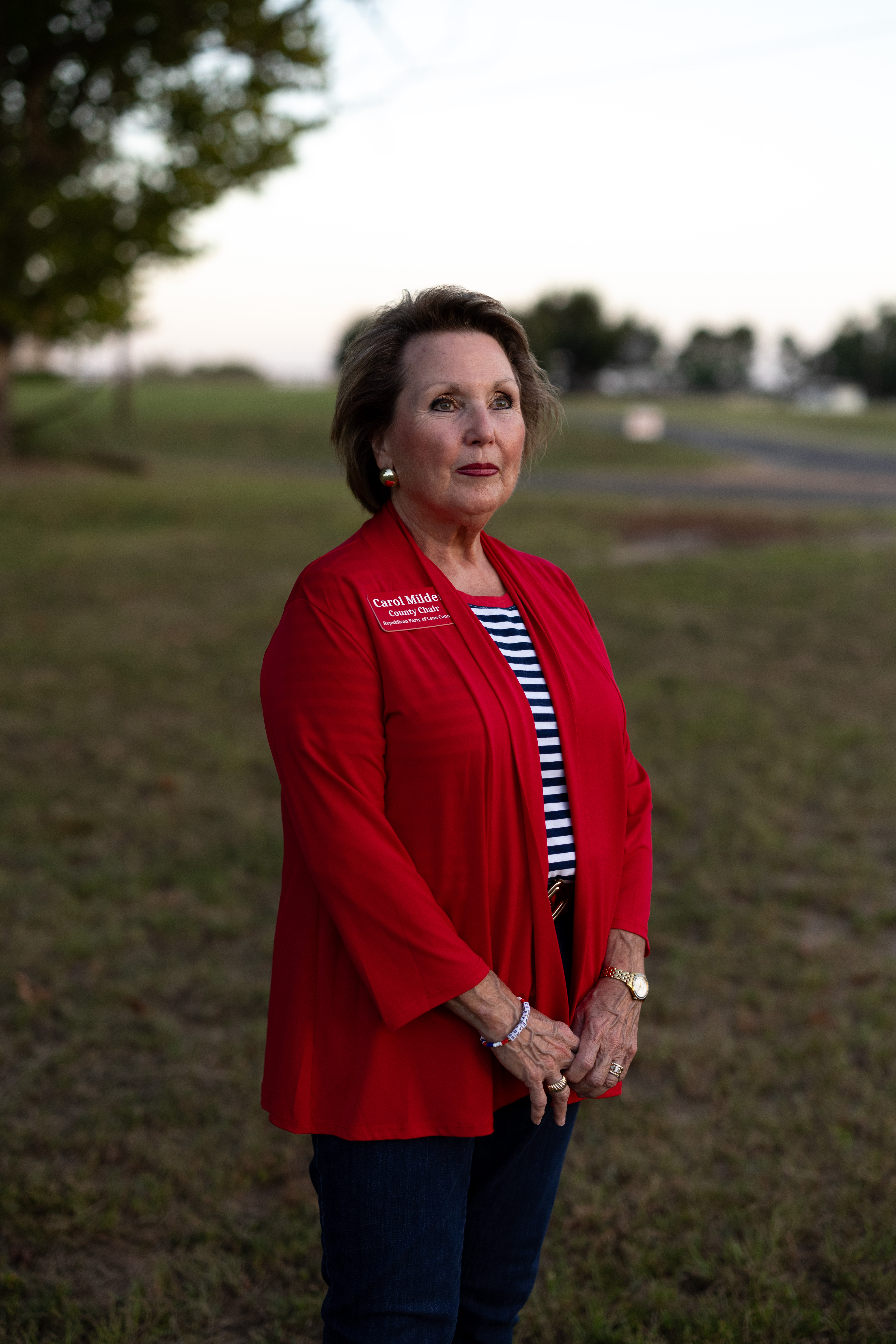
    Leon County GOP Chair Carol Milder is emblematic of the shift among conservatives when it comes to opposition to data centers.

    The retired real estate appraiser’s father worked on an oil rig. Growing up in Houston, she saw the oil and gas industry build the middle class. But attending a panel on data centers at the state GOP convention in June in Houston awakened her to the differences between the industries.

    Panel experts, including her neighbor Michael Rice, 46, who used to work at an Austin data center, explained that unlike oil rigs and refineries, data centers bring few jobs — 40 proposed so far in Leon County — and even those are often staffed by workers from elsewhere. Milder and others at the commissioners’ meeting said they resented paying taxes only to see data centers initially get tax exemptions, effectively subsidized by residents the way manufacturing and solar industries have been.

    She told the commissioners: “We’re being held hostage for the money for them to build.”

    “We’re trying to be as prepared as we can,” said Commissioner Kyle Workman, a construction consultant. He said that unlike in Texas cities, the unincorporated community’s limited government — which many in the audience historically favored — left commissioners with few tools to block the data centers. “Leon County has kept government down over the years,” Workman said. “There’s limits to what we can do.”

    Michael Rice points out proposed data center sites during the town hall meeting at the Jewett Civic Center last month.Antranik Tavitian

    Residents said they thought that was precisely why data center companies were targeting rural areas. Of the nearly 248 data center projects proposed statewide, nearly half are in unincorporated rural areas where zoning and other restrictions cannot be used to block them.

    And residents worried that any state legislation that might help defend against the projects would not pass until late next year — too late to block the data center proposed by Crusoe and others expected to follow. Belltown Power has proposed building a 900-acre data center in Leon County, and Black Mountain — another North Texas-based company — bought property and announced plans to build a massive power plant there.

    Milder said she alerted an adviser to the governor this year about growing local opposition in counties such as Leon. She reminded him that a majority of the state’s 254 counties are rural and that they are a key part of Abbott and the GOP’s conservative base.

    “Texas is red because of rural Texans, and we need to be listened to,” Milder told him. “You need to be concerned with what concerns us. And we’re being raped and pillaged.”

    Leon County GOP Chair Carol Milder. Antranik Tavitian

    Texas is poised to overtake Virginia as the nation’s top data center hub by 2030. A recent poll found 56% of Texans oppose data centers being built in their communities.

    “They love our farmland because it’s flat, it’s clear, there’s water and electricity there, and they can just come in and start building,” GOP Agriculture Commissioner Sid Miller said at an anti-data-center protest outside the state Capitol in Austin recently. The small crowd chanted, “Special session now!”

    After hailing Texas as “the epicenter of AI development” last fall, Abbott recently reversed course as he campaigns for reelection to a record fourth term, urging state lawmakers to repeal the centers’ sales tax exemptions and regulate where they can be built. Last month, he ordered the state Public Utility Commission and council managing the electrical grid that covers most of the state to enforce restrictions on data centers, including requiring them to “fully fund the costs of electric infrastructure.”

    “We must prohibit them from building AI data centers in rural Texas neighborhoods,” Abbott said at a campaign stop about 90 miles north of Centerville on June 30.

    By the end of July, the governor announced that the state had “begun sweeping changes to how data centers pay for the infrastructure needed to serve them, ensuring data centers do not shift those costs onto everyday Texans or place unnecessary strain on our state’s resources.”

    But Miller and Leon County conservatives said those stepped-up regulations are not enough. They want Abbott to call a special legislative session — as he has in recent years for conservative priorities such as school vouchers, congressional redistricting and property tax cuts — to pause data center development and increase regulations and oversight.

    A spokesman for the governor declined to comment about whether Abbott will call for a special session on data centers.

    “Governor Abbott has been clear that data centers cannot come before Texas families,” spokesman Andrew Mahaleris said in a statement, noting that the state regulators’ new requirements “protect Texans from higher costs and negative impacts on their communities.”

    Andrew Schmitt, a spokesman for Crusoe, said: “Crusoe is committed to protecting the natural resources and character of every community where we operate, while ensuring local families benefit from our economic investment for generations to come. We are working closely with local leaders as we evaluate development in Leon County to address community needs and deliver jobs for local workers along with significant new tax revenue for schools, public safety, and infrastructure.”

    Daniel McCoslin stands next to family photos dating back to when his ancestors settled Texas. Antranik Tavitian

    Daniel McCoslin, 48, is a retired railroad engineer who fought with the Marines in Iraq. He ranches land that’s been in his family since the 1800s and that abuts the proposed Belltown data center site. A relative’s ranch borders the Crusoe site. That’s why McCoslin — a libertarian who voted for Trump three times — organized a local anti-data-center group to educate neighbors.

    McCoslin dismissed Abbott’s recent data center regulations as “pandering.” In November he plans to vote for a Democrat for the first time in his life. Clayton Tucker, a rancher running for agriculture commissioner as the anti-data-center candidate, has called for a data center moratorium.

    When data center companies started offering neighbors up to $50,000 an acre — “life-changing money” — McCoslin recalls talk at the feed store turning to whether folks would take the millions. McCoslin was adamant he would not.

    “Family means a lot more than money,” he said.

    The evening after the commissioners’ meeting, McCoslin helped organize a town hall to update neighbors. The crowd that settled into folding chairs at a local community center included plenty of retirees, at least one of them in a MAGA hat. There were also workers, some in volunteer firefighter T-shirts, others in straw cowboy hats and boots with spurs.

    Mandy Williams holds onto her daughter Violet as she gets out of a hay harvester in Centerville. Antranik Tavitian

    Organizers used a projector to display maps of the proposed data centers and power plant, and fielded questions about potential environmental and economic effects: How many jobs will they bring, and for whom? Will they pollute the ground and water? Are they expected to decrease property values? Can they be stopped?

    Organizers displayed phone numbers and emails for Abbott and other state and local GOP lawmakers. They urged residents to contact the officials with data center concerns.

    “We’ll be calling,” said Mandy Williams, 46, as she left the meeting with her husband and towheaded 4-year-old daughter, Violet, in a “Cowgirl forever” T-shirt.

    The couple live on the eastern side of the county on a cattle ranch of more than 200 acres. Stephen Williams’s ancestors settled the land when Texas gained independence from Mexico in 1836, nine years before it became a state. Like many other Texans, owning land is part of his identity, a birthright he feels a duty to steward.

    “Hopefully we get enough pressure on him,” Stephen Williams, 46, said of the governor.

    When commissioners met Monday, they did not take action on the tax breaks and told residents that Crusoe had yet to reapply, Milder said.

    Back at his modest ranch house, McCoslin pointed to turn-of-the-century black-and-white portraits of his ancestors taken under the oaks just steps away.

    “At night, you can hear how quiet it is and see so many stars,” he said, describing his evening routine of settling outside to smoke a cigar and sip bourbon, his only soundtrack the crickets, frogs and occasional coyote. “We don’t want 24-hour industrial hum and lights destroying the sky. If I wanted that, I’d live in Houston.”

  • Ex-Chinese Premier Zhu Rongji, who drove economic reforms and led China into the WTO, has died at 97

    Ex-Chinese Premier Zhu Rongji, who drove economic reforms and led China into the WTO, has died at 97

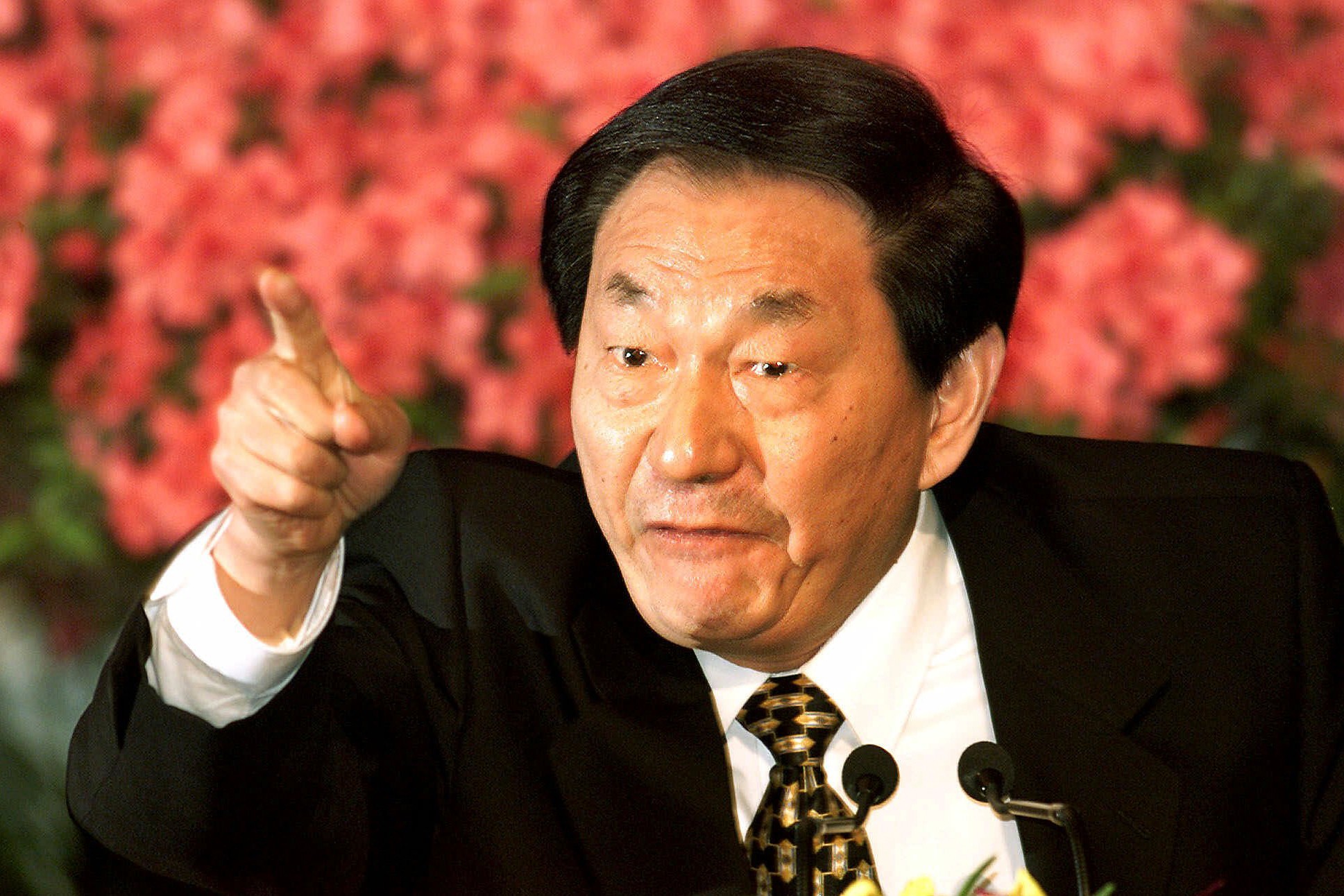
    BEIJING — Former Chinese Premier Zhu Rongji, the impatient, sharp-tongued reformer who helped ignite China’s explosive economic boom by forcing wrenching change on state industry in the 1990s and leading the country into the World Trade Organization, has died of illness, state media reported Wednesday. He was 97.

    Mr. Zhu died in Beijing at around 11 a.m. on Wednesday, the official news agency Xinhua reported.

    Once sent into rural exile to do manual labor for praising reforms in other communist countries, Mr. Zhu pushed through a dizzying array of changes as premier, China’s top economic post, from 1998 to 2003 under former President Jiang Zemin.

    Mr. Zhu clashed with Communist Party conservatives and state industry bosses as he pushed state-owned companies to become efficient and profitable. That cost millions of layoffs, but helped propel China to overtake Japan as the second-largest economy behind the United States in 2010.

    Building on former leader Deng Xiaoping’s 1979 reforms, Mr. Zhu is credited with supplying the resourcefulness and tenacity to push through history-making changes such as China’s WTO membership, which helped to transform China into the world’s biggest exporter.

    Those changes helped to keep economic growth above 8% a year from 2000 to 2010, peaking at 14.2% in 2007.

    A spiky personality who fought corruption and conservatives

    Named premier in 1998 at age 69, Mr. Zhu became a popular figure by criticizing official bungling and graft and accepting blame when the government fell short. His demanding style earned him the nicknames Boss and Zhu Fengzi, or Madman Zhu.

    “I have prepared 100 coffins here — 99 for corrupt officials and one for myself,” Mr. Zhu said in 1998, according to the party newspaper People’s Daily.

    Mr. Zhu ranked No. 3 in the party hierarchy behind Jiang and Li Peng, chairman of the ceremonial legislature, the National People’s Congress. But he was a technician without his own power base. Mr. Zhu complained that allowed officials to ignore his orders.

    Mr. Zhu made his name as a deputy premier in the 1990s by crushing inflation. He enforced price controls and cut off loans to money-losing state companies, rebuffing resistance by local leaders — a pattern Mr. Zhu would repeat as he fought conservatives over the pace of reform.

    Mr. Zhu led efforts to secure WTO membership following marathon negotiations that began in the 1980s. That status would enshrine free trade as a national commitment, giving Mr. Zhu a tool to force local officials to stop protecting favored companies.

    Mr. Zhu’s campaign was nearly derailed when he went to Washington in 1999 with market-opening concessions to win U.S. endorsement of the WTO bid. The Clinton administration rejected the offer as inadequate, while his political enemies at home accused him of offering too much, but Zhu survived and China went on to join the body in December 2001.

    Mr. Zhu launched China’s home ownership boom in 1998 with an initiative to sell apartments owned by state companies. Families rushed to buy, and within a decade the majority of urban housing was privately owned.

    Still, Mr. Zhu was less an advocate of free enterprise than a skilled bureaucrat who carried out party orders to whip state industry into shape.

    Mr. Zhu showed no interest in privatizing the economy. He played a key role in drafting plans in the 1990s to turn banks, airlines, oil companies, and other enterprises into profit-oriented corporations but to retain government ownership.

    Zhu stood out for admitting official failings

    Born Oct. 23, 1928, in Mao Zedong’s home province of Hunan, Mr. Zhu paid an early price for his willingness to take risks and speak out.

    After a start as an economic planner, his career went into a 22-year eclipse when he was labeled a “rightist” in 1957 for praising reforms in Hungary and Yugoslavia. He was banished to the countryside during the 1966-76 Cultural Revolution to do manual labor.

    Rehabilitated in 1979, Mr. Zhu rose swiftly, becoming deputy Shanghai party secretary in 1987 and mayor the next year.

    As mayor in 1989, Mr. Zhu gained a reputation for moderation when he placated protesters and pledged not to call in the military.

    “He managed to defuse, with considerable subtlety, a tense political situation that could have developed into localized violence or worse if the military had felt it necessary to intervene,” wrote Australian diplomat Shelley Warner in the 1991 book The Pro-Democracy Protests in China: Reports from the Provinces.

    Mr. Zhu’s boss, Jiang, would soon be called to Beijing by Deng and made party leader. Mr. Zhu was named deputy premier in 1991 and joined the party’s ruling Standing Committee in 1993.

    Mr. Zhu broke with the leadership’s stance of infallibility by admitting and taking blame for official failings.

    In 1998, after summer floods killed 4,150 people and officials were accused of embezzling money meant for anti-flood dikes, Mr. Zhu complained some barriers were no stronger than bean curd.

    Three years later, he apologized on national television for his cabinet’s failure to protect the public after an explosion in a schoolhouse in southern China killed at least 42 people, most of them children.

    Mr. Zhu enlivened the party’s bland image by cracking jokes in public, sometimes at his own expense. Laughter erupted at a 1999 news conference when he said a recent photo “made me look like a dead man.”

    One of Mr. Zhu’s proudest triumphs as deputy premier was to craft a tax system that required local officials to hand more revenue to Beijing. He said in 1996 that he deserved a Nobel Prize in economics for that.

    Mr. Zhu rarely appeared in public after leaving office as premier.

    Mr. Zhu was married to Lao An, a fellow Hunan native. Their son, Yunlai, also known as Levin Zhu, is a former CEO of China International Capital Corp., a government-owned investment bank.

    Their daughter, Yanlai, led a charity organization supporting schoolchildren that was backed by Zhu Rongji.

  • ICE plans to give officers gloves that can deliver painful electric shocks

    ICE plans to give officers gloves that can deliver painful electric shocks

    Immigration and Customs Enforcement officers may soon be outfitted with gloves that can deliver painful electric shocks intended to gain compliance from combative individuals.

    ICE plans to spend up to $20 million to purchase thousands of “conductive distraction and de-escalation devices” for officers and agents by March, according to a notice published Monday by the Department of Homeland Security.

    The devices are known as the G.L.O.V.E., which stands for Generated Low Output Voltage Emitter, and are manufactured by Compliant Technologies LLC of Lexington, Ky. They have been used in recent years by some jails and police departments.

    DHS said Tuesday that it was working on a response to an Associated Press inquiry and offered no immediate comment. Jeff Niklaus, the founder and CEO of Compliant Technologies, wrote in an email, “Unfortunately, we are unable to speak on this subject.”

    The notice said the solicitation for a no-bid contract could be published as early as Friday.

    Civil rights advocates expressed alarm at the plan, saying ICE officers already face criticism for their use of force with little oversight or accountability while enforcing President Donald Trump’s immigration crackdown.

    Compliant Technologies says the devices function as a normal pair of patrol gloves until officers press a switch to activate their electrical mode. The gloves must be applied directly to someone’s skin to deliver a pain stimulus that typically helps an officer gain compliance within seconds, according to the company.

    “It’s immediate and sharp, and it will distract you. I call it like a bee sting,” said John Peters, president of the Institute for the Prevention of In-Custody Deaths, who is studying how the device has been used. “If the officer is getting any type of resistance from the person, this is certainly an effective tool.”

    Peters said he believed ICE’s planned purchase would likely be the largest from the company to date. He said he could envision ICE officers using the gloves to help remove uncooperative subjects from cars and houses and in and out of detention facilities.

    “For smaller officers or weaker officers or older officers, I think it has a great advantage” because it can produce faster takedowns and shorten confrontations, he said.

    The manufacturer warns the device should not be used as punishment, against people merely exhibiting “verbal defiance or belligerence” or on high-risk populations such as children, pregnant women, or elderly or disabled people.

    Jenn Rolnick Borchetta, deputy project director on policing at the American Civil Liberties Union, said the public should have no confidence that ICE officers will use the devices appropriately. She questioned why the devices would be necessary for civil immigration enforcement and noted those getting shocked might have no advance warning.

    “ICE spent the last year showing this country they are too quick to use force. Now they will be able to deploy electric shocks with the slight push of a button that maybe nobody else can see them do,” she said. “Introducing gloves that can so easily be used to deliver terrible pain in encounters is a recipe for harm to the public.”

    Supporters say the devices are generally used in specific jail and transport situations, rather than broadly to patrol on the streets. They have been used to subdue violent suspects who are refusing to get into squad cars and inmates who are harming themselves and threatening officers, according to Compliant Technologies.

    Peters said he expected the devices to be misused by a small number of employees, as with other policing technologies, but he said they are unlikely to cause injuries. He said it would be important for ICE to have robust policies and training in place.

    To use the device, officers must complete a course and be recertified every two years, the manufacturer says.

  • Trump says ceasefire in Lebanon is working. For residents, it’s a ‘prison.’

    Trump says ceasefire in Lebanon is working. For residents, it’s a ‘prison.’

    NAQOURA, Lebanon — As the cars advanced down the coastal road here at the southwestern tip of Lebanon, the flags came into view. The yellow and green banner of Hezbollah. The red, white, and green tricolor of Iran. Finally, a few miles from the border, the blue and white standard of Israel.

    “Turn back,” an Israeli soldier warned, in English, through a megaphone. “You don’t have authorization.”

    The convoy of church officials and humanitarian workers, approved by United Nations peacekeepers to visit three towns inside Israeli-occupied Lebanon, retreated to seek new authorization.

    For the few inhabitants who have remained in southern Lebanon since Hezbollah and Israel renewed fighting in March, such incidents have become common. Israeli officials say they need to occupy the 75-mile-long, 6-mile-wide buffer zone to dismantle Hezbollah’s infrastructure and prevent the group from launching drone and missile attacks into northern Israel.

    The announcement by Secretary of State Marco Rubio in June of a preliminary deal in which Lebanon would disarm Hezbollah and the Israel Defense Forces would gradually withdraw from the country has had little impact on daily life here. Instead, Israeli officials have indicated they are unlikely to end the occupation soon, and residents are seeing parallels to the Israeli security protocols that vex Palestinians in the occupied West Bank.

    “We are trapped in a prison,” said Ayoub Khreish, mayor of Ain Ebel, a predominantly Christian town an hour east of Naqoura. Even ambulances need permission to enter and leave, he said. “We drive and we pray.”

    President Donald Trump is attempting to keep the peace here in part to advance talks with Iran. Tehran has repeatedly tied a ceasefire with the United States and Israel to an Israeli withdrawal from Lebanon. Israeli strikes on Beirut in June almost derailed a deal, and Iran signaled over the weekend that it would not reopen the Strait of Hormuz unless attacks in Lebanon stopped.

    A damaged and abandoned Lebanese military checkpoint just north of the Israeli buffer zone in Naqoura, Lebanon.Guy Peterson

    Trump, hosting Lebanese President Joseph Aoun in the Oval Office last month, pledged support for the war-torn country, including an easing of flight restrictions. When asked about the withdrawal of Israeli troops from Lebanon, he said, they were “in the process of redeployment.”

    Under a U.S.-brokered deal, Israel has carried out a small, phased withdrawal in “pilot zones” and ceded control to the Lebanese Army. But there have been no indications of a more substantial redeployment on the horizon.

    In a visit to occupied south Lebanon on Wednesday, Israeli Defense Minister Israel Katz vowed to maintain the buffer zone. He asked troops to prepare for a “long-term presence on the ground.”

    The IDF has increased strikes elsewhere in southern Lebanon in response to what it says are ceasefire violations by Hezbollah.

    Israeli Prime Minister Benjamin Netanyahu told Fox News last month that some Lebanese Christian towns had “asked to be annexed to Israel” for protection against Hezbollah militants. He did not name the towns or provide evidence. Last week, a map published by the Israeli Foreign Ministry appeared to incorporate southern Lebanon into Israeli territory. (It was later deleted.)

    Officials in several Christian towns quickly refuted Netanyahu’s claim. “We do not want to be part of Israel,” Sandy Diab, a native of Ain Ebel, told the Washington Post. “We are very proud to be Lebanese.”

    The aid convoy was organized by L’Oeuvre d’Orient, a Catholic nonprofit based in Paris, which coordinated with U.N. peacemakers and the U.S.-led mechanism monitoring the ceasefire between Hezbollah and Israel.

    A convoy of aid vehicles drives just north of the Israeli buffer zone in Naqoura, Lebanon, last month. Guy Peterson

    Most of the 15 convoys the group has sent here since the fighting resumed in March have reached their destination uninterrupted, its director said, but conditions on the ground are fluid. The Christians who have remained in southern Lebanon, the Rev. Hugues de Woillemont said, ”are showing remarkable courage and determination.”

    Like many in southern Lebanon, Christians have been caught in a war they did not choose. The conflict has cut them off from the rest of the country; at its height in March and April, fuel and internet interruptions left many dependent on outside aid.

    The continuing scarcity of basic goods in Ain Ebel is driving up prices, Khreish said. “Everything here is 25 percent more expensive than Beirut.”

    Farmers leaving their homes to tend to their crops in the countryside need prior approval, the mayor said, and ongoing airstrikes by both sides have scared away the honeybees that produced honey.

    The aid convoys have been escorted by U.N. peacekeepers. Their term expires at the end of the year; who will take over their role is unclear.

    “What [the people here are] saying, and you don’t need a diploma to understand, is that they want to live, live in peace” said Col. Maxime Laudet, an officer with the French contingent to the decades-old U.N. Interim Force in Lebanon.

    The Rev. Hugues de Woillemont meets with the French captain of the United Nations Interim Force in Lebanon. Guy Peterson

    Laudet’s troops worked with L’Oeuvre d’Orient to help renovate a sports facility here to give local youth more recreational opportunities and to prevent a further decline in the population. “They’re a bit upset because ties with the north are complicated.”

    Only a few towns in the buffer zone remain inhabited. Katz has said the IDF had destroyed 24 Lebanese villages and currently occupies 270 square miles of Lebanese territory.

    The majority Shia population, which Hezbollah claims to represent, has mostly fled.

    The people who remain, De Woillemont said, are “exhausted and anxious.”

    “Their request is very simple,” he said. “To be able to live safely and with dignity on their own land, without being forced to leave.”

  • Pirro, in rare move, convenes special grand jury in Washington

    Pirro, in rare move, convenes special grand jury in Washington

    The Justice Department has convened a special grand jury in Washington, a rare legal body that officials say could pave the way for federal prosecutors in the nation’s capital to investigate some of its biggest and most controversial cases.

    Unlike a typical grand jury, a special grand jury can release a potentially critical report about the subject of an investigation, even if prosecutors do not find enough evidence to bring the person to trial.

    D.C.’s special grand jury is to be overseen by Steven Vandervelden, one of U.S. Attorney Jeanine Pirro’s top allies in her office, according to three government officials familiar with the matter, who spoke on the condition of anonymity to discuss a matter that has not been made public.

    Pirro has relied on Vandervelden to investigate some of her office’s most controversial cases, including a probe into then-Federal Reserve Chair Jerome H. Powell and an inquiry into allegations that the D.C. police force purposely skewed its crime statistics.

    It is unclear what the new special grand jury will be tasked with probing, but those interviewed said it is a notable move, especially given President Donald Trump’s interest in prosecuting his adversaries.

    Special grand juries, on the rare occasions when they are convened, are typically used to pursue investigations of government officials or probe broad conspiracy cases and organized criminal activity. (A group of corruption cases that prosecutors deem to be linked could qualify as the latter.)

    Steve Friedland, a law professor at Elon University, said strict procedures govern how special grand juries can be used — but that there is also flexibility.

    “This could be very interesting,” Friedland said. “Each administration has its own approach to how it enforces the law and how it uses the tools available to it.”

    The U.S. attorney’s office in D.C. declined to comment.

    There is no known recent precedent for a special grand jury in Washington, legal experts said, although they said they could not entirely rule out that one has escaped public notice.

    They are more common in larger jurisdictions home to more than 4 million people, including in New York and Texas, where federal guidelines says one must always be available, under the belief that organized crime is more common in larger areas.

    On the state level, Georgia prosecutors convened a special grand jury to investigate alleged interference in the 2020 presidential election by Trump allies in the state. On the federal side, a special grand jury was empaneled in Houston more than 20 years ago to investigate Enron, a powerful energy company that was engulfed in a massive fraud scandal.

    “They are very unusual,” said Niki Kuckes, a professor at Roger Williams University with expertise in the grand jury process. “Sometimes they can issue a report, which a regular grand jury can’t do.”

    The convening of the special grand jury comes as Pirro and top Justice Department officials face pressure to deliver on cases that Trump wants prosecuted. Todd Blanche, Trump’s former personal lawyer, was recently confirmed as attorney general, solidifying his position atop the department.

    Pirro’s record in moving against the administration’s perceived enemies has been mixed at best. Her office has failed to successfully prosecute a man accused of throwing a Subway sandwich at a federal agent; six Democratic lawmakers who released a video advising service members to reject illegal orders; and Powell, whom Trump accused of mishandling a renovation project.

    Last week, the president suggested Pirro’s job was in jeopardy after she dismissed charges against a former Olympian who had been accused of vandalizing the Lincoln Memorial Reflecting Pool. The officials familiar with the convening of the special grand jury said that prosecutors submitted the paperwork for it before Pirro dropped the Reflecting Pool-related charges.

    In general, grand jury proceedings are a secretive part of the legal process in which prosecutors present evidence and jurors vote on whether there is evidence to charge someone with a crime.

    A special grand jury has several unique characteristics. The 23 members focus only on a single case — or a string of cases that prosecutors present as related — instead of juggling a variety of matters like most grand juries. And a special grand jury’s ability to issue a report at the end of an investigation sets it apart.

    That report can name specific individuals even if prosecutors do not find enough evidence to bring the people to trial, as long as the report shows that there is a “preponderance of evidence” of wrongdoing. That is a significantly lower standard than the “guilt beyond a reasonable doubt” that is needed to convict someone.

    Anyone named in a report has the opportunity to testify before the special grand jury and present witnesses for their defense. And according to Kuckes, a judge must sign off on the report before it is publicly released, ensuring the report meets the requirements for citing someone by name.

    “It’s a very protective scheme. A majority of the grand jurors have to decide to issue the report,” Kuckes said. “And a special grand jury has to be set up to investigate some criminal wrongdoing. You can’t just have one to issue a report.”

    In other ways, special grand juries resemble ordinary ones. To win an indictment, prosecutors must convince a simple majority of the jurors that there is “probable cause” to believe a crime was committed. Grand jury proceedings also take place in private, to protect the privacy of those who are interviewed but not implicated in a crime.

    The law recognizes that special grand juries are only to be convened in unusual cases. In most jurisdictions, including D.C., they must be requested by the U.S. attorney general or their designee. Paperwork to establish them must go through the district’s chief judge; in Washington’s case, that is James E. Boasberg.

    A special grand jury generally runs for 18 months, although it can wrap up its work sooner — or its tenure can be extended in six-month increments by a judge, with the total time not to exceed 36 months.

    Pirro has regularly found herself caught between Trump, who has publicly demanded that his adversaries be prosecuted, and the liberal Democrats who live in Washington and populate its legal system. The flash point has often been grand juries, whose members in the Trump era have sometimes declined to indict people despite prosecutors urging them to do so, something that traditionally is very unusual.

    Those people include the six Democratic lawmakers who appeared on the video about illegal orders, as well as several defendants whom Pirro tried to charge with felonies during last year’s federal law enforcement surge.

  • An overnight Ukrainian blitz damages Russia’s Black Sea naval stronghold, Zelensky says

    An overnight Ukrainian blitz damages Russia’s Black Sea naval stronghold, Zelensky says

    KYIV, Ukraine — Ukrainian anti-ship missiles and drones blitzed a major Russian naval base on the Black Sea coast in a “unique” nighttime operation, Ukrainian President Volodymyr Zelensky said Wednesday.

    Cutting-edge drones developed by Kyiv since Moscow’s full-scale invasion over four years ago have repeatedly targeted Russian ships in the Black Sea, including warships and oil tankers.

    Ukraine’s air and sea drones have succeeded in limiting the movements of Russia’s once-dominant Black Sea navy, Kyiv officials say, in one of the country’s biggest accomplishments of the war.

    But Ukrainian officials believe Russian President Vladimir Putin is bent on pressing ahead with the war, despite his bigger army’s slow and costly progress on the battlefield and U.S. diplomatic efforts to find a settlement.

    Putin is planning “an additional rapid mobilization of several hundred thousand Russians by the end of the year,” Zelensky said Tuesday night on social media, citing Ukrainian intelligence reports.

    Those reports have said recently that Russia is expanding production of ballistic missiles and jet-powered drones, both of which are hard for Ukrainian air defenses to counter.

    Ukraine also is trying to scale up its weapons manufacturing through agreements with partner countries.

    Russia shows no sign of a new mobilization

    Neither Putin nor other senior Russian officials have hinted at a possible major call-up of forces to fight in Ukraine. Some officials have accused Kyiv of trying to rattle the Russian public with talk of a mobilization.

    Russian lawmaker Andrei Gurulyov brushed off reports of a possible autumn mobilization. “It is the enemy deliberately spreading rumors about mobilization in order to destabilize the situation inside Russia,” he was quoted as saying by pro-Kremlin online outlet Tsargrad in comments published Monday.

    After the widely unpopular partial mobilization of some 300,000 men four years ago, Russia has relied on volunteers attracted by relatively high pay. However, the decree declaring the partial mobilization that Putin signed in September 2022 is open-ended, allowing authorities to resume it if needed.

    Ukraine says it hit Black Sea port infrastructure

    The Ukrainian military “carried out a unique operation targeting the naval base in Novorossiysk — the last major stronghold of the Russian fleet in the Black Sea,” Zelensky said in a social media post Wednesday. The attack struck air defenses, piers, and other port infrastructure, he added.

    Russia relocated most of its naval ships to Novorossiysk after Ukrainian strikes on the main Black Sea base at Sevastopol on the Crimean Peninsula earlier in the war.

    Hundreds of Ukrainian drones attacked Novorossiysk, Anapa, and Gelendzhik and the Temryuk district of the Krasnodar region overnight, said Gov. Veniamin Kondratyev.

    An 8-year-old child was one of three people killed in the attack on the region, Kondratyev said. He added that 24 others in the region were wounded. Dozens of residential buildings were damaged, Kondratyev said, and debris from downed drones fell on the grounds of four industrial plants.

    The strikes damaged two of Novorossiysk’s three grain terminals, with one of them halting operations, the Russian business daily Vedomosti reported.

    Russia’s Defense Ministry said its air defenses downed more than 500 Ukrainian drones.

    Struck Russian port is also a key oil hub

    Novorossiysk also is home to the Grushovaya oil terminal, one of the largest international hubs in southern Russia for petroleum products. No reports indicated it had been hit.

    In February, the U.S. State Department expressed its displeasure about Ukraine’s attacks on Novorossiysk, saying they affected U.S. oil interests in ⁠Kazakhstan.

    The Caspian Pipeline Consortium operates a pipeline from the Caspian coast in northwestern Kazakhstan to Novorossiysk. The pipeline handles much of the crude exports from three major Kazakh fields in which major U.S. energy companies, Chevron and ExxonMobil, have stakes.

    With the militaries of European countries boarding and detaining sanctioned Russian oil tankers at sea, hurting the country’s trade and heaping economic pressure on Moscow, Putin on Wednesday threatened retaliation for what he termed “piracy.”

    Speaking on a visit to a Russian warship taking part in a naval exercise in the Pacific, Putin said Western countries are breaking international maritime law by seizing ships they say are part of Moscow’s ” shadow fleet ” of sanctions-dodging merchant vessels.

    “It’s nothing but piracy and robbery,” Putin said. “If this is done, we will be forced to respond in kind.”

    On the Crimean Peninsula, which was illegally annexed by Moscow in 2014, air defenses downed 115 Ukrainian drones over Sevastopol overnight, said Mikhail Razvozhayev, the city’s Russian-installed head. He added that 10 apartment buildings and 25 private houses were damaged.

    Russian drones kill 2 and destroy a shopping mall in Ukraine

    Ukraine’s air force said Russia fired 138 long-range drones as well as an unspecified number of missiles during the night, with damage recorded at 16 locations.

    In the Kherson region of southern Ukraine, a large-scale Russian drone attack overnight killed two people and wounded two others, said regional head Oleksandr Prokudin.

    The attacks also destroyed a shopping mall in the southern city of Zaporizhzhia, according to authorities.

    Missiles and long-range drones hit fuel reservoirs and infrastructure used for unloading and storing military cargo in the port of Chornomorsk in Ukraine’s Odesa region, Russia’s Defense Ministry said.

    A bulk cargo vessel carrying military equipment and a tanker loaded with oil for the Ukrainian armed forces also were hit in Odesa, it said.

  • Dogs can tell when you’re happy, sad, or frustrated, study shows

    Dogs can tell when you’re happy, sad, or frustrated, study shows

    If you’ve spent any time with dogs, it’s probably not news to you that they can sense the difference between positive and negative human emotions. A pup may match your excited energy when it’s time for a walk or check on you if you appear glum. But canine brains might have a deeper understanding of human emotions than you might think, a new study suggests.

    Researchers put dogs (awake and unrestrained) in MRI scanners to see the activity in different regions of their brains while the pooches looked at images of human facial expressions.

    They found one thing they already knew: Dogs can tell the difference between joy and a blank stare, and between happy and angry faces.

    But then the brain scans showed something novel: The dogs were making distinctions between fear and anger, and fear and sadness, showing they can tell the difference between somewhat nuanced negative emotions.

    “As far as we know, it’s the first time there is proof that dogs can distinguish between faces expressing two [similar] emotions,” said Laura V. Cuaya, a co-author of the study and postdoctoral researcher at the SCAN-Unit, University of Vienna.

    The study, which included two separate experiments, was published this month in the Cell Press journal iScience. It was started at the National Autonomous University of Mexico, then expanded to Eötvös Loránd University in Hungary.

    In the first experiment, eight pet dogs were shown images of happy and neutral human faces that were unfamiliar to them. Happy faces elicited a stronger response in a part of the brain known as the right temporal cluster extending to the caudate nucleus, which is notable because it’s associated with rewards, Cuaya said.

    “Other studies show, for example, that this activation is related when the dog is expecting a snack or a food reward, but also when they hear praise,” she said.

    The team was interested in learning whether the same brain regions would be activated if dogs were exposed to images of negative human emotions as well as happy ones.

    They designed the second experiment with 12 pet dogs, comparing brain regions where happy faces as well as those exhibiting sadness, anger, and fear were processed.

    The results suggested “there is a distinction between happiness and the negative emotions,” said Raúl Hernández-Pérez, a postdoctoral researcher at the SCAN Unit and lead author of the study.

    The researchers ran a whole-brain analysis to look at patterns of response for those three negative emotions. “We found that in a different part of the brain, there can be a distinction between fear and anger and between fear and sadness,” Cuaya said.

    She added that there did not seem to be a difference in processing between sadness and anger.

    The researchers stressed that these findings do not mean dogs understand or experience emotions in the same way humans do.

    “What they have demonstrated here is that the dog brain can distinguish human faces that are showing different emotions, but it does not show that the dog brain is perceiving, processing those emotions,” said Clive Wynne, founding director of the Canine Science Collaboratory at Arizona State University, who was not involved with this study.

    The study’s limitations

    Undergoing an MRI is hard enough for a human who understands why they need to remain still, so “the dogs that are able to do this MRI work are very specific types,” said Molly Byrne, principal investigator of the Dog Lab at Pace University. The researchers worked mostly with border collies, and they pointed out that this breed is highly skilled at following social cues and particularly willing to interact with humans.

    More studies are needed to determine whether other breeds show similar brain activity, the researchers said.

    “A border collie is bred for a job like herding,” said Byrne, who was not involved in this study. “Over the course of many generations, they selected the dogs that listen the best and pay the most attention to what humans have to say.”

    It’s also notable that the dogs studied are family pets, Wynne said. “These are dogs who are around people more or less 24/7 and have to keep paying close attention to people.”

    The dogs in this study were shown a static photograph of a human face, but in real life, whole-body cues probably help canines gauge human mood. “People look at faces to find emotion,” said Wynne, noting that as a species, we have flexible, expressive faces. Dogs are known to use different signals for emotional expression, wagging their tails to show happiness or raising their hackles in anger.

    “If you imagine the world from the dog’s perspective, the body is more important,” Cuaya said. With this in mind, she and Hernández-Pérez are running an experiment in which the dogs watch videos of people acting out various emotions with faces digitally obscured.

    Unanswered questions about how dogs perceive human emotions

    Dog cognition is a relatively new field, and very few labs in the world do these kinds of studies. The hope, experts said, is that future research can address bigger questions not only about how dogs perceive us but the nature of animal minds in general.

    While we can peer into a dog’s brain using an MRI, for example, we don’t know whether they’re thinking about our emotions with real meaning.

    “We know how we feel when we see a lot of happy faces,” Cuaya said. “But we are not sure if for them it is a happy face.” An interesting next step, Byrne said, would be to see whether dogs behave differently after exposure to human emotions: Are they more eager to cooperate with a smiling face than a frowning one?

    There’s also some debate among experts about how big a role domestication has played in a dog’s ability to pay such close attention to humans, noted Evan MacLean, director of the Arizona Canine Cognition Center at the University of Arizona. Have domesticated dogs evolved to be fundamentally tuned in to us? Or would other species behave similarly if they had the same opportunities to observe and interact with humans?

    Either way, it’s clear that dogs are able to make “some pretty fine distinctions with respect to human emotions,” MacLean said. “Certainly, their behavior suggests that they can discriminate between emotional states in people, but this is a rare look inside the brain at what’s going on.”

  • Trump’s vaccine order hands some MAHA voters a win. It also gives Democrats an attack line

    Trump’s vaccine order hands some MAHA voters a win. It also gives Democrats an attack line

    NEW YORK — President Donald Trump pivoted the nation’s attention back to vaccines this week with an executive order that aims to scale back the childhood immunization schedule and space out shots into separate visits.

    After acting to overhaul the nation’s vaccine policy and guidance, the Trump administration had recently largely stepped back from additional changes to focus on less controversial subjects, raising questions over the political impetus behind and implications of the Republican president’s renewed focus on vaccines.

    For well over a decade, Trump has expressed his view — against medical groups’ guidance — that childhood vaccines should be administered in smaller doses over a long period of time. The executive order sought to bear out that discredited theory.

    While the move could endear Trump to some “Make America Healthy Again” voters who want more flexibility on immunizations, it’s also already attracting attacks designed to hurt Trump’s aligned candidates in November’s midterm elections.

    Jayme Franklin, a 28-year-old conservative activist who appeared with the president to promote his executive order on Monday, said she thinks the action is “going to go a long way” for MAHA mom voters like herself.

    But Shaughnessy Naughton, president of the left-leaning political action committee 314 Action, which aims to elect doctors to office, said she sees the order as “one more data point” in support of Democrats’ cause.

    “Our organization and our candidates are certainly going to hammer that message home — that if you want healthcare that’s accessible and affordable, if you want medical advice that is science-based, we need to have accountability in Washington,” she said.

    Trump has long called for shots spread out in separate visits

    Trump’s doubt in the number and cadence of vaccines dates back at least to 2014, when he posted to social media the disproven claim that combination shots can cause autism and said if he were president he would spread them out.

    While he’s since shown pride in his first-term Operation Warp Speed effort to disseminate COVID-19 vaccines quickly and praised certain other shots like the polio vaccine, he also has repeatedly called for reforming the childhood vaccine schedule. While his administration released an assessment comparing U.S. childhood vaccine schedules to peer nations’, several of his suggestions have come without any new scientific evidence.

    “This is based on what I feel,” Trump said last September when he called for splitting the measles, mumps and rubella, or MMR, vaccine into three single-disease vaccines.

    On Monday, he again pushed for separating the MMR shot into three, ordering the U.S. Department of Health and Human Services to work on developing that option for children, since it doesn’t currently exist in the United States. Public health experts have warned that spacing out shots could increase the risk of infection with a vaccine-preventable disease before a child returns for the next visit.

    Most Americans don’t see reevaluating vaccine safety as a top issue

    Trump’s views have aligned him with Health Secretary Robert F. Kennedy Jr., a longtime anti-vaccine activist before he entered politics.

    The president credits Kennedy’s diverse coalition of MAHA followers — whose priorities range from regulating pesticides to ending vaccine mandates — with helping him win back the White House in 2024.

    Even as the Trump administration has handed several wins to the MAHA coalition, including changing the federal dietary guidelines and loosening restrictions on peptides, some in the movement have grown impatient as their other priorities remain unfinished. It’s unclear whether Trump’s action to loosen vaccine recommendations, an issue some MAHA supporters are passionate about, will be enough to shore up those voters ahead of the midterms.

    Franklin, who runs a conservative magazine, said she had talked with Trump about making vaccine recommendations more flexible at a MAHA roundtable earlier this year. She was pleased when the administration informed her that her requests were coming true.

    “I think it just really shows he loves to hear from everyday Americans on how his policies and his administration affect the lives of people who are raising kids in this country,” she said.

    But political strategists and Trump’s own pollster Tony Fabrizio have warned that efforts to shave down vaccine recommendations may not matter much to most voters this fall.

    Polls show most Americans believe children should be vaccinated to attend school, though Republicans are less likely to see vaccines as important. And as rising prices on things like groceries, gas and healthcare tighten Americans’ budgets, many view the economy as a top issue they care about.

    “Nothing in America matters more than affordability,” pollster Frank Luntz said. “And anytime the administration or Republicans goes off affordability, they’re not talking about what Americans really care about.”

    Whit Ayres, a Republican pollster, said with most Americans viewing vaccines positively, Trump’s announcement “does not strike me as the most persuasive political message.”

    Recent polling from the healthcare research nonprofit KFF suggests that even among MAHA supporters, only 10% rank reevaluating vaccine safety as their top priority for the federal government. Higher-ranking priorities included lowering health costs (42%) and restricting chemical additives in the food supply (21%).

    Democrats are seizing on Trump’s message

    Asked about the timing of the order with the midterms approaching, a White House official who insisted on anonymity to brief reporters said that the move was a longstanding presidential priority and that other health issues voters care about were still being addressed.

    To that effect, on the day Trump signed the order, the Food and Drug Administration announced an effort to require more transparency from food manufacturers about new ingredients or additives in foods — something many in the MAHA movement had been calling for.

    The administration has also touted its efforts to lower drug prices and crack down on federal health program fraud, which it argues will save taxpayers money.

    Still, Democratic candidates, including doctors linked to Naughton’s group 314 Action, seized on Trump’s order in messages to voters this week.

    Richard Pan, a physician running as a Democrat for the U.S. House in Northern California, reposted the American Medical Association’s condemnation of Trump’s vaccine falsehoods, among other fact checks. He told the Associated Press he thinks voters are deciding between electing people who choose not to hold the administration accountable and those who “stand for the science.”

    Annie Andrews, a pediatrician and Democrat running for the U.S. Senate in South Carolina, pleaded with voters not to take health information from Trump in a video posted on Instagram in collaboration with the left-leaning Courier Newsroom.

    “Do whatever you can to help elect scientists up and down the ballot in November, including sending me to the U.S. Senate,” she said to the camera. “I cannot think of a more urgent time for us to have a pediatrician in the room where these conversations are happening.”