Tag: no-latest

  • Former Labor Secretary oversaw hostile work environment, misused funds, report says

    Former Labor Secretary oversaw hostile work environment, misused funds, report says

    NEW YORK — Former Labor Secretary Lori Chavez-DeRemer oversaw a “toxic, intimidating, and humiliating” work environment and engaged in numerous violations of department policy, according to a new report from the department’s Office of Inspector General.

    The report alleges that Chavez-DeRemer “engaged in an inappropriate relationship” with a member of her security detail and repeatedly directed staff to perform personal tasks on government time. It also accuses her of inappropriately combining personal and official travel, violating the department’s alcohol policies, and failing to report gifts through proper channels.

    Based on interviews with dozens of current and former labor department staffers and a review of more than 500 documents, images, and videos, the report includes several striking allegations.

    During a personal trip to Oregon, it reports, Chavez-DeRemer allegedly stopped at a strip club featuring partially nude dancers and directed her limousine driver to come inside and give money to a performer, despite his hesitation. She then “took additional money from her purse and asked the agent to drop the bills one by one onto the partially nude woman,” despite his protests.

    Chavez-DeRemer, who resigned earlier this year, could not immediately be reached for comment.

    She is also accused of repeatedly directing staff to perform personal tasks during work hours. That included, at one point, directing her personal aide and executive assistant to travel to her home and organize her bedroom closet. After completing the task, they were asked to provide a video documenting their work. The report includes a photo of neatly hung, colorful blazers, alongside purses and shoes.

    In other instances, it alleges, she sent staffers to her home to retrieve packages from the mail room, instructed them to make personal purchases that weren’t always reimbursed, and directed a Hispanic federal employee to communicate with Spanish-speaking workers, including a house cleaner and movers.

    The report alleges Chavez-DeRemer developed and maintained an inappropriate and unprofessional relationship with a senior agent on her security detail, documenting in extensive detail witness reports of her massaging the agent’s shoulder, the two golfing and gambling together, and leaving an event walking arm-in-arm.

    Investigators obtained electronic hotel door lock records that suggested the two were spending time overnight in each other’s rooms. And they obtained key fob records and video footage to document his visits to her home.

    The relationship, they said, “appeared to continue even after he was placed on administrative leave and was suspended from his official duties.”

    The office also concluded that the former secretary and senior staff consumed and stored alcohol on federal property without permission, and that she combined personal and official travel, including visits to family, personal residences, and Las Vegas. And it identified a handful of gifts that were not reported, including tickets to attend a rodeo, an alligator-hide wallet, and cowboy hats.

    The report also alleged that Chavez-DeRemer oversaw a hostile workplace, with senior staff “routinely engaged in threatening, demeaning, and abusive verbal and written communication” that she was seemingly aware of but did not take action to stop.

    Witnesses described the work environment as “toxic, intimidating, and humiliating,” with staff accused of berating employees in front of colleagues, openly discussing performance issues in the presence of other staff, and frequently making threats of termination.

    Senior staff were also accused of making staffing decisions based on physical appearance instead of qualifications, including relocating one employee’s desk because they did not want a “fat person” seen in the front office.

  • U.S. diesel prices hit a record high, pushing up transportation costs for a long list of goods

    U.S. diesel prices hit a record high, pushing up transportation costs for a long list of goods

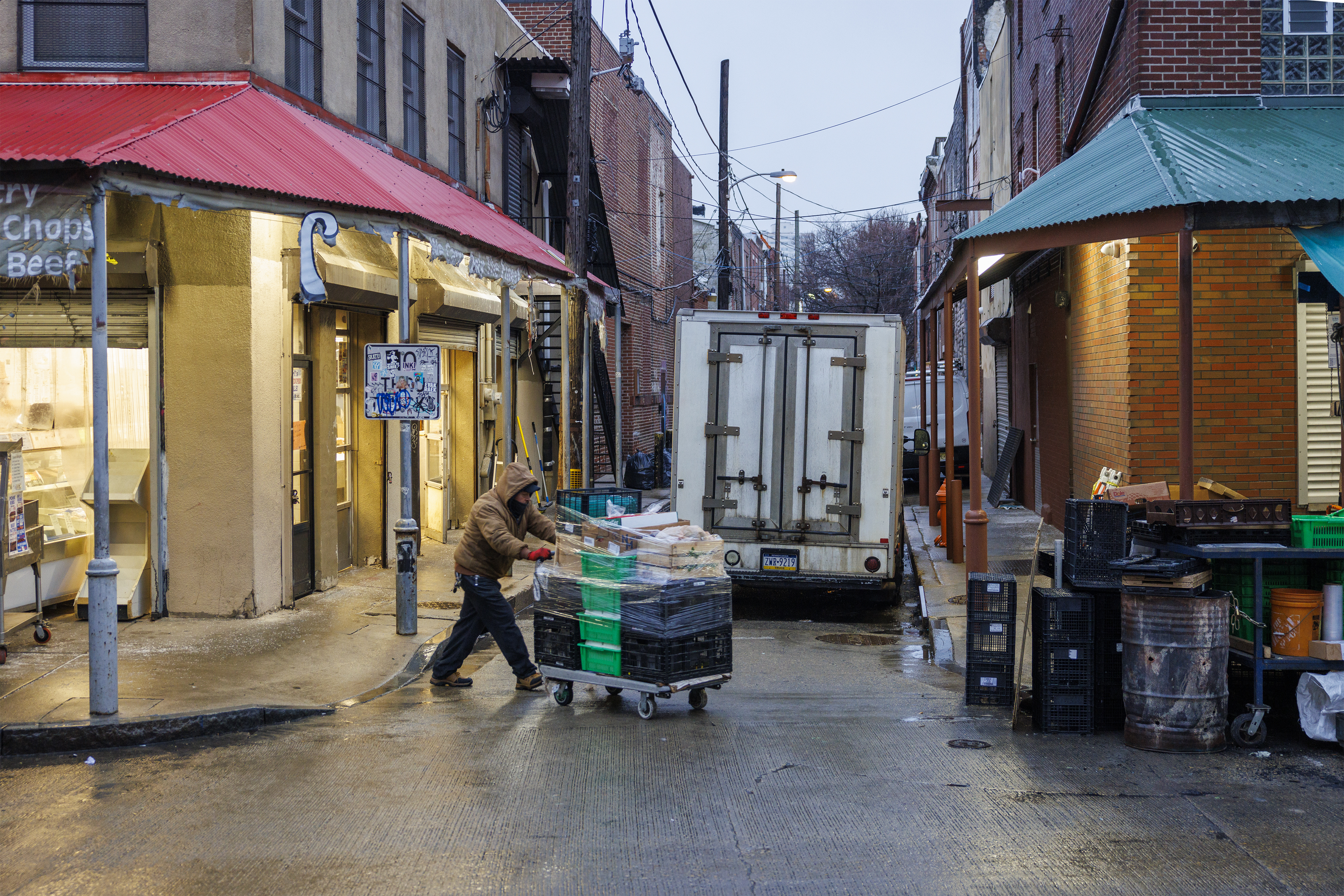
    CHICAGO — Diesel hit a record price in the U.S. on Friday, soaring to an average of $5.85 a gallon for the first time as the six-month war with Iran disrupts the world’s flow of fuel.

    Because diesel is used for many freight and delivery networks, higher diesel prices mean higher transportation costs for a long list of everyday goods.

    This could add to Republicans’ political challenges ahead of November’s midterm elections, with voters already sour on President Donald Trump’s management of the economy. AP-NORC polling this summer showed 2 out of 3 U.S. adults disapproved of how Trump is handling the economy.

    More expensive fuel is increasing bills for businesses across sectors — some of which have already passed on costs to consumers in the form of added fees on online orders and packages in the mail. And shoppers may see more and more sticker shock trickle down to store shelves.

    One of the most immediate strains is being felt in the grocery aisle, particularly with produce, meat, and other perishable foods that need to be hauled in and restocked frequently — or even harvested using diesel-powered farm equipment. It can take time for all of those costs to trickle down.

    Still, experts warn that price hikes could mount the longer diesel remains expensive. A range of other products are also transported by diesel trucks, trains, and boats, including clothing, cosmetics, furniture, and more.

    The price for regular gasoline has also been going up, although not as fast as the price of diesel. The average price was $4.15 a gallon, compared with $3.20 at this time last year, according to AAA, which says gas has never been above $4 a gallon on Labor Day.

    What’s driving the latest jump for diesel

    Before the U.S. and Israel launched their war against Iran in late February, the national average for a gallon of diesel was about $3.76 in the U.S., per AAA. Prices quickly climbed as the cost of crude oil — the main ingredient in diesel, as well as gasoline — soared amid supply chain disruptions and production cuts across the Middle East, notably with most tanker traffic bottlenecked in the key Strait of Hormuz.

    Despite prices cooling some during hopes for peace earlier in the summer, oil has now renewed its climb as fighting once more escalates between the U.S. and Iran. Brent crude, the international standard, rose to $96.28 a barrel Friday, up from roughly $70 before the war. Prices at the pump always follow closely behind.

    The last time U.S. businesses and drivers saw sky-high fuel prices was in June 2022, when diesel reached as high as nearly $5.82 a gallon on average, months after the Ukraine war began and world leaders imposed sanctions against Russia, a leading oil producer.

    When adjusted for inflation, however, prices have been higher in the past. Ahead of the 2008 financial crisis, for example, diesel peaked at about $4.74 a gallon — equivalent to $7.20 in 2026, according to the government’s latest data. And 2022’s record of nearly $5.82 would be about $6.56 this year when accounting for inflation.

    That doesn’t take the pain away from today’s steep prices, which are already bringing ripple effects for the economy and wider costs of living. Drivers are feeling the pain each time they fill up gasoline, too.

    The average $4.15 for a gallon of regular unleaded is up from $2.98 before the Iran war, although still well below the 2022 peak of nearly $5.02 a gallon nationwide.

    Diesel has been more expensive than gasoline for decades, and its price has risen at a faster pace during recent energy crises. Some reasons include tighter supply, less flexibility in demand, and diesel’s position in global commerce overall. Individual households may find ways to drive less when gas prices are high, for example, but there’s fewer immediate substitutes for networks that rely on diesel to help produce and haul goods worldwide.

    All eyes on food

    Diesel is integral to every part of the food supply chain. It powers farm equipment and fishing boats as well as the trains and trucks that get food to grocery stores.

    Fuel accounts for roughly 15% to 30% of the total cost of food, according to the Independent Grocers Alliance, a grouping of 7,500 global supermarkets. Because of this, higher diesel costs often result in more expensive food, although it can take a while for energy shocks to wind their way through the supply chain.

    Items that need to stay refrigerated while they’re transported are often the first to see prices rise, according to David Ortega, a professor of food economics and policy at Michigan State University. In July, for example, overall U.S. grocery prices were up 2.7% compared with last July, but seafood prices were up 7% and fresh fruit prices were up 4.9%.

    Ortega cautioned that there can be other factors at play when food prices go up or down. Lettuce also faced higher transportation costs in July, but a drop in demand due to the cyclospora outbreak caused prices to fall.

    Still, consumers could feel more of a squeeze the longer diesel prices remain high.

    “Early on, much of the cost increase gets absorbed along the supply chain through existing freight contracts and retailer margins,” Ortega said. “But as contracts reprice and fuel surcharges take hold, more of that cost makes its way to the grocery store.”

    More fuel shocks

    Back in April, e-commerce giant Amazon rolled out a temporary 3.5% fuel and logistics surcharge on some third-party sellers. And United Parcel Service, FedEx, and the United States Postal Service also moved to add fees on some of the packages they ship earlier in the war, citing rising operational costs for fuel overall.

    Ajesh Kapoor, CEO and founder of trucking technology company SemiCab, said trucking and transportation can adapt to rising diesel prices — but at some point there is a limit.

    “Diesel price has a very, very direct impact on everything that moves on pretty much any mode,” Kapoor said.

    The ramifications extend beyond the movement of consumer goods. Some public transit buses and trains also run on diesel — and diesel generators are often used for backup or emergency power, if not central electricity sources in some remote parts of the world.

    Experts warn that the consequences could continue to deepen — particularly in countries in Africa and Asia, which rely more heavily on imports from the Middle East and have already been hit the hardest by energy shocks over the course of the war.

    Neil Atkinson, energy analyst and senior fellow at the National Center for Energy Analytics, said refined oil products like diesel are becoming more expensive as supplies get stretched.

    “This is gradually becoming a major crisis because A) the prices themselves are very high — but the physical stocks of these products are dwindling,” he said in a weekly briefing with maritime data firm Lloyd’s List Intelligence, pointing to the strain on the global refining system. “This cannot go on forever.”

  • Letters to the Editor | Sept. 4, 2026

    Letters to the Editor | Sept. 4, 2026

    Honest work

    Labor Day is often seen as the unofficial end of summer — a long weekend for barbecues and family gatherings. But before enjoying the day off, we should remember the people whose work makes our daily lives possible. As a mail carrier, I see this every day. Behind every functioning neighborhood are workers who quietly keep life moving, including teachers, nurses, first responders, sanitation crews, farmers, and caregivers. Many work early mornings, late nights, and holidays. We often notice their work only when something goes undone.

    As an Ahmadi Muslim, I was taught that serving others is an essential expression of faith. That value guides me on my route every day. Labor Day reminds us that our nation was not built by famous names alone, but by ordinary people willing to work, serve, and contribute — often without recognition. This Labor Day, let’s take a moment to thank those who keep our communities running. Every honest worker deserves our respect.

    Farid Ahmad, Easton

    Walk the walk

    Inga Saffron’s column about being car-free or car-light was interesting and positive. We moved here in 2021 to eventually be car-free as we aged and are car-light now. We have volunteered with Save Our Train to keep the Chestnut Hill West line running. We take all forms of SEPTA and appreciate very much what is available. But I have to wonder how much continual advocacy transit, in all forms, has with our City Council and with our state representatives. Do Council members and their staff take transit, bike, or walk to work frequently? If not, it should be a requirement. If they had, maybe the new work on Broad Street would have been more thoughtful for pedestrians and bicyclists. Same question for Mayor Cherelle L. Parker and her staff. Perhaps she could take a page from New York’s mayor. The same goes for our state representatives. Our elected officials need to make it possible for people of all ages to get out of cars. If they only know a car-centric life, how do they effectively advocate for transit?

    Liese Sadler, Philadelphia

    More like Daffy

    Recently leaked information from the Pentagon reveals that leaders of the U.S. European Command, the U.S. Pacific Command, and the U.S. Southern Command, along with the Navy’s top admiral, all formally disagreed with the administration’s Iran war conduct and planning. Troops and vessels are unevenly distributed, critical munitions are running out, and even homeland defense is weakened. This revealing show of no-confidence is a point when serious, competent civilian leadership should make a rational and considered about-face.

    At a time when the more than 1.3 million people in active-duty service look to their commander in chief for strong, coherent leadership, this will assuredly not be happening. Over the weekend, Donald Trump instead reposted on his Truth Social account a meme showing a troop of rifle-toting Trump-like geese guarding his newly named “Lake America” from the Canadians, titled “Protected by Donald Ducks.” It is beyond shocking that while in violent war, our president, so frustrated and infuriated by his own incompetence, will simply hide in this absurd renaming fantasy for amusement. This is who we have in the dangerous real world where the rest of us live.

    Joseph B. Baker, Honey Brook

    Join the conversation: Send letters to letters@inquirer.com. Limit length to 150 words and include home address and day and evening phone number. Letters run in The Inquirer six days a week on the editorial pages and online.

  • College loans were late due to new federal rules. Students are paying the price.

    College loans were late due to new federal rules. Students are paying the price.

    Mikiah Roberson expected to receive her federal $6,700 student loan disbursement sometime between May 27 and June 3, just in time to make her rent and car payments. Instead, June 3 came and went. Days, weeks and finally over a month passed.

    Roberson, a graduate student in University of Maryland Global Campus’s digital forensics and cyber investigation program, said the stress only compounded as her eight-week summer semester continued without any of her expected financial aid. As a disabled veteran, Roberson’s tuition is covered, but she relies on federal student loans to pay for living expenses while in school.

    “It had a major impact on my mental and emotional health,” Roberson said, as she struggled to get clear answers on when or if she might receive the money. “Just constantly stressing out whether an eviction notice would be coming, if my lights would be turned off, if my car would be repossessed.”

    Federal student loan disbursements for many students, like Roberson, were delayed over the summer session after new federal rules kicked in on July 1 that required major updates to the systems colleges use to administer aid. While no one is tracking the full scale of the problem, experts are worried about whether delays will persist into the fall semester that is underway. That could have severe impacts for the nearly 60 percent of students who already experience some form of housing or food insecurity.

    When loan money gets held up, students have no recourse against either their school or the federal government. Instead they must find ways to temporarily cover personal budget gaps of thousands of dollars — at a time when the cost of housing and other basic needs are rising rapidly.

    Delayed student loan disbursements are “incredibly significant in terms of whether a student is able to remain enrolled and remain housed and cover their own basic needs,” said Aissa Canchola Bañez, policy director at Protect Borrowers, a nonprofit that advocates for student loan borrowers. “Everything is more expensive, and so that just makes financial aid and the loans that these students are eligible for and entitled to even more consequential.”

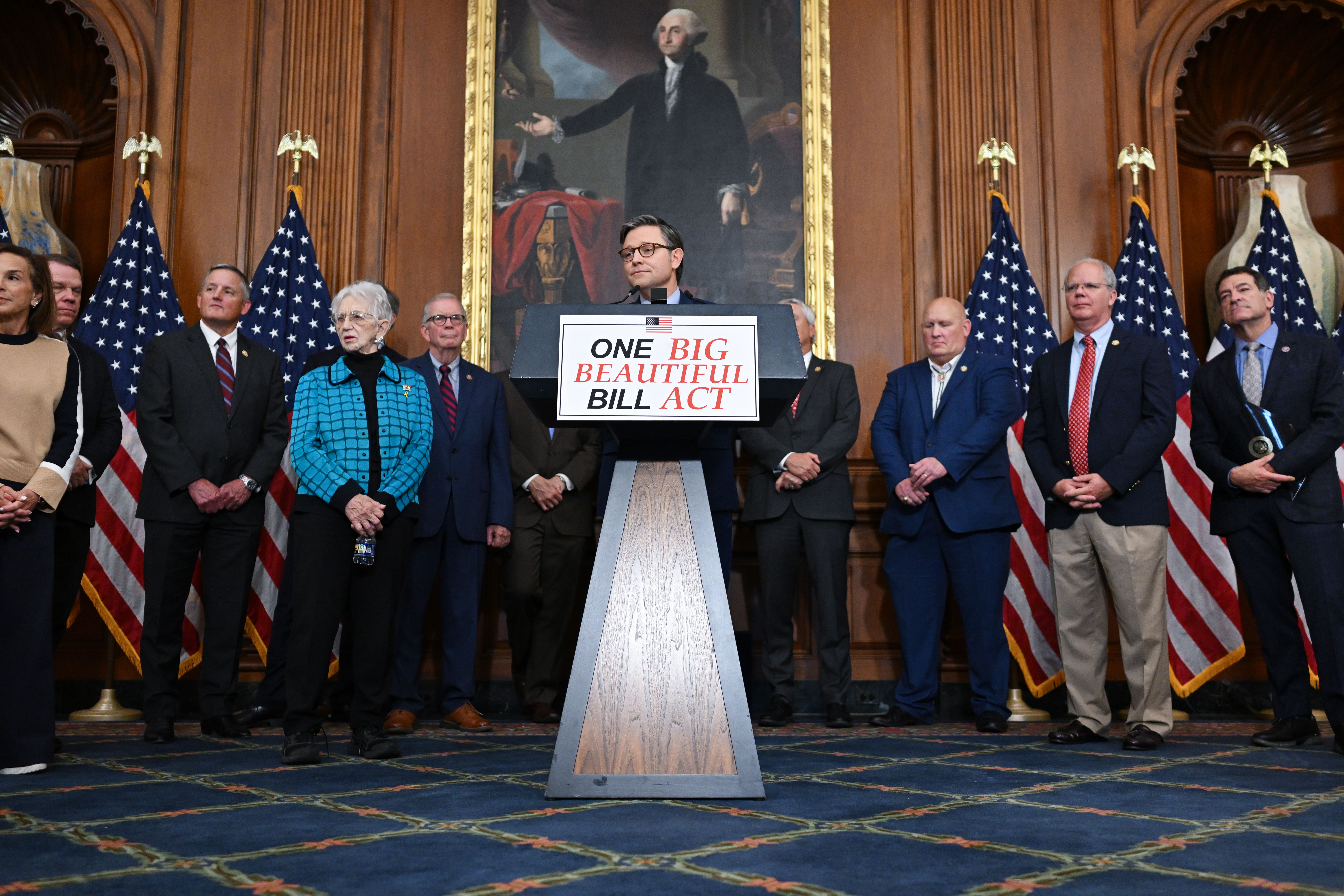
    Experts, advocates and financial aid administrators place the blame on atypical planning from Congress when it passed the One Big Beautiful Beautiful Bill Act. The legislation didn’t give the Education Department enough time to issue full guidance on new student loan regulations, leaving many colleges struggling to adapt. In some cases they are waiting on third-party software vendors to make needed changes or are calculating and administrating aid by hand.

    Ellen Keast, a spokesperson for the Education Department, said in an email that the department worked within the deadlines set by the One Big Beautiful Bill Act, which required the changes to take effect on July 1, 2026.

    “Congress gave the Department less than a year to implement these changes,” Keast said.

    She noted that the agency released the final rules in May, which she said provided “time for schools to prepare.”

    Rep. Tim Walberg (R-Michigan), chairman of the House Committee on Education and Workforce, said in an emailed statement that the legislation significantly overhauled a “broken system” and praised the work the Education Department had done.

    “Delaying needed reforms would have negative consequences for students and taxpayers,” he said.

    The One Big Beautiful Bill Act, signed by President Donald Trump on July 4, 2025, includes a number of provisions that reshape federal student loans, including a new lifetime borrowing limit and lowered limits on outstanding aggregate debt for graduate students. The bill also placed new limits on Parent PLUS loans and eliminated the Graduate PLUS loan program. Another provision, starting the 2026-27 school year, requires schools to prorate loan amounts based on how many credits a student is taking. Altogether, the changes are expected to impact a significant number of the roughly 13 million students annually who rely on federal financial aid.

    When students don’t receive their money on time, the delays set off an avalanche of financial problems.

    One student in National University’s graduate program in marriage and family therapy told The Hechinger Report she expected a $5,000 disbursement sometime around June 1. The student (whose name is being withheld out of concern of retaliation from her university) relies on these disbursements every three months to cover two months of rent, as she slowly saves up to pay the third month’s rent through her part-time job as a nanny.

    “I had to reach out to family members and get help, and that was also really stressful for them because I was hoping to be able to pay them back with my refund, and nobody knew when the refund was coming,” she said. “And so that just kind of created a cascade of tough situations.”

    She didn’t receive her funds until mid-July. By that point, she’d paid rent late in June and July, with a $100 late fee each time.

    National University did not respond to requests for comment.

    When it comes to disbursing financial aid, the relationship between the federal government and higher education institutions is complex. To help mitigate that, the Higher Education Act lays out a “master calendar,” which outlines formal dates and deadlines the Education Department must follow.

    Under the master calendar, the department has to start the rulemaking process a full year and a half before the academic school year starts. After negotiations, months of public comment and department review, a final rule needs to be issued in November of the preceding year. But because the One Big Beautiful Bill Act was signed in July 2025 with an effective date of July 1, the department couldn’t follow this timeline. And that gave colleges less time to adjust.

    Colleges normally spend the months between November and the start of the next academic year understanding any new regulations, getting clarifying questions answered by the Education Department, and making sure their software vendors have what they need to update their systems, according to Sarah Austin, a policy analyst at the National Association of Student Financial Aid Administrators.

    “Just having enough time to get the information, make sure the software vendors have the information, make sure they can then reprogram everything, getting the specs that they need — all of that takes time,” Austin said. “What we’ve seen here is a condensed version of that.” As of August, some of the major software vendors used by colleges still weren’t caught up, she noted.

    The National Association of Student Financial Aid Administrators and over 40 other higher education organizations had previously called on the Education Department to delay implementation until July 1, 2027, to allow the process to follow the normal timeline.

    “That is not a minor inconvenience. It is a fundamental breakdown in the infrastructure that supports federal student aid delivery,” wrote Kenneth Ferreira, then-president of the Eastern Association of Student Financial Aid Administrators, in an April op-ed.

    Institutions also say that the federal government has been slow to roll out guidance and clarifications about some of these changes, and some details are still up in the air, said Austin. The Department released formal guidance on prorating loans for students who aren’t enrolled full-time, for instance, in early August, just a couple of weeks before classes began at many institutions.

    Some of the guidance has also been conflicting, with differing information across some of the Education Department’s written materials and webinars, according to the National Association of Student Financial Aid Administrators. On Aug. 20, a group of 16 congressional Democrats sent a letter calling on the Education Department to issue additional guidance clarifying how schools should prorate loans.

    “We ended up seeing a lot of last-minute changes, and not enough guidance. And the reason why we have a master calendar provision is it is difficult for colleges to adapt to new regulations when there’s not enough time,” said Mark Kantrowitz, a student loan and financial aid expert.

    To Keast, though, the final rule should not have come as a surprise to any colleges. She noted that last November, the department reached consensus on the proposed rules, an early stage in the process.

    “If institutions waited until the final rule was issued to start preparing, that was their decision,” Keast said. She also pointed to available published guidance, Q&As, webinars and other resources from the department.

    This rift between the department and many of the major organizations representing colleges and financial aid administrators is trickling down to students like Roberson.

    “There was a whole lot of passing the buck,” Roberson said on her attempts to get answers on what happened to her financial aid. University of Maryland Global Campus directed her to the Education Department’s Federal Student Aid office. Employees there told her to contact her school.

    “Nobody had answers for when the funds would be released,” said Roberson, who said she often received conflicting information.

    In an emailed statement, Kaitlin O’Connor, vice president of University Communications at the University of Maryland Global Campus, said the university has been working on the federally required processing changes.

    “The university has continued processing and awarding aid, reviewing individual student cases and working closely with federal and higher education partners to ensure compliance with applicable requirements while supporting students throughout the process,” the statement said.

    Roberson negotiated partial payments with her landlord and entered payment arrangements for other bills. But the wait stretched into its second month. “You’re telling them, ‘Hey, the money’s coming,’ but weeks are passing and nothing changes,” she said. “I kept pushing out the dates and saying next month I’ll be good, and then here we are at month two, and it’s like now things are getting very detrimental.”

    Roberson continued, “You have to start to decide between do I pay a bill or do I get groceries? Do I get gas or do I get food?”

    Meanwhile, the stress took a toll on her studies. “I knew that I didn’t want to fail, but it was very, very hard,” she said. “Me and a lot of my classmates were expressing to each other how difficult it is to focus on schoolwork when you have bills piling up and all these things you need to pay.”

    Experts predict the crunch will continue into the fall semester as schools try to catch up with the new rules.

    Nick Prewett, executive director of financial aid and scholarship services at Stony Brook University and the president of the Eastern Association of Financial Aid Administrators, said so far the delayed disbursement has mostly impacted the school’s medical students, who start in the summer.

    But with fall semester underway at most schools, he said, “I think we’re going to see some delays in aid getting out to students. And I think you’re going to hear that kind of message across the country that students, particularly graduate students, are waiting,” Prewett said.

    Prewett added that for students enrolled part-time, Stony Brook plans on waiting until the end of the add/drop period (a couple of weeks after school starts) to adjust student loans based on the number of units students end up with. “And I think that’s going to cause a little bit of confusion and maybe a little bit of panic on behalf of the student,” he said.

    Roberson eventually received her summer disbursement in mid-July, about six weeks late into an eight-week summer program. She’s supposed to receive another $6,700 disbursement in early September, but she’s no longer counting on getting those funds on time. She’s taking on work as a delivery driver for Amazon — a challenge with her back pain from her disability.

    “I’m nervous because I don’t know if we’re going to hit this situation again,” Roberson said. “It’s very nerve-racking just trying to prepare ahead of time for if an issue arises, which is unfair when you’re trying to focus on class.”

    This story about student loan changes was produced by The Hechinger Report, a nonprofit, independent news organization focused on inequality and innovation in education.

  • Trump taps Army engineering official as acting secretary

    Trump taps Army engineering official as acting secretary

    WASHINGTON — President Donald Trump said Thursday that he was appointing Adam R. Telle, the official overseeing the U.S. Army Corps of Engineers, to take over as the acting Army secretary, following the resignation of Daniel P. Driscoll earlier this week.

    Driscoll, formerly the civilian leader of the Army, resigned Monday after clashing repeatedly with Defense Secretary Pete Hegseth over the purge of top generals in the Army. Under the nominal chain of command, Michael Obadal, the undersecretary of the Army and principal deputy to Driscoll, would have become acting secretary in Driscoll’s place.

    Trump has elevated Telle, the assistant secretary for civil works, which oversees the Army’s public engineering and construction projects. The Army Corps of Engineers is one of the principal agencies involved in building dams, sea walls and other structures meant to reduce flooding. Earlier in the summer, Army engineers erected miles of temporary barriers to protect Juneau, the capital of Alaska, from flooding.

    Last year, the Trump administration directed the Army Corps of Engineers to fast-track approval of fossil fuel projects such as pipelines, mines and power plants as part of Trump’s demand to increase U.S. oil, gas and coal production.

    Before his Army post, Telle was the chief of staff to Sen. Bill Hagerty, R-Tenn. In Trump’s first term, Telle served as the president’s chief liaison to the Senate as the head of the White House Office of Legislative Affairs’ Senate team.

    This article originally appeared in The New York Times.

  • Shein’s lackluster IPO shows a fast-fashion model left behind

    Shein’s lackluster IPO shows a fast-fashion model left behind

    When Shein unveiled itself to the world at the height of its popularity several years ago, it touted a modern era for fashion — one built on speed, technology, and an on-demand system capable of creating 4,700 new styles a day.

    Today, that model is increasingly looking like a relic.

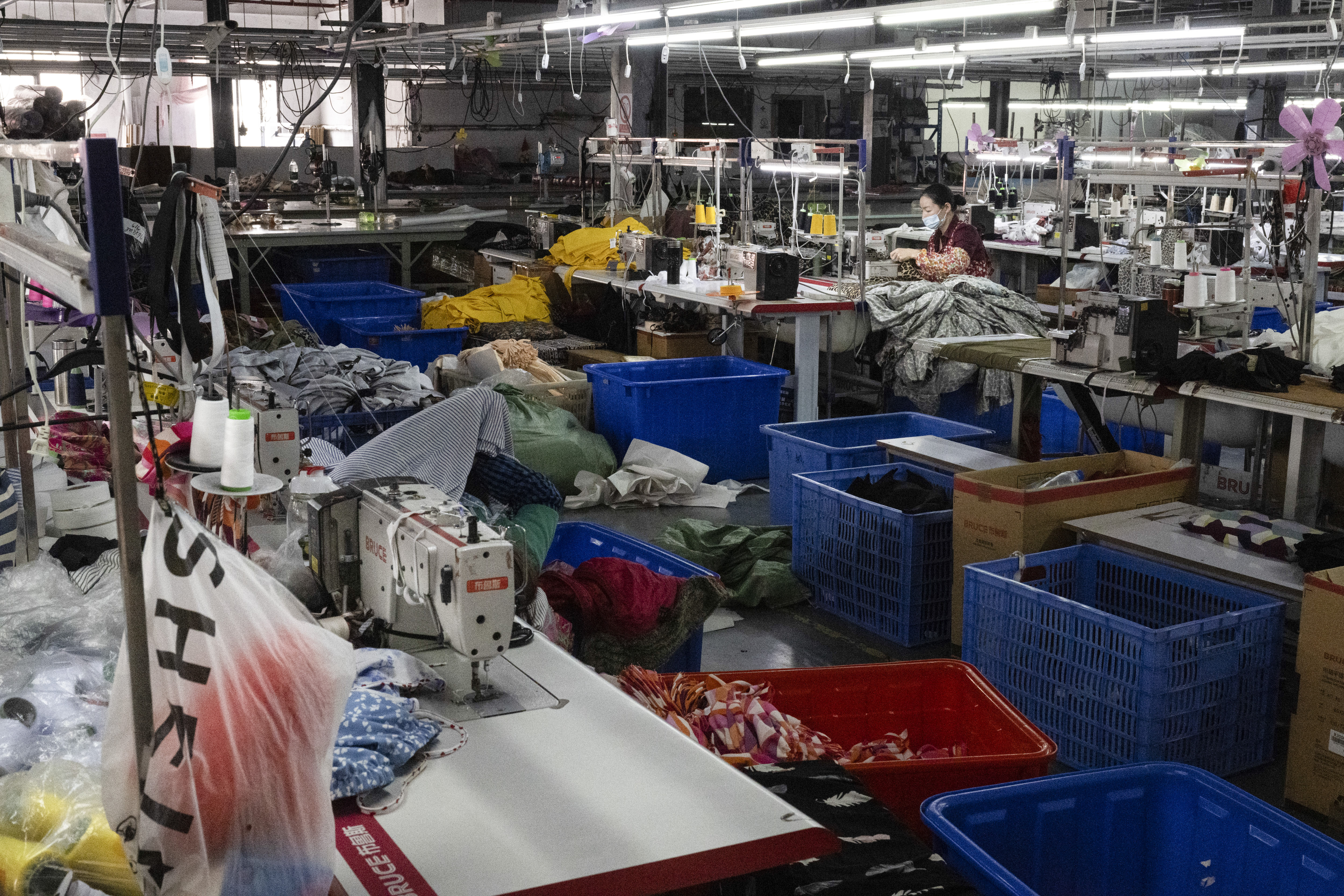
    In the small factories that form the backbone of Shein’s operations in China’s southeastern manufacturing hub of Guangdong, there are no humanoid robots, quantum computers, or state-of-the-art technology. Instead, there are dozens of workers toiling away in 10- to 14-hour shifts — in a way that, some say, feels almost like China of yesteryear.

    “It represents the old tech, as opposed to the new tech,” said Nirgunan Tiruchelvam, who leads the consumer and internet division at Aletheia Capital, an investment advisory firm focused on Asia. “Shein would have had a lot more traction with investors in the 2021 vintage. But the world has moved on from blockbuster e-commerce listings.”

    On Tuesday, investors largely agreed. Shares in Shein fell 6% in early trading, a humbling debut for a company once valued at $100 billion but now worth about a quarter of that. Its initial public offering came after a wave of Chinese AI companies went public in Hong Kong and Shanghai, and years after Shein tried, and failed, twice in its efforts to list in New York and London amid opposition from officials and activists over working conditions at its facilities.

    The drop in valuation reflects questions many investors have about the sustainability of Shein’s business — and whether it can find new ways to grow after the United States and Europe, two of the company’s biggest markets, ended tariff exemptions on cheap goods that had helped propel its low-cost model.

    Shein’s offering comes weeks after shares of Unitree Robotics and CXMT — two companies that are driving the AI investment boom in China — skyrocketed in their public listings in Shanghai. Both firms are textbook examples of what the Chinese government calls “new, quality productive forces” — the slogan for the country’s plan to drive economic growth and innovation through high-value-added manufacturing.

    Weiheng Chen, a senior partner at Wilson Sonsini, a law firm in Hong Kong, and head of its Greater China practice, noted that institutional buyers that were offered Shein shares before the stock went public took up just over 20% of the offering, compared with the roughly 50% typical of popular public listings.

    “It’s a fashion company that is not that fashionable to today’s investors,” said Chen, who has been an adviser on many high-profile listings.

    The challenge for Shein will be to regain interest among Generation Z, the group that powered the company’s rise during the pandemic. Michael Gunther, senior vice president of research and market intelligence at Consumer Edge, a firm that tracks spending data in the United States and Europe, said Shein had continued to cede market share in the United States, with the steepest losses among 18- to 34-year-olds.

    “The fact that it’s continuing to lose share more with that group than other groups is notable,” Gunther said, adding that affordability and sustainability concerns could have prompted the shift. In May 2025, Shein raised prices in the United States to offset the surge in import costs.

    In Britain, Shein’s market share gains have slowed despite no change in government policy, Gunther said. In Europe, where there is a fee of 3 euros on parcels entering the bloc, Shein’s market share has continued to slide, with declines most pronounced in France and Spain, he said.

    Its current fortunes are a stunning reversal for a company that came out of nowhere to become the world’s largest online fashion retailer.

    Shein got its start in 2012 when Sky Xu Yangtian, a Chinese search engine expert, founded the company with three former colleagues. The company compressed the fashion cycle from months to days, using algorithms to track emerging trends and placing initial orders of a few hundred units to test demand.

    But behind its success are tens of thousands of garment workers subjected to a punishing pace. To complete orders on time, workers say, they put in 20 or more consecutive days without a single day off, according to a forthcoming report by China Labor Watch, a U.S.-based nonprofit that investigates labor conditions in China. The report, which has not yet been made public, was shared with the New York Times.

    The organization interviewed 13 workers who made apparel at suppliers to the company as well as Shein employees who worked at its warehouses and corporate offices. The workers said they were given 10-minute breaks and reprimanded if they took too long to sew — for a pay of 7 to 28 cents per item.

    Workers earn, on average, $850 to $1,130 per month, but only by working weekends and taking no days off, according to China Labor Watch.

    Li Qiang, the director of China Labor Watch, said garment factories in China generally limited work hours to around 60 per week. “None are quite like Shein,” he said. “With Shein, working 100 hours a week is entirely possible.”

    The findings from China Labor Watch appear to contravene Shein’s official supplier policy, which states that workers should not work more than 60 hours a week, including overtime.

    In a written statement, Shein said it categorically rejected these characterizations of working conditions within Shein’s supplier ecosystem. It also said that the payment figures presented in the report “are not factual and misrepresent the wage structures used by suppliers.”

    Shein has also come under fire for copying other people’s designs. Since 2021, it has been named as a defendant in 58 lawsuits in the United States alleging trademark infringement and racketeering, according to court records. The company said being named as a defendant in litigation “does not establish the validity of the allegations made” and that it continues to strengthen its intellectual property protection and enforcement.

    Taken together, the challenges have complicated the story that Shein once sold investors — that it had reinvented fashion for the digital age. Now, the technology cycle has moved on.

    Winston Ma, a former managing director at the China Investment Corporation, the country’s largest sovereign wealth fund, compared Shein’s stock to that of Zoom, which surged during the pandemic but has since fallen from its valuation highs.

    “It was a superpromising concept during COVID,” Ma said of Shein. “But now it’s overshadowed by the new AI era.”

    This article originally appeared in the New York Times.

    A worker sews garments for Shein in Guangzhou, China, on Feb. 12, 2025. In the small factories that form the backbone of Shein’s operations, there are no humanoid robots, quantum computers, or state-of-the-art technology.GILLES SABRIE
  • Horoscopes: Friday, Sept. 4, 2026

    Horoscopes: Friday, Sept. 4, 2026

    ARIES (March 21-April 19). You’re leadership instinct is on point today and you have an immediate sense for what action needs to be taken and by whom. If there isn’t such a person close at hand, you cast a wide net and find someone to fill the role.

    TAURUS (April 20-May 20). The same story can be gossip or kindness depending on why it’s being told. Listen with one ear on the words and the other on the motive. Kind motives will leave everyone richer in dignity and goodwill.

    GEMINI (May 21-June 21). The reason you get such consistent results is that you have standards in place. But for new endeavors, it’s best to start without them. Stay in learning mode a while. By getting a sense of what to reasonably expect, you’ll avoid frustration.

    CANCER (June 22-July 22). Ideas behave differently from most things. Spending one rarely leaves you with fewer. In fact, they seem to invite each other. You’ll toss a few around today, and they will start to take root over the weekend.

    LEO (July 23-Aug. 22). Every situation has its own temperature. Some need another log on the fire. Others need a window opened. You’re unusually good at telling the difference. That’s one reason people trust you when it’s your turn to lead today.

    VIRGO (Aug. 23-Sept. 22). Success is no longer doing the job you already know you can do. Now it’s doing the job that only you can do. Success is reaching for the impossible and expecting to fail gloriously and often.

    LIBRA (Sept. 23-Oct. 23). After weeks of familiar faces enacting the same patterns, someone new will step through your scene. All they need is the slightest interest from you, and it’s on. This relationship has real potential for mutuality and magic.

    SCORPIO (Oct. 24-Nov. 21). Good partnerships aren’t built from matching talents. They’re built from complementary ones. Today you have a gift for recognizing strengths that have very little in common with your own and will therefore be useful in a team effort.

    SAGITTARIUS (Nov. 22-Dec. 21). Someone is paying closer attention than you realize. Your casual reaction will become their memory. So make sure you’re intent on encouragement, laughter, curiosity and the like. It will echo far beyond the moment.

    CAPRICORN (Dec. 22-Jan. 19). You want to write a brand-new story for your future. This requires that you look back. Unless you understand the patterns that brought you here, you’re likely to repeat them. Some are great, but still not a “new story.”

    AQUARIUS (Jan. 20-Feb. 18). It’s a day to give people lots of chances to succeed. If you decide too quickly that they are not going to deliver what you want, you’ll have to eat your words later. Stay hopeful and patient.

    PISCES (Feb. 19-March 20). A gift loses its sparkle if it’s expected. You are such a gift. If people grow too accustomed to your generosity, they may stop seeing it as generosity at all. It’s OK to hold back a little. Your restraint will keep them from taking you for granted.

    TODAY’S BIRTHDAY (Sept. 4). It’s your Year of Daily Victories. Success is not contained in the trophies of the future; it’s in today’s achievement. And it is always “today.” You’ll set the right goals, rack them up and create meaningful transformation. More highlights: Three teachers for what you most need to know — and you’ll wind up melding these lessons into a unique take you’ll share widely. Profits from a new endeavor. Leo and Sagittarius adore you. Your lucky numbers are: 3, 7, 12, 5 and 14.

  • Dear Abby | Bartender mom pretends she’s younger and childless

    Dear Abby | Bartender mom pretends she’s younger and childless

    DEAR ABBY: My boyfriend, “Evan,” and his mother, “Mitzi,” tell people they are siblings. I love my boyfriend, but I don’t feel comfortable lying for him, and I wish he wouldn’t lie for his mother. Evan is in his early 30s. His mother is in her early 50s, though she tells people she is 10 years younger.

    Mitzi has worked in the hospitality industry since Evan was a young child. Back then, she claims restaurant managers wouldn’t give parents preferred shifts due to their childcare-related schedule conflicts. For her entire career, she has kept up the lie that she’s younger than she is and childless, and that Evan is actually her brother. She now claims that if the managers she works for knew her real age, they would discriminate against her because she’s older than the other young, hip bartenders.

    Evan has worked with his mother at several restaurants and has helped her keep up the lie with coworkers and mutual friends they have met at various jobs over the years. My instincts tell me the real reason his mother doesn’t fess up now is because she doesn’t want to tell longtime acquaintances she has been lying to them for years.

    I wouldn’t want to blow her cover if this false narrative really protects her in her industry. There have been several instances where I have interacted with these misinformed friends, and it makes me extremely uncomfortable. Evan hasn’t asked me to lie to his friends for him, but I know if I don’t, his social circle would be confused and likely hurt. I don’t want to lie, but I’m also scared of the consequences of telling the truth or accidentally spilling the beans. Please help!

    — TANGLED WEB

    DEAR TANGLED WEB: Do any of these folks come out and ask you how old Evan’s mother is or whether they might not be brother and sister? Ageism is a fact, and many people lie about their ages for any number of reasons. If being involved with two people who are untruthful about their circumstances makes you uncomfortable, then you need to rethink the relationship. From where I sit, you are about to put your foot on the third rail, my dear, and if you do, it doesn’t take a crystal ball to predict that your relationship with your boyfriend and his mother will vaporize.

    ** ** **

    DEAR ABBY: I am a 28-year-old woman who can’t stop overthinking. Lately, more than ever, I realize that I’m still alone, have not found anybody to settle down with and have no children. When I scroll on social media, I see all my friends who have recently married or had babies. It appears that they are all progressing and are happily content. Am I doing something wrong? Where should I be spending my time? Am I worried about the wrong things? Should I just let things be the way they are?

    — OVERLOOKED IN IOWA

    DEAR OVERLOOKED: Please stop comparing yourself to your friends. What you perceive they have is not important. Think honestly about your own life and desires. Are you actually lonely? If so, seek out social groups in your areas of interest. As you make new friends, remember to stay open to romance, but don’t obsess about it. If you simply try to have fun with people, you may be surprised by what develops.

  • Trump officials say work will start on triumphal arch within two weeks

    Trump officials say work will start on triumphal arch within two weeks

    Administration officials Thursday announced they would soon begin work to build President Donald Trump’s planned 250-foot-tall triumphal arch, his most significant change to Washington’s skyline.

    “We are preparing to start, over the next two-week period, the excavation work necessary,” Interior Secretary Doug Burgum wrote on X.

    The announcement comes three days after the Supreme Court allowed Trump to keep building his planned White House ballroom, with a 5-4 ruling that historical preservationists who sought to block that project lacked legal standing to bring their case to court.

    That decision created new hurdles to other court challenges of Trump’s projects, legal experts warned, and Justice Department lawyers invoked it Thursday as they sought to dismiss a legal challenge to the arch.

    The administration plans to build the arch in Memorial Circle, a traffic roundabout tucked inside Washington’s boundaries near Arlington National Cemetery. Trump has said that the arch will honor the nation’s 250th anniversary, vowing that it will be the largest triumphal arch in the world — about 86 feet taller than France’s famed Arc de Triomphe.

    Historical preservationists, Democratic lawmakers, and some Washington residents have opposed the project, calling it an oversize and inappropriate structure that will disrupt the historically solemn corridor between the military cemetery and the Lincoln Memorial.

    It is also the subject of a lawsuit brought by several military veterans who say the towering structure would alter their experience when visiting the nearby military cemetery.

    Administration lawyers Thursday asked a federal court to throw out the military veterans’ challenge to the arch, citing the Supreme Court ruling on the ballroom as precedent.

    “Plaintiffs’ distaste for the perceived symbolism of the proposed arch does not establish a concrete and particularized injury,” Justice Department lawyers wrote.

    Administration officials have laid out an aggressive timeline to potentially complete the arch within two to three years, saying that crews would work 20 hours per day, year-round. Trump and his deputies also contend that they do not need approval from Congress because lawmakers authorized a somewhat similar project a century ago that was never built.

    “It was meant to be built for many years,” Trump said in the Oval Office in May. “The land is owned by secretary, by the Interior Department. We don’t need anything from Congress.”

    The project already has received approval from the Commission of Fine Arts, a federal panel that reviews local design projects. The National Capital Planning Commission, a second federal panel that has been reviewing the project, has yet to issue final approval.

    Democratic lawmakers have said that the arch must go through congressional review.

    Lawyers for Public Citizen, a watchdog group that is representing the military veterans, have urged a federal judge to halt the project, too.

    “Frankly, I’m befuddled as to what sort of legal authority the administration thinks it has behind it,” Nicolas Sansone, Public Citizen’s lead attorney on the case, said Thursday, citing the lack of final approval from the National Capital Planning Commission.

    Trump administration lawyers had told the judge that the project should not be halted because it had not officially begun. Officials also told the judge that they would provide the public at least 14 days’ notice before beginning construction.

    Fifty-two percent of Americans are against the planned arch, compared with 21% who favor it, according to a Washington Post-ABC-Ipsos poll conducted in April.

    Trump has prioritized construction of the arch, along with the ballroom and other Washington-area projects.

    “When completed, it will be, without question, the Greatest Arch of them all!” the president wrote on his Truth Social platform in June.

  • Cassandra Wilson, the 2-time Grammy Award-winning jazz singer, dies at 70

    Cassandra Wilson, the 2-time Grammy Award-winning jazz singer, dies at 70

    NEW YORK — Cassandra Wilson, the two-time Grammy Award-winning jazz singer, songwriter and producer has died. She was 70.

    Dubbed America’s best singer by Time magazine in 2001, Ms. Wilson was best known for her genre-bending voice, which expanded the boundaries of traditional blues-based jazz and worked effortlessly across folk, pop, R&B, country, and beyond. At the heart of all her work was her idiosyncratic contralto, a soulful sound distinctly tied to her roots.

    As Jon Batiste put it in a eulogy on Wednesday, Ms. Wilson sounded like the South.

    She died in her native Jackson, Mississippi, on Tuesday morning, the Hinds County Coroner Jeramiah Howard confirmed.

    “It is with profound sadness that we announce the passing of Cassandra Wilson, the Grammy Award-winning and legendary jazz artist. Cassandra Wilson transitioned peacefully at home, surrounded by family, close friends, and her manager,” said a statement from her manager to jazz radio station WBGO.

    From Jackson to the world

    Born and raised in Jackson to musician Herman B. Fowlkes and teacher Mary Fowlkes, Ms. Wilson showed an early love of music listening to Motown, Miles Davis, and Thelonious Monk. At 6, she started piano lessons. She played clarinet in marching bands. She performed at coffeehouses and in cover bands while studying at Millsaps College and Jackson State University.

    In the early ‘80s, she mentored under jazz greats in New Orleans before moving to New York City and joining Steve Coleman’s M-Base Collective — eventually becoming its main vocalist.

    Her instantly recognizable voice earned her four Grammy nominations and two wins for best jazz vocal album. Those were in 1997 for New Moon Daughter and 2009 for Loverly.

    In 2015, it was Ms. Wilson who gave a special concert at the famed Apollo Theater to commemorate the 100th birthday of blues singer Billie Holiday, the legendary American jazz vocalist who died in New York City at age 44. That same year, Ms. Wilson released her last album, Coming Forth by Day, an homage to Holiday.

    In 2022, Ms. Wilson was named a National Endowment for the Arts Jazz Master, one of the highest honors awarded to jazz musicians in the United States.

    Tributes pour in

    “She had an unmistakable vocal tone, phrasing, and her approach of weaving folkloric, R&B, and diasporic music together with experimental and popular genres had a major impact on me,” Batiste said in his tribute to Ms. Wilson on Instagram.

    “Her Mississippi heritage was always present in everything no matter how expansive her artistry evolved,” he wrote in the caption of a clip showing them together on Brazilian TV in 2009. “She was one of the first people to take me on tour around the world, the great Cassandra Wilson.”

    Jackson Mayor John Horhn said the city “has lost an extraordinary native daughter, and the world has lost a singular musical voice.”

    “Cassandra Wilson carried the sound, spirit and history of Mississippi with her wherever her music reached,” said the mayor’s statement, shared with WJTV. “Her work had rare depth of character and a profound understanding of how music moves people, tells stories and connects generations.”