Tag: no-latest

  • Is taxing the rich the answer to Washington’s budget problems?

    Is taxing the rich the answer to Washington’s budget problems?

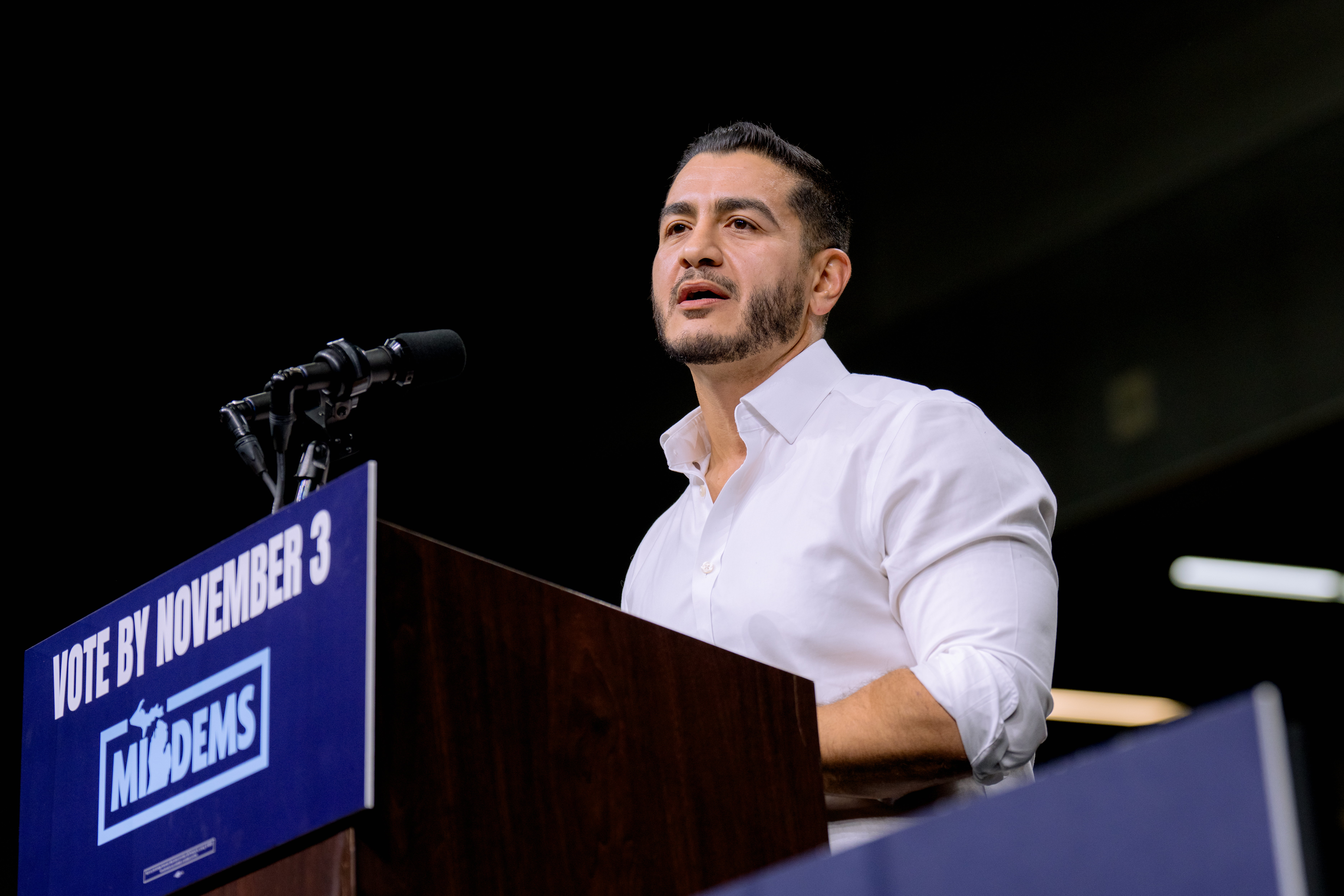
    In Michigan, Democratic Senate candidate Abdul El-Sayed said he would tax billionaires to “build schools and roads, provide healthcare, provide childcare.”

    In Texas, Democratic Senate hopeful James Talarico said making “the wealthiest Americans and giant corporations pay their fair share” would cover a middle-class tax cut.

    And in Maine, Democratic Senate candidate Troy Jackson said he will “tax those billionaires” if he gets elected, while promising Medicare-for-all.

    Across the country this election season, taxing the richest Americans is the solution many Democrats are offering for a host of middle-class problems, from overly expensive housing to overly expensive college tuition. But while taxing the wealthy could raise substantial sums, it couldn’t even stabilize Washington’s historically large budget deficit, much less finance major new spending, according to two reports released this month.

    “Even if we seized every dollar of billionaire wealth — their stock portfolios, their mansions, their cars, everything down to their kids’ toys, and sold it for full market value” — the proceeds could fund the federal government for about a year, said Jessica Riedl, author of one of the reports. “And then it’s gone.”

    Riedl, a Brookings Institution fellow and former chief economist to former senator Rob Portman (R., Ohio), said she’s not opposed to taxing the rich. “But it doesn’t get us out of the tough decisions that have to be made.”

    A similar finding came this month from the Budget Lab at Yale University, a research group founded by former Biden administration economists. The Budget Lab’s report posed a thought experiment similar to Riedl’s: What if the federal government took every dollar people earn above about $710,000 a year — the cutoff for the top 1%? Some of the most ambitious proposals would still be out of reach, the report concluded.

    The appeal of taxing the rich is easy to see. While economists disagree on how fast and how much the rich have gotten richer, no one disputes that income is concentrated at the top, the Budget Lab notes. The highest-earning 1% of Americans will take in nearly a quarter of all income next year, the report said.

    But though rich people’s incomes are substantial, the report said, they are “still finite.”

    If the government could pocket all those dollars above the top 1% threshold next year — in other words, tax them at 100%, a “clearly unrealistic scenario,” the report said — the U.S. Treasury would collect about $2 trillion.

    That was about the size of the federal budget deficit — the gap between what the government spent and what it took in — in the fiscal year that ended in September. Washington borrowed that amount to cover the difference, adding to the already huge national debt.

    Because a dollar now is worth more than a dollar in the future, economists like to talk about such sums as a percentage of the overall annual economy, or gross domestic product. In those terms, the federal government spent about 23% of GDP ($7.4 trillion) last fiscal year and raised about 17% ($5.4 trillion) in revenue, leaving a deficit of about 6% ($2 trillion).

    That last figure, the big hole in the budget, is projected to grow because of the increasing cost of Social Security and Medicare as the baby-boom generation retires. Those two programs alone cost more than 8% of GDP last year ($2.7 trillion), while defense spending cost about 3% ($916 billion). Interest on the national debt cost more than 3% ($1.1 trillion).

    Over the next three decades, as programs for the aging cover more people with relatively fewer working people to pay for them, the nonpartisan Congressional Budget Office has projected that the deficit will grow to about 9% of GDP. Riedl expects it to get much bigger.

    So how much of the problem could taxing the rich solve? At most a couple of percent of GDP per year, Riedl said — probably not enough to avoid an eventual fiscal crisis.

    The Budget Lab report found that closing certain tax loopholes could help. The biggest one allows the wealthy to avoid taxes on investments that grow in value if they don’t sell them before they die. Changing that rule, the report said, would nearly double the expected proceeds of a higher tax rate on capital gains, or profits from selling investments — one of several ways Democrats have proposed to tax the rich.

    But that still wouldn’t be enough to get the deficit under control.

    “You need 4 to 5 [percent of GDP] in order to stabilize the debt long-term,” Riedl said. “So you’re still going to have to either significantly raise middle-class taxes and/or significantly rein in spending.”

    So far, however, stabilizing the debt has not emerged as a chief campaign-trail priority.

    Instead, consider the proposal to impose a 5% annual tax on billionaires’ wealth, which proponents said would raise about 1.2% of GDP per year. El-Sayed has backed such a tax, as have Sen. Bernie Sanders (Ind., Vt.) and Rep. Ro Khanna (D., Calif.).

    Their plans for the proceeds: Building or preserving more than 7 million affordable homes. Capping families’ childcare costs. Establishing minimum salaries for schoolteachers. Expanding Medicaid home healthcare. Adding dental, vision, and hearing coverage to Medicare. Reversing the cuts to Medicaid and the Affordable Care Act in last year’s tax law. And providing “a $3,000 direct payment to every man, woman and child living in a household making $150,000 or less.”

    Or, take the “Ultra-Millionaire Tax” proposed by Sen. Elizabeth Warren (D., Mass.). It would target the wealthiest 260,000 households, or the top 0.15%, with an annual 2% tax on every dollar of net worth above $50 million and 3% on every dollar above $1 billion.

    Warren said the tax would raise 1.7% of GDP a year, enough to pay for universal childcare, new housing, a bigger child tax credit, paid family leave, free community college, and Medicare eligibility starting at age 55 “with money left to spare.”

    The revenue estimates behind Sanders’s and Warren’s wealth taxes come from Emmanuel Saez and Gabriel Zucman, economists at the University of California at Berkeley. In their 2019 book, The Triumph of Injustice, they estimated that the top 1% could pay roughly 3.5% of GDP a year in additional taxes — well above Riedl’s estimate — if the government first cracked down on “tax dodges.”

    But other economists put the figures far lower.

    El-Sayed, Talarico, Jackson, Sanders, Khanna, and Warren did not respond to requests for comment.

    Sen. Ron Wyden (D., Ore.), who is in line to chair the tax-writing Senate Finance Committee if Democrats gain control of the Senate, has not signed on to either Sanders’s or Warren’s wealth tax proposals. Instead, Wyden has pushed a narrower tax on the yearly rise in value of billionaires’ stock and other investments, even if they don’t sell them. The nonpartisan Joint Committee on Taxation estimated in 2021 that it would raise $557 billion over 10 years, or about two-tenths of a percent of GDP a year.

    At a Finance Committee hearing this summer, Wyden suggested that making billionaires “pay their fair share” would allow policymakers to shore up the finances of Social Security “without a single dime of cuts to a current or future retiree,” with “no raising the retirement age, no cost-of-living haircuts and no means-testing benefits.” But all that is projected to cost significantly more — about 1.5% of GDP per year.

    Asked about the gap, Wyden spokesman Taylor Harvey said in an email that the senator “believes that saving Social Security starts by ensuring the wealthy pay their fair share, through the Billionaires Income Tax as well as other measures like scrapping Social Security’s payroll tax cap.”

    Eliminating the cap, which exempts wages above $184,500 from the Social Security payroll tax, would raise about 0.9% of GDP a year, Riedl estimated, leaving part of the shortfall uncovered even with Wyden’s proposed billionaire tax. Harvey pointed to a list of other Wyden proposals to raise taxes on the wealthy and corporations, but did not say whether they would close the rest of the gap to fully finance Social Security benefits.

    Of course, even if Democrats take the House and Senate on Tuesday, they will be stuck with a president likely to veto their ideas for taxing the rich. And even if Democrats also win back the White House in 2028, history suggests that raising taxes may not be easy.

    The biggest tax increase in more than four decades came under President Bill Clinton in 1993. It raised less than 1% of GDP a year — and contributed to Democrats’ loss of Congress in 1994.

    Under President Joe Biden, Democrats also had “trifecta” control of the White House, House and Senate for two years, and they managed to raise net taxes by less than $6 billion per year, Riedl has calculated, or about two-hundredths of a percent of GDP.

    “They’re not even able amongst themselves to pass big tax hikes on the rich,” Riedl said. “There’s not just the mathematical, economic barrier, there’s a political barrier.”

    Democrats, she said, represent not just the super-rich of Wall Street, Silicon Valley and Hollywood but also upper-income professionals making $300,000 to $500,000 a year, who have become a core of the party’s voters and donors.

    “They have some hesitancy about taxing them to death, too,” Riedl said.

    In fact, during the 2012 “fiscal cliff” negotiations with Republicans, Democrats agreed to raise the top income tax rate for couples earning more than $450,000 and individuals earning more than $400,000 — though President Barack Obama had for years called for raising taxes on households earning more than $250,000. Biden and Kamala Harris later campaigned on not raising taxes on anyone earning less than $400,000.

    “And now,” Riedl said, “I’m already hearing no taxes under a million.”

  • Iran war cost rises to $47.1 billion, Pentagon told lawmakers

    Iran war cost rises to $47.1 billion, Pentagon told lawmakers

    WASHINGTON — The cost of the war in Iran rose to $47.1 billion through Oct. 16, with bombs, missiles, and other munitions accounting for more than 60% of the expenses, the Pentagon told Congress last week. Even with President Donald Trump holding back on restarting major combat operations, at least for now, the Pentagon still incurred about $3.5 billion in additional costs in the roughly six weeks since the Pentagon shared estimates with lawmakers last month.

    The numbers were the latest glimpse of an unclassified breakdown of costs incurred by each of the armed services, as well as for specific categories, like damaged or destroyed weaponry.

    In the most recent cost estimates, the Air Force, for instance, has spent $7.6 billion to pay for operating dozens of fighter and bomber squadrons. The Navy has incurred $1.5 billion to deploy more than two dozen warships, including several aircraft carriers. And it has cost the Army $2.1 billion to sustain its forces in the region. Overall, more than 50,000 troops are assigned to the war mission, according to U.S. Central Command.

    Congressional officials shared the cost estimates with The New York Times after they were provided to national security committees on Capitol Hill.

    Since the war started Feb. 28, the military has burned through $29 billion in munitions, depleting global stockpiles of some critical weapons, like Patriot air-defense interceptors, and siphoning supplies from U.S. military commands in Asia and Europe.

    The Pentagon has spent $6.1 billion to replace dozens of damaged or destroyed combat aircraft and other weaponry and equipment. It has spent $645 million to move and support several thousand Special Operations commandos in the region.

    The information also revealed spending in other critical accounts. The military spent $24.5 million on “in-house medical support” for U.S. service members, according to one congressional official who spoke on the condition of anonymity to discuss the information provided to lawmakers. The Pentagon says that 18 service members have been killed in the war, and that more than 860 have been injured.

    U.S. Transportation Command spent $92.2 million to move supplies and equipment, and U.S. Cyber Command spent $14 million on “cyber support operations,” the official said.

    The Pentagon did not immediately respond to a request for comment.

    The department’s figures are almost certainly on the low side, congressional officials said Tuesday, noting that the Pentagon had acknowledged that its estimate did not include $1.5 billion for fuel and other costs that the Trump administration had asked for in a supplemental request to pay for the war.

    The costs to repair or replace U.S. military facilities that were damaged or destroyed by Iranian attacks, such as the Navy’s base in Manama, Bahrain, also were not included in the information sent to Congress. The Pentagon has indicated it may close or not rebuild them. If the military or host countries rebuild, congressional officials say the bill could be tens of billions of dollars.

    The unclassified Pentagon cost estimates provided to Congress offer an unusual window into the financial accounting of the war, which Defense Secretary Pete Hegseth and his top aides have largely kept under wraps.

    Hegseth and the Trump administration are requesting as much as $70 billion in emergency military spending to cover the costs of the Iran war and pay for new weapons and personnel.

  • Rising healthcare costs are pushing people to forgo medicine and doctor visits

    Rising healthcare costs are pushing people to forgo medicine and doctor visits

    Bill McAdams, a 45-year-old travel nurse from Holiday, Fla., was uninsured last year when he experienced a stroke. He hadn’t been able to afford his employer’s health plan, which would have cost $3,600 monthly to cover him and his wife. The hospital that treated him sent him a bill for $93,000.

    Janet Marx, 56, of Milford, Conn., has doubled up on insurance coverage through her husband’s employer and Medicare because she has lupus and fibromyalgia, disabling chronic conditions. Still the couple sold their home, the house where Marx grew up, to afford the costs of their medical care.

    Sheila Robinson, 61, of District Heights, Md., has a $10,000 deductible on her Affordable Care Act plan, so she tries to negotiate cheaper self-pay options when she sees a doctor. She puts the $659 monthly premium on her credit card, even though she knows not paying the bill in full means she must pay interest.

    “I am just afraid to even go to the doctor,” said Robinson, who has arthritis, a pinched nerve in her neck, and high blood pressure. “Every month, I am in the hole.”

    This year, KFF Health News has chronicled how rising healthcare costs are upending the lives of Americans. Reporters have heard from more than 130 people across the United States who are trying to afford their premiums, co-payments, prescriptions, and medical bills even as housing, energy and food costs swell. People told us they are forgoing health insurance coverage, rationing their medications, cutting back on doctor visits, and putting off health procedures.

    “We’re not talking about the uninsured or those who are low-income who are struggling now,” said Rebecca Kirch, executive vice president of the National Patient Advocate Foundation. “Now it’s become an all-of-us issue.”

    While healthcare costs have largely grown faster than the overall economy for decades, they’ve escalated at a dizzying pace recently. In 2023 and 2024, health spending hit its highest growth rates in two decades, excluding 2020’s COVID-fueled surge.

    The prices that hospitals, doctors, and other clinicians charge have increased, along with how much care people are getting. Overall health spending hit nearly $5.3 trillion in 2024, up from $3 trillion a decade earlier, according to federal data.

    American health costs, expected to continue growing faster than the overall economy and to help fuel it, are projected to hit 20% of the nation’s gross domestic product by 2032, up from just under 19% today.

    At the same time, Americans are shouldering higher insurance premium payments and other out-of-pocket costs. Low-income and middle-class people with health conditions are feeling the brunt.

    The GOP-led Congress decided against extending COVID-pandemic-era subsidies for ACA plans and cut billions from other federal health programs to offset the costs of tax cuts for wealthy Americans and heightened immigration enforcement, arguing that government insurance programs are rife with fraud and waste.

    Despite $500 rebate checks sent by President Donald Trump to fewer than 5% of higher-income ACA marketplace enrollees, his administration has been expanding access to insurance plans with higher deductibles and lower premiums that push more costs to patients if they need care. Employers are passing along rising healthcare costs to employees, and clinicians are charging patients up front.

    It’s not all bad news for consumers: Prescription drugs recorded their biggest price drop in decades this year. The Biden and Trump administrations both worked to help lower them amid consumer pressure.

    But many say they’re still feeling the pain of rising prices. Ahead of the November midterm elections, healthcare costs continue to top a list of the public’s worries about affordability, according to polling conducted in mid-September by KFF, a health information nonprofit that includes KFF Health News. About 9 in 10 Democratic respondents and three-quarters of Republican ones said the U.S. healthcare system needs either a complete overhaul or major changes.

    ‘Profit margins everywhere’

    The typical American family spends about $5,600 a year, or 9% of their income, on health insurance premiums, out-of-pocket healthcare, costs and taxes that fund health programs, according to the Peterson-KFF Health System Tracker. But overall, the nation’s annual healthcare spending comes to the equivalent of more than $15,400 per person.

    The reason behind those high U.S. healthcare costs is straightforward: The prices that clinicians, hospitals, drugmakers, and other players in the health system charge are high. For example, while doctors in the U.S. perform about a third as many inpatient knee replacements as in other wealthy nations, the cost per surgery is higher than in most of those countries, according to the Peterson-KFF tracker.

    More recently, multiple trends have driven that price growth in the U.S., health economists and policy researchers said. Hospitals are merging and using their consolidated market power to charge more. New technologies and therapeutics, such as GLP-1s for weight loss and diabetes, have high price tags. Inflation and the Trump administration’s tariffs are layering costs onto many aspects of healthcare, including latex gloves and medical devices. And higher numbers of uninsured Americans mean fewer people to bear more of the costs.

    “It’s really everything all together at once,” said Christopher Whaley, a Brown University health policy researcher.

    Why the U.S. has high healthcare prices, however, is more complicated. Whaley and other health economists point to how the American healthcare system is structured and financed. Clinician charges and administrative costs are higher in the U.S. than in other countries. The U.S. doesn’t centrally set all prices for services, ration care, or control for quality.

    In most American markets, insurers negotiate prices with hospitals, clinicians, and drugmakers, which then charge for every test, procedure or medicine regardless of its outcome. More than half of all healthcare payments were based on this fee-for-service model, according to a 2022 research brief published in the journal Health Affairs. Under this model, hospitals and doctors make more as they bill more.

    The complexity of different billing systems, rates, insurers, and networks adds to the price tag. The cost of sending out bills and managing paperwork can be hundreds of billions of dollars. Insurers try to keep medical costs in check, in part by limiting what they’ll reimburse. They also take their own cut along the way.

    “There’s profit margins everywhere, and there are varying degrees of financial incentives throughout the healthcare system,” Whaley said.

    The incentives, however, don’t necessarily promote better health.

    Steven Ullmann, director of the Center for Health Management and Policy at the University of Miami Business School, where he is a professor, said that the country’s health system encourages expensive treatments over low-cost preventive care. He said that keeps people locked into seeing clinicians because they’re in their insurance networks, not necessarily because they produce better outcomes.

    Even though people in the U.S. pay more for care than in other countries, Ullmann said higher prices don’t always mean better quality. For example, he said the prices for prenatal ultrasounds in Orlando vary widely with no obvious difference in quality.

    “Same city, same procedure,” Ullmann said. “That is a reflection of a broken system.”

    And those high prices can keep people from seeking needed services.

    In 2025, a health system garnished the wages of Carmilla Collins, 52, of Omaha.

    Collins, a single mother, said she didn’t question the tests or medicines doctors ordered when she got diagnosed with thyroid disease or received regular preventive procedures such as a colonoscopy — until she found herself in debt. The hospital hired a collection agency to sue her for unpaid medical bills that she accrued when she was both insured and uninsured. Then a court allowed the debt collector to take hundreds of dollars out of her paycheck.

    Collins remembered being “spitting mad.” She almost couldn’t make rent.

    “I’m working two jobs,” she said. “And I’m going to be homeless because of this noose that’s around my neck.”

    Collins eventually qualified for financial assistance from the hospital, but she said she put off thyroid surgery for four months even as a goiter swelled against her throat, making it hard for her to eat. She had health coverage through her employer at that point but was worried about affording the costs of her deductible and other fees. Eventually, she said, her health declined until she could no longer put off the surgery.

    “I equated taking care of my health with debt that I couldn’t afford,” she said.

    No quick fixes

    How to slow rising costs — and overall U.S. health spending — has long vexed elected leaders and policymakers.

    That’s because reducing overall healthcare costs for patients means doctors, hospitals, drug companies, insurers, or other players across the health system would get paid less.

    “For the most part, health spending for us is income to someone else,” said Zack Cooper, a health economist at Yale University.

    Eliminating administrative complexity or setting price caps — which is how some countries lower overall costs — faces steep odds at the federal level. Since 1998, the health sector has spent more than $14 billion lobbying members of Congress in both parties, according to OpenSecrets, a nonprofit that tracks money in U.S. politics.

    When Lynn Ludaway was diagnosed with multiple sclerosis, she had health coverage through her husband’s employer. But that plan left her with large out-of-pocket costs and lots of debt. Here, she is with her dog, Apple Shadow. (Hannah Norman/KFF Health News)Hannah Norman/KFF Health News

    After Lynn Ludaway, 40, was diagnosed with multiple sclerosis three years ago, she said she considered divorcing her husband just to make her eligible for aid to cover medical costs, even though they wanted to stay together.

    She initially had coverage through her husband’s job but still faced large out-of-pocket bills. Ludaway, who lives in Evanston, Ill., also racked up expenses from navigating life with a disabling health condition, such as paying for Uber rides and a cane as her mobility declined. Her medical bills stretched into the tens of thousands of dollars.

    “I thought I was well prepared for an emergency,” said Ludaway, who gave up her consulting business and raided her savings and retirement accounts to pay for tests and treatment. “Nobody can prepare for this.”

    She now pays a $500 monthly premium for coverage through Illinois’ ACA marketplace. But because of her husband’s job, the couple makes too much to qualify for state or federal assistance.

    “I am in this weird in-between,” she said. “I need to rest to heal, but I need to work to live.”

    Instead Ludaway relies on private financial aid programs, through foundations and the hospital system where she gets her care. She forgoes what she can’t afford, including dental and mental healthcare. She said she must be even more budget-conscious than she was in college.

    “Broke undergrad has nothing on chronic illness,” she said.

    Shifting costs

    Many federal healthcare proposals focus on shifting costs rather than lowering them, and ideological differences about who should bear those costs deeply divide lawmakers.

    The GOP has prioritized tax and spending cuts, which put the cost more on patients than taxpayers and are expected to boost the number of uninsured, to eliminate what they claim is pervasive fraud in government health programs. Last year, Democrats fought to extend enhanced subsidies for marketplace plans, which would buffer patients somewhat from premium hikes by pushing the bill to taxpayers.

    Some progressive Democrats, including candidates winning primaries in battleground states, are reviving calls for Medicare-for-all, versions of which would create one centralized public insurer. Such a system could end out-of-pocket costs and provide major relief for patients such as Ludaway, according to health policy experts, but not necessarily cut overall health spending. Clinicians, hospitals, drugmakers, and other groups could still lobby for high prices, which taxpayers would then be on the hook to pay.

    And some ideas with broad bipartisan support, such as forcing hospitals and doctors to publicly post medical prices, have had little effect on costs.

    Policy debates about increasing access to coverage and improving quality of care should also focus on overall health spending, not just who’s picking up the tab, said Michael Chernew, a professor of healthcare policy at Harvard Medical School.

    “We don’t have some rich uncle that’s coming and just paying for all of our care. One way or another, collectively we are paying,” Chernew said. “It’s just we’re shifting who is paying, how much we’re paying, and through which mechanisms we pay.”

    Despite trillions in health spending, the nation’s system leaves millions of uninsured and underinsured people unable to afford care. About 27 million people — nearly 10% of the population under age 65 — didn’t have health insurance in 2024, according to KFF. And the nonpartisan Congressional Budget Office projects that number to grow by 10 million or more by 2034 because of policy and funding changes.

    Melody Stephens in Berryville, Ark., became uninsured when she dropped her ACA marketplace coverage for this year after the monthly premium payments for her and her younger daughter jumped from just over $200 to more than $2,000. Stephens, 55, a geriatric nurse at an assisted-living facility, said she also couldn’t afford the $1,000 monthly premium payment for her employer-sponsored plan.

    “There was just no way I could do that,” Stephens said. “That was just not feasible.”

    Stephens first got an ACA plan after she was diagnosed with anal cancer about a decade ago. Even with coverage, she filed for bankruptcy two years ago. While her plan largely covered cancer care, it left her with big bills for treatment of the side effects of radiation.

    Now she and her daughter are relying on financial assistance and cutting back on care. When her daughter, a college student, had some surgeries, the hospitals wrote off the bills, Stephens said. But they still owe money for tests and treatments.

    Stephens also stopped taking a GLP-1 that she was prescribed for diabetes and a medication for nerve pain because of the cost. Stephens can’t afford a colostomy, so she lives with incontinence, she said.

    She said she wishes lawmakers in Washington would fix the healthcare system. “They just seem to fight,” she said.

    A tipping point?

    Next year, insurers say they expect to hike premiums for ACA marketplace plans by 15%, the second year in a row of double-digit premium increases. Employer health costs are expected to rise 9.5%, probably increasing the burden on workers.

    Policy researchers and economists who have studied health costs say they are skeptical that federal lawmakers are ready to tackle overall health spending, even as the midterm elections loom.

    But pressures are building, said Michael Cannon, a health policy analyst at the libertarian Cato Institute. “We cannot stay on this path forever,” he said.

    The pain of high costs is felt throughout the economy, including by employers and state governments that help foot the bill for medical care. That reality is giving way to policy proposals that buck some past political positions.

    Last year, the GOP-led legislature in Indiana capped how much some nonprofit hospitals can charge patients covered by employer health plans. Starting in 2029, five of the state’s largest nonprofit hospitals risk losing their tax-exempt status if they charge those patients more than the price limits. And this year, Texas Republican Gov. Greg Abbott proposed capping certain drug prices. Both cost-control efforts, along with Trump’s plans to lower prescription drug prices, are traditionally more the domain of left-leaning politicians.

    For McAdams, the nurse in Florida, dealing with high health costs took a physical toll. He believes a subsequent stroke he experienced was caused by the stress of haggling over his hospital bill.

    After his first stroke in September 2025, McAdams bought insurance, but it didn’t cover preexisting conditions. In March, he started experiencing problems with his vision and balance. He went to an urgent care center instead of the emergency room.

    “I was so afraid of dealing with the billing issues again that I did not want to go to the emergency room,” he said.

    Then, after talking with the hospital regarding his stroke bill later that month, he said he experienced problems again and landed back in the ER anyway — with the second stroke.

    Now he is applying for Social Security Disability Insurance because he can no longer work as a nurse. The health system eventually lowered his total bill to $50,436, but that’s still more than he can afford without a steady salary. He and his wife are also expecting a baby this fall.

    McAdams was once proud to be part of the nation’s healthcare system, which saved his life and those of so many others. But the financial stress has changed his view. Now, McAdams said, his trust in it is gone.

    KFF Health News is a national newsroom that produces in-depth journalism about health issues and is one of the core operating programs at KFF — the independent source for health policy research, polling and journalism.

  • Israel’s election: When will we know the next prime minister?

    Israel’s election: When will we know the next prime minister?

    Israelis headed to the polls Tuesday in the highest turnout in more than a quarter-century for what many say was one of the most consequential elections in the country’s 78-year history.

    Prime Minister Benjamin Netanyahu of Israel, the country’s longest-serving leader, his party, Likud, and his far-right governing coalition were locked in a tight contest with opposition parties in the country’s first election since the Hamas-led assault on Oct. 7, 2023, that ignited Israel’s devastating war in the Gaza Strip.

    In Israel’s parliamentary democracy, every party creates a ranked list of its candidates, and voters choose a party or slate. The leader of the party or list with the most votes could become the country’s next prime minister — though it is not automatic — if that candidate can form a government, but the process is complicated and involves extensive negotiations.

    Here’s what to know.

    What happened on Election Day?

    Election Day is a public holiday in Israel, with schools, government offices and many public services closed. In most of the country, polls opened at 7 a.m. local time and closed at 10 p.m. Turnout nationally was 77.7% when the polls closed, according to the country’s Central Elections Committee, the largest figure since 1999.

    Early exit polls published by Israel’s mainstream television networks immediately after the voting ended suggested that Netanyahu’s Likud party had won more seats than the leading opposition party, Yashar. That party is headed by Gadi Eisenkot, a former military chief of staff who lost a son in the war in Gaza.

    But overall, the major opposition coalition appeared to be running close to the right-wing bloc. Other parties that opposed the Netanyahu government, the most far-right of any in Israeli’s history, appeared to fare well.

    Israel’s Arab citizens make up about 20% of the population, and they turned out in large numbers Tuesday with the stated desire to oust the far right. Mansour Abbas, the leader of the Raam party, told a television interviewer Tuesday night that the turnout showed that “frustration and despair” in Israel’s Arab society had “turned to hope.”

    Exit polls suggest the Arab parties may end up with more seats in the Knesset than ever before, making them a potentially important force in any governing coalition regardless of which political leader is ultimately asked to form it by the country’s president, Isaac Herzog.

    The opposition bloc led by Eisenkot has been reluctant to embrace Arab parties but may be unable to form a government without their support.

    Yair Golan, the leader of the Democrats party, which is part of the lead opposition bloc with Yashar, declared victory for their efforts Tuesday night, saying that exit polls show the Israeli public has “fired Netanyahu and Likud.” He urged opposition leaders to swiftly form a “change government” and expressed a willingness to rely on support from outside the alliance to secure a parliamentary majority, an apparent reference to the Arab parties.

    How are votes counted?

    Israel’s electoral system uses nationwide proportional representation. Elections to the 120-seat Knesset are held at least every four years, though they can happen more often. In 2022, Israeli elections were held for the fifth time in three years after the Knesset dissolved itself.

    Each Israeli voter casts a single ballot for a list of candidates affiliated with one or more parties or slates. Invalid votes are removed from the count, and then each list receives the number of Knesset seats proportionate to its share of the national vote, so long as it received at least 3.25% of valid votes. About 10 parties are expected to clear that electoral threshold.

    Votes for lists that did not pass the threshold are subtracted from the total eligible votes and do not count in subsequent stages.

    The number of total valid votes given to the qualifying lists is divided by the number of seats in the Knesset, yielding the number of votes required to win a seat. The 120 seats are then allocated according to each list’s share of the vote.

    There are often seats remaining after this calculation; if so, there is another stage of allocations determined by a formula that aims to ensure that the final seat allocations are as proportional as possible.

    In addition, parties can make agreements in advance to share what are referred to as “surpluses” in this part of the process. And only when all of these calculations have been made is the final seat allocation clear.

    The calculations and seat allocations are based on official results, which are expected by Nov. 4.

    How is a government formed?

    No single party has ever won a majority of votes, which means that parties must form factions and that party leaders must forge a governing coalition, aiming to build a majority in the Knesset of at least 61 lawmakers.

    Within seven days of the announcement of the official election results, Israel’s president, who otherwise plays a mostly symbolic role, meets with elected representatives from the parliamentary factions. He can take recommendations and is not obligated to select a potential prime minister from the party that won the most votes, though that is often the case. He may instead determine that another leader is more likely to be able to form a governing coalition that can win a vote of confidence in the Knesset.

    The president will then ask his choice to try to form a government. That candidate has 28 days to negotiate with other factions and forge alliances to cobble together a government. That person can request a 14-day extension to the deadline.

    If that effort fails, the president can select another candidate, who also has 28 days to try to form a government but has no option of an extension. If the second attempt fails, a majority of Knesset members can ask the president to have a third candidate try. That person would be granted 14 days to form a government, and if that fails, new elections are announced.

    If a candidate succeeds at forging a governing coalition and creates a policy agenda, and if the proposal wins a plurality of votes in the Knesset, the government is formally invested, and that candidate becomes the prime minister.

    Technically, the law allows for a minority government if the relative majority supporting it is larger than the minority opposing, but governments established after elections have almost always enjoyed the confidence of a majority of the 120 Knesset members.

    Historically, it has taken about 20 to 100 days to form a government, and no government has been sworn in less than 50 days after an election, according to the Israel Democracy Institute, a nonpartisan think tank in Israel.

    Who will likely lead Israel?

    The initial exit polls do not always give an accurate sense of the final results, so it may be some time before the picture becomes clear. For example, exit polls do not reflect the votes of hundreds of thousands of Israelis who cast ballots at special polling stations, including on military bases, in hospitals, prisons and embassies.

    What does seem apparent from the exit polls, however, is that both of the significant coalitions — the far-right bloc led by Netanyahu and the center-right bloc led by Eisenkot — will not have a majority that ensures they can easily form a government without significant compromises and negotiations with smaller players.

    This article originally appeared in The New York Times.

  • Letters to the Editor | Oct. 28, 2026

    Letters to the Editor | Oct. 28, 2026

    The real danger

    How can President Donald Trump aid and abet Russia’s invasion of Ukraine? Russia is the greatest threat to the freedom and safety of Europe since the Soviet Union occupied Eastern Europe. Russia is sabotaging European defense plants, railroads, and communications infrastructure.

    The danger to U.S. national security isn’t the press, as Trump contends, but his Russia-Ukraine policy. The president views the war as an opportunity for our country to make a profit, not to defend European democracy and to protect defenseless civilian populations targeted by Russia. Russia will not stop at Ukraine if it wins this war.

    Gerry Koren, Exton

    He has it coming, but …

    While I appreciate all of your opinions in your recent series of essays calling for impeachment, I disagree. Would it be deserved? Absolutely. Even within the — thanks to the U.S. Supreme Court — narrow definition of crimes a president is not allowed to commit, this one may have committed most of them. He should be arrested immediately — as in right now. But impeaching the president would be a waste of time — and a failed conviction would only further undermine the rule of law.

    Catherine Freimiller, Philadelphia

    Actionable awareness

    In response to the guest essay about how all lung cancer patients deserve the same support Pope Leo XIV has received: I agree that there should be more awareness about the struggles facing people who are battling cancer, especially those of us who are not regularly in the headlines.

    It’s great to see people with colored ribbons or a sports team wearing pink accessories. But sometimes simply spreading the word isn’t enough. Stories similar to Pope Leo’s can be most effective if they are used to help people learn more about the different organizations that assist those battling cancer, and how they can be supported. That’s a way to combine awareness with action.

    Charley Mahar, Warrington

    Pound for pound

    Each time we have an election, ridiculous amounts of money pour into the coffers of candidates — and the winners start campaigning for the next race the day after they are elected. Why can’t we have a system like in the United Kingdom, in which the government supplies modest subsidies and limits the spending by campaigns? The size of our country certainly mandates a longer but still limited period for voters to assess candidates — and Congress needs to act to pass the laws that will enable reason to rule our campaigns instead of dollar signs.

    Gail M. Harp, Philadelphia

    Outrageous fortune

    Donald Trump recently said with regard to the profits being made by the oil and gas companies, and I quote: “I don’t give a damn, I’m going to say it, we’re making a freaking fortune.”

    Who is the “we” he is talking about? It certainly isn’t the American people, who are paying 40% more at the pump since the start of the Iran war, or who are paying higher prices for everything that relies on gas and diesel in the supply chain. It is a revealing declaration that Trump is pleased the oil companies are “making a freaking fortune” on the backs of the American public, and that he is comfortable using the word we in this regard.

    We should all remember this on Nov. 3.

    Bill Maginnis, North Wales

    May the best Dan win

    The latest effort by the weaponized U.S. Department of Justice to cast doubt on the certification of the Alaska U.S. Senate race based on the potential confusion by voters of two Dan Sullivans on the ballot is a pathetic yet predictable assault on the rule of law. The Alaska Supreme Court already decided the issue, in which the sitting Republican senator is clearly identified as the incumbent on the ballot, reflecting the fact that the Constitution stipulates the states, not the federal government, administer elections.

    To disabuse any legitimate good-faith measure in this futile effort, the president himself proudly admitted that he was behind the decision to file the lawsuit, transforming the longtime independence of the department into an utter myth. Coupled with the department’s attacks on mail voting and legislative proposals by the president’s allies to simply make it harder to vote, these actions represent a perfect storm of voter intimidation efforts. This is all meant to sow distrust in elections at a time when most independent polls indicate that the popularity of the president and his party is sagging.

    We have almost become numb to the shock value of these unlawful attempts to undermine our elections, especially after the president’s unrelenting efforts to undermine the legitimacy of the 2020 election. We should not normalize the injustice of this behavior.

    Anthony Arnaud, Laguna Niguel, Calif.

    . . .

    Alaska voters, especially Republicans, selected Lisa Murkowski for their U.S. senator in 2010 — by the 101,000 write-in votes she received, surpassing the votes cast for a different Republican whose name was on the ballot, and without Murkowski’s name on the ballot. Every vote that was counted for her in that election was a ballot on which the voter took the time to legibly write her name in its proper space. It was an unprecedented write-in victory in the history of U.S. elections. However, with the faltering support within the Republican Party for the current administration’s policies, Donald Trump has no confidence that Alaska’s majority of GOP voters will carry the day for his choice for U.S. senator. He insinuates that the shrewd Alaskan voters do not have the chops to cope with two very similar names on this year’s election ballot for U.S. Senate. Those two candidates are listed one immediately below the other for easy comparison, respectively, as “Sullivan, Dan S. (Registered Republican) Incumbent” and “Sullivan, Daniel J. Jr. (Registered Republican).”

    President Trump is making a federal case of this — literally — by suing to block certification of Alaska’s U.S. Senate​ vote — but only if the incumbent Republican loses, not if he wins. When I was a kid, we called it “heads I win, tails you lose.” Citizens who live with six months of darkness, and who may suddenly face travel through deep snow to get a loaf of bread, the mail, or to see a friend, know too much about being prepared to be flummoxed by which name to check on a ballot.

    Wayne Williams, Malvern

  • Horoscopes: Wednesday, Oct. 28, 2026

    Horoscopes: Wednesday, Oct. 28, 2026

    ARIES (March 21-April 19). Unexpected feelings come up. Give yourself a beat to process. Even if you feel the first reaction with full force, you get to choose the official response. The power move is to say something that represents you well.

    TAURUS (April 20-May 20). Isn’t it weird when people enter unfamiliar territory and act like they already know the rules? Not you. You respect people by assuming they have something to teach you. You ask how things work and you study the answer.

    GEMINI (May 21-June 21). You have plenty to say, though not a strong drive to say it all, and this puts you in the very best position. Better to spend time with your thoughts and perhaps put them into writing with plans to keep these first drafts to yourself.

    CANCER (June 22-July 22). Obviously, you build credibility every time you do what you said you would do. Through a series of very ordinary choices that include promptness and consideration, you will earn trust with new people.

    LEO (July 23-Aug. 22). You can survive a correction, an awkward pause or 20 minutes outside the center of the action. Today gives you the chance to discover how much discomfort you can tolerate and how little of it requires a response.

    VIRGO (Aug. 23-Sept. 22). You can receive a correction without turning it into a referendum on your abilities. Take the useful information and fix the thing. You will impress people with how fast you recover, and you’ll improve with each adjustment.

    LIBRA (Sept. 23-Oct. 23). You can let other people have the floor, and in fact you shine from the support position. People see you as confident because you don’t feel like you have to keep talking. You’ve released yourself from the job of proving anything.

    SCORPIO (Oct. 24-Nov. 21). You are welcome in other cultures — and in a way, every group has their own culture. You learn how people communicate and what they value. They are honored by your non-invasive curiosity. You already feel the love here.

    SAGITTARIUS (Nov. 22-Dec. 21). There are reasons to be choosy about what you share and do for people. It’s not just about trust, history or a need-to-know approach. It’s also about entertainment and attraction. Mystery works for you.

    CAPRICORN (Dec. 22-Jan. 19). You will walk into unfamiliar situations with greater confidence because you prepared for the basics, double-checked the logistics, accounted for travel time, parking, weather and more. Most importantly, brush up on people’s names.

    AQUARIUS (Jan. 20-Feb. 18). The person you hope to become has habits you can borrow. Ask how that version of you would handle this meeting, invitation or problem. Make one choice from that perspective. You will grow into the role through repetition.

    PISCES (Feb. 19-March 20). You can admit when you feel out of your league and still remain in the game. Watch, learn and participate at the level you can manage today. You will gain experience each time you resist the urge to retreat.

    TODAY’S BIRTHDAY (Oct.28). In your Year of Vitality, good things spring from your attention to heath and a commitment to energizing practice. Special people inspire you to be your strongest self — some of them need you, and others motivate you to go next-level. More highlights: Skillful political maneuvering, making things right for people, thrilling games and challenges, and love bonded in daily fun. Virgo and Libra adore you. Your lucky numbers are: 7, 40, 33, 28 and 5.

  • Dear Abby | Married woman’s former flames keep resurfacing

    Dear Abby | Married woman’s former flames keep resurfacing

    DEAR ABBY: I am 39 and have been with my husband for 20 years. We got together when we were young, and our two kids are almost grown. Early in our relationship, he cheated on me several times. I was able to move past that for the most part. We have a solid relationship and life now. A few of my ex-boyfriends have reached out to me over the last 18 months. I have removed myself from all social media and job websites, but they keep finding me. One of these men is occupying more time in my head than he should. I cannot stop thinking about him, and about a year ago we connected over the phone. Nothing happened in person. I felt awful, and I told him I could no longer talk to him. He found me again through a friend, and intruding thoughts are creeping back in all the time. I never got the opportunity to date around like my spouse did; he has slept with many women. I have only ever slept with him. I feel like I missed out on something. I think I know the answer, but I can’t talk to anyone else about this.

    — WONDERING IN THE NORTHWEST

    DEAR WONDERING: Don’t risk your solid relationship on a what-if. Your husband’s decades-old indiscretions are not an excuse to cheat on him now. Instead of moving past them “for the most part,” let them go completely. They are ancient history. Block the ex-boyfriend and ask your friends to stop giving out your number without your permission. If you need to rekindle the passion with your husband, consult a licensed couples counselor, either with him or on your own.

    ** ** **

    DEAR ABBY: My wife and I have some longtime friends who said they would be passing through our area. We invited them to have dinner with us and spend the night during their trip. They readily accepted and confirmed their afternoon arrival date and time a week in advance.

    Two hours before they were supposed to be here, we got a call from them saying, “Mix-up. We’re busy tonight, so push dinner back to 10:30 p.m., and then we’ll spend the entire next day visiting with you instead!” This was a huge imposition because we never eat dinner that late (bedtime for us is around 10), and we already had plans for the next day. We adapted and offered them some light appetizers and dessert when they arrived at nearly 11 p.m. We then excused ourselves to retire at midnight after setting them up in the guest room. We reminded them we had to be on our way by 10 the next morning for an existing commitment, but that we could visit over coffee and pastries here beforehand. They said they prefer to sleep late (until almost noon) and seemed genuinely miffed that we didn’t change our plans for them. How would you have handled this?

    — MIXED UP IN ARIZONA

    DEAR MIXED UP: I would have handled the situation the same way you did, and in the future, I would not agree to host that presumptuous couple again. Ever.

  • Grand jury declines to indict Cassidy Hutchinson over Jan. 6 testimony

    Grand jury declines to indict Cassidy Hutchinson over Jan. 6 testimony

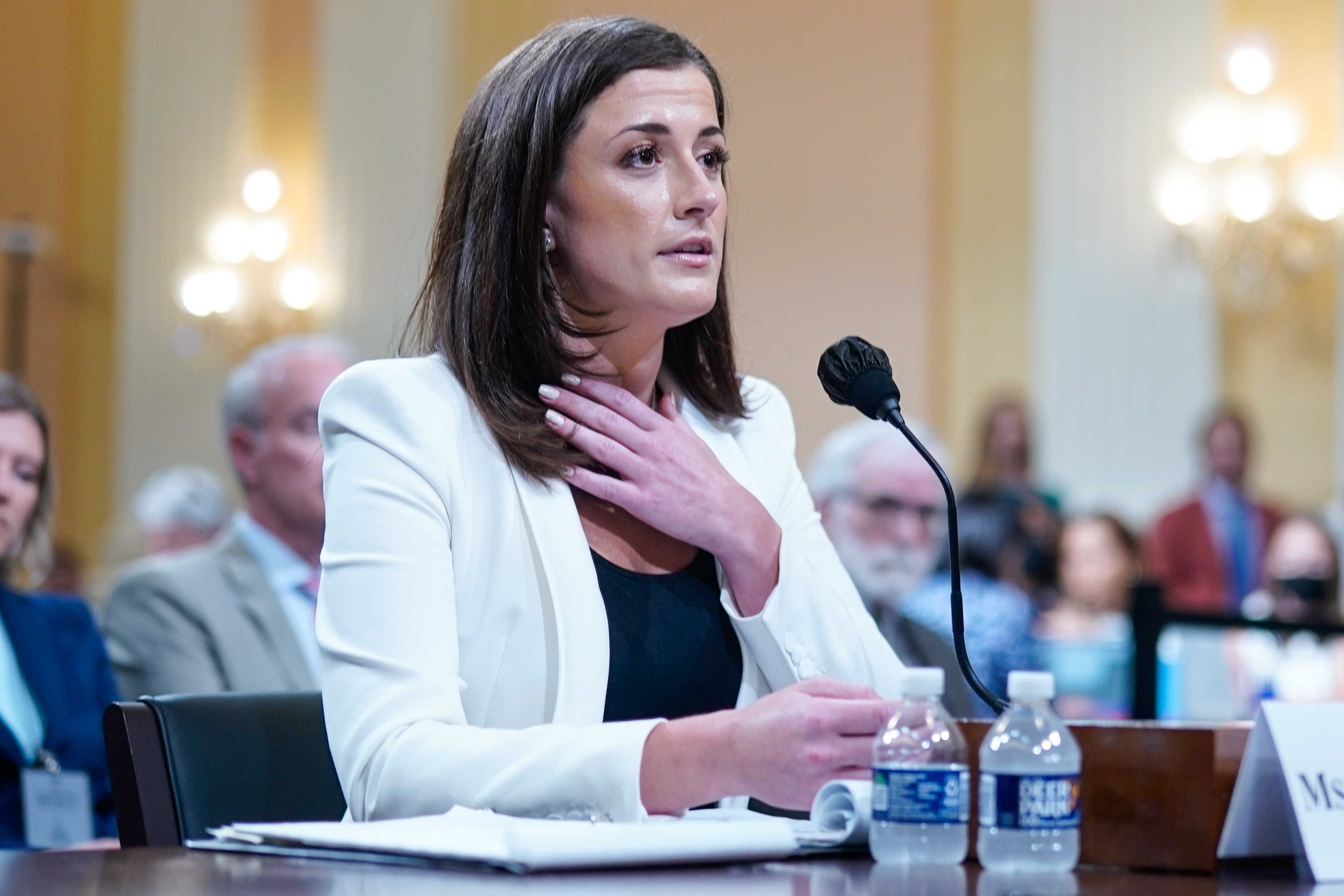
    A federal grand jury in D.C. rejected an attempt by the Justice Department to indict former White House aide Cassidy Hutchinson for the account she gave lawmakers of President Donald Trump’s actions during the Jan. 6, 2021, attack on the U.S. Capitol, according to two people familiar with the matter who spoke on the condition of anonymity to discuss a grand jury matter.

    In a brief court appearance Tuesday afternoon, Neville S. Hedley, who introduced himself as the acting senior litigation counsel at the Justice Department’s civil rights division, told U.S. Magistrate Judge Zia M. Faruqui that the grand jury had not concurred on the proposed indictment. Hedley did not specify the defendant, but the people familiar said he was referring to Hutchison.

    The failure of the Justice Department to secure the indictment marks the latest rebuke of the law enforcement agency’s efforts to prosecute one of the president’s political enemies.

    The decision to present a case to federal grand jurors followed years of calls from Trump and his Republican allies for Hutchinson to face legal consequences for providing what they contend was false and damaging testimony about what Trump said and did as his supporters stormed the Capitol that January day. The case was presented to the grand jury by the Justice Department’s civil rights division, in an unusual move for a false-statements investigation, the Washington Post has reported.

    The Justice Department did not immediately respond to a request for comment.

    It is exceedingly rare for grand juries to reject indictments, in part because prosecutors only need to convince a majority of grand jurors that there is probable cause that a crime was committed — a relatively low threshold.

    But the Justice Department’s campaign to target Trump’s perceived adversaries has repeatedly been rebuffed by grand juries and judges, including in February, when another federal grand jury in D.C. refused to indict six Democratic lawmakers over their comments to military service members.

    The Justice Department began investigating Hutchinson — who was an aide to White House chief of staff Mark Meadows in Trump’s first administration — after two of Trump’s Republican allies in Congress, Reps. Jim Jordan of Ohio and Barry Loudermilk of Georgia, referred her to the department this year for potential prosecution over what they alleged was false testimony.

    In 2022, Hutchinson, then 25, gave an explosive account of Trump’s behind-the-scenes actions on Jan. 6 to the House committee investigating the attack on the Capitol.

    Her testimony during the televised hearing garnered 13 million viewers when it aired June 28, 2022, according to Nielsen.

    At the hearing, Hutchinson testified that Trump urged his supporters to march on the Capitol despite knowing they were armed. She testified that another White House aide at the time, Anthony Ornato, told her that Trump had lunged at a Secret Service agent inside the presidential SUV after being told he could not accompany the group as they marched from the Ellipse.

    When that failed, she continued, Trump “reached up towards the front of the vehicle to grab at the steering wheel.” Then, she said, the president “used his free hand to lunge towards Bobby Engel,” the head of his security detail, who was riding in the armored limousine with him.

    But the Secret Service agent who drove Trump and Engel that day disputed Hutchinson’s testimony in an interview conducted months after her hearing, a transcript of which was released in 2024 by the Department of Homeland Security.

    No other witnesses corroborated Hutchinson’s account of Trump in the limo, though several of those interviewed attested that the president was visibly angry.

  • Trump to announce relaxed rules on oil firms’ methane leaks

    Trump to announce relaxed rules on oil firms’ methane leaks

    The Trump administration was set to announce Tuesday a proposal to weaken a regulation that requires oil and gas companies to limit leaks of methane, a more potent driver of climate change than carbon dioxide, according to two people familiar with the matter.

    President Donald Trump was expected to announce the Environmental Protection Agency’s proposed regulation at an event in Texas on Tuesday evening, the people said. EPA Administrator Lee Zeldin said earlier this month that the agency was “days not weeks” away from issuing the proposal, roughly outlining its contents.

    Bloomberg News first reported the timing of Tuesday’s announcement.

    The move comes even as several major oil companies, including Chevron and ExxonMobil, have long supported direct federal regulation of methane, arguing that industrywide rules are needed to curb leaks. But that support has not always extended to every provision: The companies have at times pressed regulators to narrow monitoring and reporting requirements.

    Smaller independent producers and their trade groups have more aggressively fought methane rules as burdensome and costly. Executives at some of those firms — including several major donors to Trump — have pushed to roll them back.

    Methane, which traps about 80 times as much heat as carbon dioxide over a 20-year period, accounts for roughly 12% of greenhouse gases, according to an EPA webpage that the agency removed from its site after Trump took office. Another EPA report says methane “emissions represent the greatest opportunity for low or no-cost mitigation” of climate change.

    Last year, Zeldin said the rule aimed at curbing methane leaks and dozens of other regulations were being reconsidered in what he has called the largest deregulatory action in U.S. history, aimed at saving businesses and consumers money. Environmental advocates say any savings are more than outweighed by public health costs and damage to the economy caused by climate change and increasing weather extremes.

    “Americans must be able to afford to heat their homes in the winter and fill up their car and drive to work,” Zeldin said in a statement earlier this month, before the proposal’s release, while attending the New Mexico Oil and Gas Association’s annual meeting. “They can’t do that when the people producing the energy are weighed down by unnecessary burdens.”

    The 2023 Biden-era rule requires companies to reduce methane emissions from new and existing oil and gas infrastructure, demanding monitoring and retrofitting old equipment to reduce leaks. The standard also instituted curbs on volatile organic compounds, which can cause air pollution that is harmful to breath or warm the climate.

    “The oil and gas industry says it’s a ‘good-faith’ partner eager to help craft regulations, but time and time again it’s worked behind the scenes to delay and weaken them. As a result, the United States today emits more methane from its oil and gas sector than any other country in the world,” Julia Kane, a researcher with Fieldnotes, an oil and gas watchdog group, said in a statement.

    “Now, Lee Zeldin’s EPA is giving oil and gas corporations exactly what they’ve long wanted: a toothless methane standard they can use to pretend they’re well-regulated, all while they continue to knowingly leak and flare dangerous amounts of the heat-trapping gas.”

    The Trump EPA proposal is expected to reverse the 2023 rule’s ban on routine flaring, allowing companies to burn off excess gas rather than capturing it. The draft policy would also eliminate the Super Emitter Program, which required companies to take action on major methane leaks when detected by third-party watchdogs.

    Methane has accounted for about 30% of global temperature rise since the industrial revolution, according to the International Energy Agency, and the rollback is alarming environmental advocates.

    The proposed regulation would also change standards for “marginal wells,” which produce only 6% of U.S. oil and gas but account for about half of the sector’s methane emissions.

    Zeldin said in October that the old rules wrongly lumped together “mom and pop” oil and gas producers, which he said could be put out of business by the rules, with multinationals such as Exxon and Chevron.

    “Part of this process has been to keep the concerns that are coming in from the application of [the regulations] to these far smaller operations and how to get the regulation right for them,” Zeldin told reporters in a briefing at EPA headquarters.

    Myron Ebell, who ran the EPA’s transition team going into Trump’s first term, praised the potential regulation change for trying to “level the playing field” between Big Oil and independent producers.

    The EPA weakened enforcement of existing methane regulations last year, saying the agency’s “enforcement and compliance will no longer focus on methane emissions from oil and gas facilities” in a memo on March 12, 2025. The Environmental Defense Fund, an advocacy group, estimates that additional gas released or flared in the first year under that policy could have otherwise supplied nearly 19 million households.

    In November, the EPA also delayed deadlines to comply with many of the 2023 standards until 2027.

  • Israelis surge to polls with nation’s future on the ballot

    Israelis surge to polls with nation’s future on the ballot

    Israelis surged to the polls in record numbers Tuesday as they chose whether to keep Prime Minister Benjamin Netanyahu and his far-right coalition in power or chart a new course in what many described as a make-or-break moment for the nation.

    Opinion polls heading into the election suggested that Netanyahu’s allies and his rivals were roughly tied, and that assembling a governing coalition under Israel’s parliamentary system could take weeks or months.

    By 8 p.m., two hours before polls were scheduled to close, 74.3% of voters had cast ballots — the largest percentage by that time since 1988, according to Israeli election officials.

    Turnout appeared to be particularly high, compared with previous elections, among Arab citizens, who make up about a fifth of Israel’s population. By late afternoon, turnout in some Arab-majority towns had exceeded the totals from the last election, in 2022. By contrast, turnout in the five towns where Netanyahu’s Likud party won its strongest support in 2022 was lagging.

    The Likud party said in a statement that it had asked Israel’s Central Elections Committee to extend voting hours past 10 p.m. The committee said it would not act at that stage of the vote.

    The extension request came after Netanyahu urged his supporters to head to the polls, claiming that Israeli Arab citizens were “trying to steal the elections.”

    Those comments, which were roundly condemned as racist, were the latest entry in Netanyahu’s long record of trying to motivate his political base by ringing alarms about Arab Israelis.

    Yashar, the center-right political party of Netanyahu’s leading rival, Gadi Eisenkot, said it strongly opposed an extension of voting hours. It argued that the Likud was making the request to sow doubt about the election’s integrity.

    The election was Israel’s first since the Hamas-led attack on Oct. 7, 2023, battered Netanyahu’s reputation as “Mr. Security” and ignited Israel’s devastating war in the Gaza Strip.

    The contest pitted Netanyahu’s coalition, dominated by hard-line nationalists and ultra-Orthodox Jews, against a fractious group of opposition parties loosely led by Eisenkot, a former chief of staff in the Israeli military whose son was killed in the war in Gaza.

    Both sides framed the election as a potential turning point. Netanyahu suggested that Israel could face annihilation without him in charge, a message he reinforced by posting an artificial intelligence-generated image on social media this week of a mushroom cloud exploding over Tel Aviv.

    As Israel’s longest-serving prime minister, he has a deep well of support among conservative Israelis who regard him as an indispensable defender of the Jewish state.

    “Bibi flows in my blood,” Shoshi Ashtbeker, 47, a school secretary from Tel Aviv, said Tuesday, referring to Netanyahu by his nickname, after she cast her vote for him. “No one can replace Bibi. He’s strong — a world leader.”

    Others said they were ready for a change.

    “Netanyahu did a lot of big things, but I think he’s done his job,” said Ayelet Veprinskiy, 25, a student in Jerusalem. She voted for the party led by Naftali Bennett, a former prime minister. “He’s had 20 years in this chair. He can go now.”

    Netanyahu’s opponents cast the election as the last chance to preserve Israeli democracy and to pull the country back from the brink of becoming a pariah state under international sanctions.

    Eisenkot accused Netanyahu of embroiling Israel in intractable wars, destroying its international standing, and dodging responsibility for security failures that preceded the Oct. 7 attacks. He promised to create a national commission to investigate the security failures that led to those attacks.

    Eisenkot also vowed to enforce mandatory military service for ultra-Orthodox Jewish men, a major flashpoint in Israel as the country mobilized thousands of reservists for the war in Gaza.

    Eisenkot has criticized Netanyahu’s prosecution of the war but has said he is prepared to carry out more attacks in Gaza if necessary. He has also promised to curb settler attacks on Palestinians in the Israeli-occupied West Bank, an issue that Netanyahu has played down.

    But Eisenkot, like Netanyahu, has said he opposes Palestinian statehood.

    Pollsters had expected Israel’s Arab voters to turn out in force to oppose Netanyahu’s coalition, and hours before the polls closed turnout figures suggested that many Arab voters were highly motivated.

    “Overall, the feeling is very good,” said Fidaa Shehadeh, 42, an Arab Israeli voter in Lod, a city southeast of Tel Aviv, who cast her vote for an Arab party. “We’re seeing people getting involved. I expect that we can change the current government, because this government has been one of the worst for our community.”

    Though Israeli Arabs have the same right to vote as all other Israelis, many have long felt that they are treated as second-class citizens. Netanyahu cast their high turnout in the direst terms in a last-minute bid to get his supporters to the polls.

    “There are buses heading to the polls and long lines in Arab towns,” he said on social media. “Meanwhile, right-wing strongholds have yet to wake up! If we don’t go vote now, we will find ourselves with a government of Arab parties.”

    Israeli Arab political leaders accused Netanyahu of racist fearmongering. Yousef Jabareen, who leads an alliance of Arab parties, said the prime minister was “inciting against Arab citizens and undermining the legitimacy of our vote.”

    “I’m telling you: the Arab community knows how to punish you,” Jabareen said on social media. “Today we’re sending you and your bloodstained government packing.”

    The Likud party and some far-right ministers in Netanyahu’s government also deployed incendiary messages about high Arab voter turnout.

    In a video recorded near the entrance of an Arab-majority town in central Israel, Itamar Ben-Gvir, the national security minister, said that Arab voters were heading to the polls “at never-before-seen rates,” threatening Israel’s Jewish character.

    The comments were not out of keeping for Netanyahu and his allies. On Election Day in 2015, Netanyahu declared that Arab voters were “being bused to the polling stations in droves” by left-wing organizations. He later apologized for the comments after they prompted criticism in Israel and abroad, including from the Obama administration.

    This article originally appeared in the New York Times.