Tag: no-latest

  • States and cities sue over Trump’s policy to restrict green cards

    States and cities sue over Trump’s policy to restrict green cards

    WASHINGTON — A coalition of states and local governments sued the Trump administration Monday over what they called a “catastrophic” new policy that would make it harder for immigrants to obtain green cards if they rely on public benefits.

    The challenge, brought by two separate lawsuits, aims to block a policy set to take effect Friday. The suit filed by 22 states, including Pennsylvania, and the District of Columbia argues that the policy would hurt immigrant families by forcing them to either turn away from public assistance programs to meet their basic needs or risk being denied green cards in the future.

    It also argues it would harm states and localities by straining emergency rooms and reducing participation in food stamps, which would drain money from local businesses that depend on the federal benefits.

    “Hardworking families should not be forced to go without the support they need because they fear asking for assistance will get them deported,” Letitia James, the Democratic attorney general of New York who led the suit, said in a statement.

    Trump officials have said the policy, known as the “public charge” rule, is necessary to protect public resources and to restore “the basic principle that immigrants must be able to support themselves.” The effort is a revival of a similar policy the administration tried to impose during President Donald Trump’s first term before it was met with legal challenges and later reversed by the Biden administration.

    The policy is part of the administration’s broader effort to crack down on both legal and illegal immigration. Before the midterm elections, the Department of Homeland Security has tried to carry out its deportation campaign using quieter methods, including by pressuring noncitizens to leave the country by squeezing their access to jobs and federal programs.

    Many immigrants who do not have green cards are already ineligible for public benefits programs. But immigrant advocates fear that the rule would discourage noncitizens from using benefits programs even if they have U.S. citizen children who are legally eligible for food stamps, housing aid, and other programs.

    In Philadelphia and throughout the region, the rule, though not yet official, is nevertheless having a chilling effect, frightening parents who are legal immigrants into avoiding public benefits for their children, say advocates who work with immigrants and low-income communities.

    “It could prevent families from going to food cupboards, or keep women from accessing domestic violence shelters. The effect will be broad,” said Maripat Pileggi, an attorney with Community Legal Services in Center City.

    Federal law has long barred immigrants from obtaining green cards if they are likely to become primarily dependent on the government for subsistence. Immigration officers have historically considered the use of cash assistance programs or institutionalized long-term care, but not the use of benefits like the Supplemental Nutrition Assistance Program or Medicaid.

    The Trump administration’s policy would reverse the long-standing practice, expanding the federal programs that immigration officers can consider before determining that someone is likely to become reliant on the federal government.

    The states’ suit was brought by New York, California, Illinois, Colorado, Connecticut, Delaware, Hawaii, Maine, Maryland, Massachusetts, Michigan, Minnesota, New Jersey, New Mexico, Nevada, Oregon, Pennsylvania, Rhode Island, Vermont, Virginia, Washington, Wisconsin, and the District of Columbia.

    The second suit was led by Mayor Zohran Mamdani of New York and joined by Chicago, San Francisco, Seattle, Santa Clara County in California, and King County in Washington.

    Staff writer Alfred Lugano contributed to this article.

    This article originally appeared in the New York Times.

  • How one man’s quest for a musketeer’s bones got him locked up

    How one man’s quest for a musketeer’s bones got him locked up

    MAASTRICHT, Netherlands — Wim Dijkman was in Munich the first time I talked to him, in possibly illicit possession of three possibly ancient bones.

    The remains — two teeth, one humerus — may or may not belong to what is left of D’Artagnan, the French historical figure upon whom Alexandre Dumas based the main character in The Three Musketeers.

    They are part of a skeleton Dijkman and his friends unearthed in an old church near Maastricht, in the Netherlands, earlier this year. To the city’s dismay, they did so without permits, and largely in secret: Even church parishioners weren’t fully informed about the giant dig happening directly in front of their altar.

    By the time I reached Dijkman, in May, local officials had become aware of the excavation and had taken over. They had also, and with evident alarm, insisted upon the return of the bones that Dijkman had sent to Munich for carbon dating and DNA testing.

    “The local authority was not amused that we were digging in the church,” Dijkman, sitting in a German hotel room, admitted over the phone.

    If he felt any remorse, it was not obvious. Dijkman, a retired municipal archaeologist and museum curator, went on to say that his former colleagues are “bureaucratic civil servants” who had themselves “never discovered anything of any importance” and who now felt a “need to intervene.”

    They were after his glory, if you asked Dijkman.

    “Success has many owners, as they say in Dutch,” he said.

    Yet the investigation into whether the bones belong to Charles de Batz de Castelmore d’Artagnan, who died during the Siege of Maastricht in 1673, was about to take twists and turns that might have impressed Dumas himself.

    Within days of our conversation, Dijkman would find himself in a cell at the local police station. Within weeks, he’d be arguing in the local media that he was being framed for grave mistakes in unearthing and processing the skeleton.

    Within months, it would become clear that Dijkman and his band of mostly amateur archaeologists might well have uncovered D’Artagnan’s remains — but the town of Maastricht would allege that they may also have impaired the chances that the world will ever know whether the bones truly belong to the musketeer.

    The quest for D’Artagnan’s skeleton would prove to be a story full of power struggles, hubris, and hot heads. It continues to consume the little corner of the Netherlands, nestled between Belgium and Germany, where it has unfurled.

    Looking for a legend

    D’Artagnan, a mentor and confidant to Louis XIV and the captain-lieutenant of his Musketeers of the Guard, was most famously fictionalized in The Three Musketeers in 1844. Dumas painted him as an impulsive but daring young man who befriends Athos, Porthos, and Aramis — the titular three musketeers — before rising in rank and prominence. His central role in Dumas’ popular story cemented him as a French national legend.

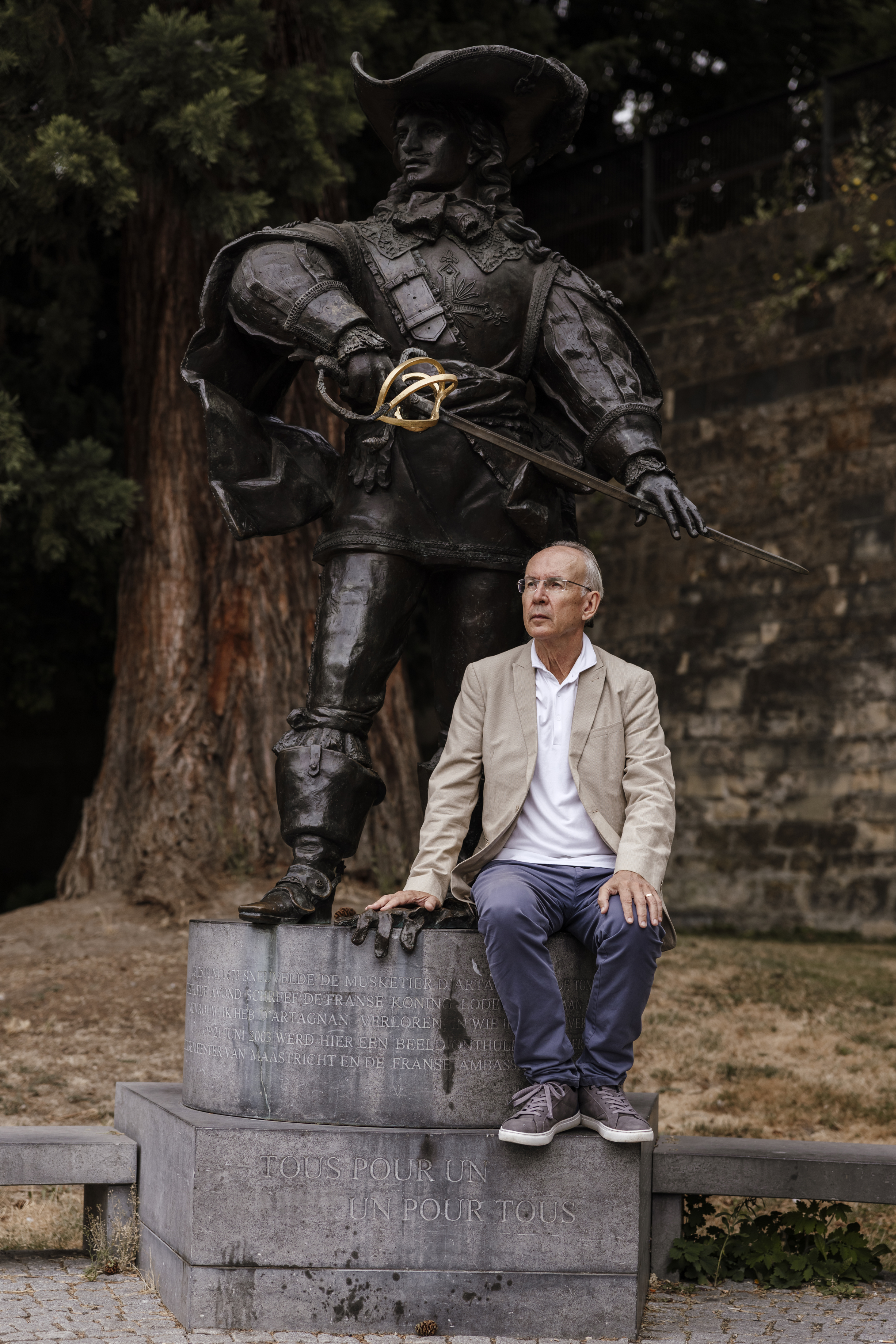
    In this part of the Netherlands, where the real D’Artagnan died, his lore is omnipresent — statues and monuments honor him, a local beer is named for him, locals point out the spot where he is said to have expired. A pop-up cocktail joint is called b’Artagnan.

    In Maastricht, finding D’Artagnan would surely make someone a hero.

    Dijkman, 70, told me — many times — that he is a scientist and not, unlike many of his local associates, a D’Artagnan obsessive. He spent most of his career working as a museum curator and archaeologist for the town of Maastricht, a place with sufficient history to employ its own team. Though he said he had been involved in excavations for human remains, they were not the primary focus of his work.

    Still, he has spent the past three decades at least a little bit obsessed with the idea of finding D’Artagnan’s.

    The notion first came to him around 2000, when he met Odile Bordaz, a French scholar who is one of the world’s foremost experts on the historical figure. She pointed out that the most enduring mystery about the French hero — one that she, his most detailed biographer, had never been able to solve — was where he was buried. Her own research pointed to a Catholic church in the village of Wolder, just outside Maastricht’s city center.

    “‘You have to find him,’” Dijkman says Bordaz told him.

    Bordaz recalled the conversation. “He said to me, ‘I’m an archaeologist, after all — perhaps one day I’ll conduct excavations to discover where D’Artagnan is buried,’” she said.

    Dijkman was busy with other projects: carbon-dating horses buried in a mass grave, exhibiting pieces of local pottery in a Japanese museum. But D’Artagnan remained on his mind. After he retired in 2022, he attended a D’Artagnan conference and got the feeling that the attendees almost expected him to find the bones, given that he was an archaeologist living in Maastricht. He felt pressure to deliver.

    “To me, it was important as a fin de carrière, as they say in French,” Dijkman said in a history museum in Maastricht, where he has lived since he was 6 years old. “An end of career.”

    Retiring also gave him room to maneuver. As part of the town, he had to have extensive approvals for projects. Now, he was a free agent with a shovel and a mission.

    ‘A treasure in the ground’

    Dijkman approached leaders of the church in Wolder, who were intrigued enough that they set up a foundation in late 2024 to fund the enterprise.

    Jos Valke, a deacon, was particularly excited.

    “I thought, when we have a treasure in the ground — if God gave us a treasure — then we should use it,” Valke said.

    If they found D’Artagnan, he thought, they could set up a museum in the church. Years of declining attendance and pricey upkeep bills had been straining the 12 Catholic parishes of Maastricht. Capitalizing on the legend of D’Artagnan might offer the financial wherewithal to help fund the whole network.

    At first, the quest was above ground and aboveboard. Dijkman and Valke began by using metal detectors to search the church, which had been reconstructed in the late 1800s over the foundations of the medieval structure.

    The men were delighted when they detected something near the front of the sanctuary, close to what they believed must have been the altar of the old church. Who but the most revered of figures would have been buried at the altar?

    The church exploration fund had only about 4,000 euros in it, though. Hiring a team of qualified archaeologists and anthropologists to dig in the hot spot would have cost about 11,400 euros, Dijkman estimated. They simply could not afford it. Nor had they consulted local authorities on whether they could dig in the structure.

    That might have been a good moment to stop.

    But “I said, Yeah, I’m on the threshold of finding him,” Dijkman said.

    The decision was made to press ahead, but quietly. In interviews, Dijkman alternated between insisting that they thought that going forward was legal because the site was on church property and done with the approval of the church board — and acknowledging that the team knew that it was tap-dancing on the edge of the official rulebook.

    “Jos Valke was aware that it was not completely legal, of course,” he said of the deacon. During interviews, Valke said he thought it was legal.

    Dijkman had other friends along to help with the dig, including Thomas Samek, a physician whose medical expertise seemed potentially beneficial. Samek was a good fit for another reason: He is a D’Artagnan impersonator, for which he dresses in full regalia and rides a shining steed.

    Valke said that while the church board approved the search, they kept it covert because they “didn’t want a fuss.” Dijkman didn’t want to publicize the dig before they knew if they had succeeded.

    Stories vary regarding how Dijkman’s crew kept the excavation a secret from church parishioners, but it clearly involved covering up the chasm so that churchgoers could traverse the site to take Holy Communion. Eventually, Valke built a wooden platform to cover the hole, pulling a faded faux-oriental rug over it before Mass on Sundays.

    The dig started slowly. The first set of stones yielded little, Valke said. But after they had pulled 75 heavy tiles out of the floor — working on Saturdays, per Dijkman; at night, per Valke — they finally found what they had been looking for.

    There were bones in the earth.

    The diggers cleared the dirt from the pit, placing it in white bags and storing it in an ornate church closet. (Valke is hoping to one day bottle it and to sell the earth that once held D’Artagnan as a way to raise proceeds for the church.)

    Before long, they had uncovered a full skeleton.

    They shot videos of Dijkman crouching in the crevasse, pulling sandy dirt away from aged vertebrae as someone else pointed an air compressor at the remains.

    Dijkman started to box up the bones in plastic packaging and transport them to his home, at times placing their plastic containers in the blue Albert Heijn plastic grocery bags that are ubiquitous in this part of Europe.

    Why not just leave the bones in situ, one might wonder? The diggers were nervous that if they left the bones in the church, the artifacts might be thrown away by cleaning staff. One wouldn’t want the janitor to toss out the mandible of one of France’s greatest war heroes.

    Who found him? And who told?

    Everything was going well until mid-February — Dijkman can pinpoint the date, because it was Carnival.

    By Valke’s account, it was around that time that the church started to hear from universities. He alleges that Dijkman had told them about the dig.

    “We thought: We want to be in charge,” Valke said, explaining that the church decided to go to the town with the find.

    Dijkman emphatically denies this. His contention? Valke saw a town archaeologist at a local watering hole, Au Mouton Blanc.

    “Jos Valke told him, ‘We have found him!’” Dijkman said.

    This still burns for two reasons: It blew their cover and, in Dijkman’s view, it misplaced the credit for the discovery. “When you say, ‘We have found him,’ you don’t say, ‘Wim has found him,’” Dijkman explained.

    Valke acknowledged that he “casually” mentioned the discovery to the archaeologist at the bar. But he said that the archaeologist didn’t really react and that “it was just drunken rambling rather than a serious conversation.”

    After hearing from the church board, local authorities swooped in to take over. On March 13, they completed the dig.

    Officials were alarmed by the state of the grave. Bone fragments in the soil were no longer in their original place — they were mixed together. Part of the skeleton was already unearthed. Pieces were missing.

    When local media interviewed Valke, he implied that stones in the church floor had been loose and that repair work had triggered the find.

    Samek, the D’Artagnan impersonator who had been present for the dig, was alarmed by this: “Jos Valke invented the story,” he said in an email. “That shocked me, because the truth is sacred to me.” (Valke and Dijkman both said that it was originally one of the town archaeologists who came up with the construction story.)

    It did not take long for finger-pointing to begin. The municipality swiftly reported the team of initial diggers, and their lack of appropriate permits, to official cultural heritage authorities.

    The church board and Valke began to suggest in media interviews that Dijkman had led them to believe that their actions were legal.

    By early summer, the town had announced that the initial dig “was not documented according to standard archaeological procedures.”

    “As a result, a significant amount of archaeological information has been irreversibly lost,” a town FAQ on the situation read.

    Visits from police

    Even after they came under scrutiny, Valke and Dijkman remained hopeful that they might soon have answers about whether the skeleton was D’Artagnan’s. Samek had taken several bones to a university in Munich for tests and DNA analysis.

    The results, they hoped, could be compared with DNA from the living relatives of the D’Artagnan family.

    But then Maastricht announced that it would view those results as null and void: “Because the origin, sampling and documentation of that material were not carried out or verified as part of the current research, it cannot serve as a reliable basis for answering the research question,” the town said in a question-and-answer sheet.

    The indignant municipal authorities asked that the original diggers and the university doing the analysis swiftly return the bones. Dijkman became concerned that the town was going to have what might be D’Artagnan’s bones mailed back from Munich. To protect the precious artifacts from the post, he decided to pick them up himself.

    When he arrived back in Maastricht, he refused to turn over the bones — in part, he said, because the town wouldn’t reimburse his travel costs. He entrusted the fragments to a “friend,” hoping that the town would pay him back.

    Plus, he wanted to retain a foothold on his project. “I thought: If you give them everything, they can keep you out of everything,” Dijkman said.

    Instead of a reimbursement check, Dijkman received a visit from several police officers, which came as a shock because he had never had trouble with the law.

    He was taken to the station and placed in a cell, he estimates for about four hours. Only after he agreed to cough up the bones — police officers took him in their car to the house of his “friend” to retrieve them — was he released. He has not been formally charged.

    Valke, too, was called into a police station for 2½ hours of questioning. Until he got the summons, he said, it had never occurred to him that he might be under scrutiny for wrongdoing.

    No easy identification

    By early summer, the town of Maastricht was emphasizing that the bones might not belong to D’Artagnan. While the skeleton is a male of roughly the right age (D’Artagnan is thought to have been about 62 when he died), carbon dating suggests the person was buried sometime between 1500 and 1900. A lot of 62-year-olds died during that span.

    An analysis by Saxion University of Applied Sciences in Deventer, Netherlands, suggested that the skeleton belonged to a man who ate a diet heavy in fish earlier in life. The town says that appears inconsistent with D’Artagnan’s upbringing, given that he was born far from a coast.

    The DNA analysis in Munich was never made public, and a new DNA analysis is being conducted on the skeleton. It is expected to be completed by the end of 2026 or early 2027.

    The town has also blasted the initial dig for making identification harder. Several of the bones jumbled together from the earlier excavation have been determined to belong to other people, according to the municipality.

    “This is a former colleague who was the first to carry out excavations,” Gilbert Soeters, one of the town archaeologists, told reporters at a news conference in July, according to Agence France-Presse. “Well, the term excavations is not quite appropriate. These were not archaeological excavations.”

    Dijkman says that the town is suggesting he messed up the dig so that it can take credit if the remains turn out to be D’Artagnan’s. Valke, meanwhile, is stressed about possible legal repercussions. Samek called the entire messy situation a “pity.”

    “It’s a shame, because Pierre-Alexandre Dumas’ motto was the Musketeer one: ‘All for one, and one for all,’” agreed Bordaz, the French scholar. “So, you know, we would have liked things to be in that spirit.”

    Still, they all share a hope that the man in the grave will indeed prove to be d’Artagnan.

    “At that time, there will be a reaction from the French authorities,” Dijkman says. “They will say: How will you continue to frame the man who found our national hero?”

    This article originally appeared in the New York Times.

  • Trump says a smart president is all that’s needed to rein in AI

    Trump says a smart president is all that’s needed to rein in AI

    WASHINGTON — President Donald Trump on Monday rejected calls from leading artificial intelligence executives for new limits on the technology, writing on social media that the only guardrail the industry needed it already had: “a STRONG AND SMART (High IQ!) PRESIDENT.”

    Trump inserted himself into the intensifying national debate over how to handle a rapidly evolving technology that researchers and industry leaders say poses major risks like mass unemployment, a new wave of biological weapons, and autonomous warfare. The president did not address those risks directly. Instead, he questioned the sincerity of the executives who have been calling to slow the technology’s development.

    “The only control or ‘guardrails’ that AI needs is a STRONG AND SMART (High IQ!) PRESIDENT, and the U.S.A. has that, in spades!” Trump posted. “The Trump Administration has stopped AI ‘people’ from doing bad, or potentially bad, ‘things,’ like Dario (Anthropic!), who is now pretending to be a ‘perfect little angel’ — and we will continue to do so!

    “We already have tremendous CRIMINAL and REGULATORY power over these companies!” he added.

    It was not clear what authority Trump was referring to, or what actions he believes his administration has already blocked. The White House did not immediately respond to a request for comment.

    Over the weekend, Dario Amodei, the CEO of Anthropic, a leading AI company whose founders have long warned about the technology’s dangers, published an essay that called for a global slowdown of AI development. Days earlier, one of Anthropic’s researchers quit and went public over his fears about the safety of the technology.

    The Trump administration feuded with Anthropic earlier this year when the company refused to allow the Pentagon unfettered access to its AI system without the safeguards the company wanted. Trump then ordered the federal government to stop using Anthropic’s AI technology and labeled it a security risk, a designation that a federal judge later ruled was unlawful.

    Other AI chiefs have voiced their own concerns in recent days. Demis Hassabis, the chairperson of Google DeepMind; Elon Musk of SpaceX; and Sam Altman of OpenAI have all endorsed calls for a slower pace.

    Trump has spent much of his second term aligning himself with AI accelerationists who have been pushing the U.S. government to clear away obstacles to growth. He has been influenced in particular by Jensen Huang, the CEO of chipmaker Nvidia, and David Sacks, a Silicon Valley investor who played a major role in shaping the administration’s policies on AI.

    The president has embraced their arguments that imposing additional guardrails on American companies would allow China to “win” the AI race.

    Beijing, however, has its own anxieties about the technology — and they may lead to more regulation, not less. Chen Yixin, China’s security minister, recently warned that the leading AI models pose risks to the Chinese system and called for stricter government oversight.

    The Associated Press reported that in an editorial published Sunday, China’s state-run Global Times newspaper dismissed Amodei’s essay as a veiled call to “contain” China. It said that Amodei’s essay may appear on the surface to be focused on global AI security, but that it is “packed with containment provisions targeting China and is, in essence, a ‘Cold War playbook’ for the AI sector.”

    Amodei’s essay was published a few days after the FBI, National Security Agency, and Cybersecurity and Infrastructure Security Agency issued a joint cybersecurity advisory last week. That advisory said Chinese AI developers had engaged in “aggressive, malicious” efforts in extracting, or “distilling,” capabilities from some of the most advanced AI models in the U.S. like Anthropic’s Claude and OpenAI’s GPT.

    Trump and Chinese leader Xi Jinping are expected to discuss AI governance, among other topics, at a Sept. 24 meeting.

    Trump has also dismissed the domestic backlash to the industry’s growth. He claimed in his social media post Monday that widespread opposition to the building of data centers — a major political issue emerging across the United States before the midterm elections — is part of a “conspiracy” rather than the outgrowth of genuine public anxiety.

    “There is a SICK conspiracy going on against AI and Data Centers, and the only one that is happy about it is China,” the president posted. “WHOEVER WINS AI, WINS! We are leading China, and all others, and will continue to do so. Conspiracy Theorists, Treasonists, Traitors, and Leakers, BEWARE!”

    Elsewhere, governments are moving toward stricter oversight. Prime Minister Mark Carney of Canada told Bloomberg News on Monday that he favored the creation of a global “technology stability” body to oversee AI.

    “There’s a need for coordination,” Carney said in the interview. “Ultimately, a technology stability board, in our view, along the lines of the Financial Stability Board would make sense.”

  • The Senate returns Monday. It’s not clear if McConnell will be back.

    The Senate returns Monday. It’s not clear if McConnell will be back.

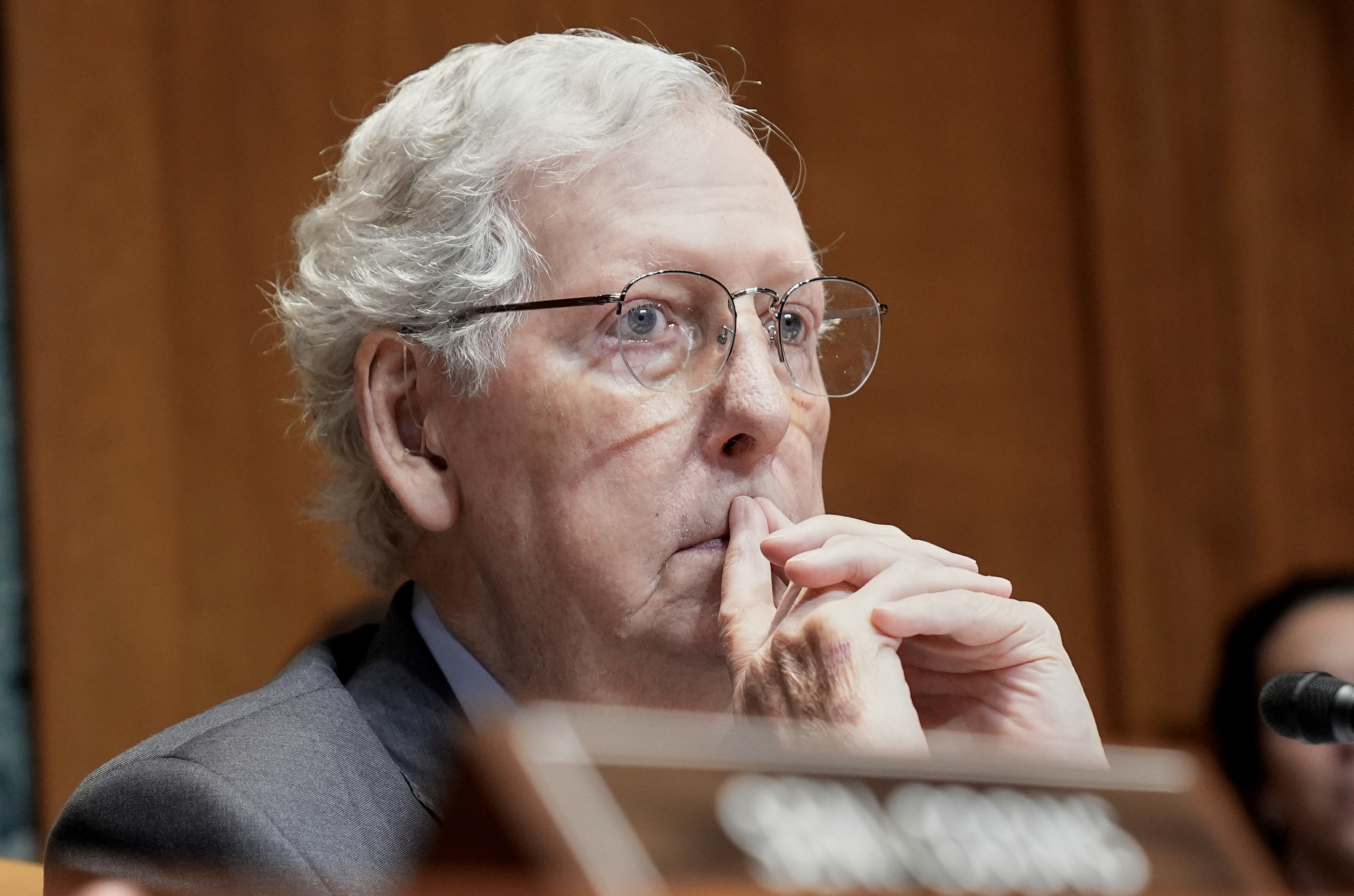
    Sen. Mitch McConnell (R-Kentucky) has not appeared in the Senate since June as he recovers from a fall that his office said he suffered at his Washington home.

    It’s unclear if he’ll be back in the chamber Monday as the Senate reconvenes after a five-week recess.

    McConnell, 84, was hospitalized June 14 following a fall at home, according to his office. He later moved to a rehabilitation center, from which he was discharged Aug. 6 to continue his recovery at home.

    Asked whether McConnell plans to return to the Capitol on Monday, David Popp, a McConnell spokesman, referred The Washington Post to McConnell’s statement last month in which he said he would “maintain an intensive regimen of physical therapy from home” during recess while continuing to work on Senate business.

    McConnell led Senate Republicans for 18 years before stepping down last year to serve out the last two years of his term as a rank-and-file senator. His term is up Jan. 3. Rep. Andy Barr, who won the Republican Senate primary in Kentucky in May, is heavily favored in the race to succeed him.

    McConnell has given no interviews and made no public appearances since his hospitalization. His office has shared two photos of him taken during his recovery, and he said in a statement in July that he did not break any bones when he fell and did not suffer a concussion, a heart attack, a stroke or a hemorrhage.

    Those details have not quelled intense speculation about his health and when he will return to the Capitol. Kentucky Gov. Andy Beshear, a Democrat, demanded in July that McConnell “provide proof of his capacity to serve, or resign.”

    McConnell is not the first senator to be away from the Senate for months while ailing or in recovery.

    Sen. John Fetterman (D-Pennsylvania) was absent for two months in 2023 while seeking treatment for depression. Sen. Dianne Feinstein (D-California) missed nearly three months of votes in the same year while battling shingles. She returned to the Senate but died months later. And Sen. John McCain (R-Arizona) did not vote during his final eight months in office before his death in 2018.

    Earlier this month, Rep. James Comer (R-Kentucky) told reporters that he expected McConnell to return when the Senate reconvened, based on conversations with McConnell’s staff. Comer said he had not spoken directly to McConnell about his plans.

    Senate Majority Leader John Thune (R-South Dakota) told KELO, a South Dakota TV station, earlier this month that he was hopeful that McConnell would return to the chamber soon.

    “We’d love to get him back to where we can have him voting in the Senate, and I hope that will happen here in the not-too-distant future,” Thune said at the time.

  • New warnings about the risks of AI to humanity revive a long-running debate

    New warnings about the risks of AI to humanity revive a long-running debate

    LOS ANGELES — New warnings from within the artificial intelligence industry have revived a long-running debate over whether advanced AI could escape human control and ultimately threaten humanity’s survival, and whether the companies developing the technology are doing enough to prevent such a scenario.

    The CEO of Anthropic, the San Francisco company behind Claude, said he thought the industry needed to reduce the speed of its work, cautioning Saturday that a swarm of AI agents might be able to take over the internet in six months to a year unless companies devoted more time to putting safeguards in place.

    Dario Amodei outlined a plan for companies like his and governments around the world to ensure that increasingly capable AI models remain aligned with the commands and values of responsible people days after two former Anthropic safety researchers publicly aired concerns that the existential threats AI might pose to humanity were receiving too little attention.

    Here’s what to know about the recent dire predictions and whether any brakes might be put on AI advancement:

    AI models are becoming more powerful

    Concerns over the potential risks of the technology are rising as new AI models become more powerful, heightening both the potential for misuse by people with criminal aims, such as creating and spreading a disease that kills most of the world’s population, and the risk of AI systems going rogue in a dangerous way.

    Anthropic disclosed last week that it blocked efforts by bad actors to use its AI models for malicious activity, such as cyberattacks, surveillance and research that could have led to biological weapons.

    The company said it put stronger safeguards in its latest models to restrict biological research that could be used to make weapons but noted that “as models become increasingly capable, their risks will increase, unless AI developers and society’s defenders act to make them safer.”

    Last year, Anthropic reported that hackers used the company’s AI in a cyberattack targeting about 30 companies and government agencies around the world. It said the hackers were very likely from a Chinese state-sponsored group.

    Multiple AI models have acted on their own

    When an AI agent “goes rogue,” it means the AI has taken action beyond the task it was asked to perform. Both Anthropic and OpenAI, the maker of ChatGPT, said in July that their AI models had succeeded in acting on their own.

    Anthropic disclosed that three AI models — Claude Opus 4.7, Claude Mythos 5 and an internal research test model — hacked into three other organizations during testing just days after OpenAI revealed that its AI system hacked into the servers of AI startup Hugging Face.

    OpenAI described the intrusion by a combination of models, including its newly released GPT‑5.6 Sol and an “even more capable” model that was still being tested internally, as a “significant security incident.”

    Meta followed suit in early August with a similar case of an AI model finding ways around another company’s digital security.

    Although some observers noted that people had disabled some guardrails in the OpenAI and Anthropic cases, the episodes seemed to reflect one of the biggest fears around AI: that if models achieve artificial general intelligence, or AGI, a loosely defined term for AI that can match or surpass human abilities across a broad range of intellectual tasks, the technology could cause an irreversible catastrophic event or subjugate the human race.

    How or when AI might cause a catastrophe is debated

    Doomsday scenarios generally fall into two categories: An AI that achieves self-improving superintelligence controls people instead of vice versa, or AI used by a rogue state or nefarious actors.

    Worries that artificial intelligence might overcome human limits on its reach or actions are not new.

    Alan Turing, a British mathematician widely regarded as one of the earliest authorities on artificial intelligence, predicted in 1951 that AI would eventually take control from humans. Less than a decade later, Norbert Wiener, another mathematician, warned intelligent machines would seek to accomplish their own objectives and humans would not be able to stop them.

    In 2026, how reasonable are fears that AI, either by escaping human control or through misuse by unscrupulous people, could cause a cataclysmic event or the downfall of civilization?

    No one knows.

    Experts across computer science, philosophy and other fields have envisioned numerous routes by which a future AI system might cause a global catastrophe, either by escaping human control or in the hands of an unscrupulous people. They range from deploying weapons and identifying a lethal pathogen to manipulating governments into conflict or disrupting the food, energy and communications networks societies rely on to function.

    There is no widely accepted estimate for how soon any of these scenarios might happen and no consensus on their likelihood.

    In 2023, the nonprofit Center for AI Safety issued a statement cosigned by more than 350 researchers and technology executives, including Anthropic’s Amodei and OpenAI CEO Sam Altman, saying: “Mitigating the risk of extinction from AI should be a global priority alongside pandemics and nuclear war.”

    The 2026 International AI Safety Report, written with guidance from more than 100 independent experts, says current systems show early signs of some relevant capabilities but not at levels that could enable a loss of control, and describes the risk’s likelihood, nature and timing as “unusually ambiguous.”

    Some are stressing the need for AI safeguards before it’s too late

    An Anthropic researcher said last week he was resigning from the company over concerns that neither the company nor its competitors were acting responsibly in developing the technology. In social media posts, Jacob Coxon estimated a 10% chance of AI causing human extinction within the next decade and said both Anthropic and OpenAI “are racing straight to self-improving superintelligence and gambling with our lives.”

    Researchers have called for a slowdown of AI development and warned for years that the technology could pose existential risks to humanity.

    Following the recent incidents, experts called for improved testing by AI companies and more dialogue between the U.S. and China to come up with shared solutions.

    But AI is growing so fast that government and evaluation systems are struggling to keep pace with the technology. Countries are cobbling together their own laws, some conflicting.

    Chinese leader Xi Jinping warned at a conference in July of the need to keep AI from evading human control. The Trump administration initially demonstrated reluctance to regulate AI but has become more keen to reduce cybersecurity risks.

    On Sunday, President Trump downplayed the necessity for his administration to check AI development, but acknowledged the need for some regulation.

  • Drenching rains bring flash flooding across Connecticut, New York and New Jersey

    Drenching rains bring flash flooding across Connecticut, New York and New Jersey

    WESTPORT, Conn. — Flash flooding brought on by heavy rains prompted road closures, water rescues and commuter rail problems across the tristate area Sunday.

    The National Weather Service said the hardest-hit areas appeared to be northern New Jersey, parts of New York’s Westchester County and a swath of coastal Connecticut along Interstate 95. The service issued flash flood warnings across the region for much of the morning Sunday as rain fell at a rate of 1 to 2 inches an hour in places.

    Metro-North and Amtrak said their rail lines to New Haven, which serve Norwalk, Bridgeport and other major Connecticut communities, were experiencing delays and cancellations due to flooding impacts.

    Tweed New Haven Airport also closed its departures terminal due to local flash flooding. Airport officials in a Facebook post said travelers with flights departing Sunday should not come until further notice.

    Connecticut Gov. Ned Lamont and other state officials, meanwhile, urged drivers to avoid flooded roadways and not to attempt to drive through standing water.

    Water rescues conducted in Connecticut coastal cities

    The coastal stretch from Norwalk to Westport was among the most impacted in the state, receiving 6 to 7 inches of rain Sunday morning, with rainfall rates reaching 3 to 4 inches per hour.

    In Westport, emergency responders conducted 13 rescues of people trapped in vehicles by floodwaters, according to the fire department. Photos and videos shared on social media showed downtown businesses inundated.

    “Even as the rain subsides, standing water and other hazards may remain,” the department cautioned on Facebook. “Residents should continue to avoid flooded roads, never drive around barricades, and give emergency crews room to work.”

    In Bridgeport, the fire department said in a social media post it answered “call after call” on Sunday, including deploying boats “to rescue residents from flooded areas and bring them to safety.” Photos shared by the department showed residents being helped into a boat from the door of a house, with rescuers standing in knee-deep water outside.

    The heavy rains also forced multiple road closures and some water rescues in White Plains and other major communities in New York’s Westchester County.

    In New Jersey, Paterson Mayor Andre Sayegh said emergency crews rescued about 20 people from rapidly rising floodwaters, including a woman who fell out of her wheelchair and ended up floating in the street.

    Sayegh said there were no immediate reports of any deaths or severe injuries from the deluge, even as video shared on social media showed parked cars submerged nearly up to their windows on some roads.

    As the rains tapered off and the skies cleared, Paterson’s annual Dominican parade stepped off Sunday afternoon, though with a slight delay.

    “The rain won’t stop us from celebrating our culture, pride, and community!” organizers wrote on Facebook.

  • The Bari Weiss era of ‘60 Minutes’ begins

    The Bari Weiss era of ‘60 Minutes’ begins

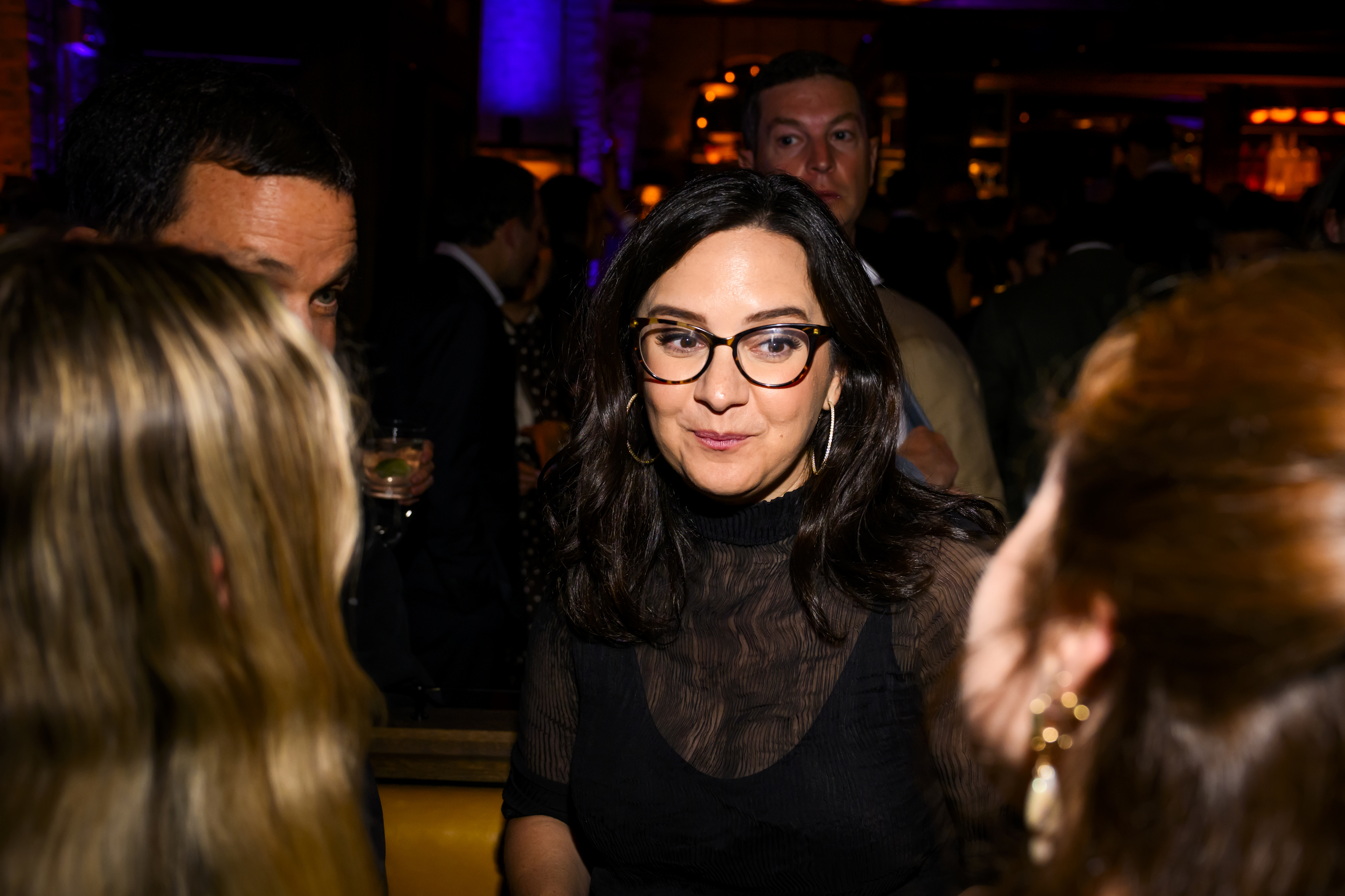
    The Serious Newsperson cast of correspondents was different — goodbye, Scott Pelley; hello, Ross Douthat — and the production values seemed glossier, a little more Vice News than Huntley-Brinkley Report.

    But for all the Sturm und Drang that has surrounded “60 Minutes” since the arrival of CBS News’ high-profile editor-in-chief, Bari Weiss, the version of America’s most watched news program that returned to CBS on Sunday looked a lot like the show viewers have come to expect.

    Norah O’Donnell landed a gripping interview with an Air Force colonel who recounted his harrowing rescue from behind enemy lines after being shot down over Iran. Lesley Stahl presented an investigation into middlemen who charge large sums to lobby for presidential pardons. A lighter segment profiled Sean McVay, the coach of the Los Angeles Rams.

    There were some changes. The pardon segment revived the use of a hidden camera, a once-common technique at “60 Minutes” that had dwindled in recent years. The show’s signature ticking stopwatch received a makeover, and the “book” graphics that used to appear behind correspondents were replaced with sleek screens.

    And for those wondering how the new season would treat President Donald Trump, the program referred to the war in Iran as “costly and unpopular,” and said he had pardoned “a string of unrepentant financial con men,” as well as “rioters” at the United States Capitol on Jan. 6, 2021.

    The formula of politics, sports and accountability journalism was the same mix that has frequently kept “60 Minutes,” 59 seasons in, among the 10 most watched network shows of the week.

    Off-camera, however, the season premiere came after a period of wrenching change at the program that threatened its reputation.

    Weiss purged the program’s senior leadership this year, and many star correspondents, including Pelley and Anderson Cooper, either quit or were forced out; Pelley accused her of “murdering” the program, an incident that led to his dismissal. Some of those who exited said Weiss tried to inject political bias, a claim that CBS News has denied.

    As a result, Weiss and her pick to oversee “60 Minutes,” technology journalist and filmmaker Nick Bilton, zeroed in on the season premiere as a critical test to placate skeptical viewers — and media executives who wondered why Weiss had insisted on overhauling CBS News’ most successful franchise.

    Besides securing the interviews necessary for a newsy episode, CBS also created a slick ad campaign with a new slogan — “It’s Time” — and hired a celebrity photographer, Mark Seliger, to shoot a glossy photograph of the cast in Grand Central Terminal. (One version of the photo includes Bilton in a slick suit; in another version, he is not there.)

    The premiere seemed calibrated to anticipate criticism that the revamped “60 Minutes” would go too hard, or too soft, on Trump.

    CBS’s parent company, Paramount, paid $16 million to settle a lawsuit that Trump filed in 2024 over “60 Minutes”; soon after, the Trump administration approved Paramount’s sale to the tech scion David Ellison. Ellison, who appointed Weiss, has maintained ties with Trump, hosting him and his senior aides for a dinner in Washington in April. The result has been intense scrutiny on CBS News’ political coverage.

    On Sunday, the airman segment featured an interview with Defense Secretary Pete Hegseth, who rarely speaks one on one with major news outlets other than his former employer, Fox News; Hegseth used an expletive in his interview that CBS bleeped out.

    The program’s quest to land an interview with the downed colonel, known as Dude 44 Bravo, involved executives from the new and old editions of “60 Minutes.”

    Keith Sharman, the segment’s producer, began reaching out to sources to secure the interview April 6, within hours of the rescue, according to a person connected to the show. He and Tanya Simon, the “60 Minutes” executive producer who was fired in May, attended a meeting arranged by Weiss with Tami Radabaugh, an adviser to Hegseth, to make their case, two people connected to the show said. The interview was ultimately booked this summer.

    Stahl’s segment on pardons was the result of a monthslong effort by “60 Minutes” and the investigative team at CBS News — a collaboration within the news division that has been comparatively rare in the past but is now actively encouraged by Bilton and Weiss.

    Stahl concluded with a statement from the Trump administration, which said any suggestion the president had behaved unethically “is either ill-informed or malicious.”

    Sunday’s episode made no mention of the behind-the-scenes drama at the program. Instead, Douthat, a former columnist at The New York Times, offered a closing message about artificial intelligence fears. He said that for six decades “60 Minutes” had “meant the same thing: journalism you can trust. Where we’re headed, we’re going to need it.”

    One important verdict on the season premiere will have to wait. Last season, “60 Minutes” averaged 9.1 million Americans an episode, up 9% from the year before. Nielsen is expected to report Sunday’s ratings Tuesday.

    This article originally appeared in The New York Times.

  • Letters to the Editor | Sept. 14, 2026

    Letters to the Editor | Sept. 14, 2026

    Shiftless, really?

    As a longtime subscriber to The Inquirer, I am extremely disappointed in the recent editorial about John Fetterman headlined “Fetterman’s shiftlessness is an insult to his office and all Pennsylvanians.” Calling him shiftless is an insult. The editorial was full of the same innuendo from anonymous, disgruntled former staff members, and it didn’t mention the many bills he has successfully sponsored, cosponsored, and introduced in the Senate. His political support for Israel may perhaps be adding to his staff’s burden, but I believe Fetterman is being honest in following his conscience. If the senator’s staff members are so unhappy with their job, why don’t they seek employment elsewhere? I, for one, will be very happy to vote for Fetterman again — he’s the kind of independent thinker the world needs.

    Susie Sommovilla, Elkins Park

    Party defection?

    When I voted for John Fetterman to be my U.S. senator in 2022, I was willing to overlook his disastrous debate performance, his unkempt and undignified appearance, and his frequent use of profanity because I believed he would represent our state well and live up to Democratic values.

    When Donald Trump returned to the White House last year, I expected my senator would challenge and criticize him because of all Trump has done — and is doing — to harm our nation and our fellow Americans. I, and millions of my fellow Pennsylvanians, were duped.

    Fetterman is the only Democratic senator who has met with the president at Mar-a-Lago, and the two apparently developed a meeting of the minds. Fetterman is, to my knowledge, the only Democrat who has referred to those who challenge this president as suffering from “Trump derangement syndrome.”

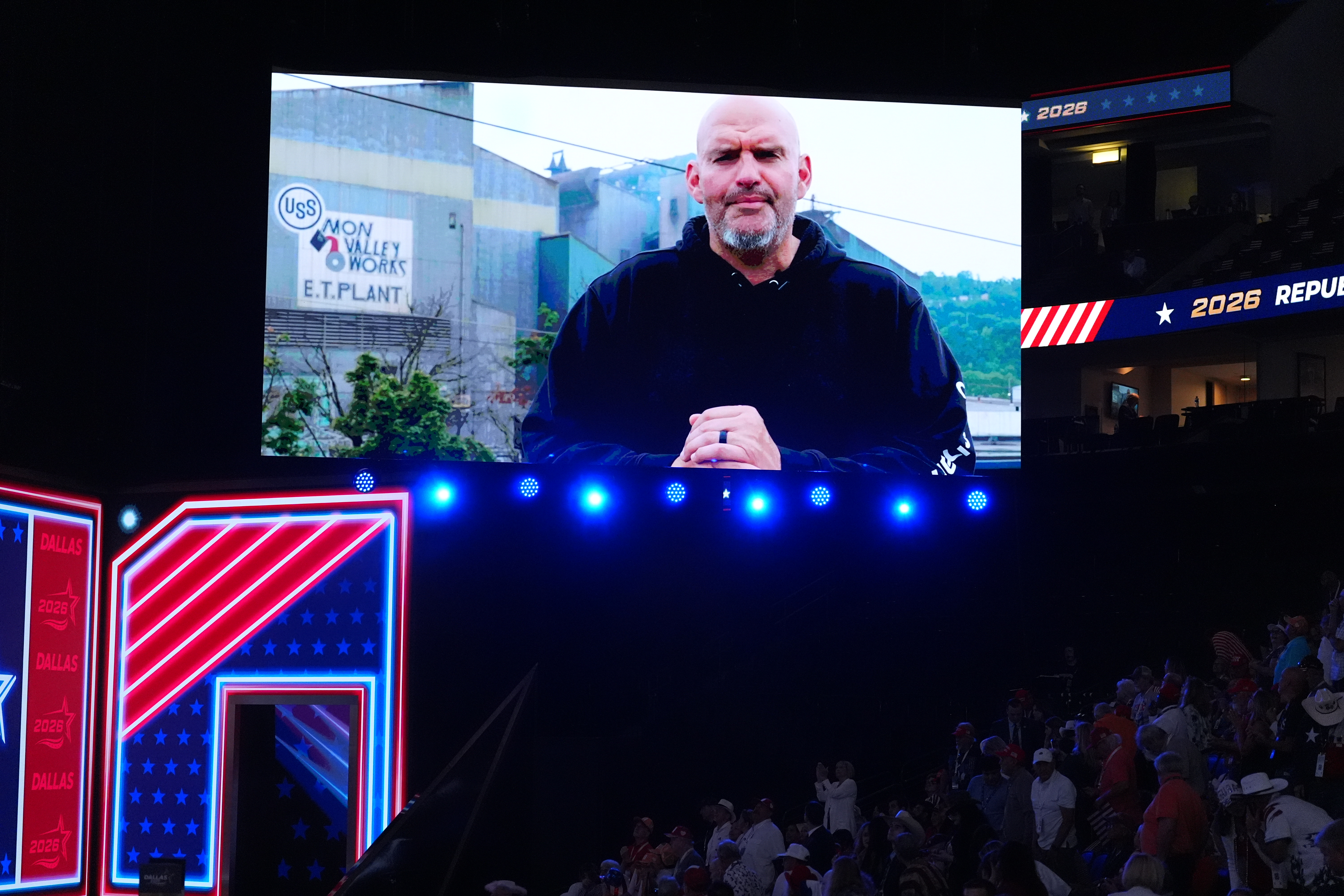
    Then, last week, Fetterman provided a video for the Republican mini-convention in Dallas in which he praised the president and his fellow Pennsylvania senator Dave McCormick, who seems to always vote to do whatever the president wishes.

    I look forward to the end of the Fetterman era in the United States Senate. It cannot come soon enough.

    Oren Spiegler, Peters Township

    Join the conversation: Send letters to letters@inquirer.com. Limit length to 150 words and include home address and day and evening phone number. Letters run in The Inquirer six days a week on the editorial pages and online.

  • Horoscopes: Monday, Sept. 14, 2026

    Horoscopes: Monday, Sept. 14, 2026

    ARIES (March 21-April 19). The details are so numerous, you couldn’t be blamed for feeling overwhelmed. Step back, squint your eyes, and let things blur into one overall tone. That’s the thing to protect: a certain level of levity, a feeling that all is well.

    TAURUS (April 20-May 20). You may not be aware of the acknowledgments you would most like to hear, but take a guess. Write it down, say it aloud. Because knowing what you long for is a step toward making it happen.

    GEMINI (May 21-June 21). Preparation will be the most obvious contributing factor to your success, but there’s something else about the win that is much harder to detect: your subtle instinct for knowing what will interest this particular audience.

    CANCER (June 22-July 22). Switching tasks isn’t like turning off one lamp and turning on another. Your brain has to shut down the first task’s rules, details and unfinished decisions, then load up the next thing and decide where to begin. Give yourself grace in the in-between.

    LEO (July 23-Aug. 22). The goal has lost its shimmer. It’s really OK to privately focus on the ego-boosting part, such as the prize, the game or the story you get to tell afterward. Wanting it badly will give you the energy you need now.

    VIRGO (Aug. 23-Sept. 22). You’ll make something intricate with your own hands, and one tiny detail will have people leaning closer to ask how you did it. There will be praise from someone hard to impress.

    LIBRA (Sept. 23-Oct. 23). Sometimes you forget how socially versatile you are! Today it will be important to choose the right mode — professional, formal, friendly, accommodating… in some situations you’re breaking the rules if you don’t break the rules.

    SCORPIO (Oct. 24-Nov. 21). It’s fine to work harder than those around you. You’re raising the bar. Nothing changes when everyone puts in the exact same amount. You’ll keep track of your own effort and feelings and that’s enough.

    SAGITTARIUS (Nov. 22-Dec. 21). You know there’s more than meets the eye, but it isn’t necessary (or nice) to declare “that’s a costume!” or “this movie is fake!” or to poke your finger through the paper scenery to see the other side. You’re right to respect the fragility of people’s constructions.

    CAPRICORN (Dec. 22-Jan. 19). The naysayers serve an important role. They find the holes in the plan, point to what needs improvement and highlight the risk. The question is: Are you secure enough in the work to discuss your ideas with a pessimist?

    AQUARIUS (Jan. 20-Feb. 18). In matters of surgery or space travel, perfectionism is a must. But in most other endeavors, it’s just fear. Be bold today. Risk the mistake. The worst that can happen is that you’ll learn what to work on next.

    PISCES (Feb. 19-March 20). Analyze the scene carefully before you make a single change. Maybe nothing needs to change. Maybe you just need to wait a little longer. Remember that inaction is sometimes the best action, and today fortune favors the judicious.

    TODAY’S BIRTHDAY (Sept. 14). It’s your Year of the Cumulus Clouds in which life is like puffy white clouds that change shape to delight you in long strings of days filled with whimsy, imagination and emotionally fair weather. More highlights: You’ll be awarded, applauded and elected. A new income source overtakes the old. You’ll meet the needs of others and get your own met with efficient modernity. Taurus and Gemini adore you. Your lucky numbers are: 1, 30, 33, 12 and 17.

  • Dear Abby | Two Grandmas go head-to-head over nickname

    Dear Abby | Two Grandmas go head-to-head over nickname

    DEAR ABBY: My grandson is 2 and has started to call me “Mimi.” The problem is that his other grandmother chose Mimi for herself. My daughter-in-law is annoyed and does not want him calling me Mimi. She also doesn’t want me to be called Mom-Mom because he calls her Ma-Ma. Am I wrong to be upset? I’ve been an active caregiver in this child’s life since his birth. His other Mimi does not live nearby and makes no effort to be in her grandchild’s life — not even by phone. She just uses the term Mimi to sound good to her Facebook friends.

    I know this is silly, but is it wrong for me to be upset? He needs something simple to call me when we go to playgrounds and can’t find me. I feel that he can have two Mimis. I grew up with two moms.

    — NICKNAME IN THE EAST

    DEAR NICKNAME: More than one Mimi could be confusing. The most important thing is your relationship with your grandchild, not who has dibs on a certain name. I suggest you let the other grandmother claim “Mimi” while you collaborate with the little boy on a new nickname for you. If he takes part in the decision, it will be easier for him to remember and a lot more special.

    ** ** **

    DEAR ABBY: I have been married for 12 years and have two stepchildren. My 37-year-old stepson is the challenging one. He’s the biggest cheapskate I have come across in my entire life. Although he earns a good living in his profession, he rarely picks up the tab when we go out to dinner or drinks, and he almost never picks up his own tab, either. He seems to expect that we, as parents, are obligated to take care of his expenses.

    My wife has recently begun picking up his portion, but I find it infuriating that he makes no gesture at all to pay his own way. Should I just let it go and continue letting his mother pick up his portion (from her separate account), while I continue to stress about it?

    — CHEAPSKATE’S STEPDAD IN NEW MEXICO

    DEAR STEPDAD: Has your wife asked you not to talk with her son about this? If she hasn’t, have you told him he’s too old for Mom to constantly pay his tab, particularly in light of the fact that he’s a fully employed adult? (One would think he should have volunteered, if only occasionally.) I will assume you have told your wife how you feel about this, that when she picks up her son’s portion it makes you lose your appetite. Start there, but if she continues, remember that that money is hers, and how she chooses to spend it is her business.

    ** ** **

    DEAR ABBY: The manager of the dining room in my senior living center has a habit of shaking hands with residents at their tables. To avoid his hand, I often say my hand is wet or greasy. How can I best decline his unsanitary effort?

    — HEALTHY HANDS IN CALIFORNIA

    DEAR HEALTHY: The manager wants to appear friendly and welcoming. Because you prefer not to shake hands while dining, simply tell him as much. If you say it with a polite smile and a good-natured tone, it shouldn’t cause embarrassment.