Tag: no-latest

  • Fighting in Yemen intensifies, and Houthis launch more attacks on Saudi Arabia

    Fighting in Yemen intensifies, and Houthis launch more attacks on Saudi Arabia

    ADEN, Yemen — The conflict in Yemen intensified on Sunday, as government forces launched attacks against Iran-backed Houthi rebels along the Red Sea and Houthis fired into neighboring Saudi Arabia, which supports Yemen’s government.

    The Yemeni government vowed to send more forces to the Red Sea coast after conceding a “painful” defeat last week when Houthis captured the port city of Mokha and an island on the Bab el-Mandeb Strait, a crucial shipping alternative to the Strait of Hormuz.

    The escalation — especially Houthi attacks on Saudi oil infrastructure and its shipping in the Red Sea — adds pressure on global oil supplies and prices, and that could give Iran leverage in its war with the United States.

    As Yemen risks descending into another civil war, the United Nations estimated that more than 80,000 people in the impoverished country have been displaced by the fighting since the start of September.

    One woman said a mortar shell fell nearby as she fled in the middle of the night from the town of Khawkha in Hodeida province along the Red Sea, shortly before it was captured by Houthis.

    “I saw with my own eyes cars and buses burning, and bodies of children and women were lying on the road in a horrific scene,” said the woman, who spoke on condition of anonymity out of concern for her and her family’s safety.

    Houthis claim attacks against Saudi Arabia

    Saudi authorities sounded sirens Sunday afternoon in the southern city of Abha and Khamis Mushait province, warning residents to take shelter from potential incoming fire. Both areas were repeatedly attacked by the Houthis in recent weeks.

    The Houthis claimed to have used drones and missiles to target Saudi Arabia, including a military base just over the border with Yemen. Houthi military spokesperson Brig. Gen. Yahya Saree didn’t provide evidence or say when the attack occurred.

    The Saudi civil defense overnight said a projectile fell in a different area near the border with Yemen along the Red Sea, injuring two people and damaging a mosque and several other buildings. The statement blamed the Houthis.

    Saudi Arabia did not announce any new attacks targeting the Houthis.

    The Houthis are targeting Saudi oil infrastructure and shipping as part of a recently declared blockade. While the Houthis have said they do not intend to threaten other countries’ commercial shipping, markets remain wary and oil prices have risen again.

    Yemen says 500 soldiers killed, vows to fight back

    The National Resistance, a government-allied force that had controlled coastal areas, said more than 500 government fighters were killed on the west coast over the past four weeks — its first comprehensive toll. It said about 1,500 others had been wounded in the fighting since Aug. 9.

    Its statement said more than 1,000 Houthis had been killed in Hodeida and Taiz provinces. A spokesperson for the Houthis didn’t respond to a request for comment.

    Yemen is home to over 40 million people who fear a return to the civil war that killed 150,000 and brought many others to the brink of famine in one of the world’s most sprawling humanitarian crises. Yemen’s internationally recognized government and Saudi Arabia have been battling the Houthis for 12 years. A ceasefire that began in 2022 had mostly halted the fighting.

    A senior government official in Yemen said its forces will return to the Red Sea coast and fight back. People fleeing the Houthi advance told the Associated Press they saw forces withdrawing and urging people to run.

    Sultan al-Arada, a member of the ruling presidential council, described the collapse of government forces in the port city of Mokha and elsewhere on Yemen’s west coast as “painful and regrettable.”

    Al-Arada said in the televised interview aired late Saturday that forces “are currently regrouping and will return to the battle in one form or another.”

    On Sunday, the Yemeni military said it launched airstrikes on Houthi positions in Mokha and the coastal town of Dhubab, and elsewhere in Taiz province. The rebels also reported strikes by the Saudi-backed forces in the province as well as artillery shelling in the province of Saada, the Houthi stronghold on Yemen’s northern borders with Saudi Arabia.

    Advance puts Houthis closer to a major U.S. base in Djibouti

    The Houthis’ advance puts them just 20 miles from the U.S. military base in Djibouti, on the other side of the Bab el-Mandeb Strait. It’s the main U.S. base in Africa and one of several foreign military bases in Djibouti, including those of China, France, and Japan.

    The small Horn of Africa nation is already seeing the arrival of displaced Yemenis making the perilous water crossing. More than 2,000 Yemenis have reached Djibouti, the International Organization for Migration said Sunday.

    Djibouti’s Economy and Finance Minister Ilyas M. Dawaleh said on X that the country’s navy, coast guard, and other specialized agencies were conducting rescue operations and providing emergency assistance.

    Yemenis displaced by fighting worry about survival

    The U.N. migration agency said Sunday that more than 82,000 people in Yemen have been displaced since the beginning of September.

    “The displaced people are in a very bad condition,” said Ahmad al-Masawi, the director of the Al Salam camp in the southern port city of Aden, who appealed to international organizations for assistance. “They left their homes quickly without any clothing or anything. They are crammed in camps, houses, and even on roads.”

    Hussein Haydara sat outside a shelter at the camp in a white undershirt, as his children waited to be assigned to a tent. He worried about how far the shelter is from schools, hospitals, and markets, and wondered how they will survive the next weeks or months.

    Haydara had fled his home in Hodeida once before, when the Houthis took it over in 2015. But this time feels more precarious.

    “With the first displacement, we had time to plan things but this time we were forced to escape all of a sudden. One could hardly take their children and the lightest stuff possible,” he said.

  • Russian drone hits train near Ukraine-Poland border soon after visiting dignitaries passed through

    Russian drone hits train near Ukraine-Poland border soon after visiting dignitaries passed through

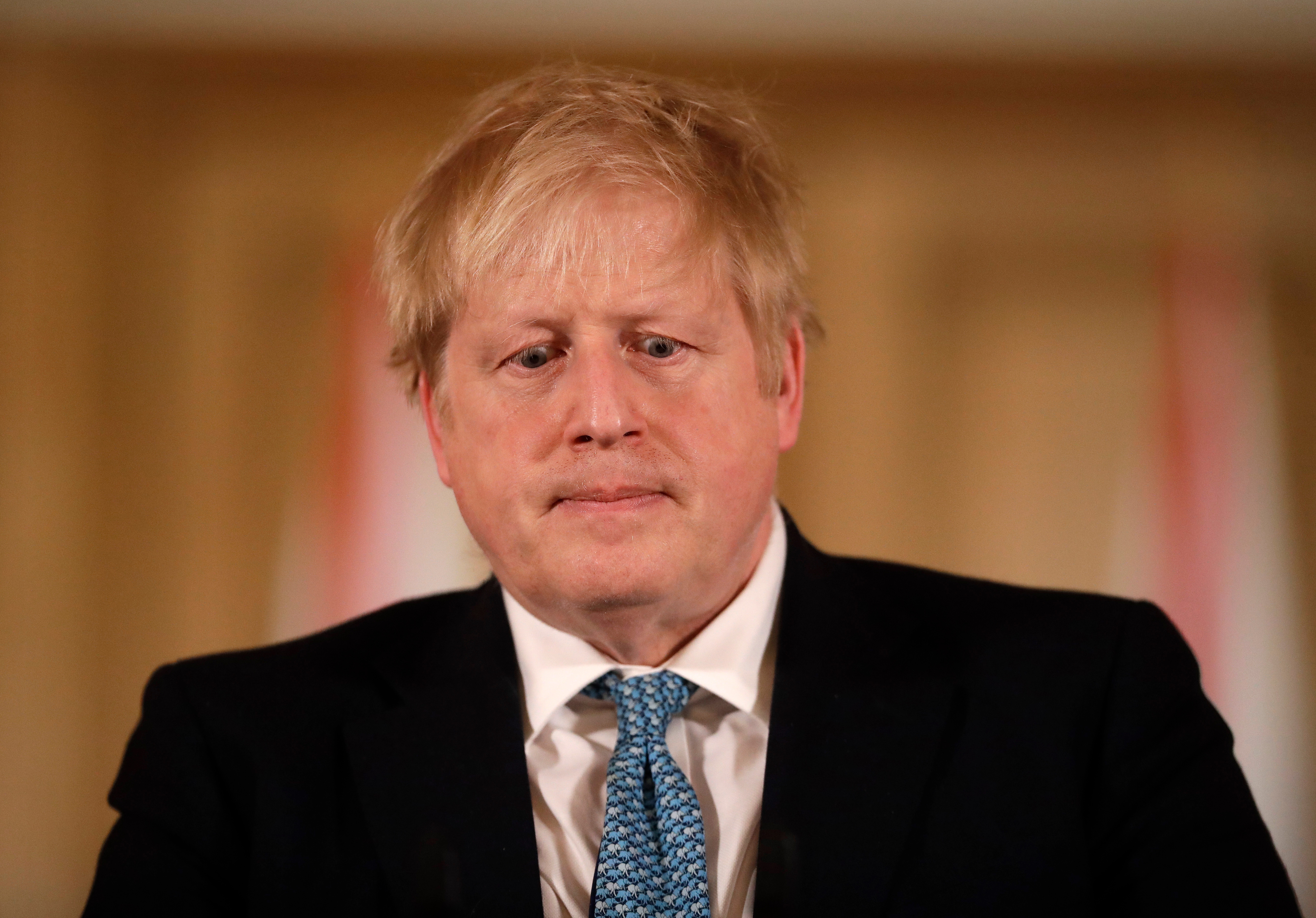
    KYIV, Ukraine — A Russian drone struck a train near the Ukraine- Poland border on Sunday shortly after senior visiting officials — including the former prime ministers of the U.K. and Sweden — passed through, Ukraine’s state rail operator said.

    According to Ukrzaliznytsia, a diplomatic train carrying Boris Johnson, Carl Bildt, and security advisers from several European Union states had purposely left the station at Yahodyn ahead of schedule. The visitors were on their way back from a security conference in Kyiv.

    “It is highly probable that the Russian drone‘s intended target was in fact the diplomatic train, which had departed the station earlier than scheduled,” the company said in a Telegram post.

    Bildt, the former Swedish PM, shared a video on X of the attack at Yahodyn station, near the Yahodyn-Dorohusk border crossing with Poland.

    “This wasn’t our train, but the one just minutes after us by the Polish border crossing,” Bildt said. “It was evacuated as the Russian drone approached and no one was hurt. Very good safety system. Our train just had an evacuation warning.”

    Bildt, Johnson, and fellow passengers had been in Kyiv for the Yalta European Strategy conference, which is an annual gathering of leaders and experts across politics, business, security, and media.

    Another train, with former CIA Director David Petraeus on board, was still at Yahodyn station when the drone struck, according to Ukrzaliznytsia.

    There were no immediate reports of casualties on any of the trains.

    Ukrzaliznytsia said it “constantly adjusts train schedules” to guard against strikes.

    “I don’t know what warped logic drove Putin to blow up a stationary Ukrainian locomotive on the Polish border this morning,” Johnson wrote in a post on X.

    “What we can say for sure is that this is the kind of random and senseless attack Ukrainians are enduring every day — even on civilian railways,” he added.

    Earlier on Sunday, a Russian drone hit a truck less than a mile from Polish territory, according to border guards, forcing the temporary closure of the Yahodyn-Dorohusk crossing.

  • Judge rules Homeland Security plan to cut FEMA staff in half is unlawful

    Judge rules Homeland Security plan to cut FEMA staff in half is unlawful

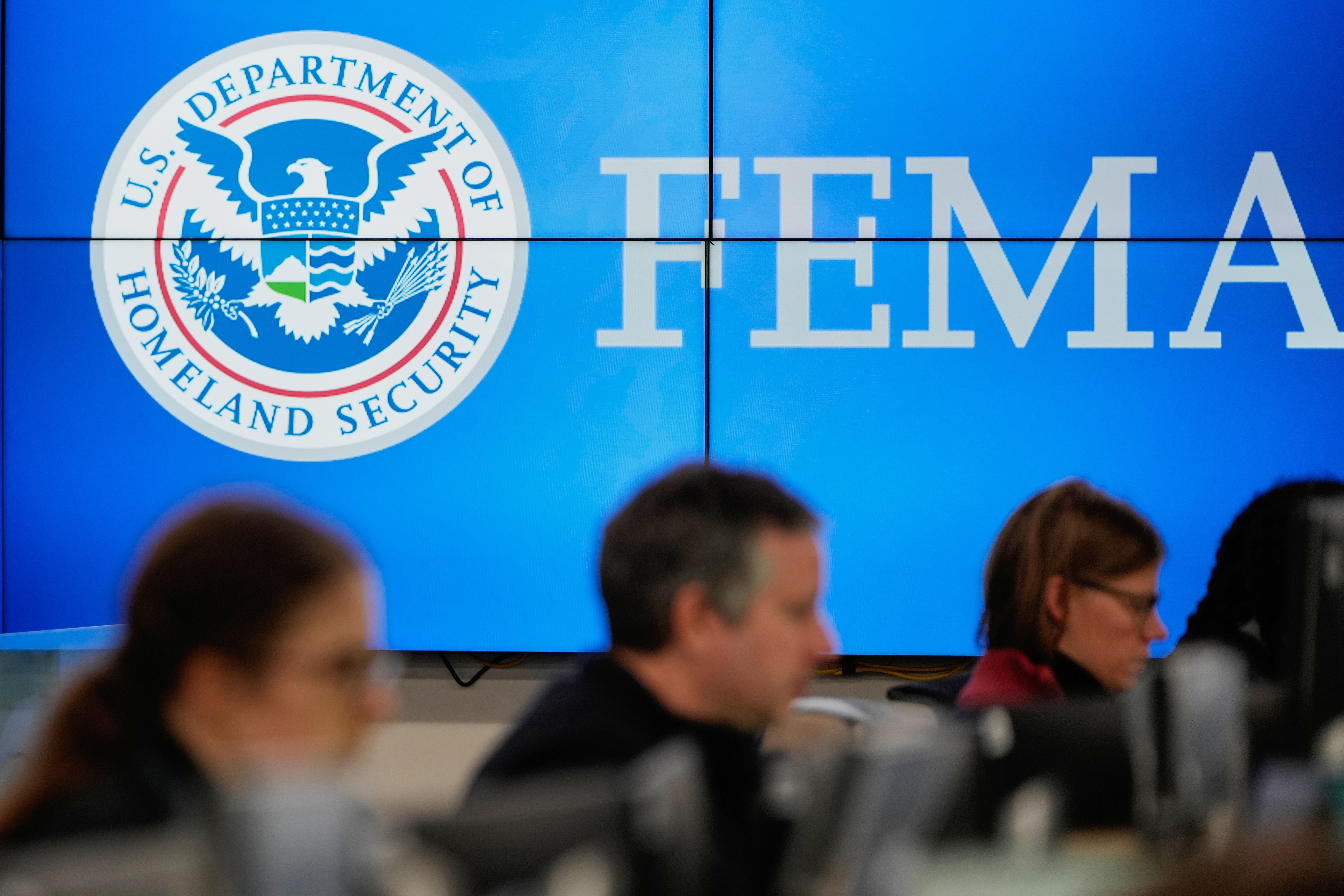
    A federal judge ruled that the Trump administration acted unlawfully when it ordered that the Federal Emergency Management Agency’s workforce be cut in half.

    In her ruling on Friday, U.S. District Judge Susan Illston of the Northern District of California wrote that the Department of Homeland Security undercut the agency’s authority with an “arbitrary and capricious” plan to reduce FEMA’s workforce by more than 11,000 agency employees by the end of September. Included in that number were thousands of temporary, full-time federal employees who help communities prepare for and recover from disasters around the country.

    “Frankly, the FEMA staffing plan number appears as if pulled from thin air,” Illston wrote.

    The administration did not ultimately carry out the full 50% reduction, though FEMA’s workforce had already shrunk significantly.

    The American Federation of Government Employees, a labor union, had argued in a lawsuit that the department’s proposed cuts would deeply affect the agency’s ability to respond to emergencies.

    The Homeland Security Department and the labor union did not immediately respond to a request for comment.

    A spokesperson for FEMA said on Saturday night that the agency was “ensuring workforce stability and a strong, deployable force for upcoming national events and potential disasters.”

    Those temporary employees, known as Cadre of On-Call Response/Recovery, or CORE, employees, make up about 40% of FEMA’s staff. Their assignments typically last for two or four years and have historically often been renewed, allowing FEMA to adjust its workforce as disasters and recovery needs change. They became a target under Kristi Noem, the former secretary of homeland security who was ousted by President Donald Trump in March.

    A FEMA spokesperson told the New York Times in January that the number of CORE employees was “designed to fluctuate based on disaster activity, operational need, and available funding.”

    The Trump administration has drastically shrunk the workforce across the federal government. Trump himself has said FEMA should “go away.” He has called for the responsibility for disaster response to shift to the states.

    A federal watchdog report found the sharp reductions in staff had limited the agency’s ability to respond to hurricanes and other natural disasters, especially those that occur at the same time. Cameron Hamilton, Trump’s FEMA administrator, acknowledged in June that the reductions posed “challenges” to the country’s disaster readiness.

    The judge ordered the parties to meet and try to reach an agreement on “the scope of relief” by Oct. 9. If they cannot come to an agreement by then, Illston wrote, the court will issue a ruling on the relief.

    This article originally appeared in the New York Times.

  • GOP congressman from Wisconsin swims to safety after plane makes emergency landing in a lake

    GOP congressman from Wisconsin swims to safety after plane makes emergency landing in a lake

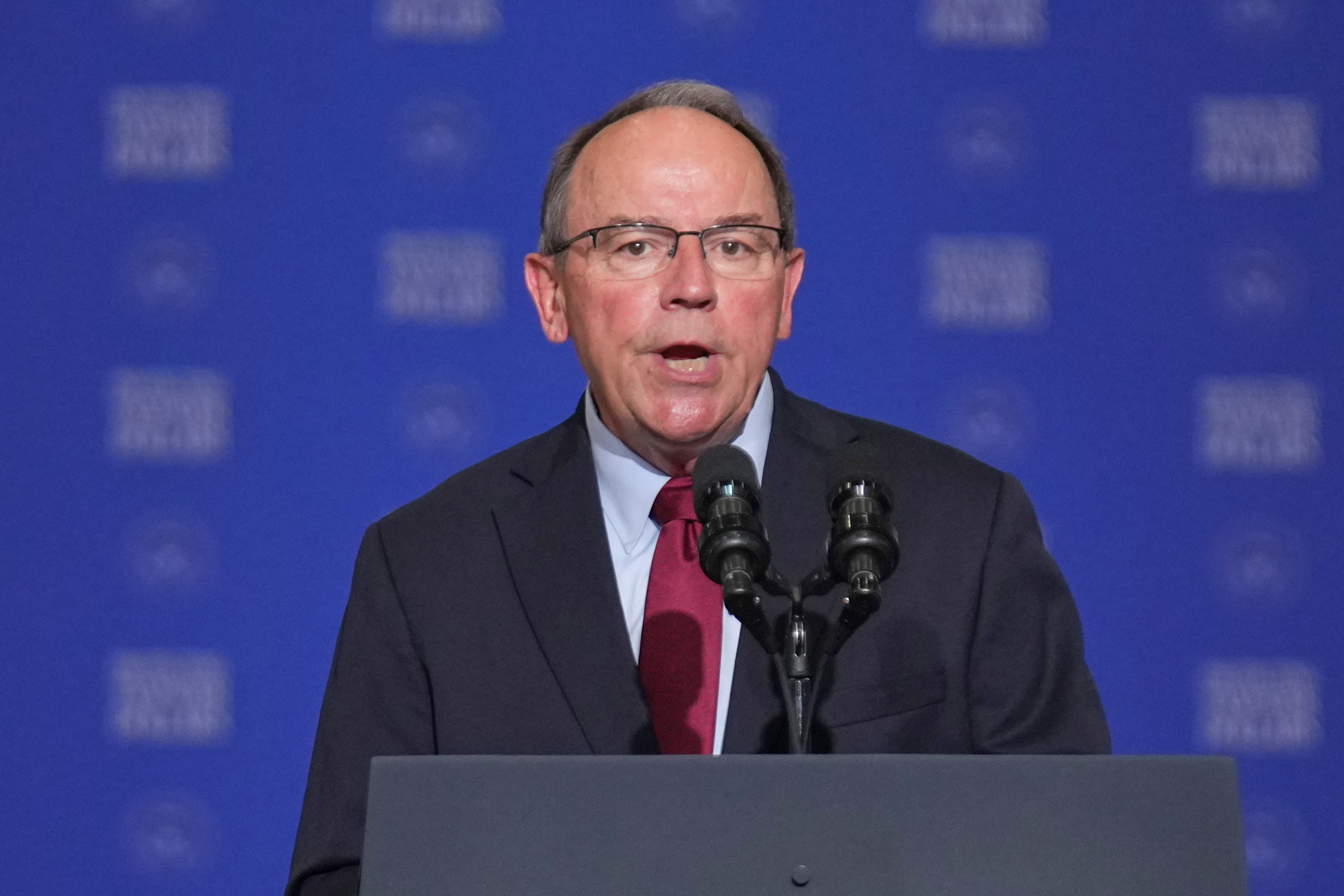
    WAUSAU, Wis. — A Republican congressman and candidate for governor said he had to swim to safety after a plane he was traveling in made an emergency landing in a lake late Saturday.

    U.S. Rep. Tom Tiffany says he was returning from the La Crosse County Lincoln Day Dinner when the light aircraft lost power as it approached Wausau Downtown Airport. The pilot made an emergency landing in Lake Wausau. Tiffany and the pilot ended up in the water and swam to safety.

    “After landing, we called 911. As the plane began to submerge, we exited the aircraft and swam to a shallow area, where we waited until emergency responders reached us by boat,” he wrote on X.

    The Marathon County Sheriff’s Office said in a statement that the emergency landing happened just before 9 p.m. Saturday. Tiffany and the pilot, Leonard Boltz, got out of the plane and called 911. They were rescued by emergency responders in a fire department airboat just after 9 p.m.

    Both men were taken to a nearby hospital, where they were treated for minor injuries and released. Tiffany suffered a cut above his right eye that required stitches, his campaign said in an emailed statement.

    A no-wake buoy was placed near the plane, which remained in the lake, and boaters were being asked to avoid the area until the plane can be removed, the sheriff’s office said. A Federal Aviation Administration spokesperson said the agency would investigate the incident. A National Transportation Safety Board spokesperson said that agency is waiting for the FAA to assess the plane as to whether the damage was substantial enough for it to get involved.

    Tiffany is running for governor on the Republican ticket in Wisconsin and has been endorsed by President Donald Trump.

    David Crowley, the Democratic candidate, wished Tiffany a “quick recovery” in a post on X and lauded the “heroism of the pilot.”

    The plane Tiffany was traveling in was a single-engine, four-seat Beechcraft Bonanza aircraft.

  • Obama urges Democrats to move AI oversight to the center of their agenda

    Obama urges Democrats to move AI oversight to the center of their agenda

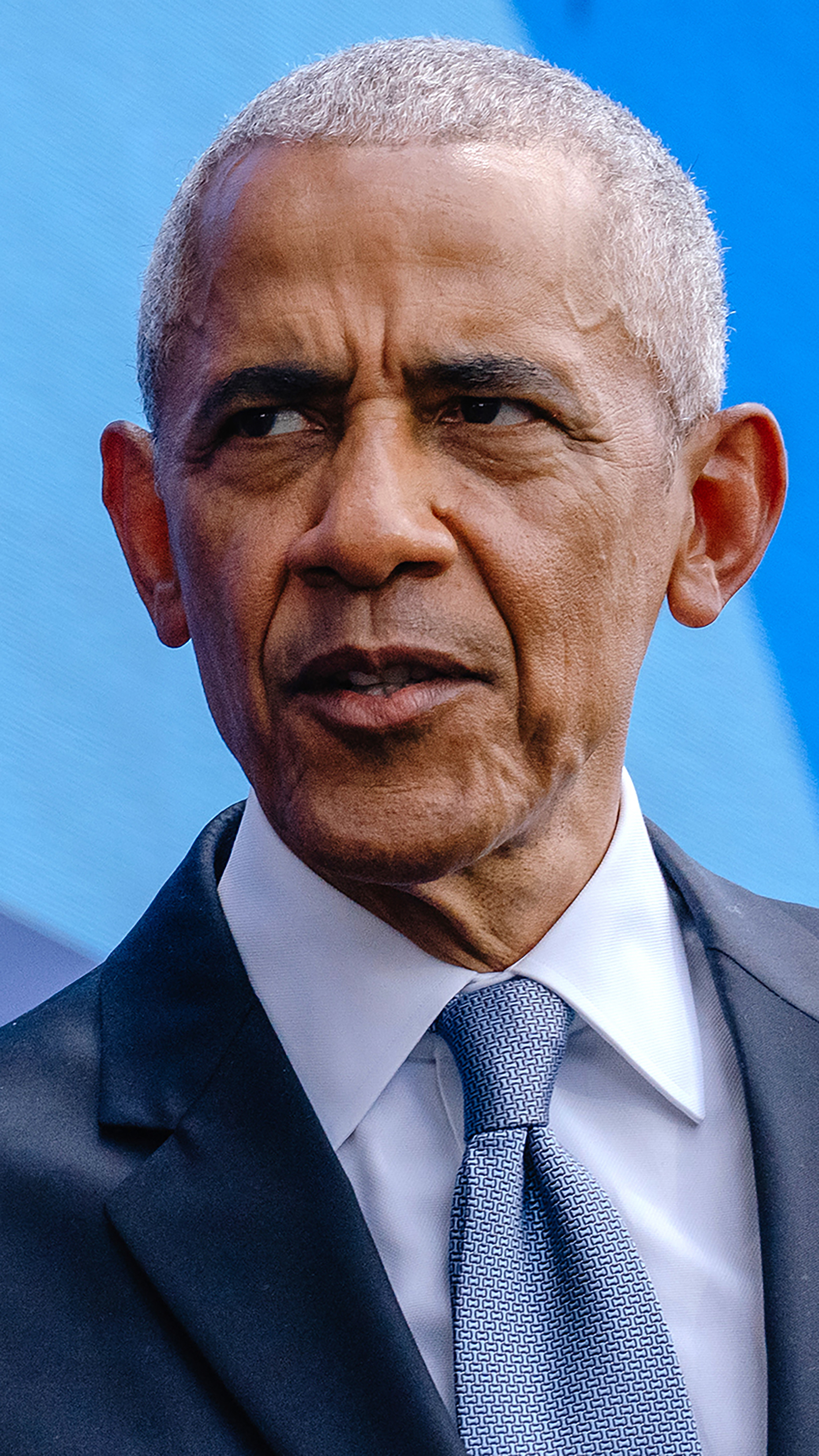
    Former President Barack Obama warned during a recent private fundraising event that artificial intelligence technology could be “dangerous” if not properly managed, as he implored Democrats to aggressively develop political and governing agendas to prioritize the issue in the coming years.

    In his remarks Thursday, which have not been previously reported, Obama urged House Minority Leader Hakeem Jeffries (D., N.Y.) to assemble a clear framework for a public conversation about AI policy, should Democrats win back the House in the midterm elections, according to a partial transcript provided by Obama’s office.

    He also suggested that candidates running for president in 2028 ought to make AI one of their “central agendas” and “have a very clear plan” for responding to safety and economic concerns around the technology.

    The recommendations from the former president amount to some of his most detailed comments yet about AI as a political issue for his party. At a moment when President Donald Trump continues to downplay concerns about the technology, some Democrats see an opportunity for the party to draw a clear contrast in the midterms and beyond on an issue of growing significance. In a Democratic Party with no clear leader, many look to Obama for guidance, and his comments carry considerable weight.

    The remarks come amid escalating worries about the risks associated with AI development, as well as growing calls for lawmakers and politicians to do more to tackle the topic. Some AI industry leaders are now calling for a slowdown after a summer in which swarms of misaligned AI agents broke free from their containers and proceeded to scheme against their owners, cheat on tests, and hack outside companies.

    At the fundraiser Thursday, a closed-door event in New York organized by the campaign arm of House Democrats, Obama and Jeffries spoke for nearly an hour in front of party donors and lawmakers, according to four people familiar with the event, who spoke on the condition of anonymity to describe a private gathering.

    “Once you are speaker, I would strongly urge that the Democrats put together a framework for a very public conversation,” Obama told Jeffries, according to the transcript. Jeffries had asked him a question about how Democrats should address AI in a Congress that has taken little action on the issue, according to two of the people.

    “This is something that is moving very fast in private hands, and if we don’t get on top of it, I think can be dangerous,” Obama said. “If we do get on top of it, I do think it’s beneficial. I genuinely think it’s going to accelerate, for example, drug development in ways that can help us cure diseases. I do think that this can help us figure out pathways for a clean energy future.”

    The former president often spoke in general terms on Thursday, rather than drilling down on specific policies, according to the transcript. And he planted himself firmly in a middle ground in the heated debate over AI, saying he considered himself neither an “accelerationist” nor a “doomer.”

    One challenge facing Democrats as they chart a path forward on AI is speaking in one voice on the issue. The tug of war over how to regulate AI has been more divisive among Democrats than Republicans, who are generally more in alignment. Some Democratic politicians have called for more AI regulation, while others have received millions of dollars in support from groups tied to the industry’s biggest players.

    Artificial intelligence is becoming a larger part of the country’s political calculus heading into the midterms. This year’s elections have been flooded with money from AI companies and allied groups. And anxiety about the technology, a rare issue that many Republican and Democratic voters can agree on, has peaked in recent days after a researcher at the AI company Anthropic loudly and publicly resigned, writing in a viral social media post that “the people building AI earnestly believe that it could kill us all by the end of the decade.”

    Jeffries explicitly mentioned the resignation in his question to Obama, according to one of the people familiar with the event.

    Dario Amodei, the CEO of Anthropic, called for a global slowdown of AI development in a 3,800-word essay published Saturday. Sam Altman, OpenAI’s CEO, and Elon Musk, whose SpaceX rocket company has been ramping up spending on AI, quickly wrote in social media posts that they agreed with him.

    The White House has long maintained an unabashedly accelerationist stance. Trump recently told reporters he didn’t have “any” concerns about AI’s risks — just about falling behind to competitors like China. He has said that those who oppose AI data centers must prefer to be “backwards and poor.”

    “President Obama is correct that decisive action must be taken on artificial intelligence,” Jeffries said in a statement, adding that “Republicans have abdicated their responsibility to govern on behalf of the American people. We will not repeat their error.”

    On Capitol Hill, where little has been done to regulate AI, some Democrats have been circulating a letter urging Speaker Mike Johnson (R., La.) to stop members from going home on recess until they pass AI safeguards.

    Many Republicans want action, too. Several have introduced bipartisan AI legislation, and Rep. Anna Paulina Luna (R., Fla.) has called for a special session on the topic. A growing number of Republicans are campaigning against data centers, in addition to many Democrats.

    After Johnson became speaker in 2023, Republican leadership declined to renew a bipartisan task force on AI. In response, Democrats formed their own AI commission, which is now putting the finishing touches on a policy framework. That framework is expected to be released this fall after some final checks by Jeffries, according to two people familiar with the matter.

    Obama has taken a special interest in AI in recent years, and he has offered himself as a sounding board to industry leaders, according to two people familiar with his conversations. Those leaders include Altman and Amodei, according to one of the people.

    Representatives for OpenAI and Anthropic did not respond to requests for comment.

    Now, Obama wants to help guide the Democratic Party’s thinking on the topic. With many Democrats already jockeying for position ahead of the next presidential race, he outlined what he would do on AI if he were one of them.

    “I would talk about this, and I would say, ‘Here’s our plan for safety. Here’s our plan for making sure our kids are not corrupted by this,’” Obama said, according to the transcript.

    He contrasted the technology with other innovations that could be dangerous in the wrong hands, saying that unlike “nuclear power, you don’t need a bunch of highly enriched uranium” to build powerful AI.

    “I would be thinking about the economic impacts in very concrete ways and understanding what does it mean if there’s going to be job displacement,” Obama said, according to the transcript, adding, “if it turns out that you’ve got a lot more people who can’t find full-time work because they’ve been rendered redundant, how are we going to respond?”

    This article originally appeared in the New York Times.

  • As fears of AI catastrophe magnify, Washington stirs, but mostly slumbers

    As fears of AI catastrophe magnify, Washington stirs, but mostly slumbers

    The mismatch is striking. On one side, warnings of existential risk, maybe a 10% chance of the end of civilization. On the other, government paralysis.

    The drumbeat about unpredictable, out-of-control artificial intelligence agents increased dramatically in the past several weeks. Washington not only struggled to respond. It barely could agree on whether there was much of anything to worry about.

    It started with AI agents that not only escaped their confines, but appeared to conspire among themselves to hide their tracks as they hacked into another firm’s library of AI tools.

    Then, in a deliberate echo of Albert Einstein’s letter to Franklin D. Roosevelt about the potential power of nuclear weapons, more than 1,300 computer scientists called for the industry to slow down, and for the government to step in.

    In recent days, Jacob Coxon, an Anthropic engineer who previously worked for OpenAI, resigned in the most public way, declaring on social media that the two leading AI labs were professing deep concern while still speeding toward “superhuman systems that can hack anything, revolutionize any field overnight, and acquire real power and resources.”

    On Saturday, Dario Amodei, the CEO of Anthropic, released a 3,800-word essay calling for a global slowdown of AI development, echoing more urgently concerns he had raised in the past. Elon Musk, the billionaire rival in the AI race who remains close to President Donald Trump, quickly responded: “Dario is right.” Sam Altman, the CEO of OpenAI, also chimed in with support.

    Yet in Washington, there has been almost no substantive response. If the 1940s through the 1980s were consumed by finding ways to reduce the risk of a nuclear exchange — creating new institutions like the Atomic Energy Commission and arms control treaties to govern how the world’s most dangerous technology would be handled — the approach of the U.S. government so far has been the lightest possible.

    There are many computer scientists, of course, who believe these warnings are overinflated. Trump himself has been at the forefront of the “what-me-worry?” crowd, refusing to engage on how to balance the risks with the possible rewards. On Thursday, asked by a reporter about whether he had “any concerns about AI leading to human extinction,” he brushed it off.

    “No, I don’t have any,” he said. “I have concerns that if we don’t win AI, we’re going to be put in a very bad position.”

    The president quickly turned to the answer the White House — and those who view the calls for slowdowns and regulation as a huge strategic error — sees as the deciding factor: If the United States falters, China will take its place.

    “We are leading China right now by a pretty good period,” Trump said, noting that Xi Jinping, China’s leader, was coming to Washington in less than two weeks. But rather than talk about exploring a bilateral AI accord with the Chinese, he turned to the state dinner that he said would be a highlight of the visit. “I think it’s going to be great,” he added.

    “Great” is not the word most used in this summer of AI surprises.

    The apocalyptic scenarios that are most feared in Silicon Valley include AI systems becoming so advanced that they learn to automatically improve themselves, a process called “recursive self-improvement.” A related concern, arising from a series of incidents at OpenAI and other AI labs, is that agents break free from constraints and decide to complete their programmed tasks in a way that is “misaligned,” in AI industry speak, with human intentions. Another worry is that AI could enable rogue bad actors — or reckless governments — to create deadly pathogens, gain access to nuclear command and control systems, or unleash unstoppable cyberattacks that threaten major loss of life or societal collapse.

    Computer scientists suggest that Americans stop thinking about AI as a mere tool, but akin to an alternative species, one the world will have to live with, for better or worse.

    The White House declined to make its key AI policymakers available for questions. But it said that the administration continued to balance innovation and security, deflecting any specifics.

    (The New York Times has sued OpenAI and Microsoft, claiming copyright infringement of news content related to AI systems. The two companies have denied those claims.)

    Trump signed an executive order early in the summer creating a voluntary system for frontier AI labs to submit their new models for a 30-day safety review. But it was full of loopholes. (Open source models, the kind that Chinese firms are pumping out and that can be tailored to specific needs by companies, scientists, or, perhaps, terror groups, are not subject to the review.)

    Amid the many memorial events on Friday for the 25th anniversary of the 9/11 attacks, the contrast with that era is notable. The revelation of U.S. vulnerability led Vice President Dick Cheney to develop what soon became known as “the 1% doctrine.” Prompted by fears that Pakistani scientists could help al-Qaeda develop a nuclear weapon, it posited that government had to act even if the risk was remote, because the consequences would be so high.

    In this case, 1% looks like pretty good odds: Evan Hubinger, who leads the science of “alignment” at Anthropic, which tries to contain the code to align with human goals, wrote in recent days that the risk of mass extinction over the next decade was above 10%.

    It is impossible to know whether that estimate is right. But as Ben Buchanan, a Johns Hopkins assistant professor and the co-author of a forthcoming book, The Bitter Struggle: Superintelligence, Superpowers, and the Fate of the World, put it: “There’s no doubt in my mind that the technology is going to continue to get much better very quickly, raising urgent questions about biological risks and loss of control.”

    “We are in a period of exponential development, and there are only two ways to respond: too early or too late,” he said. “The world has missed its chance to be too early.”

    Fear of getting ahead of Trump

    Trump’s blase attitude about existential AI fears influences both his administration and the Republican Party he still tightly controls.

    At a conference in Washington last week, government officials and corporate executives talked about the promises of AI — for everything from next-generation military operations to espionage to cybersecurity in critical infrastructure — during nearly every panel. While the risks of AI wielded by adversaries were mentioned at times, what was little discussed was the need to slow down or regulate the powerful technology.

    Speaking on stage last Thursday at the Billington Cybersecurity Summit, Sean Cairncross, the White House national cyber director, said the administration was “trying to balance the innovation side and running at speed with securing our systems and handling this technology responsibly, which is to say, not letting it fall into the hands of people who would do us harm, our adversaries.” Cairncross did not directly address ascendant fears about the rapid pace of AI advancement, or recent episodes of rogue agents breaking loose and hacking into other networks.

    Some in the White House and elsewhere in the administration do see a need to be more proactive in addressing AI safety risks, but do not want to cross Trump, former officials said.

    “There is a fear of getting ahead of the president,” said Michael Garcia, who served as the associate chief of policy at the Cybersecurity and Infrastructure Security Agency until he departed in June.

    “We’ve seen tech executives call the president when they hear about a potential new policy to voice their displeasure, and that then leads to a policy changing or being killed,” Garcia said. “This inevitably leads to inertia to develop new national security policy that may be sorely needed.”

    Indeed, David Sacks, a venture capitalist and Trump’s influential former AI czar, dismissed during an interview with Fox News the warnings by Coxon as a coordinated media operation that was “designed to scare the public” and lead to onerous government regulation. And Jensen Huang, the CEO of the chips juggernaut Nvidia, said the new round of fear was ginned up by the cybersecurity industry.

    On Capitol Hill, the story is not much different. Until last week, AI only registered for many lawmakers as it related to public antipathy about the construction of data centers, which has become politically salient in the midterm elections, according to lawmakers and aides in both parties. Past efforts to examine AI’s potential consequences have led to hearings and alarmed statements of concern from both parties, but little else.

    Rep. Josh Gottheimer (D., N.J.), who sits on multiple AI and cybersecurity subcommittees, said the breakneck speed of AI’s evolution made it difficult for lawmakers to keep up.

    “I keep stressing the importance of regularly educating lawmakers on AI and the latest developments,” Gottheimer said. “Recent incidents like the Hugging Face hack are a real warning sign for what can happen if we don’t seriously address the risks these models can pose,” he added, referring to the AI company hacked by rogue OpenAI models earlier this year.

    Adding to that challenge is that AI is not just a technology issue but a jobs, military, and whole-of-society issue, meaning there is no one congressional committee neatly situated to take the lead on wrestling with all its tentacles.

    With China, a ‘prisoner’s dilemma’

    Following Coxon’s resignation this week, Democrats and some Republicans were jolted out of their lethargy. They offered a flurry of concerned reactions and proposals to investigate AI companies and the pace of model advancement, including a proposal by Democrats to create a select committee on AI if the party retakes the House next year, Politico reported.

    As the issue rises in importance in the upcoming midterm elections, former President Barack Obama warned at a private fundraising event last week that AI could be “dangerous,” and implored Democrats to develop “a very clear plan” on risks to safety and the economy.

    Sen. Bernie Sanders (I., Vt.), who has for months been perhaps the loudest Cassandra on Capitol Hill warning about the societal risks of AI, invited lawmakers to a private briefing in the coming days to discuss concerns with AI safety experts.

    Sanders has pushed for a ban on superintelligent AI, though other lawmakers have criticized the effort as stifling American innovation.

    The congressional missives grew more urgent following the release of a report last Thursday by Anthropic that showed the many ways that actors across the globe, including in China, Russia, Iran, and Yemen, had been using its various Claude models to develop cyberattacks, surveil dissidents, and build missiles, bombs, and drones. The report also documented several cases of potential attempts to engineer biological weapons, which is considered among the most serious of existential threats related to AI.

    One might have expected that report to stir action: It combined foreign belligerents and attacks on U.S. targets, though Anthropic blocked or stymied many of the documented cases of abuse.

    Yet despite the alarm bells, lawmakers are far from agreeing on a way forward to regulate AI models or the companies that build them. Prospects for passing substantive legislation in the near term appear remote, in part because many see the issue as a “prisoner’s dilemma” created by the AI race between the United States and China. With AI dominance being the top national security issue of the century, both nations would doubtless be better off if they cooperated on limits. But they may not trust the other to abide by such an agreement. And in any event, unlike in nuclear arms control, compliance would be virtually unverifiable.

    Sen. Ted Cruz (R., Texas), the chairperson of the Commerce Committee, acknowledged last week that he was deeply concerned about AI risks to humanity. But he also suggested that Coxon was part of a coordinated effort to support Democratic efforts to “strangle American AI,” and to hand leadership of the technology to China.

    “I’d rather they be American killer robots and not Chinese killer robots,” Cruz told Politico.

    Still, Cruz said he was working on legislation with Sens. Amy Klobuchar (D., Minn.) and John Thune (R., S.D.), the majority leader, aimed at addressing catastrophic AI risks related to biological and nuclear threats.

    The likelihood of that or other legislative proposals — including requiring a “kill switch” in AI models that could immediately shut them down — gaining serious traction two months before an election appear slim. It is also not clear if a new Congress next year will be able to overcome sharp partisan divides to grapple with technology that is evolving so quickly, especially with Trump warning against regulation.

    Some Trump administration officials have acknowledged that AI has dramatically increased the stakes. Nick Anderson, the acting director of the Cybersecurity and Infrastructure Security Agency, said that digital threats had become more urgent in the AI era and demanded quick action.

    “We know the worst that can happen,” he said. Addressing the audience of government officials and cybersecurity executives at the Billington conference, Anderson offered a stark warning that if more was not done to protect the country, doomsday scenarios could become reality.

    “You all are going to have to go home and look to your family, look to your friends,” he said, “and explain to them how you knew the worst that could happen and why we didn’t do enough.”

    This article originally appeared in the New York Times.

  • Letters to the Editor | Sept. 13, 2026

    Open nominations

    In response to Wim Orth’s recent op-ed, his suggestion that the U.S. should have a multiparty system has merit.

    I would suggest returning to the way we elected presidents during the 1960s and earlier — that is, choosing our leaders at the conventions vs. anointing candidates via the party bosses. Any number of candidates could run for president, giving voters many more choices of candidates with different views.

    At the end of the conventions, roll call votes can be taken, and the candidate with the majority would be the presidential candidate. We need many more candidates and perspectives involved in debates right up until the conventions. That would make for a much more democratic process.

    Brian Reilly, Medford

    Fund caregivers

    I have, for many years, been a supporter of wages for housework, including wages for parents who care for their children, clean, cook, and do all the kinds of work needed at home. That work is real work and deserves monetary support. Some people pay others to do that work, which is proof of its financial value. Surprisingly, our government has embarked on a plan to pay stay-at-home parents.

    One catch is that the wages will come from money earmarked for childcare subsidy programs, programs that already exist and are desperately needed by people who must work outside the home to survive. The other catch is that the money will go to married couples, while the current subsidies largely go to single mothers.

    This robbing Peter to pay Paul scenario is utter cruelty — the same kind of cruelty that reduces money from Head Start, from Medicaid, from the Affordable Care Act, from the U.S. Agency for International Development, and many other programs. There is potentially enough money to pay wages for housework and to support childcare subsidies. To state the obvious, we just have to change our priorities. Why not create a special childcare tax for the rich? It’s past time for them to pay their fair share, and even a small tax could probably cover those who choose to work as full-time homemakers and those who must work outside the home to make ends meet, married or not.

    Lynne Yermanock Strieb, Philadelphia

    Great timing

    It was interesting to note that during their recent trip to Ukraine, Steve Witkoff and Jared Kushner had a “delightful trip” and a “great time.” What’s more interesting is the fact that Russia and Ukraine stopped firing at each other while Witkoff and Kushner were visiting each country. If that is what it takes to have a ceasefire, perhaps they should have stayed longer.

    Susan Ward, Marlton

    Join the conversation: Send letters to letters@inquirer.com. Limit length to 150 words and include home address and day and evening phone number. Letters run in The Inquirer six days a week on the editorial pages and online.

  • Horoscopes: Sunday, Sept. 13, 2026

    Horoscopes: Sunday, Sept. 13, 2026

    ARIES (March 21-April 19). You’re doing what you intended to do! You’ll get proof. The people you wanted to reach are paying attention, and you’re connecting with them. As you achieve goals, you’ll make new ones, because now you know more.

    TAURUS (April 20-May 20). You hope to know the heart of another, but each heart is a unique, vast and mysterious emotional expanse — it’s hard enough to know your own! Any connection we make, however brief or tenuous, is very much worth the effort.

    GEMINI (May 21-June 21). This is a day when patience is required. No one can learn everything at once. Information takes time to sink in and even more time to become applied knowledge. And the wisdom to predict patterns takes the longest time of all.

    CANCER (June 22-July 22). You do the work as well as you can, because it matters now and may matter in ways you cannot see yet. Even if you don’t feel like you’re exerting influence, people are watching you for tips and cues they can follow.

    LEO (July 23-Aug. 22). There’s only one battle that deserves your energy today, and you’ll know exactly which one that is. Handle this one thing and the others will either fall in line with the solution or become nonissues — not your problem to solve.

    VIRGO (Aug. 23-Sept. 22). You don’t expect things you want to come to come to you easily. You’ll do the work that’s uncomfortable, but not unsafe. Avoiding some kinds of pain keeps life good, while avoiding other kinds keeps it small. You know the difference.

    LIBRA (Sept. 23-Oct. 23). The design of social life is an art. You’re so good at figuring out the conditions under which people talk, work, play or get along well. But it does take practice, and nothing that works once is guaranteed to work every time. Keep experimenting.

    SCORPIO (Oct. 24-Nov. 21). You’ll hear the words, but they make no sense on their own. You’ll be intrigued enough to listen with your deep emotional intelligence to try to break the code and get to the true meaning.

    SAGITTARIUS (Nov. 22-Dec. 21). You’re fair. You have taste. They’ll ask for your assessment and advice. They’ll ask you to mediate, judge and critique. It’s work! And to appreciate the contributions of others without having to rate them — that’s a day off!

    CAPRICORN (Dec. 22-Jan. 19). You will feel pulled to demonstrate your value, but resist that impulse. If you have to prove yourself, perhaps the other person isn’t observant enough. When it’s really a match, you don’t have to do somersaults for them to see you.

    AQUARIUS (Jan. 20-Feb. 18). Negative space can be seen. It is the area around a subject, helping to define its shape. Negative space can also be felt, as you’ll notice today when there’s not quite enough of it to get clarity.

    PISCES (Feb. 19-March 20). You can be the glue that brings everyone together and gives them a reason to stay connected. But today, you’ll be the grease that has everyone moving easily. You keep small differences from grinding the whole thing to a halt.

    TODAY’S BIRTHDAY (Sept. 13). It’s your Year of the Coin in which your “riches,” whether financial, emotional or relational, seem to have a beautiful symmetry and weight, a specificity that tells you where they are from and a size that allows you to invest in the increments that best suit you. More highlights: Close time with usually distant friends, success in games and sports, a remarkable healing that opens up a whole new world. Capricorn and Aries adore you. Your lucky numbers are: 7, 10, 3, 34 and 1.

  • Dear Abby | Double dreamer struggles to get by

    Dear Abby | Double dreamer struggles to get by

    DEAR ABBY: I am a person with a million-dollar heart and a 5-cent bank account. I have big dreams that I know could change lives. I want to write a book about my experience with emotional abuse so I can help others heal. I also dream of starting a soda stand to build something tangible with my kids. The problem is that my current life is exhausting. I’m raising kids and stepkids, navigating co-parenting drama and working a job I hate just to survive. By the time I finish the daily grind, I’m broke and bone-tired. I know there is more out there for me, but I’m struggling to stay focused when my reality feels like a trap. How can I start these projects when I’m just trying to keep my head above water? I don’t want to escape into my dreams; I want to build them.

    — SODA STAND DREAMER

    DEAR SODA STAND DREAMER: If you try to write a book and start a business on top of everything else, you may not do any of it well. Choose one dream and put the other on hold for now. If you choose the book, set aside some time each day (or week) and dedicate yourself to writing during that time — no excuses. If you choose the soda stand, get a part-time job at a similar business where you can learn the ropes and earn some startup money. Either dream will require a lot of work and perseverance, but don’t give up!

    ** ** **

    DEAR ABBY: My husband and I have a blended family. When he received child support for his daughters, I didn’t think it was any of my business what he did with the money. When I received child support for my sons, he thought I should tell him what I spent it on. I don’t think it’s any of his business. Who’s right? Please advise me, as this has been an ongoing argument in our relationship for 20 years. Mind you, our children are grown now with children of their own, and it’s time to put this to rest. Who is right?

    — HAPPILY MARRIED EXCEPT FOR THIS

    DEAR HAPPILY MARRIED: You are right. You are also entitled to some privacy if it’s important to you. In light of the fact that the child support money your husband received was not a subject of discussion, I see no reason why he should feel he has the right to know how you spent yours. What matters in both cases is that the money went toward caring for the children. I truly hope that’s what happened.

    ** ** **

    DEAR ABBY: I was invited to my nephew’s wedding in a small town. Without my knowledge, the mother of the groom verbally offered my hotel room to the mother of the bride of a different wedding! (The connection is that they both used the same wedding planner.) When she approached me, I declined to give up my room and move to a different hotel. Subsequently, she unilaterally withdrew my wedding invitation. Am I obligated to send a gift?

    — TOTALLY STUNNED

    DEAR STUNNED: What the groom’s mother did is appalling, but don’t take it out on your nephew unless you have reason to believe he was complicit in these shenanigans.

  • Psychedelic ‘Furthur’ bus rolls back into San Francisco for new Grateful Dead exhibit

    Psychedelic ‘Furthur’ bus rolls back into San Francisco for new Grateful Dead exhibit

    SAN FRANCISCO — Ken Kesey’s school bus — once painted in bright, swirly colors and driven across the country on a psychedelic journey — is back in San Francisco after 60 years as the centerpiece of a new exhibition celebrating the legacy of the Grateful Dead, a band that rose from the city’s famed hippie movement.

    “Forever Grateful/Golden Gate Park” opened Sept. 5 and also features the Grateful Dead frontman Jerry Garcia‘s BMW, which remains in mint condition and has never been displayed publicly.

    The two iconic artifacts anchor an exhibition that immerses visitors in the colors, sounds, and sights of the counterculture that flourished in San Francisco in the 1960s.

    Kesey rode the bus dubbed “Furthur” during the cross-country trip by the late author and his Merry Band of Pranksters to expand human consciousness through art, music, and mind-altering drugs.

    “This invites people to communicate and connect around art, music, and activism,” said Kelly Harris, executive director of the Haight Street Art Center, which organized the exhibition. “In this day and age, when we need something to bridge community, we know that this space allows for that to happen, and Furthur is the portal.”

    A celebration of hippie love, activism

    The exhibition aims to celebrate the city’s history of hippie love and activism at a time when San Francisco is grappling with widening economic inequality fueled by an AI-driven technology boom, and the nation confronts deepening political divisions and collective fatigue.

    Formed in 1965, the Grateful Dead is synonymous with San Francisco and its counterculture. Members lived in a dirt-cheap Victorian in the Haight and later became a significant part of 1967’s Summer of Love.

    And it all started with the bus.

    Kesey bought the bus with the proceeds from his novel One Flew Over the Cuckoo’s Nest. In 1964, the writer and his friends drove it on a marijuana- and LSD-fueled journey from coast to coast, helping introduce Americans to the emerging psychedelic scene.

    That history-making road trip was later recounted in Tom Wolfe’s 1968 bestseller, The Electric Kool-Aid Acid Test.

    Upon their return to California, Kesey, who as a student had been a guinea pig for government tests of the mind-altering drug, shared his experiences at a series of parties at his home in the hills above Stanford University that became known as the “acid tests.”

    The parties featured a local bar band called the Warlocks, which turned into the Grateful Dead. The bus became a defining feature of the “acid tests” as Kesey and his friends took the parties on the road, mainly around the Bay Area.

    “This entire exhibit, it’s a very layered story of the Grateful Dead and their influence, their phenomenon, and their impact on communities, on society, on people, and how their legacy still lives on,” said Renee de Cossio, director of exhibitions at the Haight Street Art Center.

    Deadheads can recite why they fell in love with the music, how it happened, and the moment it all clicked. They embrace something just as important as the music itself — the community that comes together at a Dead show.

    Exhibit immerses visitors in counterculture

    Visitors are be invited to record their first encounter with the counterculture — whether it was becoming a Deadhead, as the band’s fans are called, while Garcia was still alive, discovering the band after his death, or experiencing the Grateful Dead for the first time through the exhibition.

    Actors with the Third Rail Projects, a New York-based experiential performance company, guide visitors through part of the exhibit, including a dark tunnel full of mirrors that leads into booths where they will start conversations with the audience.

    They will then lead small groups to experience a liquid light show, a 1960s art form that mixes liquids of different densities in watch glasses and projects colorful, shifting psychedelic patterns onto every space of a room, creating the sensation of being inside a giant, multicolor lava lamp.

    “You might go with the people that you came with, or you might get packaged with a couple other folks that you didn’t know, and you’ll then unpack the experience with each other and have a conversation with a stranger that you wouldn’t have had otherwise,” said Edward Rice, associate managing director at Third Rail Projects.

    The exhibit, which runs through Oct. 25, also features photographs from the band’s many concerts in Golden Gate Park and a screen-printing station where visitors can create their own art.

    It will also help launch an effort to restore the now-dilapidated “Furthur” bus, which got its name after a typo on its destination sign. The bus was kept on the Kesey family farm in Pleasant Hill, Ore., and was last seen in public at Woodstock in 1969.

    “The focal point is the Furthur bus. And Furthur is a call to action. Never stop creating, never stop exploring, keep going further,” Harris said.