Tag: no-latest

  • Trump arrives at G7 summit looking for momentum after announcing a deal to end the Iran war

    EVIAN-LES-BAINS, France — President Donald Trump started his visit to the G7 summit of leading industrialized nations on Monday by declaring his agreement aimed at ending the U.S. war with Iran is a potential breakthrough for global security and a chance for the U.S. to finally turn the page in its relationship with longtime adversary Iran.

    The Republican U.S. president sought to make clear that he arrived in Evian-les-Bains with the wind at his back for talks with G7 leaders, including some who have been sharply critical of his management of the 15-week-old conflict, which has led to a surge in global energy prices — though he did not immediately seem willing to lay out the details of what was in the emerging deal.

    Some of those details are still to be negotiated in talks over the next 60 days, though Trump said the memorandum of understanding would likely be released after it’s signed on Friday.

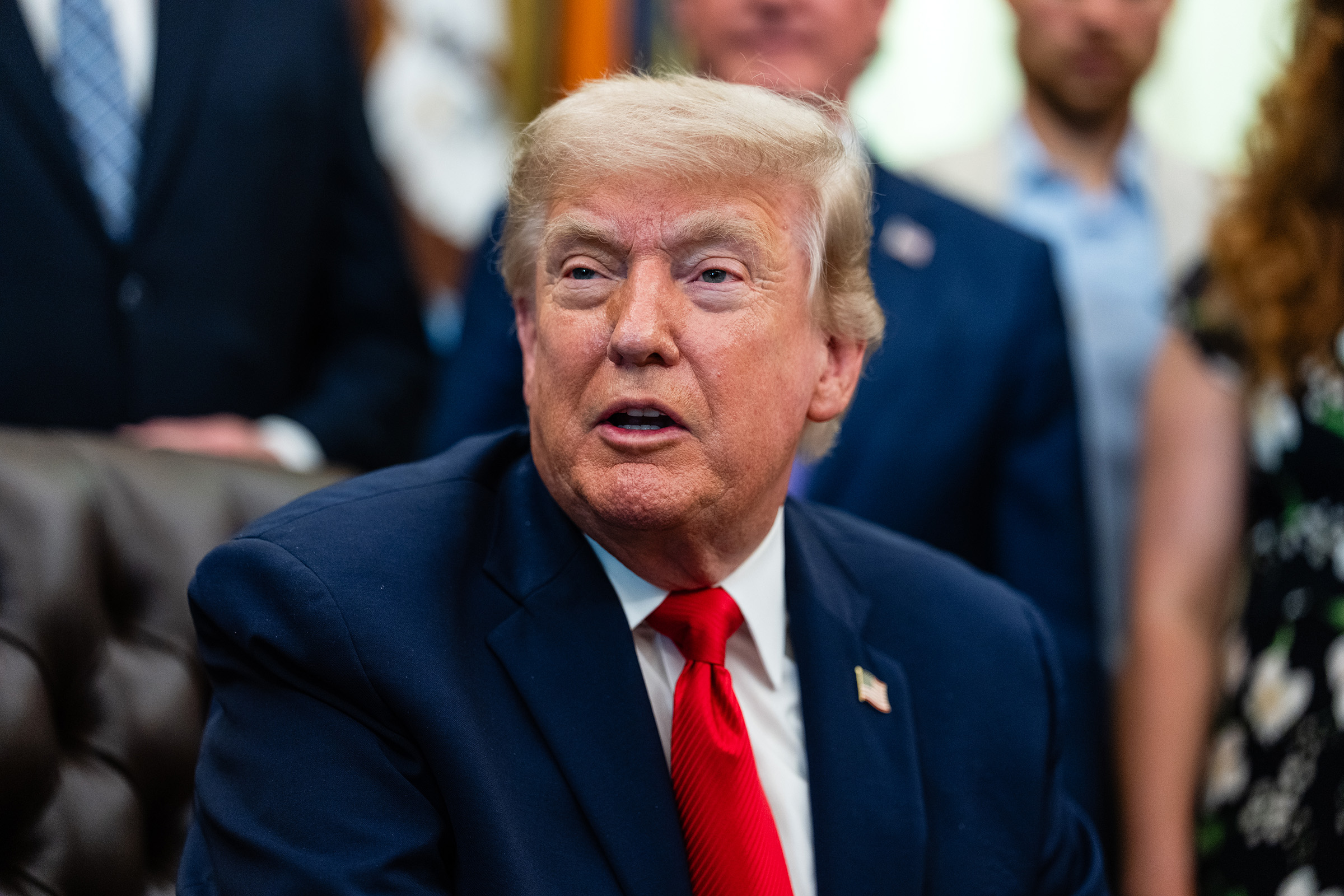
    “I think a lot of great things are going to happen in the Middle East right now, and very importantly the oil (price) is plummeting down and the stock market is shooting up like a rocket today,” Trump said at a meeting with the summit’s host, French President Emmanuel Macron, before they joined a working dinner with other leaders.

    “The Iran deal that we made is going to bring a lot of success to the world,” he said.

    Deal could change G7 dynamic

    Trump has had friction with Macron, British Prime Minister Keir Starmer, German Chancellor Friedrich Merz, and Italian Prime Minister Giorgia Meloni over failing to consult them before the decision to go to war. But sealing an agreement before jetting off to the summit might change the dynamic of the three-day gathering.

    Macron at the start of Monday’s meeting congratulated Trump for finding a way to an agreement.

    “It’s a very important matter for peace of the whole world,” Macron said.

    Trump has pushed back on the four European leaders — members of the NATO military alliance — for their lack of support for the U.S. in the conflict.

    He’s expected to discuss with leaders the demining of the Strait of Hormuz. Britain and France have expressed interest in assisting with the demining once the conflict is paused. Fear of potential mines is among the reasons tanker traffic has come to a halt during the war, and quickly clearing them will be crucial to regaining the confidence of commercial vessels.

    Macron on Monday said France was ready to move within days to deploy assets, including mine-clearing vessels, to the region to help.

    Senior U.S. officials told reporters that while the agreement provides for the immediate opening of the strait and lifting of the U.S. naval blockade, it will take weeks for traffic to return to previous levels.

    Macron invited the leaders of three nations that aren’t part of the G7 — Egypt, Qatar, and the United Arab Emirates — to take part in a session on the Middle East on Tuesday, when Iran is expected to be a central focus.

    Trump faces questions about financial incentives for Tehran

    Trump had fiercely criticized President Barack Obama for the 2015 nuclear agreement, which Trump argued failed to stop Tehran from advancing toward a weapon and funneled billions of dollars into the Islamic Republic’s coffers.

    In 2018, Trump exited the deal, known as the Joint Comprehensive Plan of Action. Britain, China, France, Germany, Russia, and the European Union were also signatories to the pact.

    Trump in an interview on Sunday with the New York Times pushed back on comparisons to the Obama-era nuclear deal. “We negotiated from strength,” Trump said. “He was basically paying them off.”

    But Trump hasn’t explained how his agreement will address some key issues about Iran’s nuclear program, including who will be in charge of verifying that Iran is complying with the agreement and who will destroy or remove 972 pounds of highly enriched uranium believed to be buried under nuclear sites that were badly damaged by U.S. strikes last summer.

    The memorandum of understanding includes the possibility of releasing Iran’s frozen funds, sanctions relief, and a $300 billion fund to help rebuild Iran — all of which would be tied to Tehran meeting certain benchmarks aimed at assuaging White House concerns, senior U.S. officials told reporters on Monday.

    Some Democrats and hawkish critics say Trump has failed to explain how the financial relief in his agreement will differ from what Obama did in the 2015 nuclear deal.

    “For all his critique of JCPOA, we had international observers, we actually had an alliance there that included the Europeans, and Russia and China were all signatories,” Sen. Mark Warner, the top Democrat on the Senate Intelligence Committee, told CBS’ Face the Nation on Sunday.

    Republican Sen. Lindsey Graham, a close ally of Trump and an Iran hawk, expressed skepticism, saying that Congress will need to review and vote on any nuclear deal with Iran, and said he expects Vice President JD Vance — “the architect of the deal” — to present it.

    “I am somewhat concerned that Iran’s view of the agreement seems different than what the American negotiating team is claiming,” Graham said on social media.

    Trade irritants and the war in Ukraine are also a focus

    Leaders are expected to discuss a range of economic and trade issues. Trump told the New York Post he’s warned Macron the U.S. will “have no choice” but to slap 100% tariffs on French wines unless ​Paris eliminates its digital tax on American tech companies, renewing a long-running threat from him that dates to his first administration.

    Wines and ​spirits exported to the U.S. from the European Union currently face ​a 15% ⁠tariff.

    In an interview with broadcaster TF1, Macron said Monday that it’s not “for the United States to decide what European or French law should be.”

    Macron also invited Ukrainian President Volodymyr Zelensky for a working session with G7 leaders on Tuesday to discuss the Russia-Ukraine war.

    At the moment, Zelensky is not scheduled to hold one-on-one talks with Trump while they’re both in France, but Trump on Sunday held separate phone calls with Zelensky and Russian President Vladimir Putin.

    Russian presidential aide Yuri Ushakov told reporters that Trump emphasized the need to end hostilities with Ukraine and stated his readiness to influence European allies and Kyiv toward that goal, including at the G7.

    Zelensky had offered to meet Putin with Trump and European leaders at the G7 gathering, but the Kremlin didn’t reply, a Ukrainian official familiar with the matter told the Associated Press. The official was not authorized to speak publicly about the matter and spoke on the condition of anonymity.

    Putin is wanted by the International Criminal Court for alleged war crimes, and France would be obliged as an ICC member to arrest him. The United States and Russia both oppose the court.

    Trump suggested that, after an Iran deal, he’ll now have greater bandwidth to focus on the Russia-Ukraine war.

    “Now that this is finished, we’re going to be focusing on that,” he said, referring to diplomatic efforts to stop the fighting that followed Moscow’s full-scale invasion of its neighbor in February 2022.
  • Kennedy seeks to expedite appeal of ruling that blocked his vaccine policies

    Kennedy seeks to expedite appeal of ruling that blocked his vaccine policies

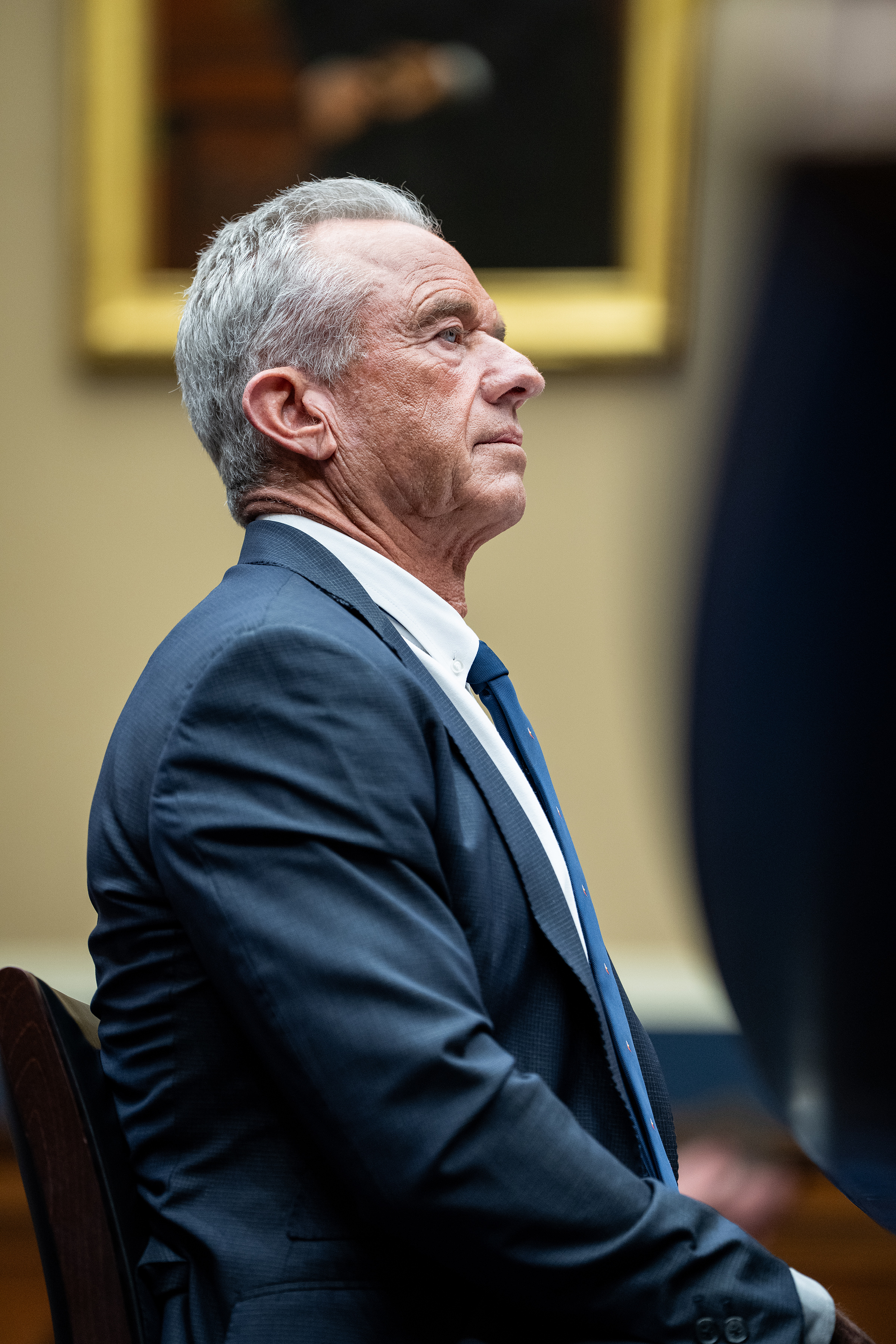
    The Trump administration has requested an expedited appeal of a federal court ruling that blocked a series of decisions on vaccines made by Health Secretary Robert F. Kennedy Jr., including rescinding routine recommendations for immunizations against a half-dozen childhood diseases.

    Kennedy announced in a social media post Friday that the administration had filed the motion to expedite appeal so that federal vaccine advisers could meet to decide whether to recommend shots before the fall flu season.

    The move is the latest development in a lawsuit brought by six medical organizations, including the American Academy of Pediatrics. The suit contended that Kennedy and his appointees to the Centers for Disease Control and Prevention had made “arbitrary and capricious” changes to the childhood vaccine schedule.

    It also argued that the panelists Kennedy appointed to the Advisory Committee for Immunization Practices, a panel of outside experts, did not have the qualifications to recommend vaccinations and that their decisions endangered the health of Americans.

    The ruling, delivered March 16 by a federal judge in Massachusetts, temporarily blocked Kennedy’s policies while the trial continued. It froze all decisions made by the panelists Kennedy had appointed and prevented the committee from meeting as scheduled.

    Friday’s announcement is the latest sign that the administration is seeking to revive the committee. Last month, President Donald Trump issued an executive order urging the CDC and the committee to align their recommendations for childhood vaccinations with those of peer countries. Separately, Kennedy’s office reestablished the committee’s charter.

    “The 2026-2027 respiratory virus season (i.e., RSV, influenza, COVID) begins in the fall, and while the ACIP cannot act, no newly licensed or reformulated vaccine for those conditions can be added to the immunization schedule,” the administration argued in its motion, filed in U.S. District Court for the District of Massachusetts.

    Richard Hughes, a lawyer for the medical organizations, said in a statement that the administration’s motion was a “misleading attempt to shift blame for what Secretary Kennedy broke.”

    “We will oppose his motion to expedite appeal because we refuse to pave the way for his further destruction,” Hughes said.

    Vaccine recommendations have historically been made by ACIP members after careful review of the benefits and potential risks, in a process that can take months or years. Last June, Kennedy fired all 17 previous members of the committee and named new ones, many of whom shared his skepticism of vaccines.

    Over three meetings, the new panelists rescinded several recommendations for childhood shots, including the immunization of all newborns against hepatitis B, a highly infectious virus that can severely damage the liver.

    Then, in January, bypassing the committee entirely, the acting head of the Centers for Disease Control and Prevention, appointed by Kennedy, announced a new schedule for childhood vaccines, which cut the number of diseases against which children are routinely immunized to 11 from 17.

    In his decision, Judge Brian Murphy, of the U.S. District Court for the District of Massachusetts, noted that vaccine recommendations had historically followed “a method scientific in nature and codified into law through procedural requirements.”

    But, he added, “unfortunately, the government has disregarded those methods and thereby undermined the integrity of its actions.”

    Only six of the panelists Kennedy appointed “appear to have any meaningful experience in vaccines — the very focus of ACIP,” the judge said.

    Immediately after the ruling, the Trump administration indicated it would appeal. On April 23, the Justice Department instead asked the court to halt the case while an appeal was pending, arguing that continuing the case “wastes scarce taxpayer resources” and that compiling administrative records required by the court “would divert agency employees from other important responsibilities in furtherance of the public health.” Then, on April 29, the administration filed its intent to appeal.

    The court’s request for extensive records may indeed be what spurred the administration to appeal, said Dorit Reiss, an expert on vaccine policy and law at the University of California College of the Law, San Francisco.

    “One reason for asking for a halt and filing the appeal may be that they did not want to give the information, or the trial was going poorly, and they wanted to put that on hold,” she said.

    This article originally appeared in the New York Times.

  • Trump winds down the war he started with goals unmet

    Trump winds down the war he started with goals unmet

    Almost immediately after striking a deal with Iran, President Donald Trump appeared eager to take a victory lap.

    He trumpeted that the agreement would open the Strait of Hormuz, a vital waterway for the world’s energy supplies whose stalled ship traffic has rattled the global economy. He told the New York Times that his efforts had saved Israel from nuclear extinction and made the Middle East safer. It all gave him a key win as he traveled to France for the Group of 7 summit, where he is meeting with European leaders who have criticized his approach to the war.

    Despite Trump’s grandiose claims, the agreement has not yet achieved the core goals he laid out three months ago for launching the U.S.-Israeli war against Iran.

    Back then, Trump said the United States intended to “annihilate” Iran’s military capabilities, abolish its nuclear ambitions, topple its theocratic leadership, and liberate its people, whom he encouraged to take over their government when the fighting had stopped. Just one week after the strikes started, he said Iran’s only path to a deal was an “unconditional surrender.”

    Trump publicly declared victory Sunday mainly based on solving a problem of his own making, in miscalculating Iran’s ability to choke off the Strait of Hormuz. Trump asserted on Truth Social that he had authorized the toll-free opening of the crucial waterway, which would essentially restore the prewar status quo, and celebrated that the global energy markets would rebound.

    “Ships of the World, start your engines,” he wrote. “Let the oil flow!”

    The latest framework, which has not yet been publicly released and is expected to be signed in Geneva on Friday, is a capstone to three months in which Trump has delivered a dizzying array of mixed messages.

    He said that Iran’s nuclear program had been “obliterated” in U.S. strikes last year, yet said that the war was necessary to stop the Iranians from obtaining a nuclear weapon.

    Trump said that Iran’s nuclear program posed a threat not only to allies, but also to U.S. troops overseas and to everyday Americans. He was clear that the war’s conclusion would rest on one stipulation: “It has always been the policy of the United States, in particular, my administration, that this terrorist regime can never have a nuclear weapon,” he said. “I’ll say it again. They can never have a nuclear weapon.”

    Even Saturday, when he announced that a deal would be signed the next day, he claimed that Iran’s leaders “no longer want a nuclear weapon, nor will they have one, either through purchase, development, or any other form of procurement.”

    But the deal leaves that issue unresolved for at least another 60 days, when both sides are expected to negotiate on nuclear issues.

    Trump did not cast the deal as a solution to the nuclear threat. Instead he focused on the Middle East and his legacy.

    “This Great Deal will bring Peace and Security to the whole Region,” he wrote in a social media post. “Many presidents have tried to make Peace with Iran, and all have failed before me.”

    Trump has also sent conflicting messages over how far he would go to secure a nuclear agreement with Iran. He has gone from threatening to wipe out the country’s civilization to saying he was in no hurry to remove its remaining stockpiles of enriched uranium.

    At the start of the war, Trump initially claimed the United States would accomplish its goals in “four to five weeks.” He repeatedly compared the war in Iran to his quick military operation in Venezuela, in which the top leader was removed but much of the rest of the government remained in place, willing to work with the United States.

    This war instead dragged on for months, killing thousands of Iranian civilians and 13 U.S. service members. Rather than bowing to the United States, Iran’s new leadership has been emboldened, consistently withstanding military and diplomatic pressure to persist in its goal of advancing a nuclear program.

    In negotiations with Trump’s son-in-law, Jared Kushner, and special envoy, Steve Witkoff, the Iranians have held firm on not giving up the right to enrich uranium.

    “As for the nuclear issues, there really is no agreement,” Daniel B. Shapiro, a former U.S. ambassador to Israel, said in a statement on social platform X. “Iran knows how to drag out those negotiations, and try to pocket concessions along the way.”

    He added that the United States now appeared to be paying to reopen the Strait of Hormuz by potentially lifting sanctions imposed against Iran. The Trump administration has said Iran would receive no relief from sanctions or release of its frozen financial assets until it delivered on its commitments.

    The framework does provide a path toward potential peace and economic relief. And Monday, both world leaders and global markets expressed optimism.

    Chancellor Friedrich Merz of Germany, who previously said that the United States had “no strategy” and was being “humiliated” by Iran in the war, congratulated both sides on the diplomatic breakthrough, calling it a potential step toward “a reinvigorated global economy and a more secure Middle East.”

    But it was a cautious optimism given all the uncertainties. Crucially, Iran’s nuclear capability will need to be hashed out over the next two months of negotiations, raising questions over whether a lasting peace will materialize.

    Plenty of spoilers could arise along the way. Notably Israel, a partner in the war but not in the framework for peace, has been less than enthusiastic about the deal. Trump himself said in the Times interview that he was prepared to restart military attacks against Tehran if Iran failed to reach a final nuclear accord with the United States.

    Some of Trump’s allies appeared concerned over the unfinished aspects of the negotiations. Sen. Lindsey Graham (R., S.C.), who has long supported military action against Iran, said he was “somewhat concerned that Iran’s view of the agreement seems different than what the American negotiating team is claiming.”

    “I will be watching closely the ensuing negotiations regarding Iran’s nuclear program and other matters,” Graham said. He added that Vice President JD Vance, whom he described as the “architect of the deal,” should ensure that the final deal is presented to Congress.

    In an interview with CNBC on Monday, Vance said the framework gave the administration “leverage,” though there remained “details to figure out,” including on enriched uranium.

    As negotiations progressed over the weekend, Trump posted a lengthy criticism on social media of the previous deal struck with Iran by President Barack Obama, asserting that the one he was working on would be better.

    Shapiro, who is also a fellow at the Atlantic Council research institute, said on social media that Trump seemed focused on comparing his deal favorably with the Obama deal, but the United States was far from being able to come to such a conclusion.

    “It is possible that no deal will ever be reached,” Shapiro said, “and very likely that if one is reached, it will be worse than what we could have achieved through diplomacy before the war.”

    This article originally appeared in the New York Times.

  • Wisconsin beagle farm closing and hundreds of its dogs will be sent to a Florida rescue group

    MADISON, Wis. — A Wisconsin beagle breeding farm that’s been the site of recent violent protests is closing, and its remaining dogs are being taken in by a Florida rescue group.

    Big Dog Ranch Rescue announced Monday that it has reached an agreement for the permanent closure of Ridglan Farms and the transfer of its 475 remaining beagles starting this week.

    “Not one dog will remain,” Lauree Simmons, the group’s founder, said in a news conference at a farm in Wisconsin. “No more breeding, no more testing, no more anything.”

    The rescue group said some of the beagles will go to other rescue groups while others will be sent to its Florida and Alabama campuses, where they will be spayed, neutered, and prepared for adoption.

    The group bought roughly 1,500 of the farm’s more than 2,000 beagles in April for an undisclosed price.

    About 200 dogs were transferred from the farm starting Monday morning, according to Simmons. Another 125 will be moved Tuesday. The transfer of the remaining beagles will happen in August, as they are still puppies.

    Simmons called on protesters to refrain from further demonstrations as it says Ridglan Farms has committed to permanently closing its dog breeding, sales, research, and testing operations.

    She said her group and others are “working closely” with the Trump administration to stop funding studies that subject dogs to invasive and painful experimentation.

    “Our focus now should be on supporting these dogs as they transition into their new lives,” Simmons said. “These dogs will get to experience safety and a normal life for the first time.”

    Ridglan Farms, in a statement Monday, said all the dogs being transferred are “happy, healthy animals” with “extensive” state and federal inspection documentation.

    “We hope these dogs will continue to flourish in their new homes,” the farm said, adding that the “years-long harassment campaign targeting the research facility’s owners, staff, and neighbors comes to an end.”

    The dog breeding and research business is located in Blue Mounds, a small town about 25 miles southwest of the capital, Madison.

    Animal activists have been pushing for years to have dogs at the facility adopted, not sold to other research facilities.

    Beagles are the most common breed of dog used for animal testing, primarily because of their smaller size and gentle temperament, according to Big Dog Ranch Rescue.

    In April, police used tear gas and pepper spray to repel a large group of animal welfare activists that stormed the farm in an attempt to take beagles from the facility. Protesters also broke into the facility in March and took 30 dogs, leading to dozens of arrests.

    Ridglan Farms agreed in October to give up its state breeding license as of July 1 as part of a deal to avoid prosecution on felony animal mistreatment charges.

    The firm has denied mistreating animals, but a special prosecutor determined that Ridglan Farms was performing eye procedures that violated state veterinary standards.

  • A Russian barrage in Ukraine kills 11 and damages a sacred landmark, officials say

    KYIV, Ukraine — A cathedral in one of the oldest and most sacred landmarks in Eastern Orthodox Christianity was set ablaze early Monday as Russia bombarded Ukraine’s biggest cities, killing 11 people, President Volodymyr Zelensky said.

    Russia fired the barrage of hundreds of drones and dozens of missiles at the capital of Kyiv and the second-largest city of Kharkiv, after Zelensky and Russian President Vladimir Putin spoke separately by phone with U.S. President Donald Trump on Sunday.

    Arriving in France, Trump said he had good conversations with Zelensky and Putin. “Now that this (Iran) is finished, we’re going to be focusing on that,” he said, referring to diplomatic efforts to stop the fighting that followed Moscow’s full-scale invasion of its neighbor in February 2022.

    The war in Ukraine is also set to feature in talks Tuesday by G7 leaders at a summit in France. Zelensky also is due to attend to bring attention to his country’s plight.

    “This is how Russia shows the world its intention to continue the war,” Zelensky said in a post on X, referring to the overnight attack on civilian sites that included the Kyiv-Pechersk Lavra, an 11th century monastery complex.

    “It is very important that there be a response from the G7 countries … and that this response be decisive and substantive; more pressure on the aggressor and more support for Ukraine’s air defense, especially anti-ballistic capabilities,” he said.

    Zelensky offered to meet Putin with Trump and European leaders at the G7 gathering in France but the Kremlin didn’t reply, a Ukrainian official familiar with the matter told the Associated Press on condition of anonymity because he was not authorized to talk publicly about it. The Kremlin has said repeatedly that if Zelensky wants to meet Putin, he can come to Moscow.

    Putin is wanted by the court on a warrant dating to March 2023 for alleged involvement in the abduction of children from Ukraine during the conflict. France would be obliged as an ICC member to arrest him. The United States and Russia both oppose the court.

    Children among the wounded in Kyiv

    Zelensky said the Russian strikes killed 11 civilians and emergency workers and wounded 53 across Ukraine.

    Five were killed in Kyiv, Mayor Vitali Klitschko said, where at least 30 others were also wounded, including two children aged 5 and 6, according to Tymur Tkachenko, head of the city’s Military Administration.

    A series of powerful explosions were heard across Kyiv, with a wave of ballistic missiles followed by Shahed drones as many people sought shelter underground. Clouds of black smoke drifted over the city.

    Five strikes hit civilian sites in the city’s Shevchenkivskyi district in under 30 minutes, Tkachenko said, including a 25-story apartment building, while a market and a grocery store caught fire. In the Obolonskyi district, a nine-story residential building took a direct hit.

    Russia’s Defense Ministry said the strikes targeted defense and industrial facilities in Kyiv, Kharkiv, and Dnipro, including enterprises and workshops producing components for long-range drones and cruise missiles. It said that a workshop producing medium- and long-range drones located on the premises of the Dovzhenko film studios in Kyiv was among the targets hit.

    Russia also claimed to have hit Kyiv’s Radar plant, which it said makes drone components, and the Mayak plant that it said makes Ukraine’s Flamingo long-range cruise missiles. Military conscription offices in Kyiv were also struck, it said.

    There was no immediate information about the 11th person killed in the attacks.

    Religious site damaged in attack

    In Kyiv, smoke billowed around the golden domes of the Dormition Cathedral inside the Kyiv-Pechersk Lavra, a revered religious landmark.

    Its roof caught fire during the attack, said Metropolitan Epiphanius, head of the Orthodox Church of Ukraine. He condemned the strike as another Russian crime “against humanity, against history, against Christianity,” and appealed for prayers to save the site.

    The Kyiv-Pechersk Lavra, also known as the Monastery of the Caves, is a sprawling complex of monasteries and churches, including some underground, built between the 11th and 19th centuries. Some of the churches at the UNESCO-listed World Heritage site are connected by a labyrinthine complex of caves spanning more than 2,000 feet.

    In a statement, UNESCO condemned the attack, which it said reportedly caused significant damage to the exterior and interior of the Dormition Cathedral.

    Zelensky said the damage was caused by two Russian drones and called the attack Moscow’s “biggest crime yet against Christian culture.” He visited the scene with Prime Minister Yuliia Svyrydenko and other government officials.

    The cathedral, churches, and other buildings overlook the Dnieper River and have been a pilgrimage site for centuries.

    French Foreign Minister Jean-Noel Barrot said the attack was the “equivalent, for us French, of a bombing of Notre Dame” in Paris.

    Ukraine’s National Commission for UNESCO, which coordinates the country’s cooperation with the U.N. educational, scientific and cultural body, urged the international community to step up pressure on Moscow to stop its invasion and to throw it out of the organization.

    “By destroying Ukraine’s cultural heritage, (Russia) seeks to erase historical memory and inflicts damage upon the heritage of all humankind,” the commission said in a statement.

    Russia’s Defense Ministry claimed, without offering evidence, that the complex was hit by one of Ukraine’s U.S.-made Patriot air defense missiles, saying that it might have veered off course due to its age.

    Russia fires more than 600 drones at Ukraine

    Ukraine’s air force said Russia launched 70 missiles and 611 drones overnight, primarily targeting Kyiv, while also striking the cities of Dnipro and Kharkiv.

    The military said air defenses intercepted or electronically suppressed 632 aerial targets, including 50 missiles and 582 drones.

    Preliminary data showed 20 ballistic missiles and 27 attack drones hit 42 locations across the country, while debris from intercepted drones fell at 12 sites.

    Russia’s Defense Ministry said air defenses downed 123 Ukrainian drones overnight.

  • U.K. bans under-16s from using social media apps including TikTok and YouTube

    LONDON — Britain will ban children aged under 16 from using a range of social media apps, including Snapchat, TikTok, and YouTube, to protect them from harmful content and excessive screen time, Prime Minister Keir Starmer said Monday.

    The ban, which is expected to take effect early next year, makes the U.K. part of a growing global movement to tighten online safety for children. Australia, Canada, Brazil, and Indonesia have introduced legislation or announced age-based restrictions or requirements for children’s access to social media. France, Spain, Denmark, Thailand, and South Korea are among others studying or developing similar approaches.

    “Every parent can see it with their own eyes. Social media is making children unhappy,” said Starmer, who has two teenage children. “I’ve heard first hand from families crying out for change and we will do right by them.”

    The plan was met with mixed reaction, with some praising Starmer for taking action and others questioning the effectiveness of a blanket ban.

    YouTube and Meta — the parent company of Facebook and Instagram — warned Monday that a blanket social media restriction could push kids into unregulated spaces.

    “Blanket bans push kids out of such curated, supervised, beneficial experiences and towards anonymous, less-safe services,” a YouTube spokesperson said. Meta said a ban could drive teens to online alternatives without any parental controls.

    Starmer acknowledged the challenges and said some teens would try to find their way around a ban, but said: “I do believe we can enforce it.”

    He added: “Teenagers drink before they should, but we do not then say, ‘in which case let us abandon any attempt to stop them buying alcohol.’”

    The prime minister — who is under pressure to step down from members of his own party over what they see as poor leadership and could face a challenge from within his Labour Party in the coming days or weeks — said he is “not prepared to compromise on the safety and happiness of our children.”

    Starmer says the U.K. will go further than Australia

    The U.K. plans to follow the same model for a social media ban as Australia, which last year became the first country to bar under-16s from holding social media accounts. Platforms that fail to take reasonable steps to exclude children younger than 16 could be punished with multimillion-dollar fines.

    The U.K. said its ban will apply to platforms including Snapchat, TikTok, YouTube, Instagram, Facebook, and X, but not YouTube Kids or messaging services like WhatsApp and Signal. Starmer stressed that enforcement action will target tech companies, not children.

    He said the move was a “big moment for our country,” adding that he will go further than Australia’s measures.

    The government will also act to prevent strangers from contacting children on gaming and livestreaming platforms, Starmer said. AI chatbots designed to simulate romantic or sexual relationships with users will be restricted to those over 18 only, and authorities are also considering additional measures including overnight curfews and breaks in infinite scrolling for those under 18.

    More details are expected next month.

    Some skepticism over whether a ban will work

    The decision follows a public comment period in which the government received 116,000 responses from parents, the tech industry, and children. More than 90% of respondents wanted an under-16 ban, the government said.

    Ellen Roome, a children’s online safety campaigner whose son took his own life at 14 years old, welcomed the move. She believes her son died after an online challenge went wrong and has campaigned for legal reforms to give parents access to children’s social media accounts after their death.

    “The tech companies, if they wanted to make changes, they could have done that by now. They’ve chosen not to do it,” she said. “We need to come down hard on them. If they’re not going to do it, we need to be very strict.”

    But others say research in Australia has shown that age verification is difficult to enforce, and that a blanket ban fails to address a deeper problem — the way social media algorithms push harmful content to young people.

    “This is far too easy to work around. It is based on age verification tools that have been shown to be ineffective to date,” said Kate Edwards, head of education at the Molly Rose Foundation, which was set up in memory of 14-year-old Molly Russell, who took her own life after being exposed to self-harm content online.

    “It does nothing to address the actual problem itself, the harmful algorithms, the harmful content that is existing on those platforms,” Edwards added.

    A Meta statement said it shares “the goal of keeping teens safe online,” and that it now features teen accounts to automatically limit who can contact them and the content they see.

    “Like others, we don’t think bans will achieve this goal,” Meta said, adding that Australia had shown how “bans risk isolating teens from online communities and information.”

    Jon Crowcroft, a communications systems professor at the University of Cambridge, said people supporting social bans are well-meaning but probably misguided, and changes could prevent children from accessing sites they need.

    “There is a real risk this will drive some users to worse sites, and policing devices is close to impossible technically,” Crowcroft said.

    Other critics including the Open Rights Group have expressed concerns about age verification companies and how users’ private data is protected.

    U.S. opposes the move

    The ban could further inflame tensions with the U.S., which has warned that regulations should be narrow and not violate free speech protections, according to a statement from the U.S. Embassy in London. It said it was also concerned that regulations would place greater burdens on American technology companies.

    Starmer said he expected to discuss the issue with U.S. President Donald Trump and other world leaders at a Group of Seven summit in France that started Monday.

    “I honestly think that across world leaders, there has always been a recognition that leaders have to take steps to protect children,” he said. “I don’t think that’s controversial.”

  • Congo reports large daily jump in Ebola cases a month after outbreak was declared

    KINSHASA, Congo — Congolese authorities have reported one of the highest daily increases in Ebola cases in a month-old outbreak as the virus spreads quickly in a remote region whose shifting population challenges efforts to find those exposed.

    Congo’s Ministry of Health on Sunday said 72 new cases were reported in a 24-hour period, bringing the total number of confirmed cases to 782. Those include 181 confirmed deaths, with 29 new ones.

    “One month on, the Ebola disease outbreak is outpacing the response effort,” Kate White, emergency medical coordinator for Doctors Without Borders in Congo, said Monday. “No one knows the true scale or exactly where the disease is spreading in Congo.”

    The medical charity said treatment centers in the epicenter of the outbreak are overwhelmed, many patients arrive in advanced stages of illness, and most were not identified as contacts of infected people before seeking care.

    Congo’s health ministry said that while the numbers show the outbreak is spreading rapidly, it also reflects more active surveillance. “Community members are reporting suspected cases, and response teams are investigating them,” it said on X.

    The number of cases in what could become history’s worst Ebola outbreak is believed to be higher because the outbreak was confirmed on May 15, weeks after it is suspected to have begun.

    The outbreak is caused by the rare Bundibugyo virus, which was not tested for in the early days. The more common Zaire virus, which now has a vaccine, was responsible for most of Congo’s past 16 outbreaks of the disease.

    The outbreak is concentrated in Congo’s eastern province of Ituri, which accounts for more than 90% of the cases. Cases have also been recorded in the North Kivu and South Kivu provinces and have spread across the border to Uganda.

    Congo said the contact tracing coverage rate is 56%, a sharp decrease from last week, as authorities hurry to find people who may have been exposed.

    There was no immediate explanation for the drop. Congolese health authorities previously said contact tracing has been hampered by community resistance in some areas and by the rapid expansion of the outbreak into new health zones, increasing the workload for surveillance teams.

    Nearly a million people have been displaced by years of conflict in Ituri, according to the U.N. humanitarian office, making contact tracing difficult as people flee attacks or move frequently in the vast province with dense forests, poor roads, and remote villages that can take days to reach.

    Tracing is also difficult among the thousands of miners who regularly move among remote sites in the mineral-rich region.

    The health ministry said Sunday 40 people have recovered since the start of the outbreak, and the current fatality rate of the outbreak is 23%.

    Life goes on, including nightlife, as the population adjusts.

    The World Health Organization said Sunday it is intensifying testing and contact tracing and treatment. Tons of supplies from the WHO have arrived in Congo.

    And Africa’s top health body said it is deploying technical expertise and supporting laboratory systems, case finding, and community engagement efforts to accelerate the response.

    “We remain committed to supporting affected countries until transmission is stopped. We call on partners and donors to urgently mobilize resources to strengthen the response and save lives,” said the head of the Africa Centers for Disease Control and Prevention, Jean Kaseya.

  • UFC brings its trademark mayhem to the White House; Philly’s Kyle Daukaus falls to Penn State’s Bo Nickal

    WASHINGTON — President Donald Trump emerged from the Oval Office first, then fighters from around the globe followed straight into the fight cage, in part for the president’s 80th birthday celebration and to bring a sport long on the fringe of mainstream acceptance into a main event on the White House South Lawn.

    For a president who revels in winners, Trump had to enjoy crowning two champions on a big fight night staged closer to the Rose Garden than Madison Square Garden in the co-main event of UFC Freedom 250.

    American lightweight Justin Gaethje capped his unification championship victory in the main event over Ilia Topuria with a backflip off the top of the cage. He crouched near Trump for a celebratory chat and the betting underdog draped the American flag over one shoulder — and the 155-pound title belt over another. Trump later stepped into the cage to congratulate Gaethje.

    “Hey, I’m from America, 250 years ago we were way more than 6-1 underdogs,” Gaethje said. “I know that was absolutely legendary because I can not even believe it.”

    Topuria and Gaethje made their walkouts from the Oval Office as fireworks exploded overhead during Michael Buffer’s introductions. Gaethje — who appeared to skim the copy of the Declaration of Independence on his way out — mustered some scattered “USA!” chants against the Spanish-Georgian Topuria, though not even the main event could stop the trend of mostly quiet fights.

    It took the gory sight of a bloodied Topuria — his back to Trump in a white “USA” hat as he peered through the wire-mesh cage — nearly having the fight waved off to get a “let them fight!” chant going. The fight continued, and the 37-year-old Gaethje won eventually via corner stoppage in the fourth round.

    “Hard work, baby,” Gaethje said. “I am made for these moments. This sport is made for me.”

    Earlier, Ciryl Gane hammered Alex Pereira with a series of elbows and fists to the head and won via TKO in 1:27 of the second round to claim the interim heavyweight belt for a second time and set up a rematch with heavyweight champ Tom Aspinall.

    Like the bulk of the fighters who had their hands raised in victory, Gane thanked Trump.

    The White House was a most improbable all-American setting for a fight promotion that long ago shed the “human cockfighting” tag and decades later became entwined with the emboldened right-wing “manosphere” that soaks up UFC fights and threw its support behind Trump in two elections.

    Trump and UFC boss Dana White, the tempestuous tag-team that rallied the fight company to the nation’s capital, walked from the Oval Office to the Blue Room Balcony to chants of “USA! USA!” to kick off the fight card jacked up by a dose of high-octane patriotism on a blustery night for cage fighting.

    This was no Easter Egg Roll.

    UFC ramped up the patriotism for White House debut

    The Marine Band jazzed up the festivities and played fighter entrance music in front of the White House and Zac Brown sang the national anthem — never performed before normal UFC fight cards because of the mix of nationalities fighting inside the Octagon. The Navy’s Blue Angels and Air Force Thunderbirds zipped overhead as part of a flyover to celebrate Trump’s birthday and the 250th anniversary of the Declaration of Independence’s signing.

    The 4,000-plus fans — Meta CEO Mark Zuckerberg and Paramount Skydance CEO David Ellison among them — on the South Lawn who sat under the claw, the flying saucer-like, open-air structure that housed the cage, mostly sat on their hands until the fighters used theirs to deliver punishing blows and a true fighting spirit that got everyone on their feet.

    Bo Nickal delivered the red, white and boom when the three-time NCAA Division I wrestling champion at Penn State earned the TKO win over middleweight Kyle Daukaus, a Northeast Philly native and Father Judge alum, and immediately bolted the Octagon for a cage-side chat with Trump. Nickal met Trump in 2019 during a ceremony at the White House for collegiate national champions.

    The first blight of the night for Trump came when American heavyweight Derrick Lewis lost his fight after he got a personal invitation from the president. Trump proclaimed himself a fan of Lewis and his unconventional celebrations and asked White to add him to the card. Josh Hokit instead improved to 10-0 when he flattened Lewis by TKO.

    Sean O’Malley celebrated his walk-off KO win with a salute, and Mauricio Ruffy and Diego Lopes won their fights earlier in the night.

    “That was sexy,” O’Malley said to cheers. “I felt the energy in here. I truly felt the energy in here.”

    UFC says it’s only running one card at the White House

    More than $60 million and tens of thousands of hours of labor were poured into building the arena, according to a court filing from the National Park Service, which oversees the South Lawn, and the looming threat of rain that threw White into a tizzy each time a miserable forecast was raised never materialized over the early portions of the card.

    Fight night came only hours after the United States and Iran reached an agreement to end the war and open the Strait of Hormuz, offering relief to the global economy more than three months after the war began.

    The rare UFC outdoors event marked the pinnacle of the relationship between White and Trump that has yielded personal, political and financial dividends for both parties. White’s first card as UFC president came in 2001 at an event held at Trump Taj Mahal.

    Trump has attended four UFC cards as sitting president, walking to the cage amid rock music and patriotic chants from fans. White introduced Trump at two Republican National Conventions.

    Trump got a home game for this one, making the short walk from the Oval Office to the Octagon, much like the fighters who made the walk down West Wing halls covered with presidential portraits and were flanked by first responders and medal of honor recipients, among other individuals who served.

    Strickland causes trouble at the fan zone at the Ellipse

    Thousands more outside the White House lawn watched the fights on big screens from the nearby Ellipse, though not everyone was able to get tickets.

    Even one of UFC’s champions.

    UFC middleweight champion Sean Strickland was escorted out of the Ellipse event by a group of police officers.

    U.S. Park Police said in a statement that Strickland’s presence drew enough attention from attendees that it resulted in disorder. He wasn’t cited or arrested, they said. Instead, he was taken to his hotel and told not to come back to the venue.

  • Fox buying streaming platform Roku in deal worth about $22 billion

    Fox buying streaming platform Roku in deal worth about $22 billion

    Fox Corp. is buying streaming platform Roku in a cash-and-stock deal valued at approximately $22 billion.

    The deal announced Monday will give Fox access to the Roku channel, first-party data and more than 100 million global streaming households. Fox is a media giant that includes sports, news and entertainment content as well as Tubi.

    Fox will pay $96 in cash and 0.9693 shares of its Class A common stock for each Roku Class A and Class B share outstanding. The transaction is valued at $160 per Roku share.

    Existing Fox shareholders are expected to own approximately 73% of the combined company and Roku shareholders will own about 27%, once the deal closes.

    The deal is expected to close in the first half of next year. It still needs approval from Fox and Roku shareholders and also regulatory approval.

  • Trump puts himself at center of birthday spectacle — his own and America’s

    Since 2020, the White House’s southern facade has served as the backdrop for a Republican National Convention, a rally preceding a mob attack on the Capitol, and now, a mixed martial arts match celebrating President Donald Trump’s 80th birthday.

    Trump opened his front lawn to his friend Dana White’s sports league for a live spectacle to air on his friend David Ellison’s streaming platform. A clawlike arched canopy loomed over the executive mansion’s iconic colonnade, evoking the spaceship on the movie poster for the 1996 film Independence Day, in what Trump ranked among “the most exciting days in the History of our fabled White House” on social media.

    At least nine cabinet secretaries attended, along with uniformed military service members the Pentagon required to look the part as defined by a prescribed “height-waist ratio.”

    The use of White House grounds for a violent sporting event sponsored by light beer and cryptocurrencies was overwhelmingly unpopular, garnering the support of just 31% of Republicans and 11% of independents in a Reuters-Ipsos poll. The president’s overall approval ratings hit a second-term low in a new NBC survey, and AP-NORC polling showed the blue-collar, independent, and young voters who swung to him in the last election increasingly deserting him and his party over dissatisfaction with inflation and the Iran war that worsened it.

    Even in this setting where Trump could reliably expect a warm reception, a boo stuck out among the cheers as he entered.

    The president wore a UFC lapel pin below his standard American flag as he and White walked out of the Oval Office, through the mansion, and emerged on a balcony as the band played “Hail to the Chief.” The president saluted during the national anthem, while the broadcast showed images of active-duty sailors, and a delta formation of 12 fighter jets roared over the White House as country artist Zac Brown sang “O’er the land of the free.”

    “I have seen some surreal things in my life — this is the most surreal,” podcaster Joe Rogan said on the official broadcast. “It doesn’t seem real. None of it seems real. It’s so crazy.”

    Sunday’s fight kicked off this summer’s D.C.-anchored celebration of the nation’s 250th anniversary, which has similarly become politicized by Trump’s central role. Trump allies sidestepped a bipartisan commission and congressional funding to fundraise and organize events through their own vehicle.

    Musicians and states dropped out of participating in the 250 events, so that the headliner would be Trump himself holding another rally on the National Mall. Renovations of the Reflecting Pool, the Kennedy Center, parks and fountains, and the White House’s East Wing are absorbing the president’s attention — a distraction in the view of most voters and some Republican strategists and politicians.

    Hours before the fight began, Trump heralded an end to the Iran war after months of false starts and shifting deadlines. But the details of the agreement remained concealed on Sunday, with talks ongoing ahead of an official signing scheduled for Friday. The last time the administration announced a deal to stop the bombing and reopen the Strait of Hormuz, it unraveled within days.

    Trump spent the earlier hours of his birthday working to preserve the agreement after an Israeli attack in Lebanon. He also watched Fox News, criticizing an interview with Sen. Jack Reed (D, R.I.) and praising an appearance by former adviser Victoria Coates. He posted repeatedly on social media denouncing opposition to his embattled acting spy chief, Bill Pulte, and taking a swipe at his former lawyer, Michael Cohen.

    Trump also held a small family dinner.

    His 80th could not have been more different from his predecessor’s, the only other president to mark that milestone in office. Public doubts about Trump’s health and fitness have increased, polls show, but concerns do not rival those about Joe Biden.

    The White House has called the president’s health “excellent.” Trump insists he feels the same as or better than decades ago, and that he’d be the first to admit if he ever felt otherwise. Still, he is frequently reminded of the friends around his age who are getting sick and dying, and he speaks more often of the memory of his parents and his own place in history.

    Trump has used settings such as a UFC match, a Formula One race, a football game, or a frat house to project an image of enduring vigor, as well as to appeal to young men with unapologetic masculinity, daring critics to recoil so that his team can mock them as weak and effeminate.

    “I just can’t believe that we’re at the White House watching UFC fights,” former UFC champion Daniel Cormier said during the broadcast. “I’m so filled with like testosterone I want to kick someone in the chest, it’s crazy.”

    On Saturday night, White stood steps from the site of Martin Luther King Jr.’s “I Have a Dream” speech in front of the Lincoln Memorial as he separated two competitors about to brawl at the night-before news conference. Speaking to reporters ahead of Sunday’s fight, heavyweight Josh Hokit said he might take off his pants and throw his cup at the president, perhaps as a souvenir for the Oval Office.

    Trump’s role has been divisive even within the world of UFC. Featherweight Diego Lopes chafed at reports that his Spanish-language walkout song might offend the president; the Marine Band ended up playing it after all.

    One fighter not picked for Sunday’s lineup attributed the decision to his criticisms of Israel and the Iran war. Another said the government’s entry into sports entertainment was “desecrating its role in society.” UFC co-founder Rorion Gracie said he wouldn’t watch the White House event because the sport has gotten too violent.

    “First and foremost, got to thank President Trump for making this happen,” middleweight fighter Bo Nickal said about winning his match. “It takes such a special person to be able to have the balls to do something like this.”