Tag: no-latest

  • Shinnecock Hills study starts before US Open practice rounds to avoid long waits

    SOUTHAMPTON, N.Y. — The U.S. Open brought big wind and not nearly as much activity for a Monday, typical these days of practice rounds at majors that move to a different course each year.

    More players are coming early, not so much to avoid the rush but to avoid the wait.

    “It’s gotten terrible,” Justin Thomas said leading into the third major of the year. “You have to sign up for tee times at the (British) Open and U.S. Open, and then people sign up with you and play in a foursomes. You can’t play nine holes in less than three hours.”

    The way around that is to follow a script from Jack Nicklaus back in his prime — see the course early before it becomes populated with pros and amateurs, contenders and dreamers.

    Scottie Scheffler and Rory McIlroy took a detour on their way to Ohio two weeks ago to play Shinnecock Hills, the first time seeing it for the No. 1 player, a refresher course for McIlroy.

    Jon Rahm arrived last Friday to see what he should expect for the U.S. Open. Patrick Reed, who hasn’t played since the PGA Championship last month, is said to have played the course more often than some of the Shinnecock members.

    This is one of the most energy-draining weeks of the year, a product of the mental stress a course like Shinnecock — and a major like the U.S. Open — tends to elicit.

    Thomas and Jordan Spieth arrived over the weekend and played practice rounds two days before the official start of practice rounds. They didn’t have the course all to themselves, but it felt like it. And it beat the alternative of long rounds when players hit different clubs off the tee, dozens of shots from the rough and closely mown area around the green, putting to all four corners of the green.

    Their preparation largely done, official practice days are now light work. That’s the Nicklaus way.

    “That’s why I never wanted to practice then,” Nicklaus said of the early part of the week at the majors. “I got my practice in the week before so I knew what I wanted to do, instead of waiting for everybody else. I didn’t like that. So I tried to get my practice in, and go back on Tuesday (of major week). I didn’t want to get stuck in that six hours.

    “If I had been there the week before, why did I need to get there on Monday?”

    McIlroy had limited practice time at the PGA Championship because of a nagging blister on his right toe. But then, he had come to Aronimink two weeks earlier for serious practice.

    But there was one image during his practice round when McIlroy had a small army tagging along inside the ropes, from television personalities to equipment staff and photographers. It didn’t feel very productive to him.

    “Too many people inside the ropes I think is the big part of it,” he said of the long practice rounds at the majors. “I think as well, guys are resigned to the fact that they’re going to play nine holes, so it’s OK to be out there for three hours. No one plays 18-hole practice rounds anymore the week of (a major). I guess it gives everyone the ability to play slow and hit as many balls as they like.”

    Tiger Woods used to have his own routine, playing first to have at least nine holes to himself.

    One year at the Masters, he walked out of the clubhouse at 7:25 a.m. toward the first tee unaware of a wooden clock at the tee box indicating the course would open at 8 a.m. Not to worry. His caddie, Steve Williams, moved the hands back a half-hour.

    Woods stepped onto the tee at 7:28 a.m., saw the clock and moved the big hand back two more minutes and fired away. He was on the links courses of the British Open around 6 a.m. Anything much later than that meant he had overslept.

    Scheffler had a dream day of practice at the PGA Championship before he won at Quail Hollow last year. He was the only PGA Tour player on the course the Sunday before official practice because most everyone else was at two PGA Tour events that day.

    Monday through Wednesday can be as slow.

    “I don’t remember it being as bad as it is,” Thomas said. “The U.S. Open and PGA Championship to me are the worst. It’s getting treated more like the range and chipping green. I get that you need to get used it — I totally understand that. But it’s gotten to be a lot.”

    The wind ushered away overnight rain clouds and bathed Shinnecock in bright sunshine on Monday. Wind and the greens are the greatest defense on this century-old course, and it was a preview of the test that awaits. Wyndham Clark already knew that.

    “The one thing today is I actually didn’t do a practice round,” he said. “I came in earlier and did some work. This wind is not the normal wind, so if there’s any time to take a day off, it was today.”

    ___

    AP golf: https://apnews.com/hub/golf

  • Iran says the deal to end war with U.S. requires Israel to withdraw from Lebanon

    DUBAI, United Arab Emirates — Iran’s top diplomat said Tuesday that the tentative deal to end the war with the United States would require Israel to withdraw from Lebanon — a condition Israel has already rejected and that could sink the agreement, leading to the resumption of all-out war.

    The deal, which is between the U.S. and Iran, has not been made public, and officials have sometimes offered contradictory interpretations of what is in it. While Israel is not party to the agreement, it is part of the war: It joined the U.S. in launching strikes on Iran on Feb. 28, and has since fought the Iran-backed Hezbollah militant group in Lebanon and seized large swaths of that country.

    Iranian Foreign Minister Abbas Araghchi said Israel’s continued occupation of southern Lebanon would violate the deal.

    “Without the withdrawal of Israeli forces from the territories they occupied during this war, the war has not fully come to an end,” Araghchi said.

    A U.S. official, who spoke on condition of anonymity to discuss outlines of the agreement, has said the deal does not call for an Israeli withdrawal. And Israeli Prime Minister Benjamin Netanyahu said Monday that Israel would remain in Lebanon “as long as necessary.”

    The negotiations to end the war have been plagued by such disagreements before, leading to a prolonged but uneasy ceasefire that has failed to develop into a permanent end to hostilities and has left the Strait of Hormuz, a crucial waterway for the world’s energy supplies, effectively shut.

    In other developments, Switzerland’s foreign ministry said the signing ceremony for the deal will take place Friday at the Bürgenstock resort near the city of Luzern. Ministry officials said Tuesday that the location was proposed by Pakistani and Qatari mediators, along with the U.S. and Iran.

    Lebanon tests the durability of the deal

    Pakistan, a key mediator, has said the deal called for an end to military operations, including in Lebanon, as Iran long insisted. But Araghchi’s call for an Israeli withdrawal adds a new wrinkle.

    It puts Israel into a dilemma as it tries to degrade Hezbollah’s military capabilities without undermining an agreement championed by its most important ally, the United States. Israel invaded southern Lebanon after Hezbollah fired missiles across the border during the first week of the war. Since then, it has expanded its military footprint to levels unseen in decades and struck targets deep inside Beirut.

    Though Hezbollah has been weakened, it retains the ability to strike Israel, leaving open questions about the effectiveness of Israel’s campaign.

    As of Tuesday evening, Netanyahu had not seen the memorandum of understanding between the U.S. and Iran, said a person familiar with the situation, who spoke on condition of anonymity to discuss closed-door details. Another person, who also spoke on condition of anonymity to discuss private conversations between Israel and the U.S., said Israeli officials have not asked U.S. negotiators for the memorandum.

    Netanyahu’s office did not immediately respond to a request for comment from the Associated Press. The White House declined to comment on whether Netanyahu or Israeli officials have reviewed the agreement.

    The Israeli ambassador to the U.S., Yechiel Leiter, told NPR that while Israel does not know the details of the deal, the apparent inclusion of Lebanon is “unnecessary and unhelpful.”

    The extent of Israel’s strikes has at times opened a public fracture between its leaders and U.S. President Donald Trump, who told reporters Tuesday that he was “not happy with the way Israel has handled themselves with Lebanon and with Hezbollah.”

    “It just goes on forever,” he said of Israel’s strategy. Israeli strikes in Lebanon have killed nearly 4,000 people, including hundreds of civilians, and displaced more than 1 million. “Israel’s fighting Hezbollah too long, and too many people are being killed,” he said.

    Trump said he’s open to sending the emerging agreement to the U.S. Congress for review.

    Speaking on the sidelines of the Group of Seven summit in the French Alps, Trump said, “I like the idea, send it to Congress please.” He added, “I mean, who wouldn’t approve it.”

    Republicans on Capitol Hill say they want Trump to provide more information about the agreement, with some expressing skepticism that the deal can deter Iran from pursuing a nuclear weapon.

    Israel and the Lebanese government have entered into their own U.S.-mediated direct negotiations, of which Hezbollah was not a part. Those talks have yielded several announced ceasefires that were never implemented on the ground. Lebanese officials initially tried to keep Lebanon separate from the U.S.-Iran negotiations, not wanting to be seen as beholden to Iran, but they have since welcomed the announcement that the deal to end the U.S.-Iran war would include a ceasefire in Lebanon.

    Araghchi’s latest comments appear to match the understanding of two regional officials with direct knowledge of the interim deal. The officials, speaking to AP on condition of anonymity to discuss the closed-door negotiations, said it would require Israel to leave nearly all the territory it occupies in Lebanon, minus a few hilltop points along the border seized earlier.

    The officials say Iran insisted the accord include Lebanon in the last days of the negotiations.

    U.S. allies push to make deal work at G7 summit

    Lebanon is only one of several major questions hanging over the ceasefire ahead of the planned ceremonial signing.

    The agreement is meant to provide a meaningful truce in a monthslong war that has killed thousands across the Middle East, including the top leaders of Iran’s theocracy, and raised the prices of fuel, food, and other basic goods far beyond the region.

    The agreement provides for the “immediate” opening of the Strait of Hormuz and the lifting of the American naval blockade of Iranian ports, according to a senior U.S. official who spoke to reporters Monday on condition of anonymity to discuss outlines of the agreement.

    Pakistani officials who helped broker the agreement also described plans for the simultaneous lifting of Iran’s closure of the strait and the U.S. blockade.

    The United States and Iran will then begin 60 days of negotiations over Iran’s nuclear program and the potential lifting of sanctions, Pakistani officials who helped broker the interim deal said, speaking on condition of anonymity about the unpublished text.

    The pact also includes the possibility of releasing Iran’s frozen funds and a $300 billion fund to help rebuild Iran if Tehran meets certain benchmarks, senior U.S. officials told reporters Monday. Trump later said the United States would not “invest” funds in Iran.

    Regarding the timeline, regional officials who spoke to AP about the deal said the release of frozen Iranian assets would be tied to Tehran implementing the deal. Gulf Arab states also have pledged to inject billions of dollars in Iran’s economy, they added, speaking on the condition of anonymity to discuss the negotiations.

    Iran’s nuclear program, specifically the fate of its stockpile of highly enriched uranium, would be subject to the 60-day clock. Iran has agreed to discuss ways to possibly “dilute or remove” it, the officials said. However, it remains unclear whether Tehran would agree to that, particularly with hard-liners opposed to giving it up.

    U.S. officials have not yet explained how they see the agreement addressing Iran’s nuclear program, including who will be in charge of verifying that Iran is in compliance and who will destroy or remove highly enriched uranium believed to be buried under nuclear sites that were badly damaged by U.S. strikes last summer.

  • FDA’s green light of old chemical offers chance to restore faith in sunscreen

    FDA’s green light of old chemical offers chance to restore faith in sunscreen

    Officials, environmental health advocates, and skin care industry groups are expressing hope that the Food and Drug Administration’s approval of a sunscreen ingredient on June 9 — after consideration for two decades, and global use for nearly as long — will help restore Americans’ wavering faith in sunscreen.

    “Bemotrizinol has been used safely in Europe for decades,” Health and Human Services Secretary Robert F. Kennedy Jr. said in the announcement about the approval. “FDA’s action will increase competition and consumer confidence in sunscreen products.”

    Nonprofits that advocate for health, such as the Environmental Working Group, and the skin care industry alike had lobbied for approval of the ingredient, which makes sunscreens sheerer and lighter on the skin than many available American options while blocking a wider spectrum of ultraviolet rays that can cause premature aging and skin cancer.

    The newly approved sunscreen filter will allow companies to reformulate sunscreens to address consumers’ concerns, said Carl D’Ruiz, a senior manager at DSM-Firmenich, a Swiss maker of sunscreen chemicals that applied for the FDA approval. In addition to allowing companies to offer what the FDA calls safe and effective formulations, he said, the approval will allow sunscreens that are more like sought-after South Korean brands to be sold in the U.S. by autumn.

    Confidence in U.S. sunscreen has faltered on two fronts: among those concerned about what’s in the sunscreens they use and those who believe sun exposure is healthy. But will the new ingredient win the trust of Make America Healthy Again skeptics and Gen Zers intentionally tanning? RFK Jr., strikingly bronzed, has helped stoke this confusion by pledging in 2024 to fight what he called the FDA’s “war on public health” and “aggressive suppression” of sunshine. Under his leadership, the FDA backed away from a plan in March to ban people under 18 from using tanning beds.

    All this matters because 1 in 5 people will develop skin cancer by age 70 in the United States. It is the most common cancer in the nation, where about 3.3 million people are diagnosed each year with basal and squamous cell carcinomas.

    D’Ruiz said he thinks bemotrizinol, also known as BEMT, will change the dynamic. “People will talk more positively about sunscreens,” he said.

    In the U.S., new sunscreen chemicals are regulated as over-the-counter drugs like aspirin or cough syrup rather than as cosmetics, as in Japan and the European Union. That means they face more elaborate testing and safety protocols, such as animal testing that runs afoul of EU laws, which is why the approval process for bemotrizinol took nearly two decades, D’Ruiz said.

    What’s “generally recognized as safe and effective,” otherwise known as “GRASE” in FDA-speak, is at the center of the American sunscreen debate. Bemotrizinol joins zinc oxide and titanium dioxide on the FDA’s GRASE list.

    That could help rebuild trust, said Alexa Friedman, an environmental epidemiologist at the Environmental Working Group, a nonprofit that researches the ingredients in consumer products.

    “It has strong safety data,” Friedman said. “The documents submitted to the FDA to achieve ‘generally recognized as safe and effective’ include tests of irritation, sensitization to allergies, two-year animal studies for carcinogenicity, and reproductive health.”

    Phillies fan Theresa Krallinger, of North Wales, Pa. applies sunscreen before the Phillies play the Reds at Citizens Bank Park in Philadelphia on Sunday, July 6, 2025.David Maialetti / Staff Photographer

    The approval will also give consumers access to sunscreens that don’t leave as much of a white cast, she said, which makes some people hesitant to use mineral sunscreens such as zinc oxide and titanium dioxide.

    Bemotrizinol’s approval won’t change the possibility of several chemicals with unclear safety profiles being added to sunscreens.

    In 2019, the FDA said there was insufficient data to support a positive “generally recognized as safe and effective” determination for 12 commonly used sunscreen chemicals.

    The concerns emerged after the FDA published a study that said some sunscreen ingredients had been found in humans’ bloodstreams. Though the industry has since phased out several of those chemicals lacking GRASE status, four are still widely used: avobenzone, homosalate, octisalate, and octinoxate.

    “The European Union had recently concluded that homosalate was not safe at concentrations that they were using and recommended a very low percentage — which was effectively a ban,” Friedman said. “The U.K. also issued a safety evaluation.”

    Octisalate and octinoxate have been associated with disruption of the endocrine system, and octinoxate was banned for sale in Hawaii due to concerns that it harms marine life and bleaches coral reefs.

    Avobenzone breaks down when exposed to light, making it less effective, Friedman said, and has been associated with allergic reactions.

    Mark Mitchnick, a pediatrician who invented transparent zinc oxide, which is known under the brand Z-Cote, said bemotrizinol will give chemists a new tool to make sunscreens that people will want to wear.

    “It’s a good UVA block,” he said. “It gives us good flexibility. In my mind, it allows you to make really good products without using avobenzone, which I think has a lot of baggage.”

    Most of the UV rays people are exposed to are UVA rays that can penetrate the middle layer of the skin and cause up to 90% of skin aging, along with a smaller amount of UVB rays, which are responsible for sunburns. Ultraviolet radiation falls on the electromagnetic spectrum between X-rays and visible light.

    Mitchnick said major companies have used chemical filters because they work better on a per-pound basis compared with mineral sunscreens made with zinc oxide and titanium dioxide. “That’s why hybrids are great — you get the best of both worlds.” He said he expects companies, including his own, to release hybrid products containing bemotrizinol and zinc oxide later this year.

    J. Frank Nash, a senior director and research fellow at Procter & Gamble, said skepticism about sunscreen is unfortunate because properly formulated sunscreens do an excellent job blocking solar UV, “which we know is responsible for skin cancers and aging.”

    He worries the industry has contributed to the trust gap by adding unapproved UV filters, called boosters, to mineral sunscreens, to raise sun protection factor ratings, or SPF. This leads consumers to wonder what’s in the products they’re buying.

    Still, in Australia, where bemotrizinol has been used in sunscreens for years, a recall scandal over ineffective products shows that even when regulators allow lauded UV filters, bad actors can taint a whole industry.

    “People are not shunning sunscreen because they have stopped believing UV is dangerous,” said Joseph Mizikovsky, a director of the Australian Sunscreen Council. “They are shunning it because they have lost trust in what is in the bottle.”

    He applauds the FDA’s transparency with American consumers about the lack of safety data for filters without GRASE status, and FDA’s insistence on mandatory microbial testing of products.

    But he said the FDA could do more to rebuild trust in sunscreens.

    “My view is the FDA should move faster to ban filters that are missing safety data, and the public should focus on physical protection — shade, clothing, hats, sunglasses — with sunscreen as the last layer, not the first.”

    KFF Health News is a national newsroom that produces in-depth journalism about health issues and is one of the core operating programs at KFF — the independent source for health policy research, polling, and journalism.

  • Trump signals swift return of sanctions on Russian oil as G7 refocuses on Ukraine

    EVIAN-LES-BAINS, France — The United States could soon reimpose sanctions on Russian oil shipments after President Donald Trump and fellow leaders at the Group of Seven summit of major industrialized democracies moved Tuesday to put the war in Ukraine back on top of their agenda, more than four years after Russia launched its full-scale invasion.

    The Iran war has recently overshadowed Ukraine, but Trump said he wants to shift the focus following the announcement of an agreement to end the 3½-month-old conflict in the Gulf.

    Trump said Iran will soon be “back in the rearview mirror.”

    Trump said the sanctions on Russia that were eased during the Iran war to help lower oil prices can go back in place as more oil moves through the Strait of Hormuz.

    “Soon we’ll be able to do that because the oil is now flowing,” Trump told reporters in Evian, the French spa town close to the Swiss border that is hosting the summit. “We’re in a position to do that soon.”

    The U.S. in March temporarily eased some sanctions on some Russian oil shipments as crude prices sharply increased. The waiver has been extended.

    Zelensky joins G7 leaders for talks

    Ukrainian President Volodymyr Zelensky joined the G7 leaders for talks on the war in his country. They wrapped quickly, after just 75 minutes.

    Zelensky said Ukraine is serious about peace while Russia toys with world leaders. “The entire ‘Seven’ supports Ukraine unanimously today,” he said.

    Zelensky added that G7 leaders supported Ukraine’s need for more Patriot missiles and discussed how to increase production by licensing it. Patriot missiles are able to counter Russian ballistic missile attacks on Ukraine’s power grid and cities.

    As the U.S. under Trump has cut back aid to Ukraine, France and its European allies are now the biggest providers of military and financial support to Kyiv.

    Trump downplayed the impact of the Russia-Ukraine war on the U.S. but lamented the death toll.

    “The whole thing is ridiculous,” Trump said. “So, yeah, I’m going to do whatever I can.”

    Meanwhile, the U.K. announced new sanctions targeting the “shadow fleet” Russia uses to ship oil and gas, and the finance networks used by Moscow to evade Western sanctions. The ships targeted include several recently purchased by Russia to transport liquefied natural gas from its sanctioned Arctic LNG 2 project.

    Russia fires again at Ukraine’s biggest cities

    Hours before the summit began Monday, Russia fired hundreds of drones and dozens of missiles at Ukraine’s biggest cities in a barrage that killed 11 people and set fire to a religious landmark.

    The attacks came after Zelensky and Putin spoke separately by phone with Trump on Sunday, the U.S. leader’s 80th birthday.

    While campaigning in 2024 for a return to the White House, Trump claimed he could end the Russia-Ukraine war within 24 hours of taking office. However, negotiations have faltered and Trump has acknowledged it has proved much harder than he thought.

    Ukraine on Monday officially started European Union membership negotiations, launching a process that will require its government to commit to years of political reforms even as it fights the Russian invasion.

    Ukraine sees EU membership as a security guarantee for a stable future once the war ends. Its best guarantee would be membership in the NATO military alliance, but the Trump administration insists that cannot happen, and others are wary of Ukraine joining while the war continues.

    Trump says he may send Iran deal to Congress

    The U.S.-Iran ceasefire deal got plenty of attention at Tuesday’s sessions, with Trump voicing his openness to sending the deal to Congress for review. The text has not been made public.

    “I like the idea, send it to Congress please,” Trump said at the start of a meeting with United Arab Emirates President Sheikh Mohammed bin Zayed Al Nahyan on the summit’s sidelines. He added, “I mean, who wouldn’t approve it?”

    Republicans on Capitol Hill say they want Trump to provide more information about the agreement, with some expressing skepticism that the deal can deter Iran from pursuing a nuclear weapon.

    Trump also met with the Emir of Qatar, Sheikh Tamim bin Hamad al-Thani. The Gulf nations are not part of the G7, but French President Emmanuel Macron extended invitations to their leaders at a fraught moment for their region.

    Trump also expressed frustration over Israel’s continued hostilities with the Iranian-backed militia Hezbollah in Lebanon, telling reporters he’s “not happy with the way Israel has handled themselves with Lebanon and with Hezbollah.”

    Trump said Israeli operations to target Hezbollah “should have been able to deal with them faster,” adding: “It just goes on forever. And when that happens, it throws a negative light on the big deal. And that’s the deal with Iran.”

    Macron said France and other Western partners are “ready to take action very quickly” to help reopen the Strait of Hormuz peacefully to ease the economic impact of rising oil prices. France and the U.K. have championed a mission to restore maritime security there as soon as conditions allow.

    The G7 comprises France, the United States, Canada, Germany, Italy, Japan, and the United Kingdom. Other guest nations, including Brazil, India, Kenya, and South Korea, were invited to participate in some discussions.

  • Trump moves oversight of special education and civil rights out of the Education Department

    WASHINGTON — President Donald Trump’s administration is further dismantling the Education Department, moving oversight of special education and civil rights to other agencies.

    The Department of Justice will take on enforcement of civil rights in education, while the Department of Health and Human Services will oversee special education. With the transfers announced Tuesday, the vast majority of Education Department functions now have been assigned to other agencies.

    Trump, a Republican, campaigned on shutting down the Education Department, saying he would “move education back to the states where it belongs.” While only Congress can close the department, Trump’s education secretary, Linda McMahon, a billionaire and former CEO of World Wrestling Entertainment, has formed agreements with other federal agencies to handle much of her department’s work.

    McMahon said the agreements align federal responsibilities with the agencies best positioned to support them.

    “The Trump Administration has been clear: as we scale back federal micromanagement when it hinders success, we are equally committed to bolstering the efficacy of federal oversight where it is essential,” McMahon said in a written statement.

    Critics warn of impacts to student services

    Advocates said the changes would create uncertainty around services relied upon by millions of students and families.

    “As is too often the case, traditionally underserved students — including students with disabilities, Black and Latino students, multilingual learners, students from low-income backgrounds, and students in rural communities — will bear the greatest burden created by this reckless decision, to which the disability and civil rights communities have already been vehemently opposed,” said a written statement from EdTrust, a Washington, D.C.-based think tank that advocates for educational equity.

    The Education Department already has offloaded some of its programs through 10 earlier internal agreements, but the agencies involved in Tuesday’s announcement — the Office of Special Education and Rehabilitative Services and the Office for Civil Rights — were among the most closely watched.

    The Office of Special Education and Rehabilitative Services manages billions of dollars in grants and oversees state compliance with the Individuals with Disabilities Education Act. The Office for Civil Rights, which has been thinned by mass layoffs, investigates complaints of discrimination at the nation’s schools and universities.

    The Department of Justice also will take over work protecting student privacy and will provide some training and advisory help to schools.

    While HHS and the Department of Justice will take over most day-to-day duties of the assigned offices, the Education Department will continue to perform some tasks, such as responding to audits and issuing final determinations in civil rights cases, that it is explicitly required to do by law.

    The agreements are scattering education programs to agencies that do not have the expertise to manage them, said Sen. Patty Murray (D., Wash.).

    “Instead of helping kids get a great education, this administration is spending its time, energy, and taxpayer resources fixated on where employees sit and illegally trying to shutter the Department of Education,” Murray said in a written statement.

    Rachel Gittleman, president of the union that represents department employees, said the moves will create chaos for families, students, and schools.

    “This will leave our most vulnerable students and families who have been shut out of our education system without the services they need and without protection when they face discrimination,” Gittleman said in written a statement.

    Families of students with disabilities opposed the decision

    The transfer of special education to Health and Human Services most alarmed disability advocates, who say oversight of whether schools are adequately serving children with disabilities is best handled by education experts — not medical experts.

    “The IDEA is intended to equip students as they learn alongside their peers, not cure them — the HHS is not prepared to oversee and administer the IDEA program effectively. Health and education systems speak in entirely different languages, including variations in terminology, training, and disciplines,” said Jennifer Coco, interim executive director of the Center for Learner Equity.

    The Education Department said McMahon spent over six months in listening sessions with families, advocates, and educators to better understand concerns around how the department’s dismantling could affect special education. Many families raised concerns about obstacles to obtaining proper services for their children, but Coco said participants in those sessions were united in their opposition to moving special education oversight out of the Education Department.

    “I think we agree on the problem,” Coco said. “We have stark disagreement on the solution and these transfers today don’t feel like a solution to that problem.”

  • A look at the rare historic documents heading to the Lincoln Memorial

    A look at the rare historic documents heading to the Lincoln Memorial

    The workers brought the copies of the Emancipation Proclamation and the 13th Amendment to the Constitution into the warehouse display room and carefully placed them on a table covered with blue blankets.

    Both documents, which date to the 1860s, bear the original signature of President Abraham Lincoln. Both are treasured milestones in the nation’s bloody struggle to eradicate slavery, and are worth millions.

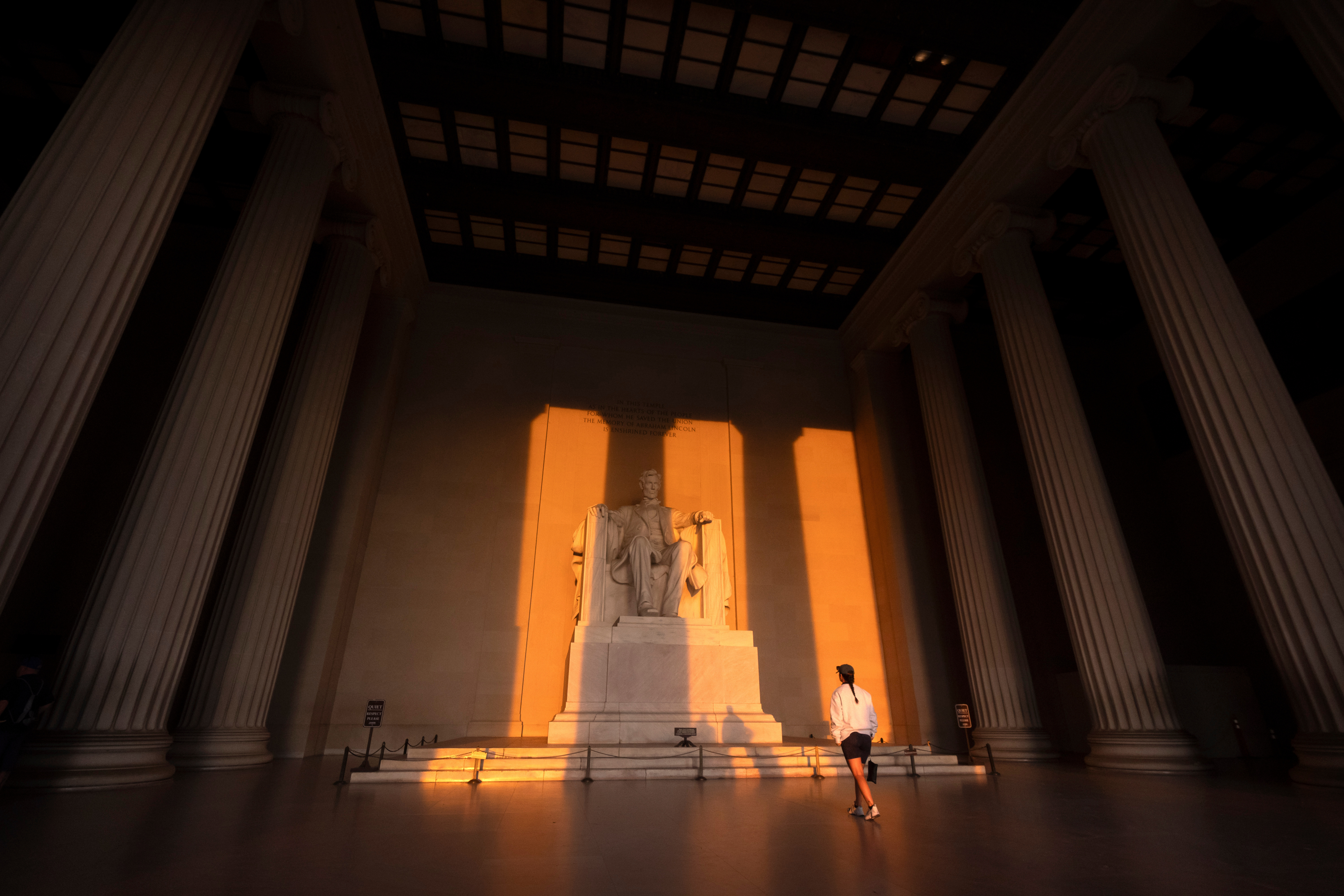
    And both are now being loaned for public display in a new exhibit area under the Lincoln Memorial, which is due to open June 25 to honor the nation’s 250th birthday.

    The Washington Post was given an up-close look at the historic documents in a private storage facility, before they were to be sent to the memorial.

    The copy of the 1863 proclamation, which freed enslaved people in the rebellious states, also bears the faded signatures of Secretary of State William H. Seward and Lincoln’s private secretary, John Nicolay. The 1865 copy of the 13th Amendment, which outlawed slavery in the United States, is handwritten on lined parchment.

    The National Park Foundation said that the documents are being loaned by hedge fund billionaire, collector, and philanthropist Kenneth C. Griffin, who bought them last year at auction for a reported $18 million. (The originals are in the National Archives.)

    The foundation, the nonprofit fundraising partner of the National Park Service, said the artifacts will be on loan through June 2027. The documents will be part of a new, state-of-the-art exhibit space in the rarely seen area beneath the Lincoln Memorial called the undercroft.

    The 15,000-square-foot space will allow visitors to see through floor-to-ceiling glass the massive concrete foundations that support the memorial — and view part of 50,000-square-foot undercroft itself.

    “Everyone who’s been there just raves about it,” said Jeff Reinbold, president and CEO of the foundation. “We’ve talked about this for so long and now can actually see that vision come to life.”

    “It will be one of the hottest tickets in D.C.,” he said. “Talk about powerful. You have a chance to see these documents under the memorial for the president who signed them.”

    Griffin said in a statement: “The Emancipation Proclamation and the 13th Amendment marked a profound step forward, abolishing the scourge of slavery and moving the country closer to its founding ideals.”

    The foundation said the copy of the Emancipation Proclamation is one of 27 known remaining copies from the limited number printed for a large patriotic fundraising fair in Philadelphia in 1864. The proclamation, issued on Jan. 1, 1863, in the midst of the Civil War, freed enslaved people in the states or parts of states still in rebellion, and allowed Black men to join the Army and Navy, according to the National Archives.

    The copy that will be on display at the Lincoln Memorial was one of 48 signed by Lincoln to raise money for hospitals, injured Union soldiers, and the families of soldiers killed in the war, said Selby Kiffer, international senior specialist for books and manuscripts at Sotheby’s, where the documents were sold.

    Each copy was sold for $10 — roughly $200 today. They did not sell out.

    The 13th Amendment, ratified by the states in 1865, ended slavery in the United States.

    The rare copy of the amendment on loan to the memorial dates to 1865, and is one of only 15 known copies like it.

    In addition to Lincoln’s signature, it has those of other notable political figures of the era — Sen. Charles Sumner, Rep. Thaddeus Stevens, and Vice President Hannibal Hamlin, among others.

    “It was such a big moment that many legislators wanted to sort of capture it for themselves,” Kiffer said in a video interview.

    So various members of Congress hired clerks to write out special copies of the amendment.

    Then, “a little bit like a high school yearbook, you would take it around and get everyone who had worked on this monumental piece of legislation and amendment to the Constitution to sign it,” Kiffer said.

    “They were really mementos,” he said. “They were all individual, unique creations.”

    The Griffin copy “is one of the most complete, with the signatures of the senators and congressmen who voted in favor of the amendment,” he said. (Not all members of Congress voted for the amendment.)

    It is signed by 37 senators and 114 members of the House. They were among the legislators who voted to send the amendment to the states for ratification, he said.

    The exhibit area where the documents will be displayed will also tell the story of how the Lincoln Memorial was built and examine its role in American history and civil rights, the foundation said.

    The project includes new restrooms, a larger bookstore, and new elevators, the Park Service said. It will also feature an immersive theater presentation that projects images of historic events onto the memorial foundations.

    The undertaking is believed to be the most extensive of its kind at the memorial since it was dedicated in 1922, the Park Service said.

    The undercroft, essentially the memorial’s basement, is the huge area beneath the 38,000-ton structure, which sits on a platform supported by 122 concrete pillars. The undercroft is so large that the entire memorial, flipped upside down, would fit in it, officials have said.

    The project opening the area to visitors has been in the works since 2016, when another billionaire, David Rubenstein, donated $18.5 million to the effort. But major work did not get underway until 2023, the National Park Service has said.

    The memorial, which includes the 175-ton marble sculpture of Lincoln, was built on a spot called Kidwell Flats, a tract on the Potomac River that had been reclaimed with mud dredged from the river.

    Ground was broken in 1914. The statue of the seated Lincoln was made from 28 blocks of Georgia marble carved by sculptor Daniel Chester French in the New York studio of the Piccirilli brothers, a team of renowned Italian stonecutters.

    The blocks were then shipped to Washington and assembled inside the memorial in 1919.

    The memorial was dedicated in 1922 in the presence of Lincoln’s son, Robert, then 78. About 50,000 people attended. African Americans, as was the cruel custom in then-segregated Washington, were shunted off to the rear.

    On Easter Sunday in 1939, the African American opera star Marian Anderson elevated the significance of the memorial when she sang there after being barred from performing at whites-only Constitution Hall seven blocks away.

    Twenty-four years after Anderson’s performance, the Rev. Martin Luther King Jr. gave his “I Have a Dream” speech there before 250,000 people.

    And 50 years later, President Barack Obama, the country’s first Black president, spoke there on the anniversary of King’s speech.

  • One Texas town hopes for crumbs from the SpaceX feast

    One Texas town hopes for crumbs from the SpaceX feast

    BASTROP, Texas — Many of the tech bros who swing by Found Fine Art in Bastrop, Texas, are smitten with Schoolgirl Witchblade, a bronze statuette of a manga-style character with pigtails, a barely there bodice and a clawed hand ready for a supernatural brawl (price: $3,200).

    The preference seems on-brand. These bros work for SpaceX, the reusable rocket and internet satellite megacorporation led by Elon Musk, who created a sexy, pigtailed, manga-style digital girlfriend for premium users of his Grok chatbot.

    “They ask a lot about these,” said Alexandria Lagos, a gallery sales associate, pointing to Schoolgirl and similar works. “Though I haven’t seen anyone buy one.”

    That could change. On June 12, SpaceX raised $75 billion in the largest initial public offering in history. The company employs 1,600 people near Bastrop, which means that a sizable chunk of the town’s 14,000 residents just got rich or at least richer. On Thursday, the gallery’s owner, Jamie Howard, wore a look of subdued delight, as if she were waiting for a piñata to get whacked and the candy to drop on the floor.

    “I definitely have clients who plan to celebrate by investing in various things,” she said with a smile. “Once they cash out their shares, there is going to be some delightful fallout around here.”

    The bounty has been five years in the making. Musk started buying land in Bastrop and Travis counties, near Austin, in 2021, using about a dozen different private companies to snap up more than 1,000 acres. His tunneling enterprise, the Boring Co., opened here first, and Starlink, part of SpaceX, opened an operational plant two years later. The companies — plus social platform X and a fledging residential community — form a compound on about 600 acres located 10 miles northwest of downtown Bastrop, known to locals as “Elon Land.”

    Soon after the stock market closed on June 12, Elon Land was briefly a scene of pure jubilation. Ten SpaceX employees, dressed in jeans and black T-shirts with YOLO printed on them in large letters, gathered to celebrate at the Boring Bodega, a warehouse-sized convenience store, bar, and hair salon next to the Boring Co. and across the street from SpaceX.

    They were bubbling about their windfall. A woman announced she was ready to buy a Jeep she’d been eyeing for years. A man discussed plans to borrow against the money he now had in shares that would be locked up for a period.

    The party moved outside to a grassy lawn, where everyone grabbed bottles of sparkling wine, shook them up, and doused each other, hooting like they’d just won the Super Bowl. They would drive off and head to Austin for more toasts that night.

    The revelers declined to talk to me, explaining that they were not allowed to speak to the media.

    The scene would have been unfathomable six years ago, when the area’s most significant employers included a rendering plant for pet food and companies that dug up and sold dirt.

    Not that Bastrop was a backwater, pre-Musk. Founded in 1832, when Texas was still part of Mexico, it has a charming downtown of late 1800s-era brick buildings, one of which is an opera house. Around the corner, there’s the Bastrop County Museum and Visitor Center, where you can hear a highly sanitized biography of the Baron de Bastrop, the man for whom the city is named. More than a few residents described him as a “bit of a con man.” He wasn’t a baron, for starters, and he fled the Netherlands after he was accused of embezzling tax funds.

    Musk has said he was drawn to Texas because of its business-friendly approach to regulation. He built his SpaceX headquarters and main production and rocket-testing site, Starbase, as a newly incorporated corporate town near Brownsville on the U.S.-Mexico border. But Bastrop, just 30 miles southeast of Austin and not far from the city’s international airport, became a hub for orbital hardware manufacturing. The more Musk built, the more people poured in. Today, the “Population 7,000” sign on the way into town is badly in need of an update.

    The center of gravity is the 1.1 million-square-foot SpaceX plant, which on a recent sweltering afternoon seemed to shimmer ominously in the heat. White and black, a few city blocks wide and tapered at both ends, it looks like an extraterrestrial vessel about to disgorge aliens whose intentions are unclear.

    Few people have ever laid eyes on the Willy Wonka of this vast factory. Musk is a figure of legend, like a yeti. One woman said she had a friend who years ago spotted him in a local H-E-B, a Texas supermarket chain. Lagos, the gallery employee, used to work for X and said she once saw him at a distance.

    His impact, by contrast, is palpable. Beyond the dense little downtown, Bastrop — it’s pronounced “bass-drop” — is rolling pine forests and rural farmland mixed with sprawling subdivisions. Judah Ross, a real estate agent, drove me around, pointing out new retail and restaurants, including chains such as Chuy’s and Texas Roadhouse, as well as homes that doubled in value “almost overnight” when Musk turned up. A few hit the $1 million mark for the first time. There was also a boom in a high-end development called the Colony, where sales of $600,000 homes are now pretty common. Del Webb, a developer of communities for people over 55, opened a location in Bastrop this year.

    “A lot of, like, older couples moving out here,” Ross said. “Oftentimes their kids or grandkids are coming here to work for SpaceX, and so the parents want to follow along to be nearby.”

    Much of this growth can be attributed to non-Musk factors, including low interest rates circa 2021 as well as COVID-19 and the rise of remote work. Bastrop had the advantage of proximity to the red-hot Austin market. Other Texas towns near major cities — Fulshear, for example, which is not far from Houston — have grown just as fast or faster.

    What sets Bastrop apart is its demographic mix. As several women here approvingly noted, there are now a lot more single men in their 30s at area bars and restaurants. (Another woman said the city was desperately in need of interior designers.) Less happily, there’s traffic. Trips that once took 20 minutes now take 40 minutes if you dare to hit the road near rush hour.

    For longtime Bastrop residents, the Musk Effect has been greeted with a combination of tentative appreciation and nothing-to-do-about-it shrugs. John Kirkland is a Bastrop City Council member and also mayor pro tem — the “back up mayor,” as he put it. Over lunch, he noted that the state of Texas provided few tools to constrain or block Musk. Elon Land is in Bastrop County but outside Bastrop’s city limits. An agreement about how to handle wastewater is the only deal that the city has with the entire Musk complex.

    “None of us wants growth, but we can’t stop it,” Kirkland said. “As long as he isn’t breaking the law, he is allowed to build.”

    At the Copper Shot Distillery, a handful of longtime Bastropians who regularly meet up on Thursday nights said they grasped the benefits of Musk’s corporate presence, but they had some complaints.

    In 2024, the Boring Co. was fined a mere $11,876 for environmental violations in its Bastrop-area site. That hardly amounts to a tap on the shoulder, let alone a slap on the wrist, and locals were furious. Cheryl Green, one of the Thursday-night gatherers, wondered why the planet’s first trillionaire wouldn’t pony up a few bucks for something in the city.

    “How about a YMCA?” she said, plaintively. “But I don’t think he’s known for that kind of thing.”

    Musk has far grander construction in mind. Last week he announced plans for an 11 million-square-foot factory to build data centers that would operate in space. More quietly, an array of developers have been devising plans of their own. Joshua Bingaman, a real estate broker, said that last week he fielded a handful of calls from developers seeking parcels for sale near downtown. Ready or not, he predicted that Bastrop would eventually get a men’s fashion boutique, a spot for coffee connoisseurs, and a high-end cocktail bar. And that’s just the beginning.

    “I don’t think people here have any idea of what’s coming,” Bingaman said. “There’s going to be a tidal wave.”

    This article originally appeared in the New York Times.

  • FBI thwarted attack targeting White House UFC show, director says

    Authorities intercepted a plot to attack the Ultimate Fighting Championship event held outside the White House over the weekend, according to court papers made public Tuesday that described plans to fly drones loaded with explosives over the crowd, set them off, and gun down fleeing attendees.

    FBI Director Kash Patel posted on social media Tuesday morning that “multiple individuals” had been taken into custody. Following “a multi-state operation,” he wrote, the “allegedly planned attacks were stopped cold.”

    It was not immediately clear how close the alleged plot came to reality or how many people authorities believe may have been involved.

    Matthew C. Quinn, deputy director of the Secret Service, told reporters Tuesday morning that the event “was never at risk due to the great investigative work.”

    But he cautioned that some people allegedly involved were still at large. And after Patel’s social media post revealed the alleged plot, Quinn pointedly noted that the Secret Service had chosen not to “leak” news of the investigation.

    A criminal complaint filed in federal court in Ohio on Monday and unsealed Tuesday depicted plans to carry out “a coordinated attack against the United States government” during the UFC event.

    The complaint alleges that Tycen Proper, 19, admitted to plotting the attack with people who began communicating via TikTok, a social media app, before shifting to Signal, an encrypted messaging app.

    Proper has been arrested and is in custody, with a detention hearing set for Wednesday. An assistant public defender appointed to represent him did not immediately respond to a message seeking comment Tuesday.

    According to an affidavit submitted with the complaint, Proper’s mother contacted law enforcement because she was alarmed by his recent actions, including buying guns “and communicating with certain individuals online.”

    The affidavit was signed by Christopher S. Betts, who wrote that he is a Columbus, Ohio, police detective assigned to an FBI Joint Terrorism Task Force.

    Betts wrote that police went to the home where Proper lives with his parents on Wednesday, four days before the UFC event. Proper’s father told them that his son had recently gotten new firearms and ammunition and was planning to meet up with the people he met online during the upcoming weekend, Betts wrote.

    The local sheriff’s office took Proper to a local hospital and sought an “emergency admission based on homicidal ideations,” Betts continued. The sheriff’s office also called the FBI.

    Betts said that he spoke with Proper’s mother the next day and that she said her son had been interacting with people online “who claimed to be ex-military and Christian-based.” Proper’s mother said the group had anti-government beliefs, Betts continued, and had expressed grievances dealing with the handling of files related to sex offender Jeffrey Epstein and data centers.

    She also described seeing her son mapping an area outside D.C., Betts added. And he wrote that family members told investigators Proper had made “concerning statements” in recent months, including antisemitic rhetoric and sympathetic remarks about Adolf Hitler.

    Investigators spoke to Proper on Thursday, and he admitted to planning to attack people at the UFC event, Betts said. He wrote that Proper described plans for members of the plot to meet in Fredericksburg, Va., south of D.C., and then “stage a demonstration” near the White House.

    According to Betts, Proper said he was not going to the event to shoot people but reported that some other members of the group were intending to carry out violence.

    Proper described plans to sent drones “laden with unspecified explosive devices” over the north side of the UFC arena, Betts wrote. Then the group planned to shoot attendees fleeing the explosions, including “wealthy people and politicians,” Betts said. He wrote that Proper said the attack was meant to start a revolution.

    When investigators searched Proper’s phone, Betts said, they found chats on Signal “consistent with much of what” he had described. The phone showed a large chat with about 19 people and smaller groups with four to five people, Betts added. In another app, Betts wrote, Proper discussed targeting a U.S. senator because of her support for Israel.

    News of the alleged plot spread widely Tuesday morning when Patel posted about it on social media.

    “On June 10, FBI and our law enforcement partners became aware of a potential threat to the UFC America 250 event in Washington, D.C. involving individuals outside of the National Capital Region,” Patel wrote in his post.

    The White House declined to comment further Tuesday, and the FBI referred questions to Patel’s social media post. The Justice Department and UFC did not immediately respond to requests for comment on the alleged plot.

    When asked Tuesday whether he had been briefed about the alleged planned attack, President Donald Trump said he had not heard about it.

    “The attack that I watched were the fighters,” Trump told reporters at the Group of Seven summit in France.

    Speaking with reporters Tuesday, Quinn, the Secret Service’s deputy director, described the alleged plot as “unique” because of the number of people and the level of planning involved.

    He said the Secret Service had led the investigation from the start.

    “In order to maintain the integrity of the investigation and the security plan, we chose not to leak it,” he added.

    Pressed on whether he was suggesting Patel or the FBI had jumped the gun by divulging details of the investigation, Quinn said he was “not going to comment on who or what.”

    “I’m going to tell you that we, the Secret Service, made a conscious decision to maintain the integrity of the security plan and the ongoing investigation,” he said.

    The FBI did not immediately respond to a request for comment Tuesday about Quinn’s remarks.

    Patel has been criticized in the past for posting prematurely on social media about ongoing investigations, including when he announced last year that someone was in custody after conservative activist Charlie Kirk was killed. The person was soon released.

    The UFC event held at the White House on Sunday was an unprecedented spectacle designed to mark America’s 250th anniversary and Trump’s 80th birthday. It was run by UFC CEO Dana White, a close Trump friend, and the president and the first lady sat in the front row to watch the fights.

    Joe Rogan, a podcaster who provided color commentary at the UFC event Sunday, had called the decision to hold the event outside “odd” and the event a “security nightmare” and “kind of a gimmick.”

    “I just don’t think that you should compete in a world championship fight in a noncontrolled environment,” Rogan said on his podcast last week. “I think it should be inside an air-conditioned arena. … You wouldn’t ask them to play a world championship basketball game outside in the sun.”

    The event included two flyovers and a fireworks finale near the National Mall well after midnight. The Federal Aviation Administration implemented a ground stop at the region’s three airports during the fireworks Sunday “to ensure safety.”

  • 8 people died in B-52 bomber crash at US Air Force base in Southern California, officials say

    8 people died in B-52 bomber crash at US Air Force base in Southern California, officials say

    LOS ANGELES — A B-52 bomber crashed shortly after takeoff at a U.S. Air Force base in Southern California’s Mojave Desert and burst into flames Monday, killing all eight people aboard, military officials said.

    Aerial footage showed virtually nothing left of the aircraft that went down around 11:20 a.m. during a routine test mission at Edwards Air Force Base, which is north of Los Angeles. Black smoke rose from a large swath of charred desert near the runway on the base, with emergency vehicles nearby.

    Those on the B-52 included government contractors and uniformed military. Aircraft manufacturer Boeing confirmed Monday evening that two of its employees were on board.

    After reviewing footage of the crash, it was determined that no one could have survived, Col. James Hayes, the deputy commander for the 412 test wing at Edwards, said at a news conference.

    “We lost eight great Americans,” Hayes said, adding that officials were working to notify their families.

    It was not immediately clear what caused the crash, and it could take up to six months to complete an investigation, Hayes said, but shared that the B-52 was supporting the “radar modernization program.”

    The Boeing B-52 Stratofortress is a long-range bomber that entered service in 1955. Designed to carry both conventional and nuclear weapons, it has been used in conflicts involving the U.S. military from Vietnam to Iran.

    In 2025, Boeing sent a B-52 to Edwards with a new, modernized radar system. A test team planned to conduct ground and flight test activities on the aircraft throughout 2026 to feed a production decision, the air force said in a 2025 news release. The modern Active Electronically Scanned Array (AESA) radar system replaced the aircraft’s antiquated radar for efficacy. It was unclear if that was the same aircraft involved in Monday’s crash.

    Edwards Air Force Base is home to a large portion of the U.S. Air Force’s aircraft test and development efforts and is about 100 miles (161 km) north of Los Angeles. The 412th Test Wing, which runs the base, also conducts developmental testing of all Air Force aircraft, weapons systems, software and components before purchase by the service as well as throughout their lifespan.

    The vast desert base is where Air Force test pilot Chuck Yeager reached a speed of Mach 1.05 and broke the sound barrier in 1947.

    The airfield was closed most of Monday and all inbound aircraft were being diverted, but it reopened to people coming onto the base by late afternoon. Non-commercial visitor passes for the base were suspended as emergency crews doused the flames.

    It’s too soon to say what might have happened.

    Air Force Secretary Troy Meink said he is deeply saddened by the lives lost.

    “We mourn this loss and honor the service of our Airmen, civilians, and contractors who work every day to advance our mission,” he said in a post on X.

    The way the B-52 crashed so quickly after takeoff without getting very high or going far makes aviation safety expert Jeff Guzzetti suspect some kind of flight control malfunction.

    It’s possible the controls were rigged wrong after maintenance, he said, or a catastrophic engine problem or a failure of a piece of equipment that was being tested.

    “I think it was definitely a controllability issue. Now, whether that was tied to an engine failure, a flight control failure, or some new testing device failure, I’m not sure,” said Guzzetti, who used to investigate crashes for both the Federal Aviation Administration and the National Transportation Safety Board.

    Although the Air Force has been flying B-52 bombers for more than 70 years, testing out new equipment on a plane can create new challenges.

    “A flight test is always riskier than normal operations, so that’s why you have specially trained test pilots, and you should have other safety protocols,” Guzzetti said.

    In recent years, fatal Air Force training accidents in the U.S. have included an instructor pilot who was killed in 2024 when the ejection seat activated while the aircraft was still on the ground in Texas and an Air Force ROTC cadet’s death in a 2022 accident involving a Humvee during a training exercise in Idaho. Two Air Force pilots were killed when a trainer jet crashed near an Alabama airport in 2021.

  • Iran says the deal to end the war requires Israel to withdraw from Lebanon

    DUBAI, United Arab Emirates (AP) — Iran’s top diplomat said Tuesday that the tentative deal to end the war with the United States would require Israel to withdraw from Lebanon — a condition Israel has already rejected and that could sink the agreement, leading to the resumption of all-out war.

    The deal, which is between the U.S. and Iran, has not been made public, and officials have sometimes offered contradictory interpretations of what is in it. While Israel is not party to the agreement, it is part of the war: It joined the U.S. in launching strikes on Iran on Feb. 28, and has since fought the Iran-backed Hezbollah militant group in Lebanon and seized large swaths of that country.

    Iranian Foreign Minister Abbas Araghchi said Israel’s continued occupation of southern Lebanon would violate the deal.

    “Without the withdrawal of Israeli forces from the territories they occupied during this war, the war has not fully come to an end,” Araghchi said.

    Pakistan, a key mediator, has said the deal called for an end to military operations, including in Lebanon, as Iran long insisted. But Araghchi’s call for a withdrawal adds a new wrinkle.

    A U.S. official, who spoke on condition of anonymity to discuss outlines of the agreement, has said the deal did not call for an Israeli withdrawal. And Israeli Prime Minister Benjamin Netanyahu said Monday that Israel would remain in Lebanon “as long as necessary.”

    The negotiations to end the war have been plagued by such disagreements before — leading to a prolonged but uneasy ceasefire that has failed to develop into a permanent end to hostilities and that has left the Strait of Hormuz, a crucial waterway for the world’s energy supplies, effectively shut.

    Unresolved issues cast doubt on agreement’s long-term prospects

    The discrepancy underscored how much of the agreement remains apparently unresolved ahead of a planned ceremonial signing Friday in Geneva.

    The agreement is meant to provide a meaningful truce in a monthslong war that has killed thousands across the Middle East, including the top leaders of Iran’s theocracy, and raised the prices of fuel, food and other basic goods far beyond the region.

    The unpublished agreement provides for the “immediate” opening of the Strait of Hormuz and lifting of the blockade, according to a senior U.S. official who spoke to reporters on condition of anonymity to discuss outlines of the agreement on Monday.

    Brokered mainly by Pakistan, it starts with the simultaneous lifting of Iran’s closure of the strait and the U.S. blockade of Iran’s ports, according to Pakistani officials. The United States and Iran will then begin 60 days of negotiations over Iran’s nuclear program and the potential lifting of sanctions, Pakistani officials who helped broker the interim deal said, speaking on condition of anonymity about the unpublished text.

    It also includes the possibility of releasing Iran’s frozen funds and a $300 billion fund to help rebuild Iran if Tehran meets certain benchmarks, senior U.S. officials told reporters Monday. President Donald Trump later said the United States would not “invest” funds in Iran.

    Araghchi’s comments Tuesday appear to match the understanding of two regional officials with direct knowledge of the interim deal. The officials, speaking to The Associated Press on condition of anonymity to discuss the closed-door negotiations, said it would require Israel to leave nearly all the territory it occupies in Lebanon, minus a few hilltop points along the border seized earlier.

    The officials say Iran insisted the accord include Lebanon in the last days of the negotiations. Regarding the timeline, the officials said the release of frozen Iranian assets are tied to Tehran implementing the deal. Gulf Arab states also have pledged to inject billions of dollars in Iran’s economy, they added.

    Beyond Lebanon, there’s one more point of possible contention on Iran’s nuclear program. The interim deal begins a 60-day clock for talks over Tehran’s stockpile of highly enriched uranium.

    Iran has agreed to discuss ways to possibly “dilute or remove” its stockpile, the officials said. However, it remains unclear whether Tehran would agree to that, particularly with hard-liners opposing to giving it up.

    U.S. officials have not yet explained how they see the agreement addressing Iran’s nuclear program, including who will be in charge of verifying that Iran is in compliance and who will destroy or remove highly enriched uranium believed to be buried under nuclear sites that were badly damaged by U.S. strikes last summer.

    Despite anger, US allies push to make deal work at G7 summit

    Meanwhile, world leaders gathered in France for the first full day of the Group of Seven summit of major industrialized nations, where Iran was high on the agenda. Scheduled discussions include a work session focused on “ending crises and ensuring stability in the Middle East.” Leaders of Egypt, Qatar and the United Arab Emirates are to join the talks.

    Trump has clashed with European leaders over not consulting them before going to war in Iran. Even so, leaders are expected to strike a measured tone as they seek ways to ease the economic fallout from rising oil prices caused by the blockade of the Strait of Hormuz.

    The president told reporters on Tuesday that he’s “not happy with the way Israel has handled themselves with Lebanon and with Hezbollah.”

    “It just goes on forever,” he said of Israel’s strategy. ”And when that happens, it throws a negative light on the big deal. And that’s the deal with Iran.”

    Ahead of their meeting, the leaders of France, Germany, Italy and the United Kingdom issued a joint statement congratulating the United States, the Iranian government and the mediators on what they called a “diplomatic breakthrough.” Canada also signed the statement. The leaders said it was vital for detailed negotiations to take place and for the deal to be quickly implemented so the Strait of Hormuz can be reopened to tanker traffic.